Article

Resettlement Governance in Large-Scale Urban Water Projects: A Policy Lifecycle Perspective from the Danjiangkou Reservoir Case in China

1
Research Center for Reservoir Resettlement, China Three Gorges University, Yichang 443000, China
2
School of Digital Commerce, Nanjing Vocational College of Information Technology, Nanjing 210023, China
3
School of Public Administration, Hohai University, Nanjing 211100, China
4
School of Water Conservancy, North China University of Water Resources and Electric Power, Zhengzhou 450046, China
5
Asia Institute, The University of Melbourne, Melbourne, VIC 3010, Australia
*
Author to whom correspondence should be addressed.
Water 2025, 17(24), 3589; https://doi.org/10.3390/w17243589
Submission received: 12 November 2025 / Revised: 9 December 2025 / Accepted: 16 December 2025 / Published: 18 December 2025

Abstract

Using the Danjiangkou Reservoir resettlement as a case study, this research adopts a policy lifecycle perspective to examine the evolutionary mechanisms of livelihood transformation and institutional adaptation under large-scale hydraulic development. The findings reveal that China’s resettlement governance is not merely an economic practice of resource redistribution and livelihood reconstruction but a deeper process of institutional learning and social reconfiguration. The transformation of Danjiangkou migrants—from administrative dependence to self-organized recovery and finally to development empowerment—reflects a structural shift in governance logic from control-oriented mobilization to collaborative and inclusive modernization. The study elucidates the dynamic interaction between institutional supply and social agency, arguing that the state acts not only as a resource provider but as an institutional recalibrator that fosters endogenous governance capacity through social self-organization. The identity transformation of migrants—from excluded subjects to integrated citizens—demonstrates that recognition, participation, and social capital are central to achieving social justice and sustainable governance. Practically, sustainable resettlement requires institutional flexibility and social empowerment, emphasizing long-term capacity building over short-term relief. The Danjiangkou experience reveals the deeper logic of Chinese modernization—a transition from control to collaboration, from survival to development, and from outsiders to citizens—offering valuable insights for equitable and resilient resettlement governance.

1. Introduction

Global urban water resource systems are facing increasingly severe challenges, primarily driven by rapid urbanization, the uncertainties induced by climate change, and the ongoing degradation of ecosystems. Issues such as imbalances between water supply and demand, deteriorating water quality, and fragmented governance systems have made urban water security a central issue on the global policy agenda [1]. In response, many countries have launched large-scale infrastructure projects—including dams, reservoirs, and inter-basin water transfer schemes—to enhance water supply capacity, support economic growth, and achieve the long-term sustainability of water resource systems [2].
Among these interventions, the construction of large reservoirs has become a vital means of water regulation, particularly in water-stressed urban areas [3]. However, such projects are often accompanied by large-scale involuntary population resettlement, commonly referred to as “reservoir-induced displacement.” Studies from Asia, Africa, and Latin America have shown that these displaced populations frequently experience livelihood disruptions, diminished access to land and public services, social marginalization, and persistent poverty after relocation [4]. These outcomes have raised widespread concerns regarding the social sustainability of infrastructure-led development strategies and the adequacy of existing governance frameworks to mitigate such social impacts [5].
More importantly, resettlement should not be regarded merely as a social consequence of hydraulic infrastructure projects, but as an institutional process deeply embedded in national systems of resource allocation, political power operation, and mechanisms of public accountability [6]. As cities increasingly depend on large-scale, basin-level water infrastructures to ensure supply security, resettlement governance has become an essential component of sustainable urban water resource management [7]. Yet, existing research largely focuses on short-term compensation effectiveness or normative policy evaluation, while insufficient attention has been paid to the dynamic, multi-stage evolution of resettlement governance over time [8].
Recent studies suggest that resettlement governance is shaped by complex institutional interactions among governmental agencies, local communities, and non-state actors, which determine the long-term sustainability of social and ecological systems [9]. Adaptive and inclusive governance frameworks that incorporate social learning, stakeholder collaboration, and flexible decision-making mechanisms are increasingly recognized as essential for addressing these multi-scalar governance challenges [10]. Therefore, understanding resettlement as a long-term institutional transformation process provides a more comprehensive analytical lens for exploring the evolving relationship between infrastructure-led development and social sustainability.
Building upon previous research, this study repositions resettlement of displaced populations as a core policy instrument within the state-led urban water infrastructure strategy in China. Adopting a policy lifecycle perspective, it explores the evolution of governance practices across different historical stages. Using the Danjiangkou Reservoir Resettlement Project—the central component of the Middle Route of China’s South-to-North Water Diversion Project—as a case study, the paper addresses three key research questions.
Using the Danjiangkou Reservoir Resettlement Project—the central component of the Middle Route of China’s South-to-North Water Diversion Project—as a case study, this research further focuses on one of its most complex subcases: the Xichuan County reservoir resettlement. The Xichuan case illustrates the institutional depth and temporal complexity of state-led resettlement in China. First, the resettlement unfolded over an exceptionally long period—from 1958 to 1968—reflecting the protracted nature of early hydraulic governance arrangements. Second, the spatial dispersion of migrants was unusually extensive; many households experienced two or even three cross-provincial relocations, demonstrating the spatial reconfiguration pressures created by large reservoir zones. Third, the scale of displacement was substantial, involving approximately 165,000 people, which further amplified the administrative and socioecological challenges of long-term livelihood reconstruction. Fourth, the livelihood recovery cycle proved remarkably prolonged. While reservoir resettlement is typically characterized by a three-stage process of “relocation–development–stabilization,” with recovery periods ranging from five to ten years, some resettled households in Xichuan did not achieve stable livelihoods until the completion of national poverty alleviation initiatives in 2020—more than five decades after relocation. The case thus exemplifies how extended temporal spans, wide spatial mobility, and large population scales can significantly reshape the policy lifecycle of resettlement governance, making it an analytically valuable context for examining institutional evolution and long-term livelihood resilience.
  • During different policy stages, how have the five types of livelihood capital—natural, physical, human, financial, and social—been affected, and through what mechanisms?
  • How has China’s reservoir resettlement policy evolved amid shifting national development goals and institutional contexts? What distinct phases and characteristics can be observed in this evolution?
  • What institutional experiences and policy insights does the Danjiangkou case offer for building an integrated, sustainable, and socially inclusive urban water governance system?
By answering these questions, the study contributes to existing scholarship in several ways. First, it provides a longitudinal governance analysis of the world’s largest and longest-running state-led resettlement project. Second, it integrates the Sustainable Livelihoods Framework with policy lifecycle theory, bridging institutional design with the lived experiences of resettled populations. Third, it offers empirical and theoretical guidance for achieving a balance between water infrastructure development, social equity, and livelihood resilience in future policy practice.

2. Literature Review

2.1. Urban Hydraulic Infrastructure and Institutional Resettlement: The Hidden Governance Issue in Development

Hydraulic projects have long been regarded as emblematic symbols of national modernization and embodiments of technical rationality. Their legitimacy is often constructed on the developmental logic of “development as security.” However, the large-scale institutional resettlement processes that accompany such projects are typically treated as subsidiary issues, systematically marginalized within the broader narrative of infrastructure development—thus constituting what may be termed a hidden governance issue [11].
Empirical studies have shown that populations displaced by dams and reservoirs often face the so-called “eight resettlement risks” of landlessness, joblessness, food and health insecurity, and social disarticulation [12]. More critically, these risks are rooted in deeper institutional structures of power. The dominance of technocratic rationality and social externalization in state-led engineering systems tends to prioritize efficiency and macro-level control while neglecting the micro-level social resilience of affected communities [13]. In this governance structure, displaced populations are deprived of negotiation power and agency in administrative resettlement and resource redistribution, trapping them in an institutionalized poverty cycle that frequently transmits across generations [14]. Such processes reveal that dam-induced resettlement is not merely a social issue but a manifestation of the structural contradictions inherent in state-led development models [15].
In urban contexts, the governance of displacement linked to water infrastructure is even more complex. Urban water security systems encompass not only supply and flood control but also spatial governance, land use, and social restructuring. These projects often transcend administrative boundaries, requiring multi-level coordination and resource allocation, thereby reflecting the developmental state paradigm—where infrastructure serves simultaneously as a tool of economic growth and a source of governance legitimacy [16]. While this paradigm can enhance urban resilience in the short term, it frequently reproduces new forms of vulnerability through the marginalization and spatial exclusion of affected populations [17].
Consequently, urban hydraulic infrastructure should be understood as a sociotechnical system—one that reconfigures not only hydrological processes but also social structures and power relations [18]. Recent scholarship has reframed dam resettlement from a “social relocation issue” to an institutional governance issue, emphasizing its integration into urban water system planning and resilience strategies [19]. This paradigmatic shift reveals the interactive chain linking engineering execution, social integration, and institutional response, while simultaneously creating opportunities to reconsider the distribution of responsibilities between state and society. The transition from engineering centralism to governance co-production thus calls for balancing technical efficiency with social inclusion and reexamining the governance essence of hydraulic infrastructure as both a technological and a deeply political institution.
Recent research on the Danjiangkou Reservoir, the core project of the South–North Water Transfer Scheme, provides further empirical evidence for understanding the governance essence of urban hydraulic infrastructure. Studies show that the resettlement process surrounding Danjiangkou was deeply embedded in broader spatial and economic restructuring agendas, including regional water security planning, land-use reconfiguration, and urban expansion strategies [20]. Rather than functioning as an isolated administrative task, resettlement became a mechanism through which state actors reorganized resource allocation, reshaped urban–rural boundaries, and restructured local development trajectories. This process demonstrates how hydraulic infrastructure governance extends beyond technical execution to constitute a multi-scalar institutional project linking engineering, spatial planning, and social integration.
However, the literature also reveals significant governance tensions. While Danjiangkou is often cited as a relatively successful case particularly for its strong central–local coordination and early integration of resettlement into long-term urban development planning research highlights persistent inequalities in compensation standards, differentiated access to development opportunities, and uneven social integration outcomes across resettled groups. Moreover, the institutional arrangements supporting the project remain heavily project-based, raising concerns about long-term livelihood security, adaptive capacity, and policy continuity. These findings suggest that large-scale urban water governance requires not only technical coordination but also institutionally embedded mechanisms for social inclusion and long-term resilience building. The Danjiangkou experience thus provides a valuable empirical reference, while simultaneously exposing gaps in existing governance models—particularly the lack of systematic frameworks linking institutional design, livelihood reconstruction, and urban water system sustainability.

2.2. Policy Evolution and the Life-Cycle Perspective of Water Governance

Water governance policies exhibit distinct phase-based and dynamic characteristics. According to policy lifecycle theory, public policies evolve through cyclical stages—agenda-setting, formulation, implementation, evaluation, and termination—each characterized by specific objectives, institutional constraints, and power structures [21]. This framework offers valuable insights into how water governance adapts to environmental changes and social conflicts through self-adjustment and adaptive learning [22]. As climate risks and social complexity intensify, policy is increasingly viewed not as a static regulatory tool but as a dynamic governance process whose trajectory reflects the interaction of institutional learning, power reconfiguration, and social feedback [23].
Building on the policy lifecycle perspective, recent scholarship has provided more detailed periodization of China’s reservoir resettlement policy evolution. Researchers widely agree that policy development has unfolded through several distinct phases, each shaped by shifts in national development priorities and institutional capacities [24,25]. Early phases were characterized by engineering-driven displacement, limited compensation, and strong administrative coercion—reflecting a developmental model prioritizing rapid construction and national energy security. Subsequent phases incorporated more formalized compensation mechanisms and infrastructure support, marking a transition toward institutionalized management of displacement. From the 2000s onward, resettlement policy became increasingly integrated with national poverty alleviation and regional development strategies, reframing displacement from a technical by-product of hydraulic engineering into a targeted development intervention. More recent policies, influenced by ecological civilization and rural revitalization agendas, emphasize long-term livelihood reconstruction, participatory mechanisms, and ecological compensation, reflecting a broader shift toward governance-centered approaches [26,27].
Despite this progress, the literature reveals several structural gaps. Most analyses focus on macro-level policy documents or isolated case studies, often overlooking how different policy stages reshape access to resources, institutional power, and livelihood opportunities on the ground. Moreover, existing studies rarely link policy evolution directly to micro-level livelihood outcomes, making it difficult to understand how institutional change translates into differentiated impacts across resettled populations. This gap underscores the need for analytical frameworks that connect policy stages with the mechanisms through which they influence livelihood capital, adaptive capacity, and long-term social integration. By situating resettlement policy within a dynamic lifecycle and examining its stage-specific institutional effects, research can better illuminate the multilevel policy learning processes that shape water governance trajectories in contemporary China.
In urban water governance, the establishment of basin accountability systems, cross-boundary coordination mechanisms, multi-level governance, and public participation frameworks exemplifies adaptive governance from a lifecycle perspective [7]. The sustainability of such governance lies not in policy stability but in maintaining institutional flexibility through feedback mechanisms that enable policy resilience [28]. Policies thus function as social learning processes and outcomes of knowledge co-production, fostering iterative adaptation and mutual accountability among stakeholders [29]. However, in practice, resettlement policies are often treated as one-time compensatory measures rather than integral elements of long-term governance systems. This form of short-cycle governance overlooks post-resettlement reconstruction and feedback mechanisms, leading to policy fragmentation and governance discontinuity. The physical lifecycle of hydraulic infrastructure thereby becomes disconnected from the institutional lifecycle of social governance, undermining both policy sustainability and social legitimacy [30].
Embedding resettlement governance within a policy lifecycle framework reveals its transformation from an instrumental policy to an institutional mechanism. Resettlement management in large-scale water projects is not a single administrative task but a continuous social governance process spanning all project stages—planning, implementation, and post-integration—each characterized by policy learning and institutional adaptation [31]. As Sadri et al. argue, policy evolution depends on multi-level institutional learning, in which local experiences reshape national frameworks through cross-scale feedback networks. Thus, the policy lifecycle represents not merely a temporal management model but a social mechanism that explains adaptive policy evolution [32].
In developing country contexts, the lifecycle perspective offers crucial insights. Due to tensions between centralized engineering regimes and localized governance, large-scale hydraulic projects often exhibit front-loaded centralization and post-construction institutional voids. Governments invest heavily during the construction phase but gradually withdraw thereafter, lacking mechanisms for continuity and feedback. This governance discontinuity prevents the transition from project management to social integration [33]. Comparative studies show that institutionalizing resettlement governance within policy cycles enhances both adaptiveness and legitimacy, enabling a shift from compensation-oriented to empowerment-oriented governance. Integrating resettlement policies into lifecycle analysis, therefore, not only illuminates the long-term social effects of infrastructure projects but also provides a theoretical foundation for the self-evolution of national governance systems. This perspective marks a paradigmatic transition in water governance research—from technocratic rationality toward institutional rationality—emphasizing the capacity of policies to achieve dynamic balance and social adaptation under uncertainty [34].

2.3. Sustainable Livelihood Framework and Micro-Level Pathways of Resettlement Governance

To understand the multidimensional shocks and adaptive strategies faced by displaced populations, the Sustainable Livelihood Framework (SLF) has been widely adopted as an analytical tool. Originally developed by the UK Department for International Development [35], the framework evaluates adaptive and decision-making capacities through five forms of capital—natural, physical, human, financial, and social. As Scoones (2009) emphasizes, livelihoods are not merely economic outcomes but dynamic social processes that reflect individuals’ capacities for survival, development, and transformation within institutional constraints and environmental uncertainties [36]. The value of SLF lies in its ability to reveal interactions among resources, power, and opportunity within socio-ecological systems, making it an essential framework for understanding resilience among vulnerable populations [37].
Over the past two decades, SLF has been extensively applied in rural poverty reduction, ecological resettlement, and disaster migration studies to evaluate community resilience and institutional adaptability [38]. Yet, in the field of dam and reservoir resettlement, its use remains limited and often confined to short-term livelihood assessments or single-stage evaluations [39]. Recent research indicates that livelihood reconstruction in state-led and politically structured resettlement projects is not merely a resource redistribution process but an outcome of the interplay among institutional design, local governance capacity, and individual agency [40]. National policy frameworks define structural constraints on resource access, while local governance and social networks determine implementation efficacy and negotiation space. The adaptive capacity and social capital of resettled households, in turn, shape their ability to achieve self-recovery within institutional boundaries [41]. These multi-level interactions render livelihood recovery a phased and nonlinear process.
Recent empirical work has deepened the understanding of how the five forms of livelihood capital—natural, physical, human, financial, and social—are transformed across different stages of reservoir resettlement. Studies show that livelihood capital does not change uniformly; rather, its accumulation and depletion follow distinct patterns shaped by policy phase, local governance capacity, and the broader institutional environment [42]. Natural and physical capital are often most directly affected during early relocation stages, largely determined by land allocation policies, housing reconstruction schemes, and state-led infrastructure investments. Human and financial capital, by contrast, evolve more gradually and depend heavily on access to training programs, employment opportunities, credit systems, and market integration mechanisms introduced during post-relocation development stages. Social capital tends to be the most volatile form, often disrupted during displacement yet selectively rebuilt through new institutional interfaces, community networks, and interactions with urban governance structures.
At the same time, research highlights the mechanisms through which institutions condition livelihood trajectories [43]. National policy frameworks shape structural access to resources through compensation standards, land-use arrangements, and development entitlements, while local governments determine implementation fidelity and the activation of support mechanisms. Social networks, informal institutions, and migrant agency further mediate how livelihood capital is converted into adaptive strategies. However, despite these insights, existing research remains fragmented across policy stages and seldom examines how institutional changes at different phases produce cumulative or path-dependent effects on livelihood reconstruction. This gap underscores the need to analyze livelihood transformation through a temporal lens that links policy evolution with micro-level adaptive processes. Such a dynamic approach captures not only the immediate effects of displacement but also the long-term interactions between institutional design, livelihood capital restructuring, and resilience-building among resettled populations.
Integrating the SLF with a policy lifecycle perspective bridges micro-level livelihood transformation with macro-level institutional evolution. This combined analytical lens highlights how livelihoods are embedded in policy dynamics rather than merely influenced by external environments. The accumulation and depletion of livelihood capital vary across policy stages, while institutional feedback and policy learning continuously reshape adaptive opportunities [44]. A lifecycle-oriented approach enables identification of risk transitions and resource gaps across stages of resettlement, providing a means to evaluate policy effectiveness in promoting livelihood recovery and social reintegration. As Sadri et al. note, cross-phase analysis uncovers multi-level institutional learning processes, where local experiences feed back into national policy design, fostering adaptive governance networks [32].
In developing country contexts, this integrated framework offers strong explanatory power. State-led hydraulic projects often exhibit “front-loaded centralization and post-project institutional voids,” in which government intervention declines sharply after project completion, leaving resettlement efforts without long-term policy continuity or feedback mechanisms [45]. Traditional SLF applications assume stable institutional environments, yet institutions themselves are evolving entities. Embedding SLF within the policy lifecycle approach thus entails examining how institutions shape livelihood strategies and how livelihood practices, through feedback loops, influence policy redesign. This livelihood–policy co-evolution perspective transcends the traditional dichotomy between individual and institutional analysis, providing a theoretical basis for understanding the long-term adaptability and social resilience of resettlement governance [46]. Integrating the SLF with the policy lifecycle framework thus advances livelihood research from static evaluation toward process-oriented governance analysis and from economic recovery toward social institutional adaptation.

3. Materials and Methods

3.1. Case Selection and Research Background

This study takes the Danjiangkou Reservoir resettlement project as the empirical case. As one of the largest artificial freshwater lakes in Asia, the Danjiangkou Reservoir serves as the core water source for China’s South-to-North Water Diversion Project (Middle Route). The scale and complexity of the resettlement and governance of Xichuan County in this context are representative at the national level.
Construction of the Danjiangkou Dam began in 1958, and resettlement efforts followed the next year. In 1959, 8008 residents from Xichuan County, Henan Province, were relocated to Qinghai Province to support frontier development. In 1960, 15,000 family members of these migrants also moved to Qinghai. However, due to significant climatic differences, harsh natural conditions, and militarized management in the settlement areas, the migrants found it difficult to adapt to the new environment and social conditions.
As a result, in 1960, a return migration took place, bringing migrants back from Qinghai to Xichuan County. Yet, with the continuous rise in the Danjiangkou Reservoir water level, Xichuan County could no longer accommodate the increasing number of displaced people. This led to a third wave of migration, in which migrants were relocated from Xichuan County to Jingmen City and Zhongxiang City in Hubei Province. The Dachaihu Resettlement Area was thus established. Between 1966 and 1968, a total of 43,989 people were relocated to Dachaihu over three years. Figure 1 provides a detailed interpretation of this process.
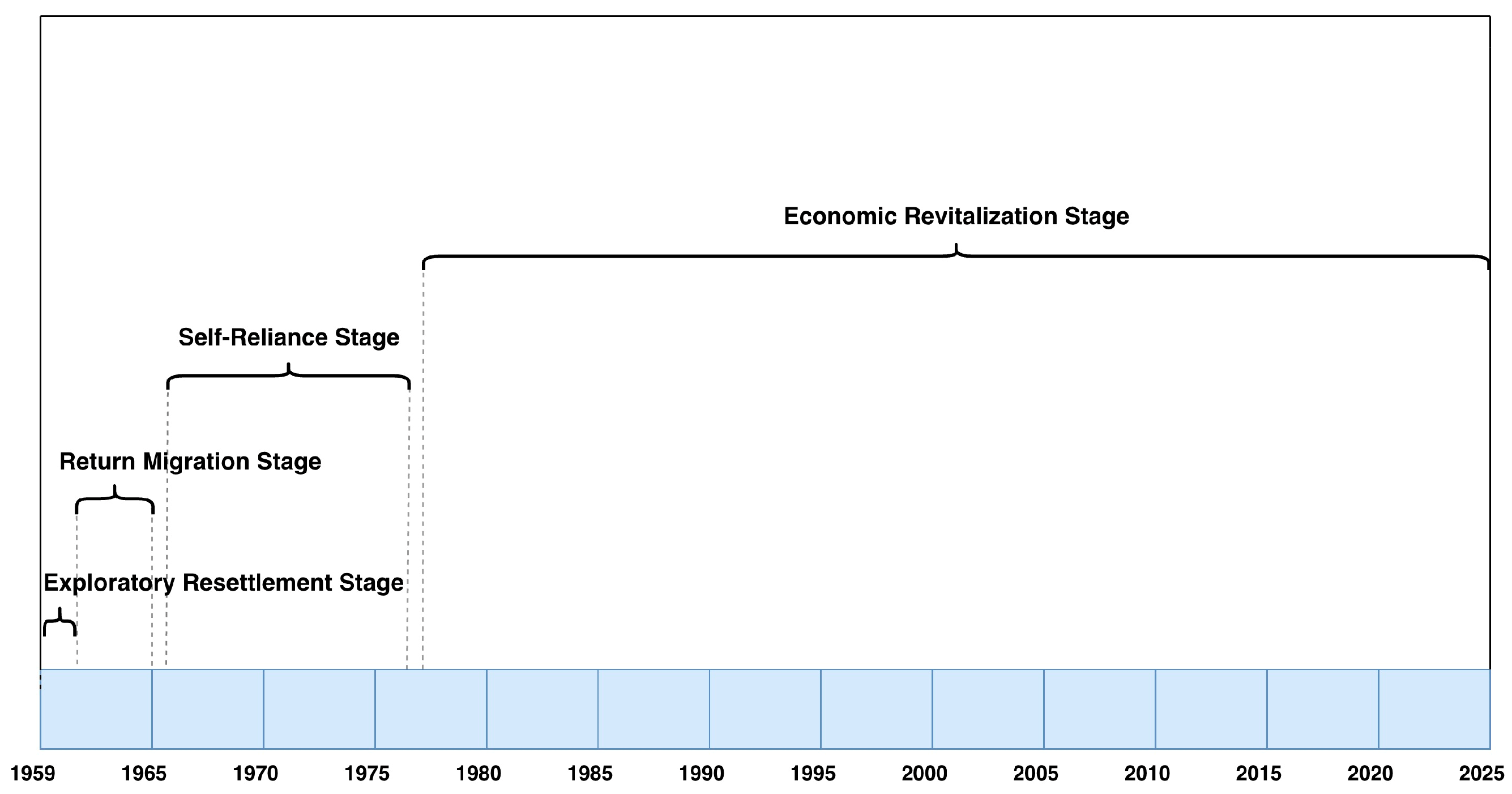
During these three relocations, based on national resettlement policies and the stages of livelihood restoration, the development of migrants’ livelihoods can be divided into four distinct phases. The first phase, known as the Exploratory Resettlement Stage, occurred during the initial relocation. Because the original and resettlement sites were geographically distant and had vastly different natural environments—and because government support and migration experience were both limited—this stage was characterized by trial and adaptation. The second phase, the Return Migration Stage, arose when migrants were unable to adapt to the conditions at the resettlement site, prompting their return to the original area. The third phase, referred to as the Self-Reliance Stage, followed the second relocation. Due to the limited environmental carrying capacity of the return area, residents of Xichuan County underwent a third migration. In the early period after this move, production materials were scarce. Although the government provided significant assistance, China’s overall economic conditions were still underdeveloped. Consequently, most migrants relied primarily on their own efforts for livelihood development. The fourth phase, the Economic Revitalization Stage, corresponds with China’s rapid overall economic growth. During this period, the production and living conditions of migrants improved markedly, and they received stronger policy and financial support from the state and local governments. The specific details of these four stages are illustrated in Figure 2.

3.2. Data Sources and Methods of Data Collection

This study adopts a multi-source heterogeneous data collection approach to ensure both the depth and reliability of the empirical analysis. Regarding policy documents, the study systematically collected and organized primary materials from 1958 to 2020, including national and local laws, policy documents, project plans, and evaluation reports related to reservoir resettlement. The data were obtained from official government websites, local archives, and academic databases.
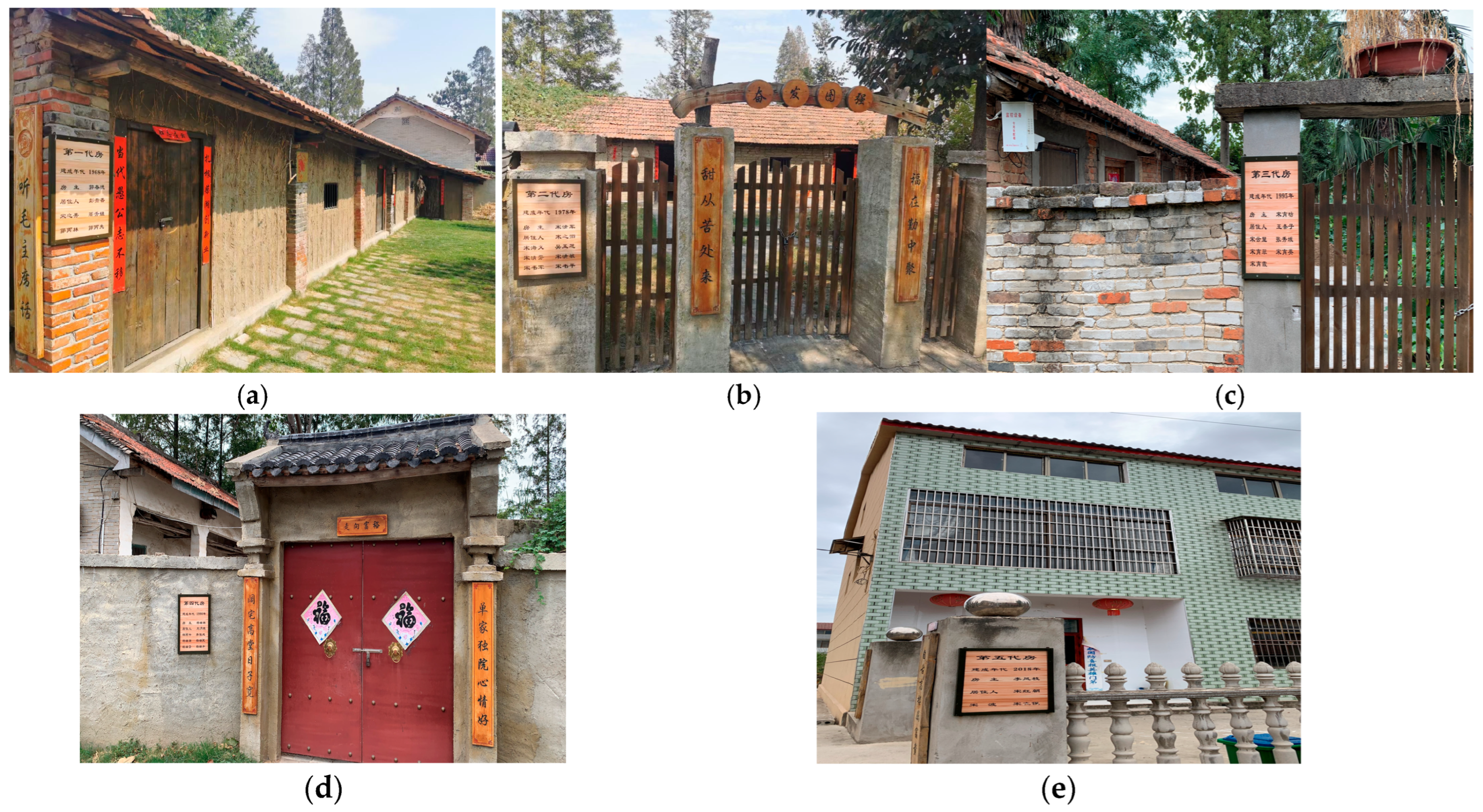
For the field investigation, the research team conducted fieldwork between 2021 and 2023 in Danjiangkou City and its surrounding resettlement areas. Using semi-structured interviews, the team interviewed 30 representative migrant households involved in the three phases of relocation. These households were selected to reflect diversity in age, gender, occupation, and migration period. The team also visited former resettlement sites, the Migration History Museum, and old housing locations to document the historical evolution of migrant dwellings, as shown in Figure 3.
In addition, the study conducted interviews with 12 officials from relevant local government departments (including water resources, civil affairs, and agriculture) and 6 township and village cadres who participated in the coordination of resettlement efforts. These interviews provided multi-perspective insights into both policy formulation and implementation practices. Finally, the research also drew upon a wide range of secondary sources, including academic studies, official media reports, and policy evaluation documents, which were used to supplement and verify the findings from field interviews and to enhance the explanatory power of the analysis. Detailed information about the interviewer and the interview outline can be found in the Appendix A.

3.3. Research Design and Theoretical Analytical Framework

This study adopts a qualitative research approach and constructs a dual analytical framework. On one hand, the study applies the Sustainable Livelihoods (SL) Framework developed by the UK Department for International Development (DFID) to analyze, from the migrants’ perspective, the dynamic changes and influencing mechanisms of five types of livelihood capital—natural, physical, financial, human, and social capital—across various policy stages. Based on the characteristics of the selected case, a set of migrant livelihood indicators was constructed accordingly.
On the other hand, drawing on the policy lifecycle perspective, it systematically reviews the institutional arrangements and implementation mechanisms of China’s reservoir resettlement policies across different historical periods. This allows for the identification of the evolutionary trajectory of these policies—from agenda-setting and formulation to implementation, revision, and institutionalization (Table 1).

4. Evolution of Livelihood Capital Across Four Developmental Stages

The evaluation of livelihood capital across the four developmental stages of the Danjiangkou Reservoir resettlement—Exploratory Resettlement, Return Migration, Self-Reliance, and Economic Revitalization—reveals a distinct trajectory of transformation from livelihood disruption to sustainable regeneration. The results indicate that each stage corresponds to a specific combination of capital conditions, policy environments, and adaptive mechanisms (Table 2).
During the exploratory stage, livelihood systems experienced comprehensive degradation across all five forms of capital, indicating a “livelihood rupture” pattern. Natural capital declined sharply, as arable land was limited and neither water nor forest resources were effectively utilized. Physical capital was fragile—though basic housing was provided, livestock ownership and industrial support were absent. Financial and human capitals were nearly exhausted, with no income diversification or savings, and a weakened labor force due to poor adaptation to new environments. Social capital collapsed entirely, with community networks and social organizations dismantled during forced relocation.
The return migration stage marked the beginning of partial social and human capital restoration. Migrants’ spontaneous return catalyzed bottom-up recovery dynamics, where kinship and community relations were gradually re-established. Human capital improved moderately, as the available labor force increased and limited government assistance policies emerged, reflecting a nascent form of institutional correction. However, natural, physical, and financial capitals remained weak, with minimal resource access or income generation.
In the self-reliance phase, livelihood systems entered a period of progressive accumulation of natural, physical, and social capital under conditions of limited state support. Migrants regained access to arable land and began cultivating cash crops, while livestock ownership and rudimentary industrial activities were reintroduced. Cooperatives and production teams facilitated the reorganization of social capital, and limited policy support further stabilized financial capital. Human capital was strengthened through practical labor engagement and vocational adaptation.
The revitalization stage reflects a comprehensive expansion and synergistic enhancement of all five livelihood capitals, corresponding to the implementation of Targeted Poverty Alleviation and Rural Revitalization policies. Natural capital achieved full restoration—migrants gained stable access to arable land, diversified into cash crops, and benefited from improved water and forest resource utilization. Physical capital expanded through upgraded housing, industrial development, and agricultural modernization. Financial capital improved significantly, with diversified income sources, increased household savings, and sustained governmental and financial policy support. Human capital reached its highest level, as vocational training and education programs enhanced labor skills. Finally, social capital underwent institutionalized reconstruction through community organizations, ethnic integration, and social networks, promoting urban–rural fusion and collective identity.

5. Policy Evolution in the Resettlement Livelihood Cycle

5.1. Exploratory Resettlement Stage: Early Relocation and Institutional Failure

The “Exploratory Resettlement Stage” represents China’s initial experiment with large-scale developmental migration under a highly centralized governance system. During this period (1959–1960), 22,343 residents from Xichuan County, Henan Province, were relocated to Qinghai Province in response to the national political campaign to “support frontier construction.” Although this migration embodied the collectivist spirit of early socialist construction, it also exposed the structural weaknesses of China’s nascent migration governance institutions [55].
This relocation was embedded in a governance paradigm centered on state-led development, where the core logic prioritized “projects before people’s livelihoods.” The prevalent “move first, settle later” model—typical of early reservoir resettlement schemes—lacked pre-relocation planning, livelihood risk assessments, and socio-ecological adaptation mechanisms. Fragmented coordination between central and local governments, combined with limited fiscal resources, resulted in administrative inefficiency and disjointed implementation [56]. Consequently, governance failure stemmed not from a lack of political will but from institutional incapacity to integrate technical, social, and ecological considerations within a unified policy framework [57].
From a livelihood perspective, all five forms of capital deteriorated. Consequently, migrants’ living standards fell dramatically below pre-migration levels, fostering widespread poverty and psychological frustration that culminated in mass return migration within a year [58]. The institutional failures of this stage were rooted in three interrelated issues:
  • Planning failures: Absence of scientific environmental and socioeconomic assessments led to severe mismatches between population capacity and resource allocation in resettlement areas.
  • Policy fragmentation: Strong vertical control but weak horizontal coordination caused resource bottlenecks and inconsistent policy implementation.
  • Rigid social governance: Top-down, command-style management suppressed local adaptation and group agency, depriving migrants of institutional channels for expression and negotiation.

5.2. Return Migration Phase: Policy Response and Institutional Adjustment

The return migration phase marks the first institutional correction period in the Danjiangkou Reservoir resettlement policy system. It represents a critical juncture where the Chinese state re-evaluated and recalibrated its migration governance logic following the initial institutional failure. In 1960, a large number of Xichuan County migrants who had been relocated to Qinghai began to spontaneously return home due to harsh natural conditions, livelihood collapse, and social maladaptation. This non-institutionalized return movement effectively constituted a grassroots policy feedback mechanism that drove the state to shift from administrative mobilization toward institutional reflection and social correction in subsequent resettlement governance [59].
This phase reflects an initial transition in state governance from technocratic development to socially adaptive development. Once the central government recognized the systemic failure of the initial relocation, it began reassessing the sustainability of the state-led resettlement model. Officially, the return migration was interpreted as a “policy implementation deviation,” but it in fact revealed deeper institutional issues—namely, the structural tension between central objectives and local implementation capacity [60]. The central government’s engineering-oriented policies failed to effectively integrate with local social, economic, and ecological systems, resulting in policy distortion and breakdown during implementation [25]. The return migration thus became a moment of institutional learning: subsequent policies incorporated socially flexible mechanisms such as locally adjusted resettlement scales, community-based land and housing compensation, and participatory social management frameworks [45].
At this stage, the restoration of social capital emerged as the central driver for rebuilding livelihoods. The reactivation of kinship networks, neighborhood cooperation, and community trust allowed returnees to restore basic livelihood functions through informal social mechanisms. Although material and financial capital remained scarce, the reconstitution of social ties significantly enhanced community resilience and collective coping capacity [47]. This phase can thus be characterized as institutional correction driven by social capital, where livelihood regeneration was shaped by three key factors:
  • Lagging policy compensation: Although the state eventually provided limited support for returnees, compensation mechanisms lacked continuity, leaving livelihood recovery largely dependent on individual and community self-help.
  • Restorative social relations: The return process reintegrated original kinship and geographic bonds into the livelihood system, strengthening internal trust and forming a grassroots “social recovery” structure.
  • Reflexive governance cognition: The practice of return migration led the state to recognize the limitations of coercive, one-size-fits-all resettlement models, providing empirical grounding for more flexible, differentiated policy designs in the future.

5.3. Self-Reliance Stage: Self-Reliant Recovery Under Limited Support

The self-reliance Stage represents a critical turning point in which the livelihood system of the Danjiangkou Reservoir resettlers shifted from external dependency to internal self-reliance. Beginning in 1966 with the joint provincial policy of “Henan Responsible for Relocation, Hubei Responsible for Resettlement,” this stage lasted until the early years of China’s reform and opening-up around 1978, when a relatively stable resettlement structure was established. During this period, resettlement entered the practical stage of institutional reconstruction: state support was limited, local economies were underdeveloped, and migrant communities began to rebuild production systems through their own labor and social networks—achieving livelihood recovery driven primarily by self-reliance and collective resilience [61].
The self-reliance Stage marked the transition of reservoir migration governance from an administrative mobilization model to an institutionally embedded one [62]. Lessons from the return migration stage prompted the central government to recognize the necessity of long-term and regionally adaptive resettlement policies, while local governments became the primary actors in implementation. When Hubei Province undertook the resettlement of Xichuan migrants, it adopted a “centralized settlement–zonal development” strategy, establishing the Dachaihu Resettlement Area through administrative demarcation. Yet, government intervention during this period reflected the clear resource constraints of the era: fiscal capacity was limited, and both central and local support focused mainly on initial infrastructure and production recovery, with little ongoing livelihood assistance [63]. This “limited intervention—incremental support” governance model created space for autonomous development while shifting the long-term responsibility of livelihood reconstruction onto the migrants themselves.
Livelihood systems during this phase were characterized by low capital input and high labor intensity. Migrants restored natural and physical capital through collective production, household-based operations, and mutual aid networks; human capital was enhanced through manual labor and adaptive learning; and social capital was reorganized via cooperatives and production teams. Although financial capital remained scarce, emerging cash flows from sideline industries and labor migration gradually strengthened household economies [64]. The livelihood recovery process in this stage was shaped by three main dynamics:
  • Limited policy support: Fiscal constraints restricted the scope of government assistance. Most policies prioritized short-term reconstruction rather than sustained livelihood protection, compelling migrants to depend on self-reliance for recovery.
  • Labor-driven livelihood restoration: Labor and skills became central to livelihood accumulation. Migrants engaged in intensive agricultural and handicraft production, transforming manual work into a key mechanism for rebuilding material capital.
  • Reconstruction of social structure: In the absence of robust formal institutions, social capital was regenerated through cooperatives, production brigades, and neighborhood mutual aid, making community organization the primary carrier of social resilience.

5.4. Economic Revitalization Stage: Targeted Poverty Alleviation and Urban–Rural Integration

The economic revitalization stage marks the institutional transformation of the Danjiangkou Reservoir resettlement governance system from “livelihood recovery” to “sustainable development.” Since 2013, when Hubei Province officially established the Dachaihu area as a provincial-level economic development zone, national and local policy orientations have gradually shifted from passive compensation toward proactive development and from livelihood protection to empowerment for growth. With the implementation of China’s Targeted Poverty Alleviation (TPA) strategy and the Rural Revitalization Policy, reservoir migrants have ceased to be regarded as the “residual population” of engineering projects and have instead become integral participants in regional coordination and urban–rural integration strategies [65].
This phase reflects a paradigm shift in China’s reservoir resettlement policy—from administrative relocation governance to development-oriented livelihood governance. Through the TPA program (2013–2020), the central government restructured the support framework for resettlers, establishing an integrated policy system combining fiscal investment, industrial stimulation, and social services [66]. The Hubei provincial government incorporated the Dachaihu Economic Development Zone into its regional growth strategy, driving comprehensive upgrades in infrastructure, industrial layout, and public services [67].
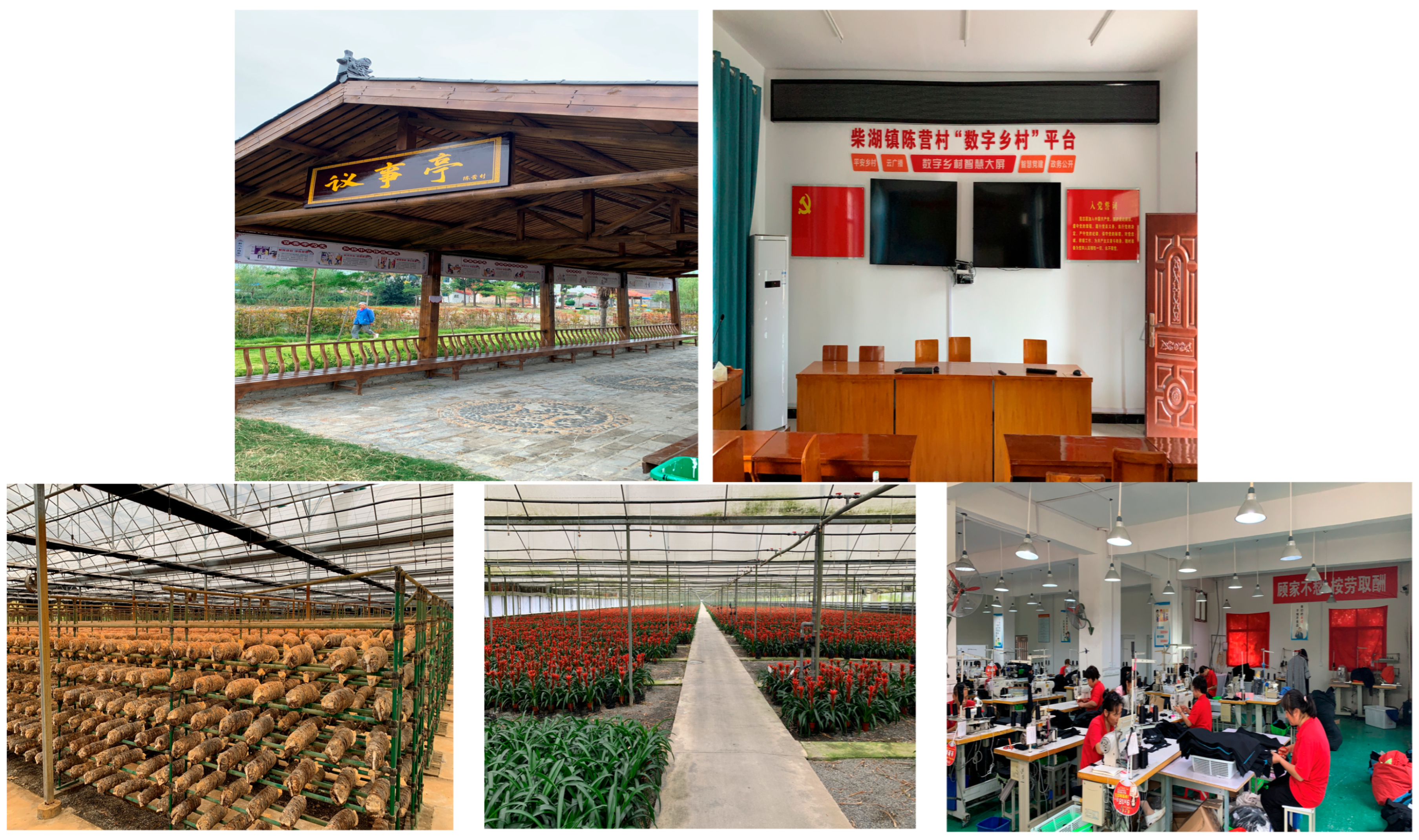
This phase marks a paradigm shift in China’s reservoir resettlement policy—from administrative relocation to development-oriented, people-centered governance. Through the Targeted Poverty Alleviation (TPA) program (2013–2020), the central government restructured its support for resettled individuals, constructing a comprehensive framework integrating fiscal investment, industrial promotion, and social services [66]. Hubei Province incorporated the Dachaihu Economic Development Zone into its regional development strategy, improving community service platforms and public service levels, and promoting the development of distinctive industries [67]. Regarding community and public service levels, a council pavilion and a digital rural governance platform were constructed; regarding distinctive industries, edible mushroom cultivation sheds, flower breeding bases, and garment factories were built, as shown in Figure 4.
Livelihood restoration during this stage was characterized by a multi-dimensional coupling mechanism of “policy re-engagement, market linkage, and social collaboration.” State fiscal investments, industrial support, and social protection programs jointly enhanced resettlers’ natural, physical, and financial capital; education and vocational training significantly improved human capital; and modernization of community governance institutionalized social capital reconstruction. Migrant livelihoods diversified beyond agriculture, expanding into secondary and tertiary sectors and progressively integrating into the urban–rural economic network [68]. The livelihood transformation in this stage was mainly shaped by three mechanisms:
  • Policy precision: Targeted poverty alleviation and industrial support policies optimized resource allocation, replacing earlier “broad but inefficient” interventions.
  • Economic diversification: Industrial upgrading and non-agricultural employment accelerated capital accumulation, enabling households to transition from single-source agricultural income to multi-income structures.
  • Social integration: Strengthened community governance and inclusive public services blurred social boundaries between resettlers and local residents, enhancing social identity and belonging.

6. Discussion: Institutional Lessons for Integrated Water Governance

The historical practice of resettlement following the Danjiangkou Reservoir project reveals the complex process of institutional learning, social change, and livelihood transformation in China’s large-scale engineering resettlement system. Building upon the preceding analysis, this chapter discusses four core issues: the subjectivity of migrants, their expression of rights, changing needs, and the transformation of their social identity. These four dimensions are interconnected, collectively constituting the dynamic mechanism of the interactive evolution among the state, institutions, and social actors, revealing the historical shift in resettlement governance from “passive resettlement” to “active co-construction.”

6.1. Migrant Agency: From Administrative Dependence to Self-Organized Resilience

The livelihood reconstruction process of the Danjiangkou Reservoir migrants reveals a historical transformation of migrant agency—from administrative dependence to self-organized resilience. During the initial phase of resettlement, the state promoted large-scale migration under a “development-first” paradigm through administrative mobilization, leaving migrants as passive executors of policy directives within a highly institutionalized structure. As Scott observed, developmentalist states often reshape social space through disciplinary control, reducing individual agency to “manageable objects” [69]. Under such a regime, the agency of migrants was suppressed, resulting in the systemic collapse of early livelihood systems.
However, in the later phase of autonomy and revitalization, migrants gradually rebuilt their livelihoods and social relations through labor, mutual aid, and community networks. This shift aligns with Long’s Actor-Oriented Approach, which conceptualizes development as a negotiated process between state institutions and social actors, rather than a linear, top-down trajectory [70]. Similar perspectives are echoed in recent migration scholarship emphasizing how migrants actively negotiate institutional structures to regain agency within restrictive systems and how migrant communities display resilience and adaptive strategies under crisis conditions [71,72].
The Danjiangkou case illustrates that the re-emergence of migrant agency is not the result of a state withdrawal but rather a process of institutional recalibration. The state’s shift from direct intervention to enabling support allowed local communities and individuals to cultivate adaptive capacities within the constraints of existing institutions. This phenomenon resonates with theories of adaptive governance, which argue that effective institutions facilitate social learning, innovation, and self-organization rather than relying on centralized control [31]. Moreover, adaptive institutional frameworks emphasize the co-evolution of structure and agency, highlighting governance as a collaborative process among diverse actors [73].
From a theoretical standpoint, this process substantiates the principles of co-produced governance and adaptive institutionalism [74,75]. The effectiveness of governance depends not on the extent of state control but on whether institutions can sustain cycles of dynamic learning and social interaction. As demonstrated in the Danjiangkou experience, when the state transitions from a “controller” to an “enabler,” migrant societies acquire the capacity to generate new orders amid resource scarcity and environmental uncertainty. Thus, agency emerges as the core endogenous factor of livelihood recovery and the social foundation of institutional adaptability.
A consolidated interview narrative further illuminates this transformation of agency from the perspective of both migrants and grassroots officials. Several long-term residents recalled that “in the early years we mostly waited for instructions; everything—from land allocation to housing—depended on the government,” reflecting a deeply institutionalized pattern of administrative dependence (D. H. L., H. Z. X., 11 September 2021). Yet in more recent accounts, such passivity has gradually given way to self-initiated practices. One middle-aged migrant noted, “We later realized that only relying on policies wouldn’t work. People in the village started organizing work teams, sharing tools, and running small businesses together.” (H. G. X., 11 September 2021). Local officials confirmed this shift from another angle: “Our role is no longer to make every decision for them, but to provide conditions—training, credit access, coordination—so they can develop in their own way.” (Z. X. L., 12 August 2023). These intertwined narratives illustrate how structural support and grassroots initiative co-evolve, showing that the resurgence of migrant agency is embedded not in state withdrawal but in a recalibrated governance relationship that enables communities to experiment, learn, and self-organize.

6.2. Rights Expression: From Silent Compliance to Negotiated Participation

The evolution of rights expression among migrants reflects a key dimension of the political and institutional transformation of China’s migration governance. During the early exploration and return phases, migrants were largely excluded from political dialog. Bureaucratic hierarchies, information monopolies, and militarized management deprived them of formal channels for voicing grievances. In response to institutional repression, migrants adopted non-institutionalized forms of expression—such as collective return or implicit protest. These practices embody what Scott famously termed “everyday forms of resistance”, where subaltern groups preserve residual agency through micro-level acts of defiance within oppressive structures [76]. Although these acts lacked formal organization, their cumulative effects generated social feedback that gradually informed policy learning and institutional adjustment.
As China entered the stage of autonomy and revitalization, migrant rights expression became increasingly institutionalized. Local governments began to establish consultative structures such as councils, cooperatives, and grievance mechanisms, fostering a mode of participatory negotiation governance. This aligns with He Baogang’s notion of deliberative democracy, which emphasizes the reproduction of policy legitimacy through public dialog and reasoned deliberation [77]. Recent studies confirm that China’s participatory reforms—ranging from village deliberations to urban community forums—have improved policy responsiveness and governance legitimacy by enabling structured civic input [78,79]. Within these frameworks, migrants have transitioned from passive recipients of state policies to active participants in local governance—a transformation from “political exclusion” to “political inclusion.”
This transition also validates Fraser’s theory of “recognition and redistribution”, suggesting that social justice depends not only on material equity but also on the institutional acknowledgment of rights and identities [80]. Empirical research shows that participatory mechanisms enhance social cohesion and adaptability in governance systems by institutionalizing citizen engagement and integrating marginalized voices into policy processes [81,82]. In the Danjiangkou case, the progressive institutionalization of migrant participation exemplifies a re-embedding of power—where the state reconfigures its authority through feedback, negotiation, and mutual adaptation. Migrant political participation thus becomes not merely an expression of social rights, but a crucial mechanism of flexible governance and social stability in contemporary China.
A consolidated interview narrative sheds further light on this transformation of rights expression. Several long-term migrants recalled that in the early years “there was no place to talk about problems—if you had a grievance, you simply kept it to yourself or went back to the old place to show your attitude.” (Q. S. L., H. X. M., 2 September 2021). Such recollections reflect the limited institutional space for political dialog and the prevalence of implicit resistance. Yet interviewees also described a noticeable shift in recent decades. One village representative stated, “Now we have regular meetings, and if the relocation compensation or land use has issues, we can raise them directly. The government listens more than before.” (Z. S., 2 September 2021). A township official echoed this change from the governance side: “We set up consultation teams and joint councils because we realized migrants need channels to express their concerns, not just policies to follow.” (Z. H. X., 13 August 2023). These combined perspectives illustrate how participatory platforms have enabled migrants to transition from silent compliance to negotiated engagement, reinforcing the co-evolution of rights consciousness and adaptive governance.

6.3. Transformation of Needs: From Survival Security to Development Empowerment

The evolution of migrant needs serves as a key indicator of the dynamic interaction between governance systems and social development. In the Danjiangkou resettlement case, migrants’ needs underwent a structural transformation—from survival security to development empowerment. During the initial exploration and return phases, migrants’ priorities centered on basic physiological requirements such as food, shelter, and safety, reflecting a typical subsistence logic. Under rigid administrative control and insufficient policy responsiveness, migrants relied heavily on state distribution to maintain basic survival, leading to entrenched poverty traps and limited social mobility.
As the autonomous development phase unfolded, the accumulation of social and human capital formed the foundation for a new pattern of needs. Education, healthcare, and employment replaced subsistence needs as central components of capability-based demands. This transition echoes Amartya Sen’s (1999) Capability Approach, which conceptualizes development not merely as income growth but as the expansion of substantive freedoms to achieve a “life one values [83].” Recent studies have applied this framework to Chinese migrant contexts, highlighting that empowerment occurs when individuals can convert available resources into real capabilities through institutional support and social networks [84]. In Danjiangkou, enhanced institutional flexibility and revived community linkages enabled migrants to reconstruct self-organizing mechanisms of capability empowerment, shifting from dependency-based survival to agency-driven development.
In the revitalization stage, migrant needs further evolved toward claims of social rights—educational equity, access to public services, career development, and social mobility. This progression aligns with Fraser’s politics of needs theory, which posits that the politicization of social demands signifies an expansion of citizenship and recognition [80]. Contemporary research on China’s rural revitalization confirms that differentiated and adaptive policy mechanisms have reoriented governance from survival assistance toward development-oriented empowerment [85,86]. Moreover, the integration of education equity and capability development into policy design illustrates how governance adapts dynamically to evolving social expectations [87].
Ultimately, the Danjiangkou experience demonstrates that policy elasticity—the adaptive capacity of governance systems to realign with shifting societal needs—is a vital precondition for achieving long-term livelihood sustainability and social justice. Governance resilience thus lies not in rigid control, but in its capacity for iterative learning, institutional flexibility, and human empowerment.
Interview narratives from the Danjiangkou resettlement area further illustrate this gradual shift from survival-oriented needs to development-oriented aspirations. Several older migrants recalled that, in the early years, “all we cared about was whether there was enough grain and a roof that wouldn’t leak—no one talked about anything beyond getting through the year.” (Q. L. Z., Q. H., 13 August 2023). These accounts reflect the subsistence mindset shaped by administrative dependence and resource scarcity. By contrast, younger and middle-aged interviewees described a clear transformation in expectations: “Now people worry less about basic living and more about how to get stable jobs, how to ensure our children get good schooling, or how to access training to develop new skills.” (W. X. Q., Y. Y. J., 16 December 2022). A township official corroborated this shift from the governance perspective: “In the past, policy focused on guaranteeing minimum livelihood; today, most migrant appeals we receive concern education, healthcare, and opportunities for upward mobility.” (Q. X. B., 13 August 2023). Together, these narratives reveal how evolving institutional environments and strengthened community networks have elevated migrant needs from basic survival to capability development, mirroring the broader transition toward empowerment-based governance.

6.4. Social Identity Transformation: From the Excluded to the Integrated Citizen

The evolution of social identity constitutes a central mediating mechanism in the livelihood reconstruction of migrants. In the early stages of relocation, administrative segregation and entrenched social prejudice systematically marginalized migrants, resulting in their institutionalized exclusion from local society. Their “outsider” status became symbolically codified and socially perpetuated—a process Goffman conceptualized as stigma, in which labeling and stereotyping transform social difference into moral inferiority [88]. This stigmatized identity reinforced structural exclusion and diminished migrants’ interpersonal trust and psychological security, thereby producing a condition of “excluded citizenship.” Such exclusionary dynamics confined migrants to the periphery of social and civic life, depriving them of recognition and belonging within host communities.
However, identity is neither fixed nor immutable; it is relational and can be reconstructed through social practice and institutional adaptation. During the subsequent phases of autonomy and revitalization, increasing economic independence and participation in local governance enabled migrants to achieve social re-embedding within the host society. Following Bourdieu’s theory of social capital, the accumulation of relational and symbolic resources can be converted into enhanced social position and legitimacy [89]. Migrants’ engagement in productive labor, community organizations, and participatory governance expanded their social networks and generated bridging capital, which gradually transformed their habitus from dependency toward civic agency. Empirical research on China’s internal migration supports this mechanism: social participation and inclusion initiatives significantly enhance migrants’ sense of belonging and settlement intention in host cities, while social capital positively mediates the relationship between integration and community trust [90].
At the policy level, local governments have progressively introduced consultative and participatory mechanisms that institutionalize migrant inclusion in governance structures. This process corresponds to Fraser’s politics of recognition, which argues that social justice requires not only distributive equality but also cultural and political respect [80]. Inclusive governance, therefore, becomes a form of moral repair, transforming recognition from symbolic affirmation into institutionalized citizenship. Empirical studies demonstrate that social inclusion policies—ranging from community deliberation to public health programs—enhance both social integration and local identity among migrants [91]. Likewise, active social participation improves social cohesion and strengthens psychological adaptation, functioning as a bridge between structural opportunity and subjective belonging [92].
Field evidence from the Dachaihu resettlement region further illustrates this transformation. As income disparities narrow and participatory governance deepens, migrants gradually shift from “resettled subjects” to “local co-builders,” achieving dual integration—social and psychological. This identity evolution reflects not only personal empowerment but also the institutional modernization of China’s governance system. It signifies a broader transition from administrative management to inclusive governance, and from unilateral state control to a co-productive model of state–society relations. In this sense, the transformation of migrant identity—from excluded outsiders to integrated citizens—is not merely a social process but a political one: it embodies the adaptive capacity of the governance system to convert exclusion into cohesion and inequality into shared legitimacy.
A consolidated interview narrative further illuminates this transformation in social identity. Several long-term residents in the Dachaihu resettlement area recalled that, in the early years, “local people saw us as outsiders—our way of speaking and doing things felt different, and there was always a sense of distance.” Migrants described avoiding public gatherings because “even if we showed up, no one really talked to us; it felt like we didn’t belong here.” Yet interviewees consistently emphasized that this dynamic shifted as economic conditions improved and migrants became increasingly involved in village committees, cooperatives, and community activities. One migrant representative stated, “Now we work together, make decisions together—over time, local residents started to see us as part of the community.” (Z. X. C., Q. S. L., H. X. M., 11 September 2021). A township official offered a governance perspective: “In the past, it was one-way management; now we include migrants in deliberation platforms and decision-making processes, and their identity naturally evolves.” (C. H. Y., 14 August 2023). These intertwined accounts show how shared labor, routine interaction, and participatory governance gradually dissolved symbolic boundaries, enabling migrants to move from stigmatized outsiders to socially recognized and institutionally integrated community members.

7. Conclusions

Using the Danjiangkou Reservoir resettlement as a case study, this research reveals the evolutionary logic of livelihood transformation, institutional adaptation, and social integration under the context of large-scale hydraulic projects. The findings show that China’s resettlement governance is not only an economic practice of resource redistribution, but also a deep process of institutional learning and social reconstruction.
The evolution of the Danjiangkou migrants’ livelihoods—from institutional rupture, to self-recovery, and finally to multidimensional revitalization—reflects a broader transformation in China’s governance model: from administrative mobilization to collaborative governance, and from control-oriented development to inclusive modernization. The early phase of relocation led to the collapse of livelihood systems under administrative command, whereas during the return and self-reliance stages, social self-organization and local knowledge gradually emerged. In the revitalization stage, the state re-engaged through targeted poverty alleviation and rural–urban integration policies, establishing a recovery mechanism that combines policy empowerment with social participation, enabling migrants to transform from passive dependents into active builders and members of a civic community.
This study reveals the co-evolutionary mechanism between institutional supply and social agency. Migrants’ social integration depends not only on the accumulation of economic resources, but also on the dual construction of institutional recognition and social respect, echoing the core ideas of social capital theory and the politics of recognition. Sustainable resettlement governance should emphasize the combination of institutional flexibility and social empowerment, while establishing a long-term, adaptive learning mechanism. Effective governance arises from state–society collaboration, rather than one-sided intervention.
The Danjiangkou experience demonstrates that true sustainability lies not in the scale of compensation, but in the depth of institutional learning and the breadth of social empowerment, reflecting the Chinese modernization trajectory—from control to collaboration, from survival to development, and from marginalization to citizenship. Three key governance insights:
  • Institutional Learning over Time: Policy experiences accumulated across different stages have promoted the transformation of resettlement governance from administrative management to developmental institutions.
  • Policy Responsiveness as Livelihood Infrastructure: Flexible and adaptive governance mechanisms are as vital as material compensation.
  • Co-Production of Development: Future resettlement governance should establish a collaborative model among government, communities, and markets to form a sustainable livelihood support system.
Based on the above findings, this study also suggests that in the future, the governance of large-scale water conservancy project migrants needs to explore more forward-looking practical directions under the concept of sustainable management. Firstly, a cross-stage adaptive governance system should be further constructed, incorporating administrative mobilization, community self-organization and policy re-intervention into the same evolutionary framework. Through the establishment of a continuous monitoring and feedback mechanism, dynamic adjustment and resilience enhancement of institutional supply can be achieved. Secondly, it is necessary to deepen the research and practice of the institutional learning mechanism, so that the governance of migrants no longer relies on single policy investment, but forms a replicable experience accumulation system across departments and regions, thereby promoting the transformation of the governance model from compensation-oriented to development-oriented and capacity building-oriented. In addition, future immigration governance should pay more attention to the role of social empowerment in long-term integration. By strengthening the organizational capacity of communities, promoting the collaboration of multiple subjects, and establishing a mechanism for sharing benefits, a governance structure should be formed where the government, the market, and the community jointly produce public value. Finally, the application of digital governance technologies in immigration tracking and assessment, risk early warning and precise policy response should be explored to enhance governance transparency and response efficiency, and provide institutionalized support for building a sustainable livelihood recovery and social integration system. Only through continuous exploration in the above-mentioned directions can the Danjiangkou experience be further transformed into a sustainable path for the governance of large-scale project migrants under the background of Chinese-style modernization.

Author Contributions

Conceptualization, Q.L., S.C. and Z.S.; Methodology, X.G.; Validation, X.G.; Formal analysis, X.G.; Investigation, X.G.; Resources, X.G.; Data curation, X.G. and Q.L.; Writing—original draft, X.G. and Q.L.; Writing—review & editing, Q.L., S.C. and Z.S.; Visualization, Z.S.; Supervision, S.C. and Z.S.; Project administration, S.C.; Funding acquisition, X.G., Q.L. and S.C. All authors have read and agreed to the published version of the manuscript.

Funding

This research is funded by the Research Center for Reservoir Resettlement—Open Fund Project of Key Research Bases of Humanities and Social Sciences for Universities in Hubei Province (No. 2020KF09), the Research Center for Reservoir Resettlement—Open Fund Project of Key Research Bases of Humanities and Social Sciences for Universities in Hubei Province (2022KFJJ01) and National Social Science Foundation of China (Grant No. 21&ZD183).

Data Availability Statement

The data supporting this article will be made available by the authors upon reasonable request from the corresponding author.

Conflicts of Interest

The authors declare no conflicts of interest.

Appendix A

Table A1. Appendix 1 Interviewees.
NumberInterview TimeNameAgeGenderOccupation
111 September 2021DHL42malemigrant
211 September 2021HGX35malemigrant
311 September 2021HZX56malemigrant
411 September 2021ZXC65malemigrant
512 September 2021QSL35malemigrant
612 September 2021HXM45femalemigrant
712 September 2021ZS40femalemigrant
812 September 2021QZH42malemigrant
913 September 2021NP48malemigrant
1013 September 2021HXH45malemigrant
1115 December 2022ZSL34malemigrant
1215 December 2022LC32femalemigrant
1315 December 2022JJQ28femalemigrant
1416 December 2022WJQ30femalemigrant
1516 December 2022WXQ30femalemigrant
1616 December 2022YYJ40malemigrant
1717 December 2022WYH40malemigrant
1817 December 2022WX42malemigrant
1917 December 2022WHL40malemigrant
2017 December 2022WTF27malemigrant
2111 August 2023HIJ33femalemigrant
2211 August 2023DLX22femalemigrant
2311 August 2023ZQC30malemigrant
2412 August 2023QXL45malemigrant
2512 August 2023QXS37malemigrant
2612 August 2023QDW28femalemigrant
2713 August 2023QXZ37femalemigrant
2813 August 2023QXR40femalemigrant
2913 August 2023QLZ55femalemigrant
3013 August 2023QH60femalemigrant
3114 September 2021WXY40malewater conservancy official
3214 September 2021MHT32malewater conservancy official
3314 September 2021MXS42malewater conservancy official
3415 December 2022SZD46femalewater conservancy official
3515 December 2022YXL33femalecivil affairs official
3615 December 2022YHD55malecivil affairs official
3710 August 2023JZ56malecivil affairs official
3811 August 2023LXS58malecivil affairs official
3911 August 2023LN54malecivil affairs official
4011 August 2023WYH37maleagricultural official
4111 August 2023WX47femaleagricultural official
4212 August 2023LXS48femaleagricultural official
4312 August 2023ZXL50maletownship official
4413 August 2023ZHX46maletownship official
4513 August 2023QXB47maletownship official
4613 August 2023CLS42maletownship official
4714 August 2023CHY56maletownship official
4814 August 2023ZPL42maletownship official
Table A2. Appendix 2 Interview outline.
NumberRespondent CategoryStageInterview Question
1Government OfficialsPolicy FormationWhat are the most crucial goals and principles in formulating the Danjiangkou Reservoir resettlement policy? How do these goals reflect national strategies and local development needs?
2Government OfficialsPolicy FormationHow were opinions from central departments, local governments, and expert teams negotiated and integrated during the policy formation stage?
3Government OfficialsPolicy FormationWere pilot projects, debates, or stakeholder investigations conducted during early design? What were their functions?
4Government OfficialsPolicy ImplementationWhat major institutional or resource-based constraints (funds, land, indicators, cross-regional coordination) emerged during implementation? How were these addressed?
5Government OfficialsPolicy ImplementationHow does cross-departmental collaboration (development and reform, water resources, agriculture, civil affairs, finance, etc.) operate? Which links show lower efficiency?
6Government OfficialsPolicy ImplementationHow does the government ensure enforcement of resettlement standards, industrial support policies, and continuity of public services? Are there localized adaptations or deviations?
7Government OfficialsEvaluation & FeedbackHow does the government monitor and evaluate resettlement effectiveness (economy, housing, social adaptation, satisfaction)? Is there a formal evaluation system?
8Government OfficialsEvaluation & FeedbackDo migrants’ demands and challenges change during later phases? How does the government detect and respond to these changes?
9Government OfficialsPolicy AdjustmentHas the government revised or improved the resettlement policy during the later policy cycle? What are representative practices?
10Government OfficialsPolicy AdjustmentWhat institutional experiences from Danjiangkou are most significant for national governance? What lessons apply to other major water projects?
11Local Grassroots officerPolicy Transmission & ImplementationHow do grassroots governments decompose tasks, assign responsibilities, and mobilize the masses after receiving higher-level policies?
12Local Grassroots officerPolicy Transmission & ImplementationWhat is the most difficult task in implementation (housing construction, relocation, compensation, verification)? Why?
13Local Grassroots officerPolicy Transmission & ImplementationAre there shortages in resources, personnel, or execution authority? How is “flexible execution” practiced?
14Local Grassroots officerCross-Level CollaborationHow do upper-level governments, departments, and construction units coordinate during resettlement? Is the coordination cost high?
15Local Grassroots officerCross-Level CollaborationDo social forces (enterprises, NGOs, design institutes, community groups) participate in resettlement? How effective are they?
16Local Grassroots officerCommunity Governance & DevelopmentHow is governance in new migrant communities constructed (Party organization, neighborhood committees, grid governance)? What challenges exist?
17Local Grassroots officerCommunity Governance & DevelopmentWhat are migrants’ main demands? How do grassroots governments respond?
18Local Grassroots officerCommunity Governance & DevelopmentWhat working methods support employment, industrial development, and assistance for vulnerable households? Which are most effective?
19Local Grassroots officerPolicy Evaluation & AdjustmentWhich aspects of superior policies do not match local realities? How is reinterpretation or adjustment conducted?
20Local Grassroots officerPolicy Evaluation & AdjustmentWhat are the most successful practices in grassroots governance? What areas require improvement?
21Migrant GroupsPre-RelocationHow did you first learn about the relocation policy? What were your main concerns and expectations?
22Migrant GroupsPre-RelocationWere briefings, consultations, or mobilization activities organized by government or village groups? Was communication adequate?
23Migrant GroupsRelocation & ResettlementHow was your relocation experience (housing allocation, compensation settlement, item transfer)? What difficulties occurred?
24Migrant GroupsRelocation & ResettlementHave housing conditions and public services (schools, healthcare, transportation) met policy standards?
25Migrant GroupsRelocation & ResettlementWhat changes occurred in your livelihood (employment, land, income) after relocation?
26Migrant GroupsAdaptation & IntegrationHow are interpersonal relationships, neighborhood interactions, and cultural adaptation in the new community? Are there conflicts with indigenous residents?
27Migrant GroupsAdaptation & IntegrationAre you satisfied with government support such as industrial assistance, training, and job referrals? What is the actual effect?
28Migrant GroupsAdaptation & IntegrationHave supportive policies (door-to-door visits, aid for vulnerable households, education support) been helpful?
29Migrant GroupsPolicy EvaluationWhich policies are most effective? Which have gaps or fall short of expectations?
30Migrant GroupsPolicy EvaluationWhere should the government strengthen support in the future (employment, industry, healthcare, elderly care, community governance)?

References

  1. MacAlister, C.; Subramanyam, N. Climate change and adaptive water management: Innovative solutions from the global South. Taylor Francis. 2018, 43, 133–144. [Google Scholar] [CrossRef]
  2. Liu, J.; Zang, C.; Tian, S.; Liu, J.; Yang, H.; Jia, S.; You, L.; Liu, B.; Zhang, M. Water conservancy projects in China: Achievements, challenges and way forward. Glob. Environ. Change 2013, 23, 633–643. [Google Scholar] [CrossRef]
  3. Ishiwatari, M.; Nagata, K.; Matsubayashi, M. Evolution of Water Governance for Climate Resilience: Lessons from Japan’s Experience. Water 2025, 17, 893. [Google Scholar] [CrossRef]
  4. Sarkar, S. Urban water crisis and the promise of infrastructure: A case study of Shimla, India. Front. Water 2023, 5, 1051336. [Google Scholar] [CrossRef]
  5. Shangguan, Z. Population Urbanization and Urban Water Security in China: Challenges for Sustainable Development Under SDGs Framework. Land Degrad. Dev. 2025, 36, 4458–4473. [Google Scholar] [CrossRef]
  6. Shannon, M.; Otsuki, K.; Zoomers, A.; Kaag, M. Sustainable Urbanization on Occupied Land? The politics of infrastructure development and resettlement in Beira city, Mozambique. Sustainability 2018, 10, 3123. [Google Scholar] [CrossRef]
  7. Akamani, K. The roles of adaptive water governance in enhancing the transition towards ecosystem-based adaptation. Water 2023, 15, 2341. [Google Scholar] [CrossRef]
  8. Li, Q.; Xu, Y.; Zhao, X.; Xie, J.; Jiao, T.; Su, Z. Research on the livelihood capital and livelihood strategies of resettlement in China’s South-to-North Water Diversion Middle Line Project. Front. Sustain. Food Syst. 2024, 8, 1396705. [Google Scholar] [CrossRef]
  9. Odume, O.N.; Onyima, B.N.; Nnadozie, C.F.; Omovoh, G.O.; Mmachaka, T.; Omovoh, B.O.; Uku, J.E.; Akamagwuna, F.C.; Arimoro, F.O. Governance and institutional drivers of ecological degradation in urban river ecosystems: Insights from case studies in African cities. Sustainability 2022, 14, 14147. [Google Scholar] [CrossRef]
  10. Schoon, M.; Cox, M.E. Collaboration, adaptation, and scaling: Perspectives on environmental governance for sustainability. Sustainability 2018, 10, 679. [Google Scholar] [CrossRef]
  11. Boelens, R.; Shah, E.; Bruins, B. Contested knowledges: Large dams and mega-hydraulic development. Water 2019, 11, 416. [Google Scholar] [CrossRef]
  12. Cernea, M.M. The risks and reconstruction model for resettling displaced populations. Soc. Dev. World Bank 2021, 25, 235–264. [Google Scholar]
  13. Hoominfar, E.; Radel, C. Contested dam development in Iran: A case study of the exercise of state power over local people. Sustainability 2020, 12, 5476. [Google Scholar] [CrossRef]
  14. Siciliano, G.; Urban, F.; Tan-Mullins, M.; Mohan, G. Large dams, energy justice and the divergence between international, national and local developmental needs and priorities in the global South. Energy Res. Soc. Sci. 2018, 41, 199–209. [Google Scholar] [CrossRef]
  15. Dye, B. Dam Building by the Illiberal Modernisers: Ideology and Changing Rationales in Rwanda and Tanzania; The University of Manchester: Manchester, UK, 2019. [Google Scholar]
  16. Verhoeven, H. The Grand Ethiopian Renaissance Dam: Africa’s Water Tower, Environmental Justice & Infrastructural Power. Daedalus 2021, 150, 159–180. [Google Scholar]
  17. Käkönen, M.; Nygren, A. Resurgent dams: Shifting power formations, persistent harms, and obscured responsibilities. Globalizations 2023, 20, 866–886. [Google Scholar] [CrossRef]
  18. Hidalgo-Bastidas, J.P.; Boelens, R. The Political Construction and Fixing of Water Overabundance: Rural–Urban Flood-Risk Politics in Coastal Ecuador, in Rural–Urban Water Struggles; Routledge: Oxfordshire, UK, 2020; pp. 89–107. [Google Scholar]
  19. Helmcke, C. Technology of detachment: The promise of renewable energy and its contentious reality in the south of Colombia. Environ. Plan. C Politics Space 2023, 41, 976–992. [Google Scholar] [CrossRef]
  20. Huang, L.; Huang, J.; Wang, W. The sustainable development assessment of reservoir resettlement based on a BP neural network. Int. J. Environ. Res. Public Health 2018, 15, 146. [Google Scholar] [CrossRef]
  21. Howlett, M.; Cashore, B. The dependent variable problem in the study of policy change: Understanding policy change as a methodological problem. J. Comp. Policy Anal. 2009, 11, 33–46. [Google Scholar] [CrossRef]
  22. Pahl-Wostl, C. A conceptual framework for analysing adaptive capacity and multi-level learning processes in resource governance regimes. Glob. Environ. Change 2009, 19, 354–365. [Google Scholar] [CrossRef]
  23. Trimble, M.; Olivier, T.; Anjos, L.A.P.; Tadeu, N.D.; Giordano, G.; Mac Donnell, L.; Laura, R.; Salvadores, F.; Santana-Chaves, I.M.; Torres, P.H.; et al. How do basin committees deal with water crises? Reflections for adaptive water governance from South America. Ecol. Soc. 2022, 27, 42. [Google Scholar] [CrossRef]
  24. Wu, X.; Lu, J.; Chen, S. A Study on the Evolution and Interrelation of China’s Reservoir Resettlement Policies over 75 Years. Water 2025, 17, 1444. [Google Scholar] [CrossRef]
  25. Xu, Y.; Shi, G.; Dong, Y. Effects of the post-relocation support policy on livelihood capital of the reservoir resettlers and its implications—A study in Wujiang sub-stream of Yangtze river of China. Sustainability 2022, 14, 2488. [Google Scholar] [CrossRef]
  26. Chen, X.; Vanclay, F.; Yu, J. Evaluating Chinese policy on post-resettlement support for dam-induced displacement and resettlement. Impact Assess. Proj. Apprais. 2021, 39, 396–404. [Google Scholar] [CrossRef]
  27. Heming, L.; Waley, P.; Rees, P. Reservoir resettlement in China: Past experience and the Three Gorges Dam. Geogr. J. 2001, 167, 195–212. [Google Scholar] [CrossRef]
  28. Pollard, S.R.; Riddell, E.; du Toit, D.R.; Retief, D.C.; Ison, R.L. Toward adaptive water governance: The role of systemic feedbacks for learning and adaptation in the eastern transboundary rivers of South Africa. Ecol. Soc. 2023, 28, 47. [Google Scholar] [CrossRef]
  29. Tengberg, A.; Gustafsson, M.; Samuelson, L.; Weyler, E. Knowledge production for resilient landscapes: Experiences from multi-stakeholder dialogues on water, food, forests, and landscapes. Forests 2020, 12, 1. [Google Scholar] [CrossRef]
  30. Li, J.; Lei, X.; Qiao, Y.; Kang, A.; Yan, P. The water status in China and an adaptive governance frame for water management. Int. J. Environ. Res. Public Health 2020, 17, 2085. [Google Scholar]
  31. DeCaro, D.A.; Chaffin, B.C.; Schlager, E.; Garmestani, A.S.; Ruhl, J.B. Legal and institutional foundations of adaptive environmental governance. Ecol. Soc. A J. Integr. Sci. Resil. Sustain. 2017, 22, 1. [Google Scholar] [CrossRef]
  32. Sadri, M.; Aristidou, A.; Ravasi, D. Cross-Sector Partnership Research at Theoretical Interstices: Integrating and Advancing Theory across Phases. J. Manag. Stud. 2025, 62, 484–517. [Google Scholar] [CrossRef]
  33. Porras, G.L.; Stringer, L.C.; Quinn, C.H. Corruption and conflicts as barriers to adaptive governance: Water governance in dryland systems in the Rio del Carmen watershed. Sci. Total Environ. 2019, 660, 519–530. [Google Scholar] [CrossRef]
  34. Hjorth, P.; Madani, K. Adaptive water management: On the need for using the post-WWII science in water governance. Water Resour. Manag. 2023, 37, 2247–2270. [Google Scholar] [CrossRef]
  35. Ashley, C.; Carney, D. Sustainable Livelihoods: Lessons from Early Experience; Department for International Development London: London, UK, 1999; Volume 7. [Google Scholar]
  36. Scoones, I. Livelihoods Perspectives and Rural Development, in Critical Perspectives in Rural Development Studies; Routledge: Oxfordshire, UK, 2013; pp. 159–184. [Google Scholar]
  37. Karki, S. Sustainable livelihood framework: Monitoring and evaluation. Int. J. Soc. Sci. Manag. 2021, 8, 266–271. [Google Scholar] [CrossRef]
  38. Chepkoech, W.; Mungai, N.W.; Stöber, S.; Lotze-Campen, H. Understanding adaptive capacity of smallholder African indigenous vegetable farmers to climate change in Kenya. Clim. Risk Manag. 2020, 27, 100204. [Google Scholar] [CrossRef]
  39. Downing, T. Avoiding new poverty: Mining-induced displacement and resettlement. Min. Miner. Sustain. Dev. 2002, 58, 1–29. [Google Scholar]
  40. Liu, W.; Cheng, Y.; Li, J.; Feldman, M. Livelihood adaptive capacities and adaptation strategies of relocated households in rural China. Front. Sustain. Food Syst. 2022, 6, 1067649. [Google Scholar] [CrossRef]
  41. Yang, X.; Qiu, X.; Zhu, F.; Hu, T.; Xu, Y. Follow-up supportive policies and risk perception influence livelihood adaptation of anti-poverty relocated households in ethnic mountains of southwest China. Sci. Rep. 2024, 14, 30008. [Google Scholar] [PubMed]
  42. Yin, K.; Xiao, Y. Impact of farmers’ livelihood capital differences on their livelihood strategies in Three Gorges Reservoir Area. J. Coast. Res. 2020, 103, 258–262. [Google Scholar] [CrossRef]
  43. Cottyn, I. Livelihood trajectories in a context of repeated displacement: Empirical evidence from Rwanda. Sustainability 2018, 10, 3521. [Google Scholar] [CrossRef]
  44. Natarajan, N.; Newsham, A.; Rigg, J.; Suhardiman, D. A sustainable livelihoods framework for the 21st century. World Dev. 2022, 155, 105898. [Google Scholar] [CrossRef]
  45. Wang, Z.; Li, W.; Qi, J. Evaluation and Strategic Response of Sustainable Livelihood Level of Farmers in Ecological Resettlement Area of the Upper Yellow River—A Case Study of Liujiaxia Reservoir Area, Gansu Province. Int. J. Environ. Res. Public Health 2022, 19, 16718. [Google Scholar] [CrossRef] [PubMed]
  46. Walelign, S.Z.; Lujala, P. A place-based framework for assessing resettlement capacity in the context of displacement induced by climate change. World Dev. 2022, 151, 105777. [Google Scholar] [CrossRef]
  47. Wu, J.; Chen, S.; Zhou, K.; Chen, X. Influence of livelihood capital of rural reservoir resettled households on the choice of livelihood strategies in China. Water 2022, 14, 4055. [Google Scholar] [CrossRef]
  48. Xiao, Q.; Liu, H.; Feldman, M.W. Is change of natural capital essential for assessing relocation policies? A case from Baihe county in western China. Impact Assess. Proj. Apprais. 2021, 39, 441–449. [Google Scholar] [CrossRef]
  49. Guo, S.; Wang, B.; Zhou, K.; Wang, H.; Zeng, Q.; Xu, D. Impact of fiscal expenditure on farmers’ livelihood capital in the Ethnic Minority Mountainous Region of Sichuan, China. Agriculture 2022, 12, 881. [Google Scholar] [CrossRef]
  50. Su, F.; Song, N.; Ma, N.; Sultanaliev, A.; Ma, J.; Xue, B.; Fahad, S. An assessment of poverty alleviation measures and sustainable livelihood capability of farm households in rural China: A sustainable livelihood approach. Agriculture 2021, 11, 1230. [Google Scholar] [CrossRef]
  51. Liu, K.; Xu, M.; Chen, T.; Wang, Y. Factors Affecting Former Fishers’ Satisfaction with Fishing Ban Policies: Evidence from Middle and Upper Reaches of Yangtze River. Sustainability 2025, 17, 2045. [Google Scholar] [CrossRef]
  52. He, Y.; Ahmed, T. Farmers’ livelihood capital and its impact on sustainable livelihood strategies: Evidence from the poverty-stricken areas of Southwest China. Sustainability 2022, 14, 4955. [Google Scholar] [CrossRef]
  53. Zhao, X.; Xiang, H.; Zhao, F. Measurement and spatial differentiation of farmers’ livelihood resilience under the COVID-19 epidemic outbreak in rural China. Soc. Indic. Res. 2023, 166, 239–267. [Google Scholar] [CrossRef]
  54. Zhang, B.; Mao, W.; Hu, Z.; Cai, Y.; Xie, N.; Weng, Z. How does livelihood capital influence the green production behaviors among professional grain farmers cultivating high-quality rice? Front. Nutr. 2025, 12, 1555488. [Google Scholar] [CrossRef]
  55. Liang, Z.; White, M.J. Internal migration in China, 1950–1988. Demography 1996, 33, 375–384. [Google Scholar] [CrossRef]
  56. Chan, S. Diaspora’s Homeland: Modern China in the Age of Global Migration; Duke University Press: Durham, UK, 2018. [Google Scholar]
  57. Van Dongen, E. Across the conceptual divide? Chinese migration policies seen through historical and comparative lenses. Third World Q. 2022, 43, 1627–1644. [Google Scholar] [CrossRef]
  58. Slavkova, M.; Hristova, M.; Stoyanova, P.; Markov, I.; Lero, N.; Borisova, M. Between the Worlds: Migrants, Margins, and Social Environment; Maeva, M., Slavkova, M., Stoyanova, P., Hristova, M., Eds.; IEFSEM-BAS & Paradigma: Sofia, Bulgaria, 2021; Volume 3. [Google Scholar]
  59. Tadevosyan, G. Returning Migrants in the People’s Republic of China Challenges and Perspectives—Evidence from Chongqing; Routledge: Oxfordshire, UK, 2020. [Google Scholar]
  60. Hong, X.; Chen, S.; Sun, J. Role of non-governmental organizations in post-relocation support of reservoir migrations in China: A just transition perspective. Front. Environ. Sci. 2023, 11, 1339953. [Google Scholar] [CrossRef]
  61. Huang, Y.; Lin, W.; Li, S.; Ning, Y. Social impacts of dam-induced displacement and resettlement: A comparative case study in China. Sustainability 2018, 10, 4018. [Google Scholar] [CrossRef]
  62. Zhang, H.; Cao, Z.; Zhou, K.; Ji, Y. Research on the relationship between social capital and sustainable livelihood: Evidences from reservoir migrants in the G Autonomous Prefecture, China. Front. Environ. Sci. 2024, 11, 1358386. [Google Scholar] [CrossRef]
  63. Wang, F.; Yao, K.; Liu, B.; Zhang, D. Risk Analysis of Reservoir Resettlers with Different Livelihood Strategies. Water 2022, 14, 3530. [Google Scholar] [CrossRef]
  64. Tang, Y. Social Reconstruction in Dam-Induced Displacement: A Case Study of Four Resettlement Projects on the Lancang River, China. Master’s Thesis, Oregon State University, Corvallis, OR, USA, 2018. [Google Scholar]
  65. Rogers, S.; Li, J.; Lo, K.; Guo, H.; Li, C. China’s rapidly evolving practice of poverty resettlement: Moving millions to eliminate poverty. Dev. Policy Rev. 2020, 38, 541–554. [Google Scholar] [CrossRef]
  66. Liu, X. Targeted poverty alleviation: China’s ingenuity to defeat poverty. Bangladesh J. Public Adm. 2022, 30, 1–29. [Google Scholar] [CrossRef]
  67. Hao, Y.; Zhang, F.; Sun, C. Evaluation of sustainable livelihood of reservoir resettlement based on the fuzzy matter-element model. Front. Environ. Sci. 2023, 11, 1224690. [Google Scholar] [CrossRef]
  68. Guo, Y.; Liu, Y. Sustainable poverty alleviation and green development in China’s underdeveloped areas. J. Geogr. Sci. 2022, 32, 23–43. [Google Scholar] [CrossRef]
  69. Scott, J.C. Seeing Like a State: How Certain Schemes to Improve the Human Condition Have Failed; Yale University Press: London, UK, 2020. [Google Scholar]
  70. Long, N. Development Sociology: Actor Perspectives; Routledge: Oxfordshire, UK, 2003. [Google Scholar]
  71. Mainwaring, Ċ. Migrant agency: Negotiating borders and migration controls. Migr. Stud. 2016, 4, 289–308. [Google Scholar] [CrossRef]
  72. Miles, L.; Freeman, T.; Polzin, A.; Reitz, R.; Croucher, R. Migrant workers navigating the COVID-19 pandemic in the UK: Resilience, reworking and resistance. Econ. Ind. Democr. 2024, 45, 653–673. [Google Scholar] [CrossRef]
  73. Cleaver, F.; Whaley, L. Understanding process, power, and meaning in adaptive governance. Ecol. Soc. 2018, 23, 49. [Google Scholar] [CrossRef]
  74. Ansell, C.; Gash, A. Collaborative governance in theory and practice. J. Public Adm. Res. Theory 2008, 18, 543–571. [Google Scholar] [CrossRef]
  75. North, D.C. Understanding the Process of Economic Change, in Worlds of Capitalism; Routledge: Oxfordshire, UK, 2012; pp. 107–120. [Google Scholar]
  76. Scott, J.C. Weapons of the Weak: Everyday Forms of Peasant Resistance; Yale University Press: London, UK, 1985. [Google Scholar]
  77. He, B. Deliberative culture and politics: The persistence of authoritarian deliberation in China. Political Theory 2014, 42, 58–81. [Google Scholar] [CrossRef]
  78. Chu, Z.; Bian, C.; Yang, J. How can public participation improve environmental governance in China? A policy simulation approach with multi-player evolutionary game. Environ. Impact Assess. Rev. 2022, 95, 106782. [Google Scholar] [CrossRef]
  79. Li, X.; Xu, Q.; Guo, F.; Wang, H. State-owned equity participation and private sector enterprises’ strategic risk taking: Evidence from China. Manag. Decis. Econ. 2023, 44, 1107–1124. [Google Scholar] [CrossRef]
  80. Fraser, N. Scales of Justice: Reimagining Political Space in a Globalizing World; Columbia University Press: New York, NY, USA, 2009; p. 31. [Google Scholar]
  81. Kersting, N. Participatory democracy and sustainability. Deliberative democratic innovation and its acceptance by citizens and German local councilors. Sustainability 2021, 13, 7214. [Google Scholar] [CrossRef]
  82. Ortensi, L.E.; Riniolo, V. Do migrants get involved in politics? Levels, forms and drivers of migrant political participation in Italy. J. Int. Migr. Integr. 2020, 21, 133–153. [Google Scholar] [CrossRef]
  83. Sen, A. Development as freedom. Dev. Pract.-Oxf. 2000, 10, 258. [Google Scholar]
  84. Freeman, T.; Miles, L.; Ying, K.; Yasin, S.M.; Lai, W.T. At the limits of “capability”: The sexual and reproductive health of women migrant workers in Malaysia. Sociol. Health Illn. 2023, 45, 947–970. [Google Scholar]
  85. Lu, Y.; Zhou, Y.; Liu, P. Improving the entrepreneurial ability of rural migrant workers returning home in China: Study based on 5675 questionnaires. Humanit. Soc. Sci. Commun. 2023, 10, 150. [Google Scholar]
  86. Bao, A.; Pang, G.; Zeng, G. Entrepreneurial effect of rural return migrants: Evidence from China. Front. Psychol. 2022, 13, 1078199. [Google Scholar] [CrossRef]
  87. Shangguan, Z. Multidimensional interaction mechanisms between population urbanization and urban environmental carrying capacity: A static, coupling, and dynamic perspective. Phys. Chem. Earth Parts A/B/C 2025, 140, 104038. [Google Scholar]
  88. Goffman, E. Stigma: Notes on the Management of Spoiled Identity; Simon and Schuster: New York, NY, USA, 2009. [Google Scholar]
  89. Bourdieu, P. The Forms of Capital, in the Sociology of Economic Life; Routledge: Oxfordshire, UK, 2018; pp. 78–92. [Google Scholar]
  90. Nie, X.; Han, M.; Yang, D. Escaping from the identity enclave: Social inclusion events and floating migrants’ settlement intention in China. Popul. Space Place 2023, 29, e2695. [Google Scholar] [CrossRef]
  91. Wang, Y.; Xiao, C.; Zheng, Y.; Liu, Z.; Jiang, Z.; Li, Y. Shaping local identity through public health: The role of social integration among new-generation rural migrants in urban China. BMC Public Health 2025, 25, 2643. [Google Scholar] [CrossRef] [PubMed]
  92. Xie, P.; Cao, Q.; Li, X.; Yang, Y.; Yu, L. The effects of social participation on social integration. Front. Psychol. 2022, 13, 919592. [Google Scholar] [CrossRef] [PubMed]
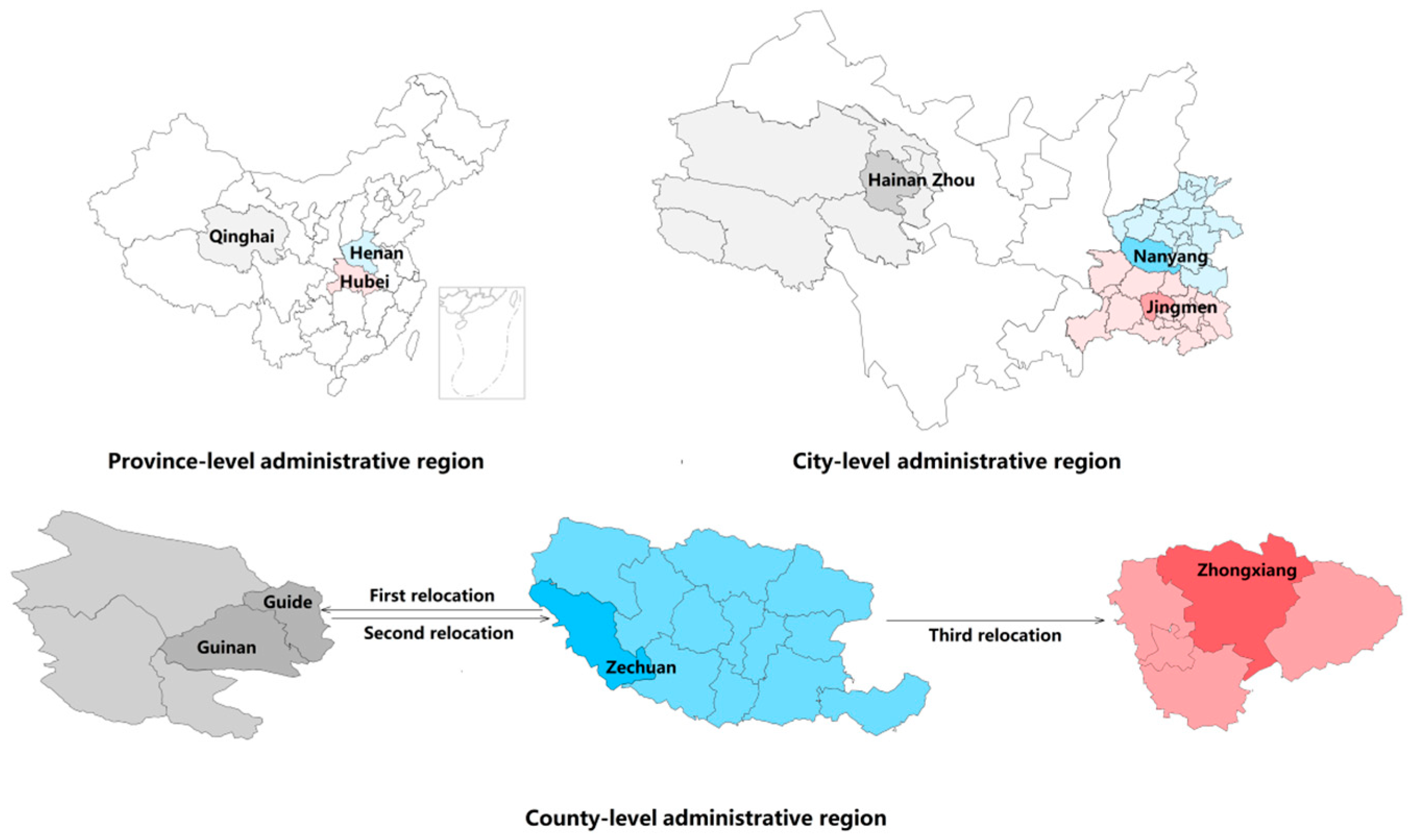
Figure 1. Migration Routes and Processes of Reservoir Resettlement in Xichuan County.
Water 17 03589 g001
Figure 2. The Four Stages of Migrant Development.
Water 17 03589 g002
Figure 3. Changes in Migrant Housing (1968–2018). (a) 1968 (b) 1978 (c) 1995 (d) 1990 (e) 2018.
Water 17 03589 g003
Figure 4. Community Services, Public Services, and Characteristic Industries.
Water 17 03589 g004
Table 1. Evaluation Indicators of Migrants’ Livelihood Capitals.
Primary IndicatorsSecondary IndicatorsIndicator DescriptionReferences
Natural CapitalArable Land AvailabilityWhether the household has access to cultivable land suitable for farmingWu et al., 2022; Xiao et al., 2021 [47,48]
Cash Crop CultivationWhether the household engages in the cultivation of cash crops for income generation
Usable Water ResourcesWhether the household has access to usable water resources for irrigation or fisheries
Usable Forest and Mountain AreasWhether the household has access to forest or mountain resources for livelihood purposes
Physical CapitalResettlement HousingWhether the household has been provided with secure resettlement housingGuo et al., 2022; Su et al., 2021 [49,50]
Livestock OwnershipWhether the household owns livestock or has access to grazing land
Industrial SupportWhether the household has received industrial or production-related government support
Social CapitalSocial OrganizationsWhether the household participates in social or community-based organizationsLi et al., 2024; Liu et al., 2025 [8,51]
Community RelationshipsWhether the household maintains stable relationships with local residents
Social NetworksWhether the household possesses stable and reliable social networks
Ethnic IntegrationWhether the resettled population is socially accepted by local ethnic groups
Financial CapitalIncome SourcesWhether the household has stable and diversified income sourcesHe & Ahmed, 2022; Zhao et al., 2023 [52,53]
Household SavingsWhether the household maintains a certain level of savings
Economic Support PoliciesWhether the household benefits from governmental financial support policies
Human CapitalLabor ForceWhether over half of the family members are able-bodied laborersZhang et al., 2025 [54]
Education LevelWhether children have access to nine-year compulsory education
Vocational Skills TrainingWhether household members have received government-sponsored skills training
Table 2. Livelihood Transformation Across Different Development Stages.
Primary IndicatorsSecondary IndicatorsExploratory Resettlement StageReturn Migration StageSelf-Reliance StageEconomic Revitalization Stage
Natural CapitalArable Land Availability×
Cash Crop Cultivation××
Usable Water Resources×××
Usable Forest and Mountain Areas×××
Physical CapitalResettlement Housing×
Livestock Ownership××
Industrial Support××
Social CapitalSocial Organizations××
Community Relationships×××
Social Networks×××
Ethnic Integration×××
Financial CapitalIncome Sources×××
Household Savings×××
Economic Support Policies×
Human CapitalLabor Force××
Education Level×××
Vocational Skills Training××
Note: “√” indicates that the indicator has significantly improved or effectively developed at the corresponding stage. This means that at this stage, the relevant capital elements have begun to play a role, or policies and practices have brought about positive changes to this indicator. “×” indicates that the indicator has not shown significant improvement or has not yet formed effective support at the corresponding stage. That is, at this stage, this capital element has not fully played its role, or its development is still in a state of absence, stagnation or inconspicuous.
Disclaimer/Publisher’s Note: The statements, opinions and data contained in all publications are solely those of the individual author(s) and contributor(s) and not of MDPI and/or the editor(s). MDPI and/or the editor(s) disclaim responsibility for any injury to people or property resulting from any ideas, methods, instructions or products referred to in the content.