


Oxidative Stress–Microbiota–Epigenetics Crosstalk: A Missing Link Between Cognition and Social Behavior in Metabolic and Neuropsychiatric Disorders


Highlights
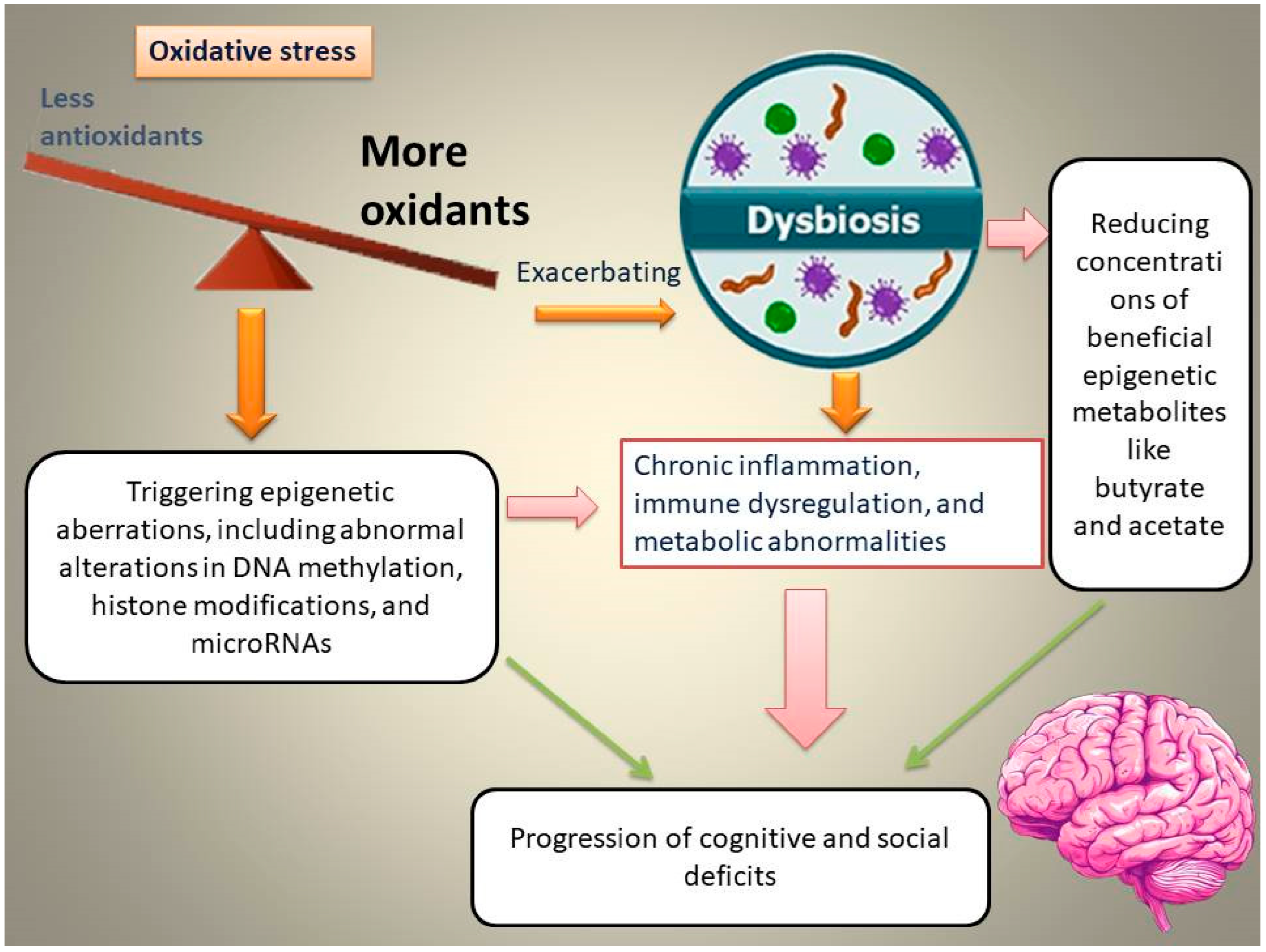
- Patients with neuropsychiatric and metabolic disorders exhibit cognitive impairment or social deficits, which are associated with gut dysbiosis and aberrant gut microbiota (GM) profiles via epigenetic mechanisms.
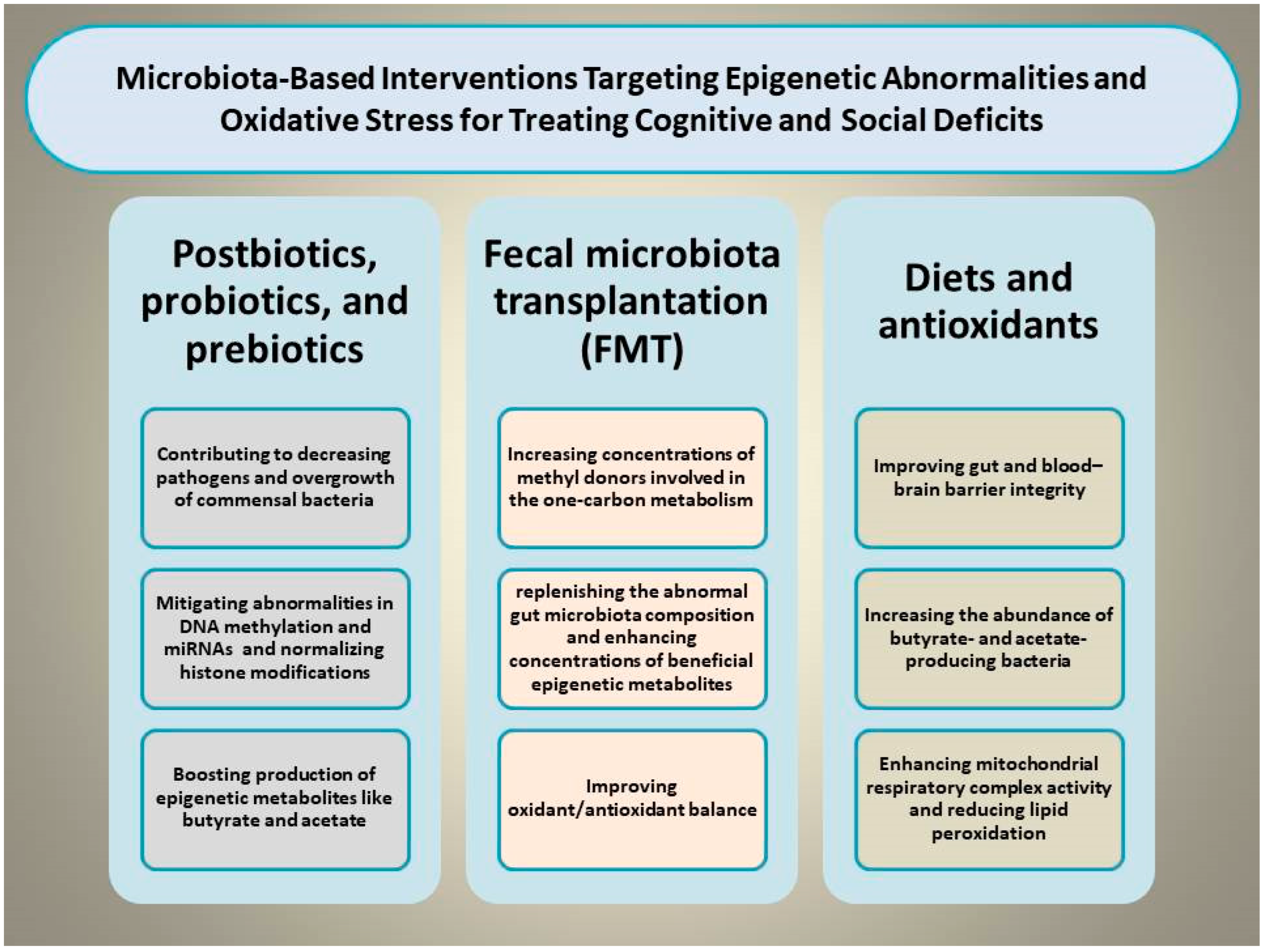
- Gut-balancing therapies may be considered promising approaches to manage or treat cognitive impairment or social deficits by normalizing epigenetic aberrations.
- The bidirectional communication network linking the gut and the brain, referred to as the gut–brain–microbiota axis, plays a pivotal role in the progression of cognitive impairments and social dysfunction.
- Gut microbiota–targeted interventions—such as prebiotics, probiotics, synbiotics, postbiotics, and fecal microbiota transplantation—may ameliorate cognitive impairments and impaired social interactions by normalizing GM profiles and enhancing key epigenetically active metabolites.
Abstract
1. Introduction
2. Methods
3. Role of Oxidative Stress in Epigenetic Dysregulation and Cognitive/Social Deficits
3.1. DNA Methylation
3.2. Histone Modifications
3.3. miRNAs

| Epigenetic Alteration | Target Genes/Key Pathological Mechanisms | Type of Study/Sample | Effects on Cognition or Sociability | Ref. |
|---|---|---|---|---|
| DNA methylation | BDNF/oxidative stress (OS) | Rats undergoing chronic unpredicted mild stress (CUMS)/brain | Homocysteine (Hcy)-induced DNA hypermethylation in the BDNF promoter reduced BDNF and caused cognitive deficits | [58] |
| DNA methylation | iNOS, COX2, NFkB and SOD2/neuroinflammation and OS | STZ-induced diabetic mice/the hippocampus region | Global DNA Hypermethylation was associated with diabetes-induced cognitive impairment | [59] |
| DNA methylation | Syp and Shank2 genes | A rat model of cerebral ischemia/reperfusion injury/the hippocampus region | DNA hypomethylation enhances learning and memory recovery | [60] |
| Histone acetylation | Gria1, Gria3, Grin2a, Grin2b, Slc1a1, Slc24a2, Ptk2b, and Src/neuroinflammation and OS | Hyperhomocysteinemia-induced cognitive impairment model by feeding mice a high-methionine diet/the hippocampus and cortex | A considerable reduction in histone H3 lysine 27 acetylation/aberrant expression of long-term potentiation-related genes regulated by histone H3 lysine 27 acetylation is a key driver of hyperhomocysteinemia-induced cognitive impairment | [42] |
| Histone acetylation | HDAC2 and GCN5/OS and inflammation | Social isolation stress mice/hippocampus region | Association between increased HDAC2 and GCN5 expression and social behavior dysfunction | [61] |
| Histone lactylation | FOXO1 and PGC-1α/OS | T2DM mice and high glucose-treated microglia/brain | Increased H4K12la directly activates the FOXO1 signaling pathway, elevating OS and contributing to diabetes-related cognitive impairment | [9] |
| MiRNAs (miR-124a, miR-483-5p, miR-142-3p, and miR-125b) | NO, MDA, DPP4, BDNF, SIRT-1, CAT, SOD, Bcl-2, Bax, and caspase-3/OS, inflammation, and apoptosis | Healthy normal (n = 80) and mild cognitive impairment (MCI) patients (n = 70)/serum | The levels of miR-124a and miR-483-5p considerably elevated and miR-142-3p and miR-125b markedly decreased in the serum of MCI patients/The expressed miRNAs correlated positively with NO, MDA, DPP4 activity, BDNF, and SIRT-1, and negatively with the levels of CAT, SOD, Bcl-2, Bax, and caspase-3 genes | [57] |
| MiRNA-21 | GSK/OS | Diabetic rats/the hippocampus region | Reduced expression of miRNA-21 was associated with derangements in brain insulin signaling and cognitive dysfunction | [62] |
| MiR-5699 | GRIN2B/OS | 209 unrelated patients with SCZ/blood samples | Association between disrupted MiR-5699 and cognition in patients with SCZ via OS | [63] |
| MiR203-5p | Glutamatergic and GABAergic genes/possibly OS | Stress-exposed C-Glud1+/− mice as a model of SCZ/medial prefrontal cortex (mPFC) | Chronic glutamate abnormalities interact with acute stress to induce cognitive deficits by increasing miR203-5p expression | [64] |
4. One-Carbon Metabolism, Oxidative Stress, and Cognitive/Social Dysfunction
5. Interactions Between Oxidative Stress, Leaky Gut, and Gut Microbiota via Epigenetic Mechanisms
6. Microbiota-Based Interventions Targeting Epigenetic Abnormalities
6.1. Postbiotics (SCFAs and Related Metabolites)
6.2. Probiotics
6.3. Fecal Microbiota Transplantation (FMT)
6.4. Prebiotics
6.5. Antioxidants
6.6. B Vitamins
6.7. Ketogenic Diet (KD)
6.8. Dietary Methionine Restriction
7. Conclusions and Future Perspectives
Author Contributions
Funding
Data Availability Statement
Acknowledgments
Conflicts of Interest
References
- Das, T.K.; Ganesh, B.P. Interlink between the gut microbiota and inflammation in the context of oxidative stress in Alzheimer’s disease progression. Gut Microbes 2023, 15, 2206504. [Google Scholar] [CrossRef] [Scilit]
- Houldsworth, A. Role of oxidative stress in neurodegenerative disorders: A review of reactive oxygen species and prevention by antioxidants. Brain Commun. 2024, 6, fcad356. [Google Scholar] [CrossRef] [Scilit]
- Hunyadi, A. The mechanism(s) of action of antioxidants: From scavenging reactive oxygen/nitrogen species to redox signaling and the generation of bioactive secondary metabolites. Med. Res. Rev. 2019, 39, 2505–2533. [Google Scholar] [CrossRef] [Scilit]
- Trofin, D.-M.; Sardaru, D.-P.; Trofin, D.; Onu, I.; Tutu, A.; Onu, A.; Onită, C.; Galaction, A.I.; Matei, D.V. Oxidative stress in brain function. Antioxidants 2025, 14, 297. [Google Scholar] [CrossRef] [Scilit]
- Jelinek, M.; Jurajda, M.; Duris, K. Oxidative stress in the brain: Basic concepts and treatment strategies in stroke. Antioxidants 2021, 10, 1886. [Google Scholar] [CrossRef] [Scilit]
- Simpson, D.S.; Oliver, P.L. ROS generation in microglia: Understanding oxidative stress and inflammation in neurodegenerative disease. Antioxidants 2020, 9, 743. [Google Scholar] [CrossRef] [Scilit]
- Wang, Y.; Zhao, S.; Liu, X.; Zheng, Y.; Li, L.; Meng, S. Oxytocin improves animal behaviors and ameliorates oxidative stress and inflammation in autistic mice. Biomed. Pharmacother. 2018, 107, 262–269. [Google Scholar] [CrossRef] [Scilit]
- Gu, X.; Sun, J.; Li, S.; Wu, X.; Li, L. Oxidative stress induces DNA demethylation and histone acetylation in SH-SY5Y cells: Potential epigenetic mechanisms in gene transcription in Aβ production. Neurobiol. Aging 2013, 34, 1069–1079. [Google Scholar] [CrossRef] [Scilit] [PubMed]
- Yang, Y.; Song, L.; Yu, L.; Zhang, J.; Zhang, B. H4K12 lactylation potentiates mitochondrial oxidative stress via the Foxo1 pathway in diabetes-induced cognitive impairment. J. Adv. Res. 2025, 78, 391–407. [Google Scholar] [CrossRef] [Scilit] [PubMed]
- Afzaal, M.; Saeed, F.; Shah, Y.A.; Hussain, M.; Rabail, R.; Socol, C.T.; Hassoun, A.; Pateiro, M.; Lorenzo, J.M.; Rusu, A.V. Human gut microbiota in health and disease: Unveiling the relationship. Front. Microbiol. 2022, 13, 999001. [Google Scholar] [CrossRef] [Scilit] [PubMed]
- Hugon, P.; Dufour, J.-C.; Colson, P.; Fournier, P.-E.; Sallah, K.; Raoult, D. A comprehensive repertoire of prokaryotic species identified in human beings. Lancet Infect. Dis. 2015, 15, 1211–1219. [Google Scholar] [CrossRef] [Scilit]
- Guo, X.; Okpara, E.S.; Hu, W.; Yan, C.; Wang, Y.; Liang, Q.; Chiang, J.Y.; Han, S. Interactive relationships between intestinal flora and bile acids. Int. J. Mol. Sci. 2022, 23, 8343. [Google Scholar] [CrossRef] [Scilit] [PubMed]
- Nohesara, S.; Mostafavi Abdolmaleky, H.; Pirani, A.; Thiagalingam, S. Therapeutic Horizons: Gut Microbiome, Neuroinflammation, and Epigenetics in Neuropsychiatric Disorders. Cells 2025, 14, 1027. [Google Scholar] [CrossRef] [Scilit]
- Paciolla, C.; Manganelli, M.; Di Chiano, M.; Montenegro, F.; Gallone, A.; Sallustio, F.; Guida, G. Valeric Acid: A Gut-Derived Metabolite as a Potential Epigenetic Modulator of Neuroinflammation in the Gut–Brain Axis. Cells 2025, 14, 1823. [Google Scholar] [CrossRef] [Scilit]
- Gieryńska, M.; Szulc-Dąbrowska, L.; Struzik, J.; Mielcarska, M.B.; Gregorczyk-Zboroch, K.P. Integrity of the intestinal barrier: The involvement of epithelial cells and microbiota—A mutual relationship. Animals 2022, 12, 145. [Google Scholar] [CrossRef] [Scilit]
- Yu, X.-Z.; Yu, Y.; Liu, Z.-Y. Crosstalk Between Intestinal Microbiota and Host Defense Peptides in Fish. Biology 2025, 14, 1243. [Google Scholar] [CrossRef] [Scilit]
- De Marco, P.; Henriques, A.C.; Azevedo, R.; Sá, S.I.; Cardoso, A.; Fonseca, B.; Barbosa, J.; Leal, S. Gut microbiome composition and metabolic status are differently affected by early exposure to unhealthy diets in a rat model. Nutrients 2021, 13, 3236. [Google Scholar] [CrossRef] [Scilit]
- Singh, S.; Sharma, P.; Pal, N.; Kumawat, M.; Shubham, S.; Sarma, D.K.; Tiwari, R.R.; Kumar, M.; Nagpal, R. Impact of environmental pollutants on gut microbiome and mental health via the gut–brain axis. Microorganisms 2022, 10, 1457. [Google Scholar] [CrossRef] [Scilit] [PubMed]
- Rubas, N.C.; Torres, A.; Maunakea, A.K. The gut microbiome and epigenomic reprogramming: Mechanisms, interactions, and implications for human health and disease. Int. J. Mol. Sci. 2025, 26, 8658. [Google Scholar] [CrossRef] [Scilit]
- Abdolmaleky, H.M.; Pirani, A.; Pettinato, G. Psychosomatic Disorders, Epigenome, and Gut Microbiota. Cells 2025, 14, 1959. [Google Scholar] [CrossRef] [Scilit]
- Li, J.; Wang, H.; Qing, W.; Liu, F.; Zeng, N.; Wu, F.; Shi, Y.; Gao, X.; Cheng, M.; Li, H. Congenitally underdeveloped intestine drives autism-related gut microbiota and behavior. Brain Behav. Immun. 2022, 105, 15–26. [Google Scholar] [CrossRef] [Scilit]
- Vinogradova, E.; Jarmukhanov, Z.; Nurgaziyev, M.; Kossumov, A.; Nurgozhina, A.; Mukhanbetzhanov, N.; Sergazy, S.; Chulenbayeva, L.; Issilbayeva, A.; Askarova, S. Enterococcus dysbiosis as a mediator of vitamin D deficiency-associated memory impairments. Heliyon 2025, 11, e41969. [Google Scholar] [CrossRef] [Scilit]
- Nohesara, S.; Abdolmaleky, H.M.; Dickerson, F.; Pinto-Tomas, A.A.; Jeste, D.V.; Thiagalingam, S. Associations of microbiome pathophysiology with social activity and behavior are mediated by epigenetic modulations: Avenues for designing innovative therapeutic strategies. Neurosci. Biobehav. Rev. 2025, 174, 106208. [Google Scholar] [CrossRef] [Scilit]
- Nohesara, S.; Abdolmaleky, H.M.; Dickerson, F.; Pinto-Tomás, A.A.; Jeste, D.V.; Thiagalingam, S. Maternal Gut Microbiome-Mediated Epigenetic Modifications in Cognitive Development and Impairments: A New Frontier for Therapeutic Innovation. Nutrients 2024, 16, 4355. [Google Scholar] [CrossRef] [Scilit]
- Bellver-Sanchis, A.; Pallàs, M.; Griñán-Ferré, C. The contribution of epigenetic inheritance processes on age-related cognitive decline and Alzheimer’s disease. Epigenomes 2021, 5, 15. [Google Scholar] [CrossRef] [Scilit]
- Angelopoulou, E.; Koros, C.; Hatzimanolis, A.; Stefanis, L.; Scarmeas, N.; Papageorgiou, S.G. Exploring the genetic landscape of mild behavioral impairment as an early marker of cognitive decline: An updated review focusing on Alzheimer’s disease. Int. J. Mol. Sci. 2024, 25, 2645. [Google Scholar] [CrossRef] [Scilit]
- Vogrinc, D.; Kramberger, M.G.; Emeršič, A.; Čučnik, S.; Goričar, K.; Dolžan, V. Genetic polymorphisms in oxidative stress and inflammatory pathways as potential biomarkers in Alzheimer’s disease and dementia. Antioxidants 2023, 12, 316. [Google Scholar] [CrossRef] [Scilit] [PubMed]
- Lee, L.-C.; Su, M.-T.; Bao, L.; Lee, P.-L.; Tutwiler, S.; Yeh, T.-K.; Chang, C.-Y. MicroRNAs modulate CaMKIIα/SIRT1 signaling pathway as a biomarker of cognitive ability in adolescents. Brain Behav. Immun.-Health 2025, 44, 100970. [Google Scholar] [CrossRef] [Scilit] [PubMed]
- Mittelstaedt, N.N.; Becker, A.L.; de Freitas, D.N.; Zanin, R.F.; Stein, R.T.; de Souza, A.P.D. DNA methylation and immune memory response. Cells 2021, 10, 2943. [Google Scholar] [CrossRef] [Scilit] [PubMed]
- Younesian, S.; Yousefi, A.-M.; Momeny, M.; Ghaffari, S.H.; Bashash, D. The DNA methylation in neurological diseases. Cells 2022, 11, 3439. [Google Scholar] [CrossRef] [Scilit]
- Gulati, S.; Narayan, C.L.; Mahesan, A.; Kamila, G.; Kapoor, S.; Chaturvedi, P.K.; Scaria, V.; Velpandian, T.; Jauhari, P.; Chakrabarty, B. Transmethylation and Oxidative Biomarkers in Children with Autism Spectrum Disorder: A Cross Sectional Study. J. Autism Dev. Disord. 2024, 1–9. [Google Scholar] [CrossRef] [Scilit]
- Wei, H.; Liang, F.; Meng, G.; Nie, Z.; Zhou, R.; Cheng, W.; Wu, X.; Feng, Y.; Wang, Y. Redox/methylation mediated abnormal DNA methylation as regulators of ambient fine particulate matter-induced neurodevelopment related impairment in human neuronal cells. Sci. Rep. 2016, 6, 33402. [Google Scholar] [CrossRef] [Scilit] [PubMed]
- Melnyk, S.; Fuchs, G.J.; Schulz, E.; Lopez, M.; Kahler, S.G.; Fussell, J.J.; Bellando, J.; Pavliv, O.; Rose, S.; Seidel, L. Metabolic imbalance associated with methylation dysregulation and oxidative damage in children with autism. J. Autism Dev. Disord. 2012, 42, 367–377. [Google Scholar] [CrossRef] [Scilit]
- Bam, S.; Buchanan, E.; Mahony, C.; O’Ryan, C. DNA methylation of PGC-1α is associated with elevated mtDNA copy number and altered urinary metabolites in autism spectrum disorder. Front. Cell Dev. Biol. 2021, 9, 696428. [Google Scholar] [CrossRef] [Scilit]
- Kulkarni, P.G.; Balasubramanian, N.; Manjrekar, R.; Banerjee, T.; Sakharkar, A. DNA methylation-mediated Mfn2 gene regulation in the brain: A role in brain trauma-induced mitochondrial dysfunction and memory deficits. Cell. Mol. Neurobiol. 2023, 43, 3479–3495. [Google Scholar] [CrossRef] [Scilit] [PubMed]
- Boruch, A.E.; Madrid, A.; Papale, L.A.; Bergmann, P.E.; Renteria, I.; Faasen, S.; Cook, D.B.; Alisch, R.S.; Hogan, K.J. Differential DNA methylation in blood in nuclear genes that encode mitochondrial proteins in mild cognitive impairment and Alzheimer’s disease. bioRxiv 2025. [Google Scholar] [CrossRef] [Scilit]
- De Plano, L.M.; Saitta, A.; Oddo, S.; Caccamo, A. Epigenetic changes in Alzheimer’s disease: DNA methylation and histone modification. Cells 2024, 13, 719. [Google Scholar] [CrossRef] [Scilit] [PubMed]
- Mai, H.A.; Thomas, C.M.; Nge, G.G.; Elefant, F. Modulating Cognition-Linked Histone Acetyltransferases (HATs) as a Therapeutic Strategy for Neurodegenerative Diseases: Recent Advances and Future Trends. Cells 2025, 14, 873. [Google Scholar] [CrossRef] [Scilit]
- Yang, Y.; Liu, Y.; Zhang, A.-L.; Tang, S.-F.; Ming, Q.; Ao, C.-Y.; Liu, Y.; Li, C.-Z.; Yu, C.; Zhao, H. Curcumin protects against manganese-induced neurotoxicity in rat by regulating oxidative stress-related gene expression via H3K27 acetylation. Ecotoxicol. Environ. Saf. 2022, 236, 113469. [Google Scholar] [CrossRef] [Scilit]
- Ao, C.; Tang, S.; Yang, Y.; Liu, Y.; Zhao, H.; Ban, J.; Li, J. Identification of histone acetylation modification sites in the striatum of subchronically manganese-exposed rats. Epigenomics 2024, 16, 5–21. [Google Scholar] [CrossRef] [Scilit]
- Niu, Y.; DesMarais, T.L.; Tong, Z.; Yao, Y.; Costa, M. Oxidative stress alters global histone modification and DNA methylation. Free Radic. Biol. Med. 2015, 82, 22–28. [Google Scholar] [CrossRef] [Scilit]
- Li, J.; Fu, Y.; Gu, X.; Xie, Q.; Liu, Z.; Cao, Z.; Li, L.; Ren, J.; Li, Y.; Yang, H. Aberrant histone acetylation and dysregulated synaptic plasticity in cognitive impairment induced by a high-methionine diet. Neural Regen. Res. 2025, 21. [Google Scholar] [CrossRef] [Scilit]
- Wang, X.; Lu, J.; Xie, W.; Lu, X.; Liang, Y.; Li, M.; Wang, Z.; Huang, X.; Tang, M.; Pfaff, D.W. Maternal diabetes induces autism-like behavior by hyperglycemia-mediated persistent oxidative stress and suppression of superoxide dismutase 2. Proc. Natl. Acad. Sci. USA 2019, 116, 23743–23752. [Google Scholar] [CrossRef] [Scilit] [PubMed]
- Liu, Y.; Zeng, J.-M.; Zhao, H.; Ao, C.-Y.; Ao, L.-H.; Ban, J.-Q.; Li, J. Mechanism of KAT2A regulation of H3K36ac in manganese-induced oxidative damage to mitochondria in the nervous system and intervention by curcumin. Ecotoxicol. Environ. Saf. 2024, 273, 116155. [Google Scholar] [CrossRef] [Scilit] [PubMed]
- Chen, Z.; Ao, C.; Liu, Y.; Yang, Y.; Liu, Y.; Ming, Q.; Li, C.; Zhao, H.; Ban, J.; Li, J. Manganese induces oxidative damage in the hippocampus by regulating the expression of oxidative stress-related genes via modulation of H3K18 acetylation. Environ. Toxicol. 2024, 39, 2240–2253. [Google Scholar] [CrossRef] [Scilit] [PubMed]
- DeLucas, M.; Sánchez, J.; Palou, A.; Serra, F. The impact of diet on miRNA regulation and its implications for health: A systematic review. Nutrients 2024, 16, 770. [Google Scholar] [CrossRef] [Scilit]
- Hasan, H.; Afzal, M.; Castresana, J.S.; Shahi, M.H. A comprehensive review of miRNAs and their epigenetic effects in glioblastoma. Cells 2023, 12, 1578. [Google Scholar] [CrossRef] [Scilit]
- Rashidi, S.K.; Kalirad, A.; Rafie, S.; Behzad, E.; Dezfouli, M.A. The role of microRNAs in neurobiology and pathophysiology of the hippocampus. Front. Mol. Neurosci. 2023, 16, 1226413. [Google Scholar] [CrossRef] [Scilit]
- Zhao, W.; Spiers, J.G.; Vassileff, N.; Khadka, A.; Jaehne, E.J.; van den Buuse, M.; Hill, A.F. microRNA-146a modulates behavioural activity, neuroinflammation, and oxidative stress in adult mice. Mol. Cell. Neurosci. 2023, 124, 103820. [Google Scholar] [CrossRef] [Scilit]
- Khavari, B.; Barnett, M.M.; Mahmoudi, E.; Geaghan, M.P.; Graham, A.; Cairns, M.J. microRNA and the Post-Transcriptional Response to Oxidative Stress during Neuronal Differentiation: Implications for Neurodevelopmental and Psychiatric Disorders. Life 2024, 14, 562. [Google Scholar] [CrossRef] [Scilit]
- Kim, H.K.; Tyryshkin, K.; Elmi, N.; Feilotter, H.; Andreazza, A.C. Examining redox modulation pathways in the post-mortem frontal cortex in patients with bipolar disorder through data mining of microRNA expression datasets. J. Psychiatr. Res. 2018, 99, 39–49. [Google Scholar] [CrossRef] [Scilit]
- Prasad, K.N. Oxidative stress and pro-inflammatory cytokines may act as one of the signals for regulating microRNAs expression in Alzheimer’s disease. Mech. Ageing Dev. 2017, 162, 63–71. [Google Scholar] [CrossRef] [Scilit]
- Han, J.; Liu, X.; Li, Y.; Zhang, J.; Yu, H. Sirt1/Nrf2 signalling pathway prevents cognitive impairment in diabetic rats through anti-oxidative stress induced by miRNA-23b-3p expression. Mol. Med. Rep. 2018, 17, 8414–8422. [Google Scholar] [CrossRef] [Scilit] [PubMed]
- Zhan-Qiang, H.; Hai-Hua, Q.; Chi, Z.; Miao, W.; Cui, Z.; Zi-Yin, L.; Jing, H.; Yi-Wei, W. miR-146a aggravates cognitive impairment and Alzheimer disease-like pathology by triggering oxidative stress through MAPK signaling. Neurologia 2023, 38, 486–494. [Google Scholar] [CrossRef] [Scilit]
- Zhang, J.; Yang, Y.; Al-Ahmady, Z.S.; Du, W.; Duan, J.; Liao, Z.; Sun, Q.; Wei, Z.; Hua, J. Maternal exposure to PM2. 5 induces cognitive impairment in offspring via cerebellar neuroinflammation and oxidative stress. Ecotoxicol. Environ. Saf. 2023, 249, 114425. [Google Scholar] [CrossRef] [Scilit] [PubMed]
- Qu, Y.; Wu, Y.; Xu, X.; Cheng, W.; Zhang, L.; Ma, J.; Xu, W.; Chen, M.; Cong, G.; Liu, J. miR-153 prevents NRF2 nuclear translocation to drive hypoperfusion-related cognitive deficits by targeting KPNA5. J. Neurosci. 2025, 45, e2148242025. [Google Scholar] [CrossRef] [Scilit]
- Al-Rawaf, H.A.; Alghadir, A.H.; Gabr, S.A. Molecular changes in circulating microRNAs’ expression and oxidative stress in adults with mild cognitive impairment: A biochemical and molecular study. Clin. Interv. Aging 2021, 16, 57–70. [Google Scholar] [CrossRef] [Scilit]
- Wang, S.-D.; Wang, X.; Zhao, Y.; Xue, B.-H.; Wang, X.-T.; Chen, Y.-X.; Zhang, Z.-Q.; Tian, Y.-R.; Xie, F.; Qian, L.-J. Homocysteine-induced disturbances in DNA methylation contribute to development of stress-associated cognitive decline in rats. Neurosci. Bull. 2022, 38, 887–900. [Google Scholar] [CrossRef] [Scilit]
- Fernandes, V.; Preeti, K.; Sood, A.; Nair, K.P.; Khan, S.; Rao, B.S.; Khatri, D.K.; Singh, S.B. Neuroepigenetic changes in DNA methylation affecting diabetes-induced cognitive impairment. Cell. Mol. Neurobiol. 2023, 43, 2005–2020. [Google Scholar] [CrossRef] [Scilit] [PubMed]
- Shi, G.; Feng, J.; Jian, L.-Y.; Fan, X.-Y. DNA hypomethylation promotes learning and memory recovery in a rat model of cerebral ischemia/reperfusion injury. Neural Regen. Res. 2023, 18, 863–868. [Google Scholar]
- Asgharzadeh, N.; Diziche, A.N.; Amini-Khoei, H.; Yazdanpanahi, N.; Korrani, M.S. N-acetyl cysteine through modulation of HDAC2 and GCN5 in the hippocampus mitigates behavioral disorders in the first and second generations of socially isolated mice. IBRO Neurosci. Rep. 2025, 18, 350–359. [Google Scholar] [CrossRef] [Scilit]
- El-Sayed, N.S.; Elatrebi, S.; Said, R.; Ibrahim, H.F.; Omar, E.M. Potential mechanisms underlying the association between type II diabetes mellitus and cognitive dysfunction in rats: A link between miRNA-21 and Resveratrol’s neuroprotective action. Metab. Brain Dis. 2022, 37, 2375–2388. [Google Scholar] [CrossRef] [Scilit]
- Yoshikawa, A.; Kushima, I.; Miyashita, M.; Toriumi, K.; Suzuki, K.; Horiuchi, Y.; Kawaji, H.; Takizawa, S.; Ozaki, N.; Itokawa, M. Dysregulation of post-transcriptional modification by copy number variable microRNAs in schizophrenia with enhanced glycation stress. Transl. Psychiatry 2021, 11, 331. [Google Scholar] [CrossRef] [Scilit]
- Asraf, K.; Zaidan, H.; Natoor, B.; Gaisler-Salomon, I. Synergistic, long-term effects of glutamate dehydrogenase 1 deficiency and mild stress on cognitive function and mPFC gene and miRNA expression. Transl. Psychiatry 2023, 13, 248. [Google Scholar] [CrossRef] [Scilit]
- Lionaki, E.; Ploumi, C.; Tavernarakis, N. One-carbon metabolism: Pulling the strings behind aging and neurodegeneration. Cells 2022, 11, 214. [Google Scholar] [CrossRef] [Scilit]
- Lyon, P.; Strippoli, V.; Fang, B.; Cimmino, L. B vitamins and one-carbon metabolism: Implications in human health and disease. Nutrients 2020, 12, 2867. [Google Scholar] [CrossRef] [Scilit]
- Jiang, X.; Guo, Y.; Cui, L.; Huang, L.; Guo, Q.; Huang, G. Study of diet habits and cognitive function in the Chinese middle-aged and elderly population: The association between folic acid, B vitamins, vitamin D, coenzyme Q10 supplementation and cognitive ability. Nutrients 2023, 15, 1243. [Google Scholar] [CrossRef] [Scilit]
- Ueno, A.; Hamano, T.; Enomoto, S.; Shirafuji, N.; Nagata, M.; Kimura, H.; Ikawa, M.; Yamamura, O.; Yamanaka, D.; Ito, T. Influences of vitamin B12 supplementation on cognition and homocysteine in patients with vitamin B12 deficiency and cognitive impairment. Nutrients 2022, 14, 1494. [Google Scholar] [CrossRef] [Scilit]
- Cankurtaran, M.; Yesil, Y.; Kuyumcu, M.E.; Oztürk, Z.A.; Yavuz, B.B.; Halil, M.; Ulger, Z.; Cankurtaran, E.S.; Arıoğul, S. Altered levels of homocysteine and serum natural antioxidants links oxidative damage to Alzheimer’s disease. J. Alzheimer’s Dis. 2013, 33, 1051–1058. [Google Scholar] [CrossRef] [Scilit]
- Tchantchou, F.; Goodfellow, M.; Li, F.; Ramsue, L.; Miller, C.; Puche, A.; Fiskum, G. Hyperhomocysteinemia-induced oxidative stress exacerbates cortical traumatic brain injury outcomes in rats. Cell. Mol. Neurobiol. 2021, 41, 487–503. [Google Scholar] [CrossRef] [Scilit]
- Mostafa, M.D.; ElKomy, M.A.; Othman, A.I.; Amer, M.E.; El-Missiry, M.A. Epigallocatechin-3-gallate enhances cognitive and memory performance and protects against brain injury in methionine-induced hyperhomocysteinemia through Interdependent molecular pathways. Neurotox. Res. 2022, 40, 2103–2116. [Google Scholar] [CrossRef] [Scilit]
- Wang, D.; Chen, Y.-M.; Ruan, M.-H.; Zhou, A.-H.; Qian, Y.; Chen, C. Homocysteine inhibits neural stem cells survival by inducing DNA interstrand cross-links via oxidative stress. Neurosci. Lett. 2016, 635, 24–32. [Google Scholar] [CrossRef] [Scilit]
- Hermann, A.; Sitdikova, G. Homocysteine: Biochemistry, molecular biology and role in disease. Biomolecules 2021, 11, 737. [Google Scholar] [CrossRef] [Scilit]
- Zaric, B.L.; Obradovic, M.; Bajic, V.; Haidara, M.A.; Jovanovic, M.; Isenovic, E.R. Homocysteine and hyperhomocysteinaemia. Curr. Med. Chem. 2019, 26, 2948–2961. [Google Scholar] [CrossRef] [Scilit]
- An, Y.; Feng, L.; Zhang, X.; Wang, Y.; Wang, Y.; Tao, L.; Qin, Z.; Xiao, R. Dietary intakes and biomarker patterns of folate, vitamin B6, and vitamin B12 can be associated with cognitive impairment by hypermethylation of redox-related genes NUDT15 and TXNRD1. Clin. Epigenet. 2019, 11, 139. [Google Scholar] [CrossRef] [Scilit]
- Zhang, L.; Xie, F.; Wang, X.; Sun, Z.; Wu, Y.; Sun, Z.; Zhang, S.; Chen, X.; Zhao, Y.; Qian, L. Homocysteine induced N6-methyldeoxyadenosine modification perturbation elicits mitochondria dysfunction contributes to the impairment of learning and memory ability caused by early life stress in rats. Redox Biol. 2025, 84, 103668. [Google Scholar] [CrossRef] [Scilit]
- Chai, G.-S.; Gong, J.; Mao, Y.-M.; Wu, J.-J.; Bi, S.-G.; Wang, F.; Zhang, Y.-Q.; Shen, M.-T.; Lei, Z.-Y.; Nie, Y.-J. H3K4 trimethylation mediate hyperhomocysteinemia induced neurodegeneration via suppressing histone acetylation by ANP32A. Mol. Neurobiol. 2024, 61, 6788–6804. [Google Scholar] [CrossRef] [Scilit]
- Xu, C.-C.; Zhao, W.-X.; Sheng, Y.; Yun, Y.-J.; Ma, T.; Fan, N.; Song, J.-Q.; Wang, J.; Zhang, Q. Serum homocysteine showed potential association with cognition and abnormal gut microbiome in major depressive disorder. World J. Psychiatry 2025, 15, 102567. [Google Scholar] [CrossRef] [Scilit]
- Li, F.; Ke, H.; Wang, S.; Mao, W.; Fu, C.; Chen, X.; Fu, Q.; Qin, X.; Huang, Y.; Li, B. Leaky gut plays a critical role in the pathophysiology of autism in mice by activating the lipopolysaccharide-mediated toll-like receptor 4–myeloid differentiation factor 88–nuclear factor kappa B signaling pathway. Neurosci. Bull. 2023, 39, 911–928. [Google Scholar] [CrossRef] [Scilit]
- Usuda, H.; Okamoto, T.; Wada, K. Leaky gut: Effect of dietary fiber and fats on microbiome and intestinal barrier. Int. J. Mol. Sci. 2021, 22, 7613. [Google Scholar] [CrossRef] [Scilit]
- Morena, D.; Lippi, M.; Scopetti, M.; Turillazzi, E.; Fineschi, V. Leaky gut biomarkers as predictors of depression and suicidal risk: A systematic review and meta-analysis. Diagnostics 2025, 15, 1683. [Google Scholar] [CrossRef] [Scilit]
- Rudzki, L.; Maes, M. From “Leaky Gut” to Impaired Glia-Neuron Communication in Depression. In Major Depressive Disorder: Rethinking and Understanding Recent Discoveries; Springer: Singapore, 2021; pp. 129–155. [Google Scholar]
- Semenova, N.; Garashchenko, N.; Kolesnikov, S.; Darenskaya, M.; Kolesnikova, L. Gut microbiome interactions with oxidative stress: Mechanisms and consequences for health. Pathophysiology 2024, 31, 309–330. [Google Scholar] [CrossRef] [Scilit]
- Ikeda, Y.; Saigo, N.; Nagasaki, Y. Direct evidence for the involvement of intestinal reactive oxygen species in the progress of depression via the gut-brain axis. Biomaterials 2023, 295, 122053. [Google Scholar] [CrossRef] [Scilit]
- Boles, J.S.; Krueger, M.E.; Jernigan, J.E.; Cole, C.L.; Neighbarger, N.K.; Huarte, O.U.; Tansey, M.G. A leaky gut dysregulates gene networks in the brain associated with immune activation, oxidative stress, and myelination in a mouse model of colitis. Brain Behav. Immun. 2024, 117, 473–492. [Google Scholar] [CrossRef] [Scilit]
- Qaisar, R.; Karim, A.; Iqbal, M.S.; Ahmad, F.; Shaikh, A.; Kamli, H.; Khamjan, N.A. A leaky gut contributes to postural dysfunction in patients with Alzheimer’s disease. Heliyon 2023, 9, e19485. [Google Scholar] [CrossRef] [Scilit]
- Leclercq, S.; Le Roy, T.; Furgiuele, S.; Coste, V.; Bindels, L.B.; Leyrolle, Q.; Neyrinck, A.M.; Quoilin, C.; Amadieu, C.; Petit, G. Gut microbiota-induced changes in β-hydroxybutyrate metabolism are linked to altered sociability and depression in alcohol use disorder. Cell Rep. 2020, 33, 108238. [Google Scholar] [CrossRef] [Scilit]
- Peng, L.; Li, Z.-R.; Green, R.S.; Holzmanr, I.R.; Lin, J. Butyrate enhances the intestinal barrier by facilitating tight junction assembly via activation of AMP-activated protein kinase in Caco-2 cell monolayers. J. Nutr. 2009, 139, 1619–1625. [Google Scholar] [CrossRef] [Scilit]
- Fan, K.-C.; Lin, C.-C.; Liu, Y.-C.; Chao, Y.-P.; Lai, Y.-J.; Chiu, Y.-L.; Chuang, Y.-F. Altered gut microbiota in older adults with mild cognitive impairment: A case-control study. Front. Aging Neurosci. 2023, 15, 1162057. [Google Scholar] [CrossRef] [Scilit]
- Zhong, L.; Ren, P.; Wang, H.; Fu, C.; Feng, D.; Wang, M.; Zeng, L.; Yao, P.; Wang, T. Potential association between altered oral microbiota and oxidative stress in individuals with autism. Autism 2025, 29, 3166–3179. [Google Scholar] [CrossRef] [Scilit]
- Arslanova, A.; Tarasova, A.; Alexandrova, A.; Novoselova, V.; Shaidullov, I.; Khusnutdinova, D.; Grigoryeva, T.; Yarullina, D.; Yakovleva, O.; Sitdikova, G. Protective effects of probiotics on cognitive and motor functions, anxiety level, visceral sensitivity, oxidative stress and microbiota in mice with antibiotic-induced dysbiosis. Life 2021, 11, 764. [Google Scholar] [CrossRef] [Scilit]
- Nie, Y.; Yang, J.; Zhou, L.; Yang, Z.; Liang, J.; Liu, Y.; Ma, X.; Qian, Z.; Hong, P.; Kalueff, A.V. Marine fungal metabolite butyrolactone I prevents cognitive deficits by relieving inflammation and intestinal microbiota imbalance on aluminum trichloride-injured zebrafish. J. Neuroinflamm. 2022, 19, 39. [Google Scholar] [CrossRef] [Scilit]
- Wang, X.; Yang, C.; Yang, L.; Zhang, Y. Modulating the gut microbiota ameliorates spontaneous seizures and cognitive deficits in rats with kainic acid-induced status epilepticus by inhibiting inflammation and oxidative stress. Front. Nutr. 2022, 9, 985841. [Google Scholar] [CrossRef] [Scilit]
- McLeod, A.; Bernabe, B.P.; Xia, Y.; Sanchez-Flack, J.; Lamar, M.; Schiffer, L.; Castellanos, K.; Fantuzzi, G.; Maki, P.; Fitzgibbon, M. Comparing the gut microbiome of obese, African American, older adults with and without mild cognitive impairment. PLoS ONE 2023, 18, e0280211. [Google Scholar] [CrossRef] [Scilit]
- Li, T.; Lin, L.; Li, C.; Zheng, J.; Chen, B.; Shen, Y.; Ren, D. Amelioration of walnut-derived novel peptides against D-galactose-induced cognitive impairment by modulating the gut microbiota composition. Food Funct. 2023, 14, 4228–4241. [Google Scholar] [CrossRef] [Scilit]
- Liu, Z.; Fayyaz, S.; Zhao, D.; Yi, Z.; Huang, J.-H.; Zhou, R.-R.; Xie, J.; Liu, P.-A.; He, W.; Zhang, S.-H. Polygonatum sibiricum polysaccharides improve cognitive function in D-galactose-induced aging mice by regulating the microbiota-gut-brain axis. J. Funct. Foods 2023, 103, 105476. [Google Scholar] [CrossRef] [Scilit]
- Li, H.; Huang, Y.; Liang, L.; Li, H.; Li, S.; Feng, Y.; Feng, S.; Wu, K.; Wu, F. The relationship between the gut microbiota and oxidative stress in the cognitive function of schizophrenia: A pilot study in China. Schizophr. Res. 2024, 267, 444–450. [Google Scholar] [CrossRef] [Scilit]
- Liu, Z.; Wu, C.; Sun, Z.; Lin, Z.; Sun, Y.; Amjad, N.; Majid, M.; Basnet, R.; Li, Z. Gut microbiota remodeling exacerbates neuroinflammation and cognitive dysfunction via the microbiota-gut-brain axis in prenatal VPA-exposed C57BL/6 mice offspring. Front. Immunol. 2025, 16, 1633680. [Google Scholar] [CrossRef] [Scilit]
- Hyży, A.; Rozenek, H.; Gondek, E.; Jaworski, M. Effect of antioxidants on the gut microbiome profile and brain functions: A review of randomized controlled trial studies. Foods 2025, 14, 176. [Google Scholar] [CrossRef] [Scilit]
- Faccinetto-Beltrán, P.; Reza-Zaldivar, E.E.; Curiel-Pedraza, D.A.; Canales-Aguirre, A.A.; Jacobo-Velázquez, D.A. Docosahexaenoic acid (DHA), vitamin D3, and probiotics supplementation improve memory, glial reactivity, and oxidative stress biomarkers in an aluminum-induced cognitive impairment rat model. ACS Omega 2024, 9, 21221–21233. [Google Scholar] [CrossRef] [Scilit]
- Wang, Z.; Ma, X.; Shi, W.; Zhu, W.; Feng, X.; Xin, H.; Zhang, Y.; Cong, B.; Li, Y. The Gut Microbiota Metabolite Butyrate Modulates Acute Stress-Induced Ferroptosis in the Prefrontal Cortex via the Gut–Brain Axis. Int. J. Mol. Sci. 2025, 26, 1698. [Google Scholar] [CrossRef] [Scilit]
- Erny, D.; Dokalis, N.; Mezö, C.; Castoldi, A.; Mossad, O.; Staszewski, O.; Frosch, M.; Villa, M.; Fuchs, V.; Mayer, A. Microbiota-derived acetate enables the metabolic fitness of the brain innate immune system during health and disease. Cell Metab. 2021, 33, 2260–2276.e2267. [Google Scholar] [CrossRef] [Scilit]
- Tu, J.; Zhang, J.; Chen, G. Higher dietary butyrate intake is associated with better cognitive function in older adults: Evidence from a cross-sectional study. Front. Aging Neurosci. 2025, 17, 1522498. [Google Scholar] [CrossRef] [Scilit]
- Li, Y.; Liu, A.; Chen, K.; Li, L.; Zhang, X.; Zou, F.; Zhang, X.; Meng, X. Sodium butyrate alleviates lead-induced neuroinflammation and improves cognitive and memory impairment through the ACSS2/H3K9ac/BDNF pathway. Environ. Int. 2024, 184, 108479. [Google Scholar] [CrossRef] [Scilit]
- Cavaleri, F.; Bashar, E. Potential synergies of β-hydroxybutyrate and butyrate on the modulation of metabolism, inflammation, cognition, and general health. J. Nutr. Metab. 2018, 2018, 7195760. [Google Scholar] [CrossRef] [Scilit]
- Yuan, B.; Liu, M.; Gong, Y.; Wang, Z.; Jin, X.; Xie, G.; Zhu, M.; Zhang, X.; Luo, S.; Qu, Q. Sodium butyrate exerts antioxidant stress effects and attenuates Aβ25-35-induced cytotoxicity in PC12 cells. Arch. Biochem. Biophys. 2022, 731, 109448. [Google Scholar] [CrossRef] [Scilit]
- Xie, A.; Ensink, E.; Li, P.; Gordevičius, J.; Marshall, L.L.; George, S.; Pospisilik, J.A.; Aho, V.T.; Houser, M.C.; Pereira, P.A. Bacterial butyrate in Parkinson’s disease is linked to epigenetic changes and depressive symptoms. Mov. Disord. 2022, 37, 1644–1653. [Google Scholar] [CrossRef] [Scilit]
- Majumdar, A.; Venkatesh, I.P.S.; Swarup, V.; Basu, A. Short-chain fatty acids abrogate Japanese encephalitis virus-induced inflammation in microglial cells via miR-200a-3p/ZBTB20/IKβα axis. Mbio 2024, 15, e01321–e01324. [Google Scholar] [CrossRef] [Scilit]
- Rode, J.; Yang, L.; König, J.; Hutchinson, A.N.; Wall, R.; Venizelos, N.; Brummer, R.-J.; Rangel, I.; Vumma, R. Butyrate rescues oxidative stress-induced transport deficits of tryptophan: Potential implication in affective or gut-brain axis disorders. Neuropsychobiology 2021, 80, 253–263. [Google Scholar] [CrossRef] [Scilit]
- Rose, S.; Bennuri, S.C.; Davis, J.E.; Wynne, R.; Slattery, J.C.; Tippett, M.; Delhey, L.; Melnyk, S.; Kahler, S.G.; MacFabe, D.F. Butyrate enhances mitochondrial function during oxidative stress in cell lines from boys with autism. Transl. Psychiatry 2018, 8, 42. [Google Scholar] [CrossRef] [Scilit]
- Kim, S.Y.; Chae, C.W.; Lee, H.J.; Jung, Y.H.; Choi, G.E.; Kim, J.S.; Lim, J.R.; Lee, J.E.; Cho, J.H.; Park, H. Sodium butyrate inhibits high cholesterol-induced neuronal amyloidogenesis by modulating NRF2 stabilization-mediated ROS levels: Involvement of NOX2 and SOD1. Cell Death Dis. 2020, 11, 469. [Google Scholar] [CrossRef] [Scilit]
- Wang, C.; Zheng, D.; Weng, F.; Jin, Y.; He, L. Sodium butyrate ameliorates the cognitive impairment of Alzheimer’s disease by regulating the metabolism of astrocytes. Psychopharmacology 2022, 239, 215–227. [Google Scholar] [CrossRef] [Scilit]
- Lu, L.-L.; Liu, L.-Z.; Li, L.; Hu, Y.-Y.; Xian, X.-H.; Li, W.-B. Sodium butyrate improves cognitive dysfunction in high-fat diet/streptozotocin-induced type 2 diabetic mice by ameliorating hippocampal mitochondrial damage through regulating AMPK/PGC-1α pathway. Neuropharmacology 2024, 261, 110139. [Google Scholar] [CrossRef] [Scilit]
- He, Q.; Ji, L.; Wang, Y.; Zhang, Y.; Wang, H.; Wang, J.; Zhu, Q.; Xie, M.; Ou, W.; Liu, J. Acetate enables metabolic fitness and cognitive performance during sleep disruption. Cell Metab. 2024, 36, 1998–2014.e1915. [Google Scholar] [CrossRef] [Scilit]
- Hu, S.; Kuwabara, R.; de Haan, B.J.; Smink, A.M.; de Vos, P. Acetate and butyrate improve β-cell metabolism and mitochondrial respiration under oxidative stress. Int. J. Mol. Sci. 2020, 21, 1542. [Google Scholar] [CrossRef] [Scilit]
- Wen, C.; Xie, T.; Pan, K.; Deng, Y.; Zhao, Z.; Li, N.; Bian, J.; Deng, X.; Zha, Y. Acetate attenuates perioperative neurocognitive disorders in aged mice. Aging 2020, 12, 3862. [Google Scholar] [CrossRef] [Scilit]
- Osman, A.; Mervosh, N.L.; Strat, A.N.; Euston, T.J.; Zipursky, G.; Pollak, R.M.; Meckel, K.R.; Tyler, S.R.; Chan, K.L.; Grice, A.B. Acetate supplementation rescues social deficits and alters transcriptional regulation in prefrontal cortex of Shank3 deficient mice. Brain Behav. Immun. 2023, 114, 311–324. [Google Scholar] [CrossRef] [Scilit]
- Tanelian, A.; Nankova, B.; Hu, F.; Sahawneh, J.D.; Sabban, E.L. Effect of acetate supplementation on traumatic stress-induced behavioral impairments in male rats. Neurobiol. Stress 2023, 27, 100572. [Google Scholar] [CrossRef] [Scilit]
- Mazziotta, C.; Tognon, M.; Martini, F.; Torreggiani, E.; Rotondo, J.C. Probiotics mechanism of action on immune cells and beneficial effects on human health. Cells 2023, 12, 184. [Google Scholar] [CrossRef] [Scilit]
- Maftei, N.-M.; Raileanu, C.R.; Balta, A.A.; Ambrose, L.; Boev, M.; Marin, D.B.; Lisa, E.L. The potential impact of probiotics on human health: An update on their health-promoting properties. Microorganisms 2024, 12, 234. [Google Scholar] [CrossRef] [Scilit]
- Liu, J.; Sun, J.; Wang, F.; Yu, X.; Ling, Z.; Li, H.; Zhang, H.; Jin, J.; Chen, W.; Pang, M. Neuroprotective effects of Clostridium butyricum against vascular dementia in mice via metabolic butyrate. BioMed Res. Int. 2015, 2015, 412946. [Google Scholar] [CrossRef] [Scilit]
- Sarkar, S.R.; Mazumder, P.M.; Chatterjee, K.; Sarkar, A.; Adhikary, M.; Mukhopadhyay, K.; Banerjee, S. Saccharomyces boulardii ameliorates gut dysbiosis associated cognitive decline. Physiol. Behav. 2021, 236, 113411. [Google Scholar] [CrossRef] [Scilit]
- Wang, H.; He, S.; Xin, J.; Zhang, T.; Sun, N.; Li, L.; Ni, X.; Zeng, D.; Ma, H.; Bai, Y. Psychoactive effects of Lactobacillus johnsonii against restraint stress-induced memory dysfunction in mice through modulating intestinal inflammation and permeability—A study based on the gut–brain axis hypothesis. Front. Pharmacol. 2021, 12, 662148. [Google Scholar] [CrossRef] [Scilit]
- Detman, A.; Mielecki, D.; Chojnacka, A.; Salamon, A.; Błaszczyk, M.K.; Sikora, A. Cell factories converting lactate and acetate to butyrate: Clostridium butyricum and microbial communities from dark fermentation bioreactors. Microb. Cell Factories 2019, 18, 36. [Google Scholar] [CrossRef] [Scilit]
- Cheng, L.-H.; Chou, P.-Y.; Hou, A.-T.; Huang, C.-L.; Shiu, W.-L.; Wang, S. Lactobacillus paracasei PS23 improves cognitive deficits via modulating the hippocampal gene expression and the gut microbiota in D-galactose-induced aging mice. Food Funct. 2022, 13, 5240–5251. [Google Scholar] [CrossRef] [Scilit]
- Wu, Y.; Niu, X.; Li, P.; Tong, T.; Wang, Q.; Zhang, M.; Li, Y.; Liu, J.; Li, Z. Lactobacillaceae improve cognitive dysfunction via regulating gut microbiota and suppressing Aβ deposits and neuroinflammation in APP/PS1 mice. Arch. Microbiol. 2023, 205, 118. [Google Scholar] [CrossRef] [Scilit]
- Wang, Y.; Wang, B.; Zeng, Z.; Liu, R.; Tang, L.; Meng, X.; Li, W. Bacillus amyloliquefaciens SC06 attenuated high-fat diet induced anxiety-like behavior and social withdrawal of male mice by improving antioxidant capacity, intestinal barrier function and modulating intestinal dysbiosis. Behav. Brain Res. 2023, 438, 114172. [Google Scholar] [CrossRef] [Scilit]
- Wang, X.; Hu, R.; Lin, F.; Yang, T.; Lu, Y.; Sun, Z.; Li, T.; Chen, J. Lactobacillus reuteri or Lactobacillus rhamnosus GG intervention facilitates gut barrier function, decreases corticosterone and ameliorates social behavior in LPS-exposed offspring. Food Res. Int. 2024, 197, 115212. [Google Scholar] [CrossRef] [Scilit]
- Chen, H.; Ouyang, W.; Cui, X.; Ma, X.; Hu, S.; Qing, W.; Tong, J. miR-124 mediates the effects of gut microbial dysbiosis on brain function in chronic stressed mice. Behav. Brain Res. 2025, 476, 115262. [Google Scholar] [CrossRef] [Scilit]
- Mao, L.; Zeng, Q.; Su, W.; Song, M.; Li, J.; Xie, M. Elevation of miR-146a inhibits BTG2/BAX expression to ameliorate postoperative cognitive dysfunction following probiotics (VSL# 3) treatment. Mol. Neurobiol. 2021, 58, 3457–3470. [Google Scholar]
- Akbari, E.; Asemi, Z.; Daneshvar Kakhaki, R.; Bahmani, F.; Kouchaki, E.; Tamtaji, O.R.; Hamidi, G.A.; Salami, M. Effect of probiotic supplementation on cognitive function and metabolic status in Alzheimer’s disease: A randomized, double-blind and controlled trial. Front. Aging Neurosci. 2016, 8, 229544. [Google Scholar] [CrossRef] [Scilit]
- Tamtaji, O.R.; Heidari-Soureshjani, R.; Mirhosseini, N.; Kouchaki, E.; Bahmani, F.; Aghadavod, E.; Tajabadi-Ebrahimi, M.; Asemi, Z. Probiotic and selenium co-supplementation, and the effects on clinical, metabolic and genetic status in Alzheimer’s disease: A randomized, double-blind, controlled trial. Clin. Nutr. 2019, 38, 2569–2575. [Google Scholar] [CrossRef] [Scilit]
- Hsu, Y.-C.; Huang, Y.-Y.; Tsai, S.-Y.; Kuo, Y.-W.; Lin, J.-H.; Ho, H.-H.; Chen, J.-F.; Hsia, K.-C.; Sun, Y. Efficacy of probiotic supplements on brain-derived neurotrophic factor, inflammatory biomarkers, oxidative stress and cognitive function in patients with Alzheimer’s dementia: A 12-week randomized, double-blind active-controlled study. Nutrients 2023, 16, 16. [Google Scholar] [CrossRef] [Scilit]
- Tkach, S.; Dorofeyev, A.; Kuzenko, I.; Boyko, N.; Falalyeyeva, T.; Boccuto, L.; Scarpellini, E.; Kobyliak, N.; Abenavoli, L. Current status and future therapeutic options for fecal microbiota transplantation. Medicina 2022, 58, 84. [Google Scholar] [CrossRef] [Scilit]
- Zikou, E.; Koliaki, C.; Makrilakis, K. The role of fecal microbiota transplantation (FMT) in the management of metabolic diseases in humans: A narrative review. Biomedicines 2024, 12, 1871. [Google Scholar] [CrossRef] [Scilit]
- Fanizzi, F.; D’Amico, F.; Bombassaro, I.Z.; Zilli, A.; Furfaro, F.; Parigi, T.L.; Cicerone, C.; Fiorino, G.; Peyrin-Biroulet, L.; Danese, S. The role of fecal microbiota transplantation in IBD. Microorganisms 2024, 12, 1755. [Google Scholar] [CrossRef] [Scilit]
- Ren, J.; Wang, Q.; Hong, H.; Tang, C. Fecal Microbiota Transplantation in Alzheimer’s Disease: Mechanistic Insights Through the Microbiota–Gut–Brain Axis and Therapeutic Prospects. Microorganisms 2025, 13, 1956. [Google Scholar] [CrossRef] [Scilit]
- Zheng, L.; Jiao, Y.; Zhong, H.; Tan, Y.; Yin, Y.; Liu, Y.; Liu, D.; Wu, M.; Wang, G.; Huang, J. Human-derived fecal microbiota transplantation alleviates social deficits of the BTBR mouse model of autism through a potential mechanism involving vitamin B6 metabolism. Msystems 2024, 9, e0025724. [Google Scholar] [CrossRef] [Scilit]
- Nirmalkar, K.; Qureshi, F.; Kang, D.-W.; Hahn, J.; Adams, J.B.; Krajmalnik-Brown, R. Shotgun metagenomics study suggests alteration in sulfur metabolism and oxidative stress in children with autism and improvement after microbiota transfer therapy. Int. J. Mol. Sci. 2022, 23, 13481. [Google Scholar] [CrossRef] [Scilit]
- Abuaish, S.; Al-Otaibi, N.M.; Aabed, K.; Abujamel, T.S.; Alzahrani, S.A.; Alotaibi, S.M.; Bhat, R.S.; Arzoo, S.; Algahtani, N.; Moubayed, N.M. The efficacy of fecal transplantation and bifidobacterium supplementation in ameliorating propionic acid-induced behavioral and biochemical autistic features in juvenile male rats. J. Mol. Neurosci. 2022, 72, 372–381. [Google Scholar] [CrossRef] [Scilit]
- Duan, R.; Hou, J.; Wang, X.; Huang, Z.; Cao, H.; Hu, J.; Peng, Q.; Duan, H.; Wang, Q.; Chen, X. Prevotella histicola transplantation ameliorates cognitive impairment and decreases oxidative stress in vascular dementia rats. Brain Sci. 2023, 13, 1136. [Google Scholar] [CrossRef] [Scilit]
- Sionek, B.; Szydłowska, A. Probiotics and Prebiotics in the Aspect of Health Benefits and the Development of Novel Plant-Based Functional Food. Appl. Sci. 2025, 15, 3137. [Google Scholar] [CrossRef] [Scilit]
- Gao, X.; Hu, S.; Liu, Y.; De Alwis, S.S.S.; Yu, Y.; Li, Z.; Wang, Z.; Liu, J. Dietary Fiber as Prebiotics: A Mitigation Strategy for Metabolic Diseases. Foods 2025, 14, 2670. [Google Scholar] [CrossRef] [Scilit]
- Ghodbane, I.; Boukhechem, S.; Bougherara, H.; Monnoye, M.; Oubira, I.; Lakhdara, N.; Gerard, P.; Dib, A.L. The Role of Plant-Derived Prebiotics in Obesity Management: Mechanisms, Efficacy, and Active Compounds. Biol. Life Sci. Forum 2025, 49, 13. [Google Scholar] [CrossRef] [Scilit]
- Li, M.; Zhang, C.; Xiao, X.; Zhu, M.; Quan, W.; Liu, X.; Zhang, S.; Liu, Z. Theaflavins in black tea mitigate aging-associated cognitive dysfunction via the microbiota–gut–brain axis. J. Agric. Food Chem. 2023, 71, 2356–2369. [Google Scholar] [CrossRef] [Scilit]
- Fekete, M.; Lehoczki, A.; Major, D.; Fazekas-Pongor, V.; Csípő, T.; Tarantini, S.; Csizmadia, Z.; Varga, J.T. Exploring the influence of gut–brain axis modulation on cognitive health: A comprehensive review of prebiotics, probiotics, and symbiotics. Nutrients 2024, 16, 789. [Google Scholar] [CrossRef] [Scilit]
- Bevilacqua, A.; Campaniello, D.; Speranza, B.; Racioppo, A.; Sinigaglia, M.; Corbo, M.R. An update on prebiotics and on their health effects. Foods 2024, 13, 446. [Google Scholar] [CrossRef] [Scilit]
- Liu, B.; Chen, B.; Yi, J.; Long, H.; Wen, H.; Tian, F.; Liu, Y.; Xiao, L.; Li, L. Liuwei dihuang decoction alleviates cognitive dysfunction in mice with D-galactose-induced aging by regulating lipid metabolism and oxidative stress via the microbiota-gut-brain axis. Front. Neurosci. 2022, 16, 949298. [Google Scholar] [CrossRef] [Scilit]
- Liu, Q.; Xi, Y.; Wang, Q.; Liu, J.; Li, P.; Meng, X.; Liu, K.; Chen, W.; Liu, X.; Liu, Z. Mannan oligosaccharide attenuates cognitive and behavioral disorders in the 5xFAD Alzheimer’s disease mouse model via regulating the gut microbiota-brain axis. Brain Behav. Immun. 2021, 95, 330–343. [Google Scholar] [CrossRef] [Scilit]
- Gao, Y.; Li, B.; Liu, H.; Tian, Y.; Gu, C.; Du, X.; Bu, R.; Gao, J.; Liu, Y.; Li, G. Cistanche deserticola polysaccharides alleviate cognitive decline in aging model mice by restoring the gut microbiota-brain axis. Aging 2021, 13, 15320. [Google Scholar] [CrossRef] [Scilit]
- Chen, S.-Y.; Weng, M.-H.; Li, Z.-Y.; Wang, G.-Y.; Yen, G.-C. Protective effects of camellia and olive oils against cognitive impairment via gut microbiota-brain communication in rats. Food Funct. 2022, 13, 7168–7180. [Google Scholar] [CrossRef] [Scilit]
- Yang, L.; Wang, Y.; Zheng, G.; Li, Z.; Mei, J. Resveratrol-loaded selenium/chitosan nano-flowers alleviate glucolipid metabolism disorder-associated cognitive impairment in Alzheimer’s disease. Int. J. Biol. Macromol. 2023, 239, 124316. [Google Scholar] [CrossRef] [Scilit]
- Li, M.; Zhu, M.; Quan, W.; Huang, W.; Liu, X.; Zhang, C.; Lu, B.; Xiao, X.; Liu, Z. Acteoside palliates d-galactose induced cognitive impairment by regulating intestinal homeostasis. Food Chem. 2023, 421, 135978. [Google Scholar] [CrossRef] [Scilit]
- Zhang, N.; Jing, P. Red cabbage anthocyanins attenuate cognitive impairment by attenuating neuroinflammation and regulating gut microbiota in aging mice. J. Agric. Food Chem. 2023, 71, 15064–15072. [Google Scholar] [CrossRef] [Scilit]
- Million, M.; Armstrong, N.; Khelaifia, S.; Guilhot, E.; Richez, M.; Lagier, J.-C.; Dubourg, G.; Chabriere, E.; Raoult, D. The antioxidants glutathione, ascorbic acid and uric acid maintain butyrate production by human gut clostridia in the presence of oxygen in vitro. Sci. Rep. 2020, 10, 7705. [Google Scholar] [CrossRef] [Scilit]
- Gao, Y.; Xu, Y.; Yin, J. Selenomethionine ameliorates cognitive impairment, decreases hippocampal oxidative stress and attenuates dysbiosis in D-galactose-treated mice. Antioxidants 2022, 11, 111. [Google Scholar] [CrossRef] [Scilit]
- Lin, X.; Bo, H.; Gu, J.; Yi, X.; Zhang, P.; Liu, R.; Li, H.; Sun, G.; Lin, C.-H. Astaxanthin, a carotenoid antioxidant, pretreatment alleviates cognitive deficits in aircraft noised mice by attenuating inflammatory and oxidative damage to the gut, heart and hippocampus. Biomed. Pharmacother. 2022, 148, 112777. [Google Scholar] [CrossRef] [Scilit]
- Dong, W.; Peng, Y.; Chen, G.; Xie, Z.; Xu, W.; Zhou, W.; Mi, J.; Lu, L.; Sun, Y.; Zeng, X. 2-O-β-D-Glucopyranosyl-L-ascorbic acid, an ascorbic acid derivative isolated from the fruits of Lycium barbarum L., ameliorates high fructose-induced neuroinflammation in mice: Involvement of gut microbiota and leaky gut. Food Sci. Hum. Wellness 2024, 13, 241–253. [Google Scholar] [CrossRef] [Scilit]
- Li, S.; Yang, P.; Cai, X.; He, M.; He, Y.; He, F. Vitamin C supplementation mitigates mild cognitive impairment in mice subjected to D-galactose: Insights into intestinal flora and derived SCFAs. Eur. J. Pharmacol. 2025, 1001, 177787. [Google Scholar] [CrossRef] [Scilit]
- Chatterjee, K.; Mazumder, P.M.; Sarkar, S.R.; Saha, R.; Chatterjee, A.; Sarkar, B.; Banerjee, S. Neuroprotective effect of Vitamin K2 against gut dysbiosis associated cognitive decline. Physiol. Behav. 2023, 269, 114252. [Google Scholar] [CrossRef] [Scilit]
- Dou, X.; Cai, S.; Liu, Y.; Wang, J.; Li, H.; Gao, D. Synergistic Effect Evaluation and Mechanism Investigation of Vitamin B6 and B12 in Models of Neuroinflammation. Int. J. Mol. Sci. 2025, 26, 10956. [Google Scholar] [CrossRef] [Scilit]
- Zwierz, M.; Suprunowicz, M.; Mrozek, K.; Pietruszkiewicz, J.; Oracz, A.J.; Konarzewska, B.; Waszkiewicz, N. Vitamin B12 and autism spectrum disorder: A review of current evidence. Nutrients 2025, 17, 1220. [Google Scholar] [CrossRef] [Scilit]
- Theodosis-Nobelos, P.; Rekka, E.A. The antioxidant potential of vitamins and their implication in metabolic abnormalities. Nutrients 2024, 16, 2740. [Google Scholar] [CrossRef] [Scilit]
- Obeid, R.; Shannan, B.; Herrmann, W. Advanced glycation end products overload might explain intracellular cobalamin deficiency in renal dysfunction, diabetes and aging. Med. Hypotheses 2011, 77, 884–888. [Google Scholar] [CrossRef] [Scilit]
- Park, S.; Kang, S.; Kim, D.S. Folate and vitamin B-12 deficiencies additively impaire memory function and disturb the gut microbiota in amyloid-β infused rats. Int. J. Vitam. Nutr. Res. 2019, 92, 169–181. [Google Scholar] [CrossRef] [Scilit]
- Robea, M.A.; Ilie, O.D.; Nicoara, M.N.; Solcan, G.; Romila, L.E.; Ureche, D.; Ciobica, A. Vitamin B12 Ameliorates Pesticide-Induced Sociability Impairment in Zebrafish (Danio rerio): A Prospective Controlled Intervention Study. Animals 2024, 14, 405. [Google Scholar] [CrossRef] [Scilit]
- Liu, F.; Liu, Y.; Feng, Y.; Zhao, J.; Wang, M.; Ye, M.; Zhang, Y.; Gan, X.; Pan, Q.; Shen, J. Folate mediates cognitive impairment of aged people with periodontitis. Nutr. Neurosci. 2025, 28, 1619–1631. [Google Scholar] [CrossRef] [Scilit]
- Li, B.; Wu, K.; Duan, G.; Yin, W.; Lei, M.; Yan, Y.; Ren, Y.; Zhang, C. Folic acid and taurine alleviate the impairment of redox status, immunity, rumen microbial composition and fermentation of lambs under heat stress. Animals 2024, 14, 998. [Google Scholar] [CrossRef] [Scilit]
- Darbandi, Z.K.; Amirahmadi, S.; Goudarzi, I.; Hosseini, M.; Rajabian, A. Folic acid improved memory and learning function in a rat model of neuroinflammation induced by lipopolysaccharide. Inflammopharmacology 2024, 32, 1401–1411. [Google Scholar] [CrossRef] [Scilit]
- Novochadlo, M.; Goldim, M.P.; Bonfante, S.; Joaquim, L.; Mathias, K.; Metzker, K.; Machado, R.S.; Lanzzarin, E.; Bernades, G.; Bagio, E. Folic acid alleviates the blood brain barrier permeability and oxidative stress and prevents cognitive decline in sepsis-surviving rats. Microvasc. Res. 2021, 137, 104193. [Google Scholar] [CrossRef] [Scilit]
- Wan, Z.; Zheng, J.; Zhu, Z.; Sang, L.; Zhu, J.; Luo, S.; Zhao, Y.; Wang, R.; Zhang, Y.; Hao, K. Intermediate role of gut microbiota in vitamin B nutrition and its influences on human health. Front. Nutr. 2022, 9, 1031502. [Google Scholar] [CrossRef] [Scilit]
- Nakano, E.; Higgins, J.A.; Powers, H.J. Folate protects against oxidative modification of human LDL. Br. J. Nutr. 2001, 86, 637–639. [Google Scholar] [CrossRef] [Scilit] [PubMed]
- Joshi, R.; Adhikari, S.; Patro, B.; Chattopadhyay, S.; Mukherjee, T. Free radical scavenging behavior of folic acid: Evidence for possible antioxidant activity. Free Radic. Biol. Med. 2001, 30, 1390–1399. [Google Scholar] [CrossRef] [Scilit]
- Jang, J.; Kim, S.R.; Lee, J.E.; Lee, S.; Son, H.J.; Choe, W.; Yoon, K.-S.; Kim, S.S.; Yeo, E.-J.; Kang, I. Molecular mechanisms of neuroprotection by ketone bodies and ketogenic diet in cerebral ischemia and neurodegenerative diseases. Int. J. Mol. Sci. 2023, 25, 124. [Google Scholar] [CrossRef] [Scilit]
- Rubio, C.; López-Landa, A.; Romo-Parra, H.; Rubio-Osornio, M. Impact of the ketogenic diet on neurological diseases: A review. Life 2025, 15, 71. [Google Scholar] [CrossRef] [Scilit] [PubMed]
- Greco, T.; Glenn, T.C.; Hovda, D.A.; Prins, M.L. Ketogenic diet decreases oxidative stress and improves mitochondrial respiratory complex activity. J. Cereb. Blood Flow Metab. 2016, 36, 1603–1613. [Google Scholar] [CrossRef] [Scilit]
- Jiang, J.; Pan, H.; Shen, F.; Tan, Y.; Chen, S. Ketogenic diet alleviates cognitive dysfunction and neuroinflammation in APP/PS1 mice via the Nrf2/HO-1 and NF-κB signaling pathways. Neural Regen. Res. 2023, 18, 2767–2772. [Google Scholar] [CrossRef] [Scilit] [PubMed]
- Qin, Y.; Bai, D.; Tang, M.; Zhang, M.; Zhao, L.; Li, J.; Yang, R.; Jiang, G. Ketogenic diet alleviates brain iron deposition and cognitive dysfunction via Nrf2-mediated ferroptosis pathway in APP/PS1 mouse. Brain Res. 2023, 1812, 148404. [Google Scholar] [CrossRef] [Scilit]
- Qiao, Q.; Tian, S.; Zhang, Y.; Che, L.; Li, Q.; Qu, Z.; Wang, W. A ketogenic diet may improve cognitive function in rats with temporal lobe epilepsy by regulating endoplasmic reticulum stress and synaptic plasticity. Mol. Neurobiol. 2024, 61, 2249–2264. [Google Scholar] [CrossRef] [Scilit]
- Li, C.; Ma, Y.; Chai, X.; Feng, X.; Feng, W.; Zhao, Y.; Cui, C.; Wang, J.; Zhao, S.; Zhu, X. Ketogenic diet attenuates cognitive dysfunctions induced by hypoglycemia via inhibiting endoplasmic reticulum stress-dependent pathways. Food Funct. 2024, 15, 1294–1309. [Google Scholar] [CrossRef] [Scilit]
- Abdel-Aziz, R.H.; Ahmed, O.G.; Mahmoud, A.M.; Abd-Elhafeez, H.H.; Abd-Elsamiee, L.; Toghan, R. Effect of Ketogenic Diet on Cognitive Dysfunction associated with Alzheimer’s disease. SVU-Int. J. Med. Sci. 2025, 8, 315–331. [Google Scholar] [CrossRef] [Scilit]
- Olivito, I.; Avolio, E.; Minervini, D.; Soda, T.; Rocca, C.; Angelone, T.; Iaquinta, F.S.; Bellizzi, D.; De Rango, F.; Bruno, R. Ketogenic diet ameliorates autism spectrum disorders-like behaviors via reduced inflammatory factors and microbiota remodeling in BTBR T+ Itpr3tf/J mice. Exp. Neurol. 2023, 366, 114432. [Google Scholar] [CrossRef] [Scilit]
- Allan, N.P.; Yamamoto, B.Y.; Kunihiro, B.P.; Nunokawa, C.K.; Rubas, N.C.; Wells, R.K.; Umeda, L.; Phankitnirundorn, K.; Torres, A.; Peres, R. Ketogenic diet induced shifts in the gut microbiome associate with changes to inflammatory cytokines and brain-related miRNAs in children with autism Spectrum disorder. Nutrients 2024, 16, 1401. [Google Scholar] [CrossRef] [Scilit]
- Lu, M.; Yang, Y.; Xu, Y.; Wang, X.; Li, B.; Le, G.; Xie, Y. Dietary methionine restriction alleviates choline-induced tri-methylamine-N-oxide (TMAO) elevation by manipulating gut microbiota in mice. Nutrients 2023, 15, 206. [Google Scholar] [CrossRef] [Scilit]
- Yang, M.; Xie, Q.; Xiao, Y.; Xia, M.; Chen, J.; Tan, B.-E.; Yin, Y. Dietary methionine restriction improves gut health and alters the plasma metabolomic profile in rats by modulating the composition of the gut microbiota. Int. J. Mol. Sci. 2024, 25, 3657. [Google Scholar] [CrossRef] [Scilit] [PubMed]
- Wallis, K.F.; Melnyk, S.B.; Miousse, I.R. Sex-specific effects of dietary methionine restriction on the intestinal microbiome. Nutrients 2020, 12, 781. [Google Scholar] [CrossRef] [Scilit] [PubMed]
- Yang, Y.; Zhang, Y.; Xu, Y.; Luo, T.; Ge, Y.; Jiang, Y.; Shi, Y.; Sun, J.; Le, G. Dietary methionine restriction improves the gut microbiota and reduces intestinal permeability and inflammation in high-fat-fed mice. Food Funct. 2019, 10, 5952–5968. [Google Scholar] [CrossRef] [Scilit]
- Wu, G.; Shi, Y.; Han, L.; Feng, C.; Ge, Y.; Yu, Y.; Tang, X.; Cheng, X.; Sun, J.; Le, G.-W. Dietary methionine restriction ameliorated fat accumulation, systemic inflammation, and increased energy metabolism by altering gut microbiota in middle-aged mice administered different fat diets. J. Agric. Food Chem. 2020, 68, 7745–7756. [Google Scholar] [CrossRef] [Scilit] [PubMed]
- Xu, Y.; Yang, Y.; Li, B.; Xie, Y.; Shi, Y.; Le, G. Dietary methionine restriction improves gut microbiota composition and prevents cognitive impairment in D-galactose-induced aging mice. Food Funct. 2022, 13, 12896–12914. [Google Scholar] [CrossRef] [Scilit]
| Type of Deficit/Population | Relevant Pathological Processes | Microbiota Testing Method | Key Findings of Affected Gut Bacteria | Ref. |
|---|---|---|---|---|
| Cognitive dysfunction/mice administered to broad-spectrum antibiotics | Oxidative stress (OS) | 16S rRNA Gene Amplification and Sequencing | A reduced diversity of gut microbiota and an elevation in pathogenic bacteria/reduced concentration of glutathione and elevated levels of MDA | [91] |
| AlCl3-induced cognitive deficits/zebrafish | Inflammation and OS | 16S rDNA high-throughput sequencing | Reduced levels of Gram-positive bacteria and elevated levels of pro-inflammatory Gram-negative bacteria/increased levels of central and peripheral pro-inflammatory cytokines and reduced amounts of GSH in the brains of zebrafish | [92] |
| Cognitive deficits in rats with kainic acid-induced status epilepticus | Inflammation and OS | ------------------ | Reducing levels of SCFA-producing bacteria/the activation of glial cells, elevation of inflammatory mediators (IL-1 β, IL-6, and TNF-α), lipid peroxidation (MDA), DNA damage, and reduction in total antioxidant ability (GSH) | [93] |
| Cognitive impairment/60 older (ages 55–76), obese, predominately female, African American adults | Inflammation and OS | Amplicon 16S rRNA gene sequencing | Possible relationship between certain bacteria (Methanobrevibacter and P. distasonis) and cognition via oxidative pathways/possible association between D. invisus and cognition via systemic inflammatory pathways/positive association between cognitive score and Akkermansia muciniphila as an SCFAs-producing bacterium | [94] |
| Cognitive impairment/mice | Inflammation and OS | 16S rRNA Gene Amplification and Sequencing | Positive relationship between cognitive impairment and harmful bacteria, including the ratio of Firmicutes to Bacteroidetes, Helicobacter, Allobaculum, Alistipes, Mucispirillum, and Odoribacter | [95] |
| Cognitive impairment/C57BL/6J (six-week-old) male mice | OS | High-throughput 16S rDNA sequencing | Correlation between Bacteroidota and Firmicutes, cognitive function, and OS/reduced Bacteroidota/Firmicutes ratio of the aging mice vs. control | [96] |
| Cognitive dysfunction/schizophrenia patients (N = 68) and healthy controls (N = 72) | OS | 16S RNA sequencing | SOD was negatively linked to Eubacterium, Collinsella, Lactobacillus, Corynebacterium, Bulleidia, Mogibacterium, and Succinivibrio, but positively correlated with Faecalibacterium, Ruminococcus, and cognitive function/Faecalibacterium and Turicibacter were positively linked to cognitive function | [97] |
| Social deficits and spatial memory impairment/VPA-exposed mice | Inflammation and OS | 16S rRNA sequencing | Decreased Bacteroidia, increased Clostridia, with reduced short-chain fatty acid (SCFA)-producing taxa (e.g., Oscillibacter)/overexpression of pro-inflammatory mediators (IL-1β, IL-6, TNF-α) and microglial hyperactivation, alongside reduced antioxidant systems (GSH, SOD) | [98] |
Disclaimer/Publisher’s Note: The statements, opinions and data contained in all publications are solely those of the individual author(s) and contributor(s) and not of MDPI and/or the editor(s). MDPI and/or the editor(s) disclaim responsibility for any injury to people or property resulting from any ideas, methods, instructions or products referred to in the content. |
© 2025 by the authors. Licensee MDPI, Basel, Switzerland. This article is an open access article distributed under the terms and conditions of the Creative Commons Attribution (CC BY) license.
Share and Cite
Ashrafi, F.; Advani, S.; Pinto-Tomás, A.A.; Jeste, D.V. Oxidative Stress–Microbiota–Epigenetics Crosstalk: A Missing Link Between Cognition and Social Behavior in Metabolic and Neuropsychiatric Disorders. Cells 2026, 15, 3. https://doi.org/10.3390/cells15010003
Ashrafi F, Advani S, Pinto-Tomás AA, Jeste DV. Oxidative Stress–Microbiota–Epigenetics Crosstalk: A Missing Link Between Cognition and Social Behavior in Metabolic and Neuropsychiatric Disorders. Cells. 2026; 15(1):3. https://doi.org/10.3390/cells15010003
Chicago/Turabian StyleAshrafi, Farzad, Soroor Advani, Adrián A. Pinto-Tomás, and Dilip V. Jeste. 2026. "Oxidative Stress–Microbiota–Epigenetics Crosstalk: A Missing Link Between Cognition and Social Behavior in Metabolic and Neuropsychiatric Disorders" Cells 15, no. 1: 3. https://doi.org/10.3390/cells15010003
APA StyleAshrafi, F., Advani, S., Pinto-Tomás, A. A., & Jeste, D. V. (2026). Oxidative Stress–Microbiota–Epigenetics Crosstalk: A Missing Link Between Cognition and Social Behavior in Metabolic and Neuropsychiatric Disorders. Cells, 15(1), 3. https://doi.org/10.3390/cells15010003

