Peroxisomes, PPARs, and Their Role in Macrophages

 , ,
, ,  and
and
Abstract
1. Introduction
2. Development of Peroxisomes
3. Peroxisomes Are Involved in Lipid Metabolism
3.1. Transport of Fatty Acids into Peroxisomes
3.2. Fatty Acid α-Oxidation and β-Oxidation
3.3. Cholesterol Synthesis
3.4. Bile Acid Synthesis
3.5. Plasmalogen Synthesis
3.6. Polyunsaturated Fatty Acid Metabolism
4. Peroxisomal Antioxidative Enzymes Are Responsible for Scavenging ROS and RNS
5. Peroxisome Degradation
6. Peroxisome Proliferator-Activated Receptors (PPARs) in Peroxisomal Gene Expression
7. Peroxisomal and PPAR Functions in Organ-Resident Macrophages
7.1. Central Nervous System (CNS)
7.2. Lungs
7.3. Liver
7.4. Spleen
7.5. Kidneys
7.6. Heart
7.7. Intestine
7.8. Peritoneal Cavity
7.9. Bone and Joints
7.10. Adipose Tissue
7.11. Reproductive Organs
7.12. Lymph Nodes
7.13. Pancreas
7.14. Skin
7.15. Eyes
7.16. Skeletal Muscle
8. Peroxisomal and PPARs Functions in Cultivated Macrophages
8.1. Bone Marrow-Derived Macrophages (BMDMs)
8.2. RAW264.7 Cell Line
8.3. Other Cultivated Macrophage Models
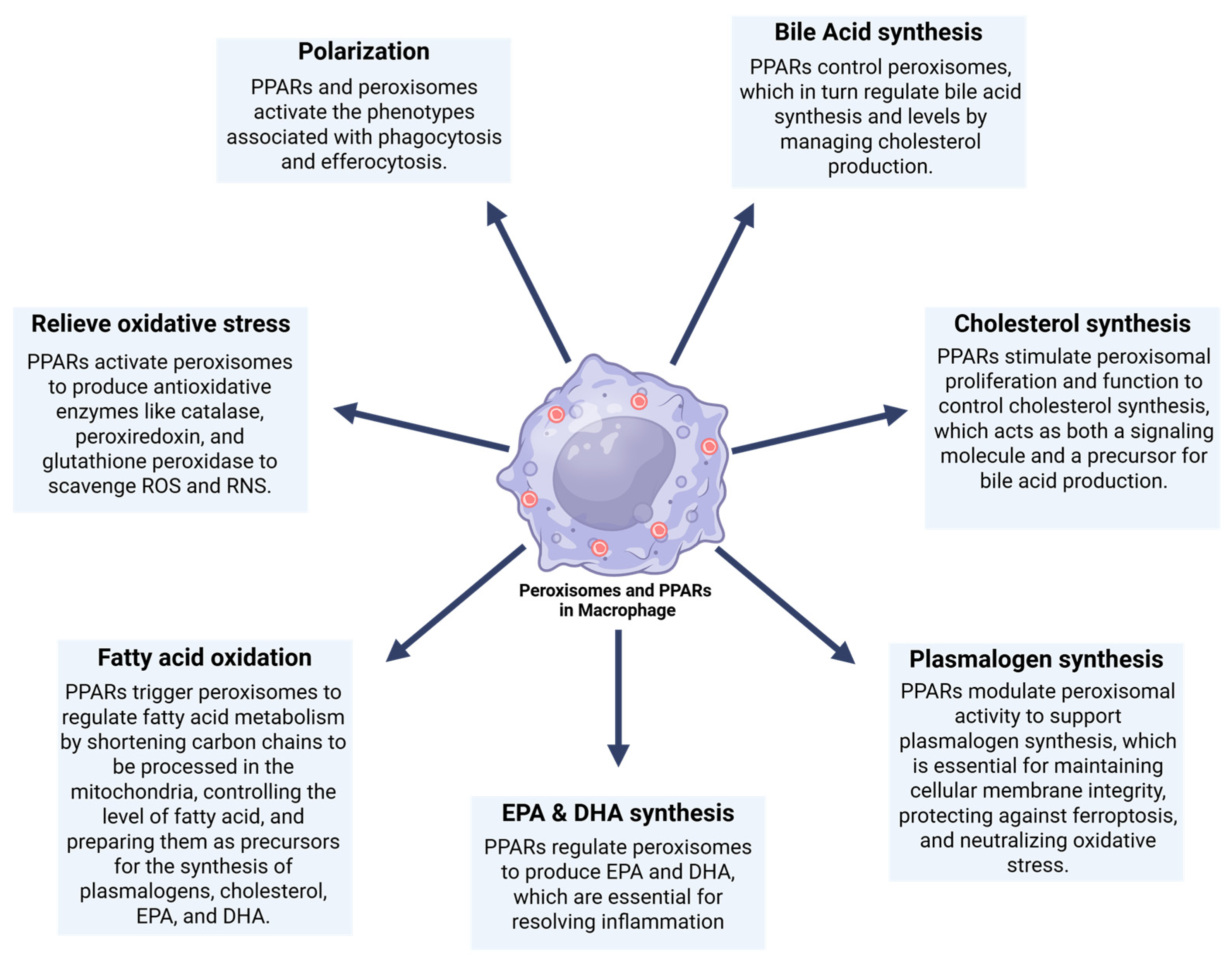
9. Peroxisomes and PPARs Play a Pivotal Role in Macrophage Metabolism
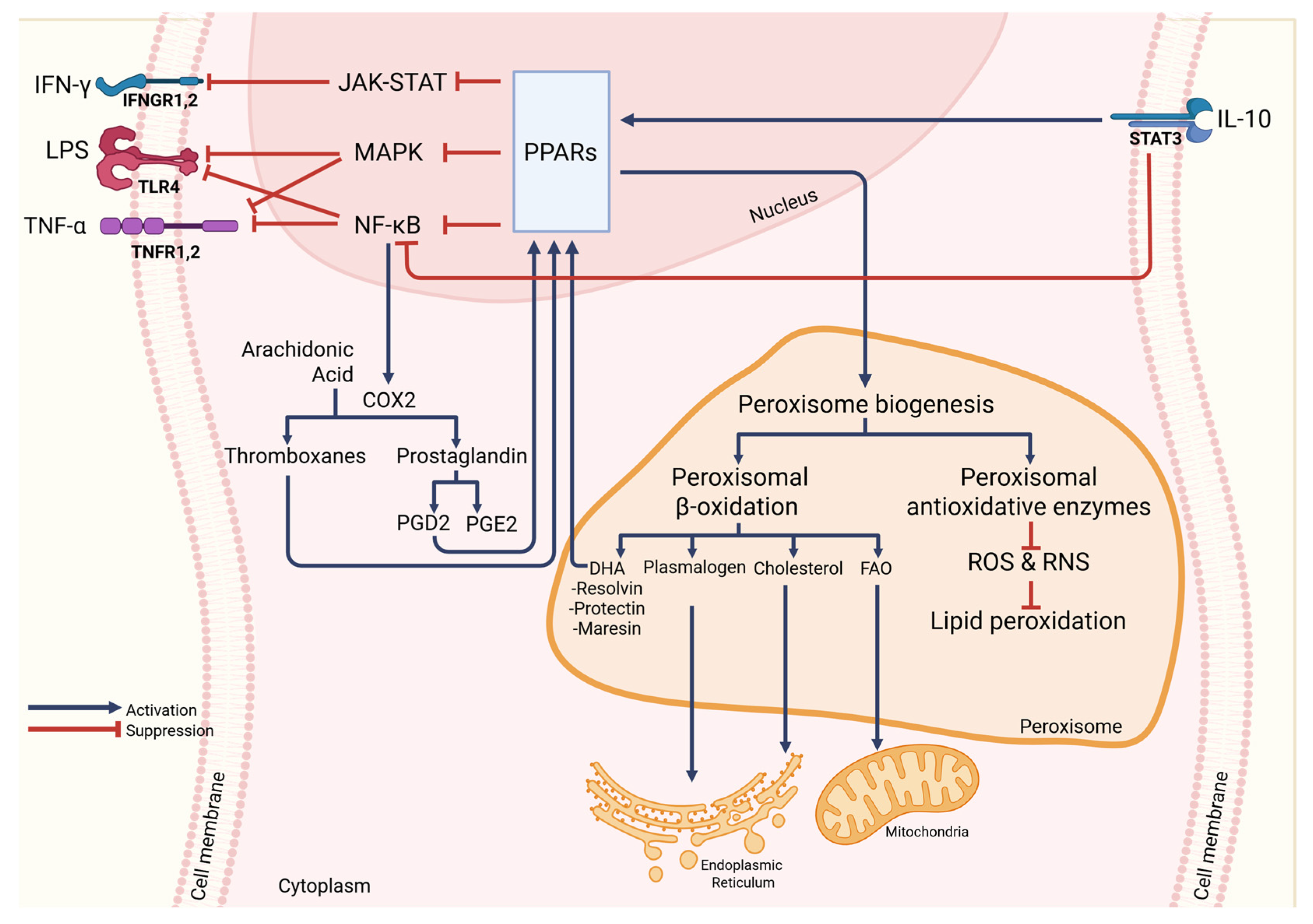
9.1. Peroxisomes and PPARs Suppress Inflammation and Oxidative Stress and Promote the Resolution of Inflammation
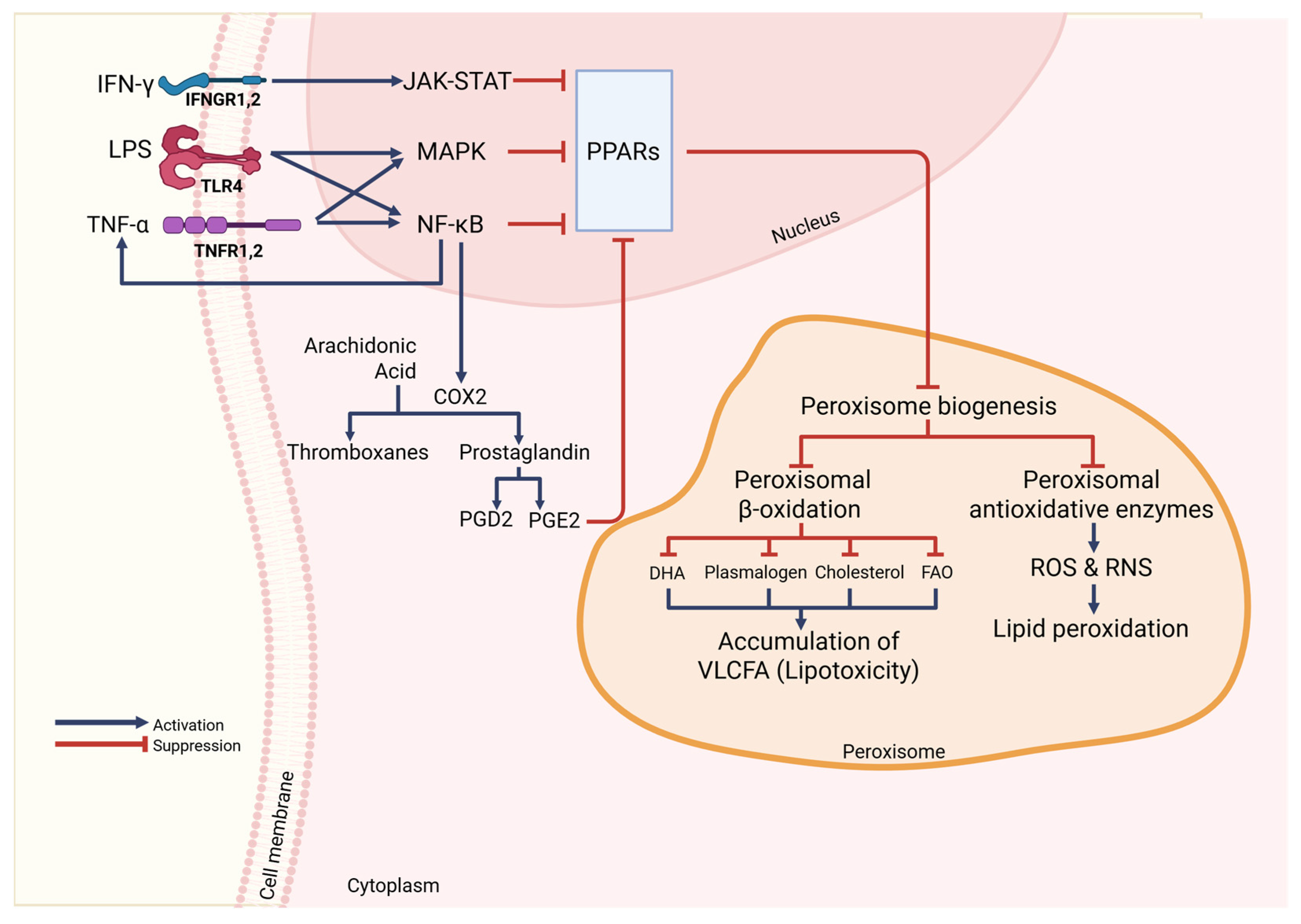
9.2. Peroxisome Damage Leads to the Accumulation of VLCFA, Inhibits Plasmalogen and Cholesterol Synthesis, and Promotes PPARs
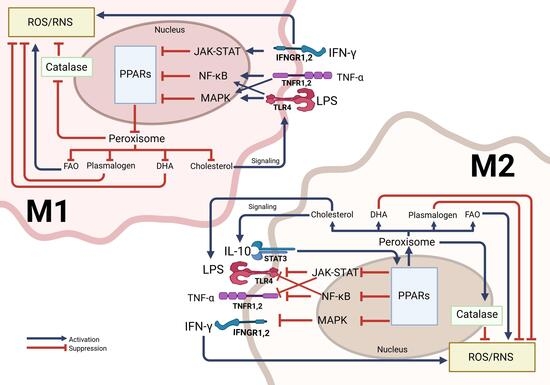
9.3. Peroxisomes and PPARs Influence Macrophage Polarization, Thereby Activating Phagocytosis and Efferocytosis Phenotypes
9.4. Peroxisomes and PPARs Are Involved in Ferroptosis
10. Translational Perspective: Targeting PPARs in Macrophage-Mediated Diseases
10.1. Clinically Approved PPARs Agonist
10.2. Emerging Therapeutic Strategies
10.3. Future Directions
11. Conclusions
Author Contributions
Funding
Institutional Review Board Statement
Informed Consent Statement
Data Availability Statement
Acknowledgments
Conflicts of Interest
References
- Chen, S.; Saeed, A.F.U.H.; Liu, Q.; Jiang, Q.; Xu, H.; Xiao, G.G.; Rao, L.; Duo, Y. Macrophages in immunoregulation and therapeutics. Signal Transduct. Target. Ther. 2023, 8, 207. [Google Scholar] [CrossRef] [Scilit] [PubMed]
- Kulle, A.; Thanabalasuriar, A.; Cohen, T.S.; Szydlowska, M. Resident macrophages of the lung and liver: The guardians of our tissues. Front. Immunol. 2022, 13, 1029085. [Google Scholar] [CrossRef] [Scilit] [PubMed]
- Zhang, C.; Yang, M.; Ericsson, A.C. Function of macrophages in disease: Current understanding on molecular mechanisms. Front. Immunol. 2021, 12, 620510. [Google Scholar] [CrossRef] [Scilit]
- Mass, E.; Nimmerjahn, F.; Kierdorf, K.; Schlitzer, A. Tissue-specific macrophages: How they develop and choreograph tissue biology. Nat. Rev. Immunol. 2023, 23, 563–579. [Google Scholar] [CrossRef] [Scilit]
- Lin, P.; Ji, H.H.; Li, Y.J.; Guo, S.D. Macrophage plasticity and atherosclerosis therapy. Front. Mol. Biosci. 2021, 8, 679797. [Google Scholar] [CrossRef] [Scilit]
- Viola, A.; Munari, F.; Sánchez-Rodríguez, R.; Scolaro, T.; Castegna, A. The metabolic signature of macrophage responses. Front. Immunol. 2019, 10, 1462. [Google Scholar] [CrossRef] [Scilit]
- Raas, Q.; Tawbeh, A.; Tahri-Joutey, M.; Gondcaille, C.; Keime, C.; Kaiser, R.; Trompier, D.; Nasser, B.; Leoni, V.; Bellanger, E.; et al. Peroxisomal defects in microglial cells induce a disease-associated microglial signature. Front. Mol. Neurosci. 2023, 16, 1170313. [Google Scholar] [CrossRef] [Scilit]
- Roczkowsky, A.; Doan, M.A.L.; Hlavay, B.A.; Mamik, M.K.; Branton, W.G.; McKenzie, B.A.; Saito, L.B.; Schmitt, L.; Eitzen, G.; Di Cara, F.; et al. Peroxisome injury in multiple sclerosis: Protective effects of 4-phenylbutyrate in CNS-associated macrophages. J. Neurosci. 2022, 42, 7152–7165. [Google Scholar] [CrossRef] [Scilit]
- Karnati, S.; Baumgart-Vogt, E. Peroxisomes in mouse and human lung: Their involvement in pulmonary lipid metabolism. Histochem. Cell Biol. 2008, 130, 719–740. [Google Scholar] [CrossRef] [Scilit] [PubMed]
- Vijayan, V.; Srinu, T.; Karnati, S.; Garikapati, V.; Linke, M.; Kamalyan, L.; Mali, S.R.; Sudan, K.; Kollas, A.; Schmid, T.; et al. A new immunomodulatory role for peroxisomes in macrophages activated by the TLR4 ligand lipopolysaccharide. J. Immunol. 2017, 198, 2414–2425. [Google Scholar] [CrossRef] [Scilit]
- Bachhuka, A.; Yadav, T.C.; Santos, A.; Marsal, L.F.; Ergün, S.; Karnati, S. Emerging nanomaterials for targeting peroxisomes. Mater. Today Adv. 2022, 15, 100265. [Google Scholar] [CrossRef] [Scilit]
- Dansen, T.B.; Wirtz, K.W.A. The peroxisome in oxidative stress. IUBMB Life 2001, 51, 223–230. [Google Scholar] [CrossRef] [Scilit]
- Di Cara, F.; Andreoletti, P.; Trompier, D.; Vejux, A.; Bülow, M.H.; Sellin, J.; Lizard, G.; Cherkaoui-Malki, M.; Savary, S. Peroxisomes in immune response and inflammation. Int. J. Mol. Sci. 2019, 20, 3877. [Google Scholar] [CrossRef] [Scilit] [PubMed]
- He, A.; Dean, J.M.; Lodhi, I.J. Peroxisomes as cellular adaptors to metabolic and environmental stress. Trends Cell Biol. 2021, 31, 656–670. [Google Scholar] [CrossRef] [Scilit]
- Behera, A.; Jain, P.; Ganguli, G.; Biswas, M.; Padhi, A.; Pattanaik, K.P.; Nayak, B.; Ergün, S.; Hagens, K.; Redinger, K.; et al. Mycobacterium tuberculosis acetyltransferase suppresses oxidative stress by inducing peroxisome formation in macrophages. Int. J. Mol. Sci. 2022, 23, 2584. [Google Scholar] [CrossRef] [Scilit]
- Ganguli, G.; Mukherjee, U.; Sonawane, A. Peroxisomes and oxidative stress: Their implications in the modulation of cellular immunity during mycobacterial infection. Front. Microbiol. 2019, 10, 1121. [Google Scholar] [CrossRef] [Scilit]
- Fujiki, Y.; Abe, Y.; Imoto, Y.; Tanaka, A.J.; Okumoto, K.; Honsho, M.; Tamura, S.; Miyata, N.; Yamashita, T.; Chung, W.K.; et al. Recent insights into peroxisome biogenesis and associated diseases. J. Cell Sci. 2020, 133, jcs236943. [Google Scholar] [CrossRef] [Scilit] [PubMed]
- Geric, I.; Tyurina, Y.Y.; Krysko, O.; Krysko, D.V.; De Schryver, E.; Kagan, V.E.; Van Veldhoven, P.P.; Baes, M.; Verheijden, S. Lipid homeostasis and inflammatory activation are disturbed in classically activated macrophages with peroxisomal β-oxidation deficiency. Immunology 2018, 153, 342–356. [Google Scholar] [CrossRef] [Scilit] [PubMed]
- Wanders, R.J.A.; Ferdinandusse, S.; Brites, P.; Kemp, S. Peroxisomes, lipid metabolism and lipotoxicity. Biochim. Biophys. Acta Mol. Cell Biol. Lipids 2010, 1801, 272–280. [Google Scholar] [CrossRef] [Scilit]
- Chu, B.B.; Liao, Y.C.; Qi, W.; Xie, C.; Du, X.; Wang, J.; Yang, H.; Miao, H.H.; Li, B.L.; Song, B.L. Cholesterol transport through lysosome-peroxisome membrane contacts. Cell 2015, 161, 291–306. [Google Scholar] [CrossRef] [Scilit]
- Michalik, L.; Auwerx, J.; Berger, J.P.; Chatterjee, V.K.; Glass, C.K.; Gonzalez, F.J.; Grimaldi, P.A.; Kadowaki, T.; Lazar, M.A.; O’rahilly, S.; et al. International Union of Pharmacology. LXI. Peroxisome Proliferator-Activated Receptors. Pharmacol. Rev. 2006, 58, 726–741. [Google Scholar] [CrossRef] [Scilit]
- Tyagi, S.; Gupta, P.; Saini, A.S.; Kaushal, C.; Sharma, S. The peroxisome proliferator-activated receptor: A family of nuclear receptors, role in various diseases. J. Adv. Pharm. Technol. Res. 2011, 2, 236–240. [Google Scholar] [CrossRef] [Scilit] [PubMed]
- Wei, J.; Bhattacharyya, S.; Varga, J. Peroxisome proliferator-activated receptor γ: Innate protection from excessive fibrogenesis and potential therapeutic target in systemic sclerosis. Curr. Opin. Rheumatol. 2010, 22, 671–676. [Google Scholar] [CrossRef] [Scilit]
- Bachhuka, A.; Madathiparambil Visalakshan, R.; Law, C.S.; Santos, A.; Ebendorff-Heidepriem, H.; Karnati, S.; Vasilev, K. Modulation of macrophages differentiation by nanoscale-engineered geometric and chemical features. ACS Appl. Bio Mater. 2020, 3, 1496–1505. [Google Scholar] [CrossRef] [Scilit] [PubMed]
- Pratama, A.M.; Sharma, M.; Naidu, S.; Bömmel, H.; Prabhuswamimath, S.C.; Madhusudhan, T.; Wihadmadyatami, H.; Bachhuka, A.; Karnati, S. Peroxisomes and PPARs: Emerging role as master regulators of cancer metabolism. Mol. Metab. 2024, 90, 102044. [Google Scholar] [CrossRef] [Scilit]
- Lodhi, I.J.; Semenkovich, C.F. Peroxisomes: A nexus for lipid metabolism and cellular signaling. Cell Metab. 2014, 19, 380–392. [Google Scholar] [CrossRef] [Scilit]
- Waterham, H.R.; Ferdinandusse, S.; Wanders, R.J.A. Human disorders of peroxisome metabolism and biogenesis. Biochim. Biophys. Acta Mol. Cell Res. 2016, 1863, 922–933. [Google Scholar] [CrossRef] [Scilit]
- Chen, W.W.; Rodrigues, T.A.; Wendscheck, D.; Pedrosa, A.G.; Yang, C.; Francisco, T.; Möcklinghoff, T.; Zografakis, A.; Nunes-Silva, B.; Avraham, R.E.; et al. PEX39 facilitates the peroxisomal import of PTS2 proteins. Nat. Cell. Biol. 2025, 27, 1256–1271. [Google Scholar] [CrossRef] [Scilit]
- Imanaka, T. Biogenesis and function of peroxisomes in human disease with a focus on the ABC transporter. Biol. Pharm. Bull. 2019, 42, 649–665. [Google Scholar] [CrossRef] [Scilit]
- Lill, P.; Hansen, T.; Wendscheck, D.; Klink, B.U.; Jeziorek, T.; Vismpas, D.; Miehling, J.; Bender, J.; Schummer, A.; Drepper, F.; et al. Towards the molecular architecture of the peroxisomal receptor docking complex. Proc. Natl. Acad. Sci. USA 2020, 117, 33216–33224. [Google Scholar] [CrossRef] [Scilit] [PubMed]
- Skowyra, M.L.; Feng, P.; Rapoport, T.A. Towards solving the mystery of peroxisomal matrix protein import. Trends Cell Biol. 2024, 34, 388–405. [Google Scholar] [CrossRef] [Scilit]
- Honsho, M.; Yamashita, S.; Fujiki, Y. Peroxisome homeostasis: Mechanisms of division and selective degradation of peroxisomes in mammals. Biochim. Biophys. Acta Mol. Cell Res. 2016, 1863, 984–991. [Google Scholar] [CrossRef] [Scilit]
- Kim, J.; Bai, H. Peroxisomal stress response and inter-organelle communication in cellular homeostasis and aging. Antioxidants 2022, 11, 192. [Google Scholar] [CrossRef] [Scilit]
- Tawbeh, A.; Gondcaille, C.; Trompier, D.; Savary, S. Peroxisomal ABC transporters: An update. Int. J. Mol. Sci. 2021, 22, 6093. [Google Scholar] [CrossRef] [Scilit]
- Colasante, C.; Chen, J.; Ahlemeyer, B.; Baumgart-Vogt, E. Peroxisomes in cardiomyocytes and the peroxisome/peroxisome proliferator-activated receptor-loop. Thromb. Haemost. 2015, 113, 452–463. [Google Scholar] [CrossRef] [Scilit]
- Kawaguchi, K.; Morita, M. ABC transporter subfamily D: Distinct differences in behavior between ABCD1-3 and ABCD4 in subcellular localization, function, and human disease. Biomed. Res. Int. 2016, 2016, 6786245. [Google Scholar] [CrossRef] [Scilit]
- Morita, M.; Imanaka, T. Peroxisomal ABC transporters: Structure, function and role in disease. Biochim. Biophys. Acta Mol. Basis Dis. 2012, 1822, 1387–1396. [Google Scholar] [CrossRef] [Scilit] [PubMed]
- Charles, K.N.; Shackelford, J.E.; Faust, P.L.; Fliesler, S.J.; Stangl, H.; Kovacs, W.J. Functional peroxisomes are essential for efficient cholesterol sensing and synthesis. Front. Cell. Dev. Biol. 2020, 8, 560266. [Google Scholar] [CrossRef] [Scilit]
- Faust, P.L.; Kovacs, W.J. Cholesterol biosynthesis and ER stress in peroxisome deficiency. Biochimie 2014, 98, 75–85. [Google Scholar] [CrossRef] [Scilit] [PubMed]
- Schrader, M.; Fahimi, H.D. Peroxisomes and oxidative stress. Biochim. Biophys. Acta Mol. Cell. Res. 2006, 1763, 1755–1766. [Google Scholar] [CrossRef] [Scilit] [PubMed]
- Brites, P.; Waterham, H.R.; Wanders, R.J.A. Functions and biosynthesis of plasmalogens in health and disease. Biochim. Biophys. Acta Mol. Cell. Biol. Lipids 2004, 1636, 219–231. [Google Scholar] [CrossRef] [Scilit]
- Wanders, R.J.A. Peroxisomes, lipid metabolism, and peroxisomal disorders. Mol. Genet. Metab. 2004, 83, 16–27. [Google Scholar] [CrossRef] [Scilit]
- Wiktorowska-Owczarek, A.; Berezińska, M.; Nowak, J.Z. PUFAs: Structures, metabolism and functions. Adv. Clin. Exp. Med. 2015, 24, 931–941. [Google Scholar] [CrossRef] [Scilit]
- Wanders, R.J.A.; Vreken, P.; Ferdinandusse, S.; Jansen, G.A.; Waterham, H.R.; Van Roermund, C.W.T.; Van Grunsven, E.G. Peroxisomal fatty acid α- and β-oxidation in humans: Enzymology, peroxisomal metabolite transporters and peroxisomal diseases. Biochem. Soc. Trans. 2001, 29, 250–267. [Google Scholar] [CrossRef]
- Wanders, R.J.A. Metabolic functions of peroxisomes in health and disease. Biochimie 2014, 98, 36–44. [Google Scholar] [CrossRef] [Scilit]
- Antonenkov, V.D.; Grunau, S.; Ohlmeier, S.; Hiltunen, J.K. Peroxisomes are oxidative organelles. Antioxid. Redox. Signal. 2010, 13, 525–537. [Google Scholar] [CrossRef] [Scilit] [PubMed]
- Han, Y.J.; Kwon, Y.G.; Chung, H.T.; Lee, S.K.; Simmons, R.L.; Billiar, T.R.; Kim, Y.M. Antioxidant enzymes suppress nitric oxide production through the inhibition of NF-κB activation: Role of H2O2 and nitric oxide in inducible nitric oxide synthase expression in macrophages. Nitric Oxide Biol. Chem. 2001, 5, 504–513. [Google Scholar] [CrossRef] [Scilit] [PubMed]
- Sakai, Y.; Oku, M.; van der Klei, I.J.; Kiel, J.A.K.W. Pexophagy: Autophagic degradation of peroxisomes. Biochim. Biophys. Acta Mol. Cell Res. 2006, 1763, 1767–1775. [Google Scholar] [CrossRef] [Scilit]
- Till, A.; Lakhani, R.; Burnett, S.F.; Subramani, S. Pexophagy: The selective degradation of peroxisomes. Int. J. Cell Biol. 2012, 2012, 512721. [Google Scholar] [CrossRef] [Scilit]
- Li, J.; Wang, W. Mechanisms and Functions of Pexophagy in Mammalian Cells. Cells 2021, 10, 1094. [Google Scholar] [CrossRef] [Scilit] [PubMed]
- Kaushik, S.; Cuervo, A.M. Chaperone-mediated autophagy: A unique way to enter the lysosome world. Trends Cell Biol. 2012, 22, 407–417. [Google Scholar] [CrossRef] [Scilit]
- Mijaljica, D.; Prescott, M.; Devenish, R.J. Microautophagy in mammalian cells: Revisiting a 40-year-old conundrum. Autophagy 2011, 7, 673–682. [Google Scholar] [CrossRef] [Scilit] [PubMed]
- Nordgren, M.; Wang, B.; Apanasets, O.; Fransen, M. Peroxisome degradation in mammals: Mechanisms of action, recent advances, and perspectives. Front. Physiol. 2013, 4, 145. [Google Scholar] [CrossRef] [Scilit]
- Zientara-Rytter, K.; Subramani, S. Autophagic degradation of peroxisomes in mammals. Biochem. Soc. Trans. 2016, 44, 431–440. [Google Scholar] [CrossRef] [Scilit]
- Chawla, A. Control of macrophage activation and function by PPARs. Circ. Res. 2010, 106, 1559–1569. [Google Scholar] [CrossRef] [Scilit]
- Chinetti, G.; Fruchart, J.C.; Staels, B. Peroxisome proliferator-activated receptors (PPARs): Nuclear receptors at the crossroads between lipid metabolism and inflammation. Inflamm. Res. 2000, 49, 497–505. [Google Scholar] [CrossRef] [Scilit]
- Decara, J.; Rivera, P.; López-Gambero, A.J.; Serrano, A.; Pavón, F.J.; Baixeras, E.; de Fonseca, F.R.; Suárez, J. Peroxisome proliferator-activated receptors: Experimental targeting for the treatment of inflammatory bowel diseases. Front. Pharmacol. 2020, 11, 730. [Google Scholar] [CrossRef] [Scilit] [PubMed]
- Lea, S.; Plumb, J.; Metcalfe, H.; Spicer, D.; Woodman, P.; Fox, J.C.; Singh, D. The effect of PPAR-γ ligands on in vitro and in vivo models of COPD. Eur. Respir. J. 2013, 43, 409–420. [Google Scholar] [CrossRef] [Scilit] [PubMed]
- Zoete, V.; Grosdidier, A.; Michielin, O. Peroxisome proliferator-activated receptor structures: Ligand specificity, molecular switch and interactions with regulators. Biochim. Biophys. Acta Mol. Cell Biol. Lipids 2007, 1771, 915–925. [Google Scholar] [CrossRef] [Scilit]
- Grygiel-Górniak, B. Peroxisome proliferator-activated receptors and their ligands: Nutritional and clinical implications—A review. Nutr. J. 2014, 13, 17. [Google Scholar] [CrossRef] [Scilit]
- Wang, Y.; Lei, F.; Lin, Y.; Han, Y.; Yang, L.; Tan, H. Peroxisome proliferator-activated receptors as therapeutic target for cancer. J. Cell. Mol. Med. 2024, 28, e17931. [Google Scholar] [CrossRef] [Scilit]
- Aegerter, H.; Lambrecht, B.N.; Jakubzick, C.V. Biology of lung macrophages in health and disease. Immunity 2022, 55, 1564–1580. [Google Scholar] [CrossRef] [Scilit]
- Schneider, C.; Nobs, S.P.; Kurrer, M.; Rehrauer, H.; Thiele, C.; Kopf, M. Induction of the nuclear receptor PPAR-γ by the cytokine GM-CSF is critical for the differentiation of fetal monocytes into alveolar macrophages. Nat. Immunol. 2014, 15, 1026–1237. [Google Scholar] [CrossRef] [Scilit]
- Asada, K.; Sasaki, S.; Suda, T.; Chida, K.; Nakamura, H. Antiinflammatory Roles of Peroxisome Proliferator-activated Receptor γ in Human Alveolar Macrophages. Am. J. Respir. Crit. Care Med. 2004, 169, 195–200. [Google Scholar] [CrossRef] [Scilit]
- Reddy, R.C.; Keshamouni, V.G.; Jaigirdar, S.H.; Zeng, X.; Leff, T.; Thannickal, V.J.; Standiford, T.J. Deactivation of murine alveolar macrophages by peroxisome proliferator-activated receptor-γ ligands. Am. J. Physiol. Lung Cell. Mol. Physiol. 2004, 286, L613–619. [Google Scholar] [CrossRef] [Scilit]
- Bouhlel, M.A.; Brozek, J.; Derudas, B.; Zawadzki, C.; Jude, B.; Staels, B.; Chinetti-Gbaguidi, G. Unlike PPARγ, PPARα or PPARβ/δ activation does not promote human monocyte differentiation toward alternative macrophages. Biochem. Biophys. Res. Commun. 2009, 386, 459–462. [Google Scholar] [CrossRef] [Scilit] [PubMed]
- Raas, Q.; Gondcaille, C.; Hamon, Y.; Leoni, V.; Caccia, C.; Ménétrier, F.; Lizard, G.; Trompier, D.; Savary, S. CRISPR/Cas9-mediated knockout of Abcd1 and Abcd2 genes in BV-2 cells: Novel microglial models for X-linked adrenoleukodystrophy. Biochim. Biophys. Acta Mol. Cell Biol. Lipids 2019, 1864, 704–714. [Google Scholar] [CrossRef] [Scilit]
- Weinhofer, I.; Zierfuss, B.; Hametner, S.; Wagner, M.; Popitsch, N.; MacHacek, C.; Bartolini, B.; Zlabinger, G.; Ohradanova-Repic, A.; Stockinger, H.; et al. Impaired plasticity of macrophages in X-linked adrenoleukodystrophy. Brain 2018, 141, 2329–2342. [Google Scholar] [CrossRef] [Scilit] [PubMed]
- Beckers, L.; Stroobants, S.; D’Hooge, R.; Baes, M. Neuronal dysfunction and behavioral abnormalities are evoked by neural cells and aggravated by inflammatory microglia in peroxisomal β-oxidation deficiency. Front. Cell. Neurosci. 2018, 12, 136. [Google Scholar] [CrossRef] [Scilit] [PubMed]
- Verheijden, S.; Beckers, L.; Casazza, A.; Butovsky, O.; Mazzone, M.; Baes, M. Identification of a chronic non-neurodegenerative microglia activation state in a mouse model of peroxisomal β-oxidation deficiency. Glia 2015, 63, 1606–1620. [Google Scholar] [CrossRef] [Scilit]
- Raas, Q.; Saih, F.E.; Gondcaille, C.; Trompier, D.; Hamon, Y.; Leoni, V.; Caccia, C.; Nasser, B.; Jadot, M.; Ménétrier, F.; et al. A microglial cell model for acyl-CoA oxidase 1 deficiency. Biochim. Biophys. Acta Mol. Cell Biol. Lipids 2019, 1864, 567–576. [Google Scholar] [CrossRef] [Scilit]
- Gong, Y.; Sasidharan, N.; Laheji, F.; Frosch, M.; Musolino, P.; Tanzi, R.; Kim, D.Y.; Biffi, A.; El Khoury, J.; Eichler, F. Microglial dysfunction as a key pathological change in adrenomyeloneuropathy. Ann. Neurol. 2017, 82, 813–827. [Google Scholar] [CrossRef] [Scilit]
- Wei, X.; Qian, W.; Narasimhan, H.; Chan, T.; Liu, X.; Arish, M.; Young, S.; Li, C.; Cheon, I.S.; Yu, Q.; et al. Macrophage peroxisomes guide alveolar regeneration and limit SARS-CoV-2 tissue sequelae. Science 2025, 387, eadq2509. [Google Scholar] [CrossRef] [Scilit] [PubMed]
- Matsushita, M.; Muri, J.; Berest, I.; Li, F.; Liu, H.; Corak, B.; Zamboni, N.; Buescher, J.; Othman, A.; Corrado, M.; et al. Peroxisomes are critical for a unique metabolic demand and survival of alveolar macrophages. Cell Rep. 2025, 44, 115623. [Google Scholar] [CrossRef] [Scilit]
- Slevin, E.; Baiocchi, L.; Wu, N.; Ekser, B.; Sato, K.; Lin, E.; Ceci, L.; Chen, L.; Lorenzo, S.R.; Xu, W.; et al. Kupffer cells: Inflammation pathways and cell-cell interactions in alcohol-associated liver disease. Am. J. Pathol. 2020, 190, 2185–2193. [Google Scholar] [CrossRef] [Scilit] [PubMed]
- Diehl, K.L.; Vorac, J.; Hofmann, K.; Meiser, P.; Unterweger, I.; Kuerschner, L.; Weighardt, H.; Förster, I.; Thiele, I. Kupffer cells sense free fatty acids and regulate hepatic lipid metabolism in high-fat diet and inflammation. Cells 2020, 9, 2258. [Google Scholar] [CrossRef] [Scilit] [PubMed]
- Spolarics, Z.; Wu, J. Role of glutathione and catalase in H2O2 detoxification in LPS-activated hepatic endothelial and Kupffer cells. Am. J. Physiol. 1997, 273, G1304–G1311. [Google Scholar] [CrossRef] [Scilit]
- Fang, X.; Zou, S.; Zhao, Y.; Cui, R.; Zhang, W.; Hu, J.; Dai, J. Kupffer cells suppress perfluorononanoic acid-induced hepatic peroxisome proliferator-activated receptor a expression by releasing cytokines. Arch. Toxicol. 2012, 86, 1515–1525. [Google Scholar] [CrossRef] [Scilit]
- Tarasenko, T.N.; Singh, L.N.; Chatterji-len, M.; Zerfas, P.M.; Cusmano-ozog, K.; McGuire, P.J. Kupffer cells modulate hepatic fatty acid oxidation during infection with PR8 in influenza. Biochim. Biophys. Acta Mol. Basis Dis. 2015, 1852, 2391–2401. [Google Scholar] [CrossRef] [Scilit]
- Luo, W.; Xu, Q.; Wang, Q.; Wu, H.; Hua, J. Effect of modulation of PPAR-γ activity on Kupffer cells M1/M2 polarization in the development of non-alcoholic fatty liver disease. Sci. Rep. 2017, 7, 44612. [Google Scholar] [CrossRef] [Scilit]
- Ni, X.X.; Ji, P.X.; Chen, Y.X.; Li, X.Y.; Sheng, L.; Lian, M.; Guo, C.J.; Hua, J. Regulation of the macrophage-hepatic stellate cell interaction by targeting macrophage peroxisome proliferator-activated receptor gamma to prevent non-alcoholic steatohepatitis progression in mice. Liver Int. 2022, 42, 2696–2712. [Google Scholar] [CrossRef] [Scilit] [PubMed]
- Okreglicka, K.; Iten, I.; Pohlmeier, L.; Onder, L.; Feng, Q.; Kurrer, M.; Ludewig, B.; Nielsen, P.; Schneider, C.; Kopf, M. PPARγ is essential for the development of bone marrow erythroblastic island macrophages and splenic red pulp macrophages. J. Exp. Med. 2021, 218, e201913142021. [Google Scholar] [CrossRef] [Scilit] [PubMed]
- Zhang, D.; Zhang, Y.H.; Liu, B.; Yang, H.X.; Li, G.T.; Zhou, H.L.; Wang, Y.S. Role of peroxisomes in the pathogenesis and therapy of renal fibrosis. Metabolism 2025, 166, 156173. [Google Scholar] [CrossRef] [Scilit]
- Li, S.; Mariappan, N.; Megyesi, J.; Shank, B.; Kannan, K.; Theus, S.; Price, P.M.; Duffield, J.M.; Portilla, D. Proximal tubule PPARα attenuates renal fibrosis and inflammation caused by unilateral ureteral obstruction. Am. J. Physiol. Ren. Physiol. 2013, 305, F618–F627. [Google Scholar] [CrossRef] [Scilit]
- Kiss, E.; Popovic, Z.V.; Bedke, J.; Adams, J.; Bonrouhi, M.; Babelova, A.; Schmidt, C.; Edenhofer, F.; Zschiedrich, I.; Domhan, S.; et al. Peroxisome proliferator-activated receptor (PPAR)γ can inhibit chronic renal allograft damage. Am. J. Pathol. 2010, 176, 2150–2162. [Google Scholar] [CrossRef] [Scilit]
- Ajith, T.A.; Jayakumar, T.G. Peroxisome proliferator-activated receptors in cardiac energy metabolism and cardiovascular disease. Clin. Exp. Pharmacol. Physiol. 2016, 43, 649–658. [Google Scholar] [CrossRef] [Scilit]
- Abushouk, A.I.; El-Husseny, M.W.A.; Bahbah, E.I.; Elmaraezy, A.; Ali, A.A.; Ashraf, A.; Abdel-Daim, M.M. Peroxisome proliferator-activated receptors as therapeutic targets for heart failure. Biomed. Pharmacother. 2017, 95, 692–700. [Google Scholar] [CrossRef] [Scilit]
- Smith, P.D.; Smythies, L.E.; Shen, R.; Greenwell-Wild, T.; Gliozzi, M.; Wahl, S.M. Intestinal macrophages and response to microbial encroachment. Mucosal Immunol. 2011, 4, 31–42. [Google Scholar] [CrossRef] [Scilit] [PubMed]
- Yip, J.L.K.; Balasuriya, G.K.; Spencer, S.J.; Hill-Yardin, E.L. The role of intestinal macrophages in gastrointestinal homeostasis: Heterogeneity and implications in disease. Cell. Mol. Gastroenterol. Hepatol. 2021, 12, 1701–1718. [Google Scholar] [CrossRef] [Scilit]
- Muneer, Z.; Wiesinger, C.; Voigtländer, T.; Werner, H.B.; Berger, J.; Forss-Petter, S. Abcd2 is a strong modifier of the metabolic impairments in peritoneal macrophages of Abcd1-deficient mice. PLoS ONE 2014, 9, e108655. [Google Scholar] [CrossRef] [Scilit]
- Lefterova, M.I.; Steger, D.J.; Zhuo, D.; Qatanani, M.; Mullican, S.E.; Tuteja, G.; Manduchi, E.; Grant, G.R.; Lazar, M.A. Cell-specific determinants of peroxisome proliferator-activated receptor γ function in adipocytes and macrophages. Mol. Cell. Biol. 2010, 30, 2078–2089. [Google Scholar] [CrossRef] [Scilit]
- Souissi, I.J.; Billiet, L.; Cuaz-Pérolin, C.; Slimane, M.N.; Rouis, M. Matrix metalloproteinase-12 gene regulation by a PPAR alpha agonist in human monocyte-derived macrophages. Exp. Cell Res. 2008, 314, 3405–3414. [Google Scholar] [CrossRef] [Scilit]
- Prat, M.; Coulson, K.; Blot, C.; Jacquemin, G.; Romano, M.; Renoud, M.L.; AlaEddine, M.; Le Naour, A.; Authier, H.; Rahabi, M.C.; et al. PPARγ activation modulates the balance of peritoneal macrophage populations to suppress ovarian tumor growth and tumor-induced immunosuppression. J. Immunother. Cancer 2023, 11, e007031. [Google Scholar] [CrossRef] [Scilit]
- Qian, G.; Fan, W.; Ahlemeyer, B.; Karnati, S.; Baumgart-Vogt, E. Peroxisomes in different skeletal cell types during intramembranous and endochondral ossification and their regulation during osteoblast differentiation by distinct peroxisome proliferator-activated receptors. PLoS ONE 2015, 10, e0143439. [Google Scholar] [CrossRef] [Scilit]
- Panagopoulos, V.; Liapis, V.; Zinonos, I.; Hay, S.; Leach, D.A.; Ingman, W.; DeNichilo, M.O.; Atkins, G.J.; Findlay, D.M.; Zannettino, A.C.W.; et al. Peroxidase enzymes inhibit osteoclast differentiation and bone resorption. Mol. Cell. Endocrinol. 2017, 440, 8–15. [Google Scholar] [CrossRef] [Scilit] [PubMed]
- Wan, Y. PPARγ in bone homeostasis. Trends Endocrinol. Metab. 2010, 21, 722–728. [Google Scholar] [CrossRef] [Scilit]
- Park, Y.S.; Uddin, M.J.; Piao, L.; Hwang, I.; Lee, J.H.; Ha, H. Novel role of endogenous catalase in macrophage polarization in adipose tissue. Mediat. Inflamm. 2016, 2016, 8675905. [Google Scholar] [CrossRef] [Scilit]
- Li, Y.; Yun, K.; Mu, R. A review on the biology and properties of adipose tissue macrophages involved in adipose tissue physiological and pathophysiological processes. Lipids Health Dis. 2020, 19, 164. [Google Scholar] [CrossRef] [Scilit] [PubMed]
- Stienstra, R.; Duval, C.; Keshtkar, S.; van der Laak, J.; Kersten, S.; Müller, M. Peroxisome proliferator-activated receptor γ activation promotes infiltration of alternatively activated macrophages into adipose tissue. J. Biol. Chem. 2008, 283, 22620–22627. [Google Scholar] [CrossRef] [Scilit]
- Bhushan, S.; Meinhardt, A. The macrophages in testis function. J. Reprod. Immunol. 2017, 119, 107–112. [Google Scholar] [CrossRef] [Scilit] [PubMed]
- Meinhardt, A.; Dejucq-Rainsford, N.; Bhushan, S. Testicular macrophages: Development and function in health and disease. Trends Immunol. 2022, 43, 51–62. [Google Scholar] [CrossRef] [Scilit]
- Minge, C.E.; Ryan, N.K.; Van Der Hoek, K.H.; Robker, R.L.; Norman, R.J. Troglitazone regulates peroxisome proliferator-activated receptors and inducible nitric oxide synthase in murine ovarian macrophages. Biol. Reprod. 2006, 74, 153–160. [Google Scholar] [CrossRef] [Scilit]
- Gray, E.E.; Cyster, J.G. Lymph node macrophages. J. Innate Immun. 2012, 4, 424–436. [Google Scholar] [CrossRef] [Scilit]
- Aguilar, C.C.; Kalia, A.; Brisse, M.E.; Dowd, K.A.; Wise-Dent, O.; Burgomaster, K.E.; Droppo, J.; Pierson, T.C.; Hickman, H.D. Subcapsular sinus macrophages maximize germinal center development in non-draining lymph nodes during blood-borne viral infection. Sci. Immunol. 2024, 9, eadi4926. [Google Scholar] [CrossRef] [Scilit]
- Moran, I.; Grootveld, A.K.; Nguyen, A.; Phan, T.G. Subcapsular sinus macrophages: The seat of innate and adaptive memory in murine lymph nodes. Trends Immunol. 2019, 40, 35–48. [Google Scholar] [CrossRef] [Scilit]
- Louie, D.A.P.; Liao, S. Lymp node subcapsular sinus macrophages as the frontline of lymphatic immune defense. Front. Immunol. 2019, 10, 347. [Google Scholar] [CrossRef] [Scilit]
- Chittezhath, M.; Gunaseelan, D.; Zheng, X.; Hasan, R.; Tay, V.S.Y.; Lim, S.T.; Wang, X.; Berggren, P.O.; Bornstein, S.; Boehm, B.; et al. Islet macrophages are associated with islet vascular remodeling and compensatory hyperinsulinemia during diabetes. Am. J. Physiol. Endocrinol. Metab. 2019, 317, E1108–E1120. [Google Scholar] [CrossRef] [Scilit]
- Bihan, H.; Rouault, C.; Reach, G.; Poitout, V.; Staels, B.; Guerre-Millo, M. Pancreatic islet response to hyperglycemia is dependent on peroxisome proliferator-activated receptor alpha (PPARα). FEBS Lett. 2005, 579, 2284–2288. [Google Scholar] [CrossRef] [Scilit]
- Shimizu, K.; Kobayashi, M.; Tahara, J.; Shiratori, K. Cytokines and peroxisome proliferator-activated receptor γ ligand regulate phagocytosis by pancreatic stellate cells. Gastroenterology 2005, 128, 2105–2118. [Google Scholar] [CrossRef] [Scilit]
- Arbogast, F.; Sal-Carro, R.; Boufenghour, W.; Frenger, Q.; Bouis, D.; De La Palavesa, L.F.; Fauny, J.D.; Griso, O.; Puccio, H.; Fima, R.; et al. Epidermal maintenance of Langerhans cells relies on autophagy-regulated lipid metabolism. J. Cell Biol. 2023, 224, e202403178. [Google Scholar] [CrossRef] [Scilit]
- Neagu, M.; Constantin, C.; Jugulete, G.; Cauni, V.; Dubrac, S.; Szöllősi, A.G.; Zurac, S. Langerhans cells—Revising their role in skin pathologies. J. Pers. Med. 2022, 12, 2072. [Google Scholar] [CrossRef] [Scilit]
- Chen, H.; Shi, R.; Luo, B.; Yang, X.; Qiu, L.; Xiong, J.; Jiang, M.; Liu, Y.; Zhang, Z.; Wu, Y. Macrophage peroxisome proliferator-activated receptor γ deficiency delays skin wound healing through impairing apoptotic cell clearance in mice. Cell Death Dis. 2015, 6, e1597. [Google Scholar] [CrossRef] [Scilit]
- Kataoka, K.; Nishiguchi, K.M.; Kaneko, H.; van Rooijen, N.; Kachi, S.; Terasaki, H. The roles of vitreal macrophages and circulating leukocytes in retinal neovascularization. Investig. Ophthalmol. Vis. Sci. 2011, 52, 1431–1438. [Google Scholar] [CrossRef] [Scilit]
- Shahror, R.A.; Morris, C.A.; Mohammed, A.A.; Wild, M.; Zaman, B.; Mitchell, C.D.; Phillips, P.H.; Rusch, N.J.; Shosha, E.; Fouda, A.Y. Role of myeloid cells in ischemic retinopathies: Recent advances and unanswered questions. J. Neuroinflamm. 2024, 21, 65. [Google Scholar] [CrossRef] [Scilit]
- Wang, X.; Zhou, L. The Many Roles of Macrophages in Skeletal Muscle Injury and Repair. Front. Cell Dev. Biol. 2022, 10, 952249. [Google Scholar] [CrossRef] [Scilit]
- Varga, T.; Mounier, R.; Patsalos, A.; Gogolák, P.; Peloquin, M.; Horvath, A.; Pap, A.; Daniel, B.; Nagy, G.; Pintye, E.; et al. Macrophage PPARγ, a Lipid Activated Transcription Factor Controls the Growth Factor GDF3 and Skeletal Muscle Regeneration. Immunity 2016, 45, 1038–1051. [Google Scholar] [CrossRef] [Scilit]
- Kim, J.S.; Lee, Y.H.; Chang, Y.U.; Yi, H.K. PPARγ regulates inflammatory reaction by inhibiting the MAPK/NF-κB pathway in C2C12 skeletal muscle cells. J. Physiol. Biochem. 2017, 73, 49–57. [Google Scholar] [CrossRef] [Scilit]
- Colonna, M.; Butovsky, O. Microglia function in the central nervous system during health and neurodegeneration. Annu. Rev. Immunol. 2017, 35, 441–468. [Google Scholar] [CrossRef] [Scilit]
- Saijo, K.; Glass, C.K. Microglial cell origin and phenotypes in health and disease. Nat. Rev. Immunol. 2011, 11, 775–787. [Google Scholar] [CrossRef] [Scilit]
- Beckers, L.; Geric, I.; Stroobants, S.; Beel, S.; Van Damme, P.; D’Hooge, R.; Baes, M. Microglia lacking a peroxisomal β-oxidation enzyme chronically alter their inflammatory profile without evoking neuronal and behavioral deficits. J. Neuroinflamm. 2019, 16, 61. [Google Scholar] [CrossRef] [Scilit]
- Gerganova, G.; Riddell, A.; Miller, A.A. CNS border-associated macrophages in the homeostatic and ischaemic brain. Pharmacol. Ther. 2022, 240, 108220. [Google Scholar] [CrossRef] [Scilit]
- Taketomi, T.; Tsuruta, F. Towards an Understanding of Microglia and Border-Associated Macrophages. Biology 2023, 12, 1091. [Google Scholar] [CrossRef] [Scilit]
- Wanders, R.J.A.; Baes, M.; Ribeiro, D.; Ferdinandusse, S.; Waterham, H.R. The physiological functions of human peroxisomes. Physiol. Rev. 2023, 103, 957–1024. [Google Scholar] [CrossRef] [Scilit]
- Tawbeh, A.; Gondcaille, C.; Saih, F.E.; Raas, Q.; Loichot, D.; Hamon, Y.; Keime, C.; Benani, A.; Di Cara, F.; Cherkaoui-Malki, M.; et al. Impaired peroxisomal beta-oxidation in microglia triggers oxidative stress and impacts neurons and oligodendrocytes. Front. Mol. Neurosci. 2025, 18, 1542938. [Google Scholar] [CrossRef] [Scilit]
- Lin, C.; Wang, N.; Xu, C. Glioma-associated microglia/ macrophages (GAMs) in glioblastoma: Immune function in the tumor microenvironment and implications for immunotherapy. Front. Immunol. 2023, 14, 1123853. [Google Scholar] [CrossRef] [Scilit]
- Ma, Y.; Huang, Y.; Hu, F.; Shu, K. Lipid metabolic rewiring in glioma-associated microglia/macrophages (Review). Int. J. Mol. Med. 2024, 54, 102. [Google Scholar] [CrossRef] [Scilit]
- Allard, B.; Panariti, A.; Martin, J.G. Alveolar macrophages in the resolution of inflammation, tissue repair, and tolerance to infection. Front. Immunol. 2018, 9, 1777. [Google Scholar] [CrossRef] [Scilit]
- Schneider, C.; Nobs, S.P.; Heer, A.K.; Kurrer, M.; Klinke, G.; van Rooijen, N.; Vogel, J.; Kopf, M. Alveolar macrophages are essential for protection from respiratory failure and associated morbidity following influenza virus infection. PLoS Pathog. 2014, 10, e1004053. [Google Scholar] [CrossRef] [Scilit]
- Gautiar, E.L.; Shay, T.; Miller, J.; Greter, M.; Jakubzick, C.; Ivanov, S.; Helft, J.; Chow, A.; Elpek, K.G.; the Immunological Genome Consortium; et al. Gene-expression profiles and transcriptional regulatory pathways that underlie the identity and diversity of mouse tissue macrophages. Nat. Immunol. 2012, 13, 1118–1128. [Google Scholar] [CrossRef] [Scilit]
- Kopf, M.; Schneider, C.; Nobs, S.P. The development and function of lung-resident macrophages and dendritic cells. Nat. Immunol. 2015, 16, 36–44. [Google Scholar] [CrossRef] [Scilit]
- Carter, A.B.; Tephly, L.A.; Venkataraman, S.; Oberley, L.W.; Zhang, Y.; Buettner, G.R.; Spitz, D.R.; Hunninghake, G.W. High levels of catalase and glutathione peroxidase activity dampen H2O2 signaling in human alveolar macrophages. Am. J. Respir. Cell Mol. Biol. 2004, 31, 43–53. [Google Scholar] [CrossRef] [Scilit]
- Nitkin, C.R.; Bonfield, T.L. Balancing anti-inflammatory and anti-oxidant responses in murine bone marrow derived macrophages. PLoS ONE 2017, 12, e0184469. [Google Scholar] [CrossRef] [Scilit]
- Huang, S.; Zhu, B.; Cheon, I.S.; Goplen, N.P.; Jiang, L.; Zhang, R.; Peebles, R.S.; Mack, M.; Kaplan, M.H.; Limper, A.H.; et al. PPAR- in macrophages limits pulmonary inflammation and promotes host recovery following respiratory viral infection. J. Virol. 2019, 93, e00030-19. [Google Scholar] [CrossRef] [Scilit]
- Guilliams, M.; Scott, C.L. Liver macrophages in health and disease. Immunity 2022, 55, 1515–1529. [Google Scholar] [CrossRef] [Scilit]
- Shan, Z.; Ju, C. Hepatic macrophages in liver injury. Front. Immunol. 2020, 11, 322. [Google Scholar] [CrossRef] [Scilit]
- Sierro, F.; Evrard, M.; Rizzetto, S.; Melino, M.; Mitchell, A.J.; Florido, M.; Beattie, L.; Walters, S.B.; Tay, S.S.; Lu, B.; et al. A liver capsular network of monocyte-derived macrophages restricts hepatic dissemination of intraperitoneal bacteria by neutrophil recruitment. Immunity 2017, 47, 374–388. [Google Scholar] [CrossRef] [Scilit]
- Thibaut, R.; Gage, M.C.; Pineda-Torra, I.; Chabrier, G.; Venteclef, N.; Alzaid, F. Liver macrophages and inflammation in physiology and physiopathology of non-alcoholic fatty liver disease. FEBS J. 2022, 289, 3024–3057. [Google Scholar] [CrossRef] [Scilit]
- Fernández-García, V.; González-Ramos, S.; Avendaño-Ortiz, J.; Martín-Sanz, P.; Delgado, C.; Castrillo, A.; Boscá, L. NOD1 splenic activation confers ferroptosis protection and reduces macrophage recruitment under pro-atherogenic conditions. Biomed. Pharmacother. 2022, 148, 112769. [Google Scholar] [CrossRef] [Scilit]
- Borges Da Silva, H.; Fonseca, R.; Pereira, R.M.; Cassado, A.A.; Álvarez, J.M.; D’Império Lima, M.R. Splenic macrophage subsets and their function during blood-borne infections. Front. Immunol. 2015, 6, 480. [Google Scholar] [CrossRef] [Scilit]
- Franken, L.; Klein, M.; Spasova, M.; Elsukova, A.; Wiedwald, U.; Welz, M.; Knolle, P.; Farle, M.; Limmer, A.; Kurts, C. Splenic red pulp macrophages are intrinsically superparamagnetic and contaminate magnetic cell isolates. Sci. Rep. 2015, 5, 12940. [Google Scholar] [CrossRef] [Scilit]
- Fujiyama, S.; Nakahashi-Oda, C.; Abe, F.; Wang, Y.; Sato, K.; Shibuya, A. Identification and isolation of splenic tissue-resident macrophage sub-populations by flow cytometry. Int. Immunol. 2018, 31, 51–56. [Google Scholar] [CrossRef] [Scilit]
- Aichele, P.; Zinke, J.; Grode, L.; Schwendener, R.A.; Kaufmann, S.H.E.; Seiler, P. Macrophages of the splenic marginal zone are essential for trapping of blood-borne particulate antigen but dispensable for induction of specific T cell responses. J. Immunol. 2003, 171, 1148–1155. [Google Scholar] [CrossRef] [Scilit]
- Bryan, M.A.; Giordano, D.; Draves, K.E.; Green, R.; Gale, M., Jr.; Clark, E.A. Splenic macrophages are required for protective innate immunity against West Nile virus. PLoS ONE 2018, 13, e0191690. [Google Scholar] [CrossRef] [Scilit]
- Cao, Q.; Harris, D.C.H.; Wang, Y. Macrophages in kidney injury, inflammation, and fibrosis. Physiology 2015, 30, 183–194. [Google Scholar] [CrossRef] [Scilit]
- Wen, Y.; Yan, H.R.; Wang, B.; Liu, B.C. Macrophage heterogeneity in kidney injury and fibrosis. Front. Immunol. 2021, 12, 681748. [Google Scholar] [CrossRef] [Scilit]
- He, J.; Cao, Y.; Zhu, Q.; Wang, X.; Cheng, G.; Wang, Q.; He, R.; Lu, H.; Weng, Y.; Mao, G.; et al. Renal macrophages monitor and remove particles from urine to prevent tubule obstruction. Immunity 2024, 57, 106–123. [Google Scholar] [CrossRef] [Scilit]
- Hoyer, F.F.; Nahrendorf, M. Uremic toxins activate macrophages: Implications for atherosclerosis in chronic kidney disease. Circulation 2019, 139, 97–100. [Google Scholar] [CrossRef] [Scilit]
- Jha, P.K.; Nakano, T.; Itto, L.Y.U.; Barbeiro, M.C.; Lupieri, A.; Aikawa, E.; Aikawa, M. Vascular inflammation in chronic kidney disease: The role of uremic toxins in macrophage activation. Front. Cardiovasc. Med. 2025, 12, 1574489. [Google Scholar] [CrossRef] [Scilit]
- Li, X.; Long, H.; Peng, R.; Zou, X.; Zuo, S.; Yang, Y.; Chen, M.; Yuan, H.; Liu, Z.; Wang, T.; et al. A novel role of peroxiredoxin 2 in diabetic kidney disease progression by activating the classically activated macrophages. Sci. Rep. 2024, 14, 28258. [Google Scholar] [CrossRef] [Scilit]
- Meng, X.M.; Tang, P.M.K.; Li, J.; Lan, H.Y. Macrophage phenotype in kidney injury and repair. Kidney Dis. 2015, 1, 138–146. [Google Scholar] [CrossRef] [Scilit]
- Weng, H.; Ji, X.; Endo, K.; Iwai, N. Pex11a deficiency is associated with a reduced abundance of functional peroxisomes and aggravated renal interstitial lesions. Hypertension 2014, 64, 1054–1060. [Google Scholar] [CrossRef] [Scilit]
- Puranik, A.S.; Leaf, I.A.; Jensen, M.A.; Hedayat, A.F.; Saad, A.; Kim, K.W.; Saadalla, A.M.; Woollard, J.R.; Kashyap, S.; Textor, S.C.; et al. Kidney-resident macrophages promote a proangiogenic environment in the normal and chronically ischemic mouse kidney. Sci. Rep. 2018, 8, 13948. [Google Scholar] [CrossRef] [Scilit]
- Nicolás-Ávila, J.A.; Pena-Couso, L.; Muñoz-Cánoves, P.; Hidalgo, A. Macrophages, metabolism and heterophagy in the heart. Circ. Res. 2022, 130, 418–431. [Google Scholar] [CrossRef] [Scilit]
- Qin, D.; Zhang, Y.; Liu, F.; Xu, X.; Jiang, H.; Su, Z.; Xia, L. Spatiotemporal development and the regulatory mechanisms of cardiac resident macrophages: Contribution in cardiac development and steady state. Acta Physiol. 2024, 240, e14088. [Google Scholar] [CrossRef] [Scilit]
- Moskalik, A.; Niderla-Bielińska, J.; Ratajska, A. Multiple roles of cardiac macrophages in heart homeostasis and failure. Heart Fail. Rev. 2022, 27, 1413–1430. [Google Scholar] [CrossRef] [Scilit]
- Yang, S.; Penna, V.; Lavine, K.J. Functional diversity of cardiac macrophages in health and disease. Nat. Rev. Cardiol. 2025, 22, 431–442. [Google Scholar] [CrossRef] [Scilit] [PubMed]
- Zaman, R.; Epelman, S. Resident cardiac macrophages: Heterogeneity and function in health and disease. Immunity 2022, 55, 1549–1563. [Google Scholar] [CrossRef] [Scilit]
- Wong, N.R.; Mohan, J.; Kopecky, B.J.; Guo, S.; Du, L.; Leid, J.; Feng, G.; Lokshina, I.; Dmytrenko, O.; Luehmann, H.; et al. Resident cardiac macrophages mediate adaptive myocardial remodeling. Immunity 2021, 54, 2072–2088. [Google Scholar] [CrossRef] [Scilit]
- Dudek, J.; Maack, C. Barth syndrome cardiomyopathy. Cardiovasc. Res. 2017, 113, 399–410. [Google Scholar] [CrossRef] [Scilit] [PubMed]
- Bozeli, J.C., Jr.; Epand, R.M. Interplay between cardiolipin and plasmalogens in Barth syndrome. J. Inherit. Metab. Dis. 2022, 45, 99–110. [Google Scholar] [CrossRef] [Scilit] [PubMed]
- Delfini, M.; Stakenborg, N.; Viola, M.F.; Boeckxstaens, G. Macrophages in the gut: Masters in multitasking. Immunity 2022, 55, 1530–1548. [Google Scholar] [CrossRef] [Scilit]
- Berthold, D.L.; Jones, K.D.J.; Udalova, I.A. Regional specialization of macrophages along the gastrointestinal tract. Trends Immunol. 2021, 42, 795–806. [Google Scholar] [CrossRef] [Scilit]
- Castoldi, A.; Sanin, D.E.; van Teijlingen Bakker, N.; Aguiar, C.F.; de Brito Monteiro, L.; Rana, N.; Grzes, K.M.; Kabat, A.M.; Curtis, J.; Cameron, A.M.; et al. Metabolic and functional remodeling of colonic macrophages in response to high-fat diet-induced obesity. iScience 2023, 26, 107719. [Google Scholar] [CrossRef] [Scilit] [PubMed]
- Bellec, K.; Cordero, J.B. The peroxisome: A new player in intestinal epithelial repair. Dev. Cell 2020, 53, 131–132. [Google Scholar] [CrossRef] [Scilit] [PubMed]
- Morvay, P.L.; Baes, M.; Van Veldhoven, P.P. Differential activities of peroxisomes along the mouse intestinal epithelium. Cell Biochem. Funct. 2017, 35, 144–155. [Google Scholar] [CrossRef] [Scilit]
- Pinelli, M.; Makdissi, S.; Scur, M.; Parsons, B.D.; Baker, K.; Otley, A.; Maclntyre, B.; Nguyen, H.D.; Kim, P.K.; Stadnyk, A.W.; et al. Peroxisomal cholesterol metabolism regulates yap-signaling, which maintains intestinal epithelial barrier function and is altered in Crohn’s disease. Cell Death Dis. 2024, 15, 536. [Google Scholar] [CrossRef] [Scilit]
- Di Cara, F.; Bülow, M.H.; Simmonds, A.J.; Rachubinski, R.A. Dysfunctional peroxisomes compromise gut structure and host defense by increased cell death and tor-dependent autophagy. Mol. Biol. Cell 2018, 29, 2766–2783. [Google Scholar] [CrossRef] [Scilit] [PubMed]
- Ardavín, C.; Alvarez-Ladrón, N.; Ferriz, M.; Gutiérrez-González, A.; Vega-Pérez, A. Mouse tissue-resident peritoneal macrophages in homeostasis, repair, infection, and tumor metastasis. Adv. Sci. 2023, 10, 2206617. [Google Scholar] [CrossRef] [Scilit]
- García-Peñarrubia, P.; Ruiz-Alcaraz, A.J.; Ruiz-Ballester, M.; Ramírez-Pávez, T.N.; Martínez-Esparza, M. Recent insights into the characteristics and role of peritoneal macrophages from ascites of cirrhotic patients. World J. Gastroenterol. 2021, 27, 7014–7024. [Google Scholar] [CrossRef] [Scilit]
- Liu, T.; Liu, F.; Peng, L.W.; Chang, L.; Jiang, Y.M. The peritoneal macrophages in inflammatory diseases and abdominal cancers. Oncol. Res. 2018, 26, 817–826. [Google Scholar] [CrossRef] [Scilit]
- Louwe, P.A.; Badiola Gomez, L.; Webster, H.; Perona-Wright, G.; Bain, C.C.; Forbes, S.J.; Jenkins, S.J. Recruited macrophages that colonize the post-inflammatory peritoneal niche convert into functionally divergent resident cells. Nat. Commun. 2021, 12, 1770. [Google Scholar] [CrossRef] [Scilit]
- Cassado, A.A.; D’Império Lima, M.R.; Bortoluci, K.R. Revisiting mouse peritoneal macrophages: Heterogeneity, development, and function. Front. Immunol. 2015, 6, 225. [Google Scholar] [CrossRef] [Scilit]
- Welch, J.S.; Ricote, M.; Akiyama, T.E.; Gonzalez, F.J.; Glass, C.K. PPARα and PPARδ negatively regulate specific subsets of lipopolysaccharide and IFN-γ target genes in macrophages. Proc. Natl. Acad. Sci. USA 2003, 100, 6712–6717. [Google Scholar] [CrossRef] [Scilit]
- von Knethen, A.; Neb, H.; Morbitzer, V.; Schmidt, M.V.; Kuhn, A.M.; Kuchler, L.; Brüne, B. PPARγ stabilizes HO-1 mRNA in monocytes/macrophages which affects IFN-β expression. Free Radic. Biol. Med. 2011, 51, 396–405. [Google Scholar] [CrossRef] [Scilit] [PubMed]
- He, K.; Li, Y.; Yang, K.; Gong, J.P.; Li, P.Z. Effect of peroxisome proliferator-activated receptor γ on the cholesterol efflux of peritoneal macrophages in inflammation. Mol. Med. Rep. 2014, 10, 373–378. [Google Scholar] [CrossRef] [Scilit] [PubMed]
- Song, C.; Valeri, A.; Song, F.; Ji, X.; Liao, X.; Marmo, T.; Seeley, R.; Rutter, J.; Long, F. Sexual dimorphism of osteoclast reliance on mitochondrial oxidation of energy substrates in the mouse. JCI Insight 2023, 8, e174293. [Google Scholar] [CrossRef] [Scilit] [PubMed]
- Hascoët, E.; Blanchard, F.; Blin-Wakkach, C.; Guicheux, J.; Lesclous, P.; Cloitre, A. New insights into inflammatory osteoclast precursors as therapeutic targets for rheumatoid arthritis and periodontitis. Bone Res. 2023, 11, 26. [Google Scholar] [CrossRef] [Scilit]
- Tao, H.; Li, X.; Wang, Q.; Yu, L.; Yang, P.; Chen, W.; Yang, X.; Zhou, J.; Geng, D. Redox signaling and antioxidant defense in osteoclasts. Free Radic. Biol. Med. 2024, 212, 403–414. [Google Scholar] [CrossRef] [Scilit]
- Kennedy, A.; Fearon, U.; Veale, D.J.; Godson, C. Macrophages in synovial inflammation. Front. Immunol. 2011, 2, 52. [Google Scholar] [CrossRef] [Scilit]
- Xu, M.; Ji, Y. Immunoregulation of synovial macrophages for the treatment of osteoarthritis. Open Life Sci. 2023, 18, 20220567. [Google Scholar] [CrossRef] [Scilit]
- Wang, Y.; Tang, B.; Long, L.; Luo, P.; Xiang, W.; Li, X.; Wang, H.; Jiang, Q.; Tan, X.; Luo, S.; et al. Improvement of obesity-associated disorders by a small-molecule drug targeting mitochondria of adipose tissue macrophages. Nat. Commun. 2021, 12, 102. [Google Scholar] [CrossRef] [Scilit]
- Dahdah, N.; Tercero-Alcázar, C.; Malagón, M.M.; Garcia-Roves, P.M.; Guzmán-Ruiz, R. Interrelation of adipose tissue macrophages and fibrosis in obesity. Biochem. Pharmacol. 2024, 225, 116324. [Google Scholar] [CrossRef] [Scilit]
- Kunz, H.E.; Hart, C.R.; Gries, K.J.; Parvizi, M.; Laurenti, M.; Man, C.D.; Moore, N.; Zhang, X.; Ryan, Z.; Polley, E.C.; et al. Adipose tissue macrophage populations and inflammation are associated with systemic inflammation and insulin resistance in obesity. Am. J. Physiol. Endocrinol. Metab. 2021, 321, E105–E121. [Google Scholar] [CrossRef] [Scilit]
- Guria, S.; Hoory, A.; Das, S.; Chattopadhyay, D.; Mukherjee, S. Adipose tissue macrophages and their role in obesity-associated insulin resistance: An overview of the complex dynamics at play. Biosci. Rep. 2023, 43, BSR20220200. [Google Scholar] [CrossRef] [Scilit]
- Yoshino, O.; Ono, Y. The physiological role of macrophages in reproductive organs. Reprod. Med. Biol. 2025, 24, e12637. [Google Scholar] [CrossRef] [Scilit]
- Nenicu, A.; Lüers, G.H.; Kovacs, W.; Bergmann, M.; Baumgart-Vogt, E. Peroxisomes in human and mouse testis: Differential expression of peroxisomal proteins in germ cells and distinct somatic cell types of the testis. Biol. Reprod. 2007, 77, 1060–1072. [Google Scholar] [CrossRef] [Scilit]
- Wang, S.; Yang, H.X.; Fu, Y.L.; Teng, X.M.; Wang, C.C.; Xu, W.M. The key role of peroxisomes in follicular growth, oocyte maturation, ovulation, and steroid biosynthesis. Oxidative Med. Cell. Longev. 2022, 2022, 7982344. [Google Scholar] [CrossRef] [Scilit] [PubMed]
- Vitti, M.; Di Emidio, G.; Di Carlo, M.; Carta, G.; Antonosante, A.; Artini, P.G.; Cimini, A.; Tatone, C.; Benedetti, E. Peroxisome proliferator-activated receptors in female reproduction and fertility. PPAR Res. 2016, 2016, 4612306. [Google Scholar] [CrossRef] [Scilit] [PubMed]
- He, W.; Yuan, T.; Maedler, K. Macrophage-associated pro-inflammatory state in human islets from obese individuals. Nutr. Diabetes 2019, 9, 36. [Google Scholar] [CrossRef] [Scilit]
- Ying, W.; Lee, Y.S.; Dong, Y.; Seidman, J.S.; Yang, M.; Isaac, R.; Seo, J.B.; Yang, B.H.; Wollam, J.; Riopel, M.; et al. Expansion of islet-resident macrophages leads to inflammation affecting β cell proliferation and function in obesity. Cell Metab. 2019, 29, 457–474. [Google Scholar] [CrossRef] [Scilit] [PubMed]
- Chan, J.Y.; Lee, K.; Maxwell, E.L.; Liang, C.; Laybutt, D.R. Macrophage alterations in islets of obese mice linked to beta cell disruption in diabetes. Diabetologia 2019, 62, 993–999. [Google Scholar] [CrossRef] [Scilit] [PubMed]
- Schmuth, M.; Jiang, Y.J.; Dubrac, S.; Elias, P.M.; Feingold, K.R. Peroxisome proliferator-activated receptors and liver X receptors in epidermal biology. J. Lipid Res. 2008, 49, 499–509. [Google Scholar] [CrossRef] [Scilit]
- Sterling, J.K.; Rajesh, A.; Droho, S.; Gong, J.; Wang, A.L.; Voigt, A.P.; Brookins, C.E.; Lavine, J.A. Retinal perivascular macrophages regulate immune cell infiltration during neuroinflammation in mouse models of ocular disease. J. Clin. Investig. 2024, 134, e180904. [Google Scholar] [CrossRef] [Scilit]
- Wang, J.M.; Ong, J.X.; Nesper, P.L.; Fawzi, A.A.; Lavine, J.A. Macrophage-like cells are still detectable on the retinal surface after posterior vitreous detachment. Sci. Rep. 2022, 12, 12864. [Google Scholar] [CrossRef] [Scilit]
- Boneva, S.K.; Wolf, J.; Jung, M.; Prinz, G.; Chui, T.Y.P.; Jauch, J.; Drougard, A.; Pospisilik, J.A.; Schlecht, A.; Bucher, F.; et al. The multifaceted role of vitreous hyalocytes: Orchestrating inflammation, angiomodulation and erythrophagocytosis in proliferative diabetic retinopathy. J. Neuroinflamm. 2024, 21, 297. [Google Scholar] [CrossRef] [Scilit]
- Rajesh, A.; Droho, S.; Lavine, J.A. Macrophages in close proximity to the vitreoretinal interface are potential biomarkers of inflammation during retinal vascular disease. J. Neuroinflamm. 2022, 19, 203. [Google Scholar] [CrossRef] [Scilit]
- Tu, Y.; Luo, Y.; Zhao, Q.; Zeng, Y.; Leng, K.; Zhu, M. Role of macrophage in ocular neovascularization. Heliyon 2024, 10, e30840. [Google Scholar] [CrossRef] [Scilit]
- Das, Y.; Roose, N.; De Groef, L.; Fransen, M.; Moons, L.; Van Veldhoven, P.P.; Baes, M. Differential distribution of peroxisomal proteins points to specific roles of peroxisomes in the murine retina. Mol. Cell. Biochem. 2019, 456, 53–62. [Google Scholar] [CrossRef] [Scilit] [PubMed]
- López-Contreras, A.K.; Martínez-Ruiz, M.G.; Olvera-Montaño, C.; Robles-Rivera, R.R.; Arévalo-Simental, D.E.; Castellanos-González, J.A.; Hernández-Chávez, A.; Huerta-Olvera, S.G.; Cardona-Muñoz, E.G.; Rodríguez-Carrizalez, A.D. Importance of the use of oxidative stress biomarkers and inflammatory profile in aqueous and vitreous humor in diabetic retinopathy. Antioxidants 2020, 9, 891. [Google Scholar] [CrossRef] [Scilit] [PubMed]
- Das, Y.; Swinkels, D.; Kocherlakota, S.; Vinckier, S.; Vaz, F.M.; Wever, E.; van Kampen, A.H.C.; Jun, B.; Do, K.V.; Moons, L.; et al. Peroxisomal multifunctional protein 2 deficiency perturbs lipid homeostasis in the retina and causes visual dysfunction in mice. Front. Cell Dev. Biol. 2021, 9, 632930. [Google Scholar] [CrossRef] [Scilit]
- Scalabrin, M.; Turco, E.; Davigo, I.; Filadi, R.; Nogara, L.; Gherardi, G.; Barazzuol, L.; Armani, A.; Trani, G.; Negro, S.; et al. Alterations in peroxisome-mitochondria interplay in skeletal muscle accelerate muscle dysfunction. Nat. Commun. 2025, 16, 9868. [Google Scholar] [CrossRef] [Scilit]
- Wu, Y.; Hirschi, K.K. Tissue-resident macrophage development and function. Front. Cell Dev. Biol. 2021, 8, 617879. [Google Scholar] [CrossRef] [Scilit]
- Diet, A.; Abbas, K.; Bouton, C.; Guillon, B.; Tomasello, F.; Fourquet, S.; Toledano, M.B.; Drapier, J.C. Regulation of peroxiredoxins by nitric oxide in immunostimulated macrophages. J. Biol. Chem. 2007, 282, 36199–36205. [Google Scholar] [CrossRef] [Scilit] [PubMed]
- Chinetti, G.; Lestavel, S.; Bocher, V.; Remaley, A.T.; Neve, B.; Torra, I.P.; Teissier, E.; Minnich, A.; Jaye, M.; Duverger, N.; et al. PPAR-α and PPAR-γ activators induce cholesterol removal from human macrophage foam cells through stimulation of the ABCA1 pathway. Nat. Med. 2001, 7, 53–58. [Google Scholar] [CrossRef] [Scilit]
- Gallardo-Soler, A.; Gómez-Nieto, C.; Campo, M.L.; Marathe, C.; Tontonoz, P.; Castrillo, A.; Corraliza, I. Arginase I induction by modified lipoproteins in macrophages: A peroxisome proliferator-activated receptor-γ/δ-mediated effect that links lipid metabolism and immunity. Mol. Endocrinol. 2008, 22, 1394–1402. [Google Scholar] [CrossRef] [Scilit]
- Odegaard, J.I.; Ricardo-Gonzalez, R.R.; Goforth, M.H.; Morel, C.R.; Subramanian, V.; Mukundan, L.; Eagle, A.R.; Vats, D.; Brombacher, F.; Ferrante, A.W.; et al. Macrophage-specific PPARγ controls alternative activation and improves insulin resistance. Nature 2007, 447, 1116–1120. [Google Scholar] [CrossRef] [Scilit]
- Babaev, V.R.; Ishiguro, H.; Ding, L.; Yancey, P.G.; Dove, D.E.; Kovacs, W.J.; Semenkovich, C.F.; Fazio, S.; Linton, M.F. Macrophage expression of peroxisome proliferator-activated receptor-α reduces atherosclerosis in low-density lipoprotein receptor-deficient mice. Circulation 2007, 116, 1404–1412. [Google Scholar] [CrossRef] [Scilit] [PubMed]
- Tae Lim, Y.; Sup Song, D.; Joon Won, T.; Lee, Y.J.; Yoo, J.S.; Eun Hyung, K.; Won Yoon, J.; Park, S.Y.; Woo Hwang, K. Peroxiredoxin-1, a possible target in modulating inflammatory cytokine production in macrophage like cell line RAW264.7. Microbiol. Immunol. 2012, 56, 411–419. [Google Scholar] [CrossRef] [Scilit]
- Johann, A.M.; von Knethen, A.; Lindemann, D.; Brüne, B. Recognition of apoptotic cells by macrophages activates the peroxisome proliferator-activated receptor-γ and attenuates the oxidative burst. Cell Death Differ. 2006, 13, 1533–1540. [Google Scholar] [CrossRef] [Scilit] [PubMed]
- Pellegrino, E.; Aylan, B.; Bussi, C.; Fearns, A.; Bernard, E.M.; Athanasiadi, N.; Santucci, P.; Botella, L.; Gutierrez, M.G. Peroxisomal ROS control cytosolic Mycobacterium tuberculosis replication in human macrophages. J. Cell Biol. 2023, 222, e202303066. [Google Scholar] [CrossRef] [Scilit]
- Chinetti-Gbaguidi, G.; Baron, M.; Bouhlel, M.A.; Vanhoutte, J.; Copin, C.; Sebti, Y.; Derudas, B.; Mayi, T.; Bories, G.; Tailleux, A.; et al. Human atherosclerotic plaque alternative macrophages display low cholesterol handling but high phagocytosis because of distinct activities of the PPARγ and LXRα pathways. Circ. Res. 2011, 108, 985–995. [Google Scholar] [CrossRef] [Scilit] [PubMed]
- Chawla, A.; Barak, Y.; Nagy, L.; Liao, D.; Tontonoz, P.; Evans, R.M. PPAR-γ dependent and independent effects on macrophage-gene expression in lipid metabolism and inflammation. Nat. Med. 2001, 7, 48–52. [Google Scholar] [CrossRef] [Scilit]
- Assouvie, A.; Daley-Bauer, L.P.; Rousselet, G. Growing murine bone marrow-derived macrophages. In Macrophages. Methods in Molecular Biology; Humana Press: New York, NY, USA, 2018; Volume 1784, pp. 29–33. [Google Scholar] [CrossRef] [Scilit]
- Weischenfeldt, J.; Porse, B. Bone marrow-derived macrophages (BMM): Isolation and applications. CSH Protoc. 2008, 2008, pdb.prot5080. [Google Scholar] [CrossRef] [Scilit] [PubMed]
- Marim, F.M.; Silveira, T.N.; Lima, D.S.; Zamboni, D.S. A Method for generation of bone marrow-derived macrophages from cryopreserved mouse bone marrow cells. PLoS ONE 2010, 5, e15263. [Google Scholar] [CrossRef] [Scilit]
- Bast, A.; Erttmann, S.F.; Walther, R.; Steinmetz, I. Influence of iNOS and COX on peroxiredoxin gene expression in primary macrophages. Free Radic. Biol. Med. 2010, 49, 1881–1891. [Google Scholar] [CrossRef] [Scilit]
- Taciak, B.; Białasek, M.; Braniewska, A.; Sas, Z.; Sawicka, P.; Kiraga, Ł.; Rygiel, T.; Król, M. Evaluation of phenotypic and functional stability of RAW 264.7 cell line through serial passages. PLoS ONE 2018, 13, e0198943. [Google Scholar] [CrossRef] [Scilit]
- Heming, M.; Gran, S.; Jauch, S.L.; Fischer-Riepe, L.; Russo, A.; Klotz, L. Peroxisome proliferator-activated receptor-γ modulates the response of macrophages to lipopolysaccharide and glucocorticoids. Front. Immunol. 2018, 9, 893. [Google Scholar] [CrossRef] [Scilit] [PubMed]
- Niu, Z.; Shi, Q.; Zhang, W.; Shu, Y.; Yang, N.; Chen, B.; Wang, Q.; Zhao, X.; Chen, J.; Cheng, N.; et al. Caspase-1 cleaves PPARγ for potentiating the pro-tumor action of TAMs. Nat. Commun. 2017, 8, 766. [Google Scholar] [CrossRef] [Scilit]
- Schumann, T.; Adhikary, T.; Wortmann, A.; Finkernagel, F.; Lieber, S.; Schnitzer, E.; Legrand, N.; Schober, Y.; Nockher, W.A.; Toth, P.M.; et al. Deregulation of PPARβ/δ target genes in tumor-associated macrophages by fatty acid ligands in the ovarian cancer microenvironment. Oncotarget 2015, 6, 13416–13433. [Google Scholar] [CrossRef] [Scilit]
- Yang, Y.; Wang, Y.; Guo, L.; Gao, W.; Tang, T.L.; Yan, M. Interaction between macrophages and ferroptosis. Cell Death Dis. 2022, 13, 355. [Google Scholar] [CrossRef] [Scilit]
- Zou, Y.; Henry, W.S.; Ricq, E.L.; Graham, E.T.; Phadnis, V.V.; Maretich, P.; Paradkar, S.; Boehnke, N.; Deik, A.A.; Reinhardt, F.; et al. Plasticity of ether lipids promotes ferroptosis susceptibility and evasion. Nature 2020, 585, 603–608. [Google Scholar] [CrossRef] [Scilit]
- Hwang, J.S.; Kim, E.; Lee, H.G.; Lee, W.J.; Won, J.P.; Hur, J.; Fujii, J.; Seo, H.G. Peroxisome proliferator-activated receptor δ rescues xCT-deficient cells from ferroptosis by targeting peroxisomes. Biomed. Pharmacother. 2021, 143, 112223. [Google Scholar] [CrossRef] [Scilit]
- Liang, H.; Tang, T.; Huang, H.; Li, T.; Gao, C.; Han, Y.; Yuan, B.; Gao, S.; Wang, H.; Zhou, M.L. Peroxisome proliferator-activated receptor-γ ameliorates neuronal ferroptosis after traumatic brain injury in mice by inhibiting cyclooxygenase-2. Exp. Neurol. 2022, 354, 114100. [Google Scholar] [CrossRef] [Scilit]
- Di Cara, F.; Sheshachalam, A.; Braverman, N.E.; Rachubinski, R.A.; Simmonds, A.J. Peroxisome-mediated metabolism is required for immune response to microbial infection. Immunity 2017, 47, 93–106. [Google Scholar] [CrossRef] [Scilit] [PubMed]
- Bharti, P.; Schliebs, W.; Schievelbusch, T.; Neuhaus, A.; David, C.; Kock, K.; Herrmann, C.; Meyer, H.E.; Wiese, S.; Warscheid, B.; et al. PEX14 is required for microtubule-based peroxisome motility in human cells. J. Cell Sci. 2011, 124, 1759–1768. [Google Scholar] [CrossRef] [Scilit] [PubMed]
- Ueda, K.; Anderson-Baron, M.N.; Haskins, J.; Hughes, S.C.; Simmonds, A.J. Recruitment of peroxin 14 to lipid droplets affects lipid storage in drosophila. J. Cell Sci. 2022, 135, jcs259092. [Google Scholar] [CrossRef] [Scilit]
- Ricote, M.; Valledor, A.F.; Glass, C.K. Decoding transcriptional programs regulated by PPARs and LXRs in the macrophage: Effects on lipid homeostasis, inflammation, and atherosclerosis. Arterioscler. Thromb. Vasc. Biol. 2004, 24, 230–239. [Google Scholar] [CrossRef] [Scilit]
- Szanto, A.; Balint, B.L.; Nagy, Z.S.; Barta, E.; Dezso, B.; Pap, A.; Szeles, L.; Poliska, S.; Oros, M.; Evans, R.M.; et al. STAT6 transcription factor is a facilitator of the nuclear receptor PPARγ-regulated gene expression in macrophages and dendritic cells. Immunity 2010, 33, 699–712. [Google Scholar] [CrossRef] [Scilit]
- Chaves-Filho, A.M.; Braniff, O.; Angelova, A.; Deng, Y.; Tremblay, M.È. Chronic inflammation, neuroglial dysfunction, and plasmalogen deficiency as a new pathobiological hypothesis addressing the overlap between post-COVID-19 symptoms and myalgic encephalomyelitis/chronic fatigue syndrome. Brain Res. Bull. 2023, 201, 110702. [Google Scholar] [CrossRef] [Scilit]
- Messias, M.C.F.; Mecatti, G.C.; Priolli, D.G.; De Oliveira Carvalho, P. Plasmalogen lipids: Functional mechanism and their involvement in gastrointestinal cancer. Lipids Health Dis. 2018, 17, 41. [Google Scholar] [CrossRef] [Scilit] [PubMed]
- Tremblay, M.È.; Almsherqi, Z.A.; Deng, Y. Plasmalogens and platelet-activating factor roles in chronic inflammatory diseases. BioFactors 2022, 48, 1203–1216. [Google Scholar] [CrossRef] [Scilit] [PubMed]
- Wu, Y.; Chen, Z.; Darwish, W.S.; Terada, K.; Chiba, H.; Hui, S.P. Choline and ethanolamine plasmalogens prevent lead-induced cytotoxicity and lipid oxidation in HepG2 cells. J. Agric. Food Chem. 2019, 67, 7716–7725. [Google Scholar] [CrossRef] [Scilit] [PubMed]
- Halimi, H.; Farjadian, S. Cholesterol: An important actor on the cancer immune scene. Front. Immunol. 2022, 13, 1057546. [Google Scholar] [CrossRef] [Scilit] [PubMed]
- Choi, H.Y.; Ruel, I.; Choi, S.; Genest, J. New strategies to promote macrophage cholesterol efflux. Front. Cardiovasc. Med. 2021, 8, 795868. [Google Scholar] [CrossRef] [Scilit]
- Tall, A.R.; Yvan-Charvet, L. Cholesterol, inflammation and innate immunity. Nat. Rev. Immunol. 2015, 15, 104–116. [Google Scholar] [CrossRef] [Scilit]
- Kihara, A. Very long-chain fatty acids: Elongation, physiology and related disorders. J. Biochem. 2012, 152, 387–395. [Google Scholar] [CrossRef] [Scilit]
- Khan, M.; Singh, J.; Gilg, A.G.; Uto, T.; Singh, I. Very long-chain fatty acid accumulation causes lipotoxic response via 5-lipoxygenase in cerebral adrenoleukodystrophy. J. Lipid Res. 2010, 51, 1685–1695. [Google Scholar] [CrossRef] [Scilit]
- Ali, H.; Kobayashi, M.; Morito, K.; Hasi, R.Y.; Aihara, M.; Hayashi, J.; Kawakami, R.; Tsuchiya, K.; Sango, K.; Tanaka, T. Peroxisomes attenuate cytotoxicity of very long-chain fatty acids. Biochim. Biophys. Acta Mol. Cell Biol. Lipids 2023, 1868, 159259. [Google Scholar] [CrossRef] [Scilit] [PubMed]
- Teissier, E.; Nohara, A.; Chinetti, G.; Paumelle, R.; Cariou, B.; Fruchart, J.; Brandes, R.P.; Shah, A.; Staels, B. Peroxisome proliferator-activated receptor α induces NADPH oxidase activity in macrophages, leading to the generation of LDL with PPAR-α activation properties. Circ. Res. 2004, 95, 1174–1182. [Google Scholar] [CrossRef] [Scilit]
- Namgaladze, D.; Brüne, B. Macrophage fatty acid oxidation and its roles in macrophage polarization and fatty acid-induced inflammation. Biochim. Biophys. Acta Mol. Cell Biol. Lipids 2016, 1861, 1796–1807. [Google Scholar] [CrossRef] [Scilit]
- Nomura, M.; Liu, J.; Rovira, I.I.; Gonzalez-Hurtado, E.; Lee, J.; Wolfgang, M.J.; Finkel, T. Fatty acid oxidation in macrophage polarization. Nat. Immunol. 2016, 17, 216–217. [Google Scholar] [CrossRef] [Scilit] [PubMed]
- Samineni, S.; Zhang, Z.; Shively, J.E. Carcinoembryonic antigen-related cell adhesion molecule 1 negatively regulates granulocyte colony-stimulating factor production by breast tumor-associated macrophages that mediate tumor angiogenesis. Int. J. Cancer 2013, 133, 394–407. [Google Scholar] [CrossRef] [Scilit]
- Tang, D.; Kroemer, G. Peroxisome: The new player in ferroptosis. Sig. Transduct. Target. Ther. 2020, 5, 273. [Google Scholar] [CrossRef] [Scilit]
- Cui, W.; Liu, D.; Gu, W.; Chu, B. Peroxisome-driven ether-linked phospholipids biosynthesis is essential for ferroptosis. Cell Death Differ. 2021, 28, 2536–2551. [Google Scholar] [CrossRef] [Scilit]
- Aoki, T. Current status of carcinogenicity assessment of peroxisome proliferator-activated receptor agonists by the US FDA and a mode-of-action approach to the carcinogenic potential. J. Toxicol. Pathol. 2007, 20, 197–202. [Google Scholar] [CrossRef] [Scilit]
- Rubenstrunk, A.; Hanf, R.; Hum, D.W.; Fruchart, J.C.; Staels, B. Safety issues and prospects for future generations of PPAR modulators. Biochim. Biophys. Acta Mol. Cell Biol. Lipids 2007, 1771, 1065–1081. [Google Scholar] [CrossRef] [Scilit]
- Hong, F.; Xu, P.; Zhai, Y. The opportunities and challenges of peroxisome proliferator-activated receptors ligands in clinical drug discovery and development. Int. J. Mol. Sci. 2018, 19, 2189. [Google Scholar] [CrossRef] [Scilit] [PubMed]
- Majai, G.; Sarang, Z.; Csomós, K.; Zahuczky, G.; Fésüs, L. PPARγ-dependent regulation of human macrophages in phagocytosis of apoptotic cells. Eur. J. Immunol. 2007, 37, 1343–1354. [Google Scholar] [CrossRef] [Scilit]
- Rodríguez-Pascau, L.; Vilalta, A.; Cerrada, M.; Traver, E.; Forss-Petter, S.; Weinhofer, I.; Bauer, J.; Kemp, S.; Pina, G.; Pascual, S.; et al. The brain penetrant PPARγ agonist leriglitazone restores multiple altered pathways in models of X-linked adrenoleukodystrophy. Sci. Transl. Med. 2021, 13, eabc0555. [Google Scholar] [CrossRef] [Scilit] [PubMed]
- García-Cazorla, Á.; Sevin, C.; Constante, J.R.; Yazbeck, E.; Rosewich, H.; Jimenez, S.; Chia-Yi Chiang, G.; Rapalino, O.; Caruso, P.; Balentine, D.; et al. Safety and efficacy of leriglitazone in childhood cerebral adrenoleukodystrophy (NEXUS): An interim analysis of an open-label, phase 2/3 trial. eClinicalMedicine 2025, 84, 103265. [Google Scholar] [CrossRef] [Scilit]
- Golse, M.; Weinhofer, I.; Blanco, B.; Barbier, M.; Yazbeck, E.; Huiban, C.; Chaumette, B.; Pichon, B.; Fatemi, A.; Pascual, S.; et al. Leriglitazone halts disease progression in adult patients with early cerebral adrenoleukodystrophy. Brain 2024, 147, 3344–3351. [Google Scholar] [CrossRef] [Scilit]
- Adeghate, E.; Adem, A.; Hasan, M.Y.; Tekes, K.; Kalasz, H. Medicinal chemistry and actions of dual and pan PPAR modulators. Open Med. Chem. J. 2011, 5, 93–98. [Google Scholar] [CrossRef] [Scilit]
- Lefere, S.; Puengel, T.; Hundertmark, J.; Penners, C.; Frank, A.K.; Guillot, A.; de Muynck, A.; Heymann, F.; Adarbes, V.; Defrêne, E.; et al. Differential effects of selective- and pan-PPAR agonists on experimental steatohepatitis and hepatic macrophages. J. Hepatol. 2020, 73, 757–770. [Google Scholar] [CrossRef] [Scilit]
- Balint, B.; Nagy, L. Selective Modulators of PPAR activity as new therapeutic tools in metabolic diseases. Endocr. Metab. Immune Disord. Drug Targets 2006, 6, 33–43. [Google Scholar] [CrossRef] [Scilit] [PubMed]
- Toobian, D.; Ghosh, P.; Katkar, G.D. Parsing the role of PPARs in macrophage processes. Front. Immunol. 2021, 12, 783780. [Google Scholar] [CrossRef] [Scilit]
- Osinski, V.; Bauknight, D.K.; Krishna Dasa, S.S.; Harms, M.J.; Kroon, T.; Marshall, M.A.; Garmey, J.C.; Nguyen, A.T.; Hartman, J.; Upadhye, A.; et al. In vivo liposomal delivery of PPARα/γ dual agonist tesaglitazar in a model of obesity enriches macrophage targeting and limits liver and kidney drug effects. Theranostics 2020, 10, 585–601. [Google Scholar] [CrossRef] [Scilit] [PubMed]
- Kamata, S.; Hondam, A.; Ishii, I. Current clinical trial status and future prospects of PPAR-targeted drugs for treating nonalcoholic fatty liver disease. Biomolecules 2023, 13, 1264. [Google Scholar] [CrossRef] [Scilit]
- Higgins, L.S.; Mantzoros, C.S. The Development of INT131 as a Selective PPARγ modulator: Approach to a safer insulin sensitizer. PPAR Res. 2008, 2008, 936906. [Google Scholar] [CrossRef] [Scilit] [PubMed]
- Dunn, F.L.; Higgins, L.S.; Fredrickson, J.; DePaoli, A.M.; INT131-004 study group. Selective modulation of PPARγ activity can lower plasma glucose without typical thiazolidinedione side-effects in patients with Type 2 diabetes. J. Diabetes Complicat. 2011, 25, 151–158. [Google Scholar] [CrossRef] [Scilit]
- Matrisciano, F.; Pinna, G. PPAR and functional foods: Rationale for natural neurosteroid-based interventions for postpartum depression. Neurobiol. Stress 2020, 12, 100222. [Google Scholar] [CrossRef] [Scilit]
- Moreno-Lanceta, A.; Medrano-Bosch, M.; Simón-Codina, B.; Barber-González, M.; Jiménez, W.; Melgar-Lesmes, P. PPAR-γ agonist GW1929 targeted to macrophages with dendrimer-graphene nanostars reduces liver fibrosis and inflammation. Pharmaceutics 2023, 15, 1452. [Google Scholar] [CrossRef] [Scilit] [PubMed]
- Di Mascolo, D.; Lyon, C.J.; Aryal, S.; Ramirez, M.R.; Wang, J.; Candeloro, P.; Guindani, M.; Hsueh, W.A.; Decuzzi, P. Rosiglitazone-loaded nanospheres for modulating macrophage-specific inflammation in obesity. J. Control. Release 2013, 170, 460–468. [Google Scholar] [CrossRef] [Scilit] [PubMed]
- Yu, L.; Gao, Y.; Aaron, N.; Qiang, L. A glimpse of the connection between PPARγ and macrophage. Front. Pharmacol. 2023, 14, 1254317. [Google Scholar] [CrossRef] [Scilit] [PubMed]



| Resident Macrophages | Known PO Markers | Presence of PPARs | Functions of Peroxisomes and PPARs | Preventing Diseases | Ref. |
|---|---|---|---|---|---|
| Brain and CNS | |||||
| Microglia, BAMs (perivascular, meningeal, and choroid plexus macrophages) | ABCD1, ABCD2, ABCD3, ACOX1, MFP2, PEX1, PEX5L, PEX11β, MFP2, and CAT | PPARα, PPARβ/δ, and PPARγ | Maintaining nervous system homeostasis, suppressing inflammation, repairing tissue damage, phagocytosis of myelin debris, triggering the recruitment of oligodendrocyte precursor cells, and apoptotic cells | Cancer, neurodegenerative disorders (X-ALD), multiple sclerosis, neuronal dysfunction, and behavioral abnormalities | [7,8,67,68,69,70,71,72] |
| Lungs | |||||
| Alveolar macrophages and Interstitial macrophages | PEX5, PEX14, ABCD3, ACOX1, ACAA1, CAT and GPX | PPARγ | Maintaining pulmonary organ homeostasis, balancing defense against pathogens, pollutants, allergens, and toxins, as well as tolerance towards harmless stimuli | COPD, pulmonary alveolar proteinosis, cystic fibrosis, influenza, asthma, and allergic reactions | [9,10,73,74] |
| Liver | |||||
| Kupffer cells, monocyte-derived liver macrophages, and capsular macrophages | CAT | PPARα and PPARγ | Maintaining liver homeostasis, scavenging bacterial infections, contributing to the development of both acute and chronic liver injuries, monitoring the gut–liver axis for pathogens and toxins, clearing cellular debris and metabolites, aiding liver tissue repair, and helping maintain iron balance | Alcohol-associated liver disease, hepatic steatosis, alcoholic and non-alcoholic steatohepatitis, liver cancer, autoimmune hepatitis, toxic liver injury, and viral hepatitis | [75,76,77,78,79,80,81] |
| Spleen | |||||
| Red pulp macrophages, white pulp macrophages, marginal zone macrophages, and marginal metallophilic macrophages | - | PPARγ | Maintaining blood-borne infections, scavengers for senescent erythrocytes, oxidizing iron, assisting in controlling infections, and internalizing pathogens present in the bloodstream | Bacterial, viral, and yeast infections | [82] |
| Kidneys | |||||
| Renal macrophages (renal medulla macrophages or juxtatubular macrophages, glomerular macrophages, and interstitial macrophages) | - | PPARα and PPARγ | Monitor and clear urine particles to prevent tubular obstruction, assist in detoxifying uremic toxins, | Renal fibrosis, diabetic kidney disease, chronic kidney disease, cancers, accelerated hyperoxaluria, and kidney stones | [83,84,85] |
| Heart | |||||
| Cardiac macrophages | - | PPARα, PPARβ/δ, and PPARγ | Maintaining cardiovascular system balance, regulating inflammation, facilitating cardiac remodeling, clearing cellular debris, modulating arterial tone, patrolling blood vessels, remodeling heart valves, supporting osmoregulation, and contributing to electrical conduction | Cardiac fibrosis, myocardial infarction, arrhythmia, obesity, hypertension, diabetes, myocarditis, and ischemia | [86,87] |
| Intestine | |||||
| Intestinal macrophages (mucosal macrophages, lamina propria macrophages, muscularis macrophages, perivascular macrophages, ileal macrophages, and colonic macrophages | - | - | Preventing infections from pathogens entering the gastrointestinal tract, maintaining immune homeostasis, regulating inflammatory responses, repairing damaged tissues, clearing dead cells and foreign debris, and controlling gut motility and secretion | Postoperative ileus, inflammatory bowel disease, necrotizing enterocolitis, and gastrointestinal disorders associated with HIV/AIDS and Parkinson’s disease | [88,89] |
| Peritoneal Cavity | |||||
| Peritoneal macrophages | PEX14, ABCD1, ABCD2, MFP2, and ACAA1 | PPARα and PPARγ | Regulate peritoneal B1 cells and migrate via nonvascular pathways to the neighboring organs, inhibit T cell proliferation, and mitigate inflammation in neighboring tissues | Sepsis, cancers, endometriosis, ascites, and peritoneal injuries leading to abdominal surgery | [10,18,74,90,91,92,93] |
| Bone and joints | |||||
| Osteoclasts and synovial macrophages | PEX14 | PPARγ | Maintaining bone resorption, bone remodeling, and inflammatory processes, facilitates the dissolution of minerals and the degradation of the bone matrix, secretes regulatory factors contributing to cartilage and bone turnover, while clearing cellular debris and pathogens to prevent sterile and septic inflammation | Rheumatoid arthritis, osteoporosis, periprosthetic osteolysis, osteolytic lesions in myeloma, and periodontitis | [94,95,96] |
| Adipose tissue | |||||
| Adipose tissue macrophages | PEX14, ACAA1, and CAT | PPARγ | Regulating lipid metabolism and inflammation in obesity | Adipocyte dysfunction, fibrosis associated with obesity, and obesity-induced insulin resistance | [74,97,98,99] |
| Reproductive Organs | |||||
| Testicular macrophages (peritubular macrophages and interstitial testicular macrophages), ovarian macrophages, and uterine macrophages | - | PPARα and PPARγ | Maintaining reproductive organs’ homeostasis (lipid metabolism, inflammation, hormones), barrier against bacterial infections, regulating fertility, and embryo implantation | Bacterial and viral infections in reproductive organs | [100,101,102] |
| Lymph Nodes | |||||
| Subcapsular sinus macrophages, medullary sinus macrophages, medullary cord macrophages, and interfollicular macrophages | - | - | Trapping and presenting antigens to B cells, preventing the systemic dissemination of pathogens carried through the lymph, and lymphatic immune defense against a range of infections | Cancer, colitis, bacterial, and viral infections | [103,104,105,106] |
| Pancreas | |||||
| Islet macrophages | - | PPARα and PPARγ | Regulating pancreatic vascular remodeling, islet structure remodeling, insulin secretion capacity, glucose homeostasis, lipid metabolism, inflammation control, and the production of connective tissue growth factors | Obesity and diabetes | [107,108,109] |
| Skin | |||||
| Langerhans cells and dermal macrophages | - | PPARγ | The first line of defense against invading pathogens and is crucial for controlling inflammation, promoting wound healing, regulating lipid metabolism, and maintaining ROS balance in the skin | Dermatological disorders, psoriasis, chronic cutaneous diseases, dermatopathic lymphadenopathy, and neoplasms | [110,111,112] |
| Eyes | |||||
| Vitreal macrophages (hyalocytes), microglia, perivascular macrophages, and monocyte-derived macrophages | - | PPARα | Maintaining the balance of inflammation, immune cell migration, and performing erythrophagocytosis, essential for ocular neurovascularization, and vascular development | Diabetic retinopathy, uveitis, retinal ischemia, and neurotoxic retinal degeneration | [113,114] |
| Skeletal Muscle | |||||
| Muscle macrophages | - | PPARγ | Promotes skeletal muscle regeneration, helps modulate the inflammatory response during injury or metabolic stress, favoring a pro-repair phenotype | Muscular dystrophy, including the differentiation of satellite cells and abnormal muscle regeneration, contributes to chronic muscle diseases | [115,116,117] |
| Species | Known PO Markers | Presence of PPARs | Functions of Peroxisomes and PPARs | Preventing Diseases | Ref. |
|---|---|---|---|---|---|
| Bone Marrow-derived Macrophages (BMDMs) | |||||
| Human, murine | PEX5, PEX11β, PEX13, PEX14, PEX19, ACOX1, MFP2, ACAA1, CAT, and ABCD3 | PPARα and PPARγ | Play an essential role in the formation of tissue-resident macrophages in skin, intestine, lymph, and heart tissue | Atherosclerosis disease | [2,15,132,202,203,204,205,206,207] |
| RAW264.7 Cell Line | |||||
| Murine | PEX5, PEX14, ABCD3, and MFP2 | PPARγ | Regulating lipid metabolism and inflammation | - | [10,15,174,203,208,209] |
| Induced pluripotent stem cell (iPSC)-derived human macrophages (iPSDMs) | |||||
| Human | PEX3, PEX14, ABCD3, ACOX1, HSD, and CAT | PPARα, PPARβ/δ, and PPARγ | Control of cytosolic and ROS | Mycobacterium tuberculosis infection | [210] |
| Human peripheral blood mononuclear-derived macrophages | |||||
| Human | - | PPARα and PPARγ | Enhancing efferocytosis in the M2 phenotype | Atherosclerosis | [56,66,92,211] |
| Embryonic stem-derived macrophages | |||||
| Human | - | PPARα and PPARγ | Regulating lipid metabolism and inflammation | - | [212] |
| Tumor-associated macrophages (TAMs) | |||||
| Murine | - | PPARα, PPARβ/δ, and PPARγ | Regulating their phenotype, inhibiting the angiogenesis of the tumor, and promoting immunostimulatory activities | Tumors and cancers | [93] |
| Macrophage Function | Role of Peroxisomes | Role of PPARs | Ref. |
|---|---|---|---|
| Regulation of Inflammation (defense against pathogens, clearance of dead cells and debris, and wound healing and tissue repair | Regulation of FAO, plasmalogen, DHA, and cholesterol synthesis | Regulating peroxisomal genes to maintain inflammatory balance | [10,13,17] |
| Scavenge ROS and RNS | Producing peroxisomal antioxidative enzymes and synthesizing plasmalogens | Maintaining the balance of peroxisomal antioxidative enzyme production and plasmalogen synthesis | [10,13] |
| Ferroptosis | Regulating peroxisomal antioxidative enzymes for ROS and RNS balance. Lipid homeostasis. | Initiation and resolution by macrophage reprogramming | [221,222,223,224] |
| Angiogenesis | Involvement in lipid metabolism, redox balance | Regulating phenotype, inhibiting the angiogenesis of the tumor, and promoting immunostimulatory activities | [61,93] |
| Metabolic and Homeostasis Functions | Lipid metabolism, peroxisomal antioxidative enzymes regulation | Regulating peroxisomal genes | [10,18] |
Disclaimer/Publisher’s Note: The statements, opinions and data contained in all publications are solely those of the individual author(s) and contributor(s) and not of MDPI and/or the editor(s). MDPI and/or the editor(s) disclaim responsibility for any injury to people or property resulting from any ideas, methods, instructions or products referred to in the content. |
© 2025 by the authors. Licensee MDPI, Basel, Switzerland. This article is an open access article distributed under the terms and conditions of the Creative Commons Attribution (CC BY) license (https://creativecommons.org/licenses/by/4.0/).
Share and Cite
Pratama, A.M.; Bömmel, H.; Wihadmadyatami, H.; Tjahjono, Y.; Ergün, S.; Bachhuka, A.; Karnati, S. Peroxisomes, PPARs, and Their Role in Macrophages. Cells 2025, 14, 2021. https://doi.org/10.3390/cells14242021
Pratama AM, Bömmel H, Wihadmadyatami H, Tjahjono Y, Ergün S, Bachhuka A, Karnati S. Peroxisomes, PPARs, and Their Role in Macrophages. Cells. 2025; 14(24):2021. https://doi.org/10.3390/cells14242021
Chicago/Turabian StylePratama, Anggi Muhtar, Heike Bömmel, Hevi Wihadmadyatami, Yudy Tjahjono, Süleyman Ergün, Akash Bachhuka, and Srikanth Karnati. 2025. "Peroxisomes, PPARs, and Their Role in Macrophages" Cells 14, no. 24: 2021. https://doi.org/10.3390/cells14242021
APA StylePratama, A. M., Bömmel, H., Wihadmadyatami, H., Tjahjono, Y., Ergün, S., Bachhuka, A., & Karnati, S. (2025). Peroxisomes, PPARs, and Their Role in Macrophages. Cells, 14(24), 2021. https://doi.org/10.3390/cells14242021