


Abstract
Non-small cell lung cancer (NSCLC) remains the leading cause of cancer-related mortality, with therapeutic resistance continuing to limit long-term responses. Among emerging resistance mechanisms, dysregulation of nucleocytoplasmic transport has gained attention for its ability to inactivate tumor suppressor pathways. Exportin 1 (XPO1), the primary nuclear export protein, is frequently overexpressed in NSCLC and promotes the cytoplasmic mislocalization of proteins involved in cell cycle control, apoptosis, and DNA repair. This includes key regulators such as p53, FOXO, and RB, whose inactivation supports tumor progression and therapy resistance. Inhibition of XPO1 with selective inhibitors of nuclear export (SINE) compounds, including selinexor, has demonstrated the ability to restore nuclear localization and function of these proteins, thereby enhancing cellular sensitivity to DNA-damaging agents, kinase inhibitors, and immunotherapies. In preclinical NSCLC models, XPO1 inhibition has shown efficacy both as monotherapy and in combination strategies, with particular promise in KRAS- and EGFR-driven tumors. This review explores the role of XPO1 in NSCLC biology and therapy resistance, the rationale for targeting nuclear export, and the current landscape of XPO1-directed clinical development in lung cancer.
1. Introduction
Lung cancer remains the leading cause of cancer-related mortality worldwide, accounting for over 1.7 million deaths annually, despite advances in early detection and therapy [1]. Approximately 80% of cases are attributable to active tobacco smoking, although a significant fraction arises in individuals with minimal or no smoking history, often driven by distinct genetic and environmental factors [2]. Histologically, lung cancer is classified into Small-Cell Lung Cancer (SCLC), which is highly aggressive and strongly linked to tobacco exposure, and Non-Small Cell Lung Cancer (NSCLC), which comprises approximately 85% of cases and exhibits slower progression but is frequently diagnosed at advanced stages. NSCLC is a molecularly heterogeneous disease, and the most common molecular drivers include activating mutations in EGFR, KRAS, and BRAF, as well as gene rearrangements involving ALK, ROS1, and RET, which promote uncontrolled cell growth and survival. Additional alterations in MET, HER2, and NTRK further define distinct molecular subsets. Collectively, the heterogeneity of lung cancer in terms of histology, molecular drivers, and clinical behavior underscores the necessity for targeted therapeutic strategies and accentuates the importance of emerging molecular targets in overcoming or potentially preventing drug resistance [3,4].
Intracellular compartmentalization and trafficking of molecules play a critical role in complex and essential cellular processes. Aberrant nucleocytoplasmic transport of tumor suppressor proteins and cell cycle regulators, mediated by importins and exportins, can result in tumorigenesis and inactivation of apoptosis. Several malignancies, including lung cancer, overexpress these nuclear transport receptors as an oncogenic feature. Pharmacologic targeting of nuclear export has demonstrated antitumor efficacy [5]. In this review article, we provide an overview of the mechanisms of nuclear export mediated by the most relevant carrier protein, exportin 1 (XPO1), and how its inhibition is a potential approach to prevent and treat acquired drug resistance.
2. XPO1 Role in Physiology and Cancer
The nuclear envelope, composed of inner and outer membranes, functions as a selective barrier that prevents passive diffusion of molecules larger than approximately 40 kDa between the nucleus and cytoplasm [6]. To maintain cellular homeostasis, eukaryotic cells depend on active nucleocytoplasmic transport, which is vital for gene regulation and signal transduction [7]. This transport occurs via nuclear pore complexes (NPCs), channels within the nuclear envelope that facilitate bidirectional movement of molecules [8]. Transport receptors from the karyopherin-β family, including importins and exportins, manage the specific transfer of cargo across the NPC [9].
Exported proteins contain leucine-rich motifs known as nuclear export signals (NES), which are specifically recognized by exportins [10]. Export is driven by RanGTP, which forms a complex with exportin and cargo inside the nucleus. This complex moves through the NPC, and after RanGTP hydrolysis in the cytoplasm, it releases the cargo and recycles the exportin back to the nucleus [5].
Among the seven exportins identified in eukaryotes, XPO1 (also known as CRM1) is the most widespread and essential. It transports over 200 substrates, including key tumor suppressors like p53, RB, and p27 [11]. Its role extends beyond protein shuttling; XPO1 is responsible for exporting several different RNA types, including rRNAs, snRNAs, mRNAs, microRNAs, and tRNAs [12].
Due to its role in regulating oncogenes and tumor suppressors, XPO1 has been extensively studied in cancer research. Overexpression of XPO1 is common across multiple malignancies, including pancreatic, lung, gastric, prostate, and colorectal cancers, and frequently correlates with aggressive disease and poor prognosis [5,13]. In NSCLC, aberrant XPO1 expression has been linked to disease progression, radiation resistance, and decreased overall survival [14]. Beyond transcriptional upregulation, XPO1 is subject to additional genetic alterations, including missense hotspot mutations and copy number amplifications. A recurrent E571K point mutation in XPO1 has been documented most prominently in B-cell malignancies, where it enhances binding affinity to nuclear export signals and alters nucleocytoplasmic transport [15,16]. Although rare, XPO1 mutations have also been observed in solid tumors, including NSCLC: in a pan-cancer survey, approximately 2.8% of NSCLC cases exhibited XPO1 alterations (copy number cthanges or mutations) [17], and in a large NSCLC cohort, 26 tumors carried XPO1 mutations and 24 showed amplifications [18]. These copy number gains often involve moderate amplifications [19]. XPO1 overexpression is also associated with drug resistance on account of the export of drug targets such as topoisomerase II and galectin-3 [5].
3. XPO1 Pharmacological Inhibition
The oncogenic significance of XPO1 has led to efforts to target it therapeutically. Cancer cells, with their high proliferative and metabolic requirements, are particularly vulnerable to disruptions in nuclear export. Therefore, inhibiting nuclear export, either alone or in combination with conventional therapies, has become a promising treatment approach [5].
While inhibitors of nuclear import, such as importazole, INI-43, and ivermectin, are still in preclinical development [5], the progress in developing exportin inhibitors has been rapid. Early efforts utilized natural products like leptomycin B [20,21], anguinomycins [20], and ratjadones [22].
Leptomycin B (LMB) binds covalently and irreversibly to Cys528 of XPO1, blocking its ability to interact with cargo. Despite its specificity, clinical trials were discontinued due to severe systemic toxicities, even at low doses [23,24]. Structural analogs, such as leptomycin A, anguinomycins, and ratjadones, have shown limited therapeutic potential [5]. Conversely, felezonexor (SL-801) binds reversibly to Cys528 and also promotes XPO1 degradation through neddylation, potentially improving tolerability. A Phase I trial (NCT02667873) with SL-801 was recently concluded; interim results showed that the drug was well tolerated and 29% of patients achieved stable disease [25].
These advancements led to the development of the Selective Inhibitors of Nuclear Export (SINE) class of compounds, including KPT-185, KPT-251, KPT-276, selinexor, eltanexor, and verdinexor. These orally administered compounds bind to Cys528 on XPO1 in a slow, reversible manner, offering a better safety profile [5,26,27]. In addition, unlike LMB, many SINEs not only inhibit XPO1 function but also promote its proteasomal degradation, leading to a progressive decrease in protein levels. This reduction results from proteasome-dependent degradation rather than reduced transcription, indicating a dual mechanism whereby SINEs exert both covalent inhibition of export activity and active elimination of the export receptor itself [28]. Globally, selinexor has been administered to over 2100 patients. Common adverse events include low-grade nausea (62%), fatigue (60%), anorexia (51%), thrombocytopenia (42%), and vomiting (37%), which have generally been readily managed with standard supportive care measures [29].
Selinexor has received FDA approval for the treatment of multiple cancer types. In July 2019, it was granted accelerated approval for the treatment of relapsed or refractory multiple myeloma in combination with dexamethasone [30]. In June 2020, FDA approval was expanded to include relapsed/refractory diffuse large B-cell lymphoma (DLBCL), based on the SADAL trial results, which showed an overall response rate (ORR) of approximately 29% with durable responses in some patients [31].
Selinexor is currently under investigation in several solid tumor settings. A Phase III trial is evaluating selinexor as maintenance therapy in TP53 wild-type endometrial cancer [32]. In ovarian and breast cancers, selinexor is being tested in combination with carboplatin, paclitaxel, eribulin, or topotecan [33]. In NSCLC, a Phase I/II study is evaluating selinexor in combination with docetaxel in patients with previously treated KRAS-mutant disease [34]. Pediatric trials are also ongoing, including a Phase II study in relapsed or refractory Wilms’ tumor, rhabdoid tumors, and other pediatric solid malignancies (NCT05985161).
4. XPO1 Function and Mechanism of Inhibition
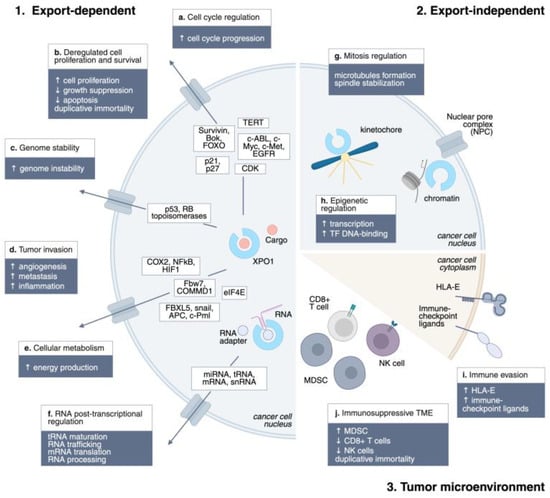
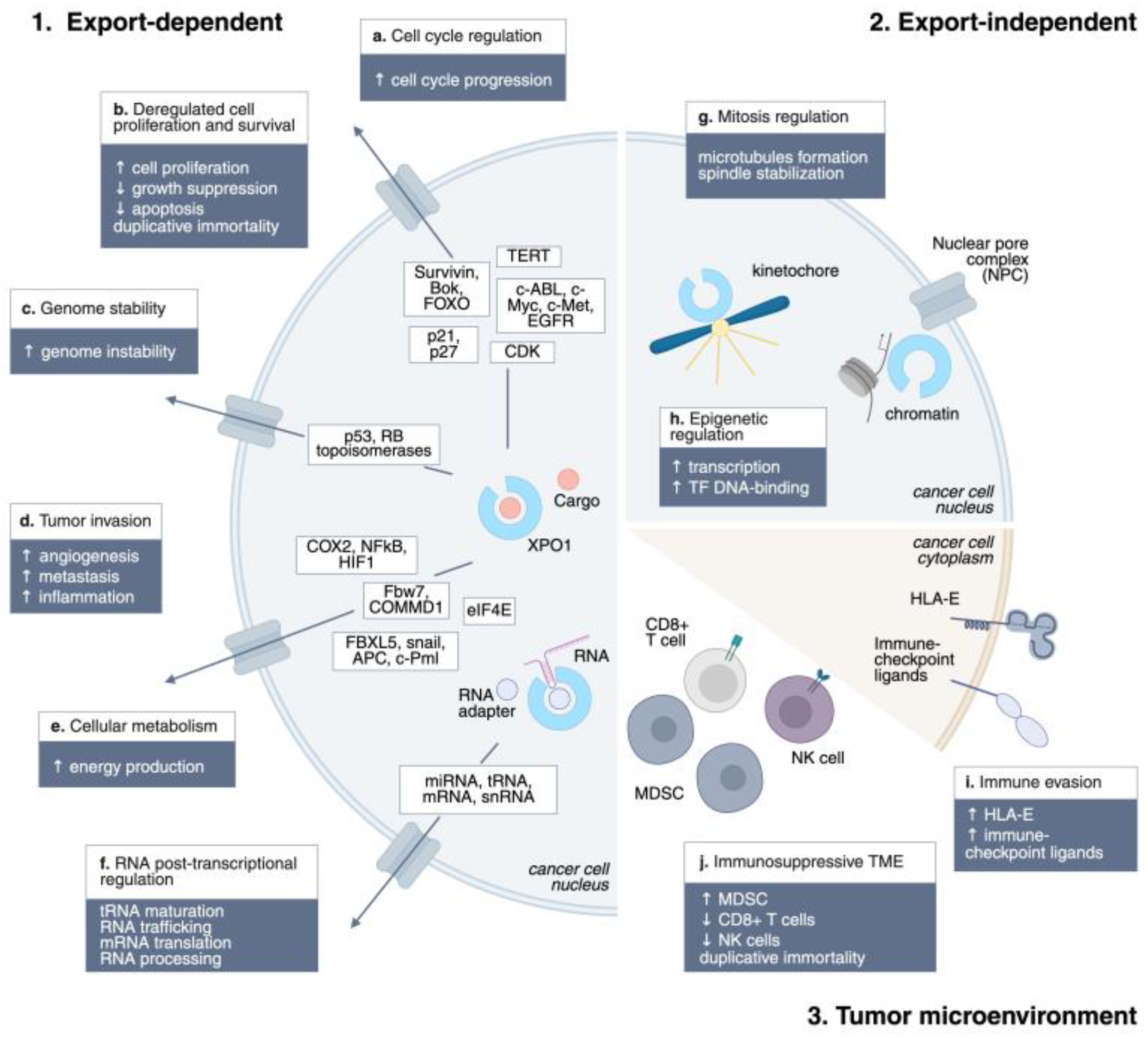
Due to its role in various malignancies, XPO1 has become a promising therapeutic target to prevent tumor progression and relapse, and SINE compounds have been developed. Understanding the mechanism of action of XPO1 inhibitors remains an ongoing process that is crucial for designing successful preclinical and clinical studies (Figure 1).
Figure 1.
XPO1 mechanisms of action in cancer. Schematic representation of the main XPO1 mechanisms of action in cancer: 1. Export-dependent; 2. Export-independent; 3. Tumor microenvironment. ↑, upregulation; ↓, downregulation.
4.1. Nuclear Trafficking
XPO1 is involved in the export of nearly 220 proteins bearing NESs. These substrates are critical for tumor cells, as XPO1 cargos are involved in the majority of hallmarks of cancer: sustained proliferation (c-ABL, c-Myc, c-Met, EGFR), evading growth suppressors (p21, p27), genome instability (p53, DNA topoisomerases), resisting cell death (survivin, Bok, FOXO), enabling replicative immortality (TERT), inducing angiogenesis (Fbw7, COMMD1), activating invasion and metastasis (FBXL5, snail, APC, c-Pml), deregulating cellular energetics (eIF4E), and tumor-promoting inflammation (Cox-2) [5,11,35]. Remarkable is the role of XPO1 in exporting the BCL-ABL fusion protein in Chronic Myeloid Leukemia. BCR–ABL chimeric protein, which constantly stimulates the proliferation of myeloid cells, is exported to the cytoplasm of cancer cells, where it activates the PI3K/Akt pathway. XPO1 inhibition traps BCR–ABL in the nucleus, re-sensitizing leukemia cells to the BCR–ABL inhibitor imatinib and resulting in a substantial reduction in tumor cell proliferative potential with limited toxicity to normal myeloid precursors [36]. While early models suggested that XPO1 inhibitors act primarily by restoring nuclear localization of tumor suppressors, experimental evidence shows that these agents exert antitumor activity even in cells lacking functional p53, RB, or p21, indicating a broader mechanism beyond tumor suppressor retention [26,35].
4.2. RNA Export
XPO1 plays a pivotal role in RNA metabolism by exporting multiple classes of RNAs. Ribosomal subunits (40S and 60S pre-ribosomal particles) rely on XPO1 for translocation from the nucleolus to the cytoplasm, a critical step for ribosome maturation and translation (Thomas, 2003) [37]. Small nuclear RNAs (snRNAs), which are essential for pre-mRNA splicing, form export-competent complexes with PHAX and RanGTP, which are subsequently exported by XPO1 and re-imported as mature snRNPs [38]. Additionally, XPO1 mediates alternative export pathways for microRNAs and tRNAs [12]. Selective export of mRNAs encoding oncoproteins occurs via XPO1 in cooperation with adaptor proteins such as LRPPRC, eIF4E, NXF3, and HuR, linking nuclear export to the post-transcriptional regulation of tumorigenic pathways [39]. Inhibition of XPO1 thus disrupts both protein and RNA trafficking, impairing ribosome biogenesis, mRNA translation, and RNA processing. A preclinical study demonstrated the potential of exploiting RNA trafficking inhibition in diffuse large B-cell lymphoma, where highly aggressive subtypes rely on Hsp90 activation, resulting in increased RNA nuclear shuttling. Inhibition of the eIF4E factor induced tumor control, indicating RNA nuclear export as a druggable target in cancer [39,40,41].
4.3. Cell Cycle
XPO1 influences cell cycle progression by controlling the nuclear-cytoplasmic distribution of numerous cyclins and cyclin-dependent kinase (CDK) inhibitors. Inhibition of XPO1 using SINEs, such as selinexor, has been shown to trigger cell cycle arrest at both the G1 and G2/M phases in cancer cells, often independently of key tumor suppressors, including p53, RB, and p21 [26,27]. By broadly affecting the localization of cell cycle regulators, XPO1 inhibitors reduce proliferation and enhance apoptotic susceptibility, thereby contributing to their antitumor activity. Beyond its role in nuclear export, XPO1 also performs critical mitotic functions. It localizes to kinetochores during mitosis and is essential for proper microtubule nucleation and mitotic spindle assembly, underscoring the export-independent roles of XPO1 in cell division. [42,43,44,45,46]
4.4. Epigenetics Activity
Emerging evidence indicates that XPO1 modulates epigenetic states by exporting chromatin regulators and transcription factors. Proteins involved in histone modification, DNA repair, and transcriptional repression rely on nuclear-cytoplasmic shuttling via XPO1, suggesting that its inhibition may alter chromatin accessibility and gene expression programs in cancer cells [5]. XPO1 involvement in epigenetic regulation extends beyond its role in nuclear export. Recent studies have highlighted its role in chromatin docking, a process crucial for transcriptional regulation. For instance, a recent study demonstrated that XPO1 serves as an adaptor for the transcription factor-mediated docking of chromatin at the nuclear pore complex, promoting stronger transcription, primarily by enhancing TF binding to DNA [47].
4.5. Modulation of the Tumor Microenvironment
It has been reported that XPO1 also influences the tumor microenvironment (TME) by regulating the localization and activity of signaling proteins and cytokine modulators. The nuclear export of transcription factors, such as NF-κB and HIF-1α, coordinates tumor-promoting inflammation, angiogenesis, and immune evasion [35]. Inhibition of XPO1 reduces the nuclear export of these factors, attenuating pro-tumorigenic signaling and enhancing the susceptibility of cancer cells to immune-mediated clearance and chemotherapy [5].
XPO1 also plays a crucial role in modulating the polarization and activity of immune cells within the TME. Overexpression or mutation of XPO1 is associated with immunosuppressive TMEs, characterized by reduced infiltration of cytotoxic CD8+ T cells and natural killer (NK) cells, increased expression of immune checkpoints, and elevated activity of myeloid-derived suppressor cells (MDSCs) [48]. Mechanistically, XPO1 inhibition has been shown to repolarize macrophages from an M2-like pro-tumor phenotype to an M1-like anti-tumor phenotype, reduce inhibitory checkpoint expression on myeloid cells, and convert MDSCs into immunostimulatory phenotypes, collectively enhancing T cell and NK cell cytotoxicity [49,50]. Furthermore, selinexor downregulates HLA-E on malignant cells, relieving NKG2A-mediated inhibitory signaling and boosting NK- and CD8+ T cell-mediated anti-tumor responses [51,52]. Notably, XPO1 inhibition also enhances the efficacy of adoptive cell therapies, as pre-treatment of tumor cells with selinexor sensitizes them to Chimeric Antigen Receptor (CAR)-T cells and bispecific antibody-mediated cytotoxicity, illustrating a dual role in directly modulating cancer cells and reshaping the immune landscape [53,54].
Despite these promising findings, XPO1 can also bind to NFAT regulatory regions in T cells, promoting T cell activation. Inhibition of XPO1 has been shown to reduce overall T cell stimulation, highlighting a context-dependent effect on immune responses [55]. Further studies are warranted to fully elucidate the mechanisms by which XPO1 regulates immunity in different cellular and tumor contexts.
Collectively, these data indicate that XPO1 is a critical regulator of the TME, and its pharmacologic inhibition may represent a promising strategy to enhance anti-tumor immunity and improve the efficacy of cancer therapies.
5. XPO1 Inhibition in Lung Cancer Drug Resistance
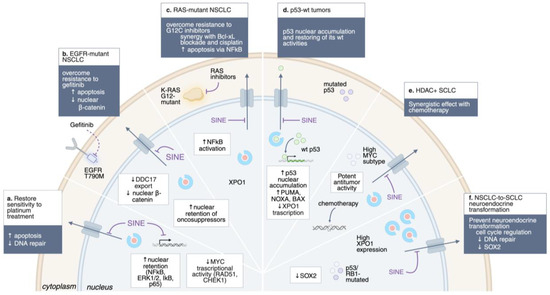
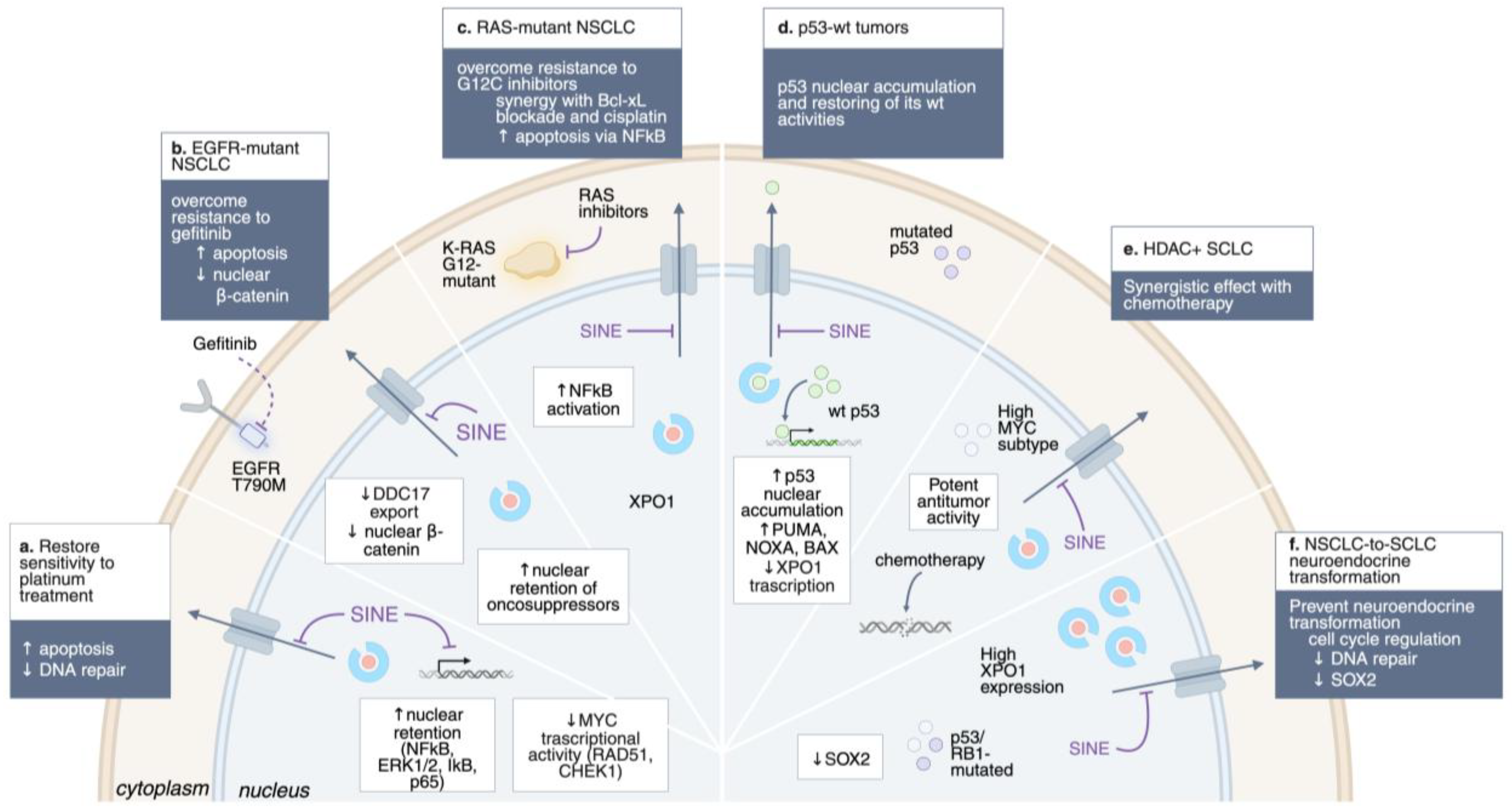
Lung cancer remains the leading cause of cancer-related mortality among both men and women, encompassing both NSCLC and SCLC subtypes [56]. Despite advances in early detection and targeted therapies, long-term survival remains limited, mainly due to the emergence of drug-tolerant persister cells that survive initial treatments and contribute to relapse or metastasis [57]. A growing body of evidence implicates dysregulation of nuclear-cytoplasmic transport in this process, with XPO1 frequently overexpressed in lung cancers [58] (Figure 2). Given the substantial heterogeneity observed across lung cancer subtypes, therapeutic strategies that simultaneously target multiple critical pathways, such as nuclear export and apoptosis evasion, may provide enhanced clinical benefit.
Figure 2.
Overcoming drug resistance by XPO1 inhibition. Schematic representation of the main approach to overcome drug resistance by XPO1 inhibition in lung cancer. ↑, upregulation; ↓, downregulation.
5.1. Non-Small Cell Lung Cancer
Histologically, about 85% of lung cancers are classified as NSCLCs [1]. Most of these cases are diagnosed at an advanced stage, preventing the possibility of curative surgery. Targeted therapies have improved survival for patients with oncogene-driven NSCLC; however, patients eventually develop acquired resistance, underscoring an urgent need for new treatments with lower toxicity and better outcomes. Aberrant expression of XPO1 is well recognized in NSCLC and is linked to poor OS. Ectopic expression of XPO1 in the lung epithelial cell line BEAS-2B led to cellular transformation, suggesting that upregulation of XPO1 may be a critical pathway in the malignant transformation of lung epithelial cells [58]. A comprehensive bioinformatics analysis of XPO1 alterations in NSCLC, including 5792 samples and 5644 patients, revealed that XPO1 copy number alterations were significantly associated with poor OS [19]. While XPO1 mutations are relatively rare, their presence correlates with poor prognosis and higher tumor mutational burden, highlighting their potential as prognostic biomarkers [19]. Interestingly, no overlap was observed between XPO1 mutations and amplification in any patient samples, and there were no significant differences in gender or age between XPO1 statuses [19]. Preclinical studies demonstrate that pharmacologic inhibition of XPO1 with agents such as selinexor suppresses NSCLC growth both in vitro and in xenograft models [13,59].
5.2. Platinum Resistance in NSCLC
Platinum-based chemotherapy remains a cornerstone of first-line treatment in advanced NSCLC; however, the development of resistance is virtually inevitable and leads to disease recurrence and poor survival outcomes. One of the primary mechanisms underlying platinum resistance involves the upregulation of DNA damage repair pathways, including key mediators such as CHEK1, MLH1, MSH2, RAD51, and PMS2, which enable tumor cells to withstand platinum-induced cytotoxicity [60,61]. XPO1 overexpression has been associated with platinum resistance and inferior prognosis across solid tumors, including lung cancer, by promoting the cytoplasmic mislocalization of critical tumor suppressors and DNA repair regulators [29]. Preclinical studies have demonstrated that inhibition of XPO1 with SINE compounds suppresses cellular proliferation and restores platinum sensitivity, partly through nuclear retention of ERK1/2, IκBα, NF-κB, and p65, leading to inhibition of NF-κB signaling and enhanced apoptosis [62]. Mechanistically, selinexor reduces Myc binding to the RAD51 and CHEK1 promoters, thereby decreasing the expression of DNA repair proteins and sensitizing tumor cells to platinum-induced DNA damage [26,27].
5.3. Resistance to Targeted Therapy
Tyrosine kinase inhibitors (TKIs) have been developed for the treatment of NSCLC with actionable oncogene drivers, including EGFR, KRAS and ALK. Even though these drugs exhibit substantial antitumor activity, their clinical efficacy is often limited by the emergence of drug resistance [57].
In EGFR-mutant NSCLC, secondary resistance mechanisms, including the T790M gatekeeper mutation and activation of bypass pathways (e.g., MET, AXL), limit the durability of TKIs. Inhibition of XPO1 restores nuclear localization of tumor suppressors and enhances apoptosis, thereby resensitizing resistant cells to treatment. For example, NSCLC cell lines harboring EGFR T790M mutations, which confer resistance to gefitinib and erlotinib, remain sensitive to selinexor [59,63,64].
Beyond T790M and bypass signaling, other mechanisms of acquired resistance to gefitinib involve RNA helicase–mediated regulation of β-catenin. Elevated expression of the DEAD-box helicase DDX17 in NSCLC disrupts E-cadherin/β-catenin complexes, leading to nuclear β-catenin accumulation and transcription of resistance-associated genes such as AXIN and cyclin D1 [65]. Importantly, DDX17 contains both NLS and NES sequences that enable nucleocytoplasmic shuttling via XPO1. Mutation of these sequences reduces gefitinib resistance in PC9 NSCLC cells compared with wild-type DDX17 [65]. These observations suggest that nuclear transport plays a crucial role in modulating TKI sensitivity, indicating that inhibition of XPO1 could represent a promising strategy to block the export of DDX17 and related DEAD-box helicases [29]. Collectively, these data underscore the functional intersection between XPO1 activity and EGFR-driven signaling, supporting the relevance of XPO1 as a modulator of both primary and acquired resistance in EGFR-mutant NSCLC.
KRAS-mutant NSCLC, long considered undruggable, has recently seen therapeutic breakthroughs with KRAS G12C inhibitors. Nonetheless, resistance develops rapidly, often through the activation of survival pathways. XPO1 plays a pivotal role in contributing to therapeutic resistance by maintaining survival pathways that limit the effectiveness of KRAS G12C inhibitors. Inhibition of XPO1 restores sensitivity to KRAS G12C inhibitors and synergizes with Bcl-xL blockade or cisplatin, inducing apoptosis in vitro [14,18,59,66,67]. Patient-derived xenograft (PDX) models of KRAS-, EGFR-, and MET-driven NSCLC also respond to selinexor, underscoring its broad activity [18]. Furthermore, selinexor demonstrated antiproliferative activity against a panel of 11 NSCLC cell lines, showing different genetic landscapes: 5 of the 11 NSCLC cell lines had either a K- or N-RAS mutation, 1 of the 11 had loss of PTEN, and 2 of the 11 NSCLC cell lines had PIK3CA mutations. Thus, KPT-330 may have unique abilities to inhibit the growth of tumor cells containing mutant tumor suppressor genes or activated oncogenes. In addition, a Phase I/II trial combining selinexor with docetaxel in pretreated KRAS-mutant NSCLC showed promising efficacy, particularly in TP53 wild-type tumors, with manageable toxicity [34]. These findings indicate that KRAS-mutant tumors exhibit a functional dependence on XPO1-mediated nuclear export, which sustains survival pathways and limits the efficacy of KRAS-targeted therapies.
Although XPO1 has emerged as a promising therapeutic target for overcoming resistance in EGFR- and RAS-driven NSCLC, experimental evidence in ALK-rearranged NSCLC remains limited. Recent preclinical studies indicated that XPO1 inhibition may represent an effective strategy in ALK+ NSCLC. In vitro and in vivo analyses, including patient-derived cells, tumor organoids, and xenograft models, revealed strong synergy between SINE and ALK-TKIs, characterized by G1 cell-cycle arrest, p53 accumulation, and apoptosis. Notably, the combination therapy significantly reduced tumor growth in TKI-resistant models, enhancing antiproliferative and pro-apoptotic effects compared to monotherapy and suggesting its potential to overcome established resistance mechanisms [68]. Taken together, these preliminary data indicate that ALK-rearranged tumors may also depend on XPO1-regulated nuclear export pathways, positioning XPO1 inhibition as a potential strategy to enhance or restore ALK-TKI sensitivity.
5.4. Neuroendocrine Transformation
Neuroendocrine (NE) transformation indicates progenitor cell plasticity and is linked to resistance to therapeutic agents. In lung adenocarcinomas, the shift to an aggressive neuroendocrine phenotype resembling SCLC is associated with poor clinical outcomes. The development of more potent and specific inhibitors of oncogenic drivers may increase selective pressure and thus the occurrence of such histological transdifferentiation [69]. NE transformation has been reported in approximately 3–10% of EGFR-mutant NSCLCs treated with TKIs [70], and although less common, has also been observed in ALK- [71], ROS1- [72], RET- [73,74], and other genomic contexts, indicating a clinically relevant but infrequent pathway of resistance. Although limited in number, existing reports of patients with squamous transformation have shown the retention of characteristic EGFR mutations, EML4–ALK fusions, or ROS-1 rearrangements from the adenocarcinoma, supporting the idea of lineage transformation [72,75,76,77]. The poor prognosis of patients after NE transformation highlights the need to develop strategies to limit or prevent plasticity and to treat NE transformation more effectively.
One of the hallmarks of NE transformation is the functional inactivation of TP53 and RB1, which occurs through either genomic alterations or protein downregulation, typically early in the transformation process, and may serve as a licensing condition, necessary but not sufficient for histologic transformation. Recent analyses revealed that, similar to de novo SCLC, XPO1 mRNA levels increased in pre-transformed NSCLC clinical specimens from patients carrying concomitant TP53 and RB1 inactivation, with double TP53/RB1-mutated samples showing the highest XPO1 expression relative to their double wild-type counterparts. The mechanisms contributing to the apparent increased dependence of NE tumors on nuclear transport by XPO1 have not been determined, but they likely involve the aberrant transport of transcripts controlling cell cycle regulatory and DNA damage repair pathways, on which tumor cells become increasingly dependent after the loss of TP53 and RB1. In lung cancer xenograft models, XPO1 inhibition interfered with NE transformation by downregulating SOX2, a key driver of NSCLC-to-SCLC lineage plasticity, thereby prolonging the efficacy of targeted therapies and supporting XPO1 inhibition as a strategy to constrain NE reprogramming [78]. Given the clinical availability of potent and well-tolerated XPO1 inhibitors, these findings highlight a feasible approach for preventing and treating NE transformation in lung adenocarcinomas, a context where treatment options remain limited.
6. Predictive Biomarkers for XPO1 Inhibition in Lung Cancer
Effective implementation of XPO1 inhibitors in NSCLC requires a biomarker-guided approach, as genetic and cancer-subtype contexts strongly influence therapeutic response.
6.1. TP53 Status
TP53 status has emerged as one of the most relevant predictors of sensitivity to XPO1 blockade. In TP53-wild-type NSCLC, selinexor promotes nuclear retention and stabilization of p53, leading to transcriptional activation of pro-apoptotic genes such as PUMA, BAX, NOXA, and CDKN1A (p21), thereby restoring chemosensitivity and potentiating the efficacy of standard cytotoxic therapies. Clinically, this mechanism translated into a median progression-free survival (PFS) of 7.4 months in TP53 wild-type versus 1.8 months in TP53-mutant tumors in a Phase I/II study of selinexor combined with docetaxel [34]. These findings indicate that TP53 wild-type status may serve as a key biomarker for patient selection in XPO1-directed clinical trials.
Mechanistically, inactivation of TP53 has been shown to increase XPO1 promoter activity, suggesting that p53 binding can repress XPO1 transcription. Preclinical studies further demonstrate that XPO1 inhibition potentiates p53 function in wild-type contexts, promoting apoptosis and cell-cycle arrest. Conversely, in TP53-mutant NSCLC, the therapeutic benefit of XPO1 inhibition is diminished, as nuclear retention of mutant p53 may paradoxically support tumor progression by competing with other tumor suppressors and regulators. Consistent with this model, TP53-mutant cell lines display resistance to selinexor, while exploratory analyses in different cancers, such as endometrial carcinoma, have observed efficacy only in TP53 wild-type tumors. These observations underscore the necessity of biomarker-driven patient stratification when considering XPO1-targeted therapy (NCT03555422) [33].
Partially against this idea, other studies have shown that selinexor can also exert p53-independent effects. Across NSCLC lines, including TP53-mutant cells, selinexor induces cell-cycle arrest and inhibits proliferation. When combined with cisplatin, it enhances cytotoxicity by downregulating NF-κB, a key regulator of survival pathways. In KRAS-mutant NSCLC, XPO1 inhibition produces strong synthetic lethal effects by increasing the phosphorylated inhibitory subunit of NF-κB, thereby further suppressing NF-κB activity and promoting apoptosis. These findings suggest that XPO1-targeted therapies may be beneficial even in genetically complex or p53-deficient tumors [18,59].
Collectively, these results highlight the central role of XPO1 in modulating tumor suppressor activity and suggest that nuclear export inhibition represents a multifaceted strategy to overcome both p53-dependent and -independent mechanisms of NSCLC progression.
6.2. HDAC7/MYC Subtype in SCLC
SCLC is a highly aggressive malignancy with limited treatment options. Despite advances in immunotherapy, response rates remain low, and the efficacy of current molecular subtyping is insufficient to predict therapeutic outcomes.
In 2022, Quintanal-Villalonga et al. reported that XPO1 was expressed in SCLC cell lines at levels similar to those observed in relevant hematologic malignancies, and this expression was confirmed in SCLC patient specimens [79]. In vivo, the XPO1 inhibitor, combined with chemotherapy, demonstrated stronger anti-tumor effects and prolonged survival in SCLC compared with chemotherapy alone, suggesting that the combination of selinexor with either cisplatin or irinotecan may have beneficial effects and an acceptable toxicity profile. Remarkably, the efficacy of this combination was validated regardless of the SCLC molecular subtypes, as well as in both treatment-naive and chemotherapy-resistant PDX models. However, sensitivity to selinexor monotherapy showed high variability among the PDX models treated, suggesting that some SCLC tumors may have more intrinsic dependence on XPO1 function than others. This discovery has led to the identification of a novel SCLC subtype, high histone deacetylase 7-positive (HDAC7+) SCLC, characterized by elevated HDAC7, Myc, and XPO1 expression [80]. The authors uncovered a complex positive feedback loop where they mutually regulate each other, thereby promoting cell proliferation, colony formation, and tumor progression. In preclinical models, tumors with elevated HDAC7/Myc expression exhibit markedly enhanced sensitivity [72] to XPO1 inhibitors, compared to non-HDAC7+ SCLC, proposing HDAC as an essential biomarker for stratifying SCLC patients for XPO1-targeted therapy.
7. Mechanisms of Resistance to XPO1 Inhibition
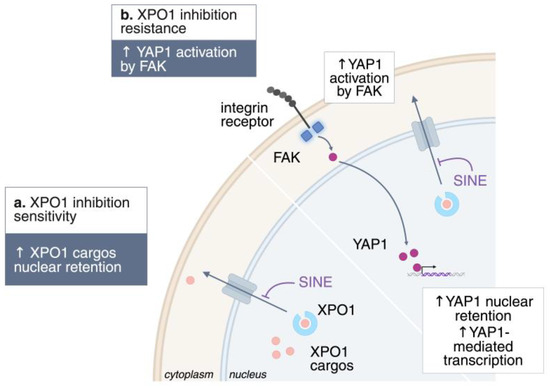
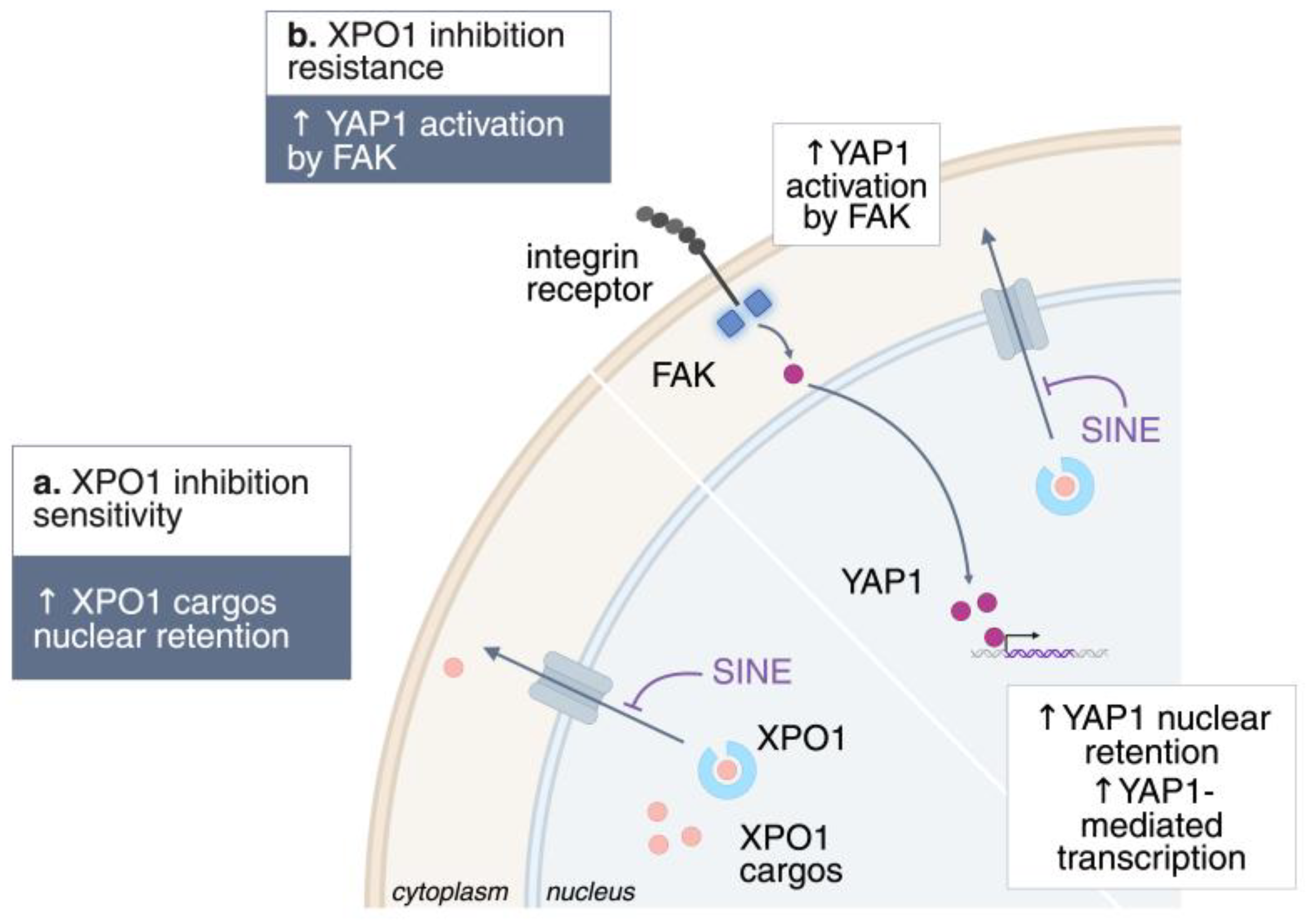
Despite its therapeutic promise, adaptive resistance to XPO1 inhibition is increasingly recognized, with multiple signaling routes contributing to drug tolerance and relapse (Figure 3). One critical mechanism involves activation of Yes-associated protein 1 (YAP1) by focal adhesion kinase (FAK), a downstream effector of the Hippo pathway, which promotes cell survival and proliferation even in the presence of XPO1 blockade [81]. YAP1 drives the expression of oncogenic proteins that must be transported into the cytoplasm to function, a process facilitated by RAS-mediated phosphorylation and subsequent activation of XPO1. This nuclear–cytoplasmic shuttling is especially relevant for anti-apoptotic proteins, which, instead of remaining inactive in the nucleus, are exported into the cytoplasm, where they effectively suppress apoptosis [82]. In resistant cells, FAK signature gene expression is markedly increased, reinforcing YAP nuclear entry and direct phosphorylation on Tyr357, thereby boosting its transcriptional activity. Importantly, FAK and its associated kinase ILK are putative XPO1 cargoes, further linking nuclear export to resistance mechanisms [78]. The mislocalization of YAP and Hippo pathway effector proteins is implicated in the recurrence of cholangiocarcinoma [83].
Figure 3.
Mechanisms of resistance to XPO1 inhibition. Schematic representation of the known mechanisms of resistance to XPO1 inhibition. ↑, upregulation; ↓, downregulation.
8. Conclusions
XPO1 is a central regulator of nucleocytoplasmic trafficking, controlling the localization and function of key tumor suppressors, oncogenes, and RNAs. Its dysregulation contributes to proliferation, survival, therapy resistance, and immune evasion across lung cancer subtypes. Pharmacologic inhibition of XPO1 with selective inhibitors such as selinexor disrupts multiple oncogenic pathways, restores tumor suppressor activity, modulates the tumor microenvironment, and enhances responses to standard therapies, including targeted agents and adoptive immunotherapies. Importantly, XPO1 inhibition shows different efficacy in TP53 wild-type and mutant contexts, indicating that biomarker-driven stratification of patients may optimize therapeutic benefit. Preclinical and early clinical studies suggest that combining XPO1 inhibitors with chemotherapy, targeted therapies, or immunotherapies could overcome drug resistance, delay neuroendocrine transformation, and improve patient outcomes. These findings establish XPO1 as a promising therapeutic target in lung cancer, warranting continued investigation to refine combination strategies and identify predictive biomarkers for personalized therapy.
Author Contributions
Conceptualization, M.V.D.M., A.G.; writing—review and editing, M.V.D.M., A.G., C.V., R.C.; supervision, C.V., R.C. All authors have read and agreed to the published version of the manuscript.
Funding
C.V. was supported by Fondazione CRT and AIRC IG 2019—ID. 23146. R.C. was supported by 1 P50 CA265826–01A1 Dana Farber/Harvard Cancer Center SPORE in Lung Cancer.
Institutional Review Board Statement
Not applicable.
Informed Consent Statement
Not applicable.
Data Availability Statement
No original data were generated for this manuscript.
Conflicts of Interest
The authors declare that they have no conflicts of interest with the contents of this article.
Abbreviations
The following abbreviations are used in this manuscript:
| Akt | Protein kinase B (PKB) |
| ALK | Anaplastic lymphoma kinase |
| APC | Adenomatous Polyposis Coli |
| AXL | AXL receptor tyrosine kinase |
| BAX | BCL2 Associated X, apoptosis regulator |
| BCL-ABL | Fusion gene from BCR (Breakpoint Cluster Region) and ABL proto-oncogene |
| Bcl-xL | B-cell lymphoma-extra-large (anti-apoptotic protein) |
| CAR | Chimeric Antigen Receptor |
| CDK | Cyclin-Dependent Kinase |
| CHEK1 | Checkpoint Kinase 1 |
| COMMD1 | Copper Metabolism Domain Containing 1 |
| COX-2 | Cyclooxygenase-2 |
| CRM1 | Chromosome Region Maintenance 1 (alternative name for XPO1) |
| DDBX17/DDX17 | DEAD-Box Helicase 17 |
| DLBCL | Diffuse Large B-Cell Lymphoma |
| DTP | Drug-Tolerant Persister Cells |
| EGFR | Epidermal Growth Factor Receptor |
| eIF4E | Eukaryotic Translation Initiation Factor 4E |
| ERK1/2 | Extracellular Signal-Regulated Kinase 1/2 |
| FAK | Focal Adhesion Kinase |
| FBXL5 | F-Box and Leucine-Rich Repeat Protein 5 |
| FOXO | Forkhead Box O transcription factors |
| HIF-1α | Hypoxia-Inducible Factor 1 alpha |
| HLA-E | Human Leukocyte Antigen-E |
| Hsp90 | Heat Shock Protein 90 |
| HuR | Human antigen R (RNA-binding protein) |
| IKBα/IκBα | Inhibitor of NF-κB alpha |
| ILK | Integrin-Linked Kinase |
| KRAS | Kirsten Rat Sarcoma Viral Oncogene Homolog |
| LMB | Leptomycin B |
| LRPPRC | Leucine-Rich Pentatricopeptide Repeat-Containing protein |
| MDSCs | Myeloid-Derived Suppressor Cells |
| MET | MET Proto-Oncogene, Receptor Tyrosine Kinase |
| MLH1 | MutL Homolog 1 |
| MSH2 | MutS Homolog 2 |
| MYC/c-Myc | Myelocytomatosis proto-oncogene protein |
| NES | Nuclear Export Signal |
| NF-κB | Nuclear Factor kappa-light-chain-enhancer of activated B cells |
| NFAT | Nuclear Factor of Activated T-cells |
| NPC | Nuclear Pore Complex |
| NSCLC | Non-Small Cell Lung Cancer |
| NKG2A | Natural Killer Group 2 Member A receptor |
| NPM/Nucleophosmin | Nucleophosmin protein |
| NXF3 | Nuclear RNA Export Factor 3 |
| ORR | Overall Response Rate |
| OS | Overall Survival |
| PDX | Patient-Derived Xenograft |
| PFS | Progression-Free Survival |
| PHAX | Phosphorylated Adapter for RNA Export |
| PI3K | Phosphoinositide 3-kinase |
| PIK3CA | Phosphatidylinositol-4,5-Bisphosphate 3-Kinase Catalytic Subunit Alpha |
| PML/c-Pml | Promyelocytic Leukemia protein |
| PMS2 | Postmeiotic Segregation Increased 2 |
| PTEN | Phosphatase and Tensin Homolog |
| PUMA | p53 Upregulated Modulator of Apoptosis |
| RB/RB1 | Retinoblastoma protein |
| RAD51 | DNA Repair Protein RAD51 Homolog |
| SCLC | Small Cell Lung Cancer |
| SINE | Selective Inhibitors of Nuclear Export |
| TERT | Telomerase Reverse Transcriptase |
| TKI | Tyrosine Kinase Inhibitor |
| TME | Tumor Microenvironment |
| TP53 | Tumor Protein p53 gene |
| XPO1 | Exportin 1 (also CRM1) |
| YAP1 | Yes-Associated Protein 1 |
References
- Lung Cancer Statistics | How Common Is Lung Cancer? | American Cancer Society. Available online: https://www.cancer.org/cancer/types/lung-cancer/about/key-statistics.htm (accessed on 12 September 2025).
- Lung Cancer. Available online: https://www.who.int/news-room/fact-sheets/detail/lung-cancer (accessed on 19 October 2025).
- Voena, C.; Ambrogio, C.; Iannelli, F.; Chiarle, R. ALK in Cancer: From Function to Therapeutic Targeting. Nat. Rev. Cancer 2025, 25, 359–378. [Google Scholar] [CrossRef]
- Skoulidis, F.; Heymach, J.V. Co-Occurring Genomic Alterations in Non-Small-Cell Lung Cancer Biology and Therapy. Nat. Rev. Cancer 2019, 19, 495–509. [Google Scholar] [CrossRef] [PubMed]
- Azizian, N.G.; Azizian, N.G.; Li, Y.; Li, Y. XPO1-Dependent Nuclear Export as a Target for Cancer Therapy. J. Hematol. Oncol. 2020, 13, 1–9. [Google Scholar] [CrossRef] [PubMed]
- Lin, D.H.; Hoelz, A. The Structure of the Nuclear Pore Complex (An Update). Annu. Rev. Biochem. 2019, 88, 725–783. [Google Scholar] [CrossRef] [PubMed]
- Rush, C.; Jiang, Z.; Tingey, M.; Feng, F.; Yang, W. Unveiling the Complexity: Assessing Models Describing the Structure and Function of the Nuclear Pore Complex. Front. Cell Dev. Biol. 2023, 11, 1245939. [Google Scholar] [CrossRef]
- Tran, E.J.; Wente, S.R. Dynamic Nuclear Pore Complexes: Life on the Edge. Cell 2006, 125, 1041–1053. [Google Scholar] [CrossRef]
- Wang, A.Y.; Liu, H. The Past, Present, and Future of CRM1/XPO1 Inhibitors. Stem Cell Investig. 2019, 6, 6. [Google Scholar] [CrossRef]
- Fukuda, M.; Asano, S.; Nakamura, T.; Adachi, M.; Yoshida, M.; Yanagida, M.; Nishida, E. CRM1 Is Responsible for Intracellular Transport Mediated by the Nuclear Export Signal. Nature 1997, 390, 308–311. [Google Scholar] [CrossRef]
- Balasubramanian, S.K.; Azmi, A.S.; Maciejewski, J. Selective Inhibition of Nuclear Export: A Promising Approach in the Shifting Treatment Paradigms for Hematological Neoplasms. Leukemia 2022, 36, 601. [Google Scholar] [CrossRef]
- Hutten, S.; Kehlenbach, R.H. CRM1-Mediated Nuclear Export: To the Pore and Beyond. Trends Cell Biol. 2007, 17, 193–201. [Google Scholar] [CrossRef]
- Gupta, A.; Saltarski, J.M.; White, M.A.; Scaglioni, P.P.; Gerber, D.E. Therapeutic Targeting of Nuclear Export Inhibition in Lung Cancer. J. Thorac. Oncol. 2017, 12, 1446–1450. [Google Scholar] [CrossRef]
- Khan, H.Y.; Nagasaka, M.; Li, Y.; Aboukameel, A.; Uddin, M.H.; Sexton, R.; Bannoura, S.; Mzannar, Y.; Al-Hallak, M.N.; Kim, S.; et al. Inhibitor of the Nuclear Transport Protein XPO1 Enhances the Anticancer Efficacy of KRAS G12C Inhibitors in Preclinical Models of KRAS G12C–Mutant Cancers. Cancer Res. Commun. 2022, 2, 342–352. [Google Scholar] [CrossRef] [PubMed]
- Taylor, J.; Sendino, M.; Gorelick, A.N.; Pastore, A.; Chang, M.T.; Penson, A.V.; Gavrila, E.I.; Stewart, C.; Melnik, E.M.; Chavez, F.H.; et al. Altered Nuclear Export Signal Recognition as a Driver of Oncogenesis. Cancer Discov. 2019, 9, 1452. [Google Scholar] [CrossRef] [PubMed]
- Camus, V.; Stamatoullas, A.; Mareschal, S.; Viailly, P.J.; Sarafan-Vasseur, N.; Bohers, E.; Dubois, S.; Picquenot, J.M.; Ruminy, P.; Maingonnat, C.; et al. Detection and Prognostic Value of Recurrent Exportin 1 Mutations in Tumor and Cell-Free Circulating DNA of Patients with Classical Hodgkin Lymphoma. Haematologica 2016, 101, 1094–1101. [Google Scholar] [CrossRef] [PubMed]
- Lin, H.M.; Yin, Y.; Crossland, V.; Wu, Y.; Ou, S.H.I. EGFR Testing Patterns and Detection of EGFR Exon 20 Insertions in the United States. JTO Clin. Res. Rep. 2022, 3, 100285. [Google Scholar] [CrossRef]
- Rosen, J.C.; Weiss, J.; Pham, N.A.; Li, Q.; Martins-Filho, S.N.; Wang, Y.; Tsao, M.S.; Moghal, N. Antitumor Efficacy of XPO1 Inhibitor Selinexor in KRAS-Mutant Lung Adenocarcinoma Patient-Derived Xenografts. Transl. Oncol. 2021, 14, 101179. [Google Scholar] [CrossRef]
- Nagasaka, M.; Asad, M.F.B.; Al Hallak, M.N.; Uddin, M.H.; Sukari, A.; Baca, Y.; Xiu, J.; Magee, D.; Mamdani, H.; Uprety, D.; et al. Impact of XPO1 Mutations on Survival Outcomes in Metastatic Non-Small Cell Lung Cancer (NSCLC). Lung Cancer 2021, 160, 92. [Google Scholar] [CrossRef]
- Kudo, N.; Wolff, B.; Sekimoto, T.; Schreiner, E.P.; Yoneda, Y.; Yanagida, M.; Horinouchi, S.; Yoshida, M. Leptomycin B Inhibition of Signal-Mediated Nuclear Export by Direct Binding to CRM1. Exp. Cell Res. 1998, 242, 540–547. [Google Scholar] [CrossRef]
- Kudo, N.; Matsumori, N.; Taoka, H.; Fujiwara, D.; Schreiner, E.P.; Wolff, B.; Yoshida, M.; Horinouchi, S. Leptomycin B Inactivates CRM1/Exportin 1 by Covalent Modification at a Cysteine Residue in the Central Conserved Region. Proc. Natl. Acad. Sci. USA 1999, 96, 9112–9117. [Google Scholar] [CrossRef]
- Köster, M.; Lykke-Andersen, S.; Elnakady, Y.A.; Gerth, K.; Washausen, P.; Höfle, G.; Sasse, F.; Kjems, J.; Hauser, H. Ratjadones Inhibit Nuclear Export by Blocking CRM1/Exportin 1. Exp. Cell Res. 2003, 286, 321–331. [Google Scholar] [CrossRef]
- Newlands, E.S.; Rustin, G.J.S.; Brampton, M.H. Phase I Trial of Elactocin. Br. J. Cancer 1996, 74, 648–649. [Google Scholar] [CrossRef] [PubMed]
- Yoshida, M.; Nishikawa, M.; Nishi, K.; Abe, K.; Horinouchi, S.; Beppu, T. Effects of Leptomycin B on the Cell Cycle of Fibroblasts and Fission Yeast Cells. Exp. Cell Res. 1990, 187, 150–156. [Google Scholar] [CrossRef] [PubMed]
- Wang, J.S.-Z.; Barve, M.A.; Chiorean, E.G.; LoRusso, P.; Courtney, K.D.; Qi, D.; Olguin, A.; Bullington, J.; Sardone, M.; Dunn, V.; et al. Interim Results from a Phase 1 Trial of SL-801, a Novel XPO-1 Inhibitor, in Patients with Advanced Solid Tumors. J. Clin. Oncol. 2018, 36, 2560. [Google Scholar] [CrossRef]
- Etchin, J.; Sanda, T.; Mansour, M.R.; Kentsis, A.; Montero, J.; Le, B.T.; Christie, A.L.; Mccauley, D.; Rodig, S.J.; Kauffman, M.; et al. KPT-330 Inhibitor of CRM1 (XPO1)-Mediated Nuclear Export Has Selective Anti-Leukaemic Activity in Preclinical Models of T-Cell Acute Lymphoblastic Leukaemia and Acute Myeloid Leukaemia. Br. J. Haematol. 2013, 161, 117–127. [Google Scholar] [CrossRef]
- Etchin, J.; Sun, Q.; Kentsis, A.; Farmer, A.; Zhang, Z.C.; Sanda, T.; Mansour, M.R.; Barcelo, C.; McCauley, D.; Kauffman, M.; et al. Antileukemic Activity of Nuclear Export Inhibitors That Spare Normal Hematopoietic Cells. Leukemia 2013, 27, 66–74. [Google Scholar] [CrossRef]
- Wing, C.E.; Fung, H.Y.J.; Kwanten, B.; Cagatay, T.; Niesman, A.B.; Jacquemyn, M.; Gharghabi, M.; Permentier, B.; Shakya, B.; Nandi, R.; et al. SINE Compounds Activate Exportin 1 Degradation through an Allosteric Mechanism. Nat. Chem. Biol. 2025, 21, 2002–2013. [Google Scholar] [CrossRef]
- Azmi, A.S.; Uddin, M.H.; Mohammad, R.M. The Nuclear Export Protein XPO1—From Biology to Targeted Therapy. Nat. Rev. Clin. Oncol. 2021, 18, 152–169. [Google Scholar] [CrossRef]
- Chari, A.; Vogl, D.T.; Gavriatopoulou, M.; Nooka, A.K.; Yee, A.J.; Huff, C.A.; Moreau, P.; Dingli, D.; Cole, C.; Lonial, S.; et al. Oral Selinexor–Dexamethasone for Triple-Class Refractory Multiple Myeloma. N. Engl. J. Med. 2019, 381, 727–738. [Google Scholar] [CrossRef]
- Kalakonda, N.; Maerevoet, M.; Cavallo, F.; Follows, G.; Goy, A.; Vermaat, J.S.P.; Casasnovas, O.; Hamad, N.; Zijlstra, J.M.; Bakhshi, S.; et al. Selinexor in Patients with Relapsed or Refractory Diffuse Large B-Cell Lymphoma (SADAL): A Single-Arm, Multinational, Multicentre, Open-Label, Phase 2 Trial. Lancet Haematol. 2020, 7, e511–e522. [Google Scholar] [CrossRef]
- Vergote, I.; Perez-Fidalgo, J.A.; Hamilton, E.P.; Van Gorp, T.; Valabrega, G.; Laenen, A.; Oza, A.M.; Levy, T.; Cibula, D.; Sehouli, J.; et al. SIENDO/ENGOT-EN5/GOG-3055: A Randomized Phase 3 Trial of Maintenance Selinexor versus Placebo after Combination Platinum-Based Chemotherapy in Advanced or Recurrent Endometrial Cancer. J. Clin. Oncol. 2021, 39, TPS5610. [Google Scholar] [CrossRef]
- Vergote, I.; Pérez-Fidalgo, J.A.; Hamilton, E.P.; Valabrega, G.; Van Gorp, T.; Sehouli, J.; Cibula, D.; Levy, T.; Welch, S.; Richardson, D.L.; et al. Oral Selinexor as Maintenance Therapy After First-Line Chemotherapy for Advanced or Recurrent Endometrial Cancer. J. Clin. Oncol. 2023, 41, 5400–5410. [Google Scholar] [CrossRef] [PubMed]
- von Itzstein, M.S.; Burns, T.F.; Dowell, J.E.; Horn, L.; Camidge, D.R.; York, S.J.; Eaton, K.D.; Kyle, K.; Fattah, F.; Liu, J.; et al. Phase I/II Trial of Exportin 1 Inhibitor Selinexor plus Docetaxel in Previously Treated, Advanced KRAS-Mutant Non-Small Cell Lung Cancer. Clin. Cancer Res. 2025, 31, 639–648. [Google Scholar] [CrossRef] [PubMed]
- Sun, Q.; Chen, X.; Zhou, Q.; Burstein, E.; Yang, S.; Jia, D. Inhibiting Cancer Cell Hallmark Features through Nuclear Export Inhibition. Signal Transduct. Target. Ther. 2016, 1, 34–36. [Google Scholar] [CrossRef] [PubMed]
- Aloisi, A.; Di Gregorio, S.; Stagno, F.; Guglielmo, P.; Mannino, F.; Sormani, M.P.; Bruzzi, P.; Gambacorti-Passerini, C.; Saglio, G.; Venuta, S.; et al. BCR-ABL Nuclear Entrapment Kills Human CML Cells: Ex Vivo Study on 35 Patients with the Combination of Imatinib Mesylate and Leptomycin B. Blood 2006, 107, 1591–1598. [Google Scholar] [CrossRef]
- Thomas, F.; Kutay, U. Biogenesis and nuclear export of ribosomal subunits in higher eukaryotes depend on the CRM1 export pathway. J Cell Sci. 2003, 116 Pt 12, 2409–2419. [Google Scholar] [CrossRef]
- Ohno, M.; Segref, A.; Bachi, A.; Wilm, M.; Mattaj, I.W. PHAX, a Mediator of U SnRNA Nuclear Export Whose Activity Is Regulated by Phosphorylation. Cell 2000, 101, 187–198. [Google Scholar] [CrossRef]
- Culjkovic-Kraljacic, B.; Baguet, A.; Volpon, L.; Amri, A.; Borden, K.L.B. The Oncogene EIF4E Reprograms the Nuclear Pore Complex to Promote MRNA Export and Oncogenic Transformation. Cell Rep. 2012, 2, 207–215. [Google Scholar] [CrossRef]
- Volpon, L.; Culjkovic-Kraljacic, B.; Sohn, H.S.; Blanchet-Cohen, A.; Osborne, M.J.; Borden, K.L.B. A Biochemical Framework for EIF4E-Dependent MRNA Export and Nuclear Recycling of the Export Machinery. RNA 2017, 23, 927–937. [Google Scholar] [CrossRef]
- Marullo, R.; Rutherford, S.C.; Revuelta, M.V.; Zamponi, N.; Culjkovic-Kraljacic, B.; Kotlov, N.; Di Siervi, N.; Lara-Garcia, J.; Allan, J.N.; Ruan, J.; et al. XPO1 Enables Adaptive Regulation of MRNA Export Required for Genotoxic Stress Tolerance in Cancer Cells. Cancer Res. 2024, 84, 101–117. [Google Scholar] [CrossRef]
- Wozniak, R.; Burke, B.; Doye, V. Nuclear Transport and the Mitotic Apparatus: An Evolving Relationship. Cell. Mol. Life Sci. 2010, 67, 2215–2230. [Google Scholar] [CrossRef]
- Forbes, D.J.; Travesa, A.; Nord, M.S.; Bernis, C. Nuclear Transport Factors: Global Regulation of Mitosis. Curr. Opin. Cell Biol. 2015, 35, 78–90. [Google Scholar] [CrossRef] [PubMed]
- Arnaoutov, A.; Azuma, Y.; Ribbeck, K.; Joseph, J.; Boyarchuk, Y.; Karpova, T.; McNally, J.; Dasso, M. Crm1 Is a Mitotic Effector of Ran-GTP in Somatic Cells. Nat. Cell Biol. 2005, 7, 626–632. [Google Scholar] [CrossRef] [PubMed]
- Torosantucci, L.; De Luca, M.; Guarguaglini, G.; Lavia, P.; Degrassi, F. Localized RanGTP Accumulation Promotes Microtubule Nucleation at Kinetochores in Somatic Mammalian Cells. Mol. Biol. Cell 2008, 19, 1873–1882. [Google Scholar] [CrossRef] [PubMed]
- Liu, Q.; Jiang, Q.; Zhang, C. A Fraction of Crm1 Locates at Centrosomes by Its CRIME Domain and Regulates the Centrosomal Localization of Pericentrin. Biochem. Biophys. Res. Commun. 2009, 384, 383–388. [Google Scholar] [CrossRef]
- Ge, T.; Brickner, D.G.; Zehr, K.; VanBelzen, D.J.; Zhang, W.; Caffalette, C.; Moeller, G.C.; Ungerleider, S.; Marcou, N.; Jacob, A.; et al. Exportin-1 Functions as an Adaptor for Transcription Factor-Mediated Docking of Chromatin at the Nuclear Pore Complex. Mol. Cell 2025, 85, 1101–1116.e8. [Google Scholar] [CrossRef]
- Fisher, J.G.; Bartlett, L.G.; Kashyap, T.; Walker, C.J.; Khakoo, S.I.; Blunt, M.D. Modulation of Anti-Tumour Immunity by XPO1 Inhibitors. Explor. Target. Antitumor Ther. 2025, 6, 1002310. [Google Scholar] [CrossRef]
- Jiménez, I.; Carabia, J.; Bobillo, S.; Palacio, C.; Abrisqueta, P.; Pagès, C.; Nieto, J.C.; Castellví, J.; Martínez-Ricarte, F.; Escoda, L.; et al. Repolarization of Tumor Infiltrating Macrophages and Increased Survival in Mouse Primary CNS Lymphomas after XPO1 and BTK Inhibition. J. Neurooncol. 2020, 149, 13. [Google Scholar] [CrossRef]
- Kady, N.; Wang, C.; Wolfe, A.; Maine, I.; Abdelrahman, S.; Murga-Zamalloa, C.A.; Wilcox, R.A. Xpo-1 Antagonism Impairs CSF-1R Expression and Depletes Lymphoma-Associated Macrophages in T-Cell Lymphomas. Blood 2023, 142, 1647. [Google Scholar] [CrossRef]
- Fisher, J.G.; Walker, C.J.; Doyle, A.D.P.; Johnson, P.W.M.; Forconi, F.; Cragg, M.S.; Landesman, Y.; Khakoo, S.I.; Blunt, M.D. Selinexor Enhances NK Cell Activation Against Malignant B Cells via Downregulation of HLA-E. Front. Oncol. 2021, 11, 785635. [Google Scholar] [CrossRef]
- Fisher, J.G.; Doyle, A.D.P.; Graham, L.V.; Sonar, S.; Sale, B.; Henderson, I.; Del Rio, L.; Johnson, P.W.M.; Landesman, Y.; Cragg, M.S.; et al. XPO1 Inhibition Sensitises CLL Cells to NK Cell Mediated Cytotoxicity and Overcomes HLA-E Expression. Leukemia 2023, 37, 2036–2049. [Google Scholar] [CrossRef]
- Luo, W.; Xu, J.; Li, C.; Tang, L.; Li, Y.; Wang, X.; Zhuolin, W.; Zhang, Y.; Hu, Y.; Mei, H. Selinexor Reduces the Immunosuppressive Properties of Macrophages and Synergizes with CD19 CAR-T Cells Against B-Cell Lymphoma. Blood 2024, 144, 3420. [Google Scholar] [CrossRef]
- Stadel, R.; Liu, R.; Landesman, Y.; Wald, D.; Hosahalli Vasanna, S.; de Lima, M.J.G. Sequential Administration of Selinexor Then CD19 CAR-T Cells Exhibits Enhanced Efficacy in a Mouse Model of Human Non-Hodgkin’s Lymphoma. Blood 2022, 140, 7413–7414. [Google Scholar] [CrossRef]
- Chen, Y.F.; Ghazala, M.; Friedrich, R.M.; Cordova, B.A.; Petroze, F.N.; Srinivasan, R.; Allan, K.C.; Yan, D.F.; Sax, J.L.; Carr, K.; et al. Targeting the Chromatin Binding of Exportin-1 Disrupts NFAT and T Cell Activation. Nat. Chem. Biol. 2024, 20, 1260–1271. [Google Scholar] [CrossRef] [PubMed]
- Filho, A.M.; Laversanne, M.; Ferlay, J.; Colombet, M.; Piñeros, M.; Znaor, A.; Parkin, D.M.; Soerjomataram, I.; Bray, F. The GLOBOCAN 2022 Cancer Estimates: Data Sources, Methods, and a Snapshot of the Cancer Burden Worldwide. Int. J. Cancer 2025, 156, 1336–1346. [Google Scholar] [CrossRef] [PubMed]
- Izumi, M.; Costa, D.B.; Kobayashi, S.S. Targeting of Drug-Tolerant Persister Cells as an Approach to Counter Drug Resistance in Non-Small Cell Lung Cancer. Lung Cancer 2024, 194, 107885. [Google Scholar] [CrossRef]
- Gao, W.; Lu, C.; Chen, L.; Keohavong, P. Overexpression of CRM1: A Characteristic Feature in a Transformed Phenotype of Lung Carcinogenesis and a Molecular Target for Lung Cancer Adjuvant Therapy. J. Thorac. Oncol. 2015, 10, 815–825. [Google Scholar] [CrossRef]
- Sun, H.; Hattori, N.; Chien, W.; Sun, Q.; Sudo, M.; E-Ling, G.L.; Ding, L.; Lim, S.L.; Shacham, S.; Kauffman, M.; et al. KPT-330 Has Antitumour Activity against Non-Small Cell Lung Cancer. Br. J. Cancer 2014, 111, 281–291. [Google Scholar] [CrossRef]
- Galluzzi, L.; Senovilla, L.; Vitale, I.; Michels, J.; Martins, I.; Kepp, O.; Castedo, M.; Kroemer, G. Molecular Mechanisms of Cisplatin Resistance. Oncogene 2012, 31, 1869–1883. [Google Scholar] [CrossRef]
- O’hare, T.; Zabriskie, M.S.; Eiring, A.M.; Deininger, M.W. Pushing the Limits of Targeted Therapy in Chronic Myeloid Leukaemia. Nat. Rev. Cancer 2012, 12, 513–526. [Google Scholar] [CrossRef]
- Chen, Y.; Camacho, S.C.; Silvers, T.R.; Razak, A.R.A.; Gabrail, N.Y.; Gerecitano, J.F.; Kalir, E.; Pereira, E.; Evans, B.R.; Ramus, S.J.; et al. Inhibition of the Nuclear Export Receptor XPO1 as a Therapeutic Target for Platinum-Resistant Ovarian Cancer. Clin. Cancer Res. 2017, 23, 1552–1563. [Google Scholar] [CrossRef]
- Wang, S.; Han, X.; Wang, J.; Yao, J.; Shi, Y. Antitumor Effects of a Novel Chromosome Region Maintenance 1 (CRM1) Inhibitor on Non-Small Cell Lung Cancer Cells In Vitro and in Mouse Tumor Xenografts. PLoS ONE 2014, 9, e89848. [Google Scholar] [CrossRef] [PubMed]
- Lapalombella, R.; Sun, Q.; Williams, K.; Tangeman, L.; Jha, S.; Zhong, Y.; Goettl, V.; Mahoney, E.; Berglund, C.; Gupta, S.; et al. Selective Inhibitors of Nuclear Export Show That CRM1/XPO1 Is a Target in Chronic Lymphocytic Leukemia. Blood 2012, 120, 4621–4634. [Google Scholar] [CrossRef] [PubMed]
- Li, K.; Mo, C.; Gong, D.; Chen, Y.; Huang, Z.; Li, Y.; Zhang, J.; Huang, L.; Li, Y.; Fuller-Pace, F.V.; et al. DDX17 Nucleocytoplasmic Shuttling Promotes Acquired Gefitinib Resistance in Non-Small Cell Lung Cancer Cells via Activation of β-Catenin. Cancer Lett. 2017, 400, 194–202. [Google Scholar] [CrossRef] [PubMed]
- Zhu, Z.C.; Liu, J.W.; Yang, C.; Zhao, M.; Xiong, Z.Q. XPO1 Inhibitor KPT-330 Synergizes with Bcl-XL Inhibitor to Induce Cancer Cell Apoptosis by Perturbing RRNA Processing and Mcl-1 Protein Synthesis. Cell Death Dis. 2019, 10, 395. [Google Scholar] [CrossRef]
- Kim, J.; McMillan, E.; Kim, H.S.; Venkateswaran, N.; Makkar, G.; Rodriguez-Canales, A.; Villalobos, P.; Neggers, J.E.; Mendiratta, S.; Wei, S.; et al. XPO1-Dependent Nuclear Export Is a Druggable Vulnerability in KRAS-Mutant Lung Cancer. Nature 2016, 538, 114–117. [Google Scholar] [CrossRef]
- Di Marco, M.V.; Costanza, M.; Picca, F.; Taulli, R.; Patrucco, E.; Bonello, L.; Novello, S.; Mathas, S.; Chiarle, R.; Voena, C. EACR23-1040 Selective Inhibition of the Nuclear Export Is a Therapeutic Strategy to Overcome Resistance to Tyrosine Kinase Inhibitors in ALK-Rearranged Lung Cancer. Mol. Oncol. 2023, 17, 1–597. [Google Scholar] [CrossRef]
- Shiba-Ishii, A.; Takemura, N.; Kawai, H.; Matsubara, D. Histologic Transformation of Non-Small-Cell Lung Cancer in Response to Tyrosine Kinase Inhibitors: Current Knowledge of Genetic Changes and Molecular Mechanisms. Cancer Sci. 2024, 115, 2138–2146. [Google Scholar] [CrossRef]
- Ding, X.; Shi, M.-X.; Liu, D.; Cao, J.-X.; Zhang, K.-X.; Zhang, R.-D.; Zhang, L.-P.; Ai, K.-X.; Su, B.; Zhang, J. Transformation to Small Cell Lung Cancer Is Irrespective of EGFR and Accelerated by SMAD4-Mediated ASCL1 Transcription Independently of RB1 in Non-Small Cell Lung Cancer. Cell Commun. Signal. 2024, 22, 45. [Google Scholar] [CrossRef]
- Ríos, C.P.S.; Herrera, J.F.M.; Alexander, J.A. P2.14 Response Profile of Non-Small Cells Lung Cancer with ALK Positive Treated with Alectinib. J. Thorac. Oncol. 2019, 14, S1189–S1190. [Google Scholar] [CrossRef]
- Lin, J.J.; Langenbucher, A.; Gupta, P.; Yoda, S.; Fetter, I.J.; Rooney, M.; Do, A.; Kem, M.; Chang, K.P.; Oh, A.Y.; et al. Small Cell Transformation of ROS1 Fusion-Positive Lung Cancer Resistant to ROS1 Inhibition. NPJ Precis. Oncol. 2020, 4, 21. [Google Scholar] [CrossRef]
- Rudin, C.M.; Drilon, A.; Poirier, J.T. RET Mutations in Neuroendocrine Tumors—Including Small Cell Lung Cancer. J. Thorac. Oncol. 2014, 9, 1240. [Google Scholar] [CrossRef]
- Joshi, A.; Bhaskar, N.; Pearson, J.D. Neuroendocrine Transformation as a Mechanism of Resistance to Targeted Lung Cancer Therapies: Emerging Mechanisms and Their Therapeutic Implications. Cancers 2025, 17, 260. [Google Scholar] [CrossRef]
- Park, S.; Han, J.; Sun, J.M. Histologic Transformation of ALK-Rearranged Adenocarcinoma to Squamous Cell Carcinoma after Treatment with ALK Inhibitor. Lung Cancer 2019, 127, 66–68. [Google Scholar] [CrossRef]
- Gong, J.; Gregg, J.P.; Ma, W.; Yoneda, K.; Moore, E.H.; Daly, M.E.; Zhang, Y.; Williams, M.J.; Li, T. Squamous Cell Transformation of Primary Lung Adenocarcinoma in a Patient with EML4-ALK Fusion Variant 5 Refractory to ALK Inhibitors. J. Natl. Compr. Cancer Netw. 2019, 17, 297–301. [Google Scholar] [CrossRef] [PubMed]
- Wu, C.H.; Su, P.L.; Hsu, C.W.; Chu, C.Y.; Lin, C.C. Small Cell Transformation in Crizotinib-Resistant ROS1-Rearranged Non-Small Cell Lung Cancer with Retention of ROS1 Fusion: A Case Report. Thorac. Cancer 2021, 12, 3068–3071. [Google Scholar] [CrossRef] [PubMed]
- Quintanal-Villalonga, A.; Durani, V.; Sabet, A.; Redin, E.; Kawasaki, K.; Shafer, M.; Karthaus, W.R.; Zaidi, S.; Zhan, Y.A.; Manoj, P.; et al. Exportin 1 Inhibition Prevents Neuroendocrine Transformation through SOX2 Down-Regulation in Lung and Prostate Cancers. Sci. Transl. Med. 2023, 15, eadf7006. [Google Scholar] [CrossRef] [PubMed]
- Quintanal-Villalonga, A.; Taniguchi, H.; Hao, Y.; Chow, A.; Zhan, Y.A.; Chavan, S.S.; Uddin, F.; Allaj, V.; Manoj, P.; Shah, N.S.; et al. Inhibition of XPO1 Sensitizes Small Cell Lung Cancer to First- and Second-Line Chemotherapy. Cancer Res. 2022, 82, 472–483. [Google Scholar] [CrossRef]
- Qin, T.; Wang, J.; Wang, J.; Du, Q.; Wang, L.; Liu, H.; Liu, W.; Li, X.; Jiang, Y.; Xu, Q.; et al. Nuclear to Cytoplasmic Transport Is a Druggable Dependency in HDAC7-driven Small Cell Lung Cancer. Adv. Sci. 2025, 12, 2413445. [Google Scholar] [CrossRef]
- Ege, N.; Dowbaj, A.M.; Jiang, M.; Howell, M.; Hooper, S.; Foster, C.; Jenkins, R.P.; Sahai, E. Quantitative Analysis Reveals That Actin and Src-Family Kinases Regulate Nuclear YAP1 and Its Export. Cell Syst. 2018, 6, 692–708.e13. [Google Scholar] [CrossRef]
- Camonis, J.H.; Aushev, V.N.; Zueva, E.; Zalcman, G. A Review and Perspective Paper: Ras Oncogene Gets Modest, from Kingpin to Mere Henchman. Cell. Mol. Life Sci. 2024, 81, 412. [Google Scholar] [CrossRef]
- Sugihara, T.; Werneburg, N.W.; Hernandez, M.C.; Yang, L.; Kabashima, A.; Hirsova, P.; Yohanathan, L.; Sosa, C.; Truty, M.J.; Vasmatzis, G.; et al. YAP Tyrosine Phosphorylation and Nuclear Localization in Cholangiocarcinoma Cells Are Regulated by LCK and Independent of LATS Activity. Mol. Cancer Res. 2018, 16, 1556–1567. [Google Scholar] [CrossRef]
Disclaimer/Publisher’s Note: The statements, opinions and data contained in all publications are solely those of the individual author(s) and contributor(s) and not of MDPI and/or the editor(s). MDPI and/or the editor(s) disclaim responsibility for any injury to people or property resulting from any ideas, methods, instructions or products referred to in the content. |
© 2025 by the authors. Licensee MDPI, Basel, Switzerland. This article is an open access article distributed under the terms and conditions of the Creative Commons Attribution (CC BY) license (https://creativecommons.org/licenses/by/4.0/).