PGE1 Suppresses the Expression of M2 Markers on Macrophages Through Prostaglandin Receptors

 , , and
Abstract
1. Introduction
2. Materials and Methods
2.1. Materials
2.2. Cell Culture
2.3. Preparation of THP-1-Derived Macrophages
2.4. Preparation of Primary Macrophages
2.5. Spheroid Culture and Flow Cytometry
2.6. Statistical Analysis
3. Results
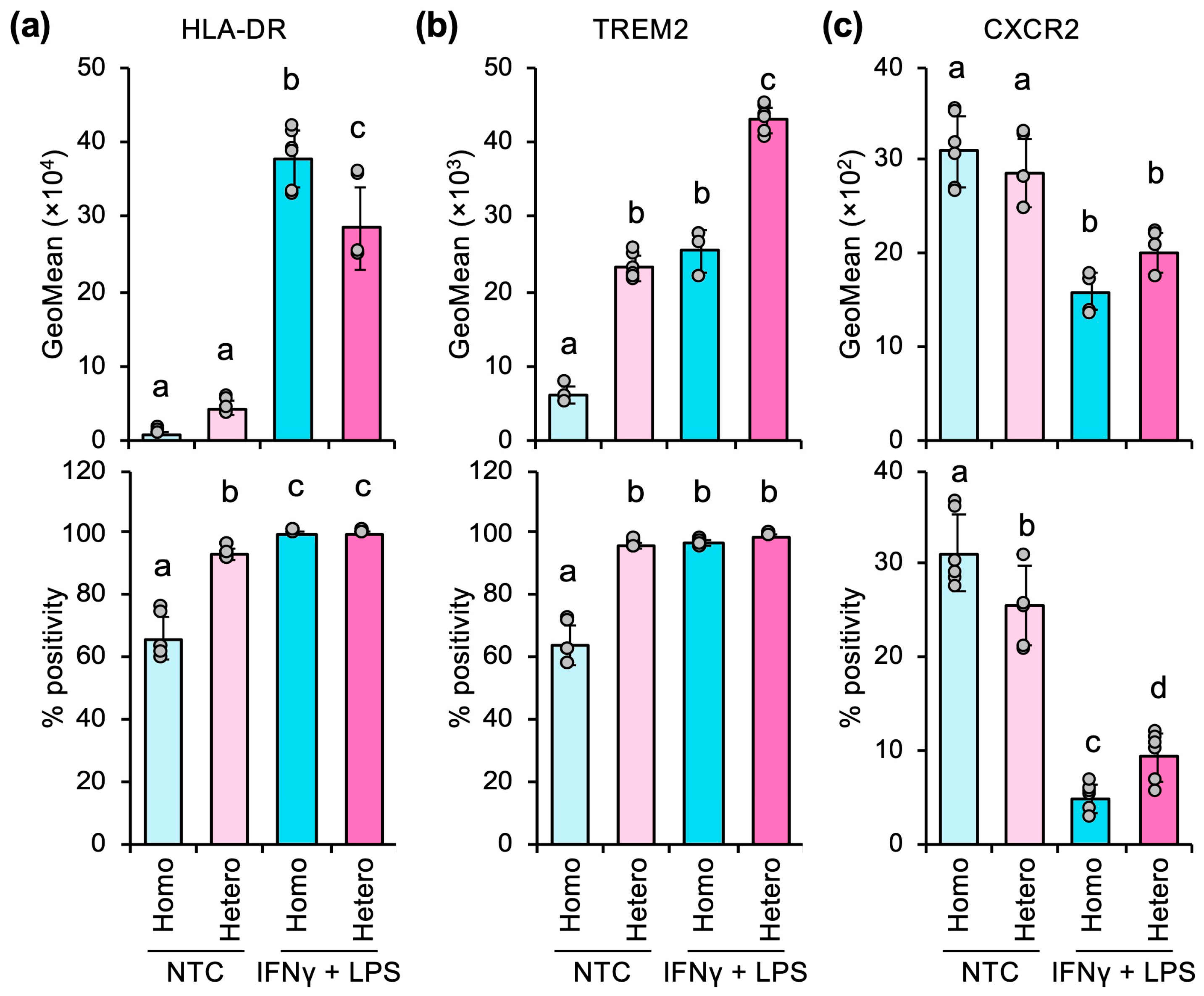
3.1. Promotion of M2 Polarization in Heterospheroids
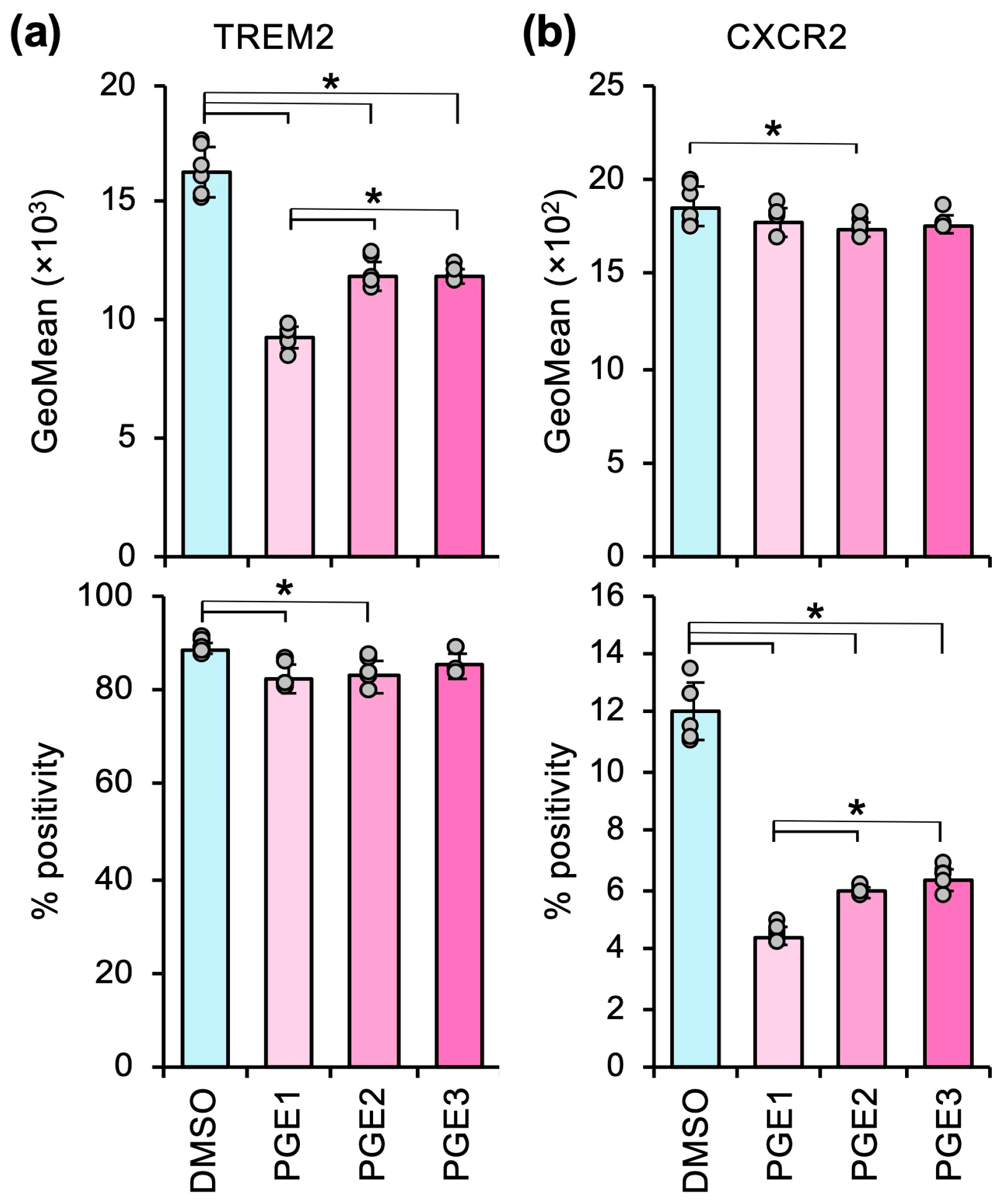
3.2. Suppression of M2 Polarization by the PGE Subtypes
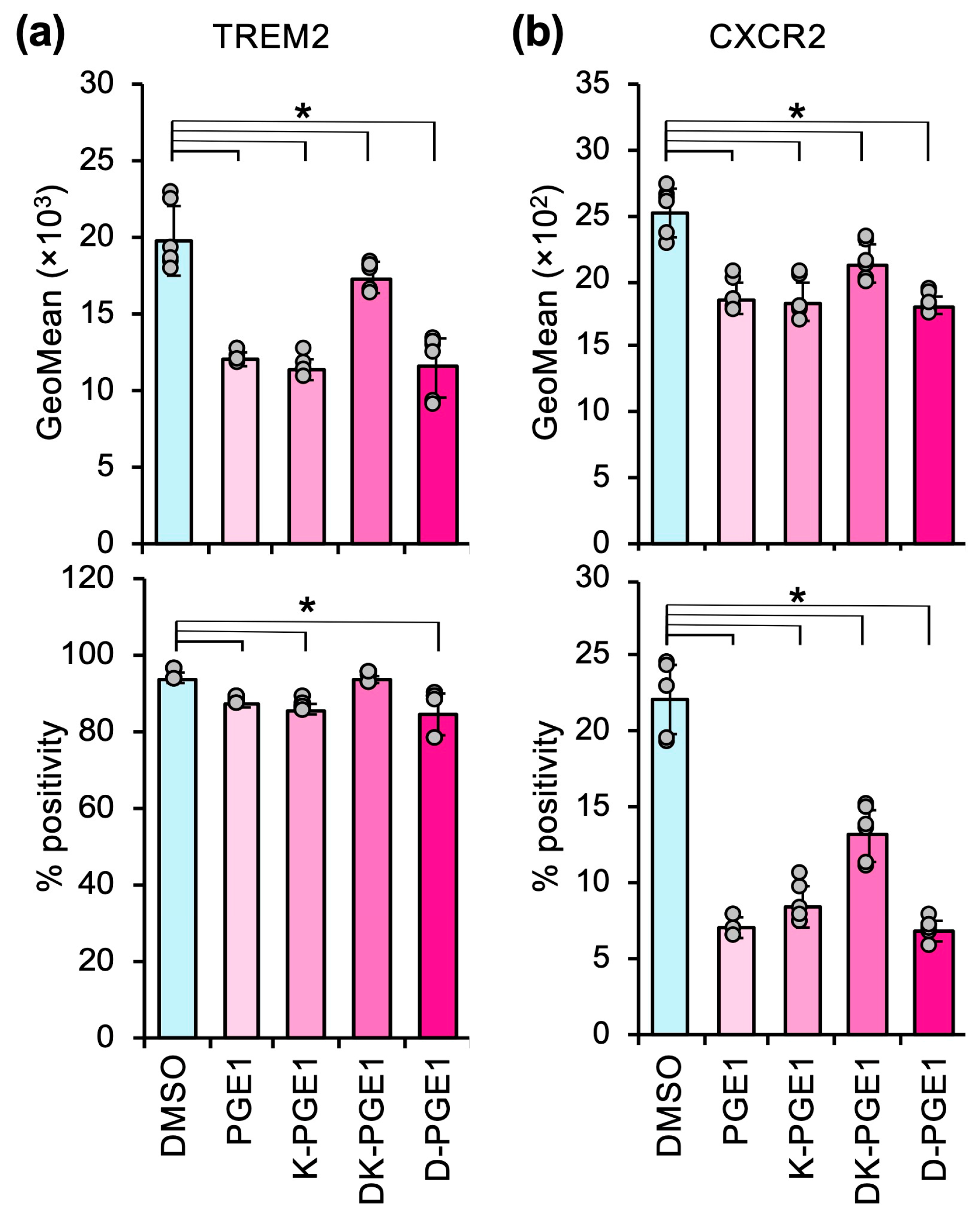
3.3. Suppression of M2 Polarization by PGE1 Metabolites
3.4. Suppression of M2 Polarization by the PGE1 Derivatives
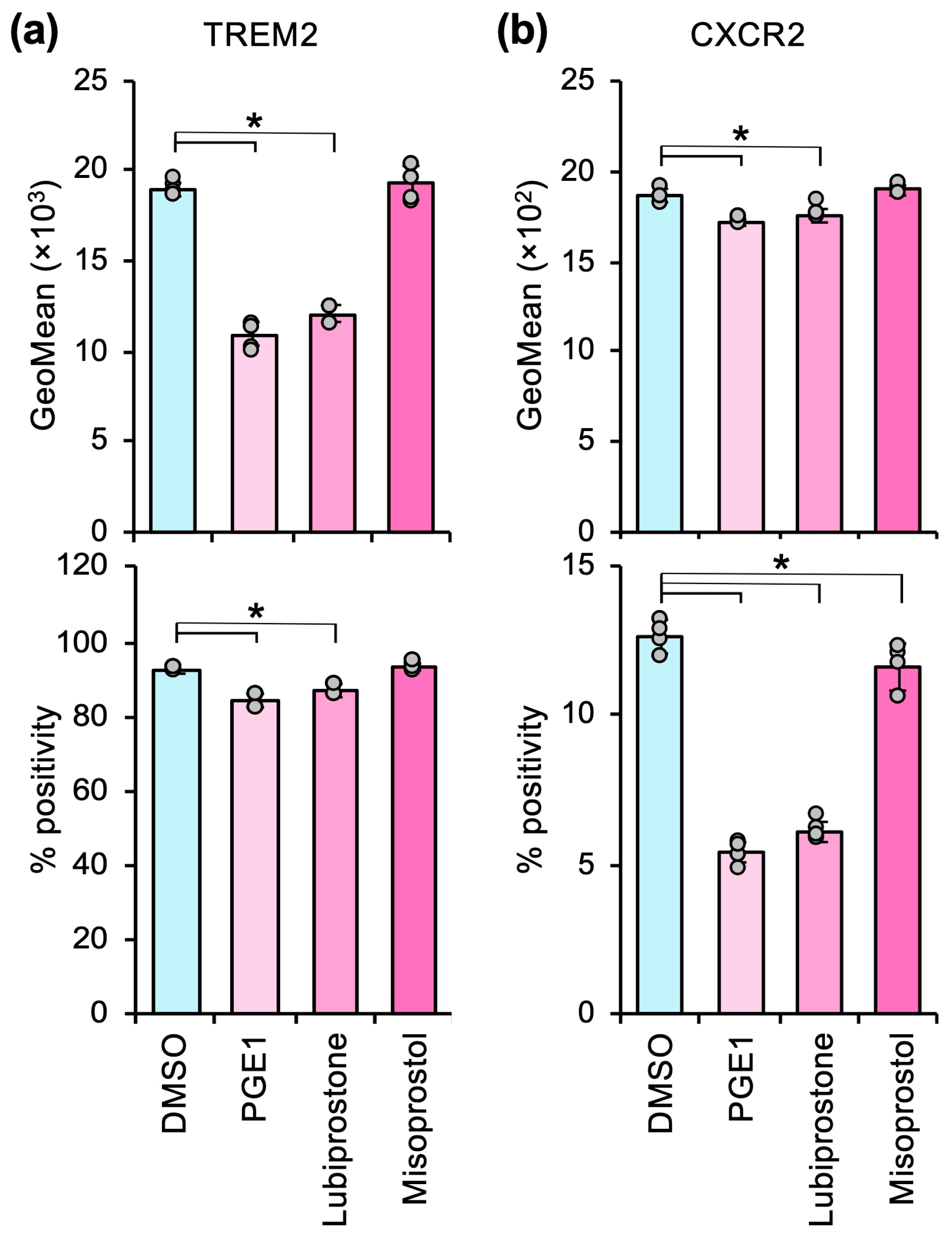
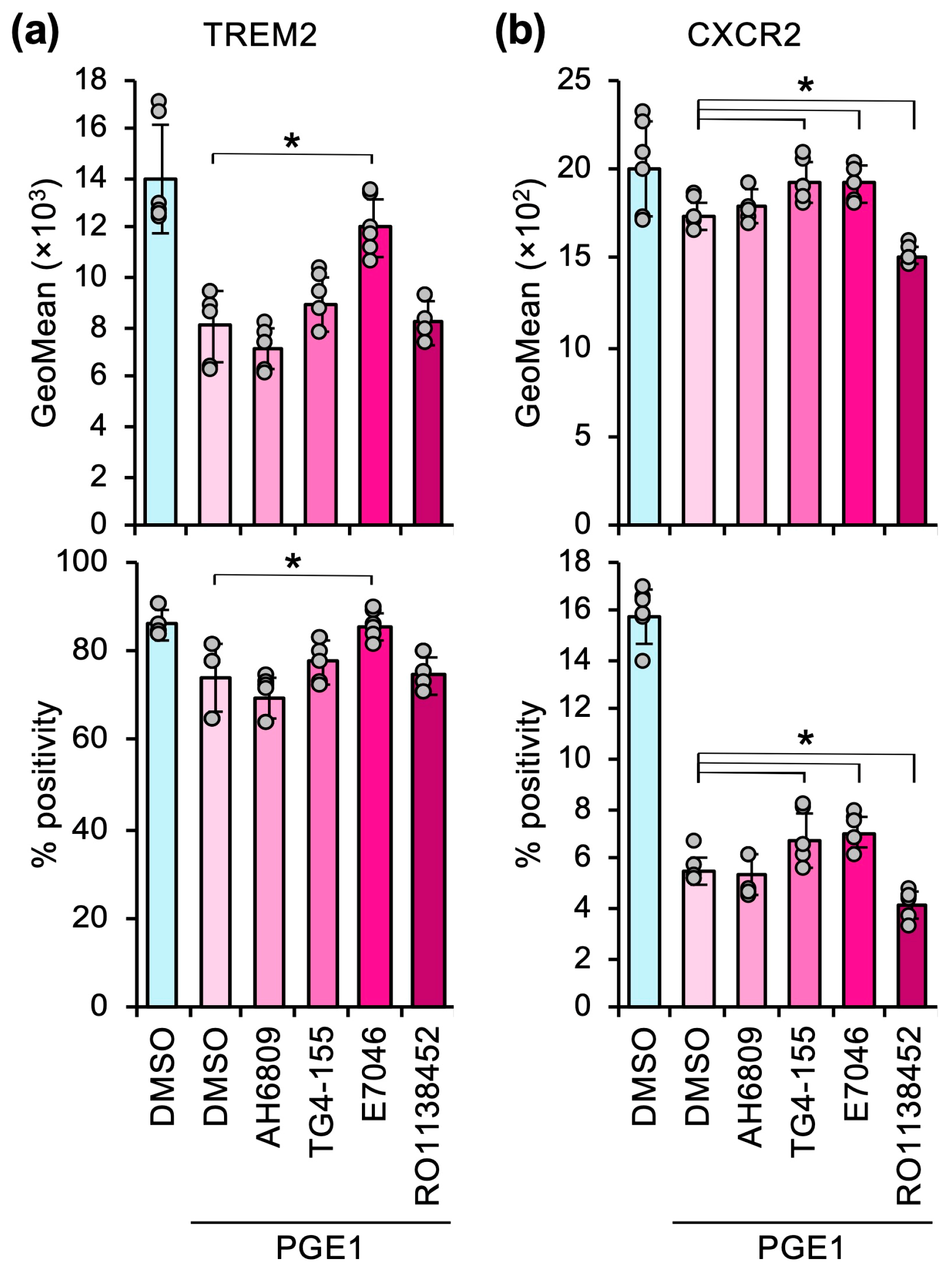
3.5. Identification of Prostaglandin Receptors Involved in the Mechanism of Action of PGE1
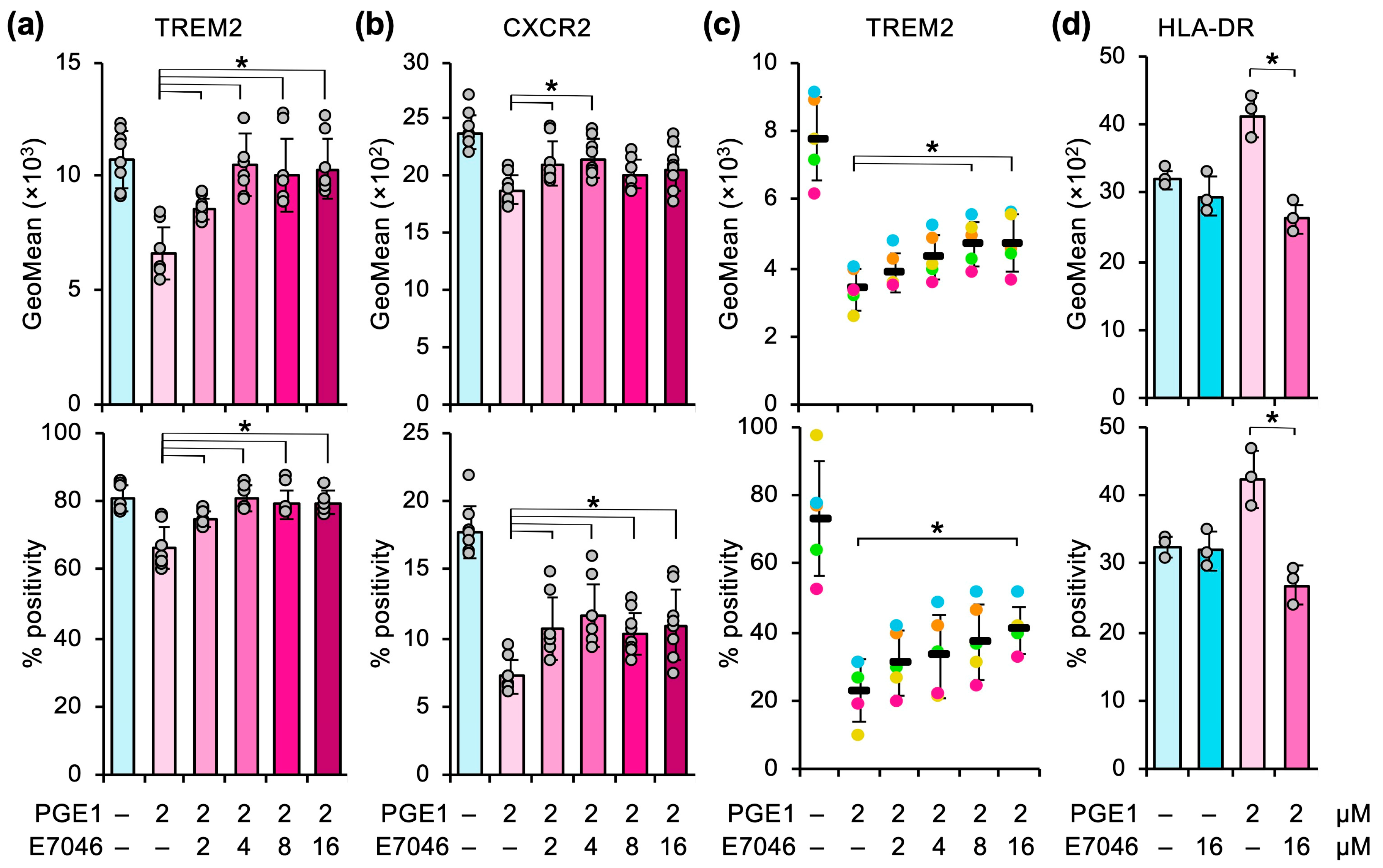
3.6. The Involvement of EP4 Receptor in the Action of PGE1
4. Discussion
5. Conclusions
6. Patents
Supplementary Materials
Author Contributions
Funding
Institutional Review Board Statement
Informed Consent Statement
Data Availability Statement
Acknowledgments
Conflicts of Interest
Abbreviations
| AA | Arachidonic acid |
| bFGF | Basic fibroblast growth factor |
| CXCR2 | C-X-C motif chemokine receptor 2 |
| D-PGE1 | 13,14-Dihydro-prostaglandin E1 |
| DK-PGE1 | 13,14-Dihydro-15-keto-prostaglandin E1 |
| DMSO | Dimethyl sulfoxide |
| EGF | Epidermal growth factor |
| GeoMean | Geometric mean |
| ICI | Immune checkpoint inhibitor |
| IFNγ | Interferon γ |
| K-PGE1 | 15-Keto-prostaglandin E1 |
| LPS | Lipopolysaccharide |
| M-CSF | Macrophage colony-stimulating factor |
| PGE1 | Prostaglandin E1 |
| PMA | Phorbol 12-myristate 13-acetate |
| TAM | Tumor-associated macrophage |
| TREM2 | Triggering receptor expressed on myeloid cells 2 |
References
- Saeed, A.F. Tumor-Associated Macrophages: Polarization, Immunoregulation, and Immunotherapy. Cells 2025, 14, 741. [Google Scholar] [CrossRef] [PubMed]
- Kersten, K.; Hu, K.H.; Combes, A.J.; Samad, B.; Harwin, T.; Ray, A.; Cai, E.; Marchuk, K.; Artichoker, J.; Courau, T.; et al. Spatiotemporal co-dependency between macrophages and exhausted CD8+ T cells in cancer. Cancer Cell 2022, 40, 624–638.e9. [Google Scholar] [CrossRef] [PubMed]
- Kos, K.; Salvagno, C.; Wellenstein, M.D.; Aslam, M.A.; Meijer, D.A.; Hau, C.S.; Vrijland, K.; Kaldenbach, D.; Raeven, E.A.; Schmittnaegel, M.; et al. Tumor-associated macrophages promote intratumoral conversion of conventional CD4+ T cells into regulatory T cells via PD-1 signalling. Oncoimmunology 2022, 11, 2063225. [Google Scholar] [CrossRef] [PubMed]
- Chen, S.; Wang, M.; Lu, T.; Liu, Y.; Hong, W.; He, X.; Cheng, Y.; Liu, J.; Wei, Y.; Wei, X. JMJD6 in tumor-associated macrophage regulates macrophage polarization and cancer progression via STAT3/IL-10 axis. Oncogene 2023, 42, 2737–2750. [Google Scholar] [CrossRef]
- Anstee, J.E.; Feehan, K.T.; Opzoomer, J.W.; Dean, I.; Muller, H.P.; Bahri, M.; Cheung, T.S.; Liakath-Ali, K.; Liu, Z.; Choy, D.; et al. LYVE-1+ macrophages form a collaborative CCR5-dependent perivascular niche that influences chemotherapy responses in murine breast cancer. Dev. Cell 2023, 58, 1548–1561.e10. [Google Scholar] [CrossRef]
- Hung, C.N.; Chen, M.; DeArmond, D.T.; Chiu, C.H.; Limboy, C.A.; Tan, X.; Kusi, M.; Chou, C.W.; Lin, L.L.; Zhang, Z.; et al. AXL-initiated paracrine activation of pSTAT3 enhances mesenchymal and vasculogenic supportive features of tumor-associated macrophage. Cell Rep. 2023, 42, 113067. [Google Scholar] [CrossRef]
- Zhang, G.; Gao, Z.; Guo, X.; Ma, R.; Wang, X.; Zhou, P.; Li, C.; Tang, Z.; Zhao, R.; Gao, P. CAP2 promotes gastric cancer metastasis by mediating the interaction between tumor cells and tumor-associated macrophages. J. Clin. Investig. 2023, 133, e166224. [Google Scholar] [CrossRef]
- Ding, L.; Qian, J.; Yu, X.; Wu, Q.; Mao, J.; Liu, X.; Wang, Y.; Guo, D.; Su, R.; Xie, H.; et al. Blocking MARCO+ tumor-associated macrophages improves anti-PD-L1 therapy of hepatocellular carcinoma by promoting the activation of STING-IFN type I pathway. Cancer Lett. 2024, 582, 216568. [Google Scholar] [CrossRef]
- Zou, W. Immunosuppressive networks in the tumour environment and their therapeutic relevance. Nat. Rev. Cancer 2005, 5, 263–274. [Google Scholar] [CrossRef]
- Tsuchiya, H.; Hanaki, T.; Yoshida, J.; Kishino, M.; Fujiwara, Y.; Nanba, D. Immune evasion from macrophages by NEAT1-induced CD24 in liver cancer. Ocogene 2025, 44, 3652–3664. [Google Scholar] [CrossRef]
- Tsuchiya, H.; Hanaki, T.; Sakabe, T.; Tokuyasu, N.; Nagahara, T.; Umekita, Y.; Isomoto, H.; Fujiwara, Y.; Nanba, D. A heterospheroid-based screening system for drugs that reprogram tumor-associated macrophages. bioRxiv 2025. [Google Scholar] [CrossRef]
- Forrester, M.A.; Wassall, H.J.; Hall, L.S.; Cao, H.; Wilson, H.M.; Barker, R.N.; Vickers, M.A. Similarities and differences in surface receptor expression by THP-1 monocytes and differentiated macrophages polarized using seven different conditioning regimens. Cell. Imunol. 2018, 332, 58–76. [Google Scholar] [CrossRef] [PubMed]
- Baxter, E.W.; Graham, A.E.; Re, N.A.; Carr, I.M.; Robinson, J.I.; Mackie, S.L.; Morgan, A.W. Standardized protocols for differentiation of THP-1 cells to macrophages with distinct M(IFNγ+LPS), M(IL-4) and M(IL-10) phenotypes. J. Immunol. Methods 2020, 478, 112721. [Google Scholar] [CrossRef] [PubMed]
- Nascimento, C.R.; Rodrigues Fernandes, N.A.; Gonzalez Maldonado, L.A.; Rossa Junior, C. Comparison of monocytic cell lines U937 and THP-1 as macrophage models for in vitro studies. Biochem. Biophys. Rep. 2022, 32, 101383. [Google Scholar] [CrossRef]
- Oyarce, C.; Vizcaino-Castro, A.; Chen, S.; Boerma, A.; Daemen, T. Re-polarization of immunosuppressive macrophages to tumor-cytotoxic macrophages by repurposed metabolic drugs. Oncoimmunology 2021, 10, 1898753. [Google Scholar] [CrossRef]
- Zhang, Z.; Yu, K.; Cao, Y.; Xie, P.; Wang, L.; Shen, Z.; Qin, J. TREM2 facilitates gastric cancer progression and immune evasion via inhibiting TRIM21-mediated STAT1 degradation in tumor-associated macrophages. Cell Death Dis. 2025, 16, 845. [Google Scholar] [CrossRef]
- Wang, Z.; Zhang, Y.; Li, X.; Xia, N.; Han, S.; Pu, L.; Wang, X. Targeting Myeloid Trem2 Reprograms the Immunosuppressive Niche and Potentiates Checkpoint Immunotherapy in NASH-Driven Hepatocarcinogenesis. Cancer Immunol. Res. 2025, 13, 1516–1532. [Google Scholar] [CrossRef]
- Ren, M.; Chen, L.L.; Jiang, L.Y.; Yu, H.H.; Ji, H.Z. The CXCL8-CXCR2 axis promotes M2 macrophage polarization in ovarian cancer via RASGRP4-mediated mTOR-STAT3 signaling. Apoptosis 2025, 30, 1839–1851. [Google Scholar] [CrossRef]
- Yuan, W.; Zhang, Q.; Gu, D.; Lu, C.; Dixit, D.; Gimple, R.C.; Gao, Y.; Gao, J.; Li, D.; Shan, D.; et al. Dual Role of CXCL8 in Maintaining the Mesenchymal State of Glioblastoma Stem Cells and M2-Like Tumor-Associated Macrophages. Clin. Cancer Res. 2023, 29, 3779–3792. [Google Scholar] [CrossRef]
- Das, U.N. Essential Fatty Acids and Their Metabolites in the Pathobiology of Inflammation and Its Resolution. Biomolecules 2021, 11, 1873. [Google Scholar] [CrossRef]
- Dooper, M.M.; Wassink, L.; M’Rabet, L.; Graus, Y.M. The modulatory effects of prostaglandin-E on cytokine production by human peripheral blood mononuclear cells are independent of the prostaglandin subtype. Immunology 2002, 107, 152–159. [Google Scholar] [CrossRef]
- Peskar, B.A.; Hesse, W.H.; Rogatti, W.; Diehm, C.; Rudofsky, G.; Schweer, H.; Seyberth, H.W. Formation of 13,14-dihydro-prostaglandin E1 during intravenous infusions of prostaglandin E1 in patients with peripheral arterial occlusive disease. Prostaglandins 1991, 41, 225–228. [Google Scholar] [CrossRef] [PubMed]
- Sinzinger, H.; Neumann, I.; O’Grady, J.; Rogatti, W.; Peskar, B.A. Effects of prostaglandin E1 metabolites on the induction of arterial thromboresistance. Prostaglandins Other Lipid Mediat. 1998, 55, 265–275. [Google Scholar] [CrossRef] [PubMed]
- Sinzinger, H.; O’Grady, J.; Fitscha, P.; Rauscha, F.; Kaliman, J. Comparable effect of prostaglandin E1 in decreasing in vivo platelet deposition on human lesion sites after intravenous and intraarterial application. Thromb. Res. 1988, 50, 749–755. [Google Scholar] [CrossRef]
- Pallapies, D.; Peskar, B.A. Effect of prostaglandin (PG) E1 and its initial metabolites on neutrophil-induced inhibition of human platelet aggregation. Thromb. Res. 1993, 71, 217–225. [Google Scholar] [CrossRef] [PubMed]
- Catalán, M.A.; Julio-Kalajzić, F.; Niemeyer, M.I.; Cid, L.P.; Sepúlveda, F.V. Short Chain Fatty Acids Effect on Chloride Channel ClC-2 as a Possible Mechanism for Lubiprostone Intestinal Action. Cells 2020, 9, 1781. [Google Scholar] [CrossRef]
- Chan, W.W.; Mashimo, H. Lubiprostone Increases Small Intestinal Smooth Muscle Contractions Through a Prostaglandin E Receptor 1 (EP1)-mediated Pathway. J. Neurogastroenterol. Motil. 2013, 19, 312–318. [Google Scholar] [CrossRef]
- Shaughnessy, C.A.; Yadav, S.; Bratcher, P.E.; Zeitlin, P.L. Receptor-mediated activation of CFTR via prostaglandin signaling pathways in the airway. Am. J. Physiol. Lung Cell. Mol. Physiol. 2022, 322, L305–L314. [Google Scholar] [CrossRef]
- Jeong, B.; Lee, J.H.; Lee, J.A.; Kim, S.J.; Lee, J.; So, I.; Jun, J.Y.; Hong, C. Lubiprostone Improves Distal Segment-Specific Colonic Contractions through TRPC4 Activation Stimulated by EP3 Prostanoid Receptor. Pharmaceuticals 2024, 17, 1327. [Google Scholar] [CrossRef]
- Hayashi, S.; Kurata, N.; Yamaguchi, A.; Amagase, K.; Takeuchi, K. Lubiprostone prevents nonsteroidal anti-inflammatory drug-induced small intestinal damage by suppressing the expression of inflammatory mediators via EP4 receptors. J. Pharmacol. Exp. Ther. 2014, 349, 470–479. [Google Scholar] [CrossRef]
- Schoenhard, G.; Oppermann, J.; Kohn, F.E. Metabolism and pharmacokinetic studies of misoprostol. Dig. Dis. Sci. 1985, 30, 126S–128S. [Google Scholar] [CrossRef]
- Kiriyama, M.; Ushikubi, F.; Kobayashi, T.; Hirata, M.; Sugimoto, Y.; Narumiya, S. Ligand binding specificities of the eight types and subtypes of the mouse prostanoid receptors expressed in Chinese hamster ovary cells. Br. J. Pharmacol. 1997, 122, 217–224. [Google Scholar] [CrossRef]
- Cui, J.; Shan, K.; Yang, Q.; Qi, Y.; Qu, H.; Li, J.; Wang, R.; Jia, L.; Chen, W.; Feng, N.; et al. Prostaglandin E3 attenuates macrophage-associated inflammation and prostate tumour growth by modulating polarization. J. Cell. Mol. Med. 2021, 25, 5586–5601. [Google Scholar] [CrossRef] [PubMed]
- Good, H.J.; Larsen, F.; Shin, A.E.; Zhang, L.; Derouet, M.; Meriwether, D.; Worthley, D.; Reddy, S.T.; Wang, T.C.; Asfaha, S. Prostaglandin E2 and Akt Promote Stemness in Apc Mutant Dclk1+ Cells to Give Rise to Colitis-associated Cancer. Cell. Mol. Gastroenterol. Hepatol. 2025, 19, 101469. [Google Scholar] [CrossRef] [PubMed]
- Lacher, S.B.; Dörr, J.; de Almeida, G.P.; Hönninger, J.; Bayerl, F.; Hirschberger, A.; Pedde, A.M.; Meiser, P.; Ramsauer, L.; Rudolph, T.J.; et al. PGE2 limits effector expansion of tumour-infiltrating stem-like CD8+ T cells. Nature 2024, 629, 417–425. [Google Scholar] [CrossRef] [PubMed]
- Morotti, M.; Grimm, A.J.; Hope, H.C.; Arnaud, M.; Desbuisson, M.; Rayroux, N.; Barras, D.; Masid, M.; Murgues, B.; Chap, B.S.; et al. PGE2 inhibits TIL expansion by disrupting IL-2 signalling and mitochondrial function. Nature 2024, 629, 426–434. [Google Scholar] [CrossRef]
- Pedde, A.M.; Kim, H.; Donakonda, S.; Baumann, T.; Bayerl, F.; Meiser, P.; Hirschberger, A.; Klement, C.; Grassmann, S.; Öllinger, R.; et al. Tissue-colonizing disseminated tumor cells secrete prostaglandin E2 to promote NK cell dysfunction and evade anti-metastatic immunity. Cell Rep. 2024, 43, 114855. [Google Scholar] [CrossRef]
- Böttcher, J.P.; Bonavita, E.; Chakravarty, P.; Blees, H.; Cabeza-Cabrerizo, M.; Sammicheli, S.; Rogers, N.C.; Sahai, E.; Zelenay, S.; e Sousa, C.R. NK Cells Stimulate Recruitment of cDC1 into the Tumor Microenvironment Promoting Cancer Immune Control. Cell 2018, 172, 716–1037.e14. [Google Scholar] [CrossRef]
- Elewaut, A.; Estivill, G.; Bayerl, F.; Castillon, L.; Novatchkova, M.; Pottendorfer, E.; Hoffmann-Haas, L.; Schönlein, M.; Nguyen, T.V.; Lauss, M.; et al. Cancer cells impair monocyte-mediated T cell stimulation to evade immunity. Nature 2025, 637, 716–725. [Google Scholar] [CrossRef]
- Sarkar, O.S.; Donninger, H.; Al Rayyan, N.; Chew, L.C.; Stamp, B.; Zhang, X.; Whitt, A.; Li, C.; Hall, M.; Mitchell, R.A.; et al. Monocytic MDSCs exhibit superior immune suppression via adenosine and depletion of adenosine improves efficacy of immunotherapy. Sci. Adv. 2023, 9, eadg3736. [Google Scholar] [CrossRef]
- Caronni, N.; La Terza, F.; Vittoria, F.M.; Barbiera, G.; Mezzanzanica, L.; Cuzzola, V.; Barresi, S.; Pellegatta, M.; Canevazzi, P.; Dunsmore, G.; et al. IL-1β+ macrophages fuel pathogenic inflammation in pancreatic cancer. Nature 2023, 623, 415–422. [Google Scholar] [CrossRef]
- Xiang, X.; Wang, K.; Zhang, H.; Mou, H.; Shi, Z.; Tao, Y.; Song, H.; Lian, Z.; Wang, S.; Lu, D.; et al. Blocking CX3CR1+ Tumor-Associated Macrophages Enhances the Efficacy of Anti-PD1 Therapy in Hepatocellular Carcinoma. Cancer Immunol. Res. 2024, 12, 1603–1620. [Google Scholar] [CrossRef] [PubMed]
- Rosner, S.; Connor, S.; Sanber, K.; Zahurak, M.; Zhang, T.; Gurumurthy, I.; Zeng, Z.; Presson, B.; Singh, D.; Rayes, R.; et al. Divergent Clinical and Immunologic Outcomes Based on STK11 Co-mutation Status in Resectable KRAS-Mutant Lung Cancers Following Neoadjuvant Immune Checkpoint Blockade. Clin. Cancer Res. 2025, 31, 339–351. [Google Scholar] [CrossRef] [PubMed]
- Cawello, W.; Schweer, H.; Müller, R.; Bonn, R.; Seyberth, H.W. Metabolism and pharmacokinetics of prostaglandin E1 administered by intravenous infusion in human subjects. Eur. J. Clin. Pharmacol. 1994, 46, 275–277. [Google Scholar] [CrossRef] [PubMed]
- Lebender, L.F.; Prünte, L.; Rumzhum, N.N.; Ammit, A.J. Selectively targeting prostanoid E (EP) receptor-mediated cell signalling pathways: Implications for lung health and disease. Pulm. Pharmacol. Ther. 2018, 49, 75–87. [Google Scholar] [CrossRef]
- Crider, J.Y.; Griffin, B.W.; Sharif, N.A. Prostaglandin-stimulated adenylyl cyclase activity via a pharmacologically defined EP2 receptor in human nonpigmented ciliary epithelial cells. J. Ocul. Pharmacol. Ther. 1998, 14, 293–304. [Google Scholar] [CrossRef]
- Crider, J.Y.; Sharif, N.A. Functional pharmacological evidence for EP2 and EP4 prostanoid receptors in immortalized human trabecular meshwork and non-pigmented ciliary epithelial cells. J. Ocul. Pharmacol. Ther. 2001, 17, 35–46. [Google Scholar] [CrossRef]
- Iyú, D.; Jüttner, M.; Glenn, J.R.; White, A.E.; Johnson, A.J.; Fox, S.C.; Heptinstall, S. PGE1 and PGE2 modify platelet function through different prostanoid receptors. Prostaglandins Other Lipid Mediat. 2011, 94, 9–16. [Google Scholar] [CrossRef]
- VIATRIS. Amitiza Capsules Interview Form. Available online: https://www.info.pmda.go.jp/go/interview/3/671450_2359006M1025_3_1F.pdf (accessed on 4 December 2025).
- Sada, H.; Kajizono, M.; Ushio, S.; Esumi, S.; Kitamura, Y.; Sendo, T. The Efficacy and Safety of Lubiprostone for Constipation in Cancer Patients Compared with Non-cancer Patients: A Retrospective Cohort Study. Biol. Pharm. Bull. 2020, 43, 1699–1706. [Google Scholar] [CrossRef]
- Kawada, K.; Ohta, T.; Fukuda, H.; Hayashi, T.; Tanaka, K.; Imai, T.; Morita, Y.; Miyamura, M. Effect of lubiprostone on vinca alkaloid-induced constipation in patients with hematological malignancies: A propensity score-matched analysis. Ann. Hematol. 2020, 99, 2429–2436. [Google Scholar] [CrossRef]
- Rajan, S.; Jang, Y.; Kim, C.H.; Kim, W.; Toh, H.T.; Jeon, J.; Song, B.; Serra, A.; Lescar, J.; Yoo, J.Y.; et al. PGE1 and PGA1 bind to Nurr1 and activate its transcriptional function. Nat. Chem. Biol. 2020, 16, 876–886. [Google Scholar] [CrossRef]
- Solís-Barbosa, M.A.; Santana, E.; Muñoz-Torres, J.R.; Segovia-Gamboa, N.C.; Patiño-Martínez, E.; Meraz-Ríos, M.A.; Samaniego, R.; Sánchez-Mateos, P.; Sánchez-Torres, C. The nuclear receptor Nurr1 is preferentially expressed in human pro-inflammatory macrophages and limits their inflammatory profile. Int. Immunol. 2024, 36, 111–128. [Google Scholar] [CrossRef]


Disclaimer/Publisher’s Note: The statements, opinions and data contained in all publications are solely those of the individual author(s) and contributor(s) and not of MDPI and/or the editor(s). MDPI and/or the editor(s) disclaim responsibility for any injury to people or property resulting from any ideas, methods, instructions or products referred to in the content. |
© 2025 by the authors. Licensee MDPI, Basel, Switzerland. This article is an open access article distributed under the terms and conditions of the Creative Commons Attribution (CC BY) license (https://creativecommons.org/licenses/by/4.0/).
Share and Cite
Tsuchiya, H.; Hanaki, T.; Yoshida, J.; Obora, M.; Fujiwara, Y.; Nanba, D. PGE1 Suppresses the Expression of M2 Markers on Macrophages Through Prostaglandin Receptors. Cells 2025, 14, 1992. https://doi.org/10.3390/cells14241992
Tsuchiya H, Hanaki T, Yoshida J, Obora M, Fujiwara Y, Nanba D. PGE1 Suppresses the Expression of M2 Markers on Macrophages Through Prostaglandin Receptors. Cells. 2025; 14(24):1992. https://doi.org/10.3390/cells14241992
Chicago/Turabian StyleTsuchiya, Hiroyuki, Takehiko Hanaki, Jun Yoshida, Mayu Obora, Yoshiyuki Fujiwara, and Daisuke Nanba. 2025. "PGE1 Suppresses the Expression of M2 Markers on Macrophages Through Prostaglandin Receptors" Cells 14, no. 24: 1992. https://doi.org/10.3390/cells14241992
APA StyleTsuchiya, H., Hanaki, T., Yoshida, J., Obora, M., Fujiwara, Y., & Nanba, D. (2025). PGE1 Suppresses the Expression of M2 Markers on Macrophages Through Prostaglandin Receptors. Cells, 14(24), 1992. https://doi.org/10.3390/cells14241992