


Abstract
Industrial hemp (Cannabis sativa L.) is a multipurpose crop with growing interest due to its environmental adaptability, low input requirements, and potential contribution to sustainable agricultural systems. This study evaluated the agronomic performance of four industrial hemp varieties grown under the edaphoclimatic conditions of the Alentejo region over two consecutive growing seasons (2024 and 2025) using different sowing dates. Phenological stages, plant height and growth parameters were monitored, complemented by meteorological data obtained from IPMA. The results revealed clear differences between years. The later sowing date in 2024 promoted greater vegetative growth, resulting in taller plants, while the earlier sowing in 2025 extended the vegetative phase and delayed flowering. Varietal differences were also observed, particularly for Fibror 79, which flowered slightly later, suggesting greater photoperiod sensitivity. These patterns confirm that both thermal environment and sowing date play a decisive role in hemp phenological development. The findings also highlight the high plasticity of the crop, which demonstrated strong adaptation to the hot and dry Mediterranean summers. Overall, appropriate selection of variety and sowing date can optimize vegetative and reproductive development, representing an important strategy for sustainable agricultural systems in the Alentejo region.
1. Introduction
Cannabis (C.) sativa L., commonly known as industrial hemp, is one of the oldest crops used for fiber production [1,2]. It is an annual angiosperm, dicotyledonous, C3 plant belonging to the Cannabaceae family, and can be either dioecious (with tall, slender male plants and more shrub-like female plants) or monoecious [3]. Pollination is carried out by wind and is therefore not dependent on animal pollinators [4]. It is considered a high-yielding and fast-growing crop [3] with the capacity to grow under a wide range of environmental conditions, requiring low inputs of water and fertilizers. Hemp is also cultivated without the need for applying plant protection products to control weeds, pests, and diseases [1]. One of the main uses of hemp is that it provides one of the strongest natural fibers available. The high-quality bast fiber extracted from the secondary phloem in the stem is a valuable material for manufacturing ropes and twines, textiles, including fabrics and clothing, high-quality paper, biodegradable plastics, construction and automotive components, as well as insulation materials [5,6]. Apart from fiber, hemp can also provide products for the cosmetic industry derived from its leaves and flowers, owing to their high content of antioxidant compounds [7,8]. Additionally, its seeds can be used in the production of lotions and other cosmetic formulations. These seeds, due to the potentially high concentration of cannabidiol (CBD) they may contain, also have applications in the pharmaceutical industry, particularly for their analgesic and anti-inflammatory properties, among other benefits [7,8]. Moreover, hemp contributes significantly to agroecological improvement as a result of its strong capacity to suppress weeds and reduce the incidence of pathogenic fungi such as Verticillium dahliae, as well as phytoparasitic nematodes, including Meloidogyne chitwoodi and M. hapla. This makes it an excellent crop for rotation with cereals and legumes; indeed, some industrial hemp residues can be used as insecticidal agents for pest control in organic agriculture [9,10]. To these agronomic and ecological benefits, one must add hemp’s remarkable capacity to reduce the carbon footprint, being able to capture and store up to 22 tons (Tm) of CO2 per hectare (ha), and its potential—still requiring further research—to function as an effective phytoremediation agent [11,12].
The industrial hemp varieties described below exhibit distinct agronomic and productive characteristics, having been selected according to their potential for fiber and seed production as well as their adaptability to different environmental and edaphoclimatic conditions. Fibror 79 is a variety specifically developed for high fiber production, and it can be cultivated across a wide range of geographical conditions, including regions with high temperatures, humidity, and rainfall; it is characterized by a long, straight yellow stem and yellow-green leaves as the plant reaches maturity [13]. Mona 16 is an early-maturing monoecious variety, characterized by large seeds that are well suited to the dehulling process, making it suitable for grain production [13]. Futura 75 is a cultivar of French origin, with a low delta-9-tetrahydrocannabinol (THC) content (<0.2%), primarily used for seed and fiber production; it is a late-maturing variety, more suitable for cultivation in mountainous regions [14]. Santhica 27 is an industrial hemp variety characterized by a near-zero THC content, with CBD present only at residual levels, fully compliant with European Union legislation. It shows good fiber and seed productivity, adapting well to different environmental conditions and cropping systems [15].
The regulation of industrial hemp in the European Union (EU) has been evolving with the aim of promoting sustainable and safe agricultural practices. Under the Common Agricultural Policy (CAP), Commission Delegated Regulation (EU) 2022/126 establishes that producers must use certified seeds of varieties listed in the EU Common Catalogue and whose THC content does not exceed 0.3% [16].
The global expansion of hemp is driven by its remarkable versatility and the emergence of new applications such as bioplastics [17], biofuels [18], naturally derived cosmetics [19], biopesticides [20], and sustainable construction materials [21]. In 2021, the global industrial hemp market was valued at 4.13 billion USD, and it is expected to grow at an annual rate of 16.8% between 2022 and 2030, potentially reaching 10 billion USD [22]. In the EU, the cultivated area of industrial hemp has increased significantly in recent years, from 20,540 hectares in 2015 to 33,020 hectares in 2022, representing a 60% increase [23]. Over the same period, hemp production rose from 97,130 tons to 179,020 tons, an increase of 84.3%. France is the largest hemp producer in the EU, accounting for over 60% of total production, followed by the Netherlands (17%) and Austria (5%) [23]. This notable increase in production, together with the concentration of cultivation in specific European countries, highlights the importance of optimizing hemp agronomic practices. To improve yield and crop quality, it is essential to understand its biological development in detail. In this context, describing the four phenological stages of hemp becomes a crucial step for guiding agronomic research, establishing tailored management strategies, and promoting a more efficient use of the crop.
C. sativa goes through several distinct phenological stages during its growth cycle. Understanding these stages is essential to optimizing cultivation practices. The phenology of C. sativa can be divided into four major phases of the production cycle: (i) germination and emergence, (ii) vegetative growth, (iii) flowering and seed formation, and (iv) senescence.
- Germination and Emergence: Germination begins after seed imbibition, with the emergence of the radicle, followed by hypocotyl elongation and the unfolding of cotyledons above the soil surface. This process generally occurs within 3 to 7 days, with an optimal temperature around 24 °C [24].
- Vegetative Growth: This phase occurs between emergence and the onset of reproductive organ development. It is characterized by stem elongation and the sequential formation of compound leaves, with the number of leaflets increasing progressively. The first true leaf has only one leaflet, the second has three, the third five, and so on, potentially reaching up to eleven leaflets per leaf. Vegetative stages are identified by the number of pairs of fully developed leaves. Initial growth is slow, with short internodes. Under ideal conditions, the plant develops 7 to 12 pairs of leaves during this phase [24].
- Flowering and Seed Formation: Flowering onset is indicated by a shift in phyllotaxy from opposite to alternate. From this moment, floral primordia appear, although they remain indistinguishable in terms of sex. During this stage, stem elongation slows. The appearance of floral primordia and the flowering process progress from the base to the top of the inflorescence [25].
- Dioecious Male Plants: Following the formation of staminate flowers, the first flowers open, followed by full flowering (50% open), and then late flowering (95% open or wilted) [24].
- Dioecious Female Plants: The beginning of female flower formation is defined by the appearance of the first visible stigmas. Full flowering is reached when 50% of bracts are formed, regardless of the presence of styles. Seed maturation occurs in three stages: early maturation (first hard seeds), partial maturity (50% hard seeds), and full maturity (95% hard or already dispersed) [24].
- Monoecious Plants: Monoecious plants develop both female and male flowers. Female flower formation begins with bracts without pistils, followed by pistil emergence and full flowering (50% of bracts formed). Male flowers generally appear during female flowering, at the branch extremities. Seed maturity follows the same stages as in dioecious plants [24].
- Senescence: After male flowering or seed maturity in female and monoecious plants, the senescence phase begins, characterized by leaf desiccation, leaf drop, and stem drying. Over time, decomposition of stem tissues occurs [24].
The main objective of this study is to evaluate the agronomic performance of industrial hemp under the specific edaphoclimatic conditions of Portugal, assessing crop agronomic parameters, namely the characterization of phenological stages, plant height, and biomass yield (stem, leaves, and seeds). The study also examines the influence of sowing date on crop development, as hemp was sown on different dates across the two growing seasons—late June in 2024 and on June 3rd in 2025—allowing a comparative analysis of the crop’s response to contrasting establishment timings. Monitoring was conducted throughout both growing cycles within the framework of sustainable agricultural practices.
One of the objectives of this study is to evaluate the agronomic performance of industrial hemp under open-field conditions within the specific edaphoclimatic context of a region in the Portuguese Alentejo, the country’s largest agricultural area. This includes assessing several agronomic parameters of the crop, namely the characterization of phenological stages, plant height, and biomass yield (stem, leaves, and seeds). Furthermore, this research aims to examine the influence of sowing period and meteorological events on crop development in order to identify the most suitable sowing dates for achieving maximum yield and to determine whether intravarietal differences exist, considering the substantial variability documented among commercial hemp varieties in several manuscripts [23].
2. Materials and Methods
2.1. Crop Establishment
The industrial hemp trial is located at the National Institute for Agrarian and Veterinary Research (INIAV), in Elvas, Portugal, coordinates 38°52′ N and 7°09′ W. The Elvas region is considered a temperate climate area, with hot and dry summers. In the coldest month, the average temperature ranges between 0 °C and 18 °C, while during the summer, there is a markedly dry period, with the average temperature of the warmest month exceeding 22 °C. The municipality of Elvas has an annual average temperature ranging from 15.0 °C to 17.5 °C and an annual average precipitation between 500 and 600 mm [26].
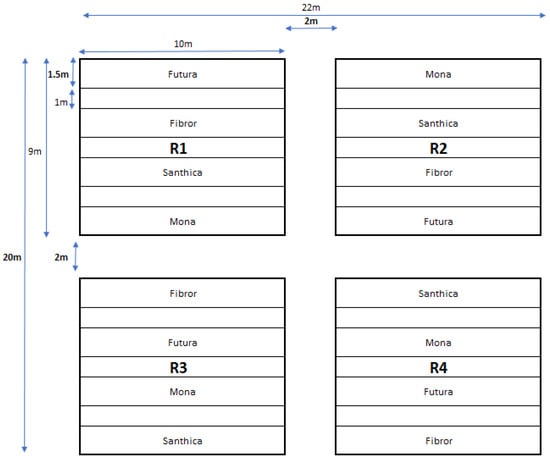
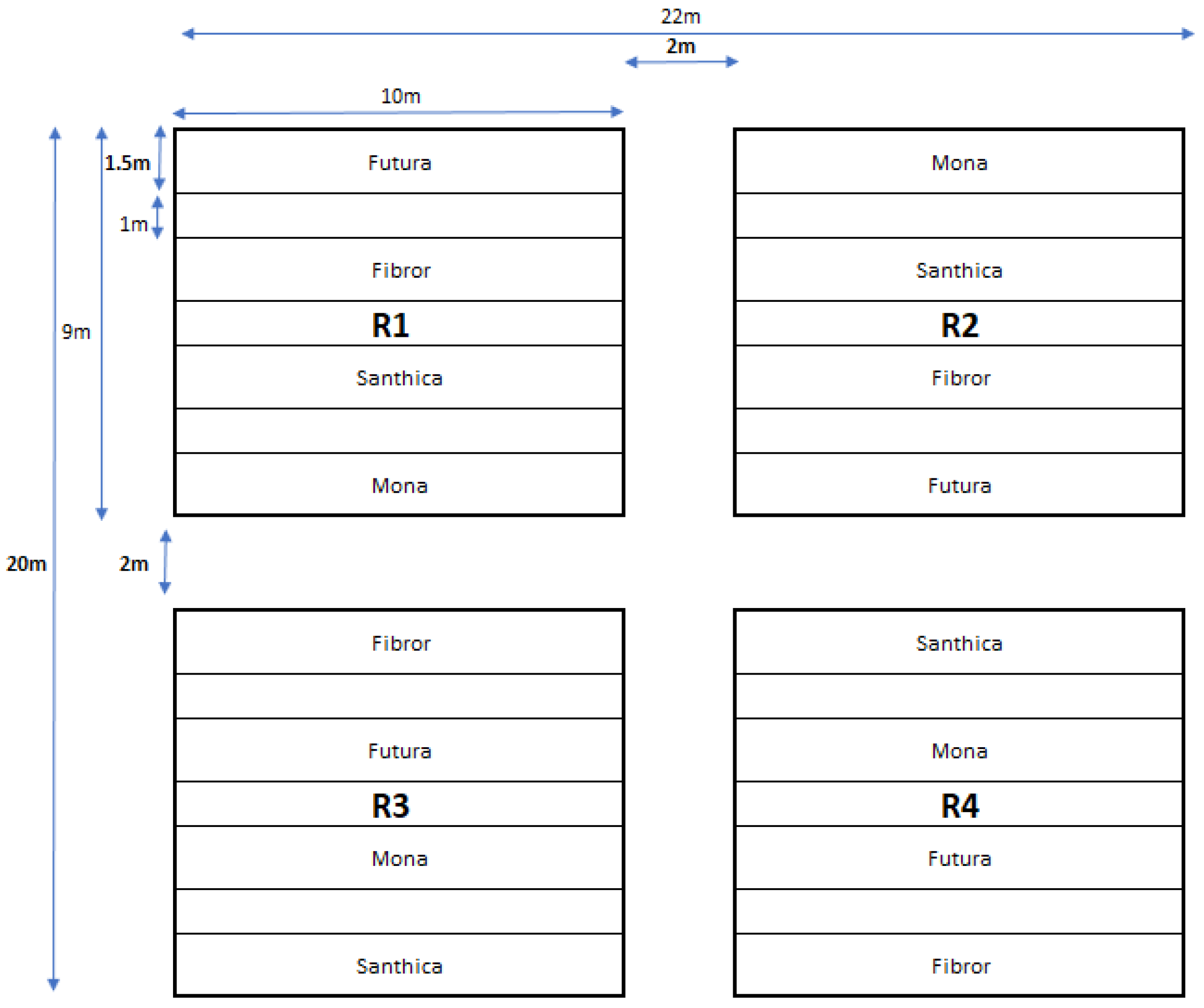
To prepare the seedbed, the field was plowed and subsequently harrowed with a rotary tiller, carried out during the soil’s adequate moisture period. The experimental area consisted of a loamy-sand soil, with a pH ranging between 7.0 and 7.5, conditions considered suitable for hemp cultivation. Field layout marking followed the established experimental design (Figure 1), using tape-measure readings and delineation with lime. Four certified commercial varieties of industrial hemp—Futura 75, Fibror 79, Mona 16, and Santhica 27—were sown. Four replicates of each variety were established in plots of approximately 12 m2. Sowing was performed with a row seeder equipped with six sowing rows, with an inter-row spacing of approximately 15 cm. In the first year, sowing took place on 25 June, and in the second year on 3 June. A drip irrigation system was installed, delivering 4 m3 per hour across the entire trial area. No phytosanitary treatments were applied, and no fertilizers were supplied to the crop. Only water was provided.
Figure 1.
Field layout—arrangement of the different varieties and replicates (R1, R2, R3, R4).
The experiment was arranged in a randomized complete block design (RCBD), with four replicates. Each block (R1–R4) contained one plot of each hemp variety, and the allocation of varieties within each block was randomized. The trial was conducted at the same location in both years, following the same experimental design.
2.2. Field Monitoring
To improve understanding of industrial hemp growth dynamics, plant height was measured during two growing cycles in order to determine the optimal sowing date for producing taller plants, given that the main objective of industrial hemp production is, in general, the production of fiber and seed. During the trial, crop growth was monitored by measuring plant height with a tape measure. The height of 25 plants per variety and per replicate was recorded 22, 36, and 58 days after sowing. Stem diameter and internode length were measured on 10 plants per variety and per replicate at 42 and 80 days after sowing. Stem diameter was measured using a caliper, while internode length was measured with a ruler. Phenological stages were recorded through visual assessment according to the [24] scale (Appendix A.1).
2.3. Biomass Production Determination
After harvest, stems were manually separated from leaves and seeds. The seeds were then detached from the leaves using a threshing machine. Following separation, each plant component was weighed individually to determine seed, leaf, and stem yield for each variety and its respective replicates.
2.4. Meteorological Data
Meteorological data used in this study (average minimum temperature, average maximum temperature, absolute minimum temperature, absolute maximum temperature, total precipitation and wind speed) were obtained from the Portuguese Institute for the Sea and Atmosphere (IPMA) station located in Évora. Although Elvas is part of the Portalegre district, the Évora station was selected as it provides climatic conditions more representative of the trial site, due to similar altitude, landscape features, and the typical thermal regime of the Alentejo plains.
2.5. Statistical Analysis
The data obtained from the different measurements were subjected to statistical analysis. Initially, the normality of the data for the different assessments and varieties was evaluated using the Shapiro–Wilk test. Subsequently, a one-way analysis of variance (ANOVA) was performed to determine the presence of significant differences among varieties, while a Student’s t-test was used to assess significant differences between the two seasons within each variety. Significant differences in the ANOVA test are marked with letters, and with * in the t-test. Differences are considered significant when p < 0.05. All statistical analyses were conducted using RStudio version 4.3.2 (RStudio, Inc., Boston, MA, USA), and figures were generated using Microsoft Excel 2016 (Microsoft® Corp., Albuquerque, NM, USA). Each measurement was based on the analysis of at least 15 independent individuals per replicate, with four replicates per variety in each season.
3. Results
3.1. Meteorological Data
The meteorological conditions recorded during the 2024 and 2025 growing cycles showed relevant differences that influenced crop development (Table 1).
Table 1.
Summary of meteorological conditions recorded during the months of June to September for the years 2024 and 2025. Adapted from IPMA (n.d.) [27].
In 2025, the mean maximum temperatures between June and July were higher than in 2024. Precipitation was practically absent during the summer period, with very low values in 2024 between June (13.6 mm) and September (5.4 mm), and extremely reduced values in 2025. Wind speed was similar between years, although considerably lower in August 2025 (19.0 km/h) compared with consistently higher values observed throughout 2024. Overall, both years were characterized by hot and dry conditions, typical of the Mediterranean climate of the Alentejo region.
3.2. Phenological Stages
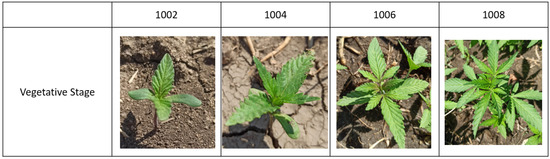
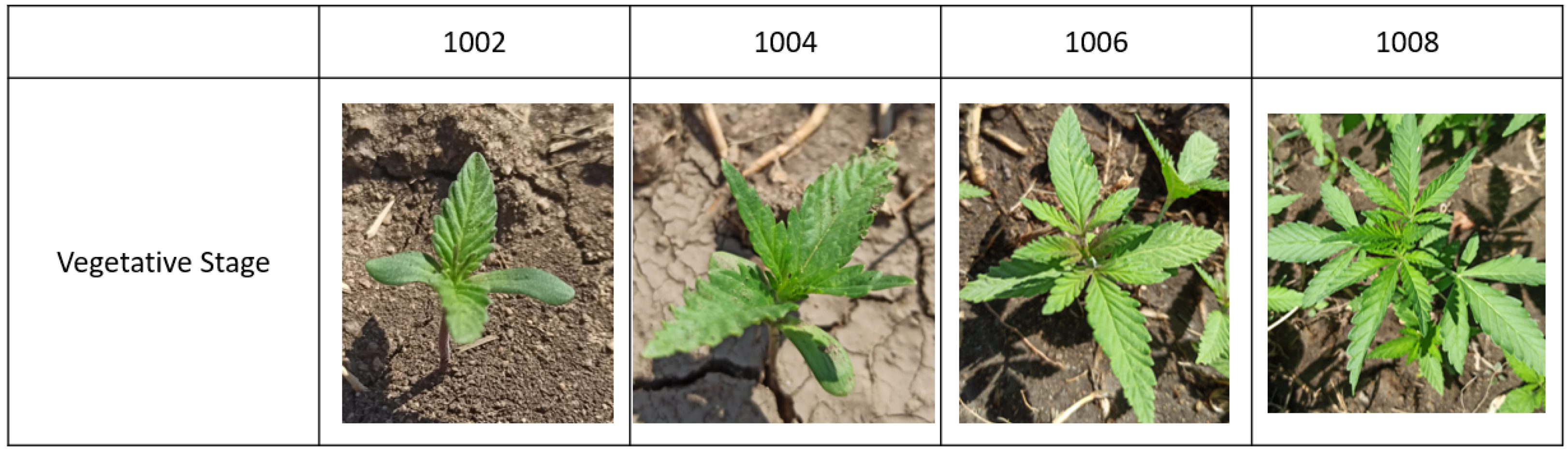
Phenological stages were recorded according to the scale of Mediavilla et al., 1998 [21], through visual observation of the plants, noting the dates on which each stage was observed (Appendix A.2 and Appendix A.3). In both 2024 and 2025, the first phenological stage recorded corresponded to the vegetative phase (Figure 2), following plant emergence, when the first pair of true leaves was visible (phenological stage 1002). In 2024, this occurred 13 days after sowing, whereas in 2025 it occurred only 7 days after sowing, across all replicates and varieties.
Figure 2.
Phenological stages observed during the vegetative phase of industrial hemp plants.
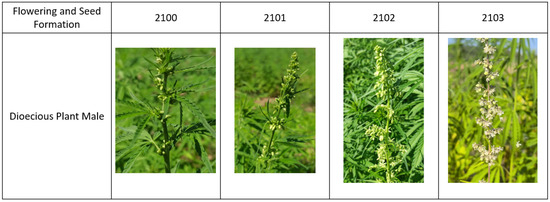
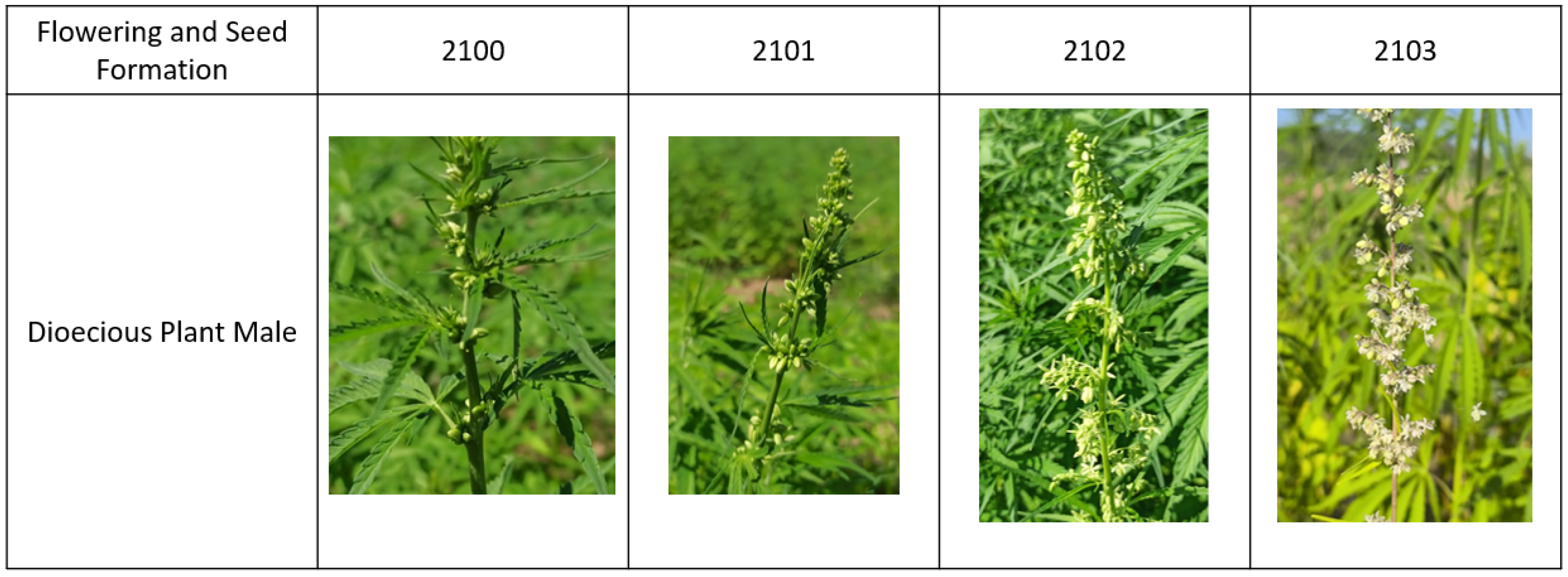
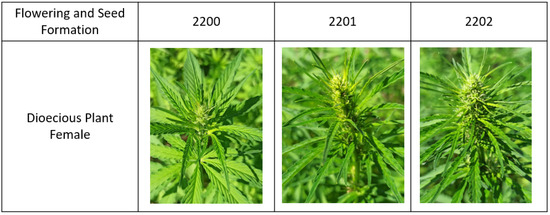
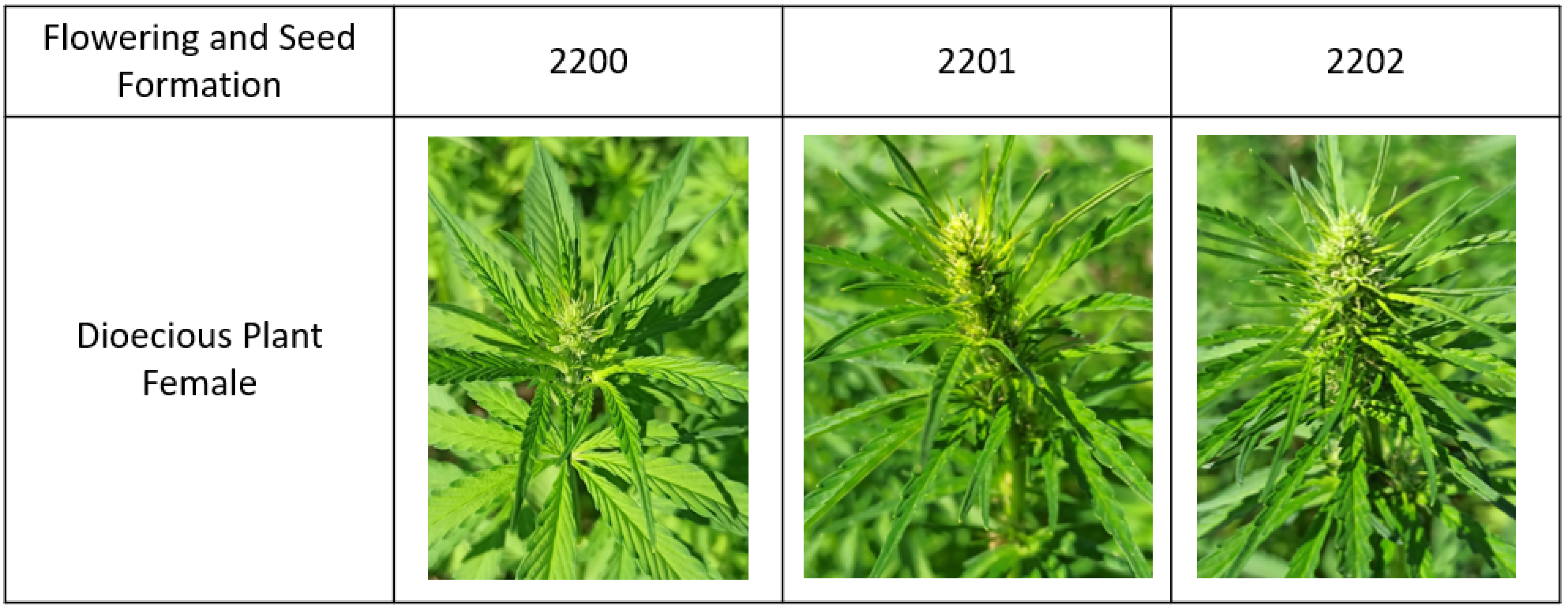
Regarding the flowering phase, in both 2024 and 2025, the formation of flowers in dioecious male plants (Figure 3) (phenological stage 2100) and in dioecious female plants (Figure 4) (phenological stage 2200) varied slightly among varieties. The variety Fibror 79 exhibited the first flowers 1 to 2 days later than the other varieties. Thus, Fibror 79 demonstrated a slightly later flowering pattern.
Figure 3.
Phenological stages observed during flowering and seed formation in dioecious male industrial hemp plants.
Figure 4.
Phenological stages observed during flowering and seed formation in dioecious female industrial hemp plants.
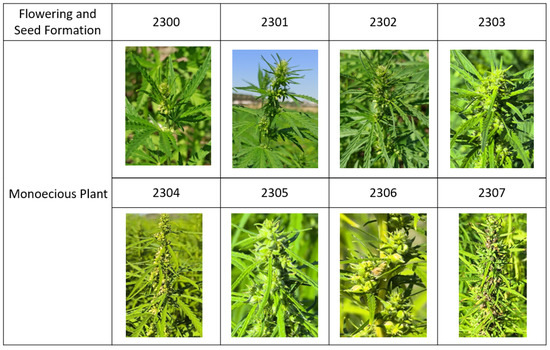
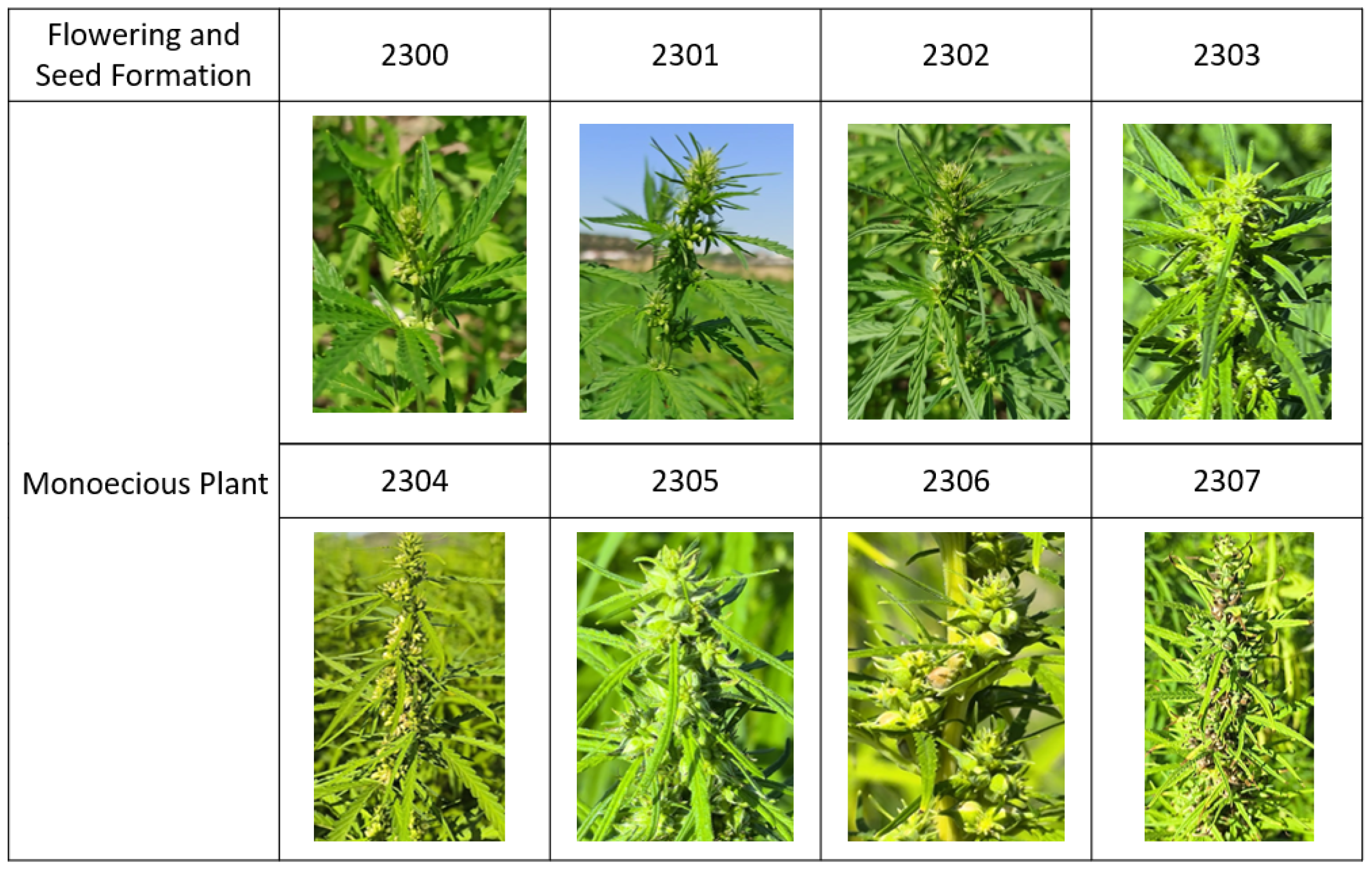
Figure 5 shows the different phenological stages of monoecious industrial hemp plants, ranging from female flower formation to the end of seed maturation. At the beginning of the seed formation phase (phenological stage 2305), monoecious plants in 2024 required between 43 and 46 days to reach this stage, whereas in 2025 they required between 59 and 63 days. This difference is directly related to the sowing date, as the trial in 2025 was established earlier than in the previous year. Industrial hemp is a short-cycle plant, and therefore detects decreasing day length and initiates flowering at that point [28]. However, photoperiod sensitivity varies among varieties.
Figure 5.
Phenological stages observed during flowering and seed formation in monoecious industrial hemp plants.
3.3. Plant Height of Industrial Hemp in 2024 and 2025
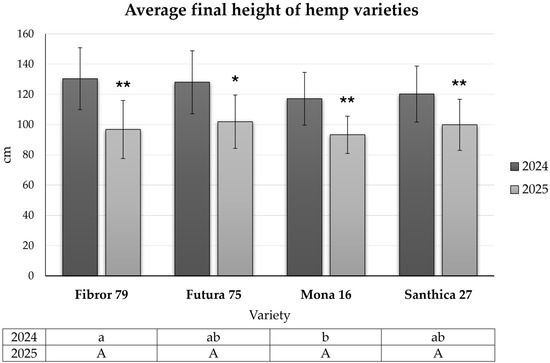
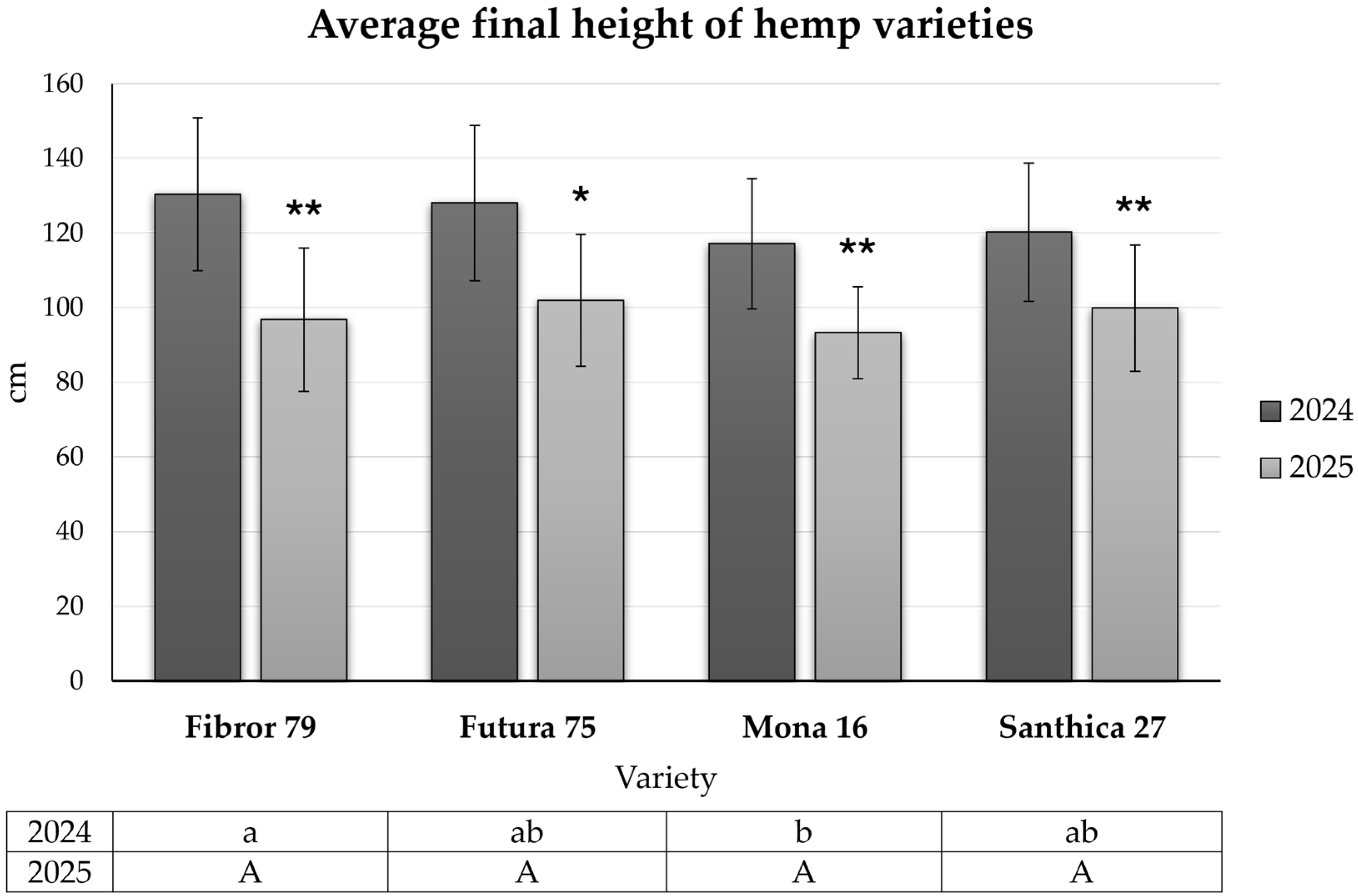
The development of plant height in the varieties tested in the study was analyzed in two ways: first, to determine whether differences existed within each variety between growing seasons; and second, to assess whether there were significant differences in the final mean height of the varieties in each season. As shown in Figure 6, significant differences in final mean height among varieties were observed in the 2024 season, with Fibror 79 being the tallest variety and Mona 16 exhibiting the least height development. No significant differences were detected between these varieties and Futura 75 or Santhica 27. However, in the 2025 season, these differences were no longer present, and all varieties showed a significant reduction in height.
Figure 6.
Representation of the mean final height of the replicates of the analyzed varieties (Fibror 79, Futura 75, Mona 16 and Santhica 27) in each of the field (open-field) growing seasons studied. Significant differences within each variety between the different years evaluated are indicated by * and **, corresponding to p-values < 0.05 and <0.01, respectively. Significant differences between varieties within each growing season are indicated by letters and are shown in the table below.
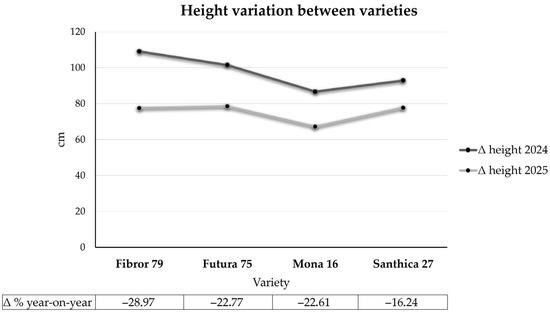
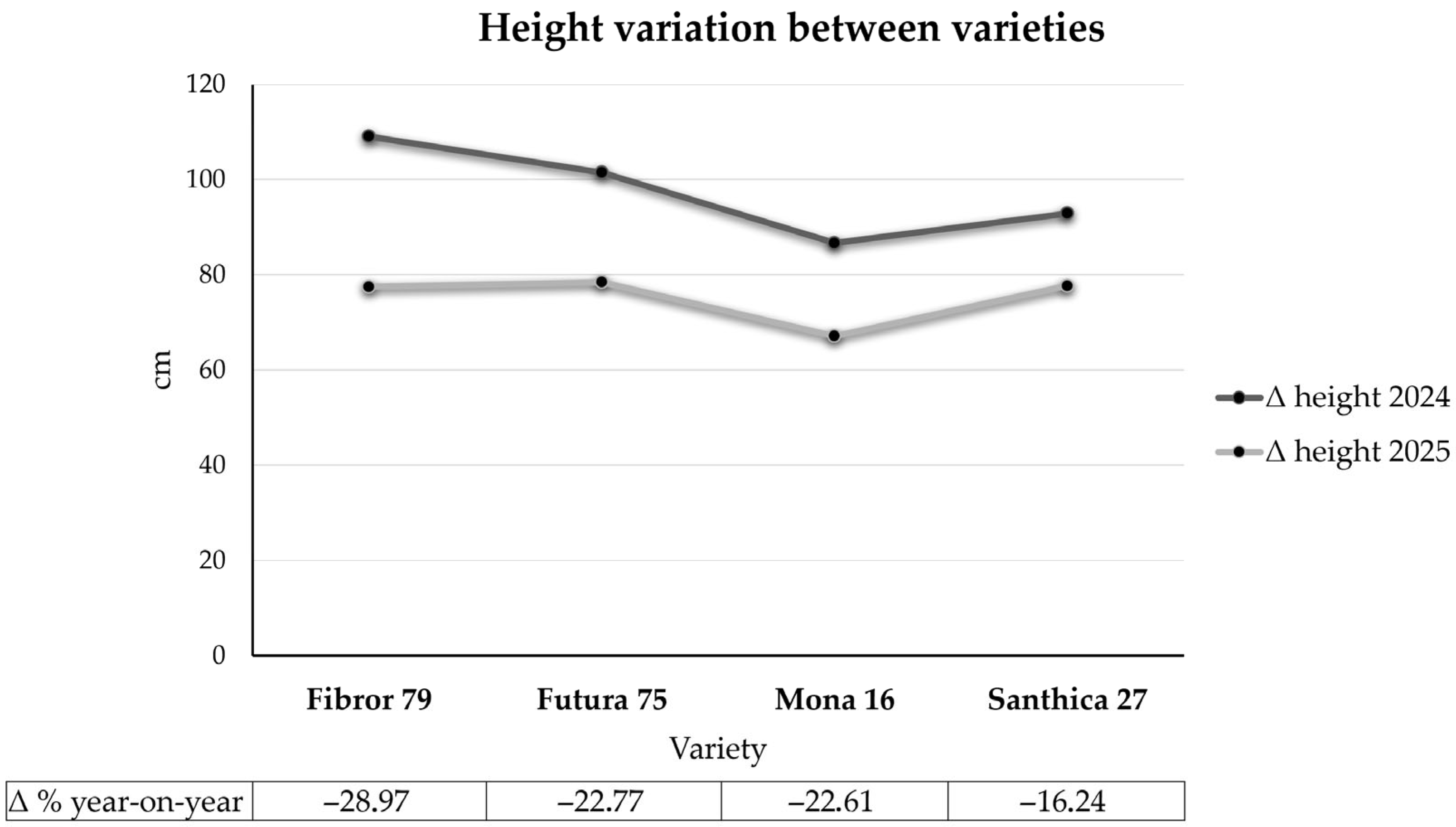
As illustrated in Figure 7, the final mean height of all the varieties studied decreased, with the greatest reduction observed in Fibror 79. This reduction explains the absence of marked differences among varieties in the 2025 trial, despite Fibror 79 being the variety with the greatest height development in the previous season.
Figure 7.
Graph comparing the mean final height of the replicates of the hemp varieties studied across the two different growing seasons: 2024 and 2025. The table shows the difference in growth between the 2024 and 2025 seasons.
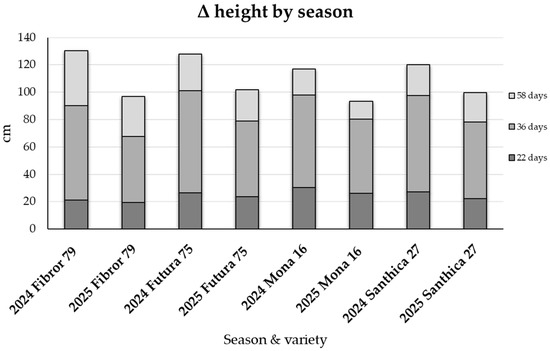
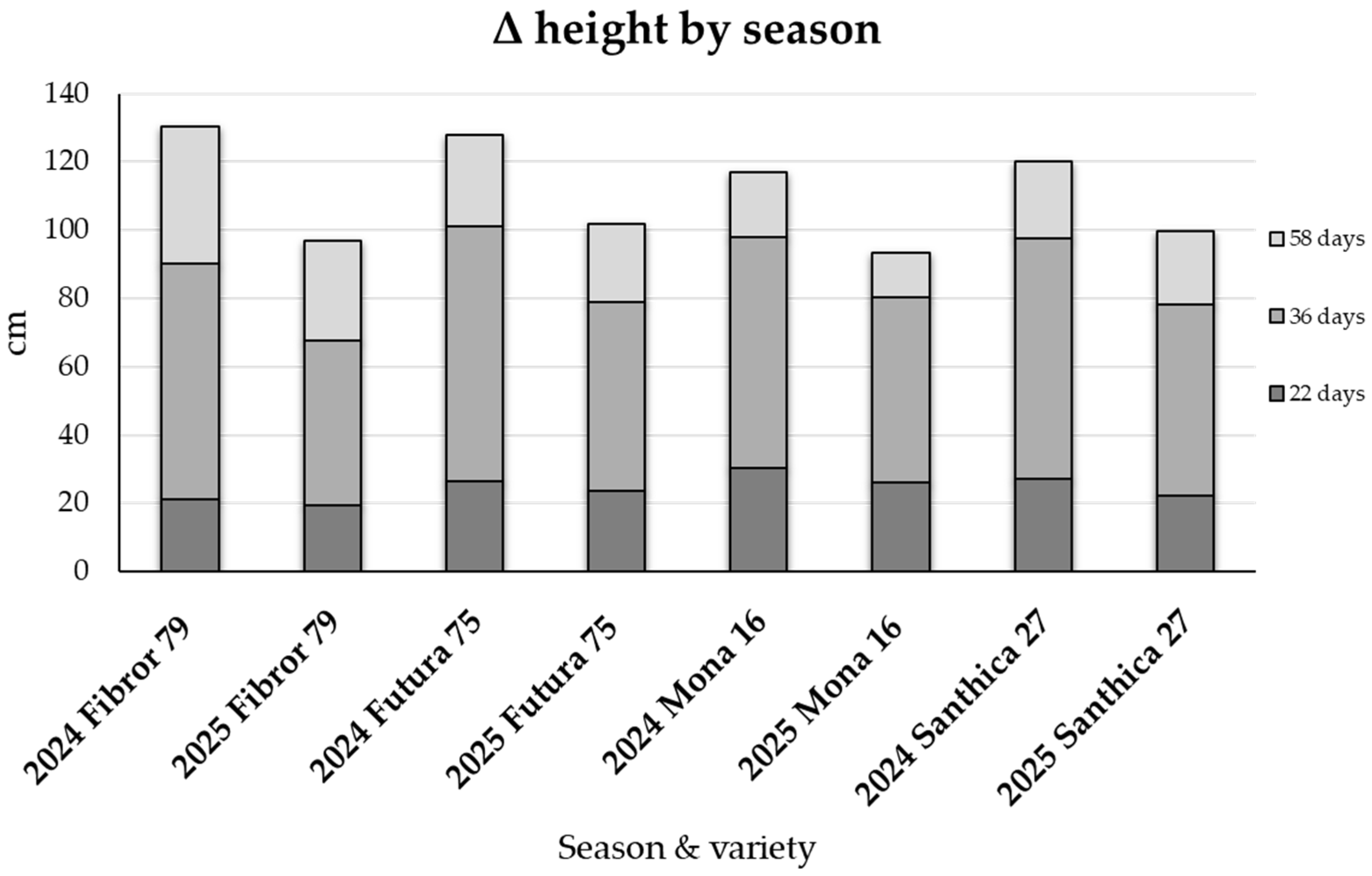
When analyzing the height dynamics of the hemp varieties in both the 2024 and 2025 seasons, it can be observed that, although plants in 2025 did not reach heights comparable to those recorded in 2024, the period between 22 and 36 days after sowing was characterized by the greatest increase in plant height (Figure 8).
Figure 8.
Mean height dynamics of the replicates of the hemp varieties studied over the two analyzed growing seasons. Three measurements were taken: 22, 36 and 58 days after transplanting the seedlings of the different hemp varieties.
3.4. Biomass Production-Stems, Leaf and Seeds
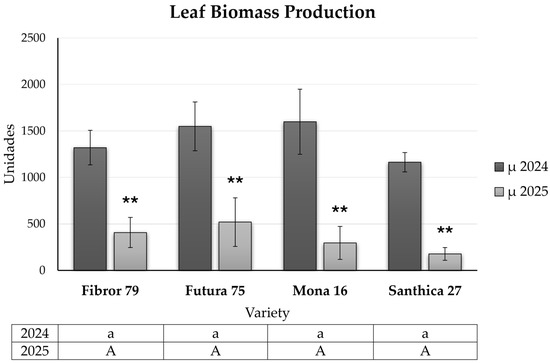
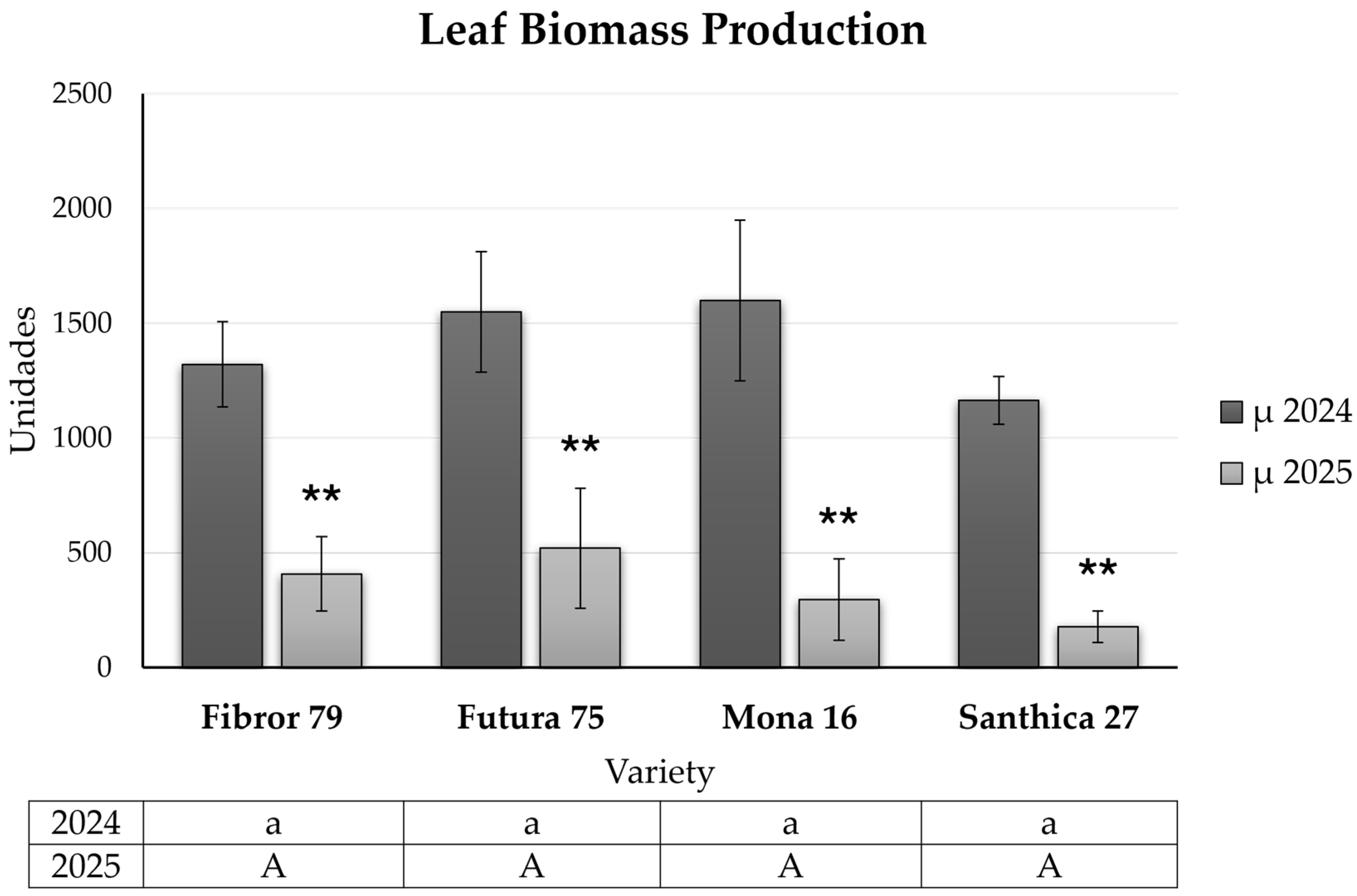
The production of leaf, stem and seed biomass of the different varieties was analyzed separately for each growing season, comparing both the interannual variation within each variety and the variation among varieties within each season. Analysis of leaf biomass production (Figure 9) showed no significant differences among varieties in either 2024 or 2025, despite the presence of significant differences in final mean plant height. Furthermore, the tallest variety (Fibror 79) did not exhibit the highest leaf biomass, whereas the shortest variety (Mona 16) showed the greatest leaf biomass production, indicating a more compact growth habit compared with the other varieties. Significant differences in leaf biomass production were observed within each variety between seasons.
Figure 9.
Graph showing the mean leaf biomass production of the replicates of each hemp variety tested across the different years studied. Significant intravarietal differences between growing seasons are indicated by ** for p-values <0.01, respectively. Significant intervarietal differences are indicated by letters and are shown in the table below.
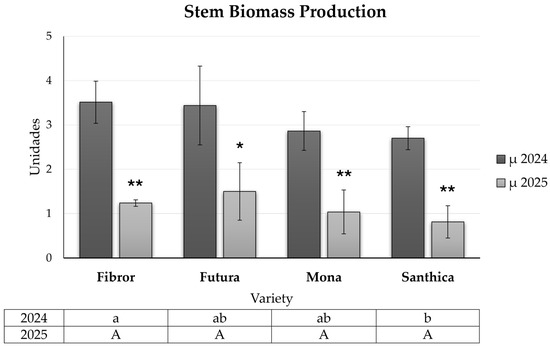
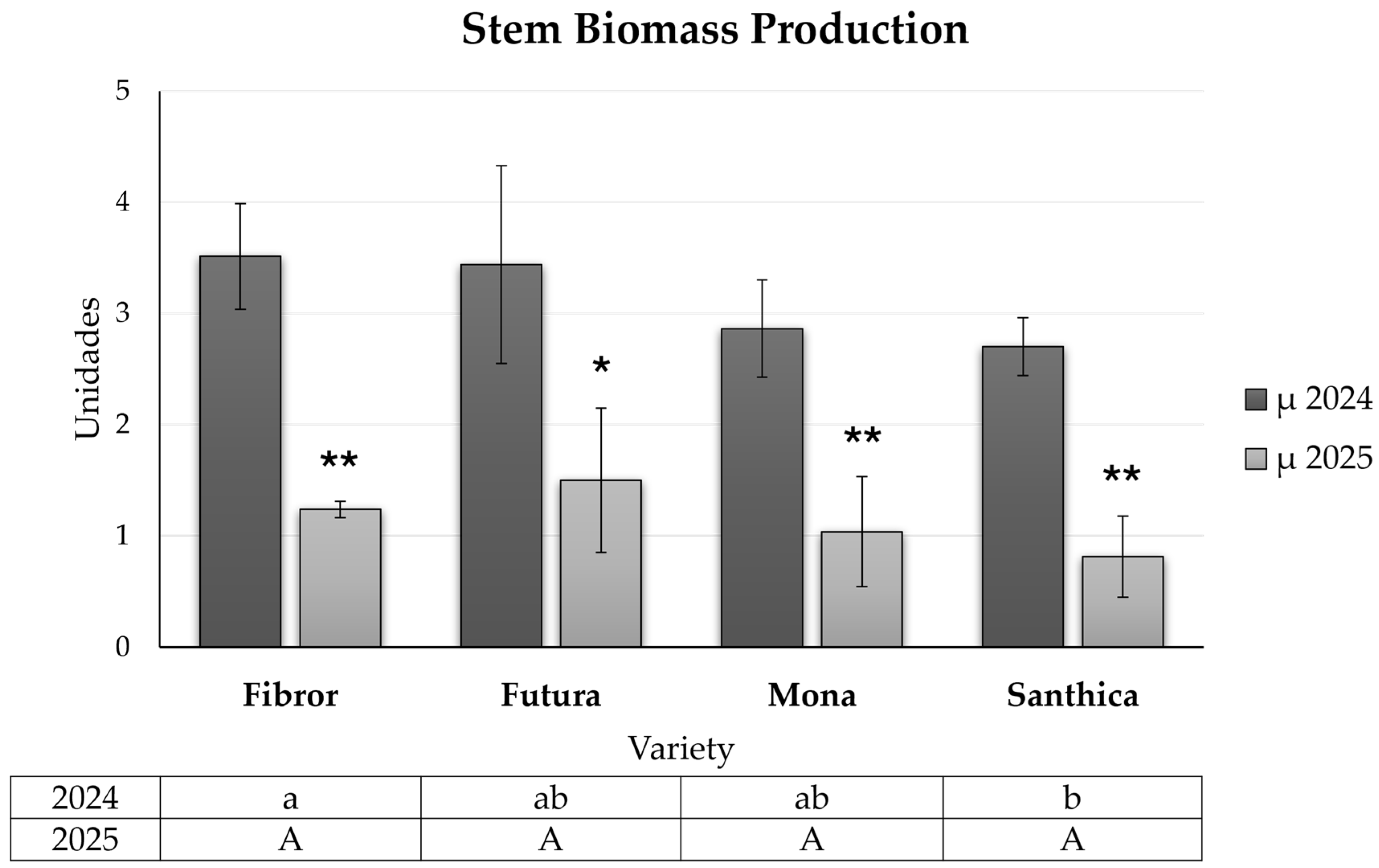
With respect to stem biomass production, Fibror 79 showed the highest values in the 2024 season, being significantly higher than Santhica 27 (Figure 10). In the 2025 season, as observed for plant height, a marked decline in stem biomass was recorded across all varieties. No significant differences among varieties were detected in 2025, although significant differences between seasons were observed within each variety.
Figure 10.
Representation of the mean stem biomass production of the replicates of each hemp variety tested across the different years studied. Significant intravarietal differences between growing seasons are indicated by * and ** for p-values < 0.05 and <0.01, respectively. Significant intervarietal differences are indicated by letters and are shown in the table below.
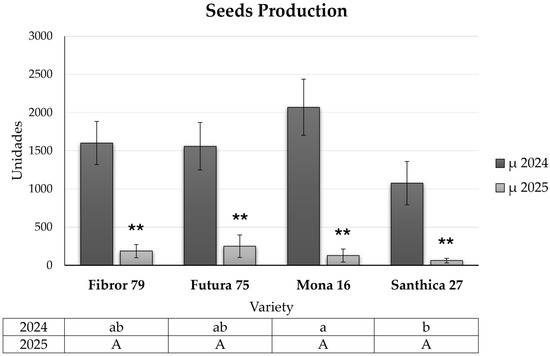
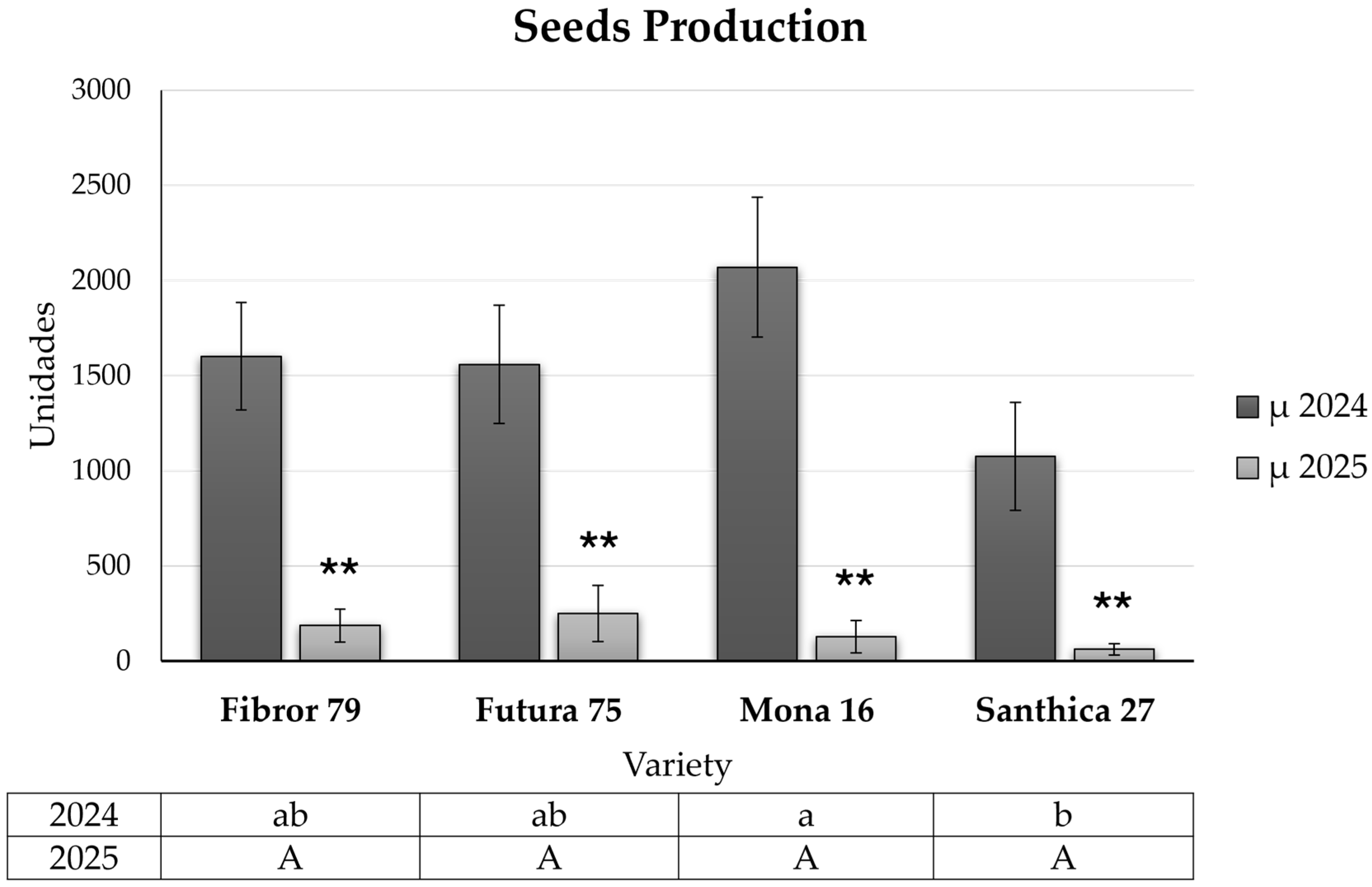
Seed production in all varieties decreased significantly between the 2024 and 2025 seasons (Figure 11). In the season with the highest overall production (2024), the tallest variety with the greatest stem development (Fibror 79) was not the highest-yielding in terms of seed production; instead, Mona 16—characterized by intermediate-to-low plant height but greater leaf development—exhibited the highest seed yield.
Figure 11.
Representation of the mean seed production of the replicates of each hemp variety tested across the different years studied. Significant intravarietal differences between growing seasons are indicated by ** for p-values <0.01, respectively. Significant intervarietal differences are indicated by letters and are shown in the table below.
These results indicate that, under the cultivation conditions evaluated, Fibror 79 displays a vegetative growth pattern characterized by increased plant height and stem development, making it particularly suitable for fiber production. In contrast, if the objective is to maximize leaf biomass and seed yield, Mona 16 appears to be the most appropriate option due to its more compact growth habit.
4. Discussion
Industrial hemp is a highly photoperiod-dependent crop, as its vegetative development requires conditions exceeding 16 h of light; however, the flowering of both male and female flowers requires a photoperiod of 12 h light: 12 h darkness [27,28,29].
Despite this, the crop can be cultivated across a wide range of climates and latitudes (23–52° N) owing to its high phenotypic plasticity and adaptability. This makes industrial hemp particularly attractive for fiber production in climatically unstable environments with limited water availability [3,30].
When analyzing the results from both growing seasons, clear differences were observed in phenological behavior, growth, and seed production among the four industrial hemp cultivars tested. These differences may be attributed to variation in sowing date (a three-week difference), rainfall during the growing period (in 2025, rainfall was negligible, with an average of only 0.4 mm, whereas in 2024, precipitation of 9 mm and 13 mm was recorded in June and July, respectively), and wind conditions. Specifically, a reduction of more than 50% in mean wind speed was recorded during August–September 2024 (approximately 50 km h−1) compared with the same period in 2025. These discrepancies among the measured variables are not considered to be the result of temperature differences, as mean, minimum, and maximum temperatures did not show significant variation between seasons.
With regard to sowing date, both trials were conducted in June; however, in 2024, sowing was delayed until the final week of the month (25 June), whereas in 2025 it was carried out three weeks earlier (3 June). This difference would be expected to result in reduced vegetative development and, consequently, lower plant height and biomass in the 2024 crop compared with the 2025 season. This is consistent with the findings of Cosentino et al. (2012) [31], who evaluated sowing time and flowering dynamics of different hemp genotypes in southern Europe. In that study, hemp crops established in regions close to the Mediterranean basin either before the second half of April or after late May exhibited a shortened “emergence–flowering” period. This resulted in plants with shortened stems, reduced fiber yield, and earlier flowering. A similar response has been reported for hemp cultivated in tropical and subtropical regions, where reduced vegetative growth and rapid seasonal transitions to flowering limit stem elongation and fiber biomass accumulation [31,32].
Based on this reasoning, improved growth parameters (plant height and biomass) and higher seed production would have been expected in the 2025 season; however, this was not the case.
Consequently, we examined another factor that may have contributed to the low seed yield, namely wind conditions. During the 2025 growing season, wind speed decreased by 50% or more during July and August, approximately 40–50 days after sowing, coinciding with the flowering and pollination period. It should be noted that the primary pollination agent in hemp is wind [33]. Indeed, previous studies have reported that hemp pollen is capable of traveling long distances [34]. Combined with the high pollen production of male plants (approximately 350,000 pollen grains per plant), this necessitates the establishment of buffer zones between crops to preserve varietal purity and prevent unintended cross-pollination [35]. In the present trial, spatial separation between cultivars was implemented to minimize intervarietal crosses. Given the marked reduction in seed production, it can be inferred that reduced wind activity may have played a significant role, leading to a substantial decline in seed yield across all tested cultivars.
Finally, the effect of water availability was evaluated. As previously noted, industrial hemp does not generally require large water inputs [3]; however, in the present study, low precipitation appears to have affected not only vegetative growth (plant height and biomass) but also floral development. In general, water stress induces a reduction in leaf area and photosynthetic rate, resulting in decreased biomass accumulation [36]. This reduction in photosynthetic capacity is associated with decreased pigment content, increased stomatal resistance to CO2 diffusion, and impaired activity of ribulose-1,5-bisphosphate carboxylase/oxygenase (RuBisCO) [36]. Furthermore, this abiotic stress has a significant impact on plant phenological stages, often accelerating development and inducing earlier flowering [37].
The behavior observed in the tested hemp cultivars during the 2025 season is consistent with findings from previous studies examining the effects of water availability on this crop. Research by Kumar (2021) [38], Petropoulos et al. (2008) [39], and Arad (2016) [40] reports that limited water availability in hemp results in reduced biomass, decreased leaf size, stem diameter, and internode length, as well as accelerated phenology, with earlier flowering and seed maturation. In the present study, flowering began in 2024 between 24 and 30 July (codes 2101/2201/2301), while seed maturation started between 6 and 9 August (code 2305). In 2025, a clear advancement of these events was observed, with flowering commencing between 15 and 22 July, and seed maturation beginning between 31 July and 4 August, depending on the variety. The varieties Futura 75 and Mona 16 exhibited greater phenological precocity, while Fibror 79 consistently showed a later development, particularly in flowering. Among these studies, Gill et al. (2023) [3], who investigated the cultivar ‘Futura 75’, reported results that closely align with those obtained in the present study during the low-precipitation conditions of the 2025 season.
A distinction should be made between industrial hemp and medicinal or recreational cannabis. Studies such as Caplan et al. (2019) [41] have shown that the application of controlled drought stress during the final two weeks of the cultivation cycle in medicinal cannabis did not negatively affect floral yield. Similarly, Morgan (2024) [42] reported that non-severe drought conditions did not significantly influence THC or CBD concentrations. These findings are comparable to observations in certain medicinal plant species, where exposure to water stress enhances the production of secondary metabolites, which play a key role in plant survival under abiotic stress conditions.
5. Conclusions
The present study confirms that industrial hemp exhibits high adaptability to the edaphoclimatic conditions of Alentejo, being able to complete its production cycle even under extremely hot and dry summer conditions. Sowing date proved to be a decisive factor for growth and phenological progression: later sowings favored greater vegetative growth, whereas earlier sowings extended the growth cycle and delayed flowering. The differences observed among varieties highlight the importance of varietal selection according to the production objective, as varieties such as Fibror 79 exhibited greater photoperiod sensitivity and later flowering, but would be a suitable variety for fiber production, while Mona 16, due to its compact structure, would be ideal for obtaining leaf biomass and seeds.
Overall, the results indicate that industrial hemp has strong potential for integration into sustainable agricultural systems in the Alentejo region. However, future research should include productivity parameters, fiber quality, and water-use efficiency to support the optimization of sowing strategies and maximize the agronomic performance of this emergent crop.
Industrial hemp is a crop strongly governed by photoperiod, requiring long-day conditions for vegetative development and short photoperiods for the induction of flowering; nevertheless, its high phenotypic plasticity enables adaptation across a wide range of climates and latitudes. The results obtained demonstrate that plant growth, phenology and seed production are influenced by multiple interacting variables that must be carefully considered to achieve high yields in this crop. Consequently, under open-field conditions, particular attention should be paid to water availability, wind conditions during and after the onset of flowering, and the timing of sowing. Overall, these findings confirm that the performance of industrial hemp in open-field cultivation depends critically on key climatic factors.
Author Contributions
A.S.: Writing—original draft. C.M.: Writing—bibliographic search; review; and editing. J.C.A.G.: Supervision; writing—review and editing. N.C.L.: Supervision; writing—review and editing. A.O.G.: Writing—bibliographic search; Supervision; review and editing. A.I.C.: Supervision; writing—review and editing. All authors have read and agreed to the published version of the manuscript.
Funding
Project 0066_BGREENER_4_E is co-financed by the European Union through the Interreg VI-A Spain–Portugal Program (POCTEP) 2021–2027.
Data Availability Statement
Data sharing is not applicable to this article, as no data sets were generated or analyzed during the current study.
Acknowledgments
During the preparation of this manuscript, the authors used ChatGPT (OpenAI, GPT-5.1) for assistance with English language editing and text revision. The authors have reviewed and edited the output and take full responsibility for the content of this publication.
Conflicts of Interest
Author Catarina Manuelito was employed by the company Instituto Nacional de Investigação Agrária e Veterinária, Polo de Elvas. The remaining authors declare that the research was conducted in the absence of any commercial or financial relationships that could be construed as a potential conflict of interest.
Abbreviations
The following abbreviations are used in this manuscript:
| C. sativa | Cannabis sativa |
| EU | European Union |
| CAP | Common Agricultural Policy |
| THC | delta-9-tetrahydrocannabinol |
| INIAV | National Institute for Agrarian and Veterinary Research |
| IPMA | Portuguese Institute for the Sea and Atmosphere |
| ANOVA | Analysis of variance |
Appendix A
Appendix A.1
Table A1.
Scale of the phenological stages of industrial hemp. Adapted from Mediavilla et al. (1998) [21].
Appendix A.2
Table A2.
Dates of observation of the main phenological stages of the different hemp varieties evaluated—2024.
Appendix A.3
Table A3.
Dates of observation of the main phenological stages of the different hemp varieties evaluated—2025.
References
- García-Tejero, I.F.; Durán Zuazo, V.H.; Sánchez-Carnenero, C.; Hernández, A.; Ferreiro-Vera, C.; Casano, S. Seeking suitable agronomical practices for industrial hemp (Cannabis sativa L.) cultivation for biomedical applications. Ind. Crops Prod. 2019, 139, 111524. [Google Scholar] [CrossRef] [Scilit]
- Bennett, S.J.; Snell, R.; Wright, D. Effect of variety, seed rate and time of cutting on fibre yield of dew-retted hemp. Ind. Crops Prod. 2006, 24, 79–86. [Google Scholar] [CrossRef] [Scilit]
- Gill, A.R.; Loveys, B.R.; Cavagnaro, T.R.; Burton, R.A. The potential of industrial hemp (Cannabis sativa L.) as an emerging drought resistant fibre crop. Plant Soil 2023, 493, 7–16. [Google Scholar] [CrossRef] [Scilit]
- Lipson Feder, C.; Cohen, O.; Shapira, A.; Katzir, I.; Peer, R.; Guberman, O.; Procaccia, S.; Berman, P.; Flaishman, M.; Meiri, D. Fertilization Following Pollination Predominantly Decreases Phytocannabinoids Accumulation and Alters the Accumulation of Terpenoids in Cannabis Inflorescences. Front. Plant Sci. 2021, 12, 753847. [Google Scholar] [CrossRef] [Scilit]
- Ahmed, A.T.M.F.; Islam, M.Z.; Mahmud, M.S.; Sarker, M.E.; Islam, M.R. Hemp as a potential raw material toward a sustainable world: A review. Heliyon 2022, 8, e08753. [Google Scholar] [CrossRef] [Scilit] [PubMed]
- Pereira, J.F.; Núñez, E.; Reyes, A.; Mali, S.; Lopez-Rubio, A.; Fabra, M.J. On the use of lignocellulosic hemp fibers to produce biodegradable cost-efficient biocomposites. Future Foods 2024, 10, 100507. [Google Scholar] [CrossRef] [Scilit]
- Bertoli, A.; Tozzi, S.; Pistelli, L.; Angelini, L.G. Fibre hemp inflorescences: From crop-residues to essential oil production. Ind. Crops Prod. 2010, 32, 329–337. [Google Scholar] [CrossRef] [Scilit]
- Strzelczyk, M.; Lochynska, M.; Chudy, M. Systematics and Botanical Characteristics of Industrial Hemp Cannabis sativa L. J. Nat. Fibers 2022, 19, 5804–5826. [Google Scholar] [CrossRef] [Scilit]
- Kok, C.J.; Coenen, G.C.M.; de Heij, A. The effect of fibre hemp (Cannabis sativa L.) on selected soil-borne pathogens. J. Int. Hemp Assoc. 1994, 1, 6–9. [Google Scholar]
- Flajšman, M.; Košmelj, K.; Grčman, H.; Ačko, D.K.; Zupan, M. Industrial hemp (Cannabis sativa L.)—A valuable alternative crop for growing in agricultural soils contaminated with heavy metals. Environ. Sci. Pollut. Res. 2023, 30, 115414–115429. [Google Scholar] [CrossRef] [Scilit]
- Visković, J.; Zheljazkov, V.D.; Sikora, V.; Noller, J.; Latković, D.; Ocamb, C.M.; Koren, A. Industrial Hemp (Cannabis sativa L.) Agronomy and Utilization: A Review. Agronomy 2023, 13, 931. [Google Scholar] [CrossRef] [Scilit]
- Golia, E.E.; Bethanis, J.; Ntinopoulos, N.; Kaffe, G.-G.; Komnou, A.A.; Vasilou, C. Investigating the potential of heavy metal accumulation from hemp. The use of industrial hemp (Cannabis sativa L.) for phytoremediation of heavily and moderated polluted soils. Sustain. Chem. Pharm. 2023, 31, 100961. [Google Scholar] [CrossRef] [Scilit]
- European Monitoring Centre for Drugs and Drug Addiction. Cannabis Laws in Europe—Questions and Answers for Policymaking; Publications Office of the European Union: Luxembourg, 2023; Available online: https://www.issup.net/knowledge-share/resources/2023-07/cannabis-laws-europe-questions-and-answers-policymaking (accessed on 28 November 2025).
- Modi, A.A.; Shahid, R.; Saeed, M.U.; Younas, T. Hemp is the Future of Plastics. E3S Web Conf. 2018, 51, 03002. [Google Scholar] [CrossRef]
- Rehman, M.; Fahad, S.; Du, G.; Cheng, X.; Yang, Y.; Tang, K.; Liu, L.; Liu, F.-H.; Deng, G. Evaluation of Hemp (Cannabis sativa L.) as an Industrial Crop: A Review. Environ. Sci. Pollut. Res. 2021, 28, 52832–52843. [Google Scholar] [CrossRef] [Scilit]
- Nath, M.K. Benefits of Cultivating Industrial Hemp (Cannabis sativa ssp. sativa)—A Versatile Plant for a Sustainable Future. Chem. Proc. 2022, 10, 14. [Google Scholar] [CrossRef] [Scilit]
- Crini, G.; Lichtfouse, E.; Chanet, G.; Morin-Crini, N. Applications of hemp in textiles, paper industry, insulation and building materials, horticulture, animal nutrition, food and beverages, nutraceuticals, cosmetics and hygiene, medicine, agrochemistry, energy production and environment: A review. Environ. Chem. Lett. 2020, 18, 1451–1476. [Google Scholar] [CrossRef] [Scilit]
- Aversa, P.; Daniotti, B.; Dotelli, G.; Marzo, A.; Tripepi, C.; Sabbadini, S.; Lauriola, P.; Luprano, V.A.M. Thermo-hygrometric behavior of hempcrete walls for sustainable building construction in the Mediterranean area. IOP Conf. Ser. Earth Environ. Sci. 2019, 296, 012020. [Google Scholar] [CrossRef] [Scilit]
- Yano, H.; Fu, W. Hemp: A Sustainable Plant with High Industrial Value in Food Processing. Foods 2023, 12, 651. [Google Scholar] [CrossRef] [Scilit]
- European Comission: Hemp Production in the EU. Agriculture and Rural Development. European Commission. Available online: https://agriculture.ec.europa.eu/farming/crop-productions-and-plant-based-products/hemp_en (accessed on 2 December 2025).
- Mediavilla, V.; Jonquera, M.; Schmid-Slembrouck, I. Decimal code for growth stages of hemp (Cannabis sativa L.). J. Int. Hemp Assoc. 1998, 5, 68–74. [Google Scholar]
- Clarke, R.; Merlin, M. Cannabis: Evolution and Ethnobotany; University of California Press: Oakland, CA, USA, 2013. [Google Scholar]
- Saragoça, A.; Silva, A.C.; Varanda, C.M.R.; Materatski, P.; Ortega, A.; Cordeiro, A.I.; Telo Da Gama, J. Current Context of Cannabis sativa Cultivation and Parameters Influencing Its Development. Agriculture 2025, 15, 1635. [Google Scholar] [CrossRef] [Scilit]
- Agencia Estatal de Meteorología (Ed.) Atlas Climático Ibérico: Temperatura del Aire y Precipitación (1971–2000) = Iberian Climate Atlas; Instituto Nacional de Meteorología: Madrid, Spain, 2011. [Google Scholar]
- IPMA—Instituto Português do Mar e da Atmosfera: Boletins Climatológicos, (n.d.). Available online: https://www.ipma.pt/pt/publicacoes/boletins.jsp?cmbDep=cli&cmbTema=pcl&cmbAno=2024&idDep=cli&idTema=pcl&curAno=2024 (accessed on 28 November 2025).
- Amaducci, S.; Müssig, J.; Zatta, A.; Venturi, G. An Innovative Production System for Hemp Fibre for Textile Destinations: From Laboratory Results to Industrial Validation. In Proceedings of the International Conference on Flax and Other Bast Plants, Saskatoon, SK, Canada, 21–23 July 2008. [Google Scholar]
- Moher, M.; Jones, M.; Zheng, Y. Photoperiodic Response of In Vitro Cannabis sativa Plants. HortScience 2021, 56, 108–113. [Google Scholar] [CrossRef] [Scilit]
- Cervantes, J. The Cannabis Encyclopedia: The Definitive Guide to Cultivation & Consumption of Medical Marijuana; Van Patten Publishing: Vancouver, WA, USA, 2015. [Google Scholar]
- Dang, M.; Arachchige, N.M.; Campbell, L.G. Optimizing Photoperiod Switch to Maximize Floral Biomass and Cannabinoid Yield in Cannabis sativa L. A Meta-Analytic Quantile Regression Approach. Front. Plant Sci. 2022, 12, 797425. [Google Scholar] [CrossRef] [Scilit] [PubMed]
- Adesina, I.; Bhowmik, A.; Sharma, H.; Shahbazi, A. A Review on the Current State of Knowledge of Growing Conditions, Agronomic Soil Health Practices and Utilities of Hemp in the United States. Agriculture 2020, 10, 129. [Google Scholar] [CrossRef] [Scilit]
- Cosentino, S.L.; Testa, G.; Scordia, D.; Copani, V. Sowing time and prediction of flowering of different hemp (Cannabis sativa L.) genotypes in southern Europe. Ind. Crops Prod. 2012, 37, 20–33. [Google Scholar] [CrossRef] [Scilit]
- Hall, J.; Bhattarai, S.P.; Midmore, D.J. The Effects of Photoperiod on Phenological Development and Yields of Industrial Hemp. J. Nat. Fibers 2014, 11, 87–106. [Google Scholar] [CrossRef] [Scilit]
- Olejar, K.J.; Park, S.-H. Industry-Based Misconceptions Regarding Cross-Pollination of Cannabis spp. Front. Plant Sci. 2022, 13, 793264. [Google Scholar] [CrossRef] [Scilit]
- Cabezudo, B.; Recio, M.; Sánchez-Laulhé, J.; Trigo, M.D.M.; Toro, F.J.; Polvorinos, F. Atmospheric transportation of marihuana pollen from North Africa to the Southwest of Europe. Atmos. Environ. 1997, 31, 3323–3328. [Google Scholar] [CrossRef] [Scilit]
- Small, E.; Antle, T. A Preliminary Study of Pollen Dispersal in Cannabis sativa in Relation to Wind Direction. J. Ind. Hemp 2003, 8, 37–50. [Google Scholar] [CrossRef] [Scilit]
- Zhang, Q.; Phillips, R.P.; Manzoni, S.; Scott, R.L.; Oishi, A.C.; Finzi, A.; Daly, E.; Vargas, R.; Novick, K.A. Changes in photosynthesis and soil moisture drive the seasonal soil respiration-temperature hysteresis relationship. Agric. For. Meteorol. 2018, 259, 184–195. [Google Scholar] [CrossRef] [Scilit]
- Da Cunha Leme Filho, J.F.; Schuchman, S.; De Sarandy Raposo, R.; Diatta, A.A.; Didaran, F.; Sharma, S.; Walters, A.; Gage, K.L. The Role of Jasmonates in Modulating Growth, Trichome Density, and Cannabinoid Accumulation in Cannabis sativa L. Int. J. Plant Biol. 2025, 16, 68. [Google Scholar] [CrossRef] [Scilit]
- Kumar, V. Production and Quality of Industrial Hemp (Cannabis sativa L.) in Response to Water Regimes. Ph.D. Thesis, University of Tasmania, Hobart, Australia, 2021. [Google Scholar] [CrossRef]
- Petropoulos, S.A.; Daferera, D.; Polissiou, M.G.; Passam, H.C. The effect of water deficit stress on the growth, yield and composition of essential oils of parsley. Sci. Hortic. 2008, 115, 393–397. [Google Scholar] [CrossRef] [Scilit]
- Arad, N. Effect of Drought Stress on Relative Expression of Some Key Genes Involved in Cannabisis in Medicinal Cannabis. Master’s Thesis, University of Tehran, Karaj, Iran, 2016. [Google Scholar]
- Caplan, D.; Dixon, M.; Zheng, Y. Increasing Inflorescence Dry Weight and Cannabinoid Content in Medical Cannabis Using Controlled Drought Stress. HortScience 2019, 54, 964–969. [Google Scholar] [CrossRef] [Scilit]
- Morgan, W.; Singh, J.; Kesheimer, K.; Davis, J.; Sanz-Saez, A. Severe drought significantly reduces floral hemp (Cannabis sativa L.) yield and cannabinoid content but moderate drought does not. Environ. Exp. Bot. 2024, 219, 105649. [Google Scholar] [CrossRef] [Scilit]

Disclaimer/Publisher’s Note: The statements, opinions and data contained in all publications are solely those of the individual author(s) and contributor(s) and not of MDPI and/or the editor(s). MDPI and/or the editor(s) disclaim responsibility for any injury to people or property resulting from any ideas, methods, instructions or products referred to in the content. |
© 2026 by the authors. Licensee MDPI, Basel, Switzerland. This article is an open access article distributed under the terms and conditions of the Creative Commons Attribution (CC BY) license.