Organic Amendments Drive Soil Organic Carbon Sequestration and Crop Growth via Microorganisms and Aggregates

 ,
,
Abstract
1. Introduction
2. Materials and Methods
2.1. Research Site and Experimental Design
2.2. Organic Amendment Application Rates
2.3. Soil and Plant Sampling
2.4. Aggregate Fractionation
2.5. Chemical and Biological Analyses
2.6. Soil DNA Extraction and Microbial Sequencing
2.7. Statistical Analysis
3. Result
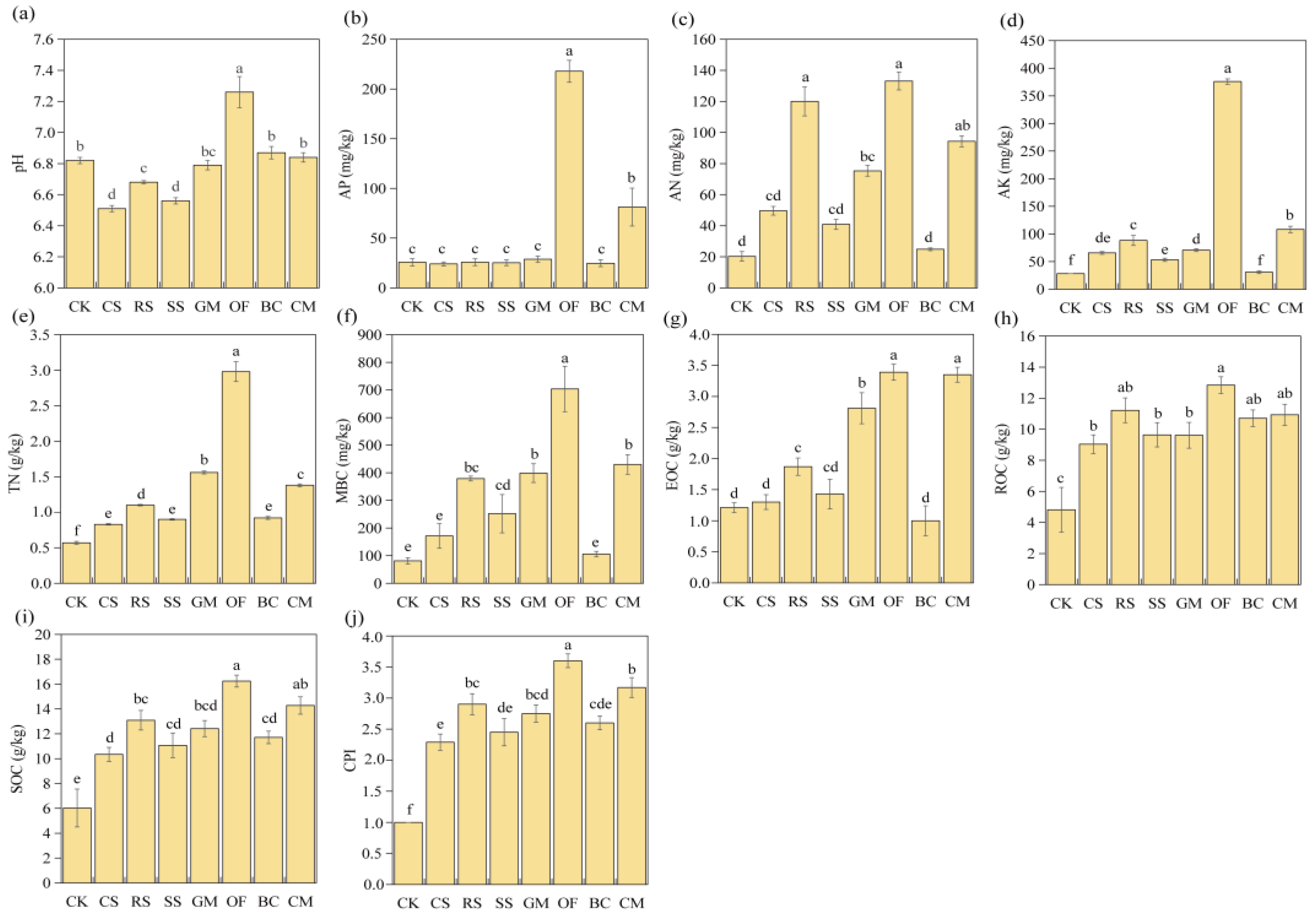
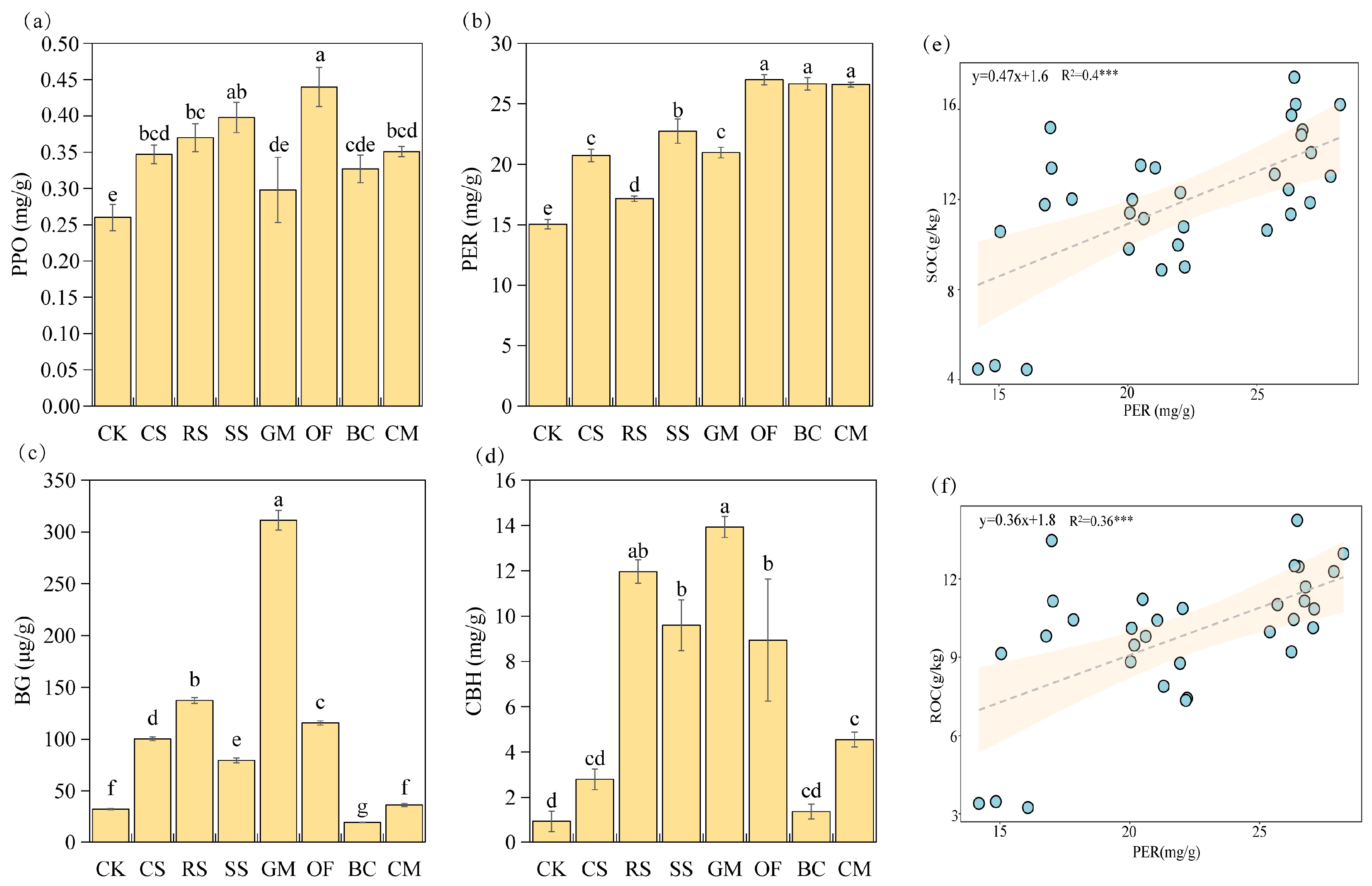
3.1. Effects of Different Organic Amendments Additions on Soil Organic Carbon Fractions and Carbon Transforming Enzyme Activities
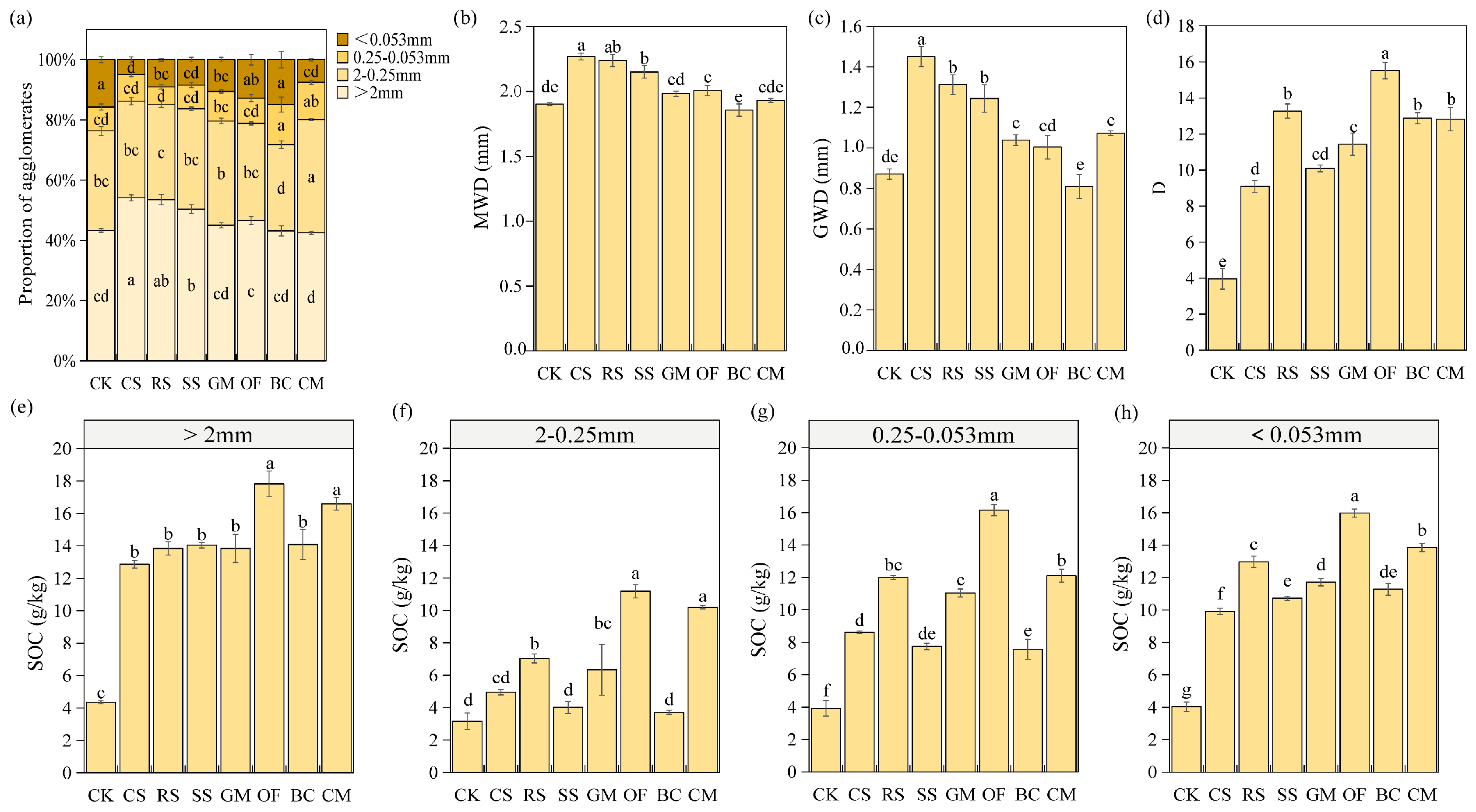
3.2. Effects of Different Organic Amendments Additions on Aggregate Stability and Organic Carbon Content
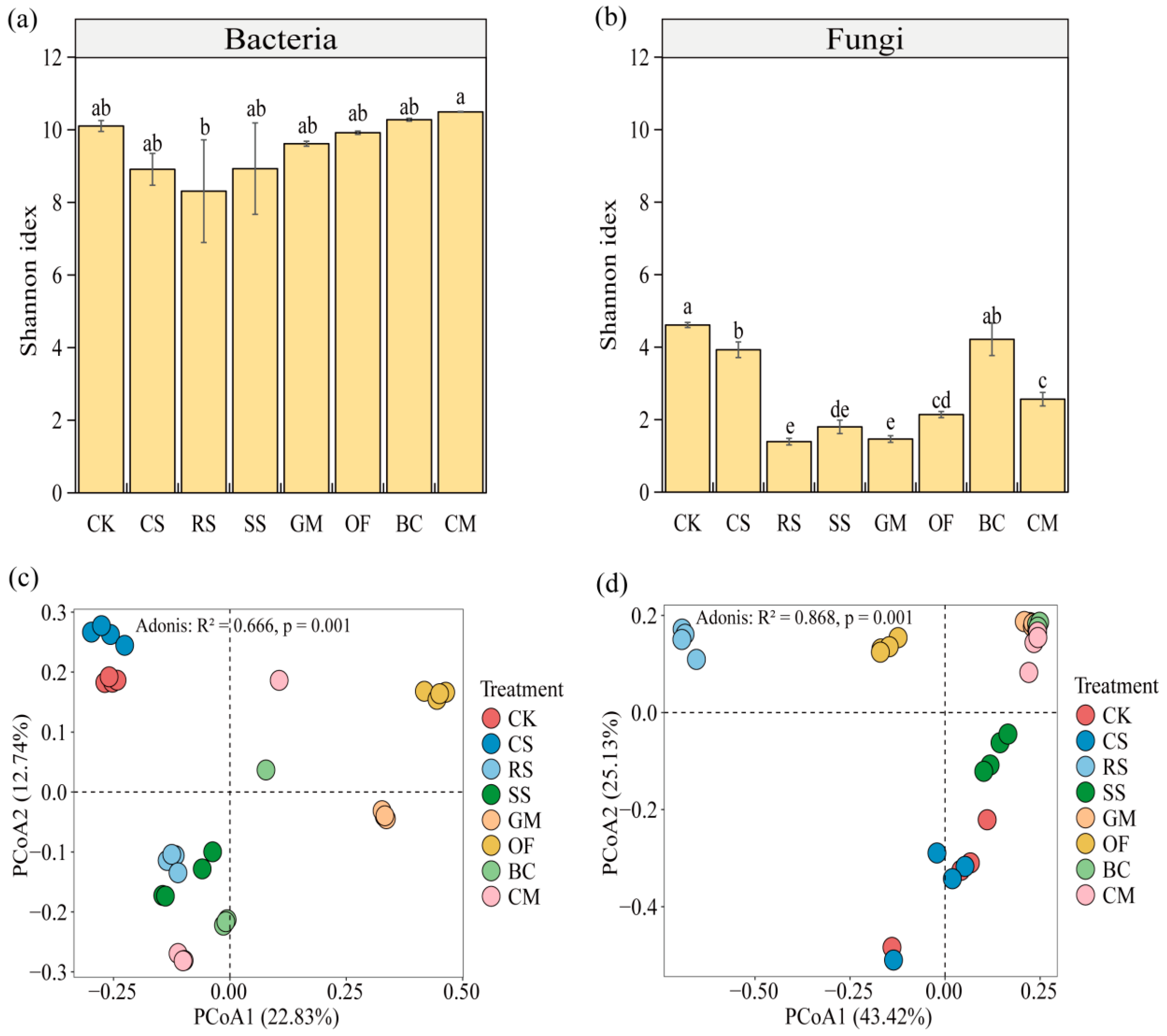
3.3. Effects of Different Organic Amendments Additions on Soil Microbial Diversity
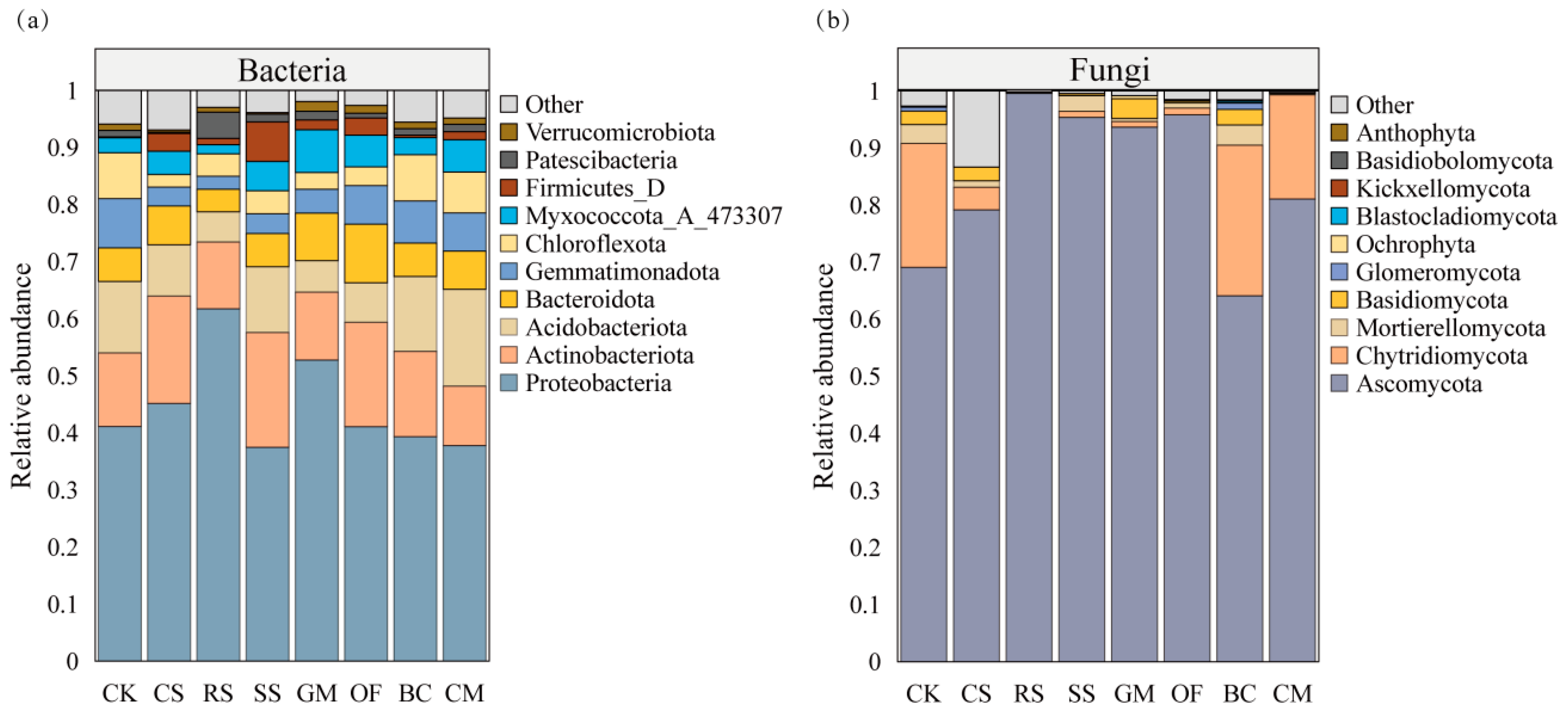
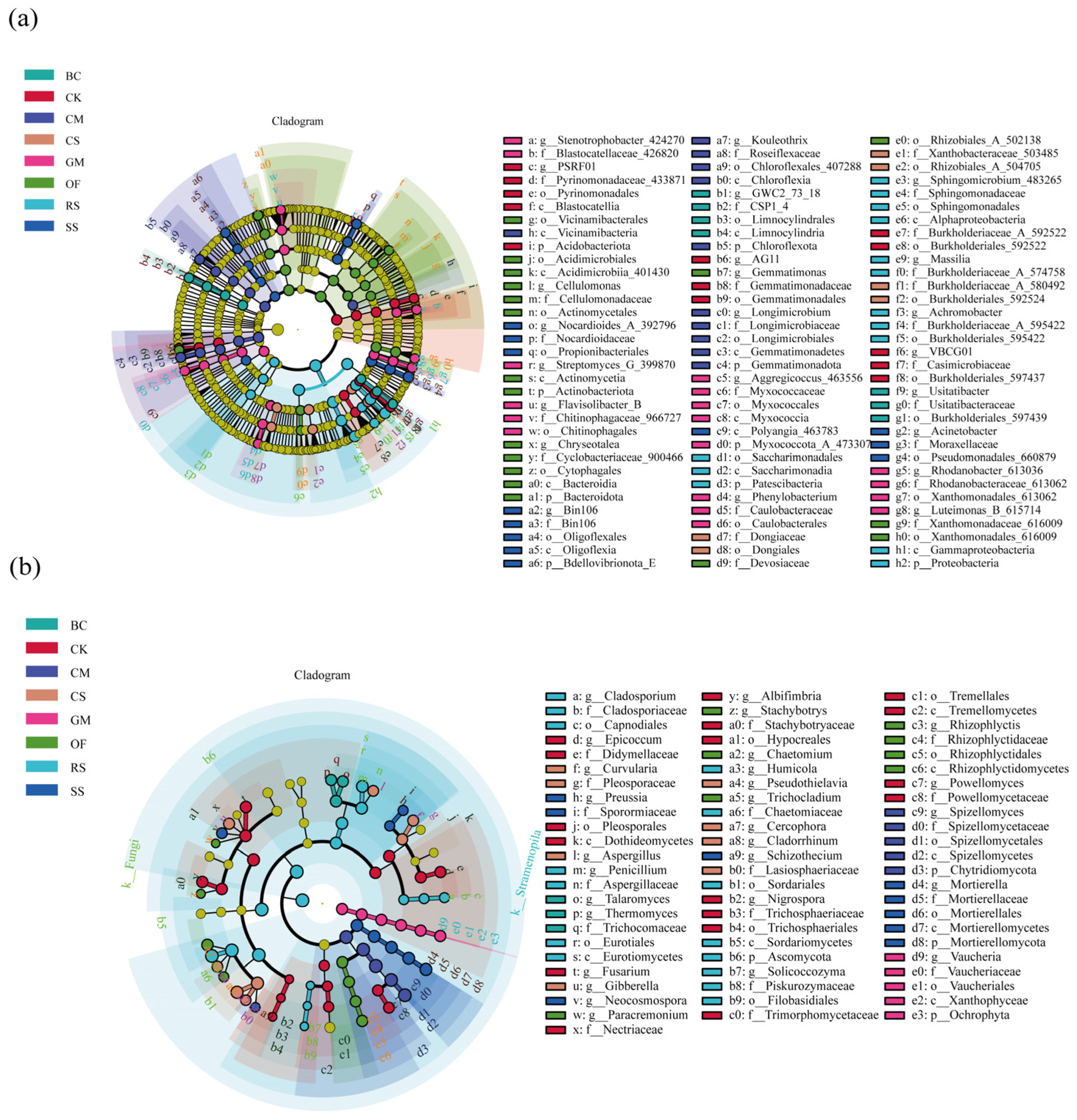
3.4. Effects of Different Organic Amendments Additions on Soil Microbial Community Structure and Biomarkers
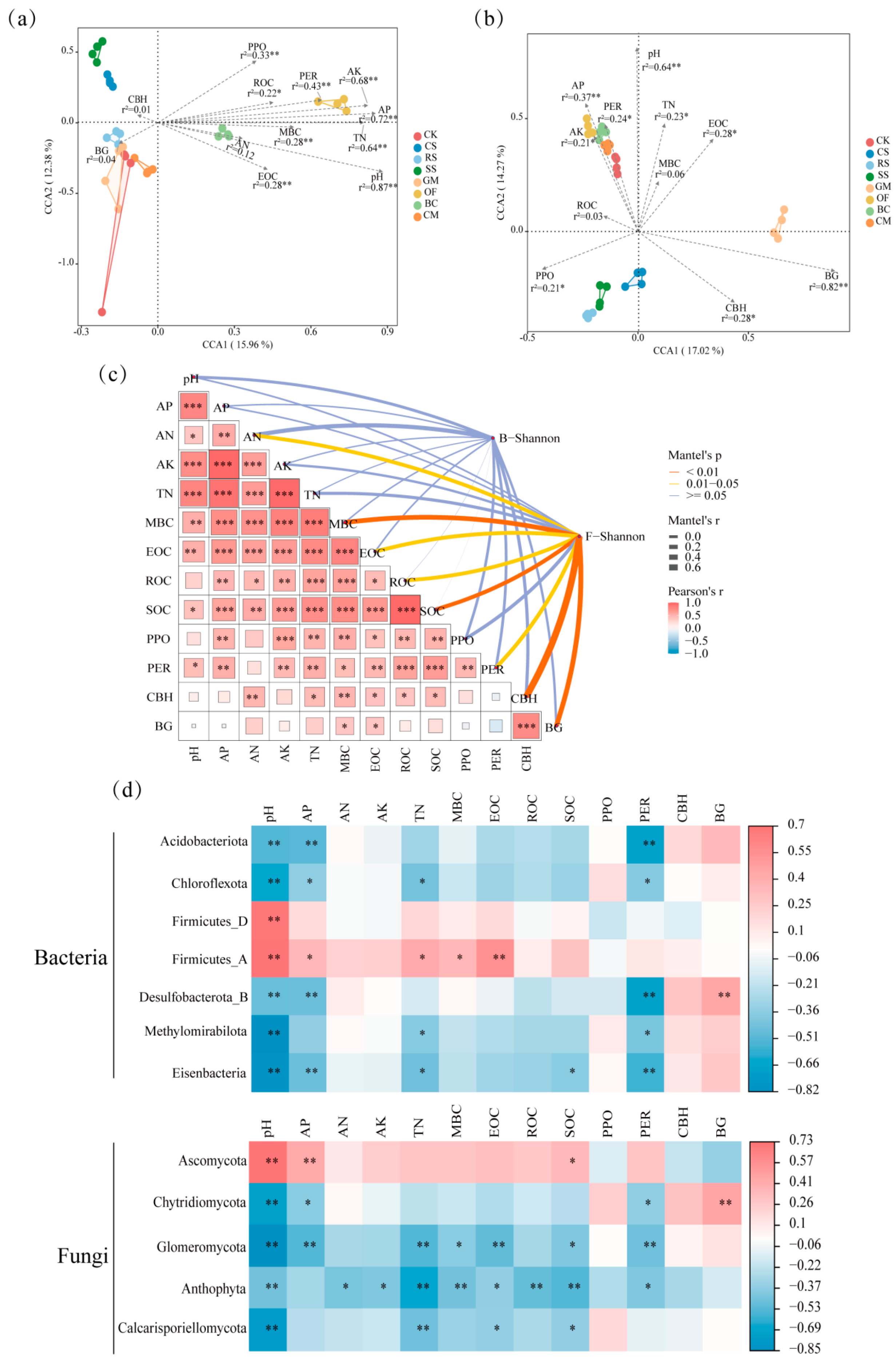
3.5. Effects of Different Organic Amendments Additions on Drivers of Soil Microbial Communities
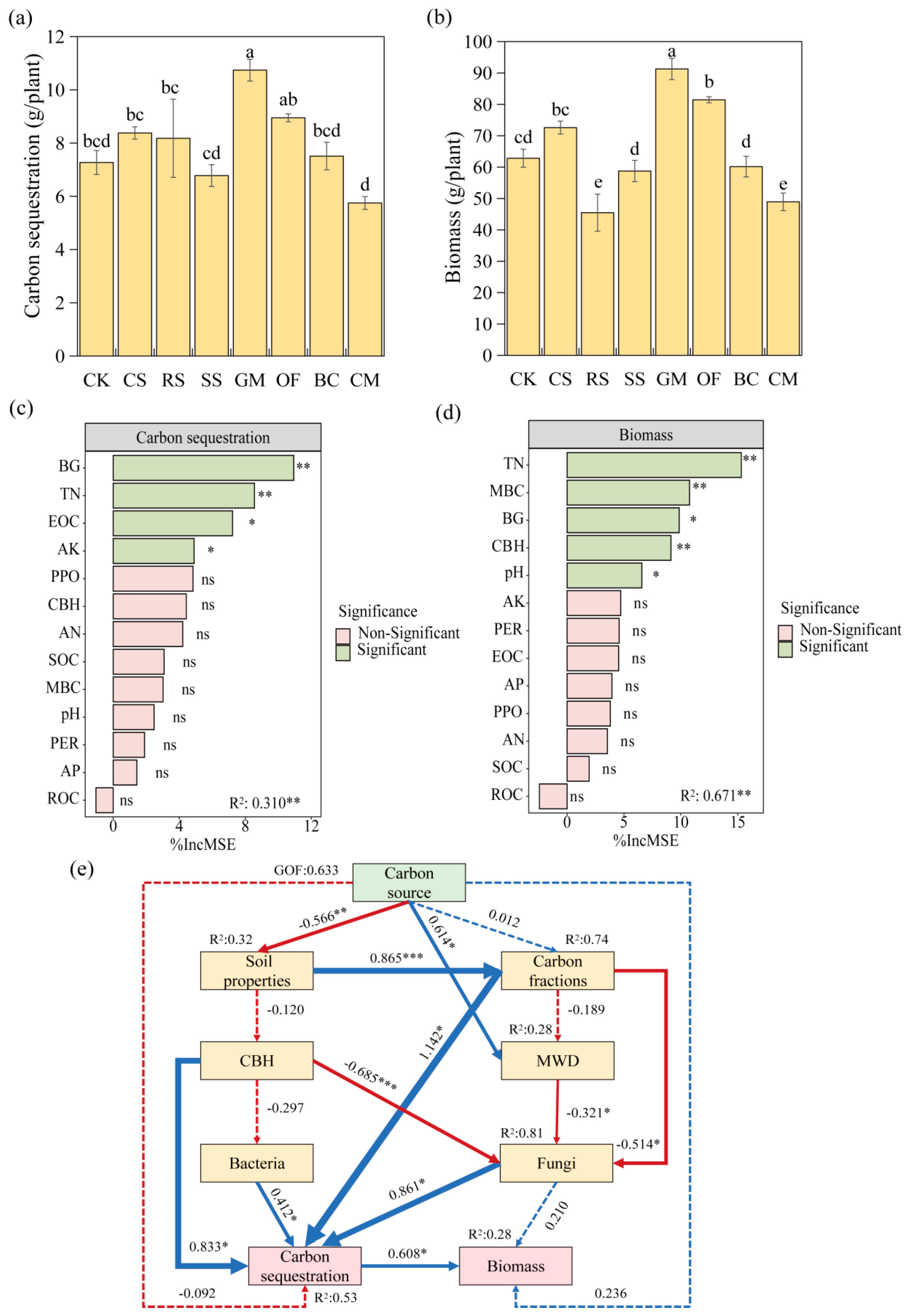
3.6. Effects of Different Organic Amendments Additions on Maize Biomass and Carbon Sequestration Capacity
4. Discussion
4.1. The Role of Organic Amendments in Enhancing Soil Nutrients
4.2. Differential Shaping of Aggregate Structure and Organic Carbon Distribution by Organic Amendments INPUTS
4.3. Specific Shaping of Microbial Community Structure and Functional Groups by Organic Amendments
4.4. Comprehensive Analysis of the Growth-Promoting Effects of Organic Amendments
5. Conclusions
Supplementary Materials
Author Contributions
Funding
Data Availability Statement
Conflicts of Interest
References
- Piao, S.L.; He, Y.; Wang, X.H.; Chen, F.H. Estimation of China’s terrestrial ecosystem carbon sink: Methods, progress and prospects. Sci. China Earth Sci. 2022, 65, 641–651. [Google Scholar] [CrossRef]
- Piao, S.L.; Fang, J.Y.; Ciais, P.; Peylin, P.; Huang, Y.; Sitch, S.; Wang, T. The carbon balance of terrestrial ecosystems in China. Nature 2009, 458, 1009–1013. [Google Scholar] [CrossRef] [PubMed]
- Friedlingstein, P.; O’Sullivan, M.; Jones, M.W.; Andrew, R.M.; Hauck, J.; Olsen, A.; Peters, G.P.; Peters, W.; Pongratz, J.; Sitch, S.; et al. Global Carbon Budget 2020. Earth Syst. Sci. Data 2020, 12, 3269–3340. [Google Scholar] [CrossRef]
- Lal, R. Soil Carbon Sequestration Impacts on Global Climate Change and Food Security. Science 2004, 304, 1623–1627. [Google Scholar] [CrossRef]
- Paustian, K.; Lehmann, J.; Ogle, S.; Reay, D.; Robertson, G.P.; Smith, P. Climate-smart soils. Nature 2016, 532, 49–57. [Google Scholar] [CrossRef]
- Smith, P.; Poch, R.M.; Lobb, D.A.; Bhattacharyya, R.; Alloush, G.; Eudoxie, G.D.; Anjos, L.H.C.; Castellano, M.; Ndzana, G.M.; Chenu, C.; et al. Status of the world’s soils. Annu. Rev. Environ. Resour. 2024, 49, 73–104. [Google Scholar] [CrossRef]
- Bastida, F.; García, C.; Fierer, N.; Eldridge, D.J.; Bowker, M.A.; Abades, S.; Alfaro, F.D.; Berhe, A.A.; Cutler, N.A.; Gallardo, A.; et al. Global ecological predictors of the soil priming effect. Nat. Commun. 2019, 10, 3481. [Google Scholar] [CrossRef]
- Cui, H.X.; Luo, Y.L.; Chen, J.; Jin, M.; Li, Y.; Wang, Z.L. Straw return strategies to improve soil properties and crop productivity in a winter wheat-summer maize cropping system. Eur. J. Agron. 2022, 133, 126436. [Google Scholar] [CrossRef]
- Liu, B.; Xia, H.; Jiang, C.; Riaz, M.; Yang, L.; Chen, Y.; Fan, X.; Xia, X. 14-year applications of chemical fertilizers and crop straw effects on soil labile organic carbon fractions, enzyme activities and microbial community in rice-wheat rotation of middle China. Sci. Total Environ. 2022, 841, 156608. [Google Scholar] [CrossRef]
- Lu, Y.; Gu, K.; Shen, Z.T.; Tang, C.S.; Shi, B.; Zhou, Q.Y. Biochar implications for the engineering properties of soils: A review. Sci. Total Environ. 2023, 888, 164185. [Google Scholar] [CrossRef] [PubMed]
- Nguyen, B.T.; Trinh, N.N.; Bach, Q.V. Methane emissions and associated microbial activities from paddy salt-affected soil as influenced by biochar and cow manure addition. Appl. Soil Ecol. 2020, 152, 103531. [Google Scholar] [CrossRef]
- Mi, W.; Sun, T.; Ma, Y.; Chen, C.; Ma, Q.; Wu, L.; Wu, Q.; Xu, Q. Higher yield sustainability and soil quality by manure amendment than straw returning under a single-rice cropping system. Field Crops Res. 2023, 292, 108805. [Google Scholar] [CrossRef]
- Ghimire, R.; Lamichhane, S.; Acharya, B.S.; Bista, P.; Sainju, U.M. Tillage, crop residue, and nutrient management effects on soil organic carbon in rice-based cropping systems: A review. J. Integr. Agric. 2017, 16, 1–15. [Google Scholar] [CrossRef]
- Zhao, H.; Shar, A.G.; Li, S.; Chen, Y.; Shi, J.; Zhang, X.; Tian, X. Effect of straw return mode on soil aggregation and aggregate carbon content in an annual maize-wheat double cropping system. Soil Tillage Res. 2018, 175, 178–186. [Google Scholar] [CrossRef]
- Gao, S.; Zhou, G.; Chang, D.; Liang, H.; Nie, J.; Liao, Y.; Lu, Y.; Xu, C.; Liu, J.; Han, S.; et al. Southern China can produce more high-quality rice with less N by green manuring. Conserv. Recycl. 2023, 196, 107025. [Google Scholar] [CrossRef]
- Xiong, W.; Luo, Y.; Shangguan, W.; Deng, Y.; Li, R.; Song, D.; Zhang, M.; Li, Z.; Xiao, R. Co-hydrothermal carbonization of lignocellulosic biomass and swine manure: Optimal parameters for enhanced nutrient reclamation, carbon sequestration, and heavy metals passivation. Waste Manag. 2024, 190, 174–185. [Google Scholar] [CrossRef]
- Elliott, E. Aggregate structure and carbon, nitrogen, and phosphorus in native and cultivated soils. Soil Sci. Soc. Am. J. 1986, 50, 627–633. [Google Scholar] [CrossRef]
- Hong, S.; Piao, S.; Chen, A.; Liu, Y.; Liu, L.; Peng, S.; Sardans, J.; Sun, Y.; Peñuelas, J.; Zeng, H. Afforestation neutralizes soil pH. Nat. Commun. 2018, 9, 520. [Google Scholar] [CrossRef]
- Zheng, Q.; Hu, Y.; Zhang, S.; Noll, L.; Bockle, T.; Dietrich, M.; Herbold, C.W.; Eichorst, S.A.; Woebken, D.; Richter, A.; et al. Soil multifunctionality is affected by the soil environment and by microbial community composition and diversity. Soil Biol. Biochem. 2019, 136, 107521. [Google Scholar] [CrossRef] [PubMed]
- Fan, S.; Zuo, J.; Dong, H. Changes in soil properties and bacterial community composition with biochar amendment after six years. Agronomy 2020, 10, 746. [Google Scholar] [CrossRef]
- Tang, J.; Zhang, L.; Zhang, J.; Ren, L.; Zhou, Y.; Zheng, Y.; Luo, L.; Yang, Y.; Huang, H.; Chen, A. Physicochemical features, metal availability and enzyme activity in heavy metal-polluted soil remediated by biochar and compost. Sci. Total Environ. 2020, 701, 134751. [Google Scholar] [CrossRef] [PubMed]
- Mitchell, P.J.; Simpson, A.J.; Soong, R.; Simpson, M.J. Shifts in microbial community and water-extractable organic matter composition with biochar amendment in a temperate forest soil. Soil Biol. Biochem. 2015, 81, 244–254. [Google Scholar] [CrossRef]
- Ma, L.J.; Kong, F.X.; Wang, Z.; Luo, Y.; Lv, X.B.; Zhou, Z.G.; Meng, Y.L. Growth and yield of cotton as affected by different straw returning modes with an equivalent carbon input. Field Crops Res. 2019, 243, 107616. [Google Scholar] [CrossRef]
- Li, X.M.; Sun, G.X.; Chen, S.C.; Fang, Z.; Yuan, H.Y.; Shi, Q.; Zhu, Y.G. Molecular chemodiversity of dissolved organic matter in paddy soils. Environ. Sci. Technol. 2018, 52, 963–971. [Google Scholar] [CrossRef]
- Alster, C.J.; German, D.P.; Lu, Y.; Allison, S.D. Microbial enzymatic responses to drought and to nitrogen addition in a Southern California grassland. Soil Biol. Biochem. 2013, 64, 68–79. [Google Scholar] [CrossRef]
- Blair, G.J.; Lefroy, R.D.; Lisle, L. Soil carbon fractions based on their degree of oxidation, and the development of a carbon management index for agricultural systems. Aust. J. Agric. Res. 1995, 46, 1459–1466. [Google Scholar] [CrossRef]
- Bai, L.; Cui, J.; Jie, W.; Cai, B. Analysis of the community compositions of rhizosphere fungi in soybeans continuous cropping fields. Microbiol. Res. 2015, 180, 49–56. [Google Scholar] [CrossRef]
- Yan, T.; Xue, J.; Zhou, Z.; Wu, Y. Biochar and compost amendments alter the structure of the soil fungal network in a karst mountainous area. Land Degrad. Dev. 2022, 33, 685–697. [Google Scholar] [CrossRef]
- Li, X.; Yao, S.; Bian, Y.; Jiang, X.; Song, Y. The combination of biochar and plant roots improves soil bacterial adaptation to PAH stress: Insights from soil enzymes, microbiome, and metabolome. J. Hazard. Mater. 2020, 400, 123227. [Google Scholar] [CrossRef]
- Tarin, M.W.K.; Fan, L.; Xie, D.; Tayyab, M.; Rong, J.; Chen, L.; Muneer, M.A.; Zheng, Y. Response of soil fungal diversity and community composition to varying levels of bamboo biochar in red soils. Microorganisms 2021, 9, 1385. [Google Scholar] [CrossRef]
- Huang, S.; Shan, M.; Chen, J.; Penttinen, P.; Qin, H. Contrasting dynamics of polychlorinated biphenyl dissipation and fungal community composition in low and high organic carbon soils with biochar amendment. Environ. Sci. Pollut. Res. 2018, 25, 33432–33442. [Google Scholar] [CrossRef]
- Hu, Y.; Deng, Q.; Kätterer, T.; Olesen, J.E.; Ying, S.C.; Ochoa-Hueso, R.; Mueller, C.W.; Weintraub, M.N.; Chen, J. Depth-dependent responses of soil organic carbon under nitrogen deposition. Glob. Change Biol. 2024, 30, e17247. [Google Scholar] [CrossRef]
- Wang, H.; Xu, J.; Liu, X.; Zhang, D.; Li, L.; Li, W.; Sheng, L. Effects of long-term application of organic fertilizer on improving organic matter content and retarding acidity in red soil from China. Soil Tillage Res. 2019, 195, 104382. [Google Scholar] [CrossRef]
- Xia, L.L.; Lam, S.K.; Yan, X.Y.; Chen, D.L. How does recycling of livestock manure in agroecosystems affect crop productivity, reactive nitrogen losses, and soil carbon balance? Environ. Sci. Technol. 2017, 51, 7450–7457. [Google Scholar] [CrossRef]
- Tang, H.M.; Xiao, X.P.; Tang, W.G.; Li, C.; Wang, K.; Li, W.Y.; Cheng, K.K.; Pan, X.C. Long-term effects of NPK fertilizers and organic manures on soil organic carbon and carbon management index under a double-cropping rice system in Southern China. Commun. Soil Sci. Plant Anal. 2018, 49, 1976–1989. [Google Scholar] [CrossRef]
- Li, L.-J.; Zhu-Barker, X.; Ye, R.; Doane, T.A.; Horwath, W.R. Soil microbial biomass size and soil carbon influence the priming effect from carbon inputs depending on nitrogen availability. Soil Biol. Biochem. 2018, 119, 41–49. [Google Scholar] [CrossRef]
- Trinsoutrot, I.; Recous, S.; Bentz, B.; Linères, M.; Chèneby, D.; Nicolardot, B. Biochemical quality of crop residues and carbon and nitrogen mineralization kinetics under nonlimiting nitrogen conditions. Soil Sci. Soc. Am. J. 2000, 64, 918–926. [Google Scholar] [CrossRef]
- Zhao, W.H.; Ma, L.; Xu, J.S. Effect of application of straw and wood peat for a short period on soil organic matter and microbial community in composition and function in fluvo-aquic soil. Acta Pedol. Sin. 2020, 57, 153–164. [Google Scholar] [CrossRef]
- Fuke, P.; Manu, T.M.; Kumar, M.; Sawarkar, A.D.; Pandey, A.; Singh, L. Role of microbial diversity to influence the growth and environmental remediation capacity of bamboo: A review. Ind. Crops Prod. 2021, 167, 113567. [Google Scholar] [CrossRef]
- Liang, Y.; Al-Kaisi, M.; Yuan, J.; Liu, J.; Zhang, H.; Wang, L.; Cai, H.; Ren, J. Effect of chemical fertilizer and straw-derived organic amendments on continuous maize yield, soil carbon sequestration and soil quality in a Chinese Mollisol. Agric. Ecosyst. Environ. 2021, 314, 107403. [Google Scholar] [CrossRef]
- Liu, W.S.; Liu, W.X.; Kan, Z.R.; Chen, J.S.; Zhao, X.; Zhang, H.L. Effects of tillage and straw management on grain yield and SOC storage in a wheat-maize cropping system. Eur. J. Agron. 2022, 137, 126530. [Google Scholar] [CrossRef]
- Guan, S.; Liu, S.G.; Liu, R.Y.; Zhang, J.J.; Ren, J.; Cai, H.G.; Lin, X.X. Soil organic carbon associated with aggregate-size and density fractions in a Mollisol amended with charred and uncharred maize straw. J. Integr. Agric. 2019, 18, 1496–1507. [Google Scholar] [CrossRef]
- Chen, Y.; Shi, J.; Dong, J.; Wu, Y.; Li, C.; Ye, Y.; Tian, X.; Wang, Y. Synergistic improvement of soil organic carbon storage and wheat grain zinc bioavailability by straw return in combination with Zn application on the loess plateau of China. Catena 2021, 197, 104920. [Google Scholar] [CrossRef]
- Li, S.; Zhang, S.; Pu, Y.; Li, T.; Xu, X.; Jia, Y.; Deng, O.; Gong, G. Dynamics of soil labile organic carbon fractions and C-cycle enzyme activities under straw mulch in Chengdu Plain. Soil Tillage Res. 2016, 155, 289–297. [Google Scholar] [CrossRef]
- Salazar, S.; Sánchez, L.; Alvarez, J.; Valverde, A.; Galindo, P.; Igual, J.; Peix, A.; Santa-Regina, I. Correlation among soil enzyme activities under different forest system management practices. Ecol. Eng. 2011, 37, 1123–1131. [Google Scholar] [CrossRef]
- Pancholy, S.K.; Rice, E.L. Soil enzymes in relation to old field succession: Amylase, cellobiohydrolase, invertase, dehydrogenase, and urease. Soil Sci. Soc. Am. J. 1973, 37, 47–50. [Google Scholar] [CrossRef]
- Stott, D.; Andrews, S.; Liebig, M.; Wienhold, B.J.; Karlen, D. Evaluation of β-glucosidase activity as a soil quality indicator for the soil management assessment framework. Soil Sci. Soc. Am. J. 2010, 74, 107–119. [Google Scholar] [CrossRef]
- Gianfreda, L.; Rao, M.A.; Piotrowska, A.; Palumbo, G.; Colombo, C. Soil enzyme activities as affected by anthropogenic alterations: Intensive agricultural practices and organic pollution. Sci. Total Environ. 2005, 341, 265–279. [Google Scholar] [CrossRef]
- Hartmann, M.; Six, J. Soil structure and microbiome functions in agroecosystems. Nat. Rev. Earth Environ. 2023, 4, 4–18. [Google Scholar] [CrossRef]
- Steven, P.C.; de Goede, S.P.C.; Hannula, S.E.; Jansen, B.; Morriën, E. Fungal-mediated soil aggregation as a mechanism for carbon stabilization. ISME J. 2025, 19, wraf074. [Google Scholar] [CrossRef]
- Jiang, W.; Li, T.; Ma, J.; Wang, X.; Cheng, Y.; Gong, L.; Zhang, J.; Chen, G. Organic materials input promotes the soil aggregate sequestration through changing soil aggregate’s structure and stability. J. Environ. Manag. 2025, 393, 127027. [Google Scholar] [CrossRef] [PubMed]
- Wang, A.; Zou, D.; O’Connor, P.; Chen, B.; Zou, J.; Zhou, Y.; Wang, H.; Zhang, M. Assistant effects of spent mushroom substrate and its derived biochar on soil phytoremediation. J. Soils Sediments 2023, 23, 1641–1653. [Google Scholar] [CrossRef]
- Wang, J.X.; Lan, J.C.; Long, Q.X.; Wang, S.S.; Qi, X.; Huang, M.Z. Soil organic carbon transfer in aggregates subjected to afforestation in karst region as indicated by 13C natural abundance. For. Ecol. Manag. 2023, 531, 120798. [Google Scholar] [CrossRef]
- Gunina, A.; Kuzyakov, Y. Pathways of litter C by formation of aggregates and SOM 13C natural abundance. Soil Biol. Biochem. 2014, 71, 95–104. [Google Scholar] [CrossRef]
- Okolo, C.C.; Gebresamuel, G.; Zenebe, A.; Haile, M.; Eze, P.N. Accumulation of organic carbon in various soil aggregate sizes under different land use systems in a semi-arid environment. Agric. Ecosyst. Environ. 2020, 297, 106924. [Google Scholar] [CrossRef]
- Sae-Tun, O.; Bodner, G.; Rosinger, C.; Zechmeister-Boltenstern, S.; Mentler, A.; Keiblinger, K. Fungal biomass and microbial necromass facilitate soil carbon sequestration and aggregate stability under different soil tillage intensities. Appl. Soil Ecol. 2022, 179, 104599. [Google Scholar] [CrossRef]
- Yu, P.J.; Liu, J.L.; Tang, H.Y.; Ci, E.; Tang, X.G.; Liu, S.W.; Ding, Z.; Ma, M.G. The increased soil aggregate stability and aggregate-associated carbon by farmland use change in a karst region of Southwest China. Catena 2023, 231, 107284. [Google Scholar] [CrossRef]
- Witzgall, K.; Vidal, A.; Schubert, D.I.; Höschen, C.; Schweizer, S.A.; Buegger, F.; Mueller, C.W. Particulate organic matter as a functional soil component for persistent soil organic carbon. Nat. Commun. 2021, 12, 4115. [Google Scholar] [CrossRef]
- Zhang, Y.; Li, X.J.; Gregorich, E.G.; Mclaughlin, N.B.; Zhang, X.P.; Guo, Y.F.; Liang, A.Z.; Fan, R.Q.; Sun, B.J. No-tillage with continuous maize cropping enhances soil aggregation and organic carbon storage in Northeast China. Geoderma 2018, 330, 204–211. [Google Scholar] [CrossRef]
- Wilson, G.W.T.; Rice, C.W.; Rillig, M.C.; Springer, A.; Hartnett, D.C. Soil aggregation and carbon sequestration are tightly correlated with the abundance of arbuscular mycorrhizal fungi: Results from long-term field experiments. Ecol. Lett. 2009, 12, 452–461. [Google Scholar] [CrossRef] [PubMed]
- Strickland, M.S.; Rousk, J. Considering fungal: Bacterial dominance in soils—Methods, controls, and ecosystem implications. Soil Biol. Biochem. 2010, 42, 1385–1395. [Google Scholar] [CrossRef]
- van der Heijden, M.G.A.; Martin, F.M.; Selosse, M.A.; Sanders, I.R. Mycorrhizal ecology and evolution: The past, the present, and the future. New Phytol. 2015, 205, 1406–1423. [Google Scholar] [CrossRef]
- Větrovský, T.; Kohout, P.; Kopecký, M.; Machac, A.; Man, M.; Bahnmann, B.D.; Brabcová, V.; Choi, J.; Meszárošová, L.; Human, Z.R.; et al. A meta-analysis of global fungal distribution reveals climate-driven patterns. Nat. Commun. 2019, 10, 5142. [Google Scholar] [CrossRef]
- Rillig, M.C.; Mummey, D.L. Mycorrhizas and soil structure. New Phytol. 2006, 171, 41–53. [Google Scholar] [CrossRef]
- Hannula, S.E.; Jongen, R.; Morriën, E. Grazing by collembola controls fungal induced soil aggregation. Fungal Ecol. 2023, 65, 101284. [Google Scholar] [CrossRef]
- Luo, S.; Wang, S.; Tian, L.; Li, S.; Li, X.; Shen, Y.; Tian, C. Long-term biochar application influences soil microbial community and its potential roles in semiarid farmland. Appl. Soil Ecol. 2017, 117–118, 10–15. [Google Scholar] [CrossRef]
- Li, X.; Song, Y.; Wang, F.; Bian, Y.; Jiang, X. Combined effects of maize straw biochar and oxalic acid on the dissipation of polycyclic aromatic hydrocarbons and microbial community structures in soil: A mechanistic study. J. Hazard. Mater. 2019, 364, 325–331. [Google Scholar] [CrossRef]
- Kimeklis, A.K.; Gladkov, G.V.; Orlova, O.V.; Afonin, A.M.; Gribchenko, E.S.; Aksenova, T.S.; Kichko, A.A.; Pinaev, A.G.; Andronov, E.E. The succession of the cellulolytic microbial community from the soil during oat straw decomposition. Int. J. Mol. Sci. 2023, 24, 6342. [Google Scholar] [CrossRef]
- Ransom-Jones, E.; Jones, D.L.; Edwards, A.; McDonald, J.E. Distribution and diversity of members of the bacterial phylum Fibrobacteres in environments where cellulose degradation occurs. Syst. Appl. Microbiol. 2014, 37, 502–509. [Google Scholar] [CrossRef] [PubMed][Green Version]



| Treatment | TOC (g/kg) | TN (g/kg) | TP (g/kg) | TK (g/kg) | C/N | Application Rate (g/pot) |
|---|---|---|---|---|---|---|
| Corn straw (CS) | 408.70 | 8.20 | 0.24 | 1.04 | 49.85 | 195.77 |
| Soybean straw (SS) | 368.60 | 6.20 | 0.18 | 0.90 | 59.45 | 217.07 |
| Rape straw (RS) | 309.10 | 7.70 | 0.27 | 1.58 | 40.14 | 258.85 |
| Green manure (GM) | 298.40 | 20.20 | 0.32 | 1.38 | 14.77 | 268.13 |
| Organic fertilizer (OF) | 158.50 | 26.40 | 1.44 | 0.91 | 6.00 | 504.78 |
| Biochar (BC) | 342.10 | 11.00 | 0.19 | 0.88 | 31.10 | 233.88 |
| Carbon Material (CM) | 143.80 | 11.90 | 0.61 | 1.71 | 12.08 | 556.30 |
Disclaimer/Publisher’s Note: The statements, opinions and data contained in all publications are solely those of the individual author(s) and contributor(s) and not of MDPI and/or the editor(s). MDPI and/or the editor(s) disclaim responsibility for any injury to people or property resulting from any ideas, methods, instructions or products referred to in the content. |
© 2025 by the authors. Licensee MDPI, Basel, Switzerland. This article is an open access article distributed under the terms and conditions of the Creative Commons Attribution (CC BY) license (https://creativecommons.org/licenses/by/4.0/).
Share and Cite
Zong, D.; Quan, Y.; Penttinen, P.; Qi, L.; Wang, J.; Tang, X.; Xu, K.; Chen, Y. Organic Amendments Drive Soil Organic Carbon Sequestration and Crop Growth via Microorganisms and Aggregates. Agronomy 2025, 15, 2919. https://doi.org/10.3390/agronomy15122919
Zong D, Quan Y, Penttinen P, Qi L, Wang J, Tang X, Xu K, Chen Y. Organic Amendments Drive Soil Organic Carbon Sequestration and Crop Growth via Microorganisms and Aggregates. Agronomy. 2025; 15(12):2919. https://doi.org/10.3390/agronomy15122919
Chicago/Turabian StyleZong, Donglin, Ying Quan, Petri Penttinen, Ling Qi, Jiangtao Wang, Xiaoyan Tang, Kaiwei Xu, and Yuanxue Chen. 2025. "Organic Amendments Drive Soil Organic Carbon Sequestration and Crop Growth via Microorganisms and Aggregates" Agronomy 15, no. 12: 2919. https://doi.org/10.3390/agronomy15122919
APA StyleZong, D., Quan, Y., Penttinen, P., Qi, L., Wang, J., Tang, X., Xu, K., & Chen, Y. (2025). Organic Amendments Drive Soil Organic Carbon Sequestration and Crop Growth via Microorganisms and Aggregates. Agronomy, 15(12), 2919. https://doi.org/10.3390/agronomy15122919