



Next Issue
Volume 16, January-1
Previous Issue
Volume 15, November


Agronomy, Volume 15, Issue 12 (December 2025) – 252 articles
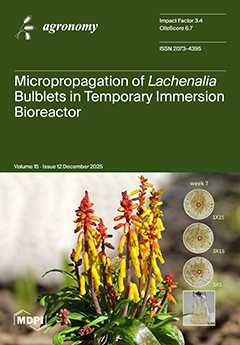
Cover Story (view full-size image): This study examines how temporary immersion bioreactors enhance the micropropagation of two Lachenalia cultivars compared with conventional solid culture. By assessing morphological and biochemical traits under different immersion frequencies, we show that temporary immersion consistently improves biomass growth and bulblet formation, with clear genotype-specific responses. ‘Rainbow Bells’ displayed higher multiplication rates, while ‘Riana’ produced fewer but heavier bulblets. The results demonstrate that immersion frequency and cultivar identity jointly determine propagation efficiency, supporting the development of optimized protocols for both commercial production and conservation of this ornamental geophyte. View this paper
  • Issues are regarded as officially published after their release is announced to the table of contents alert mailing list.
  • You may sign up for e-mail alerts to receive table of contents of newly released issues.
  • PDF is the official format for papers published in both, html and pdf forms. To view the papers in pdf format, click on the "PDF Full-text" link, and use the free Adobe Reader to open them.
Order results
Result details
Section
Select all
Export citation of selected articles as:
19 pages, 1159 KB  
Article
Assessing the Impact of Pontederia crassipes Extracts on the Saprophytic Soil Fungus Trametes versicolor: Implications for Agricultural Use
by Cátia Venâncio, Ana Ramisote, Pedro Pato and Carla Patinha
Agronomy 2025, 15(12), 2921; https://doi.org/10.3390/agronomy15122921 - 18 Dec 2025
Viewed by 316
Abstract
Invasive species are a recurring global problem, and the water hyacinth (Pontederia crassipes) is a well-known example. Various strategies have been explored to manage its spread, including its use as an agricultural amendment. However, when P. crassipes biomass is incorporated into [...] Read more.
Invasive species are a recurring global problem, and the water hyacinth (Pontederia crassipes) is a well-known example. Various strategies have been explored to manage its spread, including its use as an agricultural amendment. However, when P. crassipes biomass is incorporated into soil and undergoes degradation, it may increase soil conductivity and promote metal leaching, potentially affecting soil biota, particularly microbiota. Saprophytic fungi play a key role in the decomposition and renewal of organic matter, and their resilience to stressors is crucial for maintaining soil function. Thus, the aim of this study was to evaluate the effects of P. crassipes biomass extracts on the saprophytic fungus Trametes versicolor by evaluating fungal growth and metabolic changes [including sugar content, phosphatase enzymatic activity, and reactive oxygen species (ROS) production]. The fungus was exposed for 8 days to a dilution series of extracts (100%—undiluted, to 3.13%) prepared from P. crassipes biomass collected at five locations in Portuguese wetlands. Two sites were in the south, within a Mediterranean climate (Sorraia and Estação Experimental António Teixeira), and three were in the north, within an Atlantic climate (São João de Loure, Pateira de Fermentelos, and Vila Valente), representing both agricultural-runoff–impacted areas and recreational zones. Extracts were used to simulate a worst-case scenario. All extracts have shown high conductivity (≥15.4 mS/cm), and several elements have shown a high soluble fraction (e.g., K, P, As, or Ba), indicating substantial leaching from the biomass to the extracts. Despite this, T. versicolor growth rates were generally not inhibited, except for exposure to the São João de Loure extract, where an EC50 of 45.3% (extract dilution) was determined and a significant sugar content decrease was observed at extract concentrations ≥25%. Possibly due to the high phosphorous leachability, both acid and alkaline phosphatase activities increased significantly at the highest percentages tested (50% and 100%). Furthermore, ROS levels increased with increasing extract concentrations, yet marginal changes were observed in growth rates, suggesting that T. versicolor may efficiently regulate its intracellular redox balance under stress conditions. Overall, these findings indicate that the degradation of P. crassipes biomass in soils, while altering chemical properties and releasing soluble elements, may not impair and could even boost microbiota, namely saprophytic fungi. This resilience highlights the potential ecological benefit of saprophytic fungi in accelerating the decomposition of invasive plant residues and contribution to soil nutrient cycling and ecosystem recovery. Full article
Show Figures

Figure 1

23 pages, 8882 KB  
Article
Genome-Wide Identification, Structural Characterization, and Stress-Responsive Expression of the PsPP2C Gene Family in Pea (Pisum sativum)
by Zhi-Wei Wang, Min Liu, Yun-Zhe Cong, Wen-Jiao Wang, Tao Zhang, Hui-Tong Sang, Song Hou, Zi-Meng Sun, Guan Li, Ru-Mei Tian, Yong-Yi Yang, Kun Xie, Longxin Wang, Kai-Hua Jia and Na-Na Li
Agronomy 2025, 15(12), 2920; https://doi.org/10.3390/agronomy15122920 - 18 Dec 2025
Viewed by 255
Abstract
Protein phosphatase 2Cs (PP2Cs) constitute a widespread family of signaling regulators in plants and play central roles in abscisic acid (ABA)-mediated stress signaling; however, the PP2C gene family has not yet been systematically identified and characterized in pea (Pisum sativum), a [...] Read more.
Protein phosphatase 2Cs (PP2Cs) constitute a widespread family of signaling regulators in plants and play central roles in abscisic acid (ABA)-mediated stress signaling; however, the PP2C gene family has not yet been systematically identified and characterized in pea (Pisum sativum), a salt-sensitive legume crop. In this study, we identified 89 PsPP2C genes based on domain features and sequence homology. These genes are unevenly distributed across seven chromosomes and classified into ten subfamilies, providing a comparative framework for evaluating structural and regulatory diversification within the PsPP2C family. The encoded proteins vary substantially in length, physicochemical properties, and predicted subcellular localization, while most members contain the conserved PP2Cc catalytic domain. Intra- and interspecies homology analyses identified 19 duplicated gene pairs in pea and numerous orthologous relationships with several model plants; all reliable gene pairs exhibited Ka/Ks < 1, indicating pervasive purifying selection. PsPP2C genes also showed broad variation in exon number and intron phase, and their promoter regions contained diverse light-, hormone-, and stress-related cis-elements with heterogeneous positional patterns. Expression profiling across 11 tissues revealed pronounced tissue-specific differences, with generally higher transcript abundance in roots and seeds than in other tissues. Under salt treatment, approximately 20% of PsPP2C genes displayed concentration- or time-dependent transcriptional changes. Among them, PsPP2C67 and PsPP2C82—both belonging to the clade A PP2C subfamily—exhibited the most pronounced induction under high salinity and at early stress stages. Functional annotation indicated that these two genes are involved in ABA-related processes, including regulation of abscisic acid-activated signaling pathway, plant hormone signal transduction, and MAPK signaling pathway-plant. Collectively, this study provides a systematic characterization of the PsPP2C gene family, including its structural features, evolutionary patterns, and transcriptional responses to salt stress, thereby establishing a foundation for future functional investigations. Full article
(This article belongs to the Special Issue Cultivar Development of Pulses Crop—2nd Edition)
Show Figures

Figure 1

22 pages, 2884 KB  
Article
Organic Amendments Drive Soil Organic Carbon Sequestration and Crop Growth via Microorganisms and Aggregates
by Donglin Zong, Ying Quan, Petri Penttinen, Ling Qi, Jiangtao Wang, Xiaoyan Tang, Kaiwei Xu and Yuanxue Chen
Agronomy 2025, 15(12), 2919; https://doi.org/10.3390/agronomy15122919 - 18 Dec 2025
Viewed by 350
Abstract
Exogenous carbon addition is widely regarded as an effective soil management strategy for rapidly increasing soil organic carbon, improving soil structure and function. However, a systematic comparison of the effects of diverse organic amendments on key soil attributes and processes is needed to [...] Read more.
Exogenous carbon addition is widely regarded as an effective soil management strategy for rapidly increasing soil organic carbon, improving soil structure and function. However, a systematic comparison of the effects of diverse organic amendments on key soil attributes and processes is needed to inform their targeted application. We evaluated the impacts of seven organic amendments (biochar, organic fertilizer, corn straw, soybean straw, rapeseed straw, green manure, and carbon material) on a purple soil (Luvic Xerosols) in a pot experiment. The results showed that organic fertilizer and carbon material performed best in enhancing soil nutrient availability and promoting soil organic carbon content. Straw amendments promoted the formation of macro-aggregates. Green manure and straws enhanced carbon transformation-related β-glucosidase and cellobiohydrolase activities. Random Forest and structural equation modeling indicated that the organic amendments enhanced maize carbon sequestration capacity and biomass by improving aggregate stability and regulating the fungal community and by increasing nutrients and enhancing active carbon fractions. Green manure and organic fertilizer demonstrated the most significant agronomic effects. These findings provide guidelines for targeted organic amendment selection in purple soil regions. Full article
Show Figures

Figure 1

14 pages, 1859 KB  
Article
Thallium(I) Uptake and Accumulation by Wheat and Rice Plants
by Puu-Tai Yang, Hsin-Fang Chang, Liang-Sin Huang, Tsung-Ju Chuang and Shan-Li Wang
Agronomy 2025, 15(12), 2918; https://doi.org/10.3390/agronomy15122918 - 18 Dec 2025
Viewed by 234
Abstract
Thallium (Tl) is a highly toxic trace metal of increasing concern in agricultural soils. This study investigated the uptake, accumulation, and tissue-level distribution of Tl(I) in rice (Oryza sativa L.) and wheat (Triticum aestivum L.) grown in three agricultural soils differing [...] Read more.
Thallium (Tl) is a highly toxic trace metal of increasing concern in agricultural soils. This study investigated the uptake, accumulation, and tissue-level distribution of Tl(I) in rice (Oryza sativa L.) and wheat (Triticum aestivum L.) grown in three agricultural soils differing in soil pH and texture. In the seedling pot experiment (0–100 mg kg−1 soil Tl), plant Tl concentrations increased dose-dependently, and were at least an order of magnitude lower in the alkaline soil than in the acidic soils. Bioaccumulation factors of roots and shoots generally exceeded unity and declined with increasing Tl dose in acidic soils, consistent with uptake saturation and physiological stress at high exposure. To elucidate how soil Tl speciation and pH regulate Tl availability, X-ray absorption spectroscopy (XAS) was used; it showed that Tl(I)—sorbed on illite was the predominant species in all soils (89–95%), with a minor fraction (5–11%) associated with non-specific adsorption. In maturity pots (5 mg kg−1 soil Tl), both crops grown in the moderately acidic, coarse-textured soil translocated a small fraction of absorbed Tl to grains, with wheat and rice containing 0.24 and 0.10 mg kg−1 Tl, respectively. Comparatively, plants in the more acidic soil failed to reach maturity, and grain Tl was not detected in the alkaline soil. LA-ICP-MS mapping revealed Tl enrichment in the bran and embryo of rice and in the crease, bran, and embryo of wheat, indicating that unpolished grains may pose higher dietary exposure risks than polished products. Overall, these findings demonstrate the key roles of soil pH and mineral composition in governing soil Tl availability and plant Tl uptake, whereas plant transport processes regulate grain Tl loading. In the absence of food-safety standards for Tl, the results of this study underscore the need to better understand and mitigate Tl transfer from contaminated soils into human food chains via cereal crops. Full article
(This article belongs to the Special Issue Soil Pollution and Remediation in Sustainable Agriculture)
Show Figures

Figure 1

15 pages, 626 KB  
Article
Effects of Microalgae Biomass (Nannochloropsis gaditana and Thalassiosira sp.) on Wheat Seed Germination at High Temperature
by Liliana Guadalupe Alfaro Sifuentes, Gabriel Iván Romero Villegas, Alberto Sánchez Estrada, Luis Alberto Cira Chávez, Brisia Lizbeth Puente Padilla, Francisco Gabriel Acién Fernández and María Isabel Estrada Alvarado
Agronomy 2025, 15(12), 2917; https://doi.org/10.3390/agronomy15122917 - 18 Dec 2025
Viewed by 306
Abstract
Agricultural inputs based on microalgae have been successfully tested at different stages of the crop cycle, from sowing to harvest, to enhance crop performance. In this study, biomass from Nannochloropsis gaditana and Thalassiosira sp. was obtained to evaluate its effect on wheat seed [...] Read more.
Agricultural inputs based on microalgae have been successfully tested at different stages of the crop cycle, from sowing to harvest, to enhance crop performance. In this study, biomass from Nannochloropsis gaditana and Thalassiosira sp. was obtained to evaluate its effect on wheat seed germination under two temperature conditions. Microalgal biomass was produced under controlled conditions (neutral pH, air flow of 1 L·min−1, and a dilution rate of 0.2 day−1). The biomass was characterized for its lipid, carbohydrate, protein, and ash content. Subsequently, its effect on germination, as well as on glucose and amylose content in wheat seedlings, was assessed. Four biomass concentrations were tested (0.0 [distilled water], 0.5, 1.0, and 1.5 g·L−1) at two incubation temperatures (25 and 35 °C). Results showed that Thalassiosira sp. lightly promoted the germination rate more than N. gaditana. Germination parameters were negatively affected by high temperature, but treatments with Thalassiosira sp. alleviated this effect, showing values comparable to those obtained at the optimal temperature. Vigor parameters were improved compared with the control in both temperatures. Glucose and amylose contents exhibited irregular but consistent patterns. However, at a temperature of 35 °C, a slight conversion of starch to glucose could be observed. Overall, microalgal biomass did not significantly improve germination or its time variables, but it could exert a protective effect against high-temperature stress, particularly in the case of Thalassiosira sp. Full article
(This article belongs to the Collection Crop Physiology and Stress)
Show Figures

Graphical abstract

21 pages, 3469 KB  
Article
Research on Detection Methods for Major Soil Nutrients Based on Pyrolysis-Electronic Nose Time-Frequency Domain Feature Fusion and PSO-SVM-RF Model
by Li Lin, Dongyan Huang, Chunkai Zhao, Shuyan Liu and Shuo Zhang
Agronomy 2025, 15(12), 2916; https://doi.org/10.3390/agronomy15122916 - 18 Dec 2025
Viewed by 268
Abstract
Against the backdrop of growing demand for rapid soil testing technologies in precision agriculture, this study proposes a detection method based on pyrolysis-electronic nose and machine olfaction signal analysis to achieve precise measurement of key soil nutrients. An electronic nose system comprising 10 [...] Read more.
Against the backdrop of growing demand for rapid soil testing technologies in precision agriculture, this study proposes a detection method based on pyrolysis-electronic nose and machine olfaction signal analysis to achieve precise measurement of key soil nutrients. An electronic nose system comprising 10 metal oxide semiconductor gas sensors was constructed to collect response signals from 112 black soil samples undergoing pyrolysis at 400 °C. By extracting time-domain and frequency-domain features from sensor responses, an initial dataset of 180 features was constructed. A novel feature fusion method combining Pearson correlation coefficients (PCC) with recursive feature elimination cross-validation (RFECV) was proposed to optimize the feature space, enhance representational power, and select key sensitive features. In predicting soil organic matter (SOM), total nitrogen (TN), available potassium (AK), and available phosphorus (AP) content, we compared support vector machines (SVM), support vector machine-random forest models (SVM-RF), and particle swarm optimization-enhanced support vector machine-random forest models (PSO-SVM-RF). Results indicate that PSO-SVM-RF demonstrated optimal performance across all nutrient predictions, achieving a coefficient of determination (R2) of 0.94 for SOM and TN, with a performance-to-bias ratio (RPD) exceeding 3.8. For AK and AP, R2 improved to 0.78 and 0.74, respectively. Compared to the SVM model, the root mean square error (RMSE) decreased by 25.4% and 21.6% for AK and AP, respectively, with RPD values approaching the practical threshold of 2.0. This study validated the feasibility and application potential of combining electronic nose technology with a time-frequency domain feature fusion strategy for precise quantitative analysis of soil nutrients, providing a new approach for soil fertility assessment in precision agriculture. Full article
(This article belongs to the Topic Soil Health and Nutrient Management for Crop Productivity)
Show Figures

Figure 1

21 pages, 5277 KB  
Article
Estimation of Leaf Nitrogen Content in Rice Coupling Feature Fusion and Deep Learning with Multi-Sensor Images from UAV
by Xinlei Xu, Xingang Xu, Sizhe Xu, Yang Meng, Guijun Yang, Bo Xu, Xiaodong Yang, Xiaoyu Song, Hanyu Xue, Yuekun Song and Tuo Wang
Agronomy 2025, 15(12), 2915; https://doi.org/10.3390/agronomy15122915 - 18 Dec 2025
Viewed by 390
Abstract
Assessing Leaf Nitrogen Content (LNC) is critical for evaluating crop nutritional status and monitoring growth. While Unmanned Aerial Vehicle (UAV) remote sensing has become a pivotal tool for nitrogen monitoring at the field scale, current research predominantly relies on uni-modal feature variables. Consequently, [...] Read more.
Assessing Leaf Nitrogen Content (LNC) is critical for evaluating crop nutritional status and monitoring growth. While Unmanned Aerial Vehicle (UAV) remote sensing has become a pivotal tool for nitrogen monitoring at the field scale, current research predominantly relies on uni-modal feature variables. Consequently, the integration of multidimensional feature information for nitrogen assessment remains largely underutilized in existing literature. In this study, the four types of feature variables (two kinds of spectral indices, color space parameters and texture features from UAV images of RGB and multispectral sensors) were extracted from three dimensions, and crop nitrogen-sensitive feature variables were selected by GCA (Gray Correlation Analysis), followed by one fused deep neural network (DNN-F2) for remote sensing monitoring of rice nitrogen and a comparative analysis with five common machine learning algorithms (RF, GPR, PLSR, SVM and ANN). Experimental results indicate that the DNN-F2 model consistently outperformed conventional machine learning algorithms across all three growth stages. Notably, the model achieved an average R2 improvement of 40%, peaking at the rice jointing stage with R2 of 0.72, RMSE of 0.08, and NRMSE of 0.019. The study shows that the fusion of multidimensional feature information from UAVs combined with deep learning algorithms has great potential for nitrogen nutrient monitoring in rice crops, and can also provide technical support to guide decisions on fertilizer application in rice fields. Full article
(This article belongs to the Section Precision and Digital Agriculture)
Show Figures

Figure 1

37 pages, 2504 KB  
Review
Molecular Biochemistry and Physiology of Postharvest Chilling Injury in Fruits: Mechanisms and Mitigation
by Hansika Sati, Priyanka Kataria, Sunil Pareek and Daniel Alexandre Neuwald
Agronomy 2025, 15(12), 2914; https://doi.org/10.3390/agronomy15122914 - 18 Dec 2025
Viewed by 534
Abstract
Postharvest chilling injury (PCI) is a significant limitation in the storage of temperature-sensitive fruits, leading to quality deterioration and reduced marketability. However, low temperatures delay senescence—consistent with the Q10 principle, where metabolic reaction rates change 2–3-fold per 10 °C—and chilling-sensitive fruits experience membrane [...] Read more.
Postharvest chilling injury (PCI) is a significant limitation in the storage of temperature-sensitive fruits, leading to quality deterioration and reduced marketability. However, low temperatures delay senescence—consistent with the Q10 principle, where metabolic reaction rates change 2–3-fold per 10 °C—and chilling-sensitive fruits experience membrane destabilization, oxidative imbalances, and structural degradation under cold stress. Physiological assessments consistently report elevated electrolyte leakage, increased malondialdehyde accumulation, and reduced membrane fluidity, coupled with disruptions in respiration and cellular energy metabolism. Biochemically, PCI is characterized by enhanced ROS production and a 20–50% decline in key antioxidant enzymes, along with disturbances in calcium signaling and hormone regulation. At the molecular level, chilling-responsive transcription factors such as CBF, CAM, HSF, and WRKY show strong induction, while lipid remodeling and epigenetic modifications further shape cold adaptation responses. Advances in multi-omics, including transcriptomics, proteomics, metabolomics, lipidomics, and volatilomics, have revealed chilling-associated metabolic shifts and regulatory cascades, enabling the identification of potential biomarkers of tolerance. Emerging mitigation strategies, including physical and chemical treatments, as well as CRISPR-based interventions, have shown a 30–60% reduction in PCI in controlled studies. This review synthesizes recent progress in physiology, molecular biochemistry, and postharvest technology to support future research and practical PCI management. Full article
(This article belongs to the Section Plant-Crop Biology and Biochemistry)
Show Figures

Figure 1

24 pages, 4676 KB  
Article
Waste Algae-Derived Biochar Composites for Synergistic Soil Cd–As Immobilization: Feasibility, Dose–Response Thresholds, and Mechanism
by Xue Zhou, Lianfang Li and Mengqi Kang
Agronomy 2025, 15(12), 2913; https://doi.org/10.3390/agronomy15122913 - 18 Dec 2025
Viewed by 400
Abstract
The antagonistic geochemical behaviors of cadmium (Cd) and arsenic (As) in co-contaminated soils complicate their simultaneous remediation. This study aimed to develop a synergistic immobilization strategy by converting Spirulina residue into a magnetic biochar-layered double hydroxide composite (FSRBL). The composite was applied to [...] Read more.
The antagonistic geochemical behaviors of cadmium (Cd) and arsenic (As) in co-contaminated soils complicate their simultaneous remediation. This study aimed to develop a synergistic immobilization strategy by converting Spirulina residue into a magnetic biochar-layered double hydroxide composite (FSRBL). The composite was applied to both acidic red and calcareous black soils, and its effects on Cd and As, immobilization efficiency, and ecotoxicity were evaluated. The results showed that FSRBL effectively transforms Cd and As from mobile fractions to stable residual forms. At a 2.5% application rate, FSRBL achieved remarkable immobilization efficiencies of 39.2% for Cd and 57.5% for As, representing effectiveness 3.55 and 5.97 times higher than that of unmodified biochar, respectively. A dose–response relationship between the application amount of FSRBL and the immobilization efficiency of As and Cd was observed and further quantified using a logistic model. The results indicate that while increased FSRBL application enhances immobilization efficiency, the marginal benefit of each additional unit diminishes as the application rate increases, demonstrating a significant diminishing marginal effect. According to the ecotoxicity assessment experiment, the soil leachate from FSRBL-amended soil remarkably decreased the ecological toxicity to rice (Oryza sativa L.). Mechanistic investigations employing SEM/TEM-EDS, XRD, and XPS revealed that the synergistic immobilization could be ascribed to the multi-component cooperation within FSRBL, which resolved the conflicting pH/Eh requirements for the immobilization of Cd and As: (1) the LDH phase efficiently immobilized As oxyanions through anion exchange and isomorphic substitution; (2) the magnetic Fe phase concurrently immobilized Cd2+ and As oxyanions via redox transformation and coprecipitation, resulting in the formation of precipitates such as Fe/Ca/Cd–As(V). This work demonstrates a feasible approach to upcycle biomass waste into a value-added material for sustainable remediation of Cd–As co-contaminated soil. Full article
Show Figures

Figure 1

18 pages, 970 KB  
Review
CRISPR-Based Biosensing for Genetically Modified Organism Detection: Current Applications and Future Perspectives
by Jingying Yan, Yuan Zhou, Junhui Sun, Sanling Wu, Zhongjie Ding, Liang Ni and Jianjun Wang
Agronomy 2025, 15(12), 2912; https://doi.org/10.3390/agronomy15122912 - 18 Dec 2025
Viewed by 368
Abstract
The rapid global expansion of genetically modified (GM) crops requires fast, on-site detection methods. Clustered Regularly Interspaced Short Palindromic Repeats/CRISPR-associated (CRISPR/Cas) systems offer a promising platform for decentralized GM organism (GMO) monitoring. This review focuses specifically on the application of this technology in [...] Read more.
The rapid global expansion of genetically modified (GM) crops requires fast, on-site detection methods. Clustered Regularly Interspaced Short Palindromic Repeats/CRISPR-associated (CRISPR/Cas) systems offer a promising platform for decentralized GM organism (GMO) monitoring. This review focuses specifically on the application of this technology in agriculture and food supply chains, diverging from previous reviews centered on clinical diagnostics. We examine the mechanisms of key CRISPR effectors (e.g., Cas12a, Cas13a) and their integration into diagnostic platforms (e.g., DETECTR, SHERLOCK) for detecting transgenic elements (e.g., CaMV35S promoter). A dedicated comparison of signal readout modalities, including fluorescence, lateral flow, and electrochemical sensing, highlights their suitability for different GMO detection scenarios, from field screening to laboratory confirmation. Finally, we discuss current challenges, including multiplexing and standardization, and outline future directions, such as the engineering of novel Cas variants and integration with smartphone technology. CRISPR-based diagnostics are poised to become indispensable tools for decentralized, efficient, and reliable GMO detection. Full article
(This article belongs to the Special Issue Genetically Modified (GM) Crops and Pests Management)
Show Figures

Figure 1

15 pages, 785 KB  
Article
Enhancing Soil Biological Health in a Rice–Wheat Cropping Sequence Using Rock Phosphate-Enriched Compost and Microbial Inoculants
by Kasturikasen Beura, Amit Kumar Pradhan, Sagar Nandulal Ingle, Anshuman Kohli, Goutam Kumar Ghosh, Mahendra Singh, Subrat Keshori Behera and Dinesh Panday
Agronomy 2025, 15(12), 2911; https://doi.org/10.3390/agronomy15122911 - 18 Dec 2025
Viewed by 333
Abstract
Limited phosphorus (P) availability and declining soil biological health are major constraints in intensive rice (Oryza sativa L.)—wheat (Triticum aestivum L.) systems. Rock phosphate–enriched compost (REC), combined with microbial inoculants, offers a sustainable strategy for improving soil biological functioning. A field [...] Read more.
Limited phosphorus (P) availability and declining soil biological health are major constraints in intensive rice (Oryza sativa L.)—wheat (Triticum aestivum L.) systems. Rock phosphate–enriched compost (REC), combined with microbial inoculants, offers a sustainable strategy for improving soil biological functioning. A field experiment was conducted under a randomized block design with seven treatments involving different combinations of REC, chemical fertilizers, phosphate-solubilizing bacteria (PSB), and arbuscular mycorrhizal fungi (AMF). Post-harvest soil samples from rice and wheat were analyzed for microbial biomass carbon (MBC), microbial biomass phosphorus (MBP), enzymatic activities, microbial populations, root colonization, yield, and P uptake. The combined application of REC with PSB and AMF significantly enhanced soil biological parameters compared with recommended fertilizer doses. Under the REC + PSB + AMF treatment, dehydrogenase, acid phosphatase, and alkaline phosphatase activities increased by 77.4%, 24.8%, and 18.1%, respectively, while MBC and MBP improved by 51.6% and 106.6%. Bacteria, fungi, and actinomycete population increased by 55.0%, 76.7%, and 82.8%, respectively, as well as mycorrhizal root colonization increased by 18.7%. Grain yield of rice and wheat increased by 16% and 6%, respectively, along with higher P uptake. The integrated use of REC with PSB and AMF improved soil enzymatic activity, microbial biomass, and nutrient acquisition, leading to higher crop productivity. These results indicate that REC combined with PSB and AMF is an effective nutrient management strategy for improving soil biological health, P utilization, and crop productivity in rice–wheat systems. Full article
(This article belongs to the Special Issue Soil Health to Human Health)
Show Figures

Figure 1

15 pages, 1609 KB  
Article
A Novel Composite Amendment for Soda Saline–Alkali Soils: Reducing Alkalinity, Enhancing Nutrient Content, and Increasing Maize Yield
by Can Zhang, Liqian Zhou, Qing Lv and Xianfa Ma
Agronomy 2025, 15(12), 2910; https://doi.org/10.3390/agronomy15122910 - 18 Dec 2025
Viewed by 388
Abstract
Soda saline–alkaline soils have seriously restricted the sustainable development of agriculture in the Songnen Plain, China. Applying soil amendments has proven to be an effective remediation strategy for these sodic soils; however, conventional amendments face limitations, including prolonged remediation periods and the potential [...] Read more.
Soda saline–alkaline soils have seriously restricted the sustainable development of agriculture in the Songnen Plain, China. Applying soil amendments has proven to be an effective remediation strategy for these sodic soils; however, conventional amendments face limitations, including prolonged remediation periods and the potential to cause secondary pollution upon misapplication. In this study, we combined three different amendments and applied them as four distinct treatments—citric acid + nano-silica (CS), citric acid + nano-silica + humic acid (CSH), nano-silica + humic acid (SH), and citric acid + humic acid (CH)—with no amendment used as the control (CK). The effects of these treatments on improving the soda saline–alkali soil was evaluated using a field positioning experiment. The results indicate that, compared to the CK treatment, applying the amendments significantly increased the concentrations of available phosphorus (AP) (9.19% to 44.43%) and organic matter (SOM) (3.53% to 16.48%) while decreasing alkalinity and salinity indicators (pH, EC (electrical conductivity), ESP (exchangeable sodium percentage), SAR (sodium adsorption ratio), and TA (total alkalinity)) and soil alkali stress ions (water-soluble and exchangeable Na+, CO32−, and HCO3). The partial least squares path modeling analysis (PLS-PM) demonstrated that the application of the amendments improved soil quality by changing its alkalinity and ion composition, thereby increasing the maize yield (from 3.01% to 9.80%). Full article
(This article belongs to the Section Soil and Plant Nutrition)
Show Figures

Figure 1

20 pages, 1294 KB  
Article
Exploitation of Chickpea Landraces for Drought and Heat Stress Adapted Varieties
by Avraam Koskosidis and Dimitrios N. Vlachostergios
Agronomy 2025, 15(12), 2909; https://doi.org/10.3390/agronomy15122909 - 17 Dec 2025
Viewed by 253
Abstract
Unpredictable climate fluctuations are a major constraint for chickpea production in the Mediterranean region, increasing the frequency of drought and temperature extremes. Landraces consist of locally adapted genotypes, offering valuable genetic variability. In this context, 12 chickpea landraces and 2 commercial varieties were [...] Read more.
Unpredictable climate fluctuations are a major constraint for chickpea production in the Mediterranean region, increasing the frequency of drought and temperature extremes. Landraces consist of locally adapted genotypes, offering valuable genetic variability. In this context, 12 chickpea landraces and 2 commercial varieties were tested. The breeding scheme consisted of two cycles of single-plant selection for high yield at nil-competition, followed by a 2-year evaluation under farming density in replicated trials. Selection cycles and evaluation were conducted under two different sowing dates, one normal and one nearly 30 days later (off-season), to implement the breeding method under extreme drought and heat stress conditions during yield’s critical stages. Among Improved Lines (ILs) developed under normal conditions, those from landraces 7 and 14 yielded 34% and 31% higher than the controls’ mean, while ILs from landraces 7, 9, and 12 developed under stress showed 11%, 8%, and 11% higher yield than the controls. Furthermore, ILs 7, 9, and 12 expressed the highest tolerance based on drought and heat stress indices and are considered as promising genetic material. Overall, the breeding scheme is suggested as effective for exploiting the natural genetic diversity of chickpea landraces towards the development of high-yielding and tolerant lines. Full article
Show Figures

Figure 1

17 pages, 1283 KB  
Article
Seed Germination Ecology and Herbicide Sensitivity of Aeschynomene indica L.: Implications for Integrated Management in Paddy Fields
by Ke Chai, Rui Cheng, Yueyue Shi, Mujeeba Fida, Weitang Liu, Zhiwen Wu and Yaling Bi
Agronomy 2025, 15(12), 2908; https://doi.org/10.3390/agronomy15122908 - 17 Dec 2025
Viewed by 282
Abstract
Aeschynomene indica L. has become a problematic weed in the upland direct-seeding rice fields of the lower Yangtze River region, China, leading to substantial yield reductions. A comprehensive understanding of its seed germination ecology and response to herbicides is crucial for developing effective [...] Read more.
Aeschynomene indica L. has become a problematic weed in the upland direct-seeding rice fields of the lower Yangtze River region, China, leading to substantial yield reductions. A comprehensive understanding of its seed germination ecology and response to herbicides is crucial for developing effective control strategies. This study examined the effects of major environmental factors including temperature, light, pH, salt stress, osmotic potential, and burial depth on seed germination of A. indica and assessed the efficacy of 20 commonly used herbicides in rice under controlled conditions. Results revealed that germination was highly sensitive to temperature, with optimum constant and alternating temperatures of 35 °C and 40/30 °C (day/night), respectively, both achieving germination rates above 90%. The seeds were non-photoblastic, maintaining a high germination rate of 83.33% under complete darkness. Germination remained consistently high across a broad pH range from 4 to 9, with rates ranging from 83.33% to 96.67%. Salt and osmotic stresses markedly suppressed germination, with EC50 values of 195.08 mmol·L−1 NaCl and −0.43 MPa, respectively. Seedling emergence decreased significantly with increasing burial depth, with no emergence occurring at depths greater than 7 cm. The EC50 for emergence was 4.21 cm. Among the herbicides screened, saflufenacil and mesotrione were the most effective pre-emergence treatments, with GR50 values of 5.38 and 12.02 g ai ha−1, respectively. Florpyrauxifen-benzyl and fluroxypyr-meptyl exhibited the highest post-emergence activity, with GR50 values of 0.20 and 19.69 g ai ha−1, respectively. These results underscore the high ecological adaptability of A. indica to paddy fields conditions and provide a scientific foundation for integrating chemical control with cultural practices such as deep tillage into sustainable weed management systems for paddy fields. Full article
(This article belongs to the Section Weed Science and Weed Management)
Show Figures

Figure 1

23 pages, 12295 KB  
Article
A Support End-Effector for Banana Bunches Based on Contact Mechanics Constraints
by Bowei Xie, Xinxiao Wu, Guohui Lu, Ziping Wan, Mingliang Wu, Jieli Duan and Lewei Tang
Agronomy 2025, 15(12), 2907; https://doi.org/10.3390/agronomy15122907 - 17 Dec 2025
Viewed by 287
Abstract
Banana harvesting relies heavily on manual labor, which is labor-intensive and prone to fruit damage due to insufficient control of contact forces. This paper presents a systematic methodology for the design and optimization of adaptive flexible end-effectors for banana bunch harvesting, focusing on [...] Read more.
Banana harvesting relies heavily on manual labor, which is labor-intensive and prone to fruit damage due to insufficient control of contact forces. This paper presents a systematic methodology for the design and optimization of adaptive flexible end-effectors for banana bunch harvesting, focusing on contact behavior and mechanical constraints. By integrating response surface methodology (RSM) with multi-objective genetic algorithm (MOGA) optimization, the relationships between finger geometry parameters and key performance metrics—contact area, contact stress, and radial stiffness—were quantified, and Pareto-optimal structural configurations were identified. Experimental and simulation results demonstrate that the optimized flexible fingers effectively improve handling performance: contact area increased by 13–28%, contact stress reduced by 45–56%, and radial stiffness enhanced by 193%, while the maximum shear stress on the fruit stalk decreased by 90%, ensuring harvesting stability during dynamic loading. The optimization effectively distributes contact pressure, minimizes fruit damage, and enhances grasping reliability. The proposed contact-behavior-constrained design framework enables passive adaptation to fruit morphology without complex sensors, offering a generalizable solution for soft robotic handling of fragile and irregular agricultural products. This work bridges the gap between bio-inspired gripper design and practical agricultural application, providing both theoretical insights and engineering guidance for automated, low-damage fruit harvesting systems. Full article
(This article belongs to the Special Issue Unmanned Farms in Smart Agriculture—2nd Edition)
Show Figures

Figure 1

20 pages, 4906 KB  
Article
A Maize Kernel Loss Monitoring System for Combine Harvesters Based on Band-Optimized Discrete Wavelet Transform
by Wenrui Cui, Wenbin Yu and Feiyang Zhao
Agronomy 2025, 15(12), 2906; https://doi.org/10.3390/agronomy15122906 - 17 Dec 2025
Viewed by 216
Abstract
Precise distinguishing of maize blends and the evaluation of kernel losses enhances the accurate measurement of harvest loss. To address the low accuracy and poor anti-interference ability of traditional maize kernel detection methods under complex conditions, this paper proposes a multi-channel kernel impact [...] Read more.
Precise distinguishing of maize blends and the evaluation of kernel losses enhances the accurate measurement of harvest loss. To address the low accuracy and poor anti-interference ability of traditional maize kernel detection methods under complex conditions, this paper proposes a multi-channel kernel impact detection algorithm based on discrete wavelet transform (DWT). The algorithm extracts feature band energies of kernel impacts through DWT multi-resolution analysis and counts kernels based on the duration of the energy signal. Therefore, weak signals are able to be effectively detected, thus correcting the missed errors that traditional monitoring systems produce for weak kernel signals. The monitoring system’s efficacy was assessed across various operational conditions. Test findings reveal that within the operating ranges of kernel flow rate of 20–40 kernels/s, sensor mounting angle of 30–60°, and mounting height of 300–500 mm, the system’s average detection accuracy reaches 94.4% and maintains good stability under different conditions. Compared with traditional detection systems, the system designed in this research exhibits superior sensitivity to weak kernel signals and higher monitoring accuracy. Finally, it was verified via practical field experiments that the designed sensor basically achieved the expected performance, and the recognition accuracy of the kernels in the mixture reaches 94%. Full article
Show Figures

Figure 1

18 pages, 2910 KB  
Article
Identification of Major QTLs and Candidate Genes Determining Stem Strength in Soybean
by Xinyue Wang, Liu Liu, Yuting Cheng, Xiaoyang Ding, Jiaxin Yu, Peiyuan Li, Hesong Gu, Wenbo Xu, Wenwen Jiang, Chunming Xu and Na Zhao
Agronomy 2025, 15(12), 2905; https://doi.org/10.3390/agronomy15122905 - 17 Dec 2025
Viewed by 209
Abstract
Stem strength is a key factor influencing lodging resistance in soybeans and other crops. To identify quantitative trait loci (QTLs) associated with stem strength in soybean, we assessed the peak forces required to break a 20 cm stem base segment for each individual [...] Read more.
Stem strength is a key factor influencing lodging resistance in soybeans and other crops. To identify quantitative trait loci (QTLs) associated with stem strength in soybean, we assessed the peak forces required to break a 20 cm stem base segment for each individual within a collection of 2138 plants from eight F2 and F3 segregating populations in 2023 and 2024. These populations were derived from four crosses between soybean varieties with contrasting stem strength. Most populations exhibited an approximately normal distribution of stem strength. Using BSA-seq, we identified 17 QTLs associated with stem strength from four populations. Among these, one QTL overlapped with a previously reported locus, while the remaining 16 represented novel loci. Notably, nine loci overlapped with known lodging QTLs, suggesting a genetic relationship between stem strength and lodging. Three QTLs were repeatedly detected in multiple populations, indicating their stability. Further linkage mapping with molecular markers confirmed these three stable QTLs. Among them, qSS10 and qSS19-2 were identified as major QTLs, refined to 1.06 Mb and 1.54 Mb intervals, with phenotypic variation explained (PVE) 23.31–25.15% and 14.21–19.93%, respectively. Within these stable QTL regions, we identified 13 candidate genes and analyzed their sequence variation and expression profiles. Collectively, our findings provide a valuable foundation for future research on stem strength in soybeans and reveal novel genetic loci and candidate genes that may be utilized for the genetic improvement of soybean lodging resistance and yield stability. Full article
Show Figures

Figure 1

15 pages, 2067 KB  
Article
Effects of Nitrogen Form and Application Rate on Cadmium and Mineral Element Uptake and Translocation in Rice
by Yusheng Zhang, Xing Li, Xilin Fang, Xuefei Tian, Wupeng Ji, Xianglan Zeng, Zexing Chen and Hejun Ao
Agronomy 2025, 15(12), 2904; https://doi.org/10.3390/agronomy15122904 - 17 Dec 2025
Viewed by 289
Abstract
The simultaneous challenges of cadmium (Cd) contamination and mineral nutrient imbalance in paddy systems necessitate the development of effective agronomic strategies. This study systematically investigated the coordinated effects of different nitrogen fertilizer forms on the accumulation and translocation of Cd and mineral elements [...] Read more.
The simultaneous challenges of cadmium (Cd) contamination and mineral nutrient imbalance in paddy systems necessitate the development of effective agronomic strategies. This study systematically investigated the coordinated effects of different nitrogen fertilizer forms on the accumulation and translocation of Cd and mineral elements in rice. A hydroponic experiment was conducted using four N sources, including urea (U), nitrate-N (N), ammonium-N (AN), and a mixed ammonium-nitrate source (NN), which were applied at two concentrations (2.9 and 5.8 mM L−1). We evaluated Cd accumulation, mineral element uptake, and translocation in rice seedlings under Cd stress. The results indicated that both the form and level of nitrogen markedly affected Cd accumulation. The AN treatment exhibited a strong Cd-reduction effect, especially at the higher nitrogen level, where it significantly reduced Cd concentration in roots and shoots by 68.75% and 26.81%, respectively. In contrast, the N treatment increased Cd accumulation in roots. Nitrogen fertilization also differentially influenced the accumulation of mineral elements, resulting in notable alterations in root Ca, Mg, Cu, and Zn concentrations, while shoot mineral concentrations remained relatively stable. Correlation and random forest analyses revealed a highly significant positive correlation between root Cd concentration and Mg and Cu concentrations, a significant negative correlation with Zn concentration, and a synergistic relationship between the translocation of Cd and that of Ca, Mg, and Cu. Analysis of ion channel tolerance rates further indicated that the AN treatment suppressed Cd uptake by reducing the permeability of root trace element channels to Cd. These findings demonstrate that nitrogen forms modulate Cd accumulation and partitioning by regulating competitive ion uptake and coordinated translocation. In particular, the AN treatment shows promising potential for reducing Cd accumulation while maintaining mineral nutrient balance, thereby providing a theoretical foundation for precise nitrogen management in Cd-contaminated paddy fields. Full article
(This article belongs to the Special Issue Heavy Metal Pollution and Prevention in Agricultural Soils)
Show Figures

Figure 1

22 pages, 1991 KB  
Review
Technosol Construction for Sustainable Agriculture: Research Status and Prospects
by Xiaochi Ma, Wenyu Wang, Feng Han, Binxian Jiang, Yanbo Liu, Yuhui Geng, Yan Ma, Jinggui Wu and Shuang Wu
Agronomy 2025, 15(12), 2903; https://doi.org/10.3390/agronomy15122903 - 17 Dec 2025
Viewed by 381
Abstract
Soil health is vital for the stability of agricultural production and ecosystem functions. However, the rapid urbanization process and environmental pollution have led to a sharp reduction in available arable land and accelerated soil degradation. Meanwhile, human activities generate a large amount of [...] Read more.
Soil health is vital for the stability of agricultural production and ecosystem functions. However, the rapid urbanization process and environmental pollution have led to a sharp reduction in available arable land and accelerated soil degradation. Meanwhile, human activities generate a large amount of waste, which needs to be treated for resource recovery to reduce its potential pollution risks to the environment. By upcycling waste to mimic pedogenesis, Technosols offer a sustainable platform for land rehabilitation, environmental remediation, carbon sequestration and greenhouse gases emission reduction. However, the wide range of waste sources and complex compositions pose challenges to the standardized construction of Technosols suitable for agricultural production. This review systematically examines the sources and characteristics of waste, current utilization status and challenges in Technosol construction, and puts forward suggestions for developing agriculture-oriented Technosols through waste-novel nanomaterial composites. Finally, critical research directions are proposed regarding the relationship between Technosol fabrication and farmland environmental effects, including the targeted design, nanomaterial-enhanced construction, ecological impact assessment, and economic efficiency of agricultural Technosols. Full article
(This article belongs to the Section Farming Sustainability)
Show Figures

Figure 1

12 pages, 2837 KB  
Article
Identification of Wild Segments Related to High Seed Protein Content Under Multiple Environments and Analysis of Its Candidate Genes in Soybean
by Ning Li, Mengdan Cai, Wei Luo, Wei Han, Cheng Liu, Jianbo He, Fangdong Liu, Lei Sun, Guangnan Xing, Junyi Gai and Wubin Wang
Agronomy 2025, 15(12), 2902; https://doi.org/10.3390/agronomy15122902 - 17 Dec 2025
Viewed by 272
Abstract
Annual wild soybean is characterized by a high protein content. To elucidate the genetic basis, this study utilized a chromosome segment substitution line population (177 lines) constructed with cultivated soybean NN1138-2 as the recipient and wild soybean N24852 as the donor. Phenotypic analyses [...] Read more.
Annual wild soybean is characterized by a high protein content. To elucidate the genetic basis, this study utilized a chromosome segment substitution line population (177 lines) constructed with cultivated soybean NN1138-2 as the recipient and wild soybean N24852 as the donor. Phenotypic analyses across three environments revealed significant variation in protein content ranging from 42.86% to 49.08%, with a high heritability of 0.70, indicating strong genetic control. Through high-throughput sequencing, six wild segments associated with high protein content were detected on chromosomes 3, 6, 9, 15, and 20, with phenotypic variation explained (PVE) by individual segments ranged from 3.58% to 22.46%, with segments on chromosomes 9, 15, and 20 as large-effect segments with PVE > 10%. All wild segments exhibited positive additive effects (0.42–1.09%), consistent with the characteristic of a high protein content in wild soybean. Compared with previous studies, five segments overlapped with reported loci, while qPro6.1 on chromosome 6 was a novel discovery. Integration of genomic and transcriptomic data identified 10 genes involved in nucleic acid binding, transmembrane protein transport, and amino acid synthesis pathway, with homologs validated in soybean, rice, and rapeseed. This research deepens the understanding of wild soybean’s high protein and offers new gene resources for breeding high-protein cultivated soybean. Full article
(This article belongs to the Special Issue Functional Genomics and Molecular Breeding of Soybeans—2nd Edition)
Show Figures

Figure 1

16 pages, 2183 KB  
Article
National-Scale Soil Organic Carbon Change in China’s Paddy Fields: Drivers, Spatial Patterns, and a New Long-Term Estimate (1980–2018)
by Jianfei Sun, Xiaoting Jie, Sujuan Chen, Peiyu Zhang, Jibing Zhang, Yunpeng Li, Li Xiong, Cheng Liu, Yanqiu Huang, Mei Chen, Longjiang Zhang and Yuan Zeng
Agronomy 2025, 15(12), 2901; https://doi.org/10.3390/agronomy15122901 - 17 Dec 2025
Viewed by 356
Abstract
Robust, national-scale quantification of soil organic carbon (SOC) dynamics in China’s paddy fields has been hindered by widely divergent estimates and a lack of comprehensive driver attribution. To address this, we developed a new empirical model from a comprehensive database of 746 long-term [...] Read more.
Robust, national-scale quantification of soil organic carbon (SOC) dynamics in China’s paddy fields has been hindered by widely divergent estimates and a lack of comprehensive driver attribution. To address this, we developed a new empirical model from a comprehensive database of 746 long-term field observations (125 sites) to identify predominant drivers and quantify national-scale SOC stock dynamics from 1980 to 2018. The model explained 43% of the variance in topsoil SOC change. Organic matter input was the dominant driver (21.83% variance), with livestock manure demonstrating the highest C sequestration efficiency, followed by green manure and straw. Soil pH, latitude (as a climate proxy), and initial SOC content were also critical controllers. We estimate that China’s paddy topsoils (0–20 cm) acted as a significant C sink from 1980 to 2018, accumulating 242.51 ± 85.80 Tg C (an average rate of 6.65 Tg C yr−1), bringing the 2018 national stock to 1220.48 ± 85.80 Tg C. Spatially, sequestration was highest in central (e.g., Hunan) and northeastern (e.g., Heilongjiang) China, while Chongqing experienced a net SOC loss. Crucially, our study provides a new long-term benchmark that reconciles previous, higher estimates from shorter timeframes, empirically demonstrating that sequestration rates are non-linear and diminish over time. These findings confirm that the C sequestration potential of paddy soils, while substantial, is finite and requires spatially targeted management of organic inputs and soil pH to maintain. Full article
Show Figures

Figure 1

19 pages, 2896 KB  
Article
Effect of Soil Treatments with Vermicompost and Ag+ on Strawberry (Fragaria × Ananassa) Inoculated with the Leaf Nematode Aphelenchoides Fragariae
by Andrzej Skwiercz, Małgorzata Sekrecka, Aleksandra Trzewik, Anna Wawrzyniak, Tatyana Stefanovska, Anastasiia Husieva, Anita Zapałowska and Adam Masłoń
Agronomy 2025, 15(12), 2900; https://doi.org/10.3390/agronomy15122900 - 17 Dec 2025
Viewed by 348
Abstract
The leaf nematode Aphelenchoides fragariae is one of the most serious pathogens of strawberries, causing significant yield losses. In search of environmentally friendly alternatives to chemical control, we evaluated the potential of vermicompost (Ve) and silver ions (Ag+) to suppress nematode populations. An [...] Read more.
The leaf nematode Aphelenchoides fragariae is one of the most serious pathogens of strawberries, causing significant yield losses. In search of environmentally friendly alternatives to chemical control, we evaluated the potential of vermicompost (Ve) and silver ions (Ag+) to suppress nematode populations. An experiment with four replicates was conducted to evaluate the effects of vermicompost and nanosilver on the leaf nematode A. fragariae and the yield of strawberry (Fragaria × ananassa). The study was conducted at The National Institute of Horticultural Research in Skierniewice in concrete rings (150 cm in diameter and 60 cm in depth) filled with medium sandy soil. Treatments included the application of vermicompost and Ag+, while untreated soil served as the control. Nematode population density, and total fruit yield were recorded in 2022 and 2023. The results demonstrated a significant decline in nematode populations compared with the control. Strawberry yields in 2022 and 2023 were 5.69 t/ha in the control, 6.61 t/ha with vermicompost (+0.92 t/ha), and 6.72 t/ha with silver nanoparticles (+1.03 t/ha). In the vermicompost treatment, the population of A. fragariae decreased by more than 51% in 2022 and by 79% in 2023. A similarly strong reduction was observed for nanosilver (Ag+), which lowered the nematode population by over 35% in 2022 and by 69% in 2023. Full article
Show Figures

Figure 1

18 pages, 2172 KB  
Article
Pollution Assessment and Source Apportionment of Heavy Metals in Farmland Soil Under Different Land Use Types: A Case Study of Dehui City, Northeastern China
by Linhao Xu, Zhengwu Cui, Yang Wang, Nan Wang and Jinpeng Ma
Agronomy 2025, 15(12), 2899; https://doi.org/10.3390/agronomy15122899 - 17 Dec 2025
Viewed by 315
Abstract
Soil heavy metal contamination in agricultural land has emerged as a critical environmental issue, threatening both food security and ecological sustainability. However, the contamination characteristics and associated potential ecological risks under different land use types remain poorly understood. This study presents a systematic [...] Read more.
Soil heavy metal contamination in agricultural land has emerged as a critical environmental issue, threatening both food security and ecological sustainability. However, the contamination characteristics and associated potential ecological risks under different land use types remain poorly understood. This study presents a systematic comparison of heavy-metal pollution between three distinct agricultural land use systems (suburban vegetable fields, paddy fields, and maize fields) using an integrated approach that combines spatial analysis, pollution indices, and receptor modeling. Dehui City, a major grain-producing region in Northeast China, was selected as the study region, in which 73 topsoil samples were systematically collected. The concentrations and spatial distributions of heavy metals (Cd, Cr, Cu, Hg, Ni, Pb, Zn, and As) were analyzed. Source apportionment of soil heavy metals was performed using principal component analysis (PCA) and positive matrix factorization (PMF), while pollution assessment employed the geo-accumulation index (Igeo), Nemerow integrated pollution index (NIPI), and potential ecological risk index (PERI). The results showed that the mean concentrations of all heavy metals exceeded the soil background values for Jilin Province. The enrichment factors for Hg, Pb, and Cu were 3.51, 1.32, and 1.31, respectively, while all metals remained below the risk screening values (GB 15618-2018, China) for agricultural soils. Land use-specific patterns in heavy-metal accumulation were evident. Suburban vegetable fields showed elevated levels of Ni, As, and Cr, paddy fields showed elevated levels of Cd, Hg, and As, and maize fields showed elevated levels of Hg and Pb. Source apportionment revealed that agricultural fertilization, traffic emissions, industrial and coal-combustion activities, and natural sources were the main contributors. Notably, industrial and coal-combustion sources accounted for 77.7% of Hg in maize fields, while agricultural fertilization contributed 67.7% of Cd in suburban vegetable fields. The Igeo results indicated that 65.75% of the sampling sites exhibited slight or higher pollution levels for Hg. However, the NIPI results showed that 97.26% of the sampling sites remained at a safe level (NIPI < 0.7). The PERI results revealed a moderate ecological risk across the study area, with the risk levels following the order: maize fields > paddy fields > vegetable fields. Although agricultural soils generally met the safety standards, Hg-dominated ecological risks warrant priority attention and mitigation measures. Full article
(This article belongs to the Section Agroecology Innovation: Achieving System Resilience)
Show Figures

Figure 1

28 pages, 3587 KB  
Review
A Comprehensive Review of Big Data Intelligent Decision-Making Models for Smart Farms
by Chang Qin, Peiqin Zhao, Ying Qian, Guijun Yang, Xingyao Hao, Xin Mei, Xiaodong Yang and Jin He
Agronomy 2025, 15(12), 2898; https://doi.org/10.3390/agronomy15122898 - 16 Dec 2025
Viewed by 463
Abstract
Big data and artificial intelligence technologies are driving a paradigm shift in smart farming, yet intelligent decision-making faces critical bottlenecks. At the data level, challenges include fragmentation, high acquisition costs, and inadequate secure sharing; at the model level, issues involve regional heterogeneity, weak [...] Read more.
Big data and artificial intelligence technologies are driving a paradigm shift in smart farming, yet intelligent decision-making faces critical bottlenecks. At the data level, challenges include fragmentation, high acquisition costs, and inadequate secure sharing; at the model level, issues involve regional heterogeneity, weak adaptability, and insufficient explainability. To address these, this paper systematically reviews global research to establish a theoretical framework spanning the entire production cycle. Regarding data governance, trends favor federated systems with unified metadata and layered storage, utilizing technologies like federated learning for secure lifecycle management. For decision-making, approaches are evolving from experience-based to data-driven intelligence. Pre-harvest planning now integrates mechanistic models and transfer learning for suitability and variety optimization. In-season management leverages deep reinforcement learning (DRL) and model predictive control (MPC) for precise regulation of seedlings, water, fertilizer, and pests. Post-harvest evaluation strategies utilize spatio-temporal deep learning architectures (e.g., Transformers or LSTMs) and intelligent optimization algorithms for yield prediction and machinery scheduling. Finally, a staged development pathway is proposed: prioritizing standardized data governance and foundation models in the short term; advancing federated learning and human–machine collaboration in the mid-term; and achieving real-time, ethical edge AI in the long term. This framework supports the transition toward precise, transparent, and sustainable smart agriculture. Full article
(This article belongs to the Section Precision and Digital Agriculture)
Show Figures

Figure 1

18 pages, 2384 KB  
Article
Assessment of Stability and Adaptability of Wheat–Wheatgrass Hybrids Using AMMI Models
by Olga Shchuklina, Tatiana Aniskina, Anna Shirokova, Danila Shchelkanov and Ekaterina Baranova
Agronomy 2025, 15(12), 2897; https://doi.org/10.3390/agronomy15122897 - 16 Dec 2025
Viewed by 314
Abstract
Against the backdrop of growing climatic variability, the identification of genotypes combining high yield with stability and resilience to stress factors has become a central objective of contemporary wheat breeding. Therefore, the objective of this work was to assess the stability and adaptability [...] Read more.
Against the backdrop of growing climatic variability, the identification of genotypes combining high yield with stability and resilience to stress factors has become a central objective of contemporary wheat breeding. Therefore, the objective of this work was to assess the stability and adaptability of a collection of 13 wheat–wheatgrass hybrids (WWHs, lines) (Triticum aestivum L. (2n = 42)) in comparison with 10 commercial spring bread wheat (Tr. aestivum L.) cultivars under various meteorological conditions. This study was conducted in one location (Moscow region, Russia) over three growing seasons (2020, 2021, and 2022), which included a highly stressful year (2021) characterized by a severe combination of drought and heat during critical growth stages. Statistical analysis employed analysis of variance (ANOVA), clustering, and modern models for assessing the genotype-by-environment interaction (GEI)—AMMI (Additive Main Effects and Multiplicative Interaction). The results showed a significant effect of year conditions on all yield components. Under the stressful conditions of 2021, most genotypes exhibited a 30–70% decrease in productivity. Cluster analysis revealed a dynamic regrouping of genotypes depending on the conditions of the growing season. The AMMI model identified genotypes with high stability, such as Sudarinya (ASV = 9.3) and WWH 200 (ASV = 11.2), as well as genotypes specifically adapted to certain conditions: KWS Akvilon (ASV = 52.1) to stressful conditions and WWH 127 (ASV = 55.9) to favorable conditions. Under stress, lines WWH 107, WWH 127, and WWH 2430 exhibited the most adaptive strategies, including compensatory mechanisms, making these hybrids promising for further breeding. In conclusion, although wheat–wheatgrass hybrids demonstrate high productive potential under favorable conditions, their successful use in breeding requires the selection of genotypes that combine productivity and stress resistance. The identified stable and adaptive genotypes are valuable for developing new competitive cultivars under changing climatic conditions. Full article
Show Figures

Figure 1

25 pages, 2075 KB  
Article
Morphological and Ecogeographical Diversity of Guarango [Caesalpinia spinosa (Feuillée ex Molina) Kuntze] in the Andean Region of Ecuador
by Franklin Anthony Sigcha_Morales, Álvaro Ricardo Monteros-Altamirano and María Belén Díaz-Hernández
Agronomy 2025, 15(12), 2896; https://doi.org/10.3390/agronomy15122896 - 16 Dec 2025
Viewed by 389
Abstract
The species Caesalpinia spinosa, is a native forest tree of the Andes, which has multiple and valuable uses. In this study, a total of 39 guarango accessions from INIAP´s Gene Bank collection, were evaluated to determine their morphological and ecogeographical diversity. Seventeen [...] Read more.
The species Caesalpinia spinosa, is a native forest tree of the Andes, which has multiple and valuable uses. In this study, a total of 39 guarango accessions from INIAP´s Gene Bank collection, were evaluated to determine their morphological and ecogeographical diversity. Seventeen quantitative and seven qualitative descriptors were used to characterize morphologically seeds and trees. Multivariate analyses revealed four morphological groups mainly differentiated by seed germination, viability rates, total tree height, and seed and leaflet dimensions, whereas descriptors such as seed color, shape and hilum position, presence of spines, and stem color were not discriminant. On the other hand, ecogeographical characterization, based on 21 bioclimatic, edaphic, and geophysical variables, identified six groups distributed latitudinally along the Ecuadorian Andes. A lack of significant correlation between morphological and ecogeographical variation (Mantel test) was found, suggesting that phenotypic expression is shaped by independent genetic and environmental drivers. This research is the first comprehensive morphological and ecogeographical characterization of the species in Ecuador. This new information will strengthen in situ and ex situ conservation efforts as well as promote the sustainable use of the species in the near future. Full article
(This article belongs to the Section Crop Breeding and Genetics)
Show Figures

Figure 1

18 pages, 2520 KB  
Article
Reproductive and Vegetative Yield Component Trade-Offs in Selection of Thinopyrum Intermedium
by Andrés Locatelli, Valentín D. Picasso, Pablo R. Speranza and Lucía Gutiérrez
Agronomy 2025, 15(12), 2895; https://doi.org/10.3390/agronomy15122895 - 16 Dec 2025
Viewed by 307
Abstract
Integrating perennial grain crops into agricultural systems can become a key milestone for increasing the provision of ecosystem services of food production systems. Intermediate wheatgrass is a novel perennial grain and forage crop that is undergoing domestication. Potential trade-offs between resource allocation and [...] Read more.
Integrating perennial grain crops into agricultural systems can become a key milestone for increasing the provision of ecosystem services of food production systems. Intermediate wheatgrass is a novel perennial grain and forage crop that is undergoing domestication. Potential trade-offs between resource allocation and reproductive and vegetative plant structures can challenge the response to selection for both grain and forage production under dual-purpose use. Our goal was to understand the genetic relationship between grain and forage yield components, quantify potential trade-offs between vegetative and reproductive allocation, and optimize the response to selection under dual-purpose management. Phenological, grain, and forage traits were evaluated in 30 half-sib families across two field experiments conducted over three years. No trade-offs were detected between grain and forage yield traits, indicating that the simultaneous improvement of both traits is feasible. Grain yield per spike and spikes per plant are promising secondary traits for indirect selection, given their moderate-to-high heritability (h2 = 0.58 and 0.41) and strong Pearson correlation coefficients with grain yield per plant (0.68 and 0.82). These traits could be assessed in the first year, increasing genetic gain per unit time. Intermediate wheatgrass germplasm could therefore be efficiently developed by shortening the time to first evaluation, using secondary traits, and performing selection under dual-purpose management. Full article
(This article belongs to the Special Issue The Revision of Production Potentials and Yield Gaps in Field Crops)
Show Figures

Figure 1

19 pages, 742 KB  
Article
Enhancing Maize–Climbing Bean Intercropping with Biostimulants: Implications for Yield and Silage Quality
by Rafał Górski, Anna Sikorska, Robert Czaplicki and Iwona Mystkowska
Agronomy 2025, 15(12), 2894; https://doi.org/10.3390/agronomy15122894 - 16 Dec 2025
Viewed by 309
Abstract
In the face of climate pressure and threats to biodiversity, intercropping cereals with legumes and using biostimulants can increase feed yield and quality. This research evaluated a two-year intercropping system of maize and climbing beans for silage in central Poland, comparing four sowing [...] Read more.
In the face of climate pressure and threats to biodiversity, intercropping cereals with legumes and using biostimulants can increase feed yield and quality. This research evaluated a two-year intercropping system of maize and climbing beans for silage in central Poland, comparing four sowing schemes 90,000 ha−1 maize with 90,000 (90 + 90); 45,000 (90 + 45) or 27,500 (90 + 27.5) climbing beans ha−1 and sole maize, as well as five biostimulant application: control object, liquid microelement fertilizer (Zn-8.0%) containing zinc acetate, liquid extract from Ecklonia maxima algae, Methylobacterium symbioticum bacteria, Bacillus halotolerans bacteria. The aim of the field research was to evaluate the biomass components, yields, and crude protein content in silage. The intercropping pattern and biostimulants had a significant effect on dry matter and yields, with limited interactions. Single maize plant weight and yield were highest in the single crop and 90 + 27.5 treatments, while total intercrop yield peaked at 90 + 45, exceeding single maize by 14%. Biostimulants increased maize yields by 3–8% and intercrop yields by up to 6%, but reduced bean yields compared to controls. The crude protein content of silage was lowest for maize alone and highest for 90 + 45; biostimulants increased protein content by 5–9%, mainly for Methylobacterium symbioticum. Overall, the combination of 90 + 45 with Ecklonia maxima or Methylobacterium symbioticum optimized silage biomass and protein. The presented research is the first to evaluate the intercropping of maize with runner beans in orderly sowing and under the influence of biostimulants. It may constitute an important step in improving the efficiency of intercropping for implementation in agricultural practice. Further research should evaluate reduced mineral fertilization in this system. Full article
(This article belongs to the Special Issue Cereal–Legume Cropping Systems)
Show Figures

Figure 1

24 pages, 6374 KB  
Article
Design and Experiment of an Inter-Plant Obstacle-Avoiding Oscillating Mower for Closed-Canopy Orchards
by Juxia Wang, Weizheng Pan, Xupeng Wang, Yifang An, Nan An, Xinxin Duan, Fu Zhao and Fei Han
Agronomy 2025, 15(12), 2893; https://doi.org/10.3390/agronomy15122893 - 16 Dec 2025
Viewed by 390
Abstract
To address the challenges of narrow, confined spaces in traditional closed-canopy orchards, where complex terrain between and within rows hinders the operation of large and medium-sized mowers. A self-propelled intra-plant obstacle-avoiding oscillating mower was developed. Its core innovation is an integrated oscillating mechanism [...] Read more.
To address the challenges of narrow, confined spaces in traditional closed-canopy orchards, where complex terrain between and within rows hinders the operation of large and medium-sized mowers. A self-propelled intra-plant obstacle-avoiding oscillating mower was developed. Its core innovation is an integrated oscillating mechanism that achieves one-pass, full-coverage operation by coordinating a 110° fan-shaped cutting path for inter-row areas with an adaptive flipping contour-cutting action for intra-plant areas. The power and transmission systems were optimized according to the shear and bending forces of three common weed species. The integrated prototype was then built and subjected to field tests. The results showed that the shear and bending forces of all three weed species peaked at 30 mm from the root and stabilized beyond 50 mm. Field tests demonstrated a 100% intra-plant obstacle passage rate, 96.9% cutting width utilization rate, 92.07% stubble height stability coefficient, and a 1.66% missed-cutting rate, which meets the operational requirements of closed-canopy orchards. Full article
(This article belongs to the Section Weed Science and Weed Management)
Show Figures

Figure 1

26 pages, 5496 KB  
Article
Integrative Metabolomic and Transcriptomic Analyses Reveal Mechanisms of Hexavalent Chromium Toxicity in Contrasting Rapeseed Cultivars
by Wan Xu, Ahsan Ayyaz, Fakhir Hannan, Mujeeb Ur Rehman Khan, Tongjun Qin, Wenjian Song, Muhammad Shahbaz Naeem, Ling Xu, Weijun Zhou and Iram Batool
Agronomy 2025, 15(12), 2892; https://doi.org/10.3390/agronomy15122892 - 16 Dec 2025
Viewed by 352
Abstract
Brassica napus is a key oilseed crop with potential for cultivation in contaminated soils. However, the molecular mechanisms underlying chromium (Cr) toxicity and tolerance are not well-defined. This study aimed to elucidate these mechanisms by analyzing two contrasting cultivars, ZS758 and ZD622, under [...] Read more.
Brassica napus is a key oilseed crop with potential for cultivation in contaminated soils. However, the molecular mechanisms underlying chromium (Cr) toxicity and tolerance are not well-defined. This study aimed to elucidate these mechanisms by analyzing two contrasting cultivars, ZS758 and ZD622, under 50 μM Cr stress using a hydroponic experiment for physiological assessments, transcriptomics, and metabolomics. Cr exposure significantly increased tissue Cr content and severely inhibited plant growth, photosynthesis, and mineral nutrient uptake. Multi-omics analysis revealed extensive transcriptional and metabolic reprogramming. Specifically, we identified 15,882 and 13,371 differentially expressed genes (DEGs) and 256 and 136 differentially expressed metabolites (DEMs) identified in ZS758 and ZD622, respectively. These changes were primarily enriched in carbohydrate and amino acid metabolism pathways. The tolerant cultivar ZS758 exhibited more robust activation of defense-related pathways, including cell wall biosynthesis, hormone signaling, and transporter activity. Our integrative analysis reveals that Cr tolerance in rapeseed associated with cultivar-specific physiological and molecular adaptations. These insights provide potential targets and pathways for developing Cr-resistant varieties for sustainable agriculture in contaminated environments. Full article
Show Figures

Figure 1

Previous Issue
Back to TopTop