Seed Coating Synergies: Harnessing Plant Growth Regulators to Strengthen Soybean Nodulation and Stress Resilience

 and
and
Abstract
1. Introduction
2. Materials and Methods
2.1. Plant Materials
2.2. Bradyrhizobium and PGRs Inoculant
2.3. Methods
2.3.1. Screening of Plant Growth Regulators’ Concentrations Affecting Nitrogenase Activity and Nodule Numbers in Soybean Roots
2.3.2. Plant Growth Regulators’ Effects on Physiological Parameters, Yield, and Yield Components of Soybean in Greenhouse Condition
2.4. Statistical Analyses
3. Results
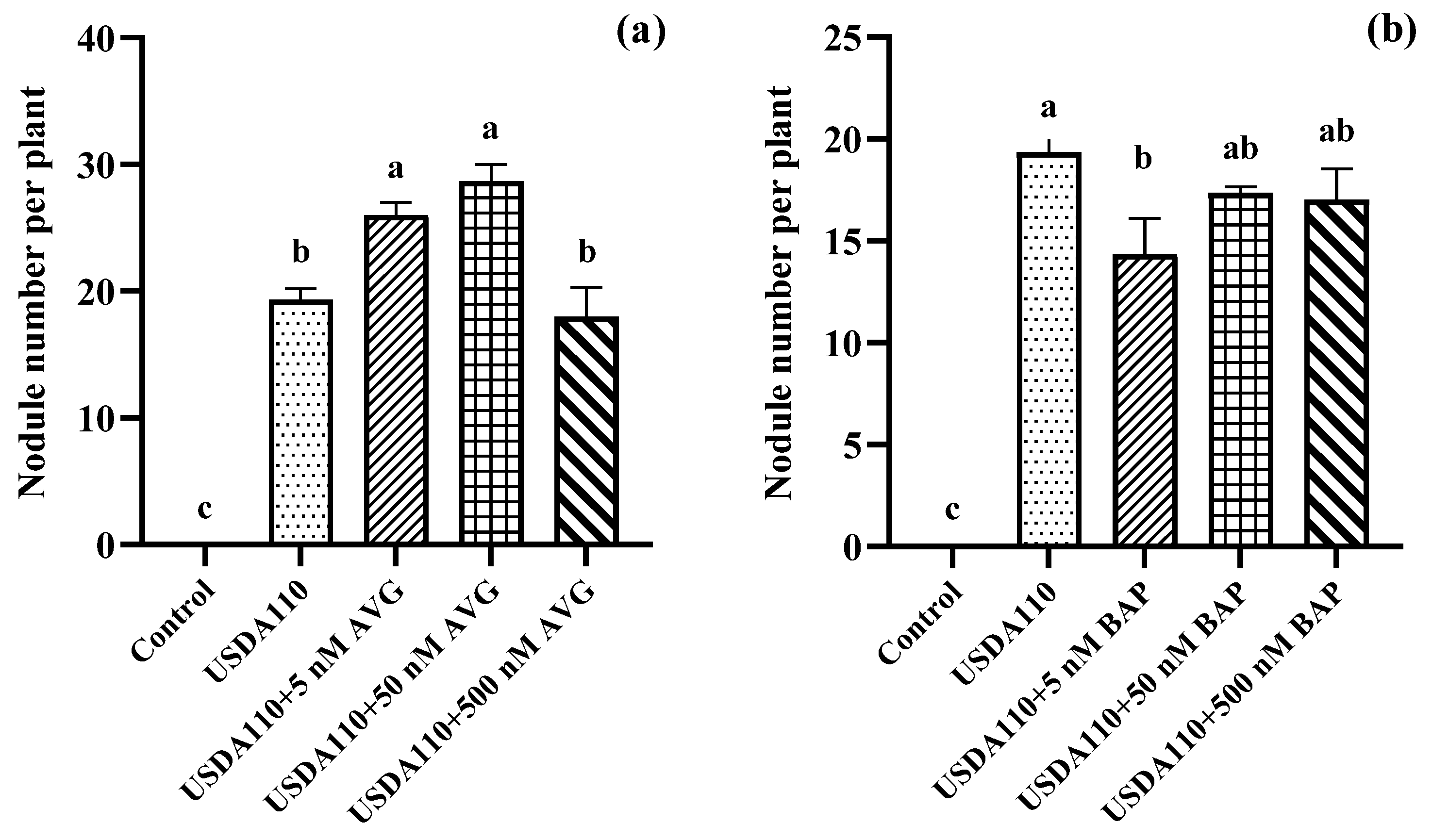
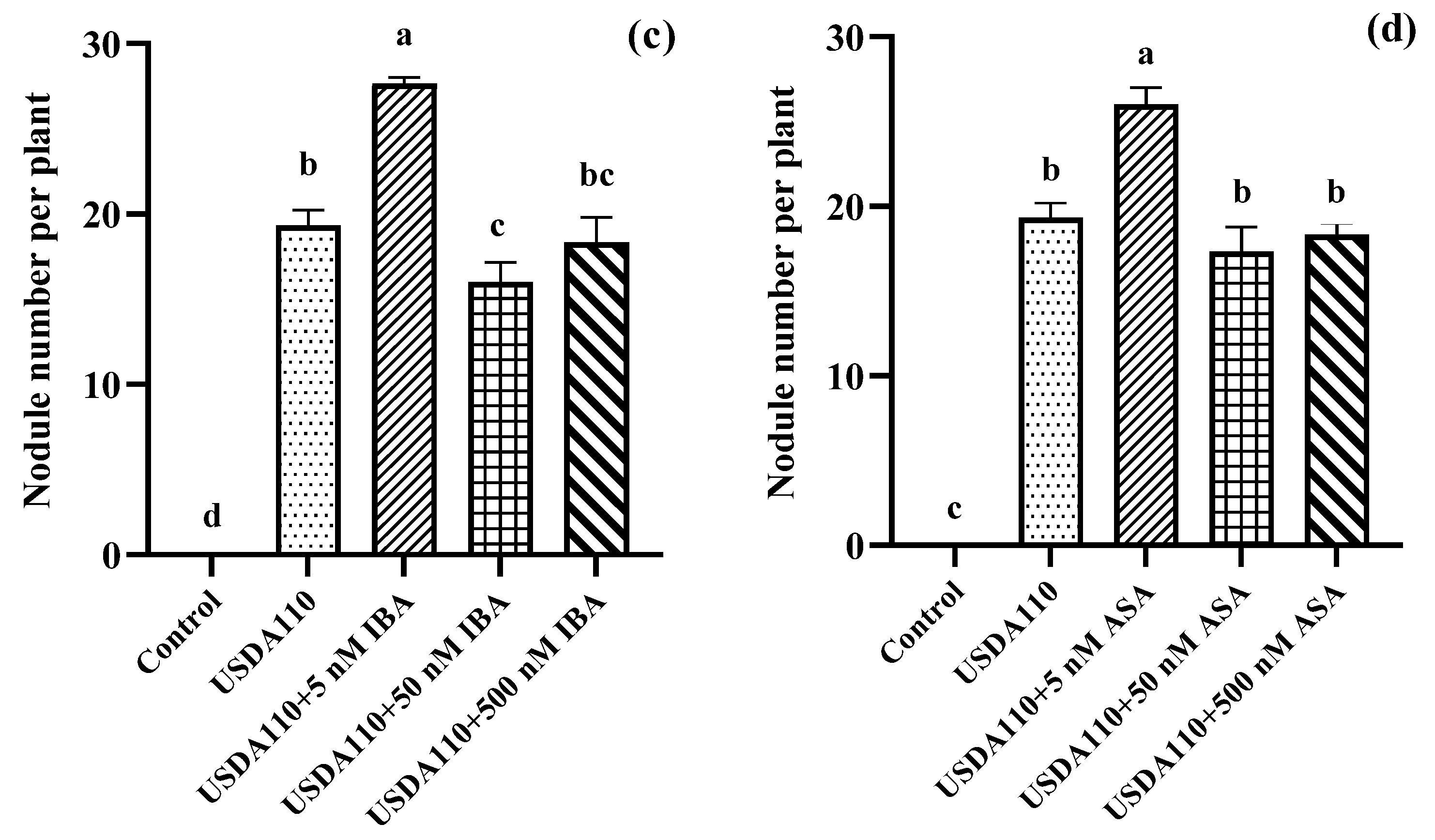
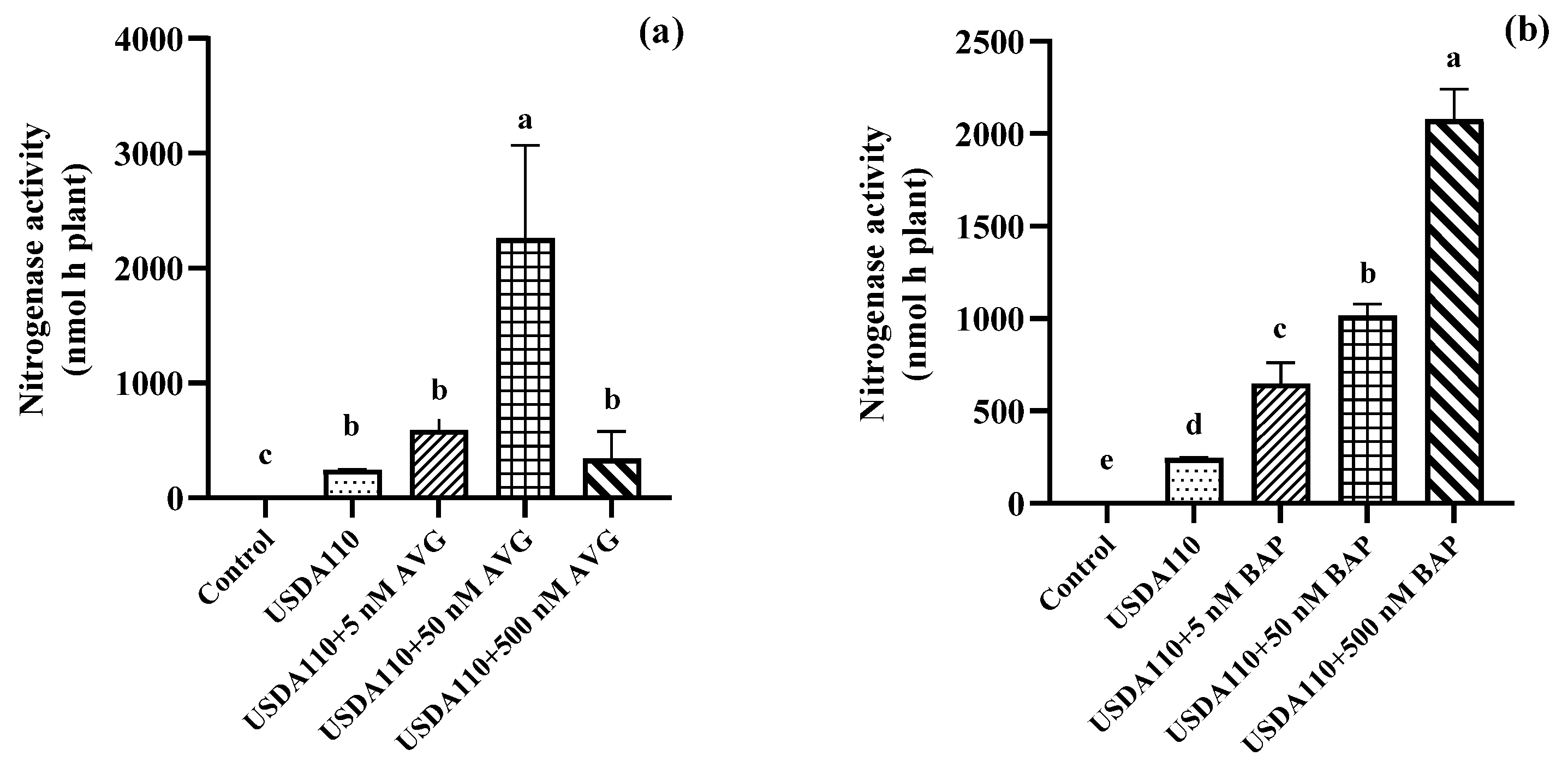
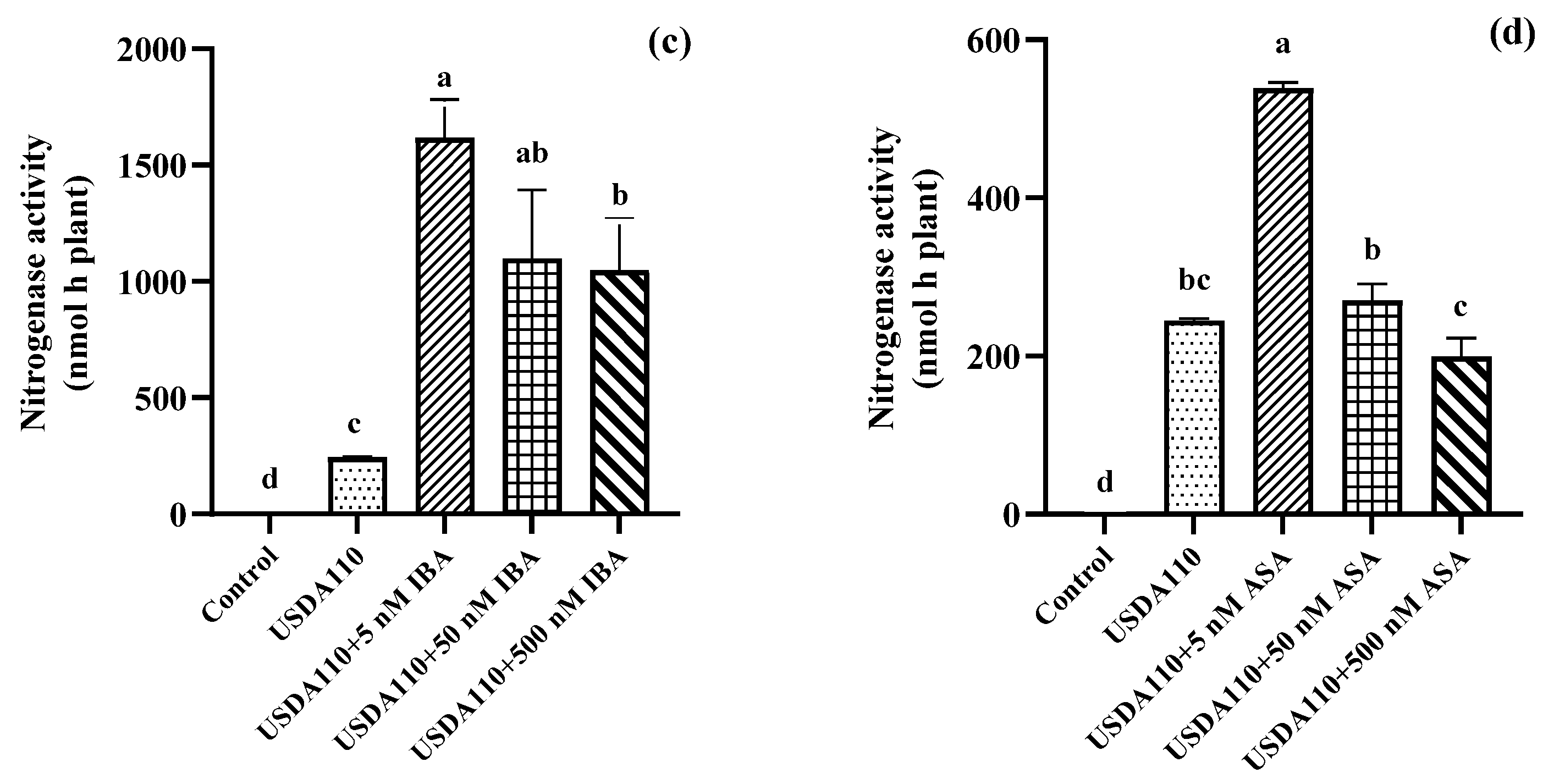
3.1. Effects of Seed Coating and Plant Growth Regulators on Nitrogenase Activity and Nodule Numbers in Soybean Roots
3.2. Effects of Seed-Coated Plant Growth Regulators on Physiological Parameters, Yield, and Yield Components of Soybean Under Greenhouse Condition
3.2.1. Physiological Parameters
3.2.2. Yield and Yield Components
4. Discussions
4.1. Seed Coating–Delivered Plant Growth Regulator–Mediated Regulation of Nodulation and Nitrogenase Activity in Soybean
4.2. Long-Term Effects of Seed Coating–Delivered Plant Growth Regulators on Soybean Physiology and Yield
5. Conclusions
Supplementary Materials
Author Contributions
Funding
Data Availability Statement
Acknowledgments
Conflicts of Interest
References
- Voora, V.; Baliño, S. (Eds.) Global Market Report: Soybeans; International Institute for Sustainable Development: Winnipeg, MB, Canada, 2020; Available online: https://www.jstor.org/stable/resrep26554 (accessed on 15 November 2025).
- Srinives, P.; Somta, P. Present status and future perspectives of Glycine and Vigna in Thailand. In Proceedings of the 14th NIAS International Workshop on Genetic Resources—Genetic Resources and Comparative Genomics of Legumes (Glycine and Vigna), Tsukuba, Japan, 14 September 2009; pp. 63–68. [Google Scholar]
- Cerezini, P.; Oliveira, A.F.M.D.; Nogueira, M.A.; Hungria, M. Strategies to promote early nodulation in soybean under drought. Field Crops Res. 2016, 196, 160–167. [Google Scholar] [CrossRef] [Scilit]
- Kunert, K.J.; Wilson, C.D.; Fuhrmann, M. Drought stress responses in soybean roots and nodules. Front. Plant Sci. 2016, 7, 1015. [Google Scholar] [CrossRef] [Scilit] [PubMed]
- Miljaković, D.; Marinković, J.; Ignjatov, M.; Milosević, D.; Nikolić, Z.; Tintor, B.; Đukić, V. Competitiveness of Bradyrhizobium japonicum inoculation strain for soybean nodule occupancy. Plant Soil Environ. 2022, 68, 59–64. [Google Scholar] [CrossRef] [Scilit]
- Miljaković, D.; Marinković, J.; Tamindžić, G.; Đorđević, V.; Tintor, B.; Milošević, D.; Nikolić, V.; Nikolić, Z. Bio-priming of soybean with Bradyrhizobium japonicum and Bacillus megaterium: Strategy to improve seed germination and the initial seedling growth. Plants 2022, 11, 1927. [Google Scholar] [CrossRef] [Scilit] [PubMed]
- Szpunar-Krok, E.; Bobrecka-Jamro, D.; Pikuła, W.; Jańczak-Pieniążek, M. Effect of nitrogen fertilization and inoculation with Bradyrhizobium japonicum on nodulation and yielding of soybean. Agronomy 2023, 13, 1341. [Google Scholar] [CrossRef] [Scilit]
- Gebrehana, Z.G.; Dagnaw, L.A. Response of soybean to Rhizobial inoculation and starter N fertilizer on Nitisols of Assosa and Begi Areas, Western Ethiopia. Environ. Syst. Res. 2020, 9, 14. [Google Scholar] [CrossRef] [Scilit]
- Lin, J.; Frank, M.; Reid, D. No Home without hormones: How plant hormones control legume nodule organogenesis. Plant Commun. 2020, 1, 100104. [Google Scholar] [CrossRef] [Scilit]
- Zhang, X.X.; Guo, H.J.; Wang, R.; Sui, X.H.; Zhang, Y.M.; Wang, E.T.; Tian, C.F.; Chen, W.X. Genetic divergence of Bradyrhizobium strains nodulating soybeans as revealed by multilocus sequence analysis. Appl. Environ. Microbiol. 2014, 80, 3181–3190. [Google Scholar] [CrossRef] [Scilit]
- Kaneko, T.; Nakamura, Y.; Sato, S.; Minamisawa, K.; Uchiumi, T.; Sasamoto, S.; Watabame, A.; Idesawa, K.; Iriguchi, M.; Kawashima, K.; et al. Complete genomic sequence of nitrogen-fixing symbiotic bacterium Bradyrhizobium japonicum USDA110. DNA Res. 2002, 9, 189–197. [Google Scholar] [CrossRef] [Scilit]
- Thilakarathna, M.S.; Watts, S.; Thompson, M.E.H.; Goron, T.; Silva, C.D.; Chu, G.; Szczyglowski, K.; Morrison, M.J.; Raizada, M.N. Effective rhizobia relieve negative effects of drought stress during the vegetative stage in soybean under field conditions. J. Agron. Crop Sci. 2025, 211, e70073. [Google Scholar] [CrossRef] [Scilit]
- Savala, C.E.; Muananamuale, C.P.; Malita, C.; Wiredu, A.N.; Chibeba, A.M.; Elia, P.; Chikoye, D. Symbiotic effectiveness of Bradyrhizobium strains on soybean growth and productivity in Northern Mozambique. Front. Sustain. Food Syst. 2023, 6, 1084745. [Google Scholar] [CrossRef] [Scilit]
- Nadzieja, M.; Stougaard, J.; Reid, D. A Toolkit for high resolution imaging of cell division and phytohormone signaling in legume roots and root nodules. Front. Plant Sci. 2019, 10, 469726. [Google Scholar] [CrossRef] [Scilit] [PubMed]
- Lin, J.; Roswanjaya, Y.P.; Kohlen, W.; Stougaard, J.; Reid, D. Nitrate restricts nodule organogenesis through inhibition of cytokinin biosynthesis in Lotus japonicus. Nat. Commun. 2021, 12, 6544. [Google Scholar] [CrossRef] [Scilit] [PubMed]
- Breakspear, A.; Liu, C.; Roy, S.; Stacey, N.; Rogers, C.; Trick, M.; Morieri, G.; Mysore, K.S.; Wen, J.; Oldroyd, G.E.; et al. The root hair “Infectome” of Medicago truncatula uncovers changes in cell cycle genes and reveals a requirement for auxin signaling in rhizobial infection. Plant Cell 2015, 26, 4680–4701. [Google Scholar] [CrossRef] [Scilit]
- Oldroyd, G.E.; Engstrom, E.M.; Long, S.R. Ethylene inhibits the nod factor signal transduction pathway of Medicago truncatula. Plant Cell 2001, 13, 1835–1849. [Google Scholar] [CrossRef] [Scilit]
- Choudhury, S.R.; Johns, S.M.; Pandey, S. A convenient, soil-free method for the production of root nodules in soybean to study the effects of exogenous additives. Plant Direct 2019, 3, e00135. [Google Scholar] [CrossRef] [Scilit]
- Amoanimaa-Dede, H.; Su, C.; Yeboah, A.; Zhou, H.; Zheng, D.; Zhu, H. Growth regulators promote soybean productivity: A review. PeerJ 2022, 10, e12556. [Google Scholar] [CrossRef] [Scilit]
- Wavhale, M.M.; Salve, U.S. Effect of foliar application of selected plant growth regulators on growth and yield of soybean [Glycine max (L.) Merrill]. Agric. Sci. Dig. 2024, 44, 439–444. [Google Scholar] [CrossRef] [Scilit]
- Khatun, S.; Roy, T.S.; Haque, M.N.; Alamgir, B. Role of plant growth regulators on growth and yield of soybean at different stages of application. Sci. Agric. 2016, 15, 380–386. [Google Scholar] [CrossRef] [Scilit]
- Cheng, H.; Gan, Y.; Zheng, X.; Meng, Z.; Zhao, F.; Feng, W.; Guo, R.; Song, X.; Zhao, Q. Plant growth regulators improve soybean yield in Northwest China through nutritional and hormonal regulation. Agronomy 2025, 15, 2422. [Google Scholar] [CrossRef] [Scilit]
- Kempster, R.; Barat, M.; Bishop, L.; Rufino, M.; Borras, L.; Dodd, I.C. Genotype and cytokinin effects on soybean yield and biological nitrogen fixation across soil temperatures. Ann. Appl. Biol. 2020, 178, 341–354. [Google Scholar] [CrossRef] [Scilit]
- Kitaeva, A.B.; Serova, T.A.; Kusakin, P.G.; Tsyganov, V.E. Effects of elevated temperature on Pisum sativum nodule development II—Phytohormonal responses. Int. J. Mol. Sci. 2023, 24, 17062. [Google Scholar] [CrossRef] [Scilit] [PubMed]
- Ikeuchi, M.; Sugimoto, K.; Iwase, A. Plant callus: Mechanisms of induction and repression. Plant Cell 2013, 25, 3159. [Google Scholar] [CrossRef] [Scilit] [PubMed]
- Alwakil, N.H.; Mohamad Annuar, M.S.; Jalil, M. Synergistic effects of plant growth regulators and elicitors on α-humulene and zerumbone production in Zingiber zerumbet Smith adventitious root cultures. Molecules 2022, 27, 4744. [Google Scholar] [CrossRef] [Scilit]
- Hasibuan, R.F.M.; Miyatake, M.; Sugiura, H.; Agake, S.; Yokoya, T.; Bellingrath-Kimura, S.D.; Katsuea, K.; Ohkama-Ohtsu, N. Application of biofertilizer containing Bacillus pumillus TUAT1 on soybean without inhibiting infection by Bradyrhizobium diazoefficiens USDA110. Soil Sci. Plant Nutr. 2021, 67, 535–539. [Google Scholar] [CrossRef] [Scilit]
- Zadegan, S.B.; Kim, W.; Abbas, H.M.K.; Kim, S.; Krishnan, H.B. Differential symbiotic compatibilities between rhizobium strains and cultivated and wild soybeans revealed by anatomical and transcriptome analyses. Front. Plant Sci. 2024, 15, 1435632. [Google Scholar] [CrossRef] [Scilit]
- Dissanayake, G.; Wijayasinghe, M.; Yapa, N. Evaluation of potential seed coating formulation with Bradyrhizobium japonicum on soybean (Glycine max L.) seeds. Vingnanam J. Sci. 2024, 19, 51–64. [Google Scholar]
- Souza, M.C.; Chagas, L.F.B.; Martins, A.L.L.; Lima, C.A.; Moura, D.M.d.O.; Lopes, M.B.; Ferreira, A.L.L.; Sousa, K.Â.O.d.; Junior, A.F.C. Biopolymers in the preservation of rhizobacteria cells and efficiency in soybean inoculation. Res. Soc. Dev. 2022, 11, e21911729688. [Google Scholar] [CrossRef] [Scilit]
- Liu, R.; Yan, X.; Liu, R.; Wu, Q.; Gao, Y.; Muhindo, E.M.; Zhi, Z.; Wu, T.; Sui, W.; Zhang, M. Lima bean (Phaseolus lunatus Linn.) protein isolate as a promising plant protein mixed with xanthan gum for stabilizing oil-in-water emulsions. J. Sci. Food Agric. 2024, 104, 818–828. [Google Scholar] [CrossRef] [Scilit]
- Baldani, J.I.; Reis, V.M.; Videira, S.S.; Boddey, L.H.; Baldani, V.L.D. The art of isolating nitrogen-fixing bacteria from non-leguminous plants using N-Free semi-solid media. Plant Soil 2014, 384, 413–431. [Google Scholar] [CrossRef] [Scilit]
- Saltveit, M.E. Aminoethoxyvinylglycine (AVG) reduces ethylene and protein biosynthesis in excised discs of mature-green tomato pericarp tissue. Postharvest Biol. Technol. 2005, 35, 183–190. [Google Scholar] [CrossRef] [Scilit]
- Shafer, W.E.; Clarke, G.; Fritts, J.R.; Menendez, R.; Woolard, D. Aminoethoxyvinylglycine (AVG): Past, present, and future. HortScience 1996, 31, 694. [Google Scholar] [CrossRef] [Scilit]
- Janda, T.; Gondor, O.K.; Yordanova, R.; Szalai, G.; Pál, M. Salicylic acid and photosynthesis: Signalling and effects. Acta Physiol. Plant 2014, 36, 2537–2546. [Google Scholar] [CrossRef] [Scilit]
- Zulkadir, G. Differential responses of common bean (Phaseolus vulgaris) cultivars to exogenous Indole-3-Butyric Acid application. Phyton 2025, 94, 2117–2129. [Google Scholar] [CrossRef] [Scilit]
- Lindström, K.; Mousavi, S.A. Effectiveness of nitrogen fixation in rhizobia. Microb. Biotechnol. 2020, 13, 1314–1335. [Google Scholar] [CrossRef] [Scilit]
- Zhang, H.; Daoust, F.; Charles, T.C.; Driscoll, B.T.; Prithiviraj, B.; Smith, D.L. Bradyrhizobium japonicum mutants allowing improved nodulation and nitrogen fixation in field-grown soybean. J. Agric. Sci. 2002, 138, 293–300. [Google Scholar] [CrossRef] [Scilit]
- Hegazi, A.M.; El-Shraiy, A.M. Impact of salicylic acid and paclobutrazol exogenous application on the growth, yield and nodule formation of common bean. Aust. J. Basic Appl. Sci. 2007, 1, 834–840. [Google Scholar]
- Kuchlan, P.; Kuchlan, M.K. Effect of salicylic acid on plant physiological and yield traits of soybean. Legume Res. 2023, 46, 56–61. [Google Scholar] [CrossRef] [Scilit]
- van Spronsen, P.C.; Tak, T.; Rood, A.M.M.; Brussel, A.A.N.v.; Kijne, J.W.; Boot, K.J.M. Salicylic acid inhibits indeterminate-type nodulation but not determinate-type nodulation. Mol. Plant Microbe Interact. 2003, 16, 83–91. [Google Scholar] [CrossRef] [Scilit]
- Senaratna, T.; Touchell, D.; Bunn, E.; Dixon, K. Acetyl salicylic acid (Aspirin) and salicylic acid induce multiple stress tolerance in bean and tomato plants. Plant Growth Regul. 2000, 30, 157–161. [Google Scholar] [CrossRef] [Scilit]
- Radhakrishnan, R.; Ranjithakumari, B.D. Callus induction and plant regeneration of Indian soybean (Glycine max (L.) Merr. cv. CO3) via half seed explant culture. J. Agric. Technol. 2007, 3, 287–297. [Google Scholar]
- Rathod, B.U.; Dattagonde, N.R.; Jadhav, M.P.; Behre, P.P. Effect of different growth regulators on soybean (Glycine max L.) regeneration. Int. J. Curr. Microbiol. Appl. Sci. 2017, 6, 2726–2731. [Google Scholar] [CrossRef] [Scilit]
- Cho, Y.; Suh, S.K.; Park, H.K.; Wood, A. Impact of 2, 4-DP and BAP upon pod set and seed yield in soybean treated at reproductive stages. Plant Growth Regul. 2002, 36, 215–221. [Google Scholar] [CrossRef] [Scilit]
- van Spronsen, P.C.; Grønlund, M.; Bras, C.P.; Spaink, H.P.; Kijne, J.W. Cell biological changes of outer cortical root cells in early determinate nodulation. Mol. Plant Microbe Interact. 2001, 14, 839–847. [Google Scholar] [CrossRef] [Scilit] [PubMed]
- Liu, C.; Zhao, Y.; Liu, J.; Gen, W.; Cheng, Y. The effects of ethylene on the HCl-extractability of trace elements during soybean seed germination. Electron. J. Biotechnol. 2015, 18, 333–337. [Google Scholar] [CrossRef] [Scilit]
- Liu, Y.; Jiang, Y.; Zhong, X.; Li, C.; Xu, Y.; Zhu, K.; Wang, W.; Gu, J.; Zhang, H.; Wang, Z.; et al. Exogenous spermidine and amino-ethoxyvinylglycine improve nutritional quality via increasing amino acids in rice grains. Plants 2024, 13, 316. [Google Scholar] [CrossRef] [Scilit]
- Pedrini, S.; Merritt, D.J.; Stevens, J.; Dixon, K. Seed coating: Science or marketing spin? Trends Plant Sci. 2017, 22, 106–116. [Google Scholar] [CrossRef] [Scilit]
- Patyal, D.; Sachdeva, K.; Sharma, K.; Renuka Panigrahi, C.K.; Tutlani, A.; Khan, R.R. An innovative and sustainable seed coating technology for improving seed quality and crop performance. J. Sci. Res. Rep. 2025, 31, 597–607. [Google Scholar] [CrossRef] [Scilit]
- Sheteiwy, M.S.; Ali, D.F.I.; Xiong, Y.C.; Brestic, M.; Skalicky, M.; Hamoud, Y.A.; Ulhassan, Z.; Shaghaleh, H.; AbdElgawad, H.; Farooq, M.; et al. Physiological and biochemical responses of soybean plants inoculated with Arbuscular mycorrhizal fungi and Bradyrhizobium under drought stress. BMC Plant Biol. 2021, 21, 195. [Google Scholar] [CrossRef] [Scilit]
- Jarecki, W. Physiological response of soybean plants to seed coating and inoculation under pot experiment conditions. Agronomy 2022, 12, 1095. [Google Scholar] [CrossRef] [Scilit]
- García-Ochoa, F.; Santos, V.; Casas, J.; Gómez, E. Xanthan gum: Production, recovery, and properties. Biotechnol. Adv. 2000, 18, 549–579. [Google Scholar] [CrossRef] [Scilit] [PubMed]
- Berninger, T.; Dietz, N.; López, Ó.G. Water-soluble polymers in agriculture: Xanthan gum as eco-friendly alternative to synthetics. Microb. Biotechnol. 2021, 14, 1881. [Google Scholar] [CrossRef] [Scilit] [PubMed]
- Vijayalakshmi, V.; Sathish, S.; Umarani, R. Effect of Xanthan gum seed coating on seed germination and seedling vigour of finger millet (Eleusine coracana L.). Environ. Conserv. J. 2024, 25, 206–210. [Google Scholar] [CrossRef] [Scilit]
- Hassanisaadi, M.; Vatankhah, M.; Kennedy, J.F.; Rabiei, A.; Saberi Riseh, R. Advancements in xanthan gum: A macromolecule for encapsulating plant probiotic bacteria with enhanced properties. Carbohydr. Polym. 2025, 348, 122801. [Google Scholar] [CrossRef] [Scilit]
- Rocha, I.; Ma, Y.; Souza-Alonso, P.; Vosátka, M.; Freitas, H.; Oliveira, R.S. Seed coating: A tool for delivering beneficial microbes to agricultural crops. Front. Plant Sci. 2019, 10, 1357. [Google Scholar] [CrossRef] [Scilit]
- Halmer, P. Seed technology and seed enhancement. In Proceedings of the XXVII International Horticultural Congress-IHC2006, Seoul, Republic of Korea, 13–19 August 2006; Volume 771, pp. 17–26. [Google Scholar]
- Guinel, F.C. Ethylene, a hormone at the center-stage of nodulation. Front. Plant Sci. 2015, 6, 1121. [Google Scholar] [CrossRef] [Scilit]
- Wang, X.; Wen, H.; Suprun, A.; Zhu, H. Ethylene signaling in regulating plant growth, development, and stress responses. Plants 2025, 14, 309. [Google Scholar] [CrossRef] [Scilit]
- Broekaert, W.F.; Delauré, S.L.; Bolle, M.F.C.D.; Cammue, B.P.A. The role of ethylene in host–pathogen interactions. Annu. Rev. Phytopathol. 2006, 44, 393–416. [Google Scholar] [CrossRef] [Scilit]
- Ecker, J.R.; Davis, R.W. Plant defense genes are regulated by ethylene. Proc. Natl. Acad. Sci. USA 1987, 84, 5202–5206. [Google Scholar] [CrossRef] [Scilit]
- Nascimento, F.X.; Rossi, M.J.; Glick, B.R. Ethylene and 1-aminocyclopropane-1-carboxylate (ACC) in plant–bacterial interactions. Front. Plant Sci. 2018, 9, 114. [Google Scholar] [CrossRef] [Scilit]
- Schaller, G.E.; Binder, B.M. Inhibitors of ethylene biosynthesis and signaling. In Ethylene Signaling: Methods And Protocols; Springer: New York, NY, USA, 2017; pp. 223–235. [Google Scholar] [CrossRef] [Scilit]
- McBride, S.; Errickson, W.; Huang, B. Effects of chemical and biological inhibitors of ethylene on heat tolerance in annual bluegrass. HortScience 2025, 60, 310–316. [Google Scholar] [CrossRef] [Scilit]
- Frick, E.M.; Strader, L.C. Roles for IBA-derived auxin in plant development. J. Exp. Bot. 2018, 69, 169–177. [Google Scholar] [CrossRef] [Scilit]
- Najeeb, U.; Atwell, B.; Bange, M.P.; Tan, D.K.Y. Aminoethoxyvinylglycine (AVG) ameliorates waterlogging-induced damage in cotton by inhibiting ethylene synthesis and sustaining photosynthetic capacity. Plant Growth Regul. 2015, 76, 83–98. [Google Scholar] [CrossRef] [Scilit]
- Gao, Z.P.; Gu, W.C.; Li, J.; Qiu, Q.T.; Ma, B.G. Independent component analysis reveals the transcriptional regulatory modules in Bradyrhizobium diazoefficiens USDA110. Int. J. Mol. Sci. 2023, 24, 12544. [Google Scholar] [CrossRef] [Scilit]
- Khalid, A.; Ahmad, Z.; Mahmood, S.; Mahmood, T.; Imran, M. Role of ethylene and bacterial ACC-deaminase in nodulation of legumes. In Microbes for Legume Improvement; Springer: New York, NY, USA, 2017; pp. 95–118. [Google Scholar]
- Wang, Y.; Yang, W.; Zuo, Y.; Zhu, L.; Hastwell, A.H.; Chen, L.; Tian, Y.; Su, C.; Ferguson, B.J.; Li, X. GmYUC2a mediates auxin biosynthesis during root development and nodulation in soybean. J. Exp. Bot. 2019, 70, 3165–3176. [Google Scholar] [CrossRef] [Scilit]
- Sandhu, A.K.; Brown, M.R.; Subramanian, S.; Brözel, V.S. Bradyrhizobium diazoefficiens USDA 110 displays plasticity in the attachment phenotype when grown in different soybean root exudate compounds. Front. Microbiol. 2023, 14, 1190396. [Google Scholar] [CrossRef] [Scilit]
- Serraj, R. Effects of drought stress on legume symbiotic nitrogen fixation: Physiological mechanisms. Indian J. Exp. Biol. 2003, 41, 1136–1141. [Google Scholar] [PubMed]





| Conditions | Treatments | Dry Weight per Plant (g) | Nodule Number per Plant | Pod Number per Plant | 100 Seed Weight (g) | Seed Weight per Plant (g) |
|---|---|---|---|---|---|---|
| Well-watering | Control | 1.18 ± 0.17 c | 0.00 ± 0.00 c | 10.11 ± 1.02 abc | 2.53 ± 0.19 bcd | 6.12 ± 0.39 c |
| 5 nM IBA | 1.26 ± 0.16 c | 0.00 ± 0.00 c | 7.67 ± 0.37 c | 1.77 ± 0.17 d | 6.34 ± 0.39 c | |
| 50 nM AVG | 1.53 ± 0.12 c | 0.00 ± 0.00 c | 9.11 ± 0.56 bc | 2.03 ± 0.17 cd | 6.51 ± 0.11 bc | |
| 5 nM ASA | 1.41 ± 0.17 c | 0.00 ± 0.00 c | 8.56 ± 1.00 bc | 2.05 ± 0.13 cd | 6.56 ± 0.21 bc | |
| USDA110 | 2.54 ± 0.20 b | 10.33 ± 0.50 b | 13.56 ± 0.56 a | 3.34 ± 0.18 a | 8.06 ± 0.17 a | |
| USDA110 + 5 nM IBA | 3.57 ± 0.29 a | 12.78 ± 0.86 a | 11.67 ± 0.50 ab | 2.70 ± 0.13 abc | 8.41 ± 0.10 a | |
| USDA110 + 50 nM AVG | 2.54 ± 0.10 b | 13.33 ± 0.53 a | 12.00 ± 1.11 ab | 3.24 ± 0.25 ab | 8.24 ± 0.19 a | |
| USDA110 + 5 nM ASA | 2.50 ± 0.15 b | 9.44 ± 0.41 b | 11.44 ± 1.06 ab | 2.57 ± 0.14 abc | 7.43 ± 0.13 ab | |
| Sig | 0.000 ** | 0.000 ** | 0.000 ** | 0.000 ** | 0.000 ** | |
| %CV | 26.09 | 22.20 | 23.43 | 20.83 | 9.88 | |
| Water stress | Control | 0.75 ± 0.04 d | 0.00 ± 0.00 c | 5.56 ± 0.29 bc | 1.08 ± 0.64 b | 4.15 ± 0.13 cd |
| 5 nM IBA | 0.87 ± 0.10 cd | 0.00 ± 0.00 c | 4.67 ± 0.33 c | 1.05 ± 0.06 b | 3.45 ± 0.13 d | |
| 50 nM AVG | 1.36 ± 0.20 bc | 0.00 ± 0.00 c | 6.11 ± 0.39 abc | 1.46 ± 0.12 ab | 4.49 ± 0.10 c | |
| 5 nM ASA | 0.85 ± 0.08 cd | 0.00 ± 0.00 c | 5.63 ± 0.38 bc | 1.33 ± 0.12 ab | 3.90 ± 0.25 cd | |
| USDA110 | 0.89 ± 0.10 cd | 5.78 ± 0.22 b | 5.89 ± 0.66 bc | 1.58 ± 0.21 ab | 5.60 ± 0.12 b | |
| USDA110 + 5 nM IBA | 2.05 ± 0.15 a | 7.33 ± 0.29 a | 7.67 ± 0.37 a | 1.88 ± 0.13 a | 5.73 ± 0.18 b | |
| USDA110 + 50 nM AVG | 1.91 ± 0.12 ab | 7.11 ± 0.31 a | 6.44 ± 0.34 ab | 1.66 ± 0.11 a | 7.55 ± 0.20 a | |
| USDA110 + 5 nM ASA | 2.04 ± 0.18 a | 6.00 ± 0.24 b | 4.89 ± 0.31 bc | 1.35 ± 0.11 ab | 5.48 ± 0.19 b | |
| Sig | 0.000 ** | 0.000 ** | 0.000 ** | 0.000 ** | 0.000 ** | |
| %CV | 29.20 | 16.99 | 20.39 | 25.72 | 10.00 |
Disclaimer/Publisher’s Note: The statements, opinions and data contained in all publications are solely those of the individual author(s) and contributor(s) and not of MDPI and/or the editor(s). MDPI and/or the editor(s) disclaim responsibility for any injury to people or property resulting from any ideas, methods, instructions or products referred to in the content. |
© 2025 by the authors. Licensee MDPI, Basel, Switzerland. This article is an open access article distributed under the terms and conditions of the Creative Commons Attribution (CC BY) license (https://creativecommons.org/licenses/by/4.0/).
Share and Cite
Pairintra, S.; Boonkerd, N.; Teaumroong, N.; Umnajkitikorn, K. Seed Coating Synergies: Harnessing Plant Growth Regulators to Strengthen Soybean Nodulation and Stress Resilience. Agronomy 2025, 15, 2876. https://doi.org/10.3390/agronomy15122876
Pairintra S, Boonkerd N, Teaumroong N, Umnajkitikorn K. Seed Coating Synergies: Harnessing Plant Growth Regulators to Strengthen Soybean Nodulation and Stress Resilience. Agronomy. 2025; 15(12):2876. https://doi.org/10.3390/agronomy15122876
Chicago/Turabian StylePairintra, Saranyapath, Nantakorn Boonkerd, Neung Teaumroong, and Kamolchanok Umnajkitikorn. 2025. "Seed Coating Synergies: Harnessing Plant Growth Regulators to Strengthen Soybean Nodulation and Stress Resilience" Agronomy 15, no. 12: 2876. https://doi.org/10.3390/agronomy15122876
APA StylePairintra, S., Boonkerd, N., Teaumroong, N., & Umnajkitikorn, K. (2025). Seed Coating Synergies: Harnessing Plant Growth Regulators to Strengthen Soybean Nodulation and Stress Resilience. Agronomy, 15(12), 2876. https://doi.org/10.3390/agronomy15122876