Ecofriendly Application of Synthetic Zinc Oxide Nanoparticles as Stress Regulator Bio-Fertilizer for Zea mays


Abstract
1. Introduction
2. Materials and Methods
2.1. Design and Executing the Experiment
2.2. Synthesis and Characteristics of ZnO/NPs
2.3. Measuring the Total Flavonoids (TFs) and Total Phenolics (TPs)
2.4. Phenolic Profile; High-Performance Liquid Chromatography (HPLC) Analysis
2.5. Preparation of the Enzymatic Extraction Buffer and Determining the Enzymatic Activities of Peroxidase, Glutathione Reductase/-s-Transferase, Superoxide Dismutase, and Catalase
2.6. Studying Gene Expression Across the Transcriptome
2.7. Statistical Analysis
3. Results
3.1. The Synthesis of ZnO/NPs and Their Experimental Characteristics
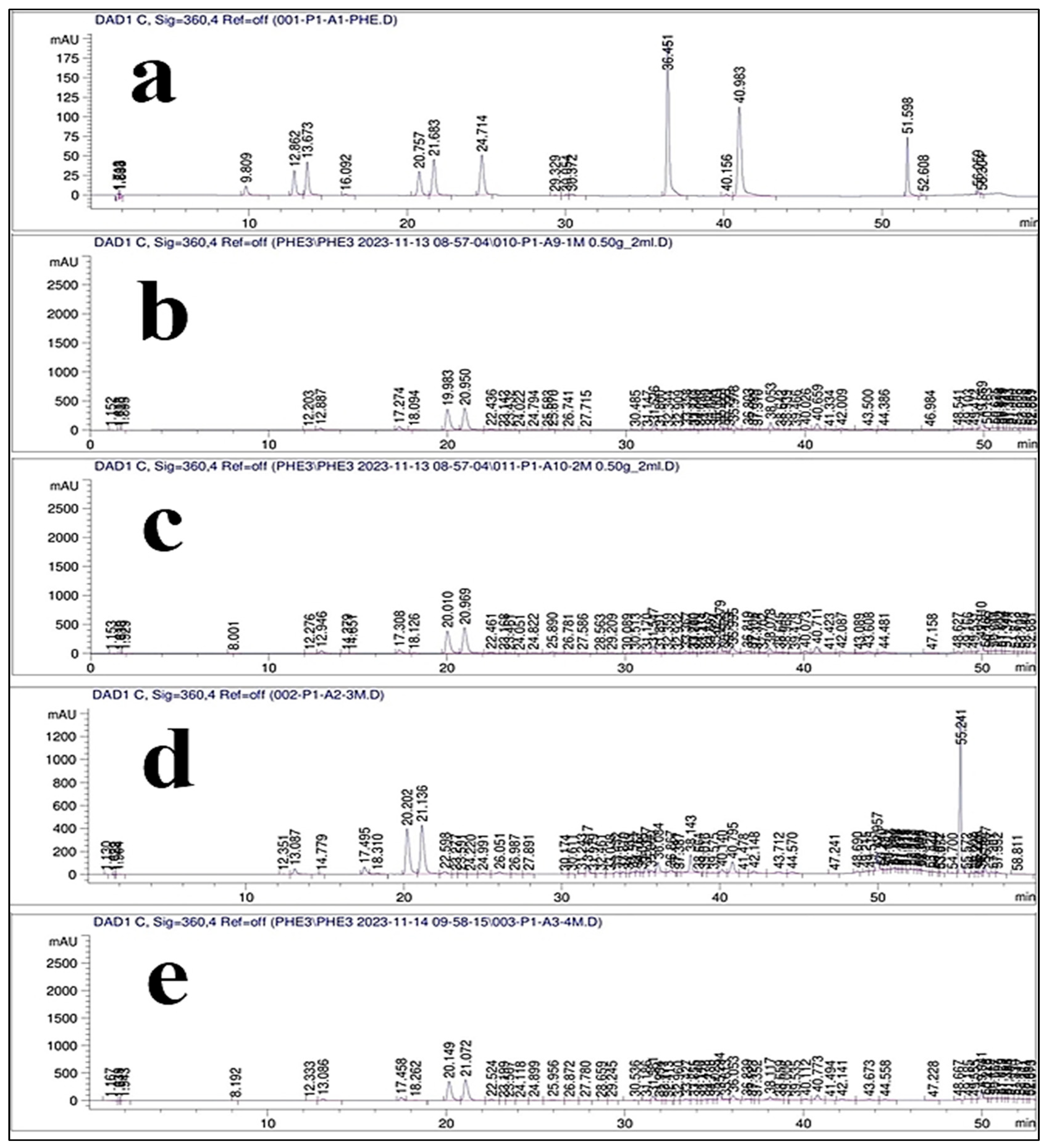
3.2. Phenolic Profile
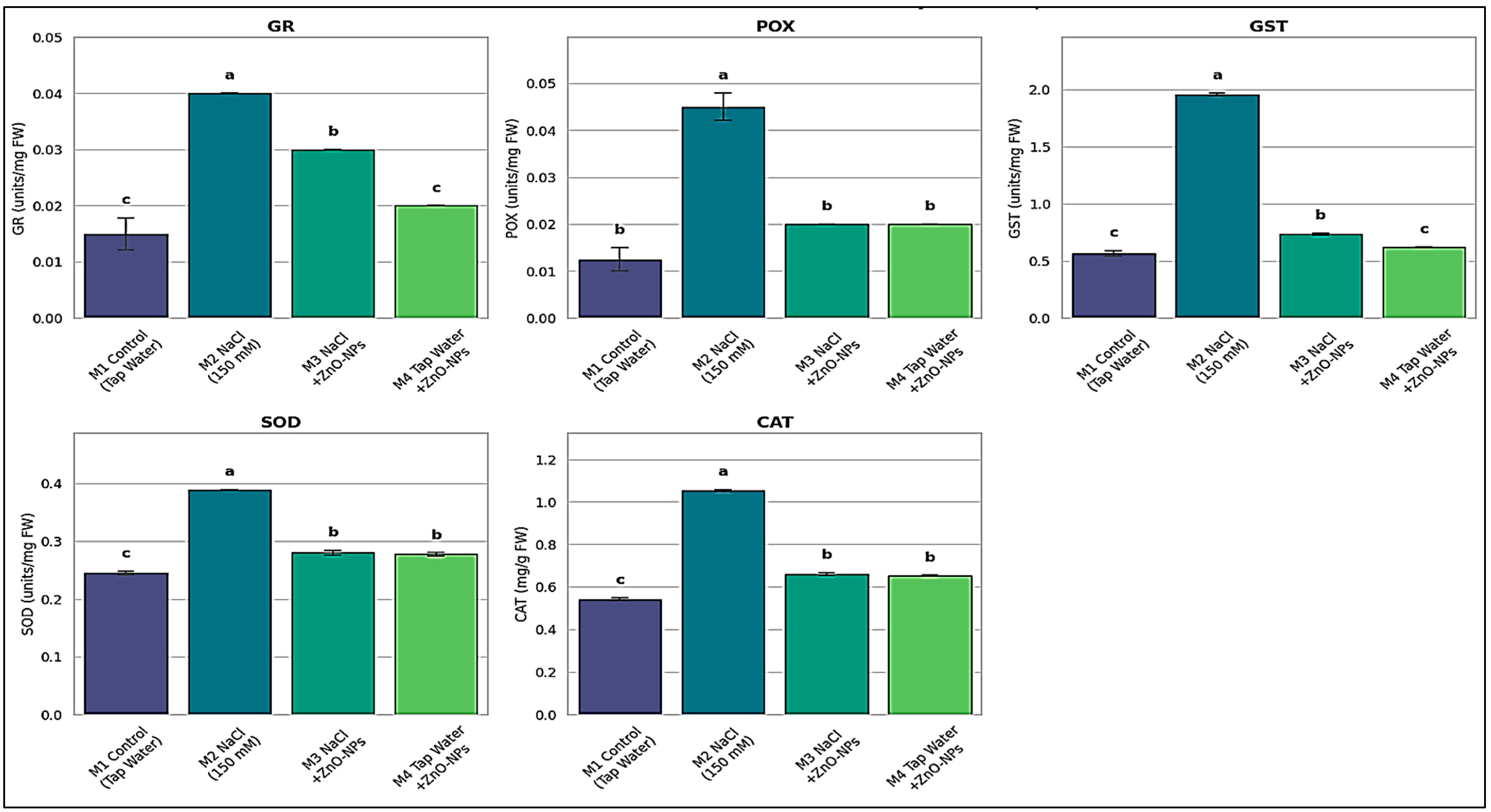
3.3. Determination of the Antioxidant Enzyme Activities
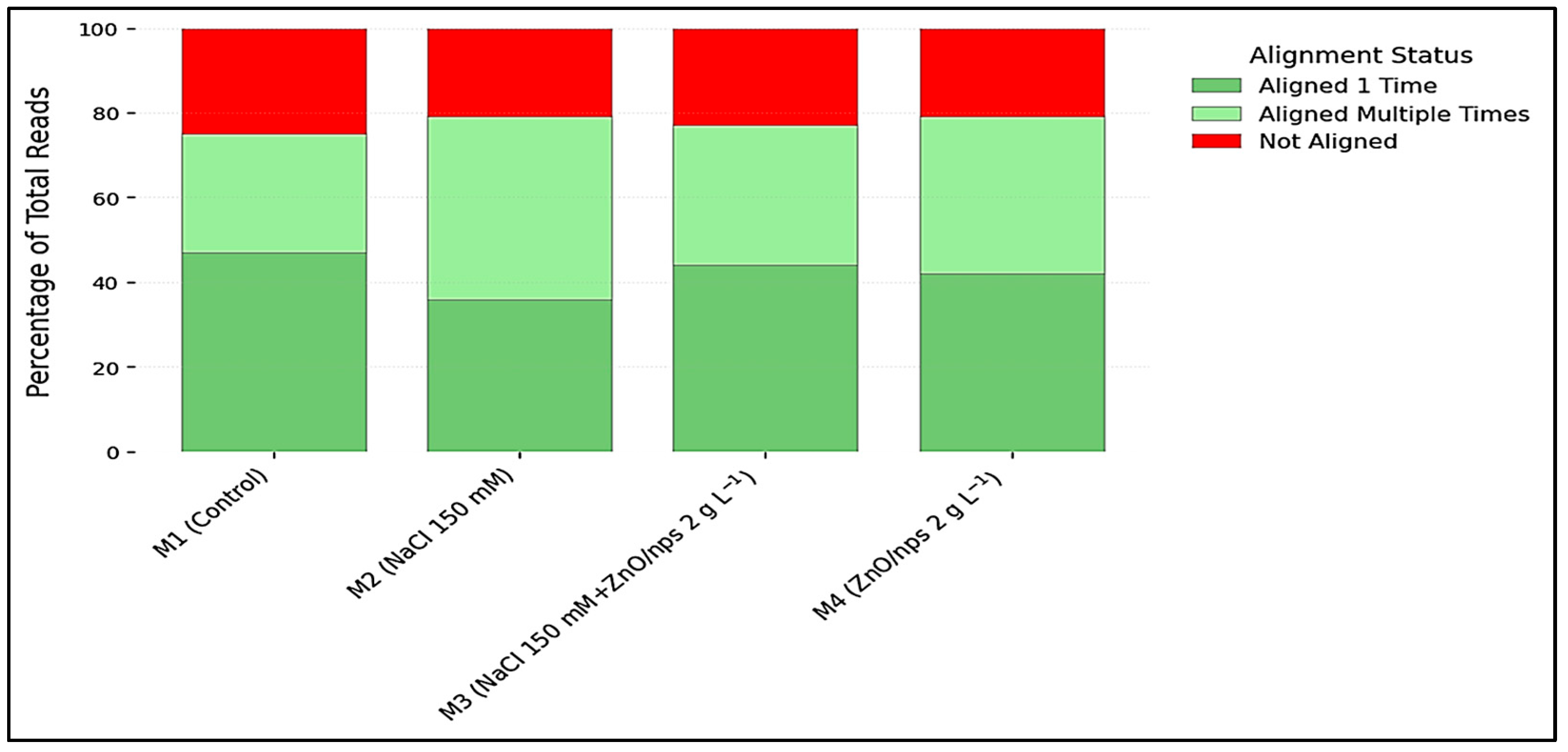
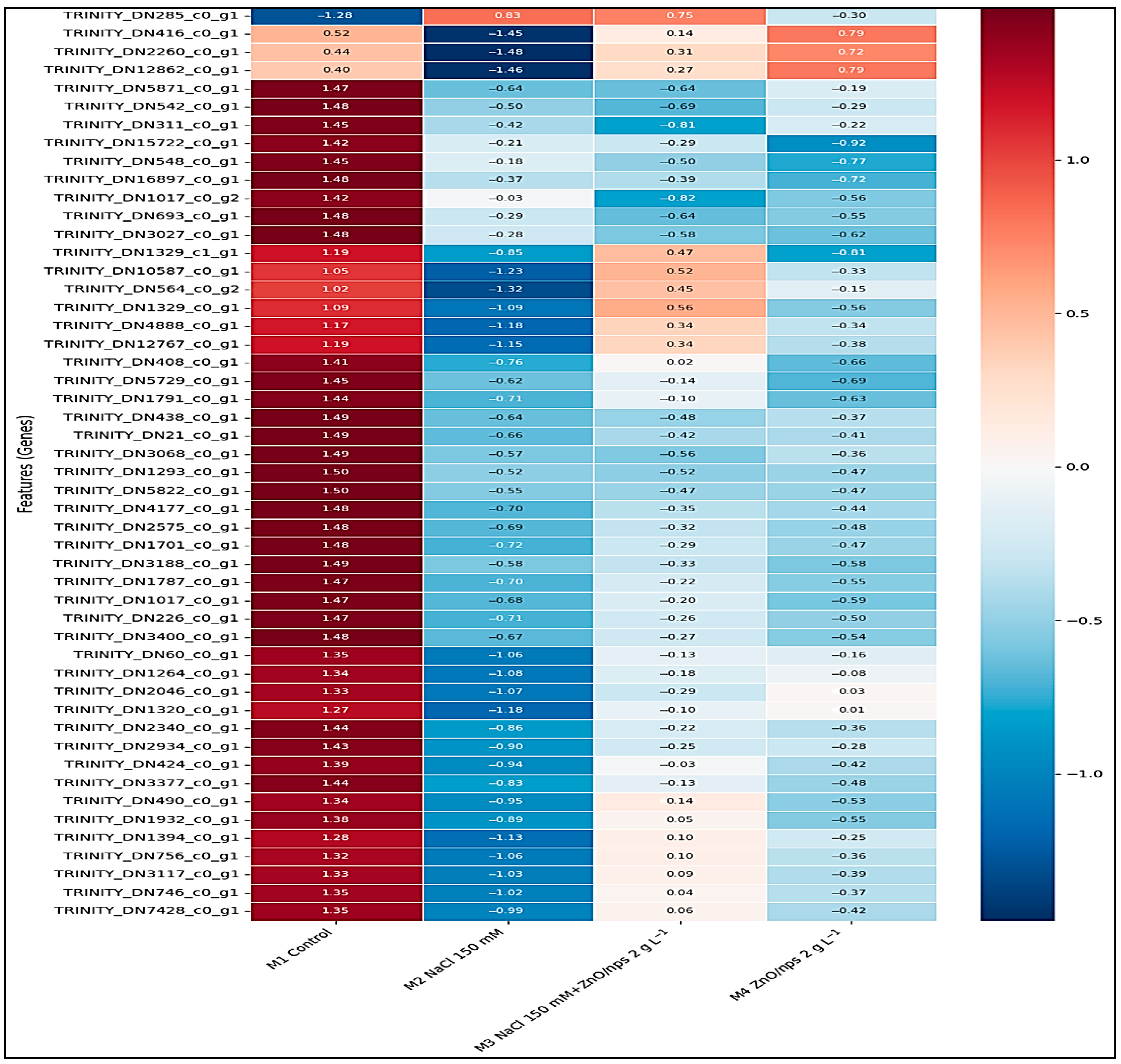
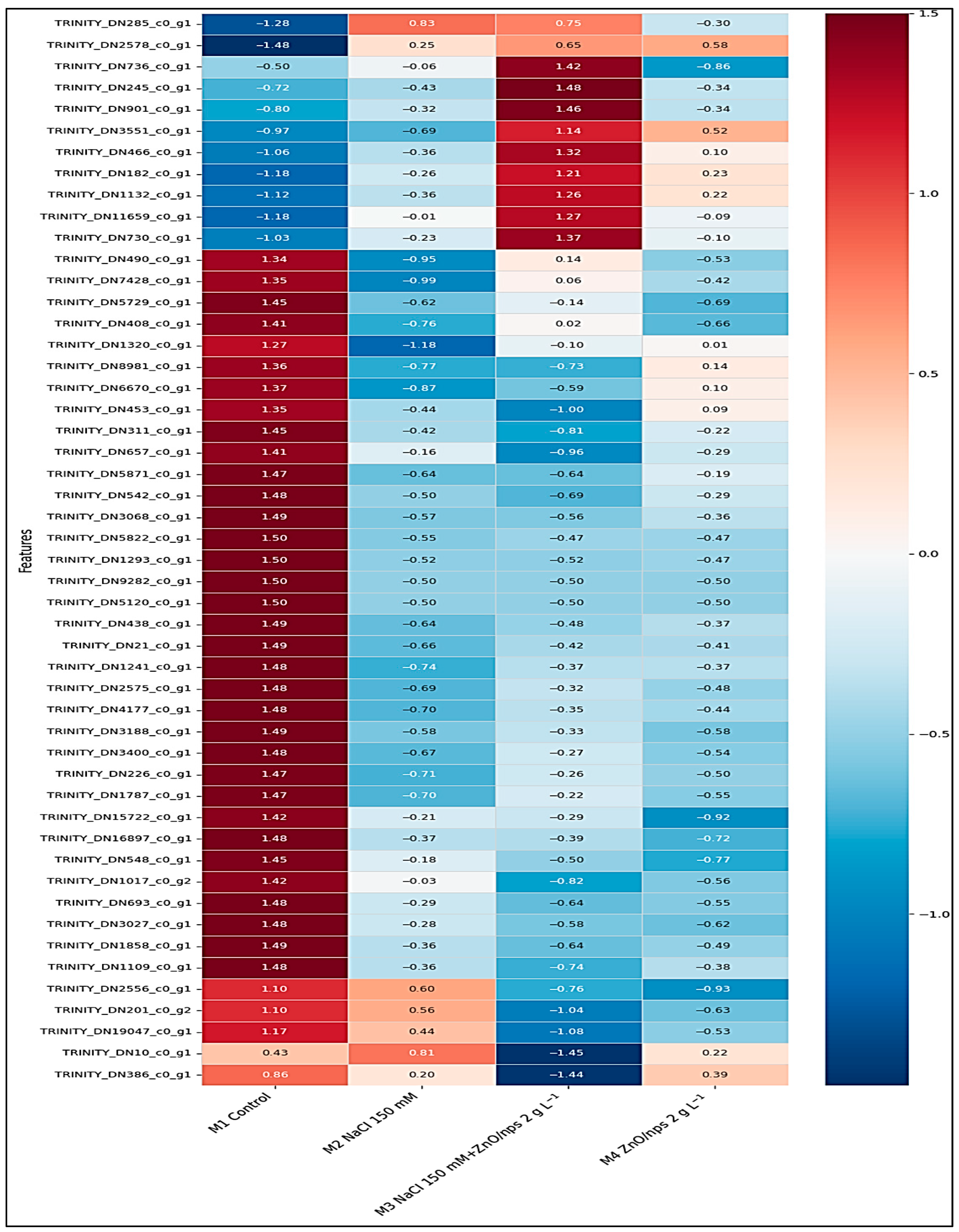
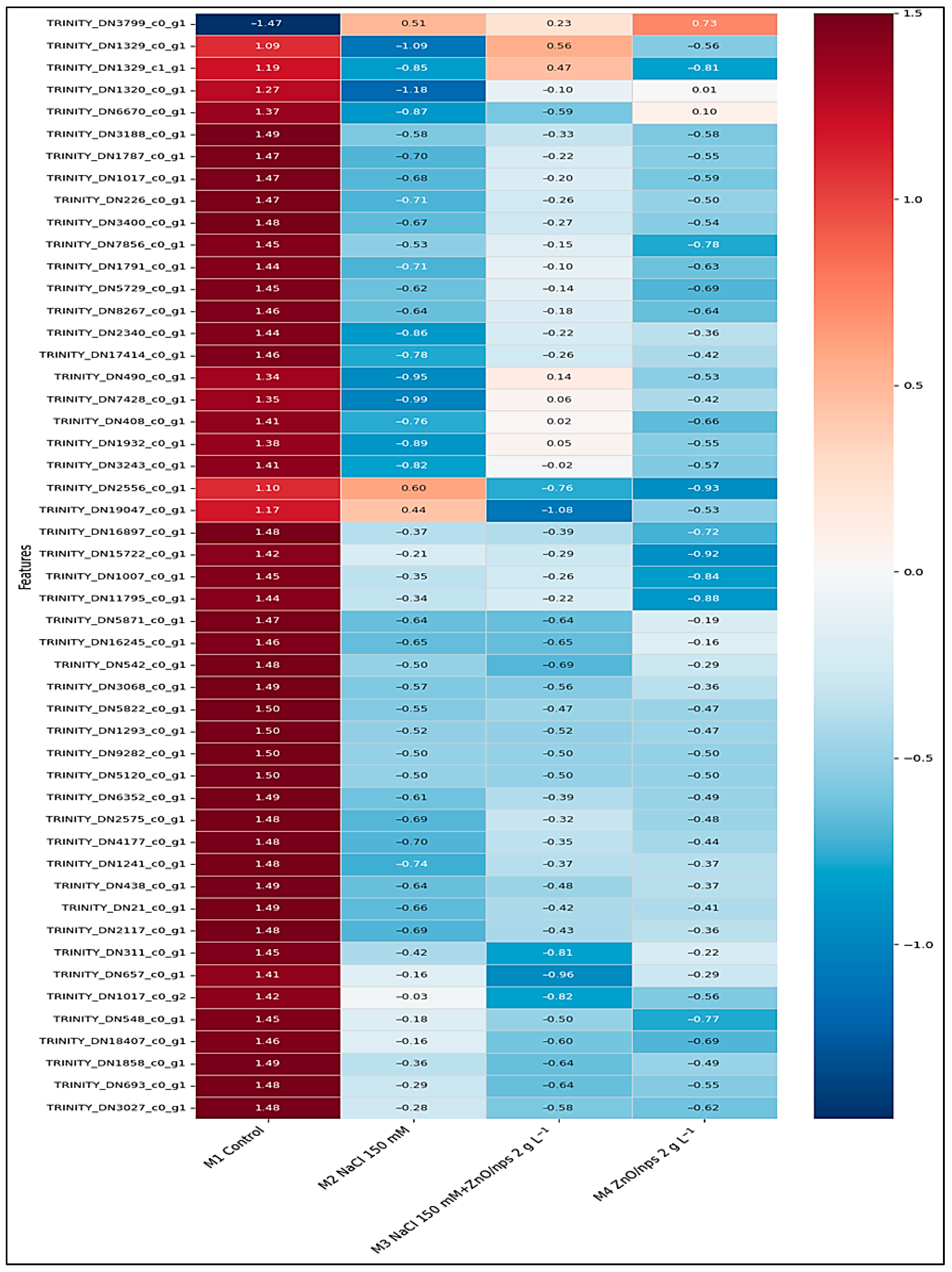
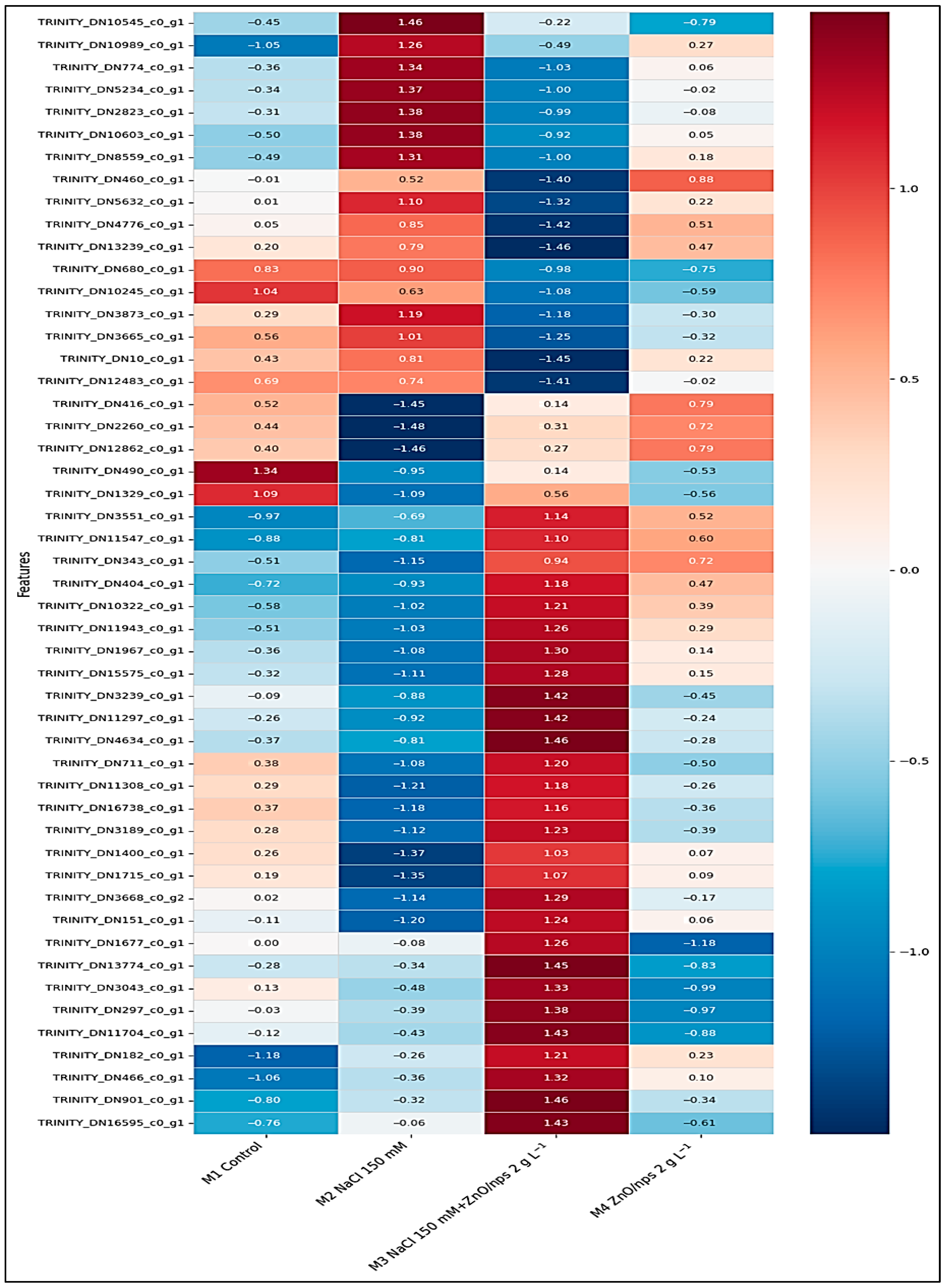
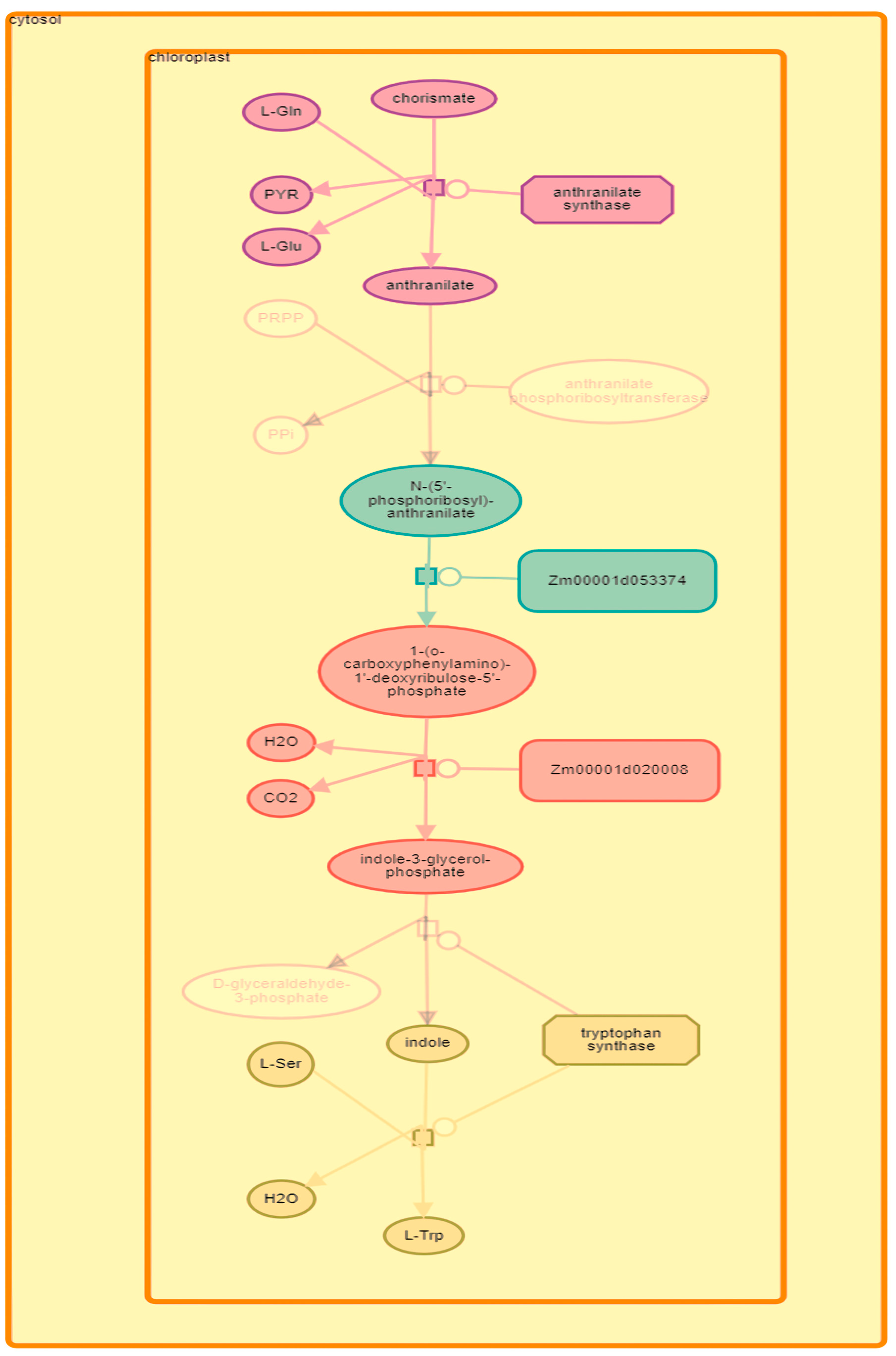
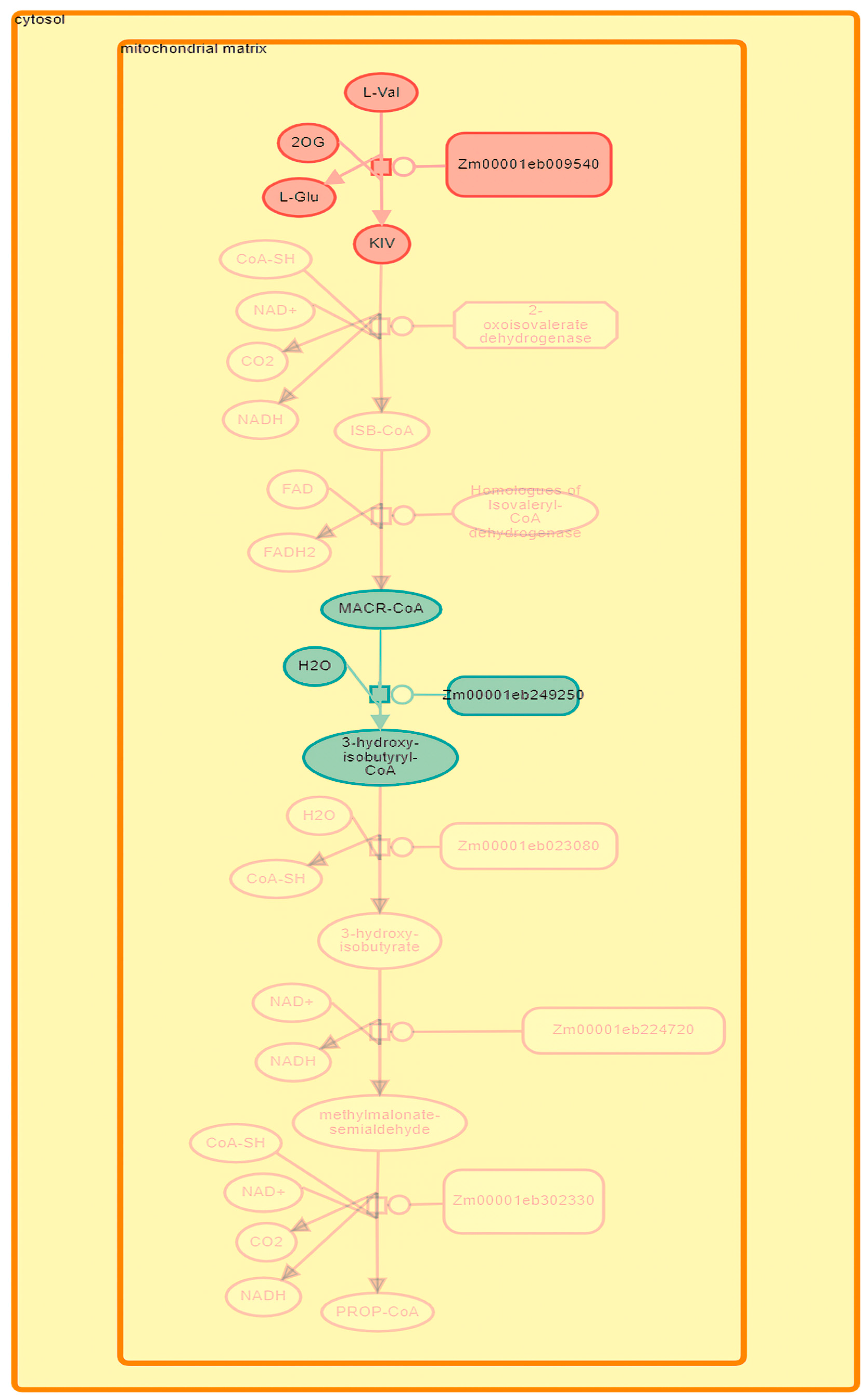
3.4. Analysis of All RNA Transcripts (Transcriptome)
4. Discussion
5. Conclusions
Supplementary Materials
Author Contributions
Funding
Data Availability Statement
Conflicts of Interest
Appendix A

References
- Erenstein, O.; Jaleta, M.; Sonder, K.; Mottaleb, K.; Prasanna, B.M. Global Maize Production, Consumption and Trade: Trends and R&D Implications. Food Secur. 2022, 14, 1295–1319. [Google Scholar] [CrossRef] [Scilit]
- Saldivar, S.O.S.; Perez-Carrillo, E. Maize. In Encyclopedia of Food and Health; Caballero, B., Finglas, P.M., Toldrá, F., Eds.; Academic Press: Oxford, UK, 2016; pp. 601–609. ISBN 978-0-12-384953-3. [Google Scholar]
- Oyebamiji, Y.O.; Adigun, B.A.; Shamsudin, N.A.A.; Ikmal, A.M.; Salisu, M.A.; Malike, F.A.; Lateef, A.A. Recent Advancements in Mitigating Abiotic Stresses in Crops. Horticulturae 2024, 10, 156. [Google Scholar] [CrossRef] [Scilit]
- Bennett, E.M.; Baird, J.; Baulch, H.; Chaplin-Kramer, R.; Fraser, E.; Loring, P.; Morrison, P.; Parrott, L.; Sherren, K.; Winkler, K.J.; et al. Chapter One–Ecosystem Services and the Resilience of Agricultural Landscapes. In Advances in Ecological Research; Bohan, D.A., Vanbergen, A.J., Eds.; The Future of Agricultural Landscapes, Part II; Academic Press: Oxford, UK, 2021; Volume 64, pp. 1–43. [Google Scholar]
- He, M.; He, C.-Q.; Ding, N.-Z. Abiotic Stresses: General Defenses of Land Plants and Chances for Engineering Multistress Tolerance. Front. Plant Sci. 2018, 9, 1771. [Google Scholar] [CrossRef] [Scilit]
- Berhanu, A.A.; Ayele, Z.B.; Dagnew, D.C.; Fenta, A.B.; Kassie, K.E. Smallholder Farmers’ Coping Strategies to Climate Change and Variability: Evidence from Ethiopia. Clim. Serv. 2024, 35, 100509. [Google Scholar] [CrossRef] [Scilit]
- Mareri, L.; Parrotta, L.; Cai, G. Environmental Stress and Plants. Int. J. Mol. Sci. 2022, 23, 5416. [Google Scholar] [CrossRef] [Scilit]
- Irik, H.A.; Bikmaz, G. Effect of Different Salinity on Seed Germination, Growth Parameters and Biochemical Contents of Pumpkin (Cucurbita pepo L.) Seeds Cultivars. Sci. Rep. 2024, 14, 6929. [Google Scholar] [CrossRef] [Scilit] [PubMed]
- Alkharabsheh, H.M.; Seleiman, M.F.; Hewedy, O.A.; Battaglia, M.L.; Jalal, R.S.; Alhammad, B.A.; Schillaci, C.; Ali, N.; Al-Doss, A. Field Crop Responses and Management Strategies to Mitigate Soil Salinity in Modern Agriculture: A Review. Agronomy 2021, 11, 2299. [Google Scholar] [CrossRef] [Scilit]
- Janaagal, M.; Sharma, P.; Kumari, G.; Gulia, H.; Suresh, G.; Tallapragada, S.; Devi, S.; Lakra, N.; Arya, S.S.; Pooja, P. Revolutionizing High Temperature Stress Relief: Exploring the Latest Advances in Salicylic Acid Application. J. Crop Health 2024, 76, 1293–1305. [Google Scholar] [CrossRef] [Scilit]
- Muhammad, M.; Waheed, A.; Wahab, A.; Majeed, M.; Nazim, M.; Liu, Y.-H.; Li, L.; Li, W.-J. Soil Salinity and Drought Tolerance: An Evaluation of Plant Growth, Productivity, Microbial Diversity, and Amelioration Strategies. Plant Stress 2024, 11, 100319. [Google Scholar] [CrossRef] [Scilit]
- Welti, E.A.R.; Kaspari, M. Sodium Addition Increases Leaf Herbivory and Fungal Damage across Four Grasslands. Funct. Ecol. 2021, 35, 1212–1221. [Google Scholar] [CrossRef] [Scilit]
- Acharya, B.R.; Gill, S.P.; Kaundal, A.; Sandhu, D. Strategies for Combating Plant Salinity Stress: The Potential of Plant Growth-Promoting Microorganisms. Front. Plant Sci. 2024, 15, 1406913. [Google Scholar] [CrossRef] [Scilit]
- Tarolli, P.; Luo, J.; Park, E.; Barcaccia, G.; Masin, R. Soil Salinization in Agriculture: Mitigation and Adaptation Strategies Combining Nature-Based Solutions and Bioengineering. iScience 2024, 27, 108830. [Google Scholar] [CrossRef] [Scilit]
- Maqsood, M.F.; Shahbaz, M.; Khalid, F.; Rasheed, Y.; Asif, K.; Naz, N.; Zulfiqar, U.; Zulfiqar, F.; Moosa, A.; Alamer, K.H.; et al. Biogenic Nanoparticles Application in Agriculture for ROS Mitigation and Abiotic Stress Tolerance: A Review. Plant Stress 2023, 10, 100281. [Google Scholar] [CrossRef] [Scilit]
- Ahmed, M.; Tóth, Z.; Decsi, K. The Impact of Salinity on Crop Yields and the Confrontational Behavior of Transcriptional Regulators, Nanoparticles, and Antioxidant Defensive Mechanisms under Stressful Conditions: A Review. Int. J. Mol. Sci. 2024, 25, 2654. [Google Scholar] [CrossRef] [Scilit]
- Zhou, X.; El-Sappah, A.H.; Khaskhoussi, A.; Huang, Q.; Atif, A.M.; Elhamid, M.A.A.; Ihtisham, M.; El-Maati, M.F.A.; Soaud, S.A.; Tahri, W. Nanoparticles: A Promising Tool against Environmental Stress in Plants. Front. Plant Sci. 2025, 15, 1509047. [Google Scholar] [CrossRef] [Scilit]
- Ashraf, H.; Ramzan, M.; Ahmad, M.Z.; Naz, G.; Usman, S.; Shah, A.A.; Shaffique, S.; Alataway, A.; Elansary, H.O. Sargassum-Synthesized ZnO Nanoparticles Induce Salt Tolerance in Maize Plants through Enhanced Physiological and Biochemical Mechanisms. Sci. Rep. 2025, 15, 30633. [Google Scholar] [CrossRef] [Scilit]
- Seleiman, M.F.; Ahmad, A.; Alshahrani, T.S. Integrative Effects of Zinc Nanoparticle and PGRs to Mitigate Salt Stress in Maize. Agronomy 2023, 13, 1655. [Google Scholar] [CrossRef] [Scilit]
- Geremew, A.; Stovall, L.; Woldesenbet, S.; Ma, X.; Carson, L. Nanopriming with Zinc Oxide: A Novel Approach to Enhance Germination and Antioxidant Systems in Amaranth. Front. Plant Sci. 2025, 16, 1599192. [Google Scholar] [CrossRef] [Scilit] [PubMed]
- Khan, M.N.; Li, Y.; Mu, Y.; Sultan, H.; Baloch, A.; Din, I.; Fu, C.; Li, J.; Khan, Z.; Kumar, S.; et al. Recent Advances in Nano-Enabled Plant Salt Tolerance: Methods of Application, Risk Assessment, Opportunities and Future Prospects. J. Integr. Agric. 2025, 24, 1611–1630. [Google Scholar] [CrossRef] [Scilit]
- Seleiman, M.F.; Ahmad, A.; Battaglia, M.L.; Bilal, H.M.; Alhammad, B.A.; Khan, N. Zinc Oxide Nanoparticles: A Unique Saline Stress Mitigator with the Potential to Increase Future Crop Production. S. Afr. J. Bot. 2023, 159, 208–218. [Google Scholar] [CrossRef] [Scilit]
- Li, L.; Huang, Z.; Zhou, Z.; Tao, Y.; Zhang, Y.; Mu, Y.; Wu, S.; Nie, L. Foliar Application of Zinc Oxide Nanoparticles Improved Yield and 2-Acetyl-1-Pyrroline Content in Fragrant Rice under Salt Stress. Crop Environ. 2025, 4, 107–117. [Google Scholar] [CrossRef] [Scilit]
- Qian, J.; Shan, R.; Shi, Y.; Li, H.; Xue, L.; Song, Y.; Zhao, T.; Zhu, S.; Chen, J.; Jiang, M. Zinc Oxide Nanoparticles Alleviate Salt Stress in Cotton (Gossypium hirsutum L.) by Adjusting Na+/K+ Ratio and Antioxidative Ability. Life 2024, 14, 595. [Google Scholar] [CrossRef] [Scilit] [PubMed]
- Ahmed, M.; Decsi, K.; Tóth, Z. Different Tactics of Synthesized Zinc Oxide Nanoparticles, Homeostasis Ions, and Phytohormones as Regulators and Adaptatively Parameters to Alleviate the Adverse Effects of Salinity Stress on Plants. Life 2023, 13, 73. [Google Scholar] [CrossRef] [Scilit] [PubMed]
- Rukhsar-Ul-Haqnull; Kausar, A.; Hussain, S.; Javed, T.; Zafar, S.; Anwar, S.; Hussain, S.; Zahra, N.; Saqib, M. Zinc Oxide Nanoparticles as Potential Hallmarks for Enhancing Drought Stress Tolerance in Wheat Seedlings. Plant Physiol. Biochem. PPB 2023, 195, 341–350. [Google Scholar] [CrossRef] [Scilit] [PubMed]
- Nazir, M.A.; Hasan, M.; Mustafa, G.; Tariq, T.; Ahmed, M.M.; Golzari Dehno, R.; Ghorbanpour, M. Zinc Oxide Nano-Fertilizer Differentially Effect on Morphological and Physiological Identity of Redox-Enzymes and Biochemical Attributes in Wheat (Triticum aestivum L.). Sci. Rep. 2024, 14, 13091. [Google Scholar] [CrossRef] [Scilit]
- Gupta, N.; Verma, V.K. Next-Generation Sequencing and Its Application: Empowering in Public Health Beyond Reality. Microb. Technol. Welf. Soc. 2019, 17, 313–341. [Google Scholar] [CrossRef] [Scilit]
- Nowak, B.; Tomkowiak, A.; Sobiech, A.; Bocianowski, J.; Kowalczewski, P.Ł.; Spychała, J.; Jamruszka, T. Identification and Analysis of Candidate Genes Associated with Yield Structure Traits and Maize Yield Using Next-Generation Sequencing Technology. Genes 2024, 15, 56. [Google Scholar] [CrossRef] [Scilit]
- Kim, K.-H.; Song, K.; Park, J.-M.; Kim, J.-Y.; Lee, B.-M. RNA-Seq Analysis of Gene Expression Changes Related to Delay of Flowering Time under Drought Stress in Tropical Maize. Appl. Sci. 2021, 11, 4273. [Google Scholar] [CrossRef] [Scilit]
- Yu, J.; Holland, J.B.; McMullen, M.D.; Buckler, E.S. Genetic Design and Statistical Power of Nested Association Mapping in Maize. Genetics 2008, 178, 539–551. [Google Scholar] [CrossRef] [Scilit]
- Ahmed, M.; Marrez, D.A.; Rizk, R.; Abdul-Hamid, D.; Tóth, Z.; Decsi, K. Interventional Effect of Zinc Oxide Nanoparticles with Zea mays L. Plants When Compensating Irrigation Using Saline Water. Nanomaterials 2024, 14, 1341. [Google Scholar] [CrossRef] [Scilit]
- Rizk, R.; Ahmed, M.; Abdul-Hamid, D.; Zedan, M.; Tóth, Z.; Decsi, K. Resulting Key Physiological Changes in Triticum aestivum L. Plants Under Drought Conditions After Priming the Seeds with Conventional Fertilizer and Greenly Synthesized Zinc Oxide Nanoparticles from Corn Wastes. Agronomy 2025, 15, 211. [Google Scholar] [CrossRef] [Scilit]
- Ahmed, M.; Marrez, D.A.; Abdelmoeen, N.M.; Mahmoud, E.A.; Abdel-Shakur Ali, M.; Decsi, K.; Tóth, Z. Proximate Analysis of Moringa Oleifera Leaves and the Antimicrobial Activities of Successive Leaf Ethanolic and Aqueous Extracts Compared with Green Chemically Synthesized Ag-NPs and Crude Aqueous Extract against Some Pathogens. Int. J. Mol. Sci. 2023, 24, 3529. [Google Scholar] [CrossRef] [Scilit] [PubMed]
- Ahmed, M.; Marrez, D.A.; Rizk, R.; Zedan, M.; Abdul-Hamid, D.; Decsi, K.; Kovács, G.P.; Tóth, Z. The Influence of Zinc Oxide Nanoparticles and Salt Stress on the Morphological and Some Biochemical Characteristics of Solanum lycopersicum L. Plants. Plants 2024, 13, 1418. [Google Scholar] [CrossRef] [Scilit]
- Kim, K.-H.; Tsao, R.; Yang, R.; Cui, S.W. Phenolic Acid Profiles and Antioxidant Activities of Wheat Bran Extracts and the Effect of Hydrolysis Conditions. Food Chem. 2006, 95, 466–473. [Google Scholar] [CrossRef] [Scilit]
- Venisse, J.-S.; Gullner, G.; Brisset, M.-N. Evidence for the Involvement of an Oxidative Stress in the Initiation of Infection of Pear by Erwinia Amylovora 1. Plant Physiol. 2001, 125, 2164–2172. [Google Scholar] [CrossRef] [Scilit]
- Chance, B.; Maehly, A.C. [136] Assay of Catalases and Peroxidases. In Methods in Enzymology; Academic Press: Oxford, UK, 1955; Volume 2, pp. 764–775. [Google Scholar]
- Bonnichsen, R.K.; Chance, B.; Theorell, H. Catalase Activity. Acta Chem. Scand. 1947, 1, 685–709. [Google Scholar] [CrossRef] [Scilit]
- Maehly, A.C. The Assay of Catalases and Peroxidases. In Methods of Biochemical Analysis; Wiley: Hoboken, NJ, USA, 1954; pp. 357–424. [Google Scholar]
- Habig, W.H.; Pabst, M.J.; Jakoby, W.B. Glutathione S-transferases: The first enzymatic step in mercapturic acid formation. J. Biol. Chem. 1974, 249, 7130–7139. [Google Scholar] [CrossRef] [Scilit] [PubMed]
- Beauchamp, C.; Fridovich, I. Superoxide Dismutase: Improved Assays and an Assay Applicable to Acrylamide Gels. Anal. Biochem. 1971, 44, 276–287. [Google Scholar] [CrossRef] [Scilit]
- Wingett, S.W.; Andrews, S. FastQ Screen: A Tool for Multi-Genome Mapping and Quality Control. F1000Research 2018, 7, 1338. [Google Scholar] [CrossRef] [Scilit]
- Bolger, A.M.; Lohse, M.; Usadel, B. Trimmomatic: A Flexible Trimmer for Illumina Sequence Data. Bioinformatics 2014, 30, 2114–2120. [Google Scholar] [CrossRef] [Scilit]
- Grabherr, M.G.; Haas, B.J.; Yassour, M.; Levin, J.Z.; Thompson, D.A.; Amit, I.; Adiconis, X.; Fan, L.; Raychowdhury, R.; Zeng, Q.; et al. Full-Length Transcriptome Assembly from RNA-Seq Data without a Reference Genome. Nat. Biotechnol. 2011, 29, 644–652. [Google Scholar] [CrossRef] [Scilit]
- Ahmed, M.; Tóth, Z.; Marrez, D.A.; Rizk, R.; Abdul-Hamid, D.; Decsi, K. Transcriptome Datasets of Salt-Stressed Tomato Plants Treated with Zinc Oxide Nanoparticles. Data Brief. 2025, 58, 111282. [Google Scholar] [CrossRef] [Scilit]
- Ahmed, M.; Tóth, Z.; Rizk, R.; Abdul-Hamid, D.; Decsi, K. Investigation of Antioxidative Enzymes and Transcriptomic Analysis in Response to Foliar Application of Zinc Oxide Nanoparticles and Salinity Stress in Solanum lycopersicum. Agronomy 2025, 15, 1715. [Google Scholar] [CrossRef] [Scilit]
- Li, B.; Dewey, C.N. RSEM: Accurate Transcript Quantification from RNA-Seq Data with or without a Reference Genome. BMC Bioinform. 2011, 12, 323. [Google Scholar] [CrossRef] [Scilit]
- Jethva, J.; Schmidt, R.R.; Sauter, M.; Selinski, J. Try or Die: Dynamics of Plant Respiration and How to Survive Low Oxygen Conditions. Plants 2022, 11, 205. [Google Scholar] [CrossRef] [Scilit] [PubMed]
- Seleiman, M.F.; Ahmad, A.; Alhammad, B.A.; Tola, E. Exogenous Application of Zinc Oxide Nanoparticles Improved Antioxidants, Photosynthetic, and Yield Traits in Salt-Stressed Maize. Agronomy 2023, 13, 2645. [Google Scholar] [CrossRef] [Scilit]
- Munns, R.; Tester, M. Mechanisms of Salinity Tolerance. Annu. Rev. Plant Biol. 2008, 59, 651–681. [Google Scholar] [CrossRef] [Scilit] [PubMed]
- Guo, Q.; Liu, L.; Barkla, B.J. Membrane Lipid Remodeling in Response to Salinity. Int. J. Mol. Sci. 2019, 20, 4264. [Google Scholar] [CrossRef] [Scilit]
- Adil, M.; Bashir, S.; Bashir, S.; Aslam, Z.; Ahmad, N.; Younas, T.; Asghar, R.M.A.; Alkahtani, J.; Dwiningsih, Y.; Elshikh, M.S. Zinc Oxide Nanoparticles Improved Chlorophyll Contents, Physical Parameters, and Wheat Yield under Salt Stress. Front. Plant Sci. 2022, 13, 932861. [Google Scholar] [CrossRef] [Scilit]
- Adrees, M.; Khan, Z.S.; Hafeez, M.; Rizwan, M.; Hussain, K.; Asrar, M.; Alyemeni, M.N.; Wijaya, L.; Ali, S. Foliar Exposure of Zinc Oxide Nanoparticles Improved the Growth of Wheat (Triticum aestivum L.) and Decreased Cadmium Concentration in Grains under Simultaneous Cd and Water Deficient Stress. Ecotoxicol. Environ. Saf. 2021, 208, 111627. [Google Scholar] [CrossRef] [Scilit] [PubMed]
- Aqeel, U.; Aftab, T.; Khan, M.M.A.; Naeem, M.; Khan, M.N. A Comprehensive Review of Impacts of Diverse Nanoparticles on Growth, Development and Physiological Adjustments in Plants under Changing Environment. Chemosphere 2022, 291, 132672. [Google Scholar] [CrossRef] [Scilit]
- Decsi, K.; Ahmed, M.; Tóth, Z. Genome-Wide Transcriptional Analysis Reveals Gamma-Aminobutyric Acid (GABA) Priming Induces Long-Term Stress Memory in Tomato (Solanum lycopersicum). Agriculture 2025, 15, 2012. [Google Scholar] [CrossRef] [Scilit]
- Hussein, M.M.; Abou-Baker, N.H. The Contribution of Nano-Zinc to Alleviate Salinity Stress on Cotton Plants. R. Soc. Open Sci. 2018, 5, 171809. [Google Scholar] [CrossRef] [Scilit]
- Fu, C.; Khan, M.N.; Yan, J.; Hong, X.; Zhao, F.; Chen, L.; Ma, H.; Li, Y.; Li, J.; Wu, H. Mechanisms of Nanomaterials for Improving Plant Salt Tolerance. Crop Environ. 2023, 2, 92–99. [Google Scholar] [CrossRef] [Scilit]
- Junedi, M.A.; Mukhopadhyay, R.; Manjari, K.S. Alleviating Salinity Stress in Crop Plants Using New Engineered Nanoparticles (ENPs). Plant Stress 2023, 9, 100184. [Google Scholar] [CrossRef] [Scilit]
- Li, Z.; Zhu, L.; Zhao, F.; Li, J.; Zhang, X.; Kong, X.; Wu, H.; Zhang, Z. Plant Salinity Stress Response and Nano-Enabled Plant Salt Tolerance. Front. Plant Sci. 2022, 13, 843994. [Google Scholar] [CrossRef] [Scilit] [PubMed]
- Gill, S.S.; Tuteja, N. Reactive Oxygen Species and Antioxidant Machinery in Abiotic Stress Tolerance in Crop Plants. Plant Physiol. Biochem. 2010, 48, 909–930. [Google Scholar] [CrossRef] [Scilit]
- Caverzan, A.; Passaia, G.; Rosa, S.B.; Ribeiro, C.W.; Lazzarotto, F.; Margis-Pinheiro, M. Plant Responses to Stresses: Role of Ascorbate Peroxidase in the Antioxidant Protection. Genet. Mol. Biol. 2012, 35, 1011–1019. [Google Scholar] [CrossRef] [Scilit] [PubMed]
- Sharma, R.; Sahoo, A.; Devendran, R.; Jain, M. Over-Expression of a Rice Tau Class Glutathione s-Transferase Gene Improves Tolerance to Salinity and Oxidative Stresses in Arabidopsis. PLoS ONE 2014, 9, e92900. [Google Scholar] [CrossRef] [Scilit]
- Postaire, O.; Tournaire-Roux, C.; Grondin, A.; Boursiac, Y.; Morillon, R.; Schäffner, A.R.; Maurel, C. A PIP1 Aquaporin Contributes to Hydrostatic Pressure-Induced Water Transport in Both the Root and Rosette of Arabidopsis1. Plant Physiol. 2010, 152, 1418–1430. [Google Scholar] [CrossRef] [Scilit]
- Liu, Q.; Liu, W.; Niu, Y.; Wang, T.; Dong, J. Liquid–Liquid Phase Separation in Plants: Advances and Perspectives from Model Species to Crops. Plant Commun. 2024, 5, 100663. [Google Scholar] [CrossRef] [Scilit]
- Cai, G.; Niu, M.; Sun, Z.; Wang, H.; Zhang, S.; Liu, F.; Wu, Y.; Wang, G. A Small Heat Shock Protein (SlHSP17.3) in Tomato Plays a Positive Role in Salt Stress. Front. Plant Sci. 2024, 15, 1443625. [Google Scholar] [CrossRef] [Scilit]
- Liu, W.; Tang, X.; Qi, X.; Fu, X.; Ghimire, S.; Ma, R.; Li, S.; Zhang, N.; Si, H. The Ubiquitin Conjugating Enzyme: An Important Ubiquitin Transfer Platform in Ubiquitin-Proteasome System. Int. J. Mol. Sci. 2020, 21, 2894. [Google Scholar] [CrossRef] [Scilit]
- Darriere, T.; Jobet, E.; Zavala, D.; Escande, M.L.; Durut, N.; de Bures, A.; Blanco-Herrera, F.; Vidal, E.A.; Rompais, M.; Carapito, C.; et al. Upon Heat Stress Processing of Ribosomal RNA Precursors into Mature rRNAs Is Compromised after Cleavage at Primary P Site in Arabidopsis Thaliana. RNA Biol. 2022, 19, 719–734. [Google Scholar] [CrossRef] [Scilit]
- Ramachandran, S.; Christensen, H.E.M.; Ishimaru, Y.; Dong, C.-H.; Chao-Ming, W.; Cleary, A.L.; Chua, N.-H. Profilin Plays a Role in Cell Elongation, Cell Shape Maintenance, and Flowering in Arabidopsis. Plant Physiol. 2000, 124, 1637–1647. [Google Scholar] [CrossRef] [Scilit]
- Su, P.; Yan, J.; Li, W.; Wang, L.; Zhao, J.; Ma, X.; Li, A.; Wang, H.; Kong, L. A Member of Wheat Class III Peroxidase Gene Family, TaPRX-2A, Enhanced the Tolerance of Salt Stress. BMC Plant Biol. 2020, 20, 392. [Google Scholar] [CrossRef] [Scilit]
- Chauhan, J.; Prathibha, M.; Singh, P.; Choyal, P.; Mishra, U.N.; Saha, D.; Kumar, R.; Anuragi, H.; Pandey, S.; Bose, B.; et al. Plant Photosynthesis under Abiotic Stresses: Damages, Adaptive, and Signaling Mechanisms. Plant Stress 2023, 10, 100296. [Google Scholar] [CrossRef] [Scilit]
- Chen, H.; Song, Y.; Wang, Y.; Wang, H.; Ding, Z.; Fan, K. Zno Nanoparticles: Improving Photosynthesis, Shoot Development, and Phyllosphere Microbiome Composition in Tea Plants. J. Nanobiotechnol. 2024, 22, 389. [Google Scholar] [CrossRef] [Scilit] [PubMed]
- Kundu, P.; Nehra, A.; Gill, R.; Tuteja, N.; Gill, S.S. Unraveling the Importance of EF-Hand-Mediated Calcium Signaling in Plants. S. Afr. J. Bot. 2022, 148, 615–633. [Google Scholar] [CrossRef] [Scilit]
- Kumar, V.; Naik, I.S.; Das, B.; Singh, A.; Nayak, P.; Mohapatra, C.; Debnath, D.; Tripathy, M.; Behera, K.; Masika, F.B.; et al. Nanoparticles in Plant System: A Comprehensive Review on Their Role in Diverse Stress Management and Phytohormone Signaling. Plant Stress 2025, 18, 101000. [Google Scholar] [CrossRef] [Scilit]
- Olejnik, P.; Mądrzak, C.J.; Nuc, K. Cyclophilins and Their Functions in Abiotic Stress and Plant–Microbe Interactions. Biomolecules 2021, 11, 1390. [Google Scholar] [CrossRef] [Scilit]
- Ahemad, M.; Kibret, M. Mechanisms and Applications of Plant Growth Promoting Rhizobacteria: Current Perspective. J. King Saud Univ. Sci. 2014, 26, 1–20. [Google Scholar] [CrossRef] [Scilit]
- Lv, Y.; Pan, J.; Wang, H.; Reiter, R.J.; Li, X.; Mou, Z.; Zhang, J.; Yao, Z.; Zhao, D.; Yu, D. Melatonin Inhibits Seed Germination by Crosstalk with Abscisic Acid, Gibberellin, and Auxin in Arabidopsis. J. Pineal Res. 2021, 70, e12736. [Google Scholar] [CrossRef] [Scilit]
- Wang, S.; Zhang, X.; Gong, D.-H.; Huang, Q.-Q.; Kandegama, W.M.W.W.; Georgiev, M.I.; Gao, Y.-Y.; Liao, P.; Hao, G.-F. Sophisticated Crosstalk of Tryptophan-Derived Metabolites in Plant Stress Responses. Plant Commun. 2025, 6, 101425. [Google Scholar] [CrossRef] [Scilit] [PubMed]
- Xu, D.; Sanden, N.C.H.; Hansen, L.L.; Belew, Z.M.; Madsen, S.R.; Meyer, L.; Jørgensen, M.E.; Hunziker, P.; Veres, D.; Crocoll, C.; et al. Export of Defensive Glucosinolates Is Key for Their Accumulation in Seeds. Nature 2023, 617, 132–138. [Google Scholar] [CrossRef] [Scilit]
- Sharma, S.; Zhang, X.; Azhar, G.; Patyal, P.; Verma, A.; KC, G.; Wei, J.Y. Valine Improves Mitochondrial Function and Protects against Oxidative Stress. Biosci. Biotechnol. Biochem. 2023, 88, 168–176. [Google Scholar] [CrossRef] [Scilit]
- Shan, N.; Xiang, Z.; Sun, J.; Zhu, Q.; Xiao, Y.; Wang, P.; Chen, X.; Zhou, Q.; Gan, Z. Genome-Wide Analysis of Valine-Glutamine Motif-Containing Proteins Related to Abiotic Stress Response in Cucumber (Cucumis sativus L.). BMC Plant Biol. 2021, 21, 492. [Google Scholar] [CrossRef] [Scilit] [PubMed]
- Yuan, G.; Qian, Y.; Ren, Y.; Guan, Y.; Wu, X.; Ge, C.; Ding, H. The Role of Plant-Specific VQ Motif-Containing Proteins: An Ever-Thickening Plot. Plant Physiol. Biochem. 2021, 159, 12–16. [Google Scholar] [CrossRef] [Scilit]
- Lai, Z.; Li, Y.; Wang, F.; Cheng, Y.; Fan, B.; Yu, J.-Q.; Chen, Z. Arabidopsis Sigma Factor Binding Proteins Are Activators of the WRKY33 Transcription Factor in Plant Defense. Plant Cell 2011, 23, 3824–3841. [Google Scholar] [CrossRef] [Scilit]
- Song, W.; Zhao, H.; Zhang, X.; Lei, L.; Lai, J. Genome-Wide Identification of VQ Motif-Containing Proteins and Their Expression Profiles Under Abiotic Stresses in Maize. Front. Plant Sci. 2016, 6, 1177. [Google Scholar] [CrossRef] [Scilit] [PubMed]
- Kim, D.Y.; Kwon, S.I.; Choi, C.; Lee, H.; Ahn, I.; Park, S.R.; Bae, S.C.; Lee, S.C.; Hwang, D.J. Expression Analysis of Rice VQ Genes in Response to Biotic and Abiotic Stresses. Gene 2013, 529, 208–214. [Google Scholar] [CrossRef] [Scilit] [PubMed]
- Yin, Y.-G.; Kobayashi, Y.; Sanuki, A.; Kondo, S.; Fukuda, N.; Ezura, H.; Sugaya, S.; Matsukura, C. Salinity Induces Carbohydrate Accumulation and Sugar-Regulated Starch Biosynthetic Genes in Tomato (Solanum lycopersicum L. Cv. ‘Micro-Tom’) Fruits in an ABA- and Osmotic Stress-Independent Manner. J. Exp. Bot. 2010, 61, 563–574. [Google Scholar] [CrossRef] [Scilit] [PubMed]
- Balibrea, M.; Parra, M.; Bolarín, M.; Pérez-Alfocea, F. Cytoplasmic Sucrolytic Activity Controls Tomato Fruit Growth under Salinity. Aust. J. Plant Physiol. 1999, 26, 561–568. [Google Scholar] [CrossRef] [Scilit]
- Balibrea, M.; Santa Cruz, A.; Bolarín, M.; Pérez-Alfocea, F. Sucrolytic Activities in Relation to Sink Strength and Carbohydrate Composition in Tomato Fruit Growing under Salinity. Plant Sci. 1996, 118, 47–55. [Google Scholar] [CrossRef] [Scilit]
- Balibrea, M.E.; Martínez-Andújar, C.; Cuartero, J.; Bolarín, M.C.; Pérez-Alfocea, F. The High Fruit Soluble Sugar Content in Wild Lycopersicon Species and Their Hybrids with Cultivars Depends on Sucrose Import during Ripening Rather than on Sucrose Metabolism. Funct. Plant Biol. FPB 2006, 33, 279–288. [Google Scholar] [CrossRef] [Scilit]



| Protocol/Enzyme | Buffer and Conditions | Reagents/Substrates | Reaction System and Procedure | Measurement and Unit | Reference |
|---|---|---|---|---|---|
| 1. Extraction | 50 mM Phosphate Buffer (pH 7.0) (Monobasic & dibasic sodium phosphate) |
| Sample: 500 mg leaf Process: Homogenize, then Centrifuge at 11,500 rpm for 10 min at 4 °C. Output: A supernatant. | N/A | [37] |
| 2. Peroxidase (POX) | 100 mM Phosphate Buffer (pH 6.0) |
| Mix 0.05 mL extract + 2 mL reaction mixture. | Absorbance at 420 nm Unit: 1.0 mg purpurogallin in 20 s Calculation: U mg−1 FW | [38] |
| 3. Glutathione reductase (GR) | 0.1 M Tris Buffer + 2 mM EDTA |
| Mix 0.1 mL extract + 2 mL reaction mixture. | Absorbance at 340 nm Unit: NADPH coefficient: 6.2 mM−1 cm−1 Calculation: U mg−1 FW | [39,40] |
| 4. Glutathione-s-transferase (GST) | Potassium Phosphate Buffer(KH2PO4 & K2HPO4) |
| Mix 0.05 mL extract + 1 mL reaction mixture. | Absorbance at 340 nm Unit: CDNB conjugation coefficient: 9.6 mmol L−1 cm−1 Calculation: U mg−1 FW | [41] |
| 5. Superoxide dismutase (SOD) | 50 mM Na-Phosphate Buffer (pH 7.8) |
| Mix 0.1 mL extract + 1 mL reaction mixture. | Absorbance at 560 nm Unit: Amount causing 50% inhibition of NBT reduction Calculation: U mg−1 FW | [42] |
| 6. Catalase (CAT) | N/A (Titration) |
| Method: Titration of residual H2O2 with KMnO4. Principle: Decomposition of H2O2 → H2O + O2 | Titration volume Calculation: mg of decomposed H2O2 | [39,40] |
| Detected Compounds | Retention Time (min) | Concentration (μg/g)/Treatment | |||
|---|---|---|---|---|---|
| M1 | M2 | M3 | M4 | ||
| Gallic acid | 3.7 | 118.49 | 147.16 | 106.52 | 117.09 |
| Protocatechuic acid | 6.4 | 7.15 | 6.40 | 5.24 | 5.51 |
| Gentisic acid | 9.7 | 0 | 0 | 0 | 0 |
| p-hydroxybenzoic acid | 9.8 | 2.92 | 3.20 | 6.09 | 7.94 |
| Catechin | 11.8 | 20.36 | 22.26 | 91.23 | 87.94 |
| Chlorogenic acid | 12.7 | 56.34 | 79.37 | 73.84 | 49.85 |
| Caffeic acid | 13.5 | 11.36 | 9.85 | 10.08 | 9.37 |
| Syringic acid | 14.6 | 6.27 | 7.08 | 8.40 | 9.30 |
| Vanillic acid | 16.0 | 19.87 | 16.85 | 18.08 | 17.03 |
| Ferulic acid | 20.6 | 381.53 | 401.97 | 400.13 | 339.25 |
| Sinapic acid | 21.5 | 243.4 | 283.08 | 324.17 | 278.09 |
| Rutin | 24.5 | 2.31 | 2.65 | 2.84 | 3.08 |
| p-coumaric acid | 25.4 | 4.76 | 3.53 | 3.29 | 3.13 |
| Apigenin-7-glucoside | 27.5 | 4.46 | 5.30 | 4.12 | 3.28 |
| Rosmarinic acid | 29 | 0 | 0 | 0 | 0 |
| Cinnamic acid | 35.1 | 3.21 | 1.97 | 1.94 | 1.97 |
| Quercetin | 36.3 | 14.5 | 16.39 | 15.21 | 16.01 |
| Apigenin | 39.2 | 19.87 | 22.56 | 26.52 | 15.41 |
| Kaempferol | 40.8 | 0 | 0 | 0 | 0 |
| Chrysin | 51.5 | 0.57 | 0.50 | 2.11 | 2.74 |
| Total | 917.37 | 1030.12 | 1099.81 | 966.99 | |
| Treatments | Concentrations (µg/g) | |
|---|---|---|
| TPs (µg GAE/g DW) | TFs (µg QE/g DW) | |
| M1 | 19.99 ± 0.22 c | 18.83 ± 0.07 ab |
| M2 | 28.42 ± 0.47 a | 19.919 ± 0.06 a |
| M3 | 24.09 ± 0.20 b | 17.53 ± 0.63 b |
| M4 | 18.61 ± 0.33 d | 17.78 ± 0.11 b |
| Comparison | Pathways That Are Connected to the KEGG Database | Sequences That Are Connected to the KEGG Database |
|---|---|---|
| M1 vs. M2 | Metabolism of thiamine, seleno compound, arginine and proline, beta-Alanine, cysteine, methionine, pyrimidine, purine, and riboflavin. Biosynthesis of various plant secondary metabolites, benzoxazinoid, pantothenate and CoA. One carbon pool by folate. | 17 |
| M1 vs. M3 | Metabolism of cysteine and methionine, pyrimidine, purine, arginine, proline, porphyrin, riboflavin, beta-alanine, drugs- cytochrome P450, sulfur, and thiamine. Biosynthesis of benzoxazinoid, various antibiotics, and various plant secondary metabolites. | 16 |
| M1 vs. M4 | Metabolism of cysteine and methionine, pyrimidine, purine, one carbon pool by folate, seleno compound, arginine and proline, porphyrin, beta-alanine, drugs- cytochrome P450, riboflavin, and thiamine. Biosynthesis of benzoxazinoid and various plant secondary metabolites | 18 |
| M2 vs. M3 | Metabolism of thiamine, drug metabolism—cytochrome P450, drug- other enzymes, glutathione, purine, xenobiotics by cytochrome P450, riboflavin, and glycerophospholipid. Oxidative phosphorylation. | 10 |
Disclaimer/Publisher’s Note: The statements, opinions and data contained in all publications are solely those of the individual author(s) and contributor(s) and not of MDPI and/or the editor(s). MDPI and/or the editor(s) disclaim responsibility for any injury to people or property resulting from any ideas, methods, instructions or products referred to in the content. |
© 2025 by the authors. Licensee MDPI, Basel, Switzerland. This article is an open access article distributed under the terms and conditions of the Creative Commons Attribution (CC BY) license (https://creativecommons.org/licenses/by/4.0/).
Share and Cite
Ahmed, M.; Tóth, Z.; Rizk, R.; Nasir, M.W.; Decsi, K. Ecofriendly Application of Synthetic Zinc Oxide Nanoparticles as Stress Regulator Bio-Fertilizer for Zea mays. Agronomy 2025, 15, 2875. https://doi.org/10.3390/agronomy15122875
Ahmed M, Tóth Z, Rizk R, Nasir MW, Decsi K. Ecofriendly Application of Synthetic Zinc Oxide Nanoparticles as Stress Regulator Bio-Fertilizer for Zea mays. Agronomy. 2025; 15(12):2875. https://doi.org/10.3390/agronomy15122875
Chicago/Turabian StyleAhmed, Mostafa, Zoltán Tóth, Roquia Rizk, Muhammad Waqar Nasir, and Kincső Decsi. 2025. "Ecofriendly Application of Synthetic Zinc Oxide Nanoparticles as Stress Regulator Bio-Fertilizer for Zea mays" Agronomy 15, no. 12: 2875. https://doi.org/10.3390/agronomy15122875
APA StyleAhmed, M., Tóth, Z., Rizk, R., Nasir, M. W., & Decsi, K. (2025). Ecofriendly Application of Synthetic Zinc Oxide Nanoparticles as Stress Regulator Bio-Fertilizer for Zea mays. Agronomy, 15(12), 2875. https://doi.org/10.3390/agronomy15122875