Biochar Particle Size Modulates the Microbial Degradation of Petroleum Hydrocarbons in Contaminated Soil

Abstract
1. Introduction
2. Materials and Methods
2.1. Preparation and Characterization of Biochar
2.2. Soil Sampling and Applied Amendments
2.3. Determination of Petroleum Hydrocarbons and Physicochemical Factors in Soil
2.4. Sequencing and Analysis of Soil Microorganisms
2.5. Data Analysis
3. Results and Discussion
3.1. Characterization and Analysis of Materials
3.1.1. Microstructural and Textural Characterization of Biochars
3.1.2. FT-IR Analysis
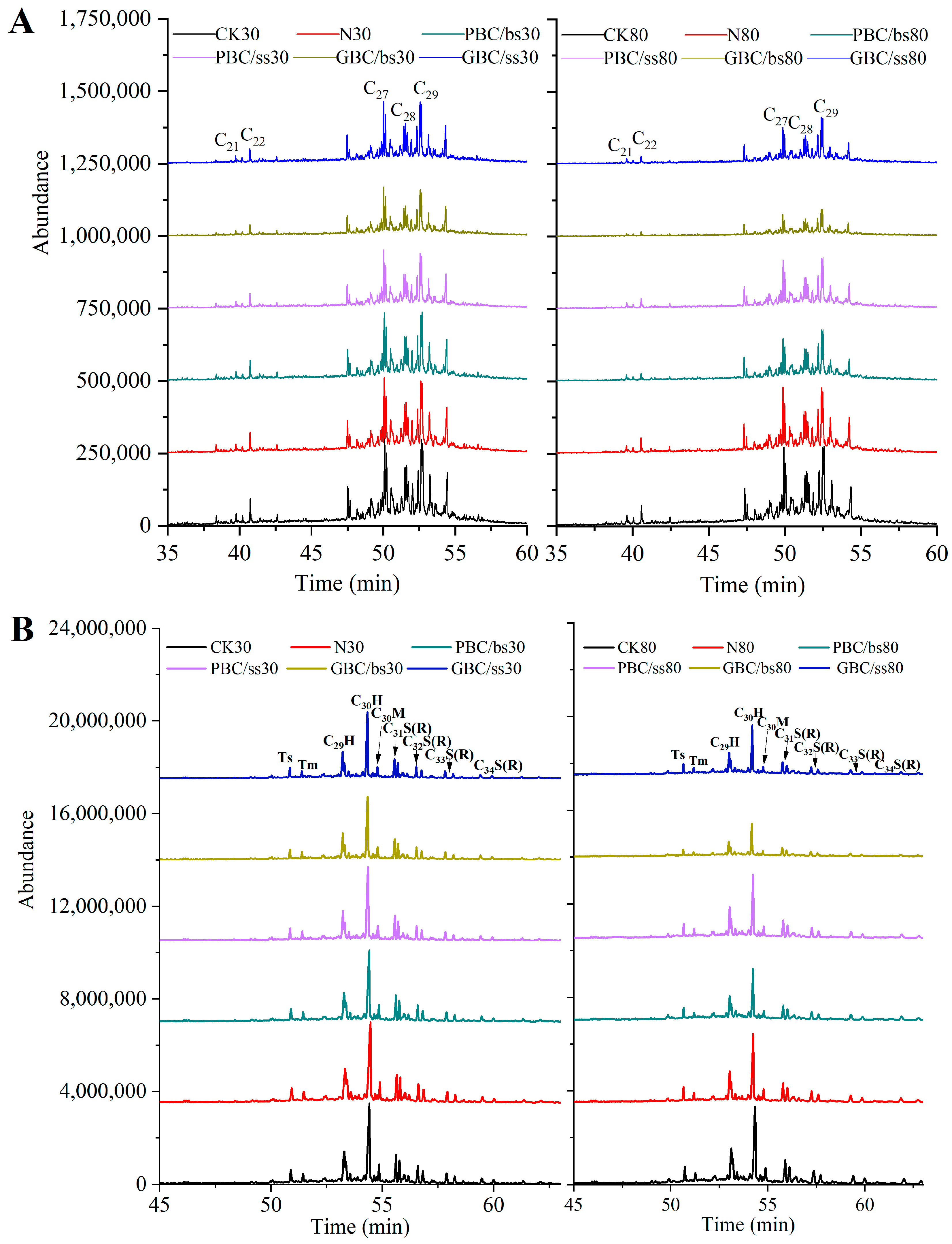
3.2. Degradation of TPH and the Main Fractions in Crude Petroleum-Contaminated Soil
3.2.1. Total Petroleum Hydrocarbons
3.2.2. Degradation of n-alkanes, Steranes and Terpanes
3.3. Influence of Different Methods on Microbial Characteristics
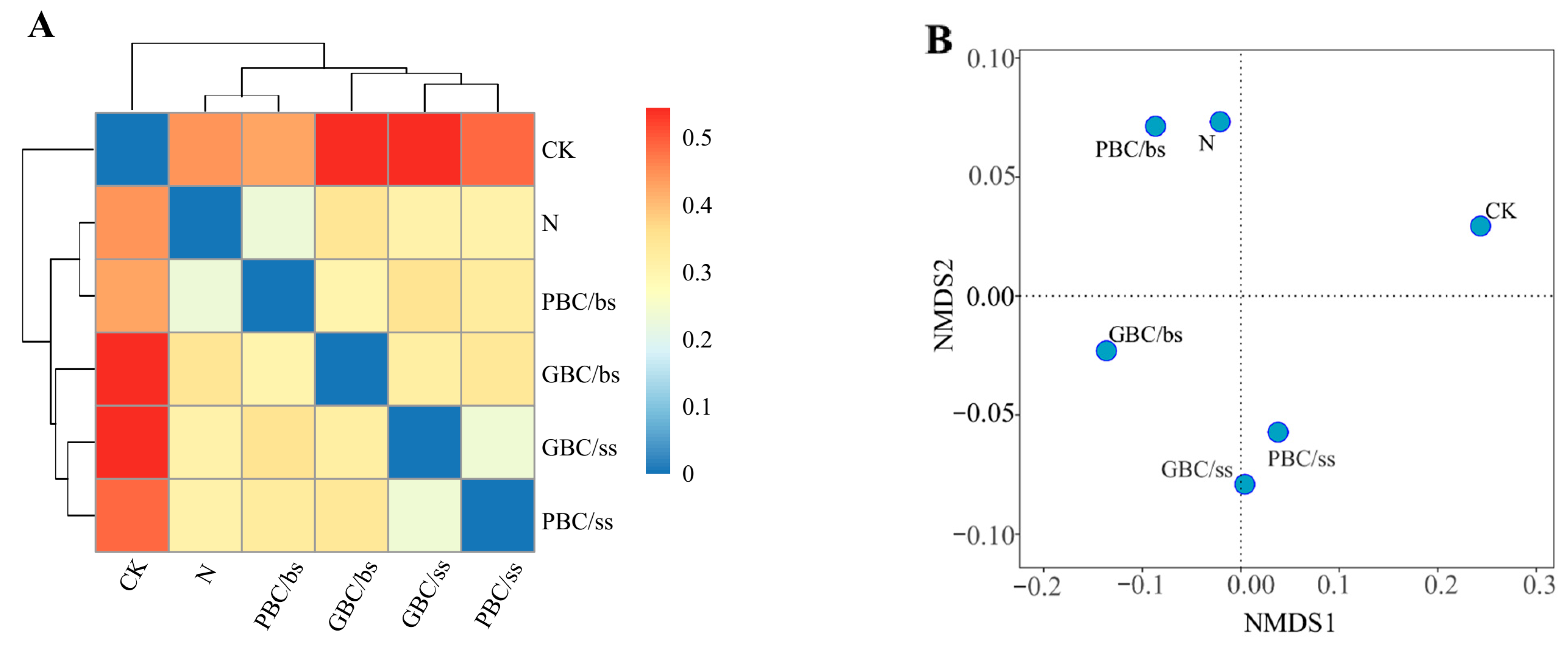
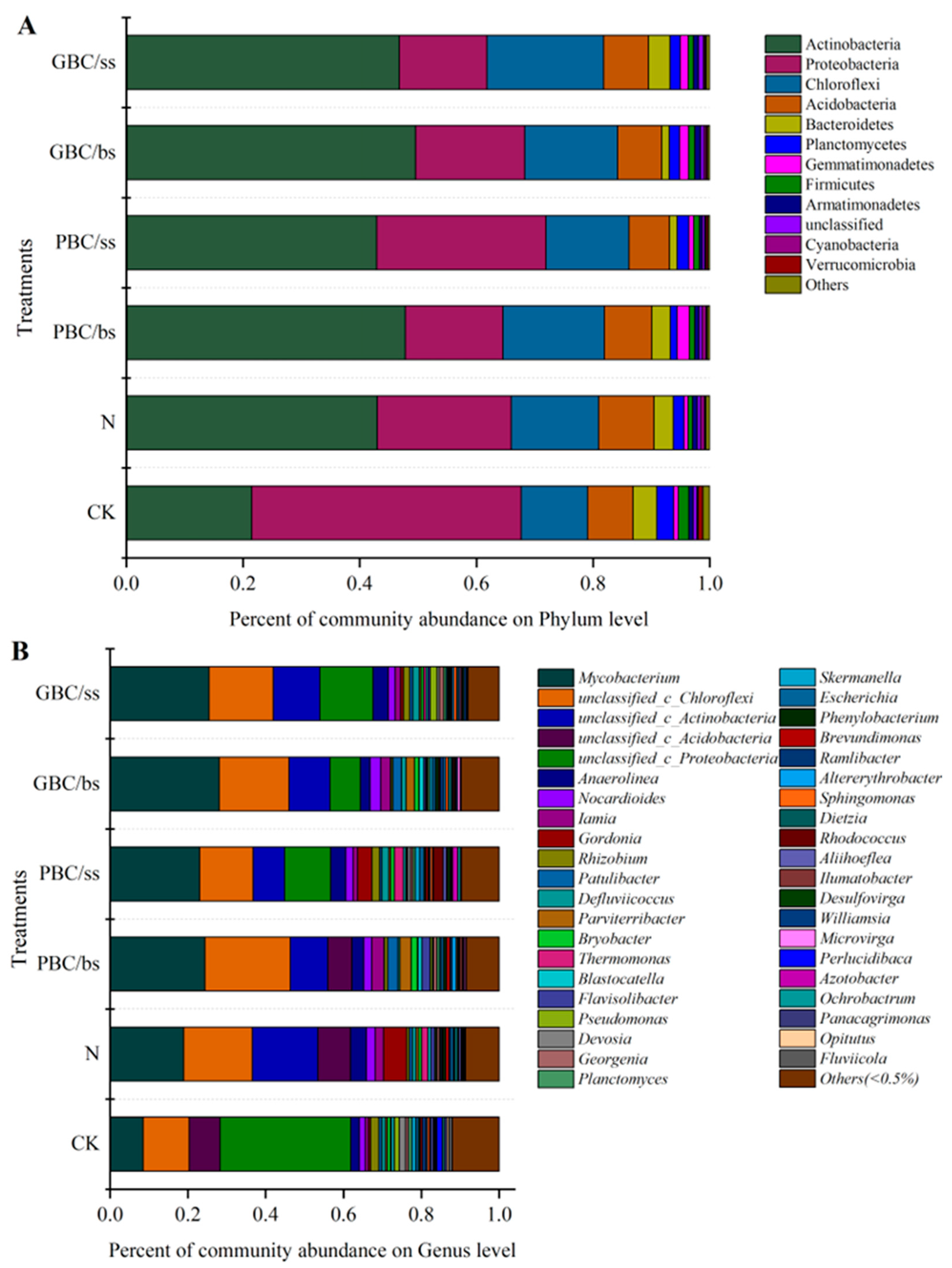
3.3.1. Analysis of the Soil Microbial Community Structure
3.3.2. Variation in Soil Microbial Diversity
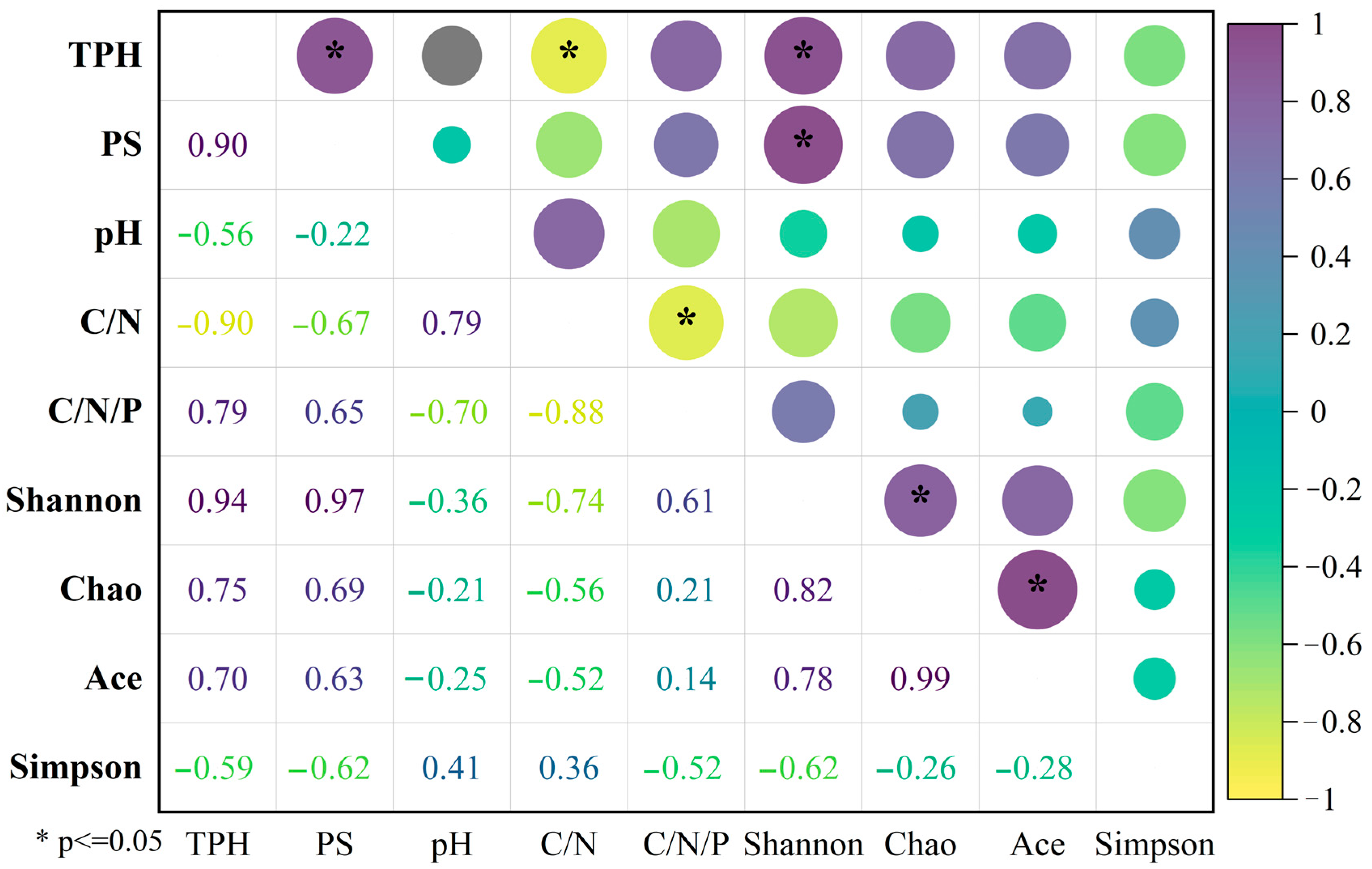
3.4. Analysis of Petroleum Hydrocarbon Degradation and Influencing Factors
4. Conclusions
Supplementary Materials
Author Contributions
Funding
Data Availability Statement
Conflicts of Interest
Abbreviations
| TPH | Total petroleum hydrocarbons |
| PBC/bs | powder biochar (0.25 mm) from bulrush straw and nutrient addition treatment |
| PBC/ss | powder biochar (0.25 mm) from soybean straw and nutrient addition treatment |
| GBC/bs | granular biochar (0.85 mm) from bulrush straw and nutrient addition treatment |
| GBC/ss | granular biochar (0.85 mm) from soybean straw and nutrient addition treatment |
| SOC | Soil organic carbon |
| NMDS | Nonmetric multidimensional scaling |
| OTUs | Operational taxonomic units |
References
- Galitskaya, P.; Biktasheva, L.; Kuryntseva, P.; Selivanovskaya, S. Response of soil bacterial communities to high petroleum content in the absence of remediation procedures. Environ. Sci. Pollut. Res. 2021, 28, 9610–9627. [Google Scholar] [CrossRef]
- Guirado, M.; Garcia-Delgado, C.; Jiménez, O.; Torre, B.; Escolano, O.; Eymar, E.; Millán, R. Bioremediation study of a hydrocarbon-contaminated soil by profiling aromatic and aliphatic chains. Appl. Soil Ecol. 2023, 190, 104983. [Google Scholar] [CrossRef]
- Jovančićević, B.; Antić, M.; Pavlović, I.; Vrvic, M.; Beškoski, V.; Kronimus, A.; Schwarzbauer, J. Transformation of Petroleum Saturated Hydrocarbons during Soil Bioremediation Experiments. Water Air Soil Poll. 2007, 190, 299–307. [Google Scholar] [CrossRef]
- Militon, C.; Boucher, D.; Vachelard, C.; Perchet, G.; Barra, V.; Troquet, J.; Peyretaillade, E.; Peyret, P. Bacterial community changes during bioremediation of aliphatic hydrocarbon-contaminated soil. Fems. Microbiol. Ecol. 2010, 74, 669–681. [Google Scholar] [CrossRef] [PubMed]
- Jiang, J.; Wang, S.; Wang, L.A.; Lv, Q.; Yang, Y.; Chen, K.; Liu, L.; Wang, X. The improvement of pore characteristics, remediation efficiency, and biotoxicity of petroleum-contaminated soil with the addition of bulking agent on field-scale biopile treatment. J. Soil Sediment 2021, 21, 2855–2864. [Google Scholar] [CrossRef]
- Abena, M.; Chen, G.; Chen, Z.; Zheng, X.; Li, S.; Li, T.; Zhong, W. Microbial diversity changes and enrichment of potential petroleum hydrocarbon degraders in crude oil-, diesel-, and gasoline-contaminated soil. 3 Biotech 2020, 10, 42. [Google Scholar] [CrossRef]
- Liu, H.; Wu, M.; Zhang, M.; Gao, H.; Yan, Z.; Yang, Z. New insight into the effect of nitrogen on hydrocarbon degradation in petroleum-contaminated soil revealed through 15N tracing and flow cytometry. Sci. Total Environ. 2023, 891, 164409. [Google Scholar] [CrossRef]
- Sutton, N.; Maphosa, F.; Morillo-Pérez, J.A.; Abu Al-Soud, W.; Langenhoff, A.; Grotenhuis, T.; Rijnaarts, H.; Smidt, H. Impact of Long-Term Diesel Contamination on Soil Microbial Community Structure. Appl. Environ. Microb. 2012, 79, 2. [Google Scholar] [CrossRef] [PubMed]
- Liu, Q.; He, W.; Zhang, W.; Wang, L.; Tang, J. Metagenomic analysis reveals the microbial response to petroleum contamination in oilfield soils. Sci. Total Environ. 2024, 912, 168972. [Google Scholar] [CrossRef]
- Wang, J.; Yang, Z.; Zhou, X.; Waigi, M.; Gudda, F.; Odinga, E.; Mosa, A.; Ling, W. Nitrogen addition enhanced the Polycyclic Aromatic Hydrocarbons dissipation through increasing the abundance of related degrading genes in the soils. J. Hazard. Mater. 2022, 435, 129034. [Google Scholar] [CrossRef]
- Kundu, A.; Harrisson, O.; Ghoshal, S. Evaluating the Impact of Nutrient Doses on Biostimulation of Petroleum Hydrocarbon Biodegradation in Cold Region Soils. Acs. Est. Eng. 2022, 2, 2287–2300. [Google Scholar] [CrossRef]
- Osadebe, A.; Uzoma, G.; Ogugbue, C.; Okpokwasili, G. Effect of Feedstock Type on Biostimulation Efficiency and Microbial Community Structure during Biochar-Facilitated Remediation of Petroleum Contaminated Soil. Bioremediat. Sci. Technol. Res. 2022, 10, 1–9. [Google Scholar] [CrossRef]
- Duarte, S.; Cerri, C.; Rittl, T.; Abbruzzini, T.; Pano, B. Biochar Physical and Hydrological Characterization to Improve Soil Attributes for Plant Production. J. Soil Sci. Plant Nut 2023, 23, 3051–3057. [Google Scholar] [CrossRef]
- Yang, Y.; Zhong, M.; Bian, X.; You, Y.; Li, F. Preparation of carbon-based material with high water absorption capacity and its effect on the water retention characteristics of sandy soil. Biochar 2023, 5, 61. [Google Scholar] [CrossRef]
- Kong, L.; Gao, Y.; Zhou, Q.; Zhao, X.; Sun, Z. Biochar accelerates PAHs biodegradation in petroleum-polluted soil by biostimulation strategy. J. Hazard. Mater. 2018, 343, 276–284. [Google Scholar] [CrossRef]
- Wang, H.; Lv, Y.; Bao, J.; Chen, Y.; Zhu, L. Petroleum-contaminated soil bioremediation and microbial community succession induced by application of co-pyrolysis biochar amendment: An investigation of performances and mechanisms. J. Hazard. Mater. 2024, 466, 133600. [Google Scholar] [CrossRef]
- Yan, J.; Quan, G. Sorption behavior of dimethyl phthalate in biochar-soil composites: Implications for the transport of phthalate esters in long-term biochar amended soils. Ecotox. Environ. Safe 2020, 205, 111169. [Google Scholar] [CrossRef]
- Kong, D.; Liu, Z.; Wu, J. Omics shed light on the mechanisms of petroleum-contaminated soil remediation: When biochar meets nitrogen. Land Degrad. Dev. 2023, 34, 5109–5121. [Google Scholar] [CrossRef]
- Deng, J.; He, D.; Zhu, X.; Cai, Y.; Cai, K.; Tian, J. Biochar amendment shifts bacterial keystone taxa regulating soil phosphorus dynamics. Appl. Soil Ecol. 2024, 201, 105521. [Google Scholar] [CrossRef]
- Vasilyeva, G.K.; Mikhedova, E.E.; Zinnatshina, L.V.; Strijakova, E.R.; Akhmetov, L.I.; Sushkova, S.N.; Ortega-Calvo, J.J. Use of natural sorbents for accelerated bioremediation of grey forest soil contaminated with crude oil. Sci. Total Environ. 2022, 850, 157952. [Google Scholar] [CrossRef] [PubMed]
- Nong, J.; Peng, P.; Pan, J.; Shen, T.; Xie, Q. Effect of Bioaugmentation and Biostimulation on Hydrocarbon Degradation and Bacterial Community Composition in Different Petroleum-Contaminated. Water Air Soil Poll. 2023, 234, 189. [Google Scholar] [CrossRef]
- Saeed, M.; Ilyas, N.; Jayachandran, K.; Gaffar, S.; Arshad, M.; Ahmad, M.S.; Bibi, F.; Jeddi, K.; Hessini, K. Biostimulation Potential of Biochar for remediating the crude oil contaminated soil and Plant Growth. Saudi J. Biol. Sci. 2021, 28, 2667–2676. [Google Scholar] [CrossRef]
- Singh, H.; Northup, B.K.; Rice, C.W.; Prasad, P. Biochar applications influence soil physical and chemical properties, microbial diversity, and crop productivity: A meta-analysis. Biochar 2022, 4, 8. [Google Scholar] [CrossRef]
- Xia, H.; Riaz, M.; Zhang, M.; Liu, B.; Jiang, C. Biochar increases nitrogen use efficiency of maize by relieving aluminum toxicity and improving soil quality in acidic soil. Ecotox. Environ. Safet 2020, 196, 110531. [Google Scholar] [CrossRef]
- Dai, Z.; Xiong, X.; Zhu, H.; Xu, H.; Leng, P.; Li, J.; Tang, C.; Xu, J. Association of biochar properties with changes in soil bacterial, fungal and fauna communities and nutrient cycling processes. Biochar 2021, 3, 239–254. [Google Scholar] [CrossRef]
- Wang, Y.J. Mechanism and Effect of Bioremediation of Petroleum Contaminated Soil by Combining Biochar Immobilized Microorganisms with Plant; Hunan Agricultural University: Changsha, China, 2017. [Google Scholar]
- Schnee, L.S.; Knauth, S.; Hapca, S.; Otten, W.; Eickhorst, T. Analysis of physical pore space characteristics of two pyrolytic biochars and potential as microhabitat. Plant Soil 2016, 408, 357–368. [Google Scholar] [CrossRef]
- Yavari, S.; Malakahmad, A.; Sapari, N.B.; Yavari, S. Sorption properties optimization of agricultural wastes-derived biochars using response surface methodology. Process Saf. Environ. Prot. 2017, 109, 509–519. [Google Scholar] [CrossRef]
- Wei, D.; Li, B.; Luo, L.; Zheng, Y.; Huang, L.; Yang, Y.; Huang, H. Simultaneous adsorption and oxidation of antimonite onto nano zero-valent iron sludge-based biochar: Indispensable role of reactive oxygen species and redox-active moieties. J. Hazard. Mater. 2020, 391, 122057. [Google Scholar] [CrossRef]
- Mukherjee, A.; Bordoloi, N. Bioremediation and reclamation of soil contaminated with petroleum oil hydrocarbons by exogenously seeded bacterial consortium: A pilot-scale study. Environ. Sci. Pollut. Res. 2011, 18, 471–478. [Google Scholar] [CrossRef]
- ASTM D8193-18; Standard Test Method for Total Oil and Grease (TOG) and Total Petroleum Hydrocarbon (TPH) in Water and Wastewater with Solvent Extraction Using Non-Dispersive Mid-IR Transmission Spectroscopy. ASTM International: West Conshohocken, PA, USA, 2018.
- Suganthi, S.H.; Murshid, S.; Sriram, S.; Ramani, K. Enhanced biodegradation of hydrocarbons in petroleum tank bottom oil sludge and characterization of biocatalysts and biosurfactants. J. Environ. Manag. 2018, 220, 87–95. [Google Scholar] [CrossRef]
- Lu, R.K. Soil Agricultural Chemical Analysis Methods; Agricultural Science and Technology Press: Beijing, China, 2000. [Google Scholar]
- Wu, M.; Ye, X.; Chen, K.; Li, W.; Yuan, J.; Jiang, X. Bacterial community shift and hydrocarbon transformation during bioremediation of short-term petroleum-contaminated soil. Environ. Pollut. 2017, 223, 657–664. [Google Scholar] [CrossRef] [PubMed]
- Tan, G.; Liu, Y.; Xiao, D. Preparation of manganese oxides coated porous carbon and its application for lead ion removal. Carbohydr. Polym. 2019, 219, 306–315. [Google Scholar] [CrossRef]
- Zhu, G.; Lin, J.; Yuan, Q.; Wang, X.; Zhao, Z.; Hursthouse, A.; Wang, Z.; Li, Q. A biochar supported magnetic metal organic framework for the removal of trivalent antimony. Chemosphere 2021, 282, 131068. [Google Scholar] [CrossRef]
- Ray, A. Characterization of Biochars from Various Agricultural By-Products Using FTIR Spectroscopy, SEM focused with image Processing. Int. J. Agric. Environ. Biotechnol. 2020, 13, 423–430. [Google Scholar] [CrossRef]
- Wang, Y.; Li, F.; Rong, X.; Song, H.; Chen, J. Remediation of Petroleum-contaminated Soil Using Bulrush Straw Powder, Biochar and Nutrients. Bull. Environ. Contam. Toxicol. 2017, 98, 690–697. [Google Scholar] [CrossRef]
- Cui, T.; Li, Z.; Wang, S. Effects of in-situ straw decomposition on composition of humus and structure of humic acid at different soil depths. J. Soils Sediments 2017, 17, 2391–2399. [Google Scholar] [CrossRef]
- Cheng, B.; Chen, Z.; Chen, T.; Yang, C.; Wang, T.G. Biomarker signatures of the Ediacaran–Early Cambrian origin petroleum from the central Sichuan Basin, South China: Implications for source rock characteristics. Mar. Petrol. Geol. 2018, 96, 577–590. [Google Scholar] [CrossRef]
- Gojgic-Cvijovic, G.; Milic, J.; Solevic Knudsen, T.; Beškoski, V.; Ilic, M.; Djokic, L.; Narancic, T.; Vrvic, M. Biodegradation of petroleum sludge and petroleum polluted soil by a bacterial consortium: A laboratory study. Biodegradation 2011, 23, 1–14. [Google Scholar] [CrossRef]
- Aboglila, S.; Elkhalgi, M. Organic Geochemical Evaluation of Cretaceous Potential Source Rocks, East Sirte Basin, Libya. Int. J. Geosci. 2013, 4, 700–710. [Google Scholar] [CrossRef]
- Bost, F.D.; Frontera-Suau, R.; McDonald, T.; Peters, K.; Morris, P. Aerobic biodegradation of hopanes and norhopanes in Venezuelan crude oils. Org. Geochem 2001, 32, 105–114. [Google Scholar] [CrossRef]
- López, L.; Romero, J.; Lo Mónaco, S. Severe biodegradation of crude oils from the Quiriquire Field, Eastern Venezuelan Basin. J. Petrol. Geol. 2022, 45, 79–94. [Google Scholar] [CrossRef]
- Björklöf, K.; Karlsson, S.; Frostegard, A.; Jørgensen, K. Presence of Actinobacterial and Fungal Communities in Clean and Petroleum Hydrocarbon Contaminated Subsurface Soil. Open Microbiol. J. 2009, 3, 75–86. [Google Scholar] [CrossRef]
- Cheung, P.; Kinkle, B. Mycobacterium Diversity and Pyrene Mineralization in Petroleum-Contaminated Soils. Appl. Environ. Microb. 2001, 67, 2222–2229. [Google Scholar] [CrossRef]
- Hennessee, C.T.; Li, Q.X. Effects of Polycyclic Aromatic Hydrocarbon Mixtures on Degradation, Gene Expression, and Metabolite Production in Four Mycobacterium Species. Appl. Environ. Microb. 2016, 82, 3357–3369. [Google Scholar] [CrossRef]
- Han, X.M.; Liu, Y.R.; Zheng, Y.M.; Zhang, X.X.; He, J.Z. Response of bacterial pdo1, nah, and C12O genes to aged soil PAH pollution in a coke factory area. Environ. Sci. Pollut. Res. 2014, 21, 9754–9763. [Google Scholar] [CrossRef]
- Stingley, R.L.; Khan, A.A.; Cerniglia, C.E. Molecular characterization of a phenanthrene degradation pathway in Mycobacterium vanbaalenii PYR-1. Biochem. Biophys. Res. Commun. 2004, 322, 133–146. [Google Scholar] [CrossRef]
- Krivobok, S.; Kuony, S.; Meyer, C.; Louwagie, M.; Willison, J.C.; Jouanneau, Y. Identification of pyrene-induced proteins in Mycobacterium sp strain 6PY1: Evidence for two ring-hydroxylating dioxygenases. J. Bacteriol. 2003, 185, 3828–3841. [Google Scholar] [CrossRef]
- Kim, Y.H.; Freeman, J.P.; Moody, J.D.; Engesser, K.H.; Cerniglia, C.E. Effects of pH on the degradation of phenanthrene and pyrene by Mycobacterium vanbaalenii PYR-1. Appl. Microbiol. Biot. 2005, 67, 275–285. [Google Scholar] [CrossRef]
- Kim, S.J.; Song, J.; Kweon, O.; Holland, R.D.; Kim, D.W.; Kim, J.; Yu, L.R.; Cerniglia, C.E. Functional robustness of a polycyclic aromatic hydrocarbon metabolic network examined in a nidA aromatic ring-hydroxylating oxygenase mutant of Mycobacterium vanbaalenii PYR-1. Appl. Environ. Microbiol. 2012, 78, 3715–3723. [Google Scholar] [CrossRef]
- Zhang, X.; Wang, L.; Zhou, W.; Feng, L.; Hu, M.; Hu, J.; Liu, Z. Mixing of plant litters strengthens their remediation effects on crude oil-contaminated soil. Environ. Sci. Pollut. Res. 2021, 28, 12753–12765. [Google Scholar] [CrossRef] [PubMed]
- Zhang, B.; Zhang, L.; Zhang, X. Bioremediation of petroleum hydrocarbon-contaminated soil by petroleum-degrading bacteria immobilized on biochar. RSC Adv. 2019, 9, 35304–35311. [Google Scholar] [CrossRef]





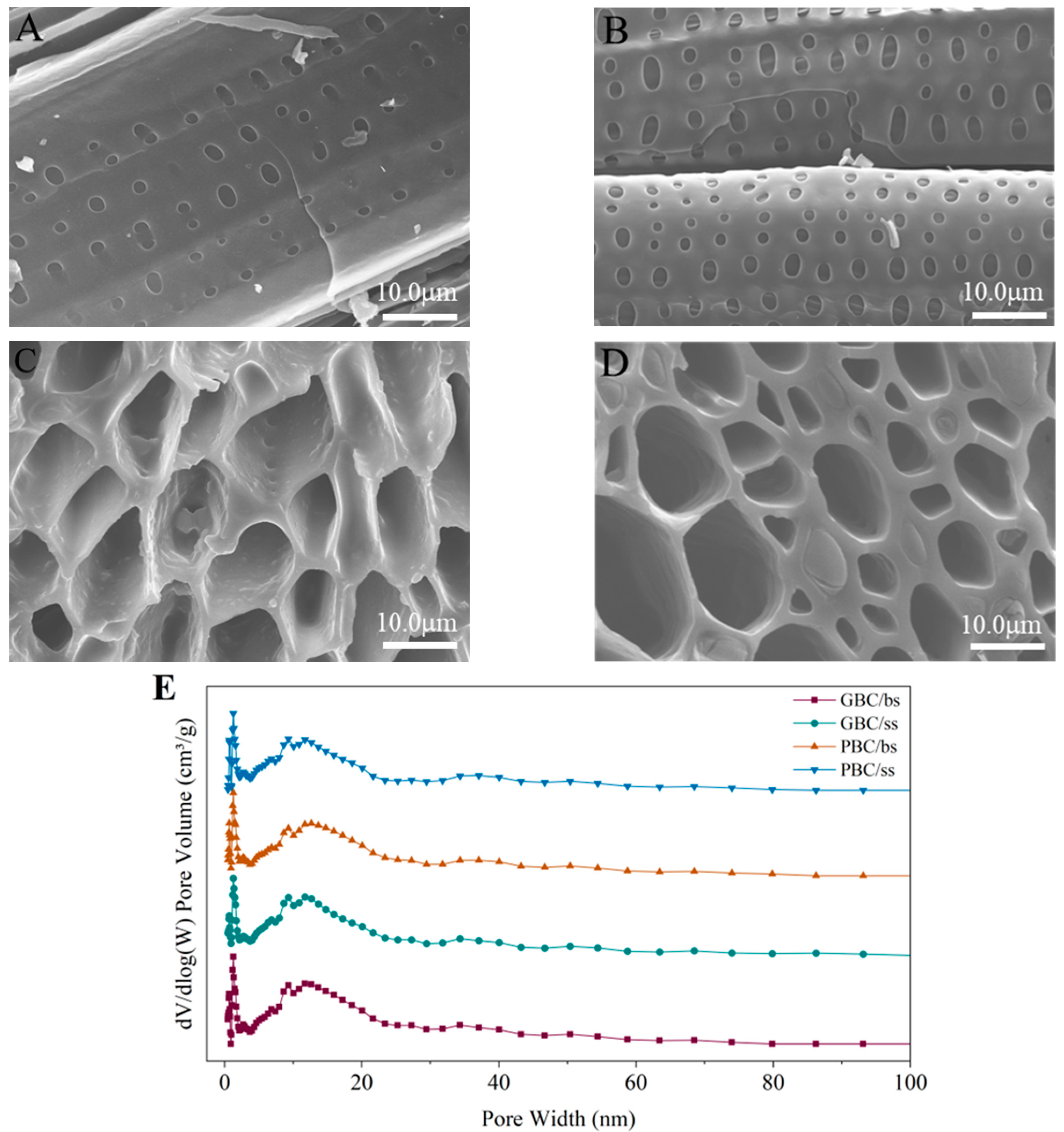
| Sample | BET Surface Area (m2/g) | Total Pore Volume (cm3/g) | Average Pore Width (nm) |
|---|---|---|---|
| GBC/bs | 1463.1 | 1.449 | 3.96 |
| GBC/ss | 1462.6 | 1.387 | 3.79 |
| PBC/bs | 1416.3 | 1.334 | 3.77 |
| PBC/ss | 1257.2 | 1.216 | 3.87 |
| Wavenumber (cm−1) | Functional Group/Assignment | Vibration Mode | Remarks | The References |
|---|---|---|---|---|
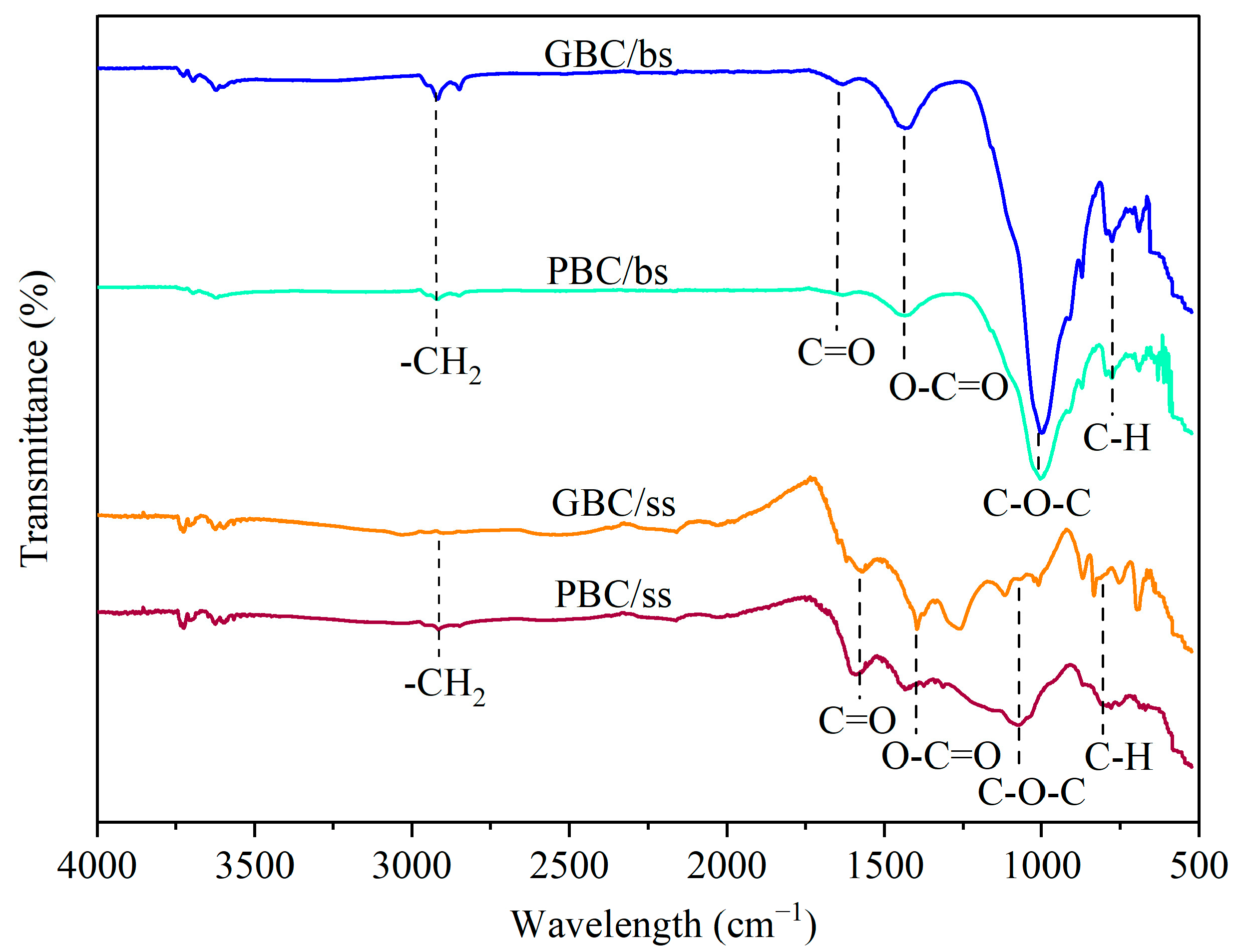
| ~2920 & ~2850 | Aliphatic-CH2, -CH3 | Stretching | Stronger in GBC/bs and PBC/bs | [14] |
| ~1630 | Carboxylate (O-C=O) | Asymmetric Stretching | Present in all samples; broad band | [35,36] |
| ~1400 | Carboxylate (O-C=O) | Symmetric Stretching | Present in all samples; broad band | [35,36] |
| ~1050–1150 | C-O-C (e.g., esters, ethers) | Stretching | Broad band in all samples | [37] |
| ~780–800 | Aromatic C-H | Bending (out-of-plane) | Present in all samples; intensity varies | [37] |
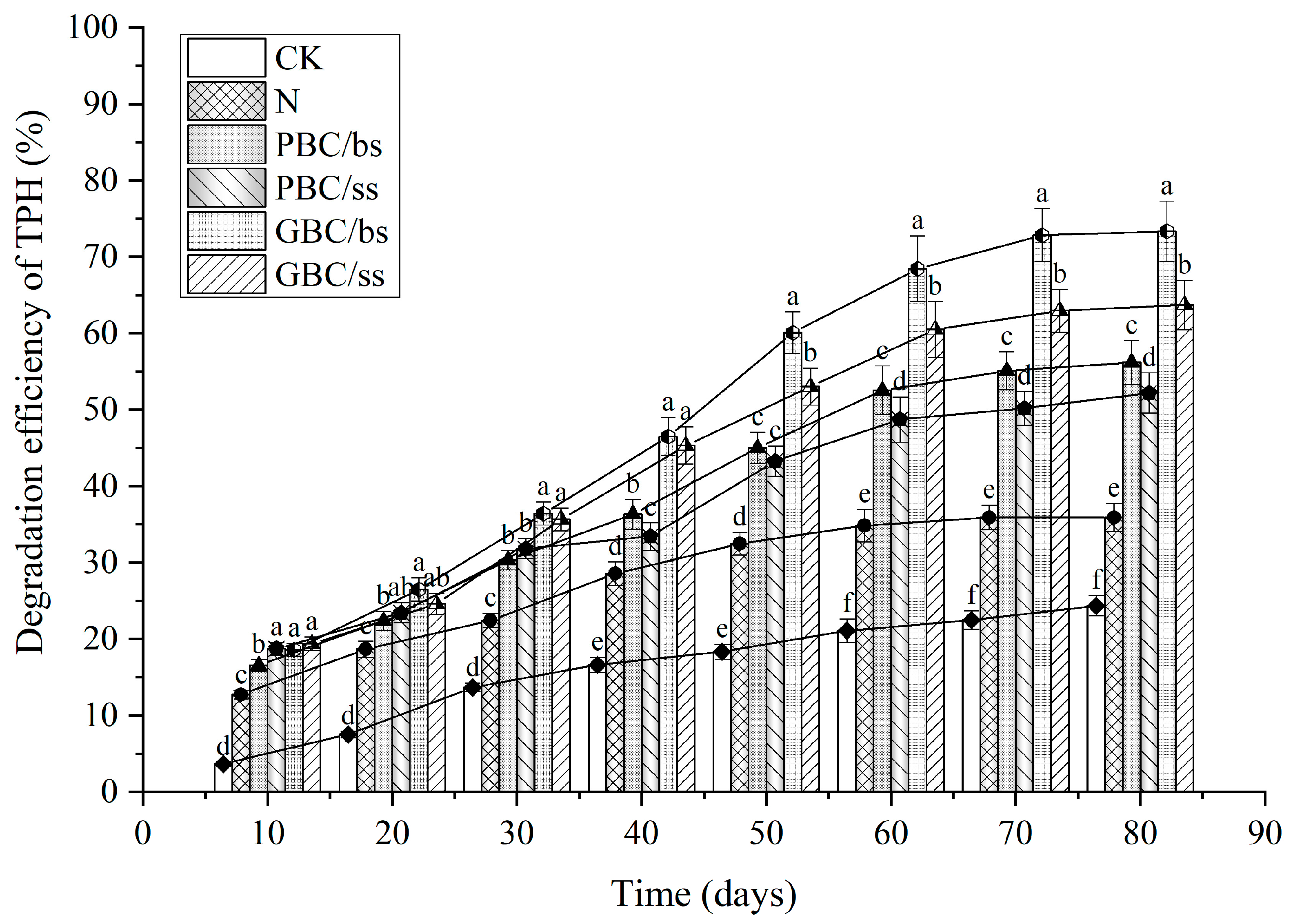
| Treatment | Initial TPH (g · kg−1) | Final TPH (g · kg−1) | Degradation Efficiency (%) |
|---|---|---|---|
| GBC/bs | 19.55 ± 0.34 | 5.21 ± 0.18 a | 73.35 ± 3.96 a |
| GBC/ss | 19.55 ± 0.34 | 7.10 ± 0.28 b | 63.68 ± 3.22 b |
| PBC/bs | 19.55 ± 0.34 | 8.57 ± 0.19 c | 56.18 ± 2.84 c |
| PBC/ss | 19.55 ± 0.34 | 9.35 ± 0.19 d | 52.19 ± 2.64 d |
| N | 19.55 ± 0.34 | 12.53 ± 0.05 e | 35.91 ± 1.82 e |
| CK | 19.55 ± 0.34 | 14.79 ± 0.52 f | 24.36 ± 1.34 f |
| CK | N | PBC/bs | PBC/ss | GBC/bs | GBC/ss | ||
|---|---|---|---|---|---|---|---|
| N-alkanes | |||||||
| Low-molecular-weight (C15–C24) (%) | 30 days | 8.56 | 6.89 | 3.87 | 4.58 | 2.49 | 4.22 |
| 80 days | 6.48 | 4.16 | 2.58 | 3.17 | 0.52 | 2.73 | |
| High-molecular-weight (C25–C36) (%) | 30 days | 18.71 | 16.51 | 10.81 | 12.66 | 7.28 | 9.66 |
| 80 days | 14.32 | 12.28 | 4.84 | 6.38 | 2.39 | 4.95 | |
| Steranes | |||||||
| C21–22 low molecular steranes (%) | 30 days | 4.66 | 4.23 | 4.26 | 3.98 | 2.36 | 3.87 |
| 80 days | 3.67 | 3.21 | 1.89 | 2.14 | 0.95 | 1.96 | |
| C27–29 regular steranes (%) | 30 days | 33.41 | 31.54 | 27.83 | 26.57 | 21.97 | 26.79 |
| 80 days | 31.25 | 30.16 | 21.24 | 24.39 | 15.41 | 20.85 | |
| Terpanes | |||||||
| Ts/Tm | 30 days | 1.74 | 1.7 | 1.68 | 1.67 | 1.66 | 1.66 |
| 80 days | 1.75 | 1.72 | 1.74 | 1.73 | 1.82 | 1.78 | |
| C29–34 hopanes (%) | 30 days | 14.82 | 14.13 | 12.58 | 12.93 | 11.02 | 12.77 |
| 80 days | 13.26 | 11.67 | 9.86 | 10.34 | 6.25 | 9.28 | |
| Treatment | pH | SOC (g · kg−1) | N Total (g · kg−1) | P Total (g · kg−1) |
|---|---|---|---|---|
| CK | 8.25 ± 0.01 a | 58.23 ± 1.84 a | 0.83 ± 0.032 d | 0.072 ± 0.003 f |
| N | 8.18 ± 0.03 bc | 51.72 ± 1.37 b | 1.15 ± 0.066 c | 0.122 ± 0.005 e |
| PBC/bs | 8.17 ± 0.02 bcd | 32.93 ± 0.92 d | 1.85 ± 0.045 a | 0.522 ± 0.009 c |
| PBC/ss | 8.13 ± 0.03 d | 39.62 ± 0.66 c | 1.66 ± 0.055 b | 0.426 ± 0.009 d |
| GBC/bs | 8.15 ± 0.02 cd | 24.56 ± 0.83 e | 1.89 ± 0.067 a | 0.768 ± 0.014 a |
| GBC/ss | 8.21 ± 0.04 ab | 34.45 ± 1.01 d | 1.68 ± 0.025 b | 0.578 ± 0.008 b |
Disclaimer/Publisher’s Note: The statements, opinions and data contained in all publications are solely those of the individual author(s) and contributor(s) and not of MDPI and/or the editor(s). MDPI and/or the editor(s) disclaim responsibility for any injury to people or property resulting from any ideas, methods, instructions or products referred to in the content. |
© 2025 by the authors. Licensee MDPI, Basel, Switzerland. This article is an open access article distributed under the terms and conditions of the Creative Commons Attribution (CC BY) license (https://creativecommons.org/licenses/by/4.0/).
Share and Cite
Wang, Y.; Wang, Q.; Wang, M.; Lei, H.; Chen, J. Biochar Particle Size Modulates the Microbial Degradation of Petroleum Hydrocarbons in Contaminated Soil. Agronomy 2025, 15, 2874. https://doi.org/10.3390/agronomy15122874
Wang Y, Wang Q, Wang M, Lei H, Chen J. Biochar Particle Size Modulates the Microbial Degradation of Petroleum Hydrocarbons in Contaminated Soil. Agronomy. 2025; 15(12):2874. https://doi.org/10.3390/agronomy15122874
Chicago/Turabian StyleWang, Yanjie, Qiong Wang, Meijuan Wang, Haiqing Lei, and Jiabo Chen. 2025. "Biochar Particle Size Modulates the Microbial Degradation of Petroleum Hydrocarbons in Contaminated Soil" Agronomy 15, no. 12: 2874. https://doi.org/10.3390/agronomy15122874
APA StyleWang, Y., Wang, Q., Wang, M., Lei, H., & Chen, J. (2025). Biochar Particle Size Modulates the Microbial Degradation of Petroleum Hydrocarbons in Contaminated Soil. Agronomy, 15(12), 2874. https://doi.org/10.3390/agronomy15122874