Analysis of Microscopic Characteristics of Pepper Seedling Root Systems and Study on Transplanting Gripping Injury Based on Micro-CT

 ,
,
Abstract
1. Introduction
2. Materials and Methods
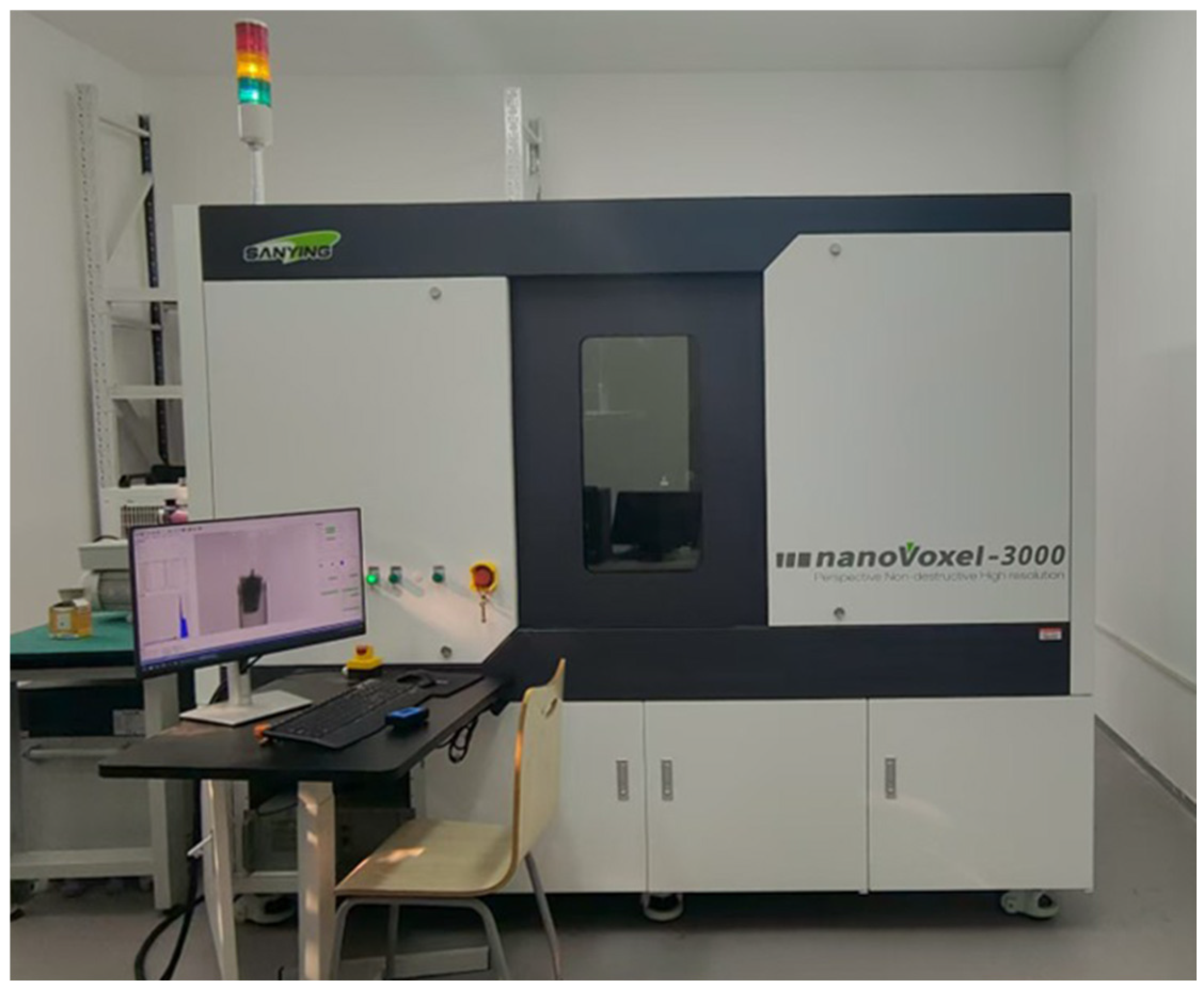
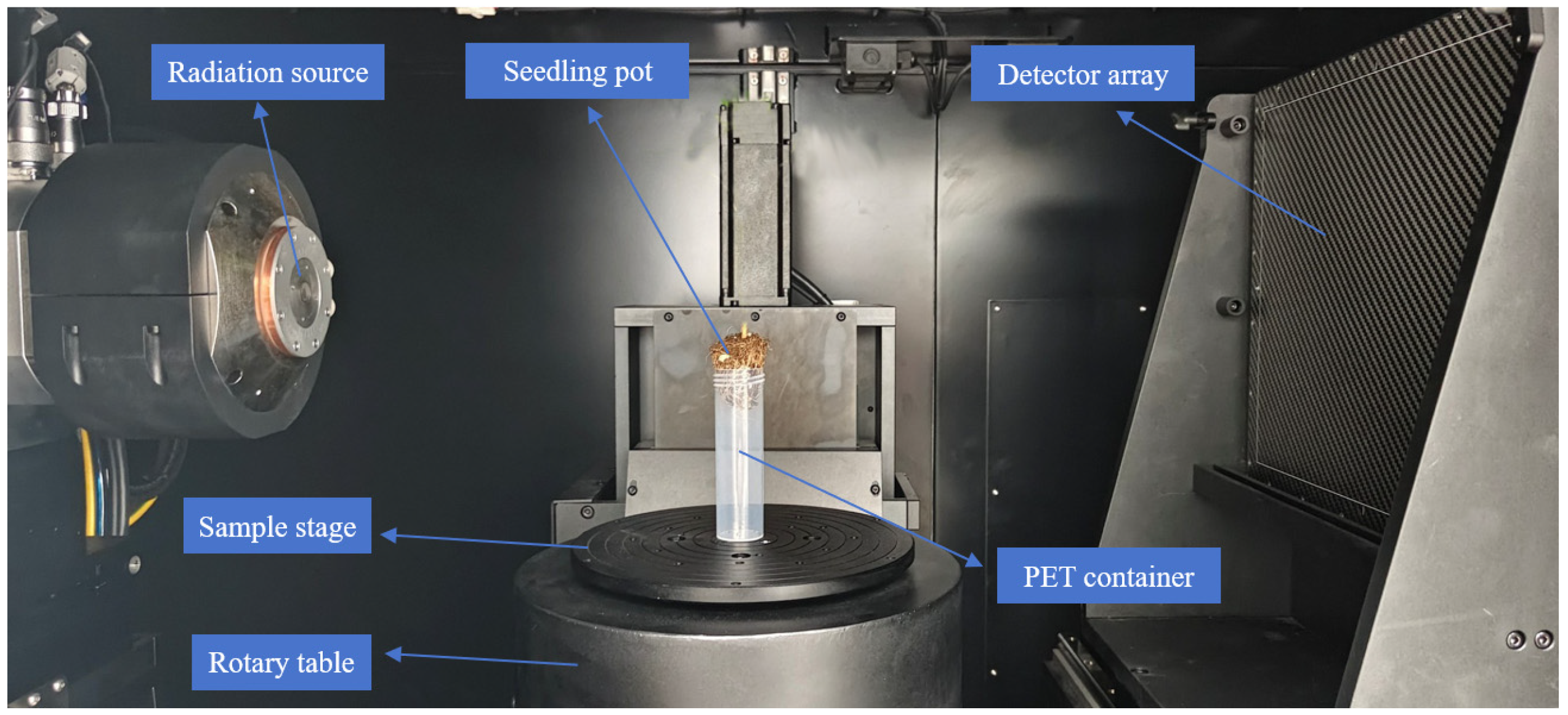
2.1. Experimental Materials and Instrument
2.2. Experimental Methods
2.2.1. Scanning Parameter Settings
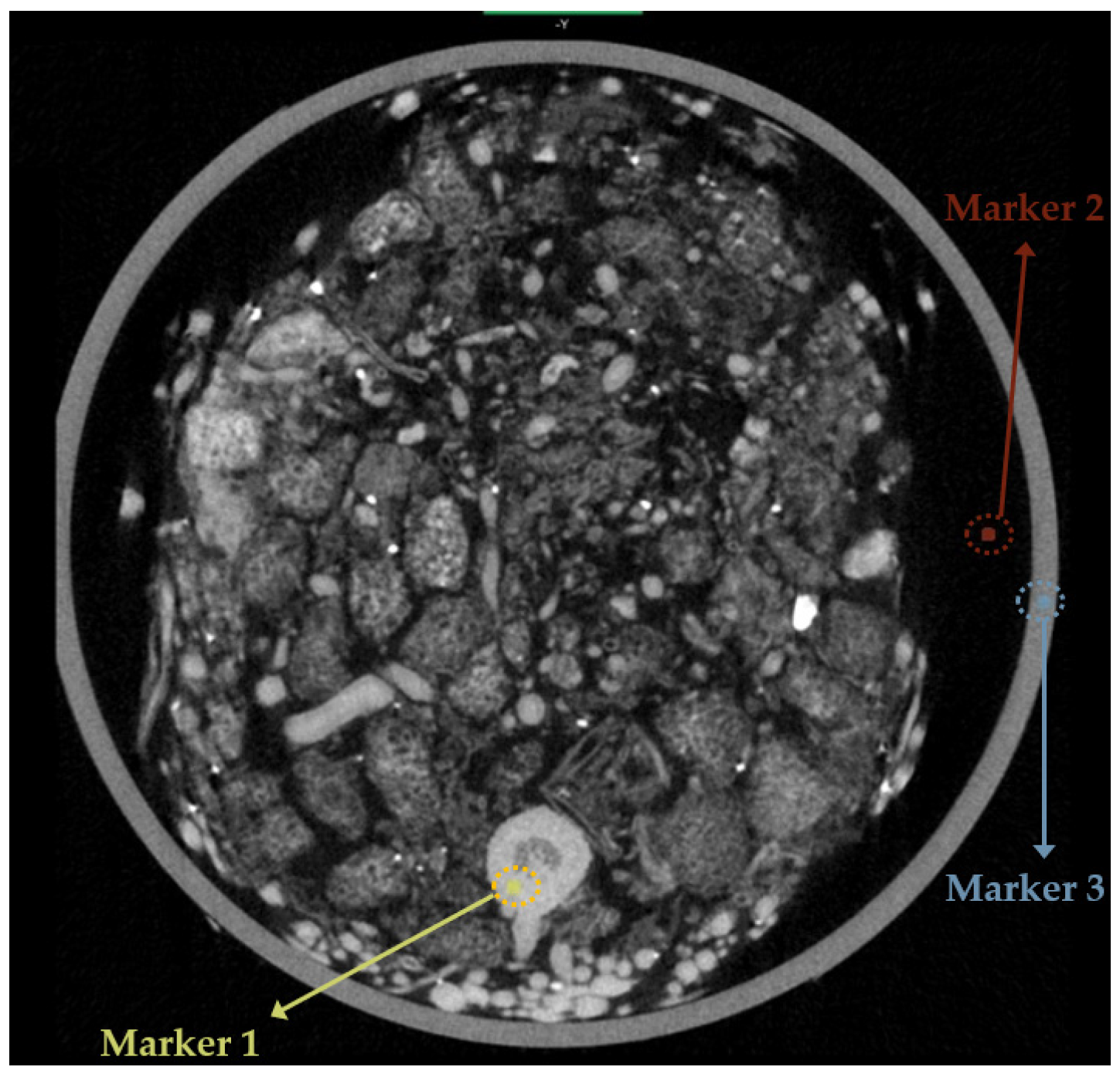
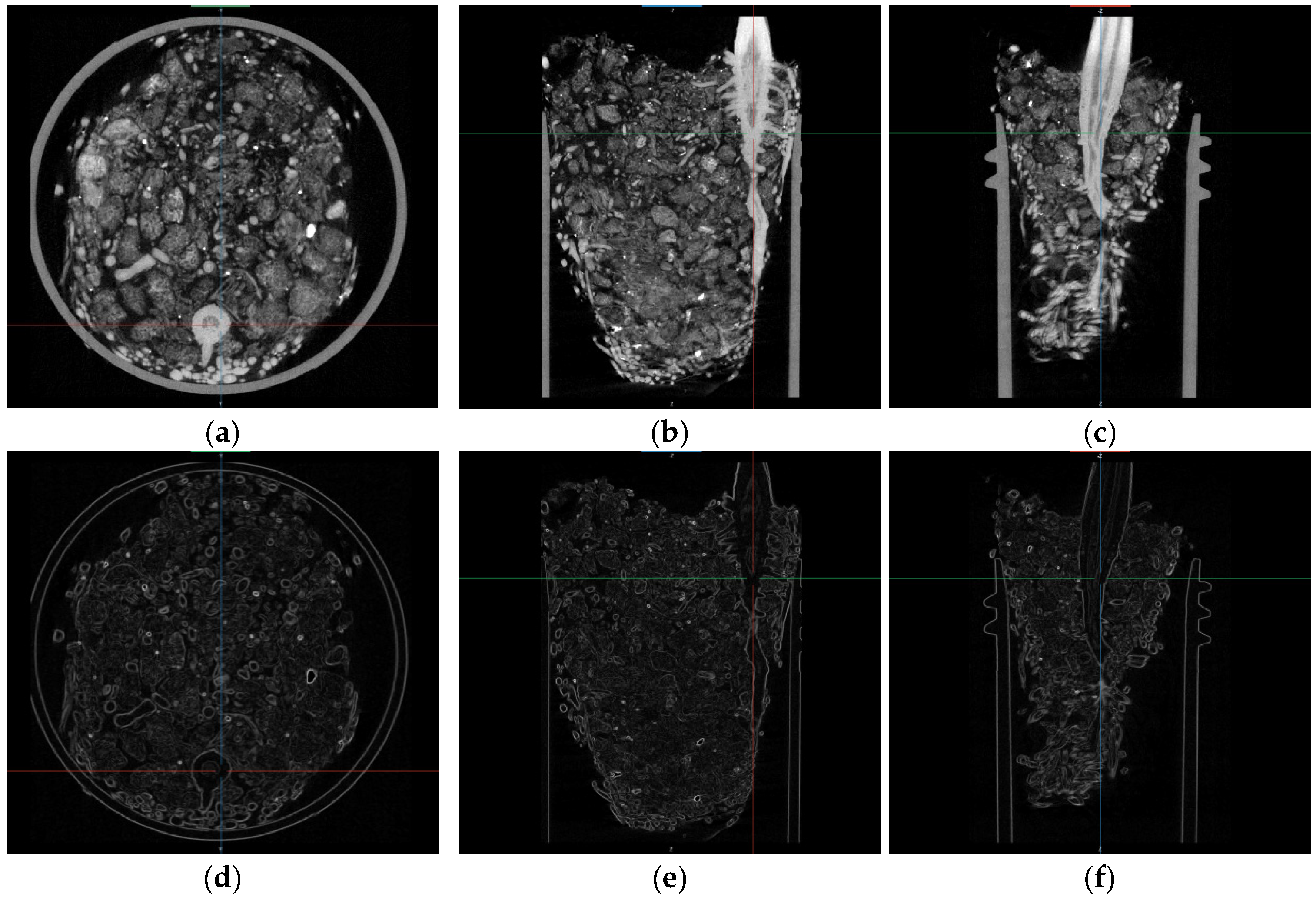
2.2.2. Three-Dimensional Pot Model Reconstruction
2.2.3. Extraction Method for Root System 3D Model
2.2.4. Characterization Method for Root System
2.2.5. Test Method for Root Injury During Gripping
- (1)
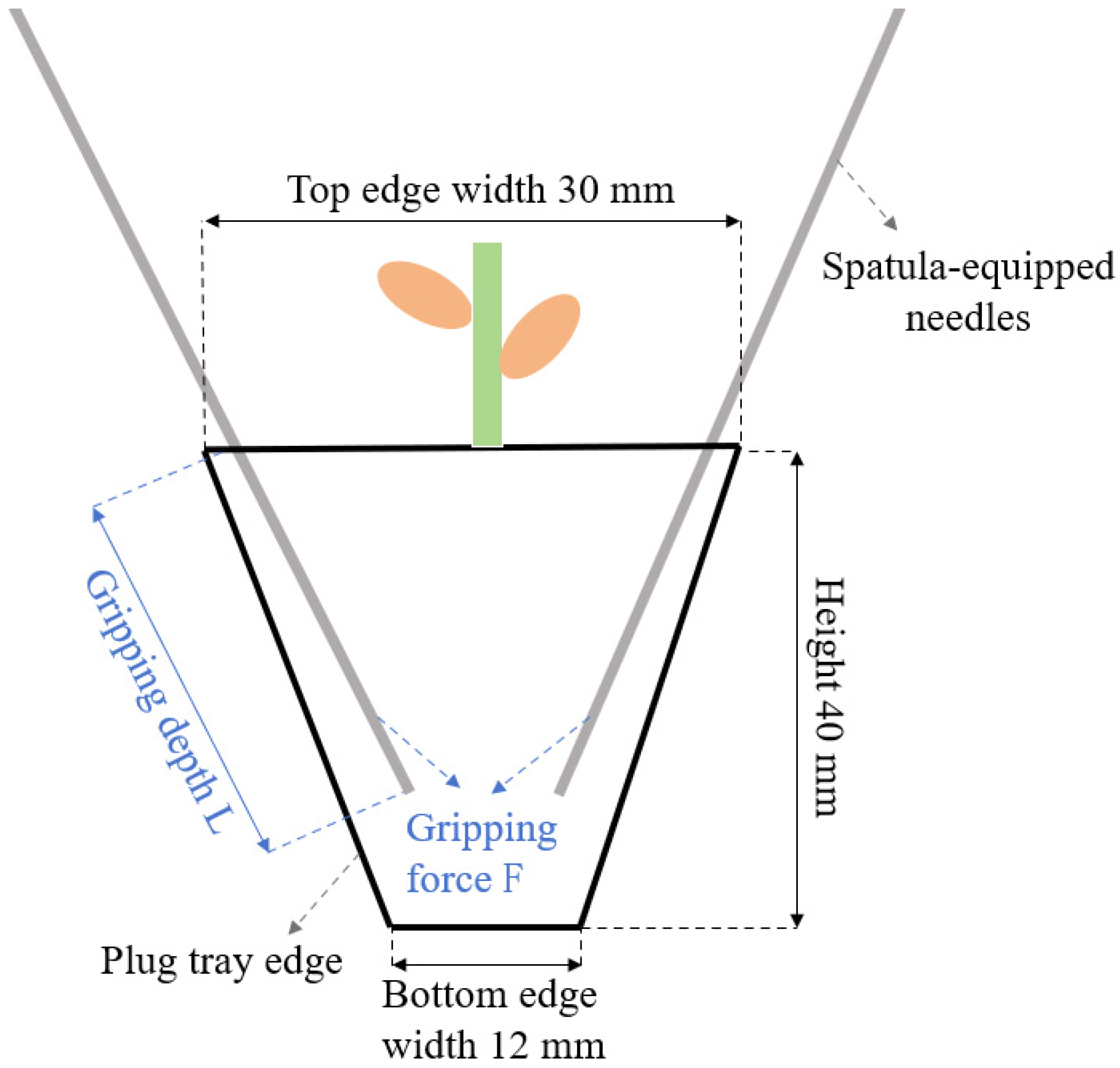
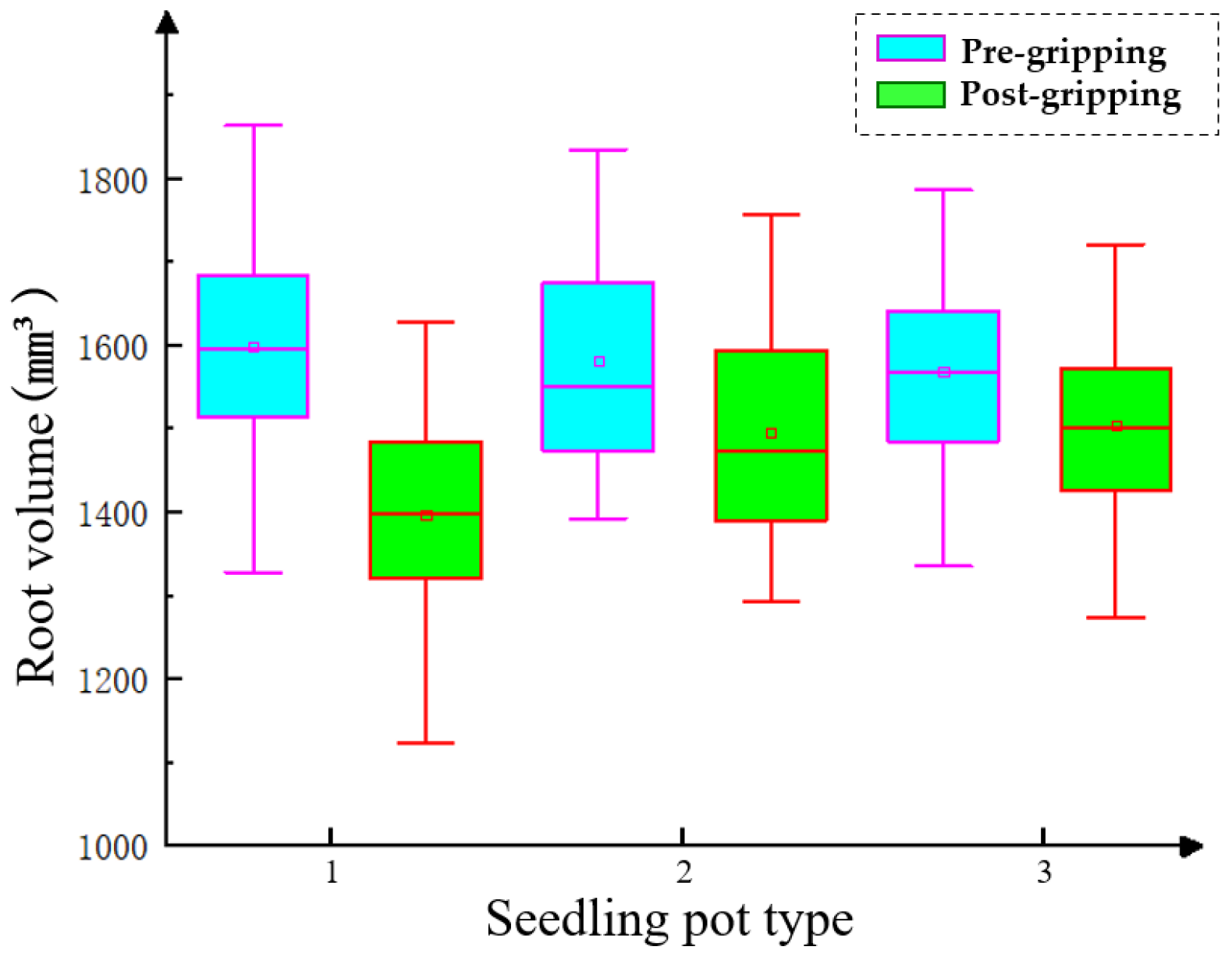
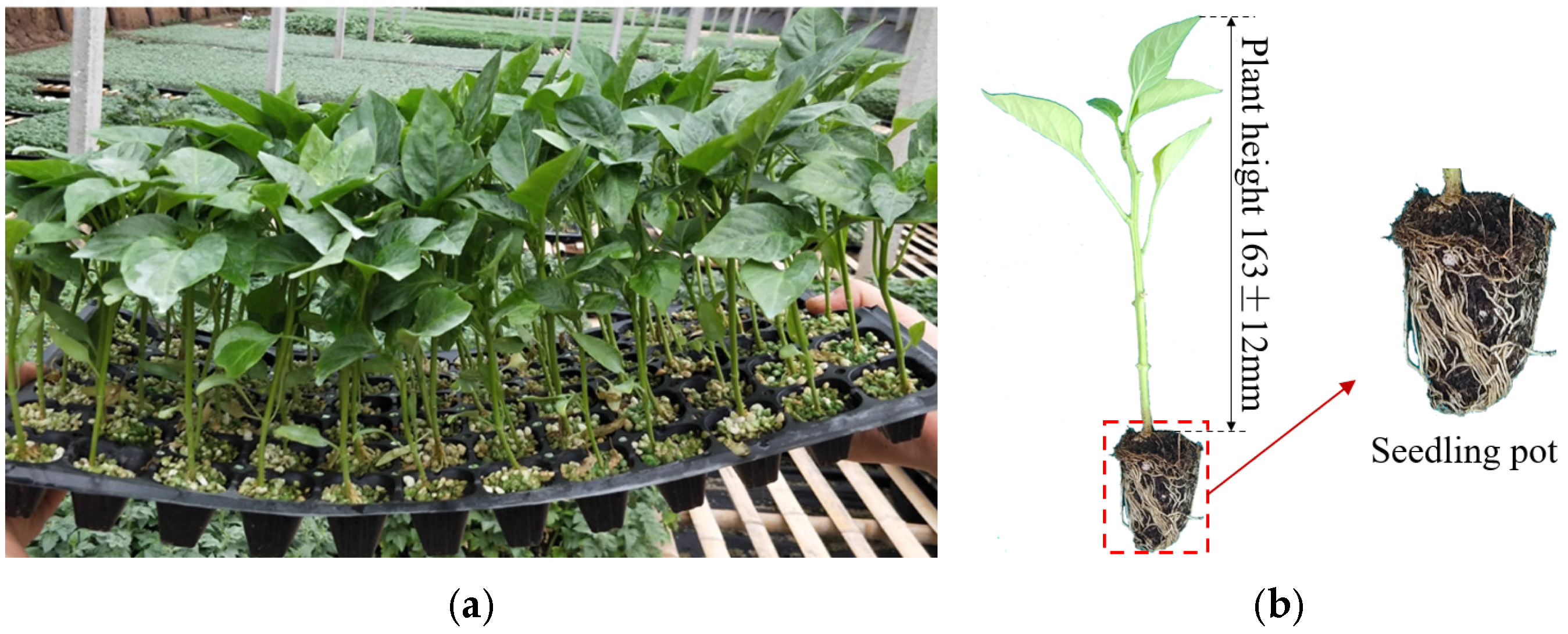
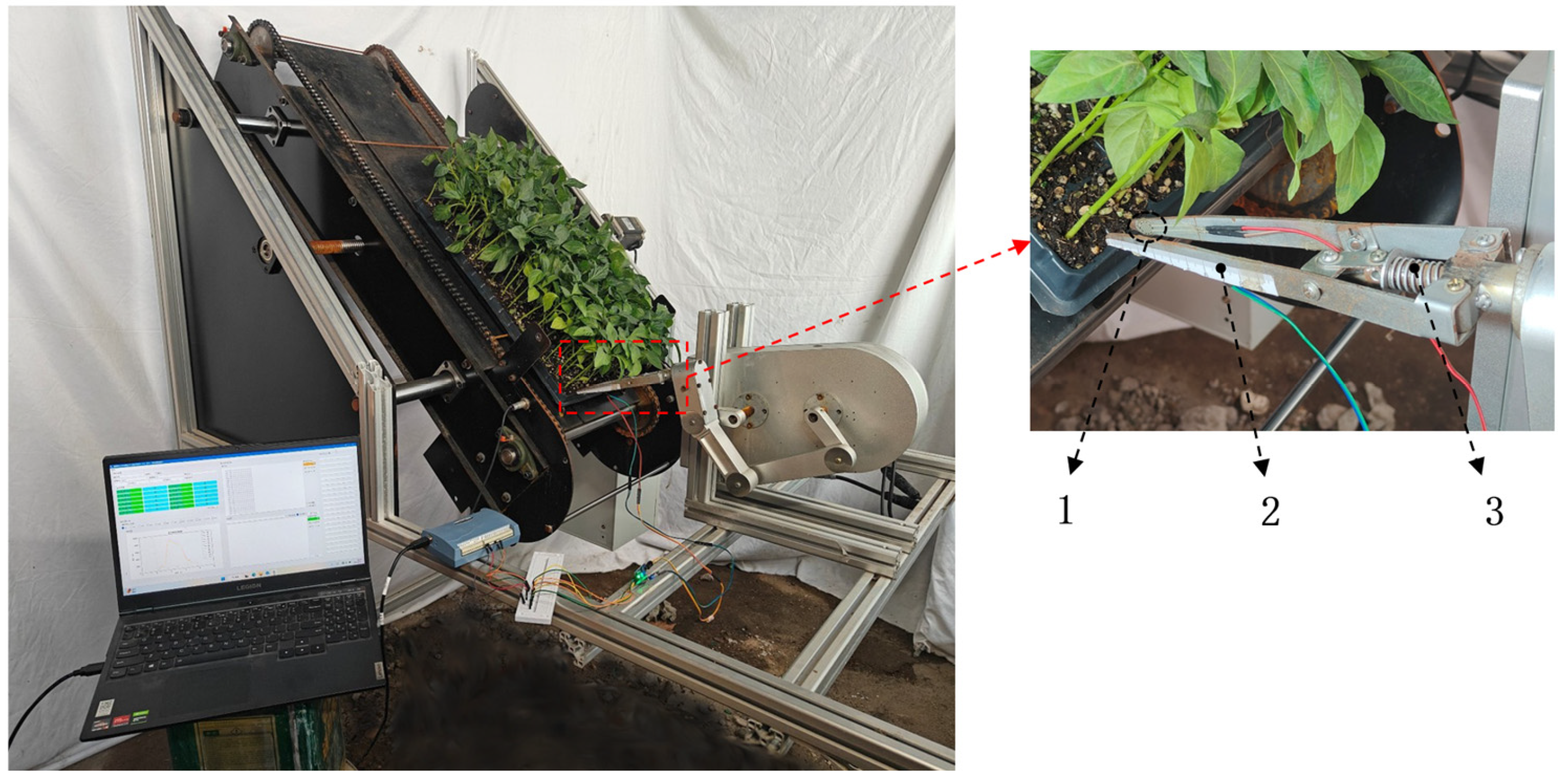
- Each group of 10 pepper seedlings was labeled and sequentially scanned in the CT system. Following the initial scan of each seedling, a gripping procedure was applied at a depth of 35 mm using the seedling extraction mechanism. The seedling was then rescanned in the CT system. This procedure yielded 20 CT datasets per group (10 pre-gripping and 10 post-gripping), resulting in a total of 60 CT datasets for the entire experiment.
- (2)
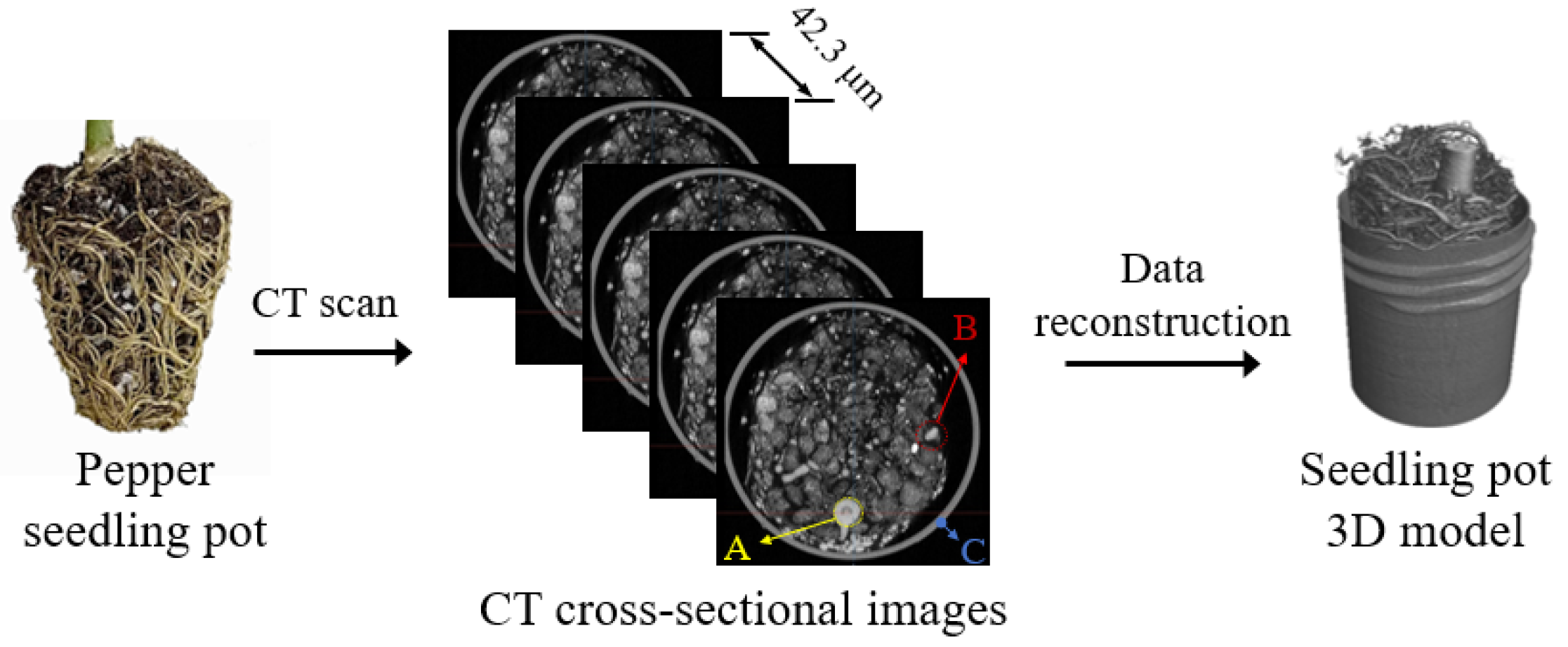
- Three-dimensional image reconstruction was performed on the raw CT data obtained from scanning the pot samples.
- (3)
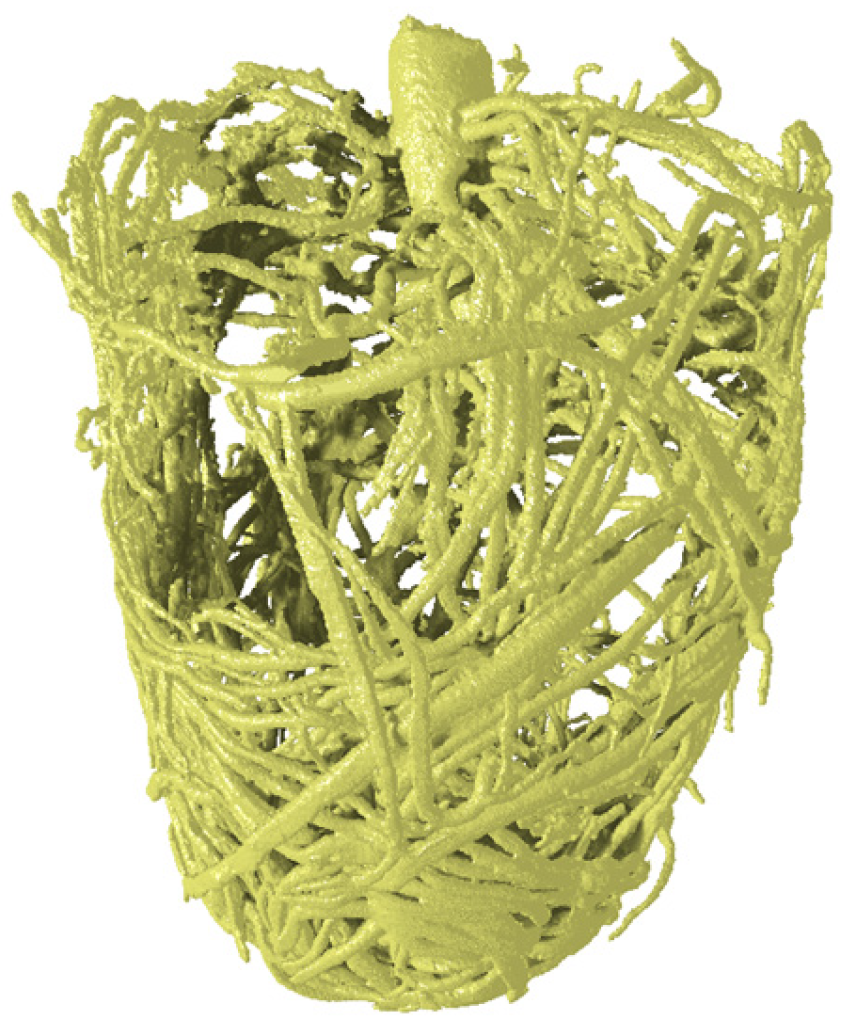
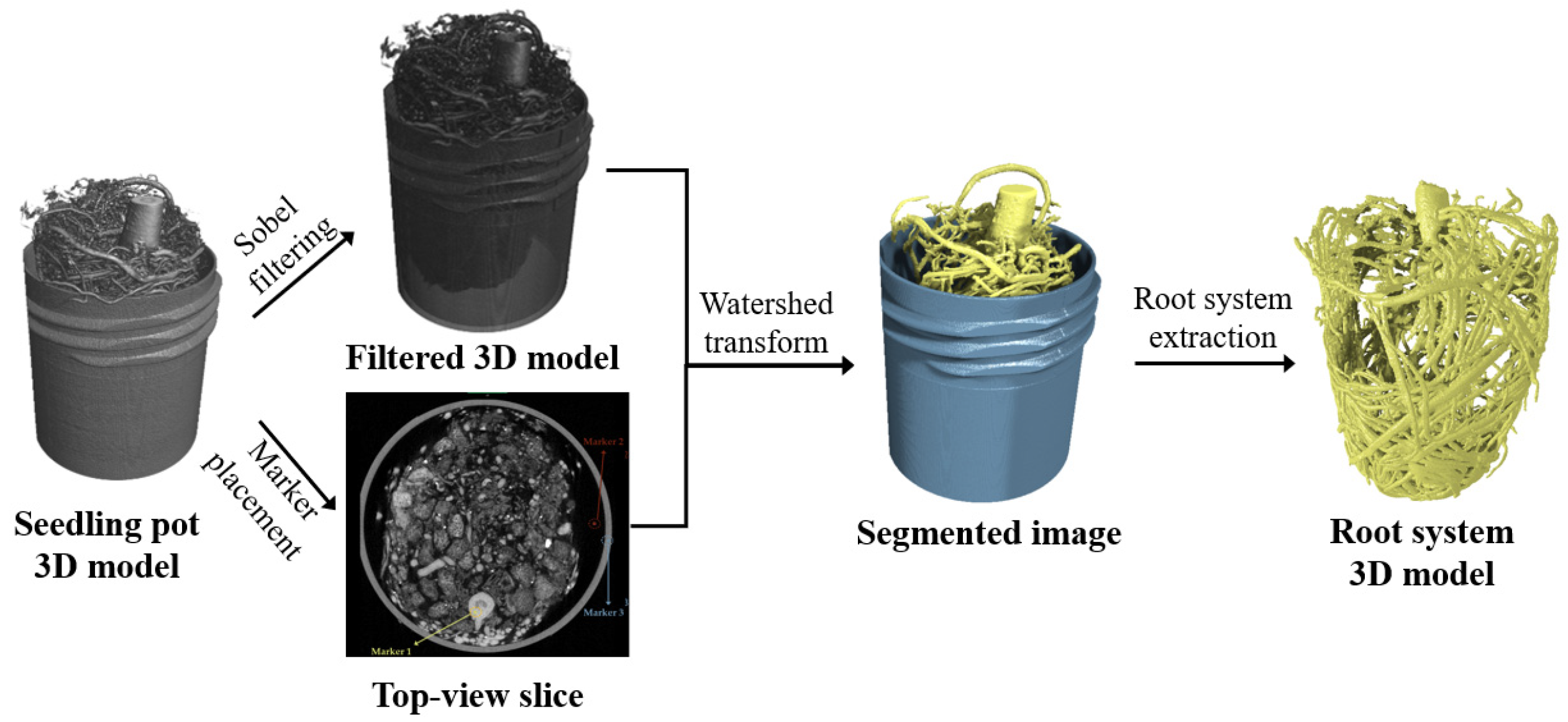
- The reconstructed image data were post-processed using Dragonfly software. The watershed algorithm was applied to extract three-dimensional root models and calculate the corresponding root volumes. Changes in root volume before and after the gripping process were systematically recorded.
3. Results and Discussion
3.1. Root System Distribution Characteristics of Pepper Seedling Pots
- (1)
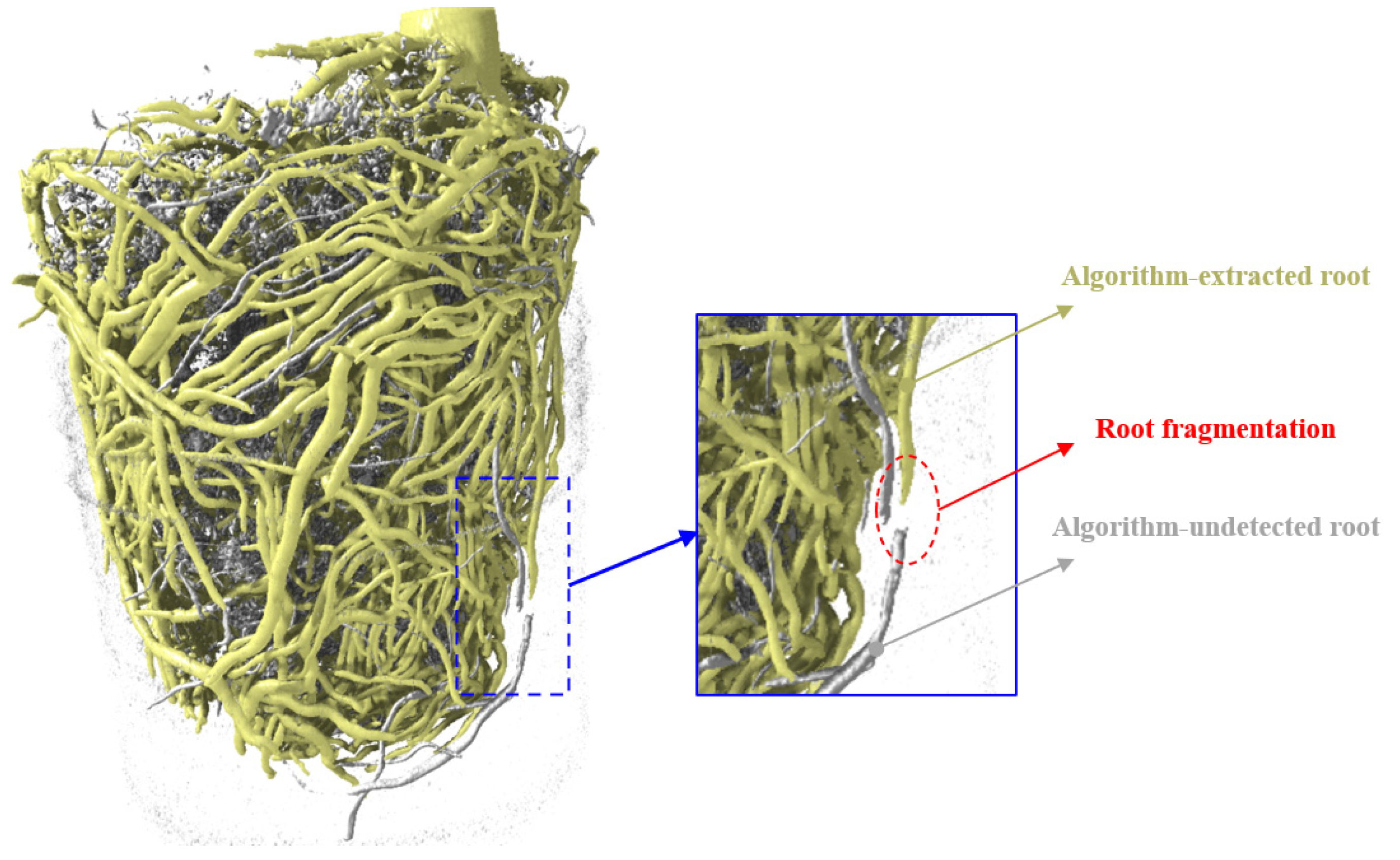
- During extraction, the algorithm inadvertently includes substrate particles that are tightly adhered to the roots and have grayscale values similar to those of the roots, leading to an overestimation of the root volume.
- (2)
- The algorithm fails to detect extremely fine roots, such as those resulting from poor development or other growth limitations.
3.2. Root System Injury from Gripping
3.3. Statistical Analysis Results
3.4. Validation Experiment of Seedling Gripping
4. Discussion
5. Conclusions
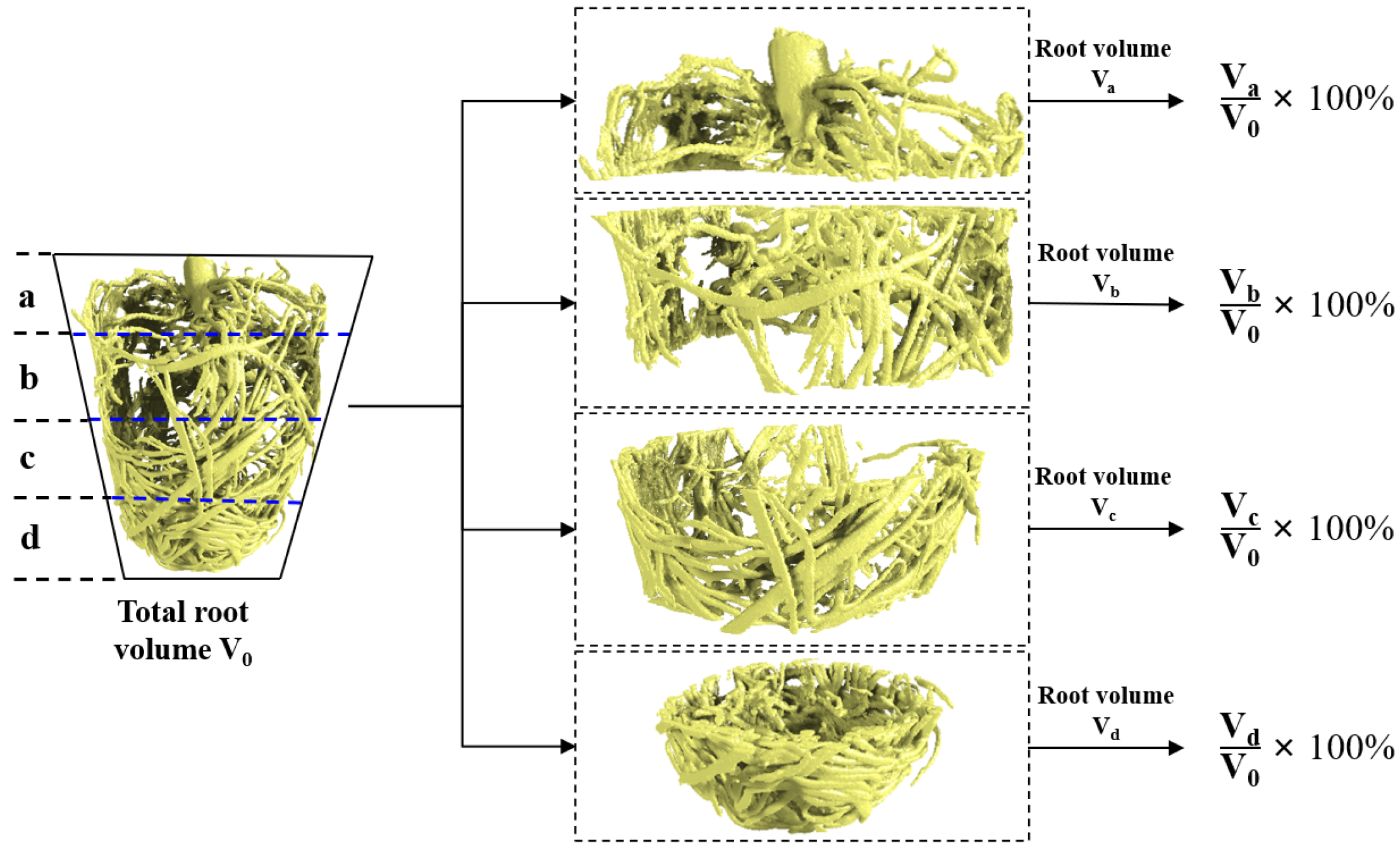
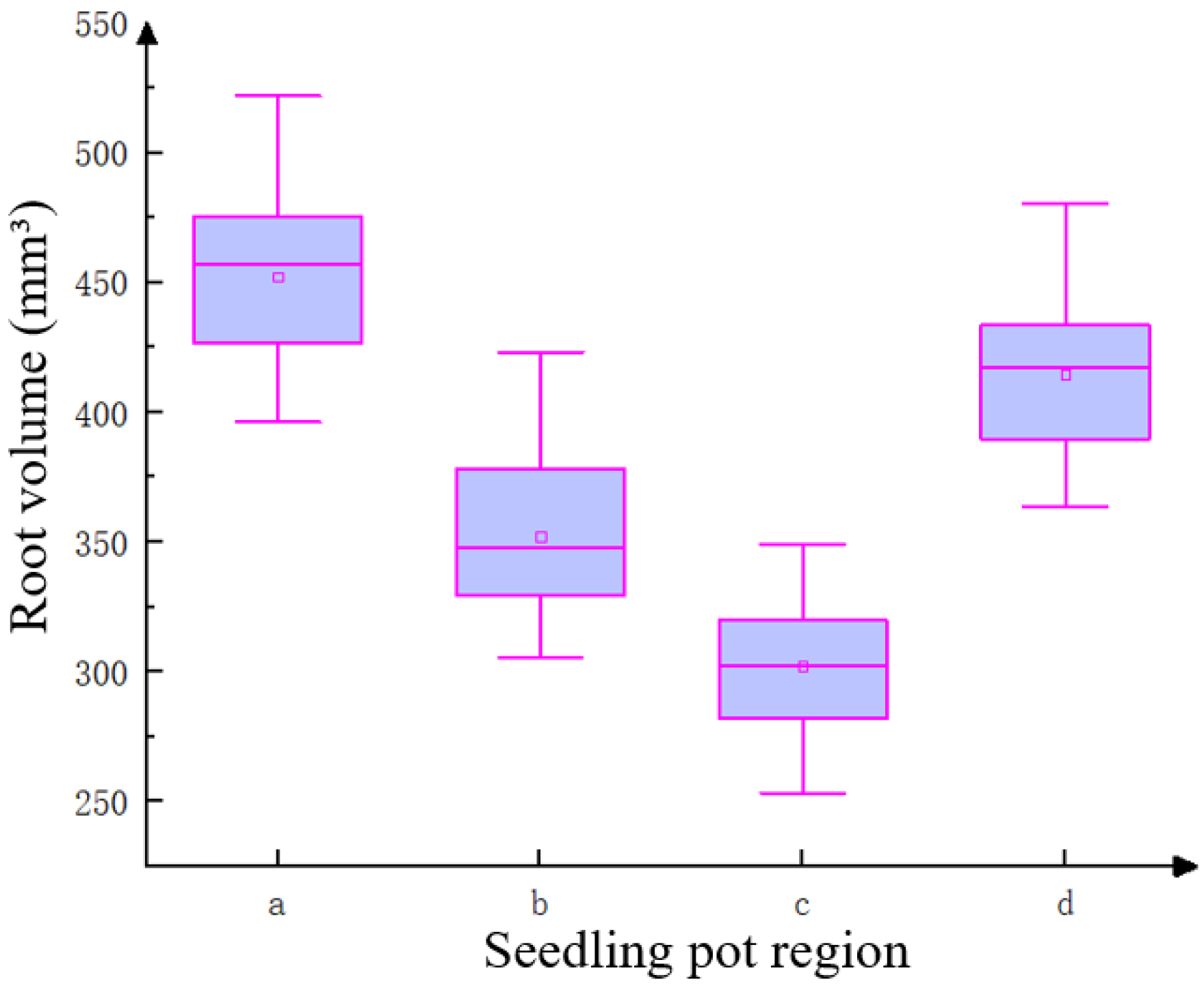
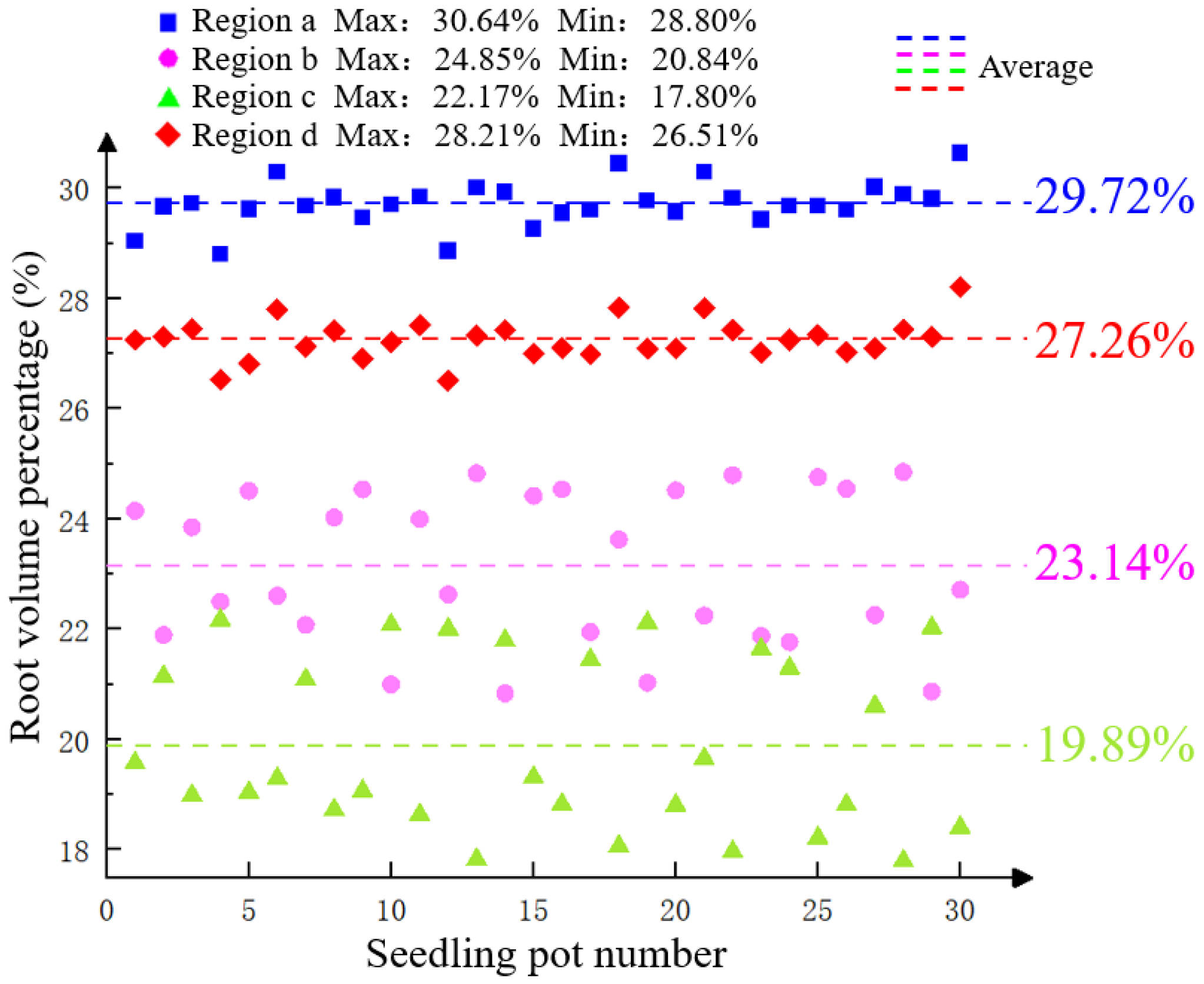
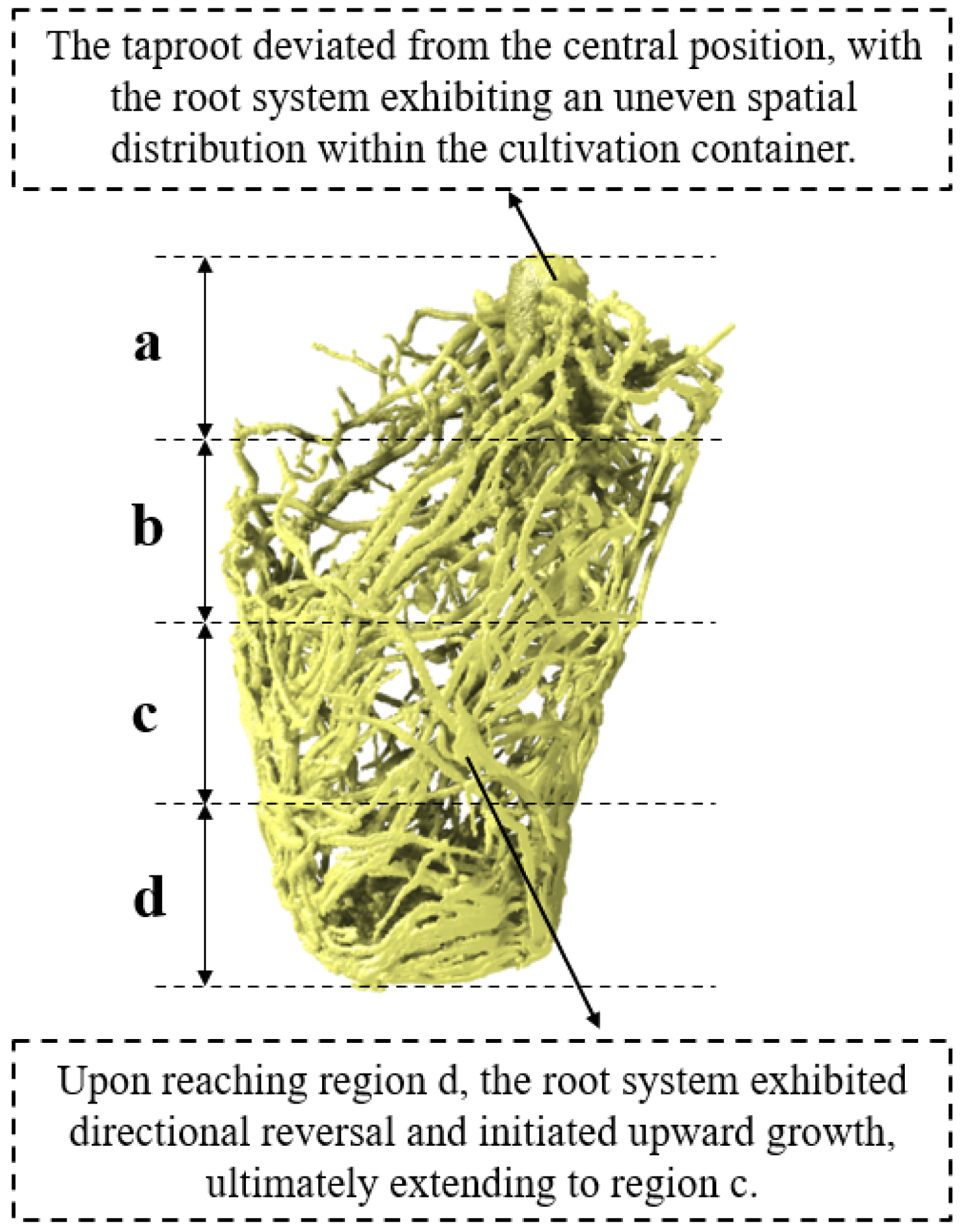
- Based on a Micro-CT analysis of the microstructural characteristics of pepper seedling root systems, the roots were divided vertically into four equally spaced regions (a, b, c, d). The results showed that region a had the largest average root volume proportion (29.72%), followed by region d (27.26%). Region b exhibited a slightly greater proportion than region c, with average values of 23.14% and 19.89%, respectively. These root distribution characteristics provide a theoretical foundation for the design of low-injury seedling gripping mechanisms in fully automatic pepper seedling transplanters.
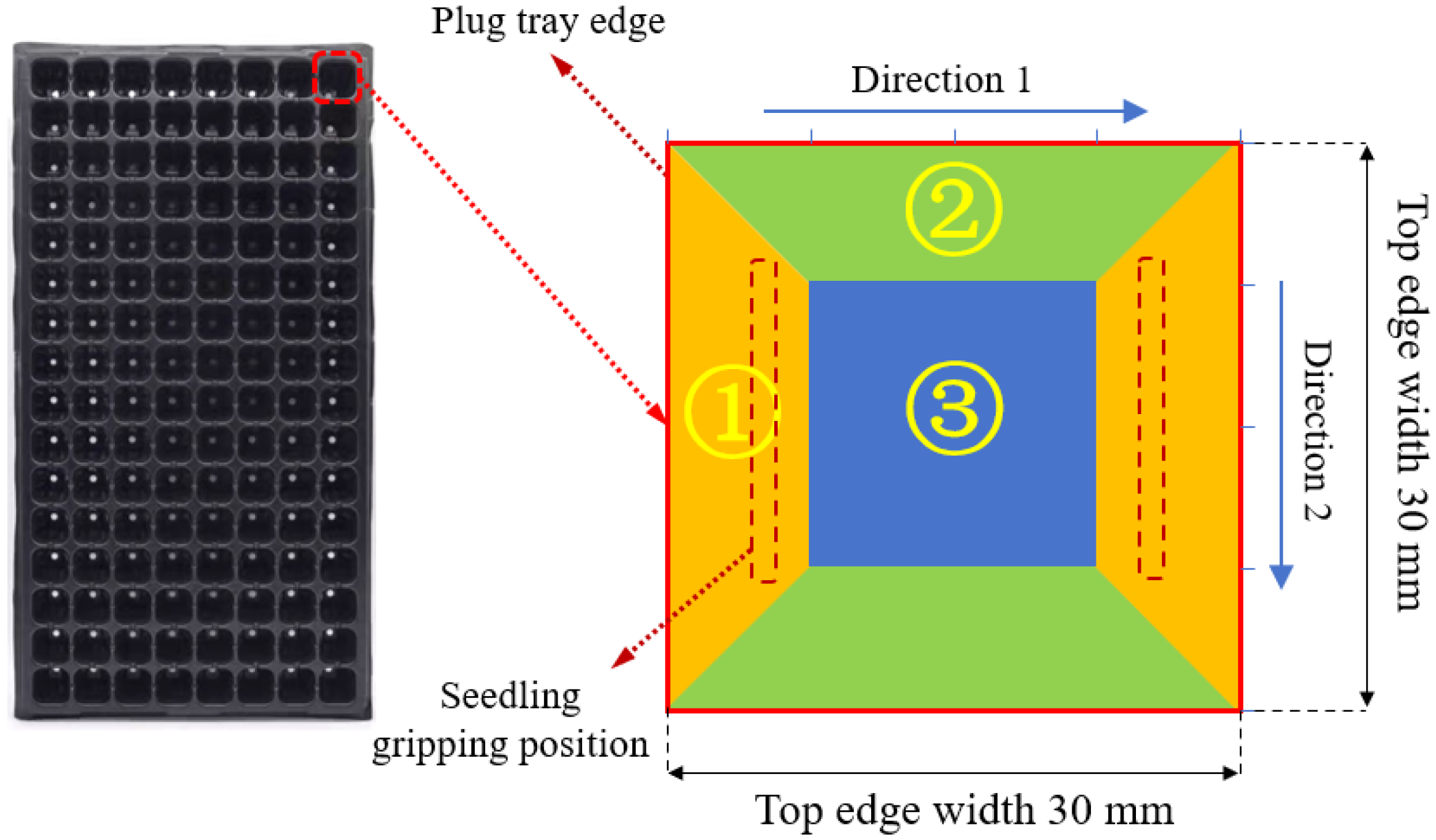
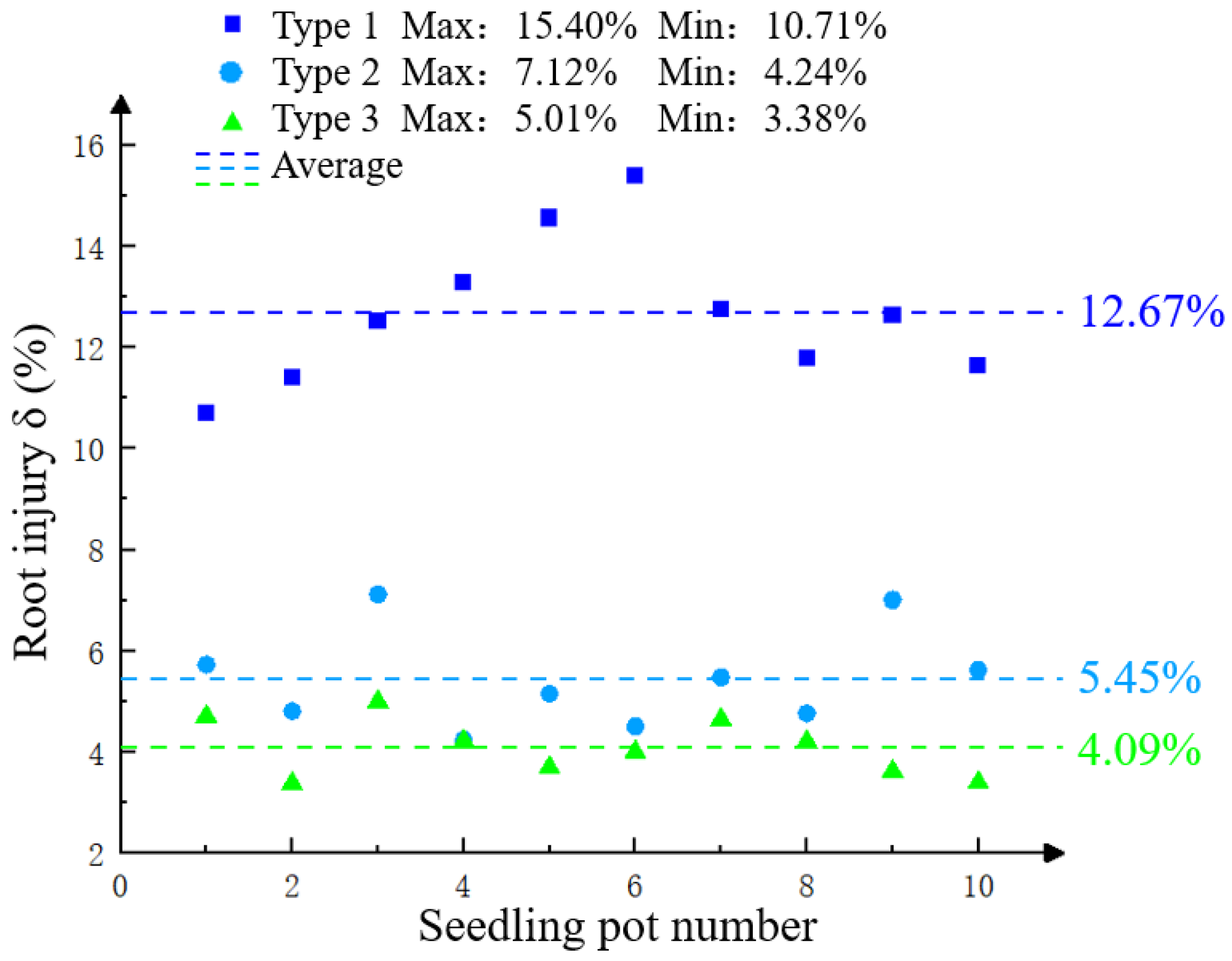
- Gripping-induced root injury was investigated for three seedling types characterized by different taproot positions. The results demonstrated that the taproot location significantly influenced root injury. Type 3 seedlings, with their taproots positioned centrally within the pot, sustained the least root injury (average 4.09%). In contrast, Type 1 seedlings, whose taproots were located directly at the gripping location, exhibited the most severe injury (average 12.67%). Although Type 2 seedlings had taproots positioned away from the immediate gripping location, their lateral placement within the pot still resulted in slightly greater injury than that for Type 3, with an average value of 5.45%. These findings provide a basis for optimizing seedling cultivation practices and adjusting transplanting parameters.
- The seedling gripping validation experiment confirmed the accuracy of Micro-CT for analyzing root distribution characteristics and gripping-induced root injury. The tests also demonstrated the effective operational performance of the needle-based gripping mechanism, achieving a gripping success rate of 95.29%. For seedlings with centrally positioned taproots, the gripping-induced root injury was only 4.82%.
Author Contributions
Funding
Data Availability Statement
Conflicts of Interest
References
- Cheng, B.; Wu, H.; Zhu, H.; Liang, J.; Miao, Y.; Cui, Y.; Song, W. Current Status and Analysis of Key Technologies in Automatic Transplanters for Vegetables in China. Agriculture 2024, 14, 2168. [Google Scholar] [CrossRef] [Scilit]
- Gallegos-Cedillo, V.; Najera, C.; Signore, A.; Ochoa, J. Analysis of global research on vegetable seedlings and transplants and their impacts on product quality. J. Sci. Food Agric. 2024, 104, 4950–4965. [Google Scholar] [CrossRef] [Scilit] [PubMed]
- Markumningsih, S.; Hwang, S.; Kim, J.; Jang, M.; Shin, C.; Nam, J. Comparison of Consumed Power and Safety of Two Types of Semi-Automatic Vegetable Transplanter: Cam and Four-Bar Link. Agriculture 2023, 13, 588. [Google Scholar] [CrossRef] [Scilit]
- Liu, W.; Tian, S.; Wang, Q.; Jiang, H. Key Technologies of Plug Tray Seedling Transplanters in Protected Agriculture: A Review. Agriculture 2023, 13, 1488. [Google Scholar] [CrossRef] [Scilit]
- Yue, R.; Yao, M.; Zhang, T.; Shi, J.; Zhou, J.; Hu, J. Design and Experiment of Dual-Row Seedling Pick-Up Device for High-Speed Automatic Transplanting Machine. Agriculture 2024, 14, 942. [Google Scholar] [CrossRef] [Scilit]
- Jin, X.; Cheng, Q.; Zhao, B.; Ji, J.; Li, M. Design and test of 2ZYM-2 potted vegetable seedlings transplanting machine. Int. J. Agric. Biol. Eng. 2020, 13, 101–110. [Google Scholar] [CrossRef] [Scilit]
- Hu, S.; Hu, M.; Yan, W.; Zhang, W. Design and Experiment of an Integrated Automatic Transplanting Mechanism for Picking and Planting Pepper Hole Tray Seedlings. Agriculture 2022, 12, 557. [Google Scholar] [CrossRef] [Scilit]
- Vera, S.; Prado, S. Synthesis and Optimization of a Needles Robotic Gripper Mechanism for transplanting seedlings. In Proceedings of the ANDESCON 2020 Index, Quito, Ecuador, 13–16 October 2020. [Google Scholar]
- Magar, A.; Nalawade, S.; Walunj, A.; Gaikwad, B.; Shelke, G.; Khadatkar, A.; Sawant, C.; Modi, R. Development and optimization of an automatic transplanting device for plug tray vegetable seedlings using embedded system. Sci. Rep. 2025, 15, 22483. [Google Scholar] [CrossRef] [Scilit]
- Khadatkar, A.; Mathur, S.; Gaikwad, B. Automation in transplanting: A smart way of vegetable cultivation. Curr. Sci. 2018, 115, 1884–1892. [Google Scholar] [CrossRef] [Scilit]
- Habineza, E.; Ali, M.; Reza, M.; Woo, J.; Chung, S.; Hou, Y. Vegetable transplanters and kinematic analysis of major mechanisms. Korean J. Agric. Sci. 2023, 50, 113–129. [Google Scholar] [CrossRef] [Scilit]
- Habineza, E.; Reza, N.; Bicamumakuba, E.; Haque, A.; Park, S.; Lee, D.; Chung, S.; Lee, Y. Pepper transplanting mechanisms and kinematic simulation analysis: A review. Precis. Agric. Sci. Technol. 2024, 6, 17–32. [Google Scholar] [CrossRef] [Scilit]
- Xu, T.; Li, X.; He, J.; Han, S.; Wang, G.; Yin, D.; Zhou, M. Research Progress and Future Prospects of Key Technologies for Dryland Transplanters. Appl. Sci. 2025, 15, 8073. [Google Scholar] [CrossRef] [Scilit]
- Ishizaki, S.; Hirai, H.; Sakagaito, T.; Takeyama, T.; Oido, N.; Tamura, T.; Mizutani, M.; Watanabe, Y.; Umeda, M. Development of a transplanter-based transplanter for vegetable seedlings cultured in a cuttable nursery mat. J. Agric. Eng. 2024, 55, 1571. [Google Scholar] [CrossRef] [Scilit]
- Li, G.; Xu, Y.; Han, C.; Liang, J.; Luo, Y.; Mao, H.; Cao, G. Design and Experiment of the Follow-Up Seedling Picking and Depositing Mechanism for the Pepper Plug Seedling Transplanter. Agricultural 2025, 15, 2026. [Google Scholar] [CrossRef] [Scilit]
- Chen, M.; Xu, Y. Design and Testing of Miniaturized Electrically Driven Plug Seedling Transplanter. Agriculture 2025, 15, 1589. [Google Scholar] [CrossRef] [Scilit]
- Freschet, G.; Roumet, C.; Comas, L.; Weemstra, M.; Bengough, A.; Rewald, B.; Bardgett, R.; De Deyn, G.; Johnson, D.; Klimesová, J.; et al. Root traits as drivers of plant and ecosystem functioning: Current understanding, pitfalls and future research needs. New Phytol. 2021, 232, 1123–1158. [Google Scholar] [CrossRef] [Scilit]
- Wang, Q.; Xue, H.; Martin, J.; Hou, M.; Cao, H.; Dong, Z.; Li, J.; Sun, C. Trends and Applications of computed Tomography in Agricultural Non-Destructive Testing. Agriculture 2024, 14, 2329. [Google Scholar] [CrossRef] [Scilit]
- Zhang, Q.; Zheng, Z.; Liao, Q.; Yan, H.; Liao, Y. Current status and prospects of CT technology in agricultural engineering research. Trans. Chin. Soc. Agric. Eng. 2025, 41, 1–13. [Google Scholar]
- Li, D.; Wang, J.; Zhang, Y.; Lu, X.; Du, J.; Guo, X. CT-Based Phenotyping and Genome-Wide Association Analysis of the Internal Structure and Components of Maize Kernels. Agronomy 2023, 13, 1078. [Google Scholar] [CrossRef] [Scilit]
- Su, Y.; Zhou, Z.; Ma, L. Micro-CT and Its Application in Plant Research. Exp. Sci. Technol. 2022, 20, 7–12. [Google Scholar]
- Liu, L.; Fang, H.; Wei, X.; Liu, Y.; Gao, W.; Li, B.; Zhou, H. Research advances on using X-ray CT in the study of 3-D root architecture. J. Plant Nutr. Fertil. 2024, 30, 375–384. [Google Scholar]
- Gargiulo, L.; Mele, G.; Izzo, L.; Romano, L.; Aronne, G. Local mapping of root orientation traits by X-ray micro-CT and 3d image analysis: A study case on carrot seedlings grown in simulated vs real weightlessness. Plant Methods 2024, 20, 150. [Google Scholar] [CrossRef] [Scilit] [PubMed]
- Kurogane, T.; Tamaoki, D.; Yano, S.; Tanigaki, F.; Shimazu, T.; Kasahara, H.; Yamauchi, D.; Uesugi, K.; Hoshino, M.; Kamisaka, S.; et al. Visualization of Arabidopsis root system architecture in 3D by refraction-contrast X-ray micro-computed tomography. Microscopy 2021, 70, 536–544. [Google Scholar] [CrossRef] [Scilit] [PubMed]
- Zheng, X.; Camilo, V.; Jennifer, C. Existing and Potential Statistical and Computational Approaches for the Analysis of 3D CT Images of Plant Roots. Agronomy 2018, 8, 71. [Google Scholar] [CrossRef] [Scilit]
- Wang, J.; Liu, H.; Yao, Q.; Gillbanks, J.; Zhao, X. Research on High-Throughput Crop Root Phenotype 3D Reconstruction Using X-ray CT in 5G Era. Electronics 2023, 12, 276. [Google Scholar] [CrossRef] [Scilit]
- Mao, H.; Liu, Y.; Xu, J.; Han, L.; Li, Y.; Li, H. Root structure and distribution characteristics of tomato seedlings based on μCT. J. Jiangsu Univ. (Nat. Sci. Ed.) 2019, 40, 288–294. [Google Scholar]
- Liu, Y.; Mao, H.; Han, L.; Xu, J.; Ma, G.; Li, Y. Plug damage detection and parameter optimization of picking up cucumber seedlings from tray cells based on Micro-CT. Trans. Chin. Soc. Agric. Eng. 2018, 34, 27–34. [Google Scholar]
- Mao, H.; Liu, Y.; Han, L.; Sheng, B.; Ma, G.; Li, Y. X-ray computerized tomography for characterization of pick-up destruction and pick-up parameter optimization of tomato root lumps. Span. J. Agric. Res. 2019, 17, e0202. [Google Scholar] [CrossRef] [Scilit]
- Kornilov, A.; Safonov, I.; Yakimchuk, I. A Review of Watershed Implementations for Segmentation of Volumetric Images. J. Imaging 2022, 8, 127. [Google Scholar] [CrossRef] [Scilit]
- Hu, S.; Wang, Q.; Li, C.; Li, Z. Threshold Ranges of Multiphase Components from Natural Ice CT Images Based on Watershed Algorithm. Water 2024, 16, 3330. [Google Scholar] [CrossRef] [Scilit]
- Sun, Z.; Pan, L.; Xie, Y.; Ding, Z.; Sun, Y. Application of Watershed Algorithm to Forestry. World For. Res. 2021, 34, 63–67. [Google Scholar]
- Gallegos-Cedillo, V.; Nájera, C.; Gruda, N.; Signore, A.; Galleges, J.; Rodríguez, R.; Ochoa, J.; Egea-Gilabert, C.; Fernández, J. An in-depth analysis of sustainable practices in vegetable seedlings nurseries: A review. Sci. Hortic. 2024, 334, 113342. [Google Scholar] [CrossRef] [Scilit]
- Galindo-Reyes, M.; Roldán, F.; Monárez-González, J.; Servin-Palestina, M. Effect of root pruning on yield and fruit quality of mirasol chili peppers. Hortic. Int. J. 2024, 8, 50–53. [Google Scholar] [CrossRef] [Scilit]







| Regions | Average (%) | SD (%) | CV (%) |
|---|---|---|---|
| a | 29.72 | 0.41 | 1.38 |
| b | 23.14 | 1.38 | 5.96 |
| c | 19.89 | 1.53 | 7.69 |
| d | 27.26 | 0.36 | 1.32 |
| Methods | Average (mm3) | SD (mm3) | CV (%) |
|---|---|---|---|
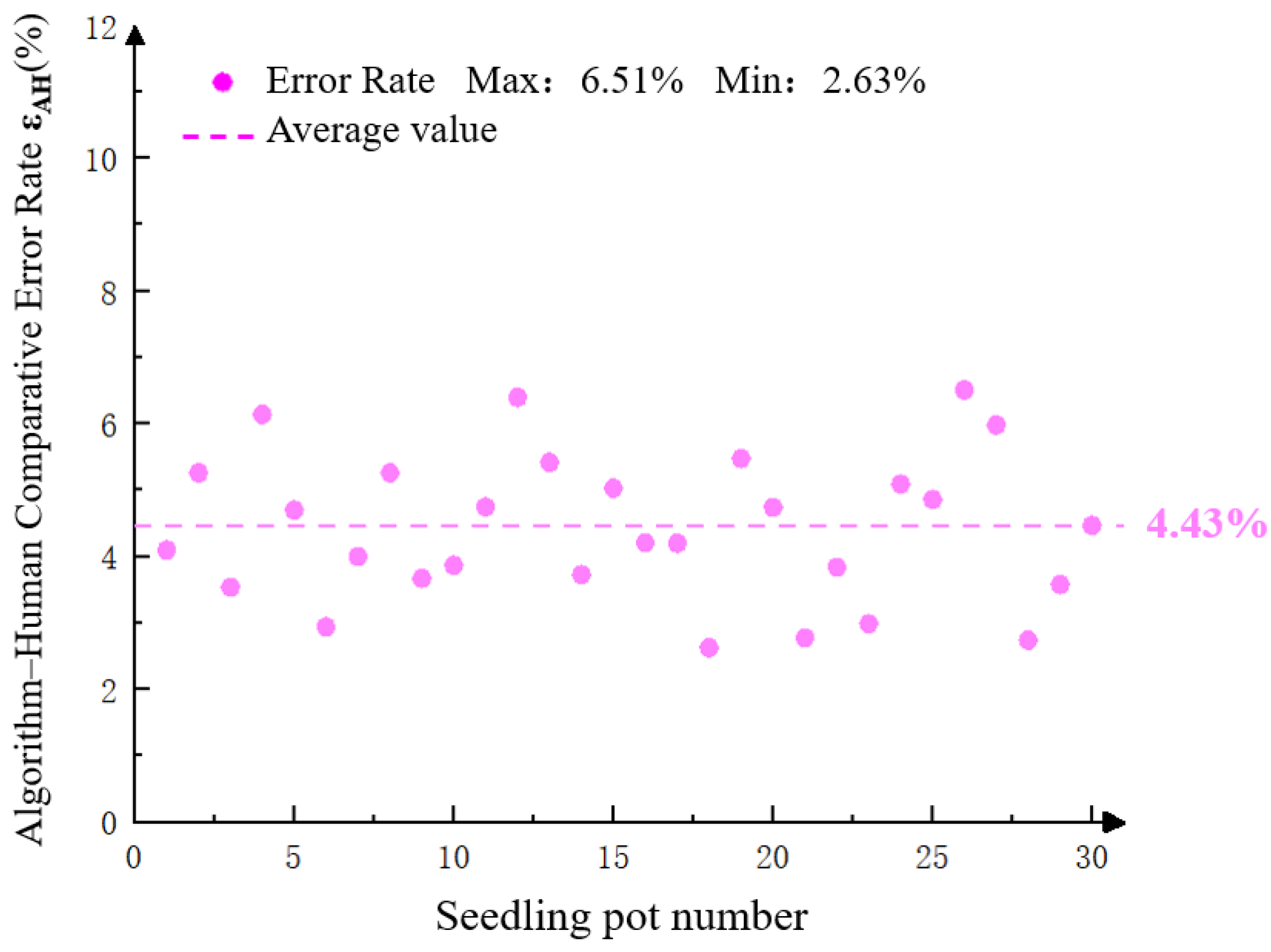
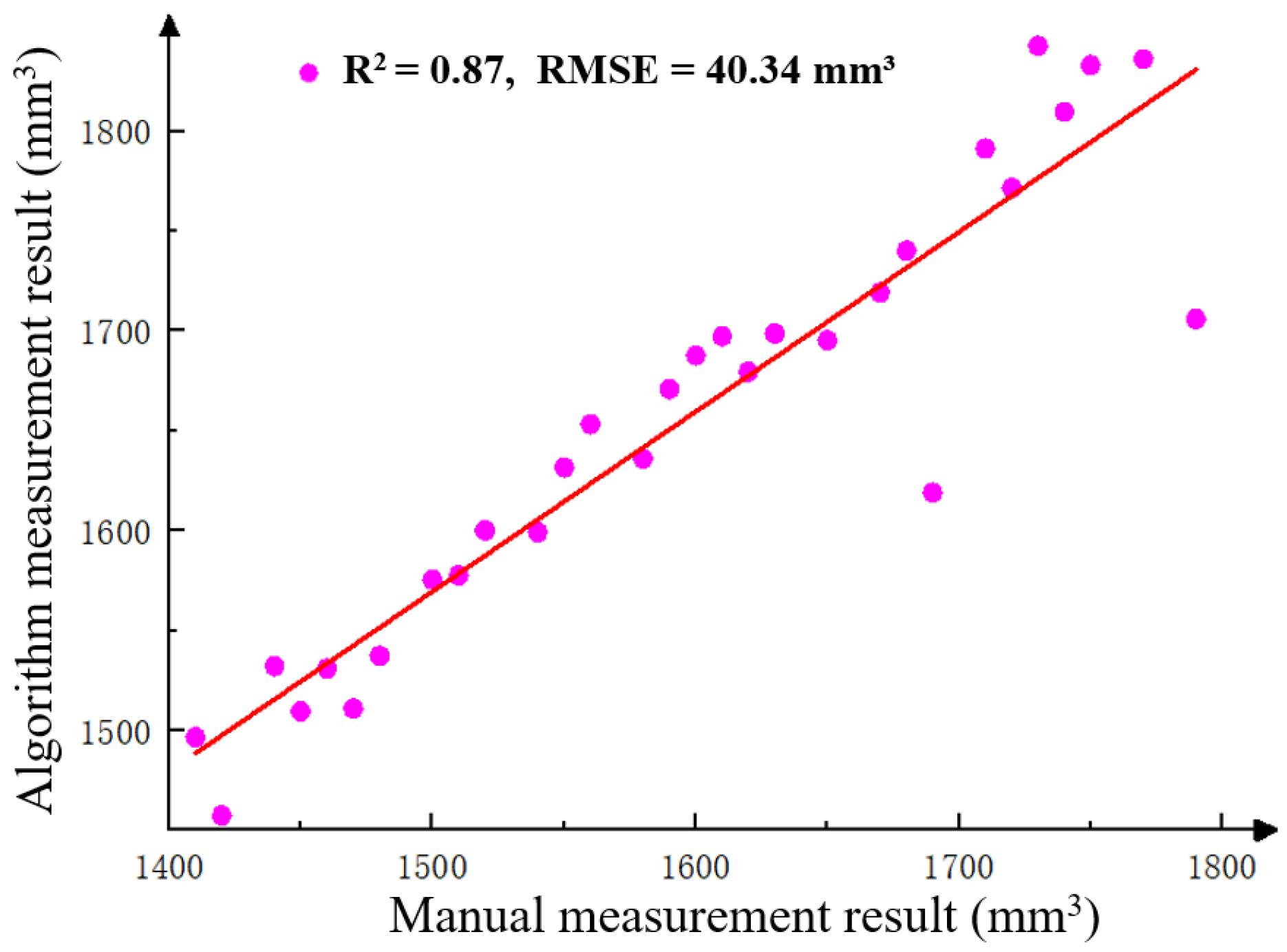
| Algorithm | 1654.83 | 107.70 | 6.51 |
| Manual | 1594.67 | 111.53 | 6.99 |
| Types | Average (%) | SD (%) | CV (%) |
|---|---|---|---|
| 1 | 12.67 | 1.44 | 11.37 |
| 2 | 5.45 | 0.97 | 17.80 |
| 3 | 4.09 | 0.56 | 13.69 |
| Source of Variation | Sum of Squares | df | Mean Square | F-Value | p-Value |
|---|---|---|---|---|---|
| Between Treatments | 1708.76 | 3 | 569.59 | 497.19 | <0.001 |
| Within Treatments | 132.90 | 116 | 1.15 | ||
| Total | 1841.65 | 119 |
| Regions | Average (%) | 0.05 Significance Level | 0.01 Significance Level |
|---|---|---|---|
| a | 29.79 | a | A |
| d | 27.26 | b | B |
| b | 23.14 | c | C |
| c | 19.89 | d | D |
| Source of Variation | Sum of Squares | df | Mean Square | F-Value | p-Value |
|---|---|---|---|---|---|
| Between Treatments | 298.86 | 2 | 149.43 | 189.55 | <0.001 |
| Within Treatments | 21.26 | 27 | 0.79 | ||
| Total | 320.12 | 29 |
| Types | Average (%) | 0.05 Significance Level | 0.01 Significance Level |
|---|---|---|---|
| 1 | 12.67 | a | A |
| 2 | 5.45 | b | B |
| 3 | 4.09 | d | B |
| Seedling Types | Average (%) | SD (%) | CV (%) |
|---|---|---|---|
| Type 1 | 14.16 | 2.23 | 15.75 |
| Type 2 | 6.03 | 0.78 | 12.94 |
| Type 3 | 4.82 | 0.49 | 10.16 |
Disclaimer/Publisher’s Note: The statements, opinions and data contained in all publications are solely those of the individual author(s) and contributor(s) and not of MDPI and/or the editor(s). MDPI and/or the editor(s) disclaim responsibility for any injury to people or property resulting from any ideas, methods, instructions or products referred to in the content. |
© 2025 by the authors. Licensee MDPI, Basel, Switzerland. This article is an open access article distributed under the terms and conditions of the Creative Commons Attribution (CC BY) license (https://creativecommons.org/licenses/by/4.0/).
Share and Cite
Zhang, C.; Feng, T.; Zhou, L.; Ma, Y.; Li, M.; Wang, H.; Wang, Y. Analysis of Microscopic Characteristics of Pepper Seedling Root Systems and Study on Transplanting Gripping Injury Based on Micro-CT. Agronomy 2025, 15, 2822. https://doi.org/10.3390/agronomy15122822
Zhang C, Feng T, Zhou L, Ma Y, Li M, Wang H, Wang Y. Analysis of Microscopic Characteristics of Pepper Seedling Root Systems and Study on Transplanting Gripping Injury Based on Micro-CT. Agronomy. 2025; 15(12):2822. https://doi.org/10.3390/agronomy15122822
Chicago/Turabian StyleZhang, Chao, Tengxiao Feng, Liming Zhou, Yidong Ma, Mingyong Li, Huankun Wang, and Yizhou Wang. 2025. "Analysis of Microscopic Characteristics of Pepper Seedling Root Systems and Study on Transplanting Gripping Injury Based on Micro-CT" Agronomy 15, no. 12: 2822. https://doi.org/10.3390/agronomy15122822
APA StyleZhang, C., Feng, T., Zhou, L., Ma, Y., Li, M., Wang, H., & Wang, Y. (2025). Analysis of Microscopic Characteristics of Pepper Seedling Root Systems and Study on Transplanting Gripping Injury Based on Micro-CT. Agronomy, 15(12), 2822. https://doi.org/10.3390/agronomy15122822