1. Introduction
Root exportation is an important way for plants to respond to external stress, an important carrier material for transmitting and exchanging rhizosphere soil information, which can regulate rhizosphere dialog, and is also an important factor in forming rhizosphere microecological characteristics [
1,
2]. Root exudates play an important role in the plant biogeochemical cycle, rhizosphere ecological process regulation, plant growth and development, etc. [
3]. Fenugreek root exudates significantly stimulate
Panax ginseng seed germination [
4]. Yan et al. identified two important coumarins in the root exudates of
Stellera chamaejasme L., which could inhibit the mitosis process of the
Lactuca sativa root tip, affecting growth [
5]. Intercropping can both reduce the occurrence of plant leaf diseases and effectively inhibit the spread and expansion of soil-borne diseases [
6,
7,
8]. The control of soil-borne plant diseases is one of the key factors to ensure the sustainable development of agricultural production. With the development of ecology, soil-borne plant diseases have been studied from a new perspective. The accumulation of autotoxins and pathogens in soil is the main driving factor of soil-borne diseases [
9,
10]. Some water-soluble substances detected in the root secretions of alfalfa (
Leguminous) can cause serious autotoxicity, and different concentrations have different promoting or inhibiting effects on the growth of surrounding plants [
11]. Allelopathic effects of root exudates from different alfalfa cultivars exhibit significant variation in terms of seed germination inhibition and seedling growth suppression, with more pronounced phytotoxicity observed under long-term continuous monoculture practices [
12].
Root-secreted organic acids, phenolic acids, and terpenoids serve as vital energy sources for soil microorganisms. The diverse components of root exudates differentially influence the composition and abundance of rhizosphere microbial communities [
13]. For example, in salicylic acid and jasmonic acid, found in
Arabidopsis thaliana root, exudates can selectively recruit specific microbial taxa, thereby shaping both rhizosphere and endosphere microbiomes and enhancing plant resistance to diseases [
14,
15]. Zhang et al. showed that, in rice–watermelon intercropping systems, watermelon roots increase the secretion of phenolic acids, amino acids, and organic acids, which helps reduce the incidence of
Fusarium wilt in watermelon [
16]. Likewise, in maize–pepper intercropping, maize root exudates have been found to inhibit the growth and spread of
Phytophthora capsici, thus alleviating pepper blight [
17]. These results highlight the strong link between root exudates and soil-borne pathogens. Plants may suppress pathogen proliferation either through the release of specific allelochemicals [
18] or by modifying their root exudate profiles to indirectly alter pathogen behavior [
19]. Gao et al. reported that cinnamic acid released in soybean–maize intercropping significantly decreases the occurrence of soybean red crown rot [
20]. Dong et al. further demonstrated that tomato–chrysanthemum intercropping induces chrysanthemum roots to secrete lauric acid, which disrupts gene expression in root-knot nematodes and prevents nematode infection in tomatoes [
21]. Moreover, in wheat–watermelon intercropping systems, wheat root exudates effectively control
Fusarium wilt in watermelon by strongly inhibiting spore germination and the mycelial growth of the causal pathogen [
22].
Root rot is recognized as one of the most prevalent and destructive soil-borne diseases globally [
23]. Among these pathogens,
Fusarium spp. are the primary causal agents of root rot in more than 20 economically significant crops, such as wolfberry, tobacco, and tomato [
24,
25]. Ningxia wolfberry (
Lycium barbarum L.), a perennial deciduous shrub within the genus
Lycium of the Solanaceae family, is a traditional Chinese medicinal and edible plant that plays a vital role in regional agriculture. As a key economic crop in northwestern China, it significantly enhances agricultural productivity and supports rural livelihoods. However, prolonged monoculture practices have led to a progressive increase in the incidence of root rot, with infection rates reaching up to 50% in affected areas. This escalating disease pressure has given rise to severe agroecological challenges, including continuous cropping obstacles, marked reductions in yield and product quality, and considerable economic losses across the production chain [
26], ultimately posing a critical threat to the long-term sustainability of the wolfberry industry [
27].
Root rot-related and harmful pathogens, as one of the most serious soil-borne diseases in the production of mangold and wolfberry [
28], accumulate yearly, along with repeated cropping time, leading to the biggest obstacle to the cultivation of wolfberry. Numerous domestic and international studies have investigated the factors contributing to root rot disease, revealing that its occurrence is significantly associated with planting year, geographical region, duration of continuous monoculture, preceding crop types, soil quality, cultivar selection, and weed presence [
29]. The root rot is closely related to phenolic acids in root secretions, and, as the cropping years continue, these compounds accumulate in the wolfberry root, restricting the continuous cropping [
30]. By conducting the indoor extraction of root exudates from wolfberry and herbage species, this study systematically investigated their effects on seed germination and seedling growth of mangold and wolfberry, while simultaneously evaluating their inhibitory potential against root rot pathogens. The findings are expected to provide robust technical support for elucidating interspecific interactions within the wolfberry–herbage intercropping systems, thereby providing technical references for optimizing cultivation models and scaling up agricultural applications.
2. Materials and Methods
2.1. Materials and Experimental Design
The research design encompasses five species, including wolfberry and four forage varieties. Wolfberry (Lycium barbarum L. cv. 401, Lb) was provided by the Institute of Wolfberry Science, Ningxia Academy of Agriculture and Forestry Sciences (Yinchuan, Ningxia, China.) and the forage seeds were purchased from the Ningxia Yuan sheng Lv yang Forest and Grass Ecological Engineering Co., Ltd. (Yinchuan, Ningxia, China.). Moreover, the forage species were classified into three families: Gramineae: ryegrass (Lolium perenne L., Lp), Leguminosae: alfalfa (Medicago sativa L., Ms) and white clover (Trifolium repens L., Tr), and Chenopodiaceae: mangold (Betu vulgaris L., Bv).
Sampling types and methods: forage material was nutrient matrix seedling for 30 days of growth, and wolfberry was 3-leaf tissue culture seedling. When sampling, gently shake off the root matrix and obtain the whole plant. After cleaning and disinfection, first culture the plants in the nutrient solution. The nutrient solution should be changed twice a week. After 7 days, repeatedly clean the roots of the well-growing plants with deionized water 2–3 times, and then transfer them to a 25-well hydroponics box containing 1 L of sterilized deionized water for culture (25 plants in monoculture; in intercropping, 15 grasses + 10 wolfberries). During the culture period, regularly replenish water to maintain the volume at 1 L, and sample the root exudates on the 21st day of culture.
2.2. Acquisition of Root Exudates
The well-grown monocroponic material cultured in the 25-well hydroponics box was selected, and the roots were repeatedly cleaned with sterilized deionized water for 2 to 3 times. The 5 plants in 1 group were placed in a beaker, cultured with 100 mL sterilized deionized water for 24 h, then the water was poured out for repeated operations, and the root exudates were collected after 48 h of re-culture. The enriched liquid was filtered and dried, then methanol was added, and the residue on the bottle wall was eluted by an ultrasonic oscillator (Jintan District Huacheng Runhua Experimental Instrument Factory, Changzhou, Jiangsu, China). After the methanol was completely volatilized, the root exudates were obtained by repeated washing 2 to 3 times and dissolved in 100 mL sterilized deionized water.
2.3. Seed Germination Test
After being disinfected with 75% alcohol for 3 min, disinfected with 3% NaClO for 12 min, washed with distilled water, transferred to Petri dishes (10 cm diameter) covered with filter paper, each dish containing 30 seeds, 2 mL root exudates and 2 mL distilled water (blank control) were dark treated at 28 °C. Three replicates were set for each treatment. The seeded Petri dishes were cultured in a light/dark cycle at temperature (28 °C), 16/8 h, and the germination of the seeds was observed and recorded daily.
The germination rate of the seeds of the 5 plants was calculated according to the description of germination in the International Code of Seed Inspection. Germination rate (%) = (the number of germinated seeds in each Petri dish/the number of seeds sown) × 100%, starting from the 5th day. The germination rate of 2–10 days was calculated, and statistical records were made. Germination potential (%) = (the number of germinated seeds on the day with the highest number of germinations/the number of seeds sown) × 100%. Vigor index (VI) = (a/1 + b/2 + c/3 +d/4 + … + x/n) x [100/S], where a, b, c, d…. 1,2,3,4, respectively. n indicates the amount of seeds germinated on day 1, x indicates the amount of seeds germinated on day n, and S denotes the number of seeds tested. A total of 10 plants were randomly selected from each Petri dish on day 4 and day 7 to measure the plant height and root length, respectively.
2.4. Root Rot Identification Experiment
2.4.1. Root Rot Sampling
The experimental materials for wolfberry root rot were collected from the experimental field at the orchard farm of Ningxia Academy of Agriculture and Forestry Sciences (38°20′ N, 106°16′ E), where severe root rot symptoms have been consistently observed over six consecutive growing seasons. The samples for mangold root rot were obtained from a commercial mangold cultivation site in Ma’erzhuang Village, Yanchi County (37°60′ N, 107°20′ E).
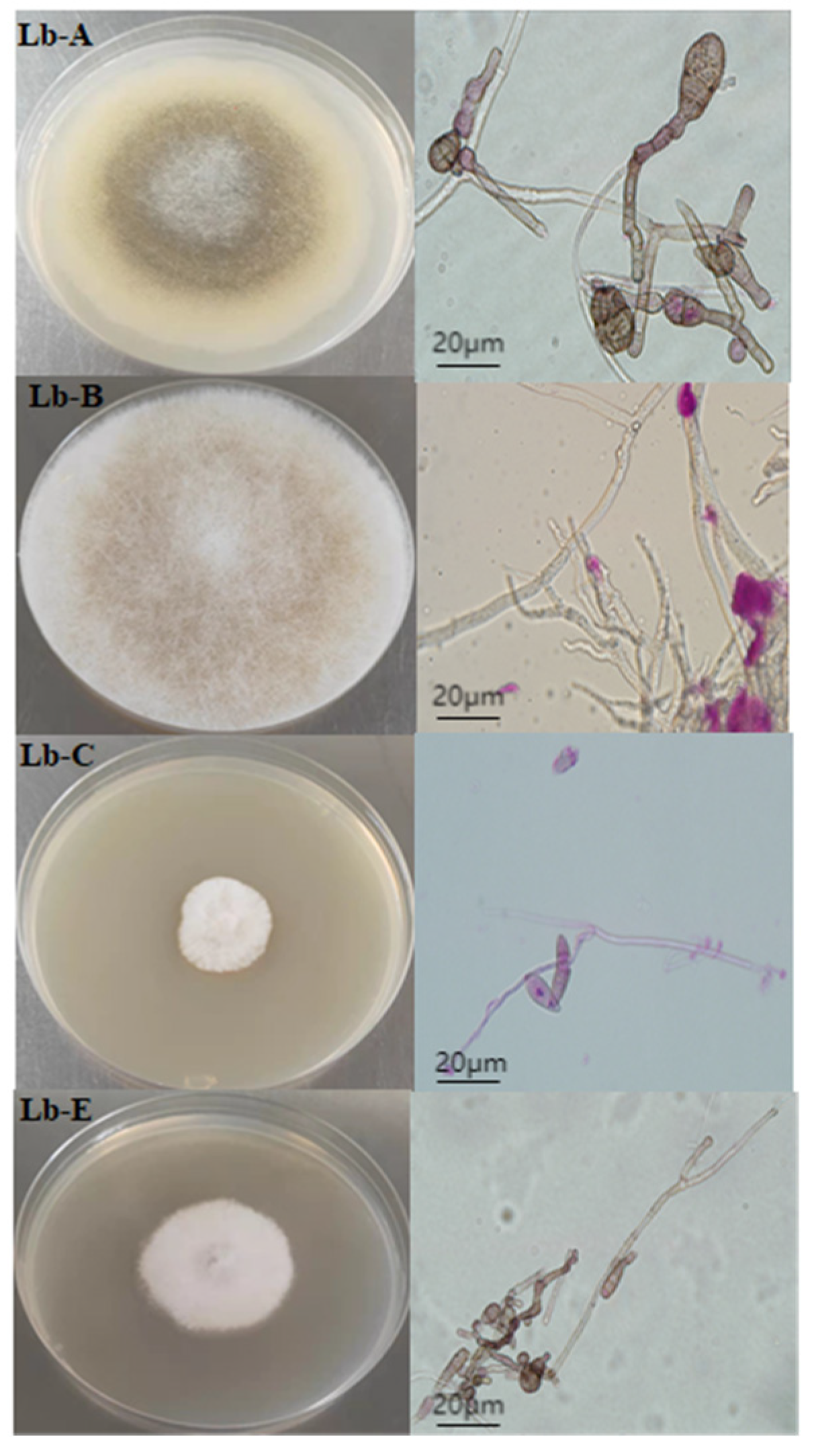
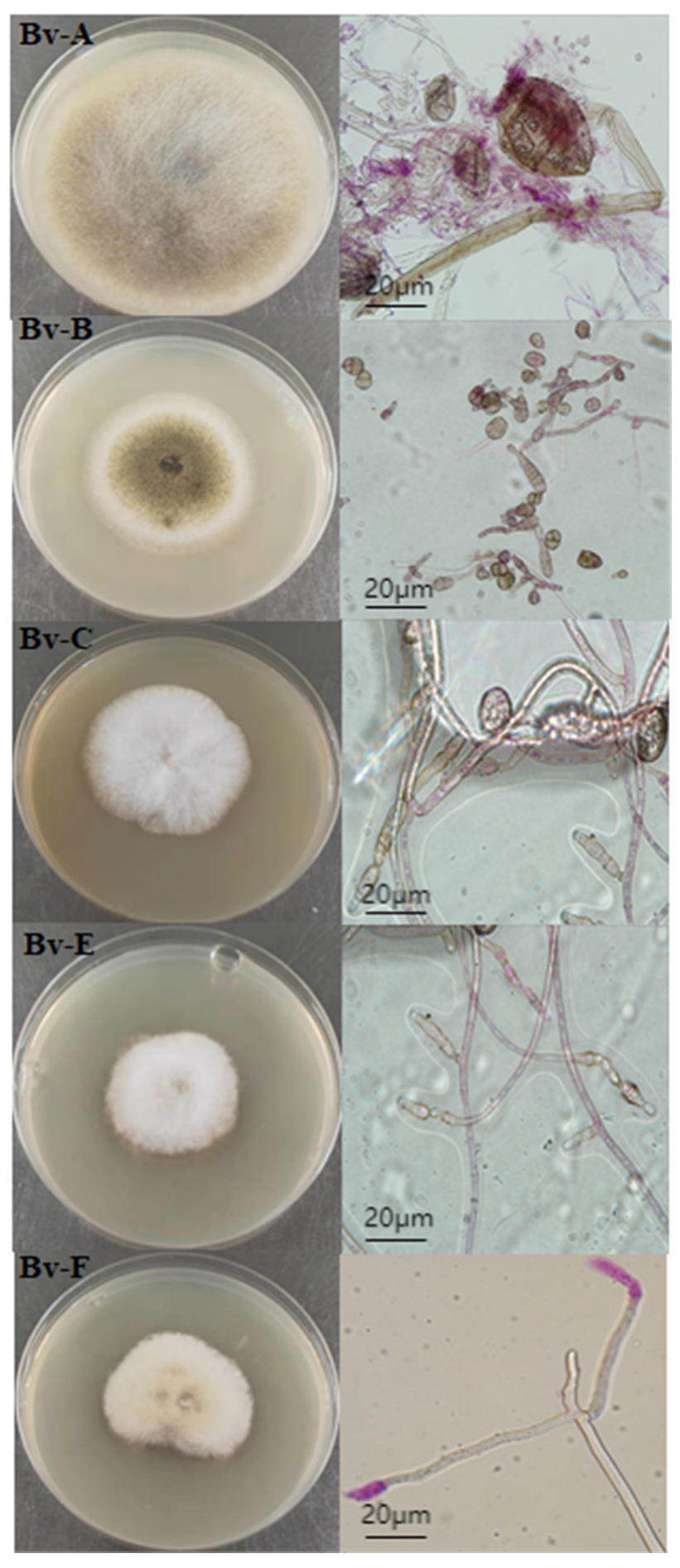
2.4.2. Morphological Identification
The taxonomic identification of the fungal isolates was conducted in accordance with established methodologies from prior studies [
31], with modifications to enhance precision and reproducibility. Potato Dextrose Agar (PDA) served as the basal culture medium for initial isolation and morphological characterization. Colony diameter and growth patterns were systematically recorded after 96 h of incubation at 22 °C under a 12 h light–dark cycle to ensure standardized developmental conditions. Microscopic examination was performed using a BX51 fluorescence microscope equipped with differential interference contrast (DIC) optics, enabling high-resolution visualization of cellular structures. Upon detection of mycelial growth, cultures were immediately transferred to fresh PDA plates. This subculturing procedure was repeated three times to eliminate contaminants and achieve axenic cultures. Following purification, colony morphology was thoroughly documented, including overall shape, diameter, pigmentation, surface topography (concave, convex, or flat), and mycelial texture (e.g., cottony, granular, or floccose). Representative colonies of each pathogenic isolate were selected for slide preparation, stained with carmine, and examined under 10×, 20×, and 40× objectives, as well as a 100× oil immersion lens, to evaluate hyphal architecture and conidial morphology. All observations were systematically recorded, and photomicrographs were taken at consistent magnifications to support comparative analysis. Diagnostic morphological traits—such as the presence, size, shape, and arrangement of macroconidia and microconidia, the formation of chlamydospores, and the structural characteristics and dimensions of conidiophores—were carefully assessed. These phenotypic features were integrated to determine the taxonomic identity of the isolates with greater confidence and scientific rigor.
2.4.3. Molecular Biological Identification
Fungal strains isolated from wolfberry and decayed mangold roots were cultivated in PDB medium for 7–10 days to ensure robust and stable mycelial growth. Cultures were subsequently transferred into 50 mL centrifuge tubes and centrifuged at 4500 r/min for 10 min. The resulting mycelial pellets were homogenized and immediately frozen at −80 °C for 2 h to preserve nucleic acid integrity prior to genomic DNA extraction. Total genomic DNA was extracted using the OMEGA Fungal DNA Extraction Kit following the manufacturer’s protocol. DNA concentration and purity were determined spectrophotometrically using a UV spectrophotometer, and only samples meeting predefined quality thresholds (e.g., A260/A280 ratio between 1.8 and 2.0) were retained for downstream molecular identification. Sequence analysis was performed, targeting the ribosomal internal transcribed spacer (ITS) region, which is widely recognized as a reliable fungal barcode. PCR amplification was carried out using the universal primers ITS1 (5′-TCCGTAGGTGAACCTGCGG-3′) and ITS4 (5′-TCCTCCGCTTATTGATATGC-3′) in a 40 μL reaction system containing 20 μL PCR Mix, 2 μL template DNA, 2 μL forward primer, 2 μL reverse primer, and 14 μL ddH2O. Thermal cycling conditions included an initial denaturation at 95 °C for 5 min, followed by 35 cycles of denaturation at 95 °C for 30 s, annealing at 55 °C for 30 s, and extension at 72 °C for 50 s, with a final extension at 72 °C for 10 min, after which reactions were held at 4 °C. Molecular identification of the RPB2 gene fragment was conducted using the primer pair 5f2 (5′-GGGGWGAYCAGAAGAAGGC-3′) and 7cr (5′-CCCATRGCTTGYT TRCCCATPCR-3′), which target conserved regions of the RNA polymerase II second largest subunit, a widely used phylogenetic marker in fungal systematics. The PCR amplification was performed in a 20 μL reaction mixture consisting of a 10 μL PCR Mix, 1 μL template DNA, 1 μL forward primer, 1 μL reverse primer, and 7 μL ddH2O. Amplification was carried out under the following thermal cycling conditions: an initial pre-denaturation at 95 °C for 5 min, followed by 35 cycles of denaturation at 94 °C for 30 s, annealing at 52.1 °C for 30 s, and extension at 72 °C for 60 s, with a final extension at 72 °C for 10 min, and subsequent holding at 4 °C.
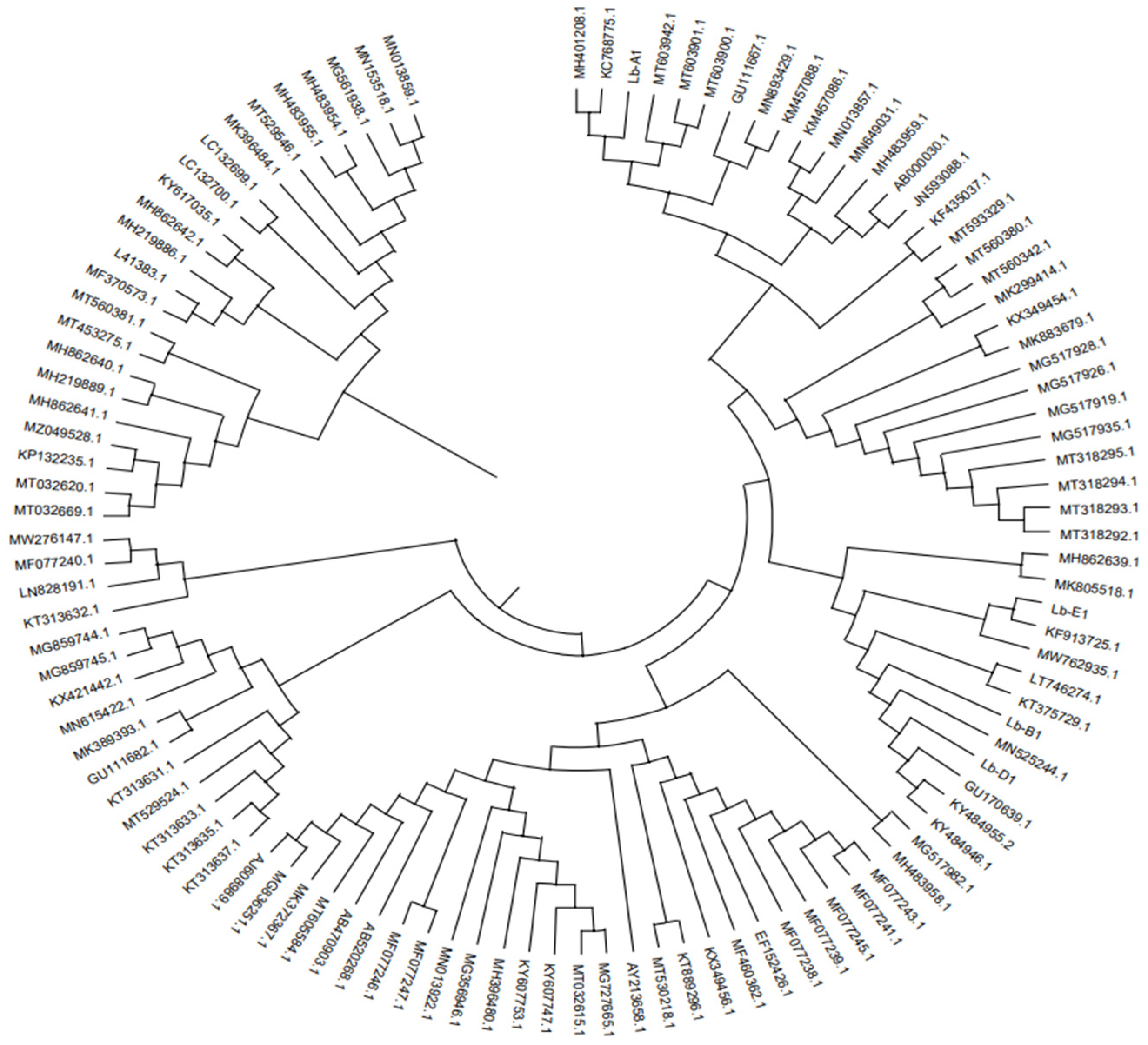
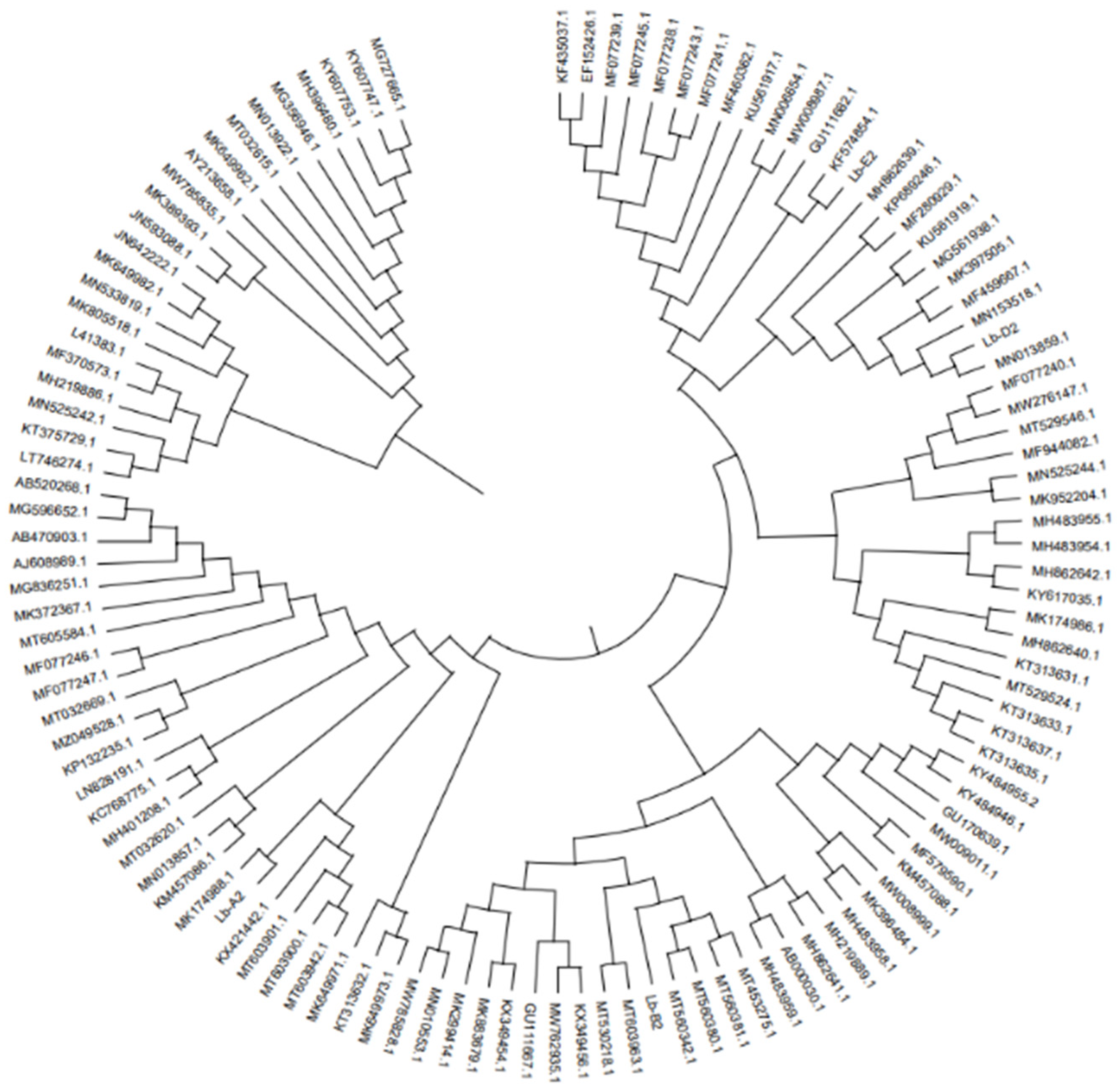
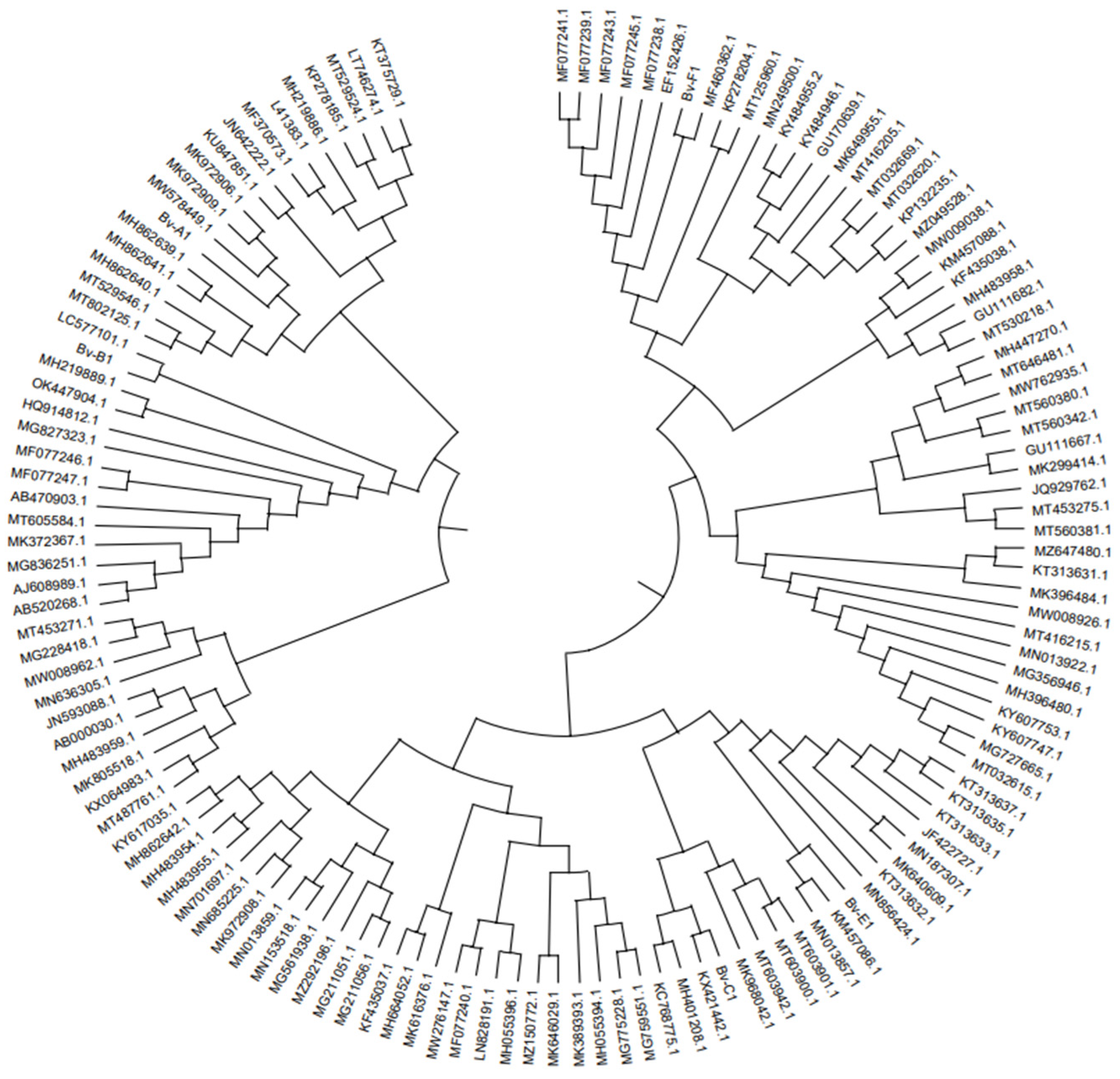
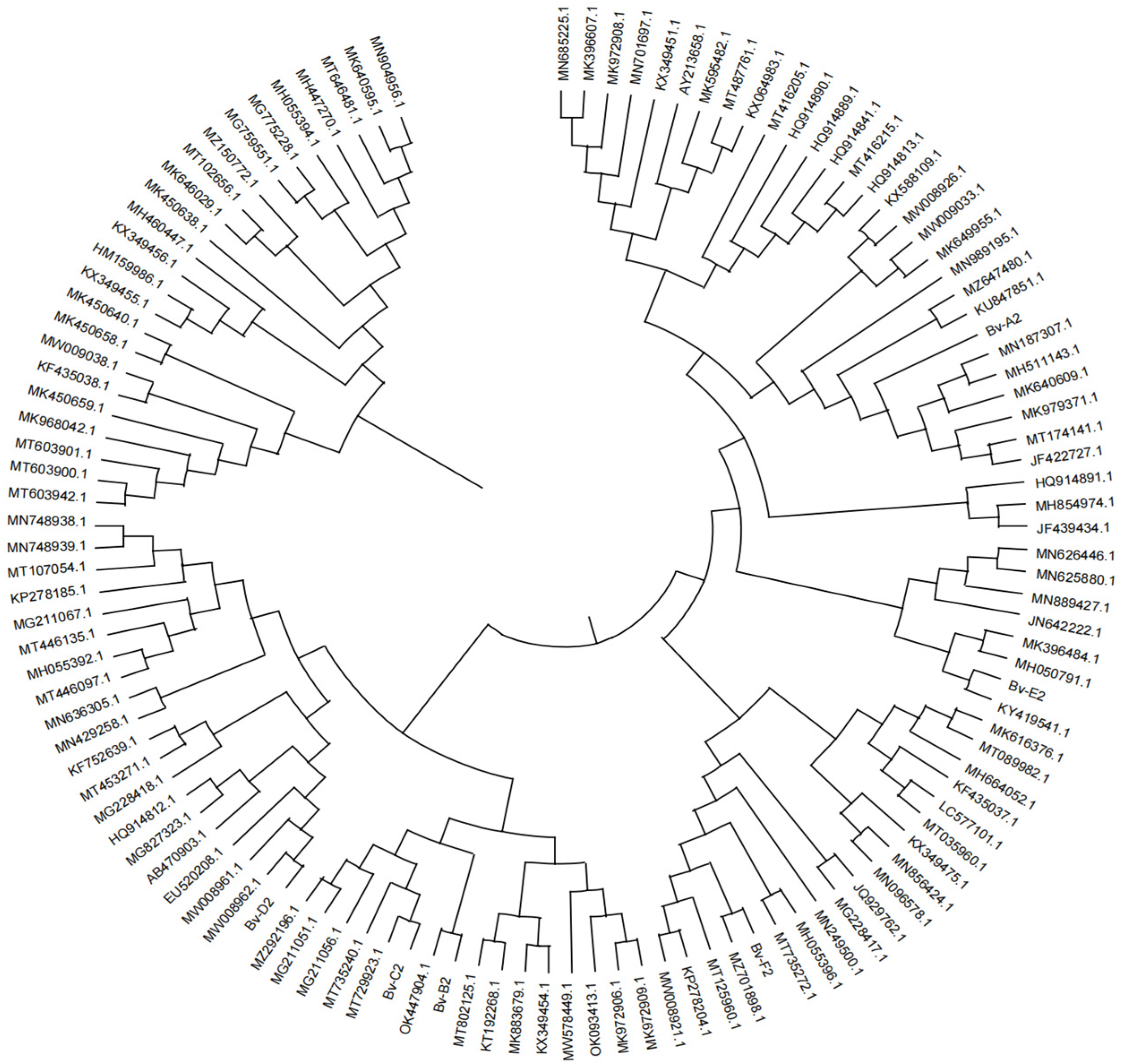
The rDNA sequences of each related species were selected from GenBank database, and the phylogenetic tree was constructed with the tested strains. DNA sequence was analyzed using an NCBI sequence comparison tool BLAST (
https://blast.ncbi.nlm.nih.gov/, accessed on 26 November 2025) program, which compares and analyzes the sequence obtained by cloning. Clustal X compares and analyzes multiple sequences. MEGA X neighbor-joining method builds the evolutionary tree, where the number of repetition is set to 1000.
2.4.4. Identification of Pathogenic Fungi
Fungal strains isolated and purified from the roots of wolfberry and mangold displaying root rot symptoms were re-inoculated onto healthy, tissue-cultured seedlings of both host species. After 14 days, characteristic disease symptoms developed in wolfberry seedlings inoculated with Mucor cirrus, Rhizopus, Fusarium oxysporum, and Fusarium solani, as well as in mangold seedlings challenged with Molds, Aspergillus niger, and Fusarium solani. Notably, when the strains are co-inoculated in a 1:1 ratio, the resulting disease symptoms closely resemble those observed under field conditions. Notably, co-inoculation of these strains at a 1:1 ratio resulted in disease symptoms that were highly consistent with those observed under natural field conditions, strongly suggesting that the interaction between the strains recapitulates the typical disease phenotype, and significant differences in disease severity were observed when the strains were inoculated individually, highlighting distinct pathogenic capabilities among the isolates. Moreover, the observed symptoms closely mirrored those of naturally occurring root rot, exhibiting typical necrotic lesions, root browning, and stunted growth, consistent with field-collected diseased plants. Pathogens were successfully re-isolated and purified from symptomatic tissues, and the resulting fungal isolates displayed morphological and biological characteristics identical to the original inocula. Fulfilling all criteria of Koch’s postulates, this study confirms that Fusarium oxysporum and Fusarium solani are the primary causal pathogens of root rot in this wolfberry variety, while Fusarium solani is the dominant pathogen associated with root rot in mangold.
2.5. Root Exudate Re-Inoculation Experiment
A fungal plug was aseptically excised from the center of colonies formed by activated strains on PDA medium (cultured at 28 °C) using a sterilized cork borer with an inner diameter of 5 mm. The plug was transferred to fresh PDA medium supplemented with 1 mm root exudates and subsequently inoculated with root rot pathogen strains. Cultures were incubated at a constant temperature of 25 °C under continuous illumination for 3 days. Colony diameters were measured daily on days 1, 2, and 3 using the cross-measurement method; subtracting 5 mm from each measurement accounted for the initial inoculum size and allowed for the accurate quantification of net mycelial growth per strain. All treatments were performed in triplicate to ensure experimental reliability. Morphological analyses were conducted using a BX51 fluorescence microscope (BX51 Microscope, Olympus Investment Co., Ltd., Beijing, China) equipped with DIC (differential interference contrast) optics. Upon hyphal emergence, intact and morphologically representative hyphae were selected, and optimal focus and magnification settings were applied prior to image capture. Hyphal length was calculated based on the calibrated magnification of the acquired images. Three distinct regions were analyzed per sample, and mean hyphal length was computed to improve measurement robustness. Each treatment group consisted of three biological replicates, with 10 microscopic fields randomly selected from each replicate for mean calculation. This design established three independent experimental units and enhanced statistical validity and reproducibility.
2.6. Data Processing and Analysis
All experimental data were analyzed using Excel v2010 (Microsoft Corp., Redmond, WA, USA) and SPSS v17.0 Statistics (SPSS Inc., Chicago, IL, USA). Before statistical analyses, the Chi-square test for normality of the data was conducted. Mean comparisons among treatments were performed using Fisher’s protected least significant difference test when the analysis of variance (ANOVA) indicated a significant effect (Fisher’s LSD, p < 0.05).
5. Conclusions
This study highlights the role of root exudates in sustainable wolfberry production, focusing on seed germination, seedling growth, and root rot resistance. Key findings are as follows: (1) Root exudates from different forage species differentially affect wolfberry seed germination and seedling growth. Conversely, wolfberry root exudates promote the germination of ryegrass, white clover, and mangold, as well as the germination and growth of alfalfa, white clover, and mangold. Overall, intercropping wolfberry with mangold or alfalfa shows superior performance. (2) Morphological and molecular analyses identified Mucor circladus, Rhizopus, Fusarium solani, and Fusarium oxysporum as primary pathogens of wolfberry root rot; Molds, Aspergillus niger, and Fusarium solani cause mangold root rot. Alfalfa and white clover root exudates exert differential effects on these pathogens, while ryegrass exudates inhibit Mucor circladus, Fusarium solani, and Fusarium oxysporum, thereby reducing root rot in wolfberry. (3) Wolfberry and mangold root exudates may contain autotoxic compounds that promote pathogen growth or impair root function, increasing susceptibility to root rot. Thus, replacing long-term wolfberry monoculture by disrupting pathogen buildup and improving soil health is an effective strategy to reduce disease incidence.