Phenolic Composition and Antioxidant Capacity of Pistachio Seed Coats at Different Tree Ages Under Saline Irrigation Conditions
Abstract
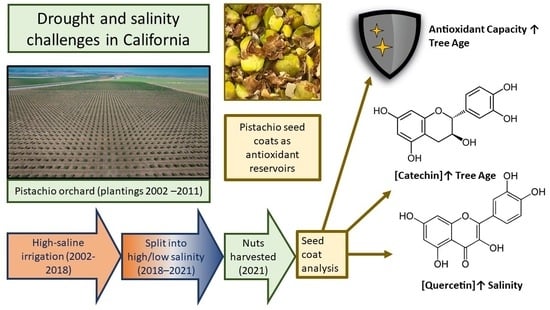
1. Introduction
2. Materials and Methods
2.1. Field Design
2.2. Seed Coat Extract Preparation
2.3. Antioxidant Capacity Assays
2.4. Folin–Ciocalteu Assay
2.5. Aluminum(III) Chloride Complexation Assay
2.6. HPLC
2.7. Data Analysis
3. Results
3.1. Antioxidant Capacity and FC Assays
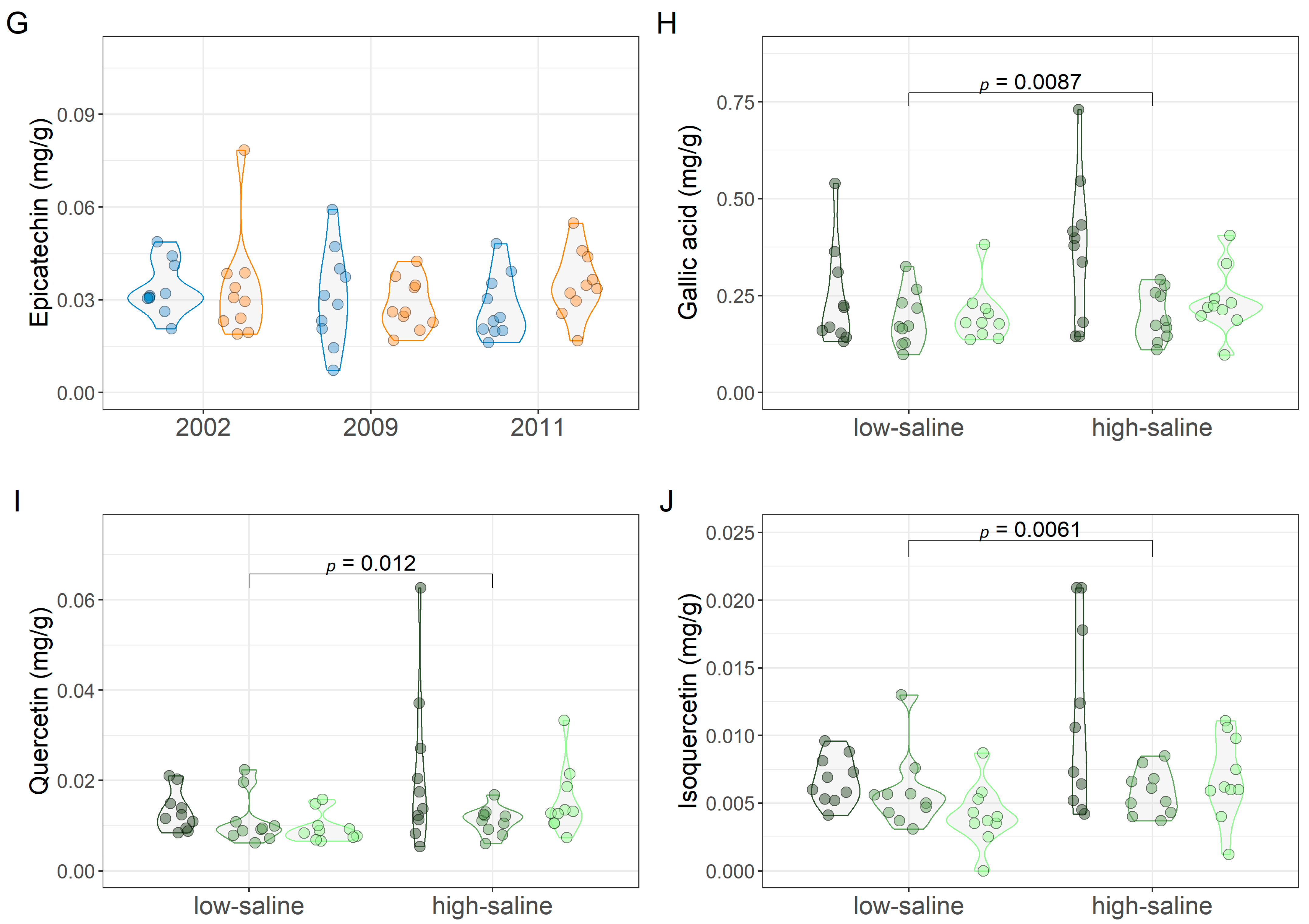
3.2. Effects of Planting Year and Saline Irrigation Treatment on Individual Phenolic Compounds
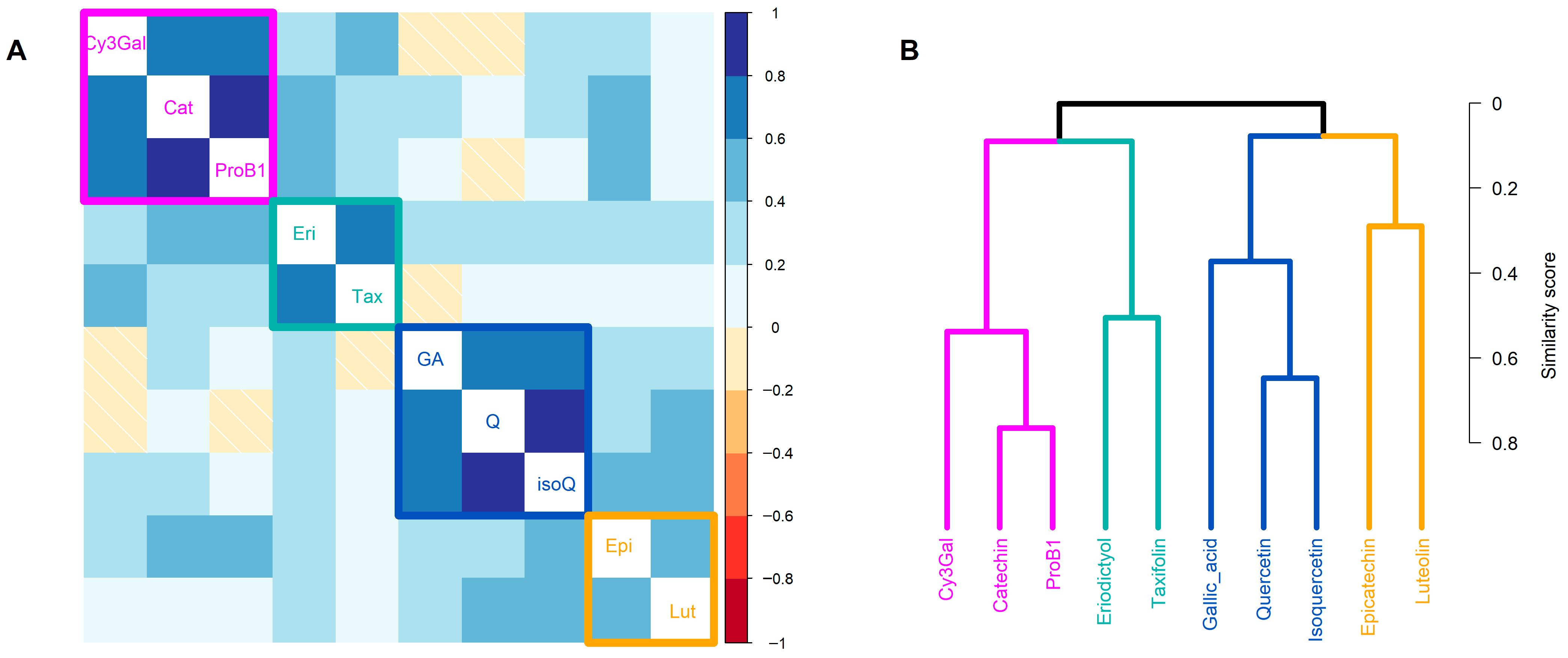
3.3. Correlation and Cluster Analyses
4. Discussion
4.1. Antioxidant Capacity Assays and Their Interpretation
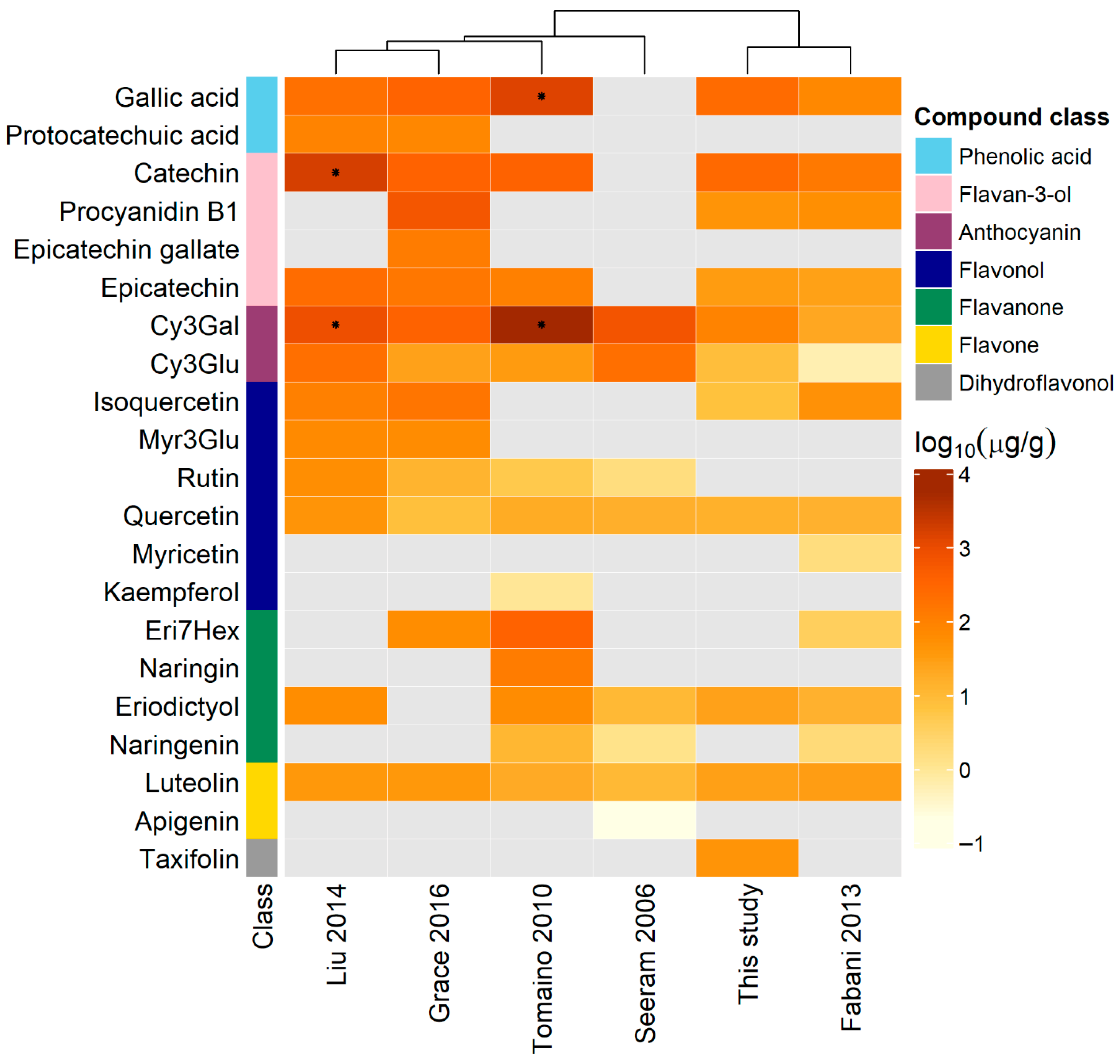
4.2. Phenolic Composition in the Context of Previous Studies
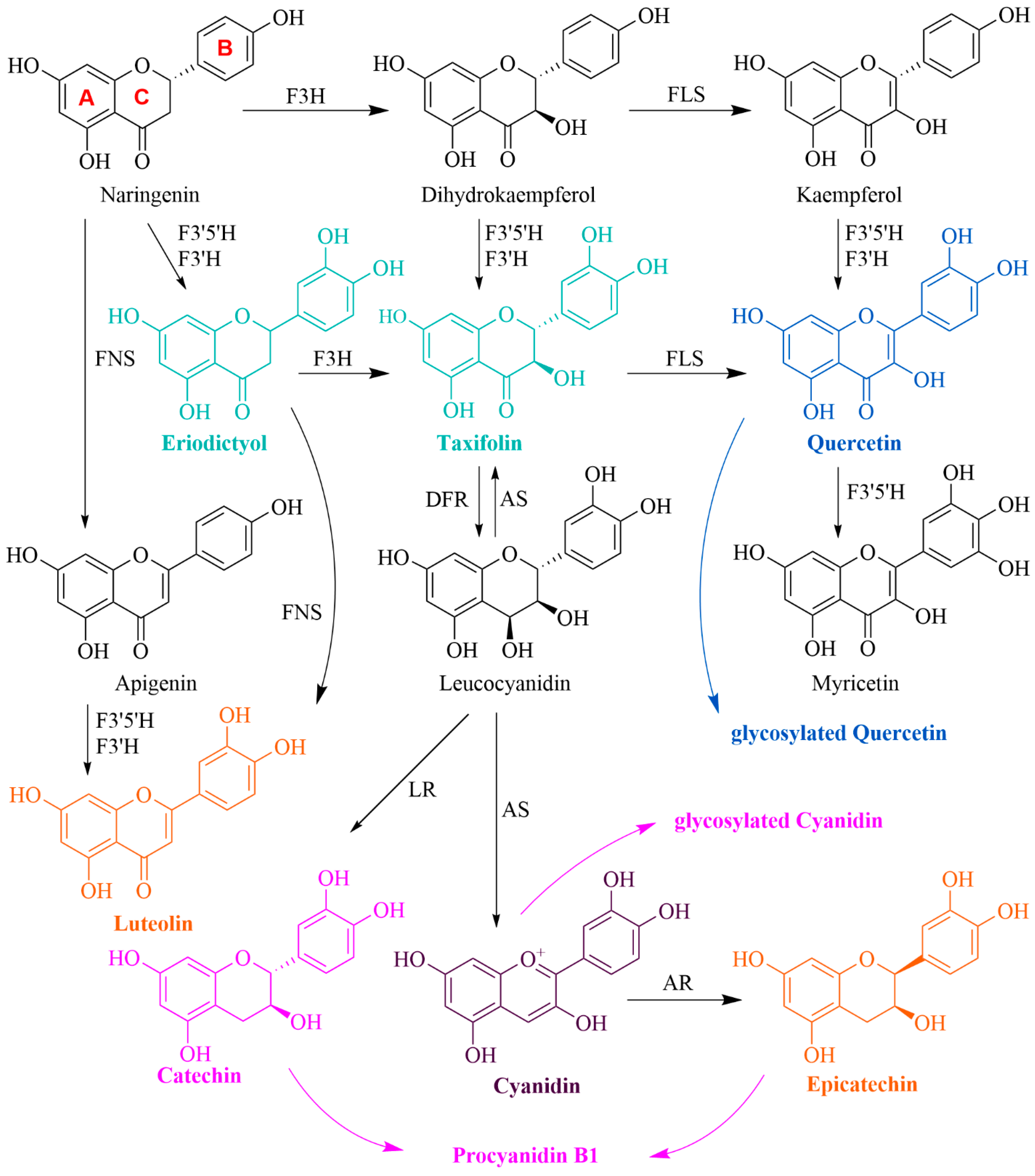
4.3. Correlation and Cluster Analyses in Relation to Flavonoid Pathway Position
4.4. Selective Phenolic Adjustments Under Salinity: Roles of Quercetin, Isoquercetin, and Gallic Acid
4.5. Study Limitations and Perspectives
5. Conclusions
Supplementary Materials
Author Contributions
Funding
Data Availability Statement
Acknowledgments
Conflicts of Interest
Abbreviations
| ABTS | 2,2-Azinobis (3-ethyl-benzothiazoline-6-sulfonic acid) |
| DPPH | 2,2-Diphenyl-1-picrylhydrazyl |
| FRAP | Ferric ion reducing antioxidant power |
| FC | Folin–Ciocalteu |
| SJV | San Joaquin Valley |
| TPTZ | 2,4,6-Tripyridyl-1,3,5-triazine |
| ROS | Reactive oxygen species |
| ANOVA | Analysis of variance |
| PCA | Principal component analysis |
| Cy3Gal | Cyanidin-3-O-galactoside |
| Cy3Glu | Cyanidin-3-O-glucoside |
| Myr3Glu | Myricetin-3-O-glucoside |
| Eri7Hex | Eriodictyol-7-hexoside |
| Cat | Catechin |
| ProB1 | Procyanidin B1 |
| Eri | Eriodictyol |
| Tax | Taxifolin |
| GA | Gallic acid |
| Q | Quercetin |
| isoQ | Isoquercetin |
| Epi | Epicatechin |
| Lut | Luteolin |
| F3′5′H | Flavonoid 3′,5′-hydroxylase |
| F3′H | Flavonoid 3′-hydroxylase |
| F3H | Flavanone 3-hydroxylase |
| FLS | Flavonol synthase |
| DFR | Dihydroflavonol 4-reductase |
| AS | Anthocyanidin synthase |
| LR | Leucoanthocyanidin reductase |
| AR | Anthocyanidin reductase |
References
- Nikolaou, G.; Neocleous, D.; Christou, A.; Kitta, E.; Katsoulas, N. Implementing Sustainable Irrigation in Water-Scarce Regions under the Impact of Climate Change. Agronomy 2020, 10, 1120. [Google Scholar] [CrossRef]
- Beltran, J.M. Irrigation with Saline Water: Benefits and Environmental Impact. Agric. Water Manag. 1999, 40, 183–194. [Google Scholar] [CrossRef]
- Schoups, G.; Hopmans, J.W.; Young, C.; Vrugt, J.; Wallender, W.W.; Tanji, K.K.; Panday, S. Sustainability of Irrigated Agriculture in the San Joaquin Valley, California. Proc. Natl. Acad. Sci. USA 2005, 102, 15352–15356. [Google Scholar] [CrossRef]
- Quinn, N.W.T. The San Joaquin Valley: Salinity and Drainage Problems and the Framework for a Response. In Salinity and Drainage in San Joaquin Valley, California. Global Issues in Water Policy; Chang, A., Brawer Silva, D., Eds.; Springer: Dordrecht, The Netherlands, 2014; Volume 5, pp. 47–97. [Google Scholar]
- Helalia, S.A.; Anderson, R.G.; Skaggs, T.H.; Jenerette, G.D.; Wang, D.; Šimůnek, J. Impact of Drought and Changing Water Sources on Water Use and Soil Salinity of Almond and Pistachio Orchards: 1. Observations. Soil Syst. 2021, 5, 50. [Google Scholar] [CrossRef]
- Ferguson, L.; Poss, J.A.; Grattan, S.R.R.; Grieve, C.M.M.; Wang, D.; Wilson, C.; Donovan, T.J.J.; Chao, C.-T.T. Pistachio Rootstocks Influence Scion Growth and Ion Relations under Salinity and Boron Stress. J. Am. Soc. Hortic. Sci. 2002, 127, 194–199. [Google Scholar] [CrossRef]
- Azarmi, F.; Mozafari, V.; Abbaszadeh Dahaji, P.; Hamidpour, M. Biochemical, Physiological and Antioxidant Enzymatic Activity Responses of Pistachio Seedlings Treated with Plant Growth Promoting Rhizobacteria and Zn to Salinity Stress. Acta Physiol. Plant. 2016, 38, 21. [Google Scholar] [CrossRef]
- Bastam, N.; Baninasab, B.; Ghobadi, C. Improving Salt Tolerance by Exogenous Application of Salicylic Acid in Seedlings of Pistachio. Plant Growth Regul. 2013, 69, 275–284. [Google Scholar] [CrossRef]
- Esmaeilpour, A.; Van Labeke, M.C.; Samson, R.; Van Damme, P. Osmotic Stress Affects Physiological Responses and Growth Characteristics of Three Pistachio Cultivars. Acta Physiol. Plant. 2015, 37, 123. [Google Scholar] [CrossRef]
- Dehghanisanij, H.; Haji, F.; Bozorgi, A. Improvement in Sub-Surface Drip Irrigated Pistachio under Saline Water Use. In Proceedings of the 2nd World Irrigation Forum (WIF2), Chiang Mai, Thailand, 6–8 November 2016; pp. 6–8. [Google Scholar]
- Karimi, H.R.; Nasrolahpour-Moghadam, S. Male Pistachio Seedlings Exhibit More Efficient Protective Mechanisms than Females under Salinity Stress. Sci. Hortic. 2016, 211, 118–125. [Google Scholar] [CrossRef]
- Mehdi-Tounsi, H.; Chelli-Chaabouni, A.; Mahjoub-Boujnah, D.; Boukhris, M. Long-Term Field Response of Pistachio to Irrigation Water Salinity. Agric. Water Manag. 2017, 185, 1–12. [Google Scholar] [CrossRef]
- Sanden, B.L.; Ferguson, L.; Reyes, H.C.; Grattan, S.C. Effect of Salinity on Evapotranspiration and Yield of San Joaquin Valley Pistachios. In Proceedings of the IVth International Symposium on Irrigation of Horticultural Crops, Davis, CA, USA, 1–6 September 2003; International Society for Horticultural Science (ISHS): Korbeek-Lo, Belgium, 2004; pp. 583–589. [Google Scholar]
- Marino, G.; Zaccaria, D.; Lagos, L.O.; Souto, C.; Kent, E.R.; Grattan, S.R.; Shapiro, K.; Sanden, B.L.; Snyder, R.L. Effects of Salinity and Sodicity on the Seasonal Dynamics of Actual Evapotranspiration and Surface Energy Balance Components in Mature Micro-Irrigated Pistachio Orchards. Irrig. Sci. 2021, 39, 23–43. [Google Scholar] [CrossRef]
- Mandalari, G.; Barreca, D.; Gervasi, T.; Roussell, M.A.; Klein, B.; Feeney, M.J.; Carughi, A. Pistachio Nuts (Pistacia Vera l.): Production, Nutrients, Bioactives and Novel Health Effects. Plants 2022, 11, 18. [Google Scholar] [CrossRef]
- Weber, C.; Simnitt, S.; Wakefield, H.; Wechsler, S. Fruit and Tree Nuts Outlook: March 2025. Available online: https://www.ers.usda.gov/publications/pub-details?pubid=111230 (accessed on 11 August 2025).
- Camacho-Cristóbal, J.J.; Rexach, J.; González-Fontes, A. Boron in Plants: Deficiency and Toxicity. J. Integr. Plant Biol. 2008, 50, 1247–1255. [Google Scholar] [CrossRef] [PubMed]
- Rahman, M.; Rahman, K.; Sathi, K.S.; Alam, M.M.; Nahar, K.; Fujita, M.; Hasanuzzaman, M. Supplemental Selenium and Boron Mitigate Salt-induced Oxidative Damages in Glycine max L. Plants 2021, 10, 2224. [Google Scholar] [CrossRef]
- Rasool, A.; Shah, W.H.; Mushtaq, N.U.; Saleem, S.; Hakeem, K.R.; ul Rehman, R. Amelioration of Salinity Induced Damage in Plants by Selenium Application: A Review. S. Afr. J. Bot. 2022, 147, 98–105. [Google Scholar]
- Dreher, M.L. Pistachio Nuts: Composition and Potential Health Benefits. Nutr. Rev. 2012, 70, 234–240. [Google Scholar] [CrossRef] [PubMed]
- Yuan, W.; Zheng, B.; Li, T.; Liu, R.H. Quantification of Phytochemicals, Cellular Antioxidant Activities and Antiproliferative Activities of Raw and Roasted American Pistachios (Pistacia vera L.). Nutrients 2022, 14, 3002. [Google Scholar] [CrossRef]
- Campos, S.B.; de Oliveira Filho, J.G.; Salgaço, M.K.; Jesus, M.H.D.; Egea, M.B. Effects of Peanuts and Pistachios on Gut Microbiota and Metabolic Syndrome: A Review. Foods 2023, 12, 4440. [Google Scholar] [CrossRef]
- Bulló, M.; Juanola-Falgarona, M.; Hernández-Alonso, P.; Salas-Salvadó, J. Nutrition Attributes and Health Effects of Pistachio Nuts. Br. J. Nutr. 2015, 113, S79–S93. [Google Scholar] [CrossRef]
- Kay, C.D.; Gebauer, S.K.; West, S.G.; Kris-Etherton, P.M. Pistachios Increase Serum Antioxidants and Lower Serum Oxidized-LDL in Hypercholesterolemic Adults. J. Nutr. 2010, 140, 1093–1098. [Google Scholar] [CrossRef]
- di Paola, R.; Fusco, R.; Gugliandolo, E.; D’Amico, R.; Campolo, M.; Latteri, S.; Carughi, A.; Mandalari, G.; Cuzzocrea, S. The Antioxidant Activity of Pistachios Reduces Cardiac Tissue Injury of Acute Ischemia/Reperfusion (I/R) in Diabetic Streptozotocin (STZ)-Induced Hyperglycaemic Rats. Front. Pharmacol. 2018, 9, 51. [Google Scholar] [CrossRef]
- Kocyigit, A.; Koylu, A.A.; Keles, H. Effects of Pistachio Nuts Consumption on Plasma Lipid Profile and Oxidative Status in Healthy Volunteers. Nutr. Metab. Cardiovasc. Dis. 2006, 16, 202–209. [Google Scholar] [CrossRef]
- Fabani, M.P.; Luna, L.; Baroni, M.V.; Monferran, M.V.; Ighani, M.; Tapia, A.; Wunderlin, D.A.; Feresin, G.E. Pistachio (Pistacia Vera Var Kerman) from Argentinean Cultivars. A Natural Product with Potential to Improve Human Health. J. Funct. Foods 2013, 5, 1347–1356. [Google Scholar] [CrossRef]
- Tomaino, A.; Martorana, M.; Arcoraci, T.; Monteleone, D.; Giovinazzo, C.; Saija, A. Antioxidant Activity and Phenolic Profile of Pistachio (Pistacia vera L., Variety Bronte) Seeds and Skins. Biochimie 2010, 92, 1115–1122. [Google Scholar] [CrossRef]
- Grace, M.H.; Esposito, D.; Timmers, M.A.; Xiong, J.; Yousef, G.; Komarnytsky, S.; Lila, M.A. In Vitro Lipolytic, Antioxidant and Anti-Inflammatory Activities of Roasted Pistachio Kernel and Skin Constituents. Food Funct. 2016, 7, 4285–4298. [Google Scholar] [CrossRef]
- Liu, Y.; Blumberg, J.B.; Chen, C.-Y.O. Quantification and Bioaccessibility of California Pistachio Bioactives. J. Agric. Food Chem. 2014, 62, 1550–1556. [Google Scholar] [CrossRef] [PubMed]
- Sruthi, P.; Roopavathi, C.; Madhava Naidu, M. Profiling of Phenolics in Cashew Nut (Anacardium occidentale L.) Testa and Evaluation of Their Antioxidant and Antimicrobial Properties. Food Biosci. 2023, 51, 102246. [Google Scholar] [CrossRef]
- Radchuk, V.; Borisjuk, L. Physical, Metabolic and Developmental Functions of the Seed Coat. Front. Plant Sci. 2014, 5, 510. [Google Scholar] [CrossRef]
- Santander, C.; Vidal, G.; Ruiz, A.; Vidal, C.; Cornejo, P. Salinity Eustress Increases the Biosynthesis and Accumulation of Phenolic Compounds That Improve the Functional and Antioxidant Quality of Red Lettuce. Agronomy 2022, 12, 598. [Google Scholar] [CrossRef]
- Petridis, A.; Therios, I.; Samouris, G.; Tananaki, C. Salinity-Induced Changes in Phenolic Compounds in Leaves and Roots of Four Olive Cultivars (Olea europaea L.) and Their Relationship to Antioxidant Activity. Environ. Exp. Bot. 2012, 79, 37–43. [Google Scholar] [CrossRef]
- Sarker, U.; Oba, S. Augmentation of Leaf Color Parameters, Pigments, Vitamins, Phenolic Acids, Flavonoids and Antioxidant Activity in Selected Amaranthus Tricolor under Salinity Stress. Sci. Rep. 2018, 8, 12349. [Google Scholar] [CrossRef]
- Rice-Evans, C.; Miller, N.; Paganga, G. Antioxidant Properties of Phenolic Compounds. Trends Plant Sci. 1997, 2, 152–159. [Google Scholar] [CrossRef]
- Kumar, K.; Debnath, P.; Singh, S.; Kumar, N. An Overview of Plant Phenolics and Their Involvement in Abiotic Stress Tolerance. Stresses 2023, 3, 570–585. [Google Scholar] [CrossRef]
- Williams, R.J.; Spencer, J.P.E.; Rice-Evans, C. Flavonoids: Antioxidants or Signalling Molecules? Free Radic. Biol. Med. 2004, 36, 838–849. [Google Scholar] [CrossRef] [PubMed]
- Daryanavard, H.; Postiglione, A.E.; Mühlemann, J.K.; Muday, G.K. Flavonols Modulate Plant Development, Signaling, and Stress Responses. Curr. Opin. Plant Biol. 2023, 72, 102350. [Google Scholar] [CrossRef] [PubMed]
- Taârit, M.B.; Msaada, K.; Hosni, K.; Marzouk, B. Physiological Changes, Phenolic Content and Antioxidant Activity of Salvia Officinalis L. Grown under Saline Conditions. J. Sci. Food Agric. 2012, 92, 1614–1619. [Google Scholar] [CrossRef] [PubMed]
- Brunetti, C.; Fini, A.; Sebastiani, F.; Gori, A.; Tattini, M. Modulation of Phytohormone Signaling: A Primary Function of Flavonoids in Plant–Environment Interactions. Front. Plant Sci. 2018, 9, 1042. [Google Scholar] [CrossRef]
- Singh, P.; Arif, Y.; Bajguz, A.; Hayat, S. The Role of Quercetin in Plants. Plant Physiol. Biochem. 2021, 166, 10–19. [Google Scholar] [CrossRef]
- Jan, R.; Khan, M.; Asaf, S.; Lubna; Asif, S.; Kim, K.M. Bioactivity and Therapeutic Potential of Kaempferol and Quercetin: New Insights for Plant and Human Health. Plants 2022, 11, 2623. [Google Scholar] [CrossRef]
- Thaipong, K.; Boonprakob, U.; Crosby, K.; Cisneros-Zevallos, L.; Hawkins Byrne, D. Comparison of ABTS, DPPH, FRAP, and ORAC Assays for Estimating Antioxidant Activity from Guava Fruit Extracts. J. Food Compos. Anal. 2006, 19, 669–675. [Google Scholar] [CrossRef]
- Ainsworth, E.A.; Gillespie, K.M. Estimation of Total Phenolic Content and Other Oxidation Substrates in Plant Tissues Using Folin–Ciocalteu Reagent. Nat. Protoc. 2007, 2, 875–877. [Google Scholar] [CrossRef] [PubMed]
- R Core Team R: A Language and Environment for Statistical Computing. R Foundation for Statistical Computing. Available online: https://www.R-project.org (accessed on 1 April 2025).
- Wobbrock, J.O.; Findlater, L.; Gergle, D.; Higgins, J.J. ARTool: Aligned Rank Transform for Nonparametric Factorial Analyses. R package version 0.11.2. Available online: https://cran.r-project.org/package=ARTool (accessed on 6 October 2025).
- Lenth, R.V.; Piaskowski, J. Emmeans: Estimated Marginal Means, aka Least-Squares Means. R package version 2.0.0. Available online: https://rvlenth.github.io/emmeans/ (accessed on 6 October 2025).
- Schloerke, B.; Cook, D.; Larmarange, J.; Briatte, F.; Marbach, M.; Thoen, E.; Elberg, A.; Crowley, J. GGally: Extension to “ggplot2”. R package version 2.2.1. Available online: https://cran.r-project.org/package=GGally (accessed on 6 October 2025).
- Kassambara, A.; Mundt, F. Factoextra: Extract and Visualize the Results of Multivariate Data Analyses. R package version 1.0.7.999. Available online: https://cran.r-project.org/package=factoextra (accessed on 6 October 2025).
- Gu, Z. Complex Heatmap Visualization. iMeta 2022, 1, e43. [Google Scholar] [CrossRef] [PubMed]
- Sánchez-Rangel, J.C.; Benavides, J.; Heredia, J.B.; Cisneros-Zevallos, L.; Jacobo-Velázquez, D.A. The Folin-Ciocalteu Assay Revisited: Improvement of Its Specificity for Total Phenolic Content Determination. Anal. Methods 2013, 5, 5990–5999. [Google Scholar] [CrossRef]
- Bastola, K.P.; Guragain, Y.N.; Bhadriraju, V.; Vadlani, P.V. Evaluation of Standards and Interfering Compounds in the Determination of Phenolics by Folin-Ciocalteu Assay Method for Effective Bioprocessing of Biomass. Am. J. Analyt. Chem. 2017, 08, 416–431. [Google Scholar] [CrossRef]
- Everette, J.D.; Bryant, Q.M.; Green, A.M.; Abbey, Y.A.; Wangila, G.W.; Walker, R.B. Thorough Study of Reactivity of Various Compound Classes toward the Folin-Ciocalteu Reagent. J. Agric. Food Chem. 2010, 58, 8139–8144. [Google Scholar] [CrossRef]
- Rumpf, J.; Burger, R.; Schulze, M. Statistical Evaluation of DPPH, ABTS, FRAP, and Folin-Ciocalteu Assays to Assess the Antioxidant Capacity of Lignins. Int. J. Biol. Macromol. 2023, 233, 123470. [Google Scholar] [CrossRef]
- Shraim, A.M.; Ahmed, T.A.; Rahman, M.M.; Hijji, Y.M. Determination of Total Flavonoid Content by Aluminum Chloride Assay: A Critical Evaluation. LWT 2021, 150, 111932. [Google Scholar] [CrossRef]
- Seeram, N.P.; Zhang, Y.; Henning, S.M.; Lee, R.; Niu, Y.; Lin, G.; Heber, D. Pistachio Skin Phenolics Are Destroyed by Bleaching Resulting in Reduced Antioxidative Capacities. J. Agric. Food Chem. 2006, 54, 7036–7040. [Google Scholar] [CrossRef]
- Woźniak, M.; Waśkiewicz, A.; Ratajczak, I. The Content of Phenolic Compounds and Mineral Elements in Edible Nuts. Molecules 2022, 27, 4326. [Google Scholar] [CrossRef] [PubMed]
- Nadernejad, N.; Ahmadimoghadam, A.; Hossyinifard, J.; Poorseyedi, S. Effect of Different Rootstocks on PAL Activity and Phenolic Compounds in Flowers, Leaves, Hulls and Kernels of Three Pistachio (Pistacia vera L.) Cultivars. Trees-Struct. Funct. 2013, 27, 1681–1689. [Google Scholar] [CrossRef]
- Han, M.; Cui, R.; Cui, Y.; Wang, J.; Wang, S.; Jiang, T.; Huang, H.; Lei, Y.; Liu, X.; Rui, C.; et al. A Flavonol Synthase (FLS) Gene, GhFLS1, Was Screened out Increasing Salt Resistance in Cotton. Environ. Sci. Eur. 2023, 35, 37. [Google Scholar] [CrossRef]
- Zhang, L.; Sun, Y.; Ji, J.; Zhao, W.; Guo, W.; Li, J.; Bai, Y.; Wang, D.; Yan, Z.; Guo, C. Flavonol Synthase Gene MsFLS13 Regulates Saline-Alkali Stress Tolerance in Alfalfa. Crop J. 2023, 11, 1218–1229. [Google Scholar] [CrossRef]
- Guo, X.; Li, J.; Cai, D. Overexpression of a Flavonol Synthase Gene from Apocynum Venetum Improves the Salinity Stress Tolerance of Transgenic Arabidopsis Thaliana. J. Soil Sci. Plant Nutr. 2024, 24, 2317–2333. [Google Scholar] [CrossRef]
- Martinez, V.; Mestre, T.C.; Rubio, F.; Girones-Vilaplana, A.; Moreno, D.A.; Mittler, R.; Rivero, R.M. Accumulation of Flavonols over Hydroxycinnamic Acids Favors Oxidative Damage Protection under Abiotic Stress. Front. Plant Sci. 2016, 7, 838. [Google Scholar] [CrossRef]
- Agati, G.; Biricolti, S.; Guidi, L.; Ferrini, F.; Fini, A.; Tattini, M. The Biosynthesis of Flavonoids Is Enhanced Similarly by UV Radiation and Root Zone Salinity in L. Vulgare Leaves. J. Plant Physiol. 2011, 168, 204–212. [Google Scholar] [CrossRef] [PubMed]
- Jan, R.; Kim, N.; Lee, S.H.; Khan, M.A.; Asaf, S.; Lubna; Park, J.R.; Asif, S.; Lee, I.J.; Kim, K.M. Enhanced Flavonoid Accumulation Reduces Combined Salt and Heat Stress through Regulation of Transcriptional and Hormonal Mechanisms. Front. Plant Sci. 2021, 12, 796956. [Google Scholar] [CrossRef]


Disclaimer/Publisher’s Note: The statements, opinions and data contained in all publications are solely those of the individual author(s) and contributor(s) and not of MDPI and/or the editor(s). MDPI and/or the editor(s) disclaim responsibility for any injury to people or property resulting from any ideas, methods, instructions or products referred to in the content. |
© 2025 by the authors. Licensee MDPI, Basel, Switzerland. This article is an open access article distributed under the terms and conditions of the Creative Commons Attribution (CC BY) license (https://creativecommons.org/licenses/by/4.0/).
Share and Cite
Chirenje, T.; Chavez, R.; Rijal, S.; Arroyo, I.; Bañuelos, G.S.; Sommerhalter, M. Phenolic Composition and Antioxidant Capacity of Pistachio Seed Coats at Different Tree Ages Under Saline Irrigation Conditions. Agronomy 2025, 15, 2816. https://doi.org/10.3390/agronomy15122816
Chirenje T, Chavez R, Rijal S, Arroyo I, Bañuelos GS, Sommerhalter M. Phenolic Composition and Antioxidant Capacity of Pistachio Seed Coats at Different Tree Ages Under Saline Irrigation Conditions. Agronomy. 2025; 15(12):2816. https://doi.org/10.3390/agronomy15122816
Chicago/Turabian StyleChirenje, Takudzwa, Rebecca Chavez, Sandhya Rijal, Irvin Arroyo, Gary S. Bañuelos, and Monika Sommerhalter. 2025. "Phenolic Composition and Antioxidant Capacity of Pistachio Seed Coats at Different Tree Ages Under Saline Irrigation Conditions" Agronomy 15, no. 12: 2816. https://doi.org/10.3390/agronomy15122816
APA StyleChirenje, T., Chavez, R., Rijal, S., Arroyo, I., Bañuelos, G. S., & Sommerhalter, M. (2025). Phenolic Composition and Antioxidant Capacity of Pistachio Seed Coats at Different Tree Ages Under Saline Irrigation Conditions. Agronomy, 15(12), 2816. https://doi.org/10.3390/agronomy15122816