Development of a Novel Spinneret Design for Improved Melt Extrusion Performance: A Computational and Empirical Study

 , , and
Abstract
1. Introduction
2. Modelling Details
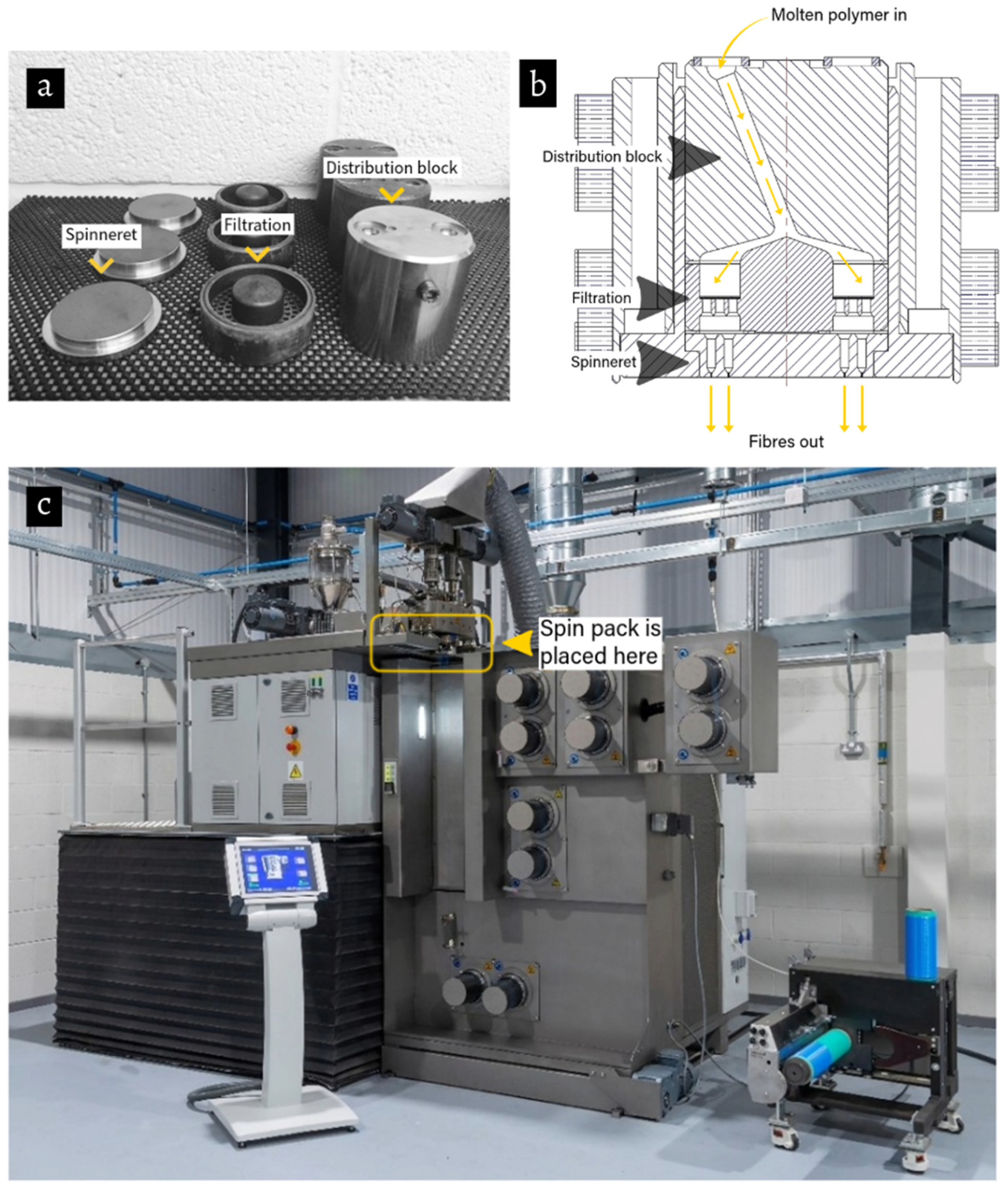
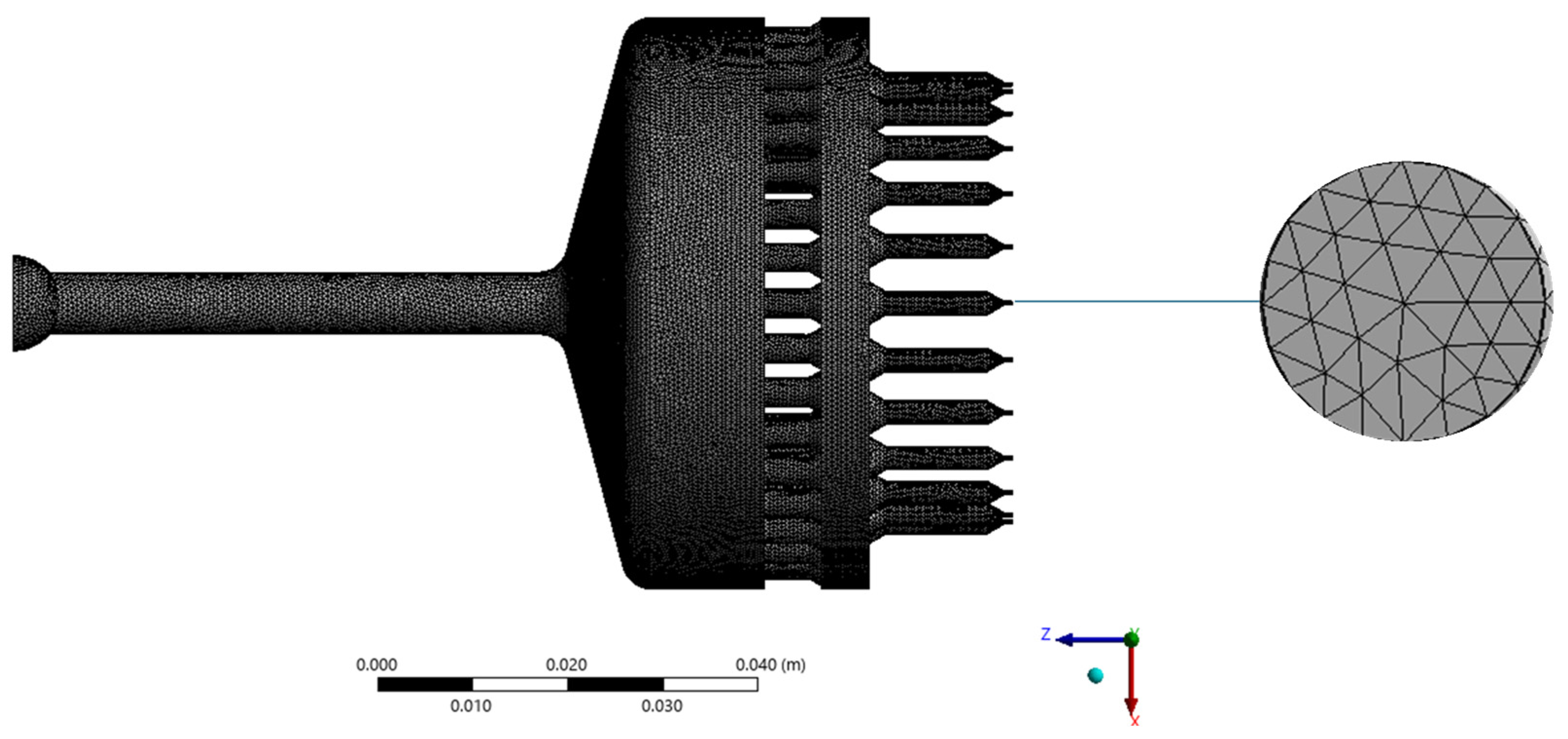
2.1. Simulation Set-Up
2.2. Temperature Dependency
2.3. Shear Thinning
2.4. Design Enhancement Study
- D0: Initial
- D1: Kinked entry high
- D2: Bi-Co version of deep entry
- D3: Reduced volume filter
- D4: Double layer (48 holes) spinneret
- D5: Inverted dome
- D6: No dome
- D7: Offset entry
- D8: Smaller dome size
- D9: Pyramid shape
- D10: Rounded edges
- D11: Wider cone
- D12: Lipped cone
- D13: Cooler spinneret
- D14: Doughnut cone
- D15: Kinked entry low
3. Extrusion Experimentation
3.1. Melt Extrusion
3.2. Extrusion Throughput Efficiency
4. Results and Discussion
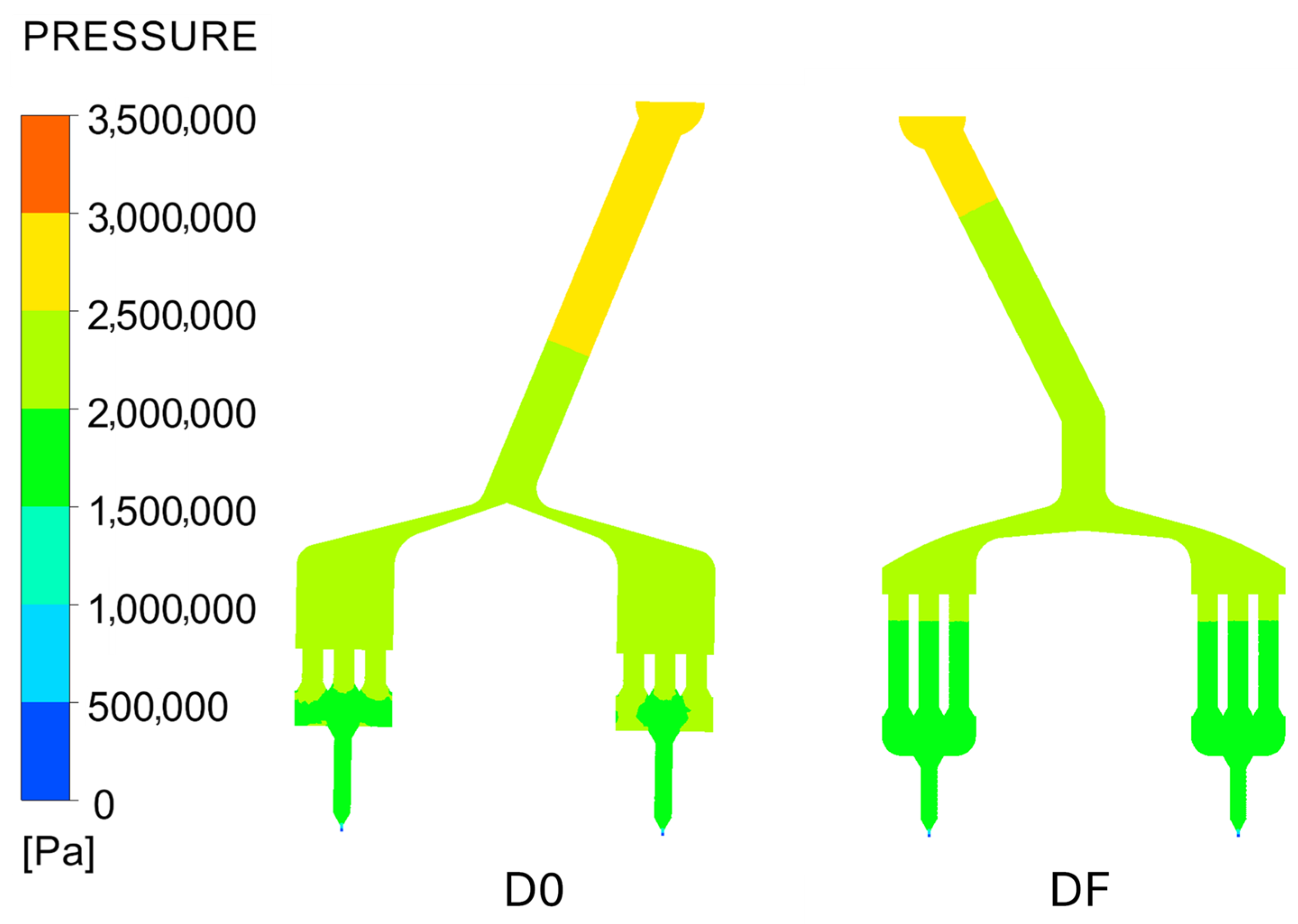
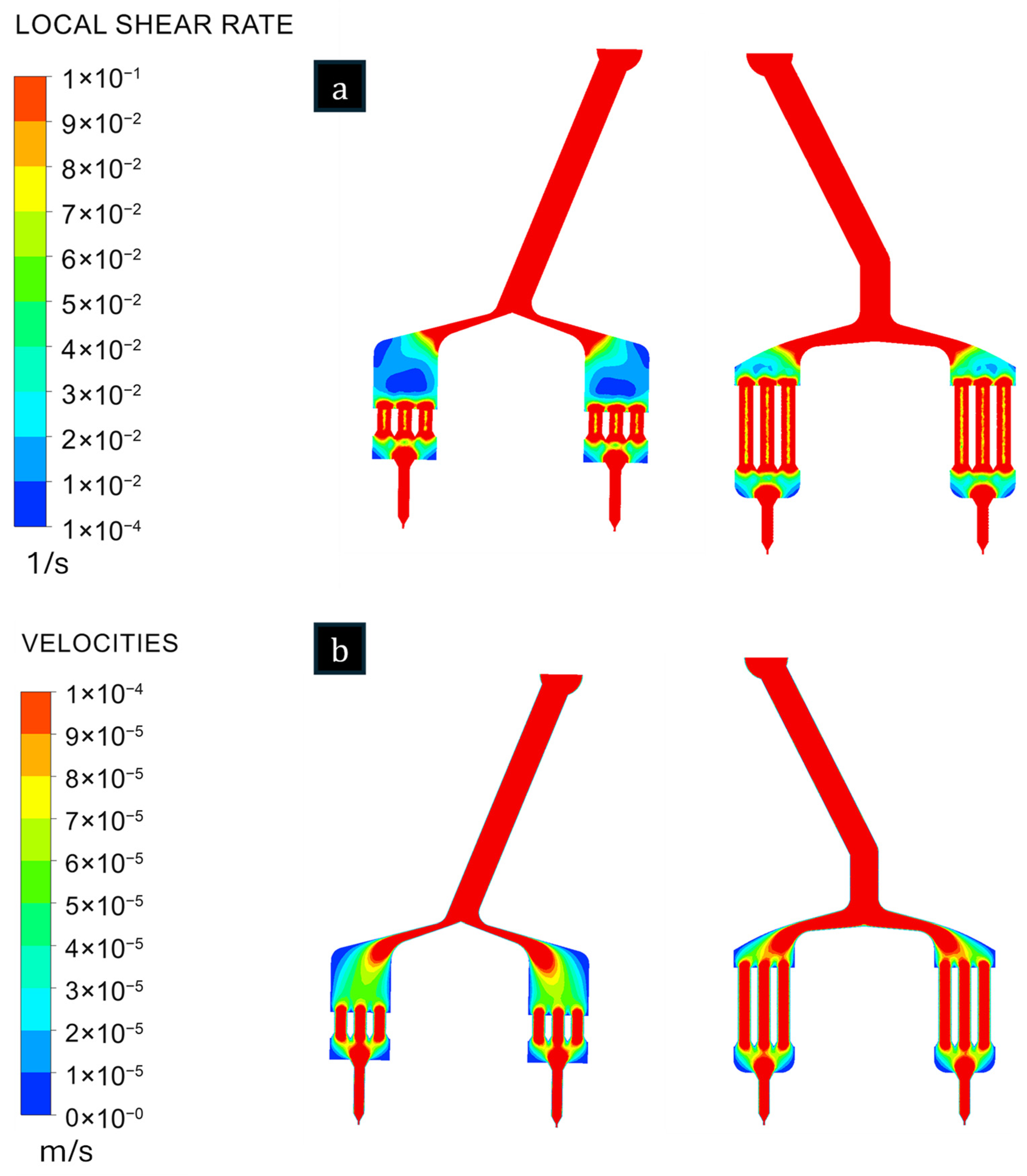
4.1. Computational and Parametric Analysis
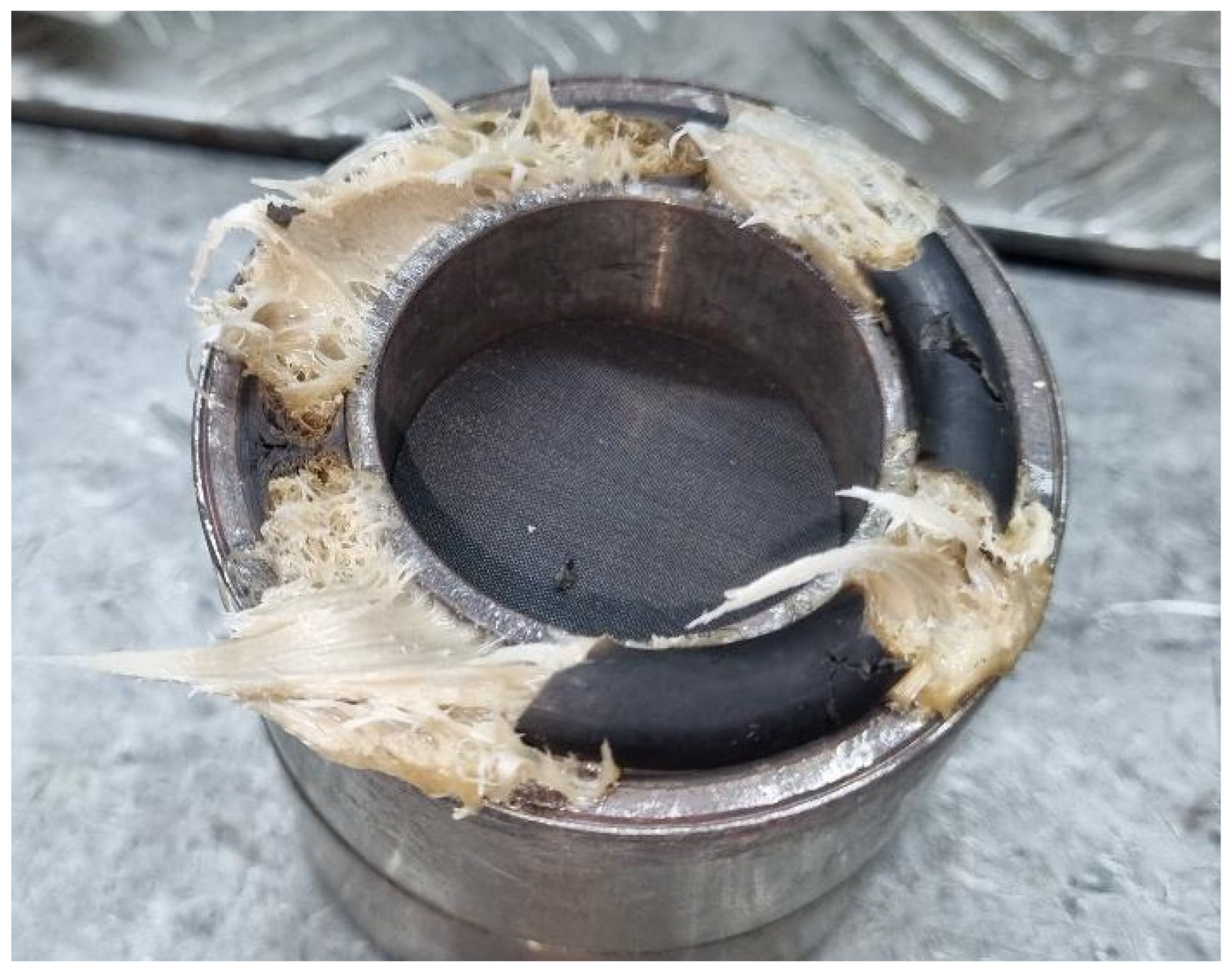
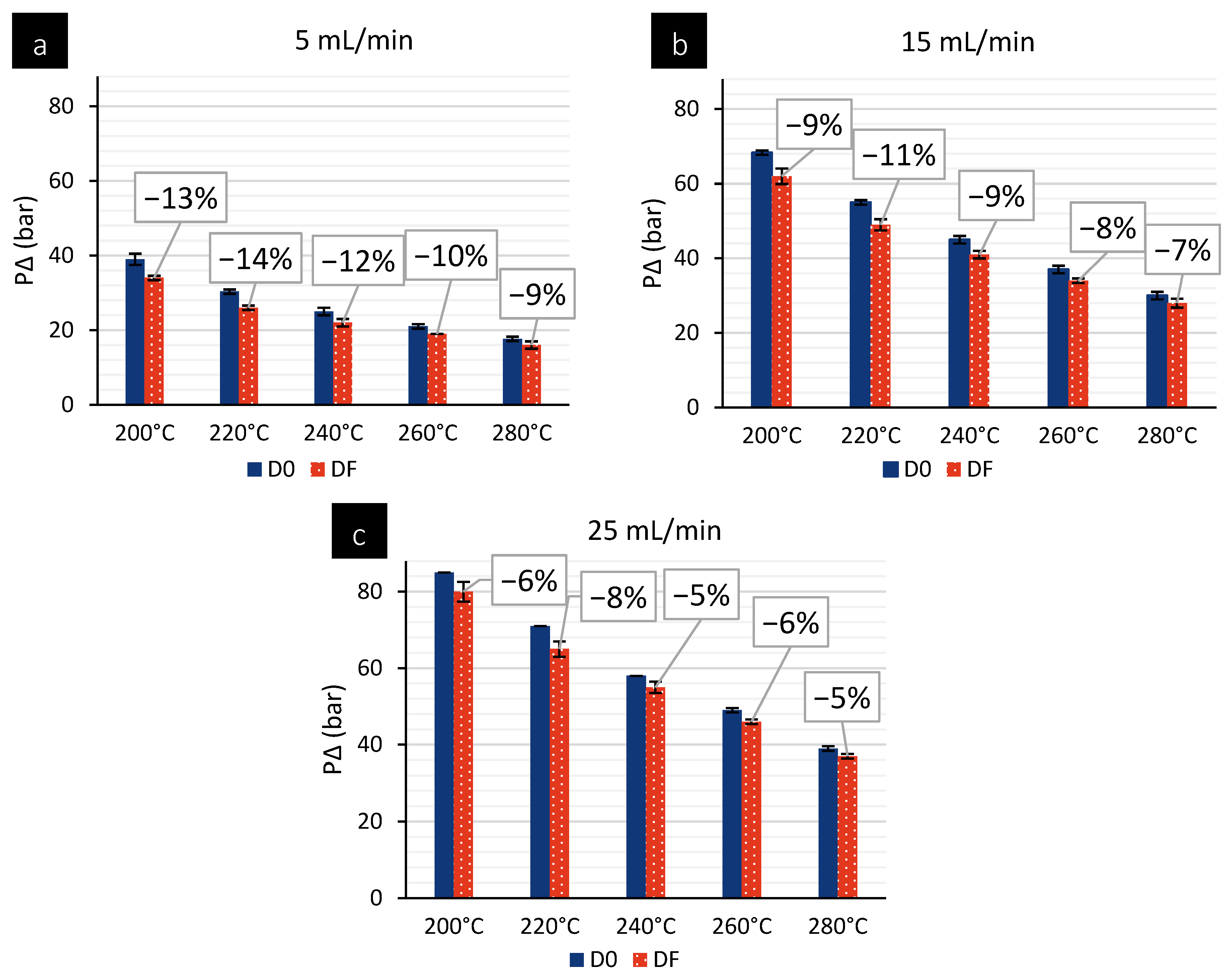
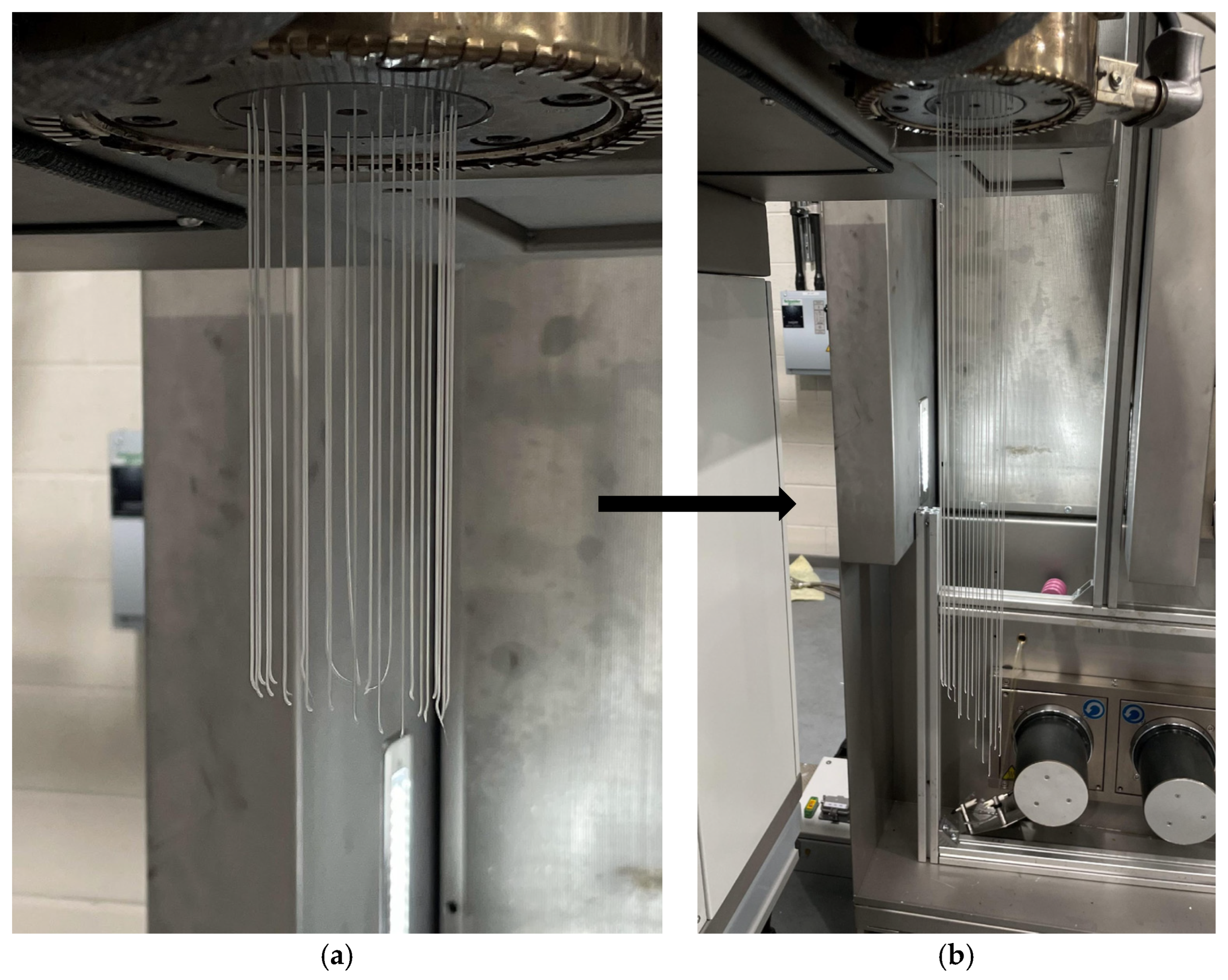
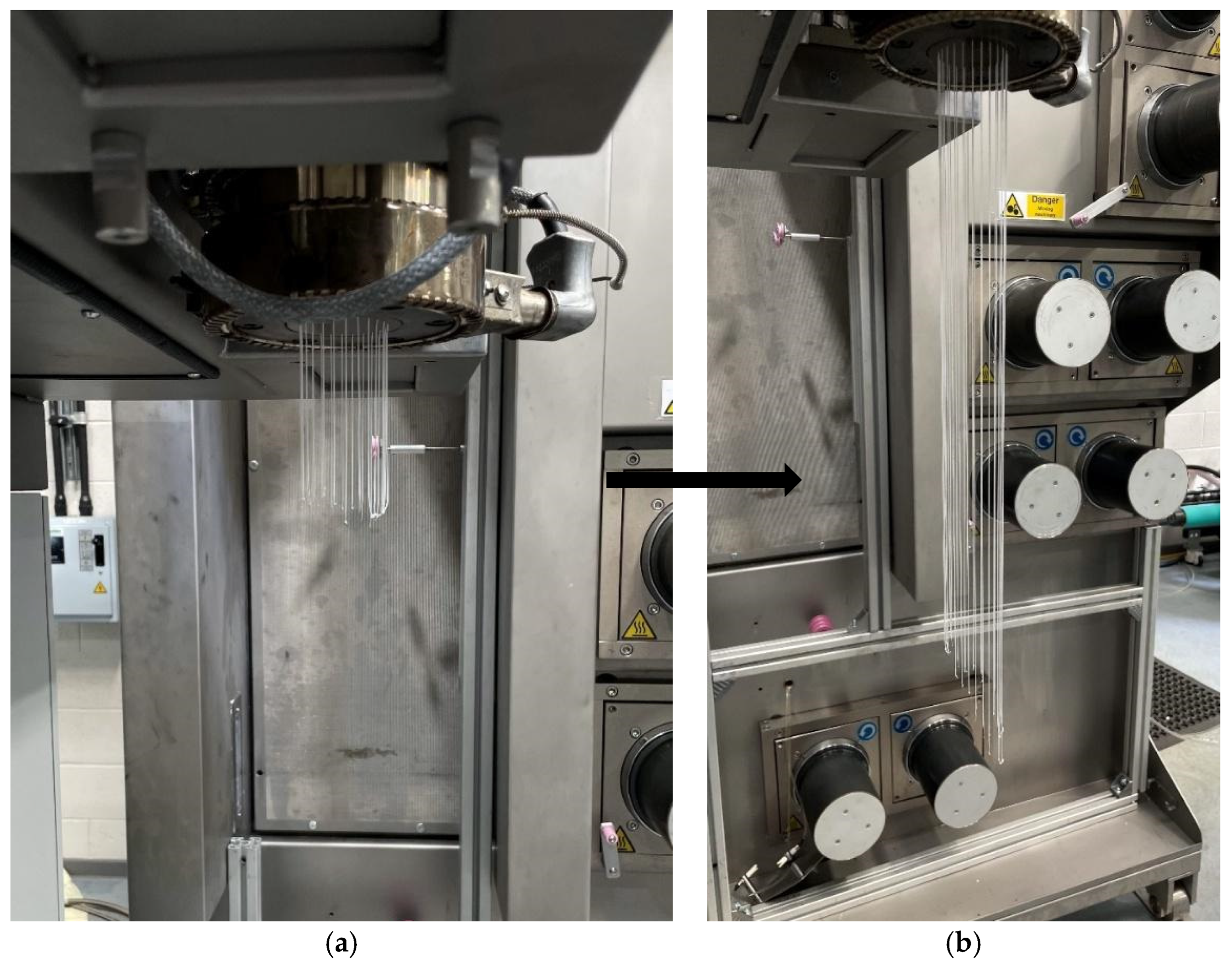
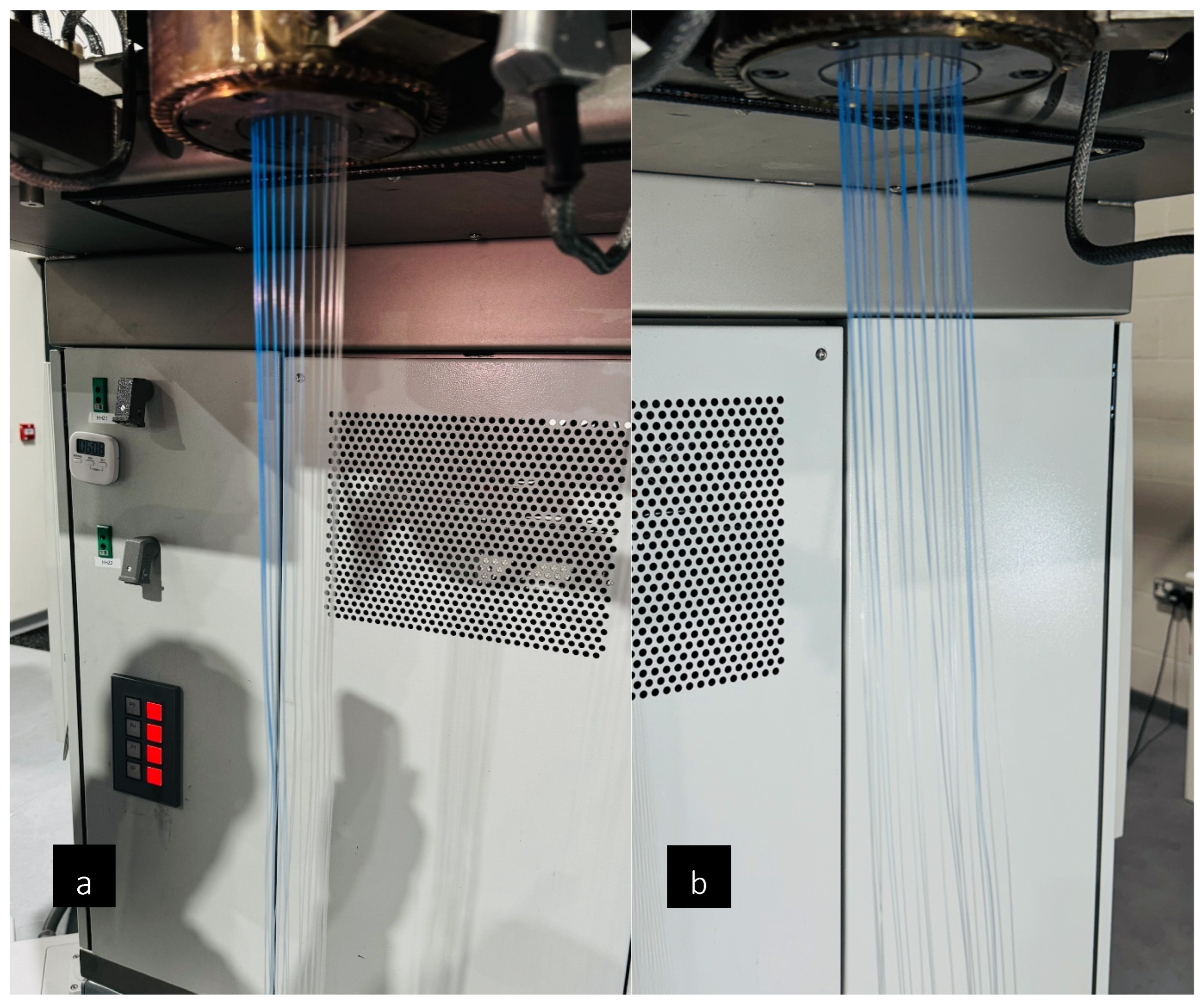
4.2. Experimental Validation of Novel Spinneret Design
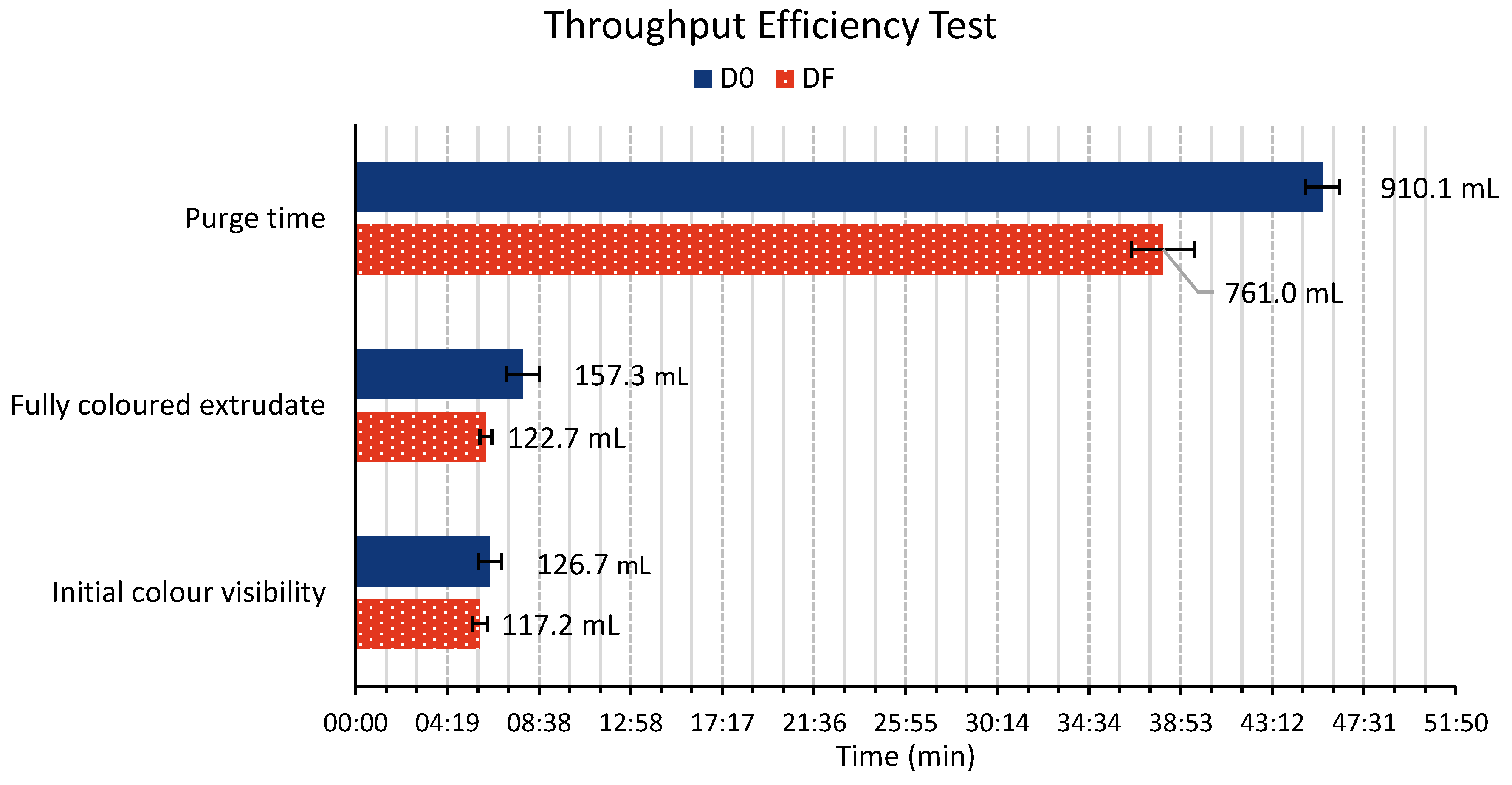
4.3. Extrusion Throughput Efficiency Tests
5. Conclusions
Author Contributions
Funding
Institutional Review Board Statement
Data Availability Statement
Acknowledgments
Conflicts of Interest
References
- Fibre Extrusion Technology Limited. Available online: https://www.fetuk.com (accessed on 24 December 2025).
- Silva, P.M.; Torres-Giner, S.; Vicente, A.A.; Cerqueira, M.A. Management of Operational Parameters and Novel Spinneret Configurations for the Electrohydrodynamic Processing of Functional Polymers. Macromol. Mater. Eng. 2022, 307, 2100858. [Google Scholar] [CrossRef]
- Jiang, J.; Chen, X.; Wang, H.; Ou, W.; He, J.; Liu, M.; Lu, Z.; Hu, J.; Zheng, G.; Wu, D. Response Surface Methodology to Explore the Influence Mechanism of Fiber Diameter in a New Multi-Needle Electrospinning Spinneret. Polymers 2024, 16, 2222. [Google Scholar] [CrossRef]
- Song, W.; Tang, Y.; Qian, C.; Kim, B.J.; Liao, Y.; Yu, D.-G. Electrospinning Spinneret: A Bridge between the Visible World and the Invisible Nanostructures. Innovation 2023, 4, 100381. [Google Scholar] [CrossRef]
- Moriam, K.; Sawada, D.; Nieminen, K.; Hummel, M.; Ma, Y.; Rissanen, M.; Sixta, H. Towards Regenerated Cellulose Fibers with High Toughness. Cellulose 2021, 28, 9547–9566. [Google Scholar] [CrossRef]
- Xia, X.; Gong, M.; Wang, C.; Wang, B.; Zhang, Y.; Wang, H. Dynamic Modeling of Dry-Jet Wet Spinning of Cellulose/[BMIM]Cl Solution: Complete Deformation in the Air-Gap Region. Cellulose 2015, 22, 1963–1976. [Google Scholar] [CrossRef]
- Xia, X.; Wang, J.; Wang, H.; Zhang, Y. Numerical Investigation of Spinneret Geometric Effect on Spinning Dynamics of Dry-jet Wet-spinning of Cellulose/[BMIM] Cl Solution. J. Appl. Polym. Sci. 2016, 133, 43962. [Google Scholar] [CrossRef]
- Xia, X.L.; Yao, Y.B.; Zhu, X.J.; Mukuze, K.S.; Wang, C.S.; Zhang, Y.M.; Wang, H.P. Simulation on Contraction Flow of Concentrated Cellulose/1-Butyl-3-Methylimidazolium Chloride Solution through Spinneret Orifice. Mater. Res. Innov. 2014, 18, S2-874–S2-878. [Google Scholar] [CrossRef]
- Kirichenko, A.M.; Kholosha, V.M.; Chernyshov, Y.A.; Il’in, V.G.; Nefedova, I.T.; Ambainis, Y.Y. The Spinneret Design as a Factor in the Conditions of Cooling and Regularity of the Properties of Capron Cord Yarn. Fibre Chem. 1977, 8, 642–644. [Google Scholar] [CrossRef]
- Mitsoulis, E. Computational Polymer Processing. In Modeling and Simulation in Polymers; Gujrati, P.D., Leonov, A.I., Eds.; Wiley Online Library: Weinheim, Germany, 2010; pp. 127–195. [Google Scholar] [CrossRef]
- Hyvärinen, M.; Jabeen, R.; Kärki, T. The Modelling of Extrusion Processes for Polymers—A Review. Polymers 2020, 12, 1306. [Google Scholar] [CrossRef]
- Qin, S.; Zhang, Z.; Xu, X.; Liu, J.; Liu, H. Numerical Investigation of the Geometrical Effects on UHMWPE Flow Characteristics in Small Aperture Spinneret Orifice. In Proceedings of the IOP Conference Series: Materials Science and Engineering, Beijing, China, 16–18 May 2015; IOP Publishing: Bristol, UK, 2015; Volume 87, p. 012063. [Google Scholar]
- Karuppasamy, S.; Krishnan, S. Assessment of the Flow Behavior of Power-Law Fluids in Spinnerets. Chem. Eng. Res. Des. 2021, 176, 134–145. [Google Scholar] [CrossRef]
- Widjojo, N.; Chung, T.-S.; Arifin, D.Y.; Weber, M.; Warzelhan, V. Elimination of Die Swell and Instability in Hollow Fiber Spinning Process of Hyperbranched Polyethersulfone (HPES) via Novel Spinneret Designs and Precise Spinning Conditions. Chem. Eng. J. 2010, 163, 143–153. [Google Scholar] [CrossRef]
- Moriam, K.; Sawada, D.; Nieminen, K.; Ma, Y.; Rissanen, M.; Nygren, N.; Guizani, C.; Hummel, M.; Sixta, H. Spinneret Geometry Modulates the Mechanical Properties of Man-Made Cellulose Fibers. Cellulose 2021, 28, 11165–11181. [Google Scholar] [CrossRef]
- Leithäuser, C.; Pinnau, R.; Feßler, R. Shape Design for Polymer Spin Packs: Modeling, Optimization and Validation. J. Math. Ind. 2018, 8, 13. [Google Scholar] [CrossRef]
- Wagner, G.; Vidal, J.; Barbat, P.; Gonnet, J.M.; Nóbrega, J.M. A Novel Approach to Automatically Balance Flow in Profile Extrusion Dies Through Computational Modeling. Polymers 2025, 17, 1498. [Google Scholar] [CrossRef]
- Urraca, R.; Pernía-Espinoza, A.; Díaz, I.; Sanz-Garcia, A. Practical Methodology for Validating Constitutive Models for the Simulation of Rubber Compounds in Extrusion Processes. Intern. J. Ad. Manuf. Tech. 2017, 90, 2377–2387. [Google Scholar] [CrossRef]
- Vergnes, B. A Comprehensive Review on Residence Time Distributions in Co-Rotating Twin-Screw Extrusion. Intern. Poly. Proc. 2024, 39, 513–530. [Google Scholar] [CrossRef]
- Laidler, K.J. The Development of the Arrhenius Equation. J. Chem. Educ. 1984, 61, 494. [Google Scholar] [CrossRef]
- Carreau, P.J. Rheological Equations from Molecular Network Theories. Trans. Soc. Rheol. 1972, 16, 99–127. [Google Scholar] [CrossRef]
- Myint, A.K.K.; Taithong, N.; Pakdee, W. CFD Analysis of Non-Isothermal Viscoelastic Flow of HDPE Melt Through an Extruder Die. Fluids 2025, 10, 238. [Google Scholar] [CrossRef]
- Liang, J.Z.; Chan, J.S.F.; Wong, E.T.T. Effects of Operation Conditions and Die Angles on the Pressure Losses in Capillary flow of Polystyrene Melt. J. Mat. Process. Tech. 2001, 114, 118–121. [Google Scholar] [CrossRef]
- Feßler, R.; Leithäuser, C.; Pinnau, R. Optimal shape design for polymer spin packs. In Progress in Industrial Mathematics at ECMI 2016, Proceedings of the ECMI 2016, Santiago de Compostela, Spain, 13–17 June 2016; Mathematics in Industry (Volume 26); Quintela, P., Barral, P., Gómez, D., Pena, F.J., Rodríguez, J., Salgado, P., Vázquez-Méndez, M.E., Eds.; Springer: Berlin/Heidelberg, Germany, 2017; pp. 601–607. [Google Scholar] [CrossRef]
- Hiesgen, G.; Saul, K.; Rauwendaal, C. Temperature Induced Dimensional Variation in Extrusion. AIP Conf. Proc. 2016, 1779, 030005. [Google Scholar] [CrossRef]
- Abeykoon, C.; Martin, P.J.; Kelly, A.L.; Li, K.; Brown, E.C.; Coates, P.D. Investigation of the Temperature Homogeneity of Die Melt Flows in Polymer Extrusion. Polym. Eng. Sci. 2014, 54, 2430–2440. [Google Scholar] [CrossRef]
- Hatzikiriakos, S.G.; Migler, K.B. Polymer Processing Instabilities: Control and Understanding; CRC Press: Boca Raton, FL, USA, 2004; ISBN 142003068X. [Google Scholar]
- De Rosis, A. Nonorthogonal central-moments-based lattice Boltzmann scheme in three dimensions. Phys. Rev. E 2017, 95, 013310. [Google Scholar] [CrossRef] [PubMed]






| Parameter | Symbol | Value | Unit |
|---|---|---|---|
| Zero-shear viscosity | η0 | 1.522 × 10⁴ | |
| Infinite-shear viscosity | η∞ | 0 | |
| Relaxation time | λ | 0.1309 | s |
| Power-law index | n | 0.1269 | – |
| Yasuda exponent | a | 0.3669 | – |
| Name | Description | Pressure (bar) | Shear Rate (s−1) | Velocity (m/s) |
|---|---|---|---|---|
| D0 | Original | 33.9 | 564.1–471.3 | 0.051 |
| D1 | Kinked entry high | 47.3 | 599.3–529.5 | 0.042 |
| D2 | Bi-Co Version of deep entry | 25.5 | 592.8–511.9 | 0.042 |
| D3 | Reduced Volume Filter | 29.3 | 600.7–510.3 | 0.042 |
| D4 | Double layer (48 holes) Spinneret | 22.2 | 534.8–516.2 | 0.020 |
| D5 | Inverted Dome | 26.0 | 583.8–490.6 | 0.042 |
| D6 | No Dome | 25.6 | 596.5–500.8 | 0.044 |
| D7 | Offset entry | 33.1 | 664.7–509.4 | 0.045 |
| D8 | Smaller dome size | 27.3 | 590.3–508.3 | 0.044 |
| D9 | Pyramid shape | 26.5 | 585.7–505.3 | 0.044 |
| D10 | Rounded edges | 26.8 | 586.3–510.7 | 0.044 |
| D11 | Wider cone | 26.4 | 610.1–541.2 | 0.042 |
| D12 | Lipped cone | 27.5 | 593.0–500.0 | 0.044 |
| D13 | Cooler spinneret | 37.4 | 568.9–473.4 | 0.050 |
| D14 | Doughnut cone | 27.5 | 591.5–512.8 | 0.044 |
| D15 | Kinked entry low | 33.9 | 590.7–518.9 | 0.044 |
| Name | Pressure (bar) | Shear Rate (s−1) | Velocity (m/s) |
|---|---|---|---|
| D0 | 30.2 | 569.93 | 0.051 |
| DF | 26.9 (−11%) | 680.96 (+19%) | 0.044 (−14%) |
Disclaimer/Publisher’s Note: The statements, opinions and data contained in all publications are solely those of the individual author(s) and contributor(s) and not of MDPI and/or the editor(s). MDPI and/or the editor(s) disclaim responsibility for any injury to people or property resulting from any ideas, methods, instructions or products referred to in the content. |
© 2025 by the authors. Licensee MDPI, Basel, Switzerland. This article is an open access article distributed under the terms and conditions of the Creative Commons Attribution (CC BY) license.
Share and Cite
Ortiz-Leyva, N.G.; Romano, G.; Wilson, J.; Hunter, J.C.; De Rosis, A. Development of a Novel Spinneret Design for Improved Melt Extrusion Performance: A Computational and Empirical Study. Polymers 2026, 18, 115. https://doi.org/10.3390/polym18010115
Ortiz-Leyva NG, Romano G, Wilson J, Hunter JC, De Rosis A. Development of a Novel Spinneret Design for Improved Melt Extrusion Performance: A Computational and Empirical Study. Polymers. 2026; 18(1):115. https://doi.org/10.3390/polym18010115
Chicago/Turabian StyleOrtiz-Leyva, Nereida Guadalupe, Giuseppe Romano, Jack Wilson, Jonathan C. Hunter, and Alessandro De Rosis. 2026. "Development of a Novel Spinneret Design for Improved Melt Extrusion Performance: A Computational and Empirical Study" Polymers 18, no. 1: 115. https://doi.org/10.3390/polym18010115
APA StyleOrtiz-Leyva, N. G., Romano, G., Wilson, J., Hunter, J. C., & De Rosis, A. (2026). Development of a Novel Spinneret Design for Improved Melt Extrusion Performance: A Computational and Empirical Study. Polymers, 18(1), 115. https://doi.org/10.3390/polym18010115