1. Introduction
Extreme ultraviolet (EUV) lithography, which uses a wavelength of 13.5 nm, provides excellent image resolution for high-volume manufacturing of 7-nm-node semiconductors. To improve yield, effective particle management is essential to prevent particle contamination on the EUV mask [
1].
EUV pellicles are freestanding membranes designed to protect EUV masks from particle contamination during exposure. Therefore, EUV pellicles must exhibit high optical transmittance, excellent thermal stability, and sufficient mechanical strength to ensure reliable performance [
2]. As EUV pellicles absorb radiation during exposure, their temperature increases significantly inside the scanner, requiring materials with excellent thermal stability [
1]. Accordingly, metal silicides that remain stable at relatively high temperatures have been investigated as promising candidates for EUV pellicles [
2]. Among them, ZrSi
2 has attracted considerable attention because of its excellent optical properties [
3]. The principal advantage of utilizing ultrathin films is the significant enhancement of optical performance; specifically, an EUV transmittance (EUVT) above 90% is required to minimize throughput loss during the exposure process. A high EUVT can be achieved by reducing the pellicle thickness. However, decreasing the pellicle thickness reduces its mechanical strength, increasing the risk of fractures within the EUV scanner [
4]. Therefore, enhancing the mechanical strength of ultrathin pellicles while maintaining high optical transmittance is essential to prevent EUV pellicle failure [
5].
The mechanical strength of most bulk materials is intrinsically linked to their microstructure, specifically the grain size. In the bulk, the Hall–Petch relationship dictates that strength increases as grain size decreases due to dislocation pile-up at grain boundaries. In contrast, thin films composed of nanosized grains have been reported to exhibit an inverse Hall–Petch relationship, in which the mechanical strength decreases as grain size decreases. This phenomenon at the nanoscale is commonly attributed to an increased volume fraction of triple junctions and grain boundary sliding, which act as sites for crack formation [
6].
Despite the potential of ZrSi
2 as a high-performance pellicle material, most previous studies have focused primarily on its initial optical properties. There is a significant knowledge gap regarding the systematic optimization of the ZrSi
2 microstructure to withstand the mechanical demands of EUV lithography. In particular, the impact of the transition between Hall–Petch and inverse Hall–Petch behaviors on the reliability of ZrSi
2/SiN
x composite pellicles remains to be experimentally determined [
3,
7].
In this study, to address these research gaps, we fabricated ZrSi
2/SiN
x composite pellicles. SiN
x was utilized as the supporting membrane because it is considered a promising candidate for pellicle capping layers [
7]. In evaluating the mechanical strength of the composite membranes, the ultimate tensile strength (UTS) is utilized as a primary indicator. The Hall–Petch relation typically describes the dependence of yield strength on grain size. However, determining a precise yield point in nanoscale brittle films is challenging. This is attributed to the high sensitivity of the bulge test to initial tension and the immediate transition of these films to fracture. Therefore, the UTS of the composite membrane reflects the collective resistance to failure and serves as a reliable indicator of structural integrity [
8]. Since SiN
x maintains structural stability at high temperatures, it ensures that the grain formation of the ZrSi
2 thin film remains independent of substrate interactions. The grain growth of ZrSi
2 thin films was systematically controlled through post-deposition annealing. Subsequently, the effect of grain size on mechanical strength and optical properties was investigated, with a specific focus on identifying the critical grain size for UTS. These results provide insight into the relationship between microstructure and mechanical performance, establishing a guide for optimizing EUV pellicle applications to ensure mechanically reliability.
2. Materials and Methods
In this study, ZrSi
2/SiN
x composite pellicles with varying ZrSi
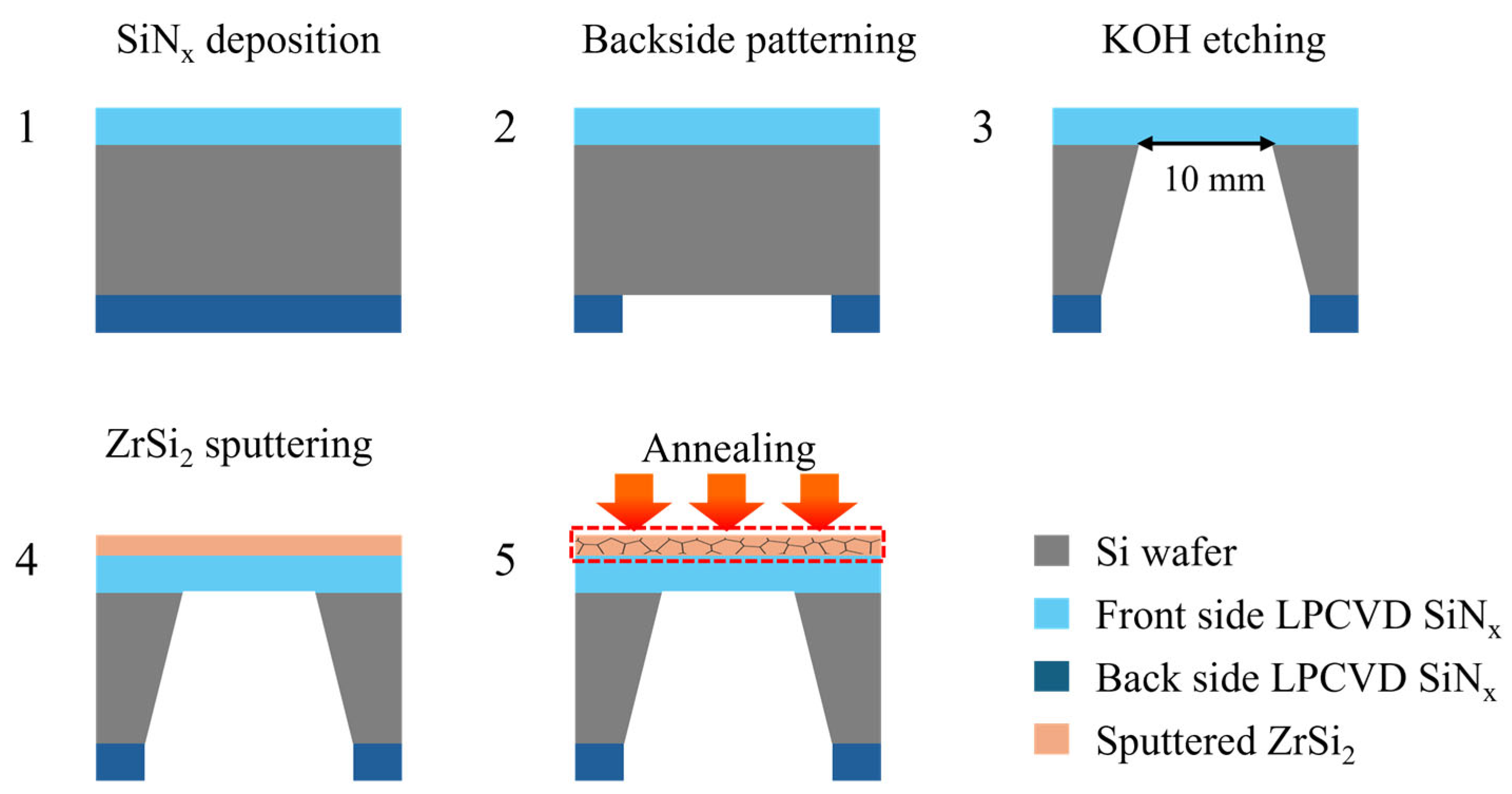
2 grain sizes were fabricated to evaluate their mechanical strength and optical properties. The sample fabrication process is illustrated in
Figure 1. Fabrication began with the preparation of a 10 mm × 10 mm freestanding SiN
x membrane. A 40 nm-thick SiN
x thin film was deposited using a standardized low-pressure chemical vapor deposition (LPCVD) process provided by an commercial supplier. The deposition was performed at 820 °C, utilizing dichlorosilane (SiH
2Cl
2) and ammonia (NH
3) as precursor gases. After deposition, the backside of the silicon substrate was patterned using lithography and etched using reactive ion etching to open a window for membrane release [
3]. The silicon substrate was then removed by wet etching in 30 wt% potassium hydroxide at 60 °C for 42 h. The measured etch rates for Si and SiN
x were 18 μm/h and 0.17 nm/h, respectively. The thickness of the resulting freestanding SiN
x membrane was confirmed by cross-sectional bright-field (BF) transmission electron microscopy (TEM) imaging (JEM-ARM200F, JEOL Ltd., Tokyo, Japan).
After fabricating the SiN
x free-standing membrane, a ZrSi
2 thin film was deposited via a custom-built co-sputtering system equipped with Zr and Si targets. The detailed sputtering conditions for the ZrSi
2 thin film are summarized in
Table 1. Deposition was carried out at 1.0 mTorr under Ar, with a base pressure of 2 × 10
−7 Torr. During deposition, the substrate temperature was maintained at 300 °C, and an RF power of 180 W and DC power of 60 W were applied to the Si and Zr targets, respectively. Post-deposition annealing was performed on free-standing membranes after the silicon substrate had been completely removed at temperatures ranging from 425 to 600 °C for 2 h to investigate the influence of grain size on the mechanical and optical properties. Specifically, 425 °C was selected to characterize the film at the onset of crystallization. Additionally, 600 °C was used to evaluate high-temperature durability, as this temperature reflects the mechanical stability required under EUV operating conditions [
9]. The annealing was conducted in a vacuum furnace under a mixed gas atmosphere of 96% Ar and 4% H
2 at 1.3 Torr. The temperature was ramped at a rate of 10 °C/min, and the samples were subsequently air-cooled after heat treatment.
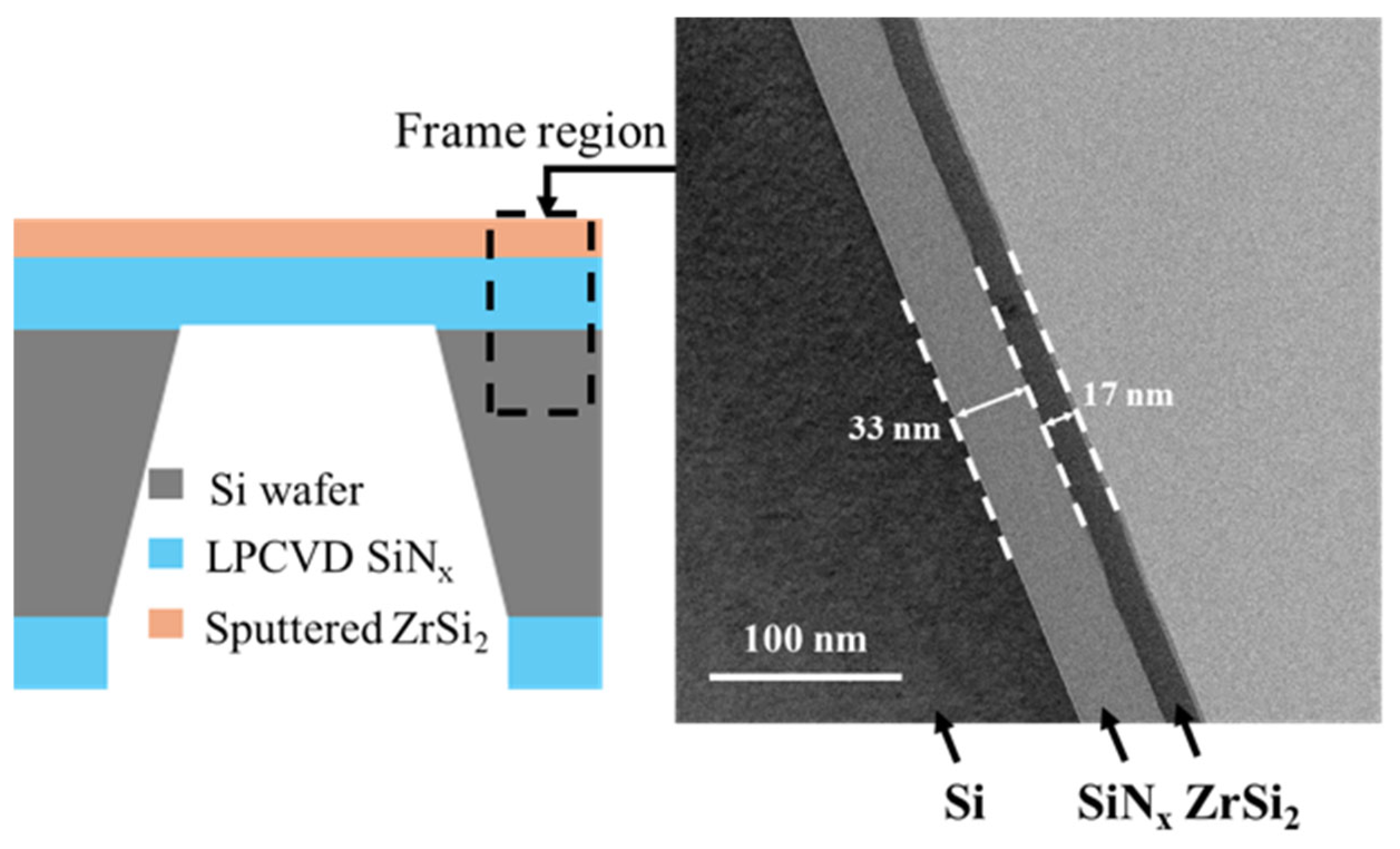
The thicknesses of the ZrSi
2 thin films were estimated from cross-sectional BF-TEM images. Since the freestanding membrane was only a few tens of nanometers thick, fracture during TEM sample preparation was of concern. Therefore, the TEM sample of the frame region—which was deposited under the same conditions as the membrane region—was prepared using a focused ion beam for thickness measurement. Crystallization of ZrSi
2 as a function of the annealing temperature was examined using grazing incidence X-ray diffraction (GI-XRD; Smartlab, Rigaku Corporation, Tokyo, Japan). The measurements were performed on the frame region where the silicon substrate remained to ensure sample stability during analysis. A Cu-Κα radiation source (λ = 1.5405 Å) was utilized with a fixed incidence angle of 0.5°. Data were collected over a 2θ range of 10° to 90° with a step size of 0.05° and a scan speed of 4°/min. The surface morphology of the crystallized ZrSi
2 thin films annealed at different temperatures was characterized by atomic force microscopy (AFM). An increase in surface roughness can cause scattering in EUV pellicles, resulting in pattern distortion [
10]. Therefore, AFM analysis was performed to evaluate the suitability of the films for EUV pellicle applications. The grain size of the crystallized ZrSi
2 thin films was estimated from bright-field scanning TEM (BF-STEM) plan-view images acquired using the same TEM used for cross-sectional imaging. Grain sizes were quantified using ImageJ software (version 1.52a, National institute of Health, Bethesda, MD, USA). The sheet resistance of the annealed thin films was measured using a 4-point probe. Similar to the Gi-XRD analysis, these measurements were performed on the frame region where the silicon substrate remained intact.
The EUVT of a 10 mm × 10 mm ZrSi
2/SiN
x composite pellicle was measured using a custom-built coherent scattering microscope (CSM) (Hanyang University, Seoul, Republic of Korea) with a 13.56 nm wavelength generated by a high-order harmonic generation source. To determine EUVT, the pellicle was mounted on a Mo/Si multilayer mirror, and the reflected photon intensities were recorded using a charge-coupled device in a custom-built CSM, both with and without the pellicle. The transmittance was calculated by comparing the two measurements. Similarly, the EUV reflectivity (EUVR) was evaluated by measuring the reflected photon intensity from a Mo/Si multilayer and from a pellicle mounted on an absorber material using the same charge-coupled-device-based detection method described in Ref. [
11].
The mechanical properties of ZrSi
2/SiN
x composite pellicles with dimensions of 1.5 mm × 6 mm were evaluated using plane-strain bulge testing. To ensure mechanical stability against the nitrogen gas flow, both ends of the membrane were clamped. Nitrogen gas was injected into the chamber to induce pressure-driven deflection. The resulting central deflection was measured as a function of pressure using a bulge-test system, enabling the extraction of mechanical parameters, such as Young’s modulus and residual stress [
12].
The Vlassak model, applicable to membranes with an aspect ratio of at least 1:4, was applied to evaluate the mechanical strength of the ZrSi
2/SiN
x composite pellicles. This model calculates the lateral stress and strain induced by the applied gas pressure (
) and membrane deflection at the center (
), as follows:
where
is the lateral stress at the center of the membrane,
is the half-width of the membrane,
is the membrane thickness,
is the lateral strain at the center, and
is the corresponding pre-strain. Equations (1) and (2) were used to construct the stress–strain curves of the membranes, and the fracture strength at the point of membrane failure was taken as the UTS [
13].
3. Results and Discussion
The cross-sectional BF-TEM image in
Figure 2 shows that the deposited ZrSi
2 and SiN
x films had thicknesses of 17 nm and 33 nm, respectively.
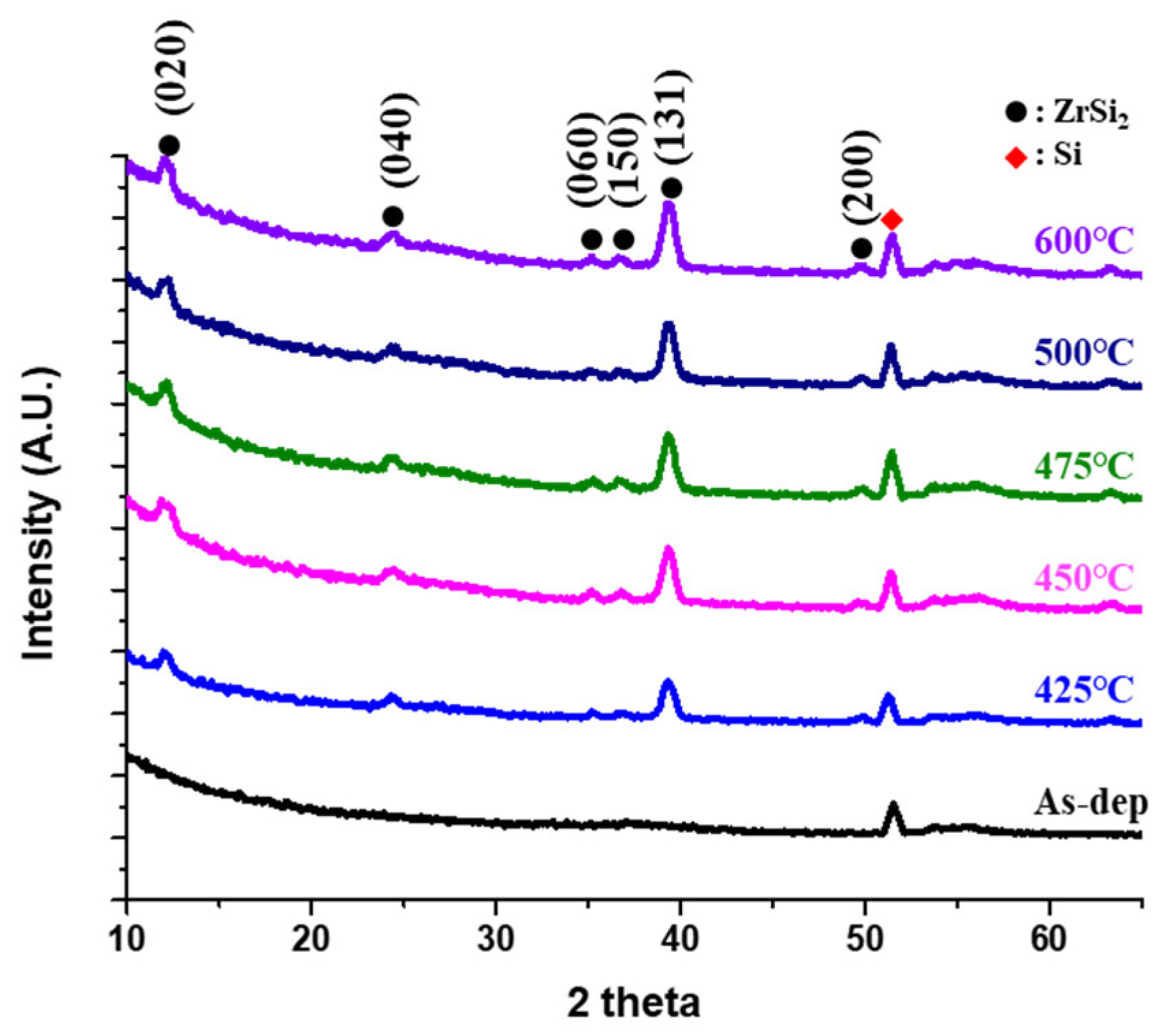
Reference data for identifying GI-XRD peaks corresponding to orthorhombic ZrSi
2 (mp-1515) were obtained from the Materials Project database (version v2025.04.10) [
14]. As shown in
Figure 3, the ZrSi
2 thin film deposited at 300 °C exhibited an amorphous structure, as confirmed by the absence of diffraction peaks corresponding to the orthorhombic phase. When annealed at 425 °C, the ZrSi
2 thin film exhibited peaks corresponding to the orthorhombic ZrSi
2 phase in the GI-XRD pattern, confirming its crystallization. The peak at 2
= 52° was attributed to the Si substrate. At annealing temperatures above 425 °C, GI-XRD peaks corresponding to the orthorhombic phase of ZrSi
2 were consistently observed, with no detectable peaks originating from secondary phases, such as ZrSi (major reflections at 2
≈ 34.8°, 29.8°, 48.2°) or Zr
5Si
4 (major reflections at 2
≈ 34.8°, 32.6°, 27.2°). These results demonstrate that the ZrSi
2/SiN
x composite pellicles maintained the orthorhombic phase of ZrSi
2 even at annealing temperatures above 425 °C.
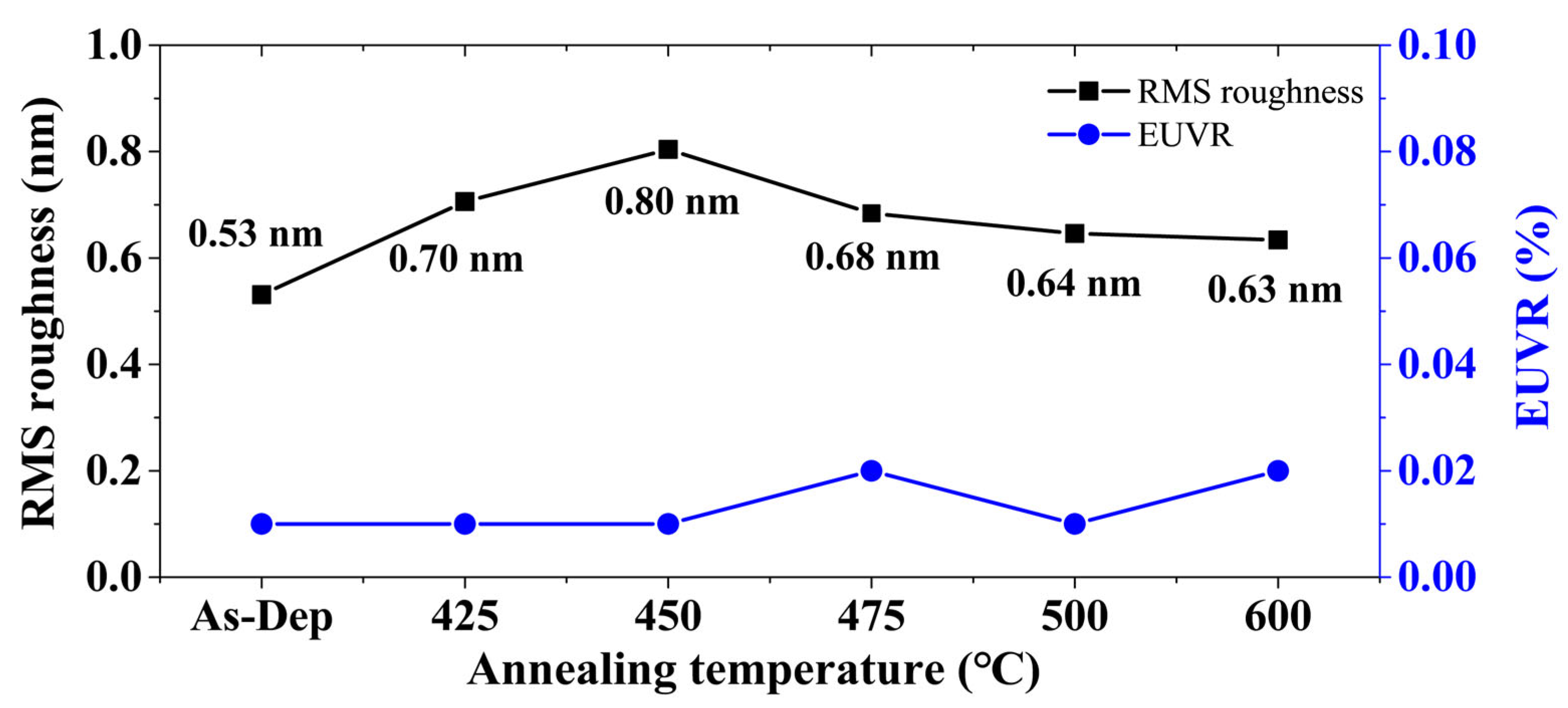
The change in surface roughness with annealing temperature was measured by AFM over a 1 μm × 1 μm area.
Figure 4 shows that the as-deposited ZrSi
2 thin film exhibited a root-mean-square (RMS) roughness of 0.53 nm, and that the surface roughness increased upon crystallization. However, even at higher annealing temperatures (above 450 °C), the surface roughness remained below 1 nm.
To examine the effect of surface roughness on the optical properties, EUVR measurements were performed. Surface roughness is known to increase the reflectivity of EUV pellicles. The EUVR, measured to be between 0.01% and 0.02% (
Figure 4), met the <0.04% requirement, confirming that the increase in surface roughness during crystallization had a negligible effect on EUV reflectivity [
2].
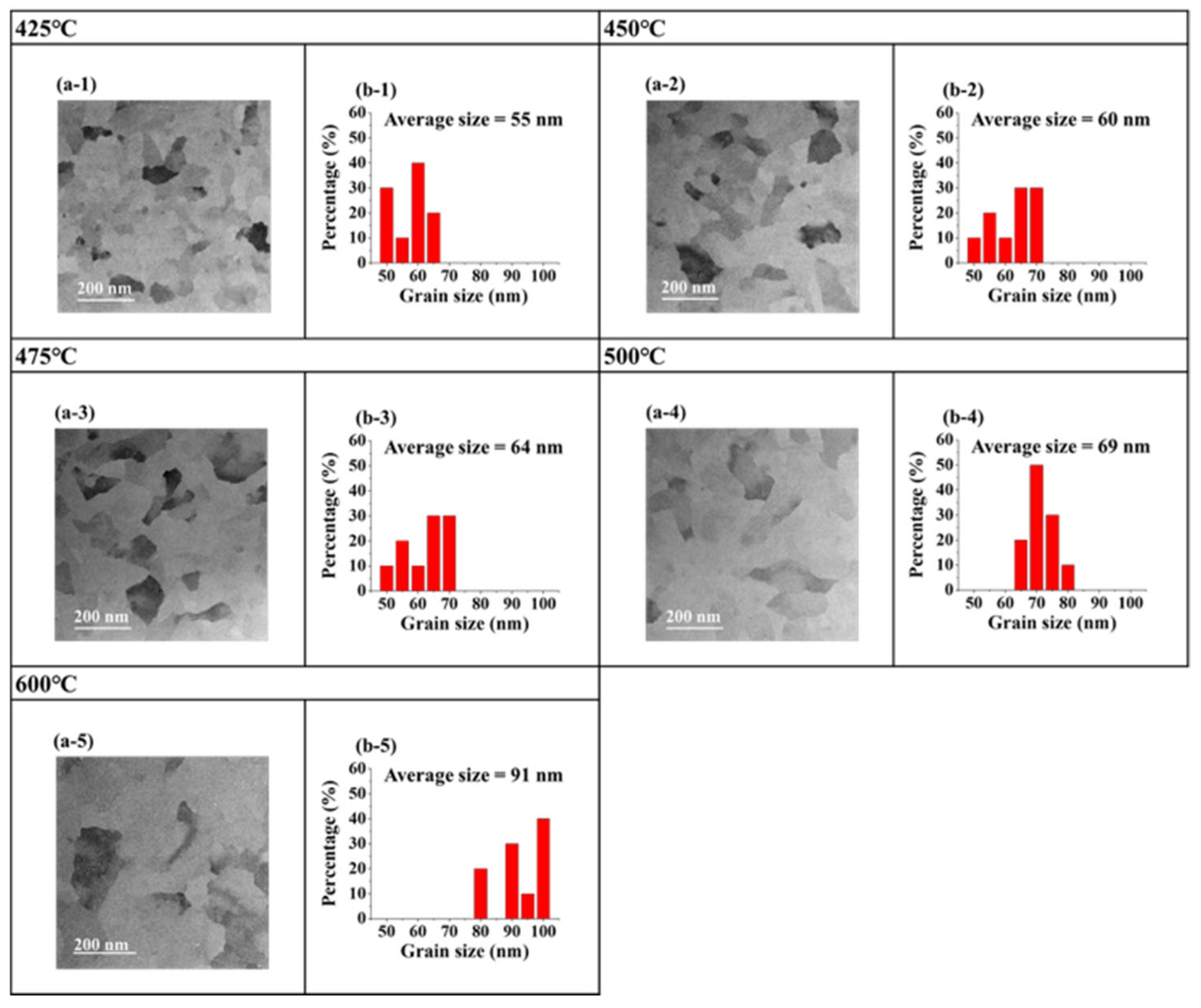
The average grain size (
Figure 5) was calculated using the line-intercept method, with 10 measurement lines per image. As shown in
Figure 5, grain sizes of the ZrSi
2 thin film after annealing at 425, 450, 475, 500, and 600 °C were 55, 60, 64, 69, and 91 nm, respectively. A significant increase in grain size after annealing at 600 °C indicates accelerated grain growth.
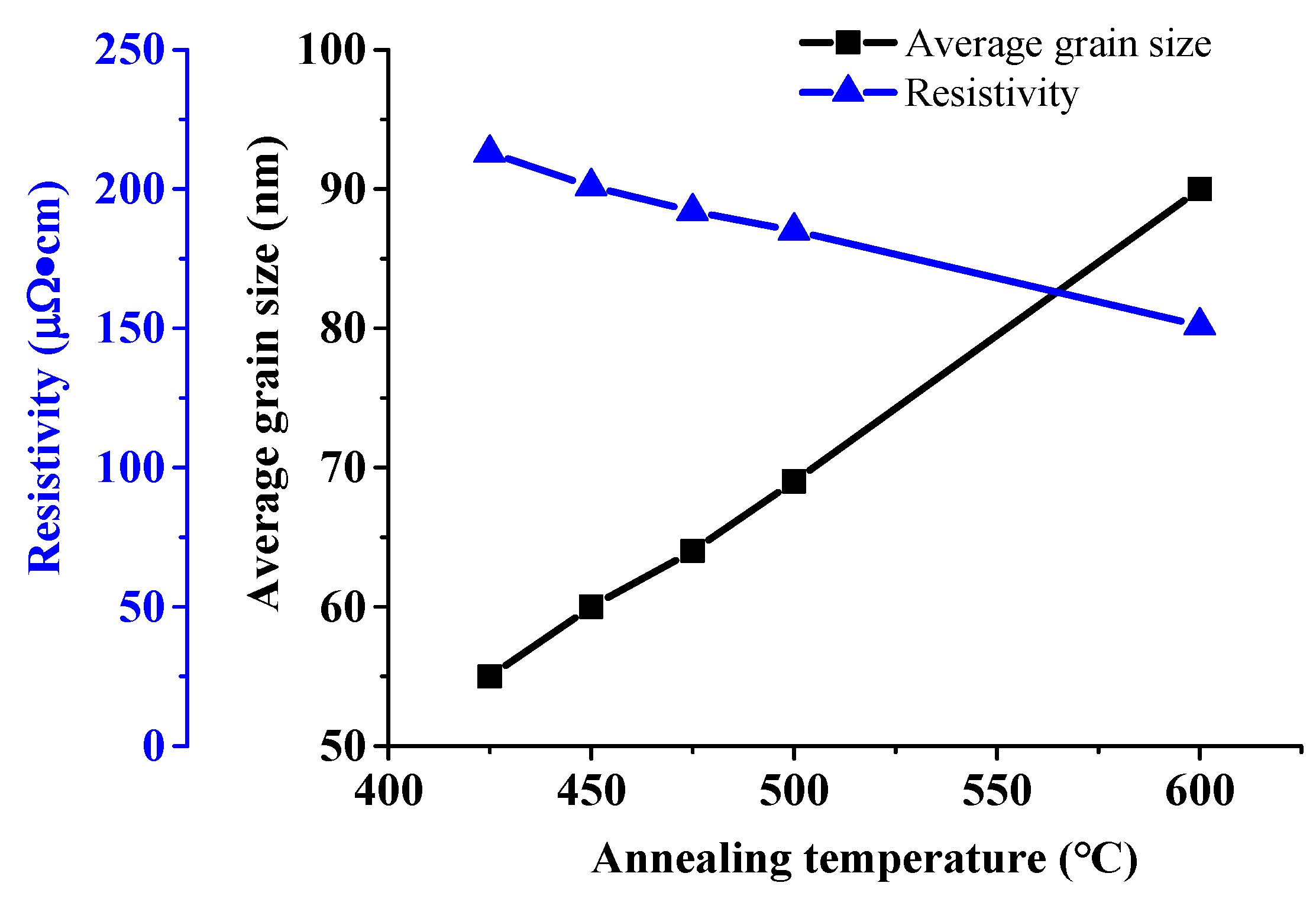
In
Figure 6, resistivity of the ZrSi
2 thin film decreased with increasing annealing temperature. Variations in crystal structure and surface scattering caused by changes in surface roughness were considered negligible contributors. Instead, the resistivity reduction can be primarily attributed to grain growth with increasing annealing temperature.
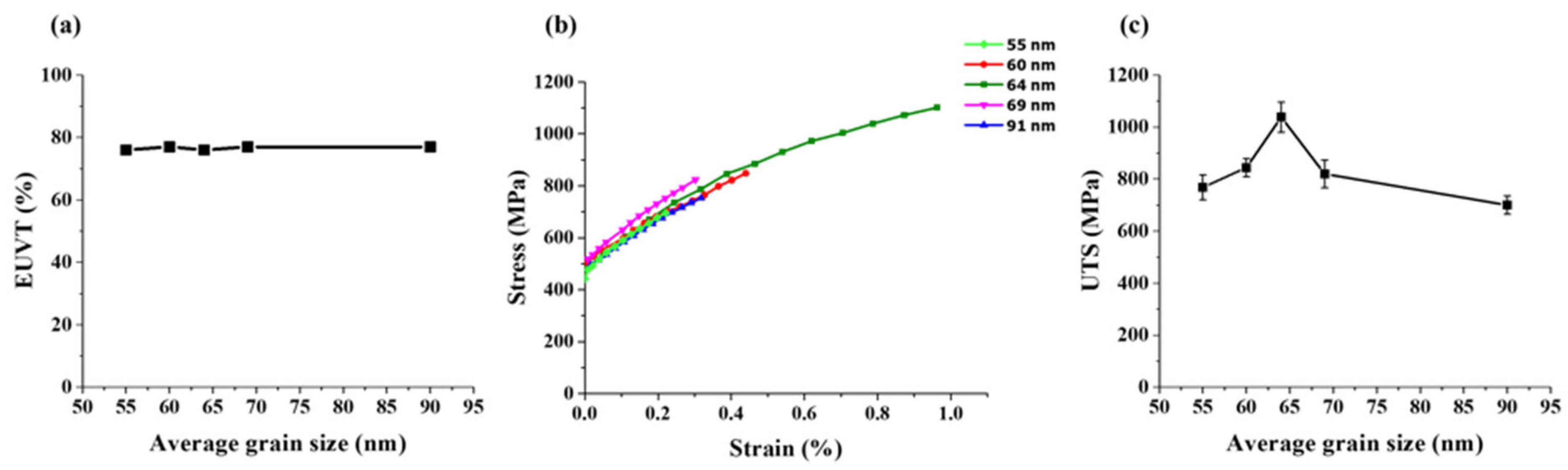
Figure 7a shows that as the grain size increased from 55 to 90 nm, EUVT remained relatively constant at 76–77%, indicating that grain size had a negligible effect on the optical transmittance of the pellicle.
To ensure that the observed variation in mechanical strength was primarily attributed to grain size evolution, the influence of film thickness and residual stress was evaluated. Cross-sectional BF-TEM analysis confirmed a consistent thickness of 17 nm, effectively excluding thickness-dependent effects.
Furthermore, the stress–strain curves shown in
Figure 7b indicate that the y-intercept corresponds to the residual stress. The measured residual stress values were 469, 520, 520, 540 and 487 MPa as the grain size increased. Previous studies on pellicle deflection acknowledged residual stress as a significant factor in mechanical strength. However, the values measured in this work remained relatively stable within the 469–540 MPa range. The absence of a systematic relationship in these values suggests that residual stress has a negligible impact on the UTS [
12]. Although
Figure 7b represents the stress–strain behavior, the brittle ZrSi
2 layer resulted in a limited plastic deformation regime before fracture. It is noted that accurately identifying the yield point is experimentally challenging in thin freestanding membranes. Therefore, we utilized the UTS values in
Figure 7c to evaluate the grain size effect. This is attributed to the fracture limit in this system being governed by the microstructural deformation mechanism described by the Hall–Petch and inverse Hall–Petch relationships [
8]. Consequently, the significant variation in UTS observed in this study can be attributed to the dominant role of grain size effects rather than residual stress or thickness variation.
As shown in
Figure 7c, the highest UTS occurred at a grain size of 64 nm. The UTS values for each grain size were determined by averaging the results of five separate measurements, with the error bars representing the standard deviation. The transition at 64 nm marks the crossover between two competing deformation mechanisms. In the regime above 64 nm, the decrease in UTS with increasing grain size is consistent with the classical Hall–Petch relationship, where grain boundaries inhibit dislocation propagation [
15]. In contrast, below 64 nm, the strength decreases as grain size is reduced, exhibiting the inverse Hall–Petch behavior [
16,
17]. The transition point at 64 nm identified in this work is smaller than the transition ranges (typically 70–150 nm) reported for other nanocrystalline materials [
18]. The inverse Hall–Petch phenomenon in this ZrSi
2 thin film can be attributed to the dominant role of grain boundary sliding and the increased volume fraction of triple junctions, which facilitate crack initiation and propagation in the finest microstructures [
19].
These results indicate that the grain size of the ZrSi2 layer is important for optimizing the EUVT and mechanical properties of ZrSi2-based EUV pellicles.
4. Conclusions
In this study, we optimized the mechanical reliability of a 17 nm ZrSi2 thin film by controlling the grain size, identifying a transition from inverse Hall–Petch to classical Hall–Petch behavior at 64 nm. Previous research prioritized thickness reduction to improve transmittance. In contrast, this work demonstrates that microstructural engineering can enhance mechanical strength independently of optical performance. We confirmed that the ultimate tensile strength can be enhanced through precise annealing while maintaining a constant EUVT (76–77%).
These findings provide universal design guidelines for other metal-silicide-based pellicles, such as MoSi2. Controlling the nanoscale deformation mechanism enhances the mechanical stability of the pellicle during thinning. This approach enables higher transmittance without compromising the mechanical stability required for EUV scanner environments. Our study establishes a quantitative framework for selecting optimal grain size to ensure the mechanical reliability of EUV pellicles.
Although the current transmittance requires further improvements for high-volume manufacturing, this study provides the necessary scientific basis for such advancements. Future research will focus on applying these microstructural rules to achieve a >90% EUVT. Investigating the long-term thermal stability under actual EUV operating conditions will also be essential for the commercial development of reliable pellicles.




 ,
,