Engineering Hierarchical NiMo/USY Catalysts for Selective Hydrocracking of Naphthalene to BTX
 ,
,
Abstract
1. Introduction
2. Results and Discussion
2.1. Characterization of Supports
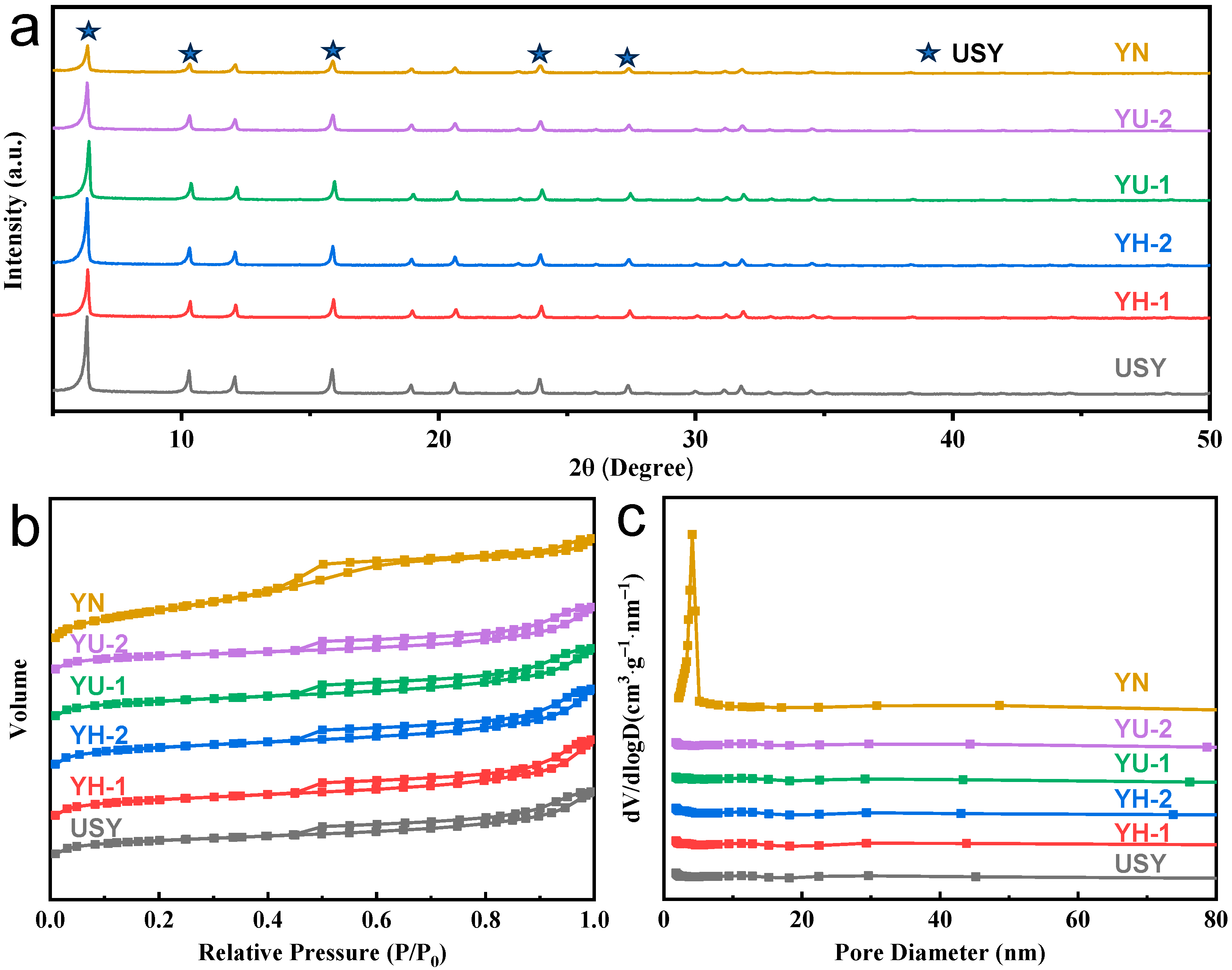
2.1.1. Structure Properties and Pore Structure of Supports
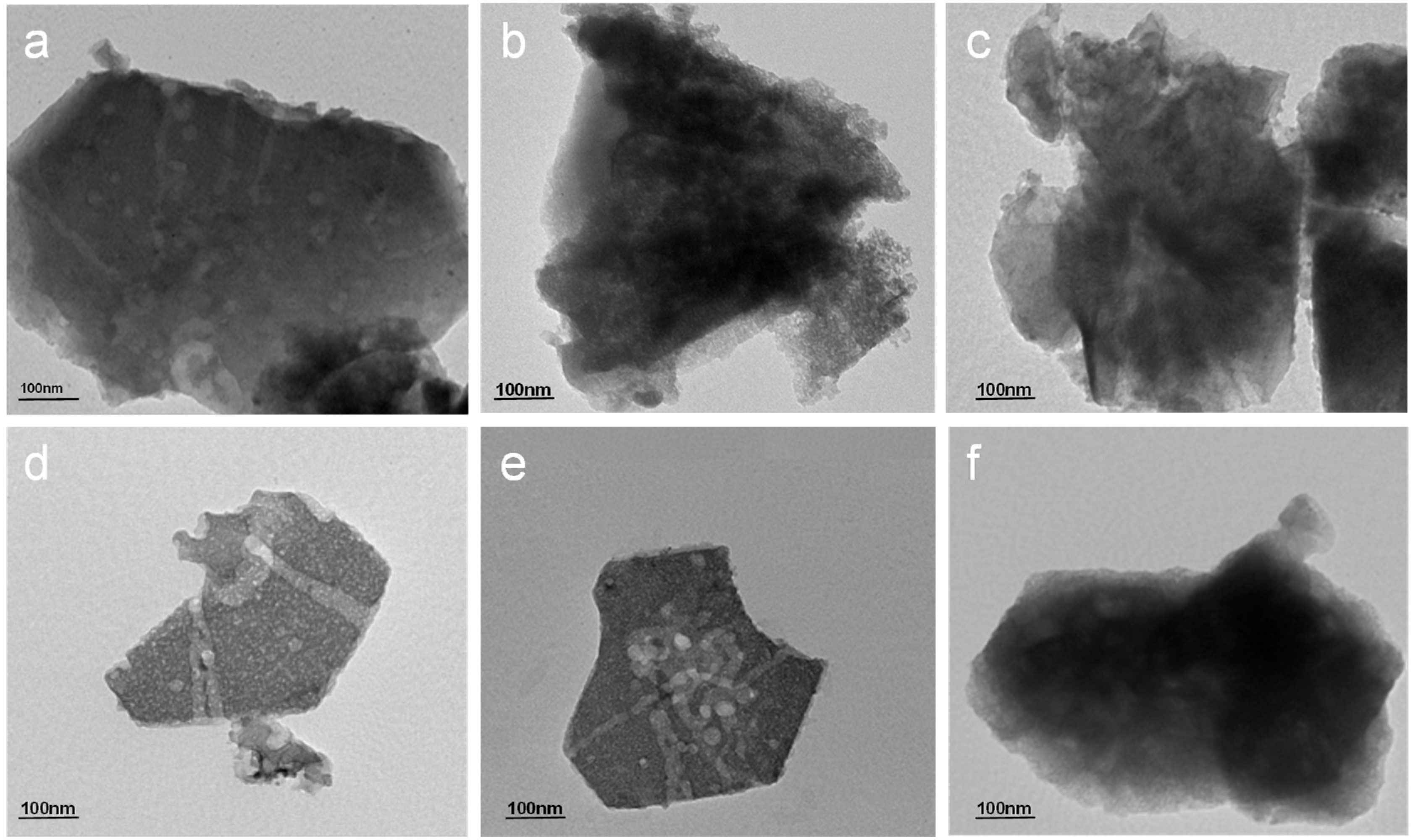
2.1.2. Microstructure and Morphology
2.2. Characterization of NiMo/YX Catalysts
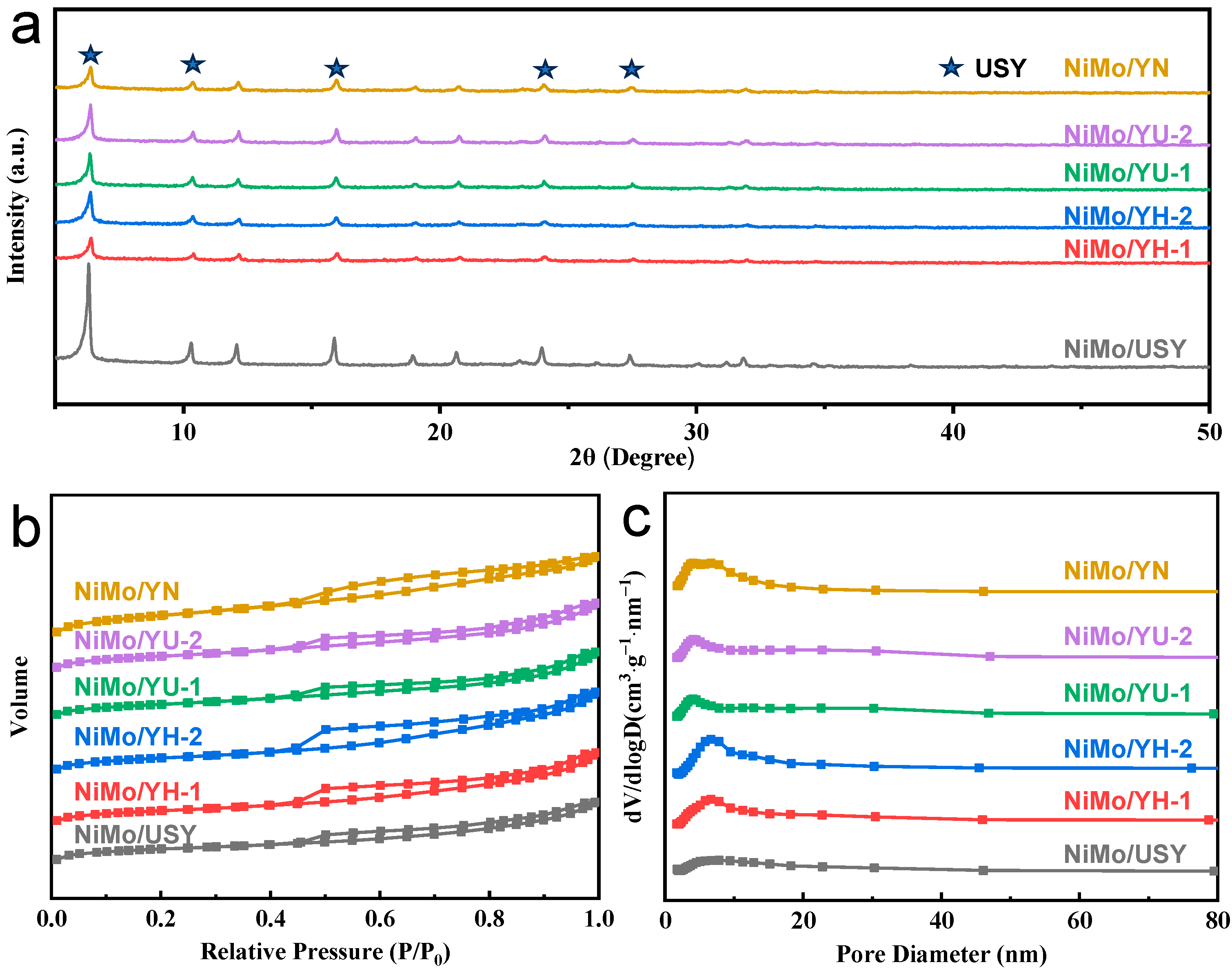
2.2.1. Structure Properties and Pore Structure of Catalysts
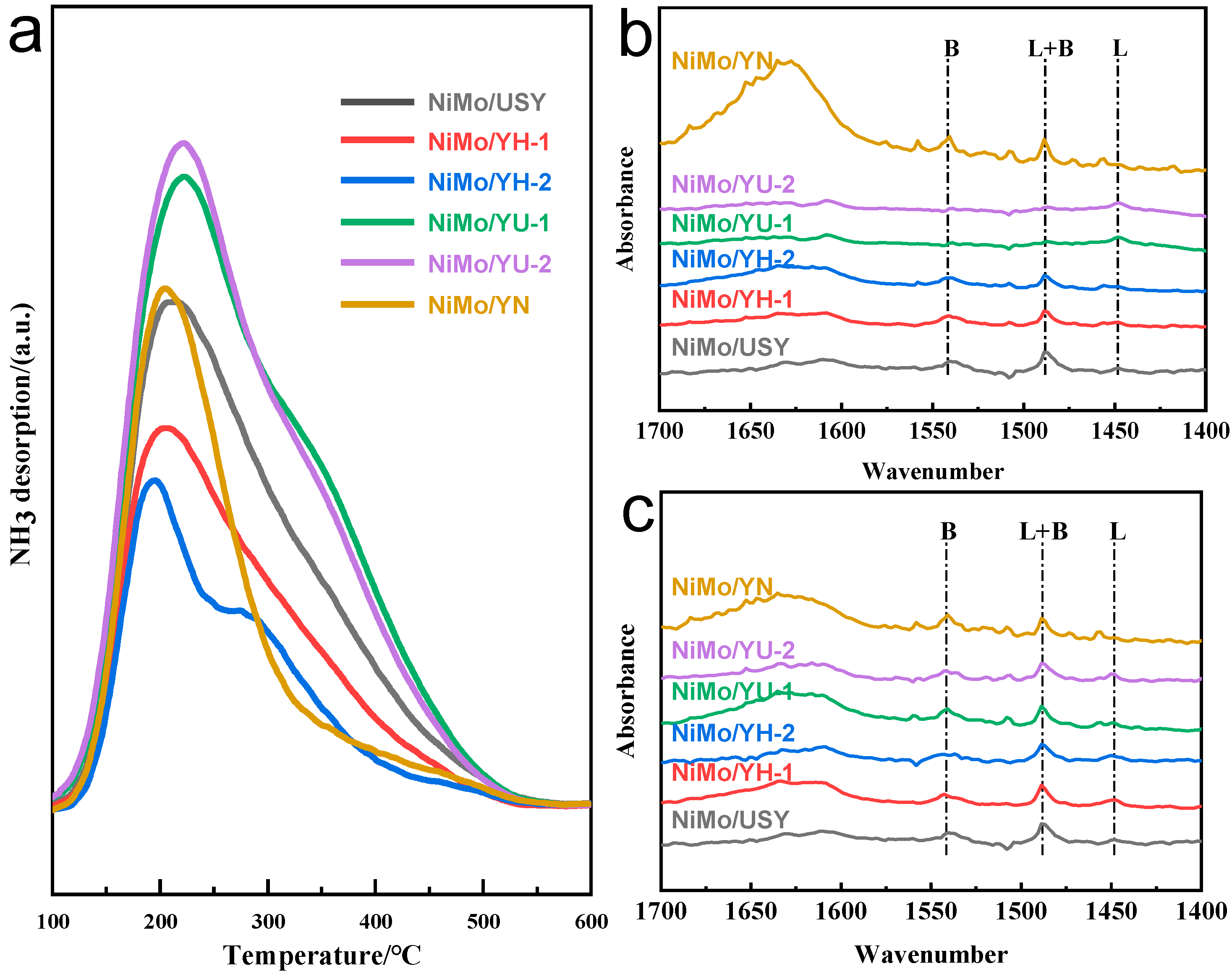
2.2.2. Surface Acidity Properties of NiMo/YX Catalysts
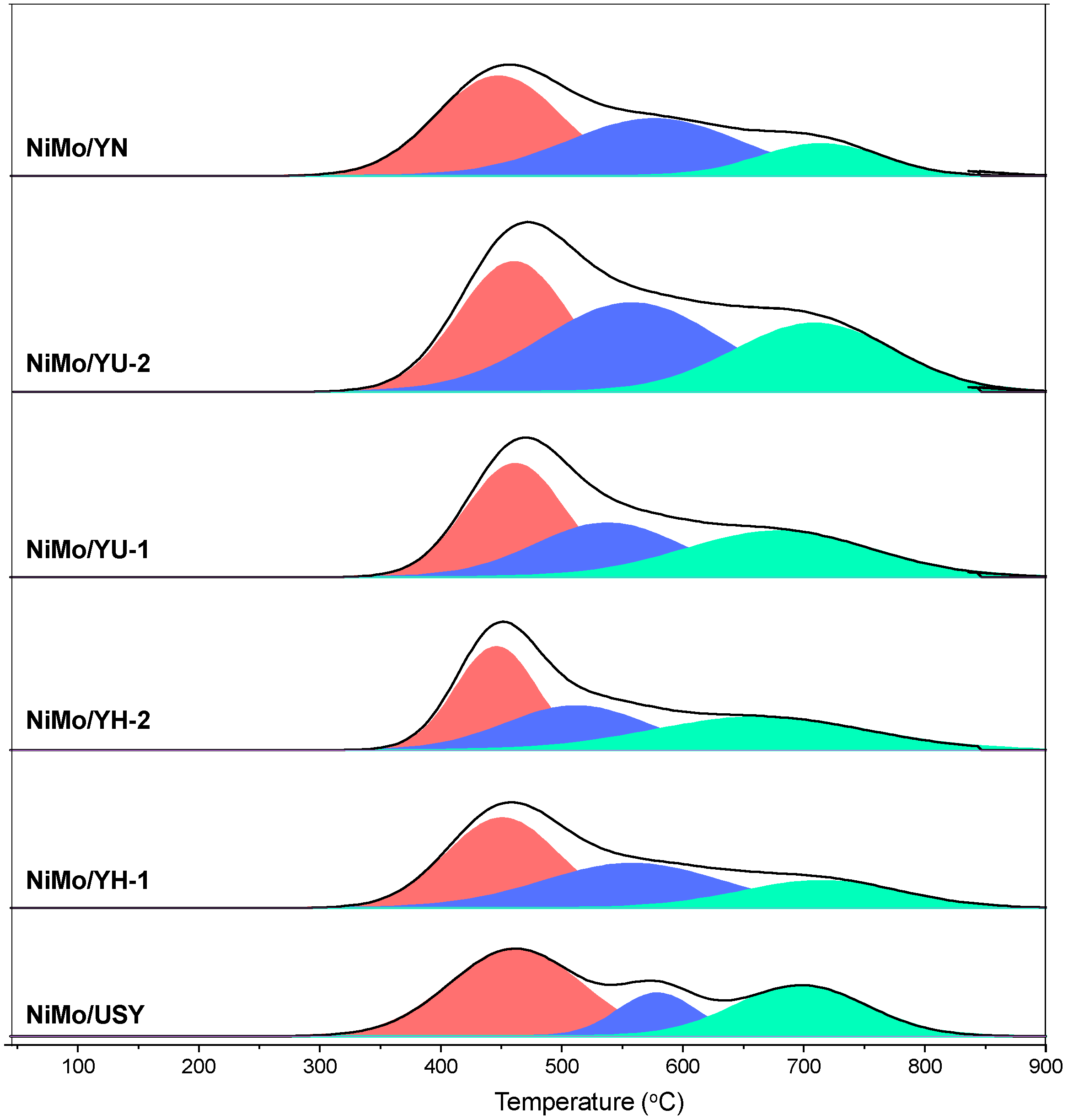
2.2.3. Metal–Support Interaction and Reducibility
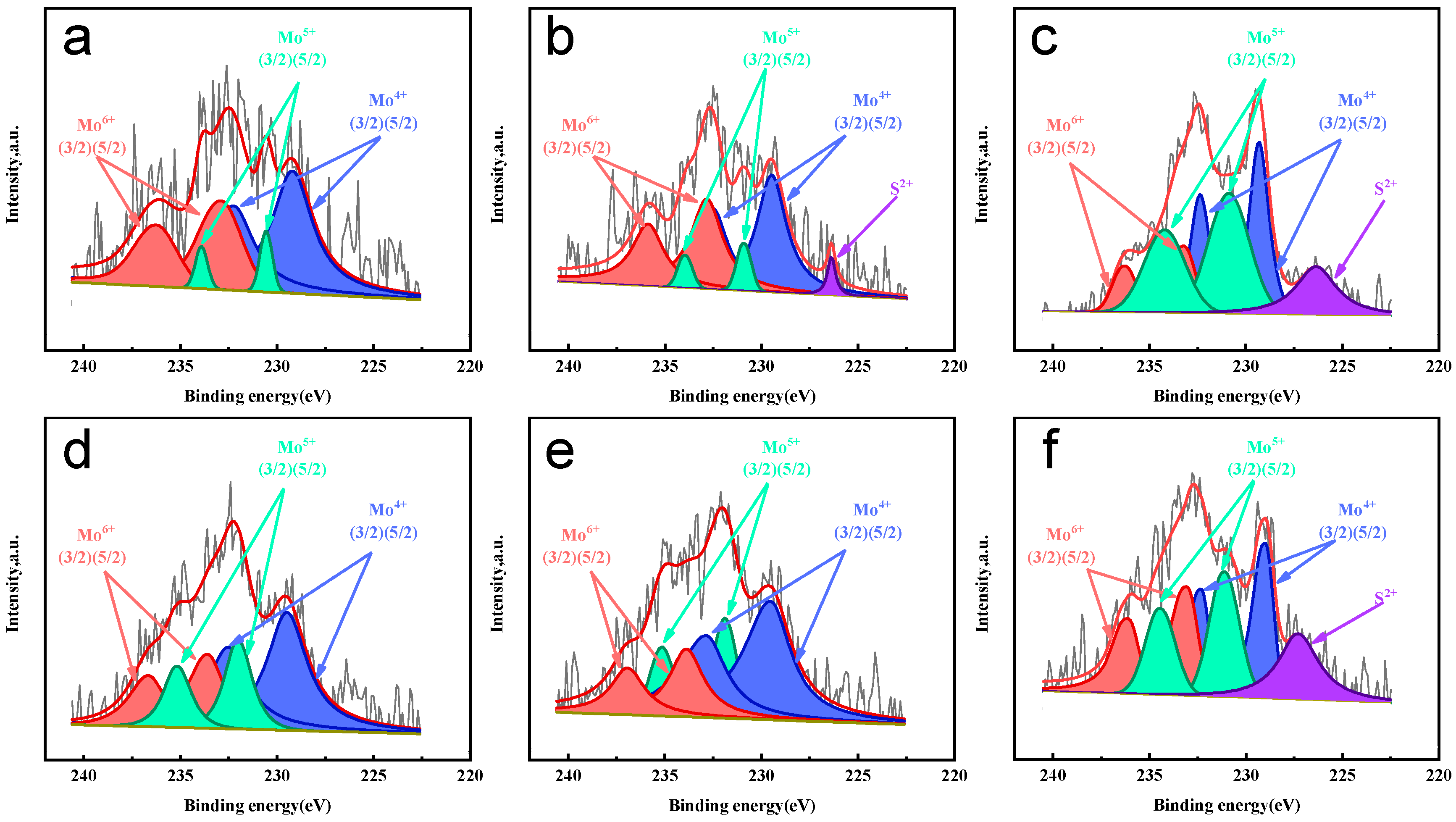
2.2.4. Chemical State Analysis of Active Phase
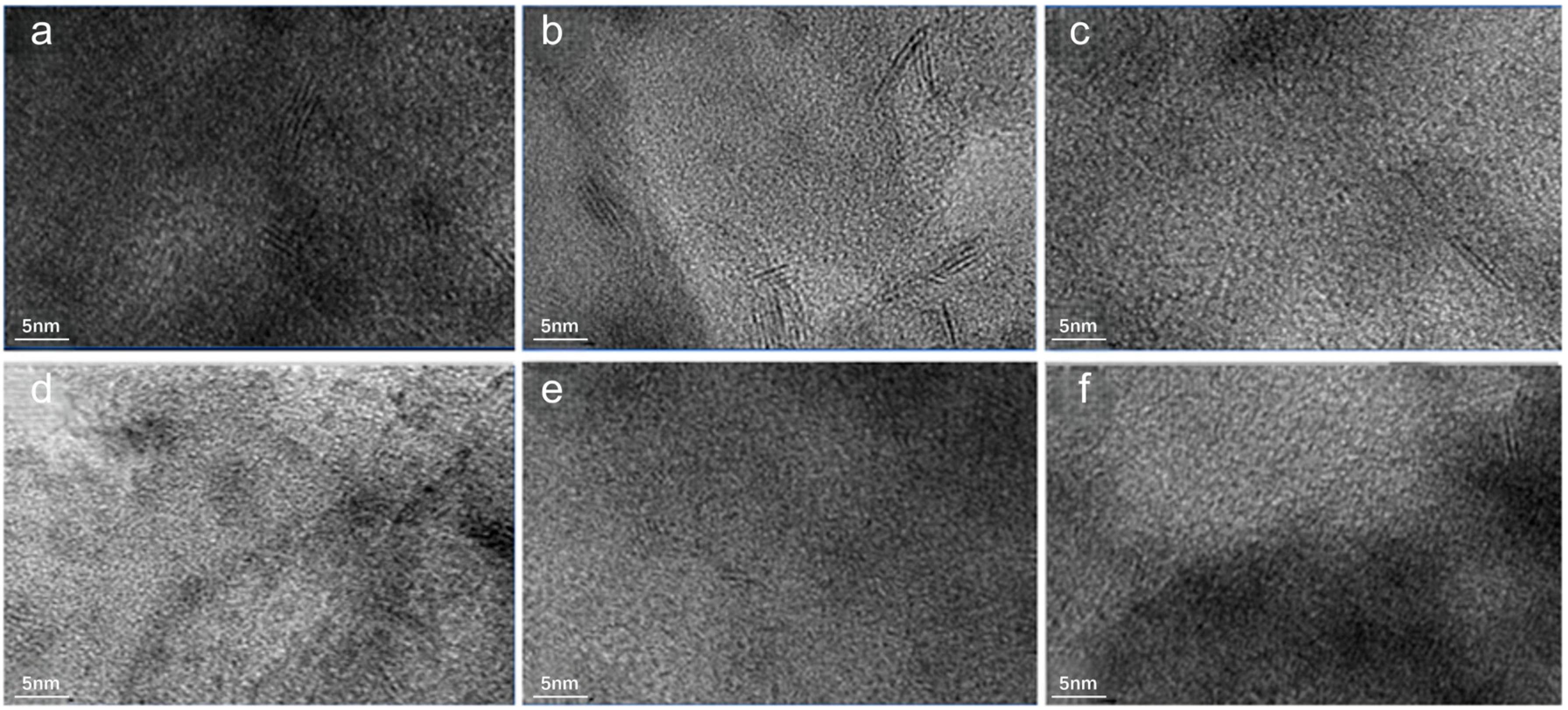
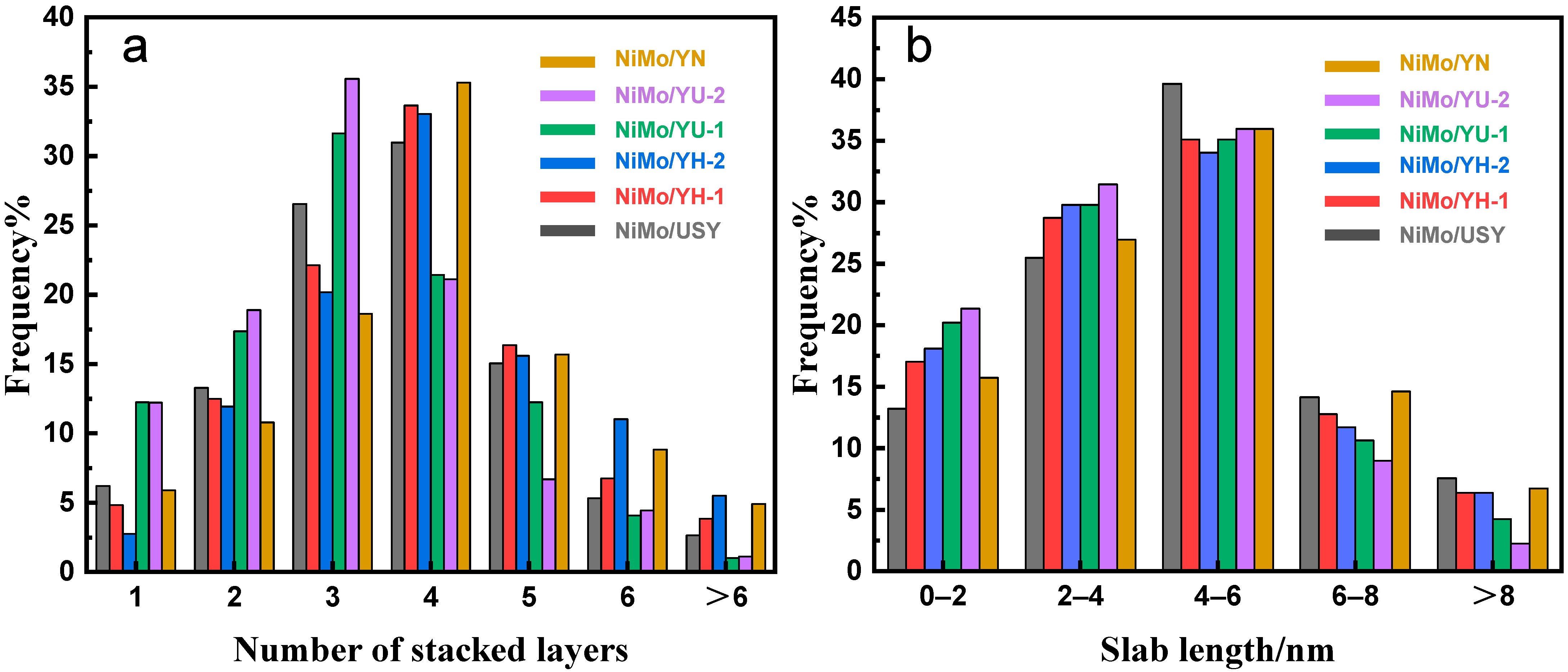
2.2.5. Morphology of the MoS2 Slabs
2.3. Hydrocracking Performance of NiMo/YX Catalysts
2.4. Relationships Catalytic Performance in Naphthalene Hydrocracking
3. Experimental Procedure
3.1. Materials
3.2. Design of USY Pore Architecture via Postsynthetic Engineering
3.2.1. Hydrochloric Acid Treatment (Gradient Pore System)
3.2.2. Urea Treatment (Mild Mesopore Introduction)
3.2.3. NaOH-Surfactant Treatment (Ordered Mesopore Creation)
3.3. Catalyst Preparation via Sequential Impregnation
3.4. Characterization
3.5. Catalytic Evaluation
Naphthalene in Feed)] × 100%
4. Conclusions
Supplementary Materials
Author Contributions
Funding
Data Availability Statement
Conflicts of Interest
References
- Peng, C.; Liu, B.; Feng, X.; Du, Y.; Fang, X. Engineering dual bed hydrocracking catalyst towards enhanced high-octane gasoline generation from light cycle oil. Chem. Eng. J. 2020, 389, 123461. [Google Scholar] [CrossRef]
- Zhang, M.; Song, Q.; He, Z.; Wang, Q.; Wang, L.; Zhang, X.; Li, G. Tuning the mesopore-acid-metal balance in Pd/HY for efficient deep hydrogenation saturation of naphthalene. Int. J. Hydrogen Energy 2022, 47, 20881–20893. [Google Scholar] [CrossRef]
- Gordeeva, N.A.; Shesterkina, A.A.; Vikanova, K.V.; Kustov, A.L. Naphthalene and its derivatives hydrogenation for hydrogen storage: Comparative analysis of the role of noble and non-noble metal catalysts–a review. Int. J. Hydrogen Energy 2024, 69, 113–121. [Google Scholar] [CrossRef]
- Gutiérrez, A.; Arandes, J.M.; Castaño, P.; Olazar, M.; Bilbao, J. Preliminary studies on fuel production through LCO hydrocracking on noble-metal supported catalysts. Fuel 2012, 94, 504–515. [Google Scholar] [CrossRef]
- Upare, D.P.; Park, S.; Kim, M.; Jeon, Y.-P.; Kim, J.; Lee, D.; Lee, J.; Chang, H.; Choi, S.; Choi, W. Selective hydrocracking of pyrolysis fuel oil into benzene, toluene and xylene over CoMo/beta zeolite catalyst. J. Ind. Eng. Chem. 2017, 46, 356–363. [Google Scholar] [CrossRef]
- Shin, J.; Oh, Y.; Choi, Y.; Lee, J.; Lee, J.K. Design of selective hydrocracking catalysts for BTX production from diesel-boiling-range polycyclic aromatic hydrocarbons. Appl. Catal. A Gen. 2017, 547, 12–21. [Google Scholar] [CrossRef]
- Zhu, L.; Shan, S.; Petkov, V.; Hu, W.; Kroner, A.; Zheng, J.; Yu, C.; Zhang, N.; Li, Y.; Luque, R. Ruthenium–nickel–nickel hydroxide nanoparticles for room temperature catalytic hydrogenation. J. Mater. Chem. A 2017, 5, 7869–7875. [Google Scholar] [CrossRef]
- Lee, J.; Choi, Y.; Shin, J.; Lee, J.K. Selective hydrocracking of tetralin for light aromatic hydrocarbons. Catal. Today 2016, 265, 144–153. [Google Scholar] [CrossRef]
- Kuchinskaya, T.; Kniazeva, M.; Samoilov, V.; Maximov, A. In situ generated nanosized sulfide Ni-W catalysts based on zeolite for the hydrocracking of the pyrolysis fuel oil into the BTX fraction. Catalysts 2020, 10, 1152. [Google Scholar] [CrossRef]
- Cao, Z.; Zhang, X.; Xu, C.; Huang, X.; Wu, Z.; Peng, C.; Duan, A. Selective hydrocracking of light cycle oil into high-octane gasoline over bi-functional catalysts. J. Energy Chem. 2021, 52, 41–50. [Google Scholar] [CrossRef]
- Golubev, I.; Dik, P.; Kazakov, M.; Pereyma, V.Y.; Klimov, O.; Smirnova, M.Y.; Prosvirin, I.; Gerasimov, E.Y.; Kondrashev, D.; Golovachev, V. The effect of Si/Al ratio of zeolite Y in NiW catalyst for second stage hydrocracking. Catal. Today 2021, 378, 65–74. [Google Scholar] [CrossRef]
- Anilkumar, M.; Loke, N.; Patil, V.; Panday, R. Hydrocracking of hydrotreated light cycle oil to mono aromatics over non-noble bi-functional (ni-w supported) zeolite catalysts. Catal. Today 2020, 358, 221–227. [Google Scholar] [CrossRef]
- Oh, Y.; Noh, H.; Park, H.; Han, H.; Nguyen, T.-B.; Lee, J.K. Molecular-size selective hydroconversion of FCC light cycle oil into petrochemical light aromatic hydrocarbons. Catal. Today 2020, 352, 329–336. [Google Scholar] [CrossRef]
- Jia, H.; Yan, W.; Dong, Q.; Qing, B.; Hao, W.; Du, Y.; Zhang, X.; Ma, J.; Li, R. Selective ring-opening in 9, 10-dihydrophenanthrene hydrocracking over a practical NiMo/Al2O3-USY catalyst under mild conditions. J. Energy Inst. 2024, 116, 101716. [Google Scholar] [CrossRef]
- Zheng, K.; Liu, M.; Li, H.; Chen, X.; Wang, X. Optimizing Metal Sites in Hierarchical USY for Selective Hydrocracking of Naphthalene to BTX. Molecules 2025, 30, 4023. [Google Scholar] [CrossRef]
- Peng, C.; Zhou, Z.; Cheng, Z.; Fang, X. Upgrading of light cycle oil to high-octane gasoline through selective hydrocracking over non-noble metal bifunctional catalysts. Energy Fuels 2019, 33, 1090–1097. [Google Scholar] [CrossRef]
- Hu, Z.; Hu, P.; Wang, X.; Wu, T.; Ge, S.; Xie, H.; Liu, B.; Chen, S.; Wu, Z. Selective hydrocracking of 1-methylnaphthalene to benzene/toluene/xylenes (BTX) over NiW/Beta bifunctional catalyst: Effects of metal–acid balance. Fuel 2024, 363, 130947. [Google Scholar] [CrossRef]
- Jurković, D.L.; Kostyniuk, A.; Likozar, B. Mechanisms, reaction micro-kinetics and modelling of hydrocracking of aromatic biomass tar model compounds into benzene, toluene and xylenes (BTX) over H-ZSM-5 catalyst. Chem. Eng. J. 2022, 445, 136898. [Google Scholar] [CrossRef]
- Kong, X.; Li, Y.; Liu, Z.; Zou, Y.; Li, D.; Liu, J.; Wang, W.; Wang, C.; Xu, C.; Wang, X. Pore-Structure Engineering of Hierarchical Ni/Y Catalysts for the Enhanced Selective Hydrocracking of Naphthalene to BTX. ACS Sustain. Chem. Eng. 2025, 13, 8817–8828. [Google Scholar] [CrossRef]
- Serrano, D.P.; Escola, J.; Pizarro, P. Synthesis strategies in the search for hierarchical zeolites. Chem. Soc. Rev. 2013, 42, 4004–4035. [Google Scholar] [CrossRef]
- Serrano, D.; Escola, J.; Sanz, R.; Garcia, R.; Peral, A.; Moreno, I.; Linares, M. Hierarchical ZSM-5 zeolite with uniform mesopores and improved catalytic properties. New J. Chem. 2016, 40, 4206–4216. [Google Scholar] [CrossRef]
- Linares, N.; Cirujano, F.G.; De Vos, D.E.; García-Martínez, J. Surfactant-templated zeolites for the production of active pharmaceutical intermediates. Chem. Commun. 2019, 55, 12869–12872. [Google Scholar] [CrossRef] [PubMed]
- Sato, K.; Nishimura, Y.; Matsubayashi, N.; Imamura, M.; Shimada, H. Structural changes of Y zeolites during ion exchange treatment: Effects of Si/Al ratio of the starting NaY. Microporous Mesoporous Mater. 2003, 59, 133–146. [Google Scholar] [CrossRef]
- Meng, F.; Ding, Y.; Meng, W.; Mi, G.; Qiu, J. Modification of molecular sieves USY and their application in the alkylation reaction of benzene with cyclohexene. ChemistrySelect 2020, 5, 8935–8941. [Google Scholar] [CrossRef]
- Yu, H.; Guo, D.; Hao, W.; Li, Z.; Jiang, W.; Li, L.; Wang, X.; Subhan, F.; Song, Z.; Liu, Y. A selective alkaline etching strategy to prepare hierarchical Beta molecular sieves for the hydrodeoxygenation of phenol. Fuel 2023, 334, 126577. [Google Scholar] [CrossRef]
- Wang, Q.; Hou, Z.-G.; Zhang, B.; Liu, J.; Song, W.-Y.; Xue, D.-S.; Liu, L.-Z.; Wang, D.; Chen, X.-G. Preparation of a highly efficient Pt/USY catalyst for hydrogenation and selective ring-opening reaction of tetralin. Pet. Sci. 2018, 15, 605–612. [Google Scholar] [CrossRef]
- Chawla, A.; Linares, N.; Rimer, J.D.; García-Martínez, J. Time-resolved dynamics of intracrystalline mesoporosity generation in USY zeolite. Chem. Mater. 2019, 31, 5005–5013. [Google Scholar] [CrossRef]
- Kong, X.; Liu, Z.; Zou, Y.; Wang, C.; Xu, C.; Wang, X. Preparation and optimization of dendritic Ni/Y-silica composite catalysts for naphthalene hydrocracking to BTX. J. Catal. 2025, 450, 116331. [Google Scholar] [CrossRef]
- Fan, J.; Duan, A.; Xu, C.; Zhao, Z.; Zheng, P.; Wang, X.; Li, H.; Xiao, C.; Mei, J.; Jiang, G. Hydrodesulfurization Properties of Dibenzothiophene over NiMo Catalysts Supported on Cubic Fm 3 m Mesoporous Structure and High-Framework Aluminum-Modified AlKIT-5. Energy Fuels 2018, 32, 9793–9803. [Google Scholar] [CrossRef]
- Kubička, D.; Kumar, N.; Venäläinen, T.; Karhu, H.; Kubičková, I.; Österholm, H.; Murzin, D.Y. Metal− support interactions in zeolite-supported noble metals: Influence of metal crystallites on the support acidity. J. Phys. Chem. B 2006, 110, 4937–4946. [Google Scholar] [CrossRef] [PubMed]
- Lee, S.-U.; Lee, Y.-J.; Kim, J.-R.; Kim, E.-S.; Kim, T.-W.; Kim, H.J.; Kim, C.-U.; Jeong, S.-Y. Selective ring opening of phenanthrene over NiW-supported mesoporous HY zeolite catalyst depending on their mesoporosity. Mater. Res. Bull. 2017, 96, 149–154. [Google Scholar] [CrossRef]
- Zhengkai, C.; Xia, Z.; Chunming, X.; Aijun, D.; Rong, G.; Zhen, Z.; Ziming, W.; Chong, P.; Jianmei, L.; Xilong, W. The Synthesis of Al-SBA-16 Materials with a Novel Method and Their Catalytic Application on Hydrogenation for FCC Diesel. Energy Fuels 2017, 31, 805–814. [Google Scholar]
- Pedroarena, I.; Grande, L.; Torrez-Herera, J.J.; Korili, S.A.; Gil, A. Analysis by temperature-programmed reduction of the catalytic system Ni-Mo-Pd/Al2O3. Fuel 2023, 334, 126789. [Google Scholar] [CrossRef]
- Zheng, L.; Li, Z.; Fu, P.; Sun, F.; Liu, M.; Guo, T.; Fan, Q. Development of Mo-modified pseudoboehmite supported Ni catalysts for efficient hydrogen production from formic acid. ACS Omega 2022, 7, 27172–27184. [Google Scholar] [CrossRef] [PubMed]
- Nguyen, H.M.; Pham, G.H.; Ran, R.; Vagnoni, R.; Pareek, V.; Liu, S. Dry reforming of methane over Co–Mo/Al2O3 catalyst under low microwave power irradiation. Catal. Sci. Technol. 2018, 8, 5315–5324. [Google Scholar] [CrossRef]
- Jiao, J.; Fu, J.; Wei, Y.; Zhao, Z.; Duan, A.; Xu, C.; Li, J.; Song, H.; Zheng, P.; Wang, X. Al-modified dendritic mesoporous silica nanospheres-supported NiMo catalysts for the hydrodesulfurization of dibenzothiophene: Efficient accessibility of active sites and suitable metal–support interaction. J. Catal. 2017, 356, 269–282. [Google Scholar] [CrossRef]
- Chen, X.; Bartlam, C.; Lloret, V.; Moses Badlyan, N.; Wolff, S.; Gillen, R.; Stimpel-Lindner, T.; Maultzsch, J.; Duesberg, G.S.; Knirsch, K.C. Covalent Bisfunctionalization of Two-Dimensional Molybdenum Disulfide. Angew. Chem. Int. Ed. 2021, 60, 13484–13492. [Google Scholar] [CrossRef]
- Wang, X.; Zhao, Z.; Zheng, P.; Chen, Z.; Duan, A.; Xu, C.; Jiao, J.; Zhang, H.; Cao, Z.; Ge, B. Synthesis of NiMo catalysts supported on mesoporous Al2O3 with different crystal forms and superior catalytic performance for the hydrodesulfurization of dibenzothiophene and 4,6-dimethyldibenzothiophene. J. Catal. 2016, 344, 680–691. [Google Scholar] [CrossRef]
- Zhou, W.; Liu, M.; Zhou, Y.; Wei, Q.; Zhang, Q.; Ding, S.; Zhang, Y.; Yu, T.; You, Q. 4,6-Dimethyldibenzothiophene hydrodesulfurization on nickel-modified USY-supported NiMoS catalysts: Effects of modification method. Energy Fuels 2017, 31, 7445–7455. [Google Scholar] [CrossRef]
- Chen, J.; Oliviero, L.; Portier, X.; Maugé, F. On the morphology of MoS2 slabs on MoS2/Al2O3 catalysts: The influence of Mo loading. RSC Adv. 2015, 5, 81038–81044. [Google Scholar] [CrossRef]
- Kim, Y.-S.; Yun, G.-N.; Lee, Y.-K. Novel Ni2P/zeolite catalysts for naphthalene hydrocracking to BTX. Catal Commun. 2014, 45, 133–138. [Google Scholar] [CrossRef]
- Yu, F.; Zhang, C.; Geng, R.; Zhou, H.; Dong, Q.; Liu, S.; Fan, B.; Li, R. Hydrocracking of naphthalene over Beta zeolite coupled with NiMo/γ-Al2O3: Investigation of metal and acid balance based on the composition of industrial hydrocracking catalyst. Fuel 2023, 344, 128049. [Google Scholar] [CrossRef]
- Dong, Q.; Zhang, C.; Zhang, H.; Yu, F.; Liu, S.; Fan, B.; Li, R. Design and preparation of Pt@ SSZ-13@ β core-shell catalyst for hydrocracking of naphthalene. J. Catal. 2023, 421, 365–375. [Google Scholar] [CrossRef]
- Oh, J.; Choi, Y.; Shin, J.; Kim, K.; Lee, J.K. Synergistic shape selectivity of H-Beta and H-ZSM-5 for Xylene-rich BTX production by hydrocracking of heavy-aromatic compounds. Fuel Process. Technol. 2023, 249, 107856. [Google Scholar] [CrossRef]
- Shen, Z.; He, P.; Wang, A.; Harrhy, J.; Meng, S.; Peng, H.; Song, H. Conversion of naphthalene as model compound of polyaromatics to mono-aromatic hydrocarbons under the mixed hydrogen and methane atmosphere. Fuel 2019, 243, 469–477. [Google Scholar] [CrossRef]



| Samples | Pore Size (nm) | Vtotal (cm3/g) | Vmic (cm3/g) | Vmes (cm3/g) | SBET (m2/g) | Smic (m2/g) | Sext (m2/g) | SiO2/Al2O3 (Molar) |
|---|---|---|---|---|---|---|---|---|
| USY | 7.2 | 0.43 | 0.27 | 0.16 | 710 | 578 | 132 | 5.5 |
| YH-1 | 7.5 | 0.45 | 0.26 | 0.19 | 709 | 554 | 155 | 7.2 |
| YH-2 | 7.1 | 0.45 | 0.26 | 0.19 | 719 | 553 | 166 | 9.5 |
| YU-1 | 6.9 | 0.42 | 0.25 | 0.17 | 690 | 545 | 145 | 5.1 |
| YU-2 | 7.4 | 0.41 | 0.25 | 0.16 | 674 | 540 | 134 | 4.7 |
| YN | 4.2 | 0.53 | 0.22 | 0.31 | 744 | 494 | 250 | 4.0 |
| Samples NiMo/ | Pore Size (nm) | Vtotal (cm3/g) | Vmic (cm3/g) | Vmes (cm3/g) | SBET (m2/g) | Smic (m2/g) | Sext (m2/g) | SiO2/Al2O3 (Molar) | NiO (wt%) | MoO3 (wt%) |
|---|---|---|---|---|---|---|---|---|---|---|
| USY | 6.8 | 0.27 | 0.14 | 0.13 | 383 | 296 | 87 | 5.5 | 1.85 | 11.2 |
| YH-1 | 6.3 | 0.24 | 0.07 | 0.17 | 244 | 166 | 78 | 7.2 | 1.83 | 11.1 |
| YH-2 | 5.8 | 0.27 | 0.07 | 0.20 | 258 | 170 | 88 | 9.5 | 1.82 | 11.0 |
| YU-1 | 6.5 | 0.24 | 0.09 | 0.15 | 277 | 199 | 78 | 5.1 | 1.86 | 11.3 |
| YU-2 | 6.3 | 0.26 | 0.11 | 0.15 | 333 | 244 | 89 | 4.7 | 1.87 | 11.3 |
| YN | 5.2 | 0.30 | 0.11 | 0.19 | 386 | 258 | 128 | 4.0 | 1.81 | 11.0 |
| Samples NiMo/ | Total Acid μmol/g | Weak Acid, μmol/g a | Strong Acid, μmol/g a | Acid Sites, μmol/g b | H2 Consumption, μmol/g c | ||||||||
|---|---|---|---|---|---|---|---|---|---|---|---|---|---|
| L | B | L + B | L | B | L + B | Weak | Strong | Total | 420–460 °C | 500–550 °C | 700–750 °C | ||
| USY | 870.4 | 102.2 | 230.9 | 333.1 | 102.2 | 428.3 | 530.5 | 391.4 | 708.1 | 1108 | 668.1 | 194.2 | 391.1 |
| YH-1 | 619.2 | 72.0 | 158.1 | 230.1 | 165.7 | 223.4 | 389.1 | 304.6 | 501.4 | 806 | 570.9 | 451.6 | 247.5 |
| YH-2 | 450.4 | 115.6 | 40.4 | 156.0 | 55.9 | 238.5 | 294.4 | 203.0 | 364.0 | 559 | 476.6 | 352.5 | 402.9 |
| YU-1 | 1116.5 | 211.5 | 162.3 | 373.8 | 211.9 | 530.8 | 742.7 | 469.3 | 895.4 | 1364.6 | 549.3 | 384.5 | 427.2 |
| YU-2 | 1172.4 | 134.3 | 258.2 | 392.5 | 197.7 | 582.2 | 779.9 | 475.6 | 1014.9 | 1490.5 | 571.0 | 628.7 | 440.2 |
| YN | 629.1 | 166.7 | 250.2 | 416.9 | 50.8 | 161.4 | 212.2 | 538.1 | 271.3 | 809.4 | 706.1 | 557.7 | 220.2 |
| Samples NiMo/ | Mo(W)4+ % | Mo(W)5+ % | Mo(W)6+ % |
|---|---|---|---|
| USY | 58.8 | 6.2 | 35.0 |
| YH-1 | 48.8 | 7.1 | 44.1 |
| YH-2 | 35.8 | 48.5 | 15.7 |
| YU-1 | 53.9 | 21.0 | 25.1 |
| YU-2 | 56.7 | 18.1 | 25.2 |
| YN | 35.6 | 33.0 | 31.4 |
| Samples NiMo/ | Lav (nm) | Nav | fMo |
|---|---|---|---|
| USY | 4.6 | 3.6 | 0.21 |
| YH-1 | 4.0 | 3.8 | 0.23 |
| YH-2 | 3.8 | 4.0 | 0.24 |
| YU-1 | 4.2 | 3.2 | 0.22 |
| YU-2 | 4.3 | 3.1 | 0.22 |
| YN | 4.4 | 3.9 | 0.21 |
| Sample | Treatment Method | Treatment Conditions (Concentration, Temperature, Time) |
|---|---|---|
| USY | Parent material | |
| YH-1 | Hydrochloric acid treatment | 0.2 M HCl, 80 °C, 4 h |
| YH-2 | Hydrochloric acid treatment | 0.3 M HCl, 80 °C, 4 h |
| YU-1 | Urea treatment | 1.0 M Urea, 80 °C, 4 h |
| YU-2 | Urea treatment | 1.5 M Urea, 80 °C, 4 h |
| YN | NaOH-Surfactant treatment | 0.2 M NaOH + CTAB, 150 °C, 24 h (hydrothermal) |
Disclaimer/Publisher’s Note: The statements, opinions and data contained in all publications are solely those of the individual author(s) and contributor(s) and not of MDPI and/or the editor(s). MDPI and/or the editor(s) disclaim responsibility for any injury to people or property resulting from any ideas, methods, instructions or products referred to in the content. |
© 2025 by the authors. Licensee MDPI, Basel, Switzerland. This article is an open access article distributed under the terms and conditions of the Creative Commons Attribution (CC BY) license.
Share and Cite
Li, H.; Liu, M.; Zhang, Y.; Chen, X.; Zheng, K.; Wang, X.; Ni, P.; Ma, J. Engineering Hierarchical NiMo/USY Catalysts for Selective Hydrocracking of Naphthalene to BTX. Catalysts 2026, 16, 31. https://doi.org/10.3390/catal16010031
Li H, Liu M, Zhang Y, Chen X, Zheng K, Wang X, Ni P, Ma J. Engineering Hierarchical NiMo/USY Catalysts for Selective Hydrocracking of Naphthalene to BTX. Catalysts. 2026; 16(1):31. https://doi.org/10.3390/catal16010031
Chicago/Turabian StyleLi, Haidong, Mingjia Liu, Yifang Zhang, Xiu Chen, Kunyi Zheng, Xilong Wang, Penglei Ni, and Jun Ma. 2026. "Engineering Hierarchical NiMo/USY Catalysts for Selective Hydrocracking of Naphthalene to BTX" Catalysts 16, no. 1: 31. https://doi.org/10.3390/catal16010031
APA StyleLi, H., Liu, M., Zhang, Y., Chen, X., Zheng, K., Wang, X., Ni, P., & Ma, J. (2026). Engineering Hierarchical NiMo/USY Catalysts for Selective Hydrocracking of Naphthalene to BTX. Catalysts, 16(1), 31. https://doi.org/10.3390/catal16010031