Article

Enhancing 1,5-Pentanediamine Productivity in Corynebacterium glutamicum with Improved Lysine and Glucose Metabolism


Key Laboratory of Industrial Biotechnology of Ministry of Education, School of Biotechnology, Jiangnan University, 1800 Lihu Road, Wuxi 214122, China
*
Author to whom correspondence should be addressed.
These authors contributed equally to this work.
Catalysts 2026, 16(1), 30; https://doi.org/10.3390/catal16010030
Submission received: 28 November 2025 / Revised: 22 December 2025 / Accepted: 23 December 2025 / Published: 31 December 2025
(This article belongs to the Section Biocatalysis)

Abstract

1,5-Pentanediamine (PDA) is an important monomer for the synthesis of nylon materials. However, its microbial production from glucose is severely limited by product cytotoxicity, which slows the metabolism of both precursor lysine and glucose uptake. To overcome this limitation, a PDA-responsive dynamic regulatory switch (PDRS) was constructed using the transcriptional repressor CgmR and the PcgmA promoter. By replacing promoters and ribosome-binding sites, the response window of the PDRS was optimized to a PDA concentration range of 38.9–87 g/L. Based on this system, the PDRS was employed to enhance lysine biosynthesis and glucose uptake. Following fermentation optimization, the optimal strain Corynebacterium glutamicum YY3.6 produced 105.5 g/L PDA within 36 h, achieving a PDA productivity of 2.93 g/L/h and a yield of 0.36 g/g glucose. Collectively, these results provide an effective strategy for the microbial production of PDA from glucose.

1. Introduction

1,5-Pentanediamine (PDA) is a ubiquitous diamine found in both prokaryotic and eukaryotic organisms [1]. It serves as a key platform chemical in agriculture, medicine, and polymer manufacturing [2]. In particular, PDA is an essential monomer for polyamides and polyurethanes, supporting the synthesis of next-generation high-performance materials such as nylon-5X [3]. At present, industrial PDA is produced primarily via petroleum-based catalytic processes. However, increasing demand for sustainable and bio-based materials has accelerated efforts to engineer microbial hosts capable of synthesizing PDA from renewable feedstocks [4,5].
Biological production of PDA has been pursued through two principal routes: (i) whole-cell biotransformation [6] and (ii) de novo microbial fermentation [7]. In whole-cell biotransformation, lysine decarboxylase (LDC) is overexpressed in engineered hosts to convert L-lysine into PDA in a single enzymatic step. Escherichia coli is widely used due to its genetic tractability and high-level protein expression [8]. Nevertheless, this strategy faces intrinsic limitations, including the poor alkaline stability of LDC [9] and the high cost associated with exogenous pyridoxal-5-phosphate (PLP) [10]. To address the LDC stability issue, rational protein engineering generated a pH-tolerant LDC variant (EcCadAV12C/D41C) that exhibited a six-fold improvement in PDA production at pH 10.0. The resulting E. coli strain (M3) produced 418 g/L PDA—the highest titer achieved to date in whole-cell conversion from lysine [11]. In parallel, co-immobilization of LDC and PLP on chitin-based carriers was developed to reduce PLP consumption and enable multiple cycles of high-efficiency biotransformation [12]. Despite these advances, PDA biotransformation remains operationally complex, requiring separate strain engineering for L-lysine overproduction and LDC expression [13], as well as multi-stage processing involving lysine synthesis, purification, and subsequent conversion.
A more streamlined alternative is de novo microbial fermentation, in which a complete biosynthetic pathway is engineered to produce PDA directly from low-cost carbon sources such as glucose, glycerol, or cellulose. Using systems metabolic engineering, both E. coli and C. glutamicum have been optimized through LDC overexpression [14], enhancement of endogenous lysine biosynthesis [15], deletion of PDA-degrading pathways [16], improvement of export systems, strengthening of PLP biosynthesis [17], minimization of carbon loss during decarboxylation [18], and enhancement of tolerance to PDA toxicity [19]. For example, installation of a RuBisCO-based carbon-fixing bypass enabled E. coli strain RSo1102 to produce 84.1 g/L PDA in 52 h, representing the highest titer reported for E. coli [11]. In C. glutamicum, precise modulation of LDC expression levels enabled strain GH30HaLDC to achieve 125 g/L PDA in 70 h [20]. However, PDA imposes severe metabolic stress by disrupting membrane integrity and cellular homeostasis [19], thereby slowing growth and diverting carbon flux. Consequently, most reported strains still exhibit suboptimal productivity [21], resulting in prolonged fermentation durations and elevated energy requirements [22]. Overcoming these productivity limitations remains a central challenge for developing high-performance microbial cell factories for PDA biosynthesis [23].
In this study, we aimed to enhance the productivity of PDA in an engineered C. glutamicum strain. Key targets for improving PDA production were first identified through transcriptomic analysis. A dynamic regulatory switch was then engineered by integrating a PDA biosensor, which was subsequently optimized through promoter and ribosome binding site (RBS) modifications. Using this system, the expression of genes involved in lysine biosynthesis and glucose uptake was precisely regulated, leading to a significant increase in PDA productivity.

2. Results

2.1. Construction of a PDA-Producing Strain via Strengthening the Lysine Synthesis Pathway

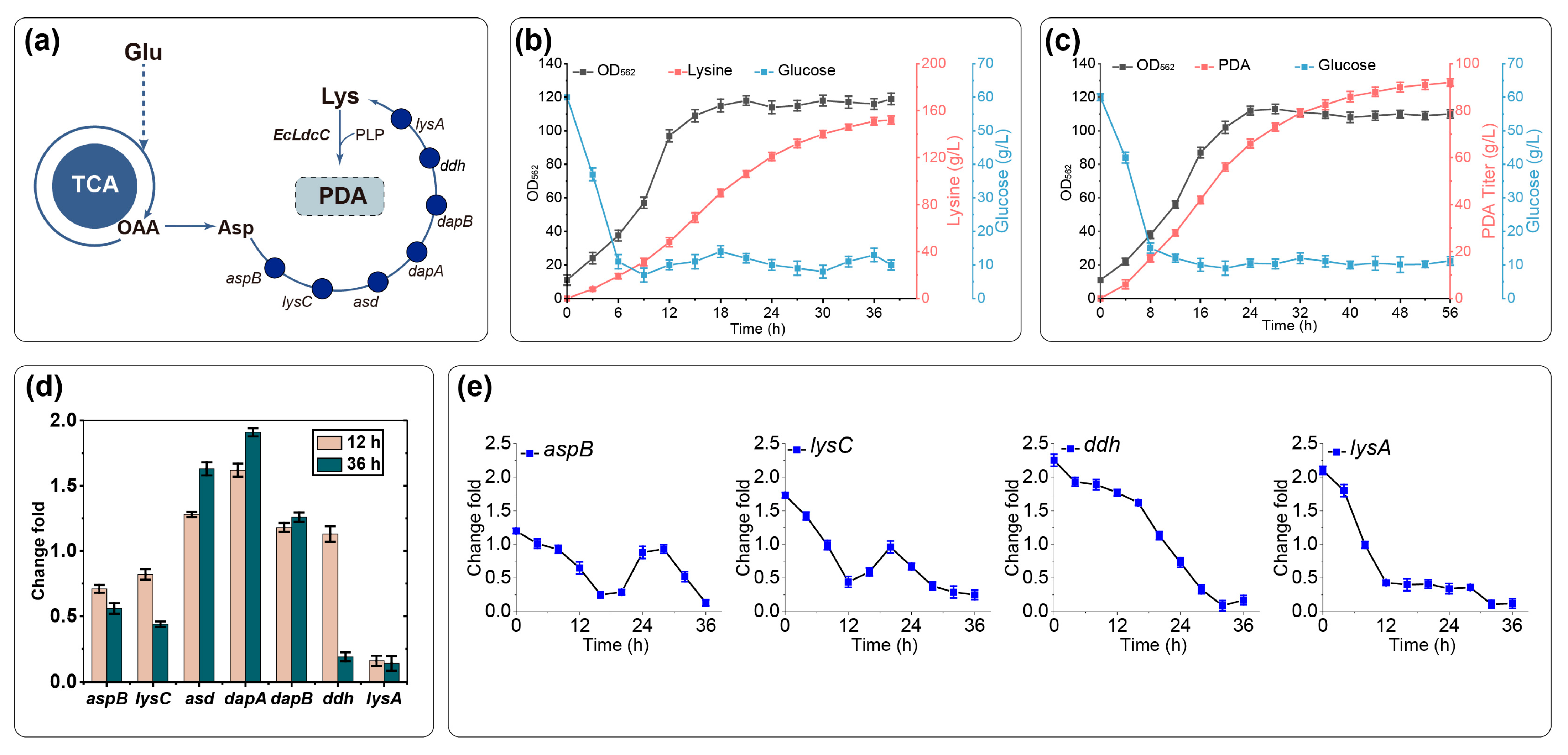
C. glutamicum is a well-established chassis for high-level lysine production (Figure 1a). In our previous work, we engineered a high-performing lysine producer, C. glutamicum Lys, which achieved a titer of 152 g/L after 38 h of fed-batch fermentation (Figure 1b). Because this strain lacks endogenous lysine decarboxylase activity, we introduced the E. coli-derived lysine decarboxylase EcLdcC into the chromosome [21], replacing the native PDA degradation gene Ncgl1469. The resulting strain, YY1, synthesized 92 g/L PDA in a 5 L bioreactor (Figure 1c). However, its PDA productivity reached only 1.64 g/L/h, substantially lower than the parent strain’s lysine productivity (4 g/L/h). Notably, introduction of lysine decarboxylase extended the fermentation duration from 38 h to 56 h—a 47% increase—indicating that PDA accumulation imposes a metabolic burden. We hypothesized that PDA exerts feedback inhibition on the lysine biosynthetic pathway, thereby constraining precursor supply. To test this, we quantified the transcriptional levels of seven key lysine biosynthesis genes during shake flask fermentation. Expression of aspB, lysC, ddh, and lysA dropped to 0.56-, 0.44-, 0.19-, and 0.14-fold of the control at 36 h (Figure 1d). A similar trend was observed in the bioreactor, where transcript levels continually declined during fermentation and reached 0.52-, 0.29-, 0.09-, and 0.11-fold of the control at 32 h (Figure 1e).
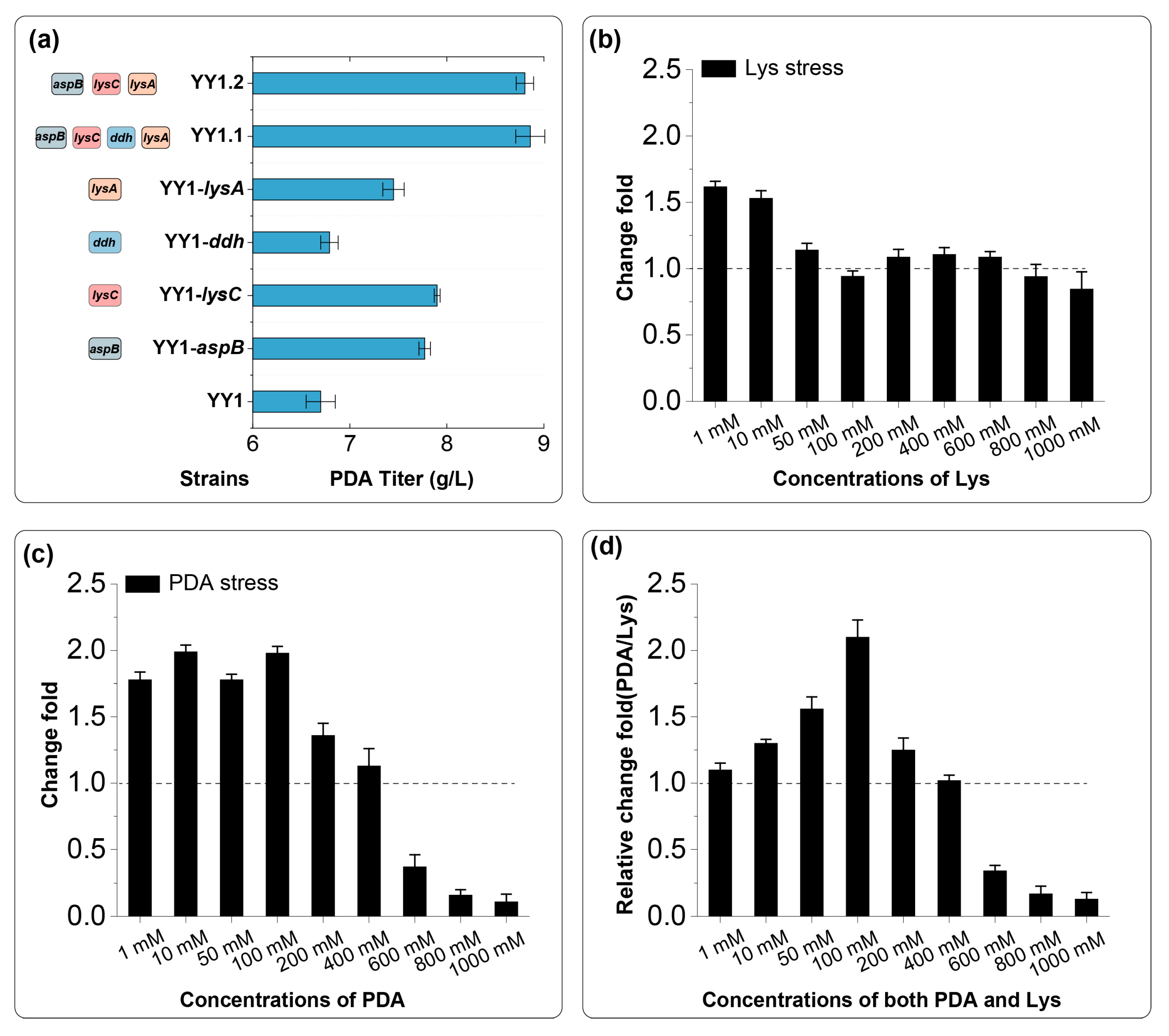
To alleviate transcriptional repression under high PDA accumulation, the strong constitutive promoter PgapA was used to overexpress the four aforementioned genes at the neutral genomic locus cgl0066, generating strains YY1-aspB, YY1-lysC, YY1-ddh, and YY1-lysA. Flask fermentation revealed that overexpression of aspB, lysC, ddh, and lysA increased PDA titers by 16%, 18%, 1.3%, and 11.2%, respectively. Subsequent co-overexpression of these genes in strain YY1 produced YY1.1 (aspB, lysC, ddh, lysA) and YY1.2 (aspB, lysC, lysA), which exhibited 32.3% and 31.4% higher PDA titers than YY1, respectively (Figure 2a, p < 0.05). These results indicate that neither individual nor combined overexpression sufficiently alleviates the metabolic limitations associated with ddh.
Interestingly, transcriptional analysis revealed that during the early stages of fermentation, all four genes were upregulated compared to the chassis strain, with ddh showing the greatest increase (2.23-fold) and the latest onset of repression (21 h; Figure 1e). This may explain why overexpressing ddh did not lead to the expected increase in production. Based on these transcriptional dynamics, we hypothesized that at low concentrations, lysine exerts stronger repression on the lysine pathway genes than PDA. To test this, C. glutamicum Lys was exposed to equal amounts of lysine or PDA for 12 h (Figure 2b,c). As the concentrations of both metabolites increased from 1 mM to 0.4 M, the transcriptional level of ddh under lysine-treated group was lower than that in the PDA-treated group, yielding a PDA/Lys transcriptional ratio greater than 1. However, after reaching 0.4 M, the transcriptional level of ddh in the lysine-treated group surpassed that under PDA-treated group, resulting in a PDA/Lys transcriptional ratio less than 1. At 0.6 M, the ddh transcription level in the PDA-treated group was only 34% of that in the lysine-treated group (Figure 2b, p < 0.05). These results collectively indicate that the inhibitory effect of PDA on ddh is dynamic and cannot be mitigated by simple static overexpression. Instead, dynamic regulation of rate-limiting steps presents a more effective strategy [24].

2.2. Design and Optimization of a PDA-Responsive Dynamic Regulatory Switch

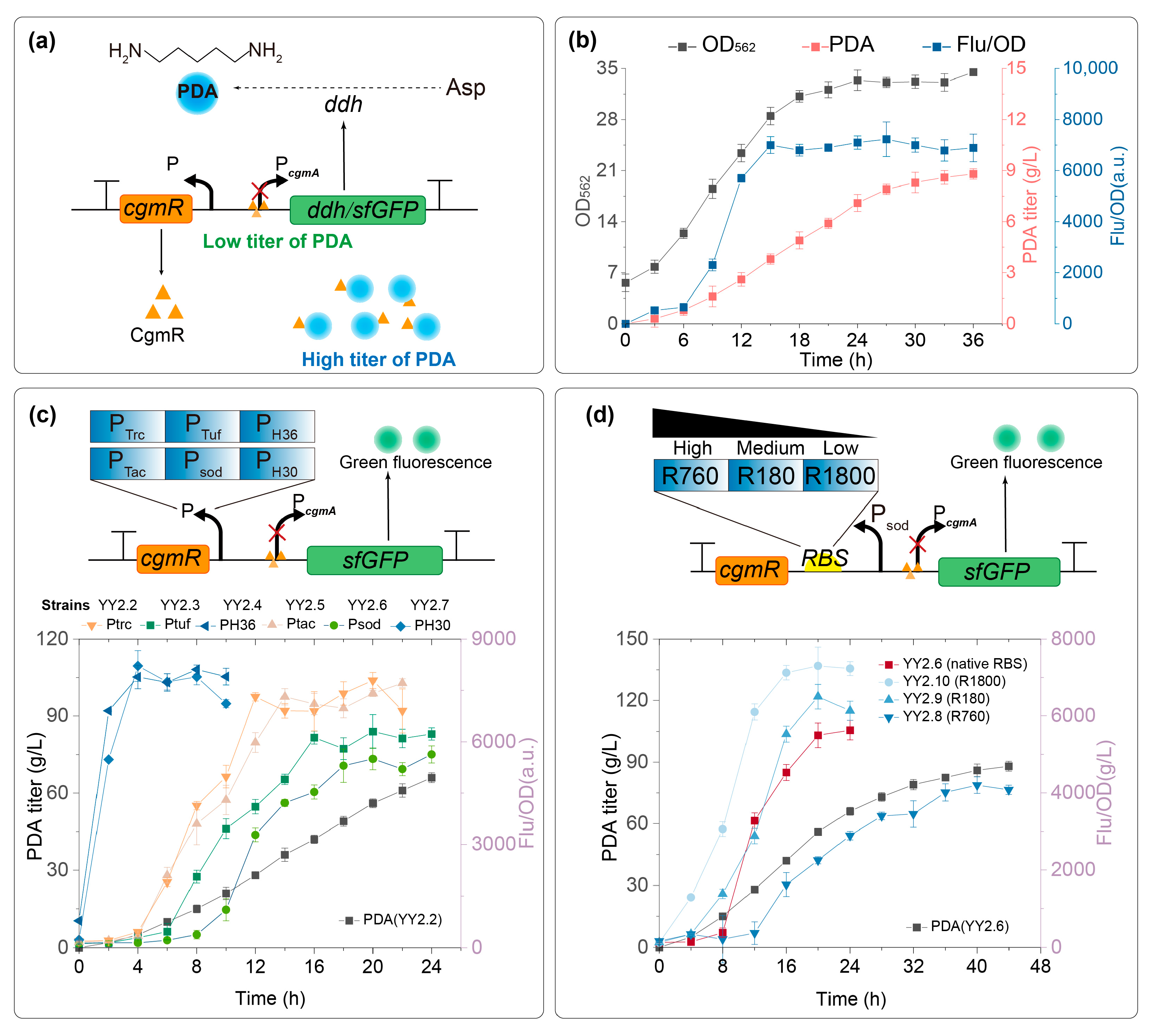
A dynamic biosensor responsive to PDA concentration, based on the CgmR/PcgmA system [25], has been previously reported in C. glutamicum. This system operates via positive feedback regulation: at low PDA levels, the transcriptional repressor CgmR binds to the PcgmA promoter and inhibits transcription; as PDA accumulates, it binds to CgmR, leading to the activation of downstream gene expression. To construct a PDA-responsive dynamic regulatory switch (PDRS), the cgmR was first deleted from the genome of strain YY1.2 to eliminate interference from the native regulatory system. Since cgmA encodes the only known PDA exporter in C. glutamicum, inactivation of PcgmA would severely impair production. Therefore, the constitutive promoter Ptac was used to replace the native promoter PcgmA of PDA exporter gene cgmA, yielding strain YY2.1. A PDA biosensor (termed S1) was constructed using sfGFP as a reporter and validated in strain YY2.1 to produce strain YY2.2 (Figure 3a). Flask fermentation results indicated that the strain YY2.2 reached its maximal fluorescence intensity when the PDA titer reached 3.6 g/L (Figure 3b). However, the system’s narrow sensing range, limited sensitivity, and output amplitude restrict its use for dynamic control of ddh expression in high-PDA titer (92 g/L) fermentation processes.
To broaden the PDA sensor’s dynamic range, the expression level of cgmR was modulated by replacing the original promoter with a series of promoters with different strengths including Ptuf, PH36, Ptac, Psod, and PH30, to produce strains YY2.3 to YY2.7 (Figure 3c). After testing the signal output of the above strains during PDA fermentation, the strain YY2.6 with the Psod variant (S1-Psod) expanded its maximal response range to 56.5 g/L, a 15.7-fold increase compared with YY2.2 (Ptrc controlling expression of cgmR).
To further improved PDA response range, different RBSs of high (R760), medium (R180), and low (R1800) translation strengths [26] were tested to fine-tune cgmR expression in the background plasmid S1-Psod, resulting in strains YY2.8, YY2.9, and YY2.10. It was observed that excessive repressor expression reduced leakage but suppressed maximal induction, while insufficient expression led to increased basal leakage. Among all variants, the Psod-R760 construct exhibited the most balanced performance, with a response window ranging from 38.9 to 87 g/L of PDA, which closely aligns with the threshold concentration (~0.4 M) at which ddh repression occurs (Figure 3d).

2.3. Enhancing Precursor Lysine Production Using PDRS

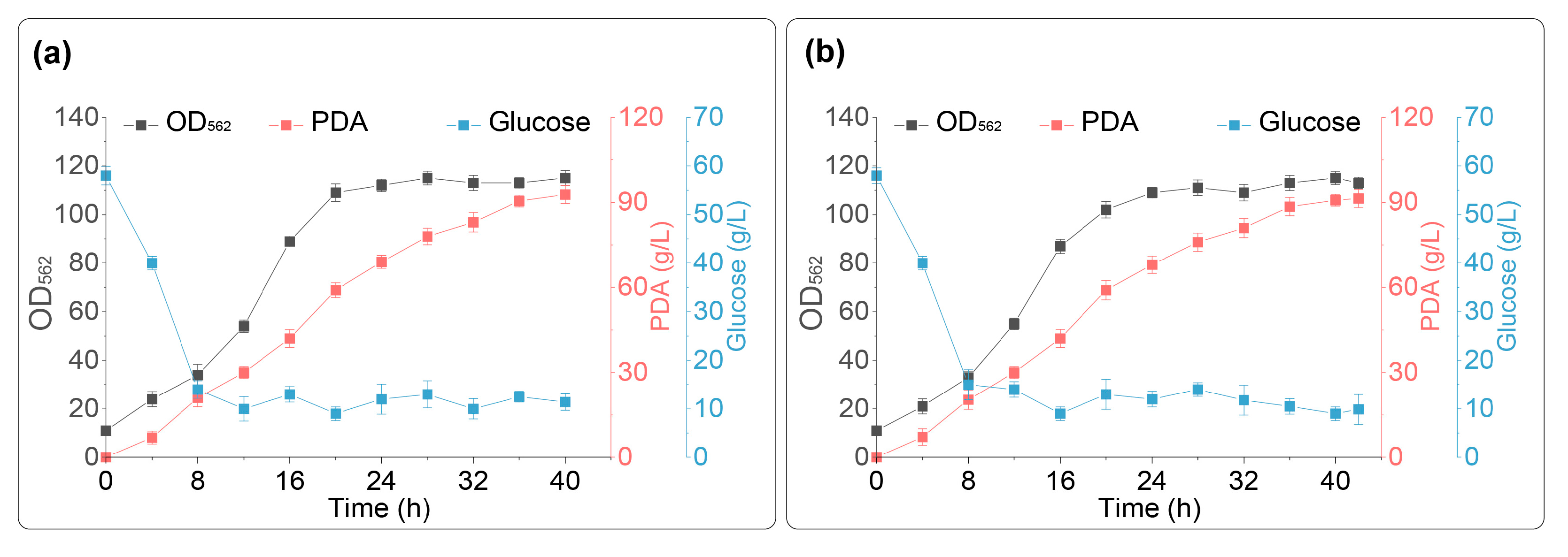
The sfgfp was replaced with the ddh gene in the S1-Psod-R760 expression module, which was then introduced into strain YY2.1, resulting in strain YY2.8-ddh for PDA performance evaluation in a 5 L bioreactor (Figure 4a). The results showed that although the maximum PDA titer (92.8 g/L) of strain YY2.8-ddh was comparable to the control strain YY2.1, the fermentation time was shortened to 40 h, and the yield increased from 0.28 g/g (strain YY2.1) to 0.32 g/g (strain YY2.8-ddh). These findings indicate that dynamic enhancement of ddh not only alleviated the rate-limiting step in the lysine biosynthetic pathway but also strengthened the upstream metabolic pull on carbon flux, channeling more carbon atoms toward lysine and its downstream derivative synthesis.
To enhance the genetic stability of the strain, we employed a genomic integration strategy to replace the plasmid. The S1-Psod-R760 module was integrated into the lysE locus (encoding a lysine/arginine exporter) of strain YY2.1, resulting in the chromosomally integrated strain YY2.11. Fed-batch fermentation of strain YY2.11 in a 5 L bioreactor revealed a fermentation duration of 42 h, a PDA titer of 91.4 g/L, and a yield of 0.32 g/g (Figure 4b). These results demonstrate that chromosomal integration effectively maintained production performance while alleviating plasmid-related metabolic stress, providing a more stable chassis for subsequent modular optimization.

2.4. Increasing Glucose Uptake with PDRS

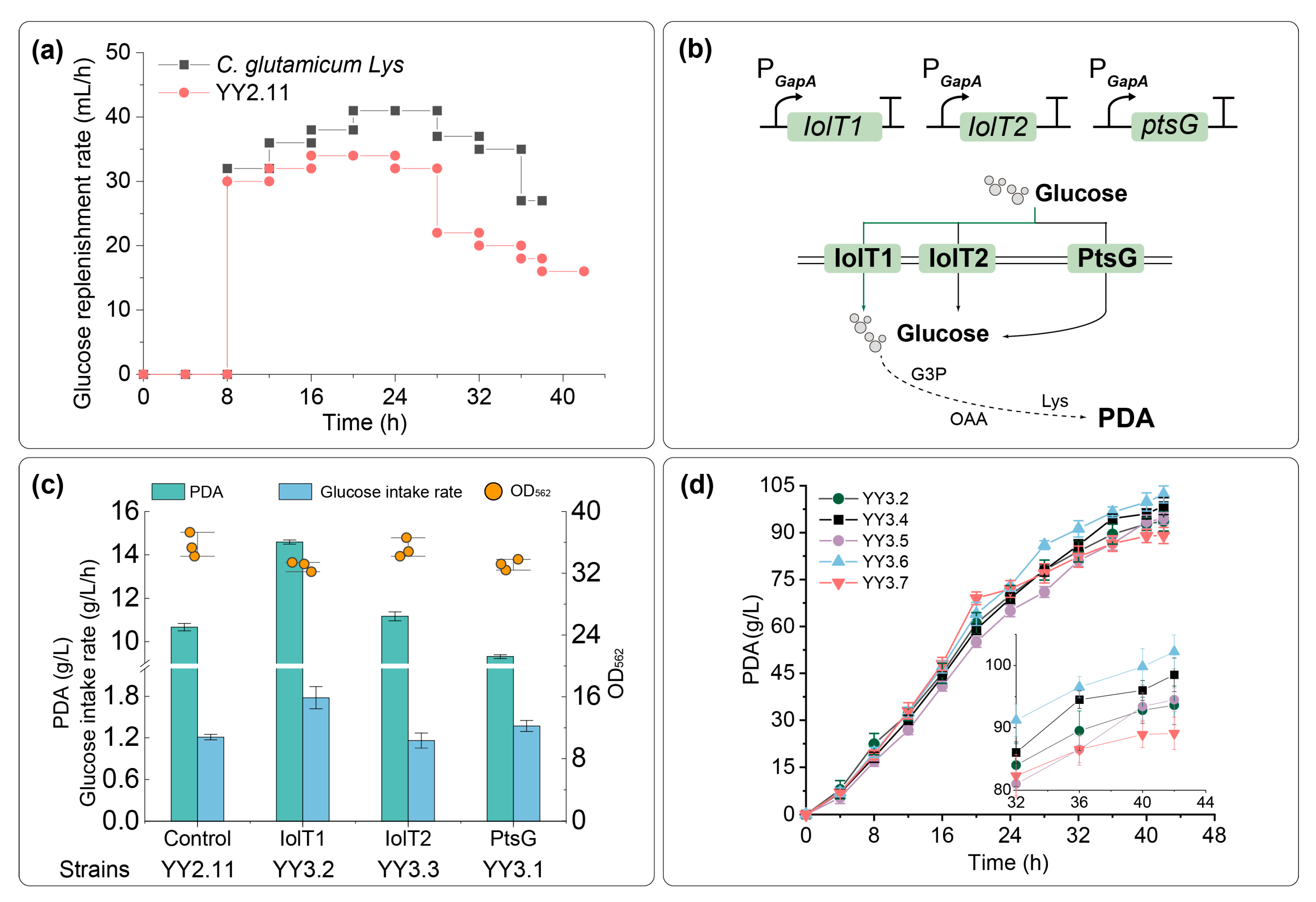
The glucose uptake rate of strain YY2.11 was markedly slower than that of the parental strain C. glutamicum Lys (Figure 5a), with total glucose consumption reduced by 28%. This observation suggests that PDA accumulation not only inhibits the lysine biosynthetic pathway but also impairs the cell’s ability to assimilate glucose. To restore glucose utilization in YY2.11, three glucose transporter genes derived from C. glutamicumptsG, iolT1, and iolT2—were evaluated (Figure 5b), generating recombinant strains YY3.1, YY3.2, and YY3.3. Flask fermentation experiments revealed that overexpression of all three genes accelerated glucose uptake; however, only iolT1 and iolT2 led to improvements in PDA production, increasing titers by 37% and 4.3%, respectively (Figure 5c, p < 0.05). In contrast, ptsG overexpression reduced the PDA titer by 13.5% and decreased the PDA yield to 0.28 g/g. This effect likely results from excessive consumption of phosphoenolpyruvate—a key intermediate in the PDA biosynthetic pathway—by the intensified PTS system, causing excessive diversion of carbon flux into non-productive routes. To investigate whether glucose transporter expression was similarly subject to dynamic regulation, iolT1 was expressed under various strengths of PDRS, generating strains YY3.4, YY3.5, YY3.6, and YY3.7. Among these strains, strain YY3.6 demonstrated the highest increase in PDA titer, with an enhancement of 11.8% (p < 0.05), reaching 102.2 g/L, while the yield and fermentation duration remained unchanged (Figure 5d).

2.5. Fermentation Optimization for PDA Production

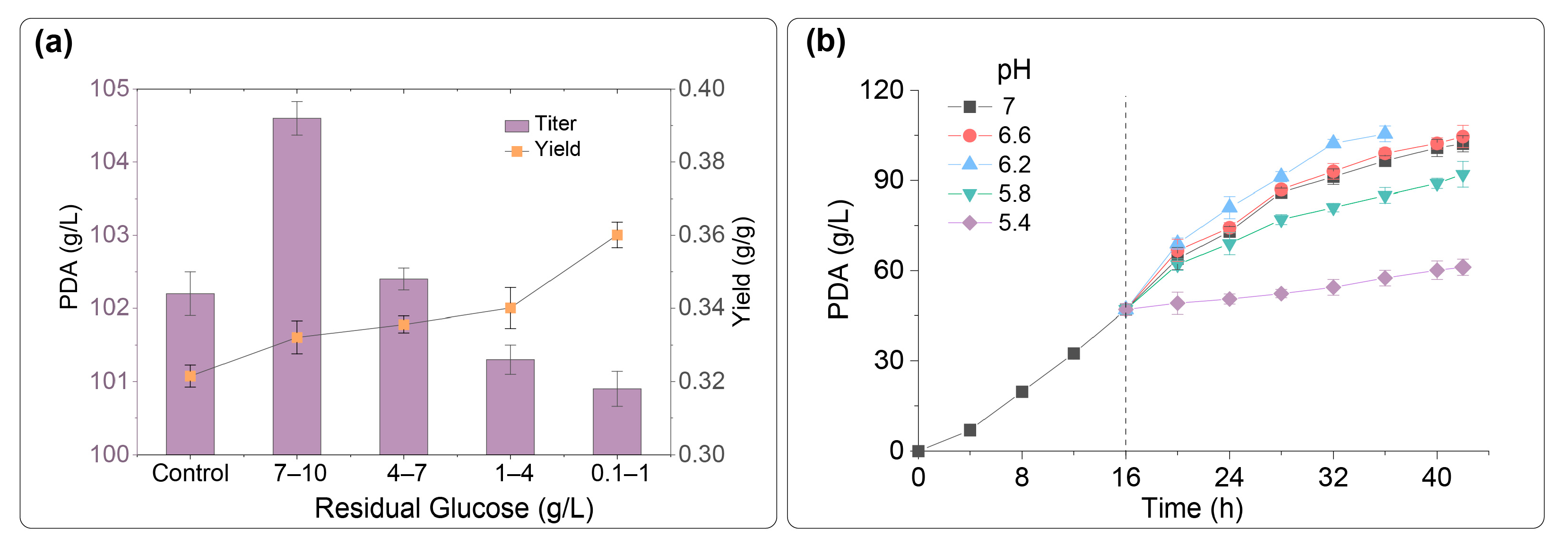
After depletion of the initial carbon source, glucose concentration during the feeding phase is a critical factor influencing PDA production. In the above fermentation experiments, the residual glucose concentration was maintained at approximately 10 g/L, while the ammonium ion concentration was kept below 1 g/L. To further improve carbon utilization efficiency, fed-batch fermentations were conducted under various residual glucose levels (7–10 g/L, 4–7 g/L, 1–4 g/L, and 0.1–1 g/L). When the residual glucose concentration was below 1 g/L, the PDA titer decreased slightly by 1.3% (to 100.9 g/L), but the yield increased markedly to 0.36 g/g (p < 0.05), reflecting enhanced carbon conversion efficiency and production economy (Figure 6a). Although the highest titer was observed in the 4–7 g/L group (104.6 g/L, a 2.3% increase), the yield (0.33 g/g) was lower than that under low residual glucose conditions. Therefore, maintaining residual glucose between 0.1 and 1 g/L was determined to be optimal.
Previous studies have shown that enzyme EcLdcC exhibits higher catalytic activity under acidic conditions, with an optimal pH range of 5–6 [27]. To enhance lysine decarboxylation efficiency, a two-stage pH control strategy was employed in this study: the pH was maintained at 7.0 during the early phase to support biomass accumulation and subsequently shifted to an acidic range during the late exponential phase. However, overly acidic conditions can disrupt metabolic homeostasis. To determine the optimal balance, pH gradients of 6.6, 6.2, 5.8, and 5.4 were evaluated. The best performance was achieved at pH 6.2, where the PDA titer reached 105.5 g/L at 36 h, with a productivity of 2.93 g/L/h and a yield of 0.36 g/g (Figure 6b, p < 0.05). Further lowering the pH significantly reduced production efficiency; at pH 5.4, only 57.5 g/L of PDA was produced after 36 h. These results demonstrate that a mildly acidic environment (approximately pH 6.2) provides an optimal compromise between EcLdcC catalytic activity and host metabolic stability.
In summary, dual optimization of residual glucose concentration and fermentation pH markedly improved carbon utilization efficiency and production rate. These process-level optimizations complemented the upstream metabolic engineering strategies, together enhancing the overall performance of the PDA fermentation system.

3. Discussion

In this study, an efficient PDA-producing C. glutamicum cell factory was developed. To enhance lysine precursor supply and glucose uptake, we constructed a PDA-responsive dynamic regulatory switch. By strengthening the expression of key genes involved in lysine biosynthesis and glucose transport, the engineered strain produced 105.5 g/L PDA within 36 h, corresponding to a productivity of 2.93 g/L/h and a yield of 0.36 g/g glucose.
Excessive intracellular accumulation of PDA triggers a polyamine stress response in bacteria [28]. Previous study demonstrated that polyamines could interact with DNA, RNA, and membrane components, causing metabolic toxicity and growth inhibition [29]. These disruptions activate global stress networks that downregulate genes involved in amino acid biosynthesis and central carbon metabolism, limiting precursor supply and constraining PDA production. In microbial PDA production, the precursor L-lysine is synthesized from oxaloacetate via L-aspartate through several enzymatic steps, culminating in decarboxylation by lysine decarboxylase. Enhancing precursor availability is a well-established strategy to increase the biosynthetic capacity for target compounds. Approaches to achieve this included: (i) overexpression of key enzymes in the pathway [30], (ii) sRNA library-based target screening [5,16], (iii) reduction in reactive oxygen species through lifespan gene regulation [31], and (iv) identification of metabolic bottlenecks via genome-scale models [32]. To investigate the metabolic constraints during PDA accumulation in C. glutamicum, we examined the expression of seven key genes (aspB, lysC, asd, dapA, dapB, ddh, and lysA) in the lysine biosynthesis pathway via qPCR. Notably, the expression of four genes—aspB, lysC, ddh, and lysA—was significantly downregulated during PDA production, indicating that lysine biosynthesis is suppressed by feedback inhibition from PDA. To mitigate this effect, we enhanced precursor flux by co-overexpressing aspB, lysC, and lysA, which increased PDA titers by 31.4%. These results demonstrate that restoring lysine biosynthetic capacity can alleviate PDA-induced repression. This qPCR-guided precursor engineering strategy offers valuable insights for optimizing the biosynthesis of other lysine-derived products, such as glutarate [33], 1,5-pentanediol [34], and valerolactam [35].
Dynamic regulation has emerged as a powerful alternative to traditional static control strategies in metabolic engineering. Depending on the mode of signal response, dynamic systems can be broadly categorized into (i) passive regulation and (ii) autonomous regulation. Passive strategies rely on external inputs—such as light [36,37], temperature [38,39], oxygen availability [40], or chemical inducers [41]—mediated through engineered biosensors or regulatory proteins. These systems enable conditional control of metabolic pathways, as demonstrated by optogenetic, thermosensitive, and chemically inducible switches reported in previous studies. For example, L-Valine is an important amino acid for the food and feed industries, but its microbial production is often limited by insufficient NADPH. To address this, integrating the light-inducible LEVI mutant with the LacI repressor enabled precise blue-light control of pgi and zwf expression in E. coli, improving intracellular NADPH supply and enhancing L-valine production by 18% in titer and 34% in yield [42]. However, such systems typically require careful tuning of induction timing and signal intensity, making it difficult to maintain continuous, real-time metabolic control during large-scale fermentation. For instance, in this study, static overexpression of ddh could not enhance the PDA production. As a complementary strategy, autonomous regulation employs intracellular or extracellular signals intrinsically linked to cellular physiology—such as product concentration [33,43], pathway intermediates [44,45], growth-phase indicators [46,47], and quorum-sensing molecules [48]. These systems allow pathway activities to self-adjust without external intervention, improving cell robustness under fluctuating fermentation conditions. In this study, the direct overexpression of key genes failed to match cellular demands across different growth stages, causing a metabolic burden or inefficient resource allocation. Specifically, the individual and combined overexpression of ddh resulted in only modest improvements in the PDA titer. Transcriptomic analysis revealed that ddh repression occurred primarily when high PDA concentrations accumulated. This finding highlights the advantage of dynamic regulation, which offers more precise control over ddh repression—a limitation not effectively addressed by static overexpression. To achieve this, we identified PDA-responsive regulatory proteins and promoter elements, and optimized their sensing range to develop PDRS capable of sensing extracellular PDA concentrations from 38.9 to 87 g/L. By using PDRS to modulate the expression of lysine biosynthetic genes and glucose uptake genes, the PDA production performance was significantly enhanced. Such metabolite-responsive autonomous systems are particularly valuable for biosynthesizing toxic chemicals, where tight, self-regulated control of pathway flux is essential for maintaining cellular fitness and maximizing productivity.
Despite the improvements in PDA productivity, further increases in PDA production using the C. glutamicum cell factory remain possible (Table 1). Previous studies have shown that high concentrations of PDA can induce cytotoxicity. Several strategies have been explored to address this issue: (i) Laboratory adaptive evolution (ALE): A restriction-modification system-mediated genome editing was employed in E. coli. After successful ALE, the PDA titer of the mutant strain reached 3.35 g/L, which was 2.3 times higher than that of the wild-type strain [49]. (ii) Random mutation for cell tolerance: E. coli was subjected to a combination of ultraviolet and visible spectrum radiation, along with atmospheric and room-temperature plasma mutagenesis, to develop a more robust host with enhanced PDA tolerance. Under conditions with 40 g/L PDA, the mutant E. coli showed only slight inhibition in growth and lysine production, while the control strain experienced complete growth suppression [19]. (iii) Product transporter engineering: To mitigate the accumulation and inhibition of PDA in engineered E. coli cells, a bi-directional PDA transporter (PotE) was overexpressed, effectively redirecting more metabolic flux from the substrate to PDA and glutaric acid [50]. This transporter PotE could be overexpressed in combination with our PDRS system, dynamically improving the tolerance of the strains to higher PDA concentrations, thereby enhancing overall production.

4. Materials and Methods

4.1. Strains and Plasmids

All bacterial strains and plasmids employed in this study were summarized in Table 2 and Table 3. Genomic deletions, gene replacements, and chromosomal insertions in C. glutamicum were generated through homologous recombination using the pK18mobsacB vector. Strain and plasmid assembly was carried out with a one-step cloning kit (Vazyme Biotech, Nanjing, China) in combination with ligation-based cloning procedures (Takara Bio, Dalian, China).

4.2. Medium Composition

E. coli was propagated in LB medium containing 5 g/L yeast extract, 10 g/L peptone, and 10 g/L NaCl. C. glutamicum cultivation was carried out in LBGB medium, which consists of LB supplemented with 5 g/L glucose and 18.5 g/L brain heart infusion. For strain activation, a seed medium was prepared with the following components (per liter): 10 g corn steep powder, 60 g glucose, 25 g (NH4)2SO4, 3 g KH2PO4, trace metals (120 mg FeSO4·7H2O, 120 mg MnSO4·H2O, 6 mg ZnSO4·7H2O, 6 mg CuSO4·5H2O), and vitamins (2.4 mg biotin and 18 mg calcium pantothenate). PDA synthesis was performed using a fermentation medium comprising 40 g/L glucose, 0.9 g/L MgSO4, 20 g/L (NH4)2SO4, 12 g/L corn steep powder, 0.5 g/L KCl, the same trace metal mix as above, and vitamin supplements (1 mg/L biotin and 5 mg/L calcium pantothenate).

4.3. Culture Conditions

Seed culture preparation: Pre-cultures were initially grown in LBGB at 30 °C with shaking at 200 rpm. When the cultures reached an OD562 of approximately 6, 200 mL was transferred into a seed bioreactor containing seed medium. The initial culture volume in the seed bioreactor was 2 L. The reactor was operated at 33 °C, with dissolved oxygen maintained at 30–35% and pH controlled at 7.0 using automatic addition of ammonia water and sulfuric acid. Seed cultivation proceeded until the OD562 reached 53–55.
The 5 L bioreactor fermentation: The prepared seed was inoculated into a 5 L fermenter containing production medium at 20% (v/v). The initial culture volume in the 5 L bioreactor was 1.3 L. Standard operating conditions included a temperature of 37 °C, an aeration rate of 3.0 vvm, DO maintained at 30–35%, and pH regulated at 7.0 via ammonia water and sulfuric acid. A fed-batch process was initiated once the initial glucose and ammonium were exhausted. Glucose feeding was performed using an 800 g/L solution, keeping the residual glucose below 1 g/L during the first 18 h and below 10 g/L thereafter. Nitrogen supplementation was carried out using a 450 g/L (NH4)2SO4 solution, maintaining NH4+ concentrations below 1 g/L from 0–18 h and between 1–2 g/L for the remainder of the fermentation.

4.4. Quantitative PCR Analysis

Cells of C. glutamicum collected at various fermentation stages were harvested by centrifugation (5 min, 5000 rpm, 4 °C), rinsed twice with PBS (pH 7.4), rapidly frozen in liquid nitrogen. Total RNA was extracted using 20 mg/mL of lysozyme in SET buffer (25% sucrose, 50 mM EDTA, 50 mM Tris-HCl, pH 8.0) in combination with TRIzol® (TaKaRa Biotechnology, Dalian, China), followed by RNA purification using a spin column according to the manufacturer’s instructions. Subsequently, 100 ng of the purified RNA was directly used for qPCR analysis, utilizing the Power SYBR™ Green RNA-to-Ct™ 1-step kit (Thermo Fisher Scientific, Waltham, MA, USA), with 200 nM of each primer. The gyrB gene served as the internal reference for normalization. All data represent the mean ± standard deviation (SD) from three independent culture experiments.

4.5. Measurement of Fluorescence Intensity

To measure the fluorescence intensity, cells in the log phase were inoculated into a 24-well plate containing 3 mL of LBGB medium at an initial OD562 of 0.5. After 8 h of cultivation, the fluorescence intensity was measured using a SpectraMax M3 plate reader (Molecular Devices, San Jose, CA, USA). The GFP fluorescence intensity was detected at an excitation wavelength of 488 ± 10 nm and an emission wavelength of 525 ± 10 nm.

4.6. Analytical Methods

Optical density at 562 nm (OD562) was measured using a Shimadzu spectrophotometer (Shimadzu Corporation, Kyoto, Japan). For ammonia nitrogen analysis, culture supernatants were obtained by centrifugation and mixed 1:1 with an 8 g/L NaCl solution before quantification using an E10 ammonium ion analyzer (Shenzhen Sieman Technology Co., Ltd., Shenzhen, China). Residual glucose levels were assessed with an M100 biosensor analyzer (Shenzhen Sieman Technology Co., Ltd.).
Quantification of L-lysine and PDA: Samples were derivatized with diethoxymethylpropionic acid diethyl ester (DEEMM) prior to analysis [52]. The derivatization reaction was carried out by mixing 180 μL of 0.05 M borate buffer (pH 9), 60 μL of 100% methanol, 47 μL of distilled water, 30 μL of 10 mM sample, and 3 μL of 200 mM DEEMM. The reaction mixture was heated at 70 °C for 2 h to ensure complete derivatization. After derivatization, samples were centrifuged at 12,000 rpm for 5 min and passed through a 0.22 μm filter. HPLC analysis was performed on an Agilent ZORBAX SB-C18 column (Agilent Technologies, Santa Clara, CA, USA) (4.6 × 250 mm, 5 μm) maintained at 35 °C. The mobile phase consisted of acetonitrile (A) and 25 mmol/L sodium acetate buffer (pH 4.8, B), delivered at 1.0 mL/min. The gradient program was set as follows: 0–2 min, 20–25% A; 2–20 min, 25–60% A; 20–25 min, 60–20% A.
Determination of organic acids: After centrifugation (12,000 rpm, 5 min), supernatants were analyzed using an HPLC system (Waters, Milford, MA, USA) equipped with both a refractive index detector and UV detection at 210 nm. Organic acids were separated on an Aminex HPX-87H ion-exchange column (Bio-Rad Laboratories, Hercules, CA, USA) maintained at 52 °C. The mobile phase consisted of 5 mM H2SO4, with a flow rate of 0.6 mL/min.

5. Conclusions

In this study, a high PDA-producing C. glutamicum strain, YY1, was developed, achieving 92 g/L of PDA in a 5 L bioreactor. However, transcriptional repression of genes in the lysine biosynthetic pathway was observed under conditions of high PDA accumulation. To overcome this challenge, a PDA-responsive dynamic regulatory switch (PDRS) was constructed using the transcriptional repressor CgmR and the PcgmA promoter. This system was successfully applied to enhance lysine biosynthesis and glucose uptake. The final engineered strain, C. glutamicum YY3.6, was able to produce 105.5 g/L of PDA within 36 h, achieving a PDA productivity of 2.93 g/L/h and a yield of 0.36 g/g glucose. These findings highlight the critical role of metabolic flux control using dynamic regulatory tools for the efficient microbial production of PDA from glucose.

Author Contributions

Conceptualization, C.G.; methodology, L.S.; software, J.L.; validation, J.L., L.S. and L.L.; formal analysis, L.S.; investigation, L.S.; resources, L.S.; data curation, C.G.; writing—original draft preparation, L.S.; writing—review and editing, C.G.; visualization, C.G.; supervision, C.G.; project administration, C.G.; funding acquisition, L.L. All authors have read and agreed to the published version of the manuscript.

Funding

This research was funded by the Jiangsu Innovative Research Team Project (JUSRP202413001), the General Program of National Natural Science Foundation of China (22378164, 32470059), the Energy Revolution S&T Program of Yulin Innovation Institute of Clean Energy (E411040705), and the Basic Research Program of Jiangsu supported by the Jiangsu Basic Research Center for Synthetic Biology (BK20233003).

Institutional Review Board Statement

Not applicable.

Informed Consent Statement

Not applicable.

Data Availability Statement

The data supporting the findings of this study are available from the corresponding author upon reasonable request. All data have been processed and analyzed as presented in the manuscript.

Conflicts of Interest

The authors declare no conflicts of interest.

References

  1. Buschke, N.; Becker, J.; Schafer, R.; Kiefer, P.; Biedendieck, R.; Wittmann, C. Systems metabolic engineering of xylose-utilizing Corynebacterium glutamicum for production of 1,5-diaminopentane. Biotechnol. J. 2013, 8, 557–570. [Google Scholar] [CrossRef]
  2. Qian, Z.G.; Xia, X.X.; Lee, S.Y. Metabolic engineering of Escherichia coli for the production of cadaverine: A five carbon diamine. Biotechnol. Bioeng. 2010, 108, 93–103. [Google Scholar] [CrossRef] [PubMed]
  3. Han, Y.H.; Kim, H.J.; Choi, T.R.; Song, H.S.; Lee, S.M.; Park, S.L.; Lee, H.S.; Cho, J.Y.; Bhatia, S.K.; Gurav, R.; et al. Improvement of cadaverine production in whole cell system with baker’s yeast for cofactor regeneration. Bioprocess. Biosyst. Eng. 2021, 44, 891–899. [Google Scholar] [CrossRef]
  4. Gao, S.; Lu, J.; Wang, T.; Xu, S.; Wang, X.; Chen, K.; Ouyang, P. A novel co-production of cadaverine and succinic acid based on a thermal switch system in recombinant Escherichia coli. Microb. Cell Fact. 2022, 21, 248. [Google Scholar] [CrossRef]
  5. Na, D.; Yoo, S.M.; Chung, H.; Park, H.; Park, J.H.; Lee, S.Y. Metabolic engineering of Escherichia coli using synthetic small regulatory RNAs. Nat. Biotechnol. 2013, 31, 170–174. [Google Scholar] [CrossRef]
  6. Liu, X.; Luo, R.; Wang, D.; Xiao, K.; Lin, F.; Kang, Y.Q.; Xia, X.; Zhou, X.; Hu, G. Combining directed evolution with high cell permeability for high-level cadaverine production in engineered Escherichia coli. Biotechnol. J. 2024, 19, e2300642. [Google Scholar] [CrossRef]
  7. Feng, J.; Han, Y.; Xu, S.; Liao, Y.; Wang, Y.; Xu, S.; Li, H.; Wang, X.; Chen, K. Engineering RuBisCO-based shunt for improved cadaverine production in Escherichia coli. Bioresour. Technol. 2024, 398, 130529. [Google Scholar] [CrossRef] [PubMed]
  8. Xue, C.; Hsu, K.-M.; Ting, W.-W.; Huang, S.-F.; Lin, H.-Y.; Li, S.-F.; Chang, J.-S.; Ng, I.S. Efficient biotransformation of L-lysine into cadaverine by strengthening pyridoxal 5′-phosphate-dependent proteins in Escherichia coli with cold shock treatment. Biochem. Eng. J. 2020, 161, 107659. [Google Scholar] [CrossRef]
  9. Xi, Y.; Ye, L.; Yu, H. Enhanced thermal and alkaline stability of L-lysine decarboxylase CadA by combining directed evolution and computation-guided virtual screening. Bioresour. Bioprocess. 2022, 9, 24. [Google Scholar] [CrossRef]
  10. He, M.; Ma, J.; Chen, Q.; Zhang, Q.; Yu, P. Engineered production of pyridoxal 5′-phosphate in Escherichia coli BL21. Prep. Biochem. Biotechnol. 2022, 52, 498–507. [Google Scholar] [CrossRef]
  11. Gao, S.Y.; Zhang, A.; Ma, D.; Zhang, K.; Wang, J.; Wang, X.; Chen, K.Q. Enhancing pH stability of lysine decarboxylase via rational engineering and its application in cadaverine industrial production. Biochem. Eng. J. 2022, 186, 108548. [Google Scholar] [CrossRef]
  12. Wei, G.; Chen, Y.; Zhou, N.; Lu, Q.; Xu, S.; Zhang, A.; Chen, K.; Ouyang, P. Chitin biopolymer mediates self-sufficient biocatalyst of pyridoxal 5′-phosphate and L-lysine decarboxylase. Chem. Eng. J. 2022, 427, 132030. [Google Scholar] [CrossRef]
  13. Du, Y.; Pu, Z.J.; Kang, H.; Mi, J.L.; Liu, S.M.; Qi, H.S.; Zhang, L. Zwitterionic peptides encircling-assisted enhanced catalytic performance of lysine decarboxylase for cadaverine biotransformation and mechanism analyses. Chem. Eng. Sci. 2022, 251, 117447. [Google Scholar] [CrossRef]
  14. Zhao, C.; Zheng, T.; Feng, Y.; Wang, X.; Zhang, L.; Hu, Q.; Chen, J.; Wu, F.; Chen, G.Q. Engineered Halomonas spp. for production of L-lysine and cadaverine. Bioresour. Technol. 2022, 349, 126865. [Google Scholar] [CrossRef] [PubMed]
  15. Kang, S.B.; Choi, J.I. Production of cadaverine in recombinant Corynebacterium glutamicum overexpressing lysine decarboxylase (ldcc) and response regulator dr1558. Appl. Biochem. Biotechnol. 2022, 194, 1013–1024. [Google Scholar] [CrossRef]
  16. Noh, M.; Yoo, S.M.; Yang, D.; Lee, S.Y. Broad-spectrum gene repression using scaffold engineering of synthetic sRNAs. ACS Synth. Biol. 2019, 8, 1452–1461. [Google Scholar] [CrossRef]
  17. Xue, C.; Ng, I.S. A direct enzymatic evaluation platform (DEEP) to fine-tuning pyridoxal 5′-phosphate-dependent proteins for cadaverine production. Biotechnol. Bioeng. 2023, 120, 272–283. [Google Scholar] [CrossRef] [PubMed]
  18. Wei, G.G.; Zhang, A.L.; Lu, X.D.; He, F.; Li, H.; Xu, S.; Li, G.L.; Chen, K.Q.; Ouyang, P.K. An environmentally friendly strategy for cadaverine bio-production: In situ utilization of CO2 self-released from L-lysine decarboxylation for pH control. J. CO2 Util. 2020, 37, 278–284. [Google Scholar] [CrossRef]
  19. Wang, X.; Guo, X.; Wang, J.; Li, H.; He, F.; Xu, S.; Chen, K.; Ouyang, P. Ameliorating end-product inhibition to improve cadaverine production in engineered Escherichia coli and its application in the synthesis of bio-based diisocyanates. Synth. Syst. Biotechnol. 2021, 6, 243–253. [Google Scholar] [CrossRef]
  20. Kim, H.T.; Baritugo, K.-A.; Hyun, S.M.; Khang, T.U.; Sohn, Y.J.; Kang, K.H.; Jo, S.Y.; Song, B.K.; Park, K.; Kim, I.-K.; et al. Development of metabolically engineered Corynebacterium glutamicum for enhanced production of cadaverine and its use for the synthesis of bio-polyamide 510. ACS Sustain. Chem. Eng. 2019, 8, 129–138. [Google Scholar] [CrossRef]
  21. Kind, S.; Neubauer, S.; Becker, J.; Yamamoto, M.; Volkert, M.; Abendroth, G.; Zelder, O.; Wittmann, C. From zero to hero—Production of bio-based nylon from renewable resources using engineered Corynebacterium glutamicum. Metab. Eng. 2014, 25, 113–123. [Google Scholar] [CrossRef] [PubMed]
  22. Mi, J.; Liu, S.; Qi, H.; Huang, J.; Lan, X.; Zhang, L. Cellular engineering and biocatalysis strategies toward sustainable cadaverine production: State of the art and perspectives. ACS Sustain. Chem. Eng. 2021, 9, 1061–1072. [Google Scholar] [CrossRef]
  23. Huang, Y.; Ji, X.; Ma, Z.; Lezyk, M.; Xue, Y.; Zhao, H. Green chemical and biological synthesis of cadaverine: Recent development and challenges. RSC Adv. 2021, 11, 23922–23942. [Google Scholar] [CrossRef]
  24. Zhao, X.; Wu, Y.; Feng, T.; Shen, J.; Lu, H.; Zhang, Y.; Chou, H.H.; Luo, X.; Keasling, J.D. Dynamic upregulation of the rate-limiting enzyme for valerolactam biosynthesis in Corynebacterium glutamicum. Metab. Eng. 2023, 77, 89–99. [Google Scholar] [CrossRef] [PubMed]
  25. Itou, H.; Okada, U.; Suzuki, H.; Yao, M.; Wachi, M.; Watanabe, N.; Tanaka, I. The CGL2612 protein from Corynebacterium glutamicum is a drug resistance-related transcriptional repressor: Structural and functional analysis of a newly identified transcription factor from genomic DNA analysis. J. Biol. Chem. 2005, 280, 38711–38719. [Google Scholar] [CrossRef] [PubMed]
  26. Duan, Y.; Zhai, W.; Liu, W.; Zhang, X.; Shi, J.-S.; Zhang, X.; Xu, Z. Fine-tuning multi-gene clusters via well-characterized gene expression regulatory elements: Case study of the arginine synthesis pathway in C. glutamicum. ACS Synth. Biol. 2021, 10, 38–48. [Google Scholar] [CrossRef]
  27. Shin, J.; Joo, J.C.; Lee, E.; Hyun, S.M.; Kim, H.J.; Park, S.J.; Yang, Y.H.; Park, K. Characterization of a whole-cell biotransformation using a constitutive lysine decarboxylase from Escherichia coli for the high-level production of cadaverine from industrial grade L-lysine. Appl. Biochem. Biotechnol. 2018, 185, 909–924. [Google Scholar] [CrossRef]
  28. Rhee, H.J.; Kim, E.-J.; Lee, J.K. Physiological polyamines: Simple primordial stress molecules. J. Cell. Mol. Med. 2007, 11, 685–703. [Google Scholar] [CrossRef]
  29. Pegg, A.E. Toxicity of polyamines and their metabolic products. Chem. Res. Toxicol. 2013, 26, 1782–1800. [Google Scholar] [CrossRef]
  30. Chen, C.; Chen, X.; Liu, L.; Wu, J.; Gao, C. Engineering microorganisms to produce bio-based monomers: Progress and challenges. Fermentation 2023, 9, 137. [Google Scholar] [CrossRef]
  31. Guo, L.; Qi, M.; Gao, C.; Ye, C.; Hu, G.; Song, W.; Wu, J.; Liu, L.; Chen, X. Engineering microbial cell viability for enhancing chemical production by second codon engineering. Metab. Eng. 2022, 73, 235–246. [Google Scholar] [CrossRef]
  32. Ye, C.; Luo, Q.; Guo, L.; Gao, C.; Xu, N.; Zhang, L.; Liu, L.; Chen, X. Improving lysine production through construction of an Escherichia coli enzyme-constrained model. Biotechnol. Bioeng. 2020, 117, 3533–3544. [Google Scholar] [CrossRef] [PubMed]
  33. Chu, R.; Wang, Z.; Liu, J.; Hu, G.; Liu, L.; Li, X.; Gao, C. Metabolic engineering of plasmid-free Escherichia coli for enhanced glutarate biosynthesis from glucose. Chem. Eng. J. 2025, 513, 163077. [Google Scholar] [CrossRef]
  34. Hua, W.; Liang, B.; Zhou, S.; Zhang, Q.; Xu, S.; Chen, K.; Wang, X. An integrated cofactor and co-substrate recycling pathway for the biosynthesis of 1,5-pentanediol. Microb. Cell Fact. 2024, 23, 132. [Google Scholar] [CrossRef] [PubMed]
  35. Han, T.; Lee, S.Y. Metabolic engineering of Corynebacterium glutamicum for the high-level production of valerolactam, a nylon-5 monomer. Metab. Eng. 2023, 79, 78–85. [Google Scholar] [CrossRef]
  36. Li, Z.; Qiao, G.; Wang, X.; Wang, M.; Cheng, J.; Hu, G.; Li, X.; Wu, J.; Liu, J.; Gao, C.; et al. De novo designed protein guiding targeted protein degradation. Nat. Commun. 2025, 16, 6598. [Google Scholar] [CrossRef] [PubMed]
  37. Komera, I.; Gao, C.; Guo, L.; Hu, G.; Chen, X.; Liu, L. Bifunctional optogenetic switch for improving shikimic acid production in E. coli. Biotechnol. Biofuels Bioprod. 2022, 15, 13. [Google Scholar] [CrossRef]
  38. Shen, B.; Zhou, P.; Jiao, X.; Yao, Z.; Ye, L.; Yu, H. Fermentative production of Vitamin E tocotrienols in Saccharomyces cerevisiae under cold-shock-triggered temperature control. Nat. Commun. 2020, 11, 5155. [Google Scholar] [CrossRef]
  39. Zhou, P.; Xie, W.; Yao, Z.; Zhu, Y.; Ye, L.; Yu, H. Development of a temperature-responsive yeast cell factory using engineered Gal4 as a protein switch. Biotechnol. Bioeng. 2018, 115, 1321–1330. [Google Scholar] [CrossRef]
  40. Gao, C.; Tang, W.; Guo, L.; Hu, G.; Liu, J.; Liu, L.; Chen, X. Improving succinate production by engineering oxygen-dependent dynamic pathway regulation in Escherichia coli. Syst. Microbiol. Biomanuf 2021, 2, 331–344. [Google Scholar] [CrossRef]
  41. Yang, H.; He, Y.; Zhou, S.; Deng, Y. Dynamic regulation and cofactor engineering of Escherichia coli to enhance production of glycolate from corn stover hydrolysate. Bioresour. Technol. 2024, 398, 130531. [Google Scholar] [CrossRef] [PubMed]
  42. Gao, C.; Song, W.; Ye, C.; Ding, Q.; Wei, W.; Hu, G.; Liu, Y.; Liu, L. Bifunctional optogenetic switch powered NADPH availability for improving L-Valine production in Escherichia coli. ACS Sustain. Chem. Eng. 2024, 12, 15103–15113. [Google Scholar] [CrossRef]
  43. Zhang, S.; Zhang, F.; Sun, J.; Yu, H.; Sun, P.; Liu, J.; Li, X.; Hu, G.; Wu, J.; Gao, C.; et al. Systems metabolic engineering of Klebsiella pneumoniae for high-level 1,3-propanediol production. Metab. Eng. 2026, 93, 1–13. [Google Scholar] [CrossRef] [PubMed]
  44. Liu, C.; Gao, C.; Song, L.; Li, X.; Chen, X.; Wu, J.; Song, W.; Wei, W.; Liu, L. Fine-tuning pyridoxal 5′-phosphate synthesis in Escherichia coli for cadaverine production in minimal culture media. ACS Synth. Biol. 2024, 13, 1820–1830. [Google Scholar] [CrossRef]
  45. Li, M.; Chen, H.; Chen, Y.; Chen, P.; Liu, S.; Liu, S.; Wen, T. Development of a lysine biosensor for the dynamic regulation of cadaverine biosynthesis in E. coli. Microb. Cell Fact. 2025, 24, 141. [Google Scholar] [CrossRef]
  46. Zhao, C.; Li, X.; Guo, L.; Gao, C.; Song, W.; Wei, W.; Wu, J.; Liu, L.; Chen, X. Reprogramming metabolic flux in Escherichia coli to enhance chondroitin production. Adv. Sci. 2024, 11, e2307351. [Google Scholar] [CrossRef] [PubMed]
  47. Ding, Q.; Li, Z.; Guo, L.; Song, W.; Wu, J.; Chen, X.; Liu, L.; Gao, C. Engineering Escherichia coli asymmetry distribution-based synthetic consortium for shikimate production. Biotechnol. Bioeng. 2022, 119, 3230–3240. [Google Scholar] [CrossRef]
  48. Liang, G.; Liu, C.; Liu, J.; Xu, X.; Wu, J.; Song, W.; Hu, G.; Wei, W.; Li, X.; Zhao, J.; et al. Designing autonomous biological switches to rewire carbon flux for chemical production in Escherichia coli. ACS Sustain. Chem. Eng. 2024, 12, 14492–14504. [Google Scholar] [CrossRef]
  49. Bai, H.; Deng, A.; Liu, S.; Cui, D.; Qiu, Q.; Wang, L.; Yang, Z.; Wu, J.; Shang, X.; Zhang, Y.; et al. A novel tool for microbial genome editing using the restriction-modification system. ACS Synth. Biol. 2018, 7, 98–106. [Google Scholar] [CrossRef]
  50. Li, W.; Ma, L.; Shen, X.; Wang, J.; Feng, Q.; Liu, L.; Zheng, G.; Yan, Y.; Sun, X.; Yuan, Q. Targeting metabolic driving and intermediate influx in lysine catabolism for high-level glutarate production. Nat. Commun. 2019, 10, 3337. [Google Scholar] [CrossRef]
  51. Kim, H.T.; Baritugo, K.A.; Oh, Y.H.; Hyun, S.M.; Khang, T.U.; Kang, K.H.; Jung, S.H.; Song, B.K.; Park, K.; Kim, I.K.; et al. Metabolic engineering of Corynebacterium glutamicum for the high-level production of cadaverine that can be used for the synthesis of biopolyamide 510. ACS Sustain. Chem. Eng. 2018, 6, 5296–5305. [Google Scholar] [CrossRef]
  52. Kim, Y.H.; Kim, H.J.; Shin, J.-H.; Bhatia, S.K.; Seo, H.-M.; Kim, Y.-G.; Lee, Y.K.; Yang, Y.-H.; Park, K. Application of diethyl ethoxymethylenemalonate (DEEMM) derivatization for monitoring of lysine decarboxylase activity. J. Mol. Catal. B Enzym. 2015, 115, 151–154. [Google Scholar] [CrossRef]
Figure 1. Construction of a C. glutamicum cell factory for PDA production. (a) Schematic of the PDA biosynthesis pathway. Solid arrows represent metabolic pathways, and dashed lines represent multi-step pathways. (b) Fed-batch fermentation profile of the lysine-producing strain C. glutamicum Lys. (c) Fed-batch fermentation profile of the PDA-producing strain C. glutamicum YY1. (d) Transcriptional levels of key genes involved in lysine biosynthesis during PDA fermentation by strain C. glutamicum YY1 at the shake flask. (e) Temporal changes in the transcriptional levels of aspB, lysC, ddh, and lysA during PDA fermentation by strain C. glutamicum YY1 at the bioreactor scale. Abbreviation: Glu, glucose; OAA, oxaloacetic acid; Asp, aspartic acid; Lys, lysine; aspB, aspartate ammonia lyase; lysC, aspartate kinase; asd, aspartate semialdehyde dehydrogenase; dapA, 4-hydroxy-tetrahydrodipicolinate synthase; dapB, dihydrodipicolinate reductase; ddh, meso-diaminopimelate dehydrogenase; lysA, diaminopimelate decarboxylase. All measurements represent the mean ± s.d. of three biological replicates (n = 3).
Catalysts 16 00030 g001
Figure 2. Strengthening key genes in the lysine synthesis pathway. (a) Effects of overexpressing key genes involved in lysine biosynthesis, either individually or in combination, on PDA synthesis; (b) quantitative data showing the ddh transcript levels in strains treated with lysine; (c) quantitative data showing the ddh transcript levels in strains treated with PDA; (d) transcriptional levels of the ddh gene were measured in strains treated with equal concentrations of Lys and PDA. The relative fold change was calculated by dividing the transcriptional level in the PDA-treated group by the ddh transcriptional level in the Lys-treated group. All measurements represent the mean ± s.d. of three biological replicates (n = 3).
Catalysts 16 00030 g002
Figure 3. PDRS construction and PDA response range optimization. (a) Design principle of PDRS. The downstream gene was activated when PDA accumulation. (b) Flask fermentation results for strain YY2.2. (c) Promoter optimization of PDRS. These engineered strains demonstrated comparable PDA production performance; thus, only the PDA production data for the control strain YY2.2 was provided. The grey lines represent PDA titer, while the colored lines correspond to fluorescence. (d) RBS optimization of PDRS. These strains showed similar PDA production performance; thus, only the PDA production data for strain YY2.6 are presented. The grey lines represent PDA titer, while the colored lines correspond to fluorescence. All measurements represent the mean ± s.d. of three biological replicates (n = 3).
Catalysts 16 00030 g003
Figure 4. Application of PDRS in fermentation production of PDA. (a) Evaluation of PDA production performance in strain YY2.8-ddh with PDRS application. (b) PDA production performance in strain YY2.11 with genome-level PDRS application. All data are presented as the mean ± standard deviation (s.d.) from three biological replicates (n = 3).
Catalysts 16 00030 g004
Figure 5. Enhancement of glucose uptake based on PDRS. (a) Comparison of sugar utilization rates between the PDA production strain YY2.11 and the chassis strain. (b) Schematic representation of the functions of three genes that enhance glucose utilization. Abbreviation: G3P, glyceraldehyde 3-phosphate; OAA, Oxaloacetic acid. (c) Comparison of PDA production, cell growth and glucose intake rate in recombinant strains YY3.1, YY3.2, and YY3.3. (d) PDA production in engineered strains with enhanced glucose uptake. The inset shows a magnified view of the fermentation after 32 h to prevent data overlap. All measurements represent the mean ± s.d. of three biological replicates (n = 3).
Catalysts 16 00030 g005
Figure 6. Optimization of fermentation parameters. (a) Effect of different residual sugar levels on PDA titer and yield. (b) Comparison of PDA yield at different pH control levels in the mid-to-late stages of production. All measurements represent the mean ± s.d. of three biological replicates (n = 3).
Catalysts 16 00030 g006
Table 1. Fermentation production of PDA with E. coli and C. glutamicum cell factories.
MicroorganismTiter (g/L)Yield
(g/g Glucose)
Productivity (g/L/h)Reference
E. coli KARL455.580.3801.74[4]
E. coli NT100558.70.3961.48[19]
E. coli L1864.030.2301.33[44]
E. coli RSo110284.10.3701.62[7]
C. glutamicum CSS103.80.3031.47[51]
C. glutamicum GH30HaLDC1250.3411.79[20]
C. glutamicum YY105.50.362.93This study
Table 2. Strains used in this study.
StrainsCharacteristics
E. coli JM109General cloning host
C. glutamicum LysL-lysine producing strain, CCTCC 2023742
YY1C. glutamicum Lys, Ncgl1469::Ptrc-EcLdcC
YY1-aspBYY1, cgl0066::PgapA-aspB
YY1-lysCYY1, cgl0066::PgapA-lysC
YY1-ddhYY1, cgl0066::PgapA-ddh
YY1-lysAYY1, cgl0066::PgapA-lysA
YY1.1YY1, cgl0066::PgapA-aspB, PgapA-lysC, PgapA-ddh, PgapA-lysA
YY1.2YY1, cgl0066::PgapA-aspB, PgapA-lysC, PgapA-lysA
YY2.1YY1.2, ΔcgmR, Ptac-cgmA
YY2.2YY2.1, S1
YY2.3YY2.1, S1-Ptuf
YY2.4YY2.1, S1-PH36
YY2.5YY2.1, S1-Ptac
YY2.6YY2.1, S1-Psod
YY2.7YY2.1, S1-PH30
YY2.8YY2.1, Psod-R760-cgmR, PcgmA-sfgfp
YY2.9YY2.1, Psod-R180-cgmR, PcgmA-sfgfp
YY2.10YY2.1, Psod-R1800-cgmR, PcgmA-sfgfp
YY2.8-ddhYY2.1, Psod-R760-cgmR, PcgmA-ddh
YY2.11YY2.1, lysE::Psod-R760-cgmR, PcgmA-ddh
YY3.1YY2.11, cgl0818::PgapA-ptsG
YY3.2YY2.11, cgl0818::PgapA-IolT1
YY3.3YY2.11, cgl0818::PgapA-IolT2
YY3.4YY2.11, pCES208-PcgmA-IolT1
YY3.5YY2.11, S1-IolT1
YY3.6YY2.11, S1-Psod-IolT1
YY3.7YY2.11, S1-Psod-R760-IolT1
Table 3. Plasmids used in this study.
PlasmidsCharacteristics
pK18mobsacBVector for selection of double crossover in C. glutamicum, Kanr
pK18-Ptrc-EcLdcCpK18mobsacB with Ncgl1469 deletion replaced by Ptrc-EcLdcC constructs
pK18-PgapA-aspBpK18mobsacB with cgl0066 deletion replaced by PgapA-aspB constructs
pK18-PgapA-lysCpK18mobsacB with cgl0066 deletion replaced by PgapA-lysC constructs
pK18-PgapA-ddhpK18mobsacB with cgl0066 deletion replaced by PgapA-ddh constructs
pK18-PgapA-lysApK18mobsacB with cgl0066 deletion replaced by PgapA-lysA constructs
pK18-ΔcgmRpK18mobsacB with cgmR deletion constructs
pK18-Ptac-cgmApK18mobsacB with PcgmA deletion replaced by Ptac constructs
pCES208E. coli−C. glutamicum shuttle vector; Kmr
S1pCES208, Ptrc-cgmR, PcgmA-sfgfp
S1-PtufpCES208, Ptuf-cgmR, PcgmA-sfgfp
S1-PH36pCES208, PH36-cgmR, PcgmA-sfgfp
S1-PtacpCES208, Ptac-cgmR, PcgmA-sfgfp
S1-PsodpCES208, Psod-cgmR, PcgmA-sfgfp
S1-PH30pCES208, PH30-cgmR, PcgmA-sfgfp
S1-Psod-R760pCES208, Psod-R760-cgmR, PcgmA-sfgfp
S1-Psod-R180pCES208, Psod-R760-cgmR, PcgmA-sfgfp
S1-Psod-R1800pCES208, Psod-R760-cgmR, PcgmA-sfgfp
pK18-ΔlysEpK18mobsacB with lysE deletion constructs
pK18-PgapA-ptsGpK18mobsacB with cgl0818 deletion replaced by PgapA-ptsG constructs
pK18-PgapA-IolT1pK18mobsacB with cgl0818 deletion replaced by PgapA-IolT1 constructs
pK18-PgapA-IolT2pK18mobsacB with cgl0818 deletion replaced by PgapA-IolT2 constructs
S1-IolT1pCES208, Ptrc-cgmR, PcgmA-IolT1
S1-Psod-IolT1pCES208, Psod-cgmR, PcgmA-IolT1
S1-Psod-R760-IolT1pCES208, Psod-R760-cgmR, PcgmA-IolT1
Disclaimer/Publisher’s Note: The statements, opinions and data contained in all publications are solely those of the individual author(s) and contributor(s) and not of MDPI and/or the editor(s). MDPI and/or the editor(s) disclaim responsibility for any injury to people or property resulting from any ideas, methods, instructions or products referred to in the content.