Bamboo-Derived Activated Carbon for Dye-Contaminated Wastewater Treatment: A Comprehensive Review of Synthesis, Doping Strategies, and Photocatalytic Performance

 ,
,  ,
, 

 , ,
, , 
Abstract
1. Introduction
2. Fundamentals of Activated Carbon
2.1. Structure and Properties
2.2. Precursors for Activated Carbon
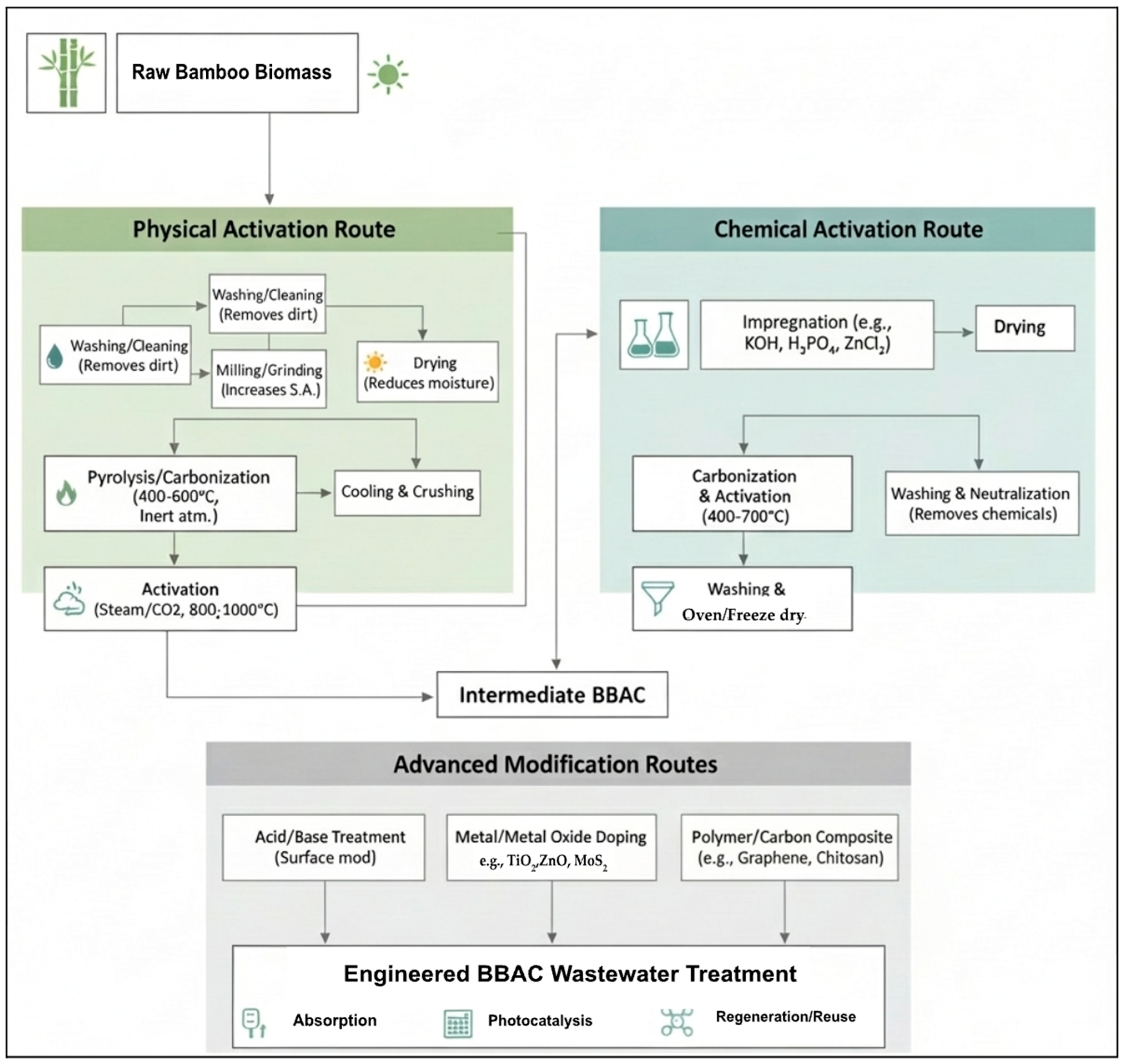
2.3. Synthesis and Activation Methods
3. Natural Activated Carbon Sources
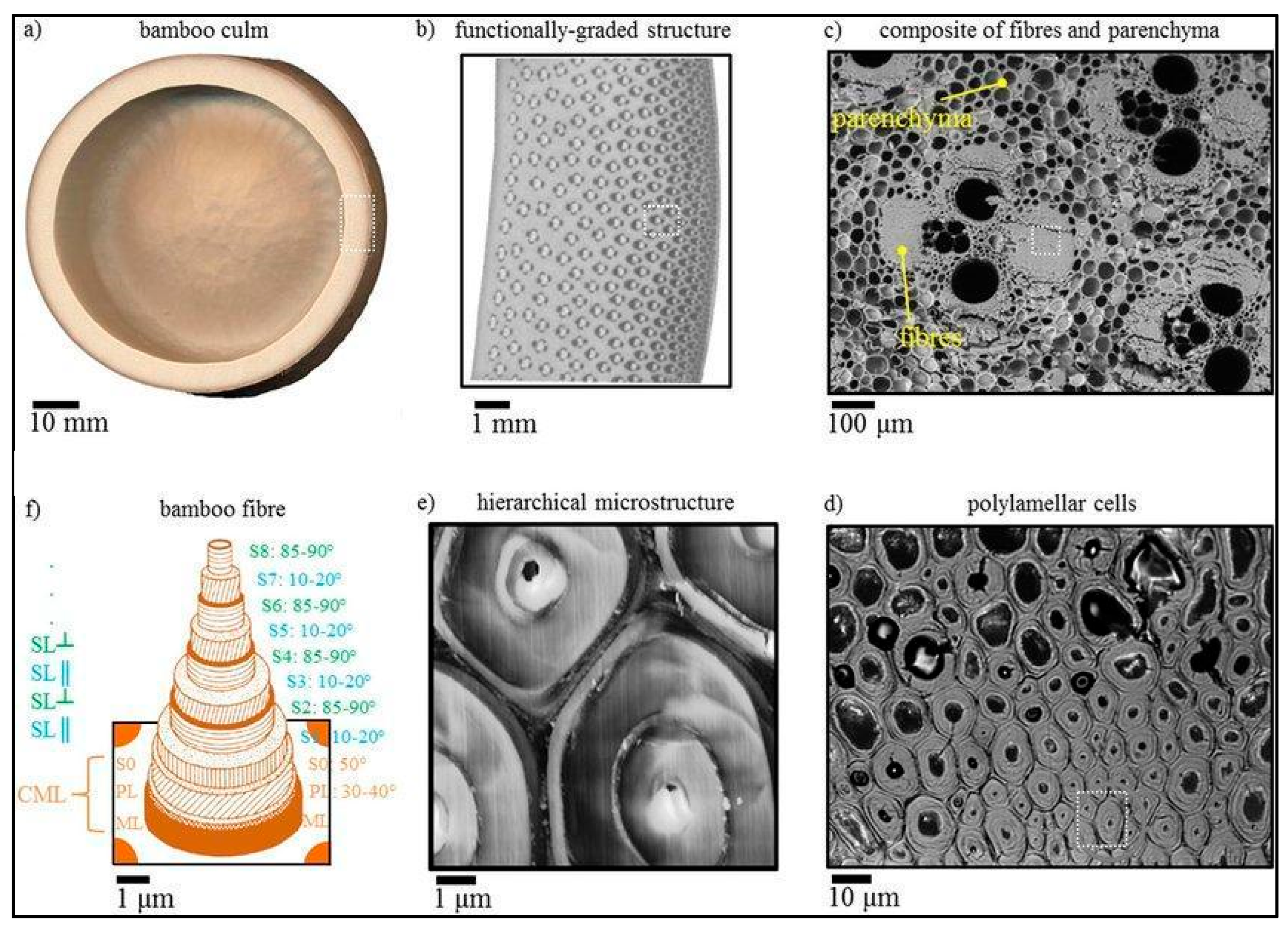
3.1. Bamboo-Based Activated Carbon (BBAC)
3.2. Key Advantages of Bamboo as a Precursor for AC Include
- Steam-activated bamboo AC (BC-860) exhibited a maximum adsorption capacity of 369.28 mg/g for MB dye at optimized conditions [13].
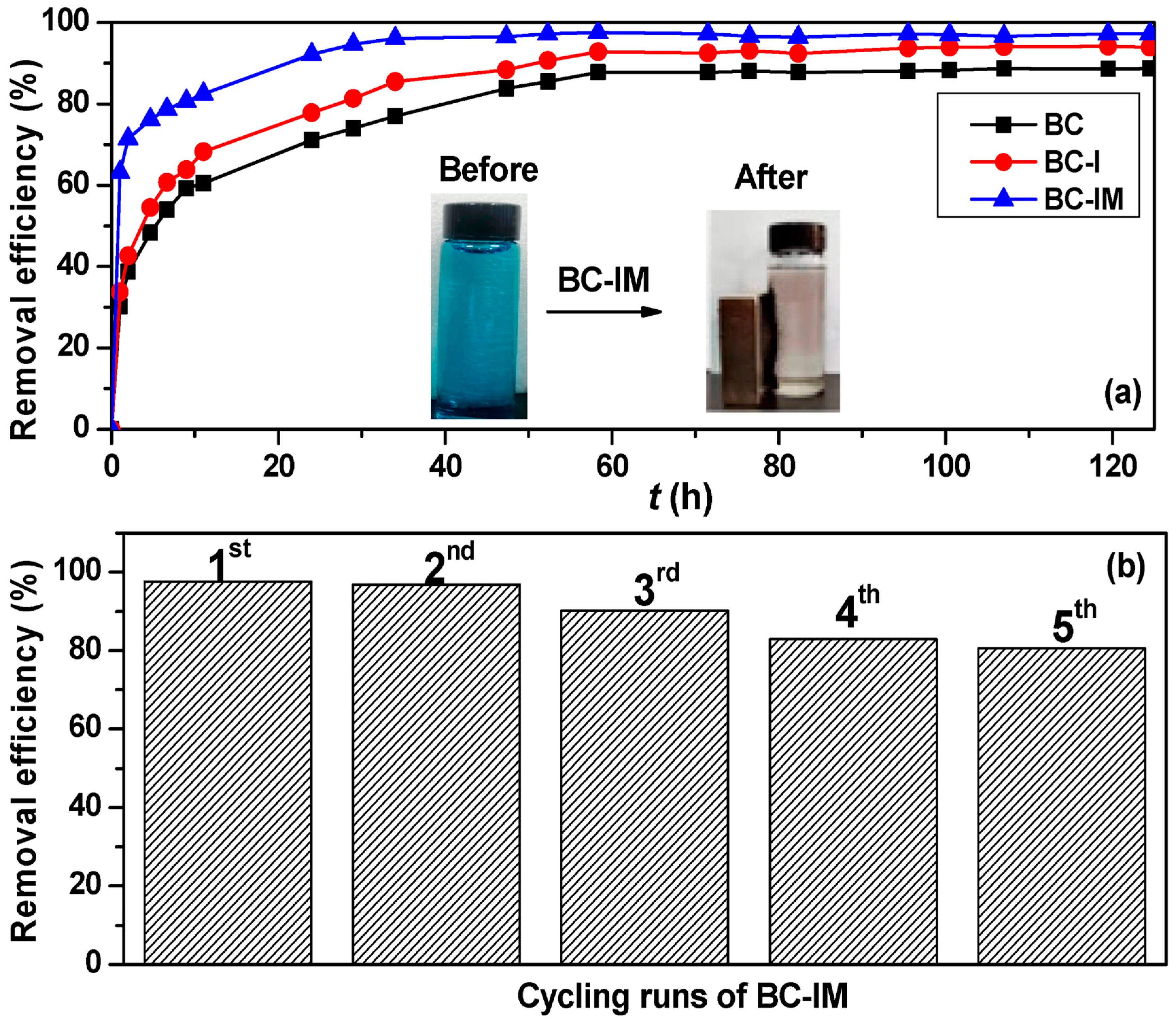
- NaOH-impregnated bamboo charcoal (BC-I) showed an enhanced maximum adsorption capacity of 220.26 mg/g for MB, while further magnetization to magnetic bamboo charcoal (BC-IM) boosted this to 497.51 mg/g [8].
3.3. Other Biomass Sources
4. Doping Strategies for Activated Carbon
4.1. Focus on Metal Oxides (TiO2, ZnO, MoS2)
4.2. Other Dopants and Modifications
5. Mechanisms of Dye Removal
5.1. Adsorption
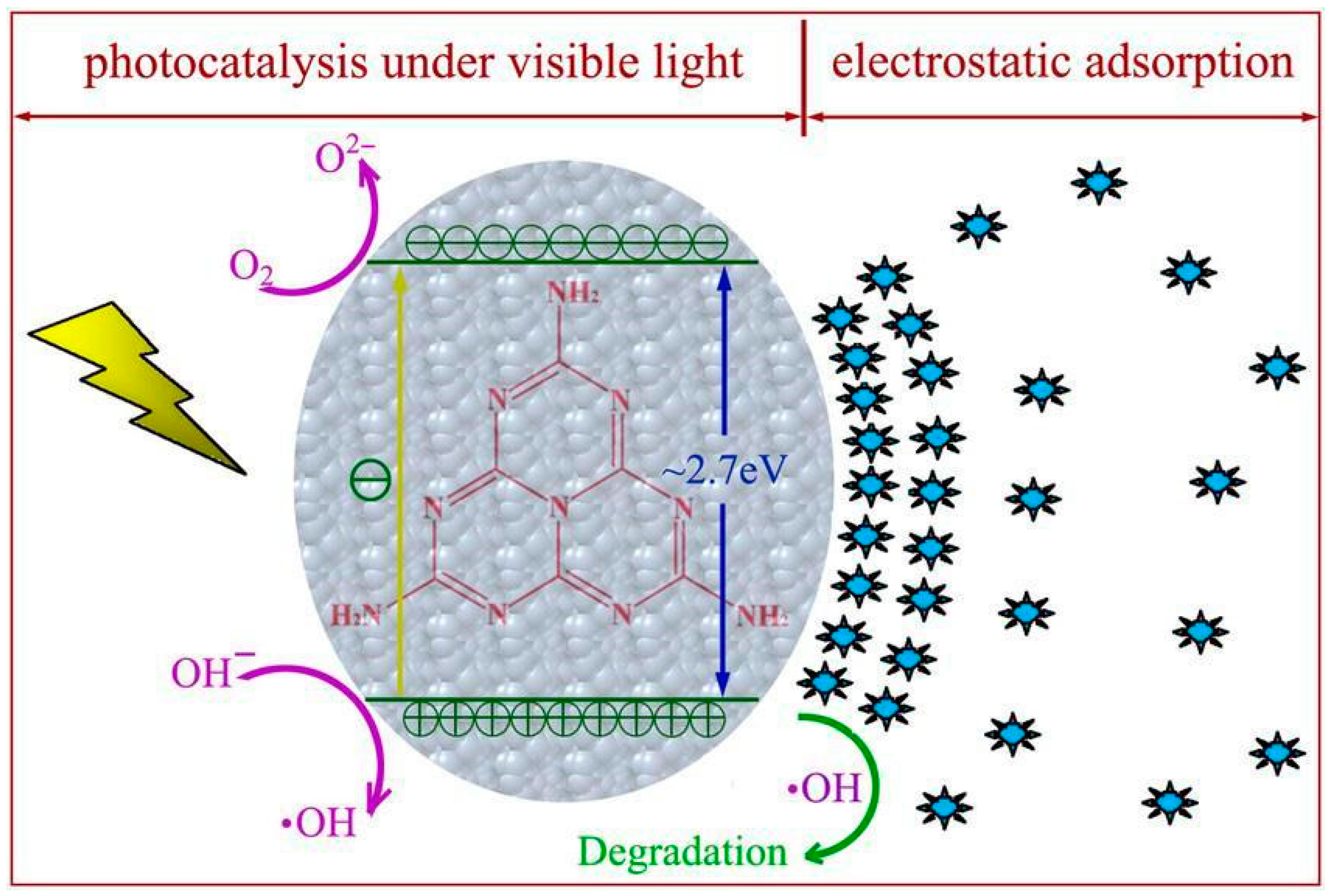
5.2. Photocatalysis
5.3. Synergistic Effects in Composites
5.4. Comparative Studies
5.5. SEM Test
5.6. Reusability and Stability
6. Comparative Study Findings
- Mechanistic understanding, band-gap characterization, and selectivity tuning in BBAC-metal oxide composites
- Doping-Induced Band-Gap Changes and Charge-Carrier Dynamics
6.1. Mechanistic Understanding and Future Directions
- Interfacial Charge Transfer: How the BBAC’s high conductivity facilitates the transfer of photogenerated electrons from the active sites (like Cu2O, CuO, or MoS2) to oxidants like H2O2 or adsorbed O2. [1]
- Heterojunction Efficacy: How the formation of p-n or Schottky heterojunctions promotes the separation of photogenerated electron–hole pairs, thereby reducing recombination and boosting catalytic activity. The sources provide evidence for this synergy: for example, the Cu-g-C3 N4/BC composite shows that the synergistic effect increases the density of photogenerated electrons and promotes separation [12].
- Distinguishing Electromagnetic Field Enhancement from Heating Effects (Advanced Mechanism): Moving beyond simple light absorption, future mechanistic studies must address the paradox of thermal vs. non-thermal effects, particularly in plasmonic or Mie-resonant composites (such as those containing Ag or Cu. Utilizing concepts from Tuning Catalytic Activity and Selectivity in Photocatalysis on Mie-Resonant Cuprous Oxide Particles, it is essential to distinguish between two concurrent light-matter interactions:
- -
- Electromagnetic Field Enhancement (Non-Thermal): The generation of strong localized electromagnetic fields (the “antenna” effect) which accelerates the non-thermal generation of electron–hole pairs and drives the catalytic reaction.
- -
- Photothermal Heating (Thermal): The generation of local heat via non-radiative decay. Quantifying the distinct role of these mechanisms is critical because while field enhancement consistently boosts catalytic rates, the heating effect can be parasitic or alter reaction selectivity. Tuning the excitation wavelength allows researchers to selectively maximize the electromagnetic field enhancement at resonance frequencies while minimizing detrimental thermal effects, a level of control necessary for developing high-selectivity BBAC photocatalysts.
- Wavelength Tuning for Selective Control: The sources confirm that different light sources were used across various studies: natural light for the AC/MoS2 composite, visible light for the Ag-loaded ZnO:CNT composite and the photo-Fenton system using Cu-g-C3N4/BC, and UV light for Sorghum-derived Carbon Dots. [1,5,11,12]. The sources also acknowledge that TiO2’s effectiveness under visible light is improved through modifications or by exploiting the self-degradation properties of certain dyes. [10].
- Excitation Wavelength Dependence: Tuning the wavelength can control which reactive oxygen species are predominantly generated (e.g., favoring reductive pathways by exciting specific plasmon resonances) [1].
- Selective Degradation: Understanding this control is key for developing composite catalysts that can selectively degrade specific components in mixed dye effluents.
- Tuning Selectivity via Advanced Engineering: The sources detail extensive modification and engineering strategies, including magnetic functionalization (e.g., BC-IM), surfactant modification (CTAB-modified BAC), and heterojunction design (Cu-g-C3N4/BC). [4]
- Radical Species and Modification: The Cu-g-C3 N4/BC composite study did use Electron Paramagnetic Resonance (EPR) tests to identify the active species resulting from its particular design. These tests confirmed that hydroxyl radicals (•OH) were the main active species, with minor roles played by superoxide radicals (•O2−) and photogenerated holes (h+).
- Intentional Tuning: While this confirms the resulting radical dominance, the sources do not explicitly report any study that intentionally used advanced techniques like defect engineering (e.g., creating specific oxygen vacancies) or facet control to deliberately shift the balance between •OH and •O2− or h+ in order to tune selectivity between different types of pollutants.
6.2. Current Challenges
6.3. Knowledge Gaps
- Time-Resolved Photoluminescence (TRPL) SpectroscopyPurpose: TRPL is used to quantitatively measure the radiative decay kinetics of photogenerated charge carriers, providing a direct measurement of electron–hole pair recombination rates.
- Key Observables: Longer Lifetime: A significant increase in the photoluminescence lifetime (τ) (typically measured in nanoseconds to microseconds) for the BBAC-metal oxide composite (e.g., AC/MoS2 or Cu-g-C3N4/BC) compared to the pristine metal oxide (MoS2 or TiO2) would quantitatively confirm reduced electron–hole recombination.
- Quenching of PL Intensity: A strong quenching (reduction) in the overall photoluminescence intensity of the composite relative to the metal oxide component provides evidence that the BBAC acts as an efficient electron sink, pulling electrons away from the semiconductor and promoting separation at the heterojunction interface.
- Transient Absorption Spectroscopy (TAS) and Ultrafast TAS (UTAS)Purpose: TAS and UTAS probe the non-radiative fate of photogenerated species by monitoring transient changes in absorption over time, allowing the tracking of free carriers, trapped charges, and intermediate radicals across timescales ranging from femtoseconds to milliseconds.
- Key Observables: Interfacial Transfer Kinetics: TAS can measure the rate of charge injection or transfer across the heterojunction interface. The instantaneous decay of the semiconductor signal (e.g., the signal attributed to conduction band electrons in ZnO or TiO2) and the simultaneous appearance of a new signal attributed to trapped electrons on the highly conductive bamboo charcoal (BBAC) surface would prove rapid and efficient interfacial charge transfer.
- Trapped-State Lifetimes: An extended lifetime for the charge carriers trapped on the BBAC surface, compared to the bulk recombination time within the pure metal oxide, would demonstrate that the BBAC supports effective charge separation and stabilizes the required carriers for degradation, thereby enhancing catalytic activity.
- Time-Resolved Electron Paramagnetic Resonance (TR-EPR)Purpose: While standard Electron Paramagnetic Resonance (EPR) is cited for identifying stable, long-lived reactive species such as hydroxyl radicals (•OH), TR-EPR measures the kinetics of formation and decay of these radicals and other paramagnetic charge carriers.
- Key Observables: Radical Formation Rate: TR-EPR would measure the rate of formation of key reactive oxygen species (•OH and •O2−) immediately following light excitation in the composite compared to the pure semiconductor. A faster and higher concentration of radical species generated by the composite would quantitatively link the enhanced charge separation at the heterojunction to the increased production of the potent oxidizing agents responsible for degradation.
- Active Site Verification: TR-EPR can confirm the role of specific trapped-hole signatures in generating •OH from adsorbed water (H2O) or hydroxide (OH−) ions, providing molecular-level evidence of how the holes migrating through the heterojunction are utilized for pollutant oxidation.
6.4. Future Directions
- Sustainable Synthesis and Activation Methods
- 2.
- Advanced Doping and Surface Engineering
- 3.
- In-depth Mechanistic Studies
- 4.
- Scalability and Real-World Applications
- 5.
- Integration with Emerging Technologies
- 6.
- Holistic Sustainability Assessment
7. Conclusions
Author Contributions
Funding
Data Availability Statement
Conflicts of Interest
References
- Adaikalapandi, S.; Thangadurai, T.D.; Sivakumar, S.; Manjubaashini, N. Decoration of 2 H-MoS2 on the surfaces of activated carbon derived from bamboo stem biomass waste: A regenerative novel architecture for effective degradation of methylene blue under natural light. Colloids Surf. A Physicochem. Eng. Asp. 2024, 684, 133039. [Google Scholar] [CrossRef] [Scilit]
- Tang, D.; Zhao, R.; Li, F.; Chen, T.; Tang, Y. Surface Modification of Bamboo-based Activated Carbon for Methylene Blue Removal. PBM 2023, 8, 12–25. [Google Scholar] [CrossRef] [Scilit]
- Alanazi, H.S.; Farooqui, M.; Khan, A.; Mohammad, A.; Alam, M.N.; Kumar, R. Hydrothermal assisted synthesis of indium doped zinc vanadate decorated multi-walled carbon nanotubes composite for photocatalytic degradation of acridine orange dye. Res. Chem. Intermed. 2025, 51, 569–2590. [Google Scholar] [CrossRef] [Scilit]
- Panchal, T.; Thotagamuge, R.; Gupte, A.K.; Singh, R.; Thotagamuge, S.; Shah, M. Advancing Biological Methods as a Sustainable Solution for Reactive Dye Wastewater Treatment. Biol. Bull. Rev. 2025, 15, 275–291. [Google Scholar] [CrossRef] [Scilit]
- Wagh, S.S.; Chougale, A.S.; Survase, A.A.; Patil, R.S.; Naik, N.; Naushad, M.; Pathan, H.M. Rapid photocatalytic dye degradation, enhanced antibacterial and antifungal activities of silver stacked zinc oxide garnished on carbon nanotubes. Sci. Rep. 2024, 14, 14045. [Google Scholar] [CrossRef] [Scilit]
- Negash, A.; Derseh, L.M.; Tedla, A.; Yassin, J.M. Eco-friendly synthesis of CuO/Bi2O3 nanocomposite for efficient photocatalytic degradation of rhodamine B dye. Sci. Rep. 2024, 14, 23393. [Google Scholar] [CrossRef] [Scilit]
- Zhang, Q.; Zeng, Y.; Xiao, X.; Deng, P.; He, Q.; Zhang, T. Investigation on the Preparation and Adsorption Performance of Bamboo Fiber Based Activated Carbon. Fibers Polym. 2019, 20, 293–301. [Google Scholar] [CrossRef] [Scilit]
- Liu, Q.; Deng, W.-Y.; Zhang, L.-Y.; Liu, C.-X.; Jie, W.-W.; Su, R.-X.; Zhou, B.; Lu, L.-M.; Liu, S.-W.; Huang, X.-G. Modified Bamboo Charcoal as a Bifunctional Material for Methylene Blue Removal. Materials 2023, 16, 1528. [Google Scholar] [CrossRef] [Scilit]
- Gupta, S.; Ben, S.K.; Chandra, V. Enhanced degradation of crystal violet dye under solar light by zirconium phosphate-decorated graphitic carbon nitride. Res. Chem. Intermed. 2024, 50, 3523–3542. [Google Scholar] [CrossRef] [Scilit]
- Kulkarni, P.S.; Bamb, R.D.; Watwe, V.S.; Kulkarni, S.D. Enhanced Sunlight Driven Photocatalytic Degradation of Methylene Blue Dye Using TiO2: Exploiting the Self-dye Degradation Property and pH Specificity in a Novel Approach. Top. Catal. 2025, 1–12. [Google Scholar] [CrossRef] [Scilit]
- Tripti, T.; Arpita, A.; Kumar, S.; Kumar, P. Optimization of Photocatalytic Degradation Conditions of Rose Bengal Dye Using Biomass-Derived Carbon Dots. Water Air Soil Pollut. 2025, 236, 471. [Google Scholar] [CrossRef] [Scilit]
- Ji, X.; Tan, Z.; Yang, H.; Shi, Z.; Yang, J.; Alhadhrami, A.; Zhang, J.; Mersal, G.A.M.; El-Bahy, Z.M.; Guo, Z.; et al. Sustainable bamboo charcoal based nanocomposite catalysts for rapid adsorption and photo-Fenton degradation of toxic dyes. Sustain. Mater. Technol. 2024, 41, e01080. [Google Scholar] [CrossRef] [Scilit]
- Cheng, J.; Bi, C.; Zhou, X.; Wu, D.; Wang, D.; Liu, C.; Cao, Z. Preparation of Bamboo-Based Activated Carbon via Steam Activation for Efficient Methylene Blue Dye Adsorption: Modeling and Mechanism Studies. Langmuir 2023, 39, 14119–14129. [Google Scholar] [CrossRef] [Scilit]
- Pal, S.; Wareppam, B.; Singh, N.S.; Singh, L.H. Stabilized surface charge by optimizing the carbonization temperature of bamboo for sustainable dye degradation at varying pH. J. Mater. Sci. Mater. Electron. 2024, 35, 1721. [Google Scholar] [CrossRef] [Scilit]
- Azizi, A.; Amiri, P.; Roozbahani, P.A.; Shariati, M. Photocatalytic degradation of Rhodamine B dye using carbon nitride nanocomposite: RSM modeling and energy consumption studies. Nanotechnol. Environ. Eng. 2025, 10, 1–18. [Google Scholar] [CrossRef] [Scilit]
- Islam, M.A.; Choudhury, J.T.; Hossain, F.; Uddin, M.T. Competitive Langmuir Model for Dye Mixture Adsorption: Disagreement between Theoretical Ground and Application Condition. Langmuir 2025, 41, 216–230. [Google Scholar] [CrossRef] [Scilit]
- Das, A.; Sarma, A.K. Unlocking the Potential Applications of Bamboo, as an Energy Resource and Bamboo-Based Activated Carbon: A Comprehensive Review. BioEnergy Res. 2025, 18, 77–103. [Google Scholar] [CrossRef] [Scilit]
- Santhi, A.S.R.; Jeice, A.R. Leveraging bamboo leaf waste as a potential source of mesoporous silica prerequisite to facilitate the synthesis of silica nanoparticles. Chem. Pap. 2025, 79, 3505–3517. [Google Scholar] [CrossRef] [Scilit]
- Xiao, X.; Suryana, T.; Fudholi, A.; Ramadhani, A.P.; Yulianto, H.; Septianingrum, A.D.; Purbaya, R. Fe3O4/Graphene Oxide Nanocomposites for Enhanced Photocatalytic Degradation of Rhodamine-B Textile Dye Waste. Emergent Mater. 2025, 8, 3021–3034. [Google Scholar]
- Kumar, T.; Ansari, S.A.; Sawarkar, R.; Agashe, A.; Sawarkar, R.; Singh, L.; Nidheesh, P. Bamboo biochar: A multifunctional material for environmental sustainability. Biomass Convers. Biorefinery 2025, 15, 28821–28845. [Google Scholar] [CrossRef] [Scilit]
- Liu, J.; Song, X.; Gao, S.; Chen, F. Preparation and Adsorption Properties of Biomass Activated Carbon from Ginger Stems. PBM 2019, 4, 45–50. [Google Scholar] [CrossRef] [Scilit]
- Xiao, X.; Pu, Y.; Zhang, W.; Ye, H.; Wang, L.; Jia, Y.; Ge, X.; Wang, Y.; Ong, A.; Zhang, D.; et al. Hierarchical Bamboo/Silver Nanoparticle Composites for Sustainable Water Purification. Langmuir 2023, 39, 7766–7774. [Google Scholar] [CrossRef] [Scilit]
- Xu, H.-Y.; Wu, L.-C.; Zhao, H.; Jin, L.-G.; Qi, S.-Y. Synergic effect between adsorption and photocatalysis of metal-free g-C3N4 derived from different precursors. PLoS ONE 2015, 10, e0142616. [Google Scholar] [CrossRef] [Scilit]
- Bhoi, B.; Prajapati, J.; Badola, A.; Chandra, V. Photocatalytic degradation of reactive blue-4 dye from wastewater with α-Bi2O3 microrods under natural sunlight. J. Mater. Sci. Mater. Electron. 2024, 35, 1916. [Google Scholar] [CrossRef] [Scilit]
- Shah, D.U.; Konnerth, J.; Ramage, M.H.; Gusenbauer, C. Mapping thermal conductivity across bamboo cell walls with scanning thermal microscopy. Sci. Rep. 2019, 9, 16667. [Google Scholar] [CrossRef] [Scilit] [PubMed]
- Hu, Y.; He, S.; He, M.; Semple, K.; Chen, M.; Dai, C. Weathering Performance of Dyed Bamboo Fiber Composites. BioResources 2020, 15, 9523–9538. [Google Scholar] [CrossRef] [Scilit]



| Adsorbent/Composite | Precursor/Description | Max Adsorption Capacity (mg/g)/Efficiency (%) | Conditions | Reference(s) |
|---|---|---|---|---|
| AC/MoS2 (ACM) | Bamboo stem-derived AC with 5% MoS2 | 98% degradation in 90 min | Natural light, 20 ppm MB, pH 6, 10 mg catalyst | [1] |
| AC | Bamboo stem-derived AC | 94% degradation | Natural light, 20 ppm MB, pH 6, 10 mg catalyst | [1] |
| MoS2 | Synthesized MoS2 | 33% degradation | Natural light, 20 ppm MB, pH 6, 10 mg catalyst | [1] |
| BC-860 | Steam-activated bamboo AC (860 °C) | 369.28 mg/g | pH 10, 0.05 g adsorbent, 30 °C temperature | [13] |
| BC-I | NaOH-impregnated bamboo charcoal | 220.26 mg/g | 328 K | [8] |
| BC-IM | Magnetic (Fe2O3) bamboo charcoal | 497.51 mg/g | 328 K | [8] |
| BC850 | Bamboo charcoal (pyrolyzed at 850 °C) | 216.45 mg/g | pH 7, 0.25 g/L adsorbent, 20 mg/L MB | [14] |
| CTAB-modified BAC | Bamboo-based AC modified with CTAB (0.25 g/L) | 99.87% removal | Optimized conditions | [2] |
| Catalyst/Composite | Dye Tested | Degradation Efficiency (%)/Rate Constant | Conditions | Reference(s) |
|---|---|---|---|---|
| Cu-g-C3N4/BC(600) + H2O2 | MB, RhB, MO | Complete MB/RhB in 10 min, 97.5% MO in 30 min | Photo-Fenton, visible light | [12] |
| TiO2 nanoparticles | Methylene Blue | Up to 93% | Natural sunlight, pH 10 | [10] |
| Ag-loaded ZnO:CNT | Methylene Blue | ~100% in 2 min (rate constant 1.48 min−1) | Visible light, pH 9, 10 ppm MB, 10 wt% CNT | [5] |
| α-Bi2O3 microrods | Reactive Blue-4 | 97% in 1 h (rate constant 0.561 min−1) | Natural sunlight, pH 3 | [24] |
| α-ZrP/g-C3N4 nanocomposite | Crystal Violet | Rate constant 4x higher than g-C3N4 | Solar light, pH 6 | [9] |
| Sorghum-derived CDs (J 2 h) | Rose Bengal | 86.10% in 120 min (rate constant 0.016 min−1) | UV light, 5 mg CDs, 15 ppm RB, pH 7 | [11] |
| In-ZnV@MWCNT | Acridine Orange | >99.60% | UV light, 20 mg catalyst, pH 3 | [3] |
Disclaimer/Publisher’s Note: The statements, opinions and data contained in all publications are solely those of the individual author(s) and contributor(s) and not of MDPI and/or the editor(s). MDPI and/or the editor(s) disclaim responsibility for any injury to people or property resulting from any ideas, methods, instructions or products referred to in the content. |
© 2025 by the authors. Licensee MDPI, Basel, Switzerland. This article is an open access article distributed under the terms and conditions of the Creative Commons Attribution (CC BY) license.
Share and Cite
Sinnakrishna, D.; Lai, C.W.; Li, Y.; Ong, B.H.; Xiang, P.; Badruddin, I.A.; Dhiman, P.; Kumar, A. Bamboo-Derived Activated Carbon for Dye-Contaminated Wastewater Treatment: A Comprehensive Review of Synthesis, Doping Strategies, and Photocatalytic Performance. Catalysts 2026, 16, 18. https://doi.org/10.3390/catal16010018
Sinnakrishna D, Lai CW, Li Y, Ong BH, Xiang P, Badruddin IA, Dhiman P, Kumar A. Bamboo-Derived Activated Carbon for Dye-Contaminated Wastewater Treatment: A Comprehensive Review of Synthesis, Doping Strategies, and Photocatalytic Performance. Catalysts. 2026; 16(1):18. https://doi.org/10.3390/catal16010018
Chicago/Turabian StyleSinnakrishna, Dhaarisvini, Chin Wei Lai, Yue Li, Boon Hoong Ong, Ping Xiang, Irfan Anjum Badruddin, Pooja Dhiman, and Amit Kumar. 2026. "Bamboo-Derived Activated Carbon for Dye-Contaminated Wastewater Treatment: A Comprehensive Review of Synthesis, Doping Strategies, and Photocatalytic Performance" Catalysts 16, no. 1: 18. https://doi.org/10.3390/catal16010018
APA StyleSinnakrishna, D., Lai, C. W., Li, Y., Ong, B. H., Xiang, P., Badruddin, I. A., Dhiman, P., & Kumar, A. (2026). Bamboo-Derived Activated Carbon for Dye-Contaminated Wastewater Treatment: A Comprehensive Review of Synthesis, Doping Strategies, and Photocatalytic Performance. Catalysts, 16(1), 18. https://doi.org/10.3390/catal16010018