Article

The Effect of Nickel Content on a NiMoS Catalyst for Deep Hydrodearomatisation of Polycyclic Aromatic Hydrocarbons

1
State Key Laboratory of Heavy Oil Processing, China University of Petroleum, Beijing 102249, China
2
SINOPEC QILU Petrochemical Co., Ltd., Zibo 255000, China
3
SINOPEC Dalian Research Institute of Petroleum and Petrochemicals Co., Ltd., Dalian 116041, China
*
Author to whom correspondence should be addressed.
Catalysts 2025, 15(12), 1111; https://doi.org/10.3390/catal15121111
Submission received: 21 October 2025 / Revised: 10 November 2025 / Accepted: 24 November 2025 / Published: 29 November 2025

Abstract

A series of NiMo catalysts with a low MoO3/NiO mass ratio were prepared by introducing SiO2 and Ni during the formation of the support. The supports were improved by adding SiO2 to optimise the surface acidity properties, regulate the main structure of the NiMoS active phase, reduce the formation proportion of NiAl2O4, and improve the utilisation rate of Ni. The catalysts were improved by increasing the Ni content to adjust the Ni/Mo atomic ratio at the edge and corner positions of the NiMoS active phase to promote the generation and transfer of activated hydrogen. The NiMoS phase with high Ni content achieved good dispersion on the catalyst surface, reaching the highest hydrogenation saturation depth of aromatic hydrocarbon when the MoO3/NiO mass ratio is 3 and the SiO2 content is 5 wt.%. The catalysts with high Ni content also exhibit high activity and stability in removing Conradson Carbon Residue (CCR) during hydrotreating. Increasing the Ni content of the catalyst helps to remove impurities such as S and N from the residual oil.

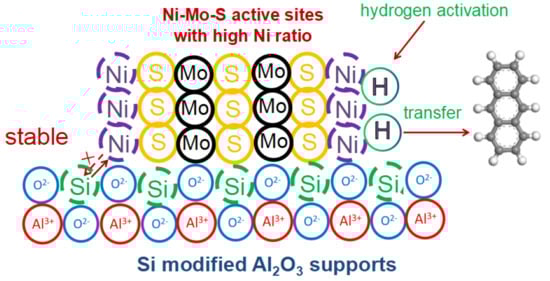
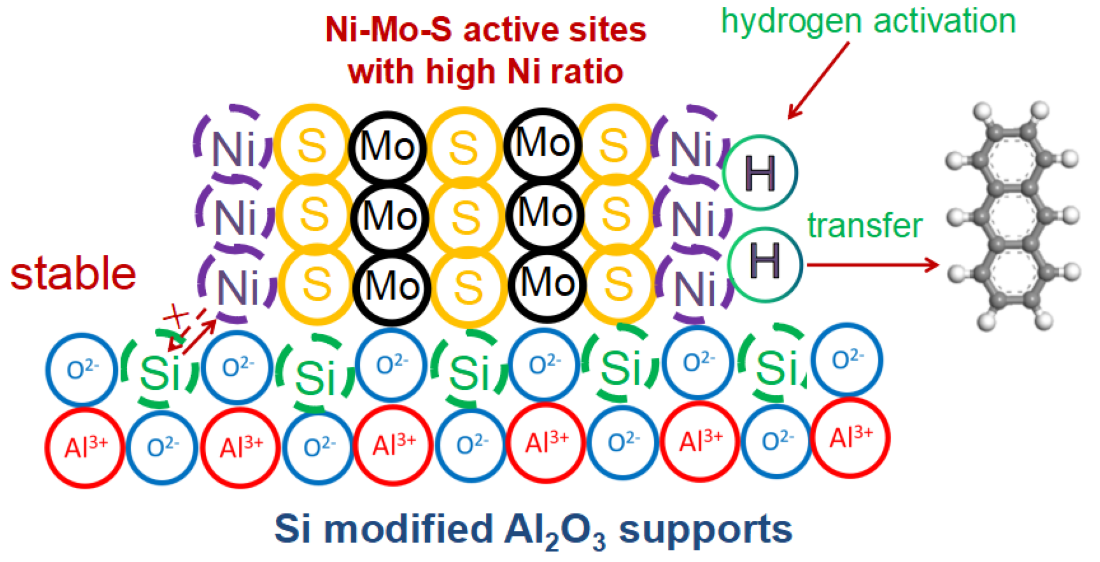
Graphical Abstract

1. Introduction

With increasingly strict environmental regulations and high market standards for fuel quality, the aromatic hydrocarbon content in fuel is strictly limited. Excess of polycyclic aromatic hydrocarbons (PAHs) in fuel oil and its incomplete combustion produce a large amount of soluble organic matter particles and coke particles, causing environmental pollution [1,2,3]. Heavy oil hydrotreating can achieve hydrodearomatisation (HDA) and remove impurities such as sulphur and nitrogen. This can increase the economic benefits while also meeting environmental regulations. Some of the raw oil pretreatment processes also require hydrotreating to reduce PAHs and meet the feed requirements of subsequent processes. Specifically, the fixed-bed residue hydrotreating process is commonly used as a pretreatment technology for the fluid catalytic cracking (FCC) process. Fixed-bed reactors have the advantages of less investment, lower operation costs, being relatively safer and simpler in operation than other residue pretreatment, and reforming technologies, such as moving-bed and ebullated-bed technology [4,5,6]. The hydrotreating of atmospheric residue (AR) using fixed-bed technology, which aims to provide qualified feedstock for subsequent processes, can effectively achieve not only hydrodemetallisation (HDM), hydrodesuphurisation (HDS) and hydrodenitrification (HDN) but also hydro-CCR (HDCCR), and it increases the hydrogen content [7,8,9]. However, the complex structure of the residue system and the high consistency of PAH molecules make it difficult to saturate the system with aromatics, and the overall conversion rate is low [10,11].
In industrial applications, the predominant catalysts for distillate hydrogenation are formed with molybdenum or tungsten and promoters, such as nickel or cobalt, with alumina as support because of its stable catalytic activity and low cost [12,13]. In the pre-sulphurisation stage of the catalyst, the oxidised active metal is sulphided to form the transition metal sulphide (NiMoS) with special hydrogenation activity. This active phase structure has HDS, HDN, and HDA functions. However, the HDA capacity of these catalysts is limited, and they have difficulty catalysing the hydrogen saturation of PAHs under more moderate reaction conditions [14,15]. In addition, the strong acidity on the surface of γ-Al2O3 tends to form nickel–aluminium spinel (NiAl2O4) with NiO at higher roasting temperatures, and in this structure, the Ni is difficult to utilise because of the overly strong interaction between the active metal and support [16]. For high activity and more precision in selectivity, the use of molecular sieves such as ZSM-5, USY, and SBA-15 as catalyst supports to improve catalyst isomerisation and cracking activity has been reported [17,18,19,20]. Moreover, the addition of other oxides (TiO2, SiO2, ZrO2, etc.) or promoters such as phosphorus and boron during the support moulding process to modulate the acidity of the support has also been reported, and such methods can effectively increase the HDS and HDN activities of the catalysts [21,22,23].
In the HDA process, increasing the accessible positions of polycyclic aromatic hydrocarbons on the active phase and strengthening the generation and transfer of activated hydrogen on the surface of the active phase play crucial roles. NiMo catalysts have a better aromatic saturation effect in practical applications, and the content of Ni has a more obvious effect on the deep aromatic saturation capacity of distillate oils. In the current catalyst preparation process, the lower MoO3/NiO mass ratio seriously affects the stability of the active metal solution system, resulting in poor active metal dispersion, nickel and molybdenum partitioning, etc. [24].
In this study, in order to increase the effective Ni loading in the catalyst, maintaining high catalyst stability while improving the PAH saturation ability of the catalyst, amorphous silica alumina (ASA) with a high pore volume and moderate acid strength was used as an additive to modify the surface acidity of the support [25]. By adjusting the acid strength of the support to regulate the active metal–support interaction, it is possible to achieve better dispersion of the active metal while reducing the formation ratio of NiAl2O4 during the catalyst preparation process [26]. Breaking the limitations of traditional catalyst preparation processes and reducing the mass ratio of MoO3/NiO, it is possible to increase the proportion of Ni atoms on the active phase and promote the generation and transfer of activated hydrogen on the active phase [27].

2. Results and Discussion

2.1. Characterisation of the Supports

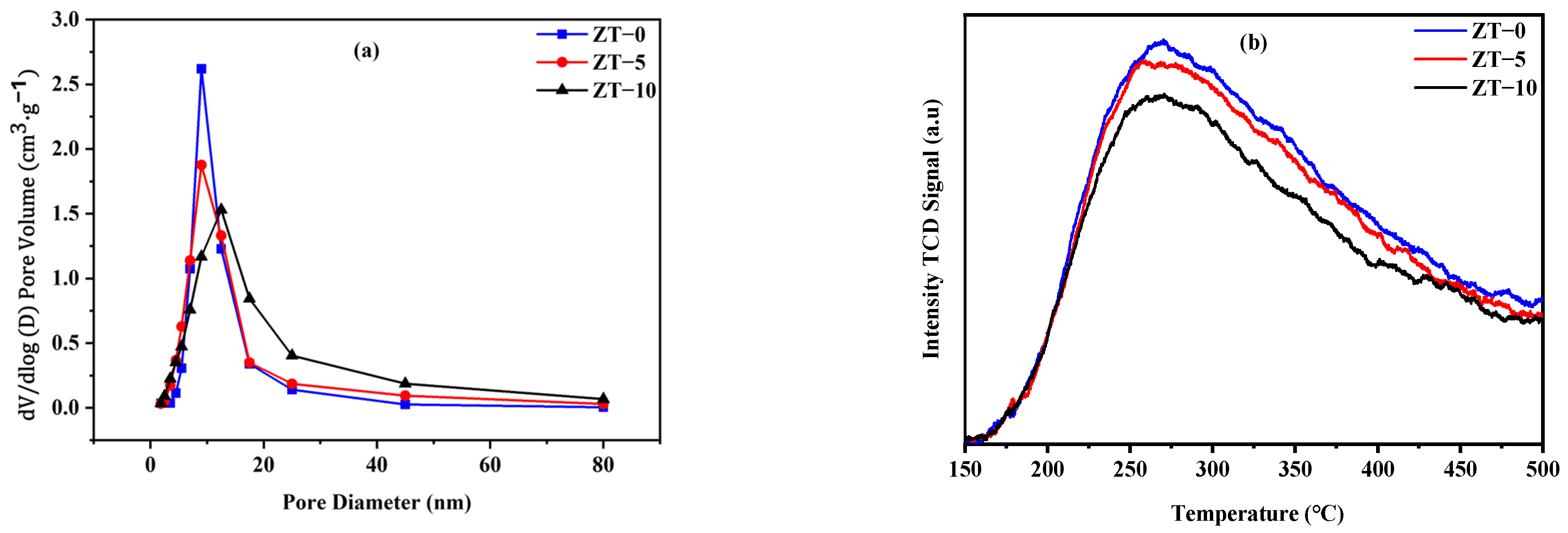
The textural properties of the support significantly influence the diffusion of PAHs, and the dispersion of active metals on the inner surface of the support pores is closely related to these properties. Several supports with different SiO2 contents were prepared by adjusting the amount of SiO2 to control their acidity. Table 1 shows the pore structure characteristics of the sample after calcination at 550 °C for 4 h, and Figure 1a shows the pore size distribution of the three calcination supports. As the amount of ASA increases, the surface areas decrease, while the pore volumes and average pore sizes increase. The ZT-0 sample displays the highest surface area of 367.48 m2·g−1; the ZT-10 sample possesses the highest pore volume of 0.81 cm3·g−1 and the highest pore size of 9.40 nm.
To confirm the effects of the compositional changes on the support acidity, after calcination at 550 °C for 4 h, the samples of ZT-0, ZT-5, and ZT-10 were characterised using NH3-TPD. As shown in Figure 1b, all samples exhibit a main NH3 desorption peak near 270 °C with a single-peak distribution, which indicates that all the supports are primarily medium and strong acids [28,29]. As the proportion of ASA increases, the total acidity of the supports decreases. These results may be related to the increased number of Si-O-Si bonds in the ASA, which reduces the number of medium-strength acid sites in the support. The ZT-5 and ZT-10 samples have lower amounts of medium and strong acid sites than the ZT-0 sample. This occurs because the acid sites are covered with ASA, which alters its surface properties as the SiO2 introduction increases; meanwhile, the decrease in the sample surface area will also change the total acidity. Above all, the incorporation of SiO2 modifies the acidity of the Al2O3 surface, which will weaken the strong interaction between the active metal and Al2O3 [30]. Due to the significant decrease in the total acidity of the ZT-10 sample, we further investigated the properties of the Al2O3 sample ZT-5, which was surface acid-modified with SiO2.
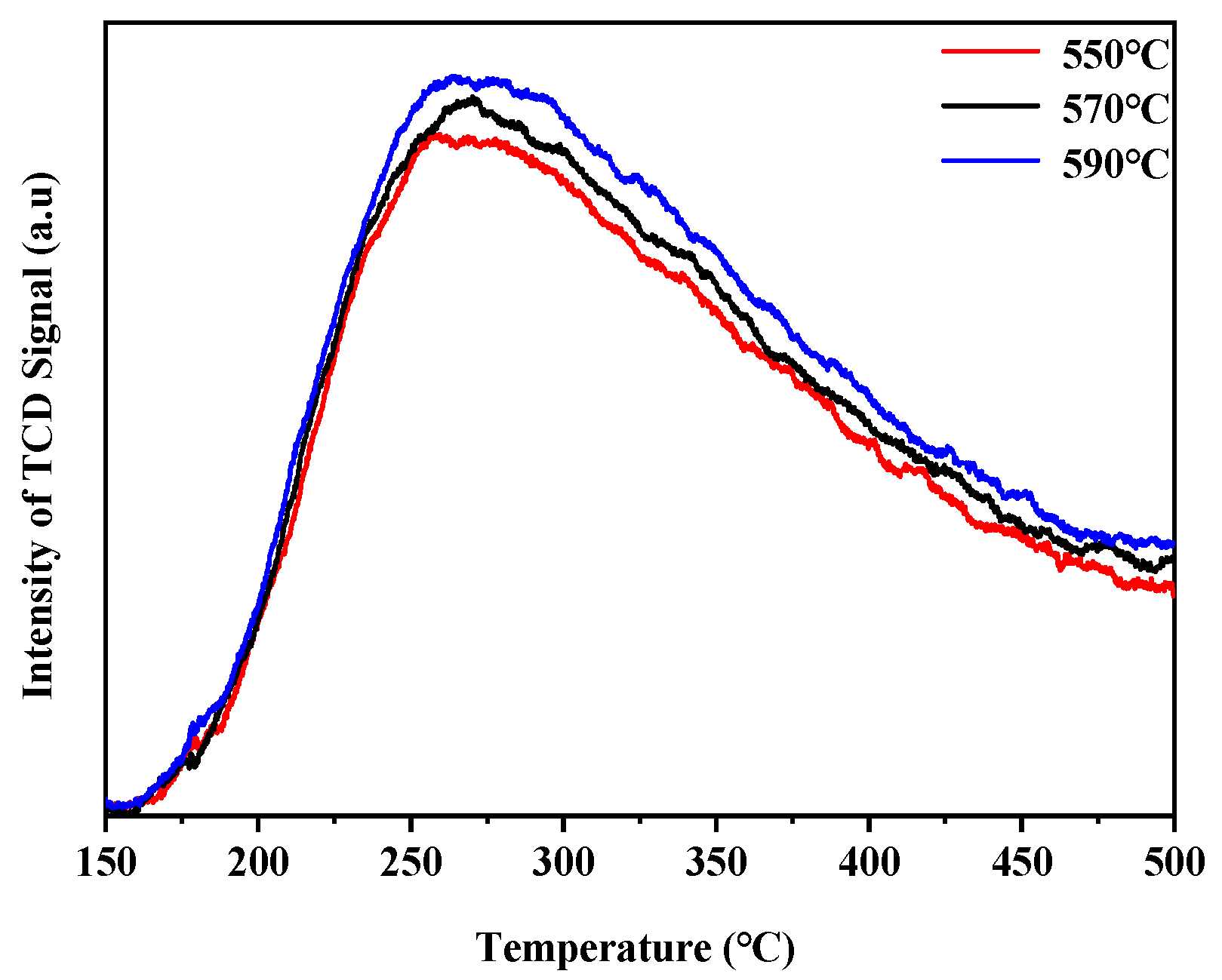
As is well-known, the calcination temperature significantly impacts the dehydroxylation of the support surface. Therefore, the dried samples of ZT-5 were calcined at 550 °C, 570 °C, and 590 °C, respectively, and the results of the characterisation are shown in Table 2. As the calcination temperature increases, there is a decrease in the surface areas in all three samples, while the pore volume and pore diameter increase. The results of the NH3-TPD analysis shown in Figure 2 indicate that the peak temperatures for the NH3 desorption peaks in all the samples are around 270 °C, and no significant differences were observed in the desorption curves. This suggests that the calcination temperature did not significantly impact the distribution of the acid strength, which remained predominantly medium-strength acid. Conversely, the total acid content of the support increases with the increase in the calcination temperature. This is due to the increased formation of Si-O-Al bonds in the support at higher temperatures. However, this degree of heating does not significantly impact the removal of silicon hydroxyl groups [31].

2.2. Characterisation of the Catalysts

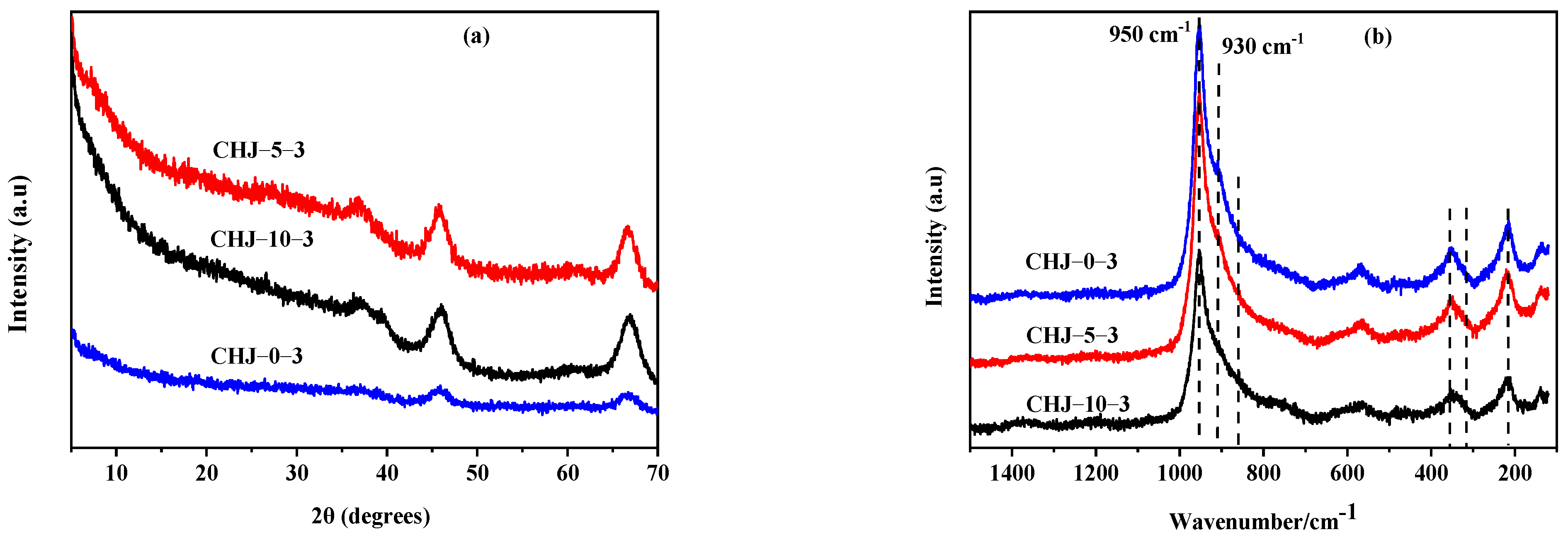
The composition information and the XRD patterns of various catalysts with a MoO3/NiO ratio of 3 are provided in Table 3 and shown in Figure 3a. The figure depicts the characteristic diffraction peaks at 37.2°, 39.5°, 45.5°, and 66.6°, corresponding to the (311), (322), (400), and (440) crystal planes of γ-Al2O3, respectively. No characteristic diffraction peaks for other species, such as MoO3 or NiO, were observed in the three catalysts with higher Ni content. This suggests that in the high-Ni catalysts, the NiO and MoO3 remain dispersed uniformly on the surface of the support as small particles or microcrystals, which makes them undetectable via XRD.
The strength of the interactions between the support and the active metal directly affects the state of the metal on the catalyst surface. The Raman spectra of the three catalysts are shown in Figure 3b. As reported, the characteristic peaks near 200 cm−1 and 577 cm−1 belong to the stretching mode of Mo-O-Mo and Mo-O-Al, respectively [32]. The Raman shift around 930 cm−1 corresponds to tetrahedral molybdenum (Mo) species, which interact strongly with the support and are difficult to reduce, resulting in low utilisation. The Raman shifts around 950 and 350 cm−1 correspond to octahedral Mo species that interact weakly with the support and are easily reduced, thus possessing higher availability [33]. Moreover, the figure shows that the proportion of tetrahedral Mo species in the catalyst decreases as the SiO2 content in the support increases, which indirectly confirms that introducing SiO2 into the support weakens the interaction between the support and the active metal. For the three catalysts with a MoO3/NiO ratio of 3, the peak intensity near 930 cm−1 decreased as the SiO2 content increased, suggesting that a higher concentration of SiO2 in the support material decreased the proportion of difficult-to-reduce Mo species in the catalyst. This is because the strong acid sites are covered with ASA, which optimises the surface acid strength, modulates the metal–support interactions, and ultimately reduces the formation of hard-to-reduce Mo species on the catalyst surface.
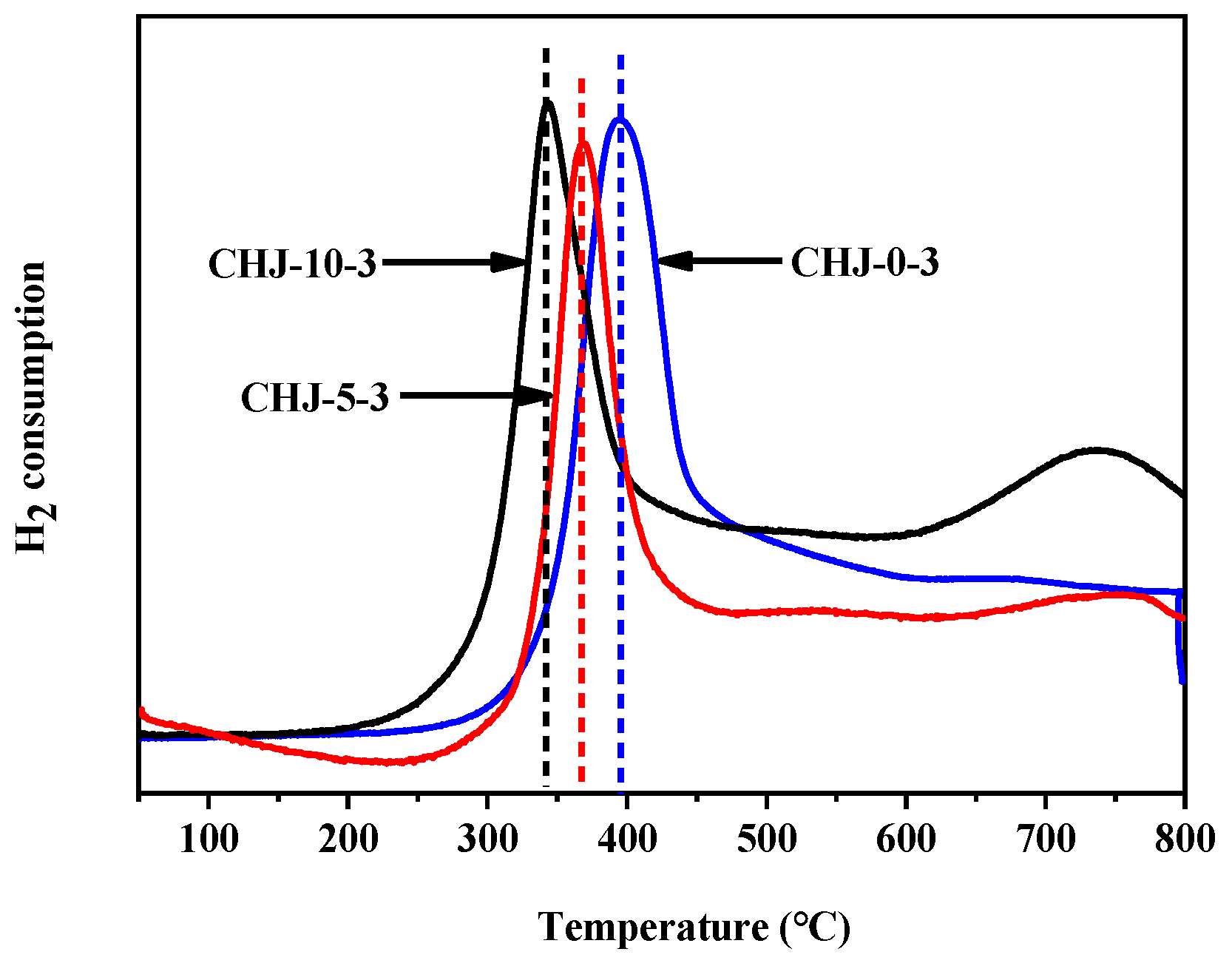
H2-TPR measurements were performed to obtain more information on the interactions between the metals and supports. The H2-TPR profiles of the three different NiMo catalysts are shown in Figure 4. All profiles exhibit a primary reduction peak around 300–500 °C, which corresponds to the step of low-temperature reduction of Mo6+ to Mo4+ of highly dispersed octahedral Mo species. The reduction peak observed between 600 °C and 800 °C is associated with the high-temperature reduction of octahedral Mo species Mo4+ to Mo0 and the reduction of less readily reduced tetrahedral Mo species. Analysis of the peak temperatures of the primary reduction peaks of the three catalysts indicates that CHJ-0-3 exhibits the highest reduction temperature, reflecting the strongest metal–support interactions, while CHJ-10-3 exhibits the lowest peak temperature. This is attributed to the fact that the strong acidic sites are covered with ASA, which effectively reduces the metal–support interactions. No reduction peaks for other species were observed in the spectra, indicating that Mo remains well-integrated with Ni on all three catalysts without the active metal separating from the support surface, even with an increased Ni content.
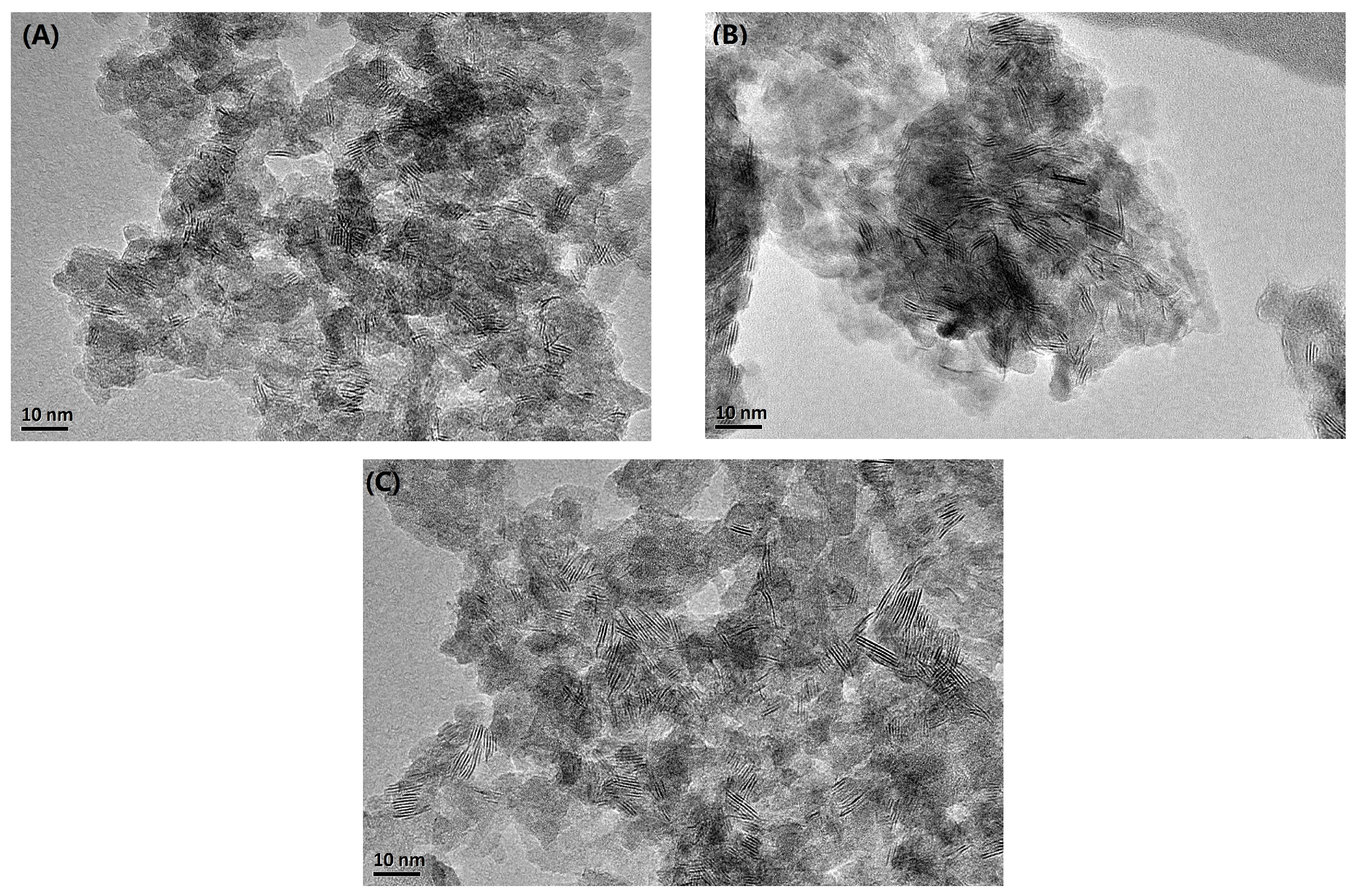
To observe the differences in the dispersion morphology of the active NiMoS phase on various support surfaces, the TEM images of serial sulphide catalysts are presented in Figure 5. Additionally, a statistical analysis of the average slab length and stacking layers of MoS2 crystallites is accomplished by counting 30 micrographs with more than 300 slabs, and the results are summarised in Table 4. The results of the characterisation indicate that the high surface roughness of the support on the CHJ-0-3 sulphide catalyst prevents the formation of sufficiently long active NiMoS crystallites. Furthermore, strong support–metal interactions result in fewer stacking layers within these active crystallites. This significantly increases the dispersion of active metals but may hinder the transfer of active hydrogen between the same active crystalline layers. For the CHJ-10-3 sulphide catalyst, the relatively high SiO2 content allows longer active NiMoS crystallites to form with increased stacking layers. While this improves the transfer efficiency of active hydrogen within the same crystalline layers, it reduces the utilisation rate of active metals overall. The CHJ-5-3 sulphide catalyst presents moderate slab length and stacking layers. Thus, it maintains the overall utilisation rate of the active metal while ensuring an appropriate crystalline length and stacking layers, which enhance the adsorption of hydrocarbon on the surface of the active phase [34,35].
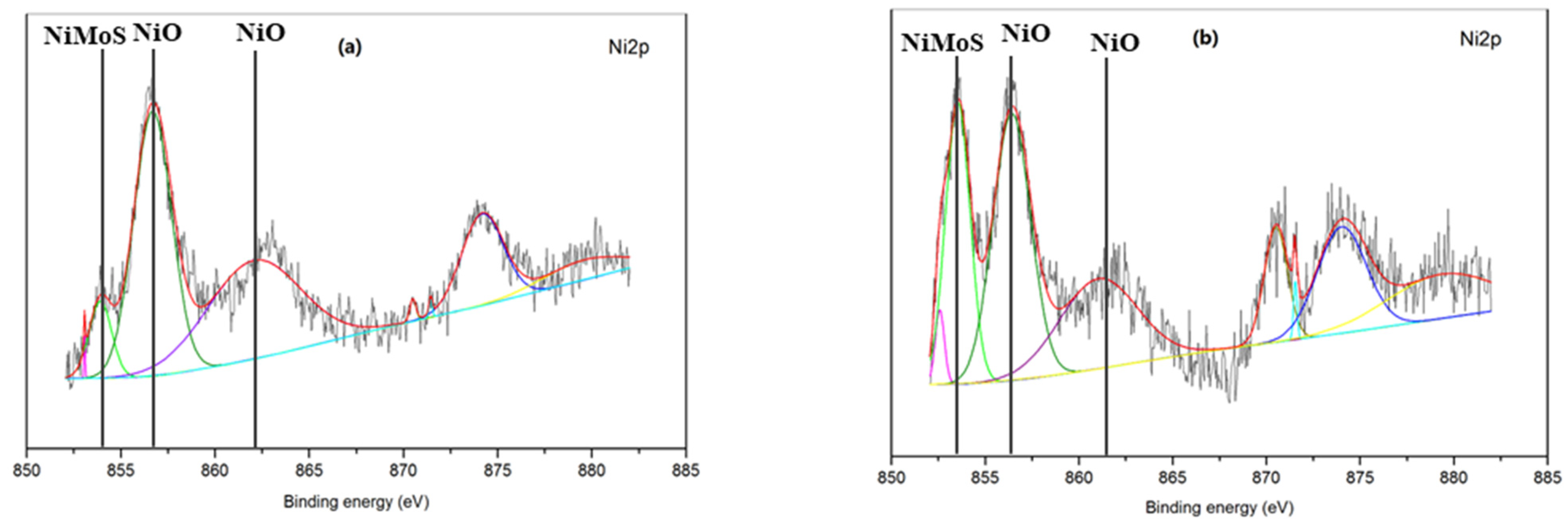
The Ni 2p XPS spectra of the sulphide CHJ-0-5 and CHJ-5-3 catalysts are shown in Figure 6. The binding energies at 856.2 eV and 862.0 eV correspond to NiO species, which belong to the NiAlO4 phase, which is difficult to reduce and sulphide. The binding energy at 852.7 eV corresponds to Ni-Mo-O species, while the binding energy at 853.5 eV is attributed to Ni-Mo-S species, which is the only species exhibiting hydrogenation activity [36,37]. The corresponding peak-fitting data assigned to the Ni species are summarised in Table 5. The data indicate that NiO species constitute the majority of the Ni species. The surface of the modified CHJ-5-3 sulphide catalyst forms more Ni-Mo-S species while reducing NiO species. This is attributed to the introduction of Si, which alters the acid strength and species on the support surface and optimises the metal–support interactions. The reduction of the NiAlO4 phase enables more Ni species to participate in forming highly catalytic Ni-Mo-S species and enhances Ni utilisation.

2.3. Catalytic Activity

2.3.1. Catalytic Performance of FCC Diesel

A series of catalysts were prepared to assist in evaluating the performance of the catalysts in the hydrogenation of FCC diesel. The primary properties of the FCC diesel are displayed in Table 6, and the reaction results are provided in Table 7. Due to the lower active metal loading of the catalyst prepared in this study (20.4–22.7 wt.%) compared to the industrial FCC diesel hydrogenation catalyst (25–35 wt.%), the lower hydrogenation conversion rate in Table 7 is reasonable. The CHJ-5-3 catalyst has a higher aromatic hydrocarbon deep saturation function than the other catalysts. The increase in the effective Ni content promotes the deep hydrogenation saturation performance of the catalyst for polycyclic aromatic hydrocarbons, and the reasons for this improvement can be explained by the increase in accessible adsorption sites for polycyclic aromatic hydrocarbon molecules on the active phase and the strengthening of activated hydrogen production and transmission. In addition, this advantage is more pronounced in the catalyst with 5% SiO2 introduction. However, the two catalysts containing 10% SiO2 did not demonstrate a higher HDA capacity. This is attributed to the relatively dispersed pore structure of the support, which hinders the diffusion of the reactant molecules. Additionally, at 10% SiO2, the interaction between the support and the active metal is weaker, resulting in reduced dispersion of the active metal and lower utilisation. Interestingly, catalysts without SiO2 exhibited higher HDS and HDN removal rates, with a more pronounced difference observed in the HDS reaction. This indicates that, due to differences in the adsorption mechanisms of various hydrocarbon molecules on the active phase, the mechanisms of HDA, HDN, and HDS in FCC diesel exhibit distinct characteristics [38]. Therefore, the grading technology with different functional catalysts is often adopted in industry to obtain high-quality hydrogenated refined diesel. The sulphur content will not have a significant impact on the activity and stability of the catalyst, due to the absence of precious metal catalysts as active metals in this study [39].
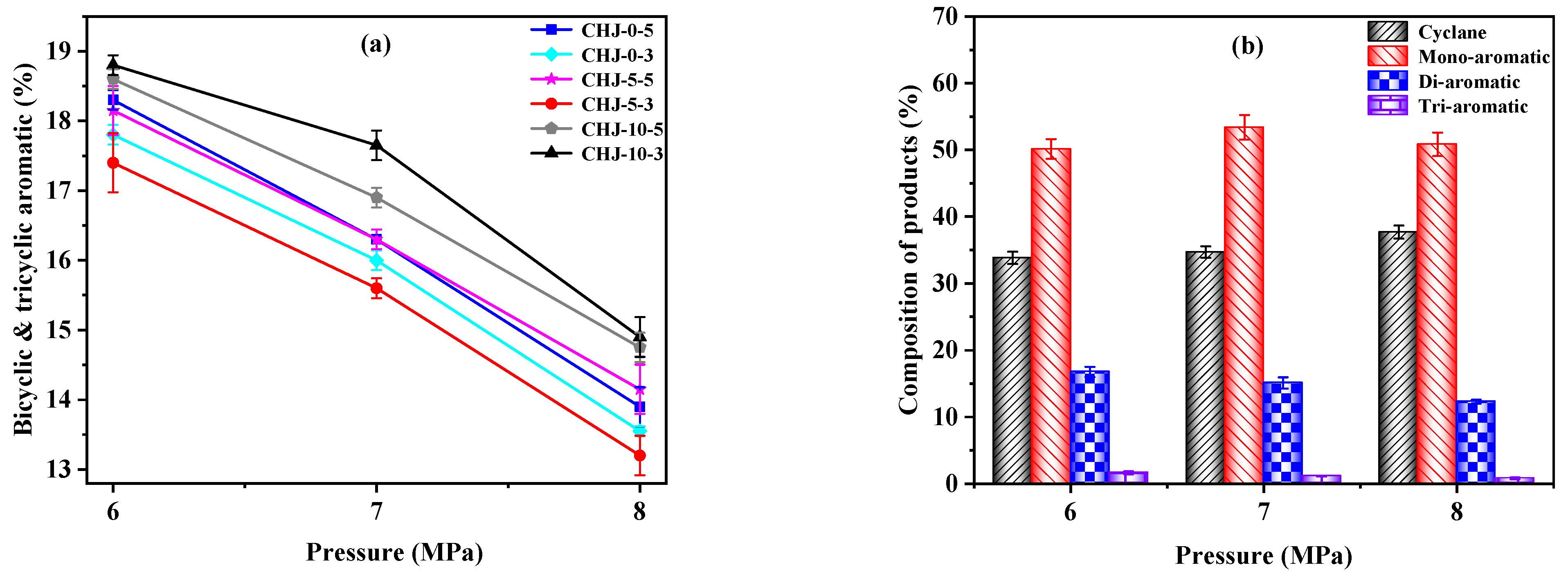
To further investigate the effect of pressure on HDA, the variation in bicyclic aromatics and tricyclic aromatics in the hydrogenation products at 360 °C was analysed for each catalyst, with pressure being the sole variable. As can be seen from Figure 7a, an increase in pressure reduces the ratio of bicyclic aromatics to tricyclic aromatics in the hydrogenation oil. This indicates that a higher pressure promotes the hydrogenation of PAHs in diesel. Among samples with a SiO2 content of ≤5%, the catalyst with the MoO3/NiO ratio of 3 exhibited a lower bicyclic and tricyclic aromatic ratio (SD < 0.43%). This indicates that the active NiMoS phase of the high-Ni catalyst produces more active hydrogen, which is then transferred more easily to the vicinity of the reactant molecules. In contrast, the two catalysts with 10% SiO2 content did not demonstrate high conversion capabilities for bicyclic and tricyclic aromatic (SD < 0.29%). This suggests that, on these catalysts, the NiMoS active phase did not form a large number of active centres that are conducive to the hydrogenation of PAHs. Overall, the catalytic activity of the CHJ-0-3 and CHJ-5-3 catalysts is significantly higher than the CHJ-10-3 and CHJ-10-5 catalysts, although the CHJ-0-3 and CHJ-5-3 catalysts have slightly larger error bars for the bicyclic aromatic and tricyclic aromatic content.
The alterations to the hydrocarbon group composition of the CHJ-5-3 catalyst in the hydrogenation products are illustrated in Figure 7b. As the reaction pressure increases, the proportion of saturated hydrocarbons in the product can increase to 37.7% ± 1%, while the proportion of monocyclic aromatics first increases to 53.4% ± 1.9% and then decreases to 50.85% ± 1.8%, indicating that a small quantity of monocyclic aromatics at higher hydrogen pressures undergo deep hydrogenation saturation. Furthermore, the bicyclic aromatic content (SD < 0.90%) and tricyclic aromatic content (SD < 0.22%) in products of the CHJ-5-3 catalyst experience continuous hydrogenation saturation and conversion as the pressure increases.

2.3.2. Catalytic Performance of the Residual Oil

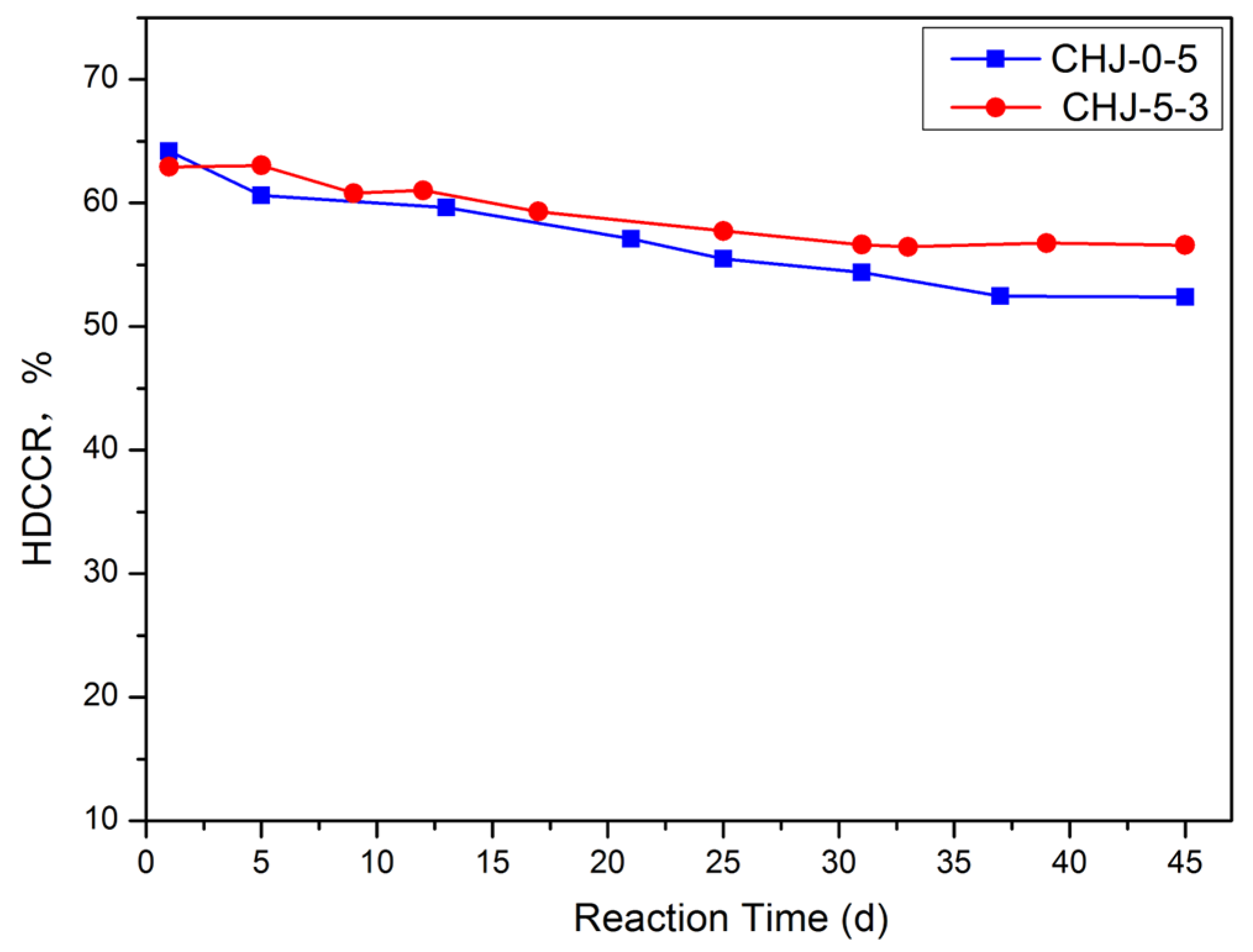
To further validate the hydrogenation conversion capability of the high-Ni content catalysts for PAHs, hydrotreating of AR was used on the CHJ-0-5 and the CHJ-5-3 catalysts. Table 8 shows the properties of the AR, and Figure 8 presents the result of the HDCCR. The composition and activity of the current fixed-bed residue oil industrial catalyst are similar to those of CHJ-0-5. According to the data in the figure, both catalysts exhibit HDCCR capability exceeding 50%, with the CHJ-5-3 catalyst achieving a higher HDCCR removal effect [40]. The activity and stability of HDCCR meet, even showing advantages in the current application standards for industrial residue hydrogenation catalysts. This suggests that, for PAHs, optimising the NiMoS active phase structure by regulating support–metal interactions on the catalysts and enhancing the active phase microstructure through increased Ni content in the co-metal achieves superior HDCCR performance.
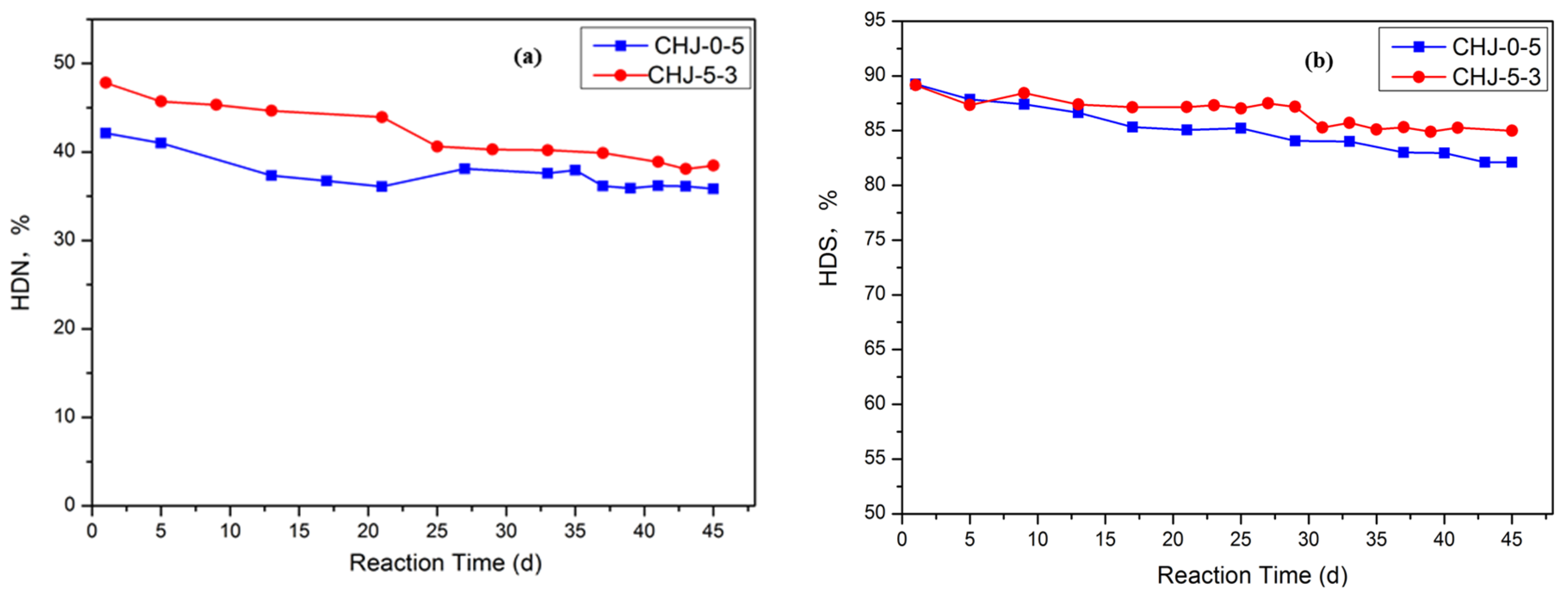
Simultaneously, the performance of HDN and HDS over CHJ-0-5 and the CHJ-5-3 catalysts was also been evaluated. In industrial applications, fixed-bed residue HDCCR catalysts often simultaneously undertake HDN catalytic activity; therefore, the composition and activity of industrial HDN catalysts are similar to CHJ-0-5. As can be seen in Figure 9a, both catalysts exhibit stable HDN activity, and the CHJ-5-3 catalyst demonstrates higher levels of activity. The reason why these results differ from those observed in diesel hydrogenation is that nitrogen compounds in residual oil are often found in aromatic molecules with more complex structures, which restricts the adsorption mechanism of nitrogen compounds on the NiMoS active phase. The upgraded scheme of the catalyst increases the number of flat adsorption sites on the NiMoS active phase and enhances the generation and transfer of active hydrogen. This process facilitates the adsorption and hydrogenation of polyaromatic nitrogen compounds, which ultimately promotes their removal.
Figure 9b shows the results of the HDS performance. There is a specialised catalyst responsible for fixed-bed residue HDS in industrial applications, and the composition differs significantly from the catalyst prepared in this study. The HDS activity of the catalyst described in this article cannot yet reach the level of the industrial HDS catalyst. Meanwhile, the HDS efficiency of both catalysts exceeds 80%, meeting the requirements of industrial catalysts for HDS activity. In addition, the CHJ-5-3 catalyst still exhibits an excellent HDS effect and better stability. Sulphur compounds typically adsorb onto the active phase surface of the NiMoS catalyst via end-chain adsorption. However, for sulphides in residual oil, direct end-chain adsorption on the active phase surface encounters substantial steric hindrance. Consequently, the necessary side-chain cleavage reaction at the hydrogenation active sites of the active phase greatly reduces the steric hindrance associated with sulphide adsorption on the active centres [41]. Thus, for sulphides with larger molecular weights in residual oils, it is essential to emphasise the hydrogenation performance of the catalyst.

2.4. The Hydrogenation Saturation Mechanism and Reaction Network of PAHs

The analysis of the hydrogenation saturation mechanism and reaction network of three or more rings is complex and controversial, and the hydrogenation saturation reaction of PAHs is closely related to the catalyst and reaction conditions. Therefore, this section focuses on the hydrogenation saturation reactions of bicyclic and tricyclic aromatic hydrocarbons. Typical bicyclic aromatic hydrocarbons include naphthalene, methyl naphthalene, and dimethyl naphthalene, and typical tricyclic aromatic hydrocarbons include anthracene, phenanthrene, and pyrene. This study focuses on the hydrogenation saturation mechanism and reaction network of naphthalene and phenanthrene on the NiMoS active phase under mild hydrogenation treatment conditions.
The hydrogenation saturation mechanism of naphthalene, as the most representative bicyclic aromatic hydrocarbon, has been extensively reported in the literature. In the hydrogenation reaction on the NiMoS active phase, naphthalene is often first hydrogenated to saturation with tetrahydronaphthalene or decahydronaphthalene.
Phenanthrene is a highly representative tricyclic aromatic compound. It is often used as a representative of tricyclic aromatic hydrocarbons to analyse the reaction mechanism in hydrogenation saturation reactions. A. R. Beltramene et al. [42] proposed that, under mild hydrogenation treatment conditions, the sequential hydrogenation saturation of aromatic rings can be achieved on the NiMoS active phase to produce dihydrophenanthrene and tetrahydrophenanthrene and can then further generate monocyclic aromatic compounds and perhydro-phenanthrene.
With the advancement of science and the improvement of characterization methods, it is believed that the hydrogenation saturation mechanism of PAHs with more than three rings will be achieved in the near future, which will greatly assist in the R&D of corresponding catalysts.


3. Materials and Methods

3.1. Synthesis of Support Materials

Nickel acetate tetrahydrate (NiC4H6O4·4H2O) was selected as the Ni source for the synthesis of the supports. In this study, 6.33 g of NiC4H6O4·4H2O, (Shanghai Yuanye Bio-Technology Co., Ltd., Shanghai, China), 22.06 g of HNO3 (Beijing Chemical Plant Co., Ltd., Beijing, China), and 9.30 g of H3PO4 (Beijing InnoChem Science & Technology Co., Ltd., Beijing, China) were added to 200 g of deionised water, stirred at 25 °C until the solid particles were uniformly dissolved, and set aside for later use. Nitric acid as an adhesive can improve the extrusion moulding degree of alumina; phosphoric acid, as a commonly used additive, can improve the surface acidity of alumina. We added 25.0 g of sesbania powder, as well as an appropriate amount of pseudo-boehmite powder and silicon-containing pseudo-boehmite (SiO2 content is 17.40 wt.%) to a kneading machine and kneaded at 40 rpm for 20 min. Then, we reduced the speed to 30 rpm and slowly added the mixed solution in multiple steps, within 20 min. We continued to knead for about 40 min and then transferred it to the extruder for extrusion moulding. The extruded material is a clover strip carrier with a diameter of about 1.2 mm. Finally, the strips were left to dry at room temperature for 24 h, dried at 120 °C for 3 h, and calcined at 550 °C for 3 h. The supports with different SiO2 contents were obtained by mixing, kneading, and extruding the corresponding mass of the proposed pseudoboehmite (Aluminum Corporation of China Limited, Beijing, China) with the corresponding mass of ASA (Shanxi Juhua New Material Technology Co., Ltd., Yuncheng, China). The supports are expressed as ZT-X according to the different SiO2 contents, where X is the mass fraction of SiO2 in the corresponding supports.

3.2. Synthesis of NiMo Catalysts

NiMo catalysts were prepared using the incipient wetness impregnation method, for which the Mo source was (NH4)6Mo7O24·4H2O (Tianjin Guangfu Technology Development Co., Ltd., Tianjin, China), and the Ni source was Ni(NO3)2·6H2O (Sinopharm Chemical Reagent Co., Ltd., Shanghai, China). The resulting catalysts were three-lobed strips with lengths of 2–8 mm (≥85%). In this study, the mass fraction of MoO3 on the catalyst was 17 wt.%, and the different mass ratios of MoO3/NiO were achieved by changing the loading amount of NiO. We dissolved the measured Ni(NO3)2·6H2O and (NH4)6Mo7O24·4H2O in an appropriate amount of deionised water and added an appropriate amount of ammonia water (25 m%) to adjust the pH value of the impregnation solution to 9.5. According to the water absorption rate of the support, we filled the solution volume and shook well to impregnate the support drop by drop. Then we let it stand overnight at 25 °C. Then, we dried it at 120 °C for 4 h and calcined it at 500 °C for 4 h to obtain the corresponding catalyst. Depending on the support and Ni content, the corresponding catalysts were designated CHJ-X-Y, where X is the mass fraction of SiO2 in the corresponding support, and Y is the mass ratio of MoO3 to NiO on the corresponding oxidation state catalyst.

3.3. Characterizations

The textural properties of the supports and catalysts were measured using an N2 physical adsorption–desorption apparatus, with an ASAP 2420 fully automatic specific surface area and porosimetry analyser (Micromeritics, Norcross, GA, USA). Each sample was degassed at 300 °C for 6 h; then, N2 adsorption and desorption were performed at liquid nitrogen temperature.
The catalysts were characterised for H2 temperature-programmed reduction (H2-TPR) and NH3 temperature-programmed desorption (NH3-TPD) using a Micrometrics Autochem 2920 chemisorption analyser (Micromeritics, Norcross, GA, USA). For H2-TPR, the catalysts were heat treated at 400 °C for 1 h, then cooled to 100 °C, and heated to 800 °C at 10 °C/min with a 10% H2-He mixture at 30 mL/min after baseline stabilisation. For NH3-TPD, the catalysts were treated with He at 500 °C for 1 h. After cooling to 120 °C with a 10% NH3-He mixture for 1 h, the catalysts were flushed with He for 2 h and then heated up to 500 °C at 10 °C/min.
Raman spectra of the catalysts were obtained using a DXR Microscope Raman spectrometer (Thermo Scientific, Waltham, MA, USA), and a 532 nm semiconductor laser was used as the laser source. The X-ray diffraction (XRD) characterisations of the oxidation catalysts were detected using a D/MAX2500 X-ray diffractometer (Rigaku Corporation, Tokyo, Japan), and the scan range was 5–70°.
The transmission electron microscope (TEM) images of the sulphide catalysts were carried out using a JEOL JEM-2200FS transmission electron microscope (JEOL, Tokyo, Japan). X-ray photoelectron spectra (XPS) characterisation of the sulphide catalysts was measured using a Shimadzu AXIS SPURA+ spectrometer (Shimadzu, Tokyo, Japan), with Al Kα (Eb = 1486.6 eV) as the X-ray source.

3.4. Catalytic Performance Evaluation

3.4.1. HDA Performance of FCC Diesel

The HDA of FCC diesel was carried out in a fixed-bed reactor with a total volume of 50 mL in reaction tubes. Before the testing, the prepared catalysts (20–40 mesh) were sulphided with a 2 wt.% CS2/cyclohexane solution at 320 °C, 4 Mpa, a liquid hourly space velocity (LHSV) of 3 h−1, and 600 V:V (H2/oil) for 8 h. The reaction conditions were 360 °C, 6 Mpa, LHSV of 3 h−1, and 500 V:V (H2/oil). The feedstock and reaction products were characterised in terms of the determination of the S and N contents and the separation of hydrocarbon group compositions.

3.4.2. HDCCR Performance of the Residual Oil

The HDCCR of the residual oil was carried out in a three-tube tandem fixed-bed small pilot reactor with a total reaction tube volume of 600 mL: reaction tubes 1 and 2 were filled with the same volume of the hydrodesulphurisation catalyst, and reaction tube 3 was filled with the research agent. The catalyst was a prepared cloverleaf strip catalyst of 2–8 mm length (≥85%). The reaction feed oil was atmospheric residual oil at a reaction pressure of 16 MPa, a reaction temperature of 380 °C, an LHSV of 0.2 h−1, and a hydrogen-to-oil ratio of 900 mL gas/mL oil, and sampling started after the reaction stabilised for 168 h. The S, N, and CCR of the samples were determined. In this work, the catalyst activities were assessed by the conversion rates, which were defined via the following equations:
HDN %   =   ( C N , f e e d s t o c k C N , product ) C N , feedstock   ×   100 % ,
HDS % = ( C S , f e e d s t o c k     C S , product ) C S , feedstock   ×   100 % ,
HDCCR % = ( C C R , feedstock C C R , product ) C N , feedstock   ×   100 % ,
where HDN%, HDS%, and HDCCR% are the conversion rates of the HDN, HDS, and HDCCR reactions, respectively; Cfeedstock is the concentration of the target compound in the feedstock oil; Cproduct is the concentration of the target compound in the hydrogenation product.

4. Conclusions

A series of catalysts were synthesised using the SiO2 introduction method. The results of the XRD patterns, Raman spectra, and H2-TPR measurements indicate that the introduction of SiO2 into the support effectively enhanced the support–metal interaction and reduced the proportion of NiAl2O4 formed during catalyst calcination. Even at a MoO3/NiO ratio of 3, the active metal on the catalyst achieved a high degree of dispersion. The results of the TEM images and the Ni 2p XPS characterisation of different sulphide catalysts reveal that the optimised support surface exhibits NiMoS active phases with a longer crystalline length and higher stacking layers. At the same time, this also leads to the formation of more Ni-Mo-S species while reducing the proportion of NiAlO4 phases, which is a direct consequence of the diminished metal–support interactions following support optimisation. Finally, the hydrogenation performance of the catalyst with a MoO3/NiO ratio of 3 is better for deep HDA than the catalyst with a ratio of 5. Introducing more Ni atoms into the active phase can effectively increase the accessible adsorption sites for polycyclic aromatic hydrocarbon molecules and strengthen the activated hydrogen production and transmission. The modified catalysts that have appropriate crystalline lengths and stacking layers exhibit better and more stable activity for the HDCCR, HDS, and HDN of residual oil. Increasing the Ni content of the catalyst did not improve the removal of nitride and sulphide impurities in diesel, while it did improve the hydrogenation performance of the catalyst in residual oil, which illustrates that different feedstocks require different catalyst properties for hydrogenation treatment. The results indicate that the method proposed in this study can effectively improve the hydrogenation saturation performance of PAH catalysts while achieving cost control in the catalyst production process.

Author Contributions

Conceptualization, Q.J. and D.W.; writing—original draft preparation, Q.J., D.W. and Z.J.; writing—review and editing, S.H., Z.J. and Z.C.; visualization, Q.J. and D.W.; supervision, S.H., Z.J. and Z.C.; funding acquisition, Z.C. All authors have read and agreed to the published version of the manuscript.

Funding

This work was financially supported by the National Natural Science Foundation of China (NSFC) (NO. 22278430 and 21878329).

Data Availability Statement

The authors confirm that the data supporting the findings of this study are available within the article.

Conflicts of Interest

No funding or no help from the company: Shuandi Hou and Zixian Jia were employed by SINOPEC Dalian Research Institute of Petroleum and Petrochemicals Co., Ltd. Da Wu was employed by SINOPEC QILU Petrochemical Co., Ltd. The remaining authors declare that the research was conducted in the absence of any commercial or financial relationships that could be construed as a potential conflict of interest.

Abbreviations

CCRConradson carbon residue
PAHspolycyclic aromatic hydrocarbons
HDAhydrodearomatization
FCCfluid catalytic cracking
ARatmospheric residue
HDMhydrodemetallization
HDShydrodesulphurisation
HDNhydrodenitrification
HDCCRhydro-CCR of residue
ASAamorphous silica alumina
LHSVliquid hourly space velocity

References

  1. Keith, L.; Telliard, W. ES&T Special Report: Priority pollutants: I-a perspective view. Environ. Sci. Technol. 1979, 13, 416–423. [Google Scholar] [CrossRef]
  2. Zhao, X.; Qin, L.; Gatheru Waigi, M.; Cheng, P.; Yang, B.; Wang, J.; Ling, W. Removal of Bound PAH Residues in Contaminated Soils by Fenton Oxidation. Catalysts 2019, 9, 619. [Google Scholar] [CrossRef]
  3. Rubio-Clemente, A.; Torres-Palma, R.A.; Penuela, G.A. Removal of polycyclic aromatic hydrocarbons in aqueous environment by chemical treatments: A review. Sci. Total Environ. 2014, 478, 201–225. [Google Scholar] [CrossRef] [PubMed]
  4. Fang, X. Development of residuum hydroprocessing technologies. Chem. Ind. Eng. Prog. 2011, 30, 95–104. [Google Scholar] [CrossRef]
  5. Liao, Y.; Xue, J.; Xiao, X. Application situation and progress of fixed-bed residue hydrotreating technology. Petrochem. Tech. 2018, 47, 1020–1030. [Google Scholar] [CrossRef]
  6. Zhang, Q.; Liu, W.; Wang, X.; Jiang, L.; Geng, X. Research progress in hydroprocessing technology for imported residuum. Chem. Ind. Eng. Prog. 2015, 34, 2988–3002. [Google Scholar] [CrossRef]
  7. Guo, H. Investigation and analysis of market competitiveness of fixed-bed residue oil hydrogenation catalysts. Contemp. Chem. Ind. 2025, 54, 1469–1474. [Google Scholar] [CrossRef]
  8. Shengjun, G.; Chuanrui, Y.; Fulin, W.; Jianwen, D.; Kun, S.; Kunpeng, H.; Tiebin, L.; Shenghua, Y. Development of fixed bed residue hydrotreating technology under transformation and development of refinery. Petro. Refin. Eng. 2024, 54, 9–12. [Google Scholar] [CrossRef]
  9. Al-Otaibi, A.M.; Al-Shamary, T.A.; Bouresli, R.; Marafi, A. Heavy oil atmospheric residue: HDS performance and life test using ARDS catalysts system. Chem. Eng. Res. Des. 2024, 204, 536–543. [Google Scholar] [CrossRef]
  10. Lin, J.; Hu, D.; Lin, Q. Research progress of coke deposition and inhibition on fixed bed residue hydrogenating catalysts. Chem. Ind. Eng. Prog. 2015, 34, 4229–4237. [Google Scholar] [CrossRef]
  11. Chao, Z.; Jia, Y.; Dai, L.; Nie, H. Characteristics Differences in hydrotreating reaction of different residue feedstocks. Pet. Prog. Petrochem. 2017, 48, 1–5. [Google Scholar] [CrossRef]
  12. Tang, R.; Wu, K.; Liu, K.; Cao, P.; Yuan, Y. Research progress on catalysts and reaction mechanism for catalytic hydrogenation of polycyclic aromatic hydrocarbons. Modern Chem. Ind. 2021, 41, 61–67. [Google Scholar] [CrossRef]
  13. Akhtar, M.S.; Ali, S.; Zaman, W. Recent Advancements in Catalysts for Petroleum Refining. Catalysts 2024, 14, 841. [Google Scholar] [CrossRef]
  14. Hou, Z.; Hu, D.; Han, L.; Chen, X.; Xin, J.; Chen, Y. Research development on the process and catalysts of hydrodearomatization. Chem. Eng. Oil Gas 2018, 47, 12–18. [Google Scholar] [CrossRef]
  15. Sun, C.; Tian, Y.; Zhang, J.; Chai, X.; Cui, S. Research progress of catalysts for FCC diesel aromatics selective ring opening. Chem. Ind. Eng. Prog. 2016, 35, 1440–1445. [Google Scholar] [CrossRef]
  16. Jiang, S.; Ding, S.; Jiang, Q.; Zhou, Y.; Yuan, S.; Geng, X.; Yang, G.; Zhang, C. Effects of Al introduction methods for Al-SBA-15 on NiMoS active phase morphology and hydrodesulfurization reaction selectivities. Fuel 2022, 330, 125493. [Google Scholar] [CrossRef]
  17. Valencia, D.; Klimova, T.; Garcia-Cruz, I. Aromaticity of five- and six-membered heterocycles present in crude oils—An electronic description for hydrotreatment process. Fuel 2012, 100, 177–185. [Google Scholar] [CrossRef]
  18. Yu, Q.; Zhang, L.; Guo, R.; Sun, J.; Fu, W.; Tang, T.; Tang, T. Catalytic performance of CoMo catalysts supported on mesoporous ZSM-5 zeolite-alumina composites in the hydrodesulfurization of 4,6-dimethyldibenzothiophene. Fuel Process. Technol. 2017, 159, 76–87. [Google Scholar] [CrossRef]
  19. Gutiérrez, O.Y.; Klimova, T. Effect of the support on the high activity of the (Ni)Mo/ZrO2–SBA-15 catalyst in the simultaneous hydrodesulfurization of DBT and 4,6-DMDBT. J. Catal. 2011, 281, 50–62. [Google Scholar] [CrossRef]
  20. Yang, P.; Yan, S.; He, N.; Nie, H.; Guo, L.; Xiong, G.; Wang, N.; Liu, J.; Li, M. The effect of accessibility to acid sites in Y zeolites on ring opening reaction in light cycle oil hydrocracking. Chem. Synth. 2025, 5, 24. [Google Scholar] [CrossRef]
  21. Zhou, W.; Yang, L.; Liu, L.; Chen, Z.; Zhou, A.; Zhang, Y.; He, X.; Shi, F.; Zhao, Z. Synthesis of novel NiMo catalysts supported on highly ordered TiO2-Al2O3 composites and their superior catalytic performance for 4,6-dimethyldibenzothiophene hydrodesulfurization—ScienceDirect. Appl. Catal. B 2020, 268, 118428. [Google Scholar] [CrossRef]
  22. Li, X.; Sun, Z.; Wang, A.; Yang, X.; Wang, Y. Effect of TiO2 on the hydrodesulfurization performance of bulk Ni2P. Appl. Catal. A 2012, 417–418, 19–25. [Google Scholar] [CrossRef]
  23. Ge, P.; Gao, X.; Ren, L.; Li, D. Selectivity of Hydro-processes for Poly-cyclic Aromatics Hydrogenation Saturation on Ni-Mo-W/Al2O3 and Co-Mo/Al2O3 Catalysts. Pet. Prog. Petrochem. 2017, 48, 68–74. [Google Scholar] [CrossRef]
  24. Tao, X.; Zhou, Y.; Wei, Q.; Yu, G.; Cui, Q.; Liu, J.; Liu, T. Effect of morphology properties of NiW catalysts on hydrodesulfurization for individual sulfur compounds in fluid catalytic cracking diesel. Fuel Process. Technol 2014, 118, 200–207. [Google Scholar] [CrossRef]
  25. Lafon, O. A focus on the observation of bridging SiOHAl Brønsted acid sites in amorphous silica-alumina. Chem. Synth. 2025, 5, 23. [Google Scholar] [CrossRef]
  26. Li, W.; Bao, J.; Zeng, S.; Zheng, J.; Fang, W.; Yi, X.; Yang, Q.; Lai, W. Al2O3@SiO2 Supported NiMo Catalyst with Hierarchical Meso-Macroporous Structure for Hydrodemetallization. Catalysts 2025, 15, 646. [Google Scholar] [CrossRef]
  27. Nadeina, K.A.; Budukva, S.V.; Vatutina, Y.V.; Mukhacheva, P.P.; Gerasimov, E.Y.; Pakharukova, V.P.; Klimov, O.V.; Noskov, A.S. Unsupported Ni—Mo—W Hydrotreating Catalyst: Influence of the Atomic Ratio of Active Metals on the HDS and HDN Activity. Catalysts 2022, 12, 1671. [Google Scholar] [CrossRef]
  28. Guo, Z.; Yu, H.; Zhang, G.; Zhang, J.; Lu, Y.; Sun, Y.; Sun, Y.M.; Han, E. Effect of silica modification on the performance of NiMo/Al2O3 catalyst in hydrodesulfurization. Chem. Ind. Eng. Prog. 2022, 41, 210–220. [Google Scholar] [CrossRef]
  29. Li, Y.; Pan, D.; Yu, C.; Fan, Y.; Bao, X. Synthesis and hydrodesulfurization properties of NiW catalyst supported on high-aluminum-content, highly ordered, and hydrothermally stable Al-SBA-15. J. Catal. 2012, 286, 124–136. [Google Scholar] [CrossRef]
  30. Sui, B.; Liu, W.; Wang, G.; Pan, Y.; Peng, C. Effect of Ni and Co species on the performance of catalysts in residue hydrodemetallization. Petrochem. Technol. 2022, 51, 1161–1166. [Google Scholar] [CrossRef]
  31. Gai, Y.; Hu, H.; Chai, J. Effect of calcination temperature on acidity of silica-alumina composite oxides with different Al2O3 content. Contemp. Chem. Ind. 2023, 52, 1279–1283. [Google Scholar] [CrossRef]
  32. Li, X.; Chai, Y.; Liu, B.; Liu, H.; Li, J.; Zhao, R.; Liu, C. Hydrodesulfurization of 4,6-Dimethyldibenzothiophene over CoMo Catalysts Supported on γ-Alumina with Different Morphology. Ind. Eng. Chem. Res. 2014, 53, 9665–9673. [Google Scholar] [CrossRef]
  33. Jian, Y.; Zeng, S.; Yang, Q.; Nie, H.; Zhao, X.; Hu, D.; Deng, Z.; Han, W. Development of Cost-effective Residue Hydrotreating Catalyst for Carbon residue reduction and hydrodesulfurization. Pet. Prog. Petrochem. 2022, 53, 40–45. [Google Scholar] [CrossRef]
  34. Ding, S.; Jiang, S.; Wang, J.; Huang, X.; Yang, Z. Effects of the Ni-Mo ratio on olefin selective hydrogenation catalyzed on Ni-Mo-S active sites: A theoretical study by DFT calculation. Fuel 2020, 277, 118136. [Google Scholar] [CrossRef]
  35. Wang, Y.; Zhang, Y.; Xie, B.; Wang, J.; Yu, Y. Insights into the High Activity of Hydrotreating Catalysts for Heavy Gas Oil. Catalysts 2025, 15, 90. [Google Scholar] [CrossRef]
  36. Wang, X.; Saleh, R.Y.; Ozkan, U.S. Effect of S-compounds and CO on hydrogenation of aldehydes over reduced and sulfided Ni–Mo/Al2O3 catalysts. Appl. Catal. A 2005, 286, 111–119. [Google Scholar] [CrossRef]
  37. Wang, X.; Umit, S. Characterization of Active Sites over Reduced NiMo/Al2O3 Catalysts for Hydrogenation of Linear Aldehydes. J. Phy. Chem. B 2005, 109, 1882–1890. [Google Scholar] [CrossRef] [PubMed]
  38. Ding, S.; Zhou, Y.; Wei, Q.; Jiang, S.; Zhou, W. Substituent effects of 4,6-DMDBT on direct hydrodesulfurization routes catalyzed by Ni-Mo-S active nanocluster-A theoretical study. Catal. Today 2017, 305, 28–39. [Google Scholar] [CrossRef]
  39. Qiao, X.; Wang, X.; Tan, C.; Ma, L.; Zhang, B.; Cao, J.; Wang, H. Precious Metals Catalyze the Saturated Hydrogenation of Polycyclic Aromatic Hydrocarbons in Coal Tar. Catalysts 2025, 15, 397. [Google Scholar] [CrossRef]
  40. Leyva, C.; Ancheyta, J.; Mariey, L.; Travert, A.; Maugé, F. Characterization study of NiMo/SiO2-Al2O3 spent hydroprocessing catalysts for heavy oils. Catal. Today 2014, 220–222, 89–96. [Google Scholar] [CrossRef]
  41. Wang, X.; Zhao, Z.; Chen, Z.; Li, J.; Duan, A. Effect of synthesis temperature on structure-activity-relationship over NiMo/γ-Al2O3 catalysts for the hydrodesulfurization of DBT and 4,6-DMDBT. Fuel Process. Technol. 2017, 161, 52–61. [Google Scholar] [CrossRef]
  42. Beltramone, A.R.; Resasco, D.E.; Alvarez, W.E.; Choudhary, T.V. Simultaneous Hydrogenation of Multiring Aromatic Compounds over NiMo Catalyst. Ind. Eng. Chem. Res. 2008, 47, 7161–7166. [Google Scholar] [CrossRef]
Figure 1. (a) Pore size distribution patterns of different supports; (b) NH3-TPD patterns of different supports.
Catalysts 15 01111 g001
Figure 2. NH3-TPD patterns of supports with different calcination temperatures.
Catalysts 15 01111 g002
Figure 3. Characterization of various catalysts with a MoO3/NiO ratio of 3 (a) XRD patterns of catalysts; (b) Raman spectra of catalysts.
Catalysts 15 01111 g003
Figure 4. H2-TPR profiles of various catalysts.
Catalysts 15 01111 g004
Figure 5. The TEM images of serial sulfide catalysts: (A) CHJ-0-3; (B) CHJ-5-3; (C) CHJ-10-3.
Catalysts 15 01111 g005
Figure 6. XPS spectra of Ni 2p region for different sulfide catalysts: (a) CHJ-0-3; (b) CHJ-5-3.
Catalysts 15 01111 g006
Figure 7. (a) The variation of bicyclic and tricyclic aromatic over six catalysts at different pressures; (b) Composition of products over CHJ-5-3 catalyst at different pressures. Error bars represent the standard deviation of three independent experiments.
Catalysts 15 01111 g007
Figure 8. Variation in the rate of Residual Carbon removal over CHJ-0-5 and CHJ-5-3 catalyst.
Catalysts 15 01111 g008
Figure 9. (a) Variation in the rate of HDN over CHJ-0-5 and CHJ-5-3 catalyst; (b) Variation in the rate of HDS over CHJ-0-5 and CHJ-5-3 catalyst.
Catalysts 15 01111 g009
Table 1. Textural properties of supports.
SampleSBET (m2·g−1) 1Vt (cm3·g−1) 2d (nm) 3SiO2/wt.%
ZT-0367.480.758.230.00
ZT-5353.330.778.675.00
ZT-10344.640.819.4010.0
1 The BET surface area. 2 The total pore volume was obtained less than 121.9 nm width at P/Po = 0.984. 3 The pore width was determined from the BJH desorption isotherms.
Table 2. Textural properties of supports calcined at different temperatures.
CatalystsTemperature (°C)SBET (m2·g−1) 1Vt (cm3·g−1) 2D (nm) 3
ZT-5550353.330.778.67
ZT-5570345.120.789.02
ZT-5590333.640.789.40
1 The BET surface area. 2 The total pore volume was obtained less than 121.9 nm width at P/Po = 0.984. 3 The pore width was determined from the BJH desorption isotherms.
Table 3. Composition of the Catalysts.
SampleMoO3/NiOSupportSiO2/wt.% MoO3/wt.%NiO/wt.%
CHJ-0-33ZT-00.017.05.6
CHJ-0-55ZT-00.017.03.4
CHJ-5-33ZT-55.017.05.7
CHJ-5-55ZT-55.017.03.3
CHJ-10-33ZT-1010.017.05.7
CHJ-10-55ZT-1010.017.03.4
Table 4. Average slab length and stacking layers count of NiMoS activity on sulfide catalysts.
CatalystAverage Slab Length (nm) 1Average Stacking Layers 2
CHJ-0-34.174.08
CHJ-5-36.314.87
CHJ-10-36.765.35
1 Average slab length: L ¯ = i = 1 n n i L i i = 1 n n i . 2 Average stacking layers: N ¯ = i = 1 n n i N i i = 1 n N i . Where Li is the length of the MoS2 slab unit, and ni is the number of MoS2 slabs or the stacking layer numbers, and Ni is the stacking layer number of a stacked MoS2 unit.
Table 5. The distributions of the Ni species for different sulfided catalysts from XPS analysis.
CatalystNi-Mo-SNi-Mo-ONiO
CHJ-0-56.820.7192.47
CHJ-5-324.209.1466.66
Table 6. The main properties of FCC diesel.
ItemsFCC Diesel
Density (20 °C), g·cm−30.947
Distillation, °C
IBP (Initial Boiling Point), °C160.3
50%, °C250.2
EBP (End Boiling Point), °C328.6
Sulphur, μg·g−15300
N, μg·g−1514
Composition, m%
Cycloalkanes21.3
Mono-aromatic31.4
Di-aromatic41.5
Tri-aromatic5.8
Table 7. The FCC diesel HDA performances of the catalysts at 360 °C, 6 MPa.
CatalystCycloalkanes %Mono-Aromatic (%)Di-Aromatic (%)Tri-Aromatic (%)Sulphur, μg·g−1N, μg·g−1
CHJ-0-527.754.116.71.5109.057.0
CHJ-0-328.753.416.51.4124.053.5
CHJ-5-528.553.616.41.5144.059.0
CHJ-5-333.249.116.21.5157.070.0
CHJ-10-528.653.216.71.5198.097.3
CHJ-10-326.854.317.41.5233.090.0
Table 8. The main properties of Residual oil.
ItemsResidual Oil
Density (20 °C), g·cm−30.9728
Viscosity (100 °C), mm2·S−155.95
Na, mg·kg−11.19
Fe, mg·kg−18.43
Ca, mg·kg−12.50
V, mg·kg−144.44
Ni, mg·kg−121.35
N, mg·kg−12931.25
S, wt.%2.79
Saturates, wt.%40.82
Aromatics, wt.%37.92
Resins, wt.%18.33
Asphaltenes, wt.%2.93
Carbon residue, wt.%9.50
Disclaimer/Publisher’s Note: The statements, opinions and data contained in all publications are solely those of the individual author(s) and contributor(s) and not of MDPI and/or the editor(s). MDPI and/or the editor(s) disclaim responsibility for any injury to people or property resulting from any ideas, methods, instructions or products referred to in the content.