Valorization of Spent Bio-Adsorbents into High-Performance Eco-Friendly Anodes for Direct Urea Fuel Cells

 , ,
, ,
Abstract
1. Introduction
2. Results and Discussion
2.1. Material Characterization
2.2. Electrocatalytic Urea Oxidation Performance
2.2.1. Optimization of Catalyst Loading
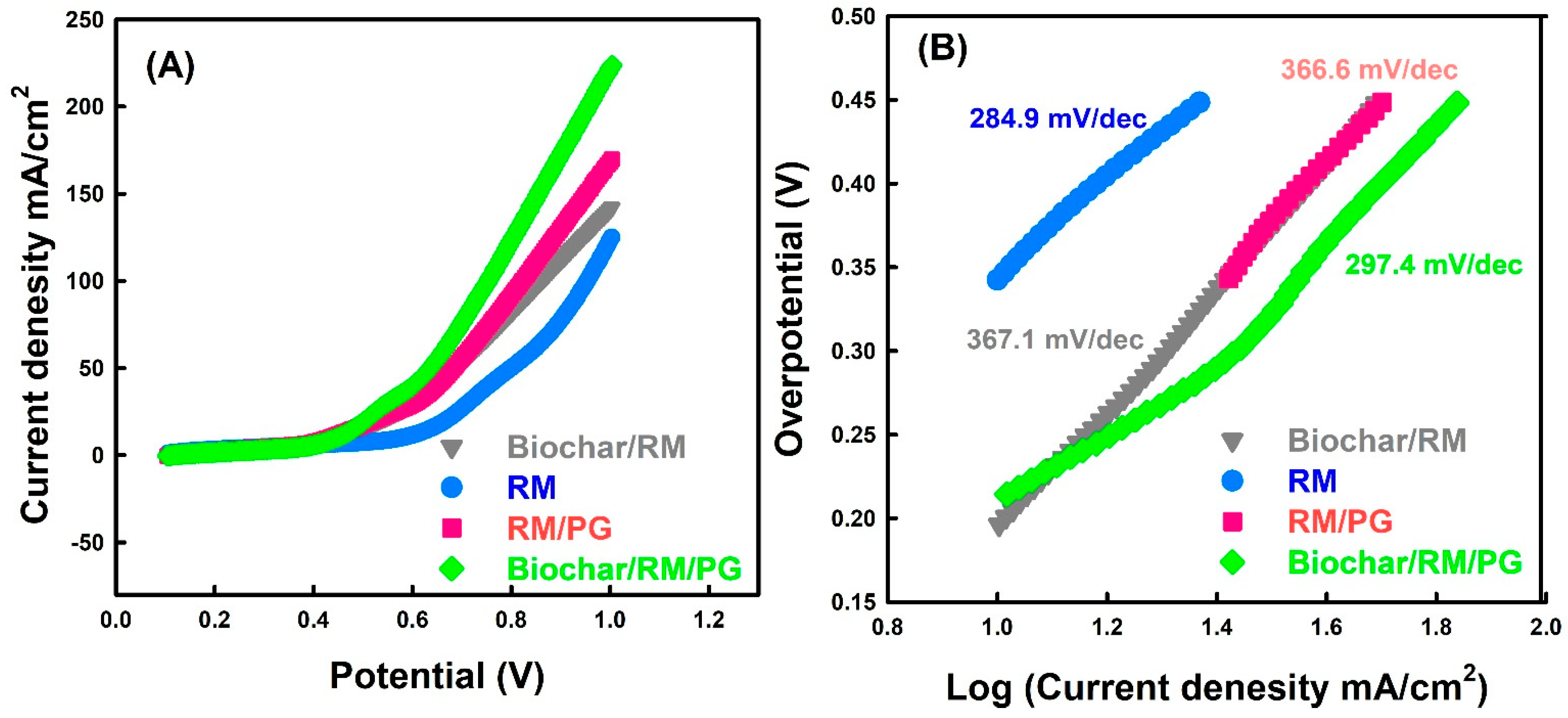
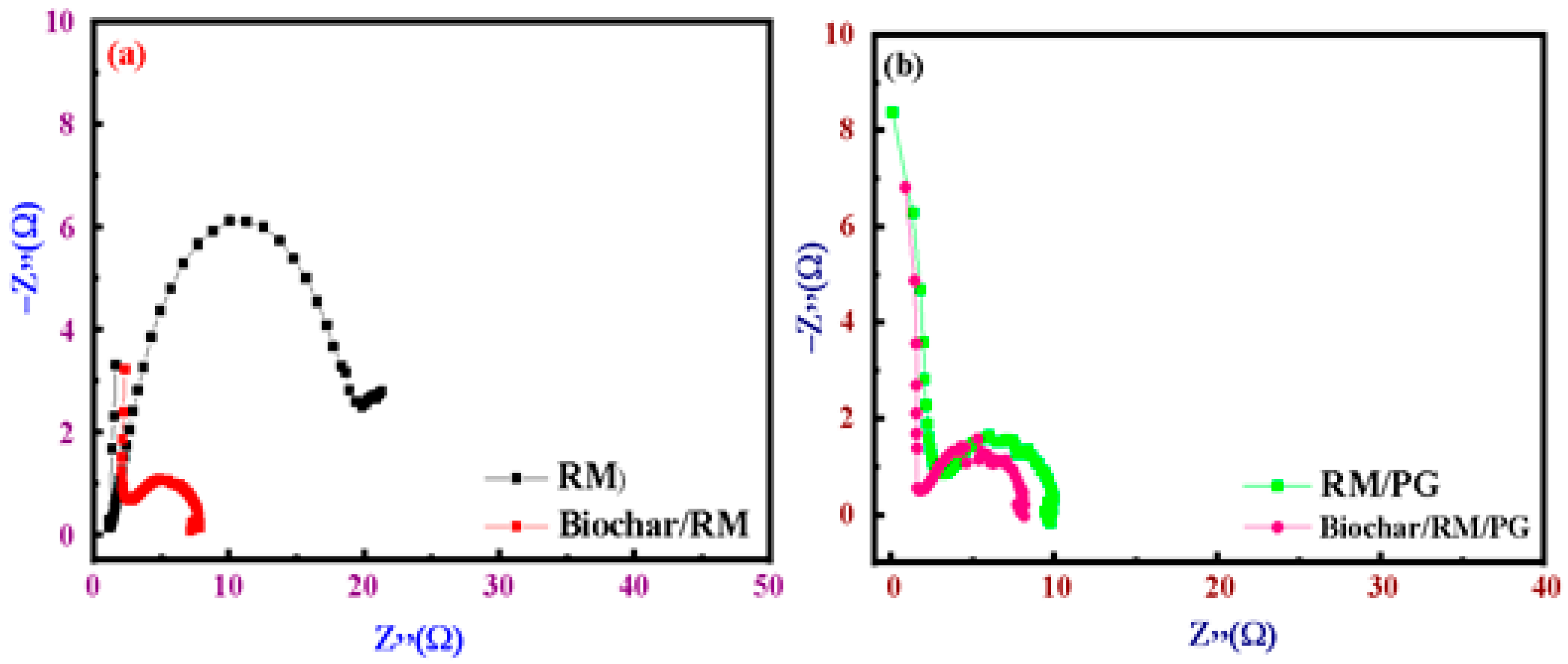
2.2.2. Catalytic Activity of Different Materials
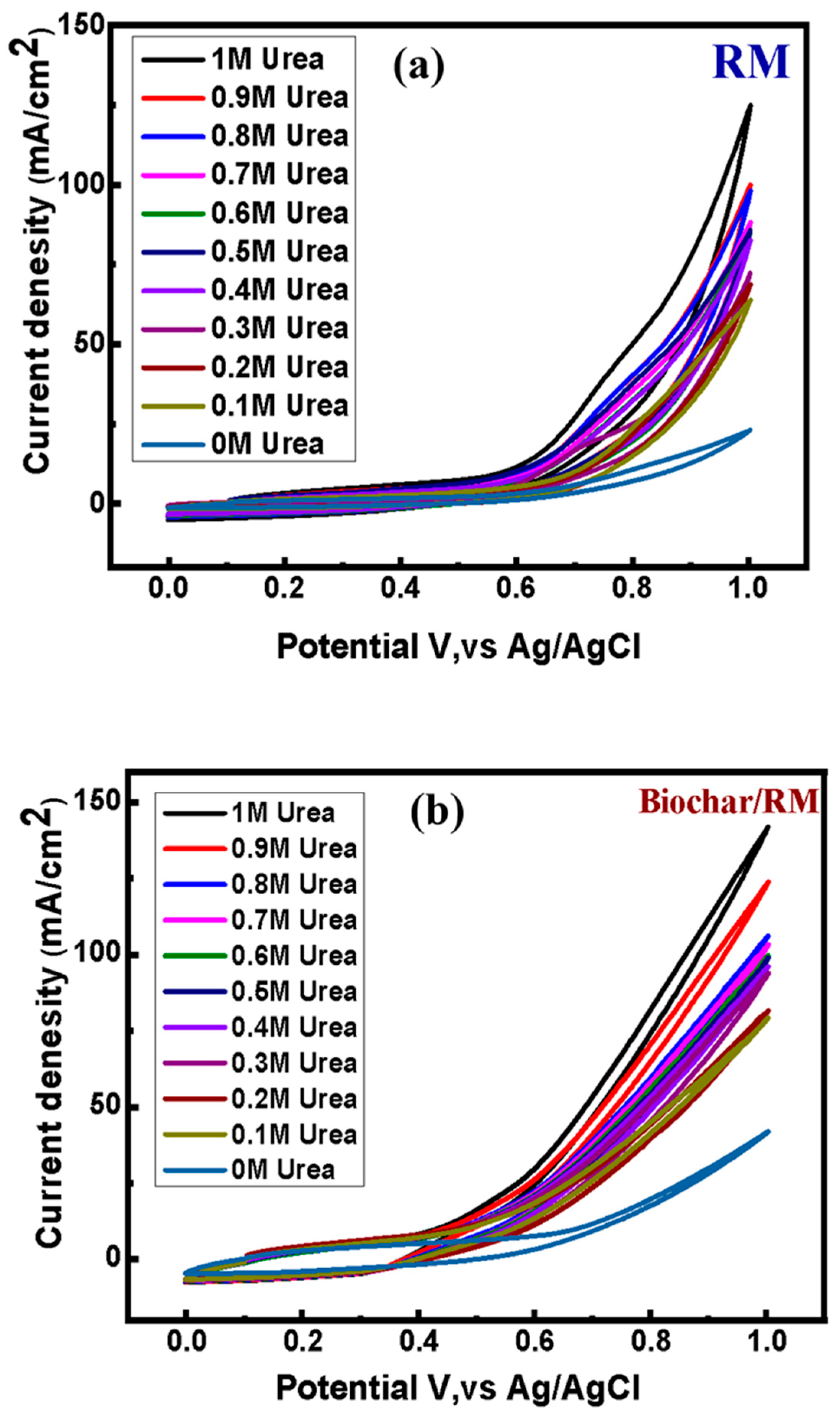
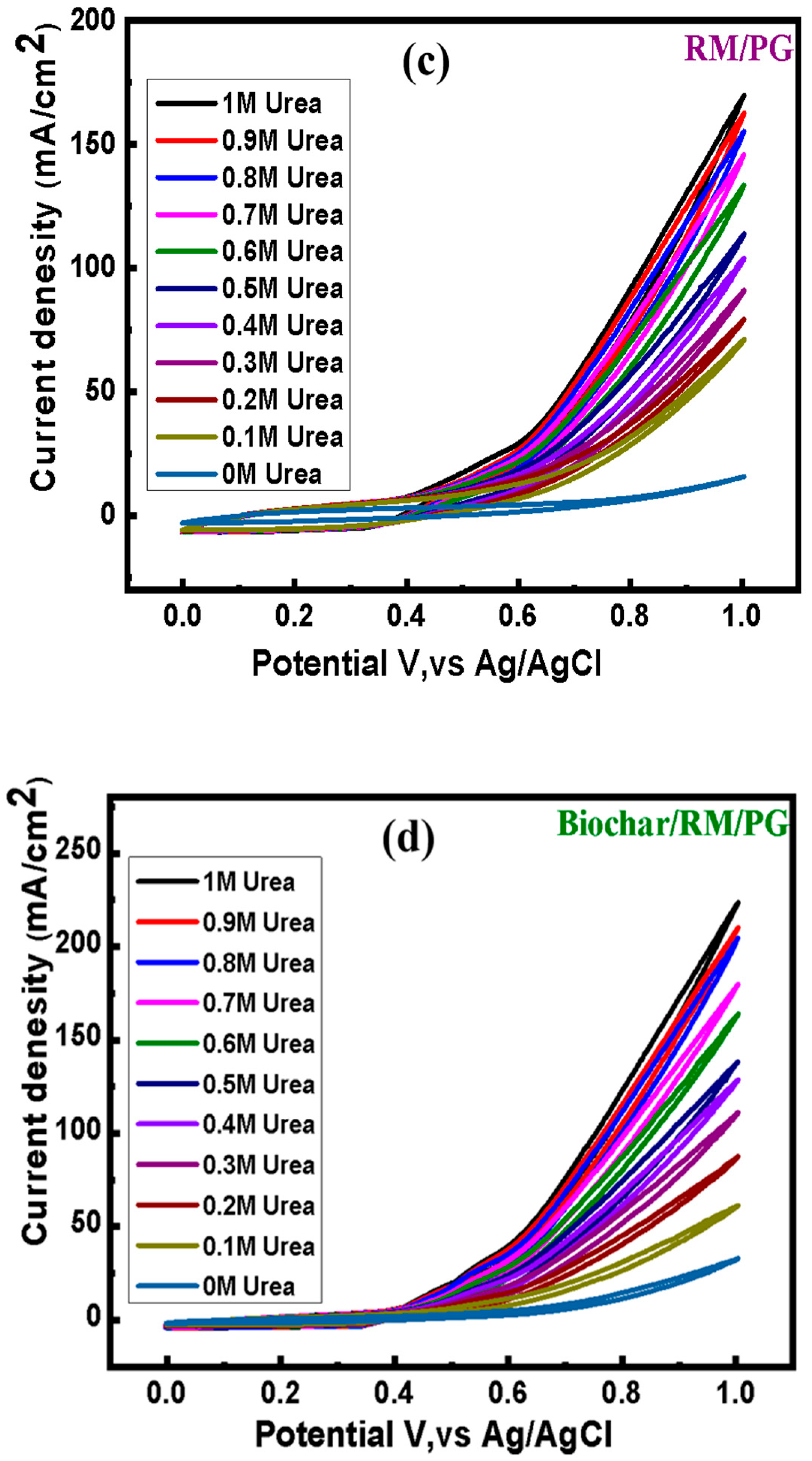
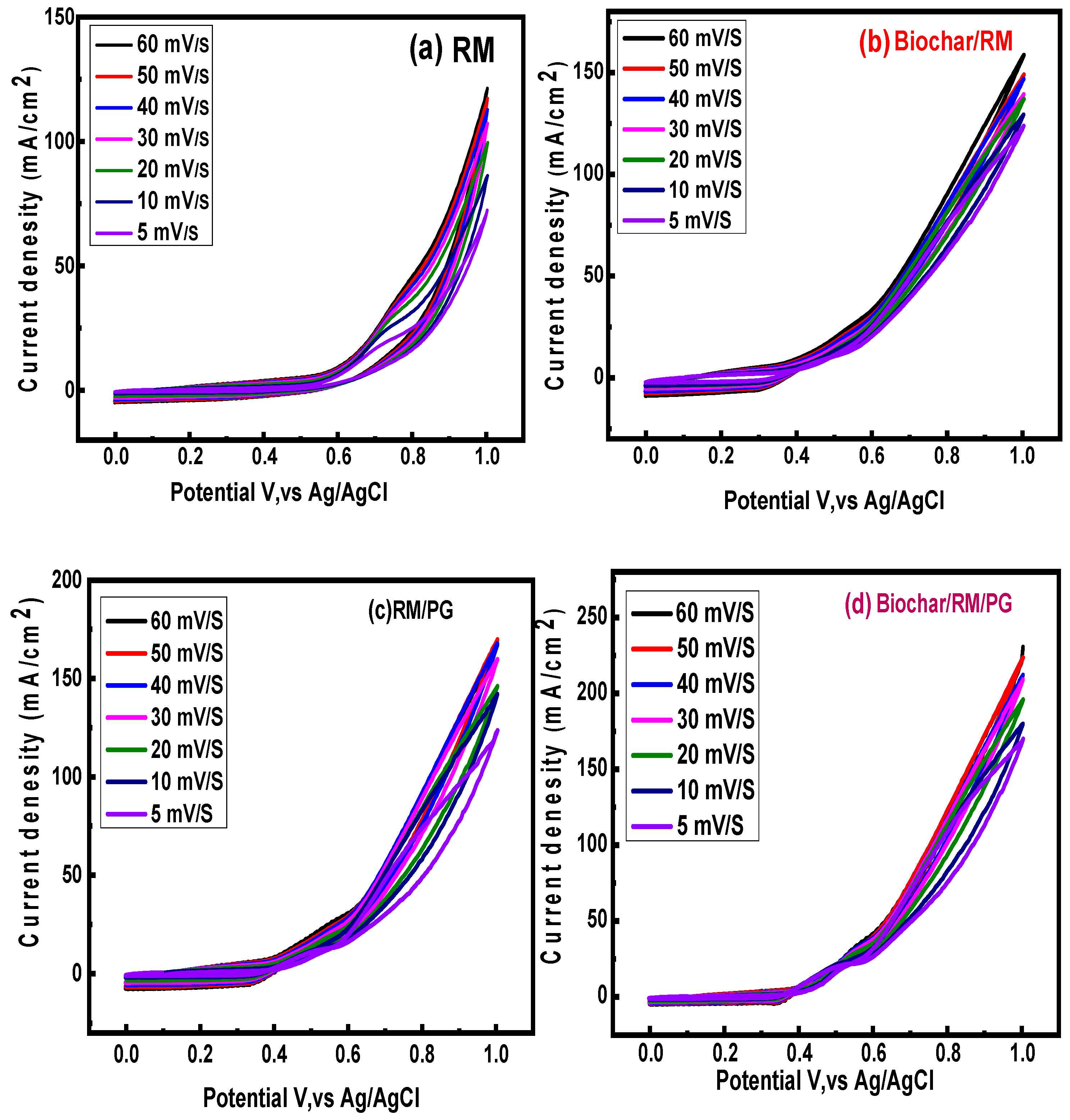
2.2.3. Influence of Urea Concentration and Scan Rate
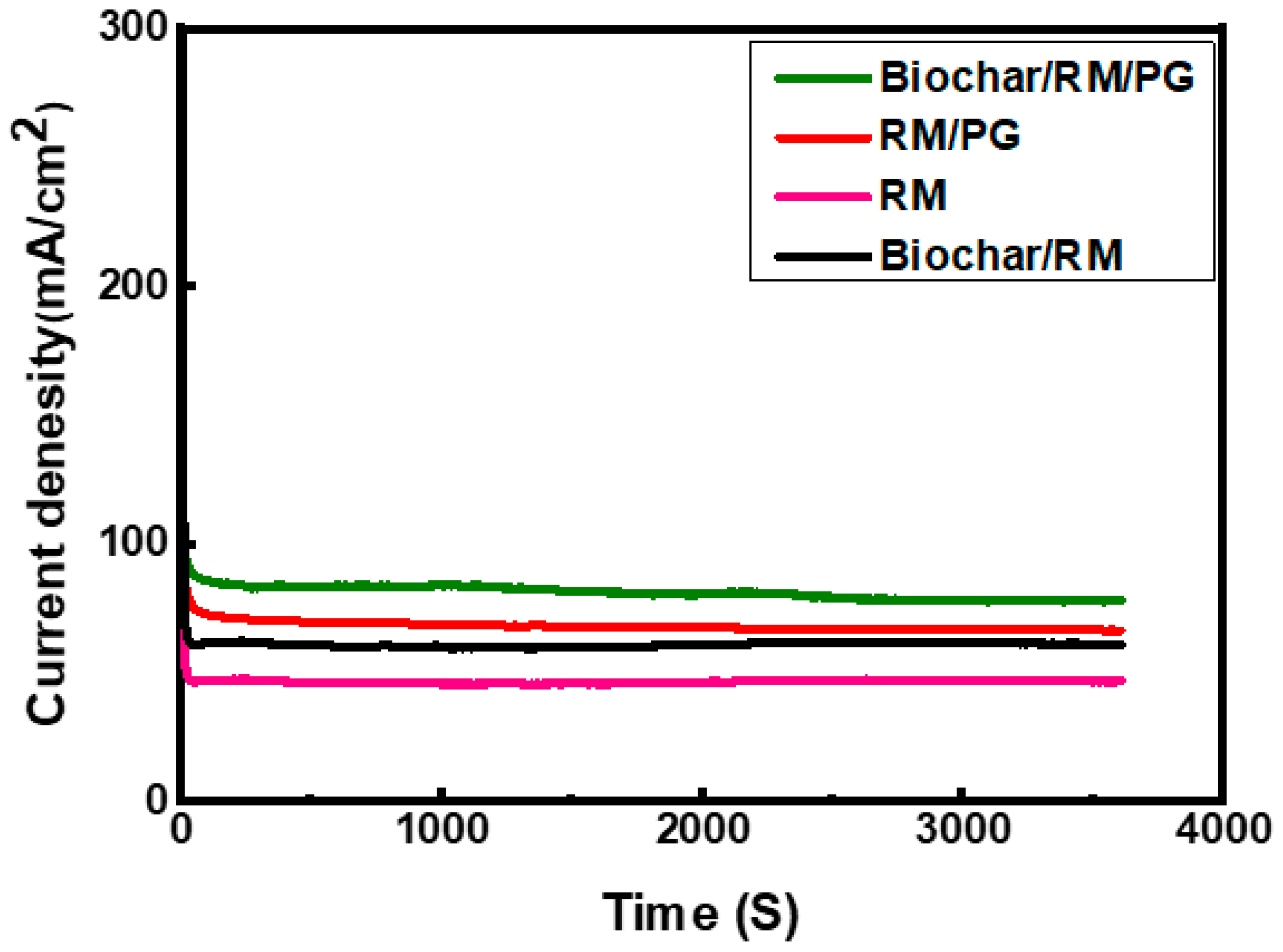
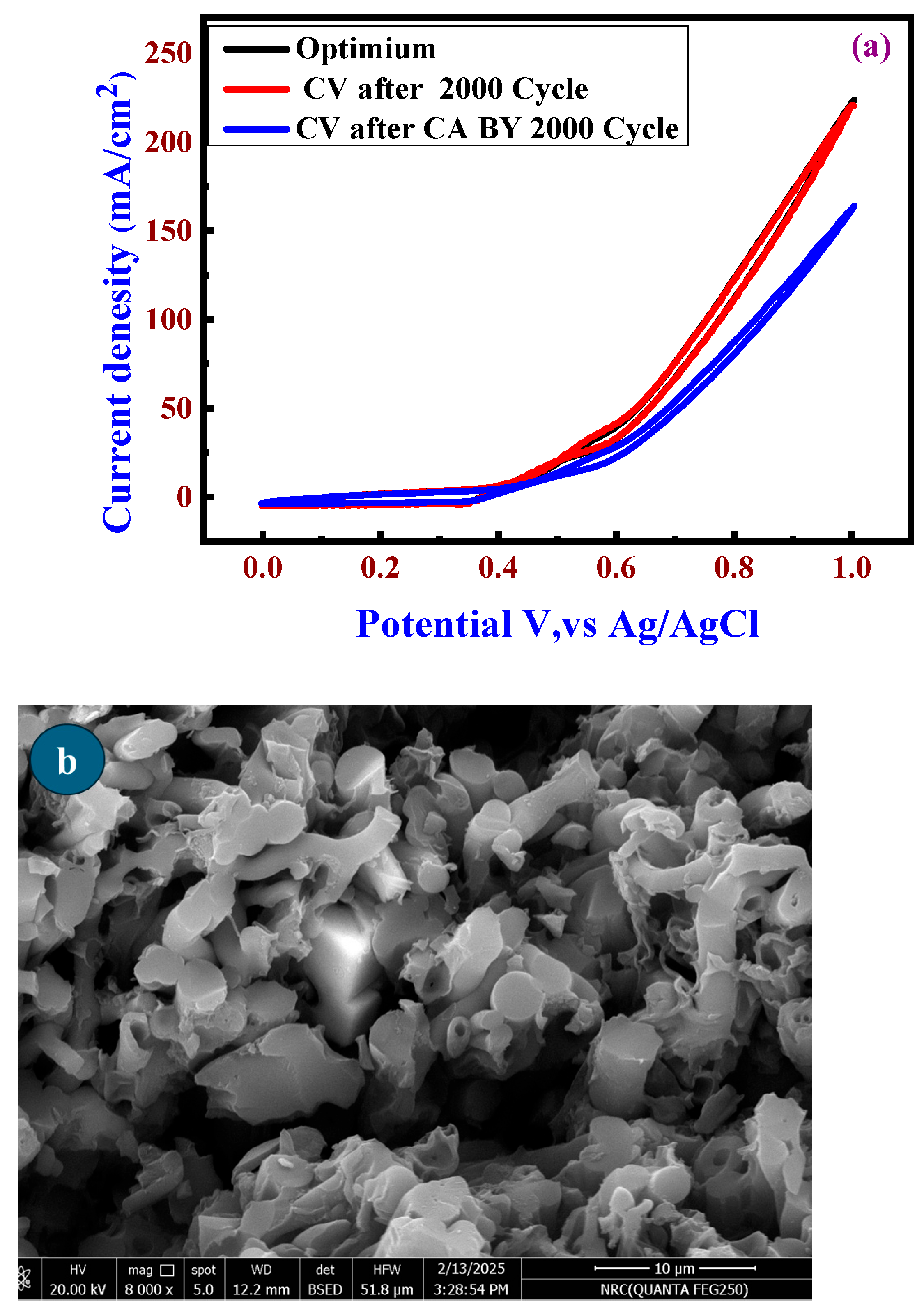
2.2.4. Catalyst Durability
2.2.5. Performance Benchmarking and Synergistic Mechanism

| Catalyst/System | Current Density (mA/cm2) | Potential (V vs. RHE) | Stability/Notes | Citation |
|---|---|---|---|---|
| Ni0.15Co0.85-MOF (BMOF) | 10 @ 1.33 V | 1.33 (10 mA/cm2) | 72 h at 40 mA/cm2; high stability | [46] |
| Co,Ge-Ni Oxyhydroxide | 448 @ 1.4 V | 1.4 (448 mA/cm2) | High Faradaic efficiency (84.9% NO2−) | [47] |
| NiCo2O4@CoS/Ni-Foam | 78 @ 0.5 V | 0.5 (78 mA/cm2) | High durability; core–shell architecture | [48] |
| Ni/Co Mixed Oxide/Hydroxide | — | Low onset; low V | Enhanced selectivity and fast kinetics | [49] |
| NiCo LDH Hydroxides | — | — | Fast kinetics; low energy barrier | [50] |
| Cu-FMOF-NH2 (MOF) | 10 @ 1.31 V; 50 @ 1.47 V | 1.31 (10 mA/cm2) | Water-stable; outperforms RuO2 | [51] |
| Ni-doped CuO Nanoarrays | 100 @ 1.366 V | 1.366 (100 mA/cm2) | Robust stability; low Tafel slope | [37] |
| Ni3N Nanosheet Array | 10 @ 1.35 V | 1.35 (10 mA/cm2) | Durable; bifunctional (HER/UOR) | [52] |
| Cr-Ni(OH)2 | 100 @ 1.38 V | 1.38 (100 mA/cm2) | Stable 200 h @ 10 mA/cm2 | [53] |
| Oxyanion-Engineered Ni | 323.4 @ 1.65 V | 1.65 (323.4 mA/cm2) | 99.3% selectivity; inhibits OER | [54] |
| Ni2Fe(CN)6 | 100 @ 1.35 V | 1.35 (100 mA/cm2) | High activity; new reaction pathway | [55] |
| Sv-CoNiS@NF (Bimetal Sulfide) | 100 @ 1.397 V | 1.397 (100 mA/cm2) | Sulfur-vacancy-engineered | [56] |
| Ni(OH)2/CuCo/Ni(OH)2 Composite | 10 @ 1.333 V | 1.333 (10 mA/cm2) | Stable ≥50 h; enriched Ni3+ active sites | [57] |
| Mo-Ni3S2/Co3S4 Composite | 50 @ 1.38 V | 1.38 (50 mA/cm2) | Synergistic effect; high charge transfer | [58] |
| Ni-WO3/NF | 200 @ 1.384 V | 1.384 (200 mA/cm2) | 150 h durability; rapid kinetics | [59] |
| NiCoFe@PC (Trimetallic/Porous Carbon) | 44.65 @ 0.57 V (vs. Ag/AgCl) | 0.218 V onset (vs. Ag/AgCl) | Low onset; high activity | [60] |
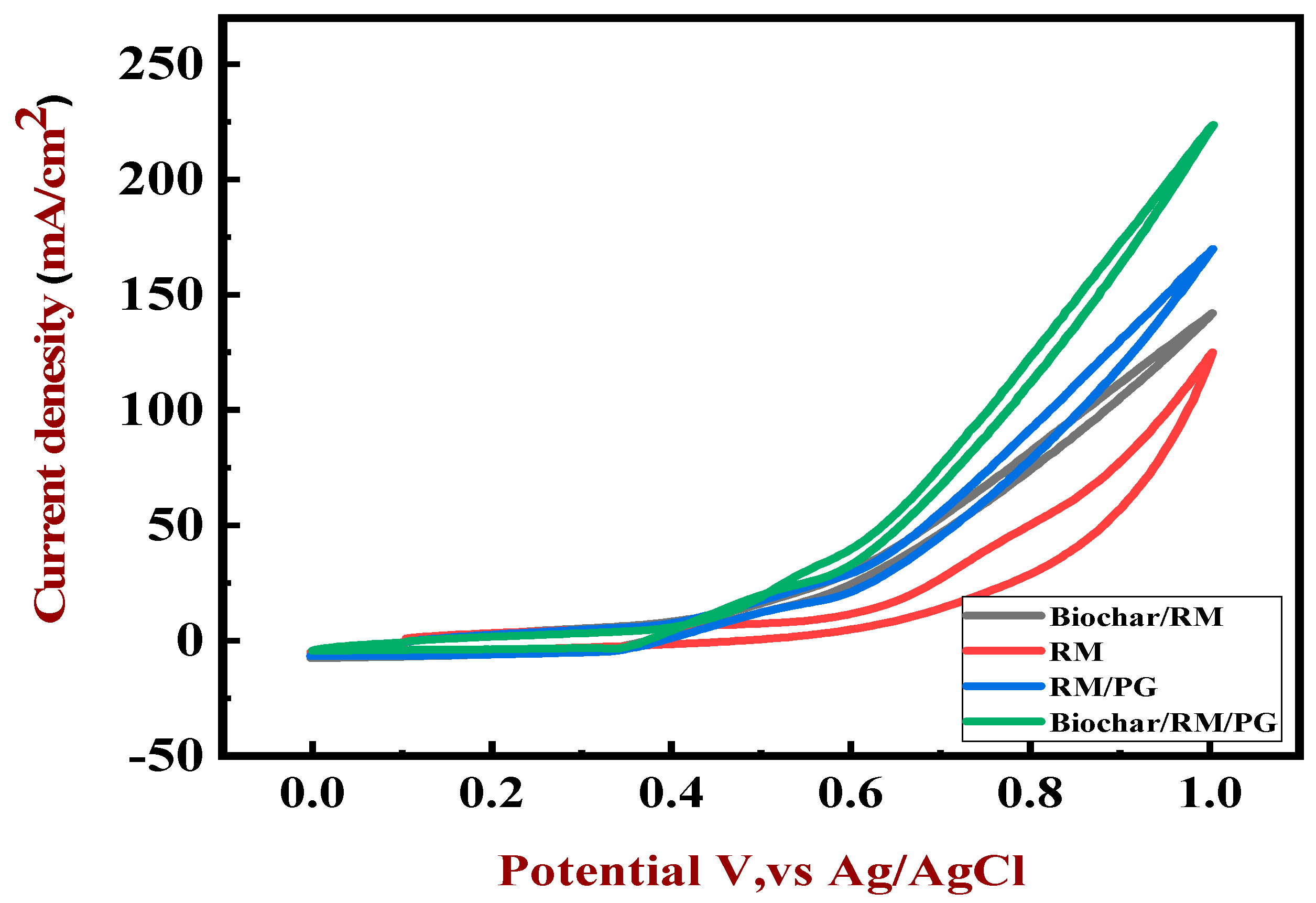
| This Study (Biochar/RM/PG Catalyst) | 225.52 | 1.0 M urea, potential per CV data | Excellent operational stability; minimal loss after 3600 s CA | This work |
2.2.6. Kinetic Parameters
3. Experimental Section
3.1. Materials and Reagents
3.2. Preparation of Catalysts
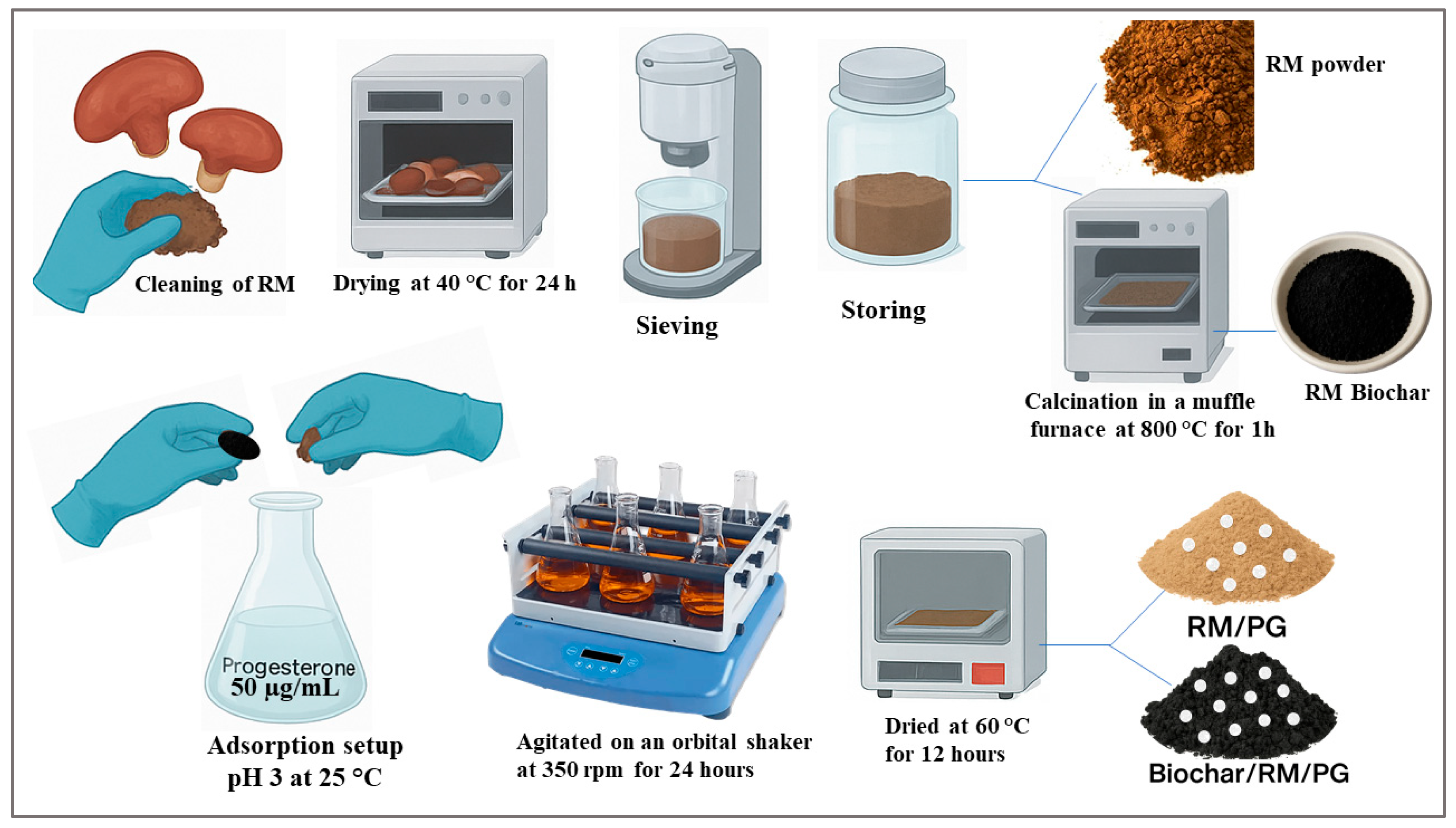
3.2.1. Reishi Mushroom Powder (RM) and Biochar (Biochar/RM)
3.2.2. Preparation of Spent Adsorbents (RM/PG and Biochar/RM/PG)
3.3. Instruments
3.4. Electrochemical Measurements
4. Conclusions
Supplementary Materials
Author Contributions
Funding
Data Availability Statement
Conflicts of Interest
References
- Jena, T.; Chhatoi, S.K.; Khandai, S.S.; Mishra, R.; Mohanty, A.; Sharma, K.K.; Samal, S.; Mahapatra, K.K.; Dhar, G.; Purohit, S.; et al. Sublethal urea exposure in Nile tilapia: Morphological, behavioural, and histological alteration. Chemosphere 2025, 372, 144086. [Google Scholar] [CrossRef]
- Donald, D.B.; Bogard, M.J.; Finlay, K.; Leavitt, P.R. Comparative effects of urea, ammonium, and nitrate on phytoplankton abundance, community composition, and toxicity in hypereutrophic freshwaters. Limnol. Oceanogr. 2011, 56, 2161–2175. [Google Scholar] [CrossRef]
- Lee, J.; Park, J.; Shim, I.; Koo, J.-W.; Nam, S.-H.; Kim, E.; Park, S.-M.; Hwang, T.-M. Application of Electrochemical Oxidation for Urea Removal: A Review. Processes 2025, 13, 2660. [Google Scholar] [CrossRef]
- King, R.L.; Botte, G.G. Hydrogen production via urea electrolysis using a gel electrolyte. J. Power Sources 2011, 196, 2773–2778. [Google Scholar] [CrossRef]
- Protsenko, V.S. Thermodynamic aspects of urea oxidation reaction in the context of hydrogen production by electrolysis. Int. J. Int. J. Hydrogen Energy 2023, 48, 24207–24211. [Google Scholar] [CrossRef]
- Singh, R.K.; Rajavelu, K.; Montag, M.; Schechter, A. Advances in catalytic electrooxidation of urea: A review. Energy Technol. 2021, 9, 2100017. [Google Scholar] [CrossRef]
- Pan, T.; Xu, Y.; Li, Q.; Pang, H. Designed nickel–cobalt-based bimetallic oxide slender nanosheets for efficient urea electrocatalytic oxidation. Int. J. Hydrogen Energy 2024, 57, 388–393. [Google Scholar] [CrossRef]
- Sangster, J.L.; Ali, J.M.; Snow, D.D.; Kolok, A.S.; Bartelt-Hunt, S.L. Bioavailability and fate of sediment-associated progesterone in aquatic systems. Environ. Sci. Technol. 2016, 50, 4027–4036. [Google Scholar] [CrossRef]
- Adegoke, K.A.; Olagunju, A.O.; Alagbada, T.C.; Alao, O.C.; Adesina, M.O.; Afolabi, I.C.; Adegoke, R.O.; Bello, O.S. Adsorptive removal of endocrine-disrupting chemicals from aqueous solutions: A review. Water Air Soil Pollut. 2022, 233, 38. [Google Scholar] [CrossRef]
- Georgin, J.; Franco, D.S.P.; Manzar, M.S.; Meili, L.; El Messaoudi, N. A critical and comprehensive review of the current status of 17β-estradiol hormone remediation through adsorption technology. Environ. Sci. Pollut. Res. 2024, 31, 24679–24712. [Google Scholar] [CrossRef]
- Liu, W.-J.; Jiang, H.; Yu, H.-Q. Emerging applications of biochar-based materials for energy storage and conversion. Energy Environ. Sci. 2019, 12, 1751–1779. [Google Scholar] [CrossRef]
- Zhao, J.; Jiang, Y.; Chen, X.; Wang, C.; Nan, H. Unlocking the potential of element-doped biochar: From tailored synthesis to multifunctional applications in environment and energy. Biochar 2025, 7, 77. [Google Scholar] [CrossRef]
- Abdelwahab, A.; Alenezi, K.M.; Humaidi, J.R.; Haque, A.; Mahgoub, S.M.; Mokhtar, A.M.; Shaban, A.; Mostafa, M.M.M.; Mahmoud, R. Innovative eco-sustainable reishi mushroom-based adsorbents for progesterone removal and agricultural sustainability. RSC Adv. 2025, 15, 16690–16707. [Google Scholar] [CrossRef] [PubMed]
- Chang, J.; Zhang, H.; Cheng, H.; Yan, Y.; Chang, M.; Cao, Y.; Huang, F.; Zhang, G.; Yan, M. Spent Ganoderma lucidum substrate derived biochar as a new bio-adsorbent for Pb2+/Cd2+ removal in water. Chemosphere 2020, 241, 125121. [Google Scholar] [CrossRef]
- Gajji, N.; Chinnaiyan, S.K. Bio-derived Nanomaterials for Energy Storage. In Materials for Sustainable Energy Storage at the Nanoscale; CRC Press: Boca Raton, FL, USA, 2023; pp. 97–110. [Google Scholar]
- Yu, J.; Tang, T.; Cheng, F.; Huang, D.; Martin, J.L.; Brewer, C.E.; Grimm, R.L.; Zhou, M.; Luo, H. Exploring spent biomass-derived adsorbents as anodes for lithium ion batteries. Mater. Today Energy 2021, 19, 100580. [Google Scholar] [CrossRef]
- Qian, L.; Chen, C.; Lv, Y.; Li, J.; Cao, X.; Ren, H.; Hassan, M.L. Preparation and electrochemical application of porous carbon materials derived from extraction residue of Ganoderma lucidum. Biomass Bioenergy 2022, 166, 106593. [Google Scholar] [CrossRef]
- Sonal, S.; Prakash, P.; Mishra, B.K.; Nayak, G.C. Synthesis, characterization and sorption studies of a zirconium (iv) impregnated highly functionalized mesoporous activated carbons. RSC Adv. 2020, 10, 13783–13798. [Google Scholar] [CrossRef] [PubMed]
- Sangeetha, B.; Krishnamoorthy, A.S.; Amirtham, D.; Sharmila, D.J.S.; Renukadevi, P.; Malathi, V.G. FT-IR spectroscopic characteristics of Ganoderma lucidum secondary metabolites. J. Appl. Sci. Technol. 2019, 38, 1–8. [Google Scholar] [CrossRef]
- Mousavi, S.M.; Hashemi, S.A.; Gholami, A.; Omidifar, N.; Chiang, W.-H.; Neralla, V.R.; Yousefi, K.; Shokripour, M. Ganoderma lucidum methanolic extract as a potent phytoconstituent: Characterization, in-vitro antimicrobial and cytotoxic activity. Sci. Rep. 2023, 13, 17326. [Google Scholar] [CrossRef]
- Fathi, M.; Alami-Milani, M.; Geranmayeh, M.H.; Barar, J.; Erfan-Niya, H.; Omidi, Y. Dual thermo-and pH-sensitive injectable hydrogels of chitosan/(poly (N-isopropylacrylamide-co-itaconic acid)) for doxorubicin delivery in breast cancer. Int. J. Biol. Macromol. 2019, 128, 957–964. [Google Scholar] [CrossRef]
- Abdel-Hady, E.E.; Mahmoud, R.; Hafez, S.H.M.; Mohamed, H.F.M. Hierarchical ternary ZnCoFe layered double hydroxide as efficient adsorbent and catalyst for methanol electrooxidation. J. Mater. Res. Technol. 2022, 17, 1922–1941. [Google Scholar] [CrossRef]
- Yu, L.; Sun, S.; Li, H.; Xu, Z.J. Effects of catalyst mass loading on electrocatalytic activity: An example of oxygen evolution reaction. Fundam. Res. 2021, 1, 448–452. [Google Scholar] [CrossRef]
- Mahmoud, R.; Mohamed, H.F.M.; Hafez, S.H.M.; Gadelhak, Y.M.; Abdel-Hady, E.E. Valorization of spent double substituted Co–Ni–Zn–Fe LDH wastewater nanoadsorbent as methanol electro-oxidation catalyst. Sci. Rep. 2022, 12, 19354. [Google Scholar] [CrossRef] [PubMed]
- Varade, H.P. Surface Roughness Metrology. 2019. Available online: https://coursecontent.indusuni.ac.in/wp-content/uploads/sites/8/2021/10/BAS_Surface-roughness-2.pdf (accessed on 19 November 2025).
- Baker, L.R. On-machine measurement of roughness, waviness, and flaws. Adv. Opt. Manuf. Test. 1990, 1333, 248–256. [Google Scholar]
- Rao, N.N.; Alex, C.; Mukherjee, M.; Roy, S.; Tayal, A.; Datta, A.; John, N.S. Evidence for exclusive direct mechanism of urea electro-oxidation driven by in situ-generated resilient active species on a rare-earth nickelate. ACS Catal. 2024, 14, 981–993. [Google Scholar] [CrossRef]
- Janković, B.; Dodevski, V.; Janković, M.; Milenković, M.; Samaržija-Jovanović, S.; Jovanović, V.; Marinović-Cincović, M. Synthesis and Characterization of Bio-Composite Based on Urea–Formaldehyde Resin and Hydrochar: Inherent Thermal Stability and Decomposition Kinetics. Polymers 2025, 17, 1375. [Google Scholar] [CrossRef] [PubMed]
- Li, Q.; Wang, J.; Shi, Y.; Li, H.; Yang, H.; Xiang, K.; You, W.; Liang, J. Urea oxidation catalysts: A review on non-metallic enhancements in nickel-based electrocatalysts. Mater. Horiz. 2025, 23, 9855–10372. [Google Scholar] [CrossRef]
- Zhan, G.; Hu, L.; Li, H.; Dai, J.; Zhao, L.; Zheng, Q.; Zou, X.; Shi, Y.; Wang, J.; Hou, W.; et al. Highly selective urea electrooxidation coupled with efficient hydrogen evolution. Nat. Commun. 2024, 15, 5918. [Google Scholar] [CrossRef]
- Medvedev, J.J.; Delva, N.H.; Klinkova, A. Mechanistic Analysis of Urea Electrooxidation Pathways: Key to Rational Catalyst Design. Chempluschem 2024, 89, e202300739. [Google Scholar] [CrossRef]
- Dong, L.; Feng, D.; Zhang, Y.; Wang, Z.; Zhao, Y.; Du, Q.; Gao, J.; Sun, S. Mechanism of biochar-Cu-based catalysts construction and its electrochemical CO2 reduction performance. Carbon Capture Sci. Technol. 2024, 13, 100250. [Google Scholar] [CrossRef]
- Yang, G.; Zhu, Y.; Hao, Z.; Lu, Y.; Zhao, Q.; Zhang, K.; Chen, J. Organic electroactive materials for aqueous redox flow batteries. Adv. Mater. 2023, 35, 2301898. [Google Scholar]
- Yang, Y.; Börjesson, K. Electroactive covalent organic frameworks: A new choice for organic electronics. Trends Chem. 2022, 4, 60–75. [Google Scholar] [CrossRef]
- Escudero-Curiel, S.; Díez, A.M.; Pazos, M.; Sanromán, Á. Valorized S/N-doped banana peel biochar as a sustainable OER electrocatalyst for green energy applications. Int. J. Hydrogen Energy 2025, 163, 150728. [Google Scholar] [CrossRef]
- Guo, D.; Shibuya, R.; Akiba, C.; Saji, S.; Kondo, T.; Nakamura, J. Active sites of nitrogen-doped carbon materials for oxygen reduction reaction clarified using model catalysts. Science 2016, 351, 361–365. [Google Scholar] [CrossRef] [PubMed]
- Upadhyay, P.; Deka, A.; Chakma, S. Unlocking Efficient Electrochemical Urea Oxidation and Understanding Mechanism Insights of Co-Doped NiS. ACS Eng. Au 2025, 5, 450–467. [Google Scholar] [CrossRef]
- Sun, H.; Liu, J.; Kim, H.; Song, S.; Fei, L.; Hu, Z.; Lin, H.; Chen, C.; Ciucci, F.; Jung, W. Ni-doped CuO nanoarrays activate urea adsorption and stabilizes reaction intermediates to achieve high-performance urea oxidation catalysts. Adv. Sci. 2022, 9, 2204800. [Google Scholar] [CrossRef] [PubMed]
- Huang, C.; Xu, H.; Shuai, T.; Zhan, Q.; Zhang, Z.; Li, G. Modulation strategies for the preparation of high-performance catalysts for urea oxidation reaction and their applications. Small 2023, 19, 2301130. [Google Scholar] [CrossRef]
- Machireddy, N.R.; Yellatur, C.S.; Loka, S.S. Ni(OH)2/CeO2 Heterointerface catalysts for Energy Efficient Urea Electrooxidation. New J. Chem. 2025, 44, 19073–19458. [Google Scholar]
- Li, T.; Zheng, Z.; Chen, Z.; Zhang, M.; Liu, Z.; Chen, H.; Xiao, X.; Wang, S.; Qu, H.; Fu, Q. Ultrafast synthesis of an efficient urea oxidation electrocatalyst for urea-assisted fast-charging Zn–air batteries and water splitting. Energy Environ. Sci. 2025, 18, 4996–5008. [Google Scholar] [CrossRef]
- Hefnawy, M.A.; Fadlallah, S.; El-Sherif, R.M.; Medany, S. Synergistic effect of Cu-doped NiO for enhancing urea electrooxidation: Comparative electrochemical and DFT studies. J. Alloys Compd. 2021, 896, 162857. [Google Scholar] [CrossRef]
- Alwadai, N.; Alshatwi, M.; Sayed, E.T. Cobalt–nickel composite nano-grass as an excellent electrode for urea oxidation. RSC Adv. 2025, 15, 7728–7737. [Google Scholar] [CrossRef] [PubMed]
- Kumar, R.; Tanwar, S.; Mehra, L.; Singh, R.K.; Sharma, A.L. Theoretical and Experimental Insights into the Electrochemical Performance of Nico2o4 for Symmetric Supercapacitors. SSRN, 2025; preprint. [Google Scholar]
- Chen, L.; Yin, Z.H.; Cui, J.Y.; Li, C.Q.; Song, K.; Liu, H.; Wang, J.J. Unlocking lattice oxygen on selenide-derived NiCoOOH for amine electrooxidation and efficient hydrogen production. J. Am. Chem. Soc. 2024, 146, 27090–27099. [Google Scholar] [CrossRef]
- Sanati, S.; Abazari, R.; Kirillov, A.M. Bimetallic NiCo metal–organic frameworks with high stability and performance toward electrocatalytic oxidation of urea in seawater. Inorg. Chem. 2024, 63, 15813–15820. [Google Scholar] [CrossRef]
- Wang, P.; Bai, X.; Jin, H.; Gao, X.; Davey, K.; Zheng, Y.; Jiao, Y.; Qiao, S. Directed Urea-to-Nitrite Electrooxidation via Tuning Intermediate Adsorption on Co, Ge Co-Doped Ni Sites. Adv. Funct. Mater. 2023, 33, 2300687. [Google Scholar] [CrossRef]
- Adhikari, S.; Kwon, Y.; Kim, D.-H. Three-dimensional core–shell structured NiCo2O4@ CoS/Ni-Foam electrocatalyst for oxygen evolution reaction and electrocatalytic oxidation of urea. Chem. Eng. J. 2020, 402, 126192. [Google Scholar] [CrossRef]
- Zhou, T.; Jagadeesan, S.N.; Zhang, L.; Deskins, N.A.; Teng, X. Enhanced urea oxidation electrocatalytic activity by synergistic cobalt and nickel mixed oxides. J. Phys. Chem. Lett. 2023, 15, 81–89. [Google Scholar] [CrossRef]
- Zheng, Z.; Wu, D.; Chen, L.; Chen, S.; Wan, H.; Chen, G.; Zhang, N.; Liu, X.; Ma, R. Collaborative optimization of thermodynamic and kinetic for Ni-based hydroxides in electrocatalytic urea oxidation reaction. Appl. Catal. B. Environ. 2024, 340, 123214. [Google Scholar] [CrossRef]
- Wang, J.; Abazari, R.; Sanati, S.; Ejsmont, A.; Goscianska, J.; Zhou, Y.; Dubal, D.P. Water-stable fluorous metal–organic frameworks with open metal sites and amine groups for efficient urea electrocatalytic oxidation. Small 2023, 19, 2300673. [Google Scholar] [CrossRef] [PubMed]
- Liu, Q.; Xie, L.; Qu, F.; Liu, Z.; Du, G.; Asiri, A.M.; Sun, X. A porous Ni 3 N nanosheet array as a high-performance non-noble-metal catalyst for urea-assisted electrochemical hydrogen production. Inorg. Chem. Front. 2017, 4, 1120–1124. [Google Scholar] [CrossRef]
- Zhang, J.; Song, X.; Kang, L.; Zhu, J.; Liu, L.; Zhang, Q.; Brett, D.J.L.; Shearing, P.R.; Mai, L.; Parkin, I.P. Stabilizing efficient structures of superwetting electrocatalysts for enhanced urea oxidation reactions. Chem. Catal. 2022, 2, 3254–3270. [Google Scholar] [CrossRef]
- Gao, X.; Bai, X.; Wang, P.; Jiao, Y.; Davey, K.; Zheng, Y.; Qiao, S.-Z. Boosting urea electrooxidation on oxyanion-engineered nickel sites via inhibited water oxidation. Nat. Commun. 2023, 14, 5842. [Google Scholar] [CrossRef] [PubMed]
- Geng, S.-K.; Zheng, Y.; Li, S.-Q.; Su, H.; Zhao, X.; Hu, J.; Shu, H.-B.; Jaroniec, M.; Chen, P.; Liu, Q.-H. Nickel ferrocyanide as a high-performance urea oxidation electrocatalyst. Nat. Energy 2021, 6, 904–912. [Google Scholar] [CrossRef]
- Li, H.; Pu, Y.; Li, W.; Yan, Z.; Deng, R.; Shi, F.; Zhao, C.; Zhang, Y.; Duan, T. Sulfur-Vacancy Engineering Accelerates Rapid Surface Reconstruction in Ni-Co Bimetal Sulfide Nanosheet for Urea Oxidation Electrocatalysis. Small 2024, 20, 2403311. [Google Scholar] [CrossRef]
- Parvin, S.; Aransiola, E.; Ammar, M.; Lee, S.; Zhang, L.; Weber, J.; Baltrusaitis, J. Tailored Ni (OH) 2/CuCo/Ni (OH) 2 Composite Interfaces for Efficient and Durable Urea Oxidation Reaction. ACS Appl. Mater. Interfaces 2024, 16, 67715–67729. [Google Scholar] [CrossRef]
- Wang, Y.; He, W.; Du, X.; Zhang, X. Electrocatalytic urea oxidation based on M (M= Fe, Cr, Mo)-Ni3S2/Co3S4: Performance optimization and mechanism analysis. Fuel 2024, 376, 132749. [Google Scholar] [CrossRef]
- Chen, L.; Wang, L.; Ren, J.; Wang, H.; Tian, W.; Sun, M.; Yuan, Z. Artificial heterointerfaces with regulated charge distribution of Ni active sites for urea oxidation reaction. Small Methods 2024, 8, 2400108. [Google Scholar] [CrossRef]
- Thamer, B.M.; Abdulhameed, M.M.; El-Newehy, M.H. Tragacanth gum hydrogel-derived trimetallic nanoparticles supported on porous carbon catalyst for urea electrooxidation. Gels 2022, 8, 292. [Google Scholar] [CrossRef] [PubMed]
- Song, F.; Bai, L.; Moysiadou, A.; Lee, S.; Hu, C.; Liardet, L.; Hu, X. Transition metal oxides as electrocatalysts for the oxygen evolution reaction in alkaline solutions: An application-inspired renaissance. J. Am. Chem. Soc. 2018, 140, 7748–7759. [Google Scholar] [CrossRef] [PubMed]
- Abo-Zeid, M.M.; El-Moghny, M.G.A.; Shawkey, H.; Daher, A.M.; Abdelkader, A.M.; El-Deab, M.S. Metal oxide stabilized zirconia modified bio-derived carbon nanosheets as efficient electrocatalysts for oxygen evolution reaction. J. Appl. Electrochem. 2024, 54, 467–485. [Google Scholar] [CrossRef]
- Malik, B.; Sankar, K.V.; Aziz, S.K.T.; Majumder, S.; Tsur, Y.; Nessim, G.D. Uncovering the change in catalytic activity during electro-oxidation of urea: Answering overisolation of the relaxation phenomenon. J. Phys. Chem. C 2021, 125, 23126–23132. [Google Scholar] [CrossRef]
- Laschuk, N.O.; Easton, E.B.; Zenkina, O.V. Reducing the resistance for the use of electrochemical impedance spectroscopy analysis in materials chemistry. RSC Adv. 2021, 11, 27925–27936. [Google Scholar] [CrossRef]
- Mohamed, I.M.A.; Kanagaraj, P.; Yasin, A.S.; Iqbal, W.; Liu, C. Electrochemical impedance investigation of urea oxidation in alkaline media based on electrospun nanofibers towards the technology of direct-urea fuel cells. J. Alloys Compd. 2020, 816, 152513. [Google Scholar] [CrossRef]
- Guo, F.; Ye, K.; Du, M.; Huang, X.; Cheng, K.; Wang, G.; Cao, D. Electrochemical impedance analysis of urea electro-oxidation mechanism on nickel catalyst in alkaline medium. Electrochim. Acta 2016, 210, 474–482. [Google Scholar] [CrossRef]
- Akkari, S.; Vivier, V.; Sánchez-Sánchez, C.M. Urea electro-oxidation byproducts impact on NiO/NiOOH anode performance studied by operando electrochemical impedance spectroscopy. Electrochim. Acta 2024, 474, 143526. [Google Scholar] [CrossRef]
- Yuan, T.; Voznyy, O. Guidelines for reliable urea detection in electrocatalysis. Cell Rep. Phys. Sci. 2023, 4, 101521. [Google Scholar] [CrossRef]
- Alnoush, W.; Black, R.; Higgins, D. Judicious selection, validation, and use of reference electrodes for in situ and operando electrocatalysis studies. Chem. Catal. 2021, 1, 997–1013. [Google Scholar] [CrossRef]
- Rahumi, O.; Rath, M.K.; Kossenko, A.; Zinigrad, M.; Borodianskiy, K. Heterogeneous catalyst-modified anode in solid oxide fuel cells for simultaneous ammonia synthesis and energy conversion. ACS Sustain. Chem. Eng. 2023, 11, 14081–14093. [Google Scholar] [CrossRef]
- Kamal, W.; Allah, A.E.; Mahmoud, R.; Farghali, A.A.; Kotp, A.A.; Abdelwahab, A. Metal–organic framework-derived nanoflower and nanoflake metal oxides as electrocatalysts for methanol oxidation. RSC Adv. 2024, 14, 32828–32838. [Google Scholar] [CrossRef]
- Rafiq, S.; Arshad, F.; Gondal, M.; Jaffer, M.; Almessiere, M.A. Recent Advancements in Heterostructure-Based Electrocatalysts for Sustainable Hydrogen Production Through Seawater Splitting. Mater. Horiz. 2025. [Google Scholar] [CrossRef]

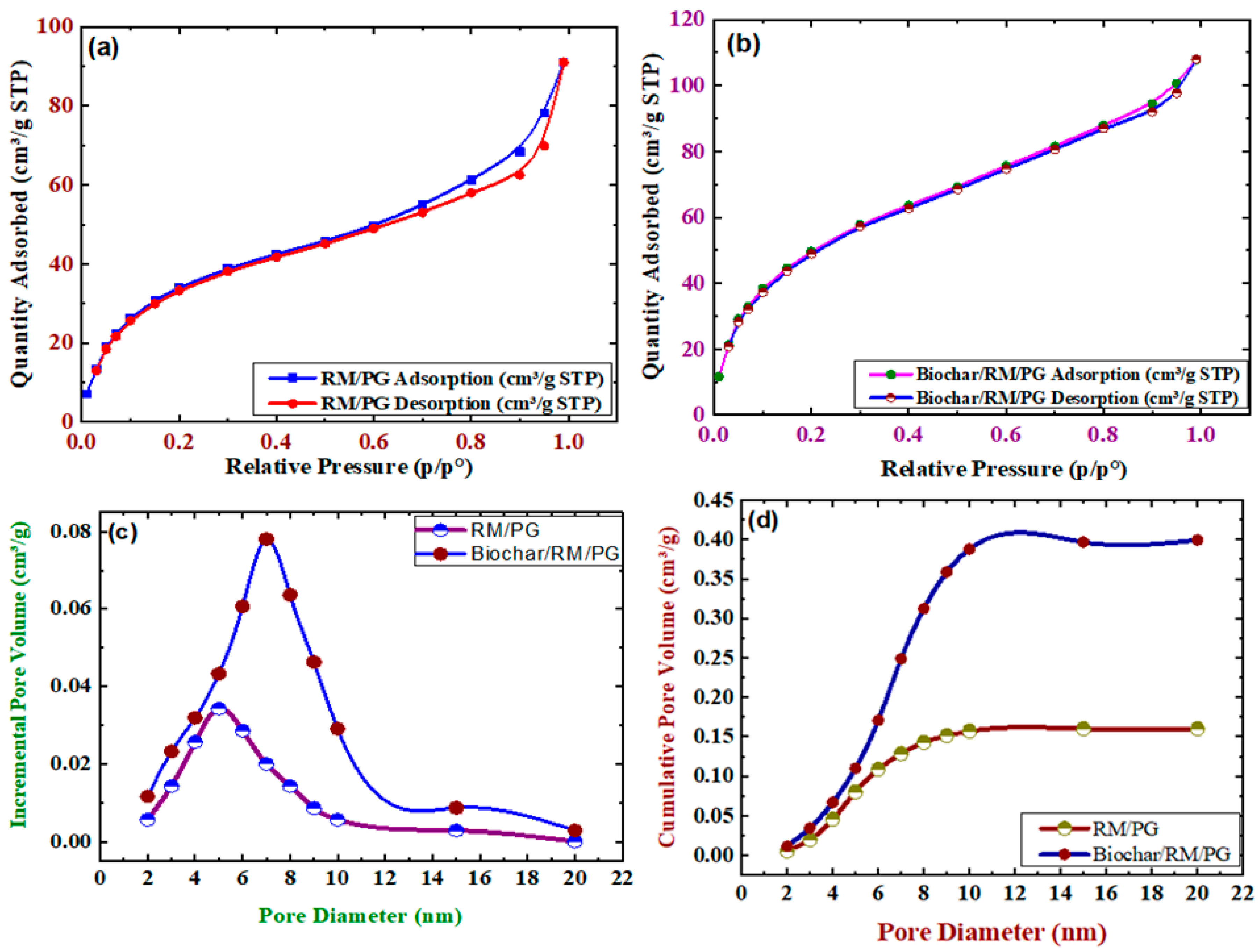
| Parameter | RM/PG | Biochar/RM/PG |
|---|---|---|
| BET Surface Area (m2/g) | 151 | 246 |
| Total Pore Volume (cm3/g) | 0.16 | 0.40 |
| Average Pore Diameter (nm) | 4.20 | 6.50 |
Disclaimer/Publisher’s Note: The statements, opinions and data contained in all publications are solely those of the individual author(s) and contributor(s) and not of MDPI and/or the editor(s). MDPI and/or the editor(s) disclaim responsibility for any injury to people or property resulting from any ideas, methods, instructions or products referred to in the content. |
© 2025 by the authors. Licensee MDPI, Basel, Switzerland. This article is an open access article distributed under the terms and conditions of the Creative Commons Attribution (CC BY) license (https://creativecommons.org/licenses/by/4.0/).
Share and Cite
Mahgoub, S.M.; Allam, A.A.; Mohamed, H.; Rudayni, H.A.; Mahmoud, R.; Khaled Mohammed, K.; Zaher, A. Valorization of Spent Bio-Adsorbents into High-Performance Eco-Friendly Anodes for Direct Urea Fuel Cells. Catalysts 2025, 15, 1113. https://doi.org/10.3390/catal15121113
Mahgoub SM, Allam AA, Mohamed H, Rudayni HA, Mahmoud R, Khaled Mohammed K, Zaher A. Valorization of Spent Bio-Adsorbents into High-Performance Eco-Friendly Anodes for Direct Urea Fuel Cells. Catalysts. 2025; 15(12):1113. https://doi.org/10.3390/catal15121113
Chicago/Turabian StyleMahgoub, Samar M., Ahmed A. Allam, Hala Mohamed, Hassan A. Rudayni, Rehab Mahmoud, Kholoud Khaled Mohammed, and Amal Zaher. 2025. "Valorization of Spent Bio-Adsorbents into High-Performance Eco-Friendly Anodes for Direct Urea Fuel Cells" Catalysts 15, no. 12: 1113. https://doi.org/10.3390/catal15121113
APA StyleMahgoub, S. M., Allam, A. A., Mohamed, H., Rudayni, H. A., Mahmoud, R., Khaled Mohammed, K., & Zaher, A. (2025). Valorization of Spent Bio-Adsorbents into High-Performance Eco-Friendly Anodes for Direct Urea Fuel Cells. Catalysts, 15(12), 1113. https://doi.org/10.3390/catal15121113