


Abstract
In recent years, diseases, environmental pollution, and food safety issues have seriously threatened global health, generating international concern. Many existing detection strategies used to deal with the above problems have high accuracy and sensitivity, but usually rely on large-sized, complex instruments and professional technicians, which are not suitable for on-site testing. Therefore, it is imperative to develop highly sensitive, rapid, and portable analytical methods. Recently, microfluidic paper-based analytical devices (μPADs) have been recognized as a highly promising microfluidic device substrate to deal with the issues existing in medical, environmental, and food safety, etc., due to their advantages, including environmental-friendliness, high flexibility, low cost, and mature technology. This review comprehensively summarizes the recent advances in μPADs. We first overview the development of paper-based materials and their core fabrication techniques, followed by a detailed discussion on the material selection and detection mechanisms of the devices. The review also provides an assessment of the application achievements of μPADs in medical diagnostics, environmental analysis, and food safety monitoring. Finally, current challenges in the field are summarized and future research directions and prospects are proposed.
1. Introduction
Diseases and residual food additives have been seriously endangering human health for a long time. In addition, heavy metal ions and organic pollutants significantly impact the ecological environment due to the discharge of industrial wastewater. Therefore, developing efficient detection techniques is critical for addressing challenges in multiple fields. Surface-enhanced Raman spectroscopy (SERS) [1], immunoassays (IAs) [2], DNA microarray method [3] and magnetic resonance imaging [4] are used for the detection of biochemical indices in the human body. Atomic absorption spectrometry [5], the electrochemical method [6], inductively coupled plasma mass spectrometry (ICP MS) [7], and high-performance liquid chromatography (HPLC) [8] are used to determine heavy metal ions or toxins in the environment. Enzyme-linked immunosorbent assay (ELISA) [9], laser-induced fluorescence spectrometry [10], and mass spectrometry (MS) [11] are used for the determination of residual drugs and microorganisms in food. Although these techniques can detect biomarkers, they still have drawbacks such as complicated sample preparation, expensive equipment, and a complicated detection process.
Microfluidic paper-based analytical devices (μPADs) are considered an ideal platform for biomarker detection due to their versatile structures, flexible operational capabilities, and compatibility with various detection technologies [12]. Different materials are used to prepare microfluidic devices. Glass [13] and silicon [14] are early microfluidic device materials, and their limitations include high stiffness, impermeability, and high cost. In addition, the porosity and biocompatibility of hydrogels mean they are mainly used in bio-microfluidic devices [15]. However, their application in complex physiological environments poses a challenge, as they are highly susceptible to humidity, temperature, and mechanical stress, which can lead to reduced adhesive strength. Recently, paper-based materials have been recognized as a highly promising substrate for microfluidic devices, offering numerous advantages such as being pollution-free, highly flexible, low-cost, and featuring well-established fabrication processes [16]. Paper-based materials also boast wide raw material availability, processability, printability, and a large specific surface area. Notably, capillary action of paper eliminates the need for external pumping mechanisms when constructing microfluidic devices [17]. Consequently, μPADs serve as versatile biochemical analysis platforms offering operational simplicity and cost-effectiveness, making them ideal for point-of-care testing (POCT) [18]. Typical substrates for μPADs include widely used filter paper [19], nitrocellulose (NC) paper [20], and cellulose nanofiber paper (CNP) [21]. Yang et al. developed a paper-based biosensing platform through functional modification of qualitative filter paper, enabling plasma and erythrocyte separation from whole blood samples [22]. This platform achieved high-sensitivity synchronous detection of uric acid, creatinine (CR), and albumin (Alb), with detection limits of 0.1127 mM, 0.2978 μM, and 0.7696 mg/mL, respectively. Lin et al. fabricated a μPAD platform utilizing polyurethane acrylate-patterned NC membranes for dual detection of alpha-fetoprotein and carcinoembryonic antigen (CEA), attaining detection limits as low as 136 pg/mL and 174 pg/mL, which surpass the sensitivity required for clinical diagnostics [23]. Additionally, Zong et al. designed a transparent paper-based sensing platform that harnesses wavelength-dependent absorbance and transmittance for multi-analyte detection. This platform successfully detected both bovine serum Alb and cholesterol, achieving detection limits of 0.1 μM and 0.1 mM, respectively [24]. With the combination of various functional materials with paper fibers, this study involved the acquisition of sensing capabilities. As a result, more and more advanced analytical methods can also be realized on μPADs. Paper-based materials have become a key supporting material for the development of POCT, and their diverse material selection and functionalization strategies provide a broad application prospect for rapid detection [25,26,27,28]. Figure 1 illustrates the common detection principles and related research applications of μPADs. These platforms enable diverse applications spanning medical diagnostics, food safety testing, and environmental safety testing.
Figure 1.
A schematic of μPADs and their applications in various fields. (a) Electrochemically assisted sensor. Reproduced from Ref. [29], with permission from Elsevier, 2024. (b) Smartphone-assisted sensor. Reproduced from Ref. [30], with permission from Elsevier, 2023. (c) Transparent nanopaper-based devices. Reproduced from Ref. [31], with permission from Marketplace, 2020. (d) SERS-based assisted sensor. Reproduced from Ref. [32], with permission from Elsevier, 2022. (e) Molecularly imprinted μPADs. Reproduced from Ref. [33], with permission from ACS, 2018. (f) Optofluidic μPADs. Reproduced from Ref. [34], with permission from Springer Nature, 2025. (g) Carbon quantum dots μPADs. Reproduced from Ref. [35], with permission from Springer Nature, 2023. (h) Colorimetric-assisted sensor. Reproduced from Ref. [36], with permission from Elsevier, 2024. (i) Fluorometric μPADs. Reproduced from Ref. [37], with permission from Springer Nature, 2021. (j) Colorimetric Method. Reproduced from Ref. [38], with permission from Elsevier, 2024.
While significant advances have been made in μPADs, their potential to replace traditional, mature rapid analysis methods remains difficult, and the reliability of their practical applications requires further validation. This paper aims to systematically review μPADs developed in recent years for medical diagnostics, environmental monitoring, and food testing. This paper focuses on analyzing their key characteristics, including manufacturing processes and detection methods, while providing detailed information on commonly used paper-based materials. Finally, current challenges and future research prospects are outlined to facilitate the real-world implementation of μPAD-based technologies.
2. Key Components and Technologies of μPADs
2.1. Core Substrate Materials for μPADs
With the continuous advancement of materials science and manufacturing technolgy, the variety of paper-based materials available for fabricating microfluidic devices has expanded significantly [39,40,41]. In addition to traditional cellulose paper, materials such as glass fiber [42], cotton fiber [43], NC [43,44], cellulose acetate (CA) [45] and various cellulose-based composites [46] are now widely used.
Traditionally, paper-based materials were defined as porous materials composed of cellulose [47,48]. However, with the expansion of material systems and growing functional requirements, the concept has expanded to include various porous, flexible, and hydrophilic membrane materials [49]. Based on chemical composition, paper-based materials can be categorized into two major classes: cellulose-based [50] and non-cellulose-based materials [51], forming the material foundation of μPADs. Table 1 presents the common substrate materials, key properties, and how these materials are processed for μPADs.
Table 1.
Common substrate properties in μPADs.
2.1.1. Cellulose-Based Substrate Materials
Various cellulose-based paper materials have been widely used in microfluidic analysis. Cellulose is a linear polymer [80], composed of D-glucopyranose units linked by β-(1–4) glycosidic bonds [81]. The abundance of hydroxyl groups (-OH) on its molecular chains confers hydrophilicity and biocompatibility, beneficial for subsequent chemical modification [82,83].
The advantages of cellulose paper as a substrate include low consumption of samples and reagents, good biocompatibility, portability, disposability, and flexible structural design [84]. The key parameters of cellulose paper encompass basis weight, thickness, porosity, particle retention capacity, filtration rate, capillary adsorption rate, and whiteness, which all influence its fluid behavior and analytical performance [85]. Among these, paper thickness significantly affects fluid transport and detection performance. For example, thinner paper offers lower flow resistance and higher solution transport rates, which can shorten reaction times, such as color development, and consequently, accelerate device response and readout speed [86]. Additionally, thickness determines the dimensions of hydrophilic channels confined by hydrophobic barriers, further influencing optical path length, light scattering effects, analytical sensitivity, and required liquid volume. Porosity refers to the percentage of pore volume in a material relative to its total volume. In paper-based materials, it refers to the proportion of the tiny channels and spaces formed between fibers. The high porosity of μPADs usually means that the resistance of fluid flow is smaller, the capillary force is stronger, and the flow velocity of the liquid sample is faster. This shortens the transmission time of the sample from the sample addition area to the detection area, enabling rapid diagnosis. Common materials used for cellulose-based microfluidic devices include filter paper, NC membranes, CA membranes, and CNP.
Filter paper is the most used base material for manufacturing μPADs, composed primarily of cellulose derived from wood or cotton pulp [52] and is manufactured using traditional papermaking processes, including pulping, sheet formation, and drying, offering significant advantages, such as low cost and suitability for large-scale production. However, constructing microfluidic devices often requires additional patterning techniques, including wax printing [87], photolithography [88], inkjet printing [89], or laser cutting [90], to form hydrophobic barriers. Regarding physical properties, filter paper exhibits excellent hydrophilicity and capillary action, enabling autonomous fluid transport. Filter paper, with its inherent porosity and large surface area, facilitates efficient reactant loading and molecular capture. Nevertheless, the material’s disordered fiber arrangement and broad pore size distribution have limitations, including poor fluid control precision, low reproducibility, and limited mechanical strength. Consequently, filter paper-based μPADs are generally not suitable for high-sensitivity diagnostic applications and are mainly used for educational demonstrations [91], preliminary environmental screening [92], and basic food nutrient monitoring [53].
For NC, each glucose unit on the cellulose macromolecular chain has three hydroxyl groups that can undergo esterification reactions with acids, among which the product formed with nitric acid. NC membranes can be prepared using methods such as phase inversion [54], spin coating [93], or electrospinning [94], with raw materials derived from various sources such as Miscanthus fiber [95], bacterial cellulose [96], and esparto grass [97]. Another important characteristic of the NC membrane is its ability to effectively combine proteins through hydrophobic interactions and hydrogen bonds [98,99,100]. In lateral flow immunoassays (LFIAs), this protein binding ability plays a crucial role in the fixation of antibodies and antigens, enabling specific molecular interactions to occur smoothly in specific regions on the membrane, namely the test line and control line. Consequently, NC membranes serve as the core material in LFIAs technology [101,102,103,104,105], widely used in pregnancy tests, rapid infectious disease screening, cancer biomarker detection [56], and food safety applications [106]. However, generating a robust hydrophobic structure within the NC membrane to fabricate μPADs remains a significant challenge [107]. This requires further enhancement of its performance through material modification. Tang et al. introduced chitosan into NC membranes, which reduced pore size, increased porosity, and enhanced bio-immobilization capacity, resulting in a tenfold enhancement in the analytical sensitivity for hepatitis B virus [108].
CA membranes are produced through the acetylation of cellulose, offering good biocompatibility and tunable electroosmotic flow properties [109,110]. CA membranes can be formed into structures, such as flat sheets, hollow fibers, and nanofiber membranes, via phase inversion processes [111,112,113,114]. The residual hydroxyl groups on the anhydro glucose units facilitate modifications such as oxidation, etherification, esterification, grafting, and cross-linking, expanding the material’s functionality [57,115,116,117,118,119,120]. In microfluidic applications, CA membranes are commonly used for electrophoretic separation, filtration, and the construction of electrochemical biosensors [121,122,123,124]. In protein separation applications, their performance surpasses NC membranes [125,126,127]. The material features an interconnected three-dimensional (3D) porous structure that enhances the immobilization and capture of biomolecules [128], making it suitable for detecting analytes such as organic pollutants, bacteria, and cancer biomarkers [58]. However, CA membranes face a fundamental challenge in paper-based microfluidics: weak biomolecular binding capacity. Their surface chemistry results in much lower physical protein adsorption than NC membranes. This characteristic implies that it is often necessary to activate it (for example, by using its residual hydroxyl groups for chemical cross-linking) or to develop new immobilization strategies [129,130].
CNP is a nanocellulose film made by β-1,4-glycosidically bonded glucose units [131,132]. Mechanical or chemical treatment at the nanoscale achieves fine alignment and densification of fibers [59,133]. Common preparation methods include film formation using cellulose nanofibrils [134] or impregnating conventional filter paper with resins such as polymethyl methacrylate (PMMA) to eliminate light scattering and achieve high optical transparency [31,135,136]. CNP exhibits an ultra-smooth surface, which is often rough below 25 nm, along with uniform nanopores, high flexibility, and biodegradability [60,137]. The high optical transmittance significantly reduces background noise and improves the signal-to-noise ratio and sensitivity in fluorescence and chemiluminescence detection, overcoming the opacity issues of traditional filter paper. CNP suits μPADs requiring high-precision optical quantitative analysis and shows broad prospects in environmental monitoring, biosensing, medical diagnostics, and food safety [138,139]. For example, Sangkaew et al. utilized its efficient immobilization of glucose oxidase to achieve instrument-free visual quantitative glucose detection, demonstrating excellent sensitivity and accuracy in biomedical applications [140]. However, the uniform but tiny nanopores of CNP not only facilitate the formation of a smooth surface, but are also prone to being blocked by biological macromolecules or particulate matter in the sample, thereby affecting the smooth flow of the liquid, particularly when dealing with complex real samples, including blood and sewage.
2.1.2. Non-Cellulose-Based Substrate Materials
While non-cellulose-based materials do not originate from natural cellulose, their porous membrane morphology and unique functional properties have demonstrated significant potential for specialized applications in μPADs [141]. Common non-cellulose paper-based materials include polyethersulfone (PES), glass fibers, PMMA, polydimethylsiloxane (PDMS), and composite materials.
PES membranes are typically fabricated from PES polymers via phase inversion processes [61]. Additionally, PES can be processed into microfluidic devices with complex structures through hot pressing or injection molding. Regarding physicochemical properties, PES membranes exhibit high mechanical strength, low protein adsorption, and desirable porosity [62]. The porous structure of PES supports efficient retention and diffusion of reagents within the membrane, while its low protein adsorption minimizes non-specific binding of enzymes and nucleic acids. These properties collectively enable effective isothermal nucleic acid amplification within the pores [142]. Compared to cellulose paper, PES maintains efficient liquid diffusivity and reaction kinetics even when stacked in multiple layers, thereby preserving high sensitivity. PES membranes are primarily used in biosensing and microfluidic analysis, particularly in integrated detection systems. For instance, in food safety monitoring, PES membranes can serve as integrated platforms for nucleic acid extraction, recombinase polymerase amplification (RPA), and LFIAs, enabling rapid and highly sensitive detection of Salmonella enterica [143]. However, the unmodified PES is essentially hydrophobic. In μPADs driven by capillary forces, the hydrophobic nature would prevent the spontaneous infiltration and flow of aqueous solutions. To make it applicable to microfluidics for aqueous samples, the surface of PES must be hydrophilized. For example, the incorporation of modified microcrystalline cellulose at varying concentrations into PES membranes enhanced their affinity and adsorption capacity for heavy metal ions. These modifications also improve membrane hydrophilicity and porosity, increasing filtration flux and antifouling performance while maintaining high mechanical strength [144]. In biomedical applications, PES membranes modified with reduced graphene oxide can be used to construct biomimetic self-driven microfluidic devices, for efficient clearance of urea in blood, mimicking glomerular filtration function [63].
Glass fiber paper is primarily composed of inorganic glass fibers. Its chemical structure is based on silica tetrahedra as the fundamental units, which form a continuous 3D network connected by bridging oxygen atoms [70]. Metal oxides such as sodium, calcium, and boron are incorporated to modulate its physicochemical properties. The material is typically manufactured via a wet-laid papermaking process, which involves dispersing glass fibers in water, followed by sheet formation, dewatering, and drying. It can also be impregnated with polymers and hot-pressed to form composite-reinforced materials [145]. Glass fiber paper exhibits high mechanical strength, excellent thermal stability that can withstand temperatures over 500 °C, a low coefficient of thermal expansion, resistance to chemical corrosion, and tunable hydrophilicity/hydrophobicity [145]. Furthermore, it is biochemically inert [146]. However, glass fiber paper lacks abundant chemically modifiable active functional groups, such as hydroxyl groups found in cellulose. Therefore, specific and stable functionalization modification is required. After surface modification, Fang et al. employed GO-modified glass fiber paper coupled with fluorophore-labeled single-stranded DNA to achieve rapid and low-cost detection of biomacromolecules [147]. Axel et al. deposited nanoparticles (NPs) onto glass fiber paper-based SERS substrates via spray deposition, showing a clear enhancement in SERS performance relative to cellulose paper [148]. In μPADs, glass fiber paper is a high-performance porous substrate for constructing microchannels, reaction zones, or separation units. Upon surface functionalization through methods such as hydrophobic modification, the glass fiber paper can be used for oil–water separation, extraction, and phase separation. Moreover, its robust mechanical strength and thermal stability support long-term use under diverse conditions [149].
Polymer materials have gained increasing attention in microfluidic manufacturing due to their relatively low cost, good biocompatibility, and high chemical resistance. Commonly used polymer materials include thermoplastic plastics, such as PMMA, and elastomers such as PDMS [150]. PMMA is widely used due to its low material cost, sound thermal processing, and optical properties [64,65,66]. However, the hydrophobic nature of PMMA will hinder the fluid transmission driven by capillary action, requiring additional hydrophilic modification or pump-driven liquid delivery. The paper mixture platform already has many rapid diagnostic applications based on various detection technologies. Therefore, PMMA/paper hybrid μPADs are developed. The capillary action of the paper can achieve pump-free self-driven operation, thereby reducing the complexity and cost of the equipment [151]. For example, Lei et al. developed a 3D microfluidic platform based on paper and PMMA for cell culture, which is used to study cell interactions [67]. Taheri et al. used a PMMA/paper hybrid microfluidic chip to simultaneously determine the amino acids arginine and valine in plasma [152].
PDMS has become the most popular polymer in the research of μPADs due to its ease of manufacture, transparency, low electrical conductivity, and elasticity [68]. Compared with common silicon-based materials, PDMS is cheaper and easier to cure on the template at an appropriate temperature. However, PDMS materials have a high hydrophobicity, making it difficult for water-based solutions to flow through the microchannels, resulting in bubbles and non-specific adsorption of biological molecules [153]. Long et al. used O2 plasma treatment combined with polyethylene glycol (PEG) coating to modify the surface of PDMS materials, achieving a long-term stable improvement in their hydrophilicity [154]. Lin et al. aimed to enhance the hydrophilicity of PDMS μPADs [69] by grafting a series of polyamidoamine (PAMAM) dendrimer polymers onto the PDMS, and then silanizing with γ-epoxypropoxypropyl triethoxysilane. Compared with the unmodified PDMS, its contact angle decreased from 108.1° to 31.8°. PDMS paper-based microfluidics combines the precise fluid control capability of PDMS with the low cost and capillary-driven characteristics of paper-based materials to construct functionally enhanced composite chips [155,156]. This technology employs paper as a substrate for reaction and detection, enabling reagent storage and sample transport, while a PDMS layer provides encapsulation, evaporation control, and functional integration, thereby boosting chip stability and detection sensitivity [157,158,159]. It is widely applied in POCT, environmental monitoring, and other fields [160]. However, the interface bonding strength and material compatibility remain key technical challenges that must be overcome [161].
Composite paper is structured primarily with natural cellulose fibers as the matrix, integrated with functional nano- or micro-scale materials. The diverse processing methods include slurry blending and precipitation, electrodeposition, printing, and impregnation [77]. Composite paper exhibits a range of favorable physicochemical properties, such as high specific surface area and well-developed porosity [76]. These characteristics facilitate fluid transport and enhance reaction efficiency, demonstrate strong catalytic activity and chemical stability, and retain the flexibility and processability inherent to paper-based materials. In applications, composite paper is often employed within μPADs as reaction zones, detection areas, or modified electrode layers, enabling highly sensitive detection of biomarkers and environmental pollutants [43]. For instance, Mahdee et al. developed a cost-effective passive microfluidic paper-plastic hybrid device for blood typing. This device enabled RBC agglutination without saline washing, allowing agglutination/nonagglutination classification via the naked eye and mean intensity images [72]. Similarly, Mohamad et al. grafted polymeric ionic liquids onto commercial filter paper via impregnation to create a novel μPADs for thin-film microextraction of multiple antibiotics in environmental water samples [73]. Thanks to its integrated design, such materials support pump-free fluid delivery, in situ chemical reactions, and signal output functions. As a result, composite μPADs are widely used in POCT across diverse fields, including environmental monitoring, disease surveillance, and food safety, significantly enhancing the analytical performance and practical utility of microfluidic devices [162,163,164].
2.2. The Fabrication of μPADs
μPADs integrate sample preparation, reaction, separation, and detection, and achieve operation miniaturization [165]. Within a μPAD, the liquid flows by capillary action of the microchannels or the paper, ensuring that the entire experimental analysis can be carried out smoothly [166]. Therefore, the paper used to prepare μPADs should have good wetting properties, mechanical properties, and stability. To translate these material properties into functional devices, the fabrication process typically involves three key stages: substrate selection and pretreatment [166], creation of microfluidic channels [167], and final device encapsulation and integration [165].
2.2.1. Substrate Selection and Pretreatment
The selection and pretreatment of paper substrates represent the initial step in fabrication. Substrate selection follows several core principles [26]: (i) capillary drive capability of the substrate; (ii) microchannel patterning; (iii) favorable modifiability for subsequent loading of biomolecules. Traditional microfluidic chips often rely on external pressure to drive fluid flow, whereas paper substrates offer the unique advantage of spontaneous capillary-driven transport [168]. This capability stems from the intrinsic structure of plant fiber paper: its cell walls form a porous network of lignocellulose, creating a highly permeable matrix with high porosity. This geometric structure, combined with cellulose’s inherent hydrophilicity, enables μPADs to achieve spontaneous liquid transport without external power [169]. Therefore, substrate selection requires a comprehensive evaluation of capillary flow properties, primarily including porosity, chemical compatibility, mechanical strength, and cost. Pretreatment involves cleaning, flattening, or surface energy modification to prepare for subsequent patterning processes [170].
2.2.2. Patterning of Microfluidic Channels
The core step is constructing hydrophilic/hydrophobic channels to guide the directional flow of the sample, involving patterning the paper to define precise fluidic paths. The processing of μPADs involves a variety of methods (Figure 2). Commonly used techniques are printing [171,172], plasma etching [173,174], and photolithography [175]. Initially, μPADs were processed by constructing hydrophobic regions on the surface of cellulose paper by UV photolithography [175]. Using UV light to crosslink the photoresist copies the mask pattern onto it, which is then transferred to the paper substrate by etching. Apart from photoresist, wax is the most common hydrophobic material. Paraffin wax is pre-attached to the paper substrate in a defined pattern, melts when heated, and penetrates the paper substrate, eventually forming a hydrophobic barrier [176,177]. Batik eliminates the need for chemicals in photolithography and is a much simpler process. Among printing methodologies such as inkjet printing [178], screen printing [179], and flexographic printing [180], hydrophobic inks are printed on a paper substrate to create liquid channels. Nozzles in an inkjet printing device extrude ink and spray a mist of ink droplets onto the surface of the paper substrate, where the droplets draw a predetermined pattern [181]. Hydrophobic inks achieve higher-resolution channels through inkjet printing without the need for heat, as with wax. Another method is plasma etching, where treated paper is selectively etched to establish hydrophilic/hydrophobic patterns [182]. Due to high efficiency and low cost, plasma etching is considered one of the viable techniques for processing paper substrates.
Figure 2.
Fabrication of μPADs. (a) Photolithographic processing of μPADs. Reproduced from Ref. [34], with permission from Springer Nature, 2025. (b) Printing processing of μPADs. Reproduced from Ref. [183], with permission from MDPI, 2022. (c) Plasma etching processing of μPADs. Reproduced from Ref. [38], with permission from Elsevier, 2024.
2.2.3. Device Encapsulation and Integration
Encapsulation and integration are critical for transforming patterned paper into functional devices [160]. This stage bonds transparent films to paper substrates through hot pressing, adhesive bonding, or lamination processes, forming sealed chambers that prevent fluid leakage and external contamination. Encapsulation also enhances mechanical stability, defines sample introduction ports and detection windows, and controls sequential fluid flow in multilayer designs [166]. The encapsulated paper-based chips are then cut to the desired dimensions and shapes, followed by drilling, polishing, and trimming.
To achieve these design functions, the key lies in precisely controlling the flow of liquid within the device. When manufacturing paper-based microfluidic devices, one key point is the flow of the liquid, which is controlled by factors such as permeability and geometry [184]. This equation is derived from Jurin’s law [185] and the Hagen–Poiseuille equation [186]. The average velocity of fluid flow can be summarized as [187]:
where represents the average flow velocity, is the surface tension, is the contact angle, is the viscosity, and is the distance traveled by the liquid.
Once the medium is fully wetted, and the subsequent flow is laminar. For such flow conditions, the macroscopic behavior follows Darcy’s law, which governs the linear dependence of fluid flow velocity on the pressure gradient in a porous medium [188]. This relationship [189,190,191,192] is generally expressed as follows:
where represents the average flow velocity, denotes the medium’s permeability, is the dynamic viscosity, and signifies the pressure gradient.
3. Applications of μPADs
3.1. Detection Methods for μPADs
μPADs are often modified to enable them to detect and analyze markers. Various analytical methods have been implemented in μPADs, such as colorimetric methods [193], electrochemical methods [194], and fluorescence methods [195]. Figure 3 demonstrates the analytical approach of the μPADs. Combining paper-based and analytical techniques makes μPADs simultaneously fast, miniature, and convenient for practical applications.
Figure 3.
Detection methods for μPADs. (a) Colorimetric pyrophosphate (PPi) detection. Reproduced from Ref. [36], with permission from Elsevier, 2024. (b) Electrochemical naproxen sensing. Reproduced from Ref. [29], with permission from Elsevier, 2024. (c) Fluorescent biogenic amine monitoring. Reproduced from Ref. [196], with permission from Elsevier, 2022.
3.1.1. Colorimetric Detection
Colorimetric methods determine analytes through color development reactions, offering high intuitiveness and universality. The white background of paper substrates provides excellent contrast, while their inherent wettability passively drives analytes toward the detection zone [197,198]. Therefore, colorimetric methods do not require sophisticated instrumentation to obtain visual results from the color change in the test area before and after the reaction. Common colorimetric reactions are pH-induced chromatography [199], enzymatic reactions [200], and complexation reactions [201]. Moreover, pH-induced chromatography is based on the principle that pH-sensitive materials change color in response to a change in the acidity or alkalinity of their surroundings, since pH can be an important indicator of environmental and biological significance, such as water quality [202], blood [203], and sweat [204]. Colorimetric analysis based on pH-induced color change is widely used in the ecological environment [205] and human health testing [206]. In addition, most chemical reactions in living organisms are enzymatic. Chromogenic substrates react with enzymes to produce colored products that can be detected using absorbance enzyme markers [207]. Colorimetric analyses based on enzymatic reactions can be used for the detection of diverse forms of analytes, such as small molecules [208], cells [209], and microorganisms [210]. Metal ions in the environment are often analyzed colorimetrically using complexation reactions [211]. A ligand binds to the metal ion to form a stable coordination complex. The color of the central atom changes due to the change in electron energy before and after complexation [212].
3.1.2. Electrochemical Detection
Electrochemical methods measure changes in electrical potential through electrodes on a paper base [213], which can detect many electrochemically active analytes such as small molecules [214], proteins [215], and metals [216]. Currently, methods for manufacturing electrodes on paper substrates have been significantly developed, such as inkjet printing [217], screen printing [218], sputtering [219], and laser scribing [220]. Carbon electrodes are attractive because of their affordability and high conductivity [221]. In contrast, precious metal electrodes have superior electrochemical activity [222]. It has been found that modifying carbon electrodes with graphene [223] or Cu/Co double-doped CeO2 nanospheres [224] can improve the electrochemical performance of μPADs. In recent years, significant progress has been made in related research. For example, Mei et al. developed a wearable 3D electrochemical μPAD for real-time monitoring of specific sweat constituents, including glucose, lactate, and Cl− [225]. Fabricated via a layer-by-layer approach, this device integrates a 3D paper-based microfluidic network with an integrated electrochemical sensor. The modification with AuNPs and Prussian blue enhances both conductivity and detection sensitivity. Yang et al. developed an electrochemical μPAD utilizing MBene and AuNPs for the detection of circulating tumor DNA (ctDNA) in mouse serum [226]. MBene provides a highly conductive electrode interface with a large specific surface area, while AuNPs further enhance conductivity and offer high-density, low-impedance sites for immobilizing DNA probes, enabling sensitive ctDNA detection.
3.1.3. Fluorometric Detection
Fluorescent μPADs are powerful tools for the detection of analytes such as organic compounds [35], heavy metals [227], pathogens [228], and biomolecules [147] due to their high sensitivity. Fluorophores absorb energy at specific wavelengths and re-emit it at other wavelengths, resulting in visible fluorescence [229]. Various types of fluorescent probes have been used in fluorescent μPADs, such as fluorescent dyes [230], aggregation-induced emission (AIE) materials [231], nanoclusters [232], and quantum dots [232]. Recently, Jiang et al. developed a coumarin-derived biomass-based fluorescent material for a bifunctional paper-based sensing platform [233]. This platform is designed for determining Cu2+ concentration in drinking water and monitoring meat freshness by recording real-time color changes in the paper-based sensitive material during its interaction with Cu2+ and H2S. Then, by integrating the fluorescent sensing platform with a smartphone application that reads RGB values, the system achieves non-destructive, intuitive, and direct monitoring of Cu2+ levels and raw meat freshness. Li et al. developed a dual-probe colorimetric-fluorescent paper-based sensor with nitrogen-doped carbon dots, copper nanoclusters, and AuNPs for urinary CR detection [234]. The sensing mechanism relies on urinary CR binding that disrupts the phenomenon of fluorescence resonance energy transfer (FRET) occurring in nitrogen-doped carbon dots and AuNPs, thereby restoring green fluorescence while quenching the red emission from copper nanoclusters. Furthermore, the combination of paper-based sensing and smartphone technology allows the sensor to deliver highly sensitive and selective rapid detection across the 1–50 mM concentration range [234]. Yin et al. fabricated a wearable paper-based microfluidic patch functionalized with red–green dual-emission fluorescent probes based on CdTe quantum dots coordinated with Tb3+ and Eu3+ [235]. This fluorescence platform was enhanced 45-fold by an aggregation-regulated antenna effect to quantitatively detect four fluoroquinolone antibiotics and distinguish nine commercial eyedrop solutions within about 5 min.
3.2. Medical Diagnosis
With the aggravation of environmental pollution and frequent outbreaks of viruses, medical diagnosis shows great value [38]. Since there is uncertainty in the occurrence and development of diseases, accurate and timely detection plays a significant role in preventing and treating diseases [160]. In recent years, μPADs have been used to rapidly detect human blood, tumor biomarkers, and infectious microorganisms.
3.2.1. Blood
Human blood consists of complex components, including plasma and blood cells rich in proteins, electrolytes, organic compounds, erythrocytes, leukocytes, and platelets [236]. Blood is regarded as an essential indicator for evaluating the health of an individual and is widely used to detect various diseases such as Alzheimer’s disease [237], lung cancer [238], and pancreatic cancer [239].
Currently, venipuncture and finger-prick are standard methods of blood sampling. Vein puncture testing blood with laboratory instruments can yield accurate test results. However, waiting for the results often takes a long time. The rapidity of blood testing is achieved by collecting capillary blood at the fingertip and analyzing the sample with a POC blood analyzer [240]. However, successive drops of blood may cause compositional changes that can affect the accuracy of the test results. In contrast, μPADs that enable rapid diagnostics are powerful tools for testing blood. Although whole blood samples are the easiest to extract, red blood cells interfere with the analyte signal in colorimetric and optical analyses [241]. Plasma in conventional assays needs to be separated from whole blood with the help of a centrifuge and precipitated into μPADs [242]. Later, μPADs were combined with filters such as plasma separation membranes (PSMs) to integrate the sample preparation steps. Park et al. fabricated a PSM-integrated 3D μPAD (Figure 4a) [243]. PSMs were superimposed on a paper substrate, and then a digital light processing printer was used to create the detection area and the storage library, eliminating the need for additional assemblies. As shown in Figure 4b [244], Fu et al. proposed a 3D μPAD device for quick and easy detection of whole blood ALB [244]. Whole blood samples diffuse by capillary action through a separation channel into a reaction zone, where ALB binds to bromocresol green dye. The resulting absorbance change is transmitted via a smart interface to a mobile phone. Capillary action in paper-based material also provides the energy required for plasma separation. For example, Cai et al. prepared an origami μPAD enabling effective blood cell segregation and simultaneously detecting C-reactive protein and prealbumin (Figure 4c) [245]. The device integrated three major functions of plasma isolation, self-driven sample introduction, and selective target identification, and could accurately quantify gastrointestinal fistula biomarkers in whole blood samples. LFIAs, based on specific antibody–antigen recognition, have the advantages of sensitivity, rapidity, and accuracy [246]. Chen et al. developed an approach for analyzing human chorionic gonadotropin in serum by integrating electrochemical immunofiltration analysis into μPADs fabricated via photolithography and screen-printing [247]. To address the inadequate hydroxyl groups on pure cellulose paper for securing antibodies, the researchers covalently anchored the antibody by converting hydroxyl groups to aldehyde groups via periodate oxidation. Due to the absence of a support pump or pressure source in the base μPADs, liquid flow relies entirely on the paper’s well-defined hydrophilic and hydrophobic regions [248]. Although promising results have been achieved, research to enhance the control of fluids continues. Li et al. constructed a self-powered rotating μPAD using rotary valve technology for thrombin detection (Figure 4d) [249]. The integrated removable valve has flexible fluid control, allowing it to be easily manipulated for multiple operations. To precisely control the volume of the fluid, Fan et al. developed a digital μPAD integrating droplet manipulation and analysis to determine the concentration of lithium ions in blood [250]. The liquid volume is defined by the dimensions of the thin film electrodes and the distance between the electrode plates, obviating the need for complex microfluidic channels. The device showed good performance agreement with conventional methods, showing promise for μPADs for minimally invasive diagnostics.
Figure 4.
μPADs for blood testing. μPADs for point-of-care blood testing: designs and functions. (a) Separation of blood cells and glucose detection by the 3D-μPAD. Reproduced from Ref. [243], with permission from ACS, 2019. (b) Major components of the proposed 3D μPAD. Reproduced from Ref. [244], with permission from Elsevier, 2018. (c) Multi-functional paper-based device’s operation procedures and basic functions. Reproduced from Ref. [245], with permission from Elsevier, 2022. (d) The detection process of a self-powered μPAD. Reproduced from Ref. [249], with permission from Elsevier, 2022.
3.2.2. Tumor Markers
Tumor markers are present in the patient’s tissues, body fluids, and excretions and are active substances, such as proteins and nucleic acids, that reflect tumorigenesis and progression [163,251]. In cancerous conditions, the concentration of such active substances often differs from normal levels and can be detected by immunological, biological, and chemical methods [252]. Therefore, rapid detection of tumor markers is critical for the clinical management of tumors, encompassing early screening, precise diagnosis, and accurate prognosis.
Many studies have used μPADs to detect protein-based tumor markers. Cai et al. prepared a label-free electrochemical immuno-μPAD to detect CEA using screen-printed electrodes [253]. Due to the formation of antibody–antigen immune complexes, the decrease in thionine reaction current was proportional to the concentration of the corresponding antigen. This strategy avoids labeling antigens and antibodies, making detecting CEA more efficient. In chemiluminescence (CL)-based μPADs, obtaining different migration times on the paper substrate is a feasible way to obtain the maximum CL signal required for quantitative analysis. Fu et al. added unequal amounts of sugar into the microchannels and established a soluble sugar barrier, generating different time-delay effects [254]. However, equal amounts of sugar were difficult to add again to the same position accurately, making the delay time’s reproducibility challenging. Liu et al. replaced the cutter of the process cutter with a pen filled with sugar solution [255]. Sucrose was plotted at the same position on the microchannel by setting the origin. The results showed that the delay time from one channel to another was about 20 s, and the maximum CL signal could be recorded in each detection zone (Figure 5a) [255]. Combining mechanical valves and programmed channels is an alternative approach to timed fluid control. The operational timing of the microvalve is directly dictated by the specific geometric parameters of the microfluidic channel. Therefore, it is essential to fabricate multiple timing channel designs to address the diverse requirements of valve driver systems. Feng et al. demonstrated a μPAD that integrated a magnetic valve and a tunable timer for chemiluminescence IA (CLIA) CEA [256]. The time was set via positional control of a conductive iron strip in the time controller. When the fluid contacts a conductive iron component, a circuit is formed, and the solenoid valve is activated, thereby initiating the CLIA reaction (Figure 5b) [256]. Serum carcinoembryonic antigen at different levels in clinical serum samples can be detected simultaneously within 16 min, together with high sensitivity and reproducibility.
Figure 5.
Integrated μPAD platforms for detecting tumor markers. (a) Schematic diagram of the μPAD based on CL and sugar drawing performances. Reproduced from Ref. [255], with permission from Elsevier, 2017. (b) A paper-based magnetic valve with tunable timing capability. Reproduced from Ref. [256], with permission from Elsevier, 2018. (c) Scheme of the paper-based FRET to detect proteins and nucleic acids. Reproduced from Ref. [147], with permission from Elsevier, 2016.
Mutations in nucleic acids usually accompany tumorigenesis. Due to the low abundance of nucleic acids, detecting nucleic acid-based tumor biomarkers is difficult. Kong et al. constructed a μPAD using the FRET method [147]. GO was used as a bursting agent in contact with a glass fiber chip, which could distinguish between single-stranded DNA (ssDNA) and double-stranded DNA (Figure 5c) [147]. Yet, another work shows that when fluorescently labeled ssDNA was tightly bound to GO, the fluorescence was immediately burst [257]. However, upon addition of the complementary strand, the DNA probe is released from the GO, and fluorescence is restored. In addition to tumors, other factors in the body may affect the expression levels of nucleic acid-based tumor biomarkers, such as infection and inflammation. Thus, simultaneous detection of multiple nucleic acid-based tumor biomarkers can reduce the probability of erroneous positive diagnosis. To address these limitations, Hou et al. fabricated vertically aligned graphene walls (GWs) on carbon fiber paper (CFP) via plasma-assisted chemical vapor deposition [258]. Electrodepositing AuNPs onto CFP/GWs substrate yielded a 3D sensor with high surface area and conductivity, enabling the simultaneous detection of tumor exosomal microRNAs with detection limits as low as 23.1 aM for miRNA-21 and 33.4 aM for miRNA-155.
3.2.3. Infectious Microorganisms
In recent years, infectious microorganisms such as bacteria and viruses have seriously threatened human health [259]. More than 400 known infectious microorganisms are found in the human respiratory system [260], digestive system [261], genitourinary system [262], and skin [263]. Due to the extremely rapid spread of such microorganisms, rapid detection is essential for preventing infectious diseases [264].
Bacterial infections are common diseases caused by bacterial invasion and parasitism. Currently, pathogen culture remains the gold standard for diagnosing bacterial infections. Due to its time-consuming, costly, and complex instrumentation, developing convenient and timely assays is necessary. Lee et al. screened a variety of bacterial-systematic evolution of ligands by exponential enrichment of bacteria and integrated them into a μPAD system [258,265]. This new dual-aptamer μPAD possesses many advantages over its traditional-scale counterparts, such as faster detection times, higher specificity, and the capability to detect multiple pathogens simultaneously. The detection panel identifies Acinetobacter baumannii, Escherichia coli, and methicillin-resistant Staphylococcus aureus in under 35 min. Phage tail fiber protein (TFP) is an ideal bacterial capture molecule due to its non-cleaving activity and ability to recognize bacterial lipopolysaccharides, wall acids, and pore proteins. A paper-based bacterial detection device incorporating TFP was prepared by Fu et al. TFP derived from phage and an Escherichia coli expression system produced PaP1 and showed high sensitivity and selectivity for Pseudomonas aeruginosa (Figure 6a) [228]. Untreated bacterial infections can lead to pneumonia, meningitis, urinary tract infections, or bone and joint infections. Liu et al. designed a hybrid PDMS/paper μPAD based on a multiplexed colorimetric assay using paper-carrier cell culture arrays [266]. An integrated hydrophobic membrane valve allowed urine samples to be uniformly distributed into individual chambers, eliminating crosstalk between neighboring chambers, showing that the method completed multiple uropathogen identification and antimicrobial susceptibility testing assays within 15 h, which was significantly faster than the conventional method (3–4 days). The sensitivity still needs improvement as the urine sample mainly relies on the spontaneous lateral movement of a small volume of fluid to reach the detection window [267]. Hospital diagnostic and culture-based methods require nearly 2 days to complete testing [268], whereas Kim et al. reported an accurate nano-electrokinetic paper-based device that achieves the detection of common drug-resistant bacteria causing urinary tract infections in less than 7 min [269]. Once an external voltage was applied, the drug-resistant bacteria were preconcentrated near the nanopore membrane by equilibrium ion concentration polarization and radial swelling. The drug-resistant marker enzymes released via bacterial lysis then rapidly react with the chromogenic cephalosporin patch, causing a distinct colorimetric signal (Figure 6b) [269]. Viruses are smaller and more mutable than bacteria. Since the outbreak of novel coronaviruses, there has been a greater interest in the reliable detection of viruses [270]. Enabling rapid virus detection in resource-limited environments is essential for isolating patients and preventing the spread of viruses. Ding et al. fabricated a GO/multi-walled carbon nanotubes (MWCNTs) nano-circuit electrothermal heater by suction filtration. They integrated it into a μPAD to visualize SARS-CoV-2 by a colored Loop-mediated isothermal amplification reaction (Figure 6c) [271], achieving a broad dynamic range from 25 to 2.5 × 10¹⁰ copies/mL within 45 min. Jin et al. fabricated a μPAD platform that integrates a tension-spinning top for serum collection with a paper-based ELISA for the instrument-free quantification of SARS-CoV-2 receptor-binding domain-specific IgA/IgM/IgG antibodies [272]. Notably, the system also has the potential for early and late diagnosis of COVID-19 patients.
Figure 6.
Advanced μPADs for POCT of infectious microorganisms. (a) The process for detecting Pseudomonas aeruginosa is based on a paper-based bacterial detection device. Reproduced from Ref. [228], with permission from Elsevier, 2023. (b) Fast electrokinetic-assisted detection of drug-resistant bacteria in urine. Reproduced from Ref. [269], with permission from Elsevier, 2022. (c) rGO/MWCNTs nano-circuit heater-assisted paper-based acid POCT. Reproduced from Ref. [271], with permission from WILEY, 2021.
3.3. Environmental Monitoring
Now, the global ecological balance and ecological security are under serious threat, and environmental monitoring shows great value [273]. Due to the complexity and uncertainty of environmental changes, accurate and real-time monitoring of the environment is of significant importance for ecological protection, pollution prevention and control, and sustainable development [274]. In recent years, μPADs have been used to rapidly detect heavy metal ions and environmental pollutants [275].
3.3.1. Heavy Metal Ions
With the rapid development of industry, the pollution of heavy metal ions in the environment has become a pressing problem [276]. Heavy metal ions are not biodegradable and can accumulate in the human body through food and drinking water [277,278]. Even at low concentrations, heavy metal ions can lead to serious toxic damage to the human body [279]. Meanwhile, heavy metals come in a wide variety, and their environmental impacts differ depending on their valence states. Therefore, developing methods to detect heavy metals with high sensitivity, specificity, and instant detection has always been a key concern in heavy metal pollution research [280]. Some new μPADs have been developed to efficiently detect heavy metal ions in the environment, such as Fe2+ and Ni2+ [281]. The recently reported methods for detecting heavy metals are shown in Table 2.
Table 2.
Recently reported detection methods for heavy metals.
Traditional methods for detecting metal ions, such as MS [325], electrochemistry [326], ion chromatography [327], and ICP techniques [328], are complicated, often requiring time-consuming sample pretreatment and involving high operational costs. In contrast, μPADs serve as powerful tools for heavy metals detection. Yuan et al. prepared a self-driven multi-channel μPAD by wax printing and screen printing (Figure 7a) [310], in which the channel based on smartphone imaging can detect four heavy metal ions simultaneously [310]. The sensor effectively detected the four heavy metal ions in fruits and vegetables, and the recoveries ranged from 84.0% to 104.1% [310]. Lewis et al. designed a μPAD to detect lead and mercury in water by timing the concentration of the detectors using wax patterning of paper and overlapping the treated layers by lamination [329]. Devadhasan et al. immobilized different functional groups and three color developing reagents capable of reacting with Ni2+, Cr6+, and Hg2+, respectively, on a C-μPAD to achieve the detection of mono- and poly-heavy metal ions in aqueous atmosphere [330]. The colorimetric analysis of the device showed high detection sensitivity, and the method achieved low detection limits of 0.24, 0.18, and 0.19 ppm for Ni2+, Cr6+, and Hg2+, respectively, which is two times higher than the detection limits of previous colorimetric analyses. The fluorescence analysis based on molecularly imprinted technology in combination with relevant signal transduction systems has been emphasized for its high sensitivity, reasonable specificity, and high selectivity of fluorescent probes. Wang et al. developed a new rotary multi-position cloth/paper composite μPAD, which is based on the fluorescence bursting mechanism induced by electron transfer of quantum dots through specific binding of target ions, and constructs CdTe quantum dots on a cotton substrate step by step [305]. The CdTe quantum dots/Hg2+-IIP and CdTe quantum dots/Pb2+-IIP fluorescence sensing units were constructed, which in turn realized the simultaneous and highly selective detection of Hg2+ and Pb2+. Zhou et al. integrated ZnSe quantum dots with ion-imprinted technology on 3D-rotary paper chips to realize simultaneous identification and multi-detection of Cd2+ and Pb2+, which was applied to analyze these heavy metals in marine and lacustrine environments [37]. The design also improves portability by transferring the liquid phase of the ZnSe QDs@ion imprinted polymer onto solid glass fiber paper (Figure 7b) [37]. The platform demonstrated excellent accuracy, with spike recovery rates ranging from 95.0% to 105.1%, along with broad linear detection ranges for both Cd2+ and Pb2+. Specifically, the sensor for Cd2+ exhibited a linear response between 1 and 70 µg/L, with a detection limit of 0.245 µg/L, while the Pb2+ sensor showed linearity from 1 to 60 µg/L, with a detection limit of 0.335 µg/L. Based on this, Wang’s team further improved 3D-μPAD by proposing a windmill-shaped 3D-μPAD (Figure 7c) [331], significantly improving fluid permeation uniformity through the synergistic design of a hydrostatic pressure-balanced inlet channel and uniformly stressed reversible sealing chip. Based on the integration of ion-imprinted polymer-grafted CdTe quantum dots with a fluidic enrichment pad, the system can synchronously detect four metal ions, Cu2+, Cd2+, Pb2+, and Hg2+, and achieve a 25-fold enrichment multiplicity and 0.007–0.015 μg/L detection limit.
Figure 7.
μPADs for environmental heavy metal detection. (a) Fabrication process of a wax multichannel paper-based chip. Reproduced from Ref. [310], with permission from Elsevier, 2024. (b) Detection mechanism and imprinting procedure of ion-imprinted polymer (IIP). Reproduced from Ref. [37], with permission from Springer Nature, 2021. (c) Windmill-shaped 3D-μPAD enabling multiplexed metal ion sensing by quantum dot fluorescence quenching together with CMOS-PC quantification. Reproduced from Ref. [331], with permission from Elsevier, 2020.
3.3.2. Contaminants
Environmental pollution has become a serious concern in today’s world, affecting the morbidity and mortality of living beings, especially humans. Therefore, contamination detection is essential for eliminating and identifying these contaminants [332,333]. As sensitive technologies producing high content information, μPAD allows contaminant samples to pass through microfluidic channels, detected by a device that provides essential details of the entire environment [334]. Currently, μPADs have emerged as an attractive platform for environmental contaminant analysis, offering practical advantages in portability and cost alongside high-speed operation [335].
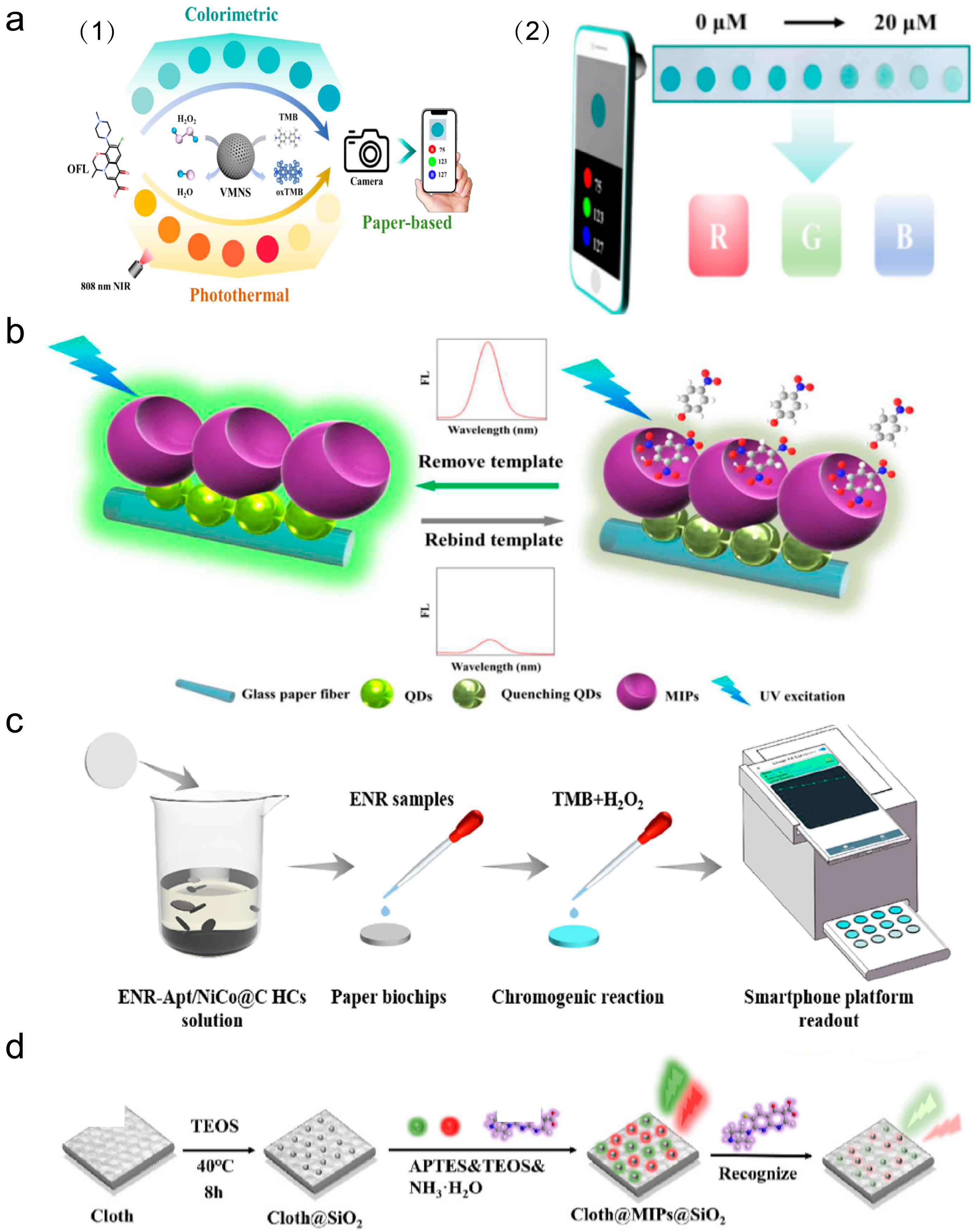
In recent years, many studies have been devoted to developing integrated fluorescent microfluidic methods for sensitive detection and specific identification of various pollutants. Integrating a smartphone with a μPAD and RGB analysis provides a new approach for colorimetric analysis in environmental monitoring [336]. This technique realizes real-time quantitative detection of the target by capturing the chip’s color rendering information and converting it to RGB data. Zhu et al. developed a tri-modal POCT platform by integrating colorimetric, photothermal, and paper-based biochip sensing methods, based on vanadium mesoporous nanospheres (VMNS), as shown in Figure 8a [337]. They also designed an integrated μPAD combined with a smartphone chromaticity analyzer, enabling rapid and ultrasensitive on-site detection of Ofloxacin (OFL) [337]. The core principle is that OFL specifically enhances the peroxidase-like activity of VMNS and catalyzes the substrate reaction to produce measurable colorimetric and photothermal signals. Liu et al. developed a smartphone-readout colorimetric paper-based IA chip featuring nanocatalyst-assisted catalysis for rapid detection of cyanotoxins (MCAs/NODs) in water [338]. The in situ self-assembly of multilayered peroxidase-like nanoenzymes on anti-MCs/NODs monoclonal antibodies was realized by introducing a double orthogonal click reaction, sensitively detecting 13 variants of MCs/NOD with the detection limit lower than 0.7 μg/L, and the spiked recoveries in different water matrices were 88–120%. Zhu et al. developed an aptamer-modified nanoenzyme-based portable paper colorimetric sensor for ultrasensitive in situ quantification of enrofloxacin (ENR) [339]. Aptamer-functionalized NiCo@C hollow nanocages were immobilized on the paper chip, with sensing relying on aptamer-mediated enzyme activity inhibition and target-triggered activity recovery (Figure 8b) [33], achieving an ultralow ENR detection limit of 0.029 ng/mL and exhibiting robust performance in real samples.
Compared to natural receptor antibodies, enzymes, and aptamers, molecular imprinting polymers (MIPs), which are synthetic materials designed to mimic biological recognition based on antigen–antibody interactions, exhibit clear benefits such as chemical and mechanical robustness, along with affordable production [195,340]. Qi et al. designed a paper-based microfluidic system for detecting phenolic pollutants via the integration of a rotating μPAD with MIPs technology [33]. The 360-degree rotating structure in the μPAD allows the μPAD to improve the utilization of the chip space (Figure 8c) [339]. Multiplexed detection allows for the simultaneous quantitative and qualitative analysis of two different types of phenolic pollutants, including 2,4,6-trinitrophenol and 4-nitrophenol, by changes in fluorescence intensity. Wang et al. proposed a novel approach for the sensitive and quick determination of Enoxacin (ENX) in aqueous environments [341]. This method integrates a molecularly imprinted polymer triple ratiometric fluorescence (MIPs-TRF) nanosensor with a μPAD (Figure 8d) [341]. By the PET photo-induced electron transfer mechanism, the sensor combines the high selectivity of MIPs with the enhanced sensitivity and anti-interference capabilities of TRF, exhibiting a limit of detection (LOD) of 0.008 mg/L and exhibiting a good linear response of 0.05–7.0 mg/L, within 2 min. Recoveries of ENX spiked into real river water samples ranged from 98.88% to 102.76%. Established methods for detecting Enoxacin include high-performance liquid chromatography with refractive index detection, with a detection time of 37 min, capillary electrophoresis requiring 5 min, and solid-phase extraction coupled with high-performance liquid chromatography with a detection time of 12 min [341].
Figure 8.
μPADs for detecting environmental pollutants. (a) (1) Triple-mode (colorimetric/fluorescent/SERS) OFL sensing strategy. (2) Blind-eye paper device detects OFL. Reproduced from Ref. [337], with permission from Elsevier, 2025. (b) A schematic mechanism of the rotary paper-based microfluidic chip. Reproduced from Ref. [33], with permission from ACS, 2018. (c) Schematic of a paper-based colorimetric aptasensor assisted by a smartphone platform. Reproduced from Ref. [339], with permission from ACS, 2018. (d) Construction and sensing procedure of the cloth-paper hybrid microfluidic sensing device. Reproduced from Ref. [341], with permission from Elsevier, 2025.
3.4. Food Safety Detection
Frequent incidents of food safety issues have sparked global concern regarding food security. To ensure the quality and safety of food products, researchers have developed various rapid and sensitive detection methods for analyzing diverse food components and contaminants [342]. μPADs enable simple, rapid, on-site testing, allowing timely, cost-effective, straightforward, and accurate food safety monitoring [343].
3.4.1. Foodborne Pathogens
Foodborne pathogens are a significant public health concern worldwide. More than 200 diseases are linked to foodborne pathogens, such as bacteria [344] and viruses [345]. Food contamination can take place at any stage, from the commencement of production and processing to transportation, meal preparation, and culminating in final consumption [346].
Although traditional detection means such as culture techniques, polymerase chain reaction (PCR) [347,348], and ELISA [349] are reliable and accurate, they have real-time and on-site detection limitations, such as long processing time, complex sample preparation, and difficulty detecting low-concentration targets [350,351]. Therefore, it is essential to develop a rapid, highly sensitive, immediate, and low-cost microfluidic detection method to quantify the concentration of these bacteria [352,353].
Over the past few decades, significant efforts have been made to rapidly detect foodborne pathogens in food samples [354,355,356,357]. However, the two most challenging issues are both the complexity of food matrices, requiring the rapid and effective sample pretreatment techniques to replace lengthy and cumbersome enrichment steps, and the need to increase the detection rate while ensuring accuracy for real-time online monitoring and rapid on-site detection [358]. To address these challenges, μPADs have developed tremendously in the past decade. Peddeni and Hosseini designed a Y-shaped μPAD for detecting Staphylococcus aureus, utilizing synthetic Au/Pt nanocages (Au/PtNCs) to reduce 3,3′,5,5′-tetramethylbenzidine [359]. When S. aureus is present, the Au/PtNCs@aptamer complex binds to the bacteria, causing loss of oxidative/reductive capability and subsequent color lightening (Figure 9a) [359]. This color shift permits semi-quantitative visual analysis or quantitative measurement via UV spectrophotometry. The assay exhibited a linear dynamic range of 102–108 CFU/mL and a LOD of 80 CFU/mL. Lia Stanciu et al. designed a μPAD for multi-target detection of Escherichia coli [360], detecting multiple foodborne pathogens and quantifying colorimetric signals via image analysis, enabling the quantification of the target by relating the colorimetric signal directly to its concentration (Figure 9b) [360]. Such multiplexed colorimetric µPADs show significant potential for rapid on-site screening of pathogenic bacteria in water and food samples. Zhuang et al. fabricated an integrated μPAD combining RPA and ultrasensitive SERS readout for detecting Salmonella typhimurium in food [32]. The four-step detection workflow includes SERS probe addition, 10 min drying, 5 min Cas12a trans-cleavage incubation, and 1 min Raman signal acquisition (Figure 9c) [32]. Using a unique trans-cut structure as a SERS signal converter-amplifier, the platform translates target DNA sequences into quantifiable signals, enabling rapid, high-sensitivity bacterial DNA detection over a broad dynamic range with strong food safety monitoring potential.
Figure 9.
μPADs for foodborne pathogen detection applications. (a) Schematic diagram of the paper-based chip for the detection of Staphylococcus aureus. Reproduced from Ref. [359], with permission from Elsevier, 2020. (b) Multiplexed detection of Escherichia coli O157:H7 and S. Typhimurium based on paper devices. Reproduced from Ref. [360], with permission from Elsevier, 2022. (c) μPADs for detecting Salmonella Typhimurium in food samples. Reproduced from Ref. [32], with permission from Elsevier, 2022. (d) Schematic diagram showing the fabrication of a screen-printed paper-based Listeria monocytogenes sensor. Reproduced from Ref. [361], with permission from MDPI, 2022.
The combination of microfluidic technology and biosensors creates a promising platform for identifying pathogenic bacteria in food. Mishra et al. fabricated a disposable biosensor using a paper-based microfluidic platform [361]. Carbon-based electrodes were screen-printed onto paper substrates, with the working electrode modified via drop-coating of WS2 tungsten disulfide NPs and subsequent immobilization of Listeria-specific aptamer recognition elements (Figure 9d) [361], demonstrating selectivity for target bacteria against interfering strains, with a linear detection range of 101–108 CFU/mL and a LOD of 10.0 CFU/mL. Wang et al. established a convenient detection method based on LFIA combined with Cas9 nuclease-triggered isothermal amplification, enabling rapid detection of dual target pathogens without instrument support. By designing specific sgRNAs and primers, this method simultaneously amplifies genomic DNA from two common foodborne pathogens, namely Salmonella Typhimurium and Escherichia coli, in a single-tube reaction system [362]. The LOD for genomic DNA reaches 100 copies, while the bacterial detection limit is 100 CFU/mL.
3.4.2. Residual Contaminants
Food safety incidents have frequently occurred over the past few years, drawing global attention. Diseases such as food poisoning, indigestion, vomiting, and neurotoxicity are all caused by one or more contaminants, such as pesticides and veterinary drug residues, food additives, and microbial contaminants [363,364,365]. μPADs have been extensively applied for the rapid and selective analysis of residual pollutants in food matrices [366,367].
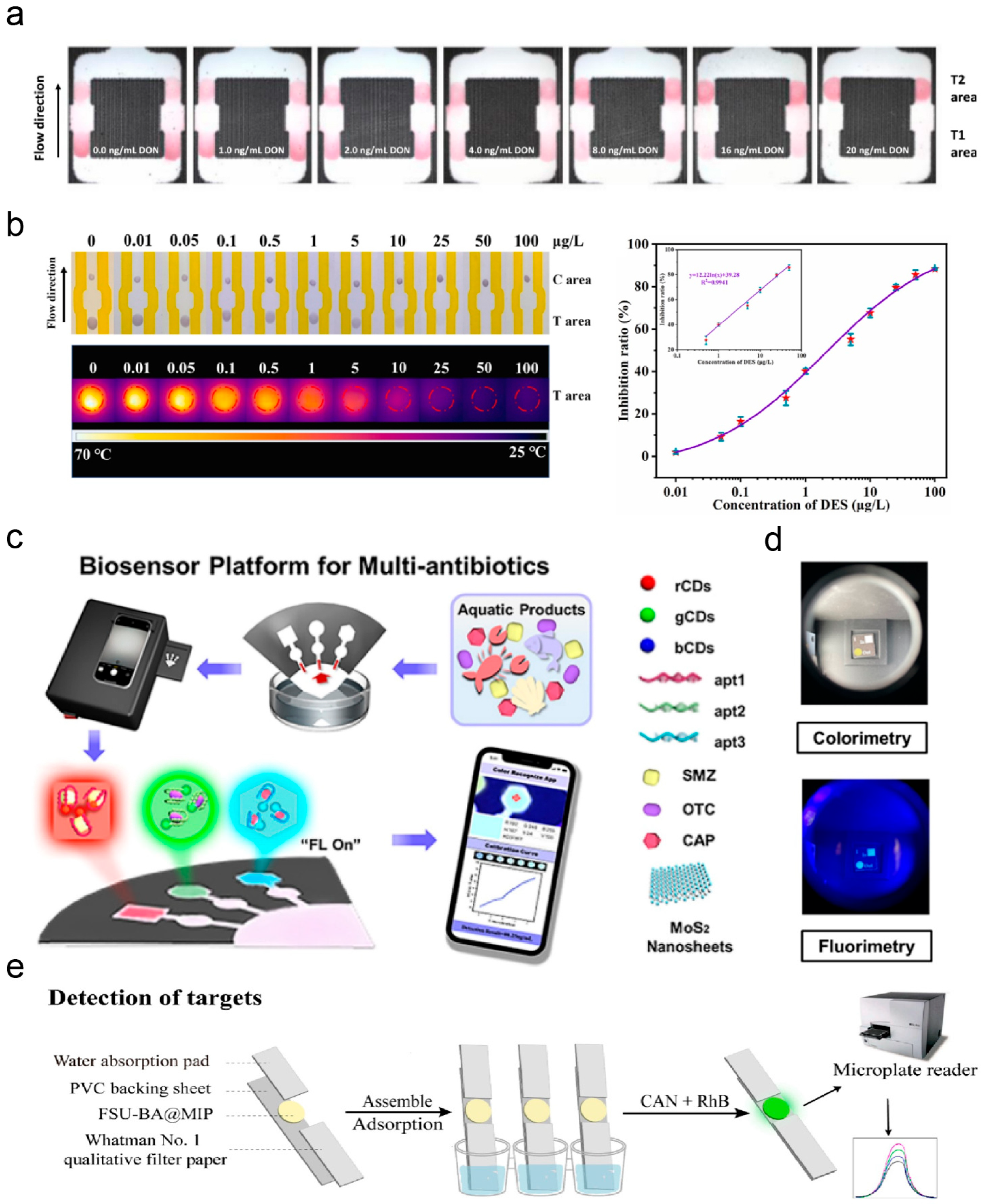
Common methods for detecting food contaminants include gas chromatography, HPLC [368], MS [369], and ICP-MS [370], offering high sensitivity and accuracy but relying on expensive, large-scale equipment requiring specialized personnel to operate, resulting in complex procedures, frequent equipment maintenance, and time-consuming processes [371,372,373]. Now, it has demonstrated significant development trends in the detection field, occupying an irreplaceable and important position [374,375]. μPADs enable simple operation, efficient detection, and low sample consumption, making it highly suitable for rapid on-site testing [376,377]. Jiang et al. developed a μPAD for deoxynivalenol (DON) detection (Figure 10a) [378], featuring a colorimetric competitive IA with gold NPs signaling. The design innovatively incorporates complementary antigen and antibody deposition zones, enabling detection without reagent loading steps. Integrating preloaded reagents and a portable imaging system, the DON-Chip provides rapid, 12 min detection of DON levels across food, feed, and ingredients, with a quantifiable range covering 0.01–20 ppm. In contrast, the CRISPR/Cas12a-based label-free fluorescence photometer requires 1.5 h to detect DON [378]. Then, Song et al. fabricated an integrated paper-based platform combining metal–organic frameworks (MOFs), MIPs, LFA, and boronate affinity surface blotting for kanamycin residue analysis in milk [379], enabling rapid, sensitive visual detection, where MOF integration enhances MIPs recognition site density and mass transfer efficiency. Synergistic effects from boronate affinity binding, MIPs-specific cavities, and colorimetric signaling provide high selectivity with an interference factor of 4.32, rapid analysis with a completion time under 30 min, and sensitive detection with a LOD at 4.69 μg/L. Similarly, the pursuit of higher sensitivity and broader applicability has also driven the adoption of a novel signal mechanism. Wang et al. engineered a photothermal microfluidic paper-based analyzer based on nanomaterial photothermal effects for diethylstilbestrol (DES) detection in food samples [380]. The chip implements competitive immunochromatography using black phosphorus–gold NPs composites (BP-Au) as signal indicators. Sensitive quantification was achieved by irradiating test zones with an 808 nm laser and recording photothermal conversion signals via thermal imaging (Figure 10b) [380], demonstrating a LOD of 0.1 μg/L and accurately quantifying DES across diverse food matrices.
In addition, the localized surface plasmon resonance properties of certain noble metal NPs, such as Ag NPs, can be utilized as colorimetric signaling materials and fluorescence quenching agents, making them ideal for developing multi-signal sensing strategies [381,382]. Tong et al. developed a laser-printed μPAD for the rapid in situ detection of sulfamethoxazole, oxytetracycline, and chloramphenicol (Figure 10c) [383]. This chip, functionalized with dual fluorescent nanoprobes, was fabricated by employing dual fluorescence-emitting N-CD and MoS2 nanosheets as FRET donor-acceptor pairs. Tong et al. developed an aptamer-based 3D-μPAD with colorimetric-fluorescent dual-mode detection for Sulfadimethoxine antibiotics (Figure 10d), utilizing magnesium–nitrogen co-doped carbon dots (Mg, N-CDs) and silver NPs [384]. The system showed a LOD of 0.13 ng/mL via fluorescence detection and 0.21 ng/mL using colorimetric methods. When applied to fish muscle samples, the platform demonstrated acceptable recoveries ranging from 96.7% to 113.6% with fluorescence detection and 98.2% to 105.1% with colorimetric detection. Another potential strategy is to construct analog recognition modules by combining μPADs with composite nanomaterials such as metal oxides and MOFs [385]. Zhou et al. developed a highly selective μPAD fluorescence sensor for rapid visual detection of salbutamol (SAL) in meat samples [386]. The device features a functionalized surface layer (FSU-BA@MIPs) integrating boric acid-modified MOFs with MIPs on paper substrates, enabling dual-specific SAL recognition and enrichment through boronate affinity binding and molecular imprinting (Figure 10e) [386]. Captured SAL was quantified via an immobilized fluorescence platform, achieving a linear dynamic range of 0.001–5.0 mg/L with detection and quantification limits of 0.095 and 0.290 μg/kg, respectively, and sample loading using lateral flow assistance was completed in less than 30 min [386].
Figure 10.
μPADs for detecting residual contaminants in food. (a) Signal intensities to indicate DON concentrations. Reproduced from Ref. [378], with permission from ACS, 2019. (b) (1) Imaging and thermographic results of photothermal chips. (2) Dose-related inhibition rate curve. Reproduced from Ref. [380], with permission from Elsevier, 2023. (c) Simultaneous visual reading of multiple antibiotics via a cellphone-assisted aptasensor. Reproduced from Ref. [383], with permission from ACS, 2022. (d) A portable sensor with colorimetric and fluorescent detection modes. Reproduced from Ref. [384], with permission from Elsevier, 2023. (e) rapid visual detection of SAL in environmental samples by a paper-based fluorescent device. Reproduced from Ref. [386], with permission from Elsevier, 2024.
4. Summary and Outlook
The research on μPADs has reached significant milestones, impacting disease diagnosis [387] and other areas. These devices provide an ideal platform for non-invasive diagnosis and rapid screening. Currently, testing in the aforementioned areas primarily relies on a complementary model of rapid screening and confirmation by large-scale instruments. μPADs can integrate various detection methods such as colorimetric, electrochemical, fluorescent, and chemiluminescent approaches, addressing the limitations of traditional techniques, including long detection cycles, high costs, low automation, and limited sample throughput. They significantly enhance the miniaturization and integration of detection systems [164,388,389,390,391,392]. However, such a technology still faces several challenges [393,394,395,396]. In practical applications, the characteristics of different techniques must be weighed. Colorimetric methods are simple and economical but have limited sensitivity and interference resistance. Their detection results exhibit uneven color distribution, leading to potential errors when read visually, and are susceptible to background interference from paper or samples [197]. Electrochemical methods offer high sensitivity and ease of miniaturization but demand stringent electrode stability and interference resistance [213,221]. Fluorescence methods, meanwhile, face a trade-off between extremely high sensitivity and susceptibility to environmental interference, even in in vivo studies [229]. Therefore, rational selection and combination of suitable detection methods are necessary. Material selection also impacts practical applications, because different paper substrates, porosity, and fiber orientation primarily affect fluid transport properties [49]. In addition, achieving fluid control on paper substrates remains the primary bottleneck in enhancing their practicality within analytical devices [108].
Beyond technical performance, μPADs face several practical challenges in clinical and field applications, such as reproducibility, long-term storage stability, batch-to-batch variations in paper substrates, as well as standardization and regulatory considerations. For example, LFIAs offer a rapid and convenient solution for POCT of porcine circovirus-associated disease (PCVAD) [397]. However, multiple critical challenges persist in clinical and field applications, including variability and reproducibility of test results—particularly when outcomes differ from PCR testing, necessitating supplementary validation through virus isolation, clinical symptoms, and tissue viral load. Furthermore, LFIAs cannot perform quantitative detection, only indirectly estimating PCV2 levels [397]. In addition, complex components in real samples can easily cause cross-reactivity and false positives [398]. Similar challenges exist in other rapid-testing areas. Fentanyl test strip (FTS) LFIAs detect fentanyl in urine as low as ng/mL, but there is a lack of standardized manufacturing and clear regulatory pathways [399].
The development of μPADs will focus on the innovative integration of materials, fabrication, and methodologies to address the aforementioned challenges currently facing the technology. The introduction of advanced materials such as nanomaterials, two-dimensional materials, and functional polymers, combined with processes including coating, impregnation, in situ synthesis, and 3D printing [400], is expected to enhance the mechanical strength, surface properties, and fluid control capabilities of paper-based substrates. The integration of these materials, particularly nanoparticles extensively studied for their unique optical and catalytic properties, is providing a more comprehensive perspective on the future development of μPADs in global healthcare and analytical science [401]. Notably, 3D microfluidic chip technology, which constructs 3D microchannel networks, offers an essential pathway toward higher precision and stronger controllability in fluid manipulation. The integration with paper-based platforms will significantly advance breakthroughs in chip integration, automation, and functional diversity. Nevertheless, this technology still confronts challenges in manufacturing precision, material innovation, and design methodologies, calling for emerging fabrication technologies and materials to inject new possibilities [402,403,404,405]. Furthermore, the paper-polymer hybrid platform integrates the capillary action of paper with the precise fluid manipulation capabilities of polymers, offering a novel approach for integrating multiplexed, multi-target detection while minimizing cross-reactivity [72,73,74,75]. Meanwhile, the CRISPR-assisted detection strategy [406] significantly enhances specificity and sensitivity through gRNA-guided targeted recognition, minimizing interference from complex samples and false positives.
Simultaneously, system integration and intelligence will be another key breakthrough [407,408,409,410] to prepare portable, low-power, interference-resistant, and user-friendly on-site detection systems. By integrating microfluidic devices based on a smartphone-based reading system, a microfluidic platform that combines sample pre-treatment, separation, and detection was developed [411,412], simplifying the analysis process while enabling automated operations and direct interpretation of results [413]. The integration of AI-powered image analysis [414] effectively minimizes the impact of environmental interference on signals, providing objective and quantitative result interpretation. Secondly, it is necessary to further promote the application of self-powered technology and near field communication (NFC) in wireless energy supply and data transmission [415], which will help eliminate dependence on external power sources, thereby enhancing the portability and applicability of devices. Meanwhile, by integrating 5G, big data and internet technologies, a real-time analysis, remote diagnosis and intelligent early warning system will be established [416,417]. These advancements not only confront and aim to resolve current challenges in cost, accessibility, and operational complexity but will also provide new ways for resource-limited settings, bringing breakthroughs and application paradigms to health management, environmental monitoring, and food safety.
5. Conclusions
μPADs have emerged as a powerful, rapid detection strategy, offering a robust alternative to traditional laboratory analysis. This article provides a systematic overview of the core aspects of μPADs, ranging from the diversity of cellulose and non-cellulose substrates to the various fabrication methodologies and detection techniques that underpin their functionality. Owing to their low cost, minimal sample volume requirement, and portability, μPADs hold unique potential for rapid detection applications, particularly in POC diagnostics and field use. The broad potential of μPADs is reflected in their significant applications across several key areas. Medical diagnostics enable rapid detection of blood biomarkers, tumor markers, and infectious microorganisms, facilitating early disease screening and management. In environmental monitoring, μPADs detect heavy metal ions and pollutants effectively, ensuring ecological safety. Within the food safety sector, they provide a rapid means for screening foodborne pathogens and residual contaminants, safeguarding public health. Although notable progress has been made in the research and development of μPADs in recent years, showcasing a trend toward diversification, challenges remain in areas such as mass production, sensitivity, efficiency, and universal applicability. This review indicates that with ongoing development, μPADs are expected to become indispensable tools in decentralized diagnostics, environmental protection, and food safety, making advanced analytical technologies accessible to populations worldwide.
Author Contributions
Conceptualization, writing—original draft, and editing, X.L.; conceptualization, supervision, and writing—review, W.X.; project administration, H.J.; visualization and data curation, R.L.; formal analysis, Z.K.; investigation, J.Z.; visualization and editing, Z.S.; data curation, S.J.; funding acquisition and supervision, W.L.; conceptualization, supervision, and writing—review and editing, Y.W. All authors have read and agreed to the published version of the manuscript.
Funding
This work was funded by the National Natural Science Foundation of China (No. 62371051, No. 22278037, No. 62471017, No. 62471317), the Natural Science Foundation of Beijing (No. 2252034, No. L246068), the Discipline Construction of Material Science and Engineering (No. 21090525016), the Project of Beijing Institute of Graphic Communication (No. 20190525003, No. KYCPT202510), the Qinghai Science and Technology Department (No. 2024-ZJ-937), Science and technology innovation projects of Kailuan Group (No. H2023-02), the Fundamental Research Funds for the Municipal Universities of Beijing (No. Ee202510) and the Project of Scientific Research Platform of Beijing Key Laboratory of Digital Media Arts (KYCPT202511).
Data Availability Statement
No new data were created or analyzed in this study. Data sharing is not applicable to this article.
Conflicts of Interest
The authors declare no conflicts of interest.
References
- Kim, W.; Lee, S.H.; Kim, J.H.; Ahn, Y.J.; Kim, Y.-H.; Yu, J.S.; Choi, S. Paper-Based Surface-Enhanced Raman Spectroscopy for Diagnosing Prenatal Diseases in Women. ACS Nano 2018, 12, 7100–7108. [Google Scholar] [CrossRef] [Scilit]
- Zhuang, J.; Han, B.; Liu, W.; Zhou, J.; Liu, K.; Yang, D.; Tang, D. Liposome-amplified photoelectrochemical immunoassay for highly sensitive monitoring of disease biomarkers based on a split-type strategy. Biosens. Bioelectron. 2018, 99, 230–236. [Google Scholar] [CrossRef] [Scilit]
- Taguchi, T.; Ishikawa, M.; Ichikawa, M.; Tadenuma, T.; Hirakawa, Y.; Yoshino, T.; Maeda, Y.; Takeuchi, H.; Nojima, D.; Tanaami, T.; et al. Amplification-free detection of bacterial genes using a signaling probe-based DNA microarray. Biosens. Bioelectron. 2021, 194, 113659. [Google Scholar] [CrossRef] [Scilit] [PubMed]
- Wang, T.K.M.; Ayoub, C.; Chetrit, M.; Kwon, D.H.; Jellis, C.L.; Cremer, P.C.; Bolen, M.A.; Flamm, S.D.; Klein, A.L. Cardiac Magnetic Resonance Imaging Techniques and Applications for Pericardial Diseases. Circ. Cardiovasc. Imaging 2022, 15, e014283. [Google Scholar] [CrossRef] [Scilit] [PubMed]
- Duran, C.; Gundogdu, A.; Bulut, V.N.; Soylak, M.; Elci, L.; Sentürk, H.B.; Tüfekci, M. Solid-phase extraction of Mn(II), Co(II), Ni(II), Cu(II), Cd(II) and Pb(II) ions from environmental samples by flame atomic absorption spectrometry (FAAS). J. Hazard. Mater. 2007, 146, 347–355. [Google Scholar] [CrossRef] [Scilit]
- Lin, K.; Zhu, Y.; Zhang, Y.; Lin, H. Determination of ammonia nitrogen in natural waters: Recent advances and applications. Trends Environ. Anal. Chem. 2019, 24, e00073. [Google Scholar] [CrossRef] [Scilit]
- Lu, D.; Liu, Q.; Zhang, T.; Cai, Y.; Yin, Y.; Jiang, G. Stable silver isotope fractionation in the natural transformation process of silver nanoparticles. Nat. Nanotechnol. 2016, 11, 682–686. [Google Scholar] [CrossRef] [Scilit]
- Feng, Q.-Z.; Zhao, L.-X.; Yan, W.; Lin, J.-M.; Zheng, Z.-X. Molecularly imprinted solid-phase extraction combined with high performance liquid chromatography for analysis of phenolic compounds from environmental water samples. J. Hazard. Mater. 2009, 167, 282–288. [Google Scholar] [CrossRef] [Scilit]
- Li, Y.; Zhang, H.; Cui, Z.; Liu, S.; Xu, J.; Jia, C.; Chen, Y.; Wang, L.; Sun, J.; Zhang, D.; et al. Chemical staining enhanced Enzyme-linked immunosorbent assay for sensitive determination of Clenbuterol in food. Food Chem. 2023, 400, 134012. [Google Scholar] [CrossRef] [Scilit]
- Ma, S.; Li, Y.; Peng, Y.; Wang, W. Toward commercial applications of LED and laser-induced fluorescence techniques for food identity, quality, and safety monitoring: A review. Compr. Rev. Food Sci. Food Saf. 2023, 22, 3620–3646. [Google Scholar] [CrossRef] [Scilit]
- Zhao, Y.; Chen, D.; Duan, H.; Li, P.; Wu, W.; Wang, X.; Poapolathep, A.; Poapolathep, S.; Logrieco, A.F.; Pascale, M.; et al. Sample preparation and mass spectrometry for determining mycotoxins, hazardous fungi, and their metabolites in the environment, food, and healthcare. TrAC Trends Anal. Chem. 2023, 160, 116962. [Google Scholar] [CrossRef] [Scilit]
- Wu, J.; He, Z.; Chen, Q.; Lin, J.M. Biochemical analysis on microfluidic chips. Trends Analyt. Chem. 2016, 80, 213–231. [Google Scholar] [CrossRef] [Scilit]
- Whitesides, G.M. The origins and the future of microfluidics. Nature 2006, 442, 368–373. [Google Scholar] [CrossRef] [Scilit]
- Reyes, D.R.; Iossifidis, D.; Auroux, P.-A.; Manz, A. Micro total analysis systems. 1. Introduction, theory, and technology. Anal. Chem. 2002, 74, 2623–2636. [Google Scholar] [CrossRef] [Scilit]
- Hsu, M.N.; Wei, S.C.; Phan, D.T.; Zhang, Y.; Chen, C.H. Nano-in-Micro Smart Hydrogel Composite for a Rapid Sensitive Immunoassay. Adv. Healthc. Mater. 2019, 8, e1801277. [Google Scholar] [CrossRef] [Scilit]
- Wang, D.; Lv, J.; Xu, J.; Fu, K.; He, W.; Meng, X.; Wu, X.; Ji, W.; Shan, L.; Li, L. Microfluidic paper-based photoelectrochemical sensors for point-of-care testing. Microchem. J. 2025, 212, 113491. [Google Scholar] [CrossRef] [Scilit]
- Chen, J.L.; Njoku, D.I.; Tang, C.; Gao, Y.; Chen, J.; Peng, Y.K.; Sun, H.; Mao, G.; Pan, M.; Tam, N.F.Y. Advances in Microfluidic Paper-Based Analytical Devices (µPADs): Design, Fabrication, and Applications. Small Methods 2024, 8, e2400155. [Google Scholar] [CrossRef] [Scilit] [PubMed]
- Mahato, K.; Srivastava, A.; Chandra, P. Paper based diagnostics for personalized health care: Emerging technologies and commercial aspects. Biosens. Bioelectron. 2017, 96, 246–259. [Google Scholar] [CrossRef] [Scilit]
- Kung, C.-T.; Hou, C.-Y.; Wang, Y.-N.; Fu, L.-M. Microfluidic paper-based analytical devices for environmental analysis of soil, air, ecology and river water. Sens. Actuators B Chem. 2019, 301, 126855. [Google Scholar] [CrossRef] [Scilit]
- Tang, R.; Xie, M.Y.; Li, M.; Cao, L.; Feng, S.; Li, Z.; Xu, F. Nitrocellulose Membrane for Paper-based Biosensor. Appl. Mater. Today 2022, 26, 101305. [Google Scholar] [CrossRef] [Scilit]
- Browne, C.; Garnier, G.; Batchelor, W. Moulding of micropatterned nanocellulose films and their application in fluid handling. J. Colloid Interface Sci. 2021, 587, 162–172. [Google Scholar] [CrossRef] [Scilit]
- Yang, J.; Feng, X.; Li, H.; Chang, P.; Ren, X.; Li, X. Microfluidic Chip with Integrated Whole Blood Separation for Simultaneous Accurate Quantification of Multiple Chronic Kidney Disease Markers and Long-Term Monitoring. ACS Sens. 2025, 10, 5623–5632. [Google Scholar] [CrossRef] [Scilit]
- Lin, D.; Li, B.; Fu, L.; Qi, J.; Xia, C.; Zhang, Y.; Chen, J.; Choo, J.; Chen, L. A novel polymer-based nitrocellulose platform for implementing a multiplexed microfluidic paper-based enzyme-linked immunosorbent assay. Microsyst. Nanoeng. 2022, 8, 53. [Google Scholar] [CrossRef] [Scilit] [PubMed]
- Zong, L.; Han, Y.; Gao, L.; Du, C.; Zhang, X.; Li, L.; Huang, X.; Liu, J.; Yu, H.-D.; Huang, W. A transparent paper-based platform for multiplexed bioassays by wavelength-dependent absorbance/transmittance. Analyst 2019, 144, 7157–7161. [Google Scholar] [CrossRef] [Scilit] [PubMed]
- Atchara, L.; Pattarachaya, P.; Kanyapat, T.; Yosita, P.; Jutiporn, Y.; Orawon, C.; Nipapan, R. Microfluidic Paper-based Device for Medicinal Diagnosis. Curr. Top. Med. Chem. 2022, 22, 2282–2313. [Google Scholar] [CrossRef] [Scilit]
- Lim, H.; Jafry, A.T.; Lee, J. Fabrication, Flow Control, and Applications of Microfluidic Paper-Based Analytical Devices. Molecules 2019, 24, 2869. [Google Scholar] [CrossRef] [Scilit]
- Bandopadhyay, A.; Das, P.K. Paper based microfluidic devices: A review of fabrication techniques and applications. Eur. Phys. J. Spec. Top. 2023, 232, 781–815. [Google Scholar] [CrossRef] [Scilit]
- Nadar, S.S.; Patil, P.D.; Tiwari, M.S.; Ahirrao, D.J. Enzyme embedded microfluidic paper-based analytic device (μPAD): A comprehensive review. Crit. Rev. Biotechnol. 2021, 41, 1046–1080. [Google Scholar] [CrossRef] [Scilit]
- Haghgouei, H.; Alizadeh, N. Lab-on-a-chip paper-based electrochemically assisted solid-phase microextraction and ion selective sensor for determination of naproxen in biological fluid samples. Anal. Chim. Acta 2024, 1330, 343275. [Google Scholar] [CrossRef] [Scilit]
- Fiore, L.; Mazzaracchio, V.; Serani, A.; Fabiani, G.; Fabiani, L.; Volpe, G.; Moscone, D.; Bianco, G.M.; Occhiuzzi, C.; Marrocco, G.; et al. Microfluidic paper-based wearable electrochemical biosensor for reliable cortisol detection in sweat. Sens. Actuators B Chem. 2023, 379, 133258. [Google Scholar] [CrossRef] [Scilit]
- Ying, B.; Park, S.; Chen, L.; Dong, X.; Young, E.W.K.; Liu, X. NanoPADs and nanoFACEs: An optically transparent nanopaper-based device for biomedical applications. Lab Chip 2020, 20, 3322–3333. [Google Scholar] [CrossRef] [Scilit] [PubMed]
- Zhuang, J.; Zhao, Z.; Lian, K.; Yin, L.; Wang, J.; Man, S.; Liu, G.; Ma, L. SERS-based CRISPR/Cas assay on microfluidic paper analytical devices for supersensitive detection of pathogenic bacteria in foods. Biosens. Bioelectron. 2022, 207, 114167. [Google Scholar] [CrossRef] [Scilit] [PubMed]
- Qi, J.; Li, B.; Wang, X.; Fu, L.; Luo, L.; Chen, L. Rotational Paper-Based Microfluidic-Chip Device for Multiplexed and Simultaneous Fluorescence Detection of Phenolic Pollutants Based on a Molecular-Imprinting Technique. Anal. Chem. 2018, 90, 11827–11834. [Google Scholar] [CrossRef] [Scilit]
- Choi, J.; Oh, C.Y.; Qian, G.; Shim, T.S.; Jeong, H.-H. Optofluidic paper-based analytical device for discriminative detection of organic substances via digital color coding. Microsyst. Nanoeng. 2025, 11, 11. [Google Scholar] [CrossRef] [Scilit]
- Zhu, L.; Wu, Q.; Mei, X.; Li, Y.; Yang, J. Paper-based microfluidic sensor array for tetracycline antibiotics discrimination using lanthanide metal–carbon quantum dots composite ink. Adv. Compos. Hybrid Mater. 2023, 6, 221. [Google Scholar] [CrossRef] [Scilit]
- Li, H.; Zhao, S.; Wang, Z.; Li, F. Engineering a two-dimensional metal-carbon nanozyme-based portable paper-based colorimetric chip for onsite and visual analysis of pyrophosphate. Talanta 2024, 278, 126490. [Google Scholar] [CrossRef] [Scilit]
- Zhou, J.; Li, B.; Qi, A.; Shi, Y.; Qi, J.; Xu, H.; Chen, L. ZnSe quantum dot based ion imprinting technology for fluorescence detecting cadmium and lead ions on a three-dimensional rotary paper-based microfluidic chip. Sens. Actuators B Chem. 2020, 305, 127462. [Google Scholar] [CrossRef] [Scilit]
- Chen, T.; Sun, C.; Abbas, S.C.; Alam, N.; Qiang, S.; Tian, X.; Fu, C.; Zhang, H.; Xia, Y.; Liu, L.; et al. Multi-dimensional microfluidic paper-based analytical devices (μPADs) for noninvasive testing: A review of structural design and applications. Anal. Chim. Acta 2024, 1321, 342877. [Google Scholar] [CrossRef] [Scilit]
- Rejeeth, C.; Pundir, R.K.; Singhal, P.; Prakash, D.V.S. Evolution, Uses, and Emerging Trends in Microfluidic Paper-Based Analytical Devices. Chromatographia 2025, 88, 531–554. [Google Scholar] [CrossRef] [Scilit]
- Panigrahy, S.K.; Nandha, A.; Kumar, A. An insight into paper-based microfluidic devices for diabetes diagnosis: Fabrication, detection, and applications. Microchem. J. 2025, 215, 114475. [Google Scholar] [CrossRef] [Scilit]
- Nghia, N.N. Microfluidic paper-based analytical devices for food spoilage detection: Emerging trends and future directions. Talanta 2026, 297, 128816. [Google Scholar] [CrossRef] [Scilit]
- Huang, T.T.; Taylor, D.G.; Sedlak, M.; Mosier, N.S.; Ladisch, M.R. Microfiber-Directed Boundary Flow in Press-Fit Microdevices Fabricated from Self-Adhesive Hydrophobic Surfaces. Anal. Chem. 2005, 77, 3671–3675. [Google Scholar] [CrossRef] [Scilit]
- Charbaji, A.; Heidari-Bafroui, H.; Anagnostopoulos, C.; Faghri, M. A New Paper-Based Microfluidic Device for Improved Detection of Nitrate in Water. Sensors 2020, 21, 102–116. [Google Scholar] [CrossRef] [Scilit]
- Tang, R.; Xie, M.; Yan, X.; Qian, L.; Giesy, J.P.; Xie, Y. A nitrocellulose/cotton fiber hybrid composite membrane for paper-based biosensor. Cellulose 2023, 30, 6457–6469. [Google Scholar] [CrossRef] [Scilit]
- Kweon, S.W.; Lee, T.J.; Lee, Y.J.; Seo, J.H.; Kim, H.J. High-purity cellulose extraction and cellulose acetate synthesis from paper mulberry bast fibers for sustainable material applications. Ind. Crops Prod. 2025, 235, 121824. [Google Scholar] [CrossRef] [Scilit]
- Wang, H.; Xu, G.; Jiang, Y.; Cheng, W.; Cao, L. Hydrophilic and Soft Kapok Fiber/Carboxymethyl Cellulose Paper-Based Composite Materials with Enhanced Mechanical Properties for Potential Personal Care Products. Fibers Polym. 2025, 26, 2519–2528. [Google Scholar] [CrossRef] [Scilit]
- Singh, N.; Dewangan, K.; Srivastava, A.; Azad, U.P. Plant-based cellulose paper matrices for electro-optical sensing: Advances in fabrication and applications. Ind. Crops Prod. 2025, 235, 121679. [Google Scholar] [CrossRef] [Scilit]
- Xiong, C.; Wang, T.; Han, J.; Zhang, Z.; Ni, Y. Recent Research Progress of Paper-Based Supercapacitors Based on Cellulose. Energy Environ. Mater. 2024, 7, e12651. [Google Scholar] [CrossRef] [Scilit]
- Kalligosfyri, P.M.; Cinti, S. Paper-Based Materials for Diagnostics. ACS Mater. Lett. 2024, 6, 1184–1198. [Google Scholar] [CrossRef] [Scilit]
- Zhang, F.; Xu, K.; Bai, Y.; Wang, P. Multifunctional cellulose paper-based materials. Cellulose 2023, 30, 8539–8569. [Google Scholar] [CrossRef] [Scilit]
- Yao, Y.; Tao, J.; Zou, J.; Zhang, B.; Li, T.; Dai, J.; Zhu, M.; Wang, S.; Fu, K.K.; Henderson, D.; et al. Light management in plastic–paper hybrid substrate towards high-performance optoelectronics. Energy Environ. Sci. 2016, 9, 2278–2285. [Google Scholar] [CrossRef] [Scilit]
- Yimlamai, P.; Chitbanyong, K.; Wanitpinyo, K.; Puangsin, B.; Nanta, K.; Khantayanuwong, S.; Pisutpiched, S.; Chaisan, T.; Fei, B.; Hiziroglu, S. Properties of mixture of hemp bast and softwood pulp for filter paper manufacture. Heliyon 2024, 10, e25353. [Google Scholar] [CrossRef] [Scilit]
- Yin, X.; Zhao, C.; Zhao, Y.; Zhu, Y. Parallel Monitoring of Glucose, Free Amino Acids, and Vitamin C in Fruits Using a High-Throughput Paper-Based Sensor Modified with Poly(carboxybetaine acrylamide). Biosensors 2023, 13, 1001. [Google Scholar] [CrossRef] [Scilit]
- Tang, Y.; Xing, L.; Wang, P. Preparation of a Hydrophilic Nitrocellulose Membrane. IOP Conf. Ser. Mater. Sci. Eng. 2019, 677, 022035. [Google Scholar] [CrossRef] [Scilit]
- Tang, R.H.; Liu, L.N.; Zhang, S.F.; He, X.C.; Li, X.J.; Xu, F.; Ni, Y.H.; Li, F. A review on advances in methods for modification of paper supports for use in point-of-care testing. Microchim. Acta 2019, 186, 521. [Google Scholar] [CrossRef] [Scilit] [PubMed]
- Gao, B.; Liu, H.; Gu, Z. Patterned Photonic Nitrocellulose for Pseudo-Paper Microfluidics. Anal. Chem. 2016, 88, 5424–5429. [Google Scholar] [CrossRef] [Scilit]
- Liu, Y.; Huang, H.; Huo, P.; Gu, J. Exploration of zwitterionic cellulose acetate antifouling ultrafiltration membrane for bovine serum albumin (BSA) separation. Carbohydr. Polym. 2017, 165, 266–275. [Google Scholar] [CrossRef] [Scilit] [PubMed]
- Moiseeva, E.O.; Kozhevnikova, D.D.; Yashchenok, A.M.; Sergeev, I.S.; Alentov, I.I.; Gorin, D.A.; Chernyshev, V.S. Surface modification of cellulose acetate membrane for fabrication of microfluidic platforms for express extracellular vesicle-based liquid biopsy. Microchem. J. 2025, 208, 112388. [Google Scholar] [CrossRef] [Scilit]
- Chen, C.; Hu, L. Nanocellulose toward Advanced Energy Storage Devices: Structure and Electrochemistry. Acc. Chem. Res. 2018, 51, 3154–3165. [Google Scholar] [CrossRef] [Scilit]
- Soares, A.P.S.; Maria, F.V.M.; Mothé, M.G. Sustainable applications in nanocellulose-based sorbent composite: A technological monitoring. Biomass Convers. Biorefinery 2022, 14, 4539–4553. [Google Scholar] [CrossRef] [Scilit]
- Deng, K.; Liu, Z.; Luo, F.; Xie, R.; He, X.-H.; Jiang, M.-Y.; Ju, X.-J.; Wang, W.; Chu, L.-Y. Controllable fabrication of polyethersulfone hollow fiber membranes with a facile double co-axial microfluidic device. J. Membr. Sci. 2017, 526, 9–17. [Google Scholar] [CrossRef] [Scilit]
- Alenazi, N.A.; Hussein, M.A.; Alamry, K.A.; Asiri, A.M. Modified polyether-sulfone membrane: A mini review. Des. Monomers Polym. 2017, 20, 532–546. [Google Scholar] [CrossRef] [Scilit] [PubMed]
- Gupta, U.; Kumar, N.; Lata, A.; Singh, P.; Arun, R.K. Bio-inspired self-pumping microfluidic device for cleaning of urea using reduced graphene oxide (rGO) modified polymeric nanohybrid membrane. Int. J. Biol. Macromol. 2023, 241, 124614. [Google Scholar] [CrossRef] [Scilit] [PubMed]
- Purushothaman, K.; Narasimhan, A.K.; Gnanavel, S. Development of a PMMA-based Droplet microfluidic device for high-throughput screening in health care applications. Microfluid. Nanofluid. 2025, 29, 42. [Google Scholar] [CrossRef] [Scilit]
- Ehzari, H.; Amiri, M.; Hallaj, R.; Sadeghi, M. Rapid, flexible fabrication of a microfluidic electrochemical chip nucleic acid target for selective, label-free detection of influenza virus DNA using catalytic redox-recycling. Anal. Biochem. 2025, 700, 115771. [Google Scholar] [CrossRef] [Scilit]
- Van Anh, N.; Van Trung, H.; Tien, B.Q.; Binh, N.H.; Ha, C.H.; Le Huy, N.; Loc, N.T.; Thu, V.T.; Lam, T.D. Development of a PMMA Electrochemical Microfluidic Device for Carcinoembryonic Antigen Detection. J. Electron. Mater. 2016, 45, 2455–2462. [Google Scholar] [CrossRef] [Scilit]
- Lei, K.F.; Chang, C.-H.; Chen, M.-J. Paper/PMMA Hybrid 3D Cell Culture Microfluidic Platform for the Study of Cellular Crosstalk. ACS Appl. Mater. Interfaces 2017, 9, 13092–13101. [Google Scholar] [CrossRef] [Scilit]
- Grant, J.; Özkan, A.; Oh, C.; Mahajan, G.; Prantil-Baun, R.; Ingber, D.E. Simulating drug concentrations in PDMS microfluidic organ chips. Lab Chip 2021, 21, 3509–3519. [Google Scholar] [CrossRef] [Scilit]
- Lin, D.; Zhao, Q.; Yan, M. Surface modification of polydimethylsiloxane microfluidic chips by polyamidoamine dendrimers for amino acid separation. J. Appl. Polym. Sci. 2016, 133, 43580. [Google Scholar] [CrossRef] [Scilit]
- Dugvekar, M.; Dixit, S. Mechanical Properties of Glass Fibers Reinforced Composites: A Concise Review. Turk. J. Comput. Math. Educ. 2021, 12, 915–922. [Google Scholar] [CrossRef] [Scilit]
- Gupta, Y.; Ghrera, A.S. Conducting Polymer Modified Glass Fiber Paper Substrate Based Biosensor for Procalcitonin Detection. Iran. J. Sci. 2023, 47, 327–335. [Google Scholar] [CrossRef] [Scilit]
- Samae, M.; Chatpun, S.; Chirasatitsin, S. Hemagglutination Detection with Paper–Plastic Hybrid Passive Microfluidic Chip. Micromachines 2021, 12, 1533–1544. [Google Scholar] [CrossRef] [Scilit]
- Shahriman, M.S.; Mohamad, S.; Mohamad Zain, N.N.; Raoov, M. Poly-(MMA-IL) filter paper: A new class of paper-based analytical device for thin-film microextraction of multi-class antibiotics in environmental water samples using LC-MS/MS analysis. Talanta 2023, 254, 124188. [Google Scholar] [CrossRef] [Scilit]
- Abdelrazig, A.O.; Tran, B.T.; Rijiravanich, P.; Surareungchai, W. A new and high-performance microfluidic analytical device based on Fusion 5 paper for the detection of chili pepper anthracnose pathogen Colletotrichum truncatum. Anal. Methods 2021, 13, 3764–3771. [Google Scholar] [CrossRef] [Scilit]
- Tang, R.; Yang, H.; Choi, J.R.; Gong, Y.; Hu, J.; Wen, T.; Li, X.; Xu, B.; Mei, Q.; Xu, F. Paper-based device with on-chip reagent storage for rapid extraction of DNA from biological samples. Microchim. Acta 2017, 184, 2141–2150. [Google Scholar] [CrossRef] [Scilit]
- Chen, C.; Ye, R.; Chen, Z.; Ye, J.; Ran, B.; Liu, B.; Liang, J.; Huang, J.; Shen, T. A microfluidic paper-based analytical device based on a surface-modified screen-printed electrode Pt-Pd/RGO nanocomposite for glucose detection in urine. Anal. Methods 2025, 17, 6326–6335. [Google Scholar] [CrossRef] [Scilit]
- Wang, H.; Dong, L.; Zhao, L.; Sun, Y.; Zhang, R.; Shan, G. Portable paper-based microfluidic devices based on CuS@Ag2S nanocomposites for colorimetric/electrochemical dual-mode detection of dopamine. Biosens. Bioelectron. 2025, 273, 117162. [Google Scholar] [CrossRef] [Scilit]
- Zhou, B.; Hu, S.; Chen, W.; Xiang, S.; Xue, Y.; Zhang, W.; Yang, R. Visualized chemiluminescence immunoassay for simultaneous detection of multiple lung cancer markers based on spatially resolved microfluidic paper chip device. Talanta 2025, 295, 128360. [Google Scholar] [CrossRef] [Scilit]
- Chen, P.; Han, W.; Li, Y.; Gao, G.; Yang, H. Distance-Readout Paper-Based Microfluidic Chip with a DNA Hydrogel Valve for AFB1 Detection. Anal. Chem. 2025, 97, 5975–5981. [Google Scholar] [CrossRef] [Scilit]
- Ling, S.; Chen, W.; Fan, Y.; Zheng, K.; Jin, K.; Yu, H.; Buehler, M.J.; Kaplan, D.L. Biopolymer nanofibrils: Structure, modeling, preparation, and applications. Prog. Polym. Sci. 2018, 85, 1–56. [Google Scholar] [CrossRef] [Scilit] [PubMed]
- Datta, D.; Bandi, S.P.; Colaco, V.; Dhas, N.; Saha, S.S.; Hussain, S.Z.; Singh, S. Cellulose-Based Nanofibers Infused with Biotherapeutics for Enhanced Wound-Healing Applications. ACS Polym. Au 2025, 5, 80–104. [Google Scholar] [CrossRef] [Scilit]
- Yun, T.; Tao, Y.; Li, Q.; Cheng, Y.; Lu, J.; Lv, Y.; Du, J.; Wang, H. Superhydrophobic modification of cellulosic paper-based materials: Fabrication, properties, and versatile applications. Carbohydr. Polym. 2023, 305, 120570. [Google Scholar] [CrossRef] [Scilit]
- Zhang, Y.; Wang, Z. Review on cellulose paper-based electrodes for sustainable batteries with high energy densities. Front. Chem. Sci. Eng. 2023, 17, 1010–1027. [Google Scholar] [CrossRef] [Scilit]
- Zhu, H.; Luo, W.; Ciesielski, P.N.; Fang, Z.; Zhu, J.Y.; Henriksson, G.; Himmel, M.E.; Hu, L. Wood-Derived Materials for Green Electronics, Biological Devices, and Energy Applications. Chem. Rev. 2016, 116, 9305–9374. [Google Scholar] [CrossRef] [Scilit] [PubMed]
- Sharma, N.; Barstis, T.; Giri, B. Advances in paper-analytical methods for pharmaceutical analysis. Eur. J. Pharm. Sci. 2018, 111, 46–56. [Google Scholar] [CrossRef] [Scilit]
- Evans, E.; Gabriel, E.F.M.; Coltro, W.K.T.; Garcia, C.D. Rational selection of substrates to improve color intensity and uniformity on microfluidic paper-based analytical devices. Analyst 2014, 139, 2127–2132. [Google Scholar] [CrossRef] [Scilit] [PubMed]
- He, P.; Tan, H.; Chen, L.; Yu, B.; Xu, Z. Triggerable fluidic gates in paper-based microfluidic devices using printed wax barriers. Microsyst. Technol. 2025, 31, 3389–3401. [Google Scholar] [CrossRef] [Scilit]
- He, Q.; Ma, C.; Hu, X.; Chen, H. Method for Fabrication of Paper-Based Microfluidic Devices by Alkylsilane Self-Assembling and UV/O3-Patterning. Anal. Chem. 2013, 85, 1327–1331. [Google Scholar] [CrossRef] [Scilit]
- Rajendra, V.; Sicard, C.; Brennan, J.D.; Brook, M.A. Printing silicone-based hydrophobic barriers on paper for microfluidic assays using low-cost ink jet printers. Analyst 2014, 139, 6361–6365. [Google Scholar] [CrossRef] [Scilit]
- Mahmud, M.A.; Blondeel, E.J.M.; Kaddoura, M.; MacDonald, B.D. Creating compact and microscale features in paper-based devices by laser cutting. Analyst 2016, 141, 6449–6454. [Google Scholar] [CrossRef] [Scilit]
- Cai, L.; Wu, Y.; Xu, C.; Chen, Z. A Simple Paper-Based Microfluidic Device for the Determination of the Total Amino Acid Content in a Tea Leaf Extract. J. Chem. Educ. 2013, 90, 232–234. [Google Scholar] [CrossRef] [Scilit]
- Miglione, A.; Raucci, A.; Cristiano, F.; Mancini, M.; Gioia, V.; Frugis, A.; Cinti, S. Paper-based 2D configuration for the electrochemical and facile detection of paracetamol in wastewaters. Electrochim. Acta 2024, 488, 144255. [Google Scholar] [CrossRef] [Scilit]
- Pawar, V.M.; Nadkarni, V.S. Preparation of thin films of cellulose acetate-nitrocellulose blend for solid state nuclear track detection using spin coating technique. J. Radioanal. Nucl. Chem. 2019, 323, 1329–1338. [Google Scholar] [CrossRef] [Scilit]
- Wang, Q.; Xu, L.-p.; Deng, C.-q.; Yao, E.-g.; Chang, H.; Pang, W.-q. Characterization of Electrospinning Prepared Nitrocellulose (NC)-Ammonium Dinitramide (ADN)-Based Composite Fibers. Nanomaterials 2023, 13, 717. [Google Scholar] [CrossRef] [Scilit] [PubMed]
- Gismatulina, Y.A.; Budaeva, V.V.; Sakovich, G.V. Nitrocellulose Synthesis from Miscanthus Cellulose. Propellants Explos. Pyrotech. 2017, 43, 96–100. [Google Scholar] [CrossRef] [Scilit]
- Ruan, C.; Zhu, Y.; Zhou, X.; Abidi, N.; Hu, Y.; Catchmark, J.M. Effect of cellulose crystallinity on bacterial cellulose assembly. Cellulose 2016, 23, 3417–3427. [Google Scholar] [CrossRef] [Scilit]
- Trache, D.; Khimeche, K.; Mezroua, A.; Benziane, M. Physicochemical properties of microcrystalline nitrocellulose from Alfa grass fibres and its thermal stability. J. Therm. Anal. Calorim. 2016, 124, 1485–1496. [Google Scholar] [CrossRef] [Scilit]
- Qi, M.; Fu, W.; Ying, X.; Zhu, B.; Zhao, Z.; Zhou, L.; Li, W.; Su, B. Microneedle Combined with an Electrochemical Lateral Flow Immunoassay Strip for Highly Sensitive and Wide-Range Detection of Protein Biomarkers by Increasing the Reaction Contact Area. Anal. Chem. 2025, 97, 10638–10645. [Google Scholar] [CrossRef] [Scilit] [PubMed]
- Jia, P.; Li, Z.; Wang, X.; Xu, F.; You, M.; Feng, S. Performance improvement of lateral flow assay using heterogeneous nitrocellulose membrane with nonuniform pore size. Int. Commun. Heat Mass Transf. 2023, 143, 106729. [Google Scholar] [CrossRef] [Scilit]
- Khatmi, G.; Klinavičius, T.; Simanavičius, M.; Silimavičius, L.; Tamulevičienė, A.; Rimkutė, A.; Kučinskaitė-Kodzė, I.; Gylys, G.; Tamulevičius, T. Lateral flow assay sensitivity and signal enhancement via laser µ-machined constrains in nitrocellulose membrane. Sci. Rep. 2024, 14, 22936. [Google Scholar] [CrossRef] [Scilit]
- Zhu, D.; Fu, S.; Zhang, X.; Zhao, Q.; Yang, X.; Man, C.; Jiang, Y.; Guo, L.; Zhang, X. Recent progresses on emerging biosensing technologies and portable analytical devices for detection of food allergens. Trends Food Sci. Technol. 2024, 148, 104485. [Google Scholar] [CrossRef] [Scilit]
- Toldrà, A.; Chondrogiannis, G.; Hamedi, M.M. A 3D paper microfluidic device for enzyme-linked assays: Application to DNA analysis. Biotechnol. J. 2023, 18, 2300143. [Google Scholar] [CrossRef] [Scilit] [PubMed]
- Kaur, J.; Deng, F.; Morris, M.J.; Goldys, E. QDs-based fluorescent lateral flow assays for Point-of-care testing of insulin. In Proceedings of the 2023 45th Annual International Conference of the IEEE Engineering in Medicine & Biology Society (EMBC), Sydney, Australia, 24–27 July 2023; pp. 1–4. [Google Scholar]
- Singh, S.; Hasan, M.R.; Jain, A.; Pilloton, R.; Narang, J. LFA: The Mysterious Paper-Based Biosensor: A Futuristic Overview. Chemosensors 2023, 11, 255. [Google Scholar] [CrossRef] [Scilit]
- Nguyen, V.-T.; Song, S.; Park, S.; Joo, C. Recent advances in high-sensitivity detection methods for paper-based lateral-flow assay. Biosens. Bioelectron. 2020, 152, 112015. [Google Scholar] [CrossRef] [Scilit] [PubMed]
- Prabhu, M.V.; Clifford, A. Development of a low-cost paper-based microfluidic device for rapid detection of milk adulterants to ensure food safety. Microfluid. Nanofluid. 2025, 29, 62. [Google Scholar] [CrossRef] [Scilit]
- Troussel, E.; Gomez-Martinez, J.; Denneulin, A.; Brès, J.-C.; Beneventi, D. Fluid transport in cellulose-based composite microfluidic paper-based analytical devices. Cellulose 2025, 32, 4199–4211. [Google Scholar] [CrossRef] [Scilit]
- Tang, R.H.; Li, M.; Liu, L.N.; Zhang, S.F.; Alam, N.; You, M.; Ni, Y.H.; Li, Z.D. Chitosan-modified nitrocellulose membrane for paper-based point-of-care testing. Cellulose 2020, 27, 3835–3846. [Google Scholar] [CrossRef] [Scilit]
- Zhang, Z.; Du, M.; Cheng, X.; Dou, X.; Zhou, J.; Wu, J.; Xie, X.; Zhu, M. A disposable paper-based electrochemical biosensor decorated by electrospun cellulose acetate nanofibers for highly sensitive bio-detection. Analyst 2024, 149, 2436–2444. [Google Scholar] [CrossRef] [Scilit]
- Quintana, E.; Valls, C.; Roncero, M.B. Valorization of waste paper sludge as a sustainable source for packaging applications. Polym. Bull. 2024, 81, 9321–9345. [Google Scholar] [CrossRef] [Scilit]
- Wang, H.H.; Jung, J.T.; Kim, J.F.; Kim, S.; Drioli, E.; Lee, Y.M. A novel green solvent alternative for polymeric membrane preparation via nonsolvent-induced phase separation (NIPS). J. Membr. Sci. 2019, 574, 44–54. [Google Scholar] [CrossRef] [Scilit]
- Singh, S.S.; Zaitoon, A.; Sharma, S.; Manickavasagan, A.; Lim, L.-T. Enhanced hydrophobic paper-sheet derived from Miscanthus × giganteus cellulose fibers coated with esterified lignin and cellulose acetate blend. Int. J. Biol. Macromol. 2022, 223, 1243–1256. [Google Scholar] [CrossRef] [Scilit]
- Elham, N.B.; Sher Bahadar, K.; Khalid, A.A.; Abdullah, M.A.; Kalsoom, A. Cellulose Acetate Based Nanocomposites for Biomedical Applications. Curr. Pharm. Des. 2016, 22, 3007–3019. [Google Scholar] [CrossRef] [Scilit]
- Ananthi, P.; Hemkumar, K.; Subasini, S.; Pius, A. Improved performance of metal-organic frameworks loaded cellulose acetate based film for packaging application. Int. J. Biol. Macromol. 2023, 237, 124041. [Google Scholar] [CrossRef] [Scilit] [PubMed]
- Lei, J.; Guo, Z.; Liu, W. Cellulose acetate/fiber paper composite membrane for separation of an oil-in-water emulsion. New J. Chem. 2021, 45, 12351–12355. [Google Scholar] [CrossRef] [Scilit]
- Choi, J.S.; Lim, S.T.; Choi, H.J.; Mohanty, A.K.; Drzal, L.T.; Misra, M.; Wibowo, A. Preparation and characterization of plasticized cellulose acetate biocomposite with natural fiber. J. Mater. Sci. 2004, 39, 6631–6633. [Google Scholar] [CrossRef] [Scilit]
- Elkony, Y.; Mansour, E.-S.; Elhusseiny, A.; Ebrahim, S. Effect of cellulose acetate/cellulose triacetate ratio on reverse osmosis blend membrane performance. Polym. Eng. Sci. 2020, 60, 2852–2863. [Google Scholar] [CrossRef] [Scilit]
- Fu, Y.; Wang, H.; Xu, M.; Wen, P.; Zheng, H.; Xie, J.; Chen, M. Reconfigurable Cellulose Acetate-Based Thermosets Cross-Linked with Diboronic Acid. Macromol. Chem. Phys. 2024, 225, 2400027. [Google Scholar] [CrossRef] [Scilit]
- An, Y.; Ma, T.; Wang, H.; Xu, X.; Liang, J.; Li, F.; Di, Y.; Wang, W.; Fei, P.; Liu, M. Phenyl-urethane group-modified cellulose acetate-based flat/nanofiber composite membrane for membrane distillation. Int. J. Biol. Macromol. 2025, 321, 146341. [Google Scholar] [CrossRef] [Scilit]
- Meng, X.; Yang, J.; Liu, Z.; Lu, W.; Sun, Y.; Dai, Y. Non-contact, fibrous cellulose acetate/aluminum flexible electronic-sensor for humidity detecting. Compos. Commun. 2020, 20, 100347. [Google Scholar] [CrossRef] [Scilit]
- Ahmadi, A.; Khoshfetrat, S.M.; Kabiri, S.; Fotouhi, L.; Dorraji, P.S.; Omidfar, K. Impedimetric Paper-Based Enzymatic Biosensor Using Electrospun Cellulose Acetate Nanofiber and Reduced Graphene Oxide for Detection of Glucose from Whole Blood. IEEE Sens. J. 2021, 21, 9210–9217. [Google Scholar] [CrossRef] [Scilit]
- He, K.; Zhan, X.; Liu, L.; Ruan, X.; Wu, Y. Ratiometric Fluorescent Paper-Based Sensor Based on CdTe Quantum Dots and Graphite Carbon Nitride Hybrid for Visual and Rapid Determination of Cu2+ in Drinks. Photochem. Photobiol. 2020, 96, 1154–1160. [Google Scholar] [CrossRef] [Scilit]
- Abdellah Ali, S.F.; William, L.A.; Fadl, E.A. Cellulose acetate, cellulose acetate propionate and cellulose acetate butyrate membranes for water desalination applications. Cellulose 2020, 27, 9525–9543. [Google Scholar] [CrossRef] [Scilit]
- Orelma, H.; Hokkanen, A.; Leppänen, I.; Kammiovirta, K.; Kapulainen, M.; Harlin, A. Optical cellulose fiber made from regenerated cellulose and cellulose acetate for water sensor applications. Cellulose 2020, 27, 1543–1553. [Google Scholar] [CrossRef] [Scilit]
- Demirci, S.; Celebioglu, A.; Uyar, T. Surface modification of electrospun cellulose acetate nanofibers via RAFT polymerization for DNA adsorption. Carbohydr. Polym. 2014, 113, 200–207. [Google Scholar] [CrossRef] [Scilit] [PubMed]
- Shao, S.; Liu, M.; Tao, B.; Lasisi, K.H.; Meng, W.; Wu, X.; Zhang, K. Enhanced Protein Separation Performance of Cellulose Acetate Membranes Modified with Covalent Organic Frameworks. Membranes 2025, 15, 84. [Google Scholar] [CrossRef] [Scilit] [PubMed]
- Kumar, M.; Isloor, A.M.; Todeti, S.R.; Ibrahim, G.P.S.; Inamuddin; Ismail, A.F.; Asiri, A.M. Improved separation of dyes and proteins using membranes made of polyphenylsulfone/cellulose acetate or acetate phthalate. Environ. Chem. Lett. 2020, 18, 881–887. [Google Scholar] [CrossRef] [Scilit]
- Fahrina, A.; Fahrurrozi, F.; Munandar, H.; Fahmi, V.; Thongratkaew, S.; Faungnawakij, K.; Roil Bilad, M. Harvesting marine microalgae Tetraselmis sp. using cellulose acetate membrane. Bioresour. Technol. 2024, 399, 130622. [Google Scholar] [CrossRef] [Scilit]
- Shen, S.S.; Yang, J.J.; Liu, C.X.; Bai, R.B. Immobilization of copper ions on chitosan/cellulose acetate blend hollow fiber membrane for protein adsorption. RSC Adv. 2017, 7, 10424–10431. [Google Scholar] [CrossRef] [Scilit]
- Badoei-Dalfard, A.; Saeed, M.; Karami, Z. Protease immobilization on activated chitosan/cellulose acetate electrospun nanofibrous polymers: Biochemical characterization and efficient protein waste digestion. Biocatal. Biotransform. 2023, 41, 279–298. [Google Scholar] [CrossRef] [Scilit]
- Yi, T.; Zhao, H.; Mo, Q.; Pan, D.; Liu, Y.; Huang, L.; Xu, H.; Hu, B.; Song, H. From Cellulose to Cellulose Nanofibrils—A Comprehensive Review of the Preparation and Modification of Cellulose Nanofibrils. Materials 2020, 13, 5062. [Google Scholar] [CrossRef] [Scilit]
- Henschen, J.; Li, D.; Ek, M. Preparation of cellulose nanomaterials via cellulose oxalates. Carbohydr. Polym. 2019, 213, 208–216. [Google Scholar] [CrossRef] [Scilit]
- Sharma, S.K.; Sharma, P.R.; Wang, L.; Pagel, M.; Borges, W.; Johnson, K.I.; Raut, A.; Gu, K.; Bae, C.; Rafailovich, M.; et al. Nitro-oxidized carboxylated cellulose nanofiber based nanopapers and their PEM fuel cell performance. Sustain. Energy Fuels 2022, 6, 3669–3680. [Google Scholar] [CrossRef] [Scilit]
- Xie, H.; Du, H.; Yang, X.; Si, C. Recent Strategies in Preparation of Cellulose Nanocrystals and Cellulose Nanofibrils Derived from Raw Cellulose Materials. Int. J. Polym. Sci. 2018, 2018, 7923068. [Google Scholar] [CrossRef] [Scilit]
- Huang, X.; Huang, R.; Zhang, Q.; Fan, J.; Zhang, Z.; Huang, J. Preparation of sustainable oxidized nanocellulose films with high UV shielding effect, high transparency and high strength. Int. J. Biol. Macromol. 2024, 263, 130087. [Google Scholar] [CrossRef] [Scilit]
- Yagyu, H.; Kasuga, T.; Ogata, N.; Koga, H.; Daicho, K.; Goi, Y.; Nogi, M. Evaporative Dry Powders Derived from Cellulose Nanofiber Organogels to Fully Recover Inherent High Viscosity and High Transparency of Water Dispersion. Macromol. Rapid Commun. 2023, 44, 2300186. [Google Scholar] [CrossRef] [Scilit] [PubMed]
- Tan, Y.; Liu, Y.; Chen, W.; Liu, Y.; Wang, Q.; Li, J.; Yu, H. Homogeneous Dispersion of Cellulose Nanofibers in Waterborne Acrylic Coatings with Improved Properties and Unreduced Transparency. ACS Sustain. Chem. Eng. 2016, 4, 3766–3772. [Google Scholar] [CrossRef] [Scilit]
- Zhao, J.; Cai, J.; Huang, Y.; Luo, J. Nanocellulose-based carbon sphere immobilized AgNPs for antibacterial cellulosic paper. Ind. Crops Prod. 2025, 230, 121120. [Google Scholar] [CrossRef] [Scilit]
- Tayeb, A.H.; Tajvidi, M.; Bousfield, D. Paper-Based Oil Barrier Packaging using Lignin-Containing Cellulose Nanofibrils. Molecules 2020, 25, 1344. [Google Scholar] [CrossRef] [Scilit]
- Prapaporn, S.; Arisara, S.; Wunpen, C.; Wijitar, D. Nanocellulose Films to Improve the Performance of Distance-based Glucose Detection in Paper-based Microfluidic Devices. Anal. Sci. 2020, 36, 1447–1451. [Google Scholar] [CrossRef] [Scilit]
- Du, A.; Hua, L.; Guo, Z.; Jia, F.; Xu, X.; Wang, S.; Lu, Z. Nano-engineered fiber-based sensing frontiers: Revolutionizing on-site pesticide detection for global food-environment nexus challenges. Coord. Chem. Rev. 2025, 538, 216710. [Google Scholar] [CrossRef] [Scilit]
- Linnes, J.C.; Rodriguez, N.M.; Liu, L.; Klapperich, C.M. Polyethersulfone improves isothermal nucleic acid amplification compared to current paper-based diagnostics. Biomed. Microdevices 2016, 18, 30. [Google Scholar] [CrossRef] [Scilit]
- Chen, Y.; Hu, Y.; Lu, X. Polyethersulfone-Based Microfluidic Device Integrated with DNA Extraction on Paper and Recombinase Polymerase Amplification for the Detection of Salmonella enterica. ACS Sens. 2023, 8, 2331–2339. [Google Scholar] [CrossRef] [Scilit] [PubMed]
- Rafieian, F.; Mousavi, M.; Dufresne, A.; Yu, Q. Polyethersulfone membrane embedded with amine functionalized microcrystalline cellulose. Int. J. Biol. Macromol. 2020, 164, 4444–4454. [Google Scholar] [CrossRef] [Scilit]
- Weng, X.; Long, J.; Song, Y.; Zhou, W.; Cui, M.; Xiong, Z. Effects of micro-/submicron-diameter glass fibers on the properties of glass fiber paper reinforced PTFE microwave dielectric materials. Ceram. Int. 2025, 51, 41028–41036. [Google Scholar] [CrossRef] [Scilit]
- Fang, X.; Wei, S.; Kong, J. Paper-based microfluidics with high resolution, cut on a glass fiber membrane for bioassays. Lab Chip 2014, 14, 911–915. [Google Scholar] [CrossRef] [Scilit] [PubMed]
- Li, H.; Fang, X.; Cao, H.; Kong, J. Paper-based fluorescence resonance energy transfer assay for directly detecting nucleic acids and proteins. Biosens. Bioelectron. 2016, 80, 79–83. [Google Scholar] [CrossRef] [Scilit]
- Bolz, A.; Panne, U.; Rurack, K.; Buurman, M. Glass fibre paper-based test strips for sensitive SERS sensing. Anal. Methods 2016, 8, 1313–1318. [Google Scholar] [CrossRef] [Scilit]
- Chang, S.; Thomas, G.; Ow, H.; Wang, W. Sustainable in-line measurement of partition coefficients for tracers by integrating microfluidic mixing chip and functionalized glass fiber. Anal. Methods 2025, 17, 6481–6487. [Google Scholar] [CrossRef] [Scilit]
- Liao, X.; Zhang, Y.; Zhang, Q.; Zhou, J.; Ding, T.; Feng, J. Advancing point-of-care microbial pathogens detection by material-functionalized microfluidic systems. Trends Food Sci. Technol. 2023, 135, 115–130. [Google Scholar] [CrossRef] [Scilit]
- Xian, Z.; Dai, P.; Su, W.; Sun, C.; Liu, L.; You, H.; Liu, Y. A novel microfluidics PMMA/paper hybrid bioimmunosensor for laser-induced fluorescence detection in the determination of alpha-fetoprotein from serum. Microchem. J. 2023, 195, 109476. [Google Scholar] [CrossRef] [Scilit]
- Taheri, H.; Khayatian, G. PMMA/paper hybrid microfluidic chip for simultaneous determination of arginine and valine in human plasma. Microchim. Acta 2022, 189, 370. [Google Scholar] [CrossRef] [Scilit]
- Park, E.; Kang, S.; Ko, U.H. Simple additive-based modifications of PDMS for long-term hydrophilic stability. Lab Chip 2025, 25, 4776–4786. [Google Scholar] [CrossRef] [Scilit]
- Long, H.P.; Lai, C.C.; Chung, C.K. Polyethylene glycol coating for hydrophilicity enhancement of polydimethylsiloxane self-driven microfluidic chip. Surf. Coat. Technol. 2017, 320, 315–319. [Google Scholar] [CrossRef] [Scilit]
- Zhou, W.; Dou, M.; Timilsina, S.S.; Xu, F.; Li, X. Recent innovations in cost-effective polymer and paper hybrid microfluidic devices. Lab Chip 2021, 21, 2658–2683. [Google Scholar] [CrossRef] [Scilit] [PubMed]
- Choi, J.R.; Liu, Z.; Hu, J.; Tang, R.; Gong, Y.; Feng, S.; Ren, H.; Wen, T.; Yang, H.; Qu, Z.; et al. Polydimethylsiloxane-Paper Hybrid Lateral Flow Assay for Highly Sensitive Point-of-Care Nucleic Acid Testing. Anal. Chem. 2016, 88, 6254–6264. [Google Scholar] [CrossRef] [Scilit]
- Hosokawa, K. Biomarker Analysis on a Power-free Microfluidic Chip Driven by Degassed Poly(dimethylsiloxane). Anal. Sci. 2021, 37, 399–406. [Google Scholar] [CrossRef] [Scilit] [PubMed]
- Lee, D.; Bhardwaj, J.; Jang, J. Paper-based electrochemical immunosensor for label-free detection of multiple avian influenza virus antigens using flexible screen-printed carbon nanotube-polydimethylsiloxane electrodes. Sci. Rep. 2022, 12, 2311. [Google Scholar] [CrossRef] [Scilit]
- Zhou, K.; Yu, Y.; Wang, Z.; Li, G.; Ma, Y.; Zhu, S.; Gong, W.; Meng, Q.; Wang, B.; Liu, Q. Layer-by-layer (LBL) self-assembly efficient immobilization of glucose oxidase onto PDMS microfluidic chip towards glucose biosensing. J. Polym. Res. 2025, 32, 17. [Google Scholar] [CrossRef] [Scilit]
- Cheng, J.; Huang, J.; Xiang, Q.; Dong, H. Hollow microneedle microfluidic paper-based chip for biomolecules rapid sampling and detection in interstitial fluid. Anal. Chim. Acta 2023, 1255, 341101. [Google Scholar] [CrossRef] [Scilit] [PubMed]
- Santoso, A.; David, M.K.; Boukany, P.E.; van Steijn, V.; van Ommen, J.R. Atmospheric pressure atomic layer deposition for in-channel surface modification of PDMS microfluidic chips. Chem. Eng. J. 2024, 498, 155269. [Google Scholar] [CrossRef] [Scilit]
- Song, Y.; Xu, X.; Xu, H. Nanomaterials-driven paper-based biosensors for food contaminants detection: Classification, mechanism and applications. Coord. Chem. Rev. 2025, 532, 216512. [Google Scholar] [CrossRef] [Scilit]
- Cai, Y.; Ke, L.; Du, A.; Dong, J.; Gai, Z.; Gao, L.; Yang, X.; Han, H.; Du, M.; Qiang, G.; et al. Machine Learning-Assisted Multimodal Early Screening of Lung Cancer Based on a Multiplexed Laser-Induced Graphene Immunosensor. ACS Nano 2025, 19, 25697–25709. [Google Scholar] [CrossRef] [Scilit]
- Mettakoonpitak, J.; Hatsakhun, P.; Sirasunthorn, N. Alcohol ink-modified microfluidic paper-based analytical devices for enhanced white detection in simultaneous determination of multiple water quality indicators. Microchim. Acta 2024, 191, 680. [Google Scholar] [CrossRef] [Scilit]
- Jin, Y.; Aziz, A.U.R.; Wu, B.; Lv, Y.; Zhang, H.; Li, N.; Liu, B.; Zhang, Z. The Road to Unconventional Detections: Paper-Based Microfluidic Chips. Micromachines 2022, 13, 1835–1853. [Google Scholar] [CrossRef] [Scilit]
- Nishat, S.; Jafry, A.T.; Martinez, A.W.; Awan, F.R. Paper-based microfluidics: Simplified fabrication and assay methods. Sens. Actuators B Chem. 2021, 336, 129681. [Google Scholar] [CrossRef] [Scilit]
- Yu, P.; Deng, M.; Yang, Y. New Single-Layered Paper-Based Microfluidic Devices for the Analysis of Nitrite and Glucose Built via Deposition of Adhesive Tape. Sensors 2019, 19, 4082. [Google Scholar] [CrossRef] [Scilit]
- Musile, G.; Grazioli, C.; Fornasaro, S.; Dossi, N.; De Palo, E.F.; Tagliaro, F.; Bortolotti, F. Application of Paper-Based Microfluidic Analytical Devices (µPAD) in Forensic and Clinical Toxicology: A Review. Biosensors 2023, 13, 743. [Google Scholar] [CrossRef] [Scilit]
- Das, S.; Gagandeep; Bhatia, R. Paper-based microfluidic devices: Fabrication, detection, and significant applications in various fields. Rev. Anal. Chem. 2022, 41, 112–136. [Google Scholar] [CrossRef] [Scilit]
- Ma, P.; Wang, S.; Wang, J.; Wang, Y.; Dong, Y.; Li, S.; Su, H.; Chen, P.; Feng, X.; Li, Y.; et al. Rapid Assembly of Cellulose Microfibers into Translucent and Flexible Microfluidic Paper-Based Analytical Devices via Wettability Patterning. Anal. Chem. 2022, 94, 13332–13341. [Google Scholar] [CrossRef] [Scilit] [PubMed]
- Ko, H.; Lee, J.; Kim, Y.; Lee, B.; Jung, C.H.; Choi, J.H.; Kwon, O.S.; Shin, K. Active Digital Microfluidic Paper Chips with Inkjet-Printed Patterned Electrodes. Adv. Mater. 2014, 26, 2335–2340. [Google Scholar] [CrossRef] [Scilit]
- Du, X.; Liu, R.; Chen, Y.; Shan, H.; Han, L.; Cai, Y.; Ke, L.; Chen, J.; Wang, L.; Wei, B.; et al. Roll-to-roll fabrication of paper-tape electrochemical sensing devices for point-of-care testing. Chem. Eng. J. 2025, 525, 170226. [Google Scholar] [CrossRef] [Scilit]
- Li, C.; Boban, M.; Snyder, S.A.; Kobaku, S.P.R.; Kwon, G.; Mehta, G.; Tuteja, A. Paper-Based Surfaces with Extreme Wettabilities for Novel, Open-Channel Microfluidic Devices. Adv. Funct. Mater. 2016, 26, 6121–6131. [Google Scholar] [CrossRef] [Scilit]
- Ghosh, R.; Gopalakrishnan, S.; Savitha, R.; Renganathan, T.; Pushpavanam, S. Fabrication of laser printed microfluidic paper-based analytical devices (LP-µPADs) for point-of-care applications. Sci. Rep. 2019, 9, 7896. [Google Scholar] [CrossRef] [Scilit]
- Martinez, A.W.; Phillips, S.T.; Butte, M.J.; Whitesides, G.M. Patterned Paper as a Platform for Inexpensive, Low-Volume, Portable Bioassays. Angew. Chem. 2007, 119, 1340–1342. [Google Scholar] [CrossRef] [Scilit]
- Wang, Y.; Luo, J.; Liu, J.; Li, X.; Kong, Z.; Jin, H.; Cai, X. Electrochemical integrated paper-based immunosensor modified with multi-walled carbon nanotubes nanocomposites for point-of-care testing of 17β-estradiol. Biosens. Bioelectron. 2018, 107, 47–53. [Google Scholar] [CrossRef] [Scilit] [PubMed]
- Patel, S.; Jamunkar, R.; Sinha, D.; Monisha; Patle, T.K.; Kant, T.; Dewangan, K.; Shrivas, K. Recent development in nanomaterials fabricated paper-based colorimetric and fluorescent sensors: A review. Trends Environ. Anal. Chem. 2021, 31, e00136. [Google Scholar] [CrossRef] [Scilit]
- Deng, Y.; Li, Q.; Zhou, Y.; Qian, J. Fully Inkjet Printing Preparation of a Carbon Dots Multichannel Microfluidic Paper-Based Sensor and Its Application in Food Additive Detection. ACS Appl. Mater. Interfaces 2021, 13, 57084–57091. [Google Scholar] [CrossRef] [Scilit] [PubMed]
- Mettakoonpitak, J.; Khongsoun, K.; Wongwan, N.; Kaewbutdee, S.; Siripinyanond, A.; Kuharuk, A.; Henry, C.S. Simple biodegradable plastic screen-printing for microfluidic paper-based analytical devices. Sens. Actuators B Chem. 2021, 331, 129463. [Google Scholar] [CrossRef] [Scilit]
- Assaifan, A.K.; Al habis, N.; Ahmad, I.; Alshehri, N.A.; Alharbi, H.F. Scaling-up medical technologies using flexographic printing. Talanta 2020, 219, 121236. [Google Scholar] [CrossRef] [Scilit]
- Le, N.N.; Phan, H.C.T.; Tran, H.K.; Dang, D.M.T.; Dang, C.M. Fabrication of paper-based microfluidic channels by electrohydrodynamic inkjet printing technology for analytical biochemistry applications. Int. J. Nanotechnol. 2020, 17, 673–688. [Google Scholar] [CrossRef] [Scilit]
- Jiang, Y.; Hao, Z.; He, Q.; Chen, H. A simple method for fabrication of microfluidic paper-based analytical devices and on-device fluid control with a portable corona generator. RSC Adv. 2016, 6, 2888–2894. [Google Scholar] [CrossRef] [Scilit]
- Juang, Y.-J.; Hsu, S.-K. Fabrication of Paper-Based Microfluidics by Spray on Printed Paper. Polymers 2022, 14, 639–649. [Google Scholar] [CrossRef] [Scilit]
- Liu, J.; Zhang, B.; Zhang, Y.; Fan, Y. Fluid control with hydrophobic pillars in paper-based microfluidics. J. Micromechanics Microengineering 2021, 31, 127002. [Google Scholar] [CrossRef] [Scilit]
- Géraud, B.; Jørgensen, L.; Petit, L.; Delanoë-Ayari, H.; Jop, P.; Barentin, C. Capillary rise of yield-stress fluids. Europhys. Lett. 2014, 107, 58002. [Google Scholar] [CrossRef] [Scilit]
- Kuwabara, S. Nonlinear Stability of the Plane Couette and the Hagen-Poiseuilie Flows. J. Phys. Soc. Jpn. 1972, 33, 828–837. [Google Scholar] [CrossRef] [Scilit]
- Washburn, E.W. The Dynamics of Capillary Flow. Phys. Rev. 1921, 17, 273–283. [Google Scholar] [CrossRef] [Scilit]
- Brenner, H. Rheology of Two-Phase Systems. Annu. Rev. Fluid Mech. 1970, 2, 137–176. [Google Scholar] [CrossRef] [Scilit]
- Darcy, H. Les Fontaines Publiques de la ville de Dijon; Victor Dalmont: Paris, France, 1856. [Google Scholar]
- Khirevich, S.; Yutkin, M.; Patzek, T.W. Correct estimation of permeability using experiment and simulation. Phys. Fluids 2022, 34, 123603. [Google Scholar] [CrossRef] [Scilit]
- Brown, G.O. Henry Darcy and the making of a law. Water Resour. Res. 2002, 38, 11-11–11-12. [Google Scholar] [CrossRef] [Scilit]
- Brown, G. Henry Darcy and the Pitot Tube. In International Engineering History and Heritage; ICE Publishing: London, UK, 2012; pp. 360–366. [Google Scholar]
- Burklund, A.; Saturley-Hall, H.K.; Franchina, F.A.; Hill, J.E.; Zhang, J.X.J. Printable QR code paper microfluidic colorimetric assay for screening volatile biomarkers. Biosens. Bioelectron. 2019, 128, 97–103. [Google Scholar] [CrossRef] [Scilit]
- Adkins, J.; Boehle, K.; Henry, C. Electrochemical paper-based microfluidic devices. Electrophoresis 2015, 36, 1811–1824. [Google Scholar] [CrossRef] [Scilit]
- Zhu, L.; Mei, X.; Peng, Z.; Yang, J.; Li, Y. A paper-based microfluidic sensor array combining molecular imprinting technology and carbon quantum dots for the discrimination of nitrophenol isomers. J. Hazard. Mater. 2022, 435, 129012. [Google Scholar] [CrossRef] [Scilit] [PubMed]
- Chen, X.; Tu, Y.; Cheng, S.; Guo, X.; Lu, T.; Guo, Y.; Huang, X.; Xiong, Y.; Tang, B.Z. A colorimetric and ratiometric fluorescent paper chip for biogenic amine monitoring based on a simple pH-sensitive AIEgen. Chem. Eng. J. 2022, 450, 137928. [Google Scholar] [CrossRef] [Scilit]
- Sriram, G.; Bhat, M.P.; Patil, P.; Uthappa, U.T.; Jung, H.-Y.; Altalhi, T.; Kumeria, T.; Aminabhavi, T.M.; Pai, R.K.; Madhuprasad; et al. Paper-based microfluidic analytical devices for colorimetric detection of toxic ions: A review. TrAC Trends Anal. Chem. 2017, 93, 212–227. [Google Scholar] [CrossRef] [Scilit]
- Xu, W.; Nan, X.; Yang, L.; Cui, Y. Dimethyl Sulfoxide-Induced Transparent Nitrocellulose Membrane for the Lateral Flow Assay. ACS Appl. Polym. Mater. 2025, 7, 3708–3717. [Google Scholar] [CrossRef] [Scilit]
- Tabani, H.; Dorabadi Zare, F.; Alahmad, W.; Varanusupakul, P. Determination of Cr(III) and Cr(VI) in water by dual-gel electromembrane extraction and a microfluidic paper-based device. Environ. Chem. Lett. 2019, 18, 187–196. [Google Scholar] [CrossRef] [Scilit]
- Li, X.; Cao, X.; Xiong, J.; Ge, J. Enzyme–Metal Hybrid Catalysts for Chemoenzymatic Reactions. Small 2019, 16, e1902751. [Google Scholar] [CrossRef] [Scilit] [PubMed]
- Cuprys, A.; Pulicharla, R.; Brar, S.K.; Drogui, P.; Verma, M.; Surampalli, R.Y. Fluoroquinolones metal complexation and its environmental impacts. Coord. Chem. Rev. 2018, 376, 46–61. [Google Scholar] [CrossRef] [Scilit]
- Zhou, Z.; Li, J.; Pan, D.; Wei, H.; Wang, C.; Pan, F.; Xia, J.; Ma, S. pH electrodes based on iridium oxide films for marine monitoring. Trends Environ. Anal. Chem. 2020, 25, e00083. [Google Scholar] [CrossRef] [Scilit]
- Li, J.; Zhao, N.; Zhang, W.; Li, P.; Yin, X.; Zhang, W.; Wang, H.; Tang, B. Assessing the Progression of Early Atherosclerosis Mice Using a Fluorescence Nanosensor for the Simultaneous Detection and Imaging of pH and Phosphorylation. Angew. Chem. Int. Ed. 2022, 62, e202215178. [Google Scholar] [CrossRef] [Scilit]
- Xu, Z.; Qiao, X.; Tao, R.; Li, Y.; Zhao, S.; Cai, Y.; Luo, X. A wearable sensor based on multifunctional conductive hydrogel for simultaneous accurate pH and tyrosine monitoring in sweat. Biosens. Bioelectron. 2023, 234, 115360. [Google Scholar] [CrossRef] [Scilit]
- da Silva, V.A.O.P.; de Freitas, R.C.; de Oliveira, P.R.; Moreira, R.C.; Marcolino-Júnior, L.H.; Bergamini, M.F.; Coltro, W.K.T.; Janegitz, B.C. Microfluidic paper-based device integrated with smartphone for point-of-use colorimetric monitoring of water quality index. Measurement 2020, 164, 108085. [Google Scholar] [CrossRef] [Scilit]
- Noiphung, J.; Nguyen, M.P.; Punyadeera, C.; Wan, Y.; Laiwattanapaisal, W.; Henry, C.S. Development of Paper-Based Analytical Devices for Minimizing the Viscosity Effect in Human Saliva. Theranostics 2018, 8, 3797–3807. [Google Scholar] [CrossRef] [Scilit]
- Küchler, A.; Yoshimoto, M.; Luginbühl, S.; Mavelli, F.; Walde, P. Enzymatic reactions in confined environments. Nat. Nanotechnol. 2016, 11, 409–420. [Google Scholar] [CrossRef] [Scilit]
- Li, F.; Wang, X.; Liu, J.; Hu, Y.; He, J. Double-layered microfluidic paper-based device with multiple colorimetric indicators for multiplexed detection of biomolecules. Sens. Actuators B Chem. 2019, 288, 266–273. [Google Scholar] [CrossRef] [Scilit]
- Yu, T.; Dai, P.-P.; Xu, J.-J.; Chen, H.-Y. Highly Sensitive Colorimetric Cancer Cell Detection Based on Dual Signal Amplification. ACS Appl. Mater. Interfaces 2016, 8, 4434–4441. [Google Scholar] [CrossRef] [Scilit] [PubMed]
- Chen, J.; Jackson, A.A.; Rotello, V.M.; Nugen, S.R. Colorimetric Detection of Escherichia coli Based on the Enzyme-Induced Metallization of Gold Nanorods. Small 2016, 12, 2469–2475. [Google Scholar] [CrossRef] [Scilit] [PubMed]
- Ali, Z.; Ullah, R.; Tuzen, M.; Ullah, S.; Rahim, A.; Saleh, T.A. Colorimetric sensing of heavy metals on metal doped metal oxide nanocomposites: A review. Trends Environ. Anal. Chem. 2023, 37, e00187. [Google Scholar] [CrossRef] [Scilit]
- Elattar, R.H.; El-Malla, S.F.; Kamal, A.H.; Mansour, F.R. Applications of metal complexes in analytical chemistry: A review article. Coord. Chem. Rev. 2024, 501, 215568. [Google Scholar] [CrossRef] [Scilit]
- Wang, C.; Wu, R.; Ling, H.; Zhao, Z.; Han, W.; Shi, X.; Payne, G.F.; Wang, X. Toward scalable fabrication of electrochemical paper sensor without surface functionalization. npj Flex. Electron. 2022, 6, 12. [Google Scholar] [CrossRef] [Scilit]
- Tan, X.; Liang, J.; Yu, H.; Chen, Y.; Shan, L.; Ge, S.; Zhang, L.; Li, L.; Yu, J. Magnetic field enabled spin-state reconfiguration for highly sensitive paper-based photoelectrochemical bioanalysis. Chem. Eng. J. 2023, 471, 144626. [Google Scholar] [CrossRef] [Scilit]
- Ding, J.; Li, B.; Chen, L.; Qin, W. A Three-Dimensional Origami Paper-Based Device for Potentiometric Biosensing. Angew. Chem. Int. Ed. 2016, 55, 13033–13037. [Google Scholar] [CrossRef] [Scilit] [PubMed]
- Zhu, L.; Lv, X.; Li, Z.; Shi, H.; Zhang, Y.; Zhang, L.; Yu, J. All-sealed paper-based electrochemiluminescence platform for on-site determination of lead ions. Biosens. Bioelectron. 2021, 192, 113524. [Google Scholar] [CrossRef] [Scilit] [PubMed]
- Ge, L.; Ye, X.; Yu, Z.; Chen, B.; Liu, C.; Guo, H.; Zhang, S.; Sassa, F.; Hayashi, K. A fully inkjet-printed disposable gas sensor matrix with molecularly imprinted gas-selective materials. npj Flex. Electron. 2022, 6, 40–49. [Google Scholar] [CrossRef] [Scilit]
- Chouler, J.; Cruz-Izquierdo, Á.; Rengaraj, S.; Scott, J.L.; Di Lorenzo, M. A screen-printed paper microbial fuel cell biosensor for detection of toxic compounds in water. Biosens. Bioelectron. 2018, 102, 49–56. [Google Scholar] [CrossRef] [Scilit] [PubMed]
- Alatraktchi, F.A.A.; Zhang, Y.; Angelidaki, I. Nanomodification of the electrodes in microbial fuel cell: Impact of nanoparticle density on electricity production and microbial community. Appl. Energy 2014, 116, 216–222. [Google Scholar] [CrossRef] [Scilit]
- de Araujo, W.R.; Frasson, C.M.R.; Ameku, W.A.; Silva, J.R.; Angnes, L.; Paixão, T.R.L.C. Single-Step Reagentless Laser Scribing Fabrication of Electrochemical Paper-Based Analytical Devices. Angew. Chem. Int. Ed. 2017, 56, 15113–15117. [Google Scholar] [CrossRef] [Scilit]
- Klunder, K.J.; Nilsson, Z.; Sambur, J.B.; Henry, C.S. Patternable Solvent-Processed Thermoplastic Graphite Electrodes. J. Am. Chem. Soc. 2017, 139, 12623–12631. [Google Scholar] [CrossRef] [Scilit]
- Wang, F.; Fu, C.; Huang, C.; Li, N.; Wang, Y.; Ge, S.; Yu, J. Paper-based closed Au-Bipolar electrode electrochemiluminescence sensing platform for the detection of miRNA-155. Biosens. Bioelectron. 2020, 150, 111917. [Google Scholar] [CrossRef] [Scilit]
- Boonkaew, S.; Chaiyo, S.; Jampasa, S.; Rengpipat, S.; Siangproh, W.; Chailapakul, O. An origami paper-based electrochemical immunoassay for the C-reactive protein using a screen-printed carbon electrode modified with graphene and gold nanoparticles. Microchim. Acta 2019, 186, 153. [Google Scholar] [CrossRef] [Scilit]
- Zhou, C.; Cui, K.; Liu, Y.; Li, L.; Zhang, L.; Xu, M.; Ge, S.; Wang, Y.; Yu, J. Ultrasensitive lab-on-paper device via Cu/Co double-doped CeO2 nanospheres as signal amplifiers for electrochemical/visual sensing of miRNA-155. Sens. Actuators B Chem. 2020, 321, 128499. [Google Scholar] [CrossRef] [Scilit]
- Mei, X.; Chen, Z.; Wen, A.; Zhang, J.; Wei, X.; Wang, F.; Zhou, L.; Wang, B.; Wu, Y. Wearable three-dimensional paper-based microfluidic electrochemical sensors for real-time sweat monitoring. Chem. Eng. J. 2025, 515, 163786. [Google Scholar] [CrossRef] [Scilit]
- Yang, S.; Zhao, L.; Yang, X.; Yang, L.; Fa, H.; Wang, Y.; Huo, D.; Hou, C.; Zhong, D.; Yang, M. MBene as novel and effective electrochemical material used to enhance paper-based biosensor for point-of-care testing ctDNA from mice serum. Chem. Eng. J. 2024, 498, 155345. [Google Scholar] [CrossRef] [Scilit]
- Zhang, Y.; Zhao, C.; Bi, H.; Zhang, X.; Xue, B.; Li, C.; Wang, S.; Yang, X.; Qiu, Z.; Wang, J.; et al. A cell-free paper-based biosensor dependent on allosteric transcription factors (aTFs) for on-site detection of harmful metals Hg2+ and Pb2+ in water. J. Hazard. Mater. 2022, 438, 129499. [Google Scholar] [CrossRef] [Scilit]
- Zhang, Y.; Zhu, Z.; Ma, Y.; Fu, Z. Paper-based analytical device integrated with bacteriophage tail fiber protein for bacteria detection and antimicrobial susceptibility test. Biosens. Bioelectron. 2023, 239, 115629. [Google Scholar] [CrossRef] [Scilit]
- Kim, D.; Moon, H.; Baik, S.H.; Singha, S.; Jun, Y.W.; Wang, T.; Kim, K.H.; Park, B.S.; Jung, J.; Mook-Jung, I.; et al. Two-Photon Absorbing Dyes with Minimal Autofluorescence in Tissue Imaging: Application to In Vivo Imaging of Amyloid-β Plaques with a Negligible Background Signal. J. Am. Chem. Soc. 2015, 137, 6781–6789. [Google Scholar] [CrossRef] [Scilit]
- Teengam, P.; Nisab, N.; Chuaypen, N.; Tangkijvanich, P.; Vilaivan, T.; Chailapakul, O. Fluorescent paper-based DNA sensor using pyrrolidinyl peptide nucleic acids for hepatitis C virus detection. Biosens. Bioelectron. 2021, 189, 113381. [Google Scholar] [CrossRef] [Scilit] [PubMed]
- Chen, L.; Luo, X.; Wang, X.; Ning, L.; Li, N.; Zhao, S.; Zhang, Q.; Liu, X.; Jiang, H. Paper-based fluorescent materials containing on-demand nanostructured brain-cells-inspired AIE self-assembles for real-time visual monitoring of seafood spoilage. Food Chem. 2024, 431, 137083. [Google Scholar] [CrossRef] [Scilit]
- Lin, J.-H.; Chen, S.-J.; Lee, J.-E.; Chu, W.-Y.; Yu, C.-J.; Chang, C.-C.; Chen, C.-F. The detection of Mercury(II) ions using fluorescent gold nanoclusters on a portable paper-based device. Chem. Eng. J. 2022, 430, 133070. [Google Scholar] [CrossRef] [Scilit]
- Jiang, H.; Zhang, Q.; Li, N.; Li, Z.; Chen, L.; Yang, F.; Zhao, S.; Liu, X. All-in-one strategy for the nano-engineering of paper-based bifunctional fluorescent platform for robustly-integrated real-time monitoring of food and drinking-water safety. J. Hazard. Mater. 2024, 467, 133735. [Google Scholar] [CrossRef] [Scilit] [PubMed]
- Li, Z.; Chen, Z.; Wang, R.; Hu, H.; Shui, H.; Qian, J.; Liu, X. Portable Ratiometric Fluorescence Sensor for Immediate Creatinine Detection in Early Medical Screening. Adv. Healthc. Mater. 2025, e02493. [Google Scholar] [CrossRef] [Scilit] [PubMed]
- Yin, S.; Chen, X.; Li, R.; Sun, L.; Yao, C.; Li, Z. Wearable, Biocompatible, and Dual-Emission Ocular Multisensor Patch for Continuous Profiling of Fluoroquinolone Antibiotics in Tears. ACS Nano 2024, 18, 18522–18533. [Google Scholar] [CrossRef] [Scilit]
- Dey, K.K.; Wang, H.; Niu, M.; Bai, B.; Wang, X.; Li, Y.; Cho, J.-H.; Tan, H.; Mishra, A.; High, A.A.; et al. Deep undepleted human serum proteome profiling toward biomarker discovery for Alzheimer’s disease. Clin. Proteom. 2019, 16, 16. [Google Scholar] [CrossRef] [Scilit] [PubMed]
- Alawode, D.O.T.; Heslegrave, A.J.; Ashton, N.J.; Karikari, T.K.; Simrén, J.; Montoliu-Gaya, L.; Pannee, J.; O’Connor, A.; Weston, P.S.J.; Lantero-Rodriguez, J.; et al. Transitioning from cerebrospinal fluid to blood tests to facilitate diagnosis and disease monitoring in Alzheimer’s disease. J. Intern. Med. 2021, 290, 583–601. [Google Scholar] [CrossRef] [Scilit] [PubMed]
- Research, A.A.f.C. Sequencing Detects Lung Cancer in Blood. Cancer Discov. 2018, 8, 906. [Google Scholar] [CrossRef] [Scilit]
- Biswas, A.; Maitra, U. Paper-based sensing of pancreatic-cancer biomarker α-chymotrypsin through turn-on lanthanide-luminescence. Sens. Diagn. 2024, 3, 1456–1460. [Google Scholar] [CrossRef] [Scilit]
- Tang, R.; Yang, H.; Choi, J.R.; Gong, Y.; You, M.; Wen, T.; Li, A.; Li, X.; Xu, B.; Zhang, S.; et al. Capillary blood for point-of-care testing. Crit. Rev. Clin. Lab. Sci. 2017, 54, 294–308. [Google Scholar] [CrossRef] [Scilit]
- Li, H.; Steckl, A.J. Paper Microfluidics for Point-of-Care Blood-Based Analysis and Diagnostics. Anal. Chem. 2018, 91, 352–371. [Google Scholar] [CrossRef] [Scilit]
- Basu, D.; Kulkarni, R. Overview of blood components and their preparation. Indian J. Anaesth. 2014, 58, 529–538. [Google Scholar] [CrossRef] [Scilit]
- Park, C.; Kim, H.-R.; Kim, S.-K.; Jeong, I.-K.; Pyun, J.-C.; Park, S. Three-Dimensional Paper-Based Microfluidic Analytical Devices Integrated with a Plasma Separation Membrane for the Detection of Biomarkers in Whole Blood. ACS Appl. Mater. Interfaces 2019, 11, 36428–36434. [Google Scholar] [CrossRef] [Scilit]
- Yang, R.-J.; Tseng, C.-C.; Ju, W.-J.; Fu, L.-M.; Syu, M.-P. Integrated microfluidic paper-based system for determination of whole blood albumin. Sens. Actuators B Chem. 2018, 273, 1091–1097. [Google Scholar] [CrossRef] [Scilit]
- Sun, S.; Luo, J.; Zhu, Y.; Kong, F.; Mao, G.; Ming, T.; Xing, Y.; Liu, J.; Dai, Y.; Yan, S.; et al. Multifunctional self-driven origami paper-based integrated microfluidic chip to detect CRP and PAB in whole blood. Biosens. Bioelectron. 2022, 208, 114225. [Google Scholar] [CrossRef] [Scilit] [PubMed]
- Zhan, L.; Granade, T.; Liu, Y.; Wei, X.; Youngpairoj, A.; Sullivan, V.; Johnson, J.; Bischof, J. Development and optimization of thermal contrast amplification lateral flow immunoassays for ultrasensitive HIV p24 protein detection. Microsyst. Nanoeng. 2020, 6, 54. [Google Scholar] [CrossRef] [Scilit]
- Cao, L.; Fang, C.; Zeng, R.; Zhao, X.; Jiang, Y.; Chen, Z. Paper-based microfluidic devices for electrochemical immunofiltration analysis of human chorionic gonadotropin. Biosens. Bioelectron. 2017, 92, 87–94. [Google Scholar] [CrossRef] [Scilit] [PubMed]
- Giokas, D.L.; Tsogas, G.Z.; Vlessidis, A.G. Programming Fluid Transport in Paper-Based Microfluidic Devices Using Razor-Crafted Open Channels. Anal. Chem. 2014, 86, 6202–6207. [Google Scholar] [CrossRef] [Scilit]
- Li, Q.; Xu, Y.; Qi, J.; Zheng, X.; Liu, S.; Lin, D.; Zhang, L.; Liu, P.; Li, B.; Chen, L. A self-powered rotating paper-based analytical device for sensing of thrombin. Sens. Actuators B Chem. 2022, 351, 130917. [Google Scholar] [CrossRef] [Scilit]
- Komatsu, T.; Tokeshi, M.; Fan, S.-K. Determination of blood lithium-ion concentration using digital microfluidic whole-blood separation and preloaded paper sensors. Biosens. Bioelectron. 2022, 195, 113631. [Google Scholar] [CrossRef] [Scilit]
- Wang, L.; Wang, N.; Deng, L.; Min, C.; Kang, Y.; Bai, T.; Zhao, G.; Yang, M.; Zhu, Y.; Zhang, Y. A novel microfluidic chip system for the simultaneous detection of protein and nucleic acid biomarkers in ovarian cancer. Sens. Actuators B Chem. 2025, 441, 137999. [Google Scholar] [CrossRef] [Scilit]
- Yuan, Y.; Liu, B.; Wang, T.; Li, N.; Zhang, Z.; Zhang, H. Electrochemical microfluidic paper-based analytical devices for tumor marker detection. TrAC Trends Anal. Chem. 2022, 157, 116816. [Google Scholar] [CrossRef] [Scilit]
- Wang, Y.; Xu, H.; Luo, J.; Liu, J.; Wang, L.; Fan, Y.; Yan, S.; Yang, Y.; Cai, X. A novel label-free microfluidic paper-based immunosensor for highly sensitive electrochemical detection of carcinoembryonic antigen. Biosens. Bioelectron. 2016, 83, 319–326. [Google Scholar] [CrossRef] [Scilit]
- Fu, E.; Lutz, B.; Kauffman, P.; Yager, P. Controlled reagent transport in disposable 2D paper networks. Lab Chip 2010, 10, 918–920. [Google Scholar] [CrossRef] [Scilit]
- Chu, W.; Chen, Y.; Liu, W.; Zhao, M.; Li, H. Paper-based chemiluminescence immunodevice with temporal controls of reagent transport technique. Sens. Actuators B Chem. 2017, 250, 324–332. [Google Scholar] [CrossRef] [Scilit]
- Wang, J.; Li, W.; Ban, L.; Du, W.; Feng, X.; Liu, B.-F. A paper-based device with an adjustable time controller for the rapid determination of tumor biomarkers. Sens. Actuators B Chem. 2018, 254, 855–862. [Google Scholar] [CrossRef] [Scilit]
- Yang, K.; Feng, L.; Hong, H.; Cai, W.; Liu, Z. Preparation and functionalization of graphene nanocomposites for biomedical applications. Nat. Protoc. 2013, 8, 2392–2403. [Google Scholar] [CrossRef] [Scilit] [PubMed]
- Yang, H.; Zhao, J.; Dong, J.; Wen, L.; Hu, Z.; He, C.; Xu, F.; Huo, D.; Hou, C. Simultaneous detection of exosomal microRNAs by nucleic acid functionalized disposable paper-based sensors. Chem. Eng. J. 2022, 438, 135594. [Google Scholar] [CrossRef] [Scilit]
- Wang, J.; Yang, L.; Wang, H.; Wang, L. Application of Microfluidic Chips in the Detection of Airborne Microorganisms. Micromachines 2022, 13, 1576–1593. [Google Scholar] [CrossRef] [Scilit]
- Zou, X.; Yan, M.; Wang, Y.; Ni, Y.; Zhao, J.; Lu, B.; Liu, B.; Cao, B. Accurate Diagnosis of Lower Respiratory Infections Using Host Response and Respiratory Microbiome from a Single Metatranscriptome Test of Bronchoalveolar Lavage Fluid. Adv. Sci. 2024, 12, e2405087. [Google Scholar] [CrossRef] [Scilit] [PubMed]
- Chernevskaya, E.; Zuev, E.; Odintsova, V.; Meglei, A.; Beloborodova, N. Gut Microbiota as Early Predictor of Infectious Complications before Cardiac Surgery: A Prospective Pilot Study. J. Pers. Med. 2021, 11, 1113–1130. [Google Scholar] [CrossRef] [Scilit]
- Suarez Arbelaez, M.C.; Monshine, J.; Porto, J.G.; Shah, K.; Singh, P.K.; Roy, S.; Amin, K.; Marcovich, R.; Herrmann, T.R.W.; Shah, H.N. The emerging role of the urinary microbiome in benign noninfectious urological conditions: An up-to-date systematic review. World J. Urol. 2023, 41, 2933–2948. [Google Scholar] [CrossRef] [Scilit]
- Han, R.; Fan, X.; Ren, S.; Niu, X. Artificial intelligence in assisting pathogenic microorganism diagnosis and treatment: A review of infectious skin diseases. Front. Microbiol. 2024, 15, 1467113. [Google Scholar] [CrossRef] [Scilit]
- Liu, Y.S.; Deng, Y.; Chen, C.K.; Khoo, B.L.; Chua, S.L. Rapid detection of microorganisms in a fish infection microfluidics platform. J. Hazard. Mater. 2022, 431, 128572. [Google Scholar] [CrossRef] [Scilit]
- Wang, C.-H.; Wu, J.-J.; Lee, G.-B. Screening of highly-specific aptamers and their applications in paper-based microfluidic chips for rapid diagnosis of multiple bacteria. Sens. Actuators B Chem. 2019, 284, 395–402. [Google Scholar] [CrossRef] [Scilit]
- Xu, B.; Du, Y.; Lin, J.; Qi, M.; Shu, B.; Wen, X.; Liang, G.; Chen, B.; Liu, D. Simultaneous Identification and Antimicrobial Susceptibility Testing of Multiple Uropathogens on a Microfluidic Chip with Paper-Supported Cell Culture Arrays. Anal. Chem. 2016, 88, 11593–11600. [Google Scholar] [CrossRef] [Scilit]
- Liu, M.; Suo, S.; Wu, J.; Gan, Y.; Ah Hanaor, D.; Chen, C.Q. Tailoring porous media for controllable capillary flow. J. Colloid Interface Sci. 2019, 539, 379–387. [Google Scholar] [CrossRef] [Scilit]
- Wang, S.; Inci, F.; Chaunzwa, T.L.; Ramanujam, A.; Vasudevan, A.; Subramanian, S.; Ip, A.C.F.; Sridharan, B.; Gurkan, U.A.; Demirci, U. Portable microfluidic chip for detection of Escherichia coli in produce and blood. Int. J. Nanomed. 2012, 7, 2591–2600. [Google Scholar] [CrossRef] [Scilit]
- Kim, W.; Park, J.S.; Lee, D.; Seo, J.; Lee, L.P.; Kim, S.J. Rapid and accurate nanoelectrokinetic diagnosis of drug-resistant bacteria. Biosens. Bioelectron. 2022, 213, 114350. [Google Scholar] [CrossRef] [Scilit] [PubMed]
- Zhu, Y.; Gu, J.; Qiu, Y.; Chen, S.X. Real-World COVID-19 Vaccine Protection Rates against Infection in the Delta and Omicron Eras. SPJ 2023, 6, 0099. [Google Scholar] [CrossRef] [Scilit]
- Li, S.; Huang, S.; Ke, Y.; Chen, H.; Dang, J.; Huang, C.; Liu, W.; Cui, D.; Wang, J.; Zhi, X.; et al. A HiPAD Integrated with rGO/MWCNTs Nano-Circuit Heater for Visual Point-of-Care Testing of SARS-CoV-2. Adv. Funct. Mater. 2021, 31, 2100801. [Google Scholar] [CrossRef] [Scilit] [PubMed]
- Gong, F.; Wei, H.-x.; Qi, J.; Ma, H.; Liu, L.; Weng, J.; Zheng, X.; Li, Q.; Zhao, D.; Fang, H.; et al. Pulling-Force Spinning Top for Serum Separation Combined with Paper-Based Microfluidic Devices in COVID-19 ELISA Diagnosis. ACS Sens. 2021, 6, 2709–2719. [Google Scholar] [CrossRef] [Scilit] [PubMed]
- Zhang, Y.; Qi, J.; Liu, F.; Wang, N.; Sun, X.; Cui, R.; Yu, J.; Ye, J.; Liu, P.; Li, B.; et al. Applications of microfluidic paper-based chips in environmental analysis and detection. Chin. J. Chromatogr. 2021, 39, 802–815. [Google Scholar] [CrossRef] [Scilit]
- Zhang, F.; Yang, C.; Wang, F.; Li, P.; Zhang, L. Health Co-Benefits of Environmental Changes in the Context of Carbon Peaking and Carbon Neutrality in China. Health Data Sci. 2024, 4, 0188. [Google Scholar] [CrossRef] [Scilit]
- Meredith, N.A.; Quinn, C.; Cate, D.M.; Reilly, T.H.; Volckens, J.; Henry, C.S. Paper-based analytical devices for environmental analysis. Analyst 2016, 141, 1874–1887. [Google Scholar] [CrossRef] [Scilit]
- Wei, J.; Wang, L.; Hu, J.; Wei, W.; Yang, Y.; Song, Y.; Li, Y.; Gao, G. Development of an origami paper-based electrochemical sensor using N-doped graphene for simultaneous detection of Cd(II), Pb(II), and Hg(II) in water. Microchem. J. 2025, 212, 113223. [Google Scholar] [CrossRef] [Scilit]
- Yuan, Y.; Jiao, L. Magnetically controlled microcarriers for droplet manipulation and heavy metal detection. Phys. Fluids 2025, 37, 032013. [Google Scholar] [CrossRef] [Scilit]
- Ajab, H.; Khan, M.H.; Naveed, P.; Abdullah, M.A. Evolution and recent development of cellulose-modified, nucleic acid-based and green nanosensors for trace heavy metal ion analyses in complex media: A review. Int. J. Biol. Macromol. 2025, 307, 141745. [Google Scholar] [CrossRef] [Scilit] [PubMed]
- Xie, X.; Hu, X.; Cao, X.; Zhou, Q.; Yang, W.; Yu, R.; Liu, S.; Hu, H.; Qi, J.; Zhang, Z. Heavy Metal Ion Detection Based on Lateral Flow Assay Technology: Principles and Applications. Biosensors 2025, 15, 438. [Google Scholar] [CrossRef] [Scilit] [PubMed]
- Robert, B.; Kalpathy, S.K. Future prospects, challenges and opportunities in detecting heavy metal ions in water. J. Water Process Eng. 2025, 75, 107992. [Google Scholar] [CrossRef] [Scilit]
- Xiong, X.; Zhang, J.; Wang, Z.; Liu, C.; Xiao, W.; Han, J.; Shi, Q. Simultaneous Multiplexed Detection of Protein and Metal Ions by a Colorimetric Microfluidic Paper-based Analytical Device. BioChip J. 2020, 14, 429–437. [Google Scholar] [CrossRef] [Scilit]
- Moghaddam, M.R.; Carrara, S.; Hogan, C.F. Multi-colour bipolar electrochemiluminescence for heavy metal ion detection. Chem. Commun. 2019, 55, 1024–1027. [Google Scholar] [CrossRef] [Scilit]
- Zhang, M.; Ge, L.; Ge, S.; Yan, M.; Yu, J.; Huang, J.; Liu, S. Three-dimensional paper-based electrochemiluminescence device for simultaneous detection of Pb2+ and Hg2+ based on potential-control technique. Biosens. Bioelectron. 2012, 10, 4438–4444. [Google Scholar] [CrossRef] [Scilit]
- Hu, J.; Li, Z.; Zhai, C.; Zeng, L.; Zhu, M. Photo-assisted simultaneous electrochemical detection of multiple heavy metal ions with a metal-free carbon black anchored graphitic carbon nitride sensor. Anal. Chim. Acta 2021, 1183, 338951. [Google Scholar] [CrossRef] [Scilit] [PubMed]
- Dai, J.; Gao, W.; Yin, J.; Liang, L.; Zou, J.; Jin, Q. Microfluidic sensor integrated with nanochannel liquid conjunct Ag/AgCl reference electrode for trace Pb(II) measurement. Anal. Chim. Acta 2021, 1164, 338511. [Google Scholar] [CrossRef] [Scilit]
- Giménez-Gómez, P.; Baldi, A.; Ayora, C.; Fernández-Sánchez, C. Automated Determination of As(III) in Waters with an Electrochemical Sensor Integrated into a Modular Microfluidic System. ACS Sens. 2019, 4, 3156–3165. [Google Scholar] [CrossRef] [Scilit] [PubMed]
- Yuan, Y.; Jia, H.; Wang, J. A microfluidic electrochemical sensing platform for in situ detection of trace cadmium ions. Analytical Methods 2022, 14, 3802–3813. [Google Scholar] [CrossRef] [Scilit]
- An, Y.; Wang, W.; Lv, Q.; Zhang, Q.; Wang, X. A dual-readout paper-based analytical device for the simultaneous determination of hexavalent Cr and total Cr. Microchim. Acta 2022, 189, 445. [Google Scholar] [CrossRef] [Scilit]
- Albalawi, I.; Hogan, A.; Alatawi, H.; Alsefri, S.; Moore, E. A novel comparative study for simultaneous determination of Cd (II) and Pb (II) based on ruthenium complex-nanoparticles-nafion modified screen-printed gold electrode. Sens. Actuators B Chem. 2023, 380, 133273. [Google Scholar] [CrossRef] [Scilit]
- He, Y.; Wang, Z.; Ma, L.; Zhou, L.; Jiang, Y.; Gao, J. Synthesis of bismuth nanoparticle-loaded cobalt ferrite for electrochemical detection of heavy metal ions. RSC Adv. 2020, 10, 27697–27705. [Google Scholar] [CrossRef] [Scilit]
- Xu, Z.; Liu, Z.; Xiao, M.; Jiang, L.; Yi, C. A smartphone-based quantitative point-of-care testing (POCT) system for simultaneous detection of multiple heavy metal ions. Chem. Eng. J. 2020, 394, 124966. [Google Scholar] [CrossRef] [Scilit]
- Shen, L.-L.; Zhang, G.-R.; Li, W.; Biesalski, M.; Etzold, B.J.M. Modifier-Free Microfluidic Electrochemical Sensor for Heavy-Metal Detection. ACS Omega 2017, 2, 4593–4603. [Google Scholar] [CrossRef] [Scilit]
- Nantaphol, S.; Channon, R.B.; Kondo, T.; Siangproh, W.; Chailapakul, O.; Henry, C.S. Boron Doped Diamond Paste Electrodes for Microfluidic Paper-Based Analytical Devices. Anal. Chem. 2017, 89, 4100–4107. [Google Scholar] [CrossRef] [Scilit]
- Shi, J.; Tang, F.; Xing, H.; Zheng, H.; Lianhua, B.; Wei, W. Electrochemical detection of Pb and Cd in paper-based microfluidic devices. J. Braz. Chem. Soc. 2012, 23, 1124–1130. [Google Scholar] [CrossRef] [Scilit]
- Pudza, M.Y.; Abidin, Z.Z.; Abdul-Rashid, S.; Yasin, F.M.; Noor, A.S.M.; Abdullah, J. Selective and simultaneous detection of cadmium, lead and copper by tapioca-derived carbon dot–modified electrode. Environ. Sci. Pollut. Res. 2020, 27, 13315–13324. [Google Scholar] [CrossRef] [Scilit] [PubMed]
- Zhao, G.; Tran, T.-T.; Modha, S.; Sedki, M.; Myung, N.V.; Jassby, D.; Mulchandani, A. Multiplexed Anodic Stripping Voltammetry Detection of Heavy Metals in Water Using Nanocomposites Modified Screen-Printed Electrodes Integrated with a 3D-Printed Flow Cell. Front. Chem. 2022, 10, 815805. [Google Scholar] [CrossRef] [Scilit]
- Zhang, W.; Han, J.; Xu, Z.; Chen, J.; Su, W.; Zhou, X.; Wang, J.; Wang, L. A Microfluidic Chip Integrated with a Carbon Nanotube-Polydimethylsiloxane Electrode Array for Simultaneous Detection of Cd2+, Pb2+, and Hg2+. IEEE Sens. J. 2023, 23, 20984–20991. [Google Scholar] [CrossRef] [Scilit]
- Preusser, K.; Moore, J.M.; Duke, K.; Dhungana, P.; Solomon, C.V.; Genna, D.T.; Park, B.-W. Electrochemical Detection of Multiple Heavy Metal Ions Using a Hybrid Nanocomposite of a Metal–Organic Framework and Cellulose Nanocrystal-PEDOT:PSS. Langmuir 2025, 41, 23289–23302. [Google Scholar] [CrossRef] [Scilit] [PubMed]
- Xiao, M.; Liu, Z.; Xu, N.; Jiang, L.; Yang, M.; Yi, C. A Smartphone-Based Sensing System for On-Site Quantitation of Multiple Heavy Metal Ions Using Fluorescent Carbon Nanodots-Based Microarrays. ACS Sens. 2020, 5, 870–878. [Google Scholar] [CrossRef] [Scilit]
- Bhuyan, M.; Sahoo, S.; Barik, R.; Sahu, P.; Mandal, P.; Poddar, N.K.; Sahoo, D. Nano-Zno supported engineered MOF for ultrasensitive fluorometric detection and quantification of heavy metals in water. Mater. Res. Bull. 2026, 193, 113698. [Google Scholar] [CrossRef] [Scilit]
- Qi, J.; Li, B.; Wang, X.; Zhang, Z.; Wang, Z.; Han, J.; Chen, L. Three-dimensional paper-based microfluidic chip device for multiplexed fluorescence detection of Cu2+ and Hg2+ ions based on ion imprinting technology. Sens. Actuators B Chem. 2017, 251, 224–233. [Google Scholar] [CrossRef] [Scilit]
- Zhang, H.; Faye, D.; Lefèvre, J.-P.; Delaire, J.A.; Leray, I. Selective fluorimetric detection of cadmium in a microfluidic device. Microchem. J. 2013, 106, 167–173. [Google Scholar] [CrossRef] [Scilit]
- Zhao, L.; Wu, T.; Lefèvre, J.-P.; Leray, I.; Delaire, J.A. Fluorimetric lead detection in a microfluidic device. Lab Chip 2009, 9, 2818–2823. [Google Scholar] [CrossRef] [Scilit]
- Kumar, V.; Rattan, G.; Tewatia, P.; Kaur, M.; Pathania, D.; Singhal, S.; Kaushik, A. Rice straw derived cellulose nanofibers modified with L-histidine for ultra-trace fluorometric assay of Cr(VI) and Hg(II) in aqueous medium. J. Clean. Prod. 2023, 391, 136106. [Google Scholar] [CrossRef] [Scilit]
- Wang, L.; Li, B.; Wang, J.; Qi, J.; Li, J.; Ma, J.; Chen, L. A rotary multi-positioned cloth/paper hybrid microfluidic device for simultaneous fluorescence sensing of mercury and lead ions by using ion imprinted technologies. J. Hazard. Mater. 2022, 428, 128165. [Google Scholar] [CrossRef] [Scilit]
- Huang, W.-H.; Mai, V.-P.; Wu, R.-Y.; Yeh, K.-L.; Yang, R.-J. A Microfluidic Aptamer-Based Sensor for Detection of Mercury(II) and Lead(II) Ions in Water. Micromachines 2021, 12, 1283. [Google Scholar] [CrossRef] [Scilit]
- Park, M.; Seo, T.S. An integrated microfluidic device with solid-phase extraction and graphene oxide quantum dot array for highly sensitive and multiplex detection of trace metal ions. Biosens. Bioelectron. 2018, 126, 405–411. [Google Scholar] [CrossRef] [Scilit]
- Wang, L.; Cui, Y.; Mi, Y.; Wang, L.; Han, B.; Guo, Y. The fabrication of quantum dots microgel based POCT microfluidic chip for simultaneously detecting multiple pathogenic heavy metal ions and its applications in actual water samples. Microchem. J. 2024, 199, 110089. [Google Scholar] [CrossRef] [Scilit]
- Li, W.; Zhang, X.; Hu, X.; Shi, Y.; Li, Z.; Huang, X.; Zhang, W.; Zhang, D.; Zou, X.; Shi, J. A smartphone-integrated ratiometric fluorescence sensor for visual detection of cadmium ions. J. Hazard. Mater. 2021, 408, 124872. [Google Scholar] [CrossRef] [Scilit]
- Yuan, M.; Li, C.; Zheng, Y.; Cao, H.; Ye, T.; Wu, X.; Hao, L.; Yin, F.; Yu, J.; Xu, F. A portable multi-channel fluorescent paper-based microfluidic chip based on smartphone imaging for simultaneous detection of four heavy metals. Talanta 2024, 266, 125112. [Google Scholar] [CrossRef] [Scilit] [PubMed]
- Zhang, C.; Siddiqui, S.; Navarrete, P.M.; Yuan, J. An Integrated Whole-Cell Detection Platform for Heavy Metal Ions. IEEE Sens. J. 2020, 20, 4959–4967. [Google Scholar] [CrossRef] [Scilit]
- Mishra, N.; Dhwaj, A.; Verma, D.; Prabhakar, A. Cost-effective microabsorbance detection based nanoparticle immobilized microfluidic system for potential investigation of diverse chemical contaminants present in drinking water. Anal. Chim. Acta 2022, 1205, 339734. [Google Scholar] [CrossRef] [Scilit] [PubMed]
- Jarujamrus, P.; Meelapsom, R.; Pencharee, S.; Obma, A.; Amatatongchai, M.; Ditcharoen, N.; Chairam, S.; Tamuang, S. Use of a Smartphone as a Colorimetric Analyzer in Paper-based Devices for Sensitive and Selective Determination of Mercury in Water Samples. Anal. Sci. 2018, 34, 75–81. [Google Scholar] [CrossRef] [Scilit]
- Muhammad-aree, S.; Teepoo, S. On-site detection of heavy metals in wastewater using a single paper strip integrated with a smartphone. Anal. Bioanal. Chem. 2020, 412, 1395–1405. [Google Scholar] [CrossRef] [Scilit] [PubMed]
- Zhang, W.; Liu, G.; Bi, J.; Bao, K.; Wang, P. In-situ and ultrasensitive detection of mercury (II) ions (Hg2+) using the localized surface plasmon resonance (LSPR) nanosensor and the microfluidic chip. Sens. Actuators A Phys. 2022, 349, 114074. [Google Scholar] [CrossRef] [Scilit]
- Qi, N.; Li, B.; You, H.; Zhang, W.; Fu, L.; Wang, Y.; Chen, L. Surface-enhanced Raman scattering on a zigzag microfluidic chip: Towards high-sensitivity detection of As(iii) ions. Anal. Methods 2014, 6, 4077–4082. [Google Scholar] [CrossRef] [Scilit]
- Sun, P.; Chen, Y.; Yan, M.; Tang, T. Enhancement of QCM Detection for Heavy Metal Ions Based on TGA Modified CdTe Nanospheres. J. Inorg. Organomet. Polym. Mater. 2020, 30, 525–531. [Google Scholar] [CrossRef] [Scilit]
- Li, L.; Xu, S.; Li, X.; Gao, H.; Yang, L.; Jiang, C. Design of microfluidic fluorescent sensor arrays for real-time and synchronously visualized detection of multi-component heavy metal ions. Chem. Eng. J. 2024, 493, 152636. [Google Scholar] [CrossRef] [Scilit]
- Lukyanenko, K.A.; Denisov, I.A.; Sorokin, V.V.; Yakimov, A.S.; Esimbekova, E.N.; Belobrov, P.I. Handheld Enzymatic Luminescent Biosensor for Rapid Detection of Heavy Metals in Water Samples. Chemosensors 2019, 7, 16. [Google Scholar] [CrossRef] [Scilit]
- Sharifi, H.; Tashkhourian, J.; Hemmateenejad, B. A 3D origami paper-based analytical device combined with PVC membrane for colorimetric assay of heavy metal ions: Application to determination of Cu(II) in water samples. Anal. Chim. Acta 2020, 1126, 114–123. [Google Scholar] [CrossRef] [Scilit]
- Guan, Y.; Sun, B. Detection and extraction of heavy metal ions using paper-based analytical devices fabricated via atom stamp printing. Microsyst. Nanoeng. 2020, 6, 14. [Google Scholar] [CrossRef] [Scilit]
- Zhang, M.; Zhang, L.; Tian, H.; Lu, A. Universal preparation of cellulose-based colorimetric sensor for heavy metal ion detection. Carbohydr. Polym. 2020, 236, 116037. [Google Scholar] [CrossRef] [Scilit]
- Zhou, M.; Li, J.; Yuan, S.; Yang, X.; Lu, J.; Jiang, B. A centrifugal microfluidic system for automated detection of multiple heavy metal ions by aptamer-based colorimetric assay. Sens. Actuators B Chem. 2024, 403, 135210. [Google Scholar] [CrossRef] [Scilit]
- Zou, W.; Tang, Y.; Zeng, H.; Wang, C.; Wu, Y. Porous Co3O4 nanodisks as robust peroxidase mimetics in an ultrasensitive colorimetric sensor for the rapid detection of multiple heavy metal residues in environmental water samples. J. Hazard. Mater. 2021, 417, 125994. [Google Scholar] [CrossRef] [Scilit]
- Zhang, X.; Xu, Y.; Li, T.; Li, H.; Yu, Z.; Song, L.; Xu, J. Sequential speciation analysis of heavy metals on suspended particulate matter in water using electrochemical mass spectrometry. J. Anal. At. Spectrom. 2023, 38, 716–720. [Google Scholar] [CrossRef] [Scilit]
- Wu, Q.; Bi, H.-M.; Han, X.-J. Research Progress of Electrochemical Detection of Heavy Metal Ions. Chin. J. Anal. Chem. 2021, 49, 330–340. [Google Scholar] [CrossRef] [Scilit]
- Huang, W.; Li, X.; Zhang, F.; Shen, Y.; Yang, B. Simultaneous determination of cations in nuclear power plant water by conductometric ion chromatography equipped with fluorescence detector. J. Chromatogr. 2025, 1752, 465984. [Google Scholar] [CrossRef] [Scilit]
- Biyani, M.; Biyani, R.; Tsuchihashi, T.; Takamura, Y.; Ushijima, H.; Tamiya, E.; Biyani, M. DEP-On-Go for Simultaneous Sensing of Multiple Heavy Metals Pollutants in Environmental Samples. Sensors 2017, 17, 45. [Google Scholar] [CrossRef] [Scilit]
- Lewis, G.G.; Robbins, J.S.; Phillips, S.T. A prototype point-of-use assay for measuring heavy metal contamination in water using time as a quantitative readout. Chem. Commun. 2014, 50, 5352–5354. [Google Scholar] [CrossRef] [Scilit] [PubMed]
- Devadhasan, J.P.; Kim, J. A chemically functionalized paper-based microfluidic platform for multiplex heavy metal detection. Sens. Actuators B Chem. 2018, 273, 18–24. [Google Scholar] [CrossRef] [Scilit]
- Wang, M.; Song, Z.; Jiang, Y.; Zhang, X.; Wang, L.; Zhao, H.; Cui, Y.; Gu, F.; Wang, Y.; Zheng, G. A three-dimensional pinwheel-shaped paper-based microfluidic analytical device for fluorescence detection of multiple heavy metals in coastal waters by rational device design. Anal. Bioanal. Chem. 2021, 413, 3299–3313. [Google Scholar] [CrossRef] [Scilit]
- Du, X.-y.; Yang, J.-y. Biomimetic microfluidic chips for toxicity assessment of environmental pollutants. Sci. Total Environ. 2024, 919, 170745. [Google Scholar] [CrossRef] [Scilit] [PubMed]
- Philippine Council of Health Research and Development. Microfluidic Paper-based Analytical Devices (µPADS) for the Detection of Diarrhea-Causing Pathogens in Water. Available online: https://www.pchrd.dost.gov.ph/heartnovation/microfluidic-paper-based-analytical-devices-%C2%B5pads-for-the-detection-of-diarrhea-causing-pathogens-in-water/ (accessed on 25 August 2025).
- Pouyanfar, N.; Harofte, S.Z.; Soltani, M.; Siavashy, S.; Asadian, E.; Ghorbani-Bidkorbeh, F.; Keçili, R.; Hussain, C.M. Artificial intelligence-based microfluidic platforms for the sensitive detection of environmental pollutants: Recent advances and prospects. Trends Environ. Anal. Chem. 2022, 34, e00160. [Google Scholar] [CrossRef] [Scilit]
- Waghwani, B.B.; Ali, S.S.; Anjankar, S.C.; Balpande, S.S.; Mondal, P.; Kalambe, J.P. In vitro detection of water contaminants using microfluidic chip and luminescence sensing platform. Microfluid. Nanofluid. 2020, 24, 73. [Google Scholar] [CrossRef] [Scilit]
- Wang, D.-E.; Yan, C.; Bai, S.; Zhang, Y.; Huo, W.; Ning, K.; Zhao, L.; Yang, H.; Xu, H. On-site smartphone detection of ethanol content using paper-based colorimetric polydiacetylene sensor arrays. Chem. Eng. J. 2024, 483, 149215. [Google Scholar] [CrossRef] [Scilit]
- Zhu, G.; Du, N.; Chen, X.; Yi, Y. Low-cost and accurate point-of-care detection with three-mode strategy for ofloxacin based on target-stimulated peroxidase activity of vanadium mesoporous nanosphere. Chem. Eng. J. 2025, 518, 164744. [Google Scholar] [CrossRef] [Scilit]
- Liu, J.; Xing, Y.; Xue, B.; Zhou, X. Nanozyme enhanced paper-based biochip with a smartphone readout system for rapid detection of cyanotoxins in water. Biosens. Bioelectron. 2022, 205, 114099. [Google Scholar] [CrossRef] [Scilit] [PubMed]
- Zhu, X.; Tang, J.; Ouyang, X.; Liao, Y.; Feng, H.; Yu, J.; Chen, L.; Lu, Y.; Yi, Y.; Tang, L. Hollow NiCo@C Nanozyme-Embedded Paper-Based Colorimetric Aptasensor for Highly Sensitive Antibiotic Detection on a Smartphone Platform. Anal. Chem. 2022, 94, 16768–16777. [Google Scholar] [CrossRef] [Scilit]
- Adampourezare, M.; Asadpour-Zeynali, K.; de la Guardia, M.; Ezzati Nazhad Dolatabadi, J. The design of paper-based electroanalytical microfluidic device coupled with post-synthesized molecularly imprinted polymers (rGO/Au@Ag2S/PANI/polyacrylamide) for the detection of streptomycin. Sens. Actuators Rep. 2025, 9, 100297. [Google Scholar] [CrossRef] [Scilit]
- Wang, C.; Wen, Y.; Wang, S.; Xiang, J.; Hu, D.; Man, M.; Zhang, X.; Li, B.; Chen, L. A molecularly imprinted polymer-based triple-ratio fluorescence nanosensor integrated with a paper-based microfluidic chip for rapid detection of enoxacin. Talanta 2025, 295, 128343. [Google Scholar] [CrossRef] [Scilit] [PubMed]
- Wang, M.; Cui, J.; Wang, Y.; Yang, L.; Jia, Z.; Gao, C.; Zhang, H. Microfluidic Paper-Based Analytical Devices for the Determination of Food Contaminants: Developments and Applications. J. Agric. Food Chem. 2022, 70, 8188–8206. [Google Scholar] [CrossRef] [Scilit]
- Diep Trinh, T.N.; Trinh, K.T.L.; Lee, N.Y. Microfluidic advances in food safety control. Food Res. Int. 2024, 176, 113799. [Google Scholar] [CrossRef] [Scilit]
- Hu, Y.; Yang, K.; Li, N.; Yang, D.; Dong, H. Gas-Generating Photocatalytic Agents for Bacterial Infection Treatment. Research 2025, 8, 0672. [Google Scholar] [CrossRef] [Scilit]
- Franz, C.M.A.P.; den Besten, H.M.W.; Böhnlein, C.; Gareis, M.; Zwietering, M.H.; Fusco, V. Microbial food safety in the 21st century: Emerging challenges and foodborne pathogenic bacteria. Trends Food Sci. Technol. 2018, 81, 155–158. [Google Scholar] [CrossRef] [Scilit]
- Saravanan, A.; Kumar, P.S.; Hemavathy, R.V.; Jeevanantham, S.; Kamalesh, R.; Sneha, S.; Yaashikaa, P.R. Methods of detection of food-borne pathogens: A review. Environ. Chem. Lett. 2020, 19, 189–207. [Google Scholar] [CrossRef] [Scilit]
- Moppert, I.; Kim, E.; Yang, S.-M.; Park, S.H. Development of multiplex PCR for detection of foodborne pathogens in fresh produce. Lett. Appl. Microbiol. 2025, 78, ovaf038. [Google Scholar] [CrossRef] [Scilit] [PubMed]
- Shrestha, K.; Kim, S.; Han, J.; Zhang, M.; Parajuli, S.; Cho, G. Infectious disease diagnostic device using rapid and efficient qPCR assays on a multi-target chip: Idream-qPCR. Microsyst. Nanoeng. 2025, 11, 143. [Google Scholar] [CrossRef] [Scilit] [PubMed]
- Zhao, X.; Li, M.; Liu, Y. Microfluidic-Based Approaches for Foodborne Pathogen Detection. Microorganisms 2019, 7, 381. [Google Scholar] [CrossRef] [Scilit]
- Wang, B.; Wang, H.; Lu, X.; Zheng, X.; Yang, Z. Recent Advances in Electrochemical Biosensors for the Detection of Foodborne Pathogens: Current Perspective and Challenges. Foods 2023, 12, 2795. [Google Scholar] [CrossRef] [Scilit]
- Paliwal, T.; Kesharwani, P.; Yadav, R.; Verma, K.; Dwivedi, J.; Sharma, S. Emerging nanomaterial-based sensors for foodborne pathogen and toxin detection. Food Res. Int. 2025, 221, 117083. [Google Scholar] [CrossRef] [Scilit]
- Jiang, Y.; Zou, S.; Cao, X. Rapid and ultra-sensitive detection of foodborne pathogens by using miniaturized microfluidic devices: A review. Anal. Methods 2016, 8, 6668–6681. [Google Scholar] [CrossRef] [Scilit]
- Bedair, H.M.; Emara, M.; Samir, T.M.; Khalil, M.A.F.; Ali, S.M.; Hamed, M.; Mansour, F.R. Paper-based analytical devices for smart foodborne pathogen detection. Talanta Open 2025, 12, 100511. [Google Scholar] [CrossRef] [Scilit]
- Wang, K.; Huang, Y.; Wan, Y.; Chen, W.; Liang, J.; Gong, L.; Rui, Z.; Yang, T. Anti-fouling array paper-based device for rapid and accurate discrimination of foodborne pathogens in real samples. Food Chem. 2025, 480, 143871. [Google Scholar] [CrossRef] [Scilit]
- Paparella, A.; Maggio, F. Detection and Control of Foodborne Pathogens. Foods 2023, 12, 3521. [Google Scholar] [CrossRef] [Scilit]
- Zhang, M.; Wu, J.; Shi, Z.; Cao, A.; Fang, W.; Yan, D.; Wang, Q.; Li, Y. Molecular Methods for Identification and Quantification of Foodborne Pathogens. Molecules 2022, 27, 8262. [Google Scholar] [CrossRef] [Scilit]
- Sekse, C.; Holst-Jensen, A.; Dobrindt, U.; Johannessen, G.S.; Li, W.; Spilsberg, B.; Shi, J. High Throughput Sequencing for Detection of Foodborne Pathogens. Front. Microbiol. 2017, 8, 2029. [Google Scholar] [CrossRef] [Scilit]
- Liu, S.; Zhao, K.; Huang, M.; Zeng, M.; Deng, Y.; Li, S.; Chen, H.; Li, W.; Chen, Z. Research progress on detection techniques for point-of-care testing of foodborne pathogens. Front. Bioeng. Biotechnol. 2022, 10, 958134. [Google Scholar] [CrossRef] [Scilit]
- Pebdeni, A.B.; Hosseini, M. Fast and selective whole cell detection of Staphylococcus aureus bacteria in food samples by paper based colorimetric nanobiosensor using peroxidase-like catalytic activity of DNA-Au/Pt bimetallic nanoclusters. Microchem. J. 2020, 159, 105475. [Google Scholar] [CrossRef] [Scilit]
- Somvanshi, S.B.; Ulloa, A.M.; Zhao, M.; Liang, Q.; Barui, A.K.; Lucas, A.; Jadhav, K.M.; Allebach, J.P.; Stanciu, L.A. Microfluidic paper-based aptasensor devices for multiplexed detection of pathogenic bacteria. Biosens. Bioelectron. 2022, 207, 114214. [Google Scholar] [CrossRef] [Scilit] [PubMed]
- Mishra, A.; Pilloton, R.; Jain, S.; Roy, S.; Khanuja, M.; Mathur, A.; Narang, J. Paper-Based Electrodes Conjugated with Tungsten Disulfide Nanostructure and Aptamer for Impedimetric Detection of Listeria monocytogenes. Biosensors 2022, 12, 88–99. [Google Scholar] [CrossRef] [Scilit]
- Wang, L.; Shen, X.; Wang, T.; Chen, P.; Qi, N.; Yin, B.-C.; Ye, B.-C. A lateral flow strip combined with Cas9 nickase-triggered amplification reaction for dual food-borne pathogen detection. Biosens. Bioelectron. 2020, 165, 112364. [Google Scholar] [CrossRef] [Scilit] [PubMed]
- Mejía-Carmona, K.; Maciel, E.V.S.; Lanças, F.M. Miniaturized liquid chromatography applied to the analysis of residues and contaminants in food: A review. Electrophoresis 2020, 41, 1680–1693. [Google Scholar] [CrossRef] [Scilit]
- El Hawari, K.; El Khatib, M.; Zeineh, M.; Beh, D.; Jaber, F.; Mokh, S. Contaminant and residue profiles in Lebanese food: A comparative analysis with global standards. Food Addit. Contam. Part A 2024, 41, 1077–1098. [Google Scholar] [CrossRef] [Scilit]
- Font, G.; Ruiz, M.J.; Fernández, M.; Picó, Y. Application of capillary electrophoresis-mass spectrometry for determining organic food contaminants and residues. Electrophoresis 2008, 29, 2059–2078. [Google Scholar] [CrossRef] [Scilit]
- Alahmad, W.; Varanusupakul, P.; Varanusupakul, P. Recent Developments and Applications of Microfluidic Paper-Based Analytical Devices for the Detection of Biological and Chemical Hazards in Foods: A Critical Review. Crit. Rev. Anal. Chem. 2021, 53, 233–252. [Google Scholar] [CrossRef] [Scilit] [PubMed]
- Weng, X.; Neethirajan, S. Ensuring food safety: Quality monitoring using microfluidics. Trends Food Sci. Technol. 2017, 65, 10–22. [Google Scholar] [CrossRef] [Scilit]
- D’Amore, T.; Miedico, O.; Pompa, C.; Preite, C.; Iammarino, M.; Nardelli, V. Characterization and Quantification of Arsenic Species in Foodstuffs of Plant Origin by HPLC/ICP-MS. Life 2023, 13, 511. [Google Scholar] [CrossRef] [Scilit]
- Simon, K.; Böhm, T.; Radach, C.; Uhr, L.; Lüth, A.; Gödecke-Röber, C.; Kürbis, C. UPLC-MS/MS method for the quantification of HBCDDs and TBBPA with a focus on reliable detection of trace amounts in food. J. Food Meas. Charact. 2025, 19, 3122–3134. [Google Scholar] [CrossRef] [Scilit]
- Kopru, S.; Cadir, M.; Soylak, M. Investigation of Trace Elements in Vegan Foods by ICP-MS After Microwave Digestion. Biol. Trace Elem. Res. 2022, 200, 5298–5306. [Google Scholar] [CrossRef] [Scilit] [PubMed]
- Jiang, Z.; Zhuang, Y.; Guo, S.; Sohan, A.S.M.M.F.; Yin, B. Advances in Microfluidics Techniques for Rapid Detection of Pesticide Residues in Food. Foods 2023, 12, 2868. [Google Scholar] [CrossRef] [Scilit] [PubMed]
- Jin, Y.; Dou, M.; Zhuo, S.; Li, Q.; Wang, F.; Li, J. Advances in microfluidic analysis of residual antibiotics in food. Food Control 2022, 136, 108885. [Google Scholar] [CrossRef] [Scilit]
- Su, W.; Liang, D.; Tan, M. Microfluidic strategies for sample separation and rapid detection of food allergens. Trends Food Sci. Technol. 2021, 110, 213–225. [Google Scholar] [CrossRef] [Scilit]
- Anushka; Bandopadhyay, A.; Das, P.K. Portable paper-based microfluidic device for rapid on-site screening of milk adulterants. Sens. Diagn. 2025, 4, 902–916. [Google Scholar] [CrossRef] [Scilit]
- Jiang, W.; Tang, Q.; Zhu, Y.; Gu, X.; Wu, L.; Qin, Y. Research progress of microfluidics-based food safety detection. Food Chem. 2024, 441, 138319. [Google Scholar] [CrossRef] [Scilit]
- Phansi, P.; Trongdee, M.; Kaewkong, N.; Nacapricha, D. Single microfluidic paper-based analytical device for nitrite, nitrate, chloride, and pH as markers for food safety and quality control of local fermented fish. Talanta 2026, 297, 128542. [Google Scholar] [CrossRef] [Scilit]
- Liu, S.; Zhang, M.; Chen, Q.; Ouyang, Q. Multifunctional Metal–Organic Frameworks Driven Three-Dimensional Folded Paper-Based Microfluidic Analysis Device for Chlorpyrifos Detection. J. Agric. Food Chem. 2024, 72, 14375–14385. [Google Scholar] [CrossRef] [Scilit] [PubMed]
- Jiang, Q.; Wu, J.; Yao, K.; Yin, Y.; Gong, M.M.; Yang, C.; Lin, F. Paper-Based Microfluidic Device (DON-Chip) for Rapid and Low-Cost Deoxynivalenol Quantification in Food, Feed, and Feed Ingredients. ACS Sens. 2019, 4, 3072–3079. [Google Scholar] [CrossRef] [Scilit]
- Song, J.; He, K.; Xing, B.; Pei, Y.; Wang, D.; Wang, Y.; Li, S.; Li, J.; Huan, W.; Zhang, Y.; et al. Rapid Measurement of Residual Kanamycin Using Highly Specific Biomimetic Recognition Paper-Based Chip. Anal. Chem. 2022, 94, 17567–17576. [Google Scholar] [CrossRef] [Scilit] [PubMed]
- Wang, M.; Wang, Y.; Li, X.; Zhang, H. Development of a photothermal-sensing microfluidic paper-based analytical chip (PT-Chip) for sensitive quantification of diethylstilbestrol. Food Chem. 2023, 402, 134128. [Google Scholar] [CrossRef] [Scilit]
- Shrivas, K.; Monisha; Kant, T.; Karbhal, I.; Kurrey, R.; Sahu, B.; Sinha, D.; Patra, G.K.; Deb, M.K.; Pervez, S. Smartphone coupled with paper-based chemical sensor for on-site determination of iron(III) in environmental and biological samples. Anal. Bioanal. Chem. 2020, 412, 1573–1583. [Google Scholar] [CrossRef] [Scilit]
- Shrivas, K.; Sahu, B.; Deb, M.K.; Thakur, S.S.; Sahu, S.; Kurrey, R.; Kant, T.; Patle, T.K.; Jangde, R. Colorimetric and paper-based detection of lead using PVA capped silver nanoparticles: Experimental and theoretical approach. Microchem. J. 2019, 150, 104156. [Google Scholar] [CrossRef] [Scilit]
- Tong, X.; Lin, X.; Duan, N.; Wang, Z.; Wu, S. Laser-Printed Paper-Based Microfluidic Chip Based on a Multicolor Fluorescence Carbon Dot Biosensor for Visual Determination of Multiantibiotics in Aquatic Products. ACS Sens. 2022, 7, 3947–3955. [Google Scholar] [CrossRef] [Scilit]
- Tong, X.; Lin, X.; Duan, N.; Lv, Z.; Wang, Z.; Wu, S. A novel colorimetric and fluorescent dual-mode 3D paper-based microfluidic aptasensor for the point-of-care detection of sulfadimethoxine. Sens. Actuators B Chem. 2023, 397, 134691. [Google Scholar] [CrossRef] [Scilit]
- Ilacas, G.C.; Basa, A.; Nelms, K.J.; Sosa, J.D.; Liu, Y.; Gomez, F.A. Paper-based microfluidic devices for glucose assays employing a metal-organic framework (MOF). Anal. Chim. Acta 2019, 1055, 74–80. [Google Scholar] [CrossRef] [Scilit]
- Zhou, Y.; Wang, D.; Wang, D.; Wang, Y.; Li, Y.; Li, J.; Zhang, Y. Rapid analysis of salbutamol residues in animal-derived food based on the fluorescence of MOFs/MIPs paper-based chips. Chem. Eng. J. 2024, 496, 153918. [Google Scholar] [CrossRef] [Scilit]
- Sun, J.; Duan, S.; Xu, W.; He, W.; Li, T.; Liu, S.; Hoettges, K.; Zhu, J.; Leach, M.; Song, P. A fully automated paper-based smartphone-assisted microfluidic chemiluminescence sample to result immunoassay platform. Anal. Chim. Acta 2025, 1358, 344013. [Google Scholar] [CrossRef] [Scilit] [PubMed]
- Xiang, J.; Qi, J.; Hu, D.; Wang, C.; Wang, L.; Wu, Y.; Chen, J.; Zhang, Z.; Wang, X.; Li, B.; et al. Molecularly imprinted metal-organic frameworks assisted cloth and paper hybrid microfluidic devices for visual detection of gonyautoxin. J. Hazard. Mater. 2024, 469, 133969. [Google Scholar] [CrossRef] [Scilit]
- Wang, H.; Yan, C.; Tong, H.; Ye, X.; Yuan, X.; Liu, C.; Li, H. Convenient two-step method constructed silicon-based microfluidic chip for fast CYP2C19 SNPs detection. RSC Adv. 2024, 14, 26007–26015. [Google Scholar] [CrossRef] [Scilit] [PubMed]
- Rasheed, S.; Ahmad, N.; Nafady, A.; Haq, M.A.U.; Kanwal, T.; Rehman, M.U.; Hussain, D.; Sirajuddin; Soomro, R.A. Integration of LSPR-based colorimetric sensing and smartphone-assisted dual read-out microfluidic paper-based analytical devices for rapid detection of Pb2+ in environmental samples. Measurement 2025, 239, 115519. [Google Scholar] [CrossRef] [Scilit]
- Wang, H.; Dong, L.; Ma, G.; Qiu, S.; Shan, G.; Zhao, L.; Sun, Y.; Cui, A.; Zhang, R.; Liu, X. Portable paper-based microfluidic devices with Cu1-xAgxS NPs modification for multiplex intelligent visualized detection of adrenaline and glucose simultaneously. Anal. Chim. Acta 2025, 1336, 343489. [Google Scholar] [CrossRef] [Scilit]
- Webinars, I.E. The Future of Point of Care & Rapid Testing. Available online: https://www.ipsos.com/en/webinar-future-point-care-poc-rapid-testing (accessed on 19 November 2025).
- Qin, X.; Liu, J.; Zhang, Z.; Li, J.; Yuan, L.; Zhang, Z.; Chen, L. Microfluidic paper-based chips in rapid detection: Current status, challenges, and perspectives. TrAC Trends Anal. Chem. 2021, 143, 116371. [Google Scholar] [CrossRef] [Scilit]
- Janakiraman, S.; Saravana Bhava, R.; Mani, N.K. Microfluidic paper–based analytical extraction devices (µPAEDs): A cost-effective and portable solution for biomarkers, contaminants and VOC detection. Microchimica Acta 2025, 192, 482. [Google Scholar] [CrossRef] [Scilit]
- Alahmad, W.; Cetinkaya, A.; Kaya, S.I.; Ozkan, S.A. Innovative and cutting-edge approaches in microfluidic paper-based analytical devices for detection of food adulteration. TrAC Trends Anal. Chem. 2024, 181, 118012. [Google Scholar] [CrossRef] [Scilit]
- Gerlero, G.S.; Guerenstein, Z.I.; Franck, N.; Berli, C.L.A.; Kler, P.A. Comprehensive numerical prototyping of paper-based microfluidic devices using open-source tools. Talanta Open 2024, 10, 100350. [Google Scholar] [CrossRef] [Scilit]
- Yu, C.; Wei, Y.; Zhang, H.; Liu, J.; Feng, L.; Liu, C.; Huang, L. Rapid detection of porcine circovirus type 2 by a red latex microsphere immunochromatographic strip. Appl. Microbiol. Biotechnol. 2022, 106, 5757–5769. [Google Scholar] [CrossRef] [Scilit]
- Feng, R.; Mao, K.; Zhang, H.; Zhu, H.; Du, W.; Yang, Z.; Wang, S. Portable microfluidic devices for monitoring antibiotic resistance genes in wastewater. Microchimica Acta 2024, 192, 19. [Google Scholar] [CrossRef] [Scilit] [PubMed]
- Lieberman, M.; Badea, A.; Desnoyers, C.; Hayes, K.; Park, J.N. An urgent need for community lot testing of lateral flow fentanyl test strips marketed for harm reduction in Northern America. Harm Reduct. J. 2024, 21, 115. [Google Scholar] [CrossRef] [Scilit] [PubMed]
- Kanitthamniyom, P.; Zhou, A.; Feng, S.; Liu, A.; Vasoo, S.; Zhang, Y. A 3D-printed modular magnetic digital microfluidic architecture for on-demand bioanalysis. Microsyst. Nanoeng. 2020, 6, 48. [Google Scholar] [CrossRef] [Scilit]
- Venugopalan, P.; Samad, S.A.; Kumawat, N.; Kumar, S. Plasmonic sensing in microfluidic paper-based analytical devices integrated with metal nanoparticles: A review. RSC Adv. 2025, 15, 31723–31751. [Google Scholar] [CrossRef] [Scilit]
- Ong, L.J.Y.; Kasetsirikul, S.; Milton, L.A.; Nie, X.; Eiken, A.W.; Chirnside, J.; Young, L.M.G.; Nordin, G.P.; Toh, Y.C. 3D-Printed Unibody Microfluidic Devices for Organ-on-Chip Applications. Adv. Mater. Technol. 2025, 10, e01056. [Google Scholar] [CrossRef] [Scilit]
- Kara, A.; Vassiliadou, A.; Ongoren, B.; Keeble, W.; Hing, R.; Lalatsa, A.; Serrano, D.R. Engineering 3D Printed Microfluidic Chips for the Fabrication of Nanomedicines. Pharmaceutics 2021, 13, 2134–2150. [Google Scholar] [CrossRef] [Scilit] [PubMed]
- Wu, C.; Sun, J.; Yin, B. Research on Integrated 3D Printing of Microfluidic Chips. Micromachines 2023, 14, 1302–1311. [Google Scholar] [CrossRef] [Scilit]
- Xie, M.; Fu, Z.; Lu, C.; Wu, S.; Pan, L.; He, Y.; Sun, Y.; Wang, J. Rapid fabrication of modular 3D paper-based microfluidic chips using projection-based 3D printing. Bio-Des. Manuf. 2024, 7, 611–623. [Google Scholar] [CrossRef] [Scilit]
- Guan, X.; Yang, R.; Zhang, J.; Moon, J.; Hou, C.; Guo, C.; Avery, L.; Scarola, D.; Roberts, D.S.; LaSala, R.; et al. Programmable Multiplexed Nucleic Acid Detection by Harnessing Specificity Defect of CRISPR-Cas12a. Adv. Sci. 2025, 12, 2411021. [Google Scholar] [CrossRef] [Scilit]
- Yan, L.K.Q.; Tam, S.K.; Ng, T.N.; Ng, K.M. Product design: Microfluidic paper-based analytical device. Chem. Eng. Res. Des. 2025, 221, 339–353. [Google Scholar] [CrossRef] [Scilit]
- Holman, J.B.; Shi, Z.; Fadahunsi, A.A.; Li, C.; Ding, W. Advances on microfluidic paper-based electroanalytical devices. Biotechnol. Adv. 2023, 63, 108093. [Google Scholar] [CrossRef] [Scilit]
- Tokeshi, M. Microfluidic paper-based analytical devices: Proven applications and future prospects in therapeutic drug monitoring, homeland security, and chemical education. Anal. Sci. 2025, 41, 1157–1168. [Google Scholar] [CrossRef] [Scilit] [PubMed]
- Zhang, J.; An, J.; Han, Y.; Fang, J.; Liu, Y. A programmable paper-based microfluidic chip based on multicolor fluorescence carbon dots for visual sensing of multiple catecholamines in human serum. Microchim. Acta 2025, 192, 135. [Google Scholar] [CrossRef] [Scilit] [PubMed]
- Thai, D.A.; Liu, Y. Nucleic acid amplification tests in digital microfluidics: The promise of next-generation point-of-care diagnostics. Microsyst. Nanoeng. 2025, 11, 155. [Google Scholar] [CrossRef] [Scilit] [PubMed]
- Fiedoruk-Pogrebniak, M. Mathematical processing of RGB data in microfluidic paper-based analytical devices. Sci. Rep. 2024, 14, 13635. [Google Scholar] [CrossRef] [Scilit]
- Putra, A.F.; Ningrum, A.S.; Suyanto, S.; Pratiwi, V.M.; Widianto, M.Y.H.; Irkham, I.; Wahyuni, W.T.; Rahmawati, I.; Wang, F.-M.; Huang, C.-H.; et al. Monolayer graphene/platinum-modified 3D origami microfluidic paper-based biosensor for smartphone-assisted biomarkers detection. ADMET DMPK 2025, 13, 2833–2849. [Google Scholar] [CrossRef] [Scilit]
- Ahsan, M.; Damaševičius, R. Infection detection revolution: Harnessing AI-powered image analysis to combat infectious diseases. PLoS ONE 2024, 19, e0307437. [Google Scholar] [CrossRef] [Scilit]
- Somsiri, S.; Kaewjangwad, C.; Malarat, N.; Wangchuk, S.; Saichanapan, J.; Samoson, K.; Promsuwan, K.; Saisahas, K.; Soleh, A.; Phairatana, T.; et al. Portable NFC potentiostat integrated with a 3D paper-based microfluidic electrochemical device for glucose detection in whole blood using PEDOT:PSS/DMSO/GOx sensitive film. Microchem. J. 2025, 213, 113623. [Google Scholar] [CrossRef] [Scilit]
- Li, T.; Gong, C.; Zhou, J.; Huang, L. YOLOv5-aided paper-based microfluidic intelligent sensing platform for multiplex sweat biomarker analysis. Biosens. Bioelectron. 2025, 290, 117978. [Google Scholar] [CrossRef] [Scilit] [PubMed]
- Liu, S.; Zhao, J.; Wu, J.; Wang, L.; Yao, C.; Hu, J.; Zhang, H. A microfluidic paper-based fluorescent sensor integrated with a smartphone platform for rapid on-site detection of omethoate pesticide. Food Chem. 2025, 463, 141205. [Google Scholar] [CrossRef] [Scilit] [PubMed]
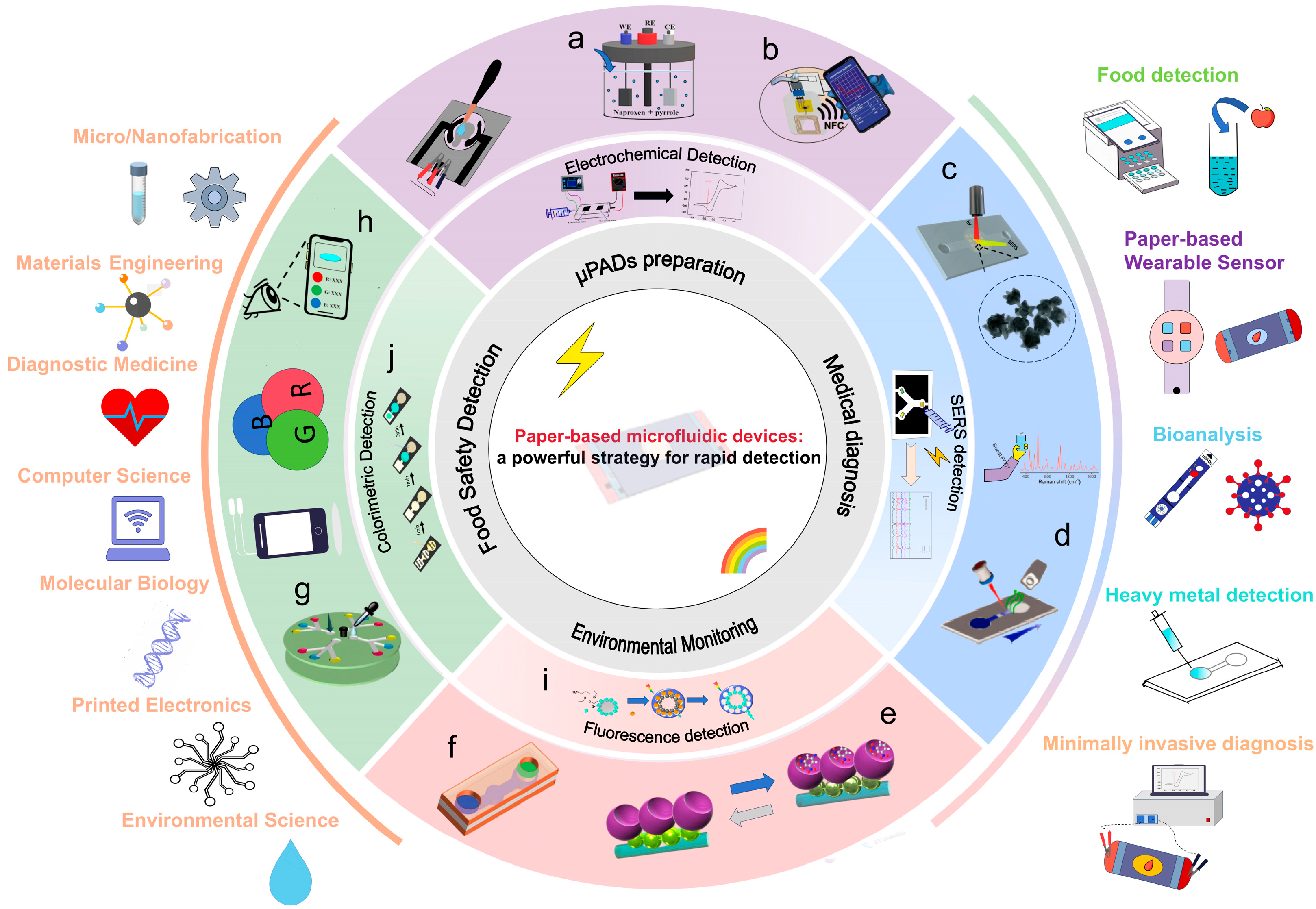
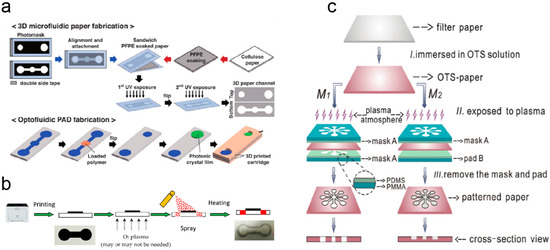
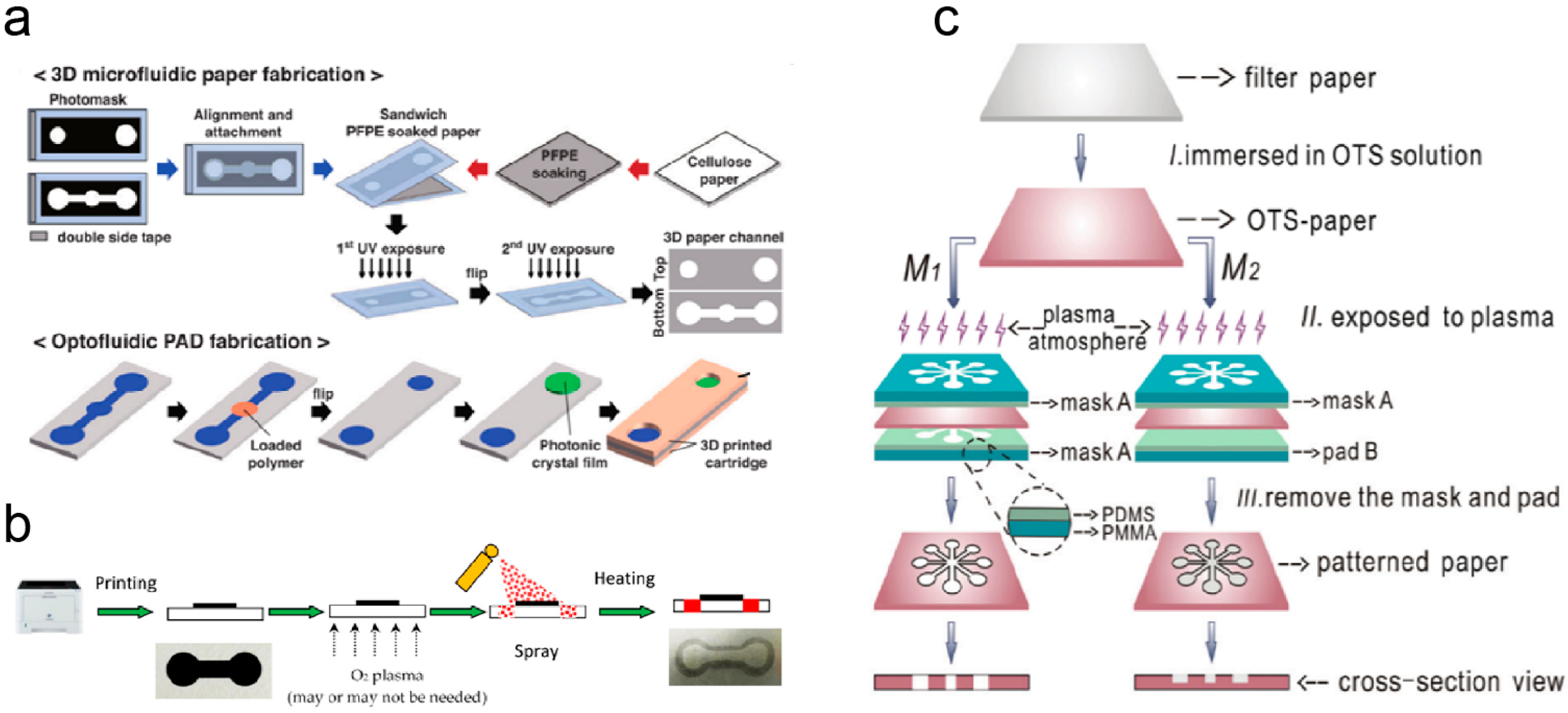
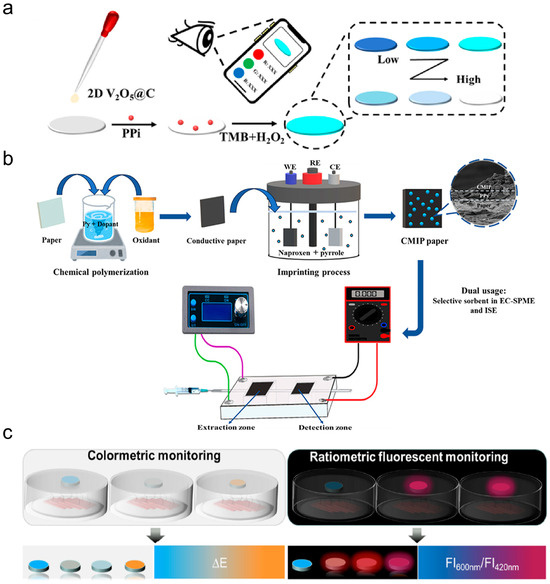
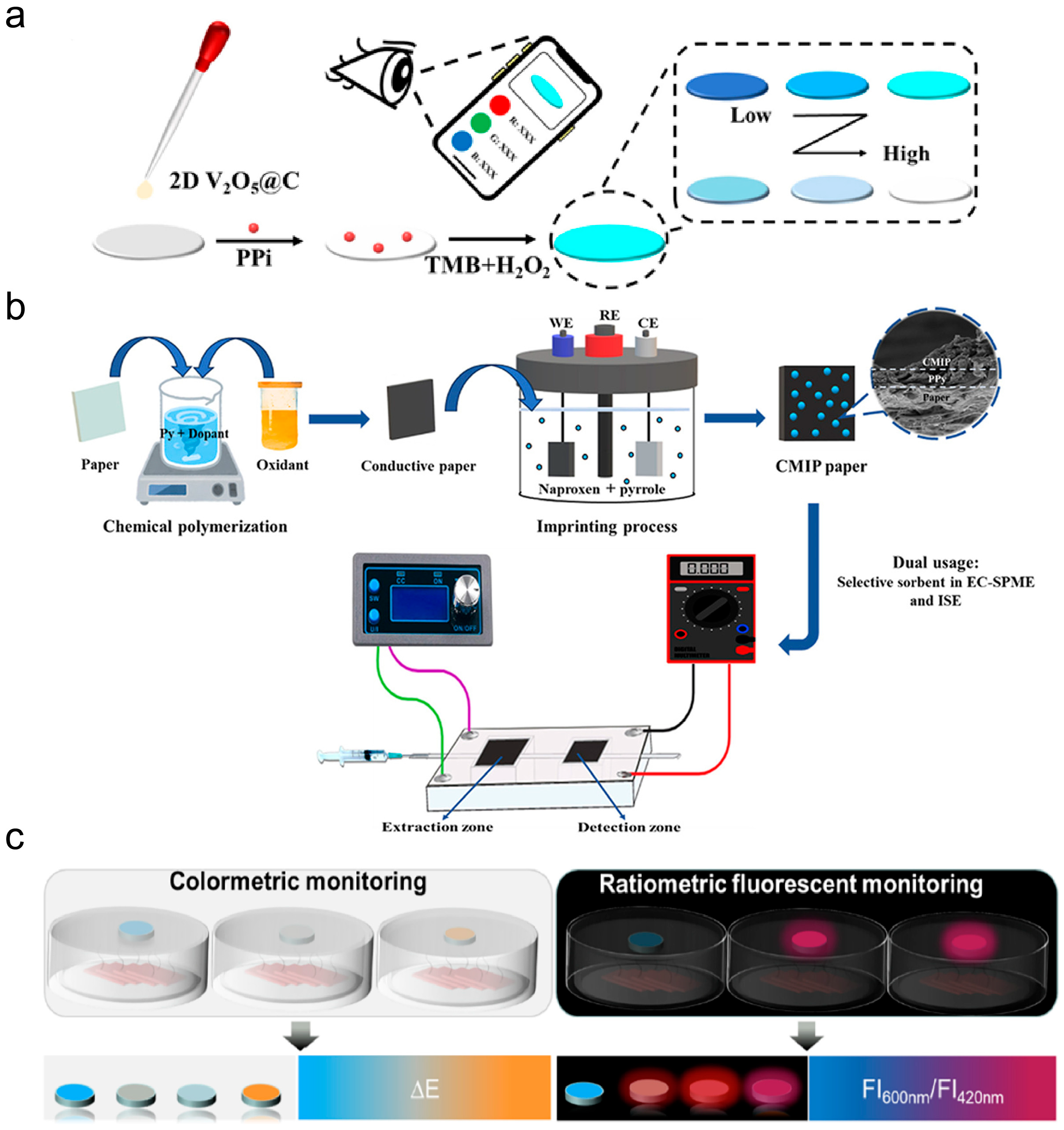
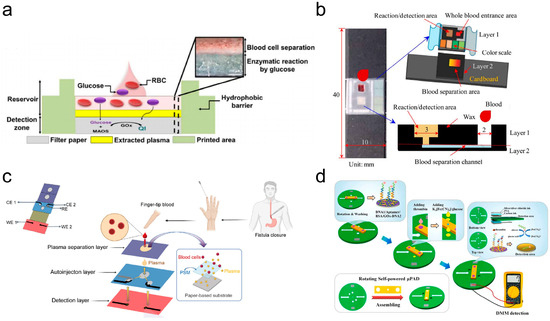
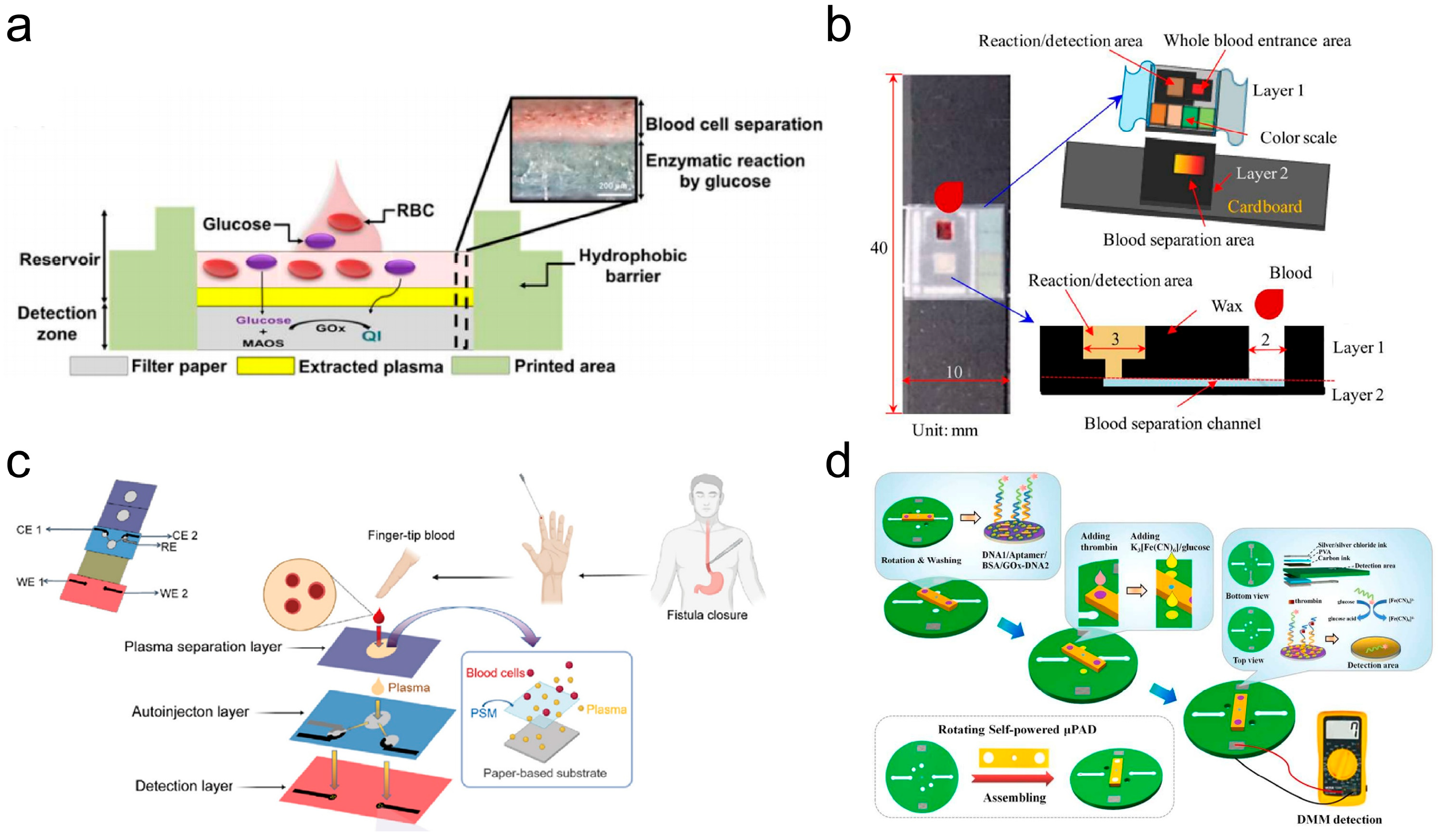
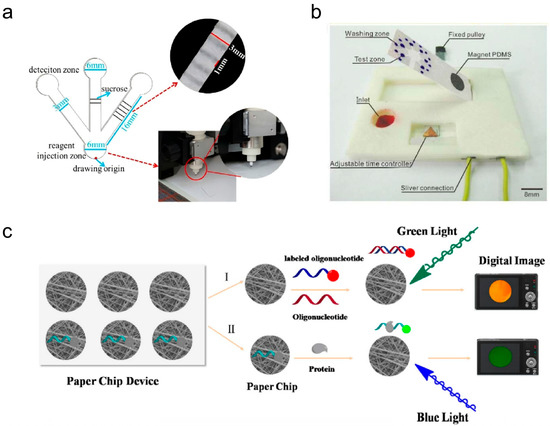
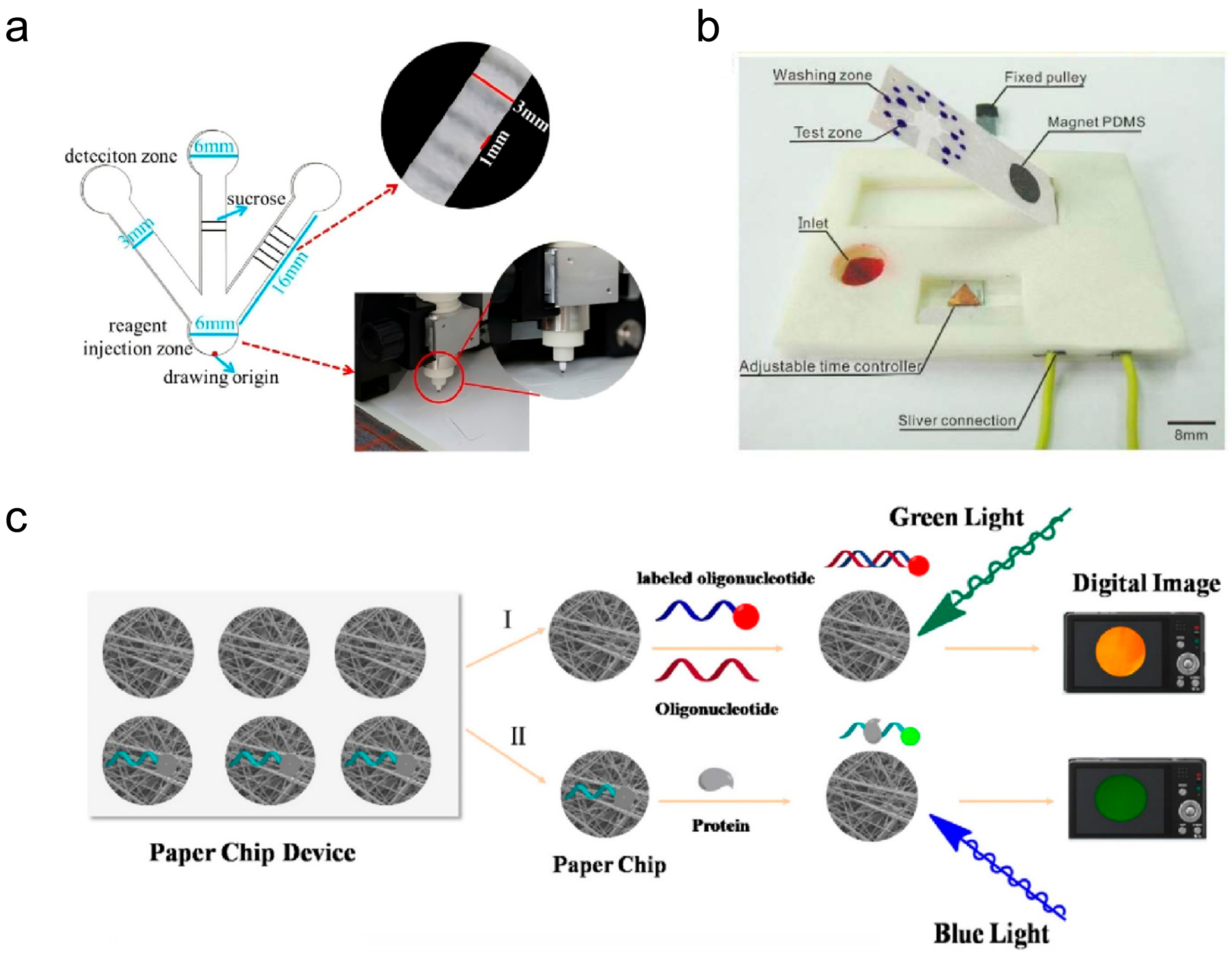
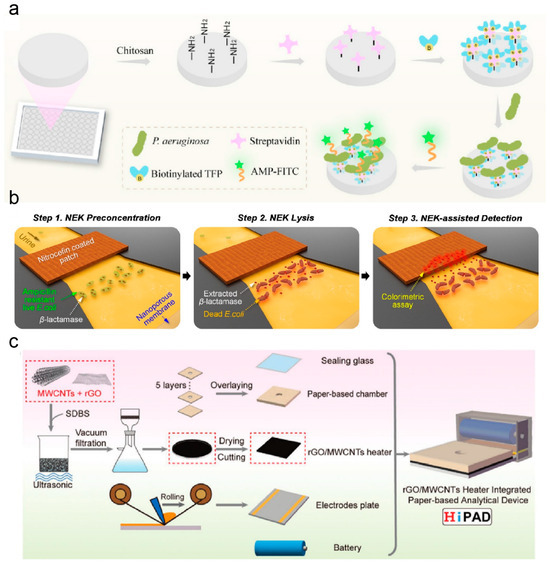
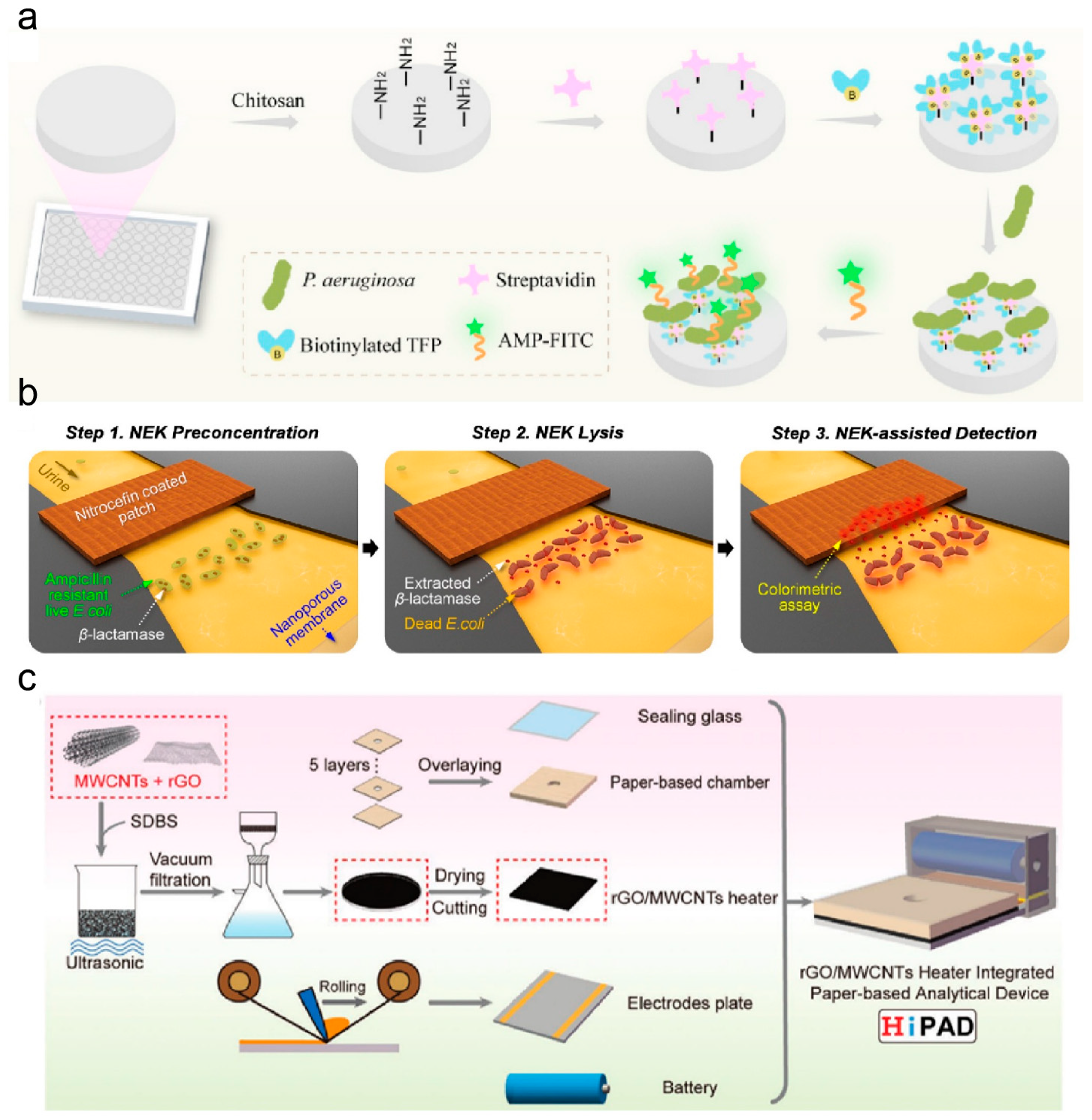
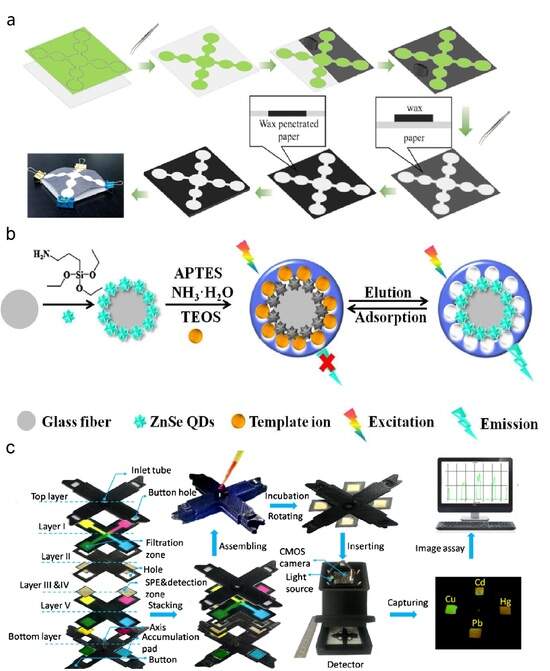
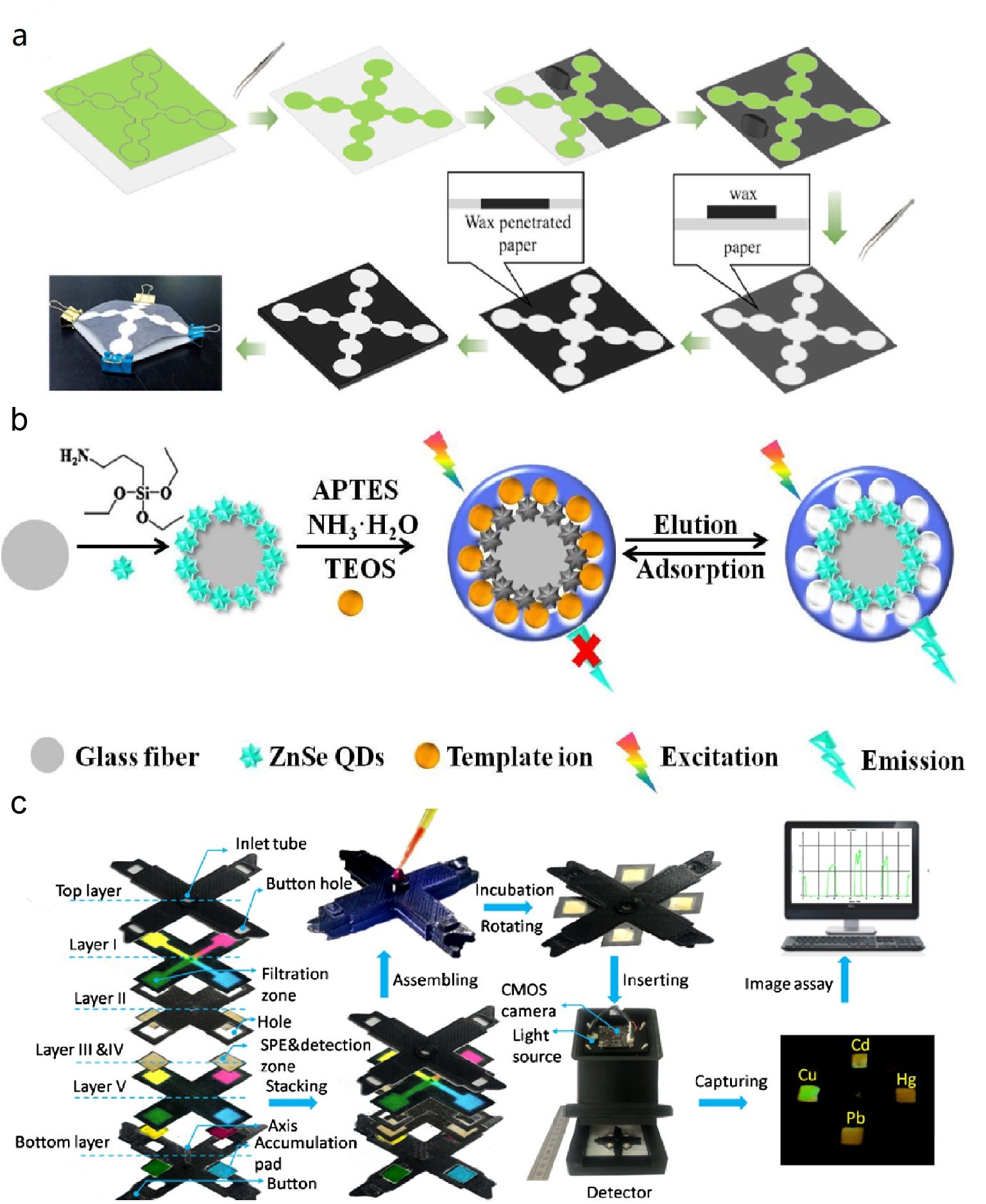
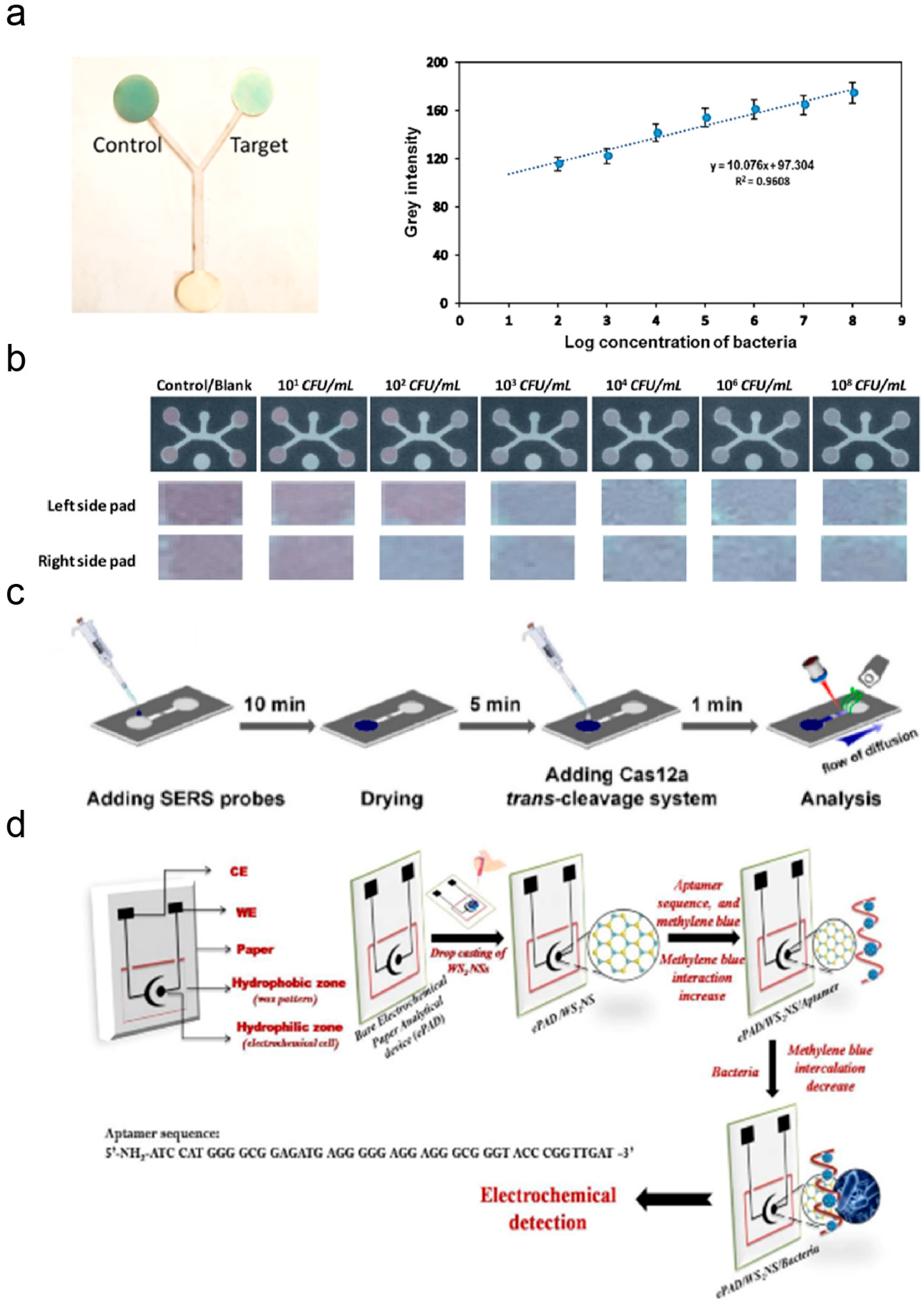

Disclaimer/Publisher’s Note: The statements, opinions and data contained in all publications are solely those of the individual author(s) and contributor(s) and not of MDPI and/or the editor(s). MDPI and/or the editor(s) disclaim responsibility for any injury to people or property resulting from any ideas, methods, instructions or products referred to in the content. |
© 2025 by the authors. Licensee MDPI, Basel, Switzerland. This article is an open access article distributed under the terms and conditions of the Creative Commons Attribution (CC BY) license.