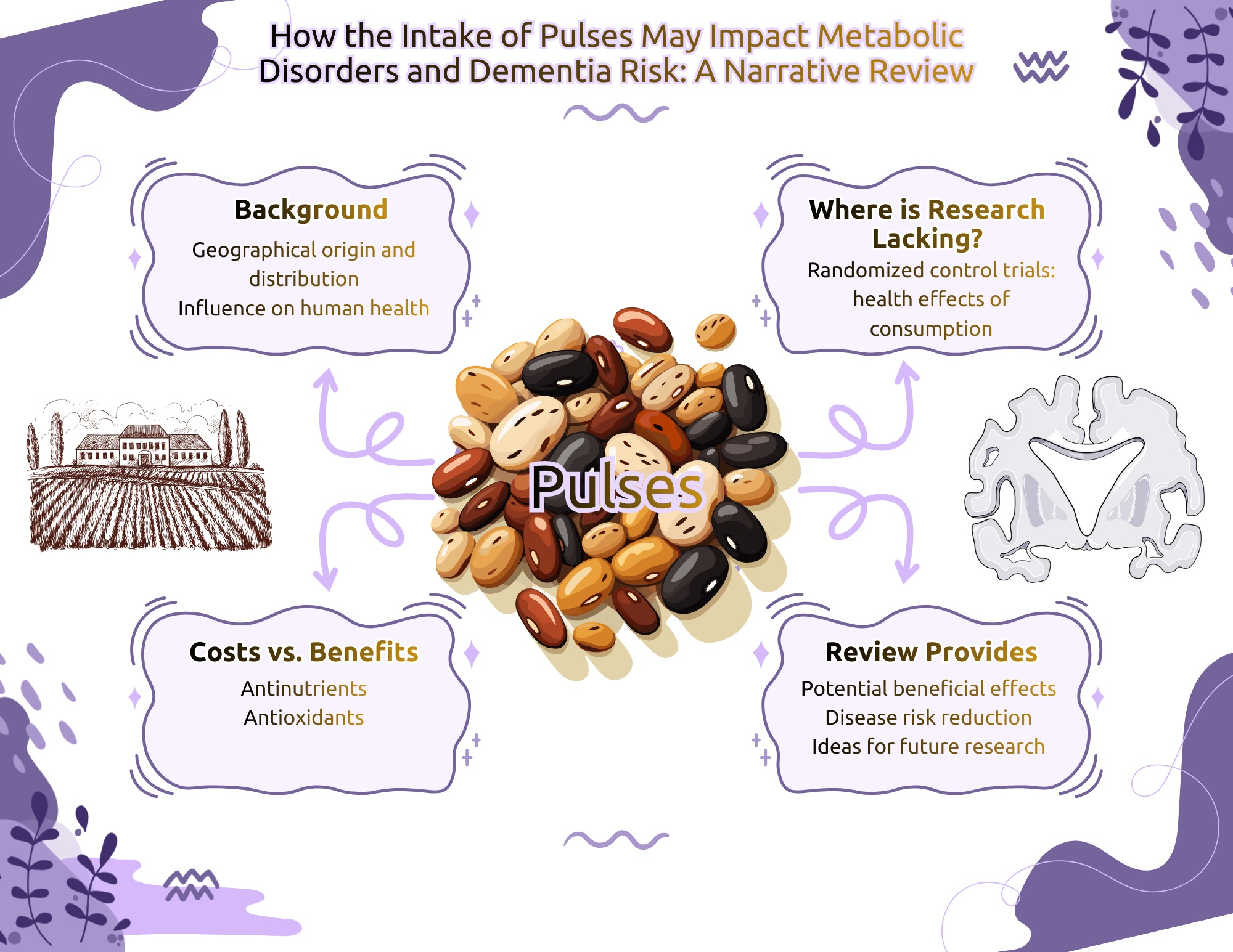
How the Intake of Pulses May Impact Metabolic Disorders and Dementia Risk: A Narrative Review

 , and
, and 
Abstract
1. Introduction
2. Legumes and Pulses
3. Genetic and Cultural Evolution of Pulses
4. Pulse Intake, Knowledge, and Attitudes
5. Nutritional and Antinutritional Properties of Pulses
5.1. Processing of Pulses
5.2. Antinutritional Factors
6. Chemical Constituents of Beans and Their Effects on Human Health
6.1. Antioxidants
6.2. Nutrigenomics of Pulses and Legumes
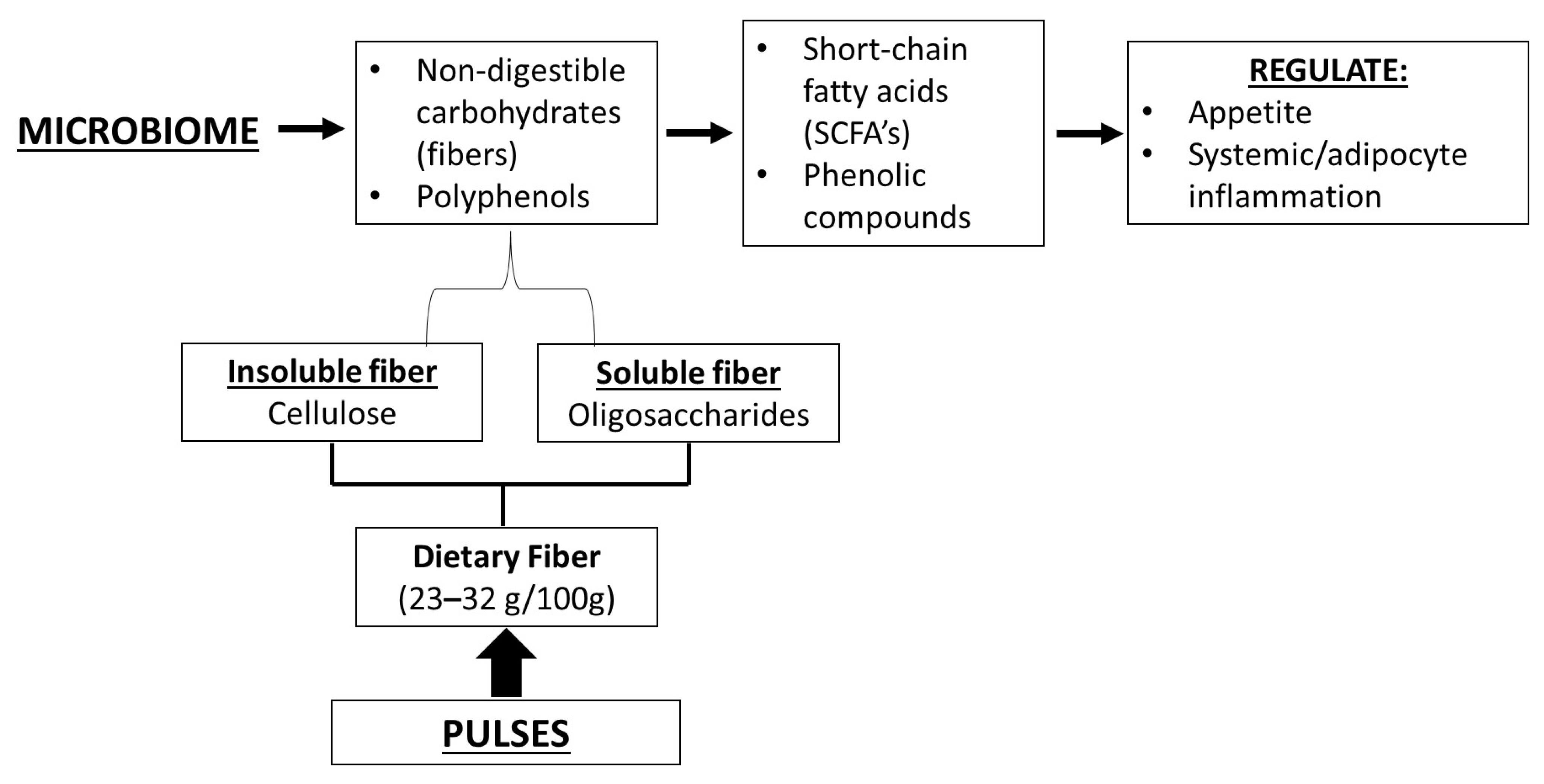
7. Microbiome and Pulses
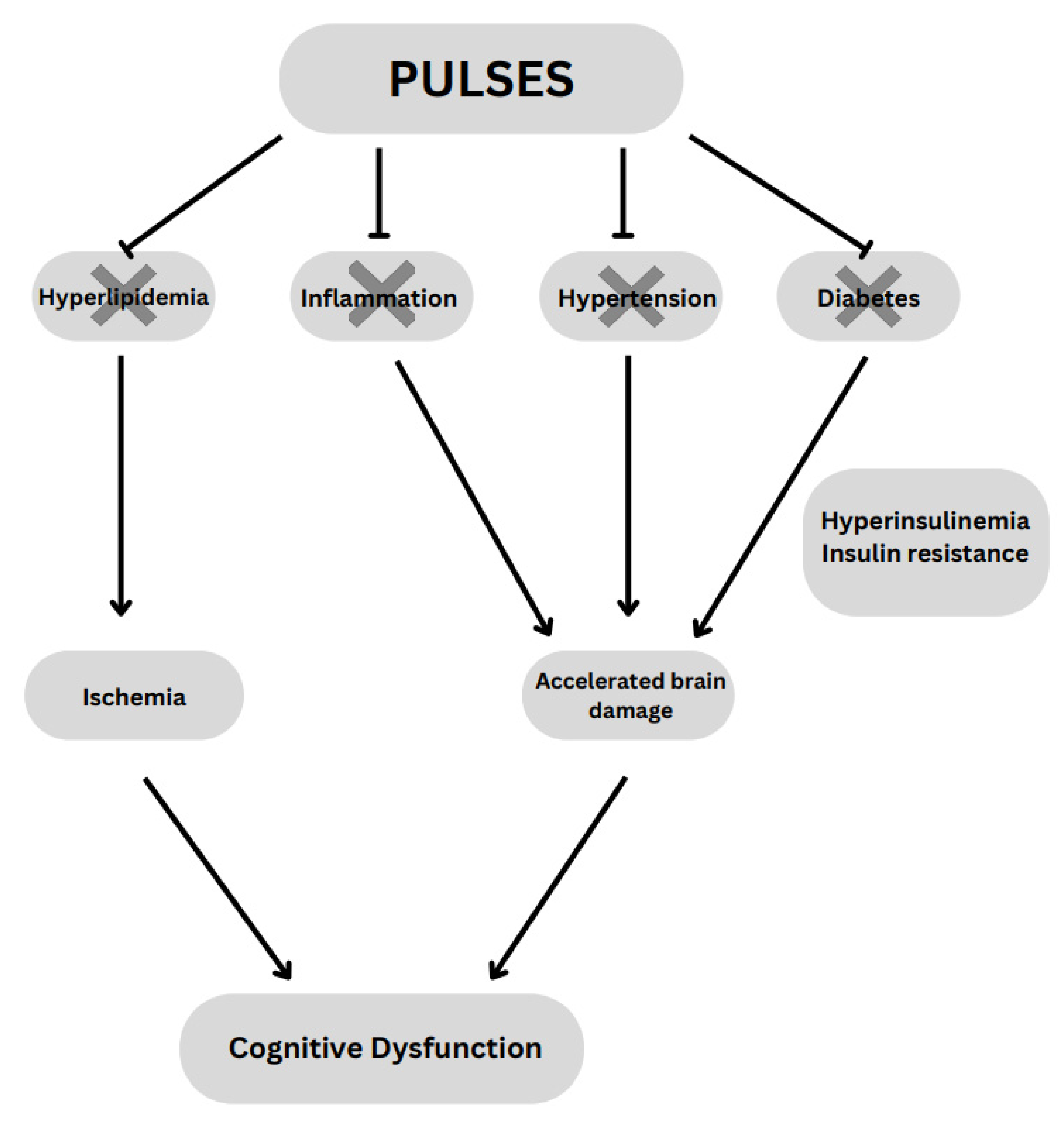
8. Can Pulses Help Prevent Dementia and Other Cognitive Disorders?
8.1. Metabolic Benefits
8.2. Effect of Pulses on Cognition
9. Practical Applications and Future Pulses Research
10. Conclusions
Supplementary Materials
Author Contributions
Funding
Data Availability Statement
Conflicts of Interest
Abbreviations
| AD | Alzheimer’s Disease |
| LTR | Long Terminal Repeat |
| NHANES | National Health and Nutrition Examination Survey |
| DGA | Dietary Guidelines for Americans |
| DASH | Dietary Approach to Stop Hypertension |
| MIND | Mediterranean-DASH diet Intervention for Neurodegenerative Delay |
| ANF | Antinutritional Factor |
| NSP | Non-Starch Polysaccharide |
| LDL | Low-Density Lipoprotein |
| SCFA | Short-chain Fatty Acid |
| BB | Black Beans |
| SREBP1c | Sterol Regulatory Element Binding Protein-1c |
| FAS | Fatty Acid Synthase |
| HMGCR | 3-hydroxy-3-methylglutaryl-CoA reductase |
| KBSB | Korean Black Soybeans |
| RAGE | Receptor for Advanced Glycation End products |
| Aβ | Amyloid-β |
| NF-κB | Nuclear Factor kappa-light-chain-enhancer of activated B cells |
| p-NF-κB | Phospho-NF-κB |
| GABA | γ-aminobutyric acid |
| MID | Multi-Infarct Dementia |
| MD | Mean Differences |
| BP | Blood Pressure |
| AHEI | Alternative Healthy Eating Index |
References
- Ritchie, H. Yields vs. Land Use: How the Green Revolution Enabled Us to Feed a Growing Population. Published online at OurWorldInData.org. 2017. Available online: https://ourworldindata.org/yields-vs-land-use-how-has-the-world-produced-enough-food-for-a-growing-population (accessed on 20 April 2024).
- Harvard, T.H.; Chan. Legumes and Pulses. Available online: https://nutritionsource.hsph.harvard.edu/legumes-pulses/ (accessed on 20 April 2024).
- Fass, P. Around the Roman Table: Food and Feasting in Ancient Rome; Palgrave Macmillan: New York, NY, USA, 1994. [Google Scholar]
- Soltis, D.E.; Soltis, P.S.; Bennett, M.D.; Leitch, I.J. Evolution of genome size in the angiosperms. Am. J. Bot. 2003, 90, 1596–1603. [Google Scholar] [CrossRef] [PubMed]
- Multari, S.; Stewart, D.; Russell, W.R. Potential of Fava Bean as Future Protein Supply to Partially Replace Meat Intake in the Human Diet. Compr. Rev. Food Sci. Food Saf. 2015, 14, 511–522. [Google Scholar] [CrossRef]
- Moghaddam, S.M.; Oladzad, A.; Koh, C.; Ramsay, L.; Hart, J.P.; Mamidi, S.; Hoopes, G.; Sreedasyam, A.; Wiersma, A.; Zhao, D.; et al. The tepary bean genome provides insight into evolution and domestication under heat stress. Nat. Commun. 2021, 12, 2638. [Google Scholar] [CrossRef]
- Jones, A.L. Phaseolus Beans: Post-Harvest Operations: Food and Agriculture Organization of the United Nations. 1999. Available online: https://www.fao.org/3/av015e/av015e.pdf (accessed on 25 April 2025).
- Schmutz, J.; McClean, P.E.; Mamidi, S.; Wu, G.A.; Cannon, S.B.; Grimwood, J.; Jenkins, J.; Shu, S.; Song, Q.; Chavarro, C.; et al. A reference genome for common bean and genome-wide analysis of dual domestications. Nat. Genet. 2014, 46, 707–713. [Google Scholar] [CrossRef]
- Quattrocchi, U. CRC World Dictionary of Medicinal and Poisonous Plants: Common Names, Scientific Names, Eponyms, Synonyms, and Etymology (eBook); CRC Press: Boca Raton, FL, USA, 2014. [Google Scholar]
- Rendón-Anaya, M.; Montero-Vargas, J.M.; Saburido-Álvarez, S.; Vlasova, A.; Capella-Gutierrez, S.; Ordaz-Ortiz, J.J.; Aguilar, O.M.; Vianello-Brondani, R.P.; Santalla, M.; Delaye, L.; et al. Genomic history of the origin and domestication of common bean unveils its closest sister species. Genome Biol. 2017, 18, 60. [Google Scholar] [CrossRef] [PubMed]
- Pérez-Martin, C.; Escalante-Rebolledo, S.; Vergara-Yoisura, S. Plants of the Popol Vuh, the Sacred Book of the Maya. Rev. Fitotec. Mex. 2022, 45, 271. [Google Scholar] [CrossRef]
- Flake, O.; Silva, J.F. Brazilian Dry Bean Production. USDA Foreign Agricultural Service: USDA. 2019; [Updated 23 July 2019]. Available online: https://fas.usda.gov/data/brazil-brazilian-dry-bean-production (accessed on 20 April 2024).
- Regina, L. It’s Really No Surprise That Britain Is the Country That Eats the Most Baked Beans: Static Media. Tasting Table [Updated 19 November 2023]. Available online: https://www.tastingtable.com/1449804/no-surprise-britain-country-eats-most-baked-beans/ (accessed on 25 April 2025).
- Buchholz, K. Where Pulses Are on the Menu; Statista: Hamburg, Germany, 2021. Available online: https://www.statista.com/chart/24151/consumption-of-pulses/ (accessed on 3 May 2025).
- Rawal, V.; Navarro, D.K. The Global Economy of Pulses; Food and Agriculture Organization of the United Nations: Rome, Italy, 2019. [Google Scholar]
- Kaiser, C.; Ernst, M. Ethnic Vegetables: Hispanic. University of Kentucky College of Agriculture Food and Environment. 2021. [Updated March 2021]. Available online: https://ccd.uky.edu/sites/default/files/2024-11/ccd-cp-097_ethnic-vegetables-hispanic.pdf (accessed on 20 April 2025).
- Perera, T.; Russo, C.; Takata, Y.; Bobe, G. Legume Consumption Patterns in US Adults: National Health and Nutrition Examination Survey (NHANES) 2011-2014 and Beans, Lentils, Peas (BLP) 2017 Survey. Nutrients 2020, 12, 1237. [Google Scholar] [CrossRef]
- Mitchell, D.C.; Marinangeli, C.P.F.; Pigat, S.; Bompola, F.; Campbell, J.; Pan, Y.; Curran, J.M.; Cai, D.J.; Jaconis, S.Y.; Rumney, J. Pulse Intake Improves Nutrient Density among US Adult Consumers. Nutrients 2021, 13, 2668. [Google Scholar] [CrossRef]
- Semba, R.D.; Rahman, N.; Du, S.; Ramsing, R.; Sullivan, V.; Nussbaumer, E.; Love, D.; Bloem, M.W. Patterns of Legume Purchases and Consumption in the United States. Front. Nutr. 2021, 8, 732237. [Google Scholar] [CrossRef] [PubMed]
- Heer, M.M.; Winham, D.M. Food Behaviors, Health, and Bean Nutrition Awareness among Low-Income Men: A Pilot Study. Int. J. Environ. Res. Public Health 2020, 17, 1039. [Google Scholar] [CrossRef]
- USDA. Dietary Guidelines for Americans, 2020–2025. 2020. Available online: https://www.dietaryguidelines.gov/resources/2020-2025-dietary-guidelines-online-materials (accessed on 3 May 2025).
- Doma, K.M.; Farrell, E.L.; Leith-Bailey, E.R.; Soucier, V.D.; Duncan, A.M. Older Adults’ Awareness and Knowledge of Beans in Relation to Their Nutrient Content and Role in Chronic Disease Risk. Nutrients 2019, 11, 2680. [Google Scholar] [CrossRef]
- Doma, K.M.; Farrell, E.L.; Leith-Bailey, E.R.; Soucier, V.D.; Duncan, A.M. Motivators, Barriers and Other Factors Related to Bean Consumption in Older Adults. J. Nutr. Gerontol. Geriatr. 2019, 38, 397–413. [Google Scholar] [CrossRef]
- Didinger, C.; Thompson, H. Motivating Pulse-Centric Eating Patterns to Benefit Human and Environmental Well-Being. Nutrients 2020, 12, 3500. [Google Scholar] [CrossRef]
- Buettner, D.; Skemp, S. Blue Zones: Lessons From the World’s Longest Lived. Am. J. Lifestyle Med. 2016, 10, 318–321. [Google Scholar] [CrossRef]
- Nieddu, A.; Vindas, L.; Errigo, A.; Vindas, J.; Pes, G.M.; Dore, M.P. Dietary Habits, Anthropometric Features and Daily Performance in Two Independent Long-Lived Populations from Nicoya peninsula (Costa Rica) and Ogliastra (Sardinia). Nutrients 2020, 12, 1621. [Google Scholar] [CrossRef]
- Solfrizzi, V.; Custodero, C.; Lozupone, M.; Imbimbo, B.P.; Valiani, V.; Agosti, P.; Schilardi, A.; D’iNtrono, A.; La Montagna, M.; Calvani, M.; et al. Relationships of Dietary Patterns, Foods, and Micro- and Macronutrients with Alzheimer’s Disease and Late-Life Cognitive Disorders: A Systematic Review. J. Alzheimers Dis. 2017, 59, 815–849. [Google Scholar] [CrossRef] [PubMed]
- E LeBlanc, K.; Baer-Sinnott, S.; Lancaster, K.J.; Campos, H.; Lau, K.H.K.; Tucker, K.L.; Kushi, L.H.; Willett, W.C. Perspective: Beyond the Mediterranean Diet -- Exploring Latin American, Asian, and African Heritage Diets as Cultural Models of Healthy Eating. Adv. Nutr. 2024, 15, 100221. [Google Scholar] [CrossRef]
- The Bean Institute. Dry vs. Canned Beans: Which Is Better? Northarvest: Northarvest Bean Growers Association (NBGA). Available online: https://beaninstitute.com/dry-vs-canned-beans-which-is-better/ (accessed on 15 May 2025).
- Lopez, A.; Williams, H.L. Essential Elements in Dry and Canned Butter Beans (Phaseolus limensis L.). J. Food Prot. 1989, 52, 204–206. [Google Scholar] [CrossRef] [PubMed]
- Duyff, R.L.; Mount, J.R.; Jones, J.B. Sodium Reduction in Canned Beans After Draining, Rinsing. J. Culin. Sci. Technol. 2011, 9, 106–112. [Google Scholar] [CrossRef]
- Bento, J.A.C.; Mendez, I.; Gularte, M.A.; Bassinello, P.Z. Preparations preferences, perception of nutritional value, and acceptance of elaborated products and transgenic beans by Brazilian consumers. Rev. UniAraguaia 2023, 18, 294. [Google Scholar]
- Winham, D.M.; Tisue, M.E.; Palmer, S.M.; Cichy, K.A.; Shelley, M.C. Dry Bean Preferences and Attitudes among Midwest Hispanic and Non-Hispanic White Women. Nutrients 2019, 11, 178. [Google Scholar] [CrossRef]
- Heer, M.M.; Winham, D.M. Bean Preferences Vary by Acculturation Level among Latinas and by Ethnicity with Non-Hispanic White Women. Int. J. Environ. Res. Public Health 2020, 17, 2100. [Google Scholar] [CrossRef]
- Carbas, B.; Machado, N.; Oppolzer, D.; Ferreira, L.; Queiroz, M.; Brites, C.; Rosa, E.A.; Barros, A.I. Nutrients, Antinutrients, Phenolic Composition, and Antioxidant Activity of Common Bean Cultivars and their Potential for Food Applications. Antioxidants 2020, 9, 186. [Google Scholar] [CrossRef] [PubMed]
- Kan, L.; Nie, S.; Hu, J.; Wang, S.; Cui, S.W.; Li, Y.; Xu, S.; Wu, Y.; Wang, J.; Bai, Z.; et al. Nutrients, phytochemicals and antioxidant activities of 26 kidney bean cultivars. Food Chem Toxicol. 2017, 108, 467–477. [Google Scholar] [CrossRef] [PubMed]
- Salim, R.; Nehvi, I.B.; Mir, R.A.; Tyagi, A.; Ali, S.; Bhat, O.M. A review on anti-nutritional factors: Unraveling the natural gateways to human health. Front. Nutr. 2023, 10, 1215873. [Google Scholar] [CrossRef]
- Rahate, K.A.; Madhumita, M.; Prabhakar, P.K. Nutritional composition, anti-nutritional factors, pretreatments-cum-processing impact and food formulation potential of faba bean (Vicia faba L.): A comprehensive review. LWT Food Sci. Technol. 2021, 138, 110796. [Google Scholar] [CrossRef]
- Matella, N.J.; Dolan, K.; Stoeckle, A.W.; Bennink, M.R.; Lee, Y.S.; Uebersax, M.A. Use of Hydration, Germination, and α-Galactosidase Treatments to Reduce Oligosaccharides in Dry Beans. J. Food Sci. 2005, 70, C203–C207. [Google Scholar] [CrossRef]
- Wang, N.; Hatcher, D.W.; Tyler, R.T.; Toews, R.; Gawalko, E.J. Effect of cooking on the composition of beans (Phaseolus vulgaris L.) and chickpeas (Cicer arietinum L.). Food Res. Int. 2010, 43, 589–594. [Google Scholar] [CrossRef]
- Mutuyemungu, E.; Singh, M.; Liu, S.; Rose, D.J. Intestinal gas production by the gut microbiota: A review. J. Funct. Foods 2023, 100, 105367. [Google Scholar] [CrossRef]
- Winham, D.M.; Hutchins, A.M. Perceptions of flatulence from bean consumption among adults in 3 feeding studies. Nutr. J. 2011, 10, 128. [Google Scholar] [CrossRef]
- Wiesinger, J.A.; Marsolais, F.; Glahn, R.P. Health Implications and Nutrient Bioavailability of Bioactive Compounds in Dry Beans and Other Pulses. In Dry Beans and Pulses; John Wiley & Sons Ltd.: Hoboken, NJ, USA, 2022; pp. 505–529. [Google Scholar]
- Crujeiras, A.B.; Parra, D.; Abete, I.; Martínez, J.A. A hypocaloric diet enriched in legumes specifically mitigates lipid peroxidation in obese subjects. Free Radic. Res. 2007, 41, 498–506. [Google Scholar] [CrossRef]
- Ferreira, H.; Pinto, E.; Gil, A.M.; Vasconcelos, M.W. Potential role of pulses in the development of functional foods modulating inflammation and oxidative stress. In Current Advances for Development of Functional Foods Modulating Inflammation and Oxidative Stress; Hernández-Ledesma, B., Martínez-Villaluenga, C., Eds.; Academic Press: Cambridge, MA, USA, 2022; Chapter 15; pp. 287–309. [Google Scholar]
- Liu, S.; E Manson, J.; E Buring, J.; Stampfer, M.J.; Willett, W.C.; Ridker, P.M. Relation between a diet with a high glycemic load and plasma concentrations of high-sensitivity C-reactive protein in middle-aged women. Am. J. Clin. Nutr. 2002, 75, 492–498. [Google Scholar] [CrossRef]
- Terao, J. Revisiting carotenoids as dietary antioxidants for human health and disease prevention. Food Funct. 2023, 14, 7799–7824. [Google Scholar] [CrossRef]
- Kan, L.; Nie, S.; Hu, J.; Wang, S.; Bai, Z.; Wang, J.; Zhou, Y.; Jiang, J.; Zeng, Q.; Song, K. Comparative study on the chemical composition, anthocyanins, tocopherols and carotenoids of selected legumes. Food Chem. 2018, 260, 317–326. [Google Scholar] [CrossRef]
- Feingold, K.R. The Effect of Diet on Cardiovascular Disease and Lipid and Lipoprotein Levels. In Endotext [Internet]; MDText.com, Inc.: South Dartmouth, MA, USA, 2000. Available online: https://www.ncbi.nlm.nih.gov/books/NBK570127/table/lipid_diet_cardiov.T.fiber_content_of_se_1/ (accessed on 20 April 2024).
- Eslick, S.; Thompson, C.; Berthon, B.; Wood, L. Short-chain fatty acids as anti-inflammatory agents in overweight and obesity: A systematic review and meta-analysis. Nutr. Rev. 2022, 80, 838–856. [Google Scholar] [CrossRef]
- Liu, T.; Wang, C.; Wang, Y.; Wang, L.; Ojo, O.; Feng, Q.; Jiang, X.; Wang, X. Effect of dietary fiber on gut barrier function, gut microbiota, short-chain fatty acids, inflammation, and clinical outcomes in critically ill patients: A systematic review and meta-analysis. J. Parenter Enter. Nutr. 2022, 46, 997–1010. [Google Scholar] [CrossRef] [PubMed]
- Myhrstad, M.C.W.; Tunsjo, H.; Charnock, C.; Telle-Hansen, V.H. Dietary Fiber, Gut Microbiota, and Metabolic Regulation-Current Status in Human Randomized Trials. Nutrients 2020, 12, 859. [Google Scholar] [CrossRef] [PubMed]
- Kong, C.; Duan, C.; Zhang, Y.; Wang, Y.; Yan, Z.; Zhou, S. Non-starch polysaccharides from kidney beans: Comprehensive insight into their extraction, structure and physicochemical and nutritional properties. Food Funct. 2024, 15, 62–78. [Google Scholar] [CrossRef] [PubMed]
- Chen, X.; Wang, Y.; Shen, M.; Yu, Q.; Chen, Y.; Huang, L.; Xie, J. The water-soluble non-starch polysaccharides from natural resources against excessive oxidative stress: A potential health-promoting effect and its mechanisms. Int. J. Biol. Macromol. 2021, 171, 320–330. [Google Scholar] [CrossRef]
- Yao, Y.; Zhu, Y.; Ren, G. Immunoregulatory activities of polysaccharides from mung bean. Carbohydr. Polym. 2016, 139, 61–66. [Google Scholar] [CrossRef]
- Yao, Y.; Xue, P.; Zhu, Y.; Gao, Y.; Ren, G. Antioxidant and immunoregulatory activity of polysaccharides from adzuki beans (Vigna angularis). Food Res. Int. 2015, 77, 251–256. [Google Scholar] [CrossRef]
- Song, Q.; Jiang, L.; Yang, X.; Huang, L.; Yu, Y.; Yu, Q.; Chen, Y.; Xie, J. Physicochemical and functional properties of a water-soluble polysaccharide extracted from Mung bean (Vigna radiate L.) and its antioxidant activity. Int. J. Biol. Macromol. 2019, 138, 874–880. [Google Scholar] [CrossRef]
- Higdon, J. Phytosterols. Oregon State University, Linus Pauling Institute. 2005. [Updated March 2017]. Available online: https://lpi.oregonstate.edu/mic/dietary-factors/phytochemicals/phytosterols (accessed on 20 May 2025).
- Mustafa, A.M.; Abouelenein, D.; Acquaticci, L.; Alessandroni, L.; Angeloni, S.; Borsetta, G.; Caprioli, G.; Nzekoue, F.K.; Sagratini, G.; Vittori, S. Polyphenols, Saponins and Phytosterols in Lentils and Their Health Benefits: An Overview. Pharmaceuticals 2022, 15, 1225. [Google Scholar] [CrossRef] [PubMed]
- Ogawa, S.; Iuchi, K. alpha-Tocopherol: New Perspectives and Challenges for Achieving the Sustainable Development Goals (SDG) Target. J. Oleo Sci. 2024, 73, 519–538. [Google Scholar] [CrossRef] [PubMed]
- Benites-Mena, J.; Vargas-De-La-Cruz, C.; Vergara-Valdés, C.; Jave-Nakayo, J.; Ortiz-Viedma, J.; Char, C.; Inga-Guevara, M.; Flores, M.; Cepeda, A. Obtaining an Oily Ingredient Rich in PUFAS and Tocopherols and a High-Nutritional-Value Flour from Beans (Phaseolus vulgaris L.) by Supercritical CO(2) Extraction. Foods 2023, 13, 36. [Google Scholar] [CrossRef] [PubMed]
- Martínez-Villaluenga, C.; Frias, J.; Vidal-Valverde, C. Alpha-galactosides: Antinutritional factors or functional ingredients? Crit. Rev. Food Sci. Nutr. 2008, 48, 301–316. [Google Scholar] [CrossRef]
- Nashchekina, Y.; Guryanov, E.; Lihachev, A.; Vaganov, G.; Popova, E.; Mikhailova, N.; Nashchekin, A. Effect of Phytic Acid Addition on the Structure of Collagen-Hyaluronic Acid Composite Gel. Gels 2023, 9, 963. [Google Scholar] [CrossRef]
- Arruda, H.S.; Neri-Numa, I.A.; Kido, L.A.; Júnior, M.R.M.; Pastore, G.M. Recent advances and possibilities for the use of plant phenolic compounds to manage ageing-related diseases. J. Funct. Foods 2020, 75, 104203. [Google Scholar] [CrossRef]
- Albadrani, H.M.; Chauhan, P.; Ashique, S.; Babu, M.A.; Iqbal, D.; Almutary, A.G.; Abomughaid, M.M.; Kamal, M.; Paiva-Santos, A.C.; Alsaweed, M.; et al. Mechanistic insights into the potential role of dietary polyphenols and their nanoformulation in the management of Alzheimer’s disease. Biomed Pharmacother. 2024, 174, 116376. [Google Scholar] [CrossRef]
- Rahman, M.; Rahaman, S.; Islam, R.; Rahman, F.; Mithi, F.M.; Alqahtani, T.; Almikhlafi, M.A.; Alghamdi, S.Q.; Alruwaili, A.S.; Hossain, S.; et al. Role of Phenolic Compounds in Human Disease: Current Knowledge and Future Prospects. Molecules 2021, 27, 233. [Google Scholar] [CrossRef]
- Azman, A.T.; Isa, N.S.M.; Zin, Z.M.; Abdullah, M.A.A.; Aidat, O.; Zainol, M.K. Protein Hydrolysate from Underutilized Legumes: Unleashing the Potential for Future Functional Foods. Prev. Nutr. Food Sci. 2023, 28, 209–223. [Google Scholar] [CrossRef] [PubMed]
- Guardado Félix, D.; Gutierrez Uribe, J.A. Legumes and Oxidative Stress. In Legumes: Nutritional Quality, Processing and Potential Health Benefits; Martín-Cabrejas, M.Á., Ed.; The Royal Society of Chemistry: Croydon, UK, 2019. [Google Scholar]
- Kohlmeier, M.; De Caterina, R.; Ferguson, L.R.; Görman, U.; Allayee, H.; Prasad, C.; Kang, J.X.; Nicoletti, C.F.; Martinez, J.A. Guide and Position of the International Society of Nutrigenetics/Nutrigenomics on Personalized Nutrition: Part 2—Ethics, Challenges and Endeavors of Precision Nutrition. J. Nutr. Nutr. 2016, 9, 28–46. [Google Scholar] [CrossRef] [PubMed]
- Krga, I.; Milenkovic, D. Anthocyanins: From Sources and Bioavailability to Cardiovascular-Health Benefits and Molecular Mechanisms of Action. J. Agric. Food Chem. 2019, 67, 1771–1783. [Google Scholar] [CrossRef]
- Damián-Medina, K.; Milenkovic, D.; Salinas-Moreno, Y.; Corral-Jara, K.F.; Figueroa-Yáñez, L.; Marino-Marmolejo, E.; Lugo-Cervantes, E. Anthocyanin-rich extract from black beans exerts anti-diabetic effects in rats through a multi-genomic mode of action in adipose tissue. Front. Nutr. 2022, 9, 1019259. [Google Scholar] [CrossRef]
- Inaguma, T.; Han, J.; Isoda, H. Improvement of insulin resistance by Cyanidin 3-glucoside, anthocyanin from black beans through the up-regulation of GLUT4 gene expression. BMC Proc. 2011, 5, P21. [Google Scholar] [CrossRef]
- Chavez-Santoscoy, R.A.; Gutierrez-Uribe, J.A.; Granados, O.; Torre-Villalvazo, I.; Serna-Saldivar, S.O.; Torres, N.; Palacios-González, B.; Tovar, A.R. Flavonoids and saponins extracted from black bean (Phaseolus vulgaris L.) seed coats modulate lipid metabolism and biliary cholesterol secretion in C57BL/6 mice. Br. J. Nutr. 2014, 112, 886–899. [Google Scholar] [CrossRef]
- Ferré, P.; Foufelle, F. SREBP-1c transcription factor and lipid homeostasis: Clinical perspective. Horm. Res. 2007, 68, 72–82. [Google Scholar] [CrossRef] [PubMed]
- Stormo, C.; Kringen, M.K.; Grimholt, R.M.; Berg, J.P.; Piehler, A.P. A novel 3-hydroxy-3-methylglutaryl-coenzyme A reductase (HMGCR) splice variant with an alternative exon 1 potentially encoding an extended N-terminus. BMC Mol. Biol. 2012, 13, 29. [Google Scholar] [CrossRef]
- Kumar, S.; Sharma, V.K.; Yadav, S.; Dey, S. Antiproliferative and apoptotic effects of black turtle bean extracts on human breast cancer cell line through extrinsic and intrinsic pathway. Chem. Cent J. 2017, 11, 56. [Google Scholar] [CrossRef]
- Peña-Blanco, A.; Garcia-Saez, A.J. Bax, Bak and beyond-mitochondrial performance in apoptosis. FEBS J. 2018, 285, 416–431. [Google Scholar] [CrossRef]
- Hernandez-Velazquez, I.; Sanchez-Tapia, M.; Ordaz-Nava, G.; Torres, N.; Tovar, A.R.; Galvez, A. Black bean protein concentrate ameliorates hepatic steatosis by decreasing lipogenesis and increasing fatty acid oxidation in rats fed a high fat-sucrose diet. Food Funct. 2020, 11, 10341–10350. [Google Scholar] [CrossRef]
- Ali, T.; Kim, T.; Rehman, S.U.; Khan, M.S.; Amin, F.U.; Khan, M.; Ikram, M.; Kim, M.O. Natural Dietary Supplementation of Anthocyanins via PI3K/Akt/Nrf2/HO-1 Pathways Mitigate Oxidative Stress, Neurodegeneration, and Memory Impairment in a Mouse Model of Alzheimer’s Disease. Mol. Neurobiol. 2018, 55, 6076–6093. [Google Scholar] [CrossRef]
- Rehman, S.U.; Shah, S.A.; Ali, T.; Chung, J.I.; Kim, M.O. Anthocyanins Reversed D-Galactose-Induced Oxidative Stress and Neuroinflammation Mediated Cognitive Impairment in Adult Rats. Mol. Neurobiol. 2017, 54, 255–271. [Google Scholar] [CrossRef]
- Kim, S.J.; Ahn, J.W.; Kim, H.; Ha, H.J.; Lee, S.W.; Kim, H.K.; Lee, S.; Hong, H.-S.; Kim, Y.H.; Choi, C.Y. Two beta-strands of RAGE participate in the recognition and transport of amyloid-beta peptide across the blood brain barrier. Biochem. Biophys. Res. Commun. 2013, 439, 252–257. [Google Scholar] [CrossRef]
- Jemimah, S.; Chabib, C.M.M.; Hadjileontiadis, L.; AlShehhi, A. Gut microbiome dysbiosis in Alzheimer’s disease and mild cognitive impairment: A systematic review and meta-analysis. PLoS ONE 2023, 18, e0285346. [Google Scholar] [CrossRef]
- Gomez-Eguilaz, M.; Ramon-Trapero, J.L.; Perez-Martinez, L.; Blanco, J.R. The microbiota-gut-brain axis and its great projections. Rev. Neurol. 2019, 68, 111–117. [Google Scholar] [PubMed]
- John, H.S.; Doucet, É.; Power, K.A. Dietary pulses as a means to improve the gut microbiome, inflammation, and appetite control in obesity. Obes Rev. 2023, 24, e13598. [Google Scholar] [CrossRef] [PubMed]
- Kadyan, S.; Park, G.; Wang, B.; Singh, P.; Arjmandi, B.; Nagpal, R. Resistant starches from dietary pulses modulate the gut metabolome in association with microbiome in a humanized murine model of ageing. Sci. Rep. 2023, 13, 10566. [Google Scholar] [CrossRef] [PubMed]
- Monk, J.M.; Wu, W.; Lepp, D.; Wellings, H.R.; Hutchinson, A.L.; Liddle, D.M.; Graf, D.; Pauls, K.P.; Robinson, L.E.; Power, K.A. Navy bean supplemented high-fat diet improves intestinal health, epithelial barrier integrity and critical aspects of the obese inflammatory phenotype. J. Nutr. Biochem. 2019, 70, 91–104. [Google Scholar] [CrossRef] [PubMed]
- Finley, J.W.; Burrell, J.B.; Reeves, P.G. Pinto bean consumption changes SCFA profiles in fecal fermentations, bacterial populations of the lower bowel, and lipid profiles in blood of humans. J. Nutr. 2007, 137, 2391–2398. [Google Scholar] [CrossRef]
- Sheflin, A.M.; Borresen, E.C.; Kirkwood, J.S.; Boot, C.M.; Whitney, A.K.; Lu, S.; Brown, R.J.; Broeckling, C.D.; Ryan, E.P.; Weir, T.L. Dietary supplementation with rice bran or navy bean alters gut bacterial metabolism in colorectal cancer survivors. Mol. Nutr. Food Res. 2017, 61, 1500905. [Google Scholar] [CrossRef] [PubMed]
- Zhang, X.; Irajizad, E.; Hoffman, K.L.; Fahrmann, J.F.; Li, F.; Seo, Y.D.; Browman, G.J.; Dennison, J.B.; Vykoukal, J.; Luna, P.N.; et al. Modulating a prebiotic food source influences inflammation and immune-regulating gut microbes and metabolites: Insights from the BE GONE trial. EBioMedicine 2023, 98, 104873. [Google Scholar] [CrossRef] [PubMed]
- McKay, E.; Counts, S.E. Multi-Infarct Dementia: A Historical Perspective. Dement. Geriatr. Cogn. Dis. Extra 2017, 7, 160–171. [Google Scholar] [CrossRef]
- Pola, R.; Gaetani, E.; Flex, A.; Aloi, F.; Papaleo, P.; Gerardino, L.; De Martini, D.; Flore, R.; Pola, P.; Bernabei, R. −174 G/C interleukin-6 gene polymorphism and increased risk of multi-infarct dementia: A case-control study. Exp. Gerontol. 2002, 37, 949–955. [Google Scholar] [CrossRef]
- Sievenpiper, J.L. Low-carbohydrate diets and cardiometabolic health: The importance of carbohydrate quality over quantity. Nutr. Rev. 2020, 78, 69–77. [Google Scholar] [CrossRef]
- Schoeneck, M.; Iggman, D. The effects of foods on LDL cholesterol levels: A systematic review of the accumulated evidence from systematic reviews and meta-analyses of randomized controlled trials. Nutr. Metab. Cardiovasc. Dis. 2021, 31, 1325–1338. [Google Scholar] [CrossRef] [PubMed]
- Ha, V.; Sievenpiper, J.L.; de Souza, R.J.; Jayalath, V.H.; Mirrahimi, A.; Agarwal, A.; Chiavaroli, L.; Mejia, S.B.; Sacks, F.M.; Di Buono, M.; et al. Effect of dietary pulse intake on established therapeutic lipid targets for cardiovascular risk reduction: A systematic review and meta-analysis of randomized controlled trials. Can. Med. Assoc. J. 2014, 186, E252–E262. [Google Scholar] [CrossRef]
- Jayalath, V.H.; de Souza, R.J.; Sievenpiper, J.L.; Ha, V.; Chiavaroli, L.; Mirrahimi, A.; Di Buono, M.; Bernstein, A.M.; Leiter, L.A.; Kris-Etherton, P.M.; et al. Effect of dietary pulses on blood pressure: A systematic review and meta-analysis of controlled feeding trials. Am. J. Hypertens. 2014, 27, 56–64. [Google Scholar] [CrossRef]
- Rauseo, E.; Salih, A.; Raisi-Estabragh, Z.; Aung, N.; Khanderia, N.; Slabaugh, G.G.; Marshall, C.R.; Neubauer, S.; Radeva, P.; Galazzo, I.B.; et al. Ischemic Heart Disease and Vascular Risk Factors Are Associated with Accelerated Brain Aging. JACC Cardiovasc. Imaging 2023, 16, 905–915. [Google Scholar] [CrossRef]
- Cholerton, B.; Baker, L.D.; Montine, T.J.; Craft, S. Type 2 Diabetes, Cognition, and Dementia in Older Adults: Toward a Precision Health Approach. Diabetes Spectr. 2016, 29, 210–219. [Google Scholar] [CrossRef] [PubMed]
- Hernández, D.F.; Mojica, L.; Berhow, M.A.; Brownstein, K.; Cervantes, E.L.; de Mejia, E.G. Black and pinto beans (Phaseolus vulgaris L.) unique mexican varieties exhibit antioxidant and anti-inflammatory potential. Food Res. Int. 2023, 169, 112816. [Google Scholar] [CrossRef]
- Wang, Y.; Yao, X.; Shen, H.; Zhao, R.; Li, Z.; Shen, X.; Wang, F.; Chen, K.; Zhou, Y.; Li, B.; et al. Nutritional Composition, Efficacy, and Processing of Vigna angularis (Adzuki Bean) for the Human Diet: An Overview. Molecules 2022, 27, 6079. [Google Scholar] [CrossRef] [PubMed]
- Zuo, L.; Prather, E.R.; Stetskiv, M.; Garrison, D.E.; Meade, J.R.; Peace, T.I.; Zhou, T. Inflammaging and Oxidative Stress in Human Diseases: From Molecular Mechanisms to Novel Treatments. Int. J. Mol. Sci. 2019, 20, 4472. [Google Scholar] [CrossRef]
- Boushey, C.; Ard, J.; Bazzano, L.; Heymsfield, S.; Mayer-Davis, E.; Sabaté, J.; Snetselaar, L.; Van Horn, L.; Schneeman, B.; English, L.K.; et al. Dietary Patterns and Neurocognitive Health: A Systematic Review; USDA Nutrition Evidence Systematic Reviews: Alexandria, VA, USA, 2020. [Google Scholar]
- Yeh, T.S.; Yuan, C.; Ascherio, A.; A Rosner, B.; Blacker, D.; Willett, W.C. Long-term dietary protein intake and subjective cognitive decline in US men and women. Am. J. Clin. Nutr. 2022, 115, 199–210. [Google Scholar] [CrossRef]
- Li, Y.; Li, S.; Wang, W.; Zhang, D. Association between Dietary Protein Intake and Cognitive Function in Adults Aged 60 Years and Older. J. Nutr. Health Aging 2020, 24, 223–229. [Google Scholar] [CrossRef]
- Barnett, A.L.; Wenger, M.J.; Yunus, F.M.; Jalal, C.; DellaValle, D.M. The Effect of Iron-Fortified Lentils on Blood and Cognitive Status among Adolescent Girls in Bangladesh. Nutrients 2023, 15, 5001. [Google Scholar] [CrossRef]
- Chen, X.; Liu, Z.; Sachdev, P.S.; Kochan, N.A.; O’LEary, F.; Brodaty, H. Dietary Patterns and Cognitive Health in Older Adults: Findings from the Sydney Memory and Ageing Study. J. Nutr. Health Aging. 2021, 25, 255–262. [Google Scholar] [CrossRef]
- Kristensen, M.D.; Bendsen, N.T.; Christensen, S.M.; Astrup, A.; Raben, A. Meals based on vegetable protein sources (beans and peas) are more satiating than meals based on animal protein sources (veal and pork)—A randomized cross-over meal test study. Food Nutr. Res. 2016, 60, 32634. [Google Scholar] [CrossRef] [PubMed]
- Miketinas, D.; Tucker, W.; Patterson, M.; Douglas, C. Usual Dietary Fiber Intake in US Adults with Diabetes: NHANES 2013–2018. Curr. Dev. Nutr. 2021, 5, 1061. [Google Scholar] [CrossRef]
- Kennedy, E.T.; Ohls, J.; Carlson, S.; Fleming, K. The Healthy Eating Index: Design and applications. J. Am. Diet Assoc. 1995, 95, 1103–1108. [Google Scholar] [CrossRef]
- Papanikolaou, Y.; Slavin, J.; Fulgoni, V.L., 3rd. Adult dietary patterns with increased bean consumption are associated with greater overall shortfall nutrient intakes, lower added sugar, improved weight-related outcomes and better diet quality. Nutr. J. 2024, 23, 36. [Google Scholar] [CrossRef] [PubMed]
- Chiuve, S.E.; Fung, T.T.; Rimm, E.B.; Hu, F.B.; McCullough, M.L.; Wang, M.; Stampfer, M.J.; Willett, W.C. Alternative dietary indices both strongly predict risk of chronic disease. J. Nutr. 2012, 142, 1009–1018. [Google Scholar] [CrossRef] [PubMed]

| Physiological Effect | ||
|---|---|---|
| Compound | Bioactive | Antinutrient |
| Oligosaccharides | Antioxidant/Prebiotic | Gastrointestinal discomfort |
| Phytic acid/Phytate | Antioxidant | Interferes with mineral bioavailability |
| Polyphenols | Antioxidant/Prebiotic | Interferes with nutrient absorption |
| Protein hydrolysates | Anti-inflammatory | Interferes with protein digestibility |
| Saponins | Hypercholesterolemic/Antioxidant | Interferes with nutrient absorption |
| Bacteria in Overweight/Obese Subjects | Metabolites/Functions |
|---|---|
| Lactobacillus paracasei | Antimicrobial peptides |
| Lactobacillus plantarum | Antimicrobial peptides |
| Prevotella | Short-chain fatty acids |
| Ruminococcus flavefaciens | Degradation and fermentation of resistant starches |
| Ruminococcus gnavus | Degradation and fermentation of resistant starches |
| Akkermansia muciniphila | Short chain fatty acids Reduces carbohydrate absorption in jejunum Reduces intestinal barrier permeability May reduce body mass index May reduce waist-hip ratio |
| Proteobacterias: Escherichia coli and Salmonella | Pathogenic bacteria |
| Actinobacteria | Pathogenic bacteria |
Disclaimer/Publisher’s Note: The statements, opinions and data contained in all publications are solely those of the individual author(s) and contributor(s) and not of MDPI and/or the editor(s). MDPI and/or the editor(s) disclaim responsibility for any injury to people or property resulting from any ideas, methods, instructions or products referred to in the content. |
© 2025 by the authors. Licensee MDPI, Basel, Switzerland. This article is an open access article distributed under the terms and conditions of the Creative Commons Attribution (CC BY) license (https://creativecommons.org/licenses/by/4.0/).
Share and Cite
Salinas, L.M.B.; Marroquin, M.; Mendez, M.; Omaña-Guzmán, I.; Lopez-Alvarenga, J.C. How the Intake of Pulses May Impact Metabolic Disorders and Dementia Risk: A Narrative Review. Nutrients 2025, 17, 3898. https://doi.org/10.3390/nu17243898
Salinas LMB, Marroquin M, Mendez M, Omaña-Guzmán I, Lopez-Alvarenga JC. How the Intake of Pulses May Impact Metabolic Disorders and Dementia Risk: A Narrative Review. Nutrients. 2025; 17(24):3898. https://doi.org/10.3390/nu17243898
Chicago/Turabian StyleSalinas, Lisa M. B., Maricarmen Marroquin, Mariana Mendez, Isabel Omaña-Guzmán, and Juan C. Lopez-Alvarenga. 2025. "How the Intake of Pulses May Impact Metabolic Disorders and Dementia Risk: A Narrative Review" Nutrients 17, no. 24: 3898. https://doi.org/10.3390/nu17243898
APA StyleSalinas, L. M. B., Marroquin, M., Mendez, M., Omaña-Guzmán, I., & Lopez-Alvarenga, J. C. (2025). How the Intake of Pulses May Impact Metabolic Disorders and Dementia Risk: A Narrative Review. Nutrients, 17(24), 3898. https://doi.org/10.3390/nu17243898