VIIRS Nightfire Super-Resolution Method for Multiyear Cataloging of Natural Gas Flaring Sites: 2012-2025

 , ,
, ,  ,
,
Highlights
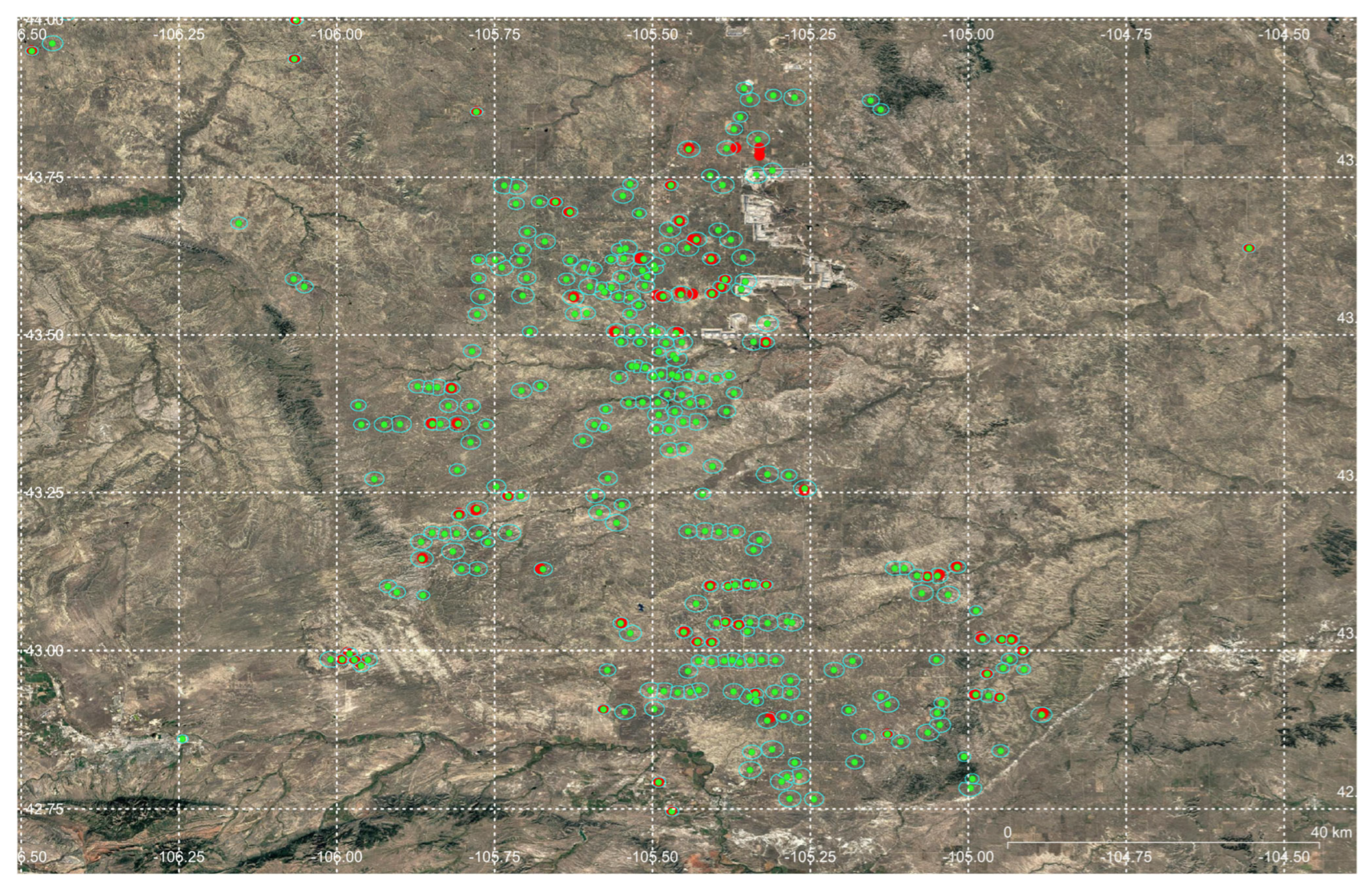
- A super-resolution clustering algorithm achieves subpixel geolocation (~50 m) of persistent infrared heat sources, far exceeding the native VIIRS pixel footprint (~1000 m).
- False positives caused by atmospheric glow around large flares are effectively filtered using a compactness constraint on detection clusters, improving data selectivity.
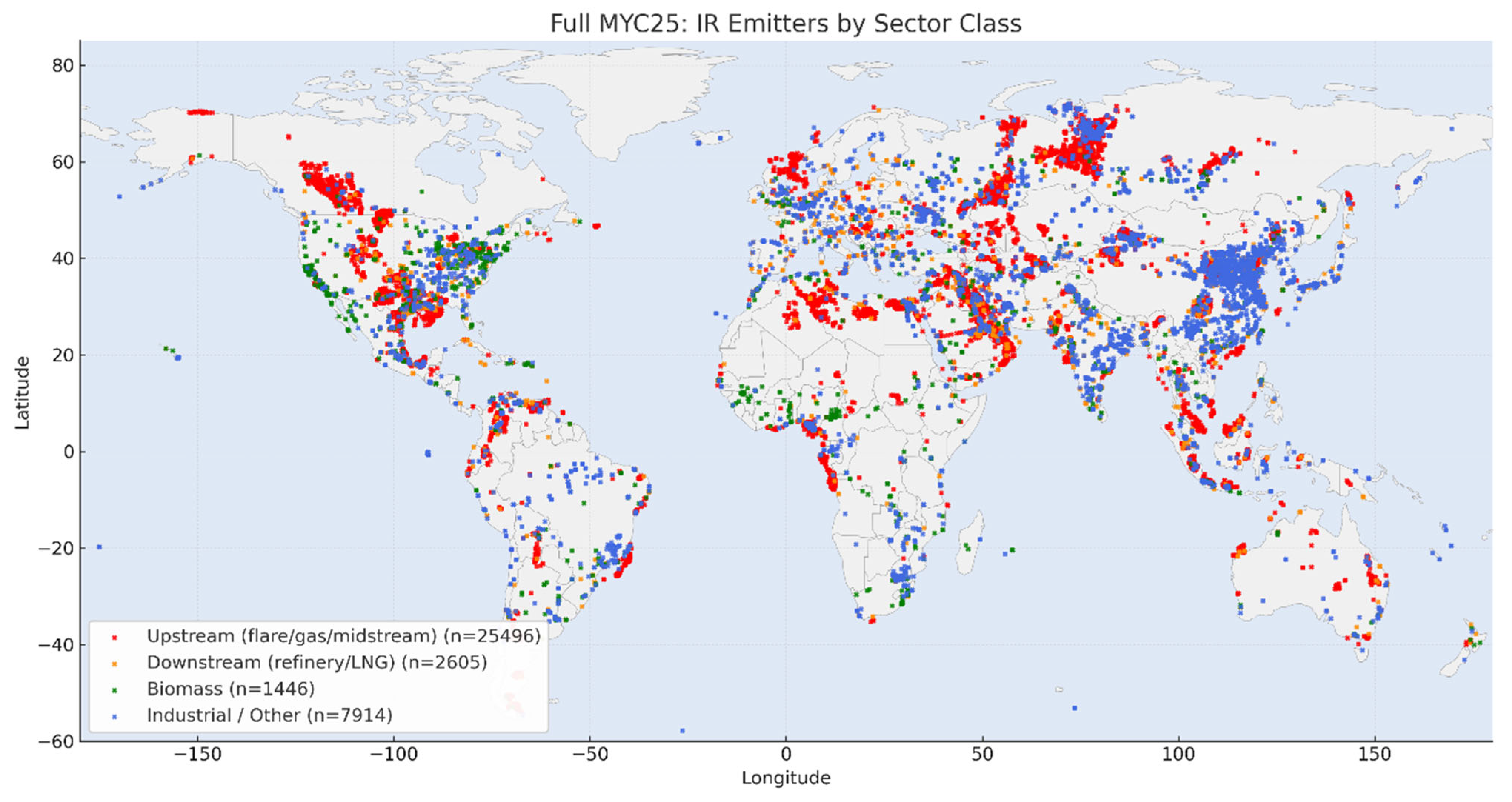
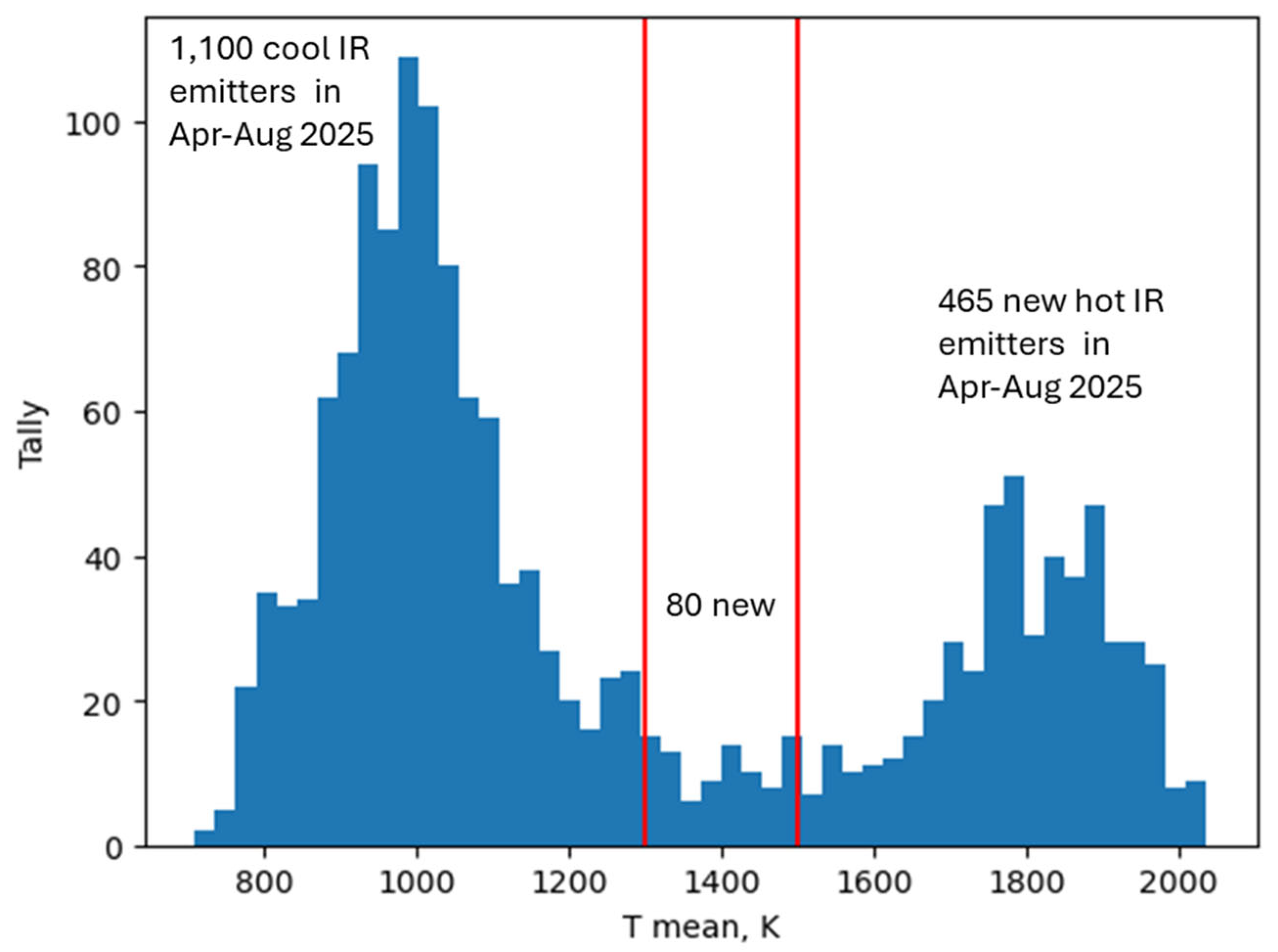
- The resulting global flare catalog is twice as sensitive as previous catalogs and provides near-complete detection for well-defined sources like LNG export terminals.
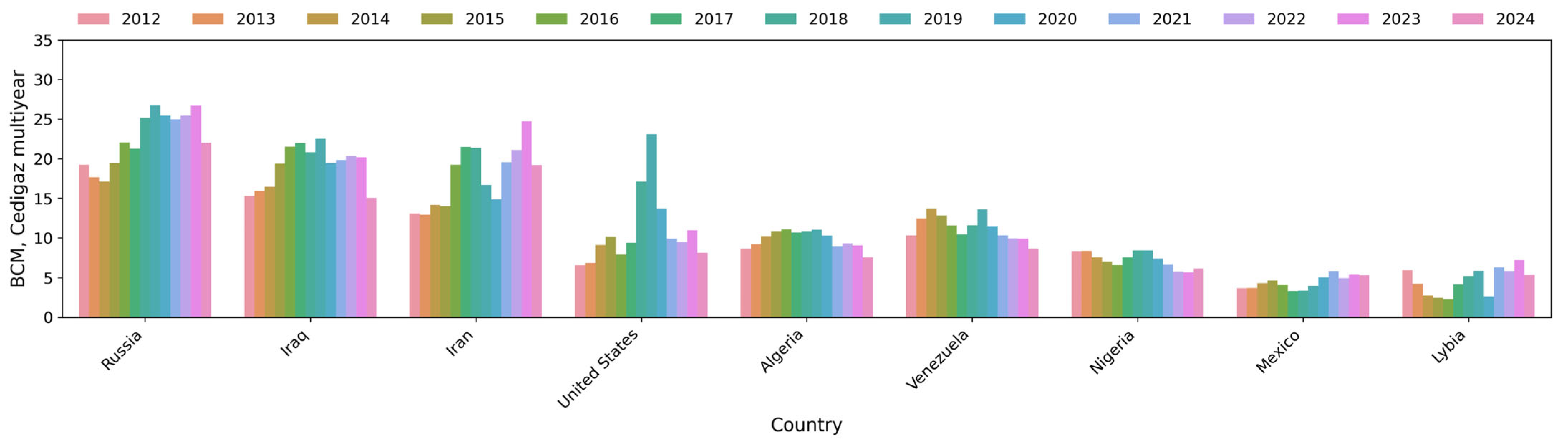
- The multiyear flare catalog’s enhanced precision, sensitivity and selectivity ensure high confidence in country-level estimates of flared gas volume.
Abstract
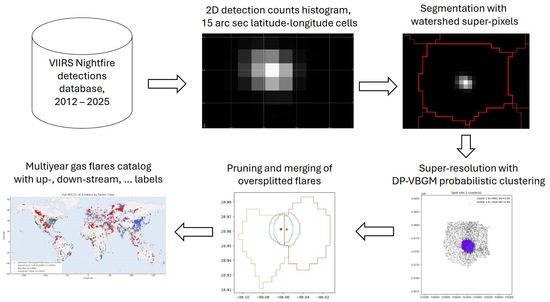
1. Introduction
2. Materials and Methods
2.1. Step 1. Rasterization of VNF Detections
2.2. Step 2. Watershed Segmentation of Candidate Features
2.3. Step 3. Super-Resolution Clustering of Detections
2.4. Step 4. Cleaning and Post-Processing
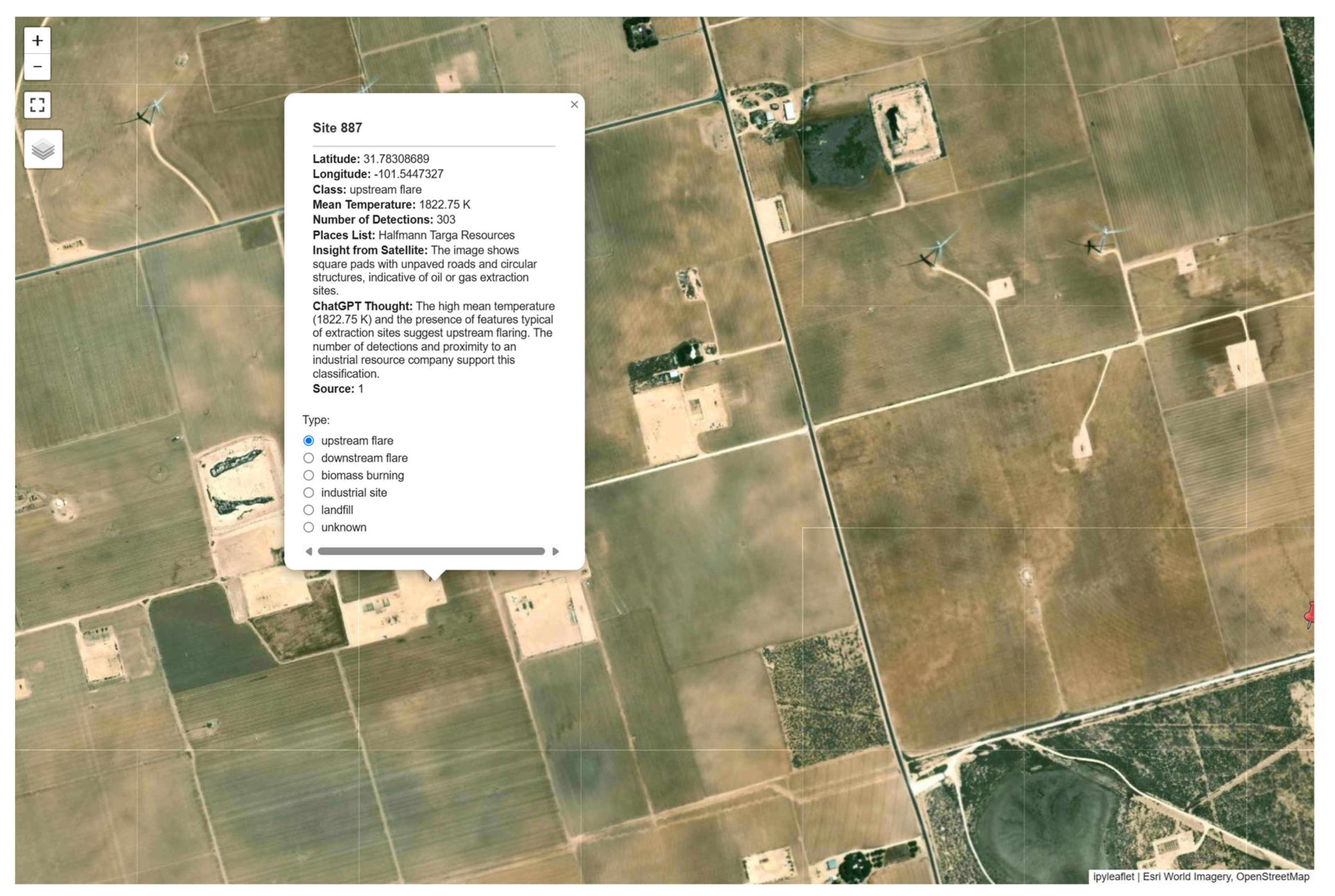
2.5. Step 5. Provenance and AI-Assisted Labeling of Newly Detected Sites

3. Results
3.1. Sensitivity and Selectivity
3.2. Duty Cycle and Number of Detections
3.3. Localization Precision and Minimum Separable Distance
4. Discussion
4.1. Detectability of Downstream Flares from LNG Terminals
4.2. Multiyear Catalog Updates
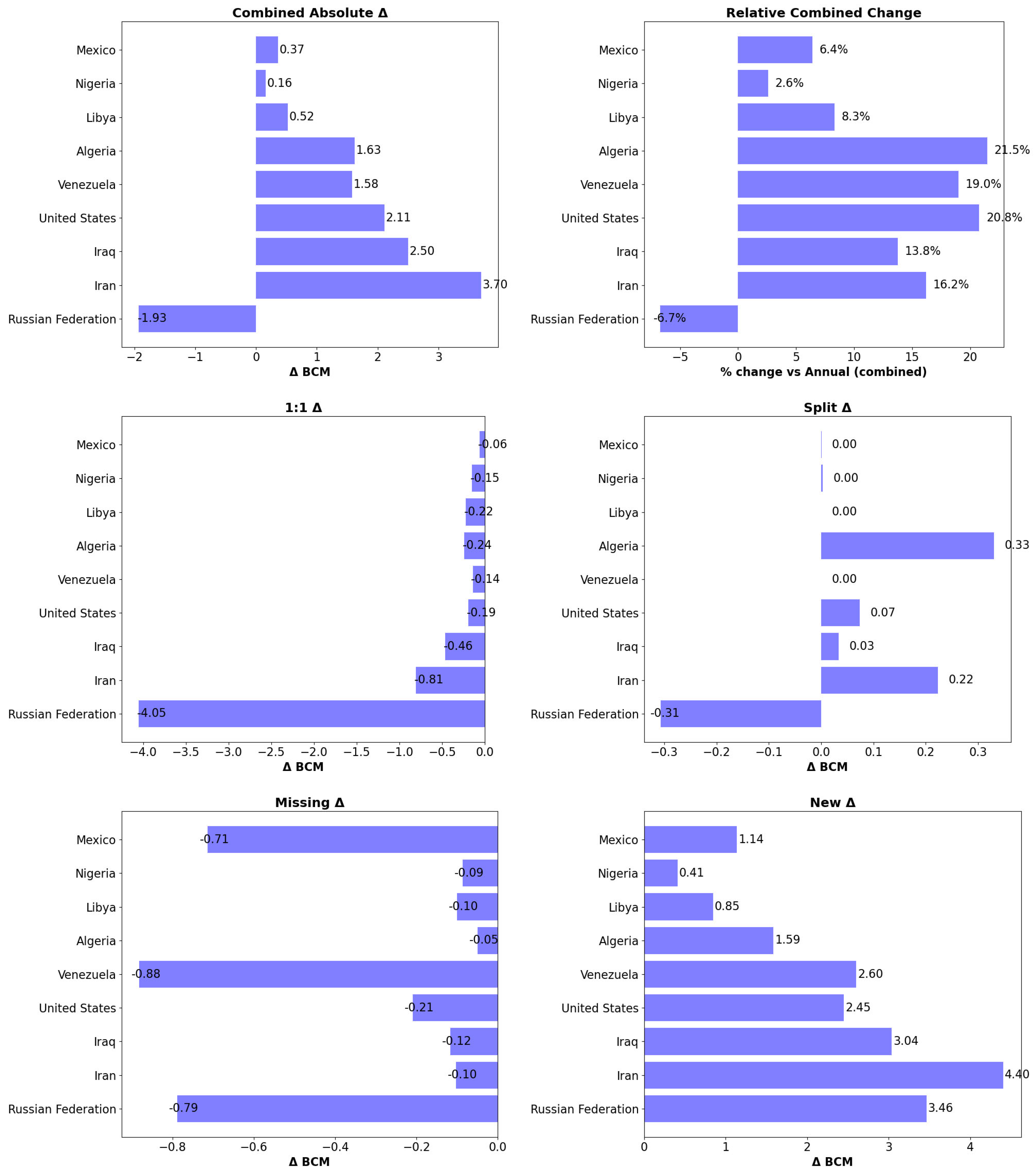
4.3. Impact on the Regional Estimates of Flared Gas Volumes
- -
- 1:1: A direct correspondence between one Annual site and one MYC25 site.
- -
- Splits: Either one Annual site disaggregates into multiple MYC25 sites (1–many) or multiple Annual sites consolidate into one MYC25 site (many–1).
- -
- Missing: An Annual site lacks an MYC25 counterpart within the specified radius, contributing zero to MYC25 totals.
- -
- New: MYC25 sites without an Annual counterpart, included in MYC25 totals but not in Annual reconciliation.
5. Conclusions
Supplementary Materials
Author Contributions
Funding
Data Availability Statement
Acknowledgments
Conflicts of Interest
References
- Elvidge, C.D.; Ziskin, D.; Baugh, K.E.; Tuttle, B.T.; Ghosh, T.; Pack, D.W.; Erwin, E.H.; Zhizhin, M. A Fifteen Year Record of Global Natural Gas Flaring Derived from Satellite Data. Energies 2009, 2, 595–622. [Google Scholar] [CrossRef]
- Elvidge, C.D.; Baugh, K.E.; Ziskin, D.; Anderson, S.; Ghosh, T. Estimation of Gas Flaring Volumes Using NASA MODIS Fire Detection Products. NGDC Annual Report, 30 December 2010, Revised 8 February 2011. Available online: https://eogdata.mines.edu/interest/flare_docs/NGDC_annual_report_20110209.pdf (accessed on 18 December 2025).
- Anejionu, O.C.D.; Blackburn, G.A.; Whyatt, J.D. Detecting Gas Flares and Estimating Flaring Volumes at Individual Flow Stations Using MODIS Data. Remote Sens. Environ. 2015, 158, 81–94. [Google Scholar] [CrossRef]
- Elvidge, C.D.; Baugh, K.E.; Zhizhin, M.; Hsu, F.-C. Why VIIRS data are superior to DMSP for mapping nighttime lights. In Proceedings of the Asia-Pacific Advanced Network, Daejeon, Republic of Korea, 13–16 January 2013. [Google Scholar] [CrossRef]
- Elvidge, C.D.; Zhizhin, M.; Hsu, F.-C.; Baugh, K.E. VIIRS Nightfire: Satellite Pyrometry at Night. Remote Sens. 2013, 5, 4423–4449. [Google Scholar] [CrossRef]
- Zhizhin, M.; Elvidge, C.D.; Sparks, T.; Ghosh, T.; Bazilian, M.; Hsu, F.-C. An Improved Calibration for Satellite Estimation of Flared Gas Volumes from VIIRS Nighttime Data. Energies 2025, 18, 4765. [Google Scholar] [CrossRef]
- Faruolo, M.; Genzano, N.; Pergola, N.; Marchese, F. The First Global Catalogue of Gas Flaring Sources Derived from a Multi-Temporal Time Series of OLI and MSI Daytime Data: The DAFI v2 Algorithm. Environ. Res. Lett. 2024, 19, 114053. [Google Scholar] [CrossRef]
- Hu, C.; Zhang, X.; Xing, X. An Approach to Detect Gas Flaring Sites Using Sentinel-2 MSI and NOAA-20 VIIRS Images. Int. J. Appl. Earth Obs. Geoinf. 2023, 124, 103534. [Google Scholar] [CrossRef]
- Wu, W.; Liu, Y.; Rogers, B.M. Monitoring Gas Flaring in Texas Using Time-Series Sentinel-2 MSI and Landsat-8 OLI Images. Int. J. Appl. Earth Obs. Geoinf. 2022, 114, 103075. [Google Scholar] [CrossRef]
- Elvidge, C.D.; Zhizhin, M.; Baugh, K.; Hsu, F.-C.; Ghosh, T. Methods for Global Survey of Natural Gas Flaring from Visible Infrared Imaging Radiometer Suite Data. Energies 2016, 9, 14. [Google Scholar] [CrossRef]
- The World Bank, 2025 Global Gas Flaring Tracker Report. Available online: https://www.worldbank.org/en/programs/gasflaringreduction/publication/2025-global-gas-flaring-tracker-report (accessed on 18 November 2025).
- Liu, Y.; Hu, C.; Zhan, W.; Sun, C.; Murch, B.; Ma, L. Identifying Industrial Heat Sources Using Time-Series of the VIIRS Nightfire Product with an Object-Oriented Approach. Remote Sens. Environ. 2018, 204, 347–365. [Google Scholar] [CrossRef]
- Elvidge, C.D.; Zhizhin, M.; Sparks, T.; Ghosh, T.; Pon, S.; Bazilian, M.; Sutton, P.C.; Miller, S.D. Global Satellite Monitoring of Exothermic Industrial Activity via Infrared Emissions. Remote Sens. 2023, 15, 4760. [Google Scholar] [CrossRef]
- Achanta, R.; Shaji, A.; Smith, K.; Lucchi, A.; Fua, P.; Süsstrunk, S. SLIC Superpixels Compared to State-of-the-Art Superpixel Methods. IEEE Trans. Pattern Anal. Mach. Intell. 2012, 34, 2274–2282. [Google Scholar] [CrossRef] [PubMed]
- Vincent, L.; Soille, P. Watersheds in Digital Spaces: An Efficient Algorithm Based on Immersion Simulations. IEEE Trans. Pattern Anal. Mach. Intell. 1991, 13, 583–598. [Google Scholar] [CrossRef]
- Machairas, V.; Faessel, M.; Cárdenas-Peña, D.; Chabardes, T.; Walter, T.; Decencière, E. Waterpixels. IEEE Trans. Image Process. 2015, 24, 3707–3716. [Google Scholar] [CrossRef] [PubMed]
- Soille, P. Morphological Image Analysis: Principles and Applications, 2nd ed.; Springer: Berlin/Heidelberg, Germany, 2003. [Google Scholar] [CrossRef]
- Bishop, C.M. Pattern Recognition and Machine Learning; Springer: New York, NY, USA, 2006. [Google Scholar] [CrossRef]
- Blei, D.M.; Jordan, M.I. Variational Inference for Dirichlet Process Mixtures. Bayesian Anal. 2006, 1, 121–144. [Google Scholar] [CrossRef]
- Aurenhammer, F. Voronoi Diagrams—A Survey of a Fundamental Geometric Data Structure. ACM Comput. Surv. 1991, 23, 345–405. [Google Scholar] [CrossRef]
- Okabe, A.; Boots, B.; Sugihara, K.; Chiu, S.N. Spatial Tessellations: Concepts and Applications of Voronoi Diagrams, 2nd ed.; John Wiley & Sons: Chichester, UK, 2000. [Google Scholar] [CrossRef]
- Emiris, I.Z.; Karavelas, M.I. The Predicates of the Apollonius Diagram: Algorithmic Analysis and Implementation. Comput. Geom. 2006, 33, 18–57. [Google Scholar] [CrossRef]
- Nominatim Developers. Nominatim Manual: Reverse Geocoding. 2025. Available online: https://nominatim.org/release-docs/latest/api/Reverse/ (accessed on 18 November 2025).
- Lin, G.; Wolfe, R.E.; Zhang, P.; Dellomo, J.J.; Tan, B. Ten Years of VIIRS On-Orbit Geolocation Calibration and Performance. Remote Sens. 2022, 14, 4212. [Google Scholar] [CrossRef]
- Minet, L.; Azargoshasbi, F.; Franklin, M.; Schade, G.W.; McGregor, M.J.; McInnes, K.; Takaro, T.K. Analysis of Flaring Activity at Liquefied Natural Gas (LNG) Export Facilities Worldwide. Environ. Sci. Technol. 2025, 59, 20357–20366. [Google Scholar] [CrossRef] [PubMed]
- Global Energy Monitor. Available online: https://globalenergymonitor.org/projects/global-gas-infrastructure-tracker/ggit-terminals-dashboard/ (accessed on 18 November 2025).
- Zhang, Z.; Sherwin, E.D.; Brandt, A.R. Estimating Global Oilfield-Specific Flaring with Uncertainty Using a Detailed Geographic Database of Oil and Gas Fields. Environ. Res. Lett. 2021, 16, 124039. [Google Scholar] [CrossRef]


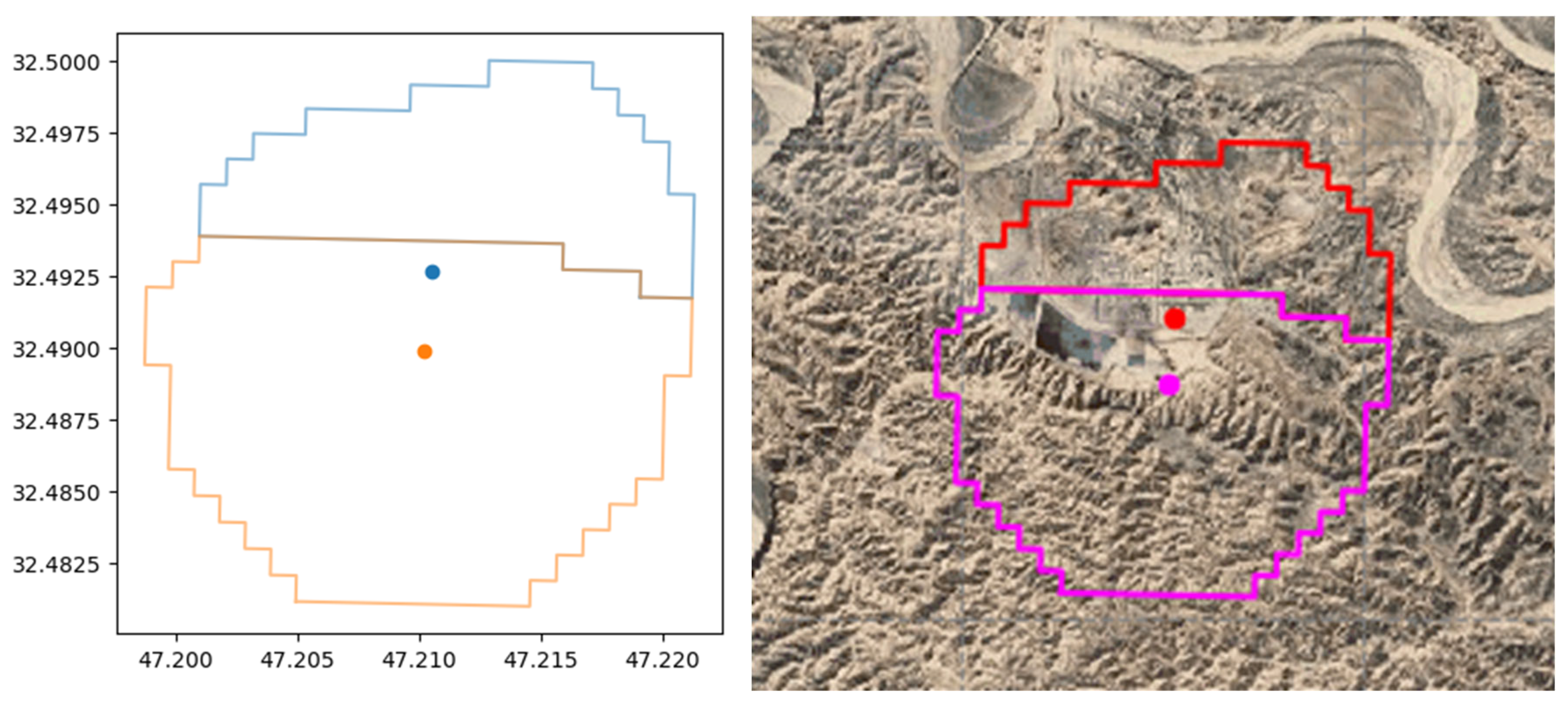


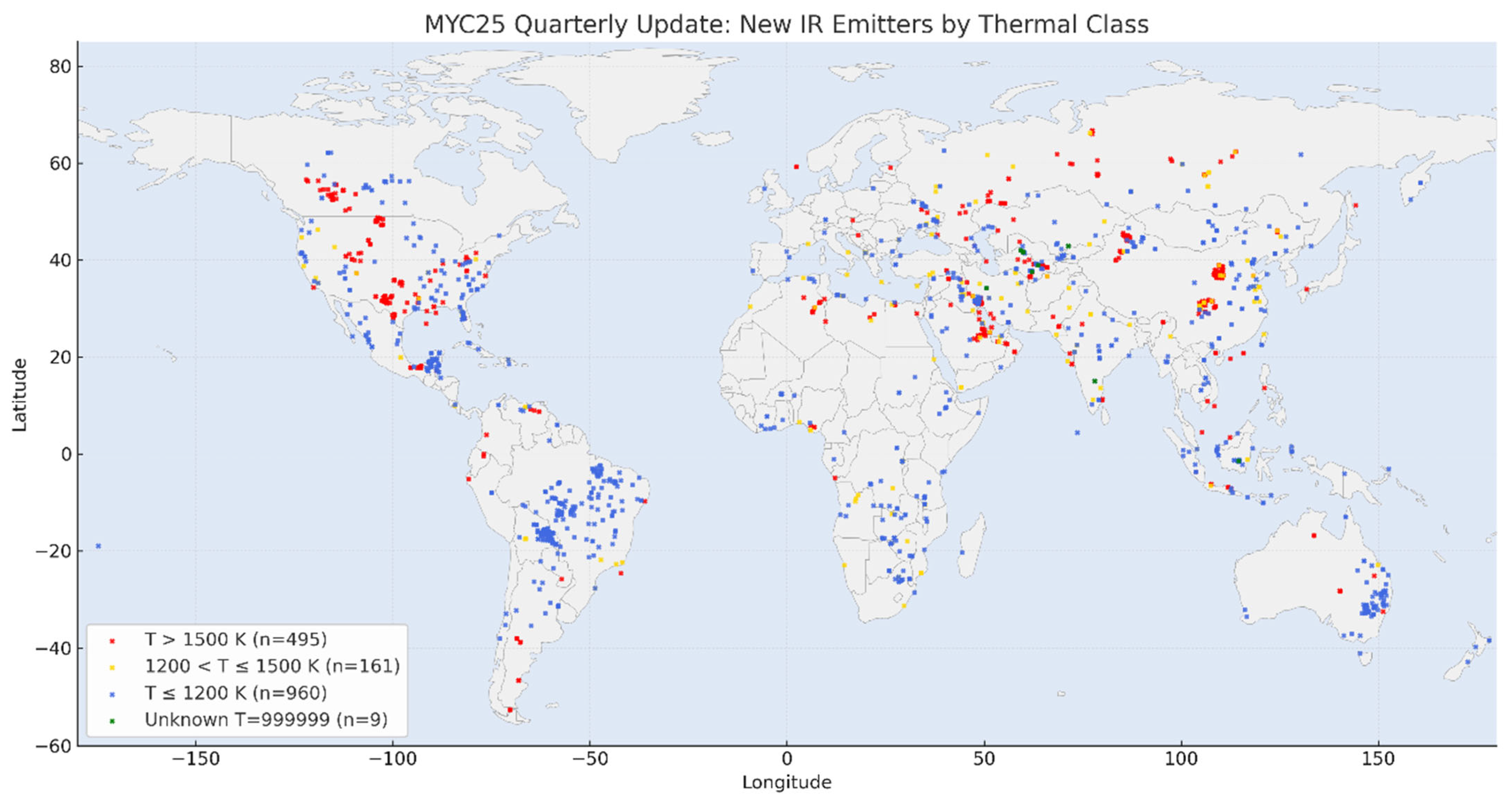



| Step | Step Name | Inputs | Action | Outputs |
|---|---|---|---|---|
| 1 | Inherited Classification (Provenance Cross-Match) | MYC25 emitter centroid and footprint MYC22 and Annual 2024 catalogs | Spatial crossmatch with previous catalogs to detect inherited identities within 500 m distance | Assign existing class label if a spatial match is found |
| 2 | Infrastructure Overlay | Unlabeled emitter list; GIS layers (oil/gas fields, refineries, LNG, petrochemical, power plants, etc.) | Intersect emitter positions with industrial polygons and proximity to point locations, 500 m distance | Provisional facility-based label |
| 3 | Temporal Signature Analysis | Multi-year VNF detection history (temperature, radiance, duty cycle, intermittency) | Analyze temporal behavior characteristic of upstream, landfills, wood processing plants, etc. | Behavioral label indicating likely sector |
| 4 | Multimodal AI-Assisted Expert Review | High-resolution GE image; MYC25 attributes; reverse-geocoded business/facility names | LLM produces structured reasoning summary; expert assigns label | Final classification for previously ambiguous emitters |
Disclaimer/Publisher’s Note: The statements, opinions and data contained in all publications are solely those of the individual author(s) and contributor(s) and not of MDPI and/or the editor(s). MDPI and/or the editor(s) disclaim responsibility for any injury to people or property resulting from any ideas, methods, instructions or products referred to in the content. |
© 2026 by the authors. Licensee MDPI, Basel, Switzerland. This article is an open access article distributed under the terms and conditions of the Creative Commons Attribution (CC BY) license.
Share and Cite
Zhizhin, M.; Elvidge, C.D.; Ghosh, T.; Gleason, G.; Bazilian, M. VIIRS Nightfire Super-Resolution Method for Multiyear Cataloging of Natural Gas Flaring Sites: 2012-2025. Remote Sens. 2026, 18, 314. https://doi.org/10.3390/rs18020314
Zhizhin M, Elvidge CD, Ghosh T, Gleason G, Bazilian M. VIIRS Nightfire Super-Resolution Method for Multiyear Cataloging of Natural Gas Flaring Sites: 2012-2025. Remote Sensing. 2026; 18(2):314. https://doi.org/10.3390/rs18020314
Chicago/Turabian StyleZhizhin, Mikhail, Christopher D. Elvidge, Tilottama Ghosh, Gregory Gleason, and Morgan Bazilian. 2026. "VIIRS Nightfire Super-Resolution Method for Multiyear Cataloging of Natural Gas Flaring Sites: 2012-2025" Remote Sensing 18, no. 2: 314. https://doi.org/10.3390/rs18020314
APA StyleZhizhin, M., Elvidge, C. D., Ghosh, T., Gleason, G., & Bazilian, M. (2026). VIIRS Nightfire Super-Resolution Method for Multiyear Cataloging of Natural Gas Flaring Sites: 2012-2025. Remote Sensing, 18(2), 314. https://doi.org/10.3390/rs18020314