Land Suitability Assessment and Gap Analysis for Sustainable Taro (Colocasia esculenta (L.) Schott) Production in Rwanda Using Remote Sensing Data and a Fuzzy AHP Model


Highlights
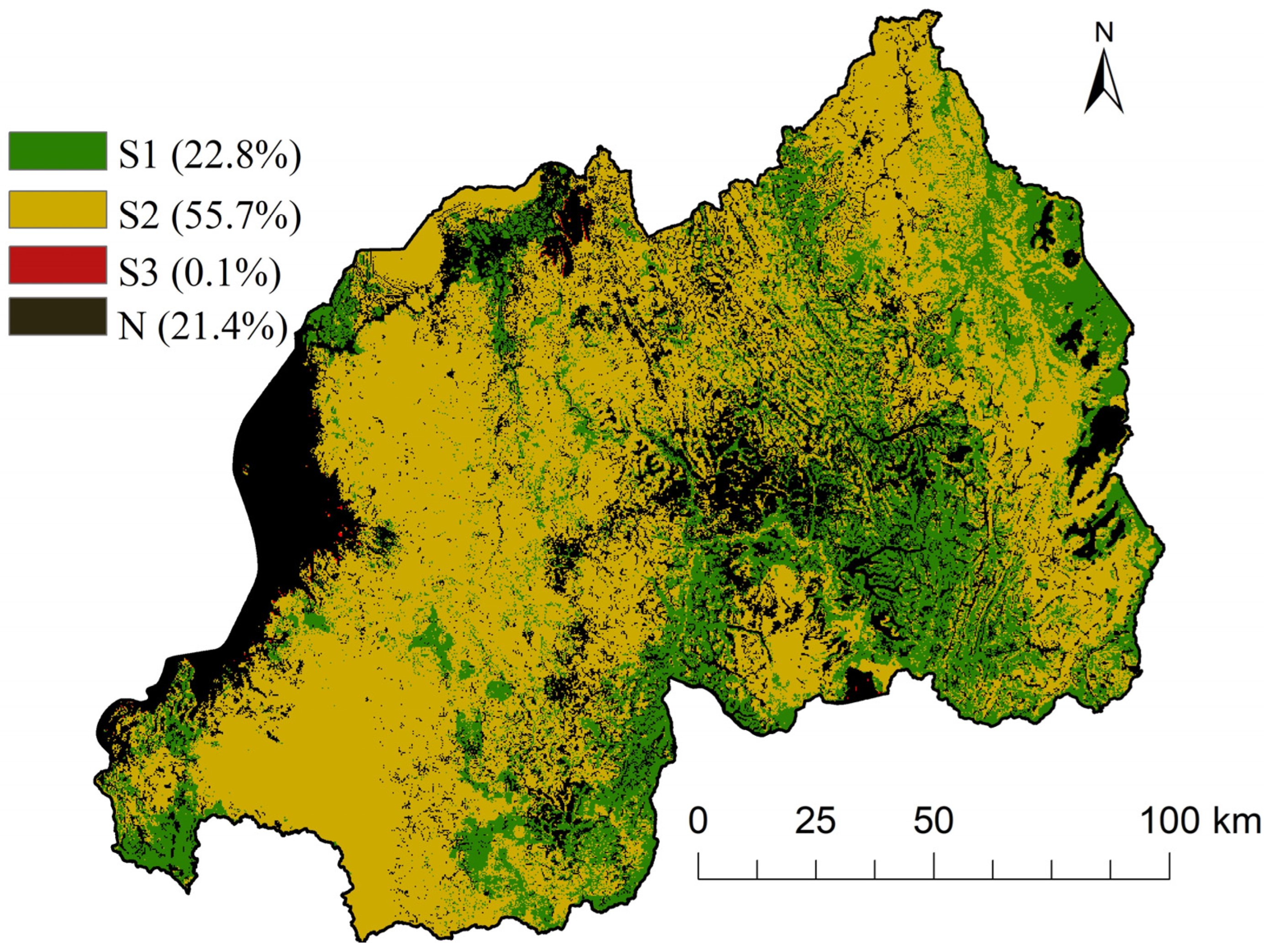
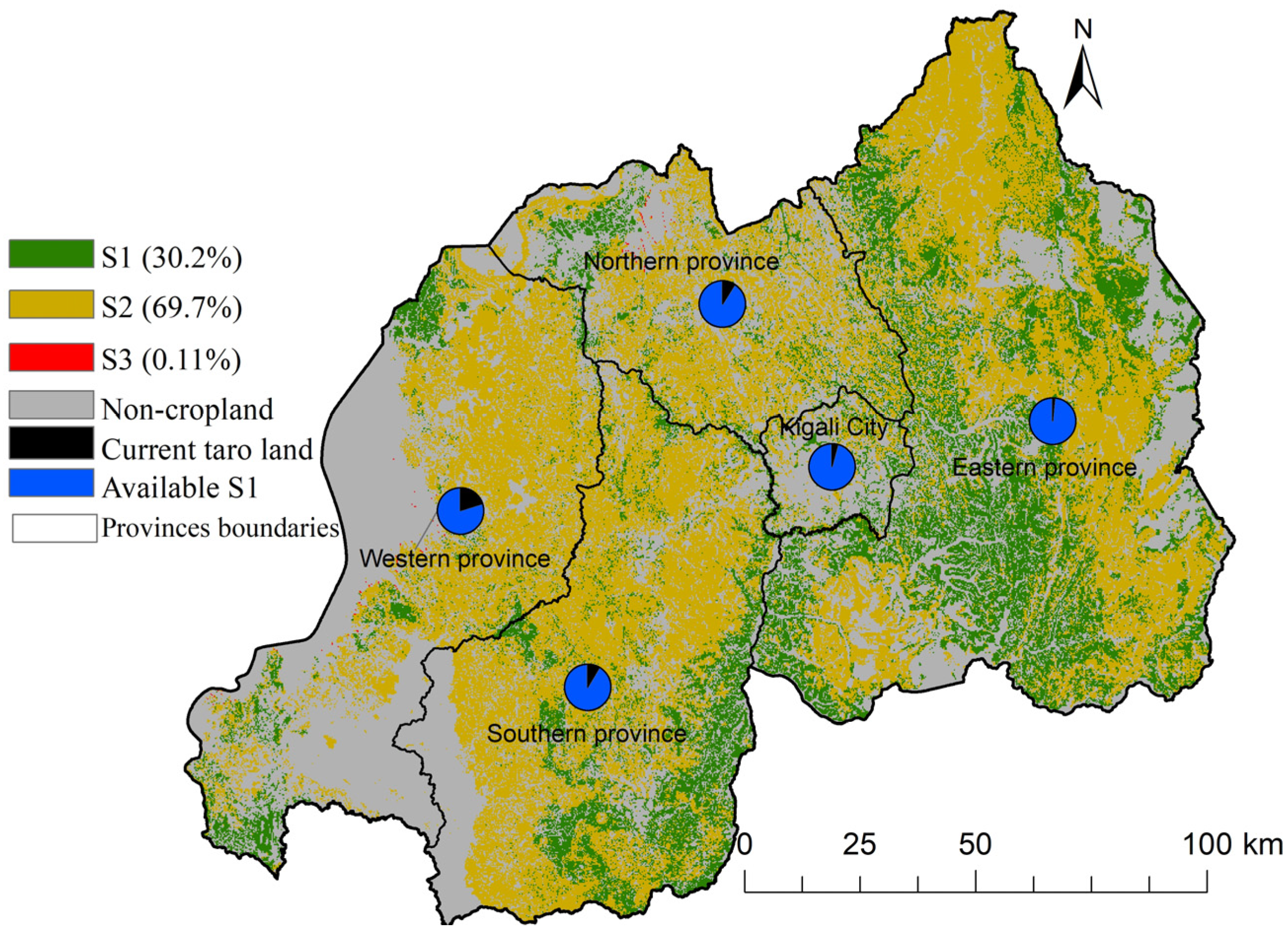
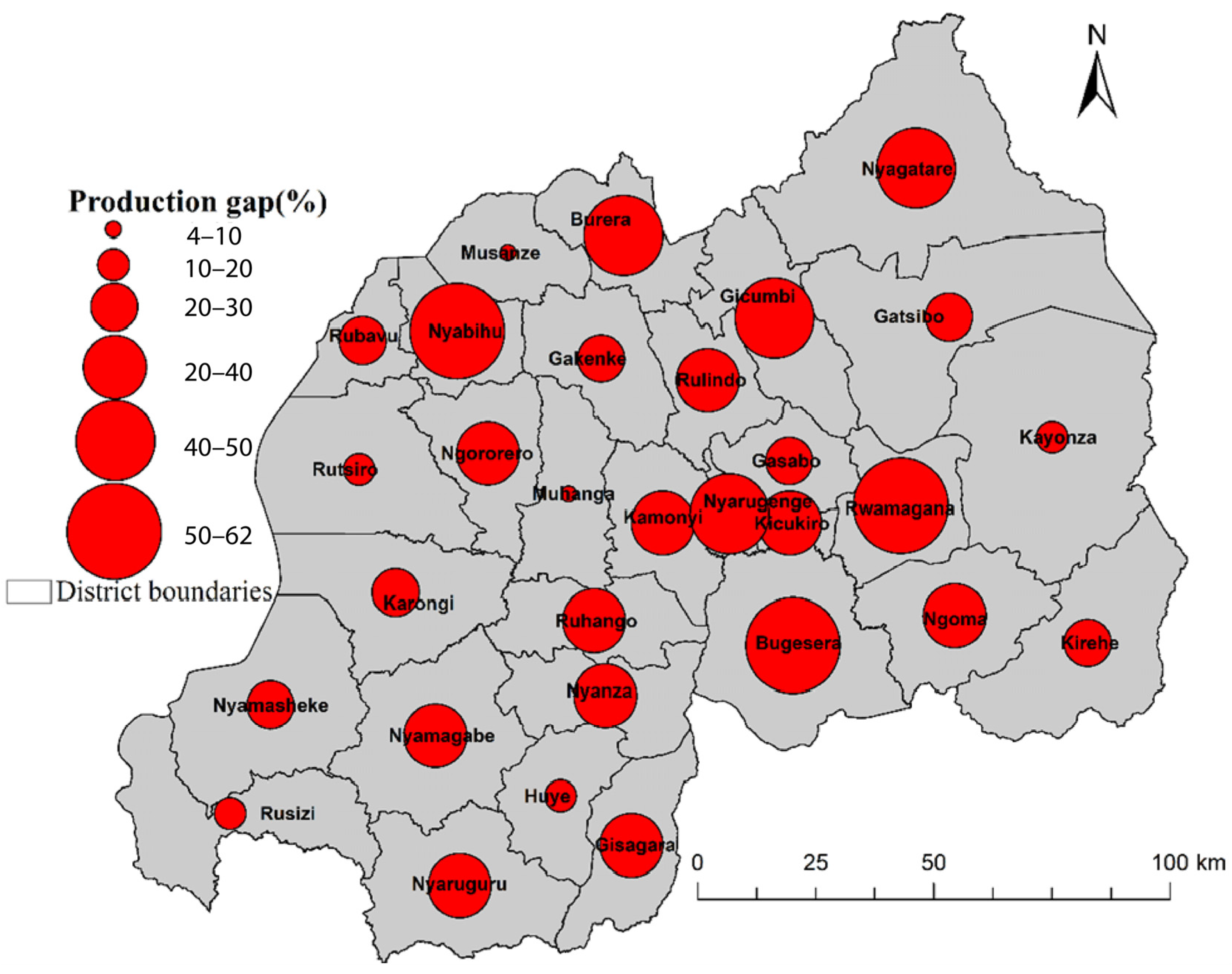
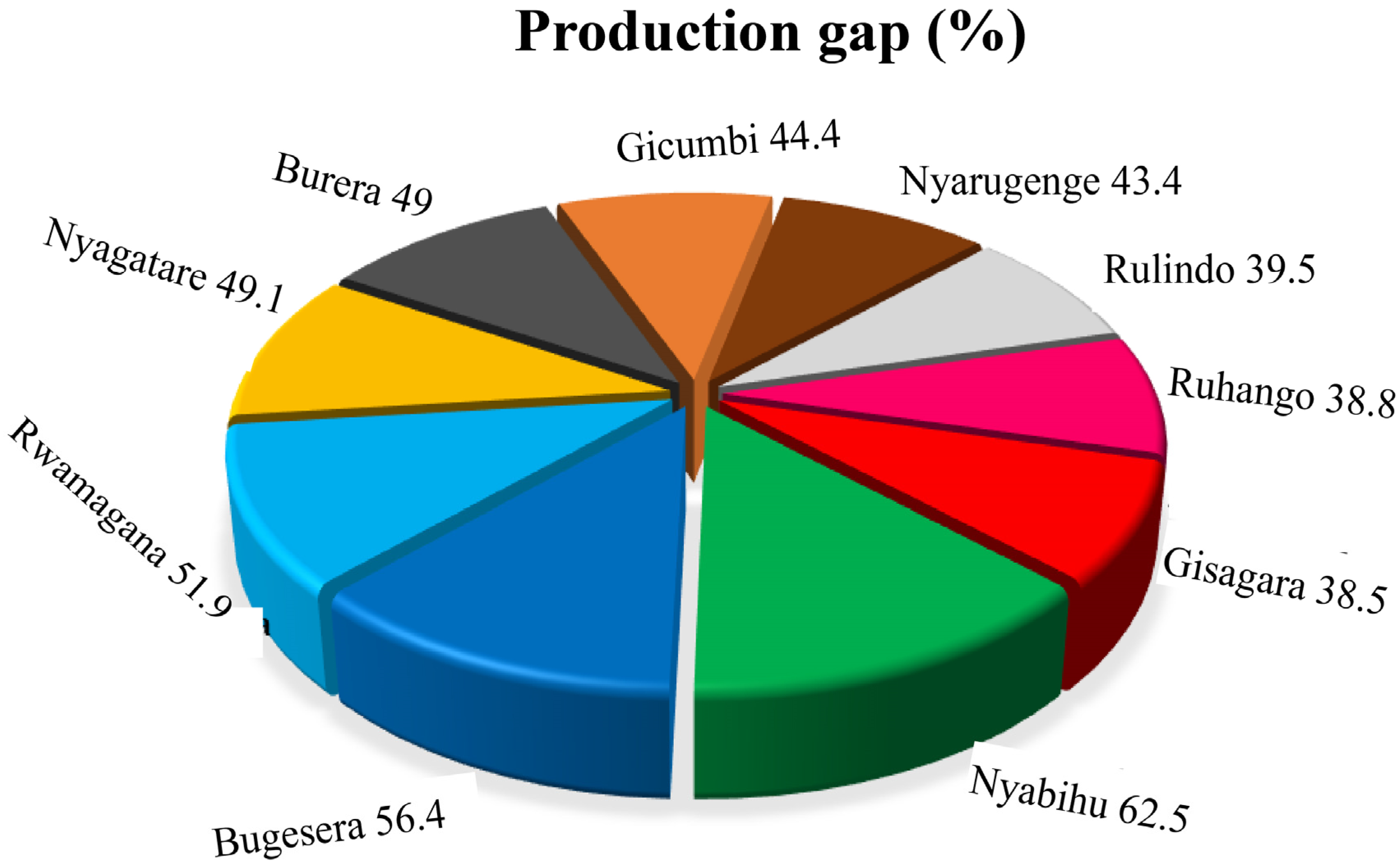
- The analysis revealed that a significant portion of Rwanda land is well-suited for taro, with 22.8% classified as highly suitable and 55.7% as moderately suitable. A key finding was that within existing farmland, over 28% of the highly suitable land remains untapped for taro cultivation, indicating substantial room for expansion, particularly in the Eastern province.
- Methodologically, this study is the first to integrate multi-source remote sensing data within a Fuzzy-AHP-GIS framework for Rwanda, creating a transferable model for assessing underutilized crops to enhance food security.
- The findings offer an actionable blueprint for policymakers to direct the agricultural resources allocation and support services to high-potential districts via optimizing land use and investment.
- Closing the identified production gap through the adoption of improved practices on suitable land can transform taro from a marginal crop into a cornerstone of Rwanda climate-resilient agricultural strategy. This shift would enhance national food security, provide a global model for sustainable development for developing countries, and attract more research attention to orphan crops such as taro.
Abstract
1. Introduction
2. Materials and Methods
2.1. Study Area
2.2. Overall Methodological Framework
2.3. Datasets and Preprocessing
2.4. Criteria Identification and Standardization
2.4.1. Criteria Identification
2.4.2. Criteria Classification
2.5. Weights Determination by Fuzzy-AHP
2.5.1. Fuzzy Pairwise Comparison Matrix
2.5.2. Consistency Index (CI) and Consistency Ratio (CR)
2.5.3. Computing Fuzzy Weights
2.6. GIS Integration and Land Suitability Index Development
2.7. Sensitivity Analysis and Validation
2.7.1. Sensitivity Analysis
2.7.2. Model Validation
2.8. Estimation of Production Gap
3. Results
3.1. Spatial Distribution of Variables and Their Influence on the Land Suitability Index
3.2. Accuracy Assessment of Land Suitability and Composite Taro Suitability Map
3.3. Analysis of Taro Land Suitability at the Sub-National Level
3.4. Estimation of Taro Production Gap at the Sub-National Level
4. Discussions
4.1. The Uniqueness of This Study
4.2. Why Is Taro Grown Primarily on Marginal Land Instead of Highly Suitable Prime Land?
4.2.1. From the Policy Perspective
4.2.2. From the Economic Perspective
4.3. Comparison with Other Studies
4.3.1. Taro’s Persistent Status as an Orphan Crop
4.3.2. Underutilized Suitable Land Alongside Cultivation on Less Suitable Margins
4.3.3. Sensitivity
4.4. Uncertainties
4.5. Strategy Recommendations
5. Conclusions
Supplementary Materials
Author Contributions
Funding
Data Availability Statement
Acknowledgments
Conflicts of Interest
References
- Temesgen, M.; Ratta, N.; Temesgen, M.M. Nutritional potential, Health and Food Security Benefits of Taro Colocasia esculenta (L.): A Review. Food Sci. Qual. Manag. 2015, 36, 23–30. [Google Scholar]
- Ferdaus, M.J.; Chukwu-Munsen, E.; Foguel, A.; Da Silva, R.C. Taro Roots: An Underexploited Root Crop. Nutrients 2023, 15, 3337. [Google Scholar] [CrossRef]
- Food and Agriculture Organization (FAOSTAT). FAO Statistical Database. 2021. Available online: https://www.fao.org/faostat/en/#data/QCL (accessed on 10 June 2025).
- Gasheja, F.; Gatemberezi, P. An Assessment of Rwanda’s Agricultural Production, Climate Change, Agricultural Trade and Food Security; Rural Development Department, Kigali International University: Kigali, Rwanda, 2017; KIPPRA Working Paper No. 23. [Google Scholar]
- Nsabimana, A.; Niyitanga, F.; Weatherspoon, D.; Naseem, A. Land Policy and Food Prices: Evidence from a Land Consolidation Program in Rwanda. J. Agric. Food Ind. Organ. 2021, 19, 63–73. [Google Scholar] [CrossRef]
- Legesse, T.; Bekele, T. Evaluation of improved taro (Colocasia esculenta (L.) Schott) genotypes on growth and yield performance in North-Bench woreda of Bench-Sheko zone, South-Western Ethiopia. Heliyon 2021, 7, e08630. [Google Scholar] [CrossRef]
- Wambui, N.J.; Karuma, A.N.; Gicheru, P.; Onwonga, R.; Addi, M. Effects of Watering Regimes and Planting Density on Taro (Colocasia esculenta) Growth, Yield, and Yield Components in Embu, Kenya. Int. J. Agron. 2023, 2023, 6843217. [Google Scholar] [CrossRef]
- World Development Indicators (WDI). World Bank Group. 2024. Available online: https://databank.worldbank.org/source/world-development-indicators (accessed on 15 July 2025).
- Martínez Herrera, J.; Sánchez, H.R.; Ramos, R.R. Potential areas for taro (Colocasia esculenta (L.) Schott) cultivation in Tabasco, Mexico. Agro Prod. 2022, 15, 3–10. [Google Scholar] [CrossRef]
- Sunitha, S.; Kumar, J.S.; Sreekumar, J.; Suja, G.; Ramesh, V.; Byju, G. Water requirement of upland Taro (Colocasia esculenta) under humid tropical zones of India. Indian J. Agric. Sci. 2022, 92, 1364–1368. [Google Scholar] [CrossRef]
- Roshan Paudel, R.; Bartlett, B.; Zamora, C.; Keach, J.; Gutierrez, C.R.; Hawkins, J.; Motomura, W.S.; Kirk, E.R.; Kantar, M.B.; Lamour, K.H.; et al. Breeding and selection of taro (Colocasia esculenta) for improved disease-resistance in Hawaiʻi. Plants People Planet 2023, 5, 123–145. [Google Scholar] [CrossRef]
- Lloyd, G.R.; Uesugi, A.; Gleadow, R.M. Effects of Salinity on the Growth and Nutrition of Taro (Colocasia esculenta): Implications for Food Security. Plants 2021, 10, 2319. [Google Scholar] [CrossRef] [PubMed]
- Wanyama, J.; Nakawuka, P.; Bwambale, E.; Kiraga, S.; Kiggundu, N.; Barasa, B.; Katimbo, A. Evaluation of land suitability for surface irrigation under changing climate in a tropical setting of Uganda, East Africa. Agric. Syst. 2024, 217, 103937. [Google Scholar] [CrossRef]
- Akpoti, K.; Kabo-bah, A.; Zwart, S.J. Agricultural land suitability analysis: State-of-the-art and outlooks for integration of climate change analysis. Agric. Syst. 2019, 173, 172–208. [Google Scholar] [CrossRef]
- Mugiyo, H.C.; Sibanda, M.; Kunz, R.; Masemola, C.; Modi, A.T.; Mabhaudhi, T. Evaluation of Land Suitability Methods with Reference to Neglected and Underutilised Crop Species: A Scoping Review. Land 2021, 10, 125. [Google Scholar] [CrossRef]
- AL-Taani, A.; Al-husban, Y.; Farhan, I. Land suitability evaluation for agricultural use using GIS and remote sensing techniques: The case study of Ma’an Governorate, Jordan. Egypt. J. Remote Sens. Space Sci. 2021, 24, 109–117. [Google Scholar] [CrossRef]
- Zhang, E.; Shen, W.; Jiang, W.; Li, W.; Wan, X.; Yu, X.; Xiong, F. Research progress on the bulb expansion and starch enrichment in taro (Colocasia esculenta (L). Schott). PeerJ 2023, 11, e15400. [Google Scholar] [CrossRef] [PubMed]
- Laekemariam, L.; Kibret, K.; Mamo, T.; Karltun, E.; Gebrekidan, H. Physiographic characteristics of agricultural lands and farmers’ soil fertility management practices in Wolaita zone, Southern Ethiopia. Environ. Syst. Res. 2016, 5, 24. [Google Scholar] [CrossRef]
- Nsor, M.E.; Akpan, A.E. Characterization and Land Suitability Evaluation for Cocoyam in Southern Nigeria. Ghana J. Agric. Sci. 2021, 56, 26–47. [Google Scholar] [CrossRef]
- Mugiyo, H.; Chimonyo, V.; Sibanda, M.; Kunz, R.; Nhamo, L.; Masemola, C.; Dalin, C.; Modi, A.T.; Mabhaudhi, T. Multi-criteria suitability analysis for neglected and underutilized crop species in South Africa. PLoS ONE 2021, 16, e0244734. [Google Scholar]
- Feizizadeh, B.; Blaschke, T. Land suitability analysis for Tabriz County, Iran: A multi-criteria evaluation approach using GIS. J. Environ. Plan. Manag. 2013, 56, 1–23. [Google Scholar] [CrossRef]
- Özkan, B.; Dengiz, O.; Turan, İ.D. Site suitability analysis for potential agricultural land with spatial fuzzy multi-criteria decision analysis in regional scale under semi-arid terrestrial ecosystem. Sci. Rep. 2020, 10, 22074. [Google Scholar] [CrossRef]
- Sawant, N.; Das, B.; Mahajan, G.; Desai, S.; Raizada, A.; Kumar, P.; Singh, P. Crop suitability analysis for the coastal region of India through fusion of remote sensing, geospatial analysis and multi-criteria decision making. Sci. Rep. 2025, 15, 8727. [Google Scholar] [CrossRef]
- Sun, C.C. A performance evaluation model by integrating fuzzy AHP and fuzzy TOPSIS methods. Expert Syst. Appl. 2010, 37, 7745–7754. [Google Scholar] [CrossRef]
- Shapiro, A.; Koissi, M.C. Fuzzy logic modifications of the Analytic Hierarchy Process. Insur. Math. Econ. 2017, 75, 189–202. [Google Scholar] [CrossRef]
- Talukdar, S.; Naikoo, M.W.; Mallick, J.; Praveen, B.; Shahfahad Sharma, P.; Pal, S.; Rahman, A. Coupling geographic information system integrated fuzzy logic-analytical hierarchy process with global and machine learning based sensitivity analysis for agricultural suitability mapping. Agric. Syst. 2022, 196, 103343. [Google Scholar] [CrossRef]
- Zadeh, L.A. Fuzzy sets. Inf. Control 1965, 8, 338–353. [Google Scholar] [CrossRef]
- Ustaoglu, E.; Aydınoglu, A.C. Suitability evaluation of urban construction land in Pendik district of Istanbul, Turkey. Land Use Policy 2020, 99, 104783. [Google Scholar] [CrossRef]
- Tashayo, B.; Honarbakhsh, A.; Azma, A.; Akbari, M. Combined Fuzzy AHP–GIS for Agricultural Land Suitability Modeling for a Watershed in Southern Iran. Environ. Manag. 2020, 66, 364–376. [Google Scholar] [CrossRef]
- Eskandari, S.; Behnamfar, K.; Pourghasemi, H.R.; Tiefenbacher, J.P. Provision of eucalyptus wood farming potential map in Iran: An application of land cover, ecological, climatic, hydrologic, and edaphic analysis in a GIS-based fuzzy AHP framework. Ecol. Indic. 2022, 136, 108621. [Google Scholar] [CrossRef]
- Xiang, H.; Paramaiah, C.; Nawaz, M.; Chupradit, S.; Fatima, A.; Sadiq, M.H. Integration and economic viability of fueling the future with green hydrogen: An integration of its determinants from renewable economics. Int. J. Hydrogen Energy 2021, 46, 38145–38162. [Google Scholar] [CrossRef]
- World Bank. Climate Risk Country Profile: Rwanda. 2018. Available online: https://www.preventionweb.net/media/92552/download?startDownload=20250814 (accessed on 15 July 2025).
- Sebaziga, N.J.; Ntirenganya, F.; Tuyisenge, A.; Iyakaremye, V. A Statistical Analysis of the Historical Rainfall Data Over Eastern Province in Rwanda. East Afr. J. Sci. Technol. 2020, 10, 33–52. [Google Scholar]
- Wasige, J.; Groen, T.; Rwamukwaya, B.M.; Tumwesigye, W.; Smaling, E.M.A.; Jetten, V. Contemporary land use/land cover types determine soil organic carbon stocks in south-west Rwanda. Nutr. Cycl. Agroecosyst. 2014, 100, 19–33. [Google Scholar] [CrossRef]
- Karamage, F.; Zhang, C.; Ndayisaba, F.; Shao, H.; Kayiranga, A.; Fang, X.; Nahayo, L.; Muhire, N.E.; Tian, G. Extent of Cropland and Related Soil Erosion Risk in Rwanda. Sustainability 2016, 8, 609. [Google Scholar] [CrossRef]
- Muñoz Sabater, J. ERA5-Land monthly averaged data from 1981 to present. Copernic. Clim. Change Serv. (C3S) Clim. Data Store (CDS) 2019, 10, 2025. [Google Scholar] [CrossRef]
- Batjes, N.H.; Calisto, L.; de Sousa, L.M. WoSIS-Latest: Standardised World Soil Profile Data. ISRIC Soil Data Hub Resource Identifier. 2024. Available online: https://tinyurl.com/39xhaa9d (accessed on 30 June 2025).
- Dorijan, R.; Mladen, J.; Mateo, G.; Ivan, P. Optimal Soybean (Glycine max L.) Land Suitability Using GIS-Based Multicriteria Analysis and Sentinel-2 Multitemporal Images. Remote Sens. 2020, 12, 1463. [Google Scholar]
- Onwueme, I. Taro Cultivation in Asia and the Pacific; Food and Agriculture Organization of the United Nations: Rome, Italy, 1999. [Google Scholar]
- Wang, P.; Su, X.; Zhou, Z.; Wang, N.; Liu, J.; Zhu, B. Differential effects of soil texture and root traits on the spatial variability of soil infiltrability under natural revegetation in the Loess Plateau of China. Catena 2023, 220, 106693. [Google Scholar] [CrossRef]
- USDA NRCS National Plant Data Center and Pacific Islands West Area Office. Plant Guide: Taro (Colocasia esculenta); U.S. Department of Agriculture Natural Resources Conservation Service: Washington, DC, USA, 2007.
- Modica, G.; Pollino, M.; Messina, G.; Lanucara, S.; Praticò, S. Web-based multicriteria spatial decision support system (MC-SDSS) for land suitability evaluation in olive groves. A case study in Calabria region, southern Italy. Agric. Syst. 2025, 228, 104375. [Google Scholar] [CrossRef]
- Saaty, T.L. A scaling method for priorities in hierarchical structures. J. Math. Psychol. 1977, 15, 234–281. [Google Scholar] [CrossRef]
- Csutora, R.; Buckley, J.J. Fuzzy hierarchical analysis: The Lambda-Max method. Fuzzy Sets Syst. 2001, 120, 181–195. [Google Scholar] [CrossRef]
- Food and Agriculture Organization (FAO). Land Suitability Classifications. 1976. Available online: https://www.fao.org/4/x5310e/x5310e04.htm (accessed on 12 June 2025).
- Akıncı, H.; Özalp, A.; Turgut, B. Agricultural land use suitability analysis using GIS and AHP technique. Comput. Electron. Agric. 2013, 97, 71–82. [Google Scholar] [CrossRef]
- Xu, E.; Zhang, H. Spatially-explicit sensitivity analysis for land suitability evaluation. Appl. Geogr. 2013, 45, 1–9. [Google Scholar] [CrossRef]
- Food and Agriculture Organization (FAO). Land Productivity Index and Economic Measures of Suitability. 1985. Available online: https://www.fao.org/4/x5648e/x5648e04.htm (accessed on 15 July 2025).
- Van Ittersum, M.; Cassman, K.; Grassini, P.; Wolf, J.; Tittonell, P.; Hochman, Z. Yield gap analysis with local to global relevance—A review. Field Crops Res. 2013, 143, 4–17. [Google Scholar] [CrossRef]
- Hyndman, R.; Fan, Y. Sample Quantiles in Statistical Packages. Am. Stat. 1996, 50, 361–365. [Google Scholar] [CrossRef]
- National Institute of Statistics of Rwanda (NISR). Seasonal Agricultural Survey 2017–2024. 2024. Available online: https://beta.statistics.gov.rw/datasource/seasonal-agriculture-survey-2023 (accessed on 28 June 2025).
- Ansoms, A.; Cioffo, G.; Dawson, N.; Desiere, S.; Huggins, C.; Leegwater, M.; Murison, J.; Bisoka, A.N.; Treidl, J.; Van Damme, J. The Rwandan agrarian and land sector modernisation: Confronting macro performance with lived experiences on the ground. Rev. Afr. Political Econ. 2018, 45, 408–431. [Google Scholar] [CrossRef]
- Annual Report 2023/24; Ministry of Agriculture and Animal Resources (MINAGRI): Kigali, Rwanda, 2024.
- Spielman, D.J.; Mugabo, S.; Rosenbach, G.; Ndikumana, S.; Benimana, G.; Ingabire, C. Fertilizer policy reforms in the midst of crisis: Evidence from Rwanda. Food Policy 2025, 133, 102823. [Google Scholar] [CrossRef]
- Mugabo, S.; Warner, J. Synopsis: Enhancing Smallholder Farmers’ Profitability Through Increased Crop Commercialization in Rwanda; Rwanda Strategy Support Program Policy Note 14; International Food Policy Research Institute (IFPRI): Kigali, Rwanda, 2024. [Google Scholar]
- Oladimeji, J.J.; Kumar, P.L.; Abe, A.; Vetukuri, R.R.; Bhattacharjee, R. Taro in West Africa: Status, Challenges, and Opportunities. Agronomy 2022, 12, 2094. [Google Scholar] [CrossRef]
- Matthews, P.J.; Ghanem, M.E. Perception gaps that may explain the status of taro (Colocasia esculenta) as an “orphan crop”. Plants People Planet 2021, 3, 99–112. [Google Scholar] [CrossRef]
- Guy, B.; Walter, O.; Alexandra, Z.F.; David, A.; Deo, K. A literature review on yield gaps of various root, tuber and banana crops as a background for assessing banana yield reductions due to pests and diseases at a field site in western Burundi. Afr. J. Agric. Res. 2020, 16, 1169–1183. [Google Scholar] [CrossRef]
- Ntuli, J.; Ngobese, N.Z.; Sithole, L.; Hadebe, S. Disentangling and Closing the Nutrient-Based Potato Yield Gap Using Integrated Nutrient Management Under Temperate Environments of Sub-Saharan Africa. Horticulturae 2025, 11, 835. [Google Scholar] [CrossRef]
- Ndlovu, M.; Scheelbeek, P.; Ngidi, M.; Mabhaudhi, T. Underutilized crops for diverse, resilient and healthy agri-food systems: A systematic review of sub-Saharan Africa. Front. Sustain. Food Syst. 2024, 8, 1498402. [Google Scholar] [CrossRef]
- Lian, X.; Peng, C.; Deze, X.; Ying, G.; Qingfang, W.; Xingfei, Z.; Ruijuan, H.; Aiqing, Y. Agricultural land suitability analysis for an integrated rice–crayfish culture using a fuzzy AHP and GIS in central China. Ecol. Indic. 2023, 38, 109837. [Google Scholar]
- Navidi, M.; Seyed, M.J.; McDowell, R. A Proposed New Approach to Identify Limiting Factors in Assessing Land Suitability for Sustainable Land Management. Commun. Soil Sci. Plant Anal. 2022, 53, 2558–2573. [Google Scholar] [CrossRef]
- Seo, S.N. Evaluation of the Agro-Ecological Zone methods for the study of climate change with micro farming decisions in sub-Saharan Africa. Eur. J. Agron. 2014, 52, 157–165. [Google Scholar] [CrossRef]
- Juang, K.W.; Lin, M.; Hou, C. Influences of water management combined with organic mulching on taro plant growth and corm nutrition. Plant Prod. Sci. 2021, 24, 152–169. [Google Scholar] [CrossRef]
- Talwana, H.L.; Tumuhimbise, R.; Osiru, D.S.O. Comparative Performance of a Wetland Taro Grown in Upland Production System as Influenced by Different Plant Densities and Seedbed Preparations in Uganda. J. Root Crops 2010, 36, 65–71. [Google Scholar]
- Gomgnimbou, A.P.K.; Sanon, A.; Carroll, D.A.; Hassan, N.; Michel, P.S. Agro-Morphological Parameters and Yield of Taro (Colocasia esculenta) Under Endogenous Soil Fertility Management Practices in the North Sudanian Zone of Burkina Faso. Sch. Acad. J. Biosci. 2024, 12, 334–342. [Google Scholar] [CrossRef]
- Zhu, Z.; Qian, J.; Zhang, Y.; Zhang, H.; Dai, H.; Zhang, Z.; Miao, M.; Jiang, J. Taro (Colocasia esculenta (L.) Schott) Yields and Soil. Chemical Properties Were Improved by Row-Surface Straw Mulching. Agronomy 2022, 12, 645. [Google Scholar] [CrossRef]
- Crop Type Mapping for Rwanda. 2024. Available online: https://alliancebioversityciat.org/projects/crop-type-mapping-rwanda (accessed on 15 June 2025).
- Institute of Research and Dialogue for Peace (IRDP). Crop Intensification Program (CIP) Citizen’s Satisfaction Survey—2018; IRDP: Kigali, Rwanda, 2018. [Google Scholar]
- Mitchell, R.; Milton, B.; Lysa, P. Improving crop yield estimation by applying higher resolution satellite NDVI imagery and high-resolution cropland masks. Remote Sens. Appl. Soc. Environ. 2022, 25, 100693. [Google Scholar] [CrossRef]
- Biswal, P.; Faisal, A.; Swain, D.K.; Bhowmick, G.D.; Mohan, G. NDVI is the best parameter for yield prediction at the peak vegetative stage of potato (Solanum tuberosum L.). Clim. Smart Agric. 2025, 2, 100053. [Google Scholar] [CrossRef]
- Al-Gaadi, K.A.; Hassaballa, A.A.; Tola, E.; Kayad, A.G.; Madugundu, R.; Albiewi, B.; Assiri, F. Prediction of Potato Crop Yield Using Precision Agriculture Techniques. PLoS ONE 2016, 11, e0162219. [Google Scholar] [CrossRef] [PubMed]



| Data Type | Resolution | Source | |
|---|---|---|---|
| Climatic variables | |||
| Temperature | 0.1° × 0.1° | ERA5-Land monthly averaged data | |
| Precipitation | 0.1° × 0.1° | ERA5-Land monthly averaged data | |
| Topographic datasets | |||
| Digital Elevation Model (DEM) | 30 m | Shuttle Radar Topography Mission (SRTM) (https://earthexplorer.usgs.gov/) accessed on 30 June 2025 | |
| Slope (derived from DEM) | 30 m | ||
| Soil physical property datasets | |||
| Texture | 250 m | ISRIC—World Soil Information—Africa SoilGrids(https://data.isric.org/geonetwork/srv/eng/catalog.search#/home) accessed on 30 June 2025 | |
| Drainage | 250 m | ||
| Bulk density | 250 m | ||
| Soil moisture (SM) | 1 km | ||
| Soil chemical property datasets | |||
| Cation Exchange Capacity (CEC) | 250 m | ISRIC—World Soil Information—Africa SoilGrids(https://data.isric.org/geonetwork/srv/eng/catalog.search#/home) accessed on 30 June 2025 | |
| pH | 250 m | ||
| TN | 250 m | ||
| Extractable P | 250 m | ||
| Extractable K | 250 m | ||
| SOC | 250 m | ||
| Accuracy evaluation | |||
| NDVI | 250 m | MODIS/006/MOD13Q1 | |
| LULC | 10 m | Sentinel-2 | |
| Productivity | Taro yield and planting area | At district level | National Institute of statistics of Rwanda |
| Climatic | Topographic | Soil Physical | Soil Chemical | Fuzzy Weights | |
|---|---|---|---|---|---|
| Climatic | (1,1,1) | (1,1,1) | (1,2,3) | (1,2,3) | (0.198, 0.341, 0.519) |
| Topographic | (1,1,1) | (1,1,1) | (1,1,1) | (1,2,3) | (0.198, 0.287, 0.394) |
| Soil Physical | (1/3,1/2,1) | (1,1,1) | (1,1,1) | (1,1,1) | (0.151, 0.203, 0.300) |
| Soil Chemical | (1/3,1/2,1) | (1/3,1/2,1) | (1,1,1) | (1,1,1) | (0.114, 0.170, 0.300) |
| λ_max = 4.0606, n = 4, CI = 0.0202, RI = 0.90, CR = 0.0225 | |||||
| Main Criteria | Normalized Weights | Sub-Criteria | Normalized Weights | Combined Weight |
|---|---|---|---|---|
| Climatic factors | 0.3351 | Temperature | 0.500 | 0.1675 |
| Precipitation | 0.500 | 0.1675 | ||
| Topographic factors | 0.2792 | Slope | 0.500 | 0.1396 |
| Elevation | 0.500 | 0.1396 | ||
| Soil Physical factors | 0.2049 | Texture | 0.341 | 0.0699 |
| Drainage | 0.341 | 0.0699 | ||
| Soil moisture | 0.203 | 0.0415 | ||
| Bulk Density | 0.115 | 0.0236 | ||
| Soil Chemical factors | 0.1808 | CEC | 0.262 | 0.0473 |
| pH | 0.262 | 0.0473 | ||
| SOC | 0.153 | 0.0276 | ||
| TN | 0.153 | 0.0276 | ||
| Potassium | 0.085 | 0.0154 | ||
| Phosphorus | 0.085 | 0.0154 |
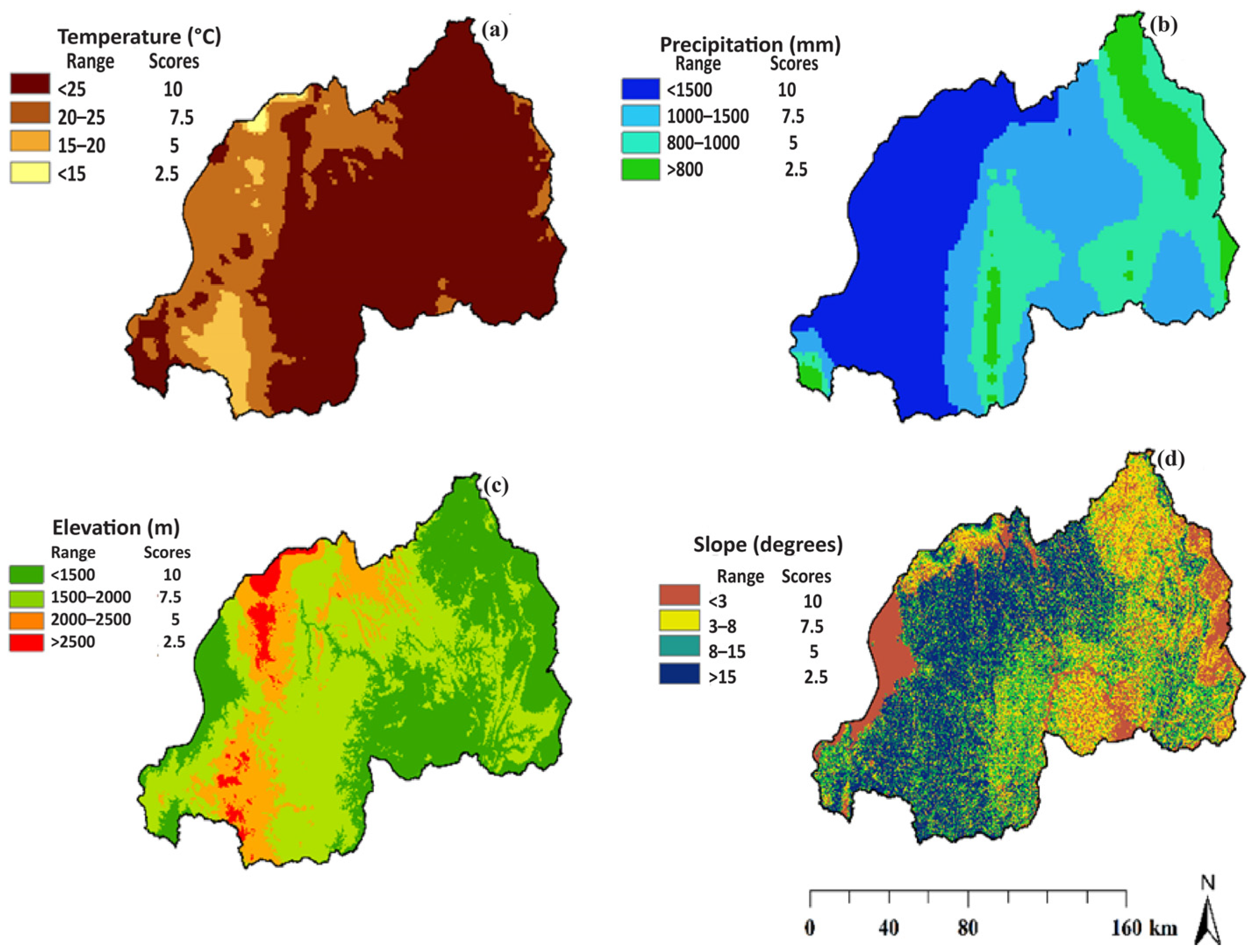
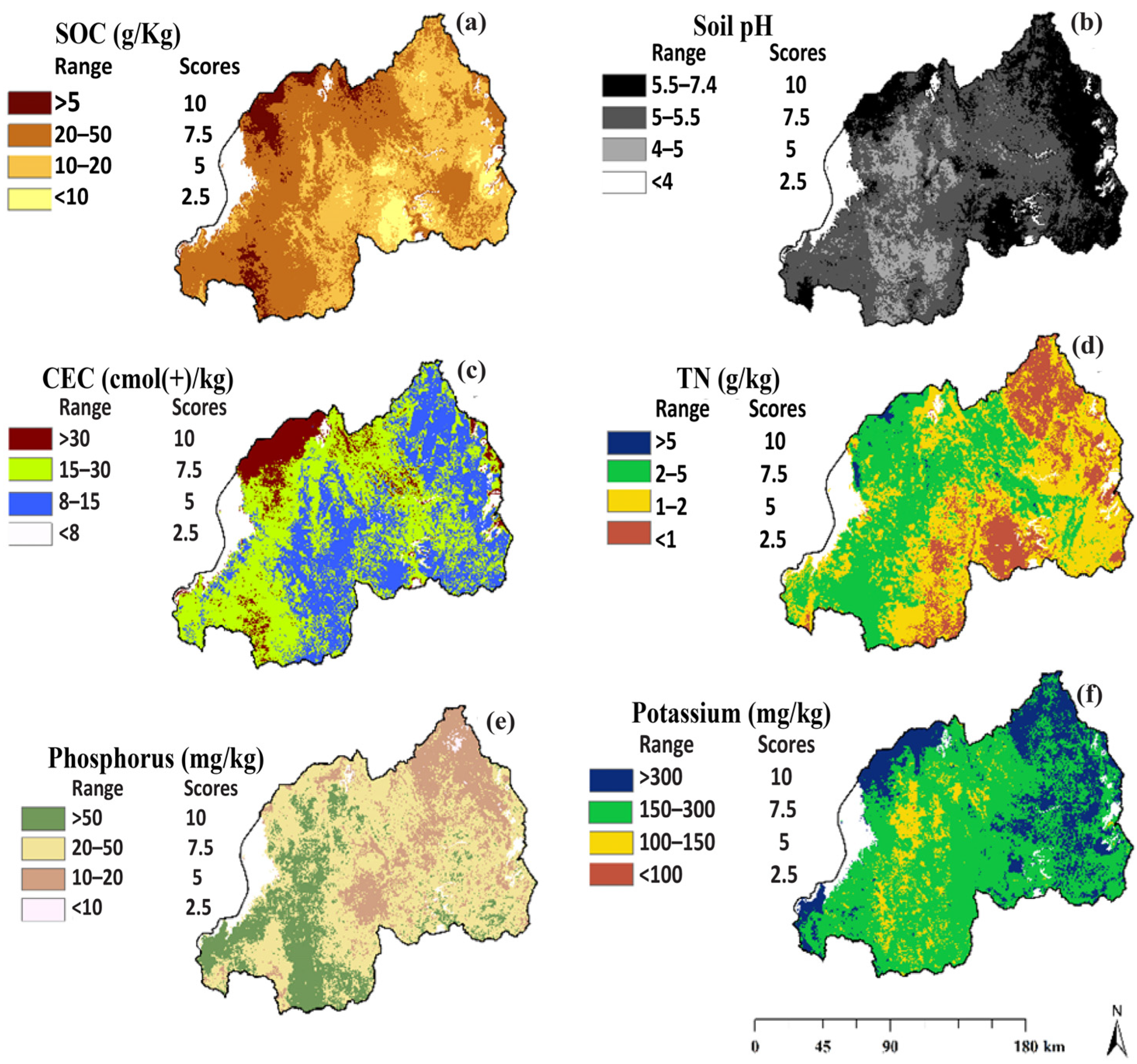
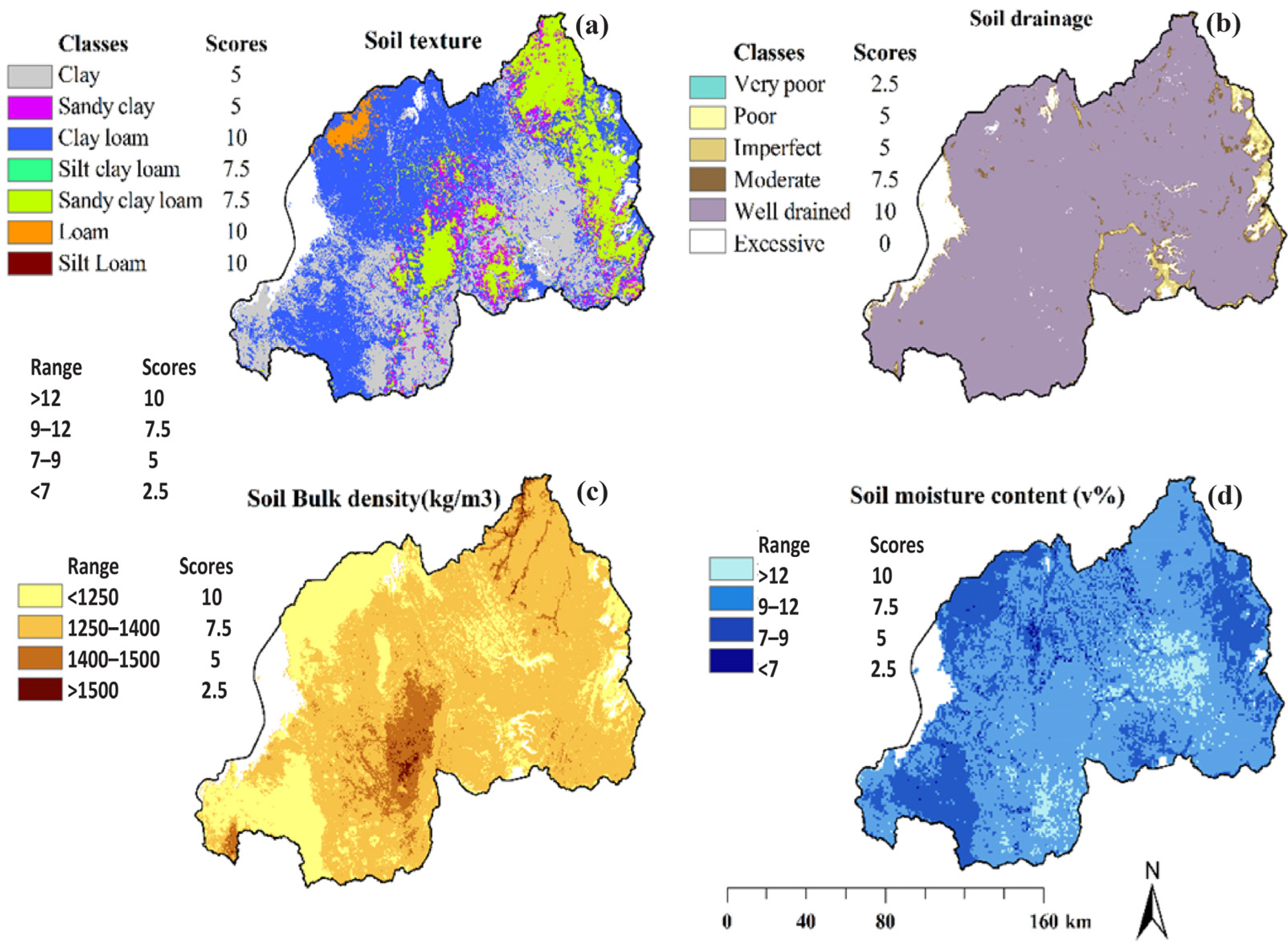
| Variable | Range | Area (km2) | (%) | Variables | Range | Area (km2) | (%) |
|---|---|---|---|---|---|---|---|
| Temperature | 25–30 | 15,436 | 34.3 | Drainage | Well drained | 22,366 | 93.35 |
| (°C) | 22–25 | 4967 | 11.04 | (classes) | Moderate | 783 | 3.27 |
| 20–22 | 4747 | 10.55 | Imperfect and poor | 763 | 3.18 | ||
| <20 | 201 | 0.45 | Very poor | 47.81 | 0.2 | ||
| Precipitation | 1500–2100 | 3453 | 7.67 | pH | ≥5.5 | 10,202 | 42.58 |
| (mm) | 1000–1500 | 18,987 | 42.19 | 5.0–5.5 | 12,910 | 53.88 | |
| 900–1000 | 2193 | 4.87 | 4.5–5.0 | 847 | 3.54 | ||
| <900/>2100 | 309 | 0.69 | 3.7–4.5 | 0.0 | 0.0 | ||
| Elevation | ≤1500 | 9781 | 38.59 | TN | ≥5 | 143 | 0.6 |
| (m) | 1500–2000 | 10,906 | 43.03 | (g/kg) | 2–5 | 8981 | 37.48 |
| 2000–2500 | 3940 | 15.54 | 1–2 | 10,581 | 44.16 | ||
| >2500 | 720 | 2.84 | 0.24–1 | 4256 | 17.76 | ||
| Slope | ≤3 | 4393 | 17.35 | CEC | ≥30 | 1235 | 5.16 |
| (degrees) | 3–8 | 6436 | 25.41 | (cmol(+)/kg) | 15–30 | 13,384 | 55.86 |
| 8–15 | 6183 | 24.41 | 8–15 | 9335 | 38.96 | ||
| >15 | 8313 | 32.83 | 4–8 | 5 | 0.02 | ||
| SOC | ≥50 | 1410 | 5.89 | P | >50 | 76 | 0.32 |
| (g/kg) | 20–50 | 12,414 | 51.81 | (mg/kg) | 20–50 | 5296 | 22.02 |
| 10–20 | 9387 | 39.18 | 10–20 | 13,462 | 55.97 | ||
| <10 | 749 | 3.12 | <10 | 5218 | 21.69 | ||
| Bulk density | ≤1250 | 5657 | 26.61 | K | ≥300 | 1587 | 6.6 |
| (kg/m3) | 1250–1400 | 15,899 | 66.36 | (mg/kg) | 150–300 | 20,488 | 85.18 |
| 1400–1500 | 2224 | 9.28 | 100–150 | 1976 | 8.22 | ||
| >1500 | 180 | 0.75 | <100 | 2 | 0.01 | ||
| Soil texture | Loam, Silt loam, and Clay loam | 10,915 | 45.56 | SM | ≥12 | 580 | 2.38 |
| (classes) | Sand clay loam, Silt clay loam | 4591 | 19.16 | (v%) | 9–12 | 15,337 | 62.93 |
| Sandy clay and Clay | 8453 | 35.28 | 7–9 | 8441 | 34.64 | ||
| Light clay | 0.0 | 0.0 | 6–7 | 13 | 0.05 |
Disclaimer/Publisher’s Note: The statements, opinions and data contained in all publications are solely those of the individual author(s) and contributor(s) and not of MDPI and/or the editor(s). MDPI and/or the editor(s) disclaim responsibility for any injury to people or property resulting from any ideas, methods, instructions or products referred to in the content. |
© 2025 by the authors. Licensee MDPI, Basel, Switzerland. This article is an open access article distributed under the terms and conditions of the Creative Commons Attribution (CC BY) license (https://creativecommons.org/licenses/by/4.0/).
Share and Cite
Nsigayehe, J.M.V.; Mo, X.; Liu, S. Land Suitability Assessment and Gap Analysis for Sustainable Taro (Colocasia esculenta (L.) Schott) Production in Rwanda Using Remote Sensing Data and a Fuzzy AHP Model. Remote Sens. 2025, 17, 4062. https://doi.org/10.3390/rs17244062
Nsigayehe JMV, Mo X, Liu S. Land Suitability Assessment and Gap Analysis for Sustainable Taro (Colocasia esculenta (L.) Schott) Production in Rwanda Using Remote Sensing Data and a Fuzzy AHP Model. Remote Sensing. 2025; 17(24):4062. https://doi.org/10.3390/rs17244062
Chicago/Turabian StyleNsigayehe, Jean Marie Vianney, Xingguo Mo, and Suxia Liu. 2025. "Land Suitability Assessment and Gap Analysis for Sustainable Taro (Colocasia esculenta (L.) Schott) Production in Rwanda Using Remote Sensing Data and a Fuzzy AHP Model" Remote Sensing 17, no. 24: 4062. https://doi.org/10.3390/rs17244062
APA StyleNsigayehe, J. M. V., Mo, X., & Liu, S. (2025). Land Suitability Assessment and Gap Analysis for Sustainable Taro (Colocasia esculenta (L.) Schott) Production in Rwanda Using Remote Sensing Data and a Fuzzy AHP Model. Remote Sensing, 17(24), 4062. https://doi.org/10.3390/rs17244062