Abstract
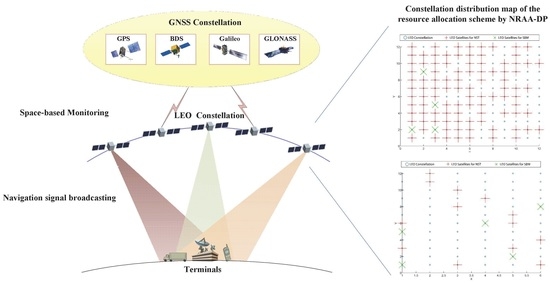
Navigation resource allocation for low-earth-orbit (LEO) constellations refers to the optimal allocation of navigational assets when the number and allocation of satellites in the LEO constellation have been determined. LEO constellations can not only transmit navigation enhancement signals but also enable space-based monitoring (SBM) for real-time assessment of GNSS signal quality. However, proximity in the frequencies of LEO navigation signals and SBM can lead to significant interference, necessitating isolated transmission and reception. This separation requires that SBM and navigation signal transmission be carried out by different satellites within the constellation, thus demanding a strategic allocation of satellite resources. Given the vast number of satellites and their rapid movement, the visibility among LEO, medium-earth-orbit (MEO), and geostationary orbit (GEO) satellites is highly dynamic, presenting substantial challenges in resource allocation due to the computational intensity involved. Therefore, this paper proposes an optimal allocation algorithm for LEO constellation navigation resources based on dynamic programming. In this algorithm, a network model for the allocation of navigation resources in LEO constellations is initially established. Under the constraints of visibility time windows and onboard transmission and reception isolation, the objective is set to minimize the number of LEO satellites used while achieving effective navigation signal transmission and SBM. The constraints of resource allocation and the mathematical expression of the optimization objective are derived. A dynamic programming approach is then employed to determine the optimal resource allocation scheme. Analytical results demonstrate that compared to Greedy and Divide-and-Conquer algorithms, this algorithm achieves the highest resource utilization rate and the lowest computational complexity, making it highly valuable for future resource allocation in LEO constellations.
1. Introduction
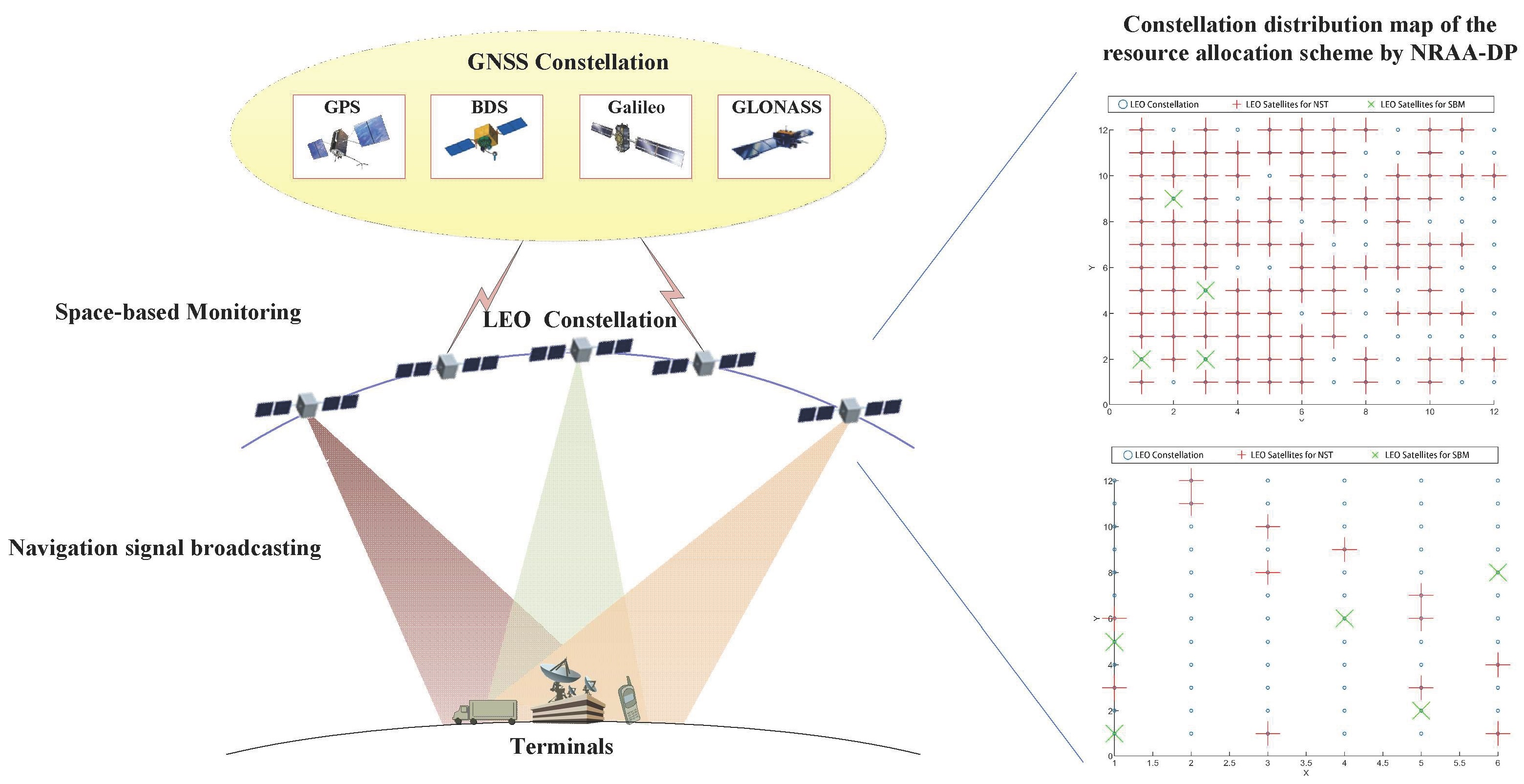
Recent advancements in Low-Earth-Orbit (LEO) constellations have significantly impacted satellite navigation systems due to their lower orbital altitude, which minimizes signal path attenuation and maximizes signal reception power [1]. Utilizing LEO constellations for navigation enhancement could substantially improve the performance of existing satellite navigation systems [2]. According to a survey of the current LEO constellations, building a LEO navigation enhancement system based on LEO global communication constellations is one of the mainstream solutions in the future, such as Iridium, SpaceX, OneWeb, and Hongyan [3]. Thus, optimizing the use of satellite resources in LEO constellations to enhance navigational capabilities while minimizing communication bandwidth usage becomes imperative. The primary problem addressed in this paper is the optimal allocation of navigation resources in LEO constellations. This involves strategically distributing satellite functions to maximize the efficiency of navigation enhancement functions while minimizing resource expenditure.
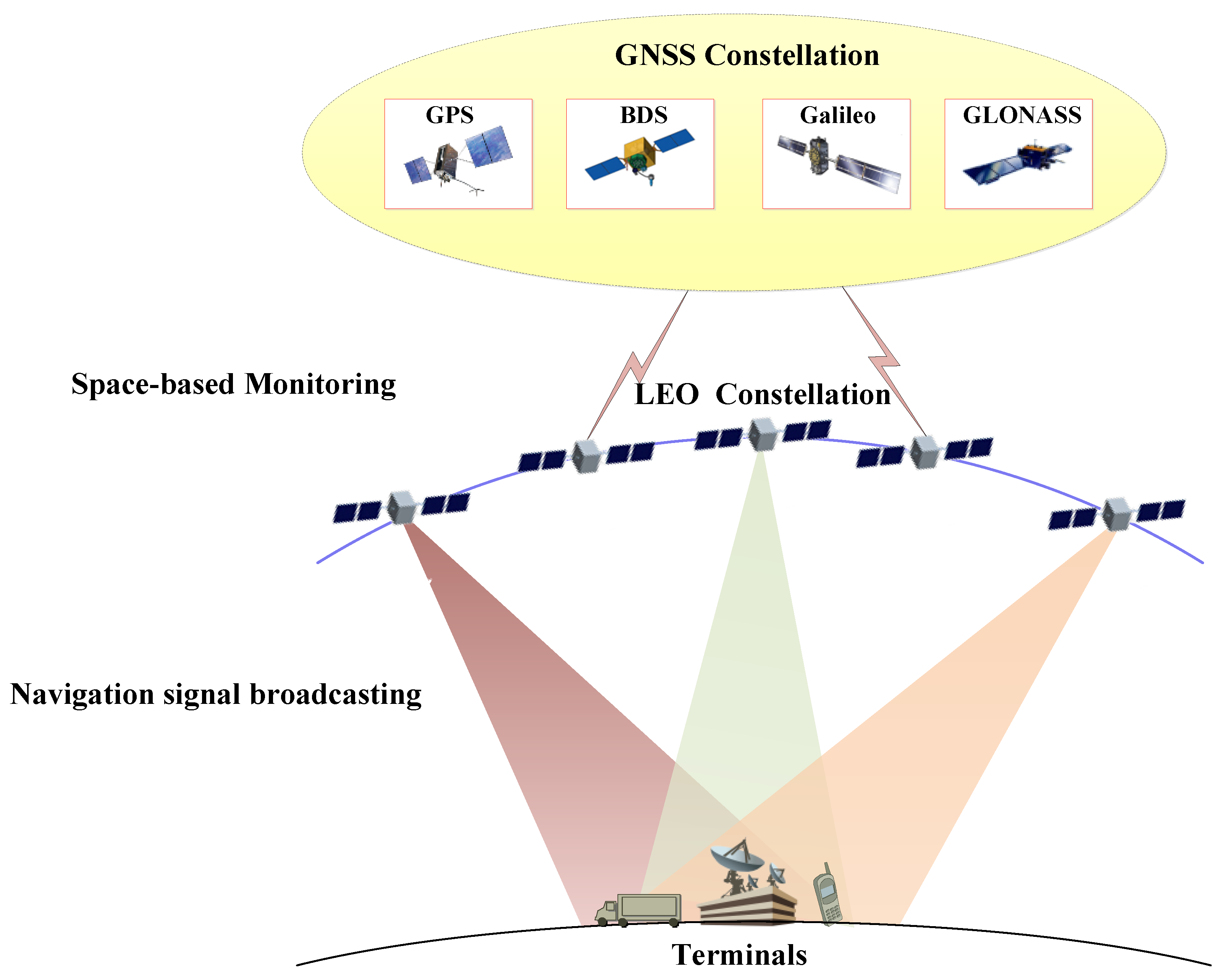
LEO navigation enhancement functions mainly include navigation signal transmission and space-based monitoring (SBM) [4,5,6]. Navigation signal transmission refers to LEO satellite transmission navigation enhancement signals to ground users to achieve information enhancement or signal enhancement of GNSS signals; SBM refers to configuring high-precision GNSS monitoring receivers on LEO satellites to receive downlink signals of GNSSs and analyze the quality of these signals.
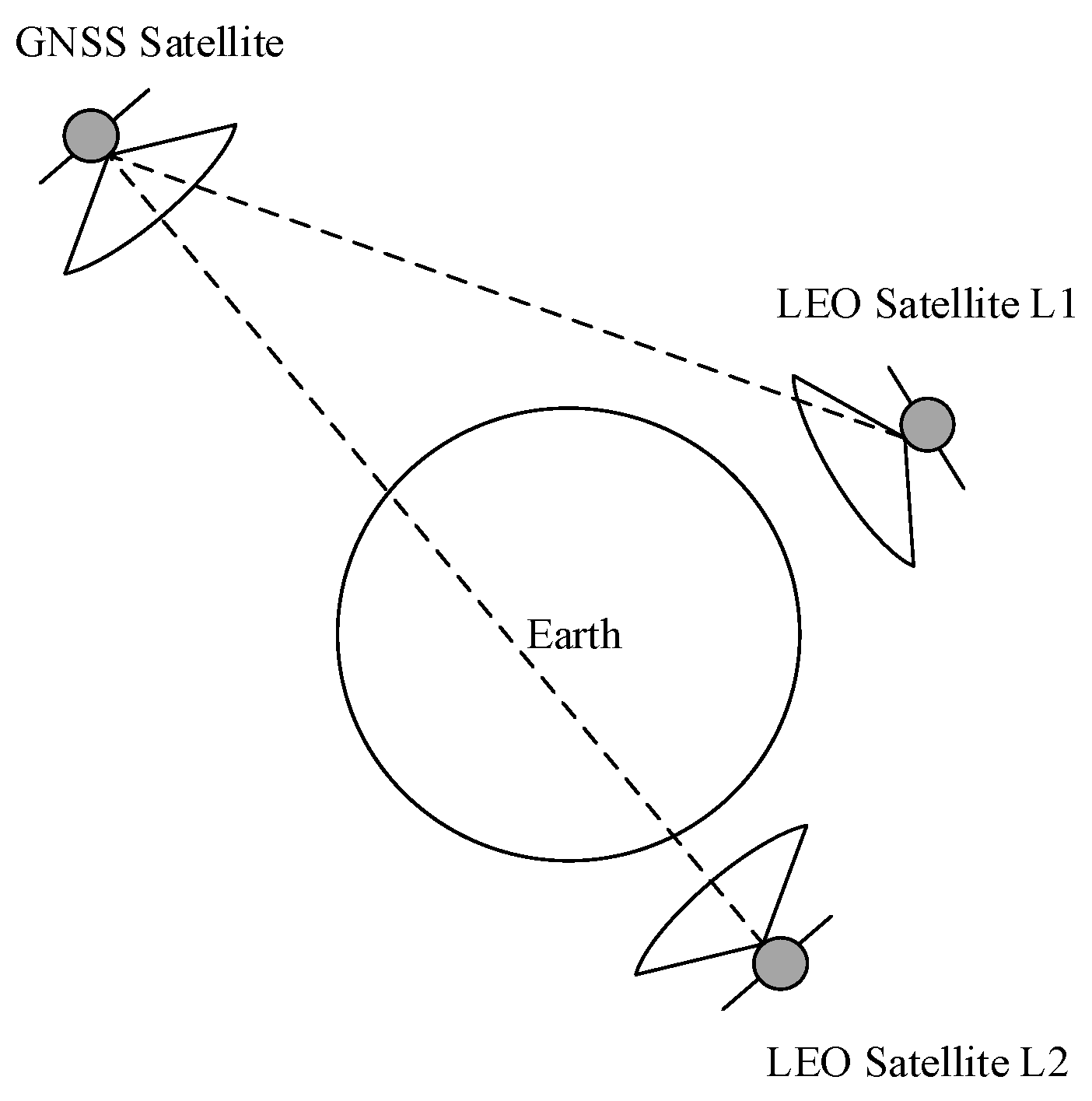
Suppose the frequency band of SBM is consistent with or close to that of LEO navigation signals; the transmission power of LEO navigation signals is much higher than the receiving power of GNSS signals, which will cause strong interference to SBM. To solve this problem, transceiver isolation is usually used; that is, SBM or navigation signal enhancement functions are implemented on different LEO satellites. Therefore, satellite resources used for SBM need to be rationally allocated to maximize the need for SBM and navigation signal enhancement.
Since the GNSS system is a pure navigation system and does not have communication and SBM functions, it does not have the above problems. Therefore, the current research on the optimal allocation of satellite navigation resources mainly focuses on the allocation and scheduling of inter-satellite links. To improve the communication capabilities of inter-satellite links in navigation constellations, Chang [7] and Yan [8] took reducing call blocking probability and inter-satellite communication delay as optimization goals, respectively, and used the simulated annealing algorithm to solve the problems of discontinuous connections. GNSS satellite network link allocation problem; Werner [9] designed a topological inter-satellite link allocation algorithm for broadband LEO satellite systems, which prioritizes inter-satellite communication; Wu [10] used the mean-variance theory optimizes the network link capacity under random business conditions; Tan [11] and Yang [12] proposed a random link allocation scheme for satellite optical networks based on laser links, randomly generated an arbitrarily connected network topology; Sun [13] proposed an algorithm with a constant time interval for inter-satellite link topology transformation with the minimization of PDOP value as the optimization goal; Zhou [14], with link stability as a prerequisite, proposed an extensive weighted inter-satellite link allocation scheme that optimized both link latency and link switching performance. Liu [15,16], aiming to fully utilize the limited communication terminal resources on board the satellite, put forward a link allocation scheme based on the perfect matching model. This scheme transforms the link allocation into a perfect matching problem of a mixed complete bipartite graph. The inter-satellite link solution derived from this approach can be applied to all communication terminals on the satellite.
Inter-satellite links for navigation satellites need to take into account the dual requirements of communication and measurement. Shi [17,18] applied the Greedy Algorithm to the link allocation of inter-satellite communication and inter-satellite observation can ensure that the number of inter-satellite observations is maximized while reducing the communication cost of the entire network as much as possible; Wang [19] proposed a method based on the average of the entire network A link allocation algorithm weighted by the observation position accuracy factor and the entire network delay. The optimization goal of this algorithm is to minimize the link cost; Huang [20] proposed an inter-satellite link allocation suitable for GNSS satellite networks, a cascade optimization design method that takes into account both communication and ranging capabilities; Yang [21] proposed a group-based time slot scheduling method to obtain more ranging observation data and realize satellite and ranging Fast communication with a short delay between measurement and control stations. Lin [22], Zhu [23], and Sun [24] used genetic algorithms for inter-satellite communication and ranging link allocation in navigation constellations, which improved the operating efficiency of the algorithm to a certain extent but had shortcomings such as poor fault tolerance and slow convergence speed of the algorithm.
In summary, existing research on satellite navigation resource allocation solves the problem of link resource allocation between navigation satellites in the same orbit. The goal is to utilize all resources to maximize inter-satellite communication or ranging needs, and the navigation resource allocation in LEO constellations is to use as few resources as possible to maximize navigation enhancement capabilities among all resources, and the mission goals are different; secondly, because the number of satellites in previous navigation constellations is small, usually only dozens, and each satellite only needs to consider the link allocation between itself and surrounding satellites visible in a short period, and the calculation amount is generally not large. Future LEO satellite systems are usually mega-constellations composed of hundreds to thousands of satellites, and LEO satellites move extremely fast, resulting in complex and changeable visibility between LEO satellites and mid- and high-orbit satellites. Moreover, in order to achieve global optimization, it is necessary to consider the visibility of the LEO constellation period and the least common multiple of the GNSS constellation period, which may last for several months. Therefore, the computational complexity of the navigation resource allocation problem in the LEO constellation is extremely high.
At present, there is almost no research on the optimal allocation of navigation resources in LEO constellations. Based on the characteristics of the LEO navigation augmentation system, this paper proposes an optimal allocation algorithm for LEO constellation navigation resources based on dynamic programming.
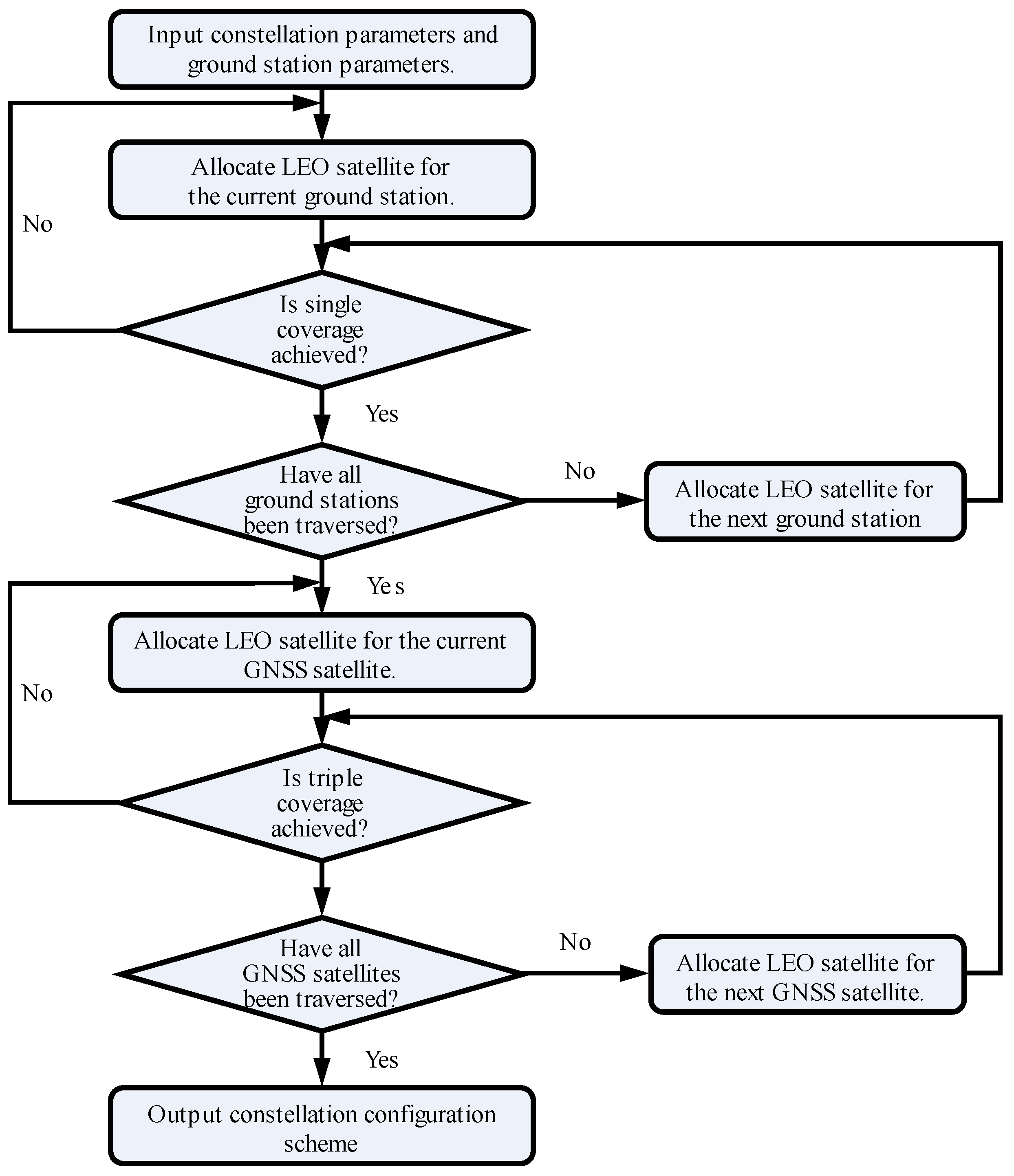
The structure of this article is as follows: Section 2 establishes a network model for LEO constellation navigation resource allocation and gives the constraints and objective functions of resource allocation. Section 3 proposes a navigation resource allocation algorithm based on Dynamic Programming (NRAA-DP). Section 4 analyzes the performance of the algorithm through simulation, including resource utilization and computational complexity. Section 5 summarizes the work of this paper.
4. Performance Analysis
4.1. Parameter Settings
To evaluate the performance of the NRAA-DP, this section primarily assesses the algorithm’s resource utilization and computational complexity. The results are compared with those of the Divide and Conquer Algorithm (DCA) [30] and the Greedy Algorithm (GA) [17]. The core concept of the DCA is to divide the multi-stage problem into multiple single-stage problems, with no interrelation between the stages. Each stage is solved individually to obtain a subset of LEO satellites that can achieve single coverage for each ground station and triple coverage for each GNSS satellite. The union of all these subsets forms the final solution. The core concept of the GA is to first sort the LEO satellites based on their visibility to the ground stations from best to worst. LEO satellites are then sequentially selected and added to the constellation allocation set until single coverage for all ground stations is achieved. The remaining LEO satellites are subsequently sorted based on their visibility to the GNSS satellites from best to worst. LEO satellites are again sequentially selected and added to the constellation allocation set until triple coverage for all GNSS satellites is achieved. The constellation allocation set at this point represents the final solution.
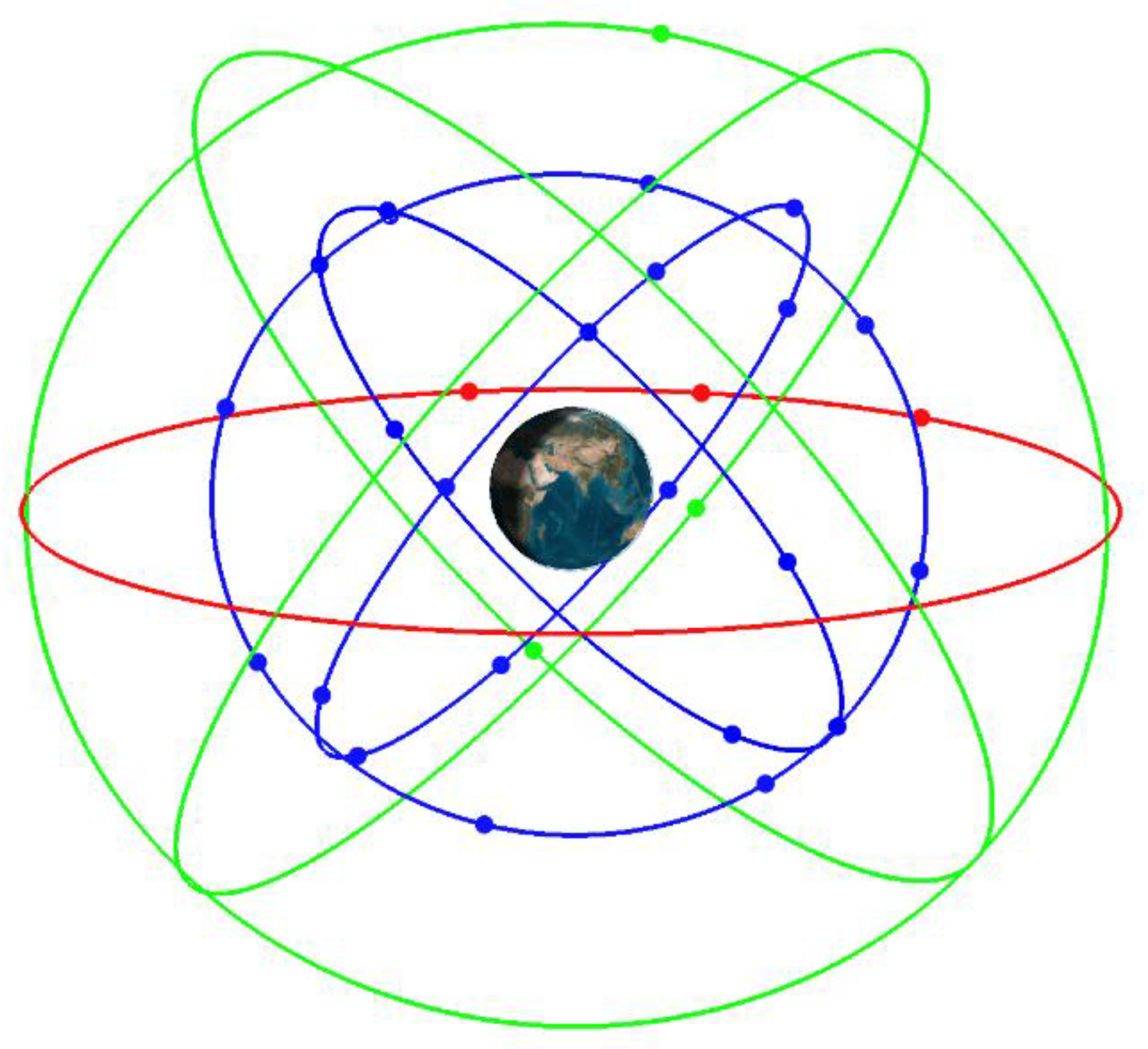
The GNSS constellation simulated in this paper is the BDS constellation, including 3 GEO satellites, 3 IGSO satellites, and 24 MEO satellites. The simulated low Earth orbit constellation consists of 216 satellites, including 72 satellites in near-polar orbits and 144 satellites in inclined orbits. In order to reduce the calculation amount, the simulation time is set to 7 days, from 9 October 2021 12:00:00 to 16 October 2021 13:00:00, with a step of 1 min. The parameters of the BDS constellation and LEO constellation are shown in Table 2.
Table 2.
Parameters of BDS and LEO constellation.
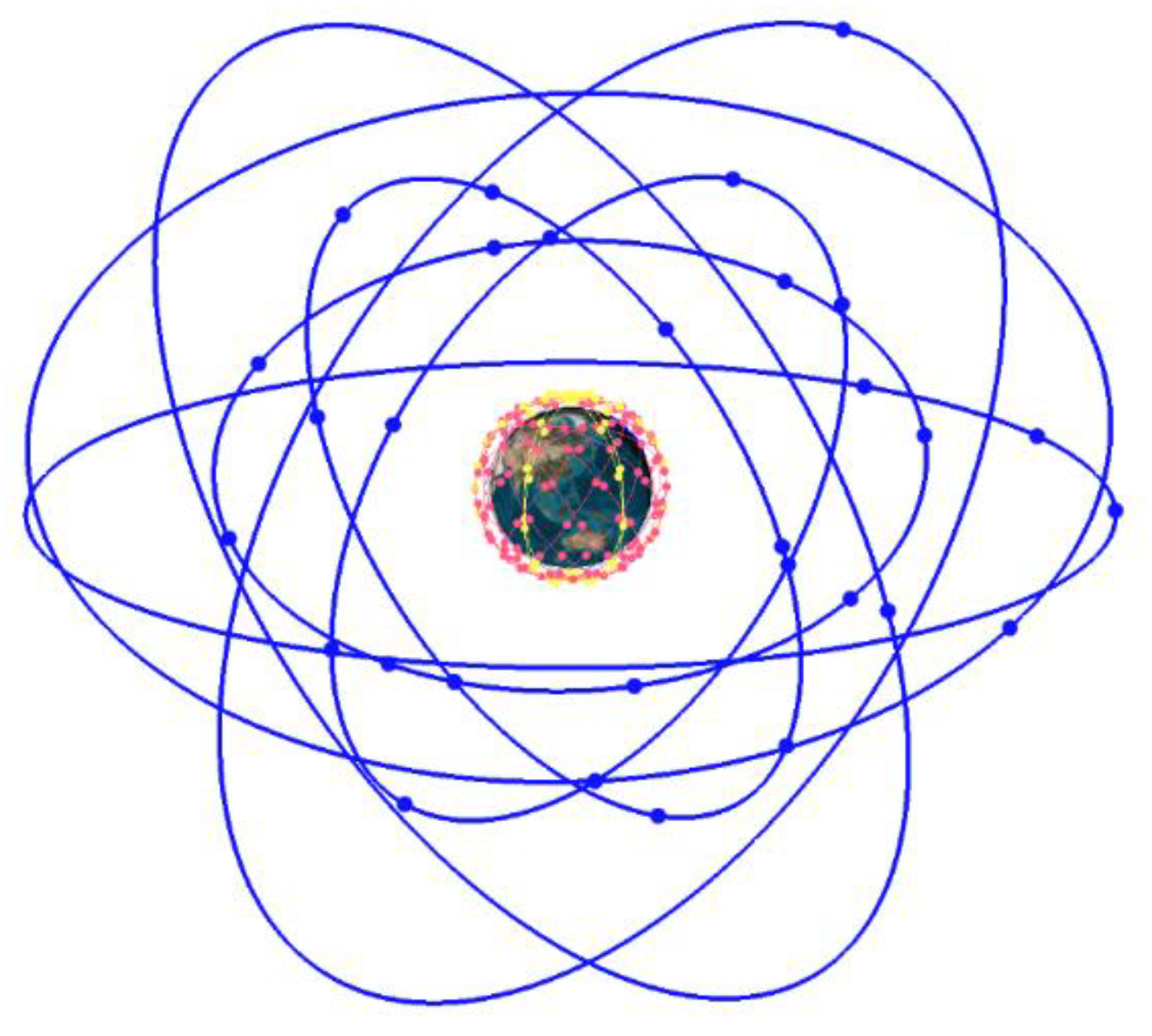
Figure 9 shows the three-dimensional spatial allocation of the two constellations based on a comprehensive of the above constellation parameters. The near-polar orbital LEO satellites are labeled as P0101–P0612, and the inclined orbital LEO satellites are labeled as I0101–I1212. The first two digits represent the orbital plane number, while the last two digits represent the satellite number within each orbital plane. For example, P0506 indicates the sixth LEO satellite in the fifth near-polar orbital plane, and I1010 indicates the 10th LEO satellite in the 10th inclined orbital plane.
Figure 9.
The distribution diagram of the LEO constellation and BDS constellation. The blue lines represent the orbital planes of the BDS constellation, the yellow lines indicate the near-polar orbital planes of the LEO constellation, and the red lines denote the inclined orbital planes of the LEO constellation.
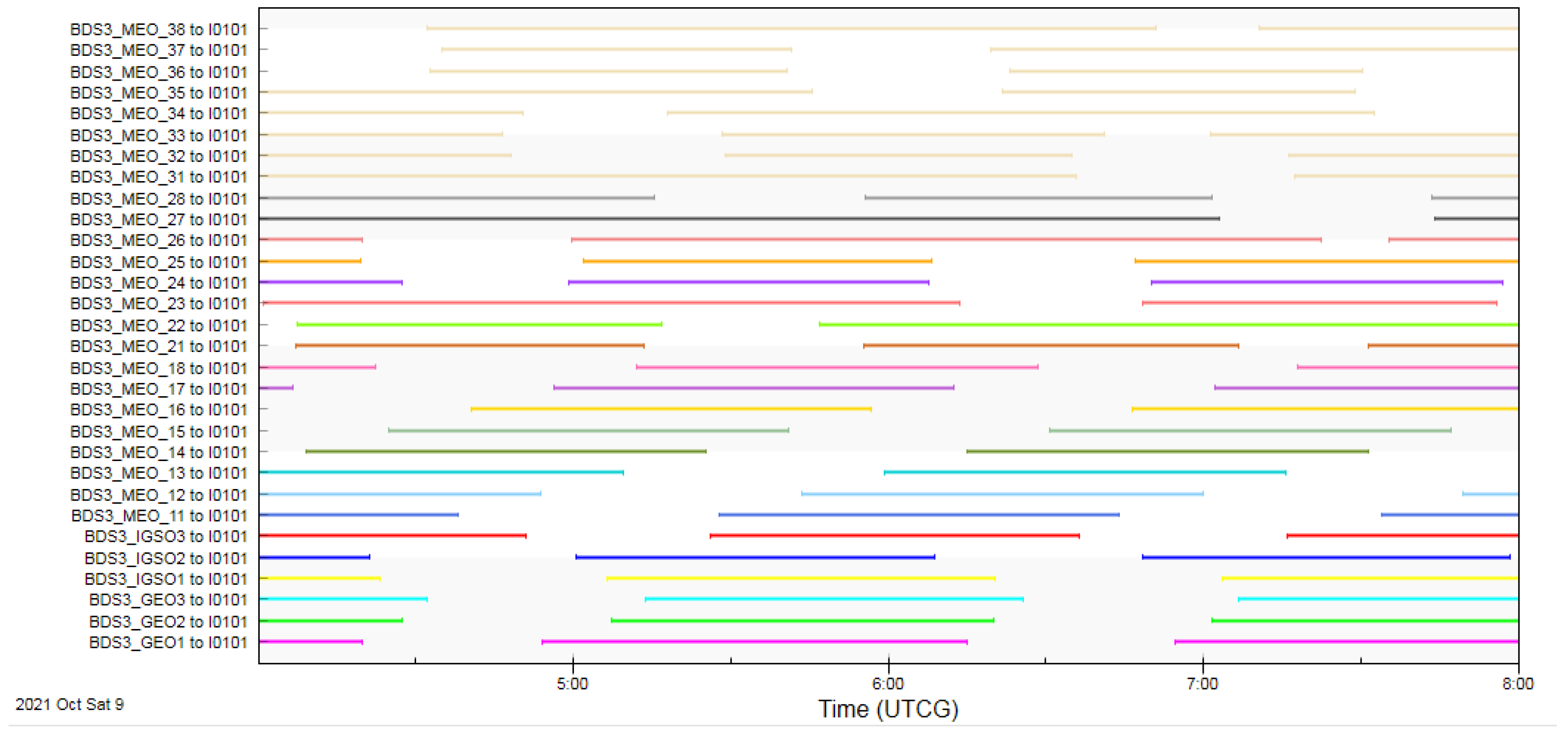
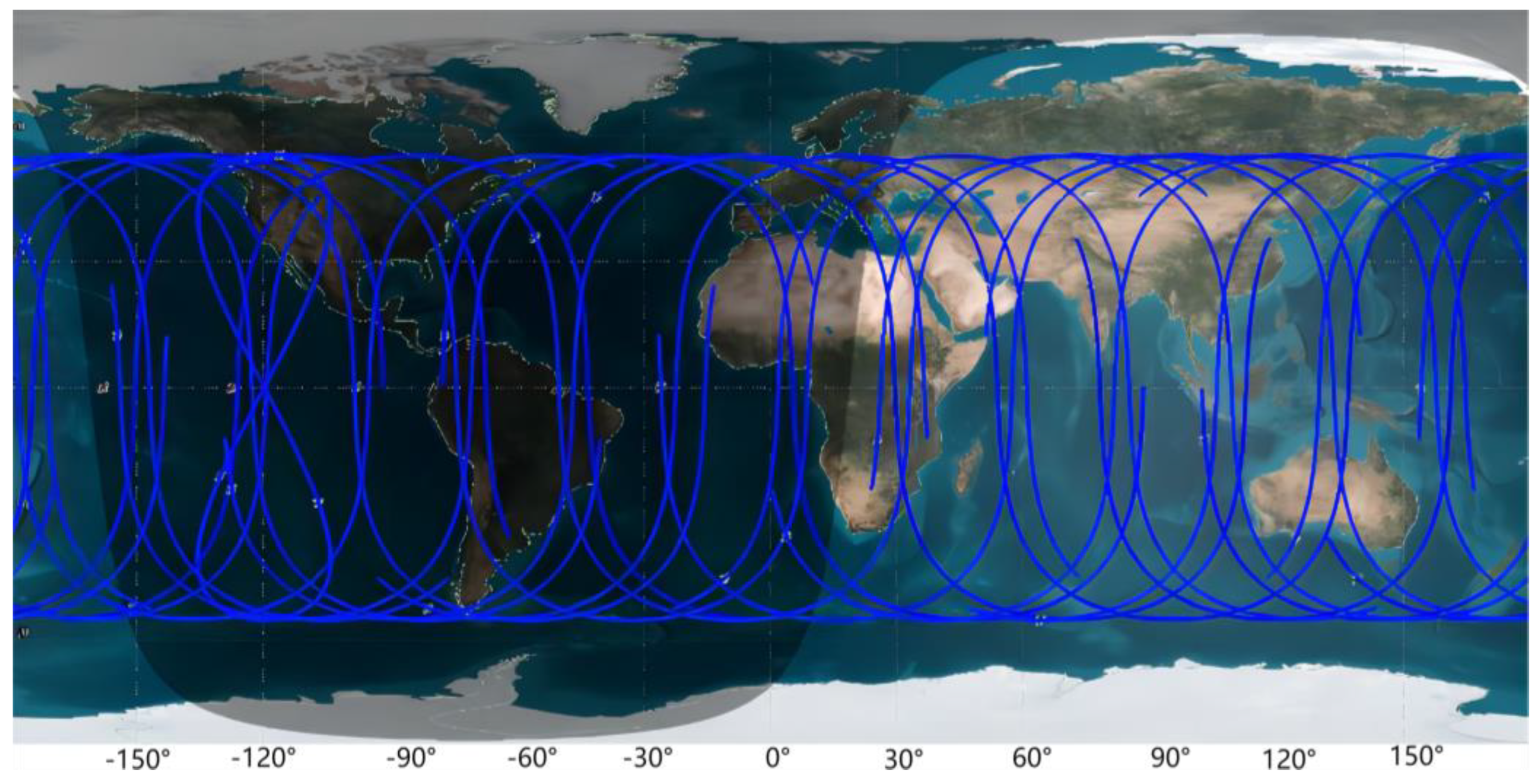
Through simulation analysis using STK 11.6 software, it was found that over a period of 7 days, there are a total of 556,021 visible links between the two constellations, all of which are intermittent, with durations ranging from 0.6 s to 5.8 h. For example, Figure 10 shows the set of visible links between the LEO satellite I0101 and BDS satellites over a period of 4 h. For the LEO satellite I0101, there are a total of 77 intermittent links within this 4-h period. Similarly, the visibility situation between 216 LEO satellites and BDS satellites over 7 days is even more complex and variable.
Figure 10.
Visual links between LEO satellite S0101 and BDS satellites within 4 h. Lines of different colors represent different visible links.
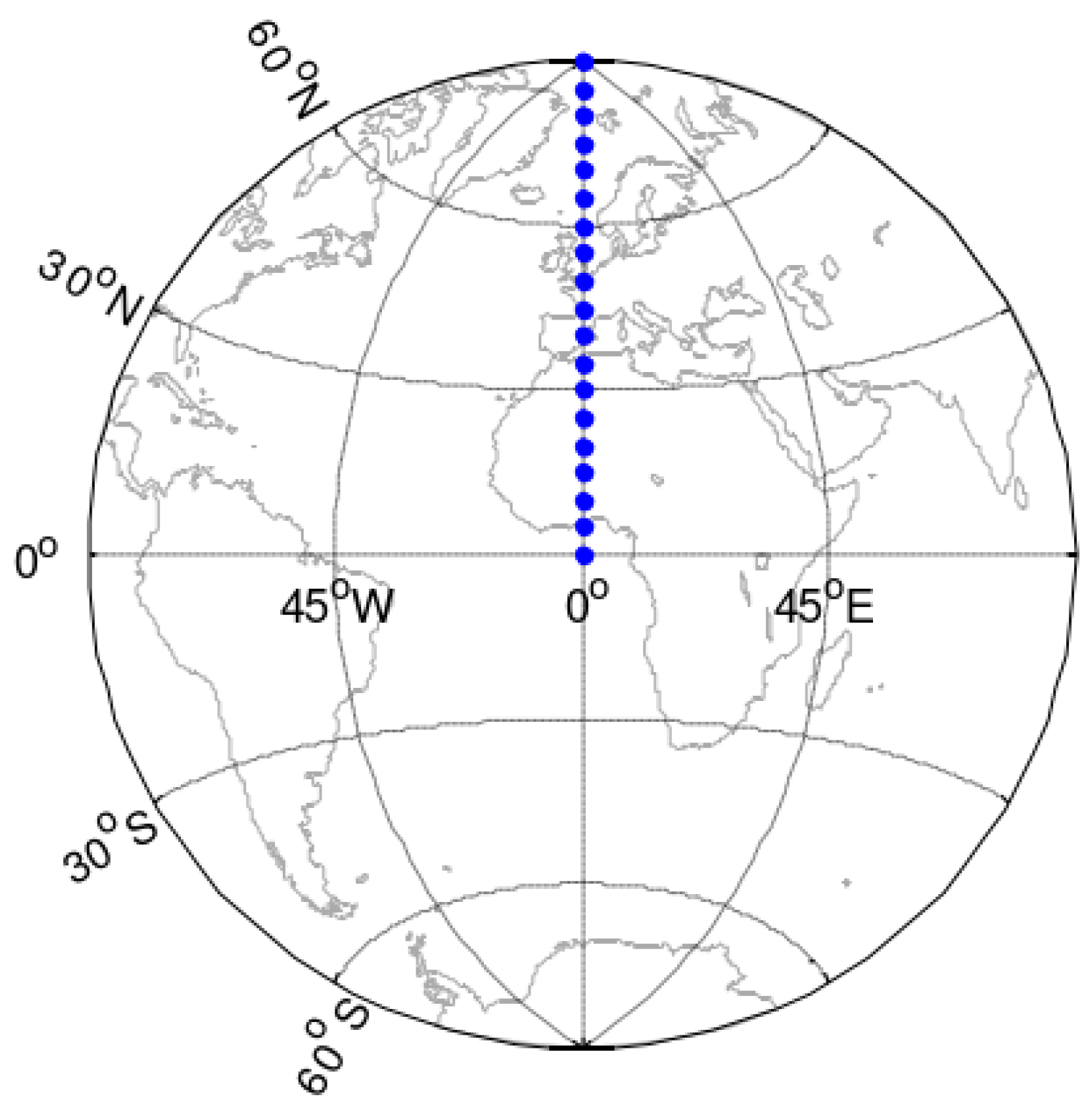
Due to the symmetrical characteristics of global coverage in the east-west and north-south hemispheres within a complete orbital period of the constellation, only 19 ground stations in the northern hemisphere along the 0° longitude from 0° to 90°N, sampled every 5°, are selected for simplicity when evaluating global coverage performance [31], as shown in Figure 11.
Figure 11.
Distribution map of ground stations used for evaluating constellation global coverage. The blue circles represent ground stations in the northern hemisphere along the 0° longitude from 0° to 90°N.
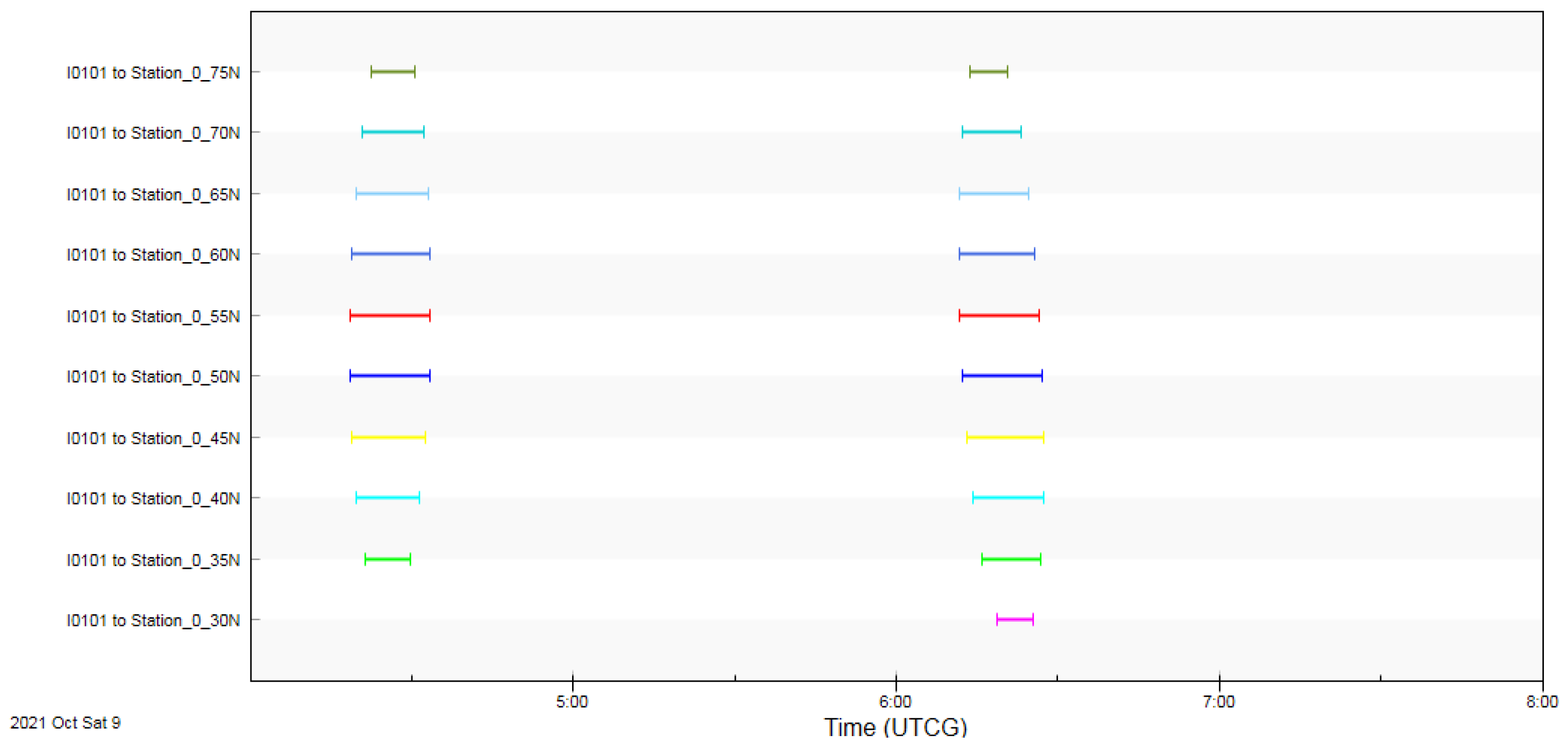
Through simulation analysis using STK 11.6 software, it was found that over a period of 7 days, there are a total of 152,190 visible links between the LEO constellation and the 19 ground stations, all of which are intermittent, with durations ranging from 1.1 s to 14.8 min. For example, Figure 12 shows the set of visible links between the LEO satellite I0101 and a ground station over a period of 4 h. For the LEO satellite I0101, there are a total of 19 intermittent links within this 4-h period. Similarly, the visibility situation between 216 LEO satellites and the ground stations over 7 days is even more complex and variable.
Figure 12.
Visible links between the LEO satellite I0101 and the ground stations. Lines of different colors represent different visible links.
4.2. Resource Utilization
The proposed dynamic programming algorithm, the Greedy Algorithm (GA), and the Divide and Conquer Algorithm (DCA) are used for navigation resource allocation of the LEO constellation. The number of LEO satellites required to achieve global single coverage and triple coverage for the BDS constellation are 118, 165, and 201, respectively. The specific constellation allocation results of different algorithms are shown in Table 3.
Table 3.
Constellation allocation results of different algorithms.
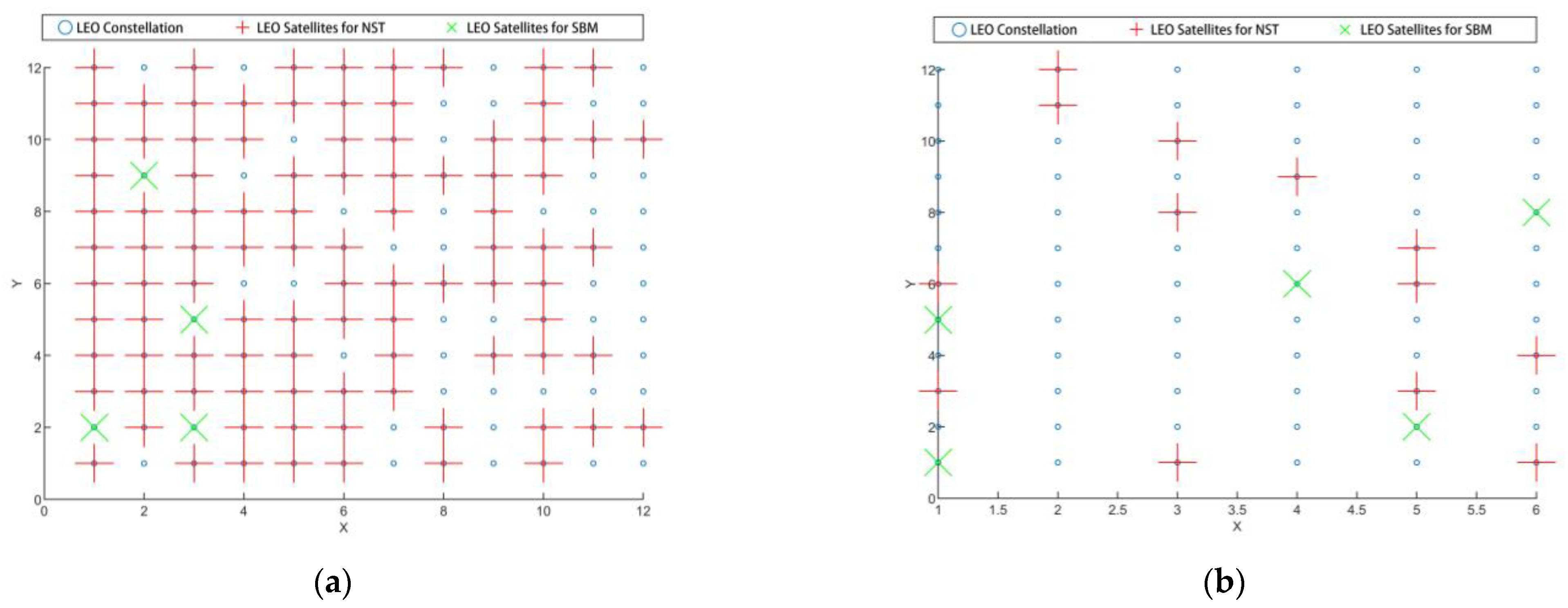
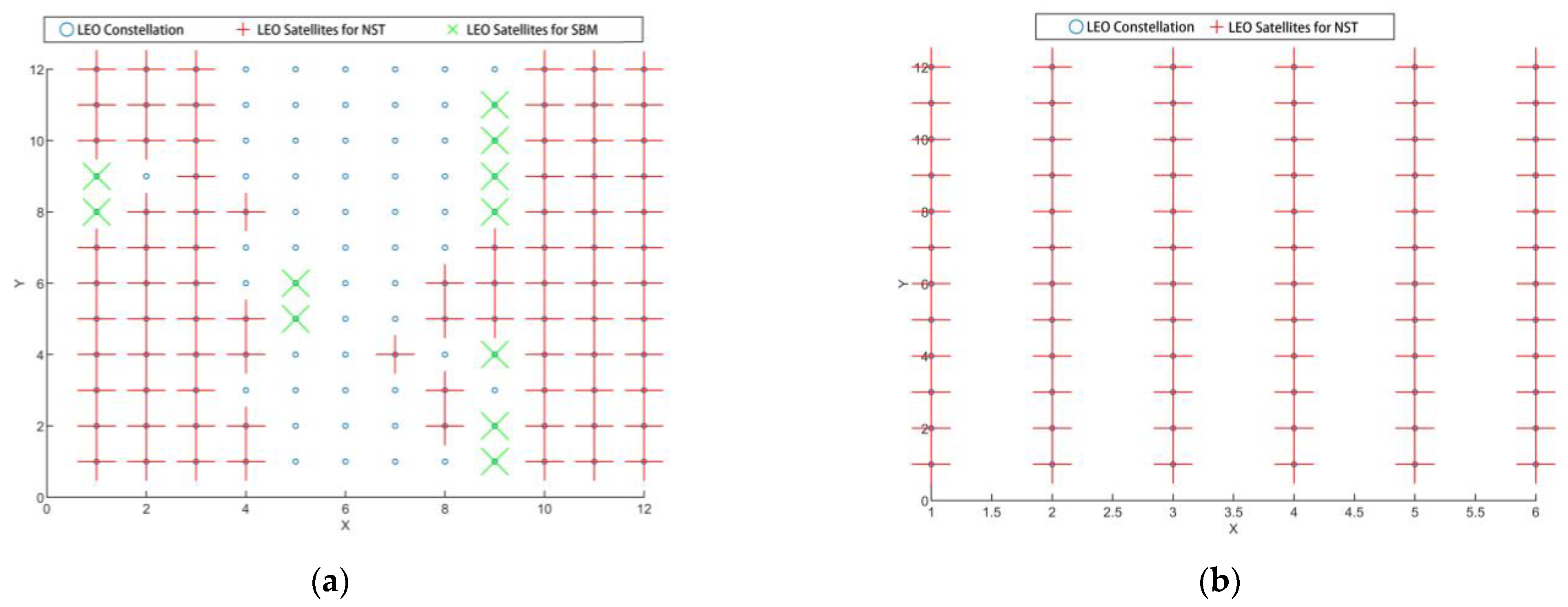
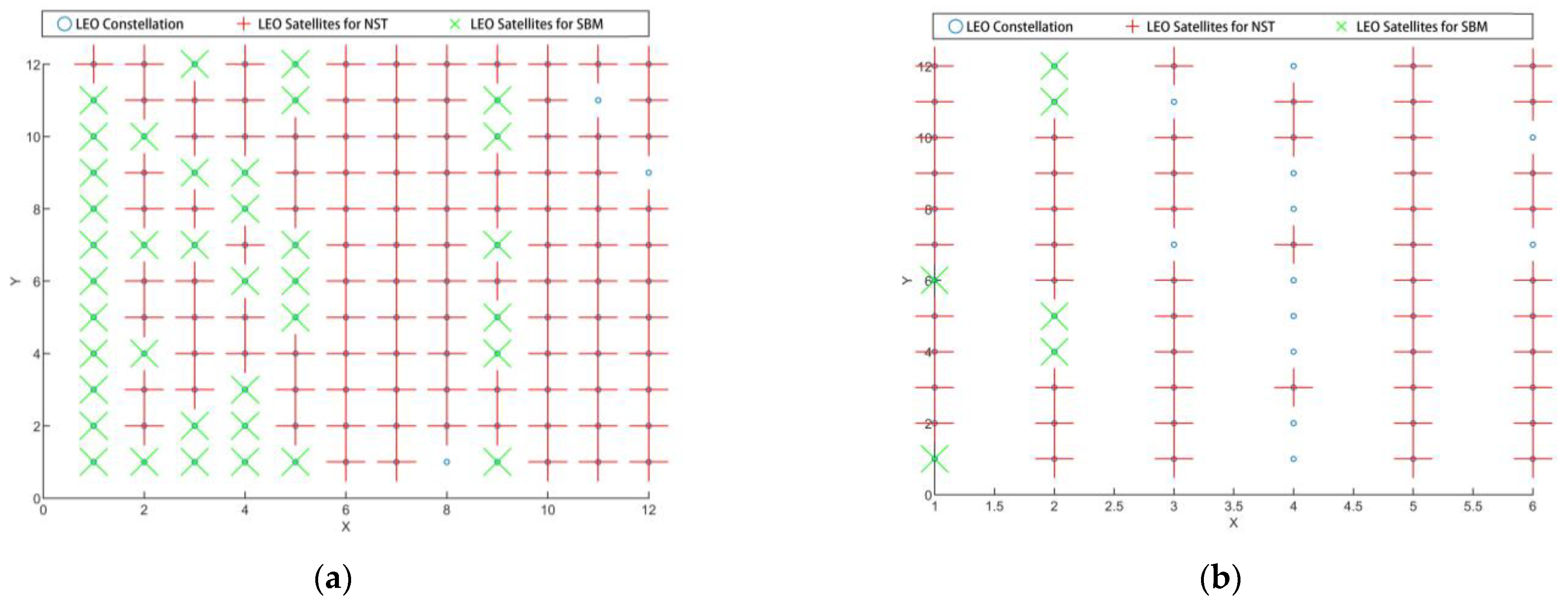
To more intuitively display the constellation allocation results, the results from Algorithm 1 are shown in Figure 13, Figure 14 and Figure 15. In these Figures, the horizontal axis represents the orbital plane number, and the vertical axis represents the satellite number within each orbital plane.
Figure 13.
Constellation distribution map of the resource allocation scheme by NRAA-DP. (a) Inclined orbit satellites. (b) Near-polar orbit.
Figure 14.
Constellation distribution map of the resource allocation scheme by GA. (a) Inclined orbit satellites. (b) Near-polar orbit.
Figure 15.
Constellation distribution map of the resource allocation scheme by DCA. (a) Inclined orbit satellites. (b) Near-polar orbit.
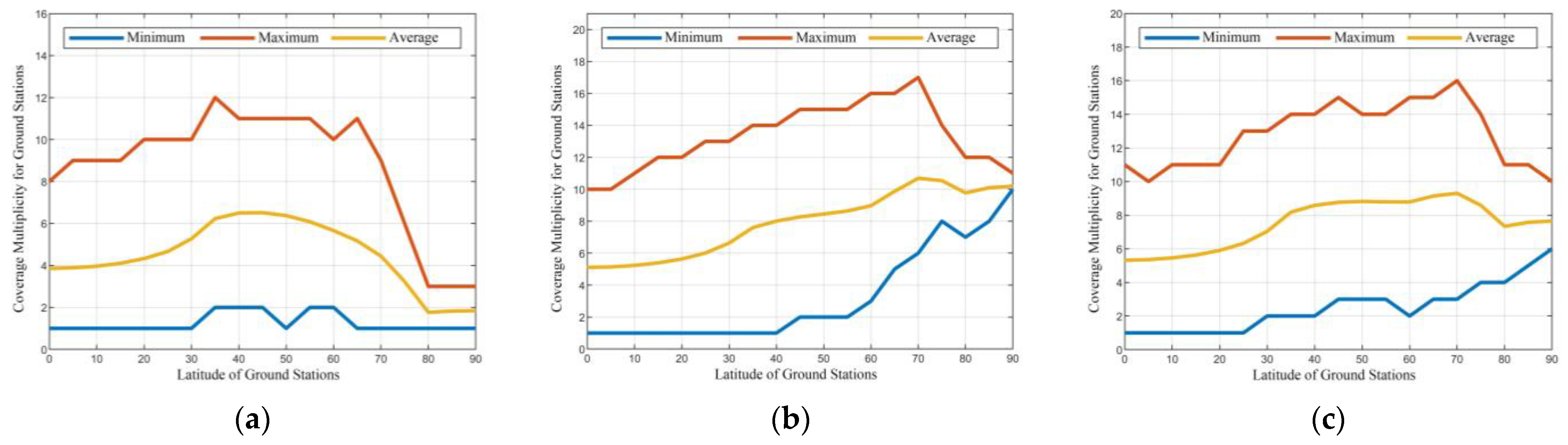
Based on the resource allocation schemes obtained from different algorithms in Table 3, the set of visible links between the LEO constellation and the ground stations can be used to derive the global coverage performance of the different constellation resource allocation schemes, as shown in Figure 16. The results indicate that all three constellation allocation schemes meet the requirement for single coverage at all times. Additionally, the average minimum coverage multiplicities for ground stations achieved by the constellation allocation schemes obtained from the three algorithms are 1.2, 3.2, and 2.5, respectively; the average coverage multiplicities are 4.5, 7.9, and 7.5, respectively; and the maximum coverage multiplicities are 8.7, 13.2, and 12.7, respectively.
Figure 16.
Coverage performance of different navigation resource allocation schemes for ground stations. (a) NRAA-DP. (b) GA. (c) DCA.
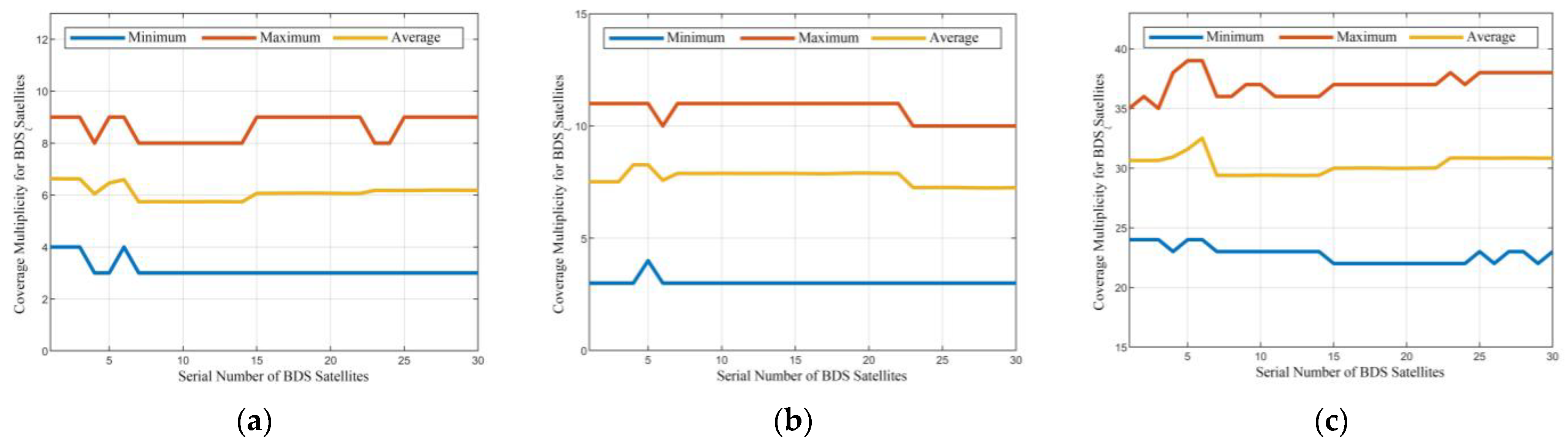
Based on the resource allocation schemes obtained from different algorithms in Table 3 and the set of visible links between the two constellations, the coverage performance of different constellation allocation schemes for the BDS satellites can be derived, as shown in Figure 17. The results indicate that all three constellation resource allocation schemes meet the requirement for triple coverage at all times. Additionally, the average minimum coverage multiplicities for all BDS satellites achieved by the constellation allocation schemes obtained from the three algorithms are 3, 3, and 22.7, respectively; the average coverage multiplicities are 6, 8, and 30.3, respectively; and the maximum coverage multiplicities are 7.7, 11.3, and 37.4, respectively.
Figure 17.
Coverage performance of different navigation resource allocation schemes for BDS satellites. (a) NRAA-DP. (b) GA. (c) DCA.
Table 4.
Coverage performance of different navigation resource allocation schemes.
As shown in Table 4, the navigation resource allocation schemes obtained from all three algorithms can simultaneously achieve LEO satellites’ navigation signal transmission and SBM functions, meeting the requirements for global single coverage and triple coverage of GNSS satellites. The NRAA-DP proposed in this paper yields the optimal solution, with the least number of satellites in the constellation allocation and the highest utilization of LEO satellite resources. The satellite numbers in the resource allocation schemes obtained from the GA and the DCA are 1.4 times and 1.7 times that of the NRAA-DP, respectively, leading to redundant navigation resources, occupying communication resources, and reducing the overall resource utilization of the LEO constellation.
This inefficiency arises because the DCA isolates the multi-stage problem into several single-stage problems without considering the solutions of other stages while optimizing each stage. This results in locally optimal solutions for each single-stage problem rather than a globally optimal solution. Similarly, as a centralized algorithm, the GA is prone to getting trapped in local optima. In contrast, the NRAA-DP considers the solution of the previous stage in each single-stage problem, thus achieving an approximate global optimum.
4.3. Computational Complexity
As shown in Figure 10, the visibility between LEO satellites and BDS satellites is highly complex and variable, with 556,021 visible links observed over 7 days. To ensure triple coverage at any given moment, it is necessary to calculate the least common multiple (LCM) of the orbital periods of the LEO constellation and the BDS constellation, which can span several months. During this period, the number of visible links between LEO satellites and BDS satellites can reach millions. Therefore, it is essential to evaluate the complexity of the navigation resource allocation algorithm.
Assume there are LEO satellites, GNSS satellites, and ground stations. There are a total of visible links between LEO satellites and ground stations, and visible links between the LEO constellation and the GNSS constellation. On average, each LEO satellite has visible links to ground stations and visible links to GNSS satellites. Each ground station has visible links to LEO satellites, and each GNSS satellite has visible links to LEO satellites. The number of LEO satellites required for the allocation obtained by different algorithms is , where is the number of LEO satellites used for navigation signal transmission, and is the number of LEO satellites used for SBM.
As shown in Algorithm 1, in the NRAA-DP, the first Step is to determine the LEO satellite allocation for navigation signal transmission. Step 3 and Step 4 each require one logical operation, Step 5 requires addition operations and logical operations, Step 6 requires logical operations, and Step 8 requires one addition operation. Throughout the entire process, Steps 4 to 6 are repeated times and Steps 3 and 8 are repeated times. Next, the LEO satellite allocation for SBM is determined. Step 11, Step 12, and Step 13 each require one logical operation, Step 14 requires addition operations and logical operations, Step 15 requires logical operations, and Step 19 requires one addition operation. Throughout the entire process, Steps 12 to 15 are repeated times, and Steps 11 and 19 are repeated times.
In the GA, the LEO satellites are first sorted based on their visibility to the ground stations from best to worst, requiring addition operations and logical operations. Then, LEO satellites are sequentially selected and added to the navigation signal transmission satellite set. For each additional LEO satellite, the current coverage situation needs to be evaluated, requiring logical operations. This Step is repeated times. Next, the LEO satellites are sorted based on their visibility to the GNSS satellites from best to worst, requiring addition operations and logical operations. LEO satellites are then sequentially selected and added to the SBM satellite set. For each additional LEO satellite, the current coverage situation needs to be evaluated, requiring logical operations. This Step is repeated times.
In the DCA, each ground station’s requirement for single coverage by LEO satellites is solved individually, requiring addition operations and logical operations each time. This step is repeated times. Then, for each GNSS satellite, the requirement for triple coverage by LEO satellites is solved individually, requiring addition operations and logical operations each time. This step is repeated times.
Table 5 compares the computational complexity of these three algorithms. The values in parentheses below each cell indicate the computational complexity of the simulation cases discussed in this section.
Table 5.
Comparison of the computational complexity of three algorithms.
As shown in Table 5, the NRAA-DP has the lowest complexity among the three algorithms. Moreover, this advantage in computational complexity increases with the number of LEO satellites and GNSS satellites. Running the above three algorithms on the same MATLAB simulation platform on the same computer, the program execution times were 145 s, 562 s, and 1807 s, respectively, further validating this conclusion.
In summary, the DCA exhibits moderate resource utilization but has high computational complexity due to its recursive nature. Specifically, it requires significantly more iterations and computations to achieve optimal coverage, leading to longer processing times. Conversely, the GA demonstrates lower computational complexity by following a heuristic approach, which involves sequentially selecting satellites based on visibility criteria. However, this method may result in suboptimal resource utilization, as it does not consider the global optimum solution.
5. Conclusions
This paper proposes a navigation resource allocation algorithm based on dynamic programming (NRAA-DP) for the problem of navigation resource allocation in LEO constellations. Under this algorithm, a network model for LEO constellation navigation resource allocation is first established. Within the constraints of visibility time windows and onboard transceiver isolation, the objective is to use the minimum number of LEO satellites to achieve navigation signal transmission and SBM. The mathematical expressions for the resource allocation constraints and optimization objectives are derived, and the dynamic programming method is used to solve the optimal resource allocation scheme. The analysis results indicate that this algorithm can obtain the global optimal solution with relatively low computational complexity. Compared to the Greedy Algorithm (GA) and the Divide and Conquer Algorithm (DCA), the resource allocation scheme obtained by this algorithm has the highest resource utilization rate and the lowest computational complexity. When the GNSS constellation is the BDS constellation, and the LEO constellation size is 216 satellites, the resource utilization rate of the NRAA-DP algorithm is 1.4 times and 1.7 times higher than that of the GA and DCA, respectively, and it has the lowest computational complexity among the three algorithms. This advantage increases with the size of the constellation. By optimizing the allocation of navigation resources, the NRAA-DP algorithm enhances the overall efficiency of the LEO constellation. In addition, efficient resource allocation translates to fewer satellites required to achieve the desired coverage and performance. This reduction in the number of satellites can substantially lower the operational and maintenance costs associated with managing large LEO constellations. In summary, the NRAA-DP algorithm not only improves the efficiency and effectiveness of the LEO constellation but also offers substantial cost savings. Future research will focus on incorporating more complex constraints, such as multi-mission requirements and inter-satellite communication limits. Additionally, we plan to test the algorithm with different GNSS constellations to evaluate its adaptability and robustness.
Author Contributions
Methodology, S.W.; validation, X.T., J.L. (Jian Liu), J.L. (Jingyuan Li), X.H., and J.L. (Jiyang Liu); writing—original draft preparation, S.W. and J.L. (Jian Liu); writing—review and editing, X.T., J.L. (Jingyuan Li), X.H. and J.L. (Jiyang Liu); supervision, X.T. All authors have read and agreed to the published version of the manuscript.
Funding
This research was funded by the National Natural Science Foundation of China (Grant No. U20A0193, No. 62303482 and No. 62303475).
Data Availability Statement
The raw data supporting the conclusions of this article will be made available by the authors on request.
Conflicts of Interest
The authors declare no conflicts of interest.
References
- Li, Q.; Yao, W.; Tu, R.; Du, Y.; Liu, M. Performance Assessment of Multi-GNSS PPP Ambiguity Resolution with LEO-Augmentation. Remote Sens. 2023, 15, 2958. [Google Scholar] [CrossRef]
- Wang, S.; Liu, X.; Tang, X.; Wang, F.; Zhuang, Z. Spectrum Compatibility Analysis Between LEO Navigation Augmentation Signals and GNSS Signals. In Proceedings of the China Satellite Navigation Conference (CSNC 2021), Nanchang, China, 22–25 May 2021. [Google Scholar]
- Guo, J.; Wang, Y.; Sun, C. Signal Occlusion-Resistant Satellite Selection for Global Navigation Applications Using Large-Scale LEO Constellations. Remote Sens. 2023, 15, 4978. [Google Scholar] [CrossRef]
- Hein, G.W. Where Are We Going in Satellite Navigation? In Proceedings of the PNT Symposium, Stanford, CA, USA, 9 November 2010. [Google Scholar]
- Sun, J.; Hossain, M.M.; Xu, C.L. A Novel Calibration Method of Focused Light Field Camera for 3-D Reconstruction of Flame Temperature. Opt. Commun. 2017, 390, 7–15. [Google Scholar] [CrossRef]
- Chen, T.; Lin, B.; Gong, W. Satellite Time Autonomous Integrity Monitoring Technology Based on Inter-satellite Link. J. Appl. Sci. 2019, 37, 10. [Google Scholar]
- Chang, H.S.; Kim, B.W.; Lee, C.G.; Min, S.L.; Choi, Y.; Yang, H.S.; Kim, D.N.; Kim, C.S. FSA-Based Link Assignment and Routing in Low-Earth Orbit Satellite Networks. IEEE Trans. Veh. Technol. 1998, 47, 1037–1048. [Google Scholar] [CrossRef]
- Yan, H.; Zhang, Q.; Sun, Y.; Guo, J. Contact Plan Design for Navigation Satellite Network Based on Simulated Annealing. In Proceedings of the IEEE International Conference on Communication Software and Networks, Chengdu, China, 6–7 June 2015. [Google Scholar]
- Werner, M.; Frings, J.; Wauquiez, F.; Maral, G. Topological Design, Routing and Capacity Dimensioning for ISL Networks in Broadband LEO Satellite Systems. Int. J. Satell. Commun. 2001, 19, 499–527. [Google Scholar] [CrossRef]
- Wu, J. Optimal Capacity Provisioning in Communication Networks with Random Demand. In Proceedings of the 2005 IEEE Workshop on High Performance Switching and Routing (HPSR’05), Hong Kong, China, 12–14 May 2005. [Google Scholar]
- Tan, L.; Yang, Q.; Ma, J.; Jiang, S. Wavelength Dimensioning of Optical Transport Networks Over Nongeosynchronous Satellite Constellations. J. Opt. Commun. Netw. 2010, 2, 166–174. [Google Scholar] [CrossRef]
- Yang, Q.; Tan, L.; Ma, J. Analysis of Crosstalk in Optical Satellite Networks with Wavelength Division Multiplexing Architectures. J. Lightwave Technol. 2010, 28, 931–938. [Google Scholar] [CrossRef]
- Sun, Y.; Hao, X.P.; Feng, W.Q.; Yin, J. Inter-satellite Links Topology Scenario Based on Minimum POOP Criterion. J. Beijing Univ. Aeronaut. Astronaut. 2011, 37, 1245–1249. [Google Scholar]
- Zhou, Z.H. Research of Inter-Satellite Link Assignment of LEO Satellite Networks. Ph.D. Thesis, Nanjing University of Posts and Telecommunications, Nanjing, China, 2015. [Google Scholar]
- Liu, Z.; Guo, W.; Deng, C.; Hu, W.; Chen, H.; Zhao, Y.; Xia, M. Perfect Match Model Based Link Assignment for Optical Satellite Network. In Proceedings of the 2014 IEEE International Conference on Communications (ICC), Sydney, NSW, Australia, 10–14 June 2014; pp. 4149–4153. [Google Scholar]
- Liu, Z.; Guo, W.; Deng, C.; Hu, W.; Zhao, Y. Perfect Match Model-Based Link Assignment to Design Topology for Satellite Constellation System. Int. J. Satell. Commun. Netw. 2015, 34, 263–276. [Google Scholar] [CrossRef]
- Shi, L.Y.; Wei, X.; Tang, X.M. A Link Assignment Algorithm for GNSS with Crosslink Ranging. In Proceedings of the 2011 International Conference on Localization and GNSS (ICL-GNSS), Tampere, Finland, 29–30 June 2011; pp. 13–18. [Google Scholar]
- Shi, L.; Xiang, W.; Tang, X. A Link Assignment Algorithm Applicable to Crosslink Ranging and Data Exchange for Satellite Navigation System. J. Aeronaut. 2011, 32, 1971–1977. [Google Scholar]
- Wang, D.H. Research on Networking of Navigation Inter-satellite Link Oriented the Optimization of Ranging and Communication. Ph.D. Thesis, National University of Defense Technology, Changsha, China, 2014. [Google Scholar]
- Huang, J.; Liu, W.; Su, Y.; Wang, F. Cascade Optimization Design of Inter-satellite Link Enhanced with Adaptability in Future GNSS Satellite Networks. GPS Solut. 2018, 22, 44. [Google Scholar] [CrossRef]
- Yang, D.N.; Yang, J.; Xu, P.J. Timeslot Scheduling of Inter-satellite Links Based on a System of a Narrow Beam with Time Division. GPS Solut. 2017, 21, 999–1011. [Google Scholar] [CrossRef]
- Lin, Y.; Jiang, H.; Dong, Y.; Geng, J.; Liu, Y. Research of Dynamic Scheduling Method for Communication Satellite Resources Based on Genetic Algorithm. Radio Eng. 2017, 47, 20–23. [Google Scholar]
- Zhu, W.; Zhu, Q.; Chen, K. A Multi-Sensor Target Allocation Method Based on Genetic Algorithm. Electron. Inf. Warf. Technol. 2015, 30, 30–34. [Google Scholar]
- Sun, L.; Wang, Y.; Huang, W.; Yang, J.; Zhou, Y.; Yang, D. Inter-satellite Communication and Ranging Link Assignment for Navigation Satellite Systems. GPS Solut. 2018, 22, 38. [Google Scholar] [CrossRef]
- Li, M.; Liu, C.; GAO, W.; LV, F.; Wang, W.; Lu, J.; Zhang, G.; Chen, Y. Research and Simulation of LEO-Based Navigation Augmentation. Sci. Sin. Phys. Mech. Astron. 2021, 51, 52–62. [Google Scholar] [CrossRef]
- Steffen, P.; Giegerich, R. Table Design in Dynamic Programming. Inf. Comput. 2006, 204, 1325–1345. [Google Scholar] [CrossRef][Green Version]
- Li, D.; Qian, F.; Li, L. Research on Dynamic Programming. Syst. Eng. Theory Pract. 2007, 8, 56–64. [Google Scholar]
- Song, F.; Li, Y.; Cheng, W.; Dong, L. An Improved Dynamic Programming Tracking-Before-Detection Algorithm Based on LSTM Network. EURASIP J. Adv. Signal Process. 2023, 2023, 57. [Google Scholar] [CrossRef]
- Wang, Y.; Zhang, Z.; Zhang, Y.; Liang, M.; Liu, D. A Novel Online Adaptive Dynamic Programming Algorithm with Adjustable Convergence Rate. IEEE Trans. Circuits Syst. I Regul. Pap. 2024, 71, 1371–1384. [Google Scholar] [CrossRef]
- Liu, Y.; Tang, H. Delaunay Triangulation Divide and Conquer Algorithm for Road Modeling. Intell. Comput. Appl. 2017, 7, 87–89. [Google Scholar]
- Ma, F.; Zhang, X.; Li, X.; Cheng, J.; Guo, F.; Hu, J.; Pan, L. Hybrid Constellation Design Using a Genetic Algorithm for a LEO-Based Navigation Augmentation System. GPS Solut. 2020, 24, 62. [Google Scholar] [CrossRef]
Disclaimer/Publisher’s Note: The statements, opinions and data contained in all publications are solely those of the individual author(s) and contributor(s) and not of MDPI and/or the editor(s). MDPI and/or the editor(s) disclaim responsibility for any injury to people or property resulting from any ideas, methods, instructions or products referred to in the content. |
© 2024 by the authors. Licensee MDPI, Basel, Switzerland. This article is an open access article distributed under the terms and conditions of the Creative Commons Attribution (CC BY) license (https://creativecommons.org/licenses/by/4.0/).