


Abstract
In a scenario of increasing globalization, sustainable development has emerged as an attractive and strategic issue for both countries and individual organizations and their supply chains. Companies have faced different challenges in seeking to combine the best economic performance with increased social and environmental responsibility. Monitoring sustainability is essential for decision-making and management of activities that comprise an organization’s system processes. Evaluation can be performed using indices or a set of indicators. In addition to increasing organizational effectiveness and improving competitiveness, customer service and profitability, it is also a crucial influence on the development of business sustainability. This paper proposes a sustainability index that provides companies with information about their level of economic, social and environmental sustainability, showing their performance at both individual and supply chain level. The importance of the indicators is assessed by using the Analytic Hierarchy Process (AHP) methodology applied to a case study of a supply chain in the automotive industry. The various stages experienced during the construction of the index are also shown. The final results achieved are then presented and discussed in light of the objectives.
1. Introduction
Sustainable development has been presented as critical for businesses and countries where they operate, contributing to the satisfaction of human needs and preserving the environment for present and future generations. Thus, monitoring the level of sustainability has become a crucial part of decision support in any management system. Policy makers from industry have paid increasing attention to the implementation of sustainable development of business activities due to fierce competition in the global market and rigorous environmental standards. Indicators of sustainable development are recognized as useful tools for assessing and anticipating production performance and trends, providing early warning information and helping avoid environmental, economic and social damage, but are especially useful in supporting decision making [1].
Organizations face new challenges, not only as they seek the best economic performance but also in their drive to be more environmentally and socially responsible. In other words, companies are changing from a pure economic business perspective to one including more sustainable development, adding more economic, social and environmental concerns to their business operations. The perspective of sustainability has evolved from an internal focus on the company to a global perspective of the supply chain [2].
Supply chain management is crucial not only in increasing organizational effectiveness, competitiveness, customer service, and profitability, but also in influencing sustainable business development. Companies must not only implement practices that promote the company and the efficiency of the global supply chain, but also those that focus on social, economic and environmental issues [1].
In this paper, a sustainability index is proposed to allow individual companies and their respective supply chains to gain information on their level of economic, social and environmental sustainability. Analytic Hierarchy Process (AHP) methodology is used to obtain the weights of the indicators and a case study is performed to illustrate the application of the suggested sustainability index in an automotive supply chain.
This paper begins with a theoretical framework in Section 2 which covers the different meanings attributed to the concept of sustainability. Then, different measurement tools for obtaining an index of sustainability are presented; the main tools related to corporate sustainability (indices of the Commission on Sustainable Development, the Global Reporting Initiative, the Dow Jones Sustainability Index, the triple bottom line and ETHOS and Ecoinvent indicators) are also described. Section 3 proposes a sustainability index that gives individual companies and their respective supply chains information about their level of economic, social and environmental sustainability. A working methodology to build the proposed index and consisting of five stages is suggested. Section 4 follows the stages associated with the construction of the proposed sustainability index using a case study, showing their results. Finally, a critical review and concluding remarks are drawn in the light of the results of the sustainability index and suggestions for improvements are made.
1.1. Concept of Sustainability
Today, there is much discussion about how we define sustainability. Critics argue that the concept cannot be “properly defined” [3]. According to Pinar et al. [4] sustainability is an elusive concept being very rare to find two identical descriptions of its different components. Sustainable development is a pattern of resource use that aims to meet human needs while preserving the environment so that these needs can be met not only in the present but also for future generations. The term was used by the World United Nations Commission on Environment and Development (WCED), which published “Our Common Future” (also known as the Brundtland Report) [5]. It was the Commission that made famous the definition of sustainable development as that which “meets the needs of the present without compromising the ability of future generations to meet their own needs”. The report was inspired on the results of the United Nations Conference about the Human Environment (the Stockholm Conference), which had introduced environmental concerns into the development problem [6]. From a corporate perspective, the WCED [5] definition suggests not only a focus on the economic aspects of a business, but also a need to focus on the sustainability of natural resources companies and the companies they serve. This fundamental requirement was the starting point for developing concepts for the implementation of sustainability initiatives [7].
In other areas, the term “sustainability” has been defined in various disciplines, such as science and engineering, operations management and social sciences [8]. Bithas and Christofakis [9] and Fischer et al. [10] argue that there is no consensus on the operational content of environmentally sustainable development.
The three dimensions of sustainability (social, environmental and economic) are most enlightening when kept separate. Although there is some overlap between the three dimensions and some of their links, they have been addressed separately by different disciplines. Social scientists defend that social sustainability, and environmentalists have an important role in enhancing the sustainability area [11].
The approaches to the social dimension of sustainable development are diverse. As mentioned by Martin [12], a specific definition of the social dimension of sustainable development is less clear. The diversity of economic, social and cultural conditions of each country makes the development of a uniform definition of social sustainability very difficult [13].
In general, there has been a strong focus on defining sustainability as a condition, and on measuring it with a series of indicators. Social sustainability is a condition marked by the improvement of life in communities, and a process within communities that can achieve this condition [14].
The basic understanding of the term “environmental sustainability”, established by Morelli [15], essentially expands our common perception of human activity. This makes the connection more clearly with the ecological concept of interdependence, thus delineating the limits of use of sustainability to match the overlap of human activities with ecosystem functioning support.
From this perspective, the needs of the present generation are met without compromising the ability of future generations to meet their needs means that the needs of resources and services for current and future generations are met without compromising the health of the ecosystems that provided them [5].
The success and competitiveness of a company in the long term is the basis of its economic dimension. In contrast to the social and environmental dimension, the economic dimension is primarily quantitative in nature, being focused on the efficient use of resources to achieve a return on investment [16].
The widely accepted definition of economic sustainability states that capital is preserved intact. It has been used by accountants since the Middle Ages to allow traders to understand how much of their sales revenue they and their families could consume. Thus, the modern definition of income is already sustainable [17].
1.2. Sustainability Index
The concept of sustainable development has been quite important for the responsible by making decisions in industry [1].
Delai and Takahashi [18] argue that the measurement of sustainability is a driver for the inclusion of sustainability as an important issue in decision-making and organization system process activity. The sustainability rating can be accomplished via an index or a set of indicators. The unit of measurement used for sustainability is not relevant, since its function is the same: helping to take responsible decisions to assess corporate performance in terms of sustainability, as well as providing information that will enable future planning.
Several tools and indices for measuring corporate sustainability have been proposed, namely: (i) Indicators of the Commission on Sustainable Development; (ii) Global Reporting Initiative; (iii) Dow Jones Sustainability Index; (iv) Triple Bottom Line (TBL); (v) ETHOS indicators; (vi) Ecoinvent 2000 and (vii) ISO 14031 indicators.
(i) The index of the Commission on Sustainable Development is a set of indicators for sustainable development suggested by the UN in 1995. The main goal was to become the indicators of sustainable development accessible to managers, explaining their methodologies [19]. It is a tool that follows Brundtland’s concept of sustainable development and focuses on four dimensions of sustainability: social, environmental, economic and institutional (Table 1). Since its beginning, the primary objective of the Commission on Sustainable Development indicators has been to inform policy at national level. In addition to using indicators to assess global progress towards sustainable development, many countries successfully use them to measure success in their national sustainable development strategy. Beyond this purpose, there are other important factors for selecting the indicators of sustainable development.
Table 1.
Framework of the Commission on Sustainable Development indicators.
(ii) Global Reporting Initiative (GRI). This is a volunteer board with information on the economic, environmental and social performance of an organization. Launched in 1997 by the Coalition for Environmentally Responsible Economies (CERES) and the United Nations Environment Programme (UNEP), it aims to provide assistance to businesses and their associates in understanding and communicating their contributions to sustainable development contributing by this way for improving the quality and usefulness of sustainability reports. The GRI focuses on the Triple Bottom Line concept, balancing the complex relationships between current economic, environmental and social needs, in order not to jeopardize the future [20]. Some of the indicators suggested by the GRI are present in Table 2.
Table 2.
Structure of the Global Reporting Initiative indicators.
(iii) The Dow Jones Sustainability Index (DJSI) is one of the most important sustainability indices. It was launched in 1999 to track the performance of the global index of the top 10 per cent of companies in the Dow Jones, leading in terms of corporate sustainability. According to this index, sustainability means creating long-term value for shareholders by embracing opportunities and managing risks deriving from economic, environmental and social developments (Table 3) [21]. Over time, regional indices have also been created. The Dow Jones STOXX Sustainability Index (DJSSI) for the sustainability leaders of Europe was created in 2001, the DJSI North America (DJSINA) was created in 2005 and the Sustainability Index Dow Jones Asia Pacific was established in early 2009. Performance of the company is easier controlled by assessing corporate sustainability, whose explicit goal is to measure and verify the performance of corporate sustainability in financial terms [22].
Table 3.
Examples from the structure of the Dow Jones Sustainability Index (DJSI).
(iv) The Triple Bottom Line (TBL/3BL) is an aggregated index to assess the sustainability performance of companies (Table 4). Sustainability is the balance between financial growth and ethics and fairness [23]. Sustainability should cover TBL/3BL, which considers environmental quality, economic prosperity and social justice [24,25].
Table 4.
Examples of Triple Bottom Line (TBL) indicators.
(v) ETHOS indicators of social responsibility were launched in 2002, introducing a set of indicators designed to help Brazilian companies learn and evaluate company management, with respect to business practices, social responsibility, business strategy and monitoring the overall performance of the company (Table 5) [27]. This guide to self-assessment and reporting focuses primarily on the social aspects of sustainability and considers Corporate Social Responsibility as a way of management while addressing competitiveness, sustainability and the needs of society [18].
Table 5.
ETHOS indicators.
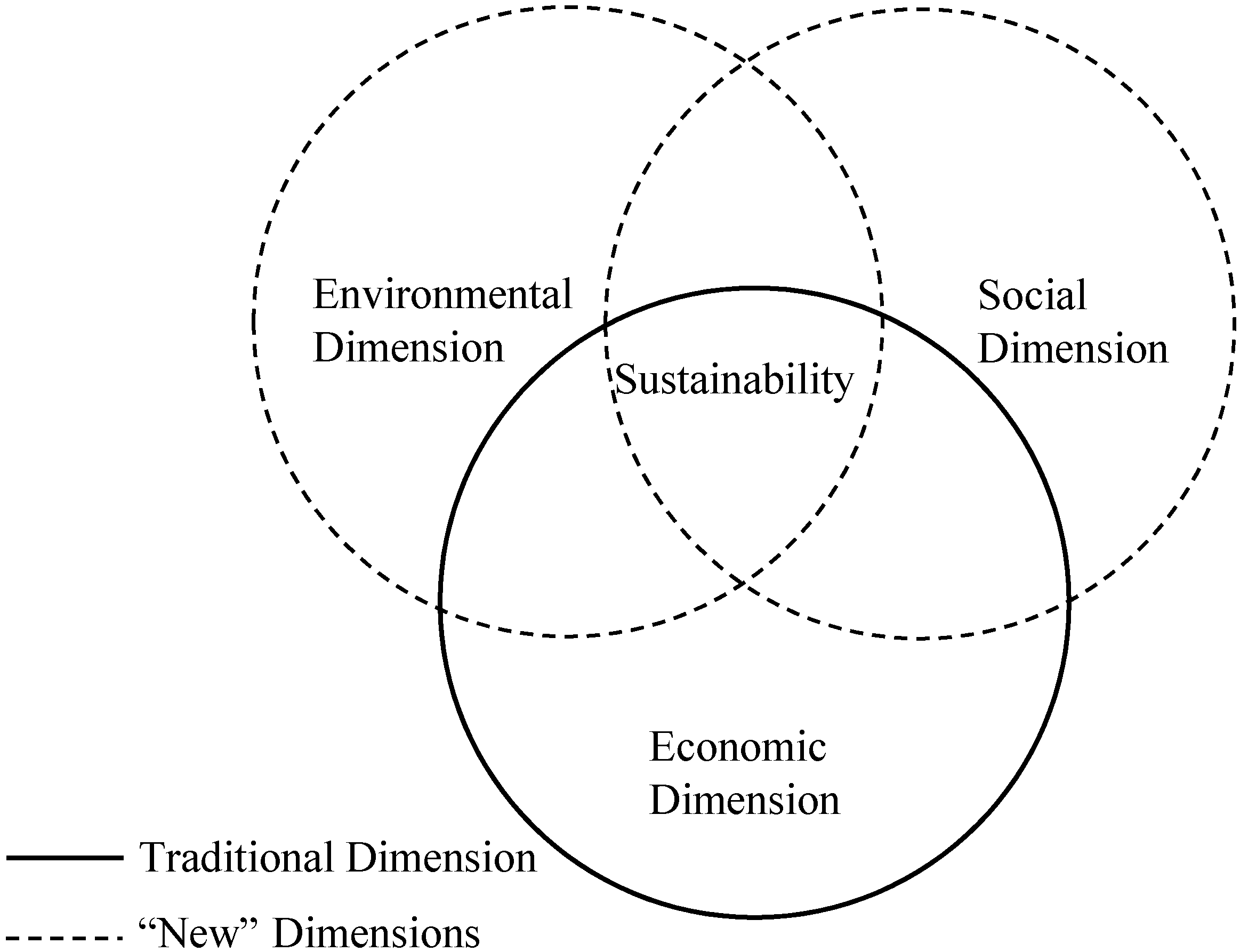
The current generation of ETHOS indicators, presents a new approach to the management of companies and seeks to integrate the principles and behaviors of corporate social responsibility and environmental concerns into the traditional vision of sustainability focusing mainly on the economic dimension (Figure 1). They are based on the concept of sustainable and responsible business which still in development. In addition, ETHOS indicators are designed to integrate the guidelines on the GRI sustainability reporting, the ISO 26000 Standard Social Responsibility standards and other initiatives.
Figure 1.
Sustainability Dimensions. (Source: adapted from Winter and Knemeyer [7].)
(vi) In late 2000, the Ecoinvent 2000 project was officially launched. Several Swiss federal offices and research institutes of the ETH (Eidgenössische Technische Hochschule/Federal) Institute of Technology agreed on a set of efforts to harmonize and update inventory life cycle data, based on life cycle inventory (LCI) for use with life cycle assessment (LCA) [28]. There are several thousands of LCI datasets in the areas of agriculture, energy, transport, biofuels, biomaterials, construction and packaging materials, base and precious metals and metals processing supply as well as waste treatment. The databases aim to support and improve the environmental performance of different products, processes and services from different organizations.
The Ecoinvent establishes and provides a scientific evaluation of LCA and Life Cycle Management (LCM) data and services for the industry, consultants, public authorities and research institutions [29].
(vii) ISO 14031 indicators cover environmental management, environmental performance and evaluation guidelines. The standards laid down by ISO 14031 provide guidance on the design and use of environmental performance evaluation for an organization. It is applicable to all organizations, regardless of type, size, location and complexity. Many organizations found ways to understand, demonstrate and improve their environmental performance.
Environmental performance evaluation is the theme of this international standard. This is an internal management system, providing reliable and verifiable information on an ongoing basis to determine whether an organization’s environmental performance is meeting the criteria established by the organization’s management.
This international standard describes two broad categories of indicators for environmental performance evaluation (Table 6): environmental performance indicators and environmental conditions indicators.
Table 6.
ISO 14031 indicators.
2. Proposal of a Sustainability Index
This section proposes a sustainability index that provides companies with information about their level of economic, social and environmental sustainability, both for the individual company’s operations and for the supply chain. Thus, it is possible to identify priority areas for action and changes to behavior that can contribute to improve sustainability and competitiveness. It is important to note that the proposal of a sustainability index represents an economic opportunity for companies and corresponding supply chains to improve their competitive advantage since it contributes for enhancing companies image, reputation and revenues gained [31,32]. Knowing that, the assessment of a sustainability index can be an important driver in integrating sustainability into the core business practices of companies and to view the subject as an essential long-term performance factor on radar of investors [33].
In this regard, the Figure 2 is proposed to illustrate a framework composed by five stages.
Figure 2.
Stages to build the sustainability index.
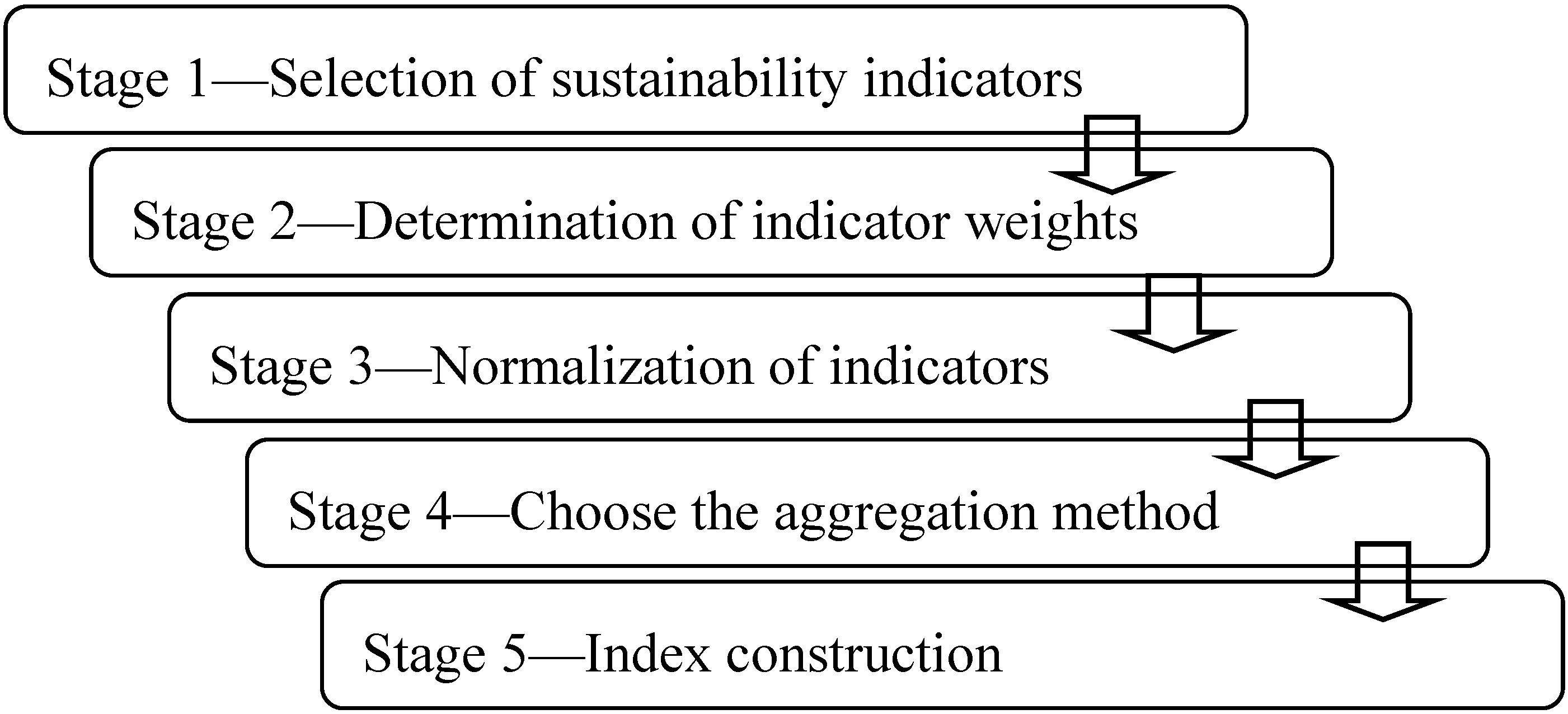
The following is a brief explanation of each stage.
2.1. Stage 1—Selection of Sustainability Indicators
The lack of a coherent framework linking what it is to be sustained to specific measurable variables is a critical barrier to better understanding progress toward sustainability Indicators perform various functions which may lead to better decisions and more effective actions to simplify, clarify and make aggregation more accessible. They can help not only to incorporate knowledge on physics and social science in decision-making [34,35], but also can help to measure and calibrate progress towards the goals of sustainable development. They may also prevent economic, social and environmental setbacks and are useful tools for communicating ideas, thoughts and values [19].
Another issue challenging sustainability measurement is the lack of consensus on sustainability indicators [23,36,37]. The inability of existing frameworks to guide selection of indicators has been recognized by several authors [38,39,40].
The selection of appropriate criteria and indicators of sustainability and sustainable development is a technical and normative decision since the search for indicators is guided more by what can be measured (a technical issue) than by what should be measured (a normative issue) [41].
Some tailored sustainability indicator sets have been developed [42,43,44,45,46], however only few have an integrative focus measuring environmental, economic and social dimensions [42,46,47]. Also, some sets of sustainability indicators do not address some key issues related to air, water quality biodiversity and their impacts on whole value chain. Moreover, some indicators focus on management practices (means) not on its results (ends) [41].
Furthermore, from the point of view of Martin [12] and Dowse [48] sustainability measures and reports, in most cases, have little relevance to the daily realities of business. Bearing in mind this, a different set of sustainability indicators is suggested in this work (Table 7) attending to the following methodology/criteria: (1) the Triple Bottom Line (TBL) is adopted balancing the relationships between economic, environmental, and social needs; (2) the social and economic indicators are selected having as reference the version G4 of the Global Reporting Initiative (GRI); (3) the environmental indicators are selected from the proposed operational indicators of the ISO 14031; and (4) a set of mandatory characteristics of the selected indicators was followed (objectives, understandable, worktables and measurable indicators).
Table 7.
Sustainability indicators proposed.
2.2. Stage 2—Determination of Indicator Weights
The relative importance of indicators becomes a source of contention when companies’ decision makers have different point of views and are interested in different indicators. However, the weights of the indicators can be computed through statistical models, or from participatory methods and conjoint analysis [53]. In this case, the participatory method is proposed, more specifically the Analytic Hierarchy Process (AHP).
AHP is one of the techniques that assists decision makers in solving complex problems by organizing thoughts, experiences, knowledge and judgment in a hierarchical structure and guiding them through a sequence of paired comparison judgments [54]. The AHP method has been widely used to incorporate the qualitative and quantitative considerations of human perception [55].
AHP methodology is capable of converting human perception into a numerical value of importance. Basically, AHP involves comparing pairs to a number of different criteria after dividing the criteria into a hierarchy of multiple levels [56]. These factors will be compared to each other in a matrix, as shown in Table 8.
Table 8.
Pairwise comparisons of the Analytic Hierarchy Process (AHP)
A, B, C and D are the factors and X12, X13 and X14 are compared to the value of the pairs AB, AC and DC, respectively. The value is obtained from a basic range of absolute numbers in order to capture human perceptions regarding qualitative and quantitative attributes.
After all the matrices are formed, the relative weights and the maximum eigenvalue (λmax) for each matrix are calculated. The λmax value is used to calculate the consistency (CR) ratio of the estimated vector in order to validate the array of paired comparison. The CR is calculated according to the following steps:
- (1)—Calculate the relative weights and λmax for each matrix of order n
- (2)—Calculate the consistency index (CI) for each matrix of order n, using the formula (1);
- (3)—CR is then calculated using the formula (2)
Theoretically the importance of each indicator should be equal for all companies belonging to the same supply chain. This assumption makes possible performing benchmarking analysis and guarantees that all the companies belonging to the same supply chain are using the same instrument to assess their level of sustainability. To assure that the suggested weights for each indicator reflect the reality of the automotive industry, the AHP technique with a panel of academics and professionals from different tiers of the automotive supply chain is suggested. It is also important to note that the same instrument should be used to calculate the sustainability index among suppliers belonging to the same tier of the automotive supply chain otherwise it is not possible to make comparisons between them.
2.3. Stage 3—Normalization of the Indicators
Normalization is necessary since the indicators are usually expressed in different units [53]. In this case, the Min-Max method is used for the normalization of indicators. According to this method, each indicator with a positive impact on the sustainability () is normalized using the following Equation (3):
where: —is the normalized indicator i for the dimension of sustainability j with positive impact on sustainability;
—represents the indicator i for the dimension of sustainability j with positive impact on sustainability;
—represents the lowest value of the indicator i for the dimension of sustainability j with positive impact on sustainability. That is = min
—represents the highest value of the indicator i for the dimension of sustainability j with positive impact on sustainability. That is = max
Normalization of indicators with negative impact on sustainability is calculated using the following Equation (4):
where: —is the normalized indicator i for the dimension of sustainability j with negative impact on sustainability;
—represents the indicator i for the dimension of sustainability j with negative impact on sustainability;
—represents the lowest value of the indicator i for the dimension of sustainability j with negative impact on sustainability.
—represents the highest value of the indicator i for the dimension of sustainability j with negative impact on sustainability.
2.4. Stage 4—Choose the Aggregation Method
In this case, the aggregation method selected is the additive weighting method. Nardo et al. [57] report that in the linear additive aggregation method the indicators must have the same unit of measurement, which implies that poor performance in some indicators can be compensated by high values of other indicators. Zhou et al. [58] report that the transparency and ease of understanding of the additive weighting method has been justified by its wide use by non-specialists. Since the additive weighting method is a linear model, it is only applicable if independence exists between the variables. However, if the assumption of independence between variables is not breached, the additive weighting method would give results very close to the optimal value function [59]. In this situation, Nardo et al. [57] argue that the model could be applied, but the resulting aggregate indicator may be biased.
The proposed model for evaluating the behavior of the supply chain in terms of the IC_SUSTJ model can be used by supply chain managers, taking into account that:
- -
- The set of economic, social and environmental practices should reflect the type of supply chain
- -
- The weight of the practice and paradigms must be obtained through AHP
- -
- The independence of the variables must be checked for the aggregated additive weighting index to be correctly interpreted.
2.5. Stage 5—Index Construction
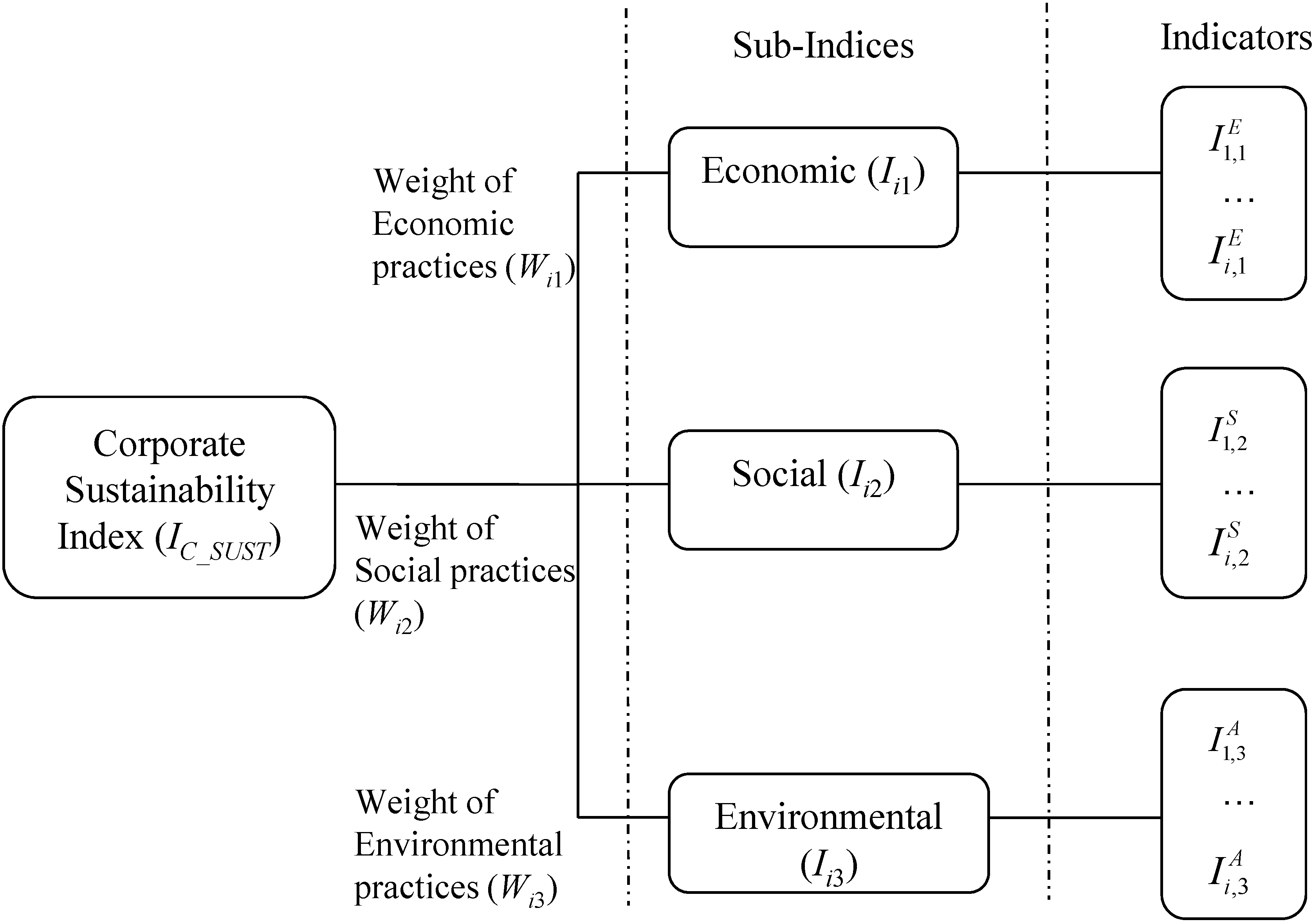
Figure 3 shows the three sub-indices proposed for the economic (Ii1), social (Ii2) and environmental (Ii3) dimensions, represented respectively by economic indicators (), social indicators () and environmental indicators ().
Figure 3.
Hierarchical scheme for computing the corporate sustainability Index.
For each company j sub-indices (Is) may be aggregated with the corresponding indicator according to the following Equation (5):
where:
- (Is)j—is the behavior of company j according to the sustainability dimension s;
- (Iis)j—is the value of the indicator i associated to the dimension of sustainability s for company j; y represents the indicators considered for each model;
- (Wis) is the weight of the indicator i for the sub-index associated to the dimension of sustainability s.
As stated above in Section 2.2, the importance of each indicator should be equal for all companies belonging to the same supply chain. The total sustainability index for each company is given by the Equation (6).
After establishing the index for each company, it is also possible to achieve the same result for the supply chain but using information from all companies belonging to it. Using the supply chain as the unit of analysis, the sustainability index for the supply chain can be computed through the following equation:
In Equation (7), n represents the number of companies that make up a certain supply chain, while (Is)j is the behavior of company j in terms of sub-indices I1, I2 and I3.
Finally, the use of this index for a particular supply chain (IC_SUSTSC) is a function of the indicators of sustainability for each weighted sub-indices (Equation (8)).
IC_SUSTSC = f (Wi1 × SCIi1, Wi2 × SCIi2, Wi3 × SCIi3)
The various items SCIsi indicate the behavior of the supply chain in accordance with sub-indices; Wsi corresponds to the weight of each sub-index (environmental, economic and social). These contributions symbolize the importance of each sub-index/behavior to the s of the supply chain.
3. Determination of Sustainability: Case Study
Since the main goal of this research involves the application of a sustainability index, a case study of a supply chain in the SC AUTO group, was chosen. The research company belongs to the automotive industry but because of confidentiality reasons its real name will be omitted and will be named as “AUTO”. The company was selected attending to the following factors: (i) its relevance for the Portuguese automotive industry; (ii) It is a membership of a large automotive group; (iii) it is recognized in the Portuguese industry as a reference in subjects related to sustainability; (iv) it is strongly interested in developing an instrument to support the assessment of the sustainability level of its supply chain; (v) willingness to collaborate with this research; and (iv) its geographical proximity to ensure the right conditions for the research team. The case study selection was made on the basis of “planned opportunism”, which is to say there was an anticipation of gaining access to secondary data [60]. Case selection is often opportunistic, given that it is frequently difficult to find suitable case studies that allow insight into the research topic, and those that can be pursued often emerge from existing contacts a researcher has with an industry [61].
The analysis focuses on the upstream supply chain, specifically on their suppliers. Being so, a database of 146 active suppliers with whom the company works directly was provided. Of those, only 46 will be included in the research sample, since only these provided data on the sustainability indicators studied in this work, allowing the application of the sustainability index. To gauge the importance of sustainability indicators, a survey was performed using the AHP methodology.
In this context, this research intends to verify the contribution of the economic, environmental and social sustainability dimensions for the overall sustainability of the automotive supply chain. Then, this research intends to investigate the importance of the different indicators with respect to social, economic and environmental dimensions, evaluating each measure of sustainability in the automotive supply chain.
3.1. Profile of Case-Study Companies
Given the research design the SC AUTO group was chosen as an example of a supply chain in the European automotive industry. The company is a multinational conglomerate located in various countries, representative of major automotive markets. Overall, their production and development relies on electronic and mechanical locking systems, authorization systems, passive entry systems, vehicle access systems, door systems and handling systems for airbags and the rear of vehicles. The company has a relevant international market share and is the global leader in this segment.
The research company has approximately 350 employees, and applies locksets and mounts latches to steering columns using modern technology and a network of domestic partnerships. The company focuses its upstream supply chain specifically on its providers. From the 146 active suppliers 46 are included in this study for the application of the suggested sustainability index.
This study comprises companies producing components for the automotive industry (Table 9). Table 9 summarizes the profile of the research companies according to the main product produced and the standards and certificates. For confidentiality reasons a fictitious name was assigned to them.
Table 9.
Companies profile.
According to Table 9, almost all companies work to produce parts for the automotive industry, such as compression springs, plastic parts and dyeing the electronic components. Regarding the standards and certificates, it appears that the ISO 9001 and the Quality Management Systems are used by almost all companies.
Other standards that exist in some companies are ISO 14001, Environmental Management Systems and ISO/TS 16946 (this is a specification for meeting the requirements of car manufacturers, especially quality, cost and delivery just in time (JIT)) and OHSAS 18001 Safety and Health Management Systems at Work.
The relationship between members of an automobile supply chain is unique. The automakers have great flexibility because they have full control of the manufacturing cycle (from product design to assembly, through the supply of parts) and, in some situations, the processes of supplying. Although the substantial supply of parts and components to original equipment manufacturers is primarily ensured by direct suppliers, their range is limited and the same supply can be extended to second-level suppliers, and the purchase of materials and elements by the first level can only be made through approved/certified suppliers [60].
3.2. Application of the Framework for Building a Sustainability Index
To determine the sustainability index, the five stages previously defined in Section 3 are applied.
3.2.1. Stage 1—Selection of Sustainability Indicators
In this first stage, the aim is to select indicators for further evaluation; as such, it is also necessary to take into account the unit of measure. The indicators used in this case study and the corresponding unit of measures are the ones previously defined in Table 7.
3.2.2. Stage 2—Determination of Indicator Weights
The AHP (Analytic Hierarchy Process) methodology is an intuitive tool for formulating and analyzing decisions. Applying AHP contributes to provide solutions to specific types of problems involving the prioritization of potential alternative options by making pair-wise comparisons of a set of elements. This formula has already been applied to a number of decision-making issues, in particular issues related to the automotive sector [62]. The weights were determined through a meeting that one of the researchers had with the purchasing and environmental manager of the company. The pair-wise comparisons inherent to the AHP application was performed as a team exercise and the final decision was reached by consensus [63,64,65]. The three academics also answered the questionnaire but only with the purpose of testing it. It was possible to produce a coherent and consistent table (Table 10) besides the small sample, since it only serves to illustrate the application.
Analyzing the results of Table 10, it can be seen that to the economic dimension (I1) is given greatest importance with a weight of 66%, while the social dimension was considered least important at 13%. For the social dimension indicators, the number of accidents per year () was seen as the most important with a weight of 33%, while the percentage of women employed () was considered least important at 5%. For the economic dimension, the “direct economic value generated and distributed” () was rated as the most important indicator with a weight of 72%, while the number of persons employed () was considered the least important with a weight of 12%. Finally, the evaluation indicators for the environmental dimension ranked the rate of hazardous waste () with the greatest importance at 38% and the quantity of water consumed per year in industrial processes () was considered the least important at 16%.
Table 10.
Determination of weights for the three dimensions of sustainability.
3.2.3. Stage 3—Normalization of the Indicators
Since the indicators are expressed in different units, normalization is necessary (Equation (3)). This makes possible to integrate the selected indicators into an aggregated index for sustainability assessment.
Using the Excel spreadsheet it was possible to obtain the normalized indicators. Normalization of the indicators for economic dimension was not included due to lack of data from the SC AUTO. In Table 11 the normalized indicators of social and environmental dimensions are present using Equation (3).
Table 11.
Normalization of indicators.
3.2.4. Stage 4—Aggregation Method
Before aggregating the data it is necessary to determine the behavior of its distribution, especially checking to see if the data are correlated. Using the Excel spreadsheet, correlations were calculated between indicators of the social and environmental dimensions (Table 12 and Table 13 respectively). Since it was not possible to obtain the normalized values of the economic dimension (due to lack of data from the SC AUTO), this was not considered.
Table 12.
Correlations between the social dimension indicators.
Table 13.
Correlations between the environmental dimension indicators.
The correlation coefficient values range from −1 to 1 indicating respectively the extremes of the array of perfect negative and positive ratios. In this case the correlation coefficient is −0.02 which indicates that the indicators of the three dimensions (environmental, social and economic) are not related. According to Figure 4 most of the variables were not significantly correlated. Thus, the sub-indicators are independent of one another, which makes possible that a linear additive aggregation paradigm can be applied. As can be seen from Table 14 and Table 15 correlation coefficients between the different indicators are not correlated allowing the use of the linear aggregation method.
Figure 4.
Linear data aggregation.
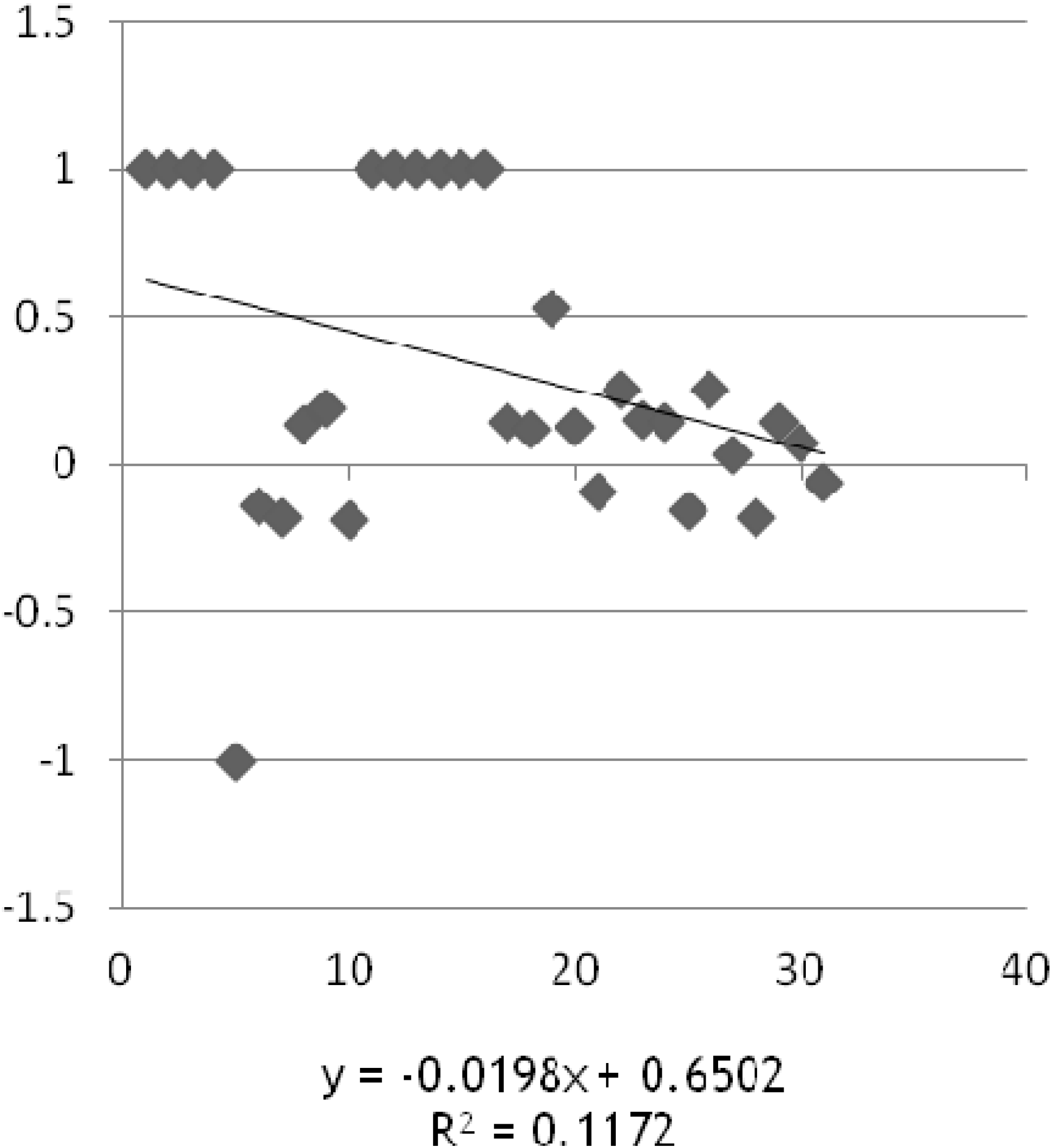
Table 14.
Social sub-index by company.
Table 15.
Environmental sub-index by company.
3.2.5. Stage 4—Index Construction
Once weights determined and indicators normalized, the sustainability index can be computed, both for the individual company and for the supply chain.
The social and environmental sub-indices (Table 14 and Table 15) were determined using the worksheet in Excel according to the following equation:
where (Ii1)j, corresponds to the value of the indicator removed from the normalization table (Table 11); and Wi1 is the value of the corresponding weight for each indicator. As there is no data on the indicators of the economic sub-index it was not used in the construction of the sustainability index.
Computing the social and environmental sub-index for each company allows companies to be ranked at the social and environmental level. The analyze of the social sub-index in Table 14 shows that firms 2, 12, 17, 23, 26 and 41 have the lowest values, indicating that these are the ones where the social dimension is less representative. Companies 4, 9, 11 and 46 have the highest values representing the companies that are most relevant to the social dimension. It is possible to obtain the sub-index of social sustainability for the entire supply chain by adding the sub-indices of each individual company.
Analyzing the environmental sub-index for companies in Table 15 it appears that firms 1, 27, 38 and 39 have the lowest values (and thus can be seen as least important) in the environmental dimension. Companies 22 and 37 have the highest values and thus are relatively most important in the environmental dimension. The sub-index of environmental sustainability for the entire chain can be obtained by adding the sub-indices for each individual company.
Once the sub-indices had been calculated by company, the overall sustainability index for the company was computed summing each sub-index (social sub-index + economic sub-index + environmental sub-index) (Table 16).
Table 16.
Total sustainability index by company.
Looking at the total index of sustainability by company in Table 16 it reveals that those companies that have the highest sustainability index are numbers 9, 11 and 37. These companies have a sustainability index closest to the maximum value of 1, showing that they are relatively the most sustainable. In contrast, the least important companies in terms of sustainability are numbers 27, 38 and 39 (scoring closest to 0).
To determine the behavior of the supply chain for each dimension (Table 17) the Equation (10) was used.
Table 17.
Behavior of the supply chain for each dimension.
Analyzing the behavior of the supply chain for each dimension (Table 17) it could be stated that the social sub-index is the least important with a value of 0.168 (closest to 0) and the environmental sub-index is most important with a value of 0.229 (closest to 1).
Again using the Excel spreadsheet, the sustainability index for the supply chain was calculated using the following function:
where SCIi is the value retrieved from Table 17 which relates to the behavior of the supply chain for each dimension, and Wi is the weight of each reporting indicator.
IC_SUSTSC = f (Wi1 × SCIi1, Wi2 × SCIi2, Wi3 × SCIi3)
Table 18 shows the sustainability index for the supply chain. While the environmental dimension is more sustainable (with a value of 0.048) and the social dimension is less sustainable (with a value of 0.022) both values represent low levels of sustainability. In total a value of 0.070 was obtained, which shows that this index has a low level of sustainability; it can be concluded therefore that the environmental and social dimensions are both priority areas for changing certain behaviors with the aim of becoming supply chains more sustainable and thus also more competitive. However, due to the lack of economic data and constraints in obtaining responses to the questionnaire, which are essential for determining the weights of dimensions, only a partial conclusion can be drawn, requiring a more thorough analysis. However, given that the weights obtained for the economic indicators were the highest values, it can be assumed that this would be the factor of greatest relevance to the sustainability of the supply chain.
Table 18.
Index of sustainability to the supply chain.
4. Conclusions
Sustainability presents a new purpose and an attractive and strategic issue, not only at a national level, but also for individual organizations and supply chains. Sustainability refers to the management of the three associated dimensions: economic, social and environmental.
In this study the construction of a sustainability index is proposed that consists of five stages. In the first stage, the selection of sustainability indicators is performed by choosing indicators that contribute to the evaluation of each sustainability dimension. The second stage uses the AHP method and a questionnaire was prepared for professionals and academics for determining the weights for each indicator. Once the level of importance for each indicator is determined, the third stage associated to the normalization of indicators is performed using the minimum–maximum method. The fourth stage derives from the application of the linear additive aggregation method. Finally, as part of the construction of the index it is possible to obtain an index by company, a sub-index for each sustainability dimension and an index of overall sustainability by company and supply chain.
The suggested sustainability index was then tested in a real case study. The application of the suggested index in this case study made possible to conclude that there is a low level of sustainability and more focus needs to be given to the social and environmental dimensions to affect future changes in behavior. However, due to the lack of economic data and constraints in obtaining responses to the questionnaire, which are essential for determining the weights of dimensions, only a partial conclusion can be drawn, requiring a more detailed analysis.
The proposed framework is easy to use by professionals from the automotive industry and understandable, representing also an important contribution for supporting managers in decision-makings related to sustainability issues. Moreover a set of indicators reflecting the social, economic and environmental dimensions of sustainability is suggested which could be deployed by SC' managers to make their supply chains more sustainable. In addition the application of the proposed framework could encourage SC managers to discuss on why they consider some sustainability indicators more important for the sustainability of their supply chains, but in some cases, they do not work on their improvement. This framework makes also easier to determine whether the efforts of individual companies are effective in improving sustainability of supply chains.
This method allows an assessment of the sustainability of the supply chain and, at the same time, the opportunity to improve business performance The proposed integration could represent a best solution to achieve the sustainability in line with the Theory of Industrial Ecology [66]. In this context, the theory of Industrial Ecology represents a powerful analytical tool for describing the flows of material and energy that connect business and the natural world. According to this theory exists a continuous loop between materials and energy flowing between natural and industrial systems in three stages. First, natural materials are extracted from the earth and converted into raw materials and mechanical energy. Second, these raw materials and energy flows are worked into useable and saleable products. Third, resulting products are distributed, consumed or used, and disposed of by consumers. All three of these stages produce waste that becomes pollution. In sum, the focus of analysis is the interconnected processes of raw material extraction, the production of goods, the use of those goods, and the management of the resulting wastes [67] reflecting also a supply chain perspective.
As a result, managers can adjust company behavior in accordance with the level of sustainability reached in the index and improve their economic, social and environmental performance. The supply chain sustainability index can help managers improve competitiveness and accountability for their own company and the sector, reflecting stakeholders’ expectations. In addition, it enables a benchmarking analysis to be performed by checking the best and worst performances of the companies within the supply chain, while at the same time makes possible to rank companies attending to their economic, social and environmental behavior.
Limitations of this study include the lack of responses from academics and professionals for determining the weights of indicators and the lack of data for indicators associated to economic dimension.
As a suggestion for future research, this index could be applied to other supply chains, thus helping verify the potential of this tool. The proposed index could also be used to evaluate interactions between parallel supply chains. It is also important to conduct benchmarking analysis, and analysis of supply chains belonging to the same sector or to sectors less concerned with sustainability issues. Moreover, it will be interesting to perform the same approach however involving other players of the automotive supply chain in the weighting of the sustainability indicators.
Acknowledgments
This research is supported by the Center for Mechanical and Aerospace Science and Technologies (C-MAST) of the Portuguese Foundation for Science and Technologies (FCT).
Author Contributions
Miguel F. Salvado was responsible for the literature review and for writing the first draft of the manuscript. Susana G. Azevedo worked on the design of the study and also the suggested sustainability index. João C. O. Matias was responsible for methodological issues and was also involved in the preparation of the manuscript for its submission. Luís M. Ferreira was responsible for data collection and analysis and interpretation of the results.
Conflicts of Interest
The authors declare no conflict of interest.
References
- Singh, R.K.; Murty, H.R.; Gupta, S.K. An overview of sustainability assessment methodologies. Ecol. Indic. 2012, 15, 281–299. [Google Scholar] [CrossRef]
- Seuring, S.; Muller, M. From a literature review to a conceptual framework for sustainable supply chain management. J. Clean. Prod. 2008, 16, 1699–1710. [Google Scholar] [CrossRef]
- Costanza, R.; Patten, B.C. Defining and predicting sustainability. Ecol. Econ. 1995, 15, 193–196. [Google Scholar] [CrossRef]
- Pinar, M.; Cruciani, C.; Giove, S.; Sostero, M. Constructing the FEEM Sustainability Index: A Choquet-Integral Application; Fondazione Eni Enrico Mattei: Venice, Italy, 2013. [Google Scholar]
- World Commission on Environment and Development (WCED). Our Common Future; Oxford Paperbacks: New York, NY, USA, 1987. [Google Scholar]
- Taticchi, P.; Carbone, P.; Albino, V. Corporate Sustainability; Springer: Berlin, Germany, 2013. [Google Scholar]
- Winter, M.; Knemeyer, A.M. Exploring the integration of sustainability and supply chain management: Current state and opportunities for future inquiry. Int. J. Phys. Distrib. Logist. Manag. 2013, 43, 18–38. [Google Scholar] [CrossRef]
- Linton, J.D.; Klassen, R.; Jayaraman, V. Sustainable supply chains: An introduction. J. Oper. Manag. 2007, 25, 1075–1082. [Google Scholar] [CrossRef]
- Bithas, K.P.; Christofakis, M. Environmentally sustainable cities: Critical review and operational conditions. Sustain. Dev. 2006, 14, 177–189. [Google Scholar]
- Fischer, J.; Manning, A.D.; Steffen, W. Mind the sustainability gap. Trends Ecol. Evol. 2007, 22, 321–624. [Google Scholar]
- Goodland, R.; Daly, H. Environmental Sustainability: Universal and Non-Negotiable. Ecol. Appl. 1996, 6, 1002–1017. [Google Scholar] [CrossRef]
- Martin, J.P. The Social Dimensions of Sustainable Development. In Proceedings of the European Social Agenda and EU International Partners, Brussels, Belgium, 20–21 November 2001; p. 94.
- Moldan, B.; Janouskova, S.; Hák, T. How to understand and measure environmental sustainability: Indicators and targets. Ecol. Indic. 2011, 17, 4–13. [Google Scholar] [CrossRef]
- Mckenzie, S. Social Sustainability: Towards Some Definitions; Hawke Research Institute Working Paper Series 27; Hawke Research Institute: Adelaide, Australia, 2004. [Google Scholar]
- Morelli, J. Environmental Sustainability: A Definition for Environmental Professionals. J. Environ. Sustain. 2011, 1, 19–27. [Google Scholar] [CrossRef]
- Rumelt, R.P. Strategy, Structure, and Economic Performance; Harvard University Press: Cambridge, MA, USA, 1974. [Google Scholar]
- Hicks, J.R. Value and Capital; Clarendon: Oxford, UK, 1946. [Google Scholar]
- Delai, I.; Takahashi, S. Sustainability measurement system: A reference model proposal. Soc. Responsib. J. 2011, 7, 438–471. [Google Scholar] [CrossRef]
- Commission on Sustainability Development. Indicators of Sustainable Development: Guidelines and Methodologies. Available online: http://www.un.org/esa/sustdev/csd.htm (accessed on 12 June 2014).
- Global Reporting Initiative (GRI). Sustainability Reporting Guidelines. Available online: http://www.globalreportinginitiative.org (accessed on 14 July 2014).
- Jones, S. Notes of the University of Sydney Pacioli Society: Sustainability reporting in Australia: An empirical overview. Abacus 2005, 41, 211–216. [Google Scholar] [CrossRef]
- Dow Jones Sustainability Indexes (DJSI). Dow Jones Sustainability World Index Guide; RobecoSAM AG: Zurich, Switzerland, 2013. [Google Scholar]
- Wang, L. A methodology of Sustainability, Accountability and Management for Industrial Enterprises. Master’s Thesis, Faculty of Graduate School, the State University of New York at Buffalo, Buffalo, NY, USA, 2005. [Google Scholar]
- Elkington, J. Cannibals with Forks: The Triple Bottom Line of the 21st Century Business; Capstone: Oxford, UK, 1997; p. 402. [Google Scholar]
- Willard, B. The Sustainability Advantage: Seven Business Case Benefits of a Triple Bottom Line; New Society: Gabriola Island, BC, Canada, 2002. [Google Scholar]
- Slaper, T.; Hall, T. The Triple Bottom Line: What Is It and How Does It Work? Indiana University Kelley School of Business, Indiana Business Research Center: Bloomington, IN, USA, 2011. [Google Scholar]
- ETHOS. Indicadores ETHOS para Negócios Sustentáveis e Responsáveis. Available online: http://www.ethos.org.br (accessed on 24 June 2014). (In Portuguese)
- Frischknecht, R.; Jungbluth, N.; Althaus, H.J.; Bauer, C.; Doka, G.; Dones, R.; Hellweg, S.; Hischier, R.; Humbert, S.; Margni, M.; et al. Implementation of Life Cycle Impact Assessment Methods; Ecoinvent Report No. 3, v2.0; Swiss Centre for Life Cycle Inventories: Dübendorf, Switzerland, 2007. [Google Scholar]
- ECOINVENT. Data Quality Guidelines for the Ecoinvent Database Version 3. Available online: http://www.ecoinvent.org (accessed on 10 April 2014).
- International Organization for Standardization (ISO). Environmental Management—Environmental Performance Evaluation—Guidelines; ISO 14031:2013; ISO: Geneva, Switzerland, 2013. [Google Scholar]
- Yang, C.L.; Lin, S.P.; Sheu, C. Mediated effect of environment management on manufacturing competitiveness: An empirical study. Int. J. Prod. Econ. 2010, 123, 210–220. [Google Scholar] [CrossRef]
- López, M.V.; Garcia, A.; Rodriguez, L. Sustainable Development and Corporate Performance: A Study Based on the Dow Jones Sustainability Index. J. Bus. Ethics 2007, 75, 285–300. [Google Scholar] [CrossRef]
- KPMG. Corporate Sustainability: A Progress Report. Available online: http://www.kpmg.com/Global/en/IssuesAndInsights/ArticlesPublications/Documents/corporate-sustainability-v2.pdf (accessed on 3 September 2014).
- Clift, R. Metrics for supply chain sustainability. Clean Technol. Environ. Policy 2003, 5, 240–247. [Google Scholar] [CrossRef]
- Touslfas, G.T.; Pappis, C.P. A model for supply chains environmental performance analysis and decision making. J. Clean. Prod. 2008, 16, 1647–1657. [Google Scholar] [CrossRef]
- Sikdar, S.K. Sustainable development and sustainability metrics. Am. Inst. Chem. Eng. J. 2003, 49, 1928–1932. [Google Scholar] [CrossRef]
- Searcy, C.; Karapetrovic, S.; McCartney, D. Designing sustainable development indicators: Analysis for a case utility. Measur. Bus. Excell. 2005, 9, 33–41. [Google Scholar] [CrossRef]
- Bossel, H. Indicators for Sustainable Development: Theory, Method, Applications; International Institute for Sustainable Development: Winnipeg, MB, Canada, 1999; p. 124. [Google Scholar]
- McCool, S.; Stankey, G. Representing the future: A framework for evaluating the utility of indicators in the search for sustainable forest management. In Criteria and Indicators for Sustainable Forest Management; Raison, R.J., Brown, A.G., Flinn, D.W., Eds.; CAB International: Wallingford, UK, 2001; pp. 93–109. [Google Scholar]
- Maclaren, V.W. Urban sustainability reporting. J. Am. Plan. Assoc. 1996, 62, 184–202. [Google Scholar] [CrossRef]
- Mccool, S.F.; Stankey, G.H. Indicators of Sustainability: Challenges and Opportunities at the Interface of Science and Policy. Environ. Manag. 2004, 33, 294–305. [Google Scholar] [CrossRef]
- Veleva, V.; Ellenbecker, M. Indicators of sustainable production: Framework and methodology. J. Clean. Prod. 2001, 9, 519–549. [Google Scholar] [CrossRef]
- Krajnc, D.; Glavic, P. Indicators of sustainable development. Clean Technol. Environ. Policy 2003, 5, 279–288. [Google Scholar] [CrossRef]
- Azapagic, A. Developing a framework for sustainable development indicators for the mining and minerals industry. J. Clean. Prod. 2004, 12, 639–662. [Google Scholar] [CrossRef]
- Krajnc, D.; Glavic, P. A model for integrated assessment of sustainable development. Resour. Conserv. Recycl. 2005, 43, 189–208. [Google Scholar] [CrossRef]
- Labuschagne, C.; Brent, A.C.; van Erck, R.P.G. Assessing the sustainability performance of industries. J. Clean. Prod. 2005, 13, 373–385. [Google Scholar] [CrossRef]
- Singh, R.K.; Murty, H.R.; Gupta, S.K.; Dikshit, A.K. An overview of sustainability assessment methodologies. Ecol. Indic. 2009, 9, 189–212. [Google Scholar] [CrossRef]
- Dowse, J. Making CR measurement meaningful to the rest of the business. Corp. Responsib. Manag. 2005, 1, 14–21. [Google Scholar]
- Keeble, J.J.; Topiol, S.; Berkely, S. Using indicators to measure sustainability performance at a corporate and project level. J. Bus. Ethics 2003, 44, 149–158. [Google Scholar] [CrossRef]
- Seuring, S.A.; Koplin, J.; Behrens, T.; Schneidewind, U. Sustainability assessment in the German detergent industry: From stakeholder involvement to sustainability indicators. Sustain. Dev. 2003, 11, 199–212. [Google Scholar] [CrossRef]
- Welford, R.; Young, W.; Itterhus, B. Towards sustainable production and consumption: A literature review and conceptual framework for the service sector. Eco-Manag. Audit. 1998, 5, 38–56. [Google Scholar] [CrossRef]
- Szekely, F.; Knirsch, M. Responsible leadership and corporate social responsibility: Metrics for sustainable performance. Eur. Manag. J. 2005, 23, 628–647. [Google Scholar] [CrossRef]
- Zhou, L.; Tokos, H.; Krajnc, D.; Yang, Y. Sustainability performance evaluation in industry by composite sustainability index. Clean Technol. Environ. Policy 2012, 14, 789–803. [Google Scholar] [CrossRef]
- Al-Barqawi, H.; Zayed, T. Infrastructure Management: Integrated AHP/ANN Model to Evaluate Municipal Water Mains Performance. J. Infrastruct. Syst. 2008, 14, 305–318. [Google Scholar] [CrossRef]
- Kumar, S.; Parashar, N.; Haleem, A. Analytical hierarchy process applied to vendor selection problem: Small scale, medium scale and large scale industries. Bus. Intell. J. 2009, 2, 355–362. [Google Scholar]
- Hassan, M.; Saman, M.; Sharif, S.; Omar, B. An Integrated MA-AHP Approach for Selecting the Highest Sustainability Index of a New Product. Procedia—Soc. Behav. Sci. 2012, 57, 236–242. [Google Scholar] [CrossRef]
- Nardo, M.; Saisana, M.; Saltelli, A.; Tarantola, S. Tools for Composite Indicators Building; European Commission: Brussels, Belgium, 2005. [Google Scholar]
- Zhou, P.; Ang, B.; Poh, K. Comparing aggregating methods for constructing the composite environmental index: An objective measure. Ecol. Econ. 2006, 3, 305–311. [Google Scholar] [CrossRef]
- Farmer, T.A. Testing the robustness of multi-attribute utility theory in an applied setting. Decis. Sci. 1987, 18, 178–193. [Google Scholar] [CrossRef]
- Pettigrew, A.M. Longitudinal field research on change: Theory and practice. Organ. Sci. 1990, 1, 267–292. [Google Scholar] [CrossRef]
- Seuring, S. Case Study research in supply chains: An outline and three examples. In Research Methodologies in Supply Chain Management; Kotzab, H., Seuring, S., Muller, M., Reiner, G., Eds.; Springer: Berlin, Germany, 2005; pp. 235–250. [Google Scholar]
- Azevedo, S.G.; Govindan, K.; Carvalho, H.; Cruz-Machado, V. An integrated model to assess the leanness and agility of the automotive industry. Resour. Conserv. Recycl. 2012, 66, 85–94. [Google Scholar] [CrossRef]
- Muerza, V.D.; Arcocha, E.L.; Moreno-Jiménez, J.M. The multicriteria selection of products in technological diversification strategies: An application to the Spanish automotive industry based on AHP. Prod. Plan. Control 2013, 25, 715–728. [Google Scholar] [CrossRef]
- Byun, D.-H. The AHP approach for selecting an automobile purchase model. Inf. Manag. 2001, 38, 289–297. [Google Scholar] [CrossRef]
- Coyle, G. The Analytic Hierarchy Process (AHP); Pearson Education Limited: New York, NY, USA, 2004. [Google Scholar]
- Ioppolo, G.; Cucurachi, S.; Salomone, R.; Saija, G.; Ciraolo, L. Industrial Ecology and Environmental Lean Management: Lights and Shadows. Sustainability 2014, 6, 6362–6376. [Google Scholar] [CrossRef]
- Friedman, R. When you find yourself in a hole, stop digging. J. Ind. Ecol. 2000, 3, 15–19. [Google Scholar] [CrossRef]
© 2015 by the authors; licensee MDPI, Basel, Switzerland. This article is an open access article distributed under the terms and conditions of the Creative Commons Attribution license (http://creativecommons.org/licenses/by/4.0/).