


Abstract
Thermal comfort is among the primary determinants of habitability in the built environment. In tropical developing countries, however, its treatment in public housing policy has often been limited, fragmented, and, in many cases, subordinated to energy-saving criteria that do not adequately reflect occupant needs or local climatic diversity. This study analyses the integration of thermal comfort within housing policy using a mixed-methods approach combining regulatory analysis with post-occupancy environmental monitoring. Empirical monitoring shows average indoor temperatures between 16.3 °C and 18.5 °C, with more than 80% of recorded hours falling below adaptive comfort thresholds and a predicted dissatisfaction rate (PPD) of approximately 47%. These findings demonstrate that compliance with efficiency-centred sustainability regulation does not necessarily ensure thermally adequate indoor conditions in occupied social housing, highlighting a structural gap in current regulatory frameworks between efficiency-based compliance and thermally adequate indoor conditions in occupied social housing. The analytical framework integrates three dimensions: policy analysis, environmental performance verification, and interpretation of occupant adaptive behaviour. Rather than claiming that Bogotá is statistically representative of all tropical conditions, the paper treats it as an analytically revealing case in which tensions among efficiency-centred regulation, imported comfort standards, and constrained occupant adaptation become visible. The paper also demonstrates that the current Colombian sustainability regulation (Resolution 0194 of 2025) operationalises sustainability primarily through energy and water saving targets and climatic zoning, while lacking explicit, verifiable indicators for thermal comfort, occupant well-being, or health outcomes. Finally, the paper discusses the relevance of locally calibrated standards, standardised field methodologies, and passive design strategies within a broader agenda of energy governance, environmental equity, and housing adequacy.
1. Introduction
1.1. Thermal Comfort as a Sustainability and Equity Issue
Thermal comfort in housing has become a central concern within contemporary debates on sustainability in the built environment. While traditionally addressed as a technical or architectural matter, it is increasingly recognised as a public interest issue closely connected to health, equity, and quality of life. In tropical developing countries, this challenge is intensified by rapid urbanisation, persistent deficits in housing quality—particularly within social housing—and growing reliance on compensatory heating and cooling practices. When dwellings fail to provide adequate indoor environmental conditions, households are exposed to either prolonged thermal stress or increased energy expenditure, positioning thermal comfort as a structural component of energy poverty and broader environmental vulnerability. In Colombia, social housing is classified into two main categories according to maximum sale price: Vivienda de Interés Social (VIS), aimed at low- to middle-income households, and Vivienda de Interés Prioritario (VIP), targeted at the most economically vulnerable populations and subject to stricter price caps. Although VIS projects generally provide slightly larger floor areas and improved finishes, both categories commonly rely on the same standardised construction systems—such as tunnel formwork and uninsulated masonry walls—which limits their thermal performance, particularly in highland climates.
At the global level, debates on thermal comfort have evolved alongside energy transition and climate mitigation agendas. Over the past two decades, reducing building energy consumption has become a primary policy objective, driving the widespread adoption of energy-efficiency regulations. While these frameworks play a key role in limiting emissions, they frequently prioritise measurable reductions in energy use over occupants’ lived thermal experience. As a result, buildings may comply with regulatory performance criteria while delivering indoor environments that residents perceive as uncomfortable or difficult to inhabit. Empirical research on low-energy and naturally ventilated housing demonstrates that regulatory compliance does not necessarily correspond to acceptable comfort conditions, particularly when performance metrics developed for temperate climates are transferred to other contexts without sufficient consideration of local climate, cultural expectations, and everyday practices [1].
Similar mismatches between regulatory performance indicators and occupants’ lived thermal experience have been reported in several studies on naturally ventilated buildings and low-income housing in tropical climates. Research in this field has shown that compliance with standardised thermal performance metrics—often derived from controlled laboratory models or mechanically conditioned buildings—does not necessarily translate into perceived comfort under real occupancy conditions. In naturally ventilated environments, thermal perception is strongly influenced by adaptive behaviours, including clothing adjustment, window operation, spatial relocation within the dwelling, and modification of daily activities [2].
Furthermore, global reviews of thermal comfort field studies indicate that empirical datasets used to calibrate international standards remain geographically and typologically uneven. Rupp et al. demonstrate that a large proportion of comfort research has historically been conducted in office buildings located in temperate regions, while residential buildings—particularly those occupied by low-income households in the Global South—are significantly underrepresented [3]. More recent compilations of thermal comfort datasets confirm this imbalance and highlight the limited availability of systematic measurements in tropical residential environments [4].
Despite decades of research on thermal comfort, a persistent gap remains between scientific knowledge and its application within housing policy in tropical contexts. Much of the empirical evidence underpinning comfort standards and regulatory frameworks has been generated in temperate regions and in non-residential building types, especially offices and educational facilities. By contrast, systematic post-occupancy evidence from residential buildings in tropical regions—particularly in Latin America, Africa, and Southeast Asia—remains limited and uneven, as discussed in Section 2. This imbalance constrains the development of housing policies grounded in locally generated data and weakens governments’ capacity to address thermal comfort as a measurable, socially relevant objective. In practice, regulatory frameworks risk reproducing technical solutions that are poorly aligned with living conditions and socio-economic constraints. This discrepancy may also produce situations in which buildings formally comply with energy-efficiency regulations while still failing to provide indoor environmental conditions perceived as thermally acceptable by occupants. These situations generate a critical research gap between regulatory frameworks and empirical knowledge of residential thermal conditions in tropical housing, particularly in low-income urban projects where adaptive capacity and building performance constraints differ significantly from the contexts in which most comfort standards were originally developed.
1.2. Study Objective and Contribution
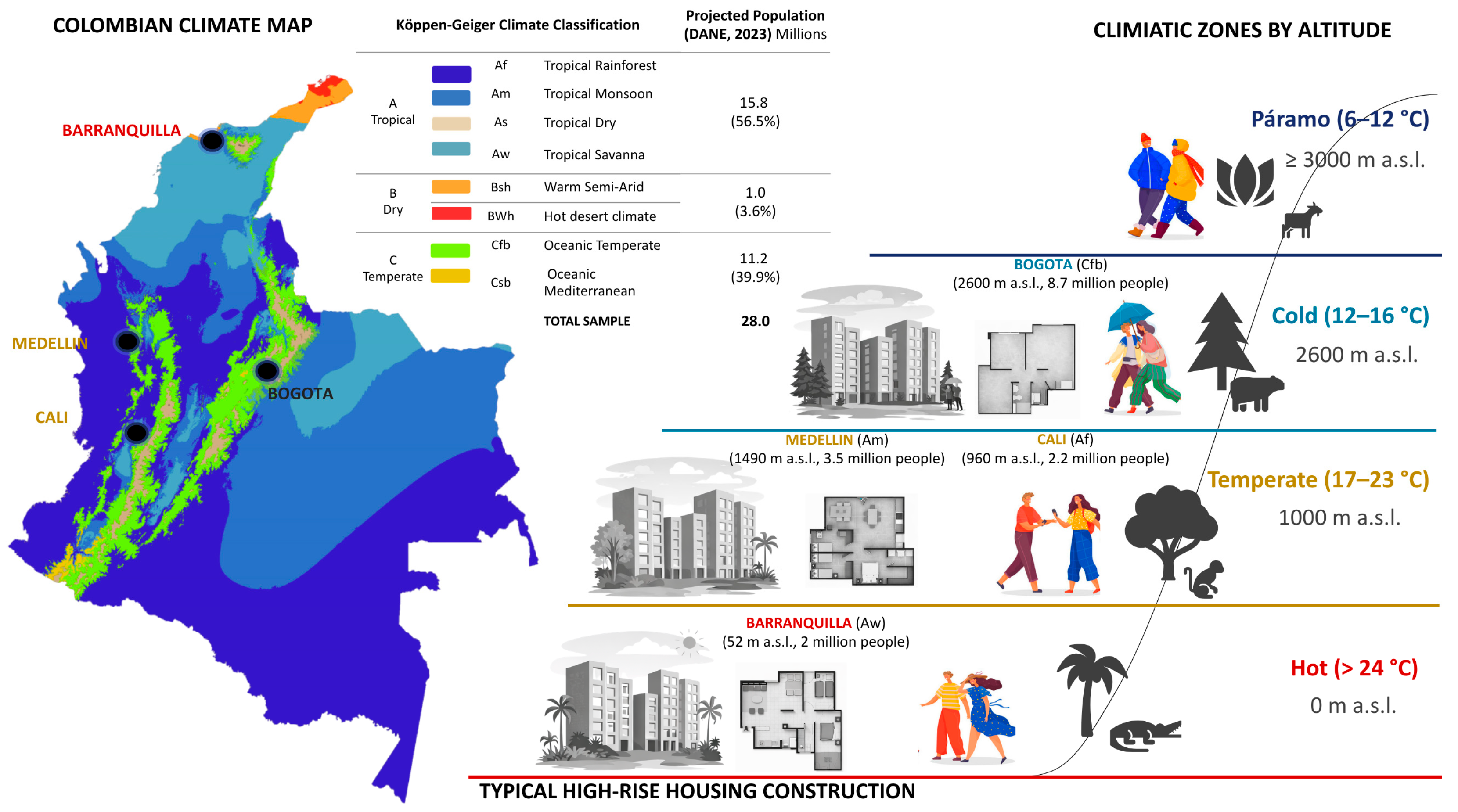
Colombia provides a particularly revealing context for examining these dynamics. Despite its relatively small territory, the country exhibits pronounced climatic diversity typical of the Andean region, ranging from cold-humid highland environments to hot-dry and hot-humid tropical regions. Major cities such as Bogotá, Medellín, Cali, and Barranquilla exemplify this variation (Figure 1). Nevertheless, national social housing programmes have tended to promote standardised construction solutions with limited consideration to regional environmental differences. Since the early 2000s, large-scale programs for social housing (VIS and VIP) have focused primarily on addressing quantitative housing deficits, often prioritising delivery scale and cost over thermal performance, ventilation, and envelope design [5].
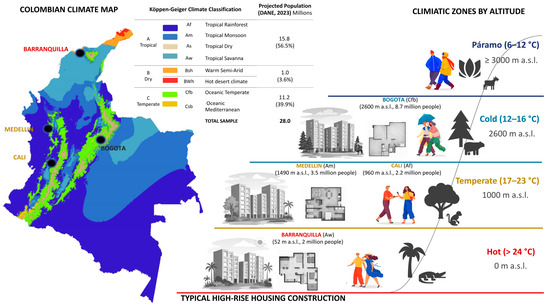
Figure 1.
Climatic diversity and standardised housing typologies in major Colombian cities [6].
Bogotá is not presented here as representative of all Colombian or tropical climates. Rather, it is treated as a critical analytical case: a cold-humid tropical highland city where the disconnect between housing policy, thermal comfort, and everyday living conditions becomes particularly visible, allowing underlying regulatory and design mechanisms to be examined.
Despite the evolution of energy-efficiency standards, this gap is especially visible in tropical climates, where comfort models and regulatory criteria are often applied without sufficient consideration of local environmental, social, and behavioural conditions. Several studies warn that standards may be implemented too mechanically in response to energy policy agendas, overlooking factors such as economic constraints, cultural practices, and adaptive behaviours that shape thermal perception in everyday life [1,7,8]. This problem is compounded by the limits of conventional predictive models in naturally ventilated and warm-climate buildings, where occupants actively modify clothing, ventilation, and patterns of use in ways not fully captured by standard approaches [9,10,11]. Although adaptive approaches have addressed some of these shortcomings, reviews continue to highlight the complexity of thermal comfort and the lack of robust empirical evidence from tropical residential contexts, particularly post-occupancy studies capable of informing more context-sensitive standards [12,13]. As a result, buildings may satisfy regulatory energy targets while still failing to provide thermally acceptable indoor conditions for their occupants.
This study examines whether efficiency-centred sustainability regulation in Colombia effectively ensures thermally adequate indoor conditions in social housing under real occupancy conditions. By combining a critical review of regulatory instruments with post-occupancy evidence from monitored dwellings, it investigates the relationship between regulatory compliance, measured indoor environmental performance, and occupants’ lived thermal experience.
In doing so, the paper advances three principal contributions. First, it repositions thermal comfort as a central policy indicator of environmental well-being rather than a secondary by-product of energy efficiency. Second, it demonstrates how limited residential evidence in tropical contexts constrains the applicability of imported comfort standards and regulatory frameworks. Third, it situates thermal adequacy within a broader governance perspective that connects energy consumption, equity, and public health. While grounded in the Colombian case, the analysis speaks to other rapidly urbanising contexts characterised by standardised housing provision and constrained adaptive capacity. Although the empirical datasets have been previously reported in building performance research, this paper makes a distinct contribution by reinterpreting them through a policy and governance lens, in dialogue with Resolution 0194 of 2025 [14], and explicitly linking regulatory metrics to post-occupancy thermal adequacy, household vulnerability, and housing policy.
2. Conceptual Framework
2.1. Theoretical Models of Thermal Comfort
Thermal comfort research has been shaped primarily by two complementary theoretical approaches: the static (heat-balance) model and the adaptive comfort model. The static model, developed by Fanger [15], is grounded in the principle of human heat balance and defines comfort as a state of thermal neutrality achieved when internal heat production and heat loss are in equilibrium. It operationalises comfort through six variables—air temperature, mean radiant temperature, relative humidity, air speed, clothing insulation, and metabolic rate—from which the Predicted Mean Vote (PMV) and Predicted Percentage of Dissatisfied (PPD) indices are derived. These indices have been widely adopted for the design and assessment of mechanically conditioned buildings and remain embedded in international standards such as ISO 7730 [16] and ASHRAE 55-2004 [17].
The adaptive comfort model emerged in response to the limitations of static approaches in naturally ventilated environments. Initially formulated by de Dear and Brager [18], and later refined [19], the adaptive model conceptualises comfort as a dynamic outcome of occupants’ physiological, behavioural, and psychological adjustments to their environment. Rather than prescribing fixed indoor comfort thresholds, it links acceptable indoor conditions to prevailing outdoor climates, explicitly recognising the role of adaptation over time. This perspective has been progressively incorporated into major international standards, marking a shift towards climate-responsive comfort frameworks that acknowledge variability in occupant behaviour and environmental context.
Together, these models constitute the conceptual foundation of contemporary comfort regulation. However, the assumptions and applicability of their approach depend critically on the empirical evidence used to develop and validate their parameters, particularly regarding climate, building type, and patterns of use.
2.2. Empirical Imbalance in Thermal Comfort Evidence
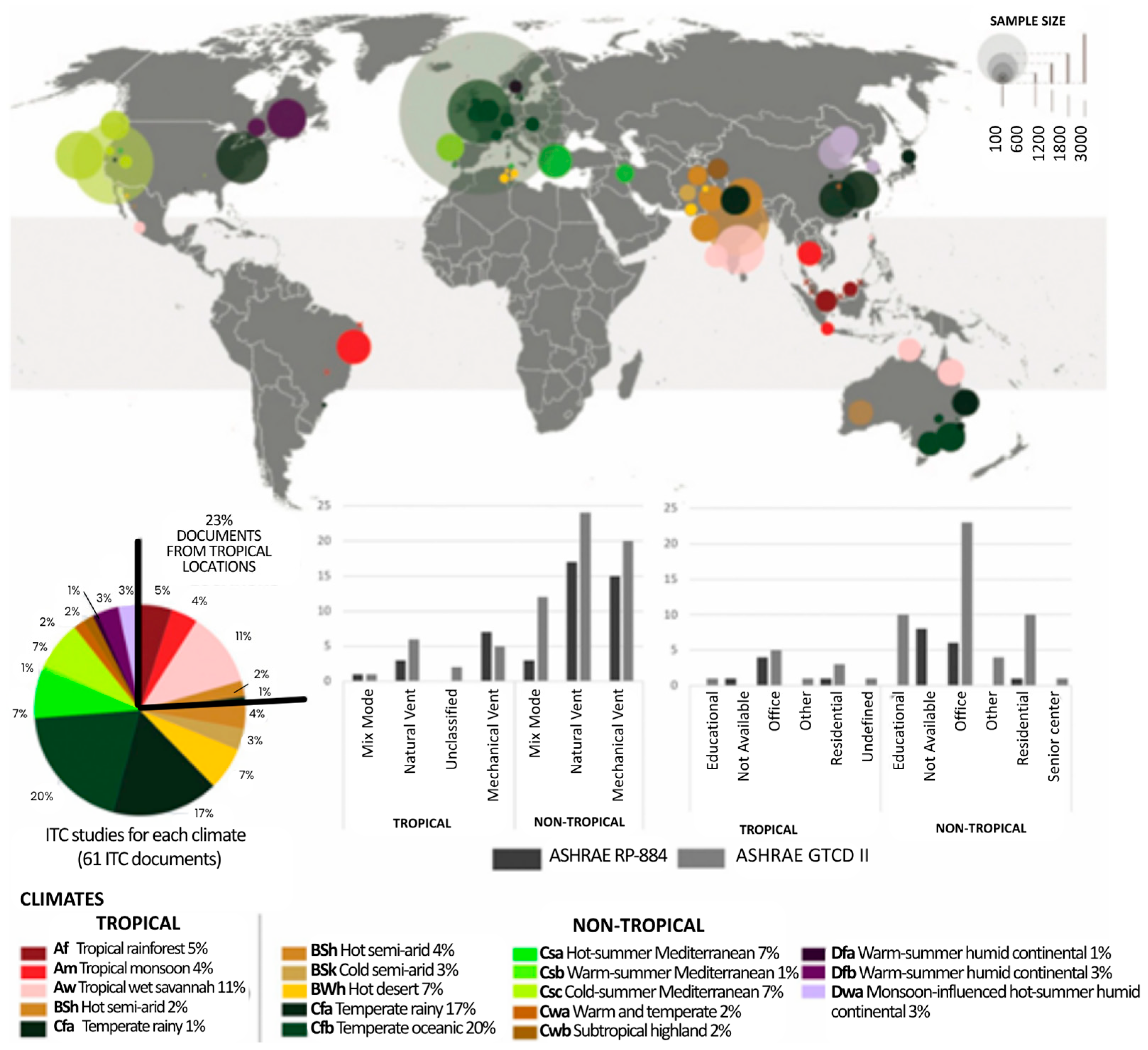
The empirical basis supporting adaptive comfort standards is unevenly distributed across climatic regions and building typologies. Rodriguez and D’Alessandro [20] demonstrate that, within ASHRAE-based field study datasets used to inform the adaptive algorithms embedded in international standards, only approximately 23% of documented cases correspond to hot-humid or hot-dry climates (Figure 2). This imbalance is particularly significant given that around 40% of the world’s population lives between the Tropic of Cancer and the Tropic of Capricorn, a proportion that continues to increase due to higher population growth rates in tropical regions [21].
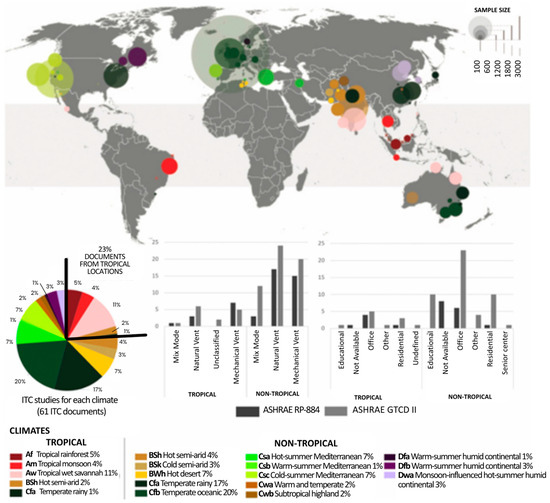
Figure 2.
Geographic, climatic, and building-type distribution of thermal comfort field studies informing international standards, adapted from Ref. [20].
Beyond standard-setting datasets, Rodriguez and D’Alessandro’s evaluation of 543 peer-reviewed thermal comfort field studies published up to 2018 reveals broader structural concentrations in the literature. Of the studies analysed, 87% were conducted in just nine countries, and 65% were concentrated in only four cities. In addition, the majority focused on office and educational buildings, while residential housing—particularly social and low-income dwellings—was markedly underrepresented.
Collectively, these patterns indicate that widely used comfort models and algorithms were calibrated primarily on a narrow subset of climatic and socio-spatial conditions. As a result, their relevance for residential environments in tropical regions—where everyday practices, dwelling typologies, and constraints on adaptation differ substantially—remains limited, with direct implications for policy transfer and regulatory effectiveness.
2.3. Thermal Comfort, Energy Use, and Vulnerability
Thermal comfort has direct and well-documented implications for energy consumption, household vulnerability, and health outcomes. On a global scale, the increasing demand for thermal regulation has reshaped energy systems, with cooling alone accounting for a substantial share of electricity consumption and associated greenhouse gas emissions [22]. In tropical regions, this trend is intensified by rapid urbanisation, rising ambient temperatures, and limited access to climate-responsive housing design.
In low-income residential contexts, inadequate thermal conditions can generate a dual burden. Households may experience prolonged exposure to heat or cold, which is associated with increased respiratory and cardiovascular morbidity [23,24]. Likewise, they may resort to compensatory energy use—such as portable heaters, fans, or air conditioning—leading to disproportionate energy expenditure relative to income. Thermal comfort thus becomes closely intertwined with energy poverty, understood as the inability to maintain healthy indoor conditions due to structural, economic, or technical constraints.
These dynamics underscore why thermal comfort cannot be treated solely as a performance parameter or a design variable. Rather, it operates as a structural interface between building characteristics, energy systems, and socio-economic vulnerability, shaping both exposure to environmental risk and patterns of energy use. From this perspective, thermal inadequacy is not simply a technical deficiency but a distributional condition that unevenly affects households with limited adaptive capacity. This interpretation aligns with energy justice scholarship, which highlights the distributional, procedural, and recognition dimensions of energy systems [25]. Energy justice scholarship refers to an interdisciplinary framework that examines how energy systems allocate benefits, costs, risks, and decision-making power across different social groups, emphasising fairness in both energy governance and energy-related living conditions. Within this framework, ensuring thermally adequate housing becomes a matter of equity and governance, positioning indoor environmental conditions as a relevant component of climate policy, social protection, and public health regulation.
3. Methodology
3.1. Research Design and Analytical Strategy
This study adopts a mixed, exploratory research design structured across two complementary analytical levels:
- (1)
- a documentary and regulatory analysis of policies, standards, and institutional frameworks related to thermal comfort and energy efficiency; and
- (2)
- an analytical synthesis of empirical post-occupancy data derived from prior research on social housing in Bogotá.
The methodological strategy is designed to connect governance frameworks, building performance, and lived residential experience. By combining regulatory analysis with empirical evidence from occupied dwellings, the study examines how policy assumptions regarding comfort and efficiency align—or fail to align—with actual indoor environmental conditions and occupant practices in a tropical urban context. This approach allows thermal comfort to be examined simultaneously as a technical parameter, a regulatory construction, and an everyday residential condition, without treating these dimensions in isolation.
3.2. Phase 1: Documentary and Regulatory Analysis
The first phase consisted of a structured review of policies and regulations governing sustainable construction, thermal comfort, and energy performance. The regulatory documents were selected based on their current legal force and direct applicability to the social housing sector. Similarly, the 44 monitored units were selected as analytically relevant examples of the high-rise, uninsulated masonry construction commonly used in Bogotá’s social housing sector. The scope of the review included three categories of documents:
- National regulations related to housing and sustainable construction in Colombia, including Resolution 0549 of 2015 and its successor Resolution 0194 of 2025 [14], as well as Decree 1077 of 2015 [26].
- Technical standards adopted or referenced in the Colombian context, notably Colombian Technical Standard NTC 5316 [27], alongside international standards such as ASHRAE 55-2020 [28], ISO 7730 [16], and EN 15251 [29].
- International reference frameworks related to building energy efficiency and indoor environmental performance, including the Energy Performance of Buildings Directive (EPBD) and the World Resources Institute’s Building Efficiency Initiative.
Three criteria guided document selection:
- Direct relevance to residential buildings and housing policy.
- Official or normative status within national or international institutional frameworks; and
- Applicability or formal adoption within the Colombian regulatory context.
To ensure consistency in analysis, a comparative analytical matrix was applied to all documents. The matrix examined: (i) how thermal comfort is defined or referenced; (ii) the degree of parameterisation, including design thresholds and measurable indicators; and (iii) the presence or absence of mechanisms for verification, monitoring, or post-occupancy assessment.
3.3. Phase 2: Empirical Data Sources and Processing
The second phase involved synthesising empirical data from post-occupancy studies conducted between 2015 and 2021 on social interest housing (VIS) projects in the Bogotá plateau region. These studies [30,31] focused on assessing indoor thermal conditions and occupant comfort in representative social housing typologies.
The analysed housing developments share construction characteristics typical of large-scale VIS projects in Bogotá, including multi-family buildings of five to six storeys, tunnel formwork construction systems, uninsulated 12 cm solid brick façades, aluminium-framed single-glassed windows (4 mm), non-ventilated metal roofs, and average internal heights of approximately 2.30 m. Dwelling floor areas range between 45 and 70 m2.
To characterise the thermal performance of the building envelope, the thermal transmittance (U-values) and glassing properties of the main envelope components were estimated using DesignBuilder v6.1 software based on the construction layers of each element. The resulting parameters are summarised in Table 1.

Table 1.
Thermal characteristics of the envelope components. U-values were estimated using DesignBuilder software based on the construction layers of each element.
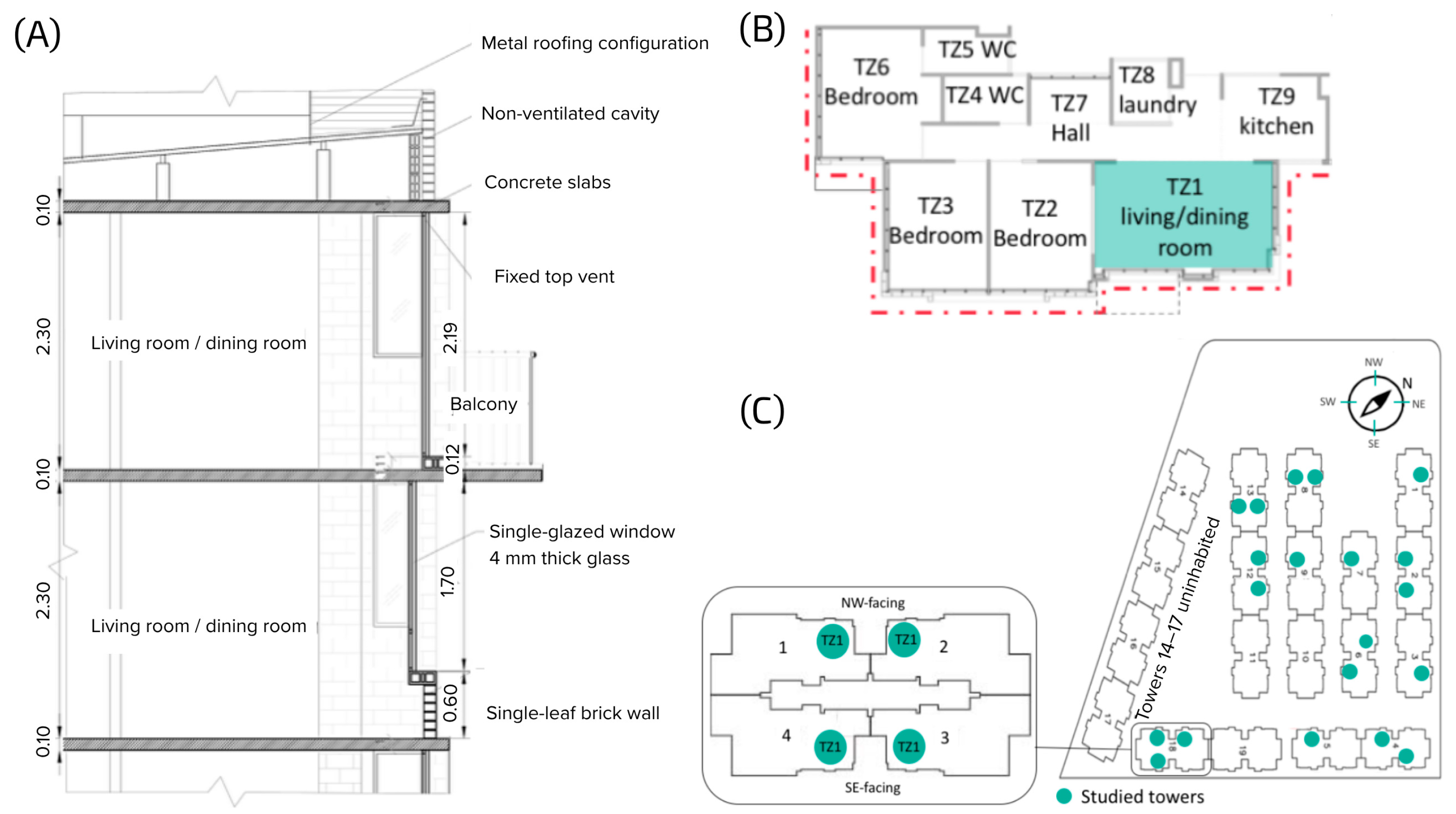
A total of 44 apartments were monitored, representing approximately 14.6% of occupied units in the selected housing complexes. The monitored sample included apartments located in different positions and orientations within the selected housing developments (Figure 3). Indoor and outdoor air temperature and relative humidity were measured simultaneously using HOBO U12 data loggers, Onset, Bourne, MA, USA (accuracy ±0.35 °C and ±2.5% RH). Sensors were installed in primary living–dining spaces (TZ1), positioned 0.7 m above floor level and located away from direct solar radiation sources. Measurements were recorded at one-hour intervals over 24 h monitoring periods during representative dry and wet seasonal cycles between November and April.
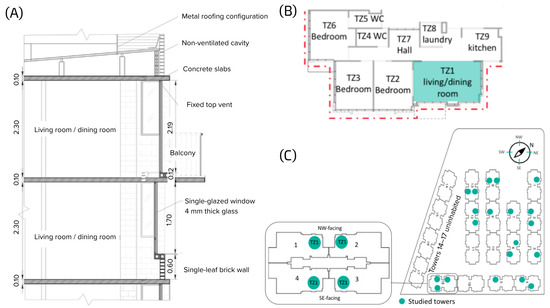
Figure 3.
Schematic representation of the envelope configuration and analysed thermal zones in the studied social housing typology: (A) typical building section showing envelope layers and construction system; (B) example floor plan indicating thermal zones and the monitored living–dining space (TZ1); (C) schematic project layout illustrating the tower configuration analysed. The figure is diagrammatic and does not represent the orientation of all monitored apartments.
Recorded environmental data were processed using both the static (PMV/PPD) and adaptive comfort models as defined in ASHRAE 55-2017 [32], employing the Center for the Built Environment (CBE) thermal comfort tool, version 2.5.7 [33]. Model input parameters were standardised across cases as follows: air speed of 0.3 m/s, clothing insulation of 0.74 Clo, and metabolic rate of 1.1 met. This air-speed value was adopted to represent low but perceptible indoor air movement under typical naturally ventilated conditions in the monitored dwellings, where ventilation is predominantly single-sided and window opening is often restricted during colder periods. This value is consistent with low indoor air-speed conditions described in ASHRAE 55-2017 [32].
Complementary post-occupancy 36-item questionnaires were administered to one occupant per dwelling (n = 44). These were designed to assess occupants’ satisfaction with multiple dimensions of indoor environmental quality. The questionnaire covered thermal comfort, indoor air quality, acoustics, lighting, spatial layout, aesthetics, adaptability, and overall dwelling perception. The instrument was developed with reference to adaptive thermal comfort research by de Dear and Brager [18] and to the standardised post-occupancy survey framework proposed by the Center for the Built Environment (CBE) [33]
The questionnaire was administered through face-to-face interviews conducted in each dwelling, typically between 07:00 and 08:00, at the beginning of the monitored day. A total of 44 occupants participated, including 23 females and 21 males, aged between 20 and 60 years (25% aged 20–30, 43% aged 31–40, 27% aged 41–60, and 5% above 60). Open-ended comments, where provided by respondents, were used only as complementary qualitative context to illustrate recurring perceptions already identified in the descriptive survey results; no formal qualitative coding procedure was applied.
For the purposes of the present study, only responses related to thermal comfort and general dwelling satisfaction were analysed, corresponding to a subset of 21 items from the full questionnaire. These items were primarily structured using seven-point Likert scales consistent with the CBE methodology, complemented by categorical and frequency-based questions addressing adaptive behaviours and perceived indoor environmental conditions. Responses were analysed descriptively to identify recurrent patterns and to support the interpretation of measured environmental data.
To integrate the documentary and empirical components, an analytical triangulation process was implemented through three sequential steps:
- Identification of divergences between comfort assumptions and parameter definitions embedded in regulatory and normative documents and the measured indoor thermal conditions observed in the studied dwellings.
- Linkage of identified technical discrepancies to reported occupant behaviours and energy-related practices, including adaptive strategies associated with thermal regulation.
- Contextualisation of these relationships within Colombia’s stated sustainability objectives, including national energy efficiency goals and commitments under international climate frameworks such as the Paris Agreement and the Nationally Determined Contribution (NDC).
This triangulation enabled a structured comparison between regulatory intent, building performance, and lived residential conditions, without presupposing causal interpretations or evaluative conclusions.
4. Results
4.1. Colombia’s Regulatory Framework for Sustainable Construction
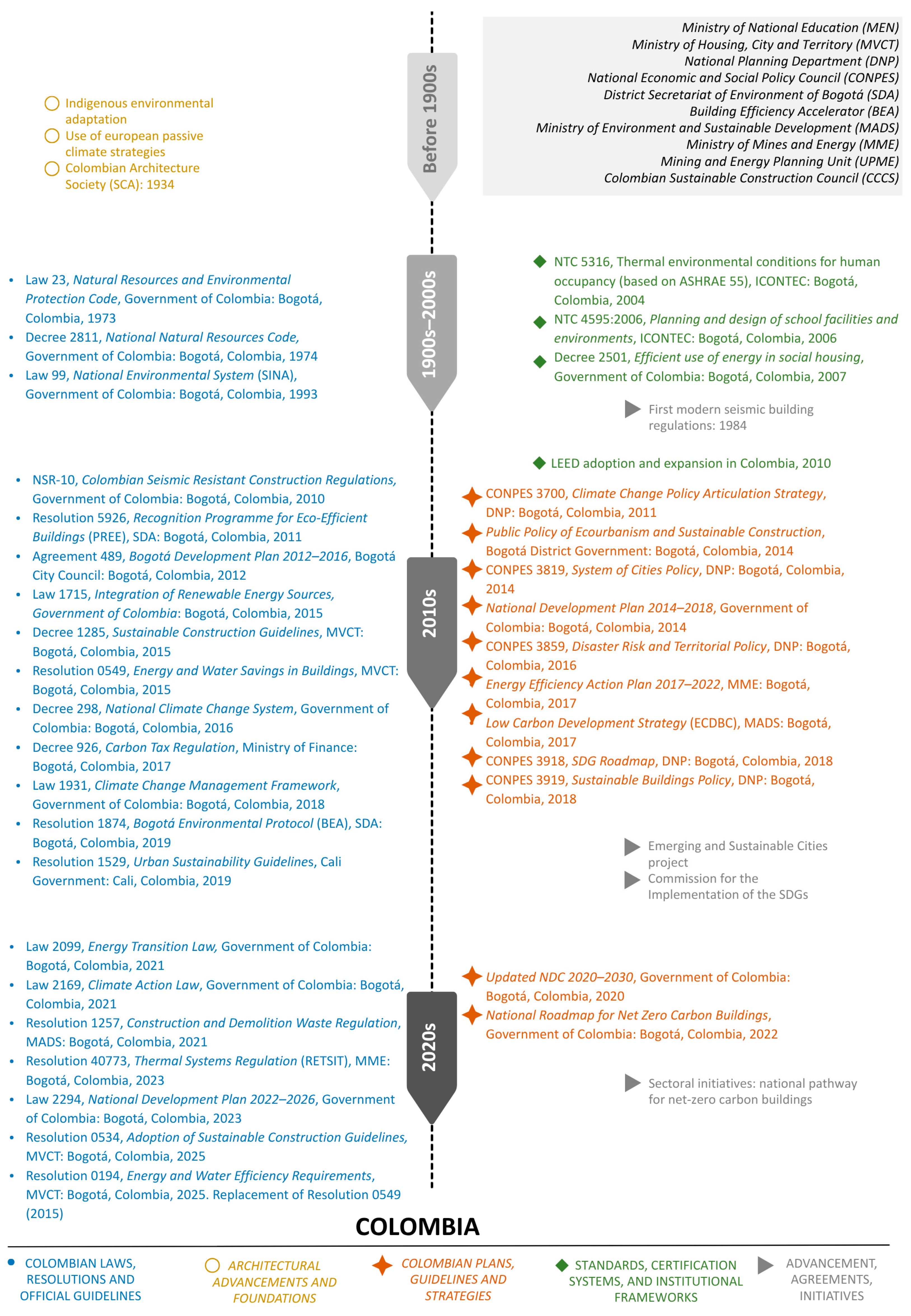
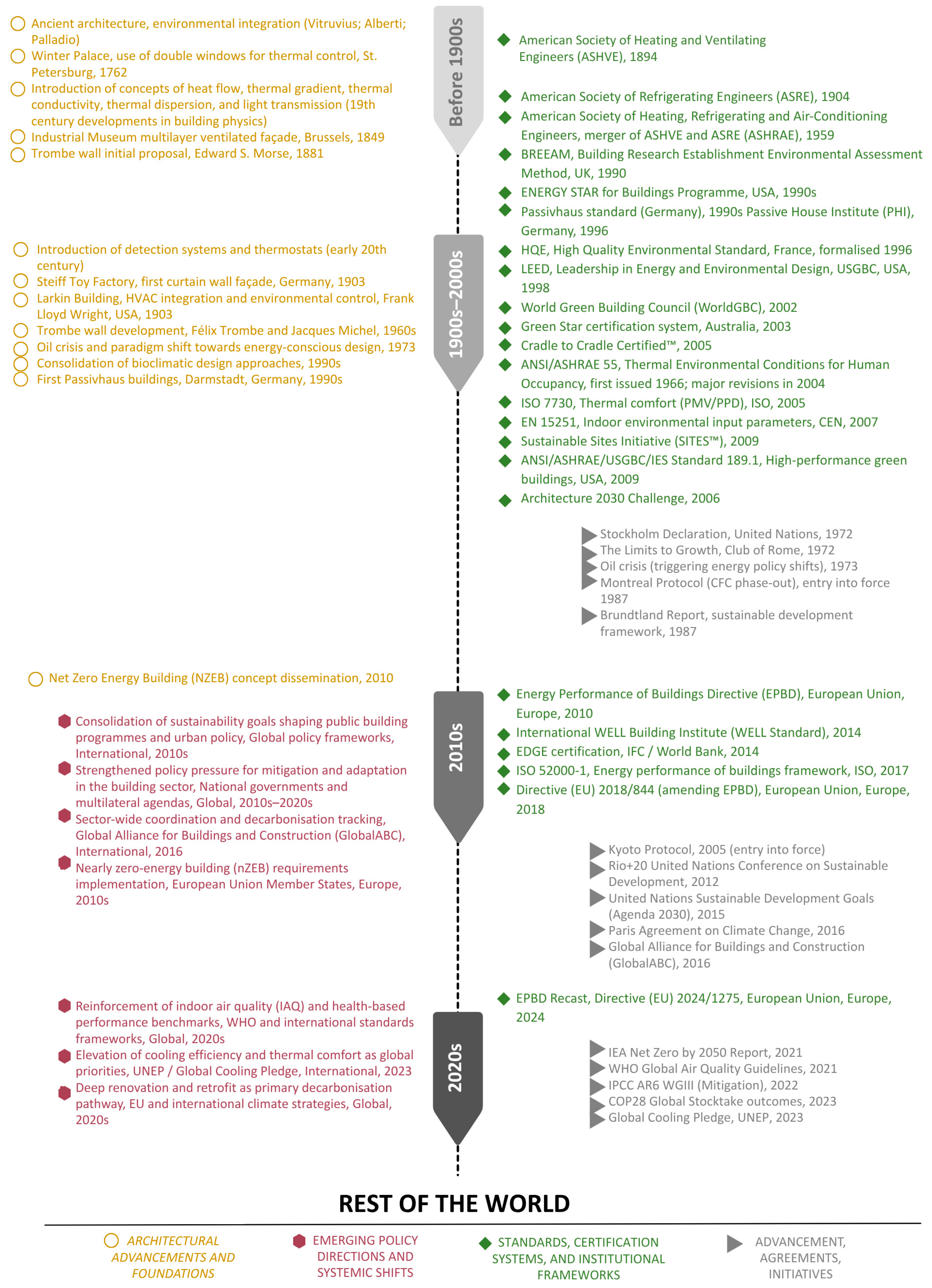
The documentary analysis conducted for this work reveals that Colombia’s housing sustainability framework has evolved toward greater technical precision in efficiency targets, yet without a parallel consolidation of enforceable thermal comfort criteria. Colombia’s regulatory development is part of a wider global shift in which sustainability is increasingly defined by measurable performance indicators, particularly energy-reduction targets. This trajectory can be observed in Figure 4 (Colombia) and Figure 5 (rest of the world), which situate national developments within a broader temporal and international context, highlighting the progressive expansion and diversification of sustainability frameworks across scales.
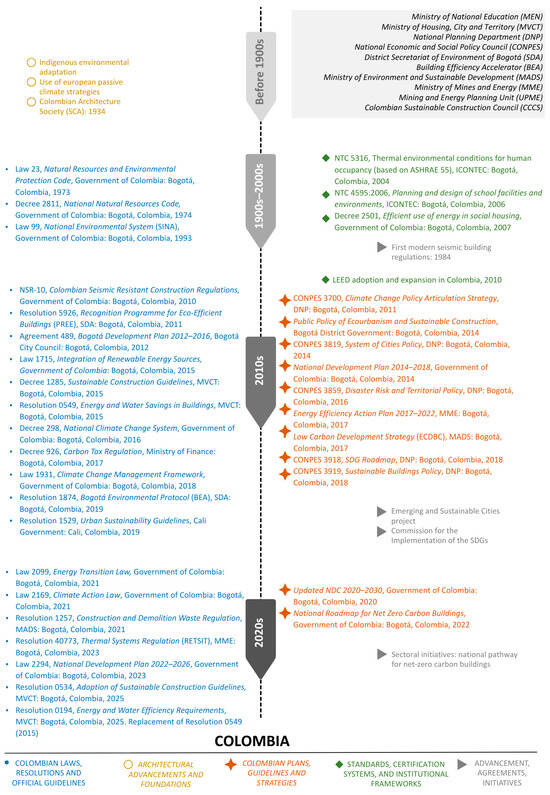
Figure 4.
Evolution of Sustainability, Energy, and Environmental Regulation in the Built Environment: Colombia.
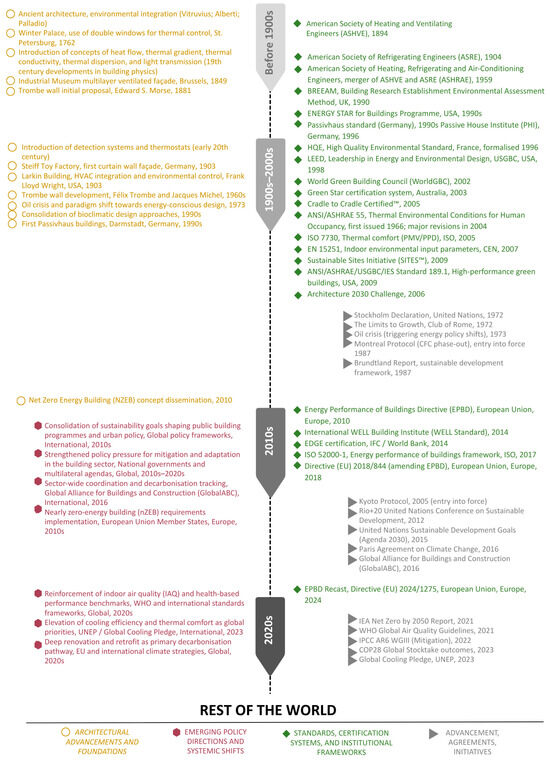
Figure 5.
Global Evolution of Sustainability, Standards, and Policy Frameworks in the Built Environment.
Over the past three decades, international governance frameworks—ranging from energy performance directives and ISO standards to climate mitigation agreements—have progressively reframed sustainability as a quantifiable, compliance-based objective. Energy consumption and carbon emissions became central regulatory metrics. Although thermal comfort remained present in technical standards, it was largely embedded within engineering models and simulation-based compliance procedures rather than treated as a socially verified outcome under real conditions of occupation.
Colombia’s regulatory pathway reflects this same logic of alignment and adaptation. Early environmental legislation established general principles of resource protection but did not address building thermal performance. The adoption of NTC 5316 in 2004 [27] introduced comfort parameters derived from ASHRAE 55-2004 [17], yet without enforcement mechanisms or systematic climatic recalibration for Colombia’s diverse territorial conditions. Resolution 0549 of 2015 [34] marked the first attempt to translate sustainability into binding quantitative requirements for residential buildings, with a focus on water and energy savings.
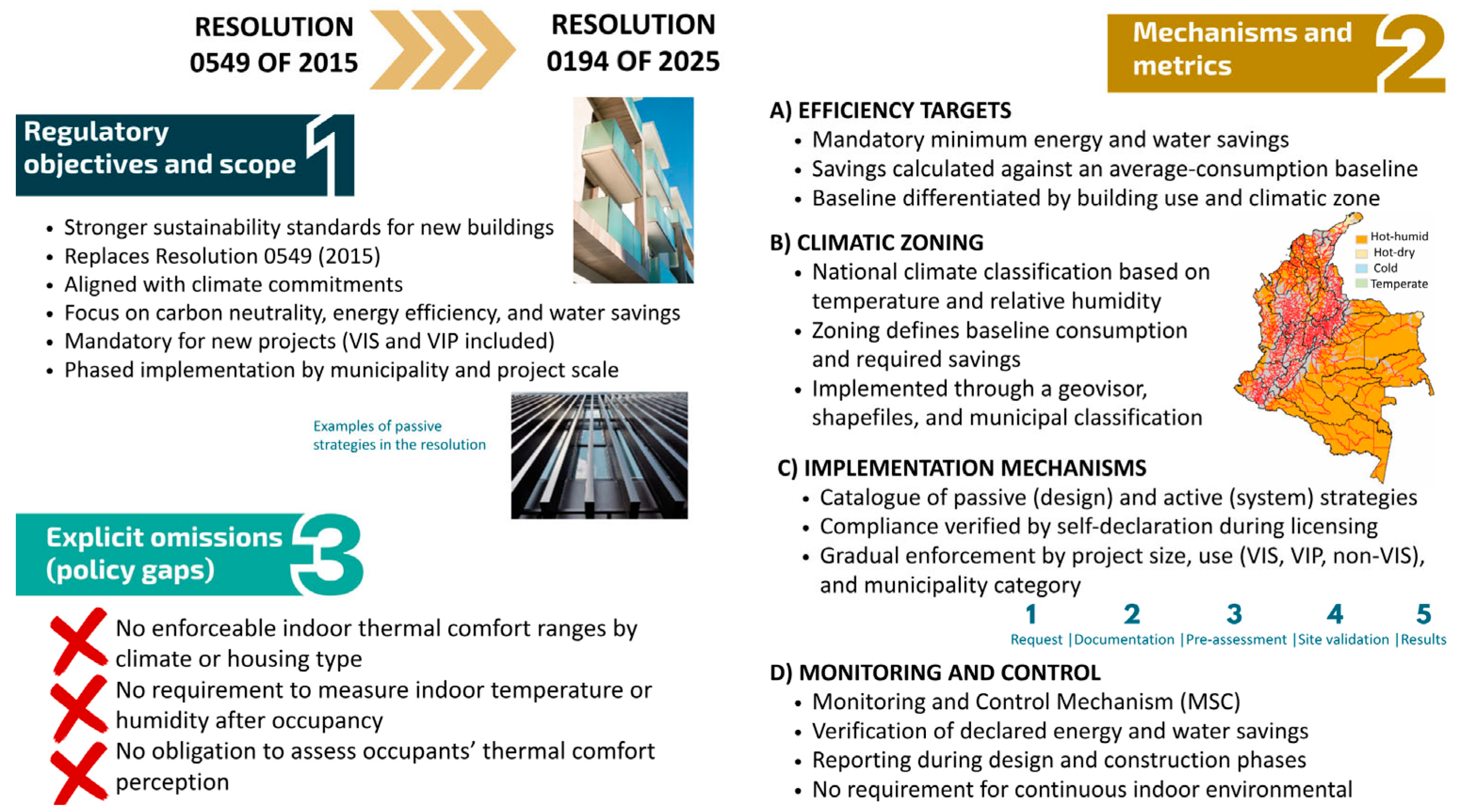
The subsequent densification of climate and energy legislation—particularly following national commitments to decarbonisation—culminates in Resolution 0194 of 2025 [14]. This instrument does not merely update technical thresholds; it consolidates a regulatory model in which sustainability is operationalised primarily as resource efficiency. The internal structure of the resolution, illustrated in Figure 6, confirms this orientation.
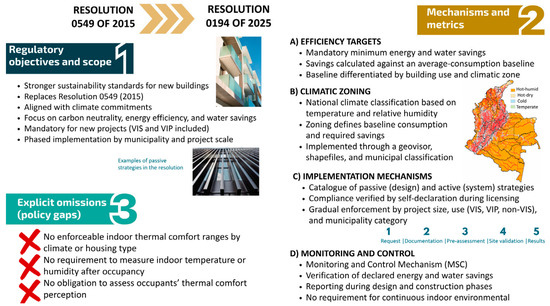
Figure 6.
Regulatory structure of Resolution 0194 of 2025 [14] based on official graphical material and identified gaps in thermal comfort governance.
Resolution 0194 strengthens mandatory minimum savings for energy and water, differentiates baselines by building use and climatic zone, and formalises compliance procedures through staged documentation and verification. The introduction of national climatic zoning constitutes a significant institutional advance that acknowledges Colombia’s territorial heterogeneity. Baseline consumption and expected reductions are no longer uniform but conditioned by environmental classification.
Yet the analysis reveals a critical asymmetry. Climatic differentiation applies exclusively to projected consumption targets, not to indoor environmental quality. The regulation specifies the amount of energy that must be reduced, but it does not define the required indoor thermal conditions for each climatic zone. No enforceable temperature or humidity ranges are established. No post-occupancy evaluation is required to verify that dwellings provide acceptable comfort once inhabited. Compliance is demonstrated through projected performance and documentation rather than through measured environmental outcomes.
Moreover, while passive and active strategies are catalogued as design pathways, their selection is linked to achieving energy savings rather than guaranteeing indoor adequacy. The Monitoring and Control Mechanism verifies declared reductions in consumption during design and construction phases, yet it does not extend to continuous indoor environmental monitoring or occupant-based assessment.
The continued parallel existence of NTC 5316 [27] reinforces this gap. Although comfort parameters are formally recognised in Colombian technical standards, they are not structurally embedded within the enforcement logic of sustainability regulation. Comfort is technically acknowledged but institutionally peripheral.
The regulatory findings, therefore, reveal a hierarchy of priorities: energy efficiency is quantified, climatically zoned, and enforceable; thermal comfort is referenced but not operationalised as a measurable right or performance condition. The empirical evidence presented in Section 4.2 illustrates this possibility in the Bogotá case.
From a policy analysis perspective, the evolution of Colombian regulation demonstrates institutional maturity in climate alignment and in the governance of efficiency. However, it also exposes a conceptual limitation: sustainability is equated with reduced resource consumption rather than with ensured environmental adequacy. This distinction becomes central when regulatory intent is contrasted with the empirical post-occupancy evidence presented in the following section, which reveals the lived implications of this efficiency-centred framework.
4.2. Measured Indoor Thermal Conditions in Bogotá Social Housing
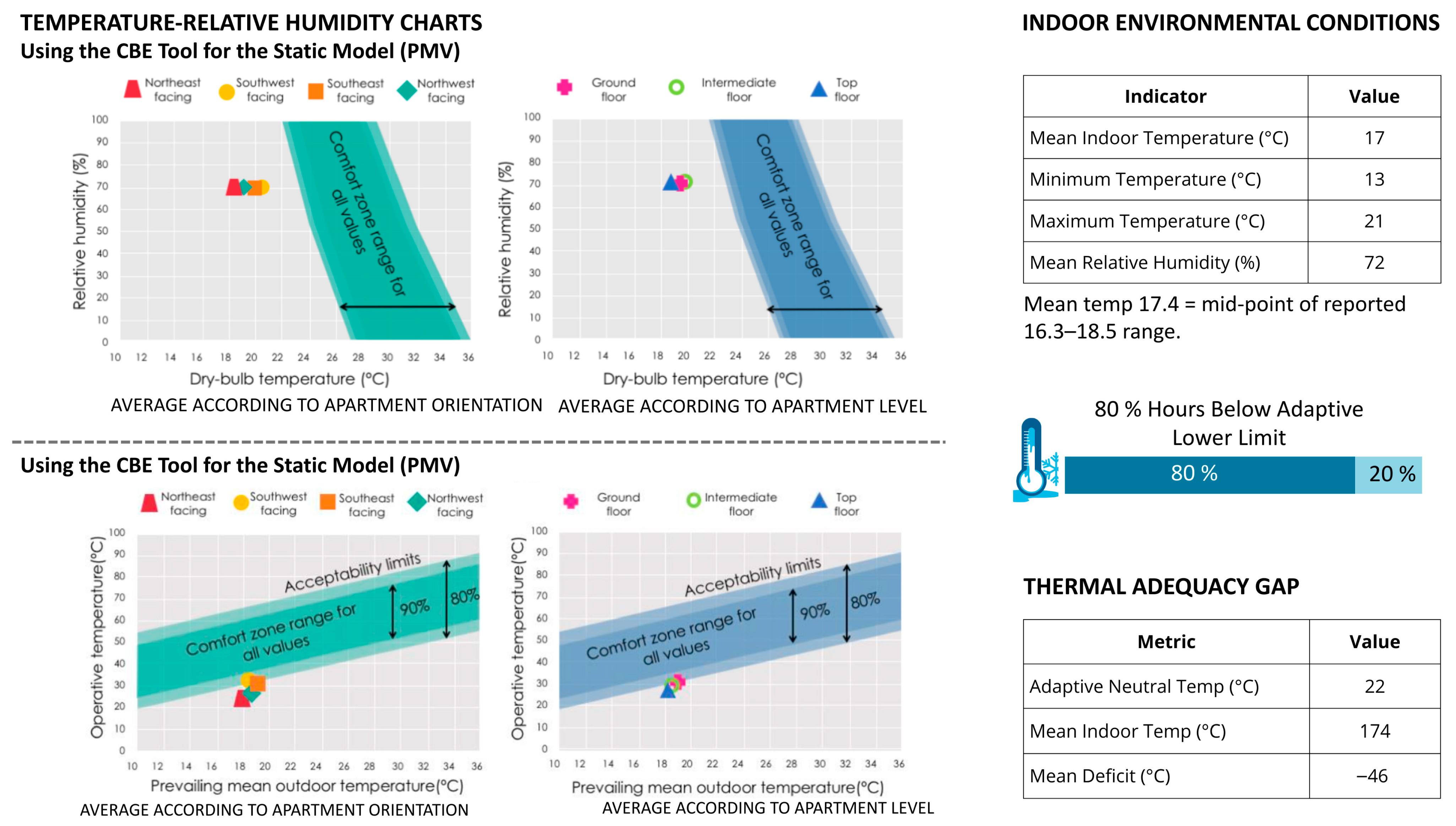
In parallel with the regulatory analysis, empirical evidence from monitored dwellings enables assessment of actual indoor environmental performance under occupied conditions. The monitored apartments—constructed with 12 cm uninsulated solid brick façades, single-glassed aluminium windows, non-ventilated metal roofing systems, and limited airtightness control—demonstrated limited thermal responsiveness and persistent exposure to cold and humid conditions during both dry and wet seasonal monitoring periods (Figure 7).
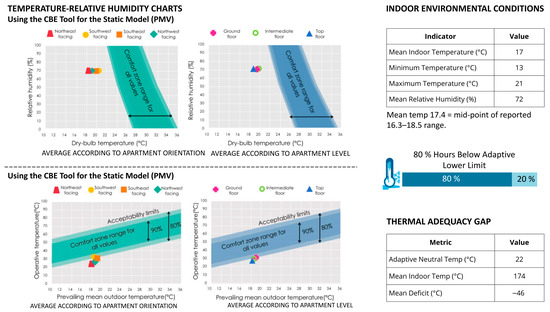
Figure 7.
Empirical Evidence of Thermal Comfort Performance and Adequacy Gap.
Average indoor air temperatures ranged between 16.3 °C and 18.5 °C. Minimum values reached approximately 13 °C in the early morning hours, while maximum values approached 21 °C around midday. Despite moderate daytime outdoor solar gains, indoor temperature amplitudes remained relatively compressed, indicating a slow thermal response and limited heat-retention capacity of the envelope. The dwellings did not exhibit strong passive solar buffering, and nocturnal heat loss was pronounced.
Relative humidity levels were consistently elevated, typically between 65% and 80%, with prolonged periods above 75%. These values indicate indoor environments characterised by high moisture persistence, limited drying capacity, and increased risk of condensation—conditions consistent with the highland cold-humid climatic context of Bogotá and with construction systems lacking thermal insulation and vapor control layers.
When evaluated using the static PMV/PPD model (ASHRAE 55), the recorded conditions produced an average Predicted Mean Vote (PMV) of −1.35 and a corresponding Predicted Percentage of Dissatisfied (PPD) of approximately 47%. These values fall well outside the neutral comfort range (−0.5 < PMV < +0.5), indicating substantial predicted thermal dissatisfaction under standardised clothing (0.74 Clo) and metabolic rate (1.1 met) assumptions.
Application of the adaptive comfort model yielded broader acceptable temperature bands, with neutral indoor temperatures estimated at approximately 22 °C and acceptable limits ranging from 19 °C to 25 °C, depending on outdoor running mean temperatures. However, measured indoor temperatures remained below the lower adaptive threshold for more than 80% of occupied hours. Thus, even under adaptive assumptions appropriate for naturally ventilated buildings, the dwellings remained below adaptive comfort thresholds during most monitored occupied hours.
The combined temperature and humidity profiles indicate not only low thermal acceptability but also conditions potentially associated with reduced perceived air quality and damp-related health risks. The empirical evidence, therefore, demonstrates that the monitored social housing units consistently operated outside both static and adaptive comfort thresholds during representative monitoring periods.
4.3. Occupancy Perceptions and Adaptive Practices
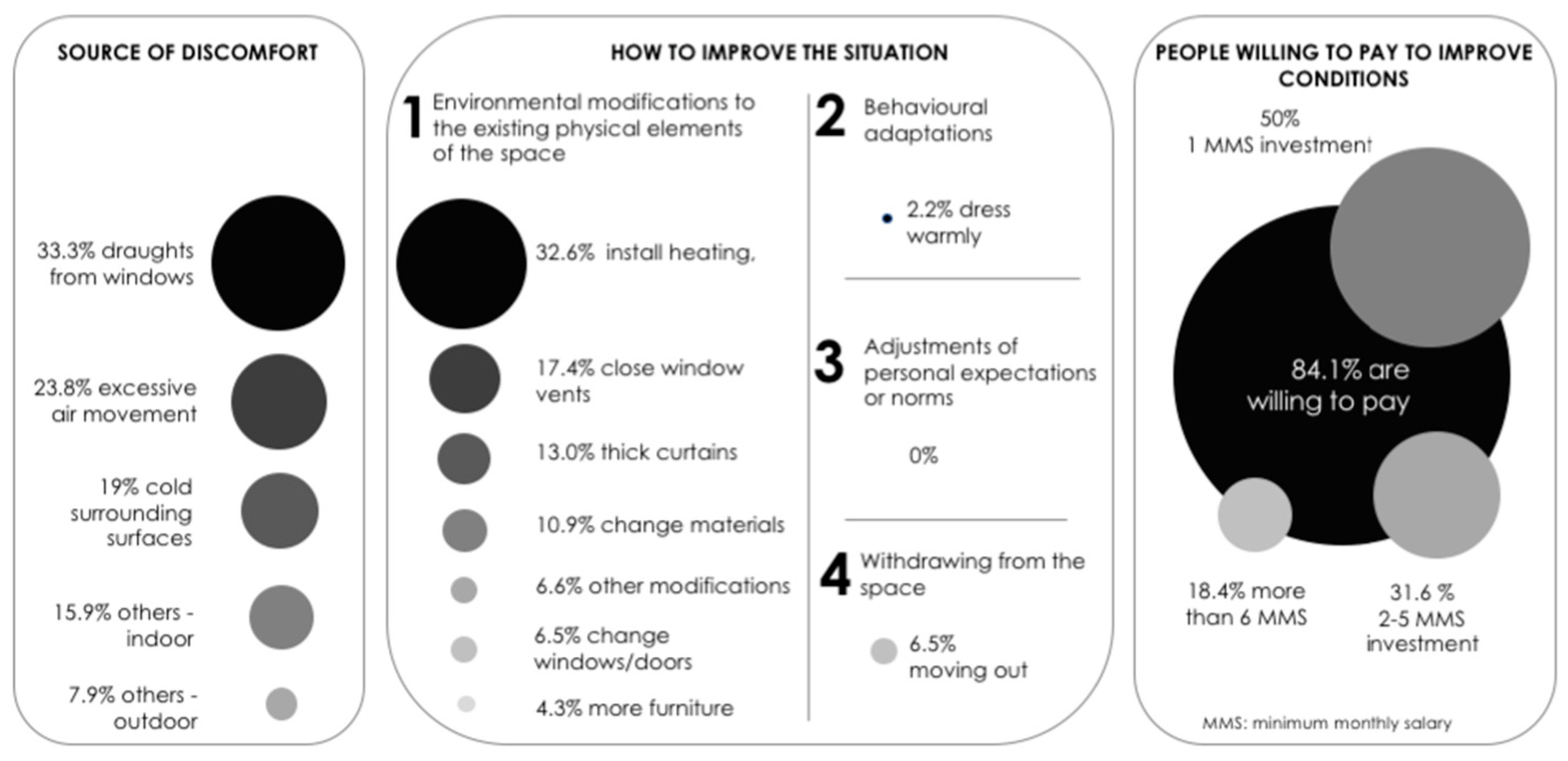
Questionnaire responses closely mirrored measured environmental conditions. Only 27% of respondents described their dwellings as “comfortable” or “slightly comfortable,” while 56% reported experiencing “moderate” or “intense” cold during most of the day. The remaining 17% corresponded to intermediate categories of the Likert scale, indicating neutral or mildly cool perceptions rather than clear comfort or intense discomfort. Reports of excessive humidity, condensation on walls or windows, and stagnant indoor air affected more than 60% of households. Overall thermal satisfaction averaged 3.4 on a seven-point Likert scale, indicating moderate dissatisfaction (Figure 8).
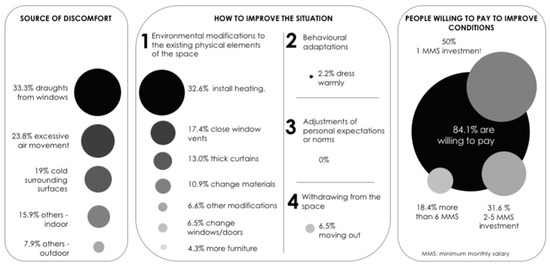
Figure 8.
Reported adaptive practices and perceived indoor environmental discomfort among surveyed occupants.
Adaptive responses were primarily compensatory rather than structural. The most frequently reported strategies included:
- Use of portable electric heaters (48% of households).
- Reduction in natural ventilation during night-time hours (71%).
- Concentration of daily activities in less exposed interior areas.
These practices reflect constrained adaptive capacity rather than climate-responsive architectural adjustment. Reduced ventilation, while perceived as protective against cold air infiltration, likely contributed to elevated indoor humidity. The absence of insulation and controlled ventilation systems limited passive mitigation options.
Qualitative comments suggest that residents frequently attribute discomfort to construction quality and insufficient thermal protection. However, no formal post-occupancy verification or reporting channel exists within housing management or regulatory systems, reinforcing the institutional separation between measured experience and policy enforcement.
4.4. Energy Implications and Household Vulnerability
Although the housing developments analysed lack centralised heating systems, reliance on portable electric heaters was associated with a self-reported increase in monthly electricity consumption during colder periods. This increase reflects compensatory energy use directly linked to thermal inadequacy rather than baseline domestic demand.
Energy burden was unevenly distributed. Households with elderly occupants or young children reported greater difficulty maintaining acceptable indoor conditions and more frequent use of the heater. Given the socio-economic profile of social housing beneficiaries, these additional expenditures represent a non-trivial proportion of household income.
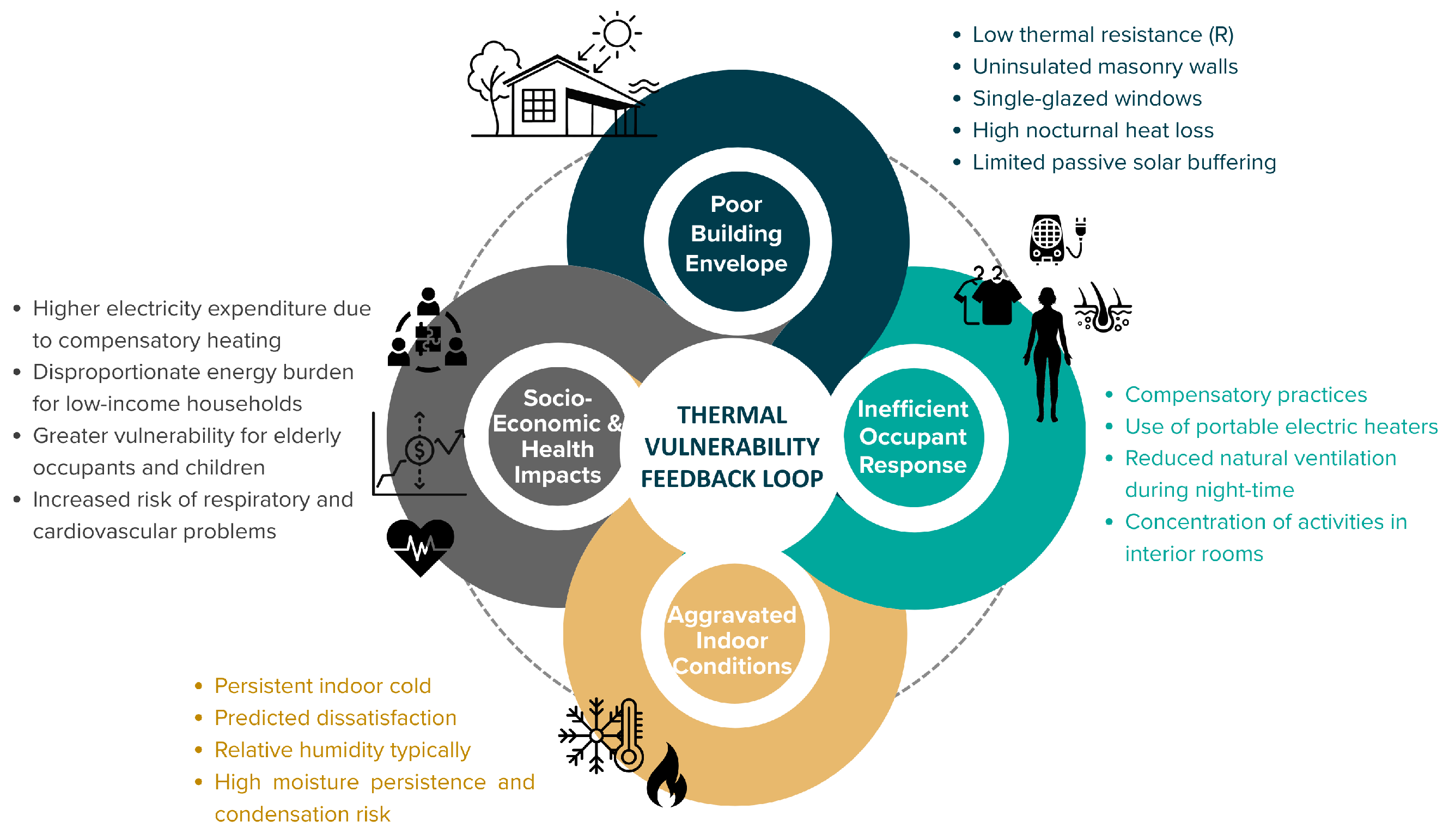
The empirical findings reveal a self-reinforcing feedback loop of thermal vulnerability (Figure 9):
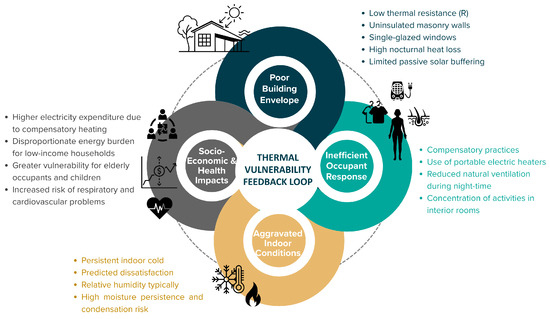
Figure 9.
Self-reinforcing cycle linking deficient envelope performance, compensatory energy use, indoor moisture retention, and household vulnerability in the studied Colombian social housing.
Phase 1: Deficient envelope performance (uninsulated brick and single glassing) leads to persistent indoor cold and high moisture.
Phase 2: Occupants react with compensatory practices, such as using inefficient portable electric heaters and restricting natural ventilation to retain heat.
Phase 3: These actions result in increased electricity expenditure and internal moisture retention (condensation), exacerbating the initial inadequacy.
Phase 4: The household remains trapped in a state of thermal discomfort while incurring higher economic and health costs, contributing to the reproduction of energy vulnerability and conditions consistent with energy poverty.
Despite the absence of permanent mechanical heating systems, thermal regulation occurs through informal, inefficient, and economically burdensome practices.
Taken together, the results indicate that the analysed social housing in Bogotá exhibits low thermal acceptability and reliance on compensatory energy use under real occupancy conditions. These findings provide empirical grounding for the regulatory asymmetry identified in Section 4.1: efficiency-based compliance does not guarantee thermally adequate living environments.
5. Discussion and Conclusions: Thermal Comfort as a Governance, Health, and Equity Issue
5.1. Thermal Comfort Beyond Performance: Health and Lived Experience
The findings indicate that thermal comfort in social housing cannot be understood solely as a matter of building performance or regulatory compliance. As shown in Section 4.1 and Section 4.2, persistently cold and humid indoor environments were observed in the analysed social housing in Bogotá. According to previous studies, such conditions may be associated with physical and psychological stress for occupants, particularly in contexts where residents have limited capacity to modify their dwellings [23,35]. These conditions reinforce the understanding of thermal comfort as a social determinant of health, with tangible implications for respiratory health, fatigue, sleep quality, and emotional stress [36].
Crucially, the results indicate that discomfort is not episodic or incidental but embedded in everyday domestic life. This persistence may undermine occupants’ perceived control over their living environment and may contribute to environmental stress, as suggested by reported coping practices and occupants’ comments (Section 4.3). In this sense, thermal comfort operates not only at the physiological level, but also at the level of perceived well-being and environmental stress, which is particularly relevant in social housing contexts characterised by prolonged indoor occupation and constrained residential mobility.
5.2. Limitations and Ethical Considerations
No new fieldwork or surveys were conducted specifically for this study. All empirical data were obtained from prior research projects that received ethical approval from the corresponding institutional review bodies at the time of data collection. The datasets consist exclusively of non-invasive environmental measurements and anonymous, voluntary occupant questionnaires, with no collection of personal or sensitive data. All procedures complied with applicable institutional regulations and ethical standards for research involving human participants.
This study presents several limitations. The empirical evidence is confined to Bogotá’s cold-humid highland climate and is not transferable to Colombia’s hot-dry or hot-humid regions. The analysis does not incorporate metered household energy data, relying instead on reported behaviours and inferred consumption patterns. Moreover, the findings are not statistically generalisable; the objective is to generate policy-relevant insights by examining the relationship between regulation, building performance, and lived experience within a critical urban context.
5.3. Energy Efficiency, Compensatory Practices, and Vulnerability
The analysis further reveals a structural contradiction between efficiency-oriented regulation and lived energy practices. Although the analysed dwellings lack permanent mechanical heating systems, occupants respond to inadequate thermal conditions with compensatory behaviours, most notably the use of portable electric heaters and reduced ventilation—which increases household electricity consumption (Section 4.3). This dynamic illustrates how energy efficiency, when pursued without adequate attention to indoor habitability, can generate compensatory energy practices that partially offset intended efficiency gains.
For low-income households, these compensatory practices translate into heightened vulnerability. Thermal discomfort thus becomes a mechanism by which energy poverty is reproduced, not only through affordability constraints but also through the inability to maintain healthy indoor conditions without incurring additional energy costs. This reinforces the need to conceptualise energy poverty as simultaneously thermal, economic, and health-related, rather than as a purely infrastructural or income-based phenomenon.
5.4. Policy Implications: The Limits of Efficiency-Centred Regulation
From a policy perspective, the findings suggest a structural misalignment between regulatory metrics and habitability outcomes, in which compliance is verified through projected consumption reductions rather than through demonstrable environmental adequacy. Current Colombian regulations allow dwellings to be classified as “sustainable” without demonstrating acceptable indoor thermal or health conditions. The empirical evidence obtained from the analysed housing sample indicates that such an approach externalises health and energy costs onto occupants, particularly those already experiencing socio-economic vulnerability.
These results suggest that sustainability policy cannot be evaluated solely by resource-efficiency metrics. A dwelling that meets efficiency targets but remains thermally unhealthy fails to achieve the broader objectives of sustainable development. Thermal comfort must therefore be repositioned as a core policy indicator that links housing quality, public health, energy governance, and social equity.
Overall, the empirical results demonstrate three central patterns: (1) the monitored dwellings systematically operate outside both static and adaptive thermal comfort thresholds; (2) occupants rely on compensatory practices such as portable electric heaters and reduced ventilation; and (3) existing regulatory frameworks prioritise projected efficiency targets without verifying indoor environmental adequacy under real occupancy conditions.
Considering the empirical results and policy analysis presented, the study supports three main conclusions. First, the findings indicate that thermal comfort merits treatment as a core dimension of housing adequacy and as a relevant public health consideration, rather than as a secondary design outcome. Second, the persistent gap between regulatory intent, building performance, and lived experience reveals the inadequacy of imported comfort standards and efficiency-centred frameworks when applied without local empirical grounding. Third, the exclusion of thermal comfort from enforceable housing policy can contribute to the persistence of energy vulnerability and unequal exposure to unhealthy indoor conditions in tropical urban contexts.
Addressing these challenges requires a shift towards integrated governance approaches in which thermal comfort is explicitly measured, monitored, and regulated alongside energy consumption. Such a shift would enable housing policy to move beyond narrow efficiency goals and towards a more human-centred conception of sustainability—one that recognises the dwelling not merely as an energy system, but as a metabolic interface between climate, body, and society.
In this sense, embedding thermal comfort into housing policy is not an optional refinement, but a necessary step towards climate justice, public health protection, and socially meaningful sustainability in tropical cities.
In conclusion, the Bogotá case examined in this study shows that compliance with efficiency-oriented sustainability regulation does not, in itself, ensure thermally adequate indoor conditions in occupied social housing. The monitored dwellings remained outside accepted comfort ranges during most monitored hours, while surveyed occupants reported discomfort, humidity-related problems, and reliance on compensatory practices such as portable heaters and reduced ventilation. When interpreted alongside the documentary analysis, these findings reveal a structural disconnect between regulatory compliance, indoor environmental adequacy, and lived residential experience. The study’s principal contribution lies in demonstrating that thermal comfort should be treated as an explicit, verifiable dimension of housing sustainability policy. In practical terms, this implies the need for stronger climate-responsive design requirements, locally calibrated comfort criteria, and post-occupancy verification mechanisms capable of assessing whether regulatory objectives translate into habitable indoor environments under real conditions of use.
Author Contributions
Conceptualisation, J.M.M. and C.R.; methodology, C.R. and J.M.M.; formal analysis, C.R. and J.M.M.; investigation, C.R. and J.M.M.; resources, C.R.; writing—original draft preparation, J.M.M.; writing—review and editing, C.R. and J.M.M.; visualisation, J.M.M. All authors have read and agreed to the published version of the manuscript.
Funding
This research received no external funding.
Institutional Review Board Statement
No new fieldwork was conducted for this study. The empirical datasets re-analysed in this article were obtained from prior research projects that received the corresponding ethical approvals at the time of data collection, in accordance with the applicable institutional procedures.
Informed Consent Statement
Informed consent was obtained from all subjects involved in the study.
Data Availability Statement
The data presented in this study are available from the corresponding author upon request. The 36-item post-occupancy questionnaire used in this study is available from the corresponding author upon reasonable request.
Conflicts of Interest
The authors declare no conflicts of interest.
References
- Rupp, R.F.; Vásquez, N.G.; Lamberts, R. A review of human thermal comfort in the built environment. Energy Build. 2015, 105, 178–205. [Google Scholar] [CrossRef]
- Nicol, J.F.; Humphreys, M.A. Adaptive thermal comfort and sustainable thermal standards for buildings. Energy Build. 2002, 34, 563–572. [Google Scholar] [CrossRef]
- Rupp, R.F.; Parkinson, T.; Kim, J.; Toftum, J.; de Dear, R. The impact of occupant’s thermal sensitivity on adaptive thermal comfort model. Build. Environ. 2022, 207, 108517. [Google Scholar] [CrossRef]
- Földváry Ličina, V.; Cheung, T.; Zhang, H.; de Dear, R.; Parkinson, T.; Arens, E.; Chun, C.; Schiavon, S.; Luo, M.; Brager, G.; et al. Development of the ASHRAE Global Thermal Comfort Database II. Build. Environ. 2018, 142, 502–512. [Google Scholar] [CrossRef]
- Baena, A.; Olaya, C. Quality social housing in Colombia: Towards an integral solution. Sist. Telemat. 2013, 11, 9. [Google Scholar] [CrossRef]
- Departamento Administrativo Nacional de Estadística. DANE [Internet]. 2023. Available online: https://www.dane.gov.co/ (accessed on 26 March 2024).
- Nicol, J.F.; Humphreys, M.A. New standards for comfort and energy use in buildings. Build. Res. Inf. 2009, 37, 68–73. [Google Scholar] [CrossRef]
- Yang, L.; Yan, H.; Lam, J.C. Thermal comfort and building energy consumption implications—A review. Appl. Energy 2014, 115, 164–173. [Google Scholar] [CrossRef]
- Humphreys, M.A.; Nicol, J.F.; Raja, I.A. Field Studies of Indoor Thermal Comfort and the Progress of the Adaptive Approach. Adv. Build. Energy Res. 2007, 1, 55–88. [Google Scholar] [CrossRef]
- Kwong, Q.J.; Adam, N.M.; Sahari, B.B. Thermal comfort assessment and potential for energy efficiency enhancement in modern tropical buildings: A review. Energy Build. 2014, 68, 547–557. [Google Scholar] [CrossRef]
- Yau, Y.; Chew, B. A review on predicted mean vote and adaptive thermal comfort models. Build. Serv. Eng. Res. Technol. 2014, 35, 23–35. [Google Scholar] [CrossRef]
- Frontczak, M.; Wargocki, P. Literature survey on how different factors influence human comfort in indoor environments. Build. Environ. 2011, 46, 922–937. [Google Scholar] [CrossRef]
- Enescu, D. A review of thermal comfort models and indicators for indoor environments. Renew. Sustain. Energy Rev. 2017, 79, 1353–1379. [Google Scholar] [CrossRef]
- Ministerio de Vivienda, Ciudad y Territorio. Resolución 0194; Ministerio de Vivienda, Ciudad y Territorio de Colombia: Bogota, Colombia, 2025. Available online: https://minvivienda.gov.co/normativa/resolucion-0194-2025 (accessed on 26 November 2025).
- Fanger, P.O. Thermal Comfort: Analysis and Applications in Environmental Engineering; Danish Technical Press: Copenhagen, Denmark, 1970. [Google Scholar]
- ISO 7730; Ergonomics of the Thermal Environment—Analytical Determination and Interpretation of Thermal Comfort Using Calculation of the PMV and PPD Indices. ISO: Geneva, Switzerland, 2005.
- ANSI/ASHRAE Standard 55-2004; Thermal Environmental Conditions for Human Occupancy. American Society of Heating, Refrigerating and Air-Conditioning Engineers: Atlanta, GA, USA, 2004.
- De Dear, R.J.; Brager, G.S. Towards an adaptive model of thermal comfort and preference. ASHRAE Trans. 1998, 104, 145–167. [Google Scholar]
- de Dear, R.; Schiller Brager, G. The adaptive model of thermal comfort and energy conservation in the built environment. Int. J. Biometeorol. 2001, 45, 100–108. [Google Scholar] [CrossRef]
- Rodriguez, C.M.; D’Alessandro, M. Indoor thermal comfort in the tropics. Int. Assoc. Urban Clim. Newsl. 2019, 73, 9–15. [Google Scholar]
- United Nations, Department of Economic and Social Affairs. Population Division. World Population Prospects 2022: Summary of Results; UN DESA: New York, NY, USA, 2022. [Google Scholar]
- IEA. The Future of Cooling: Opportunities for Energy-Efficient Air Conditioning; IEA: Paris, France, 2021.
- WHO. Housing and Health Guidelines; WHO: Geneva, Switzerland, 2018. [Google Scholar]
- Howden-Chapman, P.; Matheson, A.; Crane, J.; Viggers, H.; Cunningham, M.; Blakely, T.; Cunningham, C.; Woodward, A.; Saville-Smith, K.; O’Dea, D.; et al. Effect of insulating existing houses on health inequality: Cluster randomised study in the community. BMJ 2007, 334, 460. [Google Scholar] [CrossRef] [PubMed]
- Sovacool, B.K.; Burke, M.; Baker, L.; Kotikalapudi, C.K.; Wlokas, H. New frontiers and conceptual frameworks for energy justice. Energy Policy 2017, 105, 677–691. [Google Scholar] [CrossRef]
- Ministerio de Vivienda, Ciudad y Territorio. Decreto 1077 de 2015; Ministerio de Vivienda, Ciudad y Territorio: Bogota, Colombia, 2015. [Google Scholar]
- NTC 5316; Condiciones Ambientales Térmicas de Inmuebles. ICONTEC: Bogotá, Columbia, 2004.
- ANSI/ASHRAE Standard 55-2020; Thermal Environmental Conditions for Human Occupancy. American Society of Heating, Refrigerating and Air-Conditioning Engineers: Atlanta, GA, USA, 2020.
- EN 15251:2007; Indoor Environmental Input Parameters for Design and Assessment of Energy Performance of Buildings Addressing Indoor Air Quality, Thermal Environment, Lighting and Acoustics. European Committee for Standardization (CEN): Brussels, Belgium, 2007.
- Rodriguez, C.M.; Medina, J.M.; Pinzón, A. Thermal Comfort and Satisfaction in the Context of Social Housing: Case Study in Bogotá, Colombia. J. Constr. Dev. Ctries. 2019, 24, 101–124. [Google Scholar] [CrossRef]
- Rodríguez, C.M.; Medina, J.M.; Pinzón, A.; García, A. A post-occupancy strategy to improve thermal comfort in social housing in a tropical highland climate: A case study in Bogotá, Colombia. Inf. Constr. 2019, 71, 305. [Google Scholar] [CrossRef]
- ANSI/ASHRAE Standard 55-2017; Thermal Environmental Conditions for Human Occupancy. American Society of Heating, Refrigerating and Air-Conditioning Engineers: Atlanta, GA, USA, 2017.
- Tartarini, F.; Schiavon, S.; Cheung, T.; Hoyt, T. CBE Thermal Comfort Tool: Online tool for thermal comfort calculations and visualizations. SoftwareX 2020, 12, 100563. [Google Scholar] [CrossRef]
- Ministerio de Vivienda, Ciudad y Territorio. Resolución 0549. 2015. Available online: https://www.minvivienda.gov.co/system/files/consultasp/proyecto-de-resolucion_2.pdf (accessed on 26 November 2025).
- Clair, A.; Baker, E. Cold homes and mental health harm: Evidence from the UK Household Longitudinal Study. Soc. Sci. Med. 2022, 314, 115461. [Google Scholar] [CrossRef] [PubMed]
- Arbuthnott, K.; Hajat, S.; Heaviside, C.; Vardoulakis, S. What is cold-related mortality? A multi-disciplinary perspective to inform climate change impact assessments. Environ. Int. 2018, 121, 119–129. [Google Scholar] [CrossRef] [PubMed]
Disclaimer/Publisher’s Note: The statements, opinions and data contained in all publications are solely those of the individual author(s) and contributor(s) and not of MDPI and/or the editor(s). MDPI and/or the editor(s) disclaim responsibility for any injury to people or property resulting from any ideas, methods, instructions or products referred to in the content. |
© 2026 by the authors. Licensee MDPI, Basel, Switzerland. This article is an open access article distributed under the terms and conditions of the Creative Commons Attribution (CC BY) license.