


Abstract
Improving the mechanism for the value realization of ecological products constitutes a critical pathway to achieving the modernization of harmonious coexistence between humans and nature. Based on the logical mechanism of the supply–demand theory, this study identifies and summarizes the connotations, accounting, and value realization mechanisms of ecological products. On the basis of enriching the existing literature, this study employs panel data from 2011 to 2023 to measure the value of grassland ecological products in the Hexi Corridor and conduct a visual analysis of their spatial differentiation characteristics. It further explores the impact of social activities on value realization, performs fuzzy-set qualitative comparative analysis (fsQCA), and proposes multiple configuration pathways for the value realization of grassland ecological products. The results indicate that: (1) the value realization of grassland ecological products in the Hexi Corridor is inadequate, with a significant gap between the actual value and the theoretical value; (2) significant differences are observed among environmental beautification products, ecological cultural products, and ecological space products, forming a distribution pattern of “higher in the west and lower in the east” centered on Jiuquan City; (3) the value realization of ecological products is closely associated with social activities, whereby a relatively homogenous industrial structure and low degree of opening-up exert a significant negative impact on it, and the value of ecological products cannot be effectively realized relying solely on the market mechanism; (4) based on institutional configuration and by applying dynamic Qualitative Comparative Analysis (QCA), we select the primary conversion rate of ecological products as the outcome variable. Considering the actual conditions of various regions, four diversified configurational paths are proposed: namely, the conservation-driven path under ecological compensation, the development-driven path fueled by capital, the quality-upgrading path driven by the dual engines of capital and the environment, and the efficiency-enhancing path led by environmental governance.
1. Introduction
The concept of ecological products has a long history and can be divided into two phases—the concept formation phase and the practical exploration phase—with 2016 as the dividing point. The concept of “ecological products” was first proposed in the National Main Function Area Plan issued in 2010. The Report to the 18th National Congress of the Communist Party of China (CPC) proposed that “efforts should be made to enhance the capacity for producing ecological products”. In 2016, the Implementation Plan for the National Ecological Civilization Pilot Zone (Fujian) launched the pilot work for the pilot zone of ecological product value realization. The Report to the 19th National Congress of the Communist Party of China (CPC) further pointed out that “more high-quality ecological products should be provided to meet the people’s growing demand for a beautiful ecological environment” [1]. The 20th National Congress of the Communist Party of China (CPC) clearly stated that it is necessary to establish mechanisms for the value realization of ecological products and improve the compensation system for ecological conservation. The Opinions of the CPC Central Committee and the State Council on Comprehensively Promoting the Construction of a Beautiful China, issued in January 2024, emphasizes that the mechanism for the value realization of ecological products should be taken as a key focus for driving economic development. It advocates actively exploring and summarizing practical experiences to provide element guarantees and spatial layout for the effective utilization of ecological products [2]. The full realization of the value of ecological products has become a crucial component in achieving the Chinese Dream of national rejuvenation. Therefore, the rational assessment of ecological product values and the optimization of ecological product value realization pathways have become the crucial breakthrough points for breaking the status quo and establishing new paradigms in the current stage.
As grassland is the largest terrestrial ecosystem, the realization of the value of its ecological products is of great practical significance for enhancing herders’ sense of happiness and gain, promoting the establishment of property rights and the empowerment of grassland assets, optimizing the development of green prosperity-promoting industries, and further improving and achieving the Sustainable Development Goals (SDGs) [3]. In 2011, the State Council issued Several Opinions on Promoting the Sound and Rapid Development of Pastoral Areas, which specified the comprehensive establishment of the grassland ecological reward–compensation system. By 2021, the third round of the grassland ecological reward–compensation policy had been successfully implemented. As a policy benefiting farmers, herders, and grasslands, its large investment scale, wide coverage, and numerous beneficiary groups have provided a favorable policy environment for the effective realization of the value of grassland ecological products [4]. For a long time, affected by its special geographical location and irrational human development and utilization, grassland degradation in the Hexi Corridor has not been effectively alleviated. The grassland’s “production–living–ecological” (PLE) environment has been increasingly deteriorating, with fragile ecological carrying capacity [5]. The accurate accounting of the value of ecological products in this region plays a crucial role in promoting the value realization of ecological products.
Domestic and international studies on the accounting and realization of ecological product value have focused on the following aspects. First, the value realization of these two types of ecological products requires simultaneous advancement. The first category refers to excludable explicit ecological products, which require the achievement of supply–demand balance; the second category is implicit ecological products with externality, which demand market realization transitioning from a single production factor to ecological value. Research on this issue is still at the stage of theoretical exploration and policy analysis [6]. Some scholars have employed the Super-NSBM model to measure the efficiency of ecological products, promoted the value realization of ecological products through ecological compensation and the development of ecological industries, and further converted economic benefits into social welfare and ecological well-being [7,8]. Moreover, some studies either calculate the value of ecological products by defining their connotations and boundaries [9] or maximize the value development of ecological products through the application of green financial instruments [10]. The methods adopted in existing studies, such as the direct market method, surrogate market method, simulated market method, contingent valuation method (CVM), and collective evaluation method [11], still need to take into account the internalization of external ecological and environmental issues in practical applications. By measuring the value of functional unit equivalent factors [12], and, on this basis, combining the Gross Ecosystem Product (GEP) accounting method [13], energy analysis [14], and grey relational analysis to assess the supply of public ecological products, the closed loop of ecological product value realization can be completed.
To summarize, previous studies on the definition and accounting of ecological products have been relatively comprehensive, yet limitations still exist. First, the indicator systems developed by scholars for different types of ecological products and regions vary significantly, resulting in substantial differences in value accounting. Second, most research objects focus on land-use types that can provide direct economic products, such as oceans, forests, and croplands, with research regions concentrated on major river basins and economic clusters, while grasslands in specific regions receive relatively insufficient attention. As a crucial pastoral area and ecological security barrier for Northwest China and even the whole country, the Hexi Corridor, selected as a pilot area for the value realization of ecological products, holds significant reference value for further improving the mechanism for this value realization. In this context, this study conducts relevant research, starting from the supply–demand theory and taking as its focus the current status of grassland ecological product value realization in key cities of the Hexi Corridor. It selects sample data from 2011 to 2023, measures the value of grassland ecological products in the region by means of the terrestrial ecosystem accounting method, analyzes the influencing factors of social activities on the value realization of ecological products, and explores the mechanism and optimization paths for the value realization of ecological products.
2. Connotations of Grassland Ecological Products and Logical Mechanism of Their Value Realization
2.1. Grassland Ecological Products
Clarifying the connotations and categories of grassland ecological products is the key to defining the ownership relationship of grasslands. Scholars have interpreted ecological products from multiple perspectives. From a broad perspective, ecological products refer to eco-labeled products such as ecological agricultural products and ecological industrial products, which are produced using approaches including clean production, recycling utilization, and consumption reduction and emission mitigation [15]. Some scholars classify ecological products into public ecological products, quasi-public ecological products, and operational ecological products, regarding them as the terminals that are coordinately supplied by all organisms within the ecosystem for the consumption and utilization of human society [16]. In a narrow sense, ecological products refer to natural products [17] that seemingly have no direct connection with human labor, or natural elements that maintain ecological security, ensure ecological regulation functions, and provide a high-quality human settlement environment; the term has a meaning similar to that of “ecosystem services”.
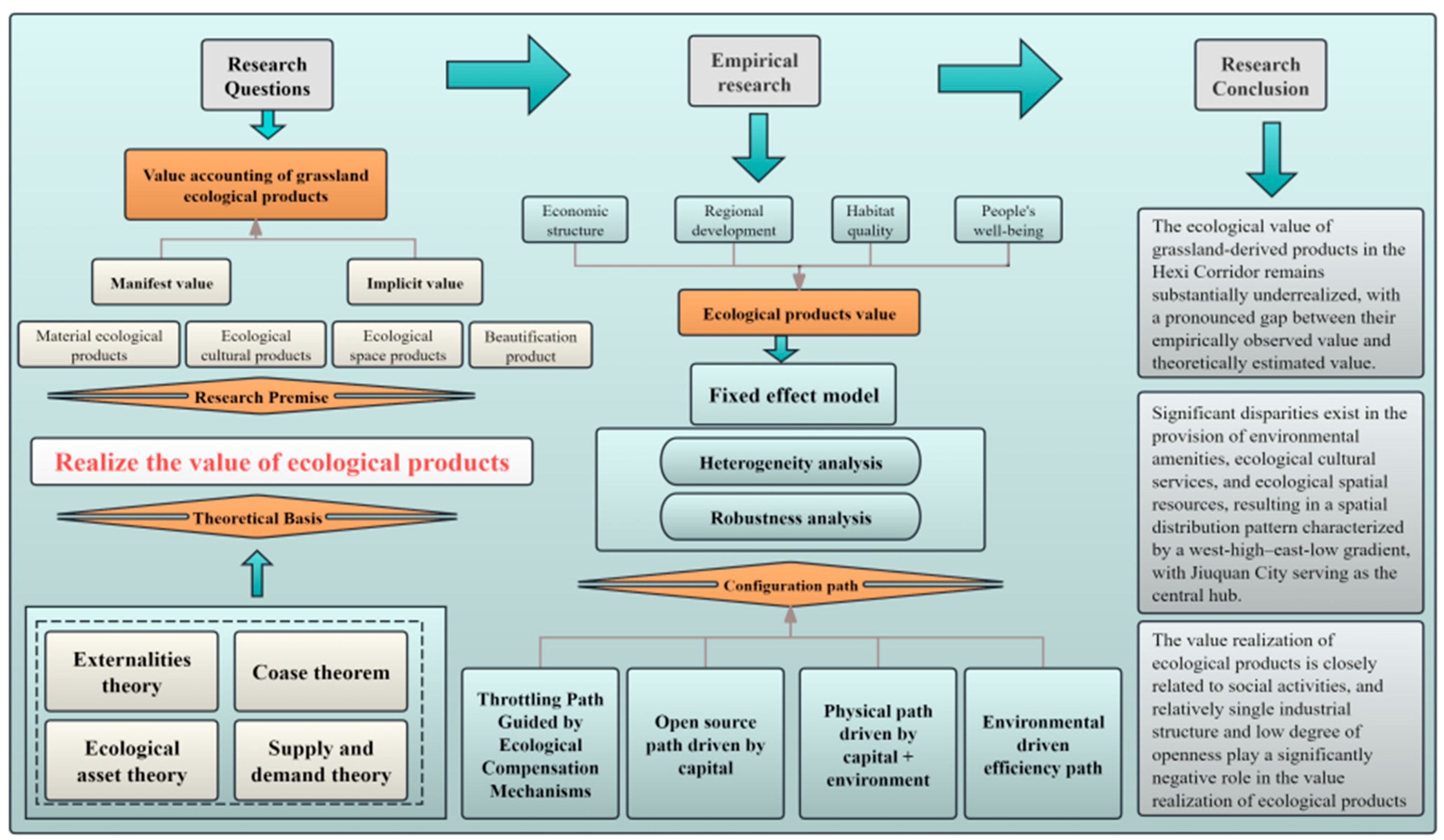
In this study, grassland ecological products are defined as the total value of all products and services with positive benefits brought by grassland ecosystems to human society and the broader environment. These include environment-beautifying products, material ecological products, ecological cultural products, and ecological space products, among others. Furthermore, the definition of grasslands in this study breaks the boundaries of grassland scope defined in previous studies and encompasses other grassland types such as cultivated grasslands and sports lawns, as illustrated in Figure 1.
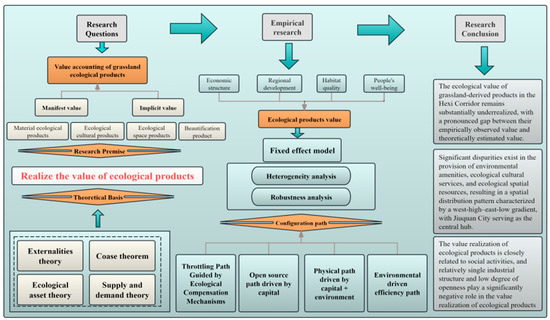
Figure 1.
Theoretical framework: realization of the value of grassland ecological products.
2.2. The Logical Mechanism of Value Realization of Grassland Ecological Products
The prerequisite for the value realization of grassland ecological products lies in demonstrating their value and measuring it effectively. The Coase Theorem holds that, when transaction costs are relatively low, it is efficient for social development to assign property rights to any capable entity initially, regardless of which specific capable entity they are assigned to. That is, if the property rights of all assets are clearly defined and tradable, private interests will tend to align with social interests, and the private marginal utility cost will be roughly consistent with the social marginal utility cost [18,19]. Essentially, the value realization of ecological products is the effective utilization of scarce products. As such, to clarify the price mechanism of ecological products and examine the impact of price fluctuations on the balance between supply and demand, this study uses the supply and demand theory to analyze the underlying logic of the value realization of grassland ecological products.
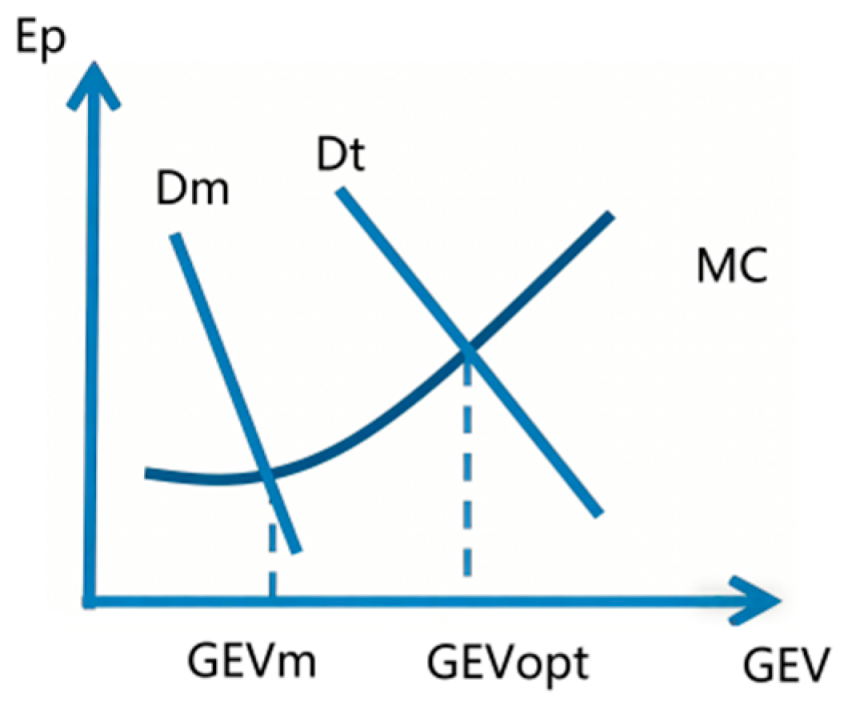
In Figure 2, the horizontal axis represents the Grassland Ecological Product Value (abbreviated as GEV); the vertical axis represents the Ecological Product Price (abbreviated as Ep). MC denotes the marginal cost curve; the downward-sloping curve represents the demand curve (DM) for realizing the value of ecological products solely through market leverage; the intersection point between this curve and the marginal cost curve (MC) corresponds to the equilibrium quantity of ecological products (GEVm) achieved under the market mechanism, where this category of products mainly includes material ecological products and ecological cultural products with explicit value. For example, it includes forage grass, beef and mutton, furs, dairy products, and other cultural and tourism development revenues. Such products are primary or processed agricultural products, and industrial development is the dominant form of human activity in this region. Affected by multiple factors, the polarization effect of animal husbandry and cultural tourism industries in the study area is not significant, making it difficult to form a scale effect. Under the assumption of rational economic man, herders increase the number of livestock in a disorderly manner to maximize profits, leading to overgrazing and grassland degradation. The homogenization of cultural tourism development is severe, and the development of ecological products under the market mechanism fails to exert their maximum utility, leaving the value realization trapped in the dilemma of the “resource curse”. Meanwhile, the part that can directly participate in market activities is limited only to ecological products with explicit economic characteristics. The value of ecological space products and environment-beautifying products, which possess the attributes of public goods, has not been effectively realized. In Figure 2, DT represents the value curve for the full realization of ecological product value; the intersection point (GEVopt) between DT and the marginal cost curve (MC) corresponds to the supply–demand equilibrium of ecological products under ideal conditions; the distance between GEVm and GEVopt represents the value volume that has not yet been fully realized.
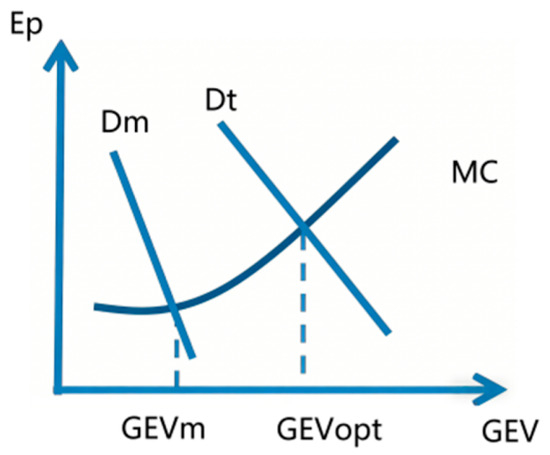
Figure 2.
Application of the supply and demand model to the value realization of grassland ecological products.
On this basis, this study proposes the following hypothesis:
Hypothesis 1.
The value realization of material ecological products and ecological cultural products among grassland ecological products in the Hexi Corridor is insufficient.
When considering the roles of grassland ecological products in natural regulation, water conservation, soil fertilization, the maintenance of ecological stability, and enrichment of biodiversity, it is difficult to realize their value when relying solely on the market mechanism. The value realization of grassland ecological products requires the involvement of multiple subjects, including the government, “government + market”, and “government + market + enterprise”. This will further innovate their realization forms and promote the effective realization of the value of ecological products. When ecological products participate in the market economy as production factors, they are affected by the economic activities of multiple subjects. Analyzing the impact of socioeconomic activities on the value realization of ecological products represents one of the key focuses of this study.
As such, this study proposes the following hypothesis:
Hypothesis 2.
Socioeconomic activities have impacts of varying degrees on the effective realization of the value of ecological products.
3. Research Area and Research Method
3.1. Overview of the Study Area
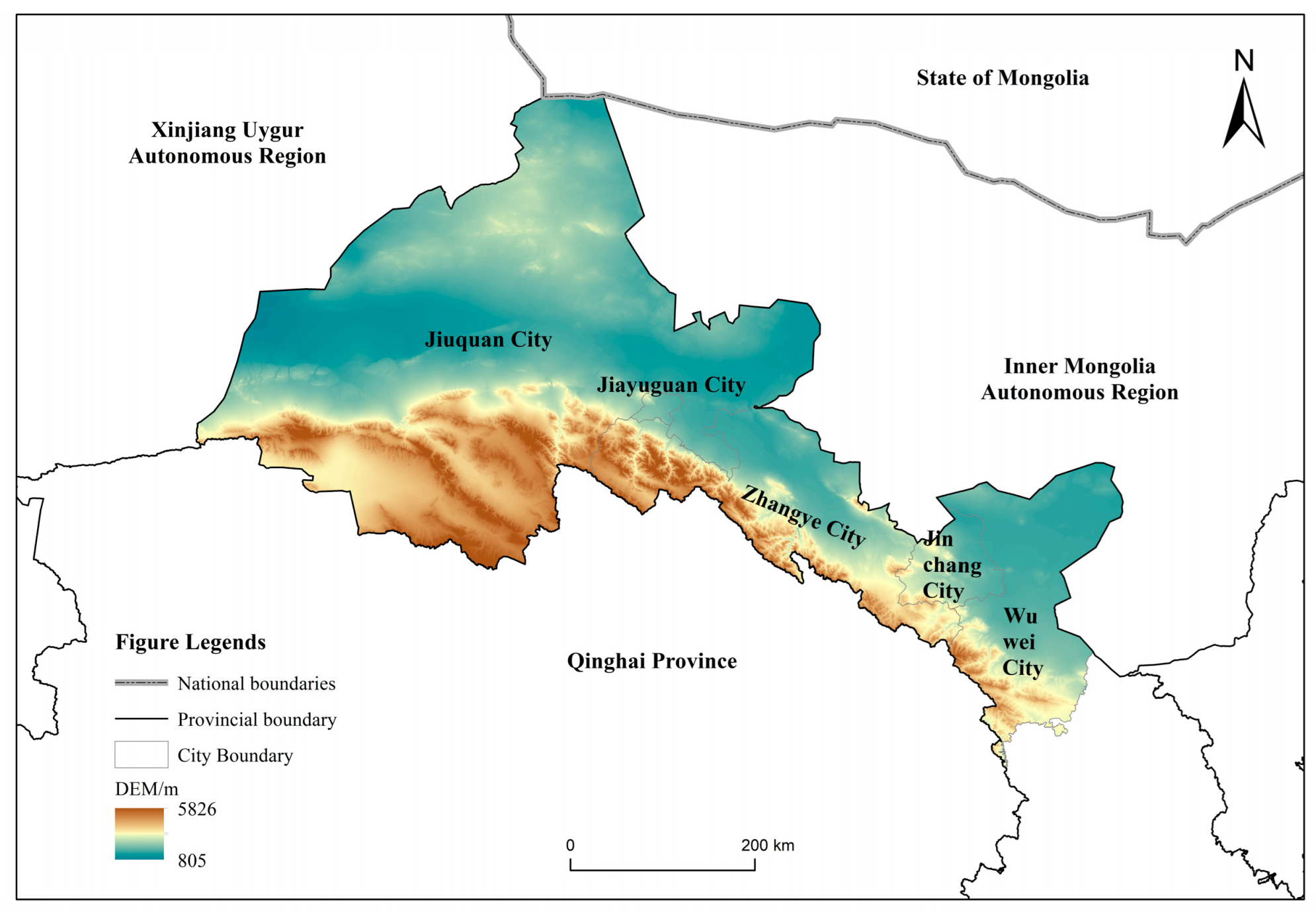
The Hexi Corridor is located in the northwestern region of China and serves as an important natural vegetation belt and ecological security barrier in the country; extensive grasslands are distributed in its eastern and southern parts. As it is one of China’s important ecological function zones, the health and stability of the grassland ecosystem in the Hexi Corridor pastoral area are directly related to the overall situation of regional ecological security, socioeconomic development, and the construction of national ecological civilization. From the perspective of national ecological function zoning, the grasslands in the Hexi Corridor are categorized as “key functional zones for windbreak and sand fixation” and “critical water conservation zones.” This classification reflects their dual ecological functions—sustaining regional hydrological balance and alleviating desertification—both of which are essential to safeguarding the ecological integrity of northwest China. In 2011, the Chinese government launched the Grassland Ecological Compensation and Incentive Policy. Therefore, this study takes 2011 as the starting point and selects the period from 2011 to 2023 as the research years. The study area covers five major cities along the Hexi Corridor, namely, Jiayuguan City, Zhangye City, Jiuquan City, Jinchang City, and Wuwei City. The data used in this study are derived from sources including the Gansu Rural Statistical Yearbook, the Statistical Bulletin on Ecological Environment, the Water Resources Bulletin, the Main Data Bulletin of the Third National Land Survey, and the China Urban Construction Statistical Yearbook.
The map is based on the standard map with the drawing review No. GS(2024)0650, and the base map was not modified (Figure 3).
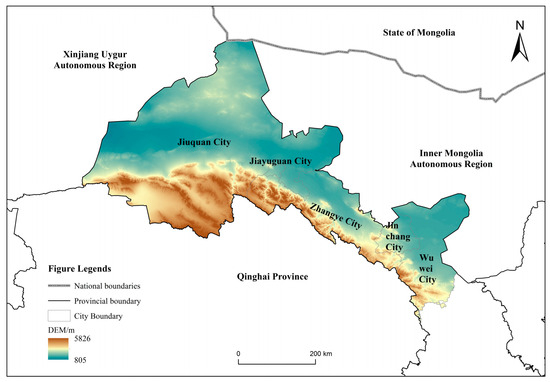
Figure 3.
Overview map of the Hexi Corridor study area.
3.2. Price Accounting Method
Starting with the connotations of grassland ecological products, this study constructs a value evaluation system for grassland ecological products with reference to the Guidelines on Establishing and Improving the Mechanism for Realizing the Value of Ecological Products, the Green Development Index System, and the Technical Specifications for Ecosystem Product (EP) Accounting, which are issued by the General Office of the Communist Party of China Central Committee. It further introduces the importance coefficient of grassland ecosystems to separate the impacts of grasslands on human activities and ecosystems from those of other ecological types, thereby avoiding the double counting of value volume. Seven indicators, including climate regulation, high-quality soil, biodiversity, clean water sources, agricultural products, tourism products, and pastoral space, were selected. The value of grassland ecological products in the Hexi Corridor was calculated using methods such as the cost substitution method, shadow engineering method, market value method, and equivalent factor method.
When introducing the importance coefficient of grassland ecological services, this study determined the coefficient from two perspectives—regional differences and payment capacity—with reference to the method proposed by Liu [20]. By incorporating this coefficient into the comprehensive evaluation, the study aims to account for the actual grassland conditions and socioeconomic development levels across different regions, thereby obtaining relatively objective results. Here, Ri denotes the regional difference coefficient; Rj denotes the payment capacity coefficient; and Et denotes the importance coefficient of grassland ecological services:
Ri = ai/Ai
Pj = ij/(Ij × Ecj)
Et = Ri × Pj
In the formula, refers to the grassland area of a specific region; refers to the total land area of that region; and is the regional difference index. refers to the disposable income of residents in a specific region; refers to the national disposable income of residents; refers to the Engel coefficient; and is the payment capacity coefficient. After obtaining the importance coefficient of grassland ecosystems for each region, multiplying it by the value of ecological products (calculated using the formula in Table 1) yields the regional monetized value of ecological products.

Table 1.
Value evaluation formula and parameter description.
3.3. Fixed Effect Model
With reference to the research conducted by Liu [27], this study introduces a fixed-effects model to reveal the heterogeneous patterns of influencing factors across different elements. This approach enables a more effective reflection of the relationship between socioeconomic activities and the value realization of grassland ecological products. In this study, the weighted value of ecological products is used as the explained variable. Four dimensions—economic structure, regional development, habitat quality, and people’s well-being—are designed, with seven indicators (including industrial structure, degree of openness, urbanization rate, green coverage rate, transportation usage, education input, and employment status) serving as explanatory variables to analyze the impact of social activities on the value realization of ecological products. To reduce heteroscedasticity, variables with large values were log-transformed during panel data processing, making the results more scientifically rigorous. The specific variables are shown in Table 2.
Table 2.
Influence factors of realizing the benefit of ecological product value.
Based on the panel data of the Hexi Corridor from 2011 to 2023, an empirical study was conducted on the influencing factors of grassland ecological product value realization, and the following model was constructed:
where represents the set of explanatory variables; represents the constant term; represent the coefficients of each explanatory variable; i represents the individual fixed effect; t represents the time fixed effect; and represents the random error term.
Y = α0 + β1–8Xsi,t + γi + λt + εi,t
3.4. Qualitative Comparative Analysis of Fuzzy Sets
To avoid the impacts of regional factors and policy lag, and to thoroughly identify the causal paths and patterns of ecological product value realization, this study regards the degree of openness, urbanization process, resource endowment, and transportation usage as antecedent conditions reflecting the market; it takes ecological compensation and ecological restoration as antecedent conditions reflecting the government; and it considers the depth of government–enterprise cooperation as the antecedent condition reflecting the “government + market” model. On this basis, it formulates dimensions including environment, organization, and “organization + technology” to conduct research on multiple configurational paths.
The application of the fixed effects model is limited to analyzing the impact of individual factors on the outcome of an event, which focuses solely on demonstrating the sufficiency of such factors. In fact, the role of policy instruments in the value realization of ecological products is not a single-pathway relationship. Instead, the interaction effects among multiple factors reduce the explanatory power of the net effect of individual factors [28]. To further explain the complex outcomes resulting from the linkage and matching of comprehensive factors, based on institutional configurations, this study applies dynamic Qualitative Comparative Analysis (QCA). It selects the primary conversion rate of ecological products as the outcome variable, and identifies seven antecedent conditions—including openness to the outside world, urbanization development, resource endowment, transportation usage, ecological compensation, ecological restoration, and the depth of government–enterprise cooperation—to explore the multiple configurational paths for grassland ecological product value realization. The specific variables are presented in Table 3.
Table 3.
Variable names and descriptions.
4. Analysis of Results
4.1. Value and Spatio-Temporal Evolution Characteristics of Grassland Ecological Products
4.1.1. Value of Ecological Products
The value of ecological products in the Hexi Corridor from 2011 to 2023 was calculated using the formulas in Table 1, and the results are presented in Table 4.
Table 4.
Weighted value of grassland ecological products in the pastoral areas of the Hexi Corridor. Billion CNY.
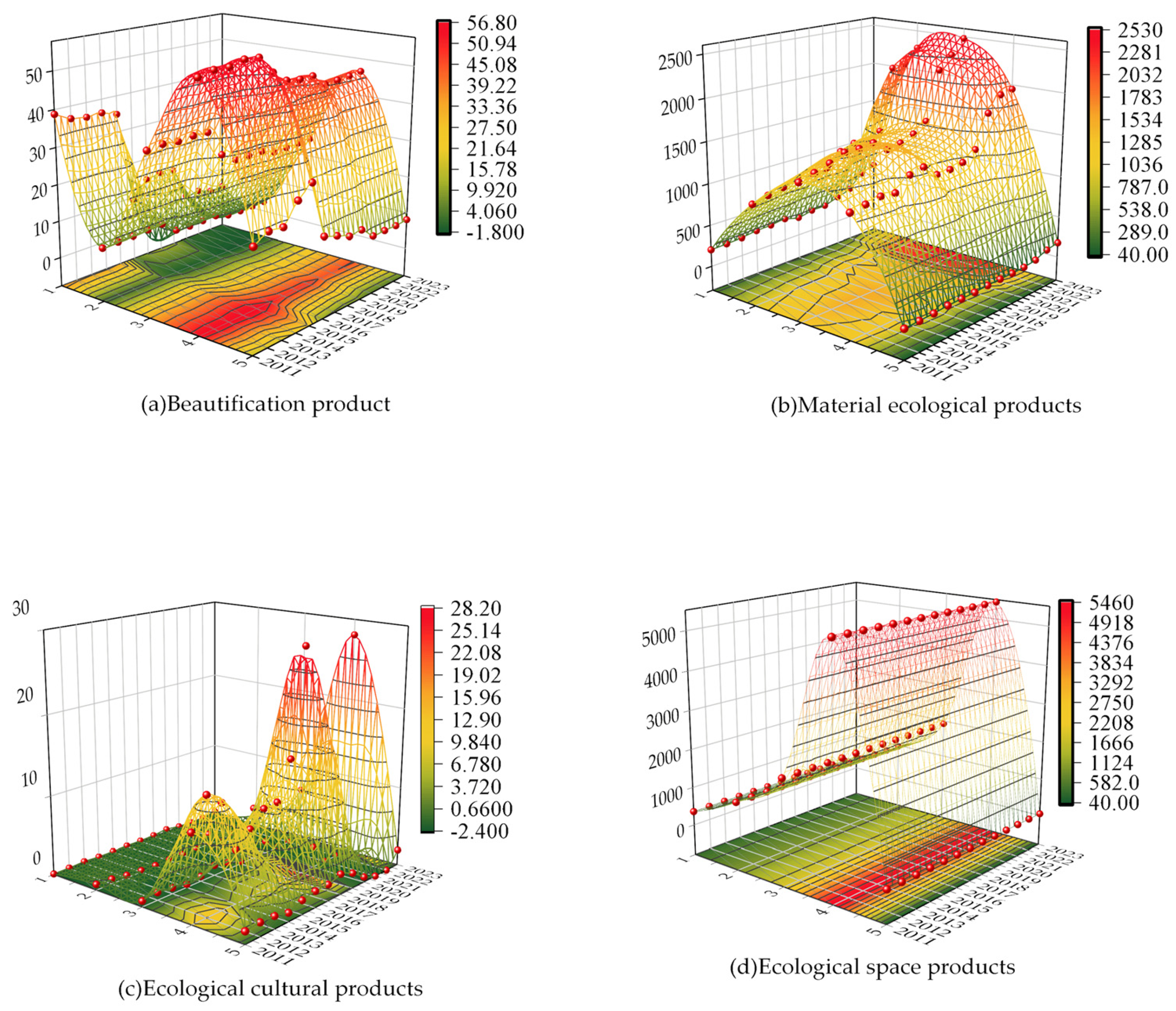
As shown in Figure 4, the total value of urban grassland ecological products in the Hexi Corridor exhibited a steady growth trend from 2011 to 2023; however, the growth rate was relatively limited. This phenomenon may be attributed to the relatively slow progress of industrial structure transformation in this region. Further analysis reveals that there is significant spatial heterogeneity in the value of ecological products among different cities within the region, exhibiting distinct gradient distribution characteristics. This discrepancy may be closely related to factors such as the resource endowment, policy orientation, and economic development level of each city.
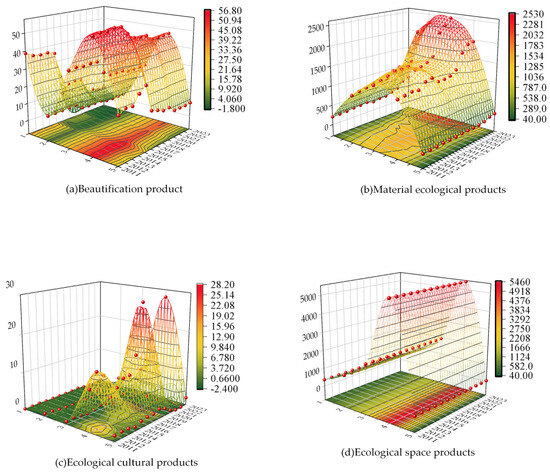
Figure 4.
Classification value of grassland ecological products in the Hexi Corridor.
To further visualize the magnitude of ecosystem product values, 3D surface plots were constructed using OriginPro 2024b software. These plots intuitively illustrate the three-dimensional distribution of values for four categories of grassland ecosystem products across five regions in the Hexi Corridor (Jinchang, Wuwei, Zhangye, Jiuquan, and Jiayuguan) during the study period. In the three-dimensional coordinate system, the X-axis represents the five regions, the Y-axis denotes the study years, and the Z-axis corresponds to the value of ecosystem products (unit: ten thousand CNY). A color gradient is employed, where the color intensity is positively correlated with the Z-axis value: red indicates high-value clustering areas, while green represents low-value regions. This visualization clearly reveals the dual spatial and temporal differentiation of ecosystem product values, as illustrated in Figure 4.
From a spatial perspective, the value of grassland ecosystem products exhibits a pronounced gradient across cities, driven by disparities in natural endowments, industrial structures, and ecological functional positioning. From a temporal dimension, the overall value of grassland ecosystem products in the Hexi Corridor demonstrates an upward growth trend, yet evolutionary trajectories diverge across product types and regions, with core driving mechanisms closely coupled with policy orientations and developmental stages.
Specifically, Zhangye and Jiuquan emerge as core regions for high regulating service value; Wuwei and Zhangye dominate material provisioning services; Zhangye and Jiuquan constitute high-value zones for cultural services; and Jiayuguan, Jinchang, and Zhangye form the core of spatial support services. The value of ecosystem products fluctuates in a pattern of “phased growth—stable adjustment—re-growth”, synchronized with policy cycles and resource utilization intensity. Among these, ecological spatial products and ecocultural products exhibit the steepest upward slopes, material ecosystem products display the mildest fluctuations, and environmental beautification products fall between the two, reflecting a shift in the value focus of ecosystem services from “production provisioning” to “ecological barrier + cultural services”. Furthermore, the value fluctuation follows a core–periphery transmission pattern: high-value core regions (Zhangye, Jiuquan/Wuwei) take the lead in growth, followed by peripheral areas (Jinchang, Jiayuguan). Fluctuation peaks typically occur one to two years after policy implementation, highlighting the lag effect and cumulative impact of policy-driven dynamics.
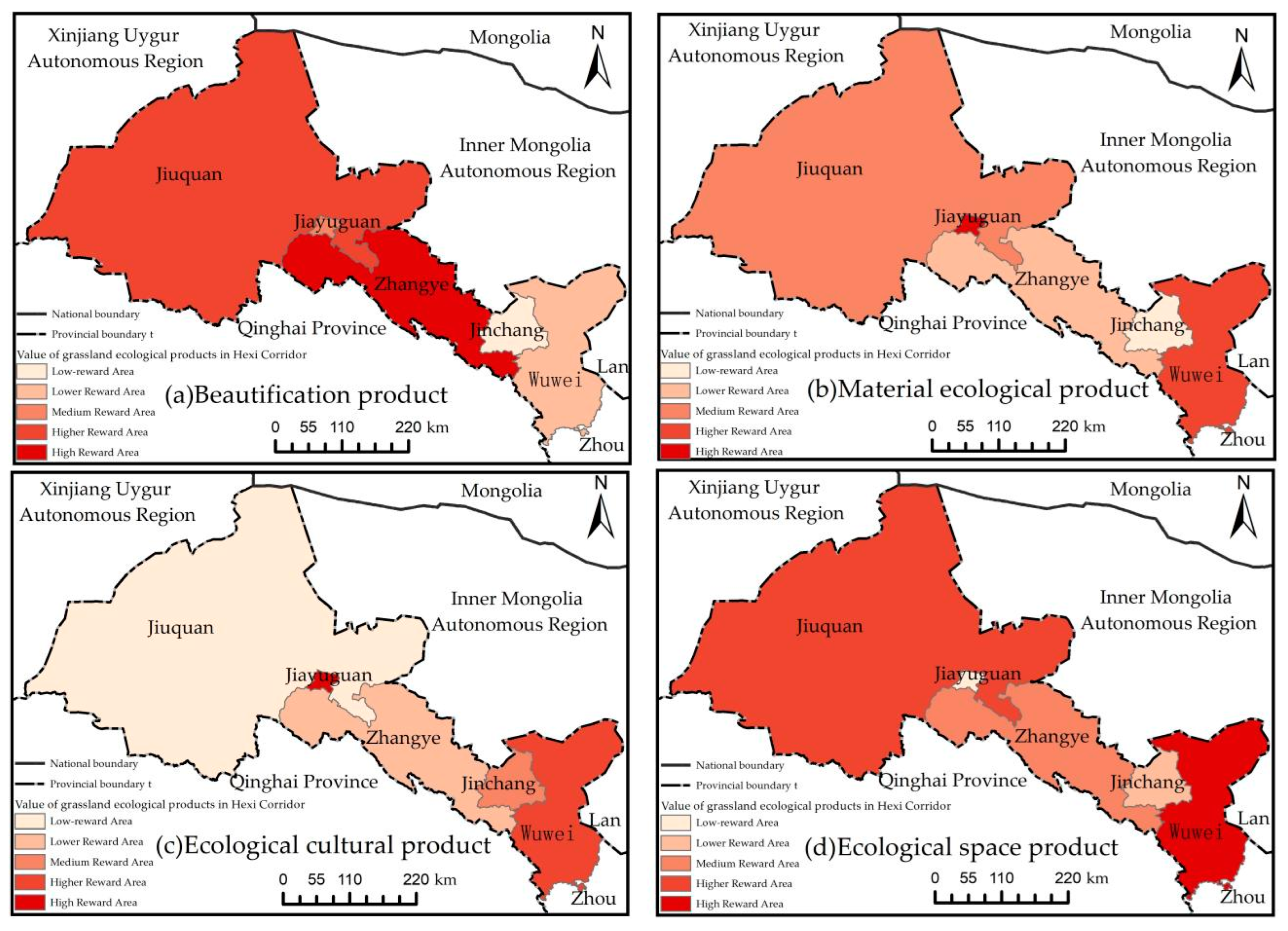
As shown in Figure 5, the value realization of grassland ecological products in the Hexi Corridor is insufficient, and the correlation between actual value and theoretical value is relatively low in some regions. The value of environment-beautifying products is relatively low across all regions. This is because, during the measurement of such products, the focus is primarily on the impact of the environment on economic activities—including the opportunity cost of being unable to engage in production activities due to pollution, as well as functions such as water conservation and waste degradation. With the improvement of targeted pollution control and ecological protection policies, environmental pollution caused by industrial and mining enterprises has been effectively prevented and controlled. The low value of environment-beautifying products indicates that the region has emphasized coordination with the ecological environment during its “industrialization” and “urbanization” processes, which is consistent with the concept of green and coordinated development. Second, the gap in the value of material ecological products is relatively small. This directly reflects the issue of insufficient value realization of grassland ecological products across various regions, thereby verifying the validity of Hypothesis 1. Third, the value of cultural ecological products in Jiuquan City and Zhangye City has shown an annual upward trend, which indicates that the local governments have attached importance to the development of tourism products and achieved remarkable results. In contrast, the development of cultural and tourism industries in other regions has been relatively slow. Finally, the disparity in the value of ecological space products is also significant, which is directly related to the grassland area of each region. These results suggest that it is difficult to effectively realize the value of grassland ecological products in the Hexi Corridor when relying solely on market mechanisms; fully exploiting their value requires the joint efforts of multiple parties. Therefore, exploring the value realization mechanism of ecological products and optimizing the realization path have become the key to breaking the current predicament.
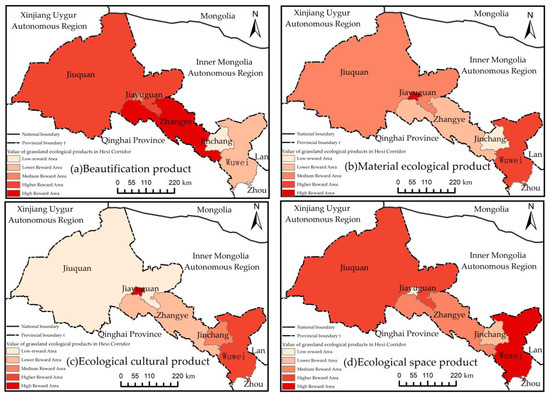
Figure 5.
Spatial distribution of ecological product value accounting in 2011.
4.1.2. Analysis of Spatio-Temporal Characteristics of Value Evolution of Grassland Ecological Products
To conduct an intuitive study on the value realization characteristics of grassland ecological products in the Hexi Corridor, this study used ArcMap10.8.1 to perform visualization processing on the research results, as shown in Figure 5.
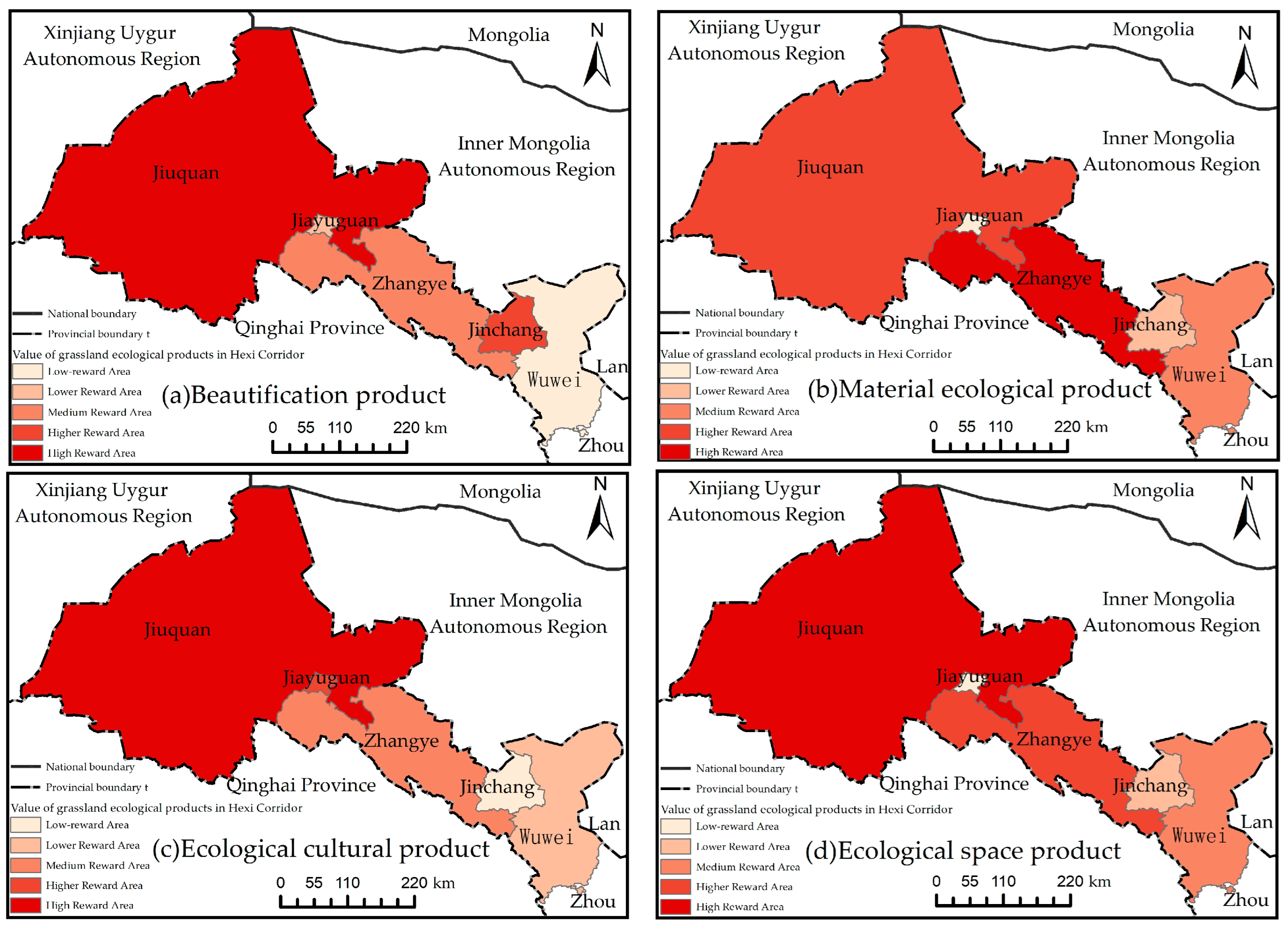
The Grassland Ecological Compensation and Reward Policy was launched in 2011. Taking it as a control group to analyze the spatial differentiation of ecological product value will provide an important reference basis for subsequent research. Figure 5 shows the spatial distribution of the value of grassland ecological products in the Hexi Corridor in 2011. Wuwei, Jiuquan, and Jinchang have relatively high industrialization levels, and thus belong to the high-return regions for environment-beautifying products. This forms a sharp contrast with other regions, presenting an overall “dumbbell-shaped” structure. Due to its geographical characteristics of having a large grassland and livestock scale, Jiuquan has become the region with the highest output of material ecological products. Meanwhile, the output of material ecological products in Jinchang indicates, to a certain extent, that the value scale of material products has a significant correlation with policy orientation and development models. The sustainability of the animal husbandry industry will likely become the focus of the next-stage development in Zhangye and Wuwei. In 2011, the focus of cultural and tourism development in the Hexi Corridor was mainly concentrated in Zhangye, with a prominent polarization effect. Taking Zhangye as a growth pole will significantly drive the development of aerospace cultural and tourism in Jiayuguan and Jiuquan. The value of ecological space products is mainly related to land-use conditions and grassland coverage. Driven by the “Grain for Green Policy” (converting farmland to forests and grasslands), the ecological sustainability of the Hexi Corridor region has steadily improved. Figure 6 presents the spatial distribution of the value of grassland ecological products in the Hexi Corridor in 2023. Compared with 2011, the total value of ecological products has increased to a certain extent, overall. Additionally, the regional growth poles of various ecological product values have shifted toward the southeast, with a significant gradient transfer.
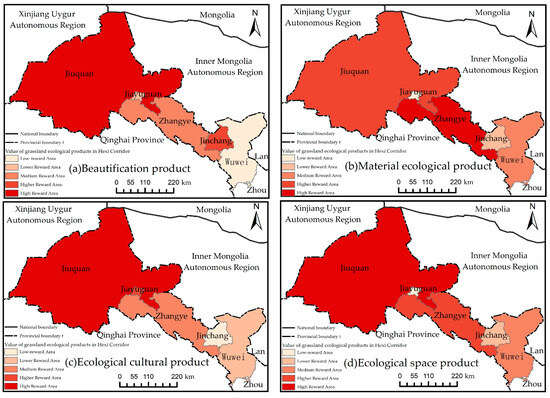
Figure 6.
Spatial distribution of ecological product value accounting in 2023.
The distribution pattern of the value of ecological products in the Hexi Corridor reflects the comprehensive characteristics of the region’s natural endowments, economic development level, and social activities. From the perspective of the spatial distribution of the value of ecological products, except for material ecological products, the value of other types of ecological products shows a distribution pattern of being higher in the west and lower in the east, with Jiuquan City as the center, which is closely related to the geographical characteristics and economic development model of this region. Affected by its unique natural environment and resource endowments, the Hexi Corridor region exhibits a relatively high value of grassland ecological products. However, the grassland ecological products in this region have not yet been fully developed and utilized, which indicates that there is still room for improvement in the management and sustainable utilization of ecological resources in this region.
From the perspective of industrial structure, industry accounts for a relatively high proportion among the three industries. This indicates that the economic development model of this region is still dominated by industrialization and has not yet fully achieved the transformation towards high-quality development, and this development model exerts relatively pronounced pressure on the ecosystem, to a certain extent. Furthermore, this region is in the “growing pains period” of urbanization development. The increase in the value of environment-beautifying products actually reveals the “sub-healthy state” of urban development. Although the advancement of urbanization has achieved certain progress in environmental governance, the coordination among urban planning, infrastructure construction, and environmental protection still needs further optimization to achieve the goal of sustainable development.
The value distribution of eco-cultural products intuitively reflects the current development status of the cultural and tourism industry and the distribution characteristics of cultural heritage sites in various regions. However, the potential of the cultural and tourism industry in this region has not yet been fully tapped. The matter of how to integrate the abundant cultural heritage with the unique natural landscapes to build competitive cultural and tourism brands will become the focal point and anchor for the development of the cultural and tourism industry in the future.
From the perspective of the value realization mechanism of ecological products, this study finds that the market mechanism has certain limitations in the process of realizing the value of ecological products. The realization of the value of ecological products not only relies on the market mechanism but also needs to be closely integrated with social activities. Through institutional innovation and policy guidance, a diversified path for value realization should be constructed. By means of establishing ecological compensation mechanisms, developing eco-tourism, and promoting green industries, the conversion of ecological value to economic value can be effectively achieved, thereby enhancing social welfare. Furthermore, the close connection between the value realization of ecological products and social activities also implies that entities such as the government, enterprises, and the public need to form a synergy and improve the multi-stakeholder interest coordination mechanism to promote the sustainable utilization of ecological products.
4.2. Analysis of Influencing Factors of Ecological Product Value
Based on the research on the value of ecological products, we found that there are significant differences in the value realization of ecological products in the Hexi Corridor. The study holds that, in addition to location and grassland resources, the value realization of ecological products is closely related to social activities. Exploring the influencing factors of the value realization of grassland ecological products holds significant guiding value for improving the industrial structure and optimizing the path of sustainable development [29,30]. The results from the aforementioned model are presented in Table 5.
Table 5.
Matrix of correlation coefficients.
The Pearson correlation coefficient test results show that, among the explanatory variables, industrial structure, degree of opening-up, green coverage rate of built-up areas, and employment status have a significant correlation with the weighted value of ecological products. However, considering that the correlation coefficient matrix only measures the relationship between two variables and does not exclude the interference of control variables and potential variables, further regression tests are still required.
To avoid multicollinearity in the data, a multicollinearity test was conducted on the data using the Variance Inflation Factor (VIF) [30]. As shown in Table 6, the indicators selected in this study do not exhibit multicollinearity.
Table 6.
Tests for covariance.
In this study, the Hausman test and F-test were employed to determine the applicability of the research model, and the results are presented in Table 7.
Table 7.
Hausman test and F test.
Based on the above results, after excluding the endogeneity issues caused by individual effects and time effects, a fixed-effects model was finally adopted for the regression analysis.
As can be seen from the results in Table 8:
Table 8.
Benchmark regression and robustness test.
- (1)
- The industrial-dominated industrial structure, particularly the energy and chemical industry with typical Fordist characteristics, exerts a significantly negative impact on the value realization of grassland ecological products. The industrial structure determines the primary orientation of resource utilization. The heavy-industry-dominated industrial structure of major cities in the Hexi Corridor has led to the over-exploitation of resources and environmental pollution, which in turn affects the value realization of ecological products. Insufficient investment in education and severe brain drain in this region have constrained the development level and application of green technologies. Meanwhile, located in the northwestern part of China, the Hexi Corridor suffers from relatively underdeveloped economic growth and a rigid social structure, which result in weak capacity for absorbing external capital, a low level of opening-up to the outside world, and ineffective utilization of its vast cultural heritage. Consequently, it has fallen into a vicious cycle of the “resource curse,” which further restricts the effective realization of the value of ecological products.
- (2)
- The increase in the green coverage rate of built-up areas exerts a significantly positive effect on the value realization of ecological products. On the basis of effectively developing the stock of ecological products, emphasis should be placed on the incremental development of such products. The development of transportation affects the exchange efficiency of various production factors between urban and rural areas. The transportation development of the Five Cities in the Hexi Corridor is relatively minimal. According to the Push–Pull Theory, the weakness of infrastructure will trigger a chain reaction on a series of social issues such as education and employment. Narrowing the urban–rural gap and achieving equal urban–rural employment levels are the key to enhancing the value realization of ecological products.
In conclusion, the scientific validity of Hypothesis 2 is verified, which states that social activities exert a significant impact on the value realization of ecological products. On this basis, this study explores the pathways for realizing the value of ecological products from a multi-dimensional perspective, focusing on different leading entities including market-led, government-led, and market–government collaborative models.
4.3. Configuration Path Analysis
4.3.1. Measurement and Calibration
When using fuzzy-set Qualitative Comparative Analysis (fsQCA 3.0), all data need to be calibrated, and a unique membership set must be determined for each variable. This study employs the fsQCA software and uses data from 2019, 2022, and 2023 as small-sample cases for analysis. To avoid the impact of extreme outliers on the results, this study applies a logarithmic transformation to large values. Based on the sample distribution, the 95th percentile, 50th percentile, and 5th percentile were selected as the calibration anchors for full membership, crossover point, and full non-membership, respectively. All anchors were adjusted to a fuzzy set ranging from 0 to 1. To avoid undetectable cases when the membership degree is 0.5, this study added 0.001 to all adjusted data, ensuring that all data could be fully included in the analysis [31]. The results demonstrate that the variable distribution exhibits favorable discrimination and variability, which provides a robust empirical foundation for the subsequent fsQCA analysis. Details are presented in Table 9.
Table 9.
Calibration anchors.
4.3.2. Path Analysis
Prior to conducting the configuration analysis, we first performed a necessity analysis on all antecedent conditions. All conditions yielded a necessity score greater than 0.9, indicating that the value realization of grassland ecological products in this study is the result of the combined effect of the seven aforementioned policy instruments. This study set the raw consistency and PRI consistency thresholds at 0.8 and 0.7, respectively. Based on these settings, a truth table was constructed to conduct a multi-configuration path analysis of grassland ecological products. Based on the core conditions and logical interpretations of the seven configurations, this study identifies four multi-paths for the value realization of grassland ecological products [32,33,34], with details presented in Table 10.
Table 10.
Configuration of ecological product value realization.
Path 1: Throttling Path Driven by Ecological Compensation. The throttling path identified from Configuration G1 refers to the realization of ecological product value through ecological compensation. In regions where the exchange conditions for ecological products are incomplete, ecological compensation exerts a significant promotional effect on the transformation of ecological products. Relevant studies have also verified this conclusion [35], with scholars arguing that the value realization of quasi-public goods should be led by the government. The government should clarify the ownership relationship of ecological products, focus on promoting the empowerment of ecological products through right-setting, improve the grassland right confirmation system, and ensure the legitimacy of ecological product transactions.
The government should improve the ecological compensation mechanism and provide compensation and rewards to relevant contributors through means such as fiscal transfer payments and ecological compensation funds. The government should promote the “Grassland Chief System” to strictly uphold the grassland ecological red line, attach importance to the development of immigrant industries on the basis of establishing ecological resettlement areas, gradually optimize grassland compensation and reward policies, and effectively improve the comprehensive production capacity of grassland pastoral areas. It is essential to vigorously promote grassland culture and enhance the cultural value and social identity of grassland ecological products. Drawing on the Huangling Model, efforts should be made to build grassland national parks through forms such as cooperatives, so as to promote the diversified development and utilization of grassland ecological products.
Path 2: Open-Source Path Driven by Capital. The open-source path identified from Configuration S2 refers to the realization of ecological product value by absorbing external capital. The introduction of external capital can provide necessary financial support for regional development, increase investment in infrastructure construction and technological R&D, and boost the production and promotion of ecological products, thereby reducing production costs. The inter-regional transfer of capital can form a network effect, strengthen economic connections between regions, and improve the speed of market response.
Path 3: Quality-Improvement Path Driven by the Dual Engines of Capital and Environment. The quality-improvement path identified by configuration E3 realizes the value of ecological products through deepening urbanization and absorbing external capital. Through resource allocation and incentive mechanisms, the market promotes the development and utilization of grassland ecological products—for instance, by innovating business models, expanding ecological product markets, enhancing the economic value of grassland ecological products, and advancing the diversified development of grassland ecological products. The value realization pathways of grassland ecological products can be expanded by developing eco-tourism, grassland carbon sink trading, grassland cultural and creative industries, and other related sectors.
The synergistic effect between capital and the environment can yield a “1 + 1 > 2” outcome. The injection of capital can accelerate the construction of infrastructure, while the rapid development of urbanization can in turn attract more capital inflows, thereby forming a positive cycle. Such a synergistic effect contributes to enhancing the overall competitiveness of the regional economy and promoting the maximization of the value of ecological products.
Path 4: An Efficiency-Enhancing Path Driven by the Environment. The efficiency-enhancing path identified from Configuration M4 refers to accelerating urbanization construction, improving the institutional mechanisms for the market exchange of ecological products, and thereby realizing the transformation of ecological value into economic value. Due to regional restrictions in emissions trading, the supply and demand across regions can hardly be effectively matched; furthermore, the difficulty in disposing of emissions permit mortgages leads to the problem of blocked liquidity channels. By improving the trading mechanisms for emissions permits and water rights, determining the grassland environmental capacity, and allowing the flow of emissions permit quotas into the market within the scope of the independent adjustment of inter-regional environmental carrying capacity, financial support can thereby be provided for grassland conservation.
5. Conclusions and Recommendations
5.1. Conclusions
The value realization of grassland ecological products in the Hexi Corridor is inadequate, with a significant gap between the actual value and the theoretical value; except for material ecological products, the value of other types of products presents a distribution pattern of being higher in the west and lower in the east, with Jiuquan City as the center. There are significant differences in the realization of ecological product value across different regions. Compared with the southeast, the northwest has a higher proportion of industry and is still in the “growing pains period” during the process of urbanization development. This is closely related to the utilization of land stock and the internal industrial structure of the region. The Hexi Corridor, with its unique geographical location and historical heritage, is endowed with a large number of ecological products. From the perspective of value accounting, the total value of grasslands shows a slow annual growth trend, while the correlation between the actual value and theoretical value of grasslands is relatively low in some regions. Although the regional grassland resources are abundant, there exists a problem of insufficient utilization. The development of grassland value remains in the primary stage; the cultural and tourism industry is relatively underdeveloped.
From a spatial dimension, the value of grassland ecosystem products exhibits a pronounced gradient across cities, driven by disparities in natural endowments, industrial structures, and ecological functional positioning. From a temporal dimension, the overall value of grassland ecosystem products in the Hexi Corridor demonstrates an upward growth trend, yet evolutionary trajectories diverge across product types and regions, with core driving mechanisms closely coupled to policy orientations and developmental stages.
The industry-dominated industrial structure and relatively underdeveloped educational level exert a significant negative impact on the realization of the value of grassland ecological products. The Hexi Corridor is characterized by relatively minimal economic development and rigid social structure. The single industrial structure and uneven distribution of educational resources lead to a weak capacity to absorb external capital for the development of regional industrial clusters, resulting in a lack of financial support for the development of ecological products. The inefficient development of resources and environmental pollution have further hindered the realization of the value of ecological products. To fully realize the value of grassland ecological products in this region, it is necessary to comprehensively consider the interactions among various factors and take multiple measures—including optimizing the industrial structure, advancing urbanization, improving the quality of education, and upgrading transportation conditions—to promote the coordinated development between social activities and ecosystems.
The role of policy instruments in the realization of ecological product value is not a single path relationship; the interaction effects among multiple factors reduce the explanatory power of the net effect of a single factor. In light of the development status of different regions, this study proposes four diversified configurational pathways in a context-appropriate manner: namely, the resource-saving pathway driven by ecological compensation, the quality-improving pathway under the dual drives of capital and environment, the resource-expanding pathway driven by capital, and the efficiency-enhancing pathway driven by the environment. These four configurational pathways are expected to provide general reference for the realization of the value of ecological products in different regions.
5.2. Discussion
This study adopts the orientation of the supply–demand theory in qualitative research. Compared with the functional zones and protected areas focused on in previous studies, the selection of the Hexi Corridor as the study area for calculating the value of grassland ecological products exhibits stronger regional characteristics. The definition of grassland in this study breaks the traditional boundary of grassland scope and also includes other grassland types such as cultivated grasslands and sports lawns. By introducing the importance coefficient of grassland ecological services, the impact of grassland on social activities and ecosystems is separated from other ecological types. Using a widely recognized and effective method for measuring the value of ecological products, the calculated value of ecological products is more representative. This study breaks the previous research pattern on the realization of ecological product value, conducts a visual analysis of the spatial differentiation of the value of grassland ecological products in the Hexi Corridor, and proposes a “government + market” dual-subject collaborative path for value realization based on the current situation of regional economic and social development.
This study argues that marketizing public goods with externality constitutes an effective approach to enhancing the supply capacity of ecological products, which is generally consistent with the conclusions of some scholars [36]. The distribution of environmental beautification, ecological culture, and ecological space presents an inverted Z-shaped agglomeration pattern centered on Jiuquan City, which aligns with the findings of relevant studies [37,38,39]. Clarifying the property rights of ecological products and promoting the empowerment of ecological product assets through property right definition are in line with the research of certain academics [40,41,42,43].
Focusing on the municipal scale, this study explores the value realization of grassland ecological products in the Hexi Corridor. Future research could delve into the coupling relationship between the supply capacity of ecological products and high-quality development [44,45,46,47], while sustaining attention to studies on grassland national parks [48,49,50,51,52]. It is also necessary to innovate new methodologies and achievements in the field of national parks and protected areas [53,54,55], so as to provide support for the construction and management of protected areas.
5.3. Policy Recommendations
- (1)
- Improve the monitoring and management mechanism for ecological products to address the issue of “information asymmetry”. By constructing a 3D spatiotemporal database of natural resources and utilizing remote sensing, Geographic Information System (GIS), and Internet of Things (IoT) technologies, this study realizes the spatial positioning and dynamic monitoring of grassland ecological resources, systematically collects and manages information on grassland ecological products, and enables stakeholders to accurately assess the value of ecological products. This will improve the system for confirming and registering natural resource rights, establish and refine the right confirmation and registration system for grassland ecological resources, clarify the ownership of ecological product property rights, reduce the inappropriate exploitation of resources caused by unclear property rights, and thereby effectively reduce the possibility of the “tragedy of the commons”. It is necessary to formulate work guidelines for the compilation of ecological product catalog lists, and clarify the classification, standards, and evaluation methods for various types of ecological products. Pilot trials should be conducted in some areas of the Hexi Corridor, enabling the compilation of detailed ecological product catalog lists, the summary of experiences, and the gradual promotion of the practice, so as to fully grasp basic information such as the quantity and quality of ecological products. This will thereby reduce the occurrence of “market failure” and promote the reasonable evaluation of ecological product value as well as its market-oriented operations.
- (2)
- Conduct value evaluation to address the issue of “difficulty in measurement” for ecological products. There is a need to establish and improve the ecological product value assessment system, ensure the scientificity, impartiality, and operability of the assessment methods, and regularly update and optimize the assessment system. We must encourage and support financial institutions to develop and promote credit products based on the value assessment of ecological products, such as ecological credit loans and green bonds, so as to enhance the financing capacity of ecological products and reduce the financial risks of their operation and development. Moreover, we recommend promoting the trading of ecological rights and interests in the market, establishing a standardized market trading mechanism, facilitating the market-oriented flow of ecological products, and thereby forming and stabilizing market prices.
- (3)
- Strengthen operation and development to address the issue of “difficulty in trading” for ecological products. Due to the externality and non-excludability of ecological products, it is often difficult to effectively trade them using traditional market mechanisms. By focusing on the serialization of ecological products, it will be possible to foster a matrix of high-value-added products such as ecological agriculture complexes and integrated health and wellness tourism formats. By means of financial leverage incentives (such as targeted subsidies and value-added tax reductions or exemptions) and reducing institutional transaction costs, guide market entities to participate in eco-industrialization innovation. For example, through the development of bamboo forest carbon sink projects, Anji, Zhejiang, has achieved the morphological leap of ecological resources to carbon assets.
- (4)
- Deepen ecological compensation and green finance innovation to address the issue of “difficulty in financing” for ecological products. The vertical ecological protection compensation system should be improved and the intensity of transfer payment support for key ecological function zones increased, based on factors such as the area of ecological protection red lines and ecological function zoning. By establishing scientific and reasonable compensation standards, we can ensure that direct providers of ecological services receive reasonable economic returns. The innovation of the Eco-environment-oriented Development (EOD) model should be promoted: that is, with ecological and environmental protection as the core, integrate diversified goals such as industrial development and ecological restoration can be used to achieve the economic value conversion of ecological products. By integrating ecological protection with development projects, a sustainable eco-economic chain will be formed.
Author Contributions
Conceptualization, H.G. and Q.Y.; Methodology, H.G. and Q.Y.; Software, H.G.; Validation, H.G. and Q.Y.; Formal analysis, H.G.; Investigation, H.G.; Data curation, H.G.; Writing—original draft, H.G.; Writing—review & editing, Q.Y. and R.W.; Visualization, H.G. and R.W. All authors have read and agreed to the published version of the manuscript.
Funding
This research was supported by Soft Science Special Project of Gansu Basic Research Plan under Grant No. 22JR4ZA090.
Institutional Review Board Statement
Not applicable.
Informed Consent Statement
Not applicable.
Data Availability Statement
The original contributions presented in this study are included in the article. Further inquiries can be directed to the corresponding author.
Conflicts of Interest
The authors declare no conflict of interest.
References
- Shen, H.; Qiu, S.L. The Practical Exploration of Empower Rural Revitalization by Realizing the Value of Ecological Goods: From the Perspective of Industrial Ecology and Ecological Industrialization. Environ. Prot. 2023, 51, 27–31. [Google Scholar] [CrossRef]
- Hu, F. The normative logic and institutional optimization of realizing agricultural carbon sink value under the “dual carbon” goal. South China Financ. 2024, 3, 87–98. [Google Scholar]
- Huang, J.K.; Hou, L.L.; Kang, N.; Liu, H.; Lyu, X.; Zhang, Y.; Qiu, H.; Gong, Y.; Nan, Z.B. A Study on Economic Value of Grassland Ecosystem Services. Strateg. Study CAE 2023, 25, 198–206. [Google Scholar] [CrossRef]
- Jiao, L.; Zhao, C.Z. The analysis and evaluation on grassland ecosystem service function value of Shandan Horse Field in Qilian Mountain National Nature Reserve. J. Arid Land Resour. Environ. 2013, 27, 47–52. [Google Scholar] [CrossRef]
- Yu, G.R.; Yang, M. Ecological economics foundation research on ecological values, ecological asset management, and value realization: Scientific concepts, basic theories, and realization paths. Chin. J. Appl. Ecol. 2022, 33, 1153–1165. [Google Scholar] [CrossRef]
- Yang, W.; Tao, J.J.; Lu, Q.L. Methodologies of human well-being assessment from the ecosystem service perspective. Acta Ecol. Sin. 2021, 41, 730–736. [Google Scholar] [CrossRef]
- Bai, B.L.; Cheng, Y.M.; Bai, R.X. Study on Developing Ecological Economy to Help Achieve Common Prosperity—Based on the Perspective of Chinese Path to Modernization. Shanghai J. Econ. 2022, 12, 5–16. [Google Scholar] [CrossRef]
- Zhan, L.L.; Yang, J.Z. The Research on the Efficiency of Realizing the Value of Forest Ecological Products in China—Based on the Input-Output Analysis Framework. Econ. Probl. 2024, 8, 34–42. [Google Scholar] [CrossRef]
- Zhou, W.H. Research on the approach to realizing the value of ecological products under the background of rural vitalization strategy. Prices Mon. 2024, 6, 19–26. [Google Scholar] [CrossRef]
- Li, W.; Qian, G.X. Connotation, Analytical Framework, and Implementation Path for Value Realization of Grassland Ecological Products. Agric. Econ. Manag. 2023, 6, 59–69. [Google Scholar]
- Peng, W.Y.; Yuchi, X.J. The Supply Capacity Improvement and Value Realization Path of Ecological Products in Beijing-Tianjin-Hebei. China Bus. Mark. 2021, 35, 49–60. [Google Scholar] [CrossRef]
- Xie, G.D.; Lu, C.X. Ecological assets valuation of the Tibetan Plateau. J. Nat. Resour. 2003, 2, 189–196. [Google Scholar]
- Costanza, R.; d’Arge, R.; De Groot, R.; Farber, S.; Grasso, M.; Hannon, B.; Limburg, K.; Naeem, S.; O’neill, R.V.; Paruelo, J. The value of the world’s eco system services and natural capital. Nature 1997, 387, 253–260. [Google Scholar] [CrossRef]
- Gao, P.; Liang, L.T.; Zhu, P.X. The supply situation of cultivated land public ecological products and the path of capacity improvement: Taking Henan province as an example. J. Nat. Resour. 2023, 38, 1815–1832. [Google Scholar] [CrossRef]
- Zeng, X.G.; Yu, H.Y.; Xie, F. Concept, Classification and Market Supply Mechanism of Ecological Products. China Popul. Resour. Environ. 2014, 24, 12–17. [Google Scholar]
- Zhang, L.B.; Yu, H.Y.; Hao, Z.C. Redefinition and Connotation Analysis of Ecosystem Product. Res. Environ. Sci. 2021, 34, 655–660. [Google Scholar] [CrossRef]
- Zhao, T.Q.; Ou Yang, Z.Y.; Zheng, H. Analyses on grassland ecosystem services and its indexes for assessment. Chin. J. Ecol. 2004, 6, 155–160. [Google Scholar] [CrossRef]
- Ding, D.; Ren, L. The Value Realization System of Grassland Ecological Products was Established Based on The Externality Theory. Acta Agrestia Sin. 2023, 31, 1539–1545. [Google Scholar]
- Pearce, D. Do we really care about biodiversity? Environ. Resour. Econ. 2007, 37, 313–333. [Google Scholar] [CrossRef]
- Liu, X.Y.; Long, R.J.; Shang, Z.H. Interactive mechanism of service function of alpine rangeland ecosystems in Qinghai-Tibetan Plateau. Acta Ecol. Sin. 2012, 32, 7688–7697. [Google Scholar] [CrossRef]
- Zhai, X.Y.; Wang, K.; Li, Z.Q. Value accounting and evaluation of gross climate ecosystem product in Anji county, Zhejiang province. Clim. Change Res. 2024, 20, 475–484. [Google Scholar]
- Zhao, Y.C.; Sun, L.; Yue, Z.B.; Wu, N. Study on Gross Ecosystem Product Accounting of Lu’ an City, Anhui Province. J. Anhui Agric. Sci. 2021, 49, 73–77. [Google Scholar]
- Song, Q.; Yu, X.L.; Ma, S.M. Study on forage yield and nutritional value of autumn-sown triticale in eastern area of Gansu Province. Feed Res. 2022, 45, 90–93. [Google Scholar] [CrossRef]
- Ma, G.X.; Yu, F.; Wang, J.N. Measuring gross ecosystem product (GEP) of 2015 for terrestrial ecosystems in China. China Environ. Sci. 2017, 37, 1474–1482. [Google Scholar]
- Cheng, J.; Cheng, J.M.; Wu, J.X. Changes of land use and ecosystem service functions in Yangtze river basin from 2000 to 2010. Resour. Environ. Yangtze Basin 2017, 26, 894–901. [Google Scholar]
- Yin, D.Y.; Li, X.S.; Li, G.E.; Zhang, J.; Yu, H.C. Spatiotemporal evolution of land use transition and its eco-environmental effects: A case study of the Yellow River Basin, China. Land 2020, 9, 514. [Google Scholar] [CrossRef]
- Liu, G.W.; Li, J.H.; Tang, C.A. Digital Economy, Service Industry Efficiency Improvement and High-quality Development of China’s Economy. South China J. Econ. 2023, 4, 80–98. [Google Scholar] [CrossRef]
- Fang, F.; Zhang, L.J.; Zhao, J. Multiple Paths of Agricultural Green Total Factor Productivity Improvement from the Perspective of Institutional Grouping: A Panel Data Analysis Based on Dynamic QCA. Chin. Rural Econ. 2024, 2, 44–66. [Google Scholar] [CrossRef]
- Kang, N.X.; Cheng, H. Research Progress on Grassland Eco-Assets and Eco-Products and Its Implications for the Enhancement of Ecosystem Service Function of Karst Desertification Control. Grassl. Pasture Ecol. Manag. Util. 2023, 13, 2394. [Google Scholar]
- Li, W.J.; Zhang, P.C. Relationship and integrated development of low-carbon economy, food safety, and agricultural mechanization. Environ. Sci. Pollut. Res. 2021, 28, 68679–68689. [Google Scholar] [CrossRef]
- Hao, Z.; Liu, Y.F.; Pu, X.T. Path Research on Ecological Product Value Realization From the Perspective of Configuration—Based on Fuzzy-Set Qualitative Comparative Analysis of 30 Provinces and Cities. Fujian Trib. 2022, 12, 87–100. [Google Scholar]
- Chen, D.J.; Zhao, Y.F. Optimization of policy instruments for value realization of heterogeneous ecological products and their paths. China Popul. Resour. Environ. 2022, 32, 208–218. [Google Scholar]
- Song, B.Q.; Long, K.S. Configuration Path Analysis of Ecological Products Value Realization of Cultivated Land through Marketization from the Perspective of Grain Ecological Premium. China Land Sci. 2024, 38, 48–56. [Google Scholar]
- Xiao, X.; Li, J.Z.; Yang, X.J. Evaluation of forest-grassland ecosystem services value in the upper and middle reaches of the Yellow River Basin, China. Acta Ecol. Sin. 2022, 42, 7830–7844. [Google Scholar] [CrossRef]
- Liao, M.L.; Pan, J.H.; Sun, B.W. Analysis of the Connotation and Realization Path of Ecological Products. Reform Econ. Syst. 2021, 1, 12–18. [Google Scholar]
- Lee, H.; Lautenbach, S. A quantitative review of relationships between ecosystem services. Ecol. Indic. 2016, 66, 340–351. [Google Scholar] [CrossRef]
- Tallis, H.; Mooney, H.; Andelman, S.; Balvanera, P.; Cramer, W.; Karp, D.; Polasky, S.; Reyers, B.; Ricketts, T.; Running, S.; et al. A global system for monitoring ecosystem service change. Bioscience 2012, 62, 977–986. [Google Scholar] [CrossRef]
- Carpenter, S.R.; Bennett, E.M.; Peterson, G.D. Scenarios for ecosystem services: An overview. Ecol. Soc. 2006, 11, 29. [Google Scholar] [CrossRef]
- Daily, G.C.; Matson, P.A. Ecosystem services: From theory to implementation. Proc. Natl. Acad. Sci. USA 2008, 105, 9455–9456. [Google Scholar] [CrossRef]
- Niu, B.; Ge, D.; Sun, J.; Sun, D.; Ma, Y.; Ni, Y.; Lu, Y. Multi-scales Urban-rural Integrated Development and Land-use Transition: The Story of China. Habitat Int. 2023, 132, 102744–102756. [Google Scholar] [CrossRef]
- Shang, J.; Li, P.; Li, L.; Chen, Y. The Relationship Between Population Growth and Capital Allocation in Urbanization. Technol. Forecast. Soc. Change 2018, 135, 249–256. [Google Scholar] [CrossRef]
- Yang, Y.; Bao, W.; Wang, Y.; Liu, Y. Measurement of Urban-rural Integration Level and Its Spatial Differentiation in China in the New Century. Habitat Int. 2021, 117, 102420–102434. [Google Scholar] [CrossRef]
- Zhao, P.J.; Wan, J. Land Use and Travel Burden of Residents in Urban Fringe and Rural Areas: An Evaluation of Urban-rural Integration Initiatives in Beijing. Land Use Policy 2021, 103, 105309–105320. [Google Scholar] [CrossRef]
- Zhao, B.; Zheng, G.N.; Wang, L. Mechanisms and Paths for Value Realization of Public-Goods-Type Ecological Products. Sub. Natl. Fisc. Res. 2022, 12, 35–46. [Google Scholar]
- Farley, J.; Costanza, R. Payments for ecosystem services: From local to global. Ecol. Econ. 2010, 69, 2060–2068. [Google Scholar] [CrossRef]
- Wang, X.L.; Peng, Y.H.; Shi, D.J. Promoting the Value Realization of Quasi-Public Forest Ecological Products: Key Challenges, Solutions and Practical Exploration: From the Digital Empowerment Perspective. Ecol. Econ. 2024, 40, 220–227. [Google Scholar]
- Yang, X.M.; Yin, C.B. The concept connotation and value realization pathway of Agro-ecological products. Chin. J. Agric. Resour. Reg. Plan. 2022, 43, 39–45. [Google Scholar]
- Zhu, M.Q.; Yue, T.X.; Huang, H.S. Changes in gross ecosystem product and its response to land use changes in forest resource dominant regions: A case study of Zixi County, Jiangxi Province, China. Chin. J. Appl. Ecol. 2024, 35, 2197–2205. [Google Scholar] [CrossRef]
- Chen, Y.; Miao, J.; Zhu, Z. Measuring green total factor productivity of China’s agricultural sector: A three-stage SBM-DEA model with non-point source pollution and CO2 emissions. J. Clean. Prod. 2021, 318, 128543. [Google Scholar] [CrossRef]
- Brander, L.M.; de Groot, R.; Schägner, J.; Guisado-Goñi, V.; van’t Hoff, V.; Solomonides, S.; McVittie, A.; Eppink, F.; Sposato, M.; Do, L.; et al. Economic values for ecosystem services: A global synthesis and way forward. Ecosyst. Serv. 2024, 66, 101606. [Google Scholar] [CrossRef]
- Wang, J.; Wu, W.; Yang, M.; Gao, Y.; Shao, J.; Yang, W. Exploring the complex trade-offs and synergies of global ecosystem services. Environ. Sci. Ecotechnol 2024, 21, 100391. [Google Scholar] [CrossRef]
- Ai, M.; Chen, X.; Yu, Q. Spatial correlation analysis between human disturbance intensity (HDI) and ecosystem services value (ESV) in the Chengdu-Chongqing urban agglomeration. Ecol. Indic. 2024, 158, 111555. [Google Scholar] [CrossRef]
- Zhao, Z.; Dai, E. Vegetation cover dynamics and its constraint effect on ecosystem services on the Qinghai-Tibet Plateau under ecological restoration projects. J. Environ. Manag. 2024, 356, 120535. [Google Scholar] [CrossRef] [PubMed]
- Du, C.; Bai, X.; Li, Y.; Tan, Q.; Zhao, C.; Luo, G. The restoration of karst rocky desertification has enhanced the carbon sequestration capacity of the ecosystem in southern China. Glob. Planet. Change 2024, 243, 104602. [Google Scholar] [CrossRef]
- Ma, Y.; Yang, J. A review of methods for quantifying urban ecosystem services. Landsc. Urban Plan. 2025, 253, 105215. [Google Scholar] [CrossRef]
Disclaimer/Publisher’s Note: The statements, opinions and data contained in all publications are solely those of the individual author(s) and contributor(s) and not of MDPI and/or the editor(s). MDPI and/or the editor(s) disclaim responsibility for any injury to people or property resulting from any ideas, methods, instructions or products referred to in the content. |
© 2026 by the authors. Licensee MDPI, Basel, Switzerland. This article is an open access article distributed under the terms and conditions of the Creative Commons Attribution (CC BY) license.