


Abstract
This study investigates the evolution of the structures of China’s domestic intercity tourism information flow networks, an increasingly important issue in an information-driven society. Moving beyond prior research that primarily emphasizes urban node attributes and multidimensional distances, this study applies social network analysis to develop an integrated analytical framework that incorporates endogenous structural effects, exogenous network effects, node attributes, and similarity effects. Using tourism information flows in China as an empirical proxy, the study examines the mechanisms underlying the formation and persistence of intercity relationships within the country. The results indicate that the self-organization of microscopic network structures plays a significant role in both tie formation and persistence, particularly through reciprocity, cyclicity, and convergence. Notably, the effect of cyclicity reversed during the COVID-19 pandemic and changed direction from relationship formation to persistence. In addition, cultural distance (proxied by dialect distance), geographical distance, and institutional distance significantly inhibit both the formation and persistence of intercity tourism information flows. Changes in urban node scale and node similarity also exert significant influences on network evolution. This study deepens the understanding of the spatial structural dynamics of China’s domestic intercity tourism information flows and provides a conceptual basis for future research on the evolutionary mechanisms of tourism network structures within a domestic context. Its direct significance lies in promoting sustainable urban tourism development, network resilience, and adaptive governance of urban systems.
1. Introduction
Intercity information flow networks represent a critical component of urban networks. In the information era, these networks are intrinsically significant for research, as they represent both the intensity of informational connectivity between cities and the spatial system of the intercity information flow network. The intensification of regional socioeconomic interactions and the large-scale development of high-speed transportation infrastructure have led to a dramatic surge in the spatial connectivity of intercity factor flows in China. Concurrently, spatial organizational structures have exhibited increasingly intensified spatiotemporal dynamics and progressively more salient complex network characteristics. Cities serve as the fundamental geographic and analytical units for factor agglomeration and socioeconomic innovation activities. By treating cities as network nodes and using the direction and intensity of information flows to represent network connections, an intercity information flow network is formed.
Tourism information flow refers to the process of information dissemination and acquisition generated by tourism activities within a tourism system. It involves the integration of and feedback between information from the demand and supply sides, with its core residing in the information flows shaped by tourist behavior. In the context of the rapidly evolving Internet, search-based tourism information flow constitutes a directional relational flow formed when tourists in origin regions actively acquire destination information through search engines [1,2]. It reflects a unidirectional flow of information and attentional relationships rather than a genuine bidirectional exchange of information between cities. To a certain extent, tourism information flow can be regarded as an objective spatial manifestation of information flows triggered by tourism-related search behavior [3]. In recent years, a number of studies in tourism forecasting and network analysis have adopted search data-based approaches to measure tourism information flows. The resulting networks are commonly referred to as “tourism information flow networks” [4,5,6]. In the information age, tourists have become increasingly dependent on Internet searches to obtain information on travel destinations. Consequently, the volume and intensity of tourism information flows between origins and destinations have increased significantly, leading to increasingly complex network structures. Therefore, research on intercity tourism information flow networks enhances our understanding of information transmission and influence mechanisms in tourism [7], thereby offering valuable insights for tourism planning and management decision-making.
Tourists’ search behavior, which signals travel intention and correlates strongly with actual tourist flows, has been shown to hold significant predictive power [8]. As a pre-travel activity, tourists’ information searches about destinations enable search index-based tourism information flow to reflect the actual dynamics of tourist flows objectively and in a timely manner. The search index exhibits a “precursor effect”, demonstrating high accuracy and reliability in reflecting tourism demand trends. It also serves as an effective indicator of the strength of tourism connections between regions [9,10]. Consequently, the online information search behavior of tourists with respect to various destinations has received increasing academic interest [7]. Despite a certain discrepancy with the actual number of tourists, Huang et al. reported a positive correlation between the increase in the keyword search index and the increase in destination tourist volume [11]. Although information flows are virtual, their accuracy and scientific value in reflecting tourists’ destination choice intentions, preferences, and related trends and intensity have led to their adoption in existing research. Specifically, existing studies have utilized network web search engine data and have employed various predictive models to forecast tourism demand [12,13] and tourism flow networks [14]. These studies have also provided important insights for tourist destinations to identify potential visitor choices and assess the intensity of travel demand. As a reflection of actual tourist flows, tourism information flows likewise evolve across spatiotemporal scales [6] and have been demonstrated to influence tourism economic linkages, generating regional spatial spillover effects [1]. However, existing research has predominantly focused on the utility and impacts of tourism information flows. Although these flows are derived from search behaviors, it remains unclear whether they emerge randomly or are shaped by specific influencing factors—a question that has yet to be explored systematically.
To explore the driving mechanisms of structural evolution in intercity tourism information flow networks, this study disaggregates the evolution of network structure into two distinct processes: the formation of new network ties and the persistence of existing ones. Using the Baidu search index as an empirical proxy, this study empirically examines the mechanisms influencing the structural evolution of China’s intercity tourism information flow networks from 2016 to 2023. From the perspective of sustainable development, the structural characteristics and evolutionary patterns of intercity tourism information flow networks are closely associated with cities’ capacities for coordinated development, resource allocation efficiency, and adaptive ability to respond to sudden shocks. Therefore, clarifying the underlying driving mechanisms is of significant practical importance for promoting intercity tourism collaborative governance and for formulating sustainable regional tourism development policies.
The key innovations of this study are as follows: First, while the vast majority of the literature has employed econometric models to investigate the mechanisms influencing changes in the strength of tourism information flow ties, this study adopts a network research perspective. It decomposes the evolution of intercity tourism information flow relationships into two distinct processes, namely, tie formation and tie persistence, thereby revealing the mechanisms influencing the evolution of the network structure and broadening the research perspective on intercity tourism information flow networks. Second, previous studies have focused on the impact of exogenous effects on the structural evolution of the networks, largely neglecting the role of endogenous factors. Endogenous factors in networks originate from their own evolutionary process and are independent of nodal attribute characteristics or the differences between nodes. They refer to the influence of specific microscopic topological structures on the evolution of the network, reflecting its self-organizing effects [15]. To fill this gap, this study examines the influences of the network’s intrinsic local topological structure on the evolution of the intercity tourism information flow network and the mechanisms underlying these effects.
2. Research Framework
In recent years, network analysis methods have been increasingly applied to the study of tourism systems [9,16]. In particular, in research on intercity tourism information flow networks constructed using digital footprint data, scholars have gradually shifted from static structural descriptions to the analysis of dynamic evolutionary mechanisms [17,18]. Since 2020, under external shocks such as the COVID-19 pandemic, related research further emphasized the structural reconfiguration and recovery paths of both actual tourism flow and information flow networks [6], and revealed the adjustment and evolution characteristics of the network structure at different stages [19]. For instance, Zhao et al. analyzed changes in tourism network structures before and after the pandemic using search behavior data, and employed dynamic network models to characterize the mechanisms underlying tie formation and reinforcement [18]. However, existing research remains largely focused on structural description or on the analysis of individual driving factors. At the intercity scale in China, studies that systematically integrate endogenous structural mechanisms and exogenous environmental factors within a unified dynamic modeling framework remain relatively scarce. Unlike traditional approaches based on gravity models or regression analysis, dynamic network models can distinguish between tie formation and tie persistence processes [20], capturing edge and path dependence characteristics, and thereby uncovering the micro-mechanisms underlying structural network evolution. Therefore, the introduction of dynamic network analysis methods into the study of intercity tourism information flow networks is of significant theoretical value and methodological importance for the systematic identification of the driving mechanisms underlying their structural evolution.
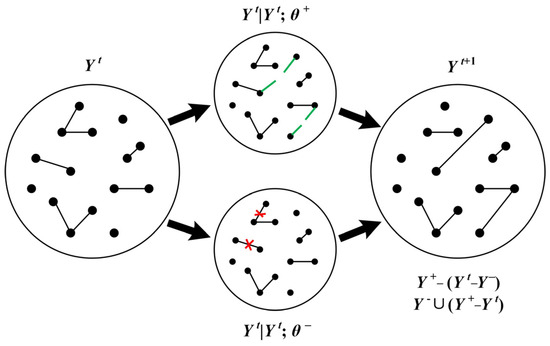
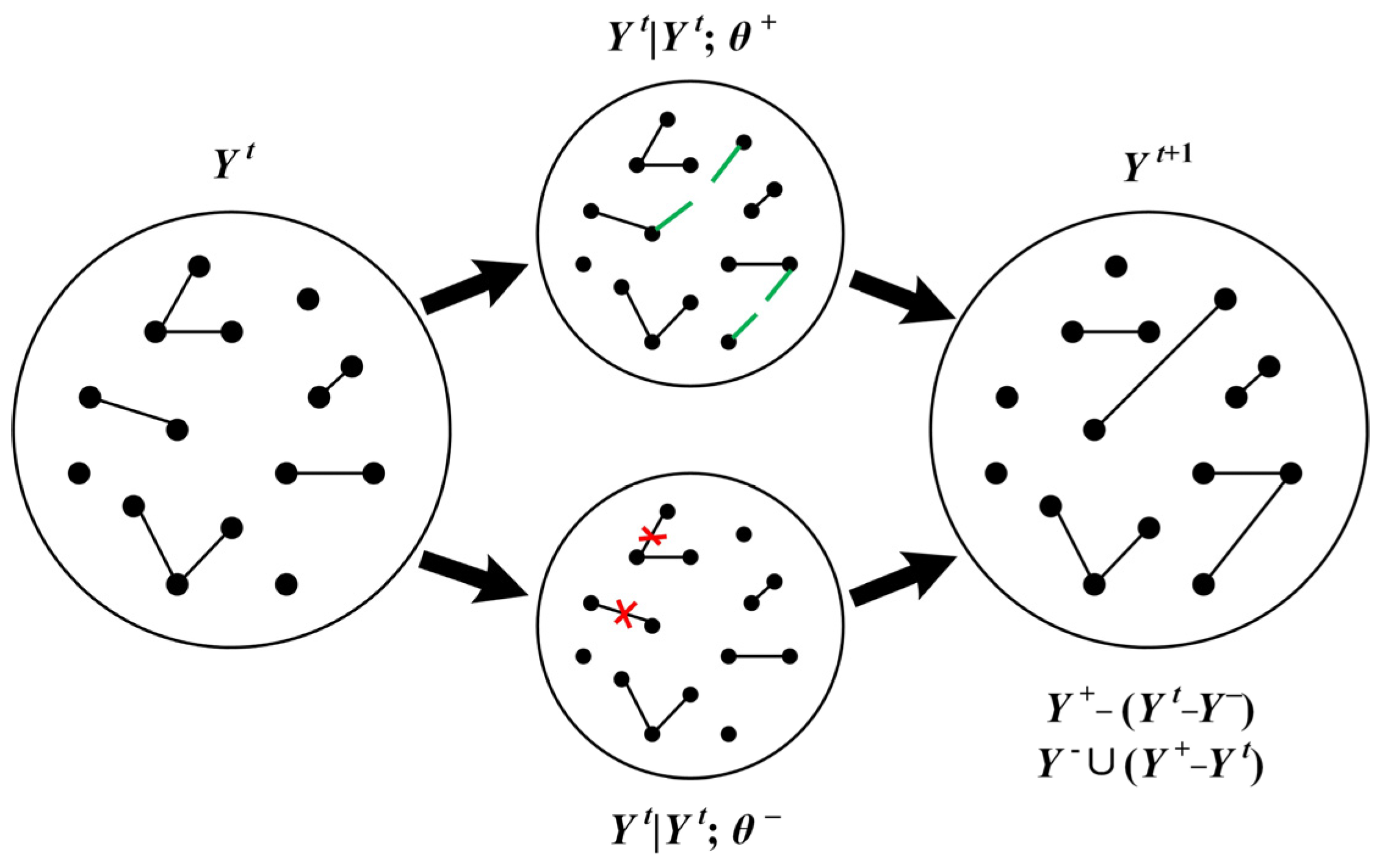
To elucidate the mechanisms influencing the spatial structural evolution of intercity tourism information flow networks, this study decomposes the network relationships of tourism information flow into two dynamic evolutionary processes: tie formation and tie persistence. This research further determines the formation and persistence of the tourism information flow relationships between cities on the basis of the presence of large-scale or specific-scale (i.e., meeting a certain threshold) tourism information flows. Specifically, the “tie formation” process captures the state of the relationship between previously unconnected node pairs after a certain period: whether a relationship forms or does not form. Accordingly, the “tie persistence” process captures the outcomes of preexisting relationships: whether the relationship persists or dissolves over time. As illustrated in Figure 1, this encompasses the “Formation” of new network ties and the “Persistence” of preexisting ones. Specifically, the formation network is defined as Y+ = Yt ∪ Yt + 1, meaning that if new network ties are formed in period t + 1, Y+ incorporates these new ties. Conversely, the dissolution network is defined as Y− = Yt ∩ Yt + 1, indicating that Y− contains only the remaining ties if any network ties are dissolved in period t + 1.
Figure 1.
Schematic diagram of social network structural evolution.
This study employs social network analysis to construct an analytical framework for investigating the mechanisms influencing network evolution. Social network theory conceptualizes social relationships among actors or network nodes as a relatively stable system, where network ties serve as the fundamental elements reflecting interconnections among actors. The evolution of network ties is simultaneously influenced by three fundamental forces: the endogenous local structures within the network itself, the attributes of the actors within the network, and other relational dynamics among network actors [21]. Thus, in the analytical model of the mechanisms influencing the structural evolution of intercity tourism information flow networks, the effect functions can be categorized into three types: endogenous structure effects, exogenous network effects, and node attribute effects, as shown in Table 1.
Table 1.
Effect functions and variable explanations.
① Endogenous structure effects. In social networks, structural factors primarily elucidate the influence of local configurations within the network itself on network relationships [22], reflecting the impact of endogenous effects on the evolution of the network structure. These factors emphasize that network ties can emerge through self-organization. In other words, the emergence of network edges often facilitates the formation of other edges in the network, or conversely, the evolution of these edges themselves is influenced by other edges, demonstrating the interdependence of network edges (relationships). Since such factors affecting network edges do not involve the intrinsic attribute characteristics of nodes themselves or other exogenous factors regarding internodal relationships, they are thus termed “pure structural” effects on networks. It is highly likely that such relational dependence exists in the evolution of intercity tourism information flow network structures. Numerous studies have demonstrated that triadic structures—the relational patterns among three nodes—facilitate relationship transitivity in social networks. This is because, in social networks, the presence of a common third party can increase mutual trust and familiarity and is conducive to mutual monitoring [20]. In intercity tourism information flow networks, if two cities that have tourism information flows with the same common third city also establish a direct tourism information flow between themselves, this indicates the presence of transitivity in the tourism information flow network, driven by their dependency on this common third party.
② Exogenous network effects. Interactor relational factors account for the influence of other network relationships between individuals on the target network relationship. Such factors are typically incorporated into models in the form of dyadic relational covariates. Since different network relationships between nodes often exhibit symbiotic phenomena, other exogenous relational network factors between nodes also influence the evolution of the network structure. Existing research predominantly employs the concepts of “proximity” or “distance” as indicators to measure specific internodal relationships within networks; these concepts encompass multiple dimensions such as spatial, institutional, cognitive, and economic aspects. For example, existing studies have indicated that, in addition to the push effects of origin areas and the pull effects of destinations, the “proximity” or “distance” of attribute characteristics between two locations can serve as a mediating force—either facilitating or constraining tourist flows between origin and destination areas [23].
③ Node attribute effects. Actor attribute factors elucidate whether an individual’s intrinsic endowments facilitate the establishment of target relationships with other individuals. In social network analysis, network nodes are regarded as sets of actors. The attributes of the actors themselves influence whether they participate in the network and thus play a role. Specifically, the higher the value of a certain attribute of an actor is, the more it facilitates the process of attracting other actors to establish network connections with them (main effect); alternatively, the closer the values of a certain attribute between two actors are, the more likely they are to form network relationships compared to other pairs of actors (homophily effect). For example, in intercity tourism information flow networks, residents of cities with higher economic development levels have a greater capacity to fulfill their travel needs, which leads to a stronger intention to travel. On the destination side, tourism resource endowment serves as a critical attraction factor that significantly influences tourist volume.
Moreover, social network theory emphasizes the homophily of actor attributes, suggesting that actors are more inclined to establish or maintain relationships with others who are similar to themselves. The effect of this “homophily” characteristic has been empirically validated in networks such as intercity innovation collaboration networks and technological cooperation networks [24]. Homophily facilitates mutual monitoring and knowledge sharing among actors, reduces collaborative barriers, and thereby promotes the evolution of network relationships. However, in tourism activities, the pursuit of novelty is among the primary motivations that drive tourists to travel. Consequently, homophily in city attributes does not necessarily promote the formation of intercity tourism information flow network relationships.
3. Research Data and Research Methods
3.1. Research Data
The Baidu Search Index (http://index.baidu.com) on which this study relies is based on the search volume generated by netizens on Baidu. It employs the keyword search function of the Baidu search engine to scientifically calculate the weighted aggregate of search frequencies for specific keywords across distinct periods. By the end of 2024, China’s internet penetration rate had reached 78.6%. Among the market share of search engines in China, Baidu’s market share averaged 60.87% [25]. The Baidu Index platform enables the accurate and rapid acquisition of the level of attention from origin regions to destination cities, serving as an indirect measure of tourist flows between cities [26].
The data referenced in this study were collected following a series of specific steps: Using prefecture-level cities in mainland China (excluding Hong Kong, Macao, and Taiwan) as the units of analysis, the search keyword “city name + tourism” was selected. The obtained Baidu Search Index data were utilized to represent the tourism information flow between any two cities. A total of 353 prefecture-level cities’ Baidu Search Index data were collected. Furthermore, with respect to the temporal scope, this study collected data spanning eight full natural years from 2016 to 2023. Owing to disparities in data sources, the Baidu Search Index from both the PC and mobile platforms was acquired, and the daily average values of tourism attention for each city were calculated annually.
In this study, an annual directed and weighted intercity tourism information flow network with dimensions of 353 × 353 is constructed for each year from 2016 to 2023, employing 353 prefecture-level administrative divisions as network nodes and the Baidu Search Index as a proxy for network edge weights. Specifically, an asymmetric valued matrix is used to represent the network, where rows correspond to origin cities, columns correspond to destination cities, and each matrix element Rij denotes the intensity of tourism information flow from city i to city j. Since intracity tourism information flows are not considered, all diagonal elements of the matrix are assigned a value of zero (Equation (1)).
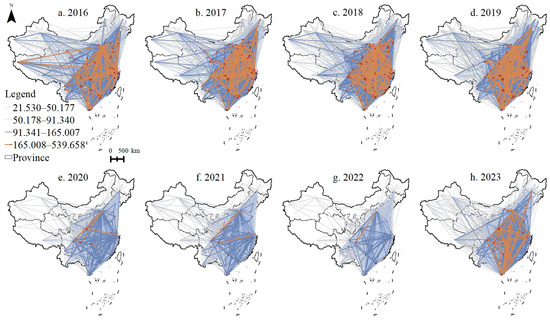
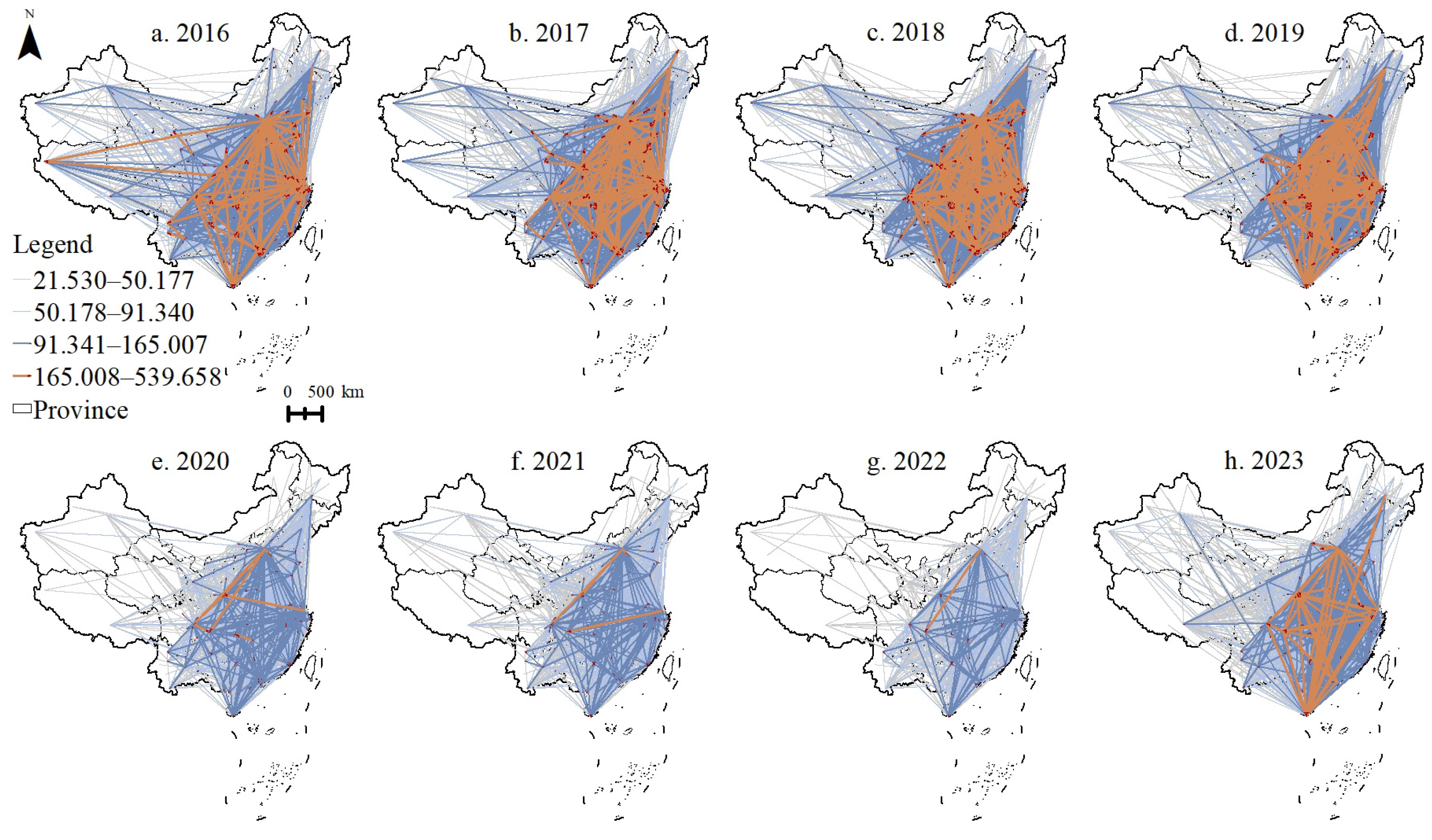
To depict the structural characteristics of the network clearly, this study draws on existing research by selecting the top 10% of intercity tourism information flows as the primary analysis subject [18]. Furthermore, the top 10% of tourism flow data for 2016 served as the baseline. Using the natural breaks classification method (Jenks), these data were divided into four tiers. The thresholds determined from this classification were then applied uniformly to data from other years to facilitate temporal comparison. It should be noted that this top 10% threshold is employed solely for network visualization purposes and is not applied in subsequent model analyses. The results, shown in Figure 2, reveal significant differences in the spatial pattern and connection density of the intercity tourism information flow network across different years. From 2016 to 2019 (Figure 2a–d), medium- and high-intensity intercity tourism information flow linkages increased steadily. During the 2020–2022 period (Figure 2e–g), the tie strength and spatial extent of the tourism information flow network noticeably contracted because of the impact of the COVID-19 pandemic. In 2023 (Figure 2h), following the comprehensive lifting of pandemic control policies, the strength of tourism information flows rebounded substantially; however, the network structure had not yet fully reverted to the pre-pandemic characteristic “diamond” pattern. Additionally, high-intensity linkages were primarily associated with flows from eastern and central origin regions toward western destinations. This pattern reflects a shift in residents’ travel preferences and motivations.
Figure 2.
Intercity tourism information flow networks for 2016 to 2023.
3.2. Research Methods
The exponential random graph model (ERGM), which originates from analytical methods in the field of social networks, is designed to explore the mechanisms influencing the formation of network ties. It is based on the interdependence among network ties—meaning that the formation of one tie may be influenced by the presence of others—and employs hypothesized variables and simulation techniques to assess the goodness-of-fit between the simulated network generated by the model and the empirically observed network [27]. The ERGM exhibits strong inclusivity with respect to the complex and multi-type influencing factors contained in social network relationships. It can simultaneously consider the effects of endogenous structural variables specific to the network, nodal attribute variables, and exogenous relational variables between nodes on the observed network ties.
As the ERGM is designed for static network analysis, it cannot reveal the mechanisms underlying dynamic changes in network structure. Moreover, given that the factors influencing tie formation differ from those influencing tie persistence [28,29], Krivitsky and Handcock [30] proposed the separable temporal exponential random graph model (STERGM). This model can be used with multiperiod network data to more effectively identify these distinct influences in the evolution of population mobility networks.
On the basis of the STERGM framework, the models for tie formation and tie persistence are formally expressed as follows:
where k+ and k− are normalization parameters ensuring that the sum of all probability values equals 1; and denote the parameters and statistics for the tie formation model, respectively; and and represent the parameters and statistics for the tie persistence model, respectively. The direction and magnitude of the parameters indicate the degree of influence and trend of the selected factors on the evolution of the network structure.
In previous studies, binary thresholds were typically set on the basis of the associative characteristics of the investigated networks [31]. Flows exceeding this threshold were assigned a value of 1 (indicating the presence of large-scale tourism information flows), while those falling below were assigned 0, thereby filtering out low-volume relational pathways.
It should be noted that no unified standard currently exists for binary threshold selection in STERGM [32]. The median is selected as the threshold for binarization in this study on the basis of the following considerations. First, as a measure of central tendency in the distribution of flow intensity, the median effectively differentiates between pairs with relatively high and low levels of flow intensity. Network connectivity is preserved while the interference of low-intensity ties in identifying network structures is reduced, thereby highlighting the backbone connections within the network. Second, the median is insensitive to extreme values and provides a more stable representation of the overall distribution of edge weights. This approach has been widely adopted in social network research for the binarization of weighted networks [33,34]. Furthermore, to assess the robustness of the threshold selection, sensitivity analyses are conducted using the 25th percentile and the 75th percentile as alternative thresholds.
3.3. Variable Setting
Building on the strengths of ERGM, this study comprehensively considers multiple types of factors influencing the structural evolution of intercity tourism information flow networks.
① Endogenous structure effects. In this study, density (edges), reciprocity (mutual), cyclicity (ctriple), and in-3-star (istar3) in the network structure are incorporated into the model as detection variables for the endogenous structural mechanism of the evolution of the intercity tourism information flow network structure. This approach aims to investigate whether the structural evolution of the network exhibits characteristics such as reciprocity, circularity, and convergence. The “edges” function is analogous to the intercept term in linear regression. The “mutual” refers to the process in a directed network whereby the initiation of a relationship between a pair of nodes facilitates the reciprocation of that relationship, manifesting as a bidirectional and reciprocal interplay of connections between network nodes. The “ctriple” examines whether the network exhibits closed triangular clustering relationships. The “istar3” investigates the convergence of relationships in intercity tourism information flow networks, reflecting the agglomeration function of core nodes during structural evolution. Nodes in core positions typically command more resources and information, resulting in higher popularity.
② Exogenous network effects. Dialect distance, geographical distance, and institutional distance were selected as the metric variables for exogenous nodal relational effects in this study’s network analysis. First, cultural distance influences tourists’ destination choice preferences. Linguistic similarity facilitates tourists’ communication with locals in cross-cultural contexts, which not only reduces transaction costs but also enhances opportunities for cross-cultural interaction while simultaneously providing them with a sense of comfort and warmth [35]. Culture is a concept that is difficult to quantify. However, extensive anthropological and sociological literature suggests that language and culture evolve in parallel, with language serving as the most powerful marker of cultural identity [36,37]. Building on the literature [38], this study refers to the Language Atlas of China (2nd Edition, Chinese Dialects Volume) [39] to assign values from 1 to 5 to linguistic divergence, in which context ascending values indicate increasing divergence. Specifically, (i) Cities that are located within the same dialect subdivision and subzone are assigned a cultural distance value of 1. (ii) Cities that are located within the same language division but distinct subzones are assigned a value of 2. (iii) Cities that are situated in different Mandarin-speaking areas receive a value of 3. (iv) Cities that are located between Mandarin and non-Mandarin areas are assigned a value of 4. (v) All remaining city pairs are assigned a value of 5. These intercity linguistic relationships are subsequently transformed into an undirected weighted network.
Second, geographical distance is a critical factor influencing tourism demand. According to distance decay theory, increased spatial distance between regions diminishes the reach of tourism information; simultaneously, greater geographical distance increases the time and economic costs associated with travel.
Finally, institutional distance has either inhibitory or stimulating effects on tourist behaviors. Institutions refer to the rules—encompassing laws, social norms, and cultural customs—that govern actors’ conduct. On the one hand, tourists from institutionally proximate regions communicate more easily and achieve higher efficiency in information exchange, thereby reducing travel costs; on the other hand, tourists originating from areas with significant institutional differences face higher travel risks and an increased likelihood of conflict with destinations, thereby suppressing the potential for tourism interaction [40].
③ Node attribute effects. On the basis of the push–pull theory, this study separately considers both the push effects of the origin and the pull effects of the destination on tourism information flows, thereby distinguishing between the sender effect and receiver effect of nodal attributes in the model. Existing research analyzing the structural characteristics of tourism information flows has shown that few cities possess the dual attributes of both tourist origins and destinations [6].
On the origin side, higher levels of economic development correlate with greater population consumption capacity and stronger travel intention during leisure time. Thus, gross domestic product per capita (per_GDP), total retail sales of consumer goods (sale), and urban population (population) were selected as measurable indicators for sender effects. On the destination side, cities endowed with abundant tourism resources and high-quality tourism services exhibit greater attractiveness to tourists, resulting in a broader tourism market [41]. Accordingly, this study selects the number of 5A-level tourist attractions (5A) and the number of A-level tourist attractions (A) as measurable indicators for sender effects. The number of tourists received by the city in the previous year (tourist) is also incorporated to reflect the path dependence effect in destination choice. In summary, this study selects urban economic development levels and tourism resource factors to examine the influence of nodal attributes on the evolution of intercity tourism information flow network from both the push effects of origins and the pull effects of destinations. Furthermore, since the generation of tourism information flows involves both nodes, differences in their attributes may also affect the formation of ties. Therefore, the homophily of nodal attributes was also incorporated into the model.
As shown in Table 2, the data for the urban attribute-related variables were sourced primarily from the China City Statistical Yearbook and the Statistical Bulletin of National Economic and Social Development for various years, as well as official statistical documents released by municipal governments.
Table 2.
Variable specification.
4. Results
In this study, STERGM was employed to investigate the influence of endogenous and exogenous factors on the formation and persistence of network ties during the continuous temporal evolution of intercity tourism information flow network structures. Given the impact of the COVID-19 pandemic as an external shock in 2020, this study divided the 2016–2023 timeframe into two distinct periods for analysis: 2016–2019 and 2020–2023. Table 3 and Table 4 report the STERGM parameter estimates for tie formation and persistence during the 2016–2019 and 2020–2023 periods, respectively. In the STERGM framework, “edges” is selected as an endogenous structural variable. Analogous to the intercept term in linear regression, the statistical significance of its parameter estimates indicates that the network ties do not change randomly; thus, an investigation of the corresponding influencing factors has significant implications [16].
Table 3.
STERGM estimation results for 2016–2019.
Table 4.
STERGM estimation results for 2020–2023.
4.1. Endogenous Structure Effects
The parameter estimates from both the formation and persistence models are statistically significant, revealing that the evolution of intercity tourism information flow network structures is intrinsically driven by the self-organizing properties of endogenous local structures over time. Specifically:
The parameter estimates for “mutual” are significantly positive (p < 0.01) in both the tie formation and the tie persistence models of the intercity tourism information flow network. This finding indicates that reciprocity has a significant positive effect on both the formation and the persistence of intercity tourism information flow relationships, thus suggesting a tendency toward bidirectional flows within the network, which may reflect a pattern of mutual interaction in intercity tourism information exchange. Existing empirical evidence indicates that reciprocity significantly contributes to the stability and resilience of trade networks—primarily by fostering mutual trust between trading partners and thereby reinforcing the credibility and enforceability of bilateral trade agreements [42]. The findings of this study suggest that this phenomenon may result from sustained tourism interactions between cities, which have cultivated mutual trust among tourists and fostered positive word-of-mouth reputation in their respective cities. This, in turn, further facilitates the bidirectional exchange of tourism information flows. Furthermore, the direction of the effects of reciprocity remained consistent for both tie formation and tie persistence during the COVID-19 pandemic period (2020–2023).
The “ctriple” parameter (Table 3) has a significantly positive effect, thus indicating the presence of triangular cyclic relationships in intercity tourism information flows that follow a pattern of gradient transfer between regions. In Table 4, however, it has a significantly negative effect, suggesting that the COVID-19 pandemic disrupted the transitive triangular relationships within China’s intercity tourism information flow network. In the analysis of tie persistence (Table 3), the cyclicity parameter also has a significantly negative effect, implying that tourism information flows do not tend to maintain triangular cyclic structures. This finding indicates that the persistence of intercity tourism information flow relationships is not facilitated by shared third-party connections. However, during the COVID-19 pandemic period (2020–2023), cyclicity did not significantly influence the persistence of intercity tourism information flow network relationships. Previous studies have shown that in social networks, friends of friends are more likely to establish friendships. Namely, compared with random strangers, meetings with friends of friends occur more frequently, offering greater opportunities to build trust and mutual affection [43]. This study reveals that triangular structures lack structural stability in intercity tourism information flow networks and are closely related to the state of the relationships themselves.
The model variable “istar3” captures the aggregation function exhibited by core nodes during the evolution of network structures. Nodes in core positions typically command greater resources and information within network relationships and consequently exhibit greater popularity in the network. The parameter estimation results reveal that the aggregation function of endogenous structural factors in intercity tourism information flow networks exerts marginally significant positive effects on both the formation and the persistence of network ties. This finding indicates that certain cities leverage advantages such as tourism resources and market potential to become highly active core nodes in intercity tourism information flow networks, signifying the presence of high in-degree cities within the network. Previous research has shown that after COVID-19, the proportion of tourism information inflow increased for both the “head” echelon and the “tail” echelon, albeit modestly, from 25.6% to 26.2% and from 4.7% to 5.7%, respectively [6]. These findings validate the weak yet positive role played by “istar3” during the pandemic, indicating the persistent presence of cities that received increased attention from tourists within the network and reflecting the resilient adaptation of tourism information flows amid the impacts of COVID-19.
4.2. Exogenous Network Effects
Among the exogenous network structure effects, the cultural distance network represented by dialect distance (culture), the geographical distance network (distance), and the institutional distance network (boundary) all yield significantly negative estimates. These findings indicate that cross-cultural interactions, long distances, and cross-administrative boundaries significantly inhibit the structural evolution of intercity tourism information flow networks. On the one hand, regarding the proximity of cultural distance, Hofstede posits that culture represents the collective mental programming that distinguishes members of different groups [44]. The proximity within cultural distance networks may indicate domestic tourists’ identification with their local culture. Consequently, tourists tend to show a stronger preference for destinations with cultural similarities than for those associated with cultural differences or novelty-seeking travel experiences. On the other hand, the proximity of geographical and institutional distances reflects tourists’ preferences for short-distance and intraprovincial travel, since long-distance and interprovincial trips often entail heightened risk perception, which consequently diminishes the quality of the travel experience to some extent [40]. Specifically, during the pre-pandemic normal period from 2016 to 2019, each unit increase in dialect distance reduced the probability of tourism information flow tie formation and persistence between cities by approximately 53.9% ≈ [1 − exp (−0.774)] and 71.4% ≈ [1 − exp (−1.252)], respectively. Each 1% increase in geographical distance decreased the probability of intercity tourism information flow tie formation and persistence by approximately 44.8% ≈ [1 − exp (−0.595)] and 60.1% ≈ [1−exp (−0.919)] for formation and persistence, respectively. Furthermore, the probabilities of intercity tourism information flow tie formation and persistence across provincial boundaries were approximately 74.1% ≈ [1 − exp (−1.35)] and 88.1% ≈ [1 − exp (−2.129)] lower, respectively, than those within the same province. In addition, the standard errors corresponding to cultural, geographical, and institutional distance remain relatively stable across periods, suggesting that the consistently negative effects of these distance measures are estimated with reasonable precision rather than driven by random variation.
Compared with the changes that occurred during the COVID-19 pandemic, the coefficients of “culture” and “distance”, while still negative, significantly decreased in absolute magnitude. Their inhibitory effects on the formation and persistence of tourism information flow relationships were substantially reduced. These findings suggest that under the influence of the pandemic, people’s novelty-seeking intentions in terms of destination choice increased, and travel distance expanded significantly. By selecting long-distance travel destinations, individuals released their pent-up desire for outdoor activities and tourism accumulated during the lockdown period.
4.3. Node Attribute Effects
Regarding receiver effects, the “5A” variable has no significant impact on tie formation in 2016–2019 but exerts a significant positive influence in 2020–2023. Furthermore, it has a significant positive effect on the persistence models for both periods. The 5A-level tourist attraction rating represents the highest standard, signifying superior tourism resources, management, and service quality. Although it did not increase a city’s tourism attention during the normalized period, the higher management level during the COVID-19 pandemic may have contributed to greater tourist confidence, possibly due to enhanced safety protocols or stronger brand trust, thereby increasing people’s willingness to visit. In contrast, the variable “A” has a positive effect in the formation models for both periods but has no significant effect on the persistence models. Tourism resource endowments form the foundation for regional tourism development. The number of A-level attractions directly reflects the richness of a city’s tourism resources, which helps attract tourist visits. However, owing to variations in quality and appeal among different levels of attractions, a larger quantity does not necessarily translate into sustained visits or revisitation intentions, which may account for its insignificant effect in the persistence model. With respect to the variable “tourist”, its influence was negative in both the formation and persistence models across the two periods, although it was not significant in the 2020–2023 formation model. This finding suggests limited evidence of path dependence in travel destination choices, which may reflect a tendency among tourists to consider less crowded destinations.
From the perspective of sender effects, the coefficients for “per_GDP” and “population” were significantly negative across all the models. This finding indicates that origin regions with greater wealth and larger populations exhibit higher demand for tourism [35]. The coefficient for “sale” shifted from a significantly negative effect in the 2016–2019 tie formation model to a significantly positive effect in the 2020–2023 model but transitioned from nonsignificant to significantly positive in the persistence model. This finding indicates that origin regions with higher physical goods consumption exhibited stronger tourism information flow sending tendencies during the COVID-19 pandemic.
This study incorporated a similarity variable (absdiff) for urban attribute characteristics into the model to investigate its driving effects. It should be additionally clarified that this study employed the absdiff command from the R language package to examine variable similarity. Its underlying principle is to calculate the absolute difference in attributes between node pairs to reflect similarity effects. A positive parameter estimate indicates heterophily, whereas a negative value suggests a relative lack of difference (i.e., homophily), thereby demonstrating the homophily driven effects of nodal attribute characteristics. The coefficient results for “5A” indicate that during the 2016–2019 period, provinces with an equal number of 5A-level attractions were less likely to form or persist ties, whereas the opposite pattern emerged during the 2020–2023 period. This result reflects, to some extent, a shift in tourists’ demand for high-level tourism resources in destination cities. Specifically, during the COVID-19 pandemic, the level of tourism resources in a destination cannot deviate significantly from that of the origin city, indicating that tourists’ psychological expectations that the management and service standards of destinations should not fall below those of their home cities. The “A” coefficient results shifted from a negative influence in the earlier phase to a positive influence. This reflects a transition in people’s demand for tourism resources—from homophily to heterophily. It also highlights the psychological pursuit of novelty and the avoidance of high-density crowds. The “per_GDP” coefficient indicates that cities with similar economic development levels exhibit a higher probability of forming and persisting tourism information flow relationships. Previous studies have indicated that origin countries with higher income levels demonstrate greater demand for international tourism services, while more affluent destinations provide larger volumes of tourism services [45]. This phenomenon is similarly manifested in the intercity tourism information flow network examined in this study. Higher-income groups show a stronger affinity for destinations with advanced development levels, and conversely, the premium services offered by these high-level destinations are more attractive to tourists with stronger payment capacity.
Although the significance of some node attribute effects varies across periods and between formation and persistence models, the associated standard errors do not show abnormal inflation for key variables such as population and per_GDP, indicating that these variations primarily reflect contextual and structural changes rather than estimation instability.
4.4. Sensitivity Analyses
To evaluate the robustness of the selected binarization thresholds, sensitivity analyses were performed using the 25th and 75th percentiles as alternative thresholds. The STERGM estimation results for the 2016–2019 and 2020–2023 periods under these thresholds are reported in Table 5 and Table 6, respectively.
Table 5.
STERGM estimation results for 2016–2019 under the alternative threshold.
Table 6.
STERGM estimation results for 2020–2023 under the alternative threshold.
The results indicate that endogenous structural effects—specifically the positive impact of “mutual” on tie formation and persistence, and the weak positive effect of “istar3”—remain largely consistent with the primary findings. Regarding exogenous network effects, “culture”, “distance”, and “boundary” consistently exhibit significantly negative effects across different thresholds, further validating the restrictive role of distance factors in the evolutionary trajectory of intercity tourism information flow networks.
Certain node attribute variables exhibited variations across different thresholds. For instance, the effect of “sale” shifted from significantly negative to significantly positive during the 2016–2019 period under alternative threshold specifications. This shift may be attributed to the tie selection mechanism induced by network density fluctuations. Specifically, compared to the median threshold, the 25th and 75th percentiles filter tourism information flow linkages of varying intensities, resulting in altered network densities and subsequent adjustments to local variable coefficient estimates. Nevertheless, these variations do not alter the overall direction of node attribute effects.
Overall, the estimation results under alternative thresholds align closely with the baseline conclusions, suggesting that the findings are independent of any specific binarization thresholds and exhibit substantial robustness.
4.5. Goodness-of-Fit Test
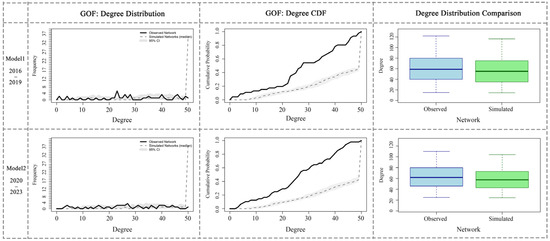
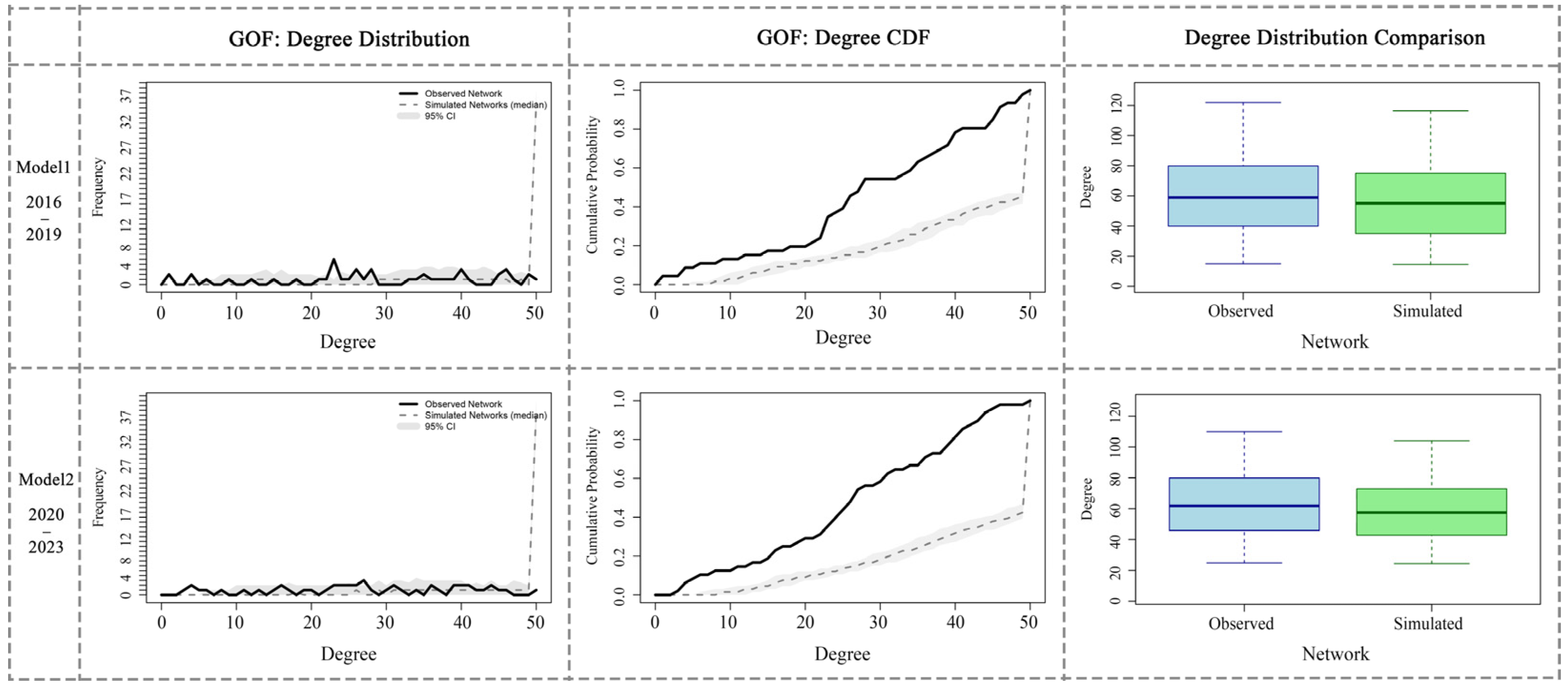
To evaluate the capability of the STERGM in capturing the network evolution process, this study conducted a Goodness-of-Fit (GOF) assessment. The fit between the observed networks and the simulated networks was examined from three dimensions: degree distribution, cumulative distribution function (CDF) of degree, and boxplot-based comparison of degree distributions. The results are presented in Figure 3.
Figure 3.
GOF test results of STERGM.
First, in the multidimensional validation of degree distribution, the degree frequency curve of the observed network is largely embedded within the 95% confidence interval of the simulated networks, and the two curves exhibit a high degree of consistency in their overall trends. This indicates that the simulated networks accurately reproduce the frequency characteristics of node degrees in the observed network. Second, the results of the CDF analysis show that the simulated networks not only match the frequency distribution of degree values but also precisely capture the cumulative probability characteristics of the degree distribution. The distributional trends between the simulated and observed networks are highly consistent. Third, in the boxplot comparison of degree distributions, the simulated networks demonstrate strong agreement with the observed network in terms of both central tendency and dispersion of degree values.
Overall, the GOF assessment of the STERGM, progressing from degree frequency to cumulative probability and then to statistical distributional characteristics, confirms the strong fitting performance of the simulated networks to the observed networks [46]. Across both evolutionary periods examined in this study, the STERGM effectively captures the distributional patterns of node degrees during network evolution, thereby providing a reliable modeling foundation for subsequent analyses of network structure, inference of evolutionary mechanisms, and predictive research based on the fitted models.
5. Discussion and Conclusions
5.1. Discussion
From a methodological perspective, urban networks can be conceptualized as complex network systems constructed on element flows between nodes. Previous studies on urban networks have predominantly focused on physical networks, such as transportation networks [47], electricity networks [48], and population migration networks [49], while relatively limited attention has been paid to intercity tourism information flow networks as non-physical systems and the mechanisms driving their formation and evolution. Therefore, this study employs a social network analysis model to capture the influence of local topological configurations on the structural evolution of China’s domestic intercity tourism information flow networks, thereby more holistically revealing the mechanisms influencing the structural evolution of such networks under a tourism-specific and domestic context.
Previous studies have shown that real-world networks differ significantly from random networks, exhibiting structural dependencies rather than independent tie formation. Consistent with this perspective, our findings indicate that China’s domestic intercity tourism information flow network is not randomly generated but jointly shaped by endogenous structural mechanisms and exogenous relational factors. The network demonstrates reciprocity and clustering tendencies, with certain cities occupying central positions and exerting structural influence over network evolution. At the same time, the triadic structure displays relative instability, exerting differential effects on tie formation and persistence that vary across external contexts. This suggests that while the network exhibits self-organizing properties, its local configurations remain dynamically sensitive to environmental changes.
Theoretically, this study extends the research framework of push‒pull motivation theory in China’s domestic tourism setting. Based on this theory, urban attribute characteristics are selected from both origin and destination perspectives to examine the mechanism by which nodal attribute values influence the structural evolution of the intercity tourism information flow network. Traditional push‒pull motivation models incorporate push, pull, and resistance factors. This study examines the effect of homophily in nodal attributes on network structures by measuring the similarity in urban attribute characteristics, thereby offering new research perspectives for the application of push‒pull motivation theory. Nadel [50] and White [51] posit that one social network can provide context for another such network. By incorporating relational network variables, this study demonstrates that the existing social networks between cities—such as those based on institutions and culture—create contextual dependencies for tourism information flows, thereby either facilitating or hindering the evolution of the intercity tourism information flow network relationships.
From the perspective of sustainable development, the structural patterns identified in this study have significant implications for the resilience, equity, and adaptive capacity of urban systems. For example, endogenous mechanisms such as reciprocity strengthen intercity connections, promote more balanced information exchange, and reduce asymmetric dependencies, thereby supporting more equitable participation in intercity tourism networks. The convergence effect embodied by network core nodes enhances network efficiency and coordination, thereby contributing to system resilience under normal conditions. However, excessive centralization may pose sustainability risks, as tourism-related resources become concentrated in a limited number of cities, potentially marginalizing surrounding regions. Furthermore, the inhibitory effects exerted by cultural, geographical, and institutional distances suggest the presence of structural barriers that hinder the development of sustainable intercity tourism. These barriers can be reduced through coordinated regional planning and interregional cooperation, thereby promoting a more balanced and sustainable spatial distribution of tourism activities. Overall, these findings indicate that an understanding of and strategic guidance for the evolution of China’s domestic intercity tourism information flow network structures are crucial to advancing sustainable urban tourism development and innovative governance practices.
Finally, the data referenced in this study need to be discussed. Constrained by data accessibility, domestic actual tourism flows still lack systematic measurement methods, thereby making it difficult to capture directional intercity linkages. Existing studies have attempted to simulate the actual tourism flows using spatial interaction models; however, such approaches are susceptible to parameter specification errors. Some studies have constructed tourism flow networks based on travel diaries or social media data; however, these data sources often suffer from sample selection bias, recall bias [52], or platform-specific user limitations and therefore fail to comprehensively capture national-scale tourism mobility structures. Moreover, the actual tourism flow networks constructed from information such as travel narratives or tour agency itineraries are mostly limited to regional spatial scales, with few covering the national scale. The absence of such relational data has become a significant constraint in urban/regional network research. In response, recent studies have increasingly expanded data sources by incorporating nonofficial statistics, such as Weibo check-in data [53], online text data [54], mobile location data [55], and the Baidu Search Index [9], to construct tourism flow networks.
However, internet search big data reflect statistical characteristics under large-sample conditions and cannot fully account for individual features and variations in tourists’ information search behaviors. Supported by nearly universal, non-sampled, and undifferentiated large-scale data, tourists’ destination selection intentions and outcomes are revealed, while group characteristics are quantified. Therefore, future research on data acquisition should evaluate data quality, precision, and validity. This goal can be achieved by integrating big data with traditional data to mitigate inherent bias issues.
5.2. Policy Implications and Suggestions
Furthermore, the findings of this study offer insightful implications for the development of local tourism industries within China, particularly in terms of promoting sustainable urban tourism planning, balanced resource allocation, and coordinated intercity governance. The results confirm that the effectiveness of tourism information dissemination in the Chinese context is comprehensively influenced by multiple factors, including local political, economic, cultural, and geographical elements. Thus, accurate positioning in local tourism development is crucial. By promoting tourism products that align with local characteristics and disseminating information to appropriate tourist markets, destination operators can effectively mitigate the hindering effects of unfavorable factors, thereby leveraging the promotional efficacy of tourism information to advance regional tourism development.
First, within China, tourism destination operators should prioritize domestic tourists’ preference for intercity cultural proximity. It is worth noting that numerous studies have confirmed that international cultural distance has dual effects on tourism demand [56]. However, in this study, domestic cultural distance was found to have a negative effect within the Chinese context. Thus, when targeting domestic tourists, operators should focus on tourist markets that share cultural similarities with their local context. For tourist markets with cultural differences within China, destination operators should emphasize the interpretation and promotion of their local cultural connotations to establish a positive cultural image. They should avoid solely highlighting cultural distinctiveness and novelty, as this may cause cultural shock among domestic tourists from different regions [57].
Second, to address the constraining effects of institutional and geographical distance within China, a dual approach is necessary. On the one hand, spatial barriers to tourist flows should be reduced by developing regional high-speed transportation infrastructure. On the other hand, marketing strategies should focus on intraprovincial tourist flows, as the findings from this study indicate that tourist flows originating within the same province remain the primary component of China’s tourist mobility.
Third, in the evolution of China’s domestic intercity tourism information flow network structures, the reciprocity of endogenous factors drives intercity tourism development toward a mutually reinforcing cycle. By establishing comprehensive tourism systems with cities that exhibit reciprocal tourism information flows, local authorities can provide tourists with one-stop services, enhancing visitor satisfaction and fostering sustainable tourism cooperation. Furthermore, within the network, cities that occupy core positions consistently attract high attention and travel intention among tourists. It is essential to leverage the diffusion function of such cities to drive the development of surrounding areas, foster the emergence of multinode network structures, and thereby promote regional synergistic development. The aggregation of traffic flow in core nodes represents one of the critical pathways for tourism development in the information society, yet rational spatial planning is needed to avoid excessive concentration. From the perspectives of sustainable development and governance, the avoidance of excessive concentration is crucial to the promotion of spatial equity and the prevention of the marginalization of peripheral cities within China’s domestic intercity tourism flow network.
5.3. Main Conclusions
In this study, an analytical framework that incorporates endogenous structure effects, exogenous network effects, nodal attributes, and their similarity effects is constructed. Taking China as the empirical setting, the study reveals the mechanisms influencing the structural evolution of China’s domestic intercity tourism information flow networks by analyzing the formation and persistence of intercity relationships within the tourism context.
First, endogenous structure effects constitute one of the core research foci in this study. The findings reveal that the self-organizing properties of microscopic topological structures within networks significantly influence both the formation and the persistence of intercity tourism information flow network ties. This study captures the significantly positive effect of local reciprocity within the networks on the formation of network ties, indicating that the outflow of tourism information flow relationships from a node facilitates the inflow of tourism information flow relationships to that node. The analysis of cyclicity indicates that triangular cyclic relationships follow a gradient transfer pattern in the formation of tourism information flow relationships. However, the COVID-19 pandemic disrupted this transitive triangular structure. Simultaneously, this study investigates the mechanisms influencing the persistence of tourism information flow relationships. The formation and persistence of ties are independent processes in network structural evolution. Previous research has overlooked the factors influencing persistence. The study reveals that the tourism information flows do not tend to sustain triangular cyclic structures in terms of tie persistence. This shift in the direction of the effect confirms that significant divergences exist for the same variable in influencing the formation versus persistence of tourism information flow relationships across different developmental contexts.
Second, with respect to exogenous network structural effects in the Chinese domestic setting, the cultural distance network, represented by dialect distance, the geographical distance network, and the institutional distance network, significantly inhibits both the formation and persistence of intercity tourism information flow network relationships. During the COVID-19 pandemic, the inhibitory effects of cultural and geographical distance on the structural evolution of the networks decreased significantly, thus reflecting people’s desire for culturally distinct and distant tourism destinations during the pandemic.
Finally, regarding exogenous factors, this study draws on the push‒pull motivation theory of tourism to identify effective push forces from the economic development level of origin areas and pull forces from the tourism resources and service levels of destinations. These findings demonstrate how urban attribute characteristics drive the evolution of the intercity tourism information flow network structure. With respect to the assortativity of urban attributes, tourists’ travel demand reflects a comparison between the level of economic development of destinations and origins.
It should be noted that the conclusions of this study are drawn specifically from China’s domestic tourism context, relying on internal tourism information flow data and market structures. These findings should therefore not be generalized to international tourism markets or cross-national information flow networks without careful contextual consideration and further empirical validation.
Author Contributions
Conceptualization, J.B.; Methodology, J.B., X.Z. and Z.Z.; Software, J.B. and X.Z.; Data curation, Y.L.; Writing—original draft preparation, J.B., X.Z. and Z.Z.; Writing—review and editing, J.B., X.Z., Z.Z. and Y.L.; Supervision, J.B. and Y.L.; Project administration, J.B. and Y.L.; Funding acquisition, Z.Z. All authors have read and agreed to the published version of the manuscript.
Funding
This research was funded by the National Natural Science Foundation of China (Grant number 42571273).
Institutional Review Board Statement
Not applicable.
Informed Consent Statement
Not applicable.
Data Availability Statement
The datasets presented in this article are not readily available because the data used in this study were sourced from the Baidu Index (http://index.baidu.com/, accessed on 9 January 2025), a real-time and publicly accessible platform. As the intellectual property of the data belongs to Baidu Company, the authors do not have permission to share it.
Conflicts of Interest
The authors declare no conflicts of interest.
References
- Ruan, W.; Zhang, S. Can Tourism Information Flow Enhance Regional Tourism Economic Linkages? J. Hosp. Tour. Manag. 2021, 49, 614–623. [Google Scholar] [CrossRef] [Scilit]
- Lee, C.J.; Hong, J.H. The Value of Information at Each Stage of the Tourism Flow: Application of TAM. J. Artic. Manag. Syst. 2022, 18, 255–275. [Google Scholar] [CrossRef] [Scilit]
- Nie, R.-X.; Wu, C.; Liang, H.-M. Exploring Appropriate Search Engine Data for Interval Tourism Demand Forecasting Responding a Public Crisis in Macao: A Combined Bayesian Model. Sustainability 2024, 16, 6892. [Google Scholar] [CrossRef] [Scilit]
- Huang, X.; Zhang, L.; Ding, Y. The Baidu Index: Uses in Predicting Tourism Flows—A Case Study of the Forbidden City. Tour. Manag. 2017, 58, 301–306. [Google Scholar] [CrossRef] [Scilit]
- Kang, J.; Guo, X.; Fang, L.-H.; Wang, X.; Fan, Z. Integration of Internet Search Data to Predict Tourism Trends Using Spatial-Temporal XGBoost Composite Model. Int. J. Geogr. Inf. Sci. 2021, 36, 236–252. [Google Scholar] [CrossRef] [Scilit]
- Tang, Y.; Weng, G.; Qin, S.; Pan, Y. Spatial and Temporal Evolution of Tourism Flows among 296 Chinese Cities in the Context of COVID-19: A Study Based on Baidu Index. Humanit. Soc. Sci. Commun. 2025, 12, 19. [Google Scholar] [CrossRef] [Scilit]
- Zhao, Y.; Wang, Z.; Yong, Z.; Xu, P.; Wang, Q.; Du, X. The Spatiotemporal Pattern Evolution and Driving Force of Tourism Information Flow in the Chengdu–Chongqing City Cluster. ISPRS Int. J. Geo-Inf. 2023, 12, 414. [Google Scholar] [CrossRef] [Scilit]
- Yuan, Z.; Jia, G. Systematic Investigation of Keywords Selection and Processing Strategy on Search Engine Forecasting: A Case of Tourist Volume in Beijing. Inf. Technol. Tour. 2022, 24, 547–580. [Google Scholar] [CrossRef] [Scilit]
- Liu, Y.; Liao, W. Spatial Characteristics of the Tourism Flows in China: A Study Based on the Baidu Index. ISPRS Int. J. Geo-Inf. 2021, 10, 378. [Google Scholar] [CrossRef] [Scilit]
- Yang, Y.; Zhang, L.; Wu, L.; Li, Z. Does Distance Still Matter? Moderating Effects of Distance Measures on the Relationship between Pandemic Severity and Bilateral Tourism Demand. J. Travel Res. 2022, 62, 610–625. [Google Scholar] [CrossRef] [Scilit] [PubMed]
- Wu, Y.; Bidin, S.; Johari, S. Spatiotemporal Evolution and Influencing Factors of Zhangjiajie National Forest Park Tourism Network Attention. Sustainability 2025, 17, 7182. [Google Scholar] [CrossRef] [Scilit]
- Cebrian, E.; Domenech, J. Is It Possible for Google Trends to Forecast Rural Tourism? The Situation in Spain. J. Tour. Manag. Res. 2024, 11, 302–312. [Google Scholar] [CrossRef] [Scilit]
- Yang, Y.; Fan, Y.; Jiang, L.; Liu, X. Search Query and Tourism Forecasting during the Pandemic: When and Where Can Digital Footprints Be Helpful as Predictors? Ann. Tour. Res. 2022, 93, 103365. [Google Scholar] [CrossRef] [Scilit]
- Liu, J.; Li, X.; Yang, Y.; Tan, Y.; Geng, T.; Wang, S. Short- and Long-Term Prediction and Determinant Analysis of Tourism Flow Networks: A Novel Steady-State Markov Chain Method. Tour. Manag. 2025, 109, 105139. [Google Scholar] [CrossRef] [Scilit]
- Robins, G.; Pattison, P.; Kalish, Y.; Lusher, D. An Introduction to Exponential Random Graph (P*) Models for Social Networks. Soc. Netw. 2007, 29, 173–191. [Google Scholar] [CrossRef] [Scilit]
- Zhang, W.; Chong, Z.; Li, X.; Nie, G. Spatial Patterns and Determinant Factors of Population Flow Networks in China: Analysis on Tencent Location Big Data. Cities 2020, 99, 102640. [Google Scholar] [CrossRef] [Scilit]
- Wang, Y.; Xi, M.; Chen, H.; Lu, C. Evolution and Driving Mechanism of Tourism Flow Networks in the Yangtze River Delta Urban Agglomeration Based on Social Network Analysis and Geographic Information System: A Double-Network Perspective. Sustainability 2022, 14, 7656. [Google Scholar] [CrossRef] [Scilit]
- Zhao, Z.; Wen, Y.; Yuan, Z.; Li, Y.; Zhao, S. Does the Influence of Multidimensional Distances on the Evolution of Tourism Information Flow Network Structures Differ by Urbanisation Rate? Evidence from China. Curr. Issues Tour. 2025, 1–21. [Google Scholar] [CrossRef] [Scilit]
- Wang, X.; Tang, L.; Chen, W.; Zhang, J. Impact and Recovery of Coastal Tourism amid COVID-19: Tourism Flow Networks in Indonesia. Sustainability 2022, 14, 13480. [Google Scholar] [CrossRef] [Scilit]
- Zhang, C.; Dang, X.; Peng, T.; Xue, C. Dynamic Evolution of Venture Capital Network in Clean Energy Industries Based on STERGM. Sustainability 2019, 11, 6313. [Google Scholar] [CrossRef] [Scilit]
- McPherson, M.; Smith-Lovin, L.; Cook, J.M. Birds of a Feather: Homophily in Social Networks. Annu. Rev. Sociol. 2001, 27, 415–444. [Google Scholar] [CrossRef] [Scilit]
- Ter Wal, A.L.J.; Boschma, R.A. Applying Social Network Analysis in Economic Geography: Framing Some Key Analytic Issues. Ann. Reg. Sci. 2008, 43, 739–756. [Google Scholar] [CrossRef] [Scilit]
- Guiso, L.; Sapienza, P.; Zingales, L. Cultural Biases in Economic Exchange? Q. J. Econ. 2009, 124, 1095–1131. [Google Scholar] [CrossRef] [Scilit]
- Pilny, A.; Atouba, Y. Modeling Valued Organizational Communication Networks Using Exponential Random Graph Models. Manag. Commun. Q. 2017, 32, 250–264. [Google Scholar] [CrossRef] [Scilit]
- StatCounter. Search Engine Market Share Worldwide. Available online: https://gs.statcounter.com/search-engine-market-share/ (accessed on 9 January 2025).
- Dou, W.; Zhang, H.; Xu, C.; Zhang, J. Spatial Evolution Pattern of Tourism Flow in China: Case Study of the May Day Holiday Based on Baidu Migration Data. Curr. Issues Tour. 2024, 28, 1611–1627. [Google Scholar] [CrossRef] [Scilit]
- Lusher, D.; Koskinen, J.; Robins, G. Exponential Random Graph Models for Social Networks; Cambridge University Press: Cambridge, UK, 2013; pp. 9–15. [Google Scholar]
- Dahlander, L.; McFarland, D.A. Ties That Last. Adm. Sci. Q. 2013, 58, 69–110. [Google Scholar] [CrossRef] [Scilit]
- Seabright, M.A.; Levinthal, D.A.; Fichman, M. Role of Individual Attachments in the Dissolution of Interorganizational Relationships. Acad. Manag. J. 1992, 35, 122–160. [Google Scholar] [CrossRef] [Scilit]
- Krivitsky, P.N.; Handcock, M.S. A Separable Model for Dynamic Networks. J. R. Stat. Soc. Ser. B Stat. Methodol. 2013, 76, 29–46. [Google Scholar] [CrossRef] [Scilit]
- Windzio, M. The Network of Global Migration 1990–2013: Using ERGMs to Test Theories of Migration between Countries. Soc. Netw. 2018, 53, 20–29. [Google Scholar] [CrossRef] [Scilit]
- Liu, L.; Chen, Z.; Tian, B. Structural dependency how to influence the formation and evolution of trade network? Taking “the Belt and Road” as an example. World Econ. Stud. 2020, 6, 106–137. [Google Scholar] [CrossRef]
- Cui, Y.; Ahmed, F.; Sha, Z.; Wang, L.; Fu, Y.; Contractor, N.; Chen, W. A Weighted Statistical Network Modeling Approach to Product Competition Analysis. Complexity 2022, 2022, 9417869. [Google Scholar] [CrossRef] [Scilit]
- Lehmann, B.C.L.; Henson, R.N.; Geerligs, L.; Cam-CAN; White, S.R. Characterising Group-Level Brain Connectivity: A Framework Using Bayesian Exponential Random Graph Models. NeuroImage 2021, 225, 117480. [Google Scholar] [CrossRef] [Scilit]
- Okafor, L.E.; Khalid, U.; Then, T. Common Unofficial Language, Development and International Tourism. Tour. Manag. 2018, 67, 127–138. [Google Scholar] [CrossRef] [Scilit]
- Brewer, M.B. The Social Self: On Being the Same and Different at the Same Time. Personal. Soc. Psychol. Bull. 1991, 17, 475–482. [Google Scholar] [CrossRef] [Scilit]
- Cavalli-Sforza, L.L. Genes, Peoples, and Languages. Proc. Natl. Acad. Sci. USA 1997, 94, 7719–7724. [Google Scholar] [CrossRef] [Scilit]
- Zhao, Z.; Zhao, S.; Shi, K.; Li, Y.; Wang, S. The Influence of Cultural Ties on China’s Population Flow Networks. Cities 2024, 151, 105116. [Google Scholar] [CrossRef] [Scilit]
- Institute of Linguistics; Chinese Academy of Social Sciences; The Institute of Ethnology and Anthropology; Chinese Academy of Social Science; Language Information Sciences Research Centre; City University of Hong Kong. Language Atlas of China, 2nd ed.; The Commercial Press: Beijing, China, 2012. [Google Scholar]
- Peng, H.; Zhang, J.; Liu, Z.; Lu, L.; Yang, L. Network Analysis of Tourist Flows: A Cross-Provincial Boundary Perspective. Tour. Geogr. 2016, 18, 561–586. [Google Scholar] [CrossRef] [Scilit]
- Lee, J.; Kyle, G.T. Segmenting Festival Visitors Using Psychological Commitment. J. Travel Res. 2013, 53, 656–669. [Google Scholar] [CrossRef] [Scilit]
- Pan, Z. Varieties of Intergovernmental Organization Memberships and Structural Effects in the World Trade Network. Adv. Complex Syst. 2018, 21, 1850001. [Google Scholar] [CrossRef] [Scilit]
- Block, P. Reciprocity, Transitivity, and the Mysterious Three-Cycle. Soc. Netw. 2015, 40, 163–173. [Google Scholar] [CrossRef] [Scilit]
- Hofstede, G. Cultures and Organizations: Software of the Mind; McGraw-Hill: New York, NY, USA, 1997. [Google Scholar]
- Khalid, U.; Okafor, L.E.; Sanusi, O.I. Exploring Diverse Sources of Linguistic Influence on International Tourism Flows. J. Travel Res. 2021, 61, 696–714. [Google Scholar] [CrossRef] [Scilit]
- Leifeld, P.; Cranmer, S.J.; Desmarais, B.A. Temporal Exponential Random Graph Models with Btergm: Estimation and Bootstrap Confidence Intervals. J. Stat. Softw. 2018, 83, 1–36. [Google Scholar] [CrossRef] [Scilit]
- Qin, J.; He, Y.; Ni, L. Quantitative Efficiency Evaluation Method for Transportation Networks. Sustainability 2014, 6, 8364–8378. [Google Scholar] [CrossRef] [Scilit]
- Kumar, S.A.; Tasnim, M.; Basnyat, Z.S.; Karimi, F.; Khalilpour, K. Resilience Analysis of Australian Electricity and Gas Transmission Networks. Sustainability 2022, 14, 3273. [Google Scholar] [CrossRef] [Scilit]
- Zhong, Y.; Chen, Y.; Qiu, J. Study on the Spatial Structure of the Complex Network of Population Migration in the Poyang Lake Urban Agglomeration. Sustainability 2023, 15, 14789. [Google Scholar] [CrossRef] [Scilit]
- Nadel, S.F. The Theory of Social Structure; Melbourne University Press: Melbourne, VIC, Australia, 1952. [Google Scholar]
- White, H.C. Identity and Control: How Social Formations Emerge, 2nd ed.; Princeton University Press: Princeton, NJ, USA, 2008. [Google Scholar]
- Mou, N.; Yuan, R.; Yang, T.; Zhang, H.; Tang, J.; Makkonen, T. Exploring Spatio-Temporal Changes of City Inbound Tourism Flow: The Case of Shanghai, China. Tour. Manag. 2020, 76, 103955. [Google Scholar] [CrossRef] [Scilit]
- Li, A.; Mou, N.; Zhang, L.; Yang, T.; Liu, W.; Liu, F. Tourism Flow between Major Cities during China’s National Day Holiday: A Social Network Analysis Using Weibo Check-in Data. IEEE Access 2020, 8, 225675–225691. [Google Scholar] [CrossRef] [Scilit]
- Van der Zee, E.; Bertocchi, D. Finding Patterns in Urban Tourist Behaviour: A Social Network Analysis Approach Based on TripAdvisor Reviews. Inf. Technol. Tour. 2018, 20, 153–180. [Google Scholar] [CrossRef] [Scilit]
- Chen, X.; Huang, Y.; Chen, Y. Spatial Pattern Evolution and Influencing Factors of Tourism Flow in the Chengdu–Chongqing Economic Circle in China. ISPRS Int. J. Geo-Inf. 2023, 12, 121. [Google Scholar] [CrossRef] [Scilit]
- Bi, J.; Lehto, X.Y. Impact of Cultural Distance on International Destination Choices: The Case of Chinese Outbound Travelers. Int. J. Tour. Res. 2017, 20, 50–59. [Google Scholar] [CrossRef] [Scilit]
- Cort, D.A.; King, M. Some Correlates of Culture Shock among American Tourists in Africa. Int. J. Intercult. Relat. 1979, 3, 211–225. [Google Scholar] [CrossRef] [Scilit]



Disclaimer/Publisher’s Note: The statements, opinions and data contained in all publications are solely those of the individual author(s) and contributor(s) and not of MDPI and/or the editor(s). MDPI and/or the editor(s) disclaim responsibility for any injury to people or property resulting from any ideas, methods, instructions or products referred to in the content. |
© 2026 by the authors. Licensee MDPI, Basel, Switzerland. This article is an open access article distributed under the terms and conditions of the Creative Commons Attribution (CC BY) license.