Abstract
This research offers a comparative examination of how China and Pakistan’s recent port developments are revolutionizing the supply chain and logistics from the perspective of the interrelation of policy, law, and technology. It examines how these developments respond to the imperatives of sustainable development, aiming to reconcile economic development, environmental protection, and social justice. The extent to which policy and regulatory frameworks facilitate or undermine the adoption of technologies such as artificial intelligence and blockchain in port operations is also investigated. We provide a conceptual framework to examine the development of smartness in Chinese and Pakistani ports at the nexus of sustainability, emerging technologies, and supply chain logistics. This study engages in qualitative secondary data analysis, drawing on government policies, international reports, and the relevant literature. Against the backdrop of the peculiar development stages of Pakistani and Chinese ports, this study aims to identify the determinative policy and legal drivers that substantially improve both economic performance and environmental outcomes. This study aims to present a replicable model of sustainable port modernization, providing strategic direction to policymakers and port authorities in developing maritime countries.
1. Introduction
In recent years, the marine industry has undergone significant upheaval, particularly at ports, where smart technology and environmental considerations are becoming increasingly important. With technologies such as big data, artificial intelligence, and the Internet of Things, smart ports are transforming logistics operations, making them more effective and sustainable. Although environmental and technological conditions have evolved, there is a notable lack of discussion on how these conditions relate to new technologies, sustainability, and the law, particularly in developing nations. Optimize supply chain and logistics operations at smart ports. This study compares China and Pakistan to investigate the relationships among sustainability, cutting-edge technology, and the legal framework [1,2]. The two countries are among the world’s top commercial powers, with Pakistan’s port economy having substantial development potential. China’s ports rank among the busiest in the world [3]. How the port community and the broader economy can achieve sustainability goals, including carbon neutrality and resource optimization, through the intelligent integration of technology, such as lean efficiency, waste reduction, and process optimization, remains a question. Although smart port technologies have advanced significantly, China and Pakistan face particular challenges in implementing them [4]. Regulatory barriers, varied national sustainability goals, and disparate degrees of technological infrastructure complicate the deployment of smart technology in ports.
Smart ports are those ports that utilize new technology, such as IoT, AI (artificial intelligence), big data, etc., to work effectively and efficiently in cutting the cost for logistics management and supply chain management. Sustainability-rich performance refers to an organization or entity’s ability to meet today’s needs while ensuring the well-being of the environment and society in the future and to maintain financial strength in line with sustainable development objectives. Legal drivers encompass the regulatory environments, laws, and policies that guide decision-making within sectors, leading to adherence to standards and driving outcomes such as environmental protection, respect for labor rights, and ensuring safety. Why were Pakistan and China selected for this comparative study? The rationale behind these choices involves influential roles in global maritime trade, port development, and the adoption of smart technologies in logistics and supply chains.
Furthermore, considering the close geographical proximity between the two countries, coupled with their strong, brotherly relationship, this comparison holds particular significance. These, in combination with existing gaps in research, provide a reasonable basis for making Pakistan and China a suitable focus for the present study. The adoption of technologies and policies across countries is examined, with the aim of understanding their impact on economic and environmental performance, with the intention of closing the research gap.
This study aims to compare the economic and ecological outcomes of port development in China and Pakistan, analyze the policy and legal framework supporting smart port business, and evaluate the role of smart technologies in the development of sustainable port logistics [5]. It aims to guide industry leaders, port authorities, and policymakers on how to address the challenges of implementing cutting-edge, sustainable technologies in the global ports sector. The adoption of cutting-edge technologies, sustainability programs, and trade liberalization policies is driving significant change in the worldwide shipping and port sectors. The logistics and supply chain industries are undergoing a revolution thanks to the widespread deployment of smart ports [6]. Ports can become more ecologically sustainable, economically efficient, and operationally efficient through these innovations [7]. Two of the leading nations creating smart ports are China and Pakistan. China has invested heavily in port technology, especially in key marine cities such as Shenzhen, Ningbo, and Shanghai [8].
The Hainan Free Trade Port, created as part of China’s broader effort to liberalize and modernize trade and port operations, is a prime example. Since its founding, Hainan has emerged as a leader in integrating green practices, trade facilitation, and smart technology, as well as in developing a streamlined and effective port ecosystem [9]. The Hainan Free Trade Port optimized port operations, improved logistical transparency, and reduced carbon emissions by leveraging cutting-edge technologies, including blockchain, AI, and IoT, as well as implementing new regulations. As such, it is a case study that exemplifies best practices for evaluating the collaborations between smart technologies and sustainable port practices [10]. Taking Gwadar Port and Karachi Port as its flagships, Pakistan’s port sector is still in its infancy when it comes to sustainable development and digitization. Infrastructure issues, along with financial and regulatory matters, have hindered port modernization efforts [11]. The busiest port in Pakistan, Karachi Port, also implemented AI and automation pilot programs; however, adoption rates were below global norms.
The region’s commercial center, Gwadar Port, is falling behind in terms of technology and regulations [12]. A network of ports with distinct strategic and economic roles serves the Pakistani coast. The bulk and containerized cargo volumes are handled at Karachi Port, the country’s busiest and oldest commercial hub. Supported by a robust industry and urban conveniences, it serves as the nation’s gateway to global trade. The second-largest port in southeastern Karachi, Port Qasim, exports bulk goods, including fertilizer, coal, and grain. It is a part of the country’s industry because it is connected to the largest steel factory in the country and to the nearby industrial region. Baluchistan’s Port Gwadar is a cutting-edge deepwater port [13]. The China–Pakistan Economic Corridor (CPEC) plays a strategic role in stimulating regionally focused development while serving as a major transshipment hub and an economic gateway to landlocked Central Asia.
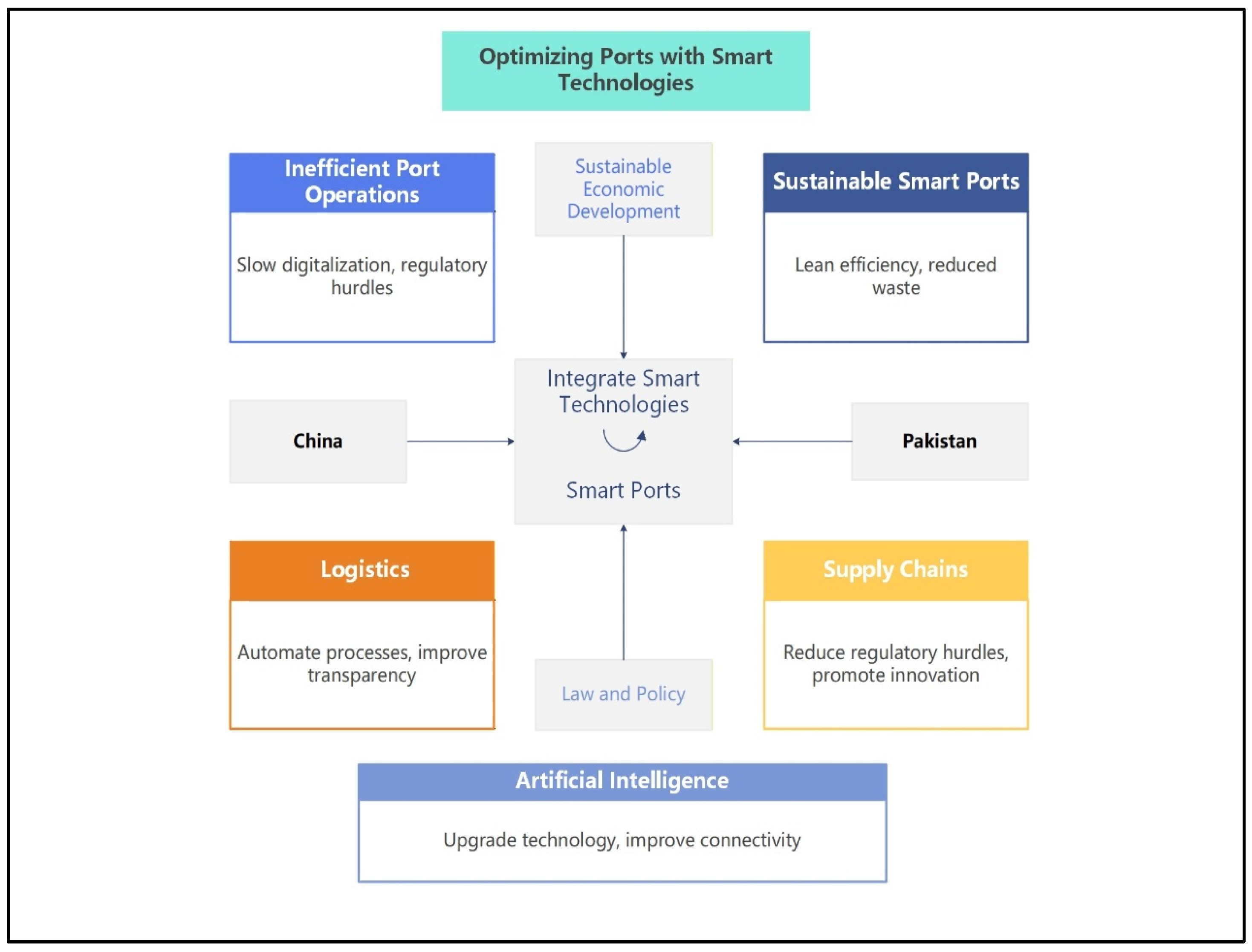
The local fishing industry is the primary driver of the other two ports, Pasni and Jiwani. Furthermore, the Pakistan Navy’s defense and maritime security heavily depend on specialized naval bases, such as Karachi Naval Harbour and Ormara [14]. Compare the supply chain and logistics development, sustainability initiatives, and smart technology in Chinese smart ports, with a focus on the Hainan FTP. This study examines the potential and drawbacks of these innovations, as well as their impact on improving economic and environmental performance in these nations (as shown in Figure 1, which depicts the port-technology nexus), and the investigation seeks to provide essential insights into the role of regulatory frameworks and government support in fostering intelligent, sustainable, and effective port ecosystems by analyzing Hainan’s experience and that of other major ports [15]. The remainder of this paper is organized as follows. Section 2 presents the background and literature review, with a focus on marital studies research. Section 3 discusses the data collection method and the data sources used in this study. Section 4 presents the results, which are discussed and analyzed in detail. Finally, Section 5 presents the conclusion, which includes this study’s findings, a discussion of this study’s limitations, recommendations for future research, and policy recommendations for Pakistan based on China’s successful model.
Figure 1.
This model was created to understand research themes and knowledge.
2. Literature Review
2.1. Sustainability in Smart Ports
Sustainability is an increasingly pressing concern for the ports sector as the environmental impacts of proposed widespread port activity intensify. Ports around the world, from those in Pakistan to those in China, are adopting green initiatives to reduce their environmental impact. The plan aims to achieve an effective balance between efficiency and eco-friendliness, resulting in greater emission savings, the exploitation of renewable energy resources, and improvements in waste management techniques [16]. This response is based on the input provided and the given guidelines. Hainan Free Trade Port, through the effective implementation of green technologies within the infrastructure, such as the automation of cargo handling processes through the exploitation of clean technologies, hopes to be a pioneer for the green development of the country, China, given the proactive efforts to reduce carbon emissions within the infrastructure by the utilization of wind and solar energy resources at the Shanghai Port [17]. Pakistan’s ports have also made some progress in adopting green technologies. For example, the Karachi Port is soon to introduce greener terminal management processes and sustainable waste management methods, although it is still powered by traditional energy sources.
Port Qasim has started utilizing renewable sources in some of its facilities. Sustainability measures are also being given importance in the development of the Gwadar Port, which falls under the framework of the China–Pakistan Economic Corridor [18]. Although not yet fully exploited due to a lack of infrastructure development and investment, both countries’ legislation plays a critical role in the successful execution and maintenance of the mentioned sustainability measures, and maintaining supply chain carbon footprints is just one of a few instances of sustainable measures being integrated into ports’ processes, as indicated by recent studies [19]. According to the International Maritime Organization, the maritime transport sector accounts for between 2% and 3% of global greenhouse gas emissions, underscoring the need for immediate action through the integration of sustainable measures into port processes [20].
2.2. Smart Technologies and Artificial Intelligence
The application of artificial intelligence and other intelligent technologies proves crucial for improving supply chain and logistics management in ports. Artificial intelligence, in particular, can revolutionize the management of ports in every aspect, as it reduces human intervention, accelerates decision-making processes, and enhances the capability for forecasting future logistics needs. At the forefront of implementing artificial intelligence in their management are the ports in Shanghai and Shenzhen, China. Artificial intelligence-based technologies are effective in optimizing traffic flow, streamlining berth allocation, and automating cargo management processes at ports [21]. Furthermore, the Hainan Free Trade Port places high importance on the implementation of artificial intelligence in its management to optimize processes and establish an environment conducive to innovative ideas for logistics management at the ports. Additionally, the cost-effectiveness and optimized processes associated with the implementation of artificial intelligence at ports have contributed effectively to the sustainable development of the ports [22]. The development of ports in Pakistan remains in its early stages. Yet, the ports are showing keen interest in the applications of artificial intelligence for logistics management, traffic control, and predictive maintenance. For instance, the Karachi Port is exploring the use of AI applications for cargo tracking and customs clearance. However, a lack of skilled personnel, high costs, and inadequate technology infrastructure prevent widespread use [23].
2.3. Environmental Protection Through Smart Technologies
Since the shipping and transportation sector is a significant source of pollution, environmental preservation is also a top issue in the creation of smart ports. The environmental impact of port operations is being monitored and mitigated through the use of intelligent technologies, including automation, IoT, and artificial intelligence [24]. To reduce air and noise pollution, the Port of Shanghai in China has implemented green policies that include the use of automated guided vehicles (AGVs) and electric-powered cranes [25]. Energy-saving devices, including solar-powered lights and electric cargo trucks, are used at the Port of Shenzhen. One of China’s larger environmental projects, the Hainan Free Trade Port, is developing with sustainability and green technology as its primary tenets [26]. Its automation and digitization initiatives should also improve energy efficiency and lessen its environmental impact. Despite efforts to incorporate environmental protection into port operations, progress has been slow in Pakistan. Although the Port of Karachi employs some green technologies, such as waste management and energy-saving lights, the process remains relatively new. Although such projects are still in the early stages, the Port Qasim Authority is exploring the feasibility of utilizing alternative energy sources to power operations within the port. More efforts should be made to focus on green technologies and environmental conservation initiatives for Pakistan’s ports to mitigate their environmental impact [27].
2.4. Lean Principles in Port Logistics and Supply Chain Efficiency
Lean ideas, such as eliminating waste and optimizing processes in logistics and manufacturing, are applicable within the ports sector for greater efficiency. Using a lean approach in logistics could enhance the clean environment at the ports through the reduction of traffic congestion, automation of cargo management, and minimizing delays at the ports. Technology advancement and the lean approach are always interconnected, given the aspect of performance monitoring and optimizing resource allocation and planning, among other elements, within the context of the ports sector, which are only possible through the advancement of information and communication technologies [28]. The smooth movement of goods and other commodities from ports through the supply chain depends greatly on intelligent port supply chain logistics for effective performance within the port sector, as well as the country’s supply chains. With the convergence of technologies such as artificial intelligence, blockchain, and the Internet of Things, ports can enhance their performance in terms of goods tracking, supply chain transparency, and optimize their processes for greater efficiency within the port sector [29]. Since the ports of the Asian country of China are utilizing the vast majority of the intelligent logistics technologies available today, the ports of Shanghai and Shenzhen, combined, are among the most efficient in the global ports sector.
The ports of the Asian country of China are employing blockchain technology for the enhanced, smooth, and safe tracking of commodities for the prevention of possible commodities fraud within the ports sector at the particular country and are therefore one step ahead of other ports at the global level, where the primary concern among the vast majority of ports today lies within the aspect of commodity fraud within the ports sector. The Hainan Free Trade Port within the Asian country of China today appears to be focusing on the development of intelligent infrastructure for the enhancement of the country’s supply chain logistics within the context of the country’s goal for port development for the country’s development into the logistics center of the entire Asian Continent within the near future [30]. An experiment appears to be nearing completion within the ports of Pakistan for the introduction of information management into the ports’ supply chain logistics, specifically in the ports of Qasim and Karachi [31].
2.5. Legal and Policy Frameworks in Port Development
A significant aspect proposed for the development of intelligent, sustainable ports is the establishment of a legal framework that facilitates such developments. Despite the vast public investment made in port development in nations such as China, the absence of favorable legislation renders the effective implementation of smart and green technologies impossible [32]. In the case of Pakistan, outdated legislation and a lack of government support for implementing port technologies are serious concerns. To analyze the possibility of sustainable development at ports within the two nations, examining the regulations and other aspects associated with the legislation within the context of China and Pakistan may be a practical step for the development of smart ports [33]. For new technologies to be implemented effectively in ports and for sustainable development to be ensured, favorable legislation must be established within nations [34]. China has made significant progress in developing legislation to facilitate the implementation of smart technologies for port development and environmental conservation [35].
The Green Port policy, which requires ports to construct facilities for environmental protection, reduce emissions, and utilize renewable energy, among other requirements, encourages the development of smart ports within the Chinese legal framework [36]. For instance, China’s extensive regulatory framework, which supports innovation without environmental infractions, and the identified gaps in the literature have both contributed to the success of Shanghai Port, a model of smart port growth. Legal support for smart ports is lacking in Pakistan [37]. There are some environmental protection laws in the nation; however, they are not strictly enforced. The lack of a consistent legal framework will hinder the implementation of sustainability and innovative technologies. Pakistan’s ports, including Karachi, Qasim, and Gwadar, are governed by antiquated legislation that does not fully account for the benefits and challenges posed by emerging technologies. To enable Pakistan to maximize the benefits of its ports and establish a more sustainable and competitive logistics system, the legislative frameworks must be strengthened [38]. The gaps presented in our paper are the result of a systematic and comprehensive literature review, including major sources from China and Pakistan, as well as global tech and sustainability policies. In addition to the academic literature, the review was also informed by experts, who helped identify the relevant knowledge gaps in these areas. Although we acknowledge that some of these may seem banal at first glance, they actually represent substantial, interesting, and as yet unexplored considerations, perhaps even more so in the changing landscape (as shown in Table 1).
Table 1.
Research gaps identified in the literature review.
3. Research Methodology
3.1. Materials and Methods
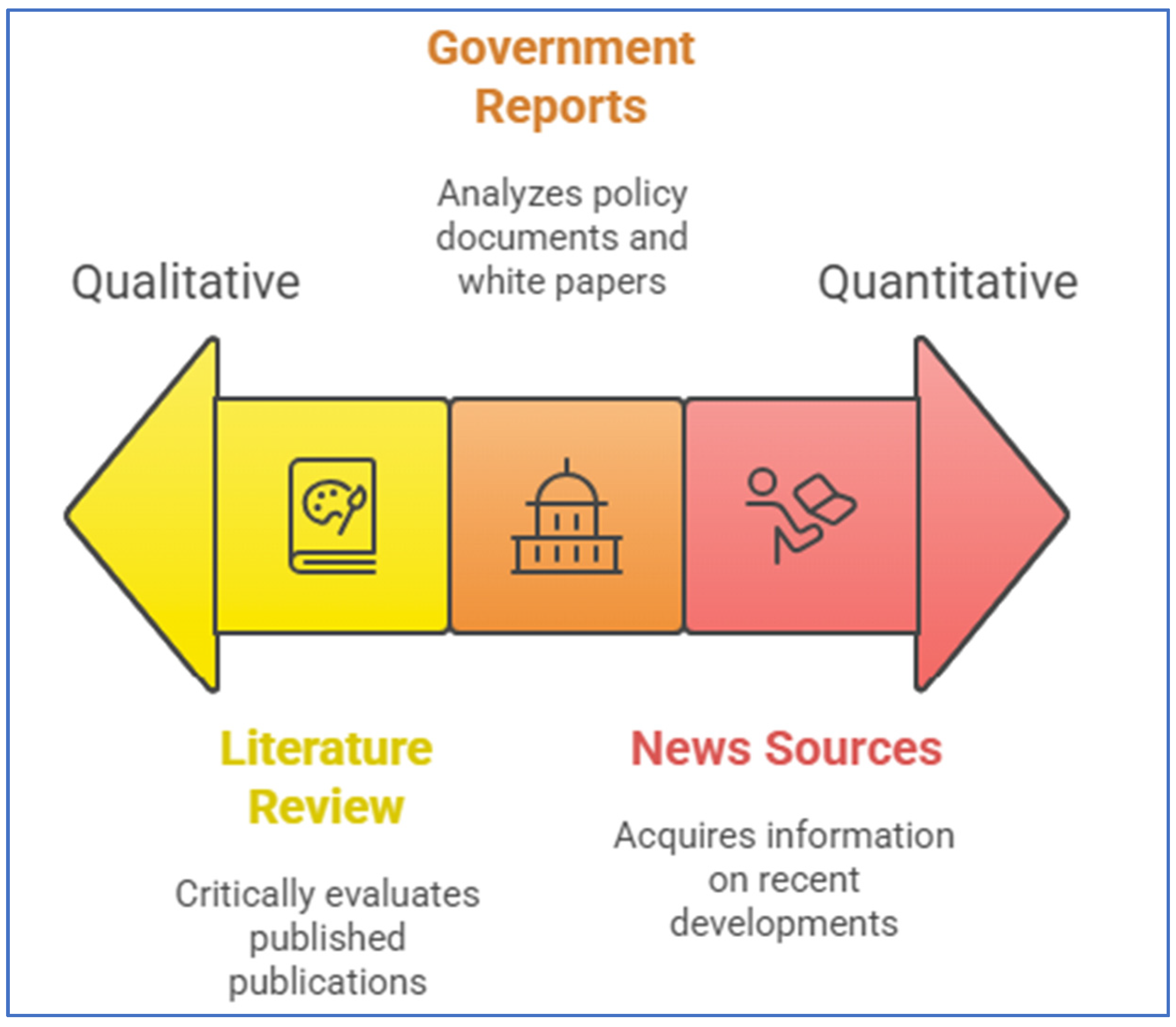
This research is primarily based on a systematic literature review for quantitatively analyzing supporting data related to smart port technologies, economic development, and sustainability in the context of China and Pakistan (as shown in Figure 2). The approach aims to maintain analytical coherence and transparency in how the data were reasoned through this process, transparently, while being interpreted. The goal of this study is to evaluate the effectiveness of advanced port technologies in stimulating economic development, mitigating environmental impacts, and enhancing operational productivity. Critical reading could explore how the adoption of this trending technology in Pakistan and China’s ports impacts port logistics performance and the industry’s economic and environmental effects. The research identifies best practices and challenges in both countries, providing insights for optimizing smart port operations globally.
Figure 2.
Research methodology spectrum.
3.1.1. Data Collection and Selection Criteria
Secondary data were derived from a thorough literature search conducted in several academic databases, including Web of Science, Google Scholar, and Scopus, over the past decade. Eligibility was limited to studies relevant to the themes of smart port technologies, economic growth, and sustainability. We paid particular attention to studies on regulatory issues, the acceptance of technological innovation, and its implementation in smart ports, as well as the economic and environmental effects of smart ports. This review only included peer-reviewed articles from reputable publishers (Elsevier, MDPI, Springer Nature, Wiley, and Taylor & Francis). To complement this academic literature, we also considered secondary data sources, such as reports from the Chinese Ministry of Transport and the Pakistan Marine Affairs Ministry, as well as the sustainability implications. Additionally, the international news media were searched to identify new information on the problems and progress in these countries’ ports [41].
3.1.2. Data Analysis and Methodological Approach
Thematic analysis of literature was employed to identify significant themes and patterns in the adoption of smart port technologies, their economic implications, and sustainable initiatives. Based on this thematic framework, we grounded the findings in three overarching categories: (1) technology adoption, (2) economic consequences, and (3) sustainability strategies. On the quantitative side, indicators such as port tonnage, vessel numbers, and cargo volumes were included in the analysis of port performance. Summary statistics were used to describe the quantitative data, and comparative analysis was employed to examine the economic/ecological effects of port development between China and Pakistan. The comparison was based on the key performance indicators (KPIs) of operational efficiency, environmental impact, and economic growth.
3.1.3. Methodological Transparency
For the sake of methodological transparency, this study employs a distinct and replicable procedure, as illustrated in Figure 1, for data analysis. The combination of qualitative and quantitative methods enhances the credibility of the findings, while descriptive statistics provide a reliable method for presenting quantitative data. The comparative framework enriches our analysis, enabling a deeper understanding of the global ramifications of smart port technologies through direct comparison between China and Pakistan.
3.1.4. Synthesis and Implications
The final step involved integrating the findings obtained through quantitative analysis. This creation enabled a comprehensive examination of the impact of smart port technologies on economic growth, environmental sustainability, and operational efficiency. It also provides good practices and identifies barriers to the application of these technologies in China and Pakistan, which can be used to improve port operations worldwide.
3.2. Results of Analysis
Pakistan and China have demonstrated commitment to international labor standards by ratifying significant ILO Conventions. A significant achievement has been the ratification of all eight core conventions, which prohibit forced and child labor, eliminate workplace discrimination, and foster freedom of association. China completed this series in 2022 by ratifying core forced labor conventions (as shown in Table 2), emphasizing China’s model implementation of ILO and IMO conventions and demonstrating that it has a sound maritime legal regime that supports the maintenance of labor and environmental standards. The success of China in adhering to these international regulations has made it a global player in maritime governance, and it has set an example to be followed by other states, including Pakistan. While Pakistan has ratified 36 conventions and China has ratified 28, they have mutual commitments to the government and to core conventions on employment policy and labor inspection. This provides a common foundation for workers’ rights, although there are differences in their ratification of other technical arrangements (please refer to the official sources cited [42]).
Table 2.
China and Pakistan’s maritime legal regimes under ILO and IMO conventions.
3.2.1. Converging Paths and Strategic Divergence
The comparative analysis reveals the divergent but calculated approaches to modern development. China represents the top–down, state-led approach, relying on massive domestic financing and global initiatives such as the Belt and Road Initiative (BRI), with the Hainan FTP serving as a pioneering workshop for record economic opening up. Pakistan’s success is partnership-oriented and heavily based on the bilateral China–Pakistan Economic Corridor, which fuels its infrastructure and digital development (as shown in Table 3). As China exports cutting-edge smart ports and digital technology, it is one of Pakistan’s prime recipients, building its underlying paradigms. They both share UN sustainability goals, yet while China actively sets global standards, Pakistan excels at national implementation, focusing on regional requirements, and demonstrates a combination of complementary strengths and strategic priorities [43].
Table 3.
Modernizing supply chains and port infrastructure.
3.2.2. Built by China and Pakistan
Based on observed development patterns in Pakistan and China (as shown in Table 4), we can categorize their major ports into the following typologies. The distribution reveals a clear strategic division between the two countries [54].
Table 4.
Distribution of node types in port networks.
3.2.3. Strategic Port Analysis of China and Pakistan
A strategic port analysis of the China–Pakistan relationship reveals a high level of synergy. China boasts a multi-layered framework of internationally unmatched, entirely mechanized smart ports, such as Shanghai, and a policy-driven Hainan Free Trade Port. Pakistan’s framework is strategically divided into Karachi and Port Qasim, the current commercial lifelines, with Gwadar as a future strategic asset (as shown in Table 5). This supporting framework, deeply embedded within the CPEC structure, forms an impenetrable trade corridor that combines Chinese technological prowess with Pakistani strategic geography [55]. This indicates that Chinese smart harbors are relatively higher in comparison with Pakistani ports in terms of technological integration, operational efficiency, and sustainability. The automation and green technology adopted by China are more productive while also reducing emissions, unlike those of Pakistan’s ports, which are characterized by infrastructure deficiencies, making them less efficient yet environmentally unfriendly.
Table 5.
Data and analysis of the smart ports of China and Pakistan.
3.2.4. Ports Increased Production
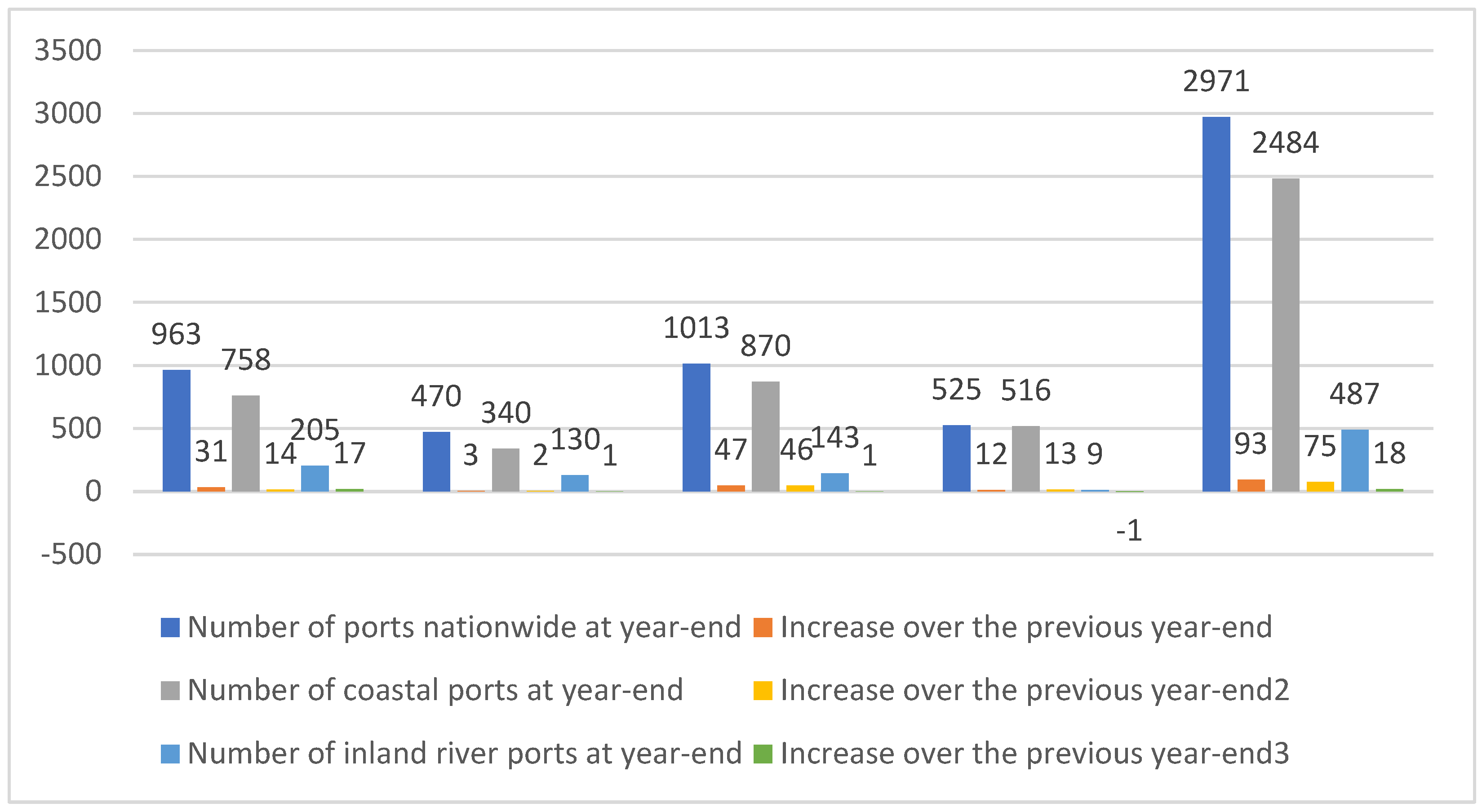
China has dramatically expanded its port production capacity in recent years, a testament to its quality as an orderly and competitive nation. The growth of both inland and coastal ports is a key element in China’s push to increase the efficiency of its trade while making itself an indispensable engine of the global commerce structure (as shown in Figure 3). Especially for larger ships in China, the capacity to handle a wide range of cargo, from containerized goods and bulk to LNG, has increased. This expanding infrastructure not only facilitates the increasing levels of trade but also highlights China’s potential to handle large volumes of personal effects rapidly and cost-effectively [56].
Figure 3.
Output of Chinese ports and the number of berths, tons, and crossings. Source of data: Ministry of Transport of the People’s Republic of China.
3.2.5. China’s Water Transport Sector Reveals Solid Growth
There were 110,200 water transport ships in the country by the year’s end 2024, fewer than the year’s end of last year by 8100, and by indicators (as shown in Table 6), there was a net cargo of 312 million tons, an increase of 12 million tons, a passenger capacity of 783,100 passengers, 29,400 fewer passengers, a container capacity of 3,232,100 TEUs, and an increase of 189,700 TEUs [57].
Table 6.
Data density and comparison.
Comparison of Vessel Inventories
The data reveal an increase in container ships in Chinese ports, indicating that the capacity to carry goods around the globe remains high (as shown in Table 7). It is in line with China’s move to emphasize technology upgrades in port operations, reflecting the global trend of innovative port development.
Table 7.
Indicator of ports crossed.
3.2.6. Transport Fleet of Ports
Year-round freight turnover of commercial cargo was 9.811 billion tons, increasing by 4.7% compared to last year, and cargo turnover was 141,423 billion ton-kilometers, increasing by 8.8%. Among them, the inland cargo volume was 4.953 billion tons, an increase of 3.4%, and inland cargo turnover was 2183.3 billion ton-kilometers, an increase of 5.1%; the ocean freight volume was 4.858 billion tons, an increase of 6.1%, and marine cargo turnover was 11,959 billion ton-kilometers, an increase of 9.5% (as shown in Table 8), The commercial passenger traffic yearly was 260 million, an increase of 0.8% compared with last year, and the commercial passenger turnover was 5.467 billion person-kilometers, an increase of 1.7% [58]. The ports’ annual freight-handling capacity reached 17.595 billion tons, up 3.7% from last year. Among them, inland port cargo handling was 6.378 billion tons, an increase of 3.9%, and coastal port cargo handling was 11.218 billion tons, an increase of 3.5%; foreign trade cargo handling was 5.397 billion tons, up by 6.9%, and domestic trade cargo handling was 12.198 billion tons, an increase of 2.3%. Container throughput reached 332 million TEUs, representing a 7.0% increase in volume. The annual port passenger throughput was 78,907,100, up by 0.6% over the same period last year. Among them, the inland port passenger throughput was 3,714,900, up by 8.0%, while the coastal port passenger throughput was 75,192,100, up by 0.3% [59].
Table 8.
Transport of marine cargo.
3.2.7. Support Port Operations and Local Shipping Activities
As a subsidiary of the Maritime Administration of Pakistan, the Mercantile Marine Department was founded in 1930 as a subordinate department of the Ministry of Maritime Affairs, with a principal officer as its head. Its primary responsibilities are to protect the marine environment, ensure safe navigation, and promote the safety of life at sea, in accordance with national and international laws, regulations, and conventions (as shown in Table 9). It also serves as the registration authority for ships and craft flying the Pakistani flag and conducts surveys and inspections. Under the Maritime Administration, this department also tests several kinds of sailors. Since February 2007, the Mercantile Marine Department has maintained a sub-office in Gwadar, where it is required to participate in port operations and related shipping activities. On 21 May 1948, the Government Shipping Office (GSO) began operations at Karachi Port. According to Article 3 of the Merchant Shipping Ordinance 2001, the Ministry of Maritime Affairs currently maintains and operates it [60].
Table 9.
Functions under the Merchant Shipping Ordinance.
3.2.8. Pakistan National Shipping Corporation
The national flag carrier, Pakistan National Shipping Corporation (PNSC), is well-known worldwide in the shipping industry. It competes even for the carriage of Pakistani imports and exports; conducts business in a highly competitive international arena; and, by operating a fleet of twelve (12) ships, generates much-needed foreign exchange for the nation [61]. Transporting all kinds of cargo on more than a dozen routes spanning practically the whole world, PNSC has become a major provider of maritime cargo and related services (as shown in Table 10). To be a significant worldwide shipping company with a variety of marine assets, it offers trustworthy and effective shipping services to the international and Pakistani maritime markets; maintains honest and dependable relationships with our clients, partners, and staff; protects the interests of all parties involved; and contributes towards the national economy, society, and the environment’s improvement.
Table 10.
Highly competitive international shipping environment.
3.2.9. Port Operations in Pakistan
The goal of the Chinese operator is to increase the number of ships that call the port. Since March 2018, two shipping lines, COSCO and Sino-Trans, have been making frequent port calls at the port. Gwadar Port handled 446,195 metric tons of wheat and 94,559 metric tons of urea as government cargo with ease in 2022 [62]. The information about the shipments dealt with thus far is displayed (as shown in Table 11).
Table 11.
Ships calling into the port.
3.2.10. Imports and Exports of Pakistan’s Port Quasit
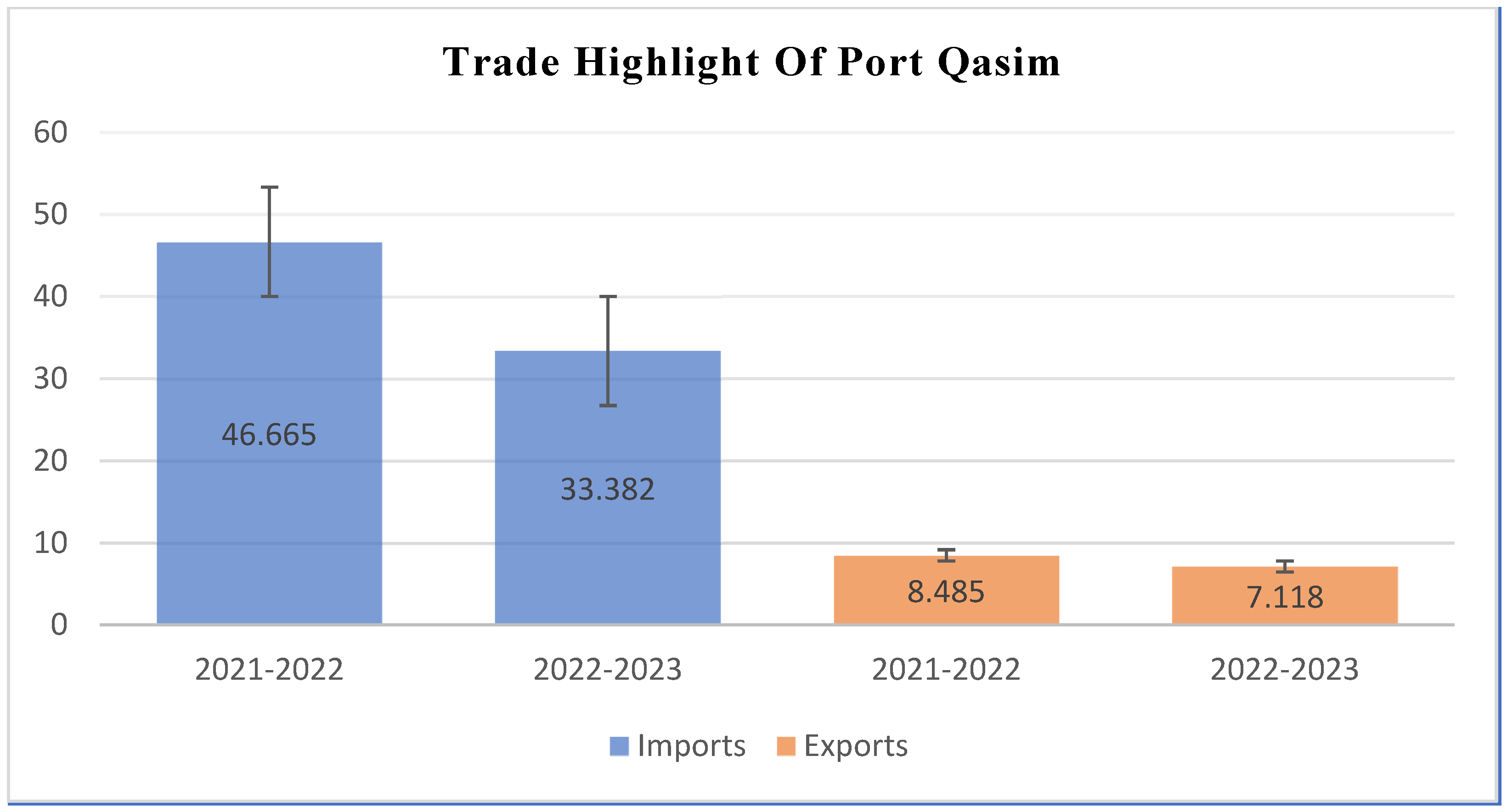
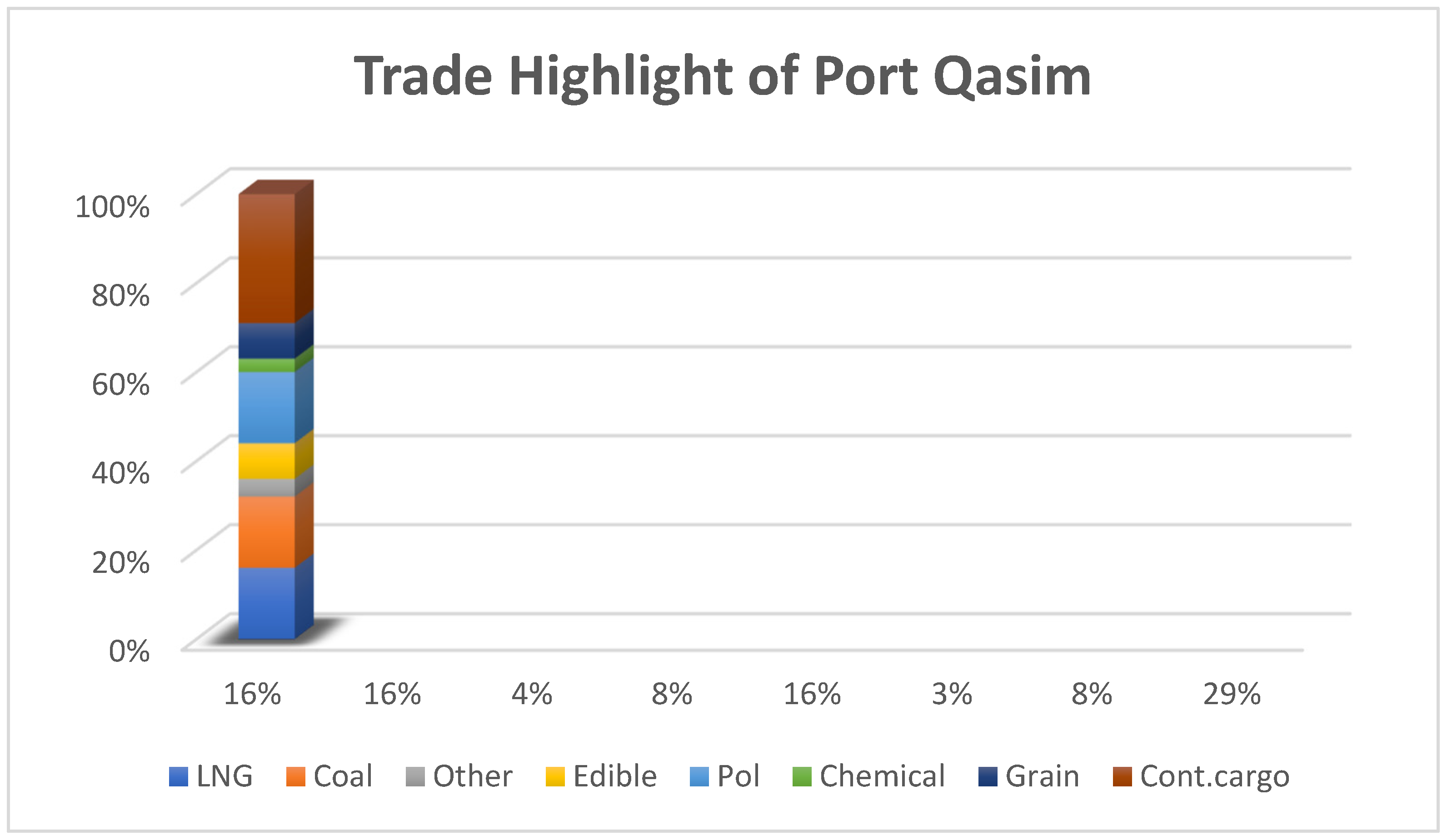
Compared with 46.665 million tons in the previous fiscal year, 33.382 million tons were accounted for by containerized and non-containerized imports. A total of 82.4% of Port Qasim’s total trade consisted of import cargo. Chemicals, grain, steel coils, edible oil, petroleum products, liquefied natural gas (LNG), LPG, and containerized cargo were among the main imports (as shown in Figure 4). In total, 17.5% of the port’s total trade was exports, totaling 7.118 million tons, up from 7.654 million tons the previous year. Cement (0.865 mt), rice (0.415 mt), steel coil (0.009 mt), condensate (0.260 mt), furnace oil (0.174 mt), and containerized cargo (5.208 mt) were among the commodities exported this year [63].
Figure 4.
Million tons of trade volume.
3.2.11. Cargo Composition
The primary type of cargo being processed at Port Qasim, Pakistan, all year round (as shown in Figure 5). Containers made up the most significant portion, confirming the port’s critical place in global trade. Coal and LNG claimed second standings, evidence of the port’s role in handling energy imports. Such distribution is a reflection of the broad spectrum of cargo sectors integral to the total throughput volume at Port Qasim as well as its strategic role in Pakistan’s trade [64].
Figure 5.
Largest imported cargo.
3.2.12. Containers Trade and Port-Callings
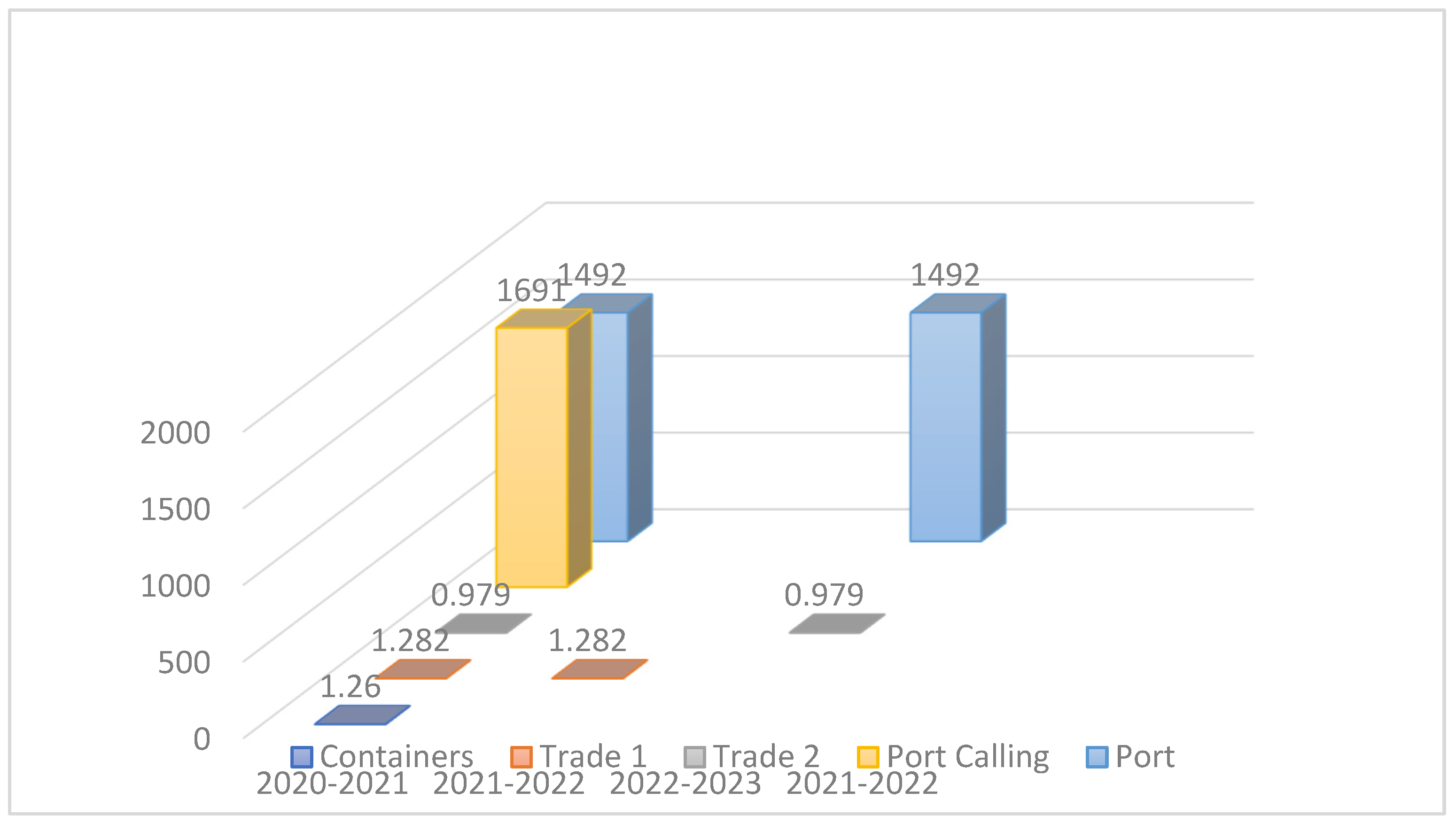
It is evident when we look that ports in China remain successful and highly effective, adding significant value to global trade as the years pass. These are ports that have developed and expanded for over a century, with a variety of cargo moving through them regularly year after year. In the case of Port Qasim, Pakistan, container movement and tonnage were down this year (as shown in Figure 6), but this indicates that global trade is elastic and port activity remains strong. China’s ports manage massive flows of trade and continually adjust and reinvent themselves to fulfill new requirements [65]. China’s port system has maintained an excellent performance thanks to its successful infrastructure management, advanced logistics practices, and strategic planning, which have contributed to the continuous growth of trade volumes year after year. The ability of Chinese ports to handle a wide range of cargo, from containers to bulk and energy shipments, further underscores the nation’s leadership in global trade. With the world’s largest and most advanced ports, China remains at the forefront of maritime commerce, cementing its role as one of the most successful and well-organized nations in the world [18].
Figure 6.
Hipping moments.
4. Comparative Study and Discussion
In comparing China and Pakistan’s development of smart ports, a pattern emerges of the two modern approaches. China serves as an illustration of the mature end of the generation model, fueled by high state capacity and vision [1]. A shining example of technology and economic performance remains the key driving force for Chinese ports. Conversely, Pakistan’s ports denote a rising partnership facilitating model, where international investments and the CPEC play a vital role in the development process [66]. The forces driving growth and development differ significantly in magnitude, speed, and the processes involved. For the first time, in both nations, a consensus grows for the integration of sustainability and economic aspirations. Pakistan gains the first-mover advantage in integrating sustainability into the port development process, whereas China pursues a technology-driven approach to facilitate the development of green ports [67]. The legal bases are significantly dissimilar. Pakistan has the first-mover advantage concerning the integration of new technologies for the development process of ports. In contrast, China has a mature state-directed framework for the development process of ports [68]. A disparity among the described nations regarding their legal frameworks reveals that no nation follows a similar strategy for development in smart ports. The trinity associated with technology, sustainability, and law remains the world’s constant.
The development of the China–Pakistan Economic Corridor and the ports at Gwadar and Karachi are key focuses for smarter ports in Pakistan, which are still in their nascent stage, yet hold strategic importance compared to Chinese ports. Being fueled by the financial support and accumulated experience behind the development process, it remains largely an external force in the development process within Pakistan [69]. The aim behind the development of the Gwadar Port is to create a smarter, modern port that can facilitate the development process for neighboring nations and serve as a gateway for the China–Pakistan Economic Corridor. Therefore, the development process within Pakistan remains a slower process, focusing entirely on the development of the required infrastructure for the ports. Challenges abound for the development process of smarter ports within Pakistan, focusing on the development of a robust infrastructure, a lack of financial support, and limitations within the country regarding the development of its technologies [70]. The development process within Pakistan may opt for the development of more innovative technologies compared to the prevailing processes at the initial, nascent level, focusing entirely on the primary phases of security and digitization. Therefore, the placement of smarter ports within the country’s development process presents an essential opportunity for the government to avoid certain phases in the development process of these ports [71]. Its geostrategic location, concerning the developmental process within Chinese ports and the country’s need to enhance economic performance by acting as a gateway for neighboring nations, remains closely integrated within the development process of smarter ports in Pakistan.
The differences observed between China and Pakistan are significant because they illustrate how contextual factors influence the development and sustainability of smart ports. Advanced technological infrastructure, strong governmental support, and coordinated stakeholder engagement enable the rapid adoption of smart port initiatives, leading to improvements in performance efficiency, environmental friendliness, and resilience in China. Meanwhile, there is not much to show because technological readiness is low, policies are fragmented, and resources are limited, as in Pakistan. Therefore, this slows down the process of adopting strategies and makes them less effective in terms of performance efficiency, as well as in addressing environmental issues that can be improved through resilience enhancement. The comparison not only places a report against contrasts but also further establishes how sustainable smart port development is, which is influenced by policy measures, available technologies, and institutional capacity. It highlights the critical enablers and barriers, thereby providing practical lessons on strategy adjustment in different national settings. This cross-national view also serves to heighten awareness of smart port sustainability issues while offering information relevant to both emerging ports and more developed contexts.
4.1. Economic and Environmental Performance
The adoption of smart technologies and sustainable initiatives has significantly enhanced the economic performance of Chinese ports, particularly the Hainan Free Trade Port. The financial performance of the Haikou Port revealed a reduction of up to 15% in costs and an increase of up to 20% in the volume of processed cargo. The adoption of blockchain, AI-based demand forecasting, and energy-saving technologies has primarily contributed to the above improvements. Significant progress has also been made in terms of costs, sustainable performance, and port operations at the ports of Shenzhen and Tianjin [72]. Inadequate operational performance continues to be a significant obstacle to the economic performance of Pakistan’s ports. Although considerable progress has been made, traffic congestion, energy, and infrastructure issues persist at the Karachi Port.
Meanwhile, the port throughput growth has stood at only 5% since 2018, in line with recent reports from the Pakistan Ports Authority, while operational costs remain high. In the same regard, the environmental aspect at the Karachi Port still lags, as there have been very few developments at the port concerning the exploitation of renewable energy sources and the reduction of emissions [73]. From the comparison analysis above, it is apparent that the ports of China, specifically the Hainan Free Trade Port, have adopted smart revolution and sustainable development strategies to achieve superior economic and environmental performance. A great deal can be learned from the Hainan example for Pakistan’s ports to move in the right direction, although significant challenges still need to be addressed [74].
4.2. Smart Technology Adoption in Ports
The implementation of more innovative technologies in ports has grown significantly in both China and Pakistan over the last decade, with remarkable progress achieved [75]. Their major ports, such as those in Shanghai, Shenzhen, and Ningbo, as well as the newly formed Hainan Free Trade Port, have adopted technologies like artificial intelligence, IoT, and blockchain to enhance logistics and efficiency [76]. For example, Shanghai Port has incorporated AI-based demand forecasting and blockchain technology to enable safer and more transparent supply chain management. Shanghai is targeting 70% automation of the operations, as per the China Ports and Harbors Association [77]. Similarly, Ningbo Port has implemented IoT-based real-time monitoring of cargo streams, resulting in a 22% increase in operational throughput. For Hainan Free Trade Port, established as a national scheme to build an even more liberal and tech-enabled trade center, the region has been endeavoring to create an innovative port system. Ports of Hainan, led by Haikou Port, have been integrating AI and blockchain technologies since 2020 to improve customs clearance and logistics transparency. According to the Haikou Port Authority, Haikou Port has also implemented a top-level AI system for demand forecasting and cargo distribution, which has increased processing efficiency by 20% during the previous three years. The port has also been upgraded with automated cranes and driverless vehicles for container handling, serving as a benchmark for other Chinese ports to achieve complete automation [78].
In Pakistan, the adoption of smart technologies has been slower but is gaining momentum, particularly in Karachi Port, the country’s busiest port. The Karachi Port Trust (KPT) has piloted IoT-based container tracking solutions and begun integrating AI into its scheduling and cargo management processes. However, as of 2025, only 15–20% of operations are end-to-end automated, and budget constraints and regulatory delays generally hamper the adoption of technology. At Gwadar Port, efforts to integrate AI-powered systems for controlling port traffic began in 2023, but the full deployment is still under consideration. Additionally, blockchain was considered for enhanced transparency and the prevention of fraud; however, the concept remains in the early stages at the moment [79]. The rapid integration of smart technologies in China’s major ports, including the Hainan Free Trade Port, is primarily the result of support aimed at achieving global leadership in port digitization and automation. Hainan FTP, focusing on innovation, digitization, and seamless customs formalities, is an essential proving ground for the replicability of these technologies at the national level. Hainan would be the trailblazer for other ports in the country regarding the implementation of smart ports. The lack of investment, infrastructure, and effective regulations in Pakistan obstructs the development of technologies for ports in the country. Pakistan could greatly benefit from the achievements of Hainan’s successes in port development using information technology [80].
4.3. Sustainability Practices in Ports
China remains among the leaders in implementing green port technologies worldwide, particularly within the country’s major ports and the Hainan Free Trade Port. Since 2019, Hainan Port has focused on energy conservation, specifically in green technology [81]. Green energy technologies such as solar and wind energy are being implemented within the ports of Hainan. The Hainan Free Trade Port Authority claims that Haikou Port’s megadollar power plant, which was put into service in 2023, presently supplies 30% of its operating requirements. Additionally, the port plans to employ automated cargo-handling technologies, energy-efficient lighting, and electric cranes to cut its CO2 emissions by 40% by 2030 [82]. The Port of Tianjin and Ningbo Port also used green technologies and emission-reduction measures. For example, Tianjin Port’s CO2 emissions decreased by 35% between 2018 and 2024 due to the installation of renewable energy systems and energy-efficient machinery [83]. Sustainable practices are still in their early stages of development in Pakistan. The Karachi Port has launched several environmental initiatives, including the adoption of LED lighting and the installation of more energy-efficient cranes. However, such steps are only small, and the carbon emissions level associated with port operations remains higher compared to global requirements. The reduction in carbon emissions associated with port operations at the Port of Karachi and other small ports around the country has remained at only 5–10% since 2018, according to the Pakistan Maritime Security Agency [84].
4.4. Legal and Policy Frameworks Governing Smart Ports
The ports of China, especially the Hainan Free Trade Port, are well-positioned to adopt smart technologies and green initiatives, given the well-developed frameworks that underpin them [85]. The National Intelligent Port Development Plan provides a framework for developing the country’s intelligent ports, implementing automation technologies, and promoting sustainable development strategies. In this regard, the Hainan Free Trade Port offers a distinct framework for the development of the country’s ports, thus increasing their appeal and attracting foreign investors positively. By adhering to such guidelines, the Hainan Free Trade Port aims to develop sustainable ports for the intelligent operation of ports within the country [86]. In fact, Hainan Port presents a policy framework for the development and implementation of blockchain initiatives for green and open logistics. At the same time, the Chinese Port Green Action Plan promotes the reduction of emissions within the port’s operational sphere.
The developmental framework for the intelligent development of ports in Pakistan is currently at a very rudimentary stage. Although the Pakistan Ports and Shipping Policy emphasizes the need for the development and digitization of ports within the country, it currently lacks policy measures for implementing intelligent technologies within the sphere of port activities. Additionally, recent technologies are hindered by the lack of an integrated framework for port development, including frameworks for sustainable port development, as well as technologies such as blockchain and artificial intelligence [87]. A recent initiative by the Karachi Port Trust aimed to develop the country’s ports; however, the lack of support from other agencies has slowed down the development process at present. The Hainan Free Trade Port’s successful performance highlights the importance of well-coordinated public policy and law in the development of such technologies at present [88].
5. Conclusions
Legal frameworks and smarter technologies play a crucial role in facilitating sustainable development within seaports, as observed in a comparison between China and Pakistan. Pakistan’s seaports are struggling to adopt smarter technologies and eco-friendly measures, although China fares well among the leaders in this regard. In particular, the Hainan Free Trade Port, Karachi Port, and the Gwadar Port are examined for their developments in adopting the benefits of smarter technologies, according to the publication, which highlights the fact that Pakistan needs to work on policy development, infrastructure development, and smarter technologies to improve the economic performance and sustainable development level of the country’s ports. The publication, for instance, notes that the Hainan Free Trade Port stands as an exemplary development within recent port development trends and has achieved remarkable growth in areas such as blockchain, artificial intelligence, and Internet of Things technologies. However, Pakistan’s seaports, such as the Karachi Port and the Gwadar Port, are struggling to fully embrace the benefits of the above technologies because of the absence of infrastructure and financial resources, in addition to the inefficient bureaucratic formalities within the country’s ports’ management at the time of this study’s publication.
However, modernization projects for such ports are still underway, and the Hainan example offers crucial lessons concerning the three aspects mentioned above. In general, the significance of technical development, a supportive policy framework, and environmental sustainability in transforming ports and establishing sustainable trade hubs worldwide cannot be overstated. Pakistan has the opportunity to enhance the functionality and level of sustainability associated with the country’s port infrastructure by learning from the Hainan Free Trade Port and other ports in China. Building up the quality of the global ‘smart ports’ essential for the advancement of economic growth and the conservation of the environment’s health will be contingent upon the proper planning and support from the global community.
5.1. Limitations
However, there are certain limitations to this study. Firstly, certain sensitive information regarding port operations and smart technologies may not have been considered, as this study relies solely on publicly available information. Second, this study was confined to the ports of Karachi, Gwadar, and the well-known Chinese ports, such as Hainan; a wider array of ports may provide more comprehensive information [89]. Third, this study may not account for the effects of external economic conditions and geopolitical events, such as the global shipping crisis. Finally, the above research outlines the trend in port operations and the development of innovative technologies up to the year 2025.
5.2. Future Research Directions
Future studies could investigate the long-term effects of sustainable projects and smart technologies on the performance of ports, particularly in emerging countries like Pakistan. An analysis of the differences in the effects associated with green ports within emerging economies could be very informative from both the social and economic aspects. Additional research should be conducted regarding the role of relevant regulatory agencies within emerging economies and their interventions in public–private partnerships, particularly in the context of developing new technologies [90]. Future studies should analyze the implications of integrating technologies by less developed ports alongside the transferability of the Hainan port approach.
5.3. Suggestion for Pakistan
A great deal can be learned from the Chinese experience, particularly from the establishment of the Hainan Free Trade Port and other major seaports in the country, as Pakistan also needs to develop modern seaports and leverage smart technology. The following recommendations are proposed for development in Pakistan’s seaports sector, based on the Chinese experience. To facilitate the development of intelligent ports, there must be policy and regulatory congruence [91]. For example, the China National Intelligent Port Development Plan, in conjunction with local Hainan regulations, is expected to play a crucial role. To facilitate port management and promote sustainable development, Pakistan should adopt rules for the widespread implementation of automation, artificial intelligence, and eco-friendly technologies at ports. Faster adoption of new technologies has also benefited from government spending on infrastructure in China, especially the widespread development of the country’s ports by the government. To enhance performance, Pakistan should adopt public–private partnerships for the development of IoT, blockchain technology, and artificial intelligence. Contributing to the mitigation of the environmental effects of ports will be the development of wind and solar energy. Collaboration with other international nations for the promotion of technology adoption has benefited China’s international cooperation. For the country to be on the maritime ‘bleeding-edge’ brink and facilitate the use of innovative technologies, Pakistan must collaborate with international tech suppliers and conduct research. To effectively implement smart technologies, there is a need for capacity building. The success of China was attributed mainly to its proactive approach to developing the skills of its workers in digital technologies and port management [92]. To boost productivity and competitiveness, Pakistan should offer workers training programs related to automation, data analysis, and intelligence at the ports. In the green port projects installed in Hainan and Tianjin Port, the focus has always been on sustainability; thus, the carbon footprint associated with the ports’ operations has dramatically diminished. Pakistan’s port operations should incorporate sustainable measures, such as the use of renewable energy sources, environmentally friendly cargo handling processes, and energy-saving equipment, at the ports of Karachi and Gwadar.

Author Contributions
Conceptualization, methodology, writing—original draft preparation, data curation, investigation, validation, formal analysis, and resources, Z.L. and M.B.K.; data curation, investigation, legal analysis, writing—original draft preparation, supervision, project administration, and funding acquisition, Z.B. All authors have read and agreed to the published version of the manuscript.
Funding
Open Fund Project of Shantou University Local Government Development Research Institute and the Key Research Base of Humanities and Social Sciences in Guangdong Province (07423002). Funded by the Ministry of Education of the People’s Republic of China on Major Research Projects in Philosophy and Economic Science, Research on Accelerating the Construction of Free Trade Port (23JZD027). Funded by the Major Humanities and Social Sciences Cultivation Project of the Basic Scientific Research Services fund in Central Universities, Accelerating the Legal Protection of Free Trade Port Construction (3132024719).
Institutional Review Board Statement
Not applicable.
Informed Consent Statement
Not applicable.
Data Availability Statement
The data supporting the findings of this study are available on request from the corresponding author.
Conflicts of Interest
The authors declare no conflicts of interest.
Abbreviations
The following abbreviations are used in this manuscript
| CPEC | China–Pakistan Economic Corridor |
| AGVs | Automated Guided Vehicles |
| PNSC | Pakistan National Shipping Corporation |
| LNG | Liquefied Natural Gas |
| HFTP | Hainan Free Trade Port |
| BRI | Belt and Road Initiative |
| AI | Artificial Intelligence |
| TEUs | Twenty-foot Equivalent Units |
| CO2 | Carbon Dioxide |
| NADRA | National Database and Registration Authority |
| COSCO | China COSCO Shipping Corporation Limited |
| CEFACT | Centre for Trade Facilitation and Electronic Business |
| UNESCO | United Nations Educational, Scientific, and Cultural Organization |
| IMO | International Maritime Organization |
| IOT | Internet of Things |
| ILO | International Labour Organization |
| NEV | New Energy Vehicles |
| ITU | International Telecommunication Union |
| QICT | Quantum Information and Communication Technologies |
| UN Sustainability Goals | United Nations Sustainable Development Goals |
References
- Liu, M.; Lai, K.; Wong, C.W.Y.; Xin, X.; Lun, V.Y.H. Smart Ports for Sustainable Shipping: Concept and Practices Revisited through the Case Study of China’s Tianjin Port. Marit. Econ. Logist. 2025, 27, 50–95. [Google Scholar] [CrossRef]
- Bukhari, S.A.A.; Zaidi, D.S.S.Z. An Analysis of the Challenges Faced by Customs for Trade Facilitation in Pakistan. Contemp. J. Soc. Sci. Rev. 2025, 3, 1539–1556. [Google Scholar] [CrossRef]
- Shamsuddoha, M.; Khan, E.A.; Chowdhury, M.M.H.; Nasir, T. Revolutionizing Supply Chains: Unleashing the Power of AI-Driven Intelligent Automation and Real-Time Information Flow. Information 2025, 16, 26. [Google Scholar] [CrossRef]
- Raza, A.; Hongliang, L.; Yue, Z.; Yang, T.; Wei, N. Environmental Regulations and Eco-Innovation as Catalysts for Green Agricultural Practices: Insights from Pakistan–China Agricultural Cooperation. Agric. Food Econ. 2025, 13, 29. [Google Scholar] [CrossRef]
- Zhang, S.; Wu, Q.; Butt, M.J.; Batool, M.; Murad Zaib Butt, M. Developing an Ocean Governance Regime for China-Pakistan Economic Corridor: A Comparison of the Marine Environmental Legislation and Policy Framework by Utilizing CRILL Methodology. Front. Mar. Sci. 2025, 12, 1577975. [Google Scholar] [CrossRef]
- Yun, W.S.; Pinjaman, S.B.; Nipo, D.T.; Gulabdin, S.B. Digital Transformation in Reshaping Industries. In Perspectives on Digital Transformation in Contemporary Business; IGI Global Scientific Publishing: Hershey, PA, USA, 2025; pp. 143–172. ISBN 979-8-3693-5966-2. [Google Scholar]
- Al-Hajri, A.; Magid Hamouda, A.; Abdella, G.M. Sustainability-Based Strategic Framework for Digital Transformation in the Oil and Gas Industry. IEEE Access 2025, 13, 52114–52133. [Google Scholar] [CrossRef]
- Xiao, R.; Liu, S.; Wu, L.; Luo, M.; Ma, R.; Li, J. Regional Classification and Competitiveness of Port Cluster: A Case Study of China’s Coastal Ports. Int. J. Logist. Res. Appl. 2025, 28, 745–762. [Google Scholar] [CrossRef]
- Zhao, Z.; Guan, Z.; Liu, Z.; Xie, X. The Impact of Free Trade Port Construction on Regional Import and Export: Evidence from Hainan. PLoS ONE 2025, 20, e0328875. [Google Scholar] [CrossRef]
- Shi, Y.; Shi, Y.; Zhou, H. China’s International Ship Registration System against the Backdrop of Construction of the Hainan Free Trade Port. Front. Mar. Sci. 2025, 12, 1573736. [Google Scholar] [CrossRef]
- Wang, J.; Bu, K.; Li, C.; Yuan, Y.; Yan, X.; Xu, C.; Sajjad, M.M.; Hao, L.; Liu, J.; Min, X. Digital Platform Empowering China-Pakistan Economic Corridor Disaster Management: Enhancing Data Integration, Resilience, and Policy Innovation. Int. J. Disaster Risk Sci. 2025, 16, 376–391. [Google Scholar] [CrossRef]
- Bilawal Khaskheli, M.; Li, Y.; Zhao, Y.; Shumin, W. The Legal and Socioeconomic Challenges for Environmental Protection in Marine Policy and the Silk Route Maritime. Front. Mar. Sci. 2025, 12, 1597932. [Google Scholar] [CrossRef]
- Mahfooz, F.; Imtiaz, D.A.; Ahmad, D.M. A Study on Enhancing Port Competitiveness Through Service Quality Measurements Affecting Customer Satisfaction in Pakistan’s Leading Seaports. Contemp. J. Soc. Sci. Rev. 2025, 3, 92–101. [Google Scholar] [CrossRef]
- Imran, M.; Ramzan, M.; Adeeb, H. Maritime Security Issues and Geostrategic Competition in Indian Ocean Region: Prospects and Challenges for Pakistan. Glob. Polit. Rev. 2025, 10, 37–52. [Google Scholar] [CrossRef]
- Li, P.; Xiong, Q.; Pan, Y.; Li, T.; Zhu, Q. How Does Building a Free Trade Port Shape Happiness? A Resident-Centered Analysis of Hainan’s High-Quality FTP Development. Tour. Recreat. Res. 2025, 50, 1–13. [Google Scholar] [CrossRef]
- Overview of China’s Non-Fossil Fuel Power Generation|SpringerLink. Available online: https://link.springer.com/book/10.1007/978-981-95-0160-1 (accessed on 12 October 2025).
- Yang, C.; Hu, R. Evolving Scales and Spaces of Mission-Oriented Innovation Policy in the Digital Age: Digital Transition of Makerspace Innovation in Shenzhen, China. Camb. J. Reg. Econ. Soc. 2025, 18, 587–604. [Google Scholar] [CrossRef]
- Irfan, D.A.; Ahmad, P.D.A. Impact of Technology on Sustainable Management of Marine Shipping in Pakistan: Challenges and Prospects. J. Naut. Eye Strateg. Stud. 2025, 5, 39–51. [Google Scholar] [CrossRef]
- Waheed, A.; Khan, M.I.; Fischer, T.B. Assessing Environmental Policy Coherence in Pakistan: Implications for the Sustainability of Belt and Road Initiative’s China-Pakistan Economic Corridor Plan (2017–2030). J. Environ. Policy Plan. 2025, 27, 573–598. [Google Scholar] [CrossRef]
- Bayramoğlu, K.; Bayraktar, M.; Seyhan, A.; Yuksel, O. Evaluation of Techniques to Reduce Carbon Emissions from Ships within the Scope of Revised Greenhouse Gas Emission Targets for 2030, 2040, and 2050. Ocean Eng. 2025, 334, 121605. [Google Scholar] [CrossRef]
- Rashid, A.; Rasheed, R.; Ngah, A.H.; Pradeepa Jayaratne, M.D.R.; Rahi, S.; Tunio, M.N. Role of Information Processing and Digital Supply Chain in Supply Chain Resilience through Supply Chain Risk Management. J. Glob. Oper. Strateg. Sourc. 2024, 17, 429–447. [Google Scholar] [CrossRef]
- Zhang, M.; Yu, S. A Review on the Preparedness of Chinese Maritime Law Education for Emerging Industry and Technology Trends: Sustainable Net-Zero Shipping, Maritime Digitalization, and Application of Artificial Intelligence Technologies. Sustain. Futur. 2025, 9, 100752. [Google Scholar] [CrossRef]
- Banger, L. Smart Technologies in Sustainable Logistics: A Greener Future for Supply Chains. Young Sci. Conf. Jaun. Moksl. Konf. 2025, pp. 118–122. Available online: https://hdl.handle.net/20.500.12259/281117 (accessed on 12 October 2025).
- Rashid, A.; Rasheed, R.; Ngah, A.H.; Amirah, N.A. Unleashing the Power of Cloud Adoption and Artificial Intelligence in Optimizing Resilience and Sustainable Manufacturing Supply Chain in the USA. J. Manuf. Technol. Manag. 2024, 35, 1329–1353. [Google Scholar] [CrossRef]
- Zou, Y.; Xiao, G.; Li, Q.; Biancardo, S.A. Intelligent Maritime Shipping: A Bibliometric Analysis of Internet Technologies and Automated Port Infrastructure Applications. J. Mar. Sci. Eng. 2025, 13, 979. [Google Scholar] [CrossRef]
- Shen, M.; Zhao, Z.; Wang, H.; Wan, Z.; Liu, W.; Wang, X.; Yang, K.; Gao, Y. Identifying Recovery Coupling in Port-Maritime-Trade Networks: Empirical Analysis from the Global Container Shipping Market. Int. J. Shipp. Transp. Logist. 2025, 20, 61–95. [Google Scholar] [CrossRef]
- Alavi-Borazjani, S.A.; Adeel, S.; Chkoniya, V.; Tarelho, L.A.C. Sustainability-Oriented Port Management: Biomass Gasification as a Strategic Tool for Green and Circular Maritime Logistics. Sustainability 2025, 17, 2634. [Google Scholar] [CrossRef]
- Hassan, M.-U.; Khakwani, I.; Ahmad, W.; Ali, N.E. Sustainable Development through Mega Projects: The Role of Stakeholder Perception in the Case of the China–Pakistan Economic Corridor. Soc. Responsib. J. 2025, 21, 1261–1282. [Google Scholar] [CrossRef]
- Wang, P.; Zhou, H.; Zhong, X. Research on the Cultivation Model of International Talents Based on Staying in Qiong to Build Free Trade Port. Int. J. Educ. Dev. 2025, 112, 103189. [Google Scholar] [CrossRef]
- Sadiq, M.S.; Singh, I.P.; Ahmad, M.M.; Sani, B.S. Artificial Intelligence for Enhancing Supply Chain Management in Agribusiness. Moroc. J. Agric. Sci. 2025, 6, 109–115. [Google Scholar] [CrossRef]
- Yaseen, M.; Phattanasin, K. Navigating Legal Disruption and Global Integration: A Pakistani Perspective on Social and Economic Trends. Int. J. Law Leg. Adv. 2025, 1, 1. [Google Scholar] [CrossRef]
- Nasser, A.; Ouzayd, F.; Echcheikh, H. Blockchain Technology in Maritime Single Window and Port Community Systems: A Bibliometric Analysis and Systematic Literature Review. Telemat. Inform. Rep. 2025, 18, 100206. [Google Scholar] [CrossRef]
- Ali, H.; Zheng, J.; Alrashidi, R.S.; Alfawzan, M.S.; Ullah, I.; Jamal, A. Simulating the Adoption of Autonomous Vehicles in CPEC Logistics and Transportation: A Case Study of a Scenario Approach. IEEE Access 2025, 13, 131177–131196. [Google Scholar] [CrossRef]
- Ahmed, Z.; Ahmad, H.; Mahmood, S.; Ali, M.; Andaz, N.; Saeed, M.Z.; Nayab, A. Logistics Management in Cross-Border E-Commerce: A Thematic Analysis of Opportunities and Regulatory Challenges in the Context of Pakistan. Crit. Rev. Soc. Sci. Stud. 2025, 3, 249–268. [Google Scholar] [CrossRef]
- Wu, S.; Guo, J.; Zhang, Y.; Qin, Y.; Liang, M.; Li, P.; Loo, B.P.Y. Port-City Dynamics and Coupling Relationships in China. Cities 2025, 166, 106218. [Google Scholar] [CrossRef]
- Wang, Q. Managing Emerging Port Security Challenges in Developing Green and Digital Shipping Corridors: A Port Governance Cooperation Perspective under the Belt and Road Initiative. Ocean Coast. Manag. 2025, 270, 107924. [Google Scholar] [CrossRef]
- Liu, Y.; Chao, Y.; Xie, S.; Wang, G.; Wang, L.; Xue, C. Green Innovation in Ports: Drivers, Domains, and Challenges. Front. Mar. Sci. 2025, 12, 1664611. [Google Scholar] [CrossRef]
- Xie, F.; Zhou, Z. Port Green Investment Strategy under Government Subsidization and Regulation Policy. Front. Mar. Sci. 2025, 12, 1661382. [Google Scholar] [CrossRef]
- Ahmad, L.; Haider, A.; Ahmad, I.; Jawad, A. Can CPEC Unlock Pakistan’s Economic Potential and Overcome Its Challenges? J. Asian Dev. Stud. 2025, 14, 1361–1372. [Google Scholar] [CrossRef]
- Adeel, M.; Khurshid, M.B.; Khan, U.; Khan, J. Multi-Dimensional Freight and Trade Capacity Analysis–A Case Study on Burhan-Khunjerab Route in China-Pakistan Economic Corridor (CPEC). Available online: https://rosap.ntl.bts.gov (accessed on 12 October 2025).
- Jiang, R.; Saeed, M.; Saqib, S.E.; Su, Z. Mapping Internet Technology and Innovation Performance: A Bibliometric Analysis. J. Inf. Sci. 2025, 01655515251373075. [Google Scholar] [CrossRef]
- Ratifications of ILO Conventions: Ratifications for Pakistan. Available online: https://normlex.ilo.org/dyn/nrmlx_en/f?p=NORMLEXPUB:11200:0::NO::P11200_COUNTRY_ID:103166 (accessed on 21 October 2025).
- Driessen, M.; Zhu, R. Chinese Standards from the Ground Up. China Inf. 2024, 38, 135–156. [Google Scholar] [CrossRef]
- Luan, Y. China’s Cabotage Law Policy: From Restrictive to Flexible. J. Curr. Soc. Issues Stud. 2025, 2, 349–354. [Google Scholar] [CrossRef]
- Lin, T.; Zhang, L.; Wan, J.; Chen, C.-M.; Li, J. Energy Price Uncertainty and Renewable Energy Technological Innovation: Evidence from Listed Chinese Firms. Renew. Sustain. Energy Rev. 2025, 213, 115447. [Google Scholar] [CrossRef]
- Altiparmak, S.O. Policy Coherence Analysis of Türkiye’s Lignite Production and the Paris Agreement Ratification: An Investigation through the Water-Energy-Climate Nexus. Int. J. Coal Sci. Technol. 2025, 12, 20. [Google Scholar] [CrossRef]
- Ma, G.; Wu, H. Cross-Border Data Flow Supervision in China’s Free Trade Zones: Security and Compliance Rules. Asia Pac. Law. Rev. 2025, 33, 231–262. [Google Scholar] [CrossRef]
- Peng, S.; Qian, J.; Xing, X.; Wang, J.; Adeli, A.; Wei, S. Technological Cooperation for Sustainable Development Under the Belt and Road Initiative and the Sustainable Development Goals: Opportunities and Challenges. Sustainability 2025, 17, 657. [Google Scholar] [CrossRef]
- Zaib, M.; Ali, D.S.B.; Umar, D.M. Impacts of Financial Inclusion on Income Inequality; Mediating Effects of Institutional Economic Framework and Government Policies: An Empirical Analysis of Pakistan. Adv. J. Econom. Financ. 2025, 3, 199–209. [Google Scholar] [CrossRef]
- Weismann, M.F. Getting Global Cooperation Right on Internet Governance: Strategic Roadmaps for the Future. Int. Rev. Law Comput. Technol. 2025, 39, 254–280. [Google Scholar] [CrossRef]
- Khaskheli, M.B.; Zhao, Y. The Sustainability of Economic and Business Practices Through Legal Cooperation in the Era of the Hainan Free Trade Port and Southeast Asian Nations. Sustainability 2025, 17, 2050. [Google Scholar] [CrossRef]
- Latif, S.; Khan, D.N.H. China–Pakistan Relations (1999–2025): Strategic Convergence, Economic Dependencies, and Security Challenges. Soc. Sci. Rev. Arch. 2025, 3, 2406–2422. [Google Scholar] [CrossRef]
- Jia, F.; Hu, D.; Zhang, T.; Chen, L.; Tseng, M.-L. Global Semiconductor Supply Chain: A National Competitiveness Analysis. Int. J. Prod. Res. 2025, 63, 1–20. [Google Scholar] [CrossRef]
- Chen, D.; Wang, P.; Liu, S.; Wang, R.; Wu, Y.; Zhu, A.-X.; Deng, C. Global Patterns of Lake Microplastic Pollution: Insights from Regional Human Development Levels. Sci. Total Environ. 2024, 954, 176620. [Google Scholar] [CrossRef]
- Zhang, Z.; Xiao, X.; Liu, C. The Economic Effects of Tax Structure Transformation: A Study Based on the Tax Reform of China’s Hainan Free Trade Port. Heliyon 2024, 10, e39915. [Google Scholar] [CrossRef]
- Data--Ministry of Transport of the People’s Republic of China. Available online: https://www.mot.gov.cn/shuju/ (accessed on 25 October 2025).
- Lu, K.; Zhang, L.; Li, S.; Huang, Y.; Ding, X.; Hao, J.; Huang, S.; Li, X.; Lu, F.; Zhang, H. Urban Rail Transit in China: Progress Report and Analysis (2015–2023). Urban. Rail Transit. 2025, 11, 1–27. [Google Scholar] [CrossRef]
- Zhang, M.; Bao, Z.; Chen, B.; Yu, F. Can Enhanced Intra-Regional Transport Accessibility Alleviate Corporate Financing Constraints? Evidence from China. Pac.-Basin Financ. J. 2025, 91, 102724. [Google Scholar] [CrossRef]
- Zhao, P.; Li, Z.; He, Z.; Chen, Y.; Xiao, Z. Reducing the Road Freight Emissions through Integrated Strategy in the Port Cities. Nat. Commun. 2025, 16, 2563. [Google Scholar] [CrossRef] [PubMed]
- Cheng, S.; Hu, J.; Huang, Y.; Hu, Z. Enhancing Port Shipping Synergy Through Bayesian Network: A Case of Major Chinese Ports. J. Mar. Sci. Eng. 2025, 13, 1093. [Google Scholar] [CrossRef]
- Zaidi, S.; Raman, A.V.; Chowdhury, M.E.; Azam, F.; Balasubramanium, P. Public-Private-Partnerships for Primary Care in India, Pakistan and Bangladesh: Lessons on Pathways and Drivers. Int. J. Health Plann. Manag. 2025, 40, 1167–1181. [Google Scholar] [CrossRef] [PubMed]
- Ministry of Communications. Available online: https://communication.gov.pk/Detail/YzI2Njc4NTUtZDZiOS00MTMzLTgzMWYtZGNhOWVlYTUzMzUw (accessed on 25 October 2025).
- Zhang, Y.; Zhang, J.; Zhao, M. The Economic Impact of the China-Pakistan Economic Corridor: An Empirical Study of China’s FDI To Pakistan. Public Organ. Rev. 2025, 25, 1705–1724. [Google Scholar] [CrossRef]
- Ali, S.; Kneller, R.; Milner, C. Implementation in Pakistan of the US Integrated Cargo Container Control Program: Trade-facilitating or Not? Can. J. Econ. Rev. Can. D′économique 2021, 54, 1136–1167. [Google Scholar] [CrossRef]
- Ishaq, Z.; Khan, A.B.; Rafeeq, R. From Shaheen-II to China-Pakistan Economic Corridor: Pakistan-China Military and Economic Relations (2013–2023) At A Glance. J. Asian Dev. Stud. 2024, 13, 1033–1044. [Google Scholar] [CrossRef]
- Samad, Y. The China-Pakistan Economic Corridor: The Politics of Development. Crit. Pak. Stud. 2025, 27, 1–25. [Google Scholar] [CrossRef]
- Wan, Z.; Nie, A.; Chen, J.; Pang, C.; Zhou, Y. Transforming Ports for a Low-Carbon Future: Innovations, Challenges, and Opportunities. Ocean Coast. Manag. 2025, 264, 107636. [Google Scholar] [CrossRef]
- Xu, J.; Chen, J.; Zhao, Q.; Shi, J.; She, S.; Chen, H. The Impact of Port-City Interaction on Urban Economic Development: An Empirical Study Based on Coastal Port Cities in China. Cities 2025, 159, 105770. [Google Scholar] [CrossRef]
- Schneider, F. Global Perspectives on China’s Belt and Road Initiative: Asserting Agency through Regional Connectivity; Taylor & Francis: Abingdon, UK, 2025; ISBN 978-1-040-80041-6. [Google Scholar]
- Wu, X.; Khaskheli, M.B. Systems Thinking of Marine Policies in Promoting Environmental Law, Sustainability, and Digital Technologies: Social Challenges in Belt and Road Initiative Countries. Systems 2024, 12, 400. [Google Scholar] [CrossRef]
- Tsvetkova, A.; Wahlström, I.; Edelman, K.; Franzén, R.; Chen Zhou, Y.; Hellström, M. Smart Port City: Digital Interfaces for Enhancing RoPax Port and City Co-Existence. Cities 2025, 161, 105936. [Google Scholar] [CrossRef]
- Dong, G.; Zhu, J.; Li, J.; Wang, H.; Gajpal, Y. Evaluating the Environmental Performance and Operational Efficiency of Container Ports: An Application to the Maritime Silk Road. Int. J. Environ. Res. Public Health 2019, 16, 2226. [Google Scholar] [CrossRef]
- Sardar, T. Pakistan’s Ports: A Modernization Drive for Global Trade; Freyt Consol: Uxbridge, UK, 2025. [Google Scholar]
- Logistics Performance System and Their Impact on Economic Corridors: A Developing Economy Perspective|Industrial Management & Data Systems|Emerald Publishing. Available online: https://www.emerald.com/imds/article-abstract/124/3/1005/1224824/Logistics-performance-system-and-their-impact-on?redirectedFrom=fulltext (accessed on 13 October 2025).
- Zhang, C.; Hu, H.; Yang, Y.; Wang, N. Optimizing the Portfolio of Smart Technologies to Maximize Port Carbon Emission Efficiency: A Configurational Theory Approach. Marit. Policy Manag. 2025, 50, 1–39. [Google Scholar] [CrossRef]
- Khan, S.U.; Shah, I.U.; Shah, K.; Iqbal, M.J. The Role of China-Pakistan Relations in the Global Tech Competition, Especially in Areas like 5G, AI, and Cybersecurity. Rev. Educ. Adm. Law 2025, 8, 73–85. [Google Scholar] [CrossRef]
- Huang, D.; Feng, H.; Grifoll, M.; Zheng, P.; Lin, Q. Port Competition, Connectivity and Accessibility Changes under the Disturbance: The Case of the Chinese Port System. Int. J. Shipp. Transp. Logist. 2025, 20, 359–380. [Google Scholar] [CrossRef]
- Gu, B.; Chen, J.; Haralambides, H.; Liu, J. A Novel Method of Assessing Port Resilience and Its Positive Ramifications. Marit. Policy Manag. 2025, 52, 642–665. [Google Scholar] [CrossRef]
- Chen, X.; Biancardo, S.A. Smart and Low Carbon Emission-Oriented Maritime Traffic Management and Controlling. J. Mar. Sci. Eng. 2025, 13, 1793. [Google Scholar] [CrossRef]
- Feng, Y.-X.; Hwang, B.-G. Toward a Sustainable Paradigm: Navigating Digital Transformation in the Construction Industry. Sustain. Dev. 2025, 33, 9335–9351. [Google Scholar] [CrossRef]
- Zhang, Z.; Li, S.; Chen, M.; Wang, Y.; Han, P. Evaluation System for Port Development within Port Clusters. In Proceedings of the Fourth International Conference on Intelligent Traffic Systems and Smart City (ITSSC 2024), Xi′an, China, 23–25 August 2024; Volume 13422, pp. 532–538. [Google Scholar]
- Gu, G.; Zhang, J.; Pan, X. A Meta-Frontier Approach to Evaluating the Environmental Efficiency of Coastal Ports: Implications for Port Sustainability. J. Mar. Sci. Eng. 2025, 13, 1272. [Google Scholar] [CrossRef]
- Dar, D.S.B. Ship- Source Marine Pollution, Legal Theory, Law and Practice: The Regime of Pakistan’s Perspective. J. Naut. Eye Strateg. Stud. 2025, 5, 52–70. [Google Scholar] [CrossRef]
- Longxing, Z. Climate Finance and Green Technology: A Key Pillar for Advancing China-ASEAN Economic and Trade Cooperation. China Oil Gas 2025, 32, 33. [Google Scholar]
- Sustainable Pakistan: Transforming Cities for Resilience and Growth. Available online: https://www.theigc.org/publications/sustainable-pakistan-transforming-cities-resilience-and-growth (accessed on 13 October 2025).
- Xia, W.; Meng, G.; Li, P.; Zhang, H. How Can China’s Pilot Free Trade Zones Achieve High-Quality Development? Take Tianjin City as an Example. Environ. Sustain. Indic. 2025, 27, 100792. [Google Scholar] [CrossRef]
- Lin, W.; Iftikhar, R. CEPC and Gwadar Port: Viabilities and Challenges. Ann. Hum. Soc. Sci. 2024, 5, 575–581. [Google Scholar] [CrossRef]
- SCIO Briefing on the Progress of Hainan Free Trade Port Policies and Institution|English.Scio.Gov.Cn. Available online: http://english.scio.gov.cn/pressroom/node_8023584.htm (accessed on 13 October 2025).
- Zhang, Y.; Bilawal Khaskheli, M. The Role of Digital Technologies in Advancing Sustainable Economic Development into Intersections of Policy, Law, Environmental Economics, and a Comparative Study of China, the EU, and the USA. Sustainability 2025, 17, 8666. [Google Scholar] [CrossRef]
- Wang, N.; Zhu, G.; Li, X.; Cheng, J.; Yi, W.; Liu, S.; Xie, Z. Transitions and Suggestions for China’s Coastal Port Reclamation Policies. Ocean Coast. Manag. 2023, 236, 106532. [Google Scholar] [CrossRef]
- Jiang, B.; Haider, J.; Li, J.; Wang, Y.; Yip, T.L.; Wang, Y. Exploring the Impact of Port-Centric Information Integration on Port Performance: The Case of Qingdao Port. Marit. Policy Manag. 2023, 50, 466–491. [Google Scholar] [CrossRef]
- Kardon, I.B.; Leutert, W. Pier Competitor: China’s Power Position in Global Ports. Int. Secur. 2022, 46, 9–47. [Google Scholar] [CrossRef]
Disclaimer/Publisher’s Note: The statements, opinions and data contained in all publications are solely those of the individual author(s) and contributor(s) and not of MDPI and/or the editor(s). MDPI and/or the editor(s) disclaim responsibility for any injury to people or property resulting from any ideas, methods, instructions or products referred to in the content. |
© 2025 by the authors. Licensee MDPI, Basel, Switzerland. This article is an open access article distributed under the terms and conditions of the Creative Commons Attribution (CC BY) license.