1. Introduction
As a crucial ecological security barrier and core belt of regional economic development [
1], the high-quality development of the Yellow River Basin (YRB) is not only related to the overall situation of regional coordinated development but also has strategic significance for national ecological security and national sustainable development. In the year 2019, ecological conservation paired with high-quality development within the YRB was upgraded to the status of a national strategic priority [
2], with a clear proposal to “explore a new path of high-quality development with regional characteristics.” This strategic positioning provides fundamental guidance and directional reference for the multi-dimensional coordinated development of economic upgrading, ecological protection, and social progress within the basin. As a highly potential strategic pillar industry in the YRB, the tourism industry (TI) serves as an economic driving force featuring ecological friendliness and social inclusiveness [
3]. It can not only create significant economic value by relying on the basin’s unique natural and cultural resources but also ensure the protection and restoration of the ecological environment through ecotourism development [
3]. Furthermore, it can provide diversified employment opportunities for residents along the basin and narrow the urban–rural income gap, thus serving as a key link and practical vehicle that accurately connects ecological protection with economic and social development. However, tourism development within the basin exhibits pronounced spatial imbalance. In 2023, Shandong Province in the downstream region received 800 million tourists and generated CNY 910 billion in tourism revenue, whereas Qinghai Province in the upstream region received only 44.76 million tourists, with a revenue of CNY 43.06 billion—differences of approximately 21-fold and 18-fold, respectively. This “downstream-prosperous, upstream-lagging” pattern reflects the broader developmental gradient where upstream provinces consistently rank among the lowest nationally, highlighting the urgent necessity for research on coordinated tourism development within the YRB. By comparison, inclusive green growth (IGG) serves as an emerging development paradigm that balances economic growth, ecological conservation, and social equity simultaneously [
4] and emphasizes reducing environmental pressure while ensuring that the fruits of growth benefit all residents. It is highly consistent with the strategic requirements of the YRB, such as “ecology first, green development” and “common prosperity.” As such, exploring the coordinated development relationship between TI and IGG is not only an inevitable choice to proactively respond to major national strategic needs but also a key path to address practical dilemmas in the basin, including the superposition of ecological fragility and economic underdevelopment [
1], as well as unbalanced and inadequate development.
The concept of IGG was first proposed by the World Bank in 2012. In essence, it is a new sustainable development paradigm that balances environmental sustainability and social equity. There exists an inherent relationship of mutual empowerment and in-depth correlation between the TI and IGG [
5]. The literature closely related to the research theme of this paper mainly focuses on the following three core directions.
(1) The mechanism of the relationship between the TI and IGG: Based on the concept of IGG, scholars have conducted research around the inherent logic and practical strategies of the TI development. Li took the lead in pointing out that the industrial attributes and characteristics of the TI are naturally consistent with the connotation of inclusive growth [
6]. Wang further introduced the concept of inclusive growth into the field of tourism research, systematically exploring the mechanism through which inclusive tourism growth can be realized [
7]. Li et al. found that the concept of inclusive growth can effectively resolve conflicts of interest among subjects such as governments, enterprises, and community residents in tourism development [
8]. Regarding the impact of the TI on IGG, Guo and Lin proposed that rural tourism and tourism in ethnic minority areas are effective paths to achieving local inclusive growth, respectively [
9,
10]. Jeyacheya et al. pointed out, based on data from developing countries, that the increase in employment opportunities, growth in residents’ income, and improvement in tax effects brought by the TI can significantly enhance inclusive growth in the short term [
11]. Zhang and Chen found through empirical research that tourism development has a promotive effect on inclusive growth in contiguous destitute areas, but this effect shows obvious urban–rural differentiation characteristics after the improvement of transportation conditions [
12]. In addition, based on the coupling coordination theory, Wang et al. carried out a quantitative examination of the coupling coordination interaction between tourism development and IGG in Hunan Province as well as their influencing elements, and the study verified that marked discrepancies exist in the coupling coordination degree (CCD) between these two dimensions with respect to temporal change and spatial patterns [
5].
(2) Measurement methods and development models of the TI’s inclusive green growth: In the field of measurement research, scholars have constructed distinctive evaluation index systems based on different research perspectives and analytical frameworks. Zhong et al. focused on the core dimensions of inclusive growth, built an evaluation index system for the TI’s inclusive growth from three aspects, namely, fairness, effectiveness, and shareability; adopted the improved entropy weight method to quantitatively measure the inclusive growth status of the TI in various provinces of China; and further compared the differences between the measurement results and total tourism income, providing a reference for understanding the matching relationship between the “quality” of inclusive growth and the “scale” of tourism economy [
13]. Li continued the research on inclusive growth measurement, adopted a process-oriented analytical logic, constructed an evaluation system from three progressive fields—”preconditions—growth process—growth results”, and conducted a targeted evaluation of the inclusive growth level of the TI in Shaanxi Province, improving the regional adaptability of measurement research [
14]. At the same time, the exploration of the TI’s green growth measurement has gradually advanced. To fill the gap in green growth evaluation, Ming drew on the core elements of the OECD green growth conceptual framework, combined with the general process of tourism production activities, and systematically designed the first evaluation index system for the TI’s green growth, laying a foundation for quantitative research in this field [
15]. Tian et al. integrated the United Nations Environment Programme (UNEP) inclusive green economy measurement framework with the development characteristics of China’s tourism industry, optimized and constructed a green growth evaluation system for the TI from the perspective of industrial growth, calculated China’s TI green growth index using the entropy weight-TOPSIS method, and deeply analyzed its evolution process, enriching the methods and conclusions of green growth measurement [
16]. In terms of model summary, Wang and Luo systematically summarized the practical model of inclusive growth of Thailand’s tourism economy from four key dimensions—industrial balance, equal opportunities, fiscal inclusion, and rights protection—by sorting out international experiences, providing a reference for other countries and regions [
17]. Based on the practices of specific regions in China, Wang and Wang further proposed a tourism inclusive development model for China’s ethnic minority areas. With tourism economic development as the core foundation, this model also attaches great importance to the social development of tourism communities, aiming to achieve the inclusive development goal of “dual-track parallel” economy and society and providing path references for regional tourism development with Chinese characteristics [
18].
(3) Identification of the factors influencing the TI’s inclusive green growth: Tian et al. verified via regression analysis that economic development level and tourism industry structure constitute the core determinants influencing the IGG driven by the TI [
16]. Song and Liu focused on the differentiated role of the unbalanced development of the digital economy on the TI’s inclusive green growth [
19]. Liu et al. systematically tested the impact mechanism of social capital on the TI’s inclusive green growth using models such as threshold effects [
20]. Liu et al. employed approaches including dynamic panel models for the empirical examination of the impacts and regional heterogeneity characteristics of digital infrastructure development on IGG driven by the TI while also conducting an in-depth exploration of its underlying action mechanisms [
21].
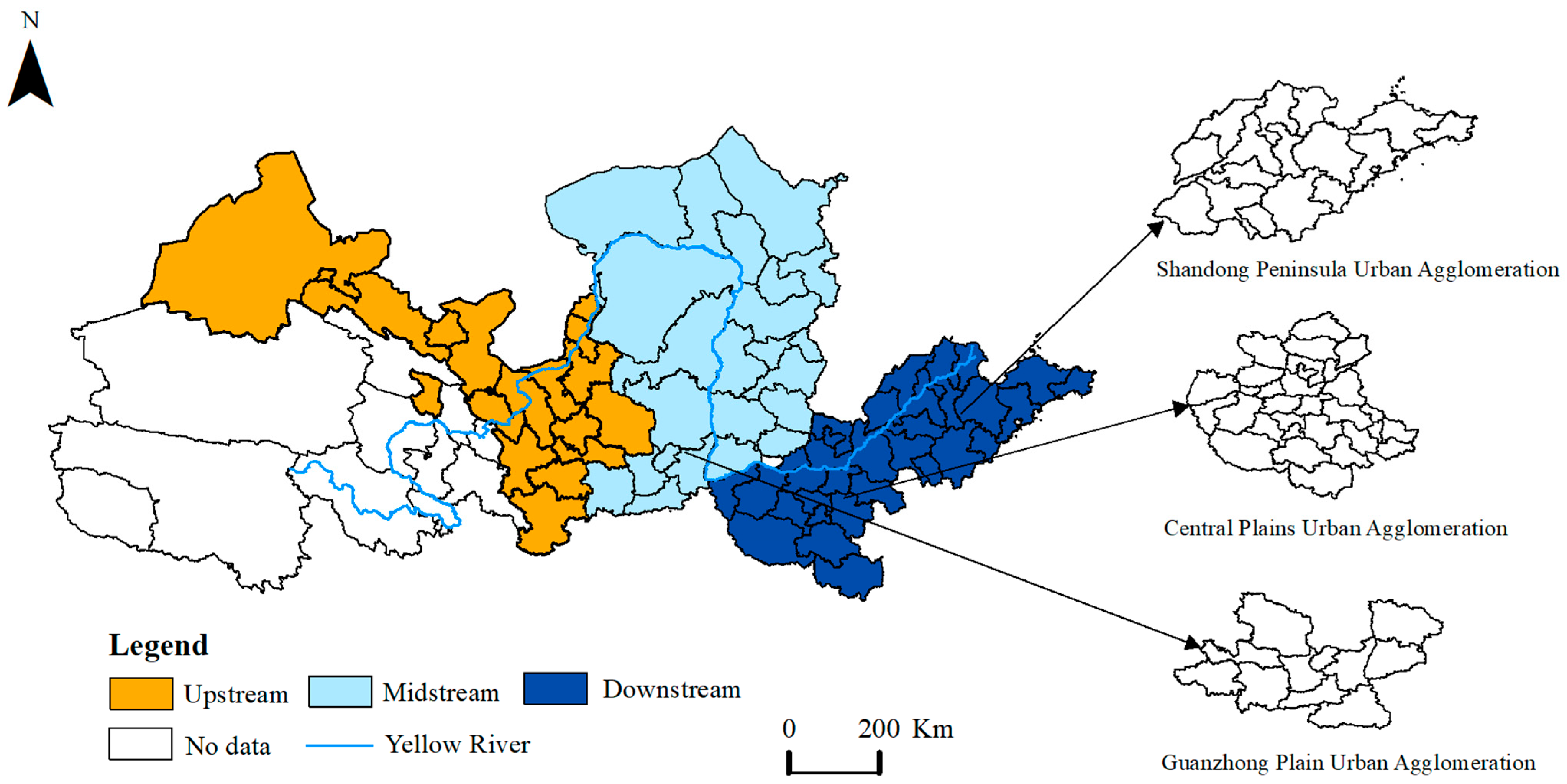
Undoubtedly, prior scholarly work has established a robust groundwork for advancing investigations into the nexus between TI and IGG; however, there remains considerable room for further development: First, existing studies have mainly focused on national, provincial, or single-city units, with insufficient attention paid to the coordinated development of the TI and IGG in the YRB—a crucial national ecological barrier and economic belt where the economic–social-environmental system is undergoing rapid transformation. Second, most existing studies are confined to exploring the coordinated development of the TI and IGG within a single region, failing to fully consider cross-regional coordinated development. Few studies have addressed how to achieve a higher level of coordinated development between TI and IGG from the perspective of spatial correlation, and the exploration of the inherent mechanisms and spatiotemporal evolution patterns of their coordinated development remains insufficient. Third, in revealing the influencing factors of the coordinated development of the TI and IGG, previous studies have often been conducted based on the assumption of spatial homogeneity, ignoring the important role of spatial interaction effects, which makes it difficult to interpret the spatial spillover effects and their inherent influencing mechanisms of the coordinated development between the two. To sum up, this study selects 75 prefecture-level cities (prefectures, leagues) across the YRB during the period 2011–2023 as research subjects, systematically establishes a mechanistic framework and a comprehensive evaluation indicator system for the coordinated development between TI and IGG, examines the spatiotemporal evolutionary traits of their coordinated development across the YRB by adopting methodologies including the entropy weight method, coupling coordination degree model, and ESDA, and ultimately identifies their spatial spillover impacts through the application of the Spatial Durbin Model (SDM). In comparison with prior research, the marginal contributions of this study are manifested in the following respects: (1) Taking the YRB as the research sample and targeting its regional characteristics as a national ecological security barrier and a core belt for high-quality development, this paper systematically explores the coordinated relationship between TI and IGG from both theoretical and empirical perspectives. The research is more in line with national strategic needs, and the conclusions are more regionally targeted. (2) From the dimension of spatial correlation, this study emphasizes elucidating the multi-dimensional spatiotemporal evolutionary traits of the coordinated development between TI and IGG—a focus that serves as a meaningful supplement to prior scholarly work. (3) It systematically analyzes the spatial spillover effects and their influencing mechanisms of the coordinated development of the TI and IGG in the YRB, providing a new explanation for examining the drivers of spatial spillover effects and making the research conclusions more reliable. Notably, the analytical logic and empirical conclusions of this paper can be further aligned with core goals of the United Nations Sustainable Development Goals (SDGs), such as SDG1, SDG3, SDG4, SDG8, and SDG13, providing a replicable research paradigm for similar river basins and ecologically sensitive areas worldwide. On the one hand, the coordinated development model of the TI and IGG in the YRB can be extended to regions with similar ecological endowments and development demands. By adjusting index weights and adapting to regional characteristics, it can provide references for formulating differentiated coordinated paths. On the other hand, the research conclusions on spatial spillover effects can provide references for the formulation of cross-regional ecological compensation and industrial linkage policies, helping other regions balance ecological protection and social equity while achieving economic growth, and ultimately promoting the localized implementation and effective practice of SDGs at the regional level.
5. Discussion
5.1. Core Findings and Theoretical Implications
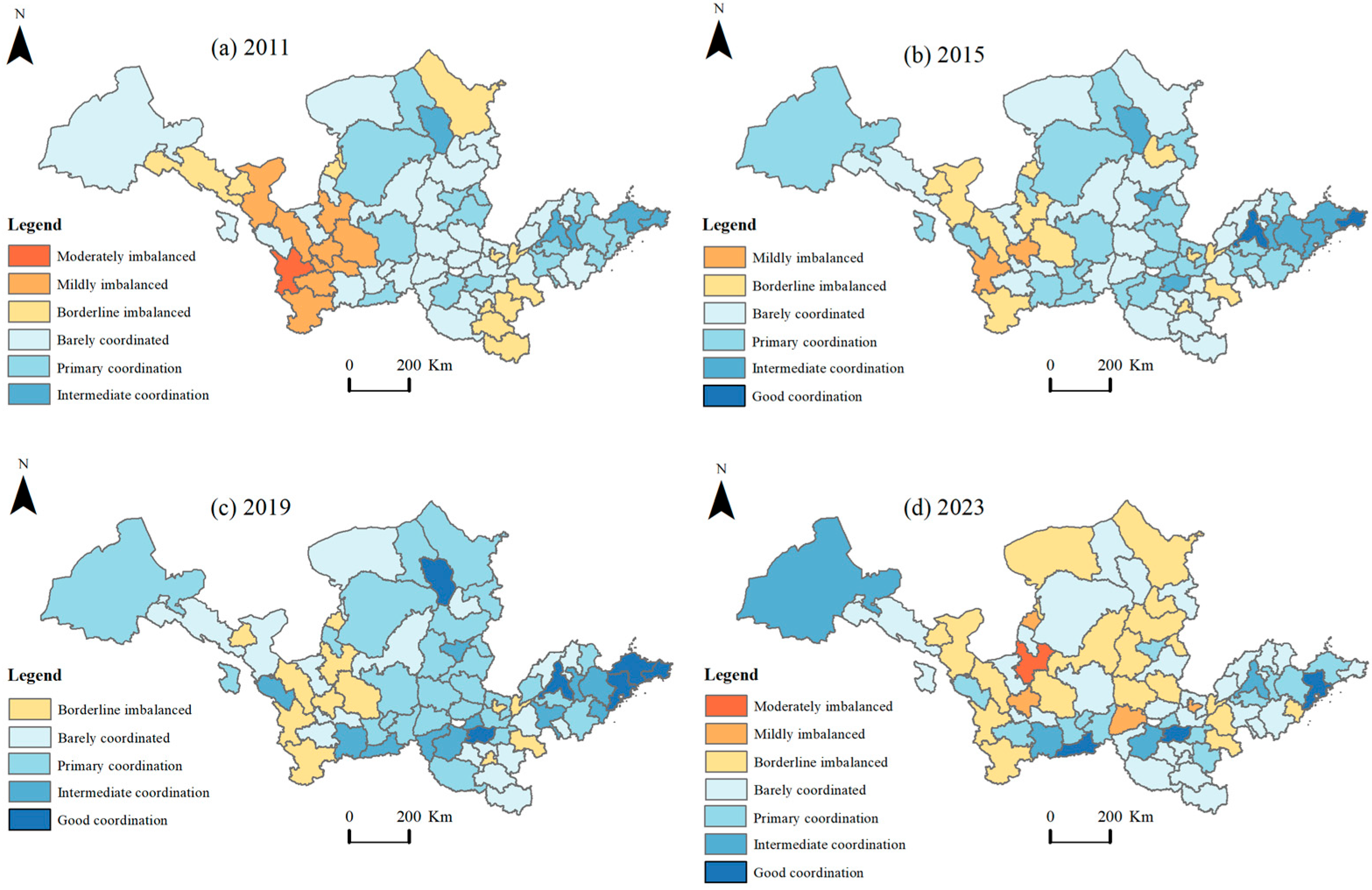
First, it verifies the applicability of the coupling coordination theory at the river basin scale. The coordinated development level of the YRB shows a fluctuating upward trend, presenting a “downstream-midstream-upstream” gradient-decreasing pattern and a dual-core radiation pattern in spatial distribution. This reflects the interaction law between the TI system and IGG system. This finding expands the application of the coupling coordination theory from the national and provincial scales to the river basin scale, enriching the theoretical understanding of the spatial differentiation of coordinated development under the constraints of ecological security and economic development.
Second, it deepens the understanding of the spatial spillover mechanism in the context of river basin development. Based on the new economic geography theory, this paper identifies that there is significant positive spatial autocorrelation and agglomeration characteristics in coordinated development and clarifies the heterogeneous spatial spillover effects of various influencing factors—new-quality productive forces have significant positive direct effects and spillover effects, while industrial structure has significant negative direct effects and spillover effects. This conclusion supplements the empirical evidence of spatial spillover effects in river basin regions, reveals the dynamic game between siphon effects and diffusion effects in the process of coordinated development, and improves the theoretical system of spatial economics.
Third, it expands the research perspective on the relationship between TI and IGG. Existing studies mostly focus on the national or provincial scales. Taking the YRB, a compound region of “ecological security barrier-economic development belt”, as the research object, this study explores the interaction mechanism from the perspective of spatial correlation. It is found that TI can promote IGG through scale-driven, structure-optimizing, and potential-leading effects, while IGG can feed back into the development of the TI through economic support, social protection, people’s livelihood driving, and ecological regulation effects. This finding deepens the theoretical understanding of the mutual empowerment relationship between tourism and sustainable development.
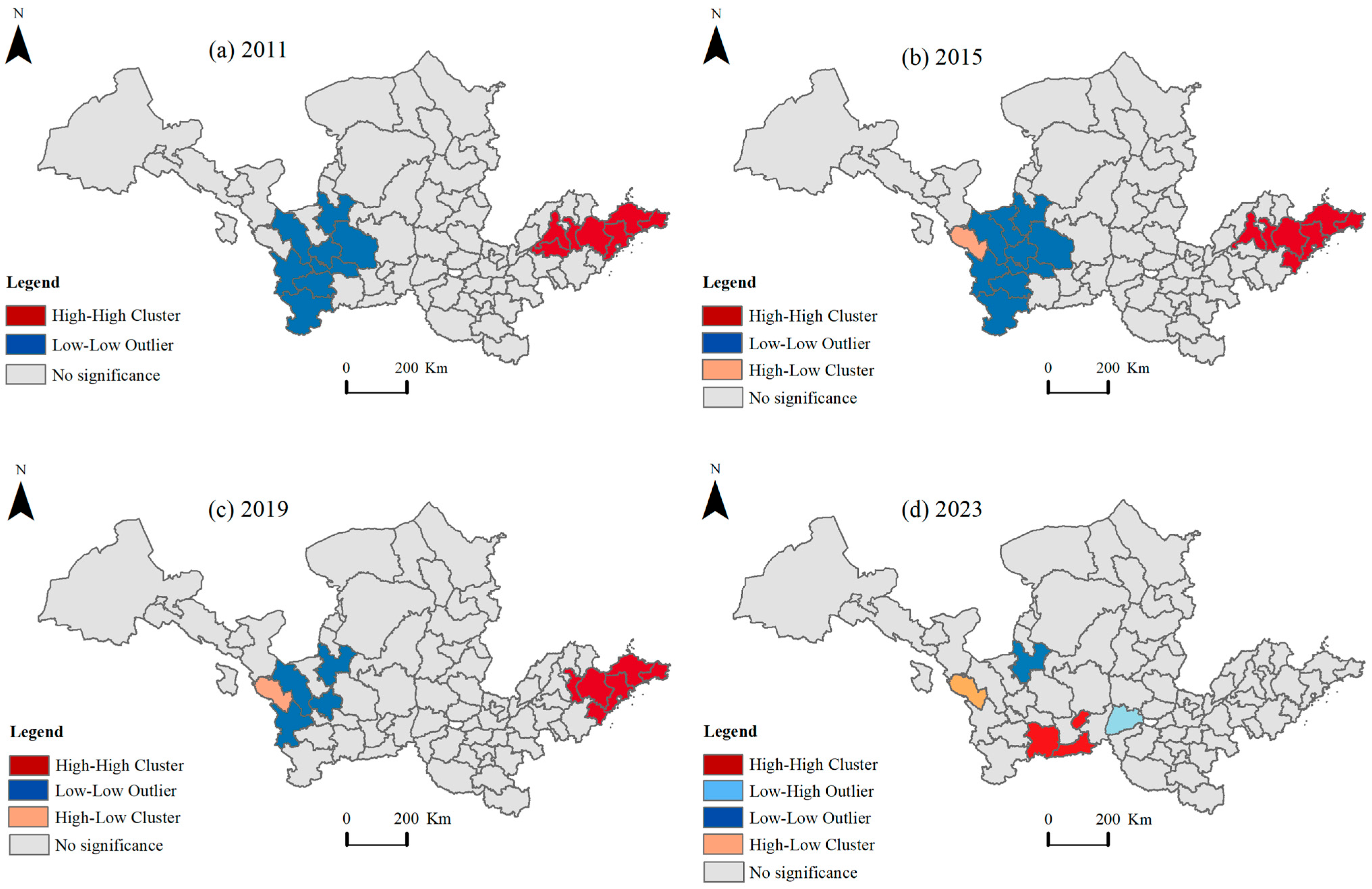
The underlying reasons for these spatial patterns can be attributed to three interrelated mechanisms. First, the “downstream–midstream–upstream” gradient reflects the historical accumulation of economic capital, human resources, and institutional capacity. Downstream regions, particularly the Shandong Peninsula, have benefited from early opening-up policies and coastal location advantages, establishing mature tourism industries and robust green development foundations. Second, the dual-core radiation pattern emerges from agglomeration economies—core cities attract high-quality factors through superior infrastructure, policy efficiency, and market access, subsequently diffusing development benefits to surrounding areas through demonstration effects and industrial linkages. Third, the persistent LL clusters in upstream regions result from the compounding effects of ecological sensitivity constraints, underdeveloped infrastructure, and limited absorptive capacity for technological spillovers. These mechanisms collectively explain why coordinated development in the YRB exhibits such pronounced spatial heterogeneity and why differentiated policy interventions are essential.
5.2. Comparison with Previous Research
This study’s findings align with prior scholarly work and further offer supplementary insights and extensions to existing research. On the one hand, the negative impact of industrial structure on coordinated development is consistent with the research of Tian et al. [
16], who pointed out that an irrational industrial structure restricts the green development of the TI. However, this paper further identifies that industrial structure has a significant negative spatial spillover effect, which stems from homogeneous competition in industrial layout among adjacent cities, expanding the cognitive boundary of the industrial structure’s impact mechanism. On the other hand, the positive effect of new-quality productive forces on coordinated development is logically consistent with the research on digital infrastructure by Liu et al. [
21]. Nevertheless, this paper clarifies the dual positive effects of new-quality productive forces on local and adjacent regions, highlighting the importance of technology diffusion in river basin coordinated development.
Regarding YRB-specific research, this study both corroborates and extends existing findings. First, the “downstream–midstream–upstream” gradient pattern is consistent with Cai et al. [
30], who identified similar spatial differentiation in tourism-ecology coordination within the YRB. However, this study further reveals the dual-core radiation mechanism centered on the Jinan–Qingdao and Xi’an–Zhengzhou agglomerations, providing new insights into the spatial organization of coordinated development. Second, the significant positive spillover effect of new-quality productive forces (
= 0.400,
p < 0.05) aligns with Zhang et al. [
31], who emphasized the role of ICT in promoting tourism economic development in the YRB. Nevertheless, this study advances their work by identifying the “spillover-preceding-absorption” pattern in upstream regions, suggesting that technology diffusion precedes local absorption capacity development—a finding with important policy implications for technology transfer strategies. Third, while Tian et al. [
54] confirmed the negative impact of industrial structure on tourism ecological efficiency in the YRB, this study further identifies its significant negative spatial spillover effect (
= −0.190,
p < 0.01), revealing the cross-regional transmission mechanism through homogeneous competition and environmental externalities. These comparisons demonstrate that the TI-IGG coordinated development in the YRB exhibits unique spatial characteristics requiring targeted interventions distinct from national-level policies.
The differences between this study and previous YRB research can be attributed to three factors. First, methodological advancement—while previous studies such as Cai et al. [
30] employed traditional coupling coordination analysis without spatial decomposition, this study adopts the SDM to separately identify direct and indirect effects, enabling the detection of spatial spillover mechanisms that were previously unobservable. Second, variable innovation—the inclusion of new-quality productive forces as a key explanatory variable, which was not examined in previous YRB tourism studies, reveals technology diffusion patterns unique to the basin context. Third, temporal extension—this study covers the period up to 2023, capturing recent policy effects from the Yellow River Basin ecological protection and high-quality development strategy implemented since 2019, which earlier studies could not incorporate.
In addition, the conclusion of this paper that core influencing factors exhibit significant regional heterogeneity aligns with the view of Zhao et al. [
58], who emphasized the impact of factor endowments on regional development differences. However, this paper further identifies the differentiated effects of various factors in the upstream, midstream, and downstream regions, providing more detailed empirical evidence for differentiated governance. Compared with existing studies that ignore spatial effects, this study adopts the SDM to decompose direct effects and indirect effects, avoiding estimation bias caused by the spatial homogeneity assumption and enhancing the reliability of the conclusions.
5.3. Practical Implications and Alignment with SDGs
This study’s findings carry notable practical implications for advancing the implementation of the national strategy for ecological conservation and high-quality development in the YRB, and for the attainment of the SDGs. In terms of alignment with SDGs, the paper’s focus on the coordinated development between the TI and IGG directly responds to SDG 8 (Decent Work and Economic Growth), SDG 13 (Climate Action), SDG 11 (Sustainable Cities and Communities), and SDG 1 (No Poverty). The proposed strategies, such as promoting inclusive tourism development, strengthening ecological protection, and optimizing the industrial structure, provide practical pathways for the regional implementation of SDGs.
For the YRB, the conclusions offer a scientific basis for addressing the fragmentation of river basin governance and achieving integrated development: the dual-core radiation pattern of the Jinan-Qingdao and Xi’an-Zhengzhou urban agglomerations points out the direction for driving the coordinated development of the entire basin relying on core cities. The negative spillover effects of government intervention and opening-up highlight the need to strengthen cross-regional collaboration and avoid local protectionism and vicious competition. For similar river basins and ecologically sensitive regions worldwide, the research framework and policy recommendations of this study have reference value. In particular, the practical experience in balancing ecological protection and economic development is worthy of global promotion.
6. Conclusions
6.1. Main Conclusions
Addressing the needs of implementing the national strategy for ecological protection and high-quality development of the YRB, this paper explores the spatiotemporal evolution characteristics and spatial spillover effects of the coordinated development between TI and IGG in the YRB from 2011 to 2023. The main conclusions are as follows:
- (1)
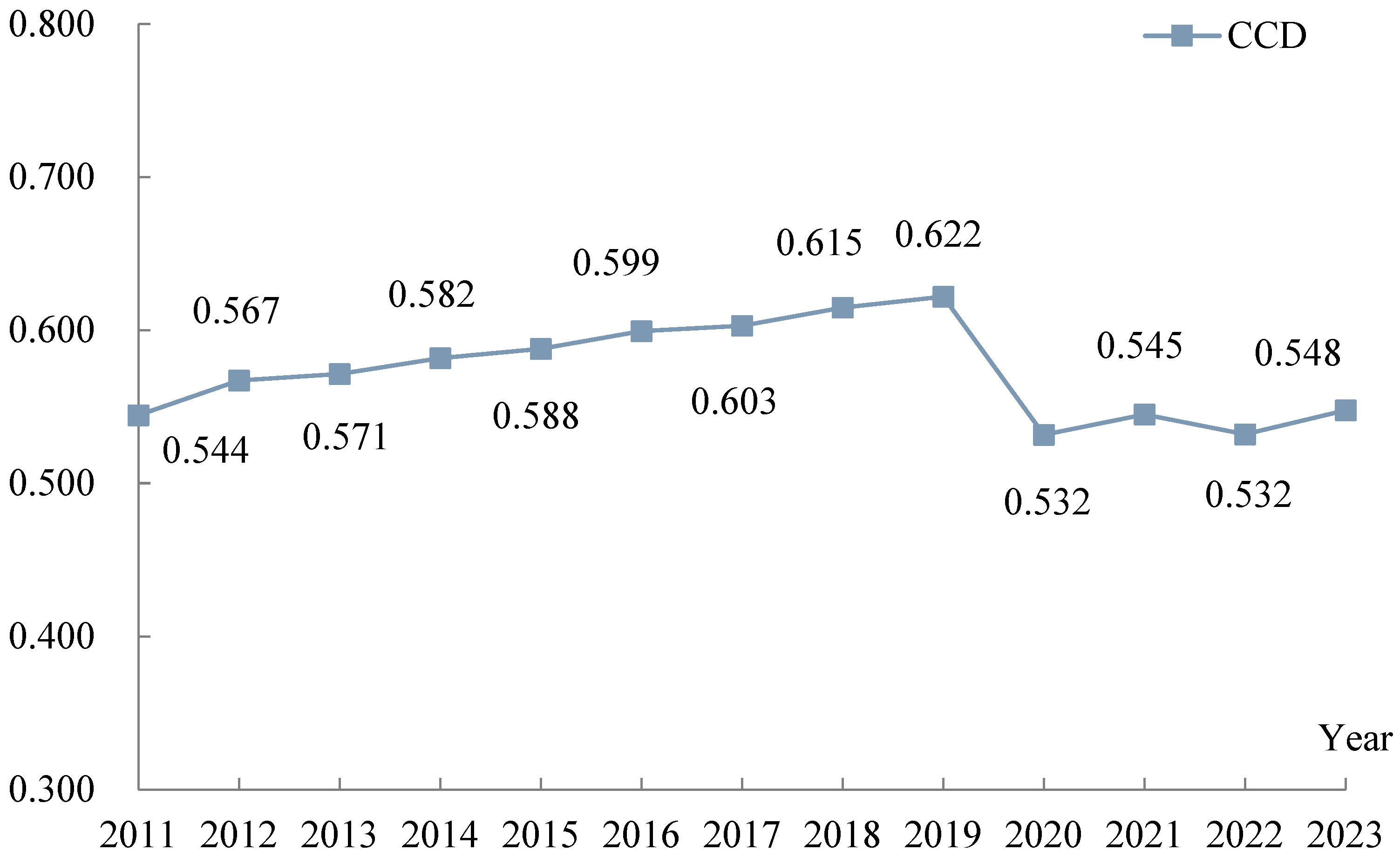
In terms of temporal evolution: The level of coordinated development between TI and IGG in the YRB fluctuated and improved from 2011 to 2023, with a corresponding improvement in the coordinated development level.
- (2)
In terms of spatial distribution: The coordinated development between TI and IGG in the YRB is in an unbalanced state, presenting an overall gradient-decreasing pattern of “downstream-midstream-upstream”. Cities with high coordinated development levels have gradually formed dual-core radiation belts centered on the Jinan-Qingdao and Xi’an–Zhengzhou urban agglomerations, but their radiation capacity to peripheral cities remains limited.
- (3)
In terms of spatial correlation: There is significant positive spatial autocorrelation in the coordinated development between TI and IGG in the YRB. The spatial agglomeration characteristics have weakened in a fluctuating manner over time, and a convergence trend has emerged in coordinated development. However, the polarization phenomenon remains prominent, forming a typical Matthew effect of “the strong becoming stronger and the weak becoming weaker”. HH clusters are mainly concentrated in the Shandong Peninsula in the downstream, while LL clusters are primarily distributed in the Qinghai-Gansu-Ningxia-Inner Mongolia region in the upstream.
- (4)
The SDM regression results indicate that: Industrial structure exerts significant inhibitory effects on the coordinated development between TI and IGG both in local and adjacent cities, serving as a key constraint limiting the improvement of coordinated development levels. Financial development level significantly promotes local coordinated development, but its spatial spillover effect is not statistically significant. New-quality productive forces not only improve the coordinated development level of local cities but also enhance that of adjacent cities, generating significant positive spatial spillover effects. Government intervention degree and opening-up level have no significant impacts on local coordinated development but exert significant inhibitory effects on the coordinated development of adjacent cities, with prominent negative spatial spillover effects. The heterogeneity test results show that the core factors affecting the basin’s coordinated development exhibit significant regional heterogeneity, which is closely related to differences in factor endowments and differs from the overall effect.
6.2. Policy Implications
To promote the coordinated development of the TI and IGG in the YRB, targeted policy implications are proposed as follows:
These recommendations align with national strategic frameworks. The
Outline of the Plan for Ecological Protection and High-Quality Development of the Yellow River Basin (2021) emphasizes “adjusting regional industrial layout and confining economic activities within the carrying capacity of resources and environment” and advocates differentiated tourism development for the upstream, midstream, and downstream regions [
34]. The
“14th Five-Year Plan” for Tourism Development (2022) proposes to “improve the tourism coordination mechanism for the Yellow River Basin” and promote technology application in tourism [
59].
First, construct a “Dual-Core Leadership-Gradient Linkage” spatial governance system by strengthening the radiation capacity of the Jinan-Qingdao and Xi’an-Zhengzhou urban agglomerations—downstream core cities should enhance the integration quality of the TI and green industries through cross-city platforms for technology transfer, talent sharing, and resource allocation via the “point-axis” diffusion model, while midstream core cities need to integrate “Silk Road starting point” cultural-tourism resources with low-carbon policies to build a coordination hub connecting upstream and downstream and mitigate the “core-periphery” imbalance. Remove administrative barriers to advance cross-regional collaborative governance, establish a unified management agency for the YRB’s coordinated development, and formulate consistent development plans, ecological compensation standards, and inter-regional industrial cooperation mechanisms; implement differentiated policies for upstream LL clusters by increasing investment in tourism infrastructure and ecological protection, and offering tax reductions and subsidies to attract green tourism investment, thereby avoiding “low-level lock-in” path dependence and promoting leapfrog upgrading of coordination levels.
Furthermore, accelerate the green transformation of industrial structure to address negative spatial spillovers. Our finding of significant negative spillover effects (
= −0.190,
p < 0.01) empirically validates the Outline’s requirement to “adjust regional industrial layout” [
34]. Specific measures should include establishing region-differentiated environmental access standards with stricter thresholds for ecologically sensitive upstream areas; creating cross-regional coordination mechanisms to reduce homogeneous competition that intensifies negative spillovers, consistent with the Outline’s call for “coordinated ecological protection” [
34]; and promoting the transition to high-value-added tourism formats such as cultural-tourism integration and smart tourism, following the Outline’s differentiated regional positioning for upstream, midstream, and downstream areas [
34].
Additionally, cultivate new-quality productive forces to strengthen positive spillovers and enable upstream regions to benefit from technology diffusion. Our heterogeneity analysis reveals a notable “spillover-preceding-absorption” pattern in the upstream: strong spillover effects (
= 0.787,
p < 0.05) despite non-significant local effects (
= −0.146,
p > 0.10), suggesting that technology diffusion precedes local absorption capacity development. To capitalize on this pattern, we propose: establishing technology transfer channels between core cities and upstream regions, aligning with the “
14th Five-Year Plan”’s emphasis on “applying new technologies such as big data, cloud computing, and 5G in tourism” [
59]; implementing talent exchange programs to enhance absorption capacity; and prioritizing digital infrastructure deployment in upstream scenic areas, as the “
14th Five-Year Plan” calls for “enhancing 5G network coverage in key tourism areas” [
59]. These measures respond to the Outline’s requirement to “strengthen supporting infrastructure construction” in the upstream region [
34].
Finally, rationalize factor allocation with a view to mitigating adverse spatial spillover impacts: enhance the efficiency of spatial allocation of financial resources through the promotion of green tourism credit instruments and cross-regional financial collaboration, so as to dismantle barriers to resource mobility; regulate government intervention to avoid local protectionism, coordinate inter-regional tourism policies, and guide local governments toward indirect regulation (e.g., ecological supervision and public service provision) to reduce policy fragmentation impacts; promote high-level opening-up by prioritizing the introduction of high-end tourism services and green technologies, avoiding low-level redundant construction, and strengthening international eco-tourism and cultural tourism cooperation to enhance the YRB’s tourism competitiveness.
To enhance the operationality of the above recommendations,
Table 10 presents a structured policy framework that aligns specific actions with our empirical findings across different time horizons. Short-term actions (1–2 years) should address immediate coordination failures: given the significant negative spillover of government intervention (
= −0.343,
p < 0.01), establishing inter-city policy coordination mechanisms is essential; for upstream regions showing strong technology spillovers but weak local absorption (spillover β = 0.787,
p < 0.05; local
= −0.146,
p > 0.10), priority digital infrastructure deployment can enhance absorptive capacity. Medium-term actions (3–5 years) should focus on industrial restructuring to address negative spillovers (
= −0.190,
p < 0.01) through differentiated regional positioning and ecological compensation mechanisms. Long-term actions (5–10 years) should leverage new-quality productive forces’ strong positive effects (total
= 0.728,
p < 0.01) to build an integrated smart tourism network across the basin.
6.3. Limitations and Future Directions
While this study makes theoretical and practical contributions, it inevitably has certain limitations: First, regarding indicator selection, the tourism subsystem primarily depends on objective metrics—including tourism revenue and tourist reception volume—and lacks subjective measures such as tourist satisfaction and residents’ sense of acquisition, a gap that might undermine the comprehensiveness of the assessment results. Second, this study focuses on the direct effects of influencing factors and fails to explore the mediating and moderating mechanisms of variables such as digital economy and environmental regulation. Third, the research period is 2011–2023, and the long-term dynamic evolution mechanism requires support from longer time-series data.
Future research can be carried out from five aspects: First, improve the evaluation index system, integrate subjective and objective dimensions, and combine mixed research methods such as questionnaires and interviews to achieve a comprehensive and accurate evaluation of coordinated development. Second, further explore the mediating and moderating mechanisms of key variables such as digital economy and social capital to deepen the understanding of the impact paths of coordinated development. Third, expand the research spatial scope, compare the coordinated development characteristics of typical river basins such as the Yangtze River Basin and the Rhine River Basin, and reveal the universal laws of river basin sustainable development. Fourth, adopt dynamic spatial econometric models to explore the long-term evolutionary trends and driving factors of coordinated development so as to provide more targeted policy implications. Fifth, conduct sensitivity analysis using alternative weighting methods (such as equal weighting, PCA-based weights, and expert-assigned weights) to further verify the robustness of the evaluation results, thereby enhancing the methodological rigor of coupling coordination research.