1. Introduction
Light quality is one of the key parameters of Indoor Environmental Quality (IEQ); it affects visual comfort, as well as the health and comfort of a building’s occupants. The goal of this study was to find a way to optimize layouts in terms of access to daylight and its impact on well-being. To learn and assess lighting values that are optimal for a workstation, we need to parameterize it in a way that considers light intensity alongside its spectral match to the melanopsin sensitivity, which is defined as Equivalent Melanopic Lux (EML). This is what the results of the research presented in this article pertain to, as it considers the office work environment in certified buildings completed in the 2010s in the area covered by the cool temperate climate in Europe.
In 2022, the average European between the ages of 20 and 64 spent 37.5 h at work every week [
1]. At the same time, due to changing lifestyles, most of the population spends about 80–90% [
2,
3,
4,
5,
6] of the day indoors, which significantly reduces exposure to natural light. To address these deficiencies, it is necessary to ensure a high indoor environmental quality in our spaces. As a result, in recent years, during the design of office buildings, but also during the modernization of existing ones, occupant health and well-being are afforded increasing attention in terms of their physical, psychological and social characteristics. The growing interest in ergonomics, sustainability and public health is becoming increasingly apparent in the design of office workplaces. Recently, this design has been significantly redefined, with priority given to the generation of user comfort above economic or aesthetic values. This has been influenced by a number of factors, such as changes in young people’s attitudes toward work styles, civilization diseases and the COVID-19 pandemic. The pandemic demonstrated the vulnerabilities of open-space work, leading to the relocation of workers to homes, and after the pandemic ended in 2023, to the permanent implementation of the hybrid work system [
7,
8,
9]. For these reasons, employers have begun to display a greater sense of responsibility for their employees and along with an increase in eagerness to provide a competitive work environment directed towards meeting human needs. This has meant placing well-being at the center of the design process, which has become part of a deliberate strategy to support user productivity and quality of life [
10,
11,
12].
The evolution of approaches to office workspace organization is increasingly affecting the typology of office spaces, redefining traditional models, especially the dominant and most space-efficient model, the open space. Cell offices are rising in popularity, which is associated with solutions like hot desking. Overall, this results in an increase in work output quality and a reduction in office maintenance costs. Another example of a solution that is currently being implemented is the activity-based workplace (ABW), in which the workspace is divided into different zones for each activity. The fundamental goal of ABW is to support work style diversity, employee neurodiversity, increase productivity, flexibility and space efficiency, and improve communication [
13].
The quality of the indoor environment is reflected by the Indoor Environmental Quality (IEQ) index, which includes factors that affect the health, comfort, productivity and overall well-being of users, such as Indoor Air Quality (IAQ), thermal comfort, lighting quality, acoustic quality and ergonomics [
14]. Of these criteria, the most noteworthy is light—especially daylight, which affects the health and general well-being of the user. Natural light plays a key role in regulating the human circadian rhythm. It influences cortisol production, mood, productivity, sleep quality, body temperature, hormone levels and general metabolic activity, the sense of well-being and generally understood performance of the human body. Disturbances in exposure to natural light can lead to desynchronization of the circadian rhythm, resulting not only in temporary fatigue and decreased concentration, but more importantly, can have long-term effects in the form of seasonal depression, chronic stress and occupational burnout [
15]. Natural light is also a renewable source of energy. Its optimal use has an undeniable impact on sustainable design, and its proper distribution makes it possible to optimize the quality of workplace lighting. Optimizing the size and layout of windows leads to a reduction in the use of supplemental artificial light and a reduction in heating and air conditioning costs, which can lead to a reduction in electricity demand of up to 50–80% [
16].
Architects usually have the necessary knowledge and tools (such as Building Information Modeling, BIM) to propose optimizations of office building structures and compositions of their glazed facades so as to balance architectural, business and environmental goals, including proper lighting for most workstations. However, when the buildings enter use, modifications in their interior arrangements are made (partition walls, acoustic and visual screens, etc.), which directly affect the amount of daylight that reaches the occupants and thus affects their comfort. Accordingly, the concept of Human Centric Lighting (HCL) design has been developed in recent years to minimize the negative effect of light scarcity by providing artificial lighting in interiors, the intensity and color of which are modified in harmony with the biological clock. This is ensured by LED lighting and digital control systems—the temperature and intensity of the light are individually adjusted. This is an effective measure, but replacing daylight with artificial light increases the cost of operating a building, contributes to significant carbon emissions and ultimately leads to global warming. Electric lighting makes up to about 40% of a building’s annual energy demand, as found in [
17,
18,
19].
In conclusion, pursuing workplace optimization should be comprehensively planned by optimizing the structure of the office building in question, including their spatial layouts, the depths of their bays, floor-to-ceiling height and integration with an optimized frame structure. The composition of the facades, which typically feature large areas of glazing with external or internal blinds, including kinetically operated models controlled by a Building Management System (BMS). This approach has become an established canon in the design of office buildings’ primary structures. Nevertheless, the challenge of optimizing daylight at actual workstations—once interior layouts, décor, and furnishings are in place—remains largely underexplored. The current expertise of designers and managers with regard to workplace lighting optimization primarily concerns intensity (defined at range from 300 to 500 lux) and the values defined in certification systems, which are parameterized at the core and shell stage. However, in fact, the final lighting values in the workplace have a much greater number of parameters than merely the size and configuration of windows against the volume of indoor spaces. The effects of changeable furnishings and fittings, including their color and texture, are key aspects of the contemporary design of such buildings. This requires measurements performed on model buildings or studies and calculations that take advantage of the potential offered by simulation software, often in the form of 3D software plug-ins or extensions, such as Lark Spectral Lighting [
20], Adaptive Lighting for Alertness (ALFA) [
21], Honeybee [
22] or DIALux [
23].
1.1. Literature Review
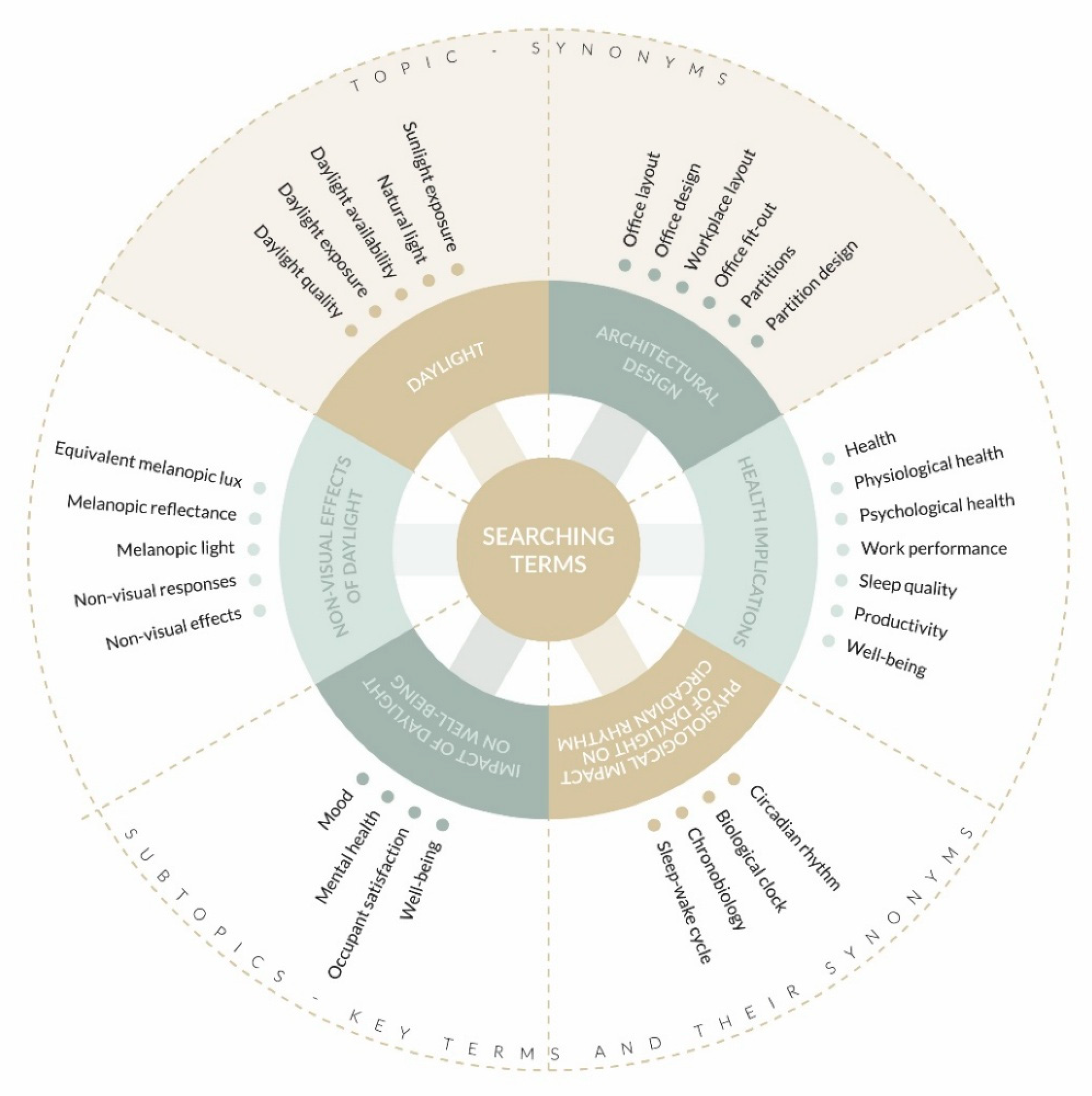
We have performed a systematic literature review on access to daylight in the workplace, directed at the impact of an indoor space’s composition, especially visual and acoustic partitions. We also sought findings on daylighting parameters that consider spectral matching to melanopsin sensitivity—a key factor in the human circadian rhythm’s regulation. To do so, we have obtained data for analysis from international citation databases, i.e., Scopus, Web of Science (WoS) and Google Scholar, where peer-reviewed articles published between 2010 and 2025 and the data were analyzed and extracted based on the keywords shown in
Figure 1.
Existing studies on daylighting are mainly concerned with buildings with office, educational, residential and healthcare uses, of which the vast majority are offices [
24]. There are numerous studies that describe the dependencies between a building’s windows and parameters like its orientation, cloud cover, glazing translucency or material reflectivity, as well as research in which an indoor space’s layout was studied. The impact of the generally understood office interior layout on the health of the user is described in [
25]. The literature review found that an indoor space’s layout, interior furnishings, its materials, and color do affect lighting regulation, especially the non-visual parameters of lighting [
26,
27,
28,
29]. In contrast, few studies considered obstacles in the interior space, so this is an issue that has not been covered in sufficient detail beyond the few cases listed by M. Anaraki et al. [
24]. Studies conducted on the influence of indoor space on access to light in the workplace have been described in numerous articles [
15,
24,
30,
31,
32,
33,
34,
35], with some considering its impact on the human circadian rhythm [
24,
26,
34,
36,
37,
38,
39]. Potočnik and Košir [
26] verified the influence of the parameters of windows and the color of a selected wall and their non-visual potential. The conclusions concerned, among others, the combination of glass panes tinted brown with those in warm colors such as orange and red as options in an interior, which could result in inadmissibly low CS values (a measure of light’s effectiveness in regulating human circadian rhythms), even with very high daylight access. The study suggested that, due to the marginal impact on the final interior decor and there being no regulations on this matter, glass with a neutral spectrum and the highest possible light transmittance should be used, while considering the remaining energy performance and visual comfort criteria. The simulations performed in the present study followed this assumption. In contrast, Safranek et al. found that the material of desk surface influences the level of EML indoors [
38]. A number of studies have also looked at adjusting artificial lighting to maximally replicate the parameters of natural lighting [
40], and, moreover, studies that consider light from monitors in the context of their effect on diurnal rhythms are also being done [
41]. Additionally, a study undertaken by Parsaee et al. [
42] examined the impact of external shading panels on daylighting characteristics.
In addition, most of the studies we were able to access were carried out for a different location and latitude, where climatic conditions, especially the cloud cover period, are decidedly different from the cool temperate climate adopted in this study. At the same time, M. Anaraki [
24] indicates only the percentage of the surface that received a certain level of EML with a complete disregard for the values at individual workstations, which is crucial in the context of avoiding overheating and glare. Due to the update of the certification systems, the EML values adopted in the article have also changed, with the implication that it is now impossible for the adopted geometry to meet the requirements set by the WELL Building Standard certification.
A review of the literature allowed us to define the purpose of the study and to focus its methodology so as to diagnose important and insufficiently verified architectural and ergonomic parameters regarding the quality and stability of workplace lighting in office buildings, with particular attention to the human circadian rhythm.
1.1.1. The Impact of Lighting in Interior Spaces
Design decisions in shaping the architecture and indoor environment of office buildings affect user comfort, have an impact on productivity, health and human well-being [
5,
6,
43,
44]. In 2016, the Global Human Spaces Report found that natural light is the first desired natural element in workplace design. According to the American Society of Interior Designers (ASID, 1999), one of the three most important factors that affect productivity and job satisfaction is the design of the physical workplace [
5]. Unfortunately, in the vast majority of cases at the building design stage, rooms are generally considered unfurnished for calculation. The exception is LM-83-12, adopted by LEED, where the modelling of interior surfaces is explicitly mentioned, and their effect is discussed in [
31]. Although certification systems often include a component dedicated to interiors, it is rarely applied in practice, as interior design is usually undertaken by tenants, leaving little influence on the architectural design. From our professional experience, this explains why interior spaces are frequently not analyzed in detail during the design process. Therefore, it is crucial to consider key aspects of a building’s structure in relation to potential interior arrangements at the stage when design decisions are made.
Daylighting is affected by external and internal aspects. The former concern architecture and the surroundings and include the orientation of the facades towards the cardinal directions, latitude and climate, the neighboring buildings that may lead to obscurement, the surrounding tall greenery, as well as the spatial layout and height of internal spaces, the size, type, and proportions of windows and any screens fitted to them. Among the internal factors we can list: the shape of indoor spaces; the material and color of the ceilings, walls, floors; the placement and parameters of fixtures, fittings, furniture, and interior plants; acoustic and visual partitions. These parameters, when poorly configured, can result in internal spaces that are too bright or too dark, or the excessive amount of uncontrolled light that may cause glare and visual discomfort. The configuration of furniture and partitions in open-space office spaces arises for a variety of reasons, from the desire to provide employees with at least minimal privacy, to the impact on room acoustics, to aesthetic issues. Partitions are implemented in various forms: desk partitions, free-standing and mobile partitions, suspended panels and green walls. This results in a variety of their parameters such as height, color and texture of the material, as well as its translucency and location, which, according to the New Building Institute, has a significant impact on daylighting performance [
5]. A summary of the impact of external and internal factors that affect the availability and quality of daylight to offices is shown in
Table 1.
1.1.2. Daylight, Circadian Light, and Health Impacts
The sun is the largest source of light and energy on Earth. This light reaches us in three forms: direct sunlight, sunlight that is scattered and redistributed by the atmosphere, and reflected sunlight [
45]. The quality and intensity of daylight varies depending on latitude, time of year and day, local weather, sky conditions and building geometry. The human body responds to this light both visually and non-visually (photopic and melanopic vision), which is due to light perception occurring in the retina. In the early 21st century, scientists discovered the intrinsically photosensitive Retinal Ganglion Cells (ipRGCs), and these photoreceptors revolutionized the understanding of daylight and its effects on bodily functions.
These photoreceptors, located in the retina of the human eye, influence behaviors that are essential to our health and quality of life regardless of image formation, such as the synchronization of the circadian clock to the solar day, tracking of seasonal changes and the regulation of sleep. It contains the photopigment melanopsin, which shows maximum sensitivity for blue light wavelengths in the range of these wavelengths around 480 nm [
46]. It is also indirectly responsible for regulating the secretion of serotonin, cortisol and melatonin. Disruption of melatonin secretion leads to sleep and metabolic disorders, while that of serotonin and cortisol can lead to mood changes and increased stress levels. This is why regular exposure to daylight (and its absence—night cycles), i.e., natural changes in the intensity and color temperature of daylight, regulate the 24 h human circadian rhythm, which manifests itself in maintaining adequate activity during the day and ensuring better sleep at night [
5]. Melanopic light therefore plays a key role in regulating body temperature, blood circulation, and influences hormone secretion and the operation of many other biological functions. All of these aspects combined also translate into the body’s cognitive processes, namely concentration, memory, attentiveness, productivity and efficiency.
A study conducted by Well Living Lab, Delos and Mayo Clinic found that there was an increase in cognitive performance, satisfaction and a reduction in eye fatigue among workers in rooms lit by natural light [
47]. Exposure to sunlight also facilitates the synthesis of vitamin D, which is essential for the proper functioning of the human body, including its immune system [
48]. Various parameters are used to quantify the effect of non-visual light on circadian rhythms: Circadian Stimulus (CS), Melanopic Equivalent Daylight Illuminance (mEDI) or Equivalent Melanopic Lux (EML), which takes into account, in addition to light intensity, the spectral match to melanopsin sensitivity [
49]. For the purpose of this study, the EML index was chosen to measure the amount of melanopic light that reaches workstations. The higher its value (in the case of daylight, especially in the morning hours), the more effective the inhibition of melatonin secretion, the greater the alertness and the improvement of mood and cognitive function [
44]. The use of EML in the design of lighting to support human health is finding increasing application in the architecture and ergonomics of work environments.
1.1.3. Light in Certification Systems and Other Regulations
Criteria for providing adequate daylight and artificial light have been set by many initiatives. Access to light is widely discussed in legal acts and regulations. Below is a short overview of the regulations in place in Europe, with a specific emphasis on Poland. The minimum floor-to-ceiling height of a room is set at 250 cm for small rooms and 300 cm for larger spaces, as in open-space offices. However, there are often exceptions to this rule, where the minimum floor-to-ceiling height is specified as 270 cm, which is also a kind of European standard (this is defined by the international categorization of office buildings A, B, C). Providing access to light in the workplace in accordance with health and safety regulations is mandatory, and any deviation in this regard requires the approval of certain authorities. The key guideline that affects, among others, the proportion of office buildings is the provision of a window-to-floor-area ratio of 1:8 for indoor spaces meant for permanent occupancy (over 4 h), which includes spaces for office work. In addition, the PN-EN 12464-1 standard [
50] (which is also valid for European countries under the name EN 12464-1) specifies the minimum illuminance in workplaces for a horizontal work plane: 300 lux (reception), 500 lux (office work), 750 lux (technical work). Detailed standards also regulate light uniformity, glare or color. Polish law also regulates distances between buildings, whose configuration should prevent excessive shading of neighboring buildings [
51]. The parameters of the required illumination of office workstations are also an important part of certificates.
Certification systems now apply to the clear majority of both newly designed and modernized office buildings. The most popular certifications in Europe are BREEAM [
52], LEED [
53] and WELL Building Standard (WELL) [
11]. The vast majority of entries concern classic light parameters like intensity. More refined parameters are included in the WELL certification, which is designed specifically with user comfort and health in mind. Its criteria also include evaluating lighting for its effect on circadian rhythms. Requirements for Equivalent Melanopic Lux (EML) for office spaces were set at 275 EML or 180 EML while meeting the criteria for distance from the window, glazing transmittance and meeting certain guidelines and standards [L05 Part 1 or L06 Part 1 in
Table 2]. The minimum values to earn a portion of the points were set at 150 EML or 120 EML. Based on the guidelines set forth in this certification [
Table 2] and on the impact of non-visual light, threshold values were adopted for the first stage of this research.
1.1.4. Research Objectives
The design of modern office buildings requires a wide range of criteria to be considered. On the one hand, it is expected that buildings should operate in a sustainable manner (construction cost and the long-term operation of the building), while on the other, their structures should foster their occupants’ work performance and support their health, thereby providing a sense of comfort in the workplace and accounting for the circadian rhythm. The parameters of a building that regulate the access of natural light in its interiors are a key determinant that affects the structure of the building, the cost of construction and subsequent operation, electricity demand, as well as the danger of the building’s potential overcooling or overheating. The following have a significant impact on access to light: the configuration of windows and their orientation in relation to the cardinal directions and the elements of the interior space of specific rooms, their dimensions, finishing materials, partitions and their texture or color. It is these elements that determine the stream of light that is admitted into an interior and that stream’s reflections, which define how light is distributed deeper into the interior. The aforementioned factors can be examined and described through light measurements expressed as Equivalent Melanopic Lux (EML), which is a criterion in the WELL Building Standard certification system. This perspective on the issue also inspired the present study, for which the following goals were set:
To verify workstations’ access to natural light in relation to design decisions on the spatial composition of office buildings and the arrangement of their interiors, accounting for climatic and legal conditions in Central and Western European countries.
To analyze the effects of color and reflectance of ceilings on the distribution of melanopic illuminance and its potential in regulating the human circadian rhythm.
To verify the impact of partitions and their parameters on the daylighting potential of indoor spaces, light distribution and EML levels in open office workspaces.
To evaluate the possibility of optimizing interior design to increase the share of daylight with considering the circadian rhythm of users.
As the literature review has shown, previous studies on daylighting in office buildings and the impact of interior arrangement on it focus on classical photopic light values. There are academic studies that consider melanopic light, but they deal with other climatic and legal conditions such as [
24], which is evident, among other things, in the height of rooms and the depth of bays that considerably exceed European standards. It is also worth noting that in architectural trade articles, the question of the general evaluation of space formation and the attractiveness of office interior design is often raised, whereas interior lighting is only a small part of these analyses, and they almost never analyze the relationship between photopic and melanopic light and the characteristics of light distribution in individual lines. However, such articles, available on platforms such as ArchDaily [
54], are useful for the international exchange of experiences and enable the collection of data on office buildings and the ongoing updating of their systematics.
2. Materials and Methods
A systematic approach was adopted to achieve the objectives outlined in this study. The first stage was a review of the current literature on daylight in office spaces and its impact on occupant health and well-being, with a particular emphasis on the circadian rhythm. Then, based on the conclusions of the literature analysis, the goals and basic objectives of this study were revised, based on which the framework of the research was defined.
In order to achieve the objectives, a model of an office building floor was constructed, intended to serve as a synthesis and diagram for an optimized office floor adapted both to the open-plan scheme and that could (alternatively) be arranged as a cell office. The model was built based on an analysis of the spatial layouts of a series of modern, certified buildings that had been the subject of the authors’ previous studies. The model was used to calculate and evaluate the impact of the building’s architecture and its surroundings, as well as variable interior design, on the daylighting of workstations. Solemma’s Adaptive Lighting for Alertness (ALFA) software was used for this task. The software was developed to design lighting that favors the human circadian rhythm [
55].
The research method utilises the spectral sensitivity curve that was recommended by Lucas et al. [
56], which is used to evaluate melanopic or ipRGC illuminances [
28]. Due to the non-visual system being sensitive to specific wavelengths of blue light, ALFA (replacing the traditional RGB model) enables rendering in high-resolution, 81-color spectra. This model also takes into account the spectral characteristics of individual surfaces. The software includes a library of materials and light sources that have been developed based on actual (spectrophotometric) measurements of materials and lighting fixtures. Conversely, the sky spectrum is determined on the basis of physical atmospheric processes calculated using libRadtran [
21]. Between the emission of light from a specific source and its arrival at the eye, the light spectrum is modified by transmission and reflection from individual materials. ALFA allows a range of specialized values defining these relationships to be obtained, including melanopic light intensity calculated according to the melanopic sensitivity curve and expressed in terms of EML, a melanopic light distribution map or the M/P ratio. This index is related to SPD (Spectral Power Distribution) and is independent of the overall intensity level to the extent that the SPD does not vary with level. This coefficient provides an estimate of the relative efficiency of different sources in producing a melanopic stimulus at a constant photopic power, thus providing a direct path for application in the absence of a melanopic meter [
57]. The M/P value is thus defined as the ratio of melanopic illuminance (calculated according to ipRGC sensitivity) to classical photopic illuminance (according to the V(λ) curve).
Furthermore, in the context of the characteristics of individual materials, they are defined by values such as R(P) and R(M). The parameter R(P) stands for photopic reflectance, which is the amount of light reflected by the material that is visible to the human eye. The parameter R(M) denotes melanopic reflectance, equivalent to the amount of light reflected by the material that is invisible to the human eye but affects melanopsin activity in the retina.
The input data for simulations and the range of variable parameters whose verification allowed us to assess the phenomenon under study are presented below. The variables were selected on the basis of a literature review and previous studies on office building typology conducted by the authors at the Faculty of Architecture of the Wrocław University of Science and Technology [
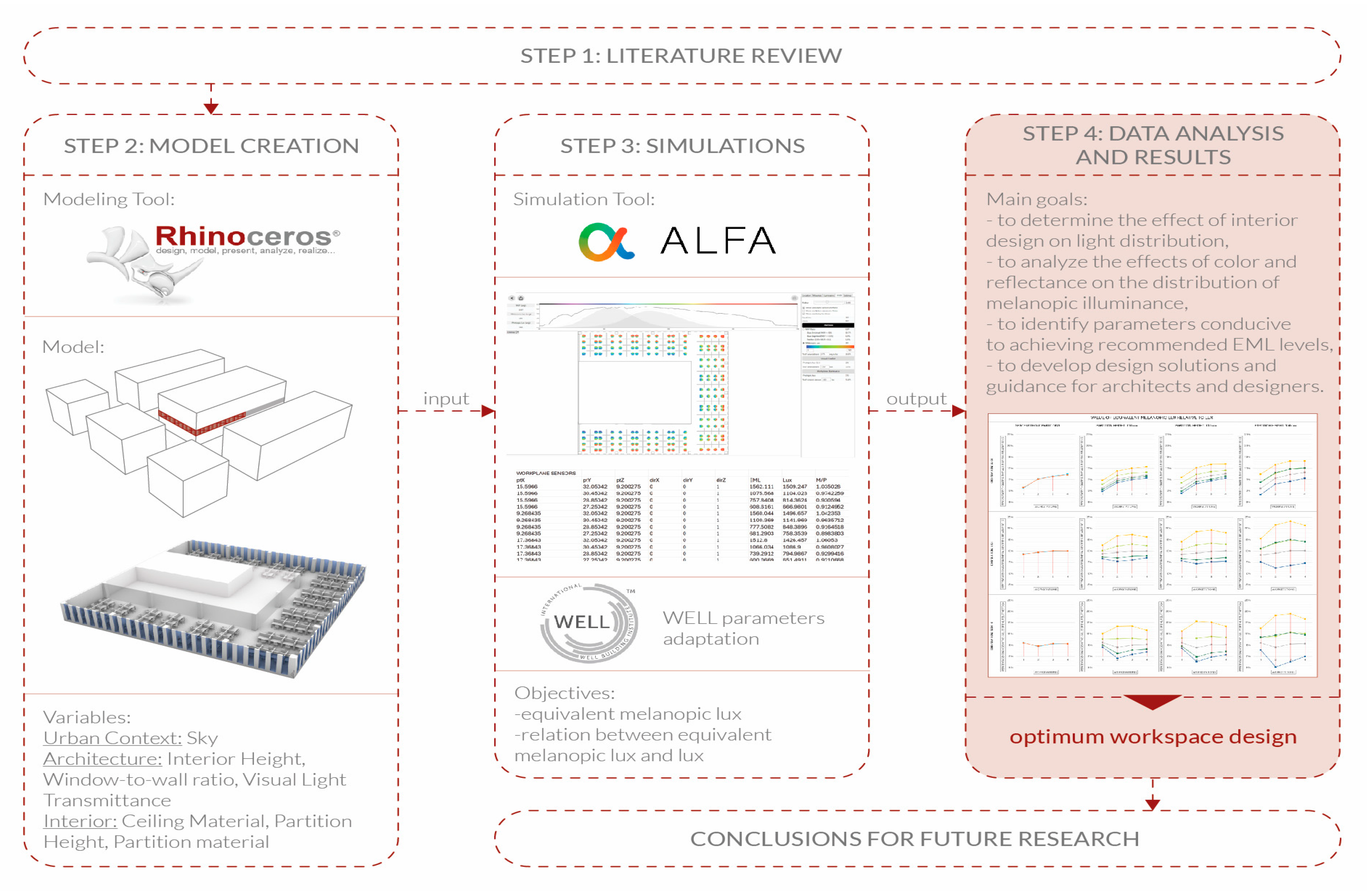
58]. Information on the websites of acclaimed design studios and interviews with architects and office building facility managers were also helpful, which also made it possible to assess the criteria for design decisions, both primary and secondary—regarding interior design. The methodology of the study is presented in
Figure 2.
2.1. Case Study
2.1.1. Surrounding Buildings and Environmental Conditions
Simulations were performed for March 21, 9:00 am. The study was conducted in the form of a case study for selected areas of a standard floor of an office building located in Central Europe (Wrocław, Poland, 17°02′ E, 51°06′ N). The different office work zones included in the simulation were distinguished according to their location in relation to the cardinal directions. It was assumed that the building is located in a compact downtown area and is surrounded by buildings 25 m high and 20 m away. This urban layout and development scale are characteristic of big-city streets in European metropolises.
Table 3 shows the materials applied to the external environment, i.e., the facades of neighboring buildings, roads and sidewalks.
2.1.2. Geometry of the Building
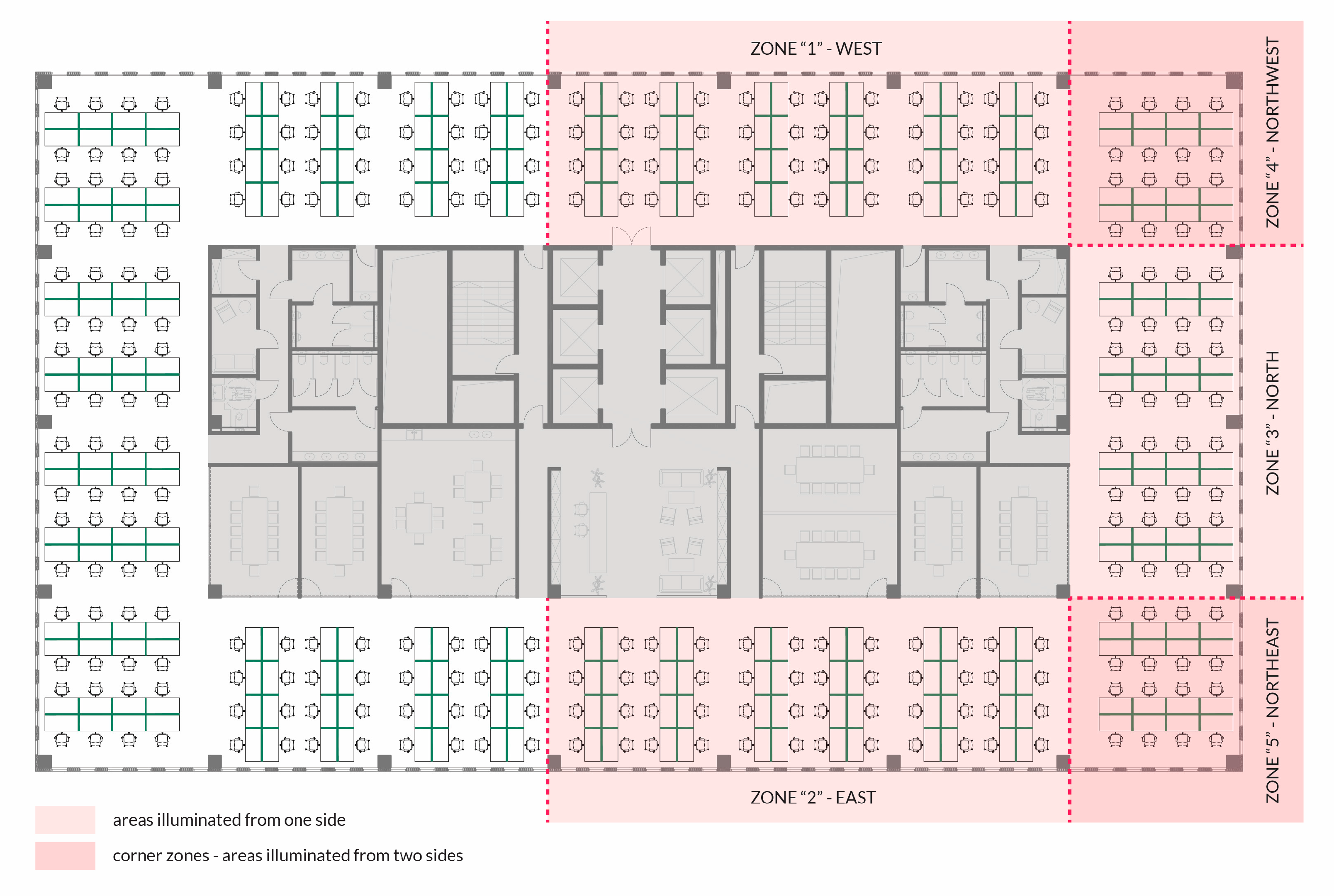
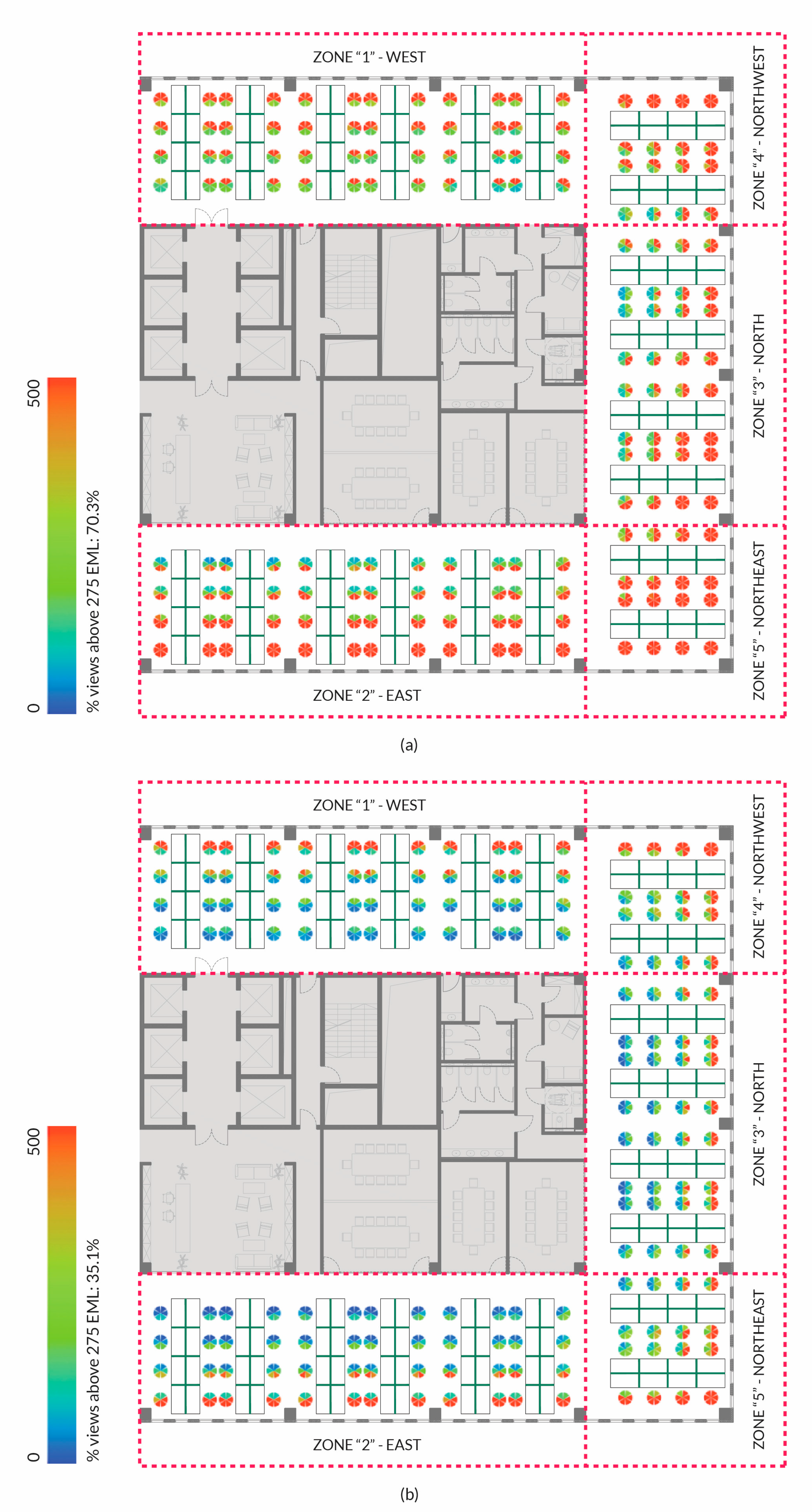
The geometry of the office space investigated was intended to represent a typical floor in an optimized office building typical of Western and Central Europe, with a cool temperate climate. The floor structure is based on a grid of columns with standard spans of 840 cm × 840 cm, consistent with the building’s facade. The floor-to-floor height of the stories was assumed variably as 350 cm or 380 cm. The functional layout consisted of open-plan workspaces and a core including facility rooms that do not require good daylight and technical parts of the building (staircases, elevators, technical shafts, restrooms) completely devoid of natural light. The areas around the core, in the space near windows, were designed as occupied by desks and chairs for long-term work, while the second row features meeting rooms and staff rooms. The optimal area for work located in the strips near windows was analyzed. The plan was used to mark potential workstation layouts, assuming standard 160 cm wide desks. The zones assumed for simulation, each with distinct daylighting parameters, have been shown in
Figure 3.
Table 4 shows the list of materials assigned to the interior elements of the simulated space: floor, walls and columns, ceilings, and interior furnishings such as desks, chairs or visual partitions.
2.1.3. Analysis Criteria and Factors
The study was carried out in the form of computer simulations done on a specific floor plan of an office building, with consideration for areas illuminated from the north, east, west and corner zones, illuminated from the northeast and northwest. The southern orientation, which generally should not be used for locating office workspaces, was not analyzed. The simulations were divided into three stages [
Table 5]: the first concerning the variable conditions of the surroundings and the mass/architecture of the building, and the second and third, whose subjects are the variable parameters of the interior elements of the simulated space. It was expected that this approach would generate conclusions that would allow the formulation of possible solutions to optimize workplace lighting.
Research Stage One—Sky and Geometry Parameters
In Stage One, four variable parameters were used for the model. Due to its location in a cool temperate climate zone with highly variable weather conditions, the simulations were performed for two sky cloudiness levels—“clear” and “overcast.” Due to the current construction law and standards in the area where the building in question was located (Central Europe), a variant net height of office space equal to 270 cm and 300 cm was adopted. The window-to-wall ratio (WWR), which determines the size of windows/glazing, and visual light transmission (VLT), which concerns visible light transmittance, were also considered important variables. The glazing parameters are illustrated in
Table 6.
Research Stage Two—Ceiling Variables
In Stage Two, for the most universal variant from Stage One (parameter 1, sky—overcast; parameter 2, height of the interior space—270 cm; parameter 3, window-to-wall ratio—55%; parameter 4, visual light transmission—70%), a simulation was carried out for the effects obtained on the interior planes, in order to verify the phenomenon under study. For the purposes of the study, a ceiling plane was selected and given a color for each variant. The parameters of the materials given to the ceiling are illustrated in
Table 7.
Research Stage Three—Partition Variables
In the last stage—Stage Three—we considered two variable parameters concerning visual and acoustic partitions located in the interior and between workstations, namely their height and material reflectance. The simulation was performed for baseline data as in Stage Two, except that the sky cloudiness was assumed to be “clear” (parameter 1, sky—clear; parameter 2, height of the interior space—270 cm; parameter 3, window-to-wall ratio—55%; parameter 4, visual light transmission—70%). The material parameters of the partitions between workstations are illustrated in
Table 8. The formula was used to calculate the values, where x(P) is the light intensity value in lux, while x(M) is the light intensity value in EML:
3. Results
The study was conducted in three stages, each of which has been presented separately in the sections below. The influence of the exterior parameters and the mass and composition of the building facade on the non-visual potential of the space, the influence of the geometry of the acoustic and visual partitions and their colors on the distribution of melanopic light in the interior, and the impact of all these factors on the human circadian rhythm were evaluated. For each stage, the factor examined in terms of its effect on the circadian potential of the space was the material (including color) given to the various furnishings and the light modified by reflections from those materials. The key threshold values to be achieved during the simulations were adapted from the WELL certification process, where the requirements for the Equivalent Melanopic Lux (EML) parameter for office spaces were set to achieve a maximum score of 275 EML or 180 EML while meeting additional criteria.
3.1. EML Availability in Open-Plan Offices
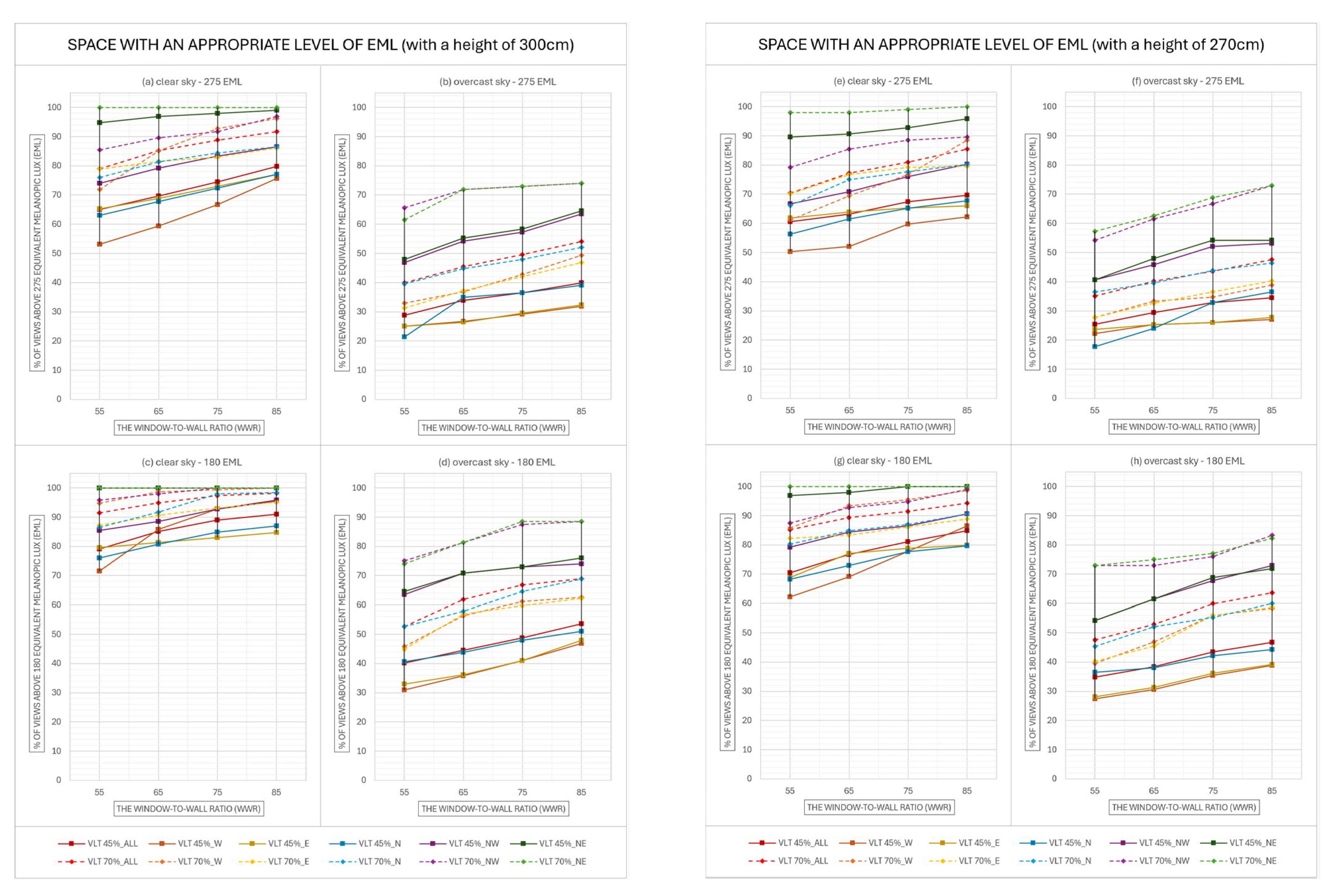
The impact of non-visual daylight criteria in open-space offices is shown in
Figure 4 and
Figure 5. These charts indicate the potential of a space in the form of its percentage that meets a preset criterion, namely reaching the corresponding EML value at the point of measurement, in the line of sight of the viewer. Simulations were conducted for two variants of floor-to-ceiling height: 300 cm [
Figure 4a–d] and 270 cm [
Figure 4e–h]. The graphs were also divided according to different levels of sky cloudiness (clear, overcast) and meeting a certain level of EML (180, 275). Each of the eight charts presents the percentage of space that met a specific criterion depending on the cardinal direction (north, northwest, west, northeast, east), WWR (55, 65, 75, 85), which shows the ratio of windows to solid walls, and VLT (45, 70), which determines the permeability of glazing. The increase in the proportion of space that receives a set level of EML increases as WWR and VLT values increase. In the case of cloudy skies, about 10% more spaces met the set requirement for a value of 275 EML than 180 EML. In contrast, for clear skies the difference was 15–20%. The highest results were recorded for the northeast corner zone, where values were in the 90–100% range for each clear sky option. Overheating or glare was very likely to occur in this area during the morning hours. In the afternoon, this trend was expected to reverse and the highest results can be recorded in the northwest corner. The biggest difference in obtaining the set values depending on the height of the room was noticeable for good weather conditions and a target equal to 180 EML (~10%). The differences were small for the other options: clear, 275 EML; overcast, 180 EML; and overcast, 275 EML. Consequently, it is far more important to achieve good conditions to distribute reflected light to zones farthest from the windows than to change the height of the rooms. The charts also show a significant change in results when modifying the sky parameter from clear to overcast (a difference of 30–40%). This is as expected, since with an overcast sky there is less directed light entering the room, and solar rays are scattered. As a result, such light provides a greater uniformity of illumination, but its intensity is significantly lower. This relationship also explains the higher percentage changes in the amount of space that met the criterion given for clear skies than for cloudy skies. The graphs also show some deviations in the steepness of individual lines, but the authors consider this irrelevant to the overall trend of change illustrated below, since the values did not directly represent EML values but only the percentage of space that met a specific criterion.
In summary, as outlined in
Table 9, the data presents the percentage changes in the level of equivalent melanopic lux, depending on the modifications made.
3.2. Impact of Interior Material on EML Level
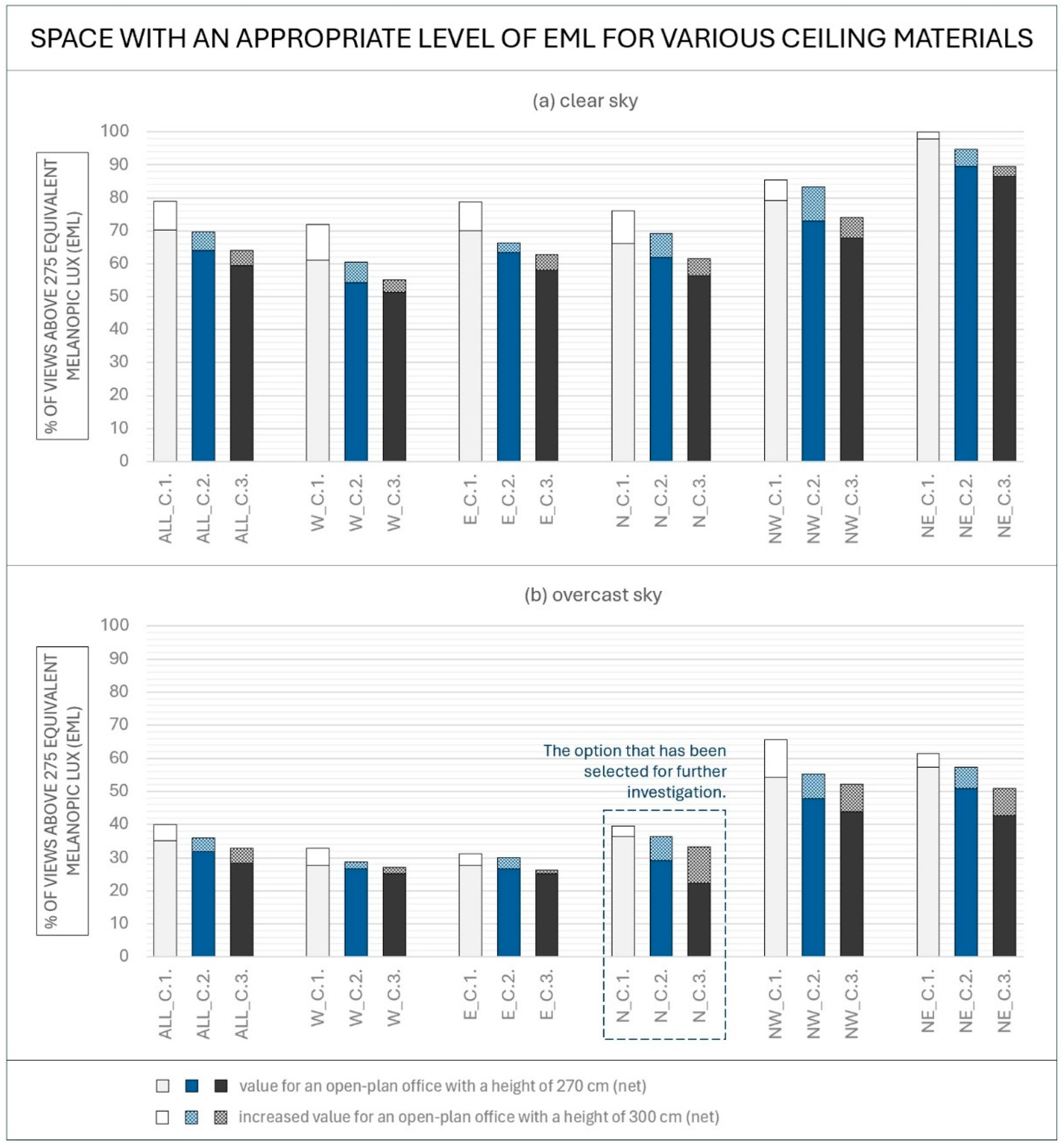
The aim of the second stage of the study was to verify changes in the amount of space adequately illuminated by non-visual light depending on the modification of the color and material of the interior planes. Due to the size and expected significant impact on the quality of lighting, administering changes within the ceiling was chosen for this stage. The baseline variant analyzed in Stage One (parameter 1) was adopted for the simulations. Sky: overcast; parameter 2. Height of the interior space: 270 cm; parameter 3. Window-to-wall ratio: 55%; parameter 4. Visual light transmission: 70%. On the graphs in
Figure 6, we can observe the percentage of indoor space illuminated up to a minimum level of 275 EML for both sky variants. The simulation was carried out for the cardinal directions analogous to Stage One of the study. The effect of room height on the values obtained is shown in the form of the greater sizes of the individual bars of the graphs. The general trend was as follows: the white color of the ceiling reflects light best, which is why we observed the highest values with this option, the next best result was blue, while the worst result was a black ceiling that absorbs a significant amount of light. Corner zones generally gave the best results and this was due to the light coming in from two directions, which is why the dependencies described below will not consider them. For the first chart (clear sky) on each of the facades (north, east, west), we could see a distinctive result for the white ceiling, especially for the increased room height option (300 cm). In the case of overcast skies, the curve of value change between the different ceiling colors is flattened. The most interesting parts of the charts below are the options under cloudy skies for the eastern, western and northern facades. For the first two, the results are very close despite the fact that the simulation was conducted for 9:00 am, so it would seem that the eastern facade would perform much better. The extreme difference ranged around 6%, while for the clear sky option the difference amounted to up to 15%. On the other hand, on the north side, we noted a significant increase in the values for the blue and black ceiling with the change in the height of the room, which we decided to present in detail in
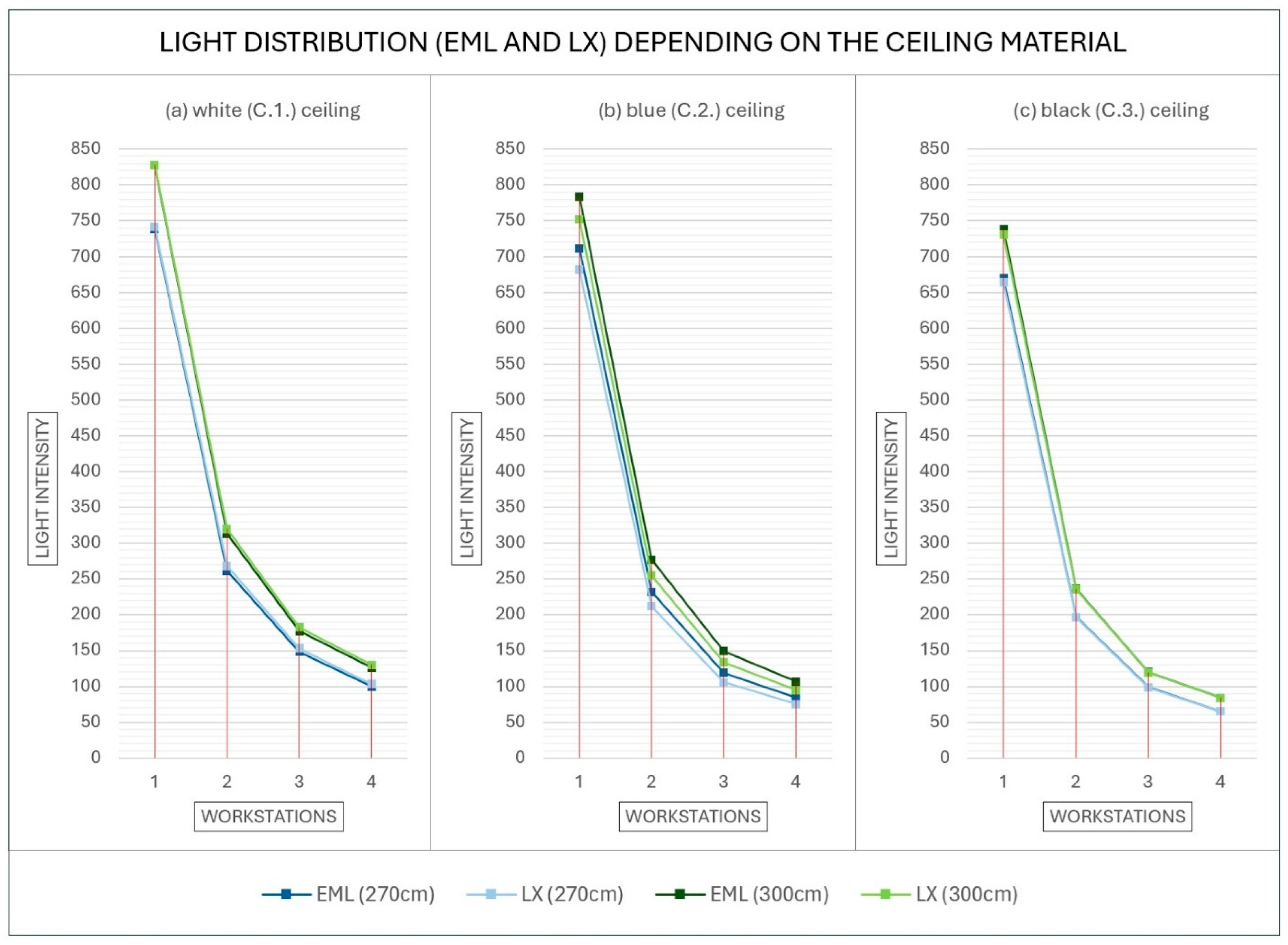
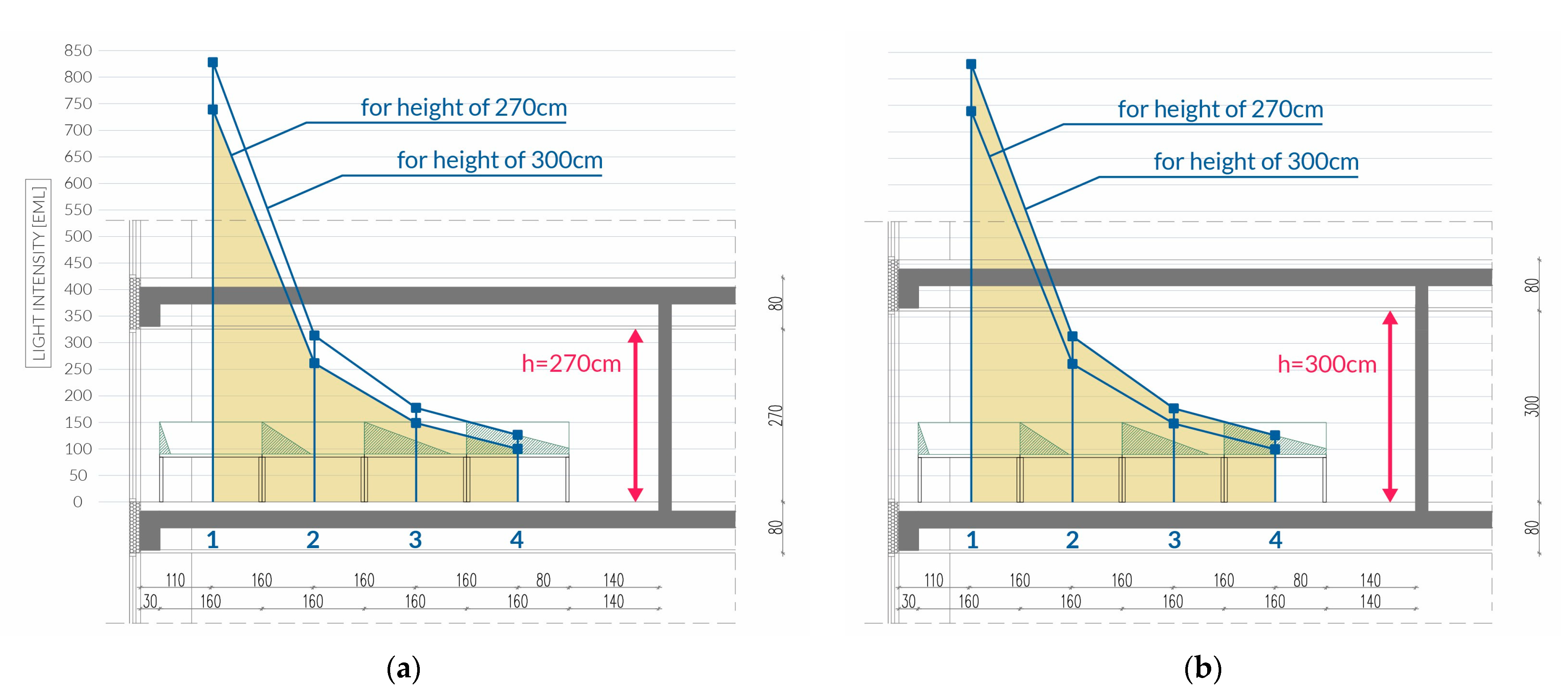
Figure 7. This chart also shows that, for every case, the workstation located directly by the window had a much higher degree of solar illumination, but still within an acceptable range. This was the northern facade, where only diffused light is present, confirming the common knowledge that placing rooms with workstations from this side is optimal. For other orientations, the values were several times higher and, in the extreme case, more than thirty times.
For the selected variant, in terms of the possibility of using the color of materials to support the propagation of light in the interior, the relationship between the EML and lux values for each workstation was examined (respectively, workstation no. 1 was closest to the window, workstation no. 4 was farthest from the window) [
Figure 8].
In the graph [
Figure 7], we can see clear differences between lux and EML values. With a white ceiling the lux rate was slightly higher, with a black ceiling the two rates were virtually identical, while with a blue ceiling we noticed an increase in EML relative to lux. This is because melanopsin-containing ipRGC cells are most sensitive to blue-green light in the range of about 480 nm, which is reflected by the blue color imparted to the ceiling. An opposite effect would be achieved by changing the ceiling color to one that would absorb specific waves, such as orange.
3.3. Impact of Workstation Partitions on EML Level
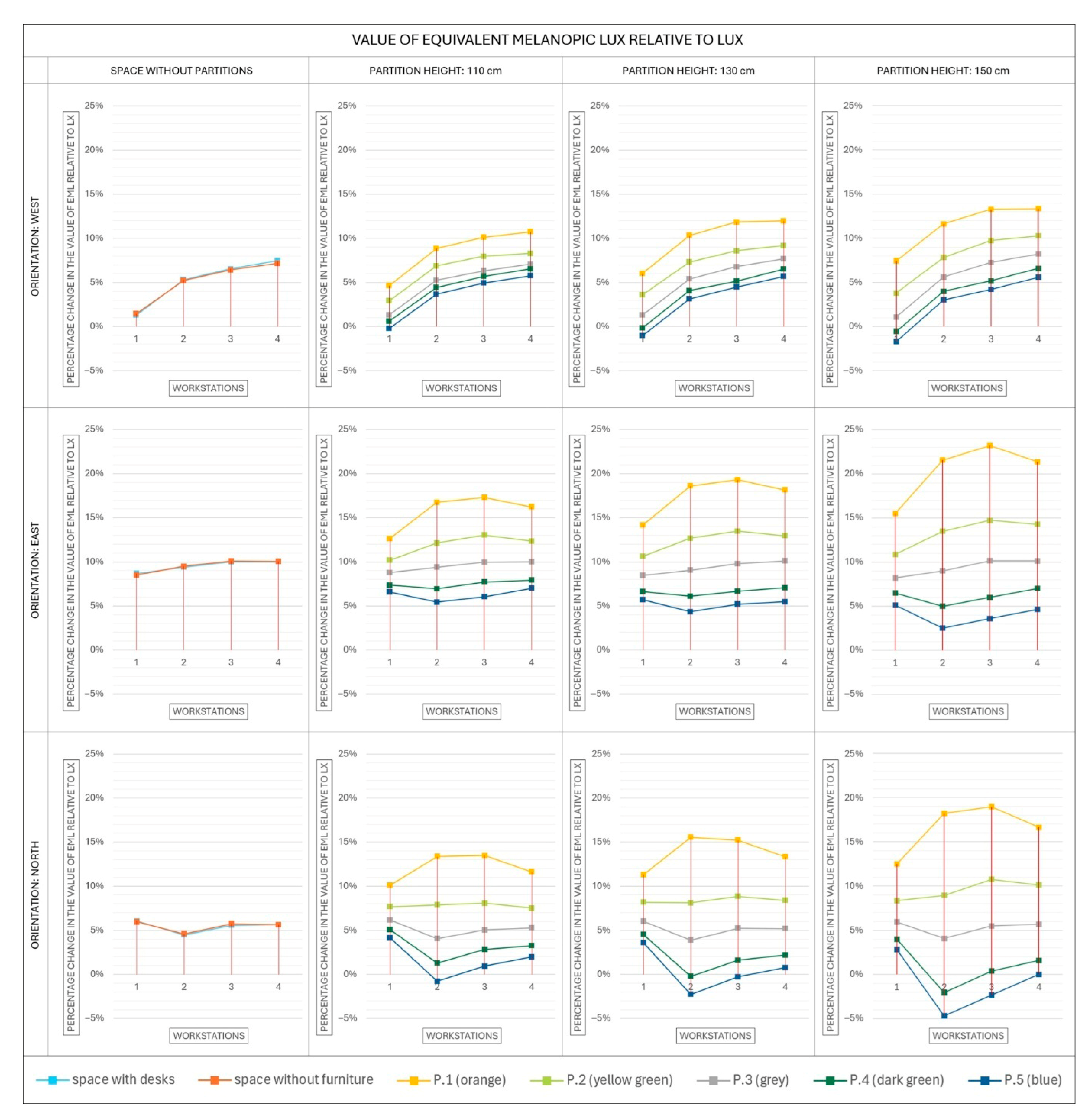
In the next stage (Three), the simulation was performed for baseline data as in Stage Two, except that the sky cloudiness was assumed to be “clear” (parameter 1, sky—clear; parameter 2, height of the interior space—270 cm; parameter 3, window-to-wall ratio—55%; parameter 4, visual light transmission—70%). The analysis focused on the impact of coloring vertical surfaces located in a worker’s direct vicinity, namely acoustic or visual barriers located between desks. The study was carried out for different partition colors—materials and colors with different values of the M/P ratio were selected, i.e., that reflected and absorbed different wavelengths of light, as can also be seen in the diagrams depicting colors included in
Table 8. Thus,
Figure 9 indicates the percentage change in the difference of non-visual light values represented by Equivalent Melanopic Lux (EML) versus visual light represented by lux (lx) in the open-space office space for the originally defined architecture. Data are presented for four workstations located in the adjacent strip (i.e., the axis of the desks, respectively, located at distances: 1–110 cm, 2–270 cm, 3–430 cm, 590 cm from the facade) [
Figure 9], with each value being the average of the measurements recorded at the desks located near a given facade and at a given distance from the windows.
The values are presented for three facades (west, east, north) and with the use of different barrier heights (110 cm, 130 cm, 150 cm), with the first group of graphs showing values for spaces without these elements. In the first column, therefore, it can be noted that the effect on the difference in values between EML and lux without the use of interior partitions is negligible, which is not surprising, since the lux values for natural light are close to the EML values, and the only colors introduced into the interior were whites and grays, so there were no additional wave reflections significantly affecting the EML level. What is noticeable, however, is the significant impact of the materials and their colors other than the subdued whites and grays introduced in the analysis (as also demonstrated in Stage Two of this research). These data are presented in the next three columns. The interaction of the different materials is directly proportional and dependent on the value of the M/P ratio showing the relation between melanopic and photopic reflectance. This means that the higher the value, such as 2.78 for blue, the smaller the decrease in EML relative to lux. We see the opposite trend for colors with M/P values below 1 such as 0.17 for orange, which results in significant decreases in EML relative to lux. The reduction in melanopic to photopic light intensity values is undesirable, as it lowers the circadian potential of a given space, and consequently, in the case of workplaces located deeper in a room relative to the external wall, can cause negative psychophysical effects.
The orientation of the space in relation to the cardinal directions affects the distribution of light in the interior in different ways, which also varies further at different hours of the day. In the case of the west-facing facade, we observed a steady increase in EML versus lux values as the distance from the windows and the height of the partitions increased. This means that the less directed light and the more diffuse light operate in a given space, the greater the impact of finishing materials on a zone’s potential. This also means that color choice will have the greatest impact in the case of workstations located on the north side, where diffused light dominates at all times. In the case of the north and east-facing facades, the trend showed the largest EML/lux differences for the second and third positions from the window and from the fourth it started to decrease. The reason for this curve shape may be the angle of incidence of sunlight, which depends on the cardinal directions and in the case of east- and north-facing facades is the lowest during early morning hours. This result means that on the west-facing facade these relationships would reverse depending on the time of day.
Given the formula adopted, we find that the smaller the value on the chart, the better the conditions that support the human circadian rhythm. Thus, a strongly negative effect of warm colors, especially orange, is evident, while blue and green colors improve these parameters. It should be noted that in the extreme case, the choice of partition material can change EML by nearly 25% (variant: orientation: east, partition height: 150 cm) relative to lux. In contrast, the difference in baseline EML values when changing the color of the partitions from orange to blue increased by 10%.
It should also be mentioned that for the surroundings studied, for an office desk located near a window, the difference in value between the west-, east- and north-facing facades was around 3500 lux/EML, while in the case of the second-row desk it was in the order of 200–300, and in the case of the third and fourth rows the difference amounted to 50–100, which underscores the significance of investigating solutions for these differences.
4. Discussion
The research presented in this article used research methods based on computer simulations, which were conducted using Solemma’s ALFA software. The purpose of this study was to verify how the structure of the interior space of office buildings and its arrangement affects access to daylight and its non-visual effects. This was investigated using melanopic indices (Equivalent Melanopic Lux, EML), in the final stage also compared with photopic indices (lux, lx). The software used allowed us to analyze how different configurations of indoor space arrangement and facade composition affect daylighting in terms of biology. For the present study, the values specified in the WELL Building Standard certificate were adopted in order to establish the critical framework upon which the study was based.
Our findings indicate a clear relationship between the orientation of office spaces relative to the cardinal directions, window size, room height, and interior arrangement, especially the color and material of furnishing elements, and access to daylight at workstations. Data from these measurements also showed the impact of the arrangement on the health and well-being of users. This impact was found to be greater the farther a workstation was located from a window. In line with existing studies [
24,
26,
36], our results support the hypotheses regarding the effect of space design on access to natural light and synchronization of the circadian rhythm for offices located in cool temperate climates.
Our study found that a space located appropriately in relation to the cardinal directions, with a glazed facade to a greater extent and minimization of interior obstructions, achieves higher lux and EML ratings, which is generally not surprising. However, an analysis of individual workstations makes it possible to articulate the potential problem of excessive values that can have a negative impact on humans and their functioning. In an extreme case, values in excess of 30,000—both EML and lux—were recorded at workstations immediately adjacent to windows, which can be associated with high glare and sensory overload, among other things, especially with prolonged exposure. At the same time, in the same layout, seats placed in the fourth, more rarely the third row, did not receive the minimum values necessary for proper functioning. Therefore, it would be appropriate to look for solutions that introduce more reflected melanopic light to workstations located further away from windows, while avoiding an increase in parameters on workstations adjacent to windows. One potential solution to the overexposure of workstations adjacent to windows could be the use of kinetic shading or the rearrangement of the layout and introducing perimeter circulation. Of course, this would not be feasible in every situation, but in the perspective of the changes that have taken place since the COVID-19 pandemic, of moving away from reaching the maximum number of workstations in a given area and going in the direction of spacing them apart. Another solution would be to introduce greenery in the strip directly next to the windows, which would increase user comfort and could be an interesting alternative, especially with the above-standard height of the rooms facilitating the widening of the office bays and the introduction of solutions that support the increase in light distribution deeper in the space. In this case, light shelf [
59] solutions could also be helpful.
The simulation results are consistent with previous studies [
24,
26,
36] that found that color (in this case of interior elements) can enhance or weaken the efficiency of melanopic daylight distribution toward workstations located further away from windows. The most neutral colors were whites and grays—their effect on wave distribution is the smallest. In contrast, cool-colored surfaces, especially those in shades of blue, cyan and related colors, better reflect light with wavelengths in the 460–490 nm range, the wavelengths to which ipRGCs photoreceptors in the retina respond most sensitively. More reflected light in the range of the aforementioned wavelengths can significantly promote stronger biological responses such as increased alertness and concentration or better circadian rhythm feedback (inhibiting the secretion of the sleep hormone melatonin). In contrast, warm-colored environments (reds, oranges, and to a lesser extent, beiges) have a negligible effect on melanopsin production, and thus may favor melatonin production in the evening (important, for example, in healthcare facilities). Furthermore, warm colors absorb blue light, so they can also reduce its range and indirectly negatively affect the circadian rhythm. Thus, the right choice of colors for walls, ceilings, furniture and acoustic partitions can be an important tool to help distribute melanopically effective light evenly in workspaces. It is worth remembering that we should not add elements, and should instead apply colors and materials to existing elements, unless the new elements could minimize negative impacts of the sun, such as overheating. In addition, as argued by Mahnke, a well-known expert in color psychology, exposure to gray and subdued environments can lead to feelings of monotony and under-stimulation, and consequently contribute to mental fatigue [
60], suggesting the need to introduce intense colors into interiors. However, we should be mindful that an excessive dose of color can achieve the opposite, i.e., induce fatigue quicker. Mahnke [
61] also mentions that people need sensory variety and that monotony causes anxiety, tension, fear and distress. From the point of view of the effect of color on the psyche of an employee, blues promote concentration, focus and reduce stress levels and greens counteract mental fatigue and promote harmony, which is of great importance in high-stimuli spaces. On the other hand, warm colors like reds and oranges, which can have a positive effect on creativity, should be used as accents, as they can result in irritation when used in too large a quantity [
62]. This characterization is consistent with the conclusions of the analysis of the effect of colors on a space’s circadian potential, which leads us to believe that the introduction of blue and green colors into the arrangement of the main workstations may carry a double benefit. The spot introduction of intense, warm colors could be used in meeting areas, areas for creative works or others that employees only enter temporarily. With the prospect of the ABW model becoming very popular, this could yield positive results. We should also remember to offer an attractive view out of the window (preferably with greenery), which, together with indoor plants, can yield benefits across a multi-aspect spectrum [
63]. It should be emphasized that the factors listed that pertain to interior design problems, are parameterized by more general architectural decisions that concern a building’s structure, window composition, rhythm, and sill level. These basic parameters are a result of the functionality of the interior spaces assumed by the architect, but also the aesthetics of the facade. Therefore, it is always necessary to consider these issues multifaceted, i.e., in terms of the following: aesthetics, provided daylight and its impact, but also the building’s thermal energy balance, which is negatively affected by too much glazing. The latter parameter demonstrates why there are numerous examples of office buildings where the rule of thumb is to design smaller windows with sills at the workstation level instead of full-height windows [
14].
The analysis also showed a significant discrepancy in the percentage of area that met the requirement of facilitating EML levels with changes in weather conditions (simulated sky options: clear and overcast). This is a key conclusion that suggests a need for solutions that can quickly and efficiently modify an interior’s daylighting. The simplest is to use BMS-controlled shades or blinds that respond to daily and weather-induced changes in sunlight intensity, preventing the interior from overheating and glare. Kinetic facades that utilize dynamically changing external blinds that follow the sun are similar, but more technically advanced and costly solutions. Going further, we may consider a futuristic interior arrangement in which selected surfaces can change color depending on current weather conditions and time of day. However, based on the results of Stage Two and the analysis of the color scheme of the ceilings and its effect on light distribution, changing these planes does not seem to be the right solution—further research should include changing the color on the vertical planes.
When considering the comfort of office workstation illumination, we should also consider the correlation between natural and artificial light, which can play either a primary or secondary role. However, the goal should be to maximize the use of daylight while maintaining adequate comfort and thermal balance, which is a very difficult task. In Central European climatic conditions, it will be a challenge to ensure that EML is sufficiently elevated at each workstation, especially under adverse conditions, i.e., during winter, cloudy skies, etc. Therefore, it is necessary to perfect artificial light optimization to ensure technical potential to regulate it depending on season, weather and needs that may arise from changes in work organization or individual reception by users. In particular, we should attempt to restore the system of individual, regulated workstation illumination—as is the case in libraries, for instance.
By comparing melanopic light with photopic light, our study offers a broader perspective for offices located in Central Europe that complements the results of earlier studies, pointing to the need to optimize indoor daylighting performance and revealing mechanisms that can support it. The study also showed parameters that adversely affect this performance. The research, which focused on the impact of daylight on the human circadian rhythm, should contribute to improving design processes that lead to an enhancement of the comfort and effectiveness of office work.
Limitations of the Study
Despite important insights noted during the analysis performed in this study that can be seen as a solid foundation to understanding key determinants that support daylighting and its non-visual effects, certain limitations need to be considered. Most importantly, the simulations were performed for a specific date (March 21, 9:00 a.m.) and location, which means that any potential application would require supplementing with simulations performed for other periods of the year and at different times of day. Data validation in the form of actual space measurements is also an important aspect. Involving human participants, especially in research that could consider objective biomarkers like melatonin levels, would significantly complement the study. It could also be expanded upon by integrating biological measurements with subjective user feedback relating to perceived comfort, alertness, and visual satisfaction. This would provide a more comprehensive understanding of the effect of daylighting on occupants’ well-being and performance. Implementing such a combined approach would enable more precise guidelines to be defined for interior design strategies.
The study’s continuation should also feature an analysis of different spatial layouts, including those of desks and their dedicated functions, especially in the context of the neurodiversity of employees and changing work environments. It would also be good to correlate the results of the analysis of the impact of interior elements with that of elements intended to modify daylight using kinetic systems installed on the inside and outside of a glazed facade.
5. Conclusions
Natural light has an undeniable impact on the regulation of biological and physiological processes that occur in the human body, such as the proper control of the human circadian rhythm, which directly translates not only into temporary well-being or productivity, but carries a number of long-term consequences that affect health, both physical and mental. Therefore, it is essential for currently designed architecture, including that subject to modernization, to treat light as both a means that allows vision and a tool that supports comfort, health and well-being. This problem affects not only office workplaces but also places where we study in schools and libraries, or workstations in homes.
When considering the natural lighting of office workstations, the consideration of its advantages and disadvantages, its applicability, or the promotion of positive and reduction in negative effects on both the human body and the environment, we should consider it in two ways. It is important to analyze both the context of the exterior and solutions such as louvres, light shelves and similar, as well as elements located inside the proposed space and which could significantly affect light and its parameters. Much more attention is paid to the design of the building’s architecture in the context of providing enough light for the interior space at the core and shell stage, often overlooking the issue of interior design and remodeling. The results of the study show that this can be crucial for light to reach areas farther from windows, and in terms of illuminating the space on cloudy days, when overall light levels are relatively low. This study has clearly demonstrated that both the spatial layout of office spaces and the materials colors of their furnishing elements have a significant impact on the distribution of daylight and its potential for the correct regulation of the circadian rhythm. It is crucial to make color choices in an interior dependent on color psychology and the impact of colors on employee psychology, as well as in the context of their contribution to the spread of melanopic light. Although daylight is important for the good functioning of the human body, an excess of it can lead to indoor overheating and glare that makes it impossible to work at a computer and possible eye diseases from UV rays [
64,
65]. It is therefore necessary to provide appropriate systems to protect against such discomfort. The light that reaches a building’s interior should be spread and distributed so as to limit artificial light, which, even though it simulates daylight relatively faithfully, continues to consume considerable energy.
The results of the present study provide valuable information on design strategies to increase the potential for biological impacts of lighting; they are based primarily on computer simulations and do not include human response data. Therefore, it is advisable to continue the research and supplement it with validation in real-world conditions to obtain physiology- and behavior-informed findings, which will help verify the hypotheses set forth and help direct human-oriented illumination design. In the future, we should expect further research on the subject discussed, both in the form of real-world measurements and simulations for varied arrangement alternatives, for instance for the increasingly popular cell offices, with suitable changes to each parameter. It would also be worth investigating whether, in light of the ongoing global climate change, it would also be appropriate to experiment in European conditions with slightly higher office building stories, which potentially allows for the delineation of much deeper workplace bays, illuminated by diffuse light.