Spatiotemporal Dynamics and Structural Drivers of Urban Inclusive Green Development in Coastal China


Abstract
1. Introduction
2. Theoretical Analysis and Research Hypotheses
3. Materials and Methods
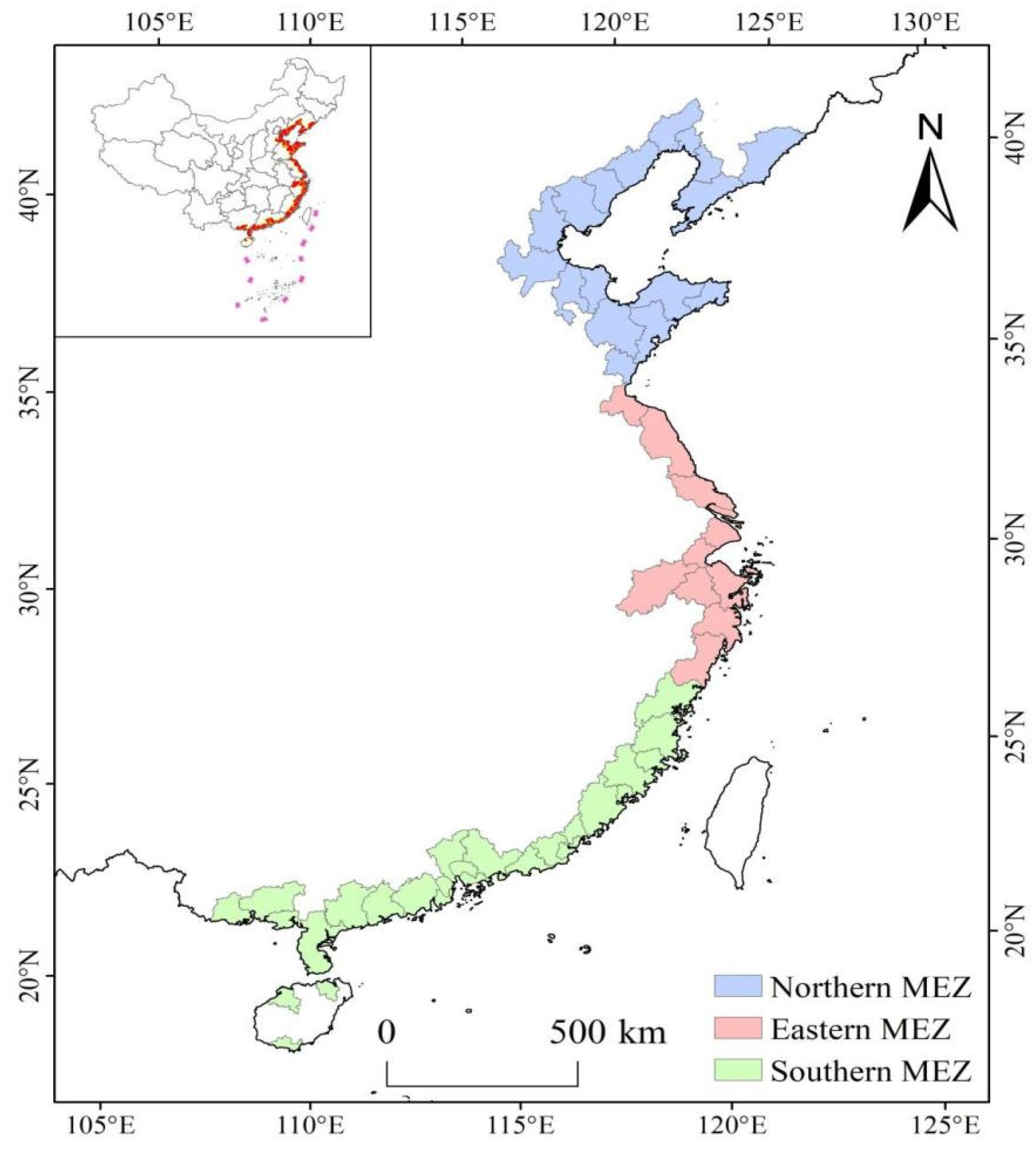
3.1. Study Area
3.2. Data Sources
3.3. Evaluation Indicator System
3.4. Methodology
3.4.1. Vertical and Horizontal Scatter Degree Method
- (1)
- Set up the comprehensive evaluation function
- (2)
- Determine the indicator weights
3.4.2. Kernel Density Estimation
3.4.3. Dagum’s Gini Coefficient
3.4.4. Exploratory Spatial Analysis
3.4.5. Geographic Detector
3.4.6. Spatial Durbin’s Model
4. Results
4.1. Temporal Evolution Characteristics
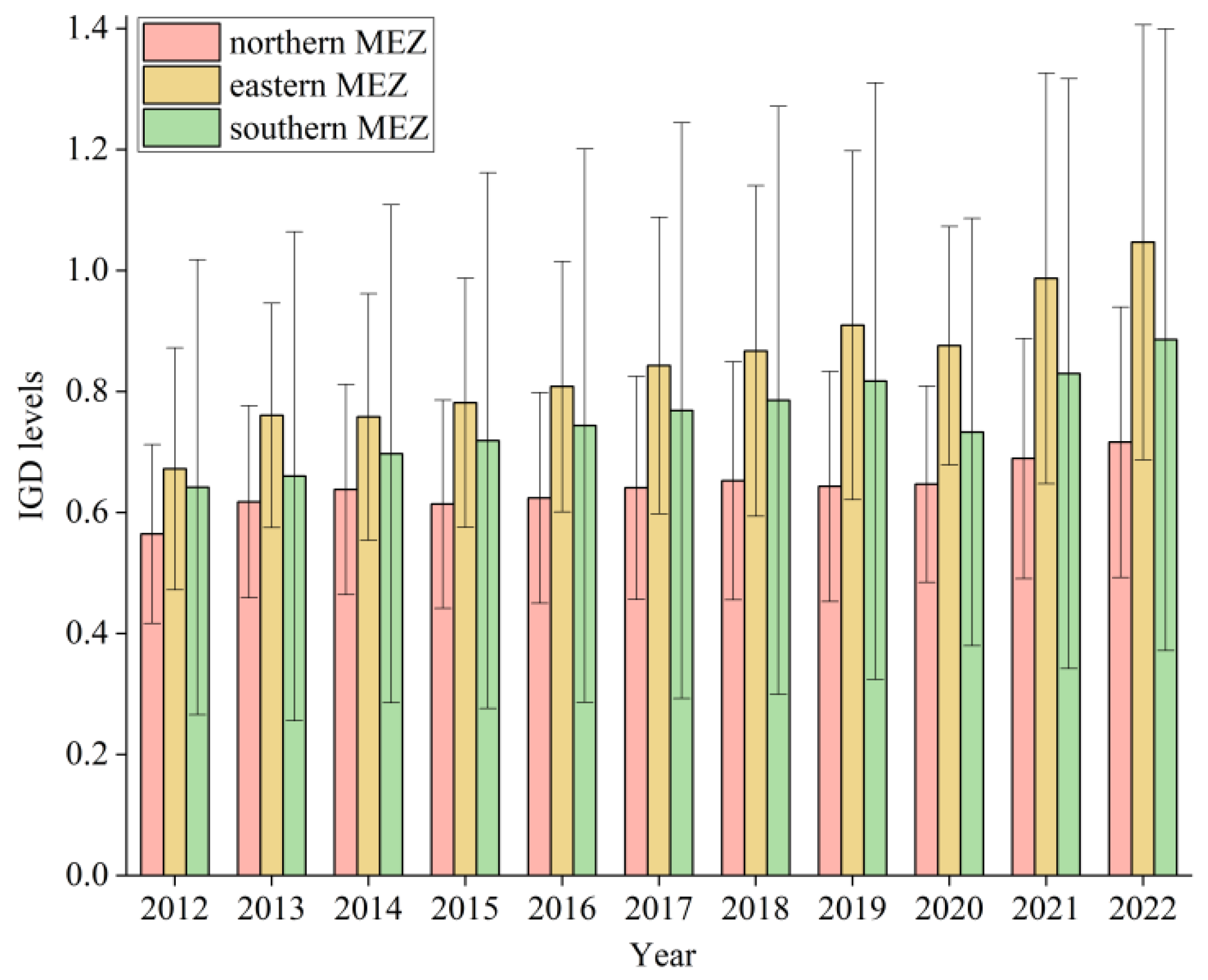
4.1.1. Overall Trend Analysis
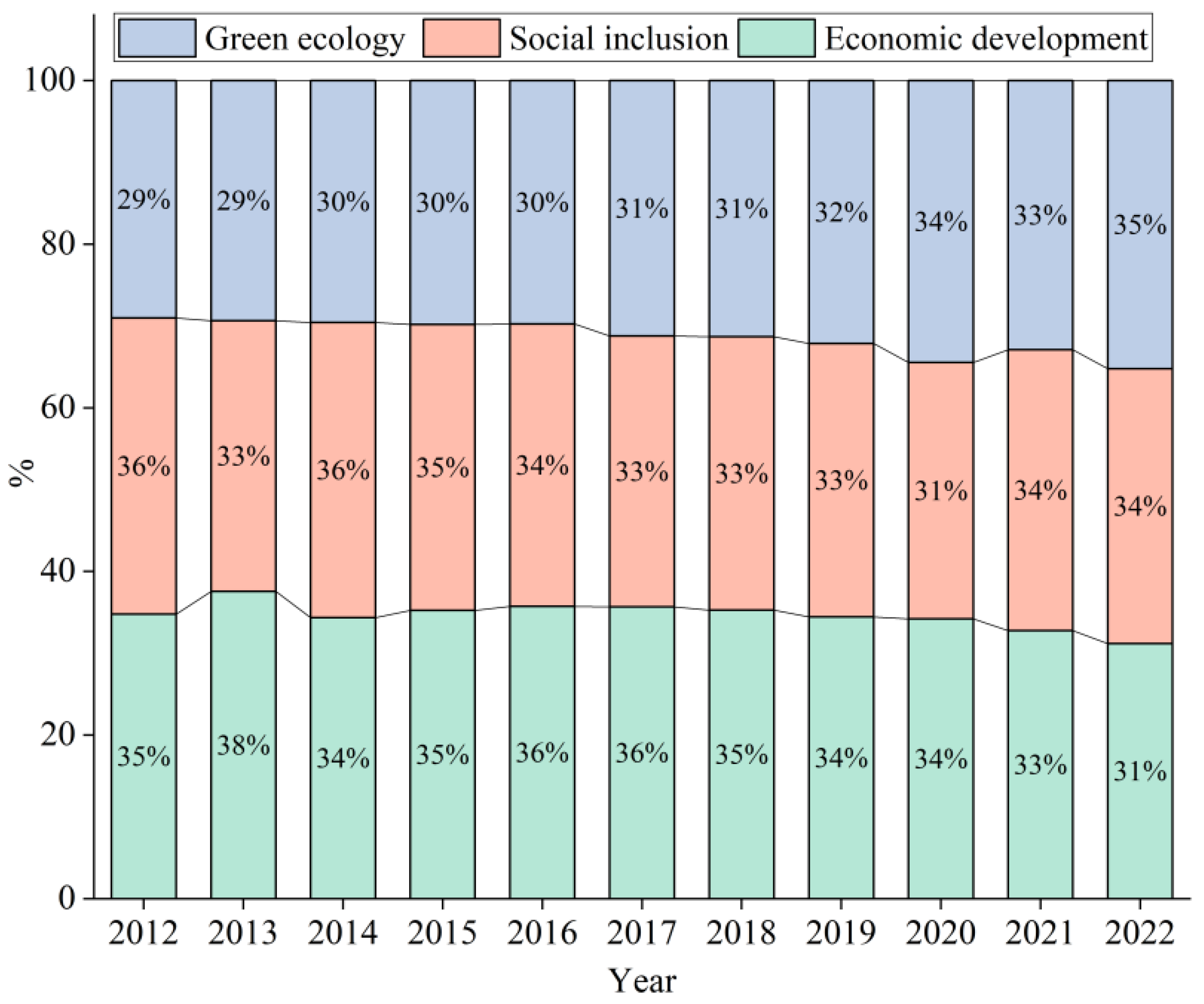
4.1.2. Dimensional Difference Analysis
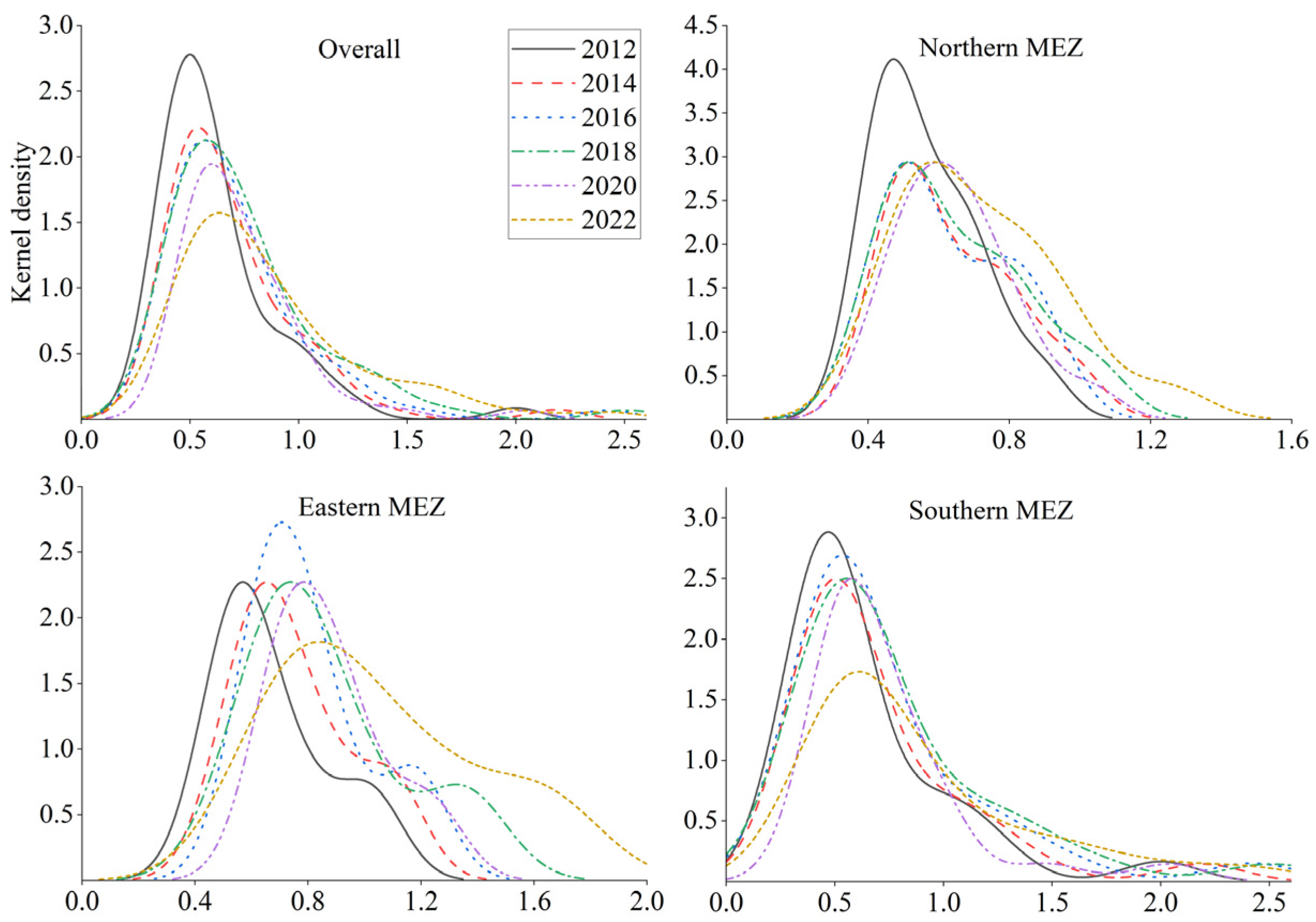
4.1.3. Kernel Density Analysis
4.2. Spatial Distribution Characteristics
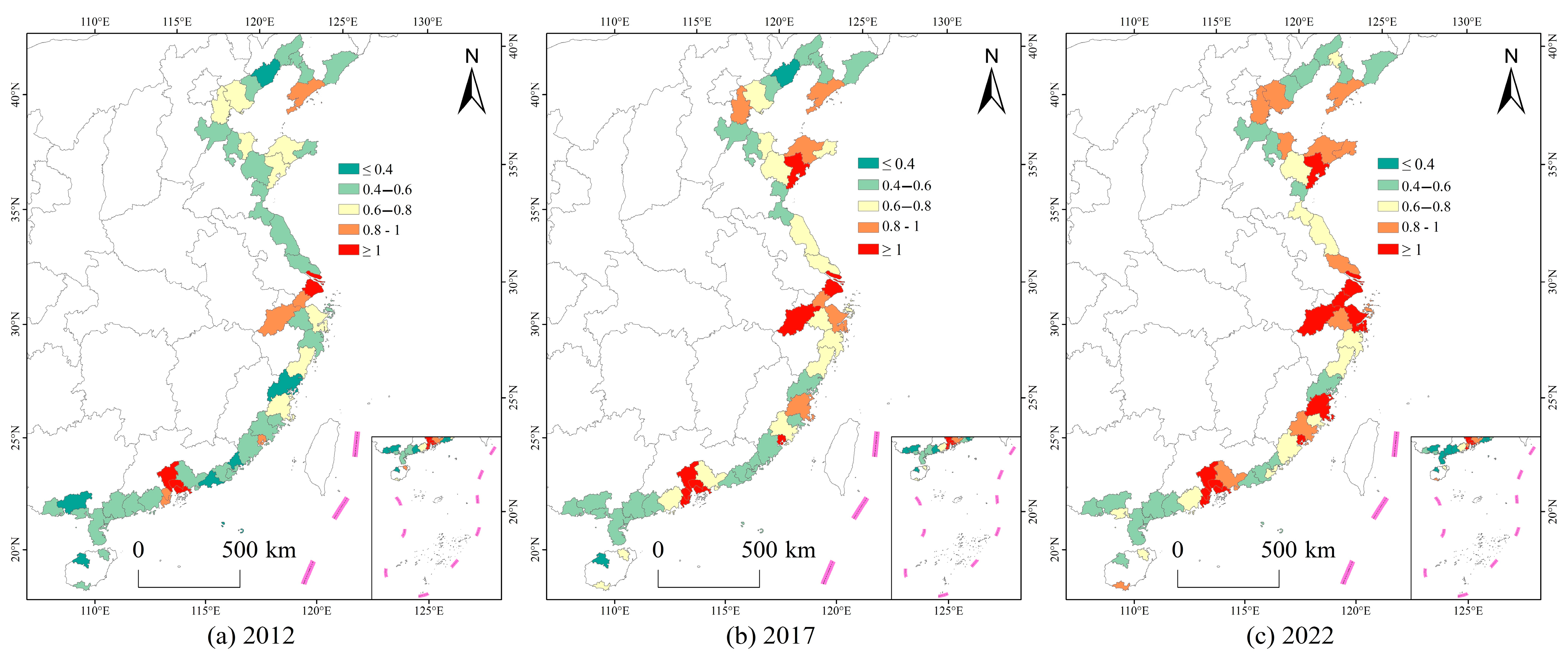
4.2.1. Spatial Pattern Analysis
4.2.2. Spatial Correlation Analysis
- (1)
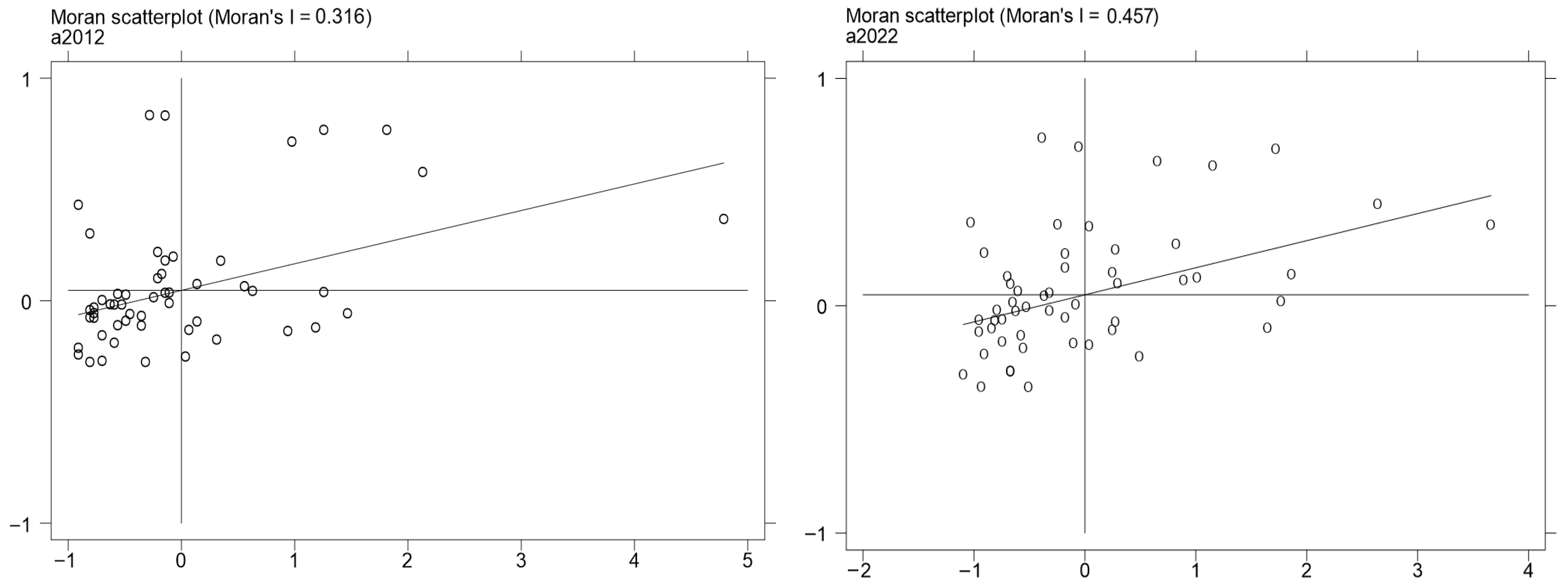
- Global Moran’s I
- (2)
- Local Moran’s I
4.3. Driving Mechanisms of IGD
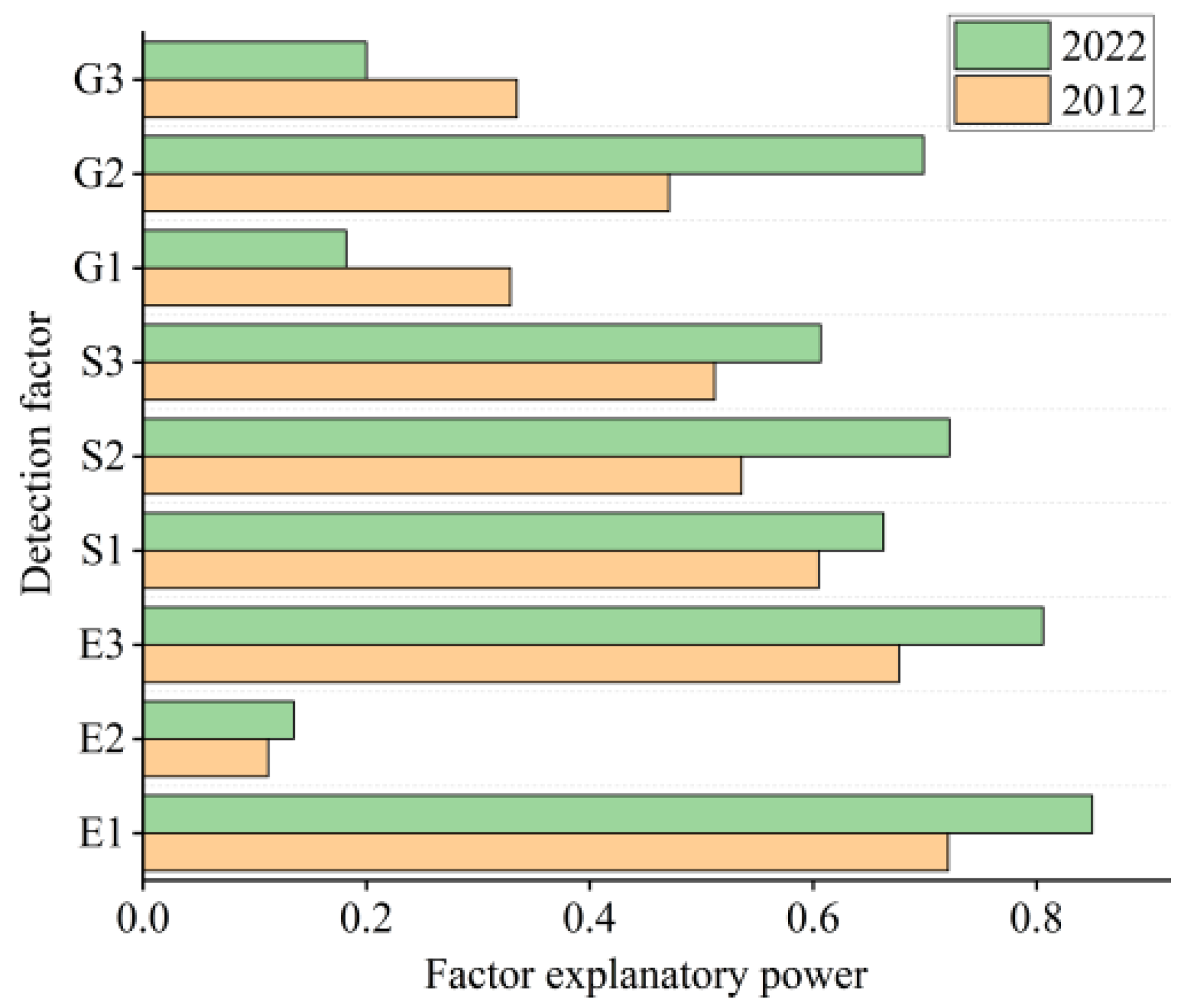
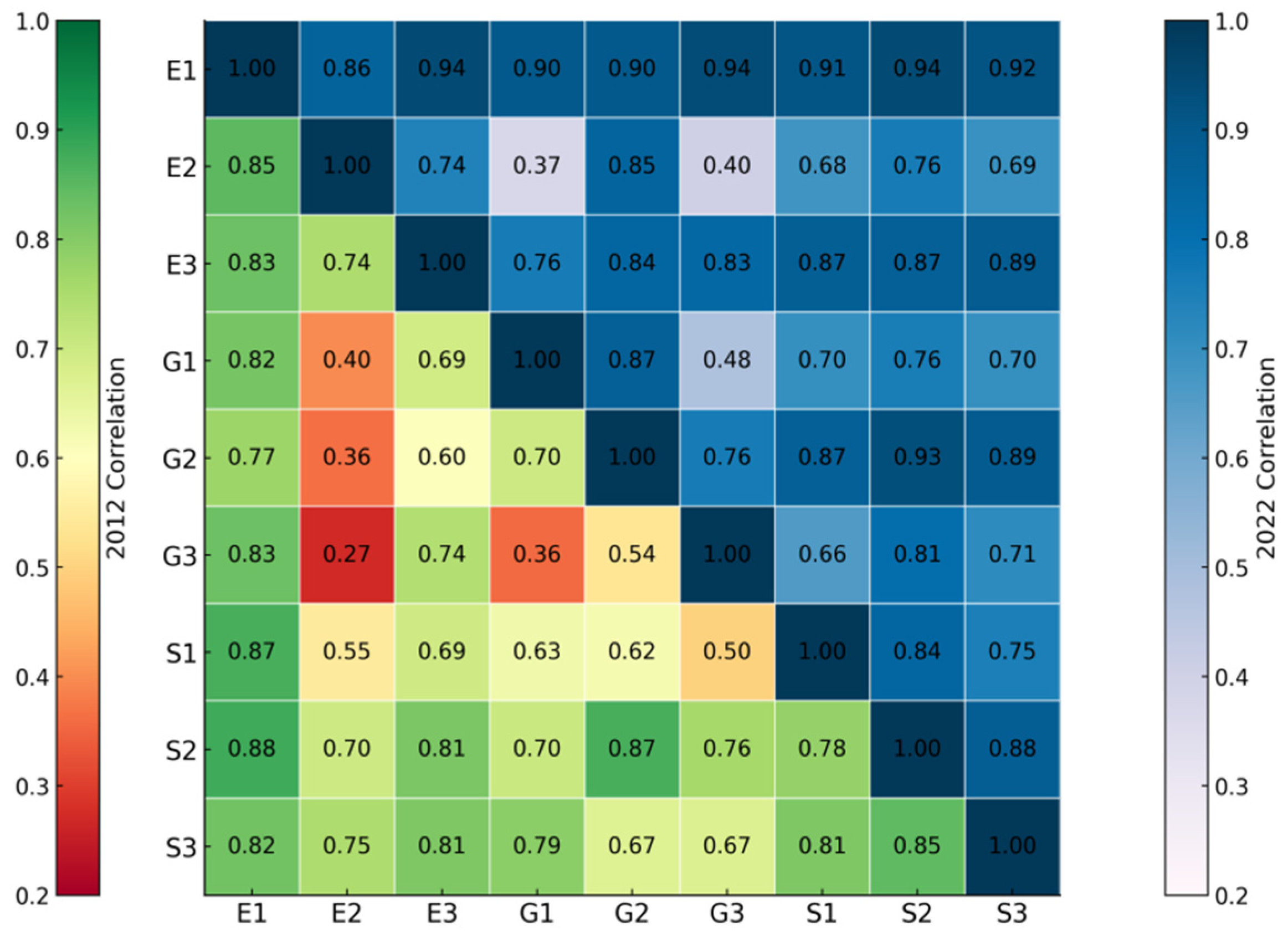
4.3.1. GeoDetector Two-Factor Detection Analysis
4.3.2. Spatial Model Estimation Results
5. Conclusions and Discussion
5.1. Conclusions
5.2. Discussion
5.2.1. Implications
5.2.2. Policy Recommendations
5.2.3. Limitations and Future Research
Author Contributions
Funding
Data Availability Statement
Acknowledgments
Conflicts of Interest
Abbreviations
| IGD | Inclusive green development |
| MEZs | Marine economic zones |
| YRD | Yangtze River Delta |
| PRD | Pearl River Delta |
| SDGs | Sustainable Development Goals |
| Super-EBM | Super Epsilon-Based Measure |
| KDE | Kernel density estimation |
| SDM | Spatial Durbin Model |
| TOE | Technology–Organization–Environment |
| MECs | Marine Economic Circles |
| SLM | Spatial Lag Model |
| R&D | Research and development |
| VHSDM | Vertical and Horizontal Scatter Degree Method |
References
- Wang, Y.; Li, S.; Gu, X.; Sun, Q.; Zhang, R.; Chen, F. Spatio-temporal evolution and multi-subject influencing factors of urban green development efficiency in China: Under the carbon neutral vision constraint. Ecol. Indic. 2024, 167, 112580. [Google Scholar] [CrossRef]
- Pata, U.K.; Caglar, A.E. Investigating the EKC hypothesis with renewable energy consumption, human capital, globalization and trade openness for China: Evidence from augmented ARDL approach with a structural break. Energy 2021, 216, 119220. [Google Scholar] [CrossRef]
- Qin, X.; Muskat, B.; Ambrosini, V.; Mair, J.; Chih, Y.-Y. Green innovation implementation: A systematic review and research directions. J. Manag. 2025, 01492063241312656. [Google Scholar] [CrossRef]
- Zhou, R. Measurement and spatial-temporal characteristics of inclusive green growth in China. Land 2022, 11, 1131. [Google Scholar] [CrossRef]
- Fan, Y.; Fang, C.; Zhang, Q. Coupling coordinated development between social economy and ecological environment in Chinese provincial capital cities—Assessment and policy implications. J. Clean. Prod. 2019, 229, 289–298. [Google Scholar] [CrossRef]
- Fan, S.; Huang, H.; Mbanyele, W.; Guo, Z.; Zhang, C. Inclusive green growth for sustainable development of cities in China: Spatiotemporal differences and influencing factors. Environ. Sci. Pollut. Res. 2023, 30, 11025–11045. [Google Scholar] [CrossRef]
- Costanza, R.; Daly, L.; Fioramonti, L.; Giovannini, E.; Kubiszewski, I.; Mortensen, L.F.; Pickett, K.E.; Ragnarsdottir, K.V.; De Vogli, R.; Wilkinson, R. Modelling and measuring sustainable wellbeing in connection with the UN Sustainable Development Goals. Ecol. Econ. 2016, 130, 350–355. [Google Scholar] [CrossRef]
- Aslam, A.; Ghouse, G. Targeting the new sustainable inclusive green growth: A review. Clean. Responsible Consum. 2023, 11, 100140. [Google Scholar] [CrossRef]
- Becha, H.; Kalai, M.; Houidi, S.; Helali, K. Digital financial inclusion, environmental sustainability and regional economic growth in China: Insights from a panel threshold model. J. Econ. Struct. 2025, 14, 4. [Google Scholar] [CrossRef]
- Li, H.; Du, X.; Yan, X.W.; Xu, N. Digital transformation and urban green development: Evidence from China’s data factor marketization. Sustainability 2024, 16, 4511. [Google Scholar] [CrossRef]
- Ma, H.; Han, Y.; Lv, K.; Bi, M.; Zhong, Y. Urban eco-efficiency and its influencing factors in China based on the two-stage super-NEBM model. Systems 2022, 10, 217. [Google Scholar] [CrossRef]
- Zhao, L.; Gao, X.; Jia, J.; Zhang, Y. Analyzing inclusive green growth in China: A perspective of relative efficiency. Environ. Sci. Pollut. Res. 2023, 30, 16017–16035. [Google Scholar] [CrossRef]
- Ren, Y.; He, X.; Jiang, Q.; Zhang, F.; Zhang, B. Advancing high-quality development in China: Unraveling the dynamics, disparities, and determinants of inclusive green growth at the prefecture level. Ecol. Indic. 2024, 169, 112898. [Google Scholar] [CrossRef]
- Du, M.Z.; Wu, F.G.; Luo, L.C.; Wang, Q.Y.; Liao, L.P. Spatial effects of the market-based energy allocation on energy efficiency: A quasi-natural experiment of energy quota trading. Energy 2025, 318, 134902. [Google Scholar] [CrossRef]
- Liu, H.F.; Cong, R.Y.; Liu, L.; Li, P.; Ma, S.L. The impact of digital transformation on innovation efficiency in construction enterprises under the dual carbon background. J. Asian Archit. Build. Eng. 2025, 1–18. [Google Scholar] [CrossRef]
- Huang, J.; Zheng, B.B.; Du, M.Z. How digital economy mitigates urban carbon emissions: The green facilitative power of industrial coagglomeration. Appl. Econ. 2025, 1–19. [Google Scholar] [CrossRef]
- Chen, Z.; Xing, R.K. Digital economy, green innovation and high-quality economic development. Int. Rev. Econ. Financ. 2025, 99, 104029. [Google Scholar] [CrossRef]
- Xu, A.T.; Dai, Y.J.; Hu, Z.Y.; Qiu, K.Y. Can green finance policy promote inclusive green growth?—Based on the quasi-natural experiment of China’s green finance reform and innovation pilot zone. Int. Rev. Econ. Financ. 2025, 100, 104090. [Google Scholar] [CrossRef]
- Liu, X.Q.; Cifuentes-Faura, J.; Wang, C.; Wang, L. Can green finance policy reduce corporate carbon emissions? Evidence from a quasi-natural experiment in China. Br. Account. Rev. 2025, 57, 101540. [Google Scholar] [CrossRef]
- Dai, J.P.; Mehmood, U.; Nassani, A.A. Empowering sustainability through energy efficiency, green innovations, and the sharing economy: Insights from G7 economies. Energy 2025, 318, 134768. [Google Scholar] [CrossRef]
- Zhang, G.Q.; Ma, S.L.; Zheng, M.X.; Li, C.; Chang, F.R.; Zhang, F.B. Impact of digitization and artificial intelligence on carbon emissions considering variable interaction and heterogeneity: An interpretable deep learning modeling framework. Sustain. Cities Soc. 2025, 125, 106333. [Google Scholar] [CrossRef]
- Ahmad, E. Multilevel financing of sustainable infrastructure in China—Policy options for inclusive, resilient and green growth. J. Infrastruct. Policy Dev. 2021, 5, 1251. [Google Scholar] [CrossRef]
- Okombi, I.F.; Ndoum Babouama, V.B.D. Environmental taxation and inclusive green growth in developing countries: Does the quality of institutions matter? Environ. Sci. Pollut. Res. 2024, 31, 30633–30662. [Google Scholar] [CrossRef]
- Zhu, S.; Ye, A. Does foreign direct investment improve inclusive green growth? Empirical evidence from China. Economies 2018, 6, 44. [Google Scholar] [CrossRef]
- Ahmed, F.; Kousar, S.; Pervaiz, A.; Shabbir, A. Do institutional quality and financial development affect sustainable economic growth? Evidence from South Asian countries. Borsa Istanb. Rev. 2022, 22, 189–196. [Google Scholar] [CrossRef]
- Appiah, M.; Onifade, S.T.; Gyamfi, B.A. Pathways to sustainability in sub-Sahara Africa: Are institutional quality levels subservient in achieving green GDP growth? J. Knowl. Econ. 2025, 16, 2366–2390. [Google Scholar] [CrossRef]
- Li, W.; Zhang, J.; Guo, X.; Zhou, Y.; Yang, F.; Li, R. Digitally driven urban governance: Framework and evaluation in China. Sustainability 2024, 16, 9673. [Google Scholar] [CrossRef]
- Ishengoma, F.; Shao, D. A framework for aligning e-government initiatives with the sustainable development goals. J. Innov. Digit. Transform. 2025, 2, 73–89. [Google Scholar] [CrossRef]
- Xue, L.; Zhang, X. Can digital financial inclusion promote green innovation in heavily polluting companies? Int. J. Environ. Res. Public Health 2022, 19, 7323. [Google Scholar] [CrossRef]
- Chen, L.; Zhang, G. Research on the impact of digital financial inclusion and environmental regulation on industrial structure upgrading—Based on spatial Durbin model analysis. PLoS ONE 2024, 19, e0310720. [Google Scholar] [CrossRef]
- United Nations ESCAP. Green Growth Indicators: A Practical Approach for Asia and the Pacific; UN Publications: New York, NY, USA, 2013. [Google Scholar]
- Fay, M. Inclusive Green Growth: The Pathway to Sustainable Development; World Bank Publications: Washington, DC, USA, 2012. [Google Scholar]
- Gupta, J.; Vegelin, C. Sustainable development goals and inclusive development. Int. Environ. Agreem. 2016, 16, 433–448. [Google Scholar] [CrossRef]
- Li, M.; Zhang, Y.; Fan, Z.; Chen, H. Evaluation and research on the level of inclusive green growth in Asia-Pacific region. Sustainability 2021, 13, 7482. [Google Scholar] [CrossRef]
- Tobler, W.R. A Computer Movie Simulating Urban Growth in the Detroit Region. Econ. Geogr. 1970, 46, 234–240. [Google Scholar] [CrossRef]
- Elhorst, J.P. Applied Spatial Econometrics: Raising the Bar. Spat. Econ. Anal. 2010, 5, 9–28. [Google Scholar] [CrossRef]



| Dimension | Primary Indicator | Secondary Indicator | Expression | Basis for Index Selection |
|---|---|---|---|---|
| Economic Development (E) | Development Level (E1) | E11 GDP per capita | GDP/Permanent residents | GDP per capita represents an individual’s development level, public budget revenue per capita reflects the fiscal situation of the region, and advanced industrial structure reflects the development level at the industrial level. |
| E12 Public budget revenue per capita | General public budget revenue/Permanent residents | |||
| E13 Advanced industrial structure | Industrial structure level index | |||
| Development Momentum (E2) | E21 Total factor productivity | DEA–Malmquist’s method | High total factor productivity indicates high production efficiency, high social labor productivity indicates high efficiency, and the higher the fixed asset investment growth rate, the stronger the economic vitality. High E21, E22, and E23 all represent a good development momentum. | |
| E22 Social labor productivity | GDP/Number of employed persons | |||
| E23 Fixed asset investment growth rate | Fixed asset investment growth over previous year | |||
| Growth Potential (E3) | E31 Market potential | Ishengoma and Shao, 2025 [28] | The market potential and S & Technology expenditure proportion reflect the development potential of this region from both economic and technological aspects. | |
| E32 S & Technology expenditure proportion | Public finance science and technology expenditure/GDP | |||
| Social Inclusion (S) | Shared Results (S1) | S11 Average years of education | Xue and Zhang, 2022 [29] | The increase in the average years of education, the decline in the Engel coefficient, and the rise in the social insurance participation rate will all promote the development of the sharing level towards a more balanced and inclusive direction. |
| S12 Engel’s coefficient | Engel coefficient | |||
| S13 Social insurance participation rate | Medical insurance, social insurance participation rate | |||
| Equal Opportunity (S2) | S21 Theil’s index | Chen and Zhang, 2024 [30] | The reduction in the registered urban unemployment rate, the weakening of the Theil index, and the increase in the urban road area per capita will help create fairer and more inclusive development conditions for equal opportunities. | |
| S22 Urban registered unemployment rate | Urban registered unemployment rate | |||
| S23 Urban road area per capita | Urban road area/Permanent residents | |||
| Public Services (S3) | S31 Hospital beds per 1000 people | Hospital beds/Permanent residents × 1000 | An increase in hospital beds per 1000 people, a rise in the number of books in public libraries per 100 people, and an optimization of the student–teacher ratio in regular primary and secondary schools can all enhance the quality and accessibility of public service supply. | |
| S32 Public library collections per 100 people | Public library collections/Permanent residents × 100 | |||
| S33 Student–Teacher Ratio in Regular Primary and Secondary Schools | Number of Students Enrolled in Primary and Secondary Schools/Number of Full-time Teachers | |||
| Green Ecology (G) | Resource Endowment (G1) | G11 Park Green Space Area Per Capita | Park Green Space Area/Permanent Resident Population | The expansion of park green space area per capita, the increase in the green coverage rate in built-up areas, and the sufficiency of water resources per capita will enhance the ecological support capacity and sustainability of regional resource endowments. |
| G12 Green Coverage Rate in Built-up Areas | Green Coverage Rate in Built-up Areas | |||
| G13 Water Resources Per Capita | Total Water Resources/Permanent Resident Population | |||
| Green Production (G2) | G21 Energy Consumption Per Unit of GDP | Total Energy Consumption/GDP | The reduction in energy consumption per unit of GDP and the decrease in carbon emissions per unit of GDP are the core manifestations and key indicators of the improvement in the level of green production. | |
| G22 Carbon Emissions Per Unit of GDP | Total Carbon Emissions/GDP | |||
| Ecological Governance (G3) | G31 Intensity of Pollution Control Investment | Environmental Protection Expenditure/General Public Budget Expenditure | The increased intensity of pollution control investment and the improvement of the pollution control index are important supports and direct reflections of the enhanced effectiveness of ecological governance. | |
| G32 Pollution Control Index | Escap, 2013 [31] |
| Year | Moran’s I | Z | p |
|---|---|---|---|
| 2012 | 0.316 | 3.192 | 0.004 |
| 2013 | 0.331 | 3.463 | 0.003 |
| 2014 | 0.345 | 3.594 | 0.002 |
| 2015 | 0.359 | 3.725 | 0.001 |
| 2016 | 0.373 | 3.856 | 0.001 |
| 2017 | 0.387 | 3.987 | 0.001 |
| 2018 | 0.401 | 4.119 | 0.001 |
| 2019 | 0.415 | 4.250 | 0.001 |
| 2020 | 0.342 | 3.518 | 0.002 |
| 2021 | 0.443 | 4.512 | 0.001 |
| 2022 | 0.457 | 4.643 | 0.001 |
| Test Method | Statistic | p-Value |
|---|---|---|
| Hausman | 564.42 | 0.0000 |
| Comparison of double fixation with individual fixation | 18.86 | 0.0008 |
| Dual fixed vs. time fixed | 686.47 | 0.0000 |
| Variables | Direct Effect | Spatial Spillover Effect | Total Effect |
|---|---|---|---|
| X1 | 0.0004 *** | 0.0021 *** | 0.0026 *** |
| X2 | −5.39 × 10⁻⁷ *** | −1.47 × 10⁻⁶ | −2.01 × 10⁻⁶ |
| X3 | 0.0628 *** | 0.3831 *** | 0.4459 *** |
| X4 | 0.0069 | −0.0014 | 0.0055 |
| X5 | −0.0029 | 0.2074 *** | 0.2045 *** |
| X6 | 0.0565 *** | 0.0565 *** − 0.1189 | −0.0624 |
Disclaimer/Publisher’s Note: The statements, opinions and data contained in all publications are solely those of the individual author(s) and contributor(s) and not of MDPI and/or the editor(s). MDPI and/or the editor(s) disclaim responsibility for any injury to people or property resulting from any ideas, methods, instructions or products referred to in the content. |
© 2025 by the authors. Licensee MDPI, Basel, Switzerland. This article is an open access article distributed under the terms and conditions of the Creative Commons Attribution (CC BY) license (https://creativecommons.org/licenses/by/4.0/).
Share and Cite
Wang, P.; Chen, B.; Kou, C.; Wang, Y. Spatiotemporal Dynamics and Structural Drivers of Urban Inclusive Green Development in Coastal China. Sustainability 2025, 17, 11031. https://doi.org/10.3390/su172411031
Wang P, Chen B, Kou C, Wang Y. Spatiotemporal Dynamics and Structural Drivers of Urban Inclusive Green Development in Coastal China. Sustainability. 2025; 17(24):11031. https://doi.org/10.3390/su172411031
Chicago/Turabian StyleWang, Pengchen, Bo Chen, Chenhuan Kou, and Yongsheng Wang. 2025. "Spatiotemporal Dynamics and Structural Drivers of Urban Inclusive Green Development in Coastal China" Sustainability 17, no. 24: 11031. https://doi.org/10.3390/su172411031
APA StyleWang, P., Chen, B., Kou, C., & Wang, Y. (2025). Spatiotemporal Dynamics and Structural Drivers of Urban Inclusive Green Development in Coastal China. Sustainability, 17(24), 11031. https://doi.org/10.3390/su172411031