1. Introduction
Global decarbonization efforts are accelerating in response to the ongoing climate crisis, with a strong emphasis on developing technologies that support the integration of renewable energy sources into power systems. Although renewable energy has significantly reduced carbon dioxide emissions, its inherent variability challenges consistent and reliable power generation. Hydrogen has recently emerged as a promising solution to address the uncertainty associated with renewable energy [
1]. Green hydrogen, produced through water electrolysis, stabilizes power systems by converting surplus electricity into storable hydrogen. This stored hydrogen can later be used to generate electricity when renewable generation falls short of demand. As part of a global initiative to establish a comprehensive hydrogen value chain—including production, storage, and distribution—there is increasing demand for water electrolyzers capable of efficiently converting electricity into hydrogen. While electrolyzers currently contribute only about 0.1% to global hydrogen production, the rapid expansion of installed capacity—from 700 MW in 2022 to 2 GW within a year—indicates that green hydrogen is poised to play a transformative role in hydrogen production over the coming decades [
2]. Moreover, from a system operation perspective, electrolyzers can be operated as long-duration, controllable loads that continuously absorb renewable variability and contribute to frequency regulation. At the same time, they convert surplus electricity into value-added hydrogen, which can be stored and utilized in other sectors, thereby enhancing overall economic viability. This distinguishes electrolyzers from conventional battery energy storage systems, which can provide similar short-term flexibility services but are inherently limited by their discharge duration and can only charge and discharge electrical energy without creating an additional energy carrier.
Two primary types of water electrolysis technologies exist: alkaline electrolysis (AEL) and proton exchange membrane (PEM) electrolysis. AEL currently accounts for over 60% of installed electrolyzers, primarily due to its low capital cost and high durability. However, compared with PEM technology, AEL systems typically exhibit lower current density, a larger installation footprint, and a more restricted dynamic operating range, which makes their integration with variable renewable power more challenging [
3].
In contrast, PEM electrolyzers can rapidly respond to load fluctuations due to their cationic polymer electrolyte. However, they are more expensive to produce, requiring rare metals for their electrodes [
4]. Emerging technologies such as anion exchange membrane (AEM) electrolysis offer both fast dynamic response and cost-effectiveness but remain in the early stages of development [
5]. While recent studies have focused on enhancing the robustness of electrolyzers under variable generation and load conditions [
6], advancements in materials engineering often require extended timeframes to reach commercial viability. Given its relatively high level of technological maturity, the early-stage hydrogen industry is expected to rely heavily on AEL technology. Therefore, it is essential to develop technologies that enhance the operational efficiency and flexibility of AEL systems to facilitate the broader adoption of water electrolyzers and support the global roadmap for hydrogen expansion.
To ensure the stable operation of AEL systems, their specific operational requirements must be carefully considered. First, electrolyzer must be maintained within a specific voltage range to protect the electrical balance of plant (E-BOP). Second, a minimum operational load threshold must be upheld to preserve gas purity and the chemical stability of the electrolysis process. If the grid-side conditions fail to satisfy these constraints, the power converter is forced to shut down until acceptable operating conditions are restored, and frequent transitions across these limits may accelerate component aging [
7,
8].
Load fluctuations and the inherent unpredictability of renewable energy generation can lead to voltage instability within the distribution system. However, the extent of this impact varies depending on the specific bus location within the same grid. As a result, the probability of an AEL maintaining stable operation under such uncertain conditions may differ based on its point of connection. In this context, the present study proposes a methodology to evaluate the feasibility of various locations in sustaining the operational conditions required for AEL performance.
In the meantime, Relatively little research has been devoted to evaluating electrolyzer locations based on operational stability and efficiency, which represents a critical gap that deserves further investigation. Kim et al. [
9] optimized electrolyzer placement based on voltage stability; however, they did not account for uncertainties arising from renewable generation and load variability. Therefore, it is essential to incorporate distribution system uncertainties into the evaluation process to assess suitable locations for electrolyzer deployment accurately. Numerous power system studies have incorporated uncertainty modeling for various purposes. Previous research has typically focused on uncertainty in determining the optimal location or size of distributed generation (DG). For example, the authors of [
10] used a normal distribution to model probabilistic power demand. Similarly, refs. [
11,
12] proposed an optimization method for DG placement to reduce power losses in the distribution system, using a Weibull distribution for wind speed and a normal distribution for load demand.
Combining probabilistic models with voltage stability analysis has been used to assess whether the electrolyzer can reliably meet its operational requirements under uncertain conditions. Accordingly, several studies have applied probabilistic models to voltage stability assessment to account for distribution systems’ inherent unpredictability. For example, prior studies introduced probabilistic methods for evaluating voltage stability that emphasize the impacts of load variations and generator outages [
13,
14]. More recently, a non-parametric approach using vine copula and Gaussian process emulation was proposed to assess probabilistic load margins under renewable generation uncertainties while accounting for correlations among wind speeds, solar generation, and load demand [
15].
Moreover, Xu et al. [
16] introduced a global sensitivity analysis method to prioritize uncertainties in renewable energy sources by evaluating correlation and importance indices, thereby identifying critical variables that influence a grid’s load margin. In another study, Rawat et al. [
17] applied a contingency ranking approach in combination with detailed load models to calculate probabilistic voltage stability margins. Similarly, the authors of [
18] proposed a novel approach using a probabilistic transferable deep kernel emulator integrated with a deep neural network to examine how various uncertainty sources (e.g., wind generation and load demand) correlate with the load margin.
In addition, several studies have focused on improving sampling methods for probabilistic analysis to enhance computational efficiency. For example, Zhang et al. [
19] combined Latin hypercube sampling with a twice-permutation technique to improve probabilistic estimation while considering the direction of power increment. Similarly, Liu et al. [
20] proposed a two-point estimation method integrated with continuation power flow (CPF) to determine the probability density function (PDF) of critical voltage stability and compared its computational efficiency with that of Monte Carlo simulation. However, ref. [
10,
11,
12,
13,
14,
15,
16,
17,
18,
19,
20] have not been devoted to the optimal placement of electrolyzers, indicating that, to the best of our knowledge, there has so far been almost no literature evaluating the power-system impacts of electrolyzer integration under uncertainty.
Based on the above literature review,
Table 1 comparatively summarizes representative studies in terms of whether they address electrolyzer placement, power-system impacts, input uncertainties, and CPF-based P–V analysis.
As summarized above, most existing studies on electrolyzer placement do not explicitly incorporate voltage stability assessment. In addition, the voltage stability studies traditionally addressed in the power systems literature are largely confined to transmission networks, which makes their direct application to the distribution system where electrolyzers are connected. However, since electrolyzers are strongly voltage-sensitive loads, a dedicated evaluation of the voltage stability margin at the prospective electrolyzer interconnection buses is essential. Even though the authors of [
9] have introduced a voltage stability based electrolyzer placement strategy, the lack of uncertainty modeling limits its ability to evaluate the load margin at each bus.
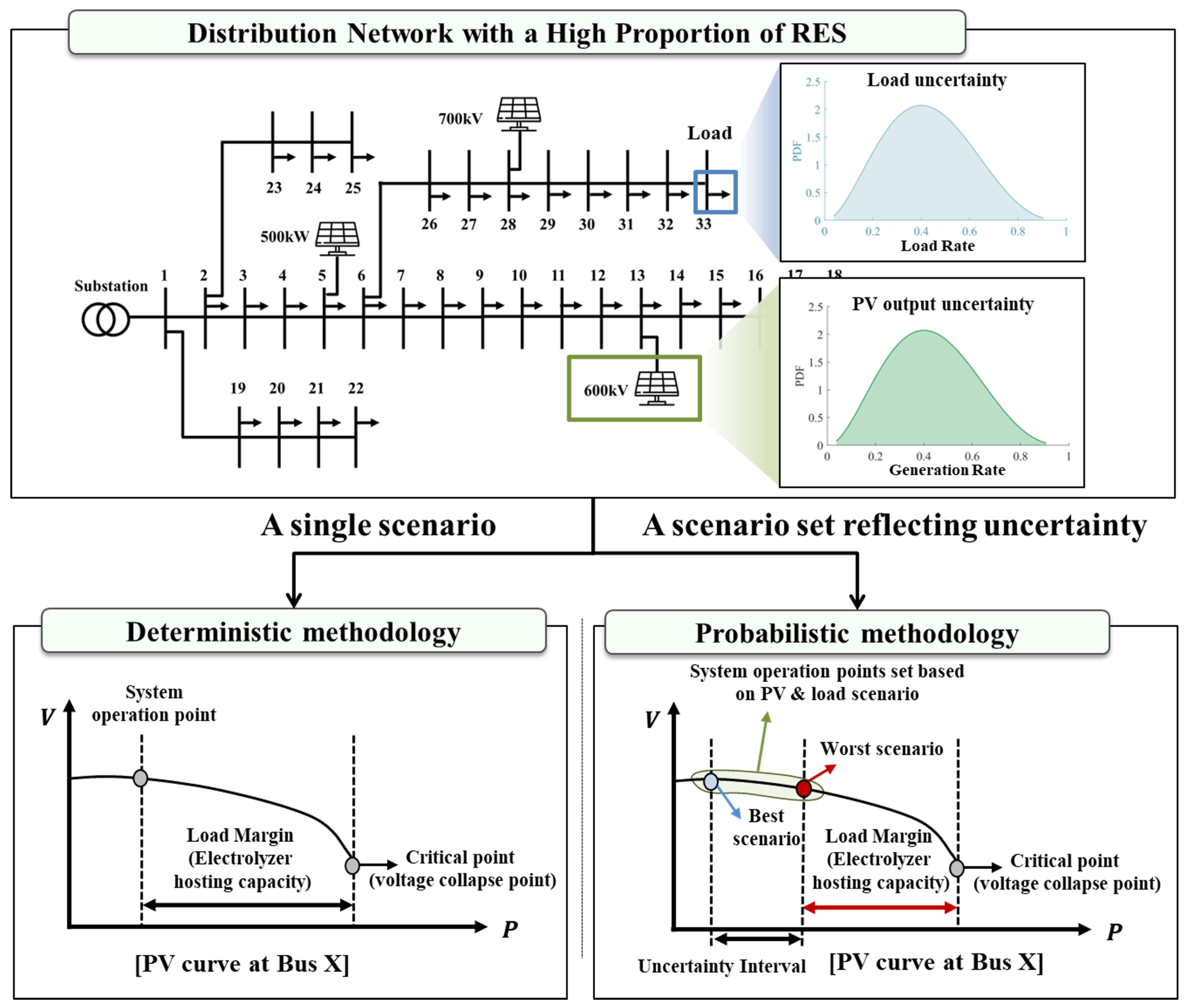
Figure 1 illustrates how uncertainties in PV output and load demand are incorporated into a voltage stability–based placement framework. In the deterministic approach of [
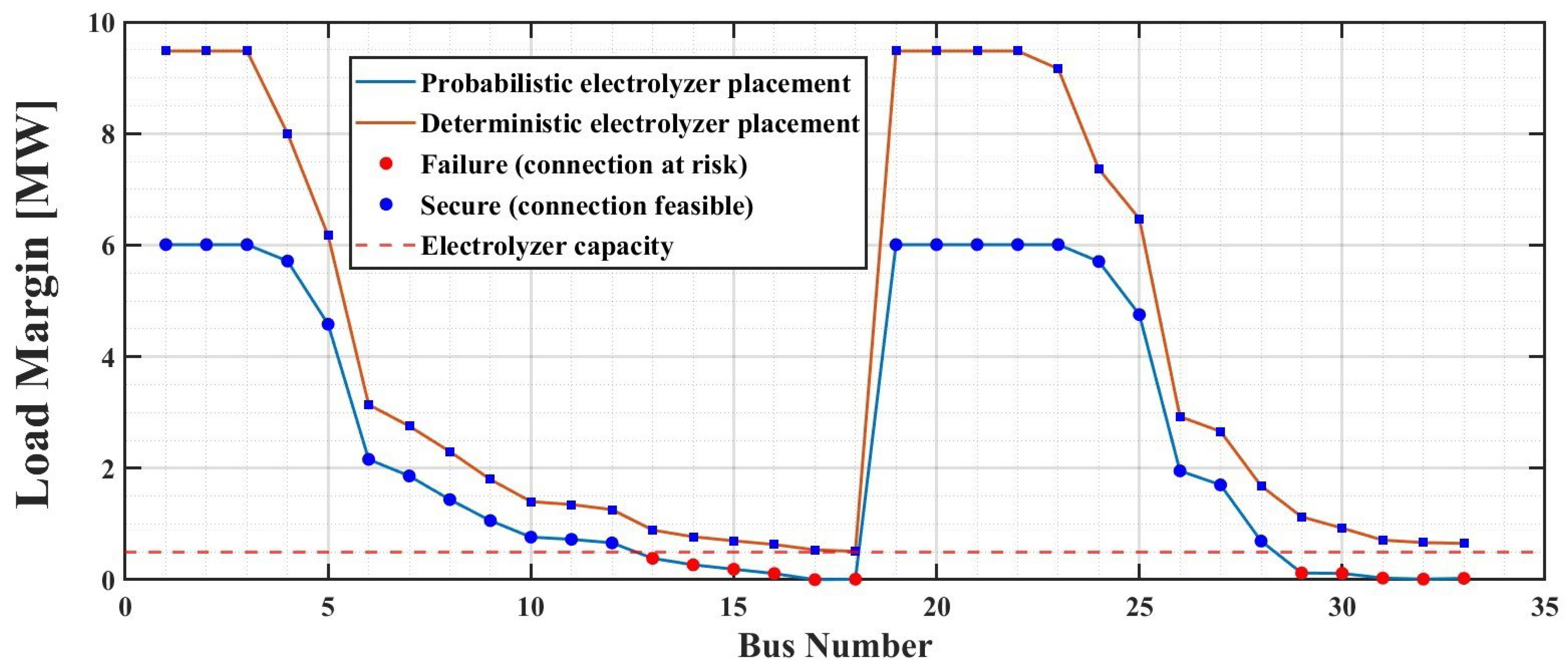
9], the analysis is performed for a single scenario, which yields a single load margin (i.e., electrolyzer hosting capacity) at each bus. By contrast, in the probabilistic framework, a set of operating scenarios is generated, the corresponding system operating points are evaluated, and bus-level load margins are computed for each scenario. This enables the derivation of a probabilistic electrolyzer hosting capacity that reflects the range of system conditions under PV and load uncertainty, rather than a single deterministic value. As a result, a deterministic assessment may overlook the risk induced by PV and load uncertainties under grid-connected operating conditions and fail to identify buses where the electrolyzer faces a high probability of insufficient voltage stability margin.
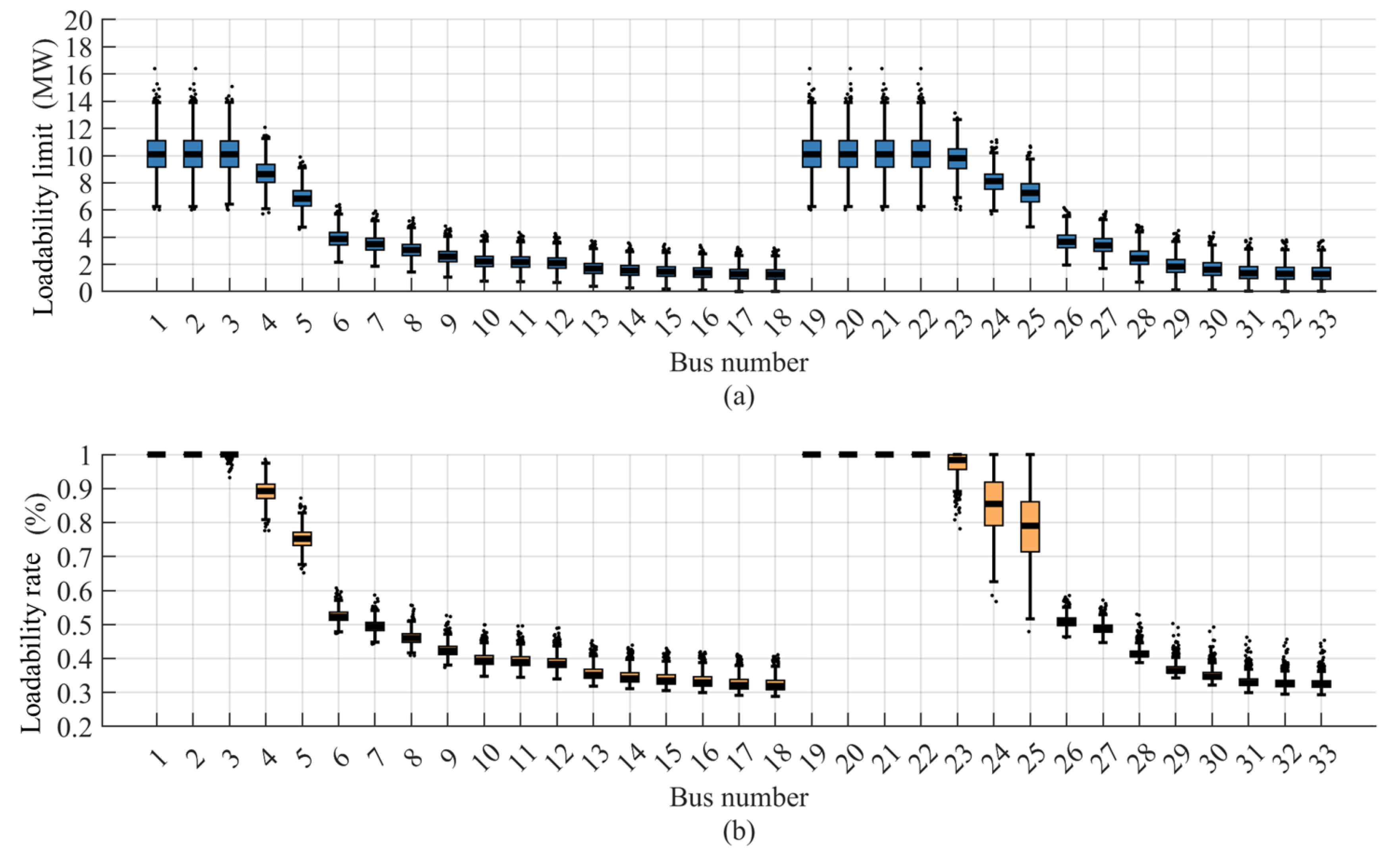
To this end, a novel framework is proposed for the optimal placement of electrolyzers based on probabilistic voltage stability analysis in distribution networks. In this paper, PV output and load are modeled as random variables with prescribed PDFs to capture their inherent uncertainties. Monte Carlo sampling from these distributions yields a set of operating scenarios (i.e., PV and load samples), which are then used in the electrolyzer placement analysis. Subsequently, the loadability and load margin for each bus and scenario are evaluated through voltage stability analysis, taking into account the allowable voltage operating range of electrolyzers. Finally, the optimal location is determined as the bus with the largest load margin. This study contributes to improving the efficiency of green hydrogen production and mitigating electrolyzer degradation. The research employs MATPOWER [
23] to perform CPF calculations, enabling the determination of load margins and power-voltage characteristics for each scenario. The main contributions of this paper are summarized as follows:
To the best of the authors’ knowledge, this study is the first to propose an optimal electrolyzer placement strategy that explicitly considers voltage stability under both demand- and supply-side uncertainties in active distribution networks. Since electrolyzers are highly sensitive to voltage fluctuations, conducting a voltage stability assessment that accounts for power system uncertainties is essential before integration. This approach is expected to enhance the quality of hydrogen production for existing electrolyzers.
From the perspective of voltage stability analysis, unlike conventional load allocation methods that focus solely on identifying the maximum load margin, this study introduces a voltage-sensitive loadability assessment tailored to the operating range of voltage-sensitive equipment, such as electrolyzers. The proposed methodology also applies to other types of voltage-sensitive loads beyond electrolyzers.
While conventional voltage stability assessment methods typically focus on system-wide violations, this study determines bus-specific loadability, enabling a more localized and effective approach for optimal placement of voltage-sensitive facilities in distribution networks.
This paper is organized as follows to determine the optimal location for electrolyzers:
Section 2 presents probabilistic models that capture the uncertainties associated with load demand and renewable generation.
Section 3 describes the proposed evaluation methodology, focusing on load margin calculation.
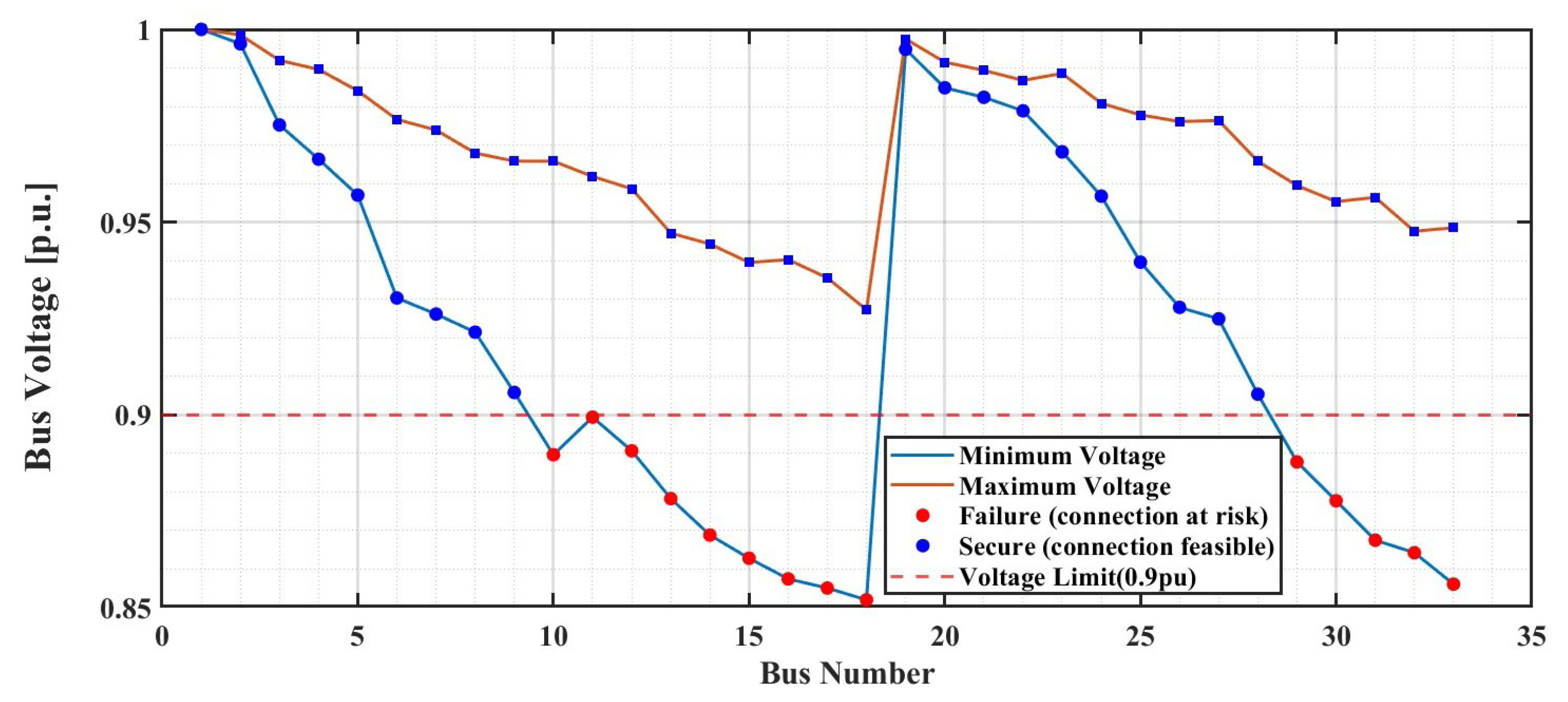
Section 4 presents a case study that investigates the impact of grid conditions on voltage stability and the potential for electrolyzer operational failure. Finally,
Section 5 provides a summary and highlights the key findings of the study.
2. Probabilistic Uncertainty Modeling in Distribution System
In this paper, the term probabilistic refers to an analysis framework where the uncertainties in PV output and load demand are modeled as random variables with PDFs. Instead of evaluating voltage stability at a single, fixed operating point, we generate a large number of scenarios by Monte Carlo sampling from these PDFs and, for each scenario, compute the corresponding loadability and load margin. As a result, loadability and failure risk are treated not as single deterministic values, but as random variables characterized by their probability distributions. Probabilistic modeling has been increasingly integrated into power system analysis due to the growing uncertainty associated with renewable generation and load variability. Unlike deterministic models, which assume fixed operating conditions, probabilistic models account for the inherent unpredictability of power system components, enabling evaluations across a wide range of conditions and scenarios.
Numerous prior studies have applied probabilistic models to power system analysis to address uncertainties in components such as load and generation. For example, Ref. [
24] demonstrates the application of probabilistic models to uncertain system elements, including renewable generation, demand, faults, and electricity prices. Uncertain load profiles are commonly modeled using Gaussian or Gumbel probability distributions, while solar generation is often represented with Beta or Weibull distributions due to their skewed averages and narrow tails. The probabilistic approach provides a more robust assessment of voltage stability and other critical aspects of power system performance under uncertain conditions.
Applying probabilistic models to voltage stability assessment facilitates evaluating a power system’s ability to maintain acceptable voltage levels during disturbances and load fluctuations. This study adopts a probabilistic approach to voltage margin assessment by varying load levels, as proposed in [
25]. Unlike traditional assessments focused on instability thresholds or voltage sensitivity, this research emphasizes the ratio of voltage violations within the E-BOP of electrolyzers. This perspective offers valuable insights into the robustness of voltage stability under probabilistic scenarios, thereby enhancing the reliability and operational efficiency of electrolyzer systems.
2.1. Supply Side Uncertainty Modeling
In this study, the uncertain generation profile
is modeled as follows:
where
represents the Beta distribution determined by its parameters,
and
. The PDF of
is defined as follows:
where
represents the Beta function, defined as follows
Note that
is the Gamma function, defined as
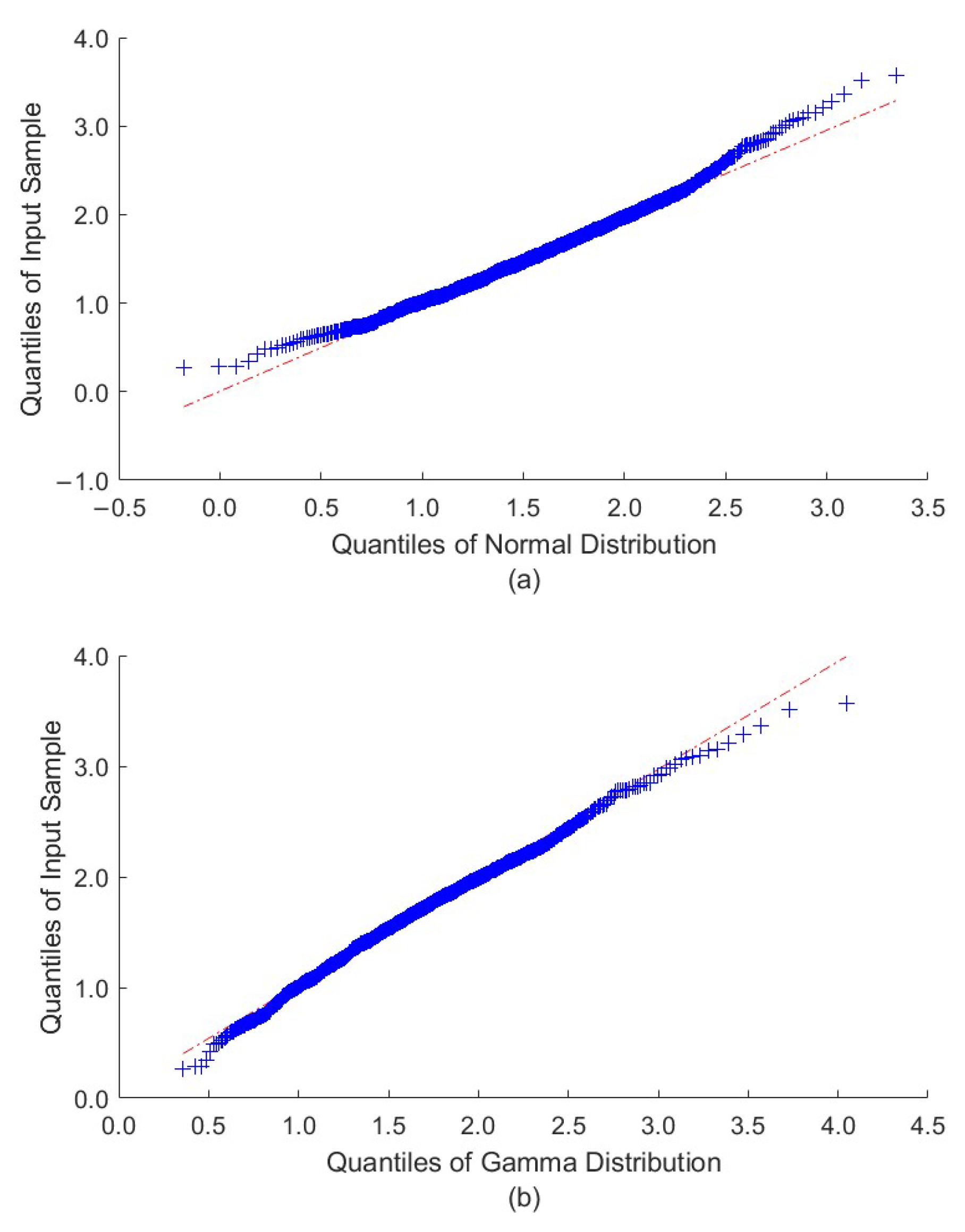
The Beta distribution is a continuous probability distribution that confines the random variable within the range. The skewed bell-shaped distribution varies depending on the Beta function parameters, and .
2.2. Demand Side Uncertainty Modeling
Meanwhile, the load fluctuation
is modeled as a random variable following a normal distribution as follows:
where
represents the normal distribution and
and
are the parameters to determine the mean and the standard deviation of the distribution, respectively. The PDF of the normal distribution is defined as follows:
resulting in a symmetric bell-shaped curve of a normal distribution depending on
and
.
3. Optimal Electrolyzer Placement Strategy
In this section, the probabilistic voltage stability assessment is carried out based on the generated scenarios in
Section 2. Prior to presenting the proposed optimal placement strategy for the electrolyzer, this paper outlines the necessary preliminaries, including voltage stability assessment based on P–V analysis and the voltage operating range considerations of the electrolyzer.
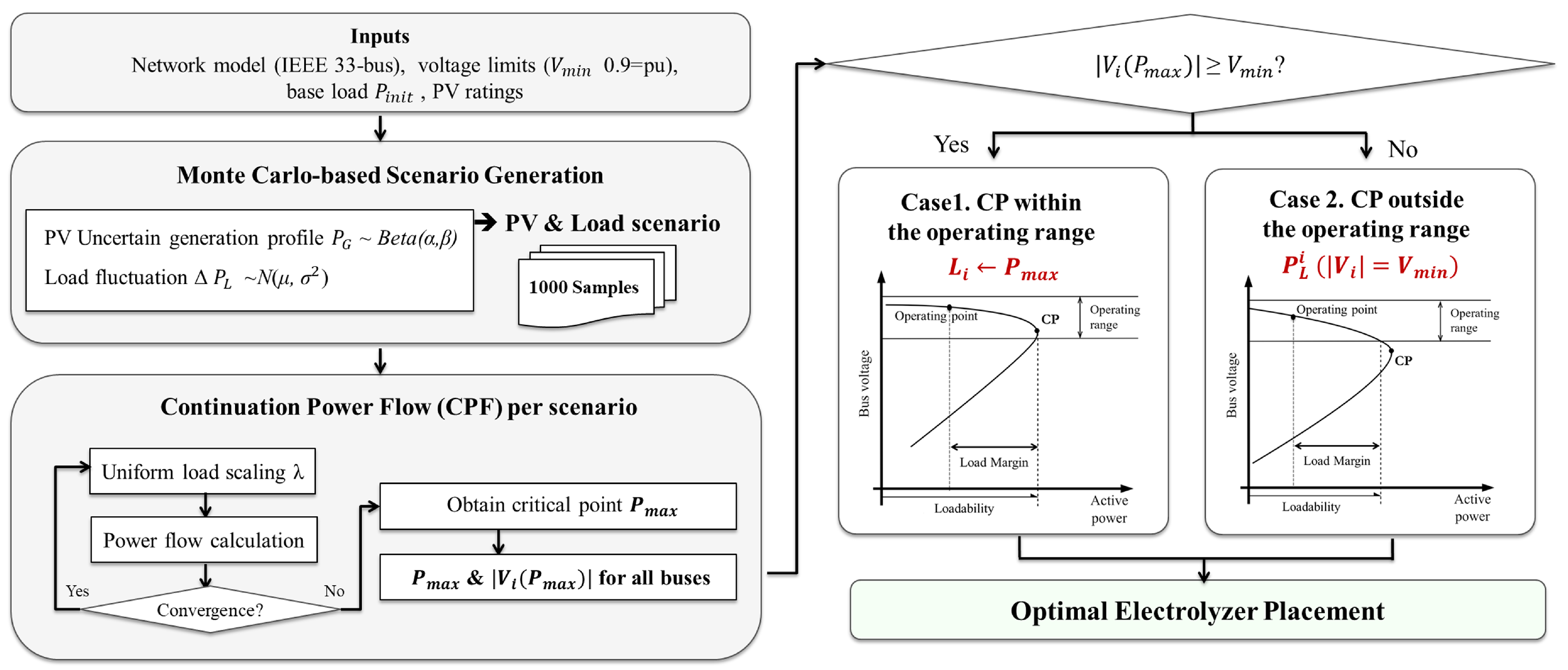
Figure 2 depicts the proposed framework for the proposed optimal electrolyzer placement strategy.
In power system studies, static voltage stability is of paramount importance [
26], particularly during the planning stage. A conventional approach to assess voltage stability is to construct the power-voltage (P–V) curve of the system.
As illustrated in
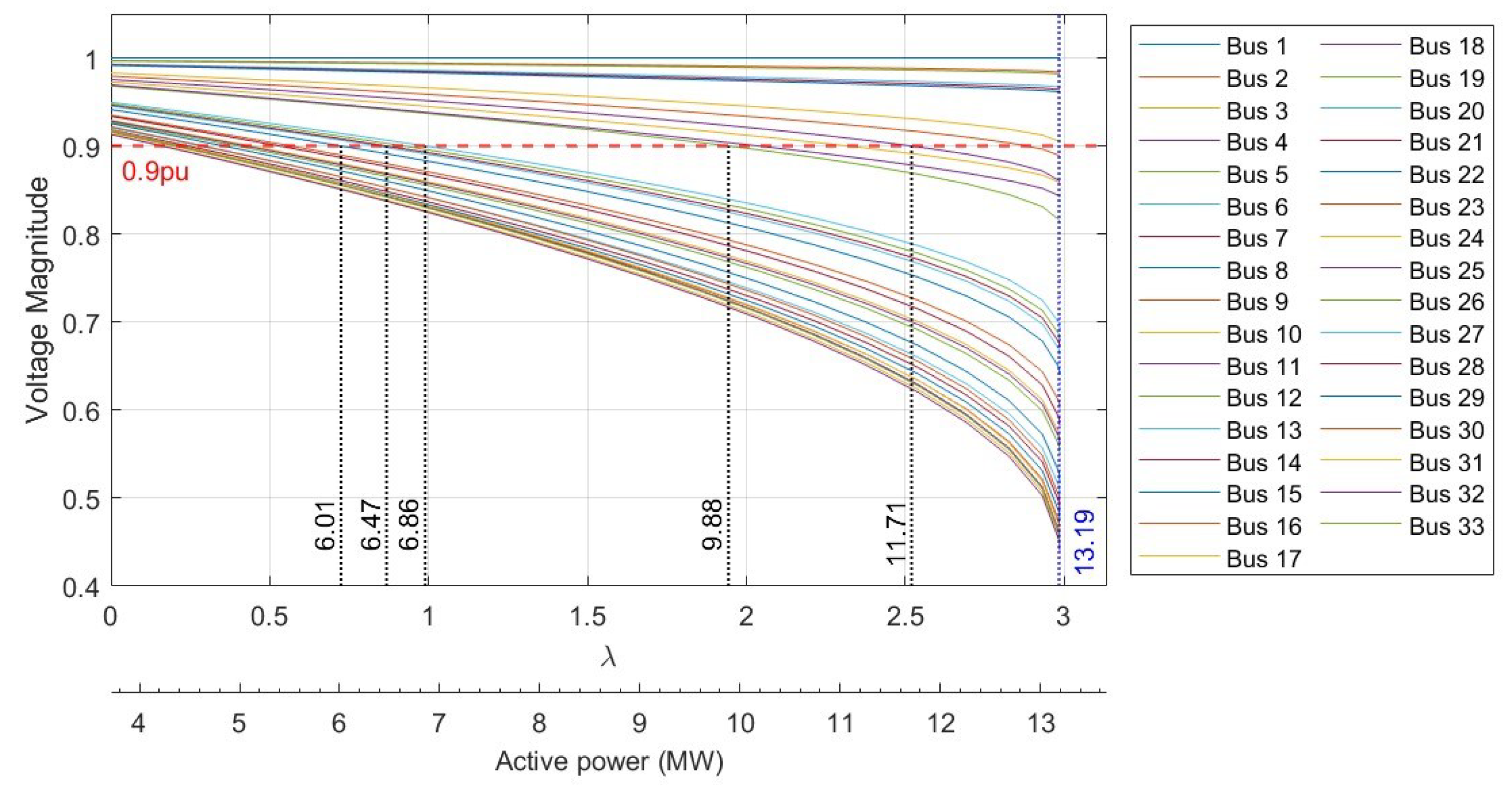
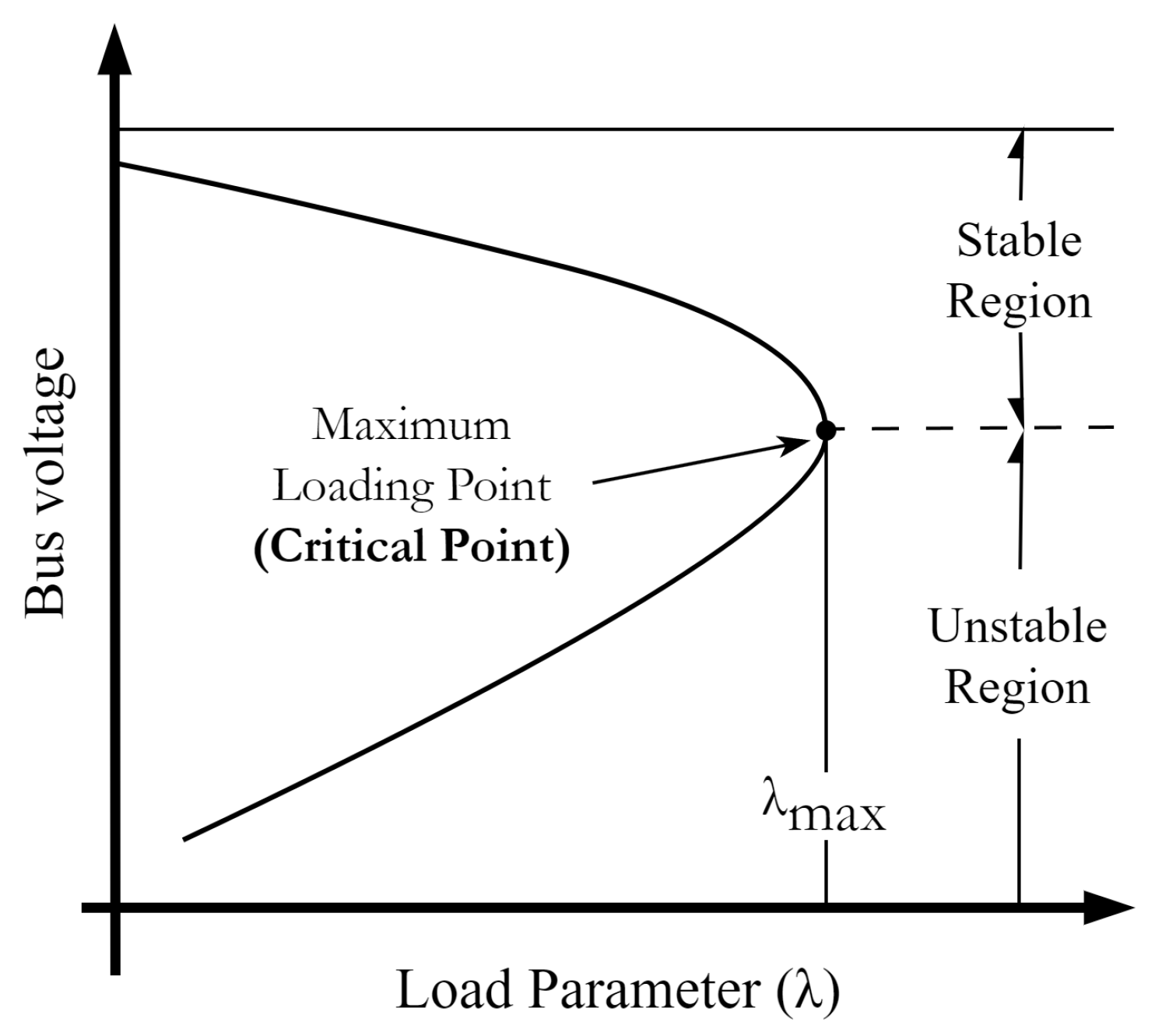
Figure 3, a typical P–V curve delineactes stable and unstable operating regions. From this curve, operators can determine the maximum power demand the grid can accommodate without triggering a system voltage collapse; this maximum occurs at the so-called “nose” point of the P–V curve. This operating condition corresponds to the system’s maximum loading point, also known as the critical point (CP).
The CPF method is commonly employed to generate the P–V curve [
27]. CPF incrementally scales the system load using a scalar parameter
, and solves the power flow equations at each step. The CP is reached when no further feasible solution exists as
increases, i.e.,
This maximum value corresponds to the total system load (i.e., system loadability) and defines the voltage stability boundary.
To derive the P–V curve and identify the CP, a widely used approach is the CPF method [
27]. The CPF algorithm incrementally increases the total system load and computes the corresponding power flow solutions at each step using a prediction and correction scheme. This process traces the entire P–V curve to its nose point, thereby pinpointing the CP.
In principle, CPF augments the standard power flow equations by introducing an additional parameter that scales the total load level. This load parameter acts as a scalar multiplier on the base system load. The power flow equation at bus
k can thus be expressed as follows:
where
and
represent the voltage magnitude and phase angle at bus
k, respectively;
and
are the active and reactive power injection at bus
k, respectively; and
and
are the conductance and susceptance of the branch connecting buses
k and
m, respectively.
The load parameter
represents the incremental factor of the total system load and is integrated into the power flow equations as follows:
where
and
are the sum of active and reactive generation in the system, respectively.
and
are the sum of the active and reactive power demand, respectively. The CP on the P–V curve corresponds to the total active power demand when
reaches its maximum value.
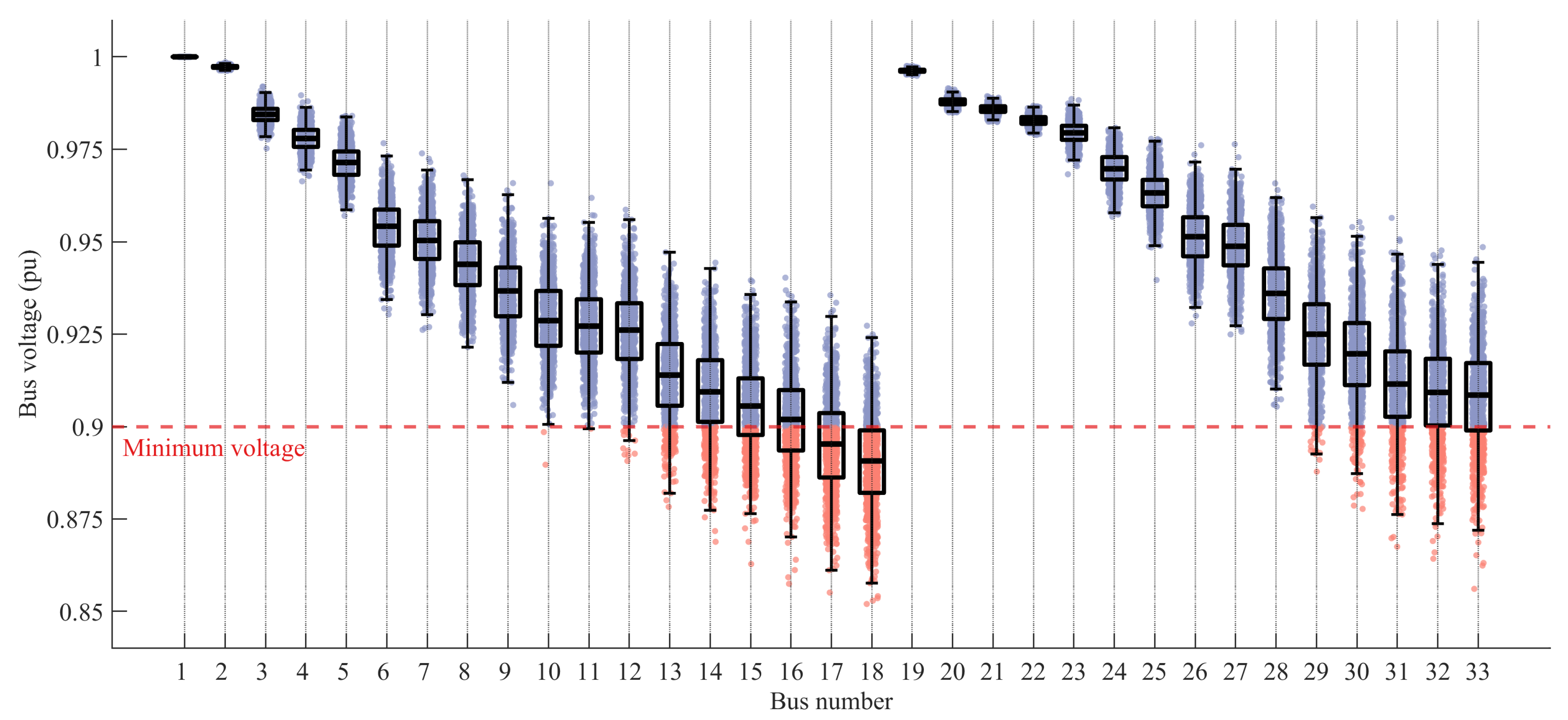
Electrolyzers require strict voltage and frequency conditions for stable operation. Specifically, the grid frequency must remain between 47 and 63 Hz, and the voltage must be maintained within 90–110% of the nominal level [
28]. Power quality issues such as flicker, imbalance, and harmonic distortion must also be avoided.
In distribution systems, voltage deviations due to load or generation fluctuations can compromise electrolyzer stability. While the traditional load margin estimates the maximum load before voltage collapse, it does not guarantee compliance with device-specific voltage constraints. If the voltage at the collapse point falls below the electrolyzer’s minimum requirement, operational violations may occur before the collapse itself. To address this, the proposed method introduces a voltage-sensitive loadability that reflects the permissible voltage range. Unlike prior studies that consider system-wide violations [
29], this work evaluates load margin and limit on a per-bus basis, enabling localized assessment of voltage stability. The approach can be extended to other voltage-sensitive loadability requiring strict voltage security.
3.1. Voltage-Sensitive Loadability
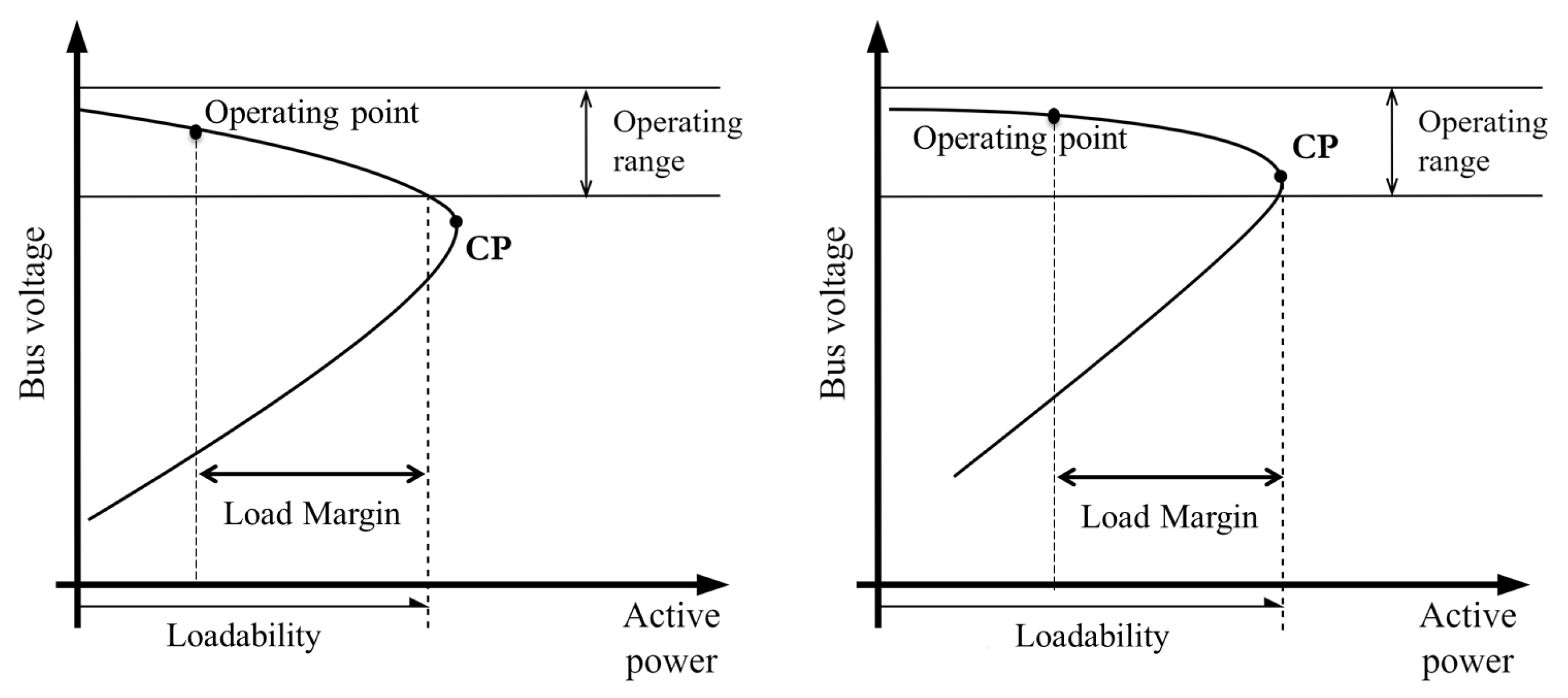
Unlike conventional methods, the proposed voltage-sensitive loadability assessment determines unique loadability for each bus. This study introduces a novel loadability concept, which is a concept accounting for a facility’s operating voltage range, referred to as the loading limit. The definition of the loadability depends on whether the operating condition of the power system at the CP falls within or outside the acceptable voltage range. The method for determining the loadability according to the voltage level of the CP is described as follows.
3.1.1. Case 1: CP Within the Acceptable Voltage Range
If the CP lies within this range, the loadability is assessed like the conventional voltage stability margin. At the voltage collapse point of the corresponding bus, stable hydrogen production by the electrolyzer is no longer feasible. Accordingly, the operating point of the electrolyzer (i.e., the loading level) cannot be increased any further, even if the voltage at the CP does not fall below the lower bound of the acceptable voltage range. Therefore, the increase in the operating point up to the CP is defined as the load margin at the corresponding bus.
3.1.2. Case 2: CP Outside the Acceptable Voltage Range
Conversely, if the CP lies outside the acceptable voltage range, any further increase in the operating point of the electrolyzer must be restricted to prevent violation of the voltage constraints. Even if the voltage collapse point is not reached as the operating point increases, the electrolyzer must be disconnected from the system if the voltage falls outside its allowable operating range to ensure equipment protection. Accordingly, the increase in the operating point up to the lower voltage limit is defined as the load margin at the corresponding bus. That is,
loadability refers to the absolute maximum net load for each bus at which all operational constraints remain satisfied while monitoring a particular bus (i.e., the highest operable loading level consistent with that bus’s allowable voltage range). In contrast, the
load margin denotes the additional load that can be accommodated from the initial operating point up to the loadability. Hence, loadability is an absolute threshold, whereas load margin is the corresponding increment from the initial load to that threshold.
Figure 4 illustrates the loadability concepts for both scenarios.
The CPF method computes successive points along the P–V curve, yielding the voltage magnitude and phase angle for each incremental loading condition. However, the CPF process does not explicitly identify the operating point at which bus voltages reach the boundaries of the permissible voltage range. As voltage magnitudes vary across buses for a given load level, the onset of voltage limit violations is bus-dependent, leading to distinct operable loadability for each bus. To determine the loadability for each bus, intermediate operating points on the P–V curve—skipped by the CPF process—are estimated using spline interpolation. This approach enables calculating the maximum acceptable system loading while ensuring that the voltage magnitude at a specific target bus remains within the allowable range. The system load margin of the entire grid is defined as the difference between the maximum net load the system can accommodate and the initial load condition.
For each bus
i, we first define the voltage-sensitive loadability
, and then the corresponding load margin
(i.e., the increment from the initial load) as follows.
Here, denotes the system loadability obtained at the CPF nose point, i.e., the maximum net system load; is the initial net system load at the base operating point. The quantity is the bus-i loadability limit when the voltage constraint at bus i is enforced, and is the additional load that can be accommodated from up to . The symbol represents the voltage magnitude (per-unit) at bus i under a given total system load, while is the lower bound of the admissible voltage range for the facility (e.g., pu in this study). Finally, indicates the total net system load at which along the CPF trajectory. In this study, the lower voltage bound is set to 0.9 pu, which corresponds to the electrolyzer’s minimum operating point. Accordingly, if the CP lies at or below 0.9 pu (i.e., with pu), denotes the total net system load at the lower-bound operating point, that is, at pu.
3.2. Probabilistic Voltage Stability Assessment
To address uncertainty in renewable generation and load, this study adopts a scenario-based probabilistic approach using Monte Carlo simulation. Key uncertainties include photovoltaic (PV) generation and system load, both modeled with appropriate probability distributions. PV output is represented by a Beta distribution, which confines the generation rate to the physical range [0, 1], ensuring realistic output levels relative to rated capacity. Load variation is modeled using a normal distribution, consistent with the central limit theorem, which reflects the aggregate behavior of diverse loads. Each simulation scenario yields a load margin and limit per bus. The bus with the highest probabilistic loadability is identified as the optimal electrolyzer location.
A scenario-based probabilistic assessment is recommended to effectively account for uncertainty and support the development of robust solutions for power system planning and operation. As described in
Section 2, a probabilistic model is constructed by identifying the key factors of uncertainty and selecting appropriate PDFs to characterize them. This study determines the outputs of DGs and system load demand as probabilistic inputs. Then, a Monte Carlo simulation is employed to evaluate the resulting distribution of the loadability under varying operating conditions.
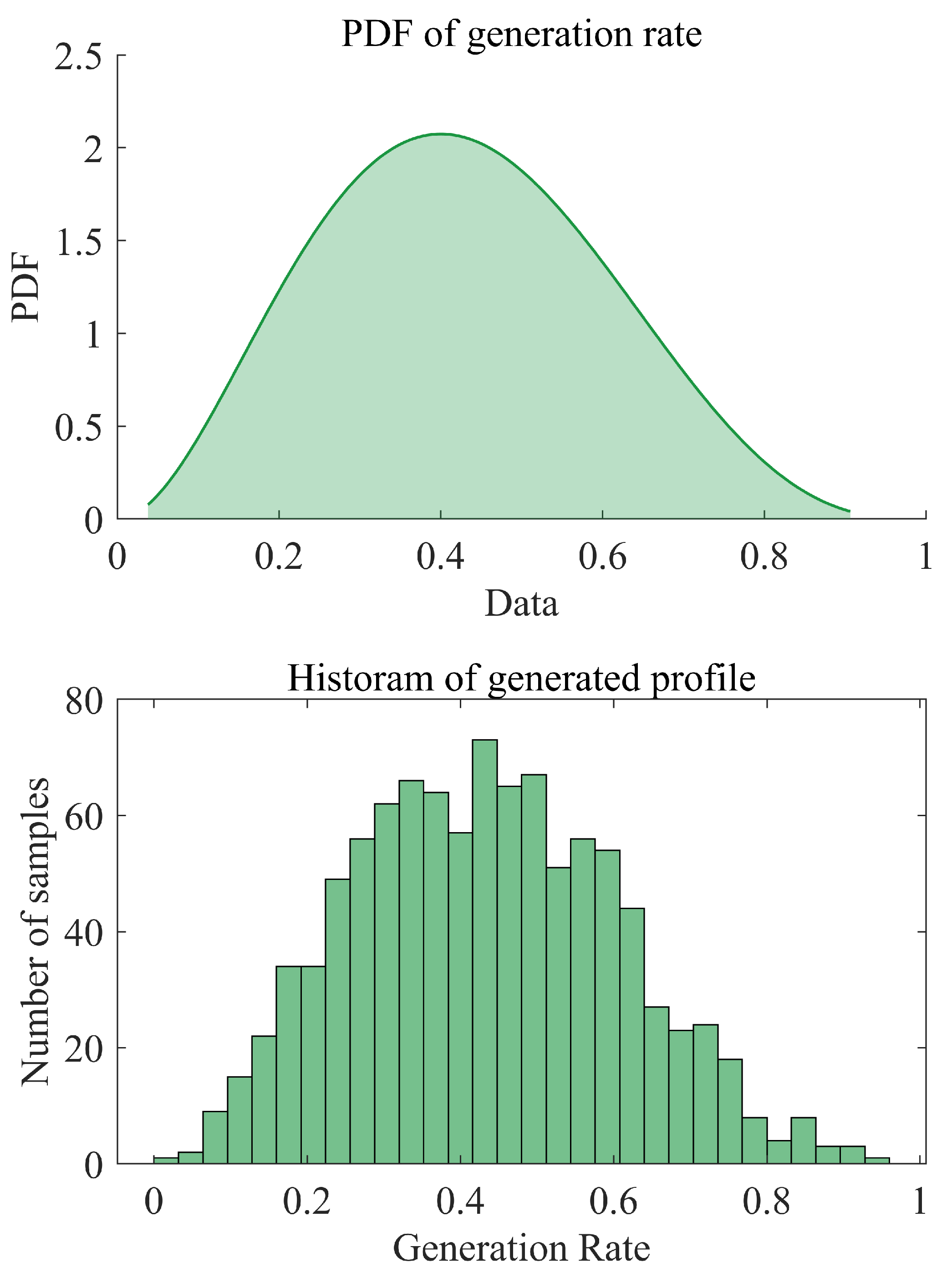
Uncertain PV generation is modeled using a Beta distribution to generate a random generation rate confined within the interval [0, 1]. This generation rate represents the actual output of a PV generator as a fraction of its rated capacity. The Beta distribution is particularly well-suited for this application because it inherently restricts the random variable within physical bounds—ensuring that the output does not fall below zero or exceed the generator’s full capacity.
Figure 5 presents the PDF of the generation rate alongside the histogram of the sampled generated rates used in the assessment.
In modeling load uncertainty, the central limit theorem suggests that the total load demand will approximate a normal distribution, assuming that individual load components vary independently with distinct characteristics. The normal distribution is advantageous as it yields realistic extreme values that can occasionally occur in actual power systems. Consequently, this study adopts a normal distribution to represent load variations from the test system’s base load value, thereby enhancing the robustness of the evaluation. The load margin and limit for each bus and scenario are evaluated, and the bus with the largest load margin and loadability is selected as the optimal location for the electrolyzer.
5. Discussion and Conclusions
This study proposed a probabilistic method for the placement of electrolyzers in renewable-integrated distribution systems, introducing a voltage-constrained load margin that reflects the operating constraints of voltage-sensitive equipment. In contrast to conventional approaches that focus primarily on economic optimization or rely on deterministic voltage stability analysis, the proposed framework explicitly incorporates both supply- and demand-side uncertainties, yielding bus-specific loadability derived from voltage stability considerations.
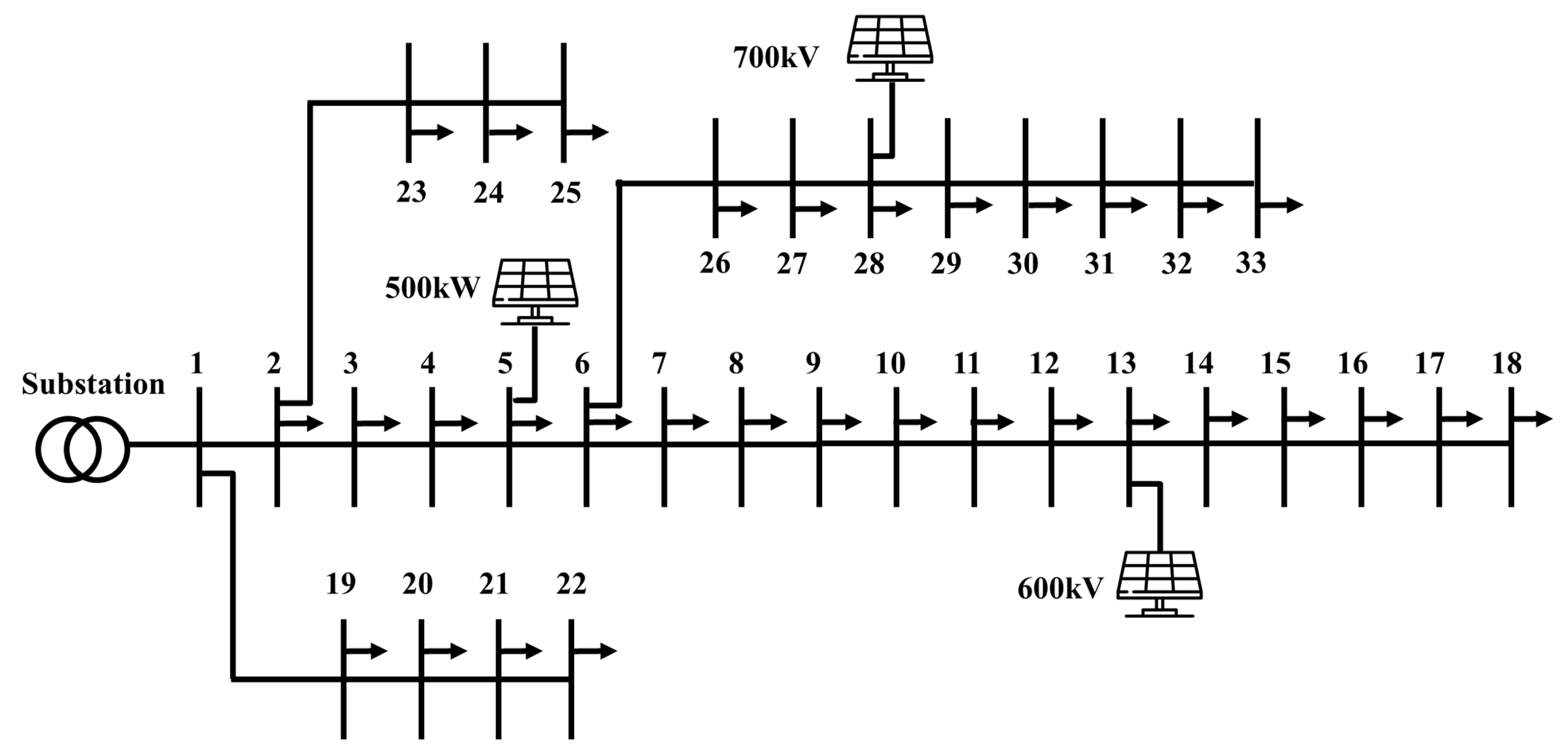
A key contribution of this work lies in its emphasis on operational reliability rather than purely economic feasibility. Prior studies have either neglected the voltage-sensitive characteristics of electrolyzers or, when considered, evaluated voltage stability without accounting for stochastic uncertainties in generation and load. Such approaches fail to capture the voltage instability that directly impacts the feasibility of connecting sensitive devices such as electrolyzers. In contrast, our method evaluates the vulnerability of individual buses under uncertainty, enabling a more accurate and granular assessment of suitable installation points. Monte Carlo simulations on the IEEE 33-bus system confirm that the proposed metric strongly correlates with actual disconnection risks, offering a computationally efficient yet robust alternative to exhaustive scenario-based analysis.
The methodology provides practical advantages for planning and operation in active distribution networks with high renewable penetration, where uncertainty and spatial variability are pronounced. Future research will expand the framework to incorporate multi-objective optimization, encompassing both economic and operational constraints. Comparative evaluation with other voltage stability indices and application to larger, more diverse systems will further validate its effectiveness and scalability.