


Abstract
Residents’ health is the foundation of social civilization and progress, an important symbol of national prosperity and strength, and a common pursuit of the general public. Ecological environment quality, as a key link connecting sustainable development and residents’ health, its governance effect is directly related to the achievement of Sustainable Development Goals. Based on the data of 31 provinces in China from 2010 to 2022, this paper empirically tests the impact of the ecological and environmental protection supervision policy (EEPS) on residents’ health by adopting the double machine learning method. The research results show that (1) the ecological and environmental protection supervision policy can significantly improve residents’ health level, laying a solid human capital foundation for sustainable development. (2) In contrast, the policy has a more prominent effect in areas with low population density, regions where government attention is below the median, and areas with relatively weak economic development. (3) The policy can enhance residents’ health through the synergistic effect of government environmental investment and public environmental participation. This study strengthens the research on how environmental policies promote residents’ health and provides valuable references for advancing sustainable development.
1. Introduction
Co-building, sharing, and residents’ health are the strategic themes for building a Healthy China. Promoting the construction of a Healthy China for all is a significant measure to actively participate in global health governance and fulfill international commitments under the 2030 Sustainable Development Agenda. Since the reform and opening up, with the rapid development of China’s economy and the complex and severe situation of environmental issues influenced by industrialization, urbanization, and population growth, there has been a significant impact on residents’ health [1].
According to the report China National Environmental Analysis (2012) released by the Asian Development Bank and Tsinghua University, in 2012, among the ten cities with the worst air pollution in the world, seven were in China. Of the 500 cities nationwide, fewer than five met the air quality standards recommended by the World Health Organization. The economic losses caused by air pollution in China, based on disease costs, are estimated to be equivalent to 1.2% of GDP. The nationally reported incidence rate of respiratory diseases reached 0.075%, and deaths caused by chronic respiratory diseases ranked as the third leading cause of total resident deaths in that year. The World Bank, in its 2007 report China’s Environmental Pollution Losses, stated that the losses from air and water pollution amount to 5.8% of China’s GDP. Meanwhile, in the practice of local environmental governance, research has pointed out that some local governments are constrained by the concept of sacrificing the environment for GDP growth, leading to a passive approach of polluting while governing [2]. In some cases, to respond to short-term environmental pressures, they resort to one-size-fits-all enforcement, resulting in recurring regional pollution problems that are difficult to eradicate. The environmental risks faced by residents’ health cannot be continuously resolved [3]. Environmental health risks pose a persistent challenge to sustainable mitigation, with low-income populations disproportionately affected due to constrained risk resilience. This structural dilemma cannot be fundamentally resolved without continuous institutional innovation. Moreover, exclusive reliance on local self-governance proves inadequate to effectively safeguard residents’ health rights. Furthermore, long-term health promotion initiatives often suffer from implementation gaps due to insufficient sustainable incentive mechanisms and inadequate accountability pressures. This deviation dilemma in local environmental governance highlights the practical limitations of relying solely on local autonomous governance to effectively safeguard residents’ health rights, necessitating the establishment of a more rigid and binding environmental regulatory mechanism at the national level to break this deadlock [4].
To better advance ecological civilization construction, the focus shifted from inspecting enterprises to supervising governments, emphasizing the implementation of local governments’ environmental protection responsibilities. Against this backdrop, the 2015-launched high-level ecological and environmental protection supervision policy, under which full-coverage supervision was completed in batches and concluded in December 2017, aims to strengthen environmental governance and build a solid ecological barrier to safeguard residents’ health [5]. This policy strengthens government supervision (central oversight) and public participation channels in environmental governance, forming a government–society collaborative model. Specifically, it drives local governments to raise environmental expenditure and improve environmental quality (boosting residents’ health), while increasing public environmental awareness and guiding health behaviors to enhance population health. This pathway frames analysis of environmental regulation-health links. Therefore, systematically analyzing the impact mechanism of the ecological and environmental protection supervision policy on residents’ health is an inevitable requirement to address how environmental governance serves health protection. As an important institutional innovation in national ecological civilization construction, the ecological and environmental protection supervision policy supervises local environmental governance through a high-level cross-hierarchy governance mechanism, incorporating public environmental demands into the core of national governance [6]. Through the supervision of governance framework, it strengthens the accountability of local party and government officials, balancing economic development and environmental rights with institutional power to prevent development models that harm public welfare. The external supervision system established by the supervision process transforms public environmental concerns into governance pressure through the disclosure of inspection results and open petition channels, ensuring that policy implementation does not deviate from the livelihood orientation. Continuous supervisory pressure and accountability for false rectification ensure the stability of environmental governance effectiveness [7], allowing the public to gain tangible ecological benefits. This mechanism creates a virtuous interaction between national governance and public demands, promoting the modernization of the environmental governance system centered on public welfare [8].
Based on the above background, this paper systematically explores the impact effects and intrinsic mechanisms of the ecological and environmental protection supervision policy on residents’ health. This study uses panel data from 31 provinces in China from 2010 to 2022 to conduct an empirical study by constructing a policy dummy variable. However, traditional policy evaluation methods face challenges in handling high-dimensional control variables and complex functional forms, which may lead to model specification biases or the “curse of dimensionality” problem. In recent years, machine learning methods have demonstrated strong advantages in the field of causal inference of policies, as they can flexibly capture nonlinear relationships between variables and improve prediction accuracy. To more robustly identify the health effects of the ecological and environmental protection supervision policy, the double machine learning framework is introduced for empirical testing in this paper with reference to existing research. The research results indicate that the implementation of the ecological and environmental protection supervision policy significantly improves residents’ health levels, with its effect primarily realized through two mechanisms: first, promoting an increase in government environmental investment, and second, enhancing public environmental participation. The synergistic effect of both promotes the improvement of residents’ health. Heterogeneity analysis further reveals that the policy’s effects exhibit differentiated characteristics in different regions: in areas with low population density, insufficient government environmental attention, and relatively lagging economic development, the ecological and environmental protection supervision policy has a more pronounced effect on promoting residents’ health.
The possible marginal contributions of this paper are as follows: First, the innovation of research methods. This paper introduces double machine learning methods into the assessment of health effects of environmental policies, fully leveraging the advantages of machine learning algorithms in handling high-dimensional, non-parametric prediction problems, effectively avoiding the curse of dimensionality faced by traditional econometric methods. Through an orthogonal processing framework, it overcomes the bias convergence dilemma caused by the introduction of regularization terms in machine learning estimation, providing a more robust econometric tool for causal identification of health effects of environmental policies. Second, it constructs a government–society dual analysis framework. This paper breaks through the limitations of existing research’s single perspective, innovatively analyzing the collaborative mechanism of both in the process of policy affecting residents’ health from a government–society dual interaction perspective. The study reveals the response mechanism of government environmental investment to public environmental demands, as well as the reinforcing effect of public participation on government governance effectiveness, providing empirical evidence for a collaborative governance model in the field of environmental governance from a health dimension. Third, the construction of the health indicator system is scientific. Based on the World Health Organization’s multidimensional definition of health, this paper selects four core dimensional indicators and employs the TOPSIS objective weighting method to construct a comprehensive evaluation system for residents’ health covering 31 provinces in China, enhancing the scientificity and comprehensiveness of health measurement. The analysis diagram is shown in Figure 1.
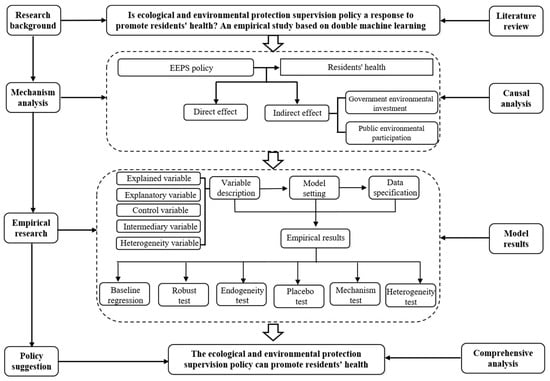
Figure 1.
Research Flowchart.
2. Literature Review and Research Hypotheses
2.1. Literature Review
2.1.1. Literature on Residents’ Health
Contemporary discussions on health often begin with the 1948 Constitution of the World Health Organization (WHO), which describes health as a state of complete well-being, not merely the absence of disease. Antonovsky’s [9] salutogenesis focuses on the origins of health. Initially, this was a stress-resource-oriented concept that emphasized resources and their role in maintaining and improving health, explaining why some individuals can remain healthy in stressful situations and adversities. He pointed out that health is a positive, dynamic self-regulating process, and that chaos and stress are natural components of life. Arieli [10] found that health responsibility is significantly positively correlated with both physical and emotional health, indicating that the more participants value their health, the better their physical and emotional well-being. Ivonne-Nadine Jürgensen’s [11] research discovered that students with low health literacy have significantly higher rates of mental health issues and unhealthy eating habits compared to those with adequate health literacy. Joseph Kim’s [12] study showed that health personality tendencies play an important role in the emotional and physical health of the elderly, with more vibrant personalities correlating with better health outcomes. Menardo’s [13] research found that exposure to natural environments (such as forests and parks) can lower blood pressure, slow heart rates, and reduce chronic disease risks. Hospital greening reduces the use of painkillers and inflammation responses, while school greening enhances students’ cognitive levels and exam scores, and greening in nursing homes improves the mental health of the elderly. Du et al.’s [14] research indicated that socioeconomic status can moderate the impact of pollution on health. Li et al.’s [15] study showed that for every 10% increase in green view rate, residents’ mental health scores rise by an average of 2.1 points. Xiao feng Wang’s [16] research indicates that living only with a spouse, having an independent living space, residing in high-rise apartments, having service facilities in the community, and accessing diversified social support (not relying solely on relatives) exert positive impacts on the mental health of the elderly, whereas living alone and other such circumstances have negative effects. Additionally, the study finds that the combination of the BP neural network and particle swarm optimization (PSO) method through machine learning can more effectively capture nonlinear relationships and conduct heterogeneity analysis of urban-rural areas and genders.
2.1.2. Environmental Regulation and Residents’ Health
Many studies have shown that environmental degradation significantly reduces residents’ health levels [17]. Qiang Zhang’s [18] research indicated that the extreme wildfires in Canada in 2023 caused severe air pollution, resulting in 3400 to 7400 acute deaths in North America and 37,800 to 90,900 chronic deaths in North America and Europe. The Flint water crisis in Michigan, USA, from 2014 to 2016, led to widespread lead poisoning among residents [19]. The smog incident in San Diego resulted in PM2.5 concentrations exceeding standards year-round [20], with an asthma incidence rate exceeding 30% among children.
To mitigate the impact of environmental pollution on population health, some countries have formulated environmental regulation policies based on externality theory and attempted to limit pollutant emissions through administrative orders. The preamble of the Vienna Convention for the Protection of the Ozone Layer directly points out that researching the causal relationship between the environment and residents’ health is both necessary and urgent [21]. Research conducted by HEIMTSA, driven by environmental policies (including various policy measures related to lead emissions and exposure patterns from 2000 to 2020), shows that environmental policies can enhance the IQ of preschool children [22]. Axsen J’s [23] research indicates that the zero-emission vehicle mandate enacted in Canada significantly reduced the incidence of cardiovascular diseases. Sobaih AEE’s [24] study shows that the Green Saudi Plan enacted in Saudi Arabia greatly reduced the incidence of asthma and chronic obstructive pulmonary disease. The implementation of low-carbon city pilot policies has led to a national reduction in medical expenditures by 20.85 billion yuan per year, attributed to decreased visits for respiratory and cardiovascular diseases (with a reduction of PM10 by 10 μg/m3). Research in The Lancet Planetary Health shows that in towns implementing the “coal-to-gas” policy, the incidence rate of acute myocardial infarction among residents decreased by 6.6% compared to non-pilot towns, with more significant benefits for women (11.7% reduction) and the elderly (≥65 years, 10.7% reduction). After 2 to 4 years of policy implementation, the reduction in incidence reached 9.7% (higher than the short-term reduction of 3.5%), demonstrating the cumulative health effects of long-term clean heating. Chen Zheng’s research indicates that initiatives promoting the construction of natural landscapes in low-carbon city pilot policies reduced autonomic nervous system excitability and significantly decreased anxiety, especially among high-pressure urban populations (such as office workers and students).
So far, existing research has mainly focused on the impact of environmental pollution on perinatal mortality, mortality rates of children under five, and maternal mortality, laying a foundation for the study of residents’ health [6]. However, previous studies have the following shortcomings: First, empirical research on the impact of environmental pollution on residents’ health often employs traditional causal inference models, such as the difference-in-differences method, which face issues like variable dimensional constraints and model specification biases. Second, previous studies mostly used maternal and infant mortality rates as proxy variables, which may introduce significant bias into the research. Additionally, there is relatively little research on the impact of environmental regulation on residents’ health in China. Existing studies on environmental regulation and health primarily focus on market-based regulations (such as carbon trading and emission trading), with insufficient attention to top-down command-type regulations like the ecological and environmental protection supervision policy, often remaining at the level of policy net effect testing without detailed disaggregation of the mechanisms at play.
2.2. Research Hypotheses
The ecological and environmental protection supervision policy, as an important institutional arrangement to promote ecological civilization construction, not only strengthens the environmental governance responsibilities of local governments and improves regional ecological environment quality, but also generates significant health benefits by optimizing the allocation of environmental resources and enhancing the effectiveness of environmental governance. In the context of increasingly severe threats to public health from environmental pollution, the ecological and environmental protection supervision policy provides strong institutional guarantees for local environmental governance through innovative supervision mechanisms and governance models, effectively promoting improvements in residents’ health levels. First, the ecological and environmental protection supervision policy significantly improves environmental quality by reinforcing government’s environmental governance responsibilities. By imposing governance pressures through methods such as accountability for governance, deadlines for rectification, and “retrospective reviews,” local governments are encouraged to substantially increase investments in environmental protection and accelerate pollution control processes. These supervisory measures not only promote the improvement of local environmental protection infrastructure but also compel strict compliance with environmental standards and emission limits, effectively reducing air, water, and soil pollution levels, and directly improving the quality of the living environment for residents. Zhang’s [25] and Liu’s [26] research indicates that the ecological and environmental protection supervision policy exerts a profound impact on residents’ living environments by significantly adjusting the core indicators of air quality. It not only reduces the Air Quality Index in inspected regions by an average of 3.184 units, significantly lowering the concentrations of pollutants such as PM10, SO2 and O3 as well as the levels of water and soil pollution, but also directly reduces residents’ daily pollutant exposure risks and improves the quality of their living environments. Second, drawing on the research of Lin Xuechun, the Central Environmental Protection Inspection has significantly stimulated public enthusiasm for environmental participation by establishing channels for reporting grievances and disclosing inspection results publicly, thereby enhancing their awareness of environmental rights protection. This process has strengthened diversified supervision forms such as reporting platforms and the participation of social organizations, providing strong support for residents’ continuous participation in environmental governance. Second, the ecological and environmental protection supervision policy fully stimulates public enthusiasm for environmental participation. Establishing channels for reporting grievances and publicly disclosing inspection results has become a key initiative. As the supervision system advances, public awareness and participation in environmental rights protection have significantly increased. Through diversified supervision forms such as reporting platforms and participation of social organizations, residents are encouraged to actively engage in environmental governance supervision. This broad social participation not only enhances the efficiency of identifying and resolving environmental issues but also fosters a positive interactive mechanism of multi-party governance, continuously safeguarding residents’ health and well-being. Based on the above analysis, the following hypothesis is proposed:
Hypothesis 1.
The ecological and environmental protection supervision policy can promote residents’ health.
According to environmental health theory, improving environmental quality is the core pathway to enhancing public health levels. In the mechanism by which the ecological and environmental protection supervision policy affects residents’ health, government environmental protection investment plays a key mediating role. However, local government environmental protection investments have long faced multiple constraints, including fiscal limitations, pressures for GDP growth, and traditional performance evaluation orientations, resulting in insufficient funding for environmental protection becoming a normalized issue. The implementation of the ecological and environmental protection supervision policy fundamentally changes this situation by incorporating ecological and environmental protection into the core evaluation system of local governments. Through rigid constraint mechanisms such as accountability for governance and deadlines for rectification, it effectively compels local governments to adjust their fiscal expenditure structure and significantly increase funding allocation in the environmental protection sector. At the same time, the ecological and environmental protection supervision policy also promotes local governments to optimize the efficiency of environmental protection investment allocation, guiding funds to be precisely directed towards key areas such as air pollution control, water body management, soil remediation, and the construction of environmental monitoring systems. This structural optimization not only enhances the effectiveness of environmental protection funding but also builds a systematic and comprehensive environmental governance framework, accelerating substantial improvements in environmental quality. From a mechanistic perspective, the ecological and environmental protection supervision policy and government environmental protection investment form an effective policy transmission chain: supervisory pressure is transformed into fiscal investment motivation, fiscal investment is converted into environmental governance outcomes, and ultimately, through reducing pollution exposure and improving ecological environment quality, the continuous enhancement of residents’ health levels is achieved. Based on the above analysis, the following hypothesis is proposed:
Hypothesis 2.
The ecological and environmental protection supervision policy promotes the improvement of residents’ health levels by increasing government environmental protection investment.
According to social participation theory, public environmental participation is an important mechanism for improving environmental governance effectiveness and safeguarding public health. In the pathway through which the ecological and environmental protection supervision policy affects residents’ health, public environmental participation plays an indispensable bridging role. However, public environmental participation in China has long faced structural barriers such as information asymmetry, a lack of participation channels, high costs of rights protection, and weak environmental awareness, making it difficult for the public to effectively contribute to environmental governance. The implementation of the ecological and environmental protection supervision policy has significantly changed this landscape by establishing open and transparent grievance reporting platforms, implementing a system for publicizing inspection results, and strengthening environmental information disclosure. These innovations provide institutional channels for public participation in environmental governance and greatly stimulate the enthusiasm for social supervision. At the same time, the ecological and environmental protection supervision policy has also enhanced the quality and effectiveness of public environmental participation. By exposing typical cases, holding accountable those who violate environmental laws, and responding to public environmental demands, it has strengthened the confidence and capacity of the public in environmental rights protection. This optimization of the participation model not only expands the scope of environmental issue discovery but also creates a bottom-up supervisory pressure, shifting environmental governance from “government-led” to “multi-stakeholder co-governance,” thereby improving the precision and effectiveness of environmental governance. From a mechanistic perspective, the ecological and environmental protection supervision policy and public environmental participation form a virtuous interactive cycle: supervisory empowerment stimulates public participation enthusiasm, public participation enhances supervisory effectiveness, supervisory pressure drives pollution control, and ultimately, through reducing environmental health risks and improving environmental well-being, promotes the comprehensive improvement of residents’ health levels [7]. Based on the above analysis, the following hypothesis is proposed:
Hypothesis 3.
The ecological and environmental protection supervision policy promotes the improvement of residents’ health levels by enhancing public environmental concern.
3. Research Design
3.1. Model Setting
3.1.1. Baseline Model Setting
This study aims to investigate the impact of the ecological and environmental protection supervision policy on residents’ health. Current related research often employs traditional causal inference models for policy evaluation. However, the application of such models has numerous limitations, such as the stringent requirements of the parallel trends test in difference-in-differences models on sample data. The propensity score matching method also has significant subjectivity in the selection of matching variables, and it tends to lose a large number of observations during the matching process, resulting in insufficient robustness of the research findings. Double machine learning has unique advantages in variable selection and model estimation, and is more suitable for the research question of this paper. On the one hand, the incidence of diseases, as a comprehensive indicator of residents’ health, is affected by numerous economic and social factors. To ensure the accuracy of the estimation of policy effects, efforts should be made to control the interference of other factors on residents’ health as much as possible. However, when dealing with high-dimensional control variables, traditional regression models may face the “curse of dimensionality” and multicollinearity, making the accuracy of the estimator questionable. Double machine learning adopts a variety of machine learning and its regularization algorithms to automatically screen the preselected set of high-dimensional control variables, and obtain an effective set of control variables with high prediction accuracy. This not only avoids the “curse of dimensionality” caused by the redundancy of control variables, but also alleviates the problem of biased estimation due to the limitation of main control variables. On the other hand, in studying the impact of environmental policies on residents’ health, nonlinear relationships between variables are the norm. Conventional linear regression may lead to model specification biases, and the estimator is not robust enough. In contrast, double machine learning, relying on the advantages of machine learning algorithms in processing nonlinear data, can effectively avoid the problem of model misspecification. In addition, drawing on the ideas of Wang’s [27] research (based on instrumental variable functions, two-stage predicted residual regression, and sample splitting and fitting, double machine learning can alleviate the “regularization bias” in machine learning estimation and ensure the unbiasedness of the treatment coefficient estimator in small samples. It can more flexibly capture the nonlinear and interaction effects of covariates, and more accurately address causal inference under high-dimensional data and complex nonlinear relationships.
Drawing on the research of Chernozhukov et al. [28], this paper constructs a partially linear double machine learning model as follows:
where and represent provinces and years, respectively; denotes the occurrence of diseases among residents; indicates the ecological and environmental protection supervision policy, taking a value of 1 for the year of implementation and thereafter, and 0 otherwise; is a set of high-dimensional control variables that influence the dependent variable through the function ; the specific form of the function is unknown and needs to be estimated through machine learning methods as ; and represents the error term, with a conditional mean of 0. The estimates for Equations (1) and (2) are obtained directly as follows:
where is the sample size. Based on Equation (3), we can further examine the estimation bias:
where follows a normal distribution with a mean of 0. Since double machine learning employs machine learning and regularization algorithms to estimate , it is necessary to introduce a regularization term. While this helps avoid excessive variance in the estimates, it also introduces bias in the estimation results. Specifically, converges to at a slow rate of , which leads to tending to infinity as approaches infinity. Therefore, is difficult to converge to .
To accelerate the convergence speed, we introduce an orthogonal method to correct the bias and construct the auxiliary regression as follows:
where is the regression function of the core explanatory variable on the high-dimensional control variables, and its estimate is obtained using machine learning. represents the error term, with a conditional mean of 0. Specifically, we take the residuals from the auxiliary regression and use them as an instrumental variable for in Equation (3) to obtain the following unbiased estimator:
The estimation bias corresponding to Equation (9) is as follows:
where follows a normal distribution with a mean of 0. Since the two rounds of machine learning estimation introduce two error term interaction terms, the overall convergence speed of depends on the convergence rates of to and to , specifically . Even if both convergence speeds are slow, the interaction term of the error terms converges to 0 at a faster rate, thereby allowing for an unbiased estimate of the treatment effect coefficient. Consequently, it is still possible to obtain an unbiased estimate of the treatment effect even in the case of unknown functional forms of the covariates.
3.1.2. TOPSIS Model Setting
The TOPSIS entropy weight method is a systematic multi-criteria decision analysis method, which is particularly suitable for processing three-dimensional panel data, including years, provinces, and multiple indicators. It aims to calculate and rank the comprehensive scores of different provinces and cities in each year through objective weighting. Assume there are 13 years and 31 provinces and cities in this context. We first preprocess the raw data and perform positive transformation on the indicators. Next, the entropy weight method is applied to determine the objective weights of each indicator: the greater the degree of dispersion of an indicator (i.e., the smaller the information entropy), the larger its weight. Then, the obtained entropy weights are combined with the normalized decision matrix to construct a weighted decision matrix. Comprehensive scores are calculated, which range from 0 to 1; the higher the score of a province or city, the better its comprehensive performance.
Data normalization: For positive indicators, a larger value is better.
The TOPSIS measurement process is as follows: First, data normalization is required:
Positive indicators:
Negative indicators:
After calculating the weights, the information entropy of the indicators () and redundancy () are computed, where represents the year:
Then, the weights of the indicators are calculated, denoted as :
Finally, the comprehensive index is calculated, denoted as :
3.2. Variable Selection
Considering the availability, completeness, and accuracy of the data, this study conducts an empirical analysis based on panel data from 31 provinces in China (excluding the Hong Kong Special Administrative Region, the Macao Special Administrative Region, and the Taiwan Region) for the period 2010 to 2022. The relevant data is sourced from the “China Health Database,” the “China Statistical Yearbook,” the “Public Health Science Data Center, “China Medical and Health Database,” and the statistical yearbooks of various provinces and cities. The number of beds in health institutions, as a key indicator of the dimension of medical facilities, characterizes the scale and physical capacity of medical and health infrastructure. It is directly related to the medical system’s capacity for admitting and treating diseases and the accessibility of medical resources, serving as a fundamental measure of the hard conditions for the supply of medical services. The number of licensed physicians reflects the core reserve of medical personnel; their quantity and structure directly affect the quality of diagnosis and treatment, the ability to identify diseases at an early stage, and the standardization of chronic disease management, which is an important reflection of the service capacity of the medical system. As a classic indicator of negative health outcomes, the mortality rate can comprehensively reveal the burden of major diseases and the state of poor health among the population in a region, and it is one of the most important metrics for evaluating health outcomes. The total number of medical consultations reflects the actual service load of the medical system and is a direct expression of the health needs of the population. For some missing values, linear interpolation is used to fill in the gaps.
3.2.1. Explained Variable
The explanatory variable in this study is residents’ health (RH). Residents’ health refers to the overall health status of all residents in a specific area over a period of time. It is the foundation of individual well-being and family harmony, as well as a pillar of social civilization and national development. Here, we choose the incidence of diseases as a proxy variable for residents’ health; the lower the incidence rate, the better the health status of residents. Currently, there is no unified definition of disease incidence in the world. Based on the World Health Organization’s definition of health, we construct a comprehensive indicator of disease incidence from four perspectives: medical facilities, environmental regulations, overall health level, and medical services. This includes the number of hospital beds, the number of healthcare professionals, mortality rate. According to the study by Wang et al. [29].
3.2.2. Core Explanatory Variable
This paper matches the pilot provinces announced in the ecological and environmental protection supervision (EEPS) policy issued by the Chinese government with provincial data, and constructs a policy dummy variable based on the establishment time of the pilot provinces. The variable is assigned a value of 1 if the policy was implemented in the region in that year, and 0 otherwise.
3.2.3. Control Variables
This paper references the studies of Zhang et al. [30], Zhu et al. [31], and others, considering the continuity and availability of provincial panel data sourced from the statistical yearbooks of various provinces and reports on the development of health and wellness, covering multiple years of observation. It controls for several factors that may affect residents’ health, including policy intensity, quantified through the frequency of core keywords like “health security” and “medical services” in health-related policy texts. This reflects the implementation strength and coverage of health support policies in each province, influencing residents’ health through resource allocation optimization and health behavior guidance. The urbanization rate, measured by the proportion of the urban resident population to the total regional population, indicates the degree of population concentration in urban areas, significantly impacting residents’ health through the centralization of medical resources and changes in lifestyle. Additionally, the per capita green space area, population aging, greening coverage rate, proportion of higher education, GDP growth rate, per capita GDP, local fiscal health expenditure, number of health institutions, perinatal mortality rate, and maternal mortality rate are all considered as factors that influence the overall health status of residents. In specific, the per capita green space area of parks is characterized by the ratio of the total area of regional green space parks to the permanent resident population (unit: square meters), and this indicator can alleviate health risks. Population aging is measured by the proportion of the elderly population aged 65 and above, and its growth will increase the health burden and affect the structural demand for medical services. The green coverage rate is reflected by the proportion of the regional green coverage area to the total area, which helps reduce the risk of environment-related diseases. The proportion of the population with higher education is represented by the proportion of the population with college education or above, and the increase in this proportion helps enhance health cognition and the quality of medical service utilization. The GDP growth rate, as the year-on-year growth rate of annual GDP, has a dual impact on health. Per capita GDP is embodied by the ratio of regional GDP to the permanent resident population (unit: yuan), representing the level of economic development. Local fiscal expenditure on medical and health care is denoted by the total annual fiscal expenditure on medical and health care at the provincial level (unit: 100 million yuan), and its scale is directly related to the improvement of medical supply and the capacity of the public health system. The number of health institutions is reflected by the total number of various health service institutions, which affects the accessibility of medical services. The perinatal mortality rate is characterized by the ratio of the number of annual perinatal deaths to the total number of perinatal infants (unit: ‰), which is an important reflection of the level of maternal and infant health. The maternal mortality rate is used as a measurement indicator by the ratio of the number of annual maternal deaths to the number of live births (unit: 1/100,000), reflecting the overall level of maternal and child health services.
4. Empirical Research
4.1. Analysis of Results Using the TOPSIS Entropy Weight Method
This study conducted an integrated evaluation of the incidence of diseases in 31 provinces and cities in China from 2010 to 2022 using the entropy weight TOPSIS method based on panel data. This method first objectively determines the weights of each evaluation indicator through the entropy weight method: the entropy weight method assigns weights based on the degree of variation in indicator data. The greater the degree of variation in the data of a certain indicator (i.e., the smaller the information entropy), the higher its weight, indicating that the indicator provides more information and stronger discriminatory ability in the comprehensive evaluation. The calculation results in Table 1 shown that, in terms of spatial distribution, Xinjiang has the highest score for the incidence of diseases at 0.593; Henan ranks second with an average score of 0.557; and Qinghai ranks third with an average score of 0.513. In contrast, Jiangsu has the lowest average score at only 0.207, followed by Shanghai and Tianjin. This spatial distribution characteristic may stem from the fact that eastern coastal areas (such as Jiangsu, Shanghai, and Tianjin) have relatively developed economies, more complete medical facilities, and higher levels of residents’ health awareness and health security. These factors result in their good performance on multiple health evaluation indicators and a relatively small degree of data dispersion, which affects their comprehensive scores under the weighting of the entropy weight method. In contrast, the higher scores of some western regions (such as Xinjiang and Qinghai) may reflect significant internal differences or unique characteristics in certain health-related indicators during the evaluation period. These indicators are assigned higher weights by the entropy weight method due to their large degree of variation, thereby raising their comprehensive scores. Overall, the scores for the incidence of diseases in China’s 31 provinces and cities are mostly concentrated between 0.2 and 0.52. This indicates that although the overall health level of Chinese residents has improved, there are imbalances among regions, and there is still room for further improvement.

Table 1.
Scores of disease incidence in each province.
In addition, from a temporal perspective, the disease incidence rate in China shows a downward trend, but there are significant differences in dynamic changes across different regions. As can be seen from Figure 2, a heatmap was created using the residents’ health scores of each province for the years 2013, 2016, 2019, and 2022. Under the guidance of the ecological and environmental protection supervision policy, the disease incidence rate in the eastern regions with higher population density has shown a downward trend, while the disease incidence rate in the western regions with lower population density has significantly decreased.
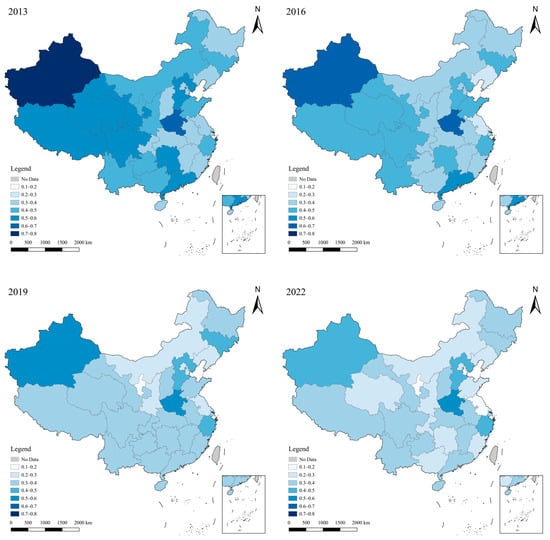
Figure 2.
Disease incidence in each province in 2013, 2016, 2019, and 2022.
4.2. Baseline Test
This paper utilizes a double machine learning model to evaluate the impact of the ecological and environmental protection supervision policy on residents’ health. The sample split ratio is 1:4, and the random forest algorithm is employed to predict and solve the main regression and auxiliary regression. Control variables are sequentially added, including the first-order and second-order control variables, year fixed effects, and regional fixed effects. The regression results are shown in Table 2. The results indicate that the regression coefficients of the EEPS are all significantly positive at the 5% level, and the main regression coefficient is significant at the 1% level, indicating that the ecological and environmental protection supervision policy can effectively improve residents’ health levels.
Table 2.
Baseline regression results.
4.3. Robustness Test
4.3.1. Change the Sample Split Ratio
To avoid biases introduced by parameter settings in the double machine learning model, we reset the sample split ratio between the double machine learning processes, changing the original sample ratio from 1:4 to 1:2 and 1:7. The results are shown in Table 3. The findings indicate that with changes in the sample split ratio, the estimated results of the ecological and environmental protection supervision policy may also vary, but all are significantly positive at least at the 10% level.
Table 3.
Robustness Test Ⅰ: Change the sample split ratio.
4.3.2. Change the Machine Learning Algorithm
To avoid biases introduced by algorithm selection in the double machine learning model, we refer to Ling [32], Han [33] et al. and change the machine learning algorithm, replacing the previously used random forest algorithm for prediction with gradient boosting and support vector machine methods to explore the potential impact of prediction algorithms on the conclusions of this paper. The results are shown in Table 4. We find that after switching to the gradboost and linsvm algorithms, all model coefficients are positive and highly significant at the 1% level, but the differences are substantial. This may be because the gradboost algorithm captures nonlinear effects or interactions not considered in the baseline linear model, while the linsvm algorithm’s objective function and regularization term (such as maximizing the margin) may lead to coefficients that differ significantly from those obtained by the other two models. This also indicates that the precise estimates of policy effects may be sensitive to model selection and settings. However, the advantages of the random forest algorithm in handling high-dimensional data, reducing the risk of overfitting, and providing easily interpretable results make it more suitable for the thematic research of this paper, and thus we select the random forest algorithm as the primary prediction algorithm. Meanwhile, we employed the difference-in-differences (DID) model to conduct ordinary least squares (OLS) regression, and found that the results were only significant at the 10% level, indicating that double machine learning is more suitable for the research in this paper.
Table 4.
Robustness Test Ⅱ: Change the machine learning algorithm.
4.3.3. Control for Province–Time Interaction Effects
Since provinces are a very important administrative node in the governance structure of the Chinese government, cities within the same province often exhibit similarities in policy environment, locational characteristics, and historical culture. Therefore, this paper adds province–time interaction fixed effects based on the baseline regression to control for the impact of different provinces over time. The results are shown in Table 5. As shown in the table, the estimated coefficient of the core explanatory variable is 0.8772, which remains significantly positive at the 5% level, and the conclusions of the baseline regression still hold.
Table 5.
Robustness Test Ⅲ: Control for province–time interaction effects.
4.3.4. Placebo Test
In quasi-natural experiment research, conducting a placebo test aims to eliminate the interference of other non-policy factors on the research results and ensure that the identified impact of the ecological and environmental protection supervision policy on residents’ health is causal rather than caused by unobservable confounding factors. By constructing false policy implementation times or false treatment groups [34], we test whether estimated results similar to the real policy effects appear in these false scenarios; if no significant effects emerge in the false scenarios, it indicates that the real policy effects are robust. Drawing on existing literature, this study generates dummy policy interaction terms by randomly selecting treatment and control groups, then adopts the baseline regression model and repeats the above operation 500 times to conduct the placebo test. From the distribution in the Figure 3, the estimated coefficients are mainly concentrated around 0 with a high density peak, which shows that in the placebo test, when a false policy shock is imposed, the estimated coefficients are mostly distributed around 0 without a significant deviation from 0. The dashed line represents the estimated coefficient values obtained from actual data processing. By comparing the relative positions of the dashed line and the solid line, it can be observed that the black dashed line lies in the extreme tail of the solid bell curve. The results in the Figure 3 indicate that no other factors or random disturbances can produce effects similar to those of the EEPS policy, thereby verifying that the impact of the EEPS policy on residents’ health is genuine and not caused by other confounding factors, which effectively enhances the robustness of the study’s causal inference.
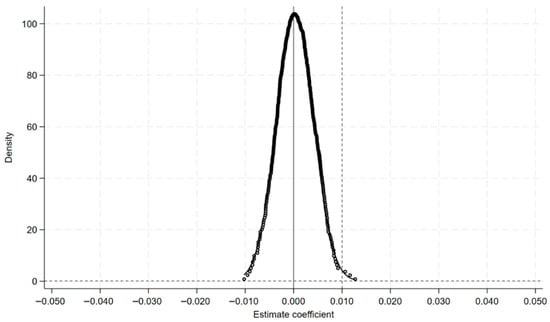
Figure 3.
Placebo test results.
4.3.5. Endogeneity Test
Due to the lack of specific statistical indicators, traditional endogeneity tests cannot be conducted; thus, we can only use instrumental variable methods to test it to a certain extent. When addressing endogeneity issues, instrumental variables must satisfy the criteria of strict exogeneity and correlation with the endogenous explanatory variables. Referencing Ying et al. [35] for finding institutional instrumental variables, this paper selects “industrialization level” as the instrumental variable. From the perspective of exogeneity, the industrialization level represents the scale, hierarchy, and evolutionary stage of regional industrial development. Industrial development requires long-term structural factors such as historical industrial accumulation and spatial industry layout, which are difficult to influence in reverse by the outcome variable of residents’ health, thus meeting the requirements for strict exogeneity. Examining the correlation dimension, the process of industrialization profoundly impacts regional environmental regulation intensity and pollution emission patterns. The implementation effects of the ecological and environmental protection supervision policy are closely related to the background of regional industrial development, indicating a foundational correlation between industrialization level and the endogenous explanatory variable portrayed by EEPS (the policy effect of the ecological and environmental protection supervision). The regression results show that when using industrialization level as the instrumental variable, the EEPS coefficient is 8.9442, which is significant at least at the 10% significance level. Combining this with the analytical framework of double machine learning, the significance of the core explanatory variable is maintained under the instrumental variable method, and the correlation between the instrumental variable and the endogenous variable is indirectly verified through “coefficient significance” (if the instrumental variable is unrelated to the endogenous variable, the core coefficient is unlikely to remain significant). This indicates that after controlling for endogeneity, the positive impact of the ecological and environmental protection supervision policy on residents’ health is robust, and the endogeneity issue has not caused substantial bias in the core conclusions.
To eliminate the interference of exogenous environmental policies, this paper chooses to exclude the dummy variable for the “River Chief System” [36]. As a typical accountability-type environmental regulation tool, the “River Chief System” was first established in Jiangsu Province in 2007, rapidly implemented across all provinces and cities starting in 2014, and achieved full coverage by 2018. This paper measures its impact by constructing a dummy variable for the regional “River Chief System,” specifically based on the policy implementation timelines and regional coverage, identifying the implementation status of the “River Chief System” in various regions through official documents, news reports, and academic literature. In the regression column from Table 6 that “excludes strict exogenous policies (River Chief System),” the EEPS coefficient is 1.1168, which is significant at the 5% significance level. The results indicate that even after excluding the interference of the exogenous policy of the “River Chief System,” the ecological and environmental protection supervision policy still has a significant positive effect on residents’ health, and the significance level and direction of the core coefficient have not fundamentally changed. This further corroborates the robustness of the research conclusion—the positive effect of the ecological and environmental protection supervision policy on residents’ health is not driven by other exogenous policies like the “River Chief System,” but rather reflects the causal effect of the policy itself.
Table 6.
Robustness Test Ⅳ: Endogeneity test.
4.4. Mechanism Test
This paper employs the two-step method proposed by Wang et al. [3] to conduct a mechanism test. Starting from the theoretical logic of “government” and “society”, collaborative governance and the action mechanism of the ecological and environmental protection supervision policy, it selects “local environmental investment” (Leinvest) and “public environmental concern” (Pub part) as mechanism variables. The ecological and environmental protection supervision policy, as a top-down environmental regulation tool, directly influences local governments’ environmental governance behaviors and, through information dissemination and social mobilization, affects the public’s environmental awareness and participation. Together, these elements form the core transmission path through which the policy impacts residents’ health. “Local environmental investment” serves as the direct material carrier for the government’s fulfillment of environmental governance functions. Under the pressure of accountability from the supervision, local governments will increase financial investments in environmental protection, such as the construction of pollution control facilities and the enhancement of environmental monitoring capabilities, in response to supervisory demands and to improve environmental quality. Meanwhile, the improvement of environmental quality is a key prerequisite for enhancing residents’ health; thus, it reflects the policy responses and governance behaviors from the “government side,” serving as the core mechanism linking policy to residents’ health. “Public environmental concern” reflects the social-level dynamics of environmental awareness and participation. The ecological and environmental protection supervision policy’s exposure of environmental issues and the social dissemination of the governance process significantly enhance public attention to environmental topics. The increase in public environmental concern not only pressures the government to strengthen environmental protection actions through public opinion supervision but also guides the public to adopt healthy and environmentally friendly lifestyles (such as reducing pollution exposure and participating in green practices), thereby impacting residents’ health. This serves as a key intermediary for policy transmission from the “society side.” Additionally, the research of Shi’s research [37] indicates that public environmental concern has a positive impact on the intensity of local fiscal expenditure on environmental protection. From a sociological perspective, public environmental concern can be simply understood as the public’s environmental awareness and environmental attitudes, which are reflected in the public’s level of support for solving environmental problems and their willingness to contribute to this end [38]. From an economic perspective, public environmental concern is a reflection of the public’s demand for and preference for environmental goods; in other words, the higher the level of public environmental concern, the greater the preference for environmental public goods. Therefore, the higher the level of public environmental concern in a region, the higher the public’s requirements for the ecological environment and the government’s environmental protection behaviors, and the greater the impact of local governments’ fiscal expenditure on environmental protection on the public’s overall utility level. Meanwhile, the central and higher-level governments regard people’s livelihood and welfare as an important part of the assessment of local governments and officials, so the improvement of public environmental concern will prompt local governments to increase the intensity of fiscal expenditure on environmental protection.
Specifically, “local environmental investment” is measured by the proportion of local government fiscal environmental protection expenditure to general public budget expenditure, reflecting the intensity of local government financial investment in ecological and environmental protection. “Public environmental concern” is quantified using a word frequency measurement method, which involves constructing a vocabulary of environmental-related keywords such as “smog,” “environmental pollution,” and “environmental protection,” and counting the frequency of these terms in government work reports, news articles, and other relevant documents in the sample regions to represent the public’s attention to environmental issues. The regression results in Table 7 show that the coefficient of the ecological and environmental protection supervision policy on local environmental investment is 0.0748, which is significant at the 10% significance level, indicating that the policy significantly promotes local governments to increase financial investment in environmental protection, thereby providing resource support for ecological governance. The coefficient for public environmental concern is 0.0931, also significant at the 10% significance level, indicating that the policy effectively enhances public attention to environmental issues. The results indicate that the ecological and environmental protection supervision policy not only directly aids in improving environmental quality by incentivizing local governments to increase environmental investment but also awakens public environmental awareness, compelling the government to optimize its environmental protection actions through public supervision and participation. This, in turn, guides individuals to practice healthy and environmentally friendly lifestyles. Ultimately, through the bidirectional interactive mechanism of “government environmental investment” and “public environmental participation,” the policy jointly impacts residents’ health, validating the logical role of the policy in activating the collaborative efforts of the government and the public in environmental protection, empowering ecological governance, and influencing residents’ health.
Table 7.
Mechanism Test.
4.5. Heterogeneity Test
4.5.1. Heterogeneity of Population Density
The above research indicates that the ecological and environmental protection supervision policy has a significant positive effect on residents’ health. However, when considering the varying population densities across provinces, do the corresponding conclusions still hold? As shown in Table 8, in low-density areas, the effect is significant at the 10% level, while in high-density areas, although the coefficient is positive, it is not significant. This may be because, on the one hand, areas with low population density have high ecological carrying capacity and strong environmental self-purification capacity, which provides a natural foundation for environmental regulation policies to effectively improve environmental quality; environmental regulation policies can thus improve environmental quality more effectively, thereby leading to a significant improvement in residents’ health. On the other hand, pollution sources in low-density areas are dispersed, and environmental regulation can quickly reduce per capita pollution exposure levels, resulting in a significant improvement in health levels among the population in these areas. In contrast, in high-density areas, there may be a “ceiling effect” on pollution exposure; even with relevant policies in place, residents still exist in high-exposure environments. Additionally, high-density areas have poorer environmental carrying capacity, and the marginal benefits of environmental regulation may diminish. The health of residents in high-density areas could be influenced by various complex factors, and the isolated effect of environmental regulation may be overshadowed by other factors.
Table 8.
Heterogeneity Test.
4.5.2. Government Environmental Concern
Here, regions where the government environmental concern is above the median are classified as areas with high government environmental concern, while those below the median are classified as areas with low government environmental concern. We find that the impact of environmental policies is more significant in regions with relatively insufficient government environmental concern. This may be because these areas initially have poorer environmental quality and higher health risks, leading to greater marginal benefits from environmental regulation. Additionally, the weak foundation of environmental governance in these regions means that the ecological and environmental protection supervision policy can bring about breakthrough improvements.
At the same time, these areas may have previously lacked effective environmental governance, making the “scarcity” of policy intervention more pronounced in its effects. In contrast, regions with high government environmental concern may already possess a certain level of environmental protection foundation, resulting in diminishing marginal returns from the policy.
4.5.3. Based on Economic Development Conditions
Here, regions with a GDP growth rate above the median are classified as economically developed areas, while those below the median are classified as underdeveloped areas. The results indicate that for underdeveloped areas, environmental policies significantly improve health, whereas for developed areas, the policy effects are positive but not significant.
This difference is closely related to the regional economic structure and development stage. On the one hand, the industrial structure of economically underdeveloped regions is often dominated by high-pollution and high-energy-consuming industries (such as coal and steel). On one hand, the industrial structure of economically underdeveloped regions often relies heavily on high-pollution industries (such as coal and steel). Policies that shut down or upgrade these types of enterprises can directly reduce local pollution emissions, having an immediate impact on health. On the other hand, this may also be due to the leverage effect of medical resources; weak primary healthcare may lead to a higher health conversion rate from environmental improvements. In contrast, economically developed regions may have entered the stage of industrial transformation and upgrading, with the proportion of pollution-intensive industries declining, and environmental governance relying more on technological progress and refined management, thus making the effect of a single inspection policy relatively insignificant. Meanwhile, the health status of residents in developed regions may be comprehensively influenced by multiple factors such as medical conditions and lifestyles, and the individual contribution of environmental factors is relatively reduced.
5. Discussion
This study empirically explores the impact and mechanism of action of the ecological and environmental protection supervision policy on residents’ health using the double machine learning method, effectively addressing the core research questions raised in the introduction and providing a more comprehensive analytical perspective for understanding the health effects and spatial heterogeneity of environmental regulation.
First, this study empirically verifies the core role of the EEPS policy in improving residents’ health levels, further deepening the core proposition of “environmental quality as a guarantee of health” in environmental health theory. The study finds that the EEPS, as a top-down rigid regulatory tool, forces local governments to increase environmental protection investment and improve environmental quality through the government supervision and accountability mechanism, while stimulating public environmental participation through petition and reporting channels, forming a policy-induced synergy for health promotion. This result strengthens the causal effect of environmental regulation on health, makes up for the limitations of traditional research in model specification and variable processing, provides more robust empirical support for the health value of environmental policies, and also expands the analytical dimension of “policy intervention and health maintenance” in salutogenesis.
Second, by distinguishing the two major mechanisms of government environmental investment and public environmental participation, this study further reveals the heterogeneous operational logic and collaborative mechanism of the dual subjects of government and society in policy transmission. Traditional research has mostly focused on a single-subject perspective, while this study finds that government environmental investment, as a “supply-side” mechanism, directly acts on residents’ health by optimizing environmental protection infrastructure and reducing pollution exposure risks, which is consistent with the government-led resource allocation logic in environmental governance; public environmental participation, as a demand-side mechanism, indirectly promotes health improvement by raising environmental awareness and strengthening social supervision, echoing the core viewpoints of social participation theory. The synergy between the two not only verifies the effectiveness of collaborative governance between the government and society but also enriches the theoretical connotation of the transmission mechanism of the health effects of environmental policies, revealing the complementary value of different subjects in the implementation of policies.
Finally, this study incorporates three contextual variables—population density, government environmental attention, and economic development level—to examine the heterogeneous characteristics of policy effects, highlighting the context dependence of environmental policy implementation. The study finds that the EEPS has a more significant effect in regions with low population density, insufficient government environmental attention, and relatively underdeveloped economies. This result echoes the law of diminishing marginal returns and the barrel effect, indicating that the exertion of policy effects is constrained by regional basic conditions. This finding deepens the understanding of the adaptability between environmental policies and regional contexts, provides empirical evidence for the precise implementation of policies, and also implies the importance of taking regional differences into account in institutional design—that is, the policy focus should be differentiated under different contexts to maximize the health promotion benefits.
6. Policy Conclusions and Recommendations
This study utilizes data from 31 provinces and municipalities in China from 2010 to 2022 to examine the impact of the ecological and environmental protection supervision policy on residents’ health through a dual learning approach. The results indicate that: (1) the ecological and environmental protection supervision policy can promote the improvement of residents’ health levels; (2) this improvement effect exhibits heterogeneity across provinces and municipalities with different population sizes, regions, and levels of government environmental concern; and (3) the policy ultimately affects residents’ health through a bidirectional interaction mechanism between government environmental investment and public environmental participation.
Based on the above conclusions and the actual situation in China, this study draws the following insights and proposes relevant recommendations:
First, the core role of the ecological and environmental protection supervision policy in improving residents’ health should be systematically strengthened to promote the deep integration of environmental governance and health protection. It is recommended to incorporate residents’ health indicators into the supervision assessment system, forming a linkage evaluation mechanism between environmental quality and health outcomes, thereby establishing a long-term mechanism that supports sustainable environmental development. Specifically, the policy framework can be improved by enhancing cross-departmental collaboration, such as integrating resources from ecological environment and health departments, establishing an environmental health risk monitoring and early warning platform, and achieving comprehensive governance from pollution source control to health outcomes. At the same time, attention should be paid to the continuity and iterative nature of policies. In line with the “Healthy China” strategic goals, the results of supervision should be transformed into institutionalized and normalized governance effectiveness to ensure long-term health benefits from environmental improvements.
Second, given the significant heterogeneity of policy effects based on population density, government environmental concern, and economic development levels, differentiated environmental governance strategies should be implemented according to local conditions. For areas with low population density and government environmental concern below the median, or economically weaker regions, the marginal health benefits of policy interventions are more significant. For regions with low population density, the marginal health benefits of policy intervention are more significant, and it is necessary to increase the intensity of inspections and resource inclination—such as prioritizing the layout of pollution control facilities and strengthening the construction of grassroots environmental protection capacity. For regions where government environmental attention is below the median, it is recommended to strengthen the accountability pressure and goal orientation of inspections by setting more explicit linkage goals between environmental quality and health outcomes, coupled with corresponding assessment incentives. Meanwhile, efforts should be made to optimize the public role, enhance environmental publicity and education, raise public awareness of rights protection, simplify the reporting process, and form a bottom-up reverse constraint mechanism, thereby truly integrating environmental governance into the core policy agenda. For regions with relatively weak economic development, targeted support and capacity building are suggested, while increasing inspection intensity, supporting technical, financial, and talent resources should be provided simultaneously to drive the innovation of the public role, guide social capital to participate in the green industry, and help these regions break through governance bottlenecks. On the contrary, for high-population-density regions, attention should be paid to the refinement and innovation of policies to avoid the decline in governance efficiency. For regions with high government environmental attention, the focus should be on mechanism innovation and long-term governance: local governments are encouraged to explore market-incentive-based governance tools, and effective governance practices should be transformed into regularized and institutionalized arrangements to build a sustainable endogenous governance mechanism. For regions with relatively strong economic development, policy upgrading and benchmarking are recommended to guide them to deepen the shift from end-of-pipe governance to source prevention and green transformation.
Third, it is essential to activate the potential of collaborative governance between the government and society, and strengthen public participation and behavioral transformation. In terms of the government’s role, it should guide residents to transition to a green lifestyle by enhancing environmental publicity and public participation, while improving channels for public participation, optimizing the petition mechanism for environmental protection inspections, and promoting the openness and transparency of environmental information. In terms of optimizing the public role, it is proposed to construct a multi-level and multi-modal green lifestyle intervention framework: taking communities as the basic unit, and based on the participatory communication theory, integrate new media, educational programs, and incentive mechanisms to enhance residents’ environmental awareness and motivation for behavioral change. Ultimately, this will foster a positive interaction between social supervision and government governance.
7. Limitations and Future Research Directions
This study still has certain limitations, which can be explored in further research. On the one hand, this paper uses the incidence of diseases as a proxy variable for population health rather than directly measuring residents’ health levels. Although indicators based on morbidity or prevalence rates are intuitive, they may not fully reflect other important dimensions of health. Exploring how to incorporate a broader range of health-related administrative data may provide a more detailed and accurate perspective for understanding regional population health. On the other hand, due to data limitations, the research in this paper is limited to the provincial level. While this macro-level analysis can reveal overall trends, it may mask significant differences within cities, counties, and even smaller geographic units. Meanwhile, as the microscopic entities of pollutant emissions, the mechanism of action of enterprise pollutant emissions is difficult to observe in depth at this level. Such aggregation bias in data may lead to misjudgment of the true relationship between key variables, and the role of enterprises’ environmental protection policies on pollutant emissions should receive attention.
Author Contributions
B.Z.: Writing—original draft, Writing—review and editing. M.W.: Formal analysis. B.G.: Data curation. All authors have read and agreed to the published version of the manuscript.
Funding
This work was supported by the National Social Science Fund Project of China (No. 25BJY112).
Data Availability Statement
The datasets used or analyzed during the current study are available from the corresponding author upon reasonable request.
Conflicts of Interest
The authors declare no conflicts of interest.
References
- Liao, L.; Du, M. How digital finance shapes residents’ health: Evidence from China. China Econ. Rev. 2024, 87, 102246. [Google Scholar] [CrossRef]
- Lo, C.W.-H.; Fryxell, G.E.; Wong, W.W.-H. Effective regulations with little effect? The antecedents of the perceptions of environmental officials on enforcement effectiveness in China. Environ. Manag. 2006, 38, 388–410. [Google Scholar] [CrossRef]
- Wang, M.Y.; Wang, Y.C.; Guo, B.N. Green credit policy and residents’ health: Quasi-natural experimental evidence from China. Front. Public Health 2024, 12, 1397450. [Google Scholar] [CrossRef] [PubMed]
- Zhang, C.; Ling, X.H.; Weng, X.Y. Effect of low carbon policy on residents’ health: Evidence from China. Finance Res. Lett. 2024, 70, 106301. [Google Scholar] [CrossRef]
- Zhang, Y.B.; Chen, Y.N.; Ning, Y.C. Environmental information disclosure, central environmental protection supervision, and industrial green transformation—Empirical evidence from listed companies. Environ. Dev. Sustain. 2025, 27, 11579–11601. [Google Scholar] [CrossRef]
- Lu, J. Can the central environmental protection inspection reduce transboundary pollution? Evidence from river water quality data in China. J. Clean. Prod. 2022, 332, 130030. [Google Scholar] [CrossRef]
- Tan, Y.T.; Mao, X.Q. Assessment of the policy effectiveness of central inspections of environmental protection on improving air quality in China. J. Clean. Prod. 2021, 288, 125100. [Google Scholar] [CrossRef]
- Liu, S.; Zou, H.Y.; Chen, X.Y. Booster or barrier? Can ecological accountability system reform inhibit environmental violations? Evidence from quasi-natural experiment. Environ. Dev. Sustain. 2024, 26, 11703–11727. [Google Scholar] [CrossRef]
- Mittelmark, M.; Sagy, S.; Eriksson, M.; Bauer, G.; Pelikan, J.; Lindström, B.; Espnes, G. The Handbook of Salutogenesis; Springer: Cham, Germany, 2017. [Google Scholar]
- Arieli, R. Health personality, physical and emotional well-being. Innov. Aging 2020, 4, 633. [Google Scholar] [CrossRef]
- Jürgensen, I.; Gaidys, U. Gesundheitsförderung im quartier. Gesundheitswesen 2019, 81, 764. [Google Scholar] [CrossRef]
- Joseph, K.; Kim, K. Profile Groups Based on Lifestyle and Differences in Mental Health and Cognition. Innov. Aging 2020, 4 (Suppl. 1), 404. [Google Scholar] [CrossRef]
- Menardo, E.; Brondino, M.; Hall, R.; Pasini, M. Restorativeness in natural and urban environments: A meta-analysis. Psychol. Rep. 2021, 124, 417–437. [Google Scholar] [CrossRef]
- Du, L.X.; Zhou, Q. Study on the emission reduction effect of environmental protection tax—An empirical study based on the change of pollution charge standard in China? J. Geosci. Environ. Prot. 2022, 10, 207–217. [Google Scholar] [CrossRef]
- Li, Z.; He, Z.; Zhang, Y.; Jin, S.; Wang, X.; Zhu, J.; Liu, S. Impact of greenspace exposure on residents’ mental health: A case study of Nanjing city. Prog. Geogr. 2020, 39, 779–791. [Google Scholar] [CrossRef]
- Wang, X.F.; Wang, T. The impact of living style and living environment on elderly mental health—An analysis based on automated machine learning. J. Demogr. 2024, 46, 54–72. [Google Scholar] [CrossRef]
- Ma, H.M.; Di, D.Y.; Li, L.; Zhang, W.; Wang, J.M. Environmental decentralization, environmental public service, and public health: Evidence from 289 cities in China. Environ. Geochem. Health 2022, 44, 2905–2918. [Google Scholar] [CrossRef]
- Zhang, Q.; Wang, Y.X.Z.; Xiao, Q.Y.; Geng, G.N.; Davis, S.J.; Liu, X.D.; Yang, J.; Liu, J.J.; Huang, W.Y.; He, C.P. Long-range PM2. 5 pollution and health impacts from the 2023 canadian wildfires. Nature 2025, 645, 672–678. [Google Scholar] [CrossRef]
- Jensen, L.L.; Rohde, M.C.; Banner, J.; Byard, R.W. Reclassification of SIDS cases—A need for adjustment of the san diego classification? Int. J. Legal Med. 2012, 126, 271–277. [Google Scholar] [CrossRef]
- Schranz, C.I.; Castillo, E.M.; Vilke, G.M. The 2007 san diego wildfire impact on the emergency department of the university of california, san diego hospital system. Prehospital Disaster Med. 2010, 25, 472–476. [Google Scholar] [CrossRef]
- Natural Resources Defense, C. Natural Resources Defense Council v. Environmental Protection Agency. Available online: https://www.courtlistener.com/opinion/1231363/natural-resources-defense-council-v-epa/ (accessed on 27 October 2025).
- Jiang, X. Reseach and enlightenment of Canada’s national physical fitness act and fitness and amateur sport act. J. Chengdu Sport Univ. 2015, 41, 55–61. [Google Scholar] [CrossRef]
- Axsen, J.; Bhardwaj, C.; Crawford, C. Comparing policy pathways to achieve 100% zero-emissions vehicle sales by 2035. Transp. Res. Part D Transp. Environ. 2022, 112, 103488. [Google Scholar] [CrossRef]
- Sobaih, A.E.E.; Hasanein, A.; Gharbi, H.; Abu Elnasr, A.E. Going green together: Effects of green transformational leadership on employee green behaviour and environmental performance in the saudi food industry. Agriculture 2022, 12, 1100. [Google Scholar] [CrossRef]
- Zhang, Y.B.; Li, X. Environmental law enforcement supervision and air quality: Quasi-natural experimental evidence from central environmental protection inspectorate. Technol. Econ. 2021, 40, 112–121. [Google Scholar]
- Lin, J.Y.; Long, C.H.; Yi, C.Z. Has central environmental protection inspection improved air quality? Evidence from 291 chinese cities. Environ. Impact Assess. Rev. 2021, 90, 106621. [Google Scholar] [CrossRef]
- Wang, R.; Peng, F.; Li, W.; Wang, C. Does terminating rigid payment diminish financing cost of companies. J. Manag. World 2022, 38, 42–64. [Google Scholar] [CrossRef]
- Chernozhukov, V.; Chetverikov, D.; Demirer, M.; Duflo, E.; Hansen, C.; Newey, W.; Robins, J. Double/debiased machine learning for treatment and structural parameters. Econom. J. 2018, 21, C1–C68. [Google Scholar] [CrossRef]
- Wang, W.J.; Liu, S.J.; Guo, B.N. Impact of national health city campaign on public health in China. Front. Public Health 2025, 13, 1594104. [Google Scholar] [CrossRef] [PubMed]
- Zhang, Z.H.; Zhang, J.X.; Feng, Y.C. Assessment of the carbon emission reduction effect of the air pollution prevention and control action plan in China. Int. J. Environ. Res. Public Health 2021, 18, 13307. [Google Scholar] [CrossRef] [PubMed]
- Zhu, H.Z.; Nan, X.G.; Yang, F.; Bao, Z.Y. Utilizing the green view index to improve the urban street greenery index system: A statistical study using road patterns and vegetation structures as entry points. Landsc. Urban Plann. 2023, 237, 104780. [Google Scholar] [CrossRef]
- Ling, S.; Jin, S.R.; Wang, H.J.; Zhang, Z.H.; Feng, Y.C. Transportation infrastructure upgrading and green development efficiency: Empirical analysis with double machine learning method. J. Environ. Manage. 2024, 358, 120922. [Google Scholar] [CrossRef]
- Han, T.; Jiang, D.X.; Zhao, Q.; Wang, L.; Yin, K. Comparison of random forest, artificial neural networks and support vector machine for intelligent diagnosis of rotating machinery. Trans. Inst. Meas. Control 2018, 40, 2681–2693. [Google Scholar] [CrossRef]
- Lv, L.; Guo, B.N. Do pilot zones for green finance reform and innovation policy enhance china’s energy resilience? Sustainability 2025, 17, 5757. [Google Scholar] [CrossRef]
- Fang, Y.; Zhao, Y. Looking for instruments for institutions: Estimating the impact of property rights protection on chinese economic performance. Econ. Res. J. 2011, 46, 138–148. [Google Scholar]
- Zhou, L.; Li, L.Z.; Huang, J.K. The river chief system and agricultural non-point source water pollution control in China. J. Integr. Agric. 2021, 20, 1382–1395. [Google Scholar] [CrossRef]
- Shi, Y.D. Public environmental concern, central environmental protection supervision and local environmental protection expenditure: Empirical analysis based on a SDID model. West Forum 2022, 32, 66–82. [Google Scholar] [CrossRef]
- Dunlap, R.E.; Van Liere, K.D.; Mertig, A.G.; Jones, R.E. Measuring endorsement of the new ecological paradigm: A revised NEP scale–statistical data included. J. Soc. Issues 2000, 56, 425–442. [Google Scholar] [CrossRef]
Disclaimer/Publisher’s Note: The statements, opinions and data contained in all publications are solely those of the individual author(s) and contributor(s) and not of MDPI and/or the editor(s). MDPI and/or the editor(s) disclaim responsibility for any injury to people or property resulting from any ideas, methods, instructions or products referred to in the content. |
© 2025 by the authors. Licensee MDPI, Basel, Switzerland. This article is an open access article distributed under the terms and conditions of the Creative Commons Attribution (CC BY) license (https://creativecommons.org/licenses/by/4.0/).