1. Introduction
Industry 4.0 represents a technology-driven, highly flexible industrial environment where machines communicate, self-learn, and self-optimize in real time to enhance performance. The rapid growth of sensors, data analytics, computational power, and connectivity over the past decade has accelerated its adoption. While the term Industry 4.0 originated in Europe, smart manufacturing is more common in North America, and digital manufacturing is often used interchangeably. Beyond improving productivity and competitiveness, Industry 4.0 also promotes sustainable production and responsible consumption. Through the integration of cyber-physical systems, IoT, and data analytics, it enables efficient resource use, waste reduction, and circular economy practices. When effectively deployed, these technologies foster transparency, predictive maintenance, and data-driven decision-making, aligning digital transformation with sustainability and policy objectives. The industrial domain is swiftly progressing beyond Industry 4.0 toward the paradigms of Industry 5.0 and the emerging Industry 6.0. Contemporary research emphasizes this shift from purely automated and digitalized operations to systems that are human-centered, sustainable, and intelligent, integrating advanced artificial intelligence, resilience, and dynamic human–machine collaboration. Türkeș et al. [
1] found that customer demands, competitor strategies, cost efficiency, faster time-to-market, and regulatory requirements were key motivators for Romanian SMEs to implement Industry 4.0, utilizing correlation analysis with SPSS. Additionally, Cater et al. [
2] examined how internal efficiencies, external legitimacy, and accessible resources and capabilities impact Industry 4.0 adoption in practice, employing structural equation modeling (SEM) and confirmatory factor analysis (CFA). Gadekar et al. [
3] investigated how Industry 4.0 enablers and sustainable organizational performance relate to one another using a quantitative, data-driven approach. For data analysis, the study used structural equation modeling (SEM) and Statistical Package for the Social Sciences (SPSS).
Key enablers identified included aspects such as organizational strategies, Industry 4.0 technologies, financial investments, established standards, and the integration of intelligent products and operations. Using SEM in SPSS Version 26 to identify the causal pathways and intricate connections between the variables, this study evaluated both measurement and structural models [
4]. SEM, as a statistical tool, enables testing of hypotheses by modeling structural relationships among observed and latent variables, thus clarifying the underlying causal mechanisms [
5]. Digital twins enhance Industry 4.0 through simulation and optimization but pose major cybersecurity risks. Vulnerabilities in infrastructure, data privacy, IoT/IIoT (Internet of Things/Industrial Internet of Things) devices, and interconnectivity, along with supply chain threats and skills gaps, make security a critical challenge in its adoption [
6]. Major barriers include cybersecurity risks, weak infrastructure, poor data quality, lack of certification standards, limited IT support, low managerial involvement, resistance to change, and outdated data [
7]. The electrical and electronics sector in Malaysia faces major barriers to Industry 4.0 adoption, including cybersecurity risks, limited government support, shortage of skilled talent, poor digital readiness, and weak infrastructure. The most critical challenges are skill shortages, lack of funds for technology upgrades, and insufficient business justification for investment [
8]. Key challenges to Industry 4.0 adoption in the Indian automobile sector include outdated infrastructure, lack of skilled awareness, resistance from leadership, and high implementation costs. The fuzzy-DEMATEL analysis further revealed their ranking and causal interrelationships [
9]. Digital manufacturing faces challenges such as high costs, resistance to change, cybersecurity risks, lack of digital skills, and workforce reskilling needs. This study highlights its trends, barriers, opportunities, and impact on industrial processes [
10]. Industry 4.0 adoption depends on key enabling factors such as eco-efficient digital technologies, interoperability of systems, and strong organizational awareness toward sustainability. These enablers support the transition toward smarter, resource-efficient, and sustainable manufacturing practices [
11]. In the transition from Industry 4.0 to Industry 5.0, manufacturing system design (MSD) is increasingly structured using the Thinking-Modeling-Process-Enabler framework, which groups MSD methods around critical enabling factors that drive effective system development [
12]. Integrating Industry 4.0 with lean manufacturing is crucial for achieving smart, efficient, and sustainable operations. Digital technologies enhance lean systems, but their effectiveness depends on balancing technological advancement with human-centered practices [
13]. Industry 5.0 introduces human-centric, resilient, and sustainable manufacturing beyond the technology-driven focus of Industry 4.0. A literature and bibliometric review shows increasing post-pandemic research emphasizing Industry 5.0’s integration with sustainability and human-focused innovation [
14]. The Italian ceramic tile sector is striving to boost efficiency, lessen environmental impact, and improve working conditions. Integrating Industry 4.0 tools has enabled smarter processes, reduced waste, and better production oversight, with multi-year collaborative efforts showing clear sustainability and digital workforce improvements [
15]. The industrial landscape is now advancing toward Industry 6.0, which focuses on intelligent, autonomous, and sustainable systems that build upon the digital foundations established by earlier industrial revolutions. From the perspective of management fashion theory, this evolution represents not only technological advancement but also changing societal priorities that are redefining the direction of future industrial transformation [
16].
A comprehensive review of prior Industry 4.0 adoption studies revealed that most existing research has examined enablers in isolation, focusing either on technological readiness or organizational preparedness, without integrating them into a unified model. Furthermore, previous studies have not included collaborative and visualization-related enablers—mechanisms that facilitate communication, cross-functional alignment, and data transparency—which are increasingly critical for successful implementation. Empirical studies using advanced modeling techniques remain limited, and almost no research simultaneously applies both PLS-SEM and CB-SEM to validate a multi-dimensional framework of enablers. Additionally, the mediation effect between technological and organizational enablers has not been explored, nor has the link between Industry 4.0 adoption and sustainability-oriented outcomes been sufficiently addressed, especially in the context of manufacturing in developing economies such as India. These gaps demonstrate the need for an integrated, empirically validated enabler framework that contributes to both Industry 4.0 theory and practice.
The Indian manufacturing sector provides a suitable context for this study because of its diverse industrial landscape, expanding technological capabilities, and supportive government programs such as Make in India and Digital India, which encourage digital transformation. Together, these factors make India a key emerging economy for examining the drivers and enablers of Industry 4.0 adoption.
To provide the main contributions of the reviewed papers for the ready reference of the future researchers
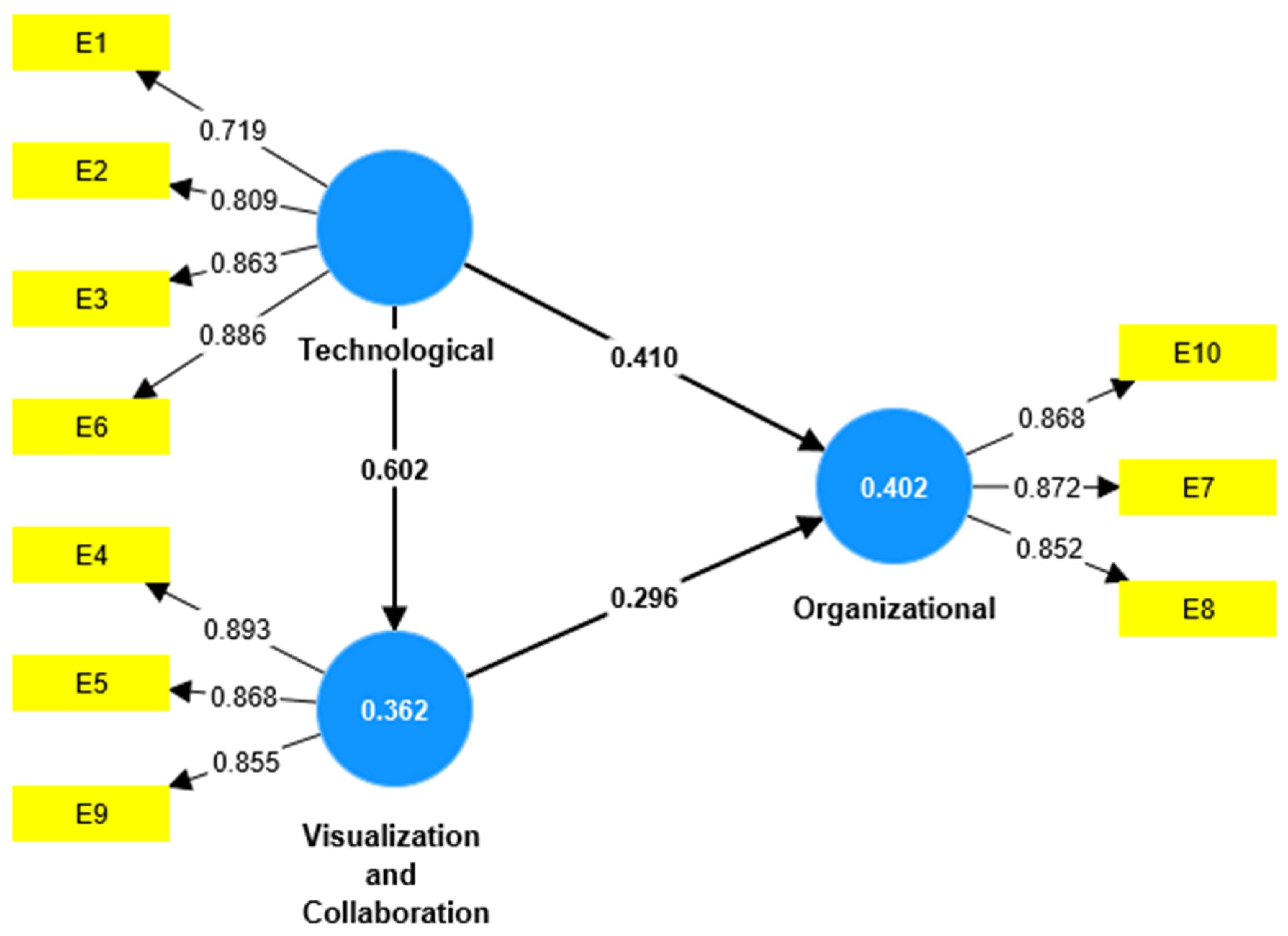
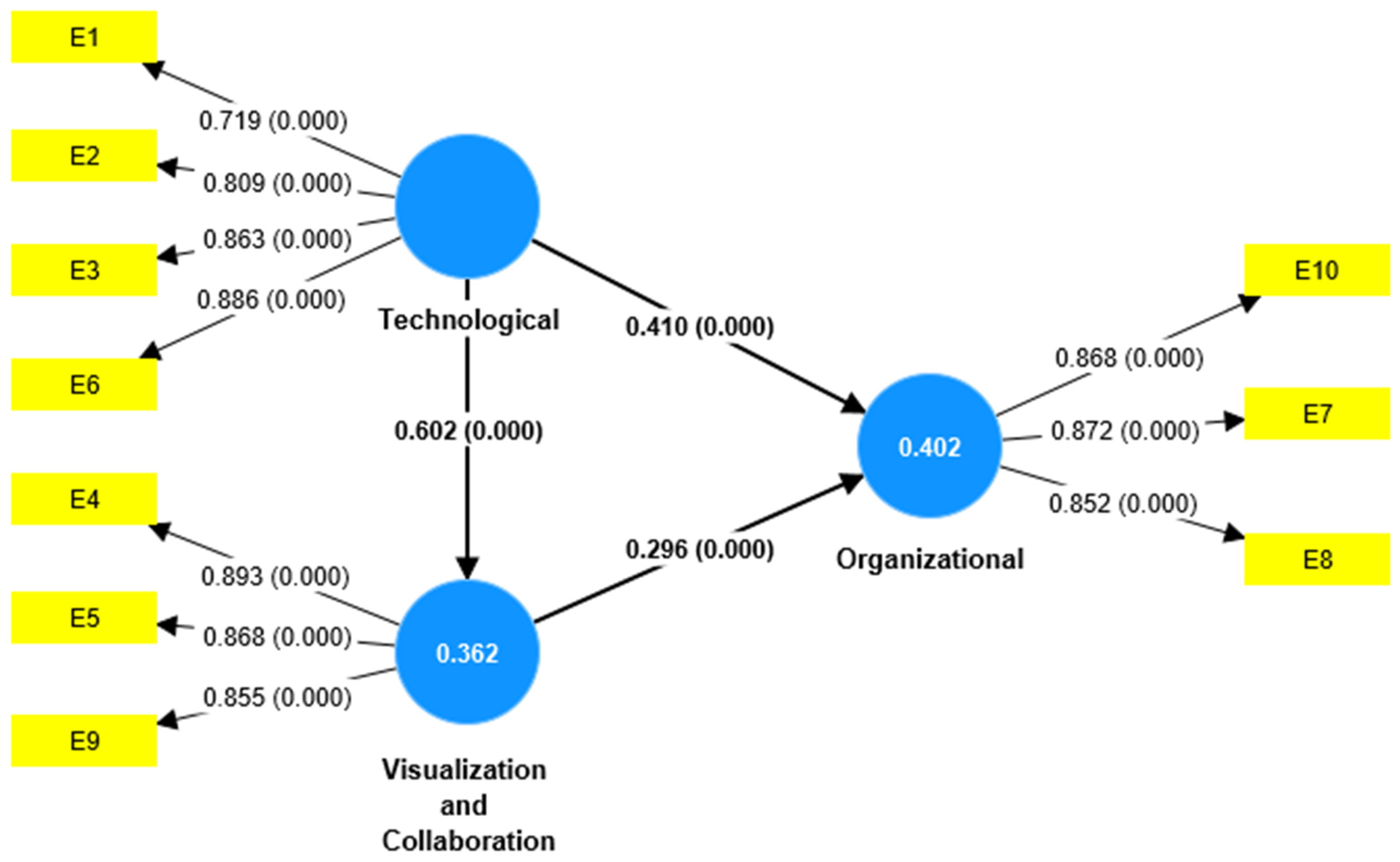
H1: The technological enablers associated with implementing Industry 4.0 are positively correlated to the visualization and collaboration enablers.
H2: The technological enablers associated with implementing Industry 4.0 are positively correlated to the organizational enablers.
H3: The organizational enablers associated with implementing Industry 4.0 are positively correlated to the visualization and collaboration enablers.
The structure of this paper is organized as follows:
Section 1 introduces the research background and research gap.
Section 2 presents the enablers of Industry 4.0 implementation extracted from prior literature.
Section 3 provides detailed descriptions of the identified enablers and development of the conceptual model.
Section 4 explains the methodology, including the structural equation modeling (SEM) approach using PLS-SEM and CB-SEM.
Section 5 presents the data analysis and empirical results.
Section 6 discusses the findings, along with theoretical implications and practical contributions. Finally,
Section 7 concludes the study and outlines future research directions.
Research Objectives
The primary objective of this research is to identify, categorize, and empirically validate the key enablers that support Industry 4.0 implementation in manufacturing organizations. Specifically, this study aims to:
Identify and categorize Industry 4.0 enablers into technological, organizational, and collaborative/visualization factors through a comprehensive literature review.
Develop and validate a conceptual model using PLS-SEM and CB-SEM to examine the relationships among these enablers.
Investigate the mediating role of collaborative visualization mechanisms between technological and organizational enablers.
Provide theoretical and practical contributions by linking Industry 4.0 adoption to sustainability-oriented performance improvements.
4. Methodology for Structural Equation Modeling
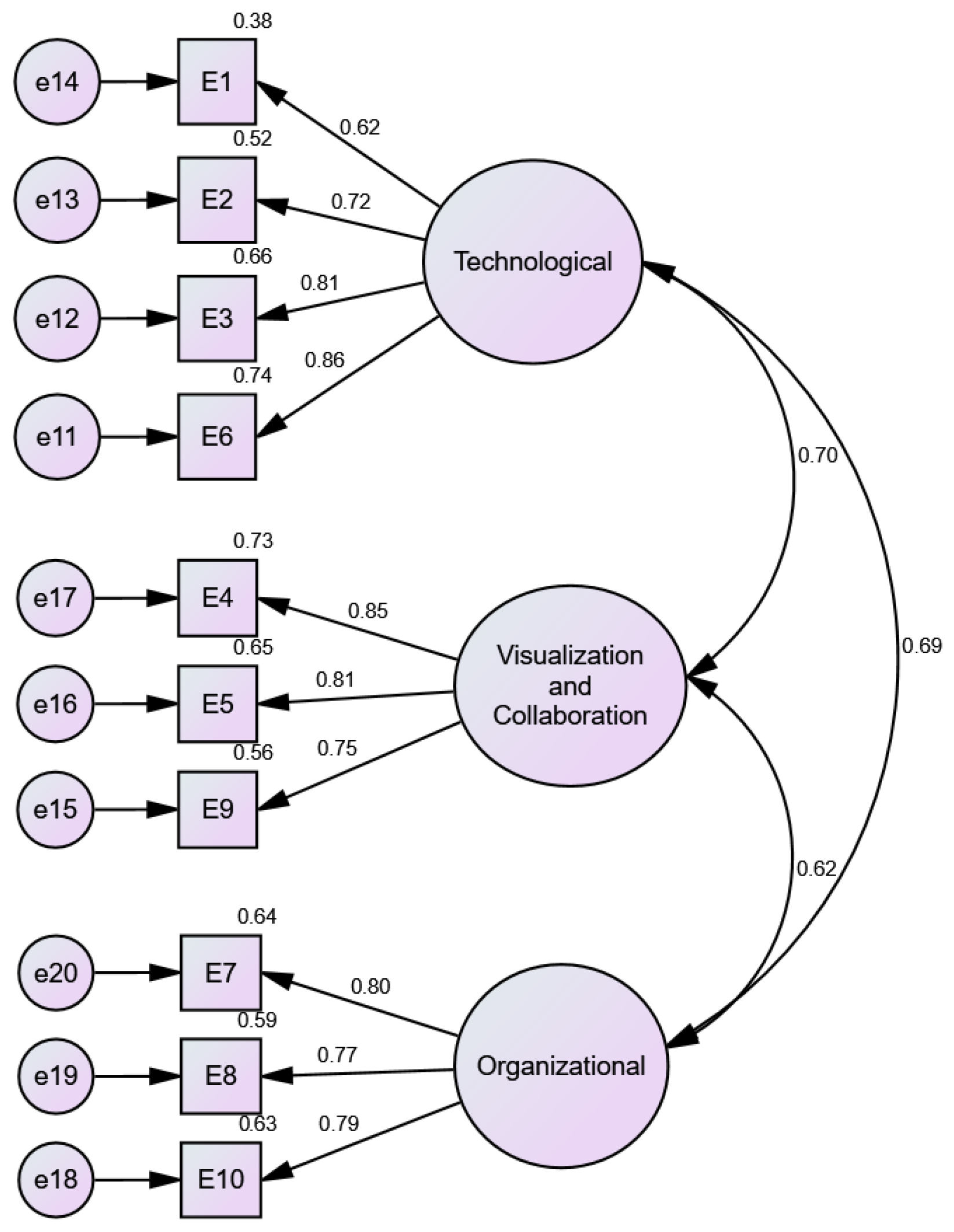
A collection of linear relationships is analyzed using structural equation modeling (SEM) within a structured framework, with the goal of assessing the degree to which the proposed model matches the real data. The structural equation modeling (SEM) process began by developing measurement items based on the 35 sub-enablers identified in the literature review, which were grouped into 10 enabler constructs. An exploratory factor analysis (EFA) was then performed to refine the measurement set, eliminating items with low communalities, cross-loadings, or insufficient factor contributions. The resulting refined factors were subsequently used to establish the final measurement model. The initial step in SEM typically involves developing a visual representation of the proposed model, known as a “path diagram,” which is grounded in existing theories or prior research. In these diagrams, measured variables are shown as rectangles, while latent or unobserved variables—those inferred from measured data—are illustrated using circles or ovals. Single-headed arrows indicate assumed directional influences between variables (i.e., one variable has a direct effect on another), while double-headed arrows depict mutual associations or correlations. Some researchers prefer using the term “arc” instead of “causal path” to describe these connections [
42].
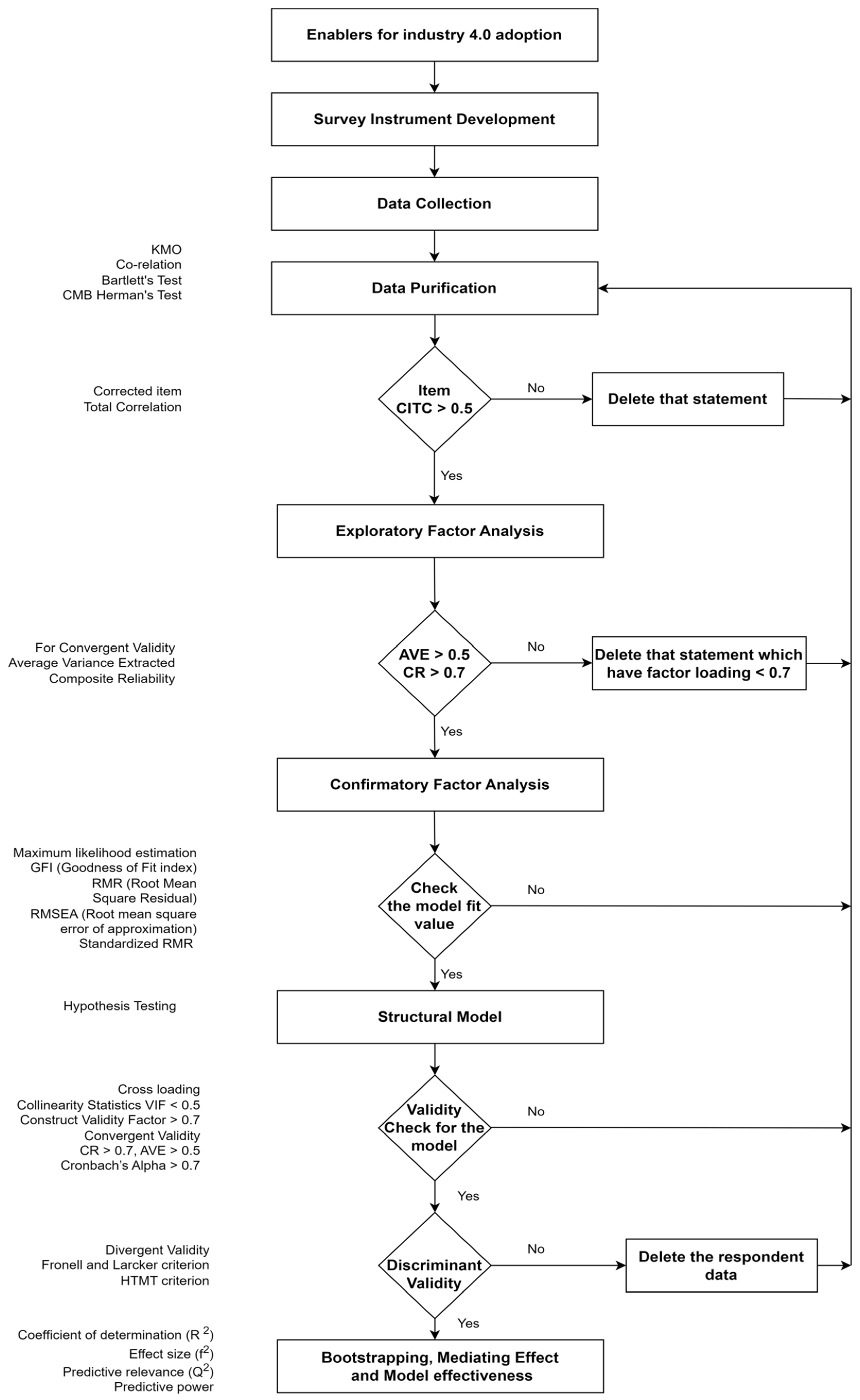
Figure 1 provides a comprehensive depiction of the research strategy that was used for this investigation. In this research, a dual approach using Partial Least Squares Structural Equation Modeling (PLS-SEM) and Covariance-Based SEM (CB-SEM) was adopted to enhance methodological rigor. PLS-SEM was first employed, as it is particularly effective in analyzing formative constructs, managing complex interrelationships, and addressing datasets that may deviate from normality. Its predictive orientation also enabled the assessment of variance explained in the main constructs. Once predictive relevance was established, CB-SEM was applied to evaluate the overall model fit and confirm the theoretical framework. The integration of these two techniques combines the advantages of both approaches—PLS-SEM contributes predictive power and variance explanation, while CB-SEM provides model validation and theory testing. This complementary strategy ensures a more robust and coherent analysis.
The SEM analysis was conducted in two phases, following established SEM guidelines. In Phase 1 (PLS-SEM), the measurement model was evaluated by examining indicator reliability (factor loadings ≥ 0.70), internal consistency reliability (Cronbach’s alpha and composite reliability ≥ 0.70), and convergent validity (average variance extracted [AVE] ≥ 0.50). Discriminant validity was assessed using both the Fornell–Larcker criterion and the Heterotrait–Monotrait ratio (HTMT ≤ 0.85). In Phase 2 (CB-SEM), model fit indices were examined, including SRMR ≤ 0.08, CFI ≥ 0.90, TLI ≥ 0.90, and RMSEA ≤ 0.08. Indicators that did not meet these criteria were iteratively removed, guided by theoretical justification and modification indices. This two-step approach allowed predictive assessment (PLS-SEM) and confirmatory validation (CB-SEM), ensuring robustness and methodological rigor of the final model.
4.1. Measurement Items
A well-structured questionnaire was developed to assess the enablers for Industry 4.0 implementation. Participants were asked to rate each enabler using a 5-point Likert scale, where 1 represented “no impact” and 5 indicated “very high impact,” with intermediate values indicating increasing levels of impact. This scale type is widely employed in research as it simulates an interval scale, enabling further statistical evaluation by ensuring consistent spacing between response options. It also encourages respondents to make clear and definite choices. The questionnaire underwent a two-phase pre-testing process. Initially, the draft was reviewed by two academicians who evaluated the items in terms of clarity and specificity. Their recommendations led to revisions aimed at improving the accuracy and phrasing of several questions. In the second stage, the refined questionnaire was given to research scholars, who completed it and highlighted any unclear or ambiguous items for further refinement. They were also invited to suggest improvements. This phase included participation from nine research scholars belonging to the Industrial and Production Engineering Department at Punjab Engineering College, Chandigarh. To ensure participants had a consistent understanding of the Industry 4.0 enablers, detailed descriptions were included with each item.
Appendix A contains the finalized questionnaire, while
Table 1 outlines the measurement indicators associated with each construct, along with the references from which they were adapted.
4.2. Population and Sampling
The research focused on the Indian manufacturing sector as the target population, with survey questions tailored specifically to evaluate the enablers of Industry 4.0 adoption. The primary objective was to examine these enablers affect the adoption of Industry 4.0 technologies. Data was gathered from various manufacturing sectors, including automotive parts, paper production, and steel industries. Simple random sampling technique was employed to provide equal selection opportunities for all units, thereby improving the representativeness of the results. Around 600 senior executives—comprising senior managers and higher-level professionals from manufacturing and production departments—were contacted via email. The message included a survey link, outlined the research’s purpose and background, and assured participants that their answers would be kept private and anonymous. The sample size for PLS-SEM was determined using the rule of thumb, selecting a number at least ten times the largest number of arrows directed toward any construct. For CB-SEM, the sample followed the guideline of 5 to 10 cases per estimated parameter to ensure sufficient statistical power and reliable outcomes. Simple random sampling was applied to meet the study objectives while minimizing selection bias. To enhance representativeness, participants were selected to reflect the demographic and contextual characteristics of the target population. Non-response was managed through follow-up email reminders, and the final dataset was evaluated for non-response bias, with statistical corrections applied as needed. These measures collectively reinforce the study’s methodological rigor and the validity of its results.
4.3. Data Collection
Data for the research was gathered between October 2022 and January 2023, during which 182 completed questionnaires were received out of the 600 distributed. This corresponds with the typical response rate in the Indian manufacturing sector, which generally falls between 30% and 35%. An initial sample size of 182 was considered adequate to investigate the targeted effects. Subsequently, the collected data were thoroughly cleaned and prepared to ensure accuracy and readiness for subsequent analysis. Five questionnaires were identified as exhibiting straight-lining behavior, where respondents were eliminated for repeatedly choosing the same response over a large number of questions. This reduced the dataset to 177 responses. Further examination revealed issues related to discriminant validity, leading to the removal of an additional 9 questionnaires with highly correlated responses. As a result, the final dataset comprised 168 valid responses used for the analysis. The data for this study were collected using a simple random sampling technique from 182 Indian manufacturing firms operating in diverse sectors such as automotive, electronics, textiles, and machinery. This approach ensured a broad industrial representation and minimized selection bias. Respondents were primarily mid- to senior-level managers involved in production, quality, or digital transformation functions, ensuring informed responses relevant to Industry 4.0 adoption.
The data for this study was collected between October 2022 and January 2023. After data collection, the research team proceeded through multiple structured phases, including: (i) iterative model development using PLS-SEM and CB-SEM, (ii) comprehensive assessment of construct validity and reliability (AVE, CR, HTMT, model fit indices), and (iii) manuscript drafting and revisions based on internal and external feedback. These activities required several cycles of analysis and refinement prior to submission. Although the data collection occurred earlier, the factors examined—such as digital infrastructure readiness, managerial commitment, financial investment, technological capability, and workforce development—are strategic, long-term enablers of Industry 4.0 that do not change abruptly. Thus, the dataset continues to accurately represent the current industrial context.
6. Discussion, Theoretical Implications, and Practical Implications
6.1. Discussion
This research enhances the theoretical understanding of Industry 4.0 adoption by moving beyond descriptive insights to propose a more comprehensive framework. Unlike earlier models that mainly focused on technological readiness and financial investment, the findings emphasize the pivotal role of organizational culture, digital capabilities, and workforce reskilling as mediating elements influencing adoption outcomes. By incorporating these aspects, the study refines existing models and presents a framework that more accurately reflects the complexities of adoption in emerging economies. The contribution provides a structured classification of enablers and challenges, extending current theories of Industry 4.0 adoption and offering a solid foundation for future empirical studies and managerial practice. This complements previous studies such as Gadekar et al. [
3] and Krishnan et al. [
60], which addressed I4.0 readiness without incorporating visualization and collaboration as mediating constructs.
6.2. Theoretical Implications
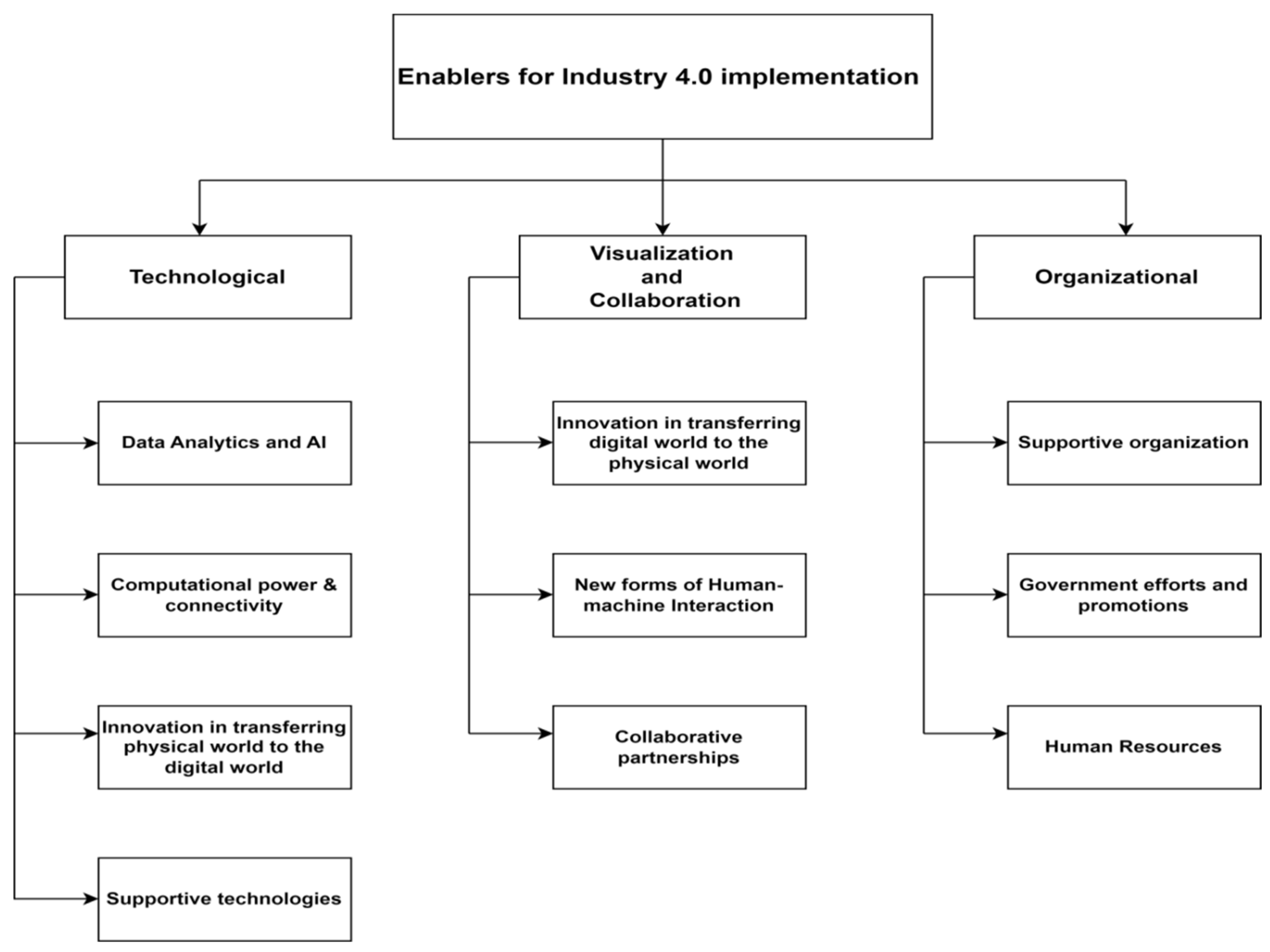
This study provides several theoretical contributions to the literature on Industry 4.0 (I4.0) adoption. First, by identifying ten key enablers and grouping them into three overarching factors, the research enhances existing adoption frameworks that have often been fragmented or focused narrowly on technological readiness. This hierarchical organization offers a more integrative taxonomy of adoption enablers, encompassing technological, organizational, and human-centered dimensions, thereby extending prior models that addressed only select aspects.
Second, the study demonstrates that visualization and collaboration serve as a mediator between technological enablers and organizational readiness, adding a novel perspective to socio-technical adoption theory. While previous research highlighted the need for organizational alignment, the findings empirically show that visualization tools and collaborative practices are critical mechanisms through which technological investments lead to enhanced organizational preparedness. This mediation clarifies the causal pathway, illustrating that technological capabilities must be embedded within social and organizational contexts to effectively support adoption.
Collectively, these contributions deepen the theoretical understanding of I4.0 adoption by presenting both a structured taxonomy of enablers and an empirically validated mechanism linking technology to organizational readiness via collaborative dynamics.
6.3. Practical Implications
The study’s findings offer valuable guidance for both practitioners and policymakers engaged in Industry 4.0 transformation initiatives. The ten identified enablers—organized into three higher-order factors (technological, visualization and collaboration, and organizational)—provide managers with a structured and measurable framework to prioritize the sequence of interventions rather than treating enablers in isolation. This taxonomy allows firms to assess their internal readiness, identify weak enabler dimensions, and allocate resources toward targeted capability development.
The mediating role of visualization and collaboration demonstrates that technological investments alone are insufficient. Effective Industry 4.0 adoption requires integration of digital visualization tools (e.g., digital twins, real-time dashboards, simulation environments) along with enhanced cross-functional collaboration. Thus, beyond technology acquisition, managers should focus on workforce training, cross-team communication, and digital governance structures to ensure alignment between technology, processes, and people.
From a policy perspective, this research highlights the need for enabling mechanisms such as workforce upskilling programs, incentives for technology acquisition, and shared digital innovation platforms to support collaborative experimentation. Moreover, the findings show that Industry 4.0 adoption directly contributes to sustainable and resource-efficient production by enhancing transparency, reducing waste, improving traceability, and supporting circular economy practices. Aligning Industry 4.0 initiatives with sustainable development strategies can accelerate progress toward SDG 9 (Industry, Innovation, and Infrastructure) and SDG 12 (Responsible Consumption and Production). Overall, this study translates theoretical insights into actionable strategies, enabling firms to adopt Industry 4.0 in a more structured, collaborative, and sustainability-oriented manner.
Recent industrial developments indicate a progression from the automation-focused paradigm of Industry 4.0 to the emerging Industry 5.0 framework, where technological innovation is complemented by human-centricity, resilience, and sustainability. The findings of this study reflect this shift, as they highlight the importance of organizational preparedness, sustainable operations, and effective integration of technology with human capabilities. These insights suggest a movement from a technology-centric approach (Industry 4.0) toward a balanced framework in which digital transformation enhances human value and supports long-term sustainable growth (Industry 5.0). In addition, a comparison with studies from other sectors-such as automotive, electronics, and process-based industries reveals similar patterns. Across these diverse environments, interoperability, data-driven decision making, and sustainability-focused technologies consistently emerge as key success factors. This alignment demonstrates that the enablers identified in this research are not limited to the specific context studied but are broadly relevant across industries undergoing digital transformation.
7. Conclusions
This study systematically reviewed the literature to identify ten key enablers 35 associated sub-enablers that are crucial for effectively implementing Industry 4.0 into practice in the industries of manufacturing. Although Industry 4.0 has matured and several core technologies—such as IoT, big data analytics, cyber-physical systems, robotics, and AI—are already deployed across many sectors, research into these enabling factors is still developing. Emerging study point to new enablers, including blockchain integration, enhanced human–machine collaboration, machine-learning-based automation, and machine-to-machine connectivity, which are shaping the next stage of digital manufacturing. Even with these technological advancements, there is still a noticeable shortage of comprehensive exploratory, comparative, and descriptive studies that examine how these enablers operate across diverse industrial environments, particularly in developing economies. This study addresses part of that gap by presenting a unified and empirically tested framework that offers deeper insights into the critical elements influencing Industry 4.0 adoption. The model was confirmed through empirical data gathered from 182 manufacturing companies in India. This paper advances the field by providing insightful answers to four important research issues. First, the main contributions of the reviewed publications are presented for future researchers to reference.
Second, data analytics and AI, computing power and connection, innovation in moving the physical world to the digital world, and supported technologies all have a significant impact on supporting organizations, government initiatives and promotions, and human resources for Industry 4.0 adoption. They will also have an impact on collaborative partnerships, innovative human–machine interactions, and innovation in the transfer of digital world to the physical world. In conclusion, this study investigated a single mediating effect. The results indicate that visualization and collaboration serve as significant mediators in the link between technological enablers and organizational enablers. The study offers practical guidance for industry professionals, emphasizing the importance of prioritizing data analytics, artificial intelligence, computing capabilities, and robust connectivity to successfully navigate digital transformation and implement Industry 4.0 initiatives. Policymakers can also strengthen supportive technology and government activities and promotions to help manufacturing industries accelerate Industry 4.0 adoption. This study highlights the key enablers of Industry 4.0 adoption and places them within the framework of sustainable production and consumption. By combining technological, organizational, and collaborative capabilities, firms can enhance their digital readiness, optimize resource use, reduce waste, and implement circular production practices. The findings indicate that digital adoption not only drives operational efficiency but also promotes environmental and social sustainability. These insights can guide policymakers and industry leaders in developing integrated strategies that connect digital transformation with circular economy initiatives and broader sustainability targets. Overall, the research advances both theoretical understanding and practical application by linking Industry 4.0 adoption to more sustainable, responsible, and policy-aligned industrial practices. The results align with studies from Malaysia, Germany, and Thailand, confirming the universal importance of technological readiness, organizational support, and workforce competence in driving Industry 4.0 adoption.
This study is limited by its cross-sectional design, which allows for identifying associations but not establishing causality. Additionally, with 61% of respondents from the automotive sector, the findings may reflect industry-specific dynamics and may not generalize across all manufacturing sectors.
Future Research Directions
Future work could test the proposed framework using longitudinal data, cross-sectoral comparisons, and multi-group SEM to validate sector-specific differences and dynamic evolution of enablers over time. Additionally, applying this model in cross-country contexts would improve generalizability, as Industry 4.0 adoption varies significantly across nations due to differences in digital readiness, policy support, and technological maturity. Such comparative studies would offer deeper insights into how national digital ecosystems shape Industry 4.0 adoption pathways.