Abstract
Purpose: The purpose of this paper is to explore how perceptions of digital health transformation play a role in Saudi Arabia’s customer engagement in healthcare, according to Vision 2030. Saudi Vision 2030, a national reform agenda, has prioritized healthcare digitalization to enhance efficiency, access, and patient-centered care. In particular, the research attempts to explore the attitude of the patient and whether cultural values and infrastructure issues play a mediator role in the perception–engagement relationship. Design/methodology/approach: The study used a mixed-method approach, with qualitative interviews from providers and consumers, along with survey responses from 402 users of digital health. Partial Least Squares Structural Equation Modeling (PLS-SEM) was used to examine hypothesized relationships and moderation effects. Findings: Findings establish that digital health perceptions are a crucial driver in enhancing engagement (β = 0.386; p < 0.001). Perceived ease of use (β = 0.368) and usefulness (β = 0.530) exhibited strong positive influences. Moderation analysis revealed that cultural values (β = 0.343) and infrastructure (β = 0.253) further enhance engagement. The findings highlight usability, usefulness, and context as foundational enablers of long-term patient engagement. Originality/value: By combining Technology Acceptance Model (TAM) variables and applying cultural and infrastructural moderators, this research provides new empirical evidence of Saudi Arabian digital health adoption. It provides policy and practical advice in the creation of accessible, culturally appropriate, and adequately supported digital health solutions toward Vision 2030. It also supports United Nations Sustainable Development Goals (SDGs). The study aligns with SDG 3 (Good Health and Well-Being), SDG 9 (Industry, Innovation and Infrastructure), SDG 12 (Responsible Consumption and Production) and SDG 13 (Climate Action) by further promoting sustainable healthcare transformation in a global development agenda.
1. Introduction
The healthcare revolution in medical terms has significantly transformed patient interaction and service delivery globally, with Saudi Arabia exemplifying this shift through several concrete initiatives [1]. The transformation involves moving from paper-based, in-person healthcare services to an integrated digital ecosystem that includes telemedicine consultations, electronic health records (EHRs), AI-assisted diagnosis, and mobile health applications [2]. These changes have enabled faster access to care, reduced physical hospital visits, enhanced diagnostic accuracy, and improved continuity of care through interoperable patient records [3,4]. Under Saudi Vision 2030, the nation has aggressively expanded electronic health programs, empowered the private sector’s role, and introduced user-friendly e-health platforms that make healthcare more accessible and efficient [5]. A key milestone is the launch of the SEHA Virtual Hospital, launched in 2022, is the world’s largest virtual hospital, connecting more than 150 hospitals and offering over 30 specialized telemedicine services, which is now the world’s largest virtual facility, linking over 150 hospitals and delivering more than 30 specialized telemedicine services remotely [6]. This resulted in eliminating geographical barriers and streamlining specialist consultations [7].
Vision 2030 is not only a development strategy but also a comprehensive change program for strategic change to reconfigure the health sector [8]. As a change management approach, it is a conventional top-down transformation driven by government leadership to transform healthcare delivery, digitalize services, and move towards value-based care [9]. This is characteristic of strategic change models in which leadership vision, stakeholder alignment, and long-term reorganization are highlighted [10,11]. Vision 2030 is thus a change in the healthcare delivery system. Saudi Arabia’s digital health experience is thus a process of change with specific reference to the impact on patient behavior, infrastructural preparedness, and system level adoption [12,13].
Despite these advancements, there remains a wide knowledge gap of customer attitude and engagement with digital healthcare in Saudi Arabia [14]. Low ease of use perception and perceived usefulness issues have been cited as principal barriers to large-scale adoption of digital healthcare technology [15,16]. In Saudi Arabia, 45% of patients are dissatisfied with telemedicine services because of complicated user interfaces, resulting in low adoption rates [17,18]. These negative perceptions lead to low use, healthcare investment wastage, and delivery inefficiencies, finally restricting the full potential of digital transformation to improve healthcare access and patient outcomes [19].
To improve customer interaction, perceived ease of use and perceived usefulness need to be increased [15,20]. Streamlining telemedicine interfaces by usability testing and iterative design refinement can improve perceived ease of use, allowing online platforms to be more accessible to a wider patient population [21]. Enhancing data security transparency by end-to-end encryption and real-time privacy dashboards can improve perceived usefulness by minimizing privacy issues and establishing trust [22]. Furthermore, digital literacy initiatives can equip patients with the information and confidence to use digital health tools properly, leading to increased adoption and long-term engagement [23].
Beyond these direct effects, cultural beliefs and infrastructural aspects serve to mediate the uptake of digital health [24]. Variations in the presence of technology, the health infrastructure, and social norms for digital health adoption have the potential to enhance or undermine the effect of perceived ease of use and perceived usefulness as drivers of customer engagement [25]. Where cultural suitability of digital healthcare services is present, together with proper integration into the healthcare framework, patients are more likely to accept such solutions [26]. Even the most well-designed digital platforms may face low adoption if they are introduced in settings with poor digital infrastructure and limited trust in technology-based healthcare [27,28,29].
These initiatives are consistent with the United Nations Sustainable Development Goals (SDGs). Sustainable healthcare reforms directly contribute to SDG 3 by ensuring healthy lives and promoting well-being, SDG 9 by advancing innovation and digital health infrastructure, SDG 12 by improving resource efficiency and reducing waste, and SDG 13 by supporting climate action through energy-efficient healthcare practices. This positions Saudi Arabia’s Vision 2030 reforms within a global framework for sustainable development.
This paper seeks to examine the effects of perceived ease of use and perceived usefulness on customer participation in digital healthcare services in Saudi Arabia. It also seeks to examine the moderating effect of infrastructural and cultural forces on the adoption and engagement nexus in the country. Specifically, the study seeks to answer the following research questions:
- Do patients’ perceptions of digital health technologies significantly impact their engagement with digital healthcare services in Saudi Arabia?
- (1a) Does the perceived ease of use of digital health transformation significantly impact customer engagement to digital health transformation in Saudi Arabia?
- (1b) Does the perceived usefulness of digital health transformation influence customer engagement to digital health transformation in Saudi Arabia?
- Do cultural values moderate the relationship between the perception of digital health transformation and customer engagement to digital health transformation?
- Do infrastructural factors moderate the relationship between the perception of digital health transformation and customer engagement to digital health transformation?
Despite the extensive research on digital health adoption, relatively less research has been conducted to Saudi Arabia [30], i.e., customer attitudes and infrastructural-cultural differences’ impact on digital health adoption [25,31]. Research has largely focused on technological advancements and policy-oriented adoption, rather than human-related factors and locally relevant factors in driving effective uptake of digital healthcare [32]. By combining TAM constructs with infrastructural and cultural variables as a moderator, this research fills the gap by evaluating how perceived ease of use and perceived usefulness propel customer engagement in various healthcare contexts [33].
This research study will start with an introduction describing why digital transformation matters for healthcare, enumerating the key challenges pertaining to customer engagement, and stating the research problem and objectives. Literature review will consider existing research work on adoption of digital health, TAM, and Saudi Arabian healthcare policy. The methodology section will outline the research design, sampling frame, survey tools, and analysis steps employed in measuring customer engagement, perceived ease of use, and perceived usefulness in exploring the moderating role of cultural and infrastructural variables. The presentation and discussion of main results section will emphasis on the important trends in digital health participation. The discussion will translate these results into policy implications and strategic suggestions for enhancing customer engagement in online healthcare services. The conclusion will outline the key findings of the study, declare its limitations, and propose avenues for future research.
2. Literature Review
2.1. Digital Health Transformation
Digital health transformation refers to the incorporation of innovative digital technologies into healthcare for improved accessibility, efficiency, and patient outcomes. Digital health transformation involves telemedicine, electronic health records (EHRs), artificial intelligence (AI)-enabled diagnostics, wearable health technology, and mobile health applications (mHealth) [34]. The world’s application of digital health has been greatly influenced by technological advancement, regulatory support, and perceptions of ease of use and usefulness [35]. The adoption of digital health solutions is on the rise, having boosted patient engagement and care provision across different countries. However, digital literacy gaps, data security, privacy, and technophobia are major barriers [36].
The COVID-19 pandemic was a major impetus for digital health transformation, with the accelerated adoption of remote healthcare technology, such as teleconsultations and artificial intelligence-driven diagnostic technology [37]. Evidence has confirmed that the greatest use of digital health services by patients occurs when services are simple to use, easily accessible, and lead to tangible health benefit [38]. Although the efficacy of electronic health solutions differs across the world, it generally depends on socio-economic, technical, and infrastructural differences [39].
Saudi Arabia has pursued digital health transformation paths at varying rates and scales in the Middle East [40,41,42]. There is high mobile penetration, though use of digital media is prevented by unreliable internet connections and lack of proper healthcare IT infrastructure. Nevertheless, state-led programs, including the digitalization of healthcare records and increase in telemedicine facilities, are striving to bridge this deficit [43].
On the other hand, Saudi Arabia is the regional leader in driving digital health change because of its vision 2030 strategy that targets AI-pitch healthcare solutions, the EHR-based rollout nationwide, and government-covered telemedicine [44]. Such growth notwithstanding, the existing cultural preference for face-to-face consultations and perceptions towards AI-aided diagnoses continue to influence uptake levels among various social constituencies. While urban regions present high rates of interaction with online health platforms, rural regions remain hindered by issues pertaining to digital literacy and infrastructure [14,45].
2.2. Perception of Digital Health Transformation
Patient understanding of digital transformation in health is influenced by a set of cognitive and behavioral determinants, and the perceived ease of use and perceived usefulness are the most accurate predictors of adoption [46,47,48]. They decide whether patients choose to incorporate digital health solutions into their healthcare practice and the frequency of usage. While global progress in digital health tried to make access to healthcare more straightforward, digital literacy disparities, infrastructure, and technology trust continue to affect patients’ attitudes [36,49].
2.2.1. Perceived Ease of Use
Perceived ease of use is the ease with which patients can access and use digital health platforms, including system design interface, intuitive navigation, and required technical know-how [50,51]. The easier patients find digital health to use, the higher the probability they will adopt and use them regularly [52]. In mature online environments, like Saudi Arabia, healthcare practitioners are concerned about improving user convenience via AI-driven chatbots, language capabilities, and streamlined telehealth appointment scheduling to enable convenience [53,54,55,56].
Perceived ease of use measures includes measuring user interaction measures, such as time taken to finish a health activity on an e-platform, help requests, and how satisfied patients are with the e-platform usage. Questionnaires with established scales, such as the Technology Acceptance Model (TAM) or the System Usability Scale (SUS), yield quantitative data on how easy it is for patients to use digital healthcare solutions [57].
2.2.2. Perceived Usefulness
Perceived usefulness refers to the extent to which patients believe that digital health technologies enhance the quality of the patient experience through enhanced efficiency, less waiting time, and correct diagnoses [58,59]. Patients are likely to embrace digital health solutions if they think that there are real benefits in seeing specialists more quickly, AI-driven diagnostics, and tracking long-term diseases [60]. In Saudi Arabia, where the health infrastructure is stronger in the digital sphere, perceived usefulness is key to driving adoption, with patients actively evaluating if telemedicine services and electronic health records (EHRs) make healthcare easier to access and decision-making more convenient [14,61,62,63].
Perceived usefulness can be assessed mainly by using patient-reported outcome questionnaires to assess the level of satisfaction with electronic health tools and self-reported increased access to healthcare. Reductions in hospitalization, time saved, and compliance with electronic healthcare advice are useful measures with quantitative measures of usefulness. Comparison studies of health outcomes before and after the adoption of electronic health in various healthcare settings also provide empirical evidence of perceived usefulness between settings [15,64].
2.3. Engagement with Digital Health Services
Patient engagement of digital healthcare is the extent to which individuals actively use, trust, and depend on digital healthcare solutions over and over. Theoretical frameworks, e.g., Unified Theory of Acceptance and Use of Technology (UTAUT), identify the significant drivers of engagement as performance expectancy, effort expectancy, social influence, and facilitating conditions [16,65]. Moreover, factors like data privacy, personalization of the user interface, and improved patient-caregiver communication are critical long-term participation predictors [66].
Refs. [56,67] declared that the patients need further guarantees of data protection practices to feel comfortable using digital healthcare services. In Saudi Arabia, the rates of interaction are higher, driven by strong government backing and advanced digital infrastructure [68]. However, cultural preferences for face-to-face consultations continue to play a role in shaping engagement patterns, particularly among older adults and in rural communities [69].
2.3.1. Frequency of Digital Health Platform Usage
The rate of adoption of digital health platforms is one of the most important indicators of participation, which measures the time of patient participation in telemedicine, mHealth, and EHRs. Frequent participation is commonly associated with the positive experience, simplicity, and perceived advantages of the platforms [70,71]. Evidence indicates that the rate of usage is higher in countries with strong digital health ecosystems, like Saudi Arabia, due to smooth integration with primary care services and government-supported telehealth [14,56,72,73].
Usage frequency is measured by monitoring login activity, virtual consultation counts, and frequent use of digital healthcare technology. Analytical data from the telehealth platform and mHealth app are monitored by providers for measuring engagement levels and patient patterns of behavior [74,75]. Self-reported usage frequency and patterns of digital health adoption are also evaluated using surveys for measuring how frequently patients use these technologies [4,76].
2.3.2. Willingness to Continue Using Digital Health Solutions
Other than initial adoption, readiness to reuse digital health solutions is an indicator of continued use and satisfaction with such services. Such use is closely associated with the patient experience of usability in systems, data protection, and consistency of service [35,77]. Research indicates that there is a likelihood of continued use when patients feel that digital health solutions are trustworthy and helpful [78]. In Saudi Arabia, where health policy is highly encouraging digital transformation, patient retention in telemedicine services is pretty high [79].
Readiness to sustain the usage of digital health solutions can be measured with patient satisfaction questionnaires, follow-up interviews, and return visit behavior analysis to digital platforms. Longitudinal patient activity studies by months or years offer evidence of sustaining digital health adoption [80,81,82].
2.3.3. Satisfaction with Digital Healthcare Experiences
Patient satisfaction is among the determinants of engagement, which reflects the attitude of people towards the quality of service, how effective the service is, and confidence in e-health systems. Ease of use, accessibility, response time by providers, and perceived health outcomes improvement are determinants that build satisfaction [83,84,85]. In Saudi Arabia, high digital health satisfaction is a result of the availability of AI-based diagnostics, the smooth incorporation of telehealth with face-to-face care, and government-funded quality assurance schemes [86,87,88,89].
Satisfaction is best quantified through patient experience surveys, Net Promoter Scores (NPS), and control studies of electronic versus traditional care outcomes. Live feedback mechanisms built into telemedicine apps also work because they provide immediate feedback on perceptions along with guidance to improvement areas [90,91].
2.4. Cultural Influences on Digital Health Transformation
Cultural values strongly influence the uptake and usage of digital health technologies that influence the way in which individuals perceive, accept, and adopt such solutions into healthcare practices [26,92]. In collectivist cultures like Saudi Arabia, health choices are strongly embedded in family and social settings, with major dependence on relatives’ authority, social elites’ influence, and government support [93,94,95,96]. The cultural framework affecting digital health transformation can be examined through three key dimensions:
2.4.1. Other-Oriented Values
Social influence is important in the use of digital health technology [97]. In collectivist culture, digital healthcare solutions will be adopted by individuals if they are supported by people whom they trust, such as family members, doctors, or priests [98,99,100,101]. Personal word-of-mouth and suggestions are strong drivers for healthcare decisions in Arab countries, as the patient usually emulates the experience of direct relatives before they use digital media [102]. Endorsements by religious leaders and government-sponsored initiatives have increased the level of trust towards digital healthcare services in Saudi Arabia [103]. Such recommendations have promoted patients towards the adoption of telemedicine, electronic health records (EHRs), and AI diagnosis as safe and effective healthcare technology [104].
The measurement of the effectiveness of other-oriented values to promote the adoption of digital health will call for the use of survey research on patient utilization based on social endorsement, and an examination of trends regarding digital health adoption following endorsements from governments or communities [105].
2.4.2. Environment-Oriented Values
Sustainability of the environment of digital health as a substitute for conventional healthcare services is increasingly shaping adoption trends. Digital health technologies, including telemedicine and electronic prescribing, minimize the environmental footprint of healthcare by decreasing hospital attendance, decreasing transport emissions, and minimizing medical waste [106]. In Saudi Arabia, where sustainability is increasingly a matter of national policy, increasing environmental awareness—urban especially—is working to fuel demand for digital health services. Public policy favoring telemedicine as a green alternative for healthcare has also fueled uptake [45,107].
Nonetheless, focused campaigns for awareness emphasizing the green advantage of digital health will improve public sentiment and facilitate increased use of digital health platforms on a larger scale.
The effect of environment-oriented values on telemedicine development can be estimated through the use of patient perception surveys, correlation testing of environmental awareness with the application of telemedicine, and policy-directed adoption trend testing [108].
2.4.3. Self-Oriented Values
Personal preferences regarding convenience, autonomy, and liberty over health encounters are paramount in the adoption of digital health solutions. Technologically advanced younger individuals in Arab countries are more inclined towards embracing digital health, and they appreciate the convenience of access and time expansion through telemedicine and mobile health apps [109]. Older adults resist and assert that they face obstacles based on digital literacy and aversion to consulting doctors in person. Likewise, in Saudi Arabia, urban professionals are keen on AI-based diagnostics and telemedicine services, perceiving the potential in their capacity to improve healthcare effectiveness and decision-making [54]. However, face-to-face interaction with healthcare providers is preferred by traditional societies, with cultural expectations of personal relationships in medical services.
Measurement of self-oriented values in digital health adoption includes the measurement of patient preference using surveys, monitoring demographic trends of telehealth utilization, and measuring behavioral indicators of utilization of digital health platforms. Qualitative measures like interviews and focus groups also give insight into individual motives and concerns for digital health transformation [110].
2.5. The Role of Infrastructure in Digital Health Transformation
Health infrastructure—ranging from internet access, digital literacy programs, and telemedicine adoption—forms the core pillar of the successful uptake of digital health services [111]. A highly developed digital environment enables mass consumption, improves patient experiences, and assists healthcare professionals in providing uninterrupted digital services. On the contrary, infrastructural shortcomings present monumental challenges, narrowing accessibility and hindering the potency of digital health solutions [112,113].
In most Arab countries, digital health transformation is also limited by uneven internet penetration, rudimentary healthcare IT infrastructure, and a lack of adequate digital literacy initiatives [62]. Most healthcare centers do not have the IT infrastructure to support the complete implementation of telemedicine and electronic health records (EHRs), resulting in disjointed patient experiences and lower adoption. Furthermore, inequalities in digital literacy—particularly between rural and elderly groups—compound the digital divide, rendering active patient engagement in novel health technologies problematic [114].
Saudi Arabia, on the other hand, has taken significant steps towards developing its digital health infrastructure by virtue of national projects like Vision 2030, focusing on integrating telemedicine, AI-based diagnostics, and interoperable medical records [72]. Sophisticated urban healthcare centers offer quality digital health services that impose little hardship on patients when accessing telehealth platforms. Despite this, regional inequalities continue to exist, especially among rural areas where low technological investment and illiteracy regarding technology are challenges to equal healthcare evolution [115,116].
2.6. Strategic Change Management in Healthcare
Strategic change refers to deliberate, organization-wide transformations initiated to improve performance, innovation, or sustainability [117,118]. In healthcare, such change often involves adopting new technologies, restructuring service delivery, and aligning stakeholder goals [119]. Saudi Arabia’s Vision 2030 represents a strategic national change that targets healthcare modernization via telemedicine, EHRs, and AI-based systems [54]. Applying change management principles, such as Kotter’s 8-Step Process or Lewin’s Change Model, helps frame the success factors and barriers in implementing digital health transformation, including leadership commitment, stakeholder engagement, and infrastructure development [120].
The convergence of technological capability, culture, and healthcare infrastructure to a large extent determines the path of digital health transformation in Saudi Arabia. While KSA is still building its health systems, empirical evaluations of these infrastructural components will be essential to implement an extended and streamlined digital health environment.
While the Technology Acceptance Model (TAM) and Unified Theory of Acceptance and Use of Technology (UTAUT) provide a sound basis for the explanation of the adoption of digital health, new researchers recognize a necessity to broaden these models by embedding them in more extensive strategic change and sustainability contexts within healthcare [54,117,118]. In Saudi Arabia, and other Arab nations, digitalization of health is not just technological transformation but also strategic reformation of Vision 2030, where infrastructural preparedness and cultural guidelines take key roles [25,43,54]. Then, environmentally friendly healthcare models are further being infused with digitalization since telemedicine and electronic records reduce environmental impacts and are in line with the UN Sustainable Development Goals (SDGs) [45,106]. By bringing these viewpoints together, this research situates TAM constructs in a broader theoretical framework linking patient attitudes to strategic change, cultural and infrastructural moderators, and sustainability impacts. This adds novelty in placing accepted models into the distinct Saudi Arabian environment of healthcare digitalization.
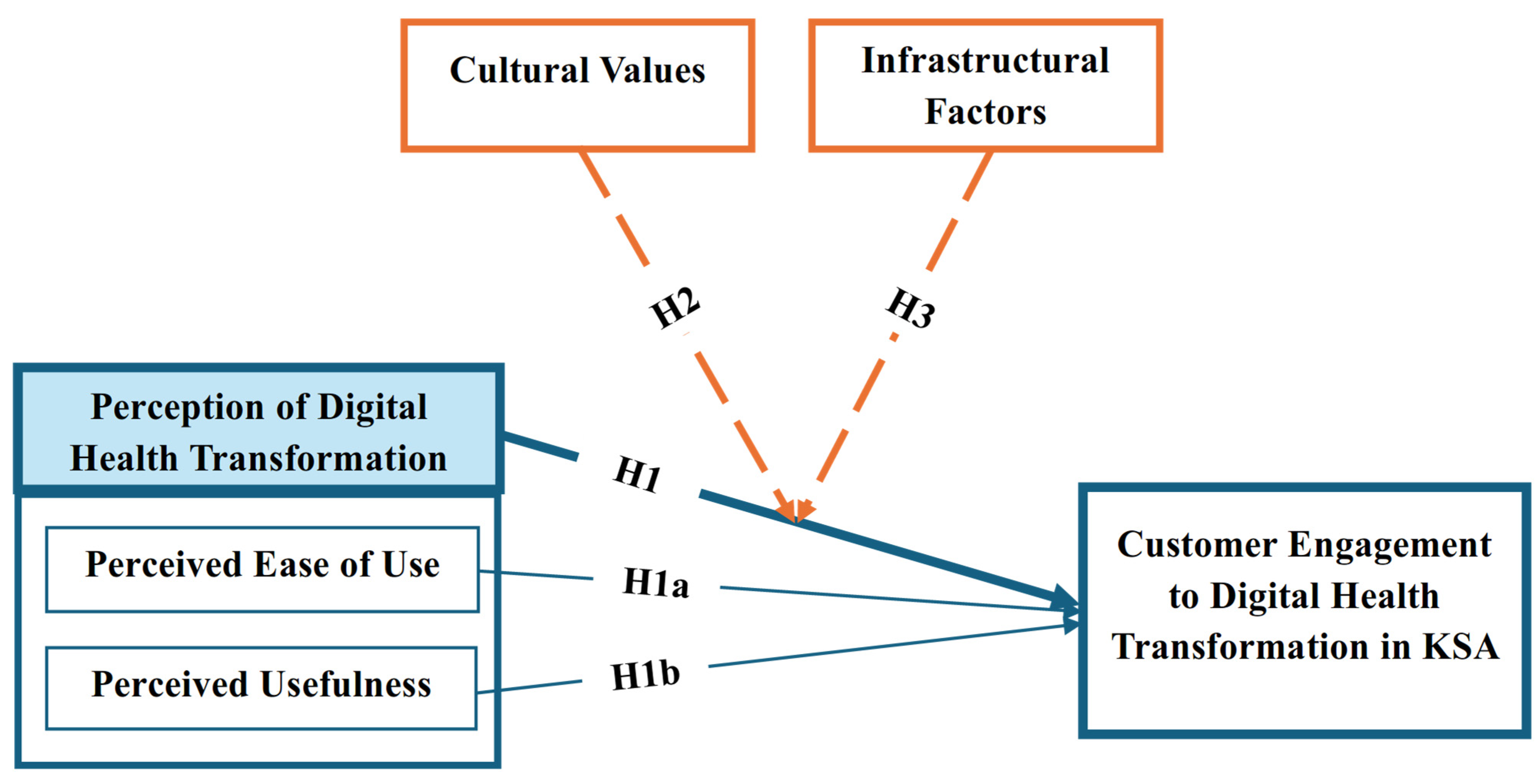
From the previous discussion, we developed the following hypotheses:
H1.
The perception of digital health transformation significantly impacts customer engagement to digital health transformation in Saudi Arabia.
H1a.
The perceived ease of use of digital health transformation significantly impacts customer engagement to digital health transformation in Saudi Arabia.
H1b.
The perceived usefulness of digital health transformation influence customer engagement to digital health transformation in Saudi Arabia.
H2.
Cultural values moderate the relationship between the perception of digital health transformation and customer engagement to digital health transformation in Saudi Arabia.
H3.
Infrastructural factors moderate the relationship between the perception of digital health transformation and customer engagement to digital health transformation in Saudi Arabia.
2.7. Conceptual Model
Figure 1 illustrates the proposed conceptual model.
Figure 1.
The Proposed Model.
3. Methodology
3.1. Research Design
This study employs a mixed-method approach, integrating both qualitative and quantitative methodologies to assess customer engagement in digital health transformation in Saudi Arabia. The research follows a comparative cross-sectional design, analyzing data from healthcare consumers and providers to provide contextual insights into the factors influencing digital health adoption and engagement.
3.2. Qualitative Study (Exploratory Phase)
The exploratory qualitative study was conducted to gain in-depth insights into the factors influencing customer engagement in digital health transformation. The study examined two perspectives: healthcare consumers (patients) and healthcare providers.
The qualitative phase aimed to:
From the healthcare consumers’ perspective:
- Understand customer perceptions of digital health transformation.
- Identify key motivators and barriers to digital health engagement.
- Assess factors influencing willingness to use digital healthcare platforms and services.
From the healthcare providers’ perspective:
- Examine the role of healthcare professionals in shaping digital health engagement.
- Identify challenges in implementing digital health transformation.
- Explore strategies to enhance customer trust, digital literacy, and overall engagement in digital healthcare services.
3.2.1. Research Ethics
This research was carried out in accordance with universally accepted ethics for human subject’s research. That is, the research observed the principles of the Declaration of Helsinki (2013 amendment), highlighting respect for persons, informed consent, confidentiality, and the right to withdraw without penalty.
Before data collection, participants read the study purpose, voluntary nature of participation, and their right to withdraw at any time. Electronic informed consent was used in survey respondents, whereas verbal informed consent was sought with interviewees. Participants’ confidentiality was ensured through the omission of personally identifying information since all responses were anonymized prior to data analysis.
Because the research was of little risk—measuring perceptions and attitudes toward adopting digital health and not clinical or sensitive personal data—the full institutional ethics clearance and project registration were not deemed obligatory in this instance. However, study planning and conduct adhered to good practice standards in social science and healthcare digitalization research to make it transparent, protect participants, and facilitate replicability across the regions.
3.2.2. Data Collection and Sample
Semi-structured interviews were conducted with healthcare consumers and professionals from both public and private healthcare institutions in Saudi Arabia to gain a comprehensive understanding of digital health engagement.
The sample included:
- 15 healthcare consumers from Saudi Arabia, ensuring diverse demographic representation.
- 5 healthcare professionals from Saudi Arabia, including decision-makers and digital health experts.
The healthcare professionals interviewed included both practicing doctors and doctors holding managerial positions, all currently working in public or private hospitals in Saudi Arabia. On the consumer side, participants were residents of Saudi Arabia who had accessed healthcare services in governmental or private hospitals.
Although the qualitative sample consisted of 20 participants (15 patients and 5 healthcare professionals), this size was sufficient to reach thematic saturation, where no new insights emerged from additional interviews. This approach aligns with exploratory qualitative research standards, where depth of information rather than statistical representativeness guides sample adequacy [92,94].
Interview Focus Areas:
From the healthcare consumers’ perspective:
- Perceived ease of use—How easy is it for customers to access and navigate digital health services?
- Perceived usefulness—Do customers believe digital health platforms enhance their healthcare experience?
- Trust in digital healthcare—How does trust in healthcare providers and digital platforms impact engagement?
- Cultural and infrastructural factors—How do cultural values and technological infrastructure influence customer willingness to adopt digital health solutions?
- Barriers to adoption—What challenges do customers face in adopting digital healthcare services (e.g., digital literacy, privacy concerns, service accessibility)?
From the healthcare providers’ perspective:
- Challenges in customer engagement—What are the main obstacles preventing customers from actively engaging with digital health services?
- Strategies to enhance adoption—What initiatives do healthcare providers use to encourage customer participation in digital health transformation?
- Role of digital health policies—How do regulatory and policy frameworks support or hinder digital health adoption?
- Impact of digital infrastructure—How does technological readiness influence the success of digital health transformation in Saudi Arabia?
All interviews were transcribed and thematically analyzed to identify recurring patterns, key drivers, and barriers to customer engagement in digital health transformation.
A. From the Customer’s Perspective
Customers universally mentioned the convenience of use of online portals such as Sehhaty and Tawakkalna. One said, “I booked an appointment for a flu vaccine in less than two minutes via Sehhaty, selecting the nearest health center and confirming via SMS.” Another mentioned the quickness, stating, “Health digital platforms have made things much simpler… everything can be done effectively and quickly.”
Online services were found to improve the healthcare experience by shortening waiting time, easy access to records, and teleconsultations. As one participant affirmed, “It saves me a lot of time, especially since I don’t have to go to the hospital just to get simple information.”
Customers were concerned with data privacy and protection as well. One reported, “If I do not trust the platform or the doctor, I will not engage or provide my data,” while another mentioned cultural sensitivity: “If physicians share information that is taboo, patients may lie or withhold everything.”
Issues typically pertaining to digital literacy and access. For instance, a customer elaborated, “The largest issue is that most of those who need health care are old… not willing to change the old systems they have worked with for decades.” Another stated, “It is simple in the urban areas, but difficult in the rural areas because of non-availability of connectivity and low digital literacy.”
B. From the healthcare Providers’ Perspective
Medical staff also echoed some of these views, particularly the cultural and technological readiness. They added, “Cultural barriers such as not knowing how to use technology… and waiting to enter information in the system” often stood in the way of a fluid experience.
Providers emphasized policy as essential to driving adoption. One reacted in exclamation, “In the Ministry of Health, if you want to make an appointment you have to do it via the app… This enforcement does help.”
Providers also emphasized the importance of professional behavior within digital interactions. A provider intimated that “looking at the patient during the appointment instead of simply staring at the computer” was paramount in establishing trust.
Ultimately, variation between the private and government-supported systems was observed, with providers attributing steady applications and good infrastructure as the success factors.
3.3. Quantitative Study
Following the exploratory phase, a quantitative survey was conducted to statistically validate the relationships between digital health transformation, customer engagement, and the moderating effects of cultural values and infrastructural factors in Saudi Arabia.
3.3.1. Data Collection, Sampling, and Questionnaire Design
A standardized questionnaire (See. Appendix A) was constructed based on existing measurement scales of prior studies. The questionnaire was gathered online through prominent social media platforms to collect responses from about 400 respondents who previously had experience with digital healthcare services in Saudi Arabia. A non-probability convenience sampling method was used to make it easy for different groups of different demographic segments to participate.
The questionnaire was administered using Google Forms, where all items were set as mandatory fields. This ensured that respondents could not submit incomplete surveys, effectively minimizing missing data. The survey link was distributed online using a snowballing technique, whereby initial participants shared the questionnaire with their peers, enabling broader reach and more diverse representation. The snowballing method enabled access to diverse groups across demographic and geographic categories. Efforts were made to capture variation in gender, age, education, hospital type, and location (urban and rural).
The final sample size of 402 respondents was determined following PLS-SEM guidelines, which recommend at least ten cases per estimated path. Given that the most complex construct in the model had three predictors, a minimum of 30–50 cases would suffice. To ensure stronger statistical power and greater representativeness, a substantially larger sample was collected, which exceeds the required threshold for robust structural equation modeling.
The questionnaire was developed with Likert-scale items to operationalize the matching constructs of the perception of digital health transformation, customer engagement, and infrastructural factors and cultural values moderation influences. The items for the survey were borrowed from established scales applied in previous research and adapted to the healthcare contexts within Saudi Arabia.
Quantitative data was gathered by means of online convenience sampling; a technique commonly used in research on healthcare digitalization [97,101]. Duplicate responses were screened and validity tests conducted to reduce bias and ensure the final sample was adequate for statistical analysis. While such a technique is still a far cry from attaining absolute representativeness, it is a good representation of active users’ perceptions of digital health platforms and can be used when conducting exploratory research in comparable settings.
The questionnaire covered the following variables:
Independent Variable: Perception of Digital Health Transformation
- Perceived Ease of Use—The extent to which digital health platforms are user-friendly and accessible.
- Perceived Usefulness—The extent to which digital health solutions enhance the efficiency and effectiveness of healthcare services.
Dependent Variable: Customer Engagement with Digital Health Transformation
- Cognitive Engagement—The level of attention and thought customers invest in digital health solutions.
- Emotional Engagement—The emotional connection and satisfaction customers feel toward digital health transformation.
- Behavioral Engagement—The frequency and extent of customer interactions with digital health services.
Moderators:
- Cultural Values
- ○
- Other-Oriented Values—The influence of social and community-driven values on digital health engagement.
- ○
- Environment-Oriented Values—The impact of sustainability consciousness on customer adoption of digital healthcare.
- ○
- Self-Oriented Values—The role of individual preferences and autonomy in engaging with digital health solutions.
- Infrastructural Factors
- ○
- Digital Connectivity—The accessibility and reliability of digital health infrastructure.
- ○
- Regulatory Framework—The influence of healthcare policies and regulations on digital health adoption.
- ○
- Service Availability—The extent to which digital healthcare services are available and efficiently delivered.
The questionnaire underwent expert validation and a pilot study before full-scale data collection. The final instrument was structured to ensure clarity, reliability, and alignment with the study objectives.
3.3.2. Data Analysis
The data were examined through Partial Least Squares Structural Equation Modeling (PLS-SEM) to establish the hypothesized relationships between digital health transformation, customer involvement, and the moderating influence of cultural values and infrastructural conditions. PLS-SEM is best suited for exploratory research with complicated models, latent factors, and moderate sample sizes since it is more interested in explaining variance and predictiveness rather than requiring distributional assumptions [76,88]. It has been extensively used in technology acceptance and e-health studies, where ease of use, perceived usefulness, and involvement are assessed by multiple indicators [79,84]. The approach facilitates the concurrent assessment of measurement models (construct validity and reliability) and structural models (hypothesized paths). Convergent validity, discriminant validity, internal consistency reliability, and tests for multicollinearity were conducted prior to estimation of the structural model to facilitate valid results. This process provides methodological strings and informative perspectives into the determinants of customer engagement with digital health transformation.
The analysis included:
- Descriptive statistics to summarize respondent demographics.
- Reliability and validity testing using Cronbach’s alpha and composite reliability.
- Moderation analysis to evaluate the moderating effects of cultural values and infrastructural factors on the relationship between digital health transformation and customer engagement.
4. Presentation and Discussion of Main Results PLS-SEM
In this study, Partial Least Squares Structural Equation Modeling (PLS-SEM) is used as the primary method for hypotheses testing. This approach is particularly suitable because of the multivariate nature of the research model, which examines if the perception of digital health transformation significantly impacts customer engagement to digital health transformation in Saudi Arabia and the role of cultural, Infrastructural factors as moderators for the relationship between them.
The PLS-SEM analysis was conducted using SmartPLS software (version 4.1.0.9) in two main stages, following [121]. In the first stage, the measurement model was evaluated through Confirmatory Composite Analysis (CCA), while the second stage focused on the structural model to examine the hypothesized relationships between the variables.
Table 1 illustrates the measurement model to assess the reliability and validity using SMART PLS (version 4.1.0.9).
Table 1.
Construct Reliability and Convergent Validity.
In addition to assessing construct reliability and validity, preliminary normality checks were performed. As expected in PLS-SEM, which does not assume multivariate normality, some indicators exhibited non-normal distributions. However, PLS-SEM remains robust under such conditions, allowing reliable estimation even in the presence of mild deviations from normality [121,122].
Regarding the CCA, the results confirmed that the measurement model was both reliable and valid. As shown in Table 2, all indicator loadings exceeded the acceptable value of 0.70, with the minimum loading being 0.710. Moreover, constructs’ reliability was confirmed, as Cronbach’s alpha and composite reliability (CR) values were all above the 0.70 threshold. The lowest Cronbach’s alpha observed was 0.910, and the lowest CR was 0.910. Convergent validity was also established, as all Average Variance Extracted (AVE) values exceeded the minimum required level of 0.50, with the lowest AVE recorded at 0.585 [121,122].
Table 2.
Indicator Loading.
The following Table 3 demonstrates the discriminant validity to be verified via the Fornell–Larcker criterion and cross-loadings, confirming the distinct constructs.
Table 3.
Discriminant Validity Based on Fornell–Larcker and HTMT Methods.
Discriminant validity was assessed using both the Fornell–Larcker criterion and the Heterotrait–Monotrait ratio (HTMT). Table 3 shows that the Fornell–Larcker criterion is met, since the square root of each construct’s AVE was higher than its correlations with other constructs. In parallel, all HTMT values were below the recommended threshold of 0.85, with the highest HTMT value being 0.528, further supporting discriminant validity [121,122].
While PLS-SEM offers flexibility for exploratory research with complex models, it is important to acknowledge certain limitations. The technique is sensitive to outliers, and distribution asymmetry may influence path estimates. These factors were carefully considered during model testing, and screening procedures were applied to minimize bias.
To assess multicollinearity, Table 4 presents Variance Inflation Factor (VIF) statistics were computed for all the constructs. All values were found to be below the threshold of 3.3, indicating no multicollinearity concerns.
Table 4.
Variance Inflation Factor (VIF).
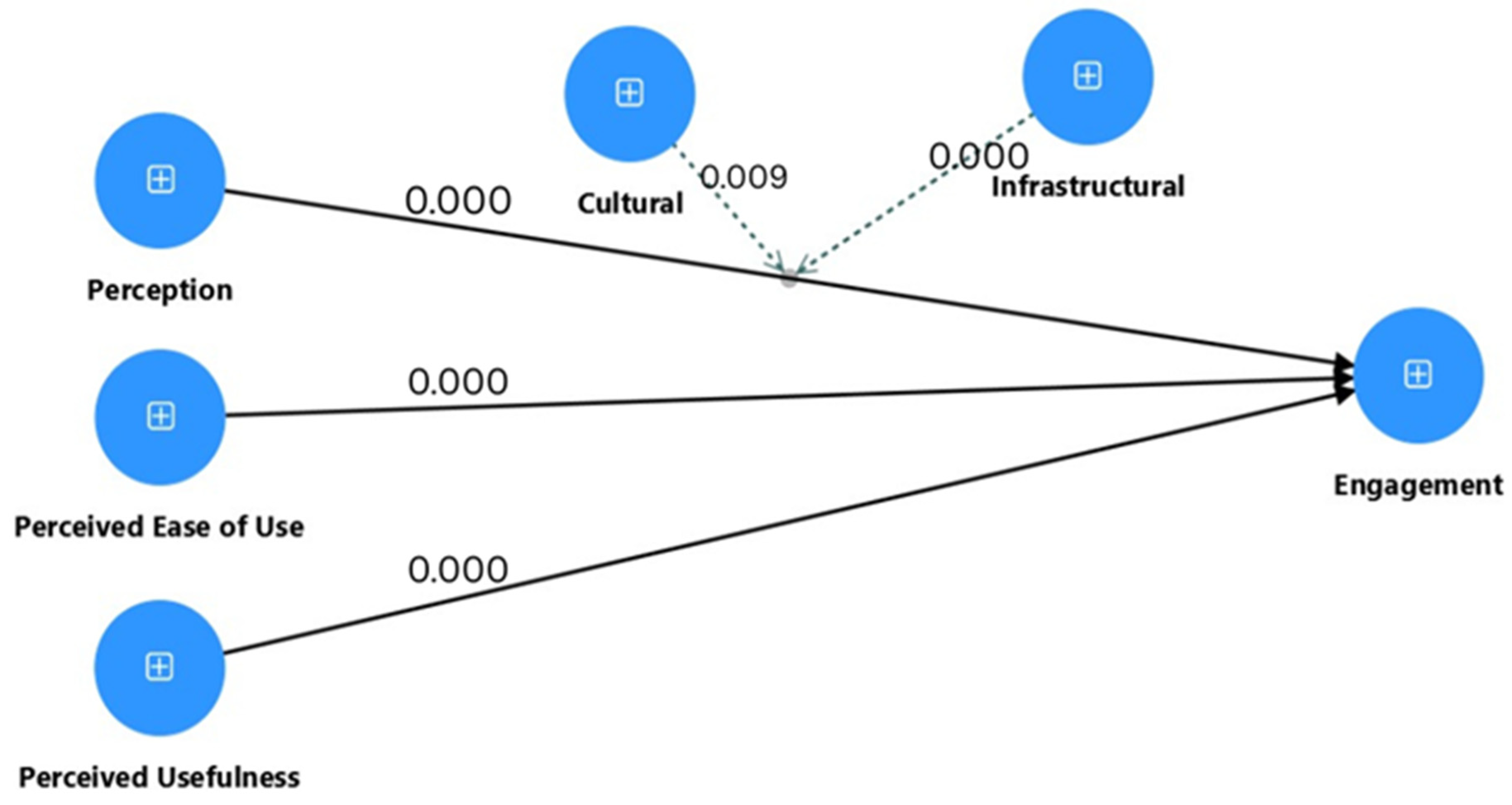
Table 5 and Figure 2 pinpoint to the Path Coefficients and Hypothesis Testing, as the structural model results provide strong support for all proposed hypotheses related to factors influencing engagement. The direct effect of Perception on Engagement (H1) was significant and positive (β = 0.386, p < 0.001), indicating that patients’ overall perception significantly enhances their engagement with the system. Additionally, both components of perception showed strong effects: Perceived Ease of Use (H1a: β = 0.368, p < 0.001) and Perceived Usefulness (H1b: β = 0.530, p < 0.001), confirming that when healthcare services are seen as easy to use and beneficial, patients are more likely to actively engage.
Table 5.
Path Coefficients and Hypothesis Testing.
Figure 2.
Theoretical Model.
These findings confirm the central role of perceived usefulness and ease of use as established in the TAM and UTAUT frameworks [12,33,57,64], extending their applicability to the Saudi healthcare context.
Moderating effects were also examined. Cultural Values were found to significantly moderate the relationship between perception of digital health transformation and customer engagement to digital health transformation in Saudi Arabia (H2: β = 0.343, p = 0.009), suggesting that cultural context strengthens the influence of perception on engagement. Similarly, Infrastructural Factors (e.g., technology access, support systems) significantly moderated this relationship (H3: β = 0.253, p < 0.001), indicating that the presence of adequate infrastructure further enhances the effect of perception on patient engagement. Overall, the results highlight the critical role of perception and contextual moderators in driving engagement in healthcare settings.
The significant moderating role of cultural values is consistent with prior work on socio-cultural influences in technology adoption [29,49,80,82,86], reinforcing the need to account for local traditions within Vision 2030 reforms.
In addition to path significance, the explanatory power of the model was also assessed. R2 for customer engagement was 0.61, or a sizeable proportion of explained variance. Testing effect size (f2) revealed medium-sized contributions of perceived usefulness (f2 = 0.21) and ease of use (f2 = 0.17), but small contributions from cultural (f2 = 0.09) and infrastructural moderators (f2 = 0.06). These values stress the empirical significance of perception variables as the main causal determinants of commitment. The predictive relevance (Q2) was also established through blindfolding procedures, showing that the model has substantive predictability.
These qualitative insights align with change management perspectives that emphasize trust, readiness, and communication as critical enablers of sustainable digital health adoption [49,80,117].
Figure 2 also graphically displays relative path strength within the model, as well as representing hypothesized associations. The biggest arrows are linked to perception factors, affirming ease of use and usefulness prevail in the engagement process, and cultural and infrastructural variables as contextual reinforcers. Statistical result interpretation is easier for academic and practitioner readers due to such representation.
4.1. Main Descriptive Results for Tabulations and Cross Tabulations
Even where statistically sufficient sample size is 402, representativeness through online convenience sampling is constrained. Demographic make-up—though skewed towards younger, technology-savvy users—may overstate the level of participation compared to the general population. However, the approach is true to exploratory digital health research and yields insightful information on early adopters.
As shown in Table 6, the final sample reflects diversity in gender, age groups, education levels, and geographical spread across major Saudi cities (Riyadh, Jeddah, Dammam, Mecca, Medina) as well as smaller localities, thereby including both urban and rural participants. Participants represented diverse social and economic backgrounds, with variation in age, gender, education, and type of hospitals, reflecting the socio-cultural diversity of Saudi Arabia’s healthcare users. The sample includes 402 respondents participated in the survey, with males making up 55.22% and females 44.78%. The largest age group is 30 to less than 40 years (28.61%), followed by those aged 20 to less than 30 (24.38%) and less than 20 years (19.90%), while only 12.19% are above 50. Nationality is nearly evenly split, with 49.25% Saudi and 50.75% non-Saudi, this reflects nearly half of the Kingdom’s population is composed of expatriates, who represent a significant share of healthcare service users in both public and private hospitals [8,123]. Digital health platforms and Vision 2030 reforms have been most extensively implemented in urban centers such as Riyadh and Jeddah, making these cities logical focal points for capturing adoption patterns. Most participants are university graduates (44.28%), followed by postgraduates (35.57%) and high school graduates (20.15%). More respondents use private hospitals (51.99%) than government ones (48.01%). Riyadh has the highest hospital representation (34.33%), followed by other cities (22.14%), Jeddah (20.65%), and Dammam (19.15%), with lower participation from Medina (2.74%) and Mecca (1.00%).
Table 6.
Characteristics of the Sample Unit.
While the concentration of respondents in these groups limits full statistical generalizability, it appropriately reflects the main target populations of digital health transformation in Saudi Arabia. Accordingly, the findings should be understood as exploratory insights into the perceptions and behaviors of core user segments most actively engaged in the Kingdom’s digital health initiatives.
4.2. Summary of Analysis and Results
As shown in Table 7, the PLS-SEM analysis confirmed that all proposed hypotheses were supported, validating the research model. Perception of digital health transformation—through both perceived ease of use and perceived usefulness—plays a critical role in enhancing customer engagement in Saudi Arabia’s healthcare digitalization. The results further emphasize that cultural values and infrastructural factors act as significant moderators, strengthening the relationship between perception and engagement. These findings highlight the necessity of not only improving the usability and perceived benefits of digital health solutions but also aligning them with cultural contexts and ensuring robust digital infrastructure to maximize patient participation and long-term adoption.
Table 7.
Summary of SEM Analysis.
Although this research focuses on Saudi Arabia as a model example of healthcare digitalization during the Vision 2030 period, its implications extend to general regional dynamics as well. Similar attempts have been undertaken within the United Arab Emirates, as the Dubai Health Authority has spearheaded whole-of-government e-health and telemedicine integration initiatives, and in Qatar by the Ministry of Public Health’s national digital health strategy [5,123]. These frameworks have analogous patterns of patient uptake motivated by infrastructure readiness, governance frameworks, and socio-cultural forces. They differ, nonetheless—for example, the UAE has pushed foreign partnerships and telehealth early adoption, whereas Qatar has concentrated on centralized national health information systems [124]. Plugs Saudi Arabia into this regional perspective, in that while a number of drivers and challenges are common, there remain local institutional features and cultural environments that shape adoption trajectories differently.
4.3. Practical Implications of Statistical Results
The statistical results have various practical implications. Firstly, the significant effect of perceived usefulness means that care providers need to highlight concrete advantages of online platforms, for example, shorter waiting times and enhanced care coordination. Secondly, the cultural moderating effect highlights the imperative for culturally appropriate communication, most acutely for collectivist cultures where family and societal support greatly influence adoption. Third, policymakers should address infrastructural preparedness, since online engagement depends on stable connectivity and systems integration. Both of these inferences indicate that digital healthcare transformation needs not just technological investment but also strategic congruence with infrastructural and cultural settings.
5. Discussion
5.1. Summary of Findings
These results directly answer the study’s three research questions: RQ1 confirmed that patients’ perceptions of digital health services influence engagement; RQ2 showed that cultural values significantly moderate this relationship; RQ3 demonstrated that infrastructural readiness also plays a moderating role. Accordingly, all proposed hypotheses were supported by the empirical data. The quantitative results of this research confirm that change management practices—most importantly, leadership sponsorship, employee engagement, operation efficiency, and compliance—significantly influence patient change readiness and ultimate adoption of sustainable healthcare. The large path coefficient between change management and readiness (β = 0.874; p < 0.001) confirms the hypothesis that patient readiness is a prime mediator in digital health transformation. This result is consistent with past studies highlighting the significance of preparedness in effective organizational and health technology change [56,78].
Likewise, the readiness impact on adoption (β = 0.653; p < 0.001) confirms previous studies emphasizing that change-ready patients also exhibit higher satisfaction and engagement levels [12,64]. Our findings are also in consonance with those of [33,57] in the Technology Acceptance Model (TAM), emphasizing perceived ease of use and readiness as the determinants of adoption.
Quantitative estimates of significant correlations with patient awareness (β = 0.873), involvement (β = 0.841), and satisfaction (β = 0.881) validate evidence in the literature for connecting change management with better service quality and patient empowerment [49,80,117]. Yet, whereas prior research has tended to refer to technology as the leading driver, our findings highlight the role of patient readiness as a mediator, and that attempts at change must be both patient-directed and technology-led.
Qualitatively, customer interviews corroborated such trends. Patients consistently emphasized the ease of use of platforms like Sehhaty “I booked an influenza vaccine in under two minutes”, following previous research into online efficacy [35]. Confidentiality and trust were stated to be essential to adoption “If I do not trust the platform or the healthcare professional, I will not get involved or share my information”, consistent with international literature [29,82]. Cultural issues, however, such as hiding “forbidden” information, go beyond the limits of international technology acceptance models, highlighting the importance of Saudi socio-cultural contexts.
Healthcare providers also endorsed evidence on regulatory models, which explained that mandatory schemes enforced by the Ministry of Health raised up-take, in line with [86]. Their focus on maintaining patient–clinician trust—for instance, by looking at the patient during the appointment rather than at the computeronly reinforces an interpersonal aspect less clear in previous work, and digital health change needs to uphold between-person trust as much as technical effectiveness.
In general, the synthesis of quantitative and qualitative results with the literature indicates strong agreement in favor of readiness, trust, and convenience as significant motivators, but also cultural and relational variations demanding greater attention in Saudi Arabia.
Beyond the Saudi context, these conclusions hold more broadly. The Saudi experience is an exemplar for how national-level reform initiatives, like Vision 2030, can be utilized to draw on change management, patient readiness, and cultural alignment to apply to digital health implementation. This experience can be transferred to policy creation and implementation elsewhere globally aimed at making digital healthcare transformation possible.
5.2. Contribution to the SDGs
The findings demonstrate that effective change management in healthcare not only improves patient readiness, awareness, and satisfaction but also contributes to achieving the SDGs. Specifically, the study supports SDG 3 through improved healthcare access, SDG 9 through digital innovation (e.g., Saudi Arabia SEHA Virtual Hospital, Riyadh), SDG 12 through resource efficiency and paperless systems, and SDG 13 by reducing the sector’s carbon footprint. Integrating these practices ensures that national health reforms contribute to both local transformation and global sustainable development goals.
5.3. Managerial Implications
The policy and health implications underscore the importance of accelerating digital infrastructure and bridging the technology gap between urban and rural communities. Trust should be a central requirement, one earned by transparent handling of open data, robust privacy provisions, and adequate user support systems. Similarly, digital training schemes for literacy—again, particularly so for elderly patients—should be prioritized to improve accessibility and enable patients. Hospital information systems should be entirely interoperable with national systems and possessed of current standards to address user needs optimally.
Based on these priorities, the results highlight a series of tangible measures for decision-makers in Saudi Arabia. First, because perceived usefulness has a significant impact on participation, managers must be able to demonstrate tangible results of digital healthcare platforms, including reduced waiting times, enhanced continuity of care, and efficient appointment scheduling. Second, as cultural values act as mediators of the impact of such strategies, they should be most aligned with Saudi socio-cultural values, embracing family-oriented decision-making and culture-dependent trust establishment processes. Third, infrastructural preparedness should continue to remain as a top national agenda, including continuous investment in broadband penetration—especially in low-penetration areas—along with tough interoperability standards in order to allow easy data sharing across healthcare centers. Fourth, capacity-building strategies should feature ongoing digital literacy training for both patients and providers to promote adoption and reduce resistance to innovation. Collectively, these measures translate the study’s statistical findings into actionable, locally feasible steps that policymakers, administrators, and technology firms can take to fast-track digital transformation in support of Vision 2030.
5.4. Marketing Implications
The evidence highlights several actionable implications for marketing digital health platforms in Saudi Arabia. Communication strategies must emphasize both the usefulness and ease of use of these platforms, presenting clear benefits such as convenience, efficiency, and improved patient outcomes. Messaging should also be carefully tailored to cultural sensitivities, reinforcing family values and privacy protections as central elements of trust. To further enhance adoption, branding efforts should leverage Ministry of Health endorsements and collaborations with respected healthcare professionals and influencers, thereby signaling credibility and strengthening public confidence.
In addition, marketing approaches should prioritize inclusivity by ensuring user interfaces are intuitive, multilingual, and responsive to the needs of diverse demographic groups. For example, applications can be customized with features targeting older adults, women managing family healthcare decisions, and young users who are more digitally fluent. Beyond functional promotion, marketers should highlight transparency in data use and security as part of value communication, since trust is a decisive factor in digital health adoption. Collectively, these strategies align marketing practice with the unique cultural, demographic, and institutional context of Saudi Arabia, ensuring that promotional efforts support both public trust and sustained engagement with digital health transformation under Vision 2030.
5.5. Recommendations and Future Research
It is a recommendation of this study that patient-centered culture of design in healthcare organizations be implemented in digital platform launch such that technology development occurs in tandem with patient needs and experiences. Further scalability can occur through strong public–private partnerships between government agencies and technology firms. Systematic cross-country analyses should be conducted between the Gulf Cooperation Council (GCC) and the rest of the Arab world by follow-up studies in order to take advantage of this research. This would allow researchers to explore whether variations in policy architecture, infrastructure spending, and culture affect patient participation and offer relative standards for Saudi development. Longitudinal analyses are also wanted to quantify long-term impacts of electronic health interventions and enhance causal inference. Moreover, incorporation of behavioral theories such as the Technology Acceptance Model (TAM) and Unified Theory of Acceptance and Use of Technology (UTAUT) would introduce theoretical depth and assist in enhanced scope of knowledge of adoption patterns across various settings. Collectively, these areas of study constitute an outline to advance scope, methodological complexity, and comparative insight into digital health transformation.
5.6. Limitations
While this research is valuable witness to consumer participation in digital health change, there are some contextual limitations to be aware of. The research was only done in Saudi Arabia. While the context is strategic and relevant to timing in Vision 2030, it is not necessarily valid to extrapolate the findings to other regional or global health systems. Second, the research utilized a cross-sectional design that measured perceptions and behaviors at a single point in time. This restricts analysis of variability in attitudes or engagement over multiple time points and limit’s predictive ability of the model hypothesized. Longitudinal designs can be used by future research to track changes over adoption behavior and offer stronger causality evidence. Third, the qualitative strand had a purposive sample of healthcare providers and patients. Though the sample was adequate to realize thematic saturation, it will not necessarily provide sufficient representation of diversity of experience in the population in general. Fourth, the quantitative survey employed convenience online sampling. While duplicate responses were screened to minimize bias, the approach has the built-in limitation of statistical representativeness. Nevertheless, convenience sampling is common in exploratory digital health studies and appropriate to gain early understanding of customer engagement in new markets like Saudi Arabia.
Apart from these methodological issues, there are other perceived limitations that must be dealt with. There is a possibility of cultural bias since healthcare adoption in Saudi Arabia is determined by certain social expectations, values, and norms that might not be applicable universally. Demographic influences like age, gender, and education could also impact the adoption of digital health but were not analyzed independently in this study. Also, dependence on self-report information can risk fabricated or socially acceptable answers even with a promise of anonymity. These additional issues do not invalidate the results but challenge subsequent studies to include demographic controls, assess cultural generalizability, and implement methods to control response bias. Together, the limitations hold potential for future studies to increase scope, enhance methodological excellence, and greater understanding of healthcare digitalization across different environments.
6. Conclusions
This research studied the effects of cultural values and infrastructural readiness on digital health services perceptions to affect customer engagement in Vision 2030 Saudi Arabia’s healthcare transition. Quantitative and qualitative lines of evidence both attested that perceived usefulness and ease of use are the strongest predictors of engagement and that cultural context and infrastructural support exert a decisive influence on adoption success.
Through the integration of Technology Acceptance Model, UTAUT, and change management theory, the current study brings to the forefront the pivotal role of patient readiness, trust, and socio-cultural compatibility in facilitating sustainable digitalization of healthcare. These findings add to the literature on digital health adoption by offering evidence from a GCC environment, where country-level high-speed changes meet indigenous practices and models of institutions.
Practically, the conclusions point towards decision-makers needing technological innovation pitted against cultural sensitivity and investment in quality infrastructure. Beyond Saudi Arabia, the conclusions offer transferable lessons that can be implemented in other regions of the world seeking systemic transformation in healthcare through digitalization.
Author Contributions
A.A. and Y.T.H. have scrutinized the literature and formulated the research gap. In addition, they wrote down the literature review. A.A. and Y.T.H. formulated the methodical framework of this study to achieve the desired objectives. They selected the sample size from the available population, and has designed the data collection instrument and suggested the method of data analysis. A.A. and Y.T.H. have presented the discussion of results. The discussion of different collected data presented in the results. A.A. contributed to this research by collaborating with Y.T.H. in the design of the data collection instruments. All authors have read and agreed to the published version of the manuscript.
Funding
The authors extend their appreciation to Prince Sattam bin Abdulaziz University for funding this research work through the project number (PSAU/2024/01/78919).
Data Availability Statement
Data is contained within the article.
Conflicts of Interest
The authors declare no conflict of interest.
Appendix A. Questionnaire
Healthcare systems are integrating digital health technologies to improve patient experiences and engagement. These innovations include electronic health records, telemedicine, mobile health apps, and AI-driven diagnostics. Understanding how patients perceive and interact with digital health solutions is essential for assessing engagement levels and identifying factors that influence adoption.
The following Table (Questionnaire) statements aim to assess Perception of Digital Health Transformation (Independent Variable) and its impact on Customer Engagement (Dependent Variable), with Cultural Values and Infrastructural Factors as moderating variables. Your responses will help us evaluate how digital healthcare advancements shape patient experiences and engagement.
Please indicate your level of agreement with the following statements using the scale: (5 = Strongly Agree, 4 = Agree, 3 = Neutral, 2 = Disagree, 1 = Strongly Disagree).
| # | Statement | Strongly Agree (5) | Agree (4) | Neutral (3) | Disagree (2) | Strongly Disagree (1) |
| Perception of Digital Health Transformation (Independent Variable) | ||||||
| Perceived Ease of Use | ||||||
| 1 | I find it easy to navigate digital health platforms (e.g., mobile apps, online portals). | |||||
| 2 | I can quickly learn how to use new digital health tools without external assistance. | |||||
| 3 | I can efficiently access my health records through digital platforms. | |||||
| 4 | Booking and managing appointments online is convenient for me. | |||||
| 5 | I believe digital health services are accessible to all patients, regardless of technical skills. | |||||
| Perceived Usefulness | ||||||
| 6 | Digital health solutions help me receive faster diagnoses and treatments. | |||||
| 7 | Using digital health platforms saves me time compared to traditional healthcare methods. | |||||
| 8 | Telemedicine and virtual consultations provide the same level of care as in-person visits. | |||||
| 9 | Mobile health apps help me manage my health and wellness effectively. | |||||
| 10 | Digital health records enhance coordination between my healthcare providers. | |||||
| Customer Engagement (Dependent Variable) | ||||||
| Cognitive Engagement | ||||||
| 11 | I actively seek information about digital health services. | |||||
| 12 | I am interested in learning how digital health can improve my healthcare experience. | |||||
| 13 | I analyze the pros and cons of different digital health solutions before choosing one. | |||||
| 14 | I pay close attention to digital health innovations introduced by hospitals. | |||||
| 15 | I actively explore new features and functions of different digital health platforms before using them. | |||||
| Affective Engagement | ||||||
| 16 | I feel more confident managing my healthcare using digital health services. | |||||
| 17 | I trust that digital healthcare solutions will enhance my well-being. | |||||
| 18 | I feel excited when new digital health services are introduced. | |||||
| 19 | I feel personally connected to digital health solutions and their role in my healthcare journey | |||||
| 20 | My emotional connection to digital health services influences my willingness to use them. | |||||
| Behavioral Engagement | ||||||
| 21 | I frequently use digital health platforms to schedule medical appointments. | |||||
| 22 | I have used telemedicine services for consultations with doctors. | |||||
| 23 | I regularly monitor my health using mobile health apps. | |||||
| 24 | I recommend digital health solutions to friends and family. | |||||
| 25 | I am willing to continue using digital health services in the future. | |||||
| Moderating Variables | ||||||
| Cultural Values | ||||||
| Other-Oriented Values | ||||||
| 26 | I believe digital health solutions enhance well-being by improving healthcare access for all. | |||||
| 27 | Older and younger generations have different levels of comfort with digital healthcare tools. | |||||
| 28 | I encourage my family members to use digital health platforms for better health management. | |||||
| 29 | I trust digital healthcare solutions foster a more cooperative approach between patients and healthcare providers. | |||||
| 30 | I support healthcare institutions that embrace diversity by making digital services accessible to people with different needs. | |||||
| Environment-Oriented Values | ||||||
| 31 | I appreciate digital healthcare for reducing paper usage and medical waste. | |||||
| 32 | I trust that digital health solutions contribute to sustainable healthcare practices. | |||||
| 33 | I believe that hospitals that use digital records instead of paper-based systems are more eco-friendly. | |||||
| 34 | I believe digital health transformation aligns with global sustainability efforts. | |||||
| 35 | My concern for environmental impact influences my preference for digital health services. | |||||
| Self-Oriented Values | ||||||
| 36 | I prioritize digital healthcare services that enhance my personal convenience. | |||||
| 37 | I prefer digital health solutions that allow me to track and manage my own medical information. | |||||
| 38 | My preference for digital health is based on its ability to improve my well-being. | |||||
| 39 | I prioritize healthcare providers that offer high-quality digital health services, even if they cost more. | |||||
| 40 | My healthcare choices are influenced by the efficiency of digital health tools. | |||||
| Infrastructural Factors | ||||||
| 41 | Internet connectivity influences my ability to use digital health services effectively. | |||||
| 42 | I believe that limited availability of digital health services affects people ability to engage with them. | |||||
| 43 | The availability of digital health infrastructure in my country affects my engagement. | |||||
| 44 | I believe hospitals should invest more in digital health infrastructure. | |||||
| 45 | I trust that government policies on digital health impact my willingness to adopt these solutions. | |||||
Personal Information
- Gender
- Male

- Female

- Age
- Less than 20 years old

- From 20 to less than 30 years old

- From 30 to less than 40 years old

- From 40 to less than 50 years old

- 50 years old and older

- Hospital Type
- Private Hospital

- Public Hospital

- Hospital Location
- Riyadh

- Dammam

- Medina

- Jeddah

- Mecca

- Other (specify)……

Good Day,
We are conducting a research study titled “Customer Engagement in Digital Health Transformation: Evidence from Saudi Arabia’s Vision 2030”, and we kindly request your cooperation by completing this questionnaire.
The purpose of this research is to examine the impact of patients’ perceptions regarding the ease of use and expected benefits of digital health solutions on their level of engagement. The study also explores the influence of cultural values and infrastructural factors on the relationship between patient perceptions and digital participation. The questionnaire focuses on patients’ usage of digital health applications, their trust in these solutions, and their willingness to continue using them.
Your responses will contribute to the development of digital health policies that better align with the needs of patients in the Kingdom of Saudi Arabia.
References
- Mani, Z.A.; Goniewicz, K. Transforming healthcare in Saudi Arabia: A comprehensive evaluation of vision 2030’s impact. Sustainability 2024, 16, 3277. [Google Scholar] [CrossRef]
- Leivaditis, V.; Sepetis, A. Digital Transformation as A Catalyst for Sustainable Health Care Systems: A Narrative Review of Current Evidence. Int. J. Innov. Manag. 2025, 29, 2540009. [Google Scholar] [CrossRef]
- Borg, J.; Gustafsson, C.; Landerdahl Stridsberg, S.; Zander, V. Implementation of welfare technology: A state-of-the-art review of knowledge gaps and research needs. Disabil. Rehabil. Assist. Technol. 2023, 18, 227–239. [Google Scholar] [CrossRef] [PubMed]
- Alharbi, M.F. Does Electronic Health Record Implementation Enhance Hospital Efficiency and Patient Outcomes? A Comprehensive Systematic Review. SAGE Open 2025, 15, 21582440251359791. [Google Scholar] [CrossRef]
- World Health Organization. Digital Health in the Eastern Mediterranean: Progress and Challenges; WHO Press: Geneva, Switzerland, 2023.
- Alessy, S.A.; Al-Zahrani, A.; Alhomoud, S.; Alaskar, A.; Haoudi, A.; Alkheilewi, M.A.; Alqahtani, S.A. Towards a comprehensive cancer control policy in Saudi Arabia. Lancet Oncol. 2025, 26, e360–e368. [Google Scholar] [CrossRef]
- Albaher, Z.; Alqurashi, H. Primary Healthcare Centre Improvement and Privatisation in the Kingdom of Saudi Arabia: A Systematic Review. Cureus 2024, 16, e76357. [Google Scholar] [CrossRef]
- Al-Nozha, O.M. Key aspects of the Saudi healthcare system reform and the potential impact on the main stakeholders: A qualitative study. J. Taibah Univ. Med. Sci. 2024, 19, 598–610. [Google Scholar] [CrossRef] [PubMed]
- Samara, B.A.H. Value-Based Healthcare in Palestine: Strategic Assessment, Challenges and Recommendations. Ph.D. Thesis, AAUP, Zababdeh, Palestin, 2025. [Google Scholar]
- Carreño, A.M. Strategic Alignment in Program Management: A Framework for Sustainable Business Transformation; Institute for Change Leadership and Business Transformation: Sydney, Australia, 2024. [Google Scholar]
- Martusewicz, J.; Wierzbic, A.; Łukaszewicz, M. Strategic Transformation and Sustainability: Unveiling the EFQM Model 2025. Sustainability 2024, 16, 9106. [Google Scholar] [CrossRef]
- Al-Emran, M.; Al-Qaysi, N.; Al-Sharafi, M.A.; Alhadawi, H.S.; Ansari, H.; Arpaci, I.; Ali, N.A. Factors shaping physicians’ adoption of telemedicine: A systematic review, proposed framework, and future research agenda. Int. J. Hum. Comput. Interact. 2024, 41, 8495–8514. [Google Scholar] [CrossRef]
- Alomeer, S.H. Integration of Clinical Information Systems in Saudi Arabian Health Care Contexts: A Grounded Theory Exploration. Ph.D. Thesis, Queensland University of Technology, Brisbane City, Australia, 2016. [Google Scholar]
- Alfraih, A.N.; Lu, H.; Singh, C. A Systemic Review on the Awareness, Adoption, and Utilization of Digital Health in the Kingdom of Saudi Arabia: A Multi-Perspective Approach. Afr. Asian Stud. 2024, 1, 1–39. [Google Scholar] [CrossRef]
- Hussain, A.; Zhiqiang, M.; Li, M.; Jameel, A.; Kanwel, S.; Ahmad, S.; Ge, B. The mediating effects of perceived usefulness and perceived ease of use on nurses’ intentions to adopt advanced technology. BMC Nurs. 2025, 24, 33. [Google Scholar] [CrossRef]
- Lee, A.T.; Ramasamy, R.K.; Subbarao, A. Understanding Psychosocial Barriers to Healthcare Technology Adoption: A Review of TAM Technology Acceptance Model and Unified Theory of Acceptance and Use of Technology and UTAUT Frameworks. Healthcare 2025, 13, 250. [Google Scholar] [CrossRef]
- Lehoux, P.; Rivard, L.; de Oliveira, R.R.; Mörch, C.M.; Alami, H. Telemedicine Usability in Saudi Arabia: A Patient-Centric Analysis. Int. J. Med. Inform. 2023, 170, 104933. [Google Scholar] [CrossRef]
- Mandil, A.; Mabry, R.; Milani, B.; Nour, M.; Afifi, M.; Abdel-Ghani, K. Mapping of health innovations in response to the COVID-19 pandemic in Eastern Mediterranean and selected Arab Countries. East. Mediterr. Health J. 2022, 28, 130–143. [Google Scholar] [CrossRef] [PubMed]
- Fitzpatrick, T.; Tantum, L.K.; Tseka, J.M.; Mofolo, I.; Kafanikhale, H.; Hoffman, I.; Anderson, D.M. The effects of environmental health services on patient well-being and quality of care: A qualitative study in Malawi’s public healthcare facilities. SSM Health Syst. 2025, 4, 100064. [Google Scholar] [CrossRef]
- Bernarto, I. The effect of performance expectancy, perceived need, perceived value and perceived ease of use on patient satisfaction and continuance intention in the Halodoc telemedicine service application in Jabodetabek in 2023. JMBI UNSRAT J. Ilm. Manaj. Bisnis Dan. Inov. Univ. Sam. Ratulangi 2024, 11, 460–471. [Google Scholar]
- He, H.; Raja Ghazilla, R.A.; Abdul-Rashid, S.H. A Systematic Review of the Usability of Telemedicine Interface Design for Older Adults. Appl. Sci. 2025, 15, 2076–3417. [Google Scholar] [CrossRef]
- Fox, G.; James, T.L. Toward an understanding of the antecedents to health information privacy concern: A mixed methods study. Inf. Syst. Front. 2021, 23, 1537–1562. [Google Scholar] [CrossRef]
- A. Khan, R.; Qudrat-Ullah, H. Technology Adoption in Saudi Arabia. In Adoption of LMS in Higher Educational Institutions of the Middle East; Springer International Publishing: Cham, Switzerland, 2020; pp. 19–26. [Google Scholar]
- Naderbagi, A.; Loblay, V.; Zahed, I.U.M.; Ekambareshwar, M.; Poulsen, A.; Song, Y.J.; LaMonica, H.M. Cultural and contextual adaptation of digital health interventions: Narrative review. J. Med. Internet Res. 2024, 26, e55130. [Google Scholar] [CrossRef]
- Ly, S.; Runacres, F.; Poon, P. Digital Health in the MENA Region: A Scoping Review. BMC Health Serv. Res. 2021, 21, 915. [Google Scholar] [CrossRef]
- Meskó, B.; Drobni, Z.; Bényei, É.; Gergely, B.; Győrffy, Z. Digital health is a cultural transformation of traditional healthcare. mHealth 2017, 3, 38. [Google Scholar] [CrossRef]
- El Aribi, A.A.M.; Johar, M.G.M.; Khatibi, A. A Multidimensional Framework for Telehealth Adoption in Libya: The Role of Trust in Technology. Int. J. Manag. Educ. Emerg. Technol. IJMEET 2024, 2, 38–51. [Google Scholar]
- Papoutsi, C.; Greenhalgh, T. Innovation, Improvement, and Implementation–Conceptual Frameworks for Thinking Through Complex Change. In eHealth Research Theory and Development; Routledge: Abingdon, UK, 2024; pp. 220–236. [Google Scholar]
- Anthony, O.O. Integrating Digital Health Platforms for Real-Time Disease Surveillance and Response in Low-Resource Settings. SRMS J. Med. Sci. 2023, 8, 131–136. [Google Scholar]
- Alanazi, B.; Butler-Henderson, K.; Alanazi, M.R. Factors influencing healthcare professionals’ perception towards EHR/EMR systems in gulf cooperation council countries: A systematic review. Oman Med. J. 2020, 35, e192. [Google Scholar] [CrossRef]
- Kumar, M.; Singh, J.B.; Chandwani, R.; Gupta, A. “Context” in healthcare information technology resistance: A systematic review of extant literature and agenda for future research. Int. J. Inf. Manag. 2020, 51, 102044. [Google Scholar] [CrossRef]
- Connor, M.; Tuan, L.A.; DeGuia, A.H.; Wehmeyer, H. Sustainable rice production in the Mekong River Delta: Factors influencing farmers’ adoption of the integrated technology package “One Must Do, Five Reductions” (1M5R). Outlook Agric. 2021, 50, 90–104. [Google Scholar] [CrossRef]
- Ezeudoka, B.C.; Fan, M. Determinants of behavioral intentions to use an E-Pharmacy service: Insights from TAM theory and the moderating influence of technological literacy. Res. Soc. Adm. Pharm. 2024, 20, 605–617. [Google Scholar] [CrossRef] [PubMed]
- Ahmadi, A. Digital health transformation: Leveraging ai for monitoring and disease management. Int. J. BioLife Sci. IJBLS 2024, 3, 10–24. [Google Scholar]
- Alruwaili, M.M.; Shaban, M.; Elsayed Ramadan, O.M. Digital health interventions for promoting healthy aging: A systematic review of adoption patterns, efficacy, and user experience. Sustainability 2023, 15, 16503. [Google Scholar] [CrossRef]
- Fitzpatrick, P.J. Improving health literacy using the power of digital communications to achieve better health outcomes for patients and practitioners. Front. Digit. Health 2023, 5, 1264780. [Google Scholar] [CrossRef]
- Balakrishna, S.; Solanki, V.K. A comprehensive review on ai-driven healthcare transformation. Ing. Solidar. 2024, 20, 1–30. [Google Scholar] [CrossRef]
- Wang, T.; Zhu, H.; Qian, S.; Giunti, G.; Goossens, R.; Melles, M. Designing digital patient experiences: The digital health design framework. Appl. Ergon. 2024, 119, 104289. [Google Scholar] [CrossRef]
- Biswas, S.; Mazuz, K.; Mendes, R.A. E-healthcare disparities across cultures: Infrastructure, readiness and the digital divide. Int. J. User-Driven Healthc. IJUDH 2014, 4, 1–16. [Google Scholar] [CrossRef]
- Tawfik, K.Y.; Halim, Y.T.; Maree, A.M. The Impact of Social Media Addiction on Youth Attitudes: A Platform-Based Study. Sci. J. Commer. Res. Menoufiya Univ. SJSC 2025, 2, 85–118. [Google Scholar] [CrossRef]
- Alhashmi, S.M. Digital technology’s impact on knowledge management in the healthcare industry in the Middle East. In Digital Healthcare, Digital Transformation and Citizen Empowerment in Asia-Pacific and Europe for a Healthier Society; Academic Press: Cambridge, MA, USA, 2025; pp. 211–228. [Google Scholar]
- Hetta, R. Implementing Universal Health Insurance: Case Study of Stakeholders’ Perspectives in Port Said, Egypt. Master’s Thesis, The American University in Cairo, Cairo, Egypt, 2023. [Google Scholar]
- Al-Samarraie, H.; Ghazal, S.; Alzahrani, A.I.; Moody, L. Telemedicine in Middle Eastern countries: Progress, barriers, and policy recommendations. Int. J. Med. Inform. 2020, 141, 104232. [Google Scholar] [CrossRef]
- Suleiman, A.K.; Ming, L.C. Transforming healthcare: Saudi Arabia’s vision 2030 healthcare model. J. Pharm. Policy Pract. 2025, 18, 2449051. [Google Scholar] [CrossRef]
- Mufleh, A.S.S.; Alshraah, S.M.; Nabil, A.A.; Alshraah, A.M.; Al-shaboul, I.A.; Alshatnawi, E.F.; Issa, S.H. Integrating Telemedicine, Health Informatics, and Smart City with Saudi Arabia’s Vision 2030: Advancing Sdgs 3 and 11. Cuad. Econ. 2024, 47, 91–104. [Google Scholar]
- Das Gupta, A. Conceptualizing patient as an organization with the adoption of digital health. Biomed. Eng. Comput. Biol. 2024, 15, 11795972241277292. [Google Scholar] [CrossRef]
- Iyanna, S.; Kaur, P.; Ractham, P.; Talwar, S.; Islam, A.N. Digital transformation of healthcare sector. What is impeding adoption and continued usage of technology-driven innovations by end-users? J. Bus. Res. 2022, 153, 150–161. [Google Scholar] [CrossRef]
- Halim, Y.T.; Halim, H.T.; El-Deeb, M.S.; El Sheikh, S.A. An empirical investigation into people’s intention to participate in mega events tourism: Applying mixture of two behavioral theoretical models. Future Bus. J. Springer Open 2022, 8, 65. [Google Scholar] [CrossRef]
- Beleg, J. Addressing the Digital Divide in Healthcare: Strategies for Equitable Patient Empowerment, FHIR Integration, and Compliance With ISO/IEC 27001. In Navigating Privacy, Innovation, and Patient Empowerment Through Ethical Healthcare Technology; IGI Global Scientific Publishing: Hershey, PA, USA, 2025; pp. 309–332. [Google Scholar]
- Labarta, J.I.; Dimitri, P.; Keiser, M.; Koledova, E.; Rivera-Romero, O. Evaluating the Usefulness and Ease of Use of a Next-Generation–Connected Drug Delivery Device for Growth Hormone Therapy: Qualitative Study of Health Care Professionals’ Perceptions. JMIR Hum. Factors 2023, 10, e46893. [Google Scholar] [CrossRef]
- Nguyen, M.; Fujioka, J.; Wentlandt, K.; Onabajo, N.; Wong, I.; Bhatia, R.S.; Stamenova, V. Using the technology acceptance model to explore health provider and administrator perceptions of the usefulness and ease of using technology in palliative care. BMC Palliat. Care 2020, 19, 138. [Google Scholar] [CrossRef]
- O’connor, S.; Hanlon, P.; O’donnell, C.A.; Garcia, S.; Glanville, J.; Mair, F.S. Understanding factors affecting patient and public engagement and recruitment to digital health interventions: A systematic review of qualitative studies. BMC Med. Inform. Decis. Mak. 2016, 16, 120. [Google Scholar] [CrossRef] [PubMed]
- Al-Somali, S.A. Integrating artificial intelligence (AI) in healthcare: Advancing older adults’ health management in Saudi Arabia through AI-powered chatbots. PeerJ Comput. Sci. 2025, 11, e2773. [Google Scholar] [CrossRef] [PubMed]
- Kumar, R.; Singh, A.; Kassar, A.S.A.; Humaida, M.I.; Joshi, S.; Sharma, M. Leveraging Artificial Intelligence to Achieve Sustainable Public Healthcare Services in Saudi Arabia: A Systematic Literature Review of Critical Success Factors. Comput. Model. Eng. Sci. CMES 2025, 142, 1289–1349. [Google Scholar] [CrossRef]
- Al-Worafi, Y.M. Nursing Education, Practice, and Research in Egypt. In Handbook of Medical and Health Sciences in Developing Countries: Education, Practice, and Research; Springer International Publishing: Cham, Switzerland; Berlin/Heidelberg, Germany, 2024; pp. 1–40. [Google Scholar]
- Said, G.R.E. Factors affecting mHealth technology adoption in developing countries: The case of Egypt. Computers 2022, 12, 9. [Google Scholar] [CrossRef]
- Cheah, W.H.; Jusoh, N.M.; Aung, M.M.T.; Ab Ghani, A.; Rebuan, H.M.A. Mobile technology in medicine: Development and validation of an adapted system usability scale (SUS) questionnaire and modified technology acceptance model (TAM) to evaluate user experience and acceptability of a mobile application in MRI safety screening. Indian J. Radiol. Imaging 2023, 33, 036–045. [Google Scholar] [CrossRef]
- Persis, J. Perceived healthcare quality via digital health platforms–evidence from Indian hospitals. Int. J. Qual. Reliab. Manag. 2025, 42, 1081–1109. [Google Scholar] [CrossRef]
- Winkelman, W.J.; Leonard, K.J.; Rossos, P.G. Patient-perceived usefulness of online electronic medical records: Employing grounded theory in the development of information and communication technologies for use by patients living with chronic illness. J. Am. Med. Inform. Assoc. 2005, 12, 306–314. [Google Scholar] [CrossRef]
- Rashid, M.; Sharma, M. AI-Assisted Diagnosis and Treatment Planning—A Discussion of How AI Can Assist Healthcare Professionals in Making More Accurate Diagnoses and Treatment Plans for Diseases. In AI in Disease Detection: Advancements and Applications; Wiley Online Publishing: Hoboken, NJ, USA, 2025; pp. 313–336. [Google Scholar]
- Khashan, M.A.; Alasker, T.H.; Ghonim, M.A.; Elsotouhy, M.M. Understanding physicians’ adoption intentions to use Electronic Health Record (EHR) systems in developing countries: An extended TRAM approach. Mark. Intell. Plan. 2025, 43, 1–27. [Google Scholar] [CrossRef]
- El Hadi, M. Digital healthcare supported by artificial intelligence with emphasis on Egypt. ESISACT 2022, 27, 5–17. [Google Scholar] [CrossRef]
- Badran, M.F. eHealth in Egypt: The demand-side perspective of implementing electronic health records. Telecommun. Policy 2019, 43, 576–594. [Google Scholar] [CrossRef]
- Alaiad, A.; Alsharo, M.; Alnsour, Y. The determinants of m-health adoption in developing countries: An empirical investigation. Appl. Clin. Inform. 2019, 10, 820–840. [Google Scholar] [CrossRef]
- VanDeWiele, M.D.; Hastings, A.M.; Evans, M.D.; O’Connell, M.S.; Flynn, P.M. Using the Unified Theory of Acceptance and Use of Technology (UTAUT) to predict the behavioral intent of teledentistry utilization amongst United States adults. J. Telemed. Telecare 2025, 31, 286–296. [Google Scholar] [CrossRef]
- Blasiak, A.; Sapanel, Y.; Leitman, D.; Ng, W.Y.; De Nicola, R.; Lee, V.V.; Ho, D. Omnichannel communication to boost patient engagement and behavioral change with digital health interventions. J. Med. Internet Res. 2022, 24, e41463. [Google Scholar] [CrossRef]
- Ibrahim, A.M.; Alenezi, I.N.; Mahfouz, A.K.H.; Mohamed, I.A.; Shahin, M.A.; Abdelhalim, E.H.N.; Eldiasty, N. Examining patient safety protocols amidst the rise of digital health and telemedicine: Nurses’ perspectives. BMC Nurs. 2024, 23, 931. [Google Scholar] [CrossRef]
- Hasan, A.; Alenazy, A.A.; Habib, S.; Husain, S. Examining the drivers and barriers to adoption of e-government services in Saudi Arabia. J. Innov. Digit. Transform. 2024, 1, 139–157. [Google Scholar] [CrossRef]
- Sklar, T.; Robertson, C.T. Telehealth for an aging population: How can law influence adoption among providers, payors, and patients? Am. J. Law Med. 2020, 46, 311–324. [Google Scholar] [CrossRef] [PubMed]
- Alomar, D.; Almashmoum, M.; Eleftheriou, I.; Whelan, P.; Ainsworth, J. The impact of patient access to electronic health records on health care engagement: Systematic review. J. Med. Internet Res. 2024, 26, e56473. [Google Scholar] [CrossRef]
- Schnall, R.; Higgins, T.; Brown, W.; Carballo-Dieguez, A.; Bakken, S. Trust, perceived risk, perceived ease of use and perceived usefulness as factors related to mHealth technology use. Stud. Health Technol. Inform. 2015, 216, 467. [Google Scholar]
- Sheerah, H.A.; AlSalamah, S.; Alsalamah, S.A.; Lu, C.T.; Arafa, A.; Zaatari, E.; Labrique, A. The rise of virtual health care: Transforming the health care landscape in the kingdom of Saudi Arabia: A review article. Telemed. E Health 2024, 30, 2545–2554. [Google Scholar] [CrossRef] [PubMed]
- Chalghoumi, H.; Al-Thani, D.; Hassan, A.; Hammad, S.; Othman, A. Research on older persons’ access and use of technology in the Arab Region: Critical overview and future directions. Appl. Sci. 2022, 12, 7258. [Google Scholar] [CrossRef]
- Ullah, M.W.; Rahman, R.; Nilima, S.I.; Tasnim, A.F.; Aziz, M.B. Health Behaviors and Outcomes of Mobile Health Apps and Patient Engagement in the Usa. J. Comput. Commun. 2024, 12, 78–93. [Google Scholar] [CrossRef]
- Pham, Q.; Graham, G.; Carrion, C.; Morita, P.P.; Seto, E.; Stinson, J.N.; Cafazzo, J.A. A library of analytic indicators to evaluate effective engagement with consumer mHealth apps for chronic conditions: Scoping review. JMIR Mhealth Uhealth 2019, 7, e11941. [Google Scholar] [CrossRef] [PubMed]
- Melhem, S.J.; Nabhani-Gebara, S.; Kayyali, R. Digital trends, digital literacy, and e-health engagement predictors of breast and colorectal cancer survivors: A population-based cross-sectional survey. Int. J. Environ. Res. Public Health 2023, 20, 1472. [Google Scholar] [CrossRef]
- Lo Presti, L.; Testa, M.; Marino, V.; Singer, P. Engagement in healthcare systems: Adopting digital tools for a sustainable approach. Sustainability 2019, 11, 220. [Google Scholar] [CrossRef]
- Fox, G.; Connolly, R. Mobile health technology adoption across generations: Narrowing the digital divide. Inf. Syst. J. 2018, 28, 995–1019. [Google Scholar] [CrossRef]
- Inampudi, S.; Rajkumar, E.; Gopi, A.; Vany Mol, K.S.; Sruthi, K.S. Barriers to implementation of digital trans-formation in the Indian health sector: A systematic review. Humanit. Soc. Sci. Commun. 2024, 11, 632. [Google Scholar] [CrossRef]
- Aldogiher, A.; Halim, Y.T.; El-Deeb, M.S.; Maree, A.M.; Kamel, E.M. The Impact of Digital Teaching Technologies (DTTs) in Saudi and Egyptian Universities on Institutional Sustainability: The Mediating Role of Change Management and the Moderating Role of Culture, Technology, and Economics. Sustainability 2025, 17, 2062. [Google Scholar] [CrossRef]
- Cavacece, Y.; Maggiore, G.; Resciniti, R.; Moretta Tartaglione, A. Evaluating digital health attributes for users’ satisfaction: An application of the Kano model. TQM J. 2025, 37, 831–852. [Google Scholar] [CrossRef]
- Kitsios, F.; Stefanakakis, S.; Kamariotou, M.; Dermentzoglou, L. Digital service platform and innovation in healthcare: Measuring users’ satisfaction and implications. Electronics 2023, 12, 662. [Google Scholar] [CrossRef]
- Alzghaibi, H. Barriers to the Utilization of mHealth Applications in Saudi Arabia: Insights from Patients with Chronic Diseases. Healthcare 2025, 13, 665. [Google Scholar] [CrossRef]
- Tollera, G.; Retta, M.T.; Girmay, A.M. Patient satisfaction with healthcare services and associated factors at public health centers in Addis Ababa, Ethiopia. Discov. Soc. Sci. Health 2025, 5, 38. [Google Scholar] [CrossRef]
- El Sheikh, S.; Halim, Y.; Hamdy, H.; Hamdy, M. The Impact of CRM on Customer Satisfaction and Customer Loyalty: Mediation Effect of Customer Perceived Value (Evidence from Hospitality Industry). J. Alex. Univ. Adm. Sci. Fac. Commer. Alex. Univ. 2020, 57, 33–65. [Google Scholar] [CrossRef]
- Almansour, M.M.; Shaman Al-mansour, H.M.; Almansour, F.H.H.; Saleh Al-Yami, H.H.; Henann Almansour, S.H.; Almansour, S.; Almaqbul, M.S. The Role of Health Technology in Improving Healthcare Services in Saudi Arabia. J. Int. Crisis Risk Commun. Res. JICRCR 2024, 7, 812. [Google Scholar]
- Uraif, A. Developing Healthcare infrastructure in Saudi Arabia using Smart technologies: Challenges and opportunities. Commun. Netw. 2024, 16, 51–73. [Google Scholar] [CrossRef]
- Kamal, E.; Aboelsaad, I.A.; El-Maradny, Y.A.; Ashmawy, R.; Gawish, N.; Selem, A.K.; Abdelghaffar, K. An insight into the implementation, utilization, and evaluation of telemedicine e-consultation services in Egypt. Health Policy Technol. 2024, 13, 100951. [Google Scholar] [CrossRef]
- Alboraie, M.; Allam, M.A.; Youssef, N.; Abdalgaber, M.; El-Raey, F.; Abdeen, N.; Zaky, S. Knowledge, applicability, and barriers of telemedicine in Egypt: A national survey. Int. J. Telemed. Appl. 2021, 2021, 5565652. [Google Scholar] [CrossRef]
- Bancsik, K.; Daina, M.D.; Ghitea, T.C.; Bancsik, R.; Daina, L.G. Current Advances in Patient-Perceived Quality Assessment Within Romanian Healthcare. Cureus 2024, 16, e70111. [Google Scholar] [CrossRef] [PubMed]
- Almathami, H.K.Y.; Win, K.T.; Vlahu-Gjorgievska, E. Barriers and facilitators that influence telemedicine-based, real-time, online consultation at patients’ homes: Systematic literature review. J. Med. Internet Res. 2020, 22, e16407. [Google Scholar] [CrossRef] [PubMed]
- Asadollahi, F.; Zagami, S.E.; Eslami, S.; Roudsari, R.L. Barriers and facilitators for mHealth utilization in pregnancy care: A qualitative analysis of pregnant women and stakeholder’s perspectives. BMC Pregnancy Childbirth 2025, 25, 141. [Google Scholar] [CrossRef]
- Khalil, H. Role of religion and secularism in shaping social values, norms and identities in various societies and communities in Egypt. Int. J. Sociol. 2024, 8, 40–52. [Google Scholar] [CrossRef]
- O’boyle, J.; Naser, M.J.; Brownie, S. The Family in Healthcare in the Arabian Gulf. In Healthcare in the Arabian Gulf and Greater Middle East: A Guide for Healthcare Professionals-E-Book; Elsevier: Amsterdam, The Netherlands, 2023; p. 15. [Google Scholar]
- Algarni, M. Authenticity in Leadership in the Cultural Context of Saudi Arabia. Ph.D. Thesis, University of Southampton, Southampton, UK, 2018. [Google Scholar]
- Jamal-Hariri, E.A. Gender and Cultural Influences on Reproductive Decision-Making and Fertility Trends in Jeddah, Saudi Arabia. Ph.D. Thesis, Cardiff Metropolitan University, Cardiff, Wales, 2015. [Google Scholar]
- Leong, L.Y.; Hew, T.S.; Ooi, K.B.; Wei, J. Predicting mobile wallet resistance: A two-staged structural equation modeling-artificial neural network approach. Int. J. Inf. Manag. 2020, 51, 102047. [Google Scholar] [CrossRef]
- Ahmed, N.; Liu, X.; Al-Hazwani, I.; Huang, E.M. Cultural Dimensions and Mental Health Technology: A Systematic Review of Hofstede’s Dimensions in Shaping Mental Health Experiences. In Extended Abstracts of the CHI Conference on Human Factors in Computing Systems; Association for Computing Machinery: New York, NY, USA, 2024; pp. 1–13. [Google Scholar]
- Alzaabi, H.M.; Alawadhi, M.A.; Ahmad, S.Z. Examining the impact of cultural values on the adoption of big data analytics in healthcare organizations. Digit. Policy Regul. Gov. 2023, 25, 460–479. [Google Scholar] [CrossRef]
- Halim, Y.T.; Abdulraheem, E.I. The Influence of Cultural Values’ Variations on the Service Customization: Evidence from Egyptian Tourism Hospitality Sector. J. Assoc. Arab. Univ. Tour. Hosp. 2016, 13, 85–106. [Google Scholar] [CrossRef]
- Hoque, M.R.; Bao, Y. Cultural influence on adoption and use of e-Health: Evidence in Bangladesh. Telemed. E-Health 2015, 21, 845–851. [Google Scholar] [CrossRef]
- Hassanin, M.; Zayed, M.; Alsamasidcy, A. A Smart Mobile Application prototype to enhance the Engagement of Physicians with Pharmaceutical Companies in Egypt an Exploratory Study. J. Manag. Res. 2023, 41. [Google Scholar] [CrossRef]
- Masmali, F.H. Acceptance of Internet of Things-based Innovations for Improving Healthcare in Saudi Arabia. Ph.D. Thesis, School of Information and Physical Sciences, University of Newcastle, Callaghan, Australia, 2023. [Google Scholar]
- Sharma, N.; Kaushik, P. Integration of AI in Healthcare Systems—A Discussion of the Challenges and Opportunities of Integrating AI in Healthcare Systems for Disease Detection and Diagnosis. In AI in Disease Detection: Advancements and Applications; Wiley: Hoboken, NJ, USA, 2025; pp. 239–263. [Google Scholar]
- Lavi, E.; Reich, Y. Cross-disciplinary system value overview towards value-oriented design. Res. Eng. Des. 2024, 35, 1–20. [Google Scholar] [CrossRef]
- Samal, P.; Samantaray, S. Balancing Technology and Environmental Responsibility: Leveraging Telemedicine for Sustainable Healthcare Solutions. In Proceedings of the 2024 International Conference on Advancements in Smart, Secure and Intelligent Computing (ASSIC), Bhubaneswar, India, 27–29 January 2024; IEEE: New York, NY, USA, 2024; pp. 1–5. [Google Scholar]
- Abdou, D.S.; Halim, Y.T.; El-Deeb, M.S. The Egyptian hospitality sector as a case study in post-COVID-19: Searching for greening and sustainable recovery strategies. Int. J. Green Econ. 2023, 17, 330–360. [Google Scholar] [CrossRef]
- Scott, P.; Kuziemsky, C.; Zhu, X.; Nøhr, C.; Ammenwerth, E.; Kukhareva, P.; Marcilly, R. One Health: Insights from organizational social, technology assessment and human factors perspectives. Yearb. Med. Inform. 2023, 32, 076–083. [Google Scholar] [CrossRef]
- Yap, K.Y.L.; Ho, J.; Toh, P.S.T. Development of a Metaverse Art Gallery of Image Chronicles (MAGIC) for healthcare education: A digital health humanities approach to patients’ medication experiences. Information 2024, 15, 431. [Google Scholar] [CrossRef]
- Lai, Y.K.; Ye, J.F.; Ao, S.H.; Zhao, X. Overcoming obstacles to mammography screening: Examining the role of offline healthcare barriers and online patient–provider communication. J. Health Psychol. 2024, 29, 452–466. [Google Scholar] [CrossRef]
- Petretto, D.R.; Carrogu, G.P.; Gaviano, L.; Berti, R.; Pinna, M.; Petretto, A.D.; Pili, R. Telemedicine, e-health, and digital health equity: A scoping review. Clin. Pract. Epidemiol. Ment. Health CP EMH 2024, 20, e17450179279732. [Google Scholar] [CrossRef]
- Gouda, R.M.; Halim, Y.T. The role of sustainable social media content in enhancing customer loyalty in the hospitality industry. Future Bus. J. 2025, 11, 130. [Google Scholar] [CrossRef]
- Chibuike, M.C.; Grobbelaar, S.S.; Botha, A. Overcoming challenges for improved patient-centric care: A scoping review of platform ecosystems in healthcare. IEEE Access 2024, 12, 14298–14313. [Google Scholar] [CrossRef]
- Zerdoudi, A.; Kouadria, M. Analytical Study of Digital Transformation and Knowledge Economy in Arab Countries: Insights from the 2021 Reports; University of Chadli Bendjedid El Tarf: El Tarf, Algeria, 2021. [Google Scholar]
- Metwally, A.B.M.; Almulhim, A.; Halim, Y.T.; El-Deeb, M.S. Exploring the Nexus Between Economic Utility, Perceived Risk, Organizational Characteristics, and Supply Chain Performance. Adm. Sci. 2025, 15, 85. [Google Scholar] [CrossRef]
- Olugboja, A.; Agbakwuru, E.M. Bridging healthcare disparities in rural areas of developing countries: Leveraging artificial intelligence for equitable access. In Proceedings of the 2024 International Conference on Artificial Intelligence, Computer, Data Sciences and Applications (ACDSA), Victoria, Seychelles, 1–2 February 2024; IEEE: New York, NY, USA, 2024; pp. 1–6. [Google Scholar]
- Sancak, I.E. Change management in sustainability transformation: A model for business organizations. J. Environ. Manag. 2023, 330, 117165. [Google Scholar] [CrossRef] [PubMed]
- Chinoperekweyi, J.; Ojung’a, A.M.; Tonodzai, T.D. Fostering strategic change through organization learning and continuous improvement. Organ. Dev. J. 2022, 40, 26–38. [Google Scholar]
- Dahlia, D.; Nurkholis, N.; Andayani, W.; Prihatiningtias, Y.W. Transforming healthcare management: The role of organizational change, service quality, and information technology in improving managerial performance. Cogent Bus. Manag. 2025, 12, 2482017. [Google Scholar] [CrossRef]
- Christin, M.; Sondang, R. Adaptive Strategies in Building Business Resilience Amidst the Dynamics of Management Change. Econ. Bus. Financ. Account. Manag. J. 2025, 1, 72–77. [Google Scholar]
- Hair, J.F., Jr.; Howard, M.C.; Nitzl, C. Assessing measurement model quality in PLS-SEM using confirmatory composite analysis. J. Bus. Res. 2020, 109, 101–110. [Google Scholar] [CrossRef]
- Hair, J.F.; Risher, J.J.; Sarstedt, M.; Ringle, C.M. When to use and how to report the results of PLS-SEM. Eur. Bus. Rev. 2019, 31, 2–24. [Google Scholar] [CrossRef]
- Weber, A.S.; Turjoman, R.; Shaheen, Y.; Al Sayyed, F.; Hwang, M.J.; Malick, F. Systematic thematic review of e-health research in the Gulf cooperation council (Arabian gulf): Bahrain, Kuwait, Oman, Qatar, Saudi Arabia and United Arab Emirates. J. Telemed. Telecare 2017, 23, 452–459. [Google Scholar] [CrossRef] [PubMed]
- Alhashmi, S.M. The evolution and challenges of healthcare policy and research in the Middle East. In Digital Healthcare in Asia and Gulf Region for Healthy Aging and More Inclusive Societies; Academic Press: Cambridge, MA, USA, 2024; pp. 425–445. [Google Scholar]
Disclaimer/Publisher’s Note: The statements, opinions and data contained in all publications are solely those of the individual author(s) and contributor(s) and not of MDPI and/or the editor(s). MDPI and/or the editor(s) disclaim responsibility for any injury to people or property resulting from any ideas, methods, instructions or products referred to in the content. |
© 2025 by the authors. Licensee MDPI, Basel, Switzerland. This article is an open access article distributed under the terms and conditions of the Creative Commons Attribution (CC BY) license (https://creativecommons.org/licenses/by/4.0/).