


Abstract
In a society marked by continuous technological changes in favor of education, digital competence is an unavoidable feature in the professional profile of the university teaching staff. This systematic literature review aims at answering the following questions: what basic standards are established by the literature for teacher training in digital competence to strengthen their work inside and outside the classroom? What models or frameworks do they use as references? What are university professors’ training needs? What contributions have been made in this line of study and what technologies are recommended for teacher training in digital competence? Based on the four phases of the PRISMA flowchart: identification, selection, eligibility, and inclusion, the articles indexed in the Web of Science, Scopus, and Scielo databases, both in English and Spanish, and published in 2015 until the end of May 2022, were analyzed. The initial search resulted in a total of 187 potentially useful articles, 26 of which met the inclusion and quality criteria. The authors of the selected papers concur in identifying the dimensions of competence and, subsequently, in establishing the standards, direction, and focus of training.
1. Introduction
One of the main characteristics of the 21st century is the development of the knowledge society through the use of information and communication technologies (ICT). Connectivity, immediacy, speed, asynchrony, synchrony, cooperation, collaboration, dynamism, and interconnection are characteristics that represent today’s society [1] and lead to continuous transformations in the educational, cultural, economic, and social structures, requiring citizens a constant change to adapt to new circumstances [2].
In 2006, the European Parliament and the Council of the European Union identified digital competence as one of the eight key competencies to strengthen lifelong learning [3]. In teaching practice, digital competence is conceived as one of the necessary skills to develop innovative education, typical of the new millennium [4], where ICTs have a greater role [5] and teachers have the challenge of guiding their students through the new techno-pedagogical paradigm.
In the last decade, this line of research has marked a growing trend in scientific production and denotes the transition from a recommended training stage to a necessary one. In the university context, studies related to conceptual characterization, the design of diagnostic instruments, evaluation, and teacher training in digital competence are found more frequently [6,7,8,9]; however, university professors’ training is based on digital competence models and frameworks that focus on the pre-university level, such as the UNESCO ICT Competency Framework for Teachers; the Digital Competence Framework for Educators (DigCompEdu); the International Society for Technology in Education (ISTE) Framework for teachers; and the Common Digital Competence Framework for Teachers (INTEF) [10].
In a limited way, some studies define a training model for university teachers as one focused on the four substantive functions in higher education: teaching, research, management, and community engagement [11,12,13]. One of the most relevant problems in this area is the lack of an explicit consensus on what competencies higher education professionals should master, hence the need to conduct a systematic literature review (SLR), also known as a systematic review, which aims to apply a rigorous and defined methodology to identify, analyze, and evaluate the primary studies about a specific research question [14].
This research focuses on analyzing the latest publications regarding the digital competence of university professors, available on the Web of Science, Scopus, and Scielo databases, so that universities will be able to implement teacher training proposals that combine teacher professional knowledge with ICT tecno-pedagogical integration, which will allow them to strengthen their work inside and outside the classroom.
2. Materials and Methods
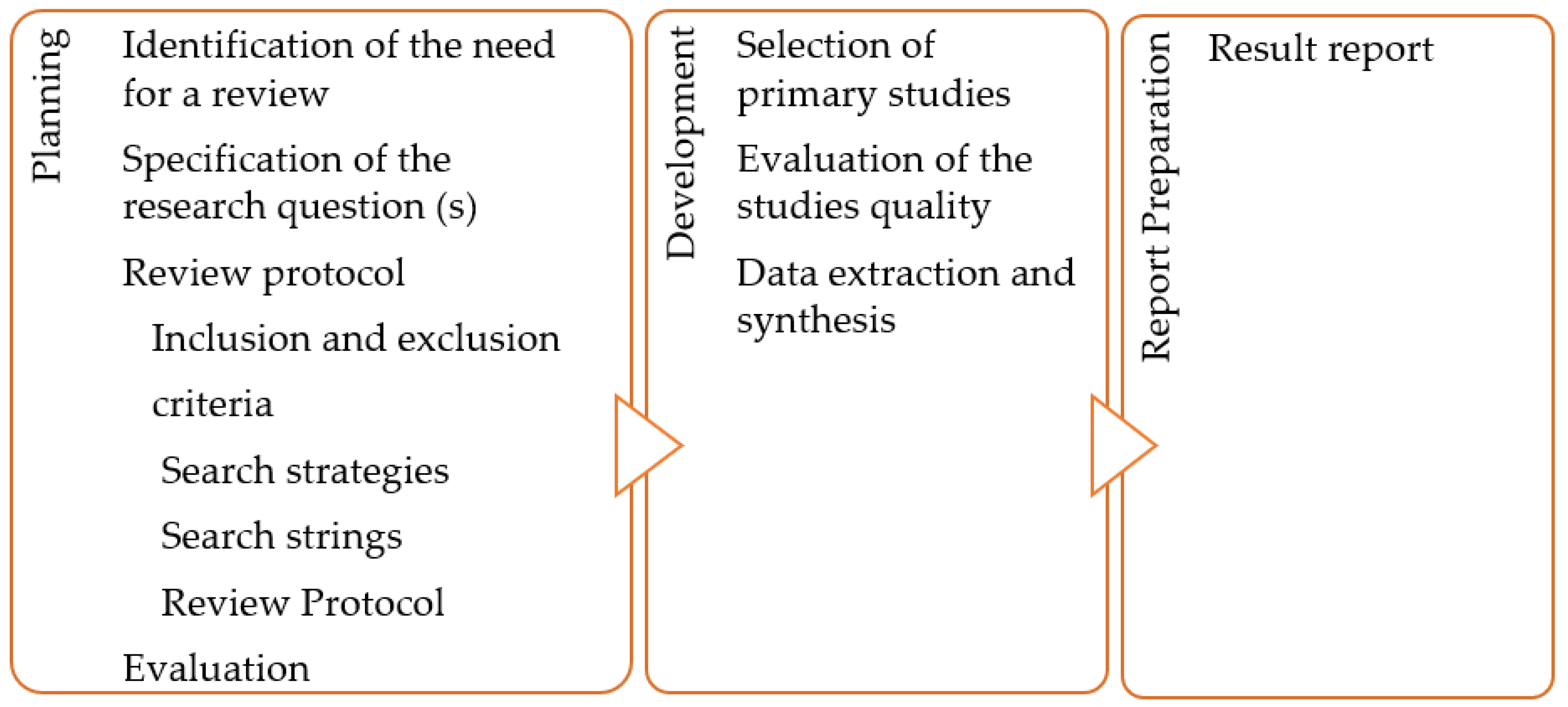
This systematic review is based on the Kitchenham guidelines [14], Petersen et al. [15], and Sinoara et al. [16]; Figure 1 details the process and the three phases of this study.
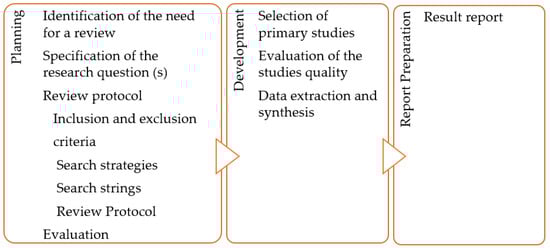
Figure 1.
Process and phases of the systematic review.
2.1. Phase 1: Planning
The mapping of the main activities and the systematic literature review were established in this phase.
2.1.1. Significance of the Study
A previous literature review reveals the existence of several models or digital competence frameworks that try to define and characterize the new profile of the teacher centered on information and communication technologies. However, in Latin America, dimensions and training standards in digital competence are scarce, contrary to Europe and the United States, which have teacher digital competence (TDC) standards and their respective accreditation instances [17].
According to Instefjord and Munthe [18], two of the most common strategies to train university professors on the use of ICT in their professional practice focus on technological use and practical exhibition (daily teaching activities) with it. In previous periods, the teacher with the highest level of digital competence was the one who had a greater ICT knowledge and mastery of it; currently, the most competent is the one who, mastering the technologies, manages to make students develop their digital competencies and use them skillfully, efficiently, and effectively to achieve new and better knowledge. Hence, a methodological shift in teaching and the development of teacher digital competencies or e-skills is essential to effectively solve the techno-pedagogical requirements that university students, now considered as digital natives, demand [19].
2.1.2. Research Questions
The driving research question for this study was: what are the dimensions and basic standards that teacher training in digital competence in higher education must meet to strengthen their work inside and outside the classroom? Prendes and Gutiérrez [12] express that a standard is “a pattern or reference model that allows, on the one hand, to determine and assess those teachers who are competent in terms of such competencies and, on the other hand, to drive and guide the design and preparation of teacher training proposals regarding these technologies” (p. 199).
The systematic literature review aims to answer the following questions regarding the objective of the study.
- RQ1. What basic standards do studies establish for digital competence training?
- RQ2. What standards, models, or frameworks are used as references to implement teacher training in digital competence?
- RQ3. What are university professors’ training needs regarding digital competence?
- RQ4. What is the contribution of the study in this area?
- RQ5. What technologies are recommended for teacher training in digital competence?
To define the scope of the systematic review (Table 1), the PICOC (population, intervention, comparison, outcome, context) method proposed by Kitchenham et al. [14] was used.

Table 1.
Terms of PICOC.
Based both on the established PICOC method and the research questions, exploratory searches were made to evaluate the keywords and identify their relationship with the field of study. The ERIC and UNESCO thesauri were used to define the terms or synonyms that are of the keywords in the information search (Table 2).
Table 2.
Keywords for information search.
2.1.3. Review Protocol
The review protocol presented in Figure 1 consists of three phases: (a) the inclusion and exclusion criteria; (b) search strategies, and (c) search strings.
2.1.4. Inclusion and Exclusion Criteria
To select the most relevant studies that allow us to answer the research questions, seven inclusion criteria (IC) were established:
IC1. The research is published between the years 2015 and 2022.
IC2. The document is open access.
IC3. The document is in English or Spanish.
IC4. The document is published in journals, conference proceedings, books, or a series of books.
IC5. The document is the final version.
IC6. The document answers the research questions.
IC7. Training in digital competence is aimed at university professors.
The exclusion criteria correspond to all the documents that do not match the above inclusion criteria.
2.1.5. Search Strategies
Three databases accessible from the virtual library of Universidad Técnica del Norte were selected to search the information: Web of Science (WoS), Scopus, and Scielo. These databases are relevant in the field of study and have similar characteristics when using search strings.
2.1.6. Search Strings
Once the research questions, the PICOC, the keywords (search terms), and the inclusion and exclusion criteria were established, the search strings used in each database were structured. The keywords were integrated through Boolean operators AND and OR to combine different queries in the search, and an asterisk (*) was used in some words to include both singular and plural terms.
Subsequently, the inclusion criteria were added: the time of publication (2015 to 2021), the language it was written in (English or Spanish), being the final version of the paper, the paper being open access, and the type of document. The customized search string for each database is presented in Table 3.
Table 3.
Search string for each database.
2.1.7. Review Protocol Evaluation
A protocol “is an essential component of the systematic review process; it ensures that a systematic review is carefully planned and that the planning is explicitly documented before the review begins” ([20], p. 1).
The systematic review was developed based on the review protocol guidelines of the research specialized in this methodology [21] to make the research process transparent; therefore, the review protocol evaluation is essential, and it was validated by experts in educational innovation. This consisted of reviewing the searching process, selecting the sources to be analyzed, and the systematization of knowledge.
2.2. Phase 2: Development
The conducting of the systematic review was carried out according to three phases: the selection of the primary studies; the assessment of the study quality; and the data extraction and synthesis.
2.2.1. Selection of Primary Studies
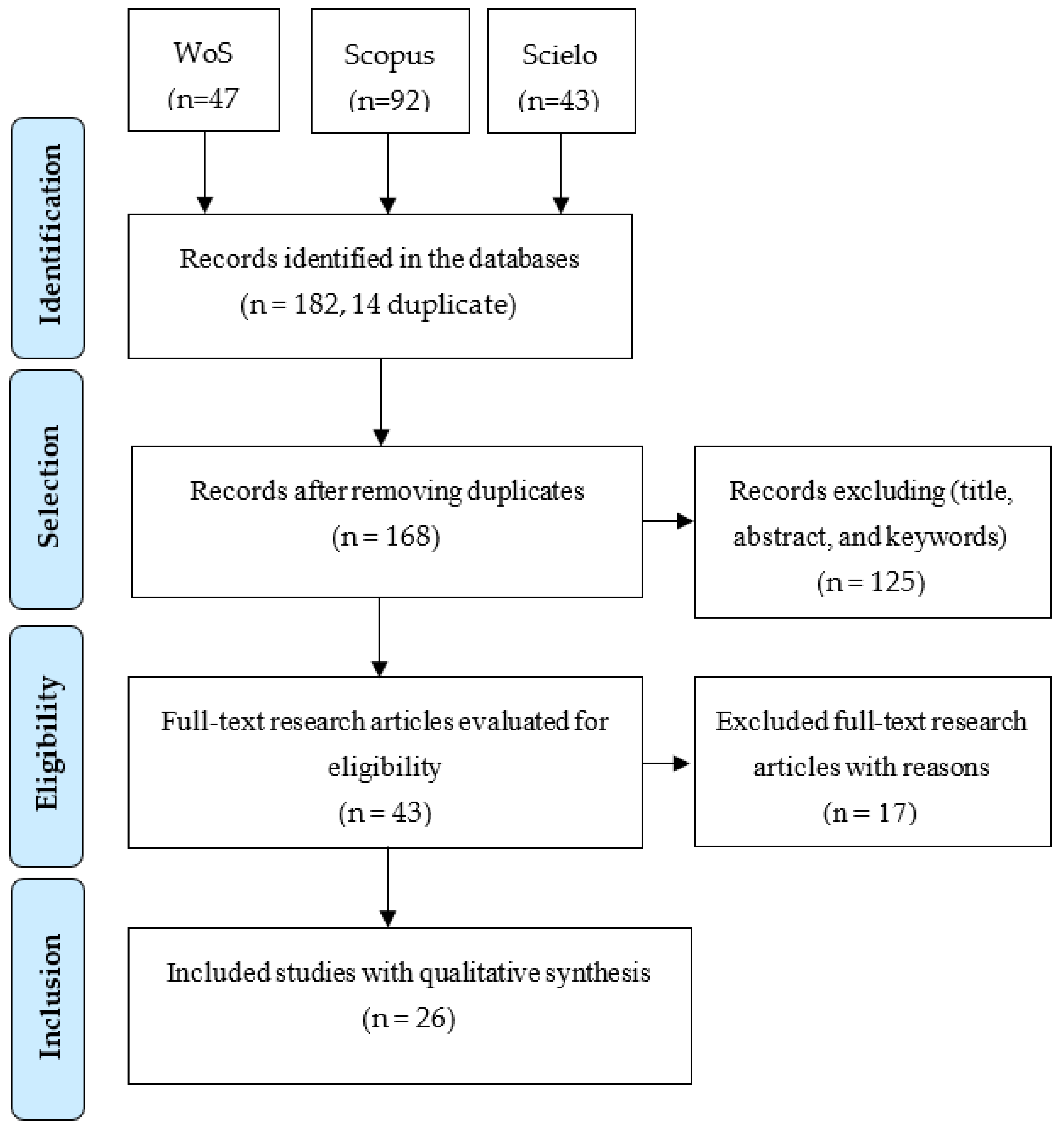
All searched documents were condensed and organized using Microsoft Excel 365. The data extraction from the Web of Science (WoS) and Scielo databases was carried out through Win tabulator, which downloads data in a text file (savedrecs.txt), while Scopus files were downloaded as a .csv format (comma-separated values). The selection of the primary studies was based on the PRISMA flowchart [22], presented in Figure 2, which shows four phases: the identification, selection, eligibility, and inclusion.
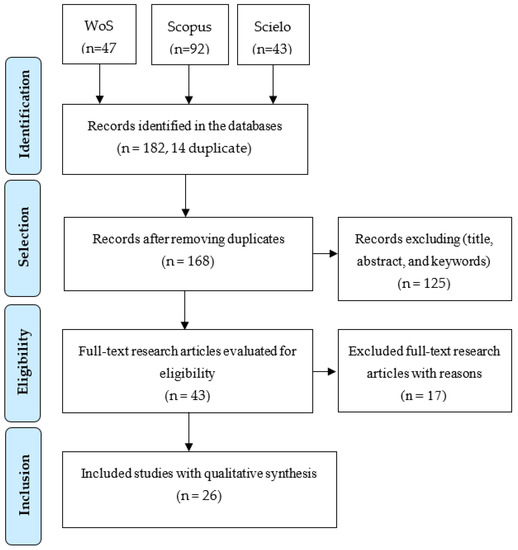
Figure 2.
PRISMA flow diagram.
The identification phase obtained 182 documents, of which 92 were Scopus-indexed articles, 47 were WoS, and 43 were Scielo. In the selection phase, duplicated documents were eliminated (n = 14) with the help of the remove duplicates option in Excel. Then, during the eligibility phase, the titles, abstracts, and keywords of each document were analyzed, considering the exclusion criteria and the search strings that were previously established (n = 125).
Subsequently, the documents were evaluated according to the inclusion and exclusion criteria. Seventeen studies were excluded due to any of the following reasons: it does not answer the research questions, the context is different from that of higher education, and it is impossible to download the document. In the last phase, 26 articles were included for in-depth reading and the respective analysis. It is stated that there is no conflict of interest.
2.2.2. Quality Assessment of the Studies
A rigorous quality assessment was conducted using three methods: (1) a quantitative quality checklist. None of the selected studies are qualitative, therefore they were evaluated with the quantitative checklist, shown in Table 4. This checklist is based on the questions suggested by Kitchenham et al. [14], Petticrew and Roberts [23], and Riaz et al. [24]. The questions were reformulated according to the needs of this study, (2) an expert from Universidad Técnica de Norte (Ibarra-Ecuador) verified the information and analyzed the articles that were included in the review, and (3) the AMSTAR systematic review assessment proposed by Shea et al. was conducted. (https://amstar.ca/Amstar_Checklist.php, accessed on 11 September 2022).
Table 4.
Quantitative checklist of study quality.
The checklist contains 10 questions, each with a score of 1 point and three options on the Likert scale: yes, no, and partial, with scores of 1, 0, and 0.5, respectively. The final score of 7 was established as a cut-off point; that is, all studies with a score greater than or equal to 7 were included and those that do not meet this condition were excluded because they did not provide reliable evidence. Table 5 presents a summary of the 26 selected studies and their corresponding assessment, which are organized according to the reference for a better understanding of the results.
Table 5.
Assessment of selected studies.
2.2.3. Data Extraction and Synthesis
The data extraction of the primary studies was organized in two stages: (1) the metadata of each primary study is considered as the general data, it is categorized by the author(s), title or subject of the document, abstract (abstract), keywords, digital object identifier (doi), year of publication, database, type of document and language, and (2) categories to classify the primary studies selected are defined, these are: the purpose, type of study, country in which the study was developed, training standards and models or frameworks used as references to implement teacher training in digital competence.
To categorize the type of study, six categories described by Morocho et al. [47] were considered: the correlational study (CS), descriptive study (DS), descriptive and correlational study (DCS), exploratory study (ES), systematic review studies (SR), and non-experimental study (NES). Regarding the purpose of each study, it was based on the guidelines proposed by Tonella et al. [48], which describe and identify the study purpose under seven categories (Table 6).
Table 6.
Category according to the purpose of a study.
To classify the contribution made by each study, seven categories were considered: the standard (E), conceptual framework (CF), model (M), assessment instrument (AI), training program (TP), training dimensions (TD), strategy (S), and it does not contribute (NC); the latter refers to studies that do not present any of the first three categories. The data synthesis of the review is detailed in the Section 3 to answer each of the research questions described above.
2.3. Phase 3: Results Report
The results report of the systematic literature review is detailed in the following section, and it presents the findings of this article.
3. Results
Next, the research questions for the systematic literature review are answered based on the data extracted from the selected papers.
The first question, RQ1. What basic standards do studies establish for digital competence training? Of the 26 studies, 5 describe the standards in an organized way as competency dimensions, in accordance with Table 7, while 9 studies show the importance of establishing standards for digital competence training and suggest taking existing models or frameworks as a basis to outline training standards according to the context in which they are developed.
Table 7.
Basic standards for teacher training in digital competence.
- Hepp et al. [34] claim that the standards will guide teacher performance since they integrate the knowledge and practices required for the development of their professional practice.
- Pozos y Tejada [11] point out that it is necessary to establish standards to examine teachers’ ICT competence to improve the digital profiling of teachers in Higher Education.
- Chou et al. [7] refer to UNESCO’s definition of standards (2008) where they are considered as a structure to identify and evaluate the elements that make up a competence.
- Yazon et al. [27] reveal that digital competence training standards allow a competence to be assessed and, based on it, enrich professional practice.
- Cabero-Almenara y Martínez [28] state that the improvement of teaching in Higher Education is related to the standards of digital competence since they allow assessing teachers’ competence in this area through the evaluation of their standards, without limiting university professors’ actions.
- Sjöberg y Lilja [31] state that the standards refer to the competencies that teachers must achieve and master at the end of their teaching training.
- Caena y Redecker [35] state that providing digital competence standards contributes to establishing teachers’ professional profiles in Higher Education.
- Colás-Bravo et al. [29] base their research on a sociocultural approach composed of four dimensions: dominance, preference, reintegration, and appropriation; they establish teacher digital competence (TDC) standards through empirical evidence coming from its implementation in students, which is why this study is not considered within the basic standards for teacher training (Table 7).
- Cabero-Almenara et al. [43] states that standards allow for recognizing the use and integration of technologies in teaching, identifying training needs, and proposing personalized training itineraries.
Table 8 details the answer to research question 2, RQ2. What standards, models, or frameworks are used as references to implement teacher training in digital competence? The studies refer to two standards, nine models, and seven frameworks, all of which focus on the development of digital competence in different areas, one of which is teacher training in general.
Table 8.
Referents of digital competence.
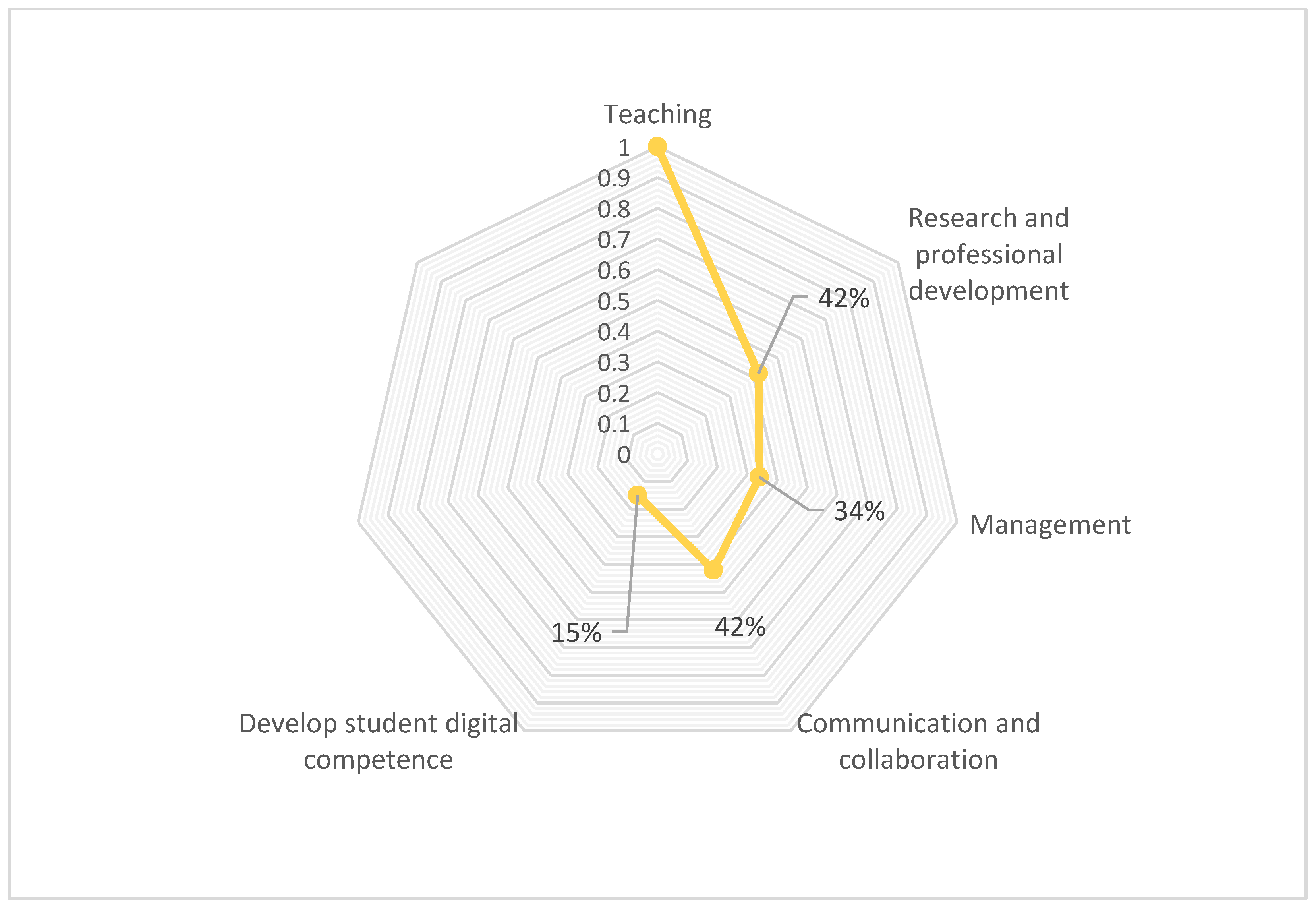
Figure 3 answers research question 3, RQ3. What are university professors’ training needs regarding digital competence?
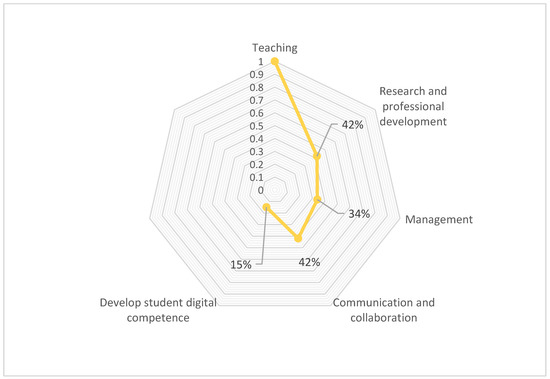
Figure 3.
University professors’ training needs.
All the studies in the systematic review highlight the training needs in teaching, which implies that teachers need to develop abilities to use ICT efficiently and didactically in their professional work, focusing on innovation and pedagogical leadership with ICT. With the same share of 42% for research and professional development, and communication and collaboration (42%), it reveals that teachers must develop skills to integrate ICT as a communication channel that promotes collaboration and collaborative learning through national communities and international networks, which could serve as points of reflection for the development of research and the co-creation of new training opportunities in their professional life. Management shows a 34% need, and the development of student empowerment in digital competence presents a 15% need.
Regarding research question 4, RQ4. What is the contribution of the study in this area? The majority of the studies, in the first instance, focused on the verification of evidence and, secondly, on conceptual proposals; therefore, the contribution that the selected studies have made to the scientific literature is considerable, since 36% of the studies proposed teacher training in digital competence (TP), 15% built four models (M) focused on teacher training for the development of digital competence (DC), while 19% developed instruments to assess the level of training that university professors have in DC (AI). Additionally, in the same proportion (15%), they developed training strategies (S) and a detailed and structured description of how to build a digital competence framework for training (CF). Table 9 shows the different contributions that were found through the systematic review.
Table 9.
Contribution of each selected study in detail.
Table 10 addresses research question 5 of this systematic review, RQ5. What technologies are recommended to implement teacher training in digital competence? Most studies do not report the use of a specific technology to address teacher training (69%), they rather focus on determining the competencies that university professors must have to develop teaching–learning processes through an effective and safe integration of different digital resources. All the studies (100%) recommend continuous and permanent teacher training to improve their work practice.
Table 10.
Recommended technologies for teacher training in TDC.
Authors Caena and Redecker [35] concluded that the horizontal collaborative learning approach (CLA) in teacher training was essential because everyone’s participation fostered reflection, autonomy, and improvement in their professional productivity. At the end of the preparatory stage, teachers prepared the courses that they believed were necessary for their teaching work. Participation in MOOC implementation created a sense of belonging and identity.
MOOC implementation for digital competence training did not reach the expected results: teachers did not finish completing the course. The content and materials of the MOOC served to form a bank of knowledge and contextualized ideas in the form of nodes, with these, they changed the rules and turned the MOOC into an xMOOC, a MOOC focused on experts, where the teacher directs the knowledge that the participants will obtain (the teacher is the central figure of learning).
After seeing the participation in this course, video production tools were improved into personal learning resources, the meticulously planned xMOOC was transformed into a cMOOC, a connectivist course that represents the creation of networks and the generation of knowledge in a participatory way. They strategically placed and selected the material that suited their educational needs and ideas, participants were free to explore new applications at their own pace, and even decided what technology to learn and implement and how to use it in their courses. This provided them with better results for university professors’ training.
The training proposal of the studies [10,44] shows that nano-MOOCs or NOOCs configure a customizable training option in less time and it is adaptable to the needs and characteristics of teachers.
4. Discussion
Teaching performance is essential in a knowledge society. Its continuous or permanent training is unavoidable to satisfy the requirements in a world where the exponential evolution of information and communication technologies prevails. All the studies selected for the systematic literature review suggest training based on techno-pedagogy and focus their attention on improving teaching as a substantive function in university work. This implies that teachers should develop abilities to use ICTs efficiently and didactically in their professional work; similar findings to that of Jiménez-Hernández et al. [49] after the systematic review of the most used models for TDC.
Of the 26 studies that were analyzed, only Prendes and Gutiérrez [12], Pozos [50], and Prendes et al. [13] refer to the need for teacher training in three of the four substantive functions of university professors: teaching, research, and management. In accordance with Esteve et al. [51] the lack of training in these three substantive functions of higher education is notorious: research, management, and community engagement (transferring), the latter understood as the application of teachers’ knowledge and research into the social, economic, and cultural sphere, among others.
It should be noted that none of the selected studies refer to community engagement. Corroborating what was stated by Prendes et al. [13], the impact of digital competence on knowing how to use ICT critically, reflexively, and safely will affect the effective application of technology in the teaching–learning process (teaching methodologies), management, research, and community engagement.
The different investigations presented in this article, Basantes-Andradea et al. [10], Rojas et al. [40], Ruiz et al. [41], and Barragan et al. [46], among others, allow corroborating the need to redefine digital competence training in university professors from a holistic approach, which contemplates all the substantive functions and based on these, establish the dimensions, standards, and training. Likewise, it is confirmed that all the presented information does not remain in theory. Several studies demonstrate the viability of their proposals for teacher training in higher education [10,28,34,42,44,45], build or adapt instruments of evaluation to identify the level of competence that teachers have [31,36,39,41,42], and even one paper deals with how to develop a digital competence framework [35]; therefore, a growing trend is observed in this line of study.
The various models that are used as references for university professors’ training show the importance of understanding the contextualization and relevance of digital competence in the teaching role. These models through their dimensions have the purpose of establishing teacher training standards considering the context and social need of the object of study. In many cases, the training has a technical–technological orientation, leaving aside the methodology that teachers must develop to incorporate and adapt ICT efficiently in their daily work; this is a starting point to becoming a digitally competent teacher.
Concerning the basic standards that TDC training must meet, Caena and Redecker [35] present two in their study: pedagogical and technical–technological, along with the purpose of establishing the guidelines for their evaluation. On their part, Lázaro and Gisbert [52] and Esteve-Mon et al. [52] add to these two, stating learning strategies and digital instruction or training. On the contrary, Chou et al. [7] consider teaching and research as the axis to establish three training standards from the technological dimension: (1) an understanding and the effective use of ICT for teaching and research, (2) the use of technological tools to produce and spread knowledge, and (3) the use of content management tools for learning and collaborative work.
Yason et al. [27] take the DigCompEdu framework competency dimensions as the reference and develop 22 basic standards for digital competency training for educators; Pozos and Tejada [11] establish 27 standards based on the seven competency dimensions of the ICT competency model for teachers proposed by Pozos [50]. Finally, Cabero-Almenara and Martínez [28] refer to the 16 standards for initial teacher training in ICT of the Ministry of Education of Chile (2006) and 17 standards of the Ministry of National Education of Colombia (2013).
To comprehensively plan teacher learning, accompaniment, and evaluation according to their needs and ICT appropriation level to strengthen their work inside and outside the classroom, all 26 authors of the studies selected in the systematic review propose in the first instance to identify the level of digital competence that university professors have based on the competence dimension, and after that, establish the standards, the direction, and focus of the training; these results coincide with Jiménez et al. [49] to achieve the universalization of digital competence in higher education.
On the other hand, the European Digital Competence Framework for Citizens (DigComp) is the most referenced by the selected studies. Although it is not a specific model for teacher training, it is adapted to the educational context, results that are similar to those of González et al. [53] and Pérez and Rodríguez [53] who use it as a reference for this purpose. In the field of teacher training, the DigCompEdu and INTEF (2017) frameworks have the same reference significance for the authors, a finding that is similar to the results of Cabero-Almenara et al. [39] who state that INTEF was based on the DigCompEdu project for its development [10]. Although these two frameworks address the training of educators in digital competence in a general way, neither of them specify the competencies of university professors, but they can be adapted for this context and even for non-formal training.
While only five studies mention the standards established by UNESCO in 2008 and the NETS-T standards (which have the same reference significance) regarding the development of digital competence, the TPACK model is the most cited as a proposal to guide teachers in technological integration from a pedagogical dimension in favor of improving the teaching–learning process. Such a result coincides with Heep et al. [34], who point out that the DigCompEdu model in its areas two through five has a more limited scope than TPACK due to its pedagogical dimension. In the university context and according to the results obtained by Miralles-Martínez et al. [54] and Mirete et al. [37], it is necessary to restructure the TPACK model with a series of necessary competencies for each of its dimensions according to the teacher’s role (teaching and research).
The results presented in this study allow us to ratify the criterion of Viñoles et al. [42] and Prendes et al. [13]. The development of digital competence does not depend exclusively on the teacher. Universities must reconfigure their policies and strategic plans to redefine the work of university professors, in the sense of eliminating bureaucratic tasks (administrative paperwork) that limit their professional development. They must also establish comprehensive training plans that respond to TDC training needs.
There is a positive contribution in this area of study by the studies selected in the systematic review. The contributions are evidenced by the development of new digital competence models [11,13,29,33], teacher training proposals on TDC [7,10,28,34,41,42,43,44,45,46], instruments to assess the level of training that teachers have on digital competence [31,36,39,41,42], and even a detailed description on how to develop a digital competence framework [35].
In similarity with the results of Basantes et al. [10], Pérez et al. [44], Roa et al. [45], and Touron et al. [55] state that it is necessary to evaluate the level of digital competence in teachers to plan a personalized training based on the results obtained. In this sense, all studies recommend that teacher training should be continuous and permanent in an open manner, online, and with the possibility of letting teachers be the ones who choose what, when, and how to learn based on their training needs and in correspondence with the peculiarities and mastery of their competence.
Regarding the technological suggestions that could be used for TDC training, the range of options is wide: open access online courses with the nano-MOOC structure, also known as NOOC [10,44], cMOOC [7], mini videos [35], t-MOOC [43,46], online micro-courses [45], use of Web 2.0 tools [7], and online documents on techno-pedagogical handbooks (TH) so that the teacher can consult them when it is required in a personalized way [34], and even the design of the platforms that self-assess TDC and offer a training plan [42]. The similarity between the results obtained focuses on the reduction in dropouts from a training program, the elimination of repetitive content, which in many cases focuses on instrumentalized technology training, and the main characteristic among them is the personalization of teacher training according to their needs.
5. Conclusions
Teacher digital competence (TDC) does not have a unified definition and it is recognized with different terminologies (skills, digital literacy, ICT literacy, among others); however, in the studies reviewed, similarities were found in two dimensions of TDC: the didactic–pedagogical approach and professional development. With this, TDC is defined as the teacher’s ability to integrate ICT in the professional context with pedagogical-didactic, critical, and safe criteria.
The professional development of the university faculty is directly articulated to the four functions of higher education: teaching, research, management, and community engagement. The authors of the studies analyzed in this systematic review coincide that it is necessary to identify the level of knowledge that professors have in relation to the dimensions of competence and, after that, define the standards and the training approach.
The results presented allow us to establish the basic standards for teacher training in digital competence, in relation to three of the four substantive functions: teaching, research, and management. None of the selected studies refer to community engagement. The analyzed studies agree on the fact that the standards for teaching practice are oriented towards the integration of ICT in the teaching–learning process, the design and implementation of virtual learning environments, the searching of digital teaching resources, construction of learning assessments and self-assessments tools, interaction, tutoring, monitoring, and evaluation of students, ethics and responsible use of ICT in the curriculum and in learning activities, equitable use of ICT with students, collaborative work, the use of didactic material while respecting cultural and linguistic diversity, evaluation of activities, ICT resources for pedagogical practice, development of cognitive skills, and knowledge society insertion.
With respect to the research function, the authors agree that ICT is mainly used to search and manage information, produce, and disseminate knowledge, access, and consult relevant information with scientific rigor, participate in research projects, identify and understand ethical and legal issues associated with digital information, participate in academic and research networks, and solve technical problems through installation manuals or guides.
For the substantive function of management, the use of ICT is highlighted in regard to professional academic administrative tasks, the management of learning content and collaborative work, use of digital channels to improve network communication, achievement of disciplinary, pedagogical–didactic or complementary knowledge that contributes to professional development, use of basic management tools in the fields of the profession, lifelong learning development, and management of stress and emotions while achieving a new knowledge.
The updating of techno-pedagogical strategies in higher education requires the commitment and dedication of university professors to assume a change and transformation in the teaching–learning process, for which universities must create digital organizational structures that allow the exchange of experiences, general knowledge, and techno-pedagogical knowledge through virtual learning ecologies, constituted as flexible environments enriched by technologies that respond to teacher training.
Finally, the line of research on digital competence contains an extensive list of programs, projects, and topics to investigate. The results should not be generalized or extrapolated without considering the characteristics of the educators and the context for which they work.
6. Limitations and Future Lines of Research
A wide coverage of studies that address university professors’ training based on digital competence standards are presented here. Although, they do not focus on the development of the four substantive functions of higher education: teaching, research, management, and community engagement; they only deal with the first three. A general overview of the problem is presented; therefore, the limitation lies in not providing specific data that must be addressed in each of these functions and thus have a comprehensive development of digital competence in the university context. Another limitation is related to the training proposals in which different educational models and experiences from other environments are considered: some of them are not applicable to all realities since they have different theoretical and practical characteristics and needs that in some cases are applicable and are not in others.
Lines of research can be developed using this systematic literature review, as an example, we point out: the application of the theory or training proposals of some of the authors of this study, a modification, or an expansion of the research questions to establish the relationships between the experiences and results obtained in different training scenarios or educational levels.
Other studies can focus on digital competence dimensions identification for the four substantive functions of higher education and establish the standards and university professors’ training, and finally, describe the learning strategies of the didactic–pedagogical component of the teaching practice to make a critical and safe use of ICT in the classroom.
Author Contributions
Conceptualization, A.B.-A. and S.C.-M.; methodology, A.B.-A., S.C.-M., M.C.-G. and F.G.-R.; software, A.B.-A.; validation, A.B.-A., S.C.-M. and M.C.-G.; formal analysis, A.B.-A. and M.N.-T.; investigation, A.B.-A., S.C.-M. and M.C.-G.; resources, A.B.-A.; data curation, A.B.-A., M.C.-G. and F.G.-R.; writing—original draft preparation, A.B.-A.; writing—review and editing, A.B.-A. and M.N.-T.; visualization, A.B.-A.; supervision, A.B.-A.; project administration, A.B.-A.; funding acquisition, M.N.-T. All authors have read and agreed to the published version of the manuscript.
Funding
This research received no external funding.
Institutional Review Board Statement
Not applicable.
Informed Consent Statement
Not applicable.
Data Availability Statement
The set of studies analyzed in this systematic review is available at https://osf.io/9evbt/, accessed on 11 August 2022.
Conflicts of Interest
The authors declare no conflict of interest. The funders had no role in the design of the study; in the collection, analyses, or interpretation of data; in the writing of the manuscript; or in the decision to publish the results.
References
- Cabero-Almenara, J.; Ruiz-Palmero, J. Technologies of Information and Communication for inclusion: Reformulating the “digital gap”. Int. J. Educ. Res. Innov. 2018, 9, 16–30. [Google Scholar]
- Cabezas, M.; Casillas, M.; Basantes, A. The Self-Perceived Digital Competence of Social Educators in Spain: Influence of Demographic and Professional Variables. Int. J. Adv. Sci. Eng. Inf. Technol. 2020, 10, 2251–2260. [Google Scholar] [CrossRef]
- Van, E.; Van, A.; Van, J.; De Haan, J. The relation between 21st-century skills and digital skills: A systematic literature review. Comput. Hum. Behav. 2017, 72, 577–588. [Google Scholar]
- Rodríguez-García, A.; Trujillo, J.; Sánchez, J. Impacto de la productividad científica sobre competencia digital de los futuros docentes: Aproximación bibliométrica en Scopus y Web of Science. Rev. Complut. Educ. 2019, 30, 623–646. [Google Scholar] [CrossRef]
- Castañeda, L.; Esteve, F.; Adell, J. ¿Por qué es necesario repensar la competencia docente para el mundo digital? Rev. Educ. A Distancia (RED) 2018, 18, 1–20. [Google Scholar] [CrossRef]
- Basantes-Andrade, A.; Cabezas-González, M.; Casillas-Martín, S. Digital competences relationship between gender and generation of university professors. Int. J. Adv. Sci. Eng. Inf. Technol. 2020, 10, 205–211. [Google Scholar] [CrossRef]
- Chou, R.; Valdés, A.; Sánchez, S. Programa de formación de competencias digitales en docentes universitarios. Rev. Univ. Soc. 2017, 9, 81–86. [Google Scholar]
- Fernández-Cruz, F.; Fernández-Díaz, M. Los docentes de la Generación Z y sus competencias digitales. Comunicar 2016, 46, 97–105. [Google Scholar] [CrossRef]
- Gisbert, M.; González, J.; Esteve, F. Competencia digital y competencia digital docente: Una panorámica sobre el estado de la cuestión. RIITE. Rev. Interuniv. Investig. Tecnol. Educ. 2016, 74–83. [Google Scholar] [CrossRef]
- Basantes-Andrade, A.; Cabezas-González, M.; Casillas-Martín, S.; Naranjo-Toro, M.; Benavides-Piedra, A. NANO-MOOCs to train university professors in digital competences. Heliyon 2022, 8, e09456. [Google Scholar] [CrossRef]
- Pozos, K.; Tejada, J. Competencias digitales en docentes de educación superior: Niveles de dominio y necesidades formativas. Rev. Digit. Investig. Docencia Univ. 2018, 12, 59–87. [Google Scholar] [CrossRef]
- Prendes, M.; Gutiérrez, I. Competencias tecnológicas del profesorado en las universidades españolas. Rev. Educ. 2013, 361, 196–222. [Google Scholar]
- Prendes, M.; Gutierrez, I.; Martinez, F. Competencia digital: Una necesidad del profesorado universitario en el siglo XXI. RED Rev. Educ. A Distancia 2018, 56, 1–22. [Google Scholar] [CrossRef]
- Kitchenham, B.; Brereton, O.; Budgen, D.; Turner, M.; Bailey, J.; Linkman, S. Systematic literature reviews in software engineering–a systematic literature review. Inf. Softw. Technol. 2009, 51, 7–15. [Google Scholar] [CrossRef]
- Petersen, K.; Vakkalanka, S.; Kuzniarz, L. Guidelines for conducting systematic mapping studies in software engineering: An update. Inf. Softw. Technol. 2015, 64, 1–18. [Google Scholar] [CrossRef]
- Sinoara, R.; Antunes, J.; Rezende, S. Text mining and semantics: A systematic mapping study. J. Braz. Comput. Soc. 2017, 23, 9. [Google Scholar] [CrossRef]
- Henriquez-Coronel, P.; Gisbert, M.; Fernández, I. La evaluación de la competencia digital de los estudiantes: Una revisión al caso latinoamericano. Chasqui. Rev. Latinoam. Comun. 2018, 137, 93–112. [Google Scholar]
- Instefjord, E.; Munthe, E. Preparing pre-service teachers to integrate technology: An analysis of the emphasis on digital competence in teacher education curricula. Eur. J. Teach. Educ. 2016, 39, 77–93. [Google Scholar] [CrossRef]
- Basantes-Andrade, A.; Cabezas-González, M.; Casillas-Martín, S. Competencias digitales en la formación de tutores virtuales en la Universidad Técnica del Norte, Ibarra-Ecuador. Form. Univ. 2020, 13, 269–282. [Google Scholar] [CrossRef]
- Moher, D.; Shamseer, L.; Clarke, M.; Ghersi, D.; Liberati, A.; Petticrew, M.; Shekelle, P.; Stewart, L.A.; PRISMA-P Group. Preferred reporting items for systematic review and meta-analysis protocols (PRISMA-P) 2015 statement. Syst. Rev. 2015, 4, 1. [Google Scholar] [CrossRef]
- Perestelo-Pérez, L. Standards on how to develop and report systematic reviews in Psychology and Health. Int. J. Clin. Health Psychol. 2013, 13, 49–57. [Google Scholar] [CrossRef]
- Page, M.; Moher, D. Evaluations of the uptake and impact of the Preferred Reporting Items for Systematic reviews and Meta-Analyses (PRISMA) Statement and extensions: A scoping review. Syst. Rev. 2017, 6, 263. [Google Scholar] [CrossRef] [PubMed]
- Petticrew, M.; Roberts, H. Systematic Reviews in the Social Sciences: A Practical Guide, 1st ed.; Blackwell Publishing: Oxford, UK, 2006; pp. 27–336. [Google Scholar]
- Riaz, M.; Mendes, E.; Tempero, E. A systematic review of software maintainability prediction and metrics. In 3rd International Symposium on Empirical Software Engineering and Measurement, 3rd ed.; IEEE: Lake Buena Vista, FL, USA, 2009; pp. 367–377. [Google Scholar]
- Fernández-Márquez, E.; Leiva-Olivencia, J.J.; López-Meneses, E. Competencias digitales en docentes de Educación Superior. Rev. Digit. Investig. Docencia Univ. 2018, 12, 213–231. [Google Scholar] [CrossRef]
- Zempoalteca, B.; Barragán, J.F.; González, J.; Guzmán, T. Formación en TIC y competencia digital en la docencia en instituciones públicas de educación superior. Apertura 2017, 9, 80–96. [Google Scholar]
- Yazon, A.; Ang-Manaig, K.; Buama, C.; Tesoro, J. Digital literacy, digital competence and research productivity of educators. Univers. J. Educ. Res 2019, 7, 1734–1743. [Google Scholar] [CrossRef]
- Cabero-Almenara, J.; Martínez, A. Las tecnologías de la información y comunicación y la formación inicial de los docentes: Modelos y competencias digitales. Profesorado 2019, 23, 247–268. [Google Scholar] [CrossRef]
- Colás-Bravo, P.; Conde-Jiménez, J.; Reyes-de-Cózar, S. The development of the digital teaching competence from a sociocultural approach. Comunicar 2019, 27, 19–30. [Google Scholar] [CrossRef]
- Kullaslahti, J.; Ruhalahti, S.; Brauer, S. Professional Development of Digital Competences: Standardised Frameworks Supporting Evolving Digital Badging Practices. J. Sib. Fed. Univ. Humanit. Sci. 2019, 12, 175–186. [Google Scholar]
- Sjöberg, J.; Lilja, P. University Teachers’ Ambivalence about the Digital Transformation of Higher Education. Int. J. Learn. Teach. Educ. Res. 2019, 18, 133–149. [Google Scholar] [CrossRef]
- Handley, F.J. Developing Digital Skills and Literacies in UK Higher Education: Recent developments and a case study of the Digital Literacies Framework at the University of Brighton. Publicaciones 2018, 48, 109–126. [Google Scholar] [CrossRef]
- Langset, I.D.; Jacobsen, D.Y.; Haugsbakken, H. Digital professional development: Towards a collaborative learning approach for taking higher education into the digitalized age. Nord. J. Digit. Lit. 2018, 13, 24–39. [Google Scholar] [CrossRef]
- Hepp, P.; Fernández, M.À.P.; García, J.H. Teacher training: Technology helping to develop an innovative and reflective professional profile. Int. J. Educ. Technol. High. Educ. 2015, 12, 30–43. [Google Scholar] [CrossRef]
- Caena, F.; Redecker, C. Aligning teacher competence frameworks to 21st-century challenges: The case for the European Digital Competence Framework for Educators (Digcompedu). Eur. J. Educ. 2019, 54, 356–369. [Google Scholar] [CrossRef]
- Mengual-Andrés, S.; Roig-Vila, R.; Mira, J.B. Delphi study for the design and validation of a questionnaire about digital competences in higher education. Int. J. Educ. Technol. High. Educ. 2016, 13, 12. [Google Scholar] [CrossRef]
- Mirete, A.B.; Maquilón, J.J.; Mirete, L.; Rodríguez, R.A. Digital competence and university teachers’ conceptions about teaching. A structural causal model. Sustainability 2020, 12, 4842. [Google Scholar] [CrossRef]
- Domingo-Coscollola, M.; Bosco-Paniagua, A.; Carrasco-Segovia, S.; Sánchez-Valero, J.A. Fostering teacher’s digital competence at university: The perception of students and teachers. Rev. Investig. Educ. 2020, 38, 167–182. [Google Scholar] [CrossRef]
- Cabero-Almenara, J.; Barroso-Osuna, J.M.; Rodríguez-Gallego, M.R.; Palacios-Rodríguez, A.D.P. Digital Competence for Educators. The case of Andalusian universities. Aula Abierta 2021, 49, 363–372. [Google Scholar] [CrossRef]
- Rojas, V.; Zeta, A.; Jiménez, R. Digital competences in a Peruvian public university. Conrado 2020, 16, 125–130. [Google Scholar]
- Ruiz, A.; Medina, M.; Pérez, E.; Medina, A. University teachers’ training: The Digital Competence. Pixel-Bit Rev. Medios Educ. 2020, 58, 181–216. [Google Scholar]
- Viñoles-Cosentino, V.; Esteve-Mon, F.M.; Llopis-Nebot, M.Á.; Adell-Segura, J. Validation of a Platform for Formative Assessment of Teacher Digital Competence in Times of COVID-19. RIED-Rev. Iberoam. Educ. A Distancia 2021, 24, 87–106. [Google Scholar] [CrossRef]
- Cabero-Almenara, J.; Barroso-Osuna, J.; Palacios-Rodríguez, A.; Llorente-Cejudo, C. Digital competency frames for university teachers: Evaluation through the expert competence coefficient. Rev. Electrónica Interuniv. Form. Profr. 2020, 23, 1–18. [Google Scholar]
- Pérez, L.; Jordano, M.; Martín-Cuadrado, A. NOOCs for the development of university teachers’ digital competences. A pilot experience by the UNED (Universidad Nacional de Educación a Distancia). Rev. Educ. A Distancia (RED) 2017, 17, 1–35. [Google Scholar]
- Roa, K.; Rojas, C.; González, L.J.; Ortiz, E. Teacher 4.0: A digital training proposal to strengthen the teaching and learning process. Rev. Virtual Univ. Catol. Norte 2021, 63, 126–160. [Google Scholar]
- Barragán, R.; Llorente, C.; Aguilar, S.; Benítez, R. Initial self-perception and level of digital competence of university teaching staff. Texto Livre 2022, 15, 1–24. [Google Scholar]
- Morocho, Á.; Vinueza, S.; Andrade, C.; Quevedo, M. Evaluación del uso de técnicas aplicadas en la investigación. RECIAMUC 2018, 2, 722–738. Available online: https://reciamuc.com/index.php/RECIAMUC/article/view/137 (accessed on 11 September 2022).
- Tonella, P.; Torchiano, M.; Du Bois, B.; Systä, T. Empirical studies in reverse engineering: State of the art and future trends. Empir. Softw. Eng. 2007, 12, 551–571. [Google Scholar] [CrossRef]
- Jiménez-Hernández, D.; Muñoz, P.; Sánchez, F. La Competencia Digital Docente, una revisión sistemática de los modelos más utilizados. RiiTE Rev. Interuniv. Investig. Tecnol. Educ. 2021, 10, 105–120. [Google Scholar] [CrossRef]
- Pozos, K. Evaluación de Necesidades de Formación Continua en Competencia Digital del Profesorado Universitario Mexicano Para la Sociedad del Conocimiento. Ph.D. Thesis, Universidad Autónoma de Barcelona, Barcelona, Spain, 2015. [Google Scholar]
- Esteve-Mon, F.M.; Castañeda, L.; Adell-Segura, J. A Holistic Model of Teaching Competence for the Digital World. Rev. Interuniv. Form. Profr. 2018, 91, 105–116. Available online: http://hdl.handle.net/10234/174771 (accessed on 11 September 2022).
- Lázaro, J.; Gisbert, M. El desarrollo de la competencia digital docente a partir de una experiencia piloto de formación en alternancia en el Grado de Educación. Educar 2015, 51, 321–348. [Google Scholar]
- González, C.; Román, M.; Prendes, M. Formación en competencias digitales para estudiantes universitarios basada en el modelo DigComp. Edutec. Rev. Electrónica Tecnol. Educ. 2018, 65, 1–15. [Google Scholar] [CrossRef]
- Miralles-Martínez, P.; Gómez-Carrasco, C.J.; Arias-González, V.B.; Fontal-Merillas, O. Recursos digitales y metodología didáctica en la formación inicial de docentes de Historia. Comunicar 2019, 27, 45–56. [Google Scholar] [CrossRef]
- Tourón, J.; Martín, D.; Navarro, E.; Pradas, S.; Íñigo, V. Validación de constructo de un instrumento para medir la competencia digital docente de los profesores (CDD). Rev. Española Pedagog. 2018, 76, 25–54. [Google Scholar] [CrossRef]
Publisher’s Note: MDPI stays neutral with regard to jurisdictional claims in published maps and institutional affiliations. |
© 2022 by the authors. Licensee MDPI, Basel, Switzerland. This article is an open access article distributed under the terms and conditions of the Creative Commons Attribution (CC BY) license (https://creativecommons.org/licenses/by/4.0/).