


Abstract
This study investigates the “Internet of things” (IoT) and “Circular Economy” (CE) relationship in the current scientific literature focused on case studies or use cases on manufacturing context. To the best of our knowledge, this study is the first to map the science centered on “case studies” with respect to the “IoT” and “CE” connection, contributing to fill the gap of the subject that is already relevant to the scientific community and practitioners. The research methodology consists of developing a bibliometric study, employing PRISMA process, whose data is obtained from the Web of Science database. The VOSviewer was the computer program selected for the bibliometric analysis. The Web of Science (WoS) analysis tool supports VOSviewer. The papers were analyzed according to network analysis principles. The qualitative content analysis complements these results. The results show the high-frequency keywords and topics associated with the theme “IoT and CE”; the most cited papers; the intellectual structure of “IoT and CE”; the new emerging themes in scientific research; and social networks among the researchers. The paper’s contribution is the results of the bibliometric analysis and a better understanding of the relationship of “IoT” and “CE” by the “case studies” addressed in the empirical investigations.
1. Introduction
The circular economy (CE) strategy first appeared in literature in the early nineties [1], although, the concept of CE can be found in the 1960s, with roots in environmental economics and industrial ecology [2]. It has attracted attention in recent years, whose motivation is to preserve and improve natural capital, optimize the production of resources and minimize the risks of the system through the management of finite stocks and renewable flows [3]. Additionally, Internet of Things (IoT) technologies are “nowadays assumed to be one of the key pillars of the fourth industrial revolution due to significant potential in innovations and useful benefits for the population” [4] (p. 1).
In 2017, some researchers argued that there should be interesting real cases in the industrial sector about “Big Data” and IoT to enable the transition from linear to circular economy waiting to be explored scientifically [5]; on the other hand, others comment that there are studies around the digitalization of the CE that are widely discussed among academics as additive manufacturing, following Big Data and analytics, and IoT [6].
These studies inspired the investigation of the current status of the empirical research in the scientific literature about the IoT and CE relationship employing quantitative analysis by bibliometric methods to scientific mapping. The bibliometric methods support new researchers to quickly understand the structure of the field of study and to introduce quantitative rigor into literature reviews [7]. The qualitative content analysis complements the quantitative analysis results [8].
In this sense, the research question of this study is: to what extent does the current scientific literature, focused on case studies or use cases on manufacturing context, relate to the Internet of things (IoT) and circular economy (CE) themes? The research question will be answered guided through the secondary research questions, which are connected to different types of the bibliometric methods in accordance to Zupic and Čater [7]. Therefore, the following secondary research questions are determined to answer the research question:
- What are the high frequency of keywords and relevant topics associated with the IoT and CE relationship?
- What are the most cited papers among the relevant collection?
- What main references or intellectual structures do the researchers adopt to develop their research concerning the IoT and CE relationship?
- What are the emerging themes regarding the IoT and CE relationship?
- What is the social structure of the field of study about the IoT and CE relationship?
This paper has been organized as follows. Section 2 introduces the main concepts concerning this paper. Section 3 addresses the research methodology. Section 4 presents the bibliometric results and the qualitative synthesis of the relationship between IoT and CE in the context of real cases in the manufacturing sector. Section 5 summarizes the results and discussions. Section 6 gives the conclusions, limitations, and directions for future research.
2. Circular Economy and Internet of Things Concepts
Numerous definitions and interpretations concerning CE can be found in the literature [9,10,11], however, CE is essentially based on closed-loops replacing the concept of “end-of-life” of a product, to keep materials, components, and products at their greatest utility and value, whether for technical (technological assets and materials) or biological (flows of biological nutrients) cycles [3]. The technical cycle emphasizes the extension of a product’s life through a hierarchy of circularity strategies, as reuse, repair, reconditioning, remanufacturing, and recycling, and on the other hand, the biological cycle focuses on the regeneration of the ecosystems by reducing the excessive extraction of natural resources, using renewable materials and reusing energy and organic waste.
Moreover, the promotion of product reuse and lifetime extension actions, and the efficient use of energy, also contributes to CE [9]. Besides, the CE concerns better use of resources and minimization of waste in a closed-loop approach, which is applicable to waste management [10]. In fact, waste management is recognized as a strategic issue to address the transition to CE [11].
There are approaches that translate CE concept into practice, of which the popular are “Rs” loops [12] and ReSOLVE [9]. The ReSOLVE framework consist of six business actions, which are Regenerate, Share, Optimize, Loop, Virtualize, and Exchange [3].
The “Rs” loops approach varies in 3R (“Reduce”, “Reuse”, and “Recycle”), 4R (“Reduce”, “Reuse”, “Recycle”, and “Recover”), 6R (“Reduce”, “Reuse”, “Recycle”, “Recover”, “Redesign”, and “Remanufacture”), 9R (“Refuse”, “Rethink”, “Reduce”, “Reuse”, “Repair”, “Refurbish”, “Remanufacture”, “Repurpose”, “Recycle”, and “Recover”). The frameworks follow a hierarchy, with their first “R” purpose being prioritized over the second “R” successively. The “Refuse”, “Rethink”, “Reduce” strategies of 9R are more useful in smarter context [1].
CE initiatives can occur at three levels: micro-, meso-, and macro-level. The micro-level focuses on initiatives that are implemented inside the company like cleaner production strategies, sustainable production and resource efficiency initiatives; the meso-level focuses on interactions among companies, as green supply-chain management and reverse logistics; and the macro-level is related to initiatives that go beyond companies, reaching a national or global scale as, for example, regulatory impact analysis and zero waste regimes [13].
There is a study about recycling end-of-life vehicles in Europe [14], which shows the relevance of the environmental dimension, technological progress towards environmental practices, economic and social dimensions in relation to the recycling plants, and the adoption of circular economy models.
The study applied a survey with a Likert scale provided to experts who considered the environmental dimension less important than the economic one, since the preservation of the environment was strictly linked to the opportunities for the use/recovery of natural resources; and the technological dimension was considered totally relevant when oriented towards the implementation of green practices. Authors believed that the social dimension is certainly relevant, since the citizen should act by requesting of political actors that actions are taken that favor the implementation of recycling infrastructures. They affirm that, even recycling is not considered the first solution in terms of waste hierarchy, it is a technology capable of meeting the sustainable objectives.
In this way, CE emphasizes minimizing negative environmental impact and the social impacts, where the technological dimension plays a critical role when oriented to improve the CE models.
There are several definitions and interpretations of CE in the literature, the same occurs with IoT [15,16]. There is a clear advantage associated with IoT, which is the integration of the physical world with the virtual of the Internet, whose paradigm simplified is supported “anytime, anywhere, and anyone connected”, whose goal is to ensure a connection between devices with storage, production, and exchange of information and data in real-time [17].
One of the definitions of IoT, with a focus on supply chain management, is “a network of physical objects that are digitally connected to sense, monitor and interact within a company and between the company and its supply chain enabling agility, visibility, tracking and information sharing to facilitate timely planning, control and coordination of the supply chain processes” [18] (p. 4721), where the digital connectivity of the physical things should occur in a proactive way in the supply chain, allowing data storage, analysis, and sharing; and the communication involves processes within an organization as well as inter-organizational transactions covering all major supply chain processes.
The Industrial IoT (IIoT) is a closely related concept to IoT, where the “things” could include smart products, smart machines, and smart services such as quality-controlled logistics and maintenance [18].
Regarding the impact of implement IoT in organizations, although IoT provides many benefits, the use of technology is a product of human actions and these actions determine the real benefits to be obtained and the potential risks [19]. For instance, some benefits of adopting IoT in organizations are the ability to provide (more) timely information for decision making and longer response times, automation of decision making, better planning due to the insights created by higher volumes of data, reduced operating costs due to improved data quality; on the other hand, the examples of risks of IoT adoption are non-compliance with privacy regulations, high implementation costs, interoperability and integration issues, security risks, lack of knowledge and risk awareness. There are organizational conditions required for benefits of IoT to be achieved, as implementation of a data quality framework and data governance, development of technical skills, ensuring IoT capabilities in IT infrastructure, ensuring flexible procurement policies, and strong data architectures including standards and protocols.
Some researchers investigated the opportunities for connecting IoT with CE model in different contexts, for example, Askoxylakis [20] emphasizes the new circular economy business models (CEBMs) and service supply chains to generate direct value for customers/end users and to increase resources productivity in economies. Ramadoss et al. [21] affirm that IoT integrated with wireless sensor networks and cloud computing will contribute to monitor, regulate, and enforce rules on the movement of CE. Reuter [22] argues that there is an opportunity to metallurgical industry in digitalizing the CE system within the metallurgical-IoT (m-IoT) paradigm, whose rigor permits understanding and supports the innovation of the CE system and an understanding of its contribution and limitation in the context of complex society. García-Muiña et al. [23] evaluated the transition from a traditional business model to a sustainable business model in a manufacturing context within an empirical study. Firstly, the company have drafted a CEBM, then they applied the Triple-Layered Business Model Canvas (TLBMC), which represented the environmental and social dimensions. They affirm that Industry 4.0 tools enabled the implementation of sustainability by greater efficiency in manufacturing processes and the dynamically monitoring of production processes. González-Sánchez et al. [24] affirm that the new digital technologies should be developed toward a circular economy in three fundamental aspects: “(1) The production, for example recycling of waste, high-efficiency incinerators and cogeneration systems, product design, manufacturing, and remanufacturing processes; (2) the stakeholders, for example predictive analysis and the exchange of information; and (3) the information, so through the Internet of Things and the Internet of services, information is monitored, controlled, and transferred” (p. 20).
3. Research Methodology
Zupic and Čater [7] explain that there are three methods that researchers usually apply to review the literature: the qualitative approach by a systematic literature review; the quantitative approach by meta-analysis; and science mapping based on the quantitative approach by bibliometric research methods. Science mapping uses bibliometric methods “to examine how disciplines, fields, specialties, and individual papers are related to one another” (p. 429).
The science mapping can be achieved by employing bibliometric methods of scientific production, with the purpose of revealing patterns in the structure and the dynamics of scientific research fields. The evaluation conducted by bibliometric method increases rigor and mitigates researcher bias in reviews of scientific literature. Scientific mapping is useful for researchers as it allows them to review a particular line of research and understand its dynamics building on indicators, for example, by measuring the influences and similarities of documents, authors, journals, organizations, countries, and words employed in the research work [7].
This study developed a science mapping supported by a systematic literature review following the steps: (Section 3.1) Define the research questions and choose the appropriate bibliometric methods to answer them; (Section 3.2) PRISMA process: select the database that contains bibliometric data, filter the core document set, and export the data from the selected database; (Section 3.3) Select the bibliometric software to be employed for analysis and decide which visualization method should be used on the results.
3.1. Define the Research Questions and Choose the Appropriate Bibliometric Methods
The research question of this study will be answered through the secondary research questions, which are established and connected to different types of the bibliometric methods in accordance to Zupic and Čater [7]. The secondary research questions, correspondent bibliometric methods, and their definitions are presented in Table 1.

Table 1.
Secondary research questions, bibliometric methods, and definitions.
3.2. PRISMA Process: Select the Database That Contains Bibliometric Data, Filter the Core Document Set, and Export the Data from the Selected Database
This step is guided by the Preferred Reports Items for Systematic Reviews and Meta-Analyzes (PRISMA) process [25] to fulfill the proposed research objective. The PRISMA supports a systematic review, which applies structured and explicit methods to identify, select, and critically evaluate relevant research, and collect and analyze data from the included studies in the review. The main benefit is minimizing bias that can hinder the conduct and interpretation of the review. The PRISMA phases adopted at this research are: (Section 3.2.1) Identification Phase; (Section 3.2.2) Screening Phase; (Section 3.2.3) Eligibility Phase; and (Section 3.2.4) Inclusion Phase, which considers the publications eligible for bibliometric analysis.
3.2.1. Identification Phase
The identification phase considers the papers identified through the scientific databases. The scientific database platforms as Web of Science (WoS) from Clarivate (https://clarivate.com/webofsciencegroup/solutions/web-of-science/, accessed on 27 November 2020) and Scopus from Elsevier (https://www.elsevier.com/research-platforms, accessed on 27 November 2020) are widely used to conduct bibliometric analysis [26]. They provide subscription-based access to multiple databases, for example, the papers from ScienceDirect (http://www.sciencedirect.com, accessed on 27 November 2020), another platform’s solution from Elsevier, are accessed on WoS and Scopus platforms.
The WoS and Scopus provide a “set of metadata that is essential for the bibliometric analysis, including abstracts, references, number of citations, list of authors, institutions, countries and the journal impact factor” [27] (p. 1419), which is not usually available by other databases, for example, the Google Scholar metadata is a relatively low quality and difficult to extract, which becomes a challenge in bibliometric analysis [28]; CrossRef provides only a fraction of the reference lists of their indexed documents, “so an analysis of the citations detected in this source does not accurately reflect the true size of the bibliographic database” [28] (p. 877); the Microsoft Academic database “provided higher citation counts than both Scopus or WoS in Engineering, Social Sciences, and the Humanities, and similar figures in Life Sciences and Sciences” [28] (p. 874), however, “Some of the documents in Microsoft Academic were not of a scientific nature” [28] (p. 875).
Despite that the Scopus scientific database is the largest database of peer-reviewed literature [29], WoS and Scopus databases have similar journal coverage within the field of Natural Sciences and Engineering, which is the main field of this study, where Scopus covers 38% and WoS 33% of journals [30]. Besides, the present research focuses on understanding the relation between two themes, not a comparison from databases [1]. In addition, “good quality systematic reviews necessitate good quality literature searches” [31] (p. 671), therefore, the selection criteria for this study were the quality of the publications and the adequacy of the database, which is especially important for the description of the information [32], not the quantity of the publications.
In this sense, the data collection was performed using only WoS as it attains all indexed journals with a calculated impact factor in the Journal Citation Report (JCR) [29], meaning that, the higher scientific value, the greater the proven scientific relevance of the relationship between CE and IoT.
The data collection was based on applying the Boolean expression “‘Internet of Things’ AND ‘Circular Economy’”, with both terms ‘Internet of Things’ and ‘Circular Economy’ set as a ‘topic search’ (title, abstract, and keyword) in the WoS database. The term ‘Circular Economy’ was chosen because it has been used in previous bibliometric studies [33], and the term ’Internet of Things’ was used to focus the study on this enable technology of Industry 4.0.
There were sixty-seven papers of interest for research to be considered in PRISMA. The “systematic reviewers often exclude a large proportion of studies—sometimes 90% or more. Studies are typically excluded from the pool of studies because they (a) clearly meet one or more of the exclusion criteria, (b) include incomplete or ambiguous methods, (c) fail to meet a predetermined threshold for quality, or (d) fail to report sufficient statistics or data for estimating effect sizes” [34] (p.22). Therefore, a minimum number of papers was not established to conduct a systematic review by PRISMA.
3.2.2. Screening Phase
Subsequently, the documents to be evaluated were restricted to peer-reviewed papers, reviews, and early access papers published in indexed journals to ensure the quality of this study, which should be originally published in English to avoid translation issues and minimize problems of ambiguity in fundamental concepts. The search period was not established, neither the Web of Science Categories nor Research Areas. In total, fifty papers were of interest for research to be considered in PRISMA.
3.2.3. Eligibility Phase
The PRISMA “eligibility phase” consisted in reading the full texts and discarding some full-text papers according to several criteria. Authors established three criteria for a study to be selected as eligible: (1) the publications should apply the case study approach or use cases, in other words, examples of applications; (2) the studies should focus on the manufacturing industry context; (3) the studies should emphasize the Internet of Things (IoT) and circular economy (CE) relationship.
The authors observed some conceptual papers and case studies from the screened collection. Besides, there were studies contemplating the investigation on smart city, design of buildings, healthcare, telecommunications, public administration, tourism, higher education, municipal solid waste, and transport. In addition, there were papers’ abstracts referring to the Internet of Things and the term “sustainability”, whose main motivation was not the circular economy approach; and others that referred to circular economy, although did not explicit the application of Internet of Things.
In that way, since the authors decided to focus on publications that attend case studies or use cases, thirty-three papers were excluded. In total, there were seventeen papers that presented cases in real situations; however, there were ineligible papers among them that did not adhere to the criteria previously established in terms of the manufacturing context, and the IoT and CE relationship: one of them was associated with transport, and the other two did not regard the Internet of Things and circular economy connection, therefore, they were discarded.
3.2.4. Inclusion Phase
There were fourteen papers that represent the relevant collection implicated for bibliometric analysis of scientific production. The phases of PRISMA are illustrated in Figure 1.
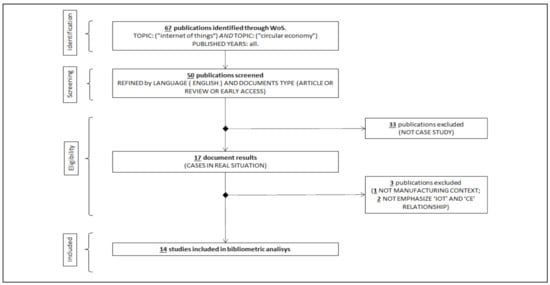
Figure 1.
PRISMA phases.
The relevant collection (Table 2) was exported to the selected bibliometric software for bibliometric analysis of scientific production.
Table 2.
Relevant collection: author, study objective, and case focus.
3.3. Select the Bibliometric Software to Be Employed for Analysis and Decide which Visualization Method Should Be Used on the Results
The VOSviewer computer program was selected to support the bibliometric analyzes as co-word analysis, citation analysis, co-citation analysis, bibliographic coupling, and co-authorship analysis of the fourteen papers selected as a relevant collection for this study. The VOSviewer is a freely available tool to construct, visualize, and explore the bibliometric data of science by mapping and clustering techniques; it creates maps based on network data [49] and includes extensive text mining functionality for creating term maps based on a corpus of documents [50].
One of the main advantages of VOSviewer over commonly used computer programs to bibliometric analyses, such as SPSS and Pajek, is the easier interpretation of the maps [49], which leads to the chosen option.
The WoS analysis tool assisted VOSviewer on “citation analysis of documents” and “co-authorship analysis” with the data extracted as countries, journals, authors, institutions, citation frequency, and journal metrics.
The text mining functionality for creating “terms map” provides an overview of the relevant topics considered in the literature and how they relate to each other. The greater the number of papers in which a term occurs (in the title and/or abstract), the more significant is the term to be displayed. The results support clustering, where each cluster may be seen as a topic, and visualizing of high-frequency words in “a two-dimensional map in which the terms are located in such a way that the distance between two terms can be interpreted as an indication of the relationship of the terms (…) the smaller the distance between two terms, the stronger the terms are related to each other” [50] (p. 51).
The VOSviewer offers three types of views, although this study uses only two of them: the network visualization and the density visualization [51]. In the network visualization, each item is represented by a label, also by a circle, as VOSviewer specifies. The size of the label and the circle are determined by the weight of the item. The greater the weight of an item, the greater the item’s label and circle. The color of an item is determined by the cluster to which the item belongs. The lines between the items represent their relationships. The closer two items are located to each other means that the stronger is their relationship. Regarding the density visualization, each item has a color that indicates its concentration. The color ranges from blue to red, which indicates lowest density to highest density; and variance in word fonts as smallest or biggest font to emphasize concepts that are occasionally or frequently employed, respectively; moreover, the greater the number of items positioned near a point and the greater the weight of the neighbor items, closer the color of the point will become to red.
4. Results
The result of the research is presented by the quantitative analysis employing VOSviewer bibliographic analysis and qualitative content analysis, describing and interpreting the analysis results.
The quantitative analyzes are accurate, but understanding is limited. The qualitative content analysis should complement these results, with the purpose of “interrogate, expand on, and enlarge the data in order to explicate its meaning and its nuance” [8] (p. 94). The qualitative content analysis involves summarizing, reorganizing, and reordering content in the data to display the data comparison and clearly order the data exhibited [8].
4.1. Co-Occurrence Analysis: High-Frequency of Keywords and Relevant Topics Associated with “IoT and CE”
4.1.1. Co-Occurrence of Keywords’ Analysis
The result of “co-occurrence of keywords” analysis, as shown in Figure 2, is the high-frequency keywords associated with “Internet of Things” and “circular economy” themes. The keywords are extracted from author keywords, or from words or phrases generated by an automatic computer algorithm of the scientific database [52].
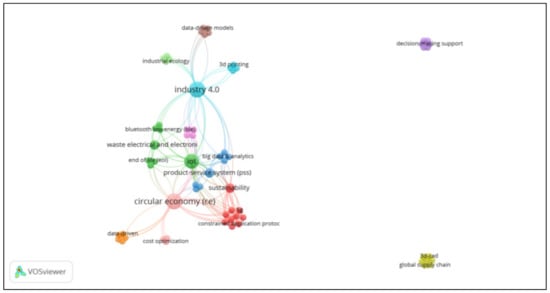
Figure 2.
Network visualization of the high-frequency keywords associated with “IoT and CE” by the case studies focused on a manufacturing context.
Considering the co-occurrence of keywords, VOSviewer offers three types of analysis by “Author Keywords”, “Keywords Plus”, and both. The type of analysis selected for the co-occurrence of keywords to this study was the “Author Keywords” option, in order to identify the papers which authors emphasize the IoT and CE relationship [52]. The VOSviewer counting method of analysis was full counting, the option minimum number of occurrences of a keyword was set at one; hence, seventy-three keywords met the limit. However, certain keywords should be cleaned by an application of VOSviewer thesaurus file; for example, some were merged into a single term because they had been duplicated with their plurals, or abbreviated, or had variations in spelling, as ‘ble’ was changed to ‘bluetooth low energy (ble)’; ‘circular economy’ to ‘circular economy (ce)’; ‘coap’ to ‘constrained application protocol (coap)’; ‘dpws’ to ‘devices profile for web services (dpws)’; ‘industry 4’ to ‘industry 4.0’; ‘internet of things’ to ‘iot’; ‘internet of things (iot)’ to ‘iot’; ‘m2m’ to ‘machine to machine (m2m)’; ‘mqtt’ to ‘mq telemetry transport (mqtt)’; ‘product service systems’ to ‘product-service system (pss)’. Others were discarded because they were generic, such as ‘0’ and ‘model’.
These mergers and exclusions indicate that the different terms referred to the same subject and that others did not aggregate value to the research, respectively [51]. As a consequence of the application of the thesaurus file in the VOSviewer co-occurrence of keyword analysis, the sixty-six keywords met the limit. Some of the sixty-six keywords in the network were not connected to each other, the fifty-three keywords were the largest set of connected keywords. The “keywords map” (Figure 2) represents sixty-six keywords grouped into eleven clusters with two hundred and forty-one links.
As observed in Figure 2, there are keywords associated with Internet of Things and keywords associated with circular economy, which are highlighted in Figure 3.
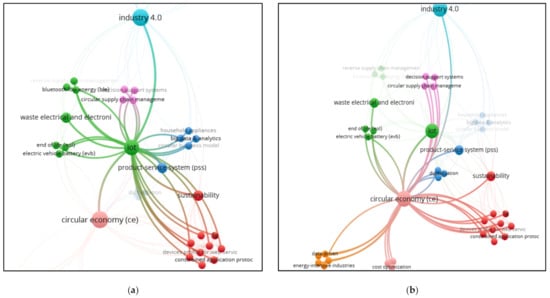
Figure 3.
Network visualization of the keywords: (a) Network visualization of the keywords associated with IoT; (b) Network visualization of the keywords associated with CE.
The Figure 3 highlights the keywords associated with Internet of Things and circular economy. The group of the high-frequency keywords and respective clusters that converge to IoT and CE concomitantly are those whose relationship between IoT and CE is strongest. In this way, according to Figure 2 and Figure 3, the clusters and their respective keywords, which link IoT and CE are: (a) cluster one (red): 5g, constrained application protocol (coap), devices profile for web services (dpws), IIoT, industrial cloud, machine to machine (m2m), mq telemetry transport (mqtt), sustainability; (b) cluster two (dark green): electric vehicle battery (evb), end of life (eol), iot, waste electrical and electronic equipment (weee); (c) cluster three (dark blue): product-service system (pss); (d) cluster nine (pink): circular supply chain management, decision support systems, semantic technology, zero waste; (e) cluster ten (rose): circular economy.
The case studies range from micro- to macro-levels of CE. For instance, (a) cluster six presents the keywords ‘3d printing’, ‘business model’, ‘circular production’, ‘industry 4.0’, ‘re-distributed manufacturing’, which are associated to the micro-level of CE, for example, related to the Turner et al. [47] research; (b) cluster nine shows the keywords ‘circular supply chain management’, ‘decision support systems’, ‘semantic technology’ and ‘zero waste’, which are related to the Mboli et al. [46] study, associated to meso-level of CE; and (c) cluster eleven reveals the keywords ‘industrial ecology’, ‘industrial symbiosis’, ‘sustainable manufacturing’ and ‘waste management’, which means meso-level, which focuses on interactions among companies, and macro-level in relation to zero waste regimes going beyond the companies, which is related to the Kerdlap et al. [44] investigation.
Furthermore, there are papers that refer to “soft” and/or “hard” IoT attributes to connect the CE approaches. The “hard” IoT embraces the IoT technologies like devices with sensors and communication standards to enable the communication and the information network among them, as shown by the study of Garrido-Hidalgo et al. [39] that develop a circular supply chain (CSC) framework for end-of-line management for the recovery of electric vehicle battery (EVB) by an IoT communication standards, for which the criteria to select the IoT standards was short-range communication, local-range communication, and long-range communication. Meanwhile, the “soft” IoT implies the association with the IoT and large amount of collected data, which can be seen in the Bressanelli et al. [35] research dedicated to how IoT, Big Data, and analytics act in the deployment of usage-focused business models to increase resource efficiency, extend product lifespan, and close the loop. In this sense, (a) cluster three connects the ‘data’ with CE, which shows the keywords ‘big data and analytics’, ‘circular business model’, ‘digitalization’, ‘household appliances’, ‘predictive maintenance’, ‘product-service system (pss)’, ‘servitization’, ‘smart lighting’; and (b) cluster two connects the ‘devices’ with CE, which reveals the keywords ‘bluetooth low energy (ble)’, ‘electric vehicle battery (evb)’, ‘end of life (eol)’, ‘iot’, ‘lorawan’, ‘reverse supply chain (rsc)’, ‘reverse supply chain management (r-scm)’, ‘waste electrical and electronic equipment (weee)’.
Others papers focused on data-driven modelling, but did not connect IoT with CE, or even mention a gap between the research fields of CE and Industry 4.0 by the limited number of publications connecting these fields, as shown by the study by Fisher et al. [36]; for example, “there is great potential for research demonstrating the application of further IDTs (for example internet of things, cyber-physical systems, cloud manufacturing, cognitive computing) to drive the CE” [36] (p. 97). Besides, the study of Ma et al. [45] proposes a framework of data-driven by Big Data analytics to save energy cost of energy-intensive industries, promoting sustainable intelligent manufacturing based on demand response models. The (a) cluster eight shows the keywords ‘data-driven models’, ‘machine learning’, ‘mathematical modelling’, ‘process resilience’, ‘waste valorisation’, which are related to the Fisher et al. [37] study; and (b) cluster seven exposes the keywords ‘data-driven’, ‘demand response’, ‘energy-intensive industries’, ‘particle swarm optimization’, ‘sustainable intelligent manufacturing’, which are related to the Ma et al. [45] research.
4.1.2. Terms Map Analysis
The result of “terms map” analysis, as presented in Figure 4, is the main topics associated with Internet of Things and circular economy themes. The “terms map” is based on text data, where the terms are extracted from title and abstracts.
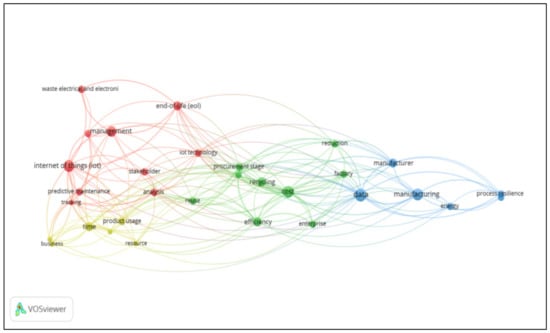
Figure 4.
Network visualization of the relevant topics associated with IoT and CE by the case studies focused on the manufacturing context.
The VOSviewer counting method of analysis was binary counting, meaning that “in the construction of a co-occurrence network the number of times a noun phrase occurs in the title and abstract of a publication plays no role” [53] (p. 305). The minimum number of occurrences of a term should be selected to be included in the co-occurrence network. The chosen value was two occurrences; hence, eighty-one met the limit (means that these terms occur in the title or abstract of at least two publications) from five hundred and eighty-three terms. For each of the eighty-one terms, a relevance score was calculated. Based on this score, the most relevant terms were selected. The default choice was to select the 60% most relevant terms, therefore, the total number of terms selected was forty-nine.
The terms selected by VOSviewer should be checked to clean those that were not associated to the research topics [53]. In this sense, the terms such as country names, generic terms, and terms related to the structure of the paper were excluded from the terms selected by VOSviewer, as follows: applicability, application, country, development, domain, enabler, fact, focus, life, literature, number, order, process, proposal, research, transportation, and viability; while other terms were substituted as ‘eol’ to ‘end-of-life (eol)’, ‘iot’ to ‘internet of things (IoT)’, ‘weee’ to ‘waste electrical and electronic equipment (weee)’.
The procedure of the analysis was repeated for the value defined as two occurrences, applying the VOSviewer thesaurus. In this case, sixty-four terms met the limit (meaning that these terms occurred in the title or abstract of at least two publications) from five hundred and sixty-six terms. For each of the sixty-four terms, a relevance score was calculated. The default choice was to select the 60% most relevant terms, therefore, the total number of terms selected was thirty-eight, but other terms were excluded as adoption, context, electronic equipment, emergence, information infrastructure, lack, and opportunity, resulting in relevant topics associated with Internet of Things and circular economy by the case studies focused on the manufacturing industry. The outcome is grouped on clusters by different colors indicating the topics relationship, ranging from red, green, blue, and yellow.
As observed in Figure 4, there are connections between Internet of Things and circular economy on the main topics “Internet of Things” and “IoT technology”, which are highlighted in Figure 5 and Figure 6, respectively.
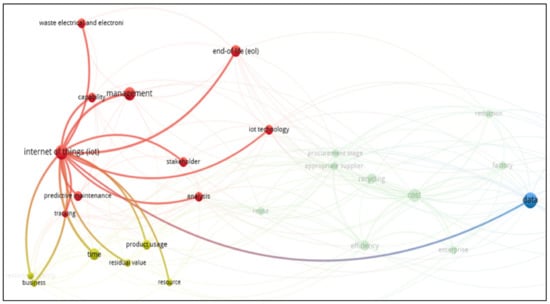
Figure 5.
Network visualization of the relationship between IoT and CE on the main topic “IoT”.
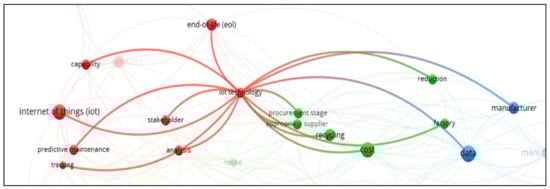
Figure 6.
Network visualization of the relationship between IoT and CE on the main topic “IoT technology”.
There is a group of topics that is linked to the Internet of Things (IoT) (Figure 5), and another that is linked to the “IoT technology” (Figure 6). As presented in Figure 4, highlighted in Figure 5 and Figure 6, the main topics associated with the term “Internet of Things (IoT)” and “circular economy” approaches are: (a) cluster one (red): ‘waste electrical and electronic equipment (weee)’, ‘end-of-life’, ‘iot technology’, ‘predictive maintenance’ and ‘tracking’; (b) cluster three (blue): ‘data’; (c) cluster four (yellow): ‘product usage’, ‘residual value’, ‘resource efficiency’ and ‘resource’. The main topics associated with the term “IoT technology” and “circular economy” approaches are: (a) cluster one (red): ‘tracking’, ‘predictive maintenance’ and ‘end-of-life’; (b) cluster two (green): ‘recycling’ and ‘reduction’; (c) cluster three (blue): ‘data’.
The analysis revealed a diverse knowledge domain, which can be confirmed through the categories and research areas defined by the WoS database (Table 3).
Table 3.
Knowledge domains based on Web of Science (WoS).
According to Table 3, there are investigations that range from Chemistry to the Computer Science knowledge domain. For instance, there is a study related to Chemistry and Computer Science that employs data-driven models to reduce the resource consumption of industrial cleaning processes and transforming wastewater treatment plants (WWTPs) into manufacturing centers [36]; and studies associated to Computer Science, for example, regarding the development of protocols for IIoT [40], and others about the data-driven models to characterize process streams considering waste valorization [37], as observed at (a) cluster three (blue). There are other investigations related to the Computer Science knowledge domain, which are observed at (b) clusters one (red) and (c) four (yellow); for example, whose subject is the IoT-enabled decision support system (DSS) for CE business model [46].
There are studies that range from Engineering, Environmental to Environmental Sciences knowledge domains. For instance, in relation to Engineering, there is a study about a cost accounting and a reverse logistics optimization model [48], which is observed at (a) cluster two (green); and in relation to Engineering, Environmental and Environmental Sciences there are researches about the data-driven sustainable intelligent/smart manufacturing for energy-intensive industries [45], which can be observed at (b) clusters two (green) and (c) three (blue); there is a research about the investigation of the “theoretical opportunities” of IoT for CE, and current implementation in practice [41], as observed at (d) clusters one (red) and (e) four (yellow); and the study about the supply chain management analyzes [39], as observed at (f) cluster one (red).
In addition, the Engineering, Manufacturing, and Mechanical knowledge domains are presented, for example, at the research of modular design and a strategic evaluation method considering sustainability and supplier selection [42], as observed at (a) clusters one (red) and (b) four (yellow); and at the investigation about the decision support model for economical material-based carbon recovery [43], as observed at (c) clusters one (red) and (d) three (blue). Regarding the Green and Sustainable Science knowledge domains, the subject of the studies are business models for re-distributed manufacture employing additive manufacturing [47], as observed at (e) clusters two (green) and (f) four (yellow), and other research is related to the usage-focused servitized business model [35], as observed at (g) cluster four (yellow).
4.2. Citation Analysis of Documents: The Most Cited Papers from the Relevant Collection
The result of citation analysis of documents, as illustrated in Figure 7, presents the most cited papers among the relevant collection selected for this research.
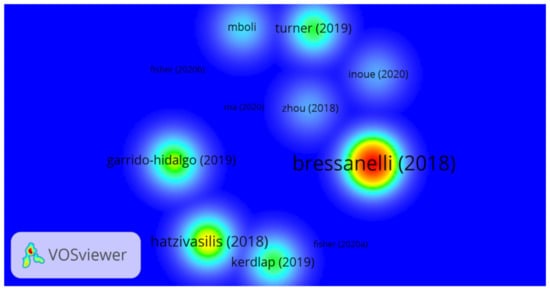
Figure 7.
Density visualization of most cited papers from the relevant collection.
Considering the VOSviewer citation analysis of documents, the minimum number of occurrences of citations of a document was selected as zero occurrence; therefore, fourteen documents met the threshold. For each of the fourteen documents, the number of citation links was calculated. The documents with the largest number of links were selected.
The density visualization in Figure 7 highlights five documents. These documents are the most cited papers, which are in order of importance: Bressanelli et al. [35], Hatzivasilis et al. [40], Garrido-Hidalgo et al. [38], Turner et al. [47], and Kerdlap et al. [44].
It is pertinent compare this result with the “times cited analyses” of the WoS database as shown in Figure 8, to investigate whether this measure of influence is being biased by older publications, since the most recent publications had less time to be cited. In this case, the authors observed that the result is not prejudiced by older publications, for instance, the paper of Mboli et al. [46] was published in 2020, on the other hand was highlighted from citation analysis of documents as part of the most cited papers from the relevant collection.
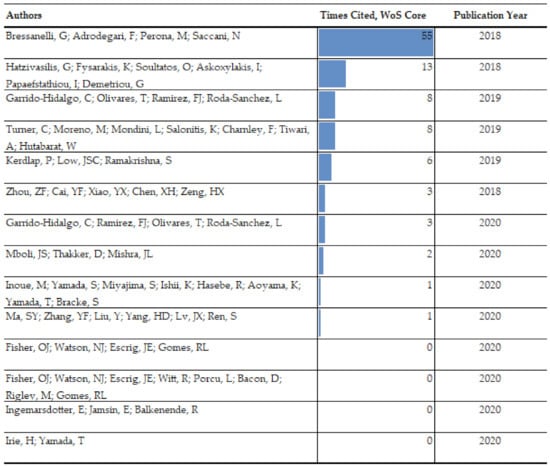
Figure 8.
Authors; Times Cited-WoS Core; Publication Year.
4.3. Co-Citation Analysis: The Intellectual Structure of the “IoT and CE”
The result of co-citation analysis, as illustrated in Figure 9, is the cited references that researchers considered important regard the Internet of Things and circular economy themes.
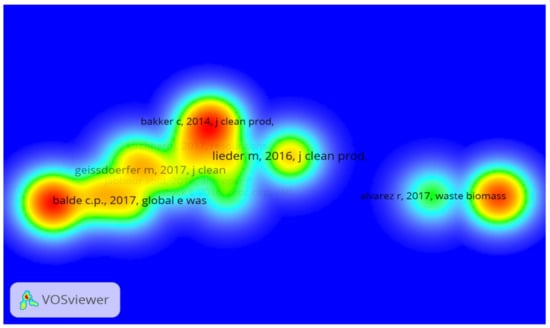
Figure 9.
Density visualization of intellectual structure of the IoT and CE by the case studies.
Considering the VOSviewer co-citation analysis, the full counting method was addressed and the minimum number of citations of cited references was selected as two occurrences. The thirty-nine cited references met the threshold, from seven hundred and thirty-nine cited references. In this sense, for each of the thirty-nine cited references, the total strength of the co-citation links with other cited references was calculated. The cited references with the greatest total link strength were selected. Nevertheless, some of the thirty-nine items in the network are not connected to each other, consisting of thirty-seven items or cited references by the researchers.
The density visualization, as shown in Figure 9, highlights five cited references into four clusters, as following:
- Cluster one:
- ∘
- Bakker, C.; Wang, F.; Huisman, J.; Den Hollander, M. Products that go round: exploring product life extension through design. Journal of Cleaner Production, 69, 10–16, (2014). Doi 10.1016/J.Jclepro.2014.01.028.
- ∘
- Lieder, M.; Rashid, A. Towards circular economy implementation: a comprehensive review in context of manufacturing industry. Journal of Cleaner Production, 115, 36–51, (2016). Doi 10.1016/J.Jclepro.2015.12.042.
- Cluster two:
- ∘
- Baldé, C.P.; Forti, V.; Gray, V.; Kuehr, R.; Stegmann, P. The global e-waste monitor 2017: Quantities, flows and resources. United Nations University, International Telecommunication Union, and International Solid Waste Association, (2017).
- Cluster three:
- ∘
- Alvarez, R.; Ruiz-Puente, C. Development of the tool symbiosis to support the transition towards a circular economy based on industrial symbiosis strategies. Waste and Biomass Valorization, 8(5), 1521–1530, (2017). Doi 10.1007/S12649-016-9748-1.
- Cluster four:
- ∘
- Geissdoerfer, M.; Savaget, P.; Bocken, N.M.; Hultink, E.J. The Circular Economy–A new sustainability paradigm? Journal of Cleaner Production, 143, 757–768, (2017). Doi 10.1016/J.Jclepro.2016.12.048.
4.4. Bibliographic Coupling: New Emerging Themes from the Relevant Collection
The result of bibliographic coupling analysis of documents, as shown in Figure 10, is the emerging fields relative to Internet of Things and circular economy themes among the relevant collection of this research.
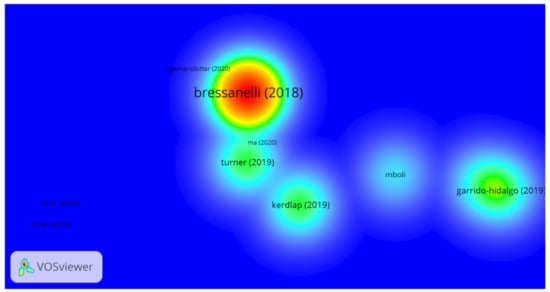
Figure 10.
Density visualization of emerging fields.
In respect to VOSviewer bibliographic coupling analysis, the full counting method was addressed and the minimum number of citations of a document was set as zero, therefore, fifty-fourteen documents met the threshold. For each of the fourteen documents, the total strength of bibliographic coupling links with other documents was calculated. However, some of the fourteen documents were not connected to each other, only ten items matched to the largest set of connected documents. The documents with the greatest total link strength were selected as shown in Figure 10.
The density visualization, as shown in Figure 10, highlights four new emergent themes among the relevant collection of this research, as following:
- Cluster one:
- ∘
- Garrido-Hidalgo et al. [38]: propose an end-to-end solution for Reverse Supply Chain Management (R-SCM) based on cooperation between different IoT communication standards, enabling cloud-based inventory monitoring of WEEE through embedded sensors.
- ∘
- Kerdlap et al. [44]: examine industry technologies and research across the six themes (design for zero waste, smart waste audit and reduction planning, smart waste collection, high-value mixed waste processing, collaborative platform for industrial symbiosis, and waste to resource conversion and recycling) to determine how the technologies can support ZWM. Regarding the smart waste collection systems, the use of IoT technologies should be applied to ZWM overall so that “waste generators, collectors, and converters can be integrated on a single system that shares data to facilitate greater waste to resource exchanges” (p. 17).
- Cluster two:
- ∘
- Bressanelli et al. [35]: develop a conceptual framework, based on the literature and a case study to implement a usage-focused servitized business model focused on the Internet of Things (IoT), Big Data, and Analytics, and identifies eight specific functionalities enabled by such technologies.
- ∘
- Turner et al. [47]: explore the viability of a re-distributed business model for manufacturers employing new manufacturing technologies such as additive manufacturing or three-dimensional (3D) printing, as part of a sustainable and circular production and consumption system. The authors emphasized the importance of the “ways in which the different functions representing supply, production, distribution, and use can communicate with each other through the transformation of materials into products, service offerings, and data, providing a guide for the implementation of re-distributed manufacturing processes into a consumer goods operation” (p. 16).
4.5. Co-Authorship Analysis: Social Structure of the Field
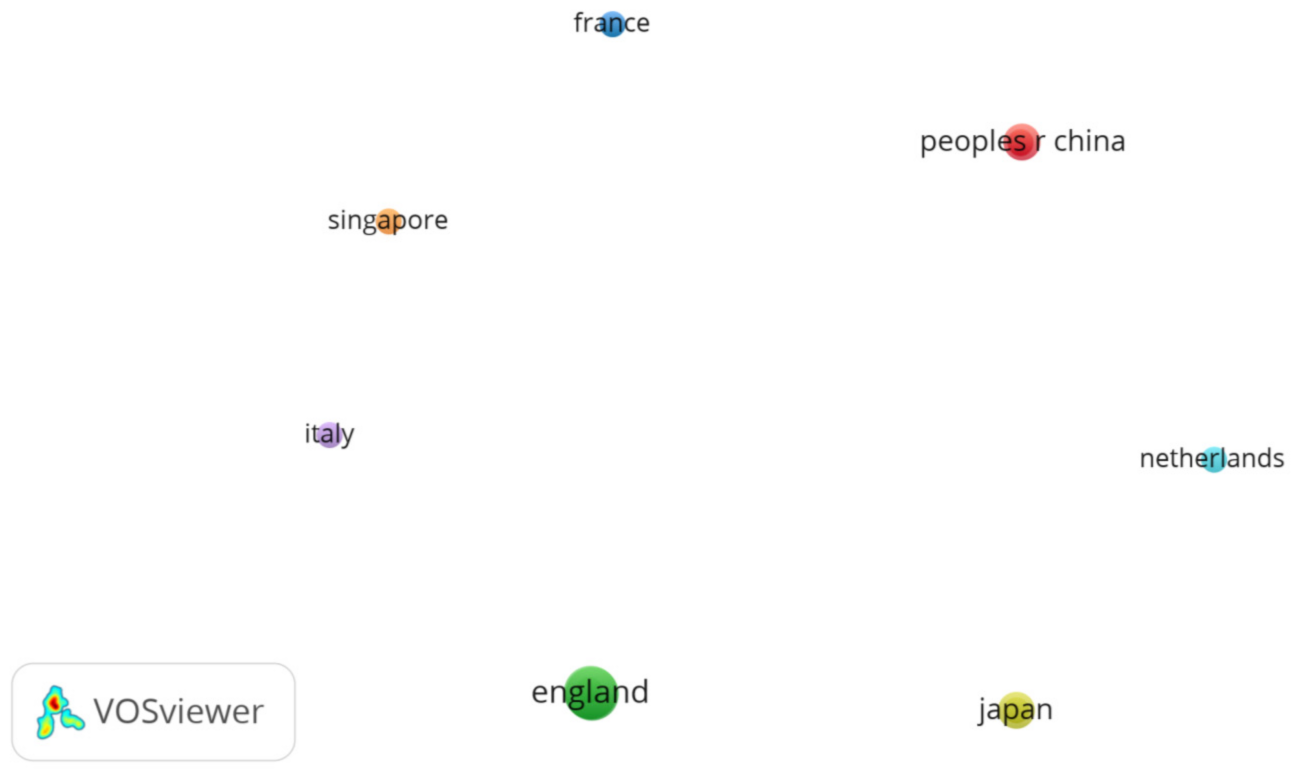
The results of co-authorship analysis in Figure 11, Figure 12 and Figure 13 show the researchers that work together, the organizations where they work, and the countries where they come from, respectively.
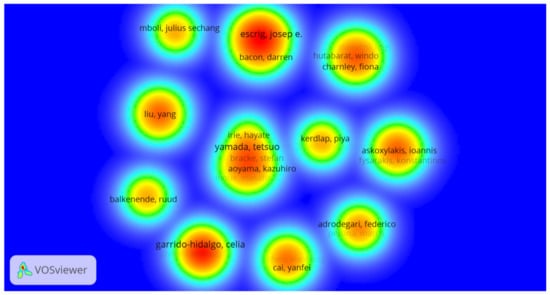
Figure 11.
Density visualization of authors from co-authorship analysis.
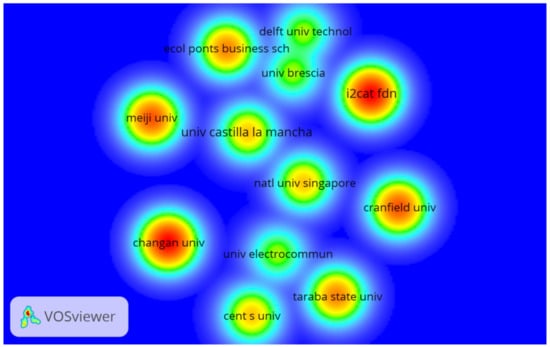
Figure 12.
Density visualization of organizations from co-authorship analysis.
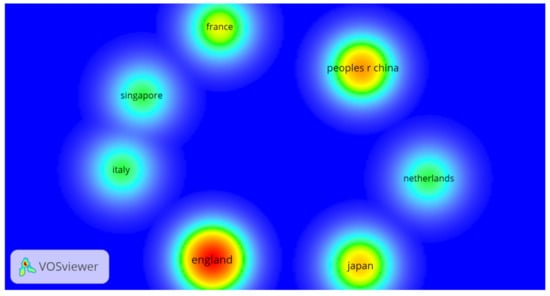
Figure 13.
Density visualization of countries from co-authorship analysis.
Regarding the co-authorship analysis of authors, was considered full counting method, maximum number of authors per document was set as twenty-five and the minimum number of documents of an author was set as one, therefore, fifty-eight authors met the threshold. For each of the fifty-eight authors, the total strength of co-authorship links with other authors was calculated. The fifty-eight authors with the greatest total link strength were selected and distributed in eleven clusters as revealed in Figure 11. The groups that stand out are: (a) cluster one, which is represented by the group of Inoue et al. [42], and (b) cluster two, which is represented by the group of Fisher et al. [36].
Considering co-authorship analysis of organizations, the full counting method was selected, and the minimum number of documents of an organization was set as one occurrence, therefore, thirty-two organizations met the threshold. For each of the thirty-two organizations, the total strength of co-authorship links with other organizations was calculated. The thirty-two organizations with the greatest total link strength were selected, however, twelve organizations are prominent as shown in Figure 12, where Changan University, i2CAT Foundation, Cranfield University and Meji University stand out.
In relation to co-authorship analysis of country, was considered full counting method and the minimum number of documents of a country was set at one occurrence, thirteen countries met the threshold. For each of the thirteen countries, the total strength of the co-authorship links with other countries was calculated. The thirteen countries with the greatest total link strength were selected, however, as shown in Figure 13, seven countries lead, where England stands out.
The clusters of the Network and Density visualizations showed at Figure 2, Figure 4, Figure 9, Figure 10, Figure 11, Figure 12 and Figure 13 are detailed at the following Appendixes:
- Figure 2 → Appendix A. Co-occurrence analysis;
- Figure 4 → Appendix B. “Terms map” based on text data;
- Figure 9 → Appendix C. Cited references;
- Figure 10 → Appendix D. Emerging fields;
- → Appendix E. Network visualization of co-authorship analysis;
- → Appendix F. Social structure.
5. Discussion
This study investigates the Internet of things (IoT) and circular economy (CE) relationship in the current scientific literature focused on case studies or use cases on manufacturing context. The papers were analyzed according to bibliometric analysis, where the qualitative content analysis complements these results.
The analysis of co-words that frequently co-occur in documents allowed to identify the connection between keywords and documents, making clear the concepts that were related between them. Accordingly, it was understood that high-frequency keywords and respective clusters that converge to IoT and CE concomitantly are those whose relationship between IoT and CE is strongest. In addition, the case studies connected IoT with CE ranging from micro- to macro-levels of CE, other referred IoT attributes as “soft” and/or “hard”; on the other hand, there are cases that focus on data-driven modelling, although they did not connect IoT with CE.
In relation to the terms map, there was a group of topics that was linked to the Internet of Things (IoT) and other that was linked to the IoT technology; both groups are strongly connected to the CE context. The citation analysis revealed the papers that were most cited among the relevant collection selected for this study. This measure of influence is biased towards older publications, however, since most of the papers were recent publications, this bias did not occur. The co-citation analysis of documents was used to filter the cited references that researchers identified as relevant to develop their research concerning the IoT and CE relationship. The bibliographic coupling was employed for mapping the emerging fields regards the IoT and CE relationship in empirical research in the scientific literature. As the relevant collection included in this study ranges from 2018 to 2020, it was challenging to map the emerging fields, since all are practically emergent. The co-authorship analysis was applied to examine the social networks collaboration on the level of authors, organization, and countries. It would be especially interesting to get information of the countries in which the case studies took place, though, the researchers rarely cited the place of the case study, and therefore, only the researcher’s origin country was examined.
The relevant collection from this study revealed a diverse and interdisciplinary knowledge domain among Computer Science, Engineering, Environmental and Environmental Sciences, Manufacturing, Mechanical, and Green and Sustainable Science. Furthermore, other perspectives should be discussed as a counterpoint.
According to van den Bergh [54], there is a mix of CE policies directed towards an interdisciplinary way that can be implemented in the short run and long run. In the short run, the policies are, for example, “charges on material flows, deposit-refund systems, standards for product design, and regulation of packaging and waste” (p. 5); and the policies, whose strategies need more time to be implemented, are, for example, “assigning product ownership and responsibility to producers, moving towards a genuine sharing economy to increase intensity of use, and regulation of advertising to temper status-seeking consumption” (p. 5). The author advised that formulating simple rules for optimal CE makes full circularity impossible, leading to a “semi-circular economy” [54].
De Man and Friege [55] criticized the CE approach in relation to the “waste as food” viewpoint and corroborated that multiple strategies is necessary for creating sustainable production systems. They believe that the unilateral policy or the selection of a strategy such CE and “zero waste” are highly questionable as a contribution to sustainable development, and affirm that European policy follows this orientation, which “(…) ‘circular economy ideas’ creates expectations that will never be realized. It conveys the wrong and misleading message that there exists an easy path to creating a growing economy with an ever decreasing ecological footprint” (p. 94).
Instead, there are studies on CE that emphasize the need for corporations to rethink their supply chains and business models to the Circular Economy Business Models (CEBMs) for creating and delivering value, dealing with insufficiencies in terms of resources and production capabilities, and complementing the focus on social issues in developing regions [56].
The CEBMs concern aspects of environmental, economic, and social sustainability on reducing the negative environmental impacts, improving the competitive advantage by close collaboration with partners, and social contributions involving sharing and reusing resources among members of society [57].
González-Sánchez et al. [24] proposed a conceptual framework for the development and implementation of a Circular Supply Chains (CSC), considering the environmental, social, and economics dimensions. Three fundamental related concepts were analyzed: reverse logistic, industrial symbiosis, and CEBMs. They explore the argument that sustainable business models differ from CBMs, since the “latter not only create sustainable value, but also involve dynamic and continuous management, allowing the loops of resources to be modified” (p. 12).
The new digital technologies have enabled the design, planning, and operation of sustainable supply chains, where IoT supports the monitoring, control, and the transference of information, guiding the actions to be developed. [24]. In addition, they are understood as a core enabler for CEBMs, where IoT boost innovation with CE to identify new potential value creation [58].
Therefore, while the companies adhere to CE principles, CEBMs redefine how companies create value, and CSC involves return processes whose manufacturer purposes is to capture additional value in the supply chain. In this sense, the application of IoT empowers the digital connectivity of the physical things within a company, and among the company and its supply chain to enable agility, visibility, tracking and information sharing, what should be a conceivable way of improving the system.
6. Conclusions
This study focused on mapping science centered on “case studies” or “use cases” on the IoT and CE relationship in the context of manufacturing industry, with the certainty that it would bring a review of several real cases, since some researchers affirmed that there is a wide discussion among academics about IoT and CE. Nevertheless, authors realized that these themes deserve a more thorough study than they have yet received in empirical research. For illustration, a research in the WoS database including IoT in the title, refined as article, review, or conference paper in English resulted in 5323 publications. The high volume of papers occurred for CE too, for instance, a search in the WoS database including CE in the title refined as article, review, or conference paper in English resulted in 1408 publications. Nevertheless, papers based on empirical research on case studies with IoT operating in favor of the CE is still a minority; only fourteen papers were identified in the WoS database in the context of the manufacturing industry.
At the time of this study, this is the first to map the science centered on “case studies” with respect to the IoT and CE relationship, contributing to filling the gap of the subject that is already relevant to the scientific community, practitioners, and society. Besides, there were no publications (article, review, or conference paper) in English in the Web of Science (WoS), even in the SCOPUS database, about the IoT and CE relationship applying bibliometric analysis with VOSviewer tool in empirical studies.
6.1. Contributions to Theory
This study followed a rigorous methodology [7,25,49] and provided guidance for the development of bibliometric analysis, the selection of papers that would later be analyzed and the employment of the VOSviewer. The qualitative content analysis [8] complements the results, with the purpose of interrogating and enlarging the quantitative findings and clarifying their significance.
In addition, the contributions to theory are the intellectual structure or main references that the researchers adopt to develop their research concerning the IoT and CE relationship; the bibliographic coupling, which showed the new emerging themes in scientific research; and co-authorship analysis, which identified the social networks among the researchers.
6.2. Managerial Contributions
The contribution for practitioners was explaining the case studies in an agile way, for example, clarifying their essential concepts and ideas through the high-frequency keywords; the main topics associated with the term “Internet of Things” and “circular economy” approaches, and their diverse and interdisciplinary knowledge domain; the most cited papers that address the real cases; and the emerging fields relative to Internet of Things and circular economy themes. Besides, different perspectives were discussed, as a counterpoint, about CE principles, CEBMs, and CSC with the application of IoT.
6.3. Research Limitations and Suggestions for Future Research
There are two reasons to choose the terms “circular economy” (CE) and “Internet of Things” (IoT) to limit the data collection of the systematic literature review: first, the term “circular economy” has been used in previously bibliometric studies [33], and second, because of the focus of the study on the enabled technology of Industry 4.0 as “Internet of Things”. However, the term CE is a broad concept, which can be a limitation for an in-depth study.
Therefore, the suggestion for future work should be to limit the data collection applying the term IoT and one of the terms related to CE resulted, for example, from the co-occurrence of keywords, such as reverse supply chain management, circular business model, product-service system, recycling, circular production, sustainable intelligent manufacturing, process resilience, waste valorization, circular supply chain management, zero waste, reverse logistics, value flow analysis, industrial ecology, industrial symbiosis, sustainable manufacturing, and/or waste management, addressed to a specific industrial sector.
Another suggestion is to orient the studies following the emerging themes identified on the research as: usage-focused servitized business model focused on the Internet of Things (IoT), Big Data, and analytics; reverse supply chain management (R-SCM) based on cooperation between different IoT communication standards; circular supply chain (CSC) framework for end-of-life management; industry technologies across the themes design for zero waste, smart waste collection, collaborative platform for industrial symbiosis; and re-distributed business model for manufacturers employing new manufacturing technologies.
Author Contributions
Conceptualization, A.C.; methodology, A.C.; formal analysis, A.C.; investigation, A.C.; writing—original draft preparation and editing, A.C.; review, J.R. and M.A.; supervision, J.R. and M.A. All authors have read and agreed to the published version of the manuscript.
Funding
This research was financially supported by the research unit on Governance, Competitiveness and Public Policy (UIDB/04058/2020), funded by national funds through FCT—Fundação para a Ciência e a Tecnologia.
Institutional Review Board Statement
Not applicable.
Informed Consent Statement
Not applicable.
Data Availability Statement
Data sharing is not applicable to this article.
Acknowledgments
We would like to thank the Research Unit on Governance, Competitiveness and Public Policy (GOVCOPP) and the University of Aveiro for their support. We appreciate the constructive recommendations made by the anonymous reviewers.
Conflicts of Interest
The authors declare no conflict of interest.
Appendix A. Co-Occurrence Analysis
Table A1.
Clusters and High-Frequency Keywords Associated with IoT and CE.
Table A1.
Clusters and High-Frequency Keywords Associated with IoT and CE.
| Cluster 1 (Red) | Cluster 2 (Dark Green) | Cluster 3 (Dark Blue) | Cluster 4 (Yellow) | Cluster 5 (Purple) | Cluster 6 (Blue) |
|---|---|---|---|---|---|
| 5g Constrained application protocol (coap) Devices profile for web services (dpws) IIoT Industrial Industrial cloud Lightweight interactions Machine to machine (m2m) MQ telemetry transport (mqtt) Sustainability | Bluetooth low energy (ble) Electric vehicle battery (evb) End of life (eol) IoT Lorawan Reverse supply chain (rsc) Reverse supply chain management (r-scm) Waste electrical and electronic equipment (weee) | Big data and analytics Circular business model Digitalization Household appliances Predictive maintenance Product-service system (pss) Servitization Smart lighting | 3d-cad Bill of materials CO2 emission Global supply chain Life cycle inventory database Recycling Sharing data | Decision-making support Early design phase Modular design Product architecture Supply chain management Upgrade design | 3d printing Business model Circular production Industry 4.0 Re-distributed manufacturing |
| Cluster 7 (orange) | Cluster 8 (brown) | Cluster 9 (pink) | Cluster 10 (rose) | Cluster 11 (green) | |
| Data-driven Demand response Energy-intensive industries Particle swarm optimization Sustainable intelligent manufacturing | Data-driven models Machine learning Mathematical modelling Process resilience Waste valorisation | Circular supply chain management Decision support systems Semantic technology Zero waste | Circular economy (ce) Cost optimization Reverse logistics Value flow analysis | Industrial ecology Industrial symbiosis Sustainable manufacturing Waste management |
Appendix B. “Terms Map” Based on Text Data
Table A2.
Clusters and Relevant Topics Associated with IoT and CE.
Table A2.
Clusters and Relevant Topics Associated with IoT and CE.
| Cluster 1 (Red) | Cluster 2 (Green) | Cluster 3 (Blue) | Cluster 4 (Yellow) |
|---|---|---|---|
| Analysis Capability End-of-life (eol) Internet of Things (IoT) IoT technology Management Predictive maintenance Stakeholder Tracking Waste electrical and electronic equipment (weee) | Appropriate supplier Cost Efficiency Enterprise Factory Procurement stage Recycling Reduction Reuse | Data Energy Manufacturer Manufacturing Process resilience Waste valorization | Business Product usage Residual value Resource Resource efficiency Time |
Appendix C. Cited References
Table A3.
The Intellectual Structure.
Table A3.
The Intellectual Structure.
| Cluster 1 (Red) | Cluster 2 (Green) | Cluster 3 (Blue) | Cluster 4 (Yellow) |
|---|---|---|---|
| Bakker C, 2014, J Clean Prod, V69, P10, Doi 10.1016/J.Jclepro.2014.01.028 Ellen Macarthur Foundation, 2016, Int Ass Unl Circ Ec Ghisellini P, 2016, J Clean Prod, V114, P11, Doi 10.1016/J.Jclepro.2015.09.007 Govindan K, 2015, Eur J Oper Res, V240, P603, Doi 10.1016/J.Ejor.2014.07.012 Kirchherr J, 2017, Resour Conserv Recy, V127, P221, Doi 10.1016/J.Resconrec.2017.09.005 Lieder M, 2016, J Clean Prod, V115, P36, Doi 10.1016/J.Jclepro.2015.12.042 Linder M, 2017, Bus Strateg Environ, V26, P182, Doi 10.1002/Bse.1906 Murray A, 2017, J Bus Ethics, V140, P369, Doi 10.1007/S10551-015-2693-2 Pagoropoulos A, 2017, Proc Cirp, V64, P19, Doi 10.1016/J.Procir.2017.02.047 Pialot O, 2017, J Clean Prod, V141, P538, Doi 10.1016/J.Jclepro.2016.08.161 Rymaszewska A, 2017, Int J Prod Econ, V192, P92, Doi 10.1016/J.Ijpe.2017.02.016 Tukker A, 2015, J Clean Prod, V97, P76, Doi 10.1016/J.Jclepro.2013.11.049 Tukker A., 2004, Business Strategy En, Doi [10.1002/Bse.414, Doi 10.1002/Bse.414] Yin R.K., 2009, Case Study Res Desig | Balde C.P., 2017, Global E Waste Monit Dekker R., 2013, Reverse Logistics Qu Garrido-Hidalgo C, 2018, Ieee Access, V6, P28417, Doi 10.1109/Access.2018.2836677 Genovese A, 2017, Omega-Int J Manage S, V66, P344, Doi 10.1016/J.Omega.2015.05.015 Gu F, 2017, Waste Manage, V68, P434, Doi 10.1016/J.Wasman.2017.07.037 Gunasekaran A, 2004, Eur J Oper Res, V159, P269, Doi 10.1016/J.Ejor.2003.08.016 Islam Mt, 2018, Resour Conserv Recy, V137, P48, Doi 10.1016/J.Resconrec.2018.05.026 Jerbia R, 2018, Comput Ind Eng, V118, P23, Doi 10.1016/J.Cie.2018.02.011 Roda-Sanchez L, 2018, J Sensors, V2018, Doi 10.1155/2018/6272793 Srinivasan R, 2018, Prod Oper Manag, V27, P1849, Doi 10.1111/Poms.12746 Tibben-Lembke R.S., 2002, Supply Chain Manag, V7, P271, Doi 10.1108/13598540210447719 Zhong Ry, 2017, Engineering, V3, P616, Doi 10.1016/J.Eng.2017.05.015 | Alvarez R, 2017, Waste Biomass Valori, V8, P1521, Doi 10.1007/S12649-016-9748-1 Escrig Ej, 2019, Food Control, V104, P358, Doi 10.1016/J.Foodcont.2019.05.013 Fisher O, 2018, J Manuf Syst, V47, P53, Doi 10.1016/J.Jmsy.2018.03.005 Gani R, 2004, Comput Chem Eng, V28, P2441, Doi 10.1016/J.Compchemeng.2004.08.010 Qin Sj, 2014, Aiche J, V60, P3092, Doi 10.1002/Aic.14523 Sadati N, 2018, Expert Syst Appl, V93, P456, Doi 10.1016/J.Eswa.2017.10.028 Simeone A, 2018, Sensors-Basel, V18, Doi 10.3390/S18113742 | Geissdoerfer M, 2017, J Clean Prod, V143, P757, Doi 10.1016/J.Jclepro.2016.12.048 Jabbour Abld, 2018, Ann Oper Res, V270, P273, Doi 10.1007/S10479-018-2772-8 Okorie O, 2018, Energies, V11, Doi 10.3390/En11113009 Stock T, 2016, Proc Cirp, V40, P536, Doi 10.1016/J.Procir.2016.01.129 |
Note: This citation style was generated by VOSviewer.
Appendix D. Emerging Fields
Table A4.
“Internet of Things” and “Circular Economy” emerging themes.
Table A4.
“Internet of Things” and “Circular Economy” emerging themes.
| Cluster 1 (Red) | Cluster 2 (Green) | Cluster 3 (Blue) |
|---|---|---|
| Garrido-Hidalgo [38] Garrido-Hidalgo [39] Kerdlap [44] Mboli [46] | Bressanelli [35] Ingemarsdotter [41] Ma [45] Turner [47] | Fisher [36] Fisher [37] |
Appendix E. Network Visualization of Co-Authorship Analysis
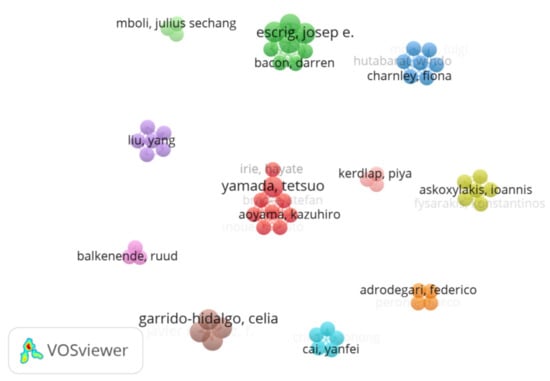
Figure A1.
Network visualization of co-authorship analysis of authors.
Figure A1.
Network visualization of co-authorship analysis of authors.
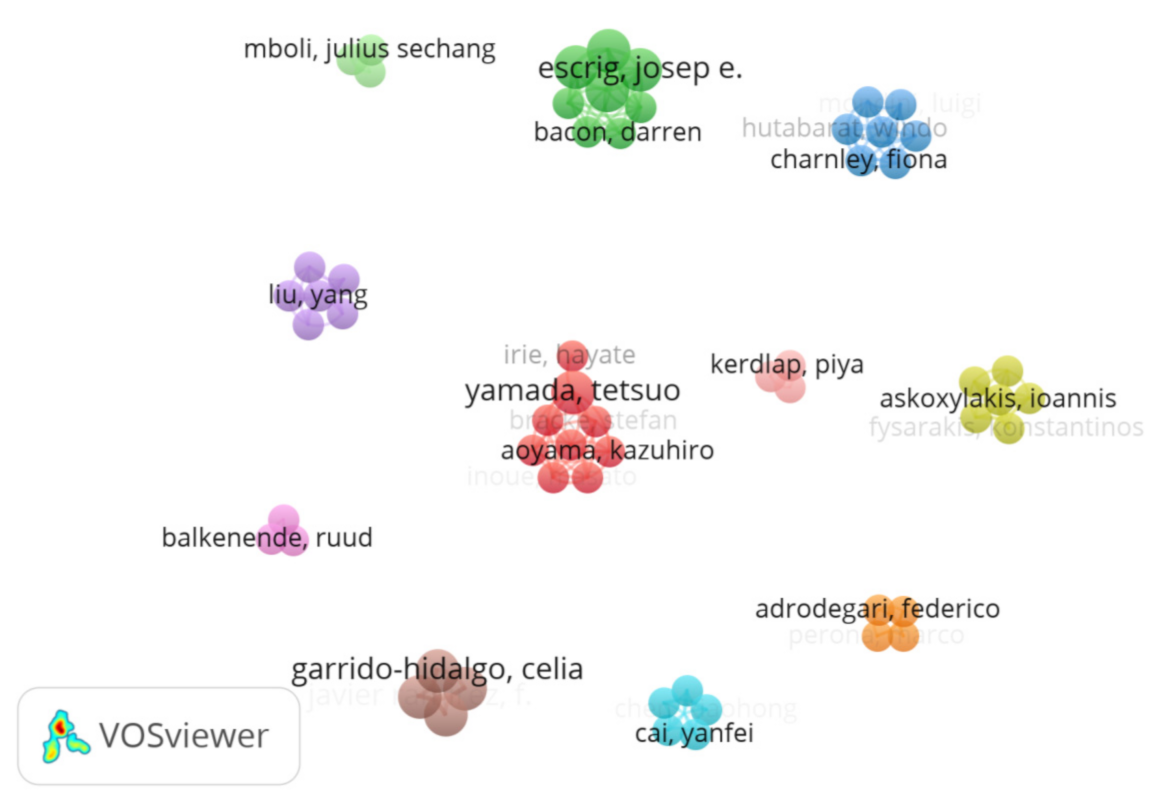
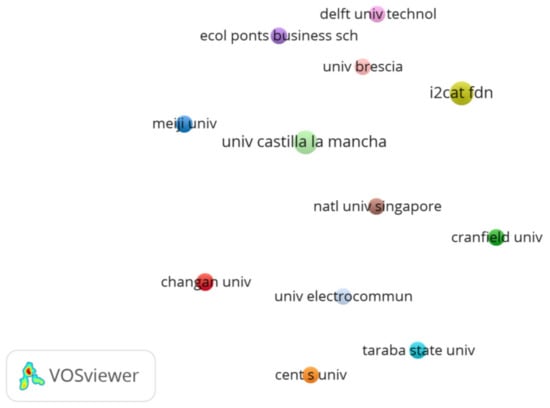
Figure A2.
Network visualization of co-authorship analysis of organizations.
Figure A2.
Network visualization of co-authorship analysis of organizations.
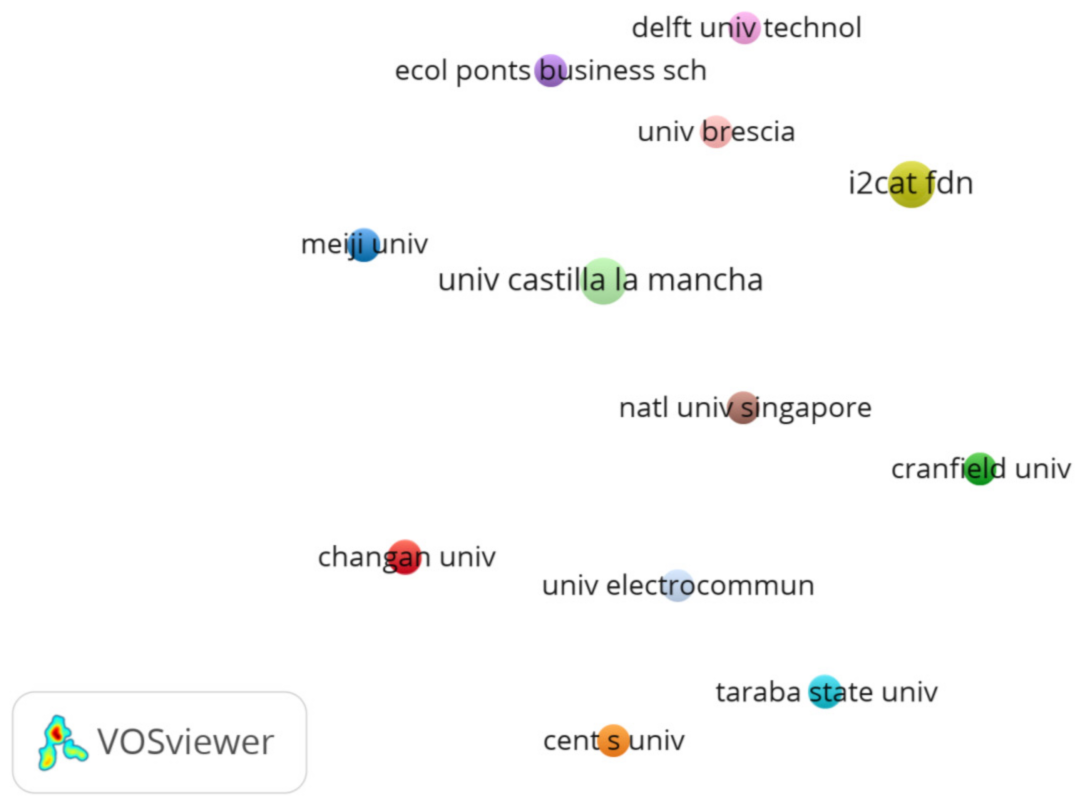
Figure A3.
Network visualization of co-authorship analysis of countries.
Figure A3.
Network visualization of co-authorship analysis of countries.
Appendix F. Social structure
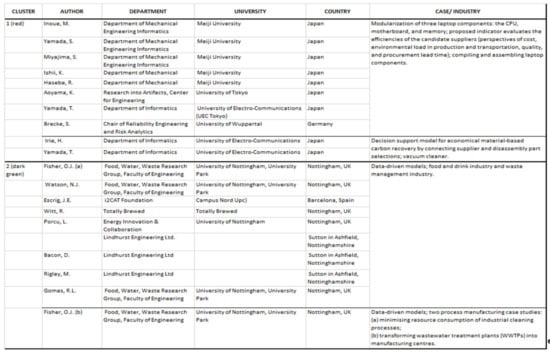
Figure A4.
List of Authors, Organizations, and Countries Arranged by Authors’ Network Clusters.
Figure A4.
List of Authors, Organizations, and Countries Arranged by Authors’ Network Clusters.
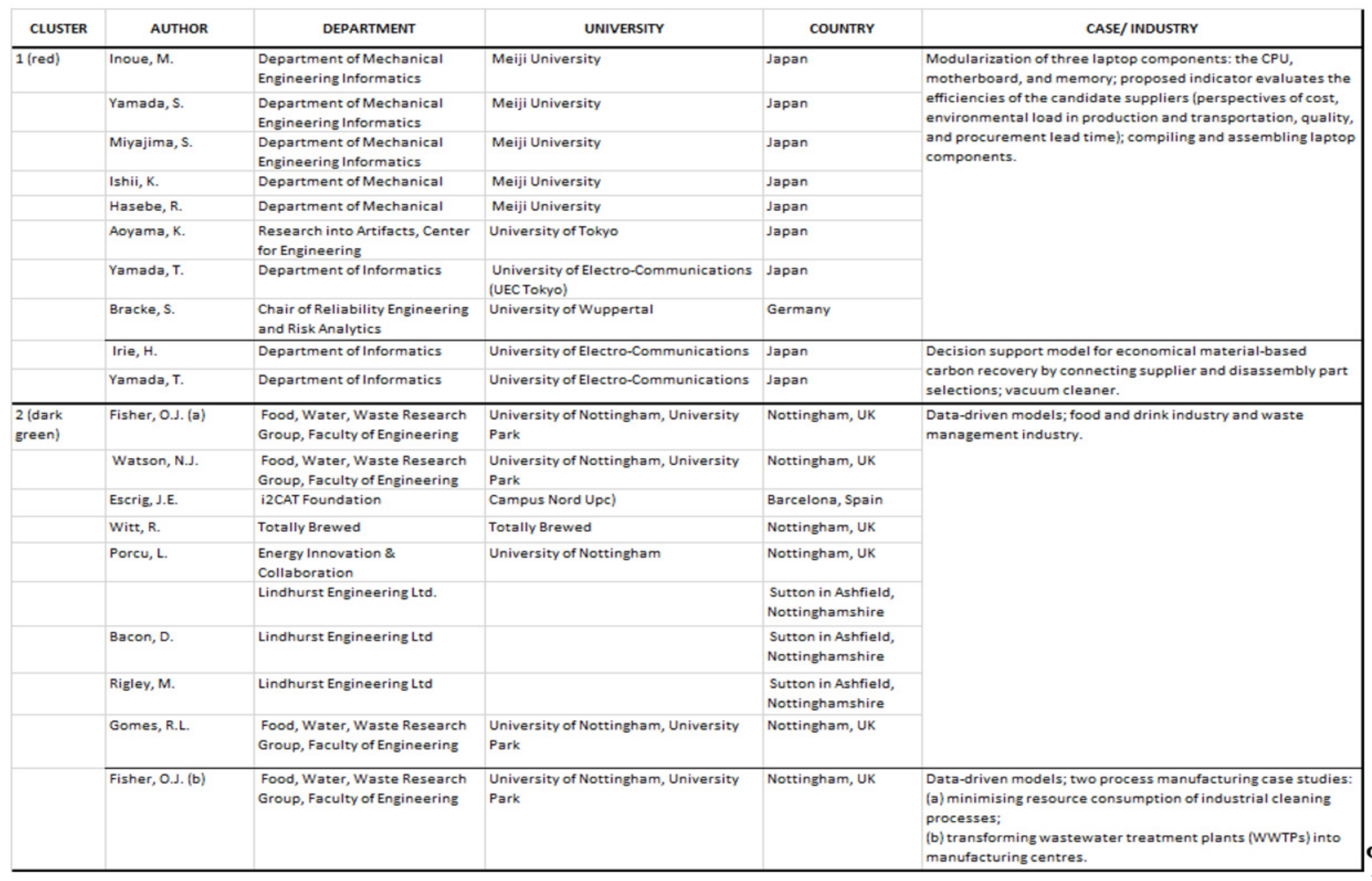
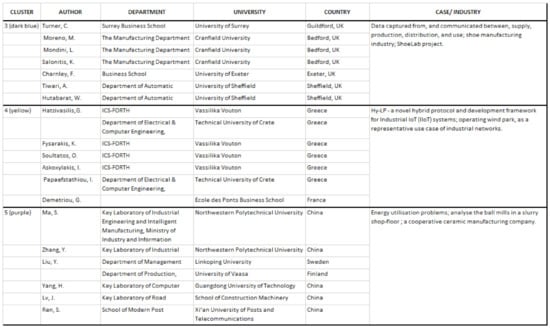
Figure A5.
List of Authors, Organizations, and Countries Arranged by Authors’ Network Clusters (cont.).
Figure A5.
List of Authors, Organizations, and Countries Arranged by Authors’ Network Clusters (cont.).
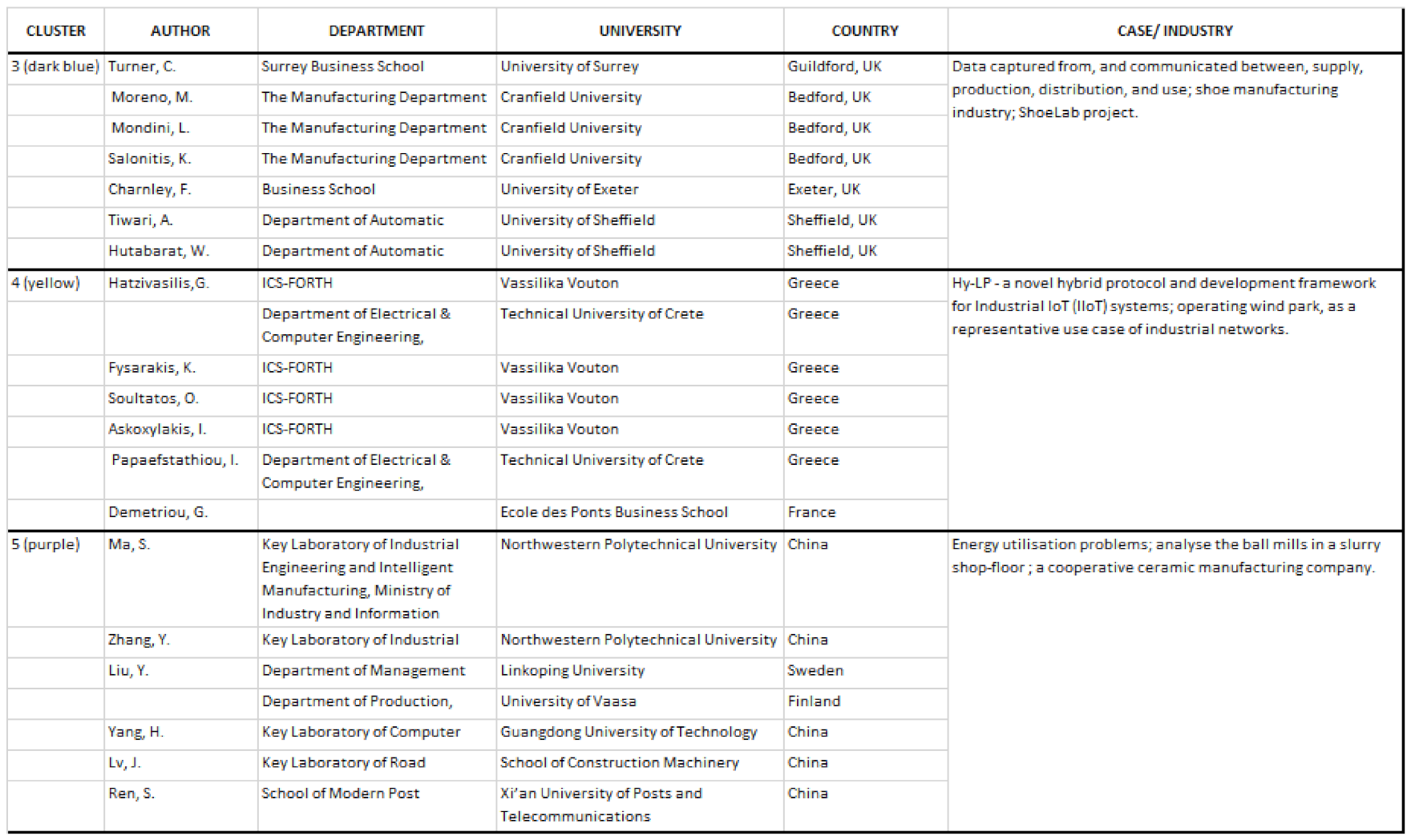
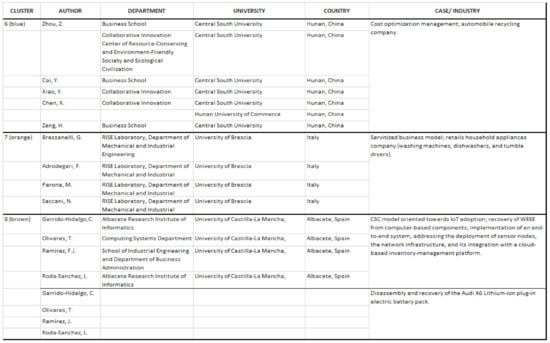
Figure A6.
List of Authors, Organizations, and Countries Arranged by Authors’ Network Clusters (cont.).
Figure A6.
List of Authors, Organizations, and Countries Arranged by Authors’ Network Clusters (cont.).
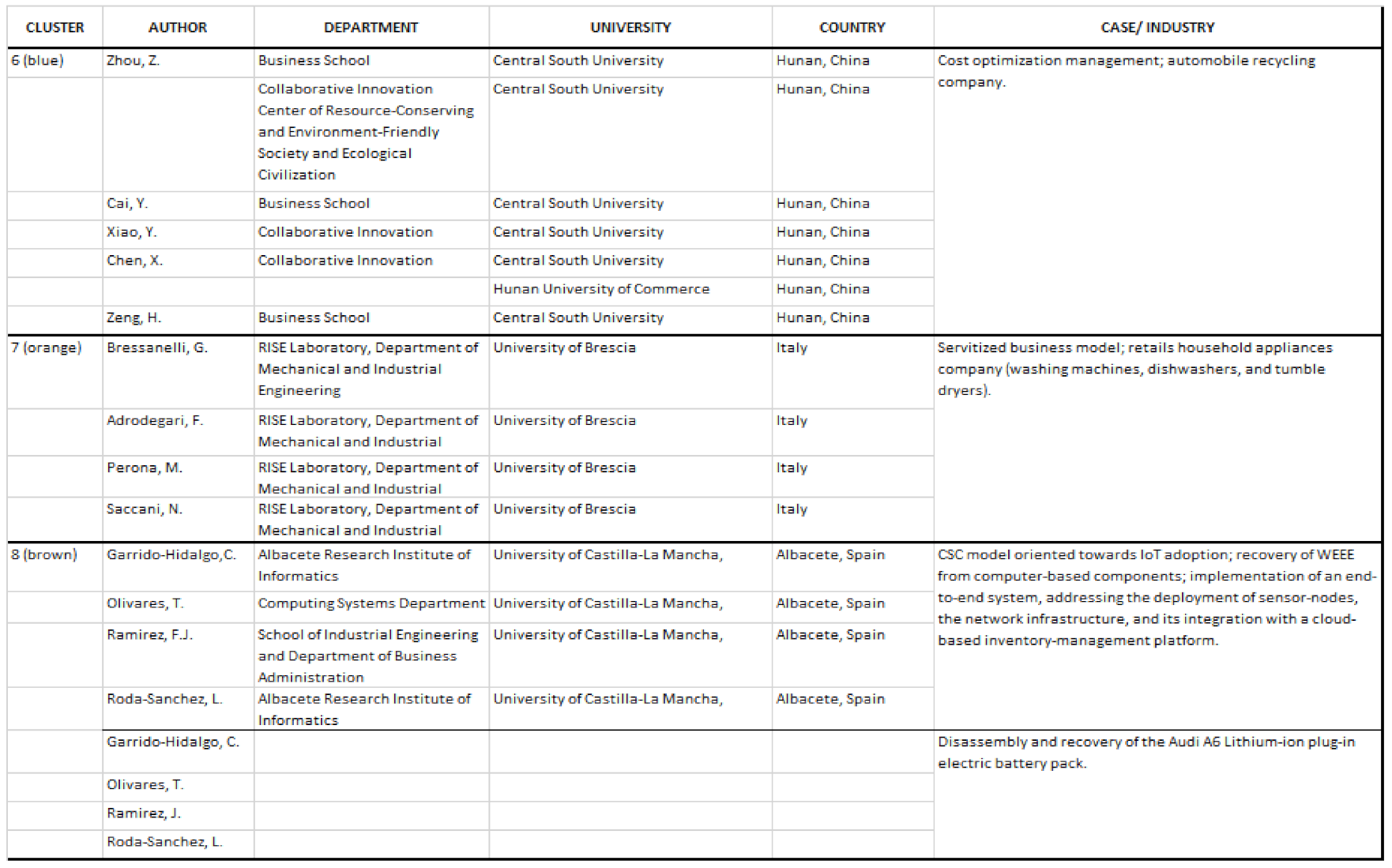
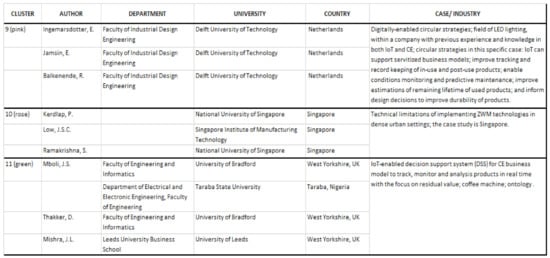
Figure A7.
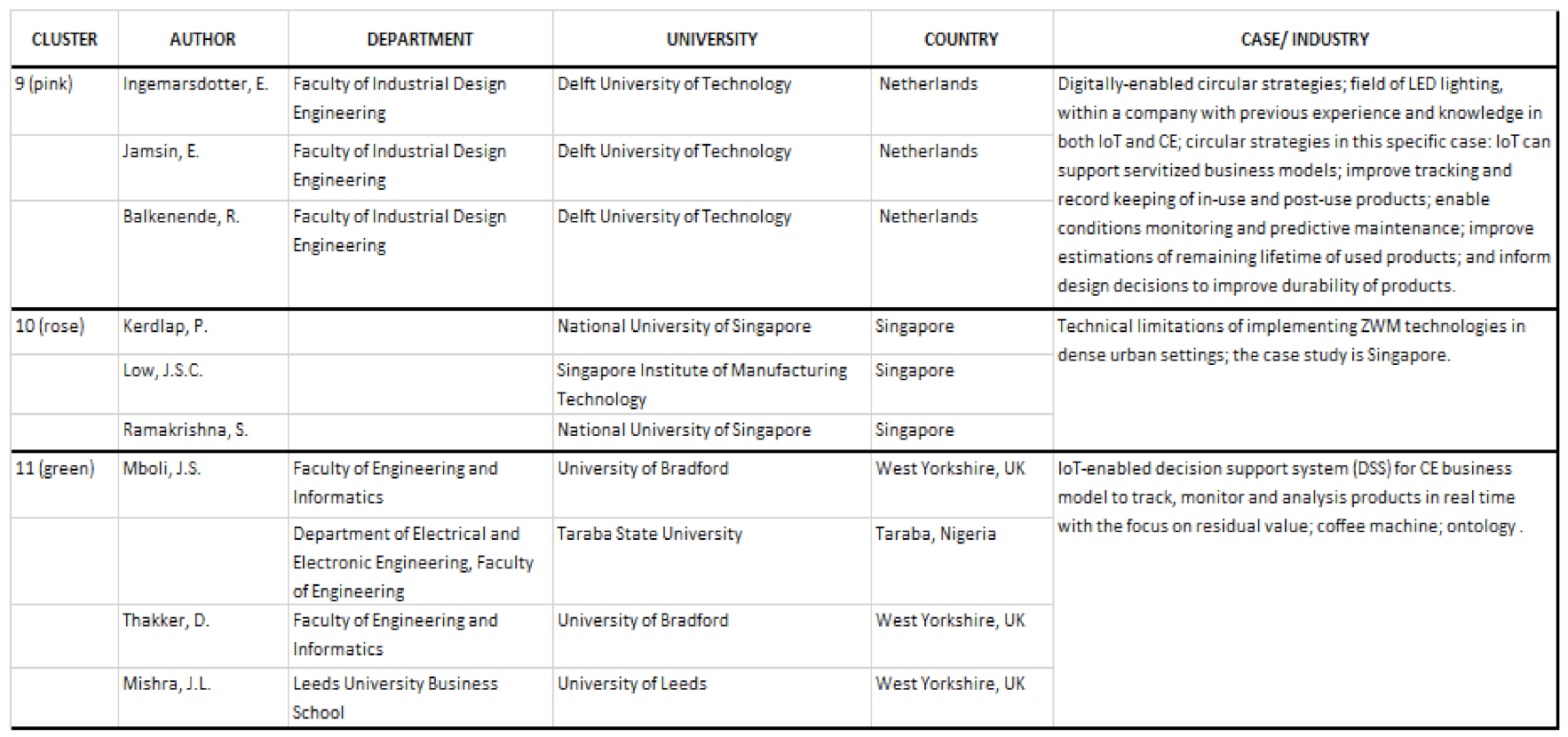
List of Authors, Organizations, and Countries Arranged by Authors’ Network Clusters (cont.).
Figure A7.
List of Authors, Organizations, and Countries Arranged by Authors’ Network Clusters (cont.).
References
- Okorie, O.; Salonitis, K.; Charnley, F.; Moreno, M.; Turner, C.; Tiwari, A. Digitisation and the Circular Economy: A review of current research and future trends. Energies 2018, 11, 3009. [Google Scholar] [CrossRef]
- Alcayaga, A.; Wiener, M.; Hansen, E.G. Towards a framework of smart-circular systems: An integrative literature review. J. Clean. Prod. 2019, 221, 622–634. [Google Scholar] [CrossRef]
- MacArthur Foundation. Towards a Circular Economy: Business Rationale for an Accelerated Transition; Ellen MacArthur Foundation: Cowes, UK, 2015. [Google Scholar]
- Nižetić, S.; Šolić, P.; González-De-Artaza, D.L.-D.-I.; Patrono, L. Internet of Things (IoT): Opportunities, issues and challenges towards a smart and sustainable future. J. Clean. Prod. 2020, 274, 122877. [Google Scholar] [CrossRef]
- Nobre, G.C.; Tavares, E. Scientific literature analysis on Big Data and Internet of Things applications on Circular Economy: A bibliometric study. Scientometrics 2017, 111, 463–492. [Google Scholar] [CrossRef]
- Rosa, P.; Sassanelli, C.; Urbinati, A.; Chiaroni, D.; Terzi, S. Assessing relations between Circular Economy and Industry 4.0: A systematic literature review. Int. J. Prod. Res. 2019, 58, 1662–1687. [Google Scholar] [CrossRef]
- Zupic, I.; Čater, T. Bibliometric methods in management and organization. Organ. Res. Methods 2014, 18, 429–472. [Google Scholar] [CrossRef]
- Drisko, J.W.; Maschi, T. Content Analysis; Oxford University Press: New York, NY, USA, 2016. [Google Scholar]
- Nobre, G.C.; Tavares, E. Assessing the role of big data and the Internet of Things on the transition to Circular Economy: Part I: An extension of the resolve framework proposal through a literature review. Johns. Matthey Technol. Rev. 2020, 64, 19–31. [Google Scholar] [CrossRef]
- Velvizhi, G.; Shanthakumar, S.; Das, B.; Pugazhendhi, A.; Priya, T.S.; Ashok, B.; Nanthagopal, K.; Vignesh, R.; Karthick, C. Biodegradable and non-biodegradable fraction of municipal solid waste for multifaceted applications through a closed loop integrated refinery platform: Paving a path towards circular economy. Sci. Total Environ. 2020, 731, 138049. [Google Scholar] [CrossRef]
- Marino, A.; Pariso, P. Comparing European countries’ performances in the transition towards the Circular Economy. Sci. Total Environ. 2020, 729, 138142. [Google Scholar] [CrossRef] [PubMed]
- Demestichas, K.; Daskalakis, E. Information and communication technology solutions for the Circular Economy. Sustain. J. Rec. 2020, 12, 7272. [Google Scholar] [CrossRef]
- De Jesus, A.; Antunes, P.; Santos, R.; Mendonça, S. Eco-innovation in the transition to a Circular Economy: An analytical literature review. J. Clean. Prod. 2018, 172, 2999–3018. [Google Scholar] [CrossRef]
- D’Adamo, I.; Gastaldi, M.; Rosa, P. Recycling of end-of-life vehicles: Assessing trends and performances in Europe. Technol. Forecast. Soc. Chang. 2020, 152, 119887. [Google Scholar] [CrossRef]
- Miorandi, D.; Sicari, S.; De Pellegrini, F.; Chlamtac, I. Internet of Things: Vision, applications and research challenges. Ad Hoc Netw. 2012, 10, 1497–1516. [Google Scholar] [CrossRef]
- Da Xu, L.; He, W.; Li, S. Internet of Things in industries: A survey. IEEE Trans. Ind. Inf. 2014, 10, 2233–2243. [Google Scholar] [CrossRef]
- Hassan, R.; Qamar, F.; Hasan, M.K.; Aman, A.H.M.; Ahmed, A.S. Internet of Things and its applications: A comprehensive survey. Symmetry 2020, 12, 1674. [Google Scholar] [CrossRef]
- Ben-Daya, M.; Hassini, E.; Bahroun, Z. Internet of Things and supply chain management: A literature review. Int. J. Prod. Res. 2019, 57, 4719–4742. [Google Scholar] [CrossRef]
- Brous, P.; Janssen, M.; Herder, P. The dual effects of the Internet of Things (IoT): A systematic review of the benefits and risks of IoT adoption by organizations. Int. J. Inf. Manag. 2020, 51, 101952. [Google Scholar] [CrossRef]
- Askoxylakis, I. A framework for pairing circular economy and the Internet of Things. In Proceedings of the 2018 IEEE International Conference on Communications (ICC), Kansas City, MO, USA, 20–24 May 2018; pp. 1–6. [Google Scholar]
- Ramadoss, T.S.; Alam, H.; Seeram, R. Artificial Intelligence and Internet of Things enabled Circular economy. Int. J. Eng. Sci. 2018, 7, 55–63. [Google Scholar] [CrossRef]
- Reuter, M.A. Digitalizing the Circular Economy: Circular Economy engineering defined by the metallurgical Internet of Things. Met. Mater. Trans. A 2016, 47, 3194–3220. [Google Scholar] [CrossRef]
- García-Muiña, F.E.; Medina-Salgado, M.S.; Ferrari, A.M.; Cucchi, M. Sustainability transition in Industry 4.0 and Smart Manufacturing with the triple-layered business model canvas. Sustainability 2020, 12, 2364. [Google Scholar] [CrossRef]
- González-Sánchez, R.; Settembre-Blundo, D.; Ferrari, A.M.; García-Muiña, F.E. Main dimensions in the building of the Circular Supply chain: A literature review. Sustain. J. Rec. 2020, 12, 2459. [Google Scholar] [CrossRef]
- Moher, D.; Liberati, A.; Tetzlaff, J.; Altman, D.G.; for the PRISMA Group. Preferred reporting items for systematic reviews and meta-analyses: The PRISMA statement. BMJ 2009, 339, b2535. [Google Scholar] [CrossRef]
- Zhu, J.; Liu, W. A tale of two databases: The use of Web of Science and Scopus in academic papers. Scientometrics 2020, 123, 321–335. [Google Scholar] [CrossRef]
- Carvalho, M.; Fleury, A.; Lopes, A.P. An overview of the literature on technology roadmapping (TRM): Contributions and trends. Technol. Forecast. Soc. Chang. 2013, 80, 1418–1437. [Google Scholar] [CrossRef]
- Martín-Martín, A.; Thelwall, M.; Orduna-Malea, E.; López-Cózar, E.D. Google Scholar, Microsoft Academic, Scopus, Dimensions, Web of Science, and OpenCitation’ COCI: A multidisciplinary comparison of coverage via citations. Scientometrics 2021, 126, 871–906. [Google Scholar] [CrossRef]
- Homrich, A.S.; Galvão, G.; Abadia, L.G.; Carvalho, M.M. The circular economy umbrella: Trends and gaps on integrating pathways. J. Clean. Prod. 2018, 175, 525–543. [Google Scholar] [CrossRef]
- Mongeon, P.; Paul-Hus, A. The journal coverage of Web of Science and Scopus: A comparative analysis. Scientometrics 2016, 106, 213–228. [Google Scholar] [CrossRef]
- Bown, M.; Sutton, A. Quality control in systematic reviews and meta-analyses. Eur. J. Vasc. Endovasc. Surg. 2010, 40, 669–677. [Google Scholar] [CrossRef] [PubMed]
- Krefting, L. Rigor in qualitative research: The assessment of trustworthiness. Am. J. Occup. Ther. 1991, 45, 214–222. [Google Scholar] [CrossRef] [PubMed]
- Luis, E.C.; Celma, D. Circular Economy. A review and bibliometric analysis. Sustain. J. Rec. 2020, 12, 6381. [Google Scholar] [CrossRef]
- Meline, T. Selecting studies for systemic review: Inclusion and exclusion criteria. Contemp. Issues Commun. Sci. Disord. CICSD 2006, 33, 21–27. [Google Scholar] [CrossRef]
- Bressanelli, G.; Adrodegari, F.; Perona, M.; Saccani, N. Exploring how usage-focused business models enable circular economy through digital technologies. Sustain. J. Rec. 2018, 10, 639. [Google Scholar] [CrossRef]
- Fisher, O.J.; Watson, N.J.; Escrig, J.E.; Gomes, R.L. Intelligent resource use to deliver waste valorisation and process resilience in manufacturing environments: Moving towards sustainable process manufacturing. Johns. Matthey Technol. Rev. 2020, 64, 93–99. [Google Scholar] [CrossRef]
- Fisher, O.J.; Watson, N.J.; Escrig, J.E.; Witt, R.; Porcu, L.; Bacon, D.; Rigley, M.; Gomes, R.L. Considerations, challenges and opportunities when developing data-driven models for process manufacturing systems. Comput. Chem. Eng. 2020, 140, 106881. [Google Scholar] [CrossRef]
- Garrido-Hidalgo, C.; Olivares, T.; Ramirez, F.J.; Roda-Sanchez, L. An end-to-end Internet of Things solution for reverse supply chain management in Industry 4.0. Comput. Ind. 2019, 112, 103127. [Google Scholar] [CrossRef]
- Garrido-Hidalgo, C.; Ramirez, F.J.; Olivares, T.; Roda-Sanchez, L. The adoption of internet of things in a circular supply chain framework for the recovery of WEEE: The case of lithium-ion electric vehicle battery packs. Waste Manag. 2020, 103, 32–44. [Google Scholar] [CrossRef] [PubMed]
- Hatzivasilis, G.; Fysarakis, K.; Soultatos, O.; Askoxylakis, I.; Papaefstathiou, I.; Demetriou, G. The Industrial Internet of Things as an enabler for a Circular Economy Hy-LP: A novel IIoT protocol, evaluated on a wind parks SDN/NFV-enabled 5G industrial network. Comput. Commun. 2018, 119, 127–137. [Google Scholar] [CrossRef]
- Ingemarsdotter, E.; Jamsin, E.; Balkenende, R. Opportunities and challenges in IoT-enabled circular business model implementation–A case study. Resour. Conserv. Recycl. 2021, 162, 11. [Google Scholar] [CrossRef]
- Inoue, M.; Yamada, S.; Miyajima, S.; Ishii, K.; Hasebe, R.; Aoyama, K.; Yamada, T.; Bracke, S. A modular design strategy considering sustainability and supplier selection. J. Adv. Mech. Des. Syst. Manuf. 2020, 14, JAMDSM0023. [Google Scholar] [CrossRef]
- Irie, H.; Yamada, T. Decision support model for economical material carbon recovery and reduction by connecting supplier and disassembly part selections. J. Adv. Mech. Des. Syst. Manuf. 2020, 14, JAMDSM0024. [Google Scholar] [CrossRef]
- Kerdlap, P.; Low, J.S.C.; Ramakrishna, S. Zero waste manufacturing: A framework and review of technology, research, and implementation barriers for enabling a circular economy transition in Singapore. Resour. Conserv. Recycl. 2019, 151, 104438. [Google Scholar] [CrossRef]
- Ma, S.; Zhang, Y.; Liu, Y.; Yang, H.; Lv, J.; Ren, S. Data-driven sustainable intelligent manufacturing based on demand response for energy-intensive industries. J. Clean. Prod. 2020, 274, 123155. [Google Scholar] [CrossRef]
- Mboli, J.S.; Thakker, D.; Mishra, J.L. An Internet of Things-enabled decision support system for circular economy business model. Softw. Pr. Exp. 2020, 16. [Google Scholar] [CrossRef]
- Turner, C.J.; Moreno, M.; Mondini, L.; Salonitis, K.; Charnley, F.; Tiwari, A.; Hutabarat, W. Sustainable production in a Circular Economy: A business model for re-distributed manufacturing. Sustainability 2019, 11, 4291. [Google Scholar] [CrossRef]
- Zhou, Z.; Cai, Y.; Xiao, Y.; Chen, X.; Zeng, H. The optimization of reverse logistics cost based on value flow analysis–a case study on automobile recycling company in China. J. Intell. Fuzzy Syst. 2018, 34, 807–818. [Google Scholar] [CrossRef]
- Van Eck, N.J.; Waltman, L. Software survey: VOSviewer, a computer program for bibliometric mapping. Scientometrics 2010, 84, 523–538. [Google Scholar] [CrossRef] [PubMed]
- van Eck, N.J.; Waltman, L. Text Mining and Visualization Using VOSviewer. ISSI Newsletter. 2011, 7(3), pp. 50–54, (paper, preprint) (arXiv:1109.2058). Available online: https://www.vosviewer.com/text-mining-and-visualization-using-vosviewer (accessed on 15 December 2020).
- van Eck, N.J.; Waltman, L. VOSviewer Manual. 2020. Available online: https://www.vosviewer.com/getting-started#vosviewer-manual (accessed on 8 December 2020).
- Zhang, J.; Yu, Q.; Zheng, F.; Long, C.; Lu, Z.; Duan, Z. Comparing keywords plus of WOS and author keywords: A case study of patient adherence research. J. Assoc. Inf. Sci. Technol. 2016, 67, 967–972. [Google Scholar] [CrossRef]
- van Eck, N.; Waltman, L. Visualizing bibliometric networks. In Measuring Scholarly Impact: Methods and Practice; Ding, Y., Rousseau, R., Wolfram, D., Eds.; Springer International Publishing: Berlin, Germany, 2014; pp. 285–320. [Google Scholar]
- Bergh, J.C.V.D. Six policy perspectives on the future of a semi-circular economy. Resour. Conserv. Recycl. 2020, 160, 104898. [Google Scholar] [CrossRef]
- De Man, R.; Friege, H. Circular Economy: European policy on shaky ground. Waste Manag. Res. 2016, 34, 93–95. [Google Scholar] [CrossRef] [PubMed]
- Lüdeke-Freund, F.; Gold, S.; Bocken, N.M.P. A review and typology of circular economy business model patterns. J. Ind. Ecol. 2018, 23, 36–61. [Google Scholar] [CrossRef]
- Oghazi, P.; Mostaghel, R. Circular business model challenges and lessons learned—An industrial perspective. Sustain. J. Rec. 2018, 10, 739. [Google Scholar] [CrossRef]
- MacArthur Foundation. Intelligent Assets: Unlocking the Circular Economy Potential; Ellen MacArthur Foundation: Cowes, UK, 2016; Available online: https://www.ellenmacarthurfoundation.org/publications/intelligent-assets (accessed on 2 March 2021).
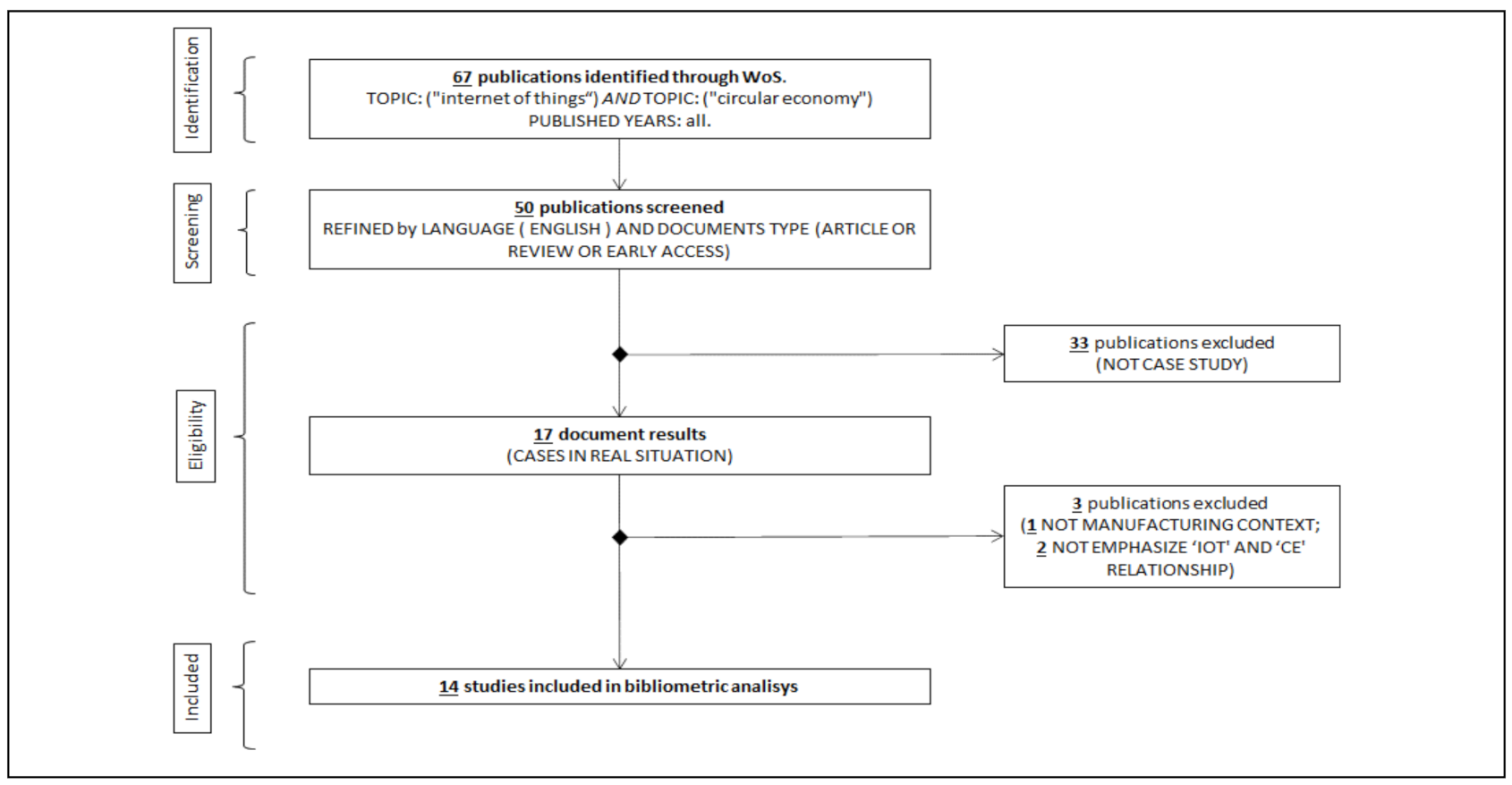
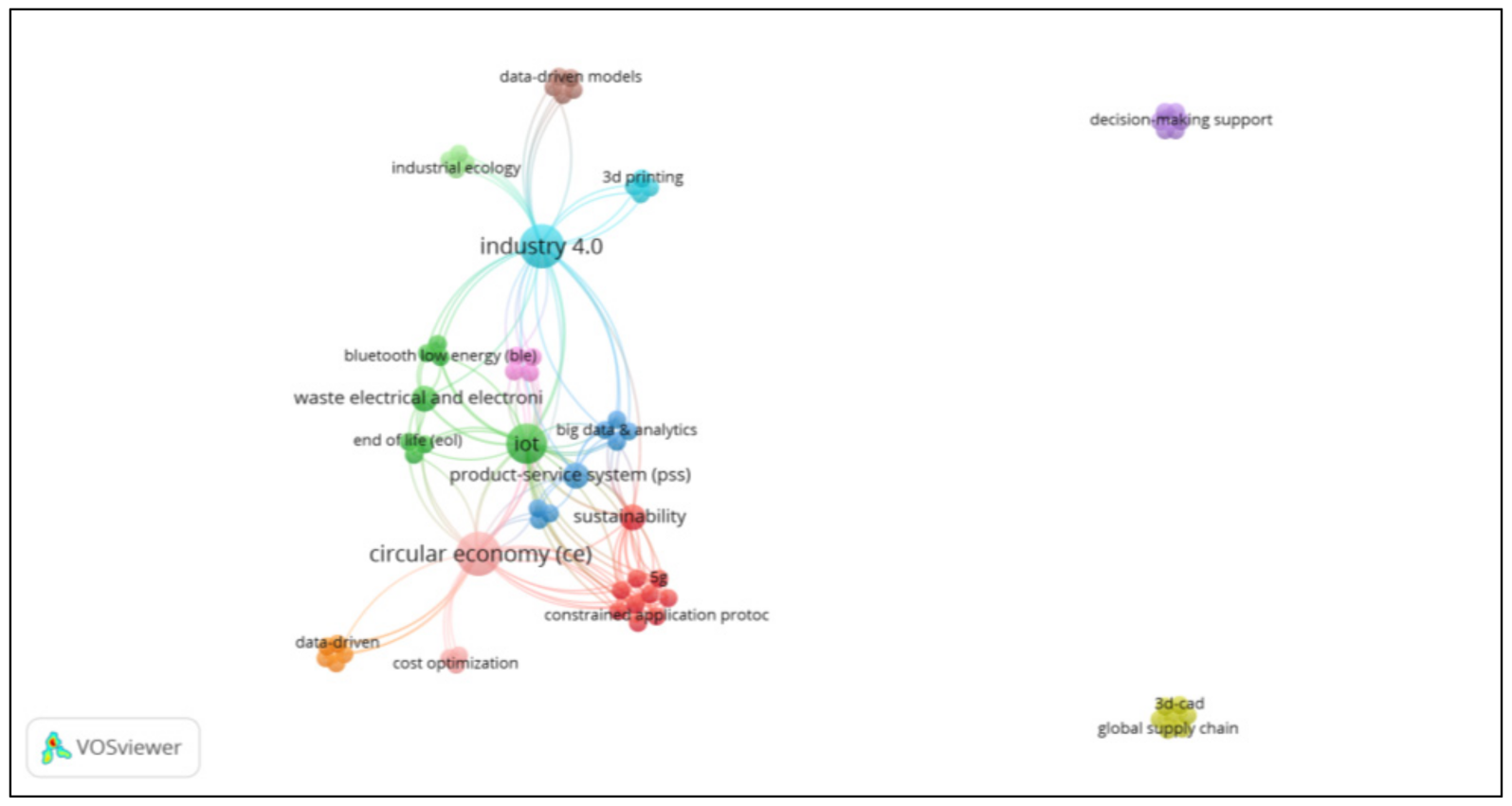
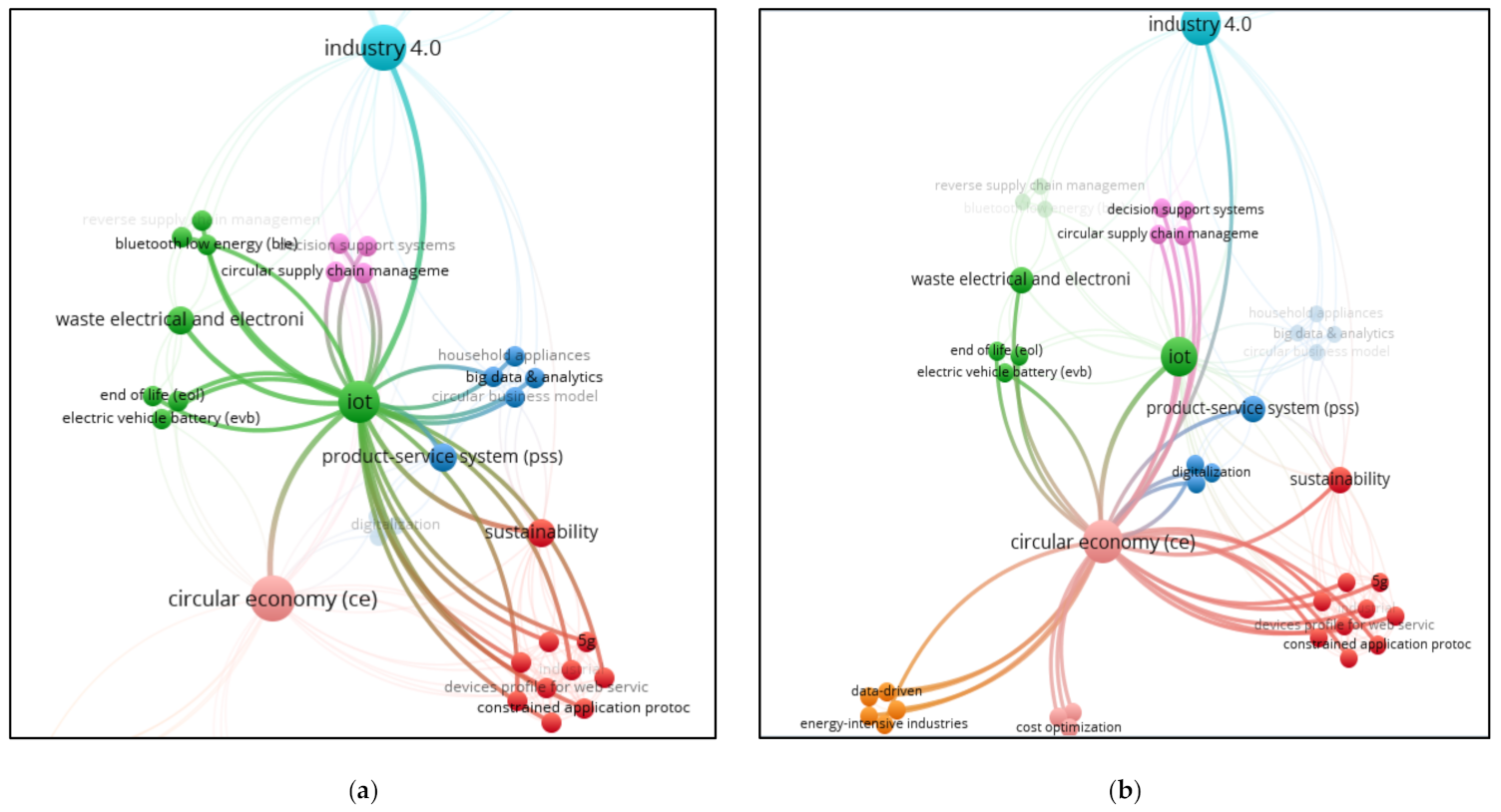
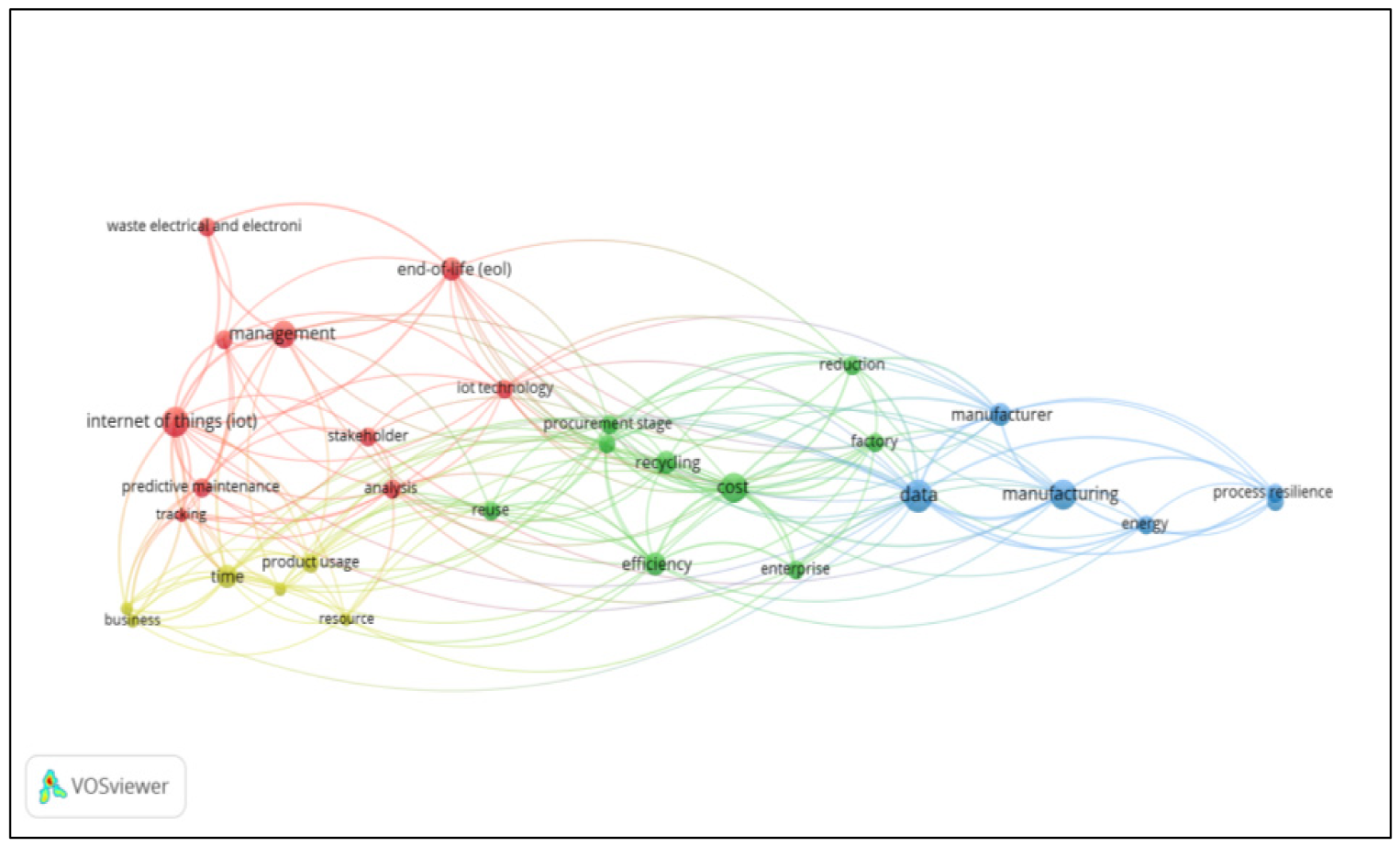
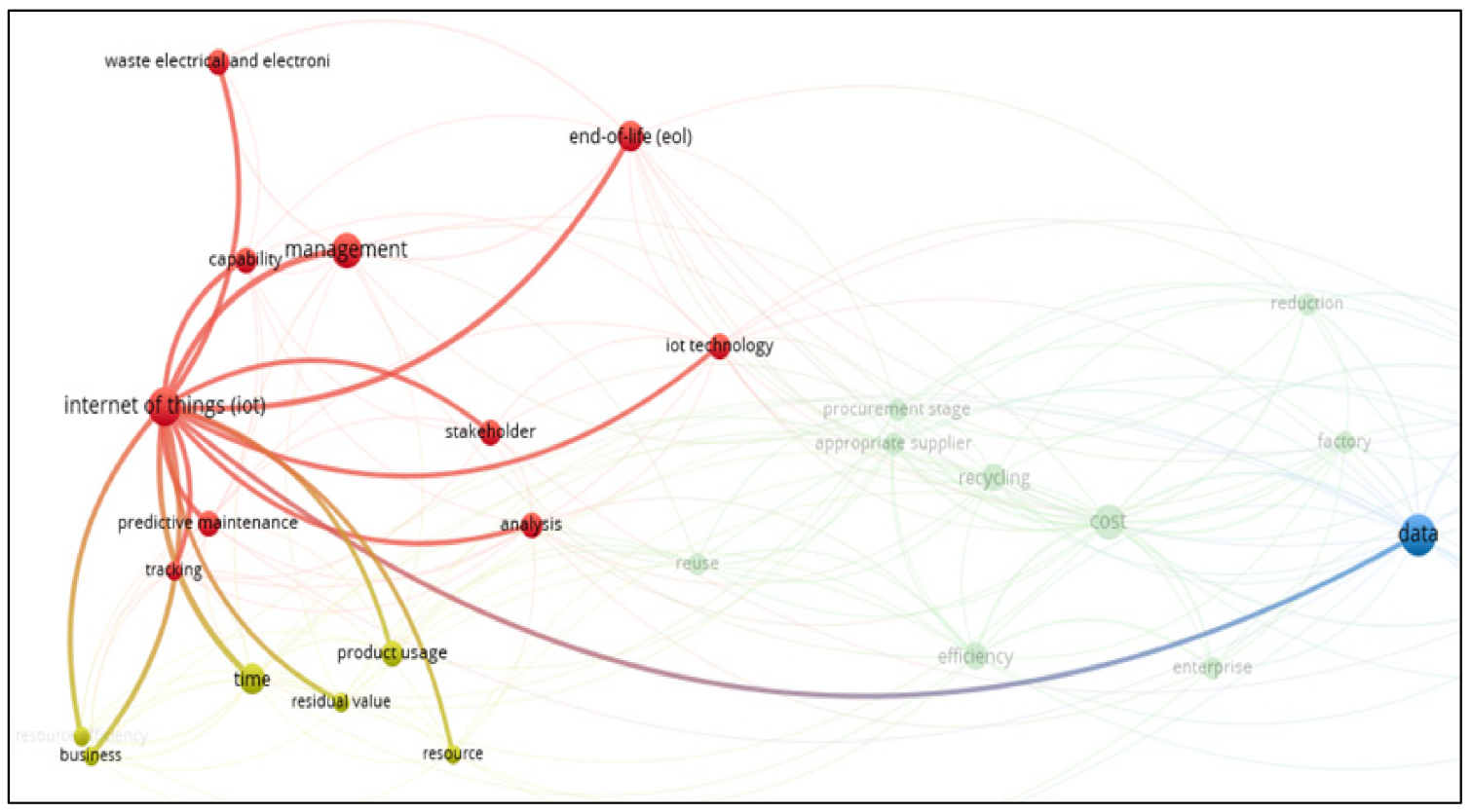
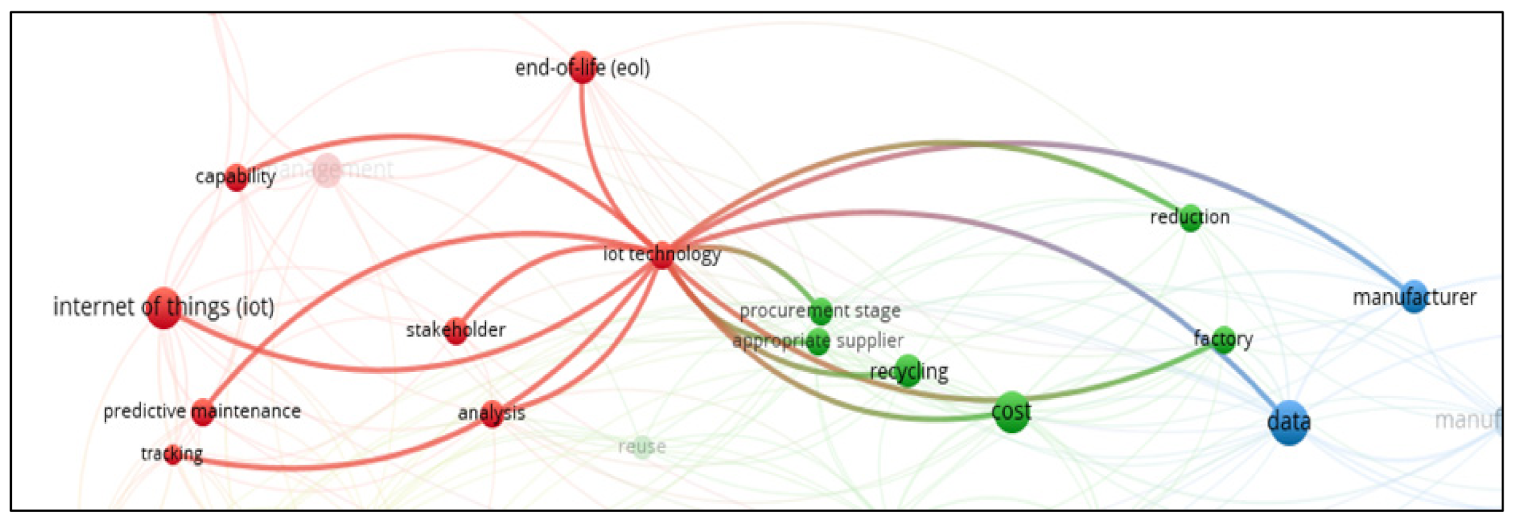
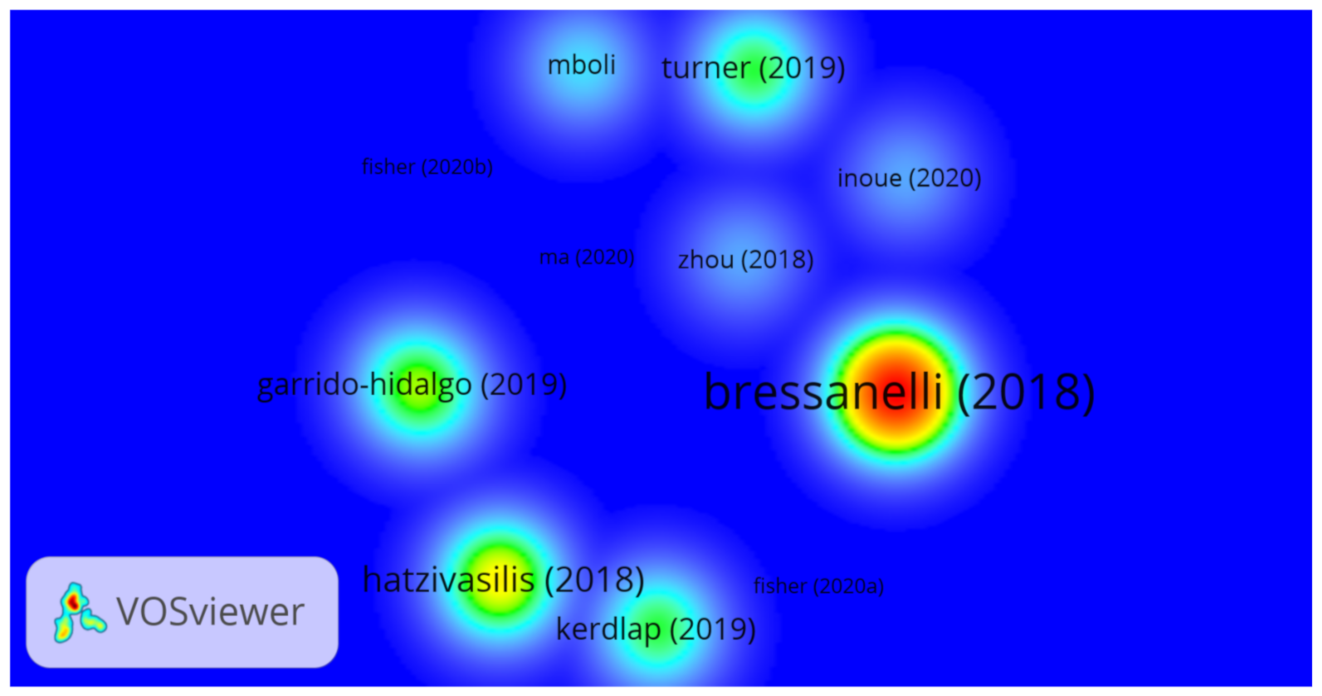
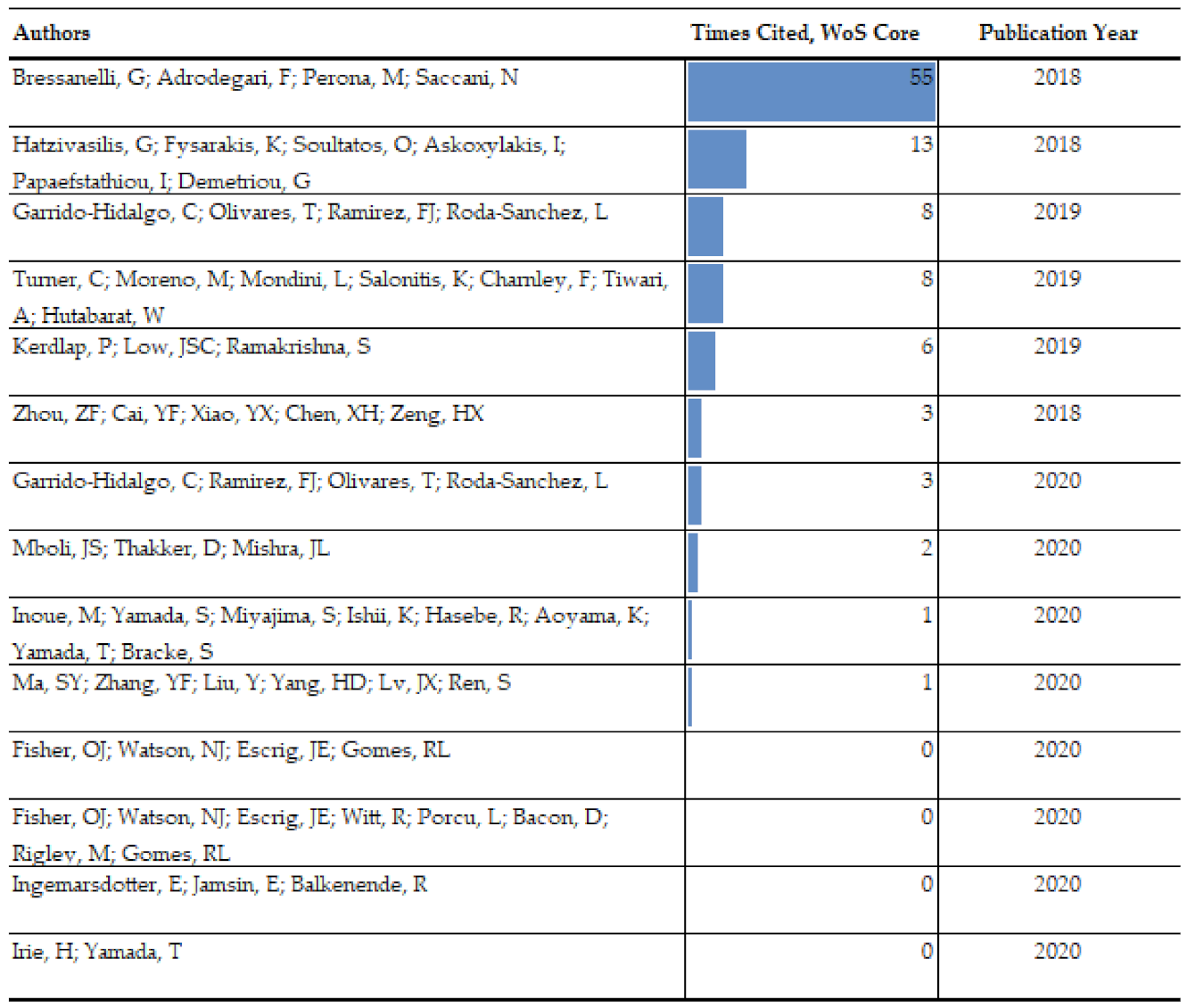
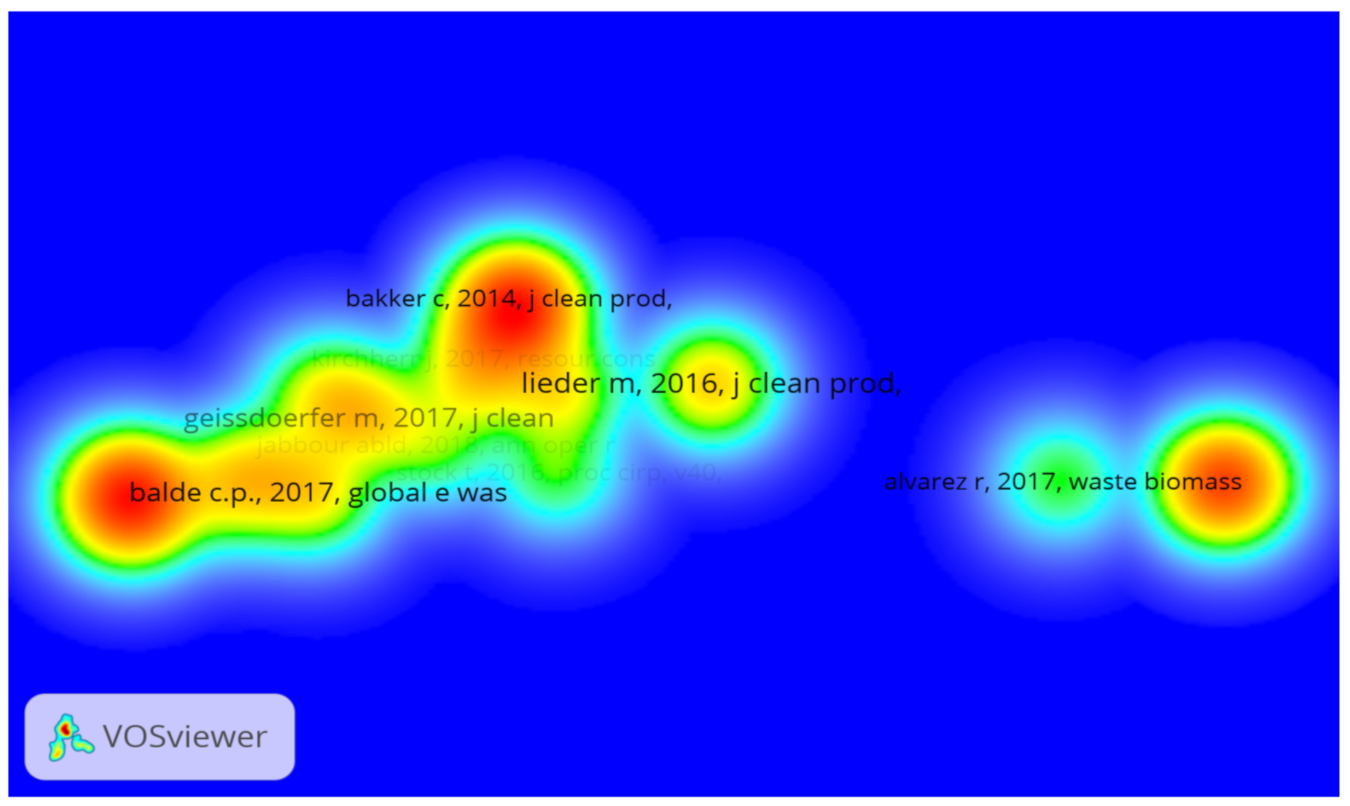
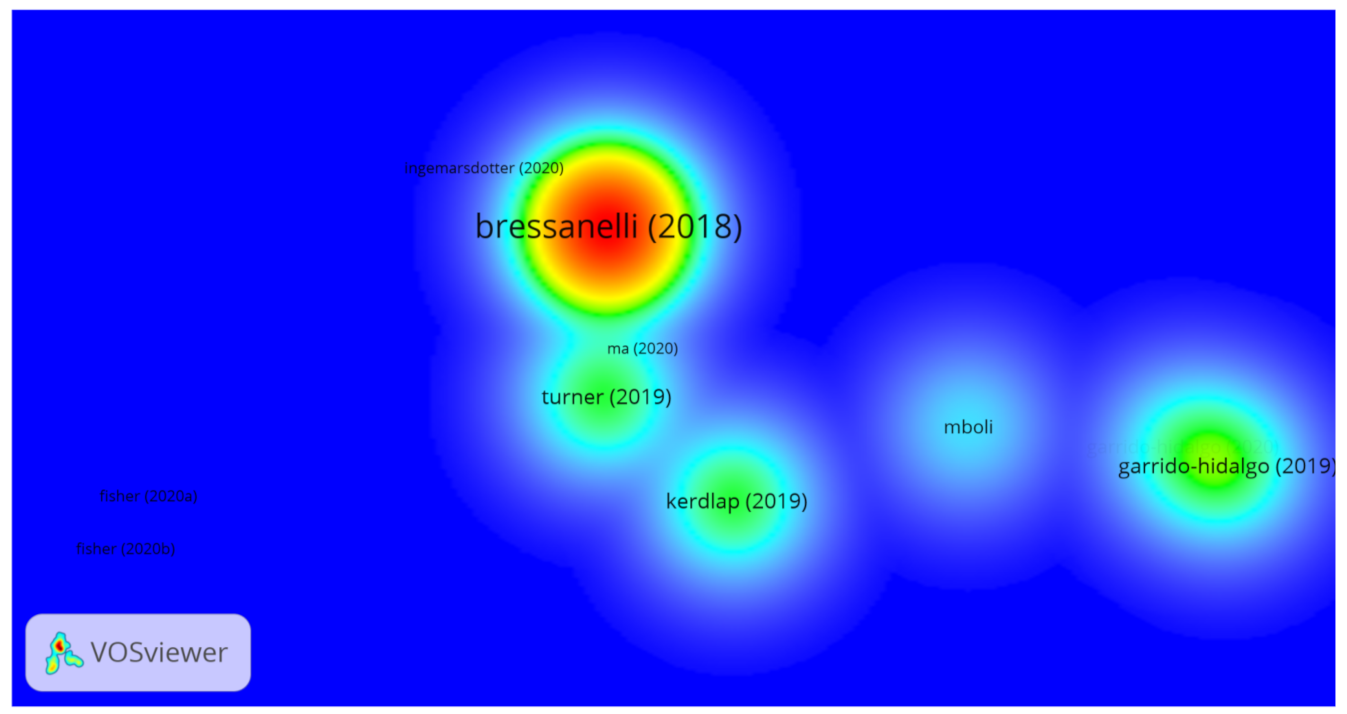
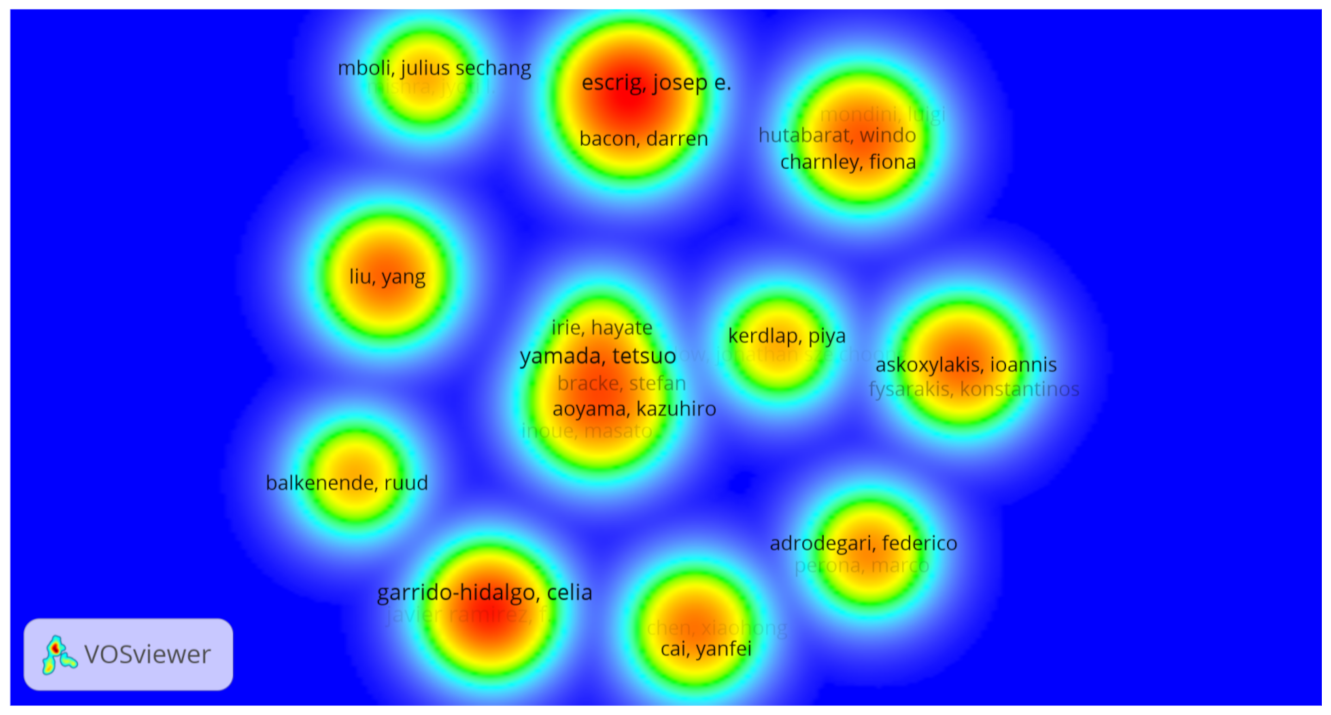
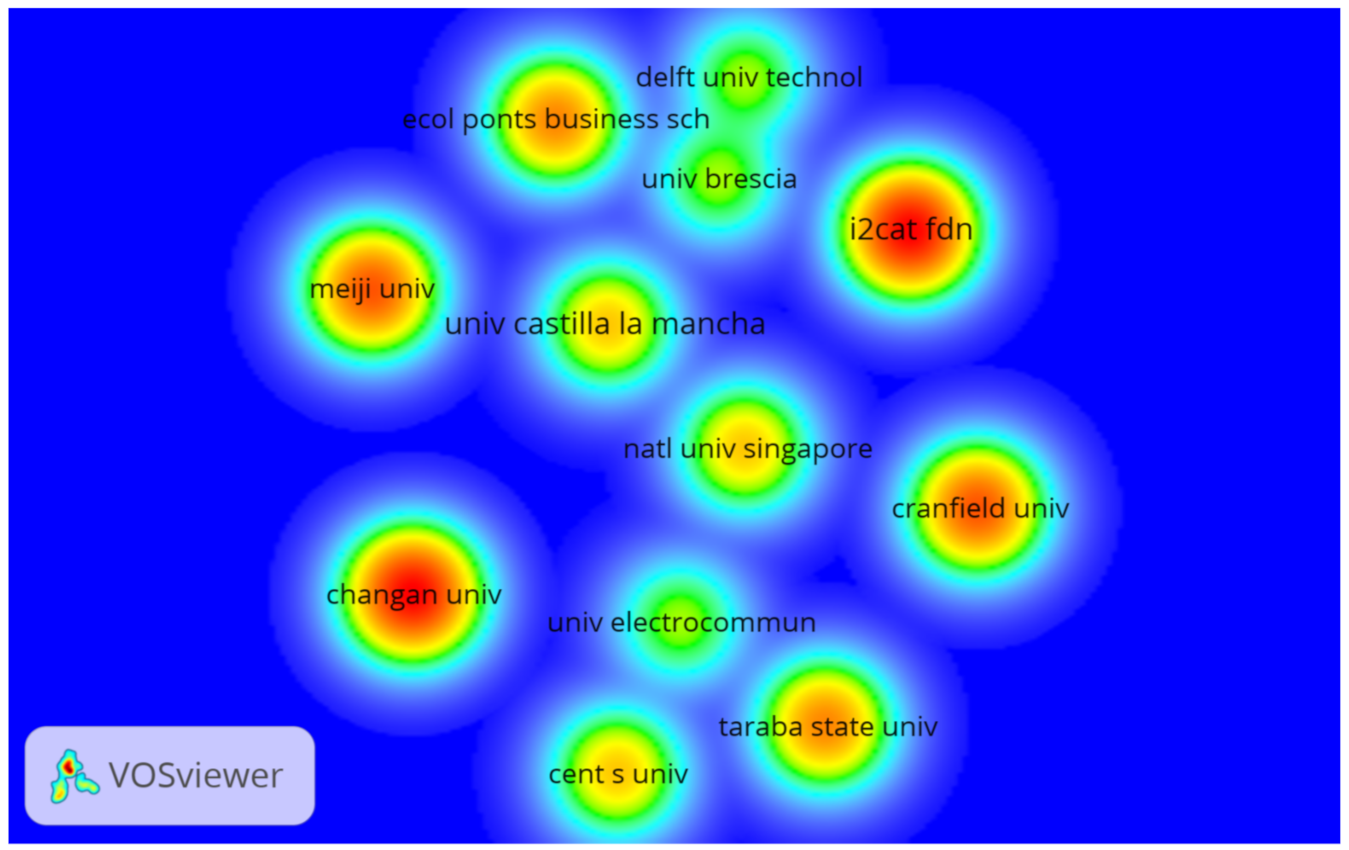
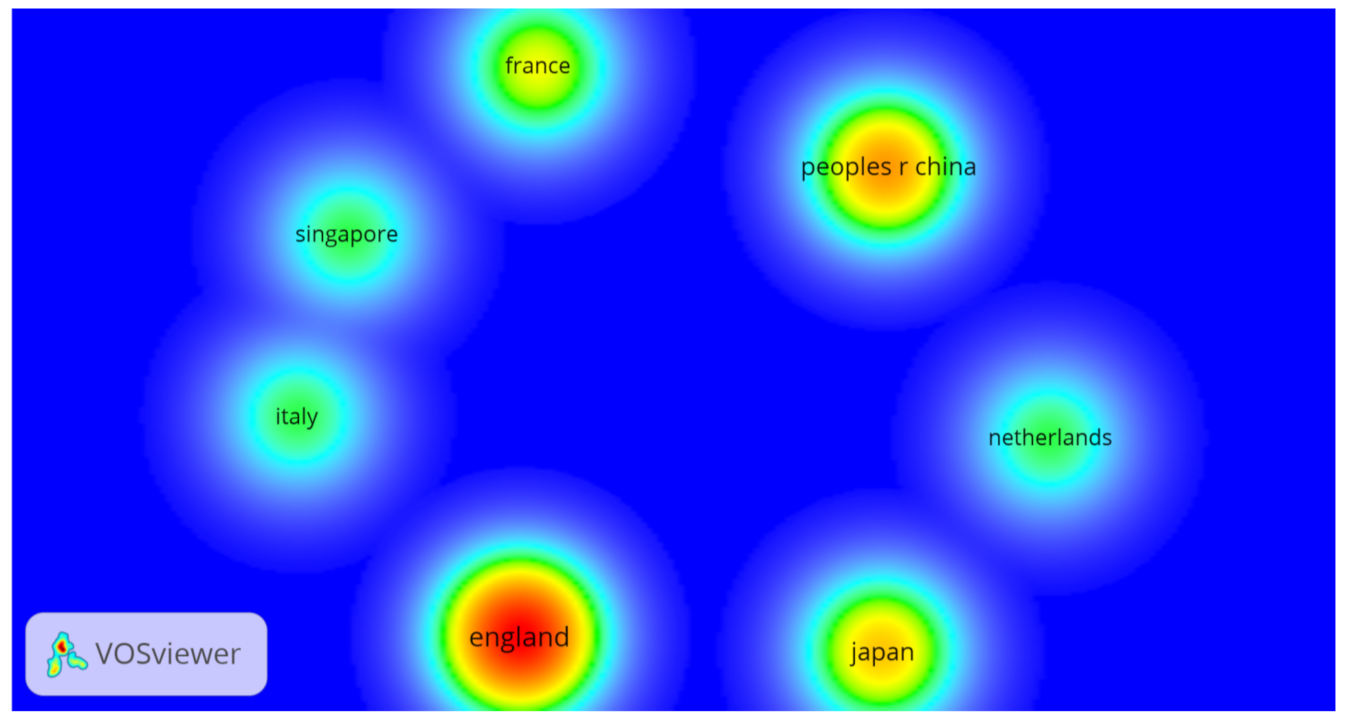
Publisher’s Note: MDPI stays neutral with regard to jurisdictional claims in published maps and institutional affiliations. |
© 2021 by the authors. Licensee MDPI, Basel, Switzerland. This article is an open access article distributed under the terms and conditions of the Creative Commons Attribution (CC BY) license (http://creativecommons.org/licenses/by/4.0/).