Review

Metabolomics in Infectious Diseases and Vaccine Response: Insights into Neglected Tropical and Non-Neglected Pathogens


Department of Biochemistry and Microbiology, North South University, Dhaka 1229, Bangladesh
*
Author to whom correspondence should be addressed.
Infect. Dis. Rep. 2026, 18(1), 10; https://doi.org/10.3390/idr18010010
Submission received: 24 November 2025 / Revised: 7 January 2026 / Accepted: 8 January 2026 / Published: 12 January 2026
(This article belongs to the Special Issue Review on Infectious Diseases)

Abstract

Background/objectives: Metabolomics has emerged as a powerful systems-biology tool for deciphering dynamic metabolic alterations occurring during infectious diseases and following vaccination. While genomics and proteomics provide extensive molecular and regulatory information, metabolomics uniquely reflects the biochemical phenotype associated with infection, immune activation, and immunometabolic reprogramming. The objective of this review is to provide an integrated analysis of metabolomics applications across both neglected tropical diseases (NTDs) and non-NTD pathogens, highlighting its dual role in biomarker discovery and vaccine response evaluation. Methods: A comprehensive literature-based synthesis was conducted to examine metabolomic studies in infectious diseases and vaccinology. Metabolic perturbations associated with specific pathogens, as well as vaccine-induced metabolic changes and correlates of immune responses, were systematically analyzed and compared across NTD and non-NTD contexts. Results: Distinct pathogen- and vaccine-associated metabolic signatures were identified, reflecting alterations in glycolysis, amino acid metabolism, lipid remodeling, and immunoregulatory pathways. Comparative analysis revealed both shared and disease-specific metabolic biomarkers across NTDs and non-NTD infections. Importantly, vaccine-related metabolic correlates were shown to mirror immune activation states and, in some cases, predict immunogenicity and response durability. Conclusions: This review bridges metabolomics research in infectious disease pathogenesis and vaccine immunology across the NTD and non-NTD spectrum. By integrating these domains, it introduces the concept of “metabolic immuno-signatures” as predictive and translational tools for evaluating vaccine efficacy and immune response outcomes.

1. Introduction

Infectious diseases continue to impose a substantial global health burden, with both non-neglected (e.g., tuberculosis, influenza, HIV, COVID-19) and neglected tropical diseases (e.g., malaria, leishmaniasis, schistosomiasis, Chagas disease) responsible for millions of deaths annually [1]. The World Health Organization classifies more than 20 conditions as NTDs, collectively affecting over one billion people in tropical and subtropical regions. At the same time, highly transmissible non-NTD pathogens continue to drive recurrent epidemics and pandemics, placing significant pressure on healthcare systems and posing ongoing challenges for vaccine development and deployment [2]. Vaccinology—the science of vaccine development and implementation—has been a cornerstone of public health, contributing to the eradication or effective control of numerous infectious diseases [3]. Conventional vaccines are designed to elicit protective immune responses against bacterial, viral, or parasitic pathogens, thereby preventing diseases such as smallpox, polio, and measles [4]. This is typically achieved using live attenuated or inactivated organisms, or purified pathogen components such as proteins or polysaccharides that stimulate immune recognition without causing disease [3].
Despite these successes, significant limitations remain. Vaccine-induced protection can vary widely across populations due to host-related factors including genetic background, age, comorbidities, nutritional status, and environmental exposures. The traditional “one-size-fits-all” paradigm in vaccinology fails to adequately account for this interindividual variability, often resulting in reduced efficacy among vulnerable groups such as older adults, immunocompromised individuals, and populations with distinct genetic or metabolic profiles [3,4]. Additional challenges arise from rapidly evolving pathogens such as influenza viruses and HIV, as well as the emergence of novel infectious agents exemplified by SARS-CoV-2.
Improving existing vaccines is therefore critical for enhancing disease control and preventing outbreaks of re-emerging infectious diseases [5,6]. The rational design and optimization of vaccines require robust methods for monitoring vaccine efficacy, which depend on the identification and validation of reliable biomarkers. In the context of infectious diseases, biomarkers are defined as objectively measurable characteristics that indicate pathogenic processes, normal biological states, or biological responses to therapeutic interventions. Within vaccinology, such biomarkers serve as vaccine-specific signatures and must be statistically distinguishable between vaccinated and unvaccinated individuals while reflecting immunization-induced biological responses [5,6].
The host response to vaccination can be comprehensively characterized by systems vaccinology, which integrates multi-omics technologies, including genomics, transcriptomics, proteomics, and metabolomics. These high-throughput approaches enable the assessment of differential gene expression in peripheral blood mononuclear cells (PBMCs), whole blood, and specific immune cell subsets through transcriptomic analyses, thereby providing an integrated view of the cellular and physiological responses elicited following vaccine administration [7]. However, gene expression–based analyses primarily capture relatively static or upstream regulatory responses and do not fully capture the dynamic biochemical activities that underpin immune effector function, [3].
In contrast, metabolomics directly interrogates downstream biochemical processes by quantitatively profiling low-molecular-weight metabolites (<1500 Da), offering a dynamic and integrative readout of immune cell activation, immunometabolic reprogramming, and host–pathogen interactions in response to vaccination or infection [8,9]. Advances in analytical platforms such as nuclear magnetic resonance (NMR) spectroscopy, liquid chromatography–mass spectrometry (LC–MS), and gas chromatography–mass spectrometry (GC–MS) have enabled the systematic identification of vaccine- and disease-associated metabolic signatures [10]. These approaches have yielded metabolomic biomarkers capable of distinguishing infected from healthy individuals, stratifying disease stages, and predicting vaccine responsiveness. Importantly, such biomarkers have been reported across both neglected tropical diseases (NTDs) and non-NTD infectious diseases, providing novel mechanistic insights into pathogenesis, immune regulation, and vaccine-induced protection [11].
This review advances the field by presenting the first comparative synthesis of metabolomics data encompassing both neglected and non-neglected infectious pathogens, with a specific focus on linking metabolic biomarkers to infection and vaccine response outcomes. The novelty of this work lies in its integration of pathogen-specific metabolic alterations with shared immunometabolic pathways and its proposal of a translational framework for precision vaccinology informed by metabolomic signatures.

2. Metabolomics as Disease Biomarker in Infectious Diseases

2.1. Non-Neglected Infectious Diseases (NTDs)

Metabolomics has been widely applied to non-NTD infections such as tuberculosis (TB), malaria, COVID-19, and influenza. These diseases account for a large portion of global morbidity and mortality and exhibit distinct metabolic signatures associated with pathogen virulence and immune evasion (Table 1).

2.1.1. Tuberculosis

Mycobacterium tuberculosis (family Mycobacteriaceae) remains one of the world’s top infectious killers, causing nearly 1.3 million deaths annually. Pathogenesis involves intracellular survival within macrophages and metabolic adaptation under hypoxia. Metabolomic studies reveal elevated lactate, decreased arginine, and enhanced triacylglycerols reflecting host lipid metabolism reprogramming [12]. Plasma metabolite panels distinguishing active from latent TB include decreased tryptophan and increased kynurenine, signaling immune activation [15].

2.1.2. COVID-19

SARS-CoV-2 (family Coronaviridae) causes severe respiratory and systemic illness. Global morbidity exceeded 700 million infections by 2024. LC–MS-based analyses show perturbations in amino acid, bile acid, and lipid metabolism. Reduced sphingolipids and elevated kynurenine/tryptophan ratios correlate with severe disease and cytokine storm [12,16]. In addition, lactate levels were high in severe patients [17].

2.1.3. HIV

HIV-1 (family Retroviridae) induces chronic immune activation. Metabolomics reveals increased glutaminolysis and T-cell exhaustion metabolites [5,12].

2.1.4. Influenza

In Influenza A infection (Orthomyxoviridae), decreased level of carnitine was associated with poor prognosis of the infection [18].
Both HIV and influenza infections display metabolic convergence in energy and redox pathways [19].

2.2. Neglected Tropical Diseases (NTDs)

NTDs remain a major cause of morbidity and mortality in tropical and subtropical regions [20]. These infections are associated with chronic immune activation, oxidative stress, and metabolic dysregulation, all of which are detectable through metabolic signatures (Table 1).

2.2.1. Malaria

Plasmodium falciparum (family Plasmodiidae) causes ~240 million cases annually. Pathogenesis results from parasite invasion of red blood cells, leading to hemolysis and severe anemia. LC–MS analyses of plasma show increased lysophosphatidylcholines, lactate, and hypoxanthine, indicating tissue hypoxia and purine salvage. Urinary metabolites such as pipecolate and phenylacetylglutamine serve as diagnostic biomarkers [10].

2.2.2. Leishmaniasis

Leishmania donovani (family Trypanosomatidae) infects macrophages, causing visceral leishmaniasis (VL) with high mortality if untreated. Metabolomics reveals suppressed tricarboxylic-acid (TCA) intermediates and enhanced polyamine metabolism, supporting parasite replication [14]. Distinct serum markers (ornithine, putrescine) differentiate active VL from post-treatment states.

2.2.3. Schistosomiasis

Schistosoma mansoni (family Schistosomatidae) affects over 230 million individuals worldwide. Pathogenesis involves granulomatous inflammation in the liver and intestines. Metabolomics shows increased bile acids, taurine, and oxidative-stress products [11]. These signatures serve as indicators of fibrosis progression and therapeutic response.

2.2.4. Chagas Disease

Trypanosoma cruzi (family Trypanosomatidae) causes chronic cardiomyopathy in Latin America. Altered plasma lipids and reduced sphingomyelins reflect myocardial energy depletion. Early detection via LC–MS biomarkers (acylcarnitines, lysophospholipids) could improve disease monitoring [21].

2.2.5. Dengue Fever

Although dengue is sometimes categorized as an NTD, it also bridges non-NTD research due to its global burden. The disease, caused by Dengue virus (Flaviviridae), leads to high fever and in severe cases, hemorrhagic manifestations. Metabolomic studies using serum and plasma have identified biomarkers including elevated lactate, pyruvate, and sphingolipids, which reflect endothelial dysfunction and cytokine storm. Notably, increased levels of lysophospholipids and reduced tryptophan indicate immune–metabolic reprogramming associated with severe dengue [5,12].

3. Metabolomics in Vaccine Response

Vaccination triggers complex immunometabolic changes that determine both the magnitude and durability of immune protection. Metabolomics, the large-scale analysis of small molecules within cells, tissues, or biofluids has emerged as a powerful systems-level approach for decoding these molecular signatures of immunity. By profiling metabolites before and after vaccination, researchers can identify metabolic pathways that correlate with antigen processing, antibody production, and cellular immune responses (Table 2) [22].

3.1. Immunometabolic Remodeling Following Vaccination

Upon immunization, host cells, particularly dendritic cells, macrophages, and lymphocytes undergo rapid metabolic reprogramming to meet energetic and biosynthetic demands. Early activation of glycolysis and the tricarboxylic acid (TCA) cycle provides ATP and intermediates for biosynthetic pathways [27]. Metabolomic analyses have shown that effective vaccine responders exhibit higher glycolytic flux and enhanced amino acid metabolism, reflecting robust immune cell activation [28].
For instance, in influenza vaccination, plasma metabolomics revealed increased levels of pyruvate, lactate, and TCA intermediates in high responders compared to non-responders, suggesting a link between metabolic activity and antibody titers [24]. Similarly, lipidomic shifts involving phosphatidylcholines and sphingolipids have been observed in responders to the hepatitis B vaccine, indicating membrane remodeling necessary for lymphocyte activation [28].

3.2. Metabolomics as a Predictive Tool for Vaccine Efficacy

Pre-vaccination metabolic signatures can serve as predictors of vaccine responsiveness. For example, tryptophan and its downstream metabolite kynurenine regulated by the enzyme indoleamine 2,3-dioxygenase (IDO) have emerged as important immunomodulators. Elevated kynurenine to tryptophan ratios before vaccination correlate with suppressed immune activation, suggesting that individuals with high basal IDO activity may exhibit weaker vaccine-induced responses [9].
In yellow fever vaccination, one of the best-studied live attenuated vaccines, metabolomics revealed strong correlations between early lipid metabolism and long-term CD8+ T-cell responses. The upregulation of lysophosphatidylcholine (LPC) species was linked with innate immune activation and antigen presentation [29]. These findings demonstrate that lipid metabolites not only reflect immune status but may actively modulate it through signaling pathways involving toll-like receptors and inflammasomes.

3.3. Metabolomics in Vaccine Response to Non-NTD Pathogens

3.3.1. Influenza and COVID-19 Vaccines

Metabolomic profiling after influenza vaccination has revealed a consistent activation of glycolysis and the pentose phosphate pathway, essential for nucleotide synthesis and antibody gene transcription [24]. In mRNA-based COVID-19 vaccines, studies have shown changes in arginine and glutamine metabolism linked to immune cell proliferation and interferon signaling [23]. Elevated levels of carnitine and fatty acid oxidation intermediates were found in high responders, indicating enhanced mitochondrial metabolism and oxidative phosphorylation that supports long-lived plasma cell development [24].

3.3.2. Tuberculosis (BCG) Vaccine

In Mycobacterium bovis BCG vaccination, metabolomics studies have revealed alterations in tryptophan-kynurenine metabolism and glutathione redox balance [15]. These metabolites serve as early correlates of vaccine-induced trained immunity where innate immune cells develop a heightened response to secondary infections through epigenetic and metabolic reprogramming [5].

3.3.3. Hepatitis B Vaccine

In hepatitis B vaccine responders, specific phospholipid and sphingolipid metabolites were found to correlate with high antibody titers and memory B cell formation [30]. In contrast, non-responders often display impaired one-carbon metabolism, affecting methylation reactions and epigenetic regulation of immune genes [5].

3.4. Metabolomics in Vaccine Response to Neglected Tropical Diseases (NTDs)

3.4.1. Dengue Virus

Dengue infection induces profound metabolic reprogramming involving tryptophan metabolism, lipid biosynthesis, and energy production [31]. Vaccine-induced immunity (e.g., Dengvaxia and TAK-003) also triggers metabolic pathways similar to natural infection but with distinct regulatory patterns. Metabolomic profiling post-vaccination has identified elevated kynurenine and glycerophospholipids, associated with interferon-gamma production and balanced Th1/Th2 responses [32].

3.4.2. Leishmaniasis

Experimental vaccines against Leishmania donovani have been associated with metabolic reprogramming in macrophages and T cells, with increased flux through glycolysis and arginine metabolism [26]. Arginine availability is crucial for nitric oxide synthesis, a key effector molecule in parasite clearance. Metabolomics-based biomarker studies have shown that successful vaccination correlates with elevated polyamine metabolism and lipid remodeling, reflecting macrophage activation states [25].

3.4.3. Schistosomiasis

In Schistosoma mansoni vaccine trials, serum metabolomics revealed changes in acylcarnitines and amino acid catabolites post-immunization, which correlated with protective antibody titers [11]. Perturbations in the TCA cycle intermediates (succinate, fumarate) indicate metabolic rewiring toward proinflammatory macrophage polarization—an essential component of effective immunity against schistosome larvae [11].

3.4.4. Trypanosomiasis and Chagas Disease

Metabolomic studies in Trypanosoma cruzi and T. brucei infections have identified changes in host lipid and nucleotide metabolism, reflecting immune evasion strategies [33]. Vaccine development efforts have used these insights to design immunogens that mimic metabolic environments promoting Th1 responses. Elevated succinate and fumarate were observed as biomarkers of mitochondrial activation in successful immunizations [34].

4. Comparative Metabolic Themes Across Pathogens

Comparative metabolomic analyses across neglected tropical diseases (NTDs) and non-NTD infectious diseases reveal a complex interplay between conserved host immune responses and pathogen-specific metabolic adaptations. Despite major differences in pathogen biology—ranging from intracellular bacteria and viruses to extracellular parasites—several metabolic pathways consistently emerge as central regulators of disease progression and vaccine-induced immunity. These shared pathways form a core immunometabolic framework, while disease-specific metabolites reflect unique pathogenic strategies, tissue tropism, and host–pathogen interactions.

4.1. Conserved Metabolic Biomarkers Across NTD and Non-NTDs

One of the most consistently observed metabolites across both NTD and non-NTD infections is lactate, a hallmark of enhanced glycolytic flux. Elevated lactate levels have been reported in tuberculosis, malaria, and COVID-19, reflecting hypoxia, mitochondrial dysfunction, and immune cell activation during infection [12,17]. Beyond serving as a passive by-product of anaerobic metabolism, lactate actively modulates immune responses by shaping macrophage polarization, suppressing cytotoxic T-cell function, and influencing cytokine secretion. Its consistent association with disease severity across diverse pathogens underscores lactate as a robust, cross-cutting biomarker of inflammatory burden and immune dysregulation [35].
Another conserved metabolic axis is the tryptophan–kynurenine pathway, which plays a critical role in immune tolerance and regulation. Increased kynurenine levels have been documented in both NTDs such as malaria and non-NTD infections including tuberculosis and HIV [12]. Indoleamine-2,3-dioxygenase (IDO)-mediated tryptophan catabolism limits T-cell proliferation while promoting regulatory immune phenotypes, representing a common immune evasion strategy employed by diverse pathogens. Importantly, modulation of this pathway has also been observed following vaccination, suggesting that kynurenine-related metabolites may serve as predictive biomarkers of vaccine responsiveness and immune durability [36].
Lipid metabolism constitutes another shared metabolic hallmark, especially in vaccine studies for virus and parasites. Lipid metabolic reprogramming has been linked to antigen presentation efficiency and antibody production, further highlighting its translational relevance [30,31,34].
Together, these conserved metabolic features reveal a unifying immunometabolic signature underlying host responses to infection and immunization.

4.2. NTD-Specific Metabolic Signatures Reflecting Parasitic Adaptation

In contrast to these shared biomarkers, several metabolites are predominantly associated with NTDs, reflecting the unique biology of parasitic pathogens. Hypoxanthine, for example, is a key biomarker in malaria and arises from the parasite’s reliance on host purine salvage pathways due to its inability to synthesize purines de novo. Elevated hypoxanthine levels not only indicate parasite burden but also contribute to oxidative stress and endothelial dysfunction, linking metabolism directly to malaria pathogenesis [13,37].
Similarly, polyamine metabolites such as ornithine and putrescine are strongly associated with leishmaniasis. These metabolites reflect parasite-driven manipulation of host arginine metabolism, diverting substrates away from nitric oxide production and thereby impairing macrophage-mediated parasite killing [14]. Such metabolic rerouting exemplifies how parasitic pathogens exploit host metabolic pathways to establish chronic infection.
Helminth infections, including schistosomiasis, exhibit distinct alterations in bile acids and taurine metabolism, linked to chronic inflammation, liver pathology, and modulation of the gut–liver–immune axis [11]. These NTD-specific signatures highlight metabolic pathways that are rarely dominant in viral or bacterial infections, emphasizing the importance of pathogen-contextualized metabolomic interpretation.

4.3. Non-NTD-Specific Metabolic Signatures in Viral and Bacterial Diseases

Non-NTD infectious diseases, particularly viral infections such as COVID-19, display distinct metabolic perturbations that are less prominent in NTDs. Bile acids, lysophospholipids, and sphingolipids have emerged as key discriminators of disease severity in COVID-19, reflecting systemic inflammation, immune cell trafficking, and disruption of host lipid signaling pathways [12]. These metabolites are closely linked to the gut–lung axis and have been proposed as biomarkers for stratifying patients based on clinical outcomes.
Vaccine studies targeting non-NTD pathogens further reveal metabolic pathways associated with rapid immune activation. For instance, serine biosynthesis and glycolytic intermediates are enriched following mRNA COVID-19 vaccination, supporting the high biosynthetic demands of proliferating T and B cells [23]. Such signatures are less frequently observed in NTD vaccine studies, reflecting differences in vaccine platforms, immune kinetics, and pathogen biology.

4.4. Vaccine-Associated Metabolic Signatures Across Disease Categories

Despite pathogen-specific differences, vaccine-induced metabolic reprogramming shows notable convergence across NTD and non-NTD contexts. Enhanced glycolysis and amino acid metabolism consistently correlate with T-cell activation, interferon-γ production, and antibody titers following vaccination against tuberculosis, malaria, influenza, and SARS-CoV-2 [15,23,24]. In NTD vaccines, additional emphasis is placed on arginine–nitric oxide metabolism, particularly in experimental leishmaniasis vaccines, where macrophage activation and parasite clearance depend on metabolic support for effector functions [25,26].
Table 3 shows comparison of both conserved and pathogen-specific immunometabolic biomarkers across NTD and non-NTD infections and vaccine responses.

5. Integrative Model: Metabolic Immuno-Signature

Metabolite-mediated control of immune cell subsets is now a defining feature of infection and vaccine responses:
  • Effector T cells depend on glycolysis and glutaminolysis for rapid proliferation.
  • Memory T cells utilize OXPHOS and FAO for long-term survival.
  • Macrophages exhibit metabolic plasticity between glycolytic (M1) and oxidative (M2) states, influencing pathogen clearance versus tissue repair.
  • B cells use lipid metabolism for antibody secretion and plasma cell differentiation [38].
Metabolomics allows mapping of these signatures, distinguishing protective immunity from immunopathology. For instance, dengue vaccine responders display balanced glycolytic and lipid metabolic pathways, whereas non-responders show excessive glycolysis leading to exhaustion [31].
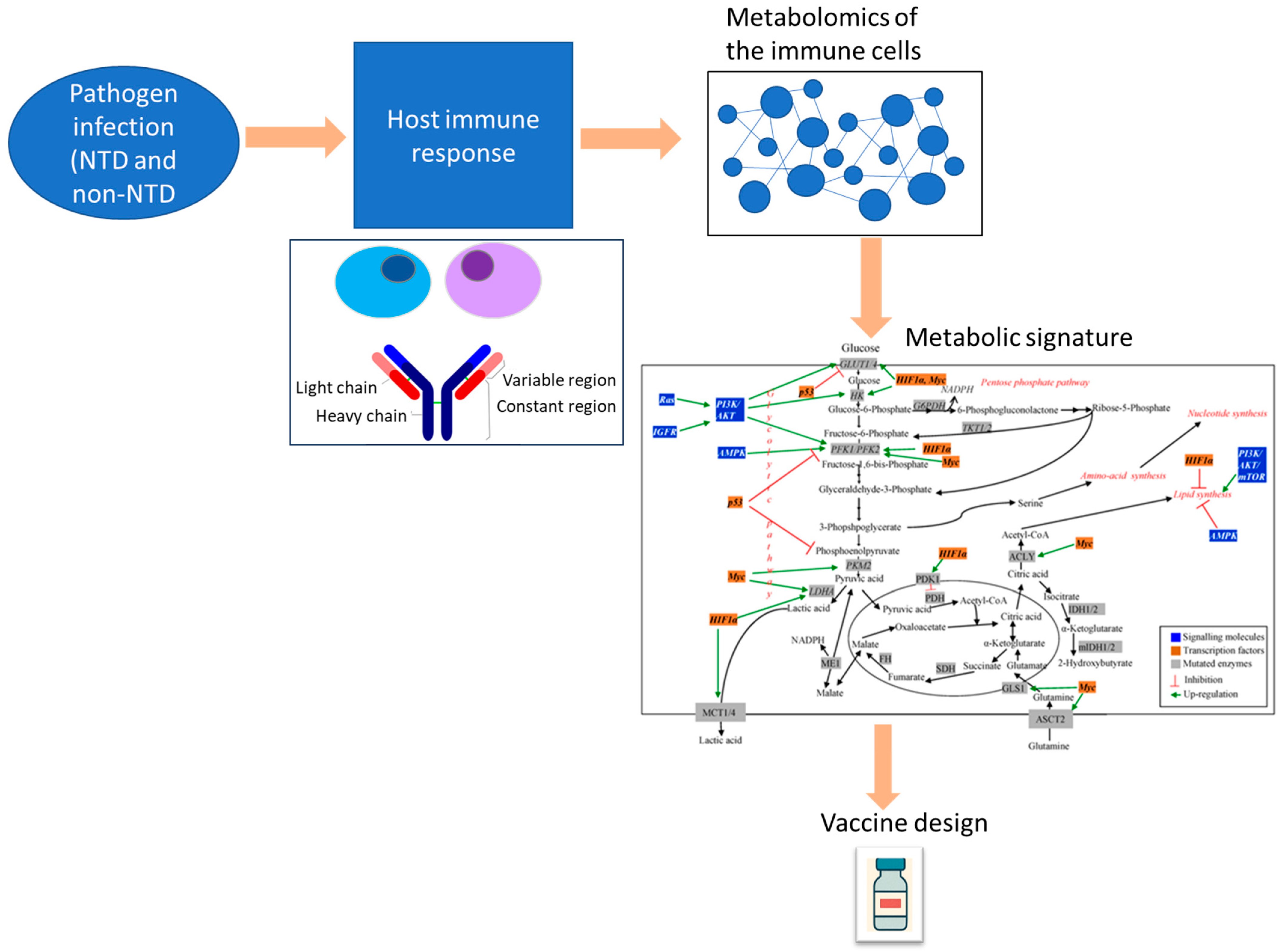
Collectively, these findings form the conceptual basis of the “Metabolic Immuno-Signature” model (Figure 1). This framework proposes that immune protection depends on coordinated regulation of glycolysis, TCA intermediates, and lipid remodeling—fine-tuned by amino acid metabolism and epigenetic modulation. Pathogen-specific differences (e.g., Leishmania inducing arginine flux, SARS-CoV-2 activating FAO) generate distinct metabolic landscapes that influence vaccine outcomes.
Metabolomics thus provides a systems-level lens through which immune responses can be quantitatively predicted, enabling rational design of next-generation vaccines targeting specific metabolic nodes.

6. Challenges in Metabolomics for Infectious Diseases and Vaccine Response

While metabolomics has revolutionized the understanding of infectious diseases and vaccine immunology, its full translational potential is constrained by a series of technical, analytical, and biological challenges, which are particularly pronounced when comparing NTDs with globally prioritized infections like tuberculosis and COVID-19.

6.1. Technical and Analytical Variability

Methodological heterogeneity remains a major limitation in metabolomics studies. Variations in sample type (plasma, serum, urine, or tissue), collection timing, fasting status, storage conditions, and processing protocols can markedly influence metabolite profiles, thereby hindering reproducibility and cross-study comparison, especially in resource-limited NTD-endemic settings [39,40]. In addition, analytical platforms—including NMR, LC–MS, and GC–MS—differ in sensitivity, metabolite coverage, and reproducibility. While LC–MS offers broad coverage and high sensitivity, NMR provides superior reproducibility but lower sensitivity. These differences underscore the need for standardized pipelines for metabolite quantification, normalization, and cross-platform harmonization [10,41].

6.2. Data Complexity and Interpretation

Metabolomic datasets are inherently complex, characterized by high dimensionality and biological variability. A substantial proportion of detected features remain unidentified or ambiguously annotated, limiting biological interpretation [39,40]. Furthermore, integration of metabolomics with other omics layers remains underdeveloped in infectious disease research, particularly for NTDs where reference genomes and curated metabolomic databases are incomplete. Establishing causal relationships between metabolites and immune mechanisms requires complementary functional validation, isotopic tracing, or targeted metabolomics approaches [42].

6.3. Biological Variability and Host Factors

Host-related factors such as age, sex, diet, gut microbiota composition, and genetic background contribute significantly to baseline metabolic variability, complicating the identification of infection-specific signatures. In NTD-endemic regions, co-infections, malnutrition, and environmental exposures further confound metabolic profiles [43,44]. Additionally, strain-level pathogen heterogeneity influences metabolic outputs, highlighting the importance of integrating pathogen genotyping with metabolomic analyses [45].

6.4. Temporal and Spatial Dynamics

Metabolic responses to infection and vaccination are highly dynamic and context dependent. Acute immune activation, adaptive immune development, and localized tissue pathology generate temporal and spatial heterogeneity that may not be captured by cross-sectional sampling. Longitudinal and spatially resolved approaches are therefore essential but remain logistically challenging, particularly in low-resource settings [38,46].

6.5. Translational and Clinical Implementation Barriers

Despite the identification of numerous candidate metabolic biomarkers, few have progressed to clinical validation [47]. Key barriers include the lack of large multicenter studies, limited access to high-end analytical infrastructure in NTD-endemic regions, and regulatory and cost constraints associated with assay development. Diseases with limited commercial markets, such as leishmaniasis and schistosomiasis, are particularly affected. Addressing these challenges will require international consortia, technology transfer initiatives, and coordinated capacity-building programs [48].

6.6. Integration with Vaccine Research and Systems Immunology

In vaccine studies, metabolomics faces additional challenges due to the subtle and transient nature of post-vaccination metabolic changes, which require highly sensitive detection and precisely timed sampling [8]. Vaccine-induced metabolic responses often overlap with background immune activation from prior infections or environmental exposure, complicating the identification of vaccine-specific signatures. Although integration with systems vaccinology—encompassing genomics, transcriptomics, proteomics, and immune phenotyping—offers a powerful framework, it demands advanced computational tools, standardized metadata, and ethically complex longitudinal sampling strategies [49].

6.7. Gaps in Neglected Tropical Disease Research

Compared with non-NTD pathogens, NTDs remain underrepresented in metabolomics research due to limited funding, infrastructure, trained personnel, and biosafety constraints [50]. Most studies rely on small cohorts or animal models, limiting generalizability to human disease. Expanding metabolomics research in NTDs will require targeted funding mechanisms, regional research hubs, and sustained capacity-building efforts [42].

6.8. Data Sharing and Standardization Needs

The fragmentation of metabolomics data across platforms and institutions limits reproducibility and comparative analyses. Although repositories such as MetaboLights, GNPS, and Metabolomics Workbench exist, their adoption in infectious disease research remains inconsistent [51]. The development of pathogen-specific metabolomic databases and harmonized metadata standards—including infection stage, sample origin, and demographic variables—would substantially enhance data integration. Emerging artificial intelligence and machine learning approaches offer promise for extracting predictive signatures from complex datasets [52].

6.9. Limitations of Metabolomics for Determining Vaccine Efficacy

Despite its value in systems vaccinology, metabolomics alone is insufficient to robustly determine vaccine efficacy. Vaccine-induced metabolic perturbations are often transient and highly time dependent, frequently resolving before durable adaptive immune responses are established [8,9]. Moreover, metabolic changes often reflect generalized immune activation rather than antigen-specific protective immunity, limiting their utility as direct correlates of protection [3]. Interindividual variability driven by host factors and endemic immune activation further complicates biomarker discovery, particularly for NTD vaccines [4,24].

7. Conclusions

Metabolomics has emerged as a powerful tool in infectious disease research by providing direct insight into the biochemical processes that govern host–pathogen interactions and vaccine-induced immunity. However, to fully capture the complexity of immune responses and metabolic remodeling during infection and vaccination, metabolomics must be integrated with complementary omics technologies. By reflecting the downstream metabolic consequences of genomic and immunological regulation, and particularly when combined with transcriptomic and proteomic data, metabolomics enables a systems-level understanding that links immune function with dynamic metabolic reprogramming.
This review highlights an integrative comparison of neglected tropical diseases (NTDs) and non-NTD infections, revealing both shared and disease-specific metabolic signatures across parasites, helminths, viruses, and bacteria. Conserved perturbations in tryptophan–kynurenine, arginine–nitric oxide, and lipid pathways underscore common mechanisms of immune modulation, while pathogen-specific metabolites reflect distinct strategies of metabolic exploitation and persistence.
From a translational perspective, metabolomics-based biomarkers show promise for disease stratification, prognosis, and vaccine monitoring Table 4. This is particularly relevant for NTDs, where accessible metabolic biomarkers could address diagnostic gaps, while in non-NTD infections such as tuberculosis and COVID-19, metabolic signatures increasingly inform disease severity and treatment response. Vaccine metabolomics further demonstrates that vaccination-induced metabolic rewiring correlates with immune outcomes, supporting the use of metabolic signatures as early predictors of vaccine responsiveness.
Despite its promise, clinical translation is limited by challenges in standardization, inter-individual variability, and causal interpretation. Integration with multi-omics data, machine learning, and longitudinal study designs will be essential to advance metabolomics toward precision diagnostics and personalized vaccine strategies across both neglected and non-neglected infectious diseases.

Author Contributions

M.R. conceptualized, drafted, revised and finalized the manuscript. H.N.H. and U.I.B. helped in drafting the manuscript. All authors have read and agreed to the published version of the manuscript.

Funding

No funding was received for the research.

Institutional Review Board Statement

The study did not involve direct human or animal research. Hence, no IRB approval was required.

Informed Consent Statement

The study did not involve direct human research. Hence, no informed consent is required.

Data Availability Statement

This is a review article and did not involve data generation.

Conflicts of Interest

The authors declare no conflicts of interest.

References

  1. Chen, J.; Tian, X.; Guo, D.; Gu, H.; Duan, Y.; Li, D. Global trends and burdens of neglected tropical diseases and malaria from 1990 to 2021: A systematic analysis of the Global Burden of Disease Study 2021. BMC Public Health 2025, 25, 1307. [Google Scholar] [CrossRef]
  2. Rahman, N.A.; Rajaratnam, V.; Burchell, G.L.; Morgan, K.; Abdullah, M.R.; Zweekhorst, M.B.M.; Peters, R.M.H. The transdisciplinary research process and participatory research approaches used in the field of neglected tropical diseases: A scoping review. PLoS Neglected Trop. Dis. 2025, 19, E0012959. [Google Scholar] [CrossRef]
  3. Rappuoli, R.; Aderem, A.A. 2020 vision for vaccines against HIV, tuberculosis and malaria. Nature 2011, 473, 463–469. [Google Scholar] [CrossRef] [PubMed]
  4. Poland, G.A.; Ovsyannikova, I.G.; Kennedy, R.B. Personalized vaccinology: A review. Vaccine 2018, 36, 5350–5357. [Google Scholar] [CrossRef]
  5. Diray-Arce, J.; Conti, M.G.; Petrova, B.; Kanarek, N.; Angelidou, A.; Levy, O. Integrative metabolomics to identify molecular signatures of responses to vaccines and infections. Metabolites 2020, 10, 492. [Google Scholar] [CrossRef] [PubMed]
  6. van Tilburg, C.M.; Pfaff, E.; Pajtler, K.W.; Langenberg, K.P.S.; Fiesel, P.; Jones, B.C.; Balasubramanian, G.P.; Stark, S.; Johann, P.D.; Blattner-Johnson, M.; et al. The Pediatric Precision Oncology INFORM Registry: Clinical Out-come and Benefit for Patients with Very High-Evidence Targets. Cancer Discov. 2021, 11, 2764–2779. [Google Scholar] [CrossRef] [PubMed]
  7. Cortese, M.; Hagan, T.; Rouphael, N.; Wu, S.-Y.; Xie, X.; Kazmin, D.; Wimmers, F.; Gupta, S.; van der Most, R.; Coccia, M.; et al. System vaccinology analysis of predictors and mechanisms of antibody response durability to multiple vaccines in humans. Nat. Immunol. 2025, 26, 116–130. [Google Scholar] [CrossRef] [PubMed]
  8. Pinu, F.R.; Goldansaz, S.A.; Jaine, J. Translational Metabolomics: Current Challenges and Future Opportunities. Metabolites 2019, 9, 108. [Google Scholar] [CrossRef] [PubMed] [PubMed Central]
  9. Li, X.; Meng, H.; Wang, H.; Zhang, Y.; Yu, W. Indoleamine 2,3-dioxygenase 1 in cancer immunotherapy: From small-molecule inhibition to PROTAC-mediated degradation. Front. Pharmacol. 2025, 16, 1640073. [Google Scholar] [CrossRef]
  10. Rahman, M.; Schellhorn, H.E. Metabolomics of infectious diseases in the era of personalized medicine. Front. Mol. Biosci. 2023, 10, 1120376. [Google Scholar] [CrossRef]
  11. Rodrigues, M.L.; Gois, A.R.d.S.; Domingues, A.L.C.; Silva, R.O.; Lopes, E.P. Metabolomics assays applied to schistosomiasis studies: A scoping review. BMC Infect. Dis. 2025, 25, 211. [Google Scholar] [CrossRef] [PubMed]
  12. Tounta, V.; Liu, Y.; Cheyne, A.; Larrouy-Maumus, G. Metabolomics in infectious diseases and drug discovery. Mol. Omics 2021, 17, 376–393. [Google Scholar] [CrossRef]
  13. Vasquez, M.; Sica, M.; Namazzi, R.; Opoka, R.O.; Sherman, J.; Datta, D.; Duran-Frigola, M.; Ssenkusu, J.M.; John, C.C.; Conroy, A.L.; et al. Xanthine oxidase levels and immune dysregulation are independently associated with anemia in Plasmodium falciparum malaria. Sci. Rep. 2023, 13, 14720. [Google Scholar] [CrossRef]
  14. Fernández-García, M.; Mesquita, I.; Ferreira, C.; Araújo, M.; Saha, B.; Rey-Stolle, M.F.; García, A.; Silvestre, R.; Barbas, C. Leishmania donovani Induces Multiple Dynamic Responses in the Metabolome Associated with Amastigote Differentiation and Matu-ration Inside the Human Macrophage. J. Proteome Res. 2023, 22, 2256–2270. [Google Scholar] [CrossRef] [PubMed]
  15. Fadhilah, F.; Indrati, A.R.; Dewi, S.; Santoso, P. The Kynurenine/Tryptophan Ratio as a Promising Metabolomic Biomarker for Diagnosing the Spectrum of Tuberculosis Infection and Disease. Int. J. Gen. Med. 2023, 16, 5587–5595. [Google Scholar] [CrossRef] [PubMed] [PubMed Central]
  16. Li, B.-W.; Fan, X.; Cao, W.-J.; Tian, H.; Wang, S.-Y.; Zhang, J.-Y.; Man, L.S.; Song, J.-W.; Zhang, C.; Zhang, S.-H.; et al. Systematic Discovery and Pathway Analyses of Metabolic Disturbance in COVID-19. Infect. Dis. Immun. 2021, 1, 74–85. [Google Scholar] [CrossRef] [PubMed]
  17. Carpenè, G.; Onorato, D.; Nocini, R.; Fortunato, G.; Rizk, J.G.; Henry, B.M.; Lippi, G. Blood lactate concentration in COVID-19: A sys-tematic literature review. Clin. Chem. Lab. Med. 2021, 60, 332–337. [Google Scholar] [CrossRef] [PubMed]
  18. Banoei, M.M.; Vogel, H.J.; Weljie, A.M.; Kumar, A.; Yende, S.; Angus, D.C. Plasma metabolomics for the diagnosis and prognosis of H1N1 influenza pneumonia. Crit. Care 2017, 21, 97. [Google Scholar] [CrossRef]
  19. Sumbria, D.; Berber, E.; Mathayan, M.; Rouse, B.T. Virus Infections and Host Metabolism-Can We Manage the Interactions? Front. Immunol. 2021, 11, 594963. [Google Scholar] [CrossRef] [PubMed] [PubMed Central]
  20. Nii-Trebi, N.I. Emerging and Neglected Infectious Diseases: Insights, Advances, and Challenges. Biomed Res. Int. 2017, 2017, 5245021. [Google Scholar] [CrossRef] [PubMed]
  21. Gabaldón-Figueira, J.C.; Ros-Lucas, A.; Martínez-Peinado, N.; Blackburn, G.; Losada-Galvan, I.; Posada, E.; Ballart, C.; Escabia, E.; Capellades, J.; Yanes, O.; et al. Changes in lipid abundance are associated with disease progres-sion and treatment response in chronic Trypanosoma cruzi infection. Parasites Vectors 2024, 17, 459. [Google Scholar] [CrossRef] [PubMed] [PubMed Central]
  22. Nakaya, H.I.; Clutterbuck, E.; Kazmin, D.; Wang, L.; Cortese, M.; Bosinger, S.E.; Patel, N.B.; Zak, D.E.; Aderem, A.; Dong, T.; et al. Systems biology of immunity to MF59-adjuvanted versus nonadjuvanted trivalent seasonal influenza vaccines in early childhood. Proc. Natl. Acad. Sci. USA 2016, 113, 1853–1858. [Google Scholar] [CrossRef]
  23. Dagla, I.; Iliou, A.; Benaki, D.; Gikas, E.; Mikros, E.; Bagratuni, T.; Kastritis, E.; Dimopoulos, M.A.; Terpos, E.; Tsarbopoulos, A. Plasma Metabolomic Alterations Induced by COVID-19 Vaccination Reveal Putative Biomarkers Reflecting the Immune Response. Cells 2022, 11, 1241. [Google Scholar] [CrossRef] [PubMed]
  24. Chou, C.H.; Mohanty, S.; Kang, H.A.; Kong, L.; Avila-Pacheco, J.; Joshi, S.R.; Ueda, I.; Devine, L.; Raddassi, K.; Pierce, K.; et al. Metabolomic and transcriptomic signatures of influenza vaccine response in healthy young and older adults. Aging Cell 2022, 21, e13682. [Google Scholar] [CrossRef] [PubMed]
  25. Muxel, S.M.; Aoki, J.I.; Fernandes, J.C.R.; Laranjeira-Silva, M.F.; Zampieri, R.A.; Acuña, S.M.; Müller, K.E.; Vanderlinde, R.H.; Floeter-Winter, L.M. Arginine and Polyamines Fate in Leishmania Infection. Front. Microbiol. 2018, 8, 2682. [Google Scholar] [CrossRef] [PubMed]
  26. Ohms, M.; Ferreira, C.; Busch, H.; Wohlers, I.; Guerra de Souza, A.C.; Silvestre, R.; Laskay, T. Enhanced Glycolysis Is Required for An-tileishmanial Functions of Neutrophils Upon Infection With Leishmania donovani. Front. Immunol. 2021, 12, 632512. [Google Scholar] [CrossRef] [PubMed]
  27. O′Neill, L.A.; Pearce, E.J. Immunometabolism governs dendritic cell and macrophage function. J. Exp. Med. 2016, 213, 15–23. [Google Scholar] [CrossRef] [PubMed] [PubMed Central]
  28. Li, S.; Sullivan, N.L.; Rouphael, N.; Yu, T.; Banton, S.; Maddur, M.S.; McCausland, M.; Chiu, C.; Canniff, J.; Dubey, S.; et al. Metabolic Phenotypes of Response to Vaccination in Humans. Cell 2017, 169, 862–877. [Google Scholar] [CrossRef] [PubMed] [PubMed Central]
  29. Hehner, J.; Schneider, L.; Woitalla, A.; Ott, B.; Vu, K.C.T.; Schöbel, A.; Hain, T.; Schwudke, D.; Herker, E. Glycerophospholipid remodeling is critical for orthoflavivirus infection. Nat. Commun. 2024, 15, 8683. [Google Scholar] [CrossRef]
  30. Kakisaka, K.; Sakai, A.; Yoshida, Y.; Miyasaka, A.; Takahashi, F.; Sumazaki, R.; Takikawa, Y. Hepatitis B Surface Antibody Titers at One and Two Years after Hepatitis B Virus Vaccination in Healthy Young Japanese Adults. Intern. Med. 2019, 58, 2349–2355. [Google Scholar] [CrossRef]
  31. Chermahini, F.A.; Arvejeh, P.M.; Marincola, F.M.; Ahmad, S.; Naderian, R.; Pajand, O.; Eslami, M.; Hasannia, M.; Sanami, S. Investigating how dengue virus-induced metabolic changes affect the host immune response and how to develop Immunomodulatory strategies. Virol. J. 2025, 22, 117. [Google Scholar] [CrossRef] [PubMed] [PubMed Central]
  32. Xie, Y.; Jiao, L.; Sun, Q. Dengue virus and lipid metabolism: Unravelling the interplay for future therapeutic approaches. Emerg. Microbes Infect. 2025, 14, 2477647. [Google Scholar] [CrossRef]
  33. Tahir Aleem, M.; Munir, F.; Shakoor, A.; Ud Din Sindhu, Z.; Gao, F. Advancement in the development of DNA vaccines against Trypanosoma brucei and future perspective. Int. Immunopharmacol. 2024, 140, 112847. [Google Scholar] [CrossRef]
  34. Poudyal, N.R.; Paul, K.S. Fatty acid uptake in Trypanosoma brucei: Host resources and possible mechanisms. Front. Cell. Infect. Microbiol. 2022, 12, 949409. [Google Scholar] [CrossRef]
  35. Justiça, M.M.; Henrique, T.; Gandolfi, J.V.; Berger-Estilita, J.; Lobo, S.M. The role of serum lactate and hypotension in mortality risk stratification for critically ill COVID-19 patients: Insights from a large retrospective ICU cohort. BMC Infect. Dis. 2025, 25, 1633. [Google Scholar] [CrossRef] [PubMed]
  36. Torres-Martínez, L.; Morales-Primo, A.U.; Zamora-Chimal, J. Indoleamine 2,3-Dioxygenase and Tryptophan Catabolism: Key Players in Immunosuppression and Intracellular Parasite Survival Mechanisms. Immunol. Investig. 2025, 54, 909–934. [Google Scholar] [CrossRef]
  37. Downie, M.J.; Kirk, K.; Mamoun, C.B. Purine salvage pathways in the intraerythrocytic malaria parasite Plasmodium falciparum. Eukaryot. Cell. 2008, 7, 1231–1237. [Google Scholar] [CrossRef] [PubMed]
  38. Liu, X.; Xiao, C.; Guan, P.; Chen, Q.; You, L.; Kong, H.; Qin, W.; Dou, P.; Li, Q.; Li, Y.; et al. Metabolomics acts as a powerful tool for comprehensively evaluating vaccines approved under emergency: A CoronaVac retrospective study. Front. Immunol. 2023, 14, 1168308. [Google Scholar] [CrossRef]
  39. Hartl, D.; de Luca, V.; Kostikova, A.; Laramie, J.; Kennedy, S.; Ferrero, E.; Siegel, R.; Fink, M.; Ahmed, S.; Millholland, J.; et al. Translational precision medicine: An industry perspective. J. Transl. Med. 2021, 19, 245. [Google Scholar] [CrossRef] [PubMed]
  40. Castelli, F.A.; Rosati, G.; Moguet, C.; Fuentes, C.; Marrugo-Ramírez, J.; Lefebvre, T.; Volland, H.; Merkoçi, A.; Simon, S.; Fenaille, F.; et al. Metabolomics for personalized medicine: The input of analytical chemistry from biomarker discovery to point-of-care tests. Anal. Bioanal. Chem. 2022, 414, 759–789. [Google Scholar] [PubMed]
  41. Kaddurah-Daouk, R.; Kristal, B.S.; Weinshilboum, R.M. Metabolomics: A global biochemical approach to drug response and disease. Annu. Rev. Pharmacol. Toxicol. 2008, 48, 653–683. [Google Scholar] [CrossRef] [PubMed]
  42. Weng, H.B.; Chen, H.X.; Wang, M.W. Innovation in neglected tropical disease drug discovery and development. Infect. Dis. Poverty 2018, 7, 67. [Google Scholar] [CrossRef]
  43. Perez, R.L.; Chase, J.; Tanner, R. Shared challenges to the control of complex intracellular neglected pathogens. Front. Public Health 2024, 12, 1423420. [Google Scholar] [CrossRef] [PubMed]
  44. Schneider, K.M.; Cao, F.; Huang, H.Y.R.; Chen, L.; Chen, Y.; Gong, R.; Raptis, A.; Creasy, K.T.; Clusmann, J.; van Haag, F.; et al. The Lipidomic Profile Discriminates Between MASLD and MetALD. Aliment. Pharmacol. Ther. 2025, 61, 1357–1371. [Google Scholar] [CrossRef]
  45. Moopanar, K.; Nyide, A.N.G.; Senzani, S.; Mvubu, N.E. Clinical strains of Mycobacterium tuberculosis exhibit differential lipid metabolism-associated transcriptome changes in in vitro cholesterol and infection models. Pathog. Dis. 2023, 81, ftac046. [Google Scholar] [CrossRef] [PubMed]
  46. Ponzo, E.; Midiri, A.; Manno, A.; Pastorello, M.; Biondo, C.; Mancuso, G. Insights into the epidemiology, pathogenesis, and dif-ferential diagnosis of schistosomiasis. Eur. J. Microbiol. Immunol. 2024, 14, 86–96. [Google Scholar] [CrossRef] [PubMed]
  47. de Lucena, T.M.C.; da Silva Santos, A.F.; de Lima, B.R.; de Albuquerque Borborema, M.E.; de Azevêdo Silva, J. Mechanism of inflammatory response in associated comorbidities in COVID-19. Diabetes Metab. Syndr. Clin. Res. Rev. 2020, 14, 597–600. [Google Scholar] [CrossRef]
  48. Oyeyemi, O.T.; Ogundahunsi, O.; Schunk, M.; Fatem, R.G.; Shollenberger, L.M. Neglected tropical disease (NTD) diagnostics: Current development and operations to advance control. Pathog. Glob. Health 2024, 118, 1–24. [Google Scholar] [CrossRef] [PubMed]
  49. Khanijou, J.K.; Kulyk, H.; Bergès, C.; Khoo, L.W.; Ng, P.; Yeo, H.C.; Helmy, M.; Bellvert, F.; Chew, W.; Selvarajoo, K. Metabolomics and modelling approaches for systems metabolic engineering. Metab. Eng. Commun. 2022, 15, e00209, ISSN 2214-0301. [Google Scholar] [CrossRef] [PubMed]
  50. Jayashankar, C.A.; Kumar P, V.B.; Kandi, V.; Girish, N.; Sanjana, K.; Dharshini, D.; Batchu, S.V.C.; Bhanu, P. Neglected Tropical Diseases: A Comprehensive Review. Cureus 2024, 16, e53933. [Google Scholar] [CrossRef]
  51. Yurekten, O.; Payne, T.; Tejera, N.; Amaladoss, F.X.; Martin, C.; Williams, M.; O’Donovan, C. MetaboLights: Open data repository for metabolomics. Nucleic Acids Res. 2024, 52, D640–D646. [Google Scholar] [CrossRef] [PubMed]
  52. Aswini, R.; Saranya, B.; Gayathri, K.; Karthikeyan, E. Revolutionizing infectious disease surveillance: Multi-omics technologies and AI-driven integration. Decod. Infect. Transm. 2025, 3, 100061, ISSN 2949-9240. [Google Scholar] [CrossRef]
  53. Olsson, O.; Skogmar, S.; Tesfaye, F.; Mulleta, D.; Jansson, M.; Björkman, P. Kynurenine/tryptophan ratio for detection of active tuberculosis in adults with HIV prior to antiretroviral therapy. AIDS 2022, 36, 1245–1253. [Google Scholar] [CrossRef]
  54. Shen, K.; Yang, Y.; Wang, T.; Zhao, D.; Jiang, Y.; Jin, R.; Gao, L. Diagnosis, treatment, and prevention of 2019 novel coronavirus infection in children: Experts’ consensus statement. World J. Pediatr. 2020, 16, 223–231. [Google Scholar] [CrossRef]
  55. Collins, J.M.; Bobosha, K.; Narayanan, N.; Gandhi, N.R.; Day, C.L.; Rengarajan, J.; Kempker, R.R.; Lau, M.S.Y.; Nellis, M.; Tukvadze, N.; et al. A Plasma Met-abolic Signature to Diagnose Pulmonary Tuberculosis and Monitor Treatment Response. J. Infect. Dis. 2025, 232, 578–587. [Google Scholar] [CrossRef] [PubMed]
  56. Lee, C.H.; Banoei, M.M.; Ansari, M.; Cheng, M.P.; Lamontagne, F.; Griesdale, D.; Lasry, D.E.; Demir, K.; Dhingra, V.; Tran, K.C.; et al. Using a targeted metabolomics approach to explore differences in ARDS associated with COVID-19 compared to ARDS caused by H1N1 influenza and bacterial pneumonia. Crit. Care 2024, 28, 63. [Google Scholar] [CrossRef] [PubMed]
  57. Pelletier, A.-N.; Sanchez, G.P.; Izmirly, A.; Watson, M.; Di Pucchio, T.; Carvalho, K.I.; Filali-Mouhim, A.; Paramithiotis, E.; Timenetsky, M.D.C.S.; Precioso, A.R.; et al. A pre-vaccination immune metabolic inter-play determines the protective antibody response to a dengue virus vaccine. Cell. Rep. 2024, 43, 114370. [Google Scholar] [CrossRef] [PubMed]
  58. Howard, L.M.; Jensen, T.L.; Goll, J.B.; E Gelber, C.; Bradley, M.D.; Sherrod, S.D.; Hoek, K.L.; Yoder, S.; Jimenez-Truque, N.; Edwards, K.; et al. Metabolomic Signatures Differentiate Immune Responses in Avian Influenza Vaccine Recipients. J. Infect. Dis. 2024, 230, 716–725. [Google Scholar] [CrossRef]
  59. Rodrick, T.C.; Siu, Y.; Carlock, M.A.; Ross, T.M.; Jones, D.R. Urine Metabolome Dynamics Discriminate Influenza Vaccination Response. Viruses 2023, 15, 242. [Google Scholar] [CrossRef] [PubMed]
Figure 1. Figure showing application of metabolic signature for vaccine design. (This figure is modified from https://www.mdpi.com/2218-1989/5/4/571 (accessed on 24 November 2025), under Creative Common CC BY license).
Idr 18 00010 g001
Table 1. Representative metabolomic platforms, sample types, and metabolites detected in NTD and non-NTD infections.
DiseasePathogen (Family)Sample TypePlatformKey MetabolitesBrief Summary of Metabolomic FindingsReference
TuberculosisMycobacterium tuberculosis (Mycobacteriaceae)Plasma, sputumLC–MSKynurenine, lactate, TAGsReflects chronic immune activation, enhanced glycolysis, and lipid remodeling associated with macrophage reprogramming and mycobacterial persistence; useful for distinguishing active disease and monitoring treatment response.[12]
COVID-19SARS-CoV-2 (Coronaviridae)SerumLC–MS, NMRSphingolipids, bile acidsIndicates systemic immune dysregulation, endothelial dysfunction, and hepatic involvement; metabolic signatures correlate with disease severity and inflammatory burden.[12]
HIV-1RetroviridaePlasmaLC–MSGlutamine, kynurenineHighlights sustained immune activation and T-cell dysfunction driven by chronic inflammation and altered tryptophan metabolism; relevant for disease progression and therapeutic monitoring.[12]
MalariaPlasmodium falciparum (Plasmodiidae)Plasma, urineLC–MS3-hydroxybutyric acid, valine, hypoxanthine, lactateReflects increased nucleotide turnover and anaerobic glycolysis resulting from parasite replication and host hypoxia; correlates with parasite burden and disease severity.[12,13]
LeishmaniasisLeishmania donovani (Trypanosomatidae)SerumGC–MSOrnithine, putrescineDemonstrates dysregulated polyamine metabolism critical for parasite survival and macrophage function; provides insight into host–parasite metabolic crosstalk and disease progression.[14]
SchistosomiasisSchistosoma mansoni (Schistosomatidae)PlasmaLC–MSBile acids, taurineIndicates hepatobiliary dysfunction, oxidative stress, and chronic inflammation driven by egg-induced tissue pathology; useful as non-invasive biomarkers of liver involvement.[11]
Table 2. Metabolomic correlates of vaccine response in NTD and non-NTD pathogens.
VaccinePathogenPlatformKey Metabolic PathwaysAssociated Immune OutcomeBrief Summary of Metabolomic InsightsReference
mRNA (COVID-19)SARS-CoV-2LC–MSGlycolysis, amino acid metabolismT-cell activationDemonstrates rapid metabolic reprogramming toward aerobic glycolysis and one-carbon metabolism, supporting clonal expansion and effector differentiation of vaccine-induced T cells.[23]
Influenza (TIV)Influenza ANMRPhospholipid metabolismAntibody titersHighlights lipid remodeling and membrane biosynthesis required for B-cell activation and plasmablast differentiation, with phospholipid profiles correlating with humoral vaccine efficacy.[24]
TB (M72/AS01E)Mycobacterium tuberculosisLC–MSTryptophan, kynurenineIFN-γ productionReveals enhanced amino acid utilization and lipid oxidation that support Th1 polarization and sustained IFN-γ secretion, key correlates of protective anti-tuberculosis immunity.[15]
Leishmania vaccine (experimental)Leishmania donovaniLC–MSGlycolysis, arginine and nitric oxide metabolismMacrophage activationReflects metabolic rewiring of macrophages toward nitric oxide production, enhancing parasite killing and supporting vaccine-induced cell-mediated immunity.[25,26]
Table 3. Shared and Distinct Metabolic Biomarkers in NTD and Non-NTD Infectious Diseases and Vaccine Responses.
CategoryMetabolic BiomarkersPresence in NTDPresence in Non-NTDBiological/Immunological SignificanceRepresentative Diseases/Vaccines (References)
Common metabolic biomarkersLactateIndicator of hypoxia, enhanced glycolysis, and inflammatory burden; correlates with disease severity and immune activationTuberculosis, Malaria, COVID-19 [12]
Kynurenine/tryptophan pathway metabolitesReflects immune regulation via IDO activity, T-cell suppression, and modulation of vaccine-induced immunityTB, Malaria, and HIV [12], Influenza vaccine [24]
Lipid metabolism (TAGs, phospholipids)Linked to membrane remodeling, antigen presentation, immune cell activation, and pathogen survival strategiesTB and COVID-19 [12], Influenza vaccine [24]
Amino acid metabolism (glutamine, arginine)Supports immune cell proliferation, macrophage activation, nitric oxide production, and cytokine synthesisTB and COVID-19 [12], Leishmaniasis [14]
Predominantly NTD-associated biomarkersHypoxanthine×Marker of parasite-driven purine salvage, host energy stress, and oxidative damageMalaria [13]
Ornithine, putrescine (polyamines)×Reflects parasite-mediated diversion of arginine metabolism and impaired macrophage-mediated killingLeishmaniasis [14]
Taurine×Associated with helminth-induced bile acid metabolism, osmotic regulation, and chronic inflammationSchistosomiasis [11]
Predominantly non-NTD-associated biomarkersBile acids×Reflect systemic inflammation and dysregulation of the gut–liver–immune axisCOVID-19 [12]
Lysophospholipids, sphingolipids×Involved in viral entry, immune signaling, endothelial dysfunction, and severity stratificationCOVID-19 [12]
Amino acid biosynthesis intermediates×Supports rapid lymphocyte proliferation and effector differentiation following vaccinationmRNA COVID-19 vaccine [23]
Vaccine-specific metabolic signatures Glycolysis intermediatesPredicts T-cell activation, IFN-γ production, and effector differentiation post-vaccinationTB (M72/AS01E) [15], COVID-19 mRNA vaccine [23]
Nitric oxide-related metabolites×Associated with macrophage activation and intracellular parasite killingExperimental Leishmania vaccine [25,26]
Note: “√” indicates presence of the metabolite; “×” indicates absence of the metabolite.
Table 4. Clinical and translational status of metabolomics in infectious diseases.
DomainDisease/ContextKey Metabolites/SignaturesCurrent Application StatusClinical RelevanceRepresentative References
Routine clinical metabolites (not metabolomics tests)TB, HIV (research settings)Kynurenine/Tryptophan ratioResearch and adjunct clinical studiesImmune activation, disease severity[15,53]
COVID-19Bile acids, lipidsInvestigational (not routine)Severity stratification[54]
Near-clinical/translational metabolomicsTuberculosisKynurenine/Tryptophan ratioClinical cohort studiesTreatment response, disease severity [55]
COVID-19Lipidomic and amino-acid signaturesClinical studiesPrognosis and immune dysregulation[56]
Vaccine metabolomics (pre-clinical to early translational)Dengue, Influenza, COVID-19 vaccinesLipids, amino acids, tryptophan derivativesClinical trials onlyEarly correlates of vaccine responsiveness[38,57,58,59]
Disclaimer/Publisher’s Note: The statements, opinions and data contained in all publications are solely those of the individual author(s) and contributor(s) and not of MDPI and/or the editor(s). MDPI and/or the editor(s) disclaim responsibility for any injury to people or property resulting from any ideas, methods, instructions or products referred to in the content.