1. Introduction
As one of the key technologies of mobile robots, path planning plays a vital role in the navigation of mobile robots [
1,
2]. In recent years, the research on path planning algorithms has formed a relatively mature system. According to the solution ideas and core mechanisms, it can be summarized into two categories: traditional path planning algorithms and intelligent path planning algorithms [
3].
Among traditional path planning algorithms, Dijkstra’s algorithm [
4], as a classic shortest path solving algorithm, realizes global path searching by traversing grid nodes. It has the advantages of strong stability and certain solution results. However, it lacks heuristic information guidance, has low search efficiency in high-dimensional complex environments, and cannot take into account path optimization needs. The A* algorithm [
5] introduces a heuristic function to improve the search strategy, which greatly improves the path solution speed and has become one of the most widely used traditional algorithms in the grid modeling environment. However, it still has the problems of insufficient path smoothness and limited adaptability when facing dynamic obstacles. The artificial potential field method [
6] achieves real-time obstacle avoidance by simulating the mechanical balance of attraction and repulsion. The principle is simple, and the response is rapid. However, it is prone to inherent defects such as unreachable targets and local minima, which limits its application in complex scenarios. Such traditional algorithms generally rely on the accuracy of environmental modeling and struggle to meet actual needs in unstructured environments or multi-constraint optimization scenarios, which has promoted the development of intelligent optimization algorithms in the field of path planning.
Intelligent path planning algorithms have become a research hotspot in this field due to their advantages of strong global search capabilities, wide adaptability, and their lack of a requirement to rely on accurate environmental models. Among them, the particle swarm optimization algorithm (PSO) [
1] simulates the foraging behavior of a flock of birds and achieves optimal solution searching through individual collaboration. It has the characteristics of fast convergence and simple principles, but it is easy to fall into local optimality in the later stages of iteration. The genetic algorithm (GA) [
7] is based on the theory of biological evolution and achieves population evolution through selection, crossover, and mutation operations. It is highly robust but has high computational complexity and limited adaptability to high-dimensional environments. The whale optimization algorithm (WOA) [
8] is a new intelligent optimization algorithm proposed in 2016. Inspired by the group hunting behavior of humpback whales in nature, it has the unique advantages of simple structure, few optimization parameters, and strong global search capabilities. In recent years, its application in the field of path planning has gradually attracted attention.
However, the original WOA still exposes obvious shortcomings in path planning practice: slow convergence speed, easily falling into local optimal solutions, and insufficient optimization accuracy, especially in multi-obstacle, large-scale, or dynamic environments. These problems can lead to path redundancy, obstacle avoidance failure, or poor optimization performance [
9,
10]. In order to make up for the above shortcomings, domestic and foreign scholars have proposed a variety of improvement strategies: existing studies have improved the WOA through various strategies. Reference [
11] proposed the whale optimization algorithm IMWOA based on the ideas of trapezoidal traction strategy and variable strategy, which enhanced the balance between global exploration and local development of the algorithm and greatly improved the convergence performance and accuracy. However, in some multimodal functions and high-dimensional non-convex function optimization problems, the algorithm is prone to insufficient convergence accuracy. Reference [
12] uses an adaptive step size Gaussian walk strategy for global searching, weighing the global and local development capabilities of the whale optimization algorithm. Reference [
13] integrates the golden sine algorithm to enhance the global search capability of the whale optimization algorithm. The convergence speed is accelerated, but it may lead to a decrease in the search ability of the algorithm when facing unknown data. Reference [
14] proposed a whale optimization algorithm based on an improved predation and feedback mechanism, which improved the stability of the algorithm, but there is still room for further optimization in terms of the algorithm’s global search ability, convergence speed, and population diversity. Reference [
15] prevents the algorithm from falling into a local optimal state in the late iteration by applying the reverse learning strategy of convex lens imaging.
In view of the core problems of the whale optimization algorithm in path planning, such as slow convergence speed, low optimization accuracy, and easily falling into local optima, this paper proposes an improved whale optimization algorithm (IWOA) path planning method that integrates the bird navigation mechanism. Logistic chaos mapping [
16] is introduced to initialize the population to enhance the randomness and uniformity of the initial solution; nonlinear dynamic convergence factors are designed to adaptively adjust the weight of global exploration and local development according to the iterative process to improve convergence accuracy; adaptive spiral parameters are introduced to balance the search breadth and depth of the algorithm to avoid premature convergence; the bird navigation mechanism is integrated to further improve the algorithm’s operational stability and convergence speed through information interaction and direction guidance between individuals. Through simulation experiments, the IWOA was compared with the original whale optimization algorithm, the genetic algorithm, and the algorithm found in the literature [
15] in environments with varying complexity, and the superiority of the proposed algorithm was verified from multiple dimensions such as path length and smoothness.
3. Improved Whale Optimization Algorithm (IWOA)
In view of the WOA’s problems, such as insufficient initial population quality, linear decline in convergence factors leading to local optima, and fixed spiral parameters affecting search diversity, this paper makes improvements in four aspects: using logistic chaos mapping to initialize the population; designing nonlinear convergence factors; introducing adaptive spiral shape constants; and integrating bird navigation mechanisms to improve stability.
3.1. Logistic Chaotic Mapping
The initial positions of population individuals are initialized using logistic chaotic mapping, which helps the algorithm escape local optima, search for the global optimal solution more effectively, and improve the performance of the optimization algorithm. The mathematical model is as follows:
where
is the control parameter. When
= 4, the logistic chaotic mapping is in a fully chaotic state, exhibiting the strongest randomness and unpredictability. Therefore,
= 4 is adopted in this paper.
3.2. Nonlinear Convergence Factor
In the algorithm’s search process, the vector coefficient
determines whether to search for solutions beyond the optimal one, preventing trapping in local optima. The magnitude of the convergence factor
dictates the size of
[
18]. The larger
is, the larger the coefficient
is, and the smaller
is, the smaller the coefficient
is. When
, the algorithm tends to conduct global exploration, guiding whale individuals away from the currently known optimal position to search a broader solution space. This helps discover new and potentially better regions, avoiding premature convergence to local optima. When
, the algorithm enters exploitation mode [
19], which is more biased towards local development, allowing individual whales to conduct a refined search around the currently found better solution, continuously optimizing existing solutions and mining solutions corresponding to better fitness values in the area, thereby improving convergence accuracy. Therefore, to ensure the algorithm can better escape local optima, the decrease of
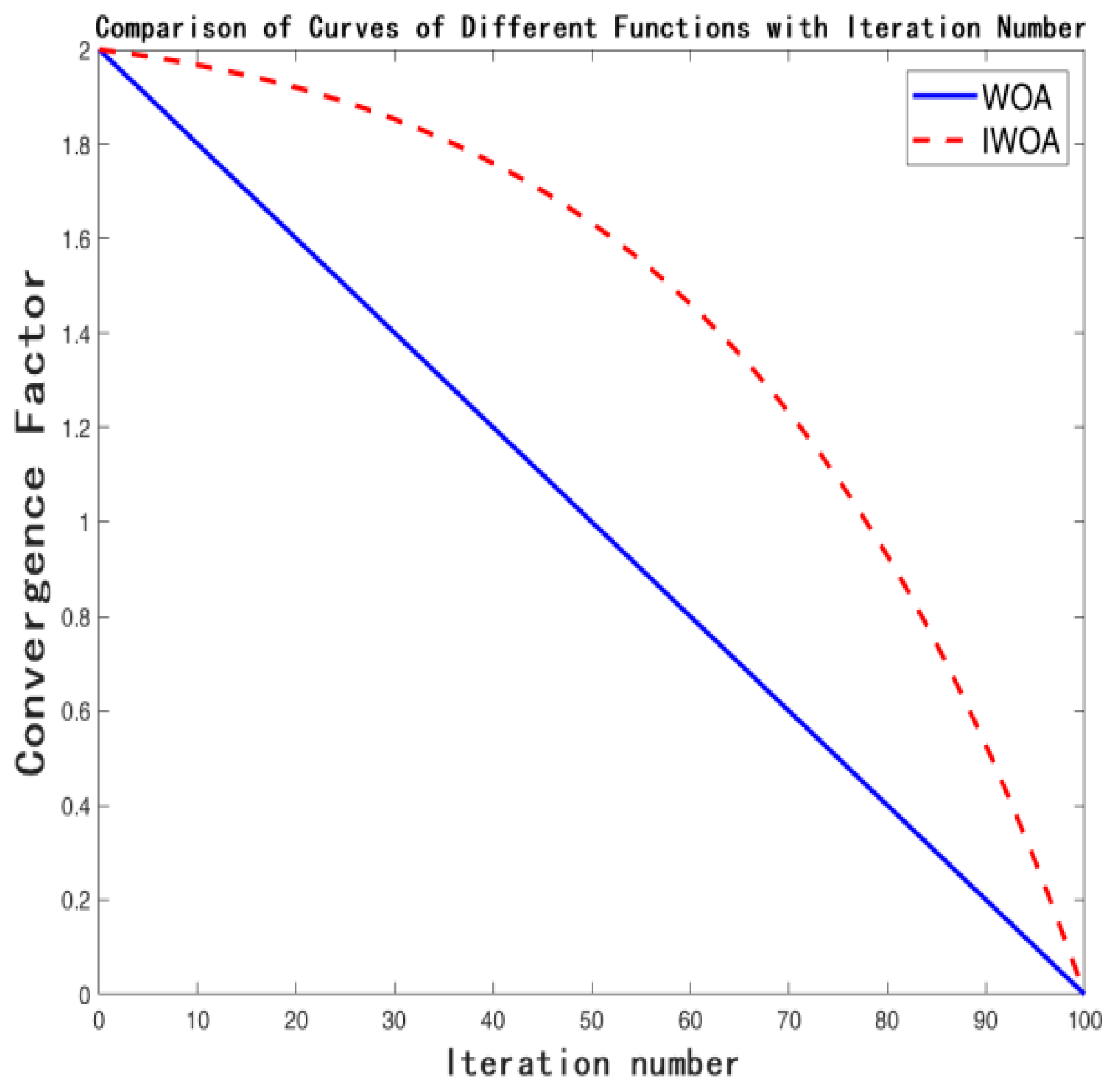
can be appropriately slowed to extend the global search duration. Based on this idea, introducing a nonlinear convergence factor is a feasible approach. The comparison of the convergence factors before and after improvement is shown in
Figure 1. The mathematical formula for the improved convergence factor is as follows:
3.3. Adaptive Spiral Shape Constant
In the WOA, the spiral shape parameter b is usually set to a constant so that individual whales lack diversity in posture when searching for prey [
20]. The value of the spiral shape constant b determines the size of the spiral shape during the predation phase of the bubble net. The larger b is, the larger the spiral shape is and the wider the search range is; the smaller b is, the smaller the spiral shape is and the smaller the search range is. Therefore, this article chooses an adaptive spiral shape constant, specifically:
where
is set to 2 and
to 0.1. When b = 2, the spiral is relatively loose, facilitating global exploration. As the number of iterations increases, b decreases to 0.1, and the spiral gradually tightens, enhancing local exploitation capability. This aligns with the transition requirement from global exploration to local optimization.
3.4. Bird Navigation Mechanism
During the migration process of flying birds, the young birds will follow their parents [
21], and this behavior can be integrated into the whale optimization algorithm. After the bird navigation method is introduced, individual whales can judge their own movement direction based on the positions of their surrounding companions, which can avoid blindly searching areas far away from the optimal solution and improve the quality and stability of the algorithm. Secondly, under the influence of peers, individual whales trapped in local optima have the opportunity to continue looking for other solutions and improve the accuracy of the algorithm. Finally, individual whales will gradually approach their companions who are already in a better area, improving the convergence speed of the algorithm. The specific method is as follows: let the position of a randomly selected whale be
; randomly select n individuals from all individuals as companions of this whale, with their positions denoted as
. Calculate the average position of all companions
:
The weight coefficient w is used to adjust the influence degree of the average position of companions on the whale individual and update the whale’s position. The specific approach is as follows:
where w is a constant within the range of [0, 1].
3.5. Flow of the Improved Whale Optimization Algorithm
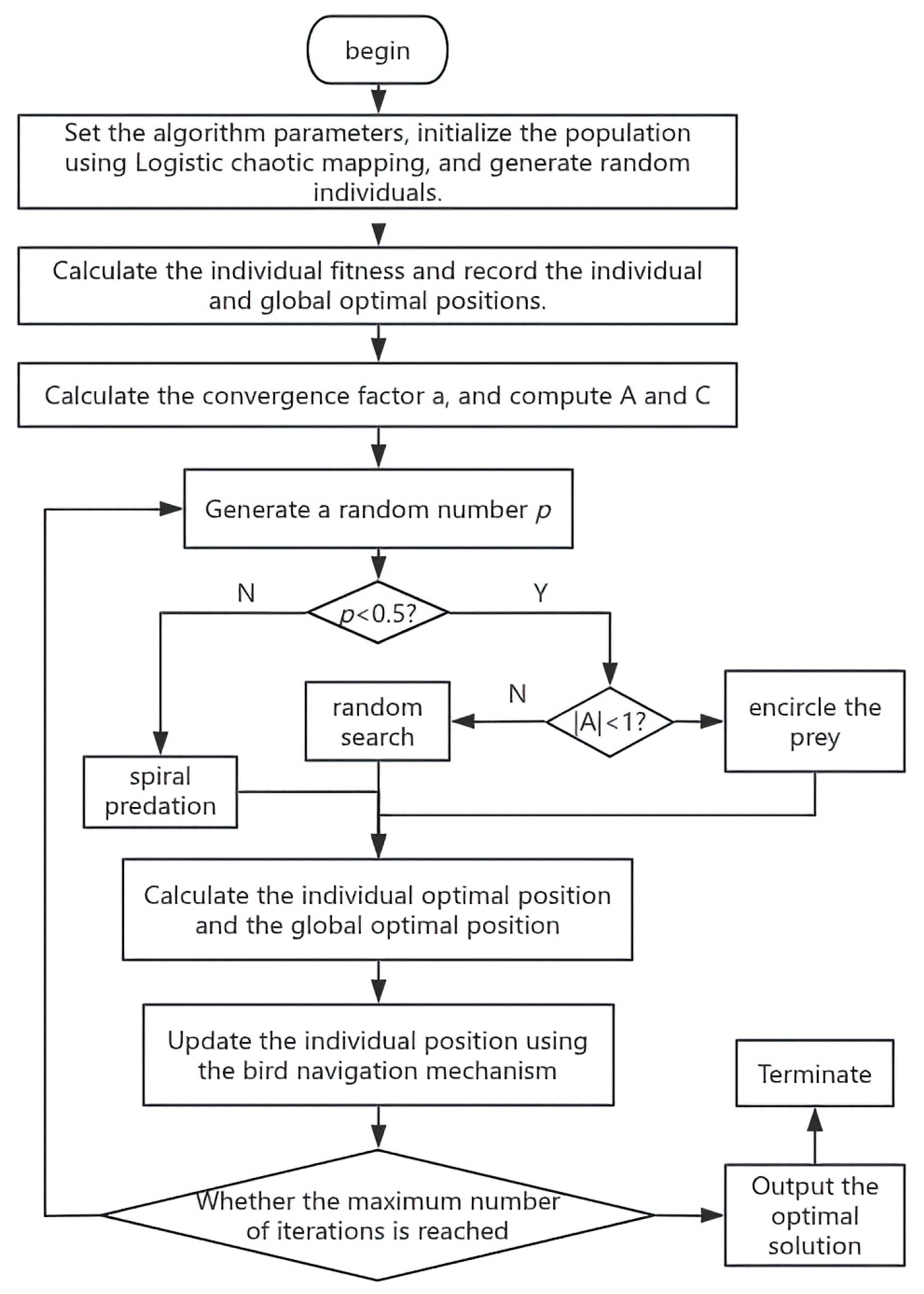
The flowchart of the improved whale optimization algorithm (IWOA) is shown in
Figure 2. The algorithm implementation steps are as follows:
Step 1: set the algorithm parameters, use logistic chaos mapping to initialize the population, and generate random individuals.
Step 2: calculate individual fitness, and record the individual and global optimal positions.
Step 3: calculate the convergence factor, vector coefficients and , and generate random number .
Step 4: calculate the fitness of the individual whale at the current position through the formula, and compare it with the individual fitness of the whale at the previous moment. If the individual fitness at the current position is better than the original position, update the optimal individual position to the global optimal position.
Step 5: randomly select several individuals from all whale populations as partners of a single whale, and obtain the new individual position by calculating the average position of the surrounding partners and combining it with its own position.
Step 6: determine whether the algorithm reaches the maximum number of iterations. If the maximum number of iterations is not reached, return to Step 3; if the maximum number of iterations is reached, the optimal solution is output.
4. Performance Test of the Improved Whale Optimization Algorithm
Five test functions from the cec2005 test function set were selected, MATLAB R2024a was used to test the performance of IWOA, and comparative analysis was conducted with the traditional whale optimization algorithm (WOA), the algorithm in Ref. [
15] (MSWOA), and the genetic algorithm (GA). The mathematical expression and optimal value of the test function are shown in
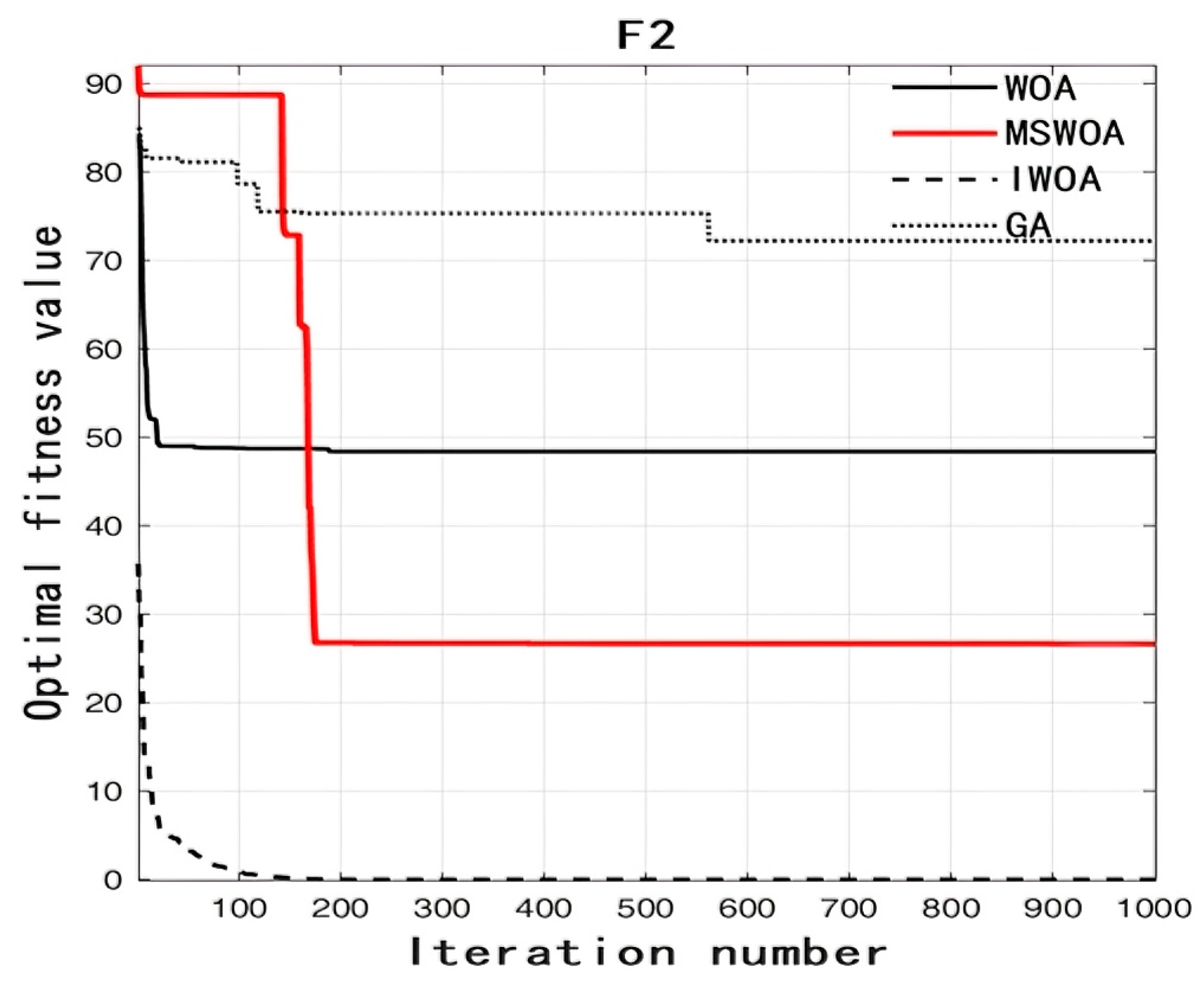
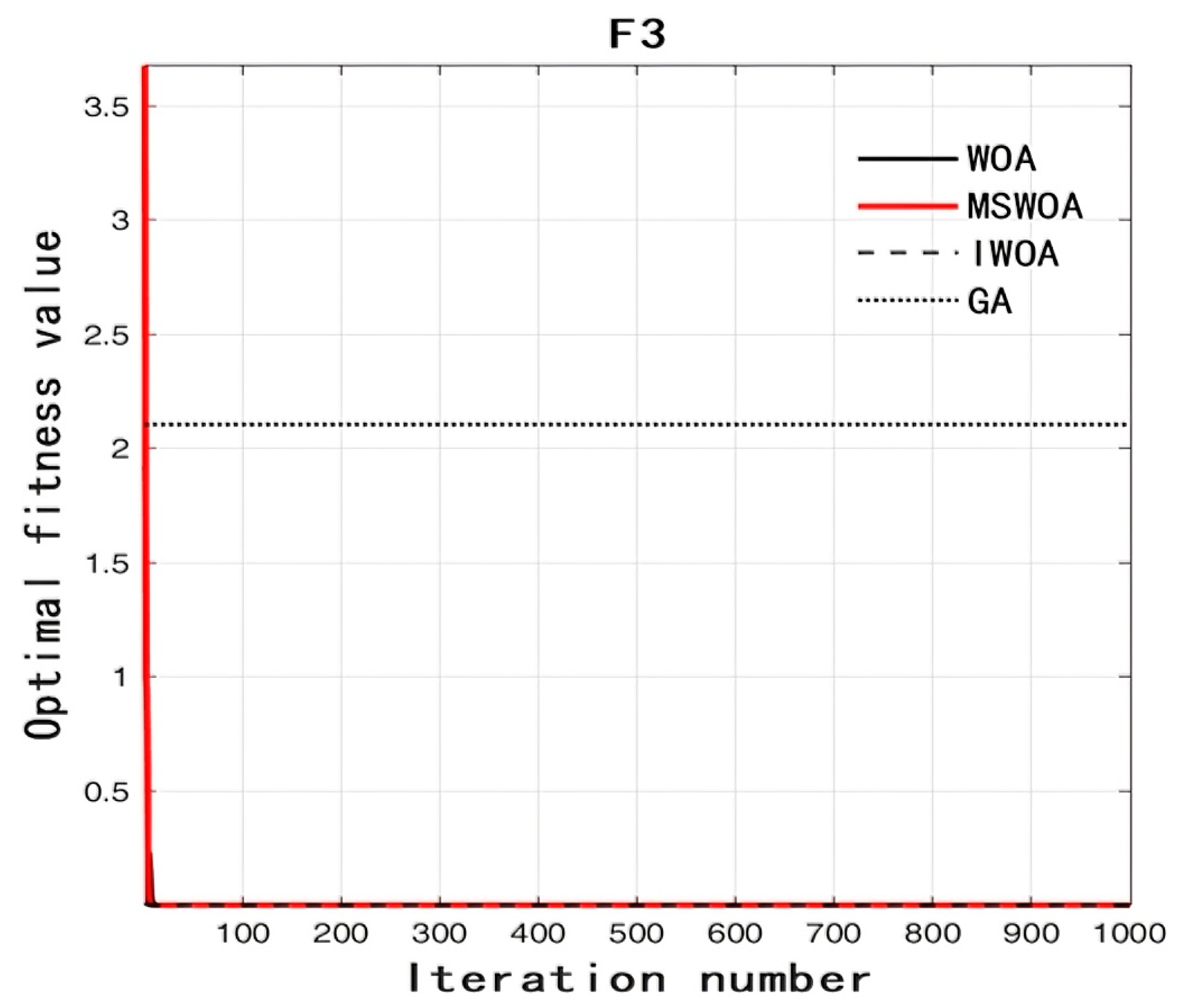
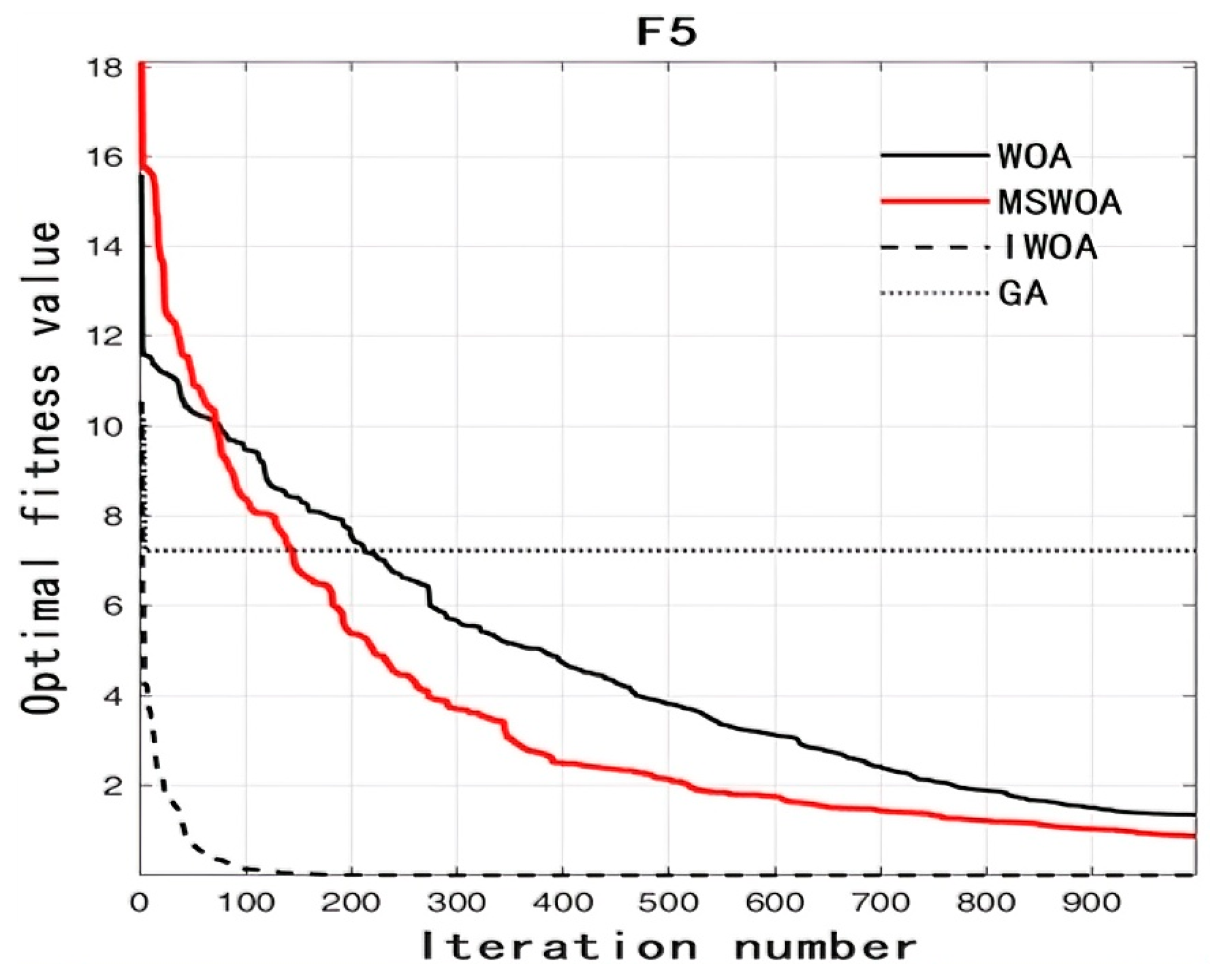
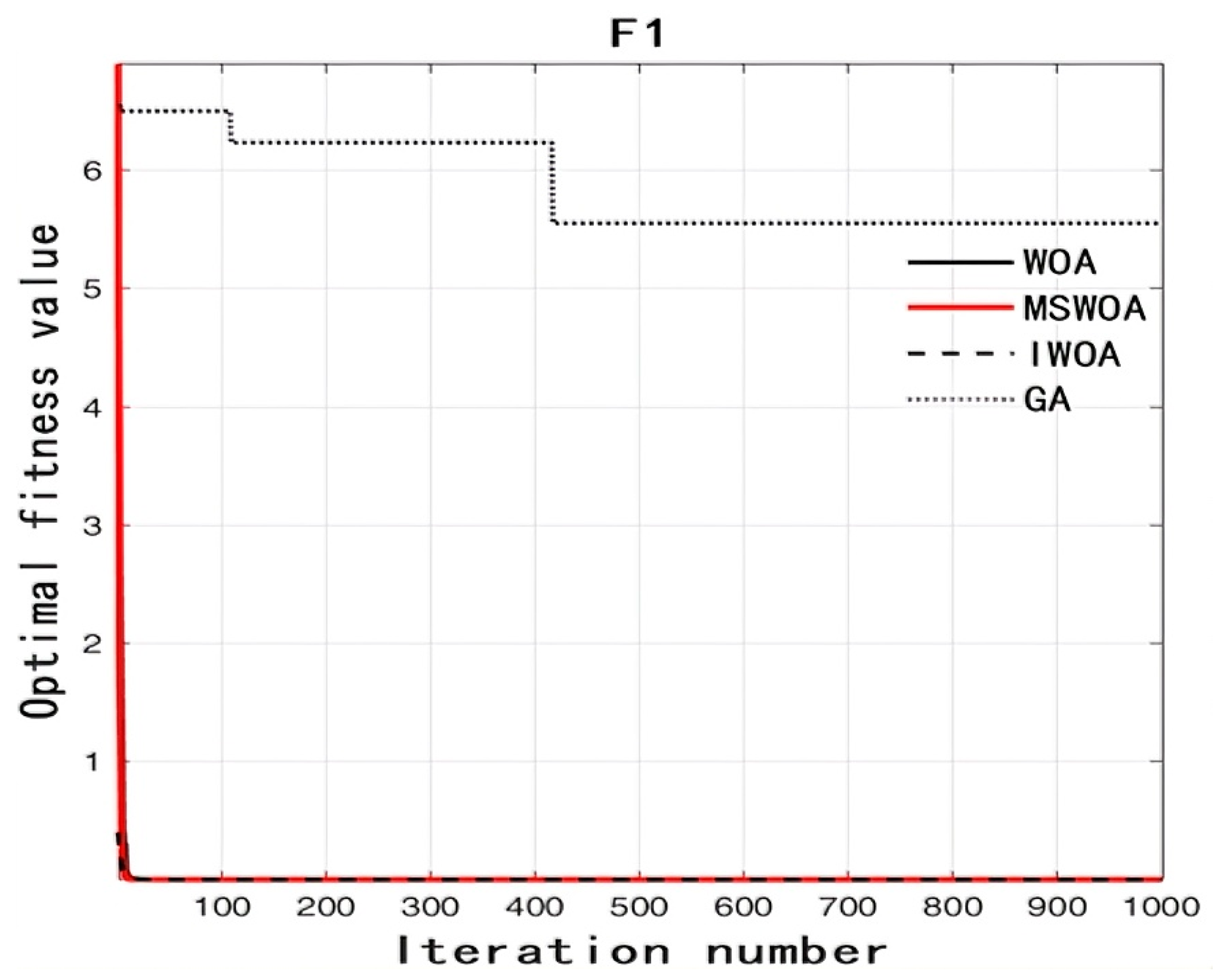
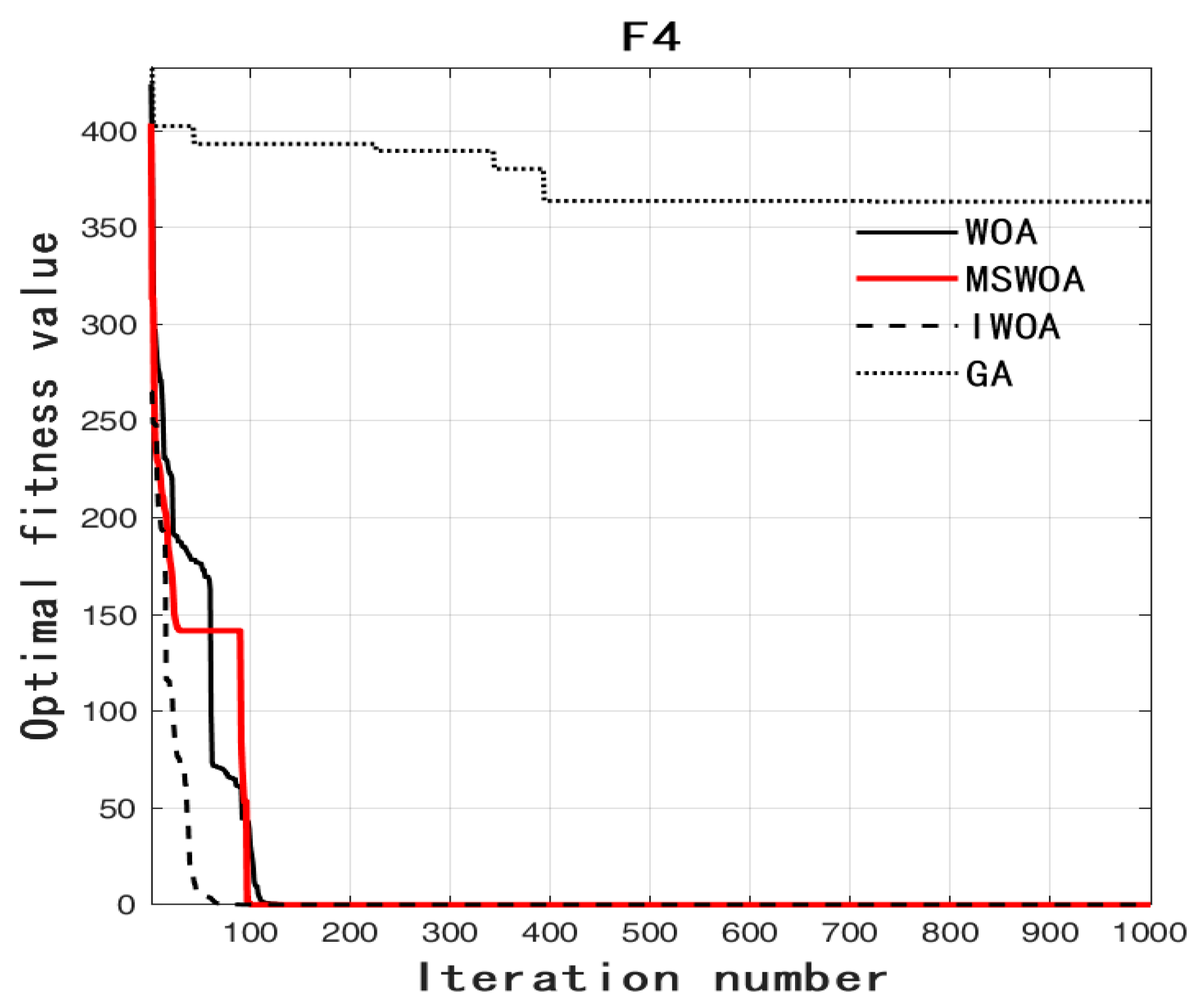
Table 1. In this table, F1 is the sphere function, F2 is Schwefel’s problem 2.21, F3 is the Rosenbrock function, F4 is the Rastrigin function, and F5 is the Griewank function. In this test, the number of algorithm populations is 30, the dimension is 30, the number of tests is 10, and the maximum number of iterations is 1000. The test results are shown in
Table 2, and the fitness and iteration number curve is shown in
Figure 3,
Figure 4,
Figure 5,
Figure 6 and
Figure 7.
As can be seen from
Figure 3,
Figure 4,
Figure 5,
Figure 6 and
Figure 7, no matter which test function it is, the IWOA can basically find the optimal solution. In particular, when the test functions are F2, F4, and F5, the effect is more obvious. When the test functions are F2, F4, and F5, one can see that the IWOA can find the optimal solution at the early stage of iteration. From the average value shown in
Table 2, one can also see that the IWOA can find the optimal solution in every test, and its performance is stable. This shows that the IWOA uses adaptive spiral parameters to expand the search range in the early iteration so that the optimal solution is found faster; secondly, the IWOA makes its performance more stable by integrating the bird navigation mechanism.
6. Conclusions
This paper studies the core problems of the traditional whale optimization algorithm (WOA) in mobile robot path planning. These problems include slow convergence, insufficient accuracy, and the tendency to fall into local optima. To this end, an improved whale optimization algorithm that integrates bird navigation mechanism is proposed to improve the efficiency and quality of path planning.
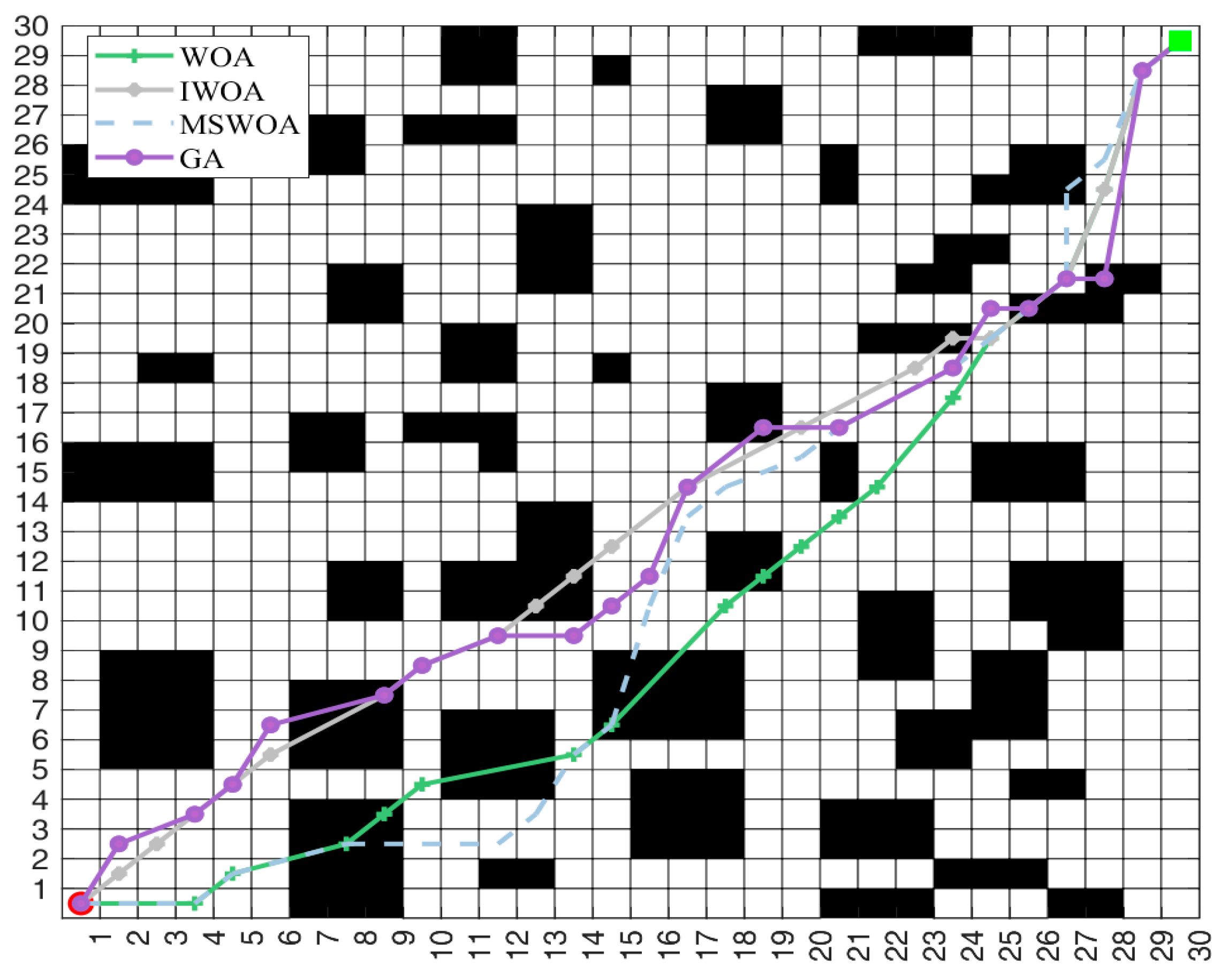
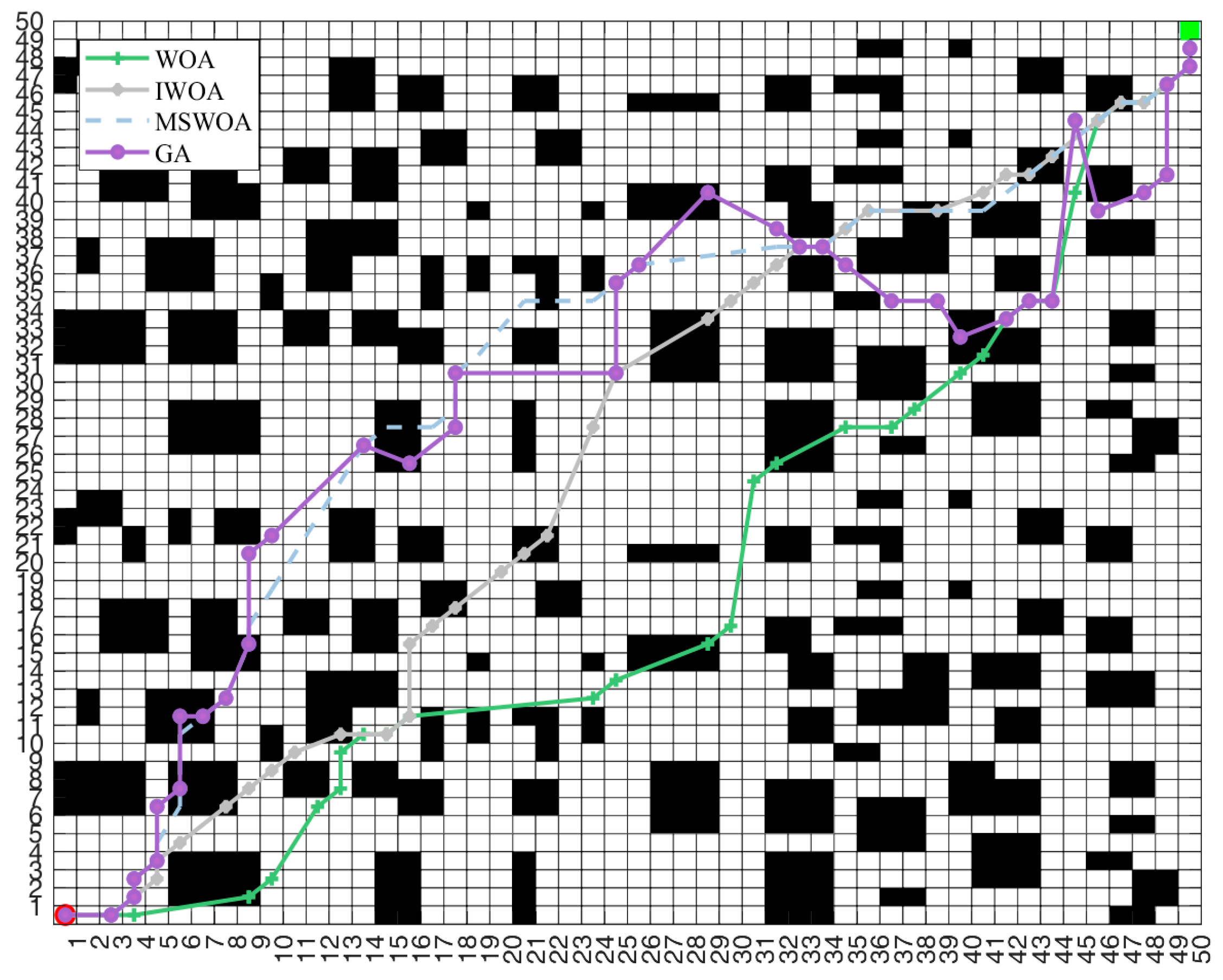
The main research methods focus on four aspects of improvement: using logistic chaos mapping to initialize the population to enhance the randomness and diversity of the initial solution; designing nonlinear convergence factors to prevent the algorithm from prematurely entering the shrinking surround stage and extending the global search time; introducing adaptive spiral shape constants to dynamically adjust the search range to balance exploration and development capabilities; integrating the bird navigation mechanism and optimizing individual update strategies through companion position information to improve algorithm stability and convergence speed. The performance was verified through five functions in the CEC2005 test function set, and path planning simulation experiments were carried out in two specifications of raster maps: 30 × 30 and 50 × 50. The improved whale optimization algorithm (IWOA) was compared with the traditional WOA, the algorithm found in the literature [
15] (MSWOA), and the genetic algorithm (GA) in multiple dimensions.
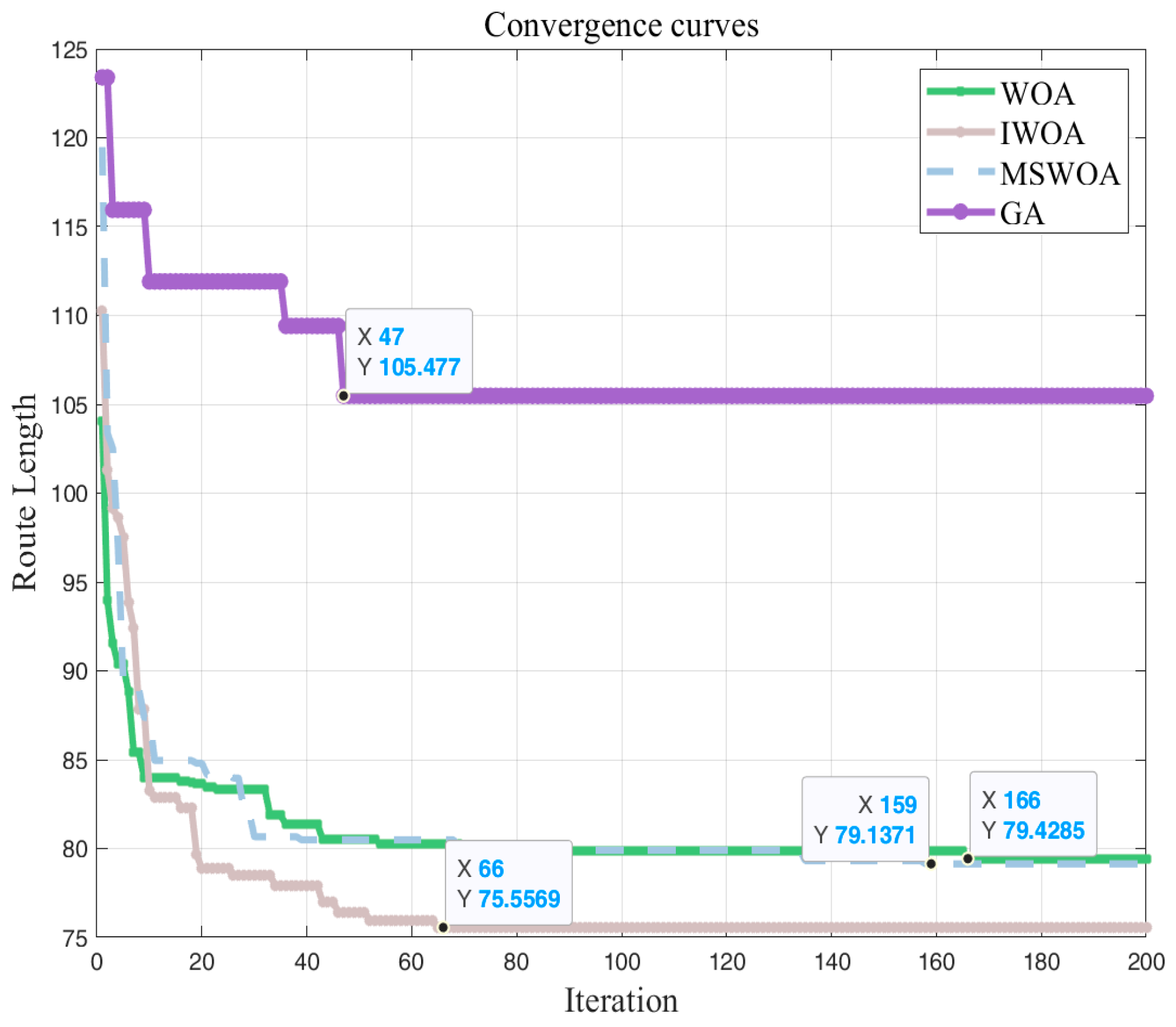
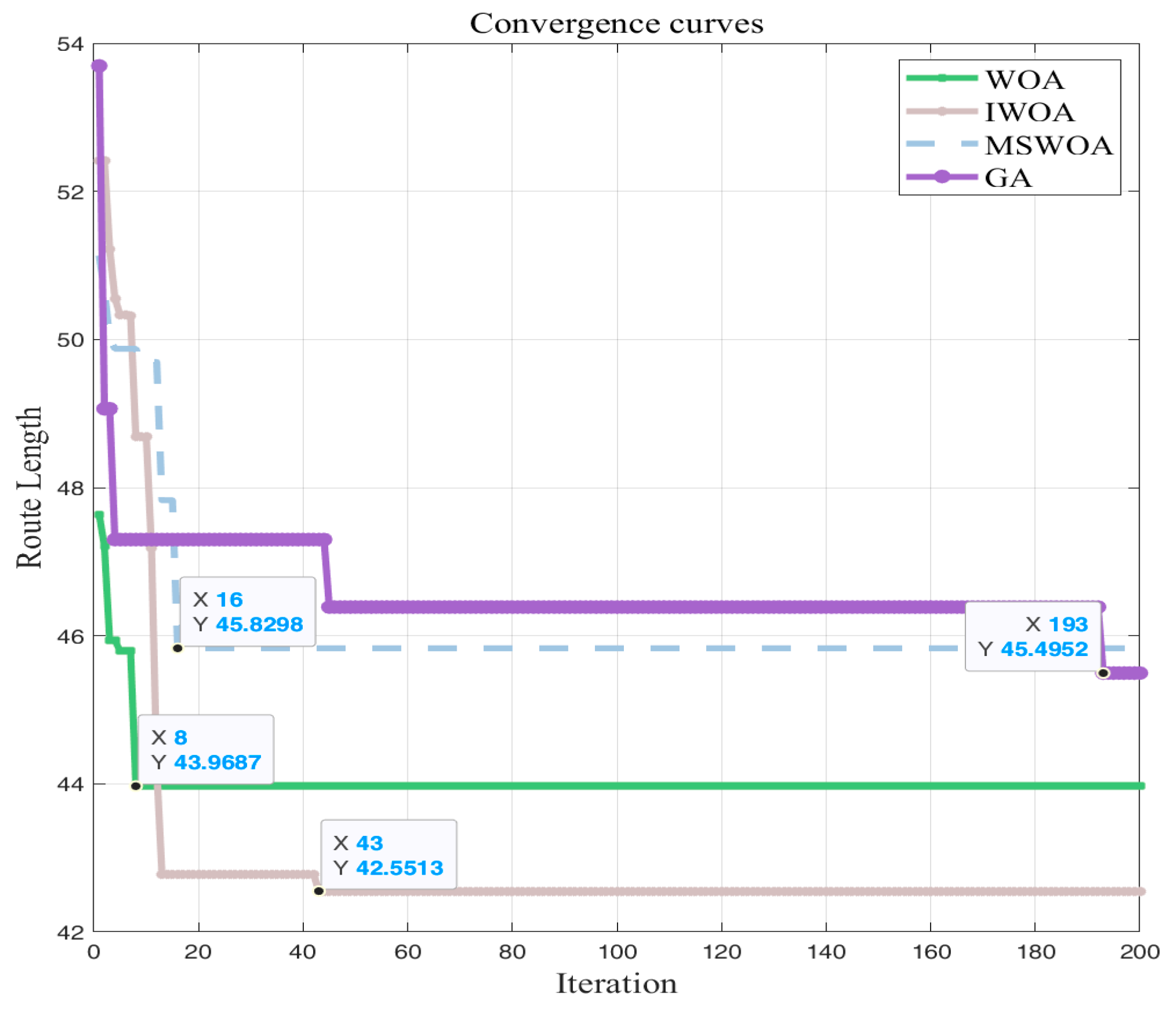
The research results indicate that the improved whale optimization algorithm (IWOA) exhibits outstanding performance in the performance tests. In relation to comparative algorithms, it can find a better optimal function value and demonstrates faster convergence speed and stronger stability. In the path planning application, the path length generated by the IWOA is significantly shortened. Specifically, in a 30 × 30 grid map, the path length of the IWOA is reduced by 3.23%, 7.16%, and 6.49%, respectively, compared with that of the whale optimization algorithm (WOA), modified shuffled whale optimization algorithm (MSWOA), and genetic algorithm (GA). In a 50 × 50 grid map, the corresponding reductions are 4.88%, 4.53%, and 28.37%. At the same time, it has obvious advantages in controlling the number of inflection points, which verifies the significant superiority of the algorithm in path planning accuracy and efficiency.
Although the IWOA has achieved good results, there are still certain research gaps: first, the algorithm’s path planning adaptability in dynamic environments (such as obstacle movement, new obstacles) has not been verified, and the real-time response capability of complex dynamic scenes needs to be further explored; second, the current research does not consider the verification of mobile robots on real benchmark robot platforms or standard test sets and has not been applied to real robots; third, for larger-scale raster maps or multi-robot collaborative path planning scenarios, there is still room for improvement in the computational complexity and resource consumption optimization of the algorithm. Future research can conduct in-depth exploration in dynamic environment modeling, robot real-vehicle testing, large-scale scenarios, multi-robot collaborative adaptation, etc., to further expand the practical application scope and practical value of the algorithm.