
Impact of Coal Mining on Growth and Distribution of Sabina vulgaris Shrublands in Mu Us Sandy Land: Evidence from Multi-Temporal Gaofen-1 Remote Sensing Data
Abstract
1. Introduction
2. Research Method
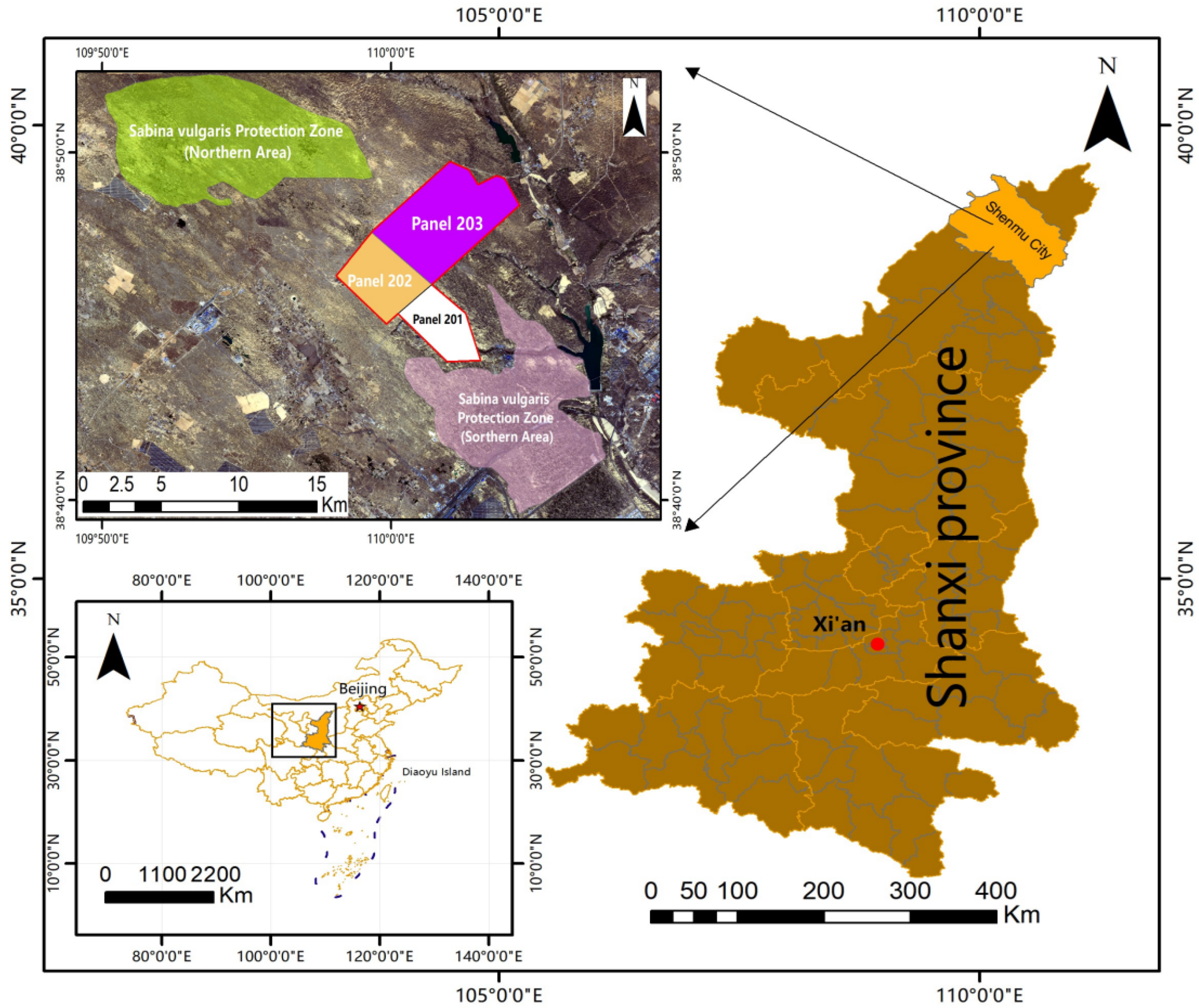
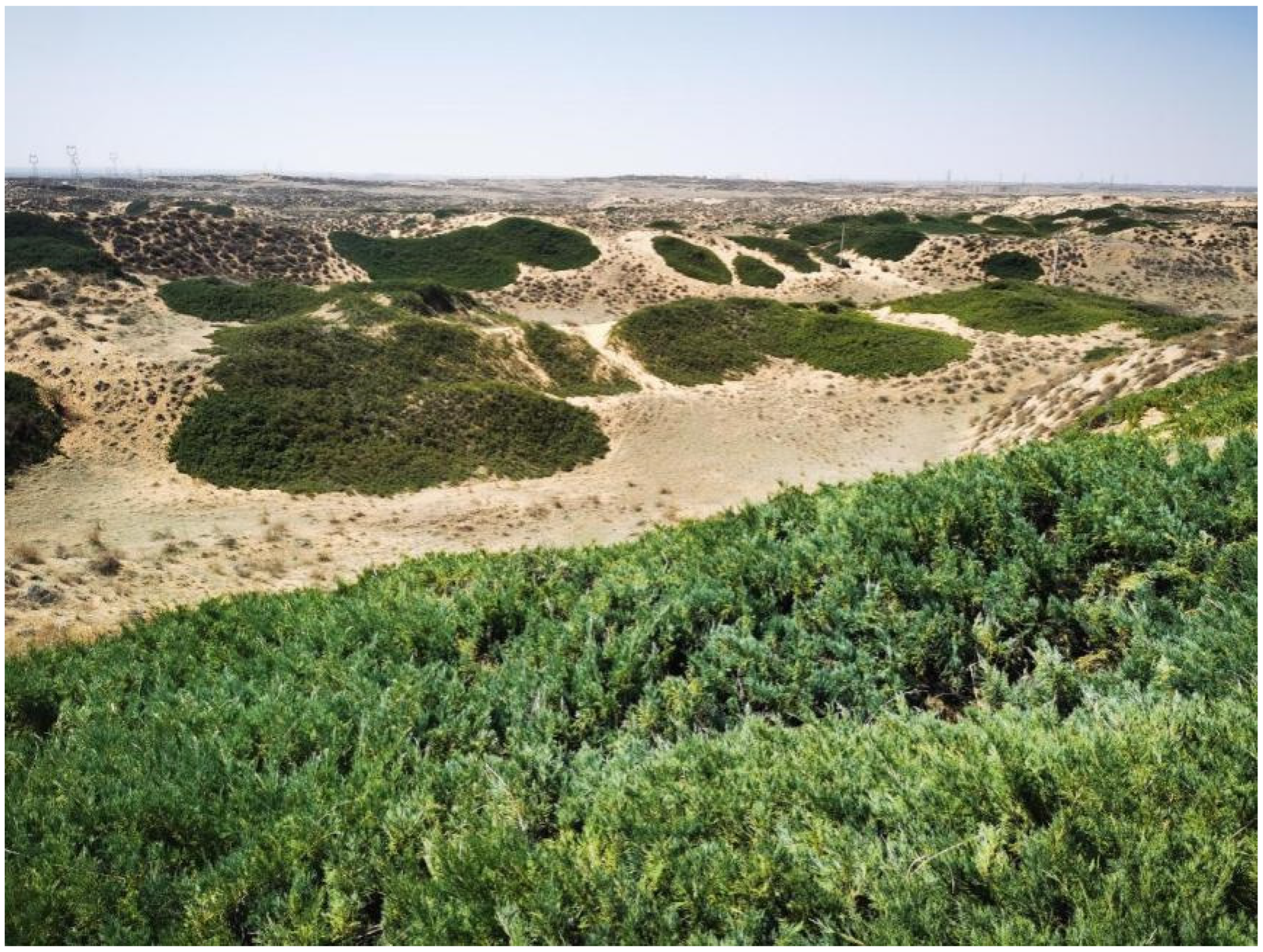
2.1. Overview of the Study Area
2.2. Data Source
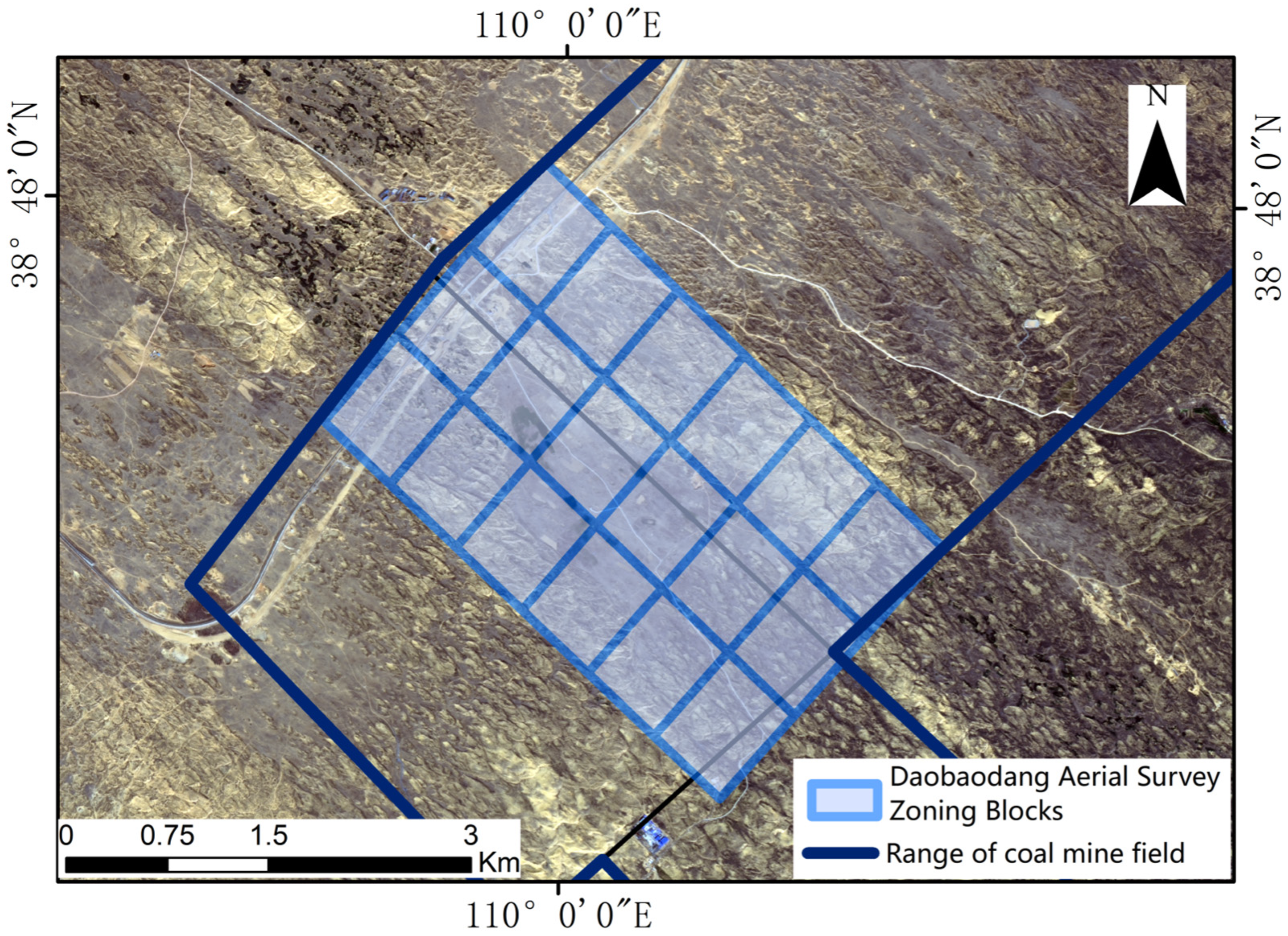
2.2.1. UAV Data Acquisition
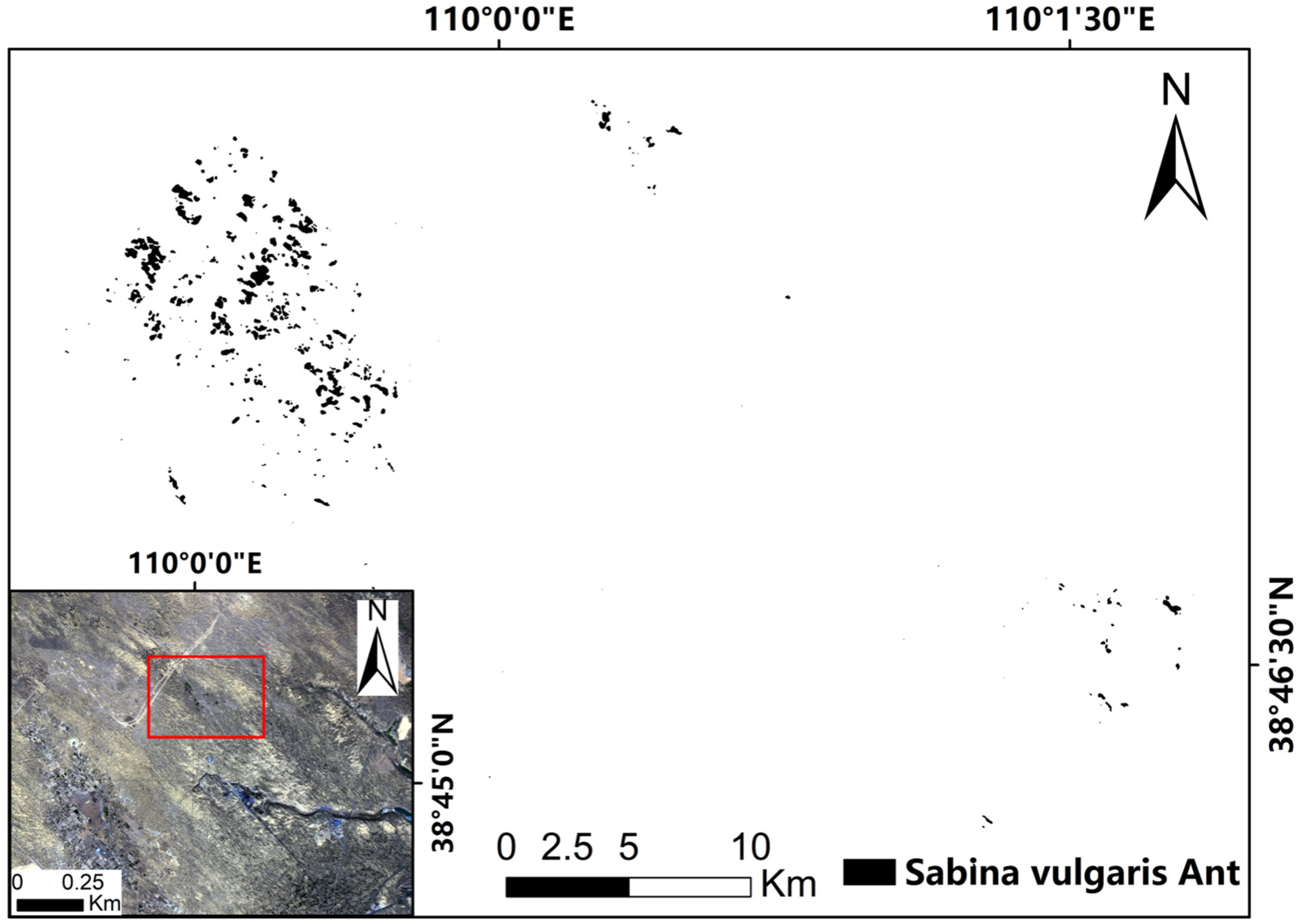
2.2.2. Ground Truth Interpretation
2.3. Identification Method
2.3.1. Data Preprocessing
- (1)
- The Mining Impact Zone, specifically mining blocks 202 and 203, whose boundaries correspond precisely to the projected underground working face areas delineated in the mine development design plans.
- (2)
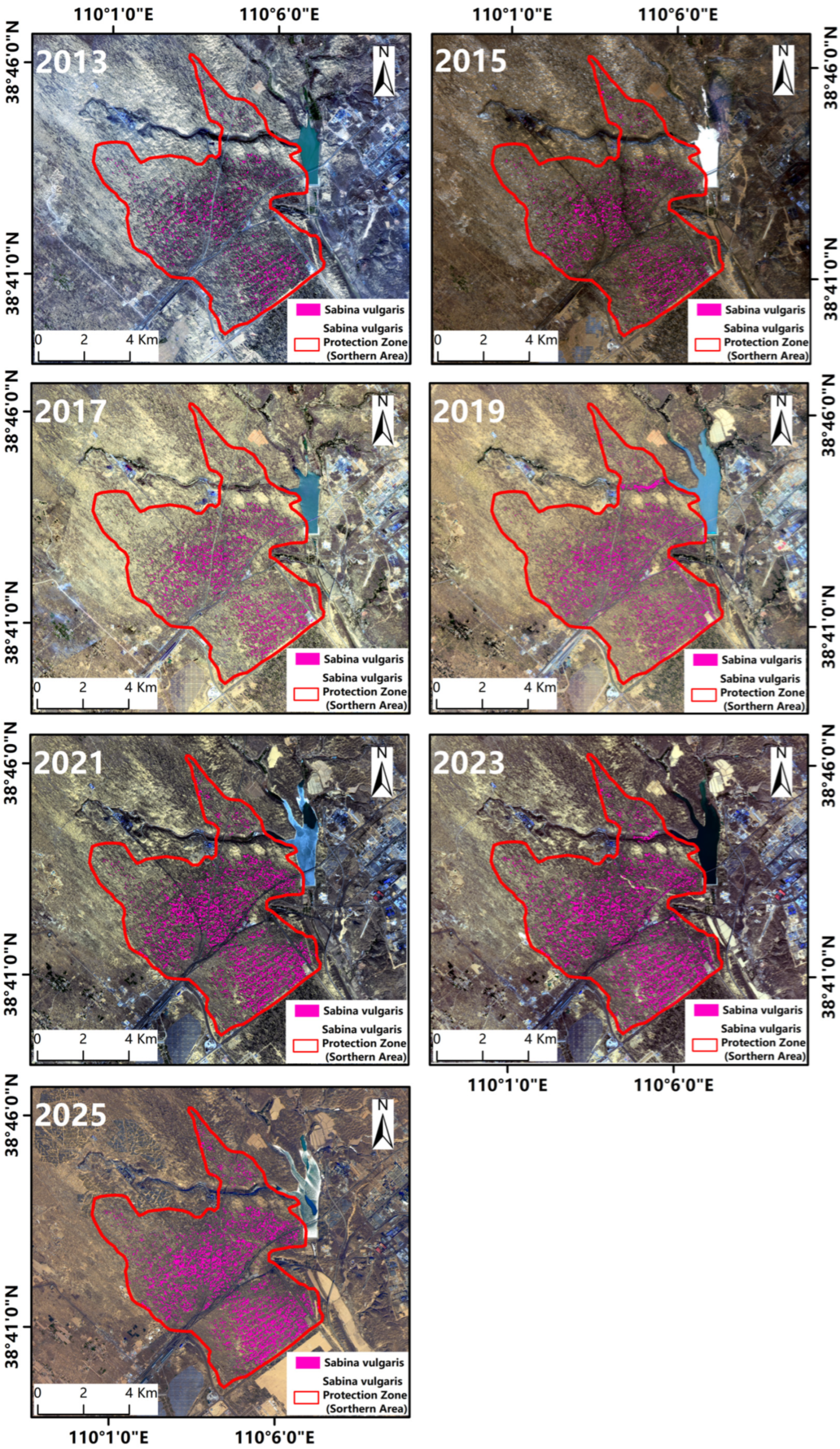
- The non-mining control areas, the northern and southern sections of the Fork Juniper Nature Reserve. These areas are highly similar to the mining zone in terms of landform, soil and historical baseline vegetation, yet remain exempt from direct disturbance by underground mining due to legal prohibitions. By comparing regional geological maps, digital elevation models and historical land use data, we confirmed that, beyond mining, these areas experienced no significant anthropogenic disturbances (such as large-scale construction or land cover changes) during the study period (2013–2025) and generally exhibit gentle slopes (<5°). The study employed Gaofen-1 imagery from 2013 as the baseline for vegetation cover in all areas to ensure comparability of pre-mining conditions.
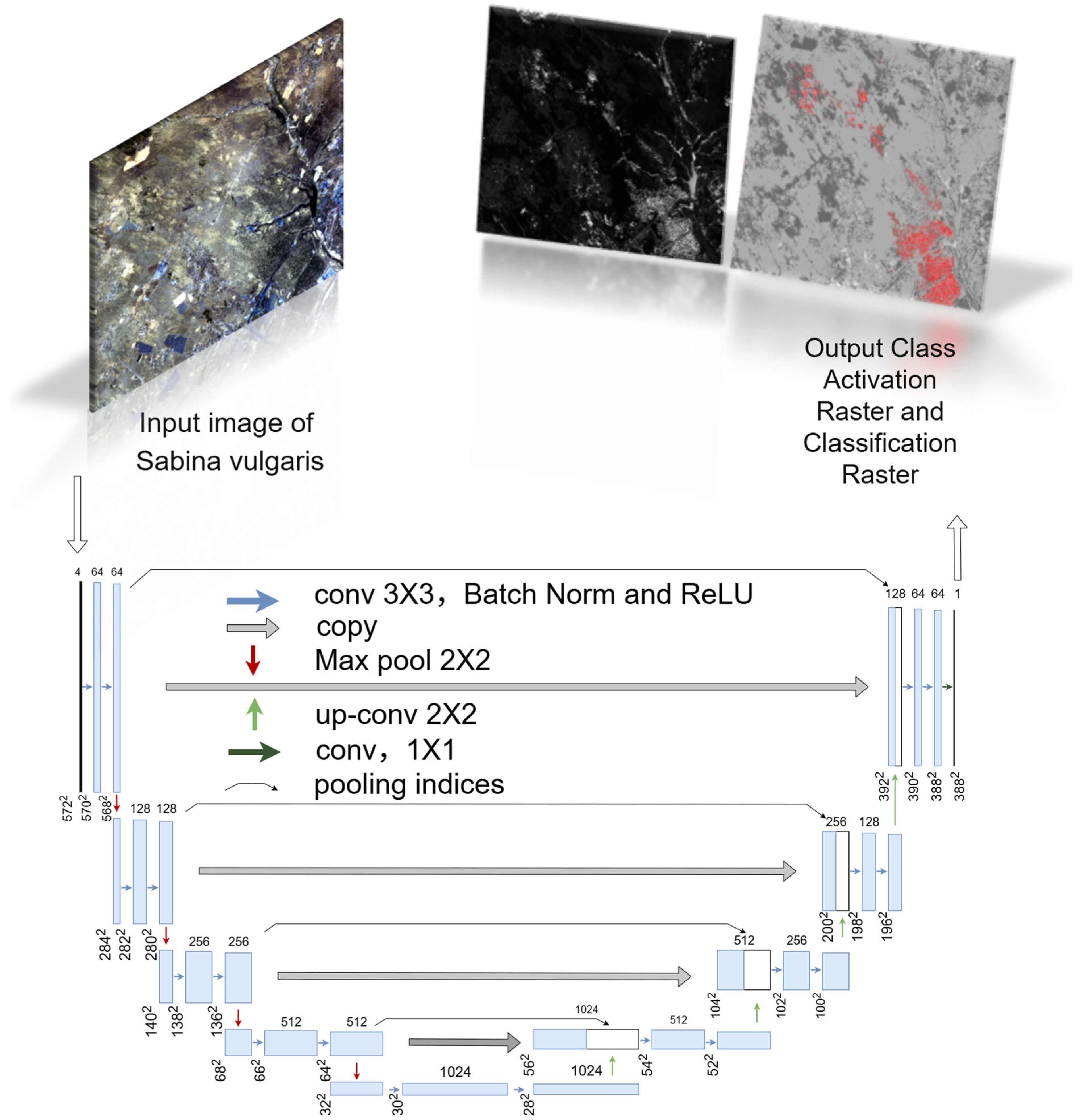
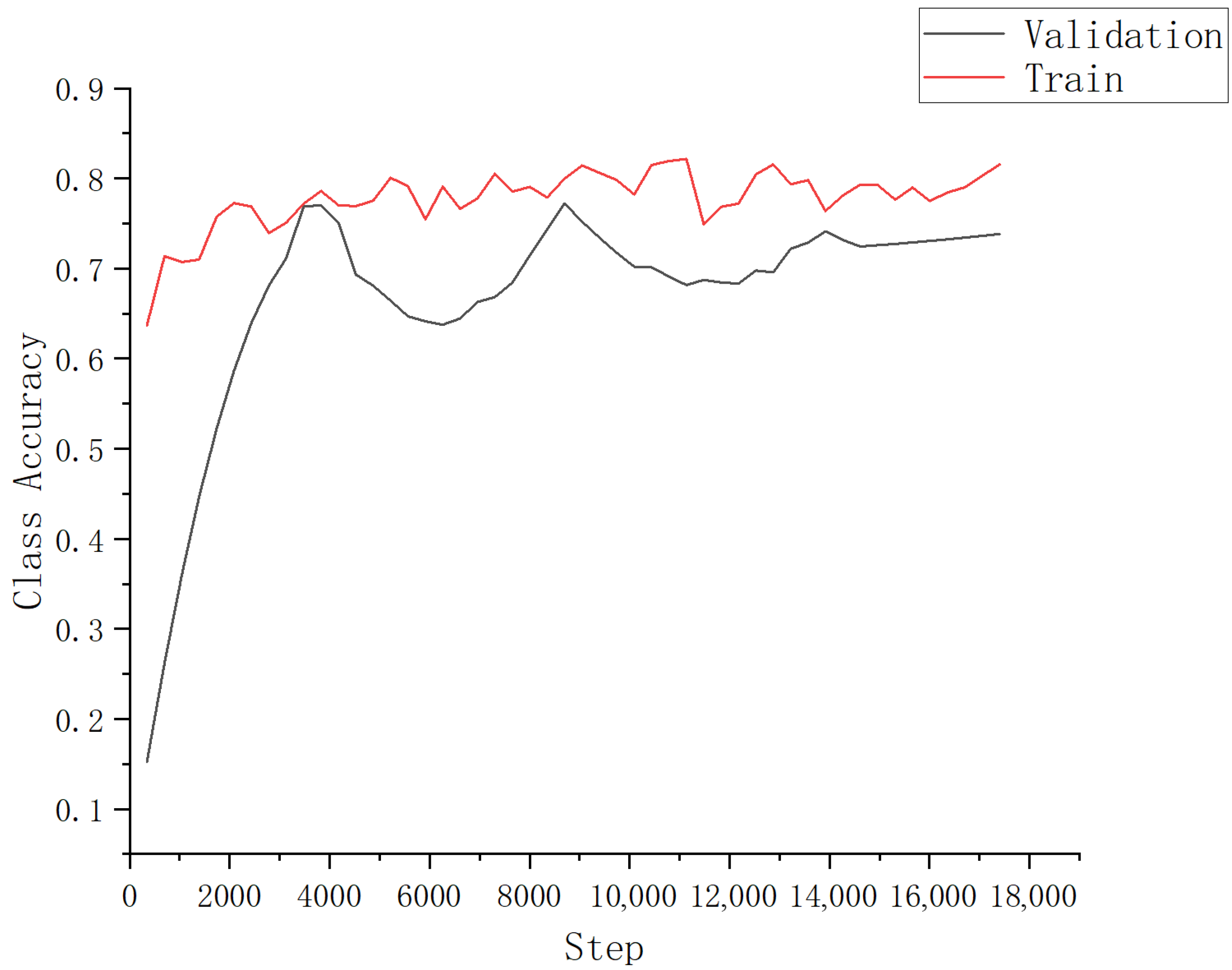
2.3.2. Seg U-Net Model
2.3.3. Data Processing
2.4. Classification Accuracy Assessment
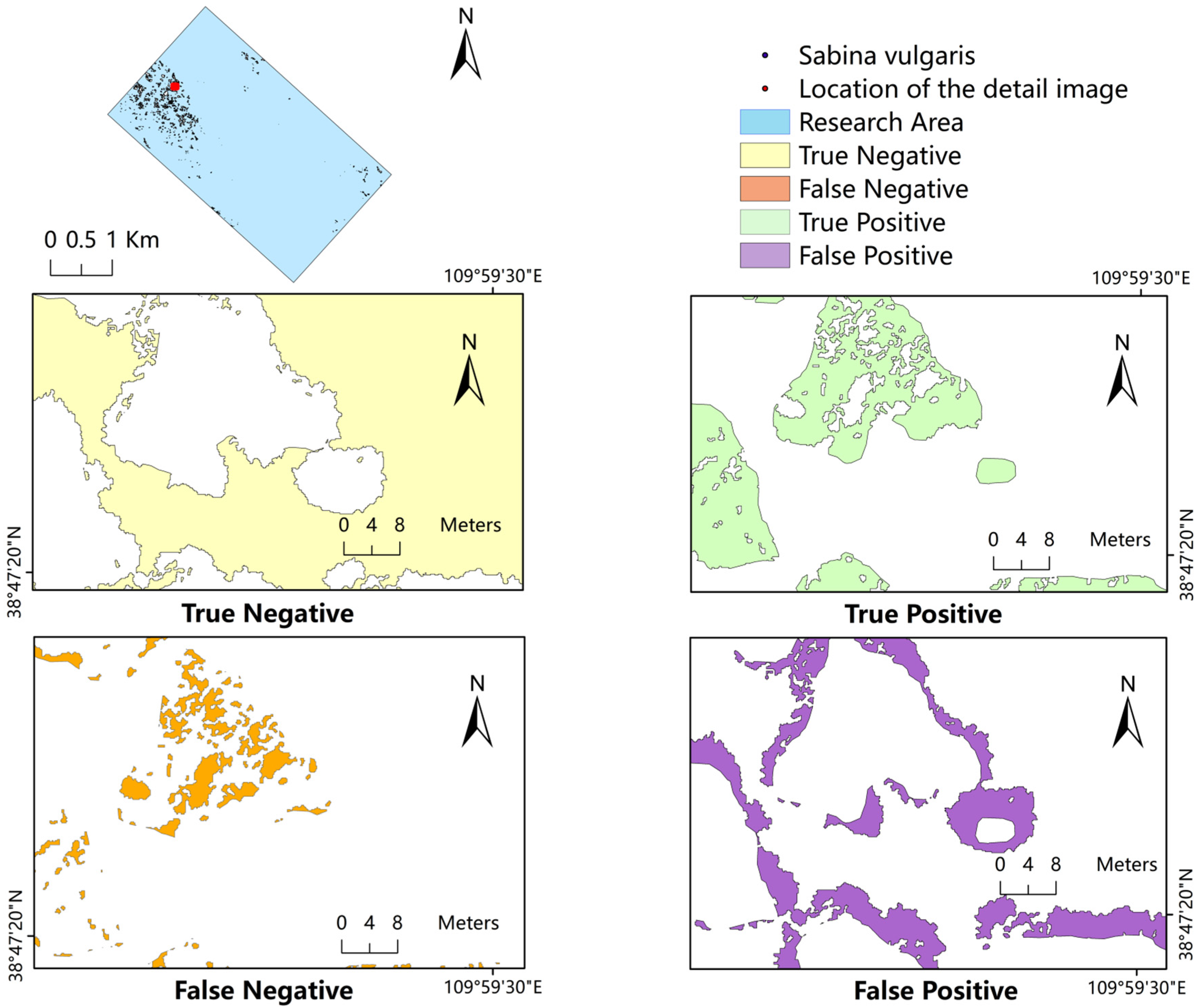
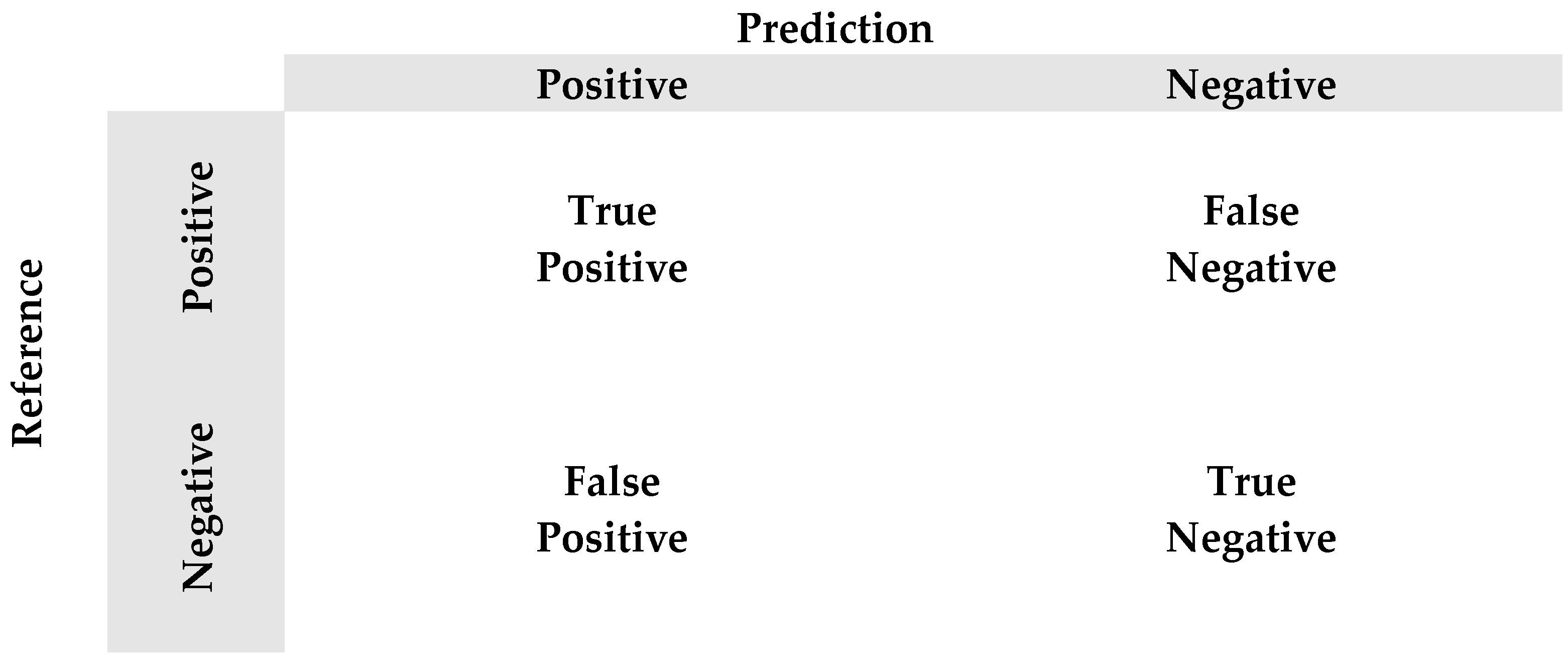
2.4.1. Confusion Matrix
2.4.2. Assessment Index
- (1)
- Kappa Index
- K—Classification agreement (Kappa coefficient);
- Po—Overall classification accuracy;
- Pe—Expected classification accuracy (chance agreement);
- Ti—Number of correctly classified samples;
- C—Number of classes;
- n—Total sample size.
- (2)
- Precision
- (3)
- Recall
- (4)
- F1
- (5)
- Confidence interval
3. Results
3.1. The Spatiotemporal Distribution of S. vulgaris in Coal Mining Areas
3.1.1. The Spatiotemporal Distribution of S. vulgaris in Panel 202
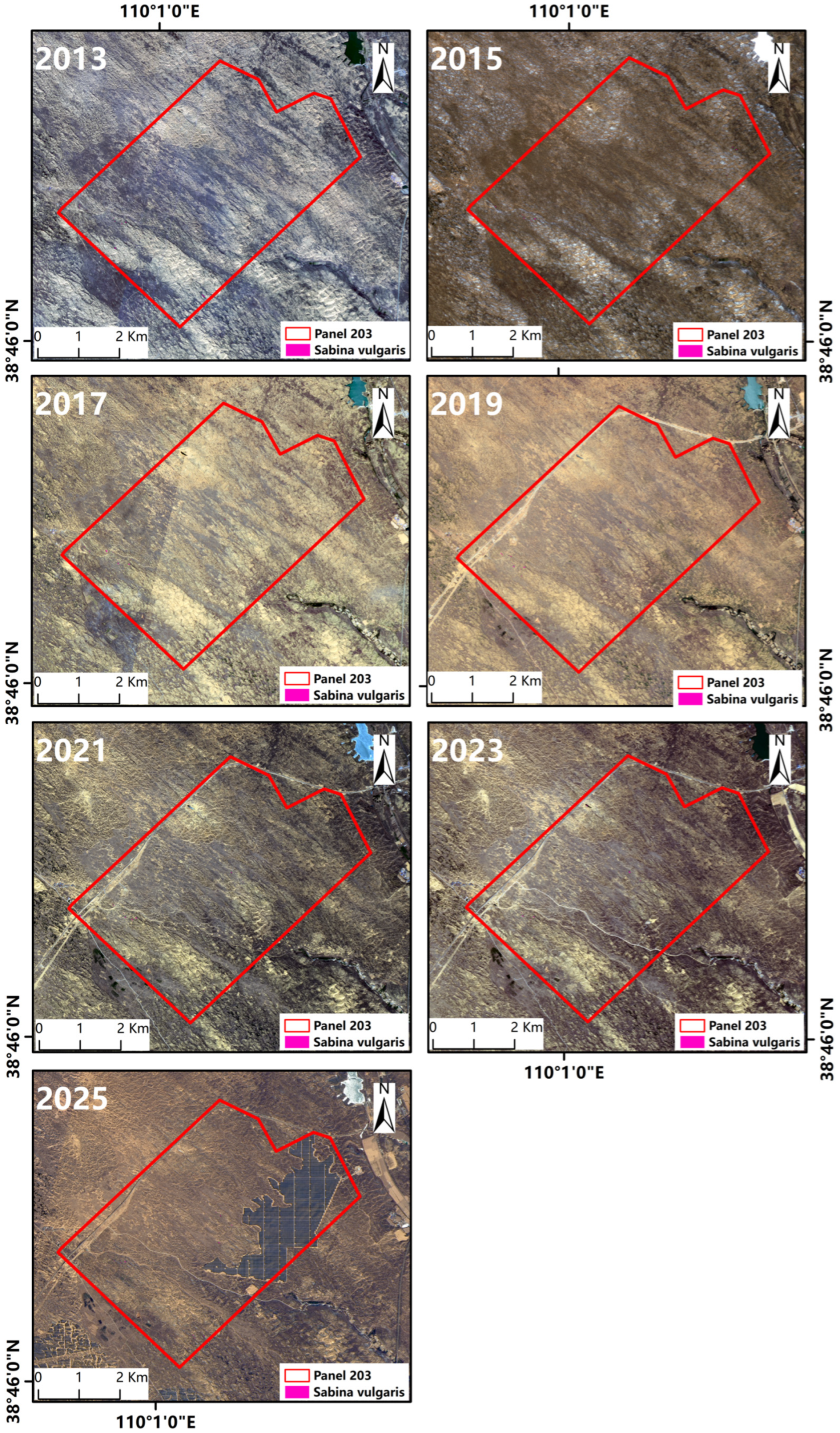
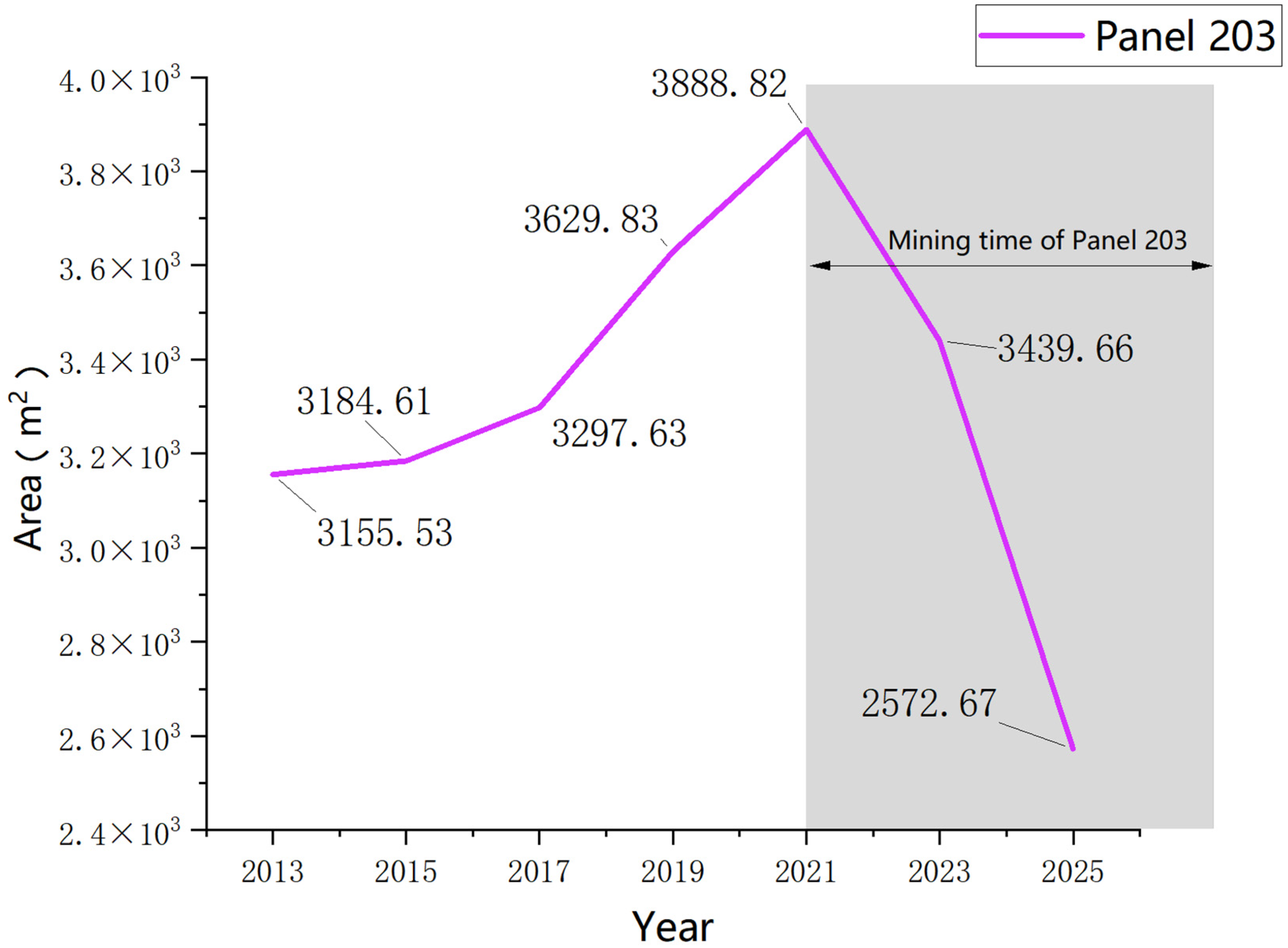
3.1.2. The Spatiotemporal Distribution of S. vulgaris in Panel 203
3.2. The Spatiotemporal Distribution of S. vulgaris in the Protection Zone
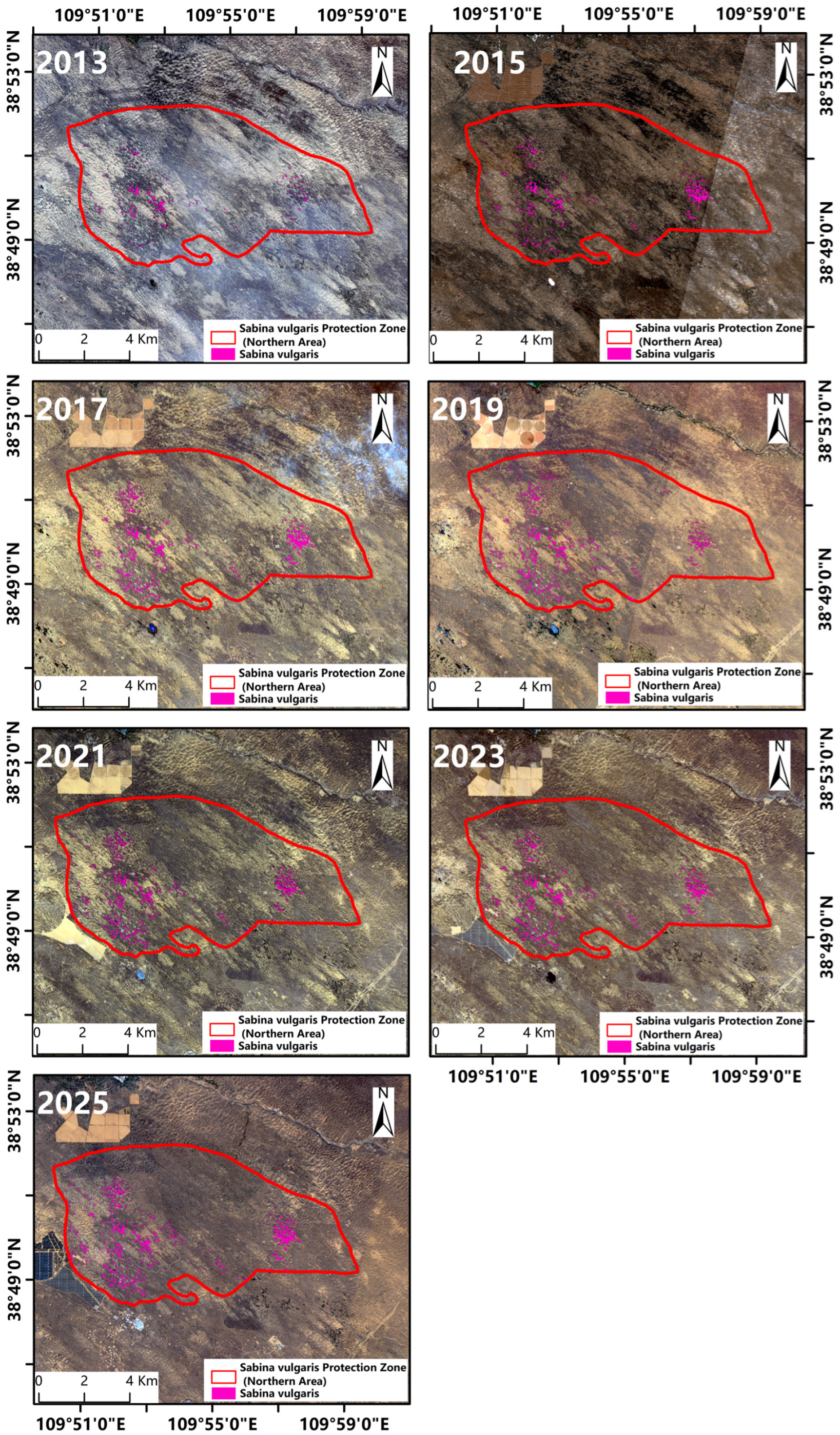
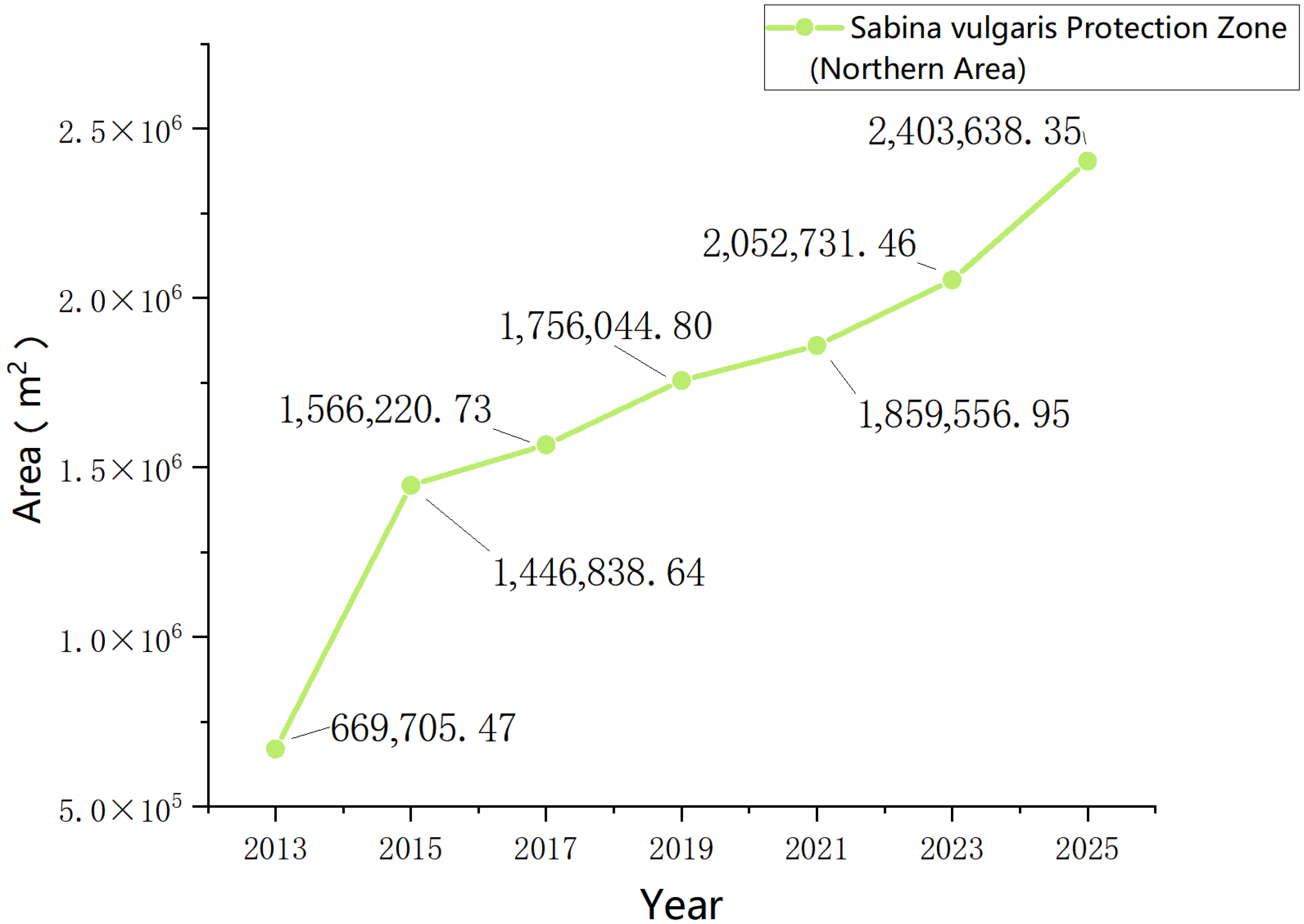
3.2.1. The North Area of S. vulgaris Protection Zone
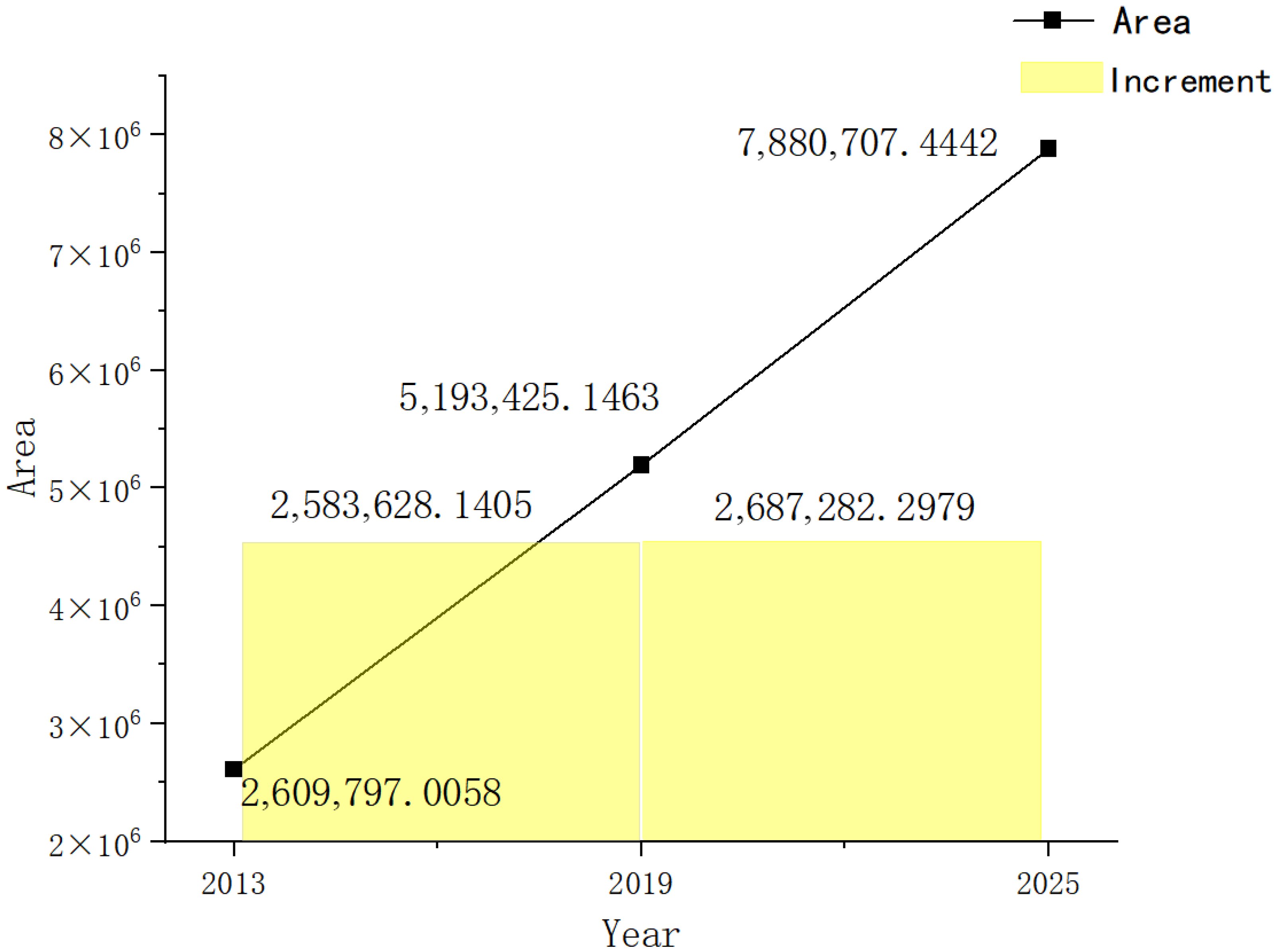
3.2.2. The South Area of the S. vulgaris Protection Zone
3.3. Classification Result Reliability
- (1)
- Overall classification accuracy (Po) = 0.99;
- (2)
- Expected classification accuracy (Pe) = 0.98;
- (3)
- Kappa coefficient = 0.66;
- (4)
- For positive examples (Juniperus sibirica), precision (P) = 0.61 and recall (R) = 0.74;
- (5)
- For negative examples (non-Juniperus sibirica), precision (P) = 0.99 and recall (R) = 0.99.
- (6)
- The F1 score is the harmonic mean of precision and recall for the positive class, calculated as 0.668.
- (7)
- The 95% confidence interval for the total area of the fork-branched juniper was calculated to be [83,126.88; 84,256.32] m2, which encompasses the estimated area of 83,691.60 m2.
3.4. Sensitivity Analysis of Seasonal Variations
4. Discussion
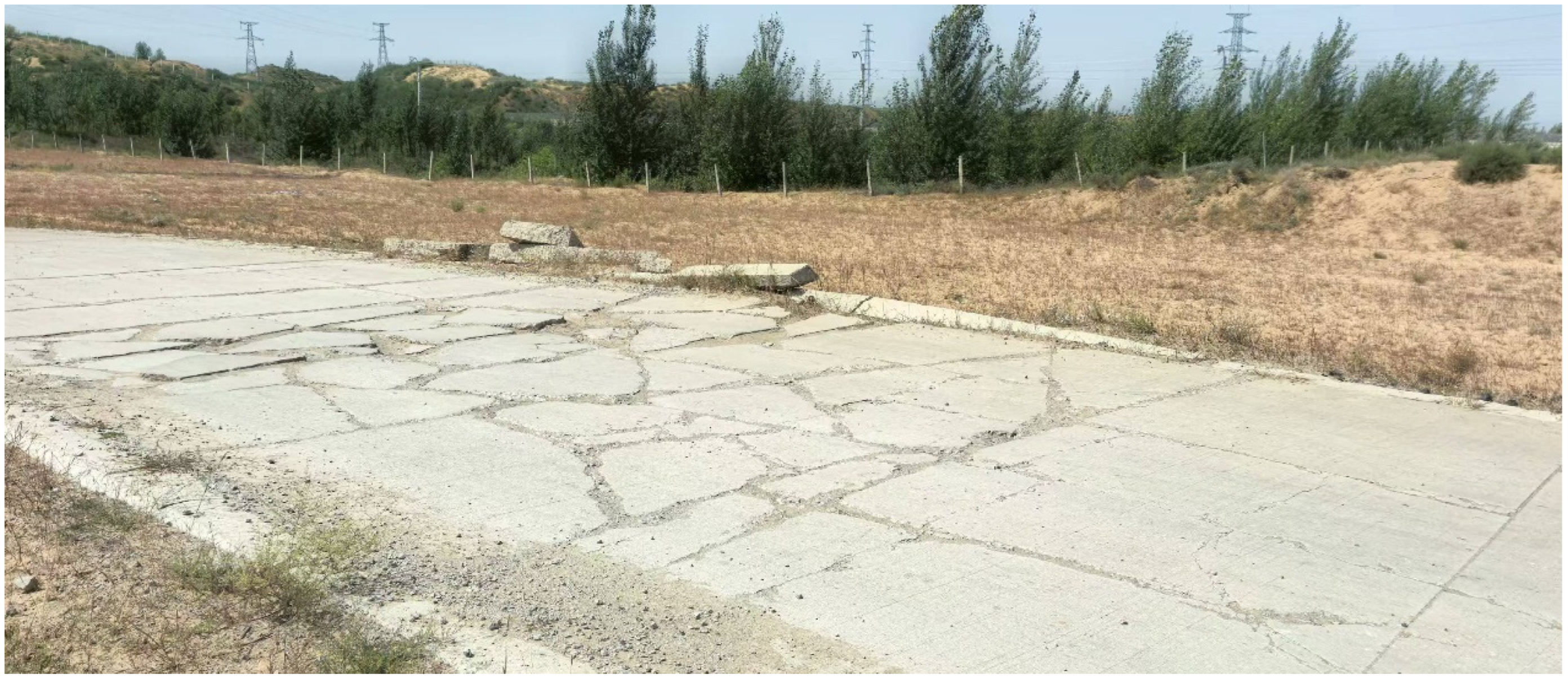
4.1. The Impact of Coal Mining on the Growth of S. vulgaris Shrublands
4.2. Protection of S. vulgaris Natural Forests Promotes Growth of S. vulgaris
4.3. The Importance of Multi-Temporal High-Resolution Remote Sensing and UAV Remote Sensing in Monitoring S. vulgaris Shrub Growth in Coal Mining Areas
5. Conclusions
- (1)
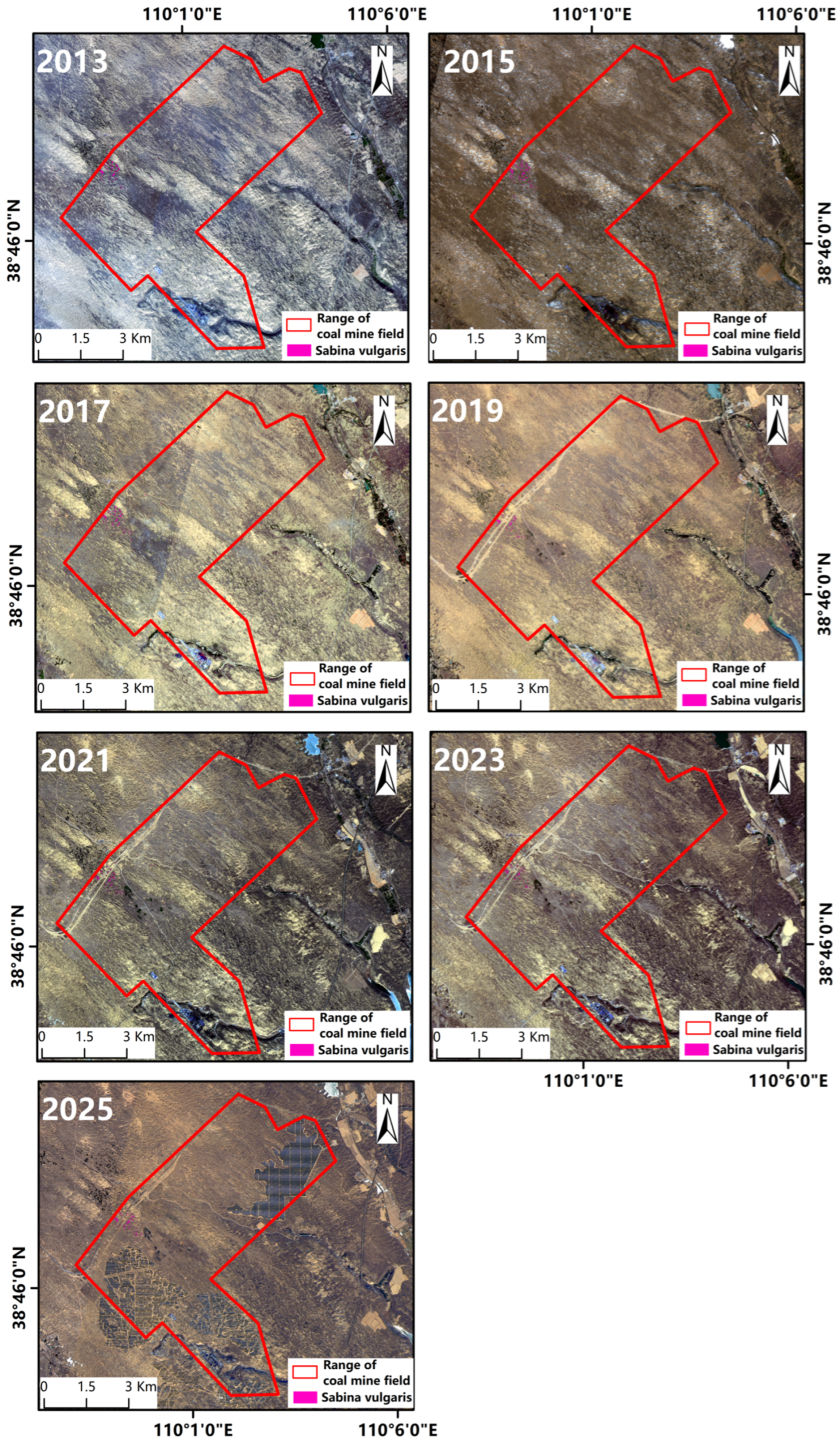
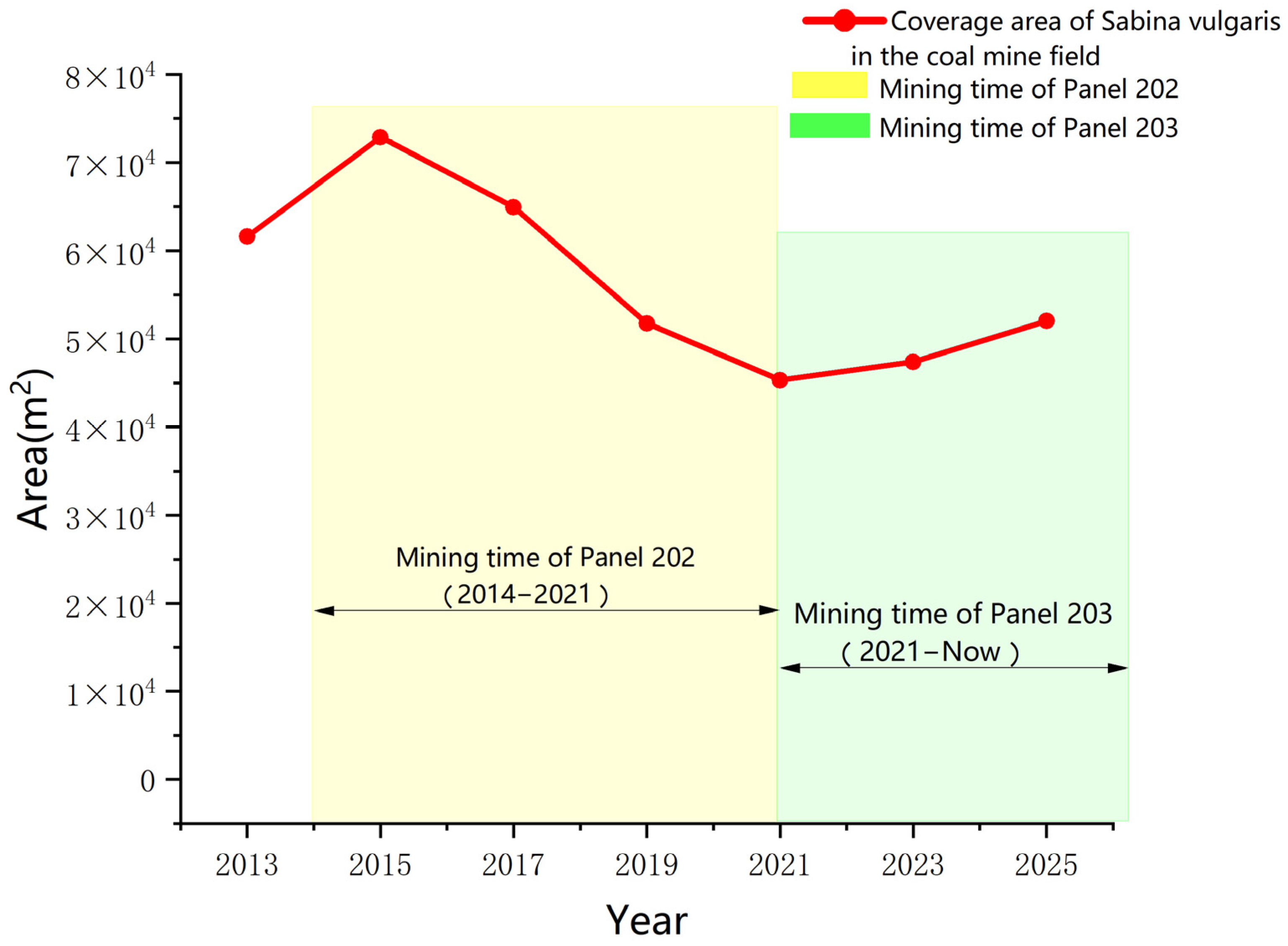
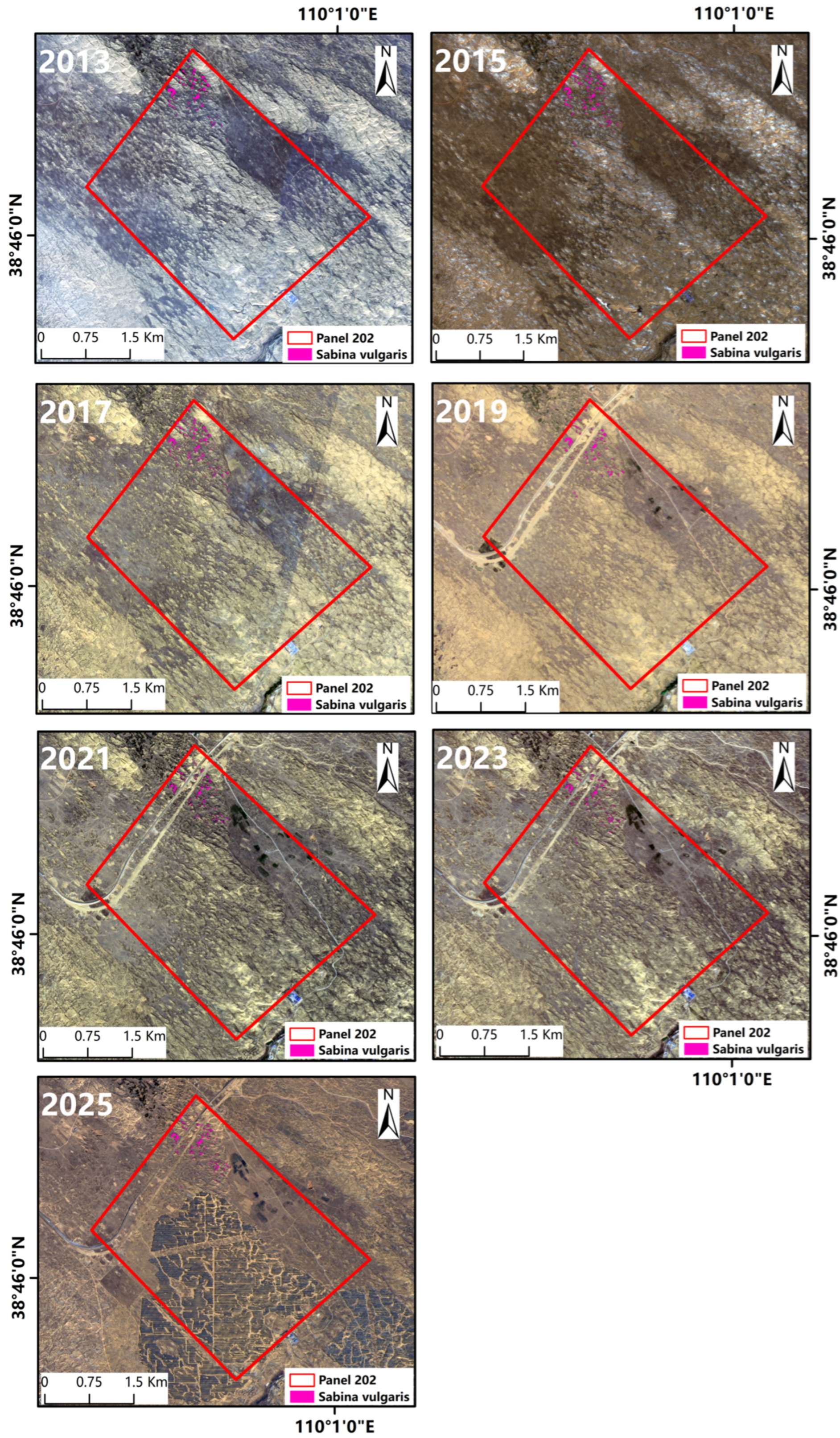
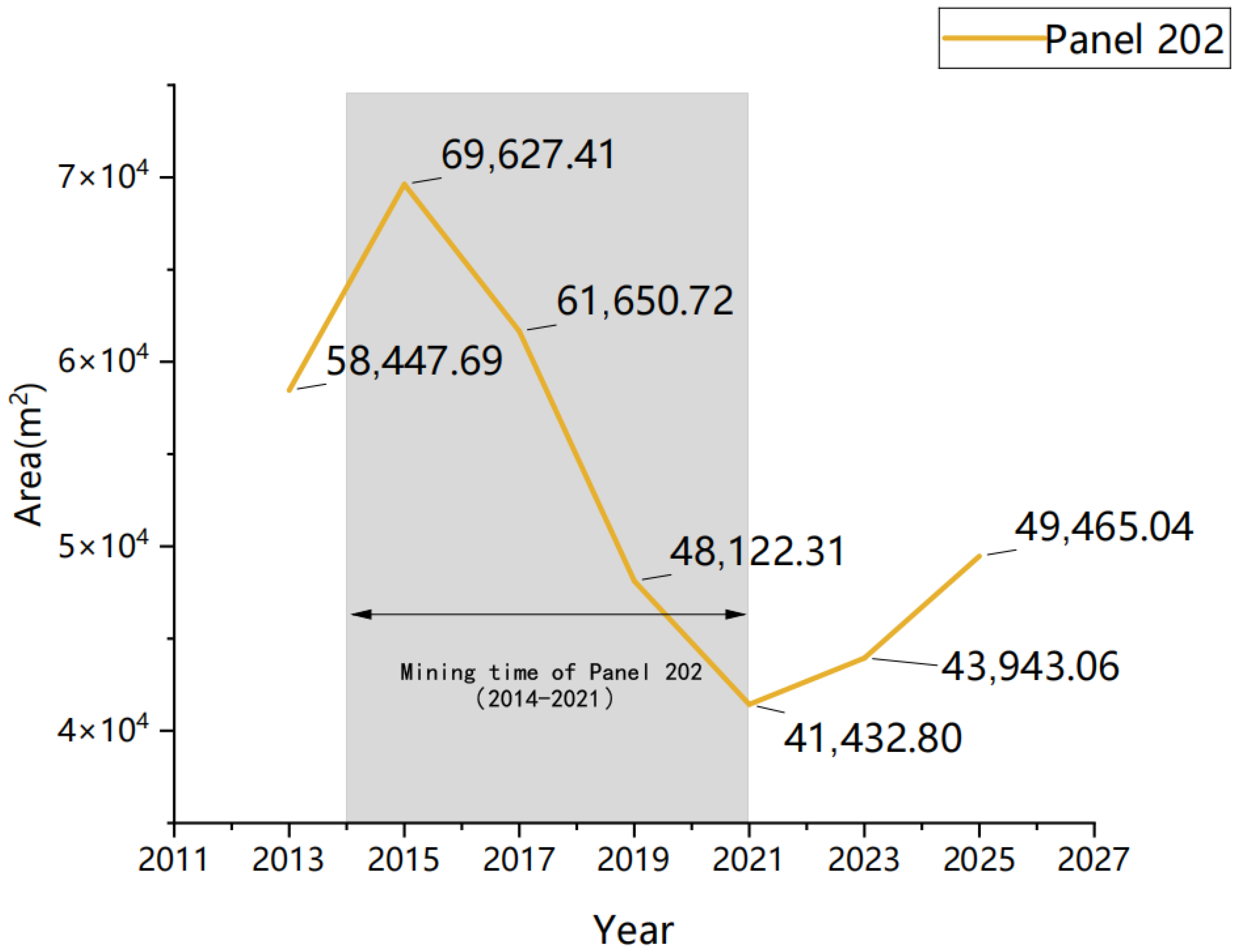
- The study effectively identified the stress effects of coal mining on S. vulgaris. Mining activities directly inhibited shrub growth by altering hydrogeological conditions. During the Panel 202 mining period (2014–2021), Sabina area decreased by 40% cumulatively, and after the Panel 203 mining (2021–2025), the annual shrinkage rate reached 18%, indicating a positive correlation between mining intensity and vegetation decline. Subsidence-induced soil structural degradation (reduced clay content and increased porosity) and groundwater loss created a dual inhibition mechanism of water stress–root damage, leading to decreased transpiration efficiency and limited photosynthetic capacity in Sabina.
- (2)
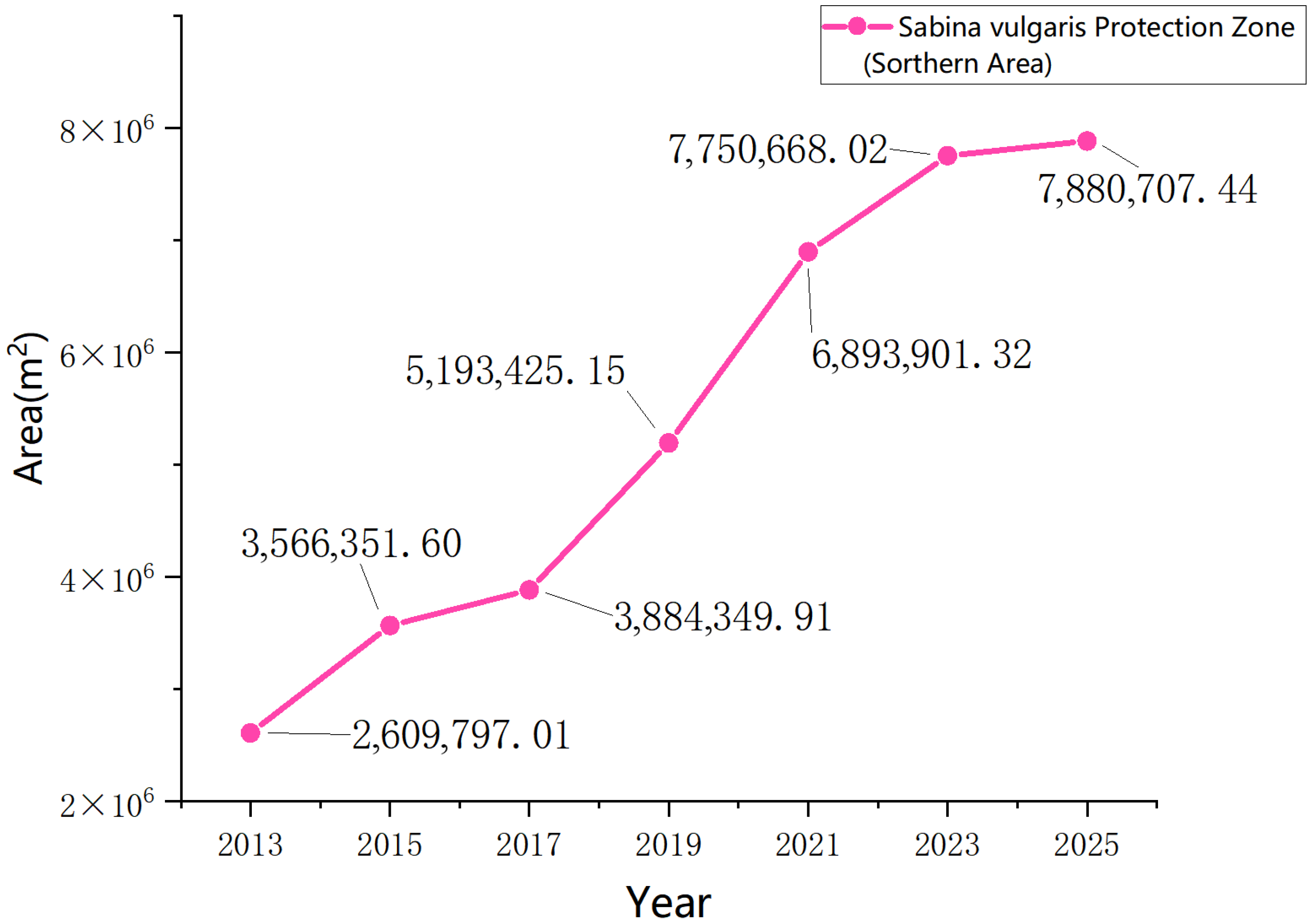
- The statistical results demonstrated the ecological restoration effectiveness of the protected areas. The Sabina Nature Reserve (Northern and Southern Zones) showed continuous growth without mining disturbances, with area increases of 259% and 202% over 12 years, respectively. The Southern Zone’s coverage reached 7.88 million m2 in 2025, confirming the effect of significant promotion of enclosure measures on natural regeneration. Systematic implementation of policy evolution (from county-level reserves to forest chief systems) and technical standards (e.g., seed propagation protocols) provided stable habitat protection and germplasm resources for Sabina.
- (3)
- The technical methodology proved reliable. The SegU-Net model achieved an overall accuracy of 99.48% and a Kappa coefficient of 0.67 (high consistency) in identifying Sabina distribution, with precision and recall exceeding 99% for non-Sabina categories, validating the effectiveness of remote sensing data for large-scale ecological assessments.
Author Contributions
Funding
Data Availability Statement
Acknowledgments
Conflicts of Interest
References
- Jadwiszczak, K.A.; Mazur, M.; Bona, A.; Marcysiak, K.; Boratyński, A. Soil Requirements, Genetic Diversity and Population History of the Juniperus sabina L. Varieties in Europe and Asia. Forests 2024, 15, 866. [Google Scholar] [CrossRef]
- Wang, Z.; Huang, R.; Zhang, G.; Wang, L. Age Structure of Natural Populations of Sabina vulgaris in the Mu Us Sandy Land. Arid. Zone Res. 2009, 26, 548–554. [Google Scholar] [CrossRef]
- Liu, J.; Ai, N.; Zong, Q.; Hao, B.; Li, Y.; Qiang, D.; Liu, C. Spatial Distribution Characteristics of Soil Moisture in Sabina vulgaris Ant. Community in the Southern Edge of Mu Us Sandland. J. Soil Water Conserv. 2019, 33, 79–84. [Google Scholar]
- Wang, A.; Lu, J.; Zhang, G.; Huang, H.; Wang, Y.; Hu, S.; Ao, M. Potential Distribution of Juniperus sabina under Climate Changein Eurasia Continent Based on MaxEnt Model. Sci. Silvae Sin. 2021, 57, 43–55. [Google Scholar]
- Zhang, G.; Wang, L.; Dong, Z.; Li, L. The Mechanical Composition and Seasonal Water Contentof Aeolian Sandy Soil in Mu Us Sandy Area. J. Desert Res. 1999, 19, 145–150. [Google Scholar]
- Zhang, G.; Li, L.; Wang, L.; Dong, Z.; Qi, J. The Preliminary Study on Sabina vulgaris Afforested in the Semiarid Region. J. Inn. Mong. For. Coll. 1999, 21, 21–25. [Google Scholar]
- Liu, J.; Liu, G.; Yang, Y.; Ai, N.; Zong, Q.; Hao, B.; Liu, C. Soil Fertility Evaluation in Sabina vulgaris Ant. Community in the Southern Edge of the Mu Us Sandland. Chin. J. Soil Sci. 2021, 52, 129–138. [Google Scholar]
- Wen, G.; Wang, L.; Ji, C. Changes of Groundwater Level in Sabina vulgaris Community in Mu Us Sandy Land. J. Nat. Resour. 2005, 20, 266–271. [Google Scholar]
- Wang, Z.; Huang, R.; Wang, L.; Zhang, G. Radial growth characteristics of natural population of Sabina vulgaris in Mu Us sandy land. J. Beijing For. Univ. 2008, 30, 1–6. [Google Scholar]
- Ohte, N.; Miki, N.H.; Matsuo, N.; Yang, L.; Hirobe, M.; Yamanaka, N.; Ishii, Y.; Tanaka-Oda, A.; Shimizu, M.; Zhang, G.; et al. Life history of Juniperus sabina L. adapted to the sand shifting environment in the Mu Us Sandy Land, China: A review. Landsc. Ecol. Eng. 2021, 17, 281–294. [Google Scholar] [CrossRef]
- Arzac, A.; García-Cervigón, A.I.; Vicente-Serrano, S.M.; Loidi, J.; Olano, J.M. Phenological shifts in climatic response of secondary growth allow Juniperus sabina L. to cope with altitudinal and temporal climate variability. Agric. For. Meteorol. 2016, 217, 35–45. [Google Scholar] [CrossRef]
- Nan, W.; Liu, S.; Yang, S.; Dong, Z.; Yang, J.; Shi, W. Changes of Sabina vulgaris growth and of soil moisture in natural stands and plantations in semi-arid northern China. Glob. Ecol. Conserv. 2020, 21, 2351–9894. [Google Scholar] [CrossRef]
- Wang, X.; Wang, J.; Zhang, R.; Huang, Y.; Feng, S.; Ma, X.; Zhang, Y.; Sikdar, A.; Roy, R. Allelopathic Effects of Aqueous Leaf Extracts from Four Shrub Species on Seed Germination and Initial Growth of Amygdalus pedunculata Pall. Forests 2018, 9, 711. [Google Scholar] [CrossRef]
- Gao, X.; Ren, Y. Comprehensive Scientific Investigation Report on the Shenmu Choubaibai County Nature Reserve in Shaanxi Province, 1st ed.; Shaanxi Science and Technology Press: Xi’an, China, 2018; pp. 15–20. [Google Scholar]
- Wang, X.; Chen, F.; Dong, Z.; Xia, D. Evolution of the southern Mu Us Desert in north China over the past 50 years: An analysis using proxies of human activity and climate parameters. Land Degrad. Dev. 2005, 16, 351–366. [Google Scholar] [CrossRef]
- Yang, Y.; Ha, S.; Sun, B.; Du, H.; Zhao, Y.; Zhong, X. Effects of Vegetation Restoration in Different Types on Soil Nutrients in Southern Edge of Mu Us Sandy Land. Agric. Sci. Technol. 2012, 13, 1708–1712. [Google Scholar] [CrossRef]
- Houerou, H.N.L. Restoration and Rehabilitation of Arid and Semiarid Mediterranean Ecosystems in North Africa and West Asia: A Review. Arid. Soil Res. Rehabil. 2000, 14, 3–14. [Google Scholar] [CrossRef]
- Zhang, X. Principles and Optimal Models for Development of Maowusu Sandy Grassland. Acta Phytoecol. Sin. 1994, 18, 1–16. [Google Scholar]
- Zhang, B. Research on Characteristics and Application Value of Major Plantsfor Wind Sheltering and Sand Fixation. Inn. Mong. For. Investig. Des. 2012, 35, 62–65. [Google Scholar]
- Ministry of Ecology and Environment. Approval of the Environmental Impact Report for the Longde Coal Mine 5 Million Tons/Year Expansion and Reconstruction Project in the Phase III Planning Area of the Yushen Mining Area, Shaanxi Province, by Shenmu County Longde Mining Co., Ltd. Available online: https://www.mee.gov.cn/xxgk2018/xxgk/xxgk11/202112/t20211220_964697.html (accessed on 16 December 2021).
- Xu, L. Study on the Influence of Coal Mining Subsidence on Community Evapotranspiration in Mu Us Desert. Master’s Thesis, Inner Mongolia Agricultural University, Hohhot, China, 2021. [Google Scholar]
- Nan, W.; Dong, Z.; Zhou, Z.; Li, Q.; Chen, G. Ecological effect of the plantation of Sabina vulgaris in the Mu Us Sandy Land, China. J. Arid Land 2024, 16, 14–28. [Google Scholar] [CrossRef]
- The Approval Document from the Ministry of Ecology and Environment regarding the Environmental Impact Assessment Report for the Baijiahaizi Mine and Coal Preparation Plant (15 Million Tons/Year) in Nalinhe Coal Mining Area, Inner Mongolia Ejinhaolian Coal Industry Co., Ltd. Available online: https://www.mee.gov.cn/xxgk2018/xxgk/xxgk11/202111/t20211119_961033.html (accessed on 18 November 2021).
- Zhou, H.; Wu, B.; Gao, Y.; Cheng, L.; Jia, X.; Pang, Y.; Zhao, H. Composition and influencing factors of the biological soil crust bacterial communities in the Sabina vulgaris community in u Us Sandy Land. J. Desert Res. 2020, 40, 130–141. [Google Scholar]
- Qian, Z.; Qin, W.; Li, D. Ecological Impact Analysis of Dabaodang Coal Mining in the Wind-Sand Area of Northern Shaanxi. West. Resour. 2012, 1, 84–86. [Google Scholar]
- Zhang, G.; Gao, R.; Wang, L.; Lu, M.; Jirigele. Study on Community Structure and Biodiversity of Sabina vulgaris of Maowusu. J. Inn. Mong. Agric. Univ. 2001, 22, 88–91. [Google Scholar]
- Duan, Z.; Ma, L.; Fu, D.; Yang, F.; Zhou, L. Prospect of In-situ Pyrolysis Development of Oil-rich Coal in Dabaodang. Coal Geol. China 2023, 35, 1–6. [Google Scholar] [CrossRef]
- Wang, P.; Chen, L.; Wang, K. Analysis on Hydrogeology Conditions of 2-2 Coal Seamin Longde Coal Mine. Shaanxi Coal 2014, 33, 32–34. [Google Scholar]
- Wei, H.; Zhang, F.; Tian, G.; Feng, Y.; Xiao, J.; Zhao, Z. Remote Sensing Monitoring of Surface Vegetation Change in 202 Panel of Longde Coal Mine. Coal Technol. 2024, 43, 126–131. [Google Scholar]
- Jeon, S.; Choi, W.; Park, B.; Kim, C. A Deep Learning-Based Model That Reduces Speed of Sound Aberrations for Improved In Vivo Photoacoustic Imaging. IEEE Trans. Image Process. 2021, 30, 8773–8784. [Google Scholar] [CrossRef] [PubMed]
- Matsushita, Y.; Yokoyama, T.; Noguchi, T.; Nakagawa, T. Assessment of skeletal muscle using deep learning on low-dose CT images. Glob. Health Med. 2023, 5, 278–284. [Google Scholar] [CrossRef] [PubMed]
- Rocha, J.; Cunha, A.; Mendonca, A.M. Conventional Filtering Versus U-Net Based Models for Pulmonary Nodule Segmentation in CT Images. J. Med. Syst. 2020, 44, 81. [Google Scholar] [CrossRef]
- Foody, G.M. Explaining the unsuitability of the kappa coefficient in the assessment and comparison of the accuracy of thematic maps obtained by image classification. Remote Sens. Environ. 2020, 239, 111630. [Google Scholar] [CrossRef]
- Bellogin, A.; Castells, P.; Cantador, I. Precision-oriented evaluation of recommender systems: An algorithmic comparison. In Proceedings of the Fifth ACM Conference on Recommender Systems (RecSys ‘11), New York, NJ, USA, 23–27 October 2011. [Google Scholar] [CrossRef]
- Zhang, X.; Feng, X.; Xiao, P.; He, G.; Zhu, L. Segmentation quality evaluation using region-based precision and recall measures for remote sensing images. ISPRS J. Photogramm. Remote Sens. 2015, 102, 73–84. [Google Scholar] [CrossRef]
- Zhao, H. Influence of Ground Collapse Caused by Coal Mining Activities on the Water Characteristics of Sandy Soil. Master’s Thesis, Inner Mongolia Agricultural University, Hohhot, China, 2008. [Google Scholar]
- Wu, Z.; Xia, T.; Nie, J.; Cui, F. The shallow strata structure and soil water content in a coal mining subsidence area detected by GPR and borehole data. Environ. Earth Sci. 2020, 79, 500. [Google Scholar] [CrossRef]
- Bian, Z. Change of Agricultural Land Quality due to Mining Subsidence. J. China Univ. Min. Technol. 2004, 33, 213–218. [Google Scholar]
- Zhang, X.; Wang, J.; Liu, C. Influences of Coal Mining Subsidence on Soil Water Loss and Its Mechanisms. J. Anhui Agric. Sci. 2009, 37, 5058–5062. [Google Scholar]
- Yang, Q. Effect of Rainfall on Transpiration of Artemisia ordosica and Salix psammophila in the Mu Us Desert. Master’s Thesis, Beijing Forestry University, Beijing, China, 2016. [Google Scholar]
- Xu, Y.; Li, Z.; Chen, S.; Chen, H.; Yuan, H. Effect of coal mining collapses of the Daliuta coal mine on land desertification. Geol. China 2008, 35, 157–162. [Google Scholar]
- Liu, Y.; Lei, S.; Cheng, L.; Cheng, W.; Bian, Z. Effects of soil water content on stomatal conductance, Transpiration, and photosynthetic rate of Caragana korshinskii under the influence of coal mining subsidence. Acta Ecol. Sin. 2018, 38, 3069–3077. [Google Scholar] [CrossRef]
- Ministry of Ecology and Environment List of Nature Reserves in Shaanxi Province (as of the End of 2011). Available online: https://www.mee.gov.cn/ywgz/zrstbh/zrbhdjg/201208/t20120824_235172.shtml (accessed on 24 August 2012).
- Today in Yulin Communist Party History. Available online: https://mp.weixin.qq.com/s?__biz=MzIwNDc3OTYxOA==&mid=2247552402&idx=2&sn=816f5673a6cbea0814411ac3037c73b0&chksm=96578cc4937fe78381ff5ddef87fb35d3b386eb55aaf10bbbb63c5a637266f94423b369cdbfc&scene=27 (accessed on 4 October 2024).
- Report of the Shenmu County People’s Government Office on the 2016 Annual Government Information Disclosure Work in Shenmu County. Available online: https://www.sxsm.gov.cn/zfxxgk/zfxxgknb/bs/202210/t20221014_1109894.html (accessed on 8 March 2017).
- Notice of Yulin Municipal People’s Government Office on Printing and Distributing the Implementation Plan for Five-Year Major Promotion of Forestry Construction in Yulin City. Available online: https://www.yl.gov.cn/zwgk/zfgb/2017/d1q/201902/t20190218_86923.html (accessed on 18 February 2019).
- Notice of Shaanxi Provincial People’s Government on Promulgating the List of Shaanxi Province’s Locally Key Protected Plants (First Revision). Available online: https://www.shaanxi.gov.cn/zfxxgk/zfgb/2010/d3q_4169/201002/t20100224_1635729.html (accessed on 24 February 2010).
- Technical Regulations for Cutting Propagation and Afforestation of Sabina vulgaris Using Nutrient Bags. DB 6108/T 28-2021; Forestry and Grassland Bureau of Yulin City: Yulin, China, 2022.
- National Forestry and Grassland Administration Strengthens Forest and Grassland Resource Protection Under the Forest Chief System. Available online: https://lyj.yl.gov.cn/lzz/sxdt/202502/t20250207_1959085_wap.html (accessed on 7 February 2025).
- Shannxi Leverages Cloud Technology to Safeguard Its Pristine Waters and Lush Mountains. Available online: https://lyj.yl.gov.cn/xwdt/szyw/202408/t20240830_1818575_wap.html (accessed on 30 August 2024).
- Pérez-Girón, J.C.; Puertas-Ruiz, S.; Zamora, R.; Alcaraz-Segura, D. Tracing five decades of junipers’ responses to global changes in Mediterranean high mountains. Glob. Ecol. Conserv. 2025, 58, e03426. [Google Scholar] [CrossRef]
- Sankey, T.T.; Glenn, N.; Ehinger, S.; Boehm, A.; Hardegree, S. Characterizing Western Juniper Expansion via a Fusion of Landsat 5 Thematic Mapper and Lidar Data. Rangel. Ecol. Manag. 2010, 63, 514–523. [Google Scholar] [CrossRef]
- Hao, P.; Zhan, Y.; Wang, L.; Niu, Z.; Shakir, M. Feature Selection of Time Series MODIS Data for Early Crop Classification Using Random Forest: A Case Study in Kansas, USA. Remote Sens. 2015, 7, 5347–5369. [Google Scholar] [CrossRef]
- Zhang, G.; Roslan, S.N.A.B.; Wang, C.; Quan, L. Research on land cover classification of multi-source remote sensing data based on improved U-net network. Sci. Rep. 2023, 13, 16275. [Google Scholar] [CrossRef]
- Lu, D.; Huang, H.; Wang, A.; Zhang, G. Genetic Evaluation of Juniperus sabina L. (Cupressaceae) in Arid and Semi-Arid Regions of China Based on SSR Markers. Forests 2022, 13, 231. [Google Scholar] [CrossRef]



| № | Satellite | Spatial Resolution (m) | Acquisition Times (Date–Month–Year) | Bands |
|---|---|---|---|---|
| 1 | GF-1 | 2.0 | 20 November 2013 | 4 |
| 2 | GF-1 | 2.0 | 9 February 2015 | 4 |
| 3 | GF-1 | 2.0 | 2 April 2017 | 4 |
| 4 | GF-1 | 2.0 | 17 May 2019 | 4 |
| 5 | GF-1 | 2.0 | 21 February 2021 | 4 |
| 6 | GF-1 | 2.0 | 13 March 2023 | 4 |
| 7 | GF-1 | 2.0 | 5 February 2025 | 4 |
| Code Name | Usage Parameters |
|---|---|
| model_architecture | “Seg U-Net” |
| patch_size | 320 |
| background_patch_ratio | 0.2 (20%) |
| loss_weight | 1.0 |
| training_split | 80 |
| patches_per_batch | 4 |
| epochs | 50 |
| feature_patch_percentage | 0.60000002 (≈60%) |
| augment_scale | True (Boolean value) |
| augment_rotation | True (Boolean value) |
| project_type | “pixel_segmentation” |
| ├─ solid_distance | [1, 2] (List of integers) |
| ├─ blur_distance | [0.0, 1.0, 2.0, 3.0] (Floating-point list) |
| └─ class_weight | [1.0, 2.0] (Floating-point list) |
| n_bands | 4 |
| Panel 202 (m2) | Panel 203 (m2) | The Mining Area (m2) | The S. vulgaris Protection Area (Northern Section) (m2) | The S. vulgaris Protection Area (Southern Section) (m2) | |
|---|---|---|---|---|---|
| 2013 | 58,447.7 | 3155.5 | 61,603.2 | 669,705.5 | 2,609,797.0 |
| 2015 | 69,627.4 | 3184.6 | 72,878.0 | 1,446,838.6 | 3,566,351.6 |
| 2017 | 61,650.7 | 3297.6 | 64,948.4 | 1,566,220.7 | 3,884,349.9 |
| 2019 | 48,122.3 | 3629.8 | 51,752.1 | 1,756,044.8 | 5,193,425.1 |
| 2021 | 41,432.8 | 3888.8 | 45,321.6 | 1,859,556.9 | 6,893,901.3 |
| 2023 | 43,943.1 | 3439.7 | 47,382.7 | 2,052,731.5 | 7,750,668.0 |
| 2025 | 49,465.0 | 2572.7 | 52,037.7 | 2,403,638.3 | 7,880,707.4 |
| Class | Unit (m2) | |||
|---|---|---|---|---|
| S. vulgaris | Others | Total | ||
| Validation set | S. vulgaris | 50,879.17 | 17,664.50 | 68,543.67 |
| Others | 32,812.43 | 9,524,762.51 | 9,557,574.94 | |
| Total | 83,691.60 | 9,542,427.01 | 9,626,118.62 | |
Disclaimer/Publisher’s Note: The statements, opinions and data contained in all publications are solely those of the individual author(s) and contributor(s) and not of MDPI and/or the editor(s). MDPI and/or the editor(s) disclaim responsibility for any injury to people or property resulting from any ideas, methods, instructions or products referred to in the content. |
© 2025 by the authors. Licensee MDPI, Basel, Switzerland. This article is an open access article distributed under the terms and conditions of the Creative Commons Attribution (CC BY) license (https://creativecommons.org/licenses/by/4.0/).
Share and Cite
Li, J.; Sha, H.; Gu, X.; Qiao, G.; Wang, S.; Li, B.; Yang, M. Impact of Coal Mining on Growth and Distribution of Sabina vulgaris Shrublands in Mu Us Sandy Land: Evidence from Multi-Temporal Gaofen-1 Remote Sensing Data. Forests 2025, 16, 1849. https://doi.org/10.3390/f16121849
Li J, Sha H, Gu X, Qiao G, Wang S, Li B, Yang M. Impact of Coal Mining on Growth and Distribution of Sabina vulgaris Shrublands in Mu Us Sandy Land: Evidence from Multi-Temporal Gaofen-1 Remote Sensing Data. Forests. 2025; 16(12):1849. https://doi.org/10.3390/f16121849
Chicago/Turabian StyleLi, Jia, Huanwei Sha, Xiaofan Gu, Gang Qiao, Shuhan Wang, Boyuan Li, and Min Yang. 2025. "Impact of Coal Mining on Growth and Distribution of Sabina vulgaris Shrublands in Mu Us Sandy Land: Evidence from Multi-Temporal Gaofen-1 Remote Sensing Data" Forests 16, no. 12: 1849. https://doi.org/10.3390/f16121849
APA StyleLi, J., Sha, H., Gu, X., Qiao, G., Wang, S., Li, B., & Yang, M. (2025). Impact of Coal Mining on Growth and Distribution of Sabina vulgaris Shrublands in Mu Us Sandy Land: Evidence from Multi-Temporal Gaofen-1 Remote Sensing Data. Forests, 16(12), 1849. https://doi.org/10.3390/f16121849