Abstract
Forest recreation is irreplaceable for the protection and sustainable development of urban environments. Understanding the structural characteristics of forest recreation networks in urban areas thus offers valuable theoretical and practical insights. Grounded in social network theory and spatial analysis of recreational behavior, this study leverages point of interest (POI) data for forest attractions, forest land cover data, and user-generated content (UGC) trajectory data to analyze the evolution of the forest recreation network in the Chang-Zhu-Tan Green Heart (CZTGH) of China—the world’s largest metropolitan ecological green heart area. Findings reveal that the forest recreation network of CZTHGH exhibits a multi-center, clustered spatial pattern, with a weakened radiative influence from core to peripheral areas. While recreational behaviors are increasingly fragmented and localized, this has not undermined the network’s overall function; instead, it has fostered systemic adaptability through multiple, functionally complementary clusters, accompanied by a marked shift in activity preference toward ecologically oriented spaces such as arbor forests, shrublands, and scenic forests, alongside a significant decline in non-forest recreation. Furthermore, a high degree of spatial alignment is observed among recreation supply nodes, public demand, and forest resources, indicating synergistic spatial coordination between recreational use and ecological conservation. Findings support an analytical framework integrating recreation supply, recreation demand, and forest resources, providing practical references for the sustainable use of ecological spaces in similar urban areas.
1. Introduction
Against the backdrop of accelerated global urbanization, the development of metropolitan areas generally faces the contradiction between ecological space compression and the growth of recreational demand. The traditional resource-consuming development path is difficult to sustain, and it is necessary to explore new ecological priority models [,]. From a global perspective and theoretical origins, the green heart concept as a key regional spatial structure provides an important framework for coordinating these conflicting demands through its philosophy and practices. This concept can be traced back to the 1960s Randstad region in the Netherlands, where major cities including Amsterdam, Rotterdam, and The Hague formed a circular metropolitan arrangement that surrounded and protected a central open agricultural and natural space termed the Green Heart. This configuration established the classic regional spatial structure of polycentric circular cities and a central green heart [], aimed at rigidly protecting core ecological space, preventing urban sprawl, optimizing regional spatial patterns, and ensuring ecological security. Subsequently, the connotation of the green heart gradually expanded from mere ecological isolation and conservation to a composite functional carrier integrating ecological barriers, biodiversity conservation, recreational services, landscape enhancement, and cultural heritage protection []. In urban planning, it functions as ecological infrastructure and a green isolation barrier, undertaking the core mission of optimizing spatial patterns and ensuring ecological security []. In recreational planning, the green heart area, by virtue of its large-scale and near-natural characteristics, is regarded as a strategic resource for providing high-quality and inclusive recreational services. It represents a key area for meeting residents’ escalating ecological, cultural, and health needs. The Chang-Zhu-Tan Green Heart (CZTHGH), spanning 522.87 square kilometers and recognized as the world’s largest urban ecological green heart, serves as a flagship demonstration zone for China’s dual carbon goals. With its diverse forest land types and positioning as a world-class ecological green heart, it provides high-quality forest recreation and shared space for residents across the three cities.
In the field of urban spatial network research, Salinaros’ complexity theory provides important ideas for analyzing the relationship between spatial nodes and connections []. Its core lies in revealing the organizational rules and functional logic of spatial systems through the analysis of the association between nodes and edges. This study draws on this approach and considers CZTHGH’s forest recreation points as network nodes, with the actual paths between recreation points as network edges. The aim is to use this analytical framework to more accurately capture the structural characteristics and changing trends of the forest recreation network.
The existing research results on forest recreation networks mainly focus on forest landscape ecological networks and recreation networks. Although a certain accumulation has been formed, there are still certain research biases and gaps. In the field of forest landscape ecological network research, existing achievements mainly focus on high-grade forest resources or ecological conservation functions [], determining nodes through patches and studying the boundary relationships between nodes. The node definition mainly includes ecological attributes such as patch area [], patch coordinates, patch productivity [], or population size [], selecting patches with high ecological service functions such as water bodies, forests, and nature reserves as source patches, and constructing an indicator system to evaluate the importance of patches. The edges were measured using geographic connections between patches [] and the size of edge effects [], and were calculated using methods such as Euclidean distance and least cumulative cost distance (LCP) []. GIS spatial analysis methods, landscape ecological analysis methods, and spatial pattern analysis methods were used to study regional vegetation patterns, landscape ecological patterns, and forest landscape patterns. The overall focus is on analyzing the suitability and conservation value of forest landscapes from an ecological perspective, with a particular emphasis on analyzing network connectivity from the perspective of forest spatial landscape structure. There is less consideration given to the functional relationships of networks, especially the forest recreational functions of daily landscapes and the service value of universal recreational activities.
In terms of recreational network research, on the one hand, related achievements are based on the theory of recreational spatial analysis. Based on the spatial network relationship between recreational nodes, node-associated areas, and recreational corridors, the spatial organization of urban recreational attractions and related service facilities is studied, and the trend of networked recreational planning is analyzed []. The connection between recreational network structure and geography is also analyzed [,], as well as the recreational space network from the perspective of a tourist area landscape network [] and types of recreational visitors []. Research is mostly based on POI data, analyzing spatial form [], spatial type [], and spatial function []. On the other hand, relying on social networks and tourism flow theory, this study focuses on the recreational structural network [], the behavioral patterns of recreational activities and spatial clustering hotspots [], and the correlation between recreational behavior and activity space [] and other related content. Research has been conducted on the spatial patterns and impacts of tourism flows based on UGC data [], as well as the spatial structural characteristics of tourism flows [,,]. These studies often suffer from the problem of fragmented supply–demand analysis, with some results solely analyzing the actual recreational network characteristics of tourists’ demand side, such as flow paths and node selection preferences. The other part only focuses on the distribution characteristics of the recreational supply side, such as the type and density of recreational sites, and rarely combines the two for comparative analysis. It is particularly crucial that existing research generally lacks the construction of forest resource maps based on forest data, comparing and analyzing the spatial distribution of POI recreation points with the correlation mechanism of the actual forest recreation network reflected by UGC behavior trajectory data, and proposing network optimization strategies.
Accordingly, this study collected POI forest recreation node data, forest resource data, and UGC behavioral trajectory data and constructed an analytical framework for the forest recreation network integrating recreation supply, recreation demand, and resource foundation, supported by Recreation Space Theory (RST) and Social Network Theory (SNT). This approach aims to examine changes in the characteristics of the CZTHGH forest recreation network, exploring, on the one hand, the relationship between structural changes in the forest recreation network and ecological resilience, and investigating how such changes enhance the capacity of urban ecological spaces to cope with disturbances. On the other hand, by analyzing the spatial matching relationship between recreational behavior and forest resources, it seeks to deepen the understanding of the coordinated development of human–land interactions in the context of urbanization, thereby providing new empirical evidence and insights for green space planning and sustainable urbanism theory in high-density metropolitan regions.
In the analysis, Recreation Space Theory (RST) was applied to understand the spatial distribution characteristics and static attributes of forest recreation resources in CZTHGH. Based on POI data, kernel density analysis was used to examine the spatial clustering patterns of forest recreation nodes, and standard deviation ellipse analysis was employed to determine their directional distribution. Furthermore, the spatial matching relationship between these nodes and forest resources was analyzed to identify spatial advantages and limitations at the supply level of the CZTHGH forest recreation network. Social Network Theory (SNT), meanwhile, focused on the dynamic relational structures formed by tourists’ actual recreational behaviors. By constructing an origin–destination matrix, it quantified the connection strength between forest recreation nodes, analyzed the overall structure of the forest recreation network through overall density and centralization, assessed the functional roles of nodes using degree centrality and betweenness centrality, and examined subgroup structures through cohesive subgroups and core–periphery analysis. This revealed the characteristics of the actual forest recreation network formed by tourist flows at the demand level. The deep integration of these two theories effectively compensates for the limitations of relying on a single theory, achieving a dual analysis from supply network to demand network, and from spatial attributes to structural associations. On this basis, the study compared the characteristics of the forest recreation network before and after specific temporal nodes, identifying network features and optimization pathways across multiple dimensions such as node type, spatial distribution, connection strength, and public preferences. Ultimately, it provides a scientific basis and empirical support for the optimization of recreation networks, the enhancement of ecological services, and the sustainable management of CZTHGH and similar metropolitan ecological spaces.
2. Materials and Methods
2.1. Research Object
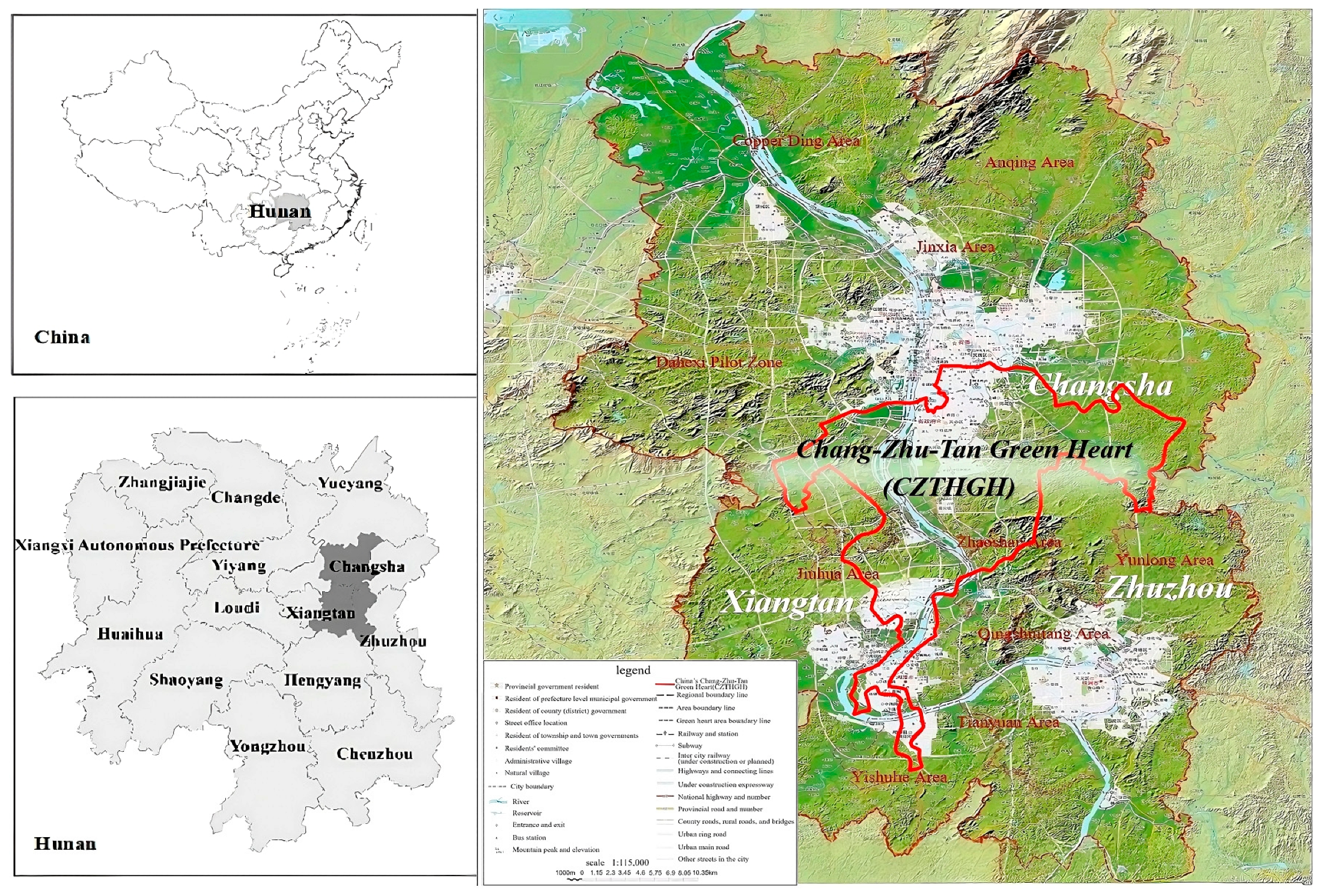
The Chang-Zhu-Tan Green Heart (CZTHGH) is located at the confluence of Changsha, Zhuzhou, and Xiangtan cities, covering an area of 522.87 km2 within the geographical coordinates of 27°43′29″ N to 28°05′55″ N and 112°53′32″ E to 113°17′42″ (Figure 1). As the world’s largest metropolitan green heart, its establishment originated from the strategic needs of China’s Two-Oriented Society pilot zone, with the core aim of preserving large-scale ecological space within the urban agglomeration, constructing structural green isolation barriers to curb urban sprawl, and safeguarding regional ecological security. This represents a spatial planning strategy for achieving sustainable development. To implement conservation measures, the green heart area has enforced stringent spatial controls in accordance with the Regulations on the Protection of the Ecological Green Heart Area in the Changsha–Zhuzhou–Xiangtan Urban Agglomeration of Hunan Province. It is categorized into prohibited development zones, restricted development zones, and controlled construction zones, all managed under provincial legislation and cross-city institutional coordination.
Figure 1.
Master Plan of the Chang-Zhu-Tan Green Heart (CZTHGH).
The CZTHGH features rich plant resources and diverse vegetation types. According to statistics, it hosts 936 species of wild seed plants, belonging to 559 genera and 154 families. Native species account for 678 of these, representing 416 genera and 132 families and constituting approximately 72.4% of the total species [].
2.2. Data Collection and Processing
2.2.1. Forest Resource Data
The forest data used in this study were obtained from the Third National Land Survey (hereinafter the Three Surveys). Commissioned by the State Council, the Three Surveys is a major national survey of conditions and resources, providing authoritative, current, and high-precision data []. This offers reliable information on the spatial distribution and types of forest land for our research. We acquired forest land data covering Changsha, Zhuzhou, and Xiangtan, which includes types such as deciduous forests, bamboo forests, and shrublands. These data were then overlaid, cropped, and fused with the CZTHGH boundary to create the foundational forest resource map for this study. This map was subsequently used for spatial overlay analysis with recreational nodes, networks, and tourist activity data to reveal the intrinsic relationships between forest recreation and resource distribution.
2.2.2. POI Forest Recreation Node Data
Data for the forest recreation network nodes were derived from Points of Interest (POI), a fundamental form of geospatial big data that efficiently and intuitively reveals the spatial distribution of scenic spots within a study area. The analytical use of POI data is well-established internationally and widely applied in urban green space planning and recreation service assessment. In this study, POI data were primarily collected from the Gaode Map platform, as its POI inclusion criteria—favoring developed, commercialized, or peri-urban attractions—are particularly suitable for compiling attraction data within the CZTHGH.
The POI data processing involved several steps, conducted using ArcGIS. First, the internal lines of the CZTHGH shapefile were merged to form a unified polygon, which was exported and saved as a vector file of the entire area. POI data were then acquired using the POI Kit toolbox to capture information from Gaode Open Map (as of 2024), including categories such as ecological scenic spots, forest parks, wetland parks, and nature reserves. These data were imported into ArcGIS for further processing. Since the original POI coverage exceeded the study area, clipping tools were applied to align the data precisely with the actual boundaries of the CZTHGH. To streamline the dataset, individual attractions located within the same scenic area were merged; for example, Peacock Square and Guandi Ancient Spring in the Changsha Shiyan Lake Scenic Area were combined into the integrated entity Changsha Shiyan Lake Ecotourism Scenic Area. Considering the focus on forest recreation and following Gaode’s POI classification, cultural attractions such as temples and religious sites unrelated to the study were removed. Finally, temporal segmentation was applied: POI data were divided into two periods—pre-2021 (including 2021) and post-2021 (starting from 1 January 2022). The POI counts are cumulative and based on the establishment or opening time of each attraction. POI details and coordinates were manually recorded to finalize the node dataset for the forest recreation network. The processed POI data, together with UGC-based data, were imported into ArcGIS for subsequent analysis.
2.2.3. UGC Behavioral Trajectory Data
The proliferation of social media has facilitated the widespread use of network big data in academic research, owing to its large volume and accessibility []. Similarly, online User-Generated Content (UGC) offers a readily available source of data that captures actual tourist movement patterns. To address potential limitations such as sampling bias and semantic recognition inaccuracies in UGC, a systematic data collection framework was implemented.
UGC data for forest recreation network nodes were collected from a range of mainstream online platforms, including leading Online Travel Agencies (OTAs) such as Ctrip and Mafengwo, the review platform Dianping, and outdoor trajectory-sharing platforms (Two Step Road and Six Foot). Using the Houyi Collector and Gooseeker software, travel notes, comments, and guides related to the CZTHGH posted by tourists were trawled in a stratified manner, categorized by data source, forest recreation theme, and two time periods—before and after 2021.
The data collection targeted specific types of forest recreation sites, including A-grade ecological scenic areas, provincial-level or national forest parks, ecological parks, wetland parks, provincial-level or above characteristic villages, and suburban parks. A total of 22,819 travel notes and comments, along with 802 routes and trajectories, were initially collected. Following data cleaning, deduplication, and filtering, a refined dataset of 12,859 travel notes/comments and 736 routes/trajectories was imported into Ucinet for analysis. Temporal segmentation was applied by constructing separate UGC databases for forest recreation network nodes using 2021 as the cutoff point.
Subsequently, tourist flow information was extracted from the UGC behavioral trajectory data using ROST software, and an origin–destination geographic information table was constructed, containing the latitude and longitude coordinates of each origin and destination. This table was imported into ArcGIS to build a network model for spatial visualization.
In parallel, a matrix was generated from the origin–destination table using the Pivot Table function in Excel. The node data were binarized and used to construct a numerical matrix in Ucinet. Finally, social network analysis methods were employed to compare the overall network density, centralization, cohesive subgroups, and core–periphery structure of the forest recreation network before and after 2021(Table 1).
Table 1.
Sample origin–destination geographic information.
2.3. Research Methods
The year 2021 marked a pivotal transition for the Chang-Zhu-Tan Green Heart (CZTHGH), shaped by both policy shifts and changes in public demand. A new development strategy was introduced, emphasizing ecological priority, green growth, and the balance between conservation and utilization, thereby moving beyond the earlier singular focus on strict conservation [,]. In this context, forest recreation emerged as a key sector for achieving dual goals of ecological protection and livelihood security. Concurrently, public recreational behavior evolved significantly, with increased demand for health-oriented, natural, and ecological experiences []. This trend was further accentuated during the pandemic, which underscored the value of urban forests as vital spaces for well-being and social fulfillment [,].
Against this backdrop, this study examines the structural characteristics, evolution, and driving mechanisms of the CZTHGH forest recreation network under the combined influence of policy adjustment and pandemic-induced behavioral changes. Using social network analysis and spatial analysis, we compare the network structures derived from POI-based node data and tourist UGC trajectory data before and after 2021.
2.3.1. Social Network Analysis
Social Network Analysis (SNA) aims to reveal the overall structure, node functions, and evolutionary patterns of a system by quantitatively analyzing relationships (edges) between actors (nodes). The approach is grounded in the view of social structure as a relational network, emphasizing the role of connections rather than individual attributes. Using a combination of relational matrix construction, graph theory, and mathematical modeling, SNA quantifies network-wide characteristics, nodal positions, and subgroup structures to explain system functionality, resilience, and mechanisms of dynamic change. In this study, SNA was applied to examine the structural characteristics and evolution of the forest recreation network in the Chang-Zhu-Tan green heart area. Recreational sites—including forest parks, A-level scenic spots, and community parks—were treated as nodes. A directed origin–destination matrix was constructed from tourist flow data, and network modeling and metric computation were conducted using Ucinet 6.0 software (Analytic Technologies, Lexington, KY, USA). Analysis of overall network density revealed a structural shift from broad interconnection toward localized fragmentation. Key hub and peripheral nodes were identified using degree, betweenness, and closeness centrality measures. The core–periphery model helped quantify changes in the network’s hierarchical structure, highlighting the limited integration of peripheral areas and related coordination challenges. Cohesive subgroup analysis indicated a rise in the number of cliques, reflecting a post-2021 transition in recreational behavior toward geographically proximate small cluster patterns. This approach not only supplied quantitative evidence of structural reorganization but also offered a scientific basis for optimizing the core–periphery structure, improving corridor connectivity, and strengthening network resilience.
UGC data processing followed a structured sequence: data cleaning and standardization were first performed, involving deduplication, removal of invalid entries, text segmentation, and semantic recognition to extract valid forest recreation behavior records. Subsequently, a directed origin–destination flow matrix was constructed based on tourist trajectory data, with flow frequency calculated for each node pair. Edge weights were then assigned according to flow frequency to represent connection strength—higher frequency flows received greater weights, while lower-frequency or unidirectional flows were assigned proportionally lower weights. Finally, to facilitate network structure analysis, a threshold (e.g., flow frequency ≥ 2) was applied to convert the weighted matrix into a binary matrix. Through comparative testing, a threshold of 1 was ultimately selected for the period prior to 2021, with a threshold of 2 for the period after 2021. This binary matrix was used to compute structural metrics such as density and centrality.
2.3.2. Spatial Analysis
This study employed spatial analysis techniques, primarily implemented in ArcGIS software, using Point of Interest (POI) data as the foundational dataset. POI data provide real-time geographic information, including coordinates and names of entities, and serve as essential components of geospatial big data, enabling efficient and intuitive visualization of the spatial distribution of scenic spots within a study area. To examine the recreational network characteristics of the green heart area, we integrated POI data with several spatial analysis tools: Kernel Density estimation, Standard Deviation Ellipse, and XY-to-Line conversion.
Among these, Kernel Density Estimation (KDE) is a non-parametric method used to estimate the probability of geographic event occurrence in a given region, calculating the density of features within a defined neighborhood to reflect their spatial concentration []. KDE is based on a data density clustering algorithm and aligns with the first law of geography, which posits that spatial entities are interrelated, with closer entities exhibiting stronger interactions. Accordingly, areas with high POI density often correspond to intensified human activity. As a widely applied technique in geographic research, KDE is particularly useful for analyzing the spatial distribution and clustering trends of point-based data, such as recreational sites.
The KDE implementation in this study followed specific operational procedures. The Kernel Density tool in ArcGIS 10.8 was employed with the search radius (bandwidth) set to the default value, automatically determined by the software based on input data spatial distribution. The output cell size was specified as 30 m to ensure appropriate spatial resolution matching the study area scale. The density estimation follows the mathematical formulation
where f(s) represents the kernel density value at spatial location s, h denotes the distance decay threshold (bandwidth), n indicates the number of location points within distance h from location s, and K is the spatial kernel weighting function. Geometrically, this formula describes a density surface that peaks at each core point Ci and decreases continuously with increasing distance from Ci, eventually diminishing to zero when the distance reaches the threshold h.
This approach provides intuitive visualization of spatial distribution patterns and clustering tendencies in sampling points []. Applied to forest scenic spot POI data, KDE enabled effective identification and visualization of spatial layout patterns. The Standard Deviation Ellipse method offers quantitative characterization of geographic element concentration, dispersion, and directional trends. Utilizing parameters including major and minor axis standard deviations, ellipse centroid, and orientation angle, this tool identifies spatial distribution patterns of point features. The major axis direction indicates primary distribution orientation, while the minor axis corresponds to the direction of lesser spread. In this study, the Standard Deviation Ellipse was applied to analyze directional distribution characteristics of forest scenic spots within the green heart area.
The XY-to-Line tool in ArcGIS facilitated flow map generation by processing start- and end-point geographic information along with other linear elements. This enabled visualization of geographic coordinate-based networks. This study utilized the XY-to-Line tool to map the forest recreation network and conducted subsequent spatial analysis based on the generated visualizations.
3. Results
3.1. Analysis of Spatial Node Types in Forest Recreation Network
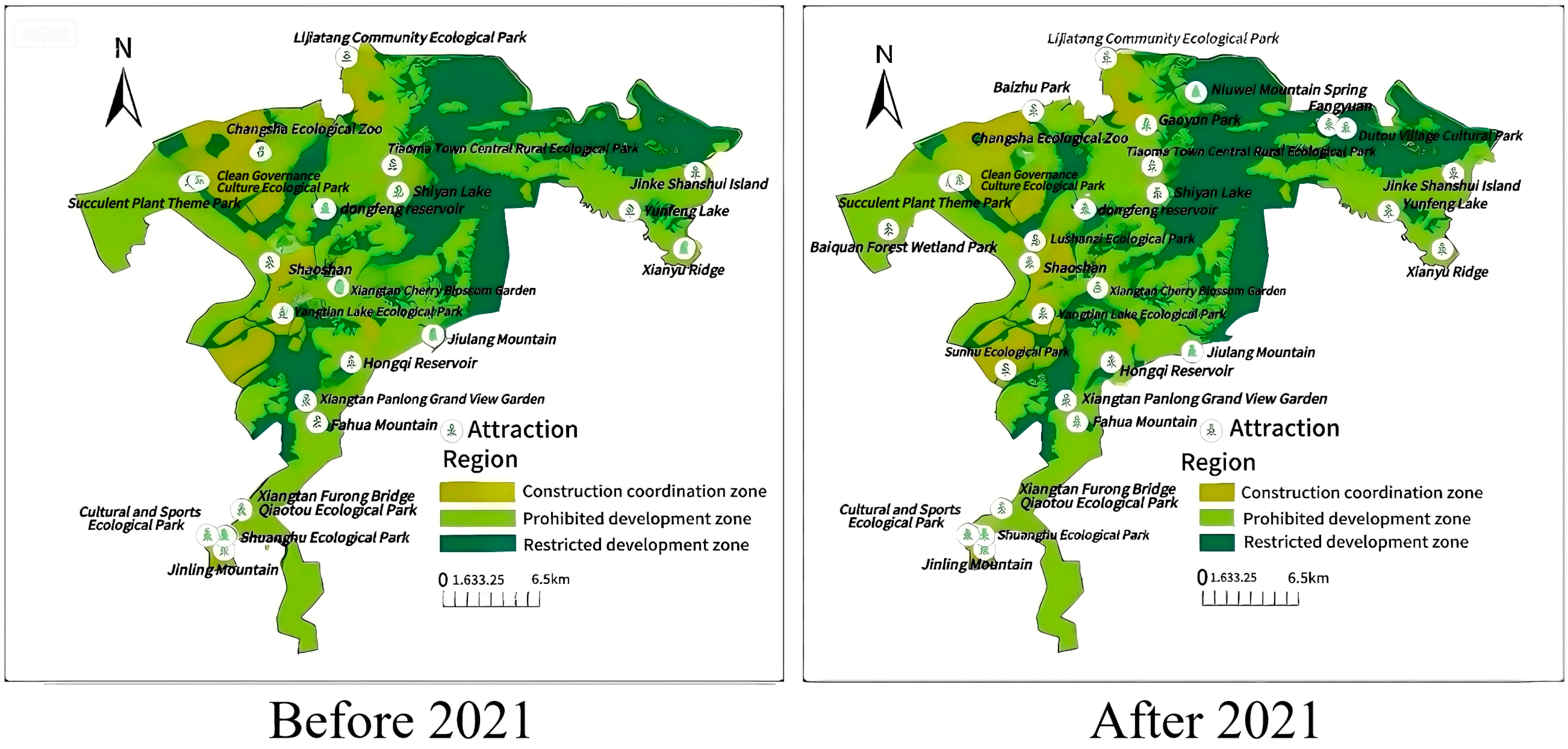
Overall, most of the forest recreation sites in the CZTHGH are situated within the prohibited development zone. This distribution pattern arises because these areas are characterized by dense forest vegetation, are predominantly located in rural settings, and retain well-preserved primary ecological conditions with minimal surrounding human activity—offering inhereint advantages for the establishment of forest parks. The construction coordination zone is largely concentrated in the western part of the CZTHGH, with scattered distributions also found in the west. Theme parks, urban parks, and green spaces are primarily located in this zone, where surrounding urban activities support local recreational use. The restricted development zone, which serves as a transitional area toward the prohibited zones, is second only to the prohibited development zone in area coverage. Most of this zone is free of attraction development, with ecological protection as the primary objective. As a result, it contains a mix of urban parks and forest parks, though the number of such sites is relatively limited compared to the other zones(Figure 2).
Figure 2.
Overlay analysis of forest recreation points’ distribution and functional spatial zoning in CZTHGH.
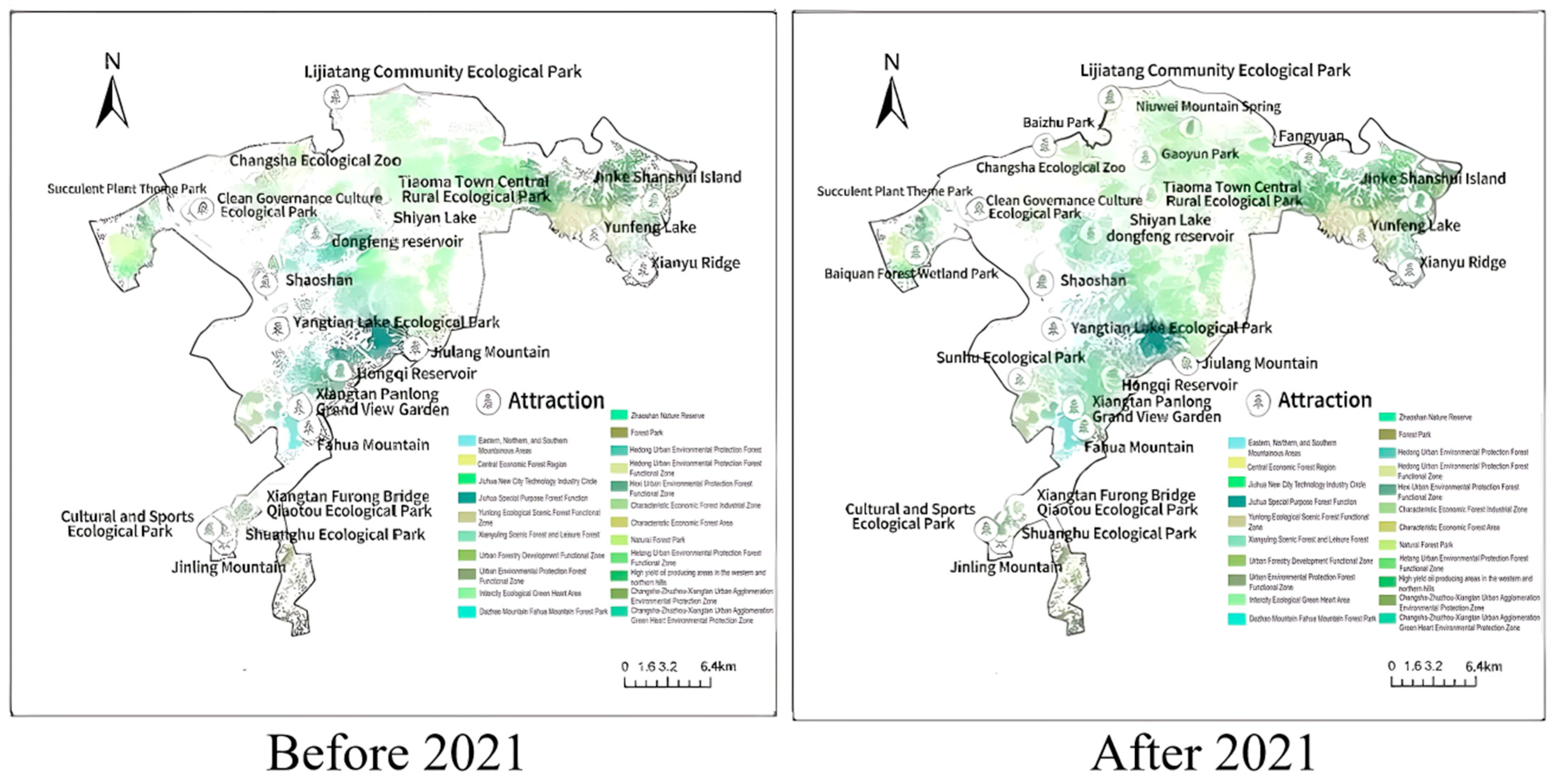
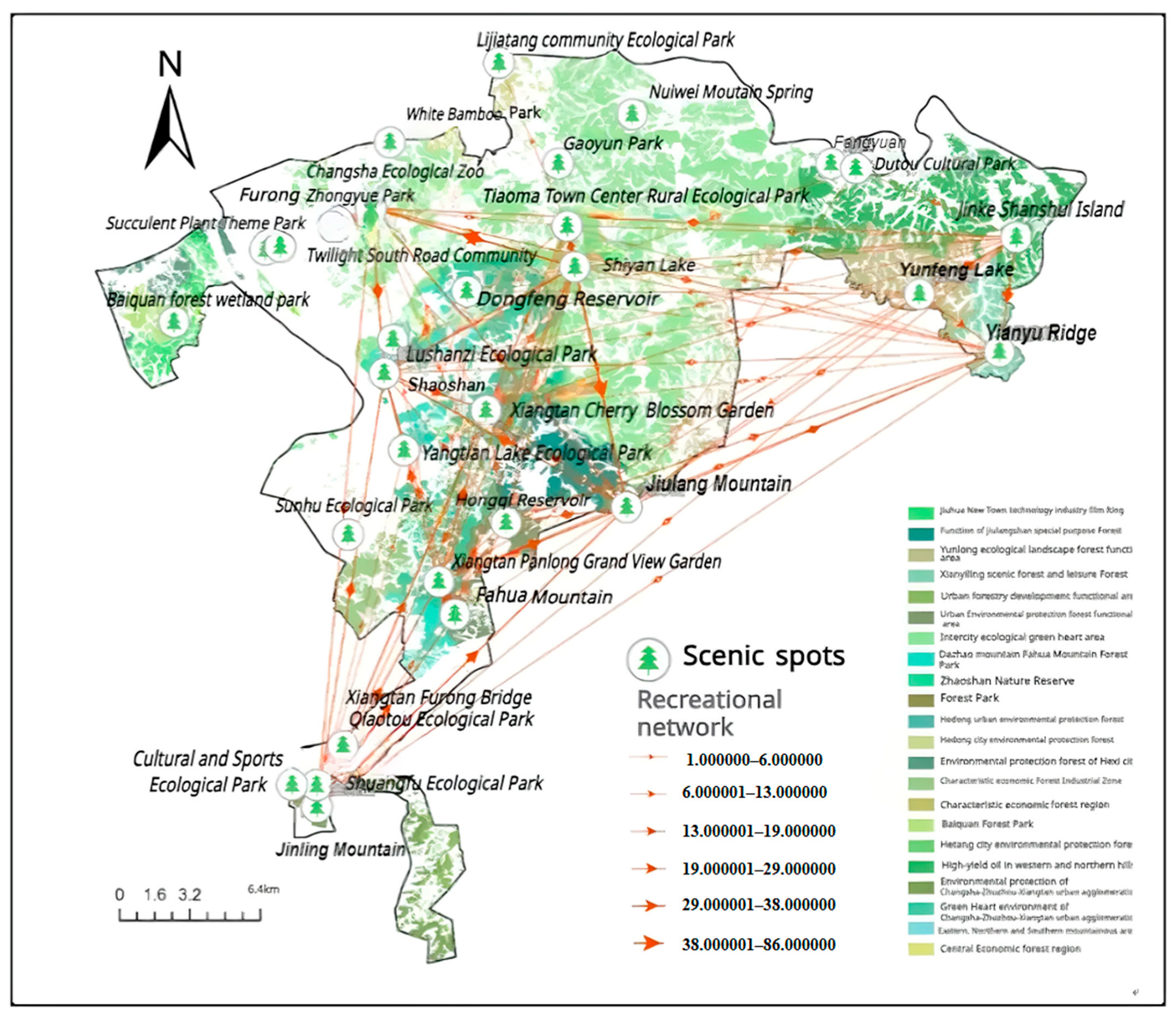
A temporal comparison reveals distinct shifts in the scale and composition of forest recreation nodes. Before 2021, the CZTHGH contained a relatively limited number of forest scenic spots, with a total of 21 viable recreation nodes. These were predominantly traditional sightseeing-oriented attractions, supplemented by a modest number of rural and theme parks. After 2021, the total number of nodes increased significantly to 28, accompanied by a notable transformation in their typological structure. New additions were primarily experiential in nature, including eco-camps, forest wellness bases, and nature education sites. A considerable number of socially oriented public parks—such as Sunhu Ecological Park and Dutou Village Cultural Ecological Park—also emerged, reflecting a broader shift in recreational supply from sightseeing-based to experience-oriented offerings. This expansion provided residents with a growing number of recreational spaces and enhanced the overall density of forest recreation sites. Spatially, the central region—largely designated as a prohibited or restricted development zone—remained largely free of forest scenic spots, indicating that the distribution of recreation nodes aligns closely with the functional zoning of the CZTHGH, with minimal tourism development occurring in core protected areas (Figure 3).
Figure 3.
Overlay analysis of forest recreation points’ distribution and forest land functional zoning in CZTHGH.
3.2. Analysis of Node Distribution Characteristics in Forest Recreation Network
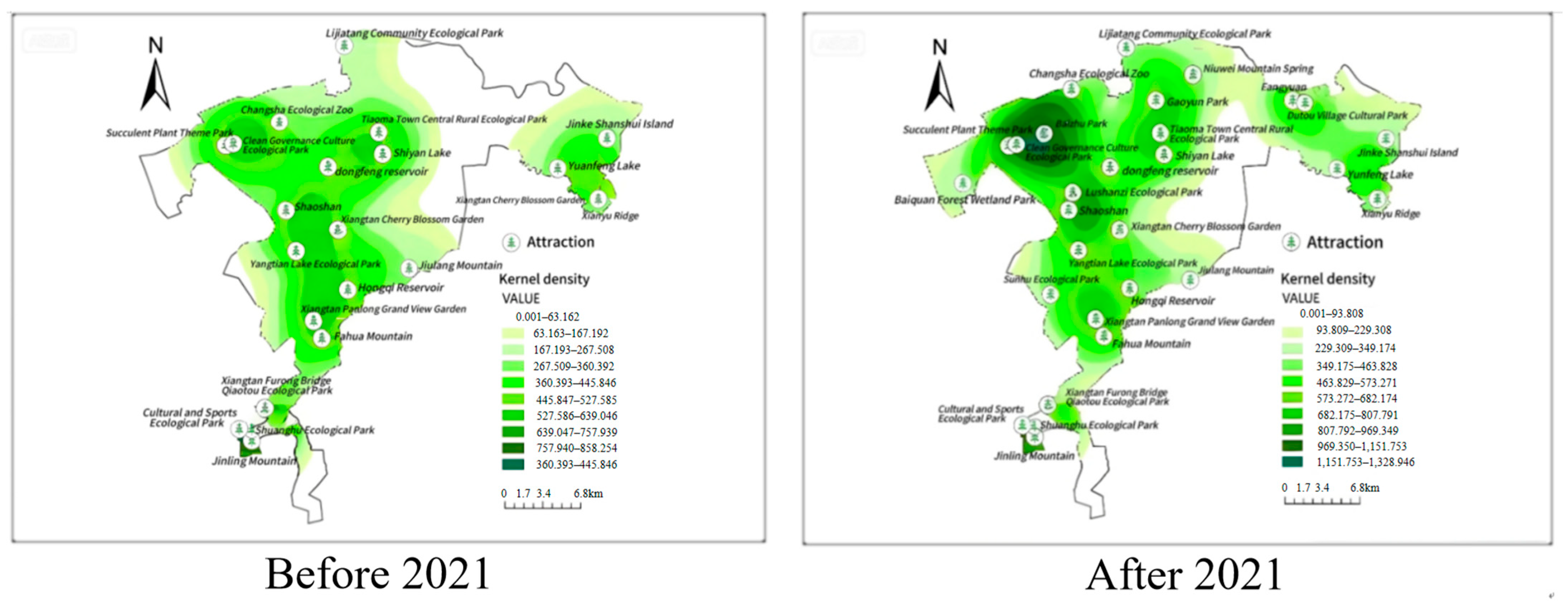
To study the spatial distribution of forest recreation network nodes within CZTHGH, Kernel Density analysis and standard deviation ellipse in spatial analysis tools were used in ArcGIS to analyze the spatial clustering degree and distribution direction of forest recreation points distributed within CZTHGH. A Kernel Density analysis map and a schematic diagram of standard deviation ellipse were made (Figure 4).
Figure 4.
Comparative analysis of kernel density in CZTHGH.
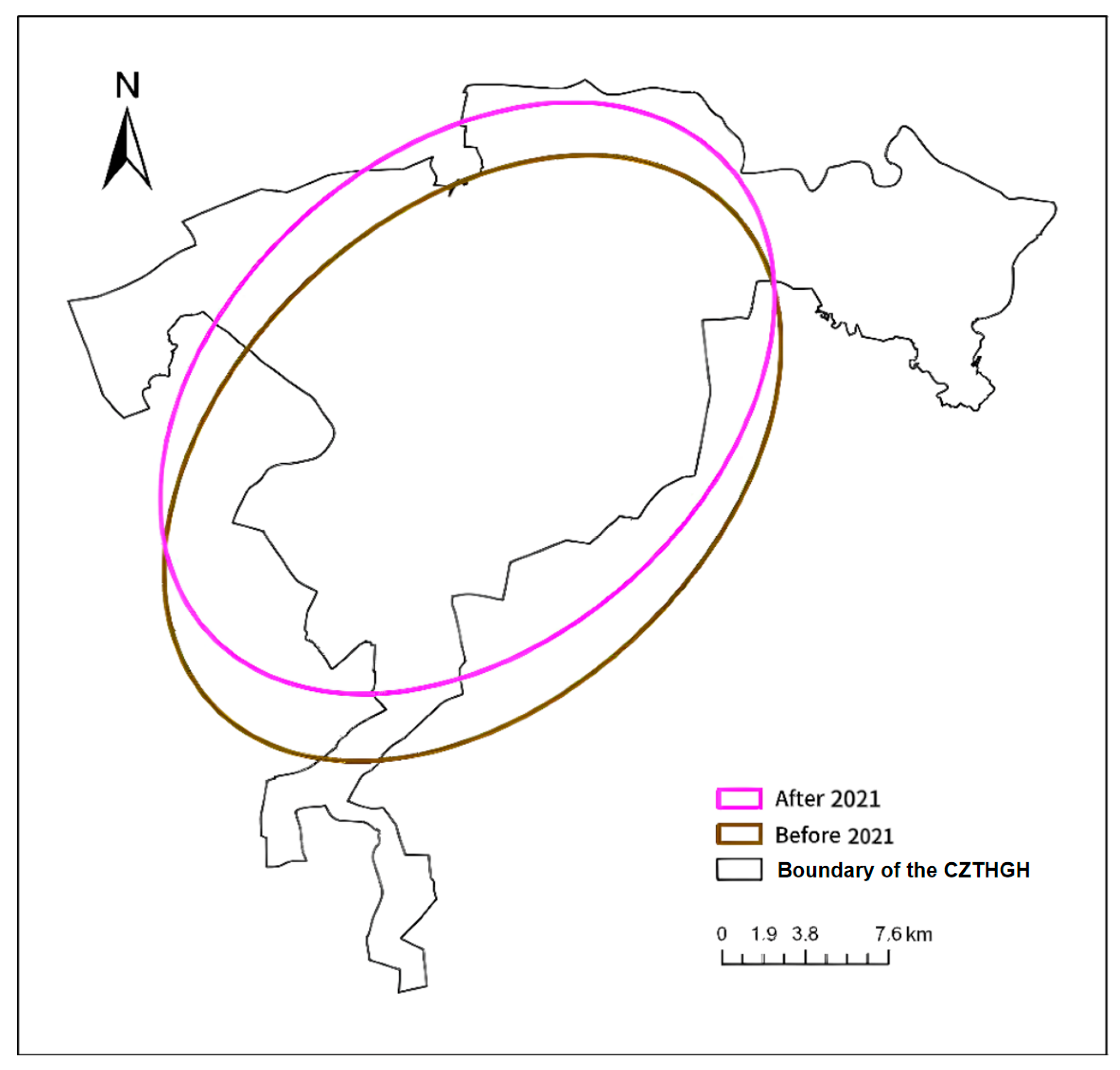
Overall, the spatial distribution within CZTHGH shows increasing geographical concentration, oriented predominantly along a northeast–southwest axis while gradually trending toward greater uniformity. Before 2021, CZTHGH was mainly distributed in the form of one main core + three secondary cores, with a total of 21 nodes. The concentration in the western region was stronger, while the eastern region was distributed as a separate area. This reflects that forest recreation sites were mainly concentrated in the western region, particularly in the southwestern area centered on Jinxia Mountain. The Standard Deviation Ellipse was located farther south, centered at (113.057713, 27.943291), with a long–short axis standard deviation difference of 0.047697, indicating a general northeast–southwest alignment. After 2021, the total number of nodes increased to 28, with enhanced centrality and a greater number of scenic spots. Kernel Density analysis revealed a shift to a distribution pattern featuring dual primary cores with multiple secondary cores, reflecting concurrent growth in node quantity and spatial distribution optimization. It was also observed that parts of the eastern area consistently remained vacant, corresponding to the Intercity Ecological green heart area, which functions as an ecological barrier for CZTHGH, is designated primarily for protection, and is excluded from development. As a result, no relevant data were recorded in this zone. The Standard Deviation Ellipse shifted northward, with its center moving to (113.05559, 27.967816) and the axis standard deviation difference decreasing to 0.043057, while the directional distribution remained consistent with that before 2021. These changes indicate that forest recreation point distribution has become more uniform after 2021. The results derived from the Standard Deviation Ellipse are consistent with those obtained from recreational site distribution and Kernel Density analyses (Figure 5).
Figure 5.
Comparative analysis of standard deviation ellipse in CZTHGH.
3.3. Visualization Construction and Analysis of Forest Recreation Network
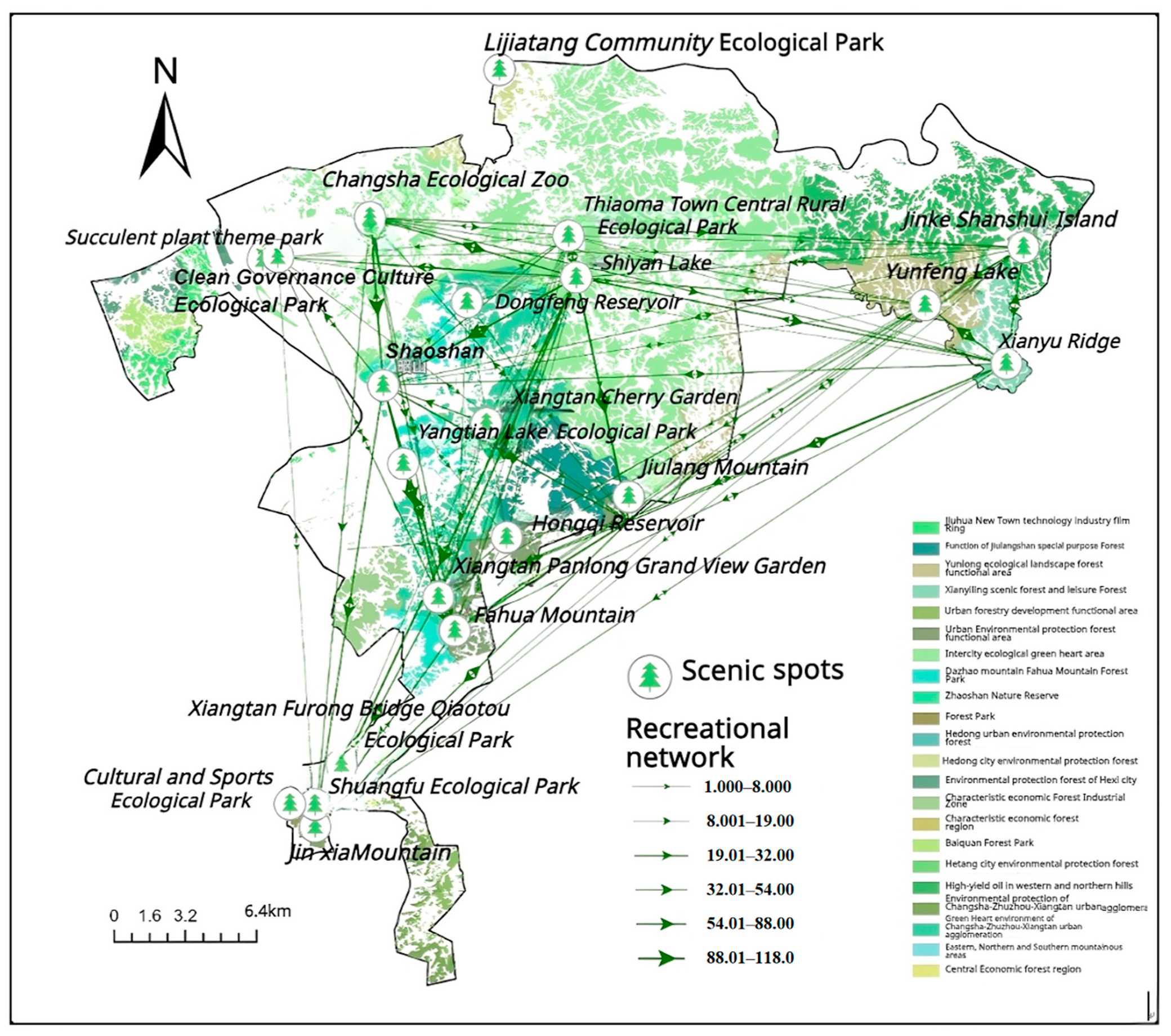
Forest recreation networks before and after 2021 were analyzed using ArcGIS software (Figure 6 and Figure 7).
Figure 6.
Forest recreation network of CZTHGH before 2021.
Figure 7.
Forest recreation network of CZTHGH after 2021.
Before 2021, A-grade scenic areas dominated network linkages owing to their high visibility, and adjacent sites also developed strong associations due to spatial proximity. Functional zones such as the fringes of the Intercity green heart and forest parks exhibited relatively high network density, where the competitiveness of scenic spots significantly influenced connection strength. After 2021, overall connection strength declined, yet the introduction of experiential nodes promoted the formation of local clusters, reflecting a dual trend of node proliferation and structural fragmentation. Connections between distant scenic areas weakened markedly, although the growth of nearby travel spurred increased linkages among smaller attractions, leading to a localized high-density network in the west as a result of clustered distribution. At the same time, the network expanded into areas such as the northern Hedong Environmental Protection Forest and western hilly regions, demonstrating a trend toward broader spatial coverage across the green heart area.
3.4. Comparative Analysis of Forest Recreation Preferences
We sought to better study people’s forest choices for recreational activities in CZTHGH and analyze the changes in forest species based on how people choose to engage in recreational activities before and after 2021.
3.4.1. Land Use Preferences for Forest Recreation
According to the land type distribution map of CZTHGH, non-forest land (including cultivated land, water areas, unused land, construction land, and other land types) is predominantly located in the western, southern, and northern parts of the area, exhibiting a linear spatial pattern. In contrast, forest land (excluding other non-forest categories) appears in patchy formations, yet the interspersion of non-forest elements results in a fragmented internal structure within forested areas.
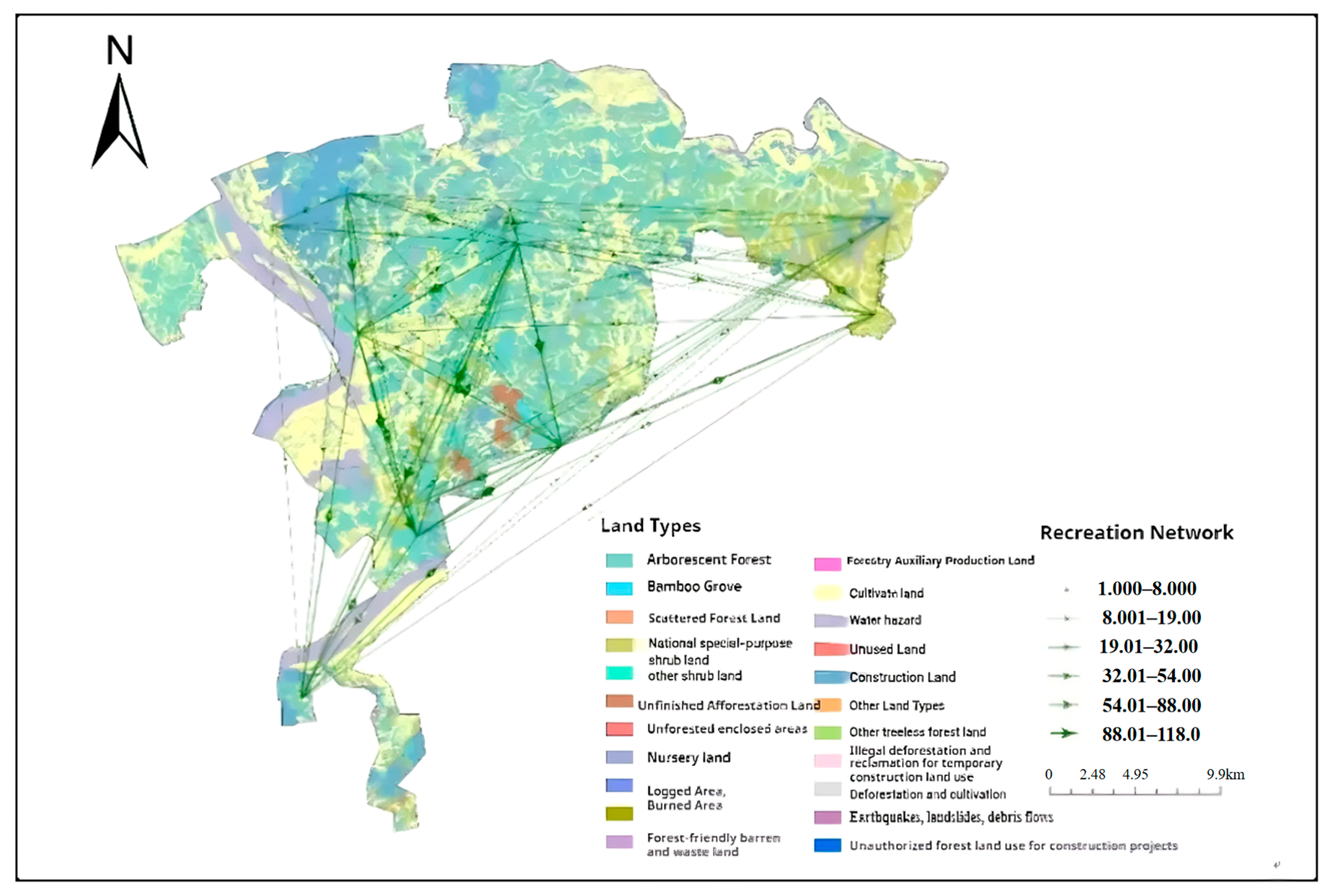
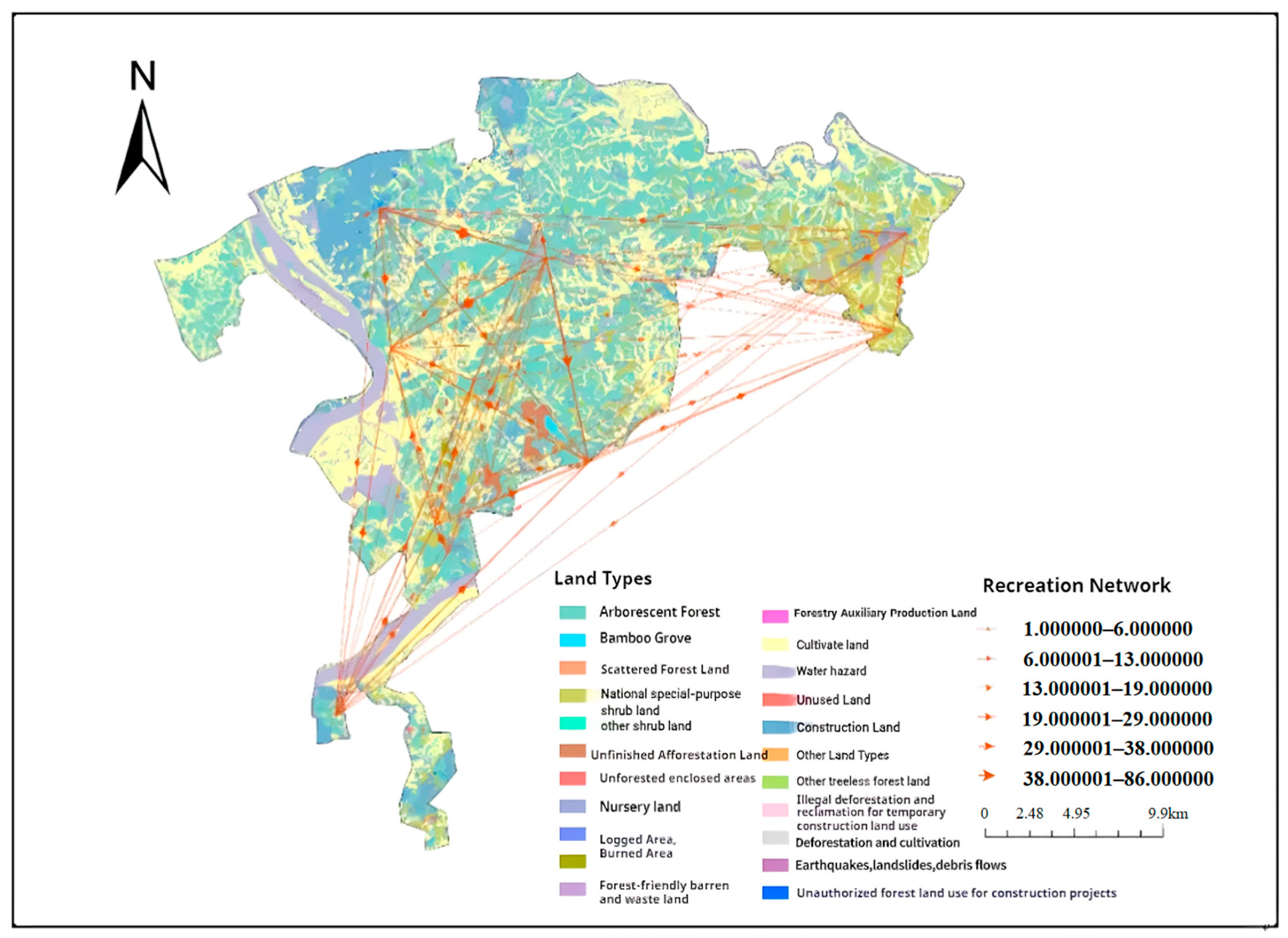
From the figures (Figure 8 and Figure 9), it can be seen that before 2021, tourists were mainly concentrated in tree forests, and high-density recreational networks were formed in construction cultivated areas due to their high attractiveness to scenic spots. After 2021, the overall density of recreational networks decreased, but the preference for forest land has significantly increased, non-forest land activities have decreased, and activities in tree forests, shrub forests, and undeveloped forest land have increased. This transformation stems from the public’s pursuit of ecological nature after 2021. Forest areas have become the preferred choice for health-oriented recreation due to their low population density, high environmental quality, and avoidance of crowds.
Figure 8.
Overlay analysis of forest recreation network and land type zoning in CZTHGH before 2021.
Figure 9.
Overlay analysis of forest recreation network and land type zoning in CZTHGH after 2021.
3.4.2. Forest Type Preferences in Recreation
Based on the distribution map of forest species in CZTHGH, it can be seen that forest areas are primarily distributed across the central and eastern regions, with fragmented patches in the west and limited, linear distributions in the south. Non-forested zones align with non-forest land classes, and the internal distribution of forest types is relatively fragmented.
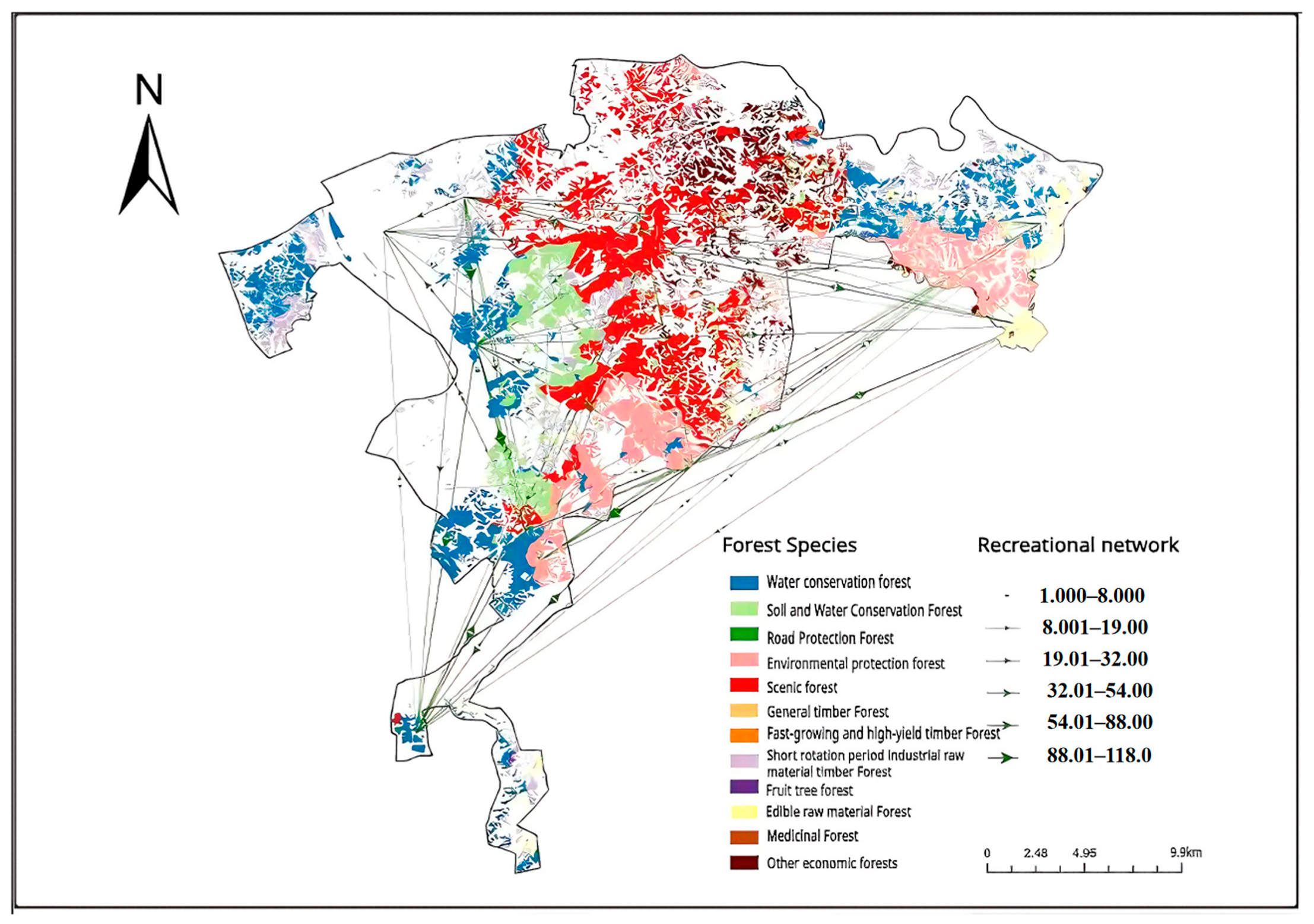
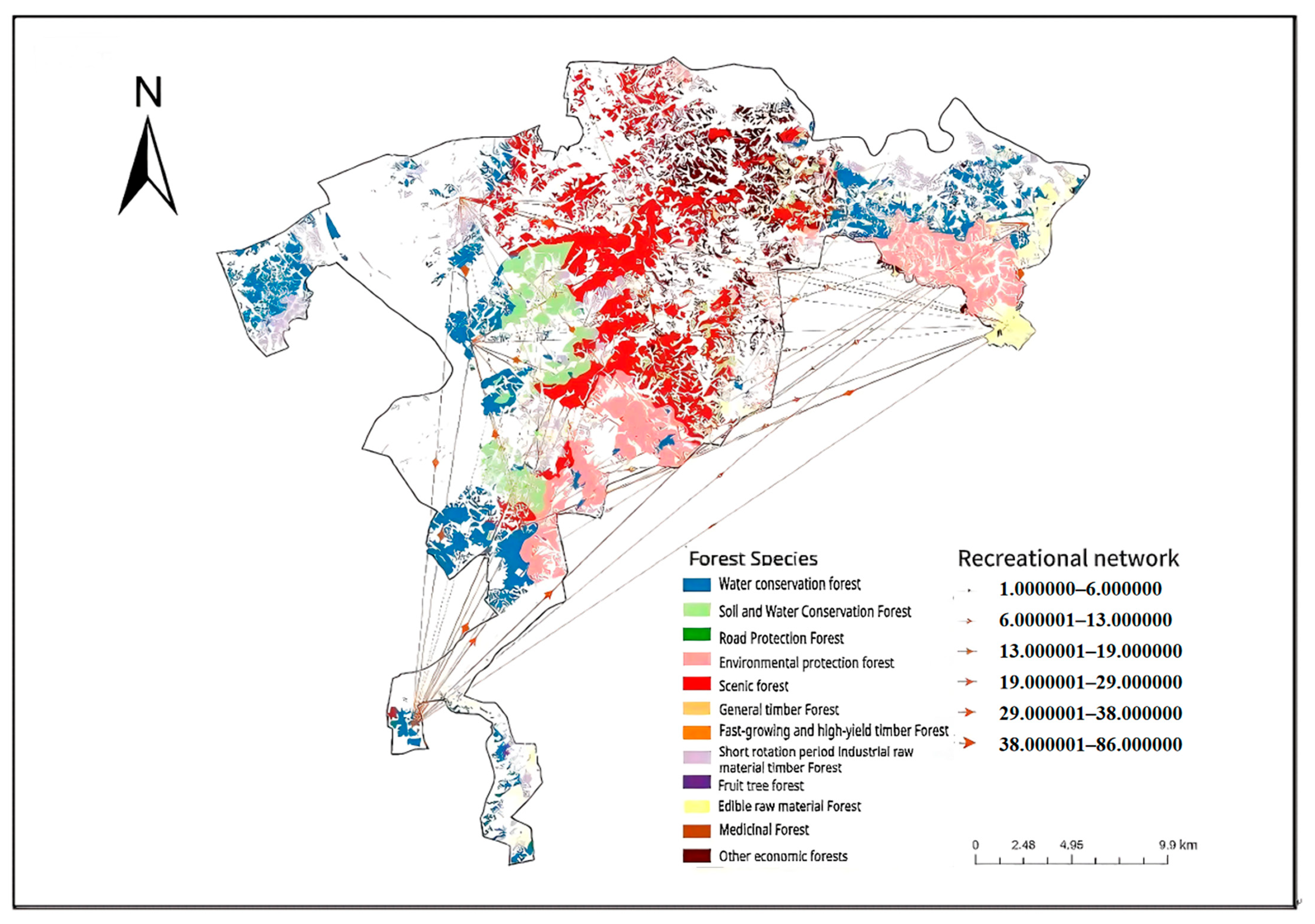
From the figures (Figure 10 and Figure 11), it can be seen that before 2021, recreational activities were concentrated mainly in water conservation forests and landscape forests, with some use also occurring in non-forested areas. After 2021, overall network density decreased; however, recreational use expanded into a wider range of forested areas. Recreational density increased in special-purpose forests and some protective forests, whose low-visitor characteristics aligned with health-conscious preferences during the pandemic. In contrast, recreational density decreased significantly in non-forested areas such as urban zones and water sources.
Figure 10.
Overlay analysis of forest recreation network and forest species zoning in CZTHGH before 2021.
Figure 11.
Overlay analysis of forest recreation network and forest species zoning in CZTHGH after 2021.
3.5. Spatial Characteristic Analysis of Forest Recreation Network
3.5.1. Overall Network Configuration
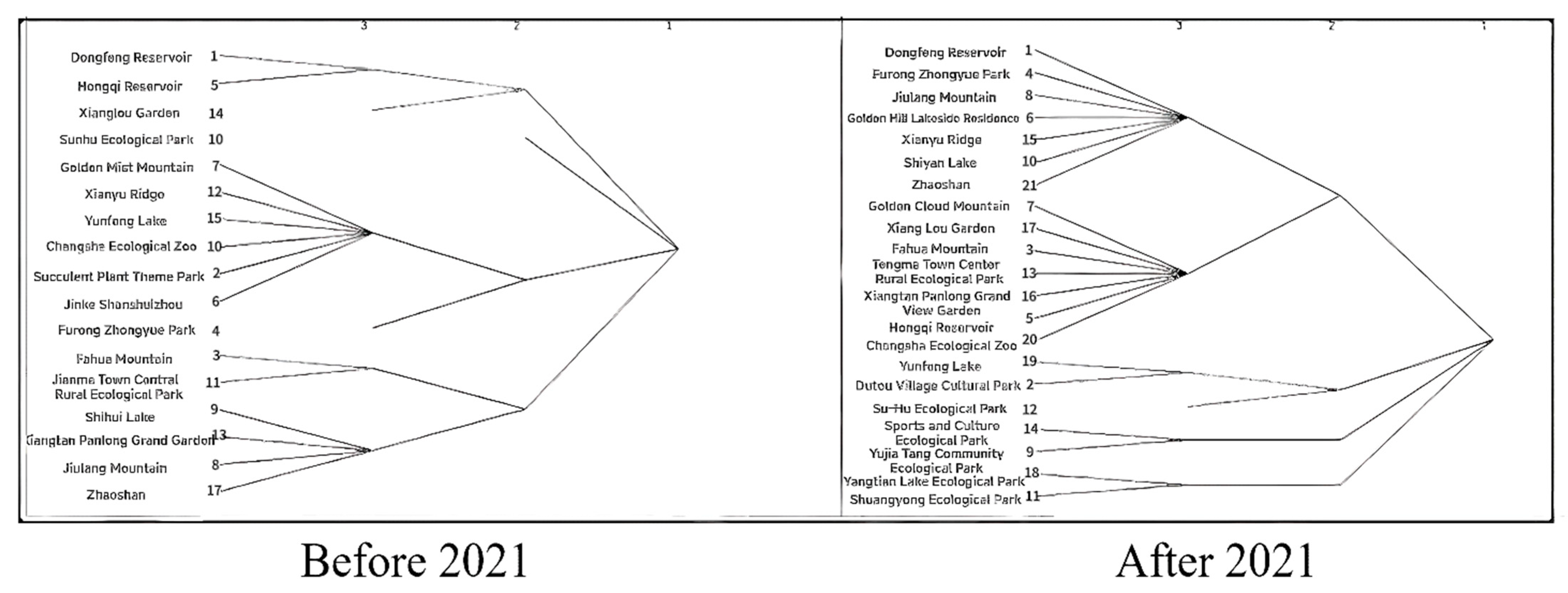
According to the block model analysis (Figure 12), before 2021, four subgroups were identified at the second level of the CZTHGH forest recreation network, among which the subsystem centered on Jinxia Mountain was the largest. However, Sunhu Ecological Park did not belong to any second-level subgroup, forming an independent cluster due to its relatively low attractiveness, limited popularity, and weak connectivity with other sites. Overall, the forest recreation network was relatively decentralized before 2021. Although multiple highly attractive sites were available for public recreation, the prevalence of homogeneous scenic spots strengthened the influence of site-specific appeal, making the network structure more dependent on individual node characteristics. After 2021, the number of second-level subgroups remained unchanged, though these subgroups exhibited stronger internal cohesion. At the third level, the number of subgroups also remained the same as that before 2021, but inter-subgroup connections became noticeably tighter, indicating enhanced overall linkage within the forest recreation network. In conjunction with the observed decrease in network density after 2021, this suggests that while the pandemic objectively reduced travel frequency and overall network density, it also heightened the subjective desire for nearby nature-based experiences. The resulting increase in local tourism encouraged stronger connections among geographically proximate forest sites within the recreational network.
Figure 12.
Comparison diagram of cohesive subgroups in CZTHGH forest recreation network.
From the perspective of core–periphery analysis (Table 2), before 2021, 12 scenic spots including Jinkeshanzhou, Jiulangshan, and Shiyanhu were located in the core area of the forest recreation network, while 5 scenic spots including Succulent Plant Theme Park and Furong Zhongyue Park were located in the peripheral area. The density index within the core areas reached 0.894, indicating strong connectivity among core sites. In contrast, the core–edge density was 0.433, reflecting relatively weak linkage between the two zones, though the core sites still exerted a modest spillover effect on peripheral ones. The density among peripheral sites was notably low, at only 0.100, suggesting poor internal connectivity and limited cooperative interaction among edge-area attractions.
Table 2.
Core-periphery density index matrix comparison of CZTHGH forest recreation network.
After 2021, thirteen scenic spots—including Fahua Mountain, Jinkeshanzhou, and Jinxia—made up the core area, while eight sites, including Lijiatang Community Ecological Park, Shuangyong Ecological Park, and Sunhu Ecological Park, lay in the periphery. The core-area density index reached 0.795, still reflecting strong internal connectivity, though this represented a decrease compared to the pre-2021 level—consistent with the overall decline in forest recreation network density. The core–periphery density dropped to 0.202, indicating not only weak inter-zone linkage but also a diminished spillover effect from core to peripheral sites. Peripheral connectivity further decreased to 0.071, highlighting both persistently low internal cohesion among edge-area attractions and a general deterioration in the connectivity of recreational sites across the CZTHGH.
3.5.2. Nodal Structure Characteristics
Using Ucinet 6.0 software (Analytic Technologies, Lexington, KY, USA), degree centrality, proximity centrality, and mediation centrality analyses were conducted on the forest recreation network, and the results are shown in Table 3 and Table 4.
Table 3.
Centrality analysis of CZTHGH forest recreation network before 2021.
Table 4.
Centrality analysis of CZTHGH forest recreation network after 2021.
In terms of degree centrality, before 2021, the top six sites were Shiyan Lake, Jiulang Mountain, Zhaoshan Mountain, Fahua Mountain, Tiaoma Town Central Rural Ecological Park, and Xiangtan Panlong Grand View Garden, whereas Dongfeng Reservoir, Xiangtan Cherry Blossom Garden, Furong Zhongyue Park, and Sunhu Ecological Park ranked lower. After 2021, the five sites with the highest degree centrality were Jiulang Mountain, Jinxia Mountain, Shiyan Lake, Jinkeshan Shui Zhou, and Zhaoshan Mountain, indicating their enhanced positional advantage in the forest recreation network. Compared with the pre-2021 period, well-known A-grade attractions became more prominent, further consolidating their central role in the network.
Analysis based on closeness centrality revealed that before 2021, the top five sites—Shiyan Lake, Jiulang Mountain, Zhaoshan Mountain, Fahua Mountain, and Tiaoma Town Central Rural Ecological Park—were largely consistent with those identified by degree centrality. However, Xiangtan Panlong Grand View Garden exhibited high degree centrality but low closeness centrality, suggesting that although it was widely recognized, it did not lie on frequent travel paths and thus failed to act as an intermediary hub. After 2021, Jiulang Mountain, Jinxia Mountain, Shiyan Lake, Jinkeshan Shui Zhou, and Zhaoshan Mountain again ranked highest, all with values above 70, aligning with degree centrality results. By contrast, Fahua Mountain and Yunfeng Lake showed lower degree centrality but higher closeness centrality, indicating their role as transit points and their importance as intermediary hubs, despite not being perceived as core destinations.
Regarding betweenness centrality, before 2021, Hongqi Reservoir, Changsha Ecological Zoo, Shiyan Lake, Jiulang Mountain, and Zhaoshan Mountain ranked highest, indicating their strong hub function. In contrast, the betweenness centrality of Succulent Plant Theme Park, Jinxia Mountain, Xianyu Ridge, Dongfeng Reservoir, Xiangtan Cherry Blossom Garden, Furong Zhongyue Park, and Sunhu Ecological Park was zero, implying negligible intermediary function and limited visitor stay. After 2021, Jinxia Mountain, Jiulang Mountain, Tiaoma Town Central Rural Ecological Park, Changsha Ecological Zoo, and Shuangyong Ecological Park exhibited the highest betweenness centrality, reflecting their sustained role as key hubs. Among these, Changsha Ecological Zoo maintained its leading position, continuing to leverage its distinctive animal-oriented appeal. By comparison, Yunfeng Lake, Dutou Village Cultural Park, Sunhu Ecological Park, Yangtian Lake Ecological Park, Furong Zhongyue Park, Lijiatang Community Ecological Park, and Cultural and Sports Ecological Park all recorded zero betweenness centrality, indicating minimal intermediary function and low visitor retention, and thus a limited presence within the overall recreation network.
4. Discussion
This study systematically analyzed POI-based forest attraction data, UGC behavioral trajectory data, and forest resource data from the CZTHGH to characterize the spatial structure of its forest recreation network and elucidate the underlying interaction mechanisms. The findings provide empirical evidence on how the green heart area responded to policy transitions and public health emergencies through resilience adaptations and recreational behavior shifts, while establishing a scientific foundation for developing sustainable recreation planning and management strategies for CZTHGH and similar metropolitan regions.
To better characterize the structural evolution observed in the forest recreation network, this study proposes the innovative concept of a network-trickle pattern. This pattern captures the transition under external shocks or internal policy adjustments from a tourism flow configuration dependent on a few core nodes with high-density, wide-area connectivity to an arrangement relying on multiple local clusters that exhibit lower density but maintain functional complementarity and local synergy. The conceptualization of this pattern is grounded not only in systematic observations of quantitative network features including decreased density, increased subgroup formation, and weakened core–periphery influence but also draws on theoretical foundations from polycentricity and complex adaptive systems (CAS) theory in spatial networks. It describes a self-organizing pathway through which the system forms a distributed, clustered structure to maintain functionality and adaptability under external pressure.
4.1. An Integrated Recreation Supply–Recreation Demand–Forest Resource Analytical Framework
Current research on metropolitan green heart areas has primarily focused on ecological conservation, including forest carbon sink capacity assessments [] and biodiversity protection [], while largely overlooking recreational functions. Furthermore, existing studies typically examine either forest recreation supply or tourist demand separately, with limited comparative analysis and minimal integration of forest land data. Adopting a network perspective, this study integrates POI-based spatial data (forest attractions), UGC behavioral trajectory data, and forest land data (covering arbor, bamboo, and shrubland types) to establish a comprehensive recreation supply–recreation demand–forest resource analytical framework. This integrated approach enables detailed characterization of the forest recreation network and quantitative analysis of supply shifts under the equal emphasis on protection and development policy direction, particularly around the critical year 2021, characterized by both policy transition and public health emergencies. The framework serves as a practical reference for recreational studies in similar metropolitan ecological spaces.
The results reveal two key findings. First, the spatial attributes of forest recreation network nodes demonstrate a transition toward polycentricity and better balance. Following 2021, CZTHGH’s forest recreation supply showed significant optimization and expansion in both node typology and spatial distribution. A pattern featuring dual primary cores with multiple secondary cores emerged with improved distribution uniformity. These changes reflect a policy-driven evolution from singular ecological protection toward dual ecological and social benefits, yielding more diverse recreation node types and more balanced spatial coverage that aligns with international strategies using green networks to enhance ecosystem service multifunctionality. Persistent recreational gaps in the eastern Intercity Green Heart area highlight the efficacy of strict ecological protection policies in limiting human activity within core ecological barriers, while emphasizing the need for careful balancing of conservation and recreational use in planning. These spatial patterns are consistent with studies affirming forests’ substantial contribution to ecosystem multifunctionality and the importance of conserving existing forests, promoting restoration, and increasing tree species richness to maintain multifunctionality in urban green heart areas [].
Second, tourist behavior in forest recreation displayed a distinct shift toward clustering, localized movement, and health-oriented preferences. Recreational activities in CZTHGH transitioned from a broadly connected pattern to a multi-center, small-cluster mode driven by geographical proximity. Tourists demonstrated stronger preference for nearby natural spaces to mitigate risks and fulfill health needs, forming multi-center interactive clusters such as Zhaoshan–Shiyan Lake and Jinxia Mountain–Jiulang Mountain. This behavioral adaptation not only reduced potential cross-regional travel risks but also strengthened internal integration of local recreation circuits. Degree centrality analysis revealed significantly enhanced centrality for sites including Jiulang Mountain, Jinxia Mountain, and Shiyan Lake, indicating the growing importance of ecologically rich nodes within the recreation network and confirming the increased attractiveness of nature-based sites after 2021 []. Importantly, the observed fragmentation and localization of forest recreation behavior did not compromise network functionality but enhanced systemic adaptability through the formation of multiple functionally complementary clusters, representing valuable structural resilience during public health emergencies.
The integrated analytical framework and multi-source data fusion approach demonstrate high transferability and broad application potential, offering a methodological template for studying recreation networks in comparable metropolitan ecological contexts. Their general applicability rests on three fundamental strengths: (1) globally accessible data sources, including POI, UGC, and national land survey data or their equivalents; (2) theoretically grounded analytical tools—specifically Recreation Space Theory and Social Network Theory—for spatial structure analysis, which are not case-specific; and (3) the identification of the transition from core-radiation to network-trickle patterns, which provides a shared analytical lens for understanding ecological space adaptation in high-density urban regions under external disturbances.
4.2. Effectiveness of the Integrated POI, UGC, and Forest Land Data Methodology
This study validates the effectiveness of integrating POI data, UGC behavioral data, and baseline forest land data for identifying the spatial structure of the forest recreation network in CZTHGH. The integrated methodology provides new perspectives for evaluating forest recreation development in metropolitan green heart areas and enhances the quantitative analytical framework for forest recreation networks. By combining kernel density estimation and standard deviation ellipse analysis of POI data with Ucinet-based network modeling of UGC trajectory data, including overall density, centrality metrics, core–periphery structure, and cohesive subgroups, we quantified the transition of the forest recreation network from a core radiation pattern before 2021, which relied on limited forest scenic areas like Shiyan Lake, to a local cluster pattern after 2021, exemplified by the Muyun Tiaoma forest recreation subgroup. This analysis clarified functional differences between key hub nodes, such as Shiyan Lake Forest Park, and peripheral nodes like Baijia Flower Town. Furthermore, incorporating forest land data revealed public preferences for specific types of forest recreation areas and particular forest stands. Semantic analysis of UGC data identified focal points of public interest in forest recreation, including natural experience and health and leisure, providing both quantitative and perceptual support for optimizing the forest recreation network structure.
The results demonstrate strong consistency in the spatial structures of the forest recreation network derived from POI and UGC data. According to POI data, between 2021 and 2025, the total number of forest recreation nodes in CZTHGH increased by 33.3%, with particularly notable growth in core nodes. The proportion of experiential formats such as eco-camps and forest wellness bases rose from 5% to 18%, while spatial distribution became more even and ellipse flatness decreased from 0.65 to 0.58. Corresponding UGC data showed that overall network density decreased from 0.6287 to 0.4048, indicating reduced long-distance flows, while the number of cliques increased from 4 to 8, demonstrating enhanced localized clustering. Collectively, these findings reveal a clear transition in the forest recreation network from core radiation to network trickle characteristics.
Overlay analysis with forest land data shows close correspondence between forest recreation behavior and the spatial distribution of forest resources. After 2021, tourist activities shifted noticeably from construction and cultivated land to arbor forests, shrublands, and scenic forest areas. Kernel density hotspots expanded further into the densely forested northern and western regions, which contain extensive water conservation forests and landscape forests. The eastern intercity ecological green heart area remained a recreation void due to strict protection policies, reflecting a balance between ecological conservation and recreational use. North American studies have shown that areas with higher forest coverage and tree species diversity tend to attract more tourists seeking natural experiences, while the ecosystem services these areas provide, such as water conservation and climate regulation, positively correlate with recreational experience quality []. Similarly, European research has found that tourist preferences for forest areas closely relate to ecological integrity, particularly in mature stands with complex structure and rich biodiversity []. The CZTHGH case further confirms this relationship: the forested northern and western regions not only have high forest coverage but also maintain good ecological integrity, providing high-quality natural experience environments for visitors. In contrast, although the eastern intercity ecological green heart area possesses high ecological value, strict protection policies limit human activity, resulting in a recreational void. This spatial differentiation reflects an ecological sensitivity-based zoning management strategy, where strict protection is enforced in high-value ecological areas while recreational functions are developed in ecologically suitable areas, thereby achieving synergy between ecological protection and recreational use.
4.3. Sustainable Development Implications of the Core-Radiation to Network-Trickle Transition
Building on the observed transition in the CZTHGH forest recreation network from a core-radiation to a network-trickle pattern, we propose several optimization strategies focusing on structural refinement, connectivity enhancement, and functional diversification to further promote forest recreation value in the region.
The transition from a core-radiation to a network-trickle pattern, as identified in this study, extends beyond empirical description to offer critical insights for sustainable development in metropolitan green heart areas. This structural shift demonstrates significant relevance across three interconnected dimensions: network resilience, ecosystem service maintenance, and social equity.
The network-trickle pattern substantially enhances the adaptive resilience of recreation systems. While the core-radiation pattern operates efficiently, it exhibits pronounced vulnerability—disruptions to core nodes from public safety concerns, policy changes, or environmental issues can trigger systemic failures. In contrast, the multi-center, clustered structure of the network-trickle pattern functions as a distributed, decentralized system. When specific clusters are impacted, other geographically proximate recreation circuits maintain independent operation, preserving basic recreational services for residents. Our findings demonstrate this resilience: although overall network density decreased after 2021, the increased number of cliques and strengthened local connections illustrate successful restructuring under external pressure—a hallmark of resilient systems. This configuration reduces over-reliance on long-distance travel and popular nodes, significantly improving network adaptability and recovery capacity amid future uncertainties.
This spatial reorganization further supports the sustainable supply of ecosystem services. The core-radiation pattern concentrates visitors in limited high-profile nodes, amplifying environmental pressures through trampling, waste accumulation, and wildlife disturbance—potentially degrading core regulatory and supporting services. By distributing visitor flows across multiple functionally complementary clusters, the network-trickle pattern alleviates concentrated pressure on individual ecosystems. This approach aligns with carrying capacity management and recreation opportunity spectrum principles. The observed shift of recreational activities toward arbor forests, shrublands, and other diverse forest types exemplifies this spatial redistribution of recreational pressure. Such decentralized use patterns help maintain ecosystem integrity and health, thereby ensuring long-term sustainability of ecosystem services while achieving superior spatial synergy between conservation and utilization.
Finally, the network-trickle pattern markedly improves social equity and accessibility of recreational resources. Whereas the core-radiation pattern primarily serves tourists with high inter-regional mobility, the network-trickle configuration better accommodates local residents and communities. The proliferation of community parks, rural ecological parks, and similar nodes enables residents to access high-quality forest recreation without extensive travel, dramatically enhancing spatial equity and social accessibility of ecological benefits. This transition transforms ecological well-being from a privilege confined to core scenic spots to a resource permeating broader urban and rural communities through trickle-down effects. These benefits are particularly valuable for mobility-constrained groups including the elderly, children, and low-income residents, fostering co-creation and sharing of ecological civilization.
4.4. Optimization and Management Implications for the Green Heart Forest Recreation Network
Building on the observed transition in the CZTHGH forest recreation network from a core-radiation to a network-trickle pattern, we propose optimization strategies focusing on structural refinement, nodal connectivity enhancement, and functional diversification to further promote forest recreation value in the region.
Moderate regulation of network density and development of a coordinated polycentric layout should be prioritized. The decrease in overall network density from 0.6287 to 0.4048 after 2021 reflects weakened global connectivity and serves as primary quantitative evidence of the emerging network-trickle pattern, indicating reduced long-distance and cross-regional tourist flows. Simultaneously, the increase in cluster numbers from 4 to 8 formed a polycentric structure centered around areas such as Zhaoshan–Shiyan Lake and Jinxia Mountain–Jiulang Mountain. This enhanced local clustering represents the second key piece of evidence for the network-trickle pattern, demonstrating that tourist flows have been reconfigured into multiple geographically proximate and thematically coherent local recreation circuits, shifting from extensive interconnection to localized coordination. This structural transformation reflects an adaptive mechanism through which the recreation system maintains basic functions under external shocks by forming multiple local clusters. Managers should consciously foster functionally complementary recreation clusters, with particular emphasis on enhancing synergy between key areas such as Zhaoshan–Shiyan Lake and Jinxia Mountain–Jiulang Mountain. Reducing overreliance on limited core nodes and strengthening polycentric interaction will improve system stability and adaptability against local disturbances. This optimization direction aligns with the spatial structure of one core, two belts, four areas, and seven clusters outlined in the Master Plan of the Chang-Zhu-Tan Green Heart Central Park. Our findings provide an empirical basis for differentiated functional positioning and coordinated development of the four areas (suburban leisure, forest wellness, floral pastoralism, and eco-education themed zones) and seven clusters (including Muyun, Yuetang-Zhaoshan, and other adjacent park groups). Drawing from experience with major first-phase projects such as the Changsha Olympic Sports Center Park and Horticultural Expo Garden, the Zhaoshan–Shiyan Lake cluster could emphasize sightseeing and eco-cultural functions, while the Jinxia Mountain–Jiulang Mountain cluster could focus on forest wellness and mountain-based activities. Linking tourist routes across clusters can guide visitors to experience differentiated services, generating synergistic effects.
Improving network connectivity represents a core strategy for enhancing forest recreational value. The decline in core–periphery density from 0.433 to 0.202 constitutes the third line of evidence for the network-trickle pattern, indicating reduced capacity of core nodes to drive activity in remote network parts. Network influence now manifests more through trickling within local clusters than radiation across the entire network. Rigid core–periphery structures and insufficient integration of peripheral areas can constrain overall network performance. Priority should be given to planning ecological recreation corridors including forest trails, greenways, and ecological paths that connect core and peripheral zones. Breaking down spatial barriers facilitates exchange of human flows, information, and ecological processes []. These corridors effectively form physical channels for network trickling, helping disperse environmental pressure in core scenic areas while enhancing recreational value of peripheral zones to create a functionally complementary network structure. Particular emphasis should be placed on developing high-quality blue-green corridor systems utilizing the linear ecological spaces of the Xiangjiang Scenic Belt and Liuyang River Scenic Belt. Such systems would strengthen the radiating capacity of the Tiaoma Muyun Zhaoshan Baijia core area and improve spatial coupling among the four major ecological functional zones.
Functional diversification serves as a key pathway for enhancing forest recreation network resilience. The distinct ecological health orientation in tourist preferences after 2021, with recreational activities increasingly migrating to tree forests, shrublands, and scenic forest areas, necessitates that recreation networks deliver diversified ecosystem services including regulatory, cultural, and supporting services rather than relying solely on sightseeing functions []. Managers should adopt the Recreation Opportunity Spectrum framework to develop tailored products such as nature education, forest therapy, and ecological experiences according to specific resource characteristics of different nodes. This approach addresses diverse public health needs while enabling varied ecological service values to form network trickles, thereby strengthening functional resilience against diverse disturbances.
Establishing dynamic monitoring and adaptive management mechanisms is crucial. Resilience management requires systems with learning and adaptive capabilities for timely strategy adjustments in response to environmental changes []. We recommend developing an integrated multi-source data monitoring platform for the recreation network to enable real-time tracking of structural changes, visitor flow distribution, and public preference shifts within the CZTHGH forest recreation network. Such platforms can help identify vulnerable nodes and critical linkages, providing a scientific basis for adaptive planning. Particular attention should be paid to unimpeded network trickling, assessing efficiency of value transfer between core and peripheral areas. Concurrently, emergency plans should be formulated to enable rapid service model adjustments during public emergencies, maintaining essential network functions.
Through these strategies, CZTHGH can evolve from a mere node collection into an integrated, structurally flexible, and highly adaptive resilient recreation network. This upgraded network will not only respond effectively to sudden public incidents such as COVID-19 or policy shifts but also sustain health and vitality under long-term pressures like urbanization and climate change, achieving sustainable balance between ecological conservation and recreational use. The structural transformation patterns and ecological health-oriented behaviors revealed in this study offer critical theoretical insights and empirical references for green space system planning in comparable high-density metropolitan regions worldwide, underscoring CZTHGH’s global relevance as an observational benchmark for ecological spatial resilience in metropolitan contexts.
4.5. Limitations
Several limitations of this study should be acknowledged. First, the POI data were sourced from the Amap Open Platform, whose inclusion logic tends to favor developed and commercialized attractions. This may result in underrepresentation of newly opened, remote, or informal community recreation sites, thereby limiting the comprehensiveness of the recreation supply network and potentially underestimating resource distribution in peripheral areas. To mitigate this, UGC reflecting recreational sites was incorporated to enable cross-verification and supplementation.
Moreover, due to limited access to historical POI data, this comparative analysis primarily relied on a POI-based recreation node database comprising major sites such as national-level scenic areas, provincial-level key rural tourism destinations, wetland parks, and forest parks. Given the shifts in recreational behavior following CZTHGH’s policy transitions and major health-related events, only the year 2021 was selected as the comparison time point. Future studies should incorporate POI data across all tourism categories, not solely forest recreation nodes, to improve the validity of recreation network analysis.
Second, the UGC behavioral data used in this study were mainly collected from mainstream Online Travel Agencies (OTAs) and outdoor platforms, whose users are predominantly active internet participants. As a result, the recreational behaviors of elderly or low-income tourists, who are less likely to use such platforms, may be inadequately represented, introducing sample bias. Furthermore, UGC captures shared behaviors, with users inclined to post experiences from popular or distinctive sites, which could amplify the centrality of well-known nodes while underrepresenting routine or daily recreational activities. Although data cleaning was performed, UGC data are inherently unstructured and prone to noise in semantic recognition and trajectory accuracy, which may affect the precise interpretation of tourist preferences. To reduce these impacts, the UGC data in this study were gathered from major Chinese OTA websites, outdoor travel platforms that publish trajectories, and review sites. Future work should incorporate first-hand, offline tourist tracking data to further minimize potential biases.
Third, with regard to forest recreation network analysis, this study focuses primarily on the structure and current state of the CZTHGH forest recreation network. Subsequent research could investigate influencing factors such as by integrating socioeconomic panel data for more in-depth analysis. Finally, while this study relied mainly on textual data, future work would benefit from incorporating multimedia data (e.g., images and videos) and applying deep learning methods to strengthen the validity of the constructed forest recreation network.

5. Conclusions
This study reveals that the forest recreation network constructed from POI data and UGC behavioral trajectories has undergone a notable structural shift since 2021, evolving from a core-radiation pattern to a network-trickle configuration. The CZTHGH now exhibits a multi-center, clustered spatial organization, marked by decreased overall network density, an increase in cohesive subgroups, and a weakened radiative influence from core to peripheral areas. These changes reflect a broader transition from wide-area connectivity to localized coordination in forest recreation. Concurrently, recreational behavior demonstrates a clear ecological and health orientation, with activities shifting markedly toward tree forests, shrub forests, and scenic forest areas, highlighting public preference for natural environments and a decline in non-forest recreation. A high degree of spatial matching is observed among recreation supply nodes, public demand, and forest resource distribution, indicating synergistic spatial coordination between recreational use and ecological conservation. Ultimately, the coordinated layout of multi-center and multi-functional nodes, combined with enhanced network connectivity, can further elevate the forest recreation value of the green heart area and promote a sustainable balance between ecological protection and forest recreation use in the CZTHGH.
Author Contributions
Conceptualization, Q.Z. and Y.Z.; methodology, T.C. and Q.Z.; software, W.P.; project management, Y.Z.; verification, Q.Z., T.C. and W.P.; visualization, W.P. and T.C.; original draft writing, Q.Z., W.P. and T.C.; writing—review and editing, Q.Z. and T.C.; obtaining funds, Y.Z.; supervision, Y.Z. All authors have read and agreed to the published version of the manuscript.
Funding
This study is supported by the Hunan Provincial Social Science Fund project “Research on the Evolution and Optimization of Recreation Network Space in the Green Heart Area of Changsha-Zhuzhou-Xiangtan Urban Circle”, project number 23JD024.
Institutional Review Board Statement
Not applicable.
Informed Consent Statement
Not applicable.
Data Availability Statement
The original contributions presented in this study are included in the article. Further inquiries can be directed to the corresponding author(s).
Conflicts of Interest
The author declares that there is no conflict of interest.
References
- Guiyang, Z.; Fan, B. Theoretical connotation and implementation mechanism of ecological priority green development. Urban Environ. Res. 2017, 1, 12–24. [Google Scholar]
- Fouqueray, T.; Génin, L.; Trommetter, M.; Frascaria-Lacoste, N. Efficient, Sustainable, and Multifunctional Carbon Offsetting to Boost Forest Management: A Comparative Case Study. Forests 2021, 12, 386. [Google Scholar] [CrossRef]
- Van Der Valk, T.; Gijsbers, G. The use of social network analysis in innovation studies: Mapping actors and technologies. Innovation 2010, 12, 5–17. [Google Scholar] [CrossRef]
- Deng, W.; Li, J.; Forrester, D.I.; Zeng, Y.; Ouyang, S.; Chen, L.; Wu, H.; Hu, Y.; Xiang, W. Mountainous Landscapes and Tree Species Diversity Enhance Ecosystem Multifunctionality in an Urban Green Heart Area. Forests 2025, 119, 106130. [Google Scholar] [CrossRef]
- Dai, F.; Liu, Z.H.; Rang, Y.M.; Yi, Y. Research on Ecological Planning and Design Strategies for International Urban Green Heart Landscape. Urban Archit. 2017, 36, 15–18. [Google Scholar]
- Xiao, Y.; Sun, H. If Cities Are Not Tree-like: A Study on the Complexity Theory of Urban Design by Alexander and Saringaros. Architect 2013, 6, 76–83. [Google Scholar]
- Wei, J.; Yang, L.; Jiang, Z.; Yao, H.; Yu, H.; Luo, F.; Qiao, X.; Xu, Y.; Jiang, M. Spatial Distribution and Intraspecific and Interspecific Associations of Dominant Tree Species in a Deciduous Broad-Leaved Forest in Shennongjia, China. Diversity 2025, 17, 335. [Google Scholar] [CrossRef]
- Pascual-Hortal, L.; Saura, S. Impact of Spatial Scale on the Identification of Critical Habitat Patches for the Maintenance of Landscape Connectivity. Landsc. Urban Plan. 2007, 83, 176–186. [Google Scholar] [CrossRef]
- Urban, D.; Keitt, T. Landscape Connectivity: A Graph-Theoretic Perspective. Ecology 2001, 82, 1205–1218. [Google Scholar] [CrossRef]
- Yuan, X.H.; Li, J.P.; Zhao, C.Y. Research on the Construction of Forest Landscape Patches in the West Dongting Lake Area. J. Cent. South Univ. For. Technol. 2014, 34, 36–40. [Google Scholar]
- Cubbage, F.; Harou, P.; Sills, E. Policy Instruments to Enhance Multi-Functional Forest Management. For. Policy Econ. 2007, 9, 833–851. [Google Scholar] [CrossRef]
- Baguette, M.; Blanchet, S.; Legrand, D.; Stevens, V.M.; Turlure, C. Individual Dispersal, Landscape Connectivity and Ecological Networks. Biol. Rev. 2013, 88, 310–326. [Google Scholar] [CrossRef]
- Martensen, A.C.; Saura, S.; Fortin, M.J. Spatio-Temporal Connectivity: Assessing the Amount of Reachable Habitat in Dynamic Landscapes. Methods Ecol. Evol. 2017, 8, 1253–1264. [Google Scholar] [CrossRef]
- Turner, T. Greenway Planning in Britain: Recent Work and Future Plans. Landsc. Urban Plan. 2004, 76, 240–251. [Google Scholar] [CrossRef]
- Gastner, M.T.; Newman, M.E.J. The Spatial Structure of Networks. Eur. Phys. J. B 2006, 49, 247–252. [Google Scholar] [CrossRef]
- Liu, F.J.; Zhang, J.; Zhang, J.H.; Chen, D.D. Relationships and Networks in Tourism Destination Research: A Review of Tourism Research under the Perspective of Social Network Theory at Home and Abroad. Tour. Sci. 2016, 30, 1–14. [Google Scholar]
- Yu, K.J.; Huang, G.; Li, D.H.; Liu, H.L. Construction and Organization of Landscape Network: Exploration of Landscape Ecological Planning in Shihua Cave Scenic Area. Urban Plan. Forum 2005, 3, 76–81. [Google Scholar]
- Zhou, Y.Y.; Wang, J.P. Construction of Recreational Space Network in Old Urban Areas Based on Elderly People: Taking Xujiapeng Street as an Example. Landsc. Archit. Acad. J. 2017, 9, 40–43. [Google Scholar]
- Ferrari, L.; Rosi, A.; Mamei, M.; Zambonelli, F. Extracting Urban Patterns from Location-Based Social Networks. In Proceedings of the 3rd ACM SIGSPATIAL International Workshop on Location-Based Social Networks, Chicago, IL, USA, 1 November 2011; ACM: New York, NY, USA, 2012; pp. 9–16. [Google Scholar]
- Gao, X.L.; Xu, Z.N.; Niu, F.Q. Boundary Recognition of Urban Agglomerations Based on the “Point-Axis System” Theory. Prog. Geogr. 2015, 34, 280–289. [Google Scholar]
- Zhang, H.J.; Wang, R.; Chen, B.; Hou, Y.; Qu, D. Dynamic Recognition and Visual Analysis of Time-Varying Patterns of Urban Functional Areas Based on Trajectory and Interest Point Data. J. Comput.-Aided Des. Comput. Graph. 2018, 30, 1728–1740. [Google Scholar]
- Taczanowska, K.; Bielański, M.; González, L.-M.; Garcia-Massó, X.; Toca-Herrera, J.L. Analyzing Spatial Behavior of Backcountry Skiers in Mountain Protected Areas Combining GPS Tracking and Graph Theory. Symmetry 2017, 9, 317. [Google Scholar] [CrossRef]
- Zheng, W.; Huang, X.; Li, Y. Understanding the Tourist Mobility Using GPS: Where Is the Next Place? Tour. Manag. 2017, 59, 267–280. [Google Scholar] [CrossRef]
- Chu, C. Study on the Correlation Between Recreation Behavior of the Elderly and Activity Space in Urban Parks. Sci. Discov. 2023, 8, 169–174. [Google Scholar] [CrossRef]
- Campbell, C.K. An Approach to Research in Recreational Geography. Occas. Pap. 1967, 7, 85–90. [Google Scholar]
- Wu, B. Research on the Mobility Behavior of Urban Recreation Users in Shanghai. J. Geogr. 1994, 2, 117–127. [Google Scholar]
- Yan, S.S.; Jin, C. Spatial Network Structure Characteristics of Urban Tourism Flow Based on Multi-Source Data: A Case Study of Luoyang City. Econ. Geogr. 2019, 39, 231–240. [Google Scholar]
- Sun, Y.M.; Liu, P.X.; Zhang, J.X.; Wei, R.B. Spatial Network Structure and Influencing Factors of Tourism Flow in Northwest China Based on Travel Route Big Data. J. Shaanxi Norm. Univ. (Nat. Sci. Ed.) 2023, 51, 123–133. [Google Scholar]
- Deng, C.F. Research on the Composition, Distribution, and Influencing Factors of Seed Plants in the Green Heart Area of Changsha-Zhuzhou-Xiangtan. Ph.D. Thesis, Central South University of Forestry and Technology, Changsha, China, 2021. [Google Scholar]
- Office of the Leading Group for the Third National Land Survey of the State Council; Ministry of Natural Resources; National Bureau of Statistics. Main Data Bulletin of the Third National Land Survey. People’s Daily, 27 August 2021. [Google Scholar]
- Wang, Y.Z.; Jin, X.L.; Cheng, X.Q. Network Big Data: Current Status and Prospects. Chin. J. Comput. 2013, 36, 1125–1138. [Google Scholar] [CrossRef]
- Kleinschroth, F.; Savilaakso, S.; Kowarik, I.; Martinez, P.J.; Chang, Y.; Jakstis, K.; Schneider, J.; Fischer, L.K. Global Disparities in Urban Green Space Use during the COVID-19 Pandemic from a Systematic Review. Nat. Cities 2024, 1, 136–149. [Google Scholar] [CrossRef]
- Lin, D.; Sun, Y.; Yang, Y.; Han, Y.; Xu, C. Urban Park Use and Self-Reported Physical, Mental, and Social Health during the COVID-19 Pandemic: An On-Site Survey in Beijing, China. Urban For. Urban Green. 2023, 79, 127804. [Google Scholar] [CrossRef]
- Derks, J.; Giessen, L.; Winkel, G. COVID-19-Induced Visitor Boom Reveals the Importance of Forests as Critical Infrastructure. For. Policy Econ. 2020, 118, 102253. [Google Scholar] [CrossRef]
- Geng, D.C.; Chen, M.; Seely, H.; Harshaw, H.W.; Gaston, C.; Wu, W.; Wang, G. Adapting to Change: Visitor Patterns in National Parks across the Pandemic Timeline. Trees For. People 2025, 20, 100874. [Google Scholar] [CrossRef]
- Walker, C.L. The North American Forests: Geography, Ecology, and Silviculture; CRC Press: Boca Raton, FL, USA, 2023. [Google Scholar]
- Huang, Q.; Yang, B.; Gong, X.B.; Liang, L.L.; Wang, M.; Chen, Y.; Yuan, H.F.; Zhou, X.Y. Spatial Pattern Analysis of Tourist Attractions in Changsha City Based on POI Data. J. Nat. Sci. Hunan Norm. Univ. 2021, 44, 40–49. [Google Scholar]
- Yu, W.H.; Ai, T.H.; Yang, M.; Liu, J.P. Detecting Hotspots in the Distribution of Urban Facility POIs Using Kernel Density and Spatial Autocorrelation. Geomat. Inf. Sci. Wuhan Univ. 2016, 41, 221–227. [Google Scholar]
- Wu, B.L.; Cheng, M.; Quan, S.X.; Shi, Z.; Sun, H.; Wen, S.B.; Rao, C. Assessment and Analysis of Carbon Storage in Forest Ecosystems in the Ecological Green Heart Area of the Changsha-Zhuzhou-Xiangtan Metropolitan Area. J. Northwest For. Univ. 2024, 39, 135–144. [Google Scholar]
- Yan, J.; Zhang, J.; Wang, Q.; He, X. Optimizing Urban Forest Multifunctionality through Strategic Community Configurations: Insights from Changchun, China. Forests 2024, 15, 1704. [Google Scholar] [CrossRef]
- Jian, Y.Q.; Xu, K.J.; Wang, Z.F.; Huang, Z.B.; Ye, T.; Jiang, T.Z.; Cheng, K.X. Review and Future Prospects of Ecosystem Recreation Services Research. Acta Sci. Nat. Univ. Pekin. 2023, 59, 884–896. [Google Scholar]
- Maia, A.T.A.; Olazabal, M. Beyond Adjustment: A New Paradigm for Climate Change Adaptation in a Complex World. Glob. Environ. Chang. 2025, 93, 103027. [Google Scholar] [CrossRef]
- Crespo-Cebada, E.; Díaz-Caro, C.; Robina-Ramírez, R.; Sánchez-Hernández, M.I. Is Biodiversity a Relevant Attribute for Assessing Natural Parks? Evidence from Cornalvo Natural Park in Spain. Forests 2020, 11, 410. [Google Scholar] [CrossRef]
- Ouyang, D.; Liu, Y.Z.; Zhou, X.; Yu, M.T.; Hong, W.Y. Exploration of Ecological Corridor Network Construction and Fine Control Ideas in High Density Built Environment: A Case Study of Longgang District, Shenzhen. Planners 2023, 39, 112–119. [Google Scholar]
Disclaimer/Publisher’s Note: The statements, opinions and data contained in all publications are solely those of the individual author(s) and contributor(s) and not of MDPI and/or the editor(s). MDPI and/or the editor(s) disclaim responsibility for any injury to people or property resulting from any ideas, methods, instructions or products referred to in the content. |
© 2025 by the authors. Licensee MDPI, Basel, Switzerland. This article is an open access article distributed under the terms and conditions of the Creative Commons Attribution (CC BY) license (https://creativecommons.org/licenses/by/4.0/).