Thermo-Oxidative Decomposition and Ageing of Polymer/POSS Hybrids and Nanocomposites—Failure Predictions and Lifetime Design for Circular End-of-Life Planning




Abstract
1. Introduction
2. Thermo(Oxidative) Degradation of Polymer Nanocomposites
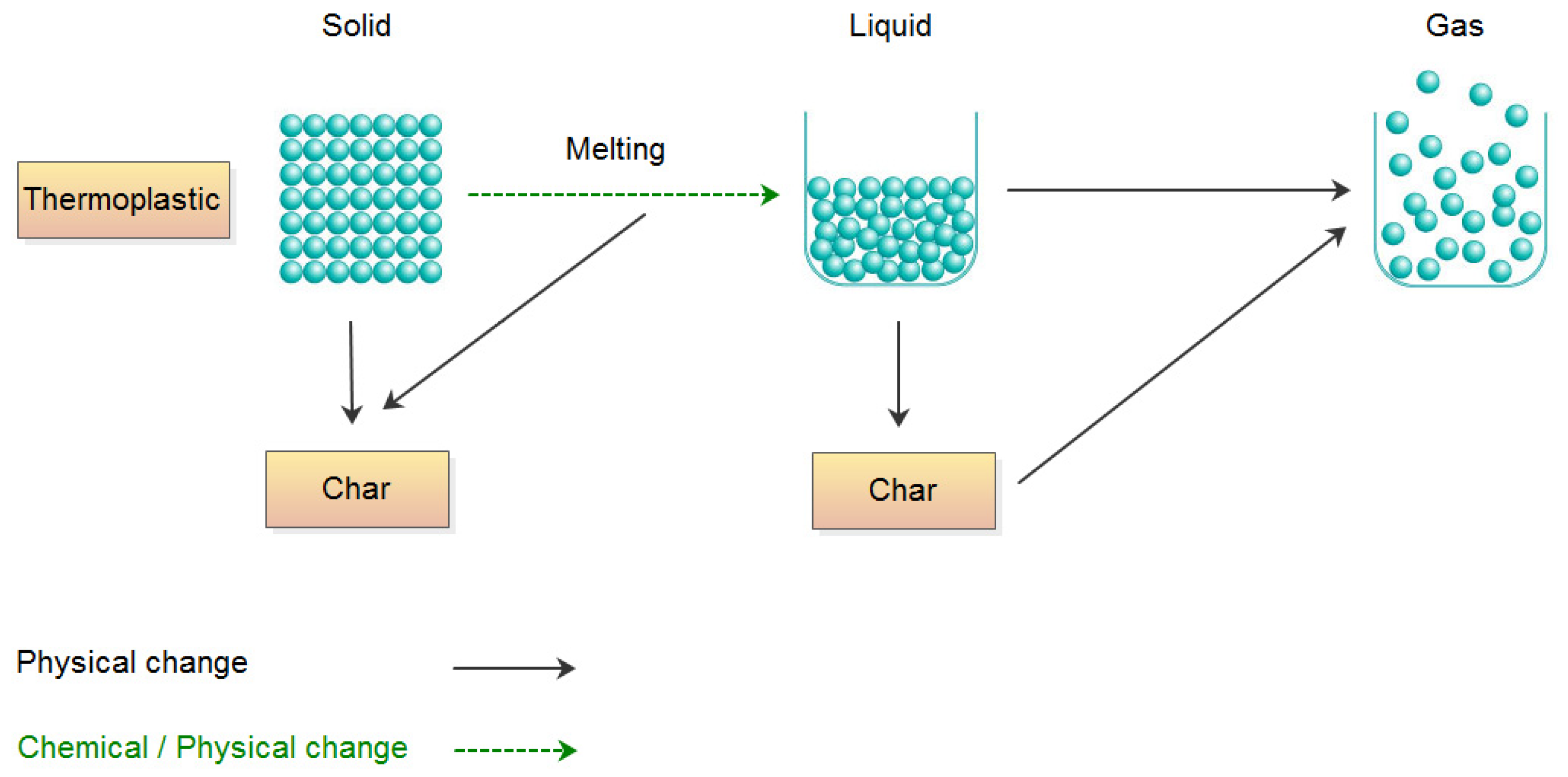
2.1. Physical and Chemical Changes During Polymers Degradation
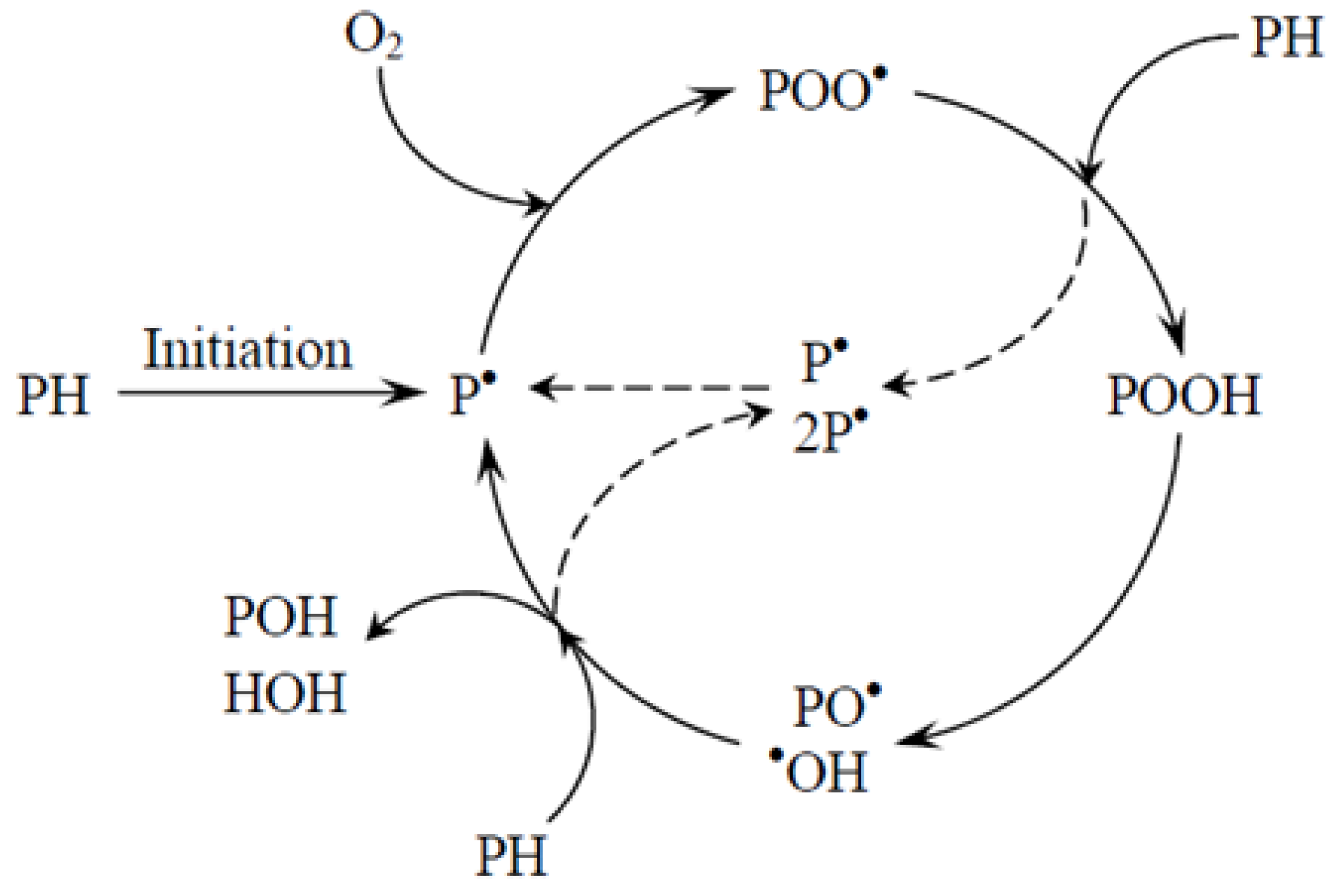
2.2. Oxidation Schemes
3. Ageing and Weathering of Polymeric Materials
3.1. Color Characterization and Yellowness Index Determination
- Abstraction of a hydrogen atom from the same or another molecule by an alkoxy radical, leading to the formation of hydroxyl groups.
- Abstraction of a hydrogen atom from the same or another molecule by an alkylperoxy radical, resulting in the formation of a hydroperoxide group.
- Further reactions of low-molecular-weight radicals and alkyl radicals in a chain process similar to hydrogen abstraction.
- Reactions of macroradicals with oxygen, leading to the formation of peroxy radicals.
- Photodecomposition of hydroperoxide groups, producing alkoxy, peroxy, and hydroxyl radicals within the polymer structure.
- Cleavage of alkoxy radicals resulting in terminal aldehyde groups and alkyl radicals.
3.2. Structural Changes During Thermal Ageing and Accelerated Weathering
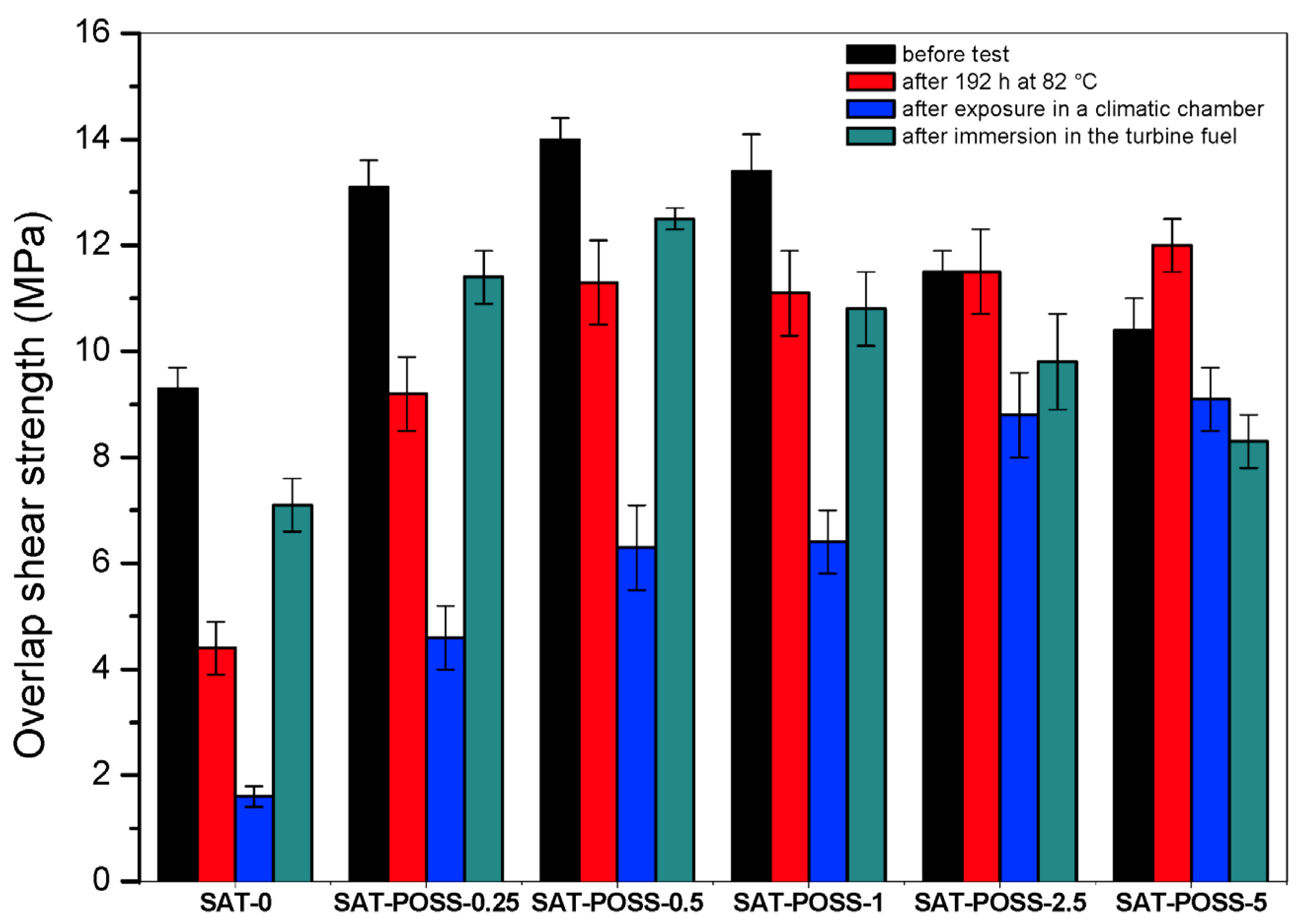
3.3. Mechanical Properties Changes During Ageing
3.4. Lifetime Predictions of Polymeric Materials
- To conduct scientific research aimed at understanding the mechanisms of polymer degradation.
- To perform comparative tests for selecting materials with the best stabilization effects.
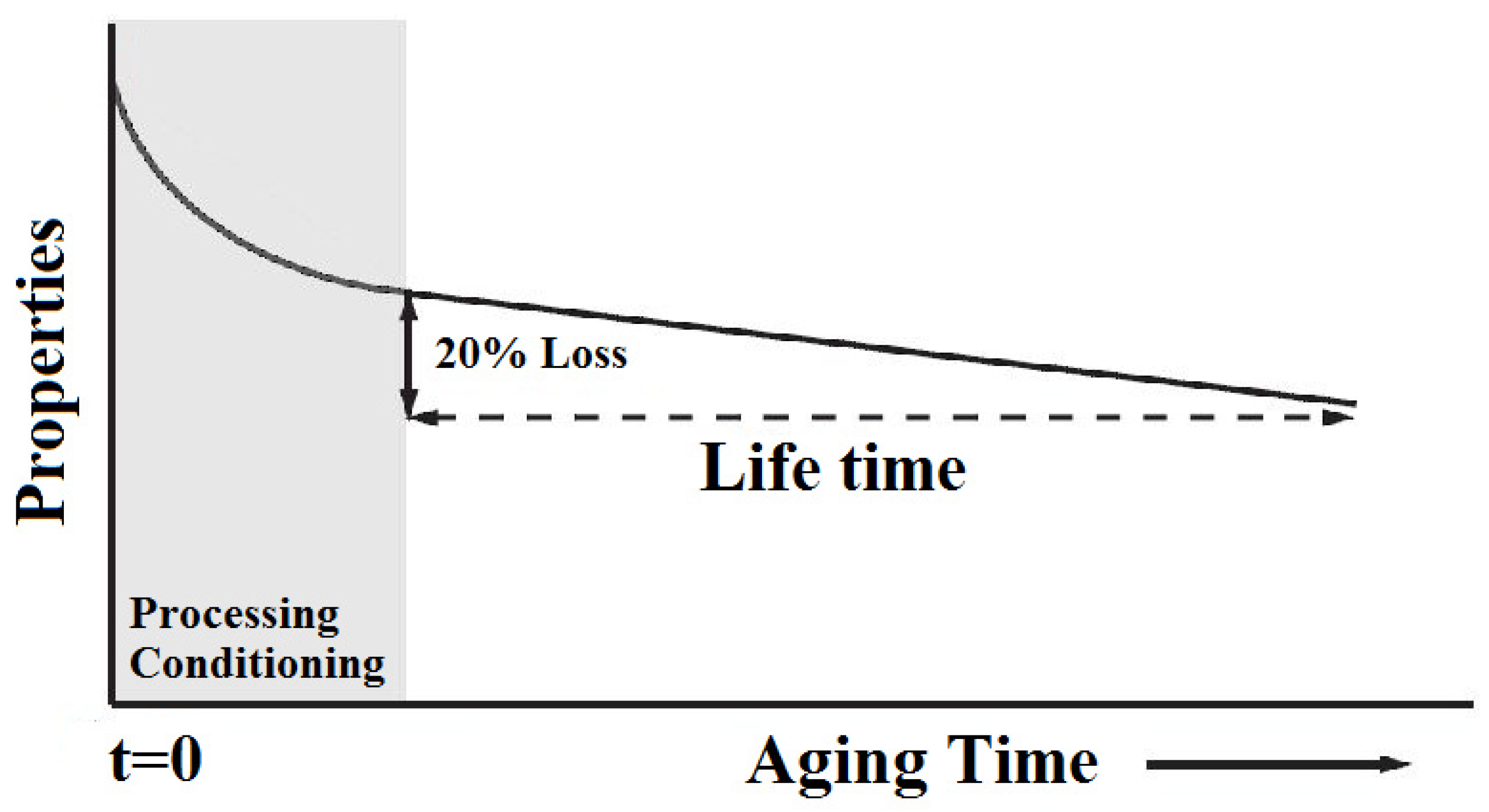
- To predict service life, i.e., to determine how long a given material will retain its properties.
3.5. Reliability Engineering
4. Conclusions and Future Outlook
Author Contributions
Funding
Institutional Review Board Statement
Informed Consent Statement
Data Availability Statement
Conflicts of Interest
Glossary
| POSS | Polyhedral Oligomeric Silsesquioxane |
| TG-FTIR | Thermogravimetry–Fourier Transform Infrared Spectroscopy |
| TG-MS | Thermogravimetry–Mass Spectrometry |
| TGA | Thermogravimetric Analysis |
| FT-IR | Fourier Transform Infrared Spectroscopy |
| UV–Vis | Ultraviolet–Visible Spectroscopy |
| SEM | Scanning Electron Microscopy |
| EDX (or EDS) | Energy-Dispersive X-ray Spectroscopy |
| DSC | Differential Scanning Calorimetry |
| TVA | Thermal Volatilization Analysis |
| GPC | Gel Permeation Chromatography |
| XRD | X-ray Diffraction |
| DMA | Dynamic Mechanical Analysis |
| Tg | Glass transition temperature |
| PS | Polystyrene |
| PP | Polypropylene |
| PU | polyurethane |
| ABS | Acrylonitrile–Butadiene–Styrene copolymer. |
| PBO | poly(p-phenylene benzobisoxazole) |
| AO | Atomic oxygen |
| SiO2 | Silicon dioxide |
| ZIF-8 | Zeolitic Imidazolate Framework-8 |
| PDA | Polydopamine |
| AAS | Atomic Absorption Spectroscopy |
| PGMA | Poly(glycidyl methacrylate) |
| LEO | Low Earth Orbit |
| LCA | Life Cycle Analysis |
| EoL | End-of-life |
| AI | Artificial Intelligence |
References
- Sarfraz, J.; Gulin-Sarfraz, T.; Nilsen-Nygaard, J.; Pettersen, M.K. Nanocomposites for Food Packaging Applications: An Overview. Nanomaterials 2020, 11, 10. [Google Scholar] [CrossRef]
- Hartmann-Thompson, C. (Ed.) Applications of Polyhedral Oligomeric Silsesquioxanes; Springer Science & Business Media: Berlin/Heidelberg, Germany, 2011; Volume 3. [Google Scholar]
- Giannelis, E.P. Polymer Layered Silicate Nanocomposites. Adv. Mater. 1996, 8, 29–35. [Google Scholar] [CrossRef]
- Varlot, K.; Reynaud, E.; Kloppfer, M.H.; Vigier, G.; Varlet, J. Clay-Reinforced Polyamide: Preferential Orientation of the Montmorillonite Sheets and the Polyamide Crystalline Lamellae. J. Polym. Sci. B Polym. Phys. 2001, 39, 1360–1370. [Google Scholar] [CrossRef]
- Camargo, P.H.C.; Satyanarayana, K.G.; Wypych, F. Nanocomposites: Synthesis, Structure, Properties and New Application Opportunities. Mater. Res. 2009, 12, 1–39. [Google Scholar] [CrossRef]
- Jeon, I.Y.; Baek, J.B. Nanocomposites Derived from Polymers and Inorganic Nanoparticles. Materials 2010, 3, 3654–3674. [Google Scholar] [CrossRef]
- Available online: https://www.polarismarketresearch.com/industry-analysis/Composites-Market (accessed on 4 November 2025).
- Liu, T.; Tjiu, W.C.; He, C.; Na, S.S.; Chung, T.S. A Processing-Induced Clay Dispersion and Its Effect on the Structure and Properties of Polyamide 6. Polym. Int. 2004, 53, 392–399. [Google Scholar] [CrossRef]
- He, Y.; Li, H.; Xiao, X.; Zhao, X. Polymer Degradation: Category, Mechanism and Development Prospect. In E3S Web of Conferences; EDP Sciences: Les Ulis, France, 2021; Volume 290, p. 01012. [Google Scholar]
- Cho, J.W.; Paul, D.R. Nylon 6 Nanocomposites by Melt Compounding. Polymer 2001, 42, 1083–1094. [Google Scholar] [CrossRef]
- Kiliaris, P.; Papaspyrides, C.D.; Pfaendner, R. Influence of Accelerated Aging on Clay-Reinforced Polyamide 6. Polym. Degrad. Stab. 2009, 94, 389–396. [Google Scholar] [CrossRef]
- Pielichowski, K.; Njuguna, J.; Majka, T.M. Thermal Degradation of Polymeric Materials; Elsevier: Amsterdam, The Netherlands, 2022. [Google Scholar]
- Choudhury, A.; Bhowmick, A.K.; Soddemann, M. Effect of Organo-Modified Clay on Accelerated Aging Resistance of Hydrogenated Nitrile Rubber Nanocomposites and Their Life Time Prediction. Polym. Degrad. Stab. 2010, 95, 2555–2562. [Google Scholar] [CrossRef]
- Alexandre, M.; Dubois, P. Polymer-Layered Silicate Nanocomposites: Preparation, Properties and Uses of a New Class of Materials. Mater. Sci. Eng. R. Rep. 2000, 28, 1–63. [Google Scholar] [CrossRef]
- Kausar, A. State-of-the-Art Overview on Polymer/POSS Nanocomposite. Polym. Plast. Technol. Eng. 2017, 56, 1401–1420. [Google Scholar] [CrossRef]
- Lommes, J.; Patzelt, G.; Stenzel, V. UV-Curable Polyimide/Layered Silicate Films with Improved Barrier Properties for the Protection of Semiconductor Chips. Microelectron. Eng. 2023, 277, 112014. [Google Scholar] [CrossRef]
- Hegyesi, N.; Pongrácz, S.; Vad, R.T.; Pukánszky, B. Coupling of PMMA to the Surface of a Layered Silicate by Intercalative Polymerization: Processes, Structure and Properties. Colloids Surf. A Physicochem. Eng. Asp. 2020, 601, 124979. [Google Scholar] [CrossRef]
- Guo, L.; Liang, R.; Zhang, Y.; Wang, L.; Wang, F.; Yen, J.; Jiang, J. Molecular Dynamics Study on the Interaction of Tricalcium Silicate/Polymer Composites. Chem. Phys. Lett. 2023, 811, 140193. [Google Scholar] [CrossRef]
- Ide, Y.; Tominaka, S.; Okuyama, T.; Tsunoji, N.; Ohara, K.; Mitome, M.; Sano, T.; Bando, Y.; Golberg, D. Microporous Materials Formed via Intercalation of Ultrathin Coordination Polymers in a Layered Silicate. Nano Energy 2019, 59, 162–168. [Google Scholar] [CrossRef]
- Gupta, A.; Patel, V.K.; Pandey, C. Functional Characterization of Nano-Porous Silicate-Polymer Composite for Bovine Serum Albumin Immobilization. Sens. Int. 2021, 2, 100080. [Google Scholar] [CrossRef]
- Blanco, I. The Rediscovery of POSS: A Molecule Rather than a Filler. Polymers 2018, 10, 904. [Google Scholar] [CrossRef]
- Zhou, Y.; She, W.; Hou, D.; Yin, B.; Chang, H.; Jiang, J.; Li, J. Modification of Incorporation and In-Situ Polymerization of Aniline on the Nano-Structure and Meso-Structure of Calcium Silicate Hydrates. Constr. Build. Mater. 2018, 182, 459–468. [Google Scholar] [CrossRef]
- Pfaendner, R. Nanocomposites: Industrial Opportunity or Challenge? Polym. Degrad. Stab. 2010, 95, 369–373. [Google Scholar] [CrossRef]
- Campomizzi, E.; Bender, H.; Hellens, W.V. Improving the Heat Resistance of Hydrogenated Nitrile Rubber Compounds. Part 2: Effect of a Novel Heat Stabilizer Additive on the Heat Resistance of HNBR. KGK Kautsch. Gummi Kunststoffe 2001, 54, 114–121. [Google Scholar]
- Kalia, S.; Pielichowski, K. (Eds.) Polymer/POSS Nanocomposites and Hybrid Materials; Springer International Publishing: Cham, Switzerland, 2018. [Google Scholar]
- Pielichowski, K.; Njuguna, J.; Janowski, B.; Pielichowski, J. Polyhedral Oligomeric Silsesquioxanes (POSS)-Containing Nanohybrid Polymers. In Supramolecular Polymers Polymeric Betains Oligomers; Springer: Berlin/Heidelberg, Germany, 2006; pp. 225–296. [Google Scholar]
- Zhang, W.; Camino, G.; Yang, R. Polymer/Polyhedral Oligomeric Silsesquioxane (POSS) Nanocomposites: An Overview of Fire Retardance. Prog. Polym. Sci. 2017, 67, 77–125. [Google Scholar] [CrossRef]
- Kabra, S.; Tandon, S.; Kandasubramanian, B. POSS Nanocomposites for Defense and Space Applications. In Polyhedral Oligomeric Silsesquioxane (POSS) Polymer Nanocomposites; Elsevier: Amsterdam, The Netherlands, 2021; pp. 481–498. [Google Scholar]
- Majka, T.M.; Raftopoulos, K.N.; Pielichowski, K. The Influence of POSS Nanoparticles on Selected Thermal Properties of Polyurethane-Based Hybrids. J. Therm. Anal. Calorim. 2018, 133, 289–301. [Google Scholar] [CrossRef]
- Lichtenhan, J.D.; Pielichowski, K.; Blanco, I. POSS-Based Polymers. Polymers 2019, 11, 1727. [Google Scholar] [CrossRef] [PubMed]
- Diao, S.; Mao, L.; Zhang, L.; Wang, Y. POSS/Polyurethane Hybrids and Nanocomposites: A Review on Preparation, Structure and Performance. Elastomers Compos. 2015, 50, 35–48. [Google Scholar] [CrossRef]
- Sattar, A.; Hafeez, S.; Hedar, M.; Saeed, M.; Hussain, T.; Intisar, A. Polymer/POSS Based Robust and Emerging Flame Retardant Nanocomposites: A Comprehensive Review. Nano-Struct. Nano-Objects 2025, 41, 101427. [Google Scholar] [CrossRef]
- Koutsoumpis, S.; Raftopoulos, K.N.; Jancia, M.; Pagacz, J.; Hebda, E.; Papadakis, C.M.; Pielichowski, K.; Pissis, P. POSS Moieties with PEG Vertex Groups as Diluent in Polyurethane Elastomers: Morphology and Phase Separation. Macromolecules 2016, 49, 6507–6517. [Google Scholar] [CrossRef]
- Raftopoulos, K.N.; Jancia, M.; Aravopoulou, D.; Hebda, E.; Pielichowski, K.; Pissis, P. POSS along the Hard Segments of Polyurethane. Phase Separation and Molecular Dynamics. Macromolecules 2013, 46, 7378–7386. [Google Scholar] [CrossRef]
- Raftopoulos, K.N.; Koutsoumpis, S.; Jancia, M.; Lewicki, J.P.; Kyriakos, K.; Mason, H.E.; Harley, S.J.; Hebda, E.; Papadakis, C.M.; Pielichowski, K.; et al. Reduced Phase Separation and Slowing of Dynamics in Polyurethanes with Three-Dimensional POSS-Based Cross-Linking Moieties. Macromolecules 2015, 48, 1429–1441. [Google Scholar] [CrossRef]
- Blanco, I. Decomposition and Ageing of Hybrid Materials with POSS. In Polymer/POSS Nanocomposites and Hybrid Materials: Preparation, Properties, Applications; Springer International Publishing: Berlin/Heidelberg, Germany, 2018; pp. 415–462. [Google Scholar]
- Huang, J.C.; He, C.B.; Xiao, Y.; Mya, K.Y.; Dai, J.; Siow, Y.P. Polyimide/POSS Nanocomposites: Interfacial Interaction, Thermal Properties and Mechanical Properties. Polymer 2003, 44, 4491–4499. [Google Scholar] [CrossRef]
- Pavlidou, S.; Papaspyrides, C.D. A Review on Polymer–Layered Silicate Nanocomposites. Prog. Polym. Sci. 2008, 33, 1119–1198. [Google Scholar] [CrossRef]
- Tayouri, M.I.; Estaji, S.; Mousavi, S.R.; Salkhi Khasraghi, S.; Jahanmardi, R.; Nouranian, S.; Arjmand, M.; Khonakdar, H.A. Degradation of Polymer Nanocomposites Filled with Graphene Oxide and Reduced Graphene Oxide Nanoparticles: A Review of Current Status. Polym. Degrad. Stab. 2022, 206, 110179. [Google Scholar] [CrossRef]
- Mazumder, M.R.H.; Mathews, L.D.; Mateti, S.; Salim, N.V.; Parameswaranpillai, J.; Govindaraj, P.; Hameed, N. Boron Nitride Based Polymer Nanocomposites for Heat Dissipation and Thermal Management Applications. Appl. Mater. Today 2022, 29, 101672. [Google Scholar] [CrossRef]
- Lopez-Cuesta, J.M.; Longuet, C.; Chivas-Joly, C. Thermal Degradation, Flammability, and Potential Toxicity of Polymer Nanocomposites. In Health and Environmental Safety of Nanomaterials: Polymer Nanocomposites and Other Materials Containing Nanoparticles; Woodhead Publishing: Cambridge, UK, 2021; pp. 343–373. [Google Scholar] [CrossRef]
- Vahabi, H.; Sonnier, R.; Taguet, A.; Otazaghine, B.; Saeb, M.R.; Beyer, G. Halloysite Nanotubes (HNTs)/Polymer Nanocomposites: Thermal Degradation and Flame Retardancy. In Clay Nanoparticles: Properties and Applications; Elsevier: Amsterdam, The Netherlands, 2020; pp. 67–93. [Google Scholar] [CrossRef]
- Ahmed, L.; Zhang, B.; Hatanaka, L.C.; Mannan, M.S. Application of Polymer Nanocomposites in the Flame Retardancy Study. J. Loss Prev. Process Ind. 2018, 55, 381–391. [Google Scholar] [CrossRef]
- Tang, G.; Hu, Y.; Song, L. Study on the Flammability and Thermal Degradation of a Novel Intumescent Flame Retardant EPDM Composite. Procedia Eng. 2013, 62, 371–376. [Google Scholar] [CrossRef]
- Razali, A.R.; Qin, Y. A Review on Micro-Manufacturing, Micro-Forming and Their Key Issues. Procedia Eng. 2013, 53, 665–672. [Google Scholar] [CrossRef]
- Rychly, J.; Matisova-Rychla, L.; Csmorova, K.; Achimsky, L.; Audouin, L.; Tcharkhtchi, A.; Verdu, J. Kinetics of Mass Changes in Oxidation of Polypropylene. Polym. Degrad. Stab. 1997, 58, 269–274. [Google Scholar] [CrossRef]
- Ghaemy, M.; Scott, G. Photo- and Thermal Oxidation of ABS: Correlation of Loss of Impact Strength with Degradation of the Rubber Component. Polym. Degrad. Stab. 1981, 3, 233–242. [Google Scholar] [CrossRef]
- Girois, S.; Delprat, P.; Audouin, L.; Verdu, J. Oxidation Thickness Profiles during Photooxidation of Non-Photostabilized Polypropylene. Polym. Degrad. Stab. 1997, 56, 169–177. [Google Scholar] [CrossRef]
- Jellinek, H.H.G. The combustion of organic polymers, C. F. Cullis and M. M. Hirschler, Eds., Oxford university press, London, 1981. Price: $59.00. J. Polym. Sci. Polym. Lett. Ed. 1982, 20, 606. [Google Scholar] [CrossRef]
- Abu Rowin, W.; Asha, A.B.; Narain, R.; Ghaemi, S. A Novel Approach for Drag Reduction Using Polymer Coating. Ocean. Eng. 2021, 240, 109895. [Google Scholar] [CrossRef]
- Gómez, M.; Reggio, D.; Lazzari, M. Detection of Degradation Markers from Polymer Surfaces by a Novel SERS-Based Strategy. Talanta 2019, 191, 156–161. [Google Scholar] [CrossRef] [PubMed]
- Posner, S. Developments in Flame Retardants for Interior Materials and Textiles. In Interior Textiles: Design and Developments; Woodhead Publishing: Cambridge, UK, 2009; pp. 211–228. [Google Scholar] [CrossRef]
- Kashiwagi, T.; Hirata, T.; Brown, J.E. Thermal and Oxidative Degradation of Poly(Methyl Methacrylate): Molecular Weight. Macromolecules 1985, 18, 131–138. [Google Scholar] [CrossRef]
- Stuetz, D.E.; DiEdwardo, A.H.; Zitomer, F.; Barnes, B.P. Polymer Flammability. II. J. Polym. Sci. Polym. Chem. Ed. 1980, 18, 987–1009. [Google Scholar] [CrossRef]
- Brauman, S.K. Polymer Degradation during Combustion. J. Polym. Sci. B Polym. Phys. 1988, 26, 1159–1171. [Google Scholar] [CrossRef]
- Zhang, C.; Zhang, J.; Xu, T.; Sima, H.; Hou, J. Effects of Polyhedral Oligomeric Silsesquioxane (POSS) on Thermal and Mechanical Properties of Polysiloxane Foam. Materials 2020, 13, 4570. [Google Scholar] [CrossRef]
- Kashiwagi, T.; Nambu, H. Global Kinetic Constants for Thermal Oxidative Degradation of a Cellulosic Paper. Combust. Flame 1992, 88, 345–368. [Google Scholar] [CrossRef]
- Hoffman, A.J.; Yee, H.; Mills, G.; Hoffmann, M.R. Photoinitiated Polymerization of Methyl Methacrylate Using Q-Sized ZnO Colloids. J. Phys. Chem. 1992, 96, 5540–5546. [Google Scholar] [CrossRef]
- Starnes, W.H.; Chung, H.; Wojciechowski, B.J.; Skillicorn, D.E.; Benedikt, G.M. Polymer Durability; ACS Publications: Washington, DC, USA, 1996; 249p. [Google Scholar] [CrossRef]
- Gabbay, S.M.; Stivala, S.S.; Reich, L. Kinetics of the Thermal Oxidation of Isotactic Poly(1-Pentene). Polymer 1975, 16, 749–752. [Google Scholar] [CrossRef]
- Kirschweng, B.; Tátraaljai, D.; Földes, E.; Pukánszky, B. Natural Antioxidants as Stabilizers for Polymers. Polym. Degrad. Stab. 2017, 145, 25–40. [Google Scholar] [CrossRef]
- Scott, G. Antioxidants in Science, Technology, Medicine and Nutrition; Elsevier: Amsterdam, The Netherlands, 1997. [Google Scholar]
- Janowski, B.; Pielichowski, K. Thermo (Oxidative) Stability of Novel Polyurethane/POSS Nanohybrid Elastomers. Thermochim. Acta 2008, 478, 51–53. [Google Scholar] [CrossRef]
- Carlsson, D.J.; Wiles, D.M. Photooxidation of Polypropylene Films. V. Origin of Preferential Surface Oxidation. Macromolecules 1971, 4, 179–184. [Google Scholar] [CrossRef]
- Scott, G. Initiation Processes in Polymer Degradation. Polym. Degrad. Stab. 1995, 48, 315–324. [Google Scholar] [CrossRef]
- Gugumus, F. Novel Role for Tropospheric Ozone in Initiation of Autoxidation. Polym. Degrad. Stab. 1998, 62, 403–406. [Google Scholar] [CrossRef]
- Mayo, F.R.; Miller, A.A. Oxidation of Unsaturated Compounds. II. Reactions of Styrene Peroxide. J. Am. Chem. Soc. 1956, 78, 1023–1034. [Google Scholar] [CrossRef]
- Deanin, R.D. Aspects of degradation and stabilization of polymers, H. H. G. Jellinek, Ed., Elsevier, Oxford and New York, 1978, 690 pp. J. Polym. Sci. Polym. Lett. Ed. 1978, 16, 482–483. [Google Scholar] [CrossRef]
- McMillen, D.F.; Golden, D.M. Hydrocarbon Bond Dissociation Energies. Annu. Rev. Phys. Chem. 2003, 33, 493–532. [Google Scholar] [CrossRef]
- Castelhano, A.L.; Griller, D. Heats of Formation of Some Simple Alkyl Radicals. J. Am. Chem. Soc. 1982, 104, 3655–3659. [Google Scholar] [CrossRef]
- Bartlett, P.D.; Guaraldi, G. Di-t-Butyl Trioxide and Di-t-Butyl Tetroxide. J. Am. Chem. Soc. 1967, 89, 4799–4801. [Google Scholar] [CrossRef]
- Nakano, M.; Takayama, K.; Shimizu, Y.; Tsuji, Y.; Inaba, H.; Migita, T. Spectroscopic Evidence for the Generation of Singlet Oxygen in Self-Reaction of Sec-Peroxy Radicals. J. Am. Chem. Soc. 1976, 98, 1974–1975. [Google Scholar] [CrossRef]
- Seyhan, A.T.; Gojny, F.H.; Tanoǧlu, M.; Schulte, K. Critical Aspects Related to Processing of Carbon Nanotube/Unsaturated Thermoset Polyester Nanocomposites. Eur. Polym. J. 2007, 43, 374–379. [Google Scholar] [CrossRef]
- Seyhan, A.T.; Gojny, F.H.; Tanoğlu, M.; Schulte, K. Rheological and Dynamic-Mechanical Behavior of Carbon Nanotube/Vinyl Ester–Polyester Suspensions and Their Nanocomposites. Eur. Polym. J. 2007, 43, 2836–2847. [Google Scholar] [CrossRef]
- Bilugali Mahadevaswamy, M.; Aradhya, R.; Jagannathan, S.R. Effect of Thermal Ageing on Electrical, Mechanical Properties of Glass Fiber Reinforced Polymer and Its Impact on Service Life. Int. J. Polym. Anal. Charact. 2023, 28, 433–447. [Google Scholar] [CrossRef]
- Delannoy, R.; Quélennec, B.; Tognetti, V.; Delbreilh, L.; Delpouve, N.; Richaud, E. Glass and Sub-Glass Relaxation Changes Induced by Thermal Ageing of Epoxy-Amine Polymer Networks—A DMA Study. Polym. Degrad. Stab. 2023, 216, 110487. [Google Scholar] [CrossRef]
- Yang, C.; Lu, Y.; Cao, L.; Liu, Z.; Zhang, T.; Yu, H.; Zhang, B.; Dong, Z. Polymer Degradation Mechanism and Chemical Composition Relationship of Hot-Poured Asphaltic Crack Repair Material during Thermal Aging Exploiting Fluorescence Microscopy and Gel Permeation Chromatography. Constr. Build. Mater. 2021, 302, 124412. [Google Scholar] [CrossRef]
- Sun, G.; Ma, J.; Sun, D.; Li, B.; Ling, S.; Lu, T. Influence of Thermal Oxidative Aging on Temperature Induced Self-Healing Transition of Polymer Modified Bitumens. Mater. Des. 2020, 192, 108717. [Google Scholar] [CrossRef]
- Huang, X.; Zhi, C.; Lin, Y.; Bao, H.; Wu, G.; Jiang, P.; Mai, Y.W. Thermal Conductivity of Graphene-Based Polymer Nanocomposites. Mater. Sci. Eng. R Rep. 2020, 142, 100577. [Google Scholar] [CrossRef]
- Rapp, G.; Tireau, J.; Bussiere, P.O.; Chenal, J.M.; Rousset, F.; Chazeau, L.; Gardette, J.L.; Therias, S. Influence of the Physical State of a Polymer Blend on Thermal Ageing. Polym. Degrad. Stab. 2019, 163, 161–173. [Google Scholar] [CrossRef]
- Celina, M.; Linde, E.; Brunson, D.; Quintana, A.; Giron, N. Overview of Accelerated Aging and Polymer Degradation Kinetics for Combined Radiation-Thermal Environments. Polym. Degrad. Stab. 2019, 166, 353–378. [Google Scholar] [CrossRef]
- Wypych, G. PVC Degradation and Stabilization; Elsevier: Amsterdam, The Netherlands, 2025. [Google Scholar]
- White, J.R.; Turnbull, A. Weathering of Polymers: Mechanisms of Degradation and Stabilization, Testing Strategies and Modelling. J. Mater. Sci. 2004, 29, 584–613. [Google Scholar] [CrossRef]
- Halliwell, S.M. Polymers in Building and Construction; Rapra Review Reports: Expert Overviews Covering the Science and Technology of Rubber and Plastics Polymers in Building and Construction; Rapra Technology: Shrewsbury, UK, 2002; 13p. [Google Scholar]
- Girois, S.; Schipper, P.S. Enhanced Weatherability of Exterior PVC Building Products. J. Vinyl Addit. Technol. 2001, 7, 61–66. [Google Scholar] [CrossRef]
- Longeway, G.D.; Witenhafer, D.E. Increasing PVC Suspension Polymerization Productivity by Using Temperature-Programmed Reactions. J. Vinyl Addit. Technol. 2000, 6, 100–103. [Google Scholar] [CrossRef]
- Gumargalieva, K.Z.; Ivanov, V.B.; Zaikov, G.E.; Moiseev, J.V.; Pokholok, T.V. Problems of Ageing and Stabilization of Poly(Vinyl Chloride). Polym. Degrad. Stab. 1996, 52, 73–79. [Google Scholar] [CrossRef]
- Grassie, N.; Scott, G. Polymer Degradation and Stabilisation; CUP Archive: Cambridge, UK, 1988. [Google Scholar]
- Andrady, A.L.; Hamid, S.H.; Hu, X.; Torikai, A. Effects of Increased Solar Ultraviolet Radiation on Materials. J. Photochem. Photobiol. B 1998, 46, 96–103. [Google Scholar] [CrossRef] [PubMed]
- Feldman, D. Polymer Weathering: Photo-Oxidation. J. Polym. Env. 2002, 10, 163–173. [Google Scholar] [CrossRef]
- Hoyer, E.; McKellar, J.F.; Allen, N.S. Photochemistry of Man-Made Polymers. Hrsg. Applied Scienc Publishers Ltd., London 1979. 306 S., 138 Abb., 37 Tab., London: Applied Science Publishers Ltd. 1979. £24,00. J. Prakt. Chem. 1982, 324, 1071–1072. [Google Scholar] [CrossRef]
- Stankovich, S.; Dikin, D.A.; Dommett, G.H.B.; Kohlhaas, K.M.; Zimney, E.J.; Stach, E.A.; Piner, R.D.; Nguyen, S.B.T.; Ruoff, R.S. Graphene-Based Composite Materials. Nature 2006, 442, 282–286. [Google Scholar] [CrossRef]
- Zhao, X.; Guo, L.; Wang, L.; Wang, Z.; Peng, M.; Zheng, L.; Niu, Q. The Study of POSS/Polyurethane as a Consolidant for Fragile Cultural Objects. Coatings 2022, 12, 153. [Google Scholar] [CrossRef]
- Ramirez, N.V.; Sanchez-Soto, M. Effects of Poss Nanoparticles on ABS-g-Ma Thermo Oxidation Resistance. Polym. Compos. 2012, 33, 1707–1718. [Google Scholar] [CrossRef]
- Wang, H.; Chen, M.; Jin, C.; Niu, B.; Jiang, S.; Li, X.; Jiang, S. Antibacterial [2-(Methacryloyloxy) Ethyl] Trimethylammonium Chloride Functionalized Reduced Graphene Oxide/Poly(Ethylene-Co-Vinyl Alcohol) Multilayer Barrier Film for Food Packaging. J. Agric. Food Chem. 2018, 66, 732–739. [Google Scholar] [CrossRef]
- Dintcheva, N.T.; Morici, E.; Arrigo, R.; La Mantia, F.P.; Malatesta, V.; Schwab, J.J. UV-Stabilisation of Polystyrene-Based Nanocomposites Provided by Polyhedral Oligomeric Silsesquioxanes (POSS). Polym. Degrad. Stab. 2012, 97, 2313–2322. [Google Scholar] [CrossRef]
- Niemczyk, A.; Dziubek, K.; Grzymek, M.; Czaja, K. Accelerated Laboratory Weathering of Polypropylene Composites Filled with Synthetic Silicon-Based Compounds. Polym. Degrad. Stab. 2019, 161, 30–38. [Google Scholar] [CrossRef]
- Bram, A.I.; Gouzman, I.; Bolker, A.; Atar, N.; Eliaz, N.; Verker, R. Influence of POSS Type on the Space Environment Durability of Epoxy-POSS Nanocomposites. Nanomaterials 2022, 12, 257. [Google Scholar] [CrossRef] [PubMed]
- Jang, Y.W.; Min, B.G.; Yoon, K.H. Enhancement in Compressive Strength and UV Ageing-Resistance of Poly(p-Phenylene Benzobisoxazole) Nanocomposite Fiber Containing Modified Polyhedral Oligomeric Silsesquioxane. Fibers Polym. 2017, 18, 575–581. [Google Scholar] [CrossRef]
- Starkova, O.; Gagani, A.I.; Karl, C.W.; Rocha, I.B.; Burlakovs, J.; Krauklis, A.E. Modelling of Environmental Ageing of Polymers and Polymer Composites—Durability Prediction Methods. Polymers 2022, 14, 907. [Google Scholar] [CrossRef] [PubMed]
- Dharmaraj, K.; Sanjay Kumar, M.; Sathish, S.; Prakash, M.; Shanmugan, S. Octaphenyl Polyhedral Oligomeric Silsesquioxane-Driven In Situ Growth of Corrosive-Resistant and Hydrophobic-Oleophilic ZIF-8 Nanostructures for Oil-Water Separation. ACS Appl. Nano Mater. 2025, 8, 2897–2911. [Google Scholar] [CrossRef]
- Michałowski, S.; Hebda, E.; Pielichowski, K. Thermal Stability and Flammability of Polyurethane Foams Chemically Reinforced with POSS. J. Therm. Anal. Calorim. 2017, 130, 155–163. [Google Scholar] [CrossRef]
- Cangialosi, D.; Boucher, V.M.; Alegría, A.; Colmenero, J. Physical Aging in Polymers and Polymer Nanocomposites: Recent Results and Open Questions. Soft Matter 2013, 9, 8619–8630. [Google Scholar] [CrossRef]
- Zaharescu, T. Aging and Lifetime Analysis of POSS Nanocomposites. In Polyhedral Oligomeric Silsesquioxane (POSS) Polymer Nanocomposites: From Synthesis to Applications; Elsevier: Amsterdam, The Netherlands, 2021; pp. 517–526. ISBN 9780128213476. [Google Scholar]
- Lewicki, J.P.; Pielichowski, K.; De La Croix, P.T.; Janowski, B.; Todd, D.; Liggat, J.J. Thermal Degradation Studies of Polyurethane/POSS Nanohybrid Elastomers. Polym. Degrad. Stab. 2010, 95, 1099–1105. [Google Scholar] [CrossRef]
- Pagacz, J.; Hebda, E.; Michałowski, S.; Ozimek, J.; Sternik, D.; Pielichowski, K. Polyurethane Foams Chemically Reinforced with POSS—Thermal Degradation Studies. Thermochim. Acta 2016, 642, 95–104. [Google Scholar] [CrossRef]
- Xiong, A.; Li, J. Constructing Stable Transparent Hydrophobic POSS@epoxy-Group Coatings for Waterproofing Protection of Decorative-Painting Surfaces. Polym. Bull. 2024, 81, 1403–1419. [Google Scholar] [CrossRef]
- Kowalczyk, A.; Kowalczyk, K.; Gziut, K. Synthesis of Monoacryloxypropyl-POSS-Based Hybrid Epoxyacrylate Copolymers and Their Application in Thermally Curable Structural Self-Adhesive Tapes. Polymers 2019, 11, 2058. [Google Scholar] [CrossRef]
- Pecht, M.; Dasgupta, A. Physics-of-Failure: An Approach to Reliable Product Development. J. IEST 1995, 38, 30–34. [Google Scholar] [CrossRef]
- Laycock, B.; Nikolić, M.; Colwell, J.M.; Gauthier, E.; Halley, P.; Bottle, S.; George, G. Lifetime Prediction of Biodegradable Polymers. Prog. Polym. Sci. 2017, 71, 144–189. [Google Scholar] [CrossRef]
- Guedes, R.M. Lifetime Prediction of Polymers and Polymer Matrix Composite Structures: Failure Criteria and Accelerated Characterization. In Creep and Fatigue in Polymer Matrix Composites; Woodhead Publishing: Cambridge, UK, 2019; pp. 269–301. [Google Scholar] [CrossRef]
- Wang, T.; Zhang, Z.; Gao, J.; Yin, J.; Sun, R.; Bao, F.; Ma, R. Synthesis of Graphene Oxide Modified Poly(Sebacic Anhydride) Hybrid Materials for Controlled Release Applications. Int. J. Polym. Mater. Polym. Biomater. 2014, 63, 726–732. [Google Scholar] [CrossRef]
- Zheng, W.; Lu, X.; Wong, S.C. Electrical and Mechanical Properties of Expanded Graphite-Reinforced High-Density Polyethylene. J. Appl. Polym. Sci. 2004, 91, 2781–2788. [Google Scholar] [CrossRef]
- Ramanathan, T.; Stankovich, S.; Dikin, D.A.; Liu, H.; Shen, H.; Nguyen, S.T.; Brinson, L.C. Graphitic Nanofillers in PMMA Nanocomposites—An Investigation of Particle Size and Dispersion and Their Influence on Nanocomposite Properties. J. Polym. Sci. B Polym. Phys. 2007, 45, 2097–2112. [Google Scholar] [CrossRef]
- Liang, J.; Wang, Y.; Huang, Y.; Ma, Y.; Liu, Z.; Cai, J.; Zhang, C.; Gao, H.; Chen, Y. Electromagnetic Interference Shielding of Graphene/Epoxy Composites. Carbon 2009, 47, 922–925. [Google Scholar] [CrossRef]
- Ye, L.; Meng, X.Y.; Ji, X.; Li, Z.M.; Tang, J.H. Synthesis and Characterization of Expandable Graphite–Poly(Methyl Methacrylate) Composite Particles and Their Application to Flame Retardation of Rigid Polyurethane Foams. Polym. Degrad. Stab. 2009, 94, 971–979. [Google Scholar] [CrossRef]
- Xie, X.; Mao, C.; Liu, X.; Zhang, Y.; Cui, Z.; Yang, X.; Yeung, K.W.K.; Pan, H.; Chu, P.K.; Wu, S. Synergistic Bacteria Killing Through Photodynamic and Physical Actions of Graphene Oxide/Ag/Collagen Coating. ACS Appl. Mater. Interfaces 2017, 9, 26417–26428. [Google Scholar] [CrossRef]
- Zhang, L.; Liu, Z.; Wu, D.; Zhang, H.; Zhu, P. Fast and Synergetic Fatigue Life Prediction of Short Fiber Reinforced Polymer Composites from Monotonic and Cyclic Loading Behavior. Compos. Sci. Technol. 2023, 241, 110121. [Google Scholar] [CrossRef]
- Raza, K.; Akhtar, S.S.; Abubakar, A.A.; Alqahtani, A.M.; Zubair, S.M.; Arif, A.F.M. Design and Development of Polymer Composite Heat Exchanger Tubes Using an Integrated Thermal-Hydraulic and Material Design Framework. Int. Commun. Heat Mass Transf. 2023, 148, 107054. [Google Scholar] [CrossRef]
- Zhao, X.; Huang, X.F.; Wang, Z.; Peng, K.M.; Lu, L.J.; Liu, J. Composite-Polymer Modified Bentonite Enhances Anti-Seepage and Barrier Performance Under High-Concentration Heavy-Metal Solution. J. Clean. Prod. 2022, 376, 134253. [Google Scholar] [CrossRef]
- Guo, R.; Li, C.; Niu, Y.; Xian, G. The Fatigue Performances of Carbon Fiber Reinforced Polymer Composites—A Review. J. Mater. Res. Technol. 2022, 21, 4773–4789. [Google Scholar] [CrossRef]
- Chatziparaskeva, G.; Papamichael, I.; Voukkali, I.; Loizia, P.; Sourkouni, G.; Argirusis, C.; Zorpas, A.A. End-of-Life of Composite Materials in the Framework of the Circular Economy. Microplastics 2022, 1, 377–392. [Google Scholar] [CrossRef]
- Habib, M.A.; Subeshan, B.; Kalyanakumar, C.; Asmatulu, R.; Rahman, M.M.; Asmatulu, E. Current Practices in Recycling and Reusing of Aircraft Materials and Equipment. Mater. Circ. Econ. 2025, 7, 1–36. [Google Scholar] [CrossRef]
- Hussain, A.; Podgursky, V.; Viljus, M.; Awan, M.R. The Role of Paradigms and Technical Strategies for Implementation of the Circular Economy in the Polymer and Composite Recycling Industries. Adv. Ind. Eng. Polym. Res. 2023, 6, 1–12. [Google Scholar] [CrossRef]
- Collias, D.I.; James, M.I.; Layman, J.M. Introduction—Circular Economy of Polymers and Recycling Technologies. In Circular Economy of Polymers: Topics in Recycling Technologies; American Chemical Society: Washington, DC, USA, 2021; pp. 1–21. [Google Scholar]
- Hinderliter, B.; Croll, S. Monte Carlo Approach to Estimating the Photodegradation of Polymer Coatings. J. Coat. Technol. Res. 2005, 2, 483–491. [Google Scholar] [CrossRef]
- Bauer, D.R. Predicting In-Service Weatherability of Automotive Coatings: A New Approach. J. Coat. Technol. 1997, 69, 85–96. [Google Scholar] [CrossRef]
- Persson, B.N.J.; Albohr, O.; Tartaglino, U.; Volokitin, A.I.; Tosatti, E. On the Nature of Surface Roughness with Application to Contact Mechanics, Sealing, Rubber and Adhesion. J. Phys. Condens. Matter 2004, 17, R1. [Google Scholar] [CrossRef]
- Keshavamurthy, R.; Tambrallimath, V.; Saravanabavan, D. Development of Polymer Composites by Additive Manufacturing Process. Encycl. Mater. Compos. 2021, 2, 804–814. [Google Scholar] [CrossRef]
- Muhamad, I.I.; Zahan, K.A.; Pa’e, N.; Salehudin, M.H.; Khairuddin, N.; Marsin, A.M.; Yusof, A.H.M.; Salleh, E. Accelerated Testing Methodology for Long-Term Life Prediction of Cellulose-Based Polymeric Composite Materials. In Durability and Life Prediction in Biocomposites, Fibre-Reinforced Composites and Hybrid Composites; Woodhead Publishing: Cambridge, UK, 2019; pp. 149–171. [Google Scholar] [CrossRef]
- Bhuiyan, F.H.; Fertig, R.S. A Combined Creep and Fatigue Prediction Methodology for Fiber-Reinforced Polymer Composites Based on the Kinetic Theory of Fracture. In Creep and Fatigue in Polymer Matrix Composites; Woodhead Publishing: Cambridge, UK, 2019; pp. 349–402. [Google Scholar] [CrossRef]
- Flynn, J.H. A Critique of Lifetime Prediction of Polymers by Thermal Analysis. J. Therm. Anal. Calorim. 1995, 44, 499–512. [Google Scholar] [CrossRef]
- Flynn, J.H. Degradation Kinetics Applied to Lifetime Predictions of Polymers. Polym. Eng. Sci. 1980, 20, 675–677. [Google Scholar] [CrossRef]
- Flynn, J.H. Lifetime Prediction for Polymers from Thermal Analytical Experiments—Problems and How to Deal with Some of Them. Thermochim. Acta 1988, 134, 115–120. [Google Scholar] [CrossRef]
- Blanco, I. Lifetime Prediction of Polymers: To Bet, or Not to Bet-Is This the Question? Materials 2018, 11, 1383. [Google Scholar] [CrossRef]
- Majka, T.M.; Pielichowski, K. Future Perspectives. In Polymer Composites with Functionalized Nanoparticles: Synthesis, Properties, and Applications; Elsevier: Amsterdam, The Netherlands, 2019; pp. 467–470. [Google Scholar] [CrossRef]



| Initiation | |||
| Polymer | |||
| Propagation | |||
| Chain branching | |||
| Termination | |||
| Non-radical product | |||
| Non-radical product | |||
| Non-radical product + O2 |
| References | System/Material | Type of Simulated (Accelerated) Ageing | Ageing Conditions Stated in the Text |
|---|---|---|---|
| [96] | PS + 5% of various POSS | Photo-ageing (UV) | UVB lamps, 55 °C, up to 240 h |
| [97] | PP/POSS (various organosilicon additives; incl. POSS8, POSS18) | Accelerated laboratory ageing/weathering | Atlas Weather-Ometer Ci4000, according to ISO 4892-2 A1 |
| [98] | Epoxy resins + various POSS | Simulated space environment ageing | Outgassing tests and exposure to atomic oxygen (AO) as the main ageing factor in LEO |
| [99] | PBO (poly(p-phenylene benzobisoxazole)) + trisilanolisobutyl-POSS | UV ageing (impact on mechanical properties) | UV irradiation under a 400 W lamp, 300–500 nm, exposure times 8 h and 16 h |
| [100,101] | Ph-POSS@ZIF-8 and Ph-POSS@ZIF-8@PDA@Sponge | “Harsh environmental conditions”—chemical/exposure tests | Tests in acidic, alkaline, and saline solutions; long-term performance: 25 separation cycles |
| [93] | PU/POSS (moisture-curable PU + epoxy-functional silsesquioxanes) | Thermo-oxidative ageing (yellowing) | The effect is stated: delay of ageing onset from 8.32 h to 20.78 h |
Disclaimer/Publisher’s Note: The statements, opinions and data contained in all publications are solely those of the individual author(s) and contributor(s) and not of MDPI and/or the editor(s). MDPI and/or the editor(s) disclaim responsibility for any injury to people or property resulting from any ideas, methods, instructions or products referred to in the content. |
© 2025 by the authors. Licensee MDPI, Basel, Switzerland. This article is an open access article distributed under the terms and conditions of the Creative Commons Attribution (CC BY) license.
Share and Cite
Majka, T.M.; Bukowczan, A.; Piech, R.; Pielichowski, K. Thermo-Oxidative Decomposition and Ageing of Polymer/POSS Hybrids and Nanocomposites—Failure Predictions and Lifetime Design for Circular End-of-Life Planning. Materials 2026, 19, 95. https://doi.org/10.3390/ma19010095
Majka TM, Bukowczan A, Piech R, Pielichowski K. Thermo-Oxidative Decomposition and Ageing of Polymer/POSS Hybrids and Nanocomposites—Failure Predictions and Lifetime Design for Circular End-of-Life Planning. Materials. 2026; 19(1):95. https://doi.org/10.3390/ma19010095
Chicago/Turabian StyleMajka, Tomasz M., Artur Bukowczan, Radosław Piech, and Krzysztof Pielichowski. 2026. "Thermo-Oxidative Decomposition and Ageing of Polymer/POSS Hybrids and Nanocomposites—Failure Predictions and Lifetime Design for Circular End-of-Life Planning" Materials 19, no. 1: 95. https://doi.org/10.3390/ma19010095
APA StyleMajka, T. M., Bukowczan, A., Piech, R., & Pielichowski, K. (2026). Thermo-Oxidative Decomposition and Ageing of Polymer/POSS Hybrids and Nanocomposites—Failure Predictions and Lifetime Design for Circular End-of-Life Planning. Materials, 19(1), 95. https://doi.org/10.3390/ma19010095