4.1. Thermal Decomposition and Pyrolysis Characteristics
Biomass pyrolysis is a thermochemical process that involves heating biomass at tem- peratures above 400 °C in an inert atmosphere (oxygen-free) [
38], typically using nitrogen as the inert gas [
39]. Through pyrolysis, volatile matter is decomposed, resulting in products with higher calorific values than the raw biomass. The primary pyrolysis products include biochar (solid), bio-oil (liquid), and non-condensable gases [
39]. The typical thermochemical conversion process consists of the moisture release stage (100–200 °C), followed by the devolatilization and pyrolysis stage (200–600 °C), and culminates in the fixed carbon combustion and ash formation stage (600–900 °C). Reactors such as fixed-bed, fluidized-bed, and rotary kiln can be employed. The primary fragmentation behavior of RDF pellets under rapid pyrolysis entails complex thermal degradation mechanisms that exhibit pronounced temperature dependence [
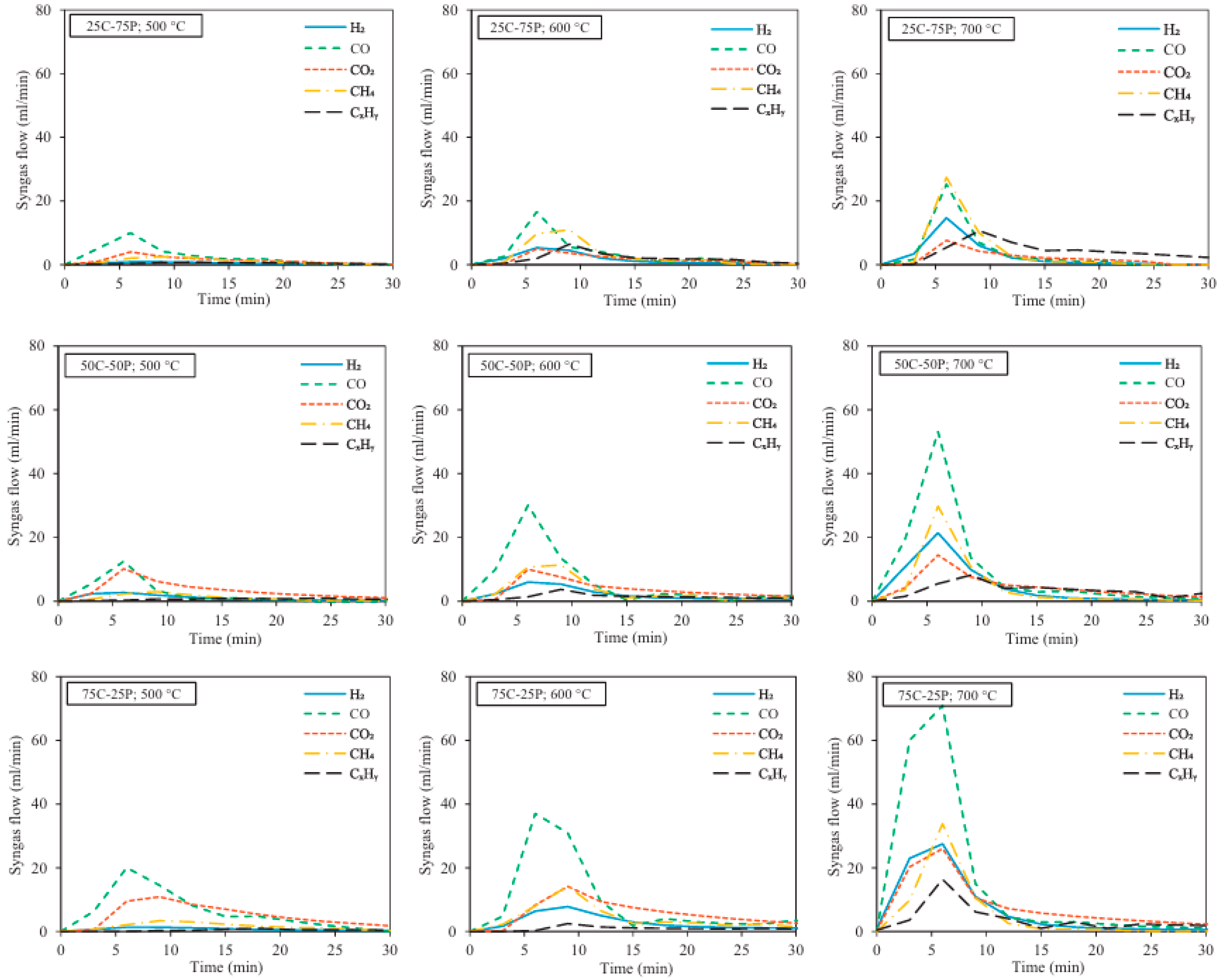
40]. For example, the flow rate of syngas produced by different RDF particles during pyrolysis at 500–700 °C in
Figure 7. This figure illustrates the volumetric flow rates of syngas components generated from the pyrolysis of RDF pellets at varying blending ratios and temperatures, with measurements taken at 3 min intervals. Notably, CO production initiates earlier than that of other components, particularly at lower pyrolysis temperatures. For instance, during pyrolysis at 500 °C, CO release is detectable within the first 3 min, whereas significant amounts of other syngas components only emerge after 6 min. This early release of CO is attributed to the decomposition of lignocellulosic components within the cardboard. Their study indicates that significant fragmentation occurs within specific temperature ranges, highlighting the importance of identifying these critical temperature zones for efficient pyrolysis. While direct temperature ranges for RDF pyrolysis are not explicitly detailed in the provided documents, insights can be inferred from related biomass and waste pyrolysis studies. For instance, it is reported that the pyrolysis of oily sludge occurs mainly between 150 °C and 750 °C, with notable decomposition stages within this range [
41]. Furthermore, the kinetic and thermodynamic analyses performed by [
42] the mustard oil residue and by [
43] the cellulose and lignin highlight the importance of activation energy distributions and thermogravimetric profiles in understanding pyrolysis mechanisms. These studies underscore that the decomposition of complex feedstocks such as RDF involves multiple overlapping reactions, each with its own critical temperature range, typically spanning from low to high temperatures depending on the constituent materials. Although specific mechanistic pathways for RDF are not detailed in the provided documents, the collective evidence suggests that the pyrolysis process encompasses initial devolatilization at lower temperatures, followed by secondary cracking and char formation at higher temperatures. The temperature window of approximately 150 °C to 750 °C appears to be a common range where significant thermal transformations occur, aligning with the general behavior observed in similar waste and biomass materials [
41].
Table 3 summarizes different types of pyrolysis.
Table 4 summarizes the main operating parameters of pyrolysis.
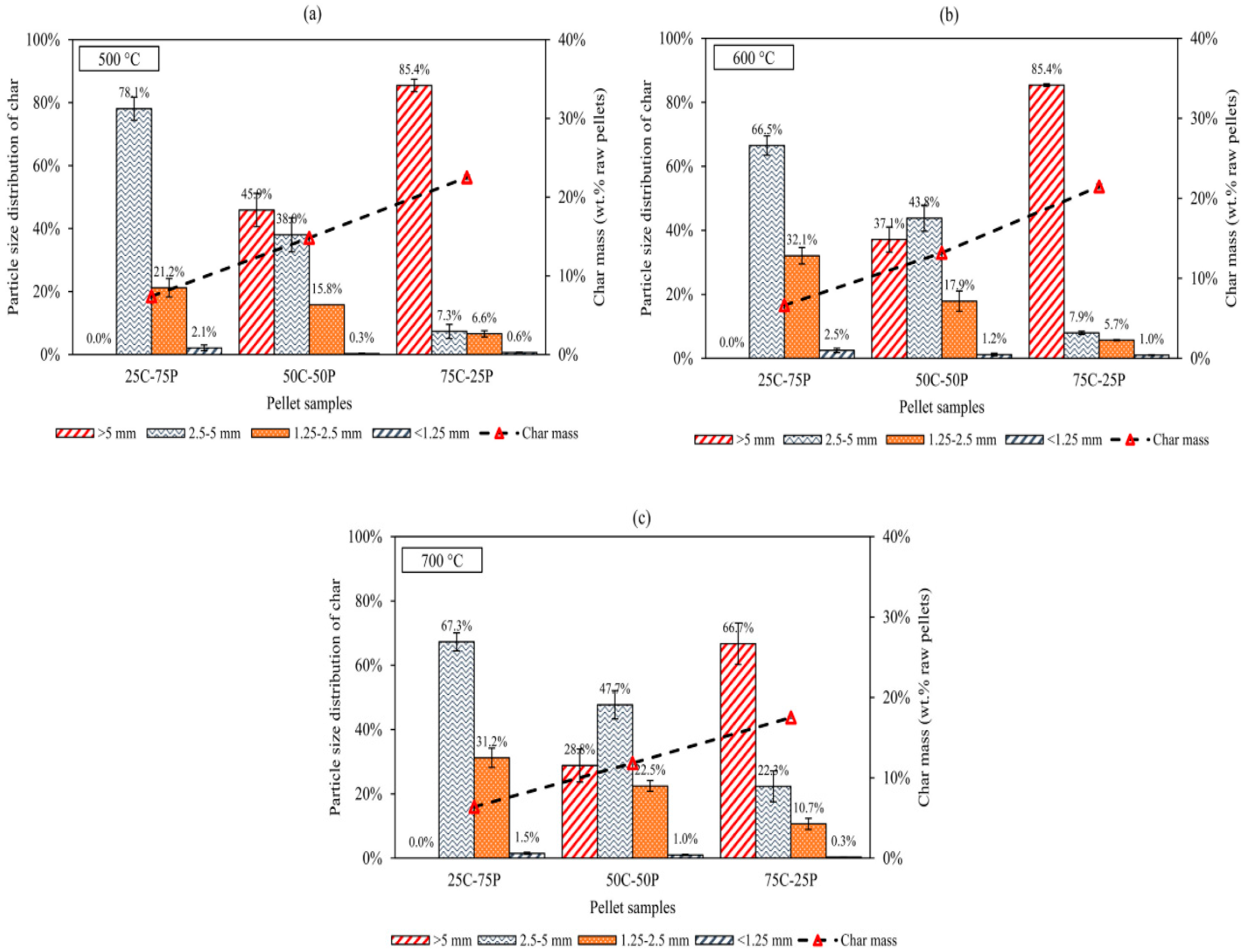
Figure 8 depicts the particle size distribution of char fragments obtained from pellets after 30 min of pyrolysis at different temperatures. Generally, increasing the pyrolysis temperature shifts the final char particle size distribution toward smaller sizes. This trend is particularly pronounced in samples with higher cardboard content. For example, with 75C–25P pellets, pyrolysis at 500 °C yields 85.4 wt% of char particles larger than 5 mm. This fraction decreases to 66.7 wt% at 700 °C. Concurrently, the proportions of smaller particles increase: the shares in the 2.5–5 mm and 1.25–2.5 mm size ranges rise from 7.3 wt% and 6.6 wt% to 22.3 wt% and 10.7 wt%, respectively.
The pyrolysis mechanism and the critical temperature range of RDF are essential aspects for understanding its thermal decomposition behavior and optimizing its utilization [
40]. Regarding conventional pyrolysis of RDF, several issues have been summarized, such as its relatively low calorific value, high content of non-combustible gases like CO and CO
2; high oxygen content leading to strong acidity, instability, and low calorific value; and high yield of solid carbon residue, though its pore structure and development may be inferior to that of char produced by catalytic pyrolysis. Compared to conventional pyrolysis, catalytic pyrolysis refers to the process of heating refuse-derived fuel (RDF) to medium-high temperatures (typically 400–600 °C) in an oxygen-free or oxygen-deficient environment with the presence of catalysts (such as zeolites, red mud, etc.), enabling thermochemical decomposition and directional conversion into high-value products. Therefore, this article reviews some recent research on catalytic pyrolysis of RDF. Jiayu Xu et al. selected zeolites (e.g., HZSM-5) for their excellent shape-selective catalytic ability, effectively converting pyrolysis vapors into aromatic hydrocarbons. Iron (Fe) modification was applied to further enhance deoxygenation performance, promote aromatization reactions, and potentially reduce coking. It was confirmed that Fe-modified zeolites, compared to unmodified zeolites, initially yielded higher quantities and higher-quality aromatic oils [
35]. Red mud, a solid waste with high alkalinity, is derived from the processing of bauxite to extract alumina. It is estimated that about 175 million tons of red mud are generated worldwide each year, and the total reserves surpass 6 billion tons [
44]. Its main components include Fe
2O
3, Al
2O
3, TiO
2, Na
2O, and some unreacted alkaline solutions. Zhang et al. identified red mud among catalysts with superior deoxygenation performance during biomass pyrolysis, noting its influence on bio-oil quality and coking behavior, which is critical for optimizing pyrolysis catalysts [
36].
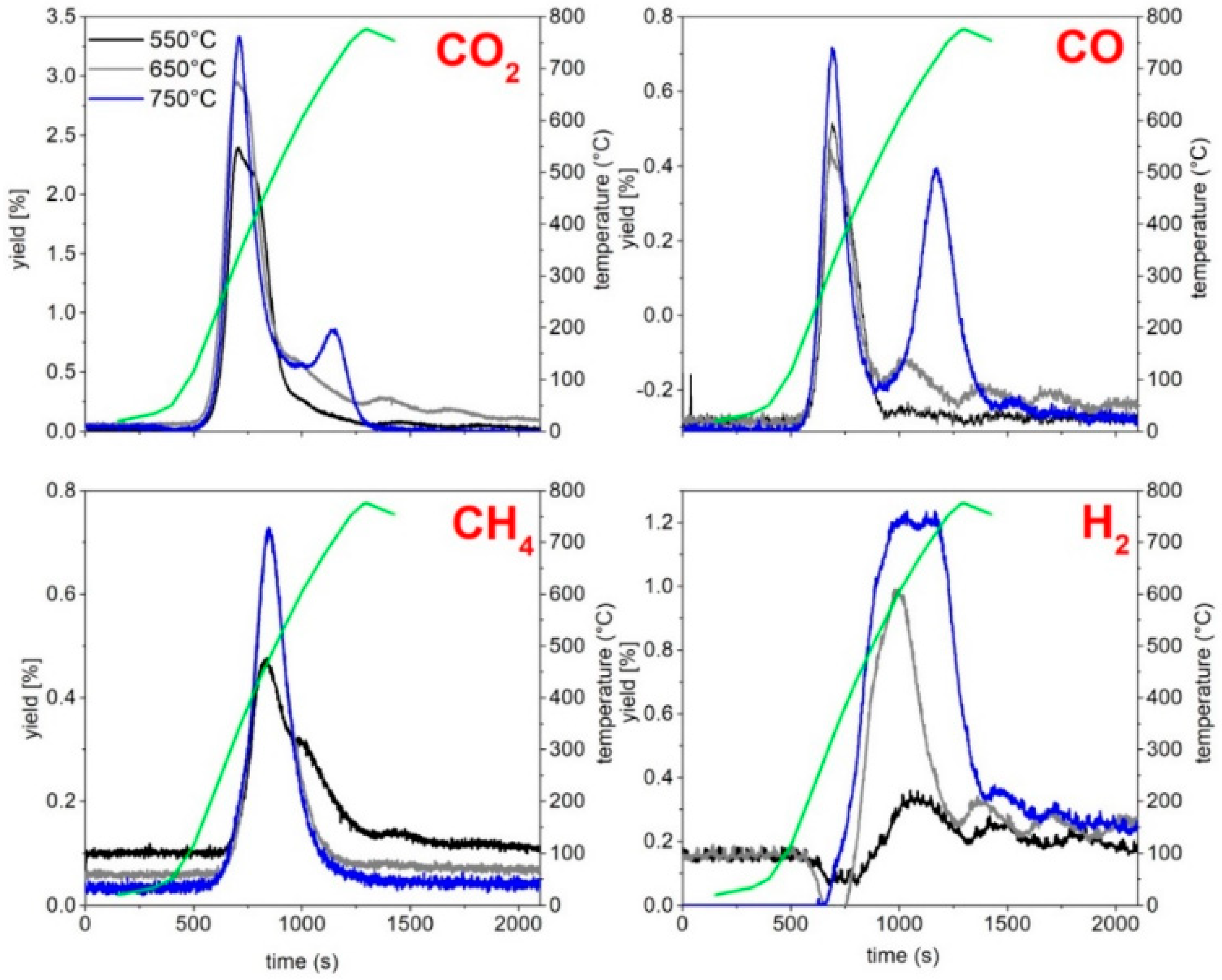
During the process of RDF pyrolysis and catalytic pyrolysis, relevant volatile compo- nents and cracking products are generated. As presented in
Figure 9, the H
2, CO, CO
2, and CH
4 release profiles recorded during the three pyrolysis tests are displayed. The analysis of volatile components and cleavage products in RDF (Refuse-Derived Fuel) is a critical aspect of understanding its chemical composition and potential applications. The RDF combustion process involves three distinct stages: thermal decomposition, volatile matter combustion, and fixed carbon combustion. The primary volatile components and pyrolysis products of RDF are primarily produced during both the volatile matter combustion and the fixed carbon combustion stages. During volatile matter combustion, the following pyrolysis species derived from lignocellulosic biomass and plastic components in RDF samples can be identified: short-chain carboxylic acids, furans, phenols, saturated and unsaturated aliphatic chains, aromatic compounds, nitro and other nitrogen-containing compounds, chlorinated compounds, and polycyclic aromatic hydrocarbons [
45]. In the fixed carbon combustion stage, a large amount of carbon dioxide is produced.
4.2. Combustion Kinetics and Mechanisms
The combustion mechanism of RDF describes the detailed pathways and processes involving a series of physical and chemical steps that RDF undergoes during its combustion. The combustion process of RDF and similar biomass or waste materials involves distinct stages characterized by thermal decomposition, volatile combustion, and fixed carbon combustion, each influenced by various factors such as heating rate, material composition, and co-firing conditions. The initial stage of thermal decomposition, often associated with dehydration and volatile release, has been extensively studied through thermogravimetric analysis (TGA). The decomposition of biomass proceeds through two distinct stages for wood, cotton, and cotton wool. In contrast, a third stage—corresponding to a minor weight loss around 700 °C—can also be observed for paper, cardboard and natural rubber [
46]. The significant impact of heating rates on combustion characteristics, noting that higher heating rates influence the kinetics and the control parameters such as activation energy and reaction order during the thermal degradation of hazelnut husk [
47]. The volatile combustion stage, which involves the oxidation of released volatile matter, is critical for understanding ignition and burnout behavior. Li et al. [
48] investigated the combustion of Shenhua coal semi-char co-firing with straw, highlighting the importance of kinetic parameters obtained via the Coats–Redfern method to describe volatile oxidation. Qi et al. [
49] demonstrated that the addition of FeCl3 during hydrothermal carbonization enhances the conversion of volatile matter to fixed carbon, elevating ignition temperatures and improving overall combustion performance. This suggests that modifications in fuel composition can significantly influence volatile combustion characteristics. The fixed carbon combustion stage, representing the oxidation of residual char, is crucial for the complete combustion process. Studies such as those by [
50,
51] utilized thermogravimetric methods to analyze co-combustion systems, revealing that the interaction between different fuels can alter the kinetics during this stage. Mao et al. observed that co-combustion of petroleum coke and hydrochar could be effectively modeled using the Kissinger–Akahira–Sunose method, indicating the importance of kinetic modeling in understanding fixed carbon oxidation. Yang et al. further noted that co-firing food waste with pulverized coal could enhance combustion rates, especially when heat transfer between components is optimized. The Arrhenius model reaction rate equation is written as (1). The expression of the FWO method is written as (2).
Table 5 summarizes the main parameters and meanings of the Arrhenius model.
Table 6 summarizes the main parameters of the FWO model and their meanings.
To facilitate a correct understanding of the reactions occurring during RDF combustion, it has been found highly useful to employ combustion kinetic models for investigation, as these models can provide crucial information such as activation energy, pre-exponential factors, reaction orders, and other related parameters [
54]. Research on RDF combustion kinetics is based on simulations of the combustion process of Refuse-Derived Fuel (RDF) using the Arrhenius model and the Flynn-Wall-Ozawa (FWO) kinetic model [
36]. The Arrhenius model is a model-fitting method used to calculate the kinetic parameters of thermal decomposition or combustion processes of solid fuels via thermogravimetric analysis data. Based on the Arrhenius equation, this method fits experimental data by assuming a reaction order
to estimate the activation energy
and the pre-exponential factor
[
52]. Flynn-Wall-Ozawa (FWO) method is an isoconversional, model-free kinetic method used to calculate the activation energy of solid fuels (such as coal, municipal solid waste, and refuse-derived fuel) under nonisothermal conditions [
53]. The Arrhenius model is the most typical and widely used acceleration model in temperature stress tests, while the FWO kinetic model is an effective method for studying the thermal degradation kinetics of polymers using TGA data, which has garnered significant academic attention in recent years. These methods play a key role in understanding the thermal degradation and combustion mechanisms of polymers, biomass, and other carbonaceous solid fuels. Model-free methods such as FWO have been extensively used to evaluate activation energy without presupposing specific reaction mechanisms. Hu et al. [
55] employed FWO and other isoconversional methods to analyze the pyrolysis behavior of wheat straw, demonstrating the effectiveness of the FWO method in capturing the kinetic characteristics of biomass decomposition. Goitom et al. [
56] discussed approaches to optimize detailed reaction mechanisms by fitting Arrhenius parameters to experimental data, which is crucial for the accurate simulation of combustion processes.
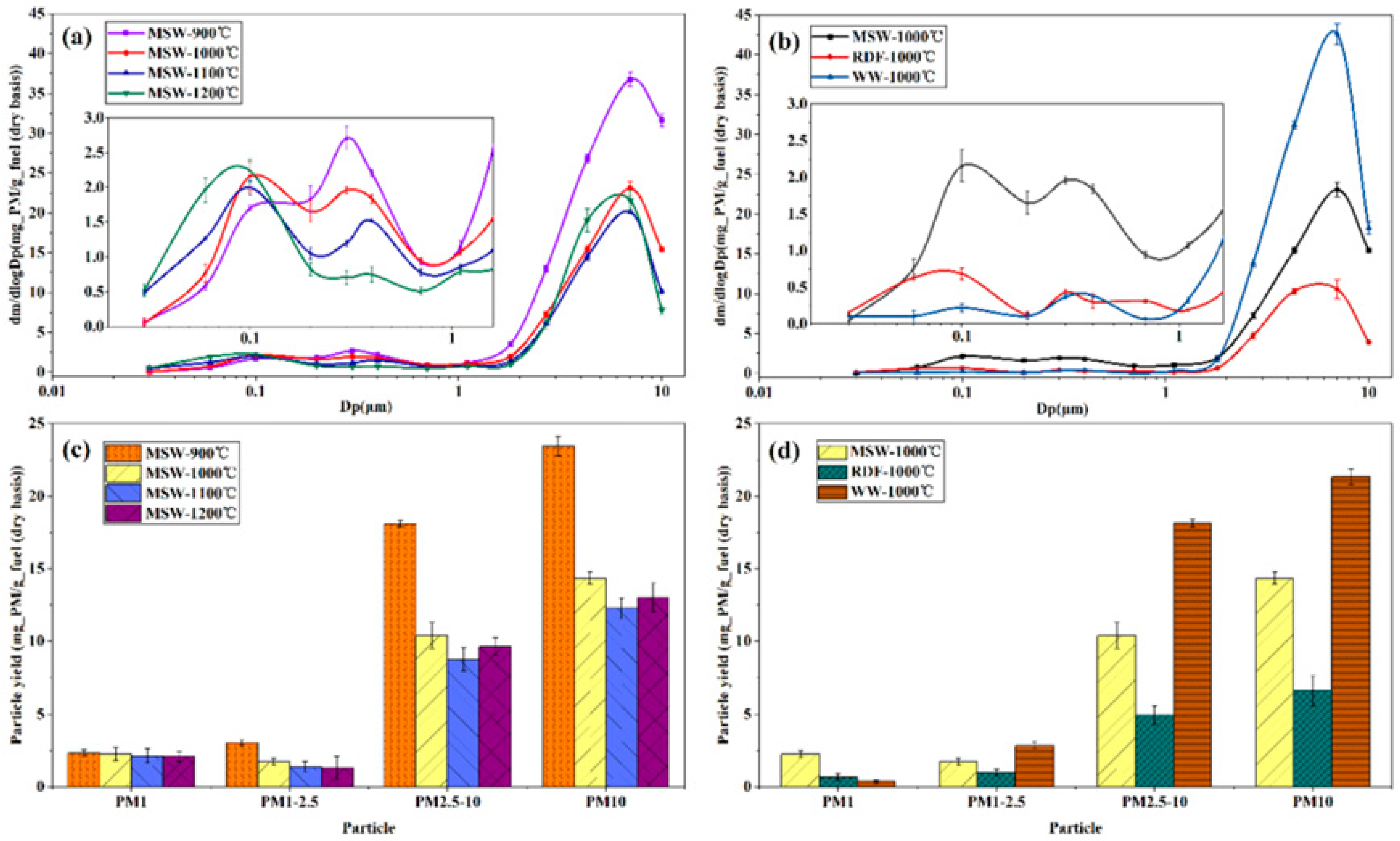
As shown in
Figure 10a,b, the mass-based particle size distribution of PM10 from MSW combustion exhibits a trimodal pattern, characterized by three distinct peaks at approximately 0.1 μm, 0.3 μm, and 7 μm. With increasing combustion temperature, the peak at 0.1 μm shifts toward a smaller aerodynamic diameter, whereas the peak at 0.3 μm moves in the opposite direction. The peak at 7 μm remains largely unchanged in position. At 1000 °C, the peak locations for PM10 from RDF and wood waste (WW) combustion align with those of MSW. However, the peak intensities differ significantly: at 0.1 μm, the intensities for RDF and WW are only about one-third and one-ninth of that for MSW, respectively. At 7 μm, the corresponding peak intensities for RDF and WW are half and twice that of MSW, respectively.
Figure 10c illustrates that as combustion temperature rises, the yields of PM1, PM1–2.5, PM2.5–10, and PM10 from MSW generally decrease. By integrating this observation with
Figure 10a, the decline in PM concentration within the 0.2–0.7 μm range can be attributed mainly to the reduced yield of PM1. Furthermore,
Figure 10d indicates that at a given temperature, PM1 yield follows the order: MSW > RDF > WW. In contrast, the yields of PM1–2.5, PM2.5–10, and PM10 all follow the sequence: WW > MSW > RDF [
57].
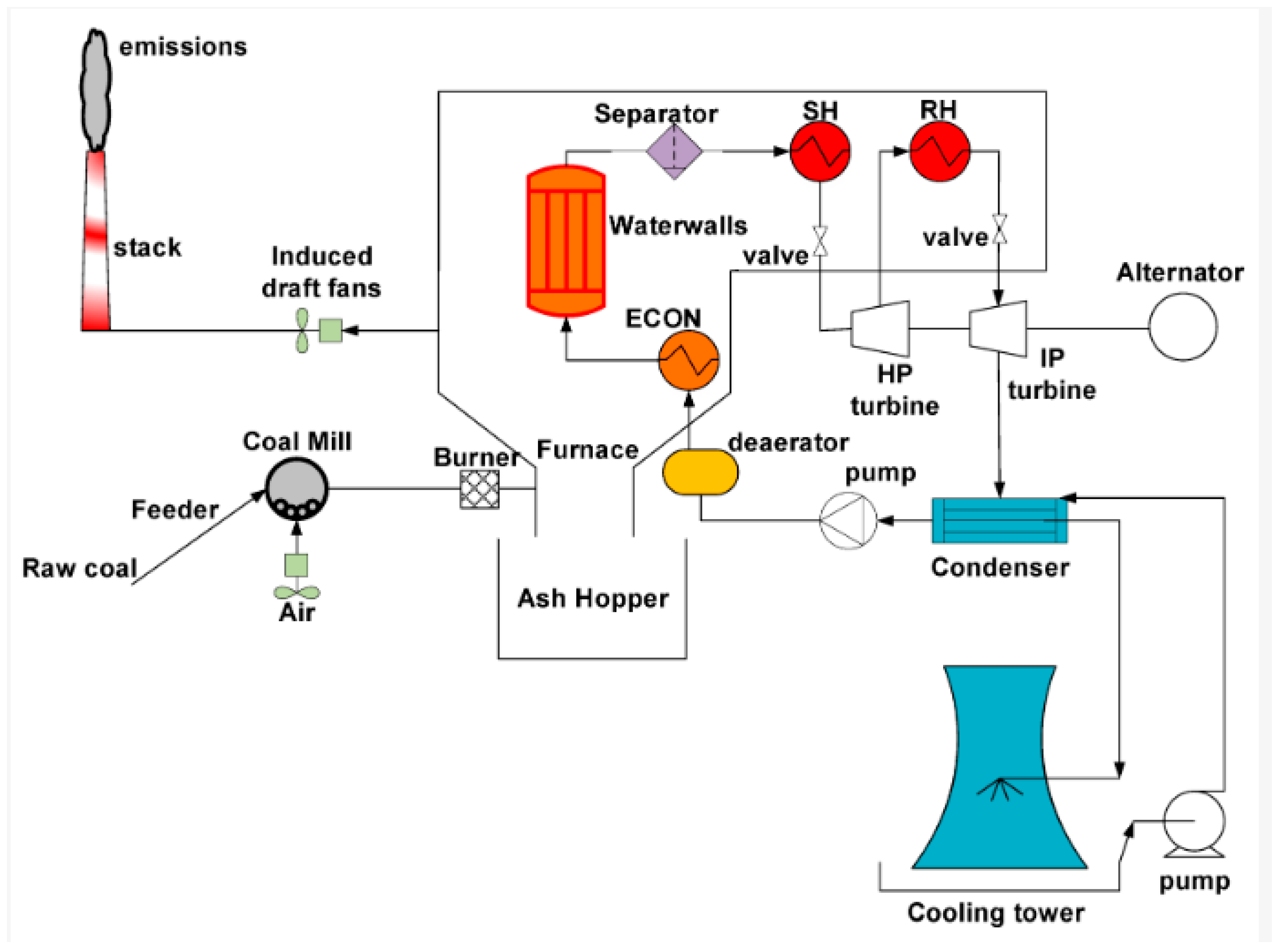
However, introducing RDF into supercritical/ultra-supercritical boilers designed primarily for pulverized coal combustion creates significant compatibility issues. Co-firing optimization strategies are developed precisely to resolve these conflicts. The combustion characteristics of RDF in comparison with coal and biomass fuels have been explored through various studies, highlighting differences in physiochemical properties, ignition behavior, and combustion performance. The physiochemical properties and combustion behavior of biomass waste, including sawdust char, which shares similarities with RDF in terms of residual carbon content and combustion kinetics [
58]. Their findings suggest that biomass-derived fuels like sawdust char exhibit distinct combustion characteristics influenced by their physiochemical composition, which can inform the combustion of RDF blends. Wang et al. [
59] conducted a comparative analysis of biomass–coal blends, including agricultural residues, which are often components of RDF. Their thermogravimetric analysis revealed that biomass and coal blends display different combustion behaviors, with biomass residues generally showing higher reactivity and lower ignition temperatures compared to coal. This indicates that RDF, which may contain biomass and waste plastics, could have a combustion profile that differs significantly from pure coal, potentially leading to more complex ignition and burnout characteristics. The combustion of high plastic content RDF pellets, noting that high plastic content influences ash behavior and fusion tendencies during combustion [
60]. Their results indicated that RDF with high plastic content produces soft ash at lower air fluxes but can form larger fused ash lumps at higher fluxes, which could impact slagging and fouling in combustion systems. This contrasts with coal, which typically produces more stable ash, and biomass, which tends to generate less fusible ash, highlighting the importance of fuel composition in combustion performance. Furthermore, the study the on ignition enhancement of solid fuels, including biomass and charcoal, provides insights into ignition strategies that could be applicable to RDF combustion [
61]. Their findings on vortex flow structures for ignition suggest that similar approaches might improve start-up performance when combusting RDF, especially considering its heterogeneous composition.





 and
and