1. Introduction
The global transition toward carbon-neutral energy systems, driven by the urgent need to address climate change and enhance energy security, has led to a rapid expansion of renewable energy sources such as solar and wind power. The International Energy Agency (IEA) projects that by 2030, the world’s installed renewable energy capacity will increase by over 90% compared to 2023 levels. In response to this trend, nations are implementing ambitious long-term energy strategies. For instance, South Korea’s “11th Basic Plan for Long-term Electricity Supply and Demand (2024–2038)” aims to increase renewable energy capacity from 31.4 GW in 2023 to 125.9 GW by 2038, constituting approximately 47% of the total power generation infrastructure [
1].
This fundamental shift in the energy landscape introduces significant technical challenges. The inherent intermittency of renewable energy sources, which fluctuate with weather conditions and time of day, creates a temporal mismatch between energy generation and demand. To ensure grid stability and reliably utilize this variable output, energy storage systems are indispensable [
2,
3]. Among the various enabling technologies, Power-to-Heat (P2H) has emerged as an effective strategy for sector coupling. P2H converts surplus renewable electricity into thermal energy, which can be stored to alleviate grid congestion and improve the overall efficiency of renewable energy utilization. The viability of P2H is critically dependent on an associated Thermal Energy Storage (TES) technology. TES systems are broadly categorized as sensible, latent, or thermochemical storage. Latent Heat Thermal Energy Storage (LHTES) is particularly attractive due to its high energy storage density and its ability to store and release heat at a nearly constant temperature during the phase transition of a Phase Change Material (PCM).
LHTES systems operate on a simple principle: during the charging process, a high-temperature Heat Transfer Fluid (HTF) melts the solid PCM, storing latent heat [
4]. During discharging, the liquid PCM releases this stored heat to a low-temperature HTF, causing it to solidify. However, a major impediment to the widespread application of PCMs is their typically low thermal conductivity, which limits the rates of heat charging and discharging. To overcome this limitation, various thermal enhancement techniques have been investigated, including the dispersion of highly conductive nanoparticles and the use of porous media. Among these, the integration of fins into the heat exchanger is one of the most practical and effective methods due to its simple structure, low cost, high durability, and proven reliability [
5,
6]. Agyenim et al. demonstrated through extensive experiments that various fin structures can significantly improve heat transfer rates compared to unfinned tubes [
7]. Moreover, Esapour et al. numerically confirmed that fin structures accelerate the movement of the phase-change interface and markedly improve the system’s response time [
8]. In addition to these methods, microencapsulation strategies, the incorporation of nanofillers, and the use of metal foams represent other promising approaches for enhancing the effective thermal conductivity of PCM. Rolka et al. suggested adding 1 wt% graphene nanoparticles to PCM, which increased its thermal conductivity by approximately threefold in the solid stability reduction of about 6–9% [
9]. Chen et al. reported that a PCM integrating SA and MF reduced the melting time by 61.42% compared with pure PCM [
10]. Anfas Mukram et al. evaluated the performance of microencapsulated PCM embedded in specially fabricated cement bricks. Their results indicated that, relative to conventional bricks, the modified bricks effectively reduced heat ingress and lowered indoor temperatures by 1.2 °C [
11].
Despite these advancements, inorganic salt hydrates, which offer attractive properties such as high latent heat capacity, superior thermal conductivity, and lower cost, have faced delayed practical implementation due to inherent material challenges, including supercooling, phase segregation, and corrosiveness [
12,
13]. To address these limitations, numerous studies have focused on developing effective strategies for mitigating supercooling, stabilizing phase behavior, and preventing corrosion. Zhang et al. found that 4 wt% NaCl reduced the supercooling degree to 1.1 °C, while adding 0.8 wt% nano-Cu particles further lowered it to approximately 0.5 °C [
14]. Cui et al. demonstrated that the incorporation of 3 wt% carboxymethyl cellulose (CMC) into nano-CU/SAT composite phase change materials effectively suppressed phase separation and preserved the latent heat of fusion even after 50 repeated heating-cooling cycles [
15]. Moreno et al. investigated the corrosion behavior of eleven salt hydrates on four metallic substrates (copper, aluminum, carbon steel, stainless steel) classifying the PCMs according to their applicability in cooling or heating systems [
16]. Barium Hydroxide Octahydrate (BHO), the PCM utilized in the present study, has likewise attracted research interest aimed at resolving issues such as supercooling, phase segregation, and corrosion. Nevertheless, investigations that implement BHO in actual thermal storage modules and rigorously evaluate their performance are still limited. Advancing the practical deployment of BHO in thermal energy storage applications therefore requires precise experimental determination of its thermo-physical characteristics, accompanied by structured methodologies for system design and performance optimization.
In particular, most finned-tube LHTES studies to date have examined paraffin-based PCMs combined with straight or longitudinal fin geometries, whereas the present work focused on a single circular-finned tube module filled with the inorganic salt hydrate BHO operating in a high-temperature range relevant to P2H applications. Furthermore, previous studies on BHO and similar salt hydrates have mainly reported material-level thermophysical properties and bulk charging/discharging behavior, rather than detailed module-scale heat transfer characteristics. In contrast, the present study experimentally determines phase-resolved overall and outside heat transfer coefficients ( and ) for the solid, latent, and liquid regimes in a practical finned-tube LHTES module, thereby addressing this specific deficiency in the existing literature.
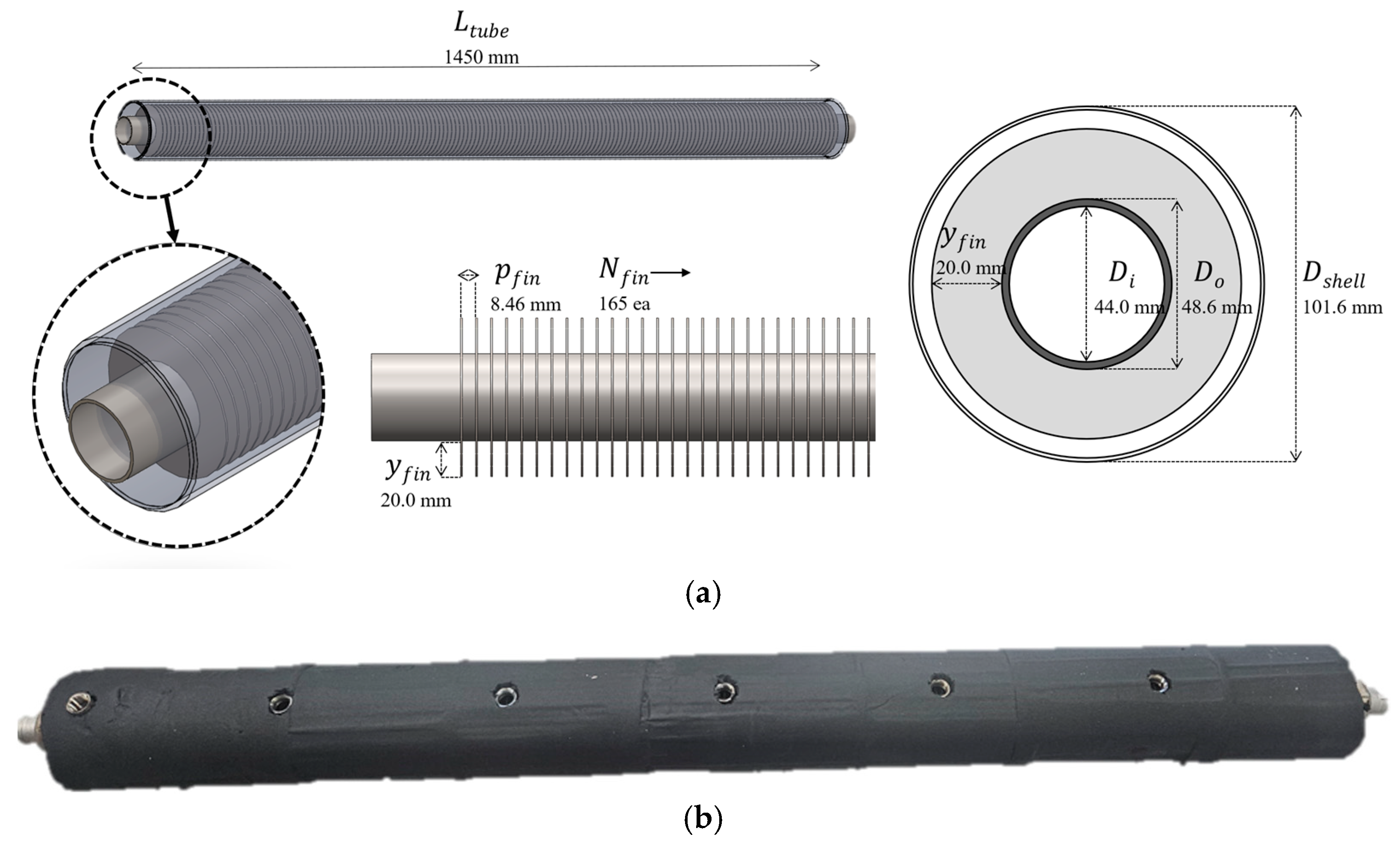
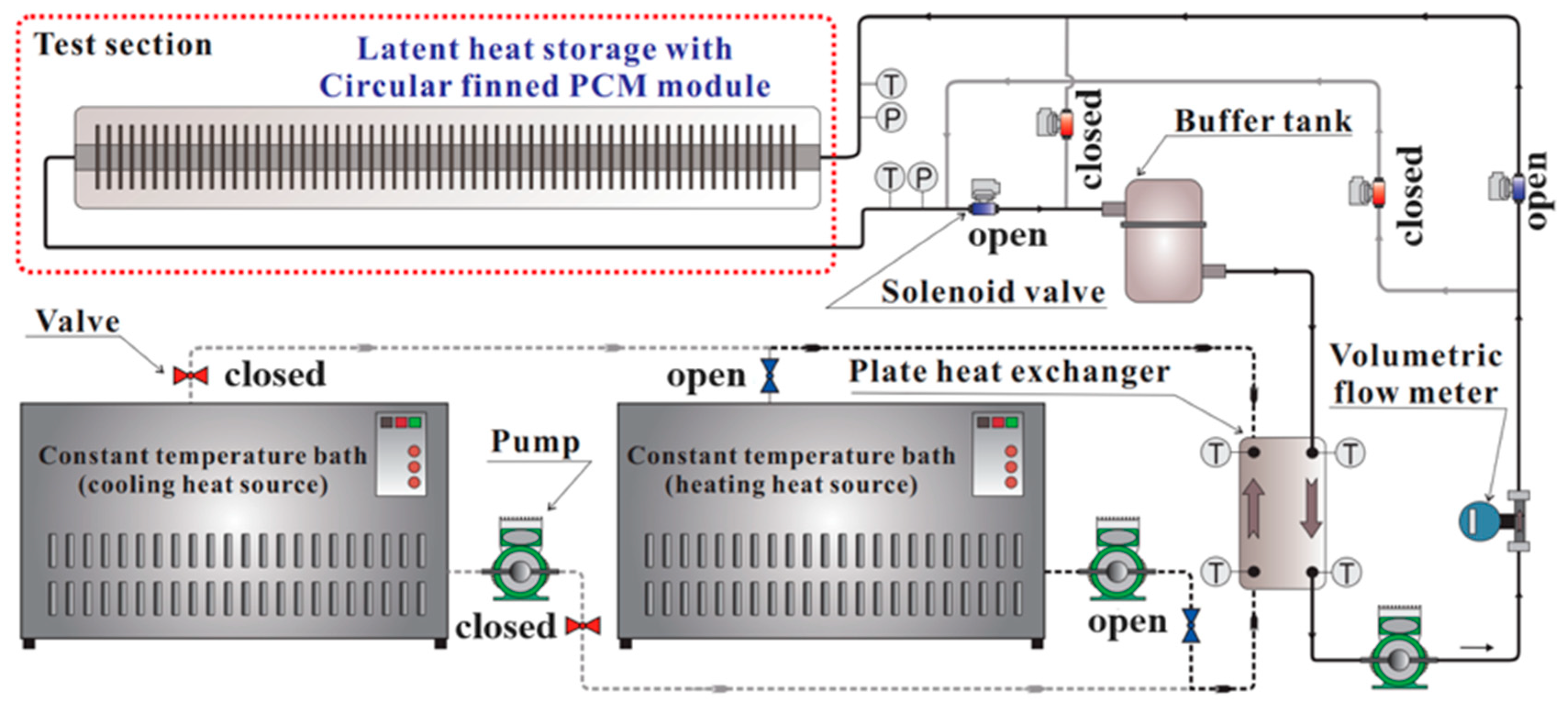
This study investigated the heat transfer characteristics of an LHTES module specifically designed for an inorganic PCM. A shell-and-tube module featuring circular fins was designed and fabricated to maximize the heat transfer area between the HTF and the PCM. BHO, an inorganic salt hydrate with a phase change temperature suitable for medium-temperature applications, was selected as the storage medium. A dedicated experimental apparatus was constructed to perform a quantitative analysis of the module’s charging and discharging characteristics under a range of operating conditions. The primary objectives are to determine the phase-dependent heat transfer performance by calculating the overall and outside heat transfer coefficients and to identify the key operational parameters influencing the module’s efficiency, thereby providing essential data for the design and optimization of LHTES systems for P2H and other industrial applications.
3. Results
3.1. Transient Thermal Dynamics of Charging and Discharging
The dynamic thermal behavior of the LHTES module was characterized through detailed time-series analysis of temperature and energy data.
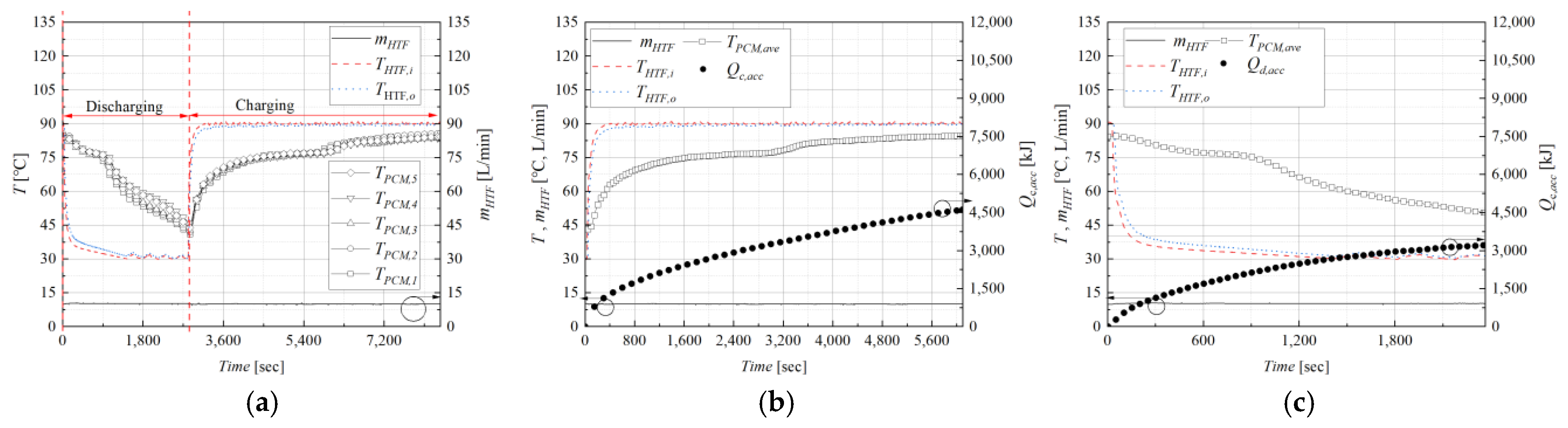
Figure 3 illustrates a representative experimental cycle, specifically for a discharge process with an HTF inlet temperature of 30 °C and a flow rate of 10 L/min, followed by a charging process. The discharge phase lasted 47 min, while the subsequent charging phase required 105 min. This difference in duration reveals an inherent asymmetry in the heat transfer dynamics. Charging is driven by a larger and more stable temperature difference between the 90 °C HTF and the cooler PCM, leading to a relatively consistent heat transfer rate. In contrast, during discharging, the temperature of the PCM continuously decreases, which in turn reduces the LMTD and slows the rate of heat extraction over time.
During the charging process, the average PCM temperature rises steadily. This rise is characterized by three distinct stages: a rapid increase when the PCM is in its solid state (sensible heating), followed by a much slower temperature rise or plateau near 78 °C as the PCM absorbs latent heat during melting, and finally another period of rapid temperature increase once the PCM is fully in the liquid state. Correspondingly, the accumulated stored energy increases almost linearly with time, indicating a relatively stable heat charging rate.
Conversely, during the discharging process, the average PCM temperature decreases. A similar three-stage pattern is observed: a period of sensible heat release from the liquid PCM, a prolonged period of nearly isothermal heat release at the phase-change temperature (latent heat), and a final stage of sensible heat release from the solid PCM. The temperature difference between the HTF inlet and outlet diminishes as the PCM cools, causing the rate of heat discharge to decrease over time. This results in a non-linear, decelerating curve for the accumulated discharged energy. For this specific case, the total discharged energy was 3330 kJ, compared to a stored energy of 4665 kJ, yielding a thermal utilization efficiency of 71.37%.
3.2. Heat Transfer Performance and Efficiency
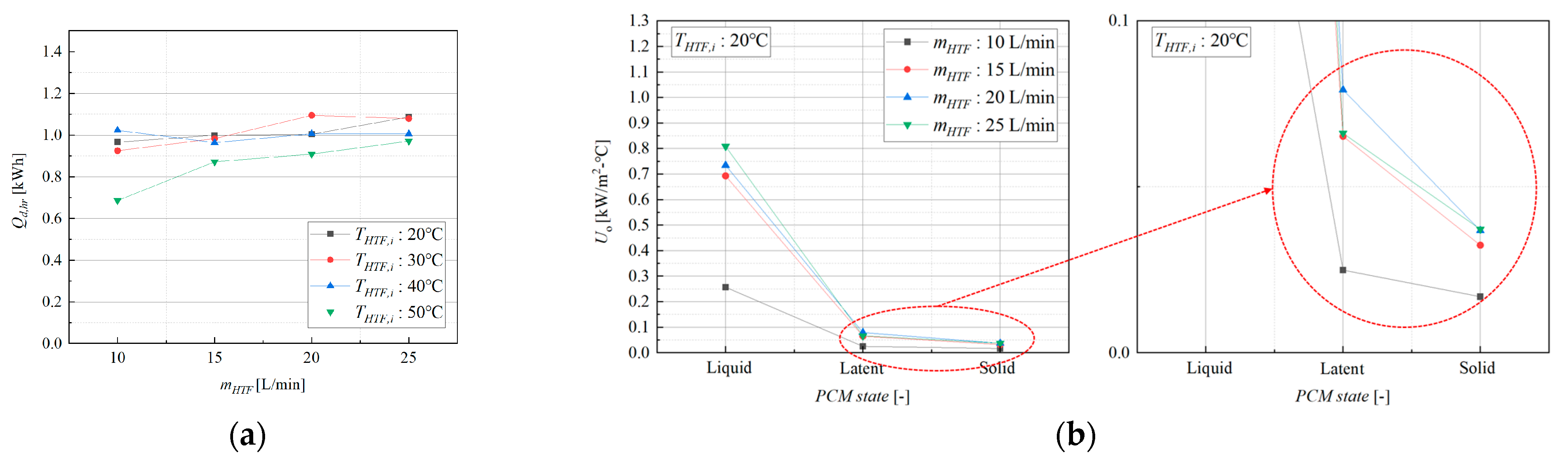
As shown in
Figure 4a, across all experimental conditions, excluding those with a 50 °C HTF inlet temperature, the module demonstrated consistent performance, delivering an average heat discharge of 1.027 kWh. The average thermal utilization efficiency for these conditions was calculated to be 79.25%, and under the same discharging end condition, it reached a maximum of 89.97%. This value represents a practical, system-level efficiency that accounts not only for the thermodynamic processes but also for real-world factors such as ambient heat loss from the module’s exterior and piping.
A notable deviation was observed for tests conducted with an HTF inlet temperature of 50 °C, where the average discharged energy was significantly lower at 0.859 kWh. This reduction is directly attributable to the experimental termination condition for this specific case, which was set at a PCM temperature of 55 °C instead of 45 °C. This higher cut-off temperature meant that a substantial portion of the PCM’s latent heat, and some of its sensible heat in the solid phase, was not extracted before the test concluded. This finding underscores that the operational cut-off temperature is not merely a procedural detail but a critical control parameter that directly dictates the achievable energy recovery and round-trip efficiency of the system. Setting this temperature too high strands a significant portion of the stored energy within the module, while setting it too low may be impractical if the application requires a certain minimum output temperature.
A central finding of this study is the profound dependence of the overall heat transfer coefficient (
) on the physical state of the PCM. As shown in
Figure 4b and summarized in
Table 4, the heat transfer performance varies dramatically across the three phases. The highest
values, ranging from 0.257 to 0.863 kW/m
2·°C, were observed when the PCM was in the liquid state. In the latent phase, where both solid and liquid coexist, the
values were an order of magnitude lower, ranging from 0.025 to 0.072 kW/m
2·°C. The lowest performance was recorded in the solid state, with
values between 0.015 and 0.044 kW/m
2·°C.
This significant variation is governed by the dominant heat transfer mechanisms in each phase. In the liquid phase, natural convection currents develop within the molten PCM, creating fluid motion that significantly enhances heat transfer from the finned surface, resulting in a high . During solidification, a layer of solid PCM begins to form on the cooler tube and fin surfaces. Since heat transfer through this solid layer is dominated by pure conduction, which is limited by the PCM’s low thermal conductivity, it introduces a substantial thermal resistance. As this solid layer thickens, the overall heat transfer coefficient progressively decreases. Once the PCM is entirely solid, conduction becomes the sole mechanism for heat transfer on the shell side, leading to the lowest observed values. This phase-dependent behavior is a critical characteristic of LHTES systems; it implies that performance is not static but changes dynamically throughout an operational cycle. Consequently, traditional heat exchanger design methods that assume a constant U-value are inadequate for LHTES modules and can lead to significant errors in performance prediction and system sizing. A dynamic or phase-averaged approach is essential for accurate engineering design.
3.3. Analysis of the Outside Heat Transfer Coefficient
To isolate the performance on the PCM side, the outside heat transfer coefficient (ho) was calculated. An analysis of the heat capacity distribution during the discharge process from 85 °C to 45 °C showed that the latent phase accounted for the majority of the heat transfer (72.94%), followed by the solid phase (22.62%), while the liquid phase contribution was minimal (4.44%). Therefore, the analysis of focused on the dominant latent and solid phases.
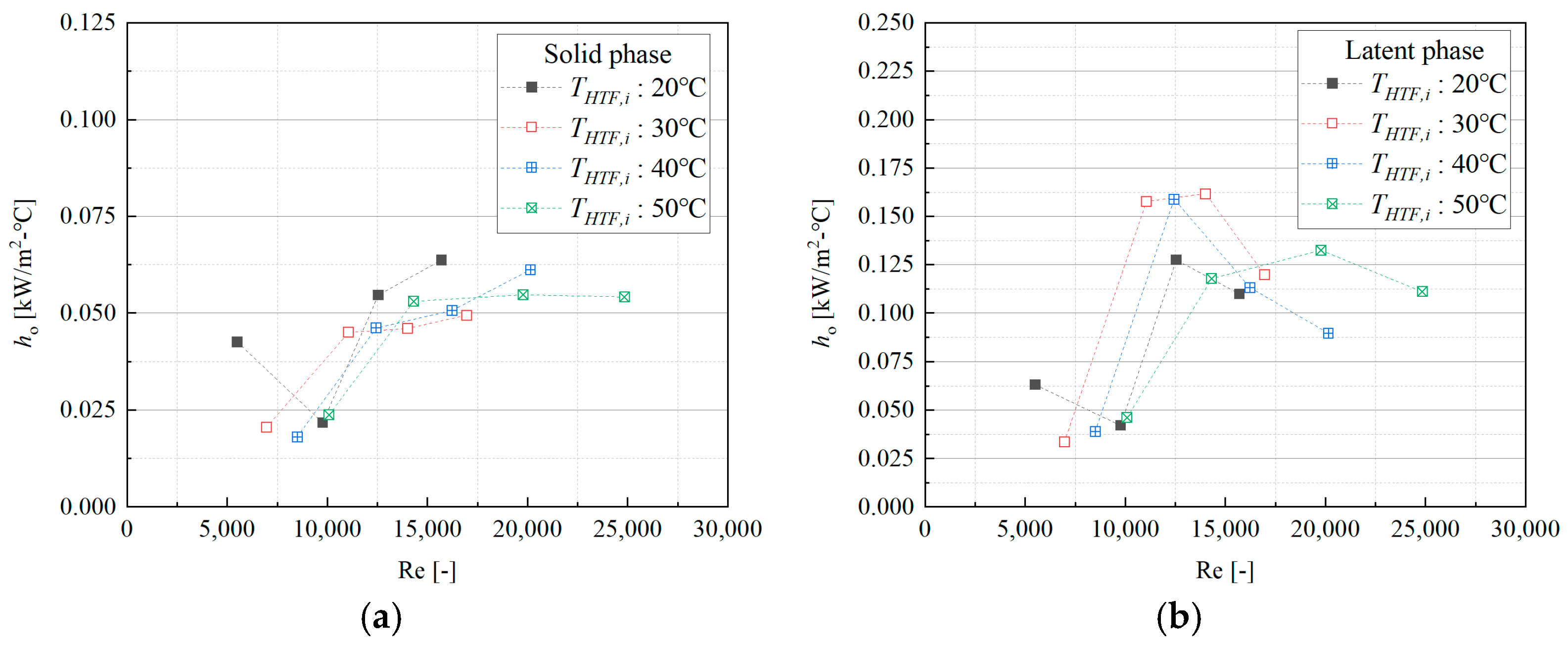
As shown in
Figure 5,
ho varied with the HTF Reynolds number (Re
HTF). In the latent phase, ranged from 0.033 to 0.162 kW/m
2·°C. For all discharging inlet temperatures considered (20–50 °C), a similar non-monotonic trend was observed:
increased with Re
HTF in the low-Re region, reached a local maximum in the range Re
HTF ≈ 1.2 × 10
4–1.4 × 10
4, and then tended to level off or slightly decrease at higher Re
HTF. This behavior reveals a critical trade-off. Initially, as the HTF flow rate and Reynolds number increase, the internal convective heat transfer (
) improves, reducing the dominant thermal resistance on the tube side and allowing more heat to be extracted, which increases the calculated
. However, beyond the optimal point, the higher heat flux accelerates the formation of an insulating layer of solid PCM on the finned surface. The conductive thermal resistance of this growing solid layer eventually becomes the dominant limiting factor, causing the effective outside heat transfer performance to decline. This non-monotonic behavior indicates that simply maximizing the HTF flow rate is not an optimal strategy for enhancing the discharge rate; an optimal flow rate exists that balances internal convection with external solidification dynamics.
In the solid phase, values ranged from 0.018 to 0.064 kW/m2·°C, which is, on average, 56.4% lower than in the latent phase. This confirms that once the PCM is fully solidified, the system’s performance is severely limited by the poor thermal conduction through the solid PCM layer.
3.4. Statistical Analysis of Influencing Parameters
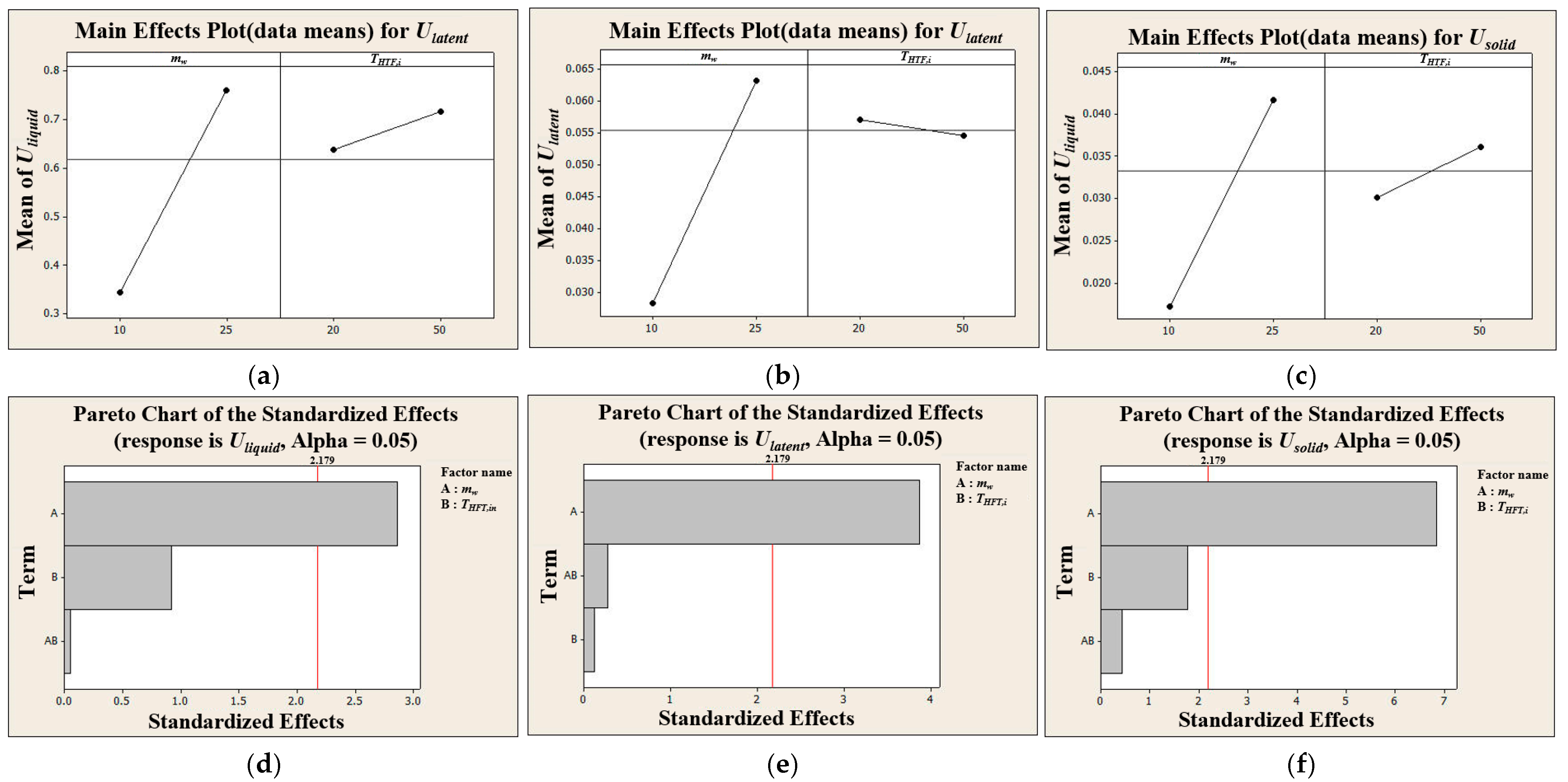
In this study, response surface methodology (RSM) was applied using Minitab (Release 14.12.0) to analyze key response variables obtained from the discharging experiments, which characterize the thermal performance of the module, with the HTF flow rate and inlet temperature treated as the main factors. In particular, the overall heat transfer coefficient for each of the three PCM phases (solid, latent, and liquid) was taken as a primary response. Main effects plots and Pareto charts were generated to assess the influence of HTF flow rate and HTF inlet temperature on the overall heat transfer coefficient () of each of the three PCM phases.
As shown in
Figure 6, the HTF flow rate had a large, positive, and statistically significant effect on
for all phases. This is visually represented by the steep upward slope in the main effects plots and the large bars for flow rate in the Pareto charts, which far exceeded the threshold for statistical significance. This is because increasing the flow rate enhances turbulence inside the tube, reducing the internal convective thermal resistance and thereby improving the overall heat transfer. In contrast, the HTF inlet temperature was found to have a minimal and statistically insignificant effect on
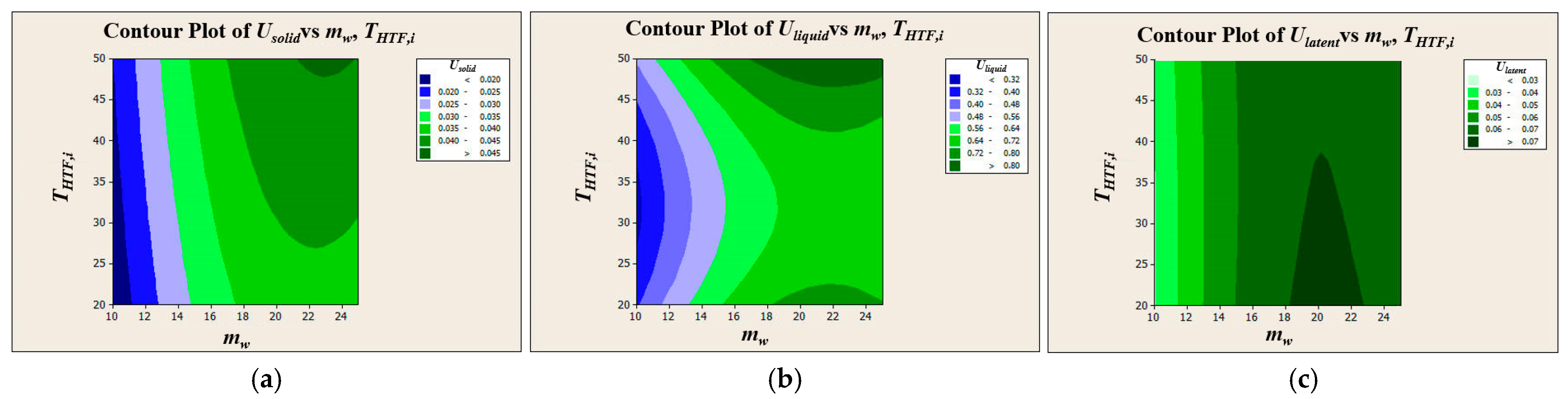
across all phases. This is evident from the nearly flat lines for temperature in the main effects plots and the very small bars in the Pareto charts. This finding is further supported by the contour plots in
Figure 7, where the contour lines for constant
are nearly vertical, indicating strong dependence on the x-axis (flow rate) and weak dependence on the y-axis (temperature). This robust statistical confirmation has a critical implication for system design and control. It is far more effective to modulate the HTF flow rate (i.e., pumping power) to control the charge and discharge rates than it is to alter the operating temperature of the thermal source or sink. This is particularly relevant for applications such as waste heat recovery, where the source temperature may be fixed, as it demonstrates that performance can still be effectively controlled via the HTF flow.
4. Conclusions
In this study, an LHTES module using circular-finned tubes and an inorganic PCM (BHO) was fabricated and experimentally tested to analyze its phase-dependent heat transfer characteristics. Based on the experimental results and statistical analysis, the following conclusions were drawn:
- (1)
The LHTES module demonstrated a reliable average heat discharge capacity of 1.027 kWh and a thermal utilization efficiency of 79.25% under the tested conditions, confirming the viability of the design.
- (2)
The discharge termination temperature was identified as a critical operational parameter that directly influences the total amount of energy recovered and the overall system efficiency. Incomplete phase change due to a high cut-off temperature can lead to significant reductions in performance.
- (3)
Statistical analysis confirmed that the HTF flow rate is the dominant factor influencing the overall heat transfer coefficient across all PCM phases (liquid, latent, and solid). In contrast, the effect of the HTF inlet temperature was found to be statistically insignificant.
- (4)
The overall heat transfer coefficient is highly dependent on the PCM’s phase, following the order: Liquid > Latent > Solid. The coefficient in the liquid state (up to 0.863 kW/m2·°C) can be more than an order of magnitude greater than in the solid state (as low as 0.015 kW/m2·°C), highlighting the necessity of using phase-aware models for system design.
Analysis of the outside heat transfer coefficient revealed that the latent and solid phases dominate the discharge process. The coefficient in the solid phase was, on average, 56.4% lower than in the latent phase, indicating that conduction through the solid PCM is the primary performance bottleneck. These two phases should be the priority for design optimization.
The experimental data and derived heat transfer coefficients obtained in this work provide a crucial foundation for the design, modeling, and operational optimization of LHTES modules. These findings are particularly valuable for integrating such storage systems into P2H applications to support the transition to renewable energy. Future studies will extend this work to investigate the heat transfer characteristics of modules connected in series and parallel, as well as the long-term cycling stability and safety of BHO under practical operating conditions.