Article

Insulator-Integrated Voltage-Current Sensor Based on Electric Field Coupling and Tunneling Magnetoresistance Technology


1
Electric Power Research Institute, Yunnan Power Grid Co., Ltd., Kunming 650217, China
2
College of Mechanical and Electrical Engineering, Kunming University of Science and Technology, Kunming 650504, China
*
Author to whom correspondence should be addressed.
Energies 2025, 18(23), 6296; https://doi.org/10.3390/en18236296
Submission received: 19 September 2025 / Revised: 17 November 2025 / Accepted: 25 November 2025 / Published: 29 November 2025

Abstract

This paper proposes an integrated sensor for voltage and current distribution network insulators, based on electric field coupling and TMR magnetic sensing, to address the issues of traditional voltage and current separation measurement, insulator safety after primary and secondary fusion, uncertainty in voltage measurement gain, and interference resistance in TMR current measurements. Through simulation and optimization, the design of the embedded voltage-sensing unit in the insulator is achieved, ensuring uniform electric field distribution, determining the transfer function, and minimizing partial discharge, thereby ensuring insulator safety and improving voltage measurement accuracy. Additionally, a self-integrating circuit design is used to widen the low-frequency dynamic range and increase the voltage division ratio. Moreover, an open-type two-stage magnetic ring current sensor based on TMR is proposed, with optimized magnetic ring dimensions to detect currents from low to medium ranges, addressing eccentricity errors and improving sensitivity, immunity to interference, and magnetic field uniformity. The experimental results show that this integrated sensor can effectively ensure measurement accuracy, stability, and dynamic range.

1. Introduction

In power systems, the detection of voltage and current parameters in distribution network lines is of significant importance in areas such as electric energy metering, relay protection, fault prediction, and intelligent device control [1,2,3,4]. With the deep integration of primary and secondary intelligent devices, integrated voltage and current measurement technology has developed rapidly, and primary equipment has already integrated functions such as measurement, protection, monitoring, and control [5]. Traditional voltage and current separation measurement methods face issues such as a large number of devices, complex installation, significant space occupation, safety hazards, and high energy consumption [6,7]. To address these issues, some researchers have proposed a new type of insulator that embeds high-voltage ceramic capacitors inside the insulator to achieve voltage monitoring and energy harvesting functions. However, the uniformity of the internal electric field and partial discharge problems still have limitations, and it is only suitable for measuring transient signals [8].
In the voltage measurement scenario of medium-voltage distribution lines, traditional intrusive electromagnetic and capacitive coupling sensors have limited application due to issues such as complex structure, stringent insulation requirements, and difficult maintenance [9,10]. In contrast, the non-contact voltage measurement technology based on the principle of electric field coupling achieves signal attenuation through capacitive voltage division, offering advantages such as simplified structure, low insulation cost, wide-range linear response, fast dynamic characteristics, and avoidance of ferromagnetic resonance risks [11,12]. However, electric field coupling-based voltage detection technology is primarily limited by measurement accuracy; it is easily affected by adjacent electric field interference, and the coupling capacitance is influenced by the dielectric constant of the insulating material, line diameter, installation orientation, and edge distortion of the electrode plates, leading to fluctuations in capacitance value [13,14,15].
In the selection of non-contact secondary equipment for current measurement, with the demands of miniaturization and low cost, the options are focused on three types: Rogowski coils, Hall current sensors, and magnetoresistive current sensors. For covering the detection needs of low-to-medium currents across various scenarios, Rogowski coils suffer from issues such as low sensitivity, difficulty in measuring DC and low-frequency currents, and insufficient precision for small currents [16,17,18]; Hall current sensors have poor sensitivity and are easily affected by temperature, leading to low measurement accuracy, large offsets, and sensitivity to voltage breakdown [19,20]; compared to these, magnetoresistive current sensors, including AMR, GMR, and TMR, offer superior performance [21]. Among them, TMR has high sensitivity, a wide linear range, simple structure, low cost, low power consumption, and minimal temperature drift. It currently covers a wide dynamic range and is suitable for detecting small-to-medium currents [22,23,24]. In the design to enhance the measurement precision of TMR, an array layout without magnetic rings and an open magnetic ring structure are commonly used. The open magnetic ring structure, in comparison to non-magnetic ring structures, has greater advantages in shielding external magnetic interference, improving magnetic sensitivity, and achieving some degree of electrical isolation [25].
In this context, this paper proposes an integrated voltage and current sensor for distribution network insulators based on electric field coupling and TMR magnetic sensing. The structural parameters of the voltage-sensing unit embedded in the insulator are optimized through a combination of theory and simulation, reducing the risk of partial discharge, ensuring insulation performance, and improving measurement accuracy. A self-integrating circuit is used to broaden its low-frequency dynamic range and increase the voltage divider ratio. Meanwhile, a two-stage open magnetic ring current sensor based on TMR is placed at the top of the insulator to solve the chip eccentricity error and achieve wide-range detection of low-to-medium currents. Finally, the insulator and both measurement modules are integrated into a single design to enable synchronous detection of voltage and current in the distribution line.

2. Principle and Design of Embedded Voltage-Sensing Unit

2.1. Capacitive Coupling Voltage Measurement Principle

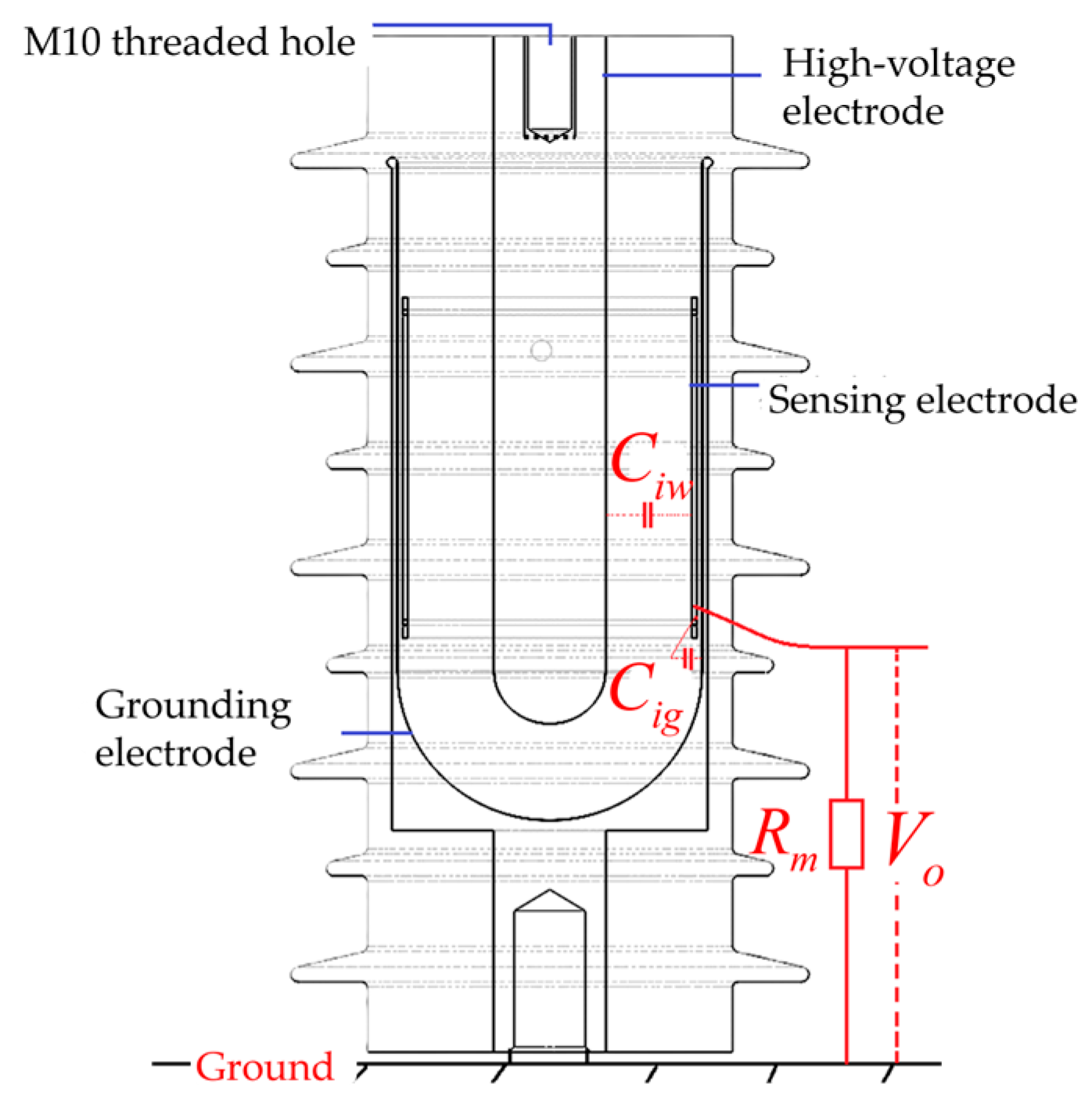
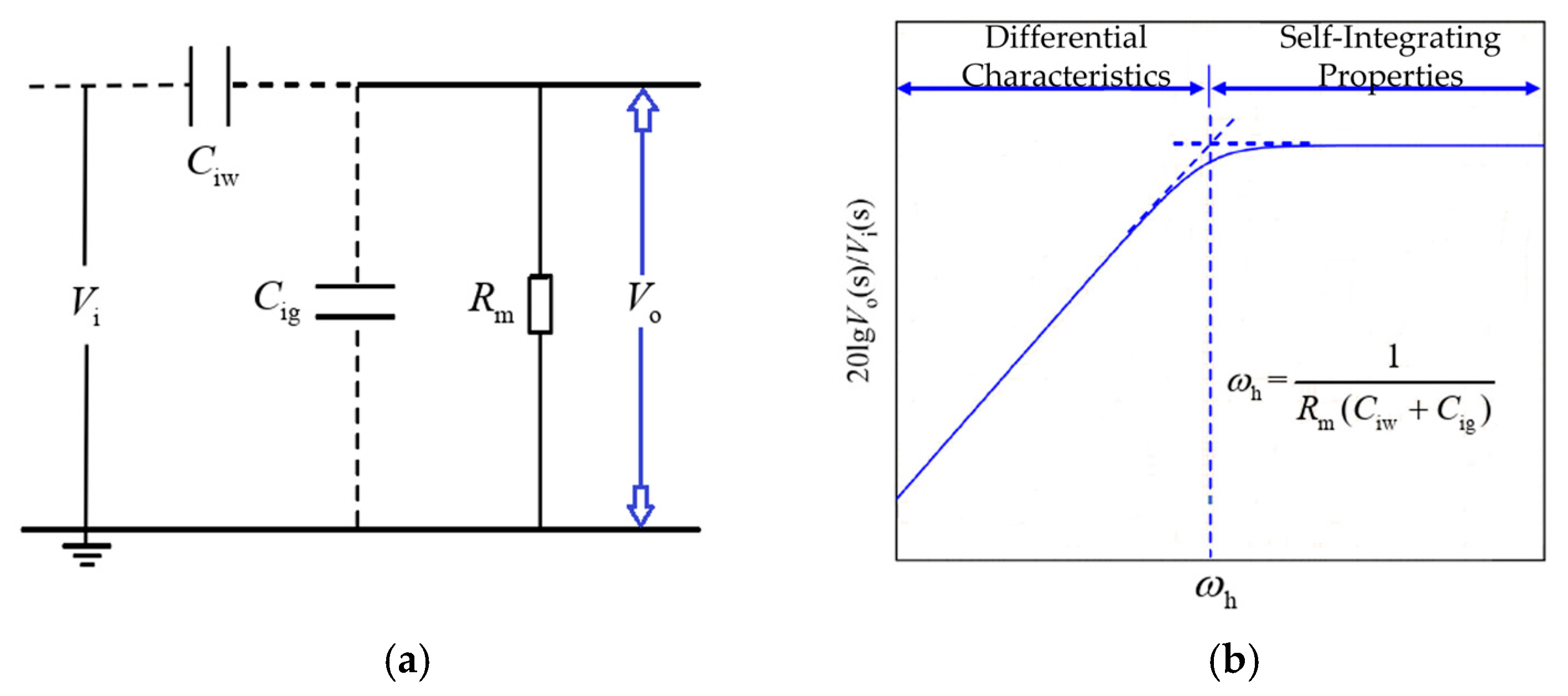
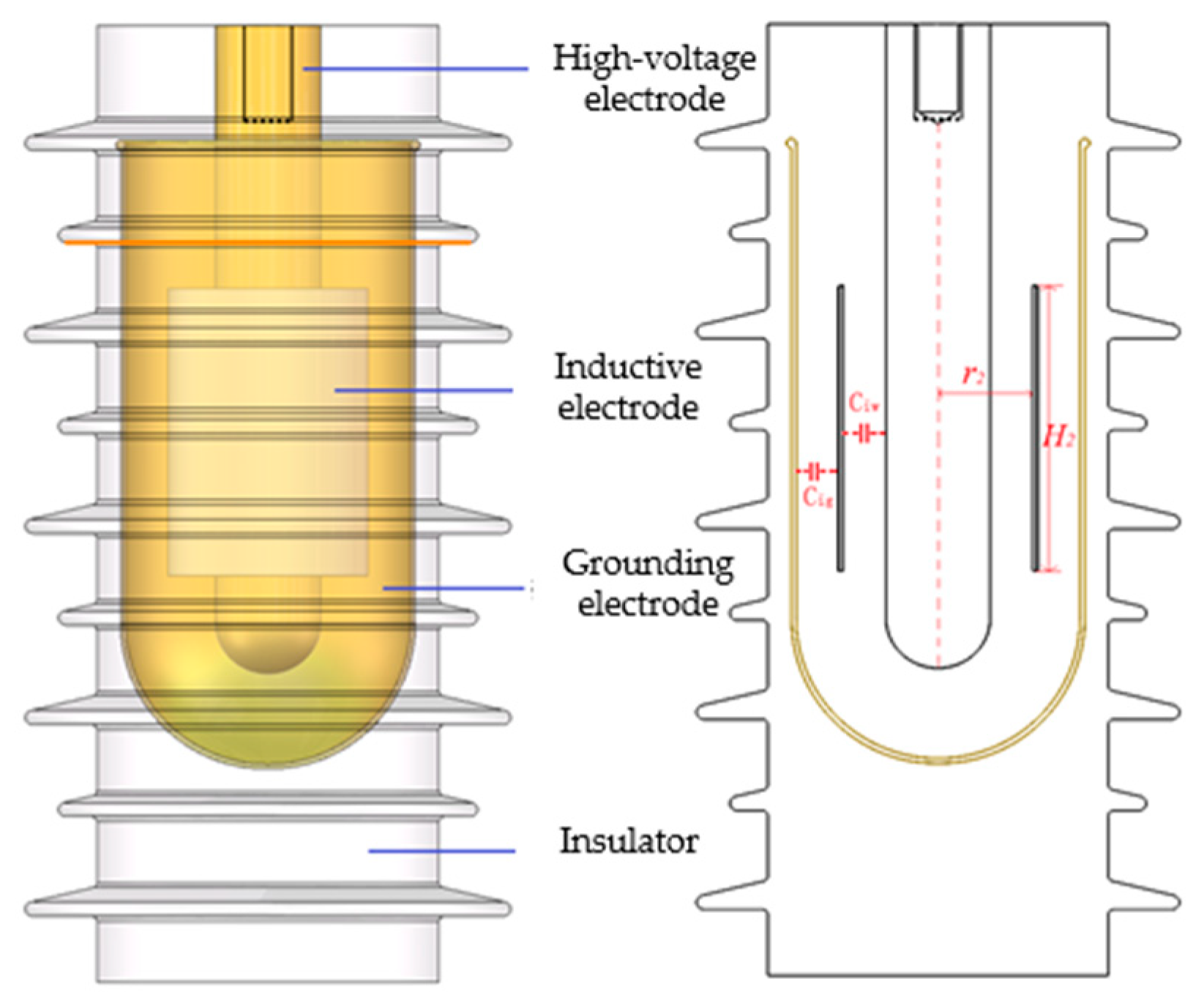
As shown in Figure 1, based on the principle of electric field coupling, the distribution network insulator integrates a high-voltage electrode connected to the tested line via an M10 threaded hole, a grounding electrode connected to the grounding rod tower beam via a lower threaded hole, and an induction electrode. The high-voltage electrode and the sensing electrode form the primary coupling capacitance C i w , while the sensing electrode and the grounding electrode form the secondary coupling capacitance C i g . The induction electrode is connected to the grounding electrode through a sampling resistor R m and C i g . The equivalent circuit model derived from Figure 1 is shown in Figure 2.
In Figure 2a, V i is the input voltage of the distribution line and V o is the output voltage. Therefore, when the sensor operates in the self-integrating characteristic mode, the voltage division ratio K of V i through the primary and secondary coupling capacitors is as follows:
K = V i ( s ) V o ( s ) = C i w + C i g C i w = 1 + C i g C i w
Therefore, the transfer function of the sensor unit depends on C i w and C i g . After embedding the voltage-sensing unit inside the insulator, the influence of the line diameter and relative orientation is addressed, and the impact of environmental factors such as temperature and humidity on the dielectric constant is mitigated. At the same time, after primary and secondary integration, the safety performance of the insulator itself needs to be considered. Therefore, when designing the structure and dimensions of the three electrodes, the goal is to weaken the edge effects of the electrode plates and minimize the maximum electric field intensity, thereby reducing the impact of the edge effect on the coupling capacitance and significantly lowering partial discharge. This ensures accurate measurement of the voltage to be tested while maintaining the safety performance of the insulator itself.

2.2. Optimization Methods for the Structure of the Voltage-Sensing Unit

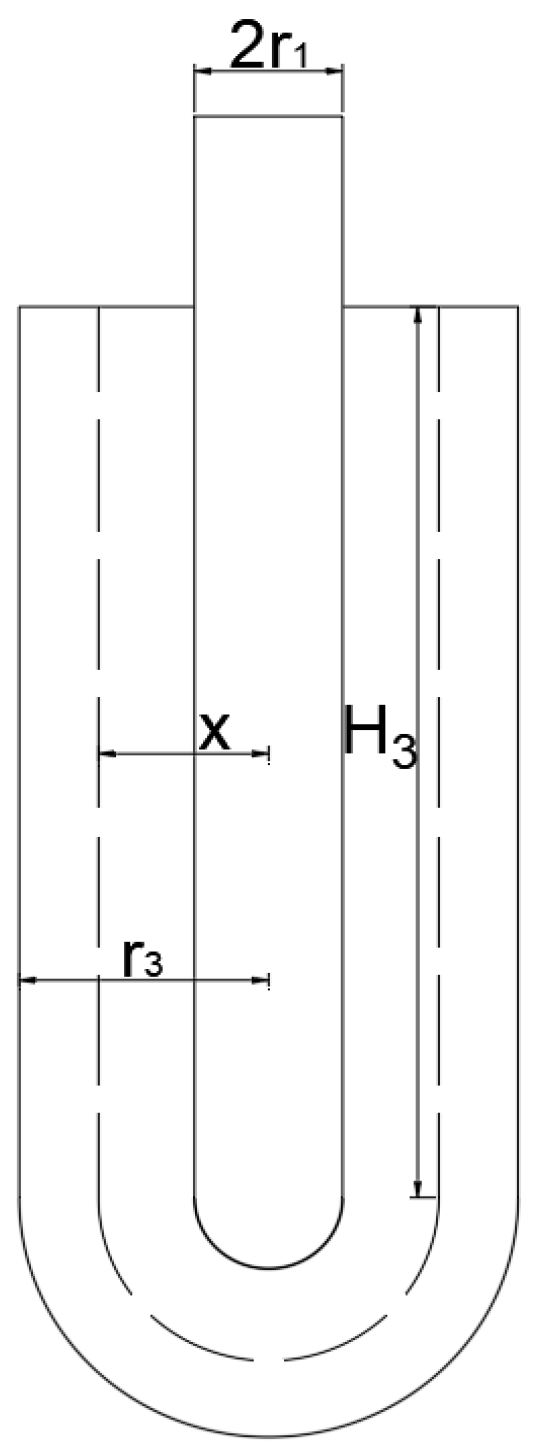
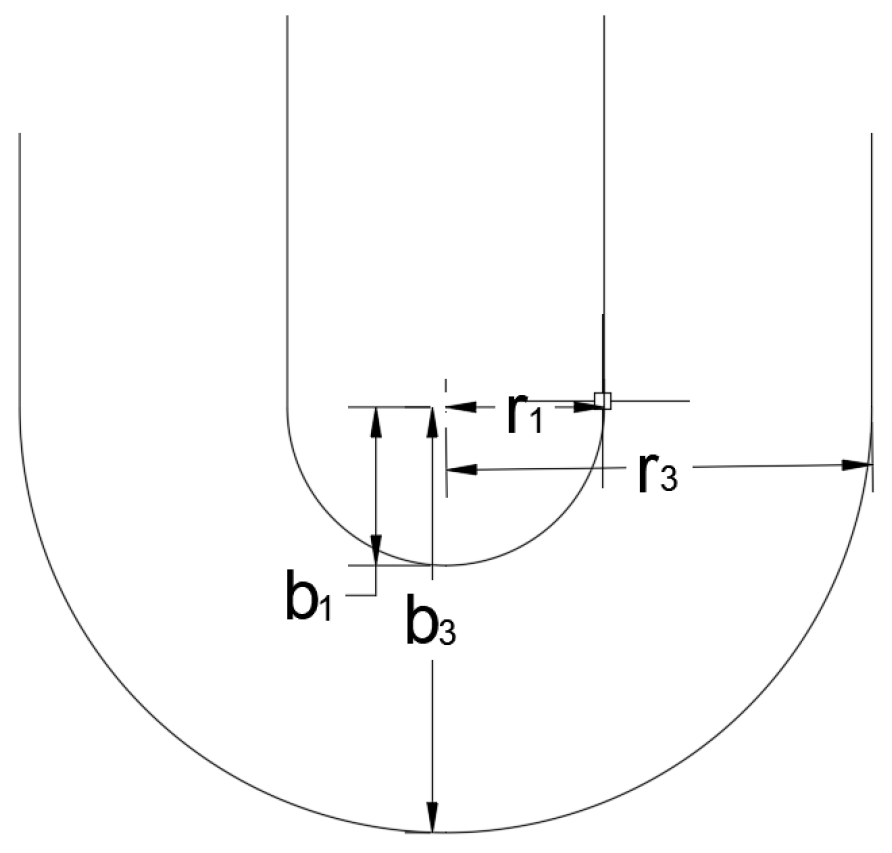
The first step is to optimize the radius parameters of the cylindrical and hemispherical regions of the high-voltage electrode and the grounding electrode, with the goal of reducing the maximum electric field intensity and achieving a more uniform electric field. As shown in Figure 3, the radii of the high-voltage electrode and the grounding electrode are denoted as r 1 and r 3 , respectively, and the height of the cylindrical region of the grounding electrode is H 3 .
For the cylindrical regions of the two electrodes, the maximum radial electric field value on the surface of the high-voltage electrode is given by Equation (2). The optimal conditions corresponding to the minimum value of the maximum electric field magnitude E max are represented by Equation (3):
E max = U ln r 3 r 1 1 r 1
r 1 = r 3 e
Under the selected insulator model size constraints, the optimal design conditions for the cylindrical region lead to a grounding electrode radius r 3 = 30 mm and a high-voltage electrode radius r 1 = 10 mm. Similarly, the optimal conditions corresponding to the minimum E max for the hemispherical region are obtained as r 1 = r 3 / 2 , with the grounding electrode radius r 3 = 30 mm and the high-voltage electrode radius r 1 = 15 mm.
The optimal conditions for the hemispherical region differ from those for the cylindrical region. In both simulations and practical applications, the top part of the grounding electrode is more susceptible to partial discharge due to edge effects. Therefore, an integrated pressure-equalizing ring is employed to mitigate these edge effects. This annular fitting functions to equalize voltage distribution, prevent breakdown or discharge resulting from potential differences, and provide defense against side flashes. Therefore, the optimal condition in Equation (3) holds only when the minimum value of E max in Equation (2) is less than the maximum electric field magnitude around the pressure-equalizing ring.
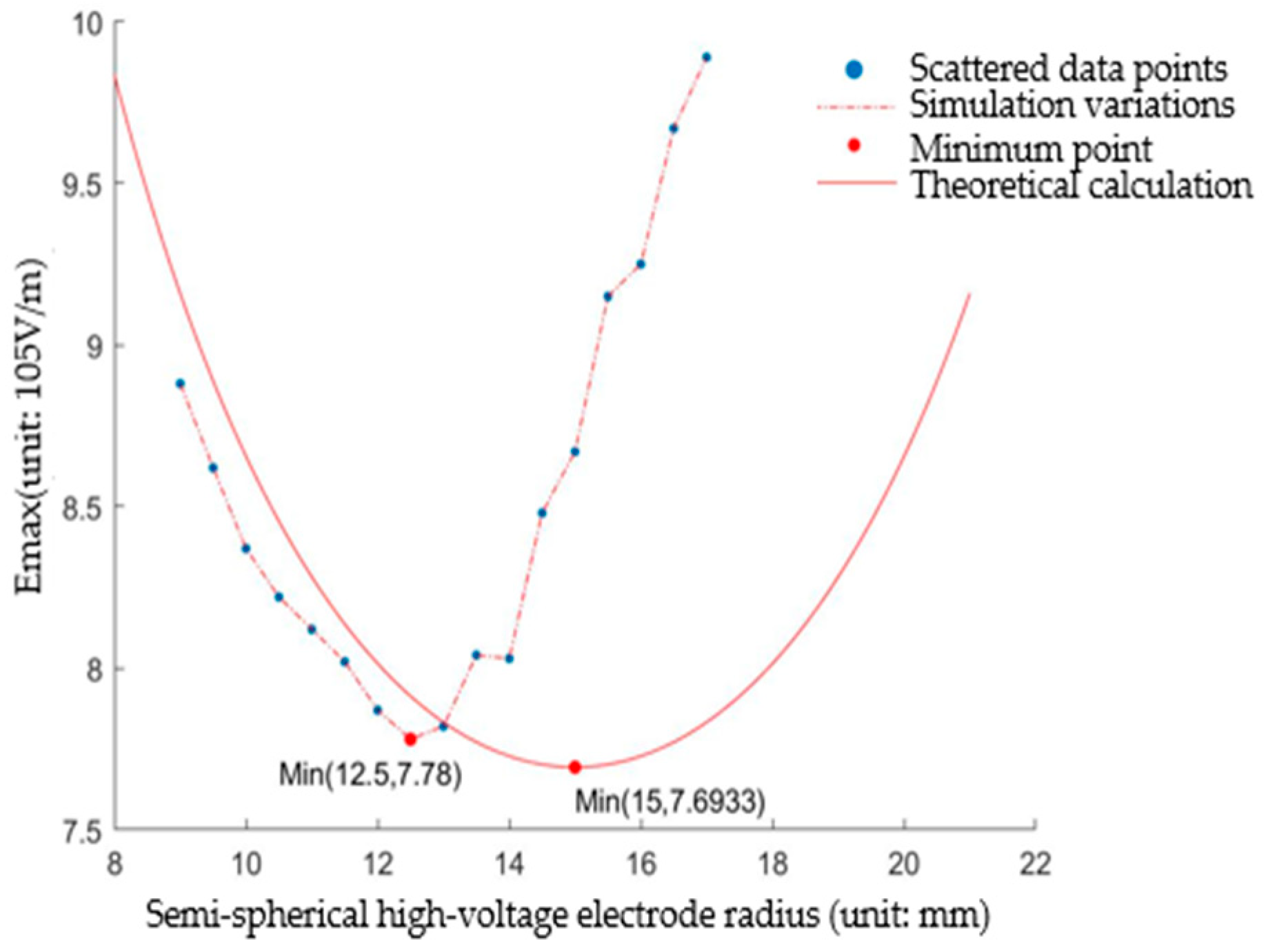
The comparison between the maximum electric field modulus data from the parameterized scan of the insulator’s horizontal cross-section in COMSOL 6.1 and the variation in the theoretical calculation data for the hemispherical region in Figure 3 is shown in Figure 4; it is concluded that within the range r 1 < 12.5 mm, the theoretical and simulation trends for E max are consistent. However, for r 1 > 12.5 mm, E max begins to appear around the edge of the pressure-equalizing ring. This verifies and confirms that the optimal conditions for the cylindrical region hold under the constraint r 3 = 30 mm, while the optimal conditions for the hemispherical region do not hold.
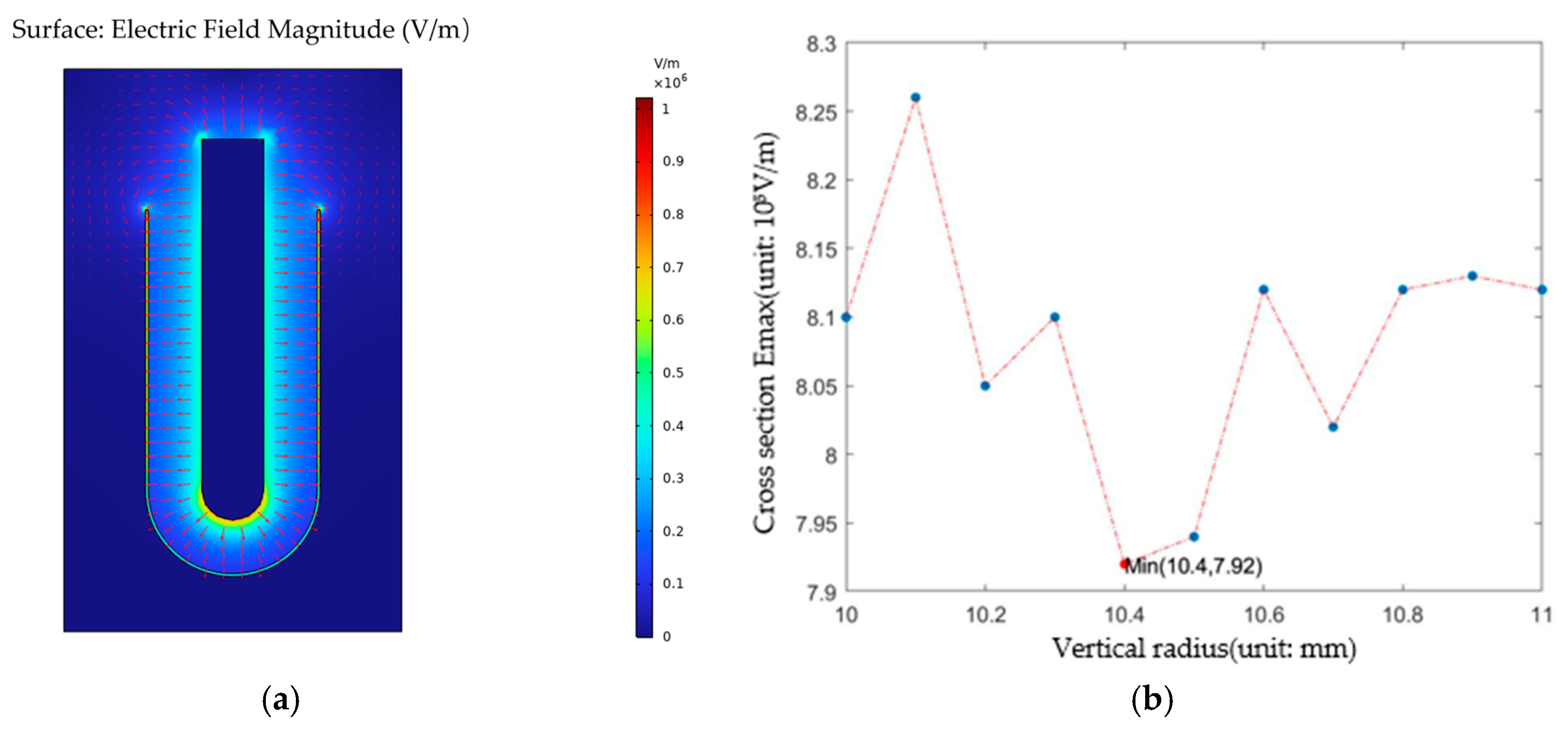
Thus, using Equation (3) as the optimal condition, r 3 = 30 mm and r 1 = 10 mm are determined. However, at this point, the E max on the bottom hemispherical surface of the high-voltage electrode is not at its minimum. Therefore, as shown in Figure 5, by maintaining the vertical radius b 3 = b 1 + ( r 3 r 1 ) = b 1 + 19 mm, a parameterized scan of b 1 is performed to analyze the variation of E max . It is preliminarily observed that the smaller E max corresponds to b 1 , approaching 10–11 mm. Additionally, as is shown in Figure 6a, E max occurs at the bottom of the high-voltage electrode. Furthermore, Figure 6b indicates that the minimum E max is achieved at b 1 = 10.4 mm and b 3 = 29.4 mm, with the corresponding E max value of 7.92 × 10⁵ V/m. Compared to b 1 = 11 mm and b 3 = 30 mm, where the E max value is 8.12 × 10⁵ V/m, this represents a reduction of 2.46%.
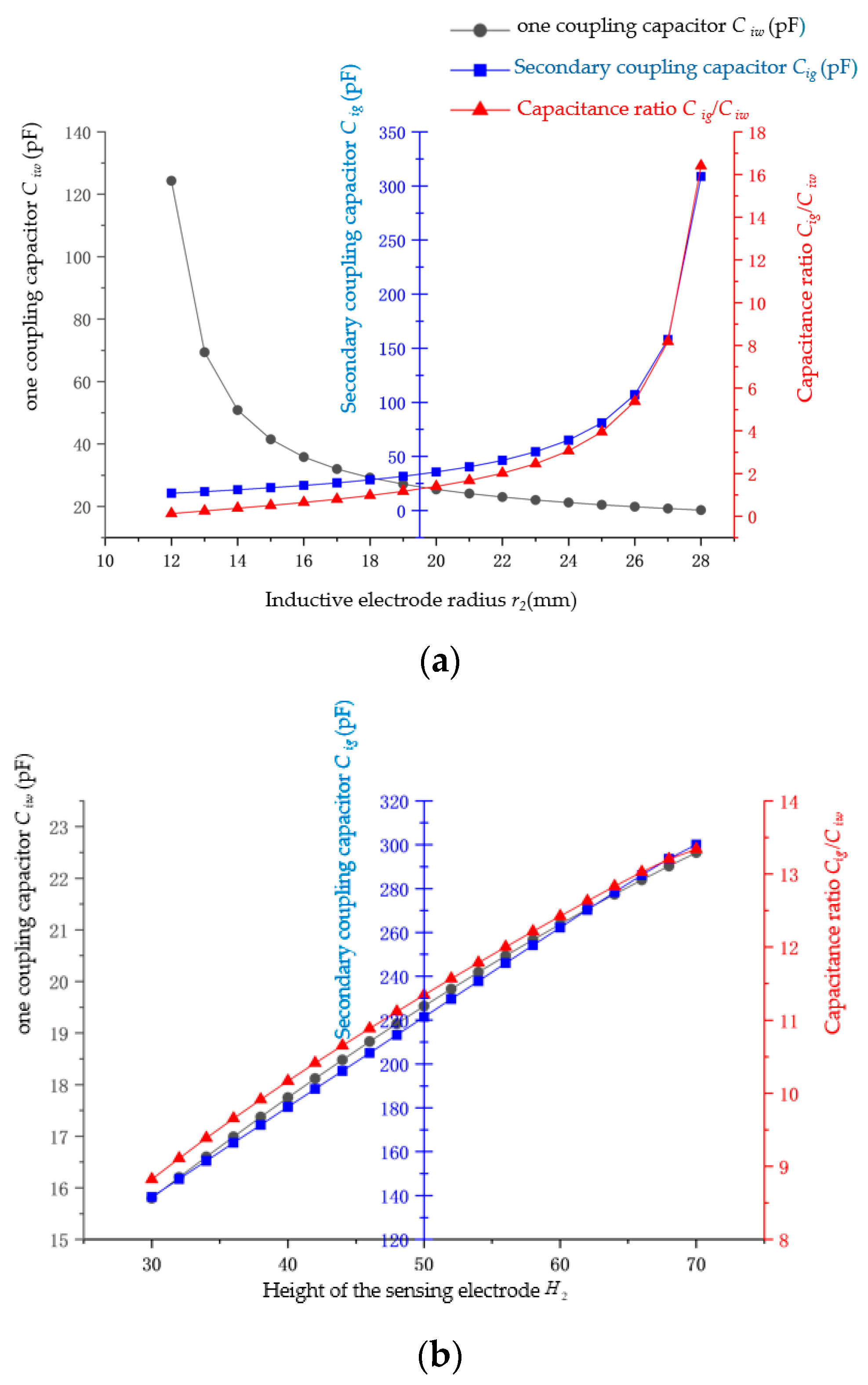
The second step is to comprehensively optimize the design of the induction electrode radius r 2 and height H 2 , based on the trade-off between the increasing and the primary coupling C i g / C i w capacitance C i w . The simulation model is shown in Figure 7, and the simulation parameters for each component are listed in Table 1.
After parameterized scanning of r 2 , as shown in Figure 8a, the sensing electrode radius r 2 is designed to be 28 mm, and it is isolated by a 1 mm-thick DMD insulating paper integrated and bonded between it and the grounding electrode. Similarly, when r 2 = 10 mm, the simulation results shown in Figure 8b indicate that C i g / C i w slowly increases with the increase in H 2 . This phenomenon arises because C i g exhibits a larger incremental magnitude and a higher edge field-induced capacitance compared with C i w . Considering the height of the insulator itself, H 2 is designed to be 60 mm.
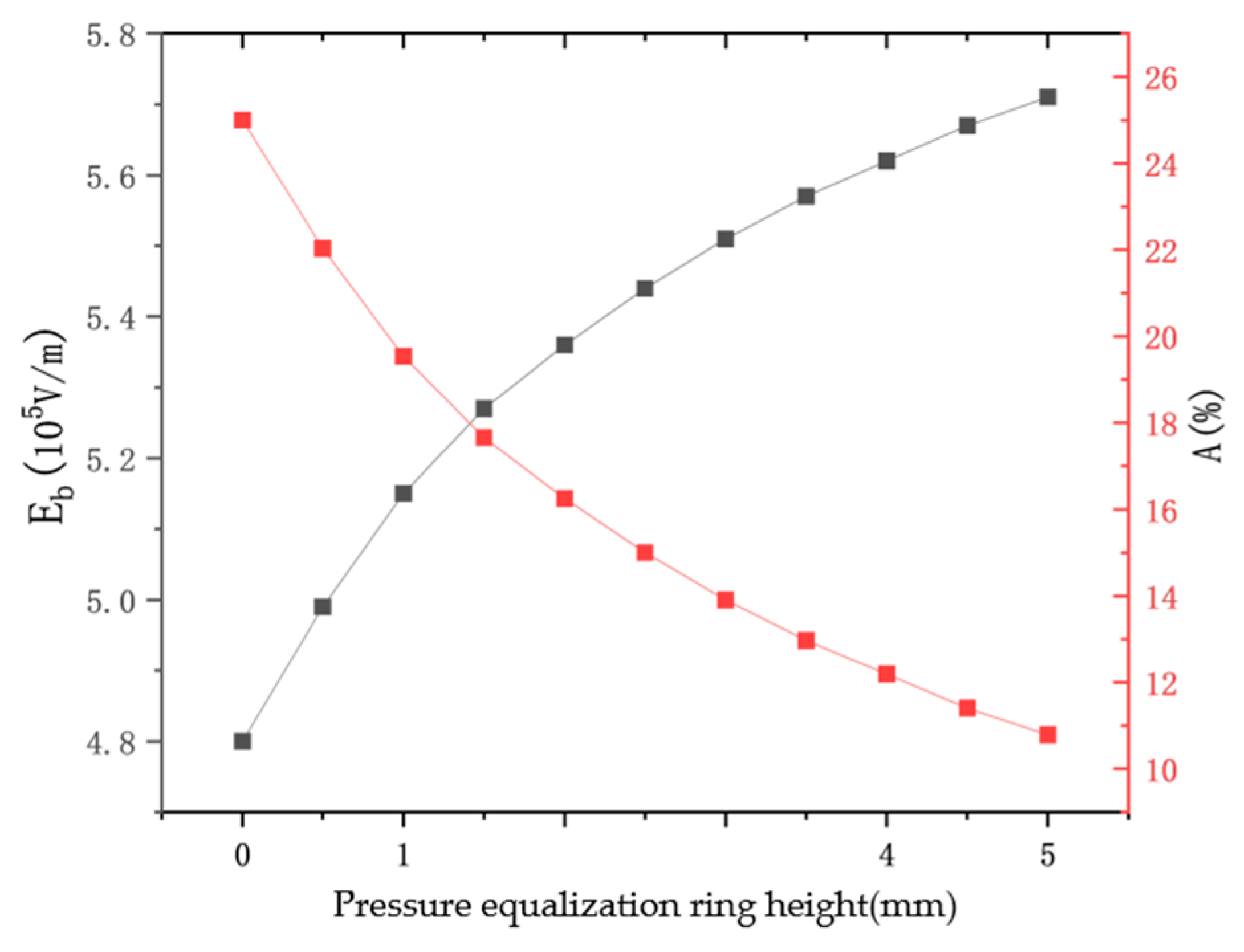
The third step involves designing pressure-equalizing rings at both ends of the induction electrode to provide electrical insulation and isolate the ends, thereby reducing the edge field effect through pressure-equalizing rings. It is defined as A = | E a E b | / E a , where E a is the electric field magnitude at the middle height of the induction electrode and E b is the electric field magnitude at both ends. The smaller A is, the higher the uniformity of the electric field. As shown in Figure 9, the rate of reduction in A levels off after the pressure-equalizing ring reaches 3.5 mm. Therefore, the height of the pressure-equalizing ring is determined to be 3.5 mm, at which point the electric field uniformity increases by 12%.
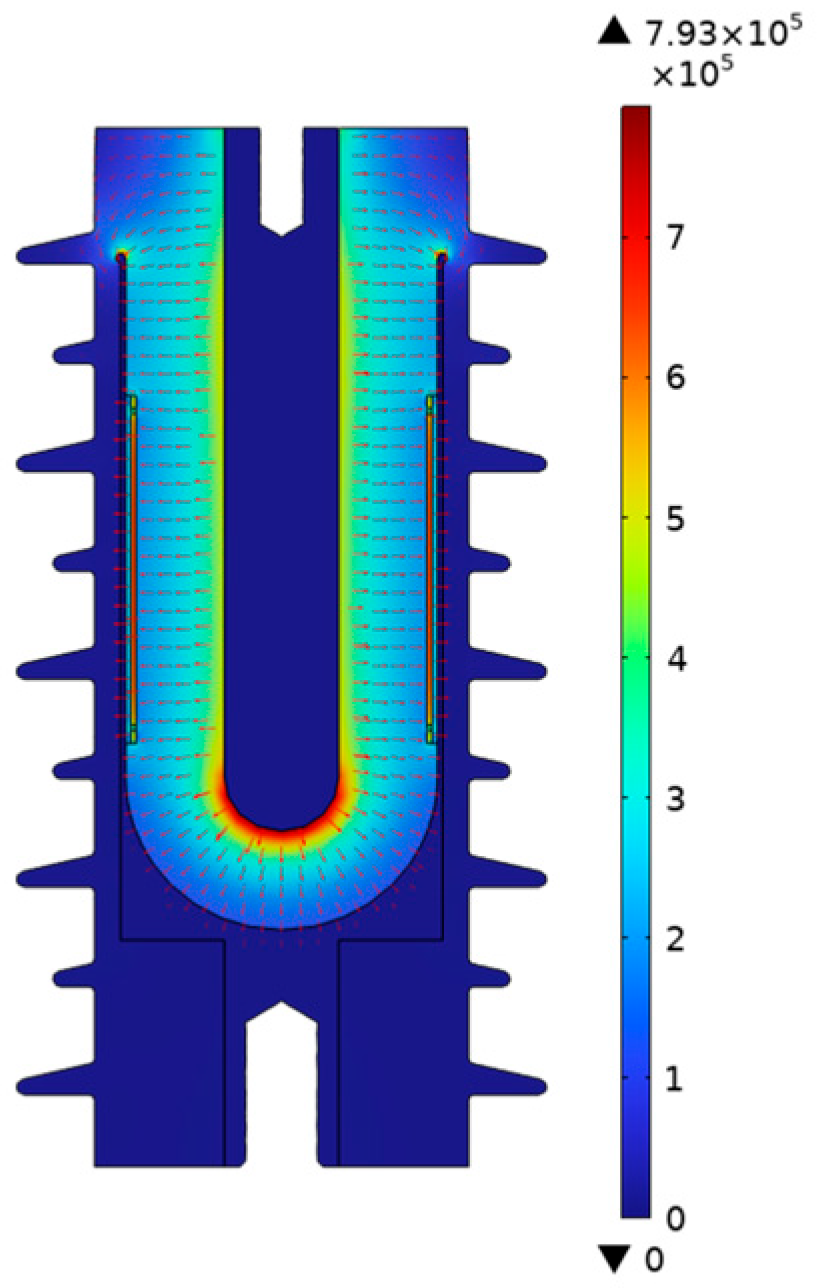
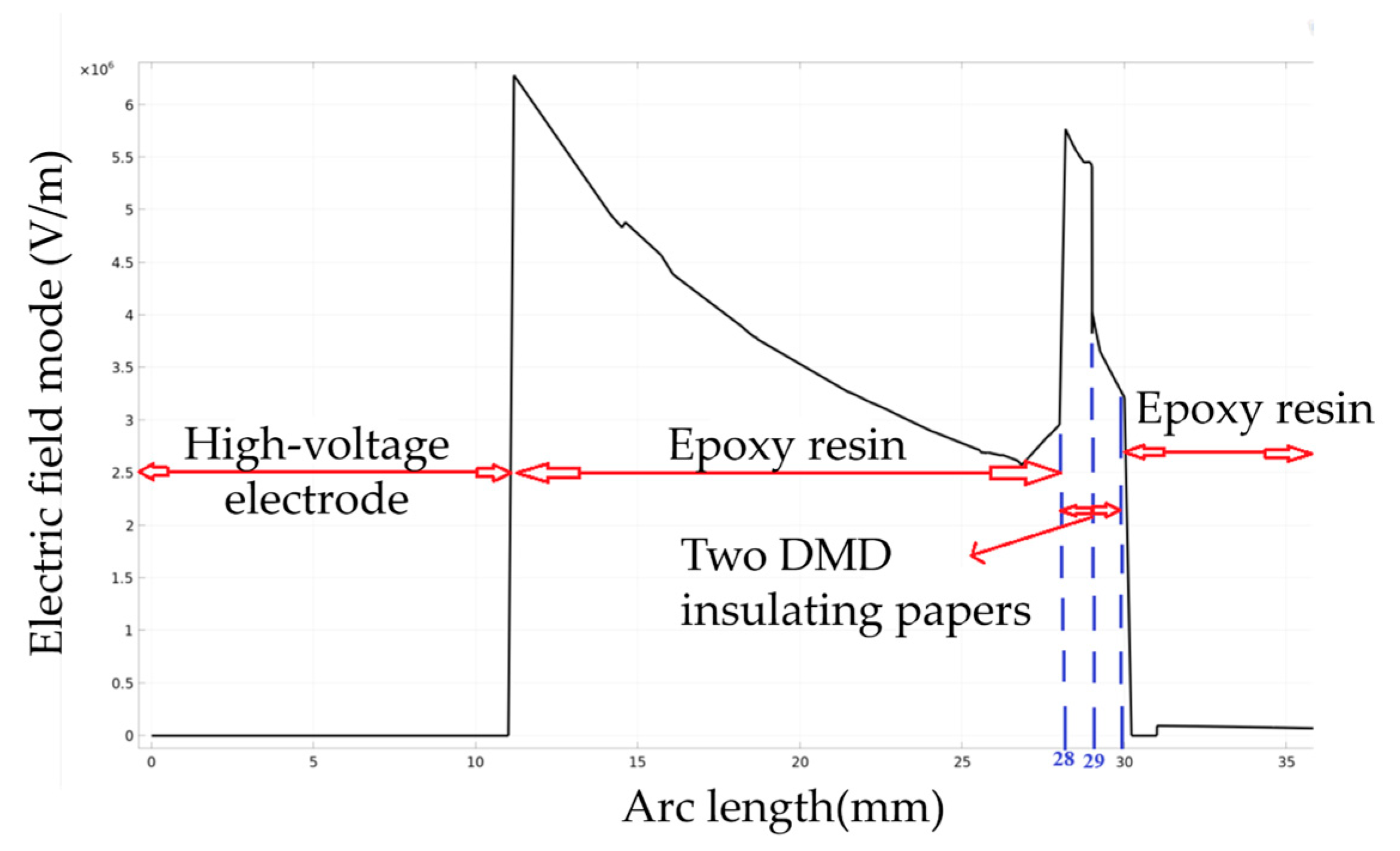
The fourth step is to simulate and calculate the electric field magnitude of the insulator’s embedded voltage sensing component and its surrounding area. Taking a 10 kV medium-voltage distribution insulator as an example, its rated lightning impulse withstand voltage peak is specified as 75 kV. As shown in Figure 10, the final results indicate a uniform and undistorted electric field distribution. At 75 kV, the maximum electric field E max = 10.3 × 10⁶ V/m appears at the interface region between the lower surface of the high-voltage electrode and the epoxy resin layer, which is far below the epoxy resin breakdown field strength of 20~40 × 106 V/m. As shown in Figure 11, the radial electric field strength distribution along the path through the DMD insulating paper at the top of the sensing electrode indicates that the maximum electric field strength at the dielectric interface of the two layers of the DMD insulating paper is 5.77 × 10⁶ V/m, which is much lower than the breakdown field strength of 48 × 106 V/m for a single 0.25 mm-thick layer of DMD insulating paper. Therefore, the embedded voltage-sensing unit within the insulator maintains intact insulation performance and possesses sufficient safety margins.

3. Characteristics and Design Optimization of Multi-Stage Magnetic Ring TMR Sensing Unit

3.1. Multi-Stage Magnetic-Core TMR Sensing Unit Structure

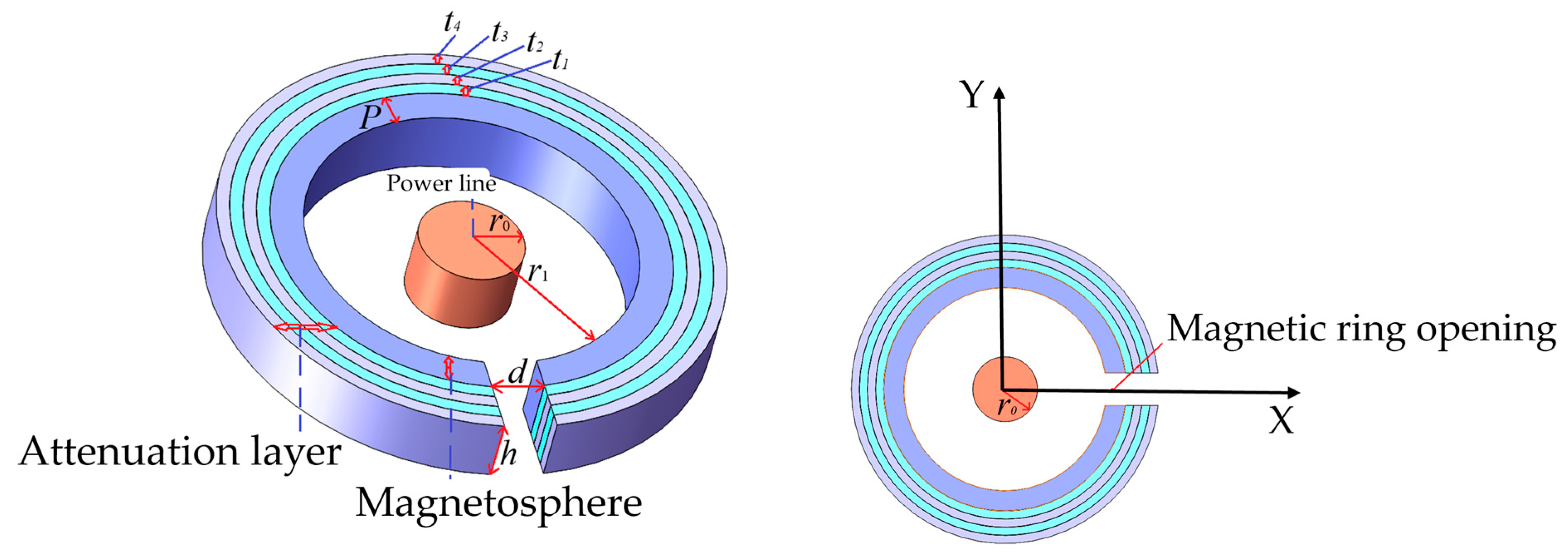
Figure 12 shows the structure of the multi-stage magnetic-core TMR sensing unit and its front-end simulation model. In theory, the high-permeability magnetic flux-concentrating rings can effectively gather the circular magnetic field generated by the measured current at their air gaps, increasing the magnetic flux density around the gaps and thus concentrating the magnetic field. The highly conductive layer relies on the eddy current effect to produce a counteracting effect on interfering magnetic fields, forming a dynamic magnetic shielding layer that attenuates external high-frequency magnetic interference [25]. This structure consists of alternating high-permeability and highly conductive magnetic rings to form a multi-stage magnetic core configuration, where N represents the number of stages. The material and dimensional parameters used to initialize the model are listed in Table 2 and Table 3.
Define the magnetic field measurement sensitivity S of the TMR and the relative ME of the magnetic field measurement under external interference as follows:
S = B N B A
M E = | B 1 B 0 | | B 0 | × 100 %
In Equation (4), B A is the magnetic flux density measured at the TMR location without a magnetic ring and B N is the magnetic flux density measured for the structure with a magnetic ring. In Equation (5), B 1 is the magnetic flux density measured at the TMR location under an external interference magnetic field, and B 0 is the magnetic flux density measured without any external interference. A smaller ME indicates higher magnetic measurement accuracy of the TMR sensor.

3.2. Analysis of Magnetic Sensitivity Characteristics and Optimization of Structural Parameter Design

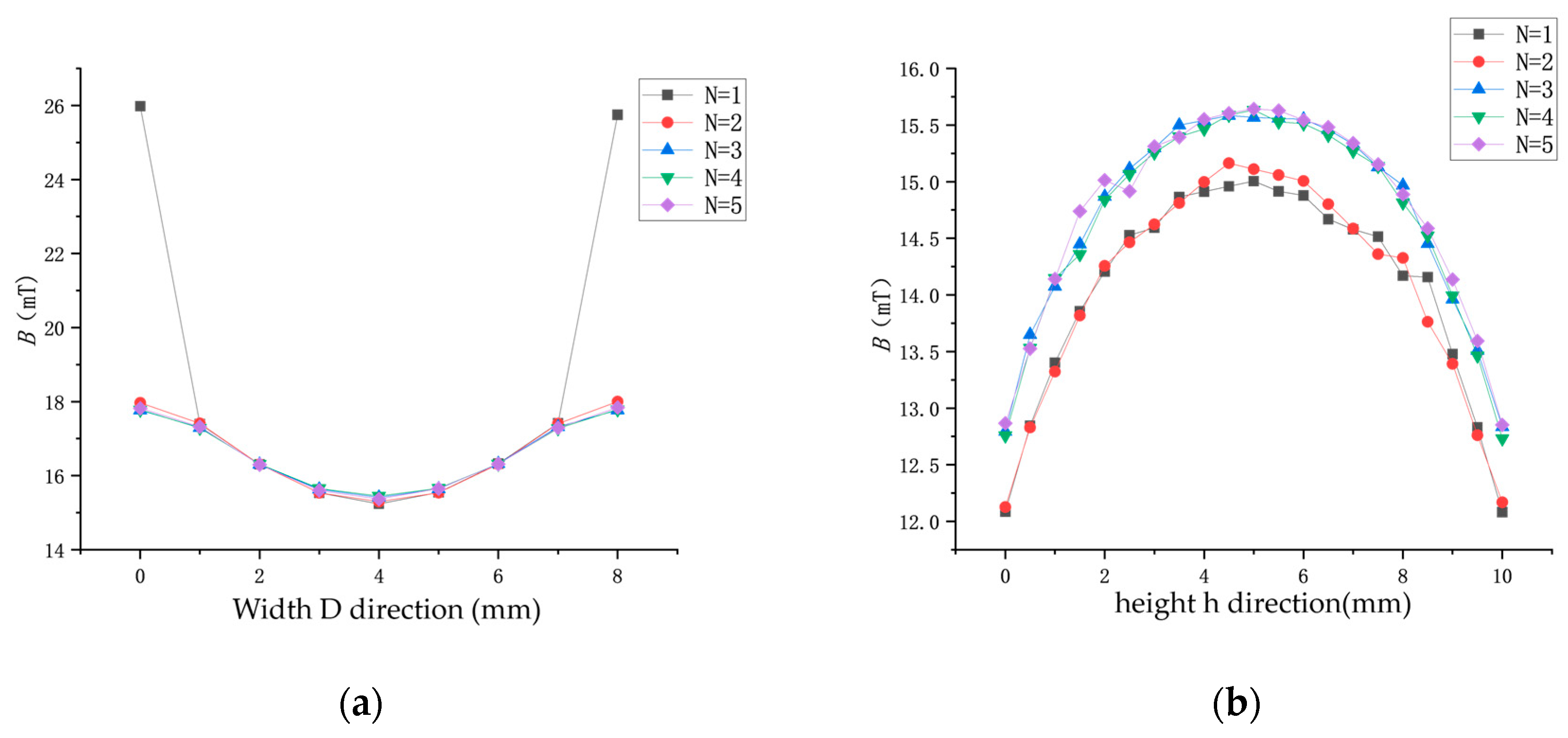
In the first stage, simulations are carried out to determine the relatively optimal deployment position for TMR magnetic measurements. A 50 Hz frequency-domain solver is applied with the transmission line test current set to I = 105 A. The number of magnetic ring layers, N, varies from one to five. The magnetic field is analyzed along the direction from the conductor surface toward the magnetic ring opening (thickness direction t 4 ), indicating that the optimal position is located at the opening of the concentrator. Further analyses are performed along the opening width d and height h directions of the concentrator, as shown in Figure 13. The results demonstrate that the optimal TMR deployment position is at the center of the concentrator opening. Multi-layer magnetic ring structures improve the uniformity of the magnetic field in the opening gap, thereby enhancing measurement stability and accuracy.
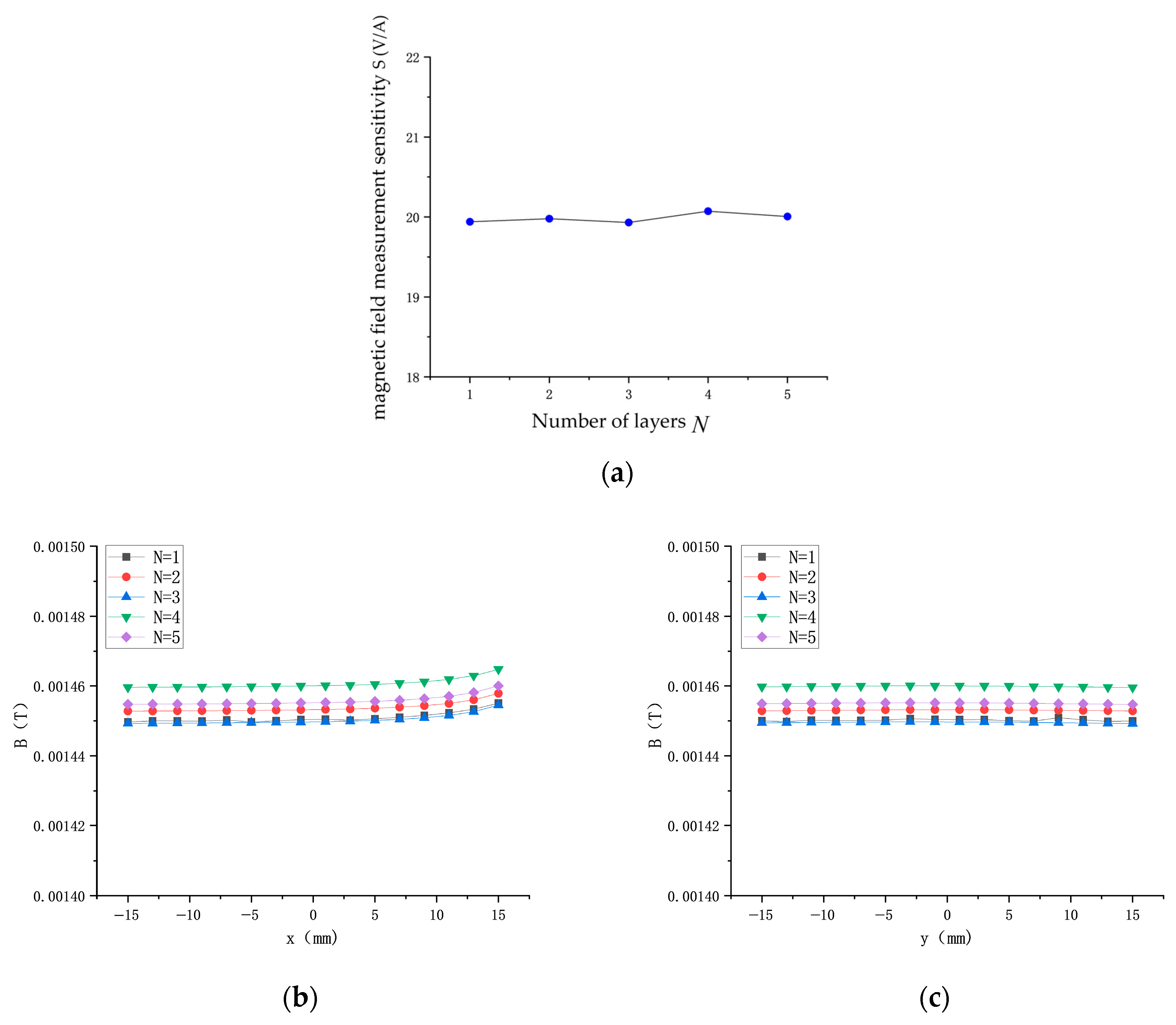
In the second stage, the test current is fixed at a relatively small value of I = 10 A. According to Equation (4), the results shown in Figure 14a indicate that the magnetic ring structure significantly enhances the magnetic field measurement sensitivity S, which mainly depends only on the dimensional parameters of the concentrator ring’s structure. In addition, as shown in Figure 14b, when the orientation of the distribution line is varied along the X- and Y-axes, the results demonstrate that the open-type magnetic ring structure can effectively mitigate the impact of positional deviations of the distribution line inside the ring.
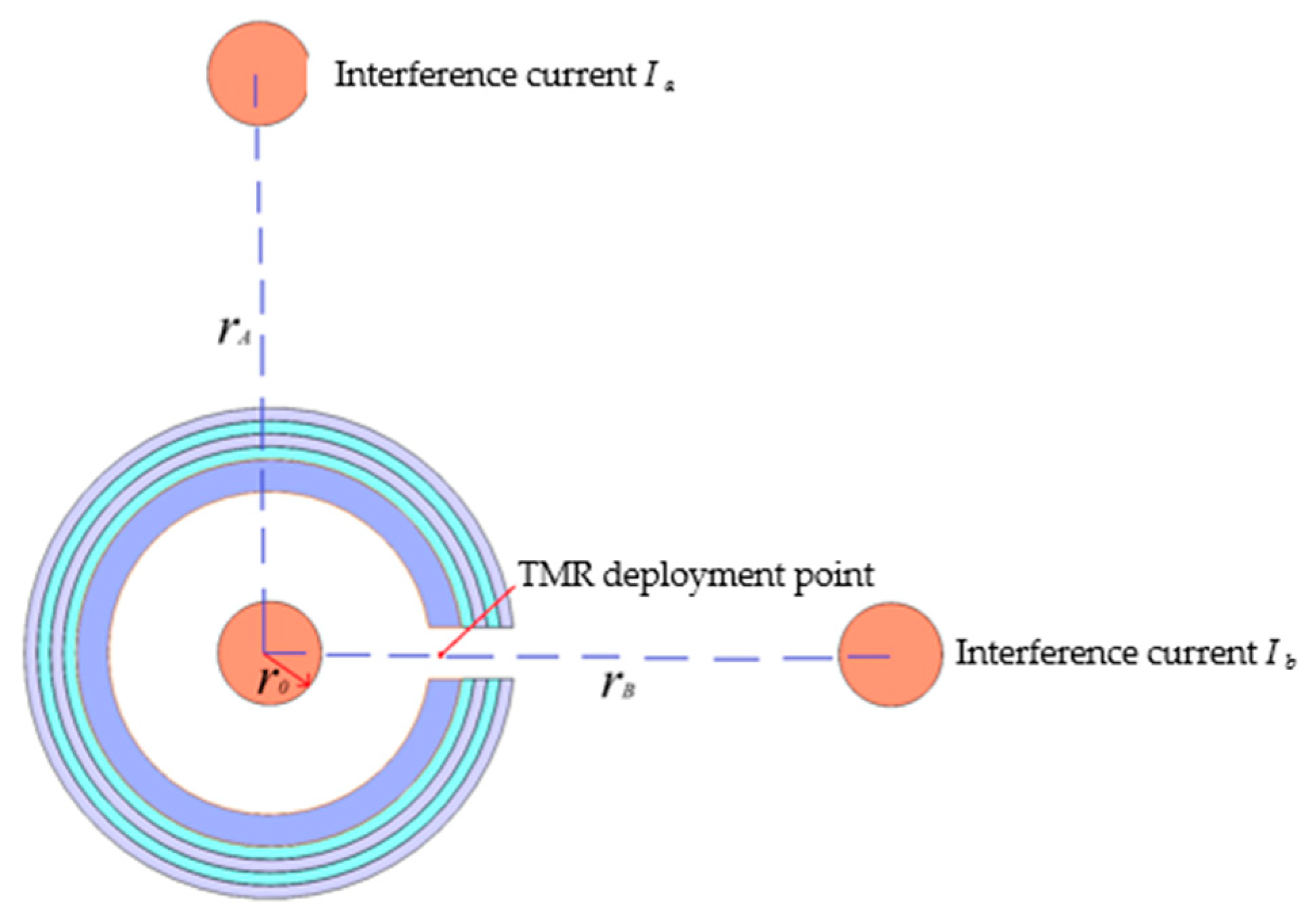
In the third stage, the relative ME is employed to evaluate the anti-interference capability of the TMR deployment point. As illustrated in Figure 15, two interference currents are placed at different distances from the center of the magnetic ring to simulate interference sources with varying incidence angles.
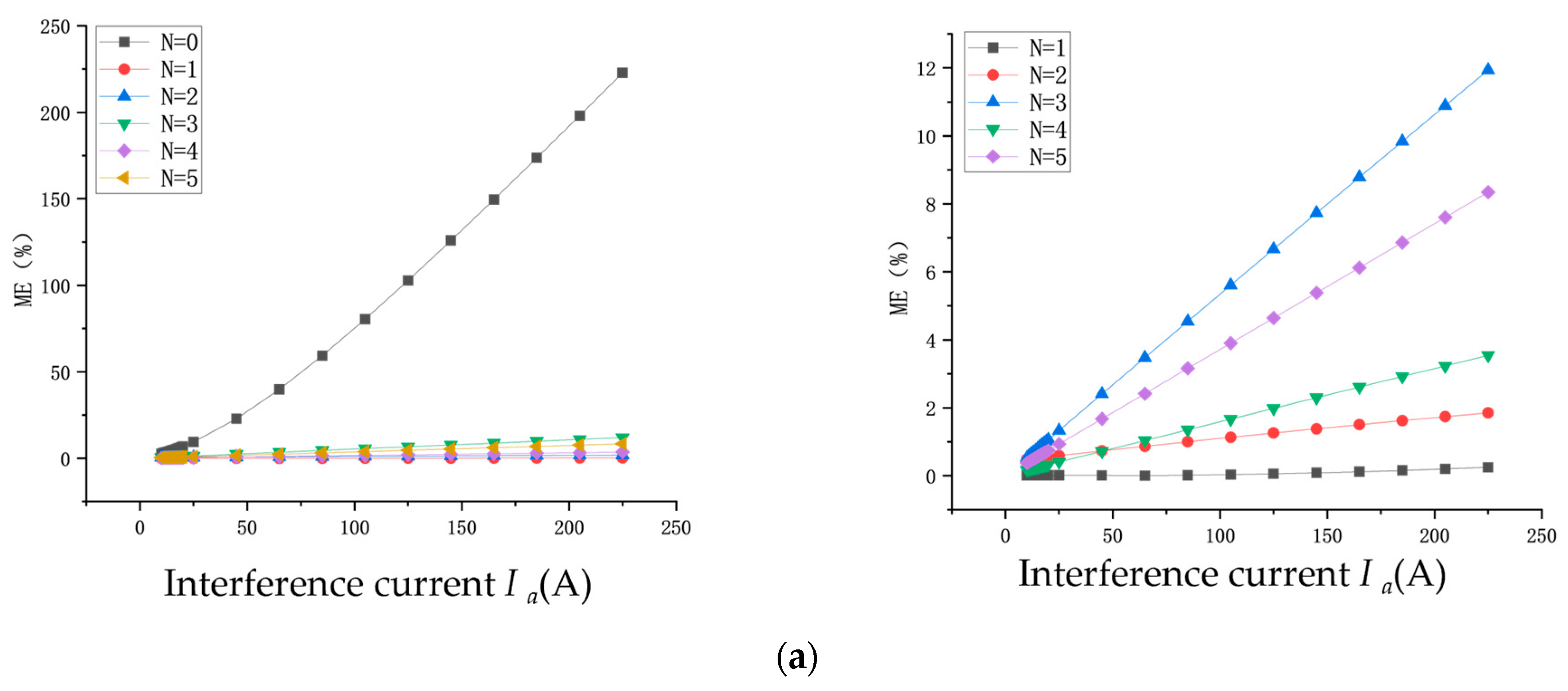
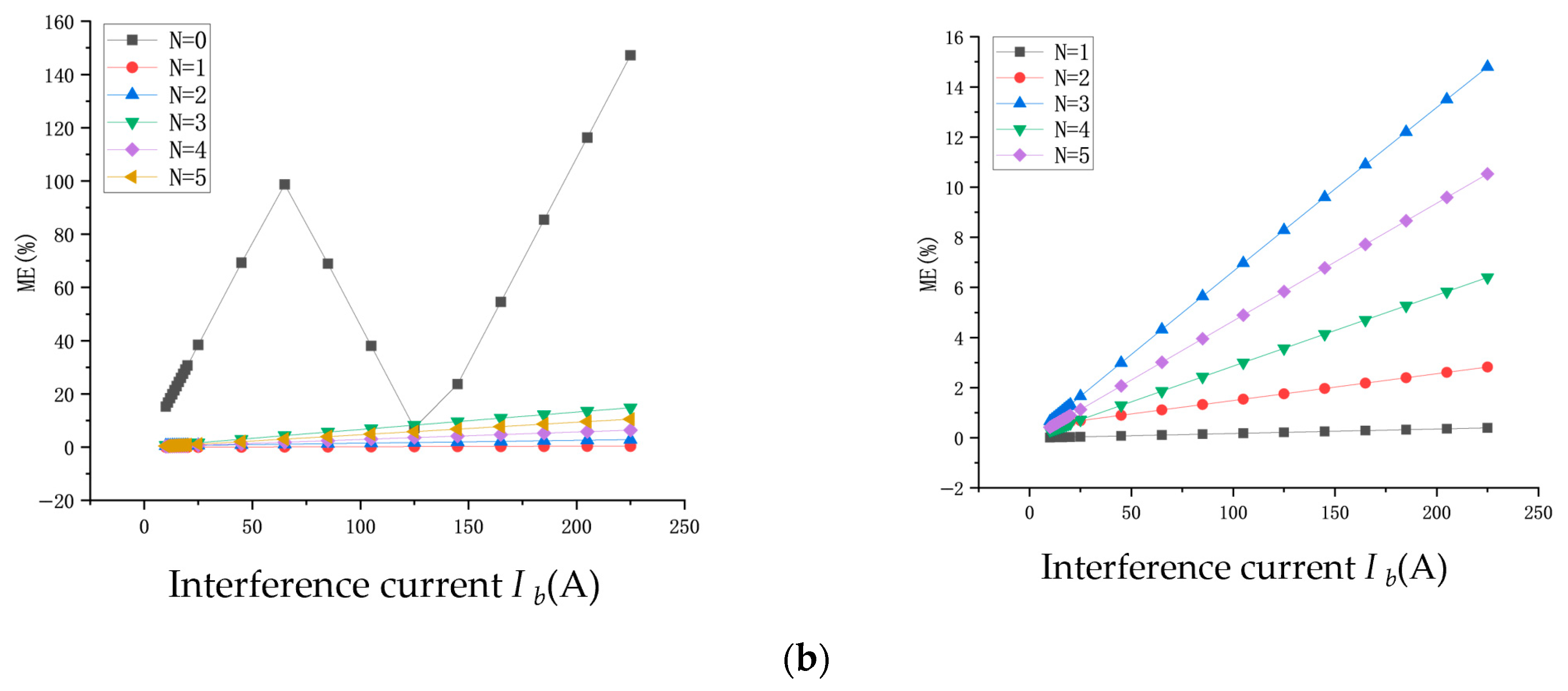
When the interference currents are set as I A = I B , the results of the parametric simulation scan are shown in Figure 16. Compared with the structure without a magnetic ring, the open magnetic ring structure significantly reduces the relative ME in the magnetic measurement. However, when N   2, the magnetic ring design slightly decreases in its anti-interference capability. The error difference between the single-layer and two-layer magnetic rings is small, indicating that under conditions of low-current signal detection at the power-frequency and large-current interference, the introduction of attenuation layers may partially weaken the anti-interference performance. Considering both the improvement in magnetic field uniformity achieved by the two-layer magnetic ring structure and the high-frequency shielding effect of eddy currents in highly conductive media under high-frequency interference, the optimal number of magnetic ring layers for the TMR-based open-type magnetic ring current sensing unit is determined to be N = 2.
With the interference currents fixed at I A = I B = 105   A , a comprehensive analysis was conducted to evaluate the influence of the magnetic core’s structural parameters on the TMR sensor’s capability to suppress magnetic interference. The optimal parameter set was determined to enhance the measurement accuracy of the TMR sensor in a two-stage magnetic core architecture.
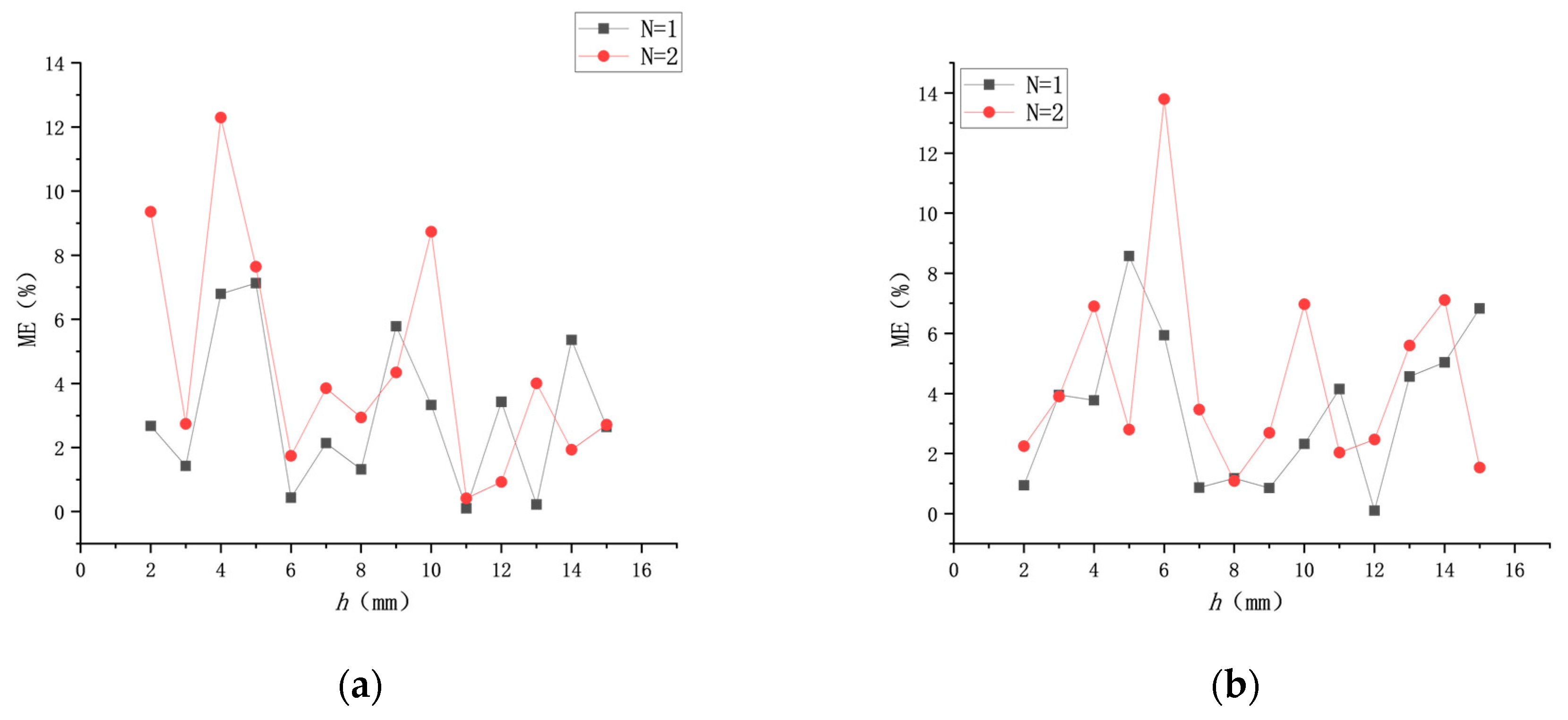
As illustrated in Figure 17, a parametric analysis was conducted on the magnetic core height h . The results indicate that the average measurement error (ME) of the two magnetic core structures under both interference currents was 1.68% when h = 11 mm, and reduced to 1.63% when h = 8 mm. Consequently, the magnetic core height was optimized to h = 8 mm.
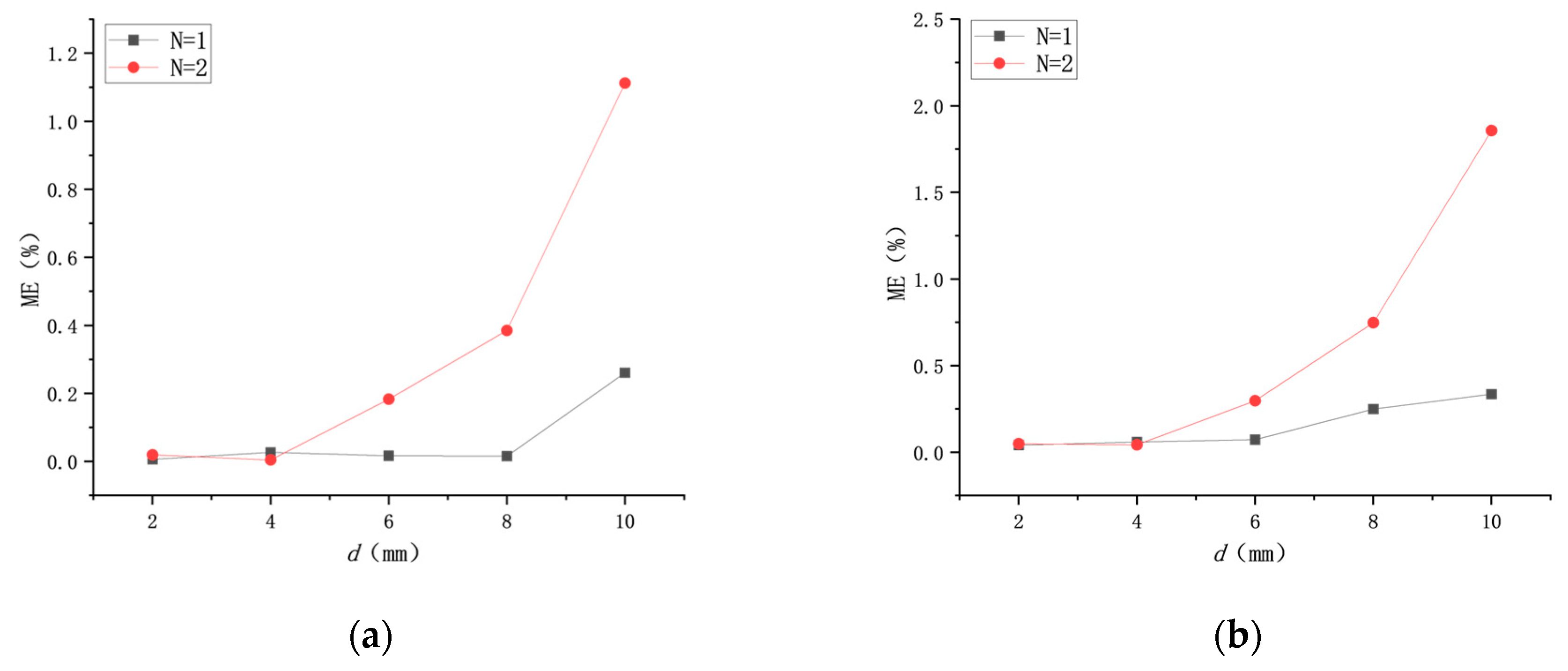
In the fourth stage, the interference currents are fixed at I A = I B = 105 A. The effects of various magnetic ring structural parameters on the TMR’s anti-magnetic interference capability are investigated to determine the optimal parameter values, thereby improving the sensing accuracy of the TMR under the two-layer magnetic ring structure.
As shown in Figure 18 a parametric scan of the magnetic ring height, h, was carried out. For h = 11 mm, the average ME across the two magnetic ring structures and the two interference currents is 1.68%, while for h = 8 mm, the average ME is 1.63%. Therefore, the magnetic ring height is set to h = 8 mm.
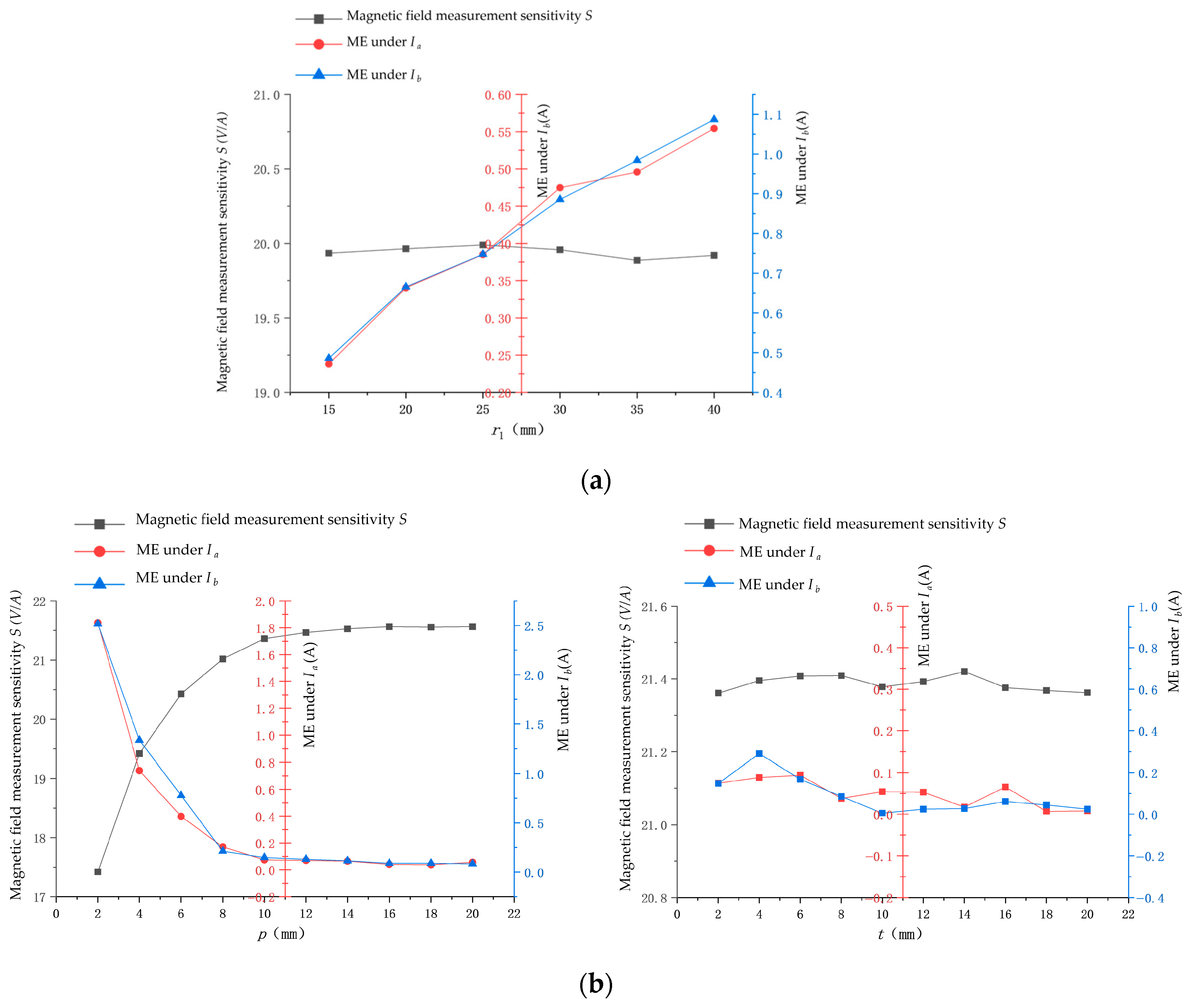
As shown in Figure 19, parametric scans were conducted for the concentrator’s inner radius r 1 , thickness p , and attenuation layer thickness t . Under the two interference currents, the magnetic field measurement sensitivity S remains nearly constant with increasing r 1 and t , while S continuously increases with p until 10 mm, after which it levels off. As r 1 increases, the relative ME for both magnetic measurements slightly increase. When p 8, both ME values become almost independent of further increases in p , and the effect of t on ME becomes minimal beyond 8 mm. Considering that both voltages withstand the requirements and miniaturization needs, the concentrator’s inner radius r 1 is set to 15 mm, the concentrator thickness p to 10 mm, and the attenuation layer thickness t to 8 mm.

4. Insulator Voltage–Current Integrated Sensor

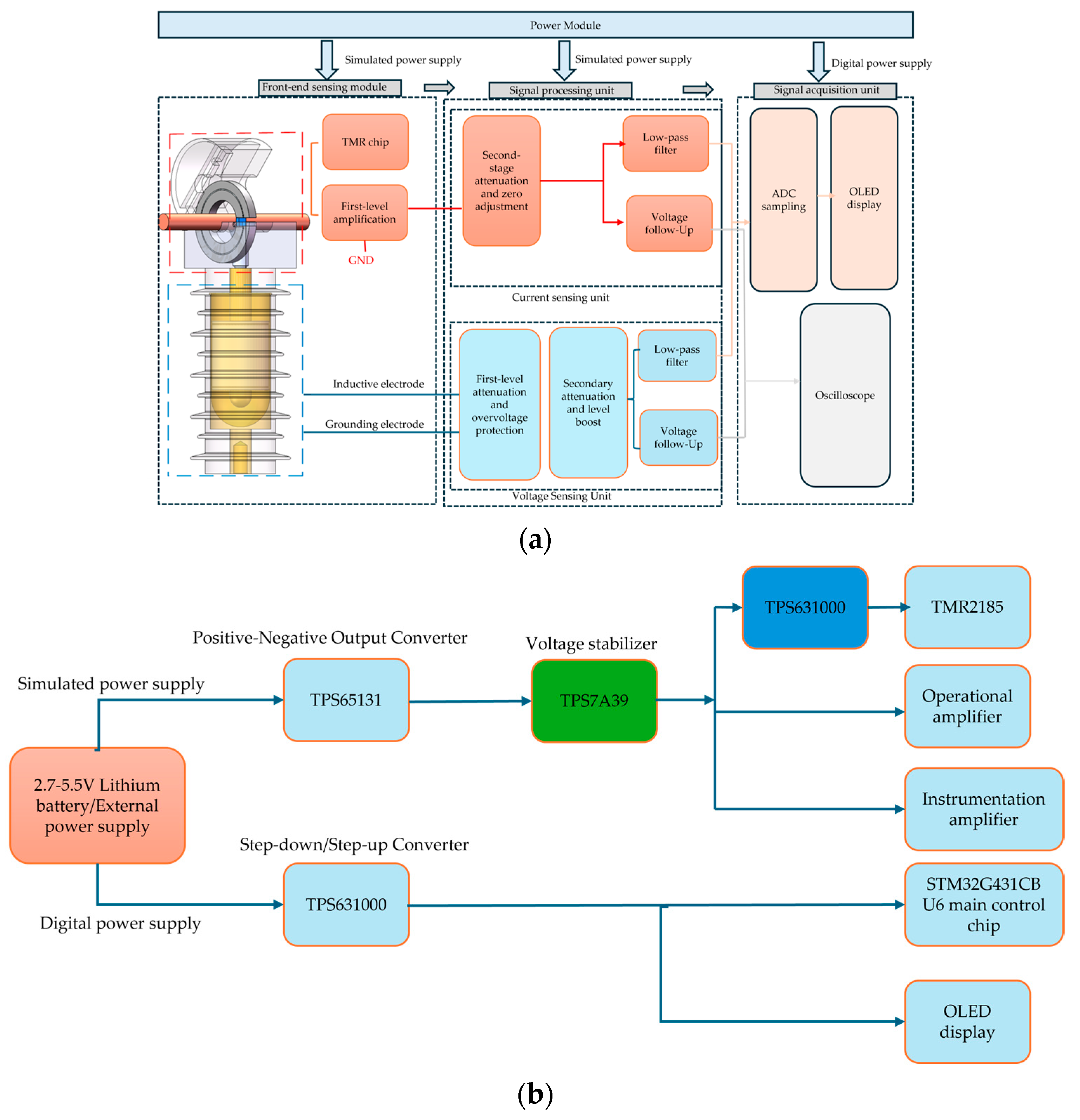
Based on the optimized structural shapes and parameters of the voltage and current sensing units mentioned above, a voltage–current integrated sensor for distribution network insulators was designed. Its system architecture and power module design are shown in Figure 20.
The TMR front-end sensing module uses the TMR2185 chip with a wide linear range, along with the INA826 instrumentation amplifier, which has a high common-mode rejection ratio, to perform a first-stage amplification of the front-end sensing output signal to the range of −5 V to +5 V. The first-stage attenuation and overvoltage protection circuit of the insulator-embedded voltage-sensing unit provides a high voltage division ratio, attenuating the measured 10 kV line voltage in the demonstration to the −5 V to +5 V range, while also extending the bandwidth down to 50 Hz and operating in a self-integrating mode. For the remaining identical signal-processing modules of the two sensing units, the resistor parameters are designed to achieve a 1/4 attenuation of the input signal in the ±5 V range. At the same time, the DAC of the microcontroller is used to eliminate the inherent output offset voltage of the TMR chip, adapting the sensor output to the 0–2.5 V input range of the microcontroller ADC.

5. Experimental Testing and Results Analysis

5.1. Power-Frequency Steady-State and Transient Characteristics Test for Voltage Measurement

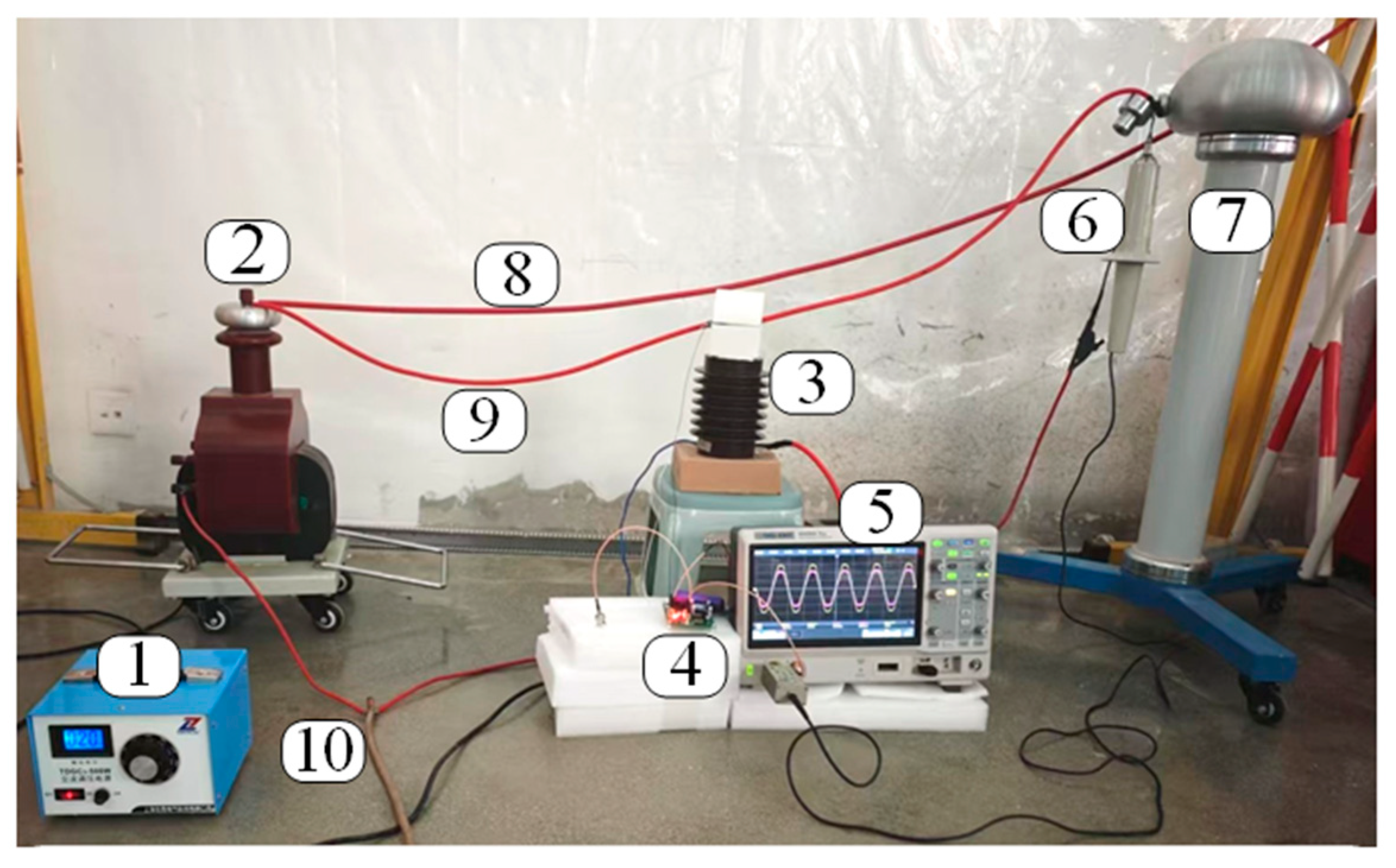
To build the test platform shown in Figure 21, the voltage of the distribution line under test is first generated by an isolated voltage regulator with an adjustable output range of 0–300 V RMS. This signal is then amplified by a dry-type transformer with an input-to-output turns ratio of 250 and a maximum output voltage of 50 kV RMS. The induced signal is output to a hardware circuit board for processing, after which it is both displayed on an oscilloscope and acquired by a microcontroller ADC for OLED screen display. Additionally, a Tek P6015A (Tektronix, Beaverton, OR, USA) high-voltage probe with a 1000:1 attenuation ratio and 75 MHz bandwidth is used as a reference measurement and comparison tool, connected to an SDS2502X Plus oscilloscope (Siglent, Shenzhen, China). Finally, the integrated sensing prototype is tested for voltage measurement sensitivity, linearity, accuracy, and linear range under power-frequency conditions.
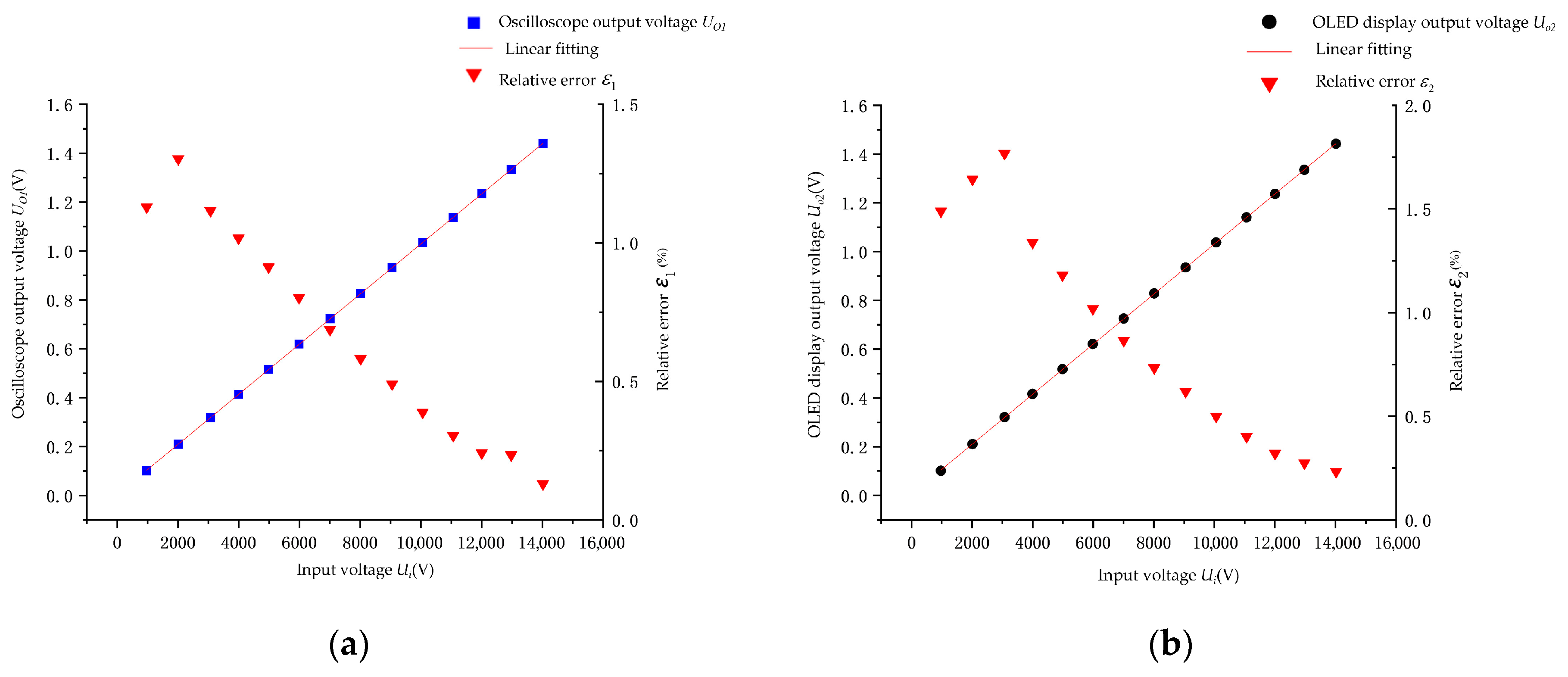
Initially, without connecting the interference line labeled as No. 8, the effective values under steady-state conditions were recorded. Specifically, the input voltage U i was measured by the oscilloscope through a high-voltage probe, while the output voltages U o 1 and U o 2 were obtained from the integrated sensor prototype and the OLED display of the prototype, respectively. The corresponding results are summarized in Table 4. The fitted curves of the two different output acquisition methods are illustrated in Figure 22, with the numerical fitting equation expressed as follows:
U o 1 = 1.02535 × 10 4 U i + 0.00363
U o 2 = 1.02679 × 10 4 U i + 0.00478
Thus, the voltage division ratios of the integrated sensor prototype are obtained as K 1 = 9752.76 from the oscilloscope’s acquisition and K 2 = 9739.09 from the microcontroller’s acquisition. Based on the relative error expression (8), the corresponding ε 1 and ε 2 values in Table 4 are derived.
ε = K U 0 U i U i × 100 %
Within the tested range, the results indicate that the integrated sensor prototype exhibits good linearity in voltage measurement; the maximum relative error of the output RMS value is 1.49%, demonstrating satisfactory accuracy; with a sensitivity value of 1.02535, its theoretical linear measurement range can reach an amplitude of 20 kV.
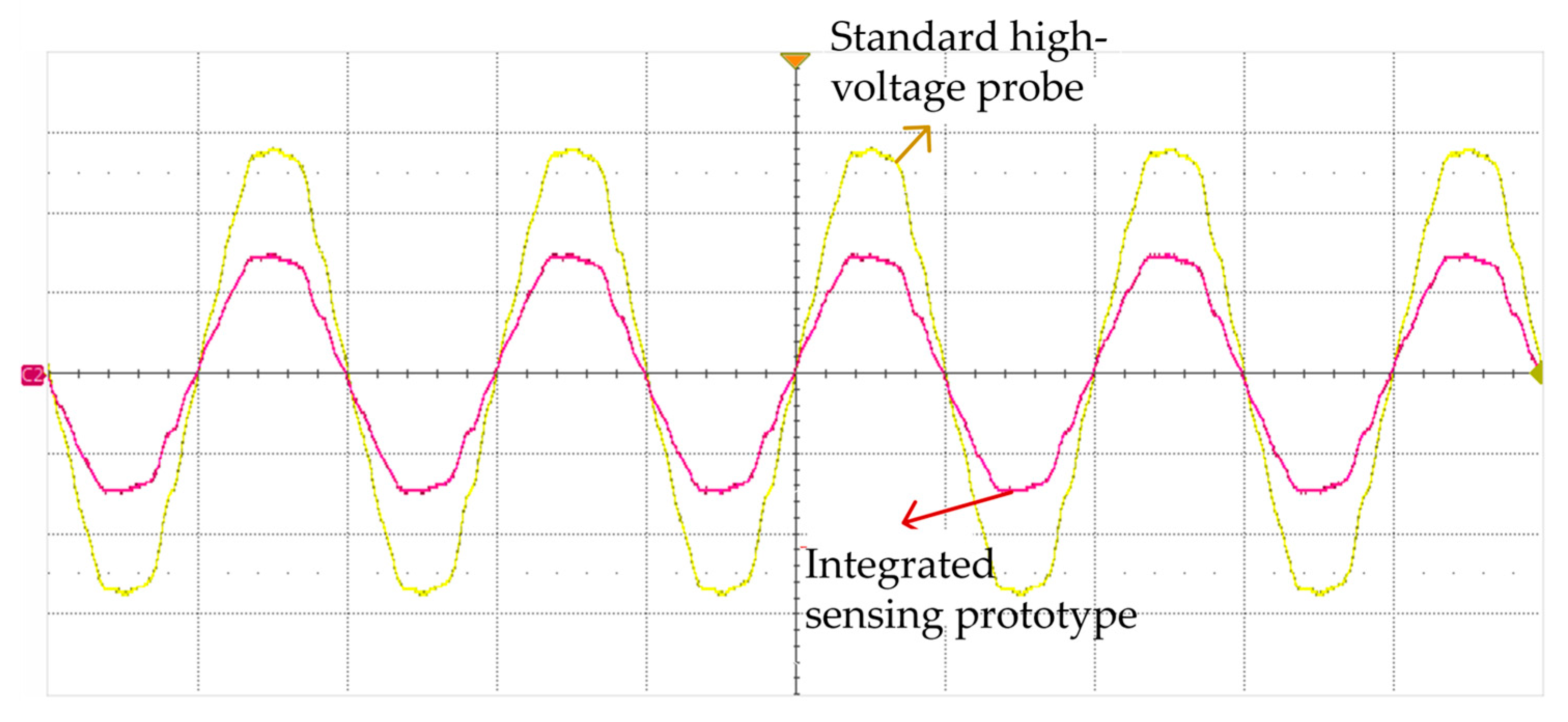
Subsequently, when the interference line labeled “8” was introduced, tests were conducted with a 10 kV power-frequency input under simultaneous interference. The oscilloscope waveform is shown in Figure 23, where the phase deviation is minimal. Substituting the voltage division ratio K 1 into the calculation yields ε 1 = 1.41%, indicating that the sensor possesses a certain degree of electric field interference immunity.
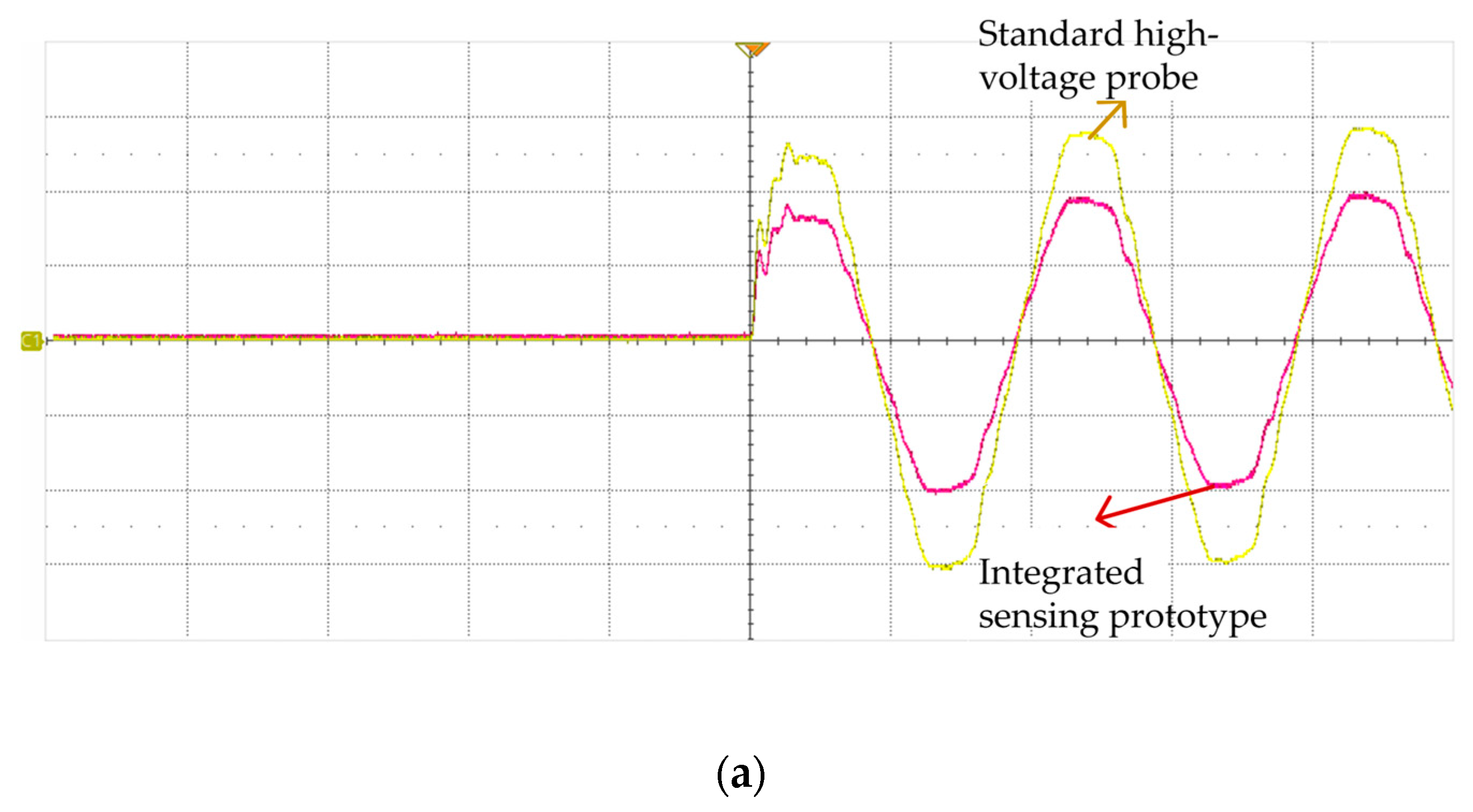
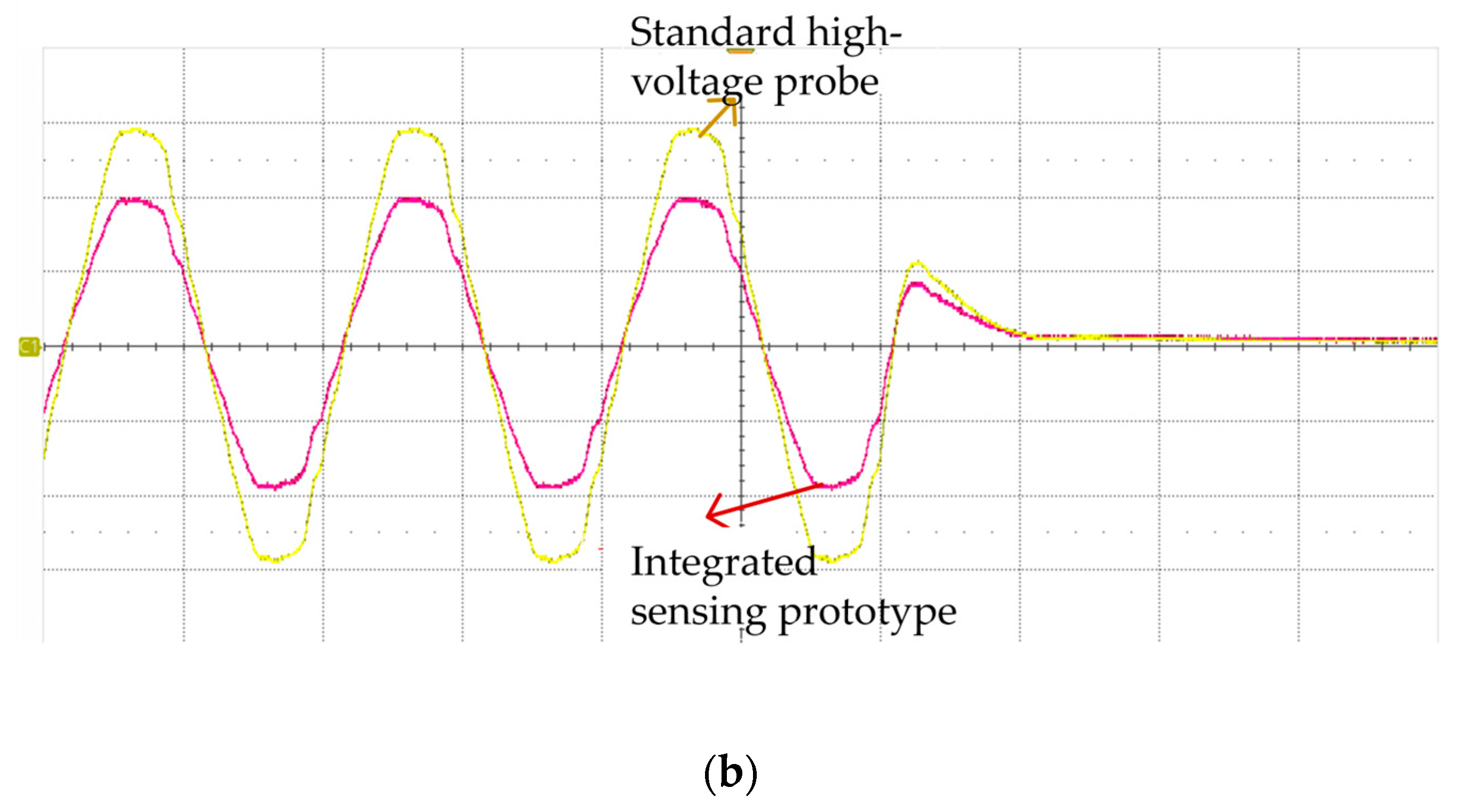
Secondly, the oscilloscope was used to test the power-frequency transient characteristics at the moments of switch opening and closing. As shown in Figure 24, the results demonstrate that under transient switching operations, the output of the integrated sensor prototype follows the same variation trend as the measured voltage, enabling a timely response.

5.2. Frequency Response Test for Voltage Measurement

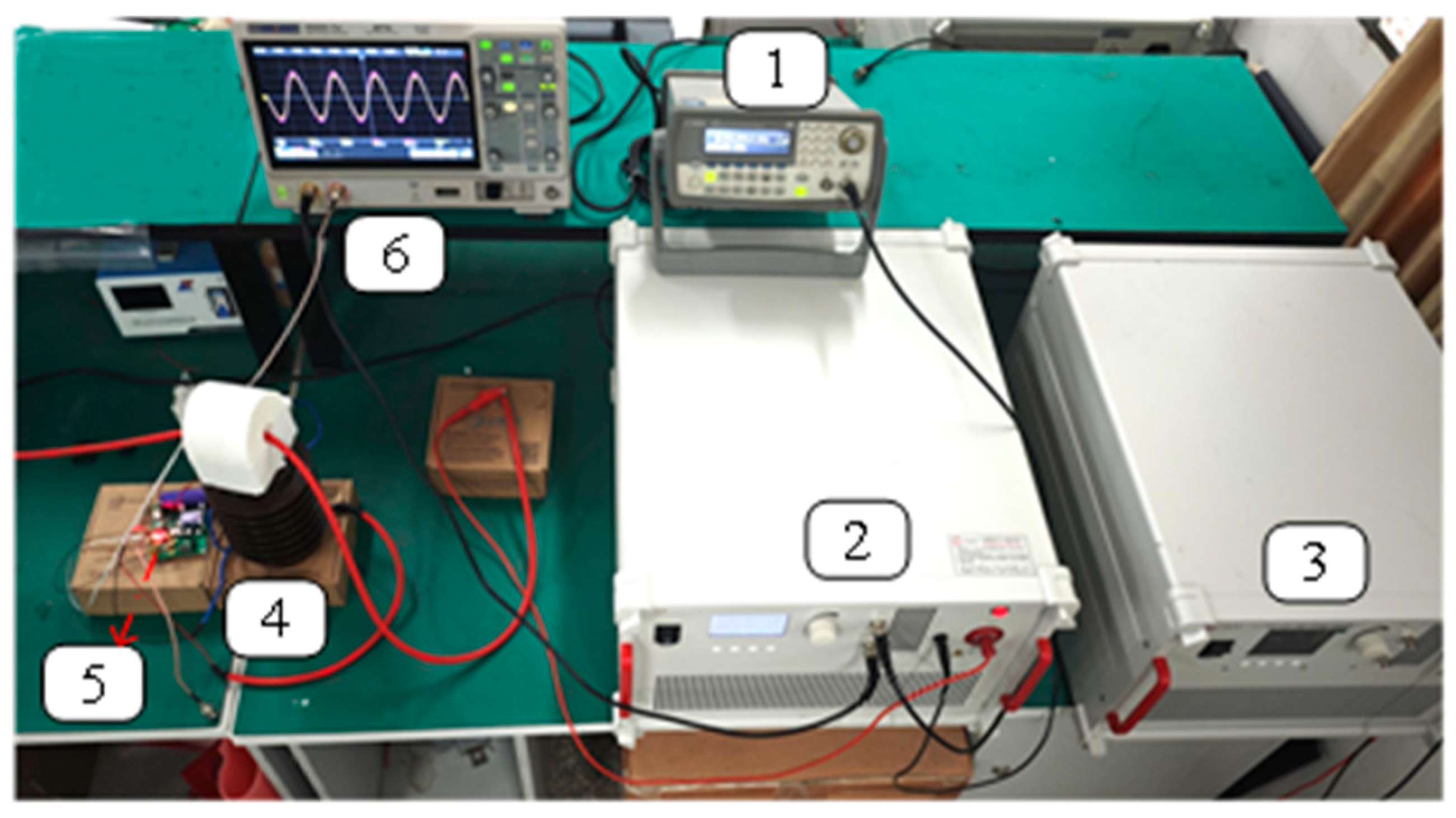
A steady-state frequency response test platform was constructed as shown in Figure 25. In the experiment, two high-voltage amplifiers, the Aigtek ATA-7050 and Aigtek ATA-68101 (Aigtek, Xi’an, China), were employed to measure the bandwidths of 50 Hz–4 kHz and 4 kHz–30 kHz, respectively. Since the maximum output voltage of both amplifiers is 10 kVp-p, the signal becomes relatively small after attenuation by the voltage division ratio K 1 . Therefore, one surface-mounted voltage-dividing capacitor in the first-stage attenuation circuit of the voltage module was removed, thereby reducing the division ratio to improve the signal quality acquired by the oscilloscope in this experiment.
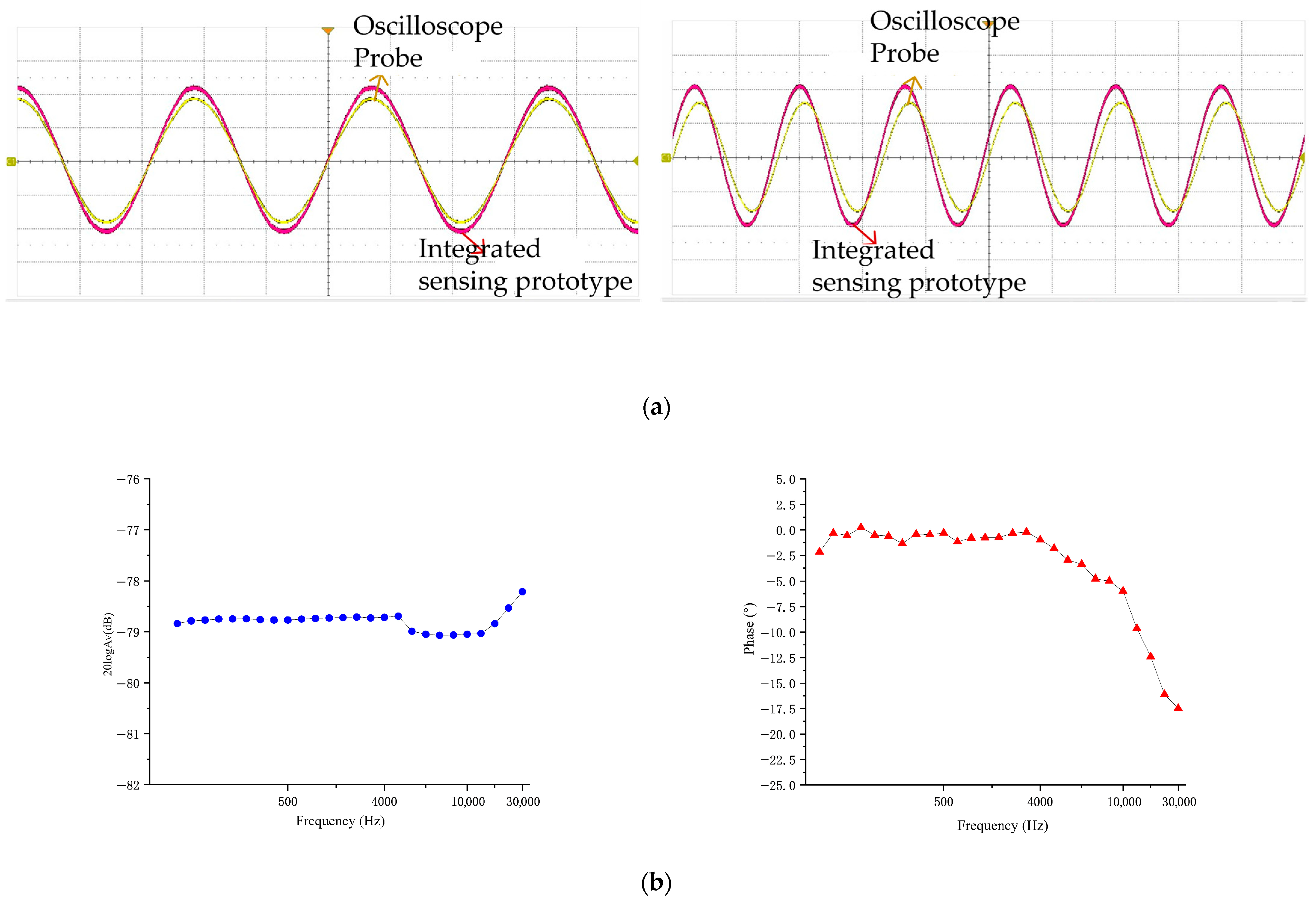
The oscilloscope waveforms at 3.5 kHz (minimum phase) and 30 kHz (maximum phase) are shown in Figure 26a, while the frequency response characteristic curve is presented in Figure 26b. It can be concluded that under this experimental platform, the logarithmic gain of the integrated sensor prototype remains relatively stable, with a significantly smaller phase error at low frequencies. Overall, the sensor exhibits favorable frequency characteristics within the sweep range of 50 Hz–30 kHz.

5.3. Power-Frequency Steady-State and Frequency Characteristic Test for Current Measurement

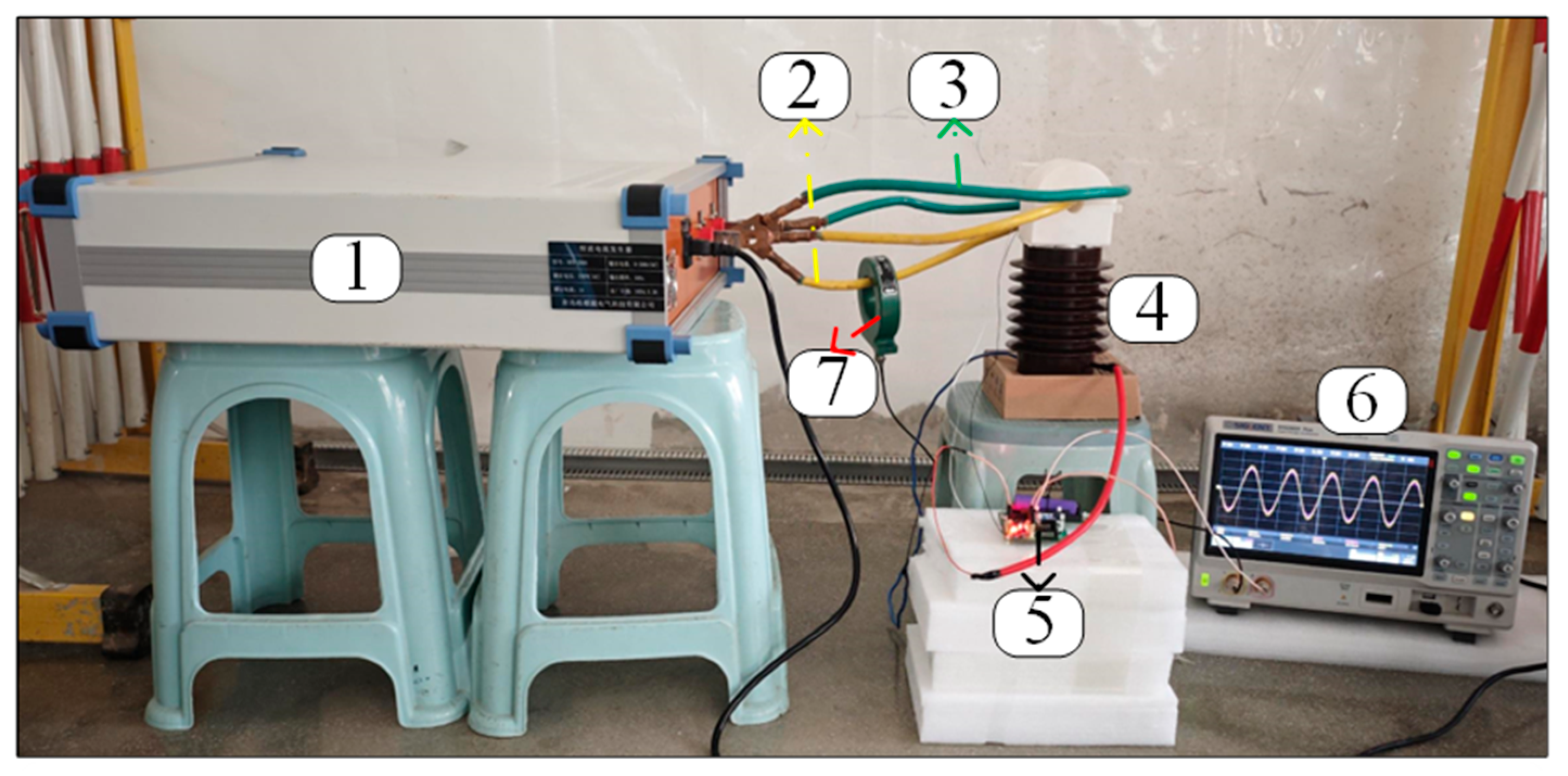
A test platform was constructed as shown in Figure 27, where a constant current generator with an adjustable output current range of 0–200 A was connected in series with the distribution line under test to provide the current output. In addition, a PEARSON CURRENT MONITOR Model 110 current probe (Pearson Electronics, Bloomington, MN, USA), with a gain of 1/10 and a maximum RMS current rating of 65 A, was employed as the reference instrument for accurate calibration in the 1–50 A current measurement range. Based on this setup, the integrated sensor prototype was tested under power-frequency steady-state conditions to evaluate its current measurement sensitivity, linearity, accuracy, and dynamic range.
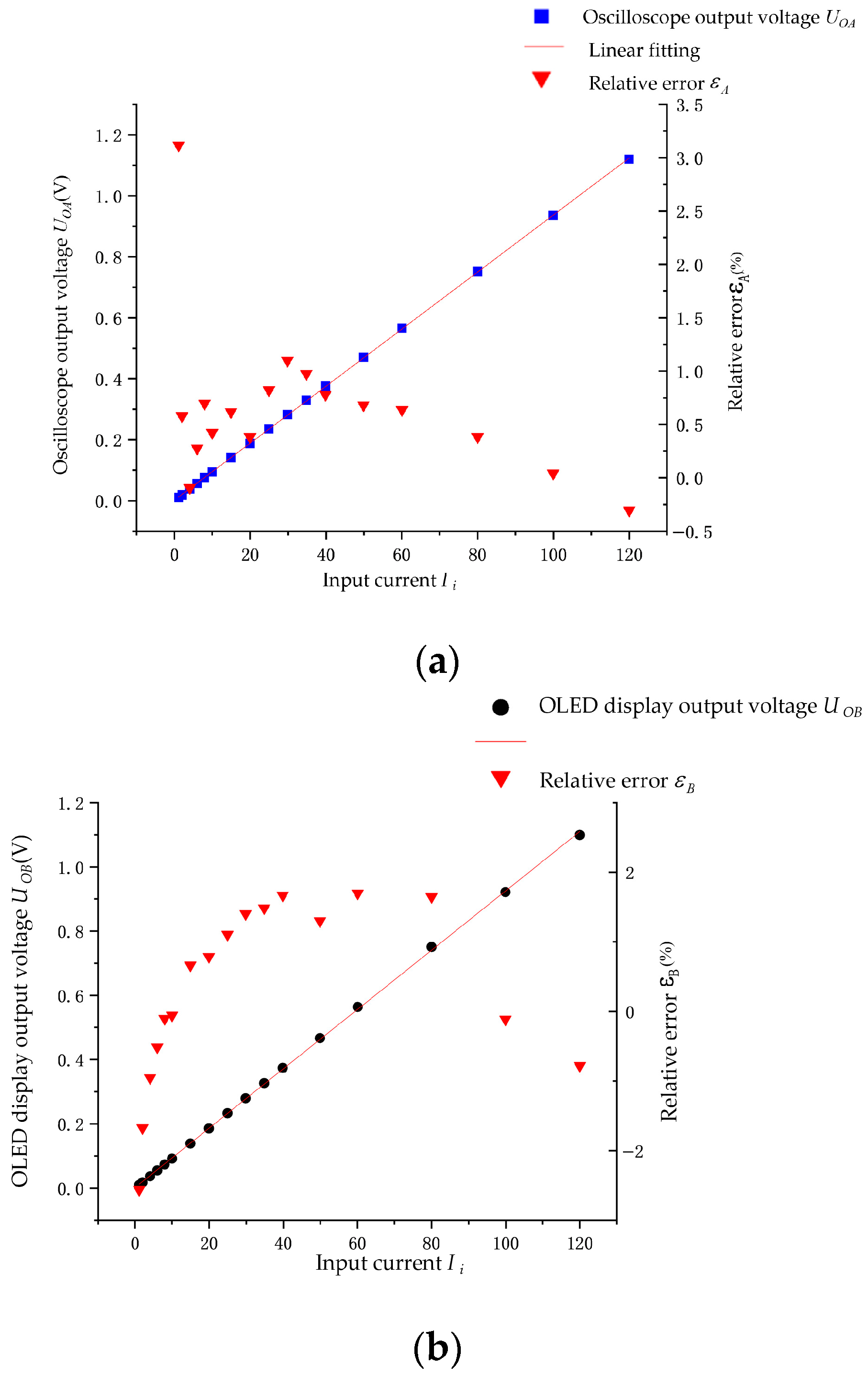
Initially, with the interference wire (labeled three) disconnected, the root mean square (RMS) data were recorded in real time. Specifically, the oscilloscope captured the input current I i measured by the standard current probe, the output voltage U o A of the integrated sensor prototype, and the output voltage U o B of the prototype, as displayed on the OLED screen. The corresponding results are summarized in Table 5. Based on these data, the fitted curves obtained under the two acquisition modes are illustrated in Figure 28, and the numerical fitting equation is expressed as follows:
U o A   =   0 . 00936   I i +   0 . 00138
U o B = 0 . 00923   I i + 0 . 00196
It is obtained that, for current measurements, the sensitivity of the integrated sensor prototype is K A = 0.00936 V/A when acquired via the oscilloscope and K B = 0.00923 V/A when acquired via the microcontroller. Accordingly, the relative errors ε A and ε B under the two acquisition modes are derived, as listed in Table 5.
Within the tested range, the results indicate that the integrated sensor prototype exhibits good linearity in current measurement. The maximum relative error occurs at a small current of 1 A, reaching 3.117%. The decline in low-current measurement accuracy results from the superposition of multiple factors, with the core issues being the deterioration of the signal-to-noise ratio and a significant increase in the relative proportion of various errors. For currents of 2 A and above, the error acquired via the oscilloscope remains within 1.2%, demonstrating satisfactory measurement accuracy. Based on the sensitivity K A , the theoretically inferred linear measurement range extends up to an amplitude of 267 A.
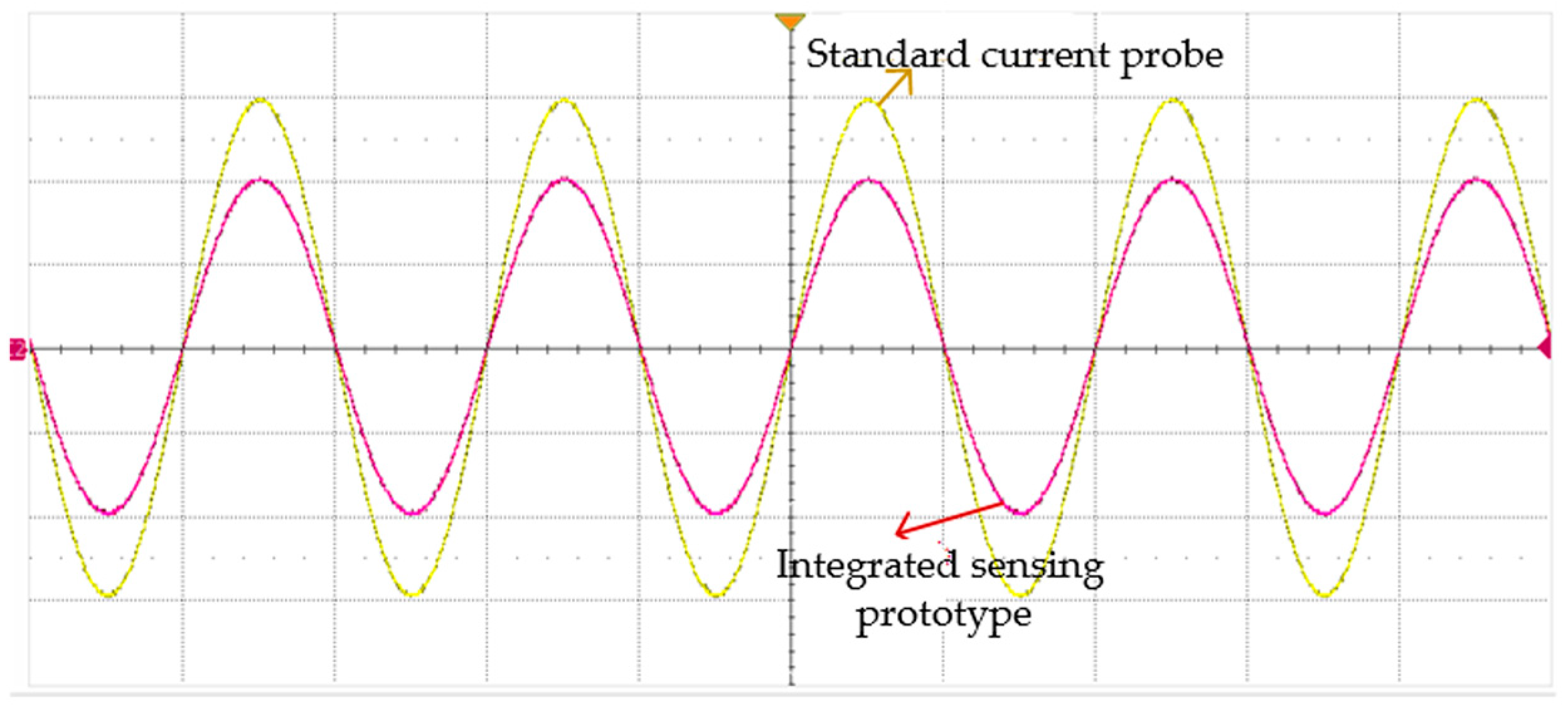
Subsequently, when an interference wire of the same type (labeled three) is introduced, the waveform is shown in Figure 29. Using sensitivity K A for inverse calculations, the relative error of current measurement under nearly equal-amplitude and same-frequency interference is determined to be −1.129%, confirming that the flux-concentrating ring possesses considerable immunity to magnetic interference.
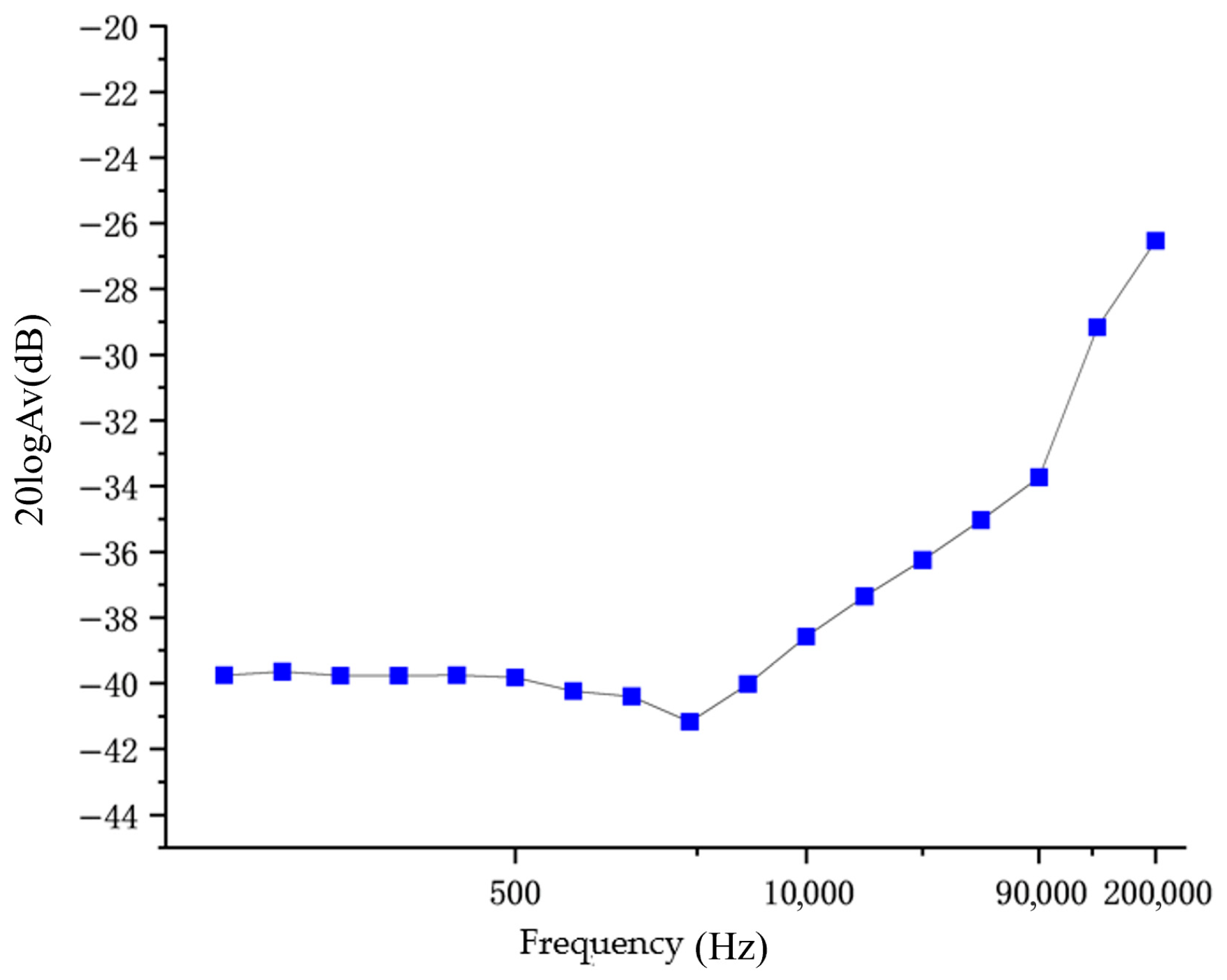
Secondly, by using a signal generator together with an Aigtek ATA-4014 (Aigtek, Xi’an, China) power amplifier (maximum RMS output current of 4 A), the frequency response characteristics were obtained as shown in Figure 30. The logarithmic gain remains relatively stable within the range of 50–10 kHz.

6. Conclusions

To address the limitations of traditional separate voltage and current measurements, the safety concerns inside the insulator after primary–secondary integration, the difficulty in determining voltage measurement gain, and the interference susceptibility of TMR current measurements, a voltage–current integrated insulator sensor for distribution networks is proposed, based on electric field coupling and TMR magnetic sensing. This design ensures the safe operation of the insulator while enabling integrated and accurate detection of both voltage and current.
Simulation results demonstrate that the optimization method for the structural parameters of the embedded voltage-sensing unit achieves electric field uniformity within the insulator and minimizes the maximum electric field magnitude. Furthermore, the optimization of the multi-stage magnetic ring structure enhances magnetic field uniformity, magnetic measurement sensitivity, and the anti-magnetic interference capability, while also mitigating the impact of conductor eccentricity errors.
Experimental results show that, within the power-frequency voltage test range of 1 kV to 14 kV, the prototype of the voltage–current integrated sensor exhibits a maximum relative error of 1.49% in RMS output. When subjected to a 10 kV input with interference present, the relative error is 1.41%, indicating strong electric field anti-interference capability, with transient waveforms varying synchronously. The sensor also demonstrates good frequency characteristics in the sweep frequency range of 50 Hz to 30 kHz.
For the power-frequency current test range of 1 A to 120 A, the maximum relative error of the RMS value is 3.117% at a low current of 1 A. To address the increased measurement error under low-current conditions, future work could focus on optimizing the signal-to-noise ratio (SNR) in small-current measurements. Improvement directions may include adopting phase-locked amplification technology or utilizing TMR chips with higher sensitivity, while for currents of 2 A and above, the error collected by the oscilloscope remains within 1.2%. Under same-frequency and equal-amplitude interference of 20 A, the current measurement’s relative error is −1.129%, showing a good anti-magnetic interference capability. Moreover, the logarithmic gain remains relatively stable within the 50 Hz–10 kHz range.
However, further research is still needed to seek experimental conditions to verify the partial discharge behavior, safety performance, and the effects of temperature and humidity after embedding the voltage-sensing unit inside the insulator; to simulate and experimentally validate, under suitable conditions, the high-frequency shielding effect of eddy currents in the highly conductive layer; and, in terms of circuitry, to design control switches for the primary attenuation circuit in voltage measurement and the instrumentation amplifier in current measurement, thereby enabling multi-range control and improving adaptability.

Author Contributions

Conceptualization, X.T. and W.Z.; methodology, Y.L. and W.Z.; software, N.S.; validation, W.Z.; data curation, X.T.; writing—original draft, X.T.; writing—review and editing, Y.L.; supervision, N.S.; visualization, Y.L. and N.S.; funding acquisition, X.T. All authors have read and agreed to the published version of the manuscript.

Funding

This research was funded by the Yunnan Provincial Department of Science and Technology Program Project (No. 202301AS070028).

Data Availability Statement

The original contributions presented in this study are included in the article. Further inquiries can be directed to the corresponding author.

Conflicts of Interest

Author Xiangyu Tan was employed by the Electric Power Research Institute, Yunnan Power Grid Co., Ltd. The remaining authors declare that the research was conducted in the absence of any commercial or financial relationships that could be construed as a potential conflict of interest.

Abbreviations

The following abbreviations are used in this manuscript:
OLEDOrganic Light-Emitting Diode
TMRTunnel Magnetoresistance
AMRAnisotropic Magnetoresistance
GMRGiant Magnetoresistance
DMDDacron/Mylar/Dacron
ADCAnalog-to-Digital Converter
RMSRoot Mean Square
MEMeasurement Error

References

  1. Zhao, W.; Zhao, C.; Li, S.S.; Tong, X.; Liu, J.; Li, X.C. Considerations on Several Questions Concerning. Electr. Energy Meas. 2024, 1, 1–7. [Google Scholar]
  2. Tajdinian, M.; Allahbakhshi, M.; Biswal, S.; Malik, O.P.; Behi, D. Study of the Impact of Switching Transient Overvoltages on Ferroresonance of CCVT in Series and Shunt Compensated Power Systems. IEEE Trans. Ind. Inf. 2020, 16, 5032–5041. [Google Scholar] [CrossRef]
  3. Lee, H.; Shon, J. Non-Integral AC Capacitor Voltage Calculation Method for Shunt Hybrid Active Power Filter. IEEE Access 2023, 11, 67968–67978. [Google Scholar] [CrossRef]
  4. Zhang, X.; Du, M.; Wang, Y.; Zhang, H.; Guo, Y. Research on Power Grid Fault Diagnosis Based on a Quantitative Representation of Alarm Information. IEEE Trans. Ind. Electron. 2023, 70, 9582–9592. [Google Scholar] [CrossRef]
  5. Huang, L.Z.; Hou, Y. Optimization of Monitoring for Integrated Current-Voltage Sensors in Smart Grids. In Electrical Engineering Technology, 3rd ed.; Zhang, X.X., Li, X.X., Eds.; Electric Power Press: Beijing, China, 2023; Volume 10, pp. 22–24. [Google Scholar]
  6. Zhang, B.; Song, J.J. Research and Design of a Novel High-Voltage Transmission Line Parameter Measurement Device. Autom. Technol. Appl. 2016, 35, 65–70+117. [Google Scholar] [CrossRef]
  7. Le, J.; Zhang, H.; Gao, C.; Zhou, Q. Harmonic Voltage Measurement Error of the Capacitor Voltage Transformer. PLoS ONE 2018, 13, e0205231. [Google Scholar] [CrossRef]
  8. Huang, J.S.; Liu, H.W.; Tang, Z.; Zhang, C.L. Fault Detection Technology for Distribution Lines Based on Capacitive Voltage Division Embedded in Insulators. Insul. Surge Arresters 2023, 3, 205–212. [Google Scholar] [CrossRef]
  9. Liu, G.; Wang, X.R.; Ling, W.S.; Wang, K. Research on a 10 kV Voltage Level Contactless Voltage Transformer. J. Electr. Power Sci. Technol. 2023, 38, 197–204. [Google Scholar] [CrossRef]
  10. He, W.; Luo, R.X.; Wang, J.G.; Ran, P. Principles and Experiments of Voltage Transformer Based on Self-Integrating D-dot Probe. Proc. CSEE 2014, 34, 2445–2451. [Google Scholar] [CrossRef]
  11. Edmunds, J.L.; Sonmezoglu, S.; Martens, J.; Von Meier, A.; Maharbiz, M.M. Optical Voltage Sensor Based on a Piezoelectric Thin Film for Grid Applications. Opt. Express 2021, 29, 33716. [Google Scholar] [CrossRef]
  12. Shenil, P.S.; George, B. An Auto-Balancing Scheme for Non-Contact AC Voltage Measurement. In Proceedings of the 2018 IEEE 9th International Workshop on Applied Measurements for Power Systems (AMPS), Bologna, Italy, 26–28 September 2018; pp. 1–5. [Google Scholar]
  13. Suo, C.; He, M.; Zhou, G.; Shi, X.; Tan, X.; Zhang, W. Research on Non-Invasive Floating Ground Voltage Measurement and Calibration Method. Electronics 2023, 12, 1858. [Google Scholar] [CrossRef]
  14. Tan, X.; Zhang, W.; He, M.; Li, W.; Ao, G.; Zhou, F. Non-Contact Adaptive Voltage Sensor Based on Electric Field Coupling Principle. Sensors 2023, 23, 8316. [Google Scholar] [CrossRef] [PubMed]
  15. Huang, R.J.; Suo, C.G.; Zhang, W.B.; Zhou, G.Q. Self-Calibration Method of Contactless Voltage Measurement Based on Impedance Transformation. Chin. J. Sci. Instrum. 2023, 44, 137–145. [Google Scholar] [CrossRef]
  16. Nair, S.B.; Chandrika Sreekantan, A.; Kaarthik, R.S. An Improved Digitizing Interface Circuit for Wide-Range Current-Output Sensors. IEEE Trans. Instrum. Meas. 2023, 72, 1–7. [Google Scholar] [CrossRef]
  17. Wang, R.; Prabhakaran, S.; Burdick, W.; Nicholas, R. Rogowski Current Sensor Design and Analysis Based on Printed Circuit Boards (PCB). In Proceedings of the 2014 IEEE Energy Conversion Congress and Exposition (ECCE), Pittsburgh, PA, USA, 14–18 September 2014; pp. 3206–3211. [Google Scholar]
  18. Di, Z.G.; Sun, T.F.; Jia, C.R. Design and Research of a Novel Traditional Rogowski Coil. Power Electron. 2020, 54, 36–39. [Google Scholar]
  19. Crescentini, M.; Marchesi, M.; Romani, A.; Tartagni, M.; Traverso, P.A. A Broadband, On-Chip Sensor Based on Hall Effect for Current Measurements in Smart Power Circuits. IEEE Trans. Instrum. Meas. 2018, 67, 1470–1485. [Google Scholar] [CrossRef]
  20. Apa, L.; Carraro, S.; Pisu, S.; Peruzzi, B.; Rizzuto, E.; Prete, Z.D. Development and Validation of a Device for in Vitro Uniaxial Cell Substrate Deformation with Real-Time Strain Control. Meas. Sci. Technol. 2020, 31, 125702. [Google Scholar] [CrossRef]
  21. Yan, S.; Zhou, Z.; Yang, Y.; Leng, Q.; Zhao, W. Developments and Applications of Tunneling Magnetoresistance Sensors. Tsinghua Sci. Technol. 2022, 27, 443–454. [Google Scholar] [CrossRef]
  22. Ouyang, Y.; He, J.; Hu, J.; Zhao, G.; Wang, Z.; Wang, S.X. Contactless Current Sensors Based on Magnetic Tunnel Junction for Smart Grid Applications. IEEE Trans. Magn. 2015, 51, 1–4. [Google Scholar] [CrossRef]
  23. Hu, J.; Wang, B.; Sheng, X.F.; Zhao, G.; Zhao, S.; He, J.L. Design and Noise Analysis of Wide-Band Micro-Range Current Sensor Based on Tunneling Magnetoresistance Effect. High Volt. Eng. 2020, 46, 2545–2553. [Google Scholar] [CrossRef]
  24. Zheng, C.; Zhu, K.; De Freitas, S.C.; Chang, J.-Y.; Davies, J.E.; Eames, P.; Freitas, P.P.; Kazakova, O.; Kim, C.; Leung, C.-W.; et al. Magnetoresistive Sensor Development Roadmap (Non-Recording Applications). IEEE Trans. Magn. 2019, 55, 0800130. [Google Scholar] [CrossRef]
  25. Hu, X.; Duan, X.; Zhang, W.; Fu, Y.; Li, Y.; Zhao, P.; Deng, X.; Yu, C.; Wang, J. Design and Optimization of Multi-Stage TMR Sensors for Power Equipment AC/DC Leakage Current Detection. Sensors 2023, 23, 4749. [Google Scholar] [CrossRef]
Figure 1. Measurement principle of voltage-sensing unit embedded in insulator.
Energies 18 06296 g001
Figure 2. Principle analysis of electric field coupling voltage measurement; (a) equivalent circuit diagram; (b) amplitude–frequency characteristic curve.
Energies 18 06296 g002
Figure 3. Schematic diagram of two electrode parameters.
Energies 18 06296 g003
Figure 4. Comparison of simulation and theoretical changes of E max after determining r 3 .
Energies 18 06296 g004
Figure 5. Schematic diagram of two electrode semi-spherical area parameters.
Energies 18 06296 g005
Figure 6. Different b 1 parameters in step sizes of 0.1 mm; (a) electric field distribution in the insulation (b) Emax with different b 1 parameters.
Energies 18 06296 g006
Figure 7. Schematic diagram of simulation model.
Energies 18 06296 g007
Figure 8. Coupling capacitance value and its ratio change; (a) r 2 change; (b) H 2 change.
Energies 18 06296 g008
Figure 9. A and E b at different grading ring heights.
Energies 18 06296 g009
Figure 10. Electric field distribution at 75 kV peak.
Energies 18 06296 g010
Figure 11. Electric field intensity distribution along radial path.
Energies 18 06296 g011
Figure 12. TMR sensor structural simulation model and wire position in TMR.
Energies 18 06296 g012
Figure 13. Variation in magnetic field intensity under two paths; (a) width D direction; (b) height h direction.
Energies 18 06296 g013
Figure 14. Variation in magnetic field intensity under two paths; (a) N S curve; (b) offset along the X-axis; (c) offset along the Y-axis.
Energies 18 06296 g014
Figure 15. Schematic diagram of interference current deployment.
Energies 18 06296 g015
Figure 16. Magnetic interference immunity of the TMR sensor under different interference angles; (a) under interference current I A ; (b) under interference current I B .
Energies 18 06296 g016aEnergies 18 06296 g016b
Figure 17. Effect of h on antimagnetic interference performance of TMR; (a) under interference current I A ; (b) under interference current I B .
Energies 18 06296 g017
Figure 18. Effect of d on antimagnetic interference performance of TMR; (a) under interference current I A ; (b) under interference current I B .
Energies 18 06296 g018
Figure 19. Effects of r 1 , p , and t on the sensitivity and antimagnetic interference performance of TMR; (a) change in inner radius r 1 ; (b) thickness p , and t change.
Energies 18 06296 g019
Figure 20. Schematic diagram of voltage and current integrated sensing system architecture and power module; (a) sensing system architecture; (b) schematic diagram of power module design.
Energies 18 06296 g020
Figure 21. Power-frequency steady-state and transient experimental platform for voltage measurement; 1—isolation transformer; 2—dry-type transformer; 3—integrated sensing prototype; 4—hardware circuit board; 5—oscilloscope; 6—high-voltage probe; 7—capacitor; 8—interference line; 9—distribution line under test; 10—true ground line.
Energies 18 06296 g021
Figure 22. Linearity and accuracy of voltage measurements under power-frequency steady-state; (a) oscilloscope acquisition output; (b) MCU acquisition output.
Energies 18 06296 g022
Figure 23. Waveform when 10 kV input and interference coexist.
Energies 18 06296 g023
Figure 24. Power-frequency transient waveform under switching operations; (a) opening moment; (b) closing moment.
Energies 18 06296 g024aEnergies 18 06296 g024b
Figure 25. Frequency response test platform; 1—signal generator; 2—Aigtek ATA-7050 High-Voltage Amplifier; 3—Aigtek ATA-68101 High-Voltage Amplifier; 4—integrated sensing prototype; 5—hardware circuit board; 6—oscilloscope.
Energies 18 06296 g025
Figure 26. Frequency response test waveform and characteristic curve; (a) oscilloscope waveforms of 3.5 kHz and 30 kHz; (b) logarithmic gain frequency and phase frequency curves.
Energies 18 06296 g026
Figure 27. Power-frequency steady state experimental platform for current measurement; 1—adjustable constant current generator; 2—test distribution line; 3—interference wire; 4—integrated sensor prototype; 5—hardware circuit board; 6—oscilloscope; 7—current probe.
Energies 18 06296 g027
Figure 28. Linearity and accuracy of current measurement under frequency steady-state; (a) oscilloscope acquisition output; (b) MCU acquisition output.
Energies 18 06296 g028
Figure 29. Oscillograph acquisition waveform with interference line.
Energies 18 06296 g029
Figure 30. Logarithmic gain frequency curve.
Energies 18 06296 g030
Table 1. Model simulation parameter values.
ParameterValueParameterValue
r 1 / mm 11 b 1 / mm 10.4
r 3 / mm 30 b 2 / mm 29.4
Ground electrode thickness/mm1Sensing electrode thickness/mm1
H 3 / mm 70High-voltage electrode height H 1 109
Relative permittivity of epoxy resin ε r 3.5Relative permittivity of copper ε r 1
Table 2. Simulation model material properties.
MaterialRelative PermeabilityConductivity (S/m)
Copper15.998 × 107
Aluminum13.774 × 107
Permalloy50,0003000
Table 3. Model initialization size parameters.
Dimensional ParametersValue (mm)
Copper Wire Radius r 0 8
Inner Radius of Magnetic Flux-Concentrating Layer r 1 25
Magnetic Ring Slot Width d 8
Magnetic Ring Height h 10
Magnetic Flux-Concentrating Layer Thickness p 5
Thickness of Each Attenuation Layer t 1 t 4 2
Table 4. Experimental data of sensor prototype voltage under steady-state power frequency.
U i / V U o 1 / V U o 2 / V ε 1 / % ε 2 / %
970.170.10060.10111.131.49
20150.20930.21031.301.64
30710.31840.32091.111.76
39970.4140.41591.011.34
49850.51580.51790.911.18
59860.61870.62090.801.02
70070.72340.72570.690.86
80140.82650.82890.580.73
90520.93270.93520.490.62
10,0571.03521.03780.380.50
11,0631.13781.14050.300.40
12,0021.23361.23630.240.32
12,9711.33311.33550.230.27
14,0171.43911.44260.130.23
Table 5. Experimental data of sensor prototype current under steady-state power frequency.
I i / V U o A / V U o B / V ε A / % ε B / %
1.1430.011030.010283.117−2.558
2.0230.019040.018360.579−1.673
4.0670.038030.03718−0.092−0.955
6.0190.056490.055270.277−0.514
8.0030.075430.073790.698−0.105
9.9980.093970.092230.423−0.0562
14.9570.140860.138970.6180.664
19.9620.187560.18570.3840.787
24.9730.235670.233050.8231.105
29.8350.282330.279241.1011.402
34.8430.329310.326380.9761.485
39.860 0.3760.374050.781.669
49.9150.47040.46670.6821.298
60.070.565840.563860.6371.697
800.751680.750560.3841.646
90.960.936020.921570.0421−0.115
120.021.121.09913−0.301−0.781
Disclaimer/Publisher’s Note: The statements, opinions and data contained in all publications are solely those of the individual author(s) and contributor(s) and not of MDPI and/or the editor(s). MDPI and/or the editor(s) disclaim responsibility for any injury to people or property resulting from any ideas, methods, instructions or products referred to in the content.