


Abstract
The Internet of Things (IoT) is a fast-growing internet technology and has been incorporated into a wide range of fields. The optimal design of IoT systems has several challenges. The energy consumption of the devices is one of these IoT challenges, particularly for open-air IoT applications. The major energy consumption takes place due to inefficient routing, which can be addressed by the energy-efficient clustering method. In addition, the energy-harvesting method can also play a significant role in increasing the overall lifetime of the network. Therefore, in the proposed work, a novel energy-efficient dual energy management and saving model is proposed to manage the energy consumption of IoT networks. This model uniquely integrates energy-efficient clustering with solar energy harvesting (SEH) to address IoT energy challenges. The dual elbow method is utilized for efficient clustering to ensure guaranteed quality of service (QoS), while SEH enhances energy sustainability. The proposed method is implemented for high-density sensor network applications. Simulation results demonstrate a 25% reduction in overall energy consumption and a 20% increase in network lifetime compared to existing methods. Our model will be able to manage energy consumption and increase the IoT network’s overall lifetime by optimizing IoT devices’ energy consumption.
1. Introduction
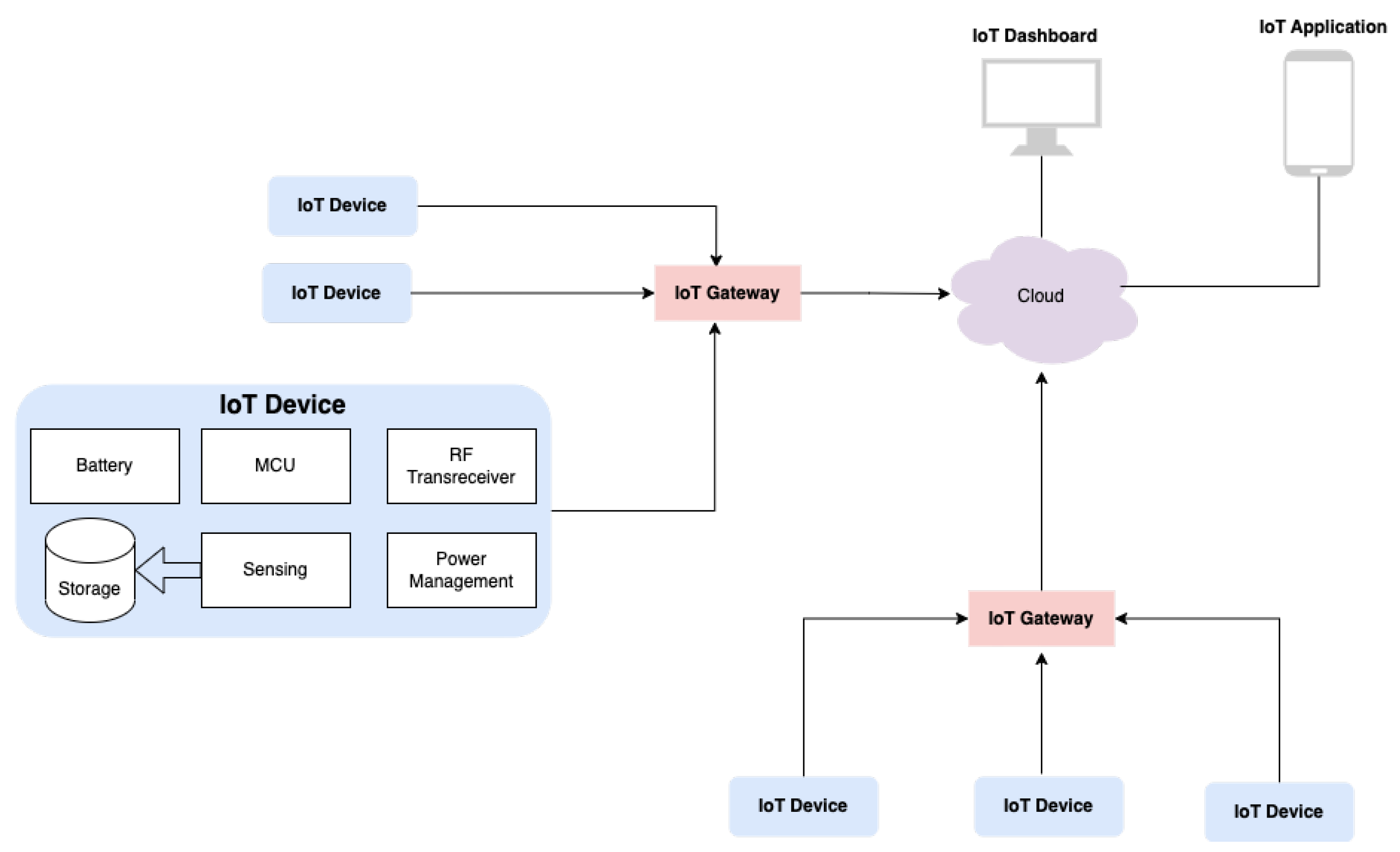
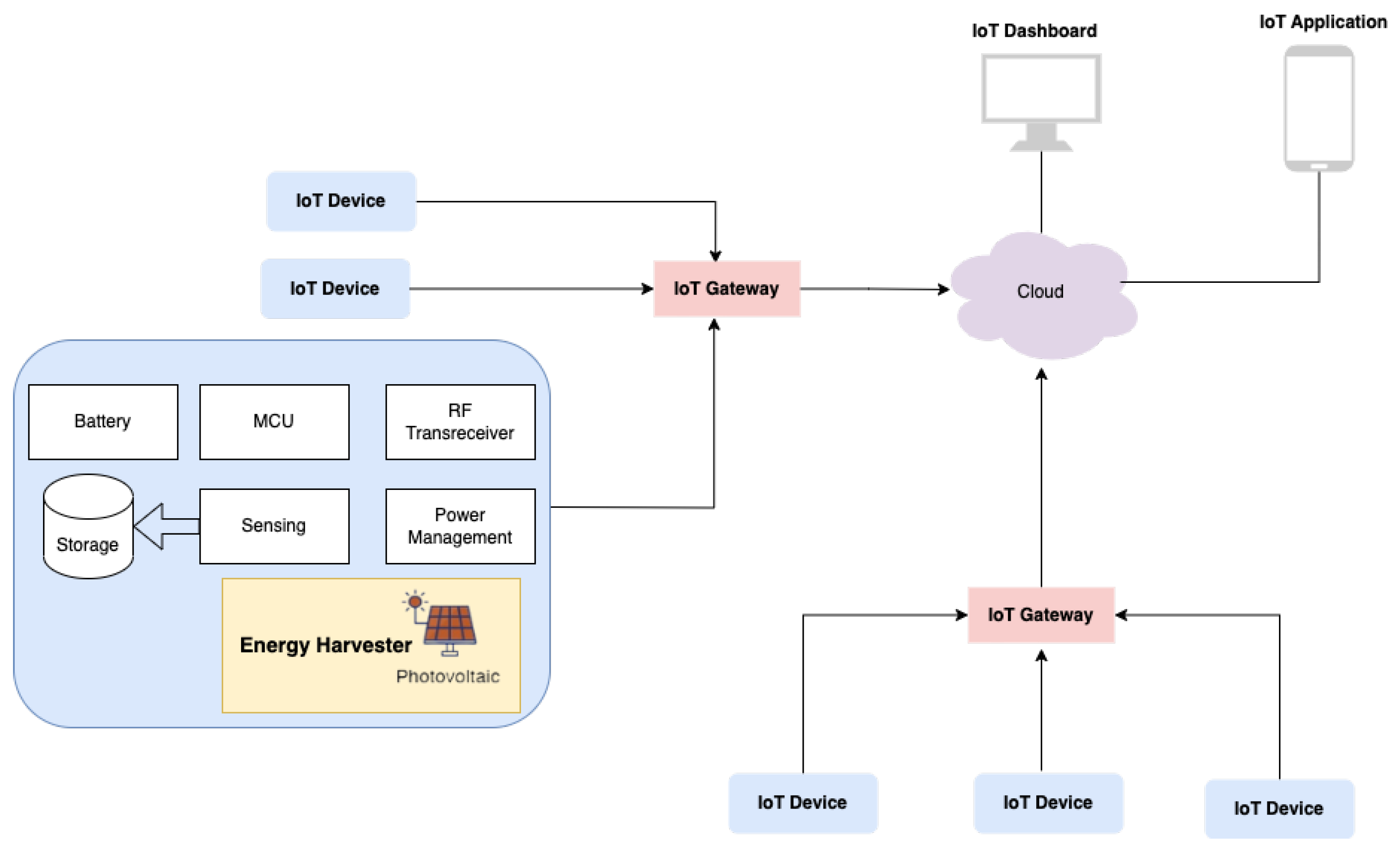
The Internet of Things (IoT) is a growth technology used in various fields such as smart cities, smart homes, transportation, agriculture, healthcare, autonomous vehicles, electrical grids, smart parking, etc. Some of the usages of IoT are for open-air applications. The battery is the primary power source for most IoT open-air applications, and the life of the battery is limited. Due to the difficulty of replacement and the amount of time required, employing only a battery is insufficient, even if multiple or larger batteries are used to extend the device’s lifespan. Changing batteries frequently in many remote locations is highly challenging. Inadequate energy will result in poor performance, data loss, etc. Therefore, alternate energy sources are required to power IoT nodes continuously. As these devices continue to work, devices need a sufficient power supply to keep them alive. By default, open-air devices’ primary power source will be batteries, as shown in Figure 1. Figure shows the relationship between IoT devices, IoT gateways, cloud services, IoT dashboards, and IoT applications, but it lacks clarity on the interactions between these components. The arrows in the figure represent the flow of data and communication, facilitated through internet connectivity, rather than electricity. IoT devices transmit collected data, such as sensor readings, to IoT gateways using communication protocols like Wi-Fi, Zigbee, or Bluetooth. The gateways aggregate and preprocess the data before transmitting it to the cloud infrastructure over the internet, where advanced storage, processing, and analysis occur. The processed data is then accessed by IoT dashboards and applications, enabling real-time monitoring, visualization, and decision making. Each IoT device has unique power consumption patterns, which influence their energy requirements. According to CORDIS EU, by 2025, about 78 million IoT devices’ batteries will be thrown away daily if nothing is done to make them last longer, implying that many devices use batteries as the primary power source [1]. The IoT device generates a lot of data, which needs enough resources to be processed efficiently. According to the International Data Corporation (IDC), there will be around 41.6 billion IoT nodes by 2025, generating 79.4 zettabytes of data [2]. Devices use an offload technique to supply adequate resources but still lack energy. The most scarce resource in the IoT is energy [3].
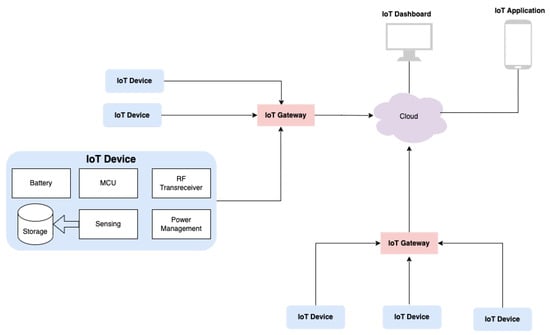
Figure 1.
Interaction diagram of IoT elements and subsystems with power sources.
Batteries have long been the go-to traditional energy source for IoT nodes, particularly in open-air settings. Despite significant strides in battery and energy storage technology [4], batteries still present challenges as a sustainable energy solution for IoT nodes. These challenges include frequent replacement efforts, associated time and costs, and limited operational lifespan. Furthermore, estimating the precise time for battery replacement is often difficult due to the variability in battery performance and degradation rates.
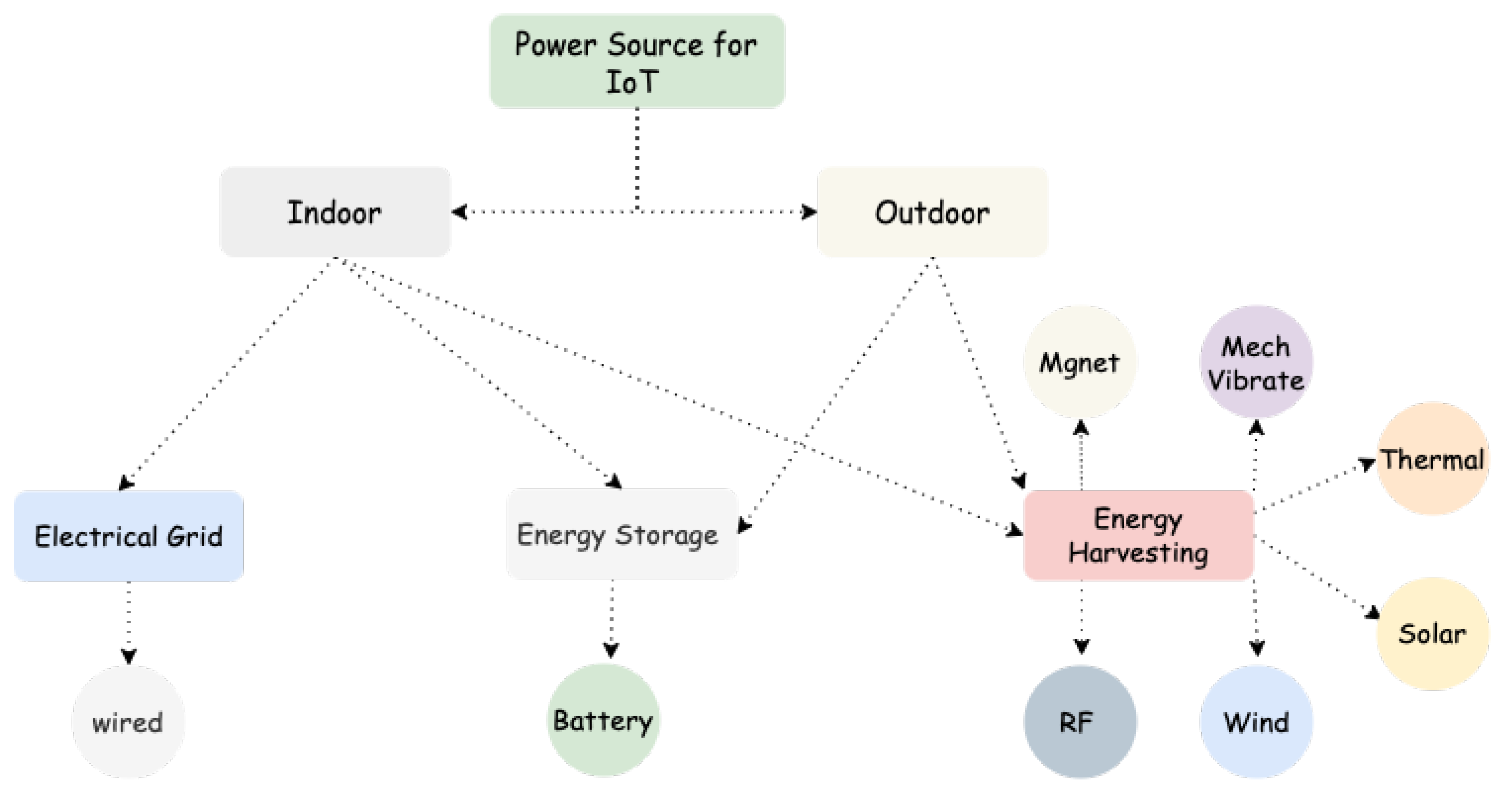
To address these limitations, energy-harvesting (EH) technology offers a promising pathway toward energy self-sufficiency. EH enables IoT nodes to harness alternative energy sources available in the environment, such as heat, light, airflow, vibrations, and electromagnetic waves, converting these into electrical energy to supply low-power electronics systems [5]. By integrating EH with battery systems, IoT nodes can significantly reduce dependence on battery replacements, while optimizing energy utilization and extending the operational lifespan of the devices. In the proposed work, the IoT devices are conceptualized to integrate batteries and energy harvesting sources [6]; thus, the IoT node power sources are classified into three main categories, as illustrated in Figure 2. This dual-power-source approach combines the storage and energy capabilities of rechargeable batteries with the continuous harvesting capability of solar panels. A power management model has been developed to maximize system efficiency by optimizing energy usage and availability. This approach not only ensures prolonged battery operation but also enhances the overall energy sustainability of IoT systems.
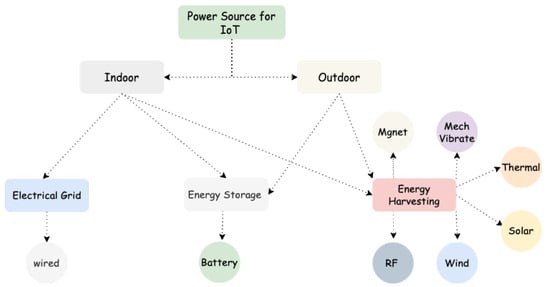
Figure 2.
Overview of the various power sources for IoT node.
The present research work also deals with energy-efficient routing and clustering methods. Previous research has proposed various methods for clustering, routing, medium access control, and duty cycle approach for energy-efficient IoT networks. However, researchers have not integrated the above-proposed methods with the energy-harvesting method. To improve the efficiency of the network, a dual energy management model is proposed for energy-efficient clustering with energy harvesting to improve the network’s overall efficiency. In addition, the proposed work also discussed the two-fold clustering method with optimal slot allotment to further improve the network’s performance. The novelty and critical contributions of the proposed work are summarized below.
- The proposed work introduces a dual energy management model that combines energy-harvesting techniques with a novel clustering routing approach. This approach involves grouping IoT nodes into clusters, where each cluster is managed by a cluster head (CH). By integrating this clustering and predefined routing technique with energy harvesting, the network can efficiently manage energy resources while harvesting environmental energy, such as solar or kinetic energy, to power network operations. This combination optimizes energy utilization and extends the network’s operational lifespan.
- The proposed idea focuses on energy-efficient clustering in IoT networks. The proposed work integrates energy-harvesting methods into the clustering process to optimize energy utilization and prolong the network lifetime.
- By integrating energy harvesting with clustering and routing approaches, the proposed work aims to improve the network’s overall efficiency. Energy harvesting provides an additional energy source, reducing the reliance on battery power and enhancing the network’s resilience and sustainability.
- Energy harvesting techniques can help replenish the energy resources of the network, reducing the frequency of battery replacements or recharging. This extended network lifetime can be a significant advantage, particularly in remote or inaccessible areas where frequent maintenance is challenging.
- The proposed work holds potential for real-world implementation, as energy-harvesting techniques are increasingly being explored and utilized in IoT deployments. By integrating these techniques with existing research methods, the proposed work can enhance the way practical and energy-efficient IoT networks are developed.
2. Literature Study
The literature study of the proposed work is discussed in Table 1. The provided papers in Table 1 collectively explore various aspects of solar energy harvesting for IoT applications and its potential to address power supply challenges in the rapidly growing IoT domain. The papers highlight the importance of energy-harvesting technologies as a substitute for old power sources, particularly batteries, to enable IoT devices’ self-sustainable and long-lasting operation. Several vital contributions are identified, including advancements in energy-harvesting techniques, system design considerations, efficiency improvements, and the integration of IoT technology for real-time monitoring and control. The papers highlight the significance of solar energy harvesting in promoting sustainability, reducing environmental pollution, and ensuring continuous and reliable operation of IoT devices. These studies offer valuable insights into the evolving landscape of energy harvesting for IoT, demonstrating its feasibility and potential for future IoT applications.

Table 1.
Summary of the literature on energy saving methods in IoT.
3. Background and Analysis of Related Work
One of the biggest challenges is managing the energy of the IoT node in terms of prolonging its lifetime. Numerous techniques exist for employing solar energy harvesting as an alternative energy source to power the IoT node. Also, various research works are reported related to the efficient clustering and optimal allotment of the transmission medium.
A clustering protocol is proposed in [20] for wireless sensor networks in mission-critical IoT scenarios, addressing energy limitations and trustworthiness concerns. The protocol maximizes network lifetime by integrating a trust model that detects untrusted nodes based on energy and data trust and leveraging stochastic fractal search optimization. The author has analyzed the performance experimentally to prove the superiority of the proposed method. The author used a trust model. However, the guaranteed throughput is not ensured for efficient clustering.
Equitable cluster head (CH) distribution is paramount for increasing network lifetime and ensuring continuous observation coverage. A novel two-fold clustering approach, termed second-fold clustering (SFC), is proposed in [21]. In the initial phase, CHs are selected based on zonal residual energy and the zonal degree of connectivity. Subsequently, the remaining isolated nodes are grouped in the second phase, selecting CHs based on zonal connectivity to achieve near-uniform energy distribution across nodes.
Although, the researchers have reported various works for efficient routing and clustering. However, to the best of our knowledge, the researchers have not reported any work for integrating efficient clustering and optimal slot allotment with energy-harvesting methods and guaranteed throughput. In the proposed work, energy-efficient clustering with an optimal slot allotment method is proposed for guaranteed Quality of Service. In addition, the integrated energy-harvesting method is used to improve lifetime.
4. Mathematical Model
In the proposed work, the dual energy management system is proposed to prolong the lifetime of the IoT network, as shown in Figure 3. The solar energy-harvesting method delivers extra energy for real-time operations. The section is divided into subsections for the mathematical modeling of different phases and operations.
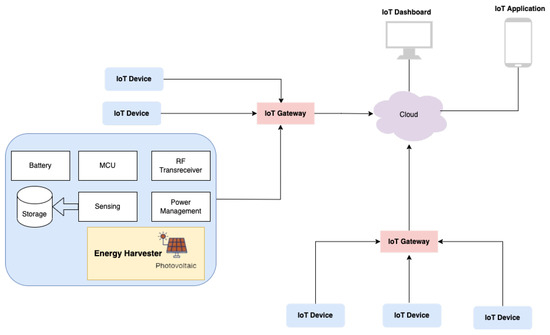
Figure 3.
Architecture of a typical energy-harvesting IoT node.
4.1. Network Parameters
Let us assume an IoT network. The parameters of IoT networks are given below:
- N is the number of nodes in the network.
- is the energy level of node i (in Joule).
- is the optimal energy level (in Joule) by optimal data slot prediction and sleep mode adjustment of node i.
- is the overall energy saving of node i.
- is the power consumed by node (in Watt) i for data transmission.
- is the solar energy harvesting rate of node i (in Joule).
- T is the time duration for data transmission.
- is the cluster assignment of node i in the setup phase.
- M is the number of clusters formed in the setup phase.
- is the number of optimal clusters formed in the setup phase.
- is the data traffic generated by node i in the steady state.
- is the time slot allotted to sensor node i in the steady state.
- is the time slot allotted to cluster head node i in the steady state.
- is the sleep time duration (in second) of node i in the steady state.
- is the predicted data traffic rate of node i.
- is the energy conversion efficiency of the energy-harvesting system (J/s).
- is the energy consumption coefficient for data transmission in Joule/bit.
- p is the traffic generation probability for each node.
4.2. Optimal Clustering
In the setup phase, we apply a clustering approach to divide the network into optimal clusters to enhance energy efficiency. Each node i calculates the distance to other nodes and selects the closest node as the cluster head. The cluster head communicates with its associated nodes.
Let us assume the cluster is divided into M clusters optimized to the optimal clusters () using the proposed two-fold elbow method. The optimal number of clusters is estimated based on the two-fold Elbow method. Instead of the traditional method, the proposed work determines the two elbows for efficient optimal clustering. It involves calculating the within-cluster sum of squares (WSS) for different values of M.
Let represent the i-th cluster and be the centroid of the i-th cluster. Then, the WSS for each cluster is calculated as the sum of squared distances between each data point and its cluster centroid , where j iterates over all data points in cluster :
The total WSS for all M clusters is the sum of individual WSS values:
The two nearby elbows are estimated based on WSS values to estimate an optimal number of clusters (). Let us assume, based on the WSS graph, that is the elbow corresponding to the minimum value of WSS, and is the next nearby elbow of .
4.3. Energy-Efficient Optimal Mapping TDMA (EEOM-TDMA) Approach in the Steady State
In the steady state, we adopt the EEOM-TDMA approach to optimize data transmission. Each cluster node allows data transmission using the TDMA protocol, while the bit mapping-based optimal mapping technique ensures interference-free data transmission.
The power consumed during steady-state data transmission, i.e., for the cluster head device and the sensor node device, is as discussed in the subsections below.
4.3.1. Cluster Head Device
The cluster head device consumes power for both data transmission and reception, as given below:
where is measured in Joules per bit (J/bit), is the data traffic generated by the cluster head, and is the data traffic received from the associated sensor nodes.
4.3.2. Sensor Node Device
The sensor node device only consumes power for data transmission to the cluster head:
where is the data slot allotted for data traffic generated by the sensor node.
4.4. Sleep Mode Approach for Data Traffic Prediction
To save energy, nodes implement a sleep mode approach by predicting future data traffic and adjusting their sleep time accordingly. A hybrid prediction method is used for the prediction-based optimal slot allotment. The slots are allotted based on the classification-cum-regression () method. The random forest method is used to deal with dynamic data traffic conditions for the optimal slot allotment. The predicted data traffic of node is estimated based on the training of the previously generated data traffic, as given below:
4.5. Power Consumption Model
The energy consumption of node i in the steady state, without sleep mode optimization, can be modeled as follows:
The energy consumption of node i in the steady state, with sleep mode optimization, can be modeled as follows:
The energy harvested by node i during the time T is given by
The energy balance equation for node i without optimal sleep mode is
where is the initial energy level of node i.
The energy balance equation for node i with optimal sleep mode is
The energy saving due to optimal sleep mode can be derived as follows:
The sleep duration can be estimated as
4.6. Traffic Generation Probability
The data traffic generated by each node follows a probabilistic model. Let be the data traffic generated by node i in the steady state. The data traffic can be expressed as follows:
where is the average data traffic generated by all nodes.
In the case of sleep mode optimization, the data traffic generated by each node is represented by of node i in the steady state. The data traffic can be expressed as follows:
where is the average data traffic generated by all nodes in case of sleep mode optimization.
4.7. Lifetime Comparison
To compare the network’s lifetime with and without energy harvesting, we can use the concept of average energy consumption per unit of time. Let L be the lifetime of the network.
For the network without energy harvesting,
For the network with energy harvesting,
For the network with energy harvesting and optimal slot allotment,
5. Results and Discussion
A simulation of an IoT sensor node for a proposed protocol with customized parameters is taken into consideration. The major objective of the simulation work in this section is to evaluate energy consumption and network lifetime across various scenarios. The simulation area dimensions, base station location, number of nodes, election probability, packet lengths, energy capacities, and propagation constants are defined in Table 2. The simulation loop iterates through rounds, selects cluster heads based on probabilities, and calculates energy usage for data transmission. The network’s total energy consumption and lifetime are computed, accounting for standard (reduced-function device) and advanced nodes (fully functioning device). The results are analyzed to compare and interpret trade-offs between energy consumption and network longevity. This simulation offers a deeper understanding of the LEACH protocol’s behavior under various conditions and can aid in optimizing energy-efficient designs for wireless sensor networks.
Table 2.
Simulation parameters.
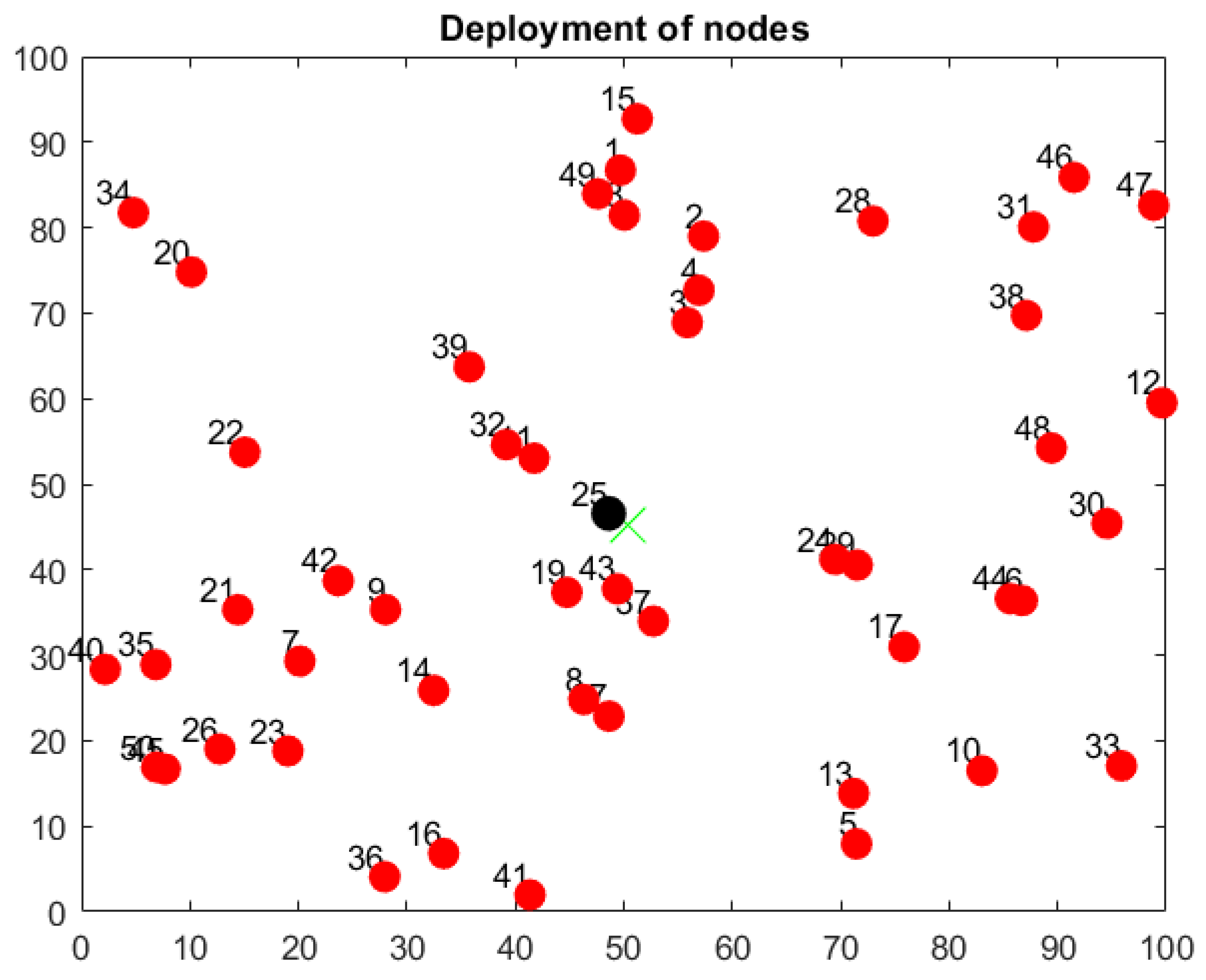
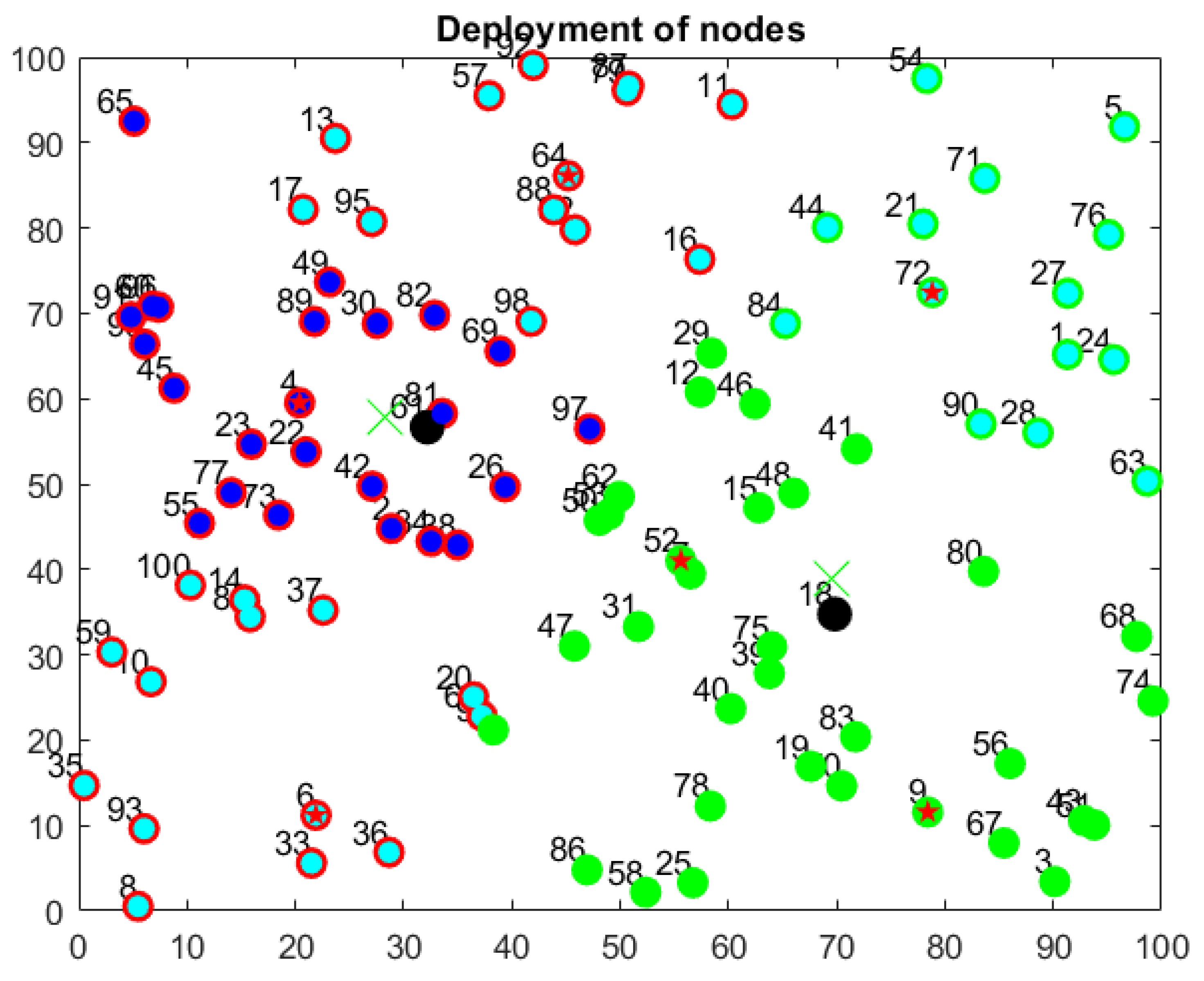
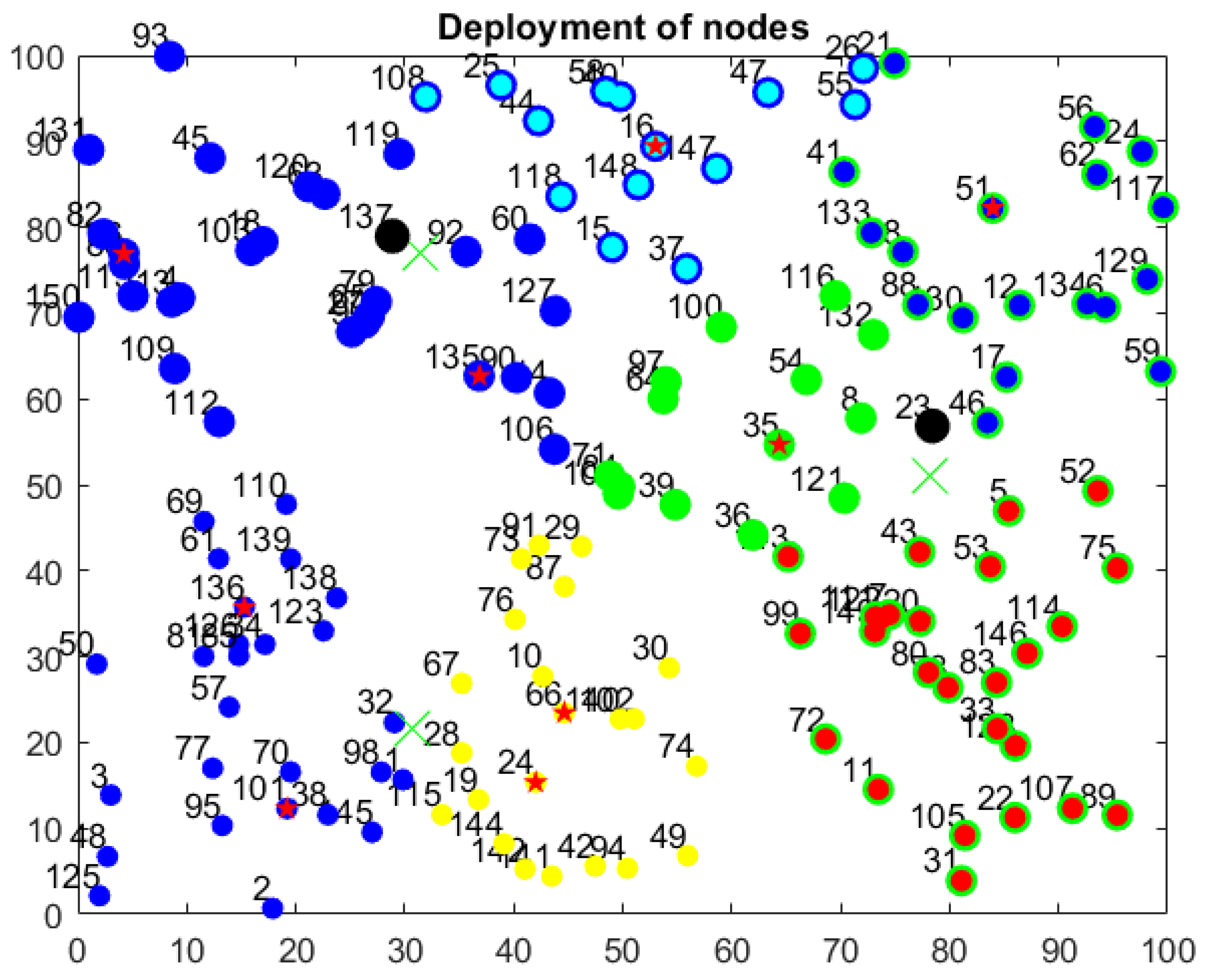
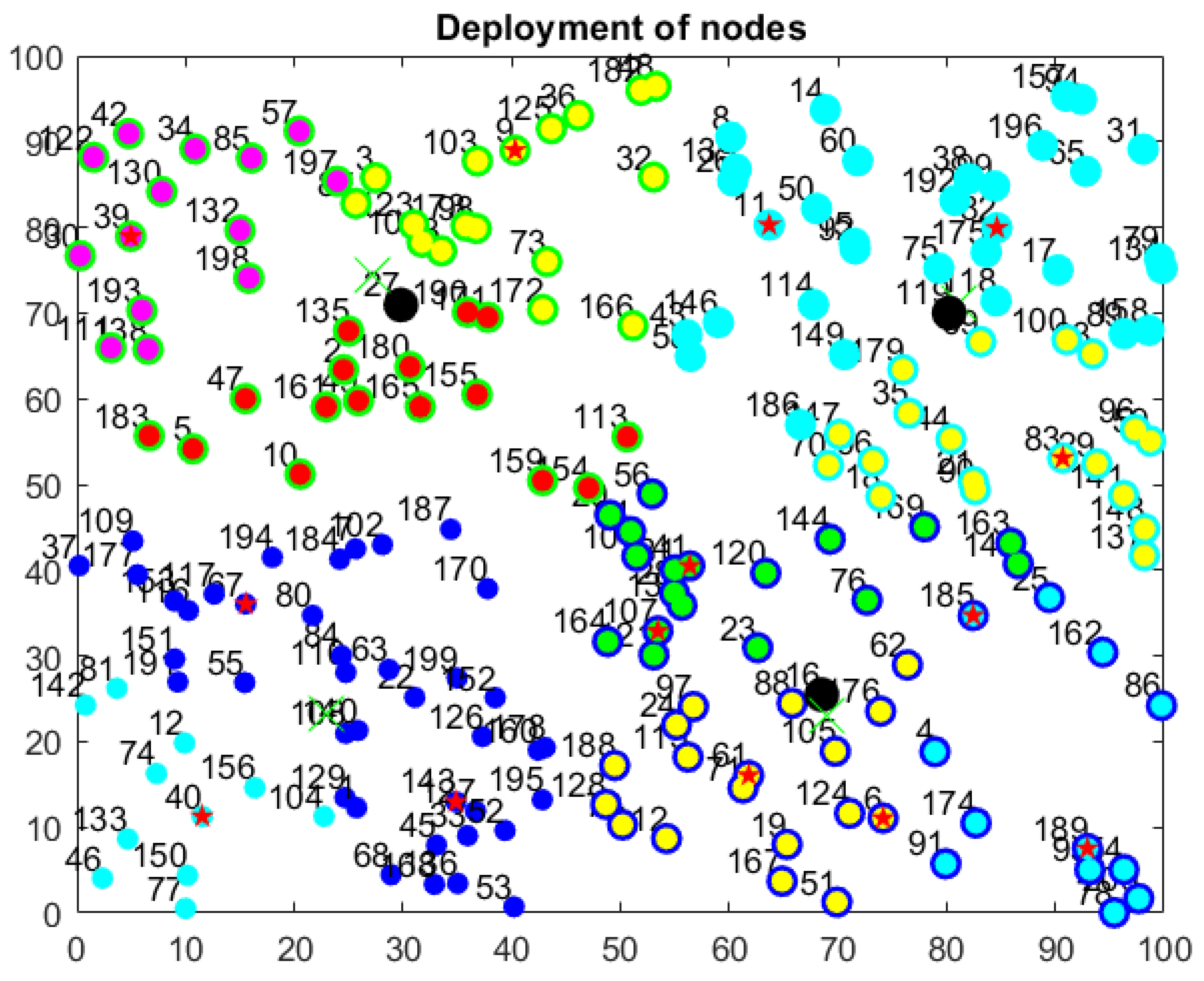
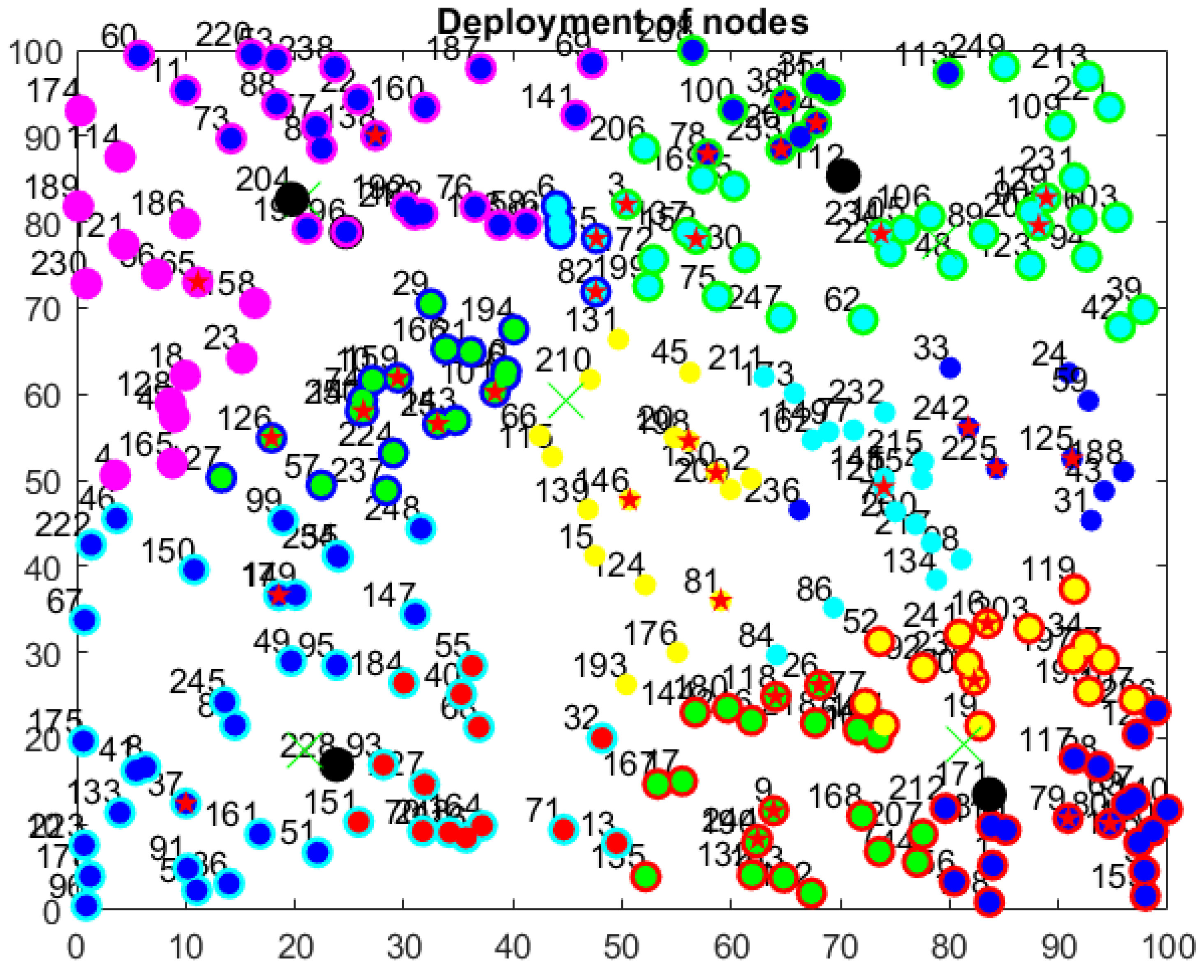
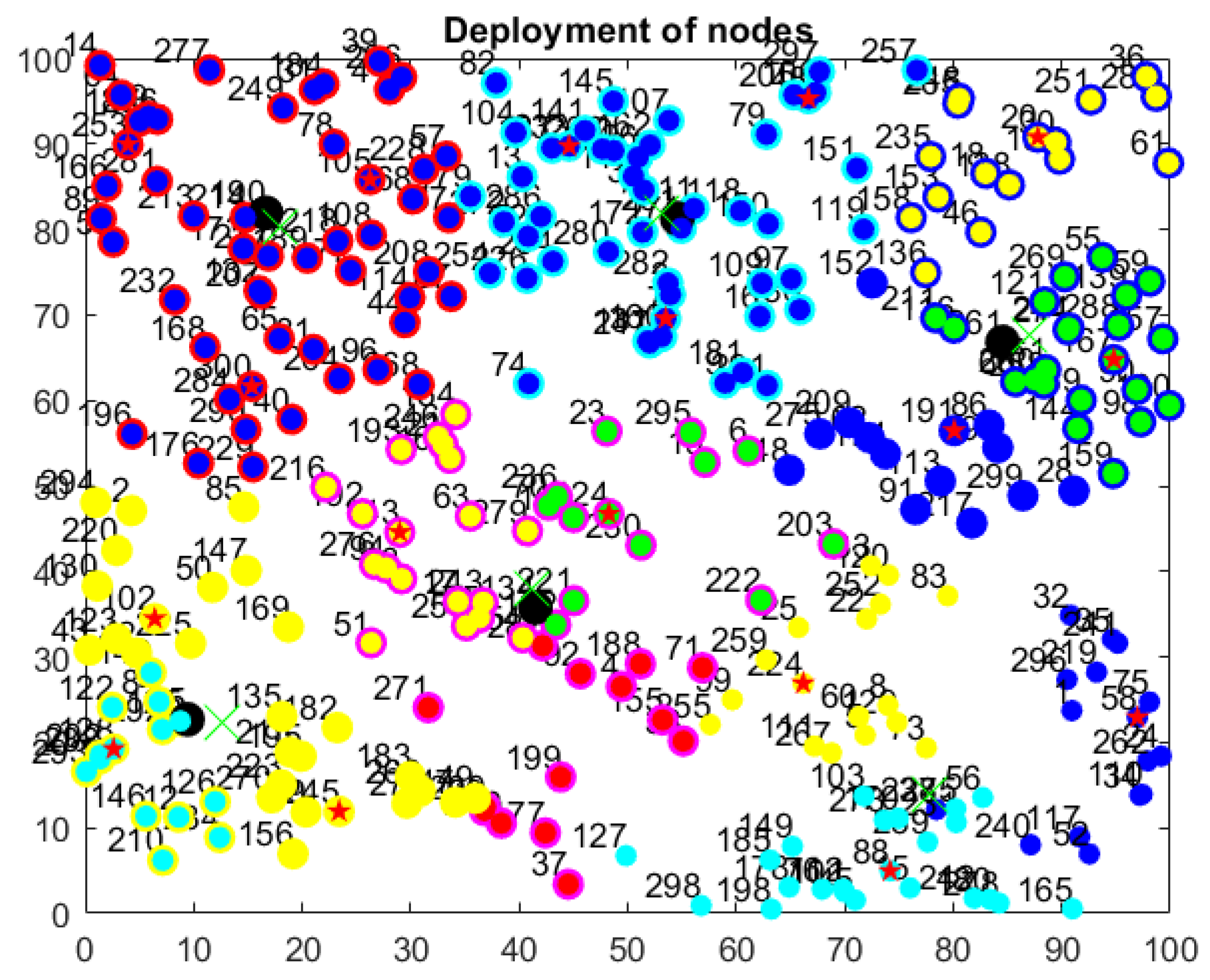
The Results section is analyzed for six different scenarios. The number of nodes is varied from 50 nodes to 300 nodes, as shown in Figure 4, Figure 5, Figure 6, Figure 7, Figure 8 and Figure 9. Figures illustrate the distribution of sensor nodes (SNs) and cluster heads (CHs) across the deployment area of 100 m × 100 m. The x-axis and y-axis represent the total area where the nodes are distributed, with circles indicating the positions of SNs and X symbols representing CHs. The colours of the dots highlight the nodes of different clusters. The two essential results are analyzed to evaluate their impact on energy consumption and the network’s lifetime. Various methods are used to achieve an overall reduction in energy consumption, such as efficient clustering and medium access. In addition, the two-elbow method is used to ensure optimal throughput. The energy-harvesting method is also integrated with the network architecture to improve the lifetime.
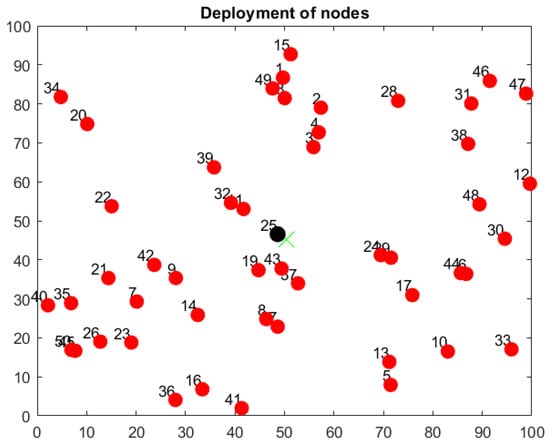
Figure 4.
Deployment of 50 nodes. The black dot represents the station or Sink node.
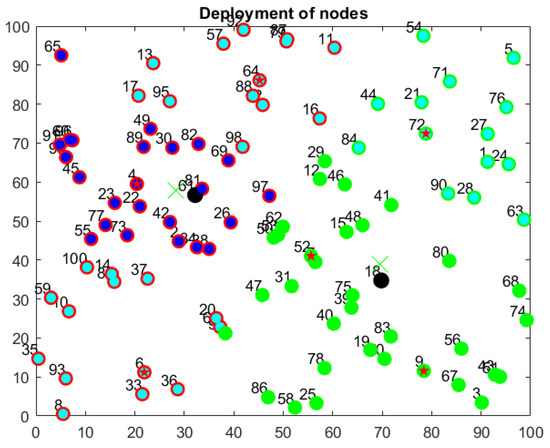
Figure 5.
Deployment of 100 nodes. The black dot represents the station or Sink node.
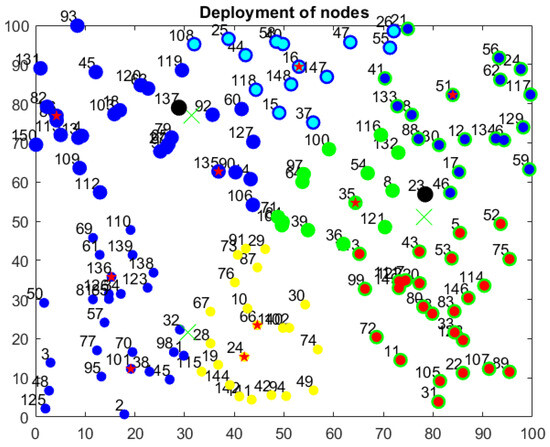
Figure 6.
Deployment of 150 nodes. The black dot represents the station or Sink node.
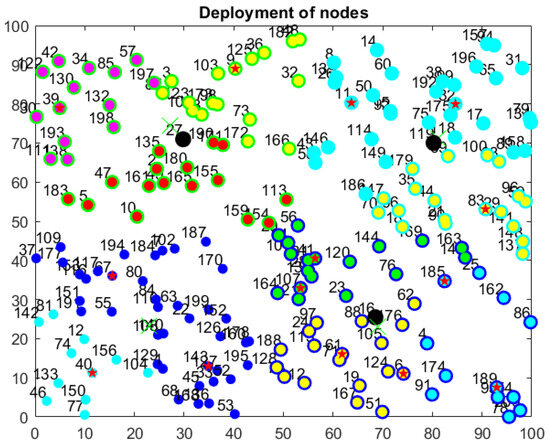
Figure 7.
Deployment of 200 nodes. The black dot represents the station or Sink node.
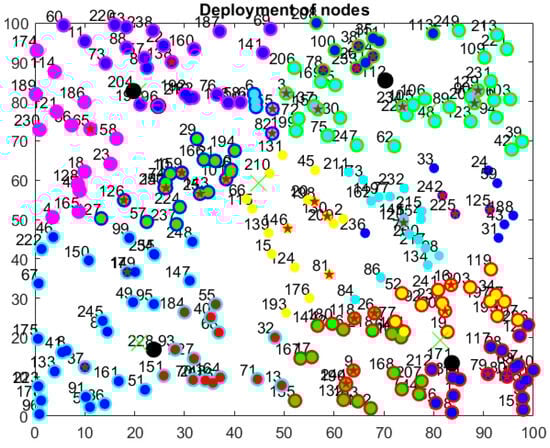
Figure 8.
Deployment of 250 nodes. The black dot represents the station or Sink node.
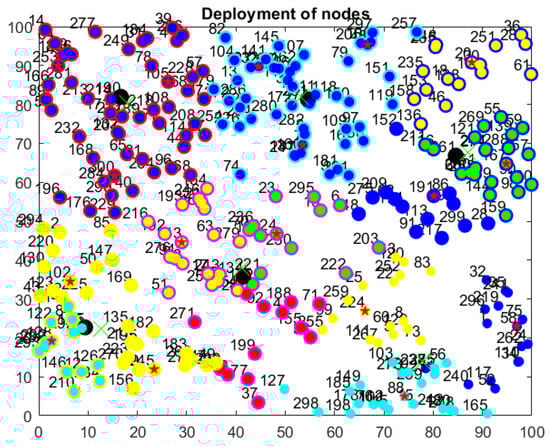
Figure 9.
Deployment of 300 nodes. The black dot represents the station or Sink node.
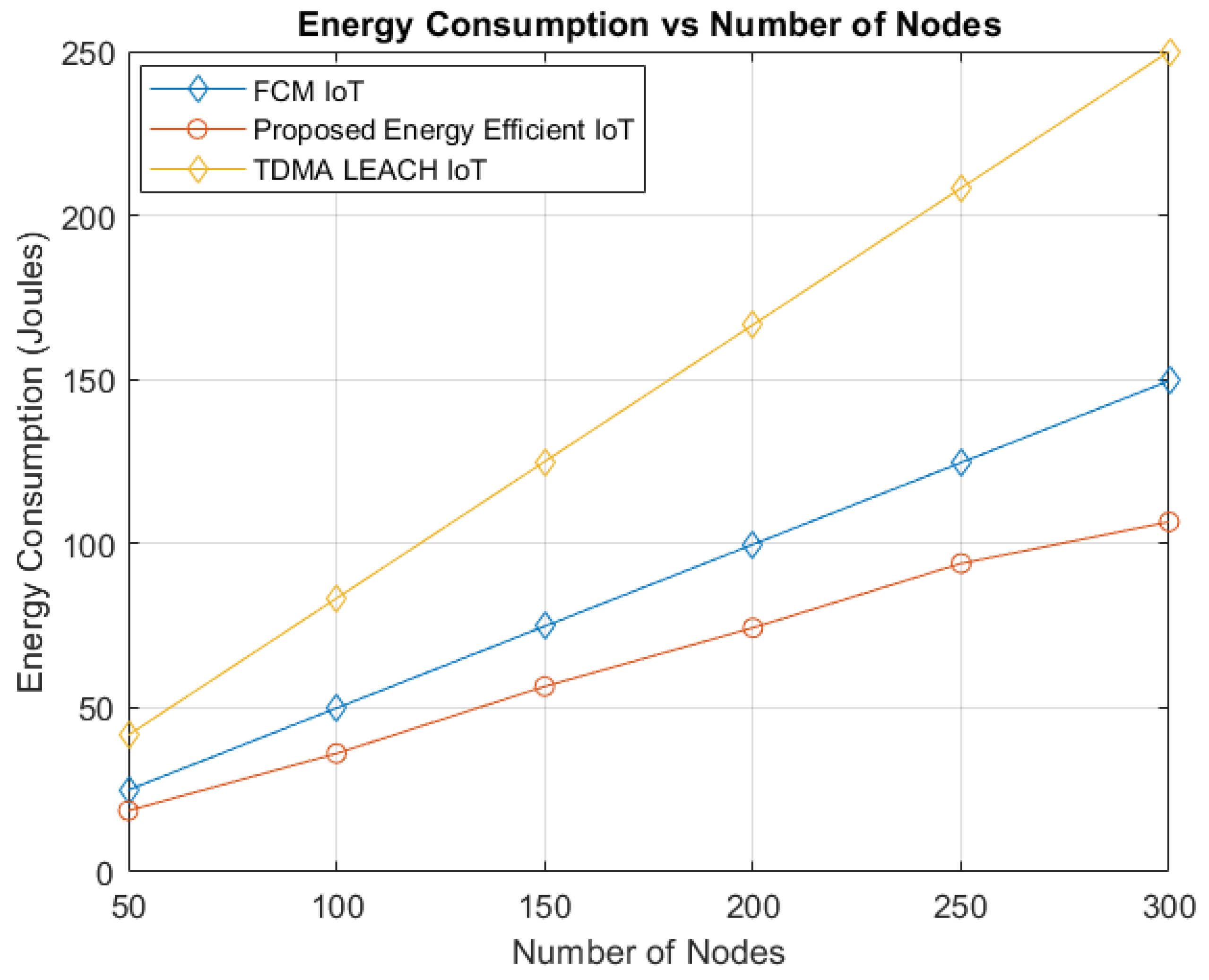
The energy consumption is analyzed for varying nodes. The nodes varied from 50 to 300. The network performance is analyzed with respect to the existing methods. The performance of the proposed method is compared with FCM [22] and TDMA-based LEACH methods [23]. Both of these protocols use methods to improve network performance. As shown in Figure 10, the energy consumption of the proposed IoT method is lower than the other protocols. This is because the proposed protocol checks the buffer in the allotted time slot and enters sleep mode instead of idle mode in case of an empty buffer. In addition, the proposed method efficiently allots the time slots and uses a two-elbow method for optimal throughput. The energy-harvesting mechanism becomes more effective as the network grows. With an increasing number of nodes, the system can harness and utilize energy more efficiently, compensating for the additional energy demands of the larger network.
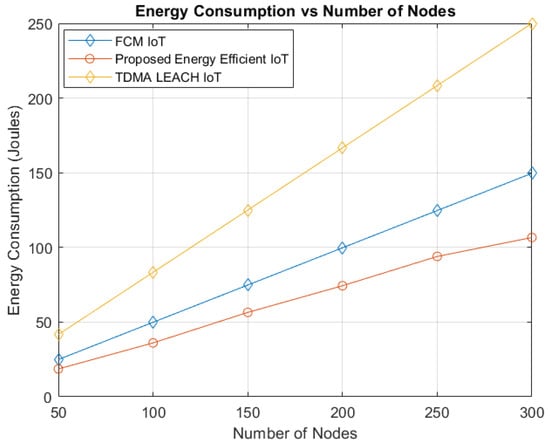
Figure 10.
Comparative analysis of energy consumption.
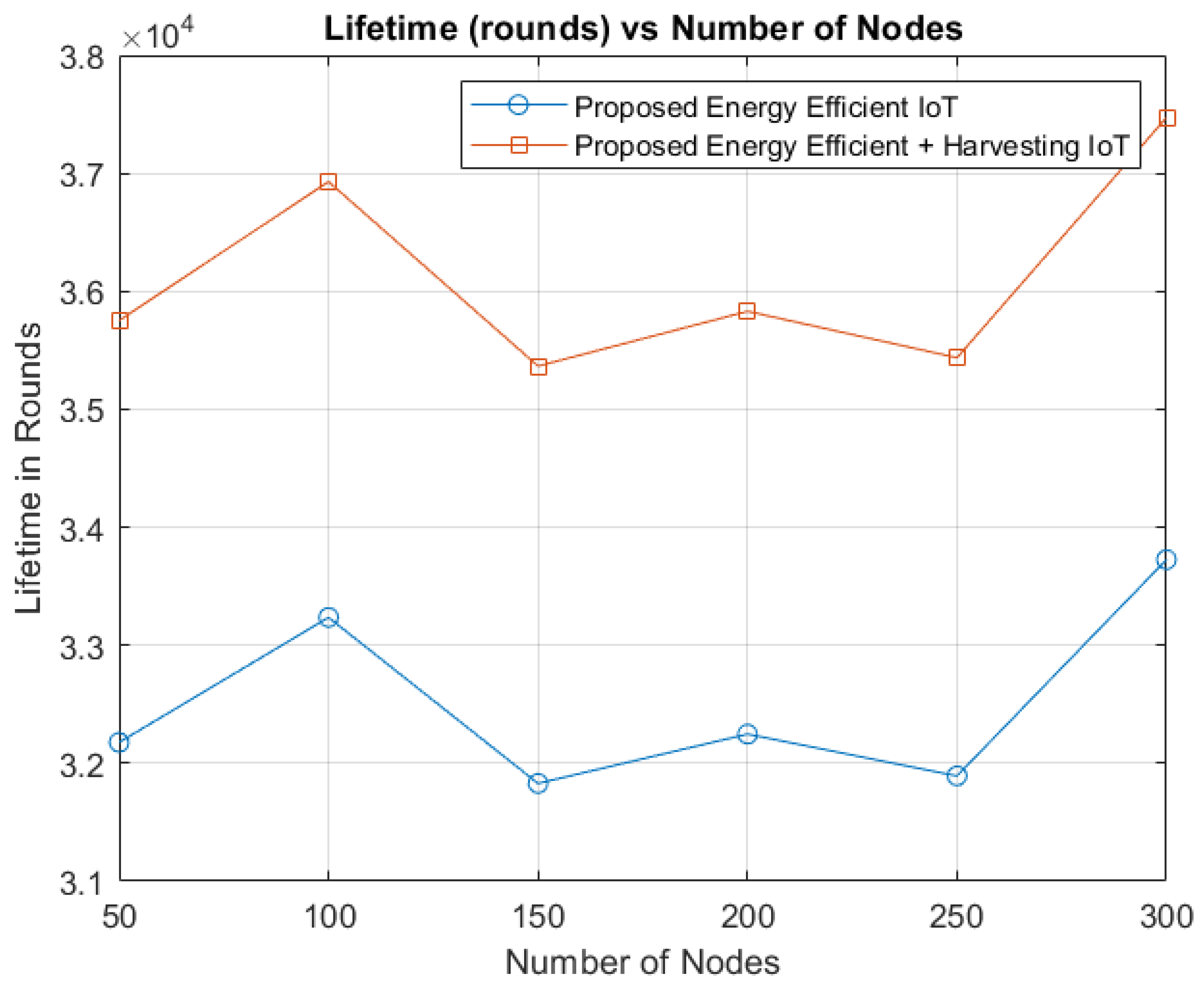
For a further check, the overall lifetime of the network performance is analyzed with the integration of an energy-harvesting system. The results show a significant improvement in the overall lifetime (approx. 20%) of the network performance, as shown in Figure 11.
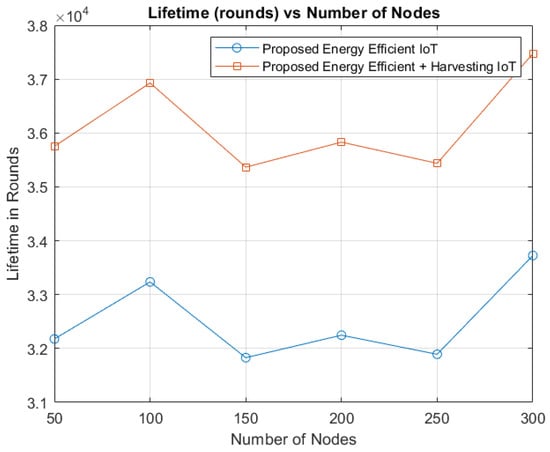
Figure 11.
Comparative analysis of the lifetime of the network.
6. Conclusions
This paper introduces an innovative model designed to enhance the longevity of Internet of Things (IoT) nodes deployed in open-air scenarios. The main focus of this study is to tackle the challenges associated with energy consumption in IoT systems. A dual energy management approach is put forward to address these challenges, integrating energy-efficient clustering with advanced energy-harvesting techniques.
The primary objective of this model is to achieve optimal energy utilization, thereby prolonging the network’s lifespan and improving its overall efficiency. By combining the benefits of energy-efficient clustering with the implementation of energy harvesting, the proposed model aims to significantly enhance energy consumption efficiency in IoT deployments.
The experimental results obtained from this research highlight the substantial impact of energy-harvesting methods within IoT environments. Furthermore, the synergistic effects of clustering and routing techniques are demonstrated through a comprehensive comparison with existing protocols. The findings indicate a noteworthy reduction of approximately 25% in overall energy consumption, accompanied by a remarkable 20% extension in the network’s lifetime.
These outcomes underline the proposed approach’s significance, showcasing its energy optimization and network longevity superiority. By integrating energy-efficient clustering and innovative energy-harvesting strategies, this model presents a compelling solution to the persistent energy challenges faced by IoT deployments in open-air settings. The proposed model has limitations in its scalability under high node densities and computational overhead in resource-constrained settings. Future work can address these issues by optimizing computational efficiency, exploring dynamic network scenarios, and integrating adaptive machine learning techniques.
Author Contributions
Conceptualization, J.W.R. and J.M.R.; Methodology, N.S.A., P.S. and J.M.R.; Software, N.S.A.; Investigation, P.S.; Resources, N.S.A.; Writing – original draft, N.S.A.; Project administration, J.W.R. All authors have read and agreed to the published version of the manuscript.
Funding
This research was not funded.
Data Availability Statement
Research data will be made available upon request from the corresponding author.
Conflicts of Interest
The authors declare no conflicts of interest.
References
- CORDIs. Up to 78 Million Batteries Will Be Discarded Daily by 2025, Researchers Warn. 2023. Available online: https://cordis.europa.eu/ (accessed on 26 June 2025).
- IDC. Worldwide Internet of Things Infrastructure Forecast, 2019–2023. 2019. Available online: https://my.idc.com/getdoc.jsp?containerId=TEA004453&pageNumber=30&pageSize=10 (accessed on 26 June 2025).
- Tamkittikhun, N.; Hussain, A.; Kraemer, F.A. Energy consumption estimation for energy-aware, adaptive sensing applications. In Mobile, Secure, and Programmable Networking: Third International Conference, MSPN 2017, Paris, France, 29–30 June 2017, Revised Selected Papers 3; Springer: Berlin/Heidelberg, Germany, 2017; pp. 222–235. [Google Scholar]
- Omariba, Z.B. Analysis of the applications of Lithium-ion batteries in Internet of Things (IoT) battery powered devices. Glob. Sci. J. 2021, 9, 547–567. [Google Scholar]
- Williams, A.J.; Torquato, M.F.; Cameron, I.M.; Fahmy, A.A.; Sienz, J. Survey of Energy Harvesting Technologies for Wireless Sensor Networks. IEEE Access 2021, 9, 77493–77510. [Google Scholar] [CrossRef]
- Dibal, P.; Onwuka, E.; Zubair, S.; Nwankwo, E.; Okoh, S.; Salihu, B.; Mustapha, H. Processor Power and Energy Consumption Estimation Techniques in IoT Applications: A Review. Internet Things 2022, 21, 100655. [Google Scholar] [CrossRef]
- Luo, P.; Peng, D.; Wang, Y.; Zheng, X. Review of solar energy harvesting for IoT applications. In Proceedings of the 2018 IEEE Asia Pacific Conference on Circuits and Systems (APCCAS), Chengdu, China, 26–30 October 2018; IEEE: New York, NY, USA, 2018. [Google Scholar]
- Sanislav, T.; Mois, G.D.; Zeadally, S.; Folea, S.C. Energy harvesting techniques for internet of things (IoT). IEEE Access 2021, 9, 39530–39549. [Google Scholar] [CrossRef]
- Illias, H.A.; Ishak, N.S.; Mokhlis, H.; Hossain, M.Z. IoT-based hybrid renewable energy harvesting system from water flow. In Proceedings of the 2020 IEEE International Conference on Power and Energy (PECon), Virtual, 7–8 December 2020; IEEE: New York, NY, USA, 2020. [Google Scholar]
- Roselli, L.; Borges Carvalho, N.; Alimenti, F.; Mezzanotte, P.; Orecchini, G.; Virili, M.; Mariotti, C.; Goncalves, R.; Pinho, P. Smart surfaces: Large area electronics systems for internet of things enabled by energy harvesting. Proc. IEEE Inst. Electr. Electron. Eng. 2014, 102, 1723–1746. [Google Scholar] [CrossRef]
- Garg, N.; Garg, R. Energy harvesting in IoT devices: A survey. In Proceedings of the 2017 International Conference on Intelligent Sustainable Systems (ICISS), Palladam, India, 7–8 December 2017; IEEE: New York, NY, USA, 2017. [Google Scholar]
- Georgiadis, A. Energy harvesting for autonomous wireless sensors and RFID’s. In Proceedings of the 2014 XXXIth URSI General Assembly and Scientific Symposium (URSI GASS), Beijing, China, 16–23 August 2014; IEEE: New York, NY, USA, 2014. [Google Scholar]
- Reddy, V.; Rabbani, M.; Arif, M.T.; Oo, A.M.T. IoT for energy efficiency and demand management. In Proceedings of the 2019 29th Australasian Universities Power Engineering Conference (AUPEC), Nadi, Fiji, 26–29 November 2019; IEEE: New York, NY, USA, 2019. [Google Scholar]
- Putra, D.D.; Syihabuddin, B.; Jabbar, M.A.M.; Irsal, A.; Purwadi, A.; Munir, A. Energy management system with IoT connectivity for portable solar power plant. In Proceedings of the 2020 IEEE International Conference on Internet of Things and Intelligence System (IoTaIS), Bali, Indonesia, 27–28 January 2021; IEEE: New York, NY, USA, 2021. [Google Scholar]
- Sharma, H.; Haque, A.; Jaffery, Z.A. An efficient solar energy harvesting system for wireless sensor nodes. In Proceedings of the 2018 2nd IEEE International Conference on Power Electronics, Intelligent Control and Energy Systems (ICPEICES), Delhi, India, 22–24 October 2018; IEEE: New York, NY, USA, 2018. [Google Scholar]
- Hao, D.; Qi, L.; Tairab, A.M.; Ahmed, A.; Azam, A.; Luo, D.; Pan, Y.; Zhang, Z.; Yan, J. Solar energy harvesting technologies for PV self-powered applications: A comprehensive review. Renew. Energy 2022, 188, 678–697. [Google Scholar] [CrossRef]
- Adila, A.S.; Husam, A.; Husi, G. Towards the self-powered Internet of Things (IoT) by energy harvesting: Trends and technologies for green IoT. In Proceedings of the 2018 2nd International Symposium on Small-Scale Intelligent Manufacturing Systems (SIMS), Cavan, Ireland, 16–18 April 2018; IEEE: New York, NY, USA, 2018. [Google Scholar]
- Eshaghi, M.; Rashidzadeh, R. An energy harvesting solution for IoT devices in 5G networks. In Proceedings of the 2020 IEEE Canadian Conference on Electrical and Computer Engineering (CCECE), London, ON, Canada, 30 August–2 September 2020; IEEE: New York, NY, USA, 2020. [Google Scholar]
- Ram, S.K.; Das, B.B.; Swain, A.K.; Mahapatra, K.K. Ultra-low power solar energy harvester for IoT edge node devices. In Proceedings of the 2019 IEEE International Symposium on Smart Electronic Systems (iSES) (Formerly iNiS), Rourkela, India, 16–18 December 2019; IEEE: New York, NY, USA, 2019. [Google Scholar]
- Hriez, S.; Almajali, S.; Elgala, H.; Ayyash, M.; Salameh, H.B. A Novel Trust-Aware and Energy-Aware Clustering Method That Uses Stochastic Fractal Search in IoT-Enabled Wireless Sensor Networks. IEEE Syst. J. 2022, 16, 2693–2704. [Google Scholar] [CrossRef]
- Vimal, V.; Singh, K.U.; Kumar, A.; Gupta, S.K.; Rashid, M.; Saket, R.K.; Padmanaban, S. Clustering Isolated Nodes to Enhance Network’s Life Time of WSNs for IoT Applications. IEEE Syst. J. 2021, 15, 5654–5663. [Google Scholar] [CrossRef]
- Hoang, D.C.; Kumar, R.; Panda, S.K. Fuzzy C-Means clustering protocol for Wireless Sensor Networks. In Proceedings of the 2010 IEEE International Symposium on Industrial Electronics, Bari, Italy, 4–7 July 2010; pp. 3477–3482. [Google Scholar] [CrossRef]
- Singh, P.; Singh, R. Energy-Efficient QoS-Aware Intelligent Hybrid Clustered Routing Protocol for Wireless Sensor Networks. J. Sens. 2019, 2019, 8691878. [Google Scholar] [CrossRef]
Disclaimer/Publisher’s Note: The statements, opinions and data contained in all publications are solely those of the individual author(s) and contributor(s) and not of MDPI and/or the editor(s). MDPI and/or the editor(s) disclaim responsibility for any injury to people or property resulting from any ideas, methods, instructions or products referred to in the content. |
© 2025 by the authors. Licensee MDPI, Basel, Switzerland. This article is an open access article distributed under the terms and conditions of the Creative Commons Attribution (CC BY) license (https://creativecommons.org/licenses/by/4.0/).