1. Introduction
Over the past 30 years, there has been a noticeable increase in the environmental awareness of society, which has contributed to the currently observable energy transition. One important aspect of this is the shift from emission-intensive electricity sources (e.g., coal and oil) to renewable energy sources (RES) (e.g., wind and solar). The intensive development of RES technologies has meant that they can be installed both on the high- and medium-voltage side (’utility power plants’), as well as on the low-voltage side, as so-called small and microinstallations, referred to as distributed energy resources (DER). In the case of RES installations installed at or on residential properties, the main factor driving their demand is the possibility of reducing the cost of purchasing energy from the grid. The prerequisite for a rapid return on investment costs is to use as much of the generated energy as possible for one’s own consumption (so-called self-consumption). Discharging surplus energy to the grid and collecting energy shortfalls from the grid involves losing some of the profit associated with the difference between the purchase and sale price of energy from and to the grid. This means that the size of the RES installation should be tailored to the needs of the residential building in question, e.g., on the basis of an analysis of the annual energy demand and load characteristics. Additionally, in many cases, it is advisable to use energy storage—in solar–wind systems, usually lithium-ion electrochemical batteries. A large number of scientific papers have been published on the above topics. The review below presents papers that contain interesting solutions, including the use of RES sources to power individual consumers (including single-family housing estates and multiapartment buildings) and the area of optimisation of the indicated types of systems often provided with energy storage systems.
The paper in [
1] describes and characterises the power market: the distributed energy sources in the form of microinstallations that can operate in a system of energy clusters and virtual power plants. The impact of the introduction of the power market on the development of distributed energy sources, including hybrid systems with renewable sources, was evaluated. A method for sizing a photovoltaic installation for a single-family house in a way that reduces the annual cost of purchasing energy from the power grid was presented in [
2]. The paper in [
3] uses model predictive control (MPC) to control the components of the renewable installation. Artificial neural networks (ANNs) were used to predict the energy yield of the photovoltaic installation. It was also assumed that surplus energy is primarily used to heat water. The installation structure is optimised using quadratic programming.
Wind farms are characterised by higher energy production in winter and the possibility to also produce energy at night, while photovoltaic installations produce a high proportion of energy in summer when the days are long and there is a lot of sunshine. The increasing availability of modern technological solutions, such as photovoltaic roof tiles or small wind turbines, allows for increasingly better integration of RES into residential infrastructure. It has become possible to use hybrid (wind–solar) installations, which allow the amount of energy produced to be equalised at different times of the day and year. The paper in [
4] presents the use of hybrid generation systems to increase energy efficiency. The article proves that by using generators with small installations and micro-RES installations with the possibility to control the energy flow in a cluster, large savings can be achieved. The paper in [
5] analyses the feasibility of an autonomous hybrid solar and wind system for domestic use. It was verified that the averaged cost of electricity (LCOE) of a solar–wind system coincides with the final cost of electricity on the grid. The results show that in the location under analysis (Bulgaria), the electricity prices generated by stand-alone hybrid systems are higher than the electricity prices for grid-connected consumers. The use of stand-alone hybrid systems there is therefore only justified when there is no power supply available from the grid. However, the results presented in the paper need to be verified in the current energy situation in Europe.
One way to increase the self-consumption of energy is to use an additional energy storage system (ESS) [
2,
6]. Owing to this, the surplus energy produced can be stored and used when the energy demand of the consumer exceeds current production. As the current cost of purchase of an ESS is high, it is important to select the storage capacity and the appropriate energy exchange schedule so that its purchase does not have a negative impact on the economic analysis of the investment. Additionally, an ESS can increase the reliability of energy supply on the consumer side [
7].
The problem concerning the optimisation of the selection of the type and structure of RES and ESS installations for residential buildings is widely described in many scientific papers. In the paper in [
8], the aim of the optimisation is to minimise the costs of purchasing energy from the grid and the costs resulting from the ageing of the energy storage system. The problem of the minimisation of energy purchase costs on an annual basis, with a monthly balancing period, is described in [
9]. Several scenarios that take into account different sizes of PV installations and their placement on the roof of a single-family house are presented. In both papers, a mixed-integer programming task was used to solve the problem. An interesting solution is presented in [
10]; it involves the use of a non-cooperative game theory method to determine the optimal energy storage capacity and the schedule of energy exchange between the power grid and a single-family home equipped with renewable systems and energy storage to minimise energy purchase costs. The paper in [
11] presents the application of the particle swarm method for the optimisation of the size of the components of a renewable installation comprising PV systems, electrochemical energy storage and a small pumped-storage power plant using elevated rain water storage. The minimisation of LCOE was used as an optimisation criterion. In the paper in [
12], evolutionary algorithms were used to optimise the energy exchange schedule of a single-family house between the grid and the PV installation and the energy storage and an electric car (V2G exchange). It was shown that the proposed optimisation can lead to a significant reduction in household costs while increasing living standards. The paper in [
13] examines the concept of the “efficient house plus” (EHP), as defined by the German Ministry of Climate, which envisages the production of energy in excess of a house’s needs through renewable systems. Based on data collected from several EHPs, a model of an EHP equipped with a photovoltaic installation, electricity storage and thermal storage is presented, with the aim of reducing the household’s energy purchase costs.
Additional opportunities for efficient energy use are provided by Smart Grid technology, which involves the possibility of a two-way flow of information between a smart energy meter located in the home and the distribution network operator. This enables more efficient management of the energy demand of a residential building, e.g., by shifting the load to off-peak hours [
14,
15,
16,
17]. A home energy management system (HEMS) based on optimisation methods is presented in [
14]. The main task set for the system is to minimise the electricity bill, taking into account different energy tariffs. The paper in [
15] presents a home energy management system (HEMS) that includes a photovoltaic installation, an energy storage and a smart energy meter. An energy management model involving the monitoring of the charging and discharging of an energy storage facility and the control of energy demand by shifting the load to off-peak hours is presented. The particle swarm method (PSO) was used to optimise the model. In the article in [
16], the particle swarm optimisation (PSO) was used along with minimisation of the energy costs for a single-family house equipped with a PV installation and an energy storage. This was carried out by appropriately scheduling the electricity demand (shifting the load to off-peak hours) while maintaining the comfort of the householders. The paper in [
17] presents a so-called smart home equipped with a PV installation and energy storage, where the main task of the storage is to average the daily energy demand.
The intensive development of electromobility, especially the issue of integrating plug-in hybrid electric vehicles (PHEVs) into a low-voltage electricity grid, introduces new challenges and opportunities for distribution network operators and PHEV owners. An algorithm for managing PHEV charging with the aim of minimising the total cost and flattening the demand curve is presented in [
18]. The results verify the effectiveness of the proposed method in reducing the total costs with the management algorithm for PHEVs, especially when energy from the PHEV storage is discharged (sold to the grid). In the paper in [
19], an electric car battery with bidirectional power exchange (V2G) capability was used to store energy from a domestic photovoltaic installation. The presented research demonstrates an algorithm for the energy management of the components of the installation in order to minimise the demand for electricity from the power grid.
In the case of multifamily dwellings (blocks of flats and single-family housing estates), the management of RES and ESS shared between households involves an even distribution of the energy produced (all users gain the same profit) [
20,
21,
22]. An additional aspect of this problem comes into play when there is an external developer in addition to the users of the installation. It is then necessary to use methods of analysis that allow an intermediate solution that maximises profit for both parties to be found [
23,
24]. The paper in [
20] provides a detailed analysis of the impact of PV installation, energy storage and electric cars on reducing the energy demand from the grid (self-sufficiency) of a single residential block in the UK. Various technical and economic models were used to help with the sizing of the components. For the case study under analysis, it was shown that it is possible to reduce energy demand by more than 30% by selecting components based on historical meteorological data. The paper in [
21] presents a solar–wind installation equipped with a hybrid energy storage (supercapacitor and fuel cell) that powers 15 rural households. The structure of the installation (number of individual components) is determined in such a way as to minimise the total costs of the installation over a 20-year period. These costs include investment costs, operating costs and costs for replacing equipment. Adaptive Bacterial Foraging Optimisation (ABFO) was used for minimisation. The paper in [
22] presents a model for the optimal energy exchange between single-family houses equipped with PV installations and energy storage. It employs the concept of the so-called Internet of Energy, an online energy exchange platform controlled using the Internet of Things (IoT) and smart meters. The aim of the collaboration algorithm of the systems is to obtain the highest possible profit for all participants (households) included in the system. The collaboration algorithm is based on a hybrid optimisation of harmony search (HS) and variable neighbourhood search (VNS). In contrast, the paper in [
23] analysed the issue of the optimisation of energy storage capacity for a number of residential buildings, the aim of which was the highest profit on the part of the electricity consumers and the photovoltaic installation investor. For this purpose, the PSO method was used. The paper in [
24], using the example of a so-called apartment building, presents the problem of sharing renewable energy among the residents of a multifamily building. The optimisation of the distribution of the energy produced by the photovoltaic installation between the individual apartments, the energy storage and the power grid was carried out using game theory. Two approaches were considered: in the first one, the maximum profit of the residents (energy consumers) was sough, and in the second one, the profit of the owner of the installation.
3. Energy Flows in the Hybrid System: Energy Storage Operation Strategy
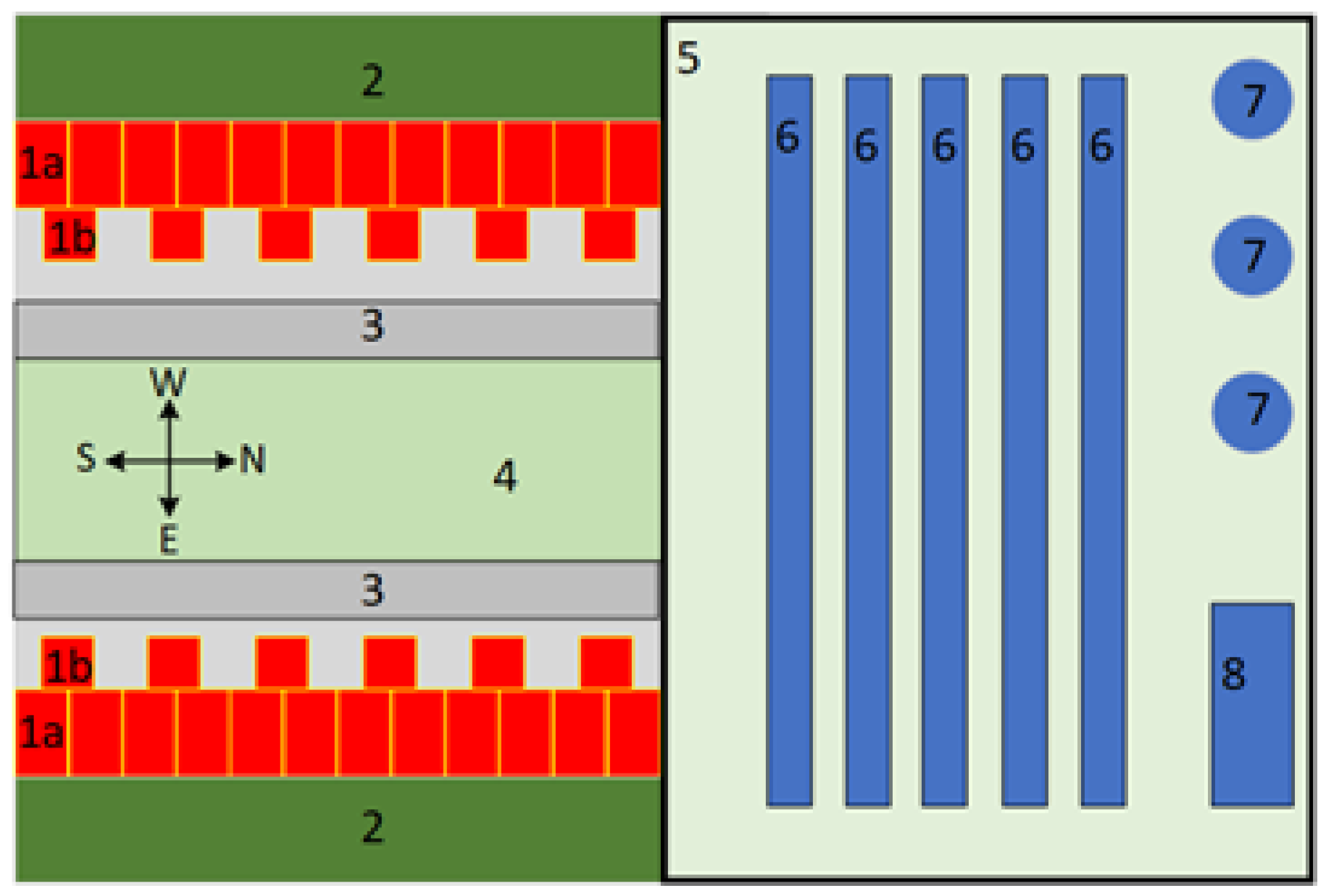
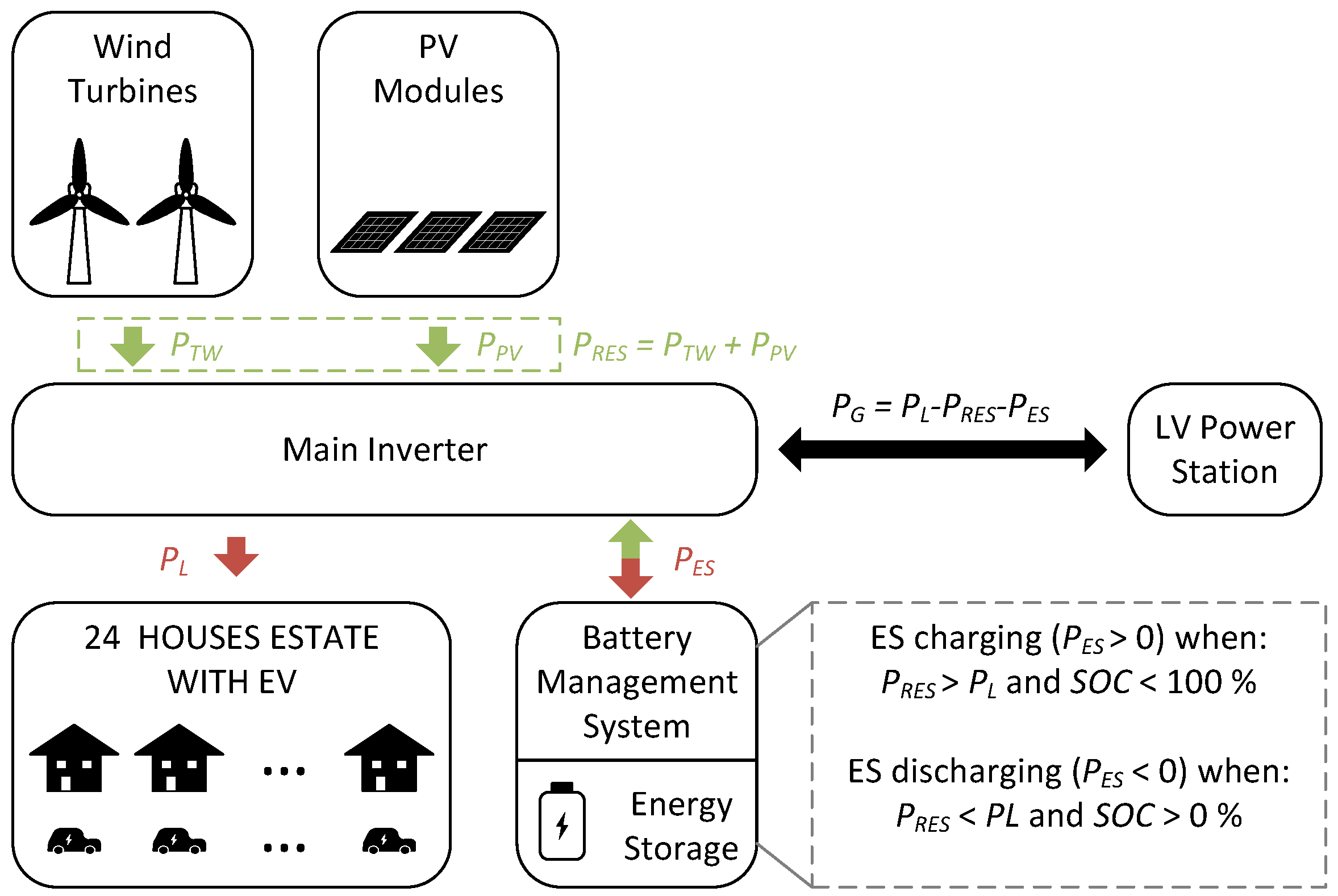
Figure 3 shows the general electrical structure of the analysed generation system with an electrochemical energy storage designed to supply the consumer described in
Section 2. The PV and wind generator sections and the energy storage system are connected to the hybrid inverter, which allows the system to be synchronised with the grid (on-grid system). This means that in the case of a power deficit (taking into account the operation of the storage system), energy is taken from the grid (purchase), and in the case of overproduction, energy is transferred to the grid (sale).
The generation system comprises two sections: a solar section and a wind section, with a total capacity of Pn. The solar section consists of PV modules placed on the ground on a support structure inclined to the ground at an angle of 37° degrees facing south. Vertical axis wind turbines are installed on the north side of the area, so as not to obscure the PV section, on masts with a height of m a.s.l. The total rated output of the generation system is and is the sum of the output of the PV section and section. The energy storage used is a lithium-ion structure built in the form of a container with its own inverter installed.
The consumers are powered, depending on the level of generation in the RES system, the state of charge of the energy storage and the load level, by three sources: the RES system, the energy storage and the power grid (hereafter referred to as the grid). The momentary powers of individual elements of the system depend on the implemented operation strategy of the energy storage. In the case under consideration, its purpose is to limit the amount of energy transferred from the RES system to the grid and to increase the self-consumption factor. The storage is charged only in the case of excess generation from the RES section in relation to the load power (
), and it is discharged in the case of a power deficit in the system (
), taking into account the current state of charge. In situations where RES generation and energy storage discharge do not cover the load
, the power difference
is taken from the grid. In the case of excess RES generation and full charge of the energy storage, power
is also transmitted to the grid. The energy storage is not involved in processes of supervised energy trading, e.g., the sale of energy during peak load periods, nor does it ever return energy to the grid. Taking the above into account, the relationships between the electrical powers of the individual system components at time t are described by the following relationships:
where
,
,
,
,
—instantaneous values of power generated in RES; solar sections; wind sections; load, taken from the grid (+) or returned (−) to the grid; and energy storage charging (−) or discharging (+). The nature of the analysis carried out as part of the research is energy-related and requires the use of measurement data of wind speed (vw), irradiance (
) and ambient temperature (
), as well as the development of a mathematical and numerical model of the system under analysis. Only the elements necessary in this context were implemented in the model, thus limiting the calculation time, which is particularly important when considering the solution of a multicriteria optimisation task.
On the basis of the relationships between (
1) and (
2), calculations of the power in the system elements for any moment
t can be performed, as well as taking into account the entire period of analysis (one year); the total amounts of energy generated in the RES
, taken from and returned to the
and
grid; and the energy sent to the
and taken from the
storage. These values are used in the optimisation calculations concerning the structure of the hybrid generation system, the details of which are discussed in the further sections of this thesis.
5. Multicriteria Optimisation of a Hybrid Generation System with Energy Storage to Supply a Housing Estate Consisting of Terraced Houses
Actual optimisation problems are often complex in nature, leading to the search for solutions which simultaneously satisfy two or more often conflicting criteria [
30]. Efficient determination of a solution in such a case requires the use of multicriteria optimisation methods looking for solutions in the set of all admissible solutions
—those that are not dominated by other solutions [
30]. In the case of
M of the analysed criteria, solution
dominates solution
(
) when it is not worse in all criteria and there is at least one criterion in which solution
is better than solution
.
In this approach, the optimisation task boils down to determining the so-called Pareto front [
30,
31], which is a set of solutions from which, using expert knowledge, one final solution can be determined. The optimisation problem indicated above can be expressed mathematically as [
30]
where
m,
j,
k—indices,
M—number of optimised criteria,
J—number of inequality constraints,
K—number of equality constraints,
N—number of decision variables and
—vector of decision variables.
In order to solve the multicriteria task presented in this way (
9), evolutionary methods are suitable, as they allow a set of solutions to be processed in one step and thus make it possible to determine a set of points in one run, rather than a single point belonging to the Pareto front [
28].
The problem solved in this paper is the search for the optimal structure and operating parameters of a hybrid generation system with RES and energy storage in the case of a known geographical location and load characteristics of the facility being powered in terms of minimising the energy capacity of the energy storage (
), minimising the energy exchanged with the power grid (
) and maximising the self-consumption factor (
). The decision variables in the case under consideration are the number of PV modules with rated power
, the number of wind turbines with rated power
and the number of electrochemical battery modules with unit capacity
. The criteria listed above can be expressed in the following form:
where
—total net energy capacity of the energy storage system,
—electricity generated in the PV and wind sections during the analysed period (one year),
—electricity taken from the grid and
—electricity transferred to the grid from the hybrid system during the analysed period (one year), determined from the following relationship:
The storage charging and discharging power results from the instantaneous state of the system (
and
powers and state of charge (
)). Its value is limited by maximum power
, which results from the discharge and charge with the maximum current of 1C. This allows for a long storage life [
32].
The solved optimisation task has the following form:
where
—maximum power of installed turbines,
—maximum power of installed PV cells and
—maximum energy storage capacity.
In order to determine the values of the criterion functions from
to
, in each optimisation step, full energy calculations are performed for a specific configuration of the generation system (power of the PV section, wind section and energy storage capacity). The calculations use the models of the system components presented in
Section 4 of this article.
6. Description of the Tests Carried Out and Results Obtained
In order to solve the problem indicated above, the MPSO multicriteria method was used, which has been characterised in detail in the paper in [
33]. Its basic parameters (
Table 2) were established experimentally and led to obtaining repeatability of the quality of determined solutions (Pareto fronts) in the analysed task.
The study involved 12 numerical experiments involving the optimisation of the structure of the system from
Figure 3 for 3 locations (point 4) and for 4 load scenarios considering different levels of electromobility development:
Scenario 0: houses have no electric vehicles (reference variant);
Scenario I: half of the houses have an electric vehicle (12 EVs) with an average energy intensity of 18 kWh/100 km and an average daily mileage of 30 km;
Scenario II: each house has an electric vehicle (24 EVs) with the energy intensity indicated above and a daily mileage of 30 km;
Scenario III: each house has an electric vehicle (24 EVs) with the energy intensity indicated and an average daily mileage of 50 km.
In the calculations, 500 W PV modules, vertical axis wind turbines with a rated power of 5 kW and lithium-ion storage sections with a net unit capacity of 10 kWh were used. The maximum charging and discharging power for an energy storage system with a capacity greater than or equal to 20 kWh is 20 kW. The energy storage systems are built in the form of a container (including the cooling and heating system), and their rated net energy capacities are multiples of the 10 kWh modules. The details of the modules, turbines and energy storage systems are given in
Table 3,
Table 4 and
Table 5.
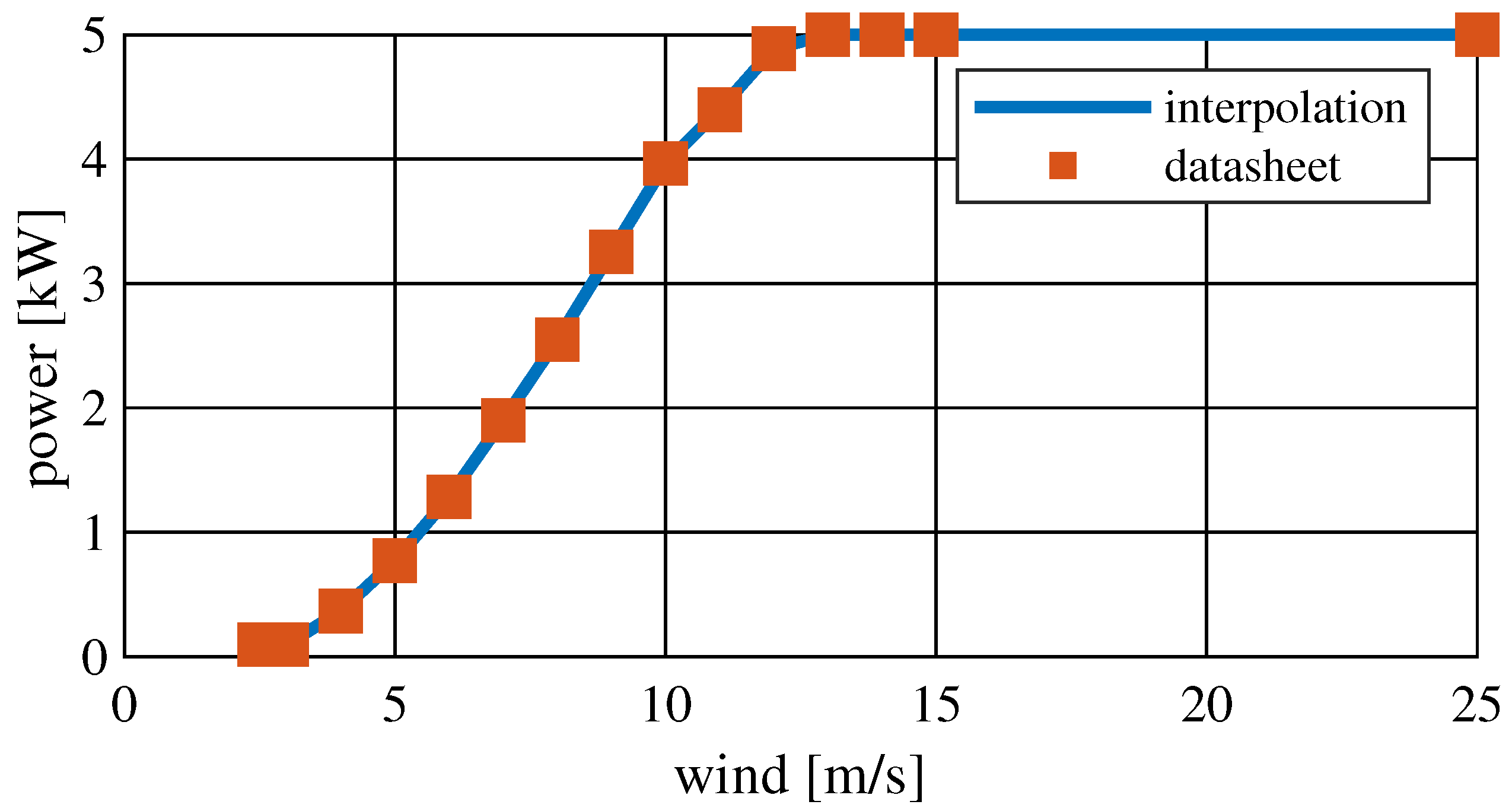
Figure 7 shows the power characteristics of the wind turbine used.
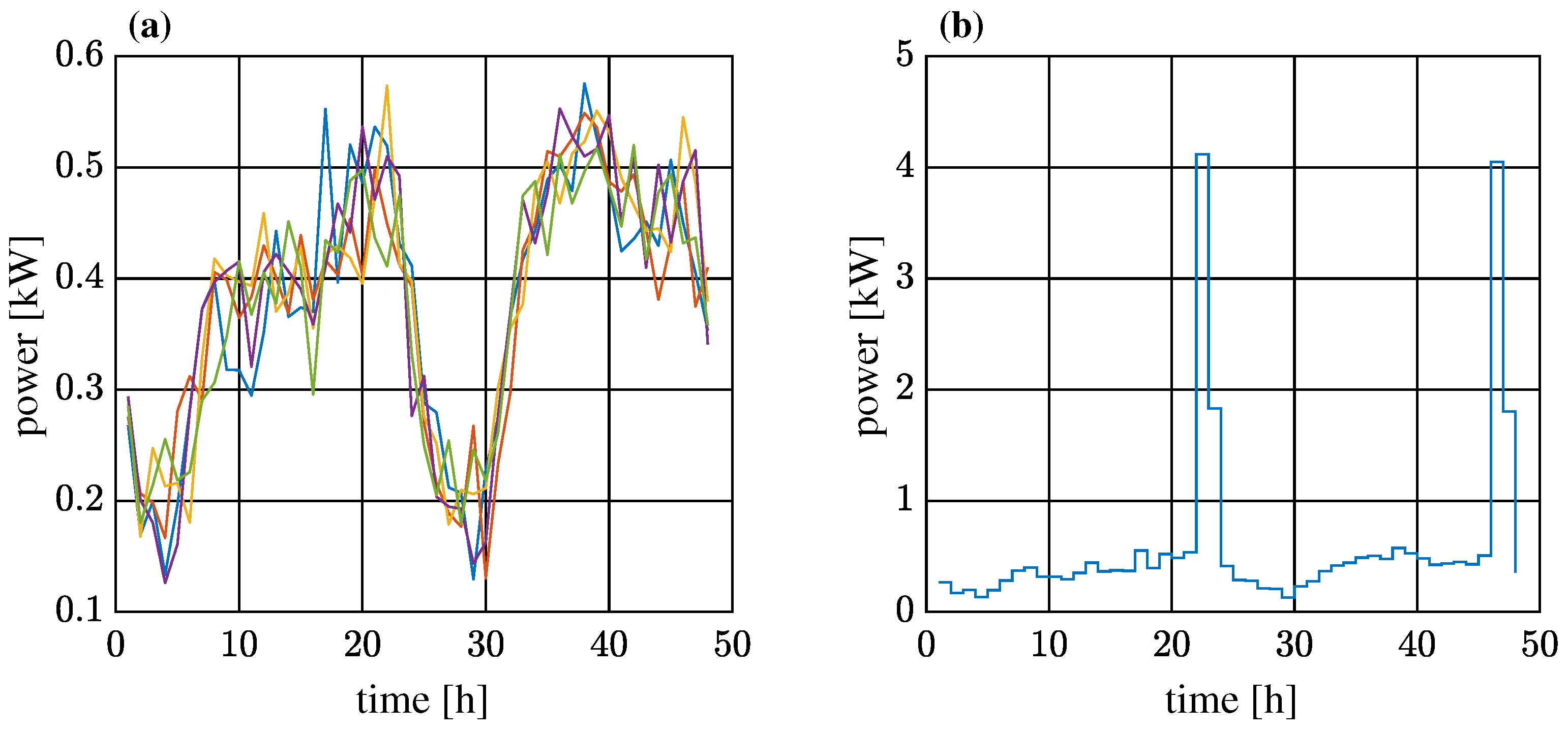
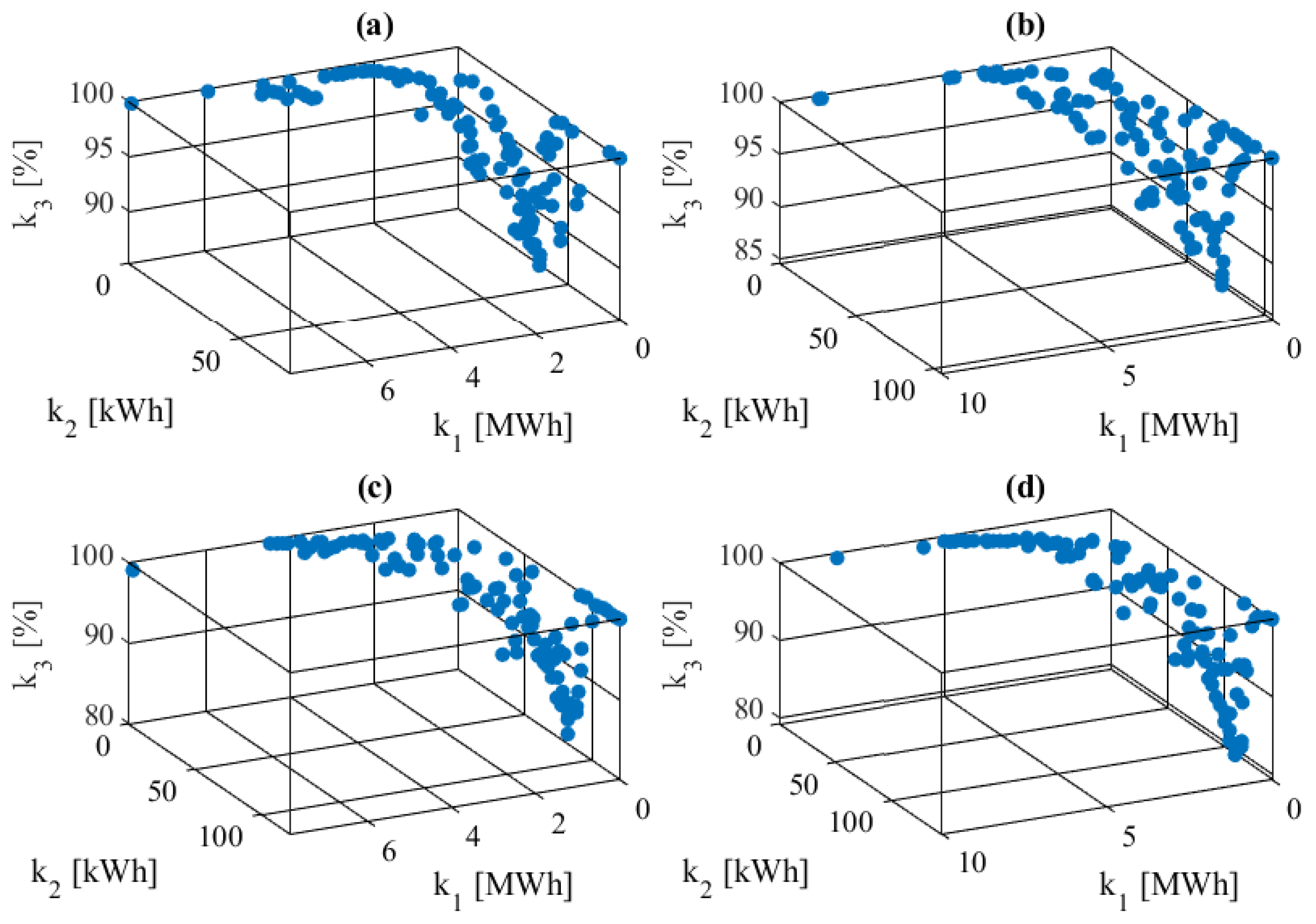
Vehicle charging processes are taken into account by the addition of a constant power, with a value and duration ensuring that the vehicles are topped up to SoC = 100%, at randomly determined times in the afternoon and at night. The maximum charging powers for each vehicle, depending on the charger (3.6; 7.4; 11 or 22 kW), are selected at random. The results of the optimisation of the variants indicated above for location A, in the form of Pareto fronts in the three-dimensional space
,
and
, are shown in
Figure 8.
Each of the designated Pareto fronts contains 100 solutions, from which the selection of the final one requires the application of expert knowledge and an additional criterion. Taking into account the end-user requirements for the type of generation systems analysed, it was assumed that economic aspects were the key determinant for the installation of generation systems with RES. Therefore, for each solution, given a system lifetime of 20 years, NPVs (net present values) were established using the following relationship [
34]:
where
t—year index (for analyses
was assumed, whereby the year “0” is the investment year),
r—rate of return (discount rate) determined on the basis of loan interest levels,
—net cash flows in year
t,
—investment cost (in the year 0) and
k—year of determination of the NPVs.
The economic calculations take into account the expected change in electricity and fuel prices over the following years and the annual decrease in energy generation from PV systems. In the 10th year of operation, the batteries in the energy storage are replaced, the value of which is 0.7 of the investment cost of the energy storage. The parameters adopted for the economic calculations are shown in
Table 6.
Further analysis in each Pareto front is carried out on the set of solutions that meet the payback condition of no more than 10 years from the start of operation. In order to select the final solution of the task, for individual locations and scenarios, two additional parameters (expert criteria) were considered: minimum payback period (basic criterion—minimised) and NPVs after 20 years of operation per house (supplementary criterion—maximised).
For location C only, due to low wind and solar resources, some of the results include solutions with payback times of more than 10 years. Exemplary solutions for locations A to C, taking into account the four calculation scenarios (electromobility development), are shown in
Table 7,
Table 8 and
Table 9. For each location and scenario, the final solution (the best from the perspective of the adopted additional criterion) is highlighted in grey in the tables.
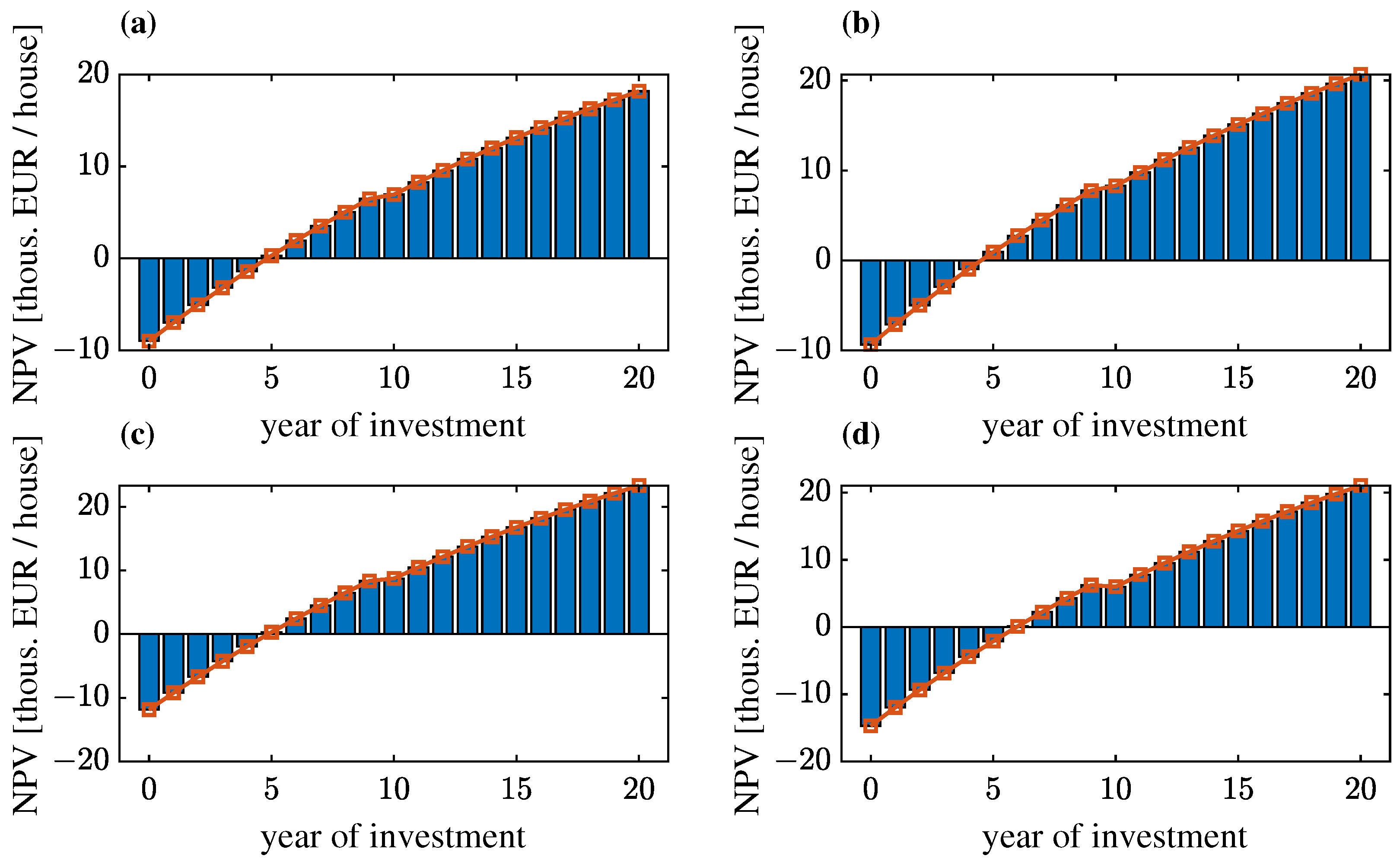
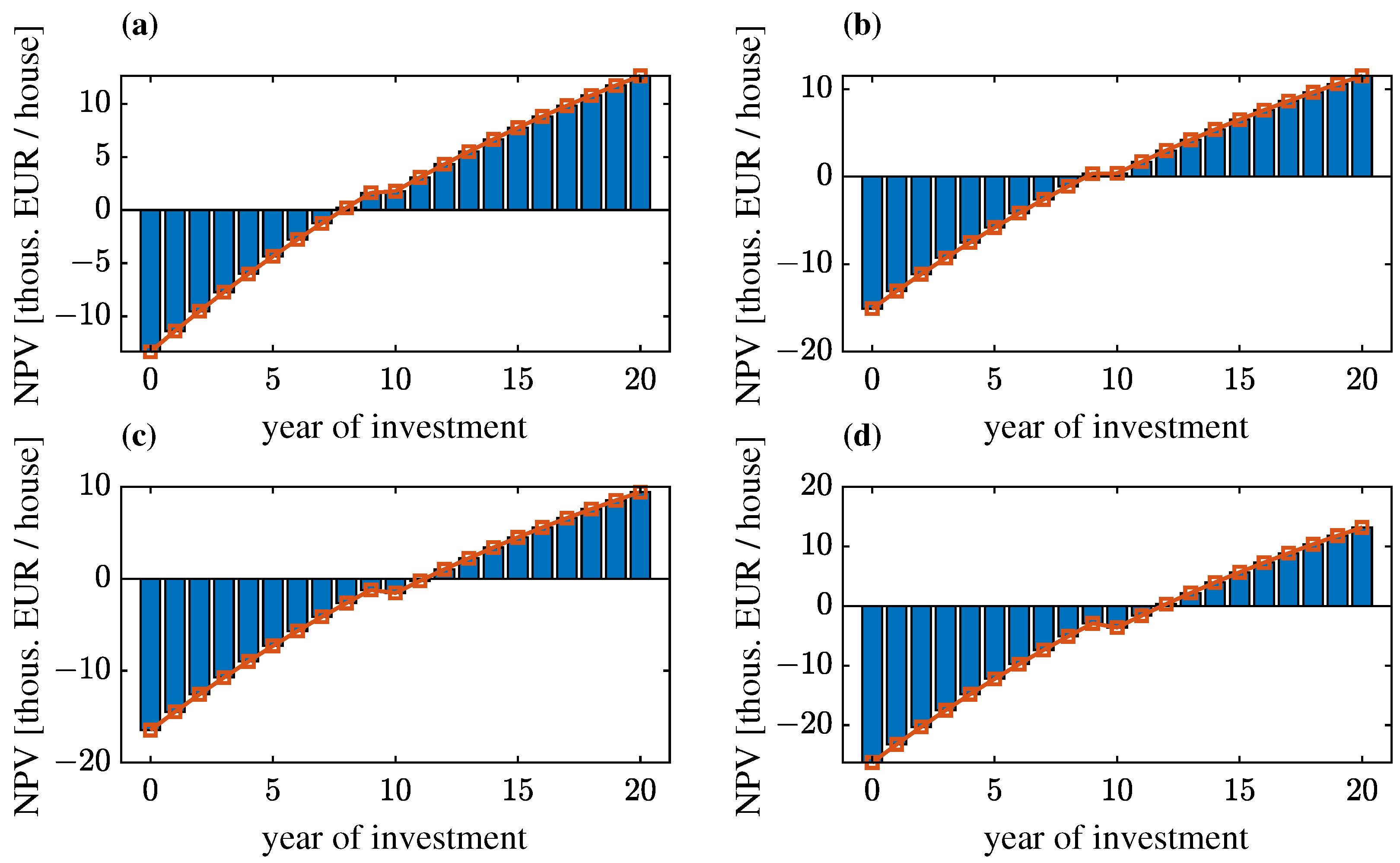
Figure 9,
Figure 10 and
Figure 11 show the changes in NPVs as a function of the year of operation of the systems for the final solutions (calculations carried out for the data in
Table 9,
Table 10,
Table 11 and
Table 12) for locations A, B and C and scenarios 0, I, II and III, respectively.
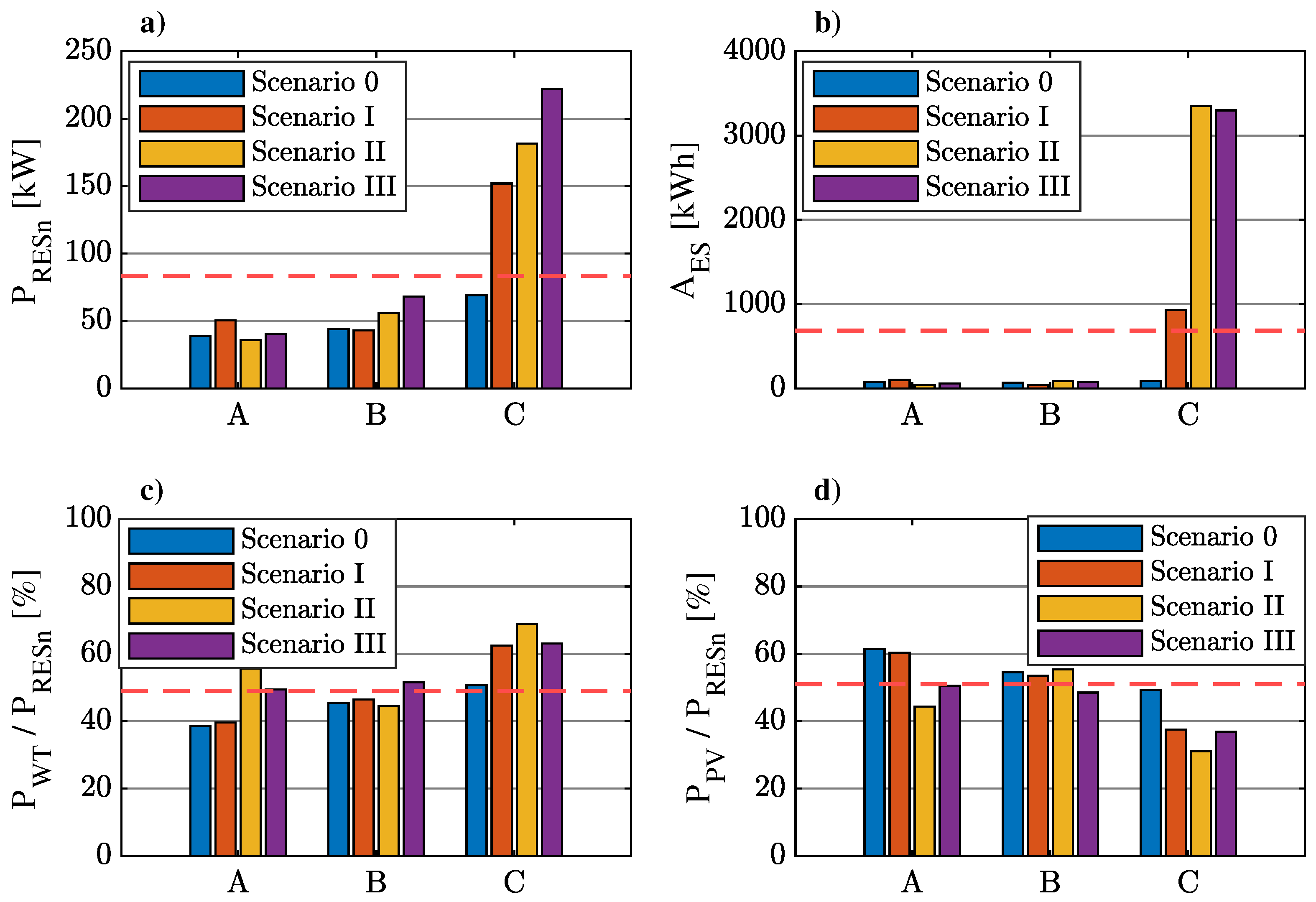
Figure 12 provides a comparison of the rated power Pn of the system, the energy storage capacity AME and the percentage share of the power of PV and wind sections for the final solution, as well as the locations considered and the electromobility development scenarios. The dotted lines in the figures indicate the average values.
7. Summary
The multiobjective particle swarm optimisation used in this research, as one of the population heuristic methods, allows for the determination of the entire set of solutions constituting the Pareto front within a single run of the algorithm. However, its characteristics lead to variations in the results in different runs of the algorithm. Therefore, preliminary tests were carried out to determine the parameters of the MPSO algorithm which would lead to the reproducibility of the quality of the obtained sets of solutions. The selection of the final solution from the set of Pareto-optimal solutions was conducted taking into account the so-called expert criterion using two additional conditions: minimisation of the payback period of the investment and maximisation of the profit after 20 years of operation.
A significant challenge to the current states and structures of power grids in many countries is the development of electromobility, associated with the increase in the number of motor vehicles being charged from the domestic (low-voltage) grid. Research shows that this will significantly disrupt existing load profiles, increasing the disproportion between electricity demand during the daytime and afternoon/evening periods. Particularly high energy demand is anticipated during periods with less or no PV system generation. However, research carried out indicates that it is possible to achieve a very high (well over 80%) self-consumption rate in the type of hybrid system analysed, not only through the use of energy storage but also by incorporating sufficient wind generator capacity into the system. The inclusion of the minimisation of the amount of energy exchanged with the grid as part of the optimisation criteria and the currently observed price disproportion between energy purchased from the grid and that sold to the grid (the research assumed a ratio of 3.6:1—based on analysis of official data from Towarowa Giełda Energii between July 2022 and August 2022) are leading to solutions that are increasingly self-sufficient in terms of the electricity generated and consumed.
Even different locations within one country have different wind and solar energy potentials; this results in the necessity to design hybrid generation systems with different structures in terms of PV and wind section power and storage capacity in order to achieve their equal functionality. This paper demonstrates that for three locations in Poland (A—Baltic coast, B—Lublin Uplands and C—Carpathian Foothills) and the considered scenarios related to the number and daily mileage of home-charged electric vehicles, the structures of hybrid systems that are final solutions to the optimisation task considered differ significantly.
The smallest wind section capacities in the optimised structure of the hybrid system, regardless of the scenario of electromobility considered, were obtained for location A. At location C, the rated outputs of the system were significantly higher than at the other locations. In terms of the selection of energy storage systems, the largest energy storage capacities were required, for each scenario, at location C, and the smallest at location A. This is due to the partial overlap between the load characteristics, including vehicle charging (the highest loads) and the daily deterministic trend of wind turbine energy generation. It can therefore be concluded that an increase in the share of wind generators in the rated output of small-scale generation systems can lead, with an increase in the number of electric cars being charged at home, to an increase in the self-consumption rate and an improvement in the economic balance of the system. This applies, of course, to locations that guarantee good or very good wind conditions. The differences in energy storage capacities in the final solutions between locations A and C were, for any scenario involving EV charging, very large and reached up to 8000% (
Figure 12b).
The differences in the payback period for the extreme (in terms of energy resources) locations A and C are also significant. Depending on the scenario, the period varies from 4 (location A) to 12 (location C) years. This also entails differences in profit after 20 years of operation—for the worst (in terms of energy resources) location C, the differences relative to location A ranged between 37% and 59%. When analysing the payback period for any scenario of locations A and B, the final solutions give satisfactory results, with the period varying from 4 to 7 years. From an economic point of view, this is a very good result, which puts these types of systems in a good position in the context of skyrocketing electricity and fuel prices, as well as partial independence from the grid. In comparison with other solutions belonging to the Pareto front, the return on investment within a few years is very good, as the set of solutions established through optimisation also includes systems that do not pay for themselves, even within the assumed 20-year period.
The shortest payback period and the highest profits per house (after 20 years of operation) were obtained for location A. A particularly good fit of the system structure was obtained for scenario 2, for which the profit was the highest, reaching EUR 23,300, and the payback period is only 5 years.
In the task under consideration, no attempt was made to develop an algorithm for internal billing of individual consumers (houses). The energy calculations were performed globally—for one consumer, with a load characteristic representing the sum of the loads of individual houses using a random variation of the profiles for houses and the power and charging hours of electric vehicles. An important issue is also the inclusion of a storage operation strategy that allows a group of consumers to actively participate in energy trading during short billing periods. This should enable the economic balance of hybrid generation systems with an energy storage system to be further improved. At present, however, it is difficult to determine whether the payback period will be shortened or whether the profit after 20 years of system operation will increase.



 ,
,